
Introduction to the 2026 Volvo EX60
Pretty much since it was first introduced, the Volvo XC60 SUV has been the Swedish brand's biggest seller. You can see why; aside from the fashionable SUV shape, the XC60 has represented successive generations of cars with handsome lines, useful practicality and the family-friendly safety reassurance that comes with the Volvo badge.
The EX60 is the electric equivalent and, while the badge and the overall shape may trade on a certain level of familiarity, almost everything about this car is different, not just when compared with the XC60, but even looking at Volvo's existing EVs.
The 'SPA3' platform underneath it is brand new; it uses new batteries; has new software, with everything - from steering and braking to stereo settings - controlled by a super-powerful NVIDIA chip. No car better represents the future of the Volvo brand, so it has to be right.

Pros & cons of the 2026 Volvo EX60
Pros:
• Understated looks inside and out
• Impressive real-world range
• Comfort and refinement
Cons:
• We haven't tested the long-range version
• Lacks the 'bling' factor of German rivals
• AWD versions rather over-powered
Exterior & design of the 2026 Volvo EX60
• Ultra-clean styling
• Subtle paint options
• Less showy than rivals

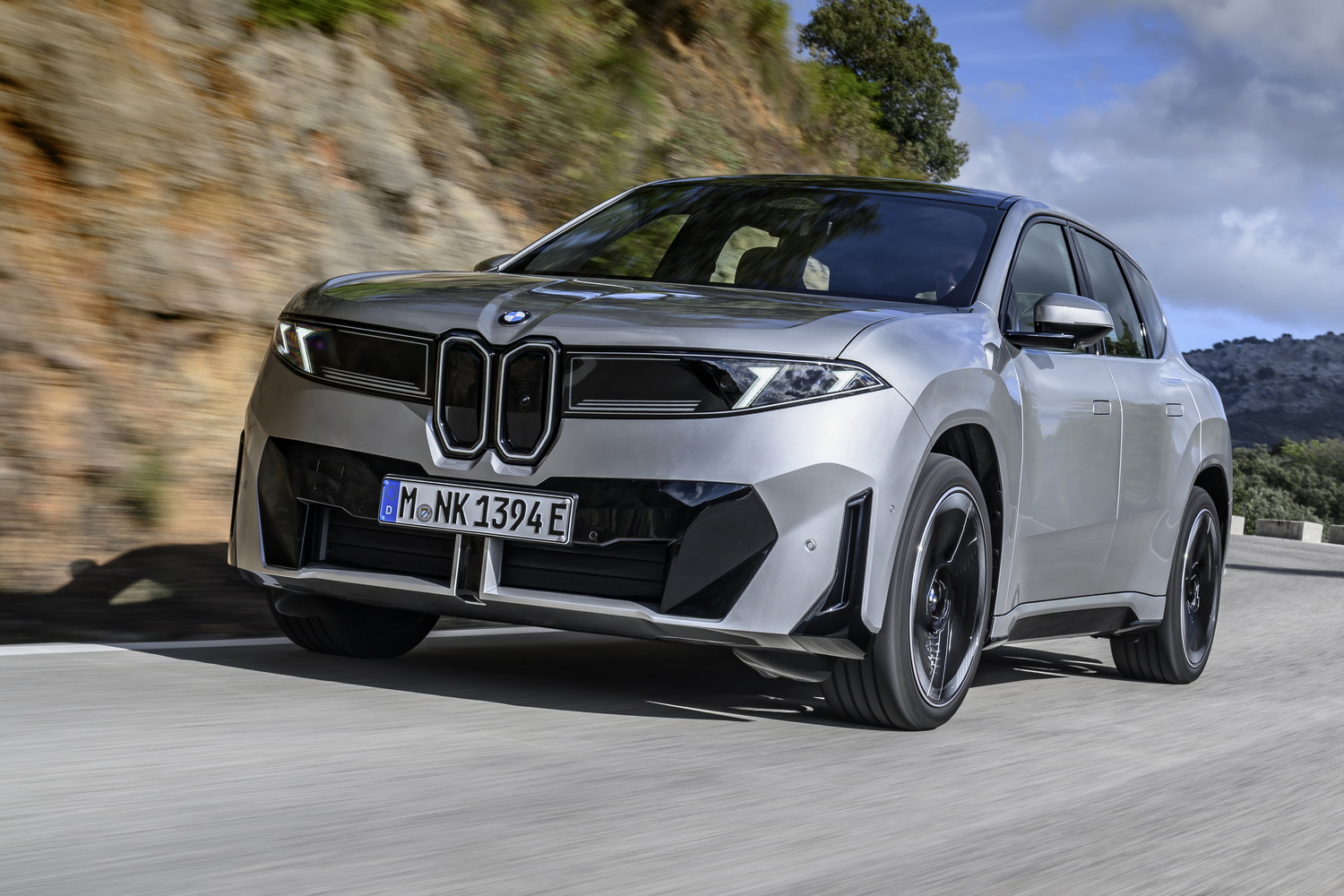
Look at the BMW iX3 or, even more so, the electric Mercedes GLC. These are very 'blingy' cars, in their styling. They're designed to show off your wealth and strut their stuff down the Strip in Las Vegas, or along the avenues of Dubai or Beijing.
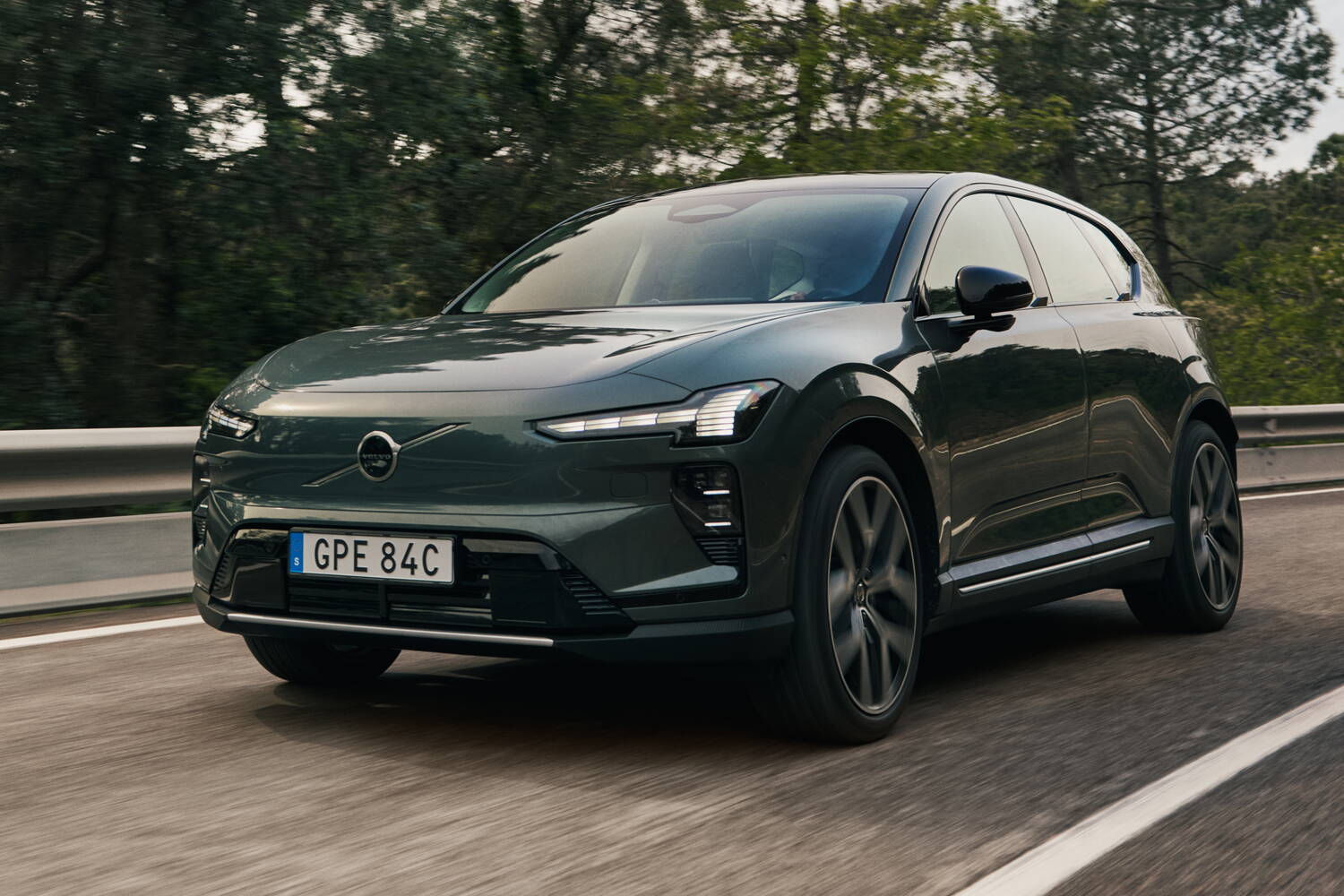
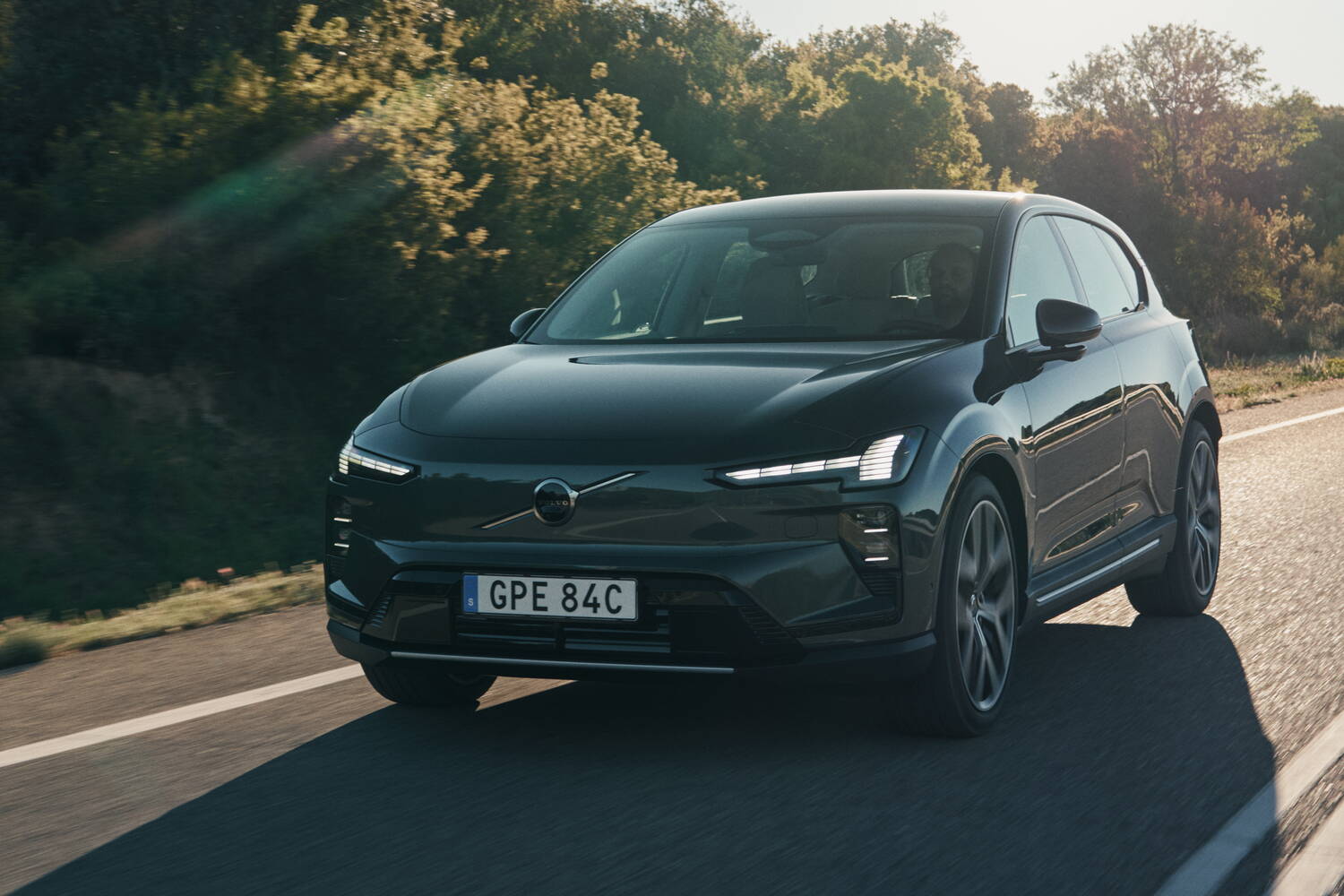
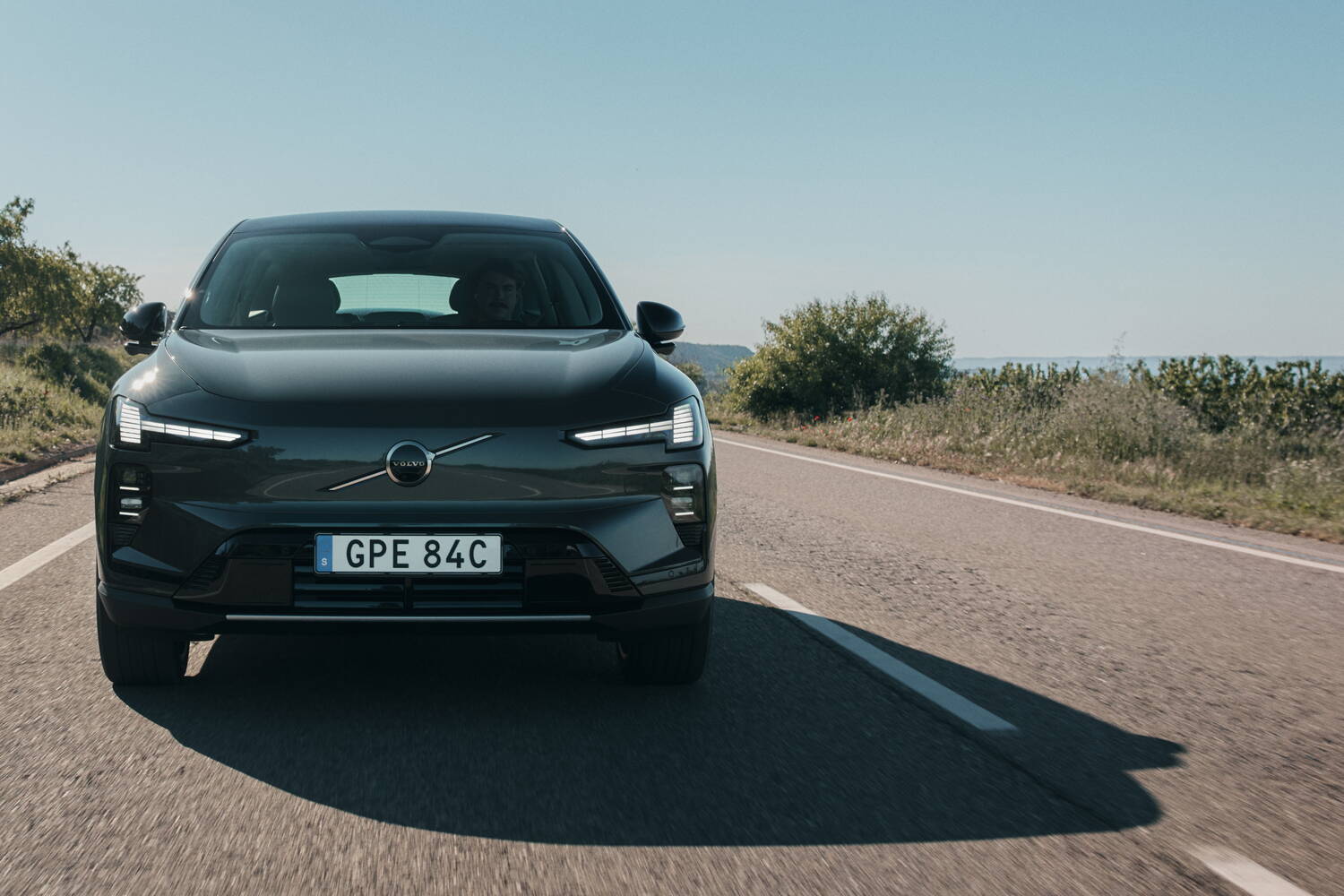
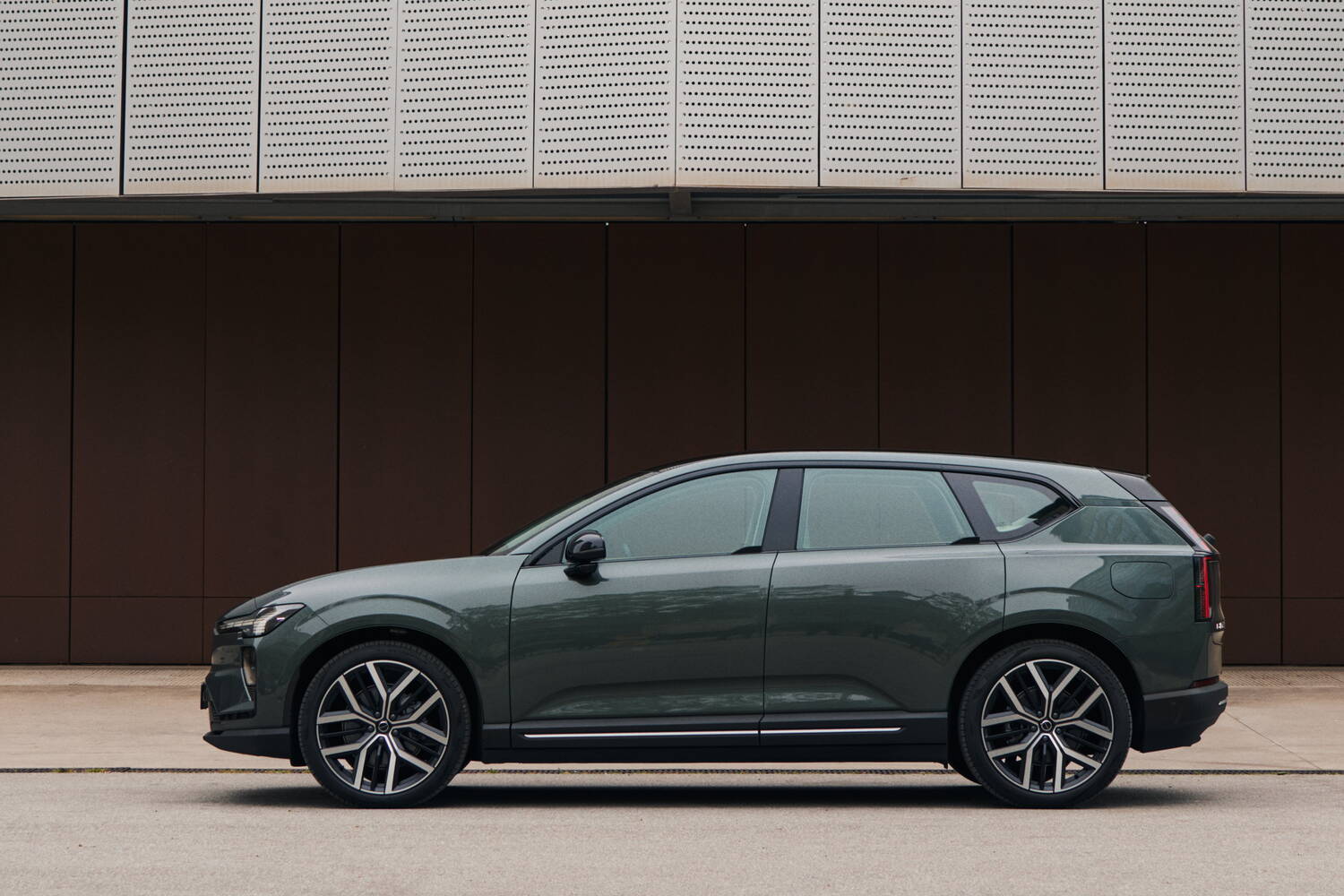
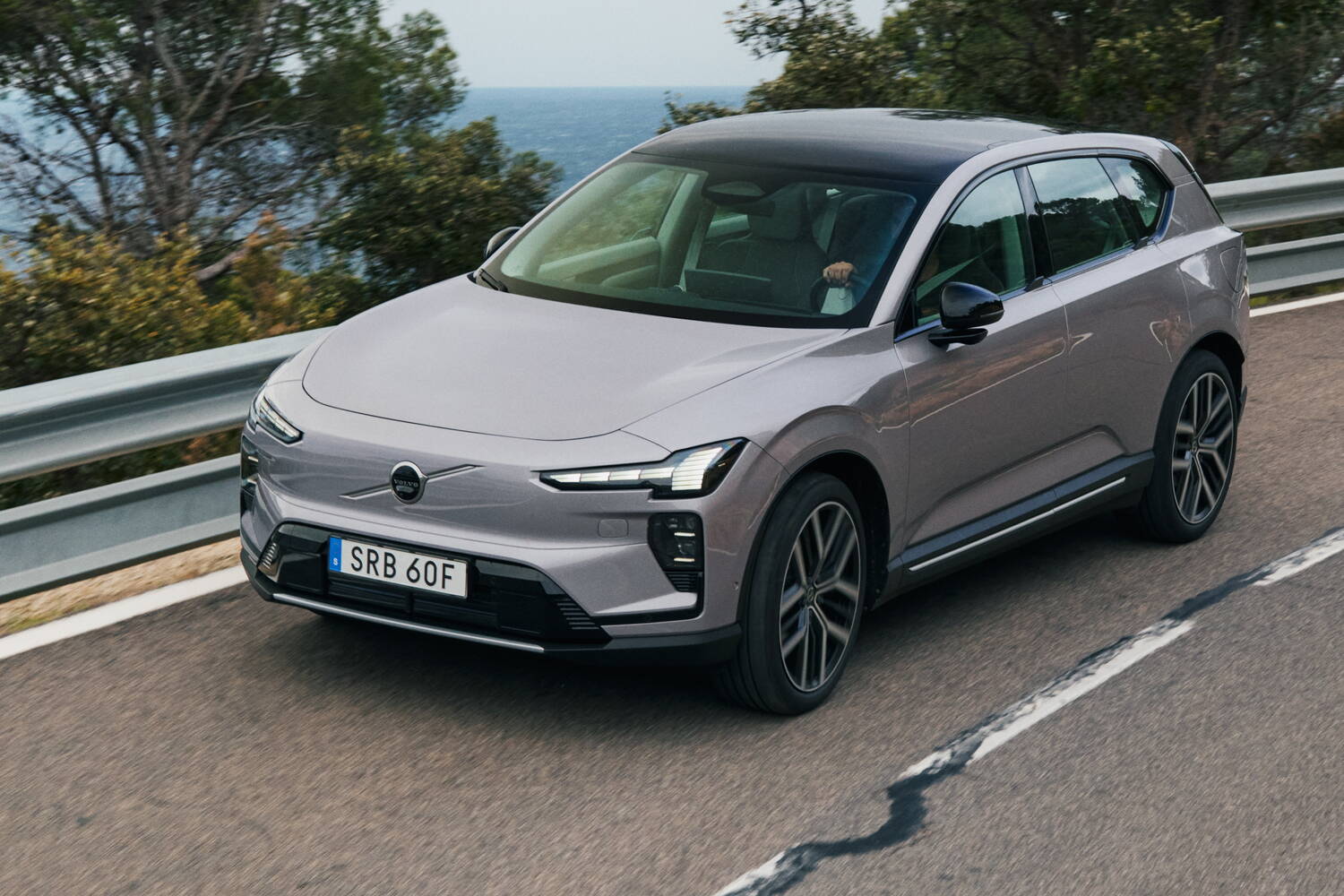
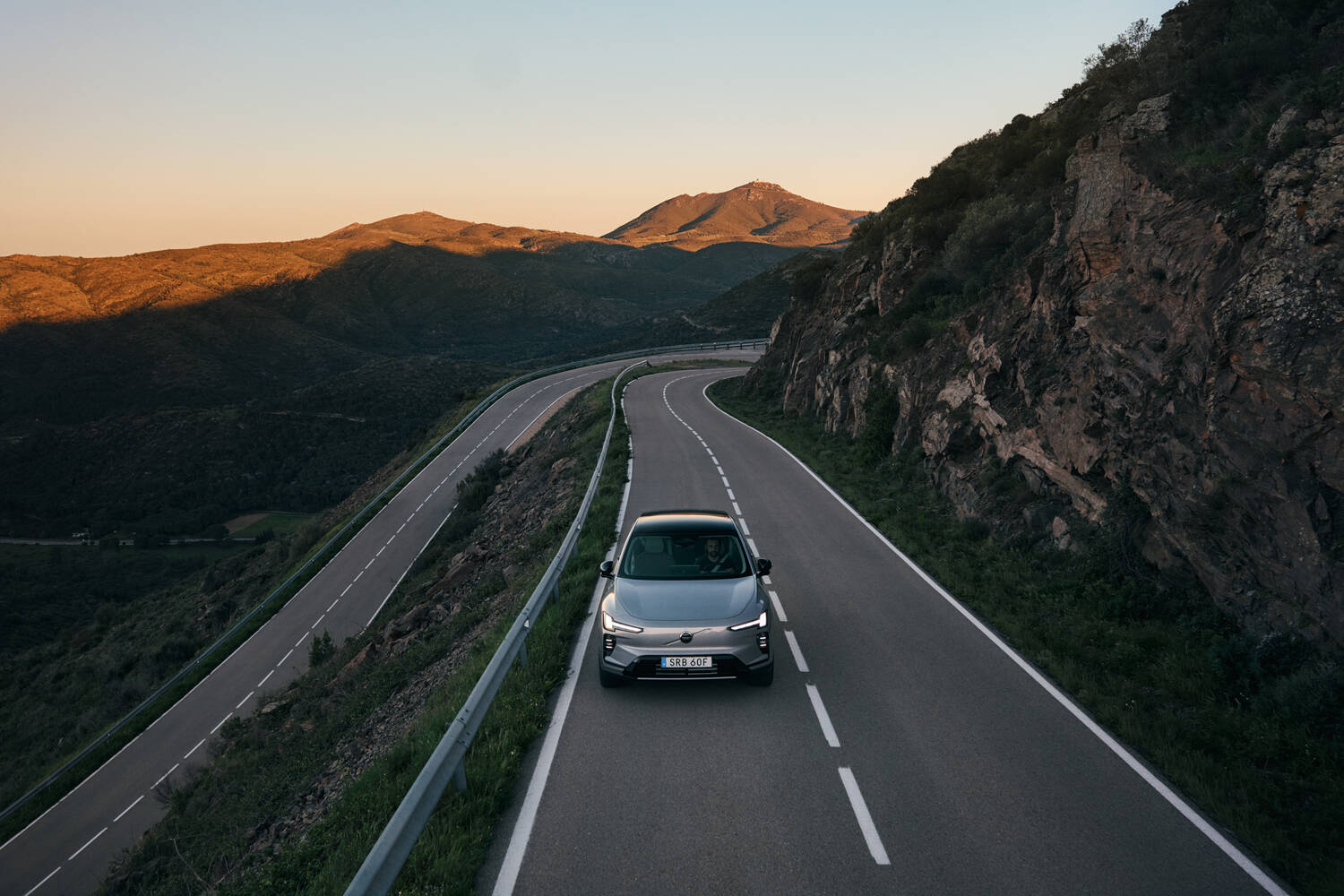
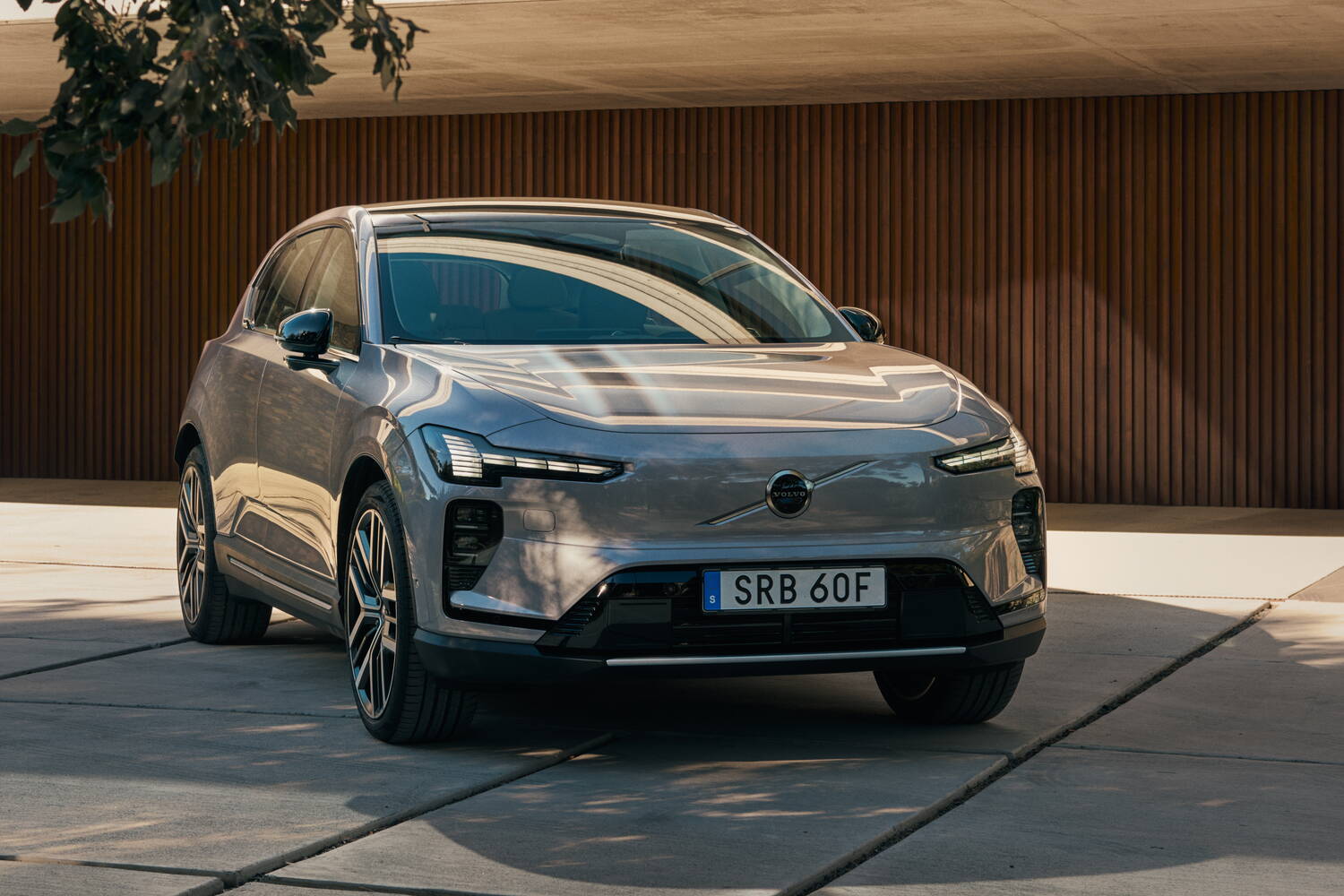
Volvo is doing things a little differently. Actually, a lot differently. The EX60 is hugely understated in its styling.

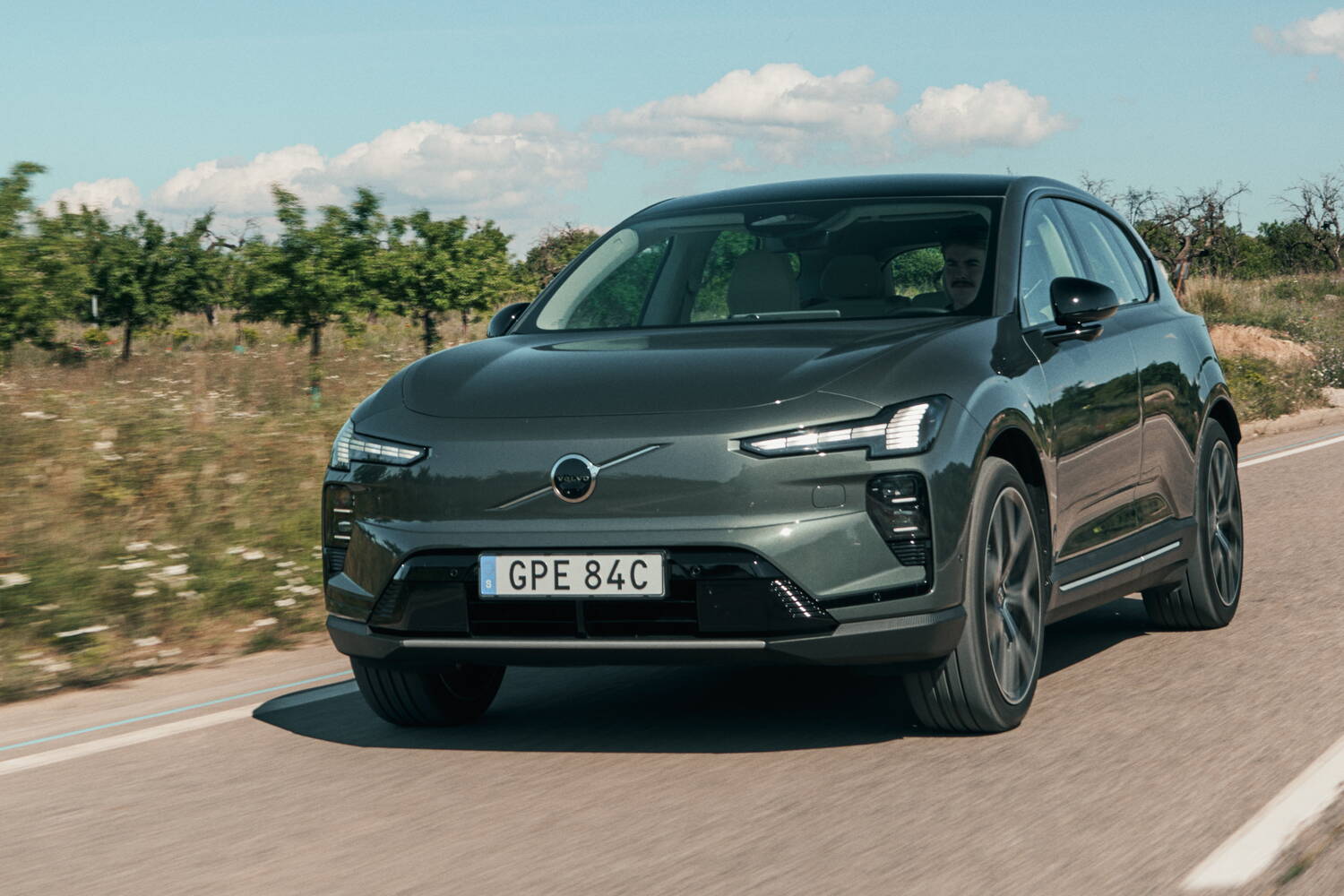
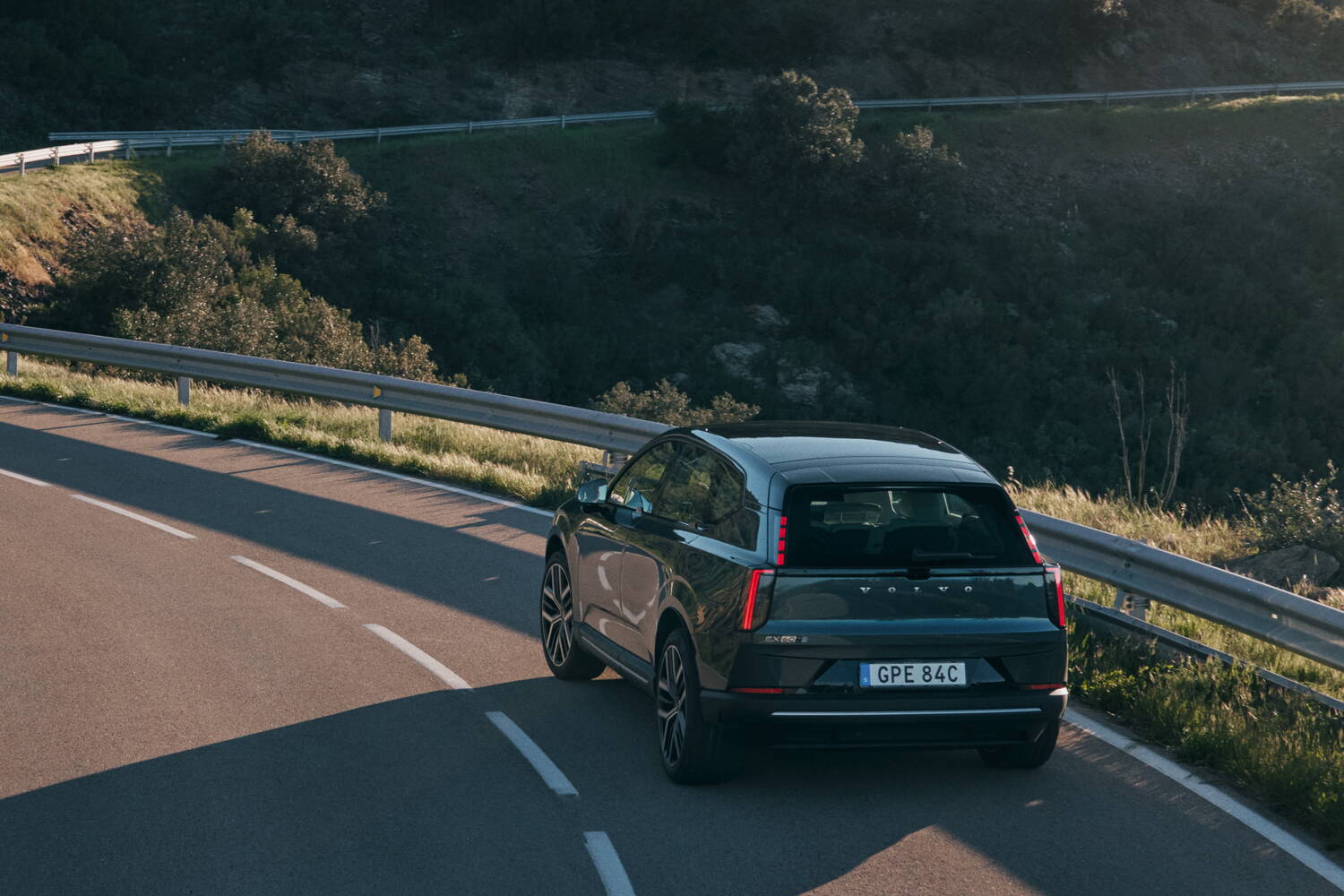
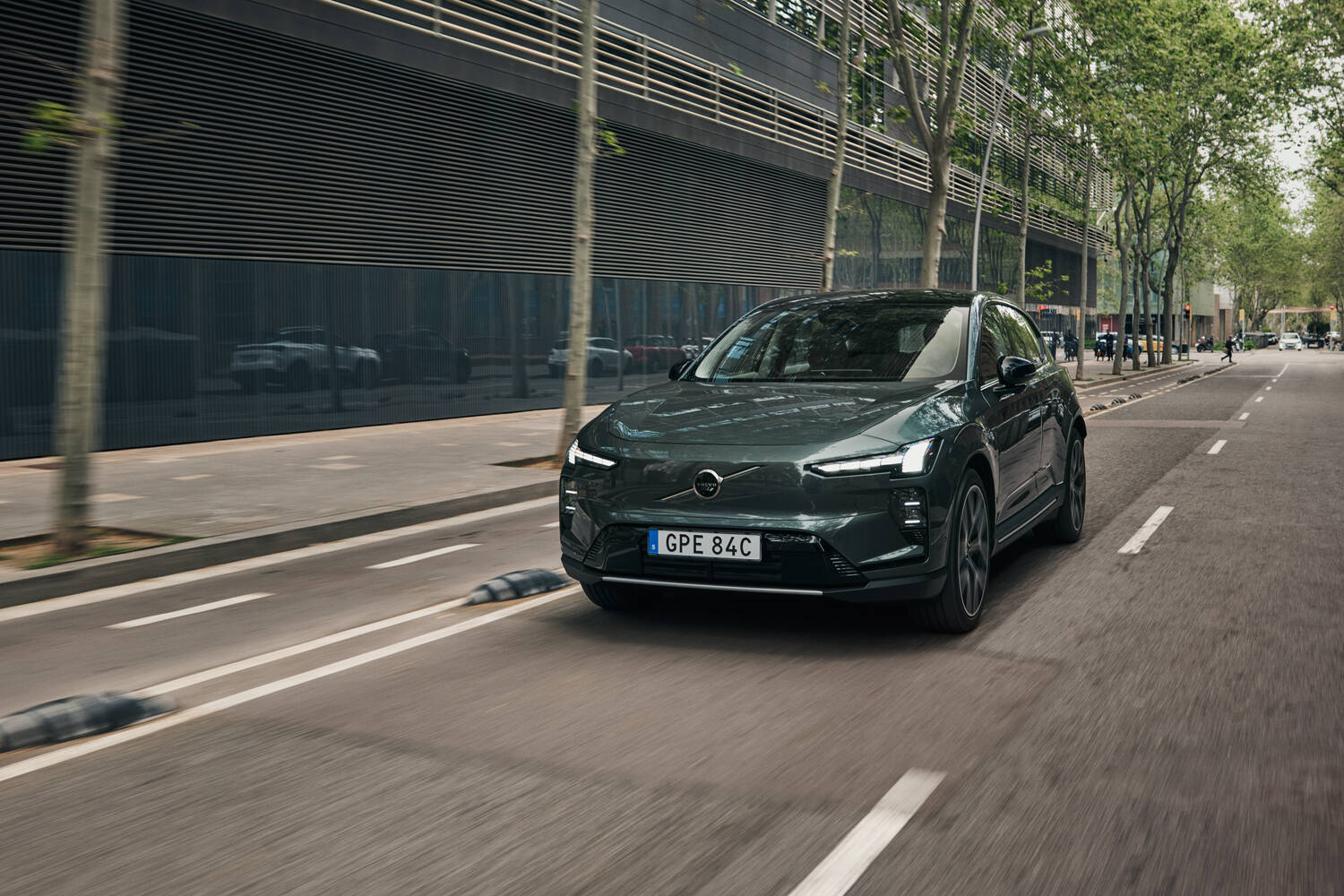
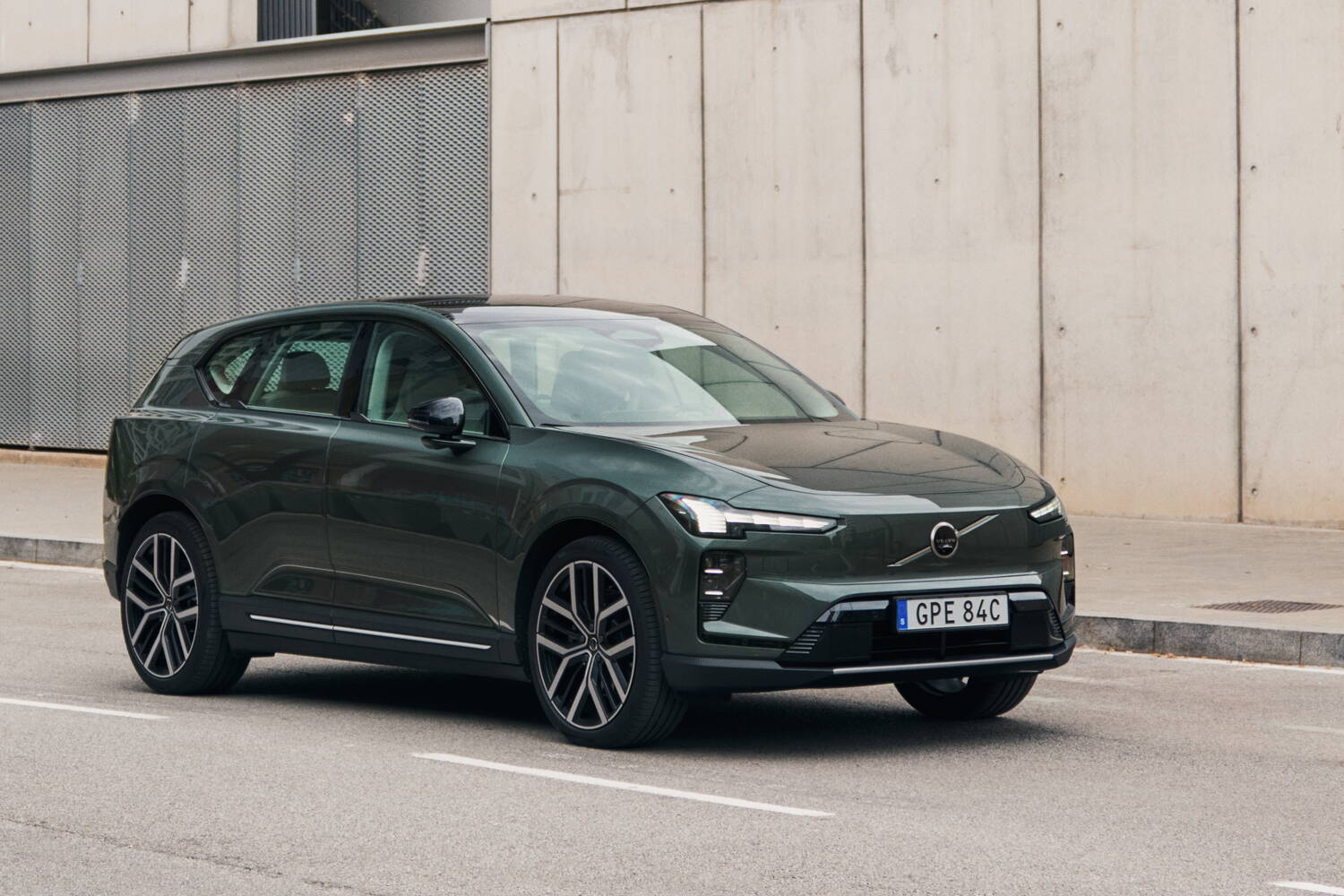
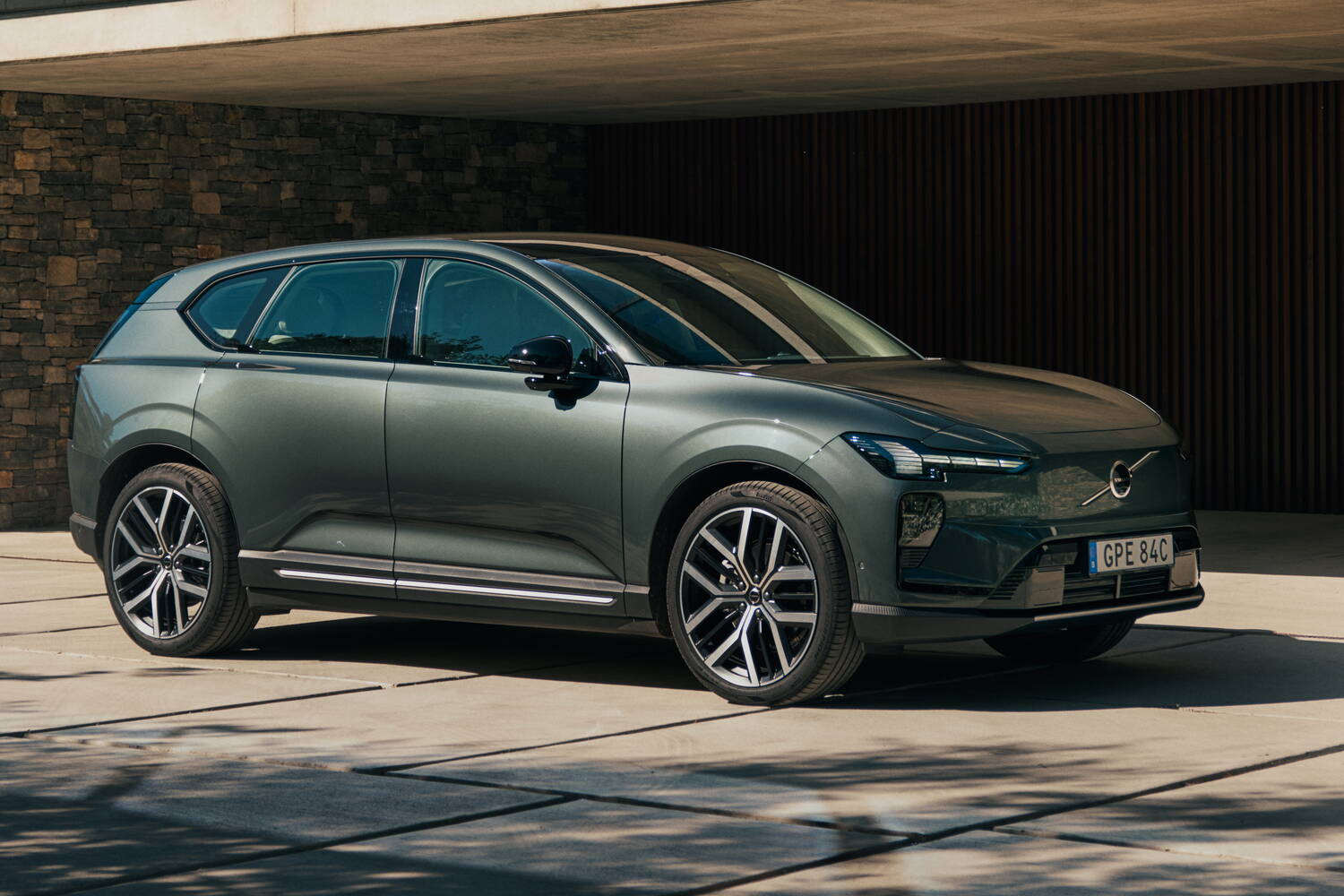
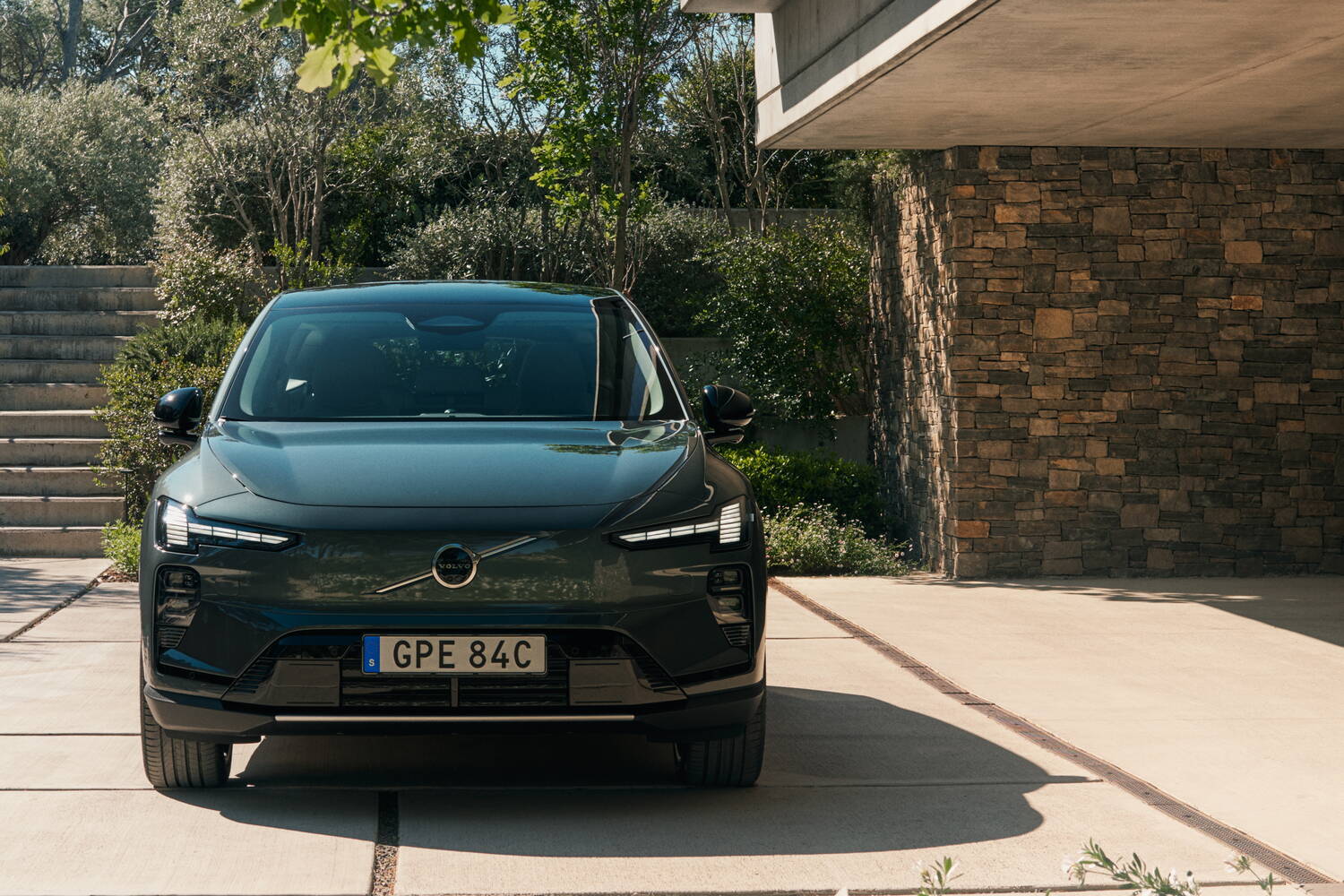
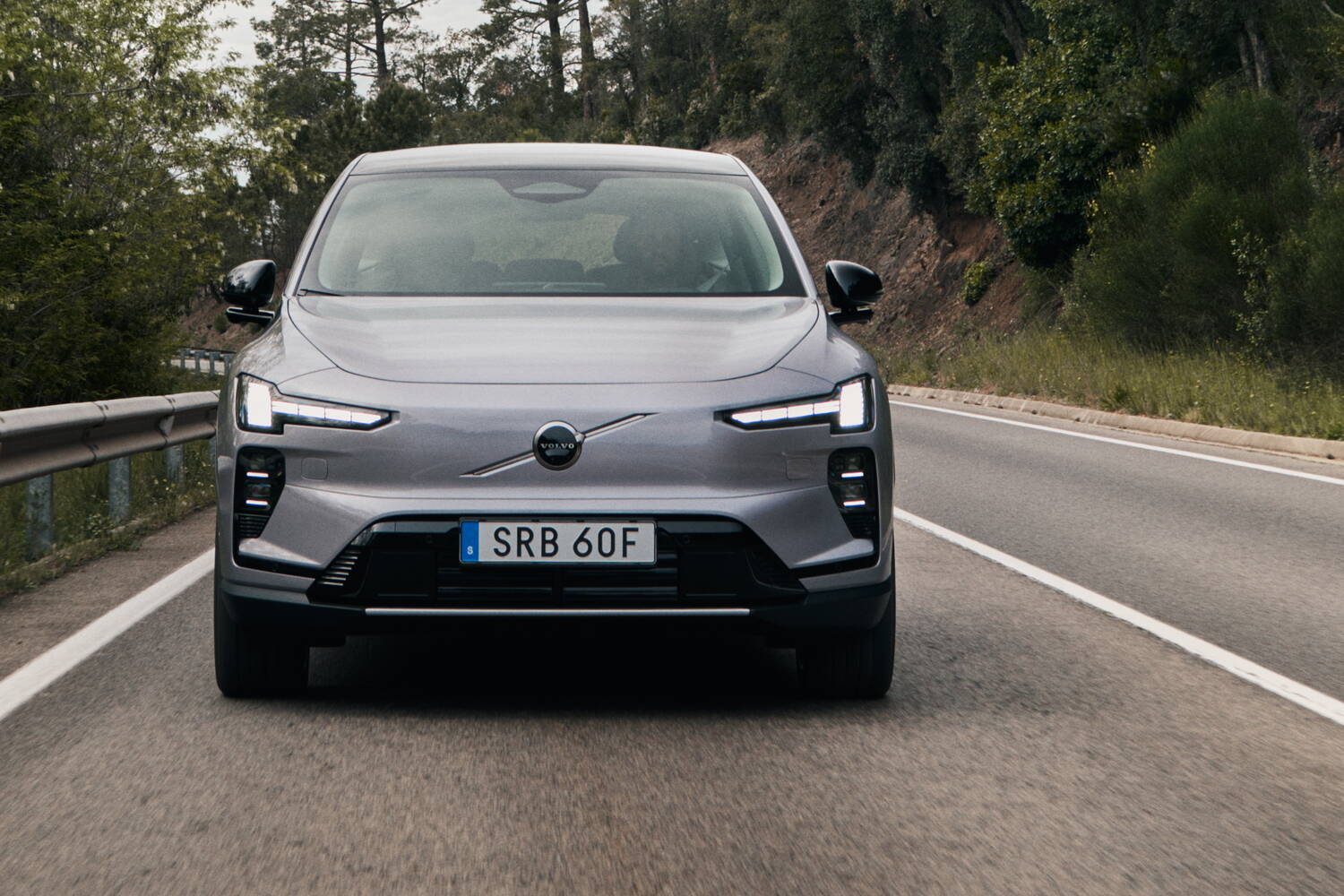
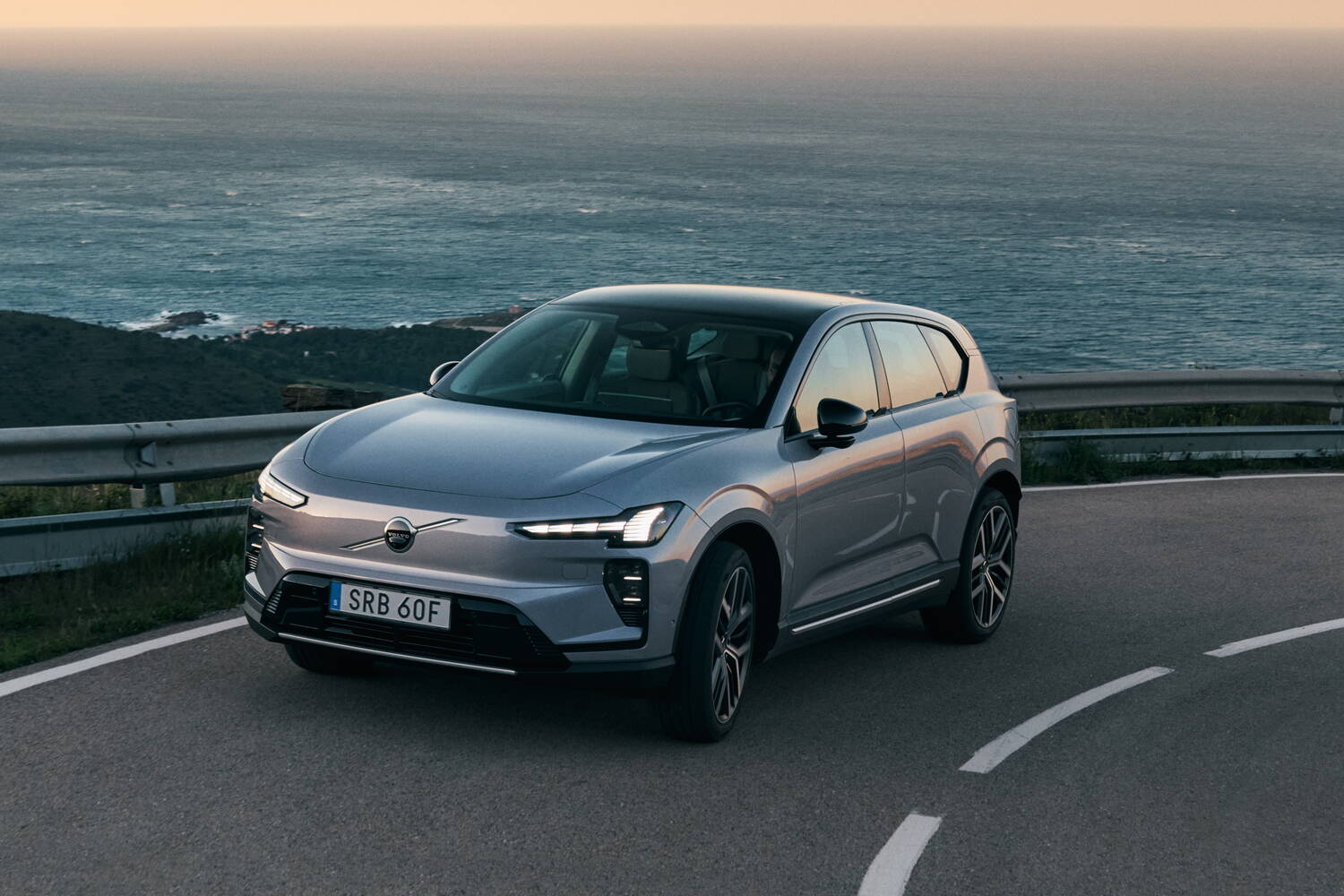
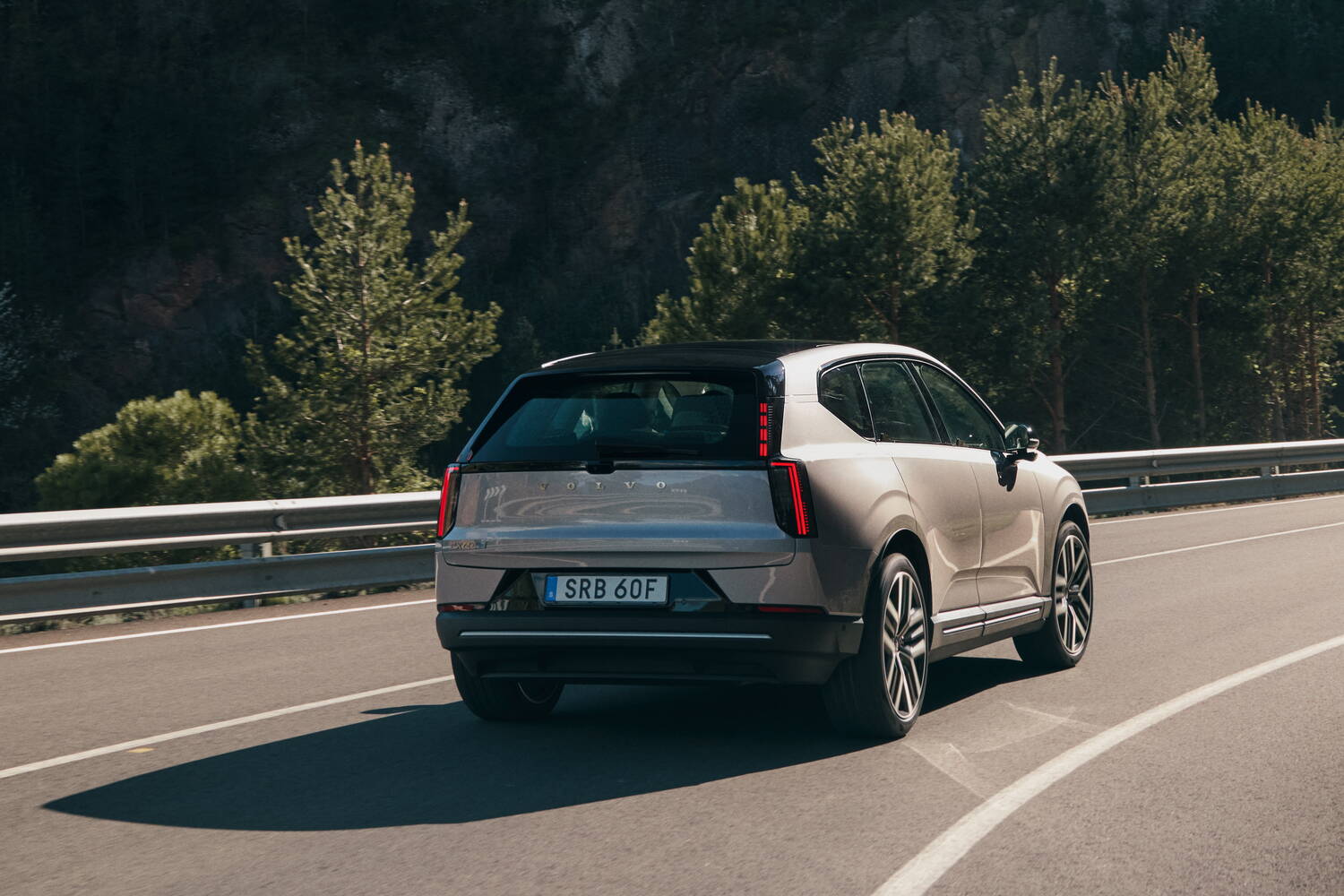
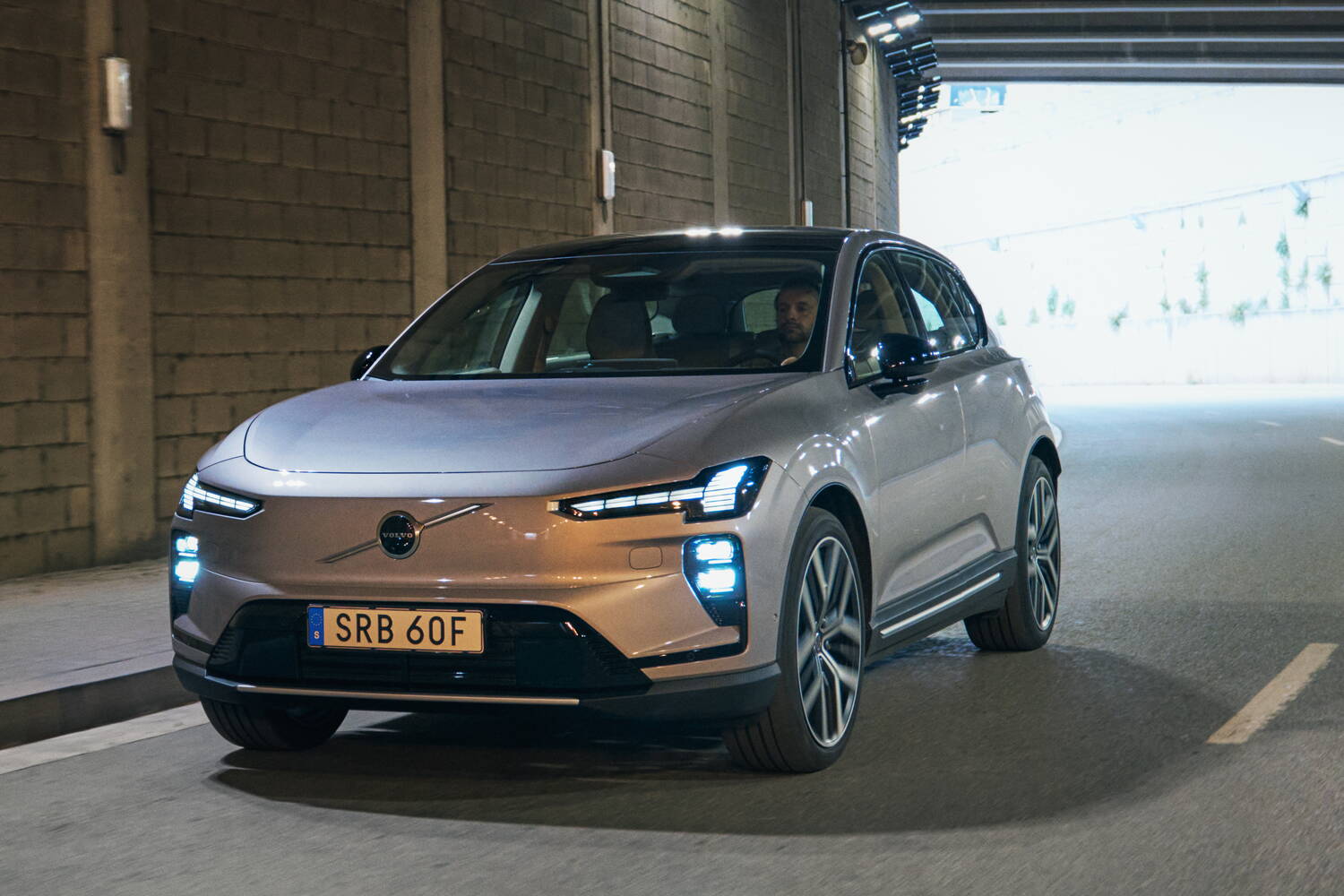
Not to the point of being bland, but it has smooth, uncluttered panels with no grille, just a large interpretation of Volvo's classic 'Iron Mark' badge to tell you what it is.
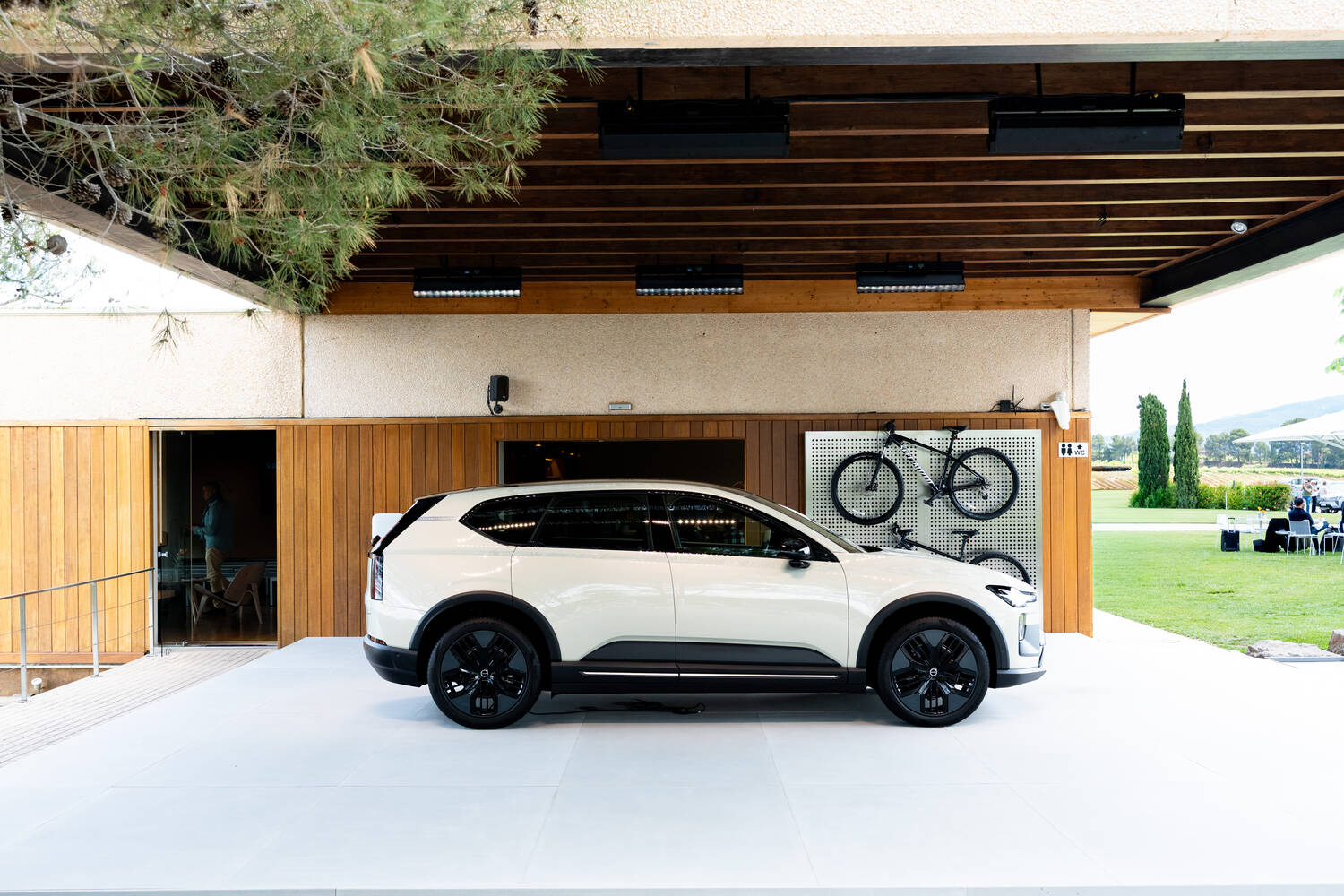
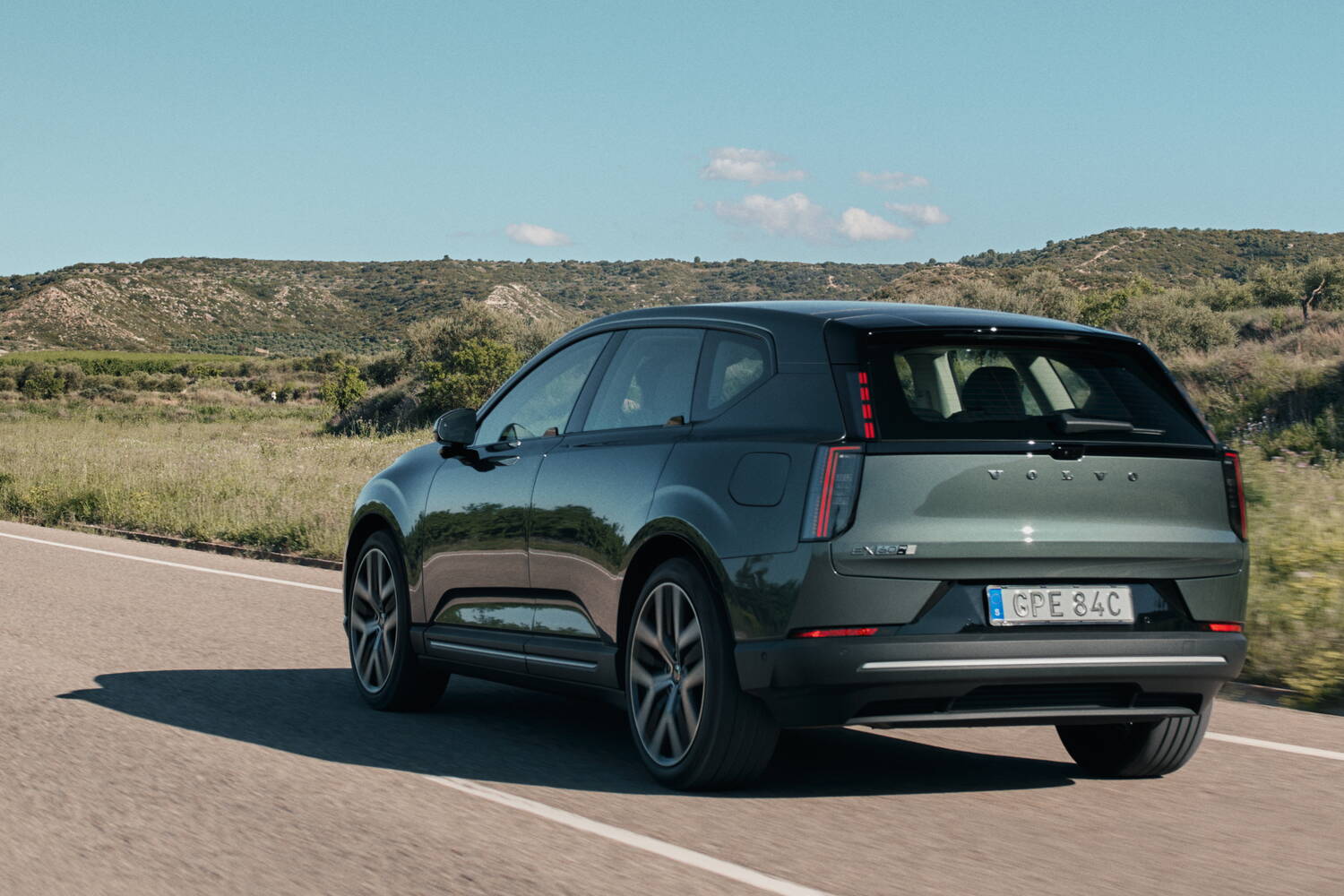
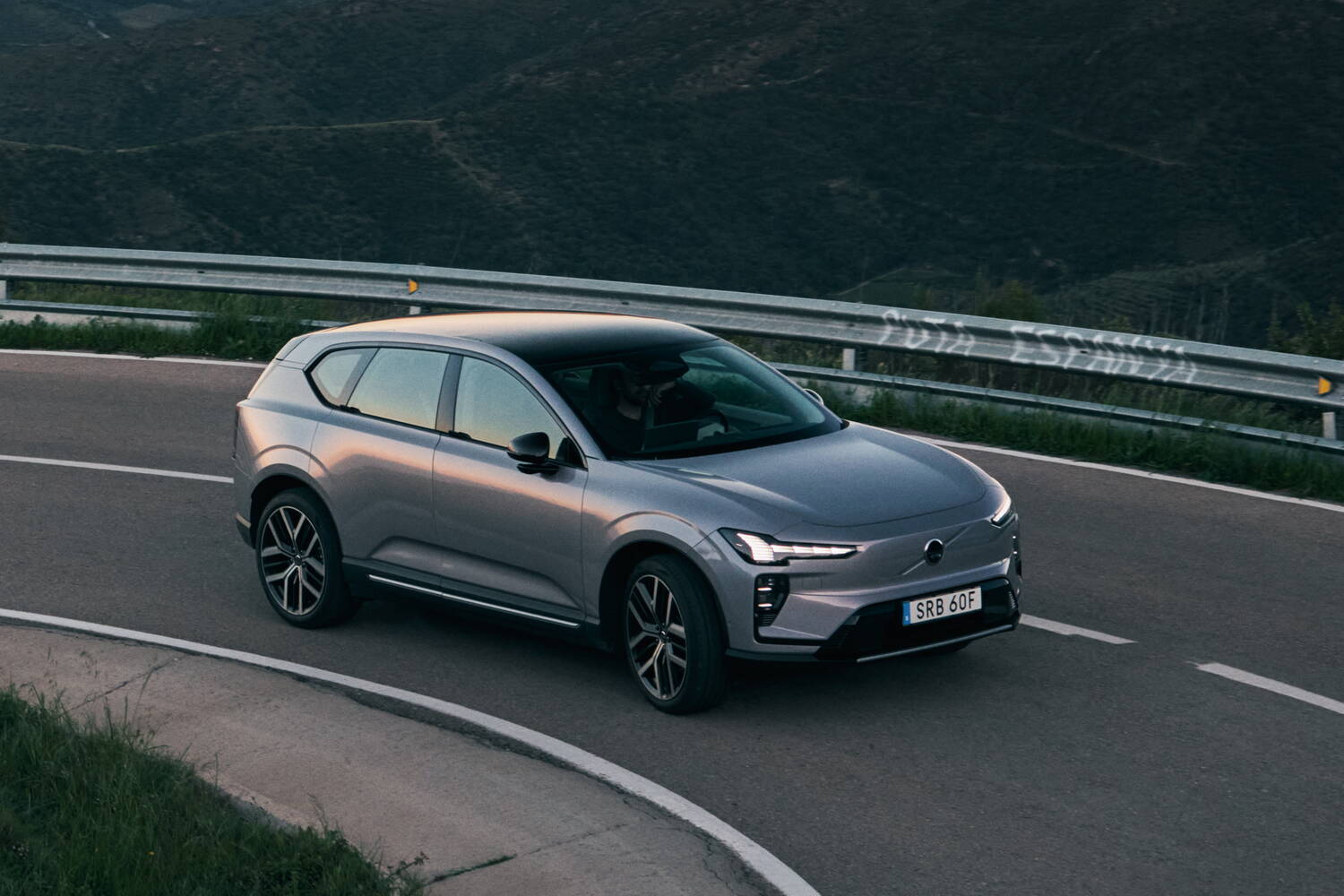
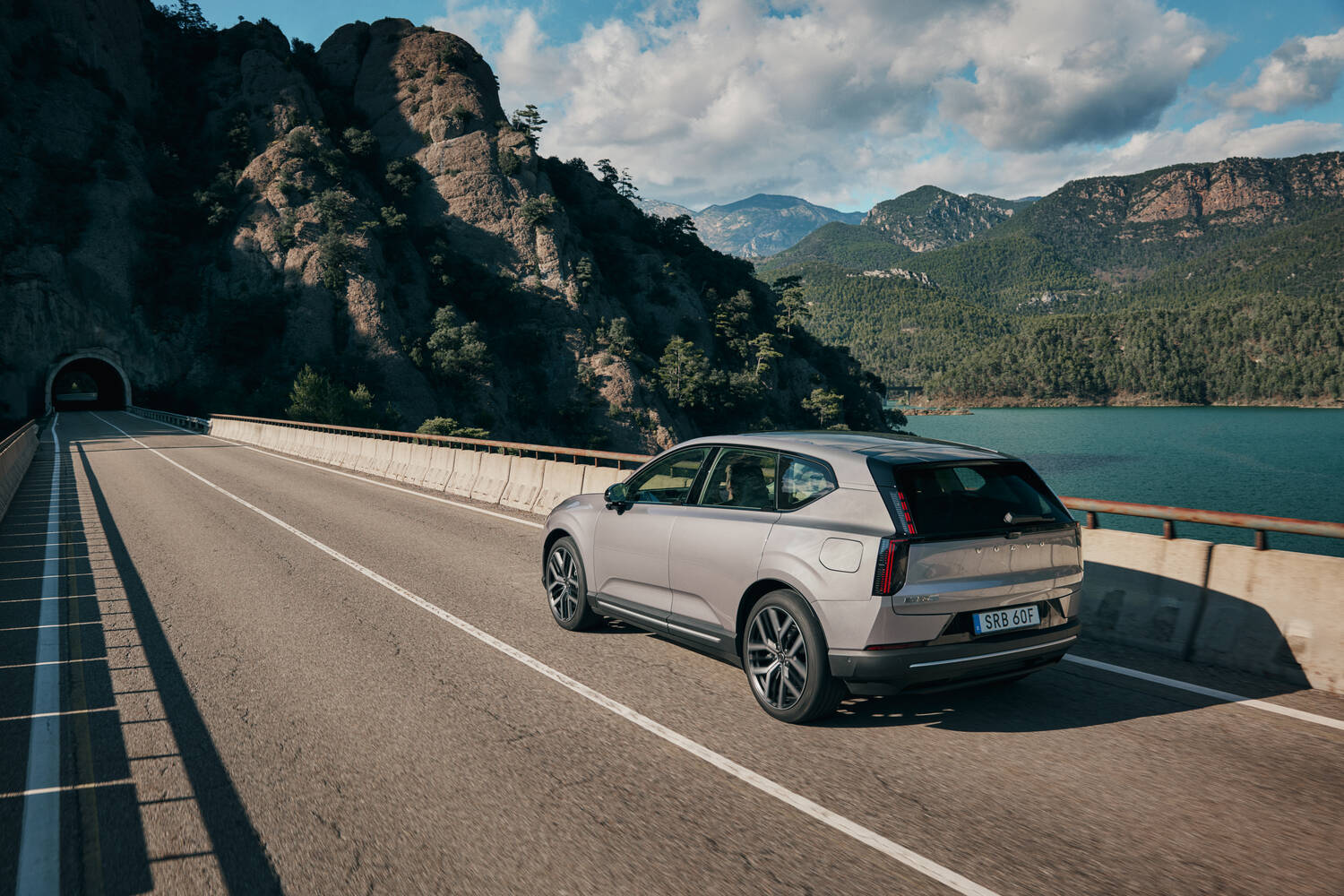
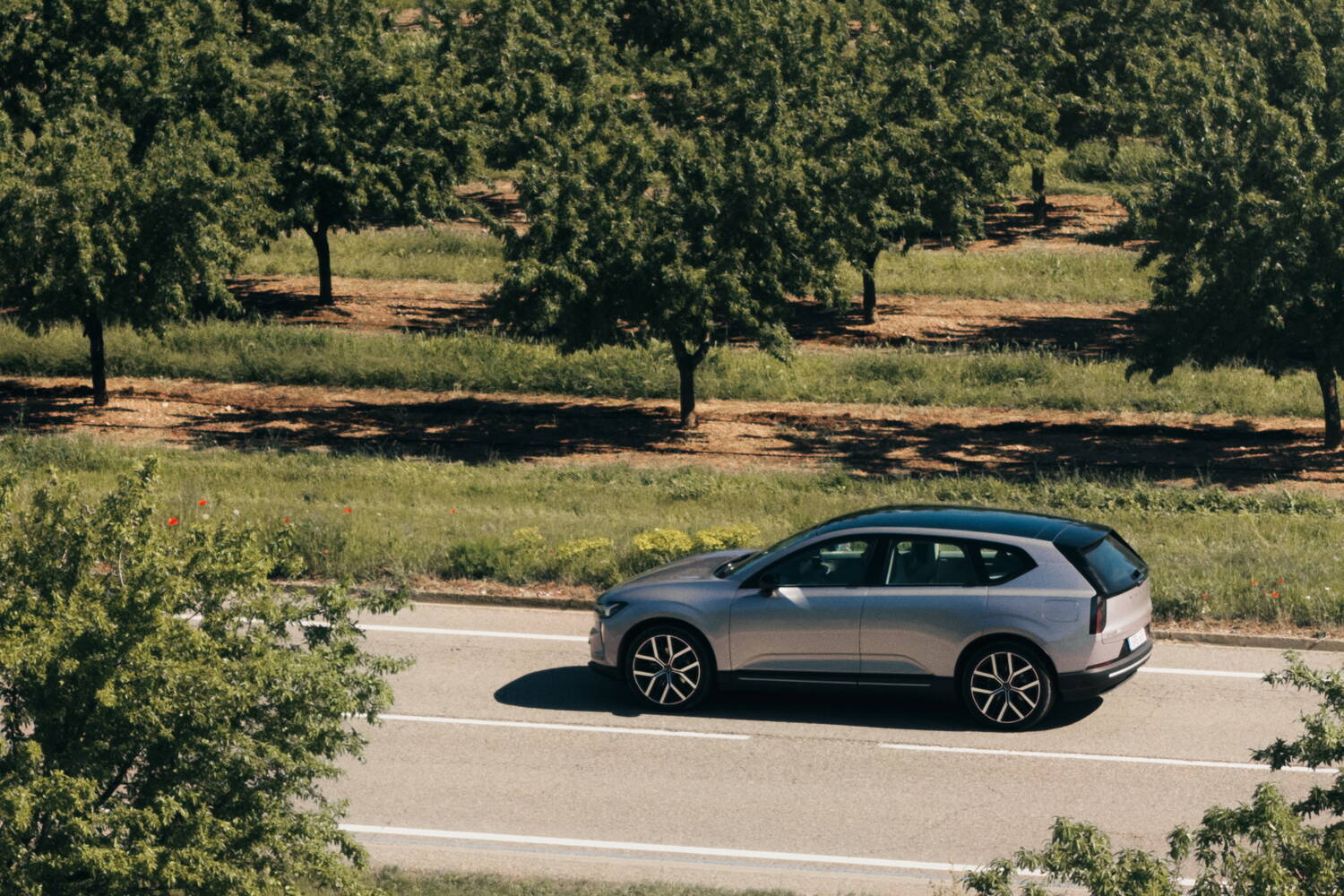
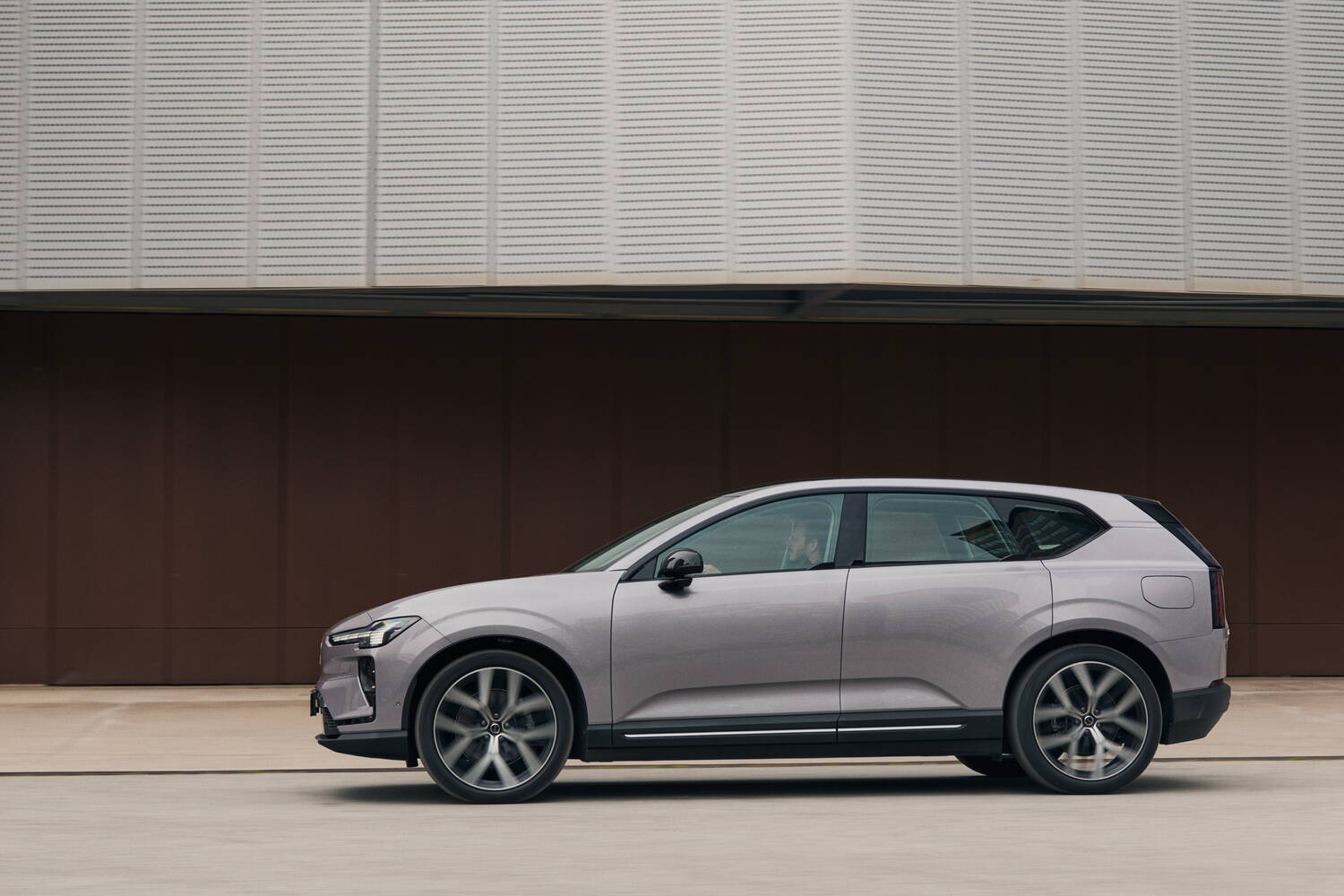
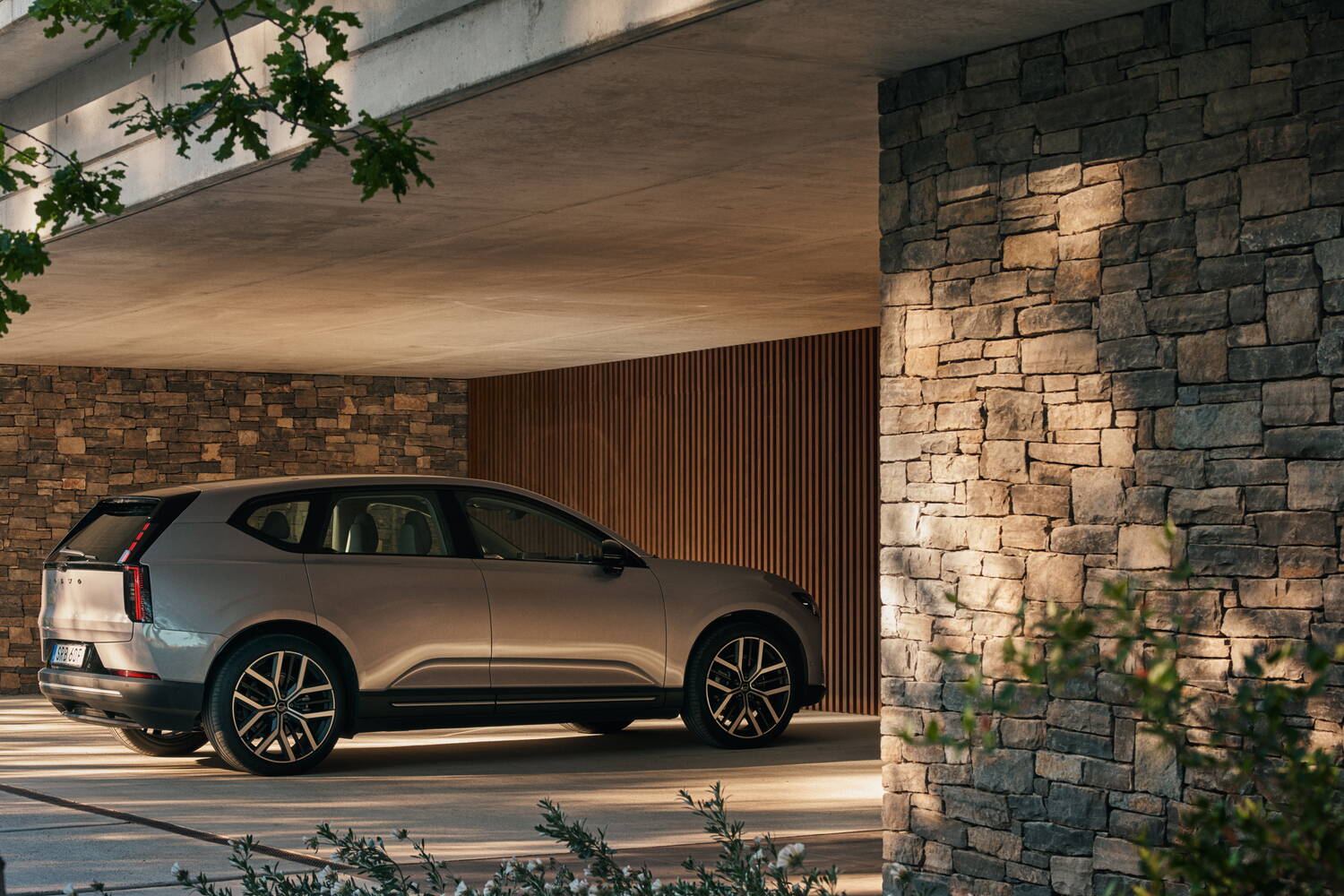
There is almost no ornamentation on the sides - aside from a little bit of dark plastic cladding in the lower reaches of the body. This helps both to pick it out as a rugged SUV and to disguise the height of the bodywork.
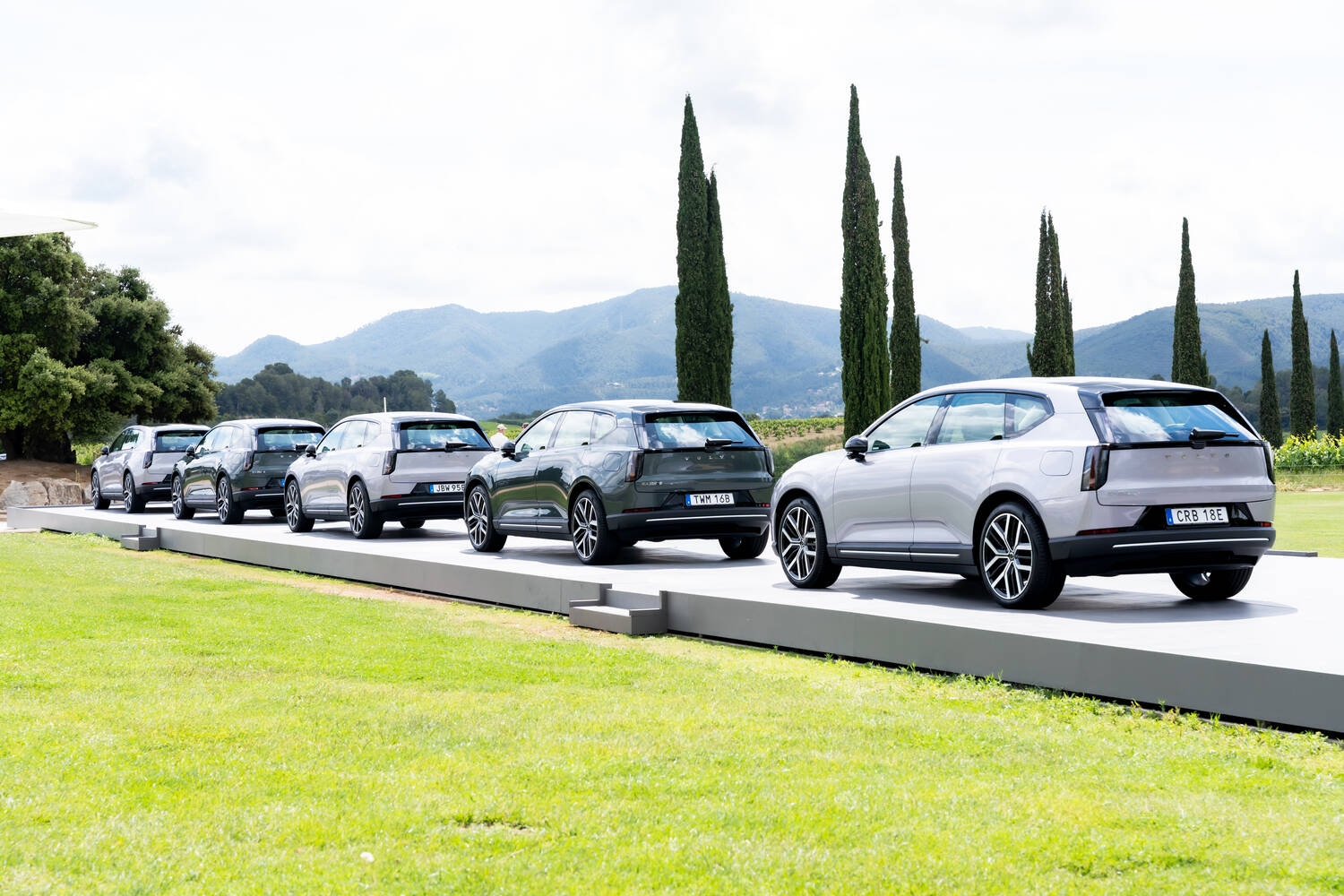
Instead of ornamentation, careful surface work does the heavy lifting, creating a clean, cohesive look. Those clean lines are set off by neat LED lights front and rear, with the pixellated 'Thor's Hammer' lights taking on the daytime running duties at the front, while the main and dipped-beam units are subtly integrated into the lower panels of the nose.

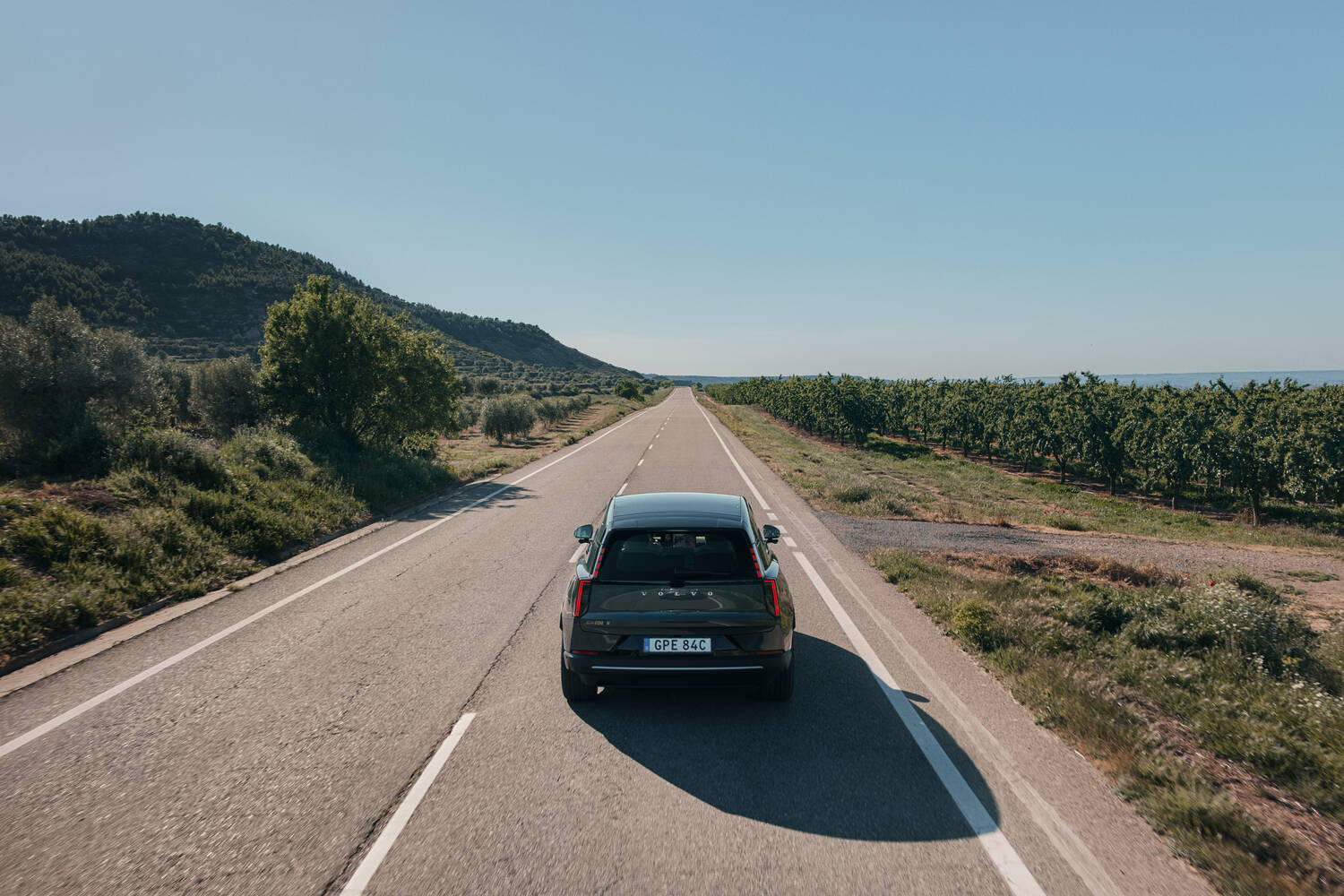
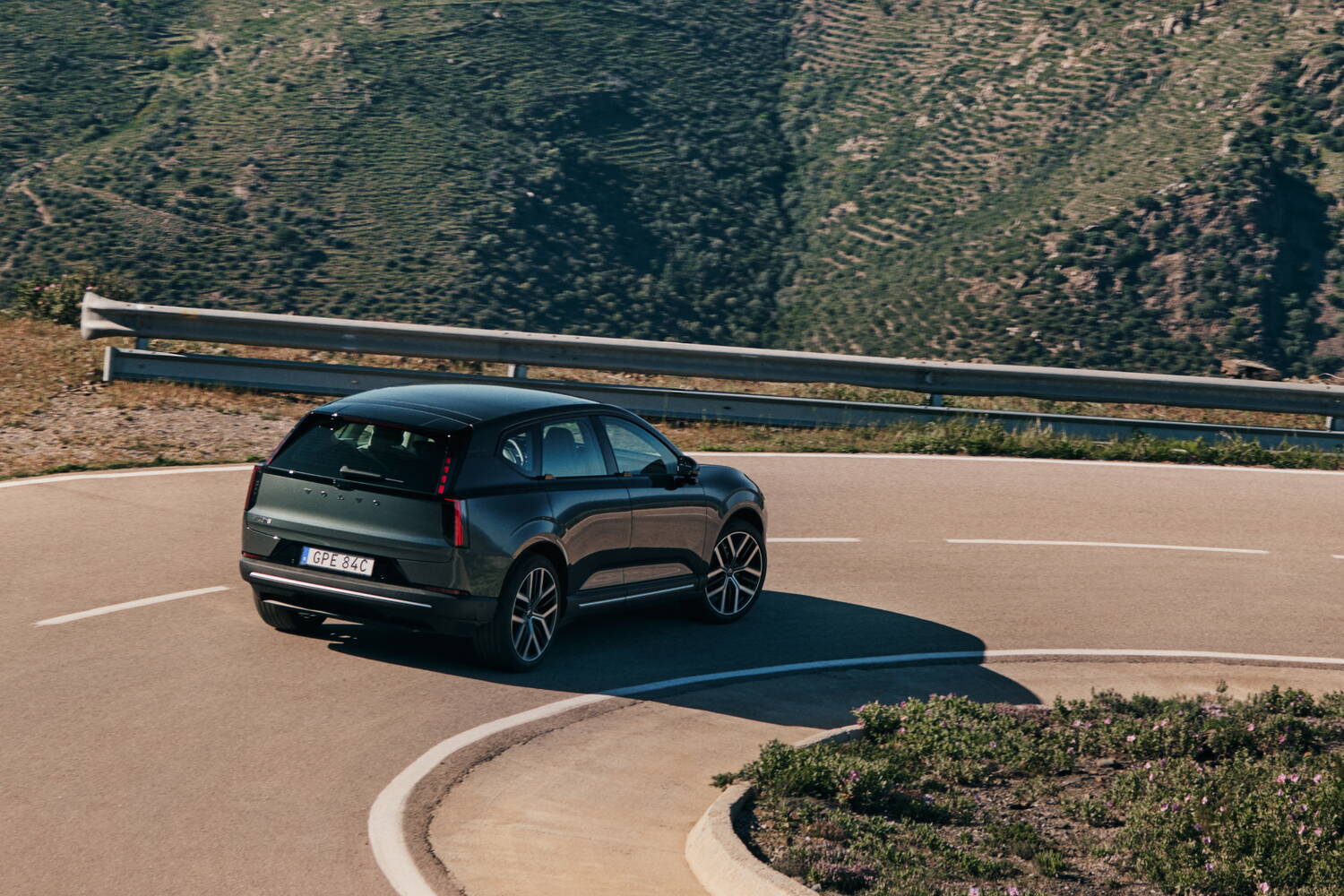
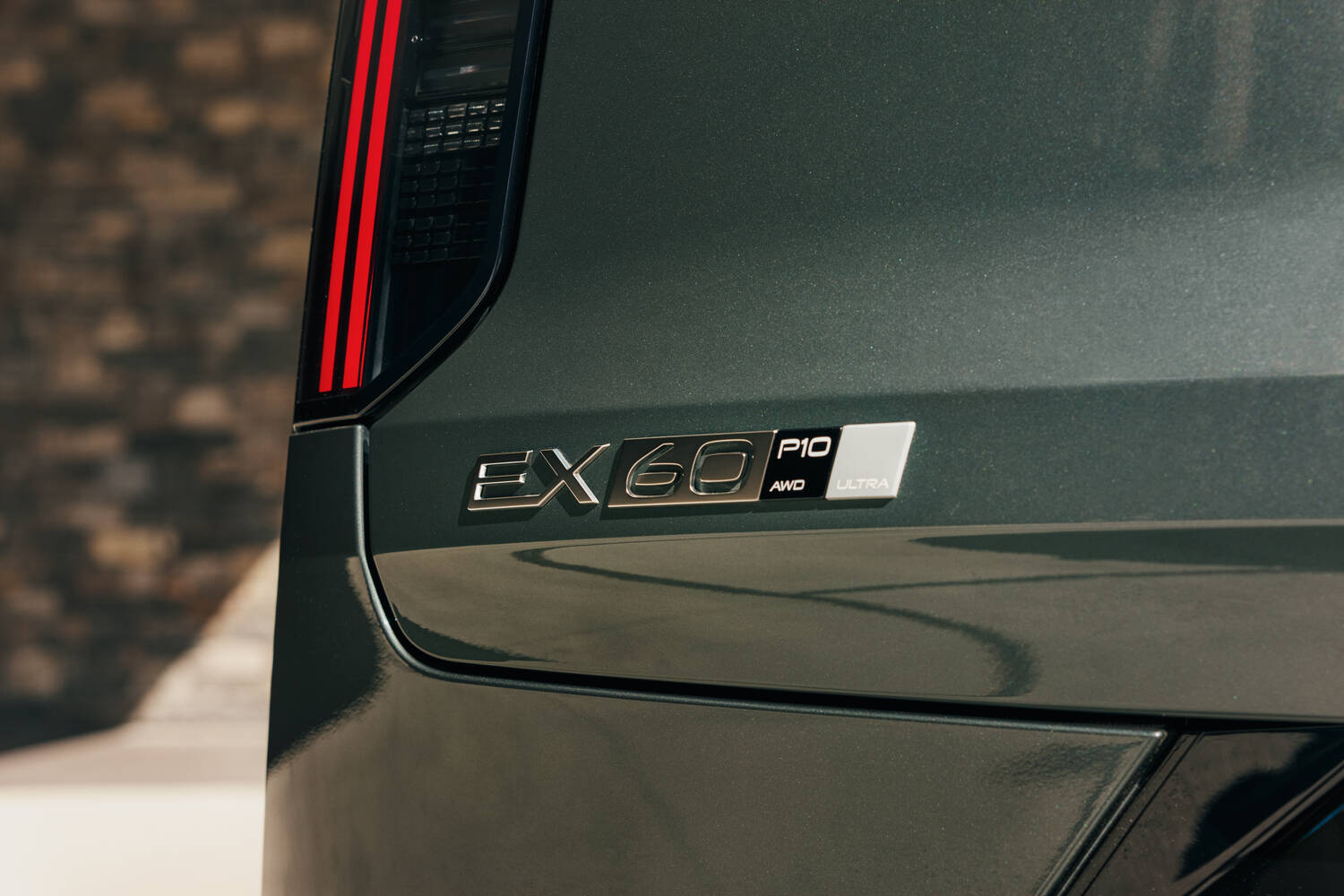
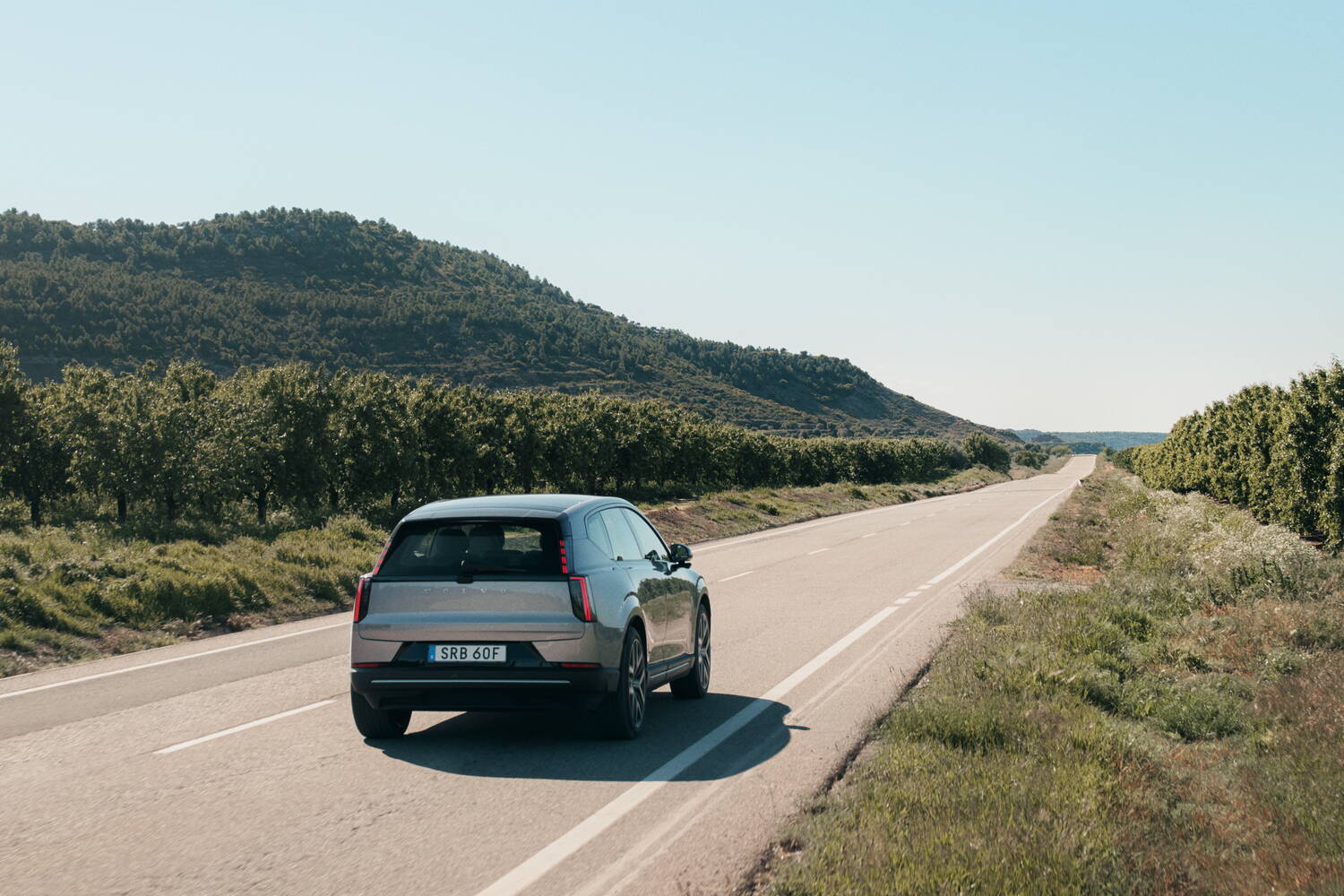
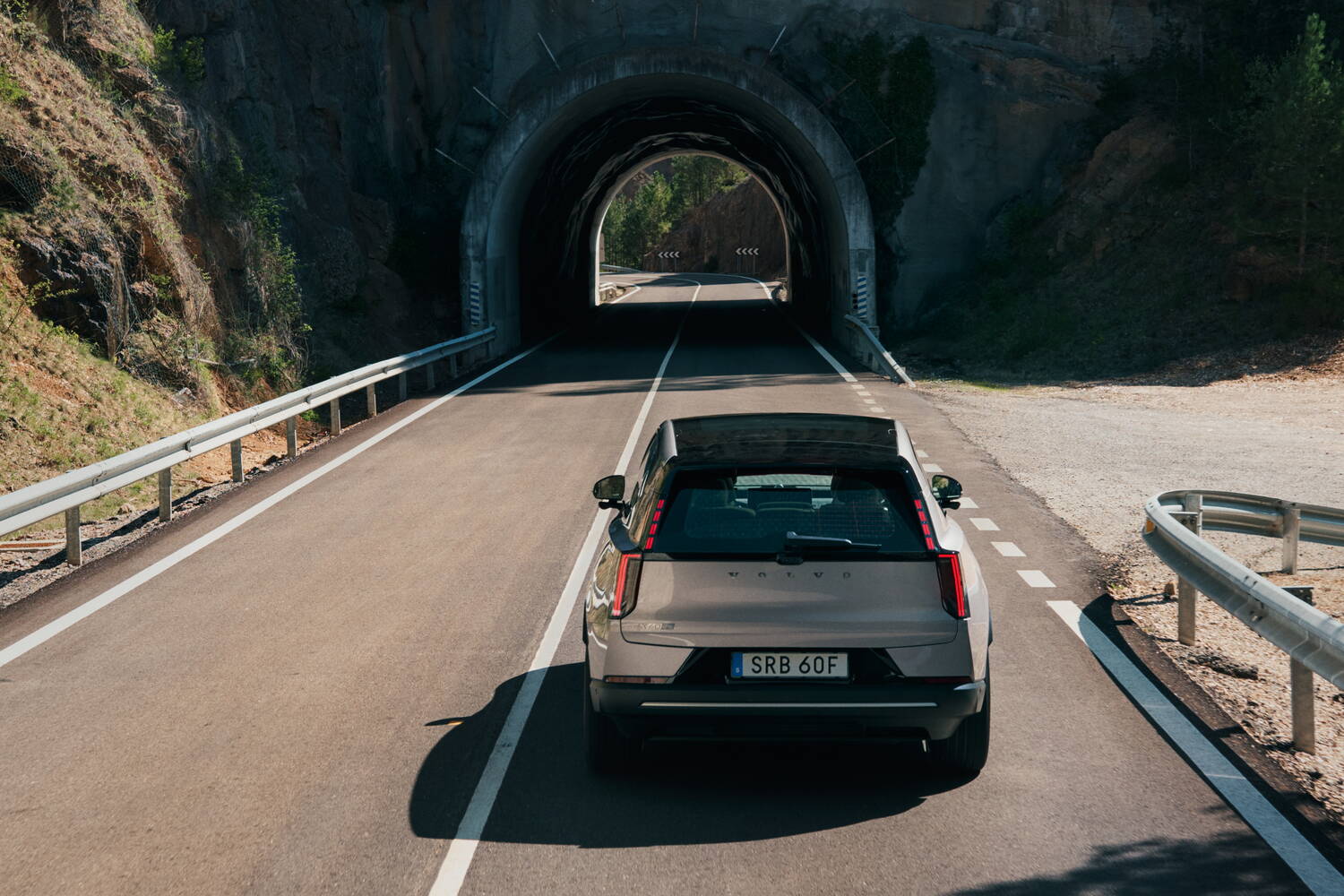
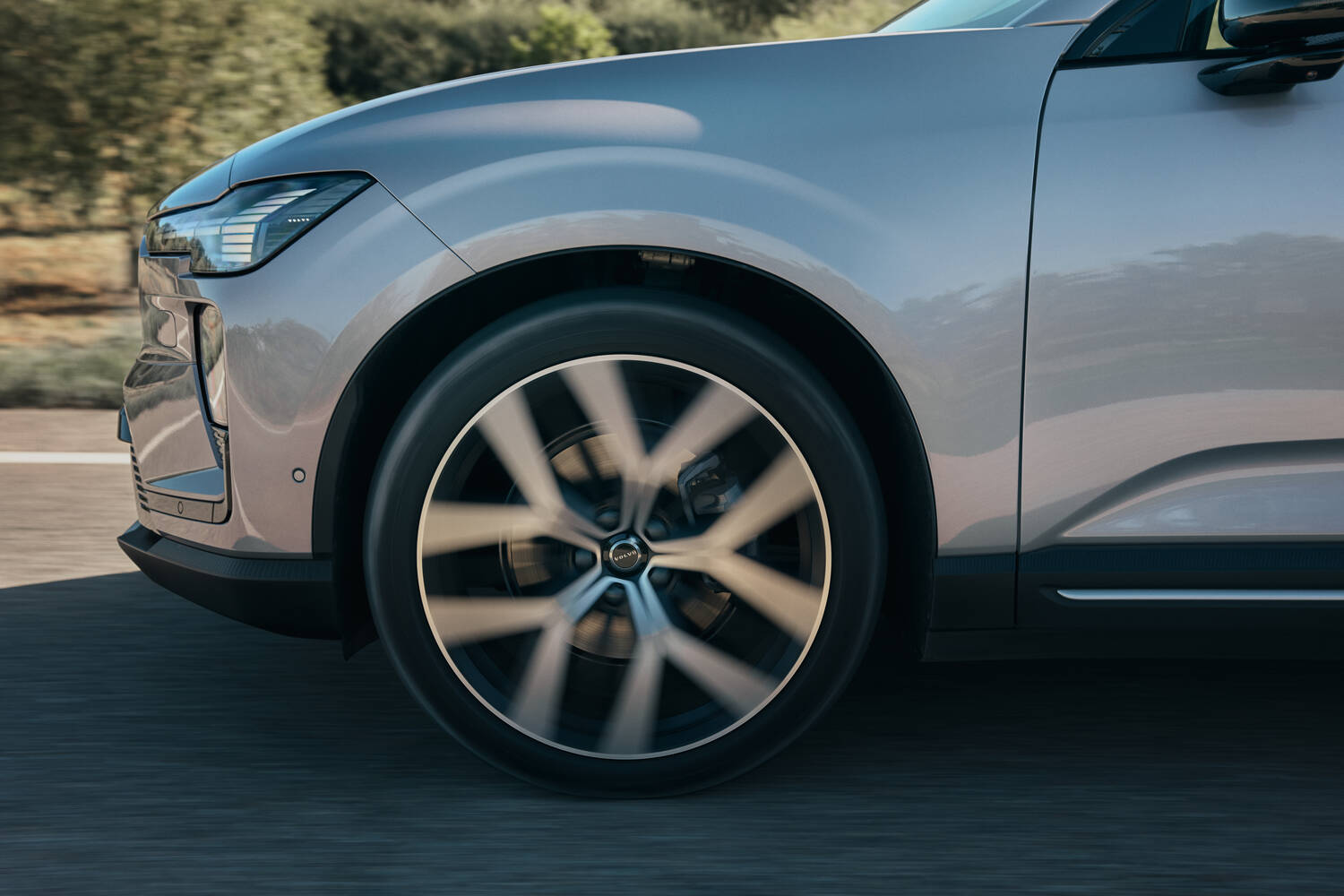
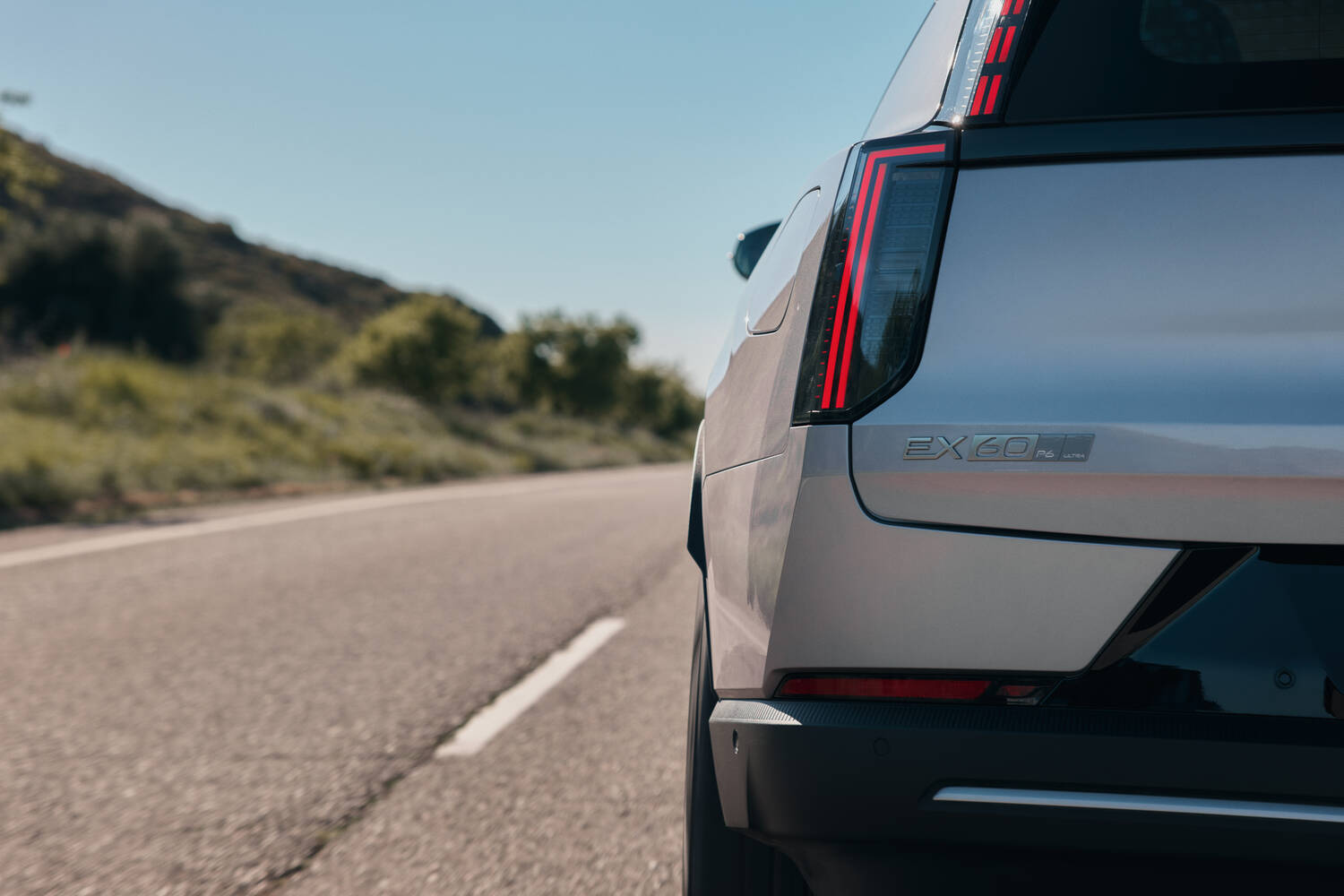
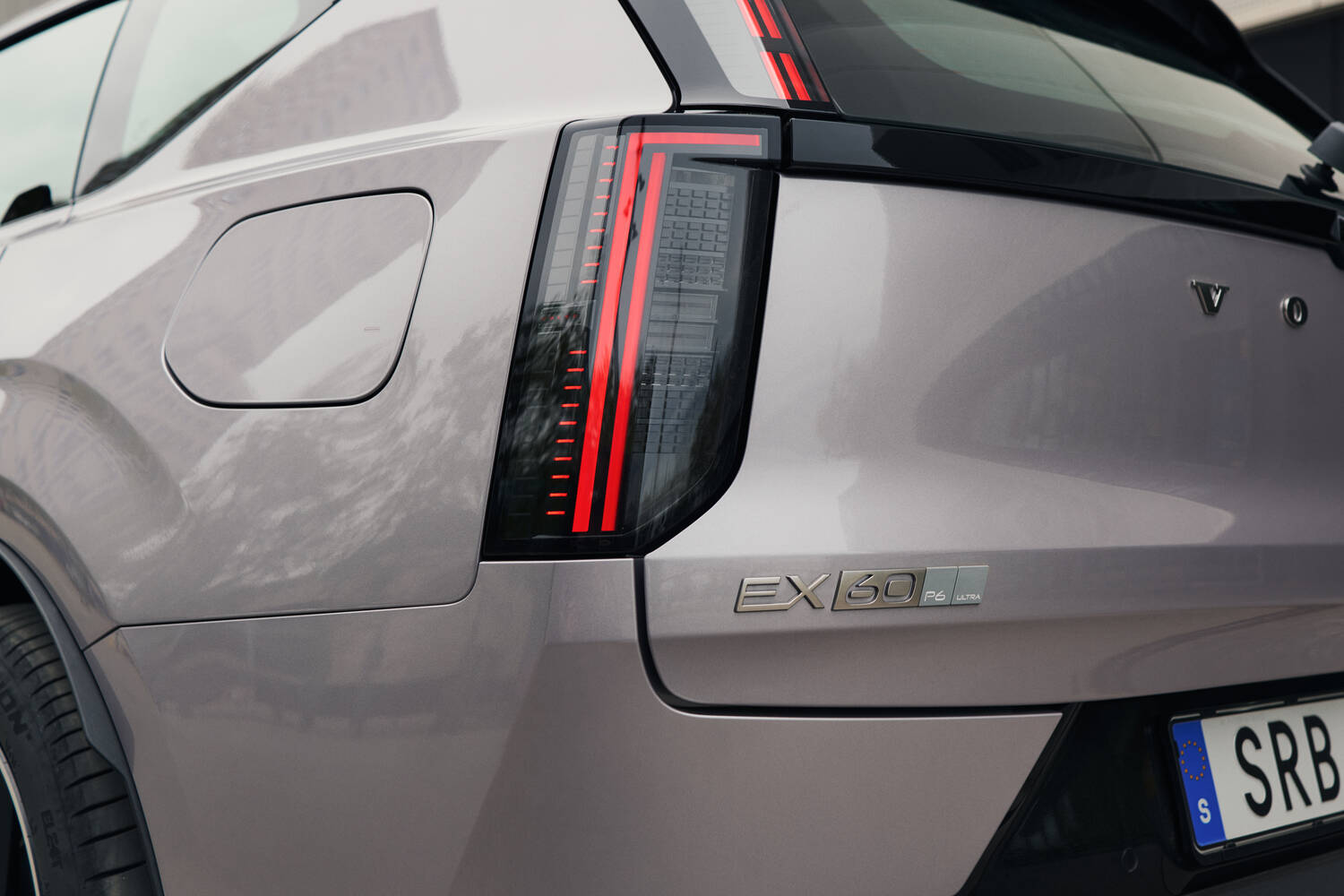
At the rear, there's a new variation on Volvo's traditional 'shoulder' lights, with split units making up a familiar shape. Alloy wheel choices - from 20-to-22 inches - are subtle and handsome.
While the EX90 might not get your neighbours palpitating in the same manner as if you'd parked a new Mercedes or Beemer on the driveway, equally we suspect that the Volvo's styling will age far better than those more fussy-looking cars.
It's also an SUV that manages to pack in plenty of interior and cargo space without looking needlessly tall nor bulky on the outside. That could be a crucial factor in the EX60's appeal if the SUV trend starts to fade, and more and more criticism of their environmental impact is thrown owners' way.

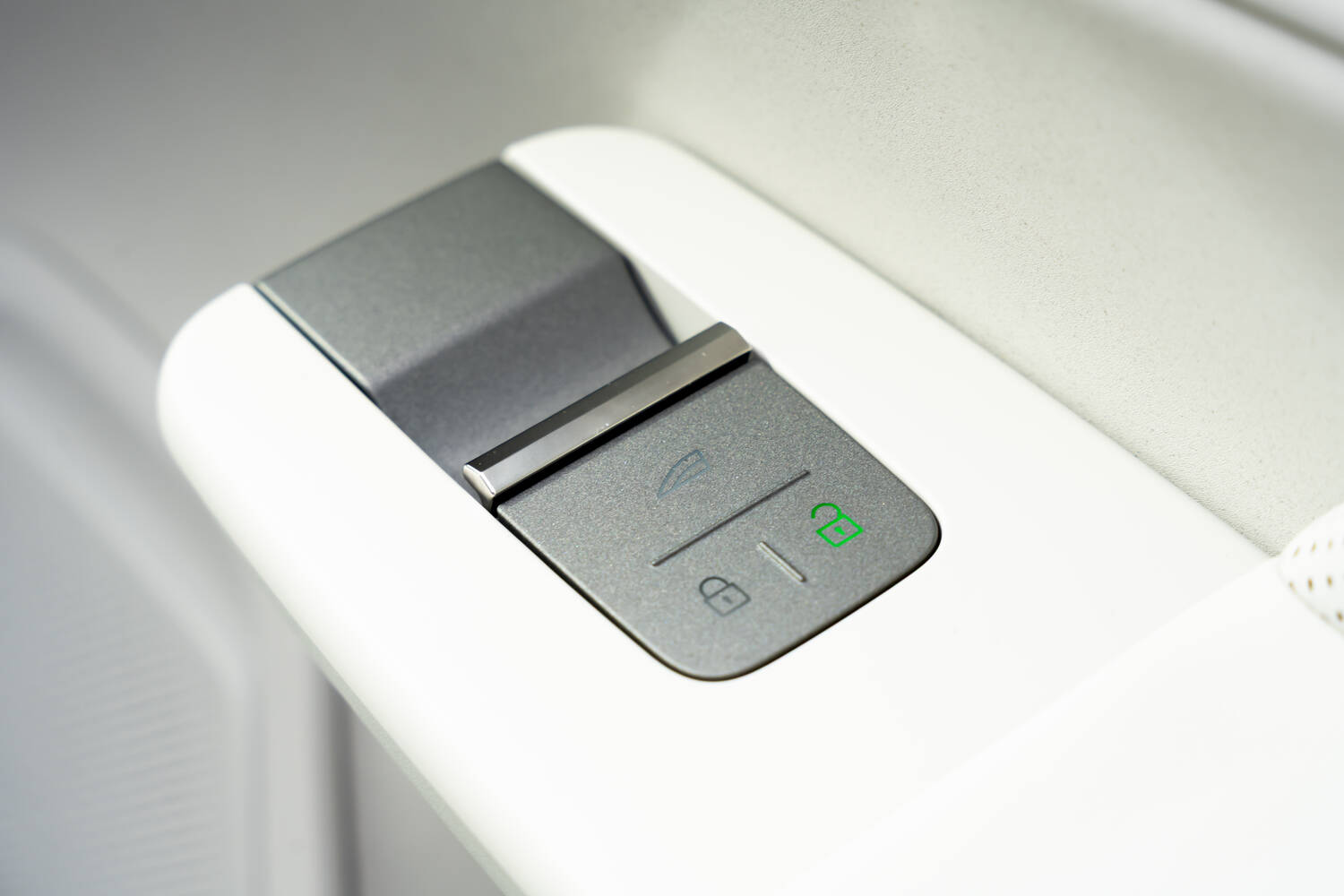
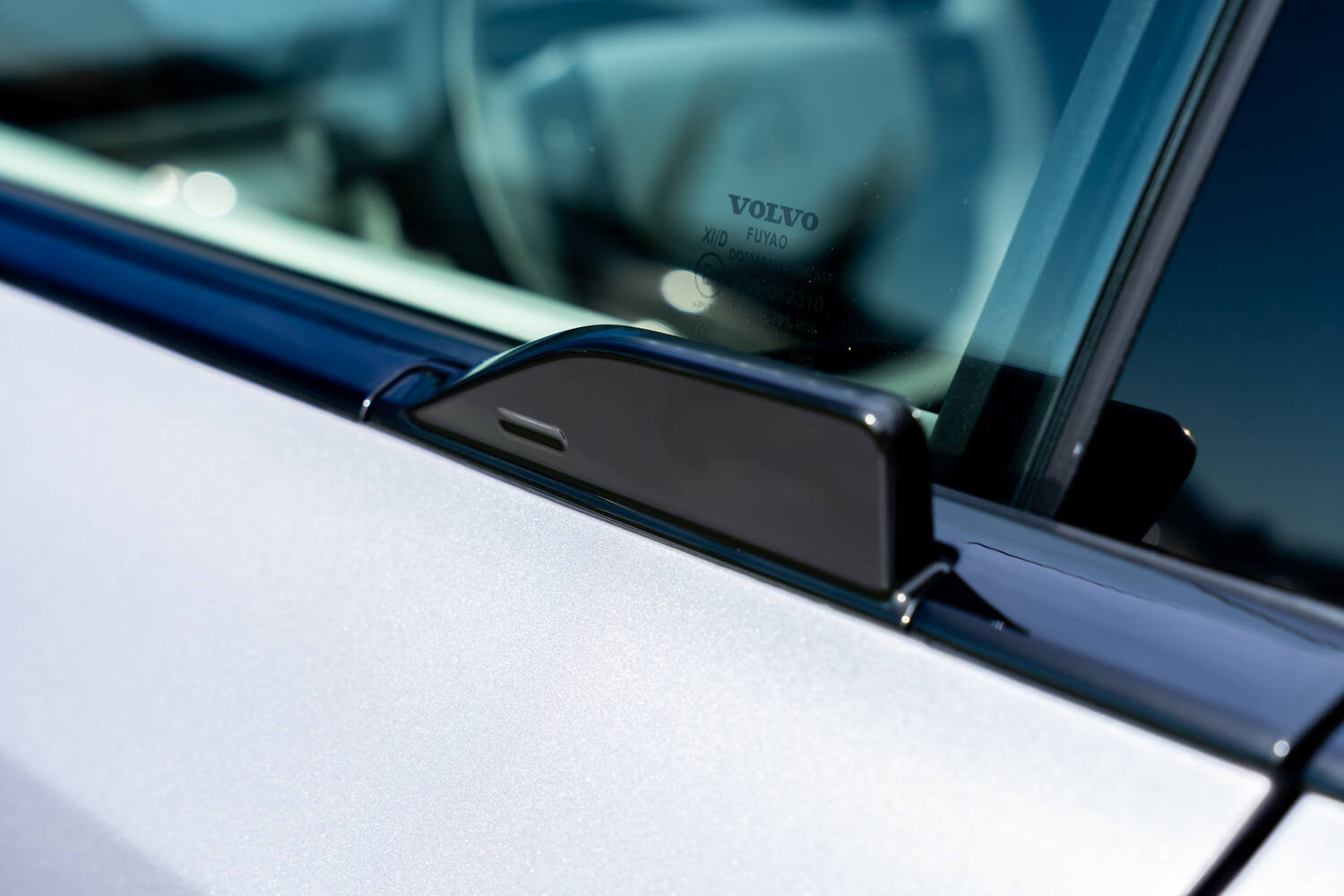
One thing that really helps with the clean lines is the absence of traditional door handles. Instead, the EX60 uses little blade-like sections at the top of each door, which have an electric micro-switch on the reverse side to fire the door latches.
These feel more natural to use than you might expect at first, but one wonders if they might eventually fall foul of safety legislation.
The interior handles, in case you're wondering, have a two-stage pull - the first pull electronically releases the latch, the second pull is a purely mechanical action, in case the electronics ever fail, although Volvo says that the electronic latches have multiple redundancies in the event of a crash.

Dimensions of the 2026 Volvo EX60
Length: 4,803mm
Width: 1,899mm (mirrors folded)
Height: 1,635mm
Wheelbase: 2,970mm
Paint colours for the 2026 Volvo EX60

As is common, the EX60's only no-cost colour option is Ice White, but thankfully Volvo doesn't graduate its other paint options - it's a flat €1,100 if you want to pick from Crystal White, Onyx Black, Denim Blue, Vapour Grey, Sand Dune, Aurora Silver, Forest Lake, or Heather Bronze.
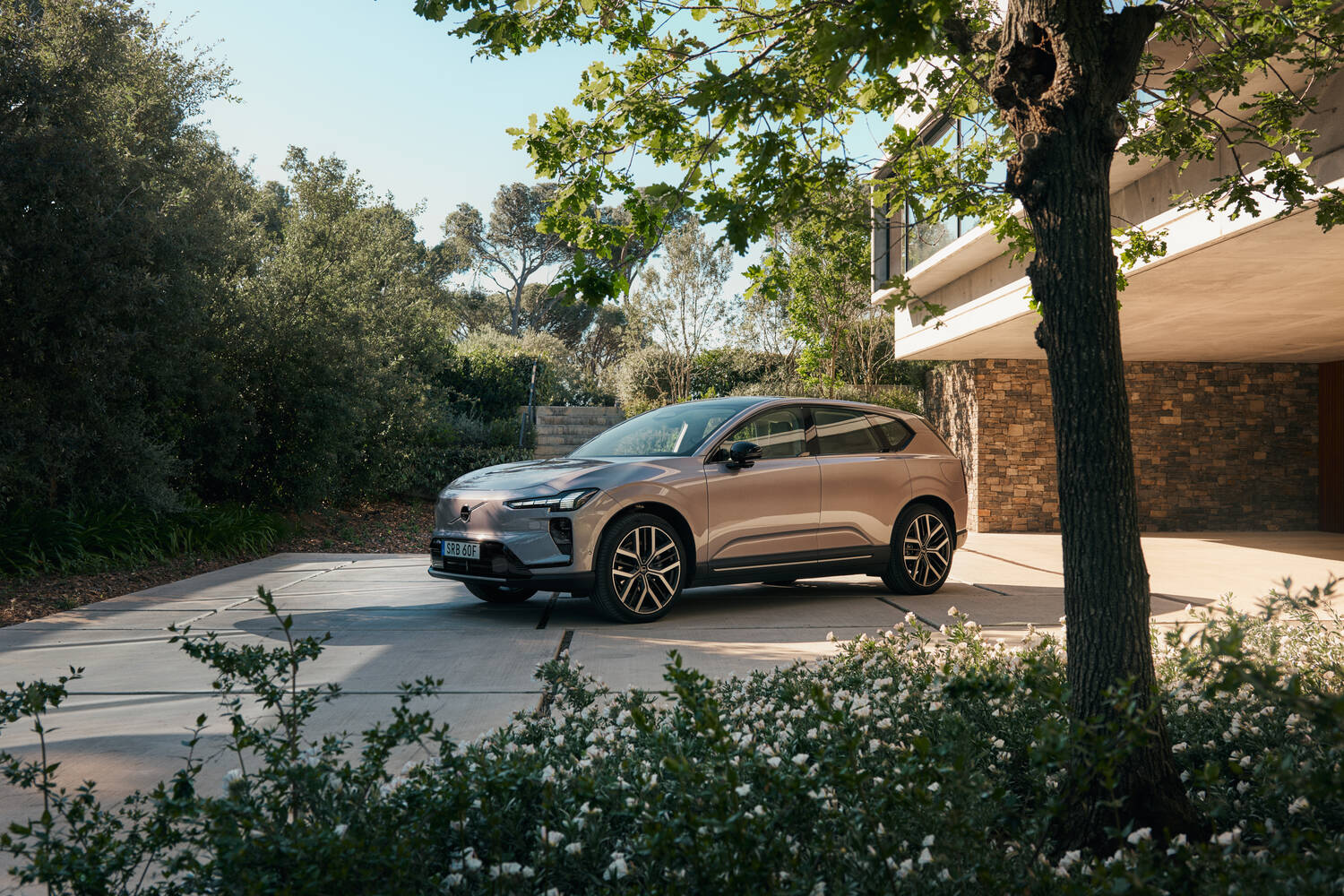
Normally, we'd pick the green option as our favourite, but Forest Lake is actually a rather dark and subdued green, so our pick of the EX60 colour options is Aurora Silver, which presents as a gunmetal-like shade on cloudy days, but as soon as the sun comes out you'll see the gorgeous mixture of pink and mauve highlights under the top coat.
Interior, practicality, tech & comfort of the 2026 Volvo EX60
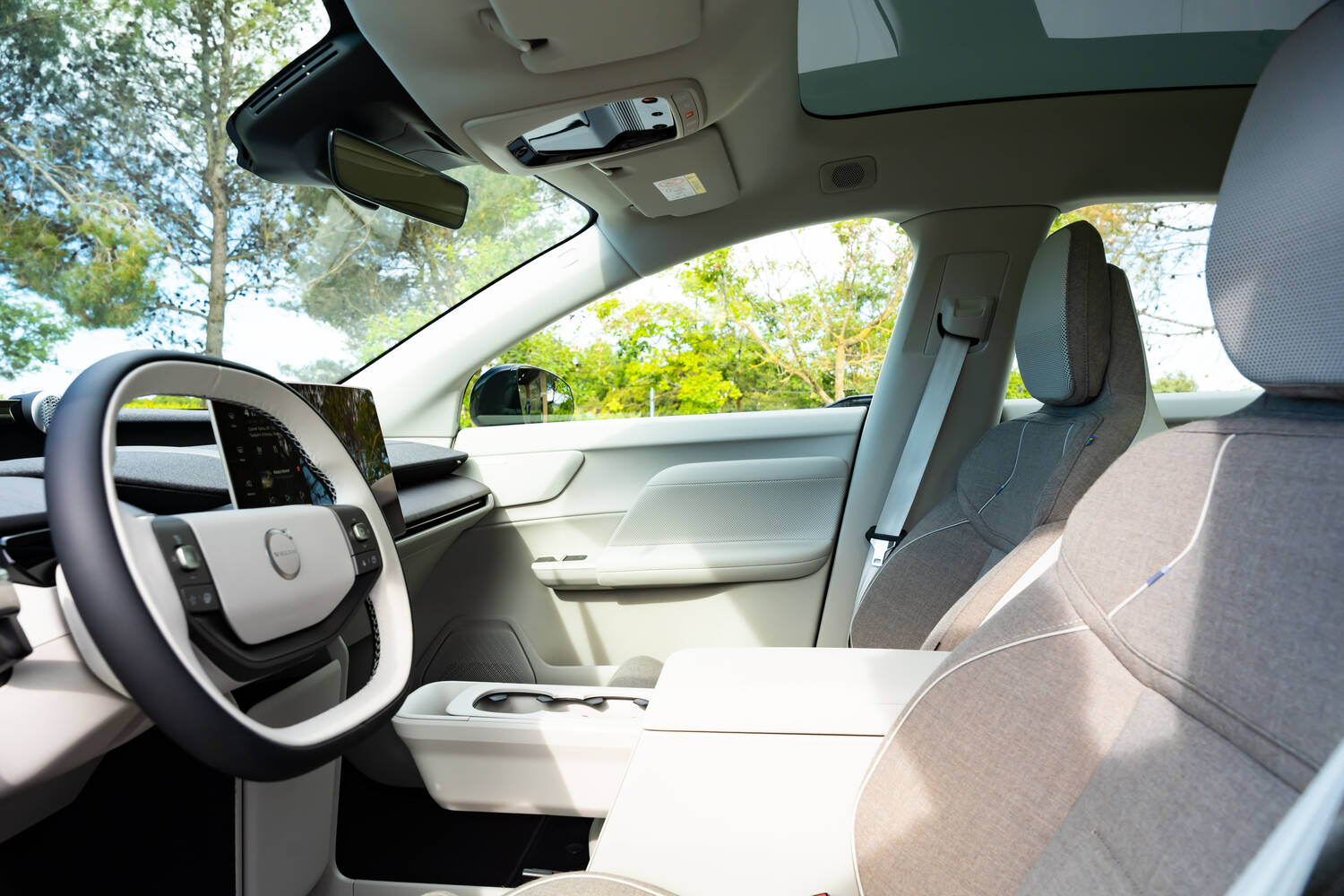
• Ultra-clean cabin styling
• High-quality feel
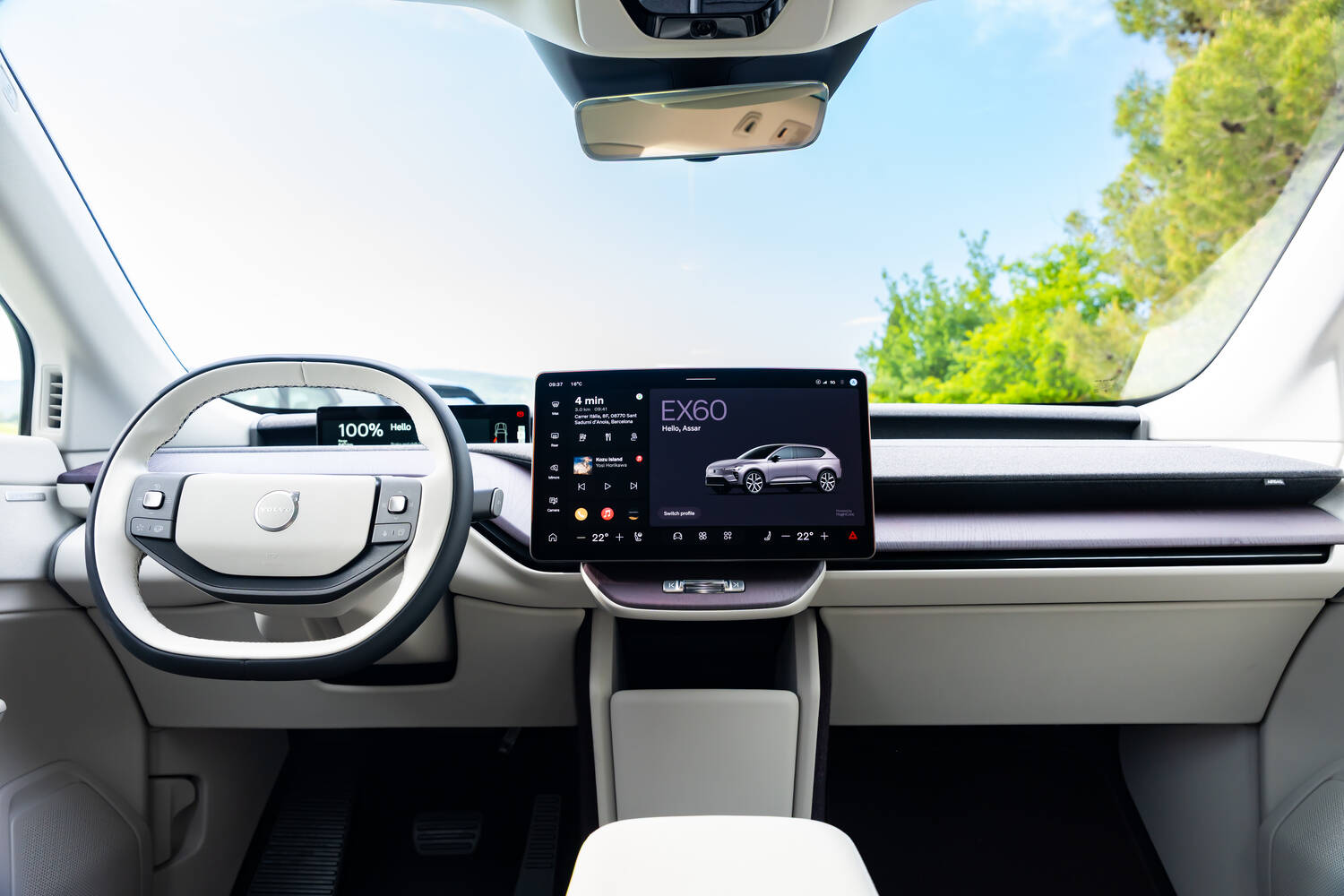
• Almost no buttons at all

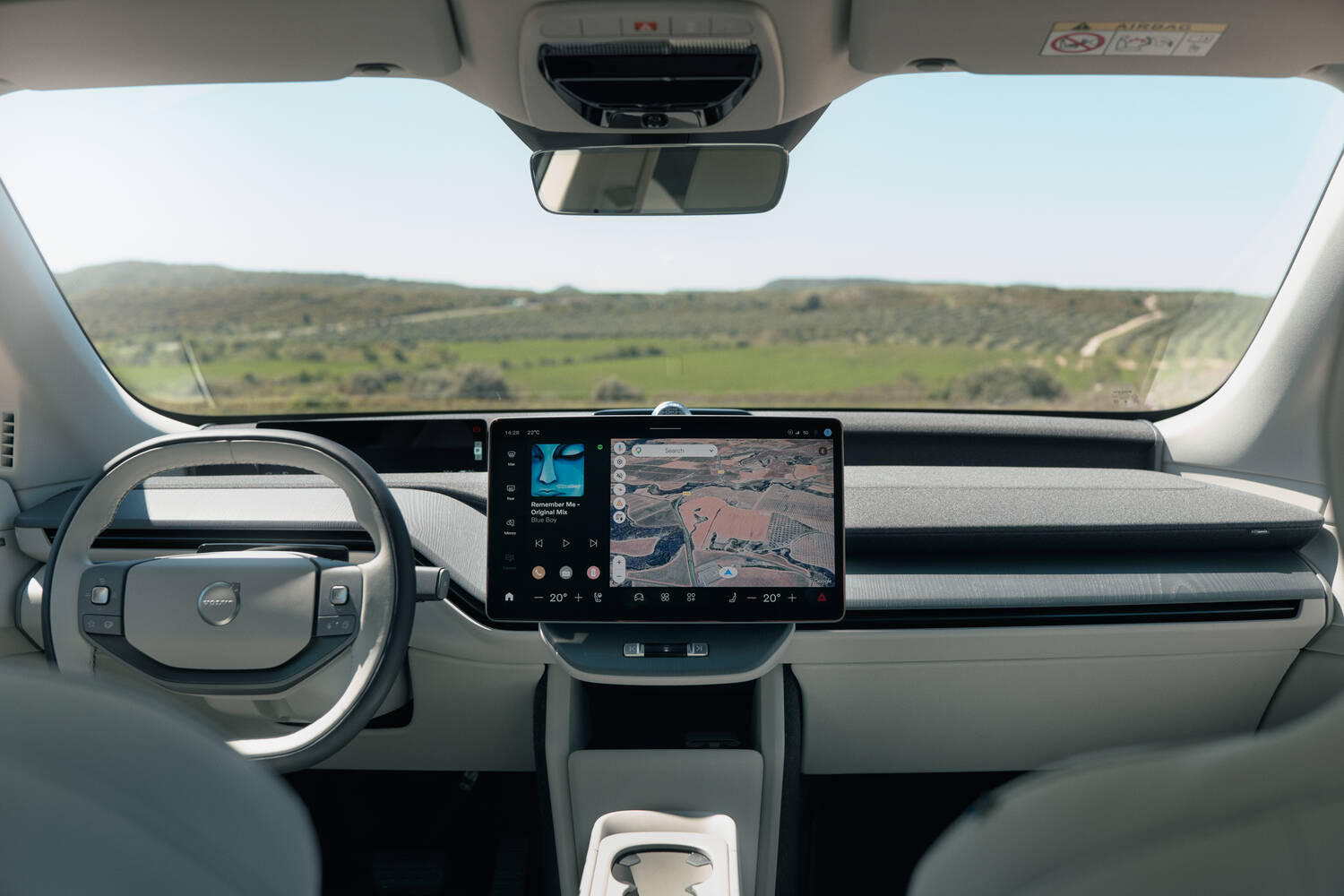
The EX60 uses the version of Volvo's software dubbed 'HuginCore' and it's digitally impressive. Better yet is the space on offer, and the high levels of fit and finish.
Getting comfortable in the driver's seat

There are few Volvos which don't have impressively comfortable seats front and rear, and the EX60 isn't about to break with tradition.
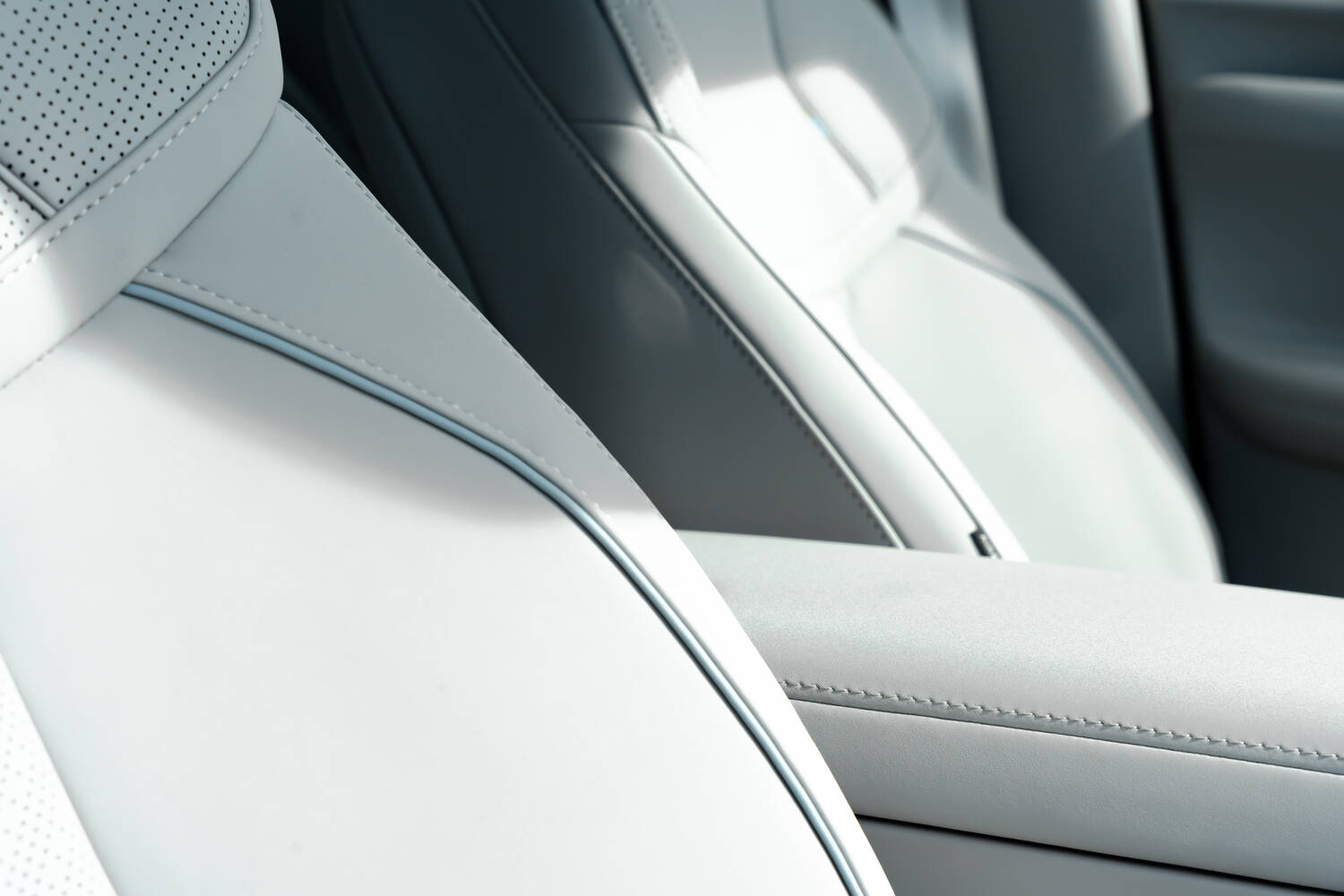
You can have a huge choice of colour and trim options for the seats, including lots of recycled materials masquerading as leather, or a full-on real Nappa leather option (costing, respectively, €1,000 or €1,750 extra).

However, we'd stick with the standard seat cover - a delightful mixture of 30 per cent real wool, from sheep flocks monitored for their quality of care, and 70 per cent recycled polyester. The material looks and feels more welcoming than the fake or real leather, especially in the warm tones of the 'Cardamom' option - a warm, pale brown colour.
There's a huge amount of adjustability in the seat, which is activated by a small off-square control on the side which you roll, slide and press for various adjustment options. There's also a manual pop-out section in the seat cushion, which gives you better support if you have long legs.
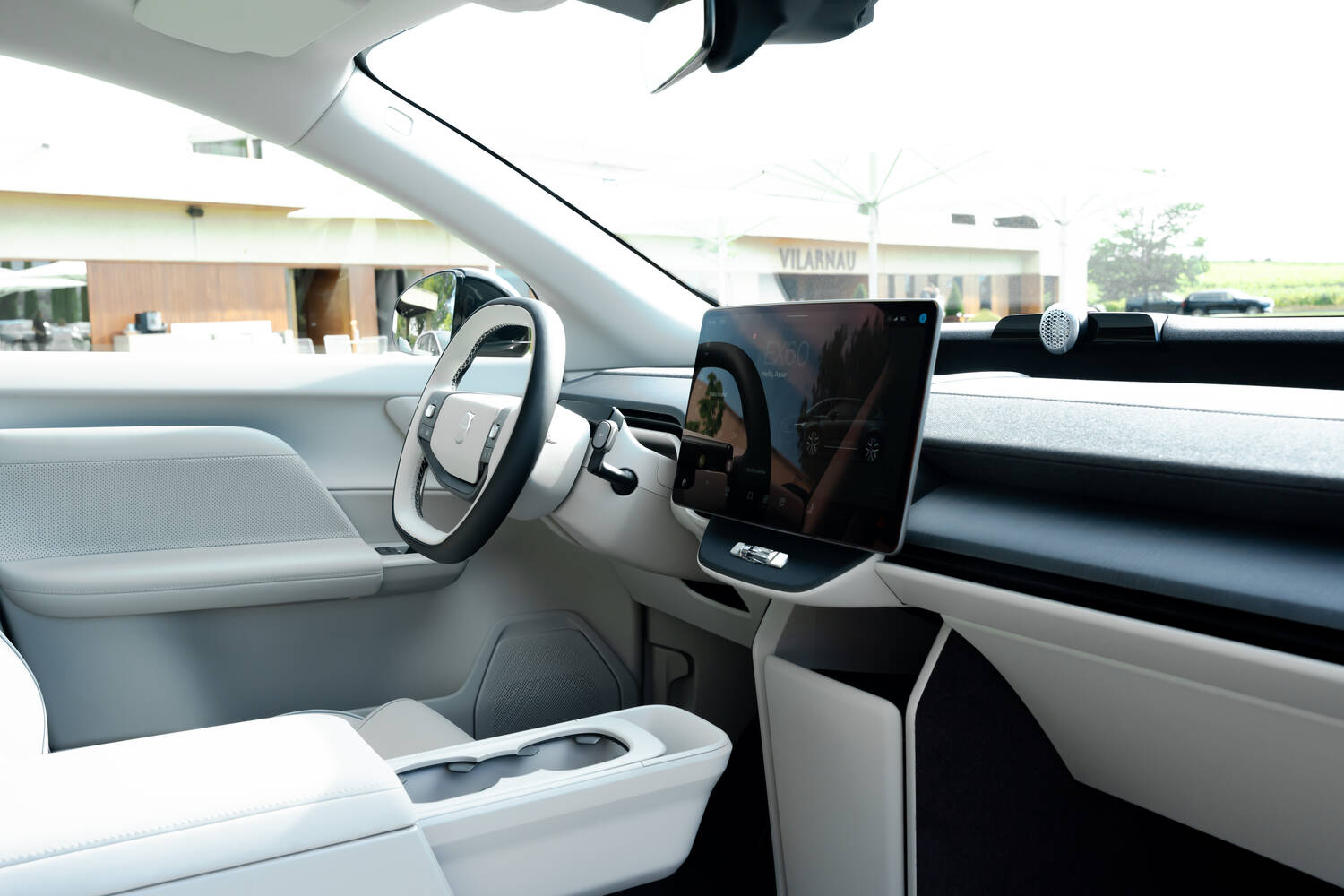
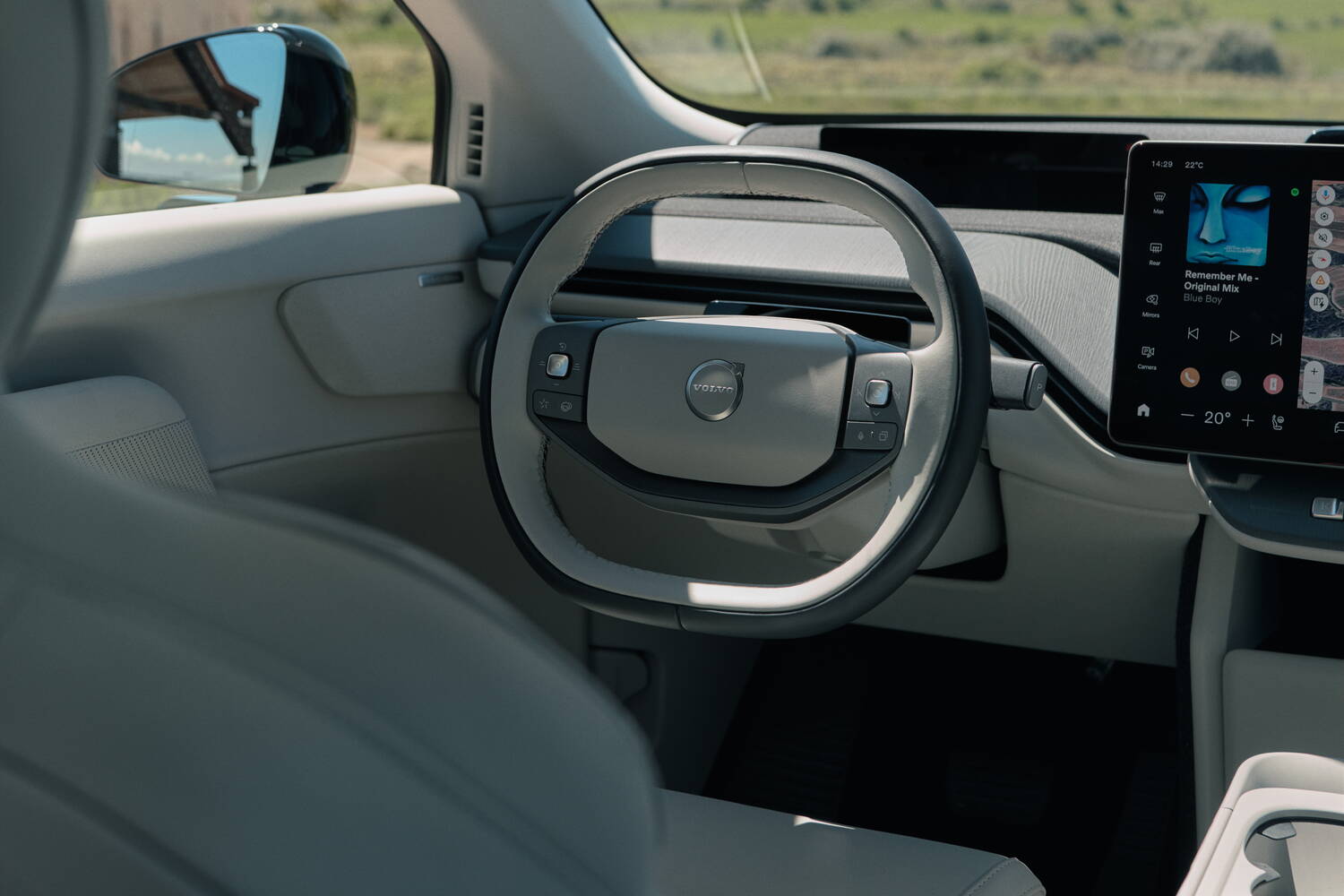
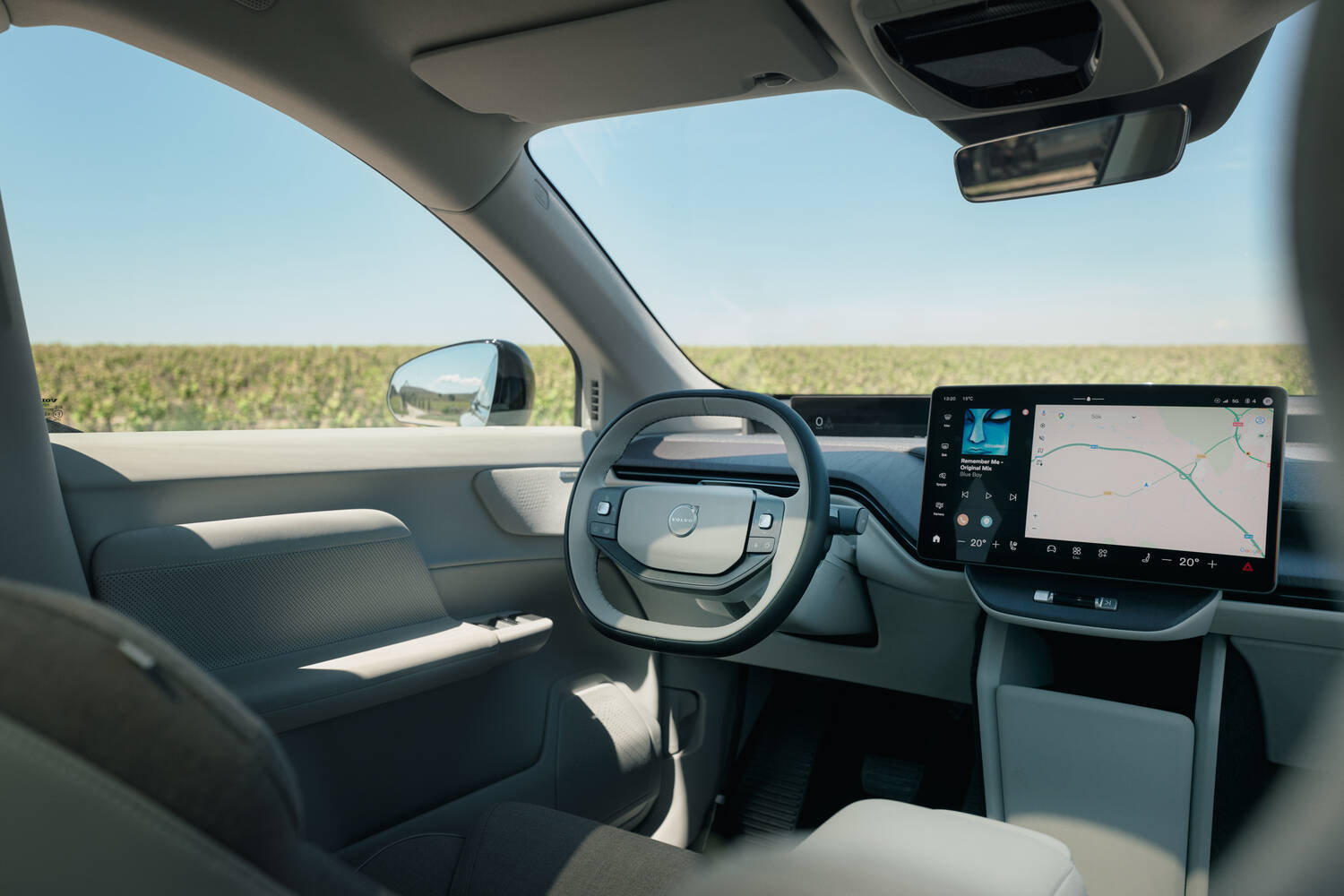
The relatively small steering wheel, slightly squared-off in its shape, also has plenty of adjustment but annoyingly, as with other Volvo products, you have to use a combination of on-screen controls and a multi-function toggle on the steering wheel to adjust both it, and the door mirrors. Modern vehicular over-complication...

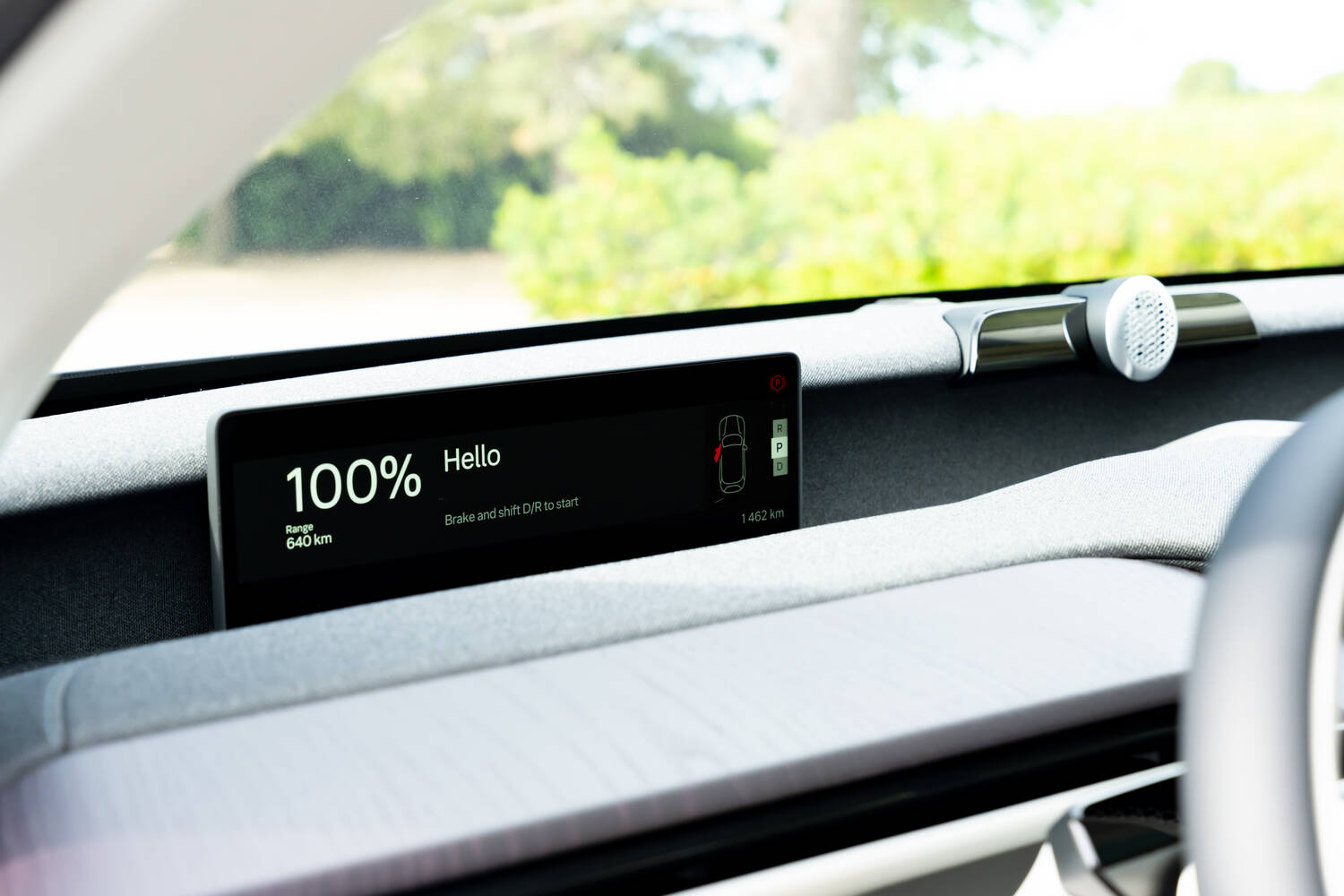
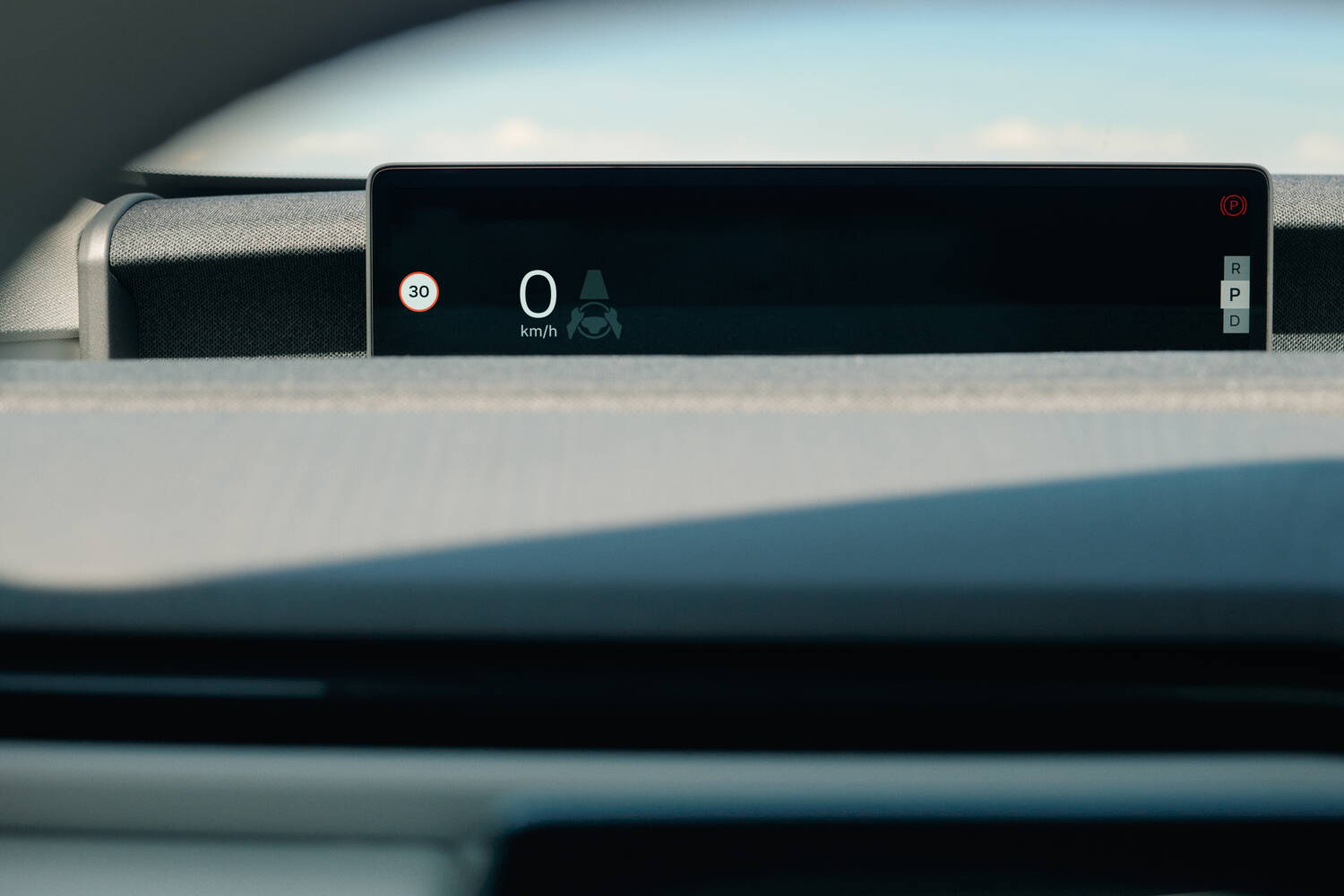
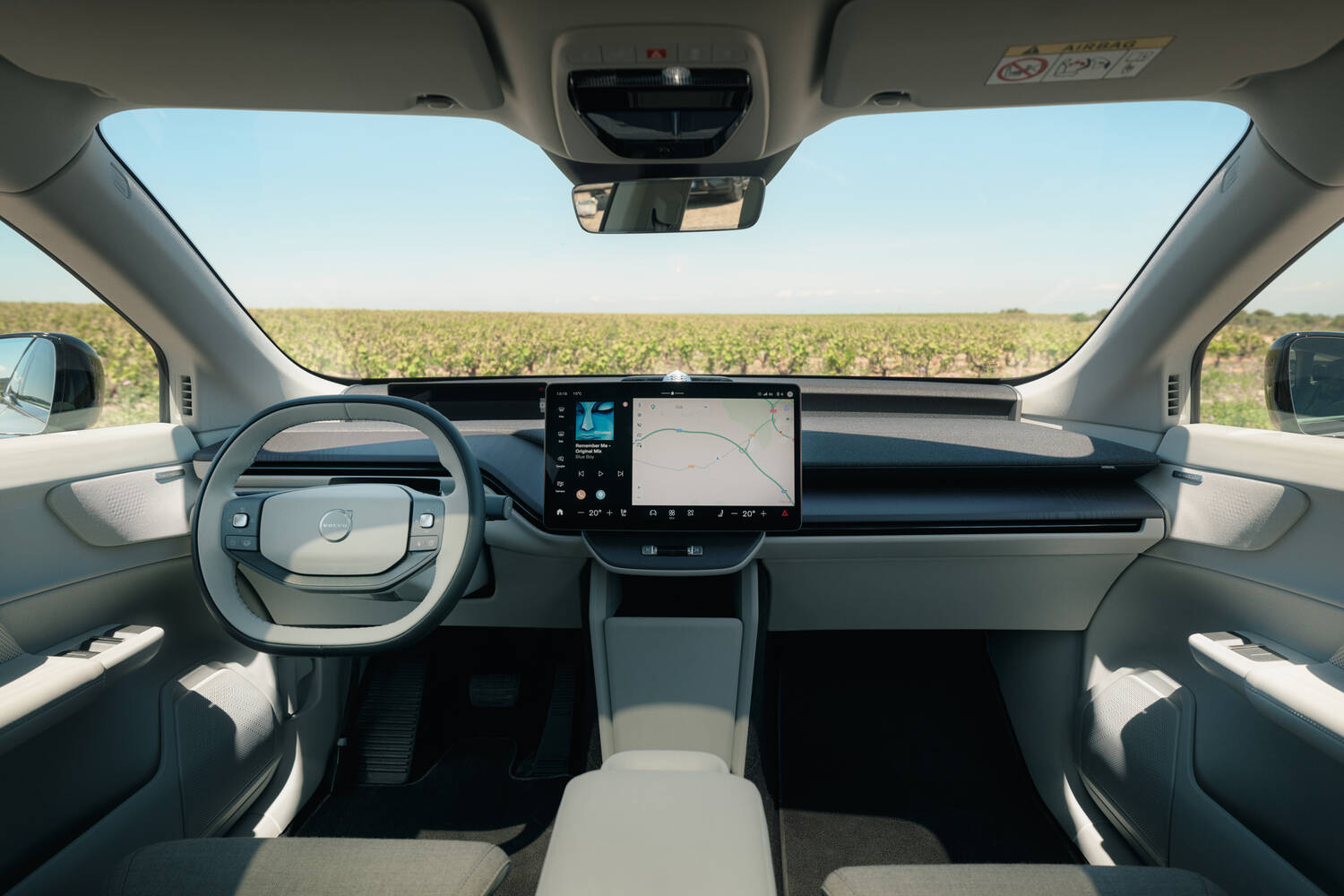
Still, it's certainly possible to find a very good driving position, and the position of the driver's instrument panel - clear, simple, attractive in its graphics - set, as it is, high up at the base of the windscreen, means that there's no need for a head-up display projected onto the glass.
Infotainment and technology

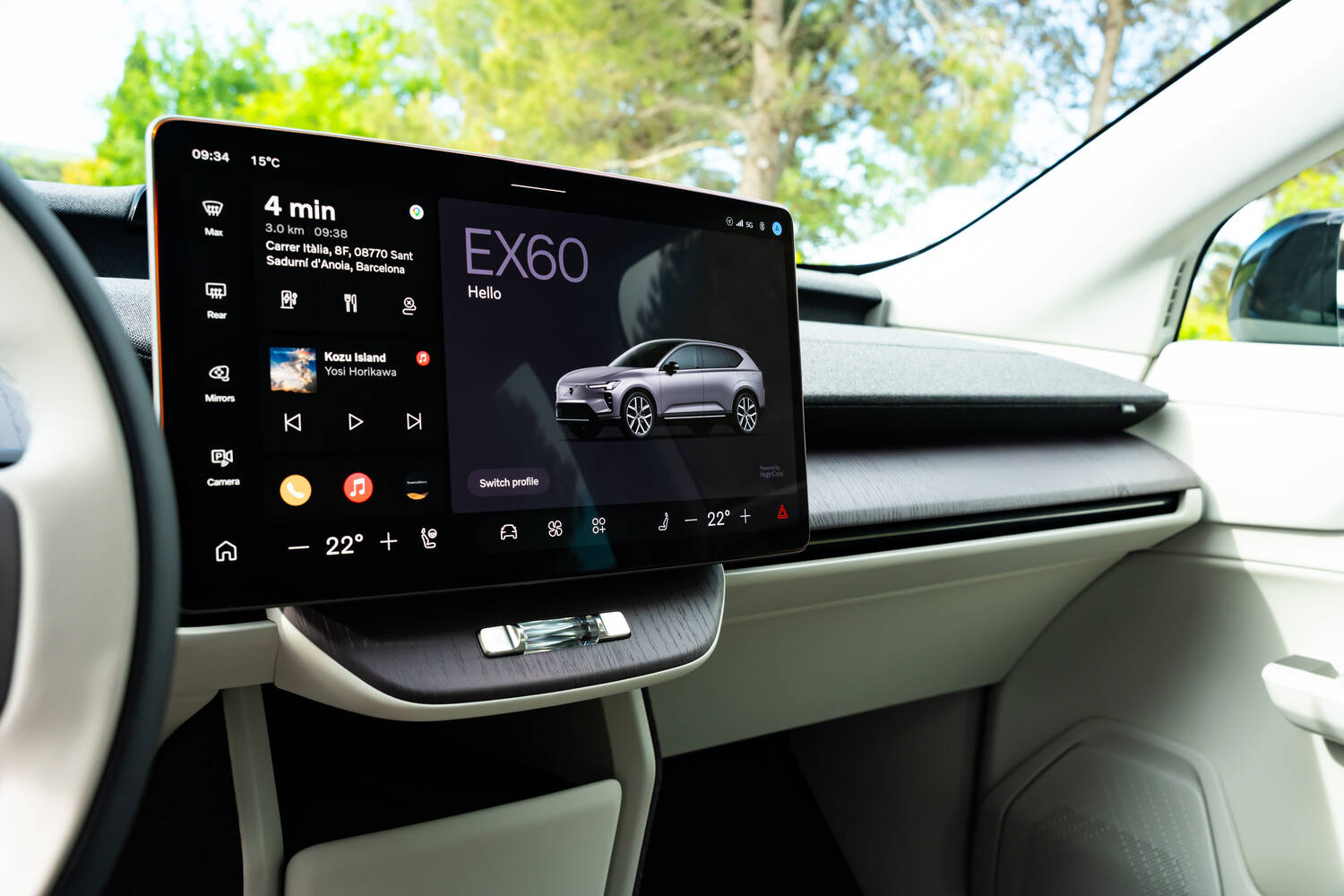
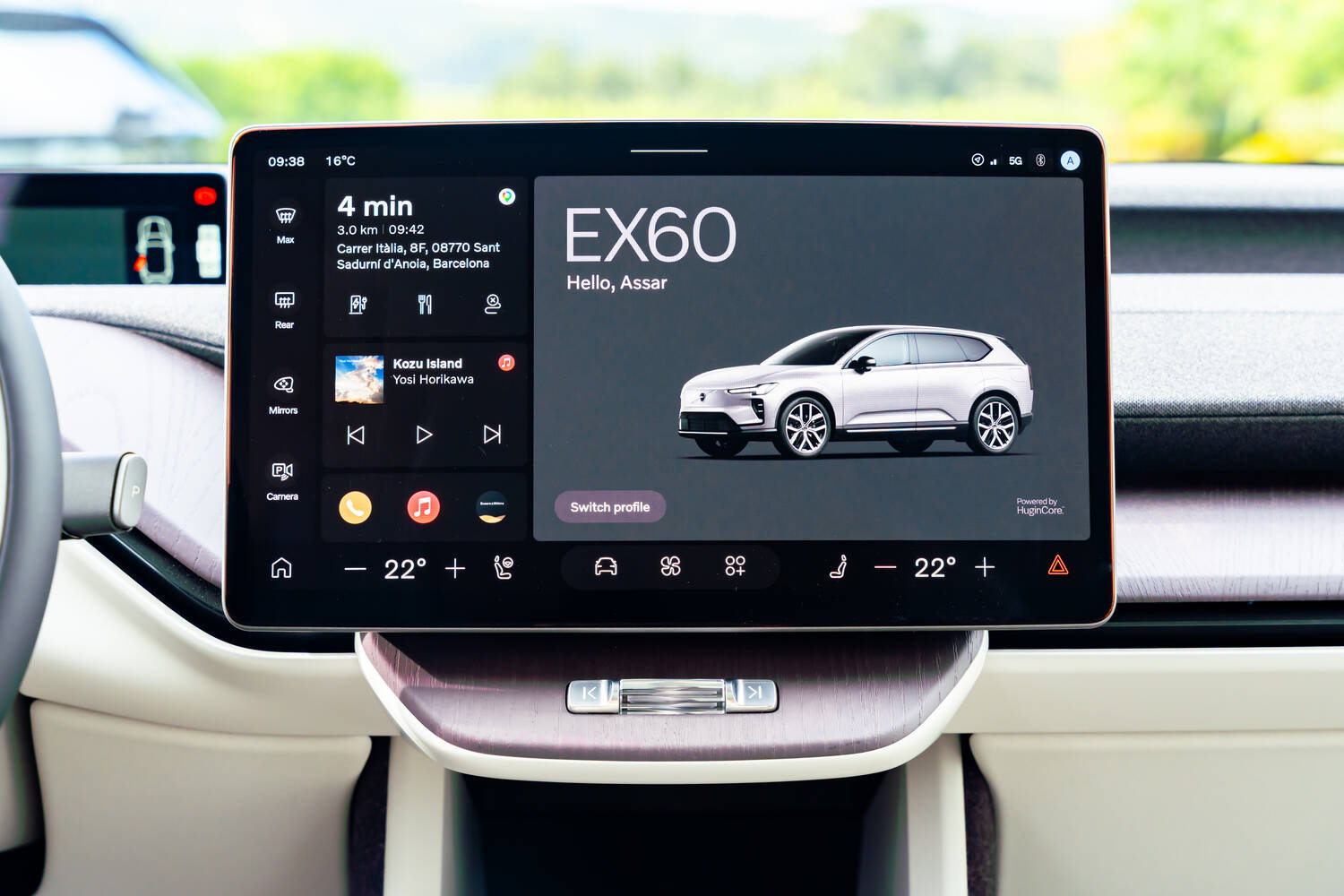
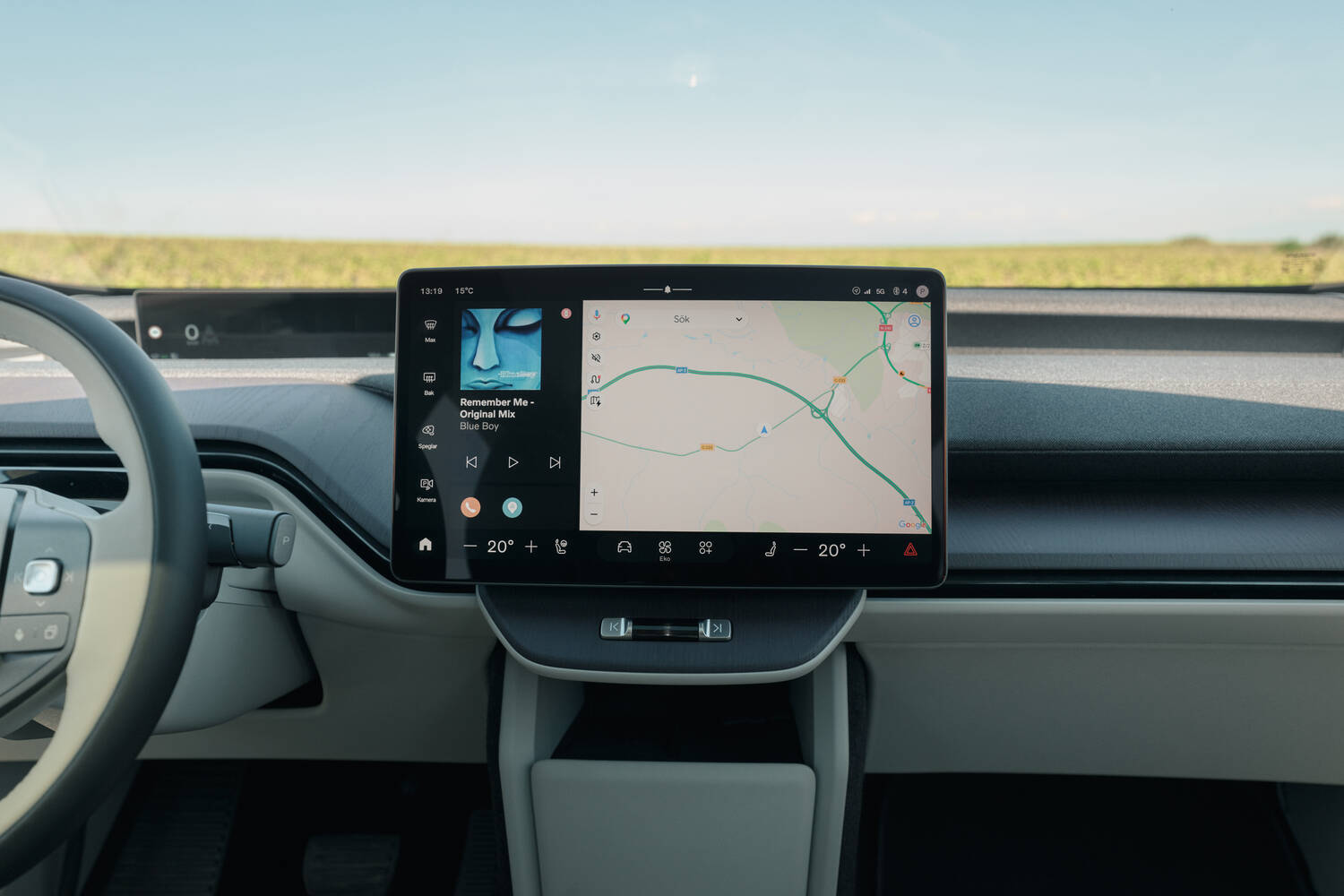
The big 15-inch touchscreen in the centre of the EX60s dash is set amid a clean, uncluttered interior layout that lacks the extra screens of some rivals. This should in no way suggest to you that the new Volvo is in any way lacking in technology - in fact, it's right at the cutting edge.
The trend at the moment is for car makers to reduce the multiples of individual on-board computers which used to control each individual function, and to slim all that down into a few more powerful computers.

Volvo has cut that down to one, and the 'HuginCore' system (named for one of the legendary ravens of King Odin from Norse mythology) works on a massively powerful single chip from NVIDIA which, essentially, runs every single aspect of how the EX60 functions, from the way that it drives - and even the interaction between the steering wheel and the brakes - to the ambient cabin lighting and the stereo settings.
That's a huge multiplicity of functions for one chip to handle, but the EX60 seems to be impressively capable of dealing with its various demands. Certainly, the big touchscreen is one of the more impressive of its breed (assuming that Volvo really has finally chased down and eliminated all of the software bugs that afflicted the EX30 and EX90) with lightning-fast responses and a surprising ease of use.

The screen is mounted closer to your hands than some others, making quick selections that bit easier, and the control layout is largely logical and easy to follow. Actually, the only item we initially struggled to find was the trip computer.
All of the software is Google-based, and that brings benefits in the form of native Google Maps for the navigation, which includes electric route planning with automatic charging location info and battery pre-conditioning.
It also means that you get Google Gemini built-in, a shockingly life-like (well, assuming you regard an overly chatty California tech-bro as lifelike...) AI assistant which can help you with vehicle controls and functions, or which can just have a general conversation with you.
Hilariously, when we asked it to recommend a mid-size, circa-€70,000 electric family SUV, its first pick was the BMW iX3, but then Volvo assures us that the version we were chatting to is in Beta-test form, and not the finished article.

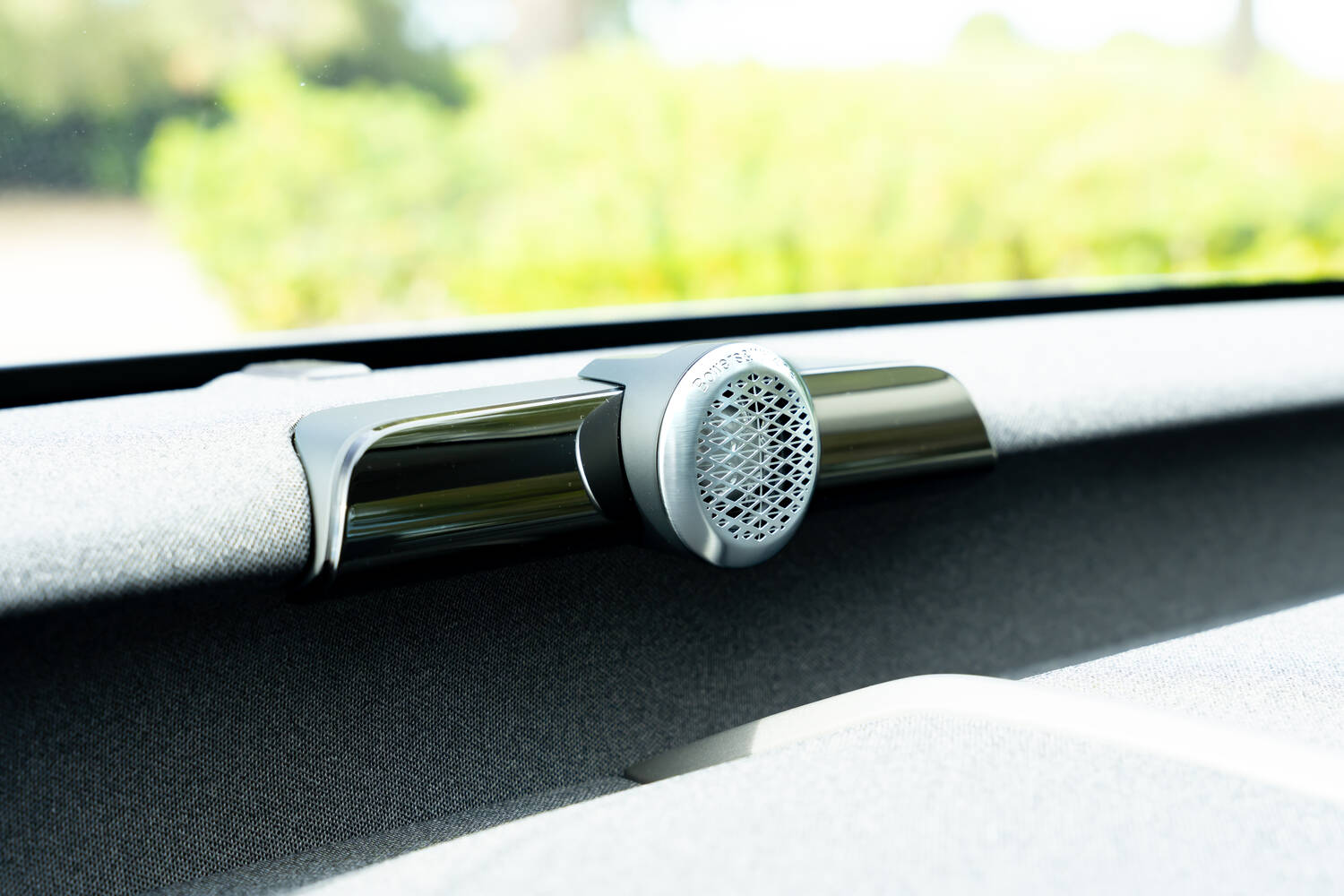
And the stereos are awesome. As standard, in Plus models, you get a 21-speaker, 1,200-watt Bose stereo, but our Ultra test cars came with the headlining 28-speaker Bowers + Wilkins unit.
This includes twin speakers built into each headrest, which means -among other effects - that the driver can answer a phone call or converse with the Google Gemini system while everyone else keeps listening to music.
It also includes Dolby Atmos surround sound and can replicate the experience of sitting in the concert hall in Volvo's hometown of Gothenburg. You probably shouldn't make your car-buying decisions on the basis of the stereo, but the Bowers + Wilkins system could just about convince you to do just that.

On a more mundane level, there's a wireless phone charger under the centre console, with a 15-watt capacity, and four USB-C sockets, split between front and rear seats, which vary from 18-watt to 60-watt power for very fast charging.
Practicality around the cabin

The front of the EX60's cabin is typically Volvo in its thoughtfulness and practicality. The front floor is almost open, leaving a space with shallow sides that will easily store a medium-sized backpack or a large handbag.
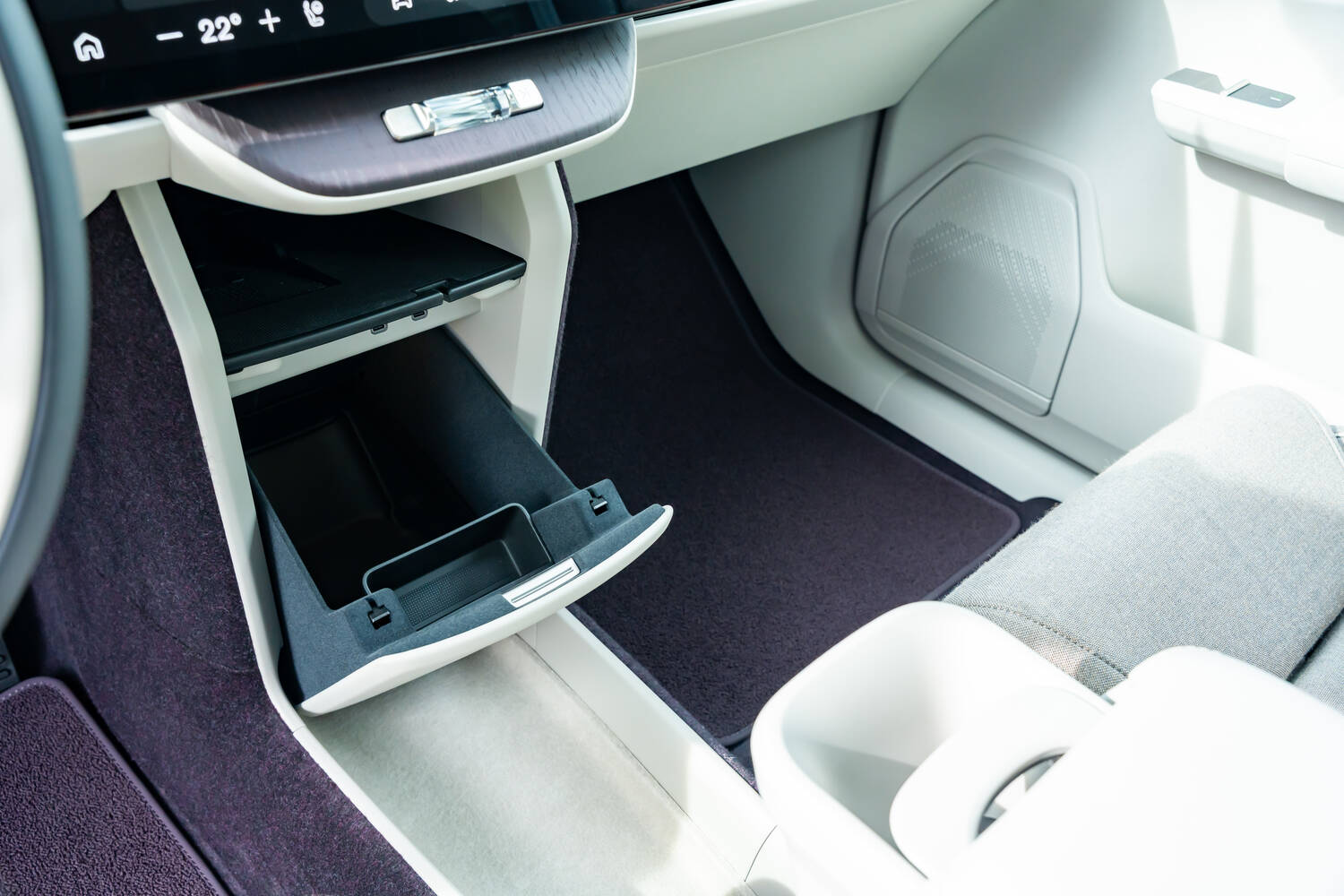
There's no traditional glovebox on the passenger's side, but there is a generously deep and large drawer, which tilts open, set at the base of the centre console and which can be easily accessed, without stretching, by both front-seat occupants.
Beside the wireless phone charger, there's also another small storage space, but you do kind of wonder why Volvo didn't just fill that with a second wireless charger, as is becoming common in many other vehicles.

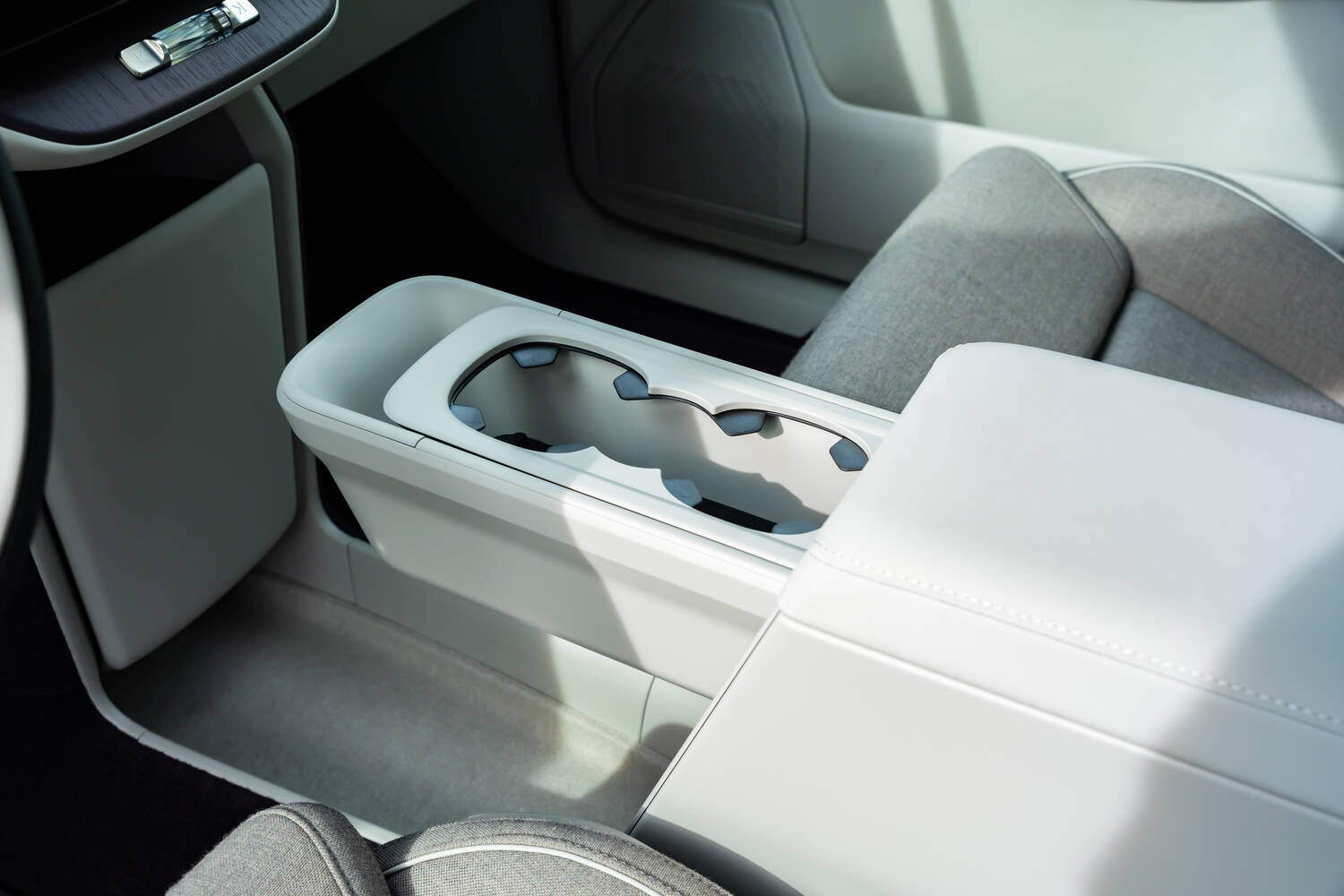
Under the armrest, instead of a lidded storage box, there's a slide-out cup holder, which has three sections (two large, one small for narrow cans or cups) and which also functions as a large storage drawer because the cupholders themselves can slide in and out independently.
That drawer also has a handy rubberised lip at the front, which is an ideal place to chuck your mobile phone if you don't need to charge it.
The door bins aren't massive, but they're roomy enough to swallow a medium-sized water bottle along with some other odds and ends.
Rear-seat passenger space
Rear legroom and headroom are truly impressive in the EX60, and subjectively it feels roomier than some rivals.
The base of the seat has also been carefully sculpted to increase the amount of support for the backs of your legs, which means that there's less of the 'high knees' feeling that's common to many electric vehicles.
The flat floor and relatively broad seat mean that there's just about enough room in the middle seat for a fully-grown adult, at least for shorter hops.
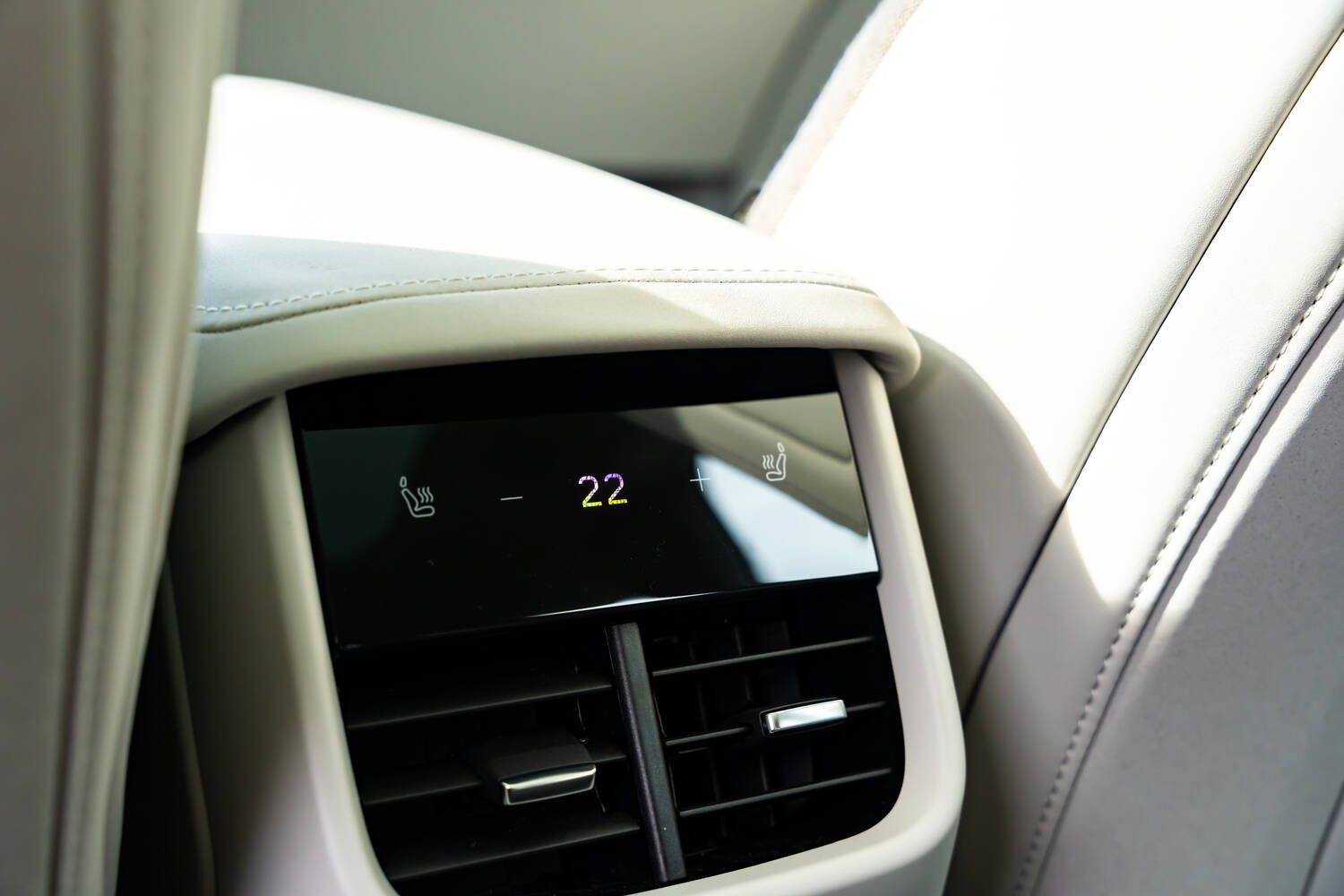
There are neat storage nets on the backs of the front seats, which have an extra small storage space built in for holding phones or earbud cases, and there is another small storage space at the base of the centre console, where you'll also find cabin temperature controls and the controls for the (standard) rear heated seats.
Headroom is helped by the fact that the standard glass roof has either heat-absorbing glass or electric dimming, depending on the model, so there's no need for a retracting blind. The rear seats also electrically recline, using a subtle button on the door pull.
The middle seat has a neat folding armrest, which includes a shallow storage area, as well as covered cupholders. The rear door pockets are somewhat small, but still large enough to hold large drinks bottles.
Fitting child seats to the Volvo EX60
It's slightly odd that Volvo only fits the EX60 with two ISOFIX anchors, in the outer rear seats, and none in the front passenger seat. Still, there are some neat tricks such as the optional rear seat cushions which pop-up to form built-in boosters for older children, and the large rear doors and generous cabin space mean that fitting even very bulky child safety seats ought not to be a chore.
Boot space in the Volvo EX60

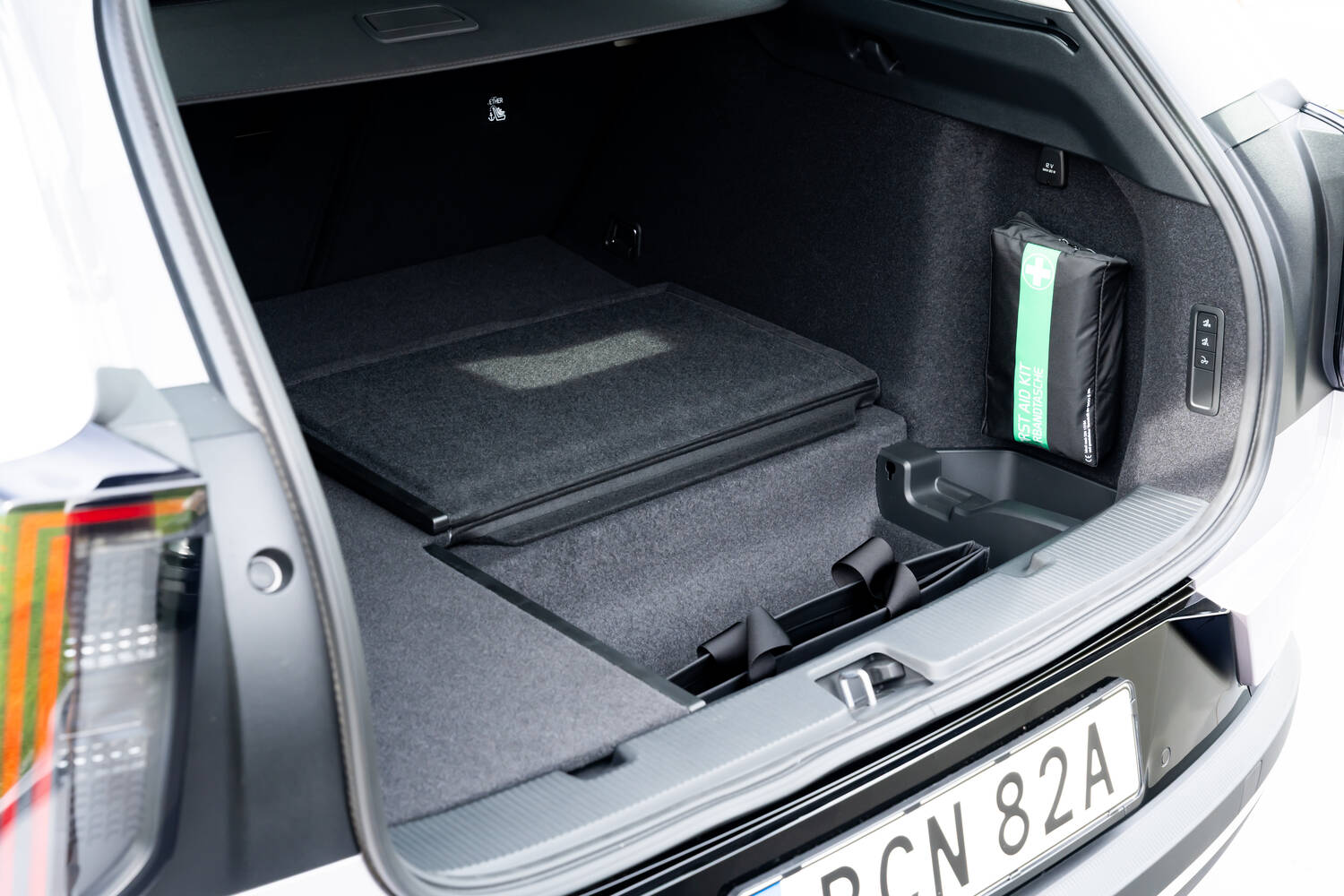
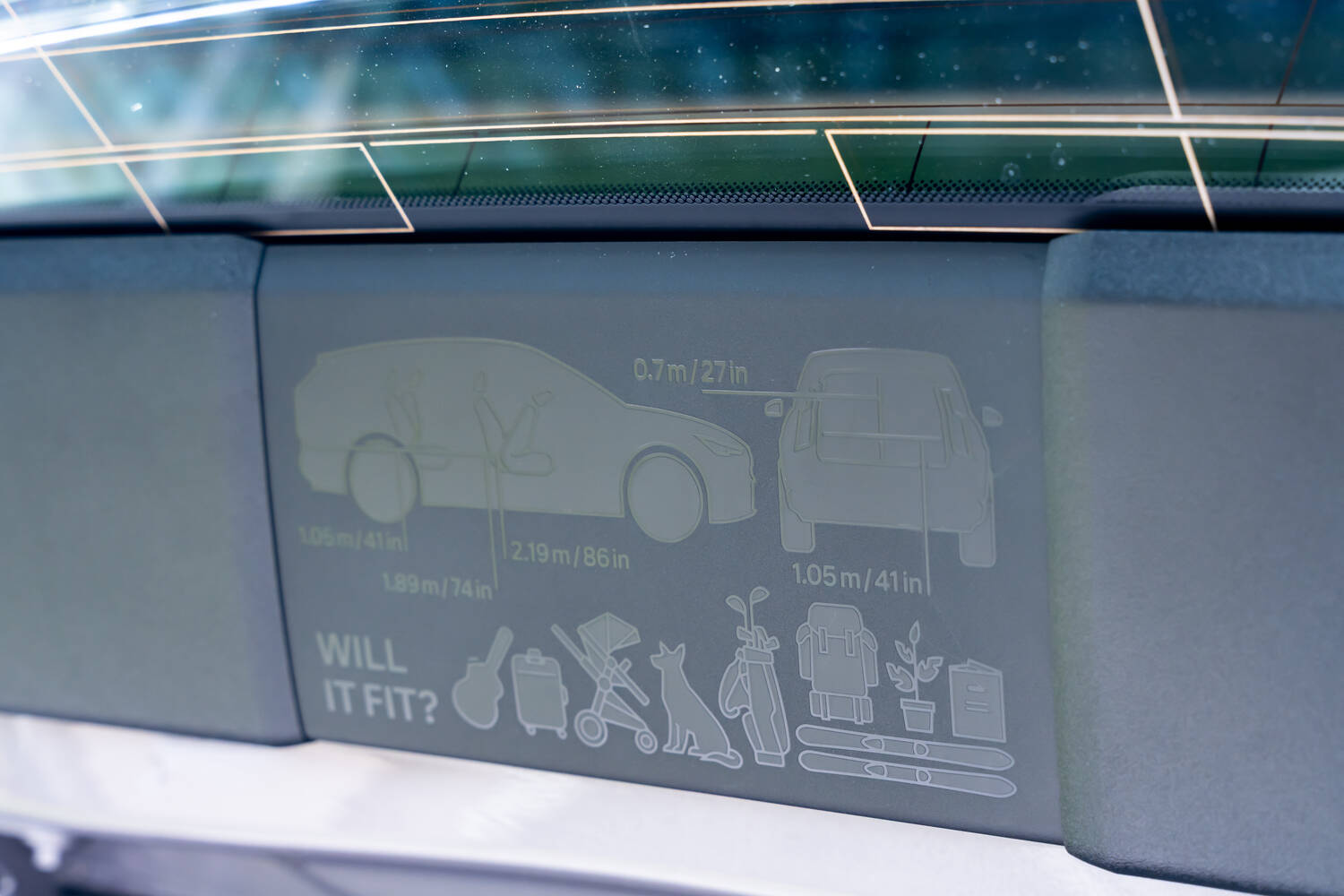
The headline figure of 523 litres of luggage space, up to the tonneau cover, doesn't tell the full story of the EX60's practicality.
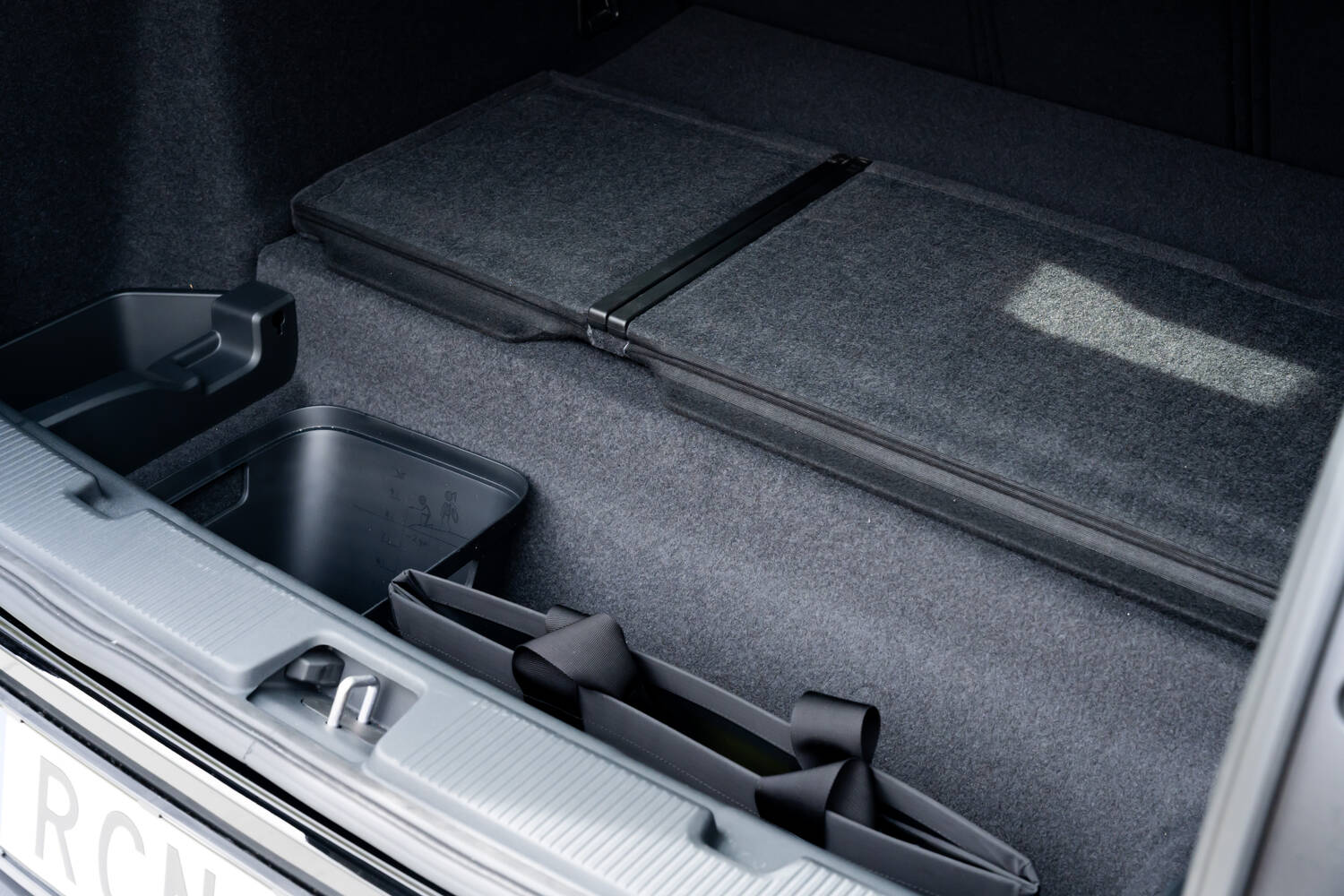
A volume of 523 litres is bang on the class average, but it's backed up by 65 litres of under-floor storage. This comes with a 70:30 split lid, so that you can still open a section even if the boot is loaded up, and it's an obvious home for charging cables.
However, Volvo has put some real thought into this, and the underfloor can also be accessorised with, for example, a waterproof tote bag which is idea for holding mucky or wet sports kit. Or you can have a bucket. Yes, a bucket - made of recycled black plastic which holds nine litres.

Why would you want this? Well, it seems odd at first but the more you think of it, the more uses you find - toys, dog leads and harnesses, bottles or cans of drinks, acting as a literal ice bucket for bougie picnics, carrying loose shopping items in from the car, and of course as a handy rubbish bin.
Or, worse, as a way of, erm, assisting any passengers prone to car sickness. Or you could literally use it to make sandcastles, and Volvo has actually stencilled in some little crabs in the base of the bucket, redolent of a Swedish children's tradition of collecting small crabs on visits to the seaside.
Sorry, I seem to have gone off on a bucket tangent there. Fold down the back seats, which split in 40:20:40 proportions, and there's 1,647 litres of space, and an almost totally flat floor all the way to the backs of the front seats. The luggage blind also slots neatly into place in the underfloor storage.

That's not all, though - there's an additional 58 litres of space in the 'frunk' storage area in the nose. Volvo has made this easier to use, thanks to lining up the release safety catch with the right-hand edge of the badge on the nose, and there's also a bright yellow line around the top of the frunk, indicating the point at which you should stop loading lest your items be crushed by the closing bonnet.
Towing with the Volvo EX60
The EX60's towing ability varies according to the powertrain. With the entry-level, rear-wheel-drive single-motor setup, the limit is 2,000kg on a braked trailer. That rises to 2,400kg for all-wheel-drive models, and there's an optional electrically deploying tow hitch which unfolds itself from under the rear bumper at the press of a button.
Safety in the Volvo EX60
Where do we start? Volvo is a brand built on safety, and while the EX60 hasn't been independently tested by Euro NCAP, it's hard to believe that it won't be one of the safest cars you can buy.
A trip to YouTube to check out Volvo's own (nothing to do with NCAP) 'tree impact' test, where a prototype EX60 is fired out of a building, down a leafy embankment and into a sturdy metal pole, is rather eye-opening. Not to say wince-inducing. In a pure crash and impact sense, the EX60 is remarkably strong.
It's also laden with electronic safety nets, including systems that can stop you turning into oncoming traffic or cyclists when negotiating a junction, and which of course, do all the usual stopping, steering and distance control when you activate assisted driving on motorways and main roads.
There's also a seatbelt which automatically checks your size, shape and posture in the seat, and which therefore provides precisely the right amount of retraction and response in an emergency situation - the ultimate iteration of the original three-point seatbelt, invented by Volvo engineer Niels Bohlin back in 1959, a date inscribed on the EX60's seatbelt buckles.
Performance of the 2026 Volvo EX60
• RWD and AWD options
• Three battery sizes available
• Serious performance and acceleration on offer

The EX60's power outputs stretch from a robust 375hp in its basic form, to a faintly ridiculous 680hp in the range-topping P12 AWD version. Whichever model you choose, the EX60 is more than fast enough.
Driving the Volvo EX60 P6 RWD in Spain
Words by Neil Briscoe on 20 May 2026

Volvo Ireland reckons that the entry-level P6 model, with its single 375hp electric motor, rear-wheel drive and the smallest battery option (more on that in a minute) will be the poor cousin, in sales terms.
More buyers, it suspects, will be drawn to the more powerful, longer-ranged all-wheel-drive versions. That's probably quite likely, and we'd assume that bigger batteries and four-wheel drive will be the better bet for residual values too, but don't write off this P6 version, as it's far from the pauper of the range.

For a start, 375hp and 580Nm of torque are not junior figures, and neither is the 5.9-second 0-100km/h time. The P6 EX60 surges forward on an impressive wall of torque, and the way it picks up pace from around 15km/h to 100km/h should mean that it's more than quick enough for anyone in everyday driving.
It does lose out a little bit to the more powerful P10 model (see below) in how it drives, but not by the margin which you might imagine. The steering is light, and thankfully pre-drive worries that the small, square steering wheel would make for odd steering sensations proved to be wrong.
The steering is very direct, though, and front-end grip is impressive, so with that lightness, it's easy to find yourself turning a little too sharply into some corners at first. You have to retrain your arms.

There's little of the feel and feedback of the rival BMW iX3, but the EX60 still manages to feel agile, and it shrugs off its two-tonne-plus kerb weight.
The whole structure of the car is hugely stiff and solid, helped by the rear chassis being made up of one huge 'megacasting' section rather than welded together from lots of individual pieces. All of which helps the EX60 to feel truly agile, even quite 'pointy' on a twisty road.
The P6 model is also the only EX60 not to come with adaptive dampers, but again Volvo has done a good job. The primary ride is exceptionally smooth - thanks to frequency selective dampers, which aren't strictly speaking adjustable, but which can mechanically adapt, to an extent, to changing road conditions - and the P6 EX60 deals brilliantly with speed ramps and the like.

More rutted sections can set off a 'bobbling' sensation, and the noise of the suspension's movements occasionally picks up, but for the most part this is an impressive dynamic performance.
Overall refinement, helped by a combination of acoustic glass and an active noise cancelling system, is really good, and the EX60 is spectacularly relaxing to drive when you're cruising along. It also feels neatly manoeuvrable around town and is better in tight spaces than you might expect, thanks to good visibility and an excellent all-round camera system.
Driving the Volvo EX60 P10 AWD in Spain
Words by Neil Briscoe on 20 May 2026

This four-wheel-drive, twin-motor P10 version is expected to be the biggest selling EX60 variant in the Irish market, and you can perhaps see why.
Power and torque outputs jump to 510hp and 700Nm, and the 0-100km/h time drops to a seriously rapid 4.6 seconds. Even then, that's down on the ludicrous 680hp and 3.9 seconds offered by the range-topping P12 model.
Who exactly needs 510hp and sports car acceleration in a family SUV? We're not sure, and equally unsure as to quite how Volvo squares such prodigious power with its traditional focus on safety, and its self-imposed 180km/h speed limiter for all of its cars.

Still, it would be churlish to claim that such performance isn't appealing from behind the wheel; just remember to deploy the bucket from the boot if your passengers start getting queasy.
Aside from its straight-line performance, the EX60 P10 benefits from adaptive electronic suspension dampers. There's no traditional 'Sport' mode for the P10, but there is an on-screen button which allows you to pick from Soft, Standard and Firm settings.

Soft is, if anything, a bit too soft, allowing a degree of float into the body movements that you may not enjoy. Firm is, well, too firm inducing a little too much fidget too much of the time. Most of the time you'll probably just leave it in Standard when the ride comfort is entirely excellent.
So what's the benefit? After all, the P6's passive dampers do a pretty good job of impersonating the adaptive Standard setting... The benefit is actually in the steering.
The adaptive dampers, and the slightly sportier tyres and larger wheels of the P10, mean that there's just a fraction more edge to the EX60's steering feel. You won't notice it when tootling around town, but you will sense it if you show the P10's nose some more challenging corners, such as on one of the hilltop roads we found on the way from Barcelona to Monserrat.

The stiffness of the EX60's structure helps once again, but there's a sense of extra precision and weighting to the P10's steering, slight though it is, which is quite welcome.
It's worth mentioning the EX60's braking performance here, which while not spectacular, does give you a nicely balanced pedal feel, and a smooth transition from regenerative to disc braking. There is a one-pedal mode, but as is common we found its efforts to be a little too sudden, giving you too much retardation on initial lift-off, so we switched it off and preferred to do our own braking.

Range, battery, charging and running costs of the 2026 Volvo EX60
• Choice of three battery packs
• Solid real-world range
• Ultra-long range 810km P12
Sadly, we haven't had the opportunity yet to test the likely star of the EX60 range, the P12 AWD model, which combines a staggering 680hp (a McLaren F1, back in 1994, had 627hp...) with an 810km range on the WLTP test. However, as we shall see, neither the smaller-battery P6 nor P10 are exactly shamed when it comes to range.
Battery options and official range
The EX60 comes with a choice of three battery packs, tied to three different powertrains, all using lithium-ion, nickel-manganese-cobalt (NMC) chemistry. The batteries use cell-to-structure technology - in other words, the battery's supporting structure also forms part of the car's chassis, a move which Volvo says helps to save as much as 70kg from the total kerb weight.
The entry-level P6 has an 80kWh (net) battery pack, with a range of up to 611km. Next up, the all-wheel-drive P10 gets a larger 91kWh pack, with a range of up to 660km, while the range-topping P12 version gets the biggest capacity, a 112kWh battery.
Officially, energy efficiency is rated at as low as 14.9kWh/100km for the P6; 16.2kWh/100km for the P10; and 16.0kW/100km for the P12.
Real-world range and efficiency of the Volvo EX60

As ever, we have to add the caveat here that our observed efficiency and range figures for the EX60 are, so far, based on drives on unfamiliar roads in Spain, which were doubtless specifically picked by Volvo to show the EX60 off at its best.
Even so, there was a useful mixture of motorway, town, city and country roads on the routes, and the EX60 P6 and P10 models that we drove performed admirably.
Going by our test drives, you should be able to squeeze around 550-600km out of the P6 in real-world conditions, while the P10 might manage as much as 620km.

Observed efficiency hovered at around 17-18kWh/100km for the P6, and 18-19kWh/100km for the P10, although both dipped well below that average in slower city driving.
This was all in balmy Spanish weather too, with the temperature gauge at around 25 degrees Celsius, and the air conditioning going.
Charging up the Volvo EX60
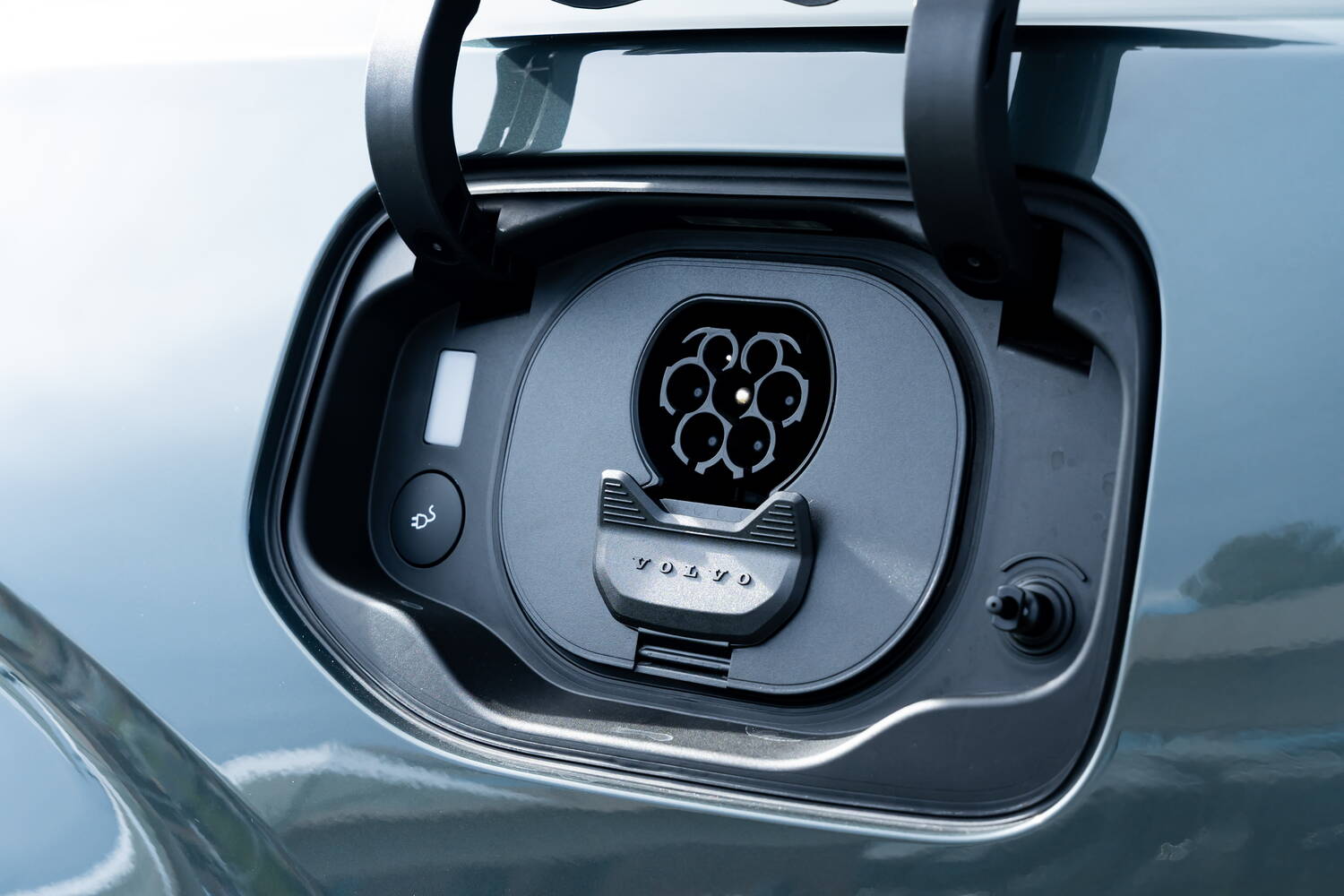
The EX60 has been designed around an 800-volt charging setup (which is, thankfully, still compatible with older 400-volt chargers) and it gives the Volvo some potentially very short charging times.

The P6 can cope with up to 320kW of DC charging power, while both the P10 and P12 can manage up to 370kW, assuming you can find a sufficiently powerful charger.
If you can, then - theoretically - the EX60 can be charged from 10-80 per cent in just 16 minutes, an exceptionally quick charging time. If you're in a real rush, then depending on the model, it's possible to add between 300km and 340km in just ten minutes of charging, on a sufficiently powerful DC connection.
Servicing the Volvo EX60
Volvo recommends that its electric models should be serviced every two years, or 29,000km. There are available inclusive service plans too, which cover you for one, two, or three years depending on your needs, and you can sign up for these via the Volvo smartphone app.
Volvo EX60 warranty
Volvo Ireland offers a three-year, 100,000km warranty as standard, and the EX60's battery will be separately warrantied for eight years, or 150,000km. There's also 12-year anti-perforation cover, and three-year paint cover.
Irish pricing & rivals to the 2026 Volvo EX60
• Pricing starts at €66,995
• Priced well against German competition
• Good standard equipment

So far, BMW has only officially announced Irish prices for one model of the impressive iX3 lineup, and that's the iX3 50 xDrive model, with its 805km range.
That starts at €73,925 against the long-range Volvo EX60 P12's €76,595, but the BMW's price climbs quickly once you start adding options, and the Volvo's entry-level 'Plus' model is notably well-equipped.
A P6 Plus starts at €66,995, while the P10 costs €69,995 and is expected to be the best seller in Ireland. We'd expect BMW's other iX3 models, with rear-wheel drive and smaller batteries, to closely shadow the EX60 in price terms, while the Mercedes GLC is likely to be more expensive than either.

Some of the standard equipment highlights for the EX90 in Plus spec include the panoramic glass roof, a Bose stereo, three-zone climate control with a heat pump, 20-inch alloy wheels, 'Nordico' synthetic leather upholstery, heated front and rear seats and built-in Google services.
You can upgrade to a high-spec Ultra model in P6 form for €73,995; as a P10 from €77,295; or the P12 for €83,895. Ultra spec brings with it the amazing Bowers + Wilkins stereo, ventilated front seats, 21-inch alloy wheels, electrochromic dimming for the panoramic sunroof and upgraded 'Pixel' LED headlights.
It's not that the BMW iX3 and Merc GLC are the EX60's only rivals, but more that the three cars form an interesting - exciting, even - triumvirate of EV models from established, premium brands which offer such long ranges that they may start to tempt even EV doubters out of their diesel, petrol and hybrid cars.
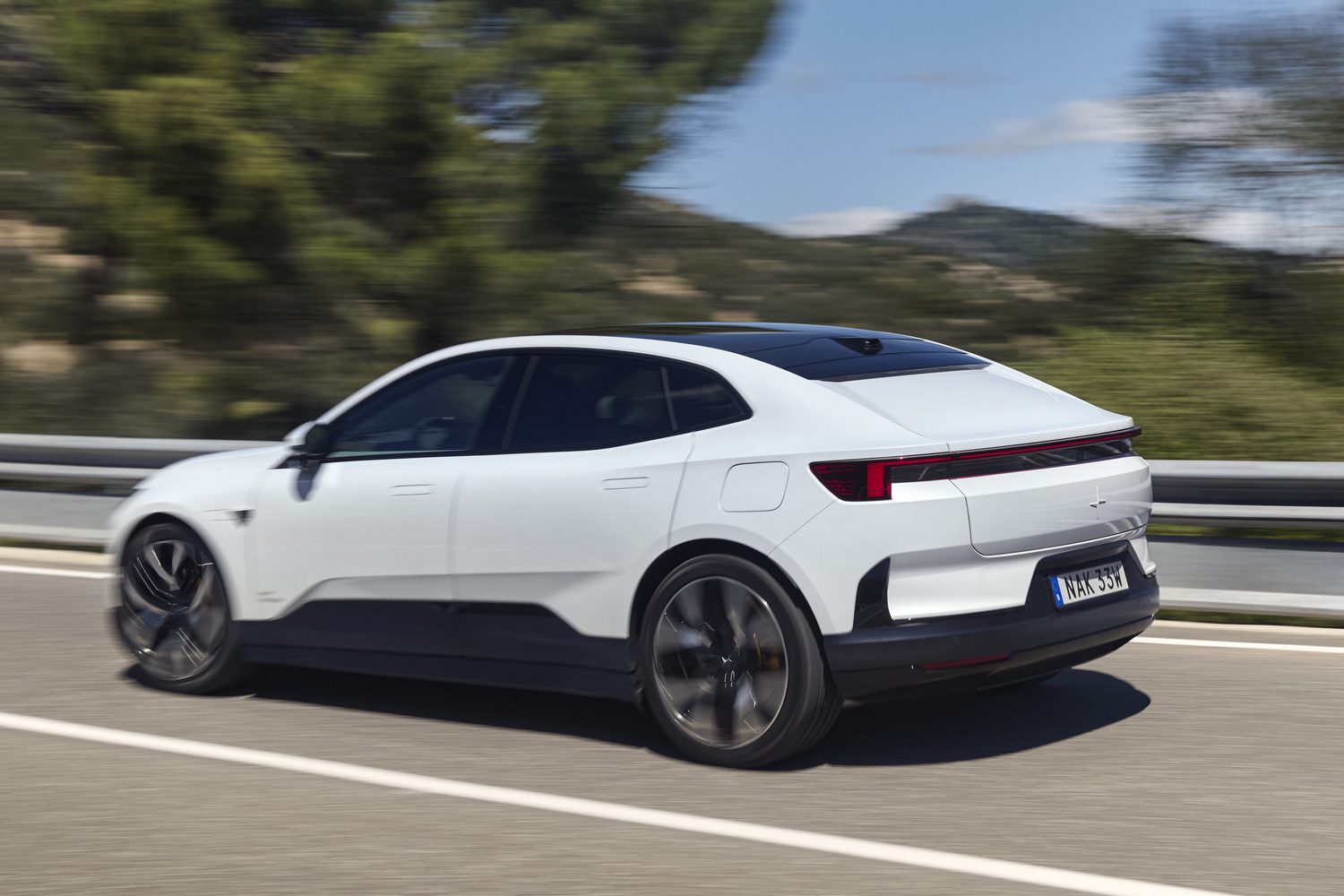
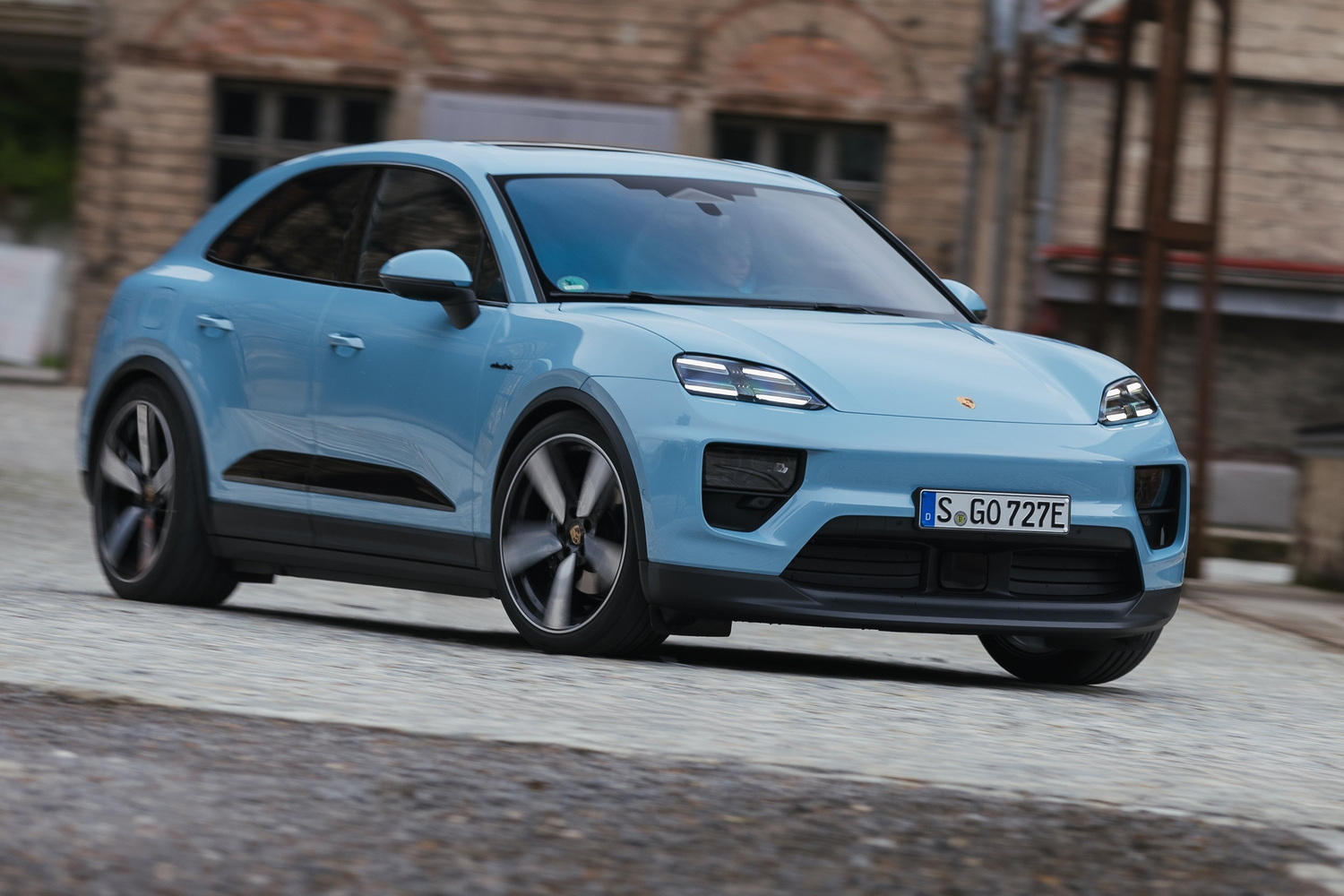
There are other potential options: the Lexus RZ is closely matched on price, but it can't deliver the real-world range of the other three; the Polestar 4, although not able to match its new Volvo cousin in range terms is an intriguing alternative; and the Audi Q6 e-tron and Porsche Macan (closely related under the skin) are worth a look as well.

Verdict - should you buy the 2026 Volvo EX60?
While the BMW iX3 set down an intimidating yardstick in 2025 for the rest of the premium electric SUV class, the Volvo EX60 seems to have stepped, apparently effortlessly, up. It looks fantastic inside and out, has impressive real-world range, is very quick even in basic P6 form and is good (if not necessarily wildly entertaining) to drive. Mix in traditional Volvo values of safety and comfort, and you have a potential class leader.
FAQs about the 2026 Volvo EX60
Does the Volvo EX60 have a 'frunk'?
Yes, it does - a handy 58 litres' worth, with a useful bright yellow indicator line so that you don't overfill it and crush your shopping with the descending bonnet.
What is the maximum range of the Volvo EX60?
The range-topping P12 AWD version of the EX60 has a WLTP range of up to 810km. Driving a P10 AWD model, with its 660km range, we found that around 600km should be achievable in the real world.
Is there a rugged version of the EX60?

Yes - the EX60 Cross Country, which gets standard all-wheel drive, a 10mm increase in ride height (which costs you about 10km of range) and extra plastic body protection.
Are Volvos reliable?
Yes, in general Volvo makes solid and reliable cars, but there have been significant software issues with both the EX30 and EX90, so hopefully those bugs have been sorted for the EX60.
Does the Volvo EX60 qualify for the SEAI grant?
No, it's too expensive. Cars priced above €60,000 don't get the SEAI electric car grant.
Want to know more about the 2026 Volvo EX60?
If there's anything about the new Volvo EX60 we've not covered, or you'd like help in choosing between it and other cars, you can avail of our expert advice service via the Ask Us Anything page.