



Exterior & design of the 2026 Volvo ES90
- Understated and handsome
- Cool lights front and rear
- Raised ride height

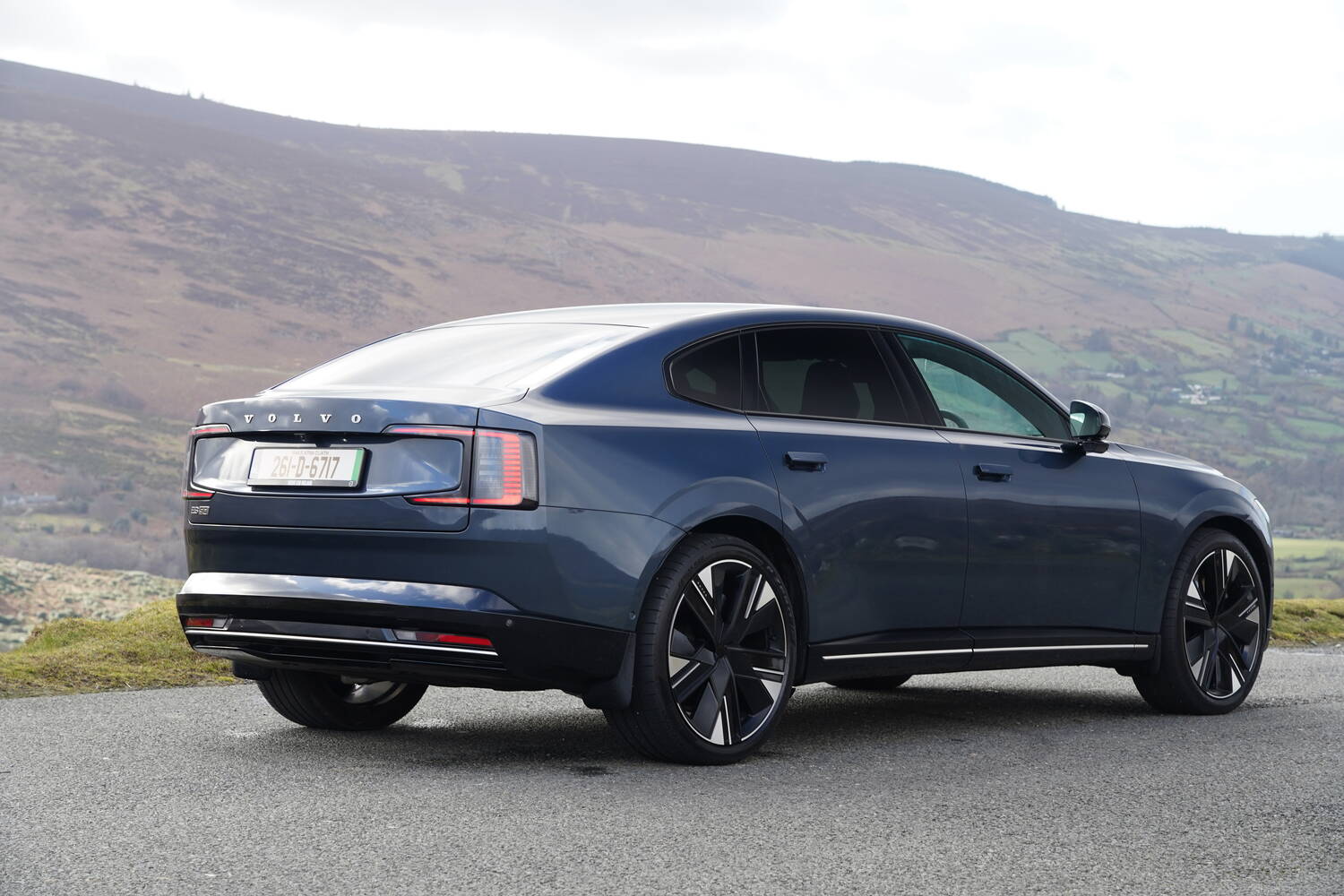
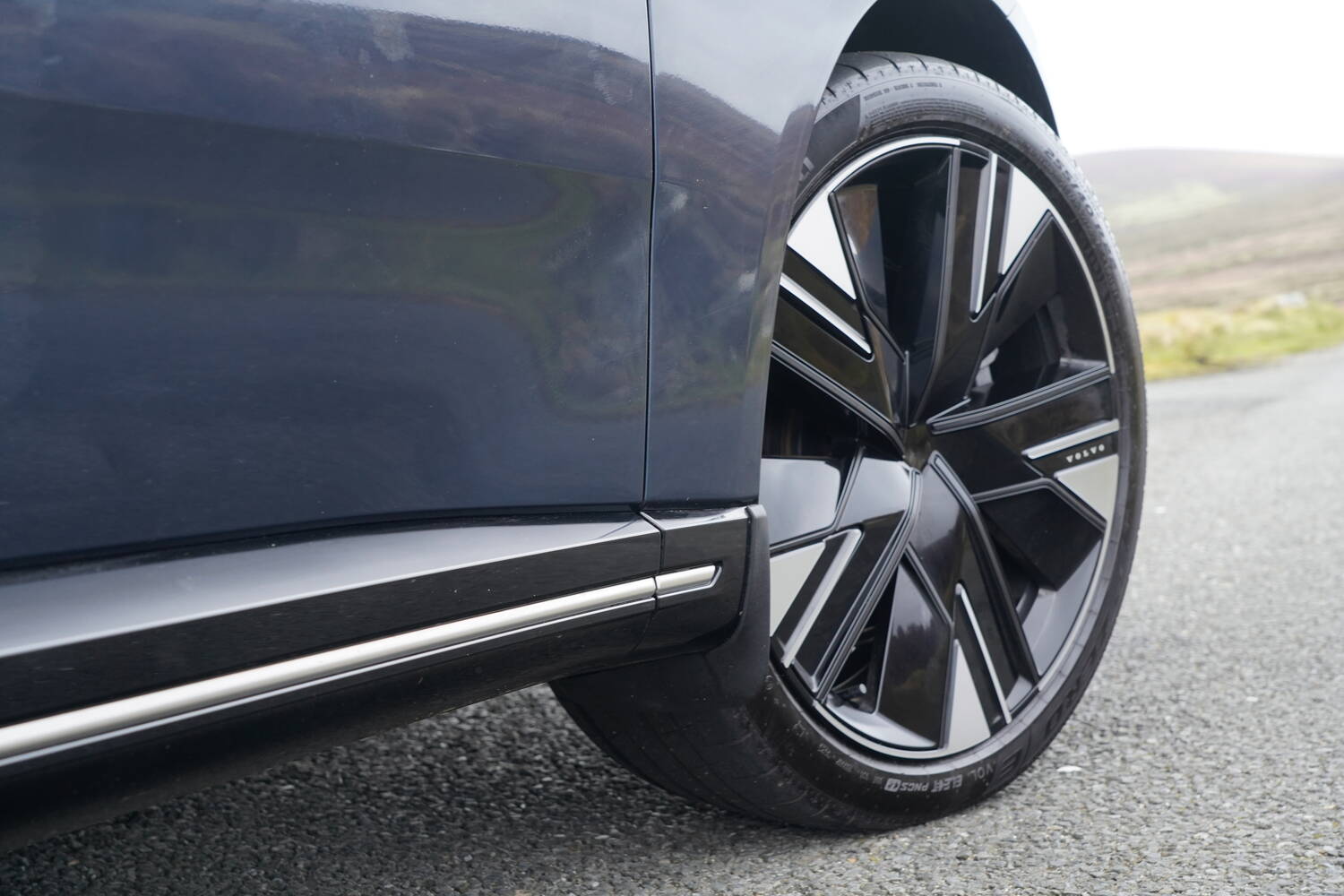
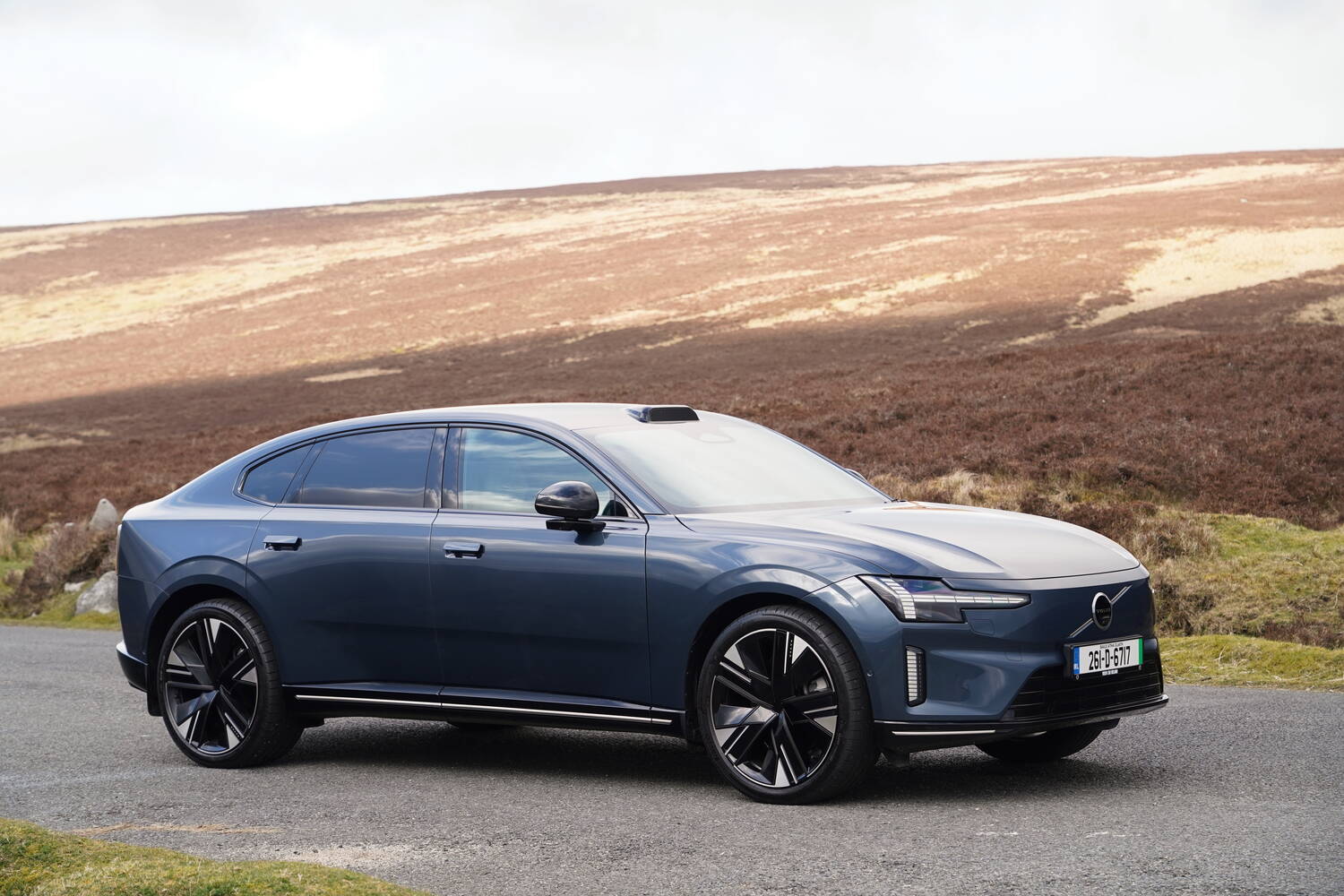
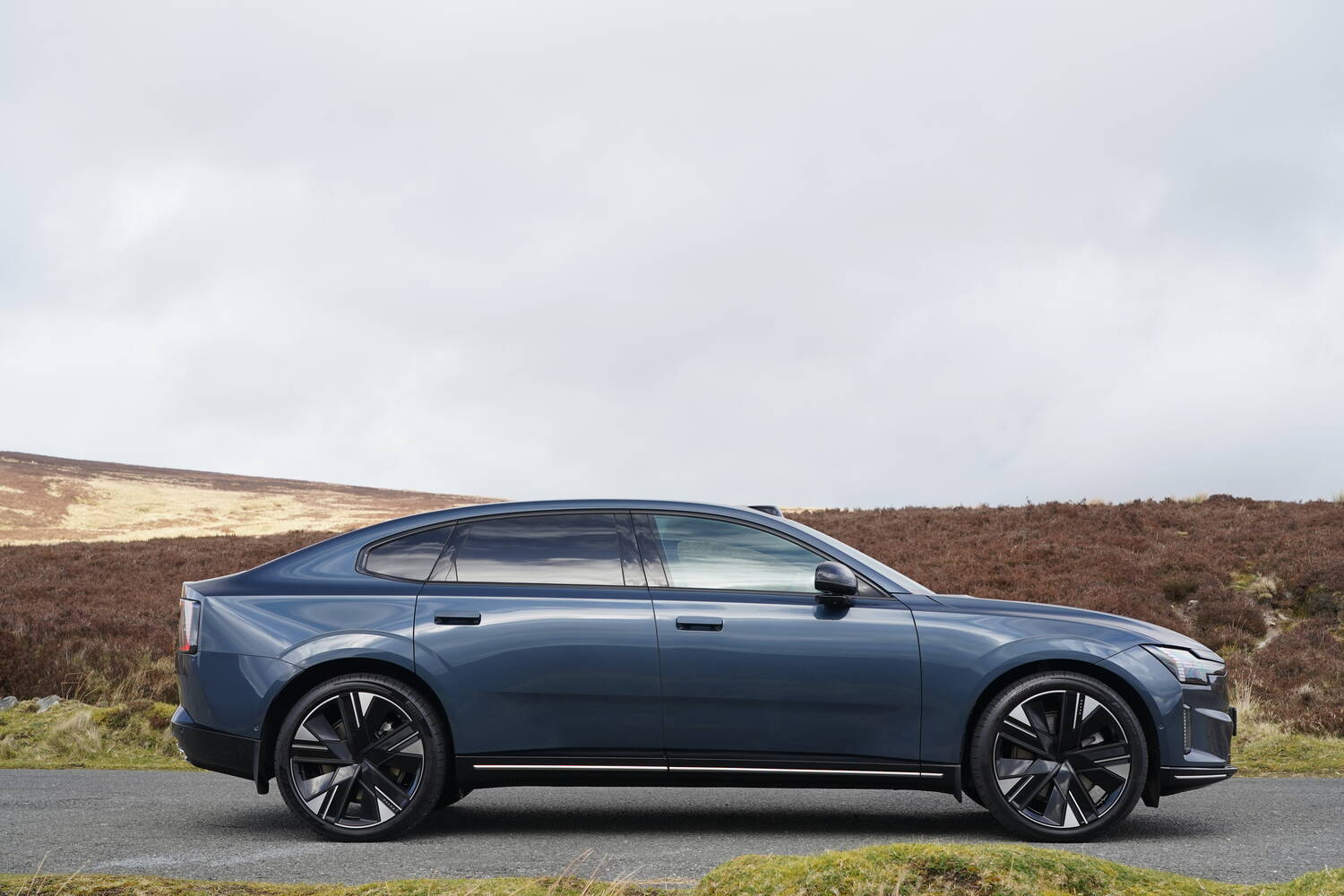
The Volvo ES90 has a slightly lofty ride height. In fact, there's 178mm of fresh air under the chassis, which isn't quite full-on SUV standard, but it's only around 10mm lower than a Nissan Qashqai, for instance. The idea is twofold - it means that the battery, slung under the passenger compartment, is less vulnerable to knocks and bumps, and it also means that the ES90 can be a saloon-like car that can still meet many of the unmade-road wishes of an SUV-hungry car market.
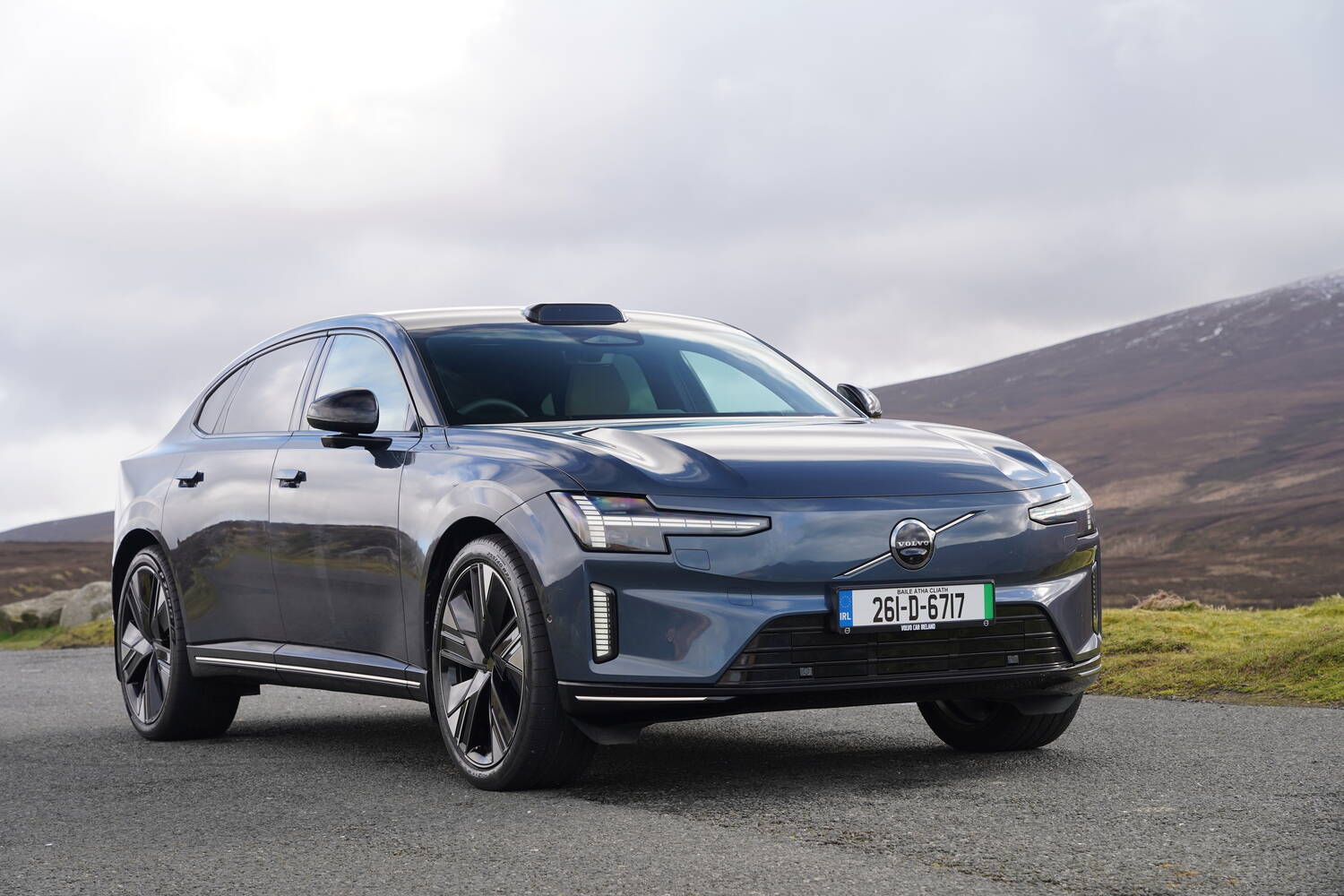
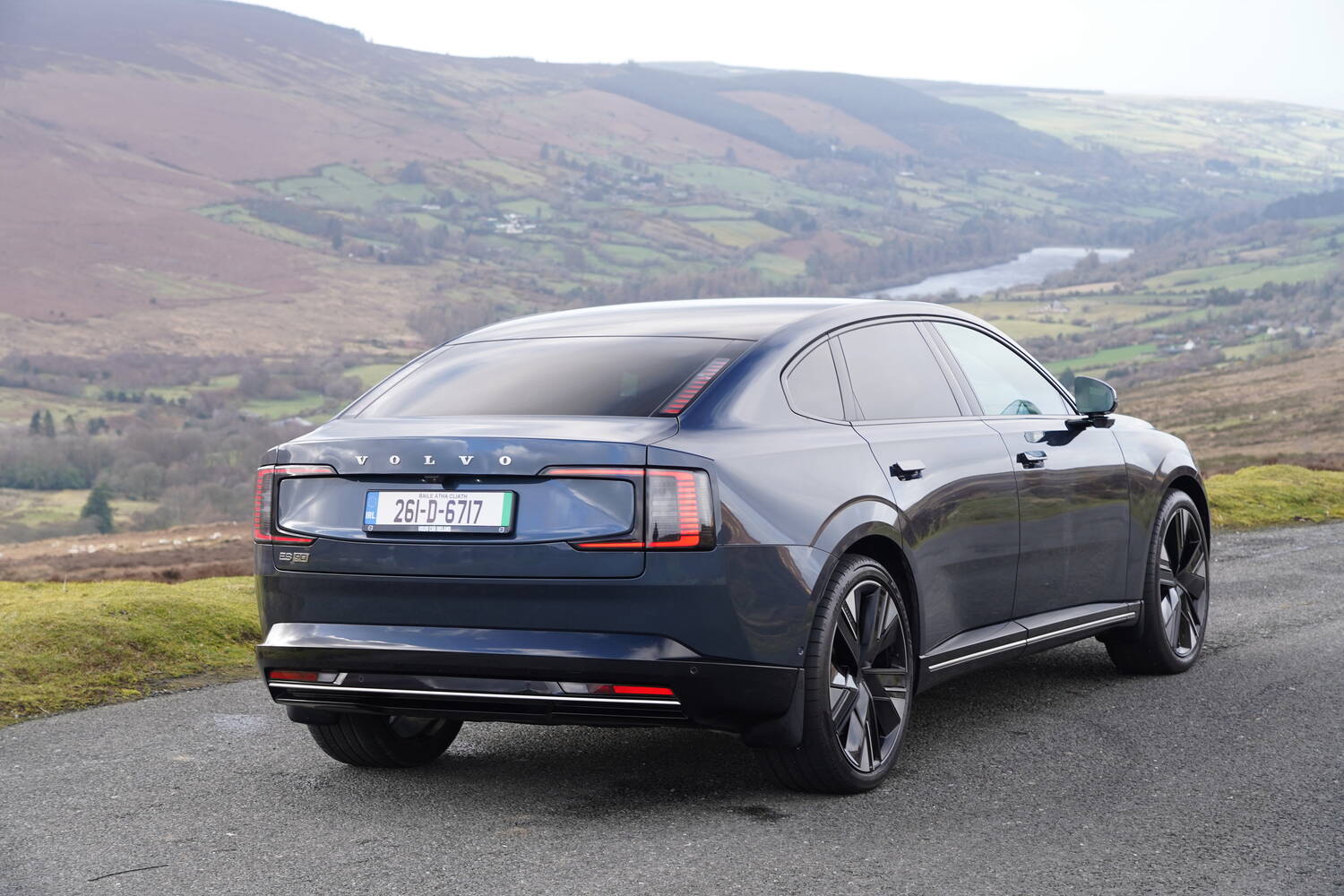
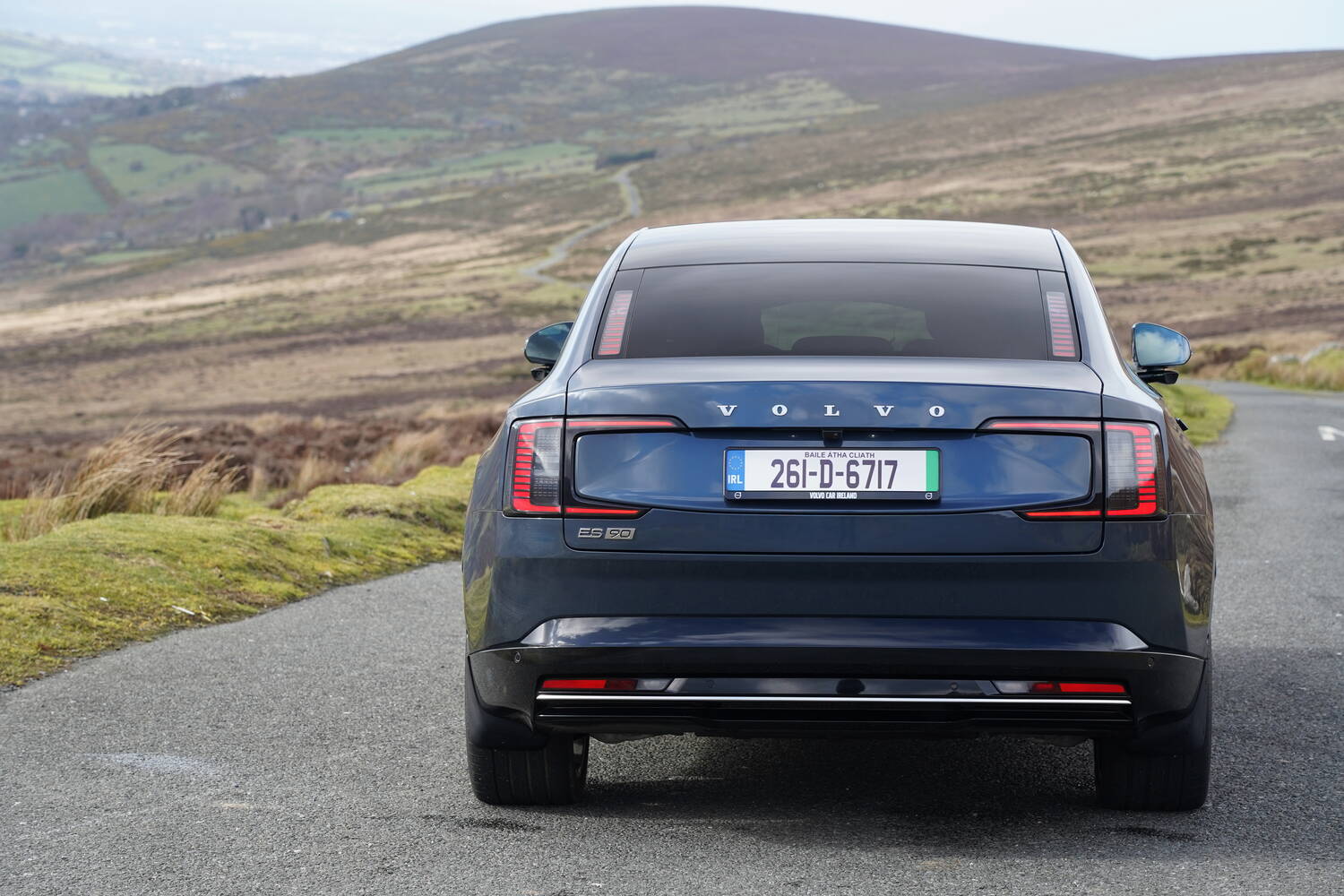
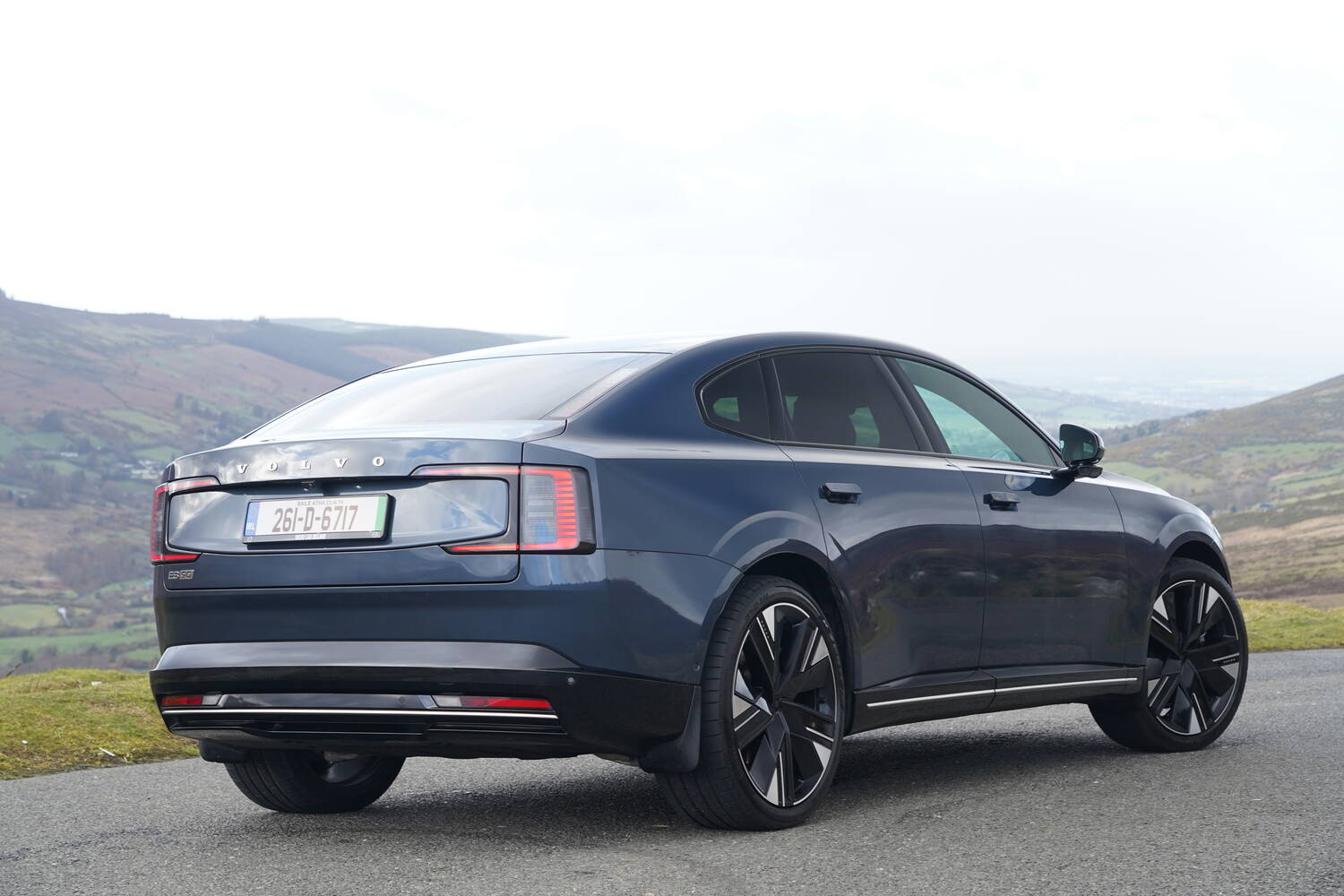
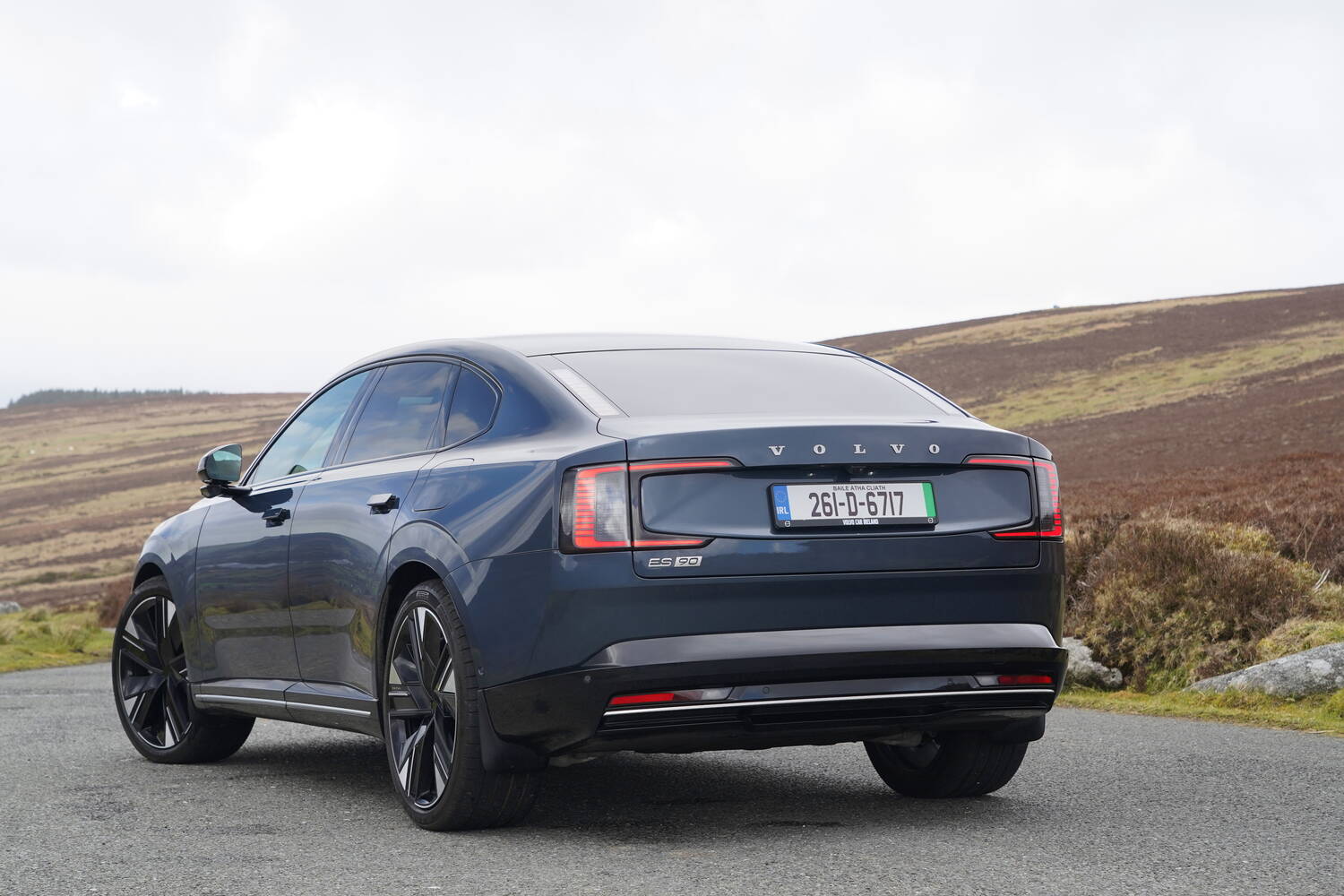
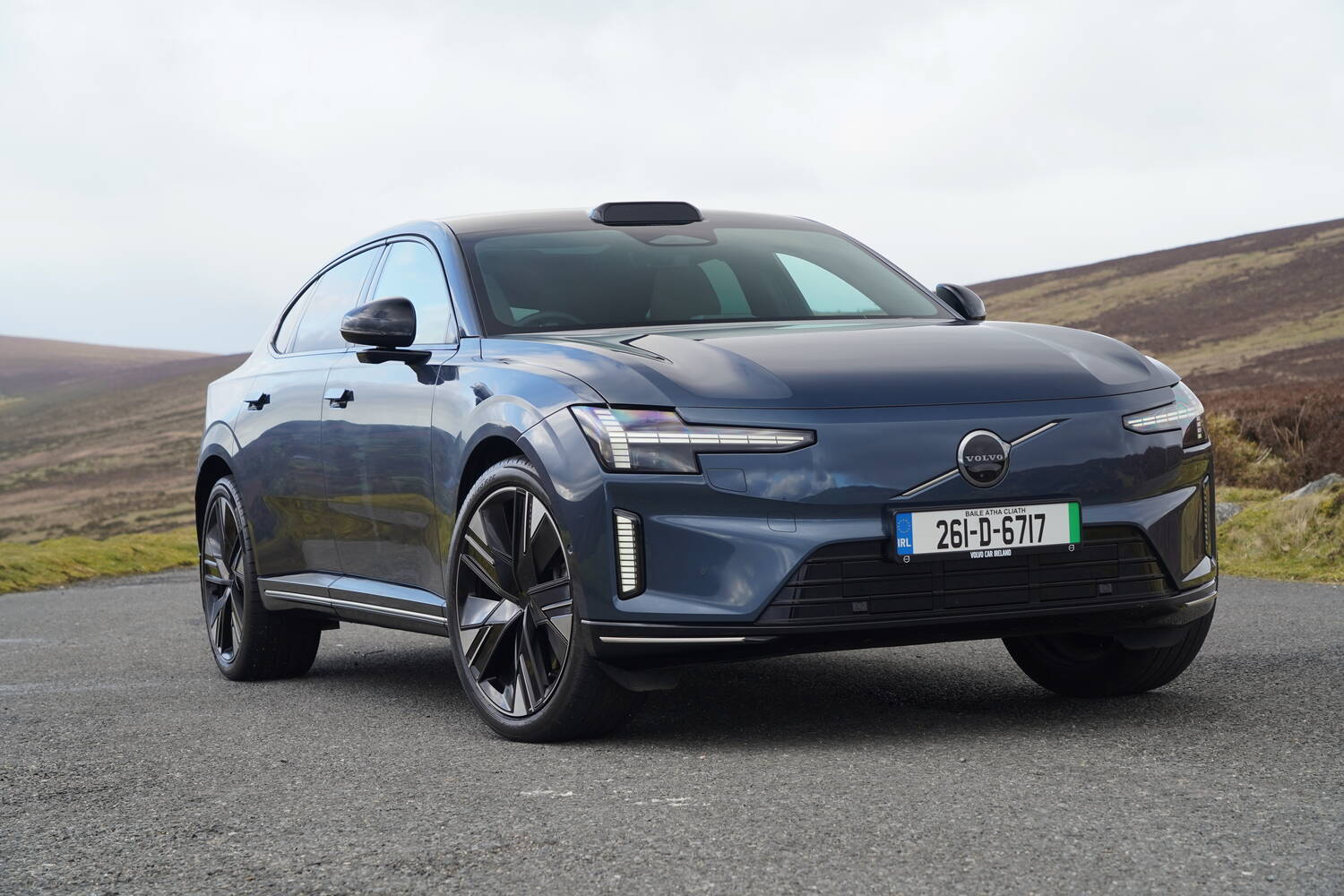
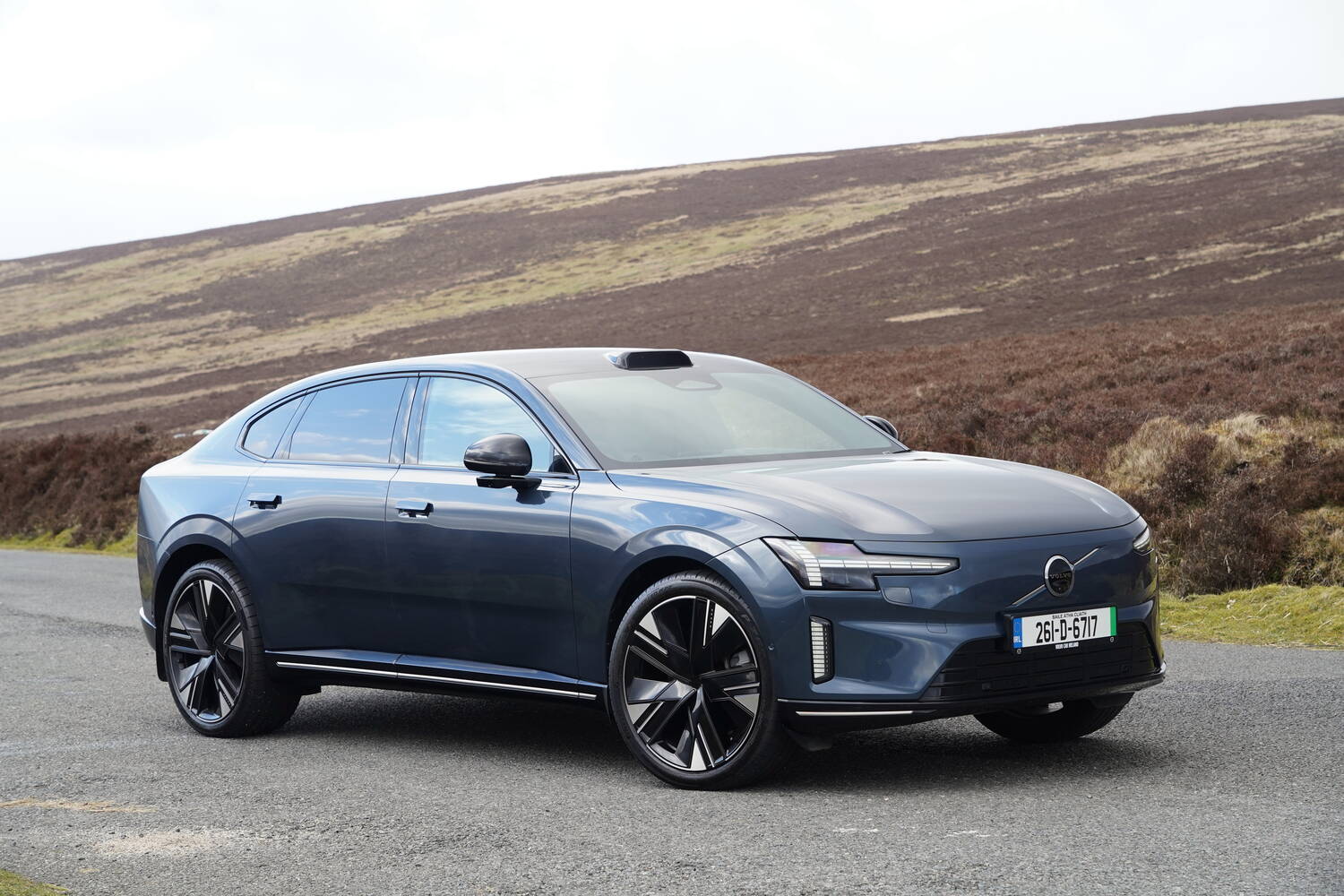
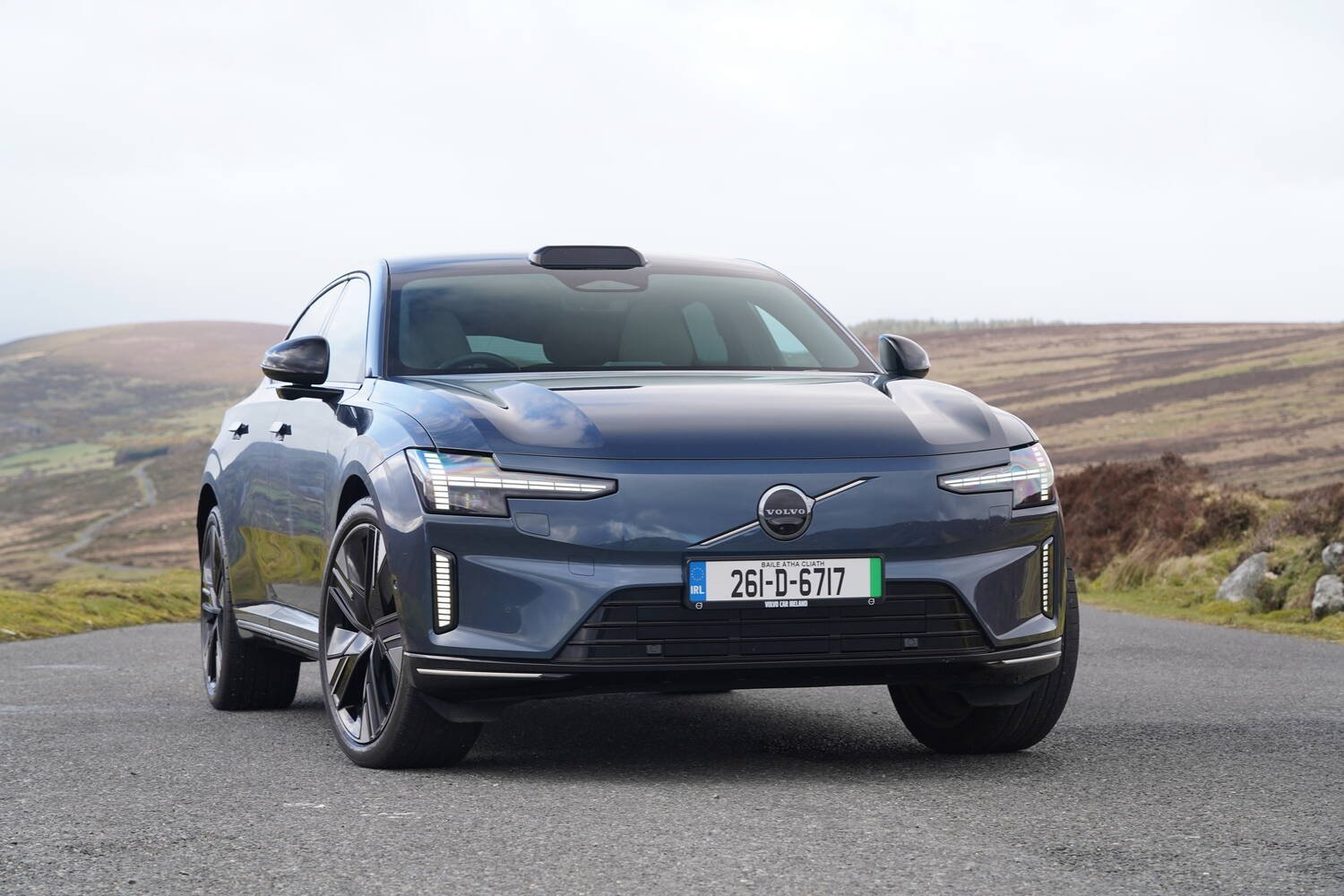
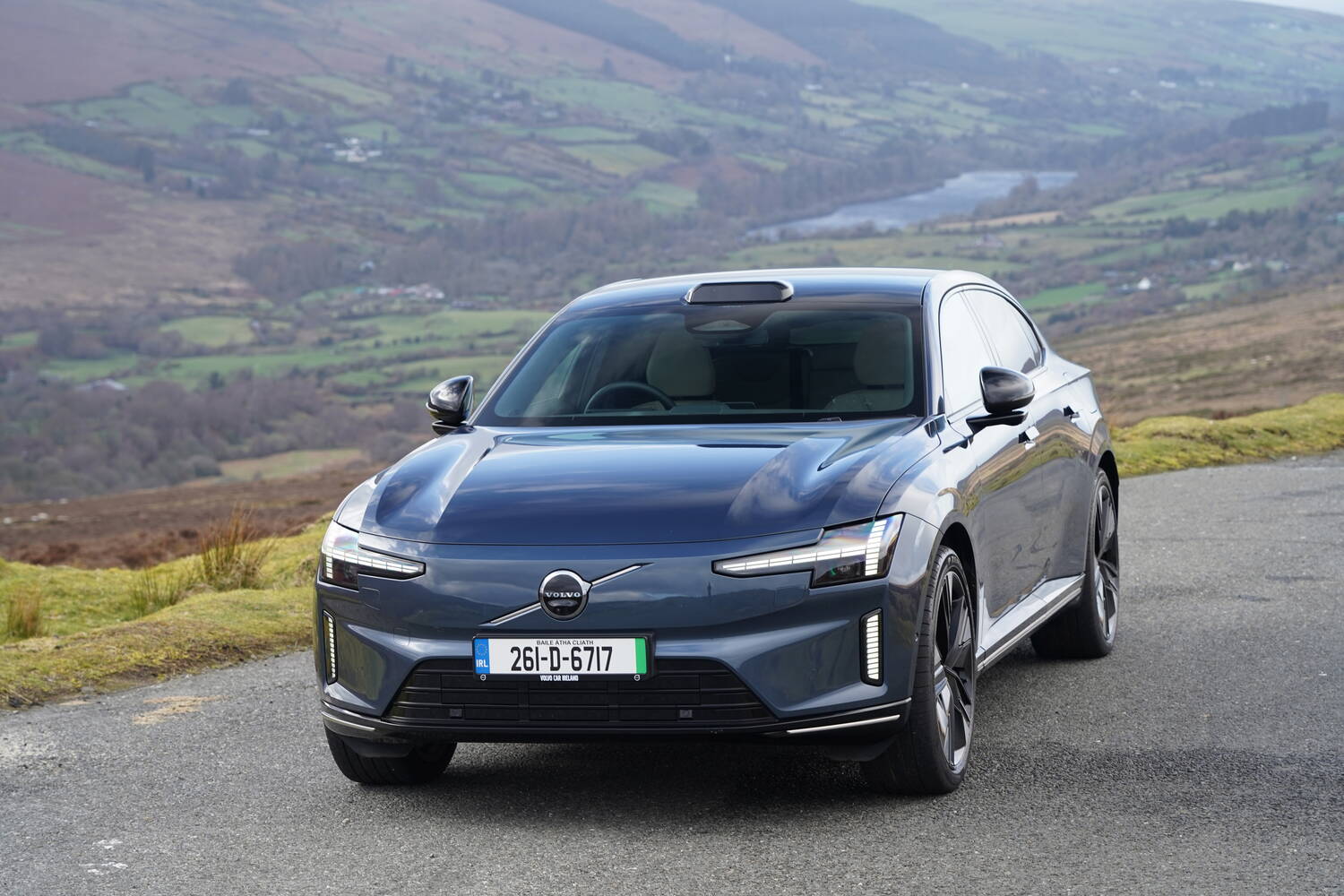
Aside from the length of its legs, so to speak, the ES90 is a genuinely very handsome car. It takes the pared-back, minimalist styling of the taller (and closely mechanically related) Volvo EX90 SUV and, by virtue of being lower-slung, makes that styling look more stretched out. Regal, almost.

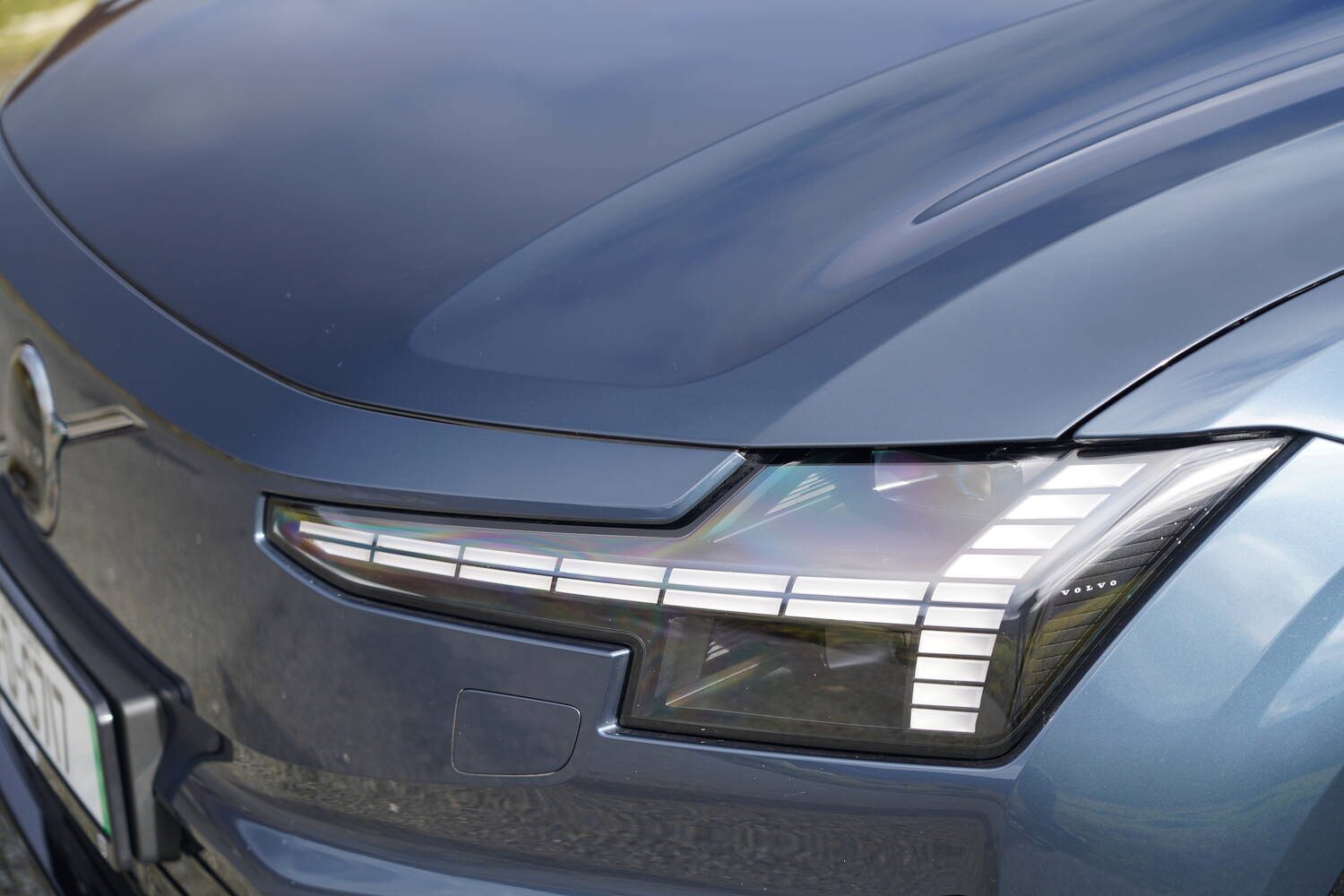
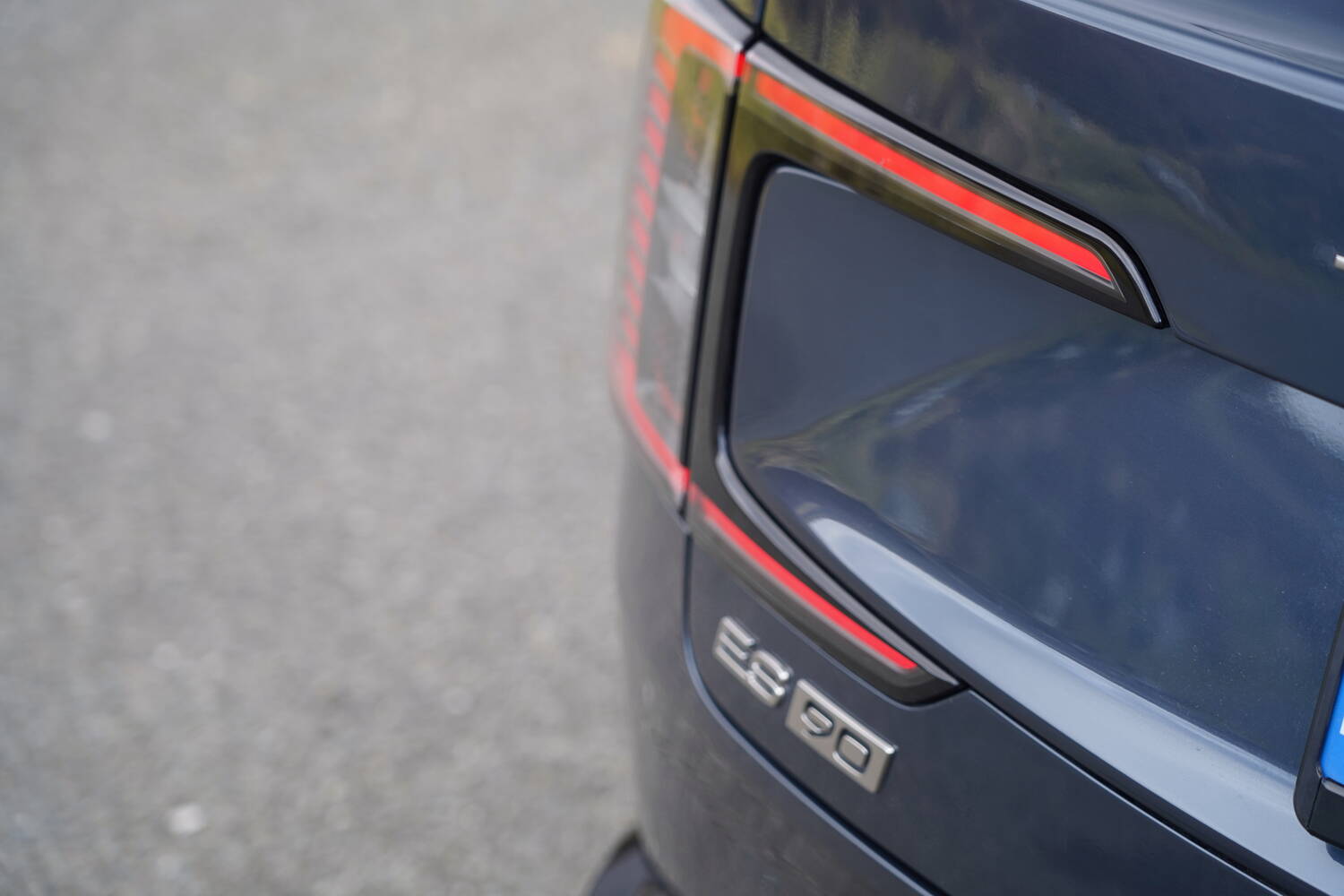
The clean shape is set off by Volvo's neat 'pixel' LED lights at the front, while at the rear there's a more modern interpretation of the old S90's 'C'-shaped brake lights, which run like neat ribbons around the edges of the back of the ES90.
True, from some angles the combination of long body, tall ride height and the hump for the LIDAR scanner above the windscreen can make the ES90 look a touch clunky, but for the most part it's a very handsome and understated car.
Dimensions of the 2026 Volvo ES90
- Length:
- 5,000mm
- Width:
- 2,054 (mirrors folded)
- Height:
- 1,554mm
- Wheelbase:
- 3,102mm
Paint colours for the 2026 Volvo ES90

Vapour Grey is the only no-cost paint option for the ES90, and all are an extra €1,250. They consist of Onyx Black, Crystal White, Denim Blue, Platinum Grey, Aurora Silver, Sand Dune and Mulberry Red. Mulberry Red works really well on the ES90's shape, but we'd be tempted by Aurora Silver, just for the little hints of pink in it, which you just don't expect on a big executive car.
Interior, practicality, tech & comfort of the 2026 Volvo ES90
- Exceptional quality
- Almost ridiculously comfortable
- Epic rear legroom

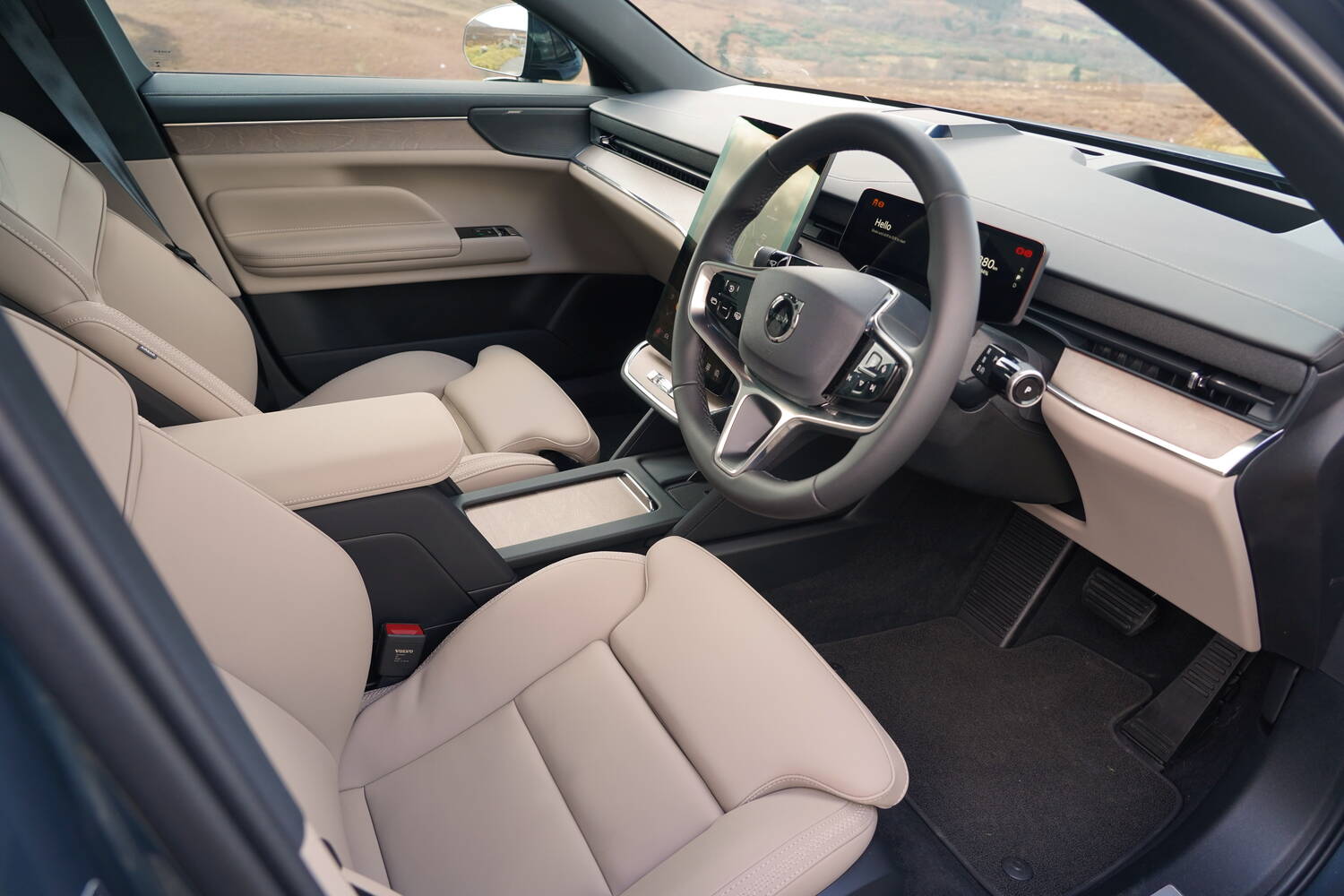
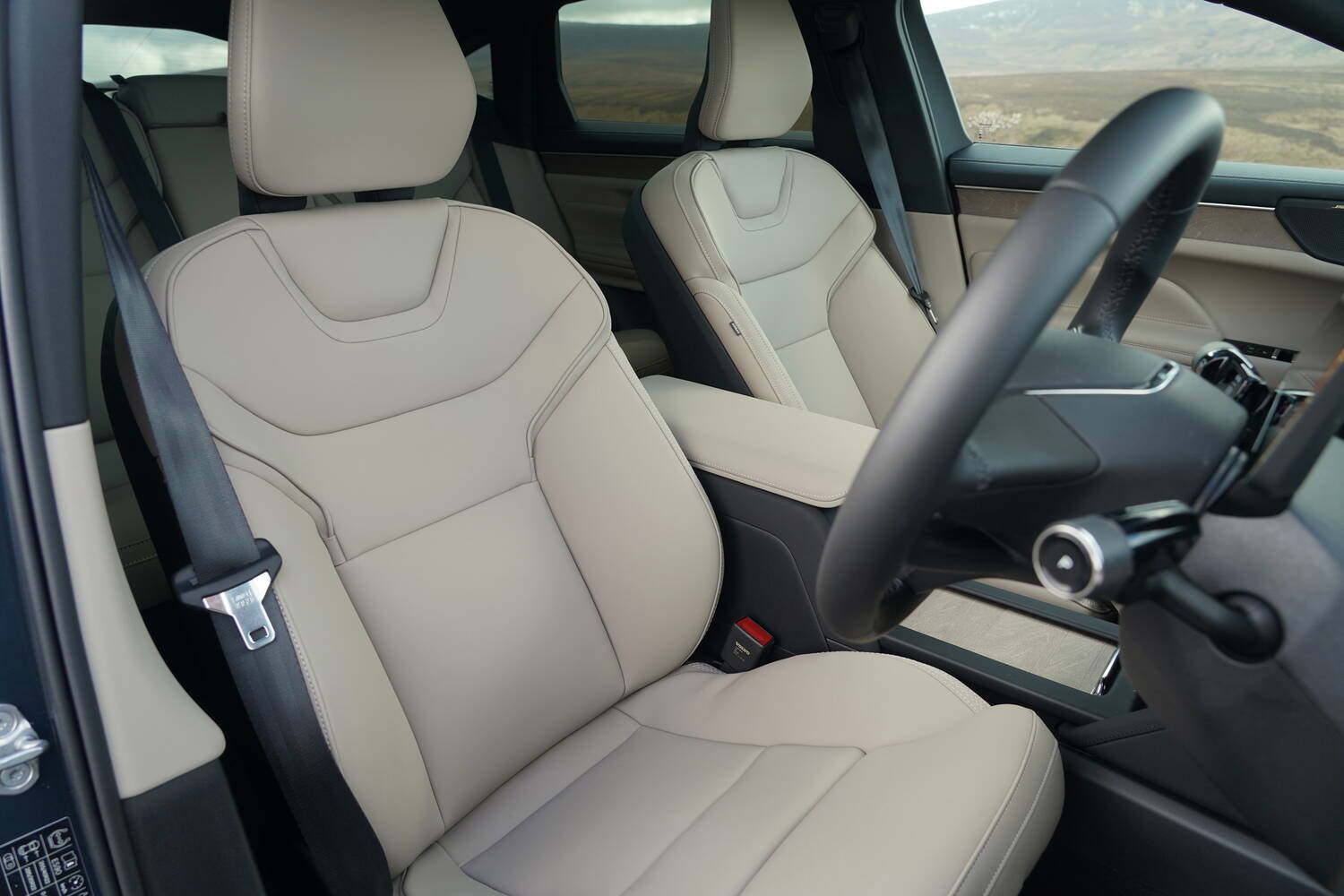
Volvo makes some of the best executive car interiors in the business. While BMW has gone all tacky with its light-up plastic bars (though that trend seems to have disappeared for its next generation of cars, thankfully), and the Mercedes EQE and Audi A6 are rather disappointing in quality terms, the ES90's cabin is a place you just never want to leave.
Getting comfortable in the driver's seat
As with the bigger EX90, the Volvo ES90's front seats are gloriously comfortable, and they're both heated and ventilated in the top-spec Ultra test car.
They're adjusted using a small cube-like switch on the side panel of the seat, and you can change the sections of the seat that each twist and turn moves by tapping on the touchscreen. It's a slightly fiddly system, but you do get used to it and it's worth working with it to find the right driving position.

That driving position is slightly perched up - a legacy of the ES90's battery being under the floor - which is a slight shame as, in a car such as this, it would be nice to sit a little lower, but you forgive it that for the comfort on offer.
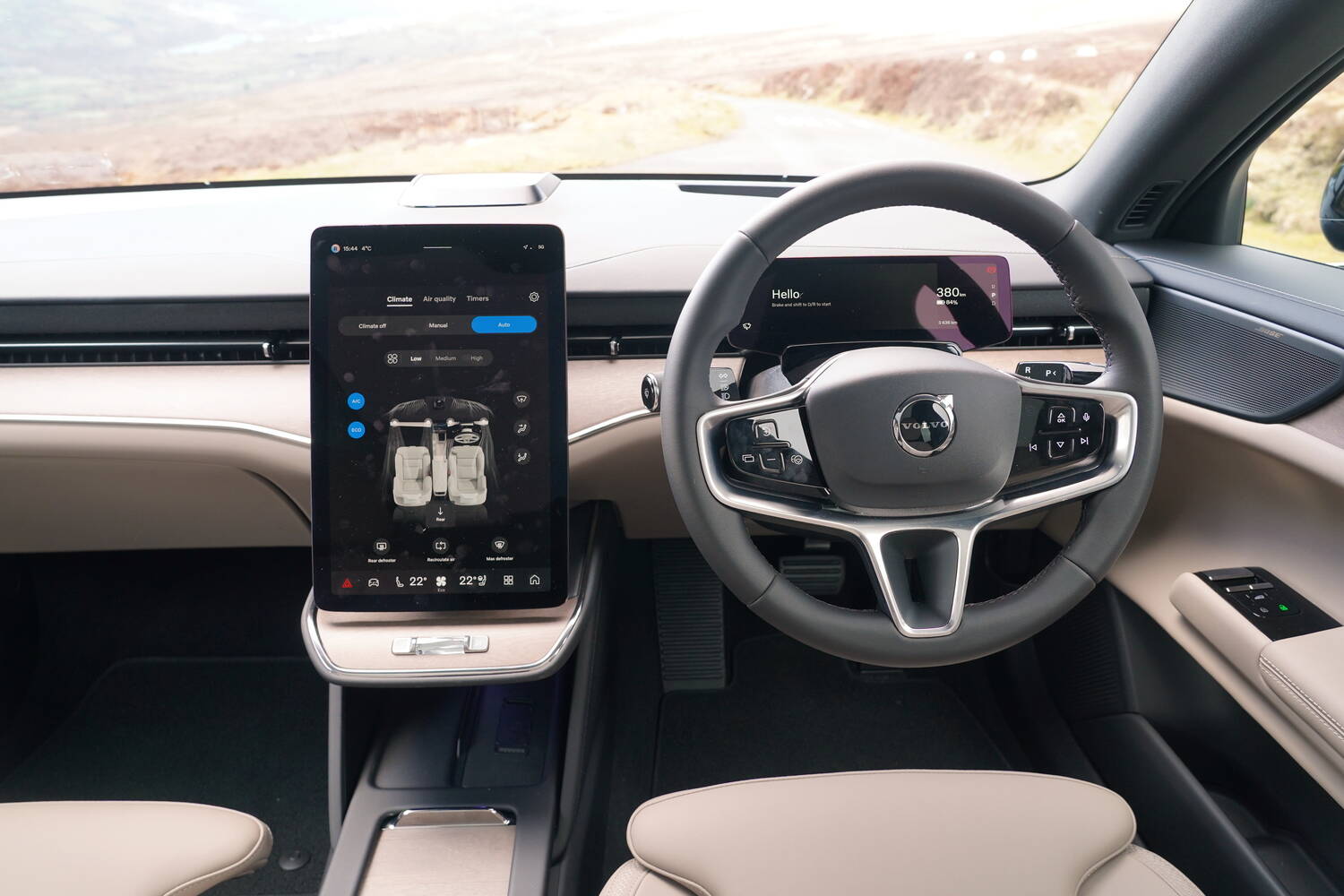
There's plenty of adjustment in the steering wheel too, but to actually move it, you have to work your way through touchscreen menus and then use the buttons on the right-hand spoke of the steering wheel itself. It's not a satisfactory setup, and we'd rather if Volvo just fit a simpler manual adjustment for the wheel (which, in fairness, is fitted to the basic 'Core' version).
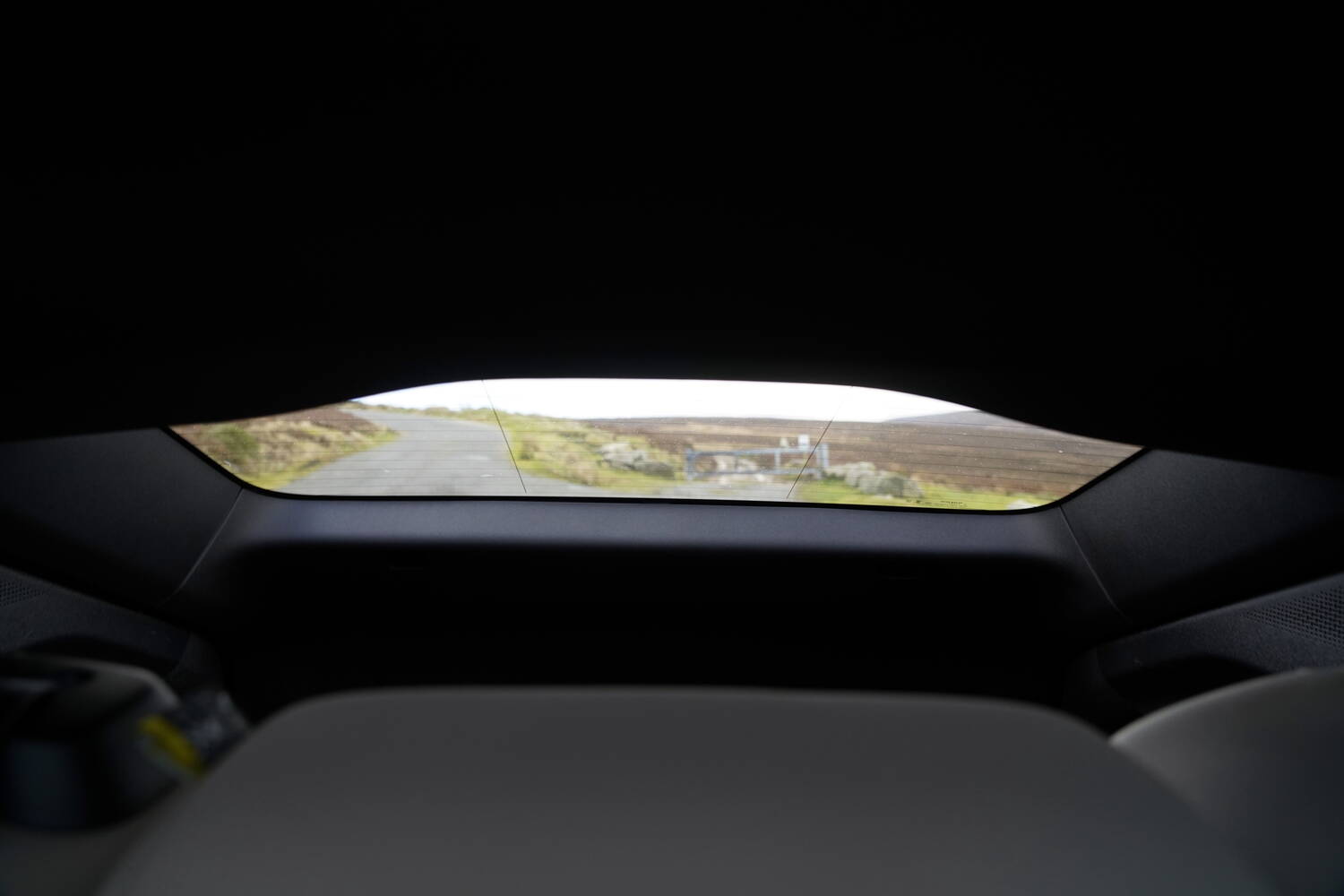
Equally, while visibility out is mostly very good, it's not great directly behind you, as the rear window is very small and shallow, and the rear pillars are massive. Worse, if the rear centre seat's headrest is in position, there's essentially no rearward visibility at all.

Infotainment and technology
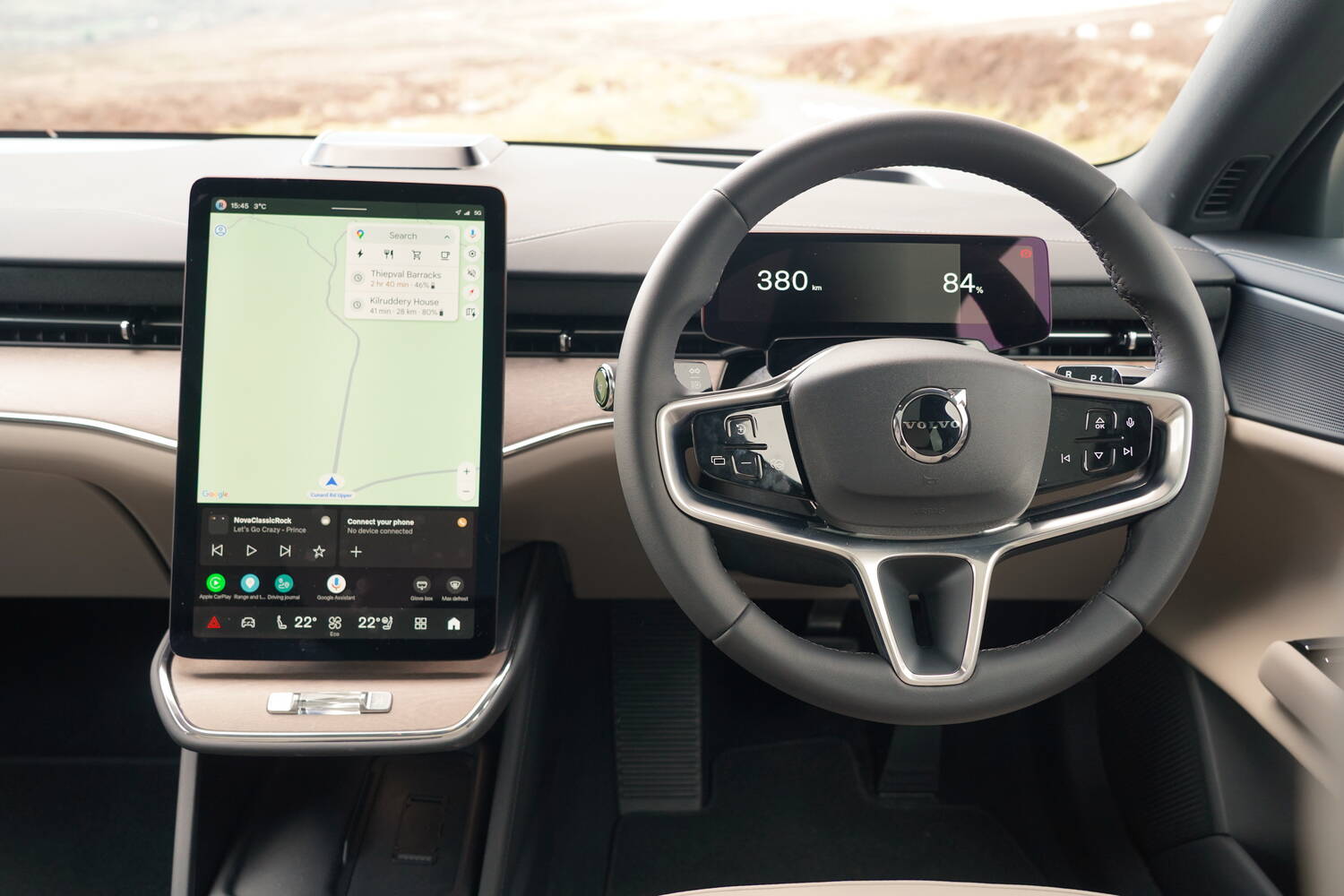
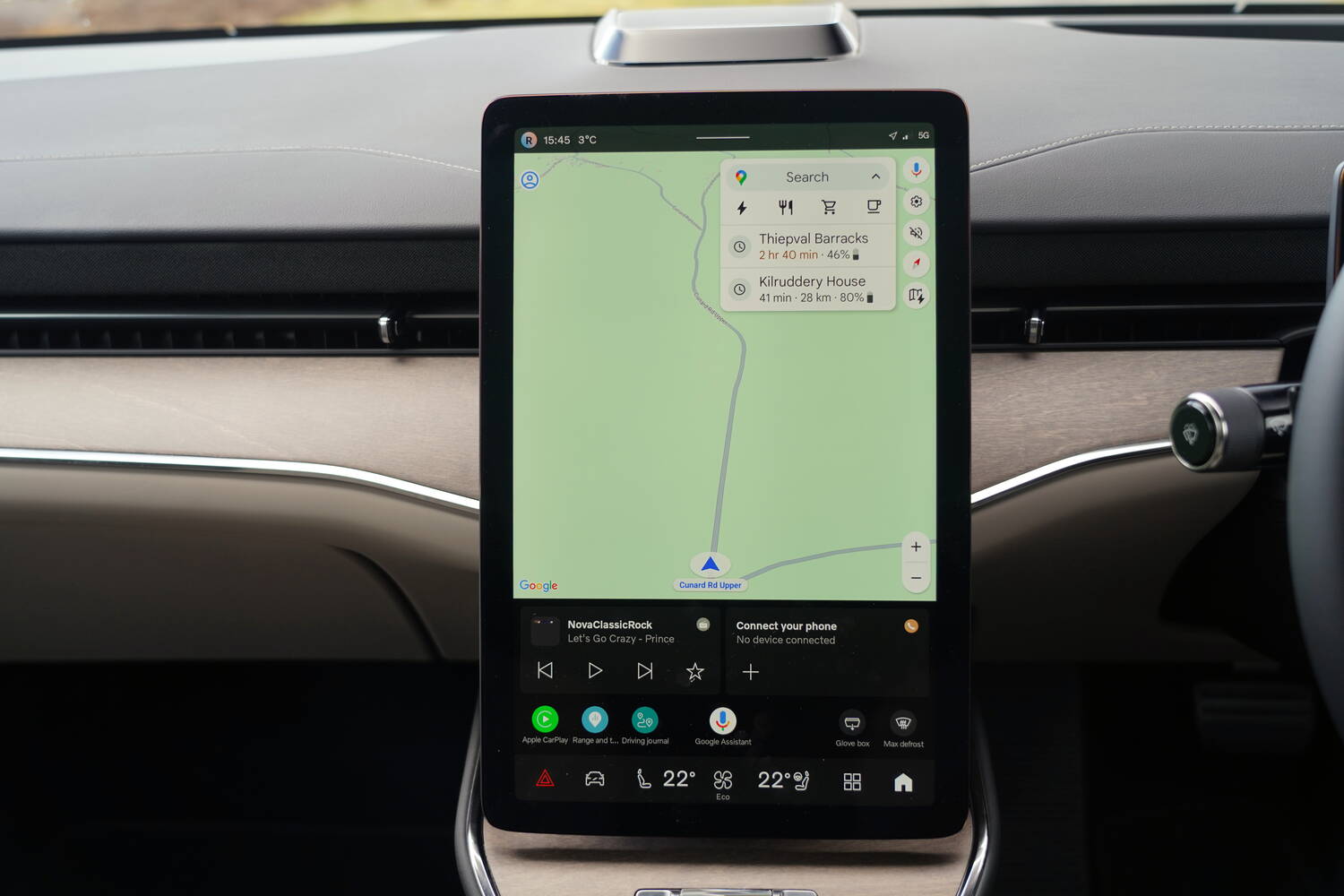
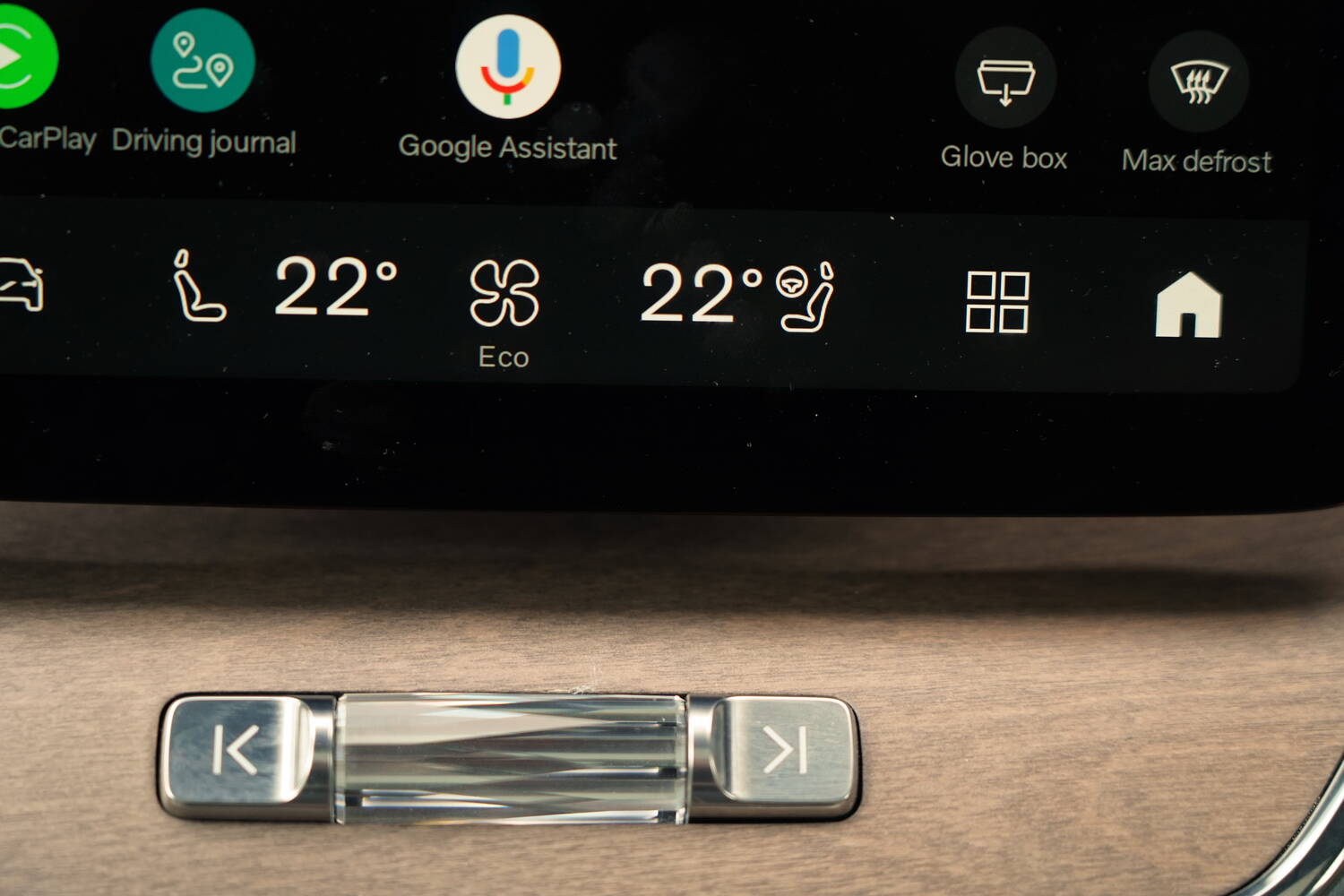
As is becoming rather familiar, the ES90's technology quotient is dominated by its big 14.5-inch portrait-style touchscreen. Volvo struggled to get the software for this latest generation of its electric models right, but by working with Google's Android Automotive - which provides the software structure under the Volvo skin - most of the kinks and issues have been worked out, helped by a recent switch of chip hardware supplier.

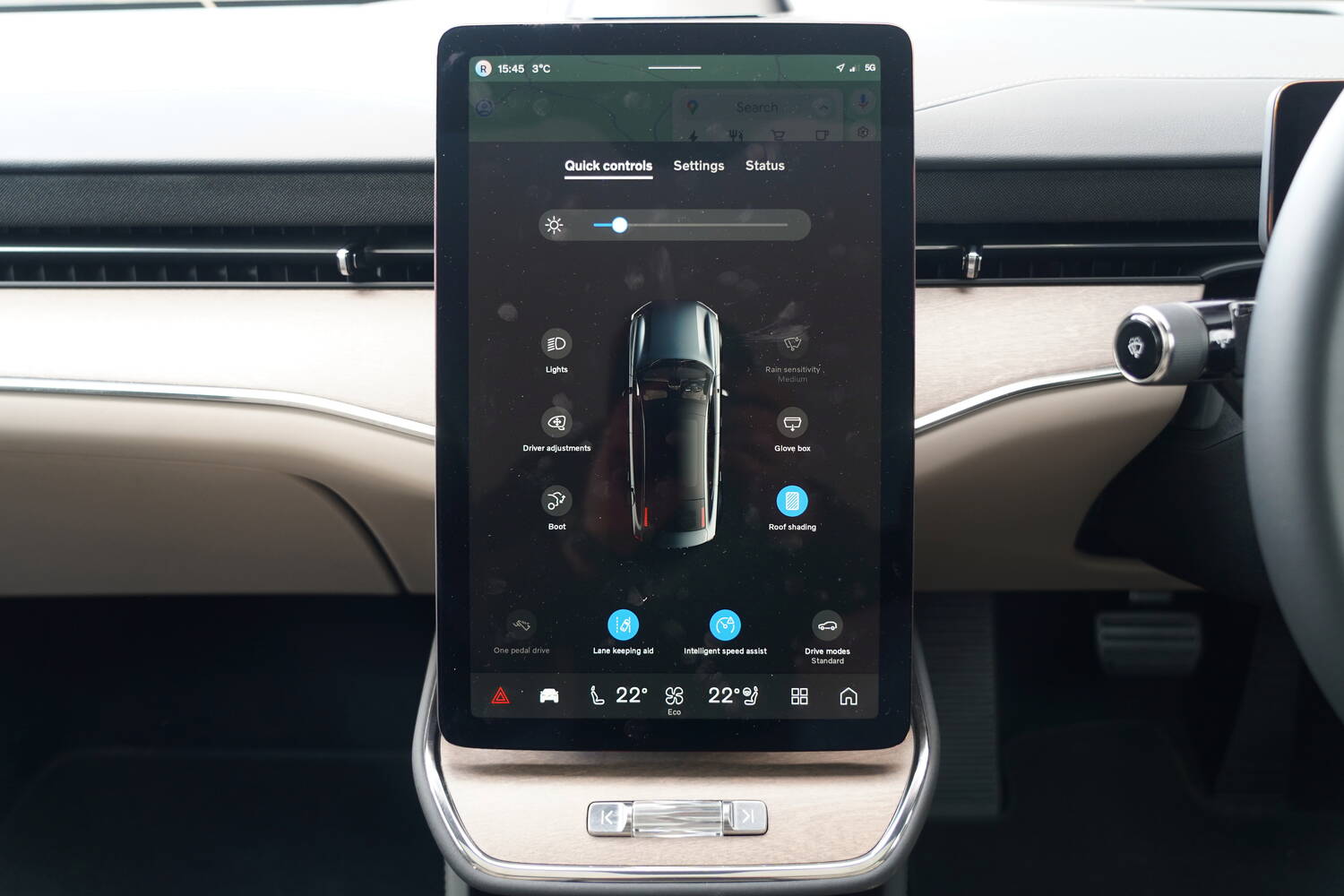
Even so, the end result is mixed. The menu layout is pretty sensible, the graphics look great and the responsiveness of the screen to taps and swipes is excellent. It's also mercifully easy to switch off systems such as the speed-limit warning and lane keeping if you want to.
However, it's still frustrating that items such as headlight control, fog lights and even door mirror adjustments are all on the screen. This makes them fiddly and difficult to access when you're driving, and in specific circumstances - such as when you want to tip your mirrors down when reverse parking, only to find out that the control menu isn't available when in reverse parking- makes the setup maddening.

We're blue in the face from telling car makers - and Volvo is far from the only, or the worst, offender here - that touchscreens aren't good for major controls, but the message only seems to be slowly getting through.
There's a big upside to the tech when it comes to the stereo, though. This is the third time in recent months we've had a chance to sample Volvo's brilliant 25-speaker (including specific headrest speakers so that the driver can take a phone call while the rest of the occupants continue listening to music or podcasts) Bowers & Wilkins stereo, which can mimic the sounds of sitting in the famous Abbey Road recording studio. All we can say is that third time around we're still not sick of it and still wish our home stereos sounded this good.

An equal upside is the full integration of Google Maps into both the big touchscreen and the driver's instrument display, which itself is neat, clear and helpful. The mapping display is excellent, and it's tied into the car's battery so that inputting a distant destination automatically triggers recommended charging stops, as well as battery pre-conditioning for faster DC charging.
Practicality around the cabin
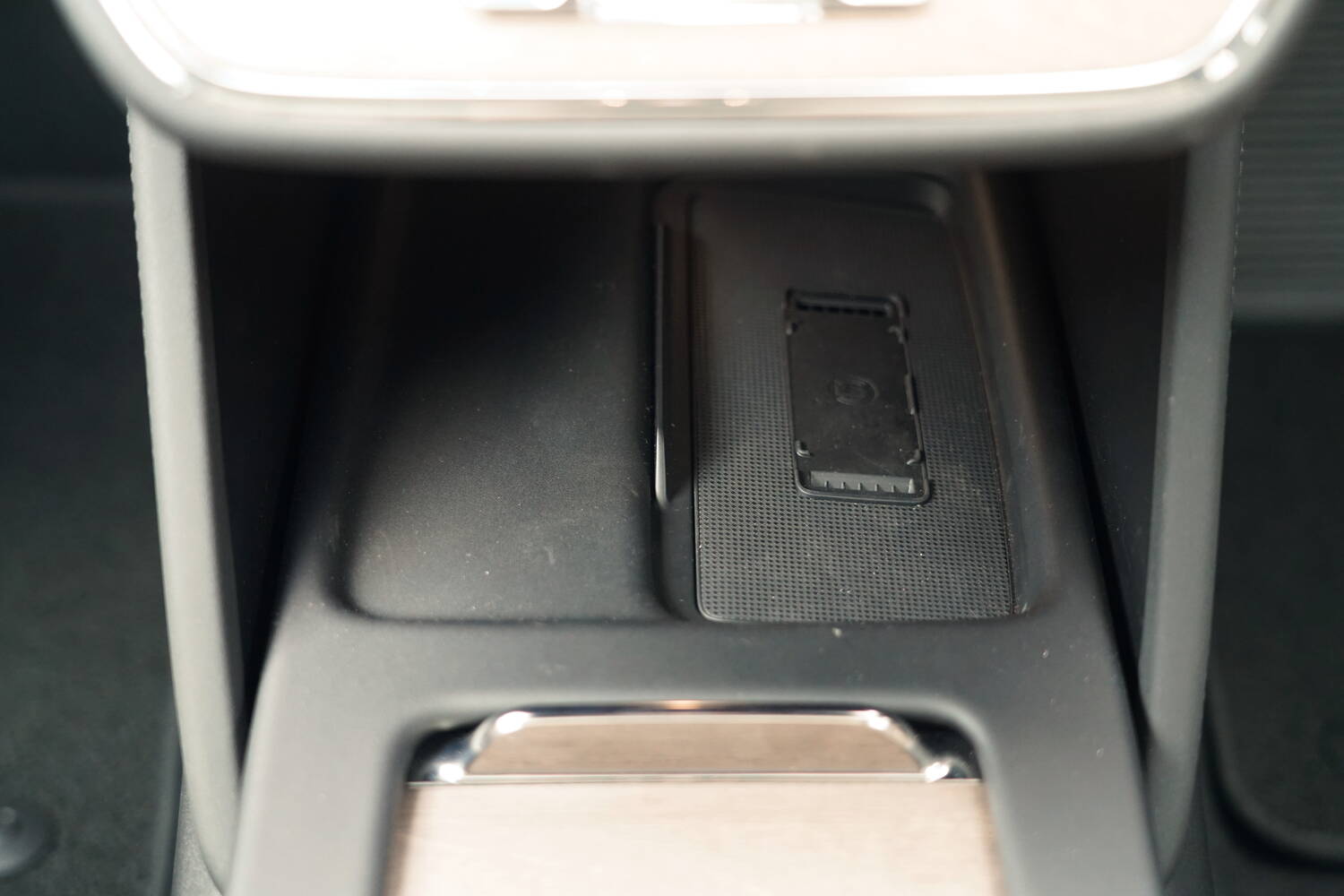
Volvo's cabin design is very minimalist and Scandi-chic, leaving the high-quality surface materials to do the visual lifting, so to speak. This leaves plenty of space for storage, and so there are two large cupholders between the front seats, under a sliding cover.

There's a large storage area in front of those, which is home to a wireless phone charging pad, and there's a usefully large glovebox too (although you have to use the touchscreen to open that, which we dislike). The door bins are also large, and there's more storage space under the central front armrest.
Rear-seat passenger space

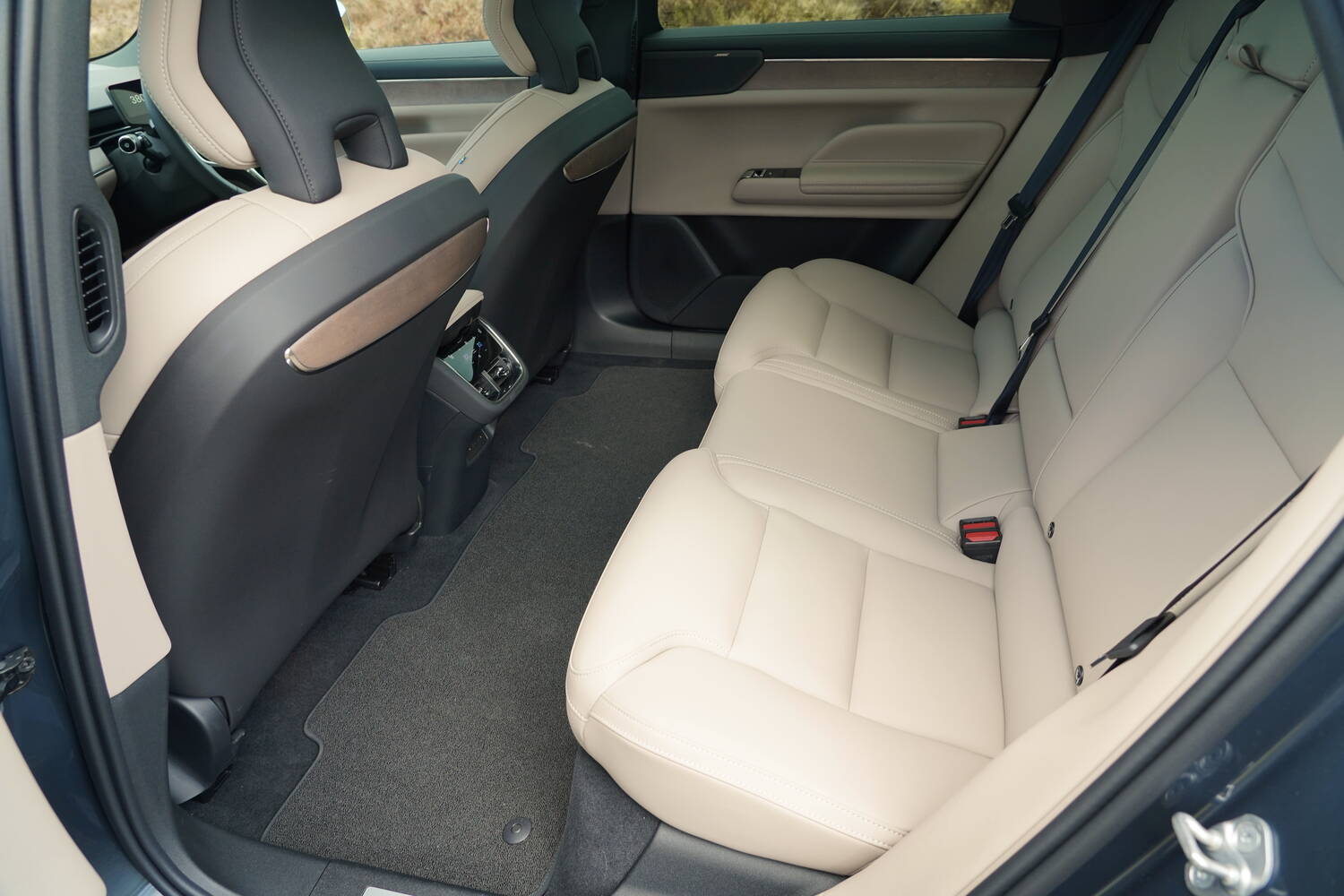
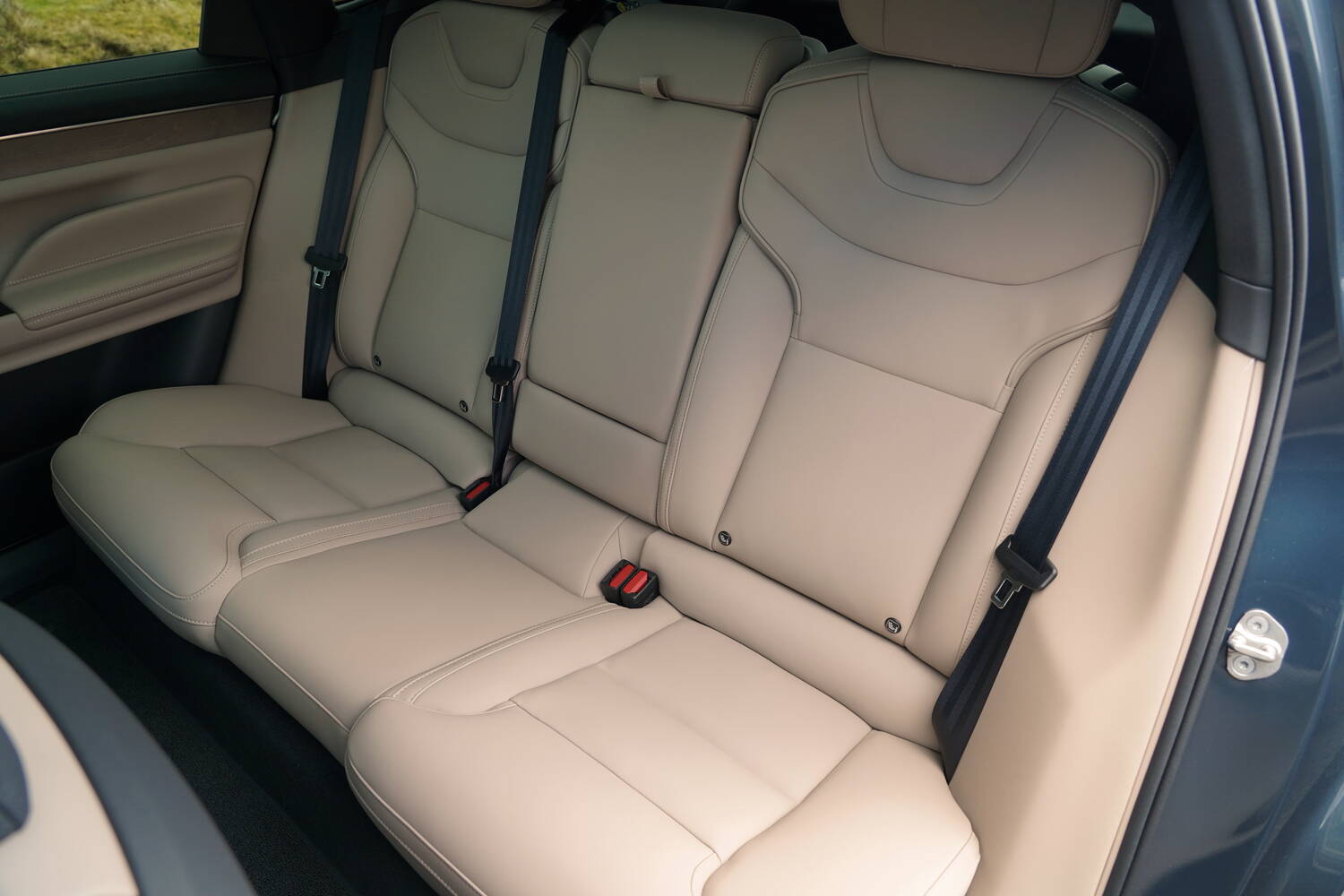
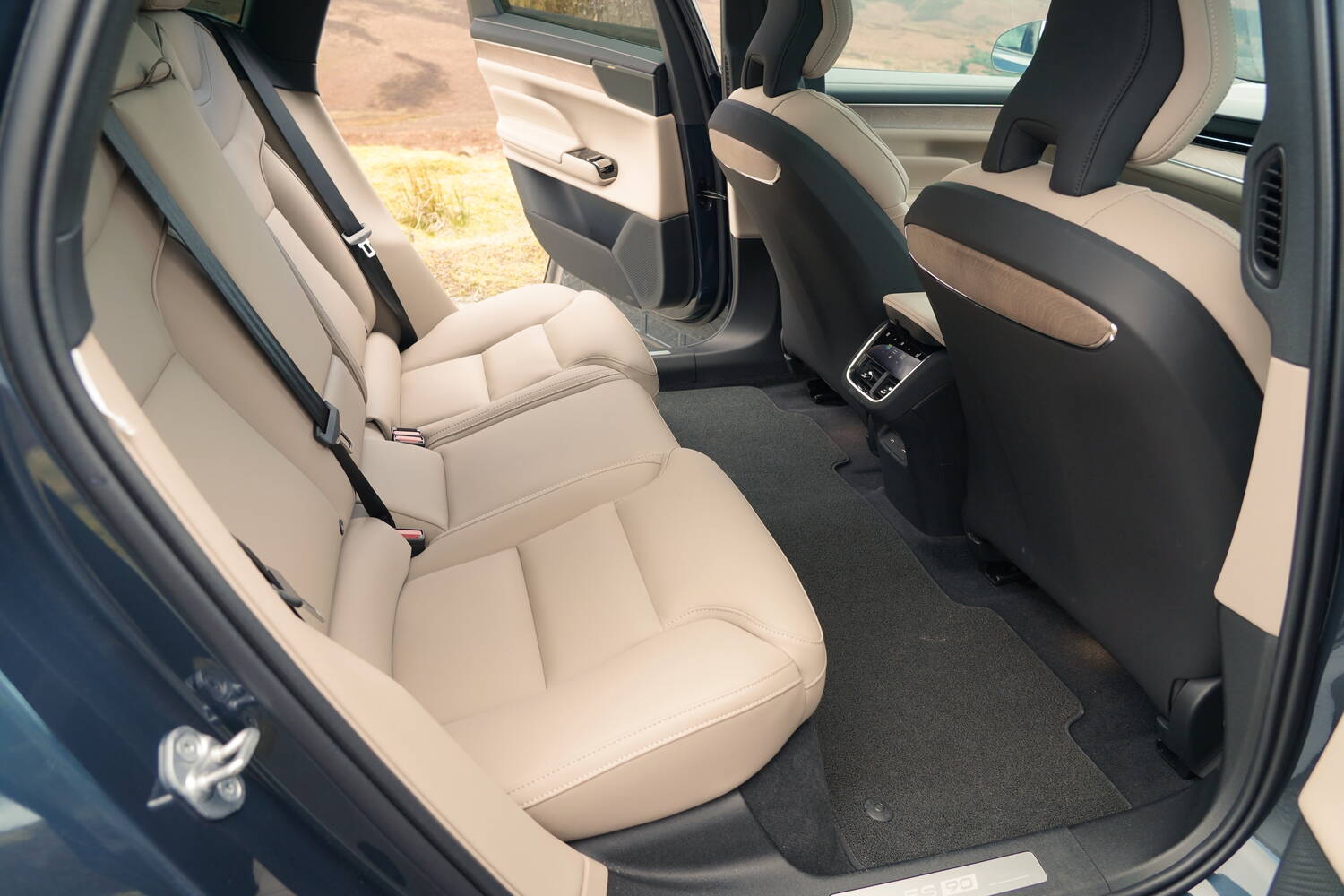
Take a quick look back up at the ES90's physical dimensions. The wheelbase is a colossal 3.1 metres, which is longer than that of most SUVs - and more than a few MPVs. It means that rear-seat space is simply enormous.
Now, that does come with the caveat that the high floor robs a little of the available space, but there's so much rear legroom in the ES90 that we're tempted to reclassify it as a limo.

The rear seats are also staggeringly comfortable, every inch as supportive and comfy as the front seats. The exception to that is that the middle rear seat, which is narrow enough to be more or less useless.
Much better to simply fold it down where it becomes the rear armrest, complete with covered cupholders and a soft-lined storage area. As long as you're not trying to carry five people, the rear of the ES90 becomes a more tempting place to sit than the front.
Fitting child seats to the Volvo ES90

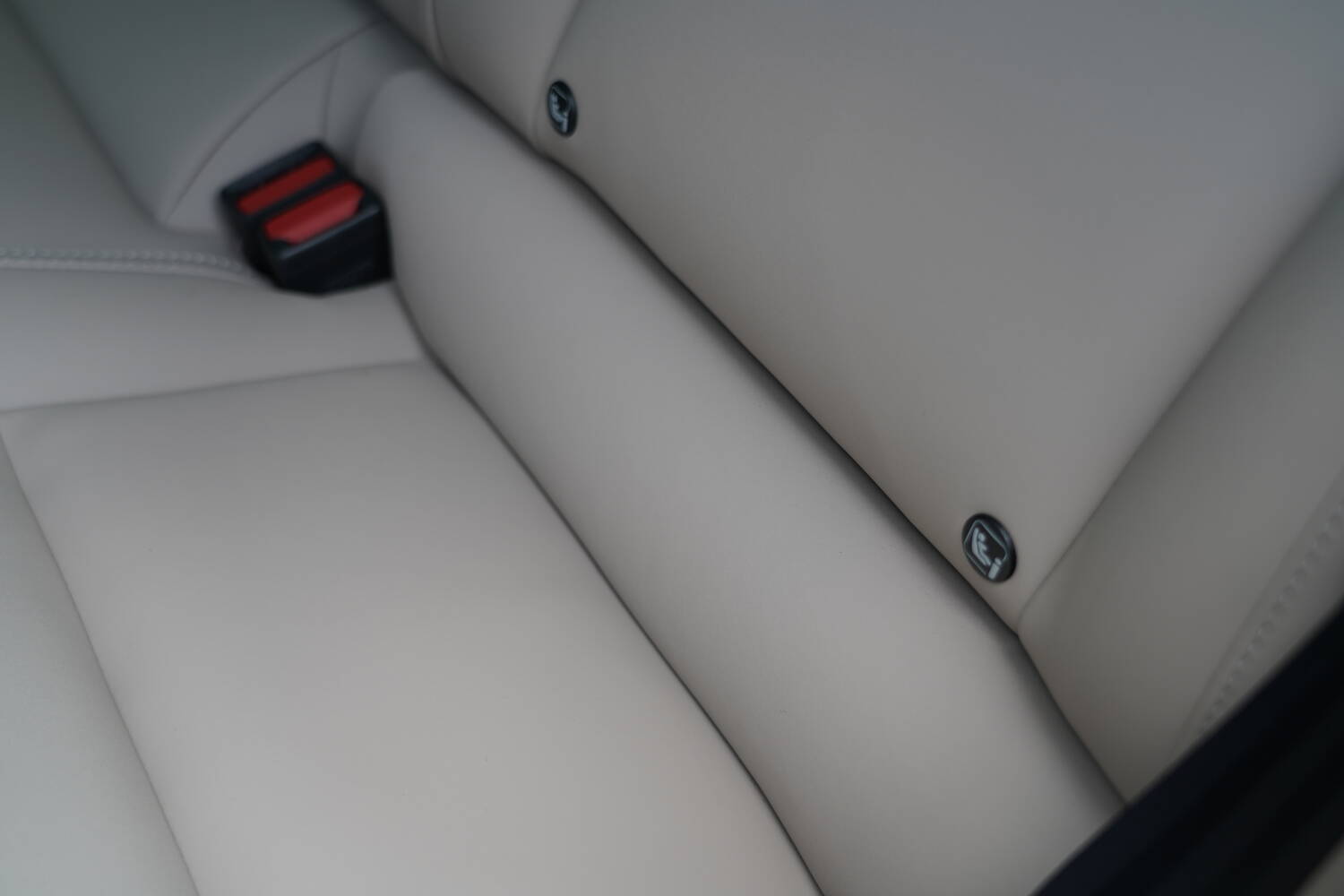
There are two ISOFIX anchor points in the back seat of the ES90, and the sheer amount of space on offer means that you should have no problem locking in even the bulkiest rear seats. There's no ISOFIX in the front passenger seat, but of course you can secure a rear-facing seat there using the seatbelt.
Boot space in the Volvo ES90
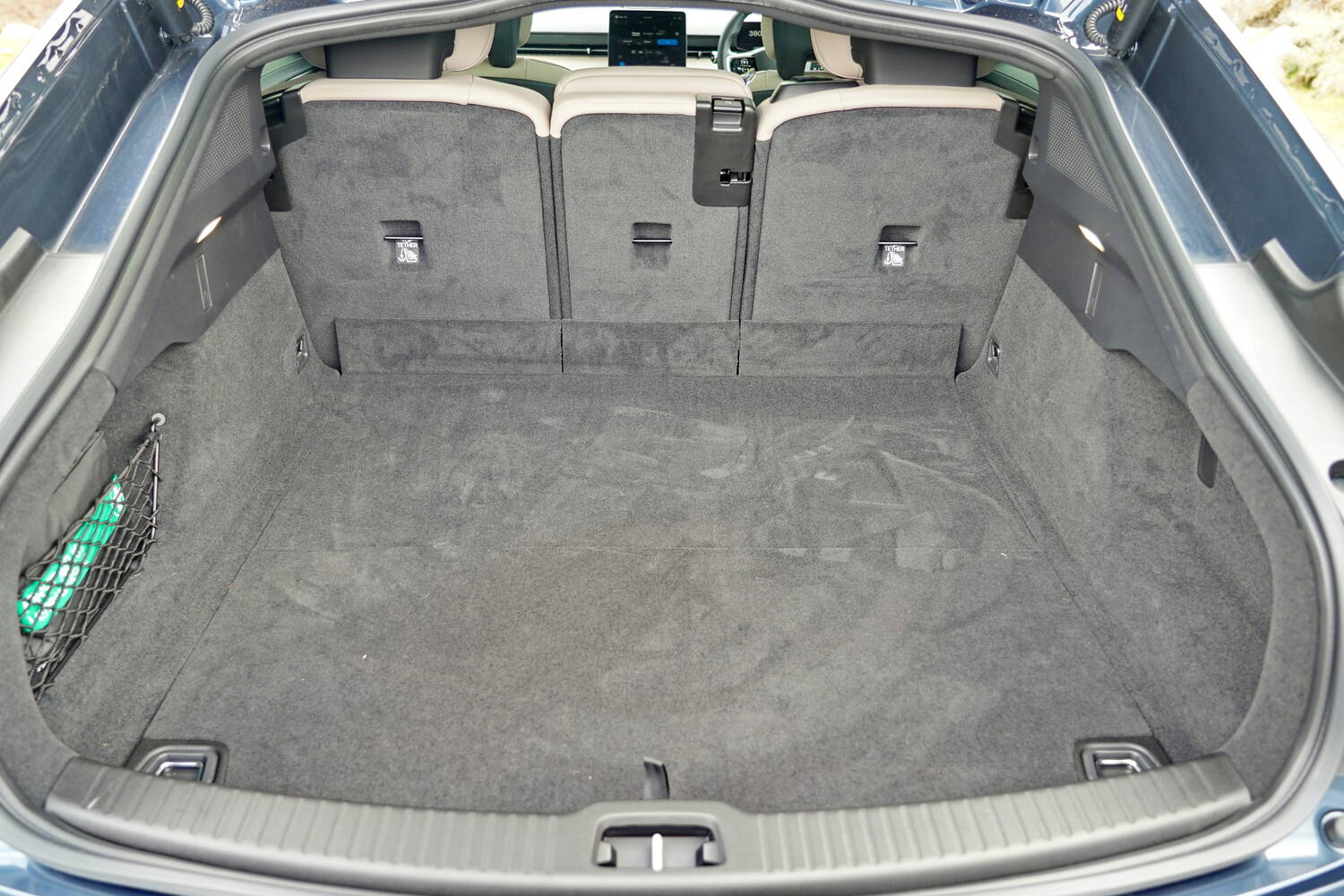
Volvo has been owned by Geely, a Chinese company, for knocking on two decades now, so it should come as no surprise that the ES90 is one of the Volvo models made in China. Why do we mention this in the section on boot space? Well, because there's a distinct difference in Chinese market tastes compared to European market tastes, which is that Chinese buyers place a premium on rear seat space over boot space, and this is a template that the ES90 follows.

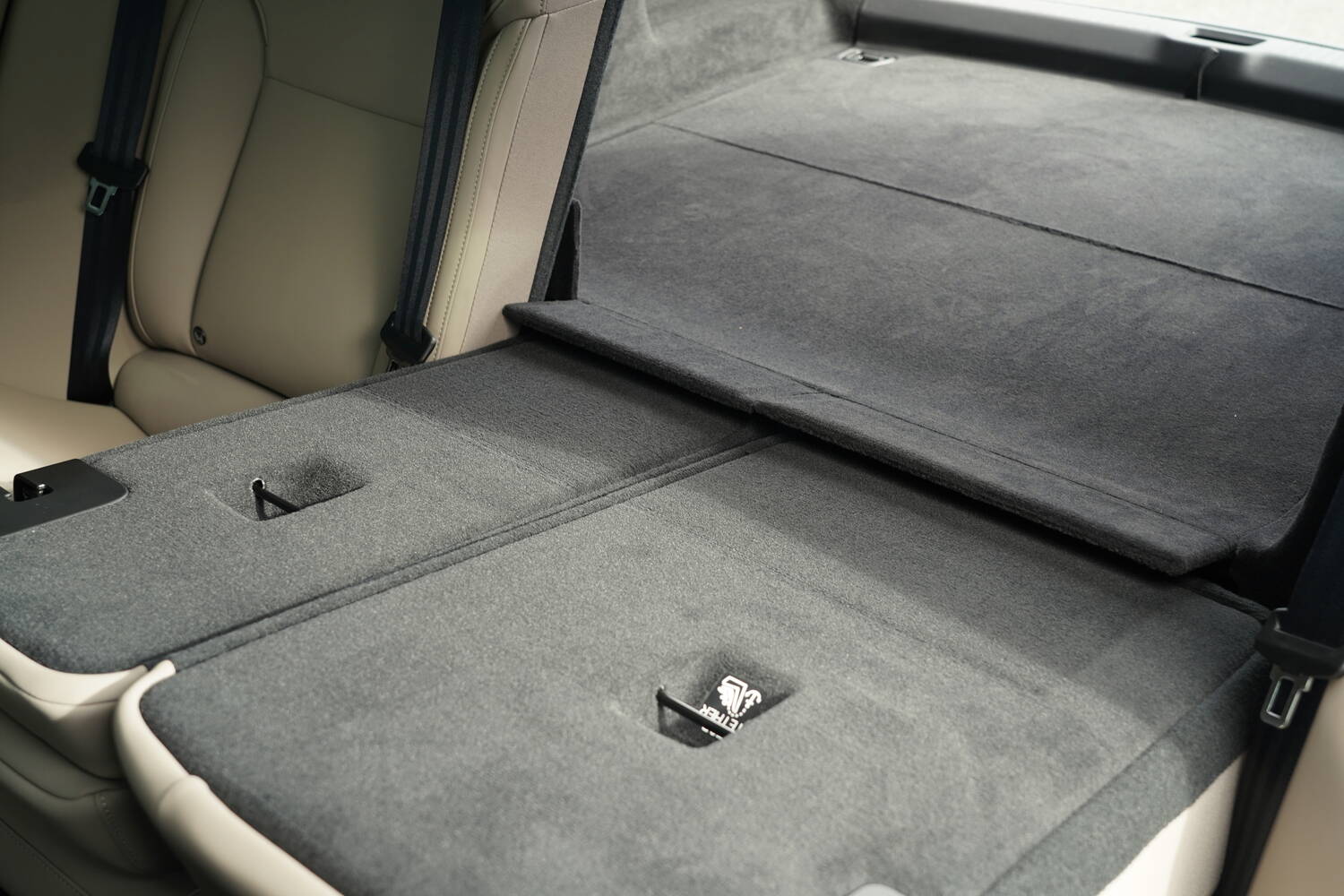
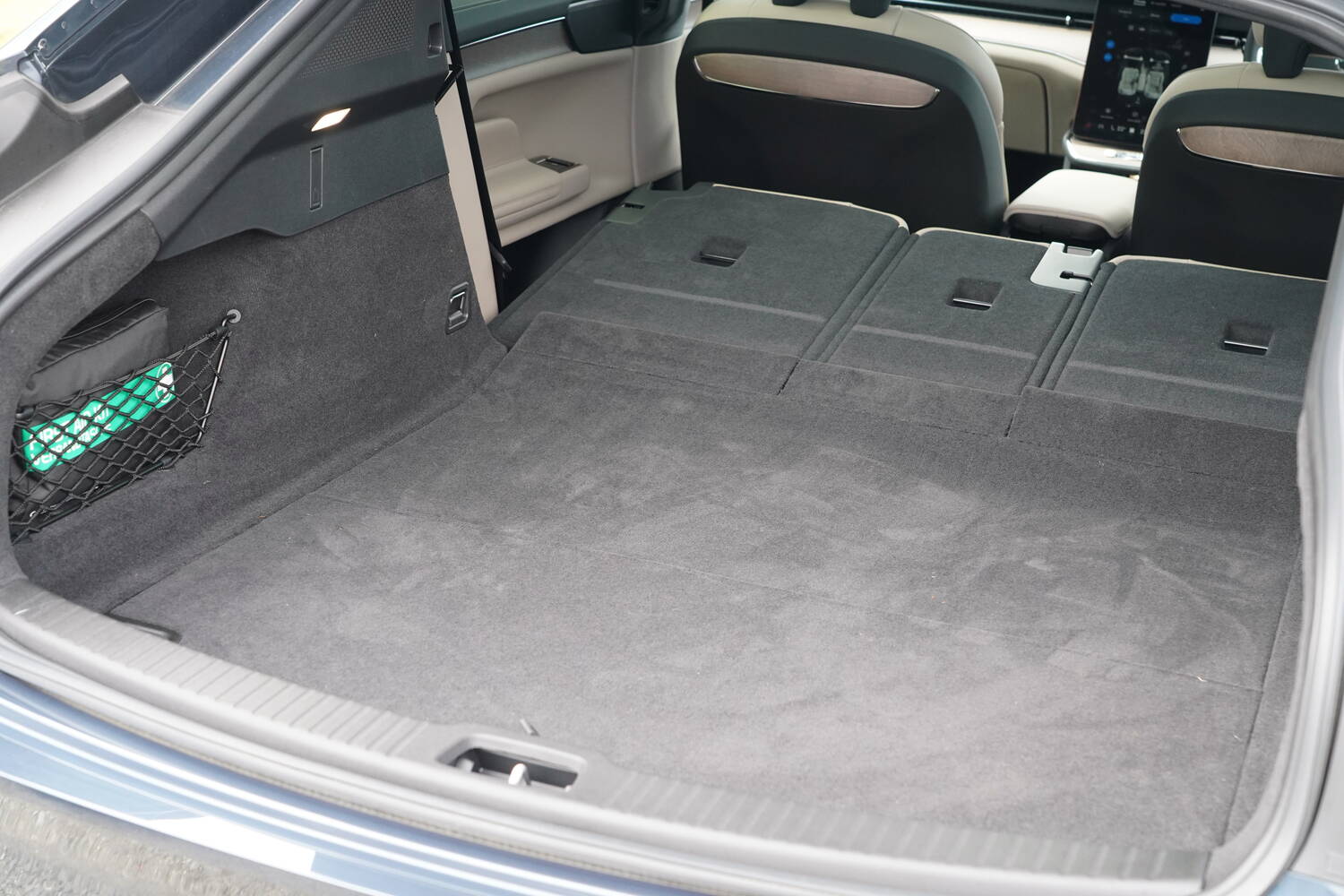
So, with all that rear legroom, the compromise is that the boot is actually quite small, at 424 litres. That's not a disastrous figure, though. It's around 65 litres less than you'd find in the boot of a BMW i5, and the Volvo's boot is a touch more versatile thanks to it being a fastback, not a saloon with a separate boot.
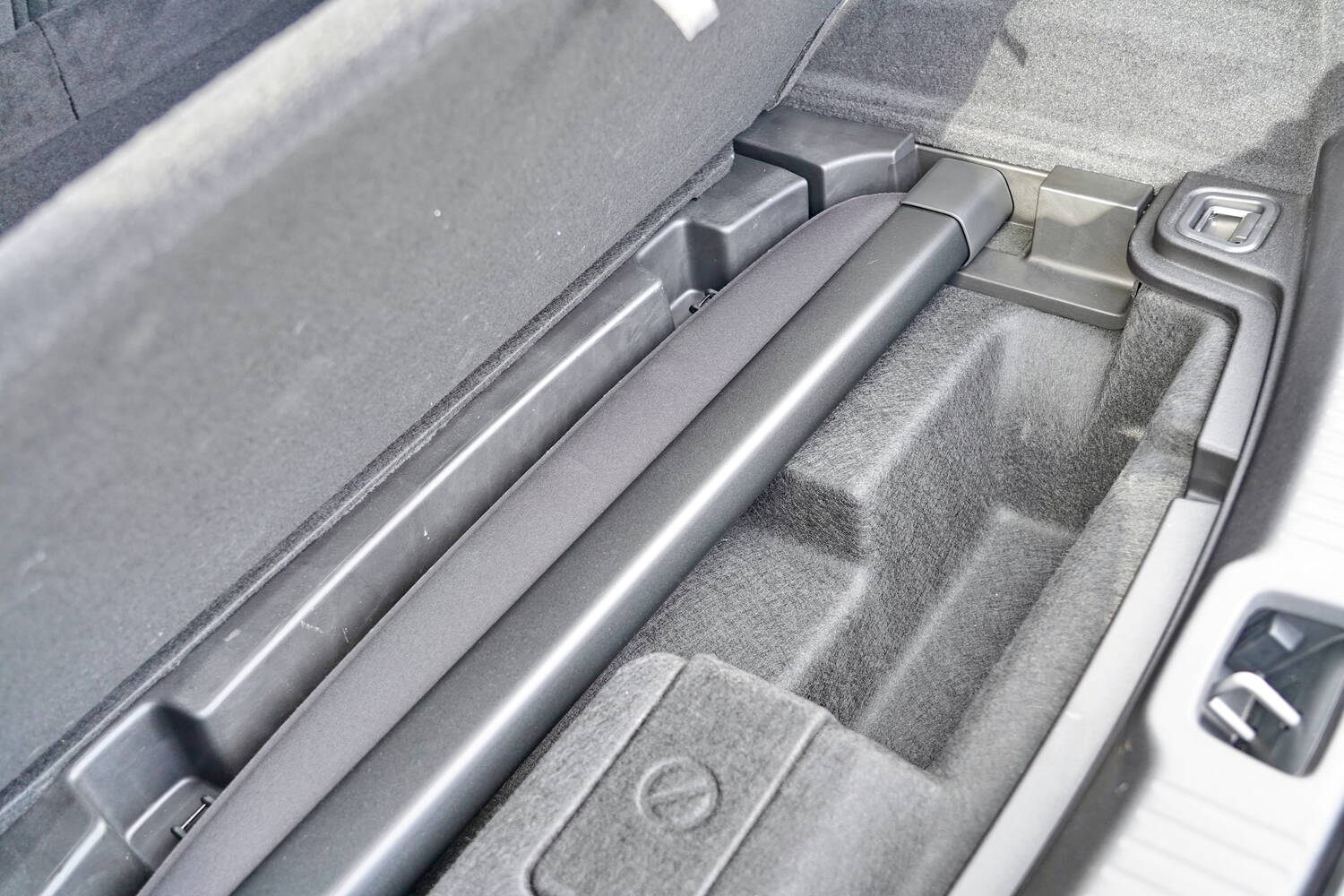
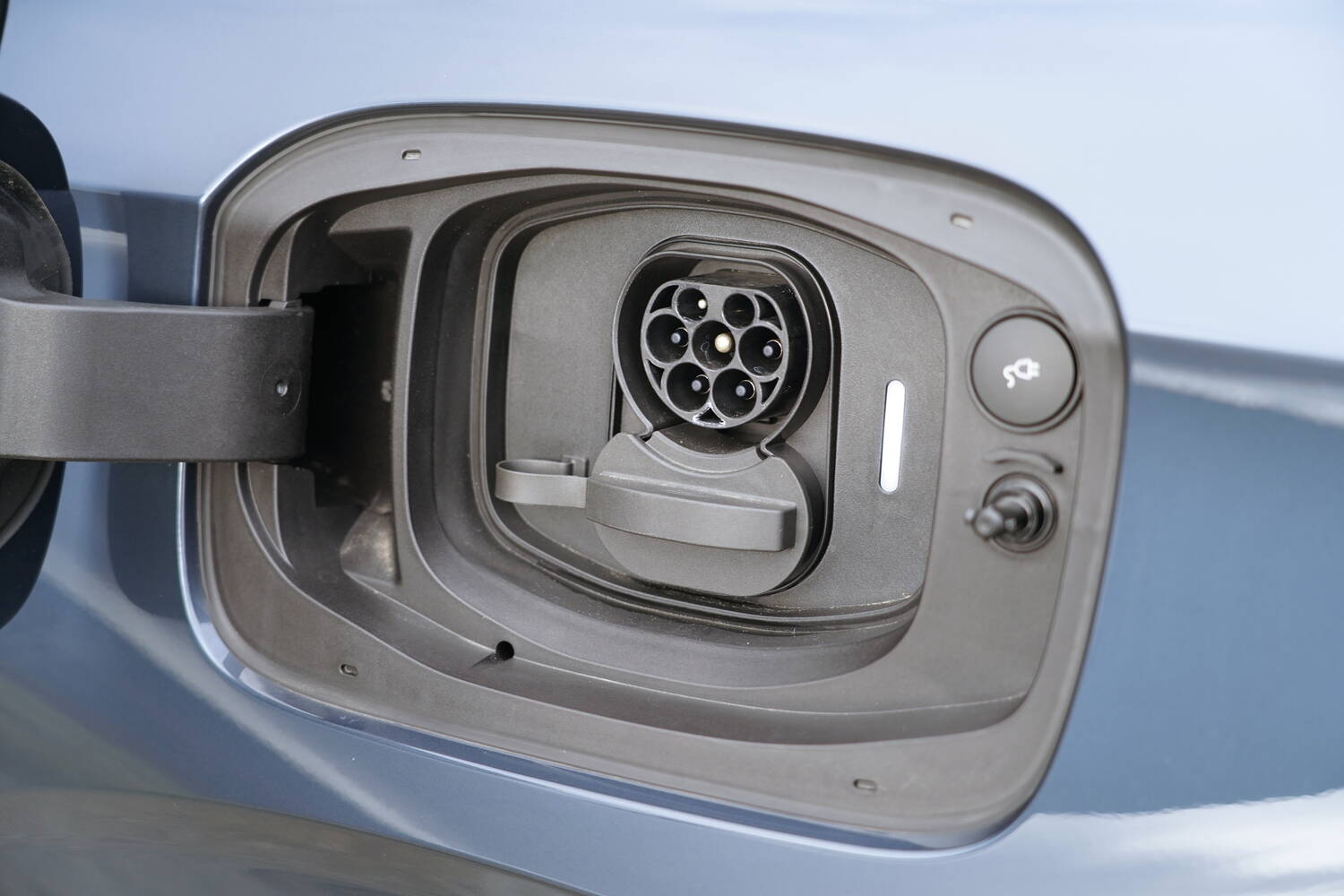
There's also a 22-litre 'frunk' in the nose of the Volvo, which is big enough to stash a tightly coiled Type 2 charging cable, so the ES90 is reasonably practical, just not quite as practical as you might have hoped given its size.

In the Ultra model, the air suspension can be lowered at the rear - using buttons in the boot - for easier loading of heavy items. Subjectively, the ES90's rear springs seem to drop way lower when doing this than we've seen in most other similarly equipped cars.
Towing with the Volvo ES90
The ES90 has a maximum braked trailer weight of 1,600kg, which is useful, even if it's 600kg less than the Volvo EX90 can tow, so bear than in mind if you're going to regularly carry an external load.
Safety in the Volvo ES90
The ES90 hasn't been independently tested by Euro NCAP, but given that it's closely related to both the Volvo EX90 and the Polestar 3 under the skin (all three cars use Volvo's 'SPA2' platform) we'd expect it to closely match the exceptional safety abilities of its SUV cousins, not least because Volvo itself tests its cars far more rigorously than NCAP ever does, including the 'run off road test' where the car is flung at speed down an outdoor embankment and into a pole, simulating a high-speed collision with a tree.
It's mildly terrifying stuff, and we'd recommend checking out Volvo's YouTube videos of the process to see just how savage an impact the ES90 and its fellow models can deal with.
Performance of the 2026 Volvo ES90
- Single-motor rear-drive model only in Ireland
- 333hp motor has plenty of performance
- Ride occasionally upset by poor surfaces

ES90 buyers get to choose between the 333hp Single Motor (capitalised because that's the official model name), rear-wheel-drive model we're testing here, or if you're going for high-spec Ultra trim, you can also choose a Twin Motor, four-wheel-drive model with 456hp, or a Twin Motor Performance variant with a wild 680hp.
Driving the Volvo ES90 Ultra in Ireland
Words by Neil Briscoe on 17 April 2026
The ES90, thanks no doubt to its long wheelbase, has a really rather lovely, languid feel to how it drives. The Ultra model comes with adaptive damping and air suspension, though there's no sport mode or anything like it. This is a chassis set up for comfort and refinement first and foremost.
As a way of getting from city to city, the ES90 has very few peers. The space in the cabin gives it a far more overtly luxurious feel than the likes of the BMW i5 or the Audi A6 e-tron and, while both of those cars are more communicative and engaging for the driver through a series of twisty corners, the fact is that the Volvo is so comfortable and quiet, you just won't care.

The only downside is that the ES90 occasionally stumbles a bit over short, sharp bumps at low speeds. To be fair, this is hardly a major criticism, and it's a common issue with air-sprung setups.
Steering feel in the ES90 is fine - light, pleasantly weighted, but lacking in real feedback. Again, this criticism is unlikely to penetrate the marshmallow sense of comfort very much.
Range, battery, charging and running costs of the 2026 Volvo ES90
- Two different batteries
- Up to 701km of range
- Very fast 350kW charging

Single Motor ES90 models come with an 88kWh battery pack, but if you upgrade to the Twin Motor or Twin Motor Performance versions then you get a 102kWh battery instead.
Battery options and official range
With its standard 88kWh (that's the net useable figure) NMC battery, the ES90 has a WLTP range of 660km on one charge. For the Twin Motor version, with 456hp and the 102kWh battery, that goes up to a potential 678km, while for the Twin Motor Performance it's, interestingly, the same 678km. Presumably not if you're making regular use of that 680hp...
Real-world range and efficiency of the Volvo ES90
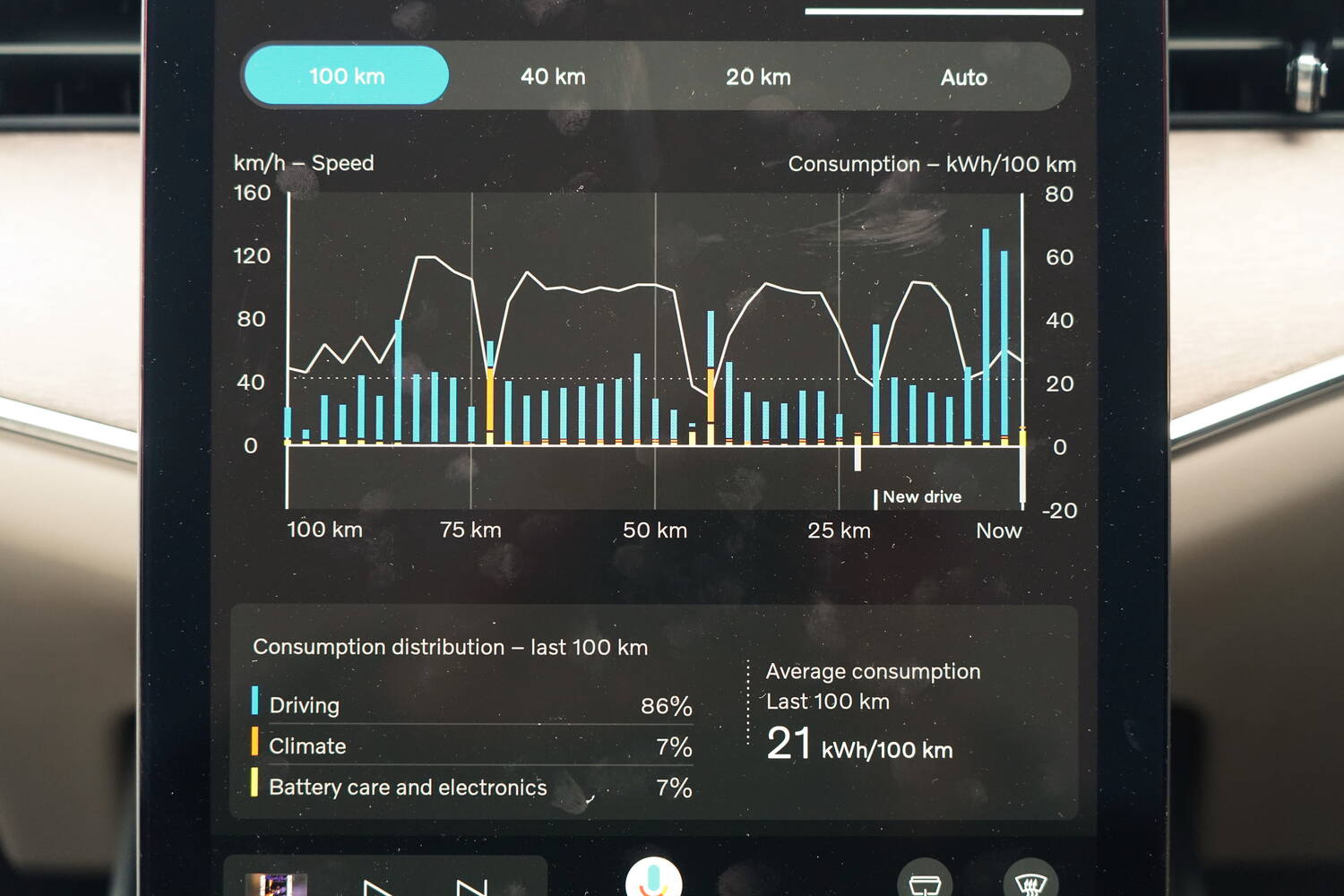
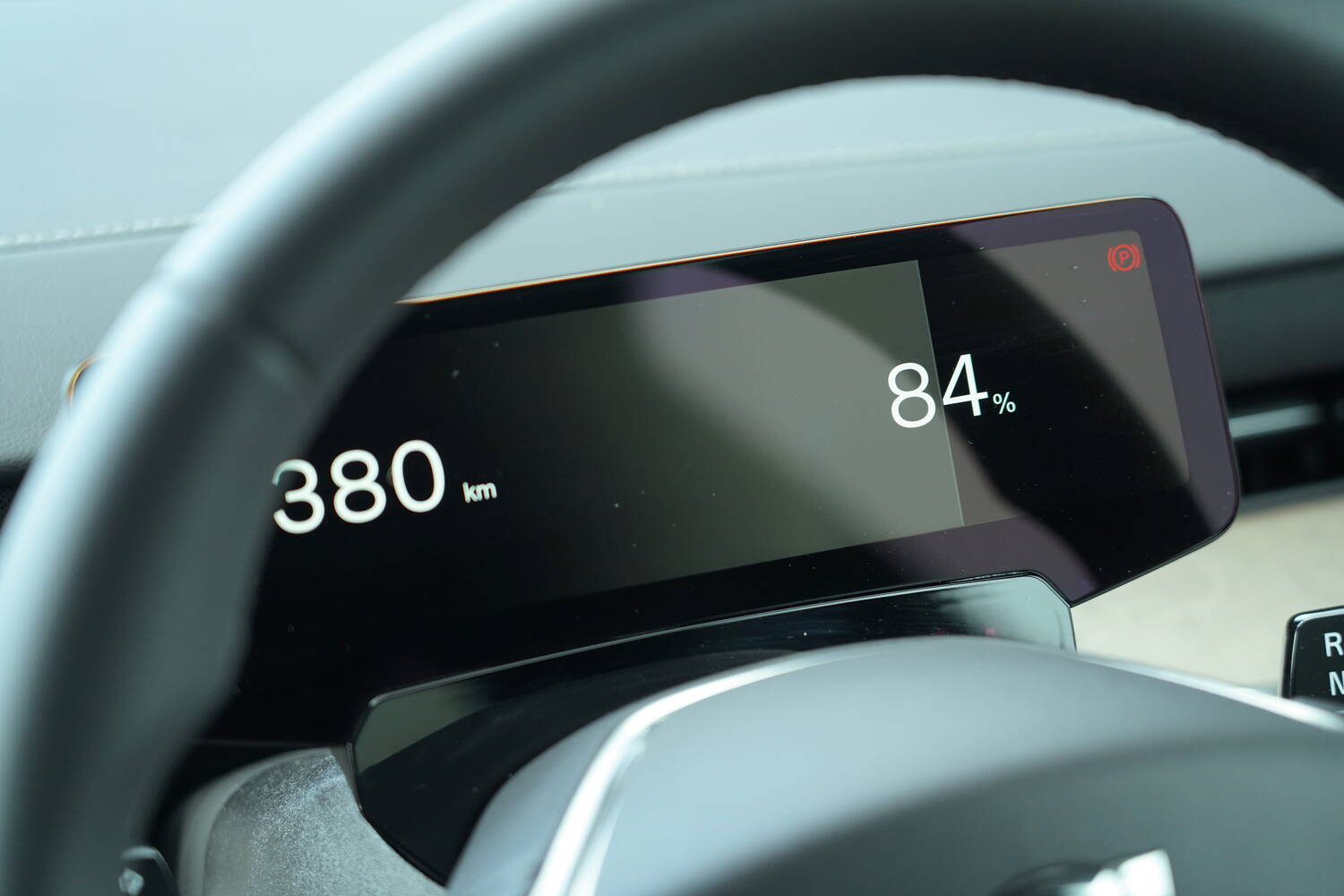
The best we could muster was 450km in one go, but there is some context to that. For a start, the weather was notably cold during our test drive, which always impacts battery and range performance, not helped by my inability to get a home charger for my terraced house - meaning all cabin heating and defrosting had to be done using the battery's energy, rather than using the pre-conditioning feature.

Secondly, the majority of my mileage was motorway cruising - always the worst-case scenario for any EV. Finally, it's worth remembering that the ES90's battery capacity is only 88kWh, which, while hardly a compact battery, is also not all that big, so scoring an eminently useable 450km for a such a big, luxurious car is not bad going.
In terms of the competition, it roughly splits the difference between the BMW i5 and Mercedes EQE in terms of useable day-to-day range and is about on par with the Audi A6 e-tron.
Charging up the Volvo ES90
The ES90 can't charge quite as rapidly as the Volvo EX90, at least not with the 88kWh battery. Still, 310kW on suitably powerful DC chargers is rapid, and the ES90's 22-minute 10-80-per-cent fast charging time is highly competitive. The bigger battery can match the EX90's 350kW recharge limit.
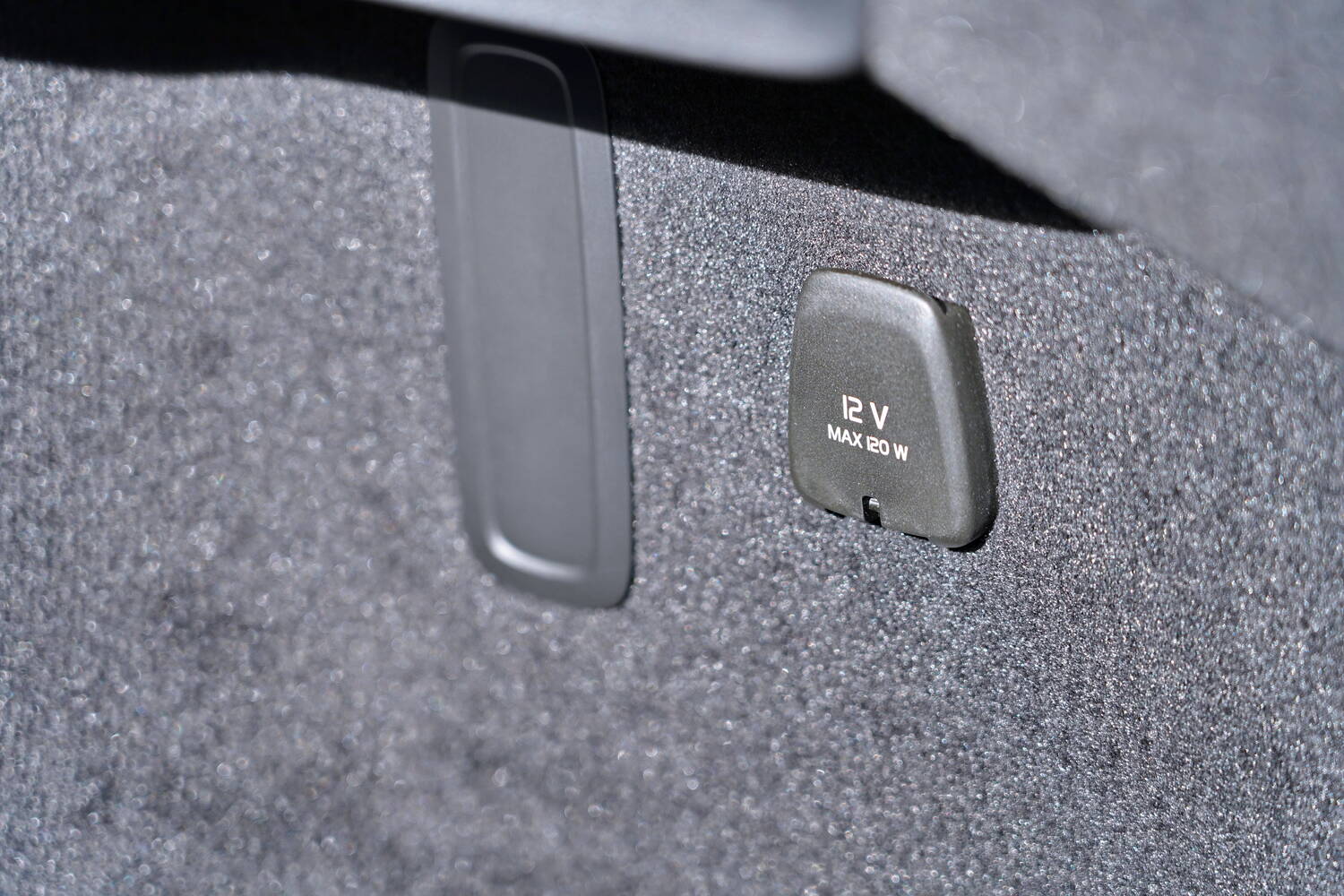
There's 11kW AC charging too, and vehicle-to-load charging if you want to use the ES90's battery to charge other devices or use it as a power source for your home.
Servicing the Volvo ES90
Volvo generally recommends that its fully electric models need a full service every two years or 30,000km. The car's on-board diagnostics will, in any case, tell you when you need to book a service, even alerting you through the Volvo phone app. There's a Volvo Service Plan option, too, which allows you to roll the cost of servicing for one, two, or three years into the car's finance payments.
Volvo ES90 warranty
Volvo's standard warranty in Ireland is a three-year, 100,000km offering, and the ES90's battery is separately warrantied for up to eight years or 150,000km. The ES90's paint is covered for three years too, and there's a 12-year anti-rust warranty.
Irish pricing & rivals to the 2026 Volvo ES90
- Competitively priced in base form
- Gets very expensive with upgrades
- Up against the big German brands

Volvo has left behind its middle-class roots and become a proper premium brand, hence a rival to BMW, Audi and Mercedes (not to mention Lexus and Land Rover). Certainly, the sheer quality of the ES90's cabin propels it into direct contention with the German big three, and frankly it nips ahead of all of them in subjective terms when it comes to the interior.
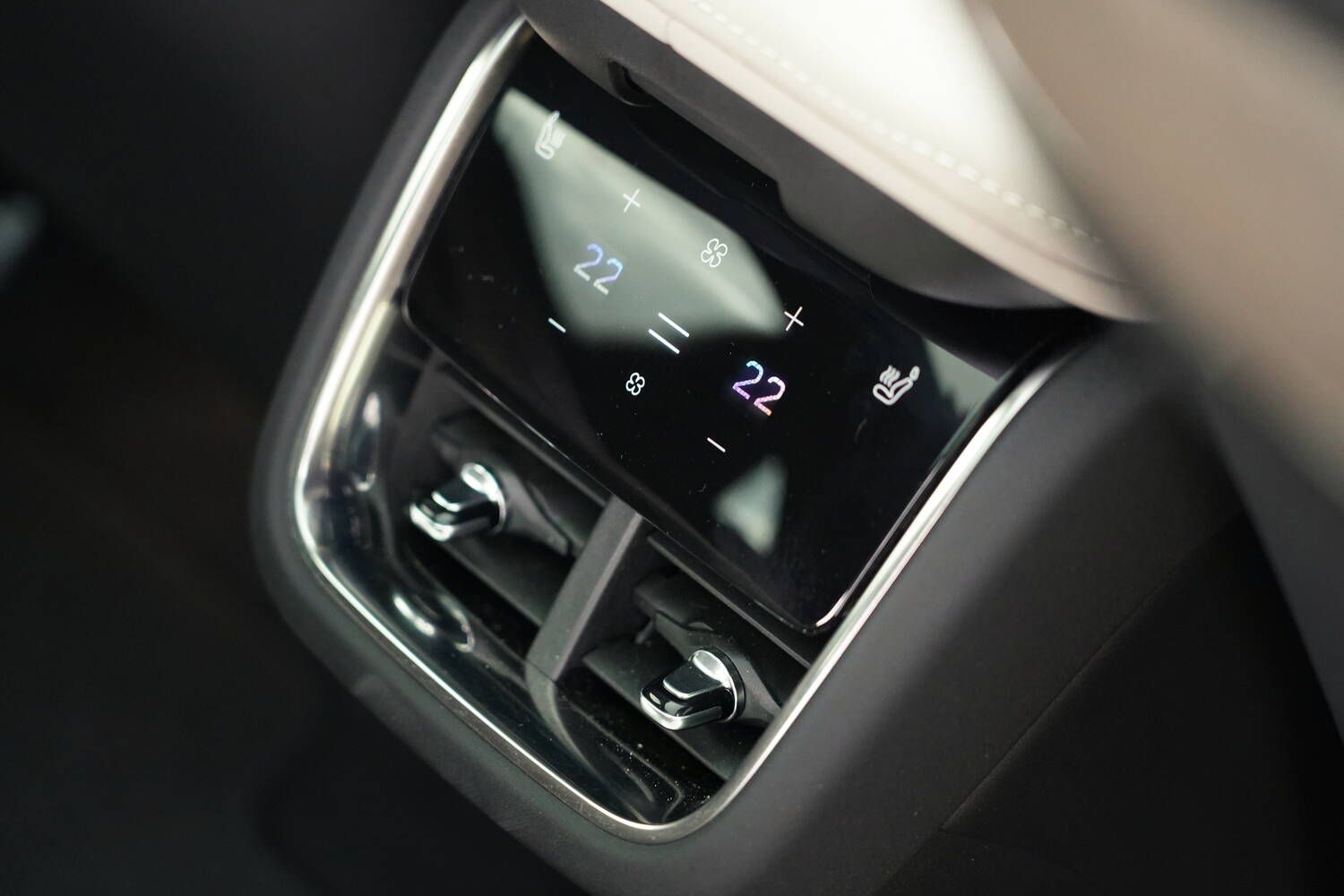
As standard, in Core form, the ES90 costs €79,995, which is quite a bit cheaper than the base models of the BMW i5, if slightly pricier than the basic Audi A6 e-tron and the Mercedes-Benz EQE. It's well-equipped as a Core model, including 20-inch alloys, four-zone climate control, a panoramic sunroof, 'Nordico' upholstery and a high-performance ten-speaker audio setup.
Upgrade to Plus spec, for €87,995, and you get automated parking, a head-up display, 360-degree parking camera, birch wood inlays and a Bose stereo. This is the model shown in the photographs.
Ultra spec starts from a rather senior €100,295 and while that's very expensive indeed, it does mean you get the air suspension, high-definition headlights with auto high beam, 21-inch alloys, an electrochromatic dimming function for the big glass roof, ventilated front and rear seats and an amazing Bowers & Wilkins stereo.

If you want to upgrade to a Twin Motor model, then you'll have to have Ultra spec - you can only have the Core or Plus in Single Motor form. The Twin Motor version costs €105,795 in Ultra spec, while the Twin Motor Performance runs to €111,695.
Verdict - should you buy the 2026 Volvo ES90?

Aside from one small wish - that the ES90 would hit its WLTP range figure - we have no hesitation in recommending Volvo's electric executive car. It's well-matched to its German competition in terms of price and spec but feels like a significant step up in terms of comfort, quality and cabin ambience. It's also staggeringly comfortable and refined to drive and to travel in. We wonder if Volvo will ever do an estate version...
FAQs about the 2026 Volvo ES90
Is the Volvo ES90 a saloon?
Not according to the strict definitions of the body style, but Volvo describes it as a 'sedan', and many will call it a saloon. Certainly it has four doors and is a relatively low roofline, although the ES90 slightly confuses things by having a surprisingly lofty ride-height, not to mention the 'fastback' rear hatch.
Does the Volvo ES90 have a frunk?
Yes, and although it only holds 22 litres, if you tightly coil up a Type 2 charging cable, it will comfortably fit inside.
Can I fit three car seats in the back of the Volvo ES90?

No, you can't. There are ISOFIX points in the outer two rear seats of the ES90, but the central rear seat is far too narrow and perched-up for you to squeeze in a third seat. Really, that middle rear seat is just the armrest when its folded away and barely counts as a proper seat at all.
Want to know more about the 2026 Volvo ES90?
If there's anything about the new Volvo ES90 we've not covered, or you'd like help in choosing between it and other cars, you can avail of our expert advice service via the Ask Us Anything page.