Introduction to the 2026 Volvo ES90
Volvo is almost as famous for its big, comfortable saloons as it is boxy estate cars and an obsession with safety, so we're glad there's a place in the world for such a thing today, despite the proliferation of SUVs.
Glossing over the fact that the Volvo ES90 isn't technically a traditional saloon, it carries on a tradition that includes such illustrious nameplates as the Volvo 740 and 960, succeeded in recent years by the Volvo S80 and S90.
This time around, as denoted by the "E" in the name, Volvo's big car is fully electric, and the ES90 has been developed on the same underpinnings as the EX90 SUV.

Pros & cons of the 2026 Volvo ES90
Pros:
• Handsome exterior design
• Luxurious cabin
• Serene composure on the road
Cons:
• Slow steering
• Too few physical controls inside
• Boot isn't massive
Exterior & design of the 2026 Volvo ES90
• Stylish and unique appearance
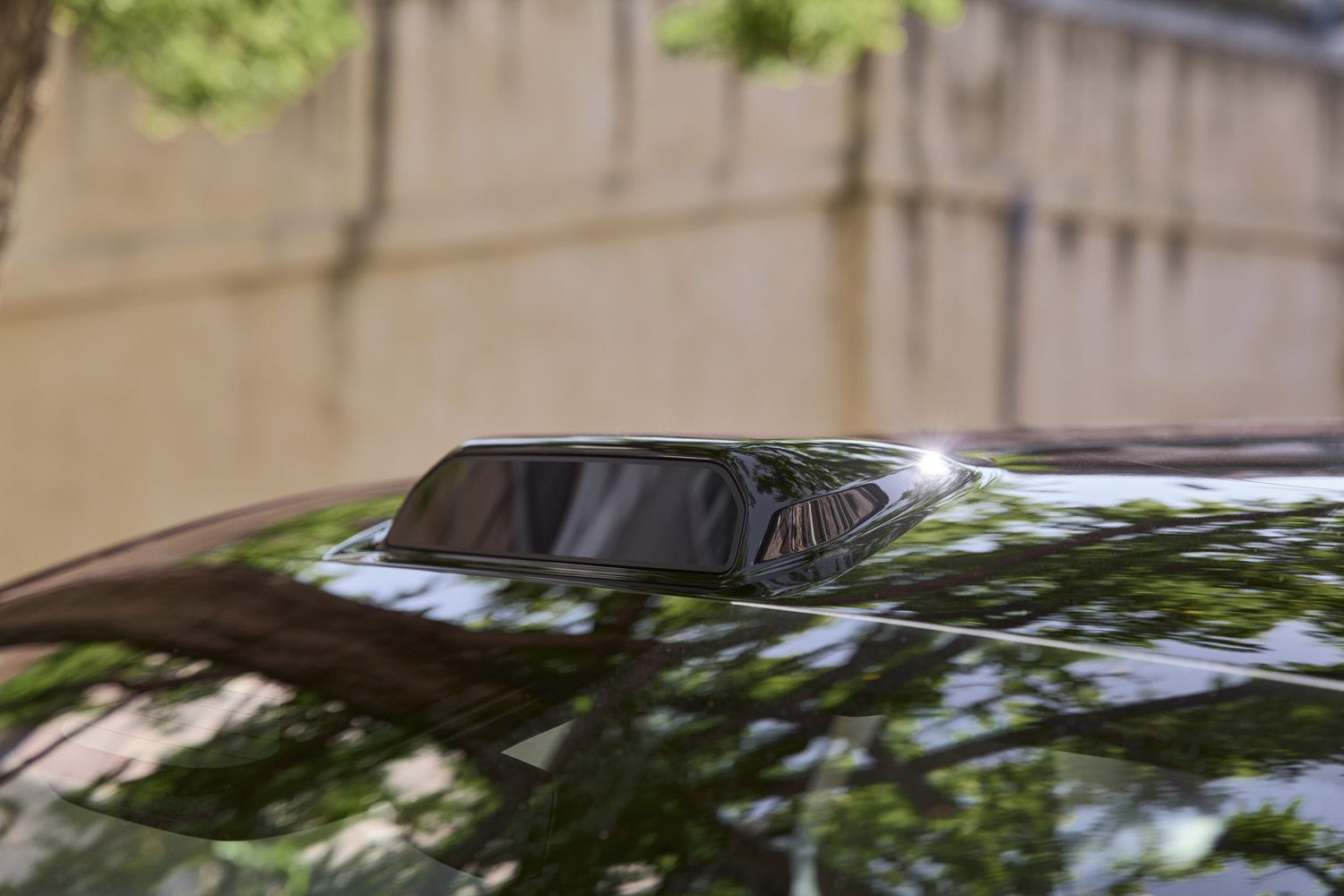
• Shame the 'Lidar' sensor is so obvious
• Theatre in the front-light design

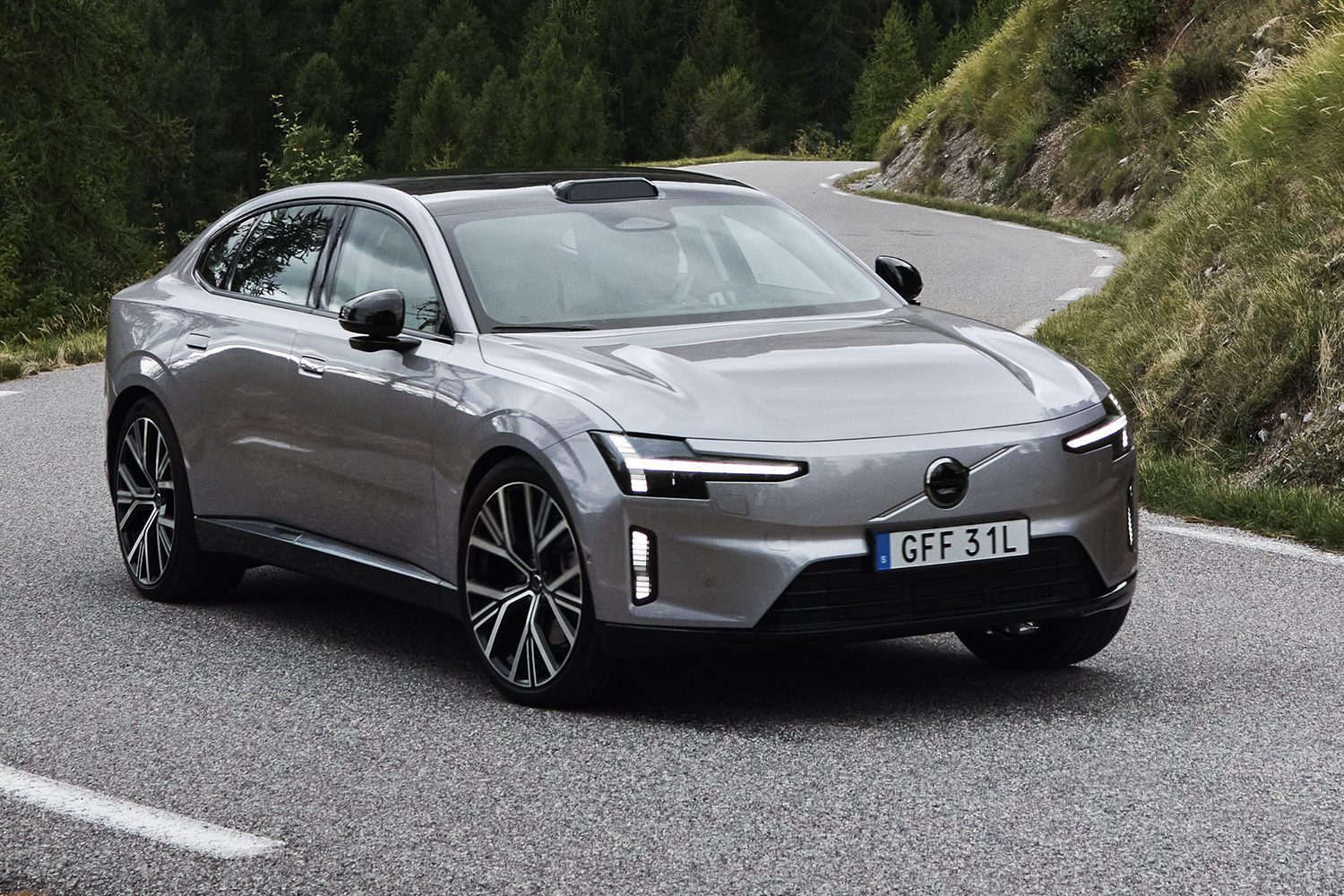
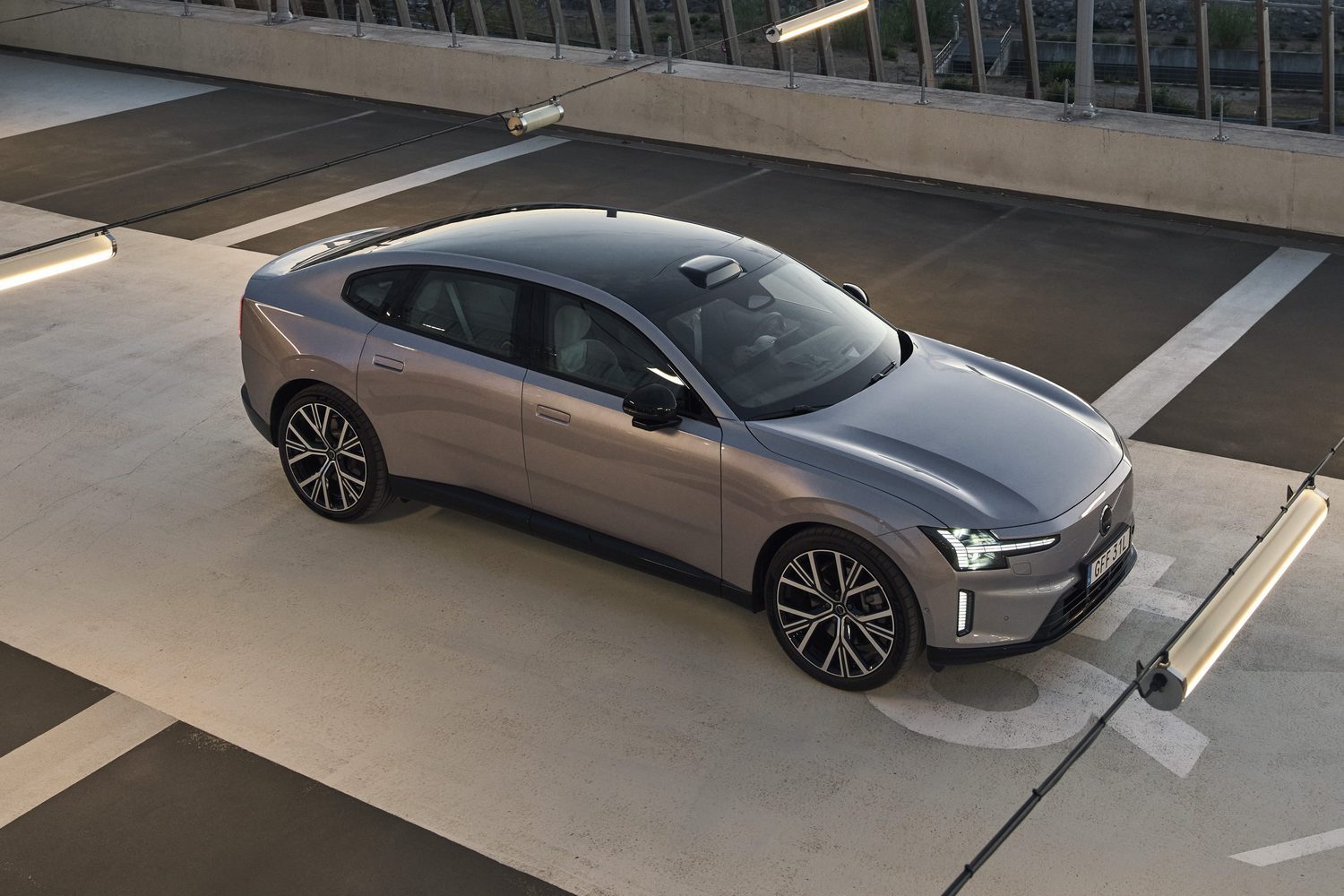
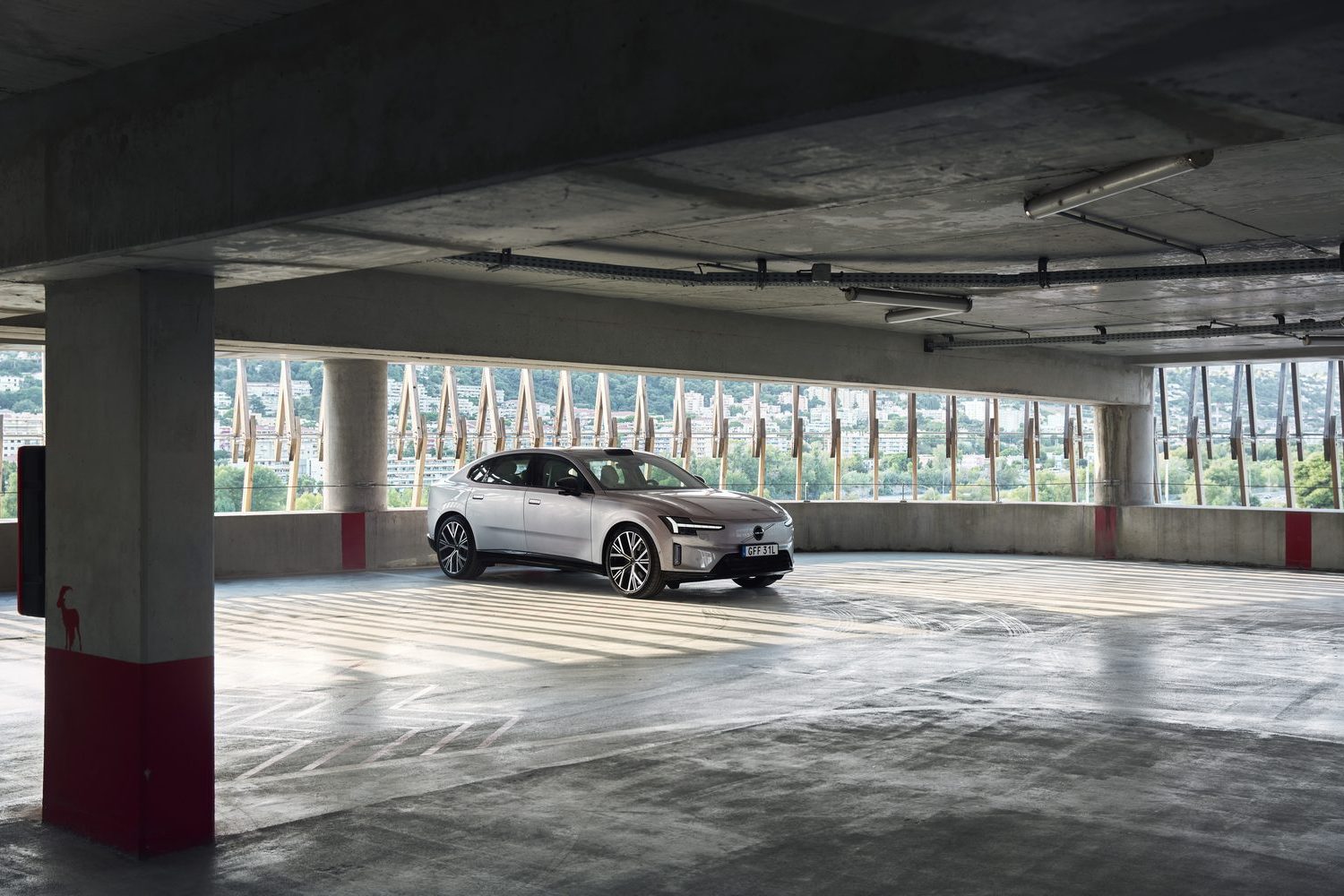
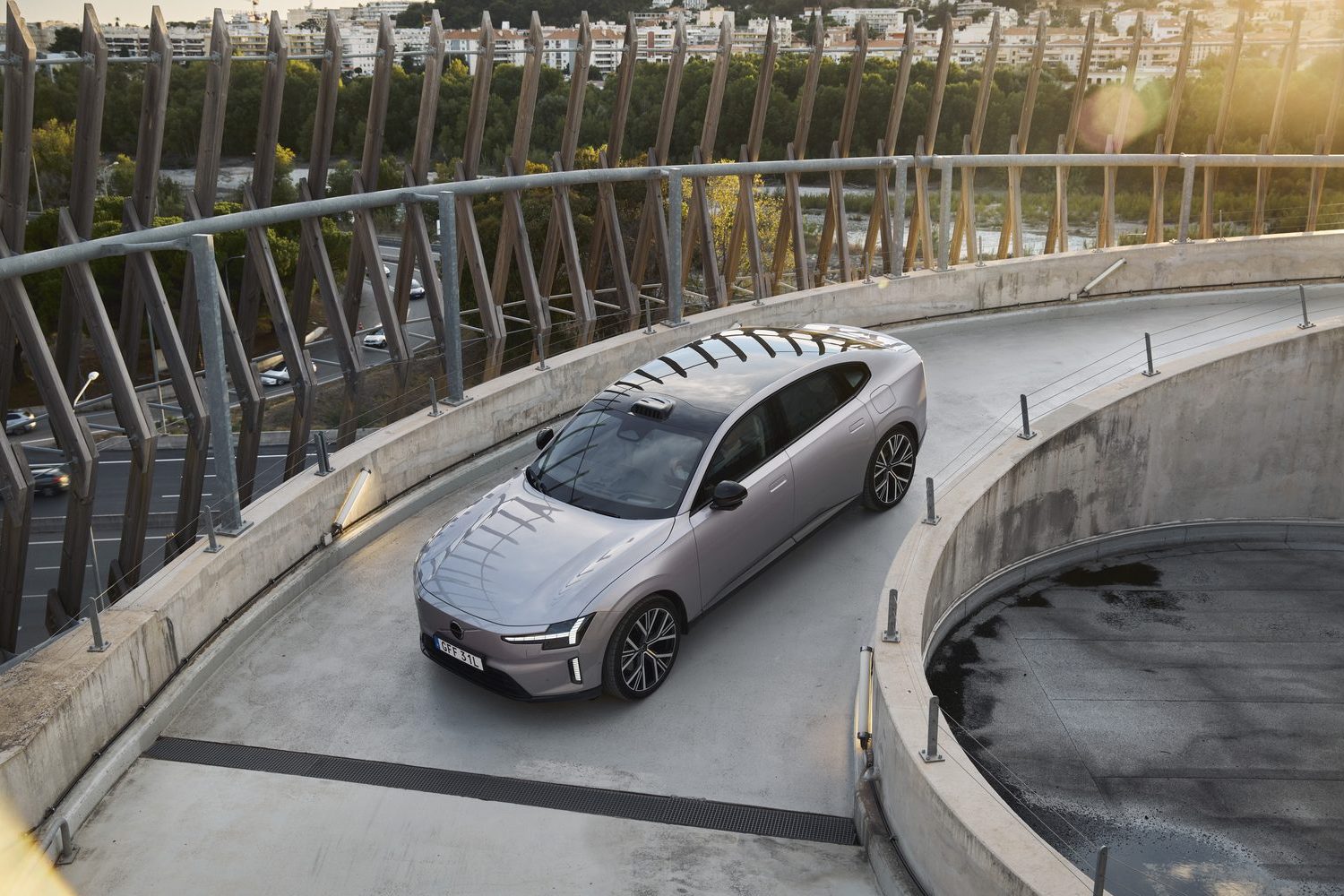
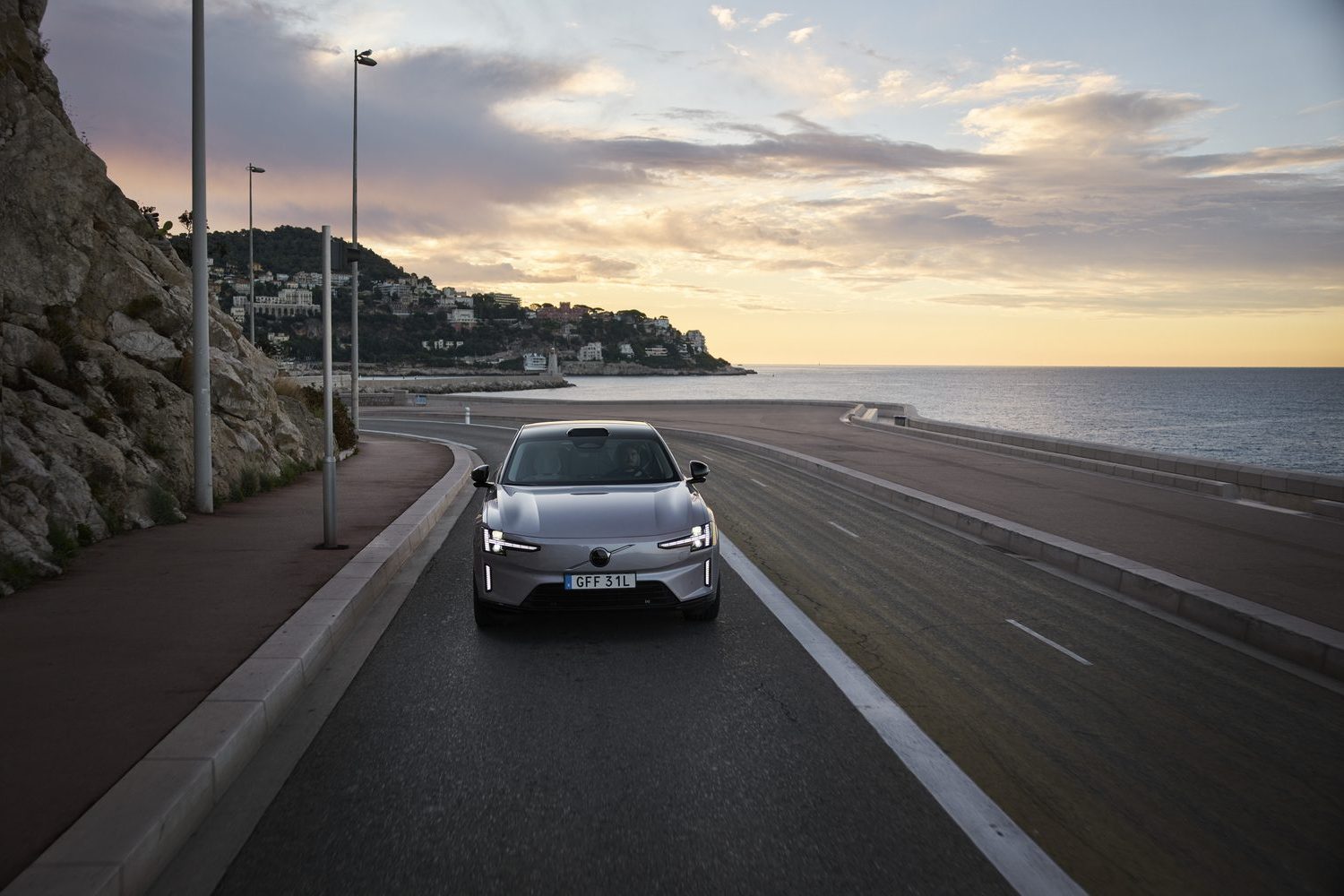
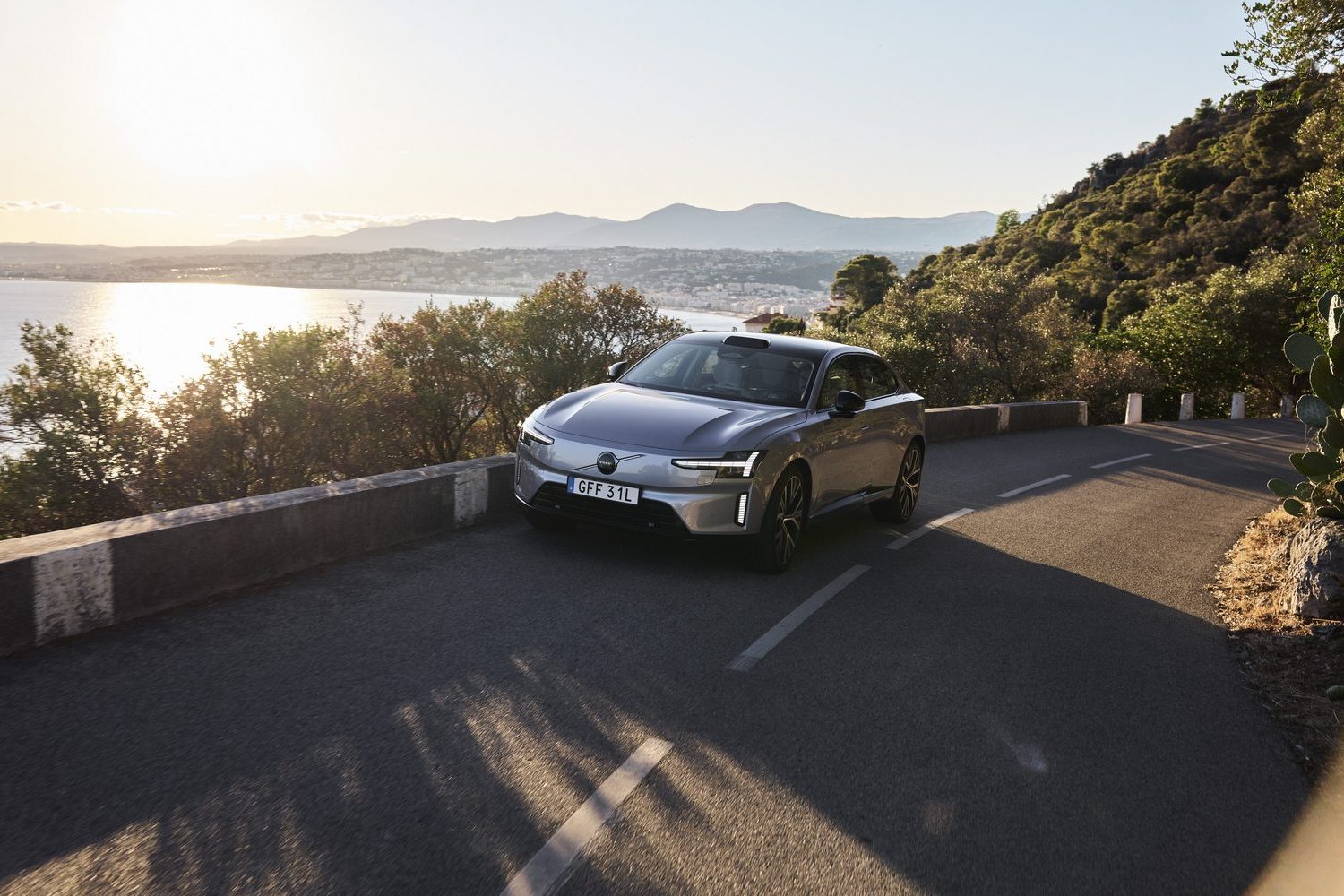
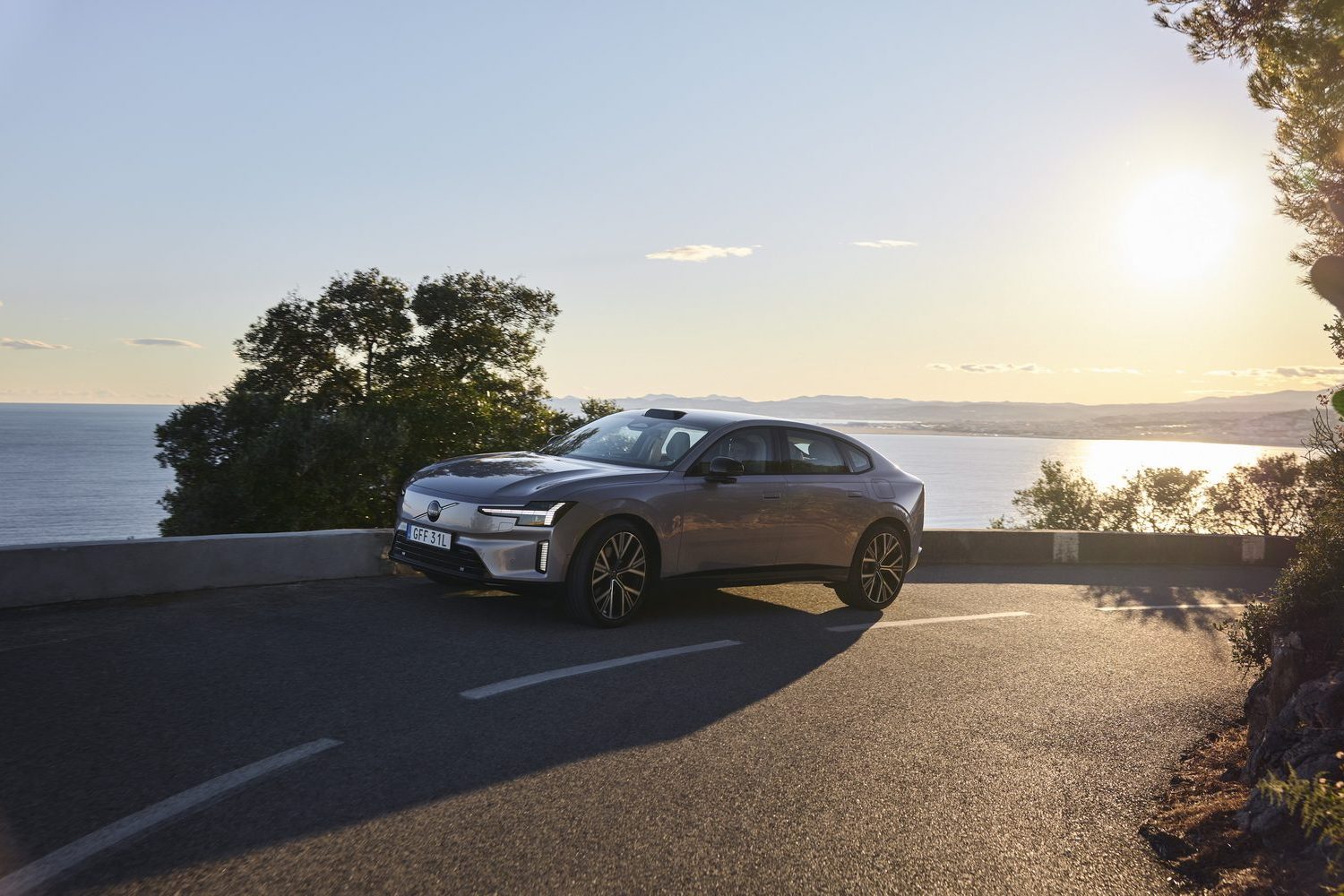
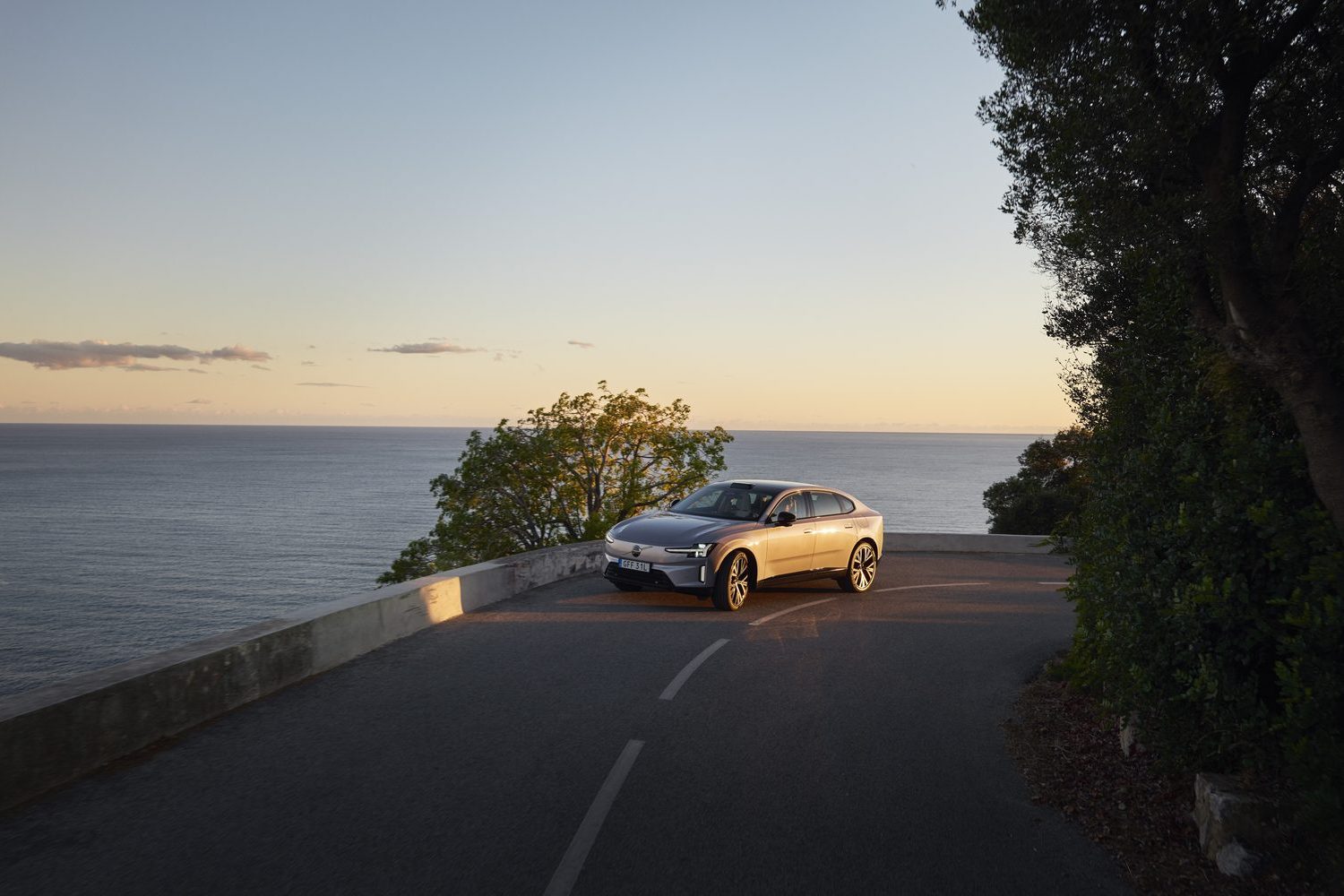
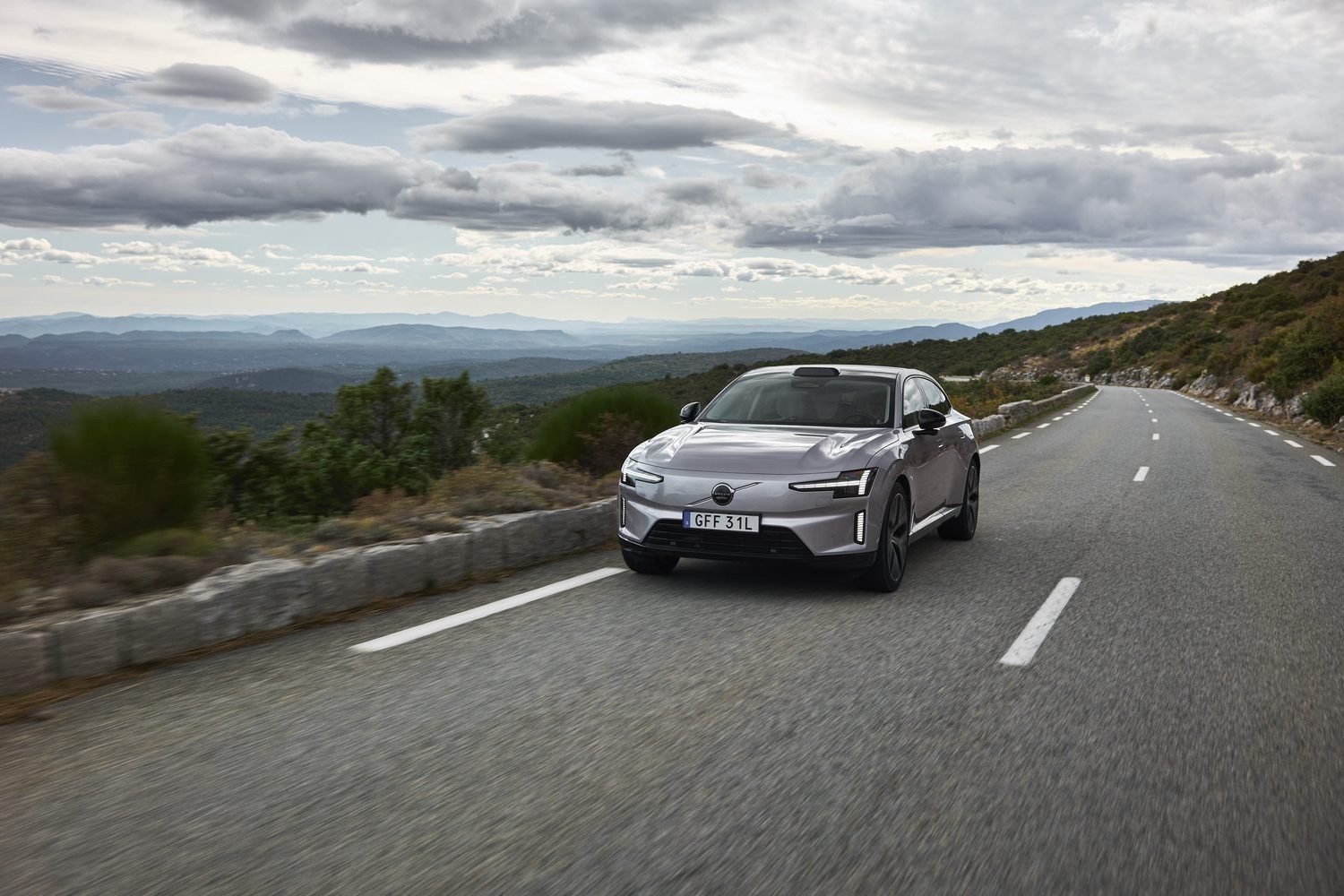
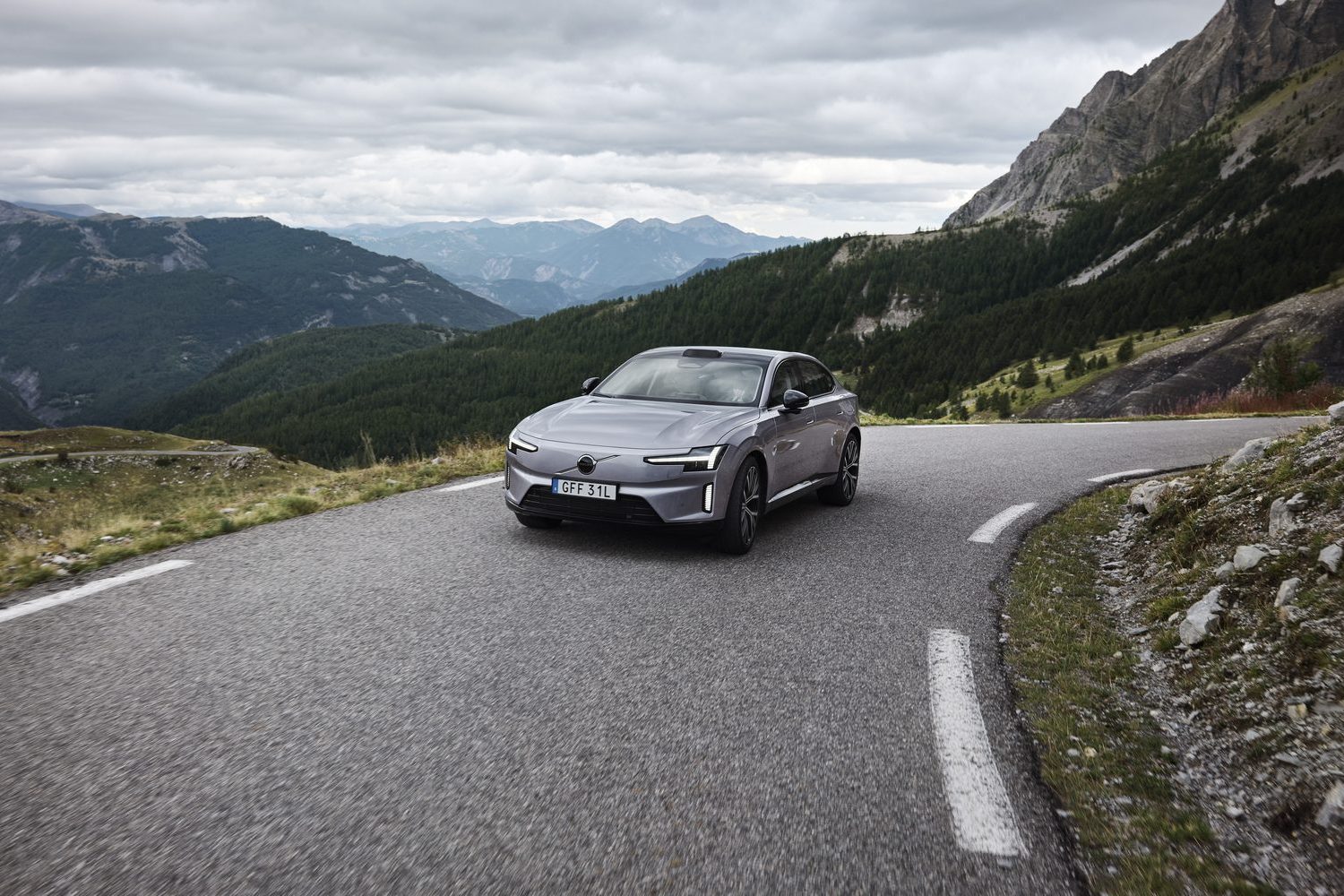
Photographs don't do justice to the E90, as we reckon it's a handsome-looking car in person, drawing on plenty of Volvo's characteristic design signifiers to give it a unique appearance.
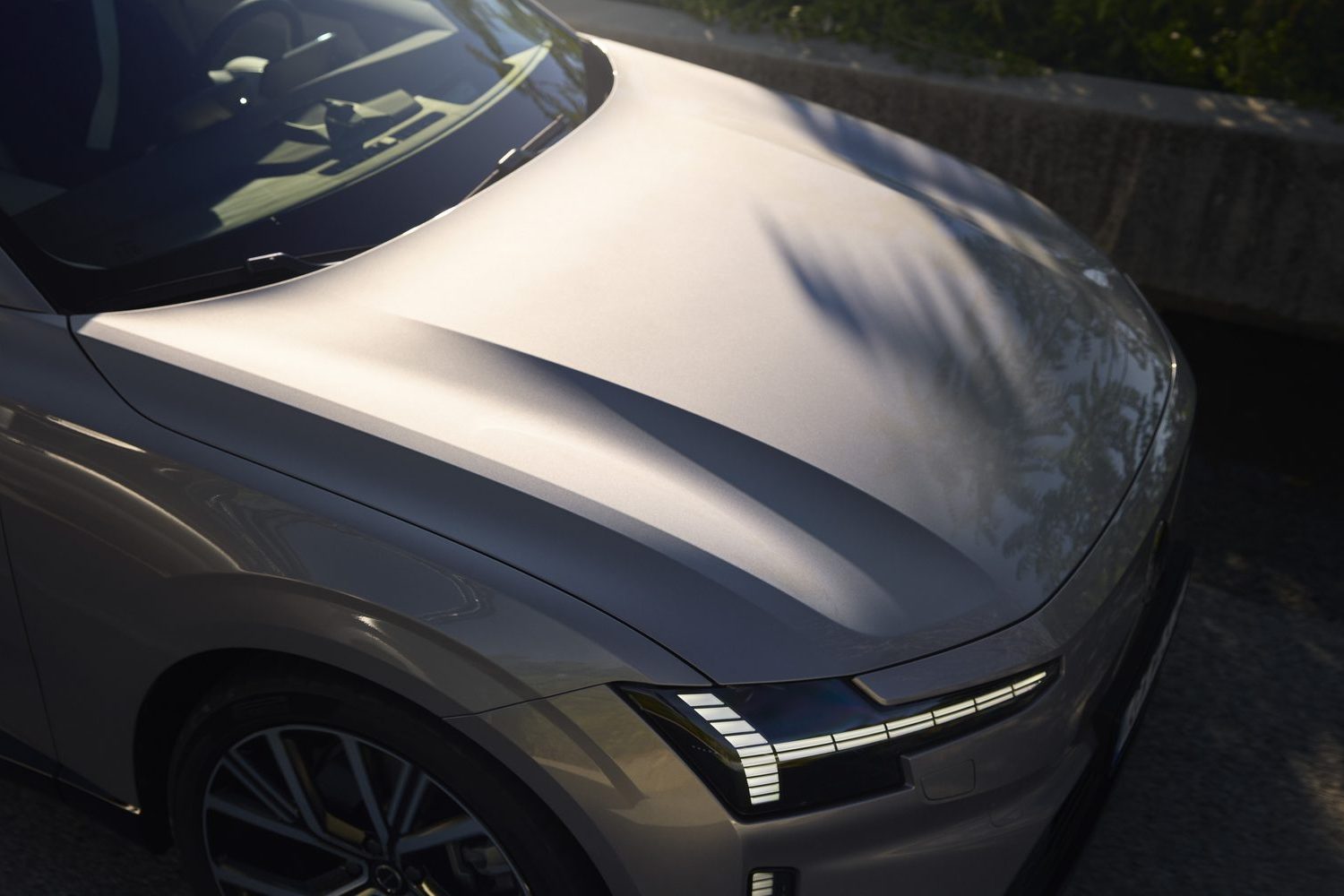
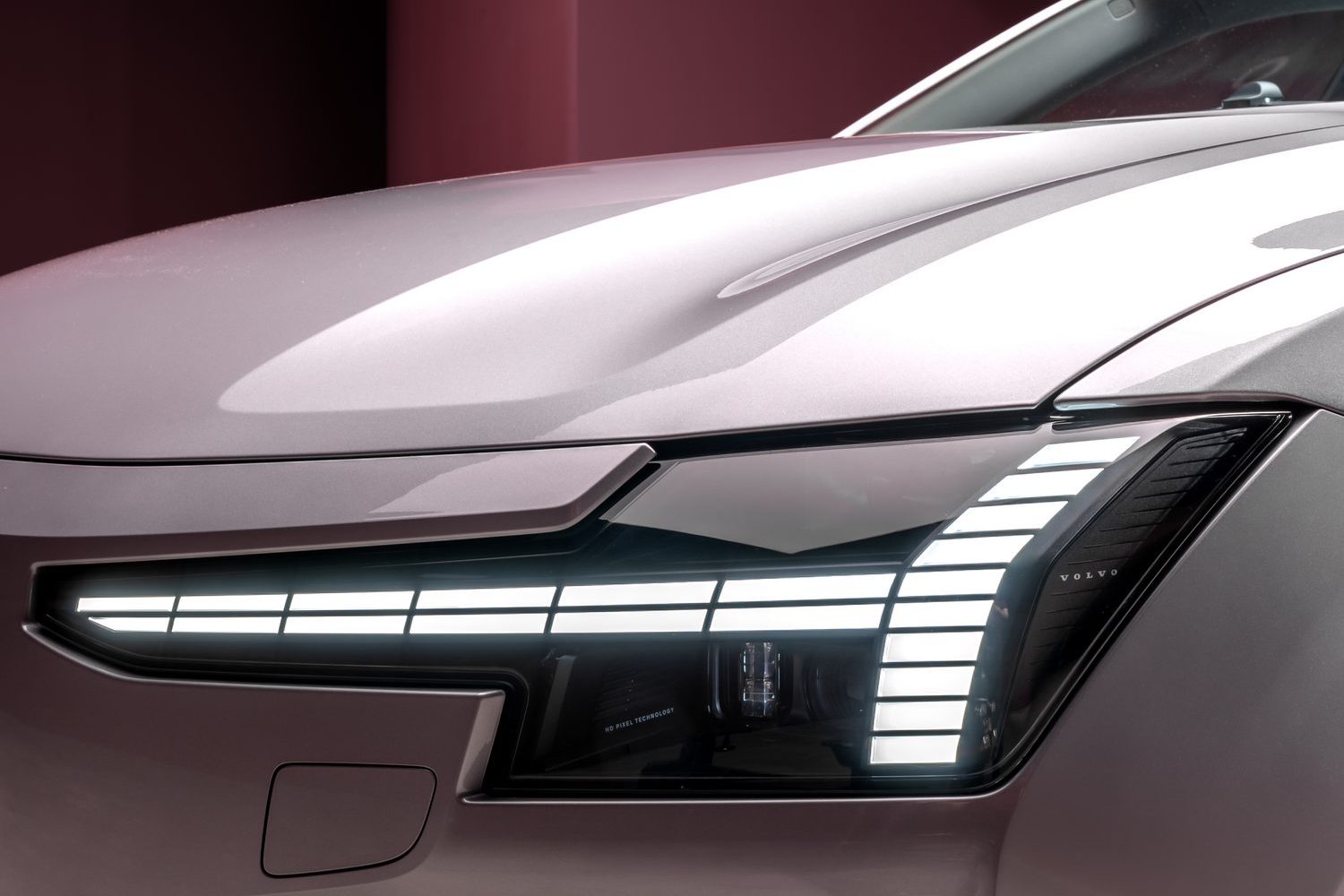
Up front, the ES90 does without a visual representation of a radiator grille, instead relying on the large 'iron mark' Volvo badge and oversized 'Thor's Hammer' LED motifs to give the car its own identity that is unmistakably Volvo.

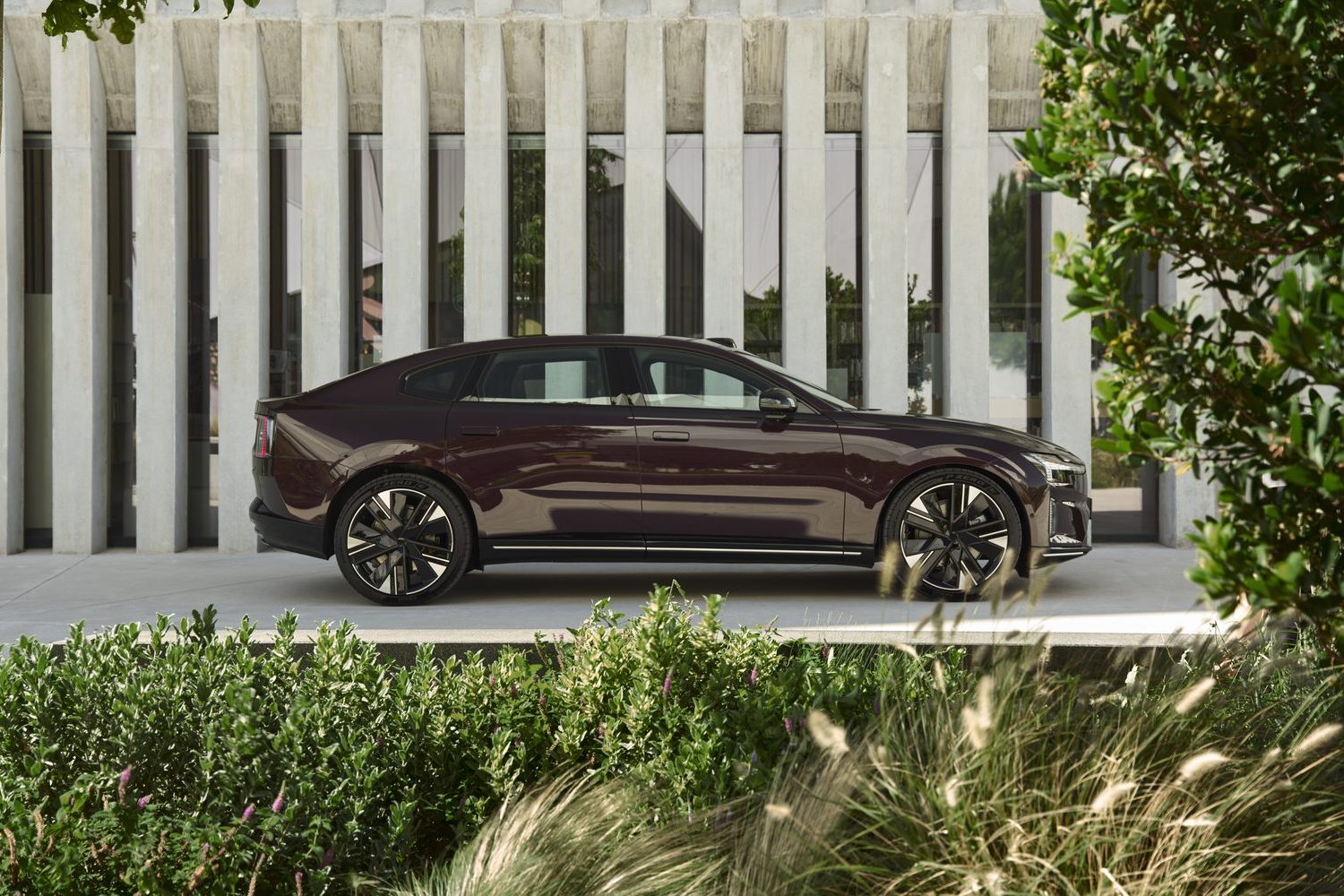
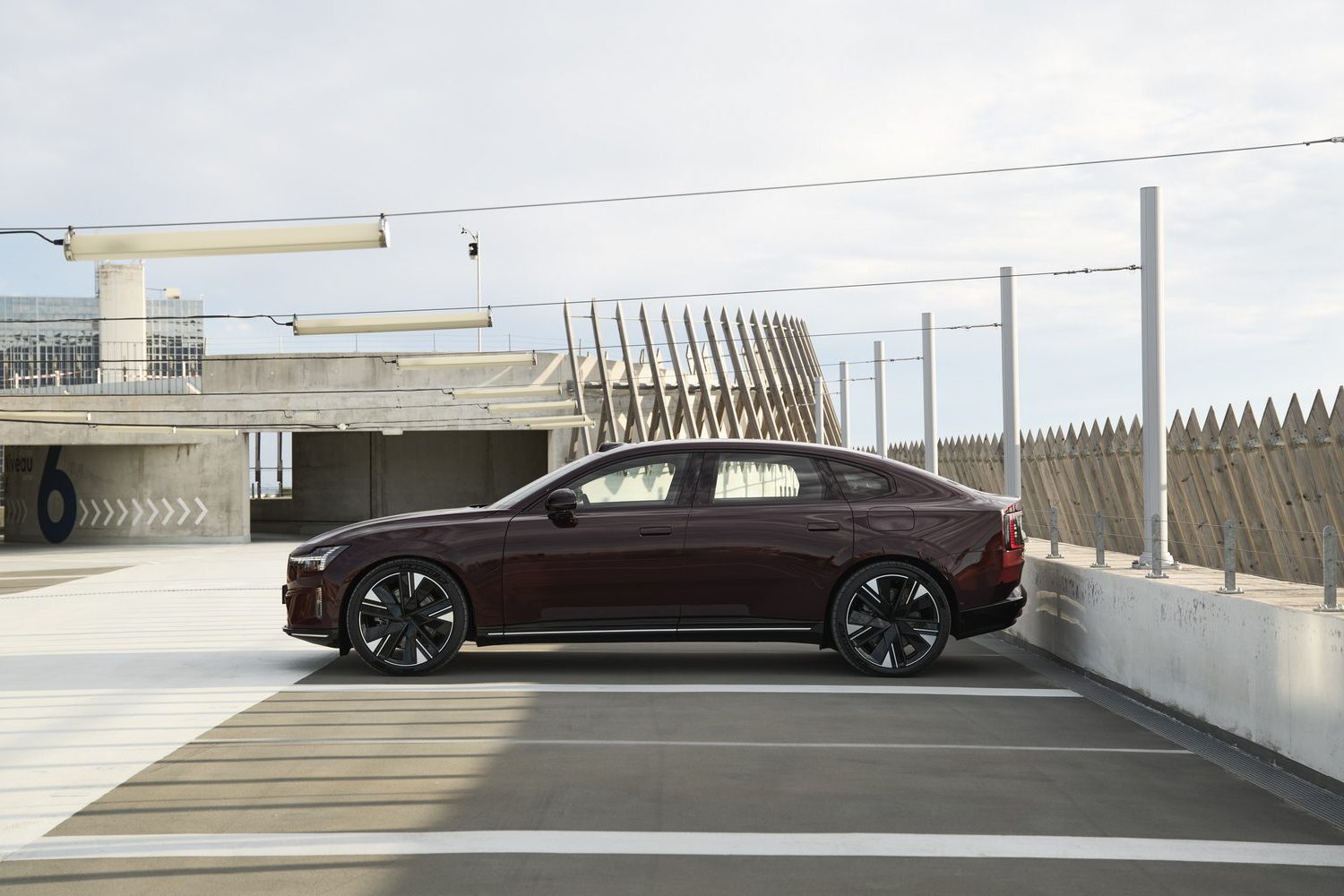
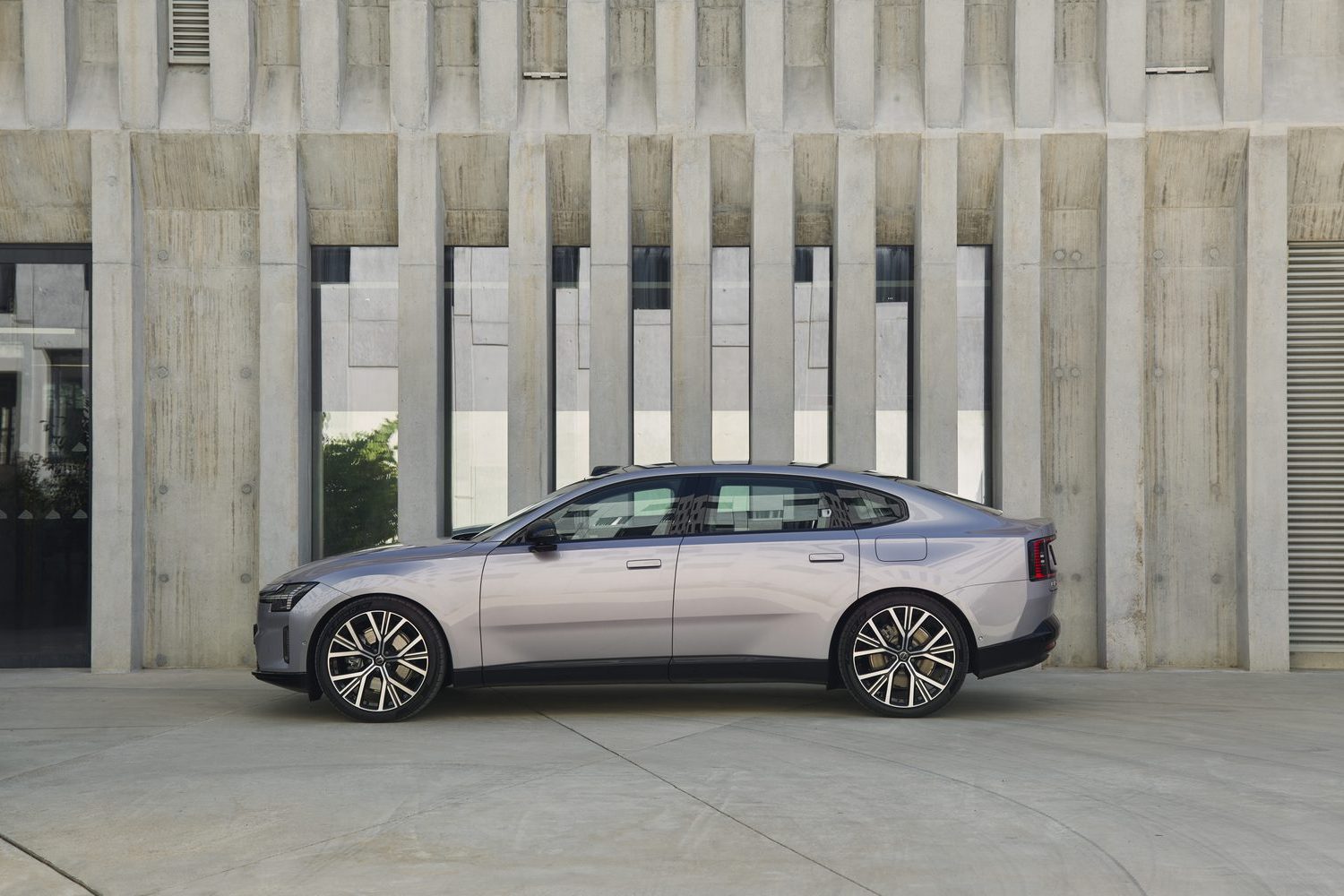
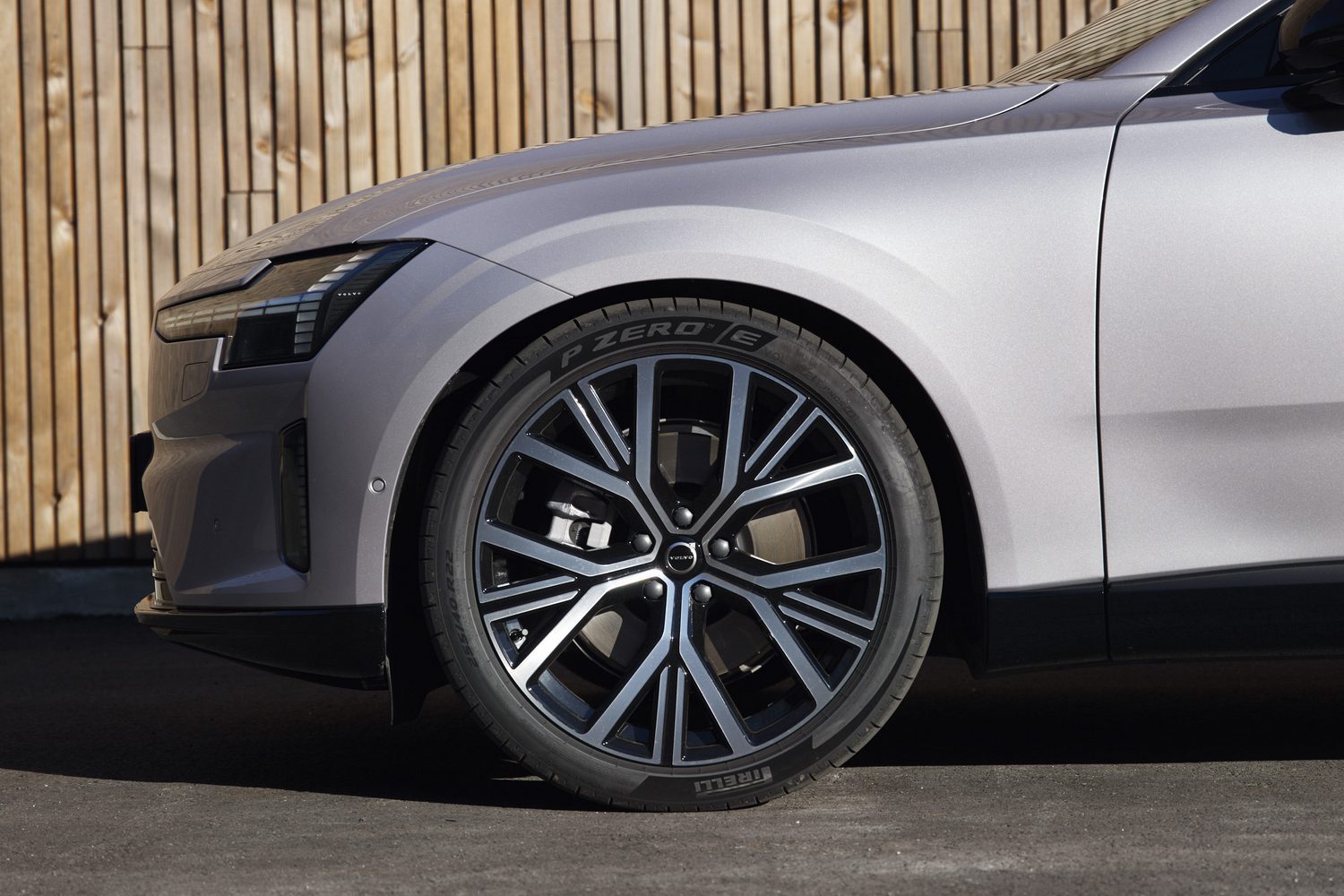
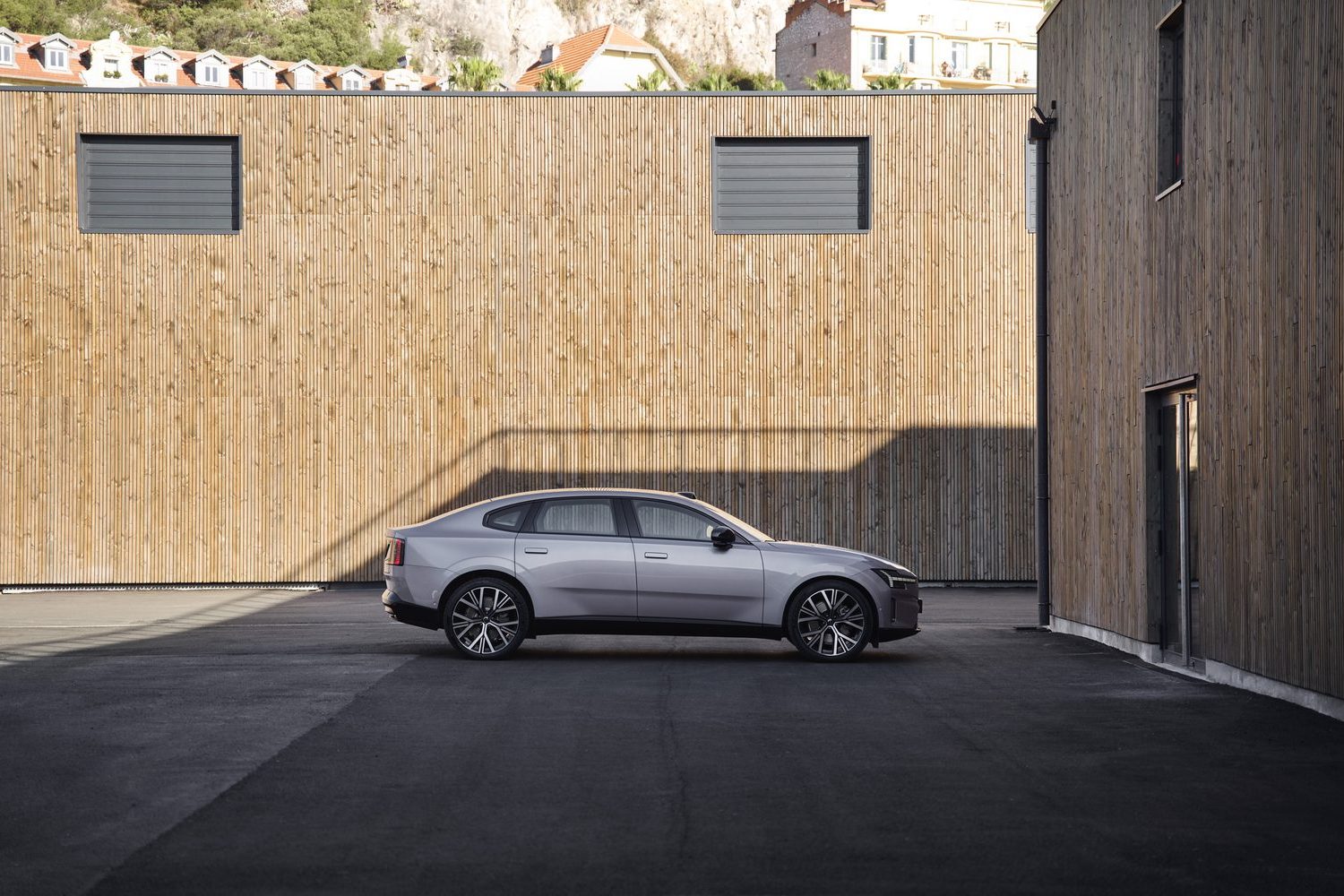
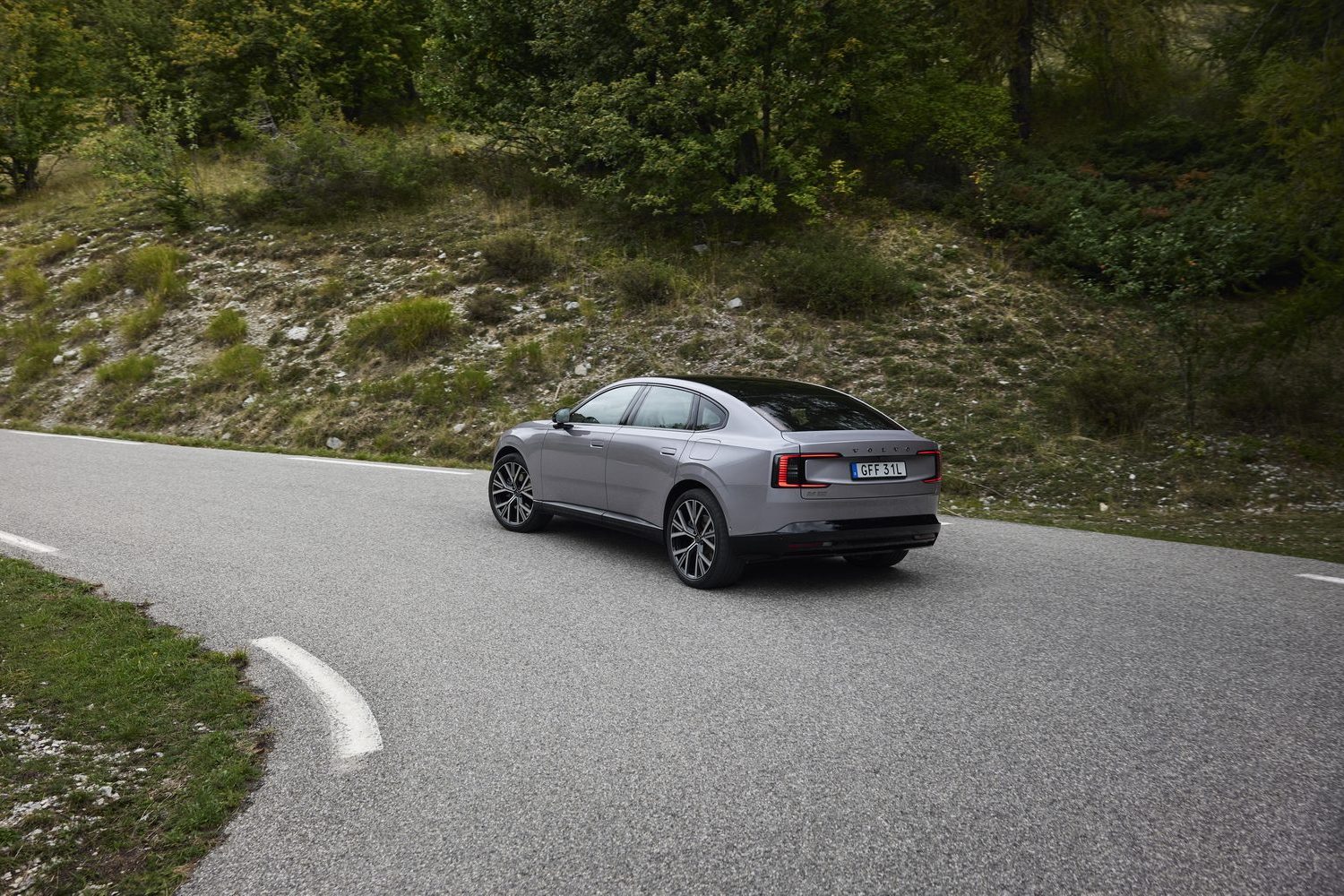
The wheelarch detailing gives the car stance, attempting to disguise the ES90's height perhaps, while a strong shoulder line connects the front and rear lamps, with retracting door handles beneath.
Volvo makes a strong safety-led argument for retaining the 'Lidar' sensor atop the windscreen in the ES90 - as it does in the EX90 - but it has attracted more than a few jibes from social-media commentators, saying it makes the car look like a taxi. We don't disagree, though darker colours hide it better.

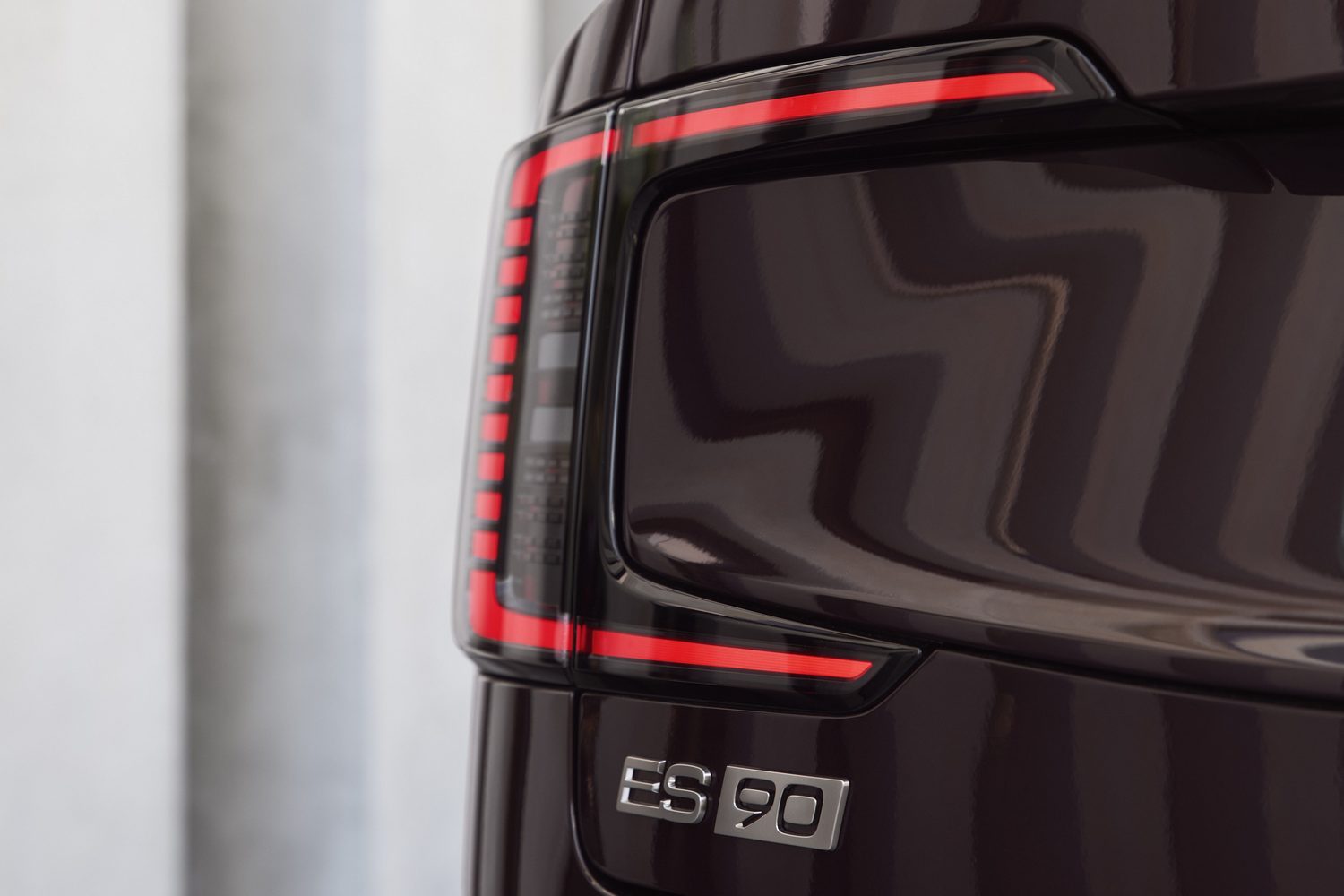
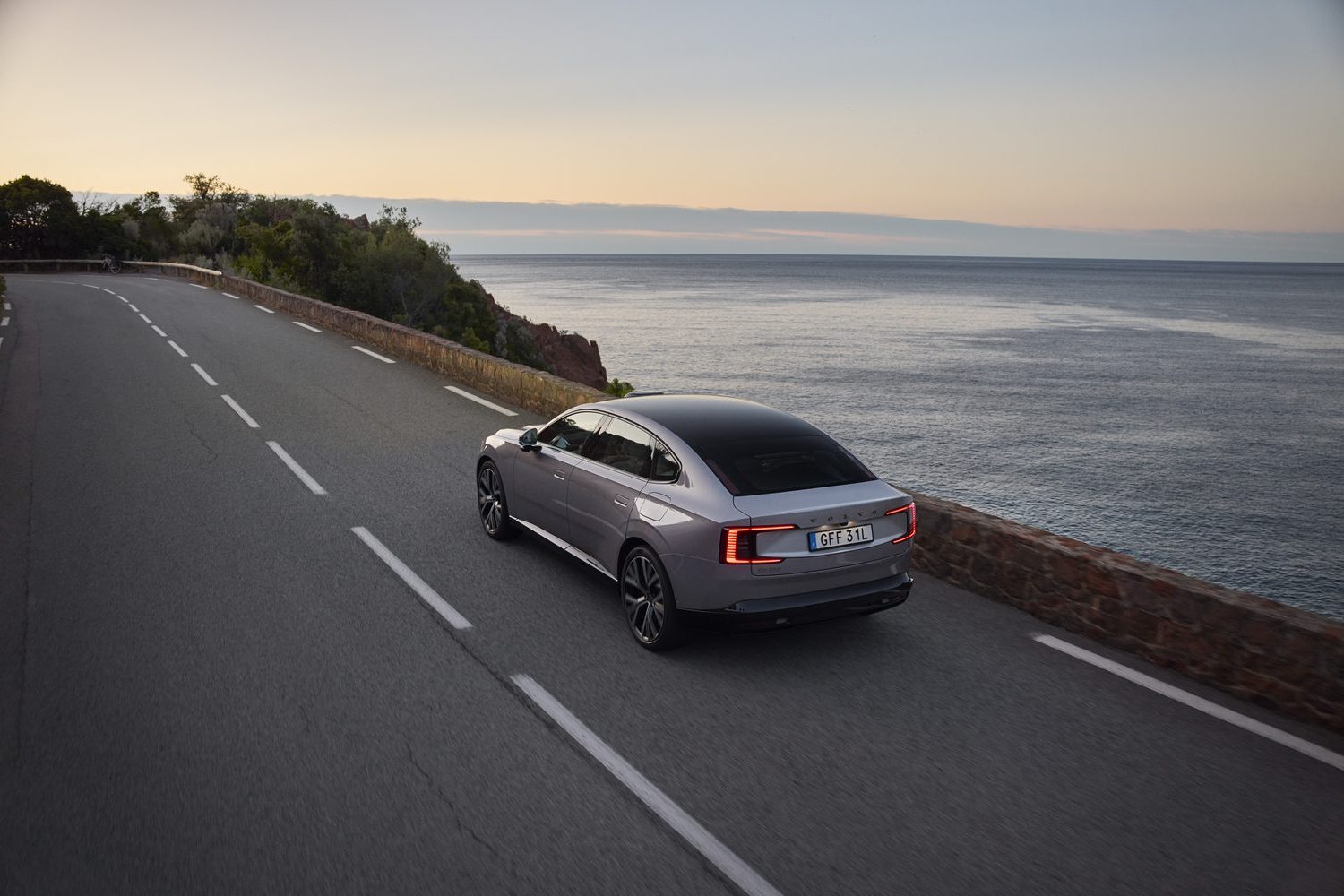
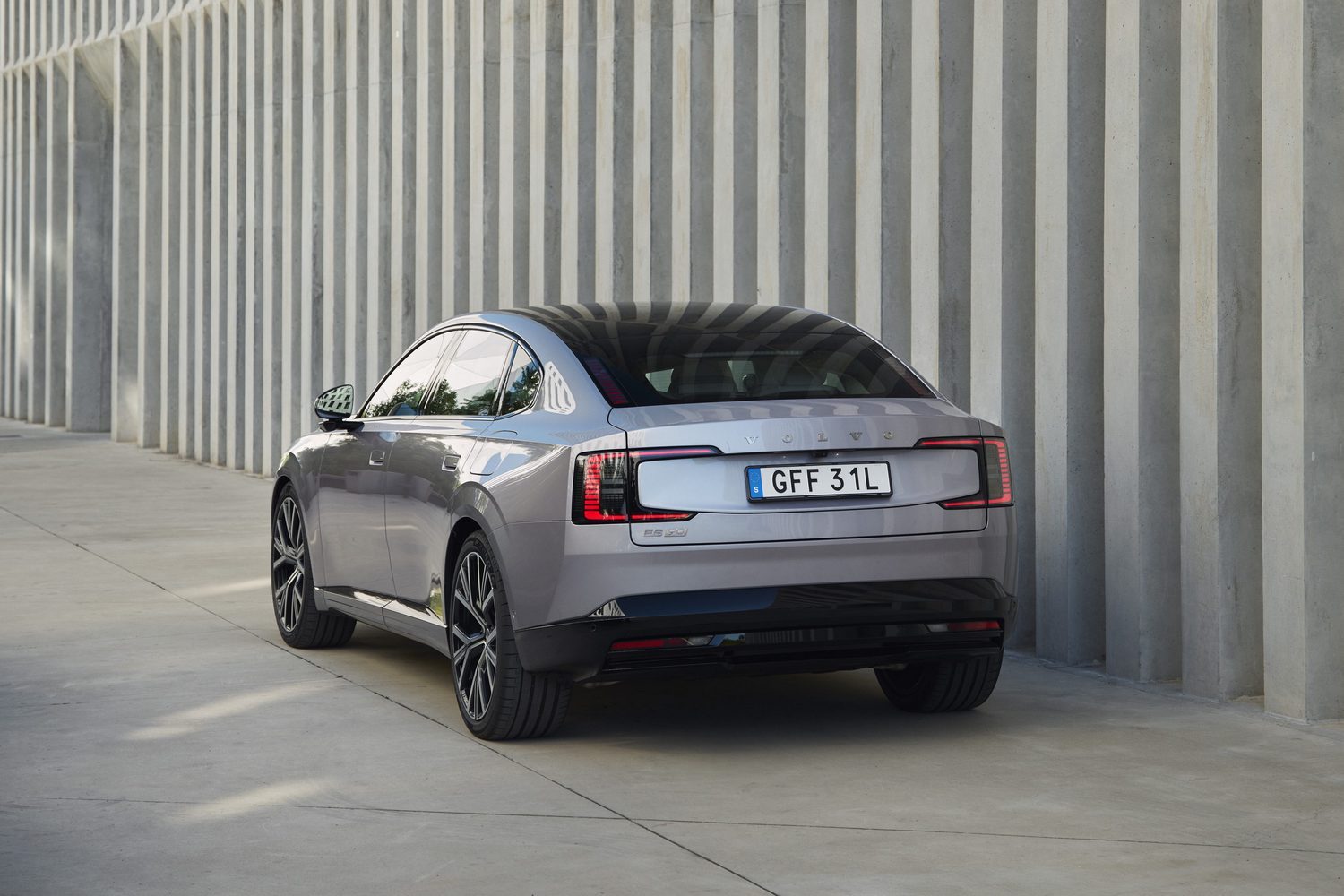
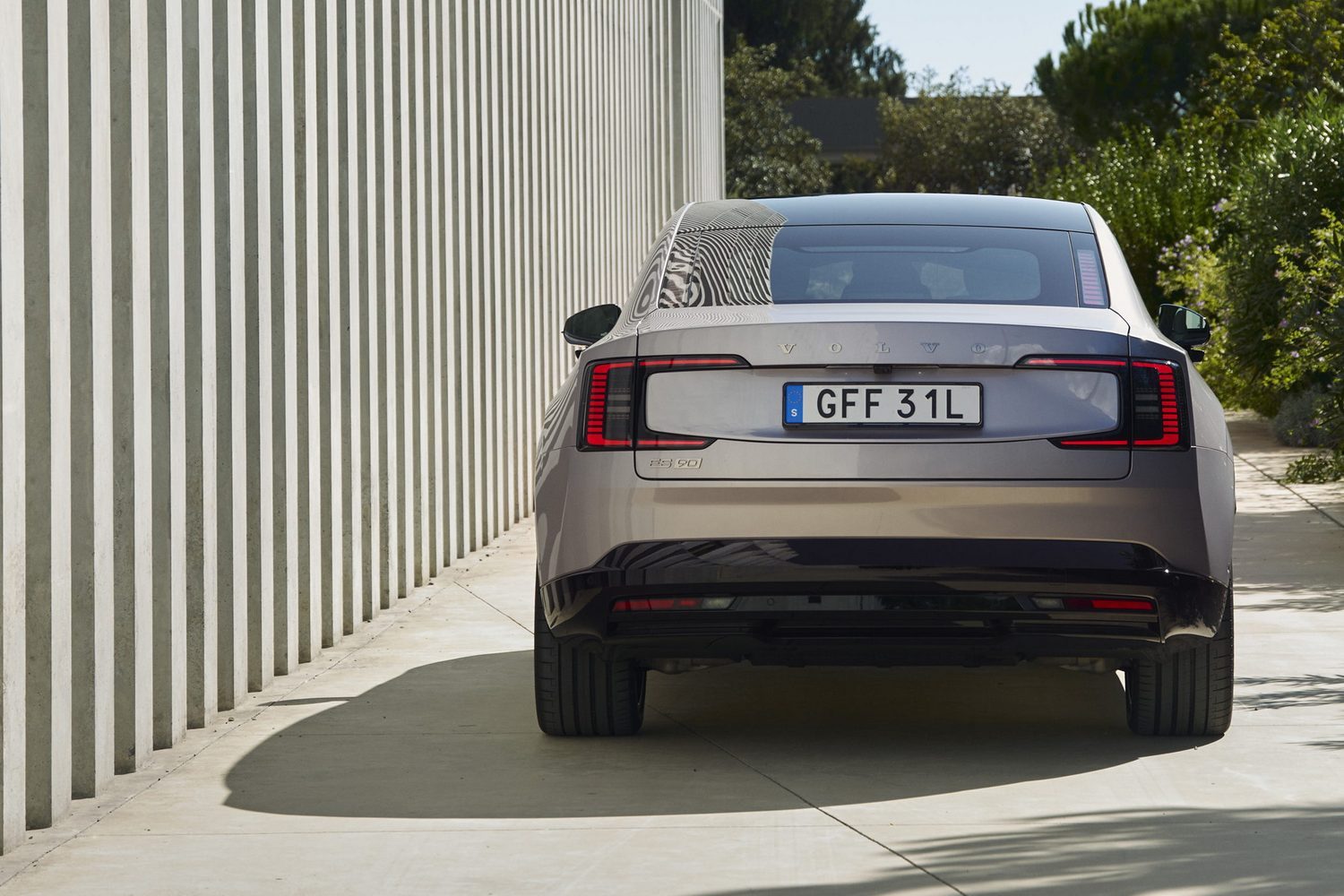
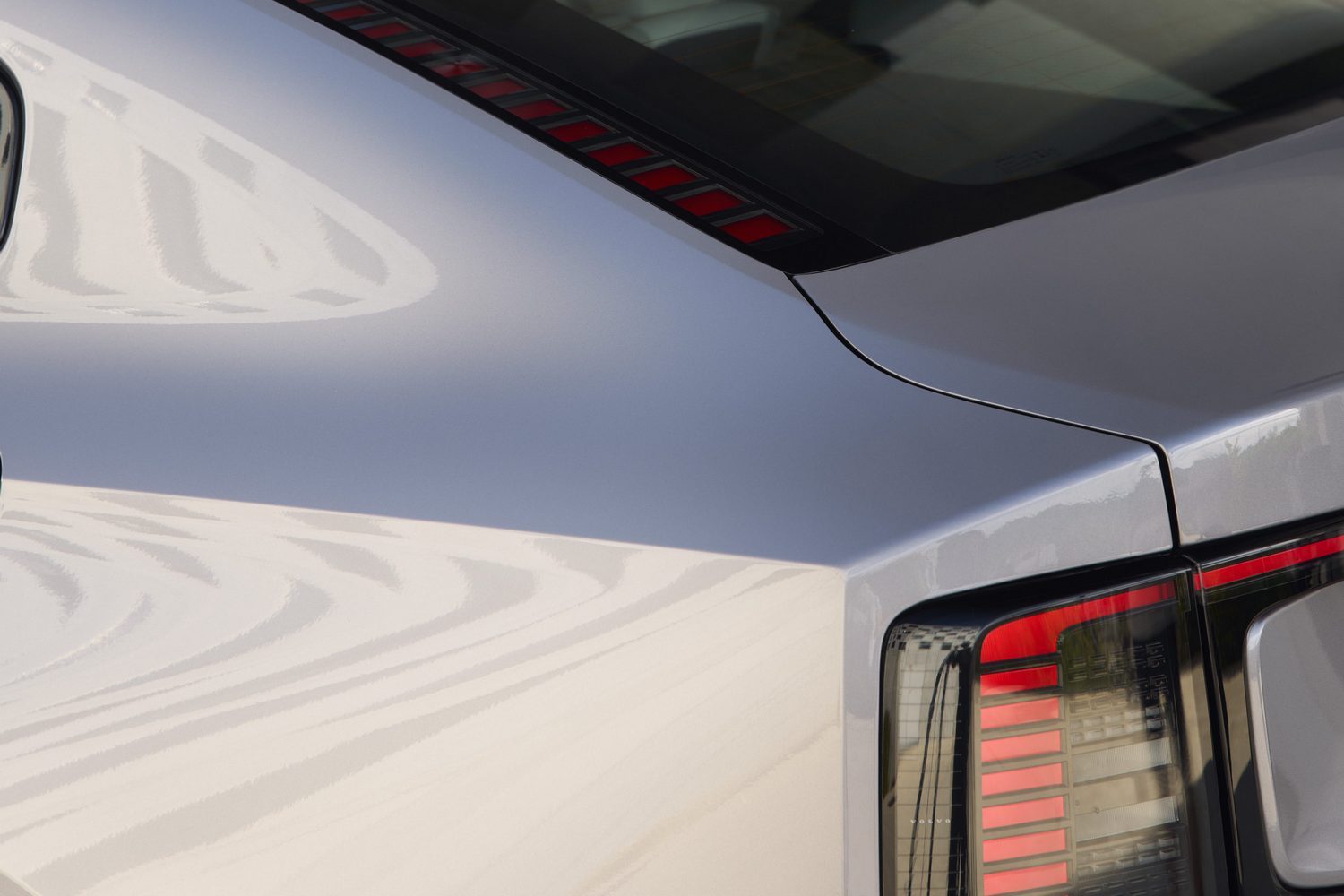
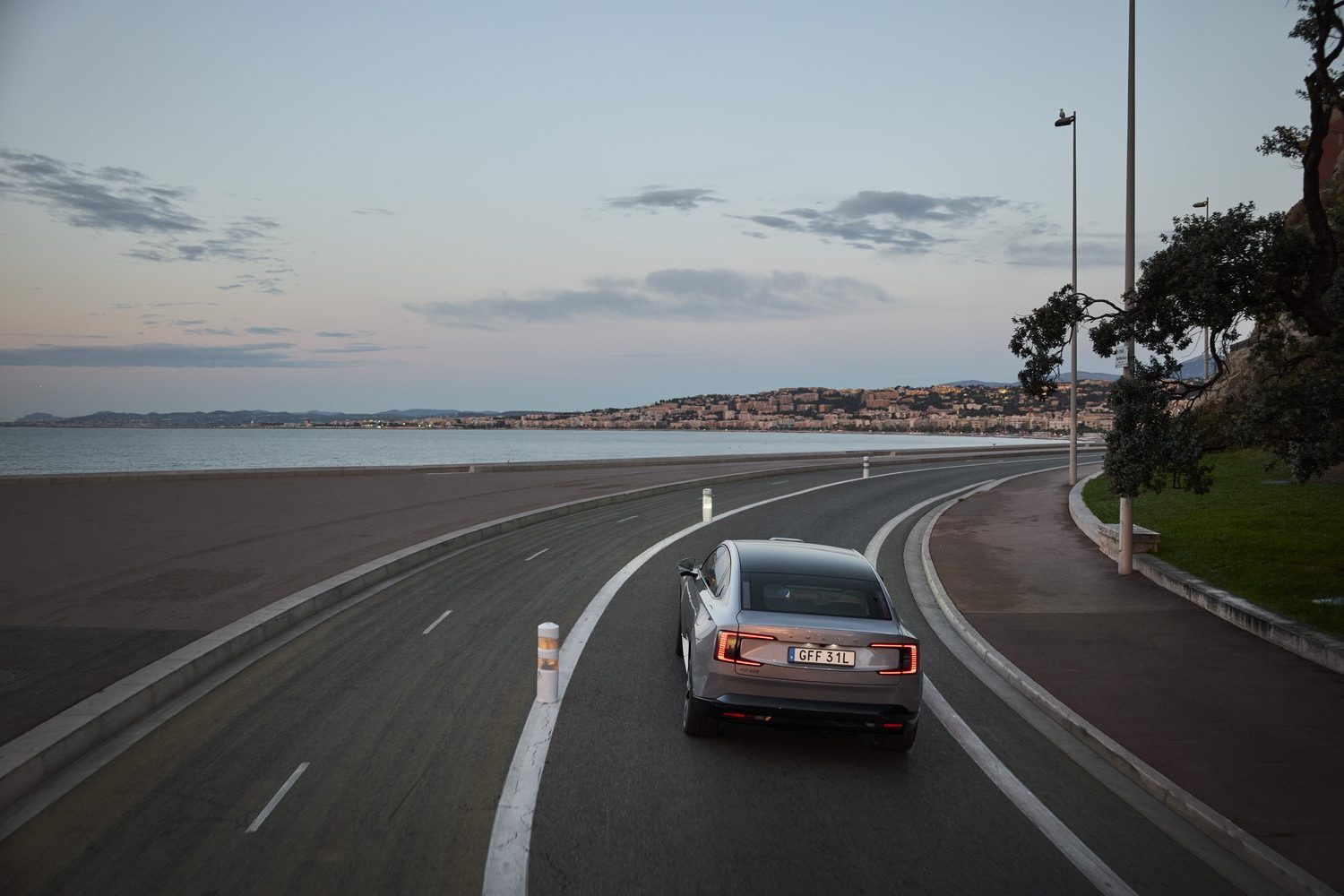
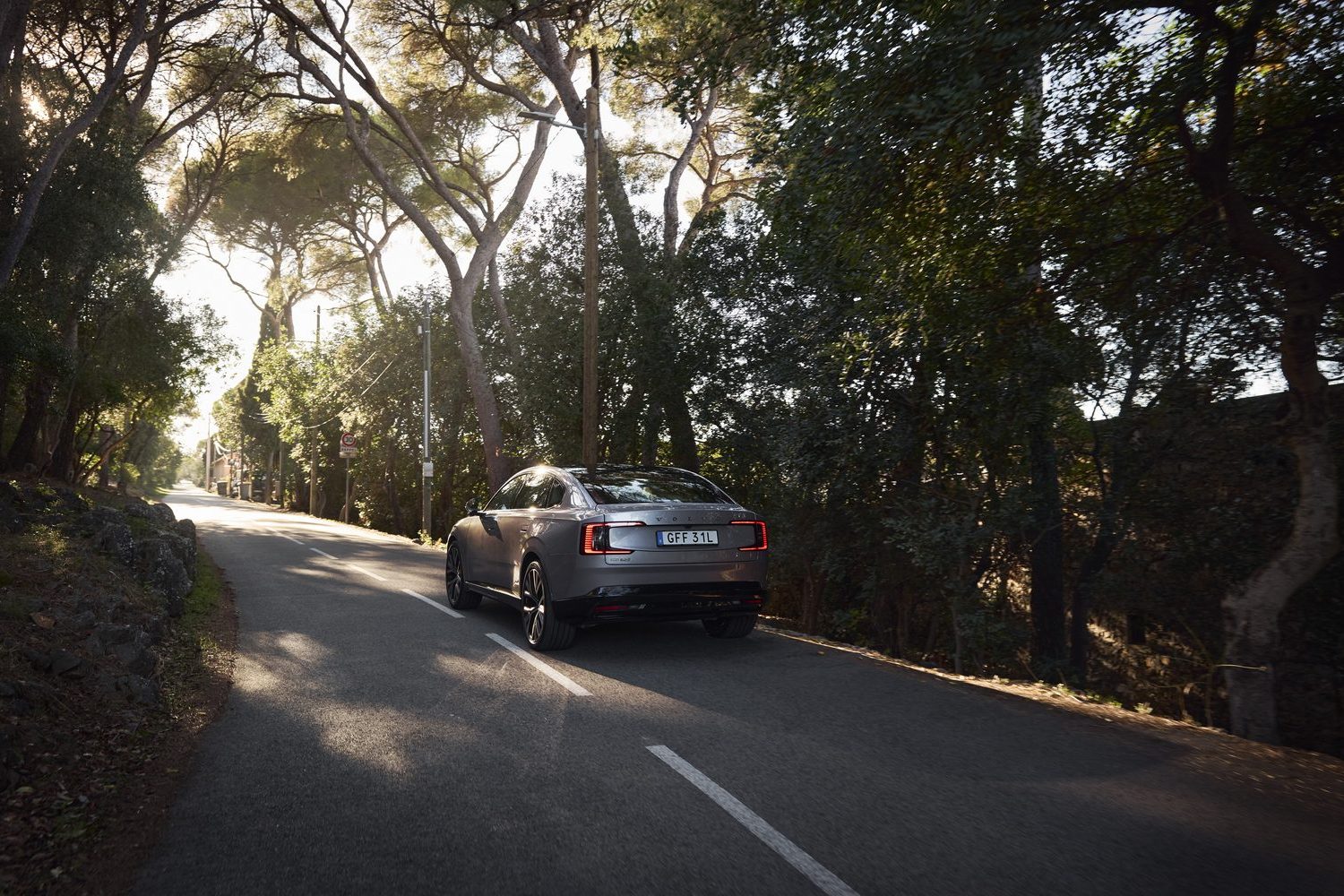
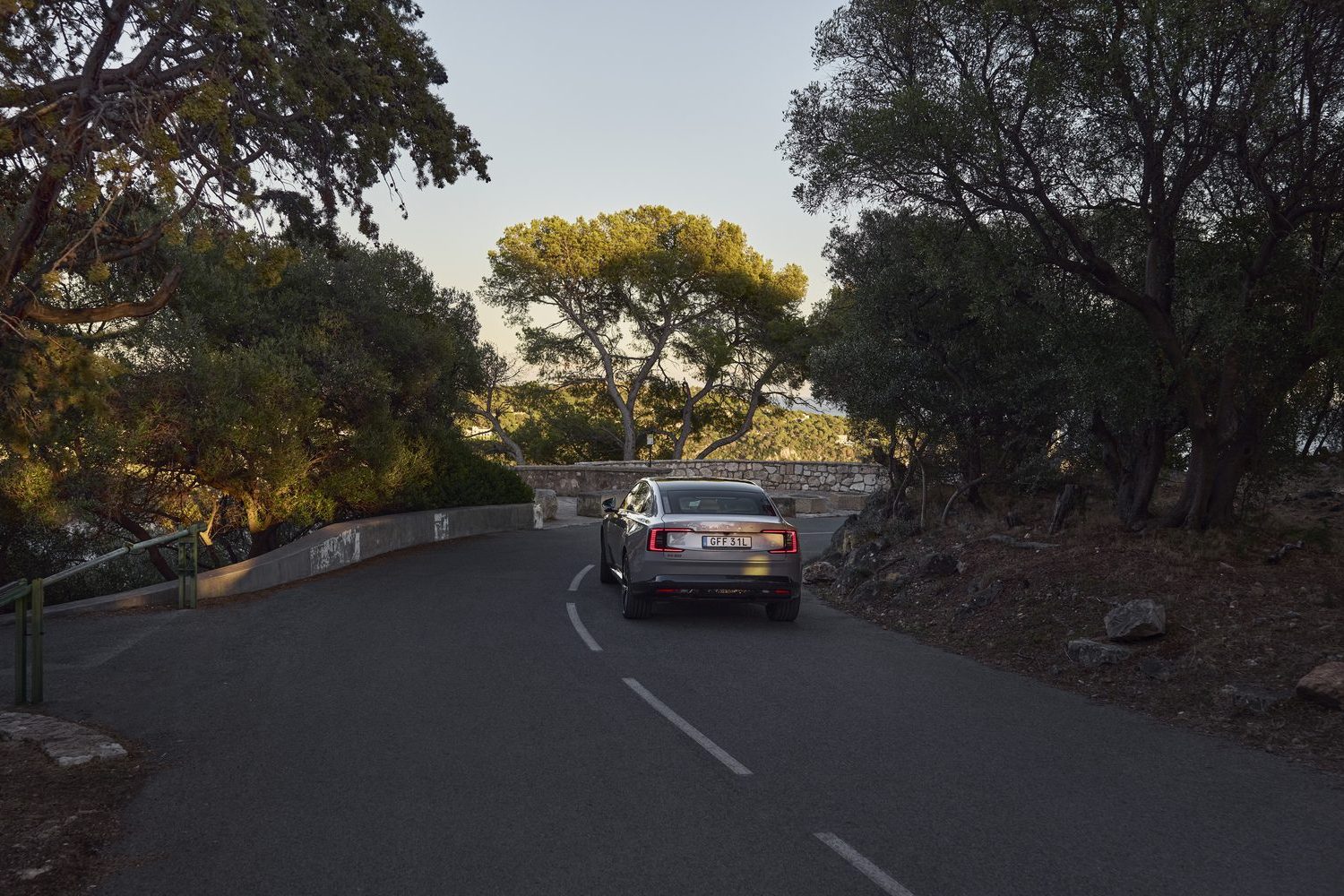
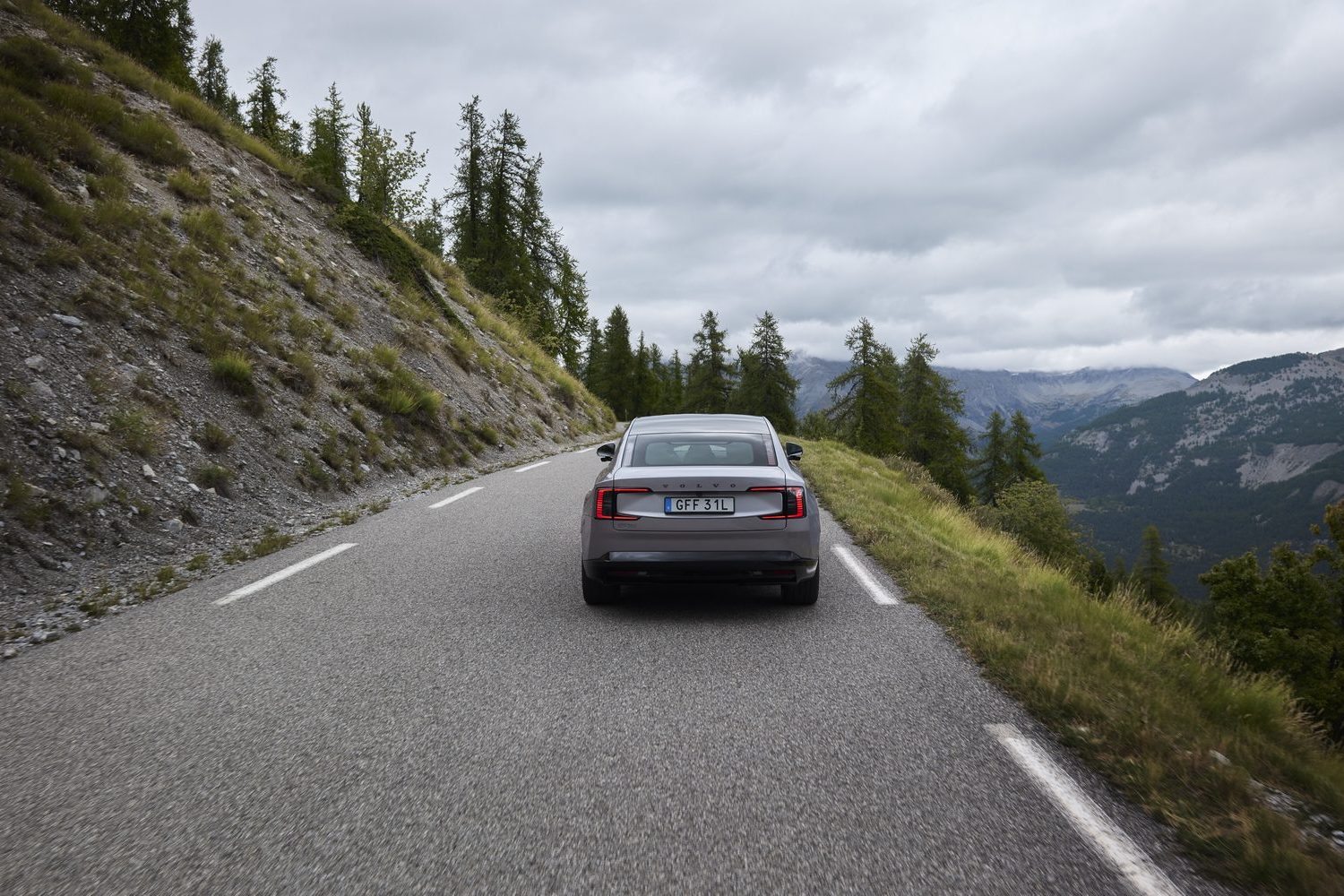
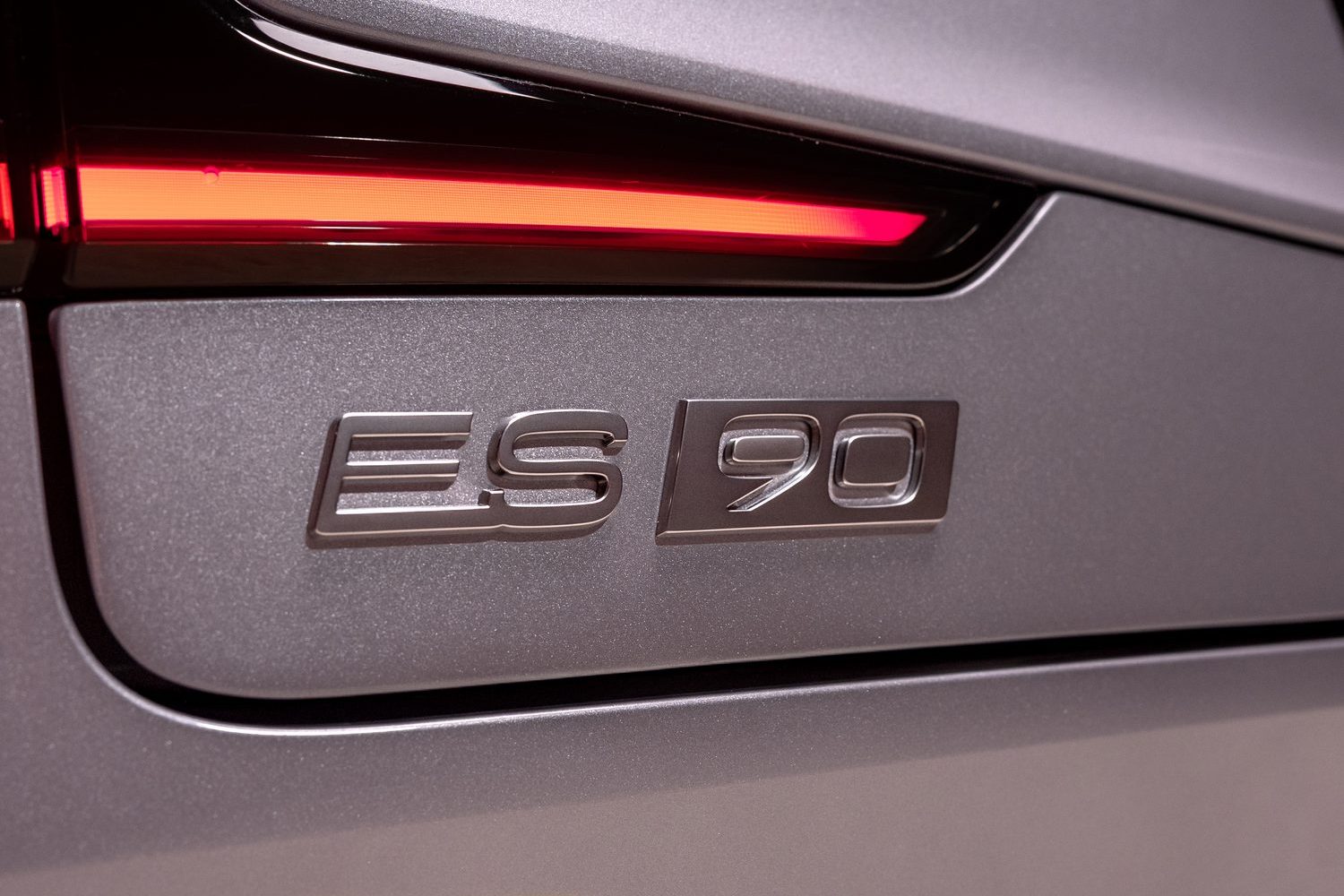
We do like the side profile, where the pert tail and slight kick up at its trailing edge are visible. "Volvo" is written large across the back between distinctive LED lights, while the high-level brake lights are, unusually, located either side of the rear windscreen.
One final note on lighting: the ES90 gets the EX90's 'expressive' front lights featuring a theatrical mechanical movement within them, visible during the welcome sequence.
Dimensions of the 2026 Volvo ES90
Length: 5,000mm
Width: 2,054mm (mirrors folded)
Height: 1,554mm
Wheelbase: 3,102mm
Paint colours for the 2026 Volvo ES90

Vapour Grey is the only 'free' colour for the ES90; all the other hues cost €1,250 each. Aurora Silver has a sparkling finish, while Mulberry Red is a particularly classy shade. In between are Crystal White, Onyx Black, Denim Blue and Sand Dune.
Interior, practicality, tech & comfort of the 2026 Volvo ES90
• Classy and luxurious cabin
• Flat rear floor in the back
• Boot space only ok

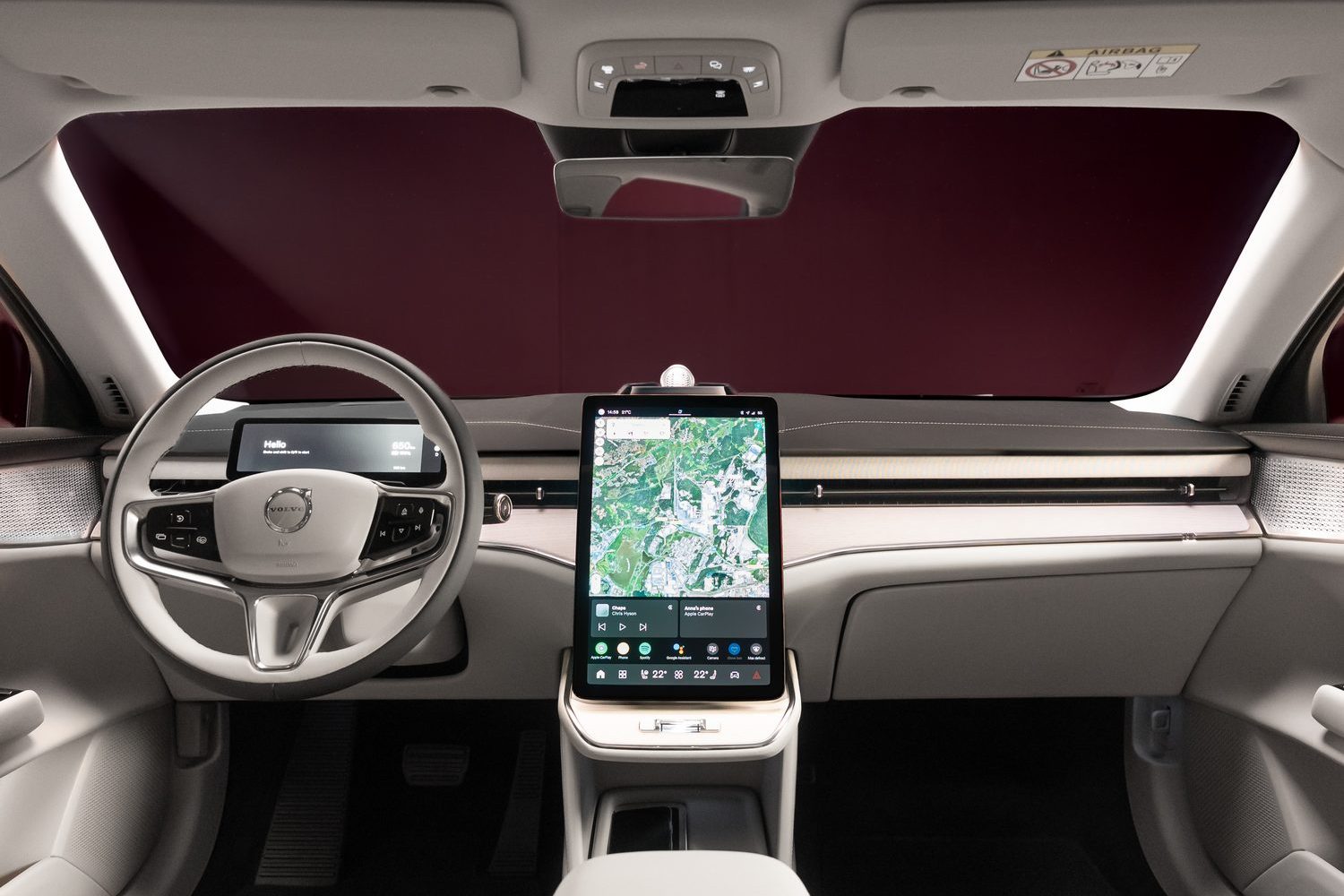
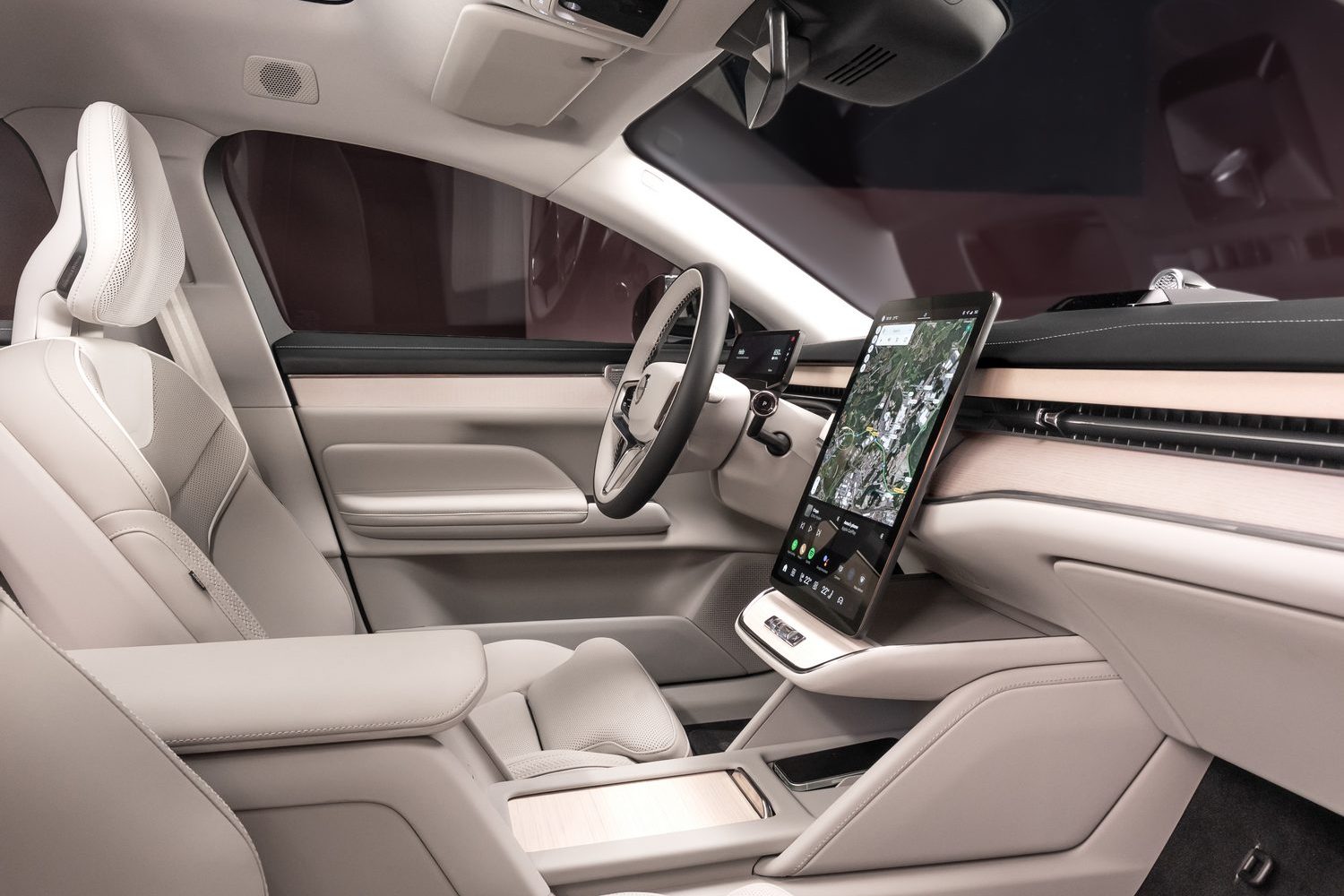
The overall impression of the Volvo ES90's interior is luxury and classiness. It looks slick and it feels good to touch, too, with a variety of tactile materials used throughout. Of course, the minimalistic style means not enough physical buttons around the place for our liking, and a reliance on the portrait-oriented touchscreen dominating the dashboard.
Getting comfortable in the driver's seat
It's very easy to get comfortable in the front of the top-spec Ultra model as it comes with a massage function and ventilation, on top of the seat-heating found across the range.

There's electric adjustment of the seats in all cars, while each grade up gets additional functionality, such as extendable front cushions in the Plus model and electrically adjustable side support in the Ultra.
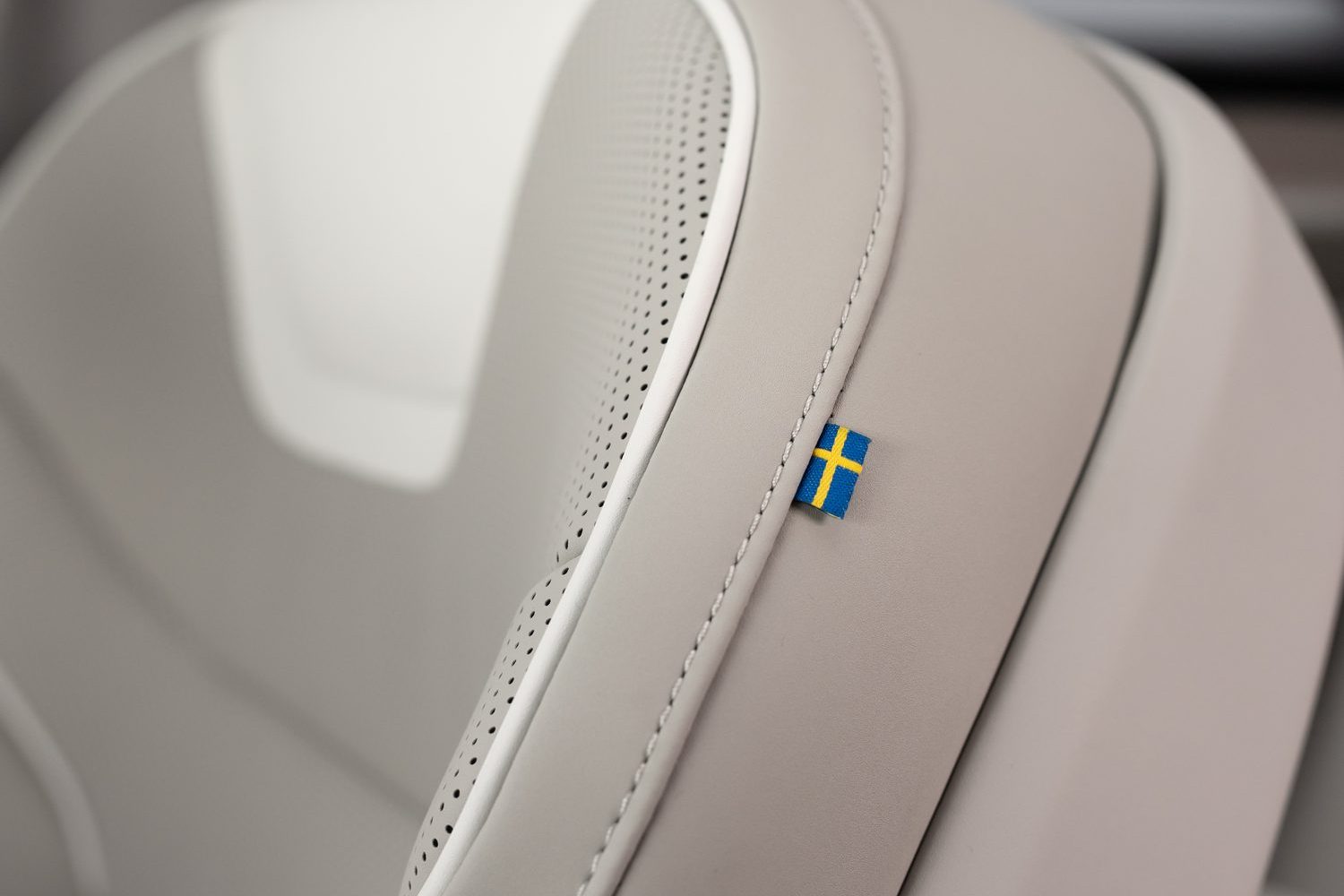
Volvo doesn't offer any leather upholstery, though, instead focusing on its own 'Nordico' material that is partially made of recycled plastics and what Volvo calls "bio-attributed material from forests in Sweden and Finland". For the record, we think it looks and feels great.

A warmer alternative, exclusively available in the ES90 Ultra, is a light-grey-coloured wool blend.
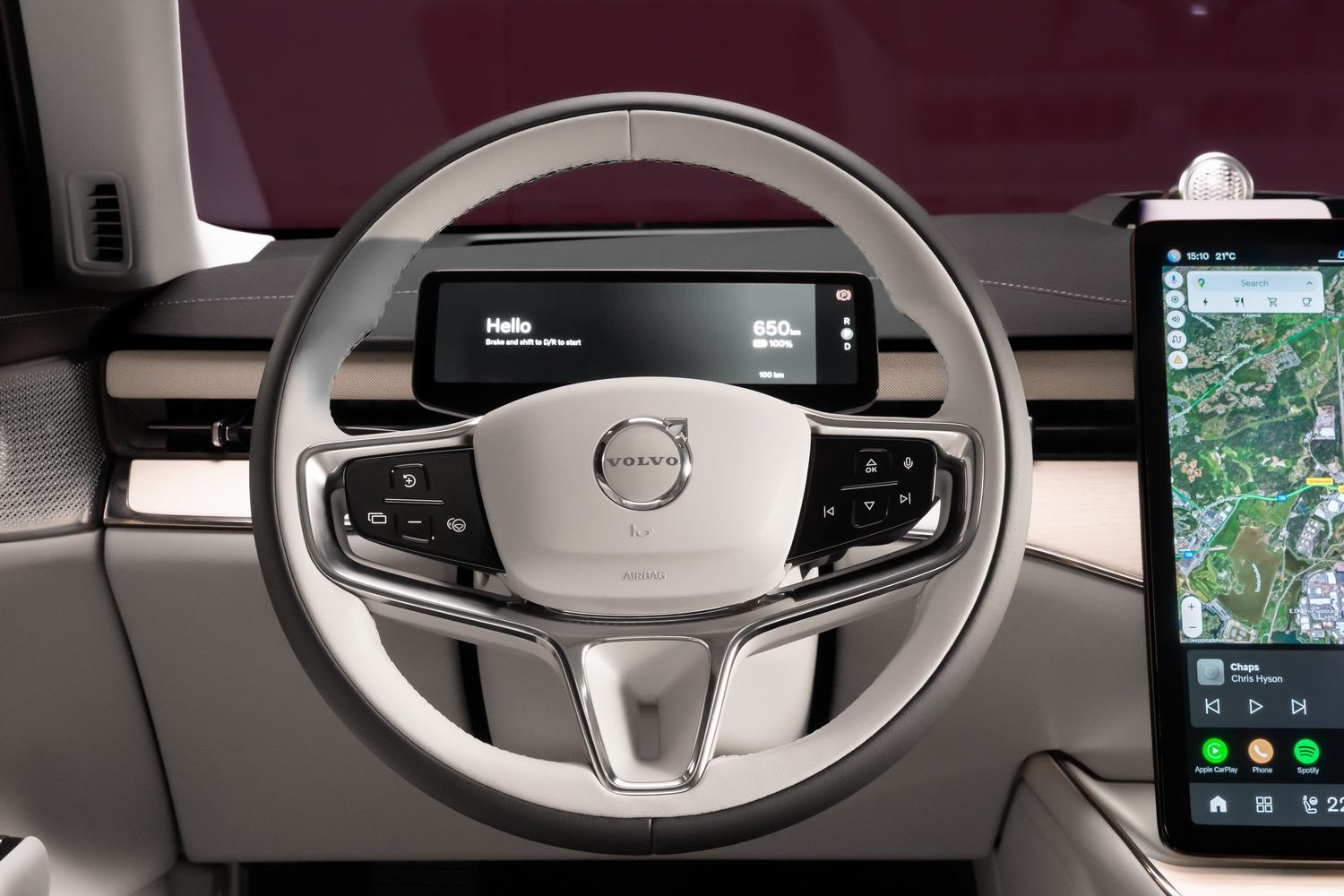
Both the Plus and Ultra models get electric adjustment of the steering column position, though we'd prefer to not have to use the touchscreen to make changes to it. Same for the door mirrors.

And while there's loads of range in the seat and wheel adjustments to suit all shapes and sizes, rear visibility is hampered by the surprisingly small back window.
Infotainment and technology
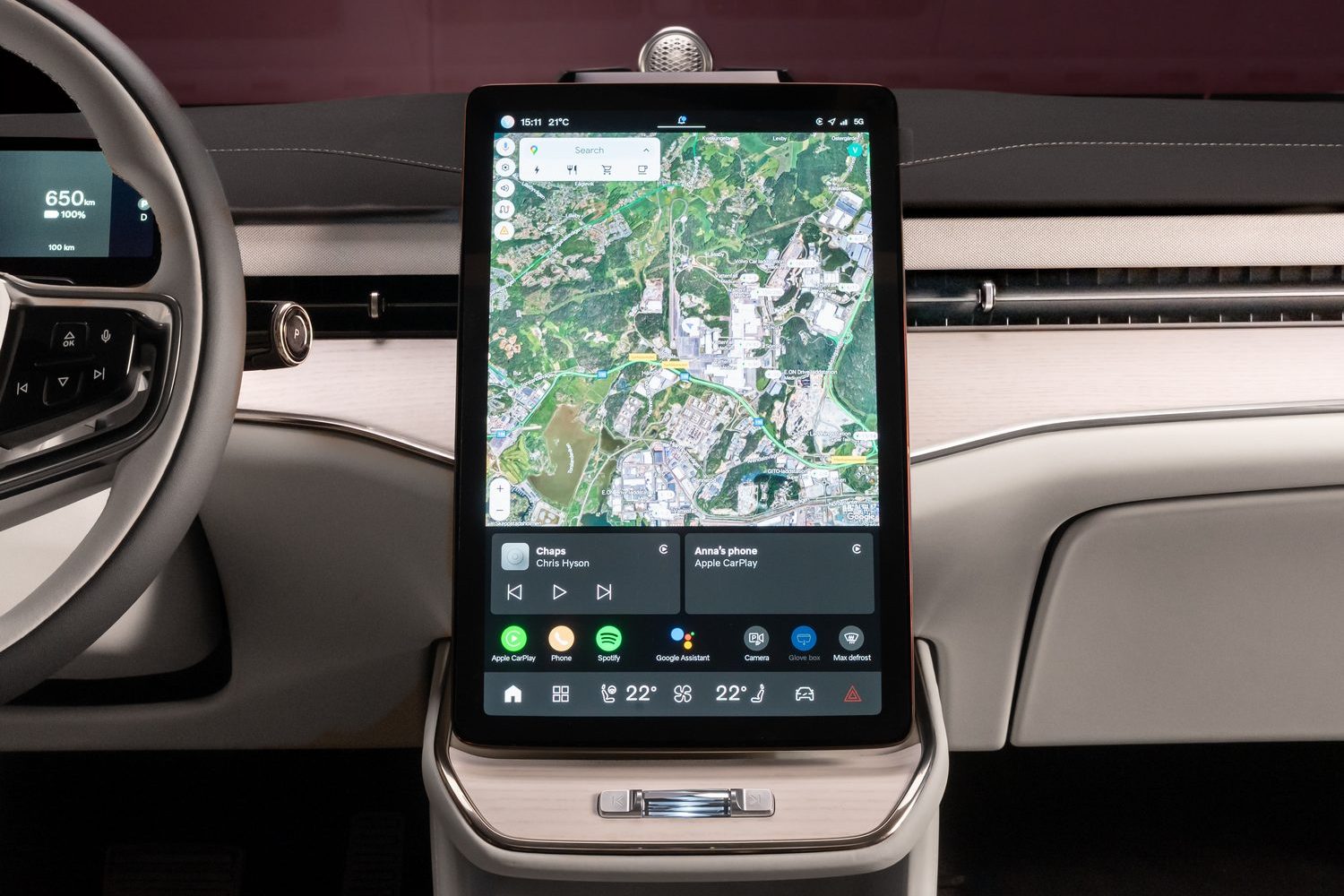
The upright touchscreen measures 14.5 inches across the diagonal and has Google built in, even if you don't pair up your smartphone and use Apple CarPlay. It's a slick looking display with crisp graphics and split into several areas.

At the bottom, and mercifully always accessible, are the controls for the climate control. Above that is a row of icon links, some to car functions such as "Max defrost", and others to your most recently used apps. The rest of the screen is divided between widgets and the navigation map - or whatever sub-menu you're looking at.
While we would like even more physical buttons, we are fans of the discreet crystal roller for volume at the base of the touchscreen.

Ahead of the driver is a neat, compact digital instrument screen, while a head-up display is standard on Plus and Ultra trims - as is an excellent 360-degree-camera system.
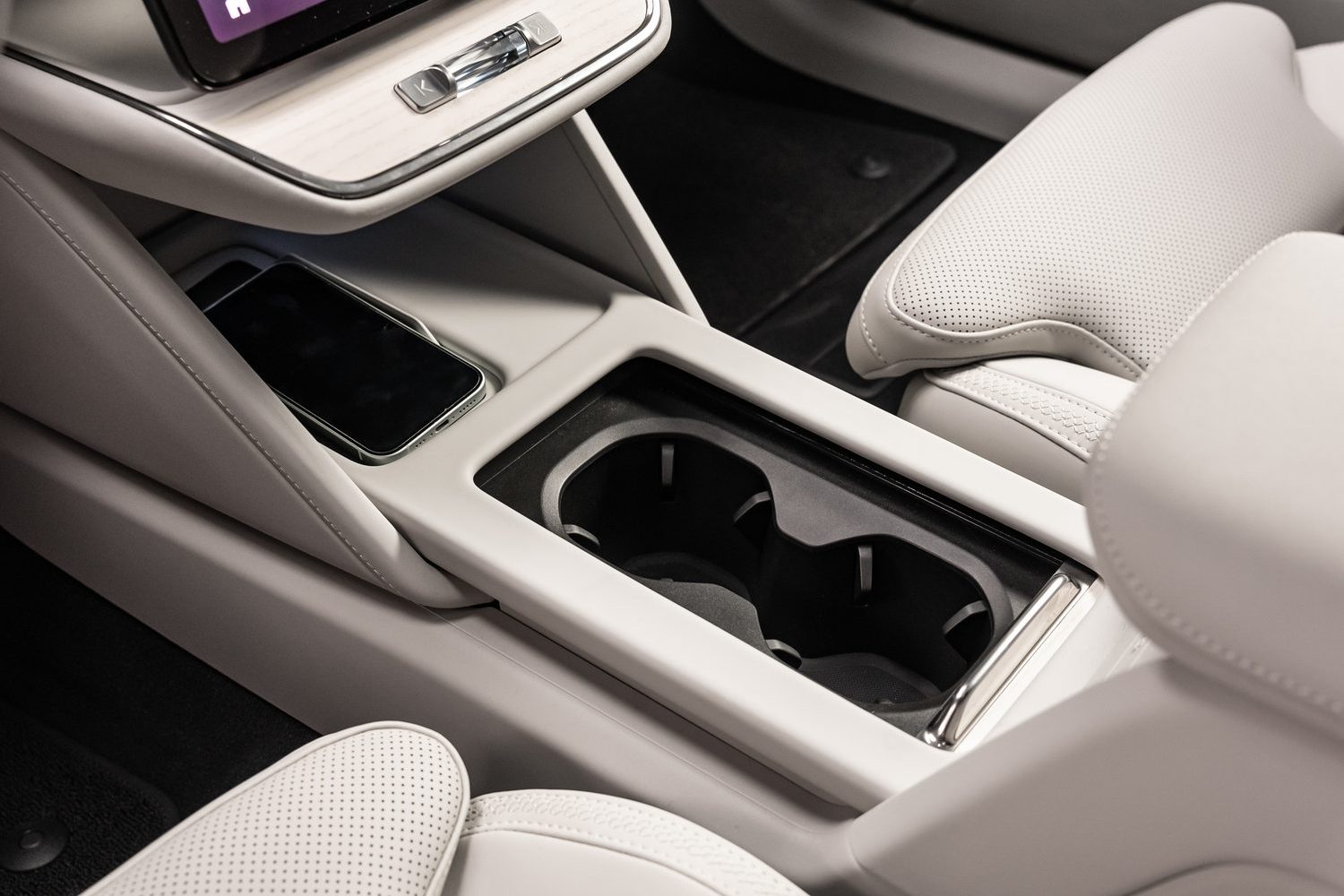
The basics are included across the board, such as a wireless phone-charging pad, Bluetooth and USB-C ports front and rear.

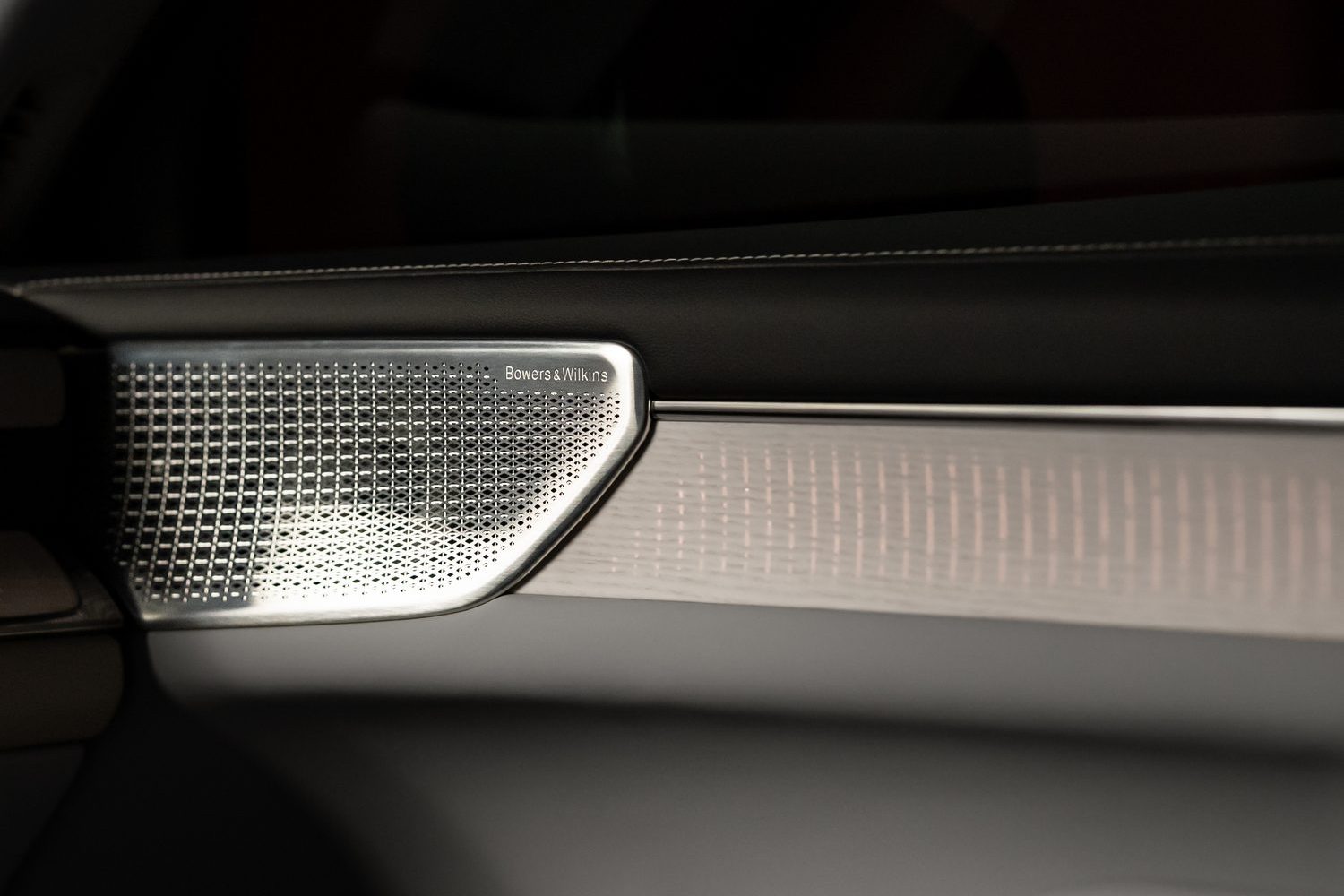
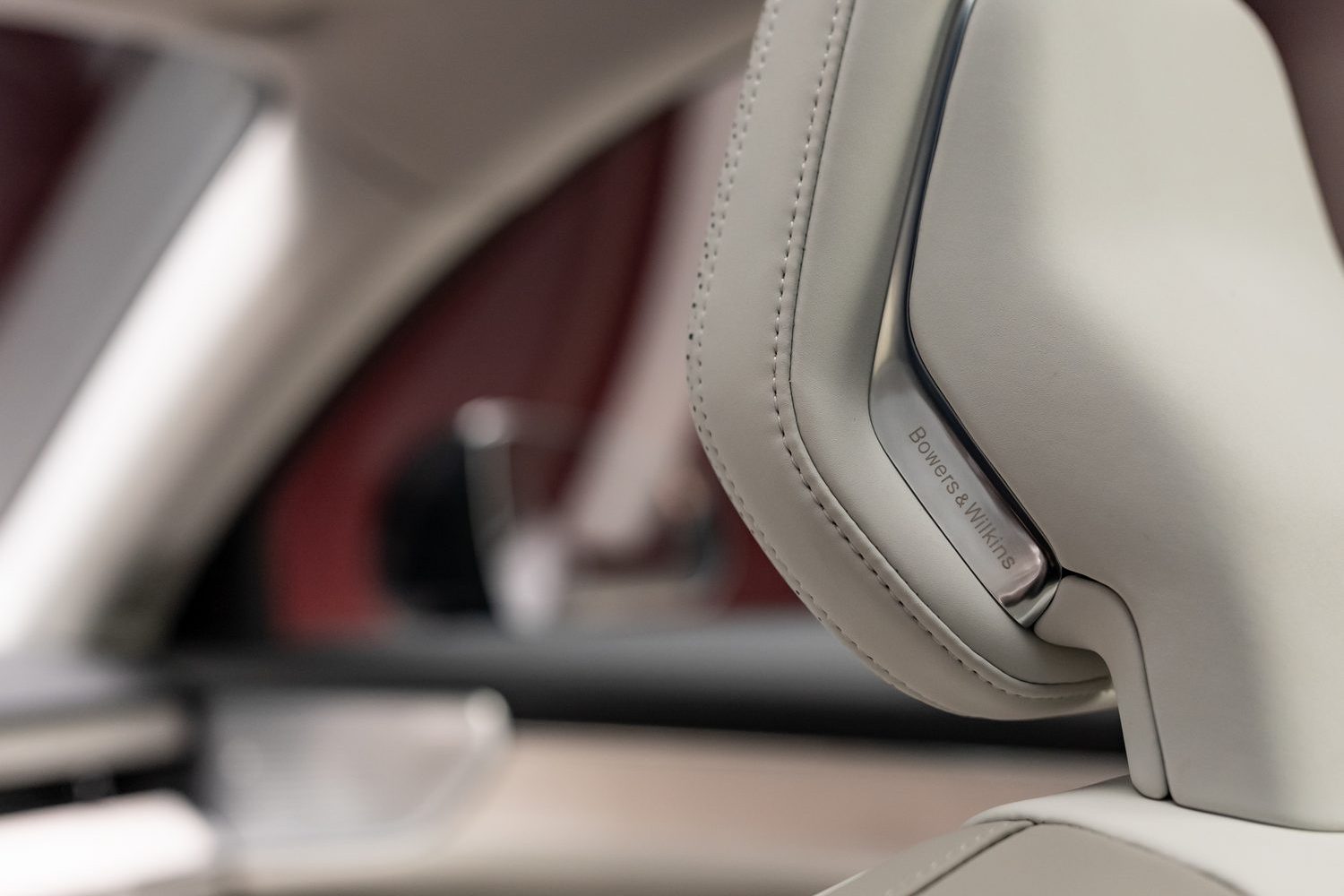
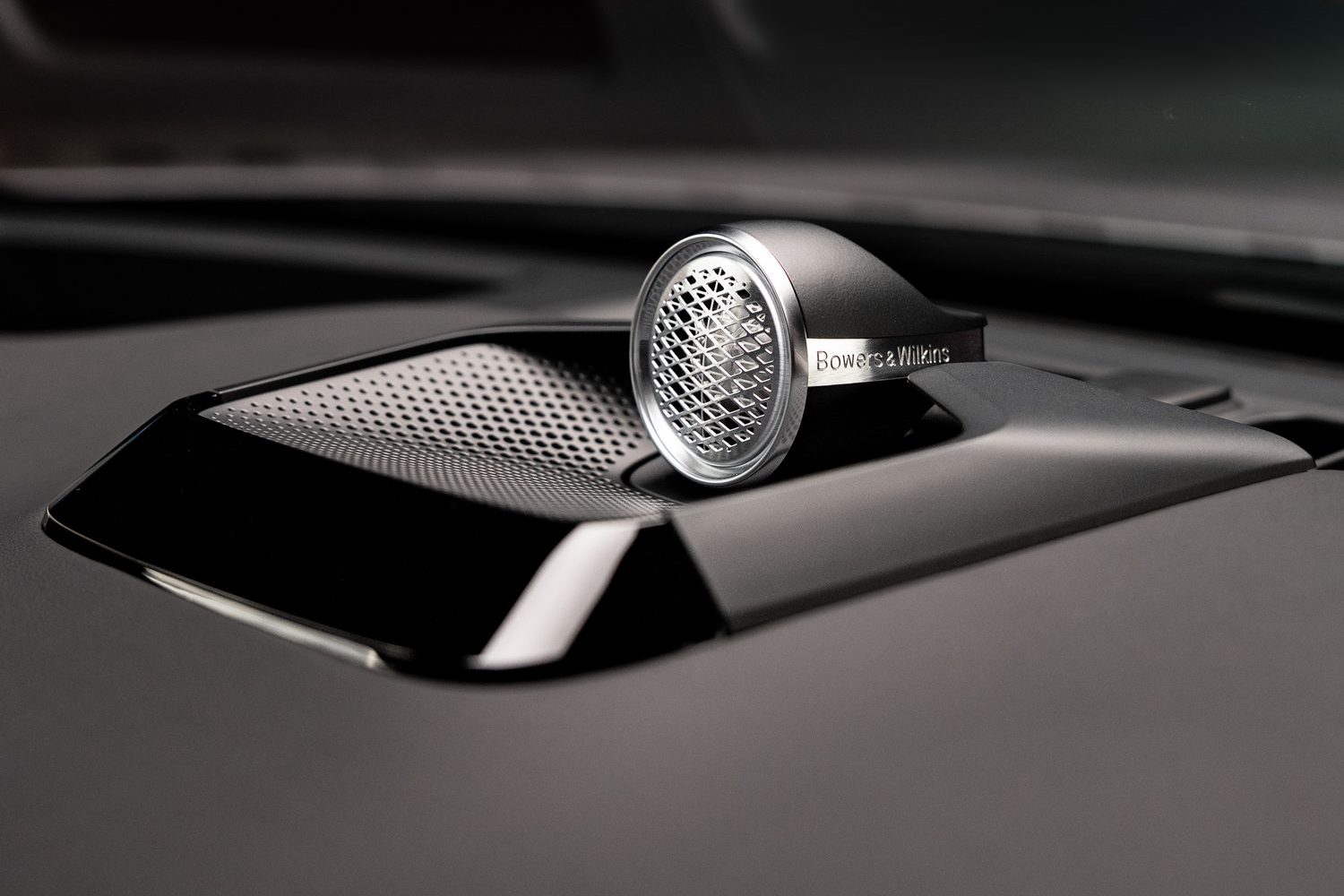
Audiophiles are well catered for in the ES90. Even the Core model gets a 10-speaker system with 325W output; the Plus features a Bose system upgraded to 940 watts, 14 speakers and a subwoofer; and the Ultra gets a 1,610W Bowers & Wilkins setup using 25 speakers, including the tweeter set in the middle of the dashboard like a bit of art.
Practicality around the cabin
There's plenty of storage room up front, though the glovebox isn't massive and it has to be opened by using an icon on the touchscreen.

Behind that screen is a shallow tray of sorts, and underneath it is where the inductive charging pad for phones is located, with a little extra space next to it and cupholders behind - which can be covered up.
The door pockets are of average size, though the hidden storage area under the central armrest makes up for that somewhat.
Rear-seat passenger space
The door openings to get into the rear aren't the largest, despite the use of notably long doors - blame the relatively low roof line and the need to package a battery in the floor of the car.

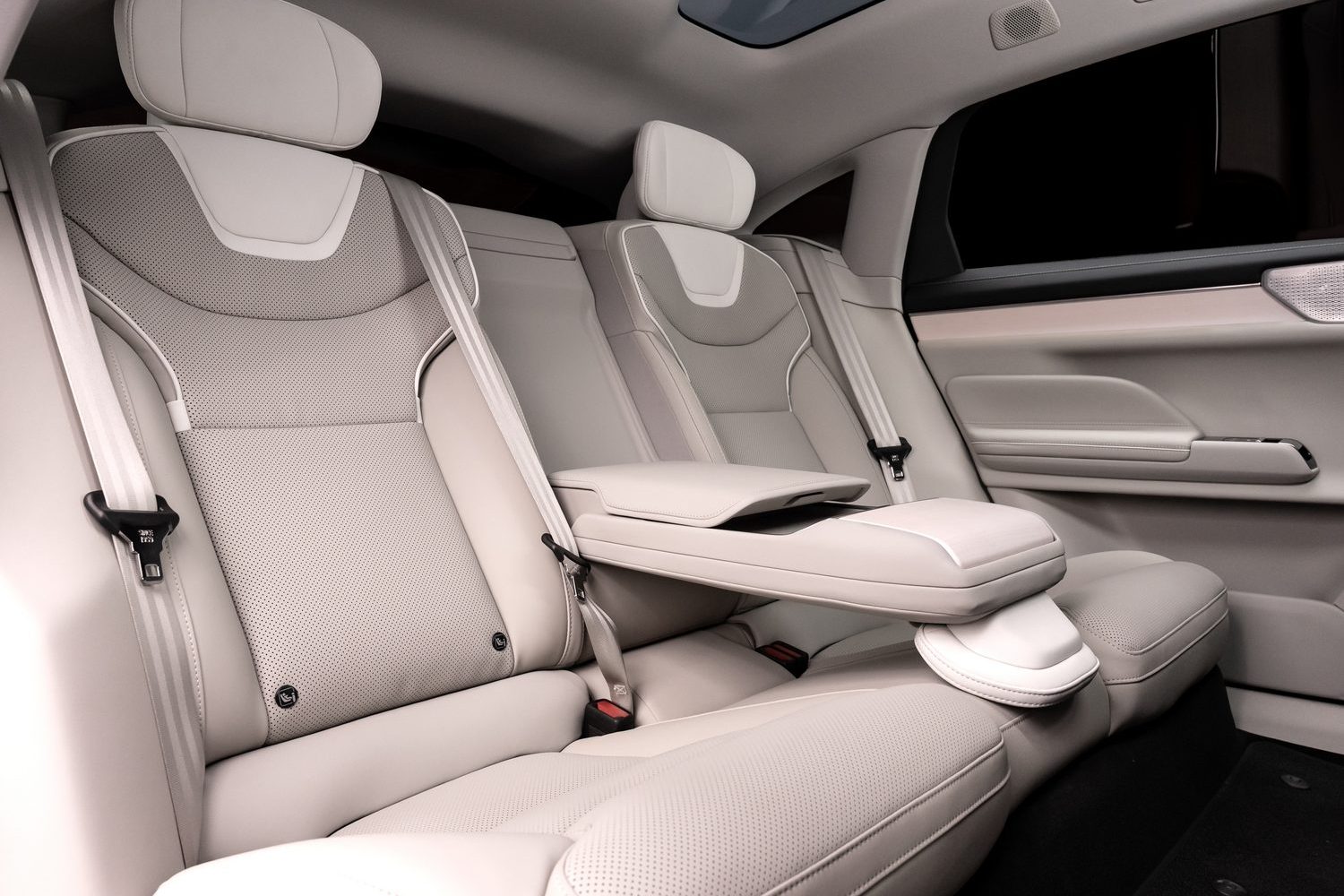
However, once you're inside, there's a lot of space in the back of the ES90, with loads of headroom, kneeroom and legroom. The floor is more or less flat all the way across, though the central rear seat is nowhere near as comfortable as the other two - and it misses out on the heating and ventilation available, too.
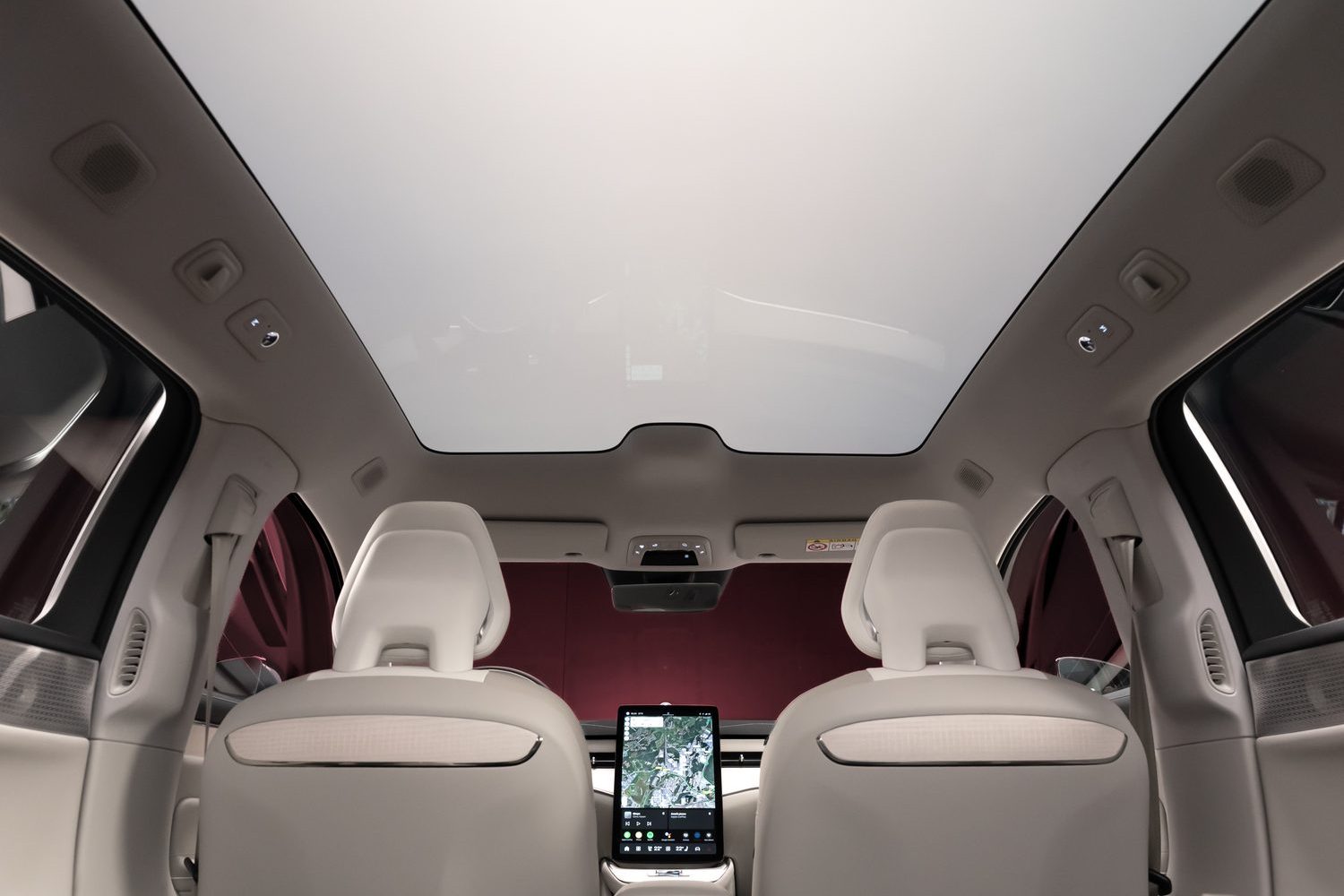
Still, there are USB-C ports back there, along with air vents for the four-zone climate control, so it's generally a comfortable space. We also like that it's flooded with light from the panoramic glass roof.
If you're not using the middle rear seat, it folds down to reveal a multi-function armrest with cupholders and extra storage.

Fitting child seats to the Volvo ES90
There are ISOFIX mountings in the outer two rear seats, with Top Tethers behind. We don't think you'd fit a booster cushion in the middle between two bulky rear-mounted child seats.
While the front seat has no ISOFIX brackets, there is a passenger airbag cut-off switch, so you could use the seatbelt to mount another child seat up front if you needed to. And parents will be glad to see electric child locks for the rear doors, too.

Boot space in the Volvo ES90
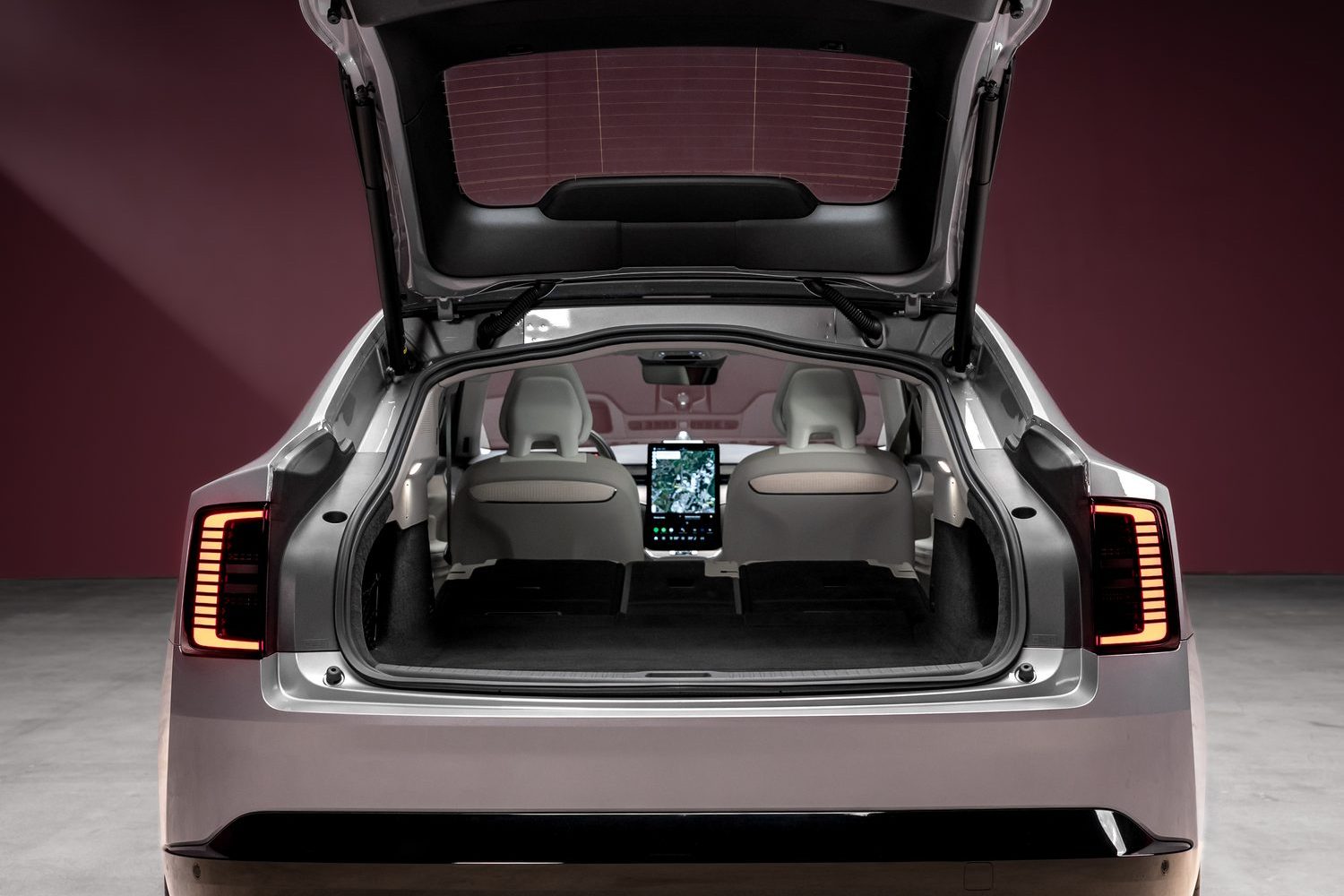
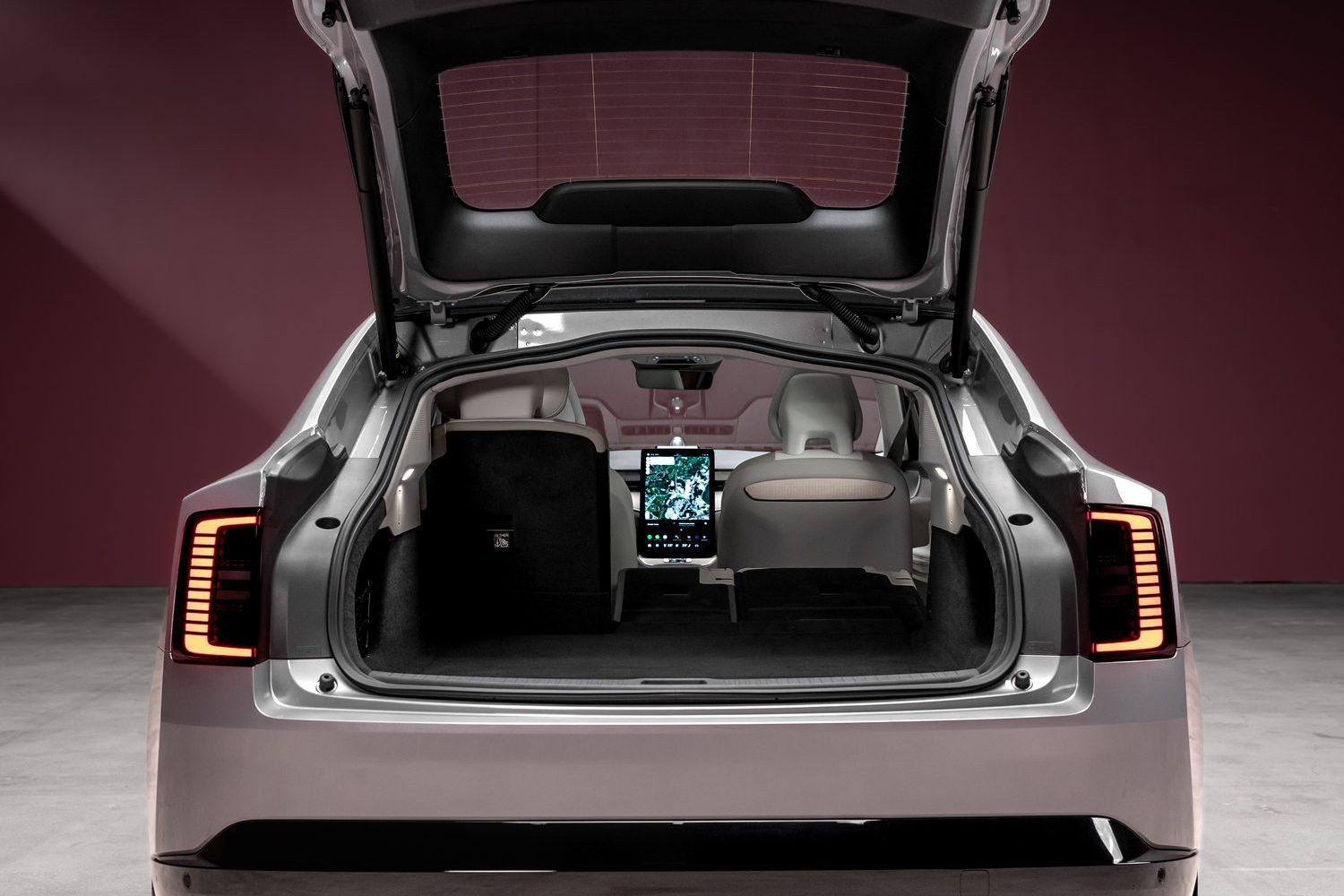
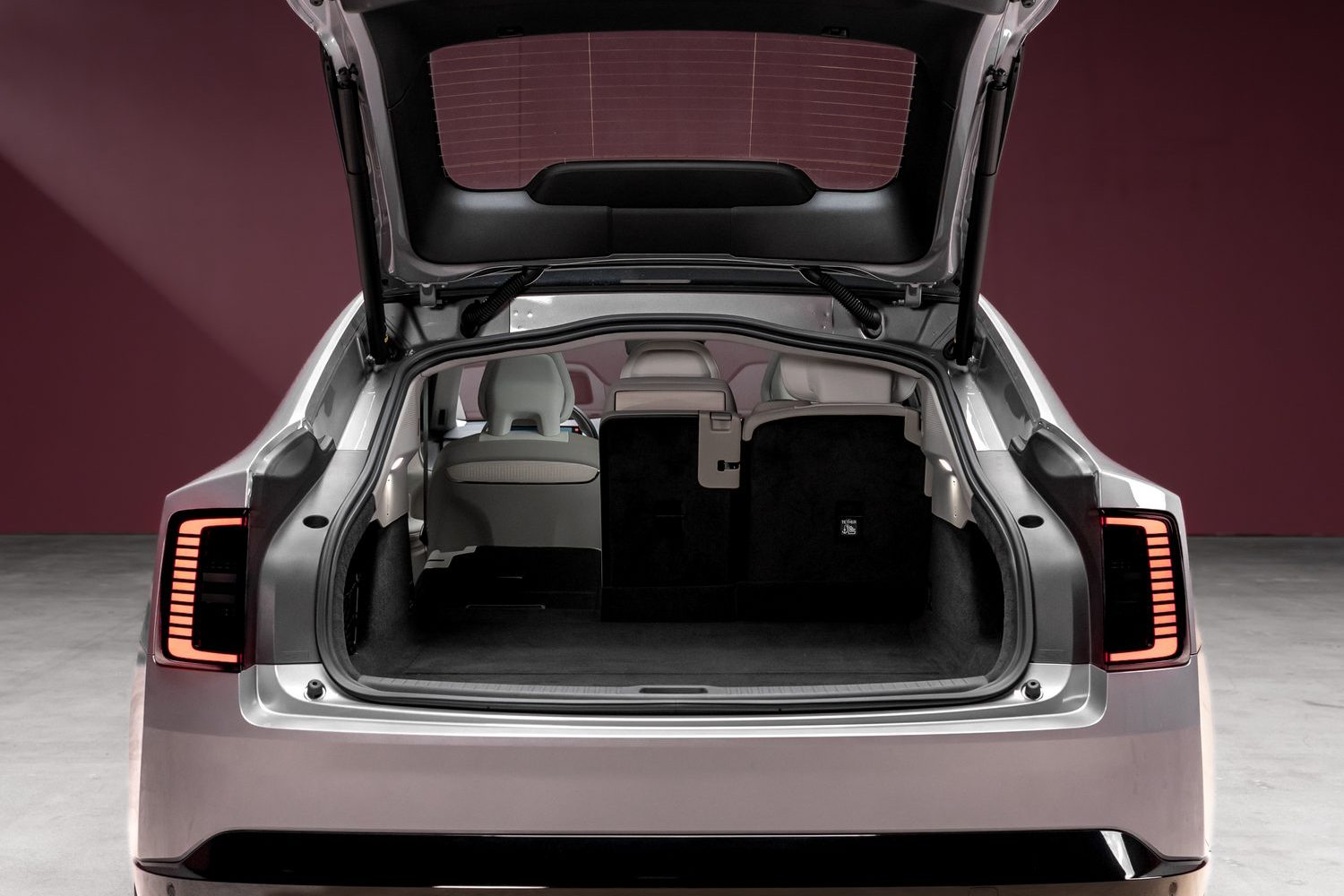
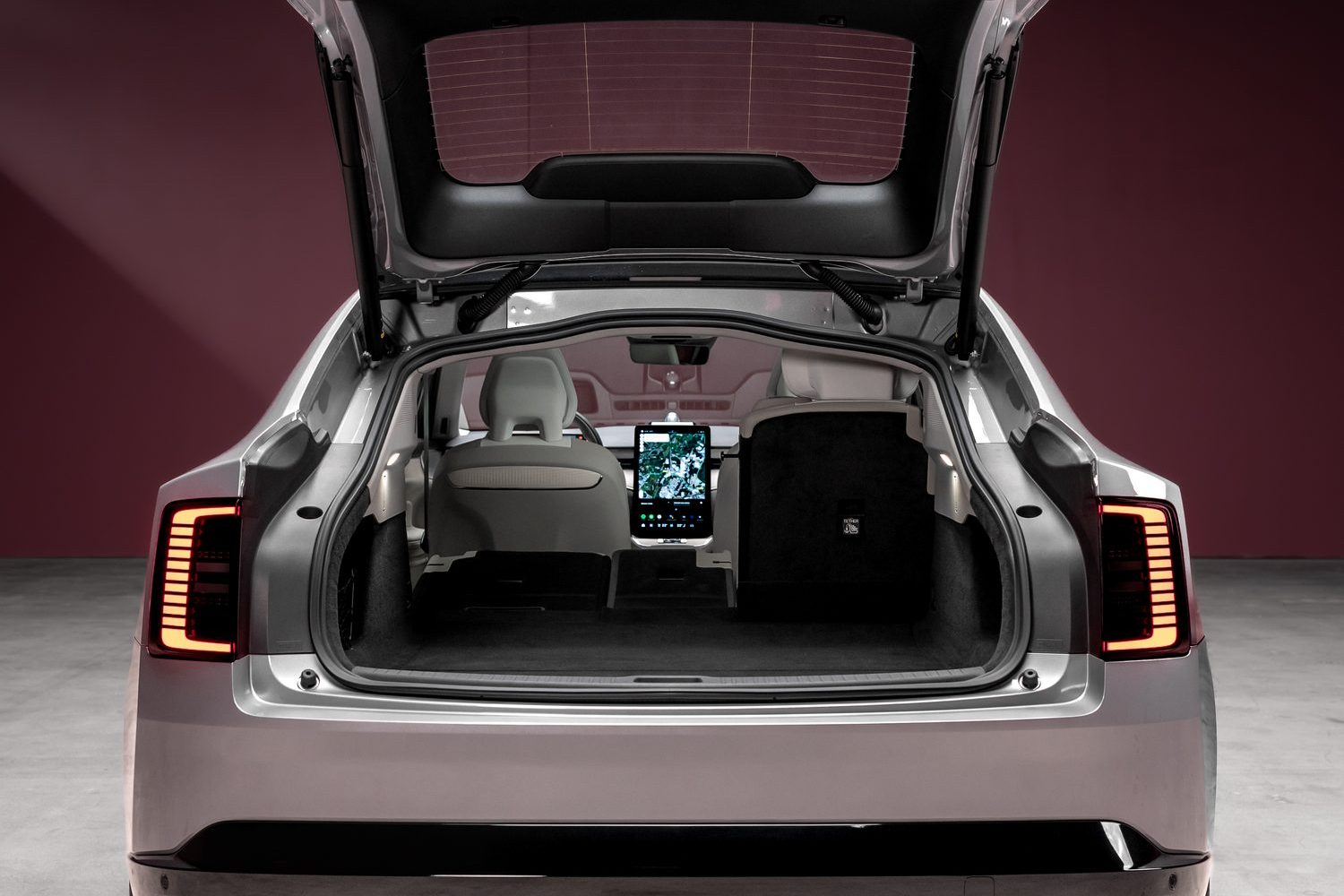
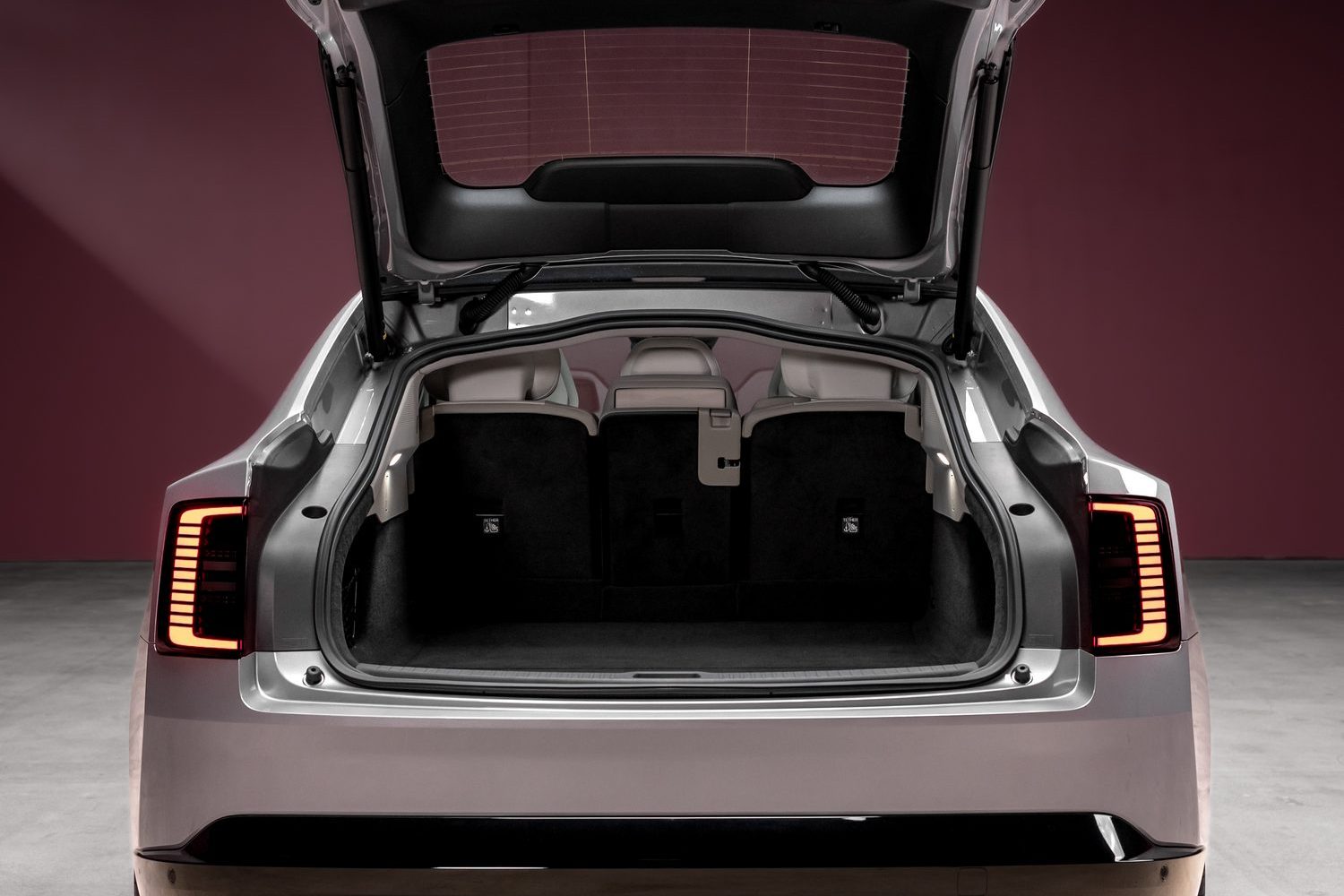
The ES90's boot isn't huge, holding 424 litres to the window line or 446 litres at a maximum with the rear seats in place. Fold down the back seats - they split 40:20:40 - and the maximum quoted volume is 1,427 litres. Access to all of this is made particularly easy by the hatchback. A traditional boot lid would have meant a narrow aperture to get luggage in through.

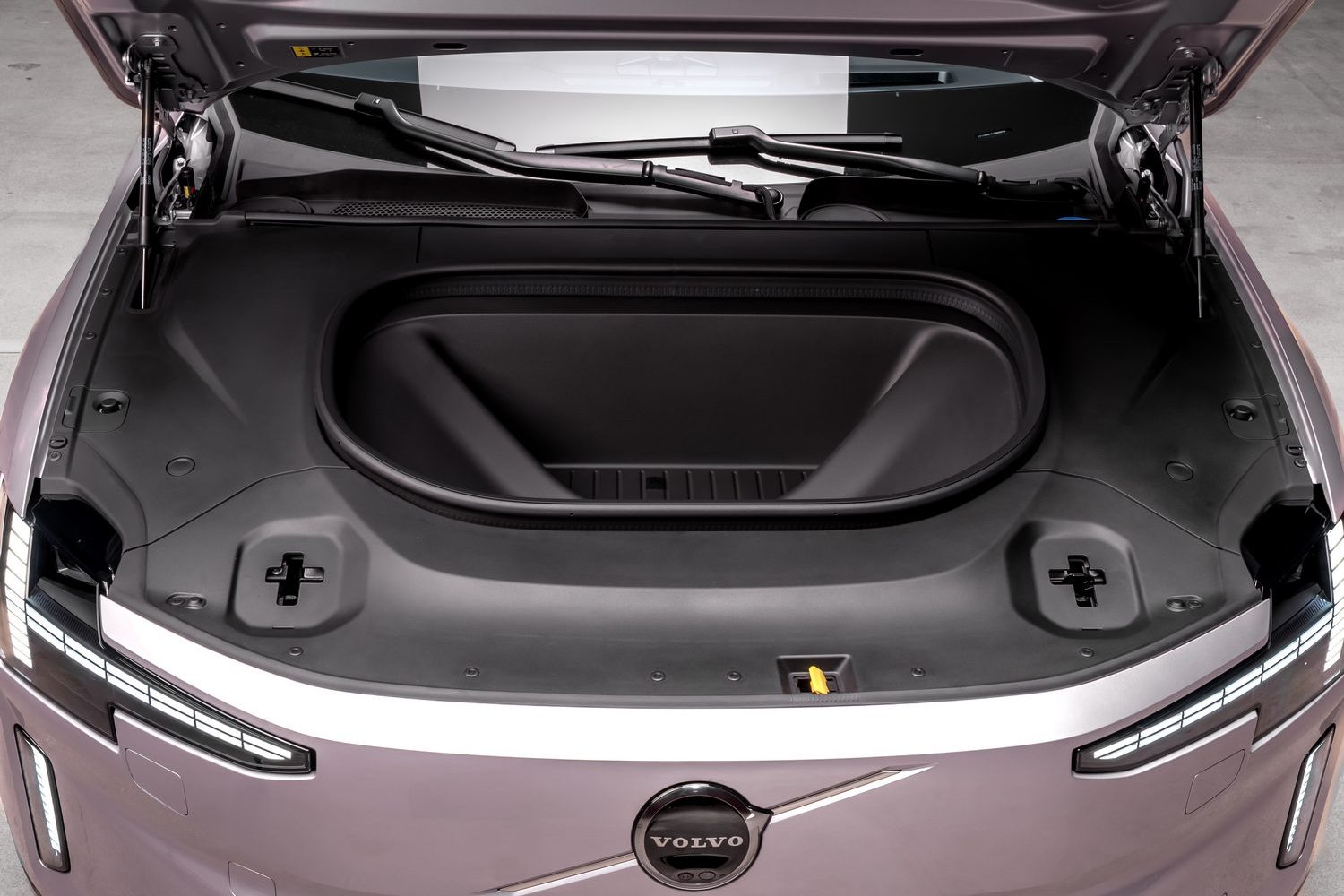
There is a small 'frunk' under the bonnet for storage of a charging cable perhaps. It only accommodates 22 litres.
Towing with the Volvo ES90
As ever, the standard towing limit for unbraked loads is capped at 750kg, though the ES90 can tow up to 1,600kg if there are brakes on the trailer.
Safety in the Volvo ES90
While the Volvo ES90 has yet to be assessed by Euro NCAP, it will undoubtedly be a safe car. The very visible Lidar sensor at the top of the windscreen is part of a massive suite of sensors and cameras to enable the veritable army of driver-assistance sub-systems. Even so, we were impressed at how 'un-nannying' the car was on our test drive, meaning owners are unlikely to feel the need to turn any of these safety systems off.
Performance of the 2026 Volvo ES90
• Ample performance from single electric motor
• Is tuned for comfort rather than dynamics
• Air suspension well worth having

Volvo Ireland is launching the ES90 in Single Motor format to begin with, using a 245kW electric motor driving the rear wheels. That's equivalent to 333hp, and it also makes up to 480Nm of torque, explaining this heavy car's rapid 6.6-second 0-100km/h time.
In time, the 'Twin Motor' versions will be introduced, using two electric motors for all-wheel drive and even more performance. The standard one makes up to 449hp and 670Nm of torque and drops the 0-100km/h time to just 5.5 seconds, while the Performance variant improves those numbers to 680hp, 870Nm and four seconds dead. That's seriously fast.

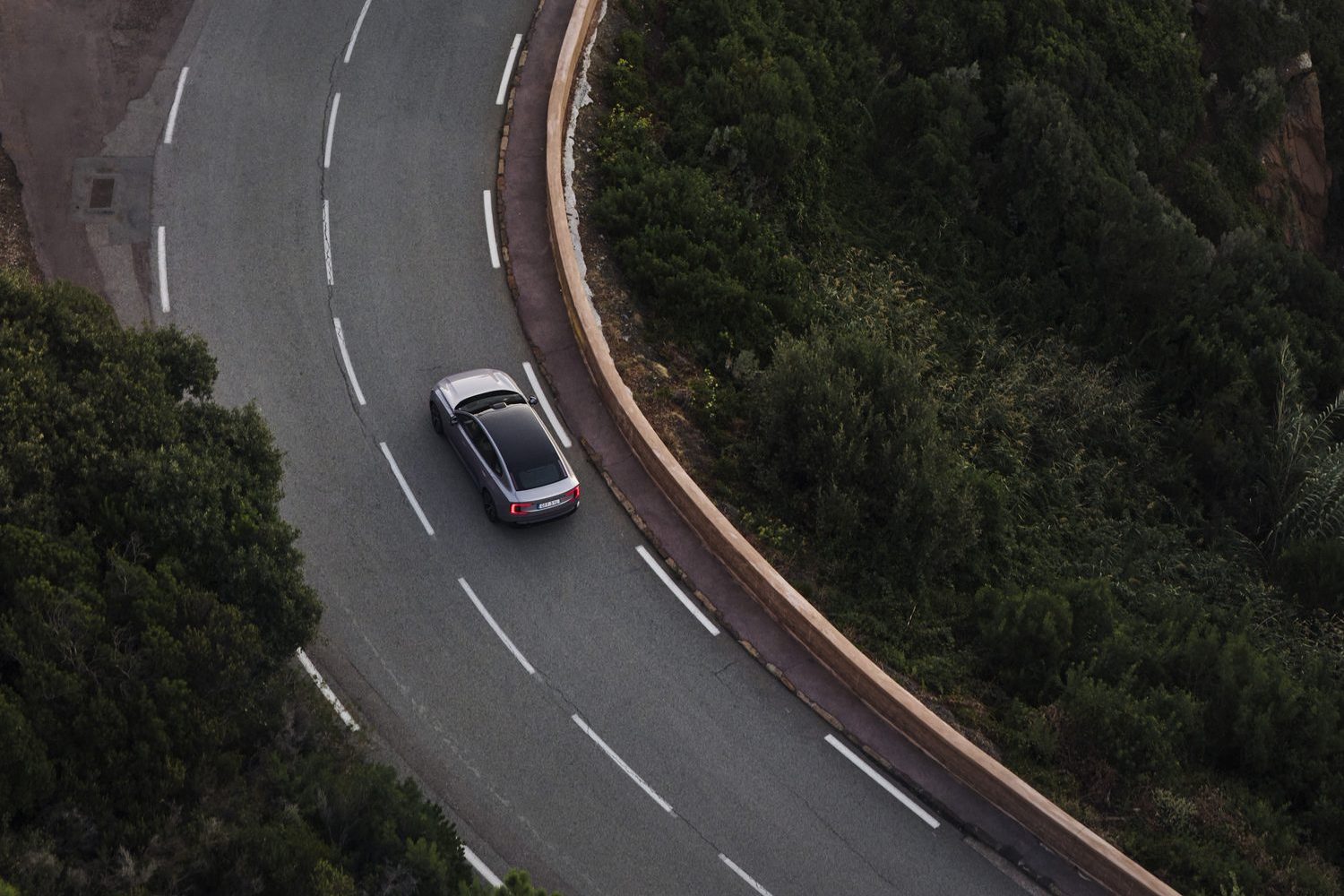
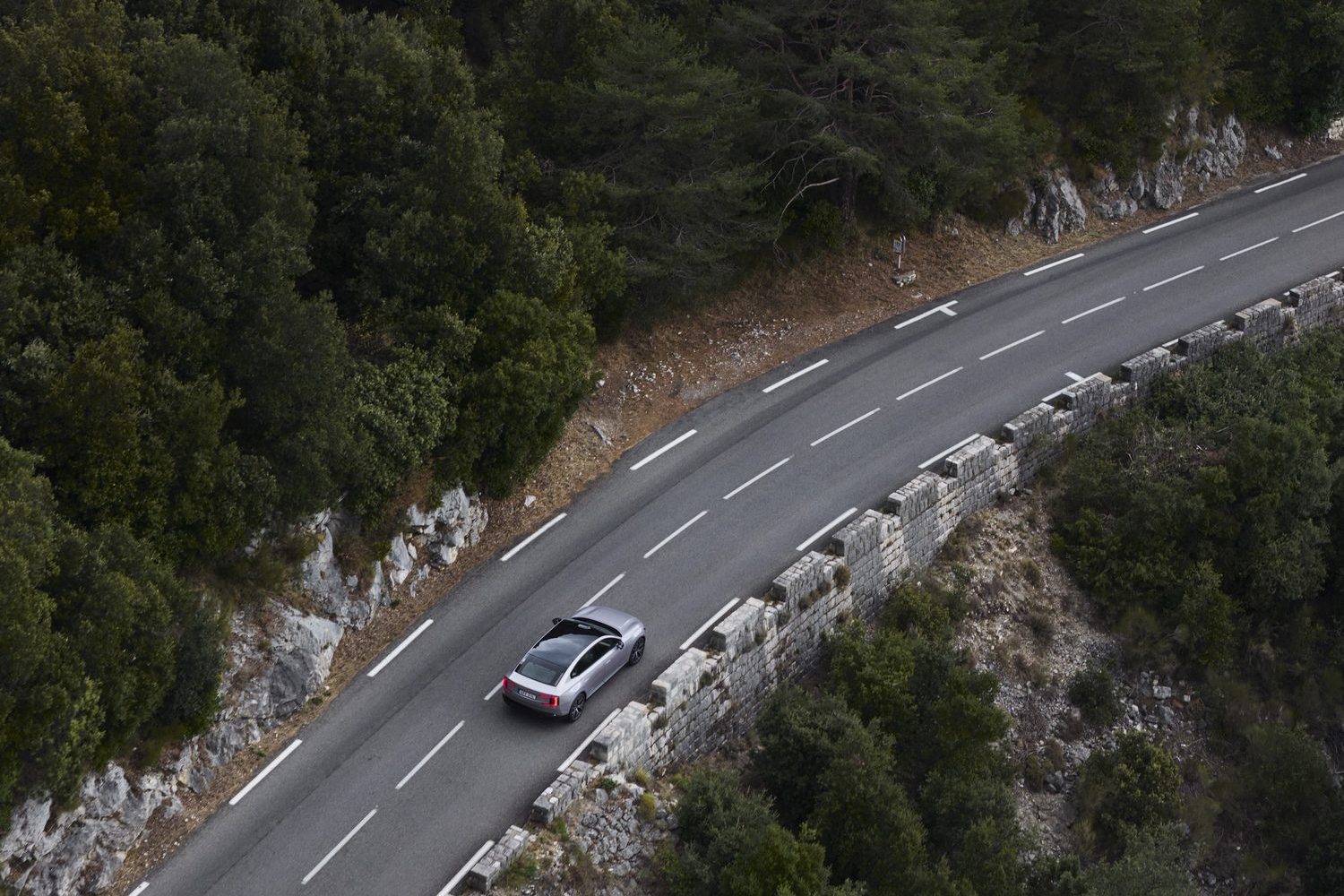
Driving the ES90 Single Motor Extended Range Ultra in France
Most buyers are expected to stick with the rear-drive layout, and it has ample performance. Saying that, the ES90 is notably different in character to the German rivals mentioned here, as Volvo clearly didn't set out to make a dynamic sports saloon.
Instead, it focuses on comfort and quietness, and the ES90 is exceptional in this regard, whispering along, even at motorway speeds, with outside noise kept to a minimum. Acoustic glazing helps, and there's also a noise-cancellation system fitted to the two top tiers of the lineup.

Slow steering and a lack of feedback from the controls initially make the ES90 feel aloof - and it's not an engaging-to-drive car in the least - but you soon settle into its effortless gait and luxuriate in the comfort.
In Ultra specification, which gets adaptive damping and air suspension, the ES90 feels good enough to compete with cars in the class above, stepping on the toes of electric luxury models such as the Mercedes EQS and BMW i7.

If you feel the need to push on, the chassis copes admirably, with solid body control and stability. There are "firm" settings for the steering and suspension, but we preferred it at its default, wafting along.
Unusually, there's an "Off-road" driving mode as well. This uses the air suspension to raise the ground clearance when required, though it reverts to its standard setting when you go above 35km/h.
We tried the various levels of brake-energy regeneration as well - selectable as on, off or auto, and preferred the more natural sensation of the car slowing down with it turned off.

Range, battery, charging and running costs of the 2026 Volvo ES90
• Up to 700km range
• Single-motor model has smaller battery
• 800-volt architecture for rapid charging

The Volvo ES90 is built on an 800-volt electrical architecture to allow for ultra-fast DC charging, and even the smallest battery allows for an official range well in excess of 600 kilometres, but we didn't find it exceptionally efficient.
Battery options and official range
At the time of writing, Volvo Ireland's website lists just one battery for the ES90, referred to as the "Extended Range" model. It's a 92kWh unit, of which 88kWh is usable.
Depending on specification and wheel size fitted, the official range varies from 627-649 kilometres.
The forthcoming Twin Motor versions of the ES90 will use a 102kWh battery pack, extending the range to 700km.
Real-world range and efficiency of the Volvo ES90
Our time at the wheel of the ES90 in France involved mostly relaxed driving, and a frustrating amount of slow traffic. It was a hot day, however, and so the air conditioning was working hard to keep the two of us in the car comfortable. That sets the scene perhaps for the efficiency figures we recorded.

On entering the car, it showed a range of 640km from its 99-per-cent-charged battery, but over 128km of mixed driving - very little of it at sustained motorway speed - the energy consumption averaged 20kWh/100km, which works out as a real-world range of 440km. We suspect it'll be possible to better that, but we can only report what we saw.
Charging up the Volvo ES90
Thanks to an 800-volt electrical architecture, the ES90 can be recharged on DC rapid chargers particularly quickly, at up to 310kW if you can find one that powerful. Volvo quotes 22 minutes for a 10-80-per-cent charge on such an outlet.
AC charging on a three-phase charger is capped at 11kW, or the usual 7.4kW rate on home chargers.
Servicing the Volvo ES90
Specific information on servicing the Volvo ES90 has not been confirmed, but EVs require minimal maintenance and Volvo's other electric cars come with 30,000km service intervals - or every two years.
Volvo offers service plans to allow buyers to spread the cost.
Volvo ES90 warranty
The standard Volvo new-car warranty is for three years or 100,000km - whichever comes first - with a 12-year warranty against rust perforation. Separately, the battery pack in the ES90 is covered for eight years or 150,000km.
Irish pricing & rivals to the 2026 Volvo ES90
• Three trim levels, one powertrain for now
• Priced from €82,100
• BMW i5 costs about the same

For now, just the single electric powertrain is available to Irish buyers of the Volvo ES90, consisting of the rear-mounted motor and 'Extended Range' battery detailed above.
There are three trim levels to choose from, however, starting with the entry-level Core model, which is priced at €82,100. The ES90 is well-equipped as standard, featuring such niceties as four-zone climate control, a heat pump, heated steering wheel, adaptive cruise control, 14.5-inch touchscreen, 20-inch alloy wheels, panoramic glass roof, 'Nordico' upholstery and all the other infotainment stuff mentioned above, plus heated seats front and rear.
Next up is the ES90 Plus, at €89,900, adding Bose Premium Sound, 360-degree-camera system and a few other bits and pieces.
Topping the range is the luxurious ES90 Ultra at €102,400. The big jump up in price hints at the level of extra equipment, including active air suspension and an electrochromic glass roof. It also features a superb Bowers & Wilkins audio system and 21-inch wheels, among more.

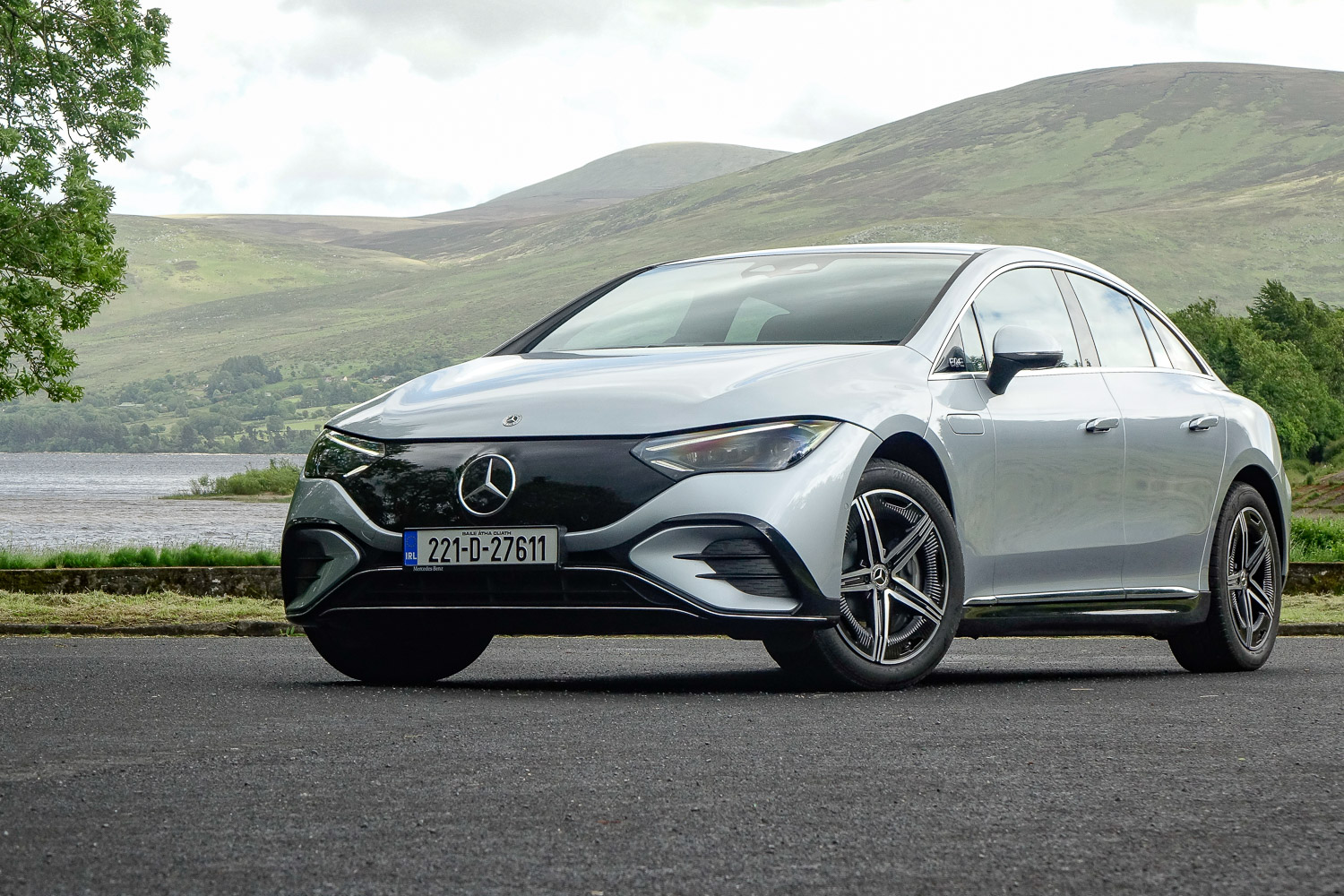
For reference, the Mercedes EQE is priced from €74,070 as the EQE 300 to €122,700 for the 625hp Mercedes-AMG EQE 53 4Matic+. The EQE 350+ compares well with the ES90 as it's priced at €78,190, has a 320hp motor driving the rear wheels and an official range of 690km.
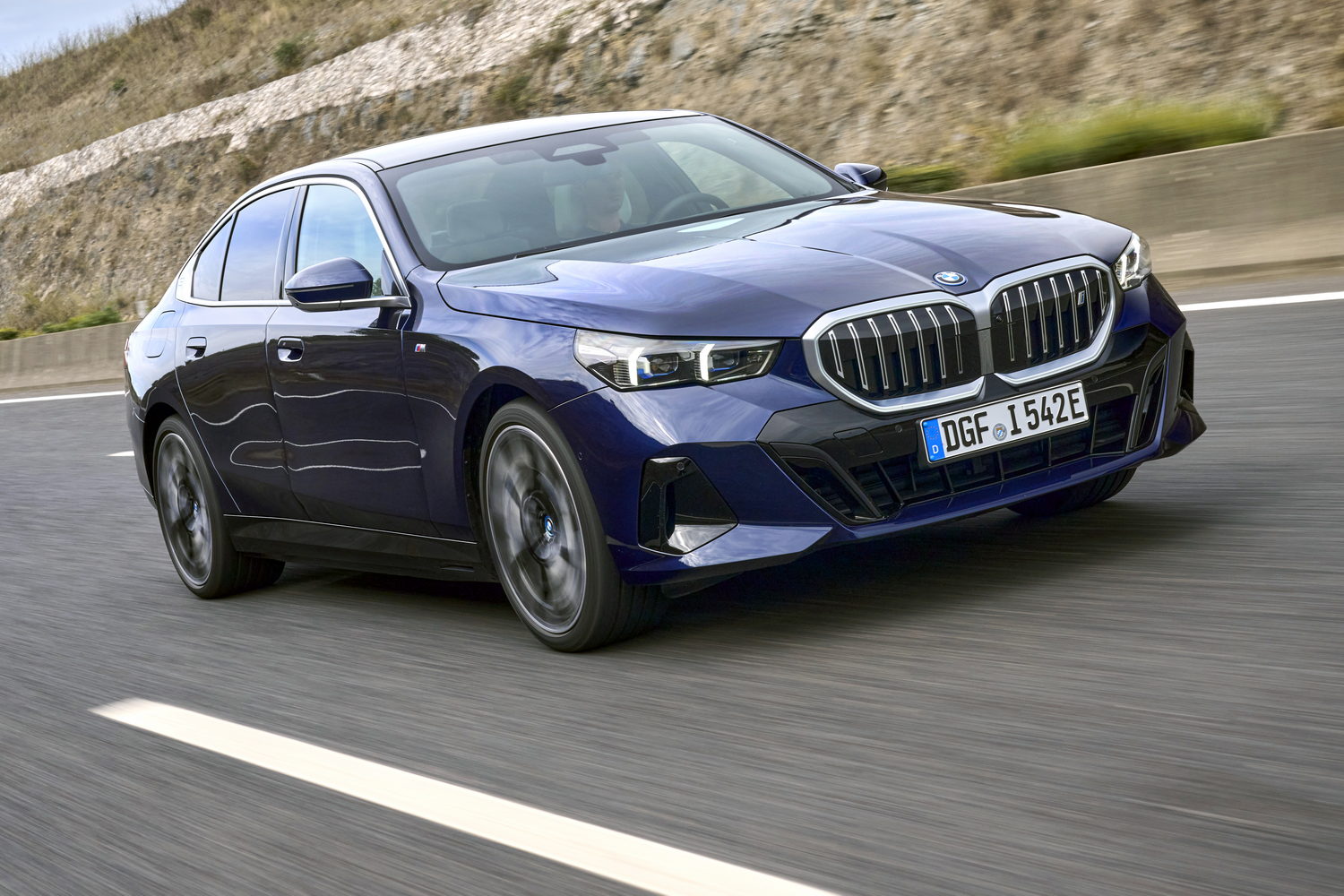
BMW's 5 Series equivalent is the i5, priced from €84,892 for the eDrive40 Sport Edition (340hp, 615km WLTP range), rising to €120,405 for the 601hp BMW i5 M60 xDrive.
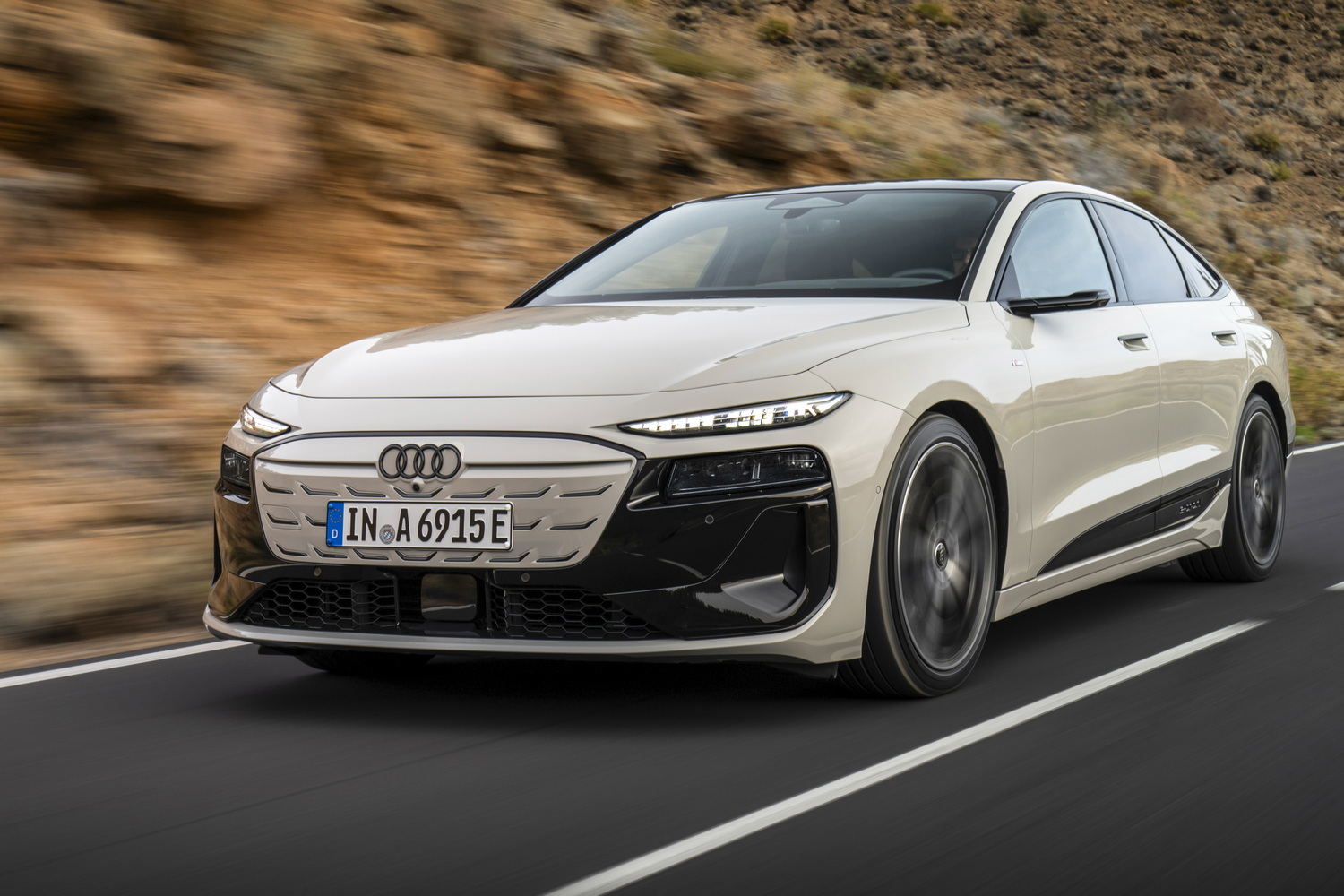
Meanwhile, the Audi A6 Sportback e-tron costs from €75,800 in regular format, rising to €111,225 for the sportier S6 Sportback e-tron.
Both the BMW i5 and Audi A6 e-tron can be had as estates, in the forms of the Touring and Avant models, respectively.
Verdict - should you buy the 2026 Volvo ES90?

The Volvo ES90 looks great, has a lovely cabin and is packed with all the technology a buyer could want. There's a question mark over its outright efficiency until we've had more time to drive it, but the promise of a long range is alluring and, while there are sportier electric executive cars on the market, we're glad Volvo is going its own way with the ES90, as it makes for one of the most luxurious and comfortable EVs in the sector.
FAQs about the 2026 Volvo ES90
Does the new Volvo ES90 have a 'frunk'?
It does indeed, but it's a small one, holding just over 20 litres. A Type 2 charging cable should fit in though.
Is the Volvo ES90 a saloon?

Technically no, though many people - Volvo included - refer to it as such, or as a "sedan". It is in fact a five-door hatchback, or liftback or fastback depending on how you define such things.
Will there be a Volvo 'EV90' estate?
There has been no official word on the likelihood of a big electric Volvo wagon - badged 'EV90' - being introduced, using the same underpinnings as the ES90, but with Volvo's history, you couldn't rule it out either.
Has Volvo fixed its EV software issues?
It certainly claims to have. The EX90's introduction was plagued by issues with its software stack, but we're told that it's now running smoothly and there are still plenty of improvements on the way.
Does the Volvo ES90 qualify for the SEAI grant?
I'm afraid not. It's just too expensive.
Has the Volvo ES90 been assessed for safety?
At the time of writing, the Volvo ES90 has yet to be tested by Euro NCAP.
Want to know more about the 2026 Volvo ES90?
If there's anything about the new Volvo ES90 we've not covered, or you'd like help in choosing between it and other cars, you can avail of our expert advice service via the Ask Us Anything page.
Volvo ES90 history
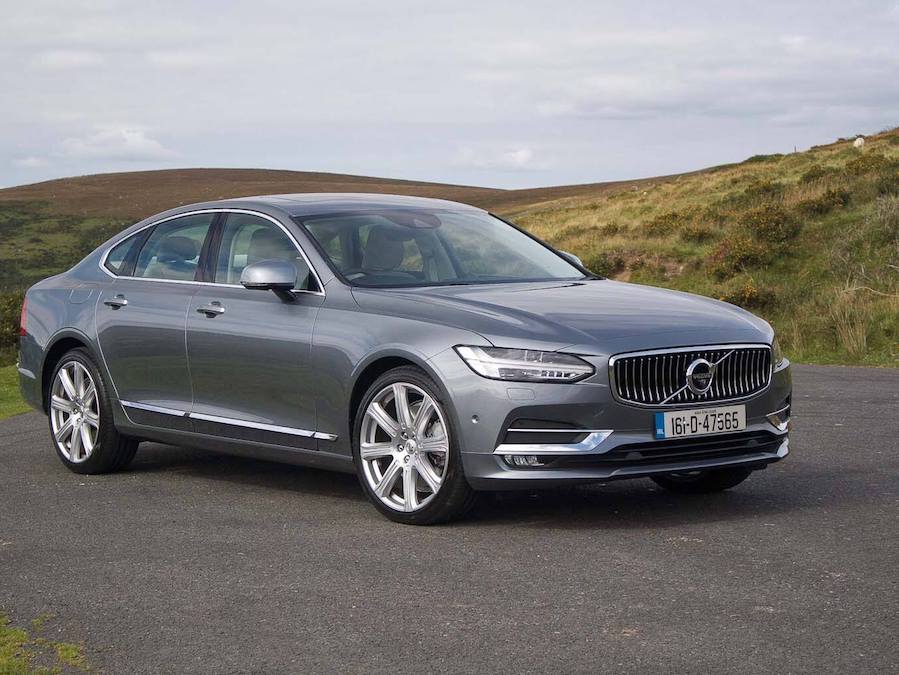
The Volvo ES90 is the latest in a long line of executive saloon and estate cars from the Swedish brand. Arguably its most famous is the 700 series of the 1980s, superseded by the 900 series and then the S80. The ES90's immediate predecessor is the S90 saloon first launched in 2016. That car was available with petrol, diesel and plug-in-hybrid power, while the ES90 is purely an electric car.