


Introduction to the 2026 Volkswagen T-Roc
The VW T-Roc originally hit the market way back in 2017, and it was very much a taller Golf at that time, intended to give hatchback buyers an easier path into SUV ownership, without the added bulk of the larger Tiguan, but with more boot space and rear cabin room than a Golf. It was an immense success for Volkswagen, even if it felt rather underwhelming to drive.
The second iteration is less of a loftier Golf, and more of its own thing. It slots neatly between the smaller VW T-Cross and the larger Tiguan and Tayron and ostensibly offers buyers a car which has much of the versatility and space of a larger SUV, but with a lower, sleeker body and a sportier driving position.
The styling has also evolved, moving away from the original T-Roc's relatively boxy look for something that's much curvier and more expressive.
So, has the T-Roc made a successful step up into a new era?

Pros & cons of the 2026 Volkswagen T-Roc
Pros:
• Handsome styling
• Tidy handling
• Good quality
Cons:
• Average rear seat space
• Boot volume nothing special
• Underwhelming engine
Exterior & design of the 2026 Volkswagen T-Roc
• A sleek sort of SUV
• Dramatic nose
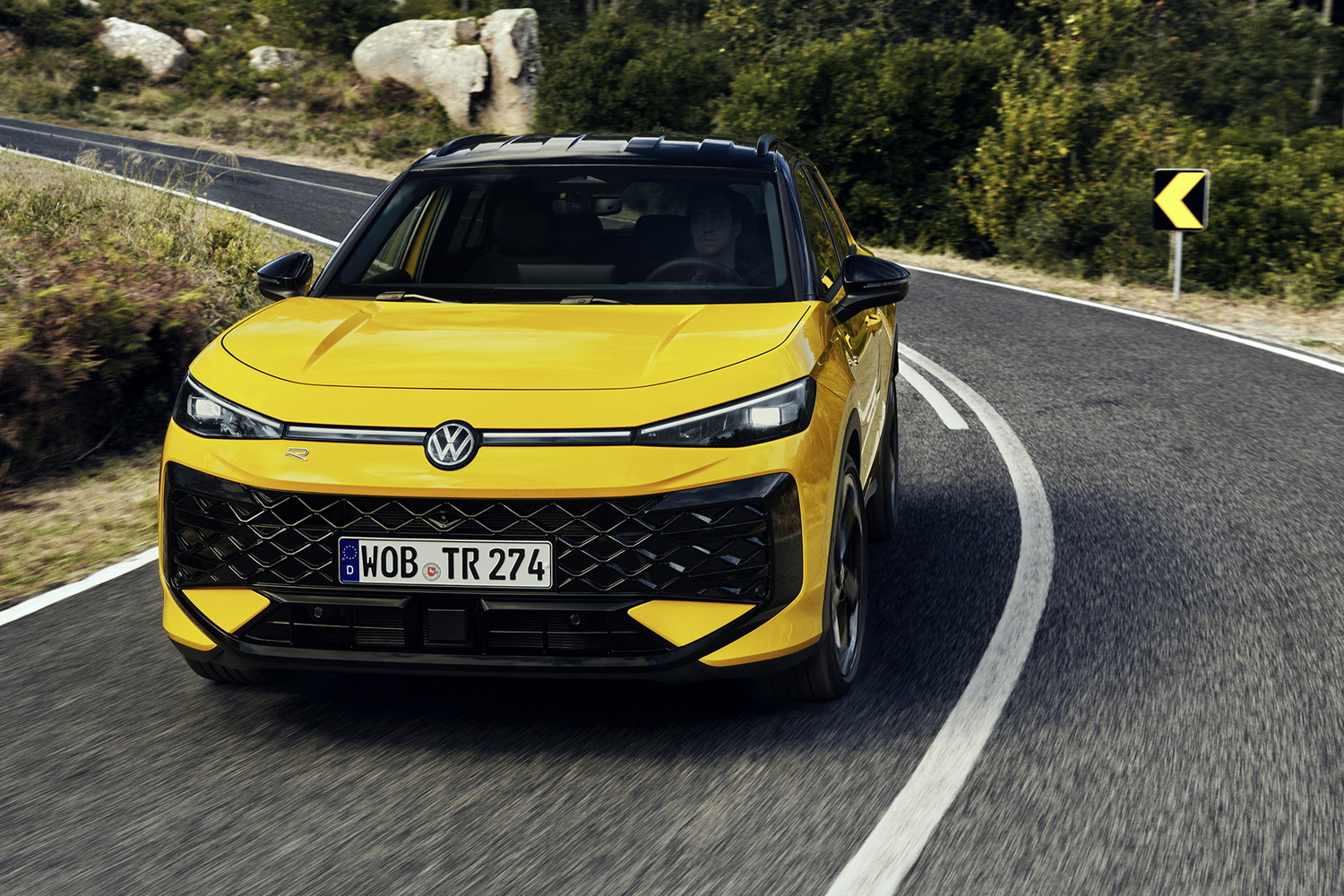
• Yellow paint as standard

There's some kinship between the second-generation T-Roc and the original. The way the roofline sweeps from the windscreen to the rear pillar, with the distinctive 'hockey-stick' trim, looks broadly familiar, but there the similarity stops and this T-Roc very definitely carves out its own styling niche.
That's most obvious at the front, where the curvy styling lifts influence from both the Tiguan and from VW's ID electric car lineup.

There's some of the blunt look of the ID.4 about the T-Roc's headlights and light bar, but those are underscored by a massive grille dangling beneath them.
In R-Line spec, that grille gets a sporty, black mesh but the effect is slightly undermined by the fact that you can see the utilitarian grey metal of the radiator sitting behind it.

R-Line spec also means a more muscular looking body kit, which can be enhanced by the Black Styling Package for the exterior, which includes lots of gloss black trim, and an upgrade to 19-inch black-finished 'York' alloy wheels.
Around the back, there are slim brake lights set out to the sides of the rear hatch, linked by a broad light bar which includes a red backlit VW badge.

This T-Roc is some 122mm longer than the previous model, although most of that has gone into the front and rear overhangs for improved crash safety performance, rather than into the wheelbase for extra cabin space.
The longer shape has subjectively given the T-Roc a lower, sleeker silhouette though, and it looks more distinctive and appealing than before.

Dimensions of the 2026 Volkswagen T-Roc
Length: 4,372mm
Width: 1,828mm (mirrors folded)
Height: 1,573mm
Wheelbase: 2,629mm
Paint colours for the 2026 Volkswagen T-Roc

The T-Roc comes in some enjoyably vivid colour options, which provide a welcome break from the endless greys and blacks offered in most other cars these days.
The Canary Yellow paint certainly won't be to all tastes, but you can't deny that it's eye-catching, and oddly it seems to be beloved of small children who, during our week with the T-Roc, were constantly pointing and yelling 'yellow car!'

Astonishingly, it's the standard no-cost colour for the T-Roc, but you can pay an extra €915 to choose Celestial Blue Metallic, Grenadilla Black Metallic, or Wolf Grey Metallic; or an extra €1,055 for Flame Red Metallic.
Pure White, like Canary Yellow a solid colour, is €503 extra. Celestial Blue and Wolf Grey come with a contrast black roof for €1,440, while it's €1,651 for Flame Red with the contrast black. It's a €550 option with Canary Yellow, or €987 with Pure White.
Interior, practicality, tech & comfort of the 2026 Volkswagen T-Roc
• Low-set driving position
• Lacks physical buttons
• Rear seat space only adequate

If you're buying the T-Roc thinking that it's a roomy, practical, family SUV... well, you're only about half right. Certainly it's bigger inside than the Golf, but not by as much as you might hope.
Getting comfortable in the driver's seat

The T-Roc's driving position, when you have the height-adjustable driver's seat on its lowest setting, is surprisingly low-slung by SUV and crossover standards.
In fact, it feels subjectively barely any higher than that of the Golf, which might be a disappointment for those hoping for a lofty, SUV-style perch, but this correspondent infinitely prefers a low-down seat position, so I was more than happy.

There's plenty of adjustment in the seat, but the steering wheel doesn't adjust quite enough for reach, so if you have long legs, you might find that you have to sit closer to the pedals than you might like.
Infotainment and technology
The 12.9-inch infotainment screen in the centre of the T-Roc's dashboard shows that Volkswagen has learned the harsh lessons of its earlier touchscreen efforts.

The menu layout is far easier to find your way around than before, and the ability to create your own shortcut icons at the top of the screen makes life much easier.
Response times seem to have sped up a bit too, and wireless connections for both Apple CarPlay and Android Auto mean it's a doddle to connect your phone for your preferred tunes and podcasts.
Volkswagen has its own digital voice assistant, 'Ida', but we found that to be just as unsatisfying to use as most other such systems.

Thankfully, the awkward haptic touchpads on the steering wheel of the previous T-Roc have been binned (they were way too easy to brush a thumb or palm against when steering, leading to some confusing moments as you turned things on, up, or off) and have been replaced by much simpler physical buttons which control the stereo and cruise control systems, as well as a button for the heated steering wheel if fitted.
Sadly, physical buttons have not made a comeback elsewhere in the cabin. The T-Roc sticks with the annoying touch-sensitive 'slider' control for stereo volume, and all of the heating and air conditioning controls are on the touchscreen.
There is one physical control, a rotary knob on the centre console which manages stereo volume and, at a press of its centre, also allows you to change the driving mode or the 'atmosphere' - a pre-set series of cabin colours and on-screen themes, the rationale for which entirely escapes us.

This is useful, but because it's a centre-press to change this control over to driving modes and atmospheres, it means there's no one-touch mute for the stereo, which is annoying.
Also on the annoying list are the background colours for the digital instruments, which you can chop and change according to your tastes, but all of which look oddly cheap and PlayStation-like - and not in keeping with the image of Germanic quality.

You do get a handy wireless phone charger in the centre console, which has a rubberised finish so that your phone won't slide around, and which has channels so that cooler air can reach the back of your phone. There are also four USB-C sockets - two in the front and two in the rear.
Practicality around the cabin
The T-Roc's door bins are surprisingly small, with only just enough space for a water bottle and some odds and ends, although at least they are lined with fabric, so items won't rattle around inside.
There's more useful, partly open, storage within the centre console, where you'll find a deep tray that extends past the armrest to include adjustable cupholders.

Those cupholders are bit awkward though, never seeming to be quite large nor small enough no matter how you set up their dividing panels. Theres a small tray to the right of the wireless phone charger, and a useful glovebox, but there's no extra storage under the centre console.
Rear-seat passenger space

The rear seats of our R-Line-spec T-Roc test car were really quite sculpted, into almost bucket seats, so they're comfortable and supportive, albeit at the expense of centre rear seat space.
Legroom is only just about adequate, certainly if there's anyone tall in the front seat, but headroom is fine, given that the sleek rear styling includes a roof that slopes considerably down to the tailgate.
There are handy seatback pockets, door bins and a folding rear armrest with integrated cupholders.
Fitting child seats to the Volkswagen T-Roc
The T-Roc gets three ISOFIX anchor points for child safety seats, with two in the back and one in the front passenger seat.

That's helpful, but the relatively small rear doors and the slight lack of legroom means larger, bulkier rear-facing seats might be a bit of a chore to squeeze in. The centre rear seat, hemmed in by the bucket effect of the outer seats, will be too narrow for an extra booster cushion.
Boot space in the Volkswagen T-Roc

A boot volume of 475 litres up to the luggage cover is pretty decent space, and it's more or less 100 litres more than you get in a Golf hatchback.
The T-Roc's boot floor is adjustable, so you can raise it up to have a flat load lip or drop it way down for maximum space. The unfinished bare metal underneath the adjustable floor is a bit cheap looking though.
There's only the one moulded-in bag hook, on the left-hand side of the boot, but there is a handy 12-volt socket too.

The rear seats split-fold in 40:20:40 formation, allowing you to drop down the centre section to accommodate long, narrow items. With all the back seats folded - and the release catches are easily accessed through the boot - you've got 1,350 litres of load space.
That's useful but it's worth pointing out that you can get almost exactly the same seats up/down space in the electric Skoda Epiq, which is a smaller and more affordable car.
Towing with the Volkswagen T-Roc

The 1.5 eTSI mHEV mild-hybrid powertrain has a maximum braked towing weight of 1,500kg. In Europe, there's a 2.0-litre engine option for the T-Roc, which boosts that towing weight to 2,000kg but that engine isn't available in Ireland.
Safety in the Volkswagen T-Roc

The T-Roc scored a maximum five stars on the Euro NCAP tests, with a 91 per cent rating for adult occupant protection; 87 per cent for child occupants; 87 per cent for vulnerable road users; and 77 per cent for its active safety systems.
Performance of the 2026 Volkswagen T-Roc
• Full hybrid model on the way
• Mild-hybrid only option for now
• Noisy at higher revs

The T-Roc is the debut model for Volkswagen's new full-hybrid powertrain (a Toyota-style hybrid for want of a better phrase) but that's not available just yet, leaving Irish buyers with a singular engine option for now - the familiar 1.5-litre 'e-TSI' four-cylinder mild-hybrid petrol unit, combined as standard with a seven-speed, dual-clutch (DSG) automatic transmission.
Driving the Volkswagen T-Roc on Irish roads
(Words by Neil Briscoe on 22 May 2026
Initially, the T-Roc feels pretty enthusiastic to drive, helped by a relatively trim kerb weight and well-weighted steering that feels impressively direct.

The long front and rear overhangs don't seem to have affected the car's agility by much, and the way you can sit nicely low in the T-Roc's seat helps to make you feel more in touch with the road, and closer to the car's centre of gravity.
Even the relative closeness of the roof makes this T-Roc feel much more like a large hatchback, rather than a tall SUV, and that can only be a good thing.
However, there are limitations. The optional 19-inch rims are a bit of a liability, as they induce too much fidget, and even some occasional harshness, to the T-Roc R-Line's suspension, which is both stiffer and lower than that of a standard model to start with.

For a car that will be likely driven most of the time in and around town, that's a no-no, and you should stick with the standard 16-inch wheels and the regular suspension in the search for more suppleness.
It's not as if there's any massive dynamic benefit to the XXL wheels and stiffer springs, either. The T-Roc feels broadly enthusiastic and pointy at first but take it onto a seriously challenging and twisty road, and you soon find out that the steering's initial sharpness gives way, quite quickly, to a sense of vagueness, robbing you of much-needed confidence and driver involvement.

OK, so this is an R-Line, not an R, so perhaps our expectations should have been more in check, but it's a slight let-down when the lower-speed responses were so enticing.
Equally, the engine needs some improvement. The ageing 1.5 e-TSI unit is a gruff old thing when you have to extend it and extend it you must if you want to keep pace with fast-flowing traffic.
We're hopeful that the incoming full-hybrid alternative might have more pep to its step. Accelerating from 0-100km/h in the 1.5 takes a not-brisk 8.9 seconds, but even that's better than the yawn-inducing 10.6 seconds of the basic 116hp version of the T-Roc.

Overall refinement is only OK, as the T-Roc suffers from the familiar excessive tyre roar that seems to afflict any model which uses Volkswagen's MQB chassis.
Fuel economy and running costs of the 2026 Volkswagen T-Roc
• Disappointing economy
• Affordable motor tax
• Needs full hybrid power

As mentioned above, the T-Roc really needs that new hybrid engine, and the 1.5 e-TSI is not the strongest when it comes to real-world fuel economy.
Official emissions and fuel economy
According to the official WLTP test, in R-Line form and with the 150hp e-TSI engine, the T-Roc is rated at 128g/km of CO2 (resulting in a reasonable €200 a year to tax it) and has average fuel consumption of 5.6-5.8 litres per 100km.
Real-world fuel economy of the 2026 Volkswagen T-Roc

While that kind of on-paper fuel economy would be impressive, on the road the T-Roc R-Line fails to deliver. Because the engine feels fractionally underpowered, you end up revving it harder and longer to get up to speed on motorways and main roads, and that clearly impacts economy, as we only managed to average a fairly disappointing 6.9 litres per 100km in our week with the car. Hopefully, the new hybrid model will be able to do much better than that.
Servicing the Volkswagen T-Roc
Volkswagen recommends a minor service for the T-Roc every 12 months or 15,000km, and a major service every 24 months or 30,000km. It offers a range of inclusive service plans.
Volkswagen T-Roc warranty
As standard, Volkswagen Ireland offers a three-year warranty for the T-Roc, which has unlimited kilometres in the first two years, but which is limited to 90,000km in year three. The paintwork is also covered for three years, and there's a 12-year anti-perforation warranty.
Irish pricing & rivals to the 2026 Volkswagen T-Roc
• Starts from €39,565
• Pricier than old T-Roc
• Rivals offer more space for similar cash

Subjectively, the T-Roc seems to have made a bit of a jump up in price. Where it used to be, roughly speaking, a Golf plus a bit, now it seems quite a lot more expensive, and that puts it into competition with roomier, more practical rivals.
A starting price of €39,565 gets you a 1.5 e-TSI with 116hp in Life specification, which comes with the 12.9-inch screen as standard, and 16-inch alloy wheels.
Next up for €43,150 is the Style model with the same engine, which gains 'Performance' LED headlights, illuminated VW badges, tinted rear windows and three-zone climate control.
Finally, there's the R-Line, with the 150hp engine, at €44,995, adding sports suspension with a lower ride height, 18-inch alloys, stainless steel trim, sports seats and a heated steering wheel.

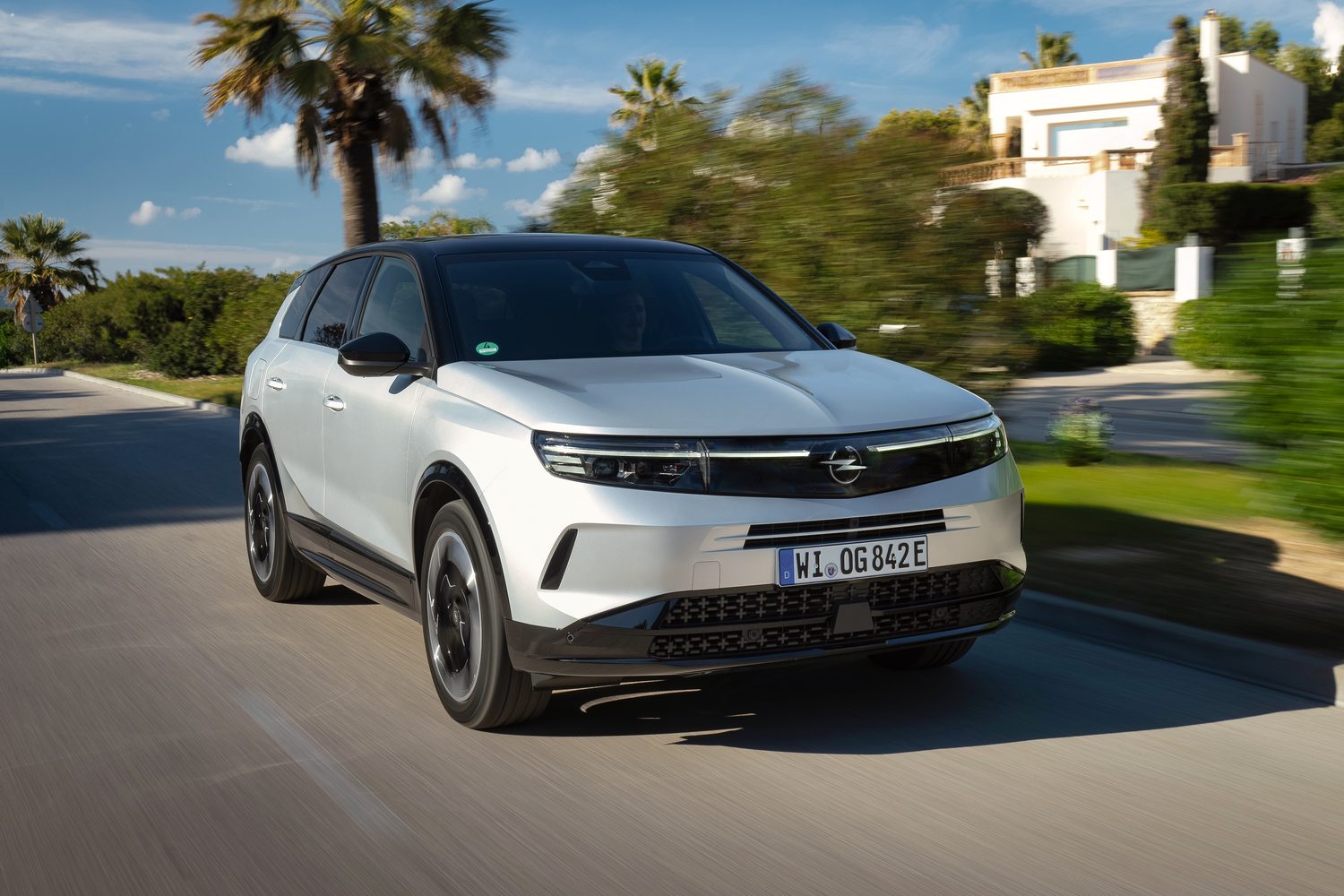
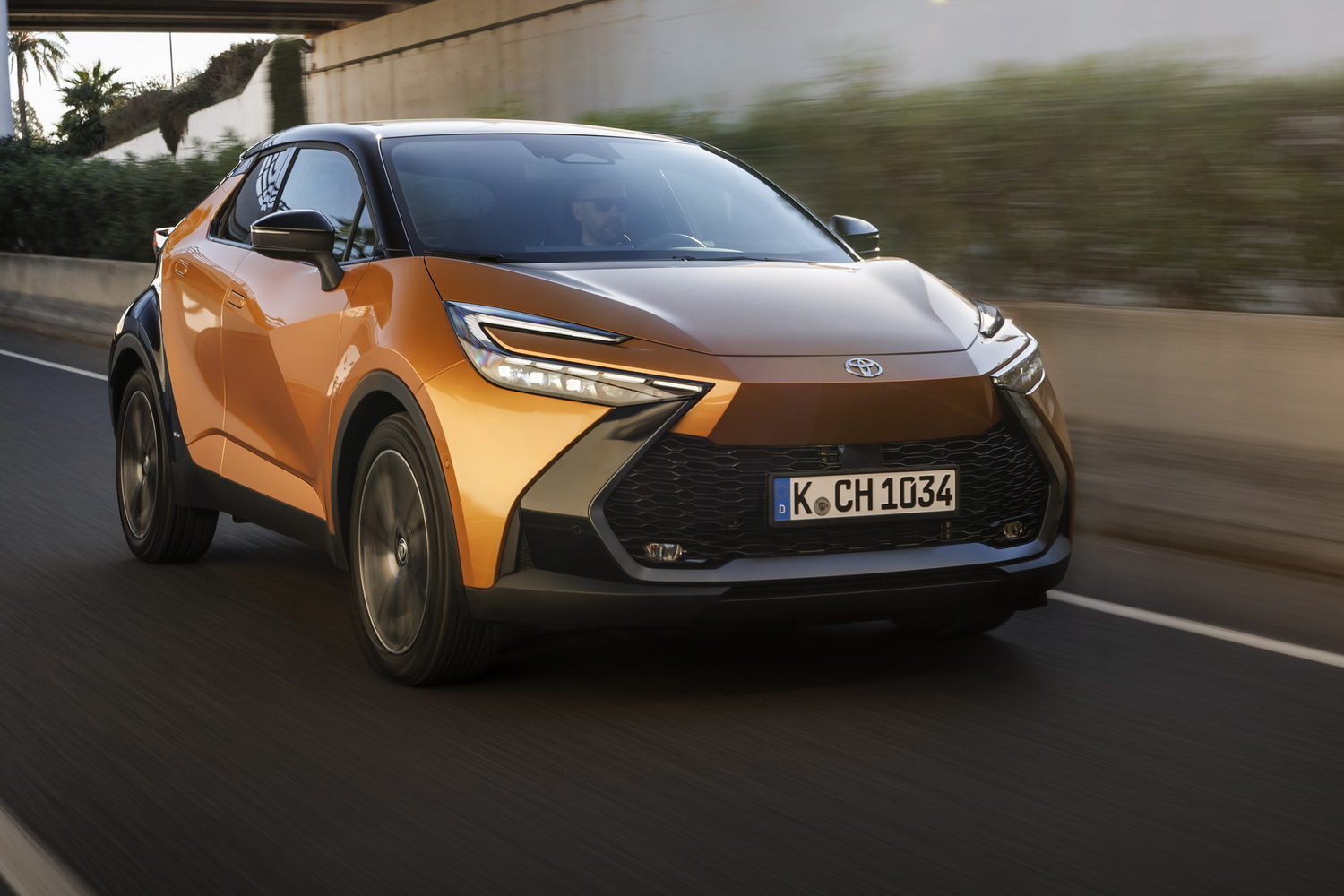
The most obvious and direct rival to the T-Roc, in terms of style and size, is Toyota's C-HR, which doesn't feel quite as initially dynamic to drive, but which is a better steer overall. However, it's less practical, and quite pricey in its basic form.
A more serious rival might be the Peugeot 3008, which for a comparable price tag to the T-Roc R-Line offers more space, arguably more style and a more interesting interior layout.
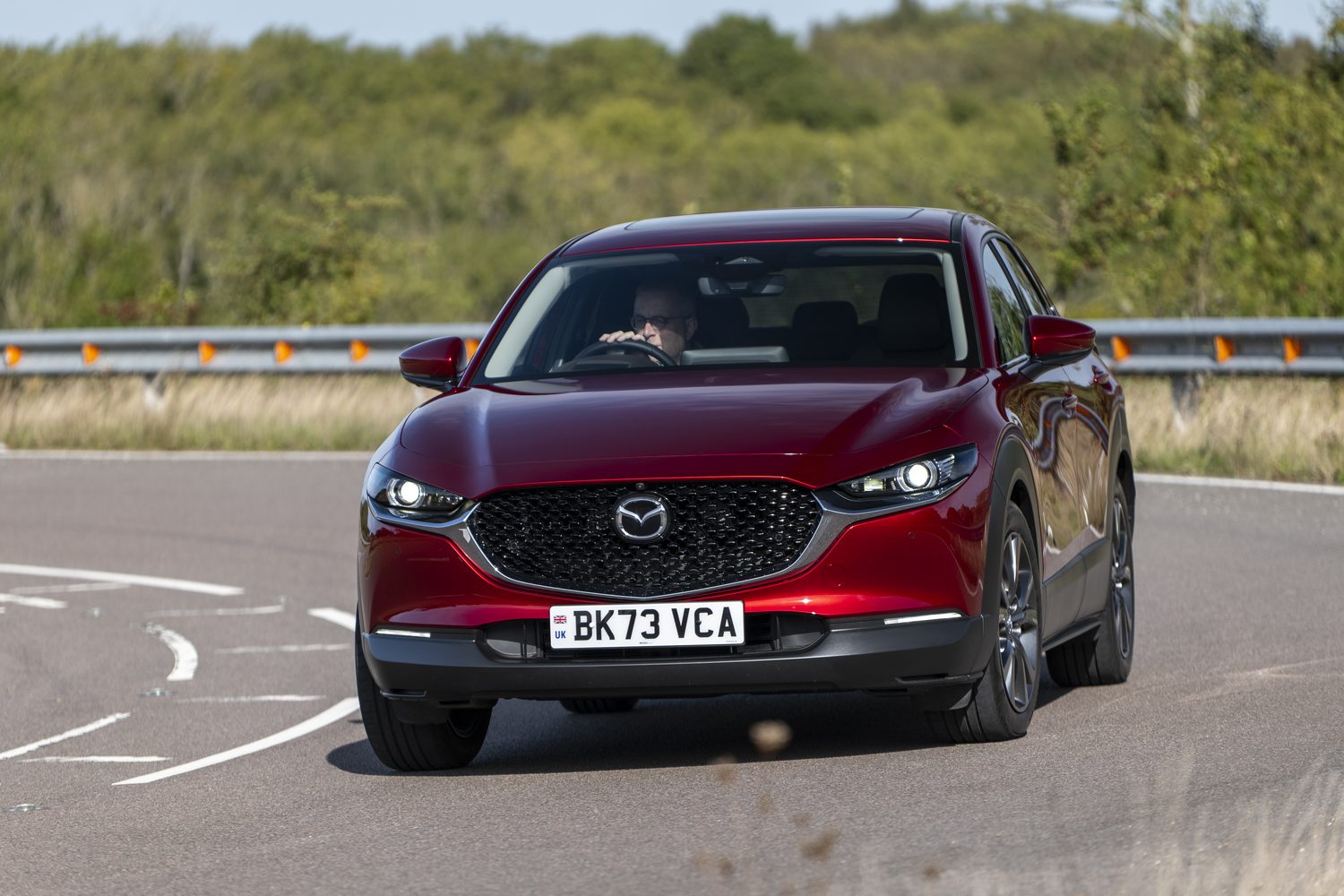
Then there's the Mazda CX-30, which like the T-Roc is closer to hatchback than SUV, but which is handsome, has exceptional quality and which is genuinely engaging to drive. It is excellent value, too.

Verdict - should you buy the 2026 Volkswagen T-Roc
We reckon the T-Roc goes in the 'maybe' pile, or at least into the 'wait and see' pile. While it's certainly more stylish than it used to be, and it has an impressive interior, the new T-Roc seems pricey for what it is, and the stiff suspension and larger alloy wheels of this R-Line model ruin the ride comfort, while not adding enough in terms of driver appeal. The incoming full hybrid version will probably give this T-Roc something of a second wind.
FAQs about the 2026 Volkswagen T-Roc
Is a T-Roc smaller than a Tiguan?
Yes it is. The T-Roc is shorter and quite a bit lower-slung than a Tiguan and is actually closer to being a hatchback than an SUV. That does mean that it's less roomy inside, of course.
Is the VW T-Roc a Hybrid?
Not quite and not yet. Currently, the T-Roc is offered with a turbocharged 1.5-litre petrol engine with 'mild-hybrid' assistance, but there is a full, proper hybrid model on the way.
Has the Volkswagen T-Roc been assessed for safety?

Yes, it has and Euro NCAP awarded it five stars, with an impressive 91 per cent rating for adult occupant protection. Have a look at the full report here.
Want to know more about the 2026 Volkswagen T-Roc?
If there's anything about the new Volkswagen T-Roc we've not covered, or you'd like help in choosing between it and other cars, you can avail of our expert advice service via the Ask Us Anything page.
Volkswagen T-Roc history
The T-Roc was originally introduced in 2017, as a smaller, more compact SUV companion to the Tiguan. In fact, when it arrived first, the T-Roc was closely matched to the original first-generation Tiguan in size terms, allowing the second-generation model to become bigger and a bit grander.
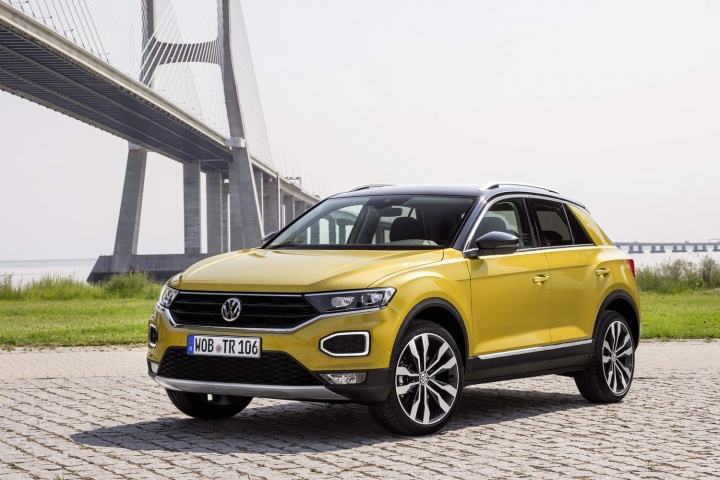
Those early T-Rocs were a bit short in the cabin quality department, certainly by mid-2010s VW standards, but a later update sorted most of that. It was like a slightly taller, somewhat roomier Golf, and drove pretty much that way too.
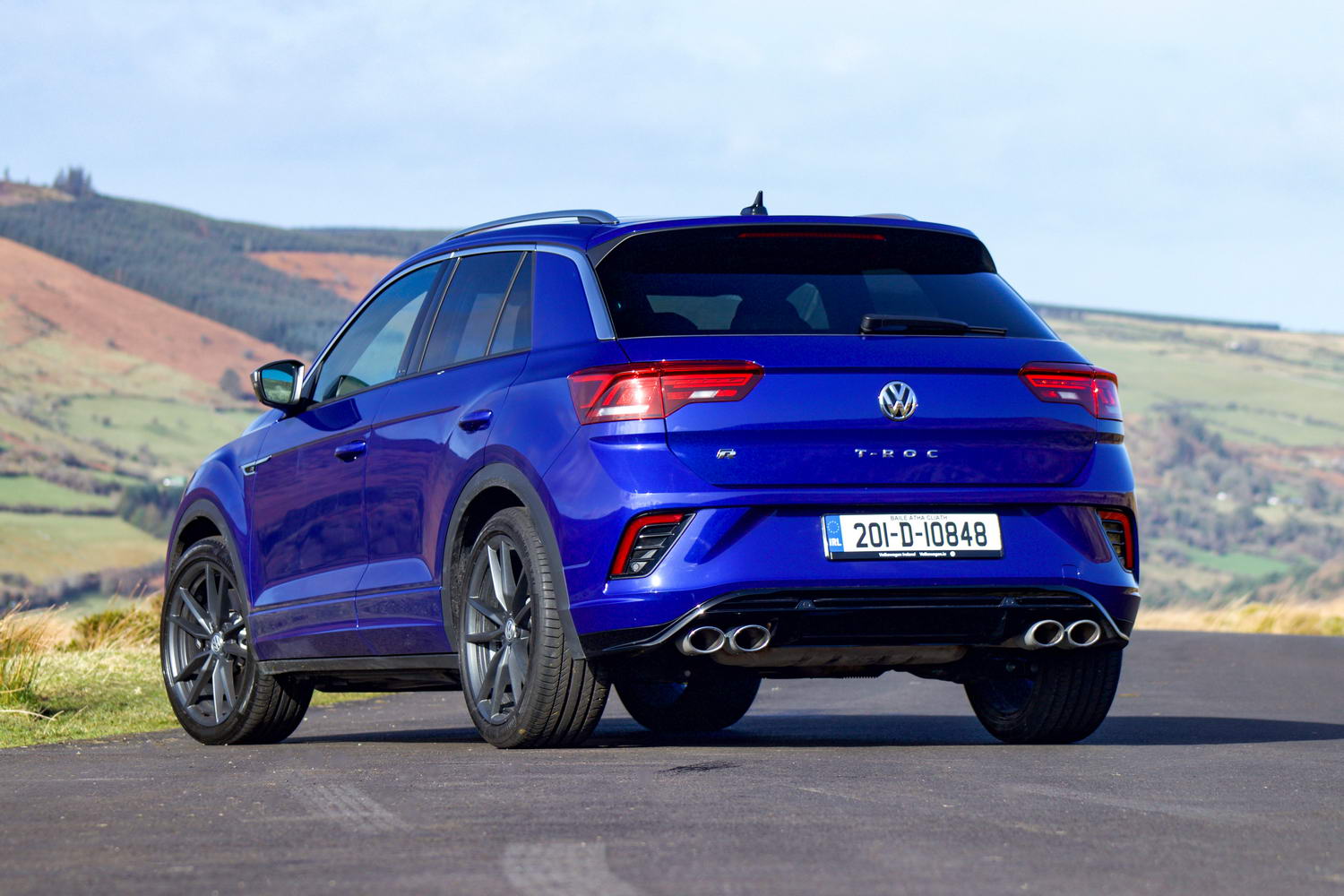
Unless you went for the tearaway 300hp T-Roc R, which was quite the hot hatch with stilts. There was also a T-Roc Cabriolet, which was an interesting take on a potential new SUV niche, but it failed to chime much with buyers, and it was never an adequate replacement for the old Golf Cabrio.