

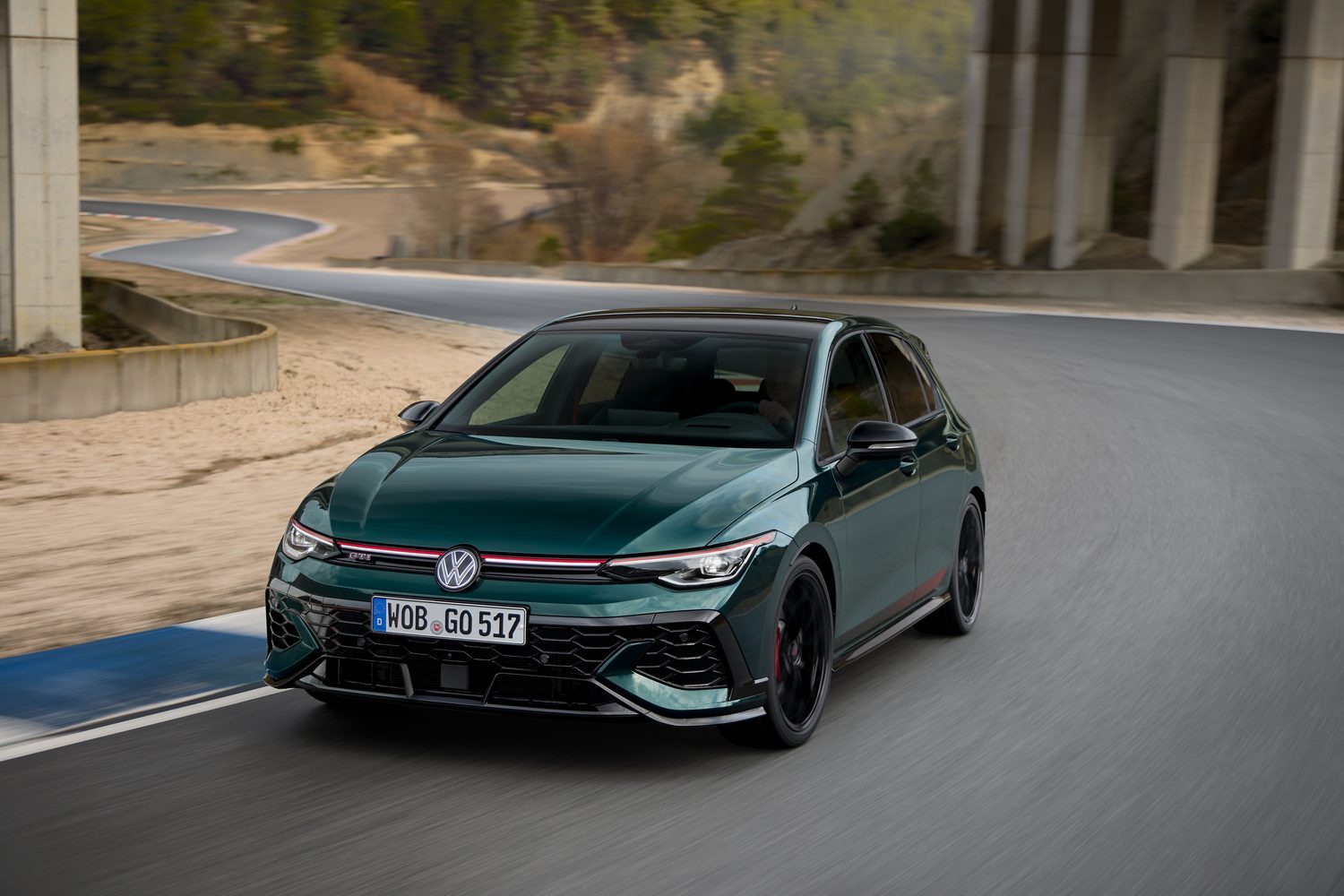
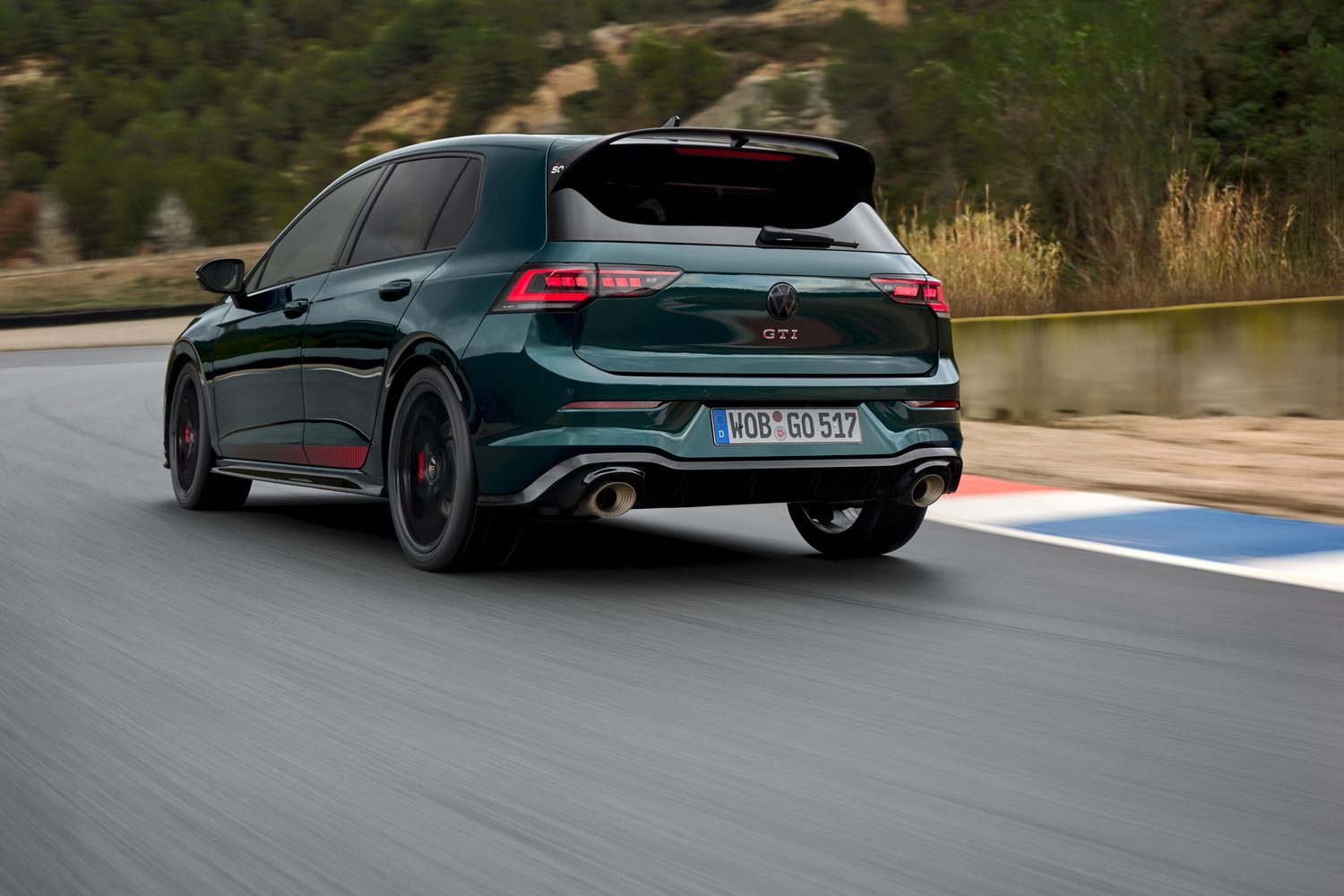
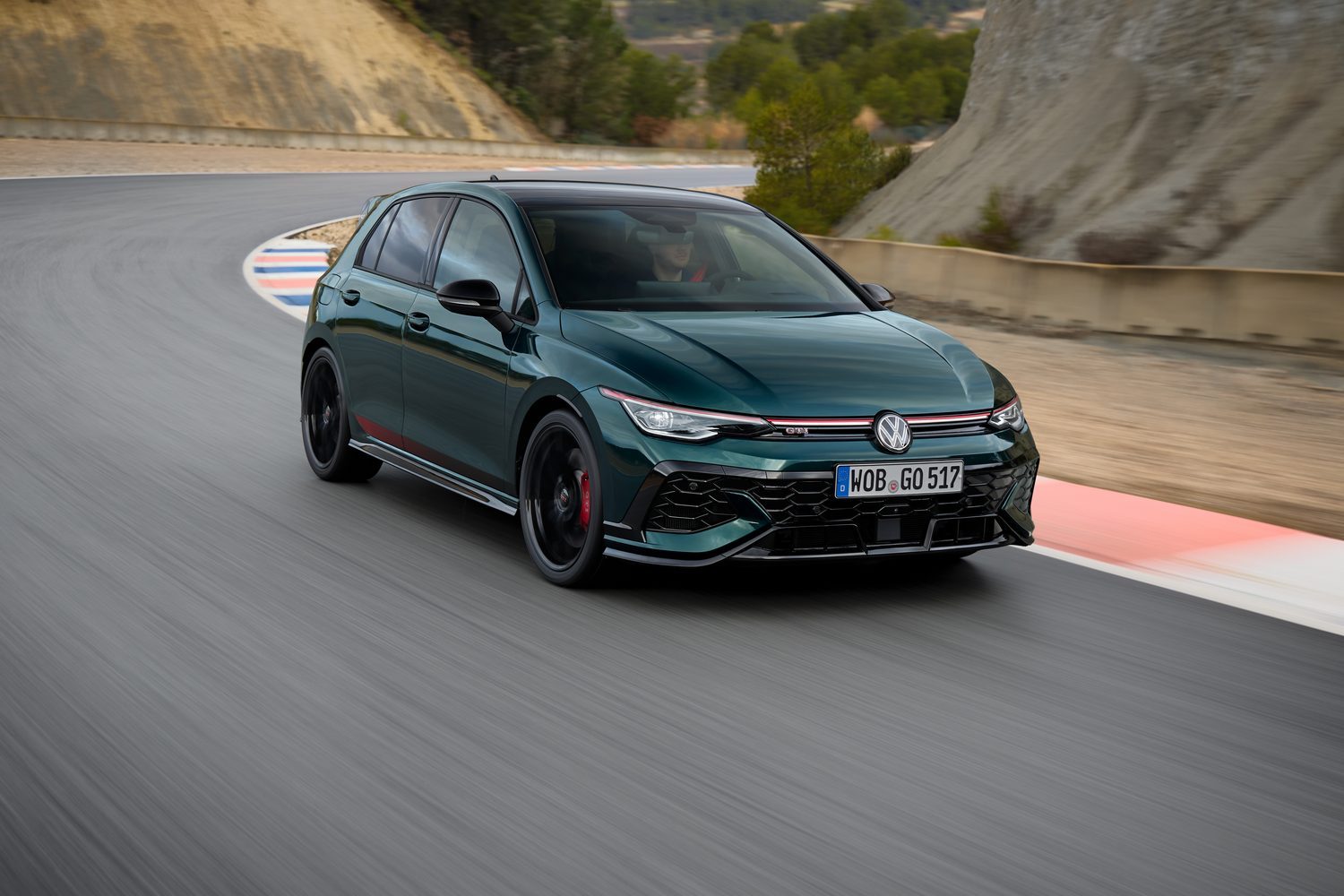
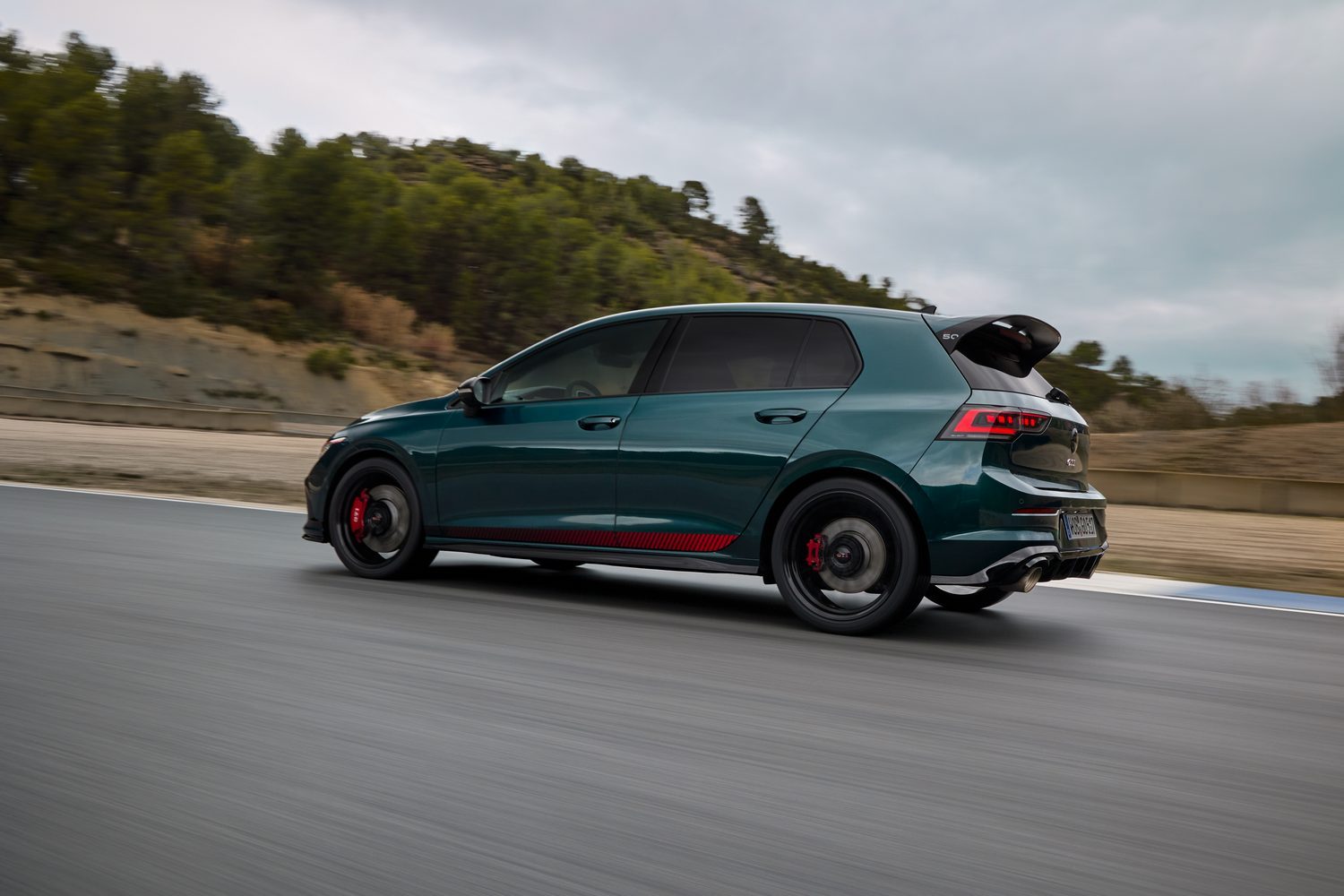
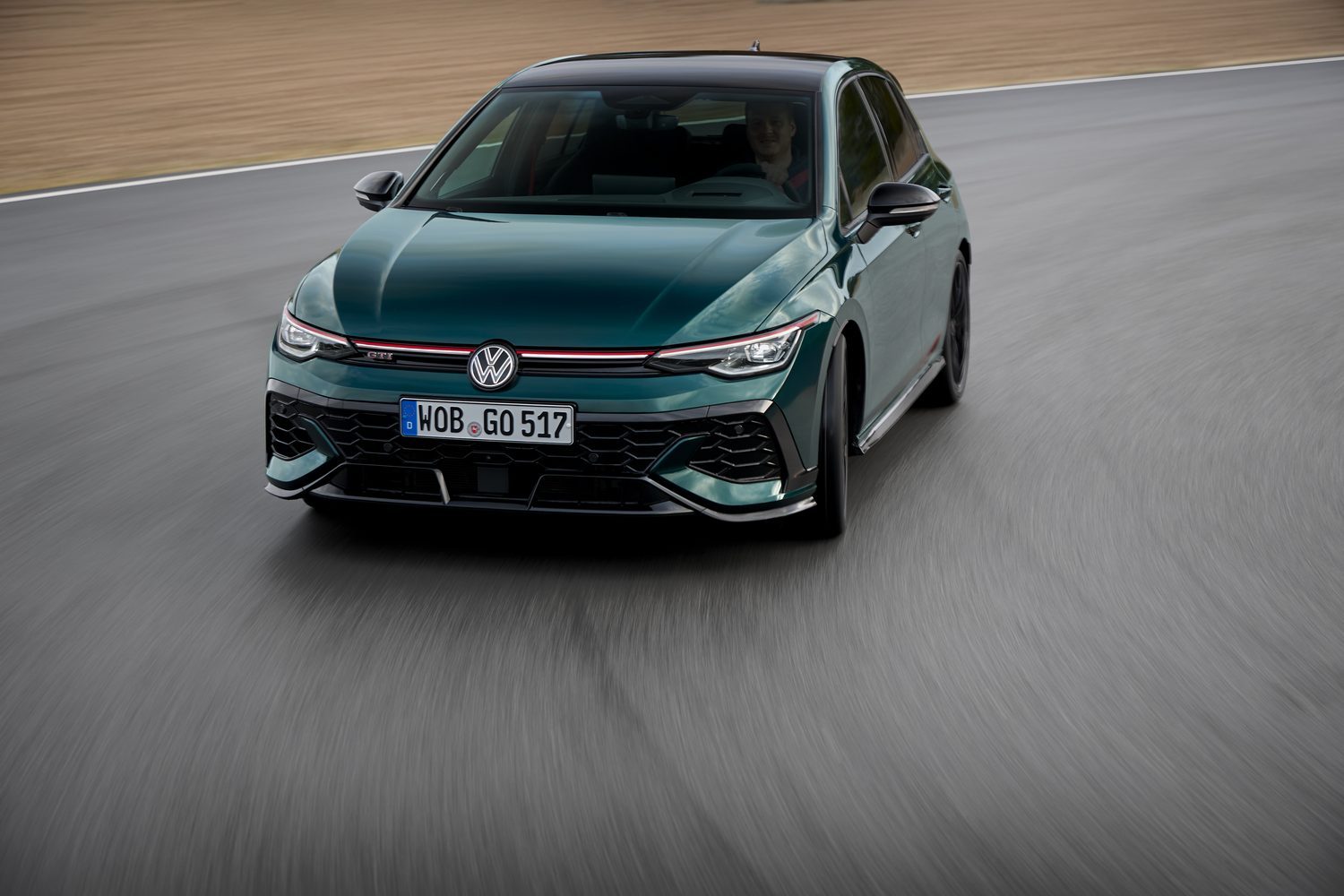
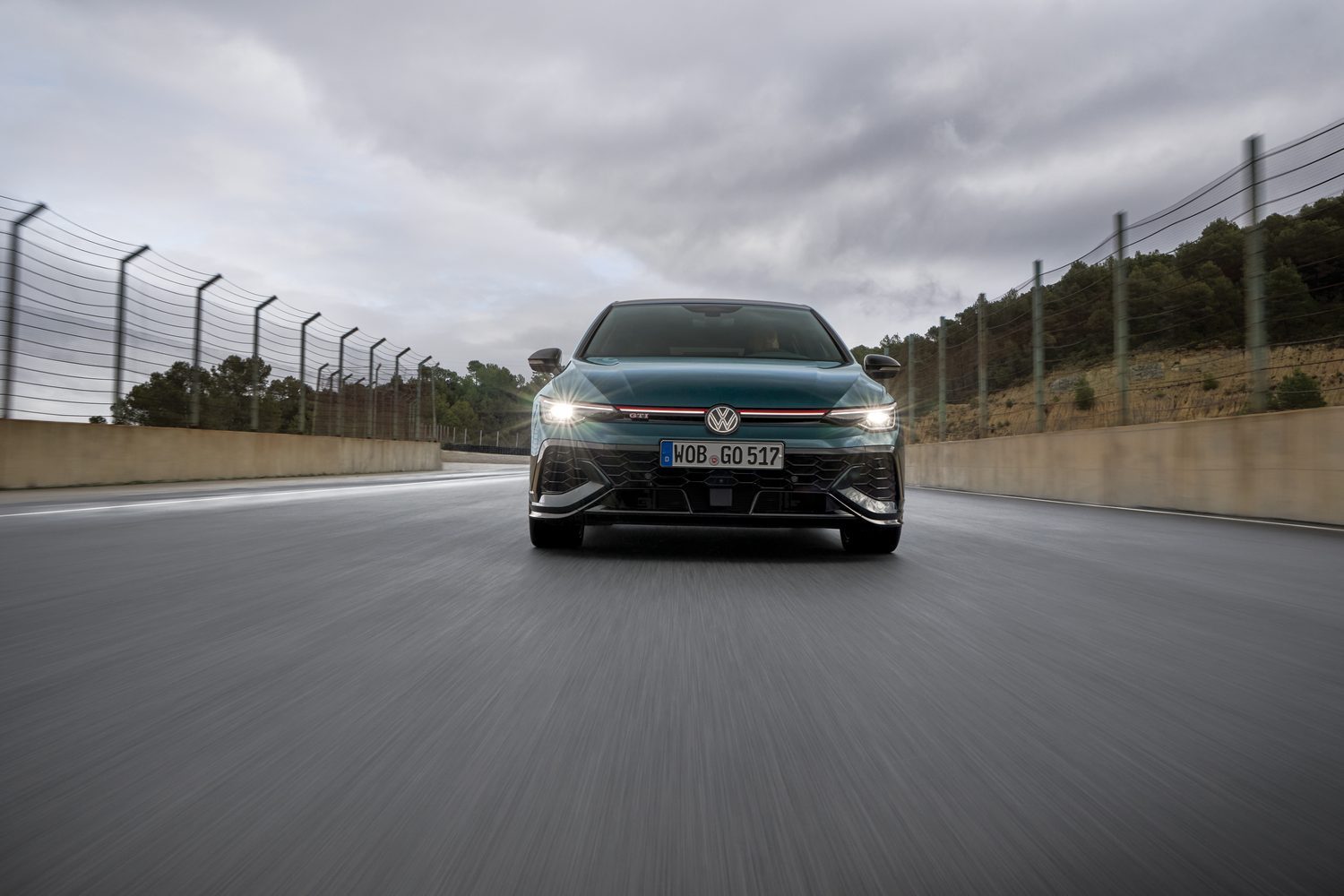
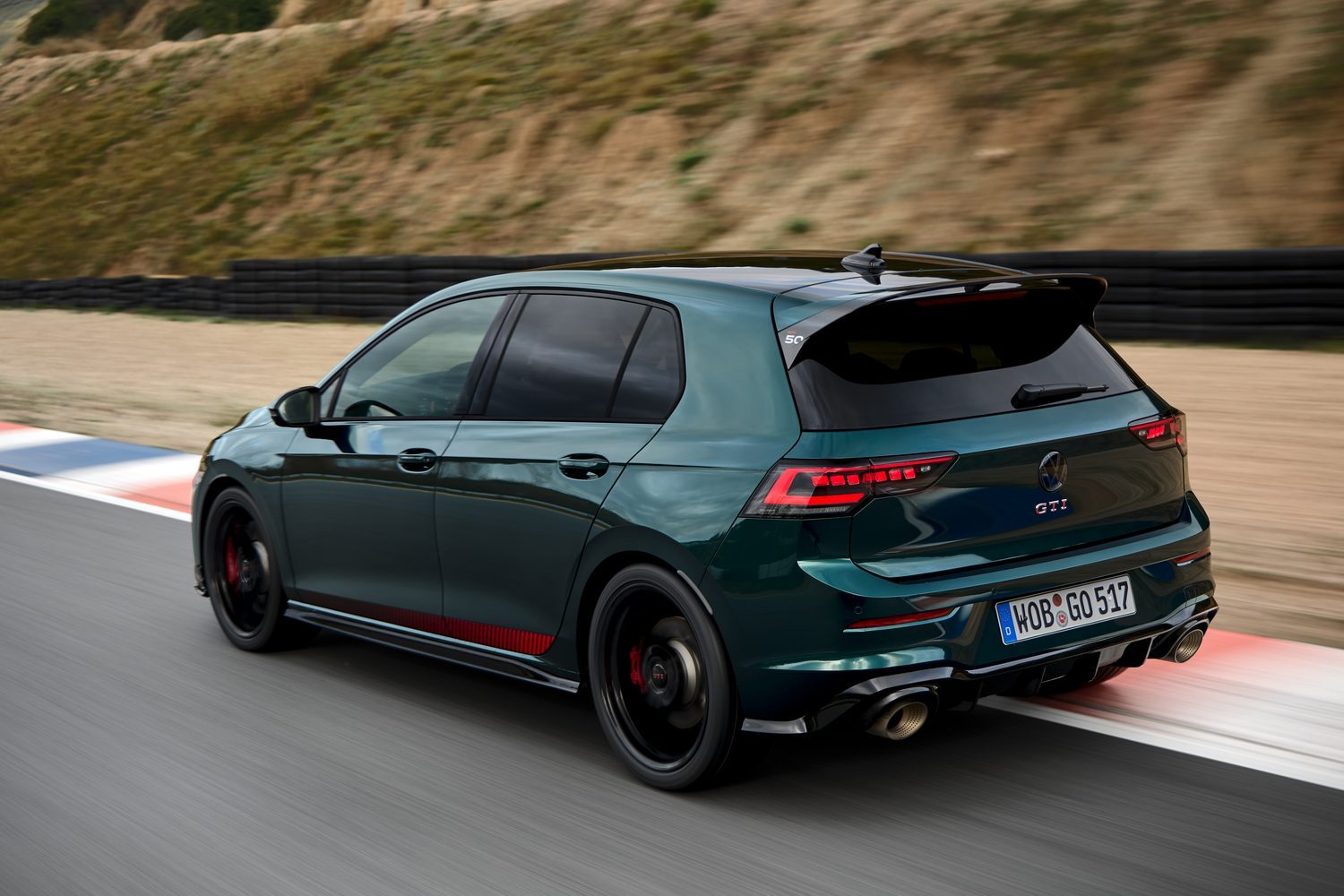
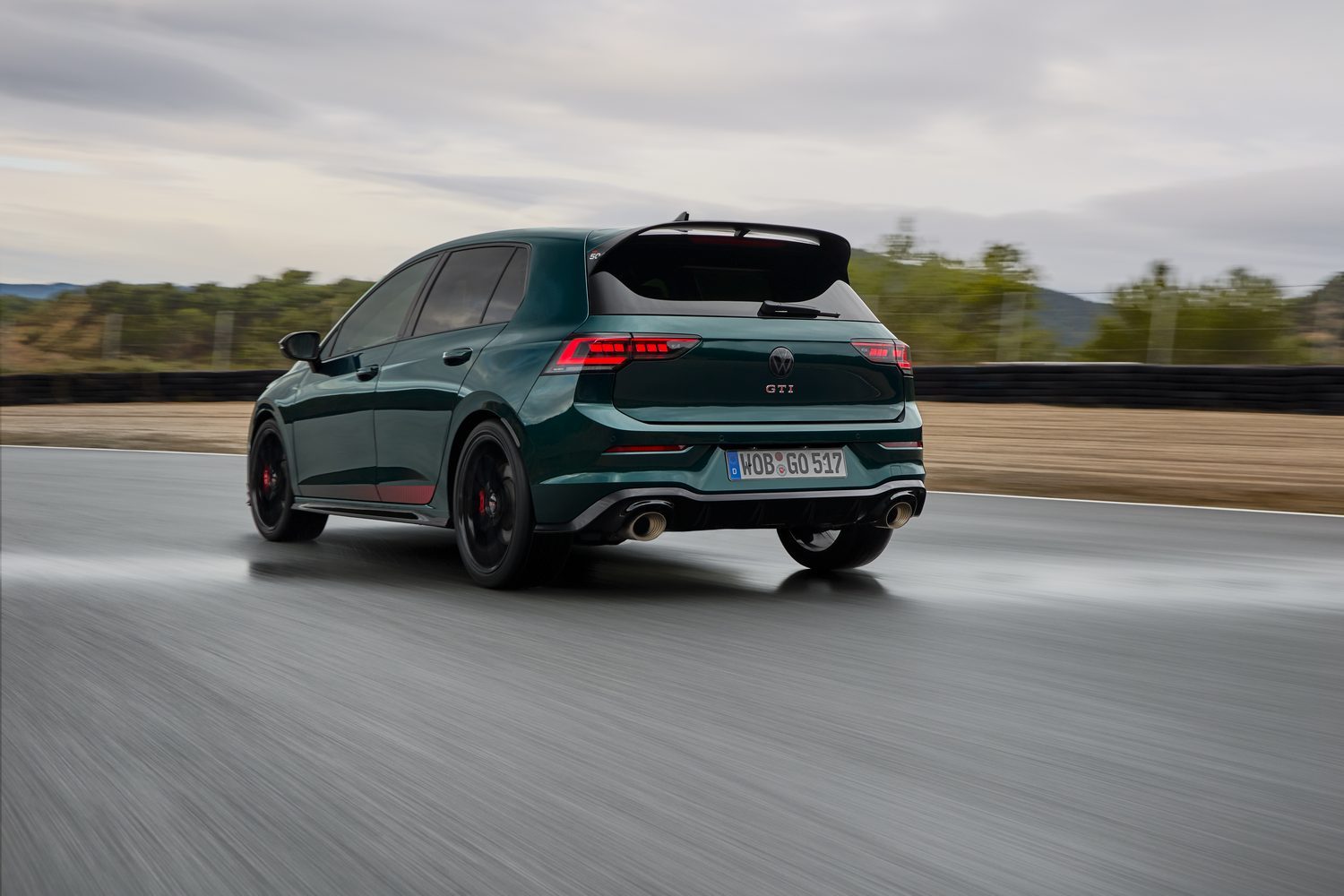
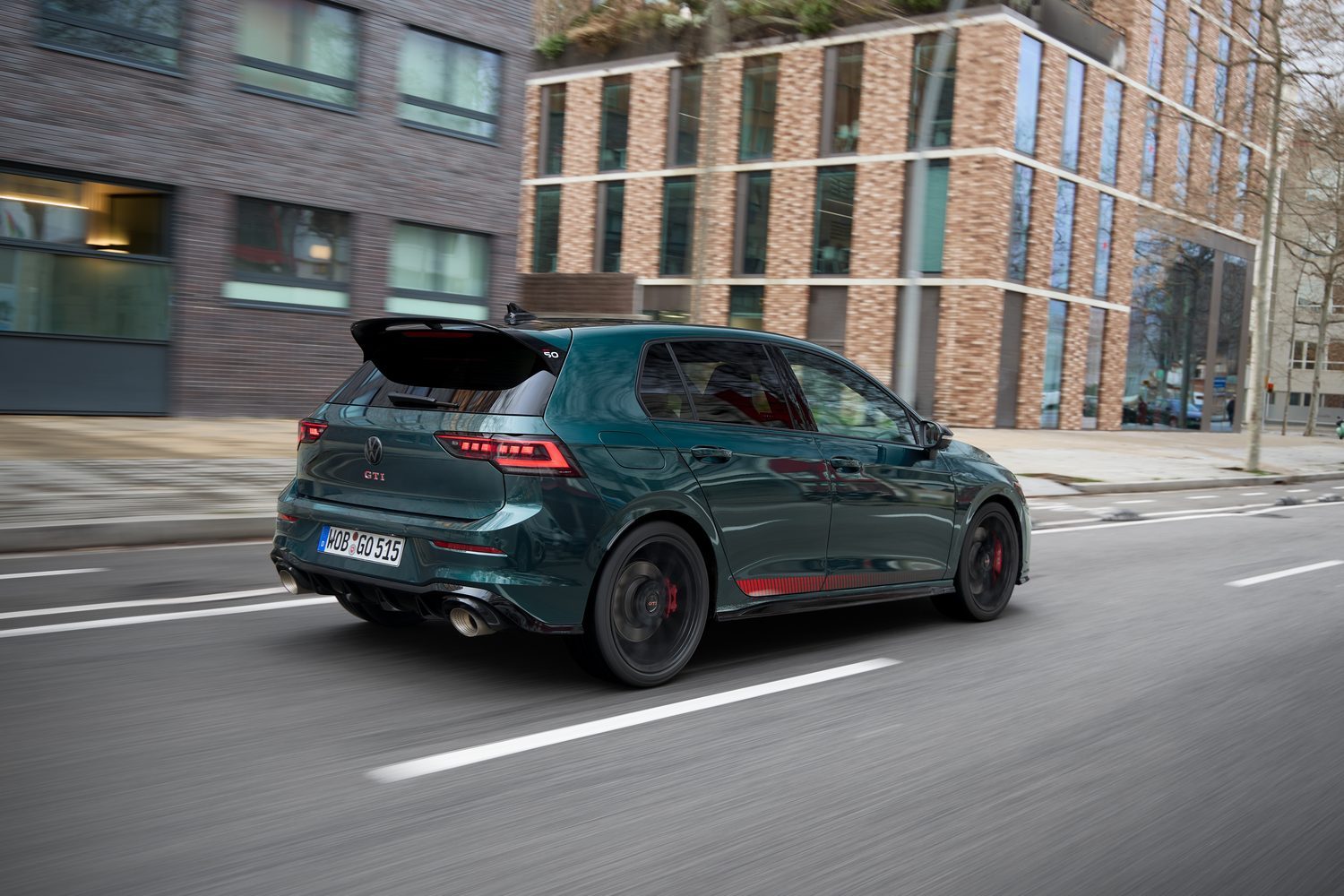
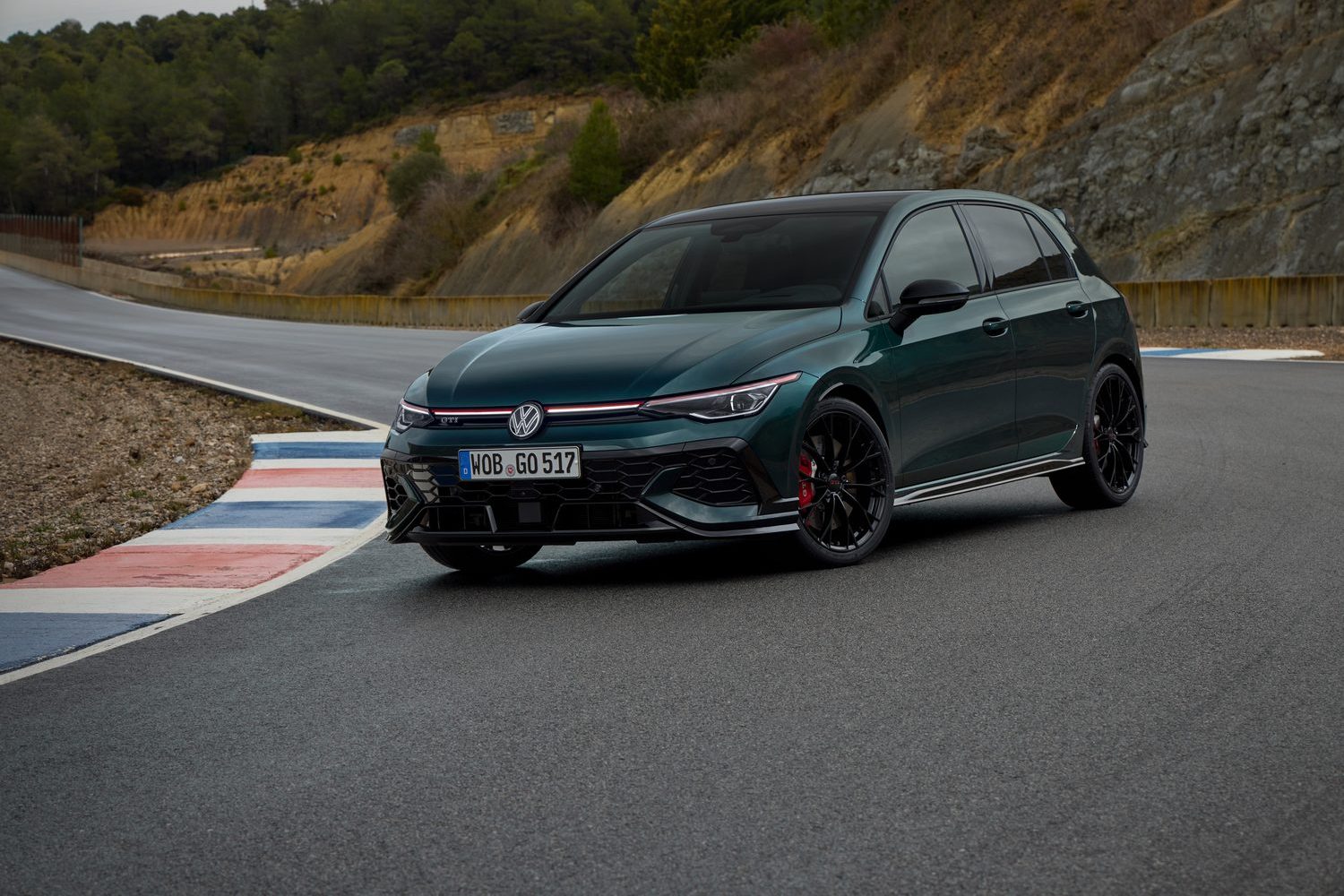
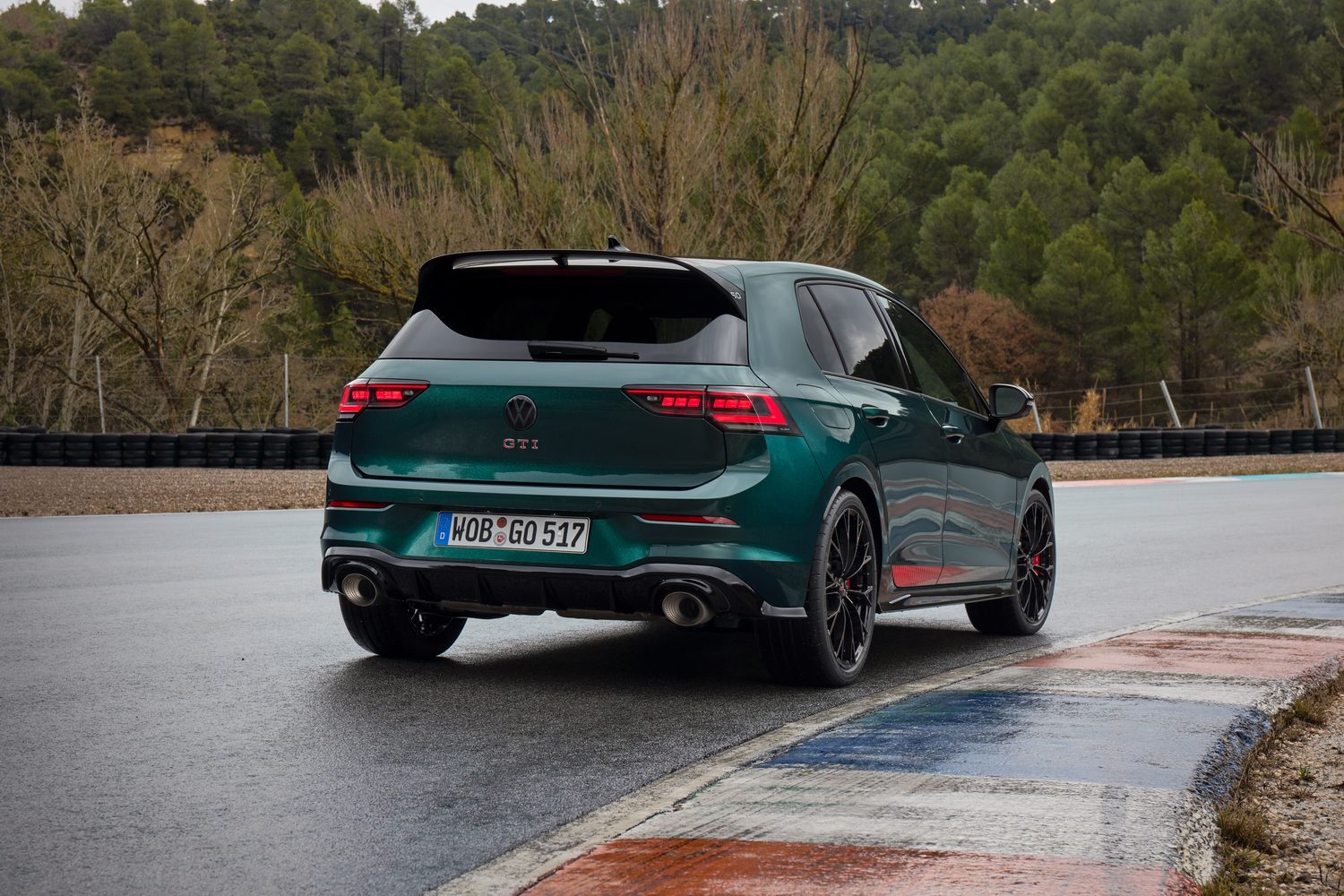
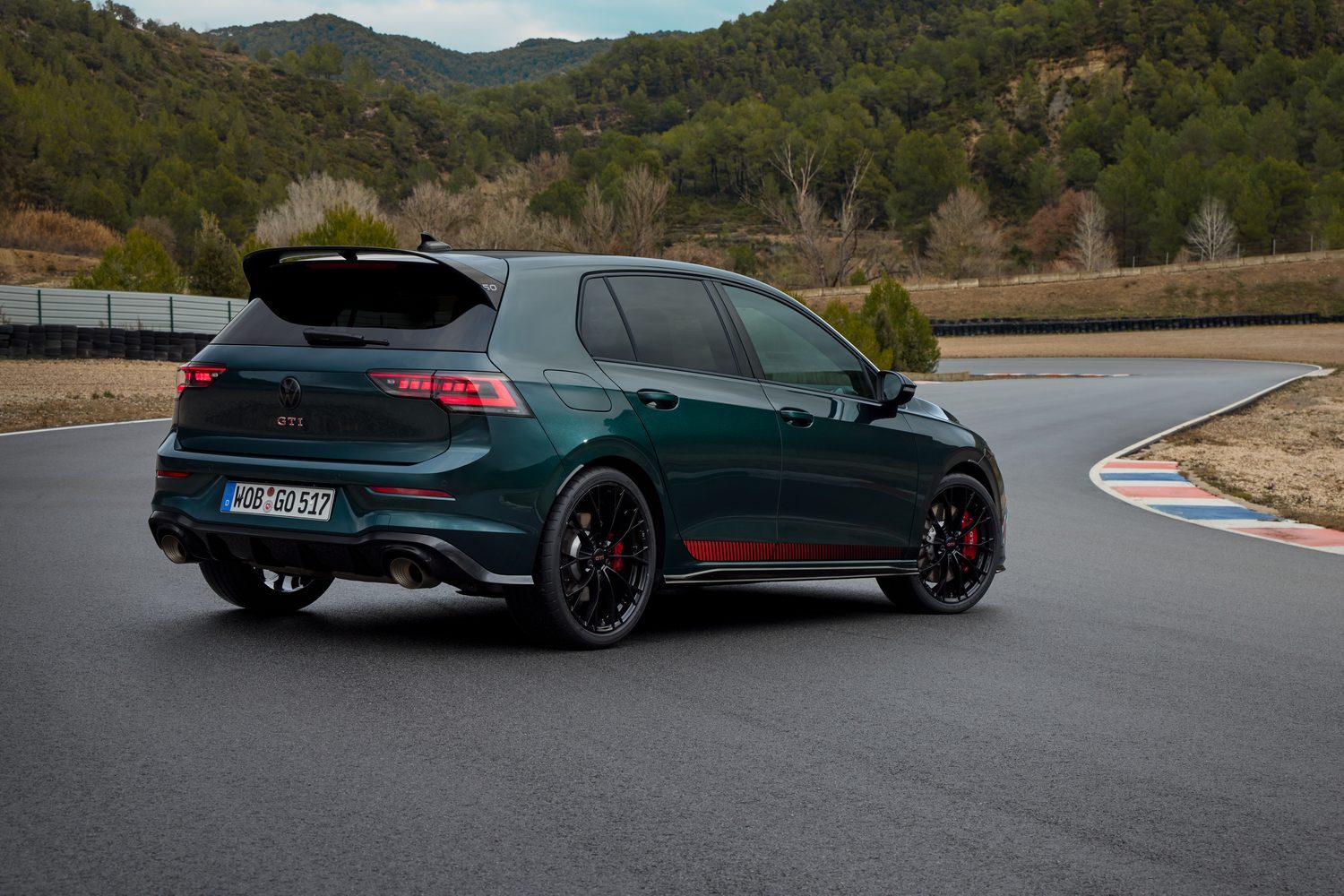
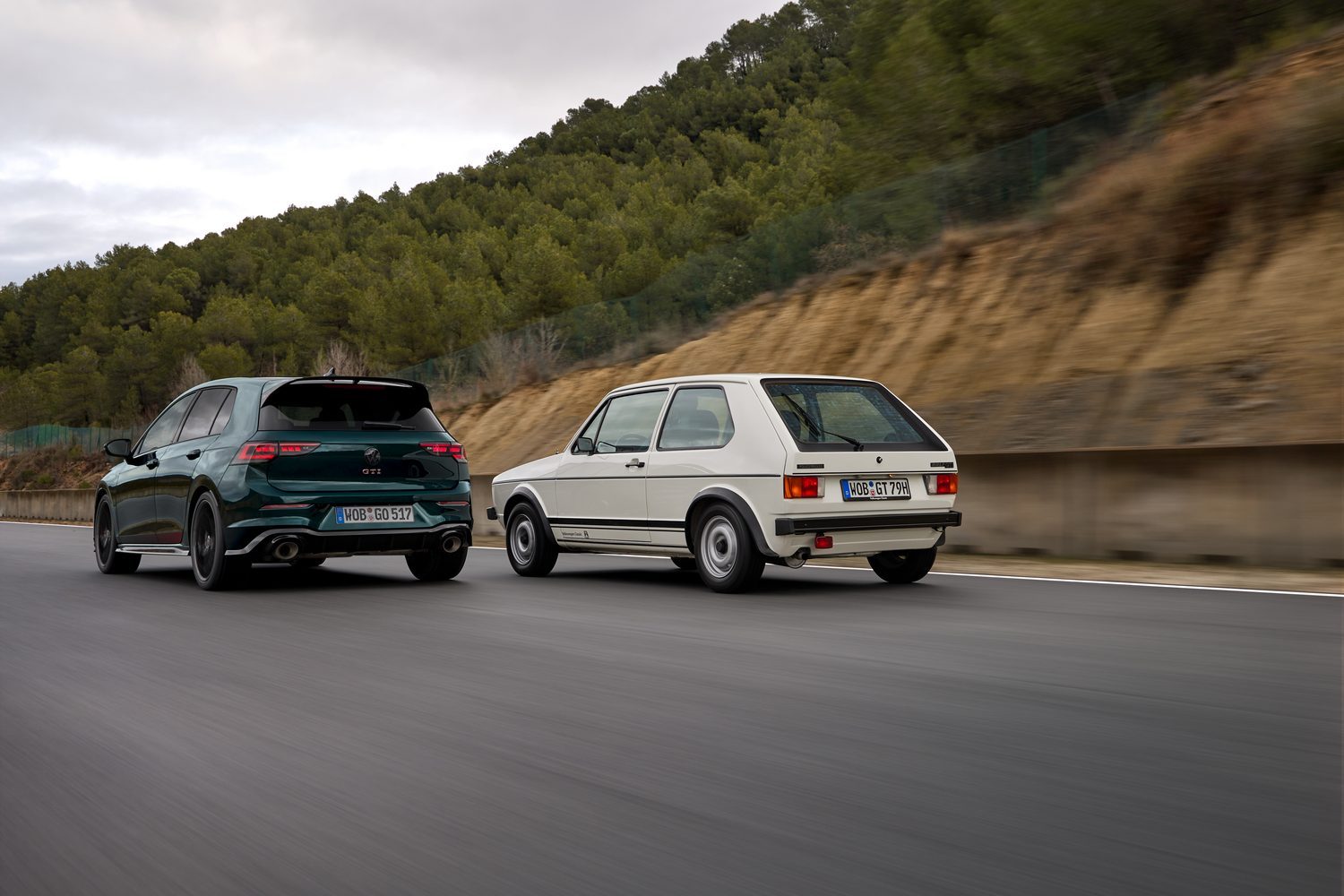



Exterior & design of the 2026 VW Golf GTI Edition 50
- GTI 50 decals everywhere
- We don't like the standard wheels
- Lower ride height only for Performance Pack

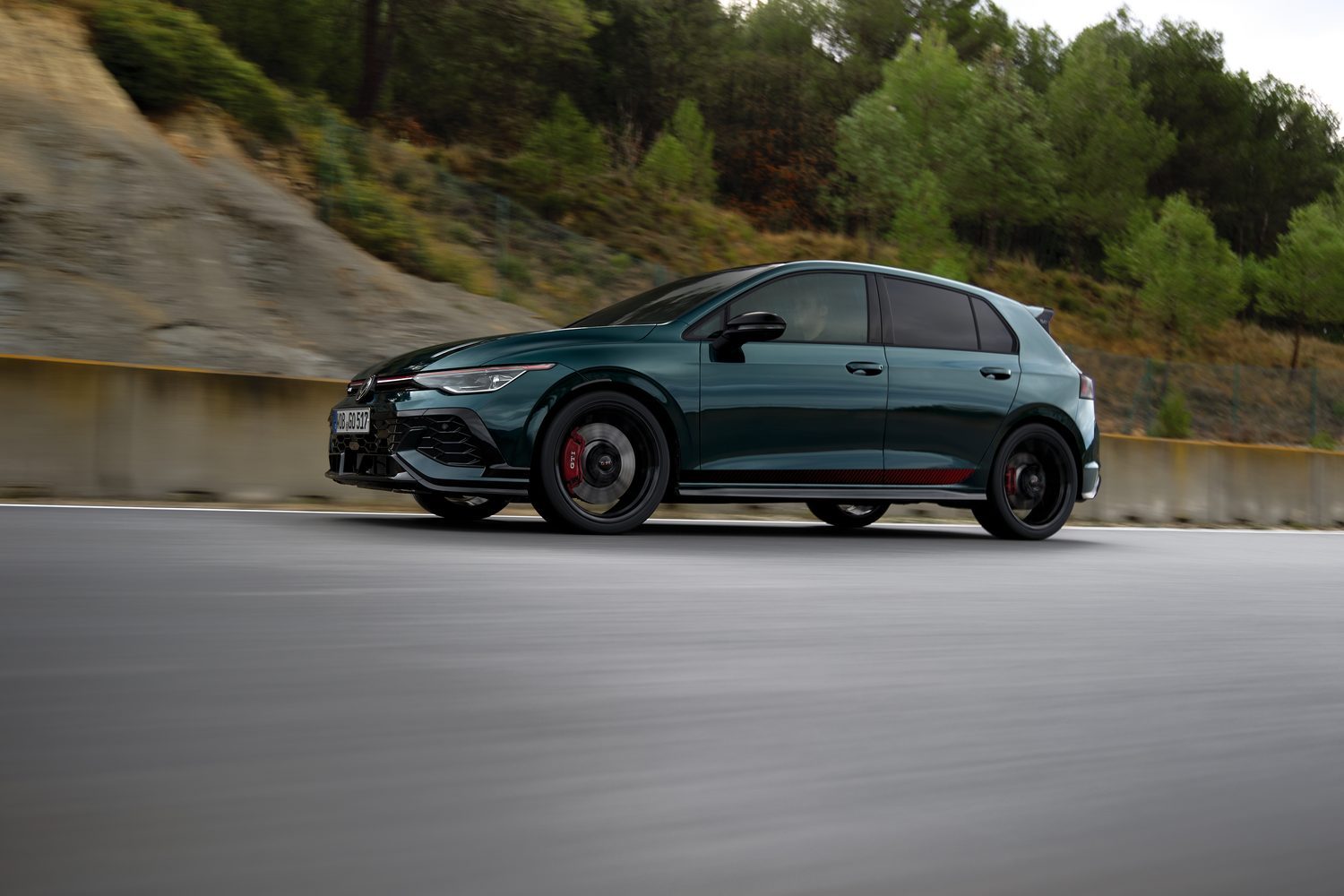
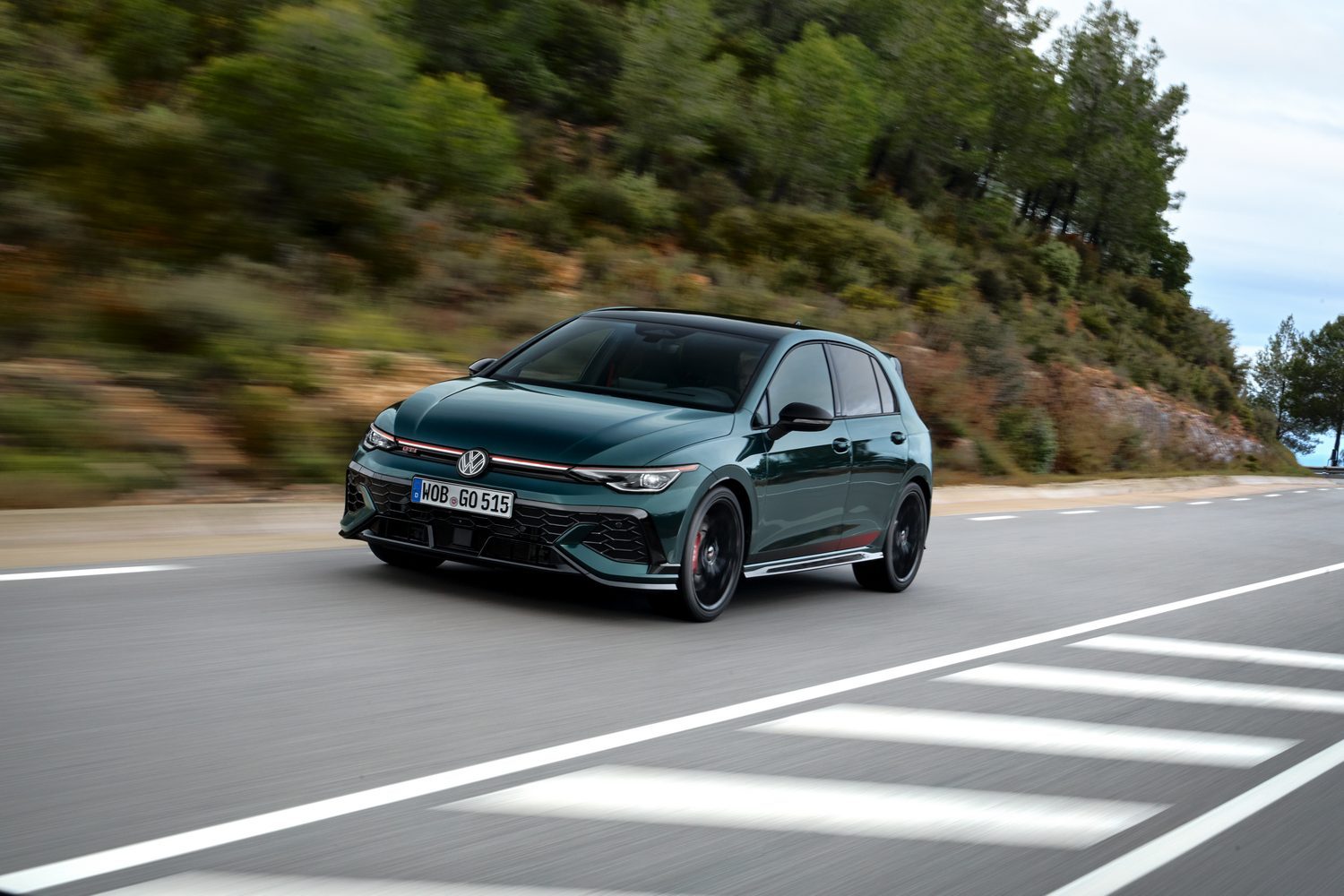
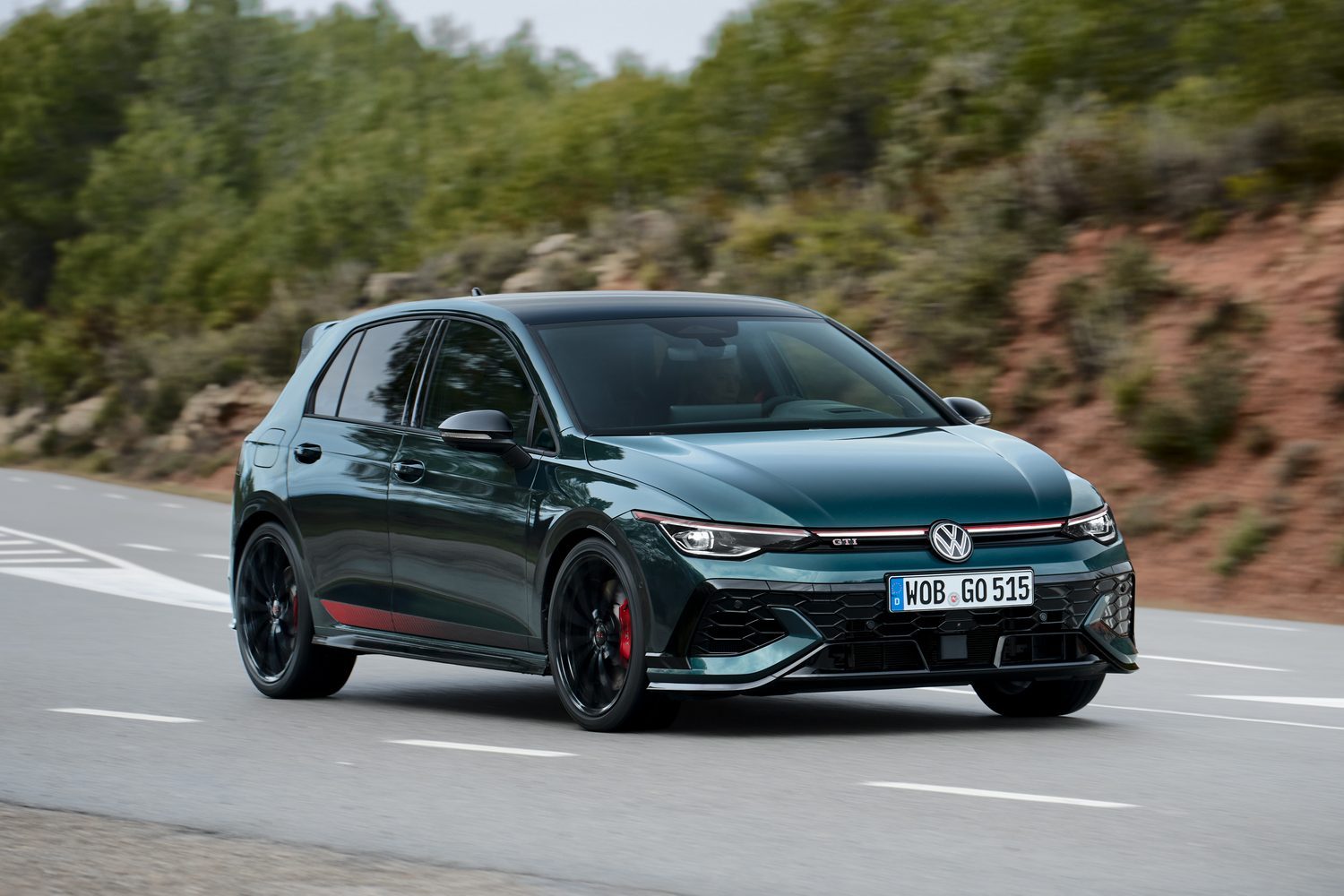
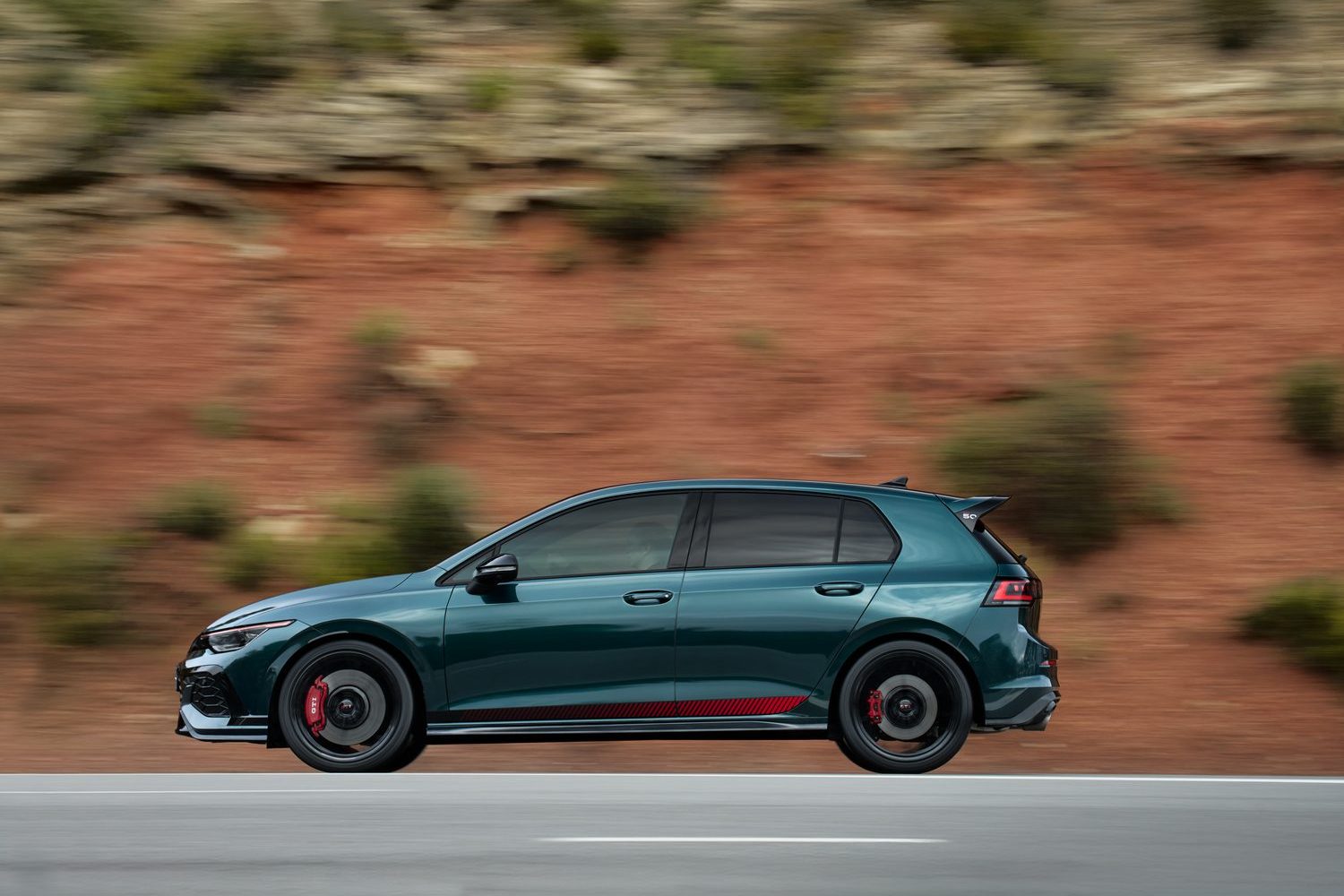
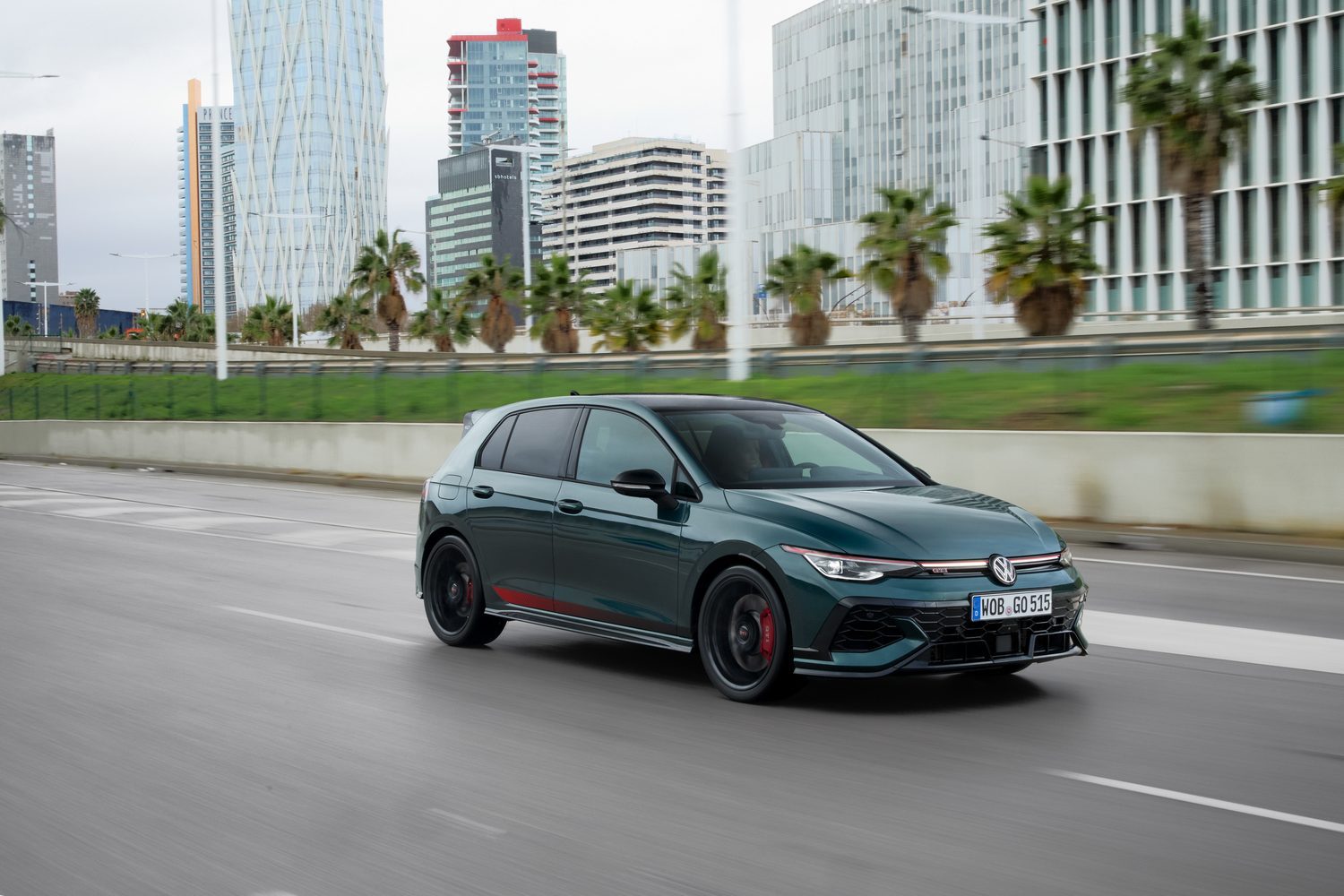
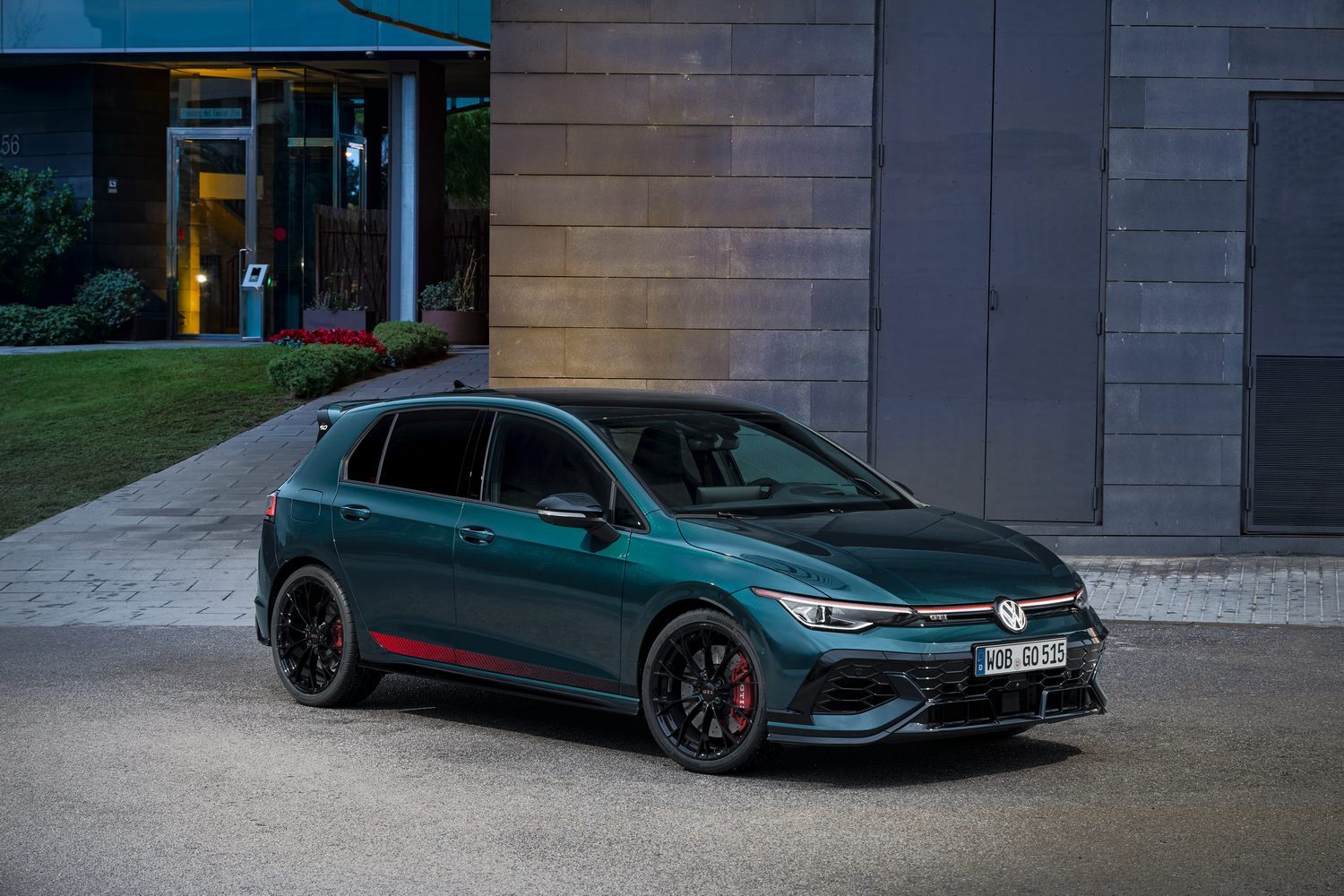
At the core of the Edition 50 is the GTI Clubsport, so it has much more presence than the standard Golf GTI from the get-go.
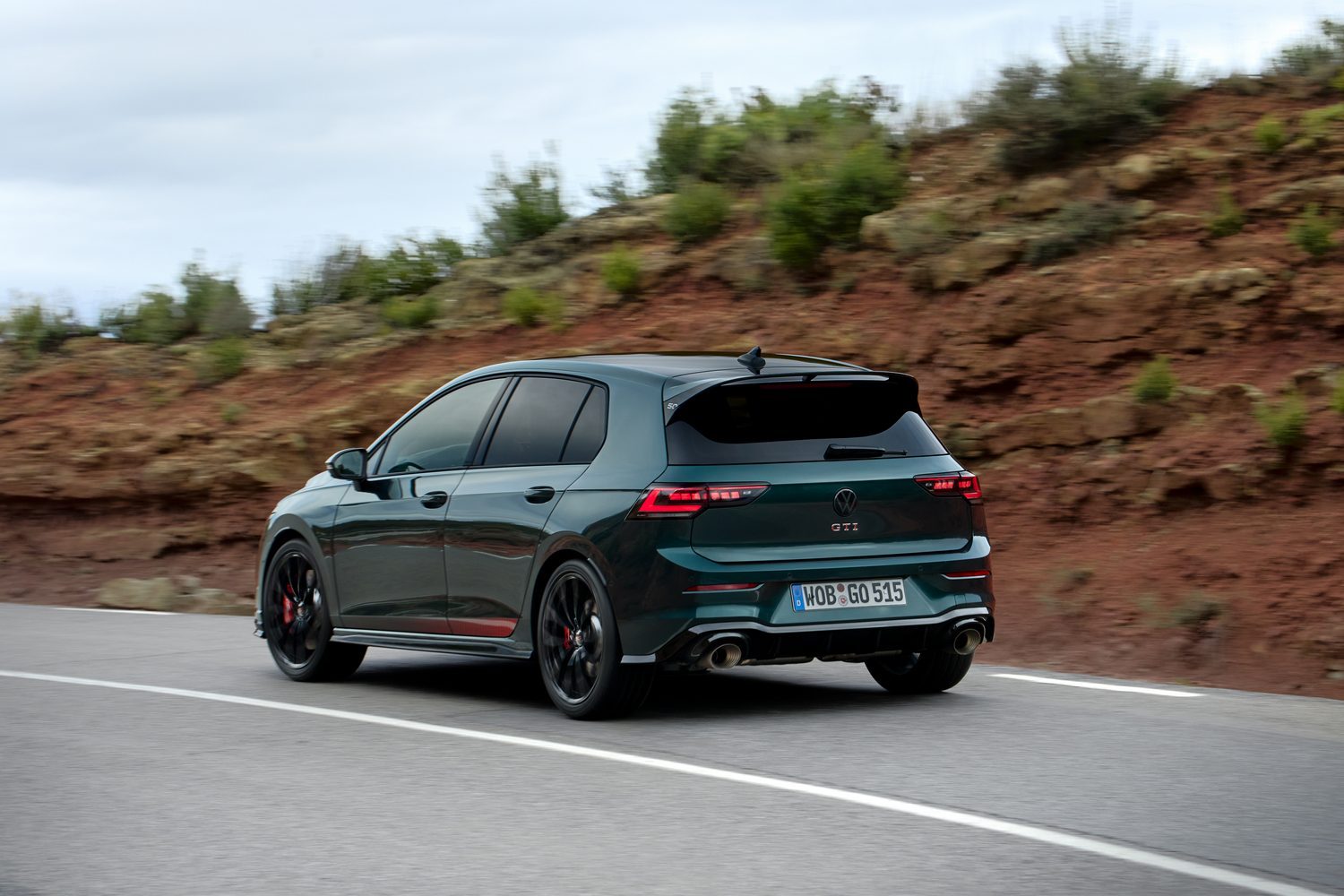
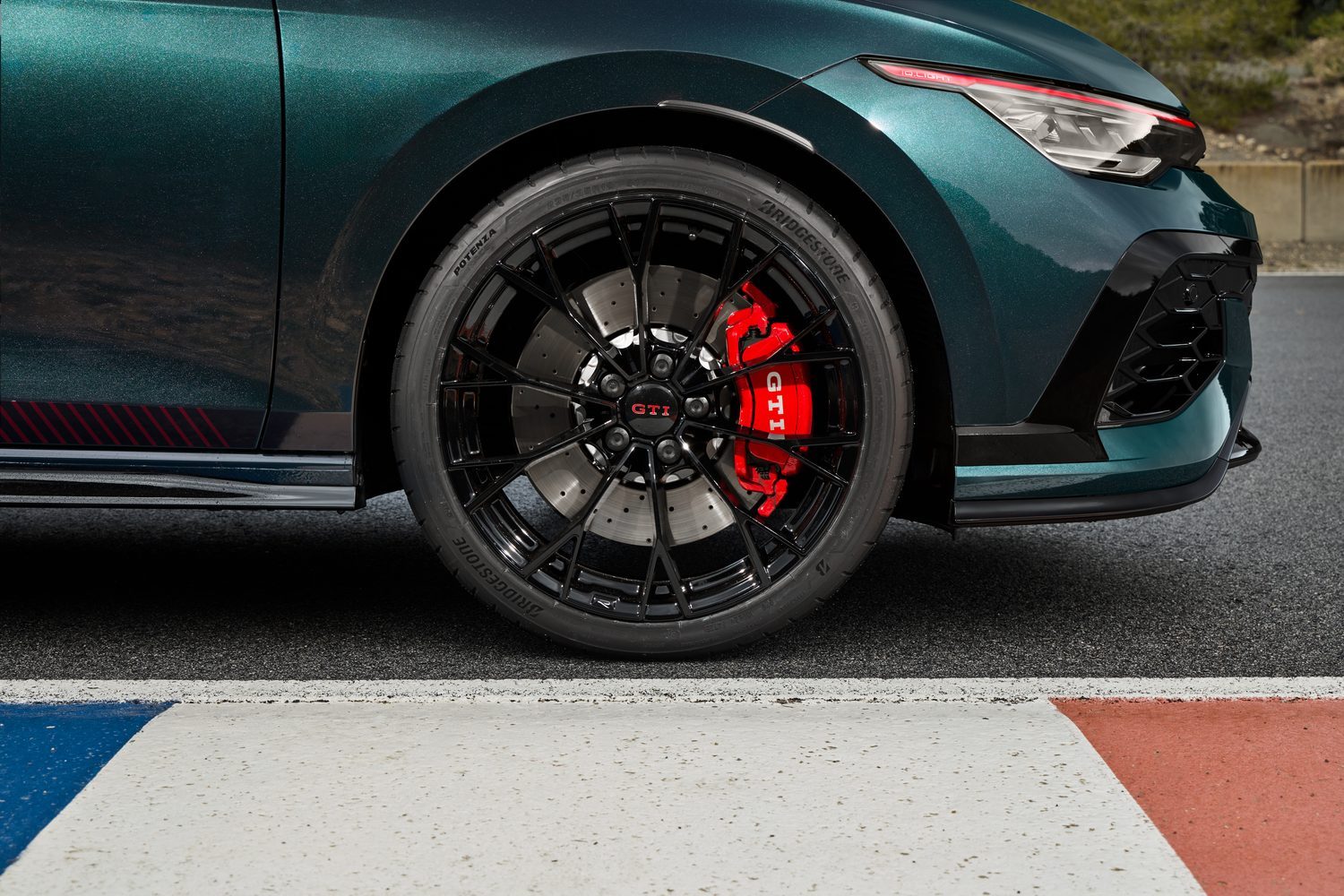
The standard wheels are 19-inch 'Queenstown' rims in red and black, but we don't like the red at all. Saying that, it costs nothing to swap them for the same design in black and silver.

There are 'Estoril' wheels of the same size in two different finishes for a reasonable €144, though our favourite alloys are the 'Dark Graphite diamond-turned Warmenau' rims at €786. It's not clear if the self-righting GTI logo caps in their centres are standard-fit, but they're a neat touch.
The forged Warmenau wheels in black are standard when you opt for the Performance Package. Note they always come with semi-slick Bridgestone Potenza Race tyres as the combination represents quite a weight saving - and 'unsprung' weight at that.
Also enhancing the stance of the Performance Pack car is a further 5mm drop in ride height, though the GTI has a great stance in all of its guises as it sits 15mm lower than any other Golf anyway.

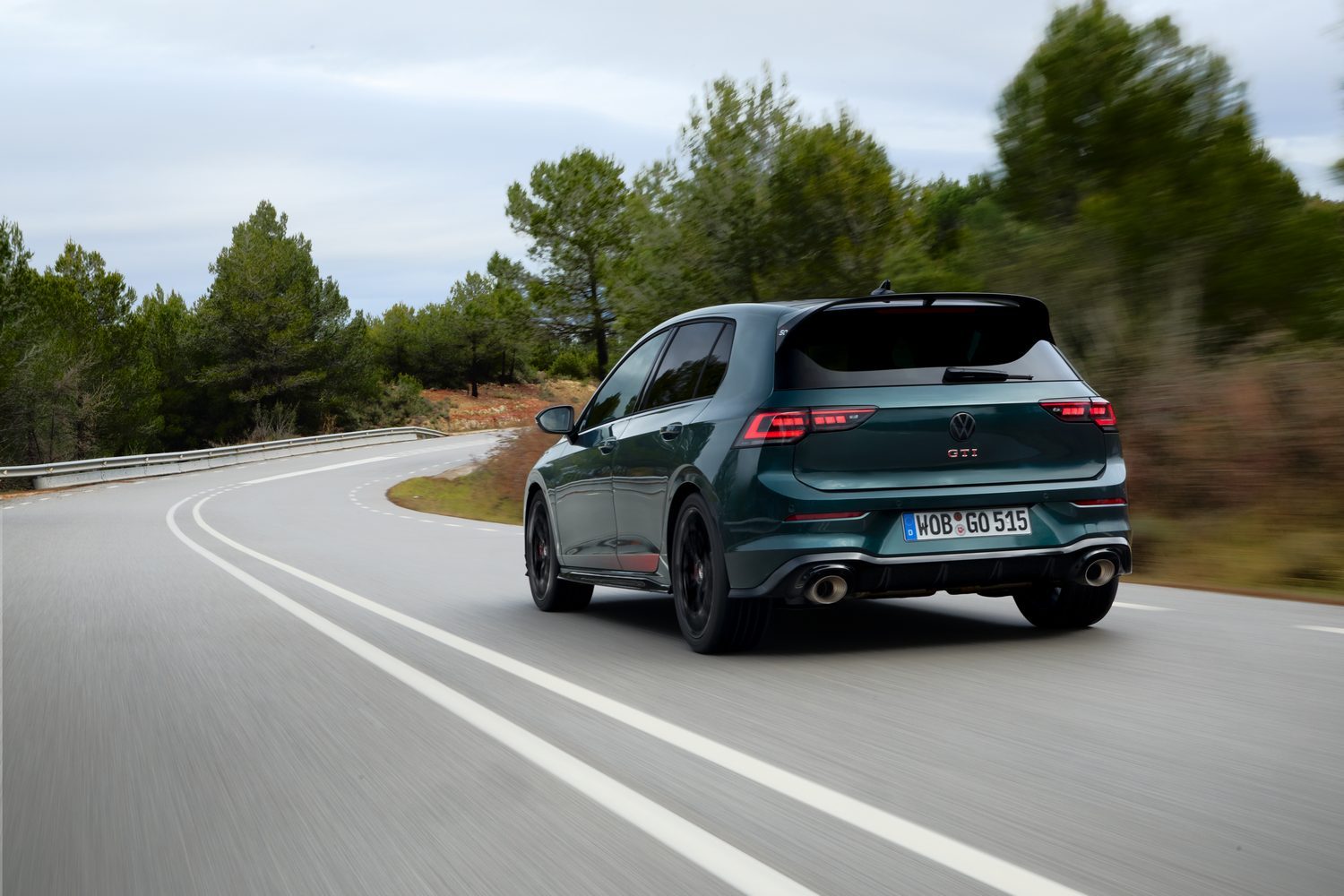
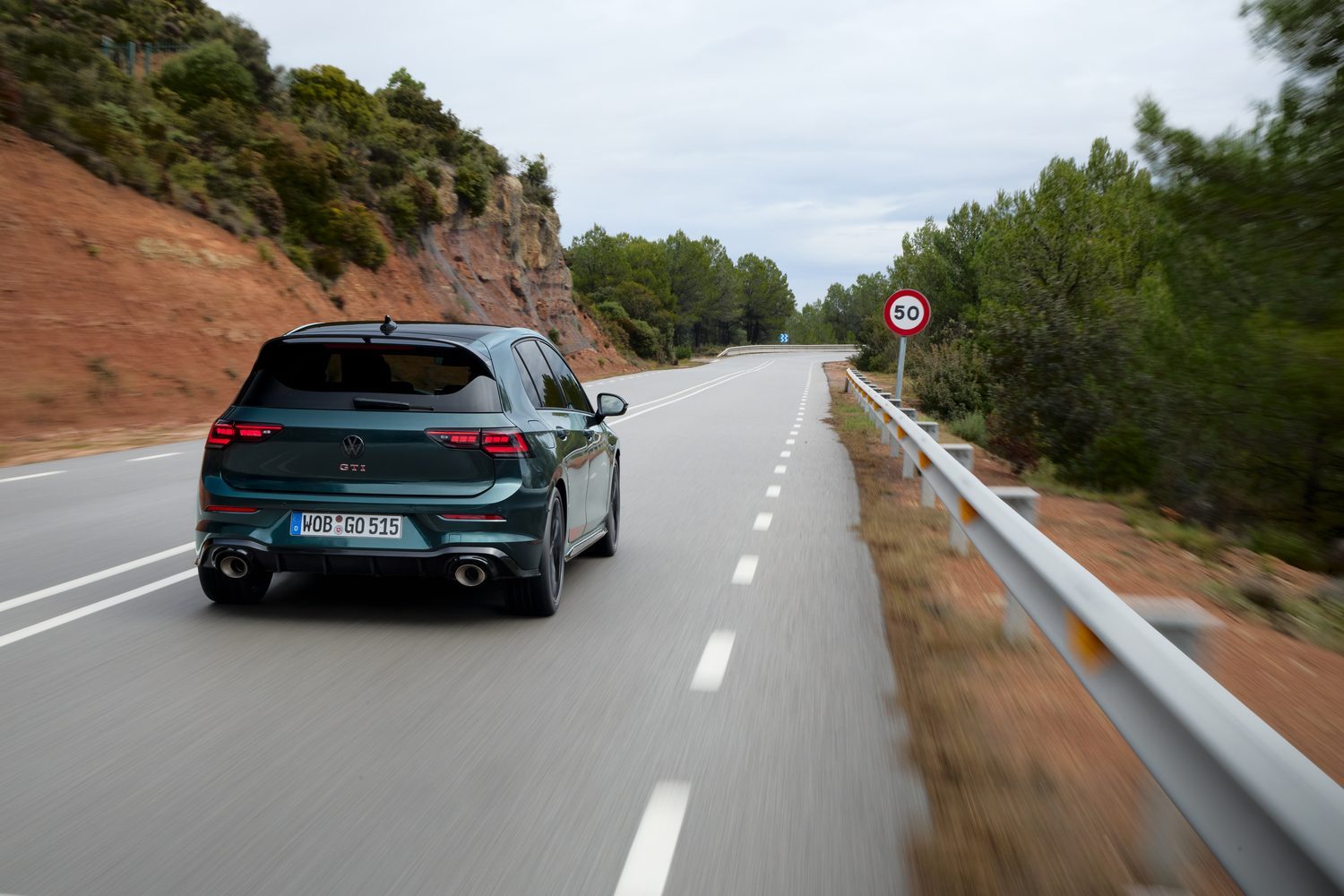
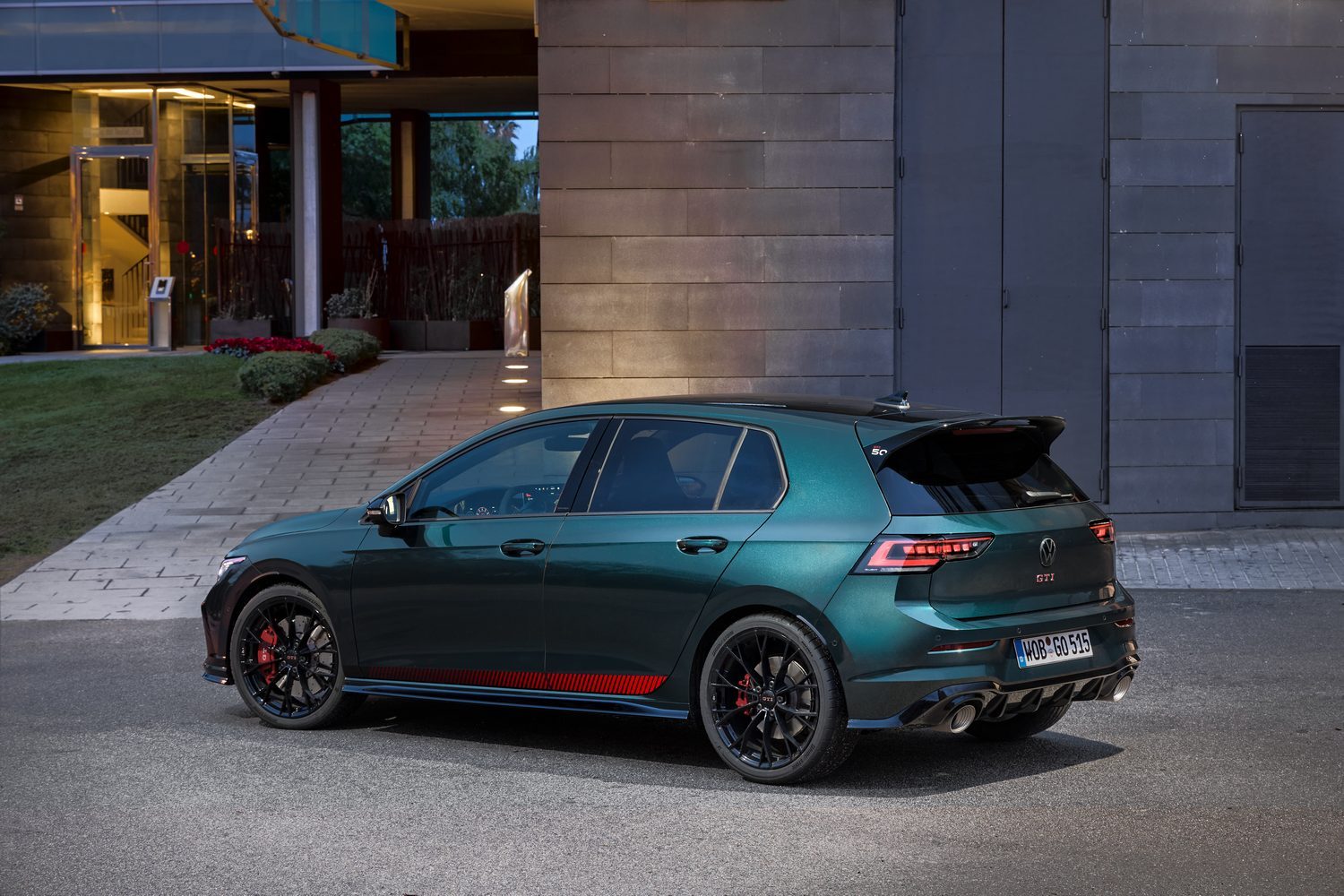
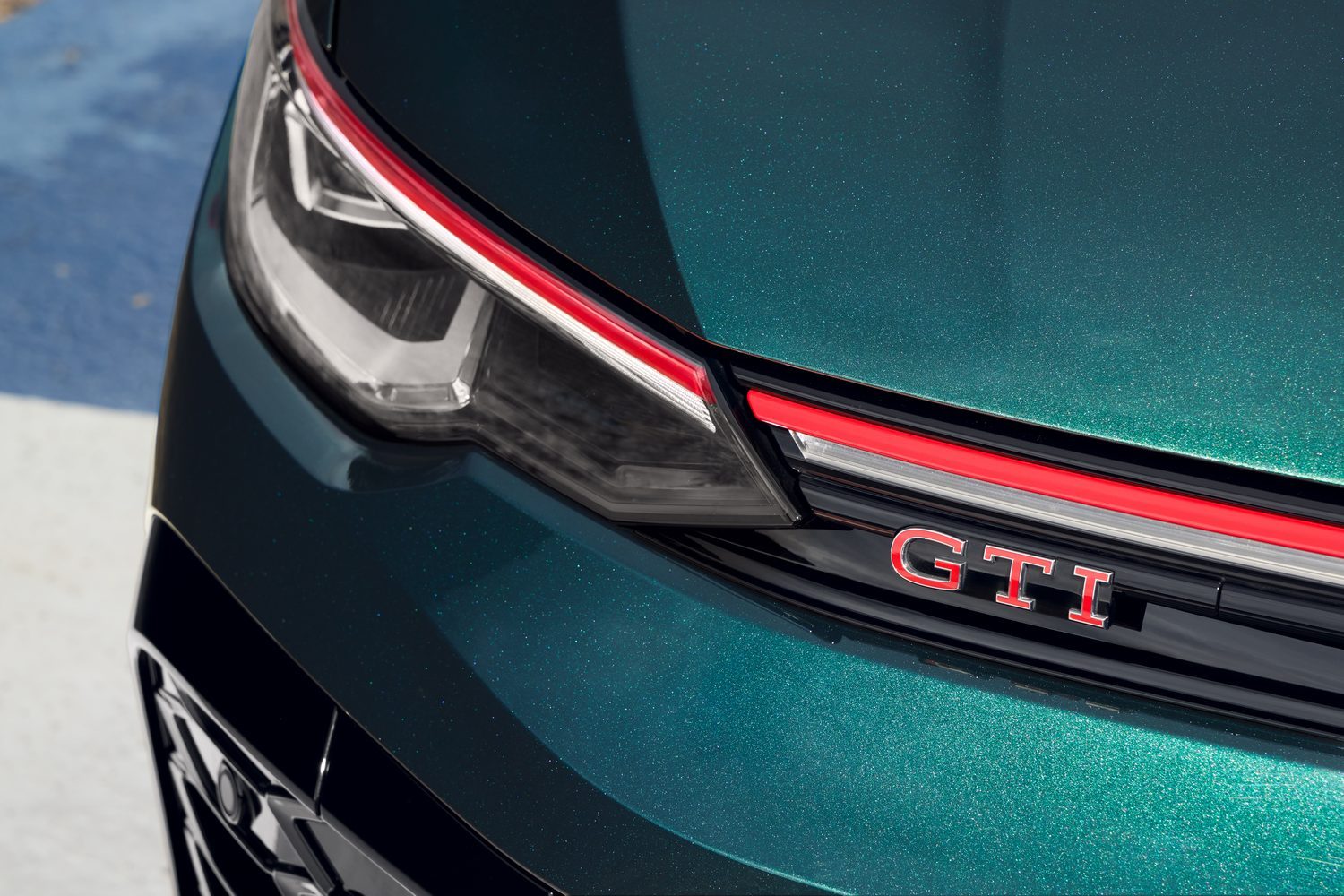
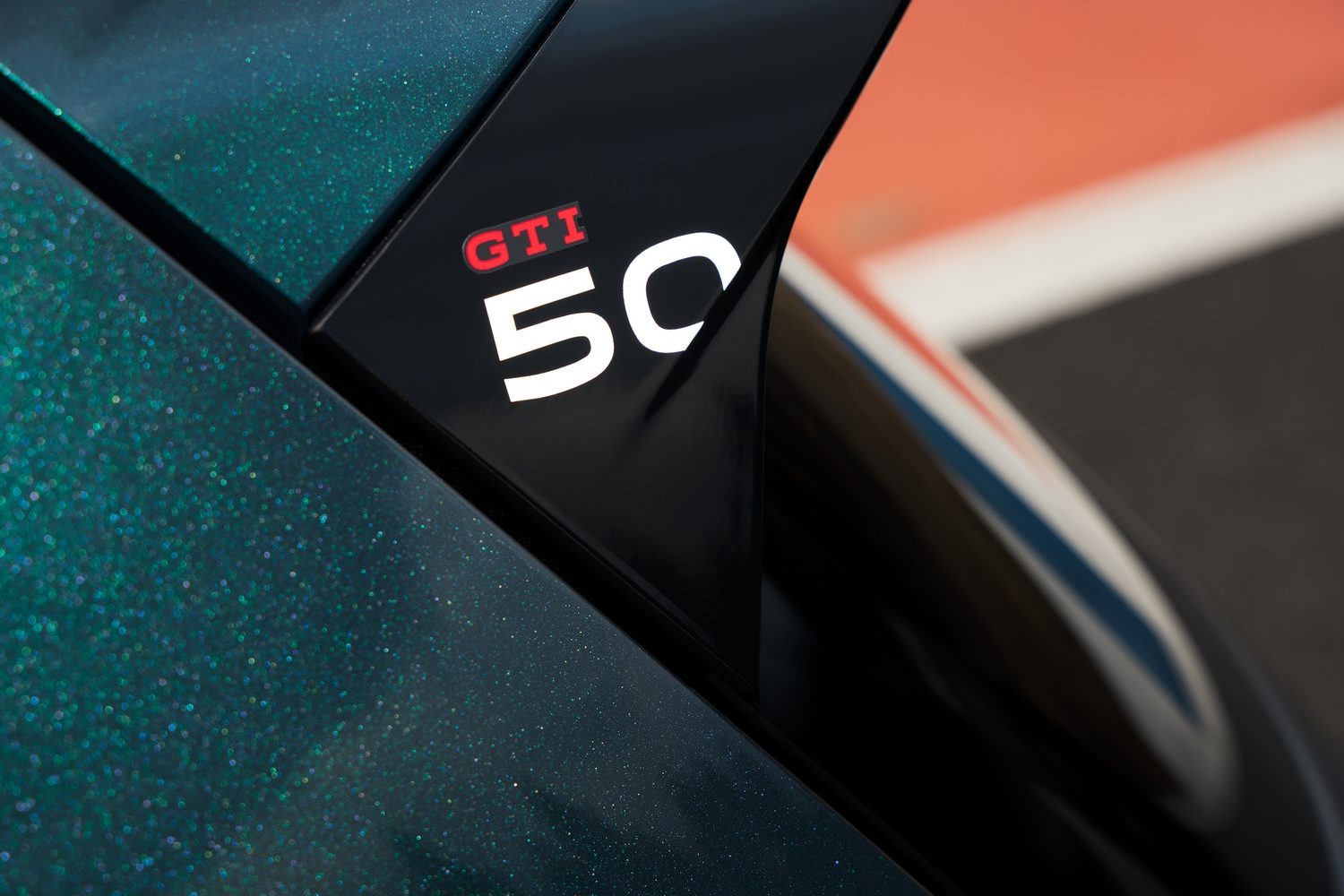
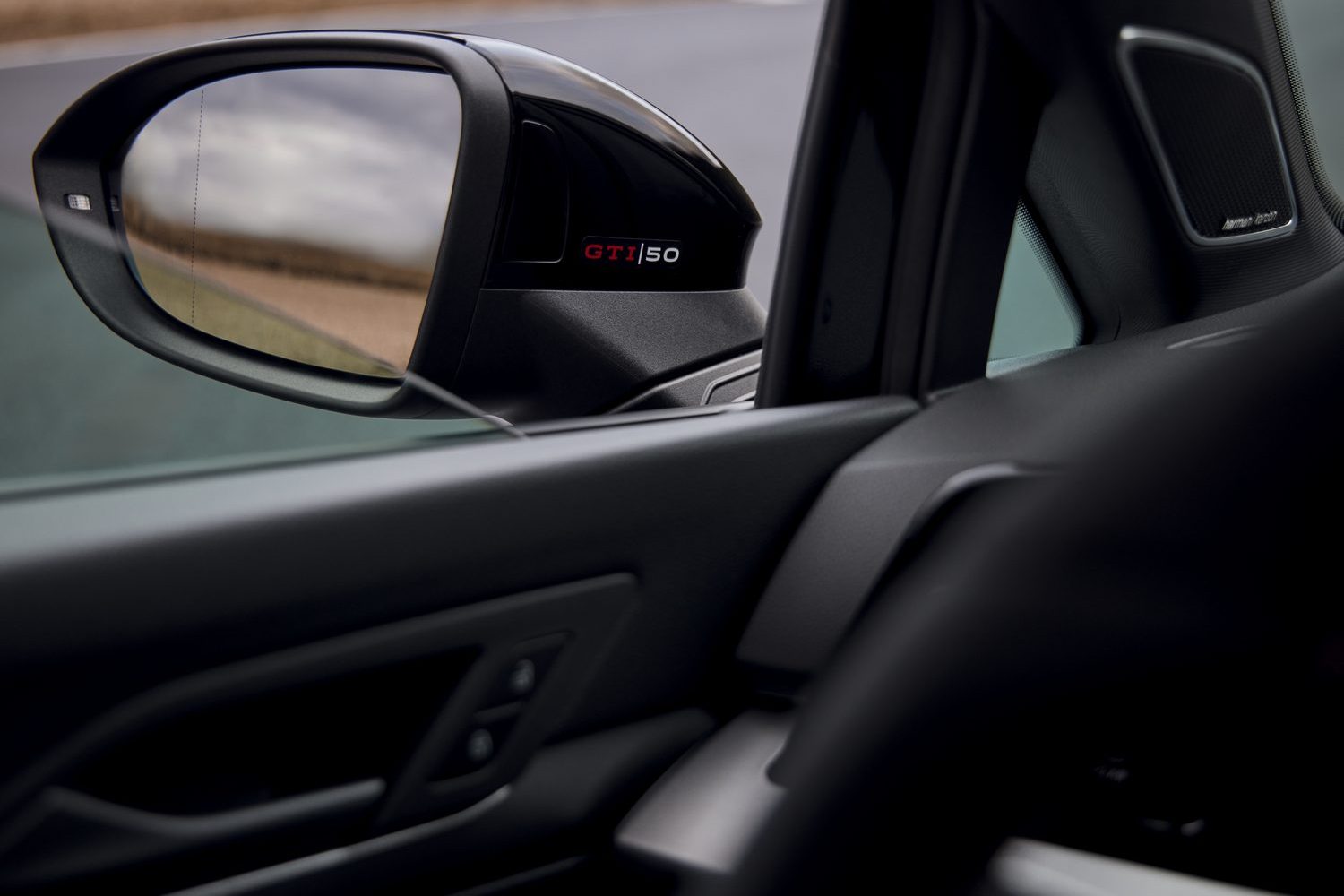
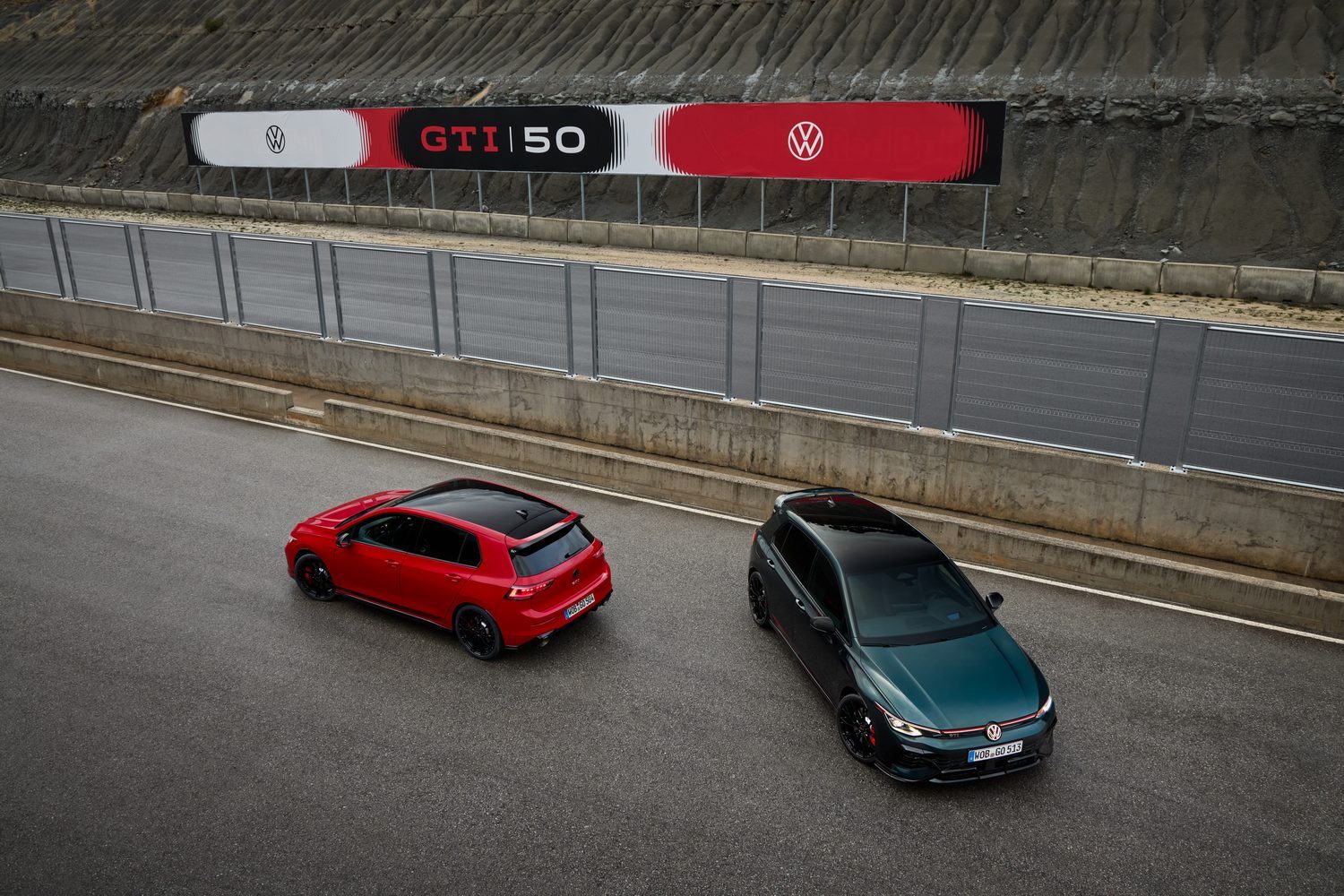
Additions marking out the GTI Edition 50 are decals on the insides of the door mirrors (i.e. for those inside the car to see), more on the sides of the big roof spoiler and a foil graphic along both sides that visually varies from black to red. The roof and door mirrors are black and some of the badging is darkened, too.
Dimensions of the 2026 VW Golf GTI Edition 50
- Length:
- 4,292mm
- Width:
- 1,789mm (excl. mirrors)
- Height:
- 1,463mm
- Wheelbase:
- 2,629mm
Paint colours for the 2026 VW Golf GTI Edition 50

Five exterior colours are available for the Golf GTI Edition 50, all matched with the black roof; these are Pure white, Moonstone grey, Mythos black metallic and - exclusively for the anniversary model - Dark Moss green metallic and Tornado red. Only white is free; red or grey are about €615 each, while black or green are about €1,015.
Interior, practicality, tech & comfort of the 2026 VW Golf GTI Edition 50
- Loads of standard equipment
- Special upholstery and red seatbelts
- Underwhelming plastic gearchange paddles

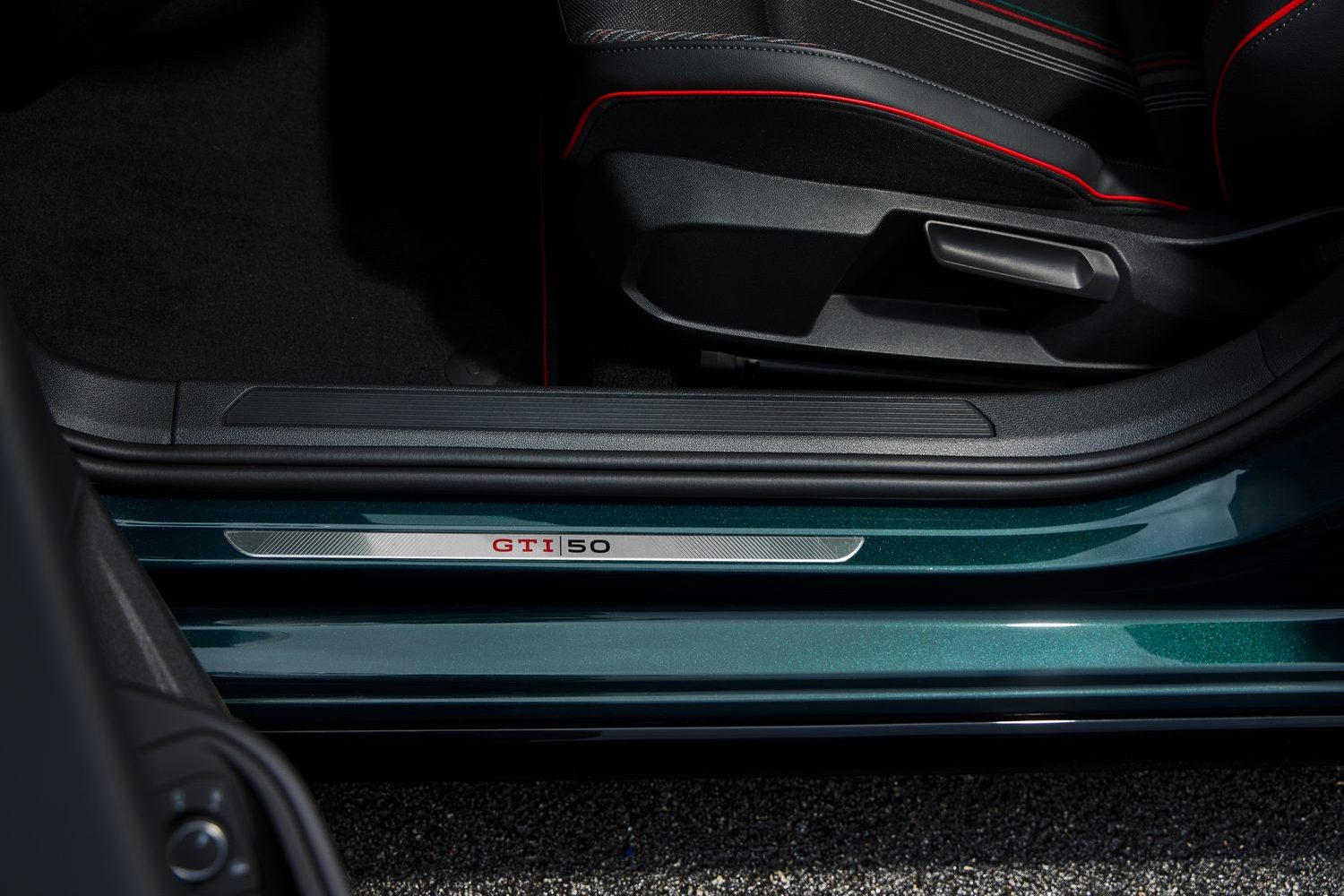
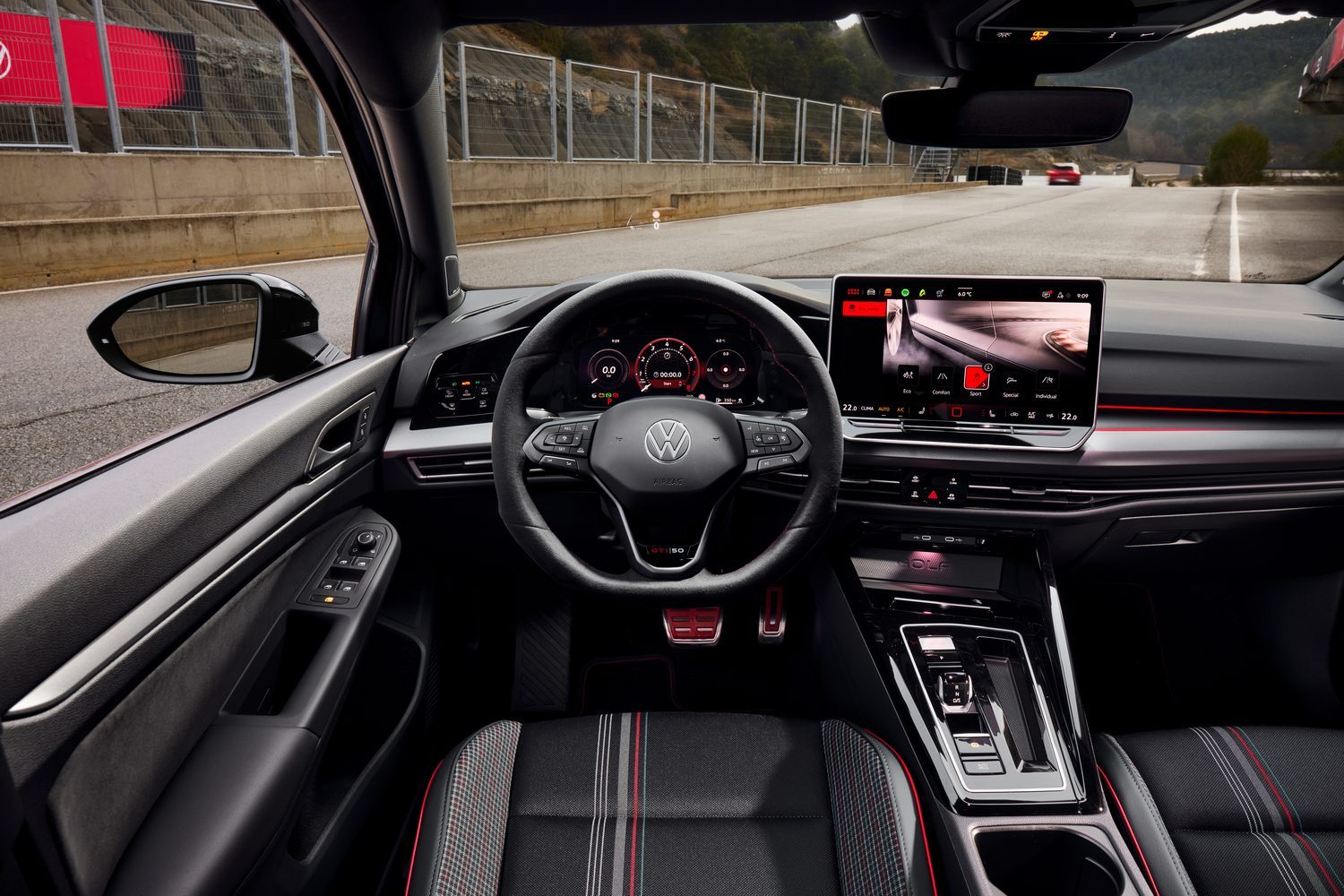
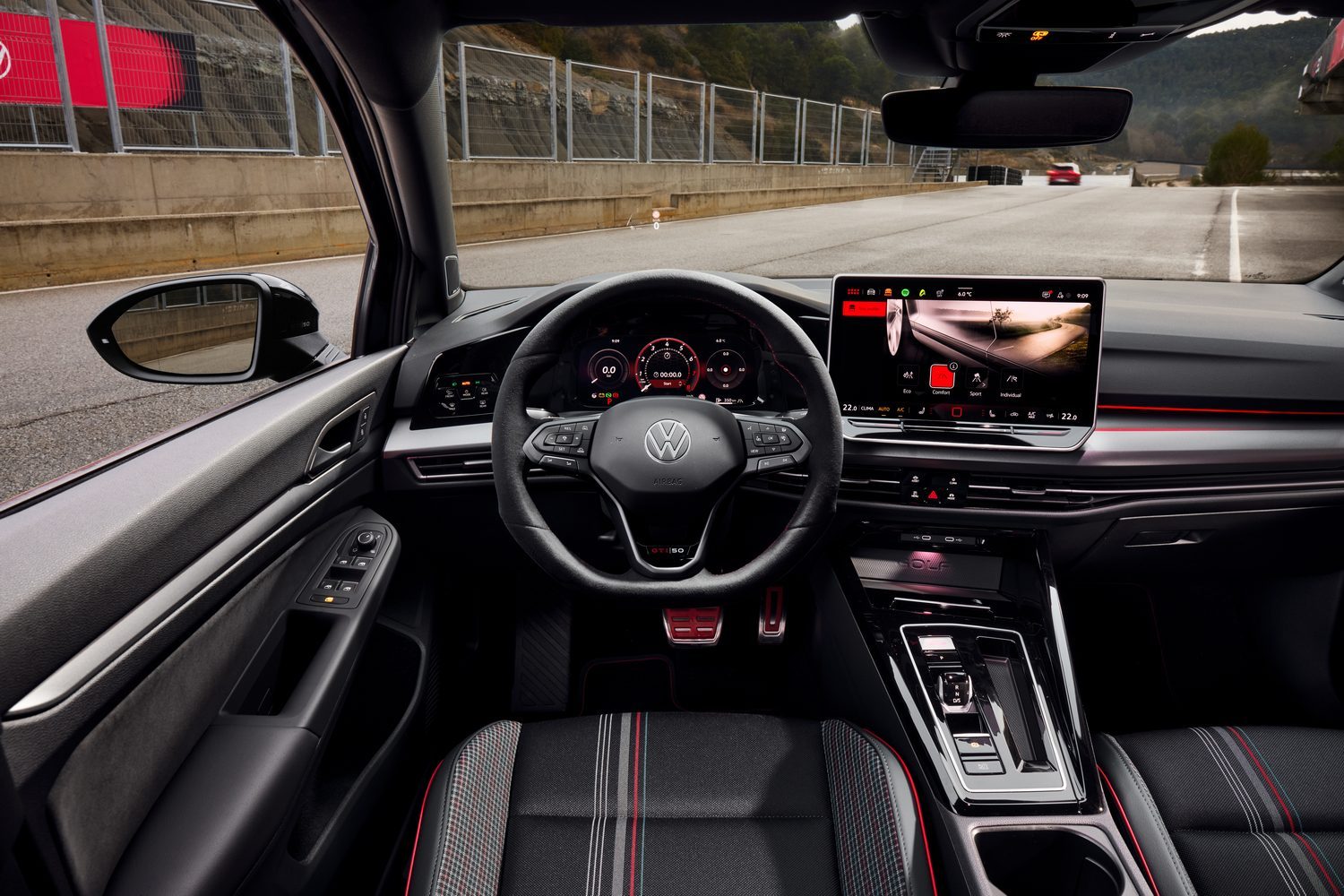
The Edition 50 branding isn't perhaps as copious inside as it might be, but there are loads of unique touches, starting with the smart GTI 50 logos on the door sills.
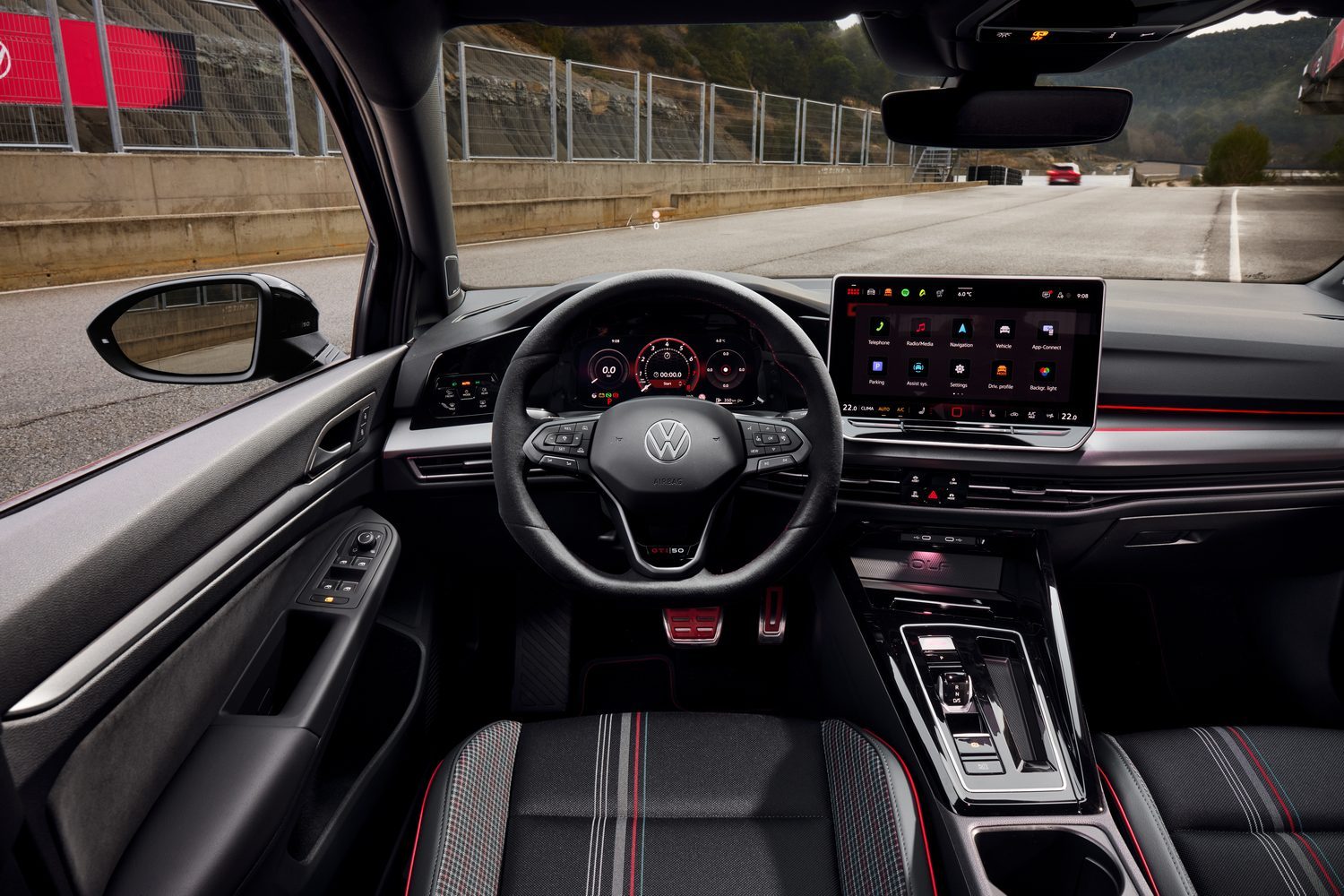
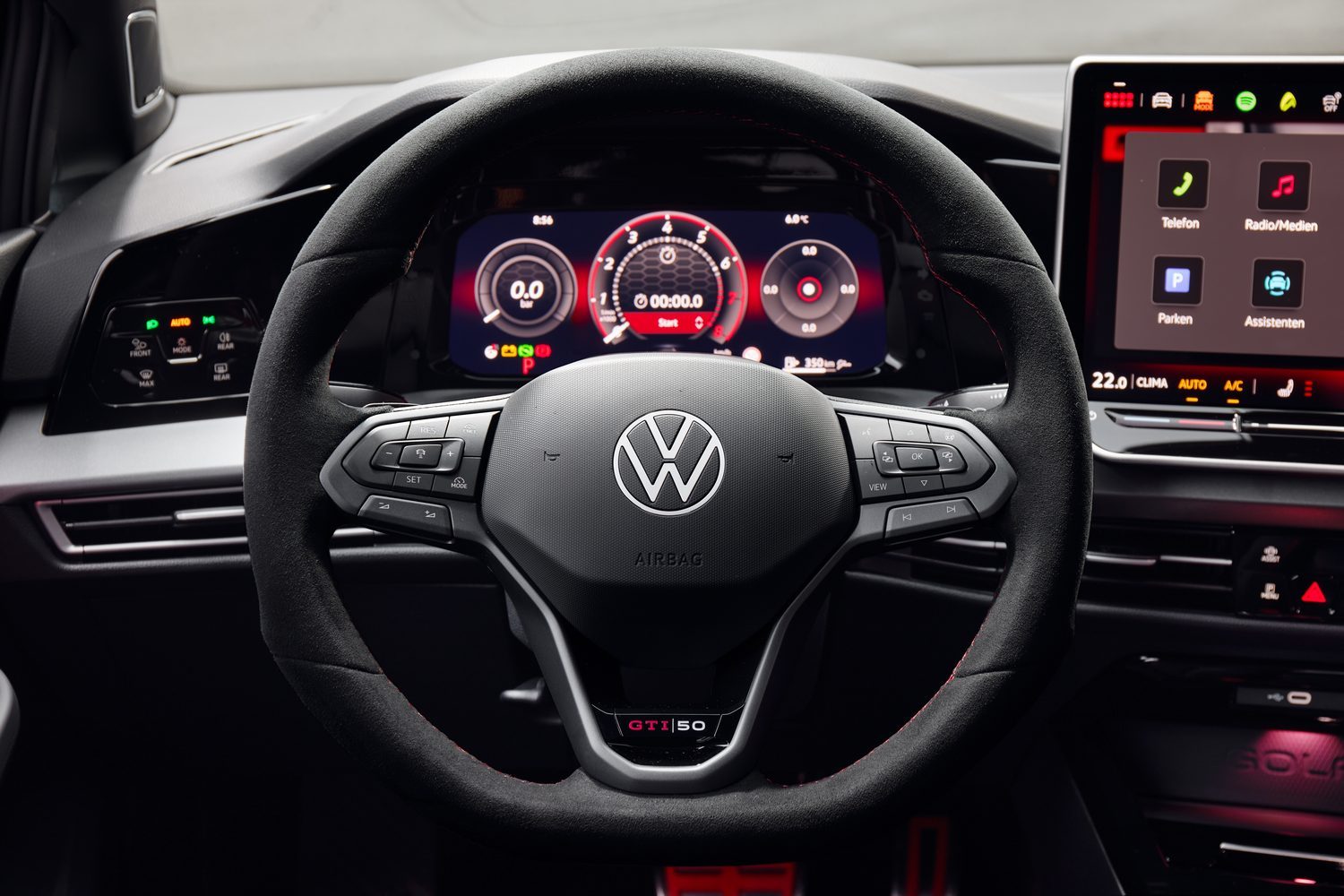
Another commemorative badge is found on the steering wheel, a slightly newer style to that introduced on the Clubsport.

It is a little disappointing that Volkswagen couldn't have found money in the budget to upgrade the weedy little plastic gearchange paddles behind the steering wheel, though, as we suspect owners of this car will actually use them regularly, especially as there's no manual gearbox offered.
We're not fans of the red-and-silver pedals, either. Those look seriously tacky.

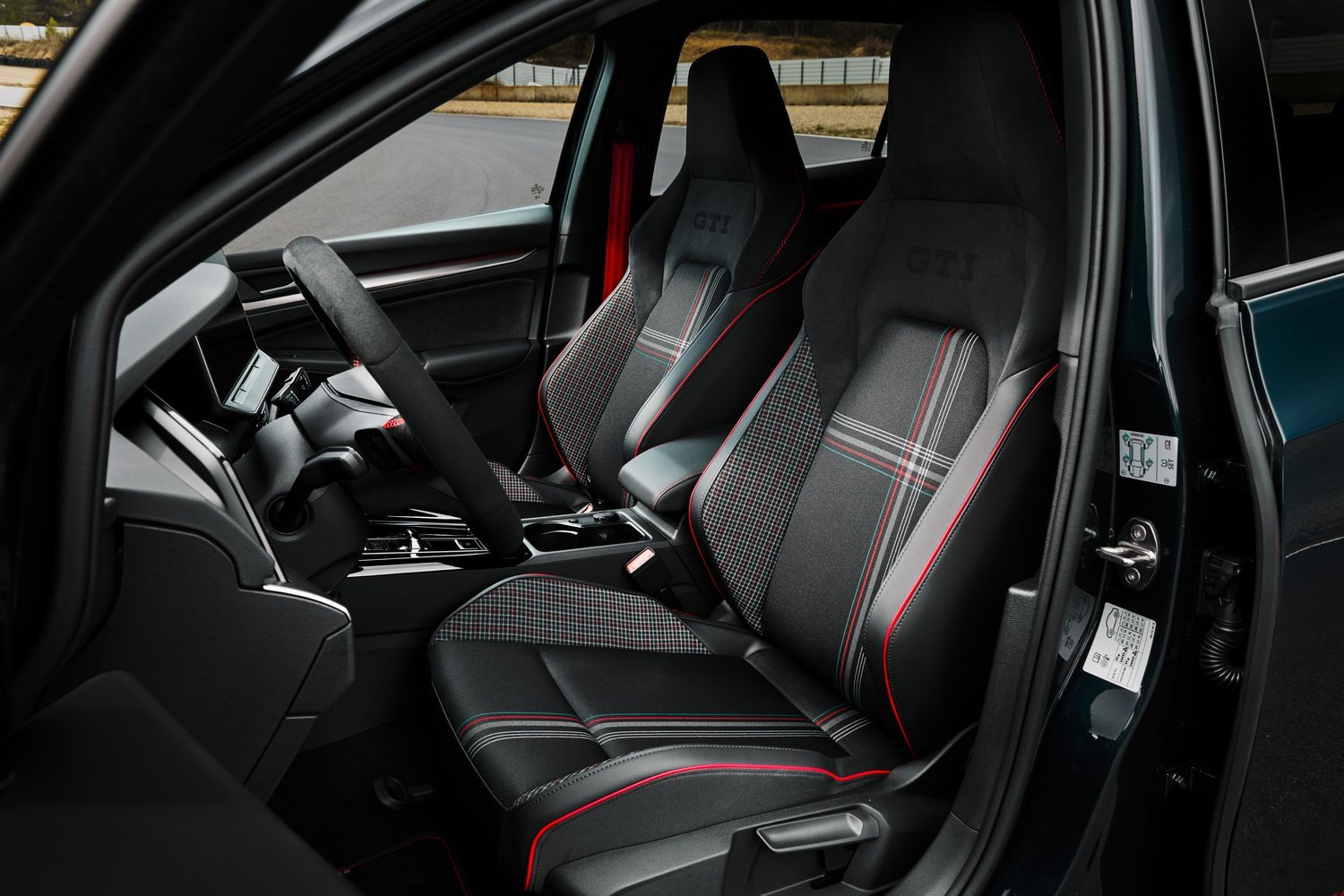
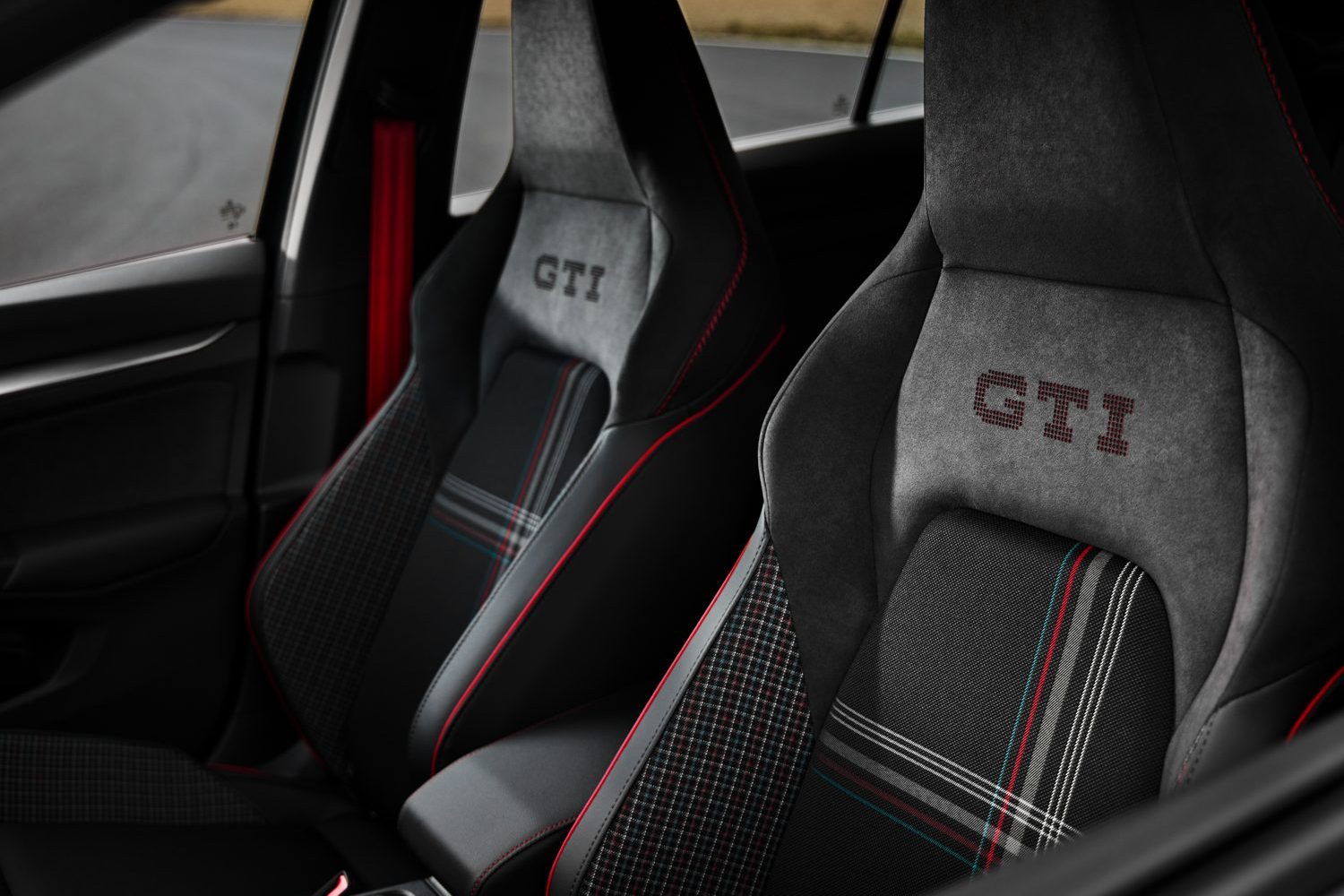
Thankfully, we can overlook these minor shortcomings because of the excellent bucket seats. These are the same as in the GTI Clubsport in construction, with headrests integrated into the back, but they get a unique new take on the VW GTI 'Clark' tartan pattern with a green stripe and a GTI logo on the backrest picked out in red.
Subtly, the tartan pattern is found in the little tab you pull down the rear-seat armrest with, too, while red seatbelts are also included in the specification.
Getting comfortable in the driver's seat
As we're used to in any Golf, the GTI Edition 50's steering wheel has loads of adjustment for reach and rake. The wheel has an unusual profile, but is good to hold, especially when trimmed in ArtVelours. A worthwhile upgrade for about €250.

Shame it's not included with the Performance Package to set the otherwise identical interiors apart. Tick the option box and consider it money well spent all the same.
Some might be surprised to find manually adjusted front seats on such an expensive car, but there is at least plenty of adjustment in the driving position so it's easy to get comfortable. And the seats manage to be figure-hugging without being too constrictive as well.

You could upgrade to Vienna leather for pretty much €3,600, which brings with it 'active climate' seats, electric adjustment and heating for the steering wheel.
Heated seats are standard though, and the included upholstery is lovely, mixing the tartan pattern at two different scales with a swathe of soft ArtVelours. We'd be inclined to stick with that as it's unique to the Edition 50.
Infotainment and technology
The Irish configurator for the Edition 50 is a bit contradictory at times so go through it with a fine toothcomb with the dealer before you place an order.

In the list of included equipment, for example, is a 12.9-inch infotainment system, along with "6+1" speakers and online service, yet that's all listed as part of the €1,251 "Discover" package, too. The latter appears to add navigation and the 'IDA' voice assistant, however. We can confirm that the (standard) Apple CarPlay is better than the native navigation system in any case.
Likewise, there's a rear-view camera listed as included, but there's also an option called just 'Area View incl. rear view camera system', priced at €559. So get some clarification on that if you're wondering.
There are loads of device charging options throughout the cabin, including two USB-C ports front and rear, a cooled wireless charging pad up front and even a 12-volt socket in the boot.
Practicality around the cabin
The beauty of all Golf GTIs through the past half a century is that they don't sacrifice practicality in the name of performance, so it's a car designed for everyday use.

That means decently sized door pockets and glovebox, a little cubby under the central armrest and storage ahead of that which can be configured to hold two beverages or be a larger, open space for miscellaneous items.
Beside the little drive selector is another shallow storage area while ahead of that is the cooled wireless charger, with a hinged lid so you can place other things on top even when a phone is inside.
Rear-seat passenger space
Though the Edition 50 has quite chunky bucket seats up front, rear-seat space is almost the same as in any other Golf, which means it's average for a C-segment hatchback, nothing more.
It'll accommodate normal-sized adults in the outer two positions, but it wouldn't be comfortable to squeeze someone else into the middle seat - and they'd have to contend with the high transmission tunnel, too.
There are air vents in the back though, with temperature adjustments for the rear as part of the standard three-zone climate control. If there are no more than two people in the back, then they can make effective use of the pull-down central armrest.
Boot space in the VW Golf GTI Edition 50
At 374 litres, the boot in the GTI is big enough for most buyers' needs. The rear seat splits and folds down to open the space up to a quoted 1,230 litres and the opening is large so this hot hatch can carry a surprisingly bulky load when required.
Performance of the 2026 VW Golf GTI Edition 50
- Most powerful roadgoing Golf GTI yet
- Adaptive damping standard
- Performance Pack goes further

Under the bonnet of the Edition 50 is a new derivative of the EA888 engine, as before a turbocharged 2.0-litre four-cylinder unit. Peak outputs are now 325hp and 420Nm, useful gains on the Clubsport's numbers (300hp and 400Nm), resulting in a 0-100km/h time of 5.3 seconds - 0.3 seconds quicker.
That's despite a modest weight gain of 11kg for the standard Edition 50, though Volkswagen quotes the same acceleration time for the lighter Performance Package-equipped car.

All cars get adaptive damping (DCC) with 15 selectable stages, variable-ratio power steering ('progressive steering' in Volkswagen-speak) and an electronically controlled differential on the front wheels with a seven-speed gearbox of dual-clutch (DSG) design. This technical specification is identical to that found in the Clubsport.
Opt for the Performance Package though and you get a significant upgrade, with bespoke chassis components, tuning and geometry. This isn't just thanks to the 5mm lower springs (which are stiffer, incidentally, as are the mounts for the suspension front and back), but the rear wheels have bespoke carriers and there are new bushings for the front as well as increased negative camber.
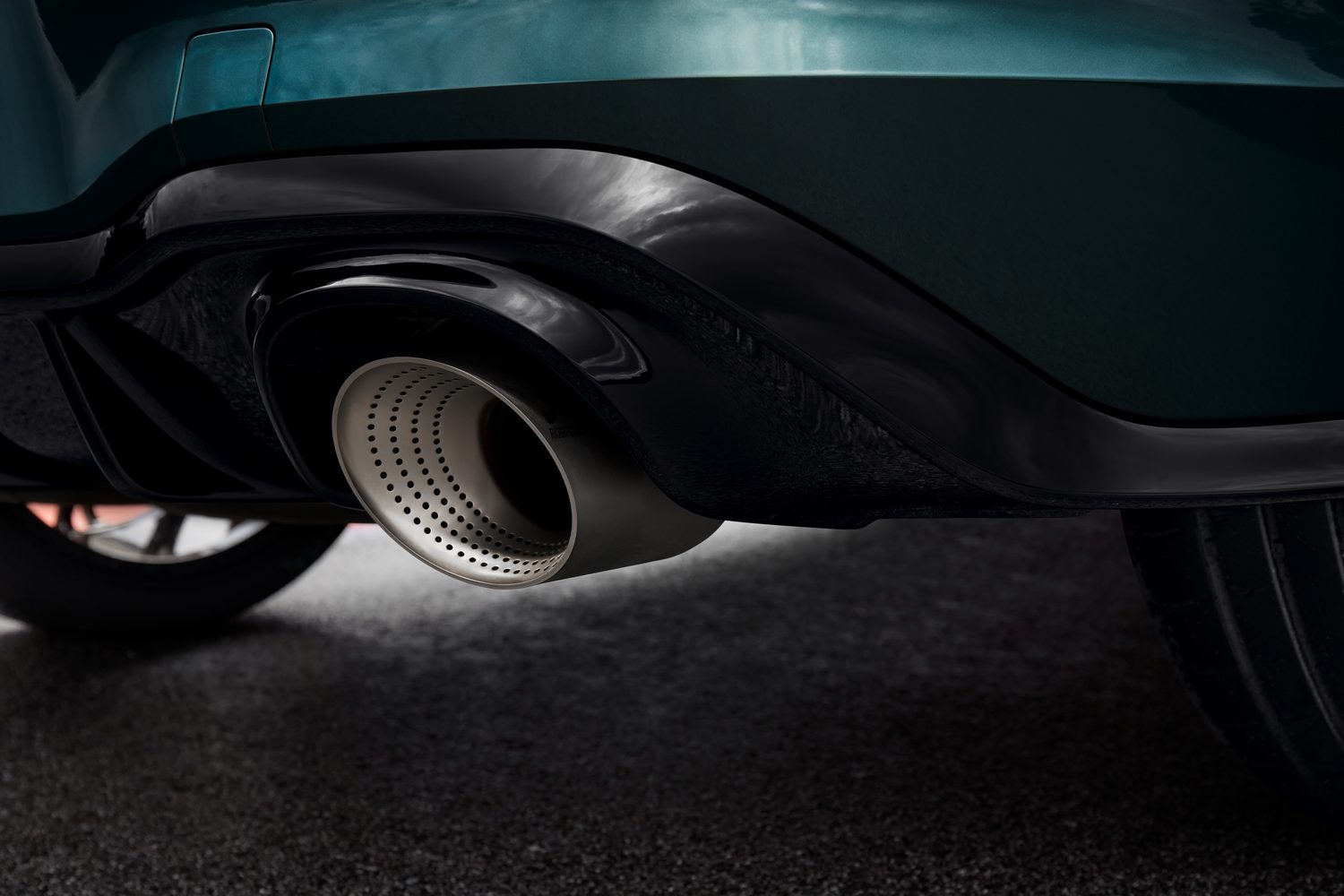
It also gets an Akrapovič exhaust system and lighter wheels and tyres, in the process lopping 25kg off the weight.

So, in summary, the regular Edition 50 is essentially a more powerful GTI Clubsport with the same chassis, while the Performance Package car is closer in spirit to that of the two-seat Mk 7 GTI Clubsport S. This is a comprehensive suite of changes focused on faster lap times on track, making the update itself seem decent value - if you value such things of course.
Driving the VW Golf GTI Edition 50 with Performance Pack on wet Spanish roads
Our first few kilometres at the wheel were dominated by slow-witted navigation as we exited the maze that is Barcelona airport. Thankfully, a GTI, even a high-powered one such as this, is as easy as any Golf to drive, just a little bit louder thanks to the upgraded exhaust.

From cold, the car did seem a little difficult to smoothly drive at low speeds thanks to an overly sensitive throttle, even in the default Comfort mode, but that feeling dissipated throughout the day as we acclimatised to the car - and it warmed up.
One of Volkswagen's engineers at the launch event admitted that his team stiffened up the springs for this generation of car so even the Comfort setting is firmer than before. You can certainly feel that over abrupt speedbumps (even at sensible speeds) and scarred asphalt, but it's rarely harsh or downright uncomfortable. And it's fine when you're up to speed on the motorway.

Anyway, it's worth spending time delving into the driving settings before going anywhere, as there's lots to tweak so you can choose your favourite setup and store it in the Individual driving profile. For example, the Comfort mode puts the damping at level four, so it can be slackened off further if desirable. Sounds ideal for an Irish back road, though the car dealt well with a particularly entertaining, yet jagged, equivalent in Spain.
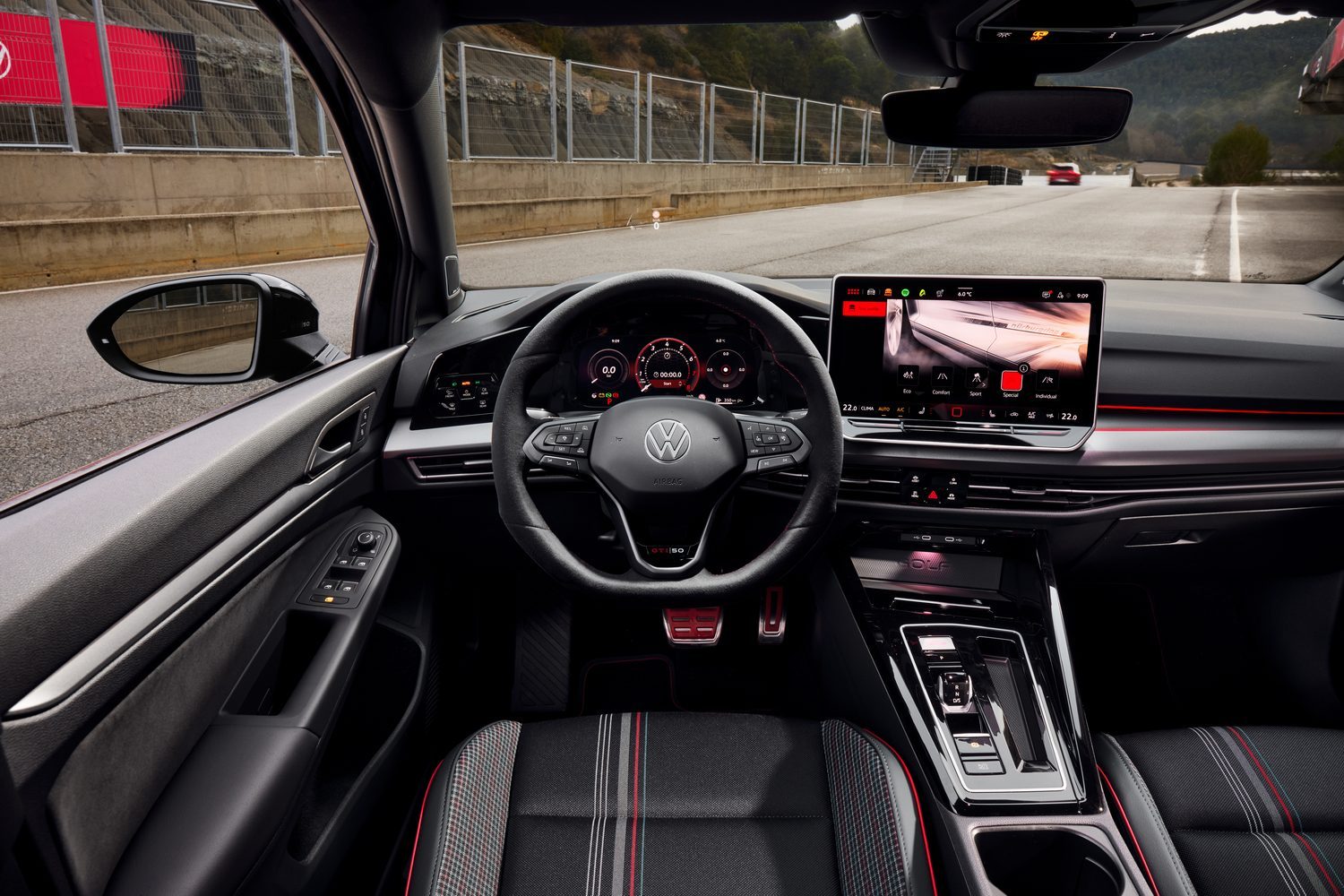
As in other GTIs, the driver can choose from Eco (as if), Comfort (the default each time you start the car) and the customisable Individual modes, the latter even enabling - oddly - the exterior and interior engine sounds.

Just for the Edition 50, however, is an extension of the Sport profile called "Special" and where it came from is hinted at by the accompanying Nürburgring graphics. This is ostensibly the same setup used to set the fastest lap time of any Volkswagen at the German circuit. And if you know anything about this bumpy track, you'll understand why it requires the damping to be knocked down to just level 10.
It also puts the drivetrain in the "Sport+" setting, meaning a few more old-school pops and bangs in the exhaust that used to characterise a high-performance car such as this. Legislation makes this all but impossible to include in a car's default settings these days.

This is the most aggressive throttle map and it's sublime when you're driving quicker on a more interesting road. It also works on the DSG, however, allowing the driver full manual control - you can merrily bounce the engine off its rev limiter on the exit of a tight corner, and it won't change up to the next ratio until you say so. This is an incredibly good thing.
Even so, we reckon the Edition 50 doesn't go far enough on the noise front and the fact you can tweak the interior and exterior engine sounds suggests there's a little fakery going on, too.

Nonetheless, it's quite gratifying to manually control the gears, summoning up gratuitous throttle blips going down the gearbox into tight corners and then choosing either to short-shift early to ride the considerable torque produced or rev the engine out to the red line to unlock the maximum power.
We did more of the former than the latter as the road was so wet and the semi-slick Bridgestone Potenza Race tyres struggled to find traction if provoked. They were perfectly ok when driven relatively sensibly. Likewise, the big brakes never faded, and the pedal feel is spot on, allowing precise control into tight corners on tricky surfaces, even in the wet.
The steering isn't brimming with feedback, but the weighting is lovely, and the variable-ratio rack is seamless in operation, making it highly enjoyable to thread a string of corners together smoothly. Rarely do you have to twirl the wheel.

Even really enthusiastic buyers will be glad to hear that the Golf can settle down to a quiet cruise when required. It's not the sort of performance car that is seemingly goading its driver to always be 'on it'. It's even quite civil with the adaptive cruise control deployed at motorway speed limits.
And when those speeds are higher - as they are in the car's home country of Germany - the GTI Edition 50 is utterly stable and composed.
Driving the VW Golf GTI Edition 50 with Performance Pack on a soaking wet race circuit
Along with our road driving of the Edition 50 in Spain, we drove a few fast laps of the excellent Parcmotor Castellolí race circuit, though the weather was distinctly 'Irish'.

Ahead of us was a Golf R estate driven by an instructor. In the dry, the GTI would likely keep up and possibly be faster than the all-wheel-drive R in the right hands, but in soaking wet conditions, on semi-slick tyres, it didn't have a chance.
That's not to say it wasn't a lot of fun. The Edition 50 has excellent body control, serious performance and great steering and brakes. It feels perfectly at home on the track and would be an excellent car to attend open track days in.

Irish pricing & rivals to the 2026 VW Golf GTI Edition 50
- All Golf GTIs expensive now
- The Edition 50 starts at nearly €73,000
- Few direct rivals left on the market

It seems like only yesterday that the GTI started at less than €35,000 (ok, that was 2013), but even so, it's an extremely expensive car nowadays. The basic one with 265hp is priced from €60,795 and the Clubsport is €64,740, arguably worth the premium.
Against that, the standard Edition 50 - at €72,830 - doesn't seem like terrific value given it has the Clubsport's chassis with a few trinkets and the increase in performance.

The Performance Package adds €5,798, taking the total to a gobsmacking €78,628 - i.e. more expensive than the €76,860 VW Golf R. It's an impressive upgrade for sure, but is it really worth that?
Look around for an alternative to the GTI that keeps the pure front-drive layout and just petrol power and you'll struggle to come up with many options.
At this price point, we'd be suggesting you go and try out the incredibly special Hyundai Ioniq 5 N for size instead, and yes, that's a heavy EV with all-wheel drive, but it was developed with driving enthusiasts in mind.
Servicing the VW Golf GTI
As with any other Golf, the GTI must be serviced annually or after 15,000km - whichever comes first. Generally, a minor service is required each year with a major service every two years.
VW Golf GTI warranty
Volkswagen's standard warranty package isn't the most generous. The first two years of the three-year warranty come with unlimited mileage, but it's capped at a low 90,000km in year three. There is a three-year paint warranty as well, plus a 12-year rust protection guarantee.
Verdict - should you buy the 2026 VW Golf GTI Edition 50?
Hats off to anyone that can and will pay the considerable sum needed to put an Edition 50 on the driveway. We reckon it's all or nothing: the standard version isn't worth the outlay when compared with the GTI Clubsport - and indeed the Golf R - but the Performance Package car is really rather special, somewhat giving you an excuse to spend nigh on €80,000 on a Golf GTI.

Is it worth it? Only the buyer with the means to follow through with the decision can make that one. There certainly aren't many direct rivals to consider instead and could this be the very last purely-petrol Golf GTI? That's highly likely.
Regardless, Volkswagen Ireland has already sold most of its allocation of the Edition 50 - amounting to somewhere in the region of 35-40 cars. Hurry up and get your order in if you want to secure one of the remaining few.
Want to know more about the 2026 VW Golf GTI Edition 50?
If there's anything about the new VW Golf GTI we've not covered, or you'd like help in choosing between it and other cars, you can avail of our expert advice service via the Ask Us Anything page.
VW Golf GTI history
Mk1 Golf GTI: 1976-1983

The Golf GTI story began in 1975, when a prototype with black side stripes appeared as a pace car at the Nürburgring, wearing Golf badging but without the GTI name. Volkswagen later unveiled the concept at the Frankfurt motor show, quoting a 182km/h top speed. Production began in June 1976 with 110hp. An initial run of 5,000 units of the Mk1 GTI ultimately grew to 461,690.
Mk2 Golf GTI: 1984-1991
Introduced in 1984, the second-generation Golf GTI carried over the same basic formula, with distinctive black exterior details and red grille surround. Power initially matched the original at 112hp, dropping to 107hp with early catalytic converters from 1985. A 16-valve engine arrived in 1986 with up to 139hp and a 208km/h top speed. Anti-lock brakes were added as an option, while the 160hp supercharged GTI G60 followed in 1990.
Mk3 Golf GTI: 1991-1997
Launched in 1991, the Golf GTI III adopted a more restrained look, identified by black exterior trim, alloy wheels and a twin-pipe exhaust. It came with a revised headlamp design and improved aerodynamics, including a rear roof spoiler. Power came from a 2.0-litre 115hp petrol engine, followed by a 150hp 16-valve version in 1993. A 110hp GTI diesel and the first anniversary model - the Golf '20 Years of GTI' - arrived in 1996.
Mk4 Golf GTI: 1998-2003
Introduced in the late 1990s, the Golf GTI IV marked a step forward in build quality and technology. Engine options included a turbocharged 1.8-litre petrol unit with 150hp and a 2.3-litre V5, also with 150hp, both capable of 218km/h. The V5 rose to 170hp in 2000. Diesel versions ranged from 110-150hp. In 2001, the '25 Years of the GTI' arrived with a turbocharged 180hp petrol engine.
Mk5 Golf GTI: 2004-2008
Unveiled at the 2004 Paris motor show, the fifth-generation Golf GTI introduced a turbocharged 2.0-litre petrol engine producing 200hp. It reached 100km/h in 7.2 seconds with a manual gearbox or 6.9 seconds with the DSG, and had a top speed of 235km/h. A 230hp Edition 30 followed in 2006, marking 30 years of the GTI, with revised styling details and unique interior trim.
Mk6 Golf GTI: 2009-2012
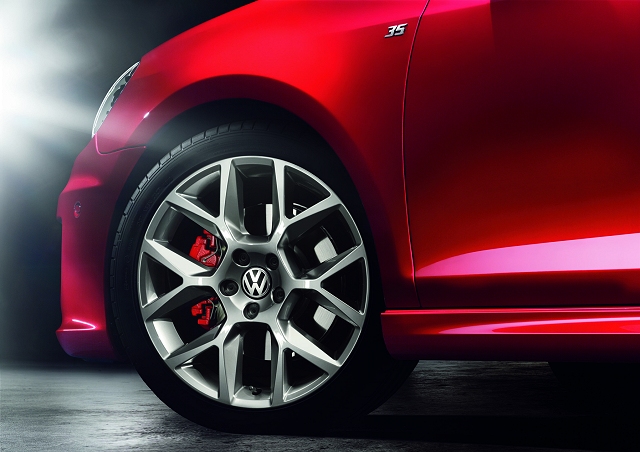
Launched in 2009, the sixth-generation Golf GTI used a turbocharged 2.0-litre petrol engine once more, producing 210hp, giving a 0-100km/h time of 6.9 seconds and a 240km/h top speed. It introduced the 'XDS' electronic differential lock as standard, along with a revised exhaust layout. A 235hp Edition 35 arrived in 2011, and the GTI was offered as a Cabriolet for the first (and only) time from 2012 - never sold in Ireland.
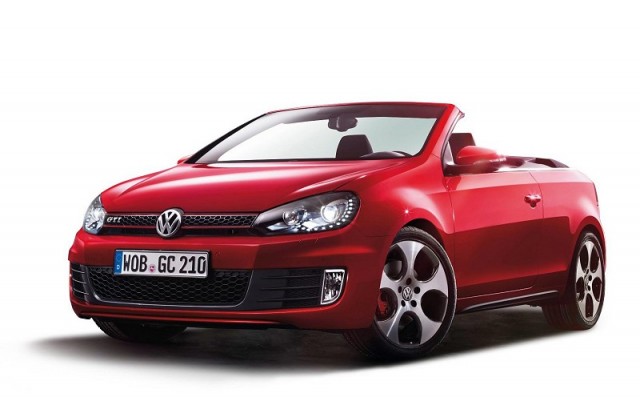
Mk7 Golf GTI: 2013-2020
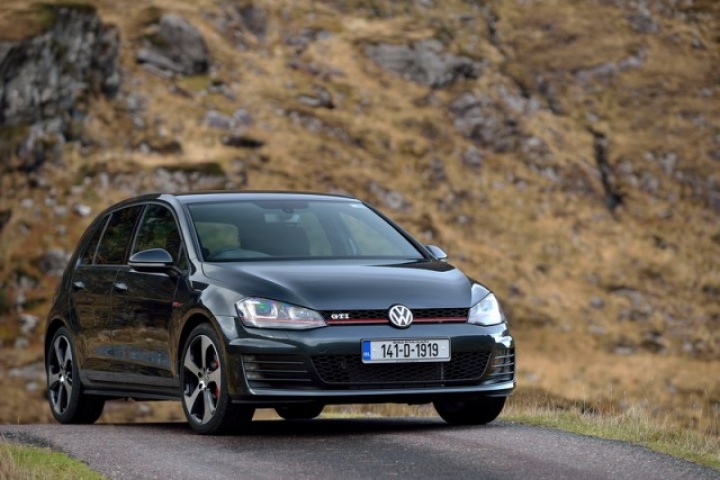
The seventh-generation Golf GTI was offered with 220hp - or 230hp in Performance form. A 265hp Clubsport followed in 2016, rising briefly to 290hp, alongside the 310hp Clubsport S, which set a front-wheel-drive Nürburgring lap record. Power increased again in 2017 to 230hp and 245hp, respectively. The 290hp GTI TCR arrived in 2019.