
Introduction to the 2026 Toyota bZ
The Toyota bZ (née bZ4X) has kind of run under the radar just a touch. While other electric SUVs come with grandiose claims about acceleration, or have OTT styling, the quieter, subtler bZ has traded on decent performance and solid value, and since its 2022 launch it has actually at times been the third best-selling EV in Europe.
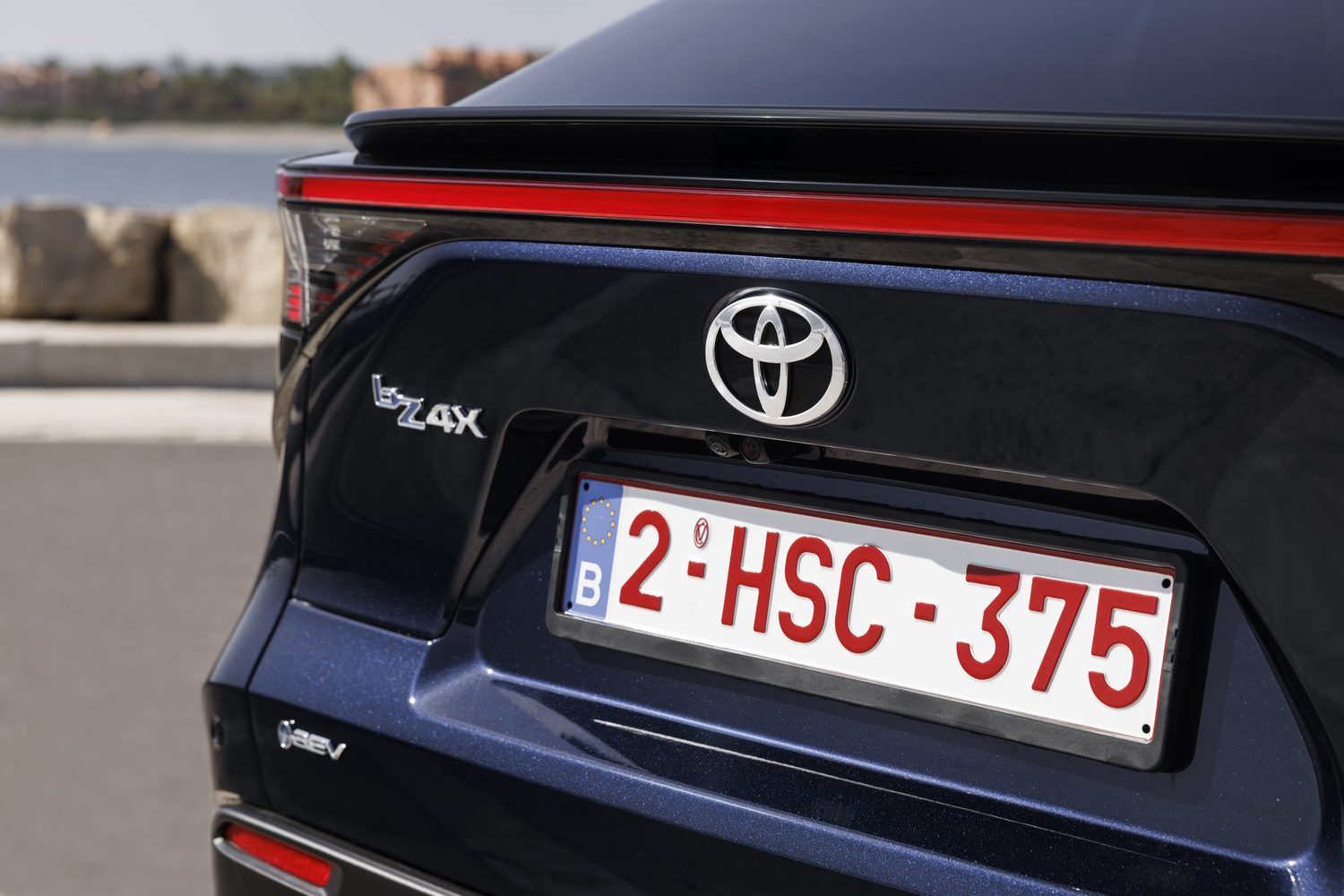
For 2026, Toyota gave the bZ a significant update. As well as simplification of the name to make it a little less like the answer to a Leaving Cert maths paper question, there's also a new battery, a revised electric motor and an updated interior.

Pros & cons of the 2026 Toyota bZ
Pros:
• Much improved range
• High quality cabin
• Good to drive
Cons:
• Rivals' boots are bigger
• Quiet styling
• Firm ride on some surfaces
Exterior & design of the 2026 Toyota bZ
• 'Hammerhead' styling at the front
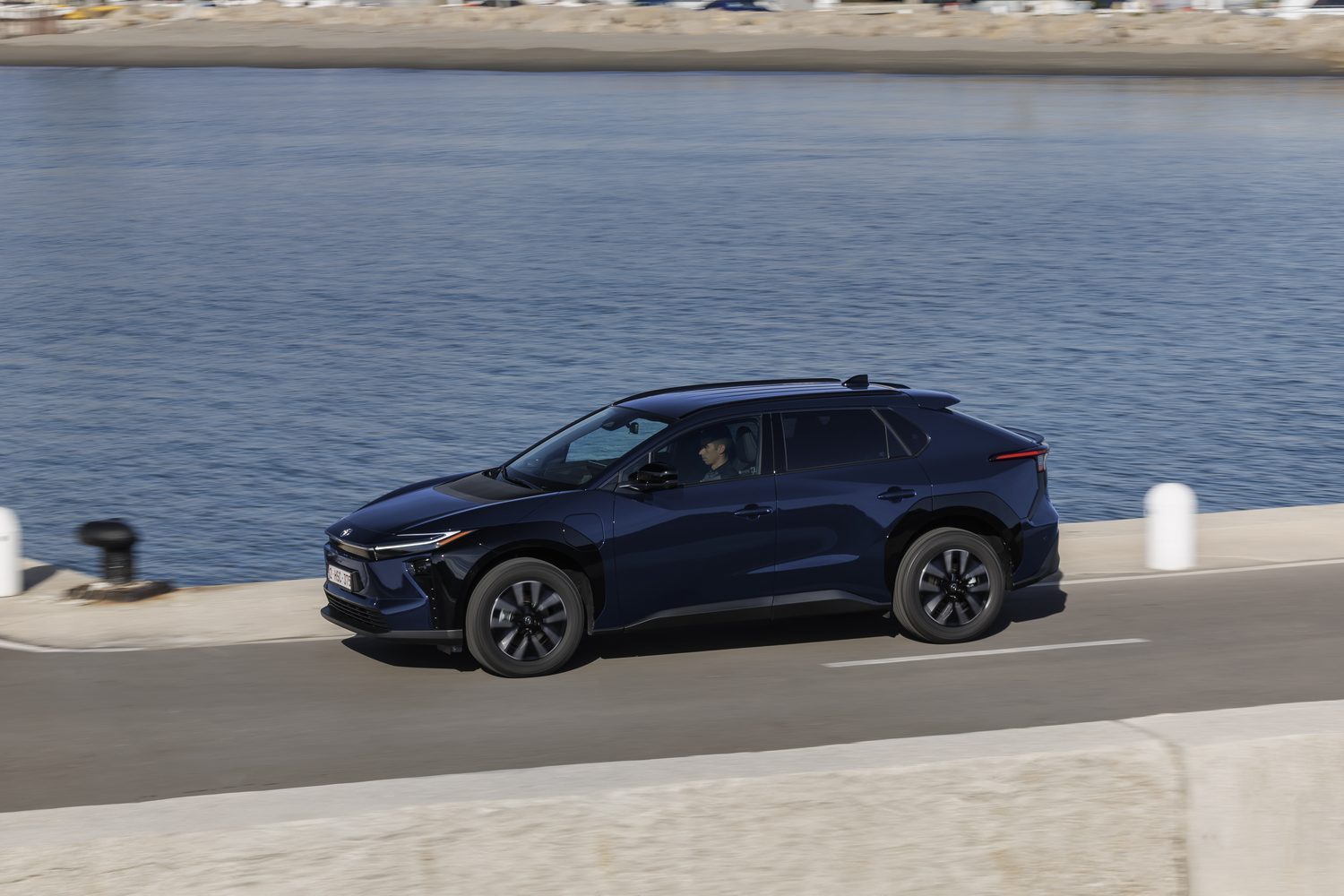
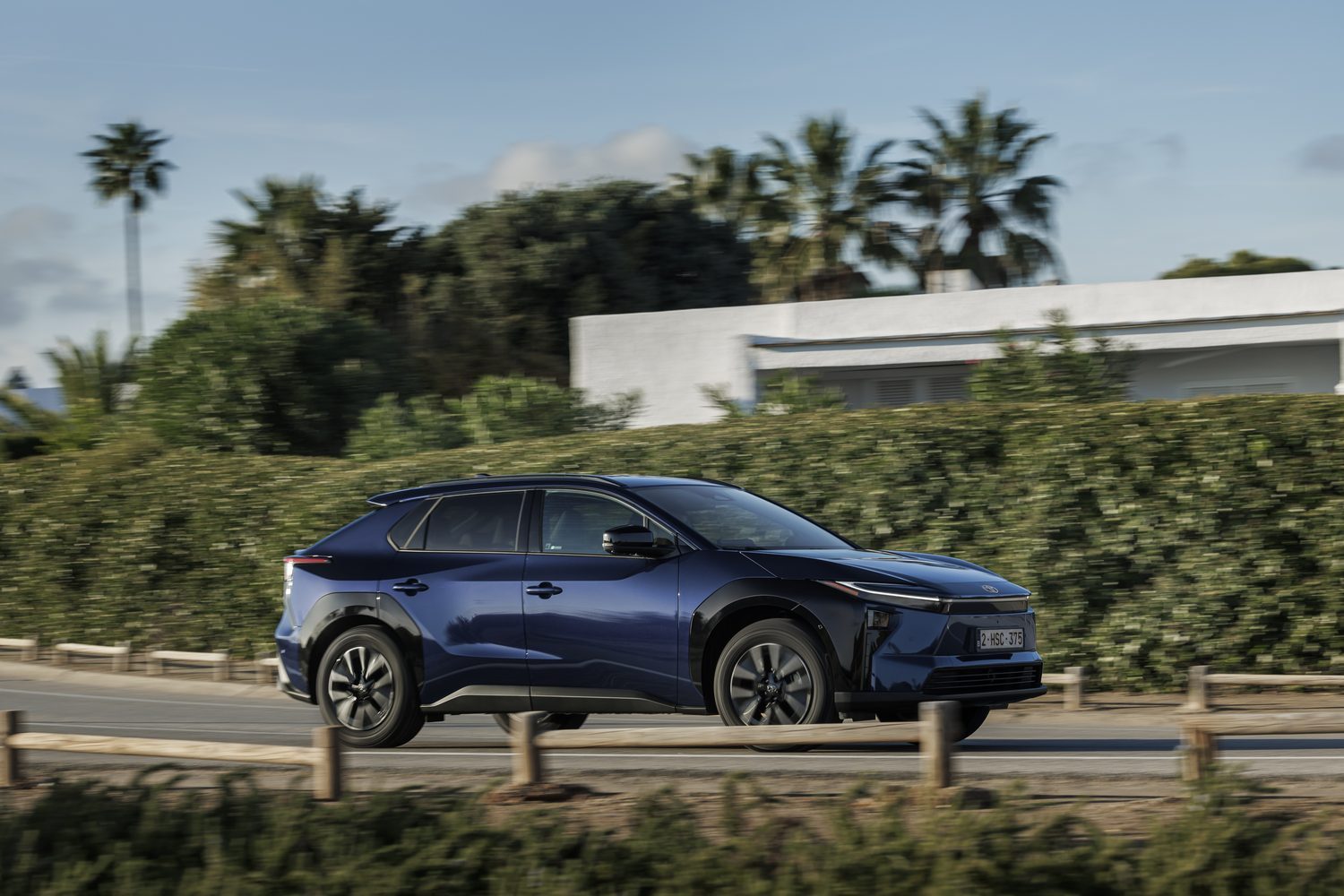
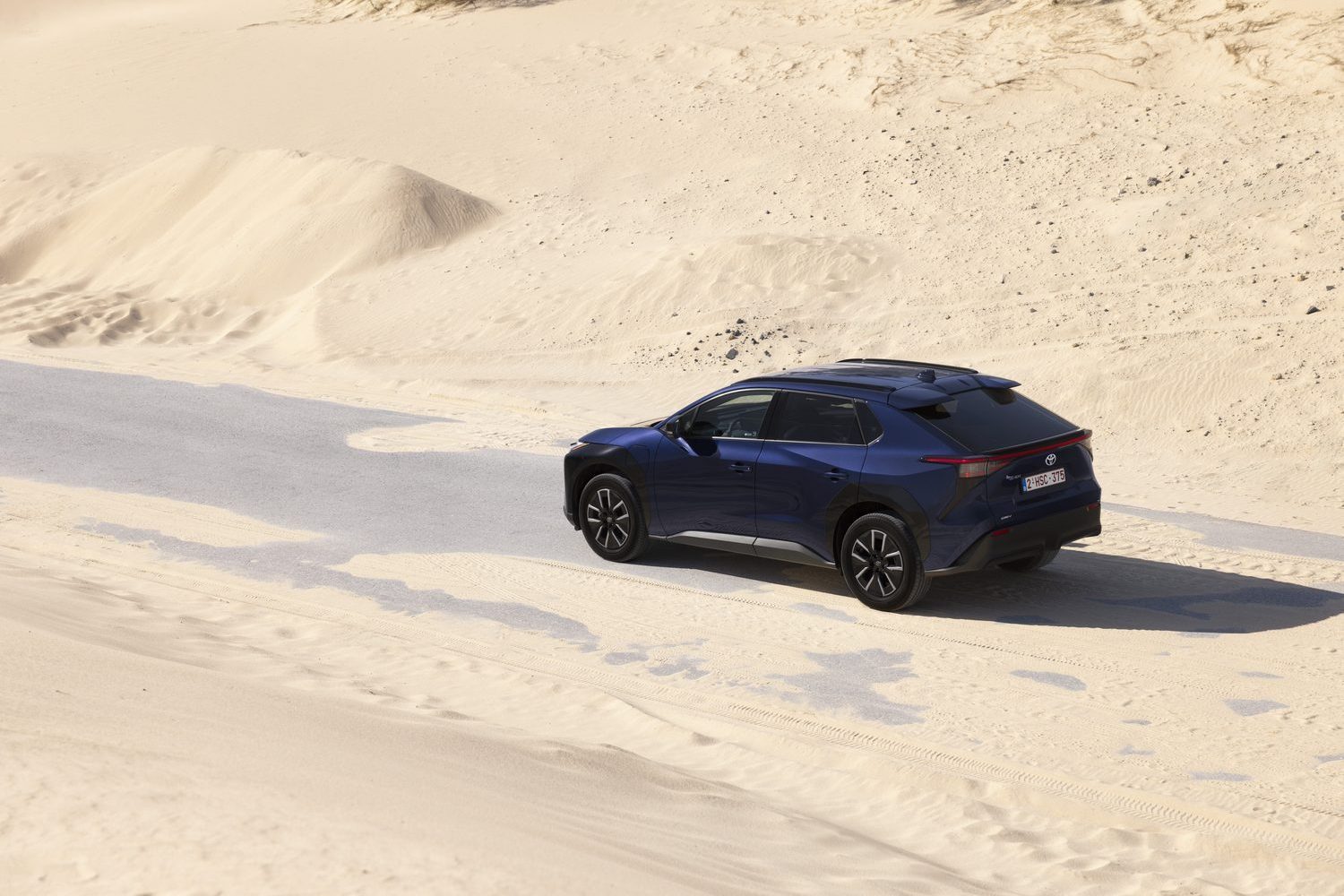
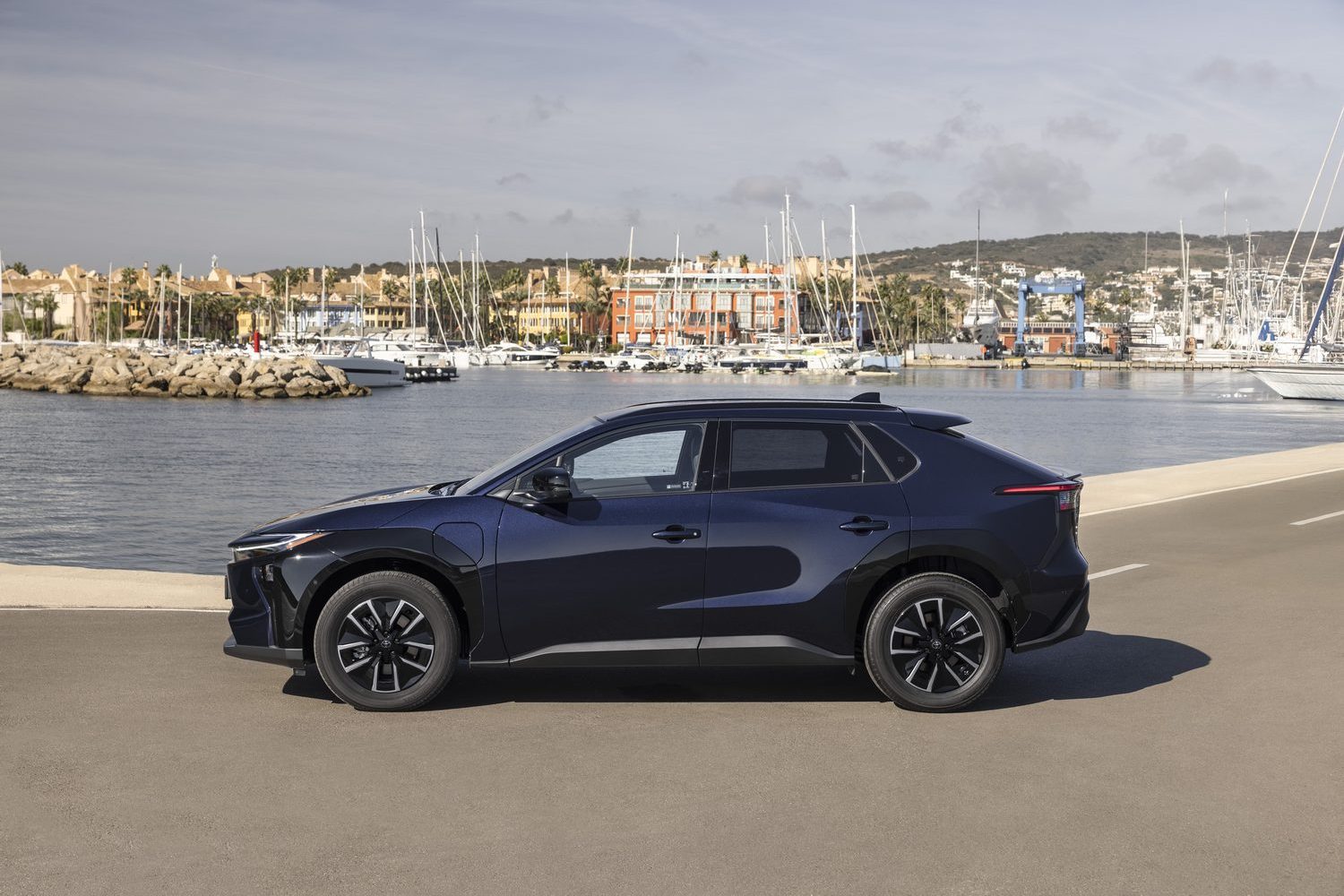
• Quite low and sleek compared to most rivals
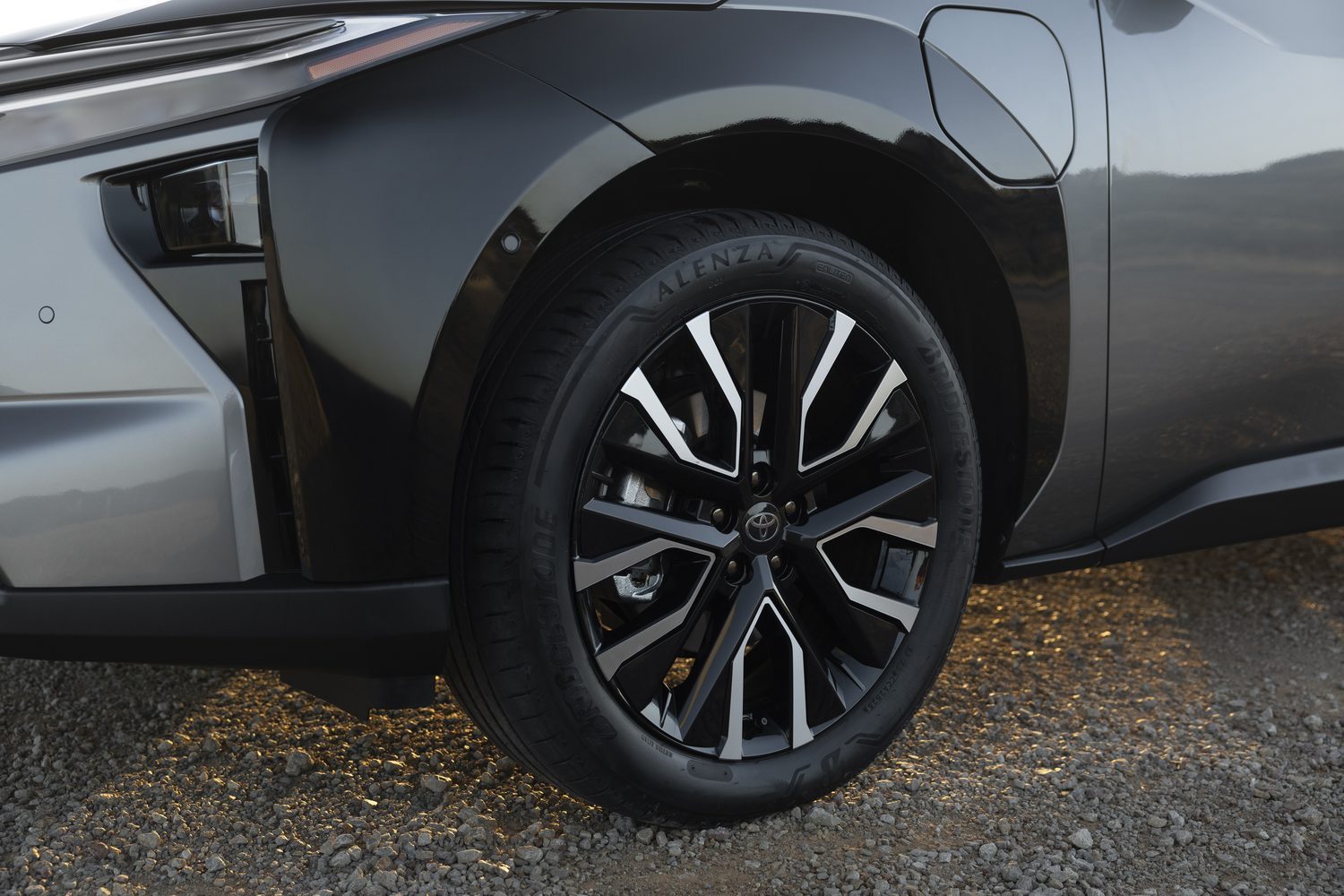
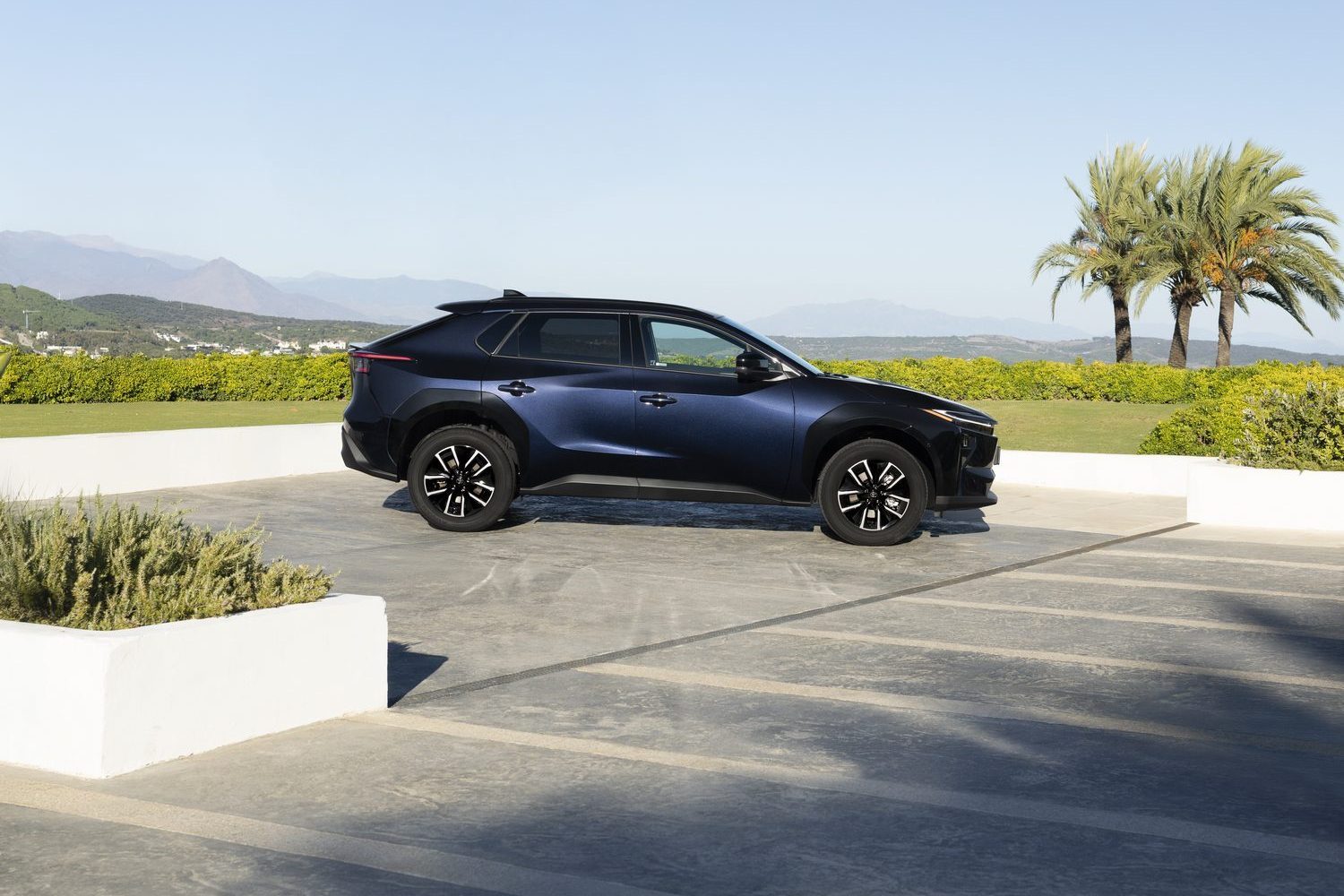
• Wheelarches now painted, not plastic

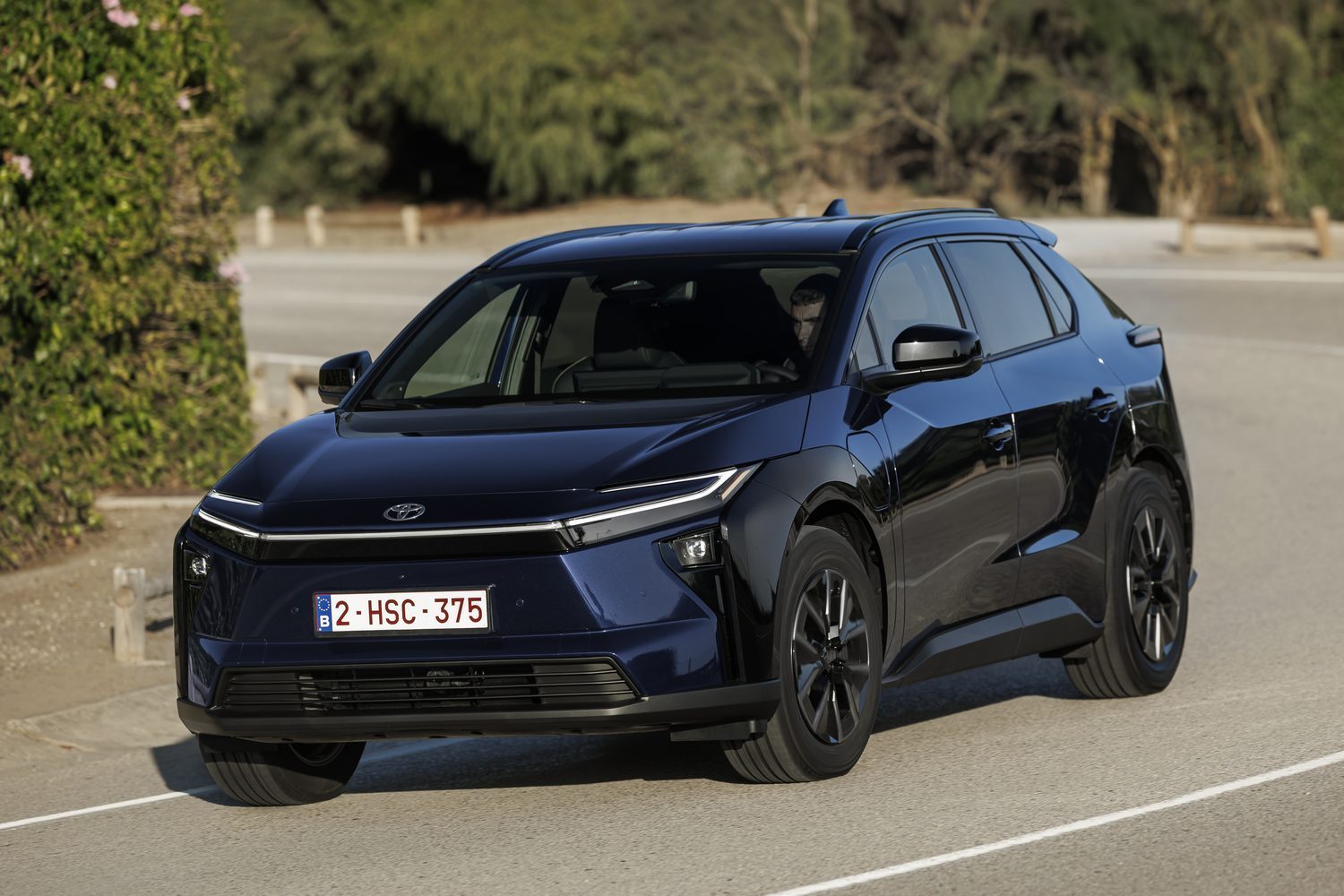
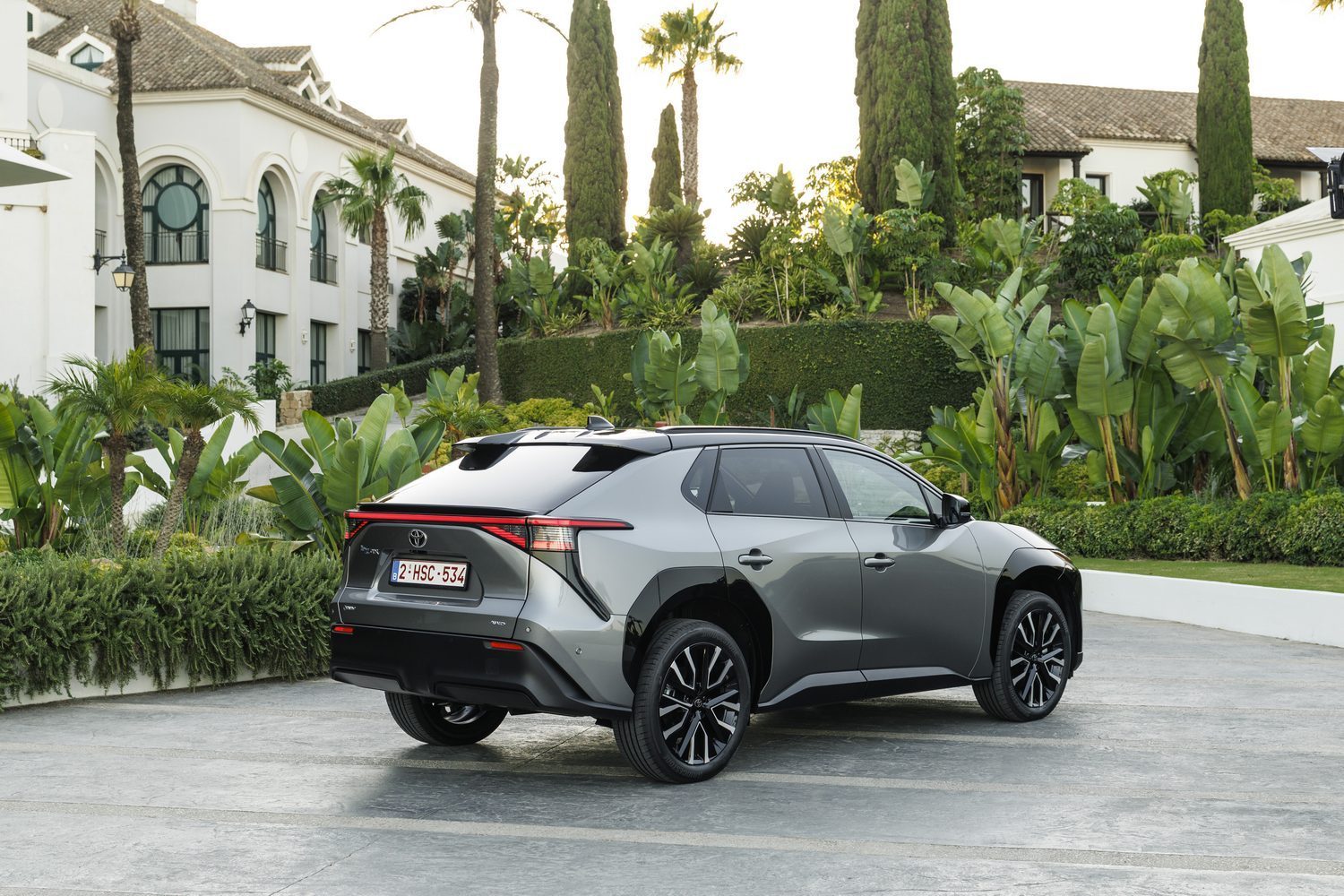
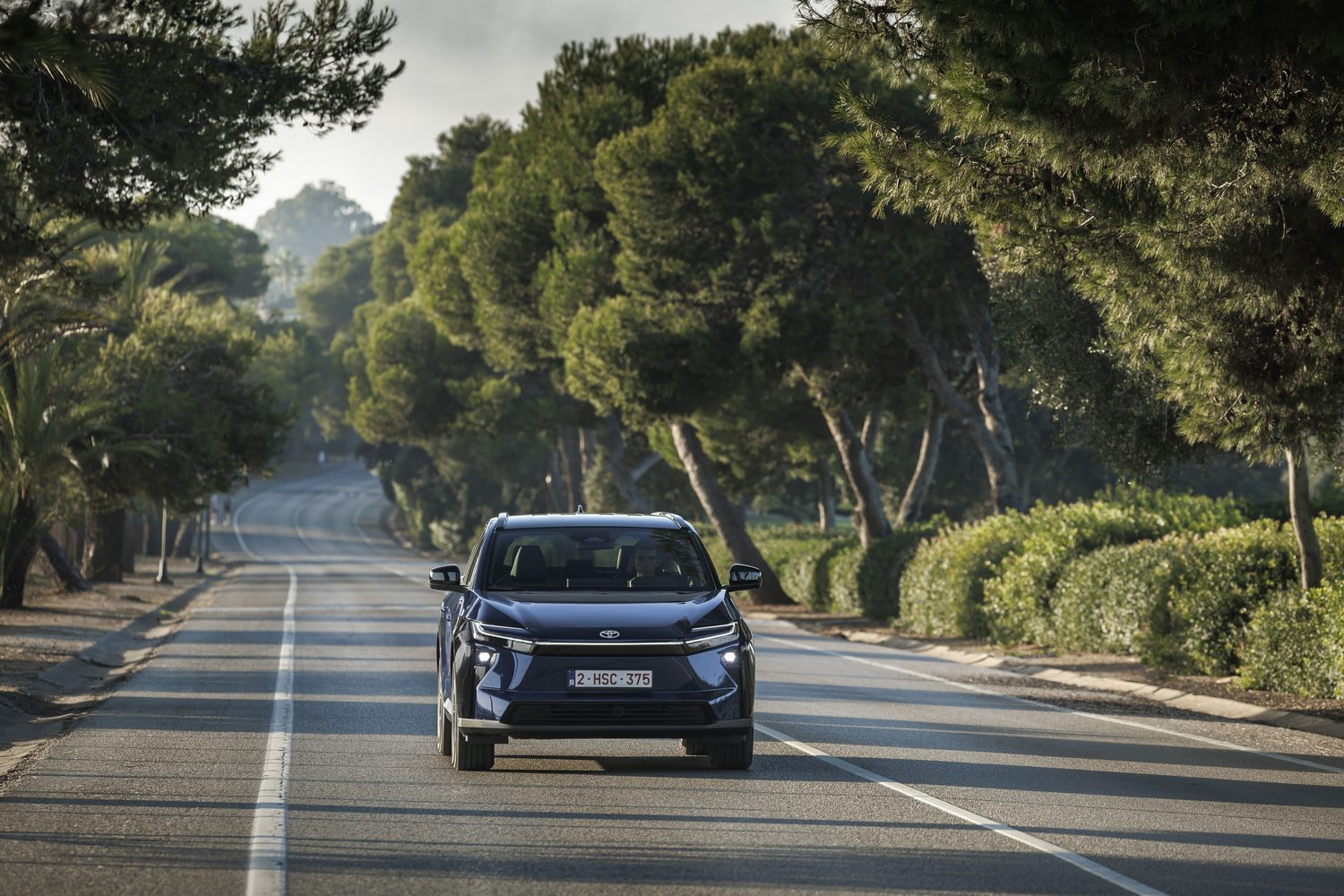
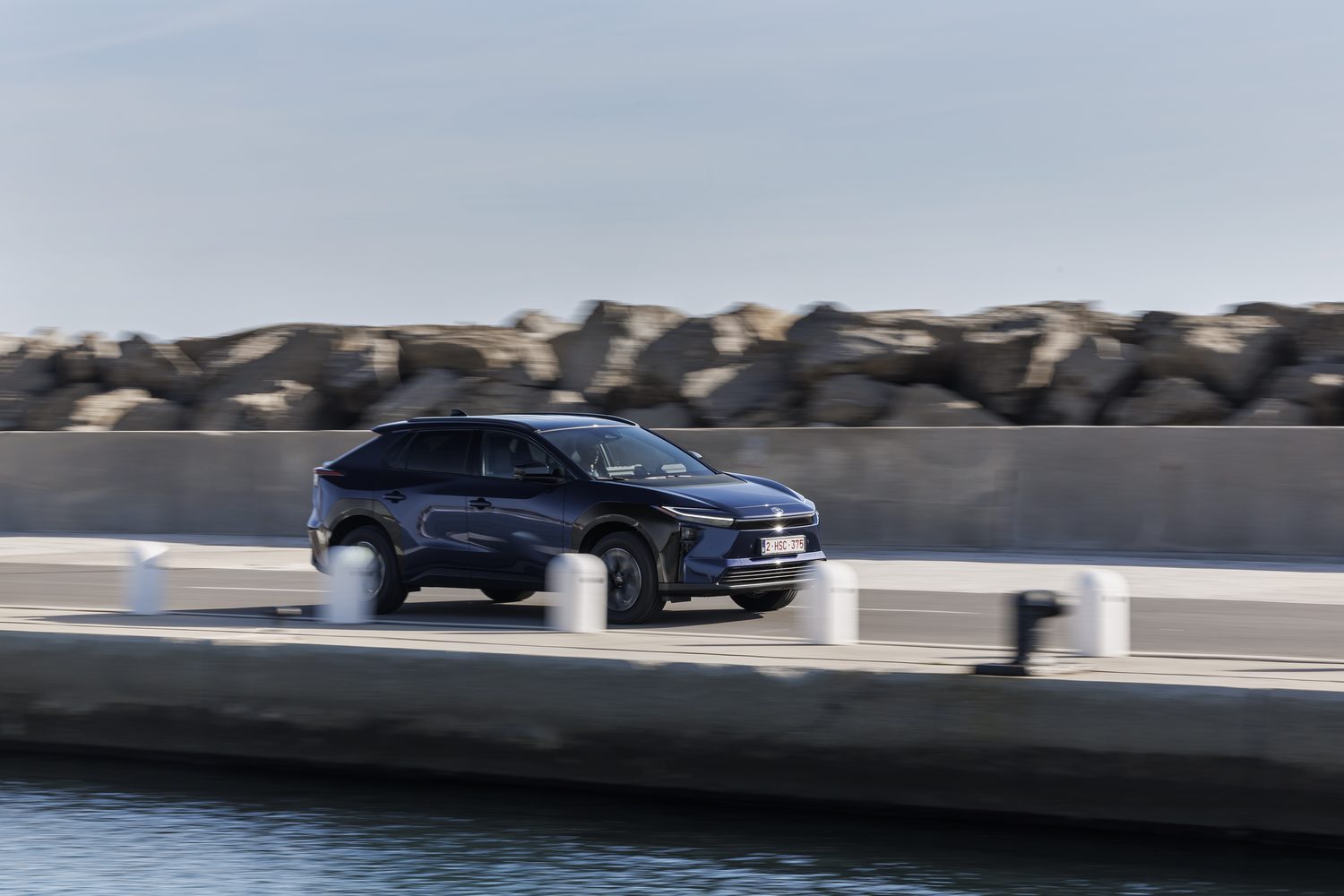
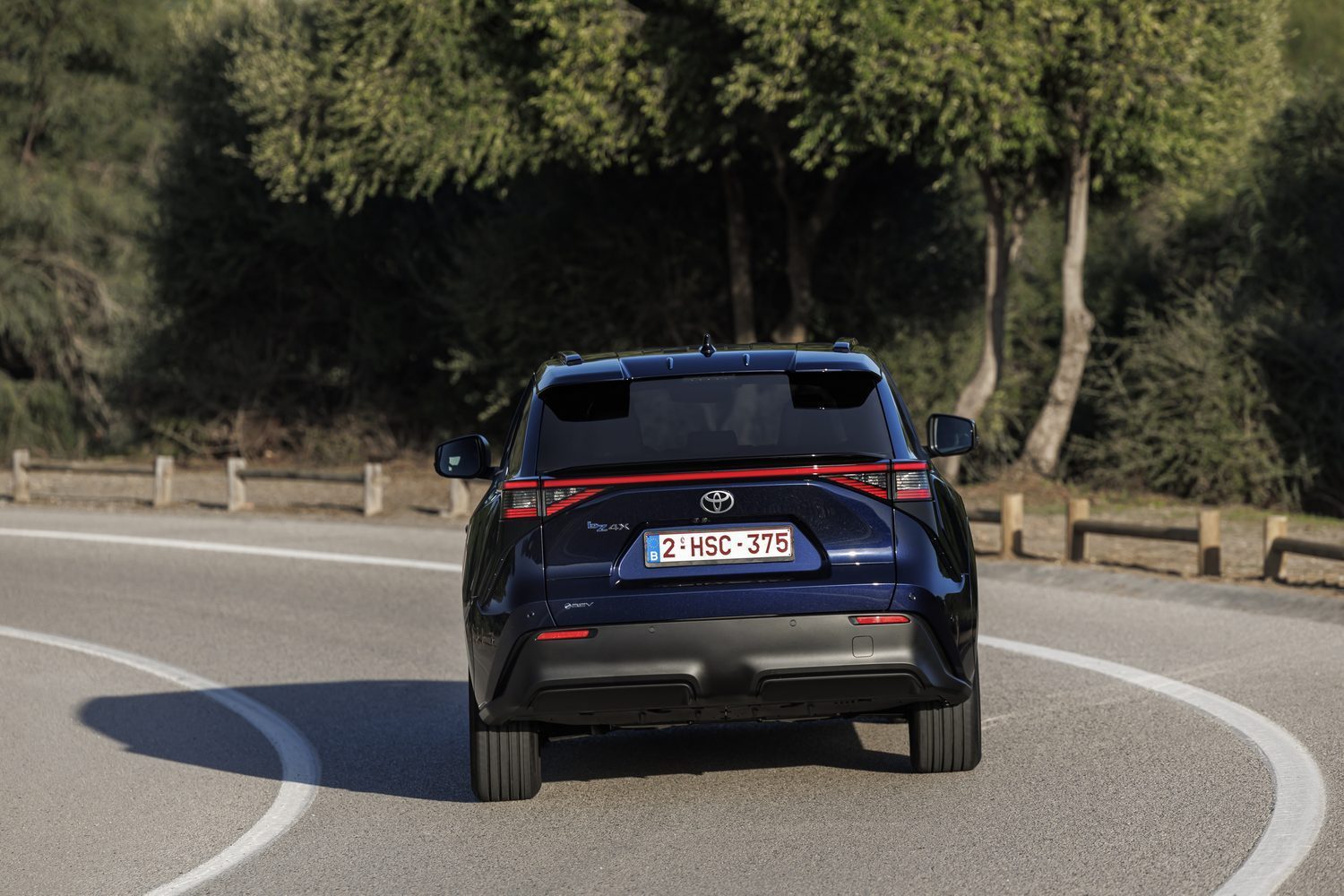
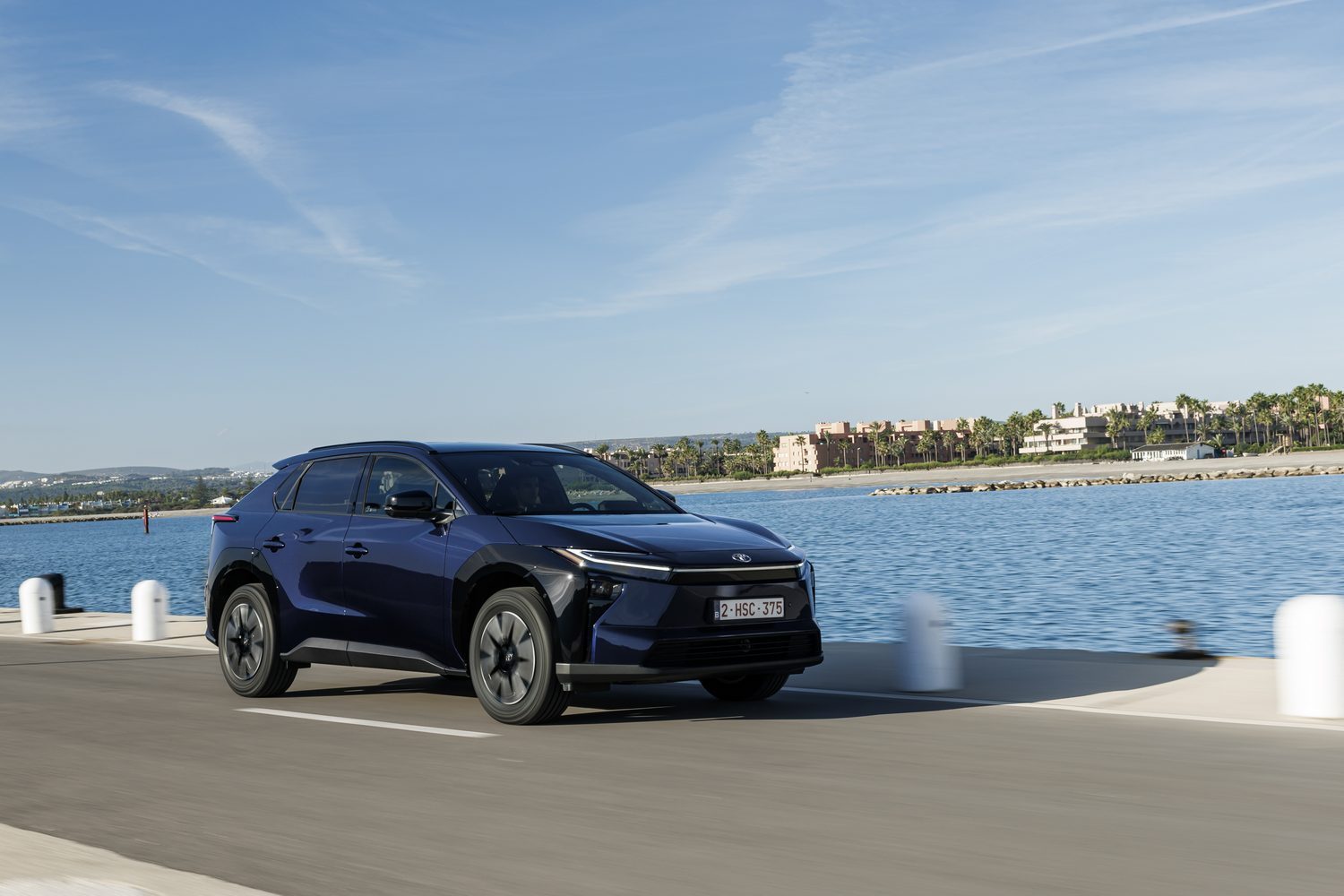
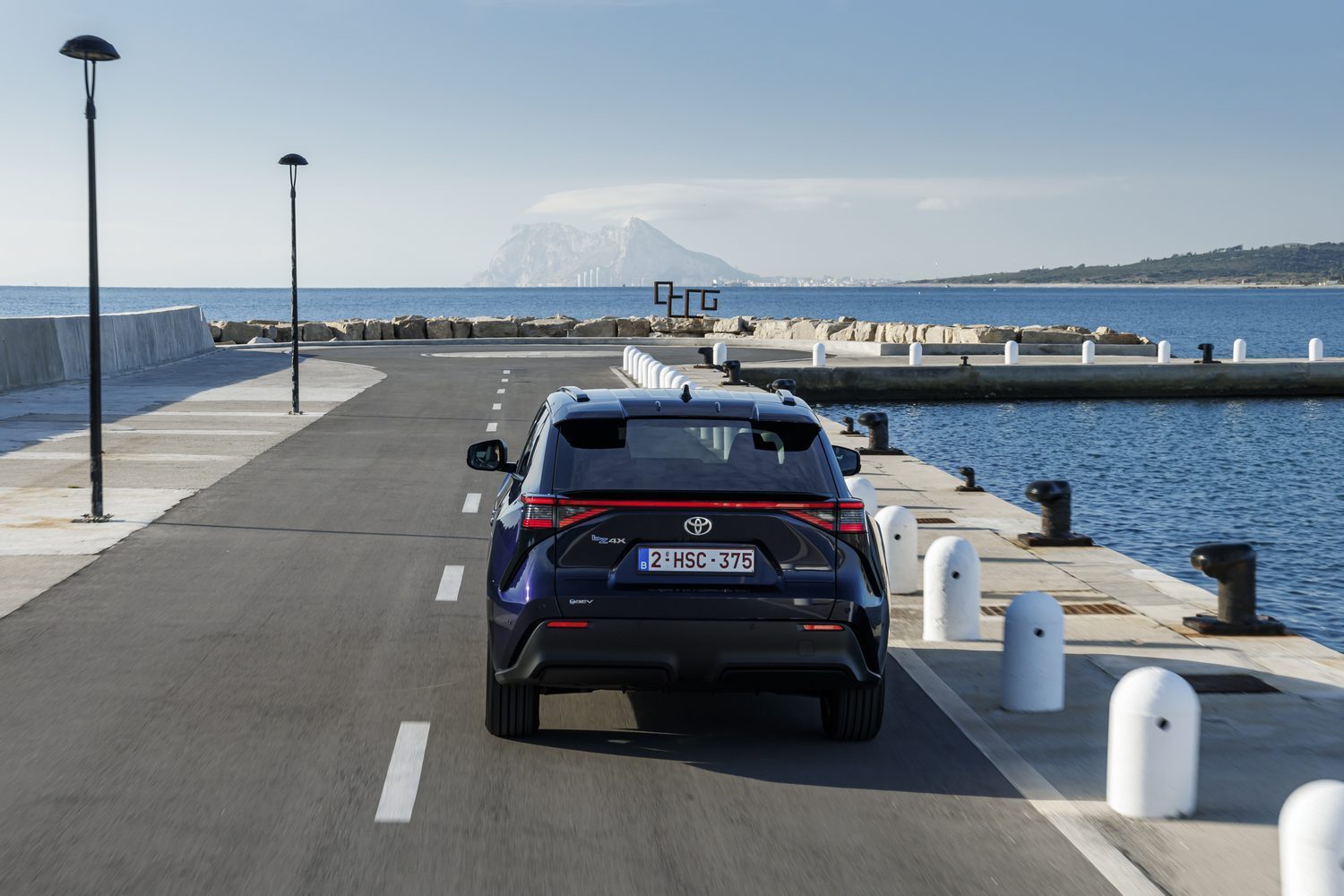
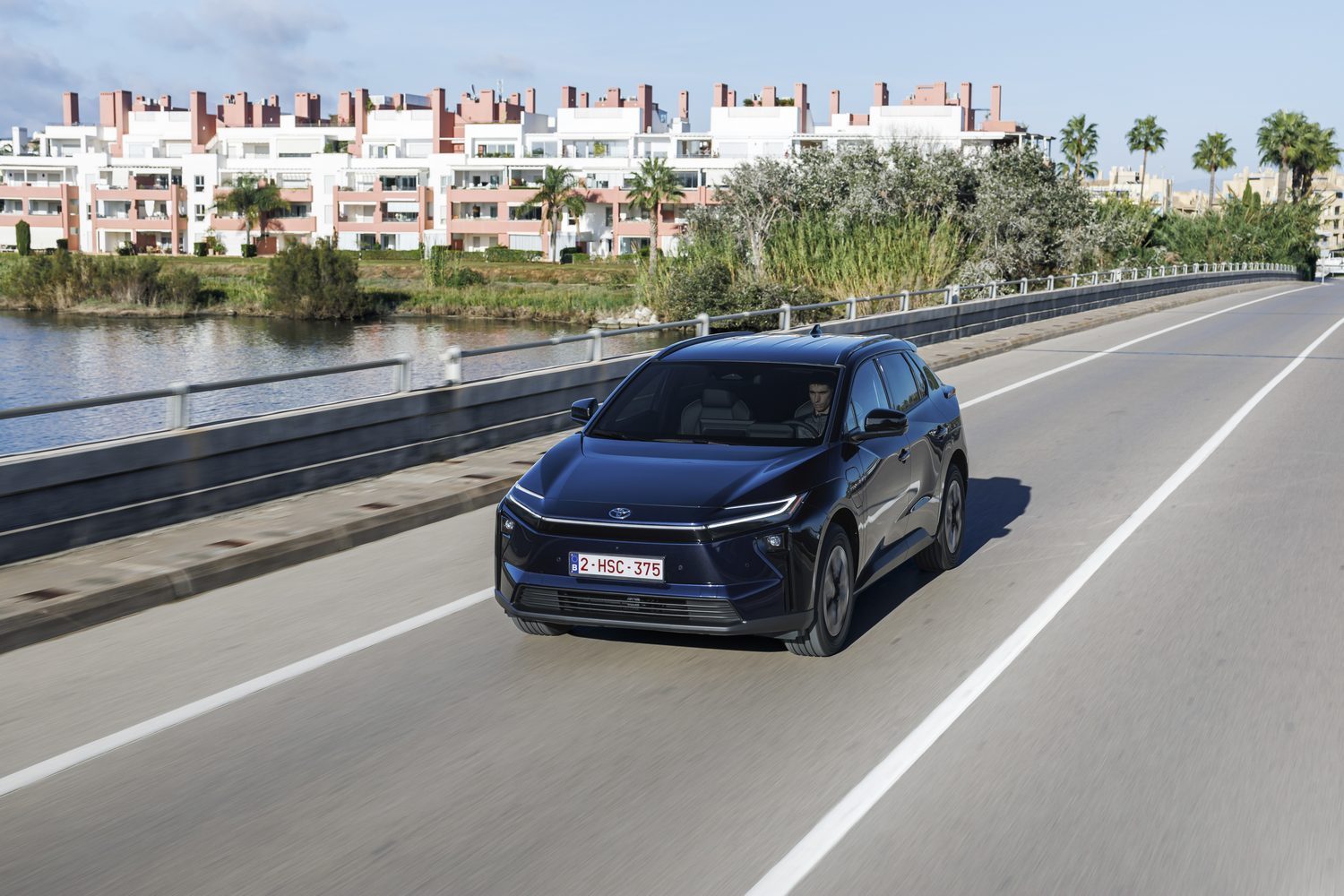
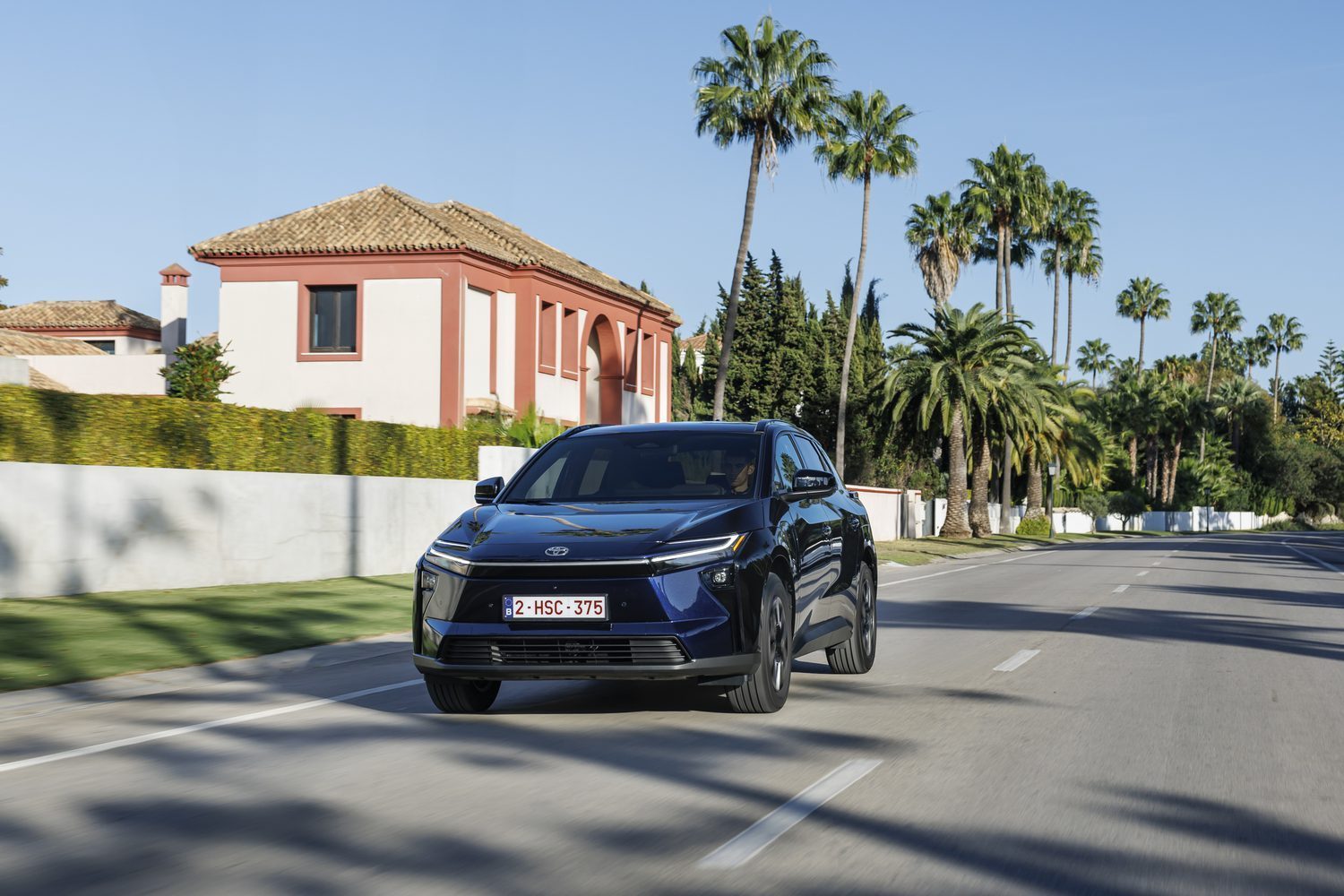
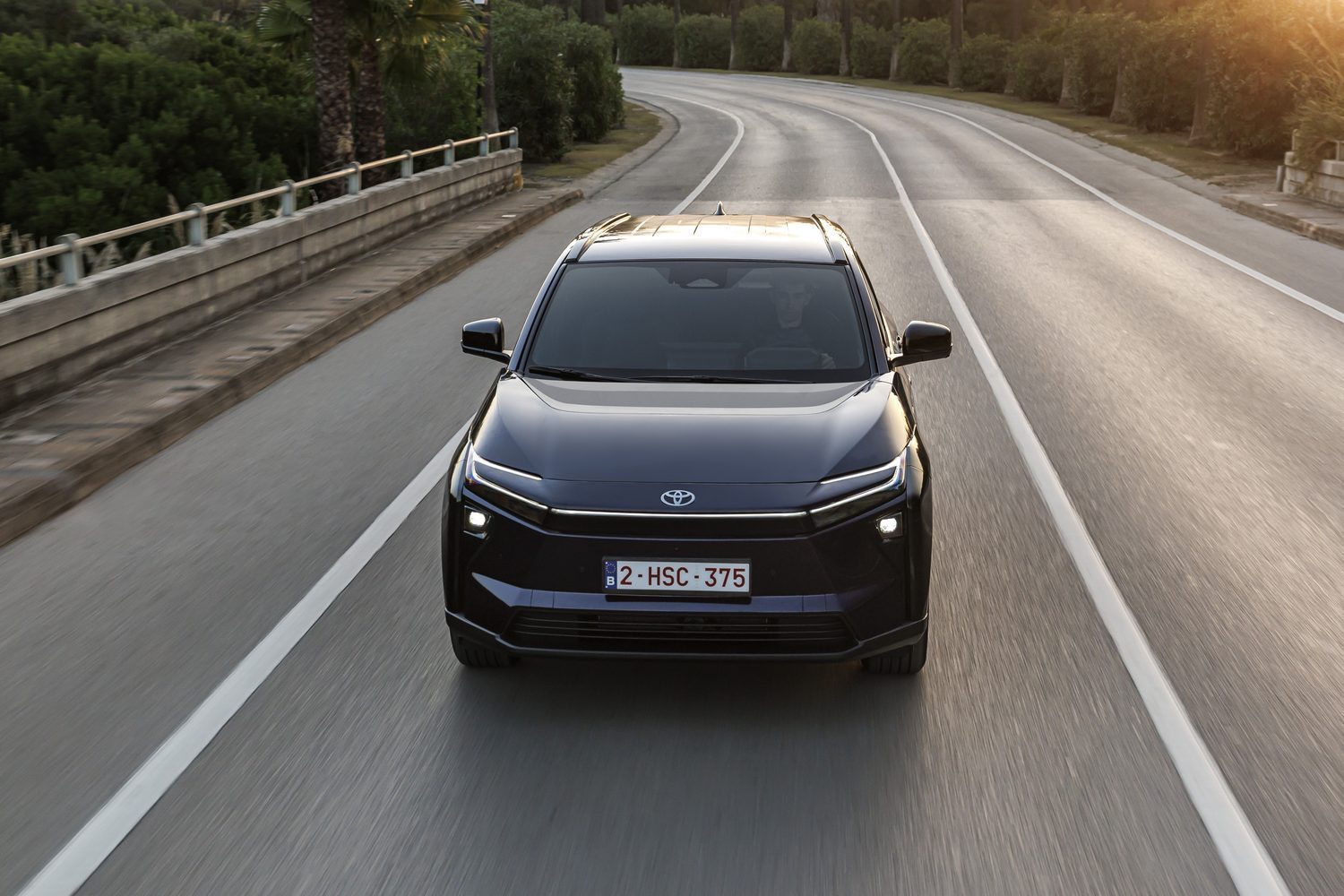
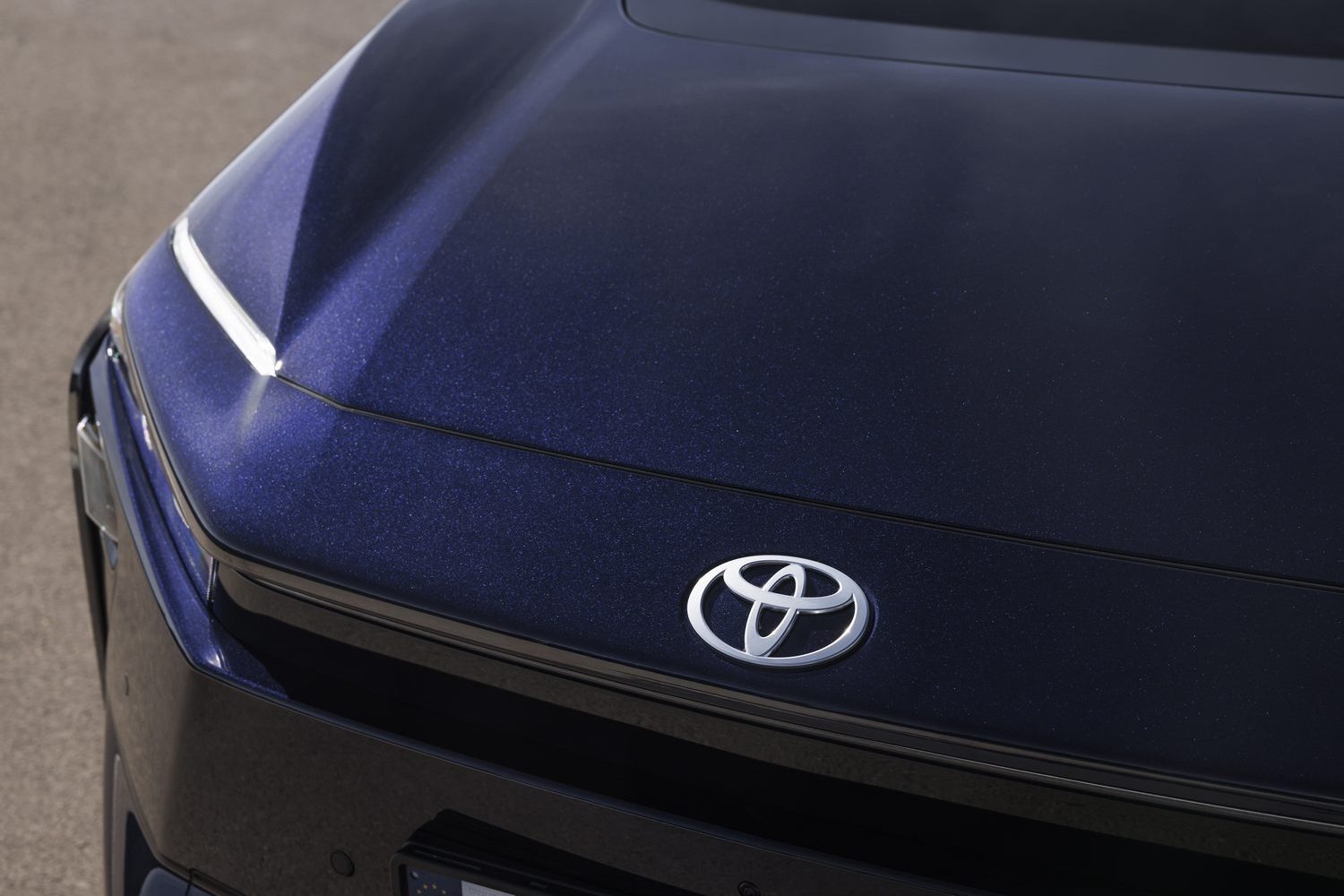
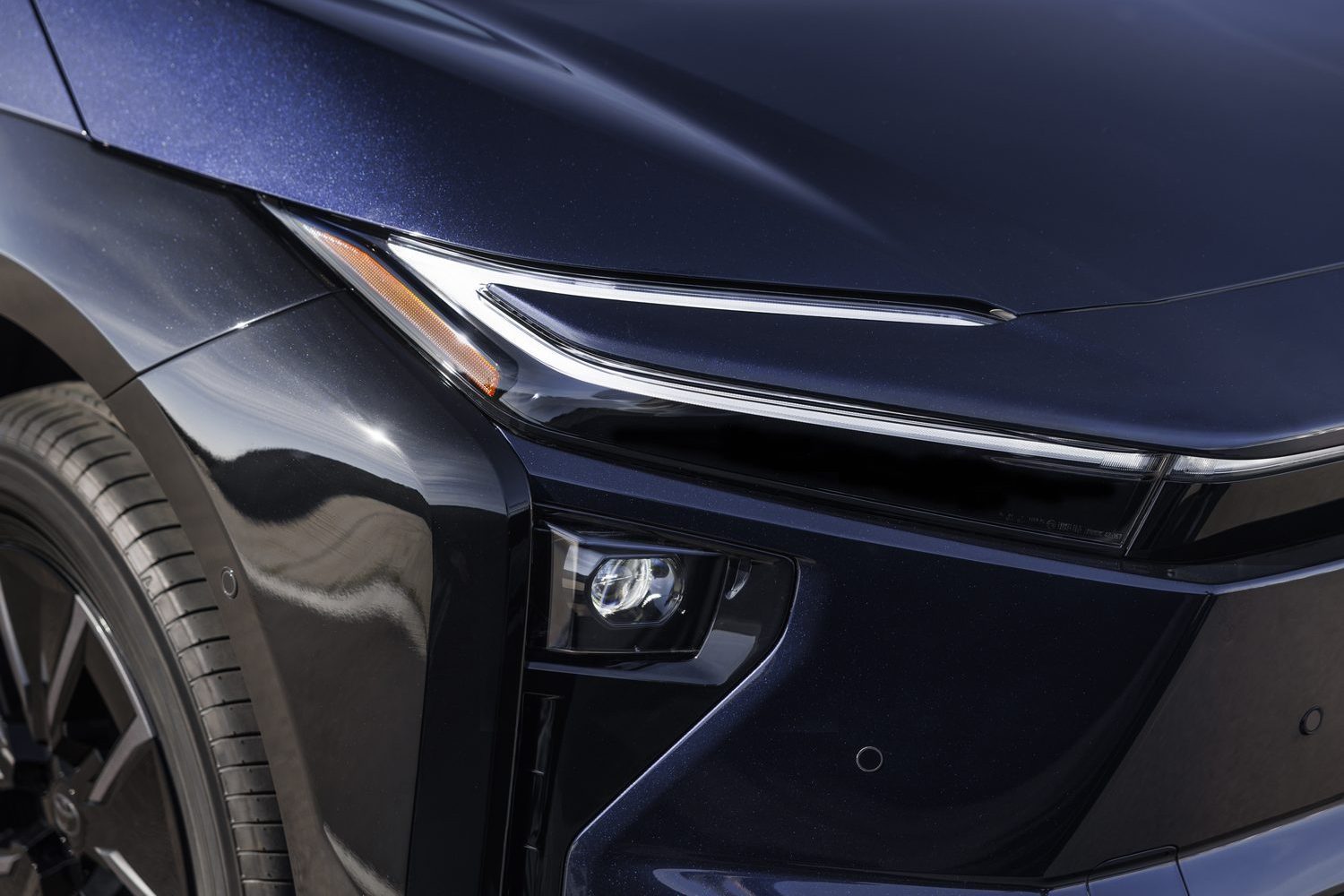
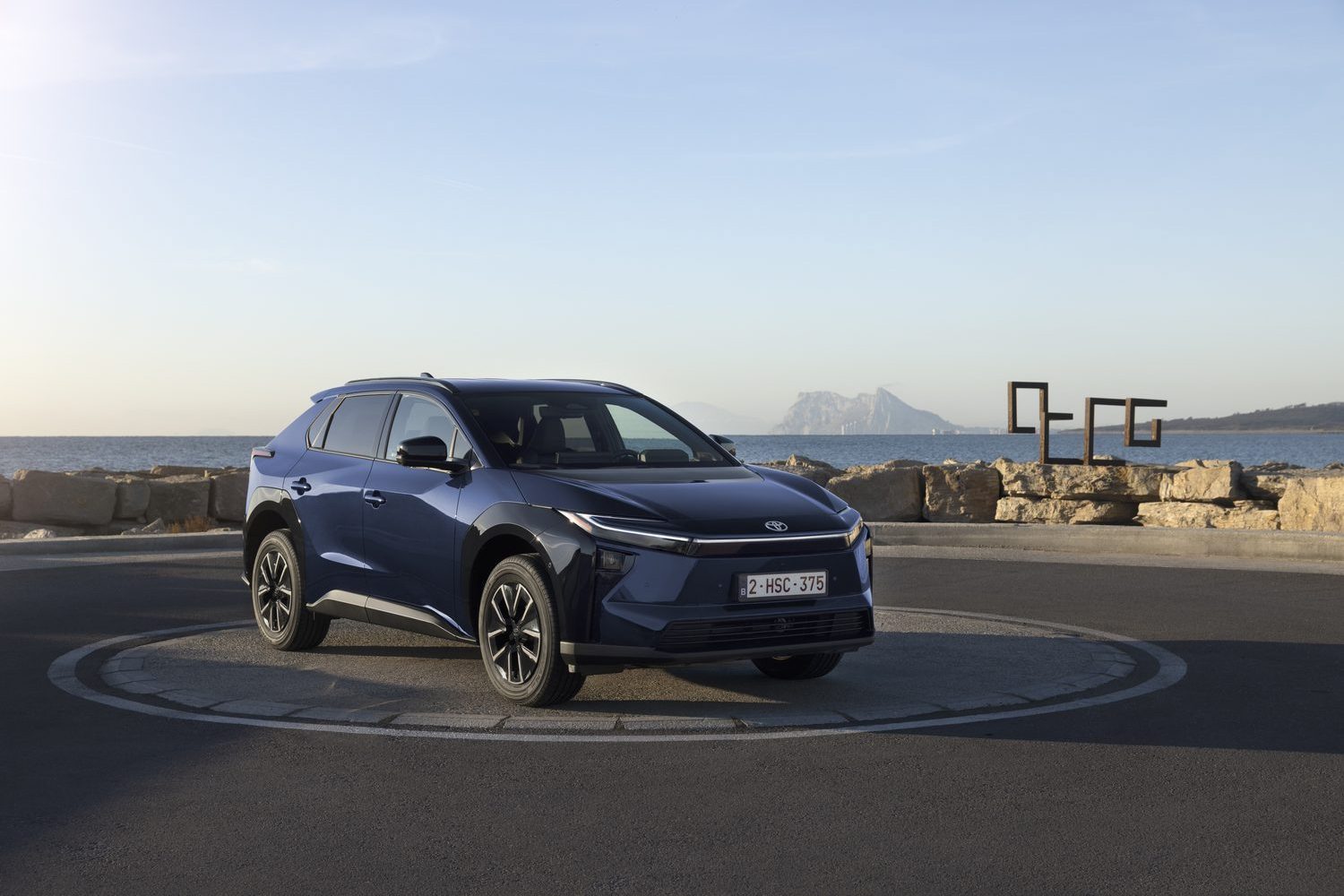
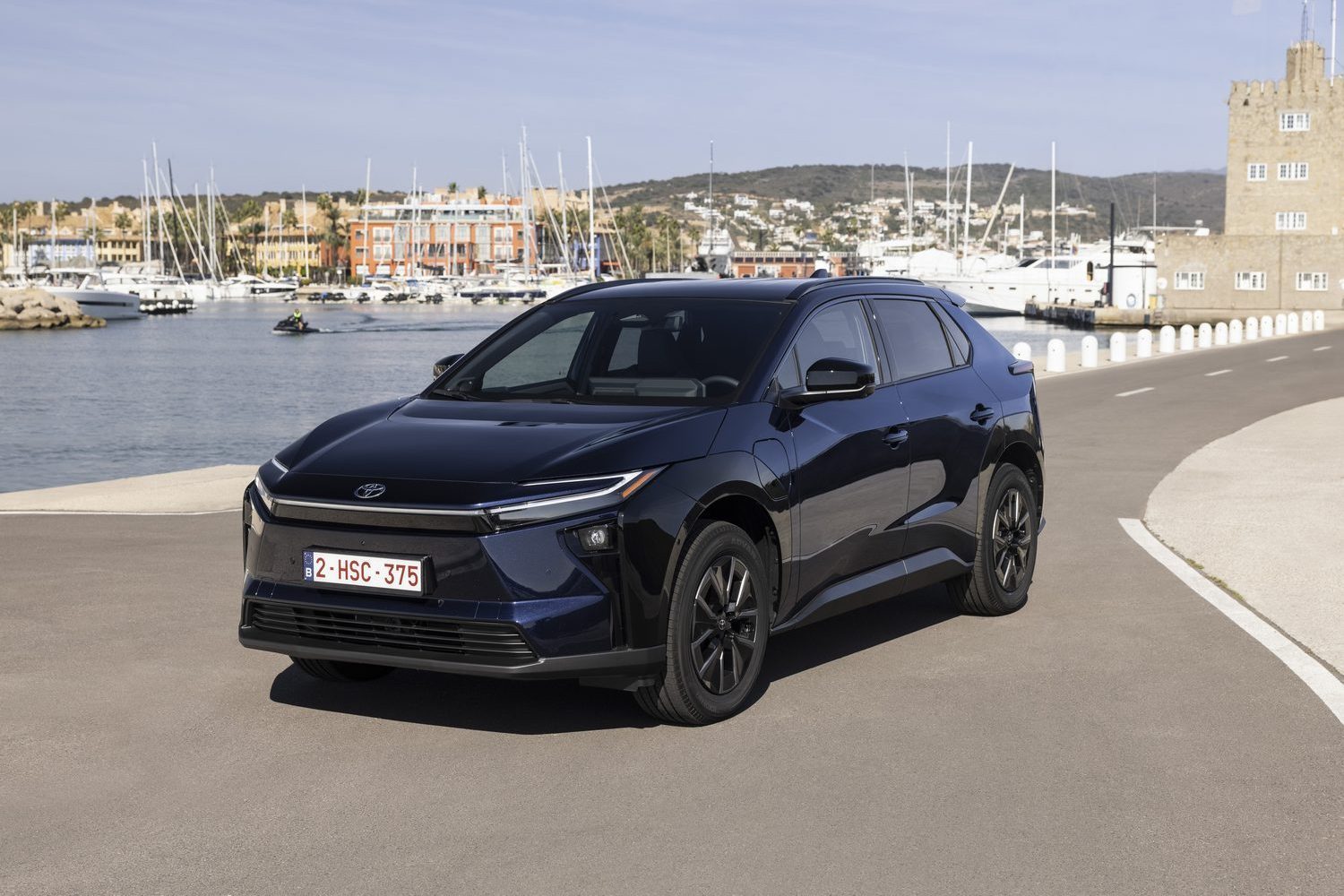
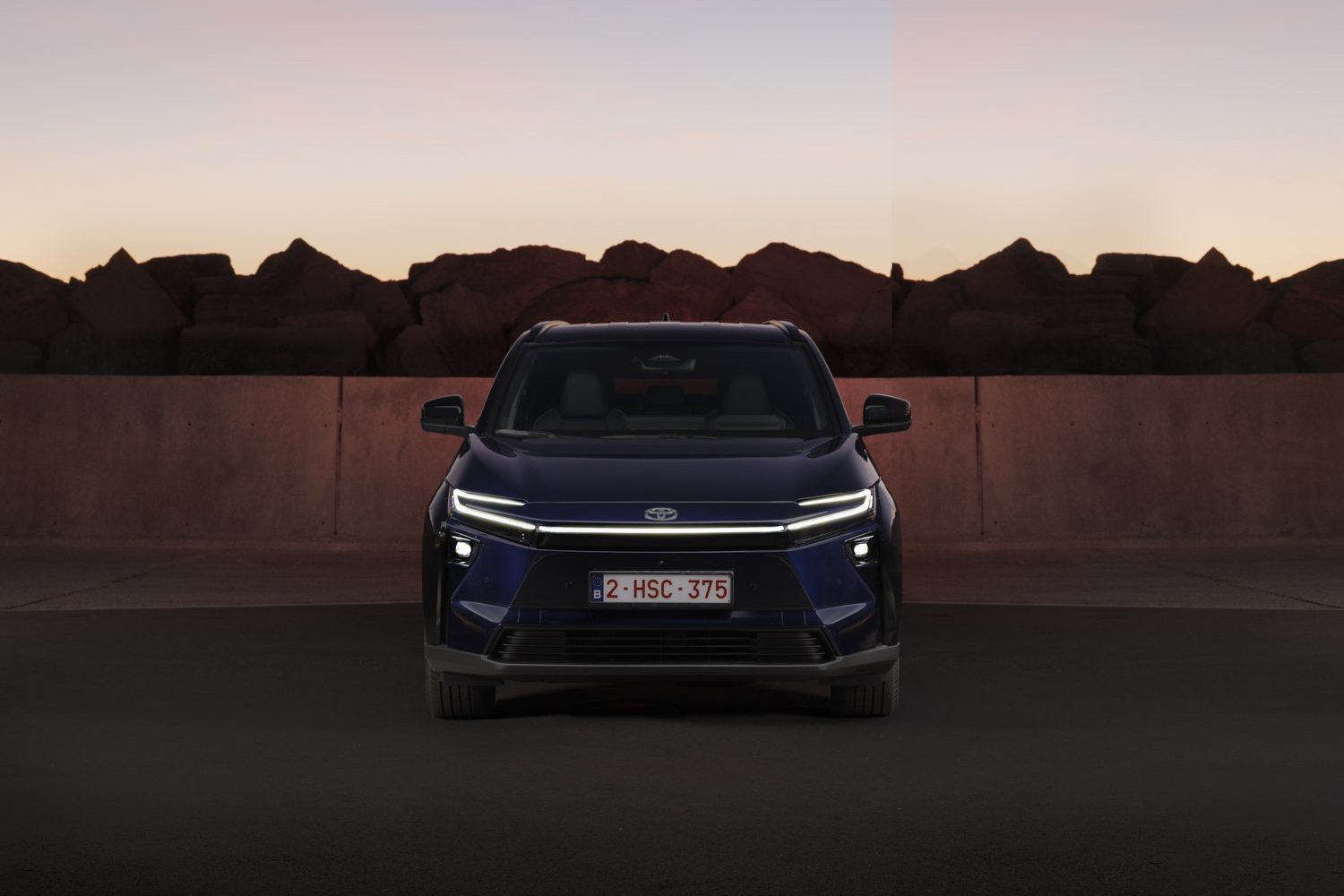
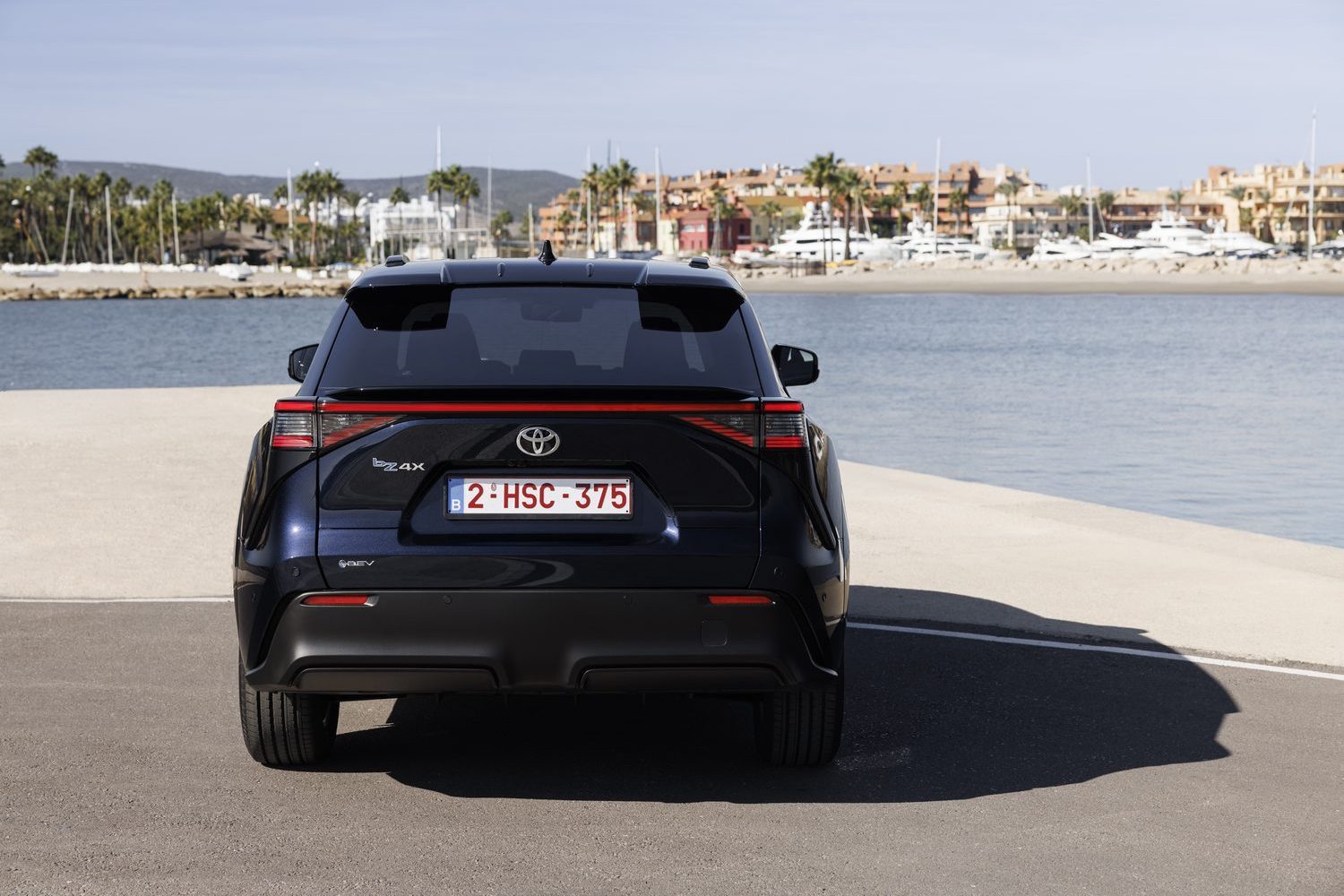
Toyota has given the bZ a styling upgrade for 2026, most obvious at the front. The overall effect isn't too dramatic - the basic silhouette remains the same, and you may not notice the changes at first - but the bZ now gets the 'Hammerhead' Toyota family look to bring it in line with the likes of the C-HR+ and the new RAV4.
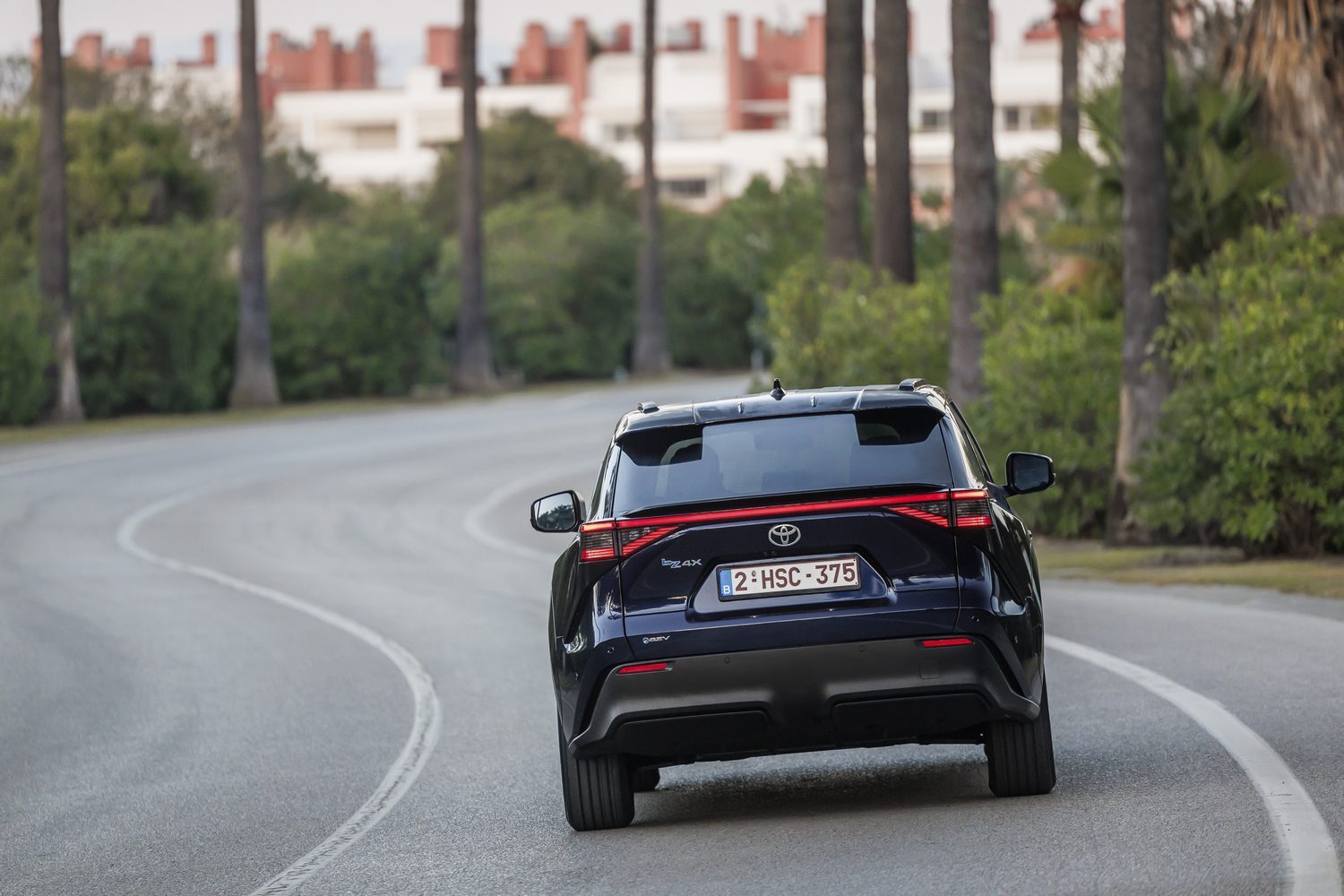
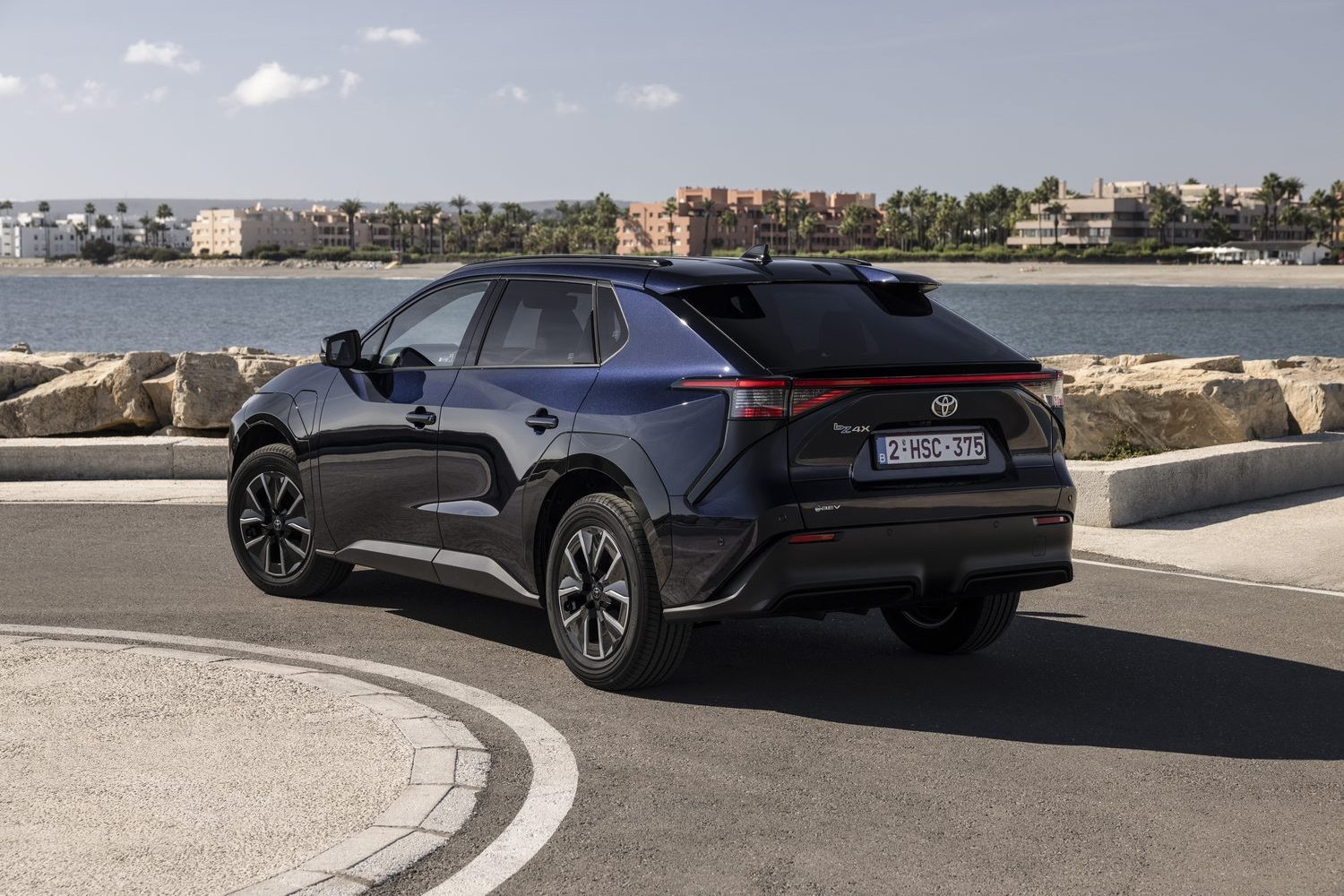
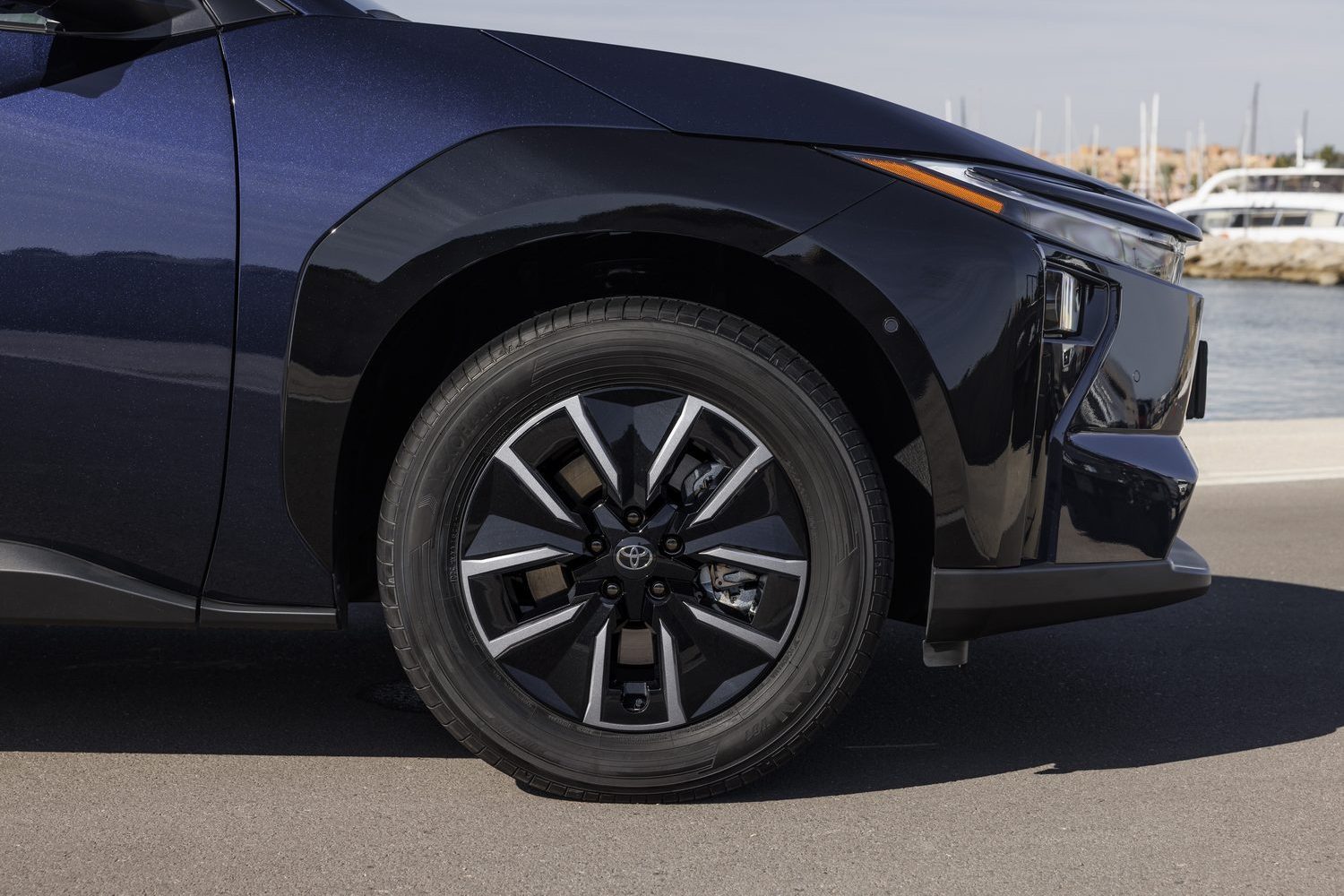
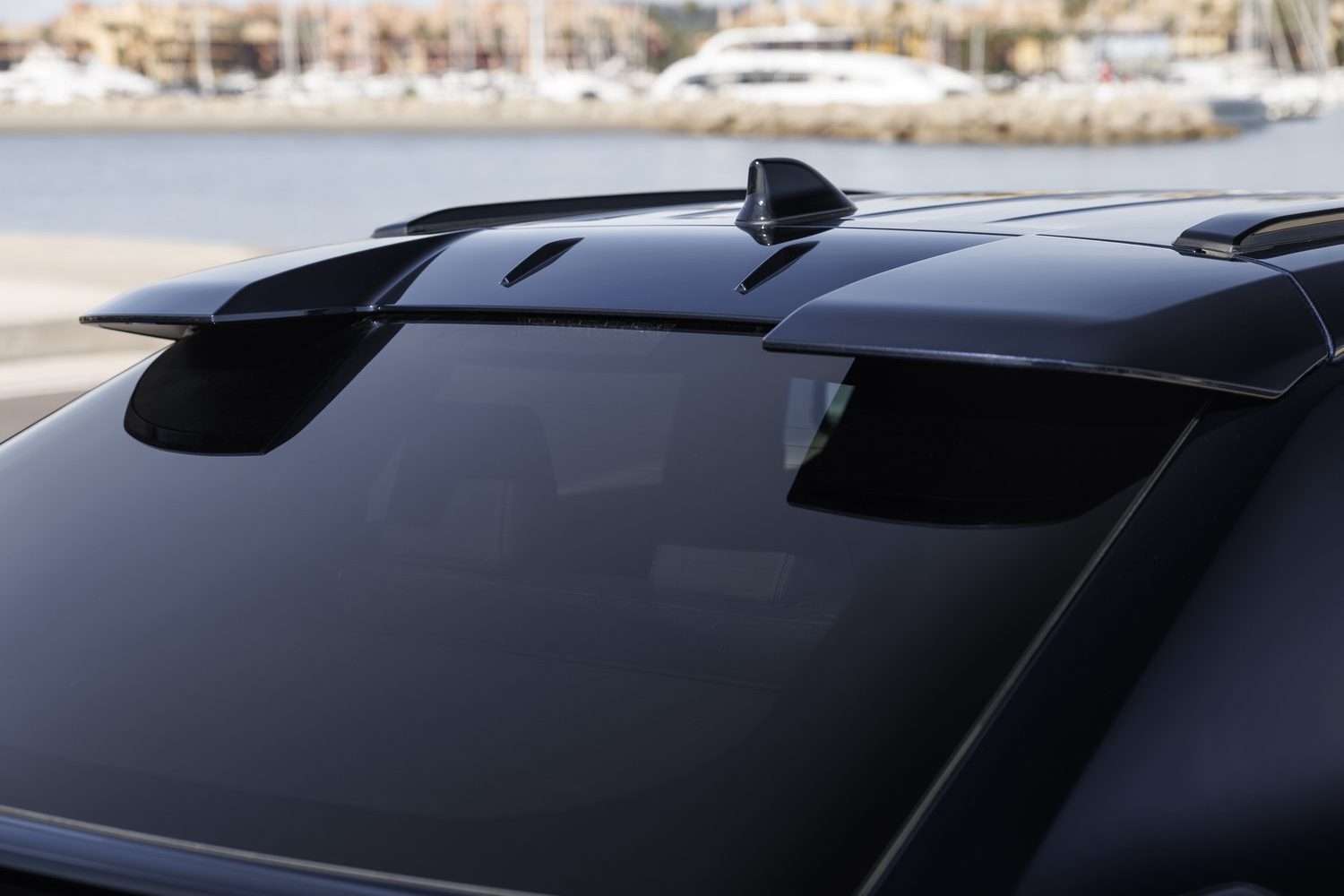
So, the bZ has neat, slim, wrap-over LED lights, and the wheelarches, which used to be unpainted plastic, now have a glossy-black finish. The car is also a little sleeker, with a revised rear spoiler and undertray leading to a slight cut in the aerodynamic drag coefficient, which falls from 0.29 to 0.27.

The Sport test car will likely be the most popular model in Ireland, and it rides on a handsome set of 18-inch alloys wheels with a bi-colour finish. If you upgrade to the more expensive Premium version, there's a set of 20-inch alloys as standard, although oddly they don't actually look all that different in terms of design.
Dimensions of the 2026 Toyota bZ
Length: 4,690mm
Width: 1,860 (mirrors folded)
Height: 1,650mm
Wheelbase: 2,850mm
Paint colours for the 2026 Toyota bZ
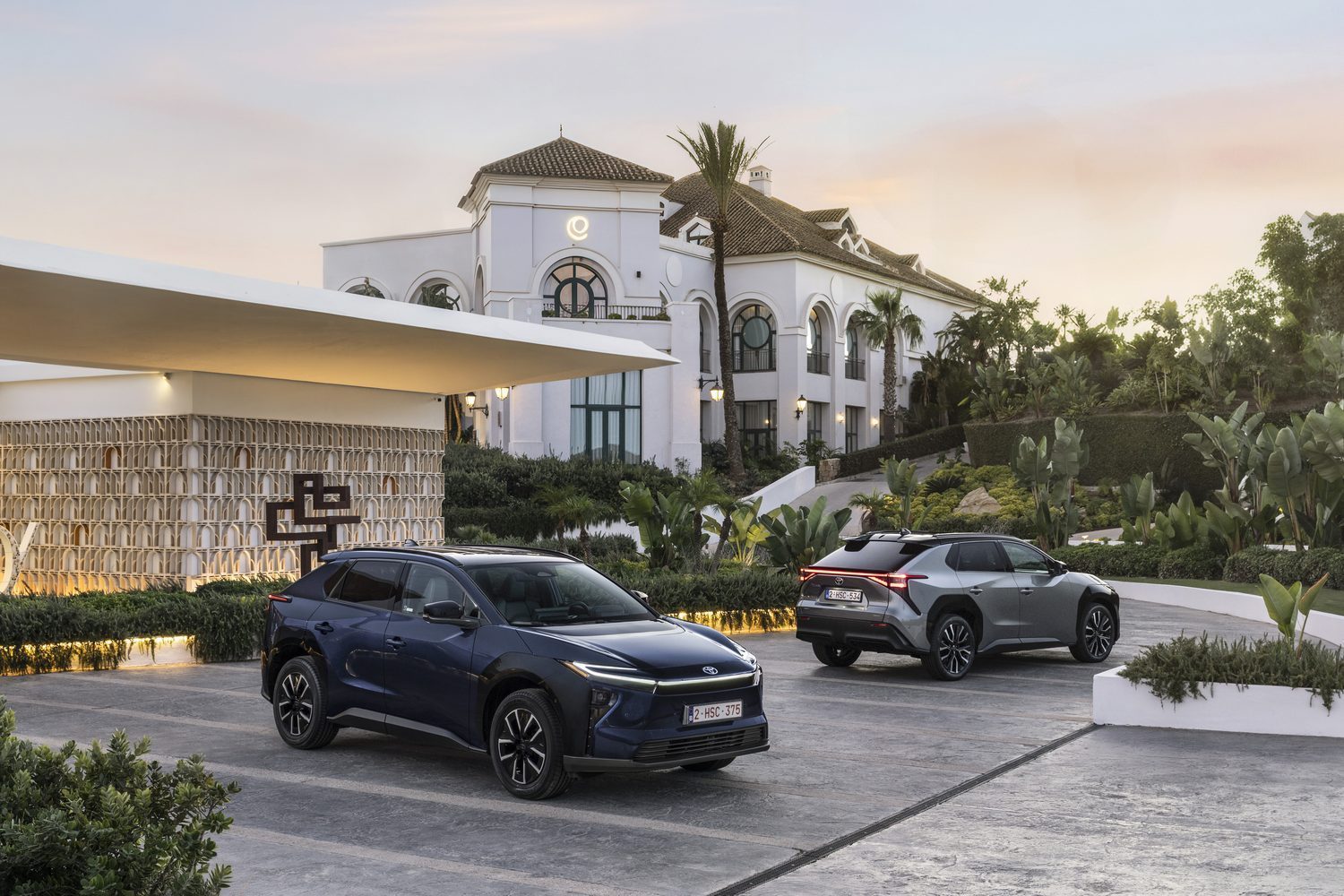
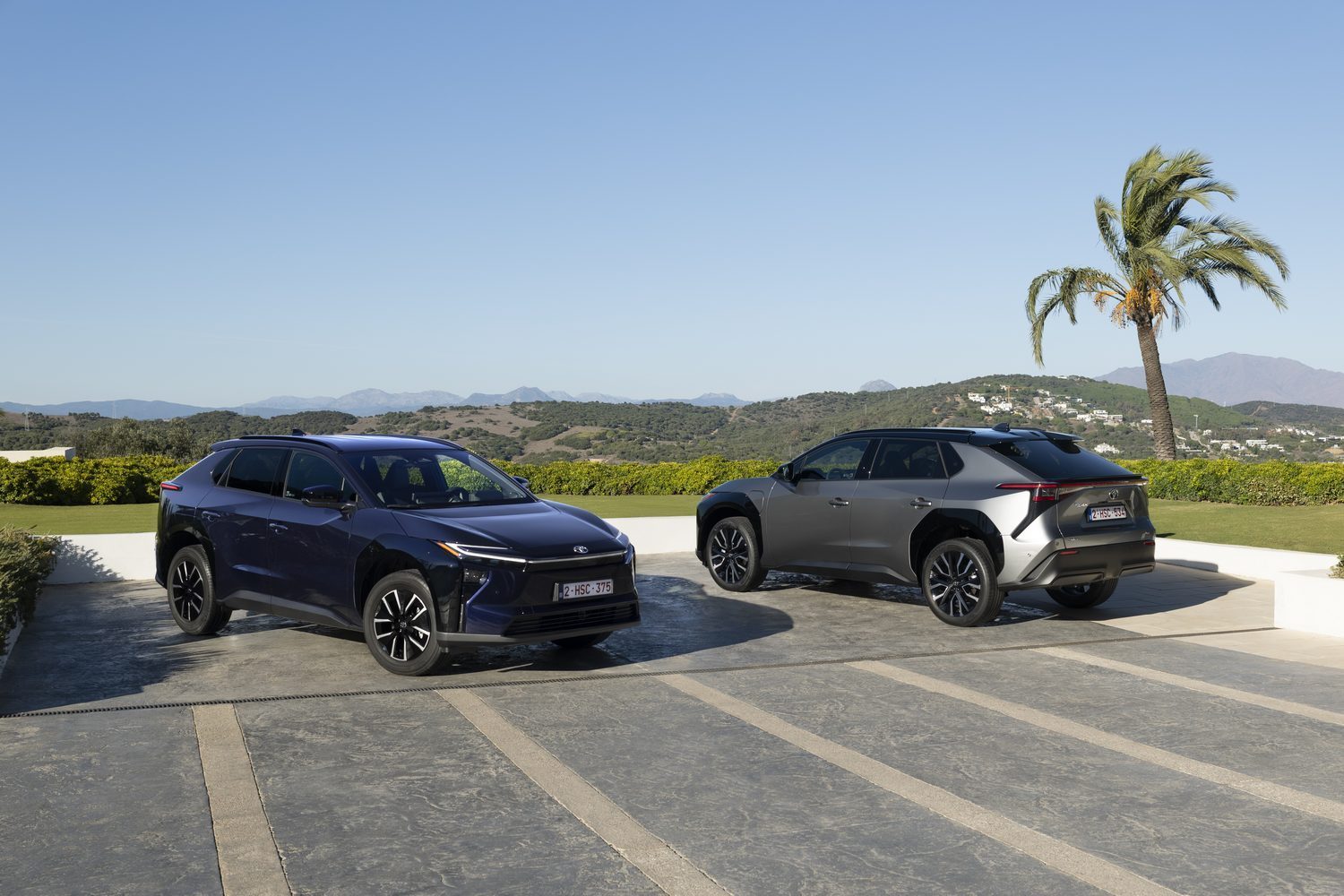
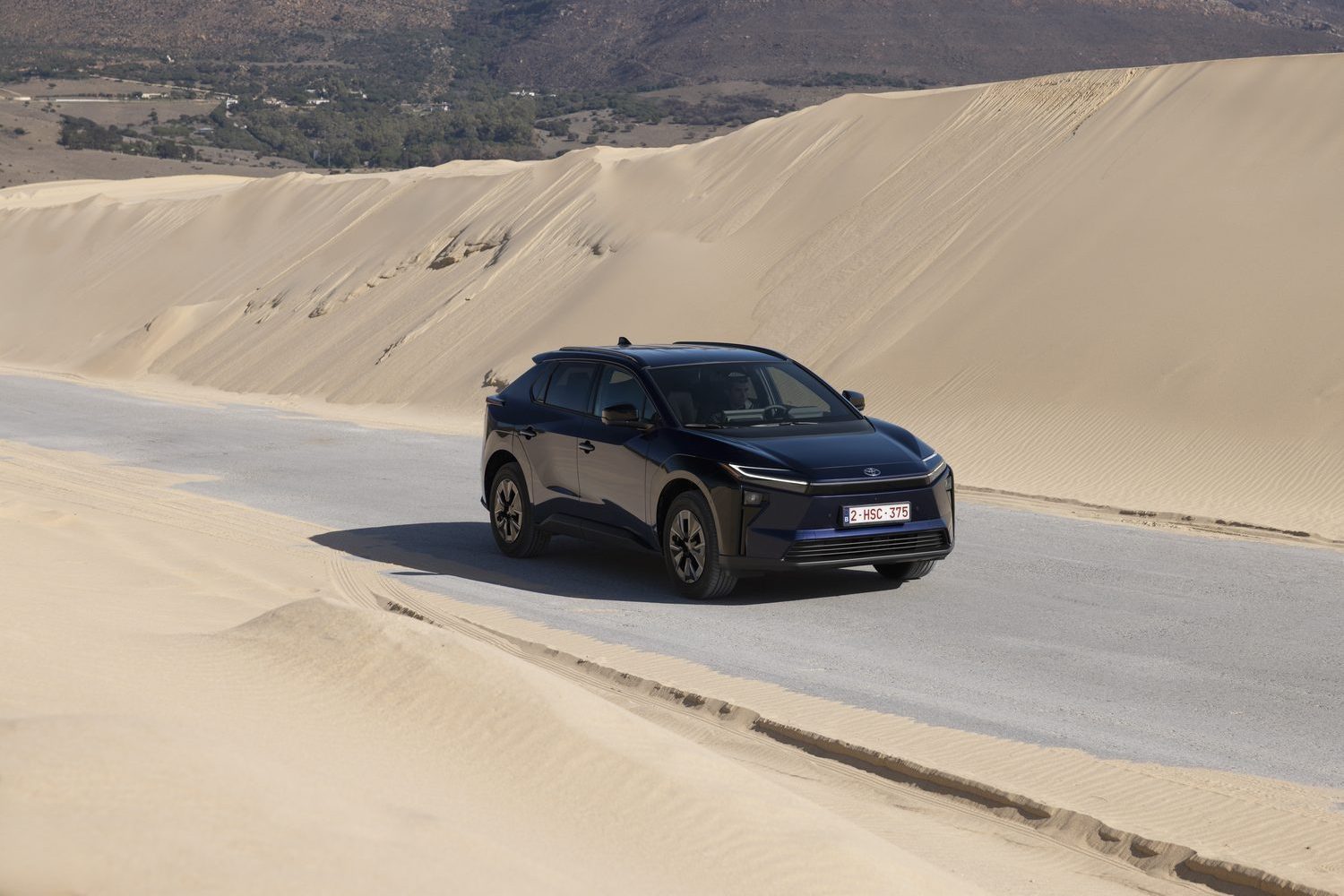
The bZ doesn't come with a standard colour, as such, so you're always going to pay at least an extra €805 for metallic paint. Our test car was finished in Midnight Blue, which is a dark shade, but which has a spectacular level of sparkle in bright sunlight. Your other options are Attitude Black (which costs the same), Precious Metal Pearlescent (€1,105), Pearl Ice White Pearlescent (€1,105), or Pearl Red Pearlescent (€1,105).

If you upgrade to the higher-spec Premium model, then Attitude Black or Midnight Blue are the same price, but there's a bi-colour upgrade for the other paints, with Precious Metal Pearlescent, Pearl Ice White Pearlescent, and Pearl Red Pearlescent all costing the same €1,105 but coming with a contrast black roof finish.
Interior, practicality, tech & comfort of the 2026 Toyota bZ
• Cabin styling updated for 2026
• New 14-inch touchscreen
• No glovebox

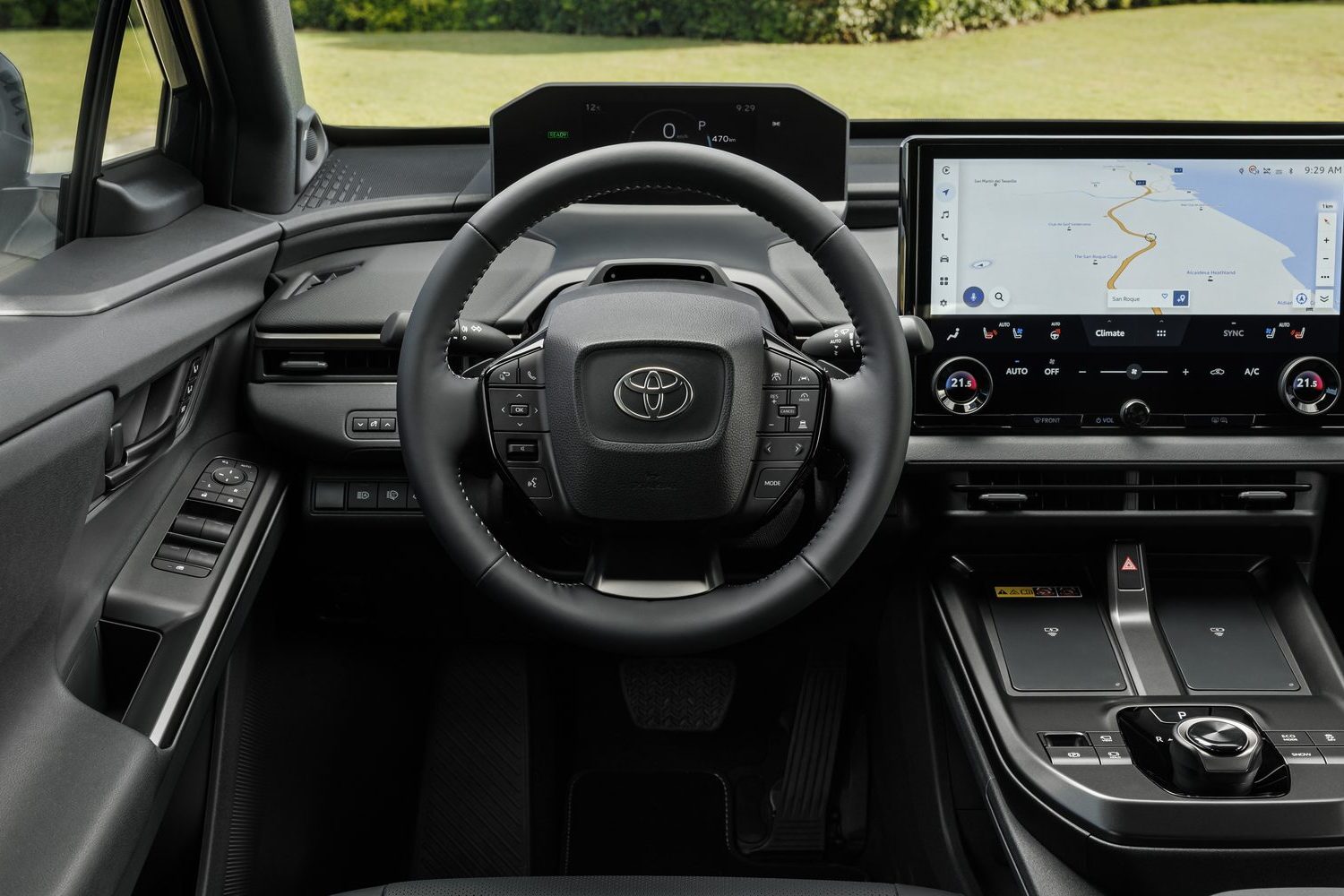
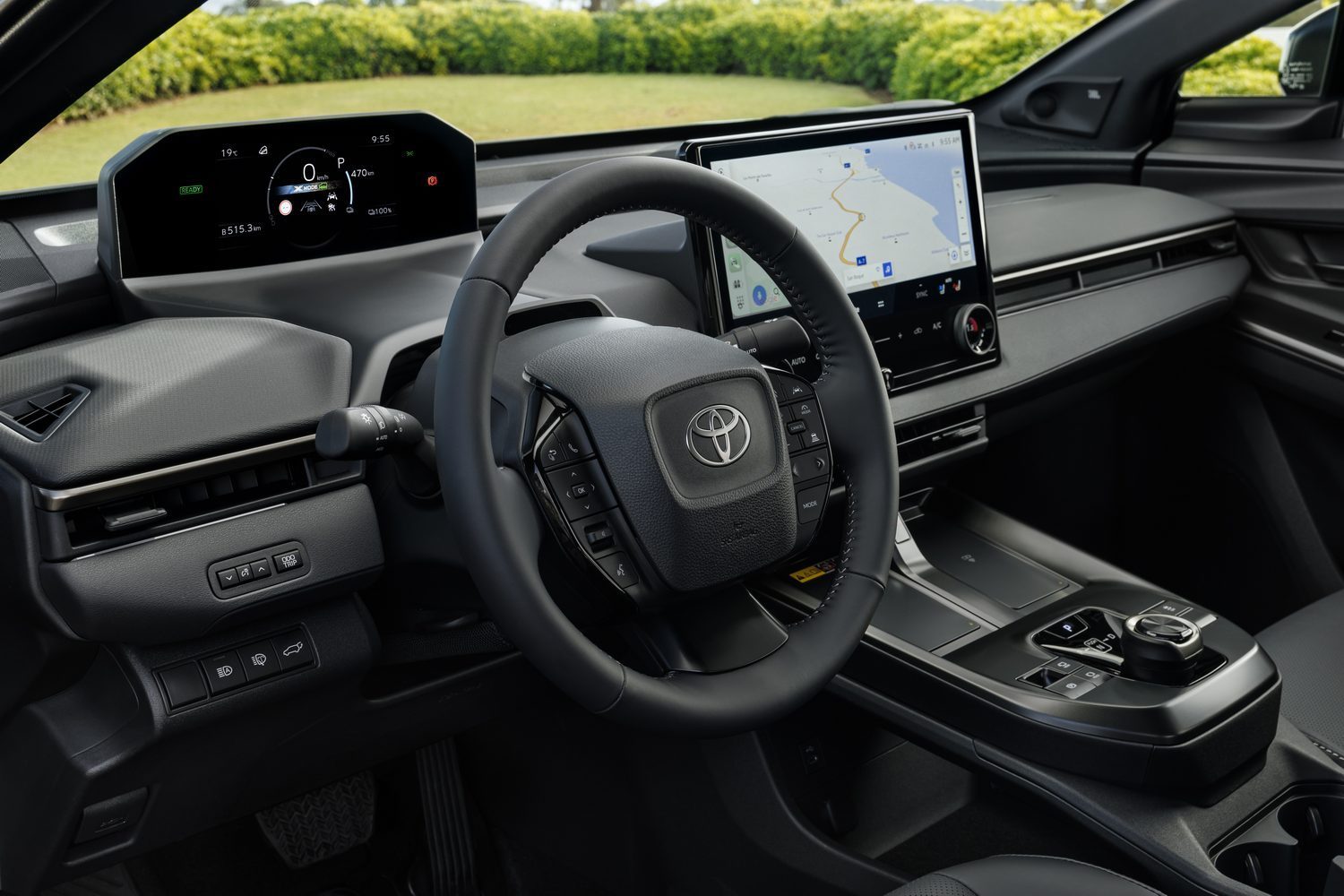
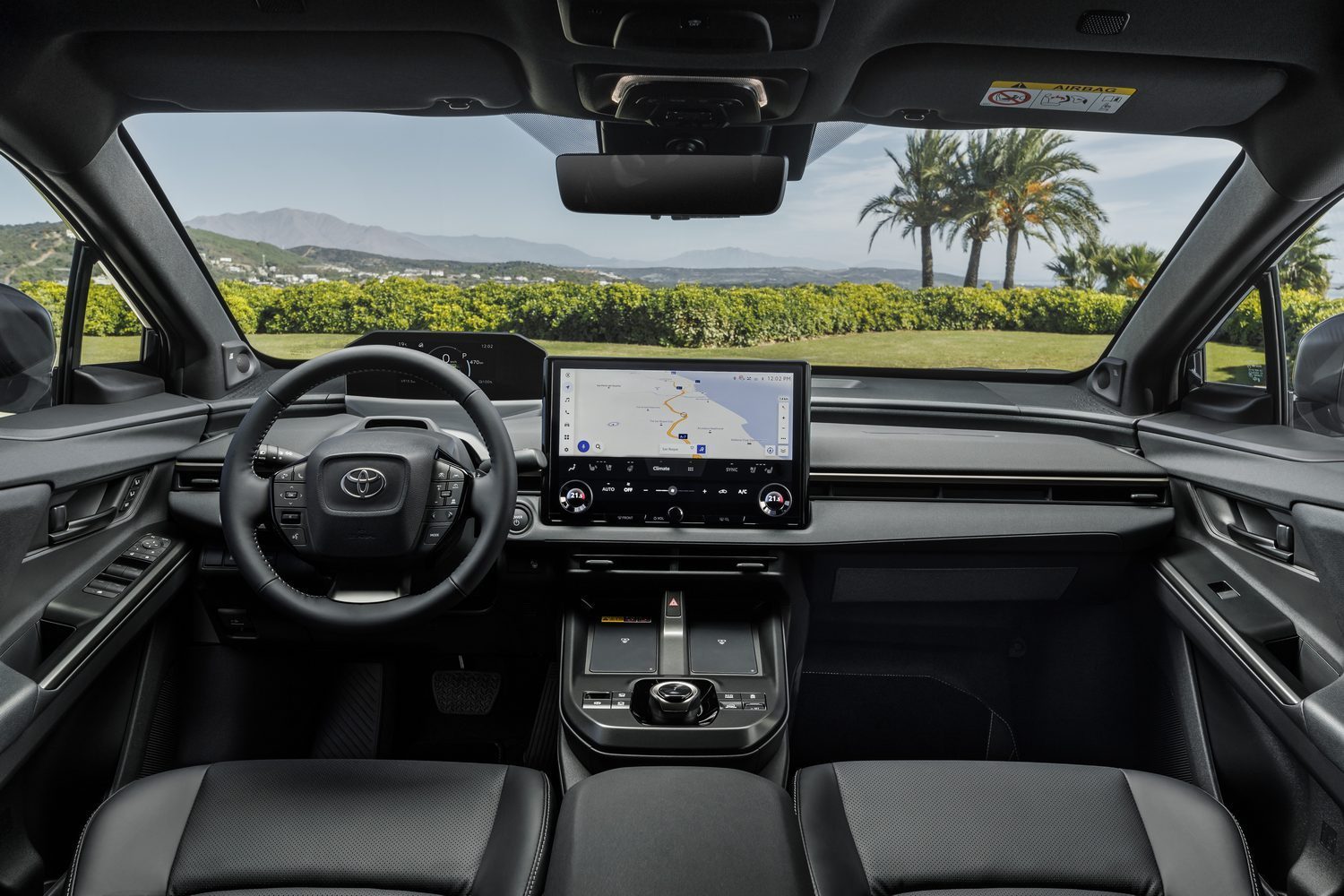
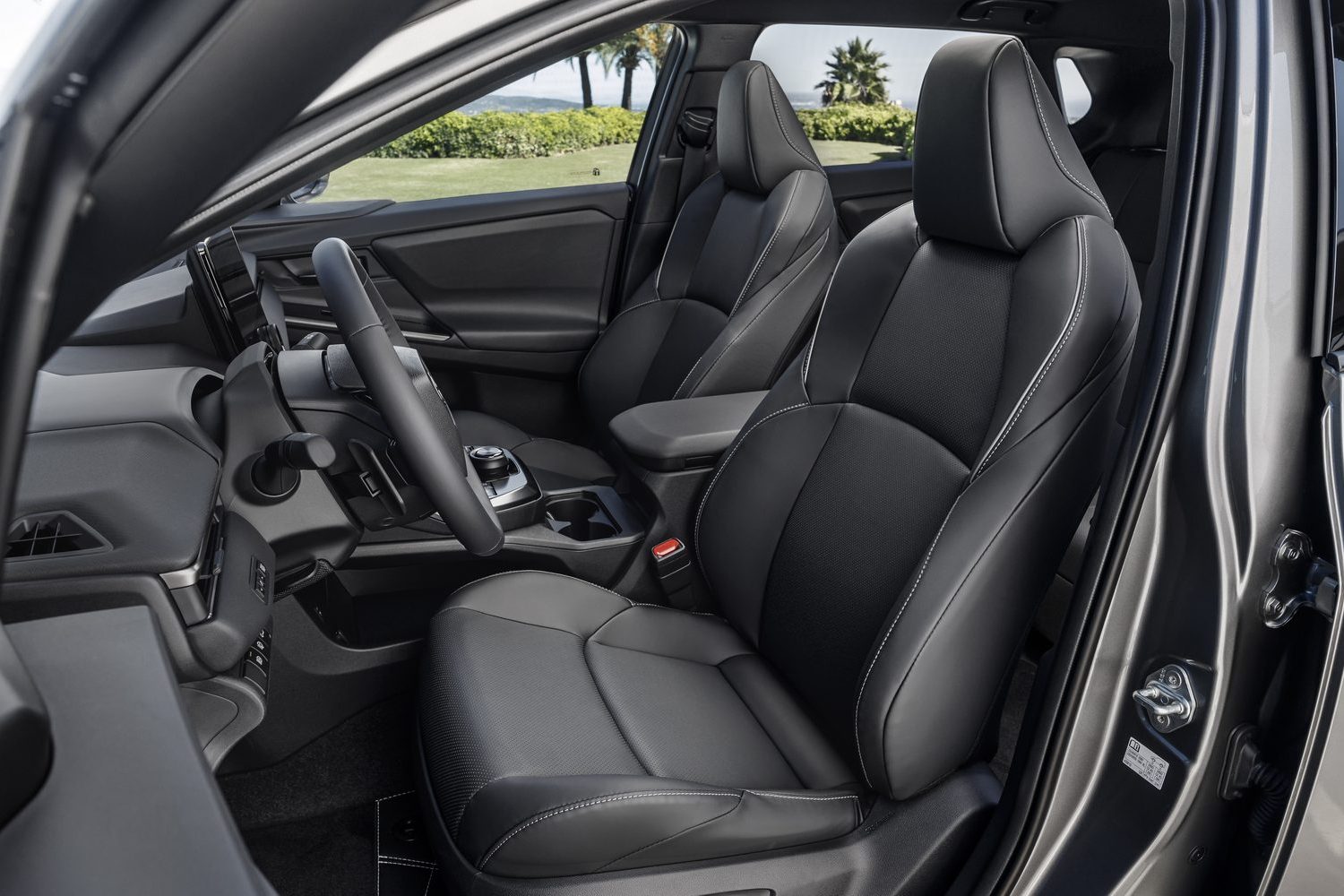
As with the exterior, the bZ's cabin was updated for 2026, but it's subtly done. The overall effect remains the same, but the style of the dashboard is now more horizontal, and there's a big new touchscreen.
Crucially, for a Toyota, perceived quality has also been improved and there's a palpable solidity as soon as you sit inside, which is hugely reassuring.
Getting comfortable in the driver's seat
The bZ's driving position is relatively high-set, which may come as a surprise as the bZ looks quite sleek and low-roofed from the outside.

This is a bit of a trick of the eye, as the bZ is in fact 10mm taller than, say, a VW ID.4. Nonetheless, while it would be nice if the seat would adjust a touch lower for taller drivers, there's no doubting the fact that the bZ is very comfortable.
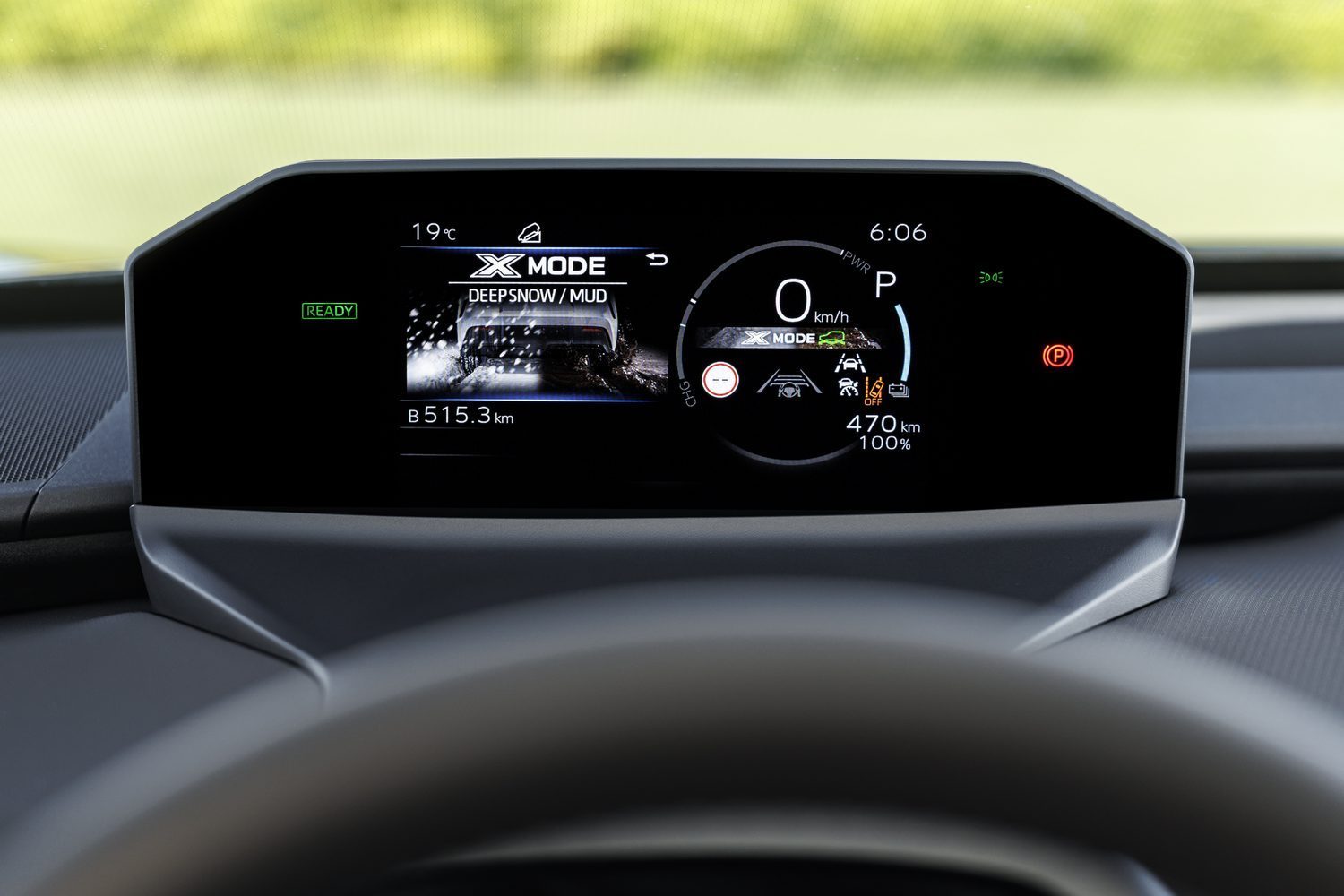
The driving position is almost Peugeot-like, with a relatively small steering wheel sitting almost in your lap, while the instrument panel is mounted high up and well forward, obviating the need for a projected head-up display - as the instruments are always in your line of sight.
It's nice that the steering wheel comes with heating, as standard, and the front seats are heated too.

Infotainment and technology
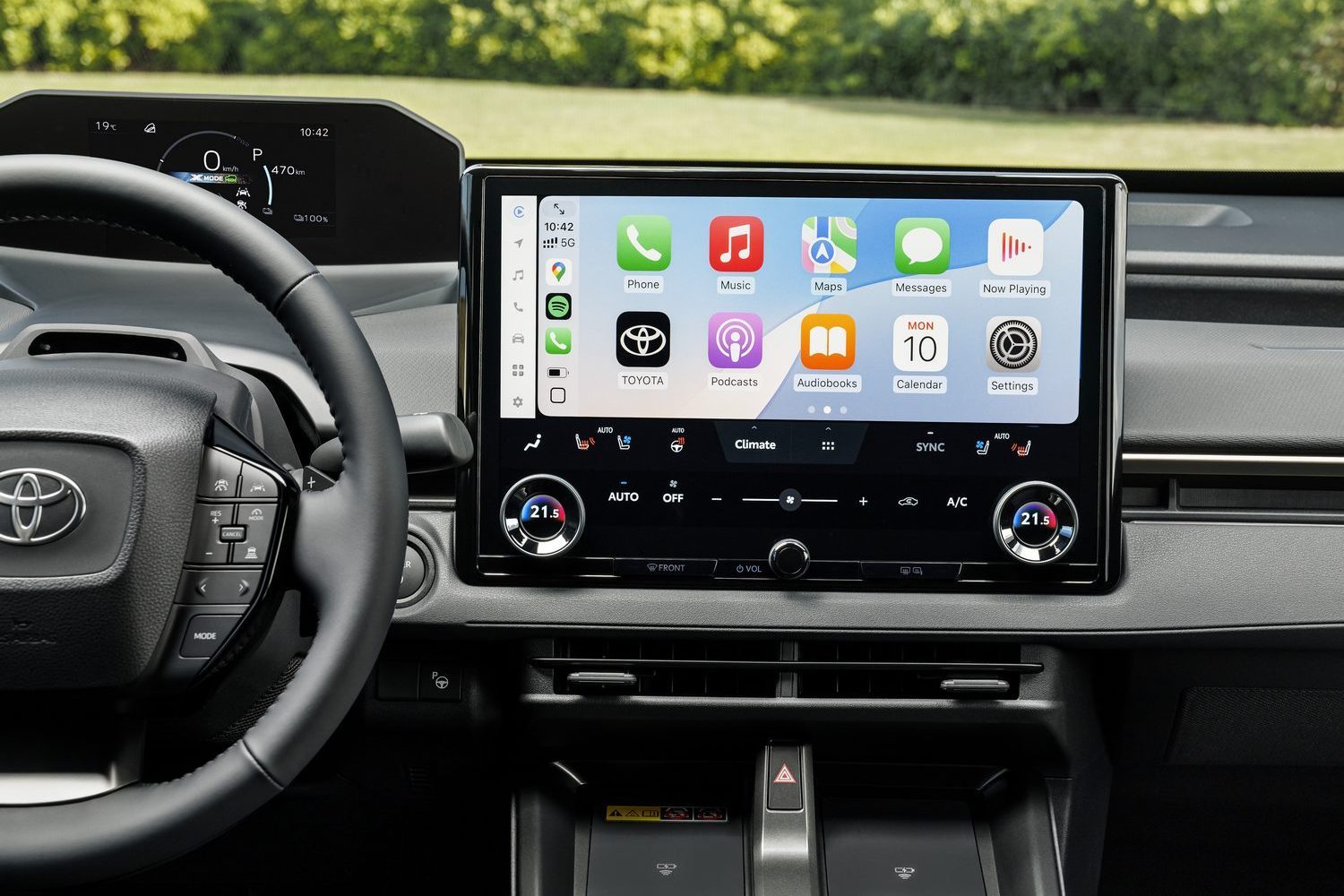
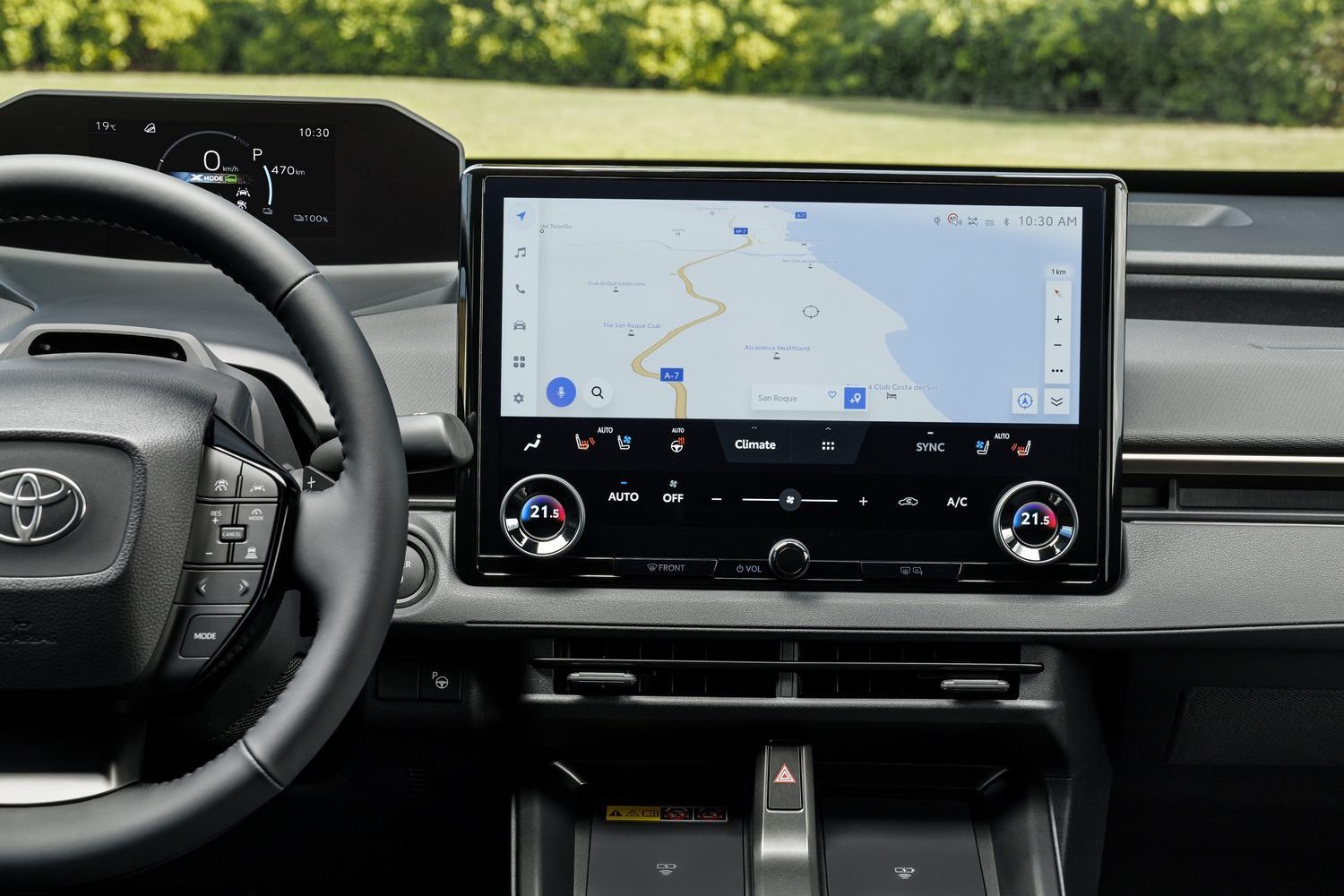
For 2026, there's a new 14-inch touchscreen for the bZ, which dominates the front of the cabin. It's a slick system, with sharp graphics (the navigation display is especially clear) but the menu system could be a little clearer, as some items are buried in unexpected places.

There's a big bonus, though, in that Toyota has fitted the bZ with neat, physical rotary controllers for managing the cabin temperature, and there's a physical volume knob too, which takes a good bit of the day-to-day workload off the screen.
The reversing camera, also standard fit, gives a good view but the image quality could be a bit sharper.

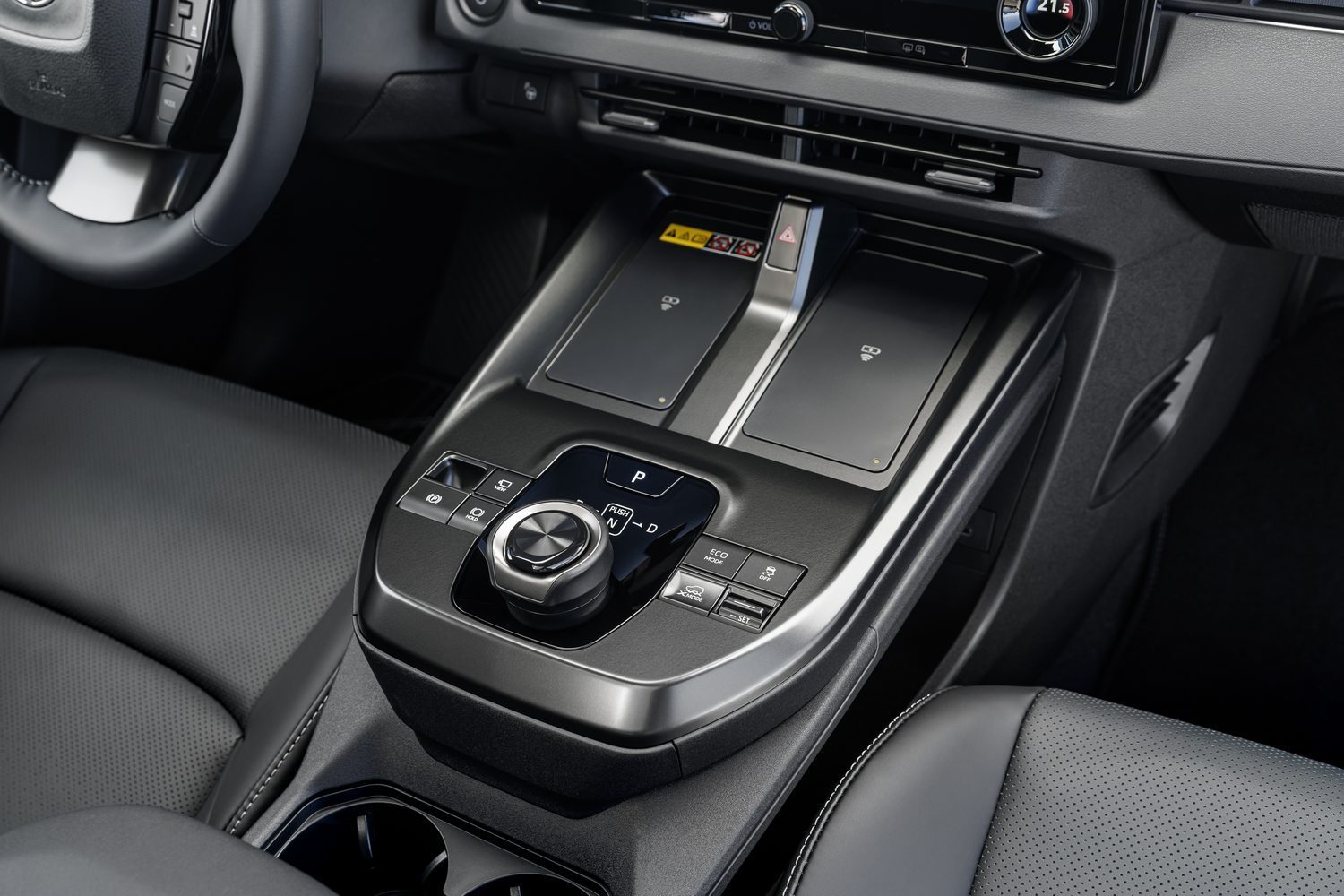
There are two wireless phone charging pads fitted to the centre console, as standard, although there's only one USB-C socket in the front (there are two in the back). Wireless Apple CarPlay and Android Auto are fitted as standard.
Practicality around the cabin
The front of the bZ's cabin is OK for practicality, but the lack of a conventional glovebox is unusual. Apparently, it's because the front end of the car is so stuffed with control electronics that there just isn't room for one.

There is a large, open storage section under the centre console, which is useful, and more room for oddments under the dual-hinge front armrest (so that it can be opened either way, for the passenger or the driver).
The door bins are not the biggest around, although they are sculpted so that they can hold large bottles.
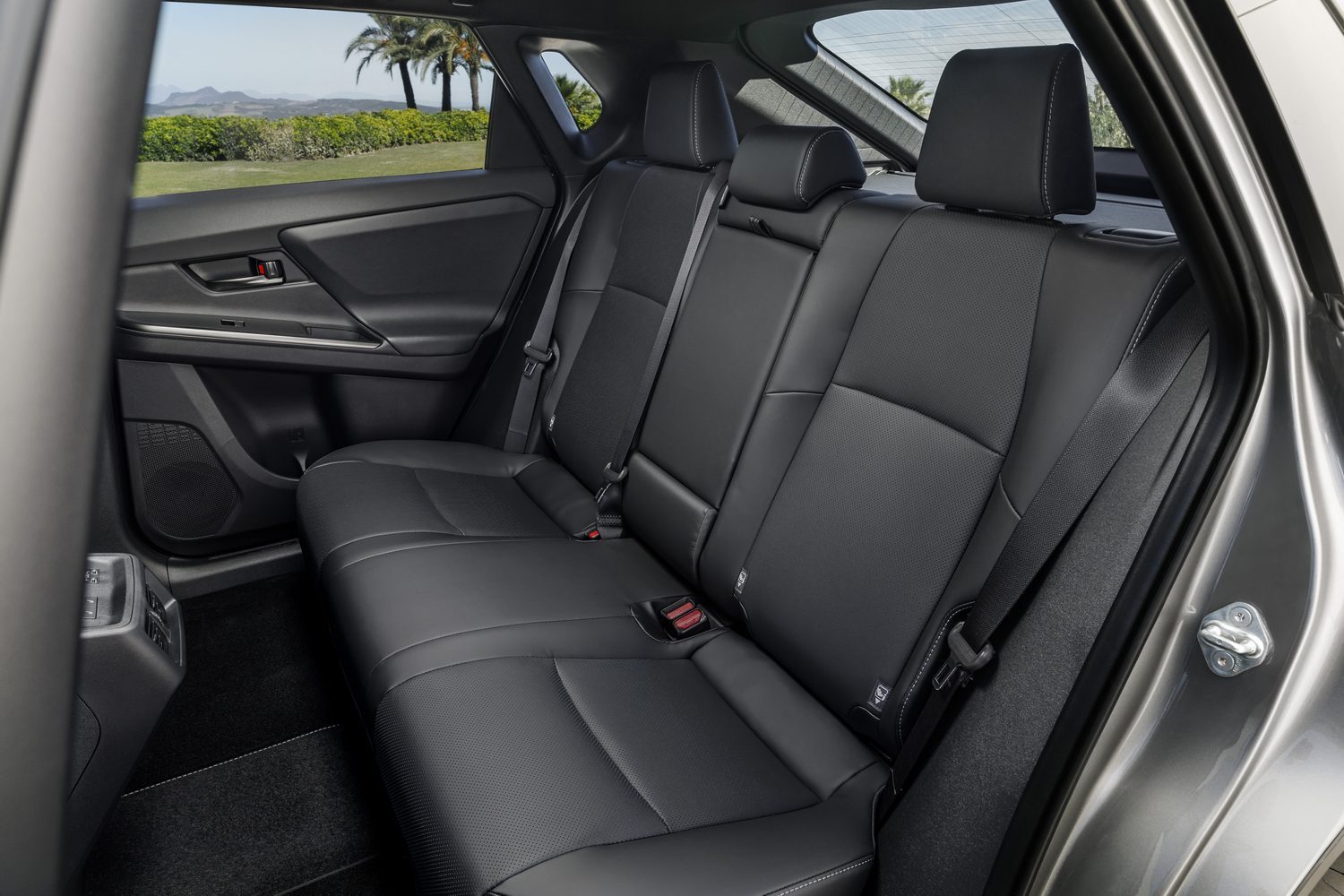
Rear-seat passenger space
Rear-seat space in the bZ is simply brilliant). The bZ's wheelbase isn't exceptionally long, but Toyota has really maximised rear legroom, so that even when a tall driver sits behind their own driving position, they'll still have acres of legroom.

The rear floor is, as usual for EVs, slightly high, so tall passengers in the back will find that their knees are high, but the effect is less noticeable in the bZ than in some rivals.
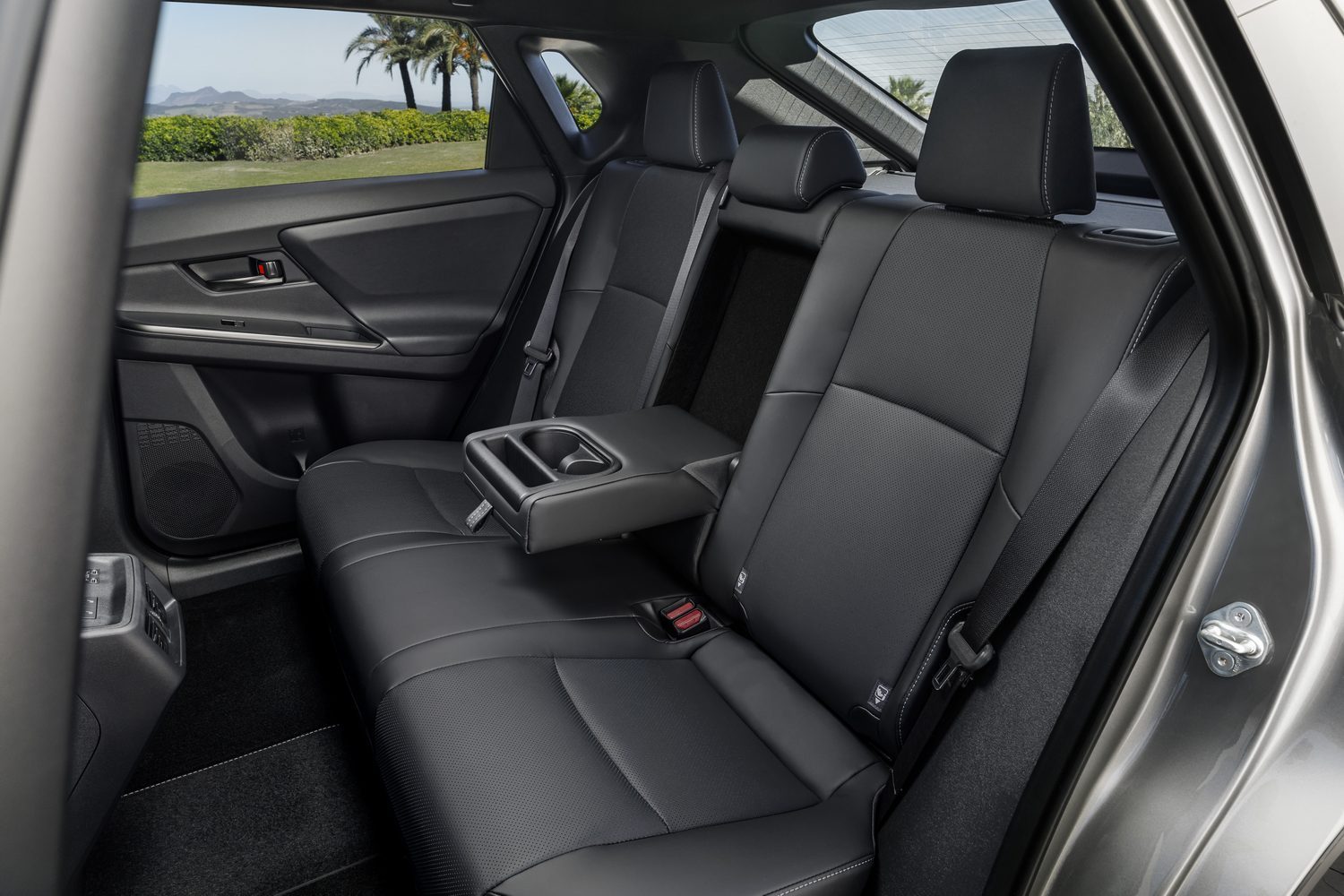
There's a folding armrest in the centre, which includes two cupholders and a slot-like storage space which is ideal for a mobile phone.
The centre rear seat is narrow, and a bit hard, but it's just about possible for a full-grown adult to get comfortable there.

The rear floor isn't entirely flat - there's a very slight, almost vestigial, transmission hump in the floor, but it's so small that you barely notice it.
The rear seat back is also fixed at a relatively reclined angle, so you can get very comfortable indeed back here. Rear seat heating is optional.
Fitting child seats to the Toyota bZ
There are no ISOFIX anchors in the front passenger seat of the bZ, but there are two in the back, in the outer rear seats, and a top-tether mount for the centre rear seat. The ample legroom and well-sized doors mean that loading even the biggest rear-facing child seat should be... well, child's play.
Boot space in the Toyota bZ
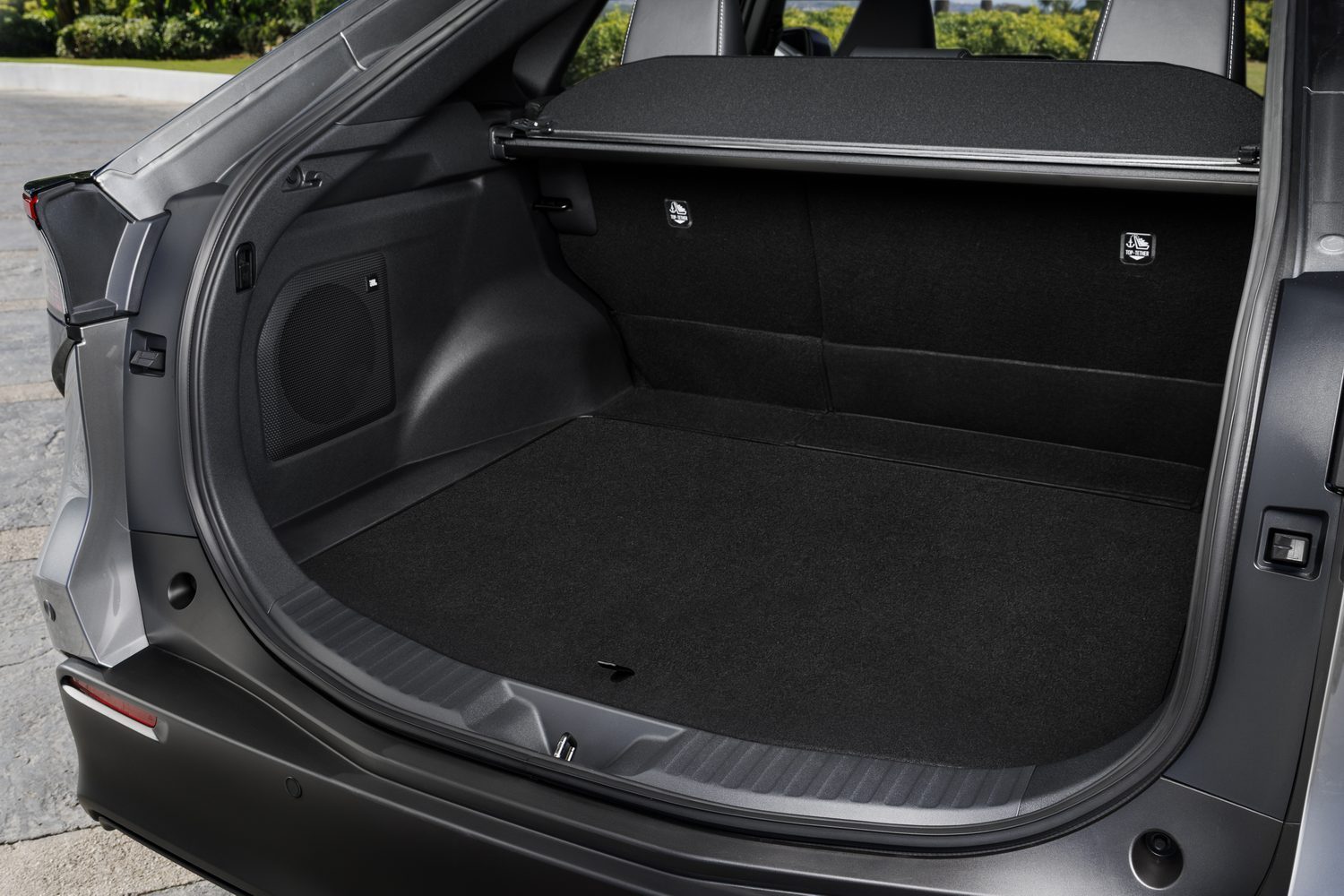
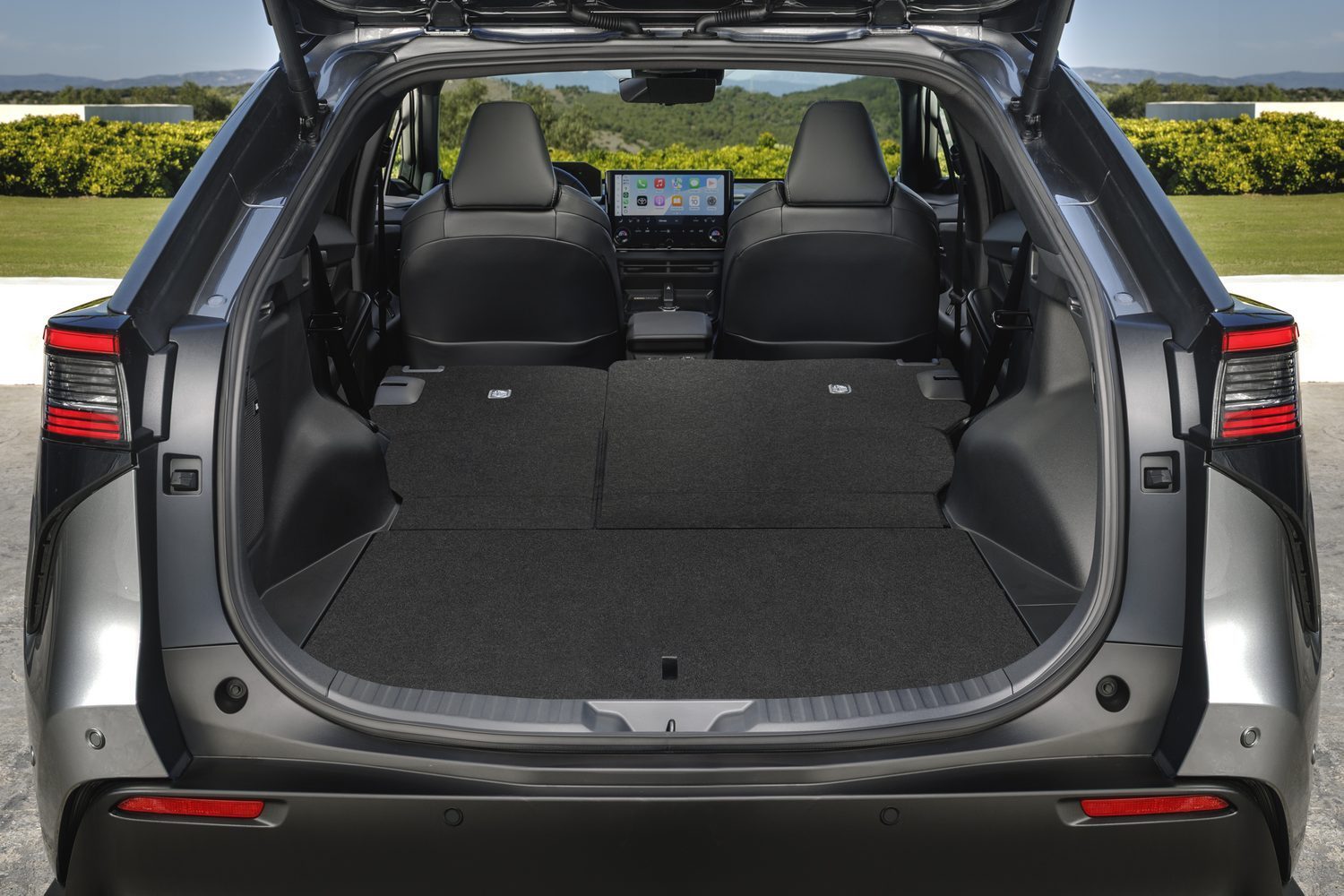
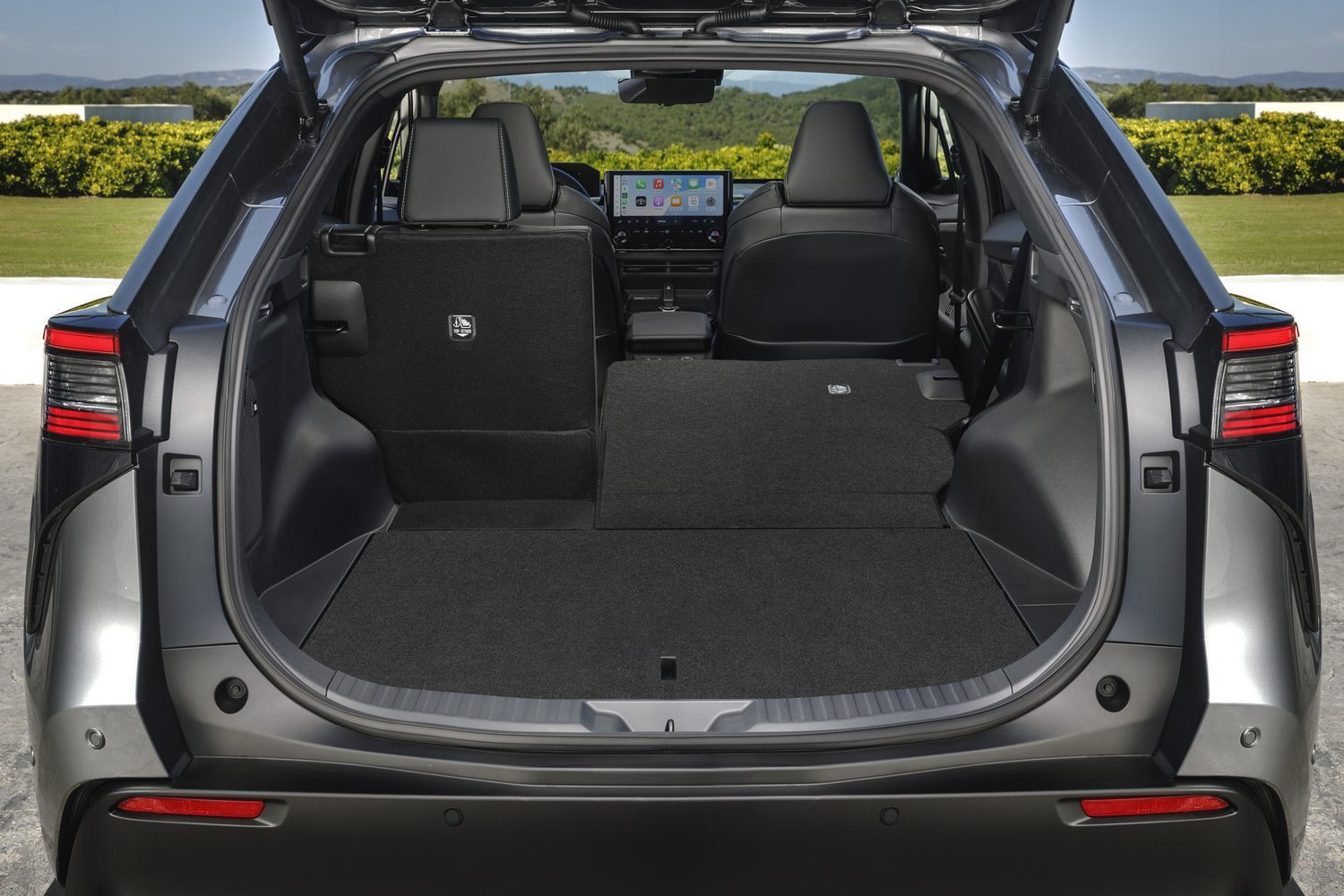
Ah, here's the price for all that rear legroom - a smaller boot. To be fair to the bZ, 452 litres up to the luggage cover isn't bad, and there's a bit of underfloor storage for cables etc.

However, that's behind the likes of the Volkswagen ID.4 and even the more compact Skoda Elroq in terms of luggage capacity. The rear seats split-fold 60:40, but they don't fold completely flat, leaving a up-angle as you cross from boot floor to seat back.
Toyota, oddly, doesn't quote a seats-down luggage capacity, but we estimate it to be around 1,500 litres.

Towing with the Toyota bZ
The bZ isn't great for towing - the maximum braked towing capacity is just 750kg for front-wheel-drive models. The four-wheel-drive version doubles that to 1,500kg, but that model isn't coming to Ireland.
Safety in the Toyota bZ
The bZ was retested in 2025 by Euro NCAP (although it's still referred to as a bZ4X if you're searching for the report here) and it has scored an impressive five-star safety rating, with 88 per cent for adult occupant protection, 85 per cent for child occupant protection, 80 per cent for vulnerable road users (a notably high score) and 79 per cent for its active safety systems.
As standard, the bZ comes with the Toyota Safety Sense 3 system, which includes blind-spot monitoring, adaptive cruise control, lane-keeping steering, safe-exit assist and front and rear parking emergency braking.
Performance of the 2026 Toyota bZ
• Only one front-drive version for Ireland
• Revised 'e-Axle' motor is more efficient
• Seems to have more useable range

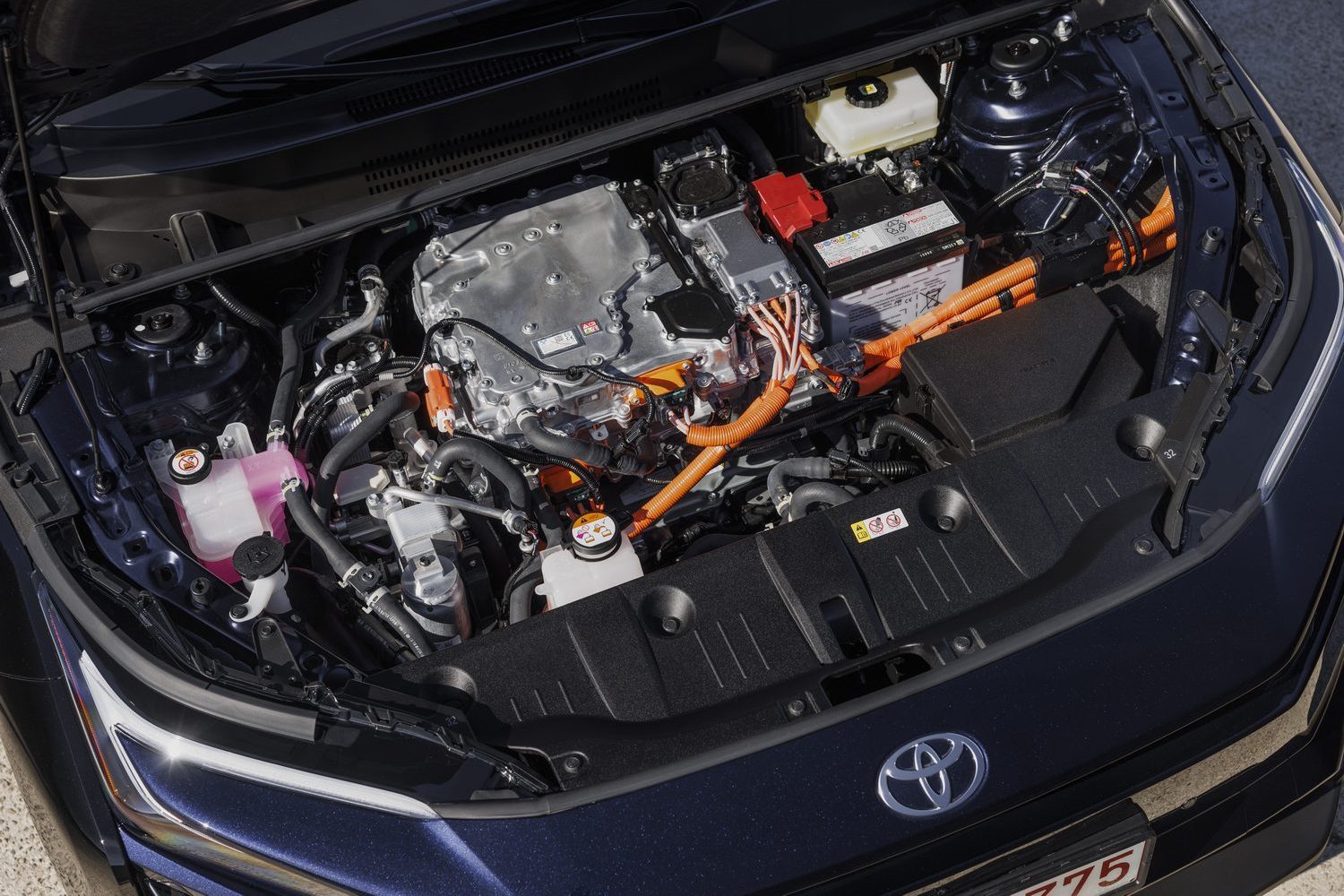
Toyota has really gone at the bZ when it comes to its battery and motor. The front-mounted 165kW electric motor - which Toyota refers to as an 'e-Axle' - is now more efficient, by as much as 23 per cent according to its maker, while the 69kWh (useable) battery gains 7kWh compared to the older bZ4X and packs more cells into the same basic shape.
Driving the 2026 Toyota bZ Sport in Spain
With 224hp and 268Nm of torque, you're not going to be expecting the bZ to be a ball of fire to drive. Which is why it's slightly surprising that performance feels muscular, and it's not at all hard to get a little 'chirrup' from the front wheels when accelerating hard from a standstill.

The bZ's performance feels really well-judged - there's none of the dropped-off-a-cliff sensation that some EVs provide when accelerating. The way the bZ picks up speed is more measured, and more comfortable as a result.
The steering is quite weighty and firm, which is a bit of a change from the more usual over-assisted feel of many rival EVs, and while there's not a huge amount of driver-friendly feedback coming through the rim, that weight and sense of heft gives you great confidence when turning into a series of corners.

Push the bZ too hard and it will understeer, but it does so tidily and tightens its line with a lift of the accelerator or a dab of the brakes.
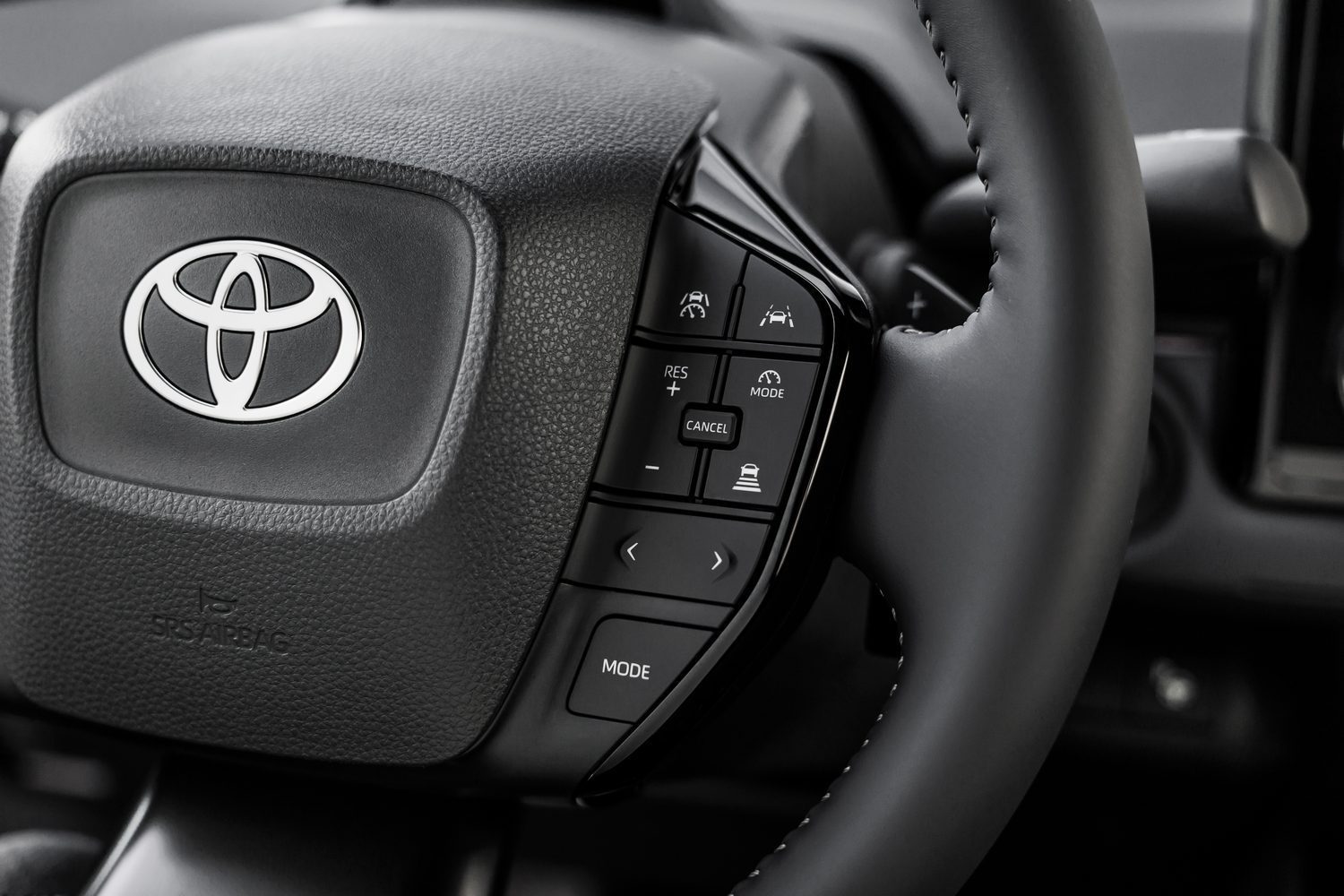
Those brakes have decent feel and response too, although the effect of the regenerative braking - adjustable via the steering-wheel paddles - never seems all that strong, and it's certainly not a one-pedal setup, even at lower speeds. That'll suit people that prefer to do their own braking.
Along a steep and hilly test route, the bZ felt calm and assured, and dispatched a series of fast, but tightening, hairpins with ease.

In theory, Toyota could fit the active steering setup from the Lexus RZ - the two cars share a common platform - but for now Toyota's deputy chief engineer for the bZ, said that they're still gathering data when it comes to that steering and the bZ. Don't hold your breath in other words, but we don't think buyers will miss it.
The ride quality is a little mixed. The bZ feels good around town, and while the suspension is certainly firm, it soaks up speed bumps nicely and feels relaxed. However, on faster roads, that suspension firmness sometimes makes the bZ feel as if it's dropping a shoulder into bigger depressions on the road, and it can occasionally lurch over bigger thumps.

It's a bit of a shame that the four-wheel-drive version of the bZ isn't coming to Ireland. It's not just about extra power - although the 344hp on offer isn't to be sneered at - but the all-wheel-drive setup also comes with an active handling system that tweaks the motor torque sent to each wheel to make the bZ feel more agile in corners.
We tried it and it definitely works - as well as making the bZ surprisingly agile and grippy off-road - but it would work out too expensive for the small number of Irish buyers who'd be likely to buy it.

Range, battery, charging and running costs of the 2026 Toyota bZ
• Only one 69kWh battery for Ireland
• DC charging up to 150kW
• AC charging up to 22kW

There's just the one battery for Ireland, and Toyota is promising major gains in efficiency and cold-weather performance for the updated bZ.
Battery options and official range
Toyota does offer the bZ with a smaller 57kWh battery in some markets, but that version isn't coming to Ireland. Instead, we get the standard 73kWh (gross - 69kWh net) battery using nickel-manganese-cobalt (NMC) chemistry, which represents a 7kWh boost compared to the outgoing bZ4X.
This, combined with the improvements to aerodynamics and the better efficiency of the e-Axle electric motor, mean that Toyota can quote a much-improved one-charge WLTP range of 567km.

There's a standard heat-pump heating system to further boost efficiency in cold winter weather, and Toyota estimates that in -10-degree weather, you should still have up to 80 per cent of the official range on offer.
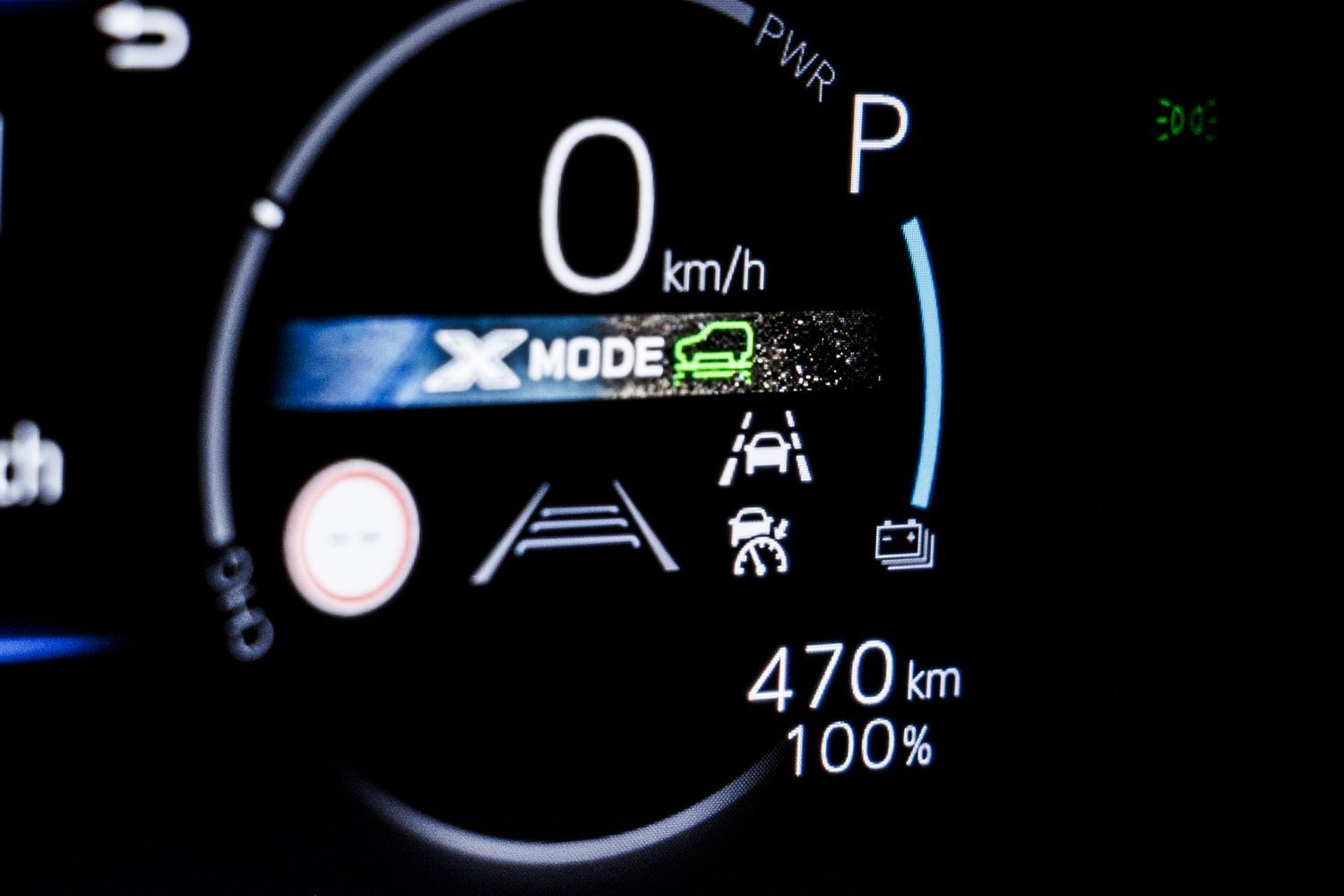
A display in the instrument panel gives you a live readout of the battery's overall health and tells you how much of its original charging capacity it has retained, too.
Real-world range and efficiency of the Toyota bZ
A balmy, sunny day in southern Spain is not the ideal way to test the bZ's new battery, but what we did observe on our test is encouraging. Over a long and very mountainous test route, the bZ Sport didn't push beyond the 21kWh/100km mark when going rapidly uphill, and once we came down the other side of the route, and hopped onto the motorway for a quick 120km/h burst, we averaged 15.5kWh/100km, which is impressive, and pretty close to Toyota's 13.9kWh/100km average.

That suggests a real-world 445km range on one charge, which is certainly a step forward for the bZ, and which is about the same as you'll get in mixed conditions from the likes of a VW ID.4 or Skoda Enyaq.
Charging up the Toyota bZ
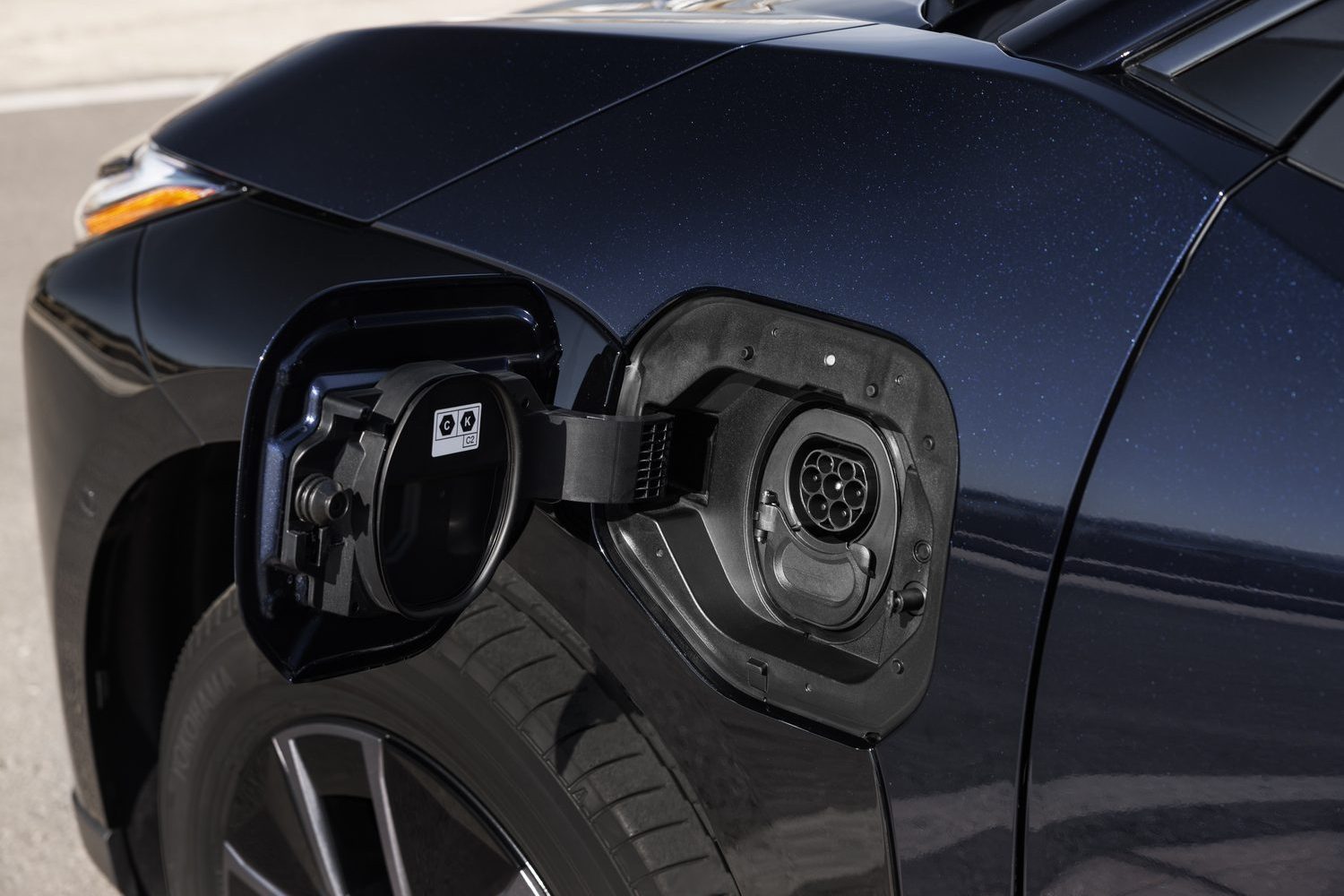
Toyota has also improved the charging of the bZ, as it can now manage up to 150kW when on a DC fast charger, and it will stretch to 22kW on AC charging for the Premium model (11kW is standard) which is great if you're using kerbside chargers.
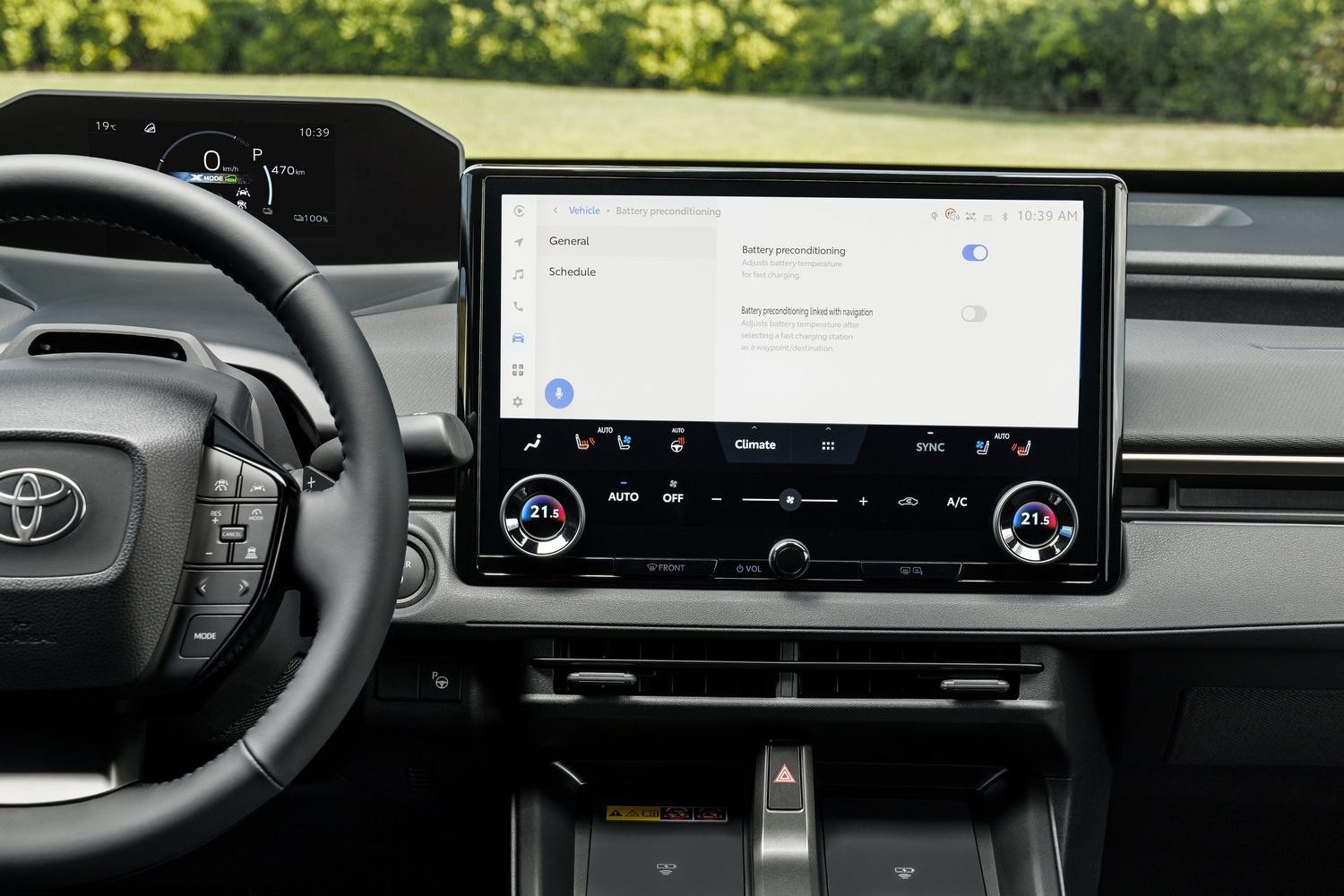
On DC power, in optimal conditions, Toyota claims 28 minutes for a 10-80 per cent charge time. Toyota has improved the battery conditioning system for quicker fast charging, but even without using that, the new battery in the bZ is said to be better at DC charging than the old one.
Servicing the Toyota bZ
Toyota recommends that you service the bZ every 16,000km or once per year, and there are service plans available which help you spread the cost of doing so. You'll definitely want to keep it serviced every year, and that's because...
Toyota bZ warranty
Toyota offers a fairly standard three-year warranty, up to 100,000km, for the bZ, which is fine, but there's more once you look beyond that standard warranty.
For a start, there's a five-year warranty for all of the EV system components including the motor and the charging system. And then there's the battery warranty - while Toyota offers the same standard eight-year, 160,000km warranty as other car makers for the battery, there's also much longer cover available. Keep your Toyota bZ serviced at a Toyota main dealer each year, and the battery cover is extended to ten years and a colossal one-million kilometres, which guarantees the battery won't slip below 70 per cent of its original storage capacity. As yet, no one else in the EV world offers anything like that kind of cover.
Irish pricing & rivals to the 2026 Toyota bZ
• Sport model starts at just over €41,000
• Long standard equipment list
• Premium model is much more expensive

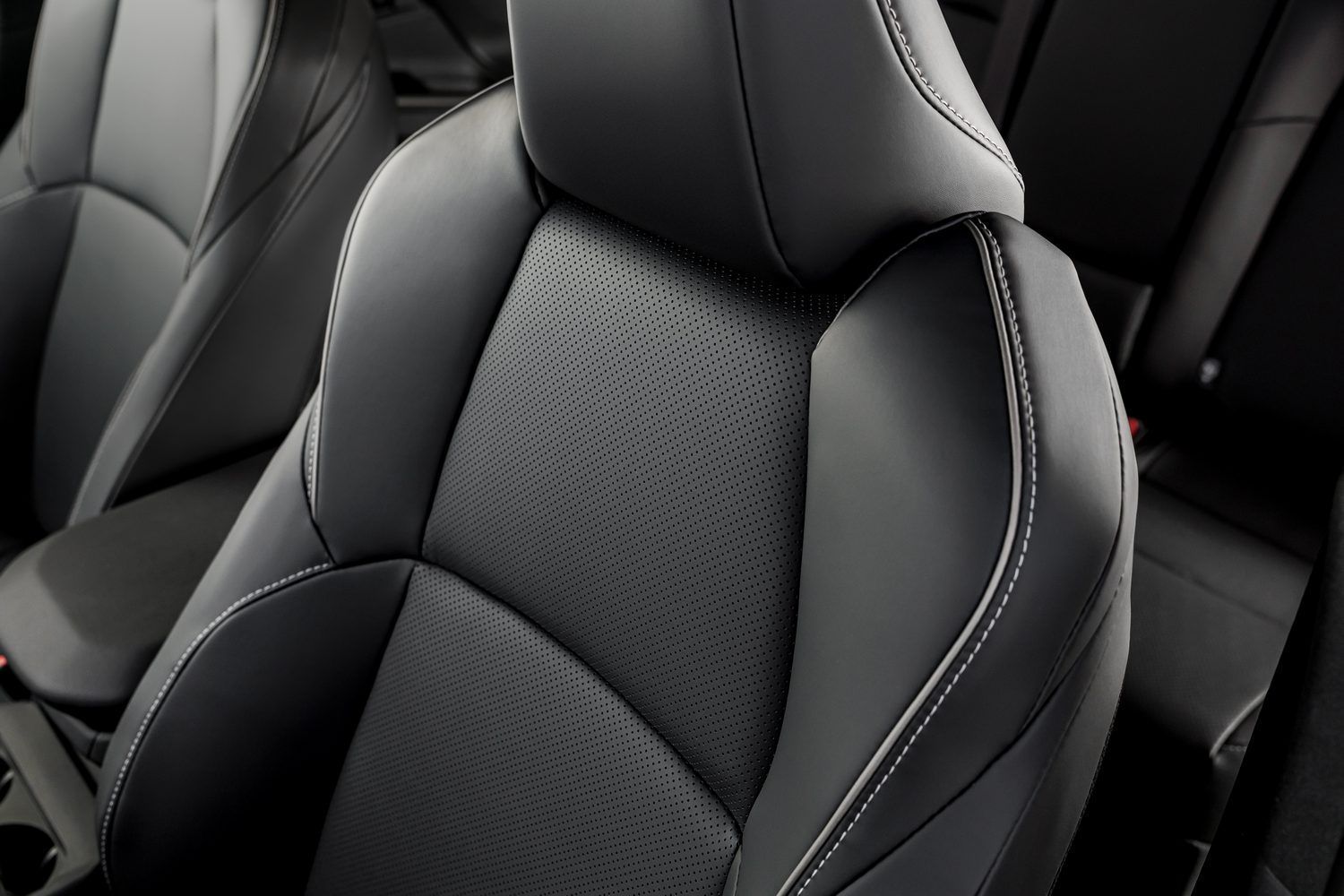
As standard, the bZ in Sport spec - the best-selling model for the Irish market, most likely - comes with plenty of equipment including a big 14-inch touchscreen, dual-zone climate control, heated front seats and steering wheel, electric adjustment for the driver's seat, part-leather trim, 18-inch alloys, privacy glass and the full Toyota Safety Sense system.
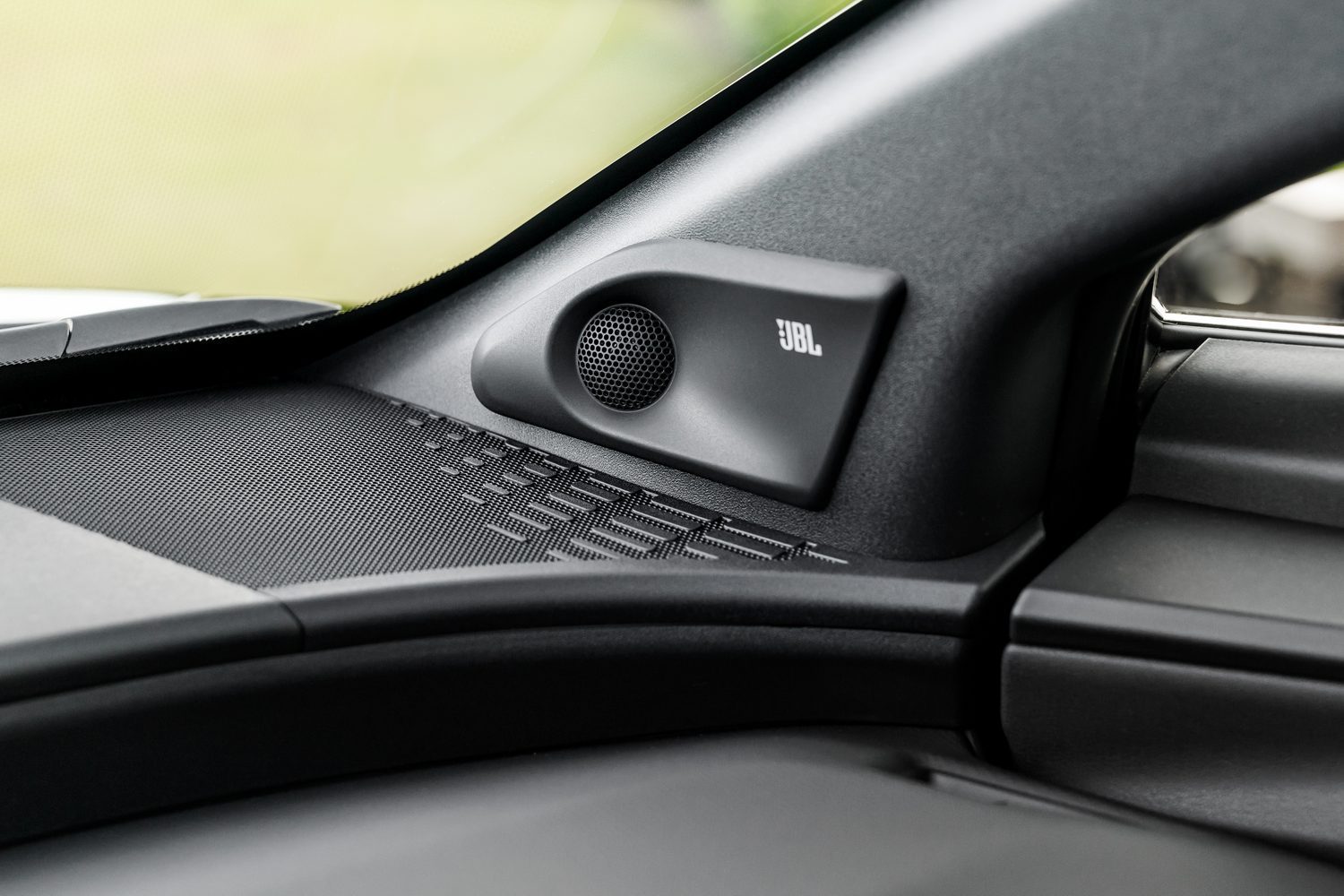
That's impressive, and it calls into question the wisdom of upgrading to the more expensive Premium version which is a full €9,000 pricier. Even if it does add a panoramic glass roof, ventilated front and heated rear seats, 20-inch alloys, a JBL sound system and 22kW AC charging.
While the bZ looks more expensive than the basic Volkswagen ID.4, you have to remember that the cheapest VW is the short-range, small-battery version, and when you correct for battery size and range, the two cars are much more closely matched. The same goes for the Hyundai Ioniq 5 and the Kia EV6.

Verdict - should you buy the 2026 Toyota bZ?
Yes - with the caveat that we still need to test the improved battery in wintry Irish conditions to ensure that what we've seen in Spain holds true at home. Beyond that, the bZ is good to drive, impressively well-made, spacious in the cabin and looks good on the outside too. It's a well-priced, well-talented electric all-rounder.
FAQs about the 2026 Toyota BZ
Can I charge my bZ to 100 per cent?
Yes, you can. Charging will slow down once the battery goes above 80 per cent charge, to preserve the battery health, but charging to 100 per cent is fine.
How long will a bZ battery last
We can't say exactly, but if you keep your bZ serviced with a main Toyota dealer, the battery will be warrantied for up to ten years or one-million kilometres, which is hugely reassuring.
What is the true range of the Toyota bZ?
According to our test, the real-world range - in mixed driving conditions, on a dry day at around 13 degrees Celsius ambient temperature - is 445km.
Want to know more about the 2026 Toyota bZ?
If there's anything about the new Toyota bZ we've not covered, or you'd like help in choosing between it and other cars, you can avail of our expert advice service via the Ask Us Anything page.
Toyota BZ history
The bZ has a relatively short history so far - originally launched in 2022, the bZ4X (as it was originally called) was supposed to be the kick-off for a whole lineup of bZ-badged models (the letters stand for Beyond Zero, as in emissions) but Toyota has since changed course a bit, and its new electric models are getting more conventional names, such as Urban Cruiser, C-HR+ and, coming in two years' time, Corolla...
The bZ is a co-production with Subaru, which builds the Solterra SUV using the same chassis, battery and motors, and that explains why there's a four-wheel-drive bZ which is surprisingly good at tackling a fairly serious off-road course. Sadly, that model isn't available in Ireland.