


Exterior & design of the 2026 Toyota Urban Cruiser
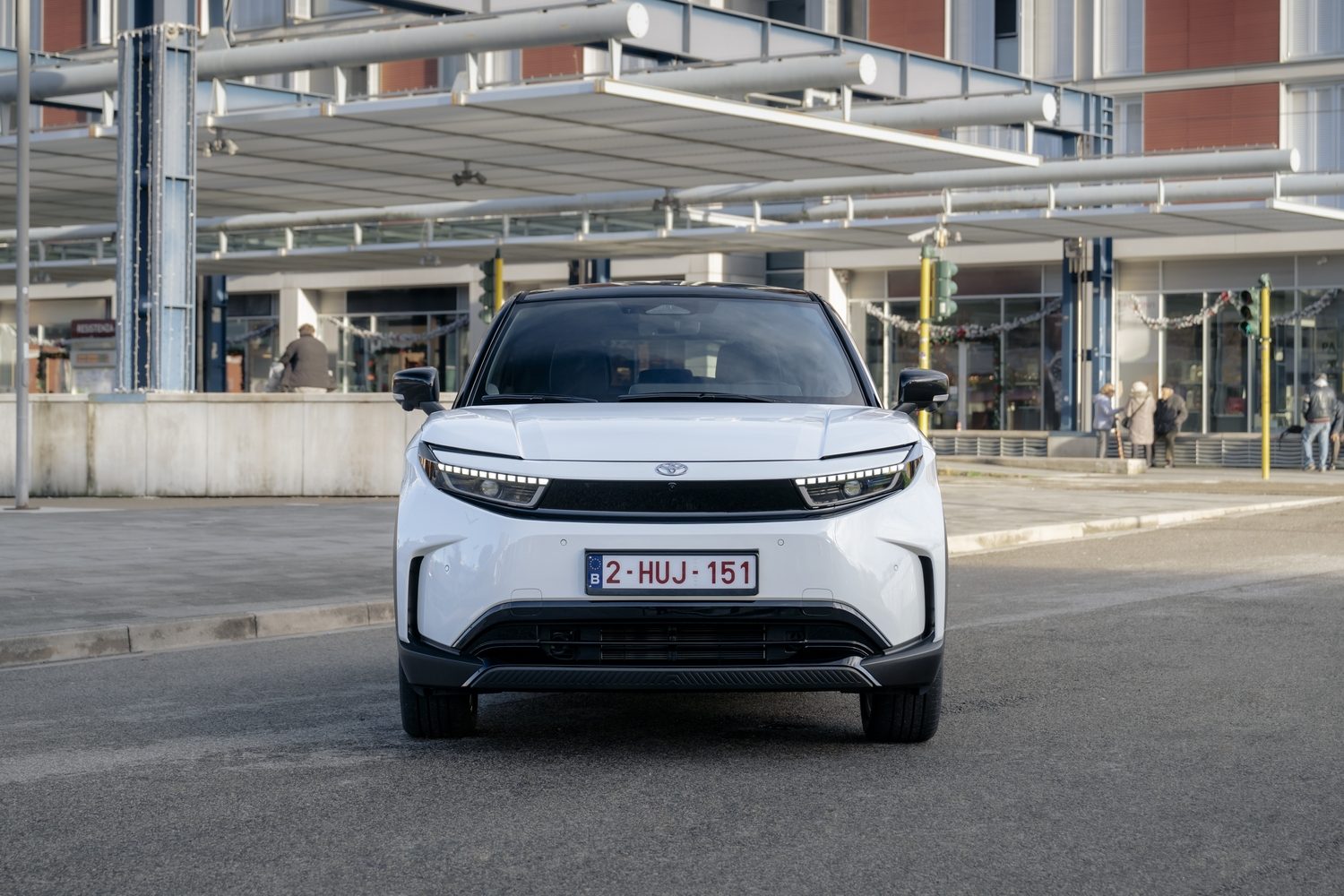
- Wears Toyota's 'Hammerhead' styling at front
- Otherwise exactly like the Suzuki
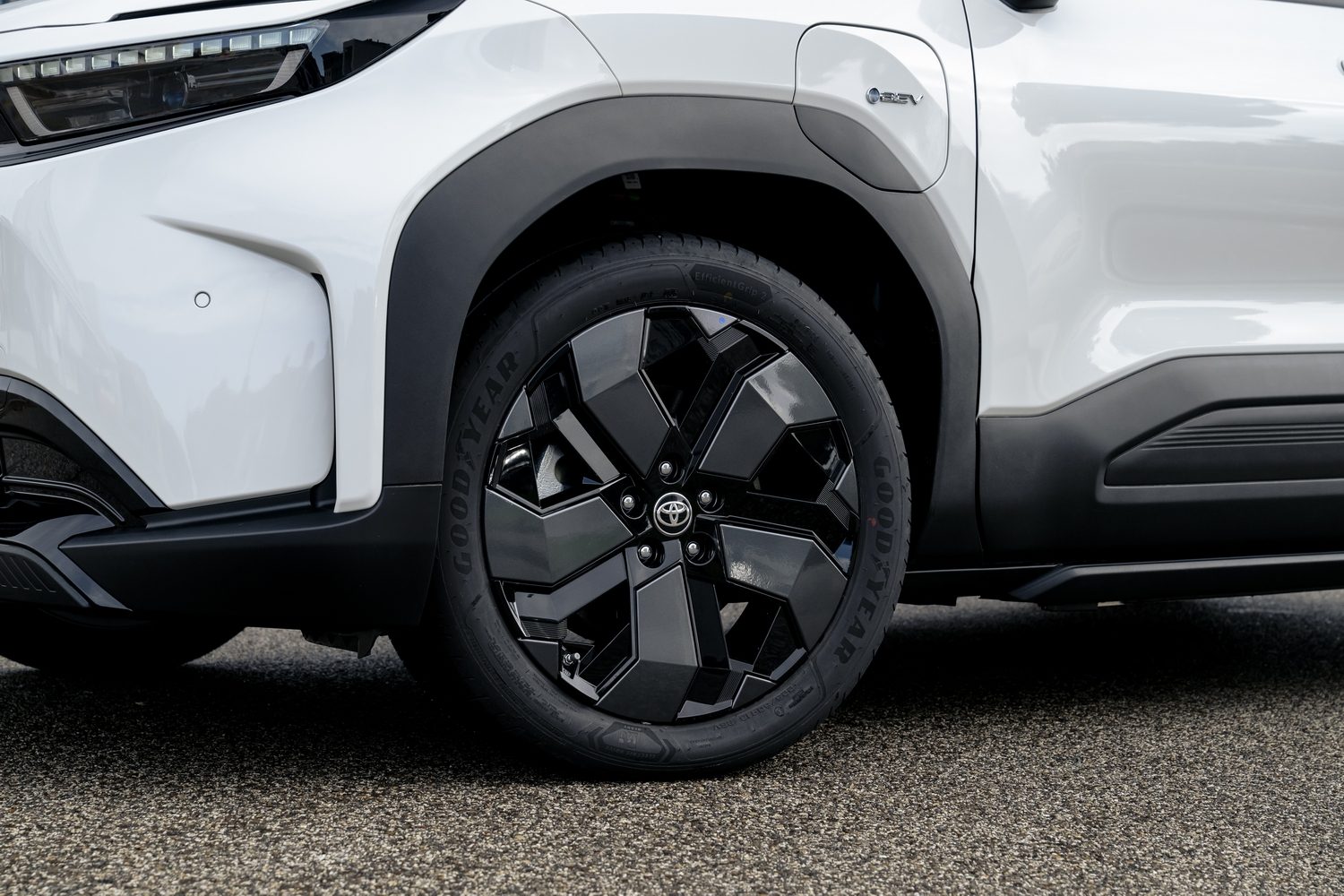
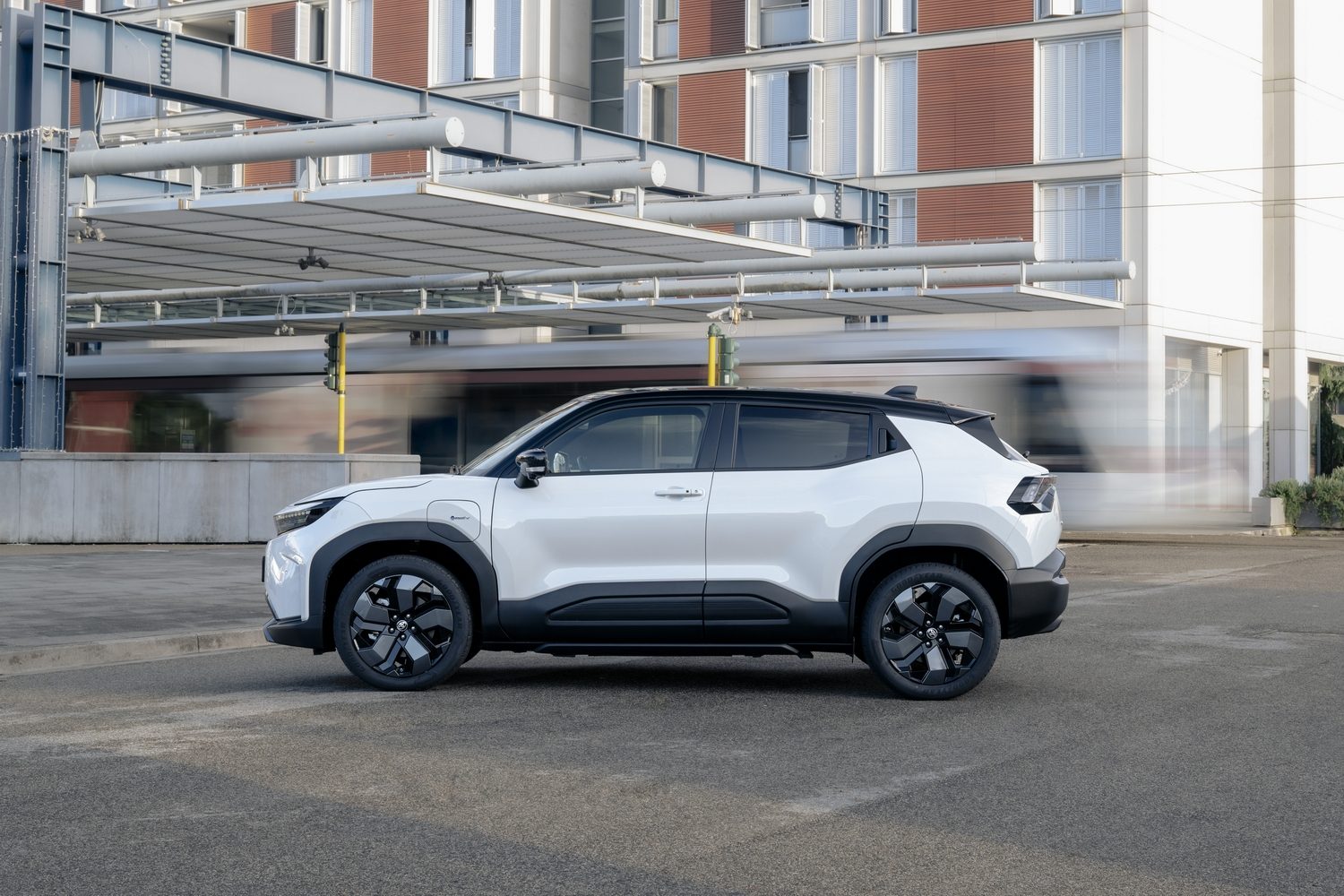
- 18- or 19-inch wheels fitted

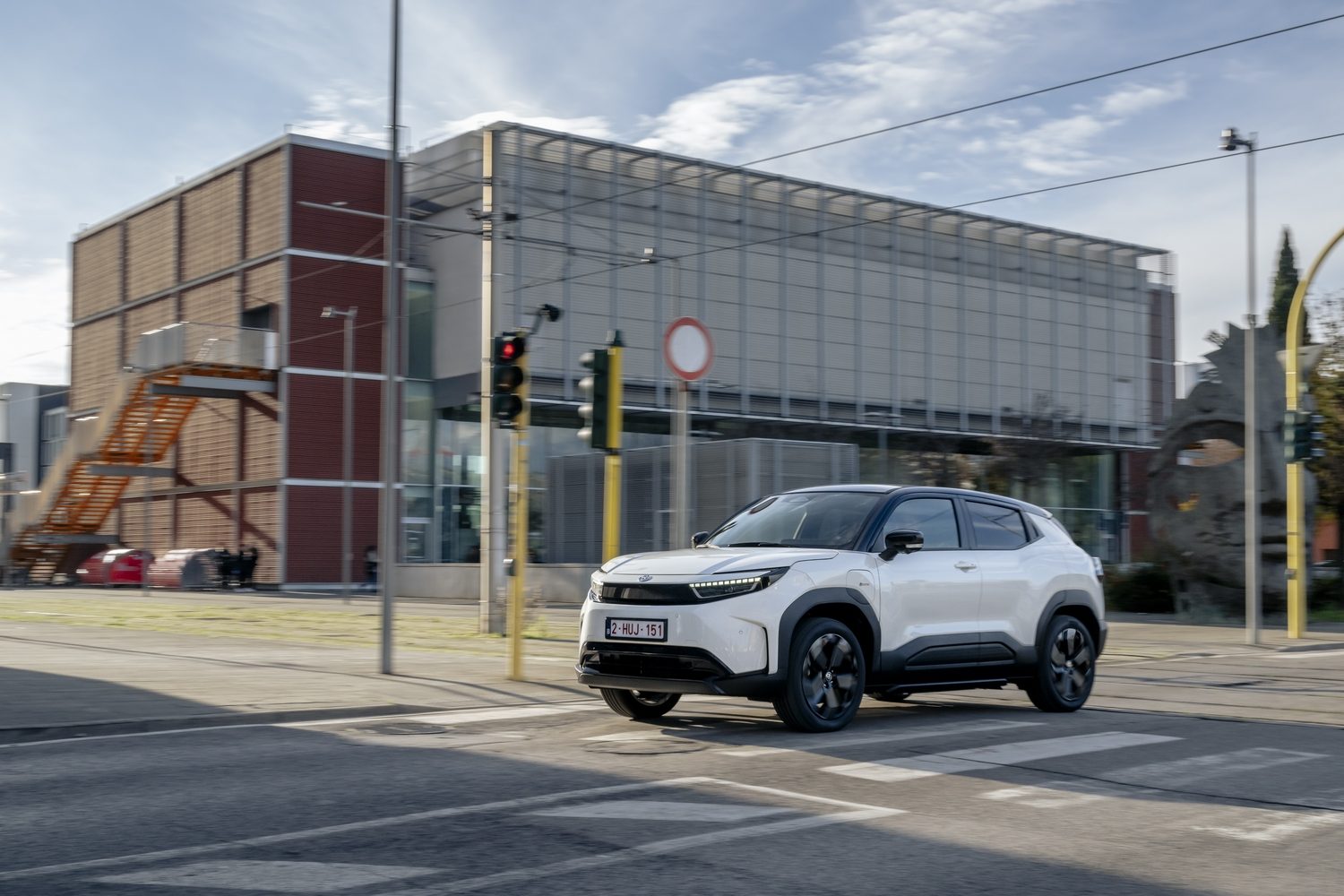
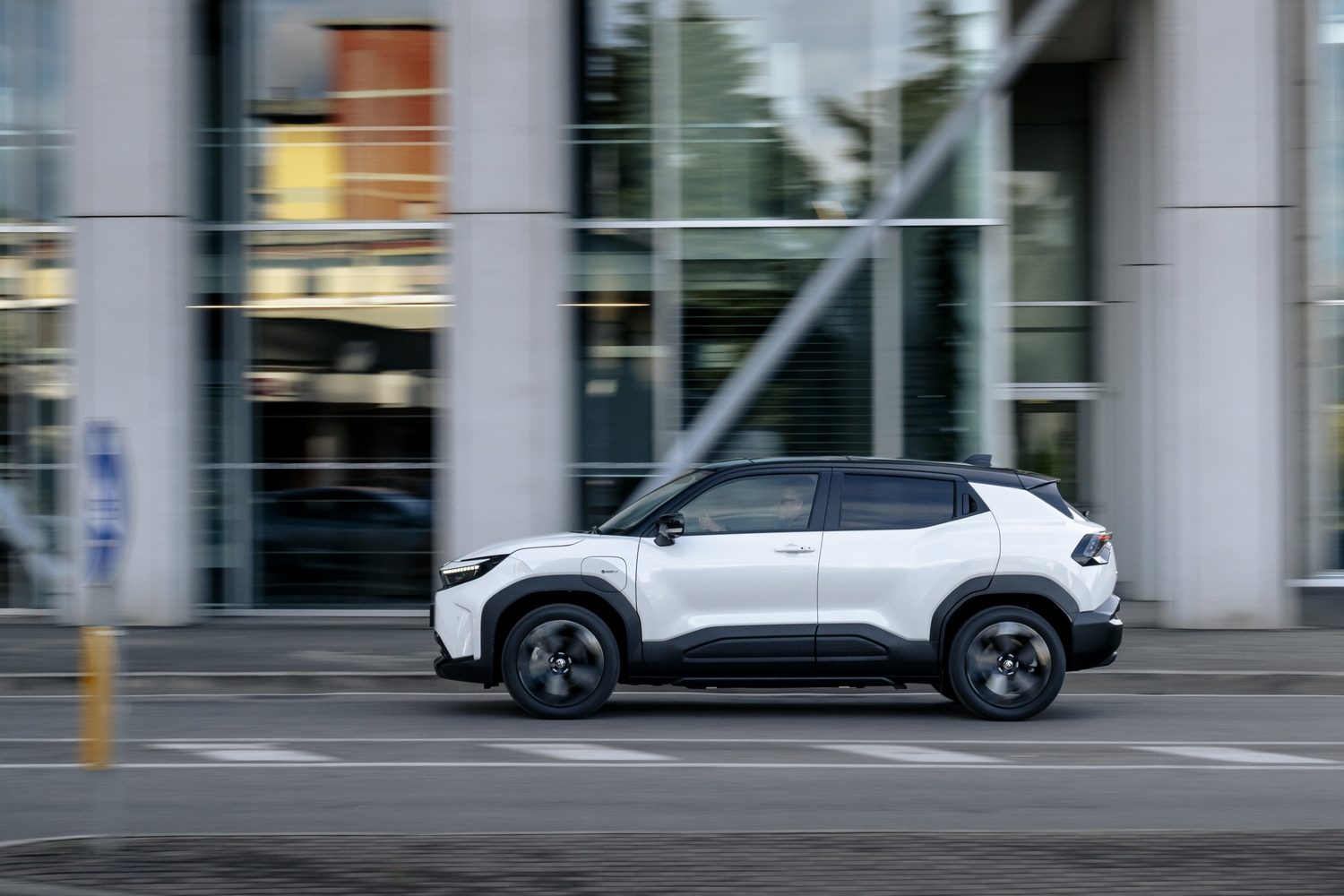
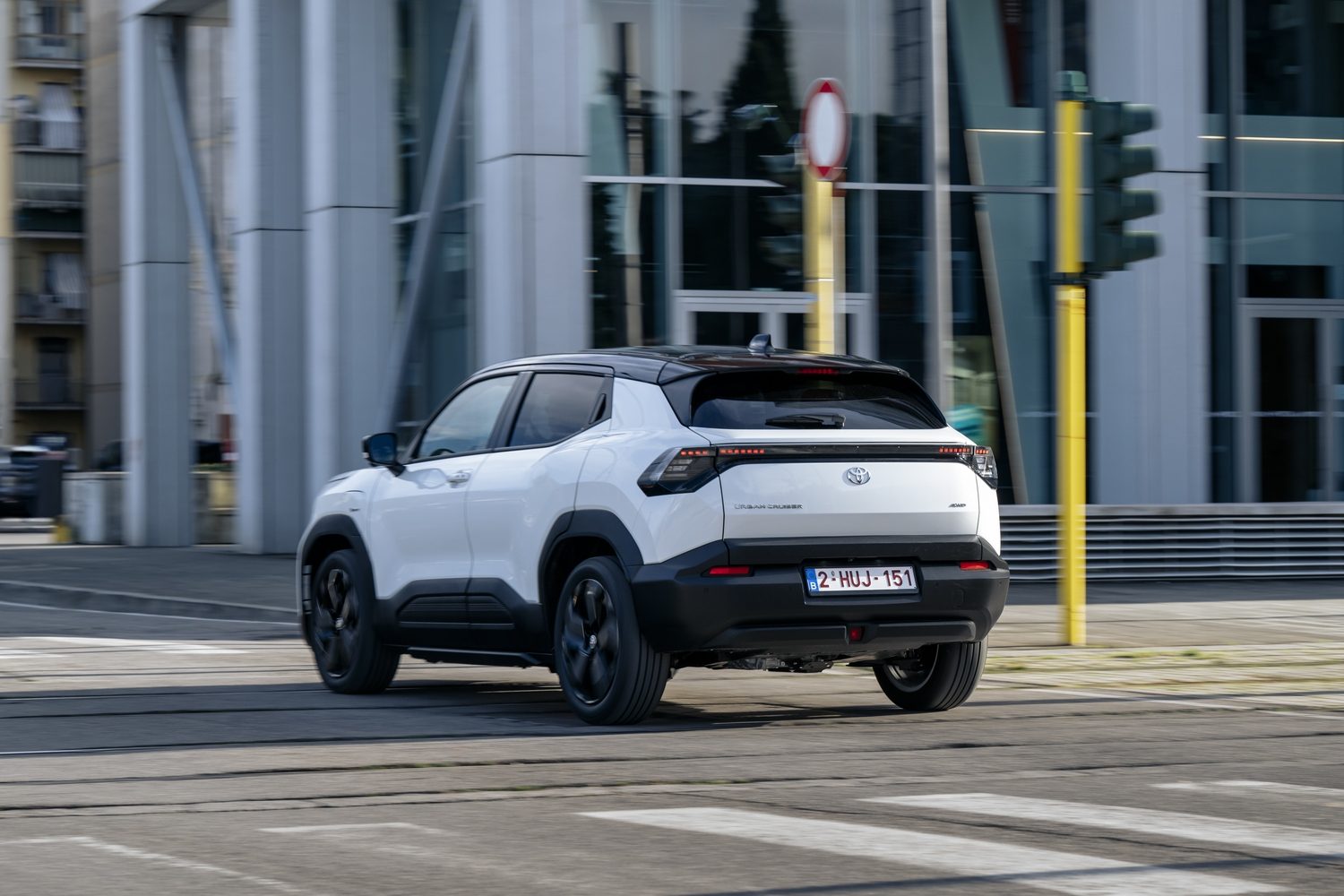
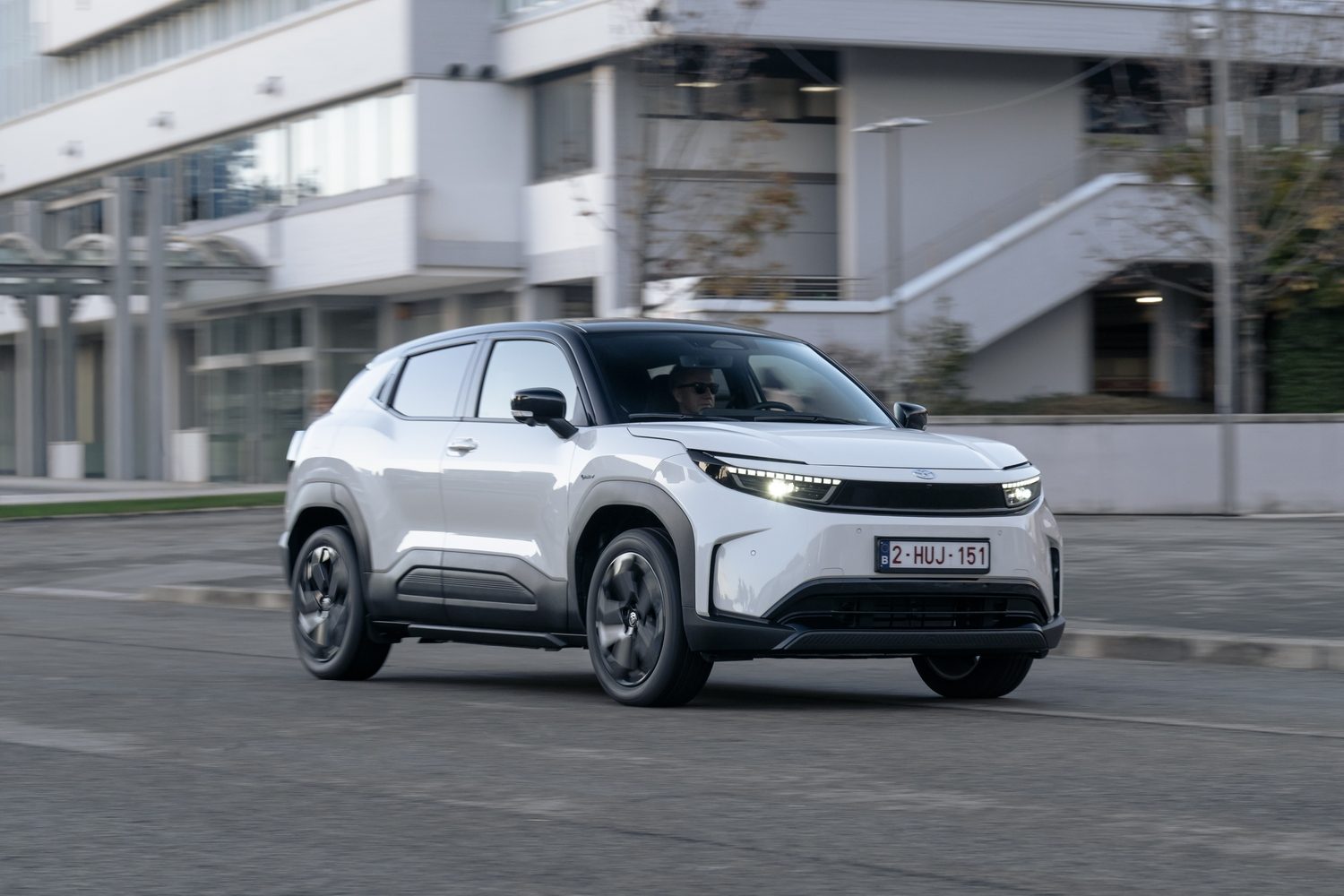
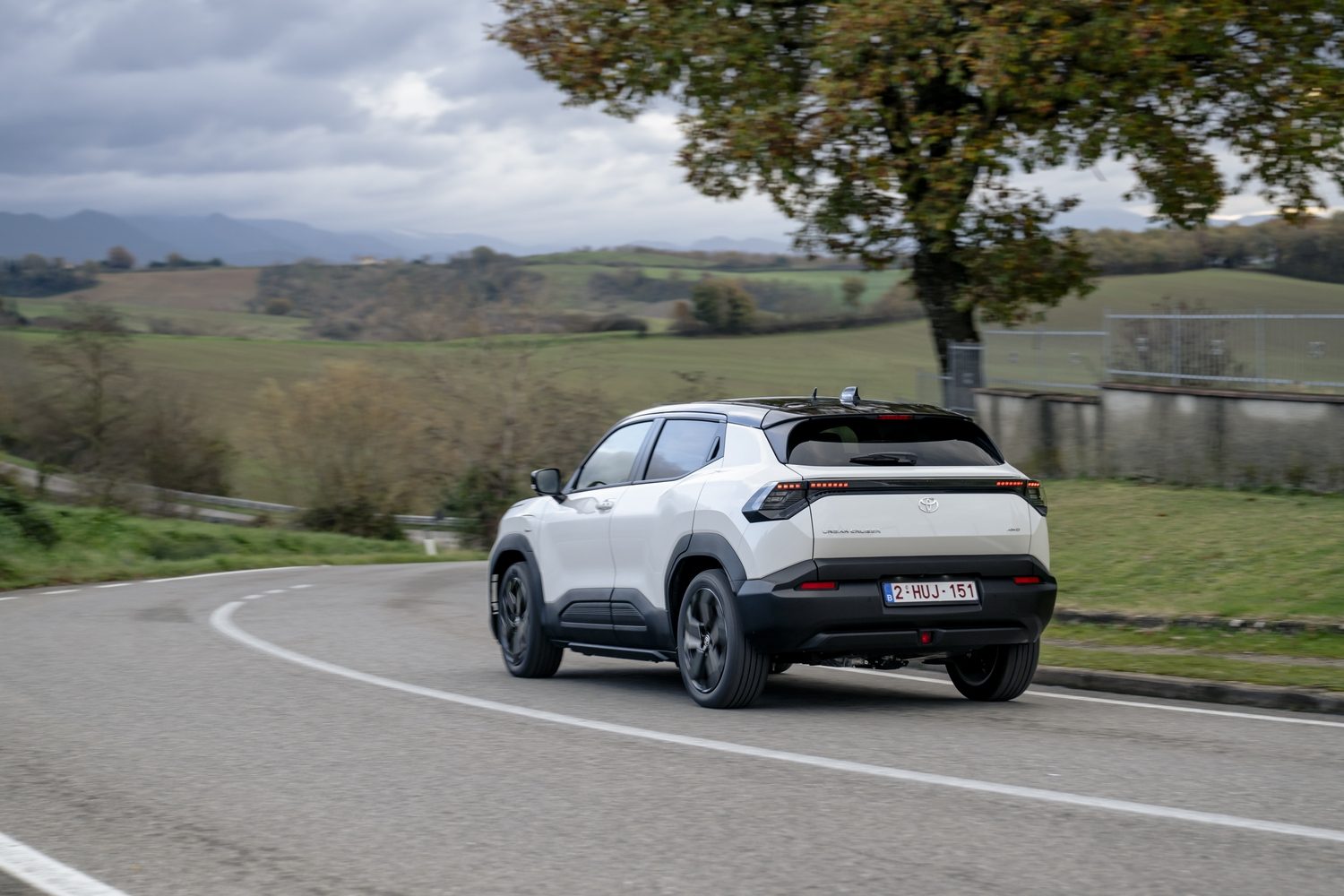
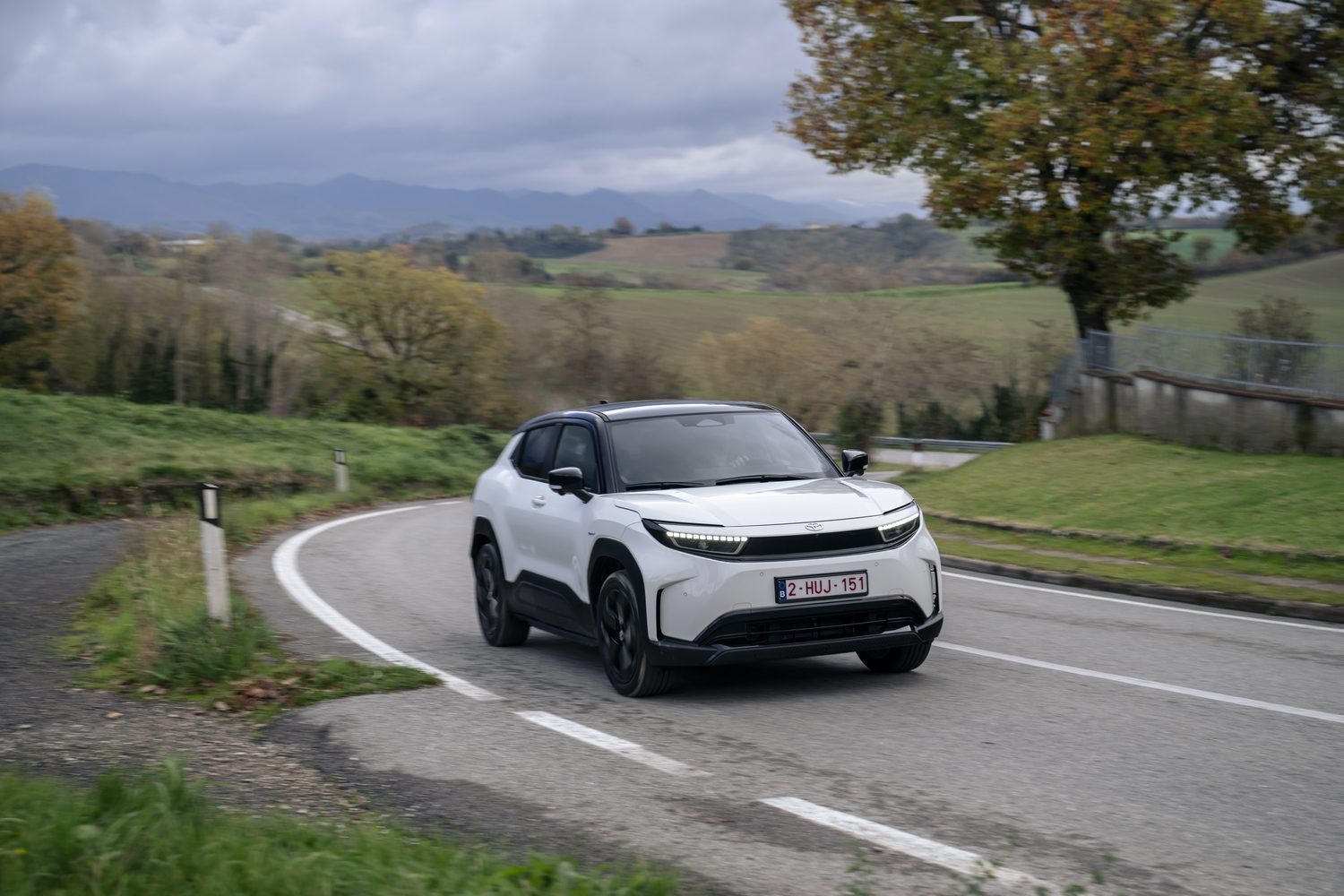
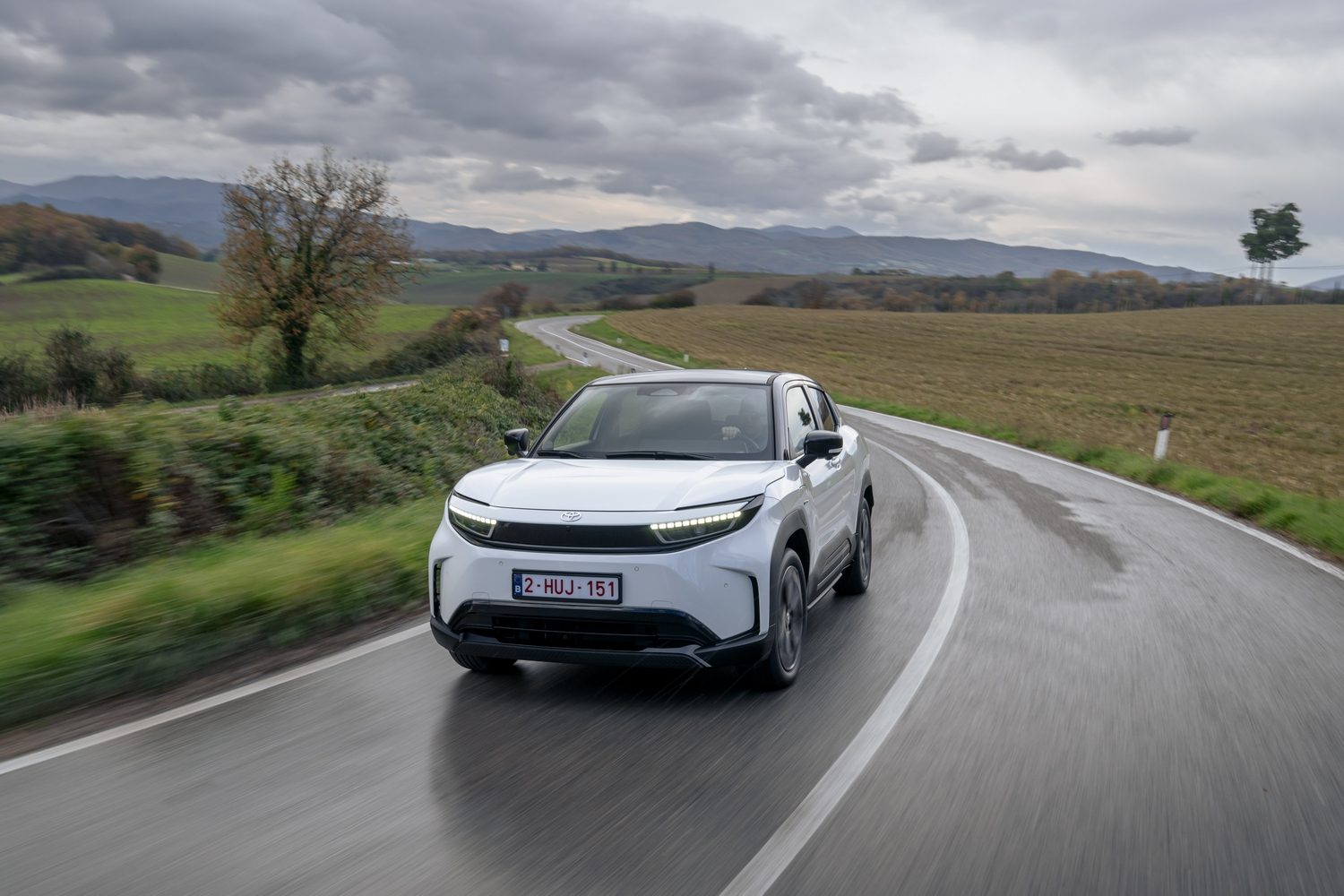
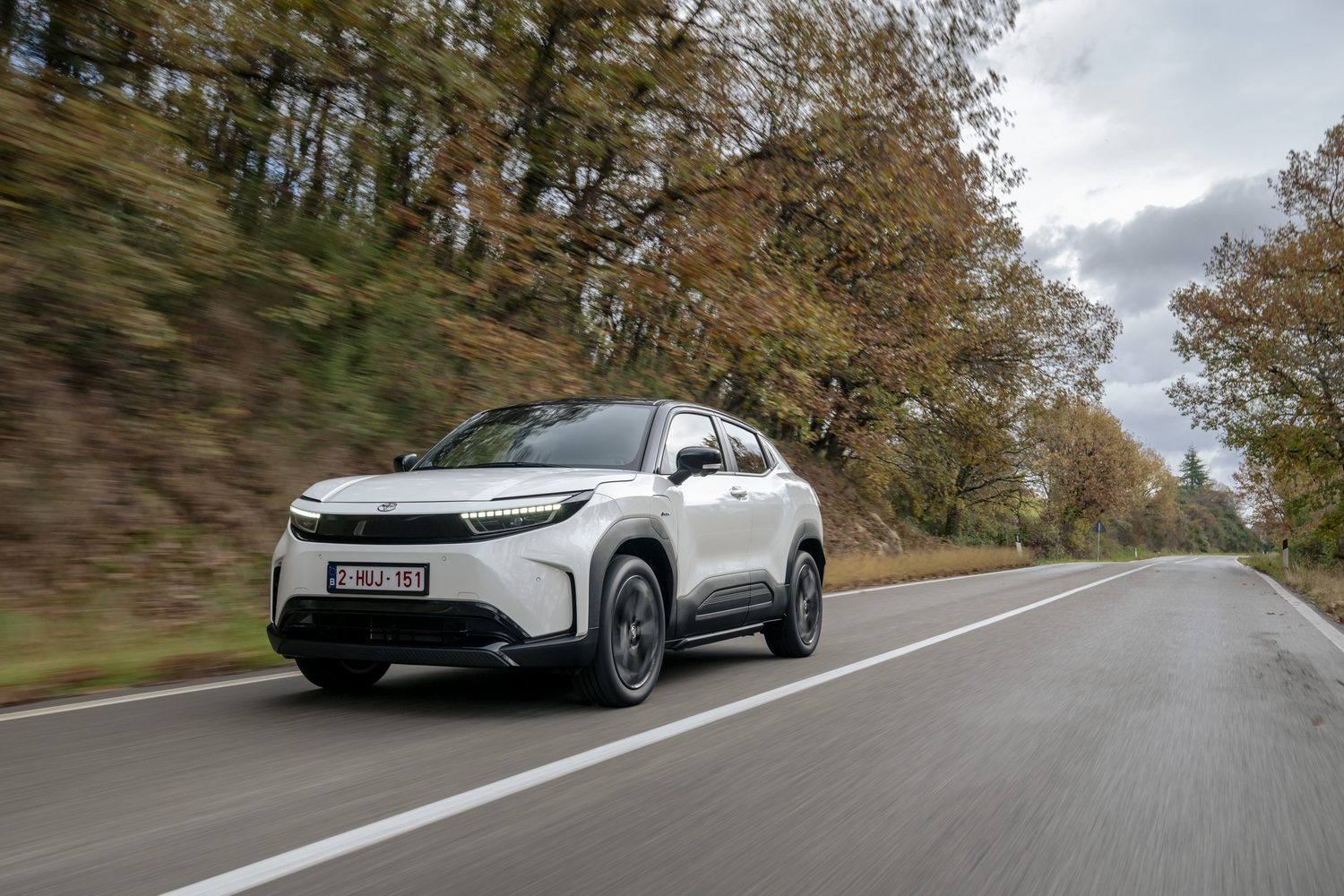
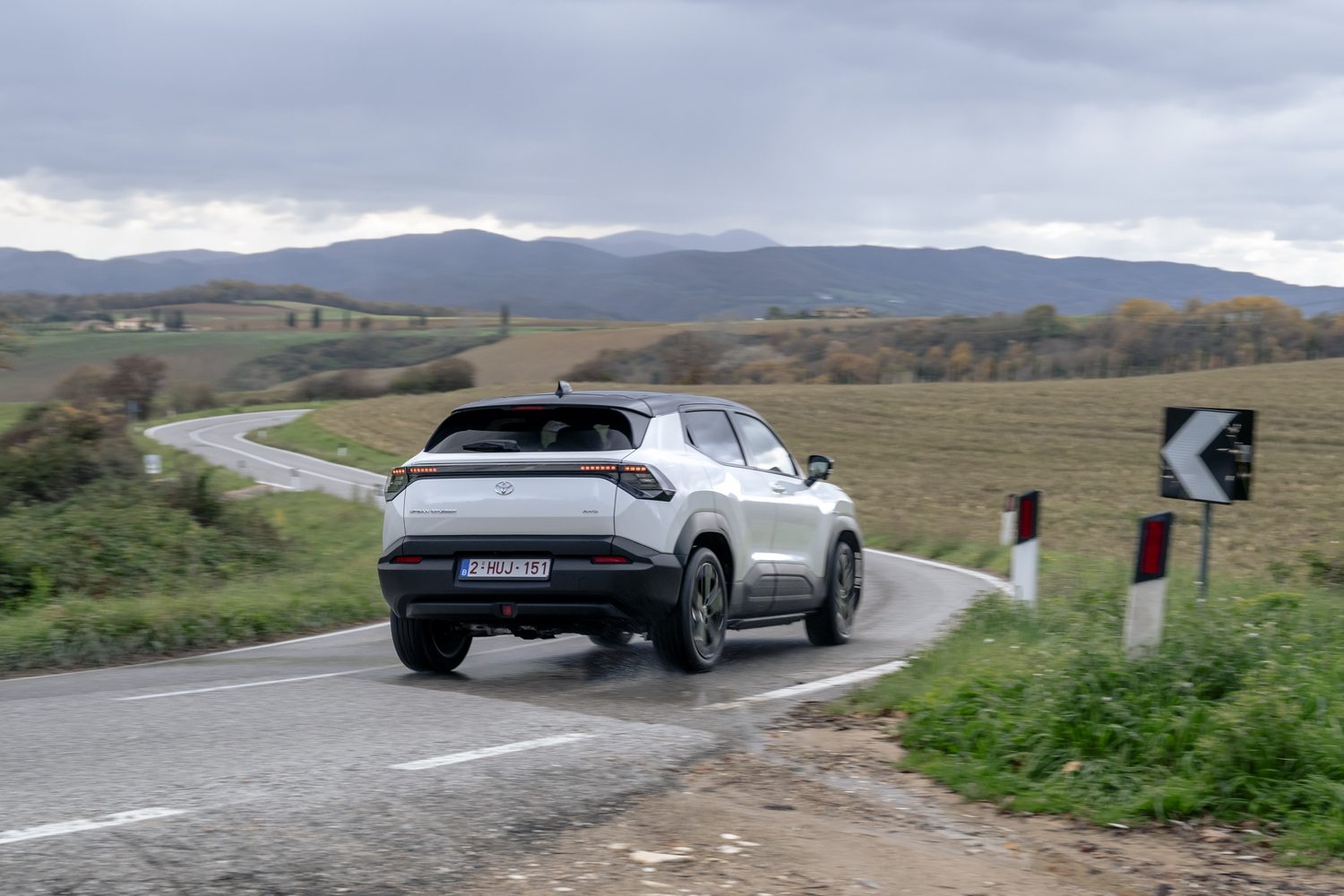
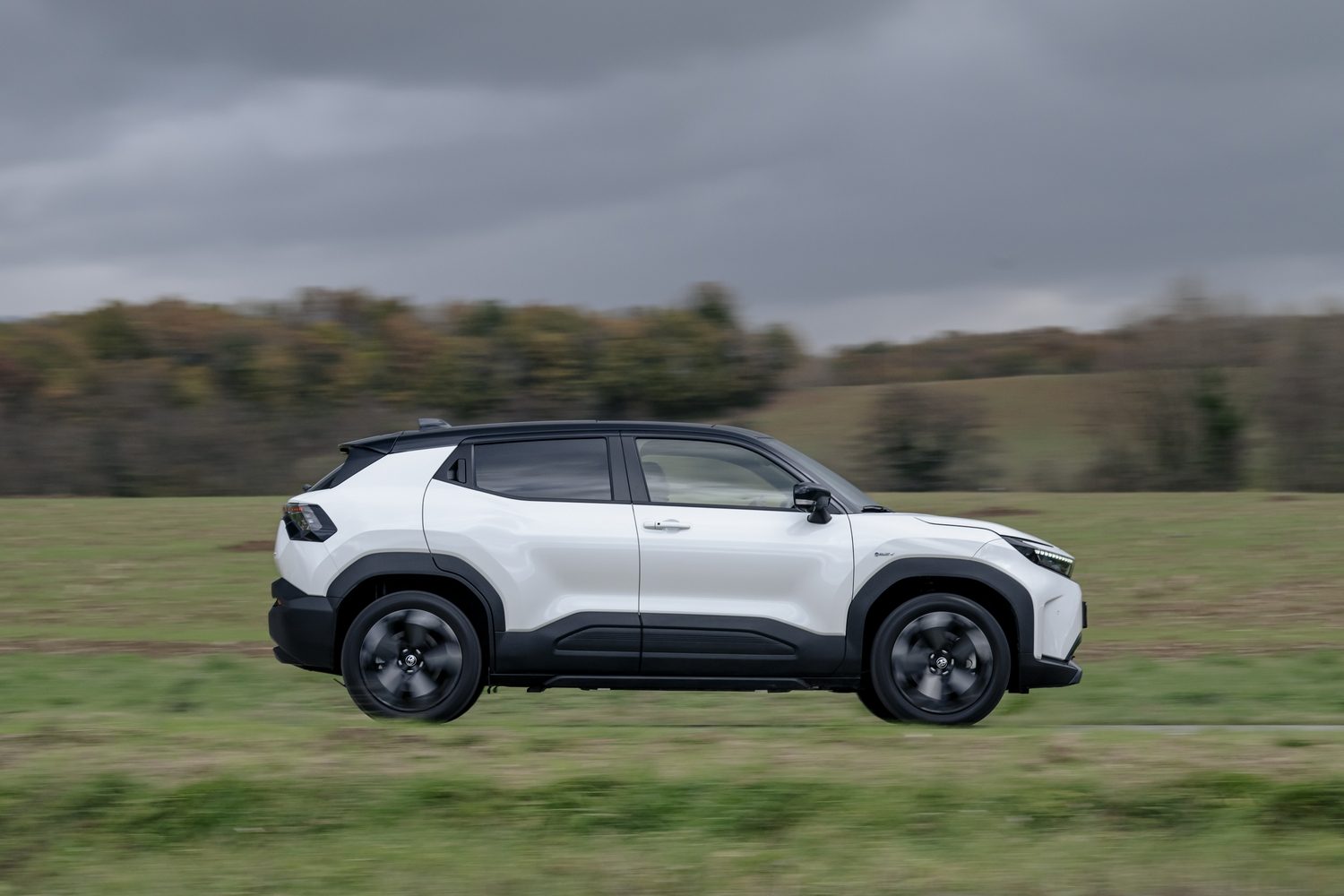
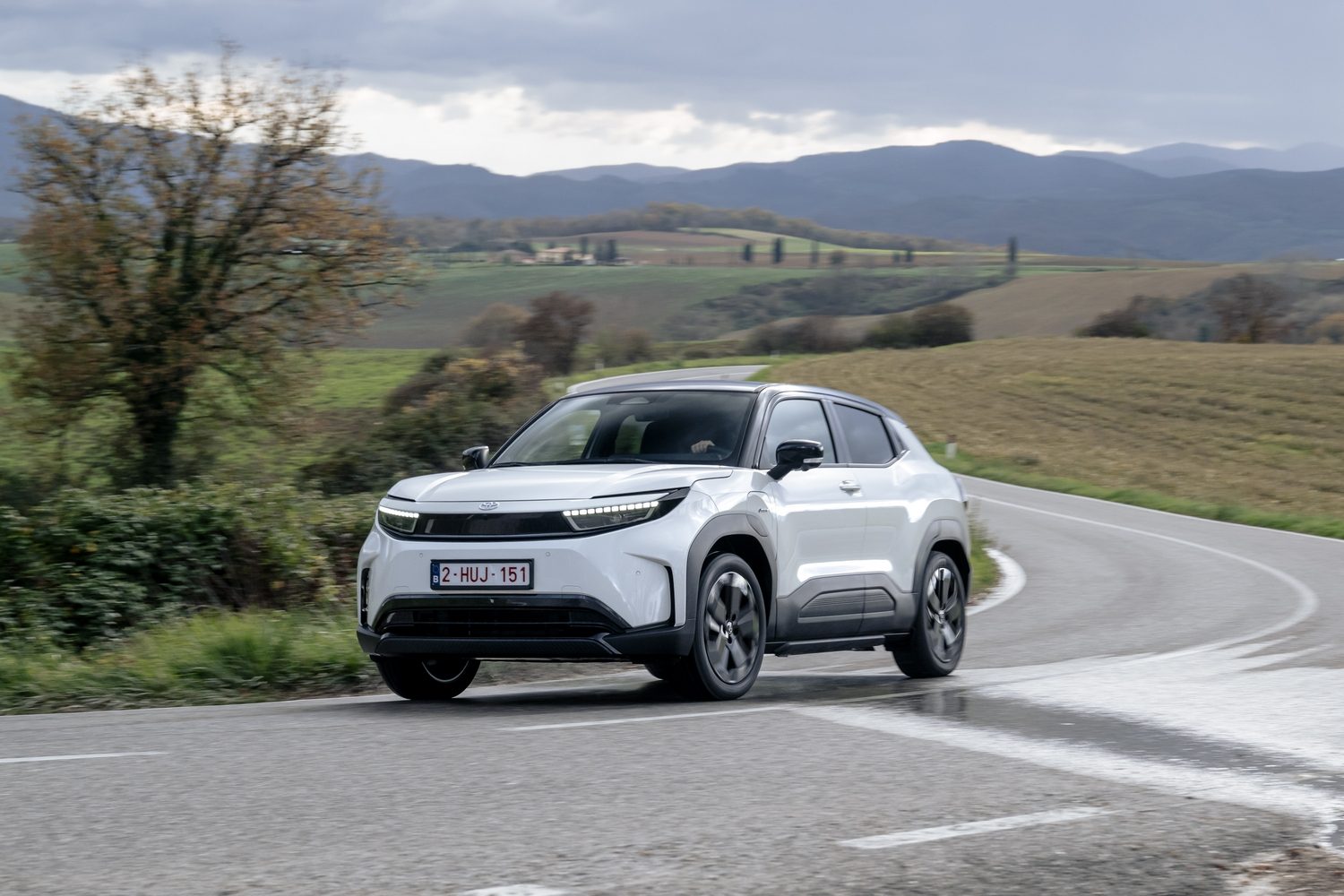
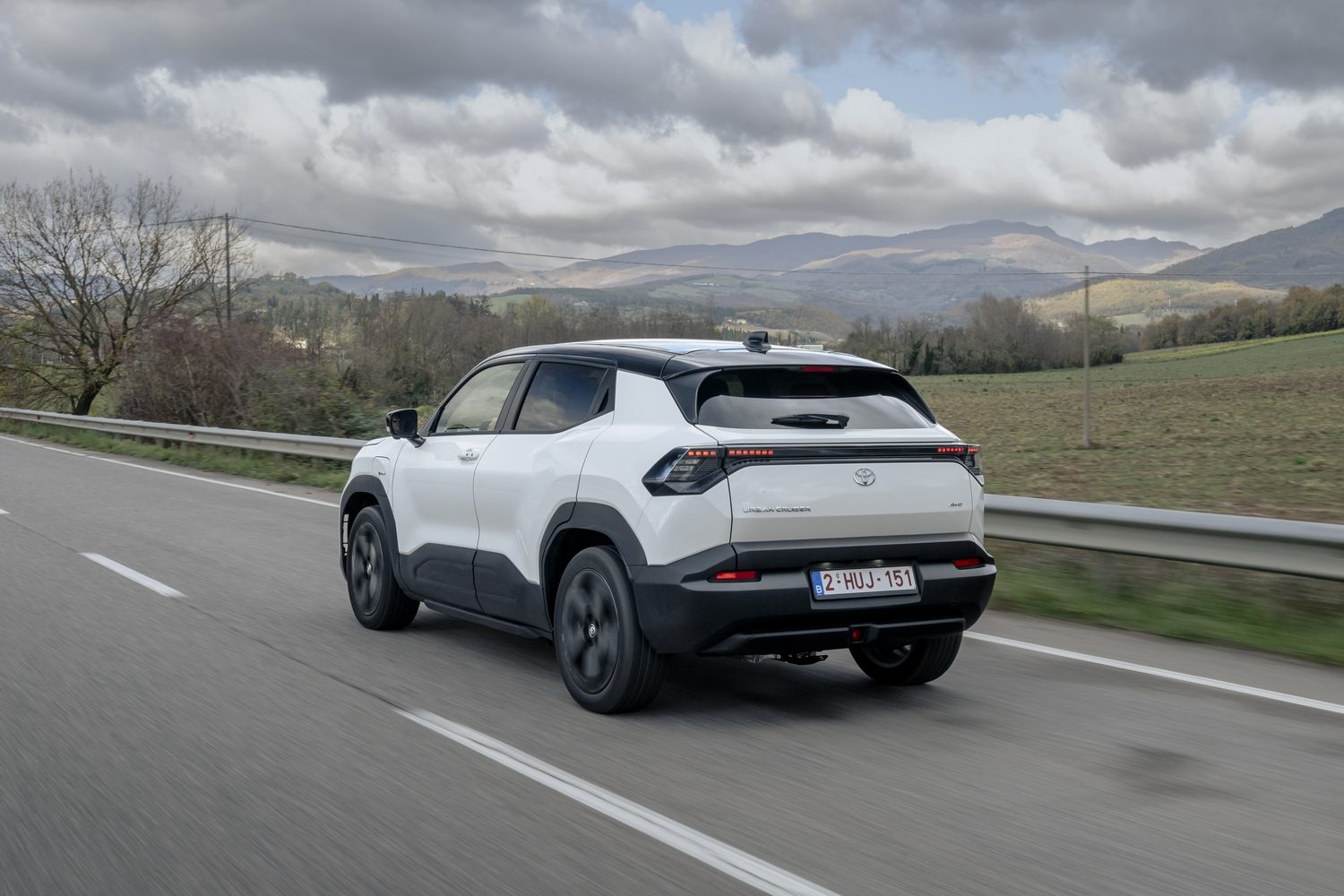
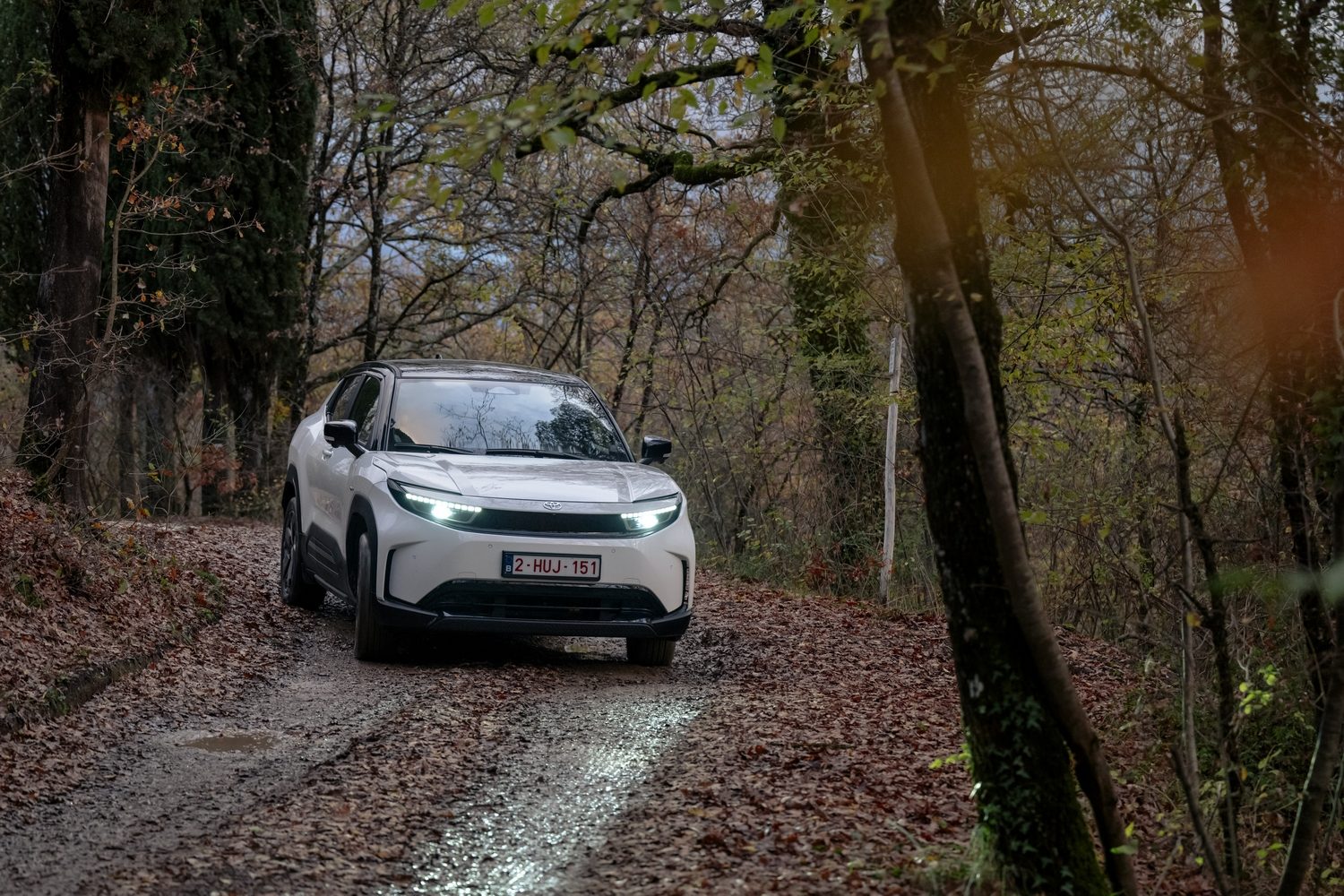
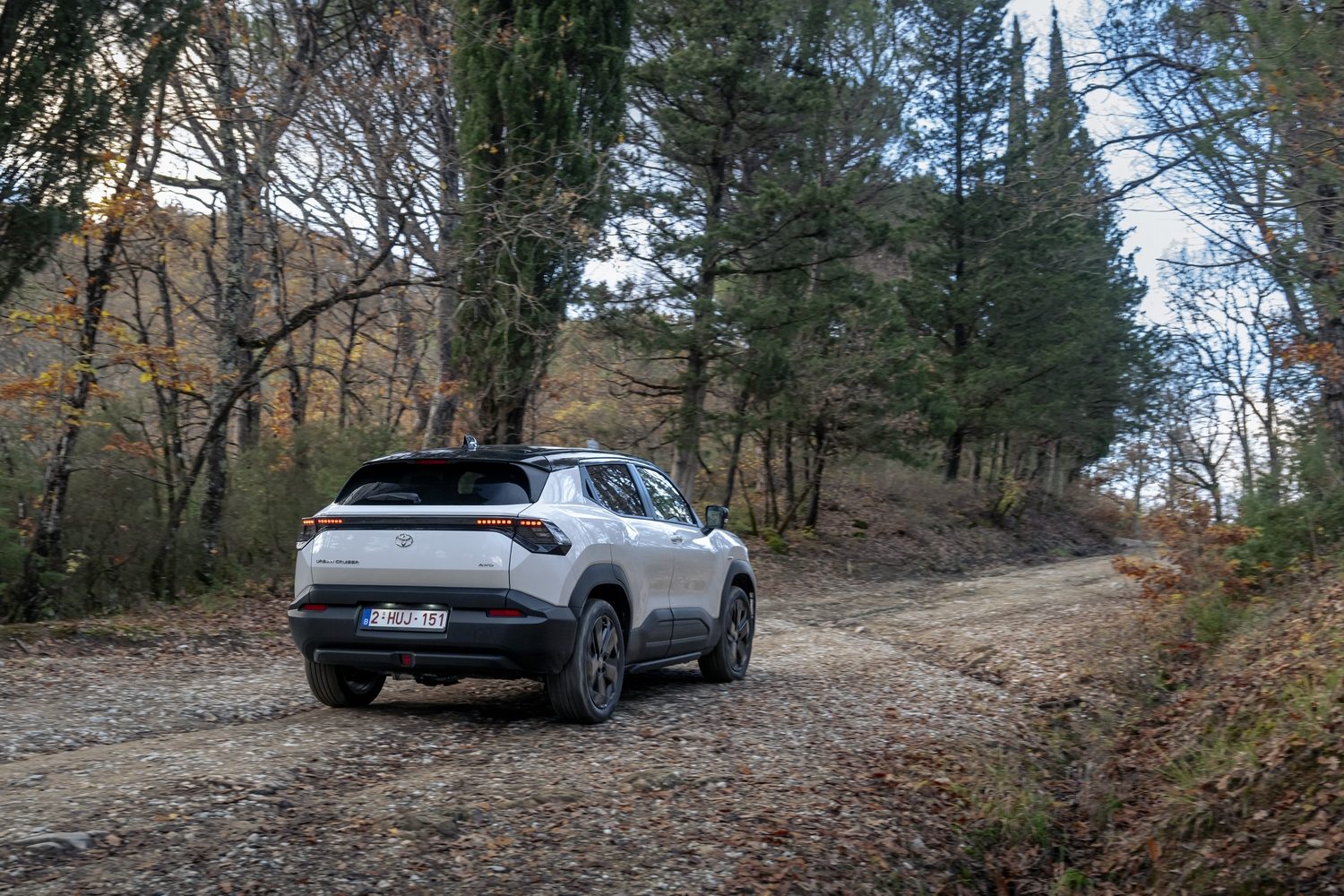
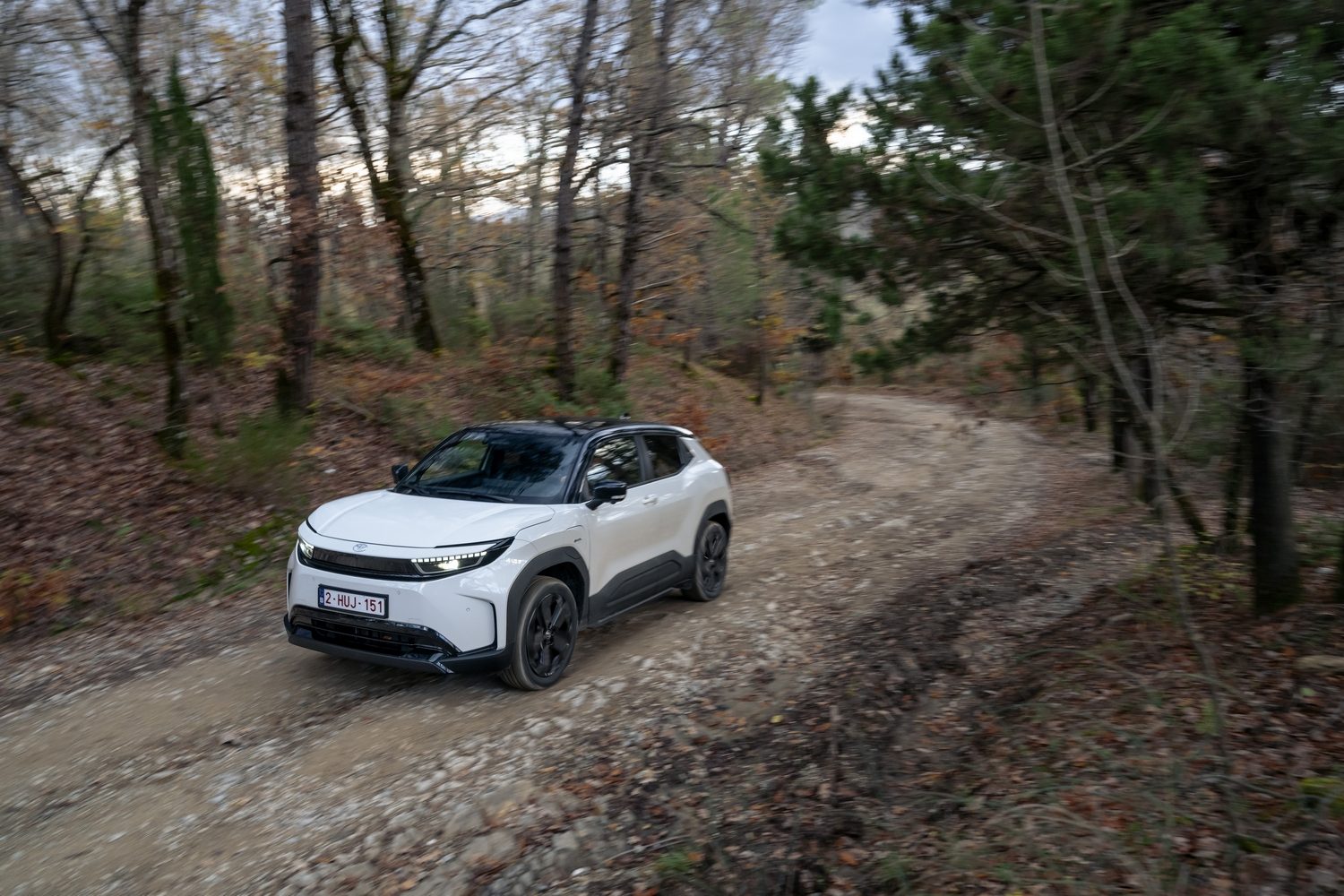
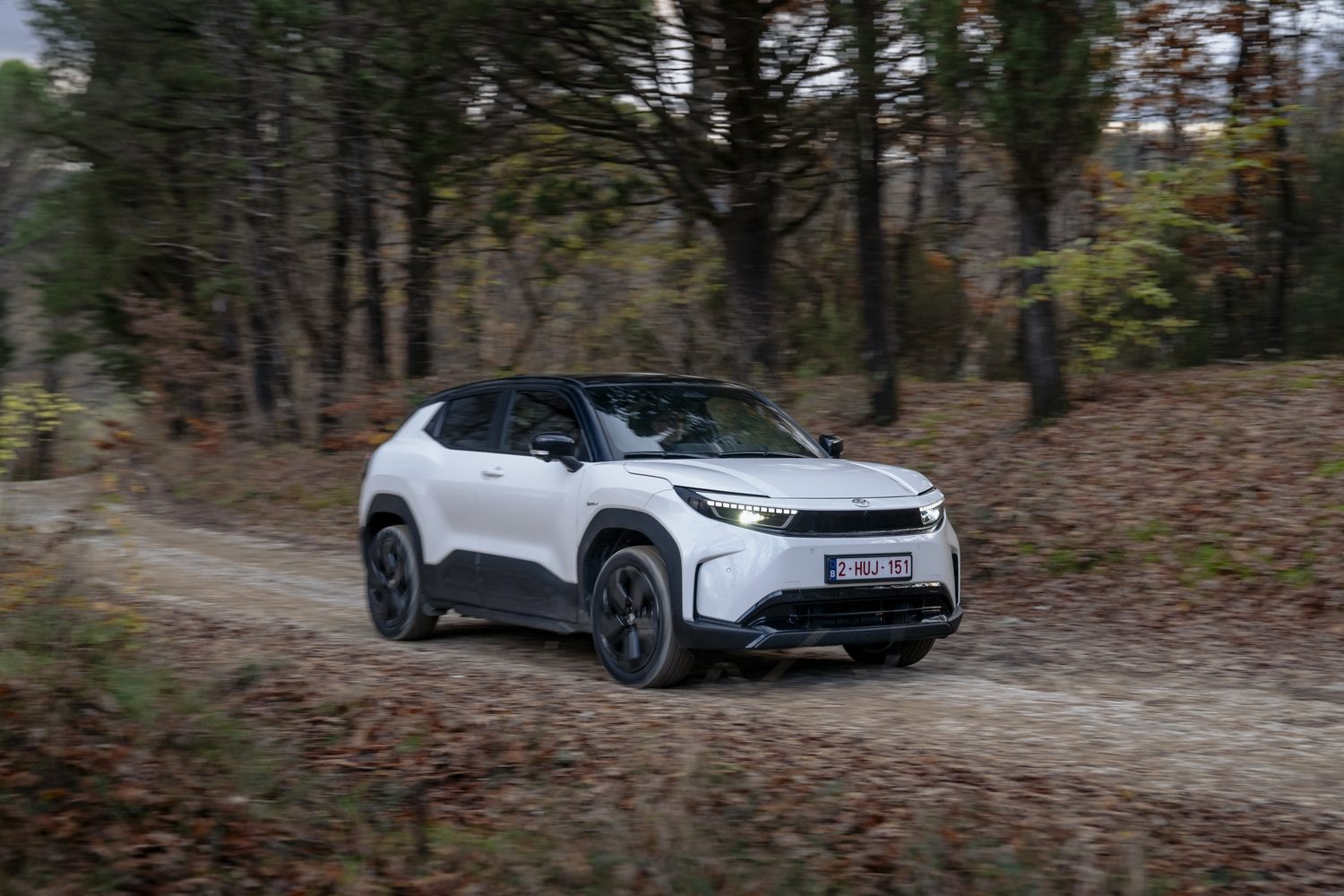
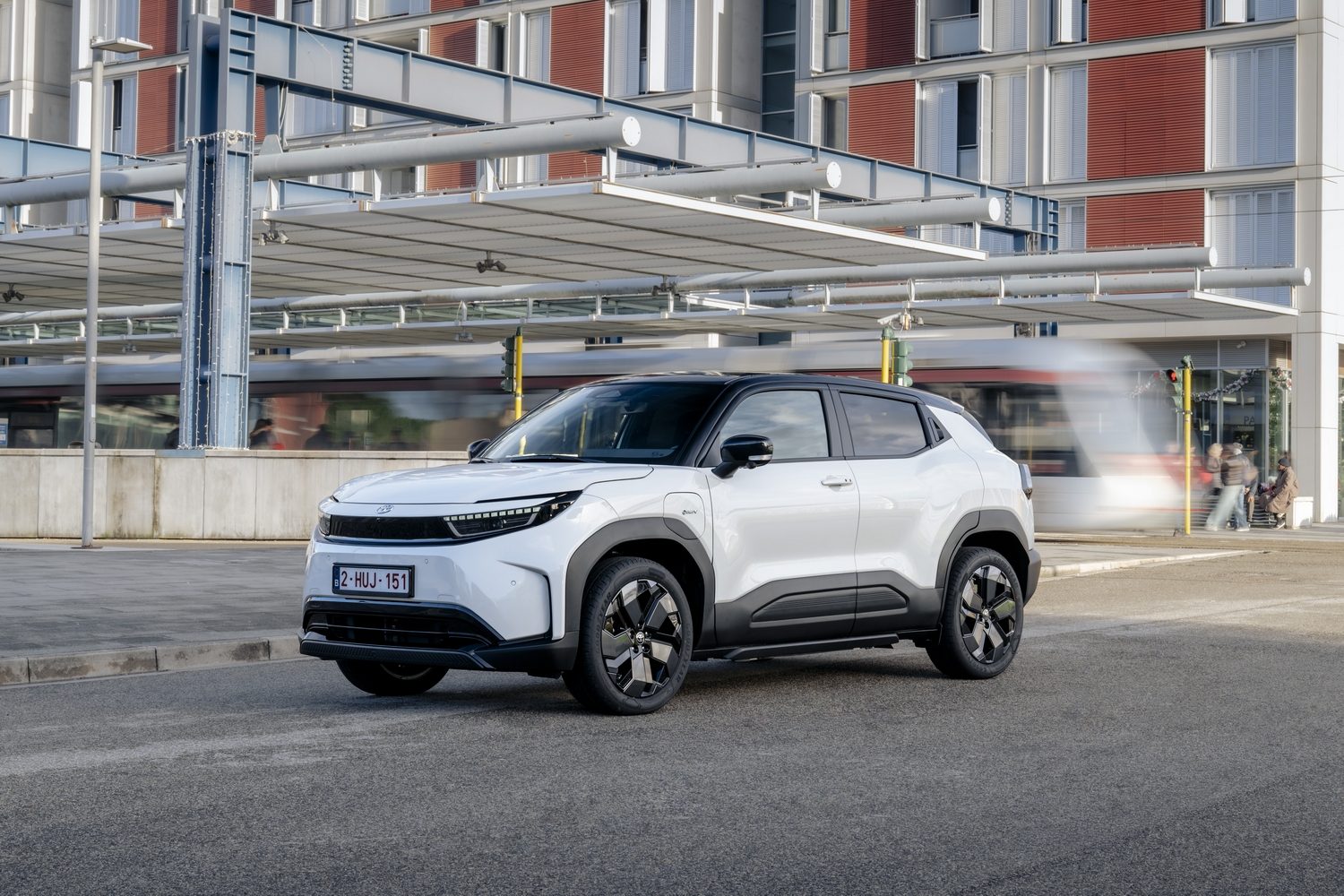
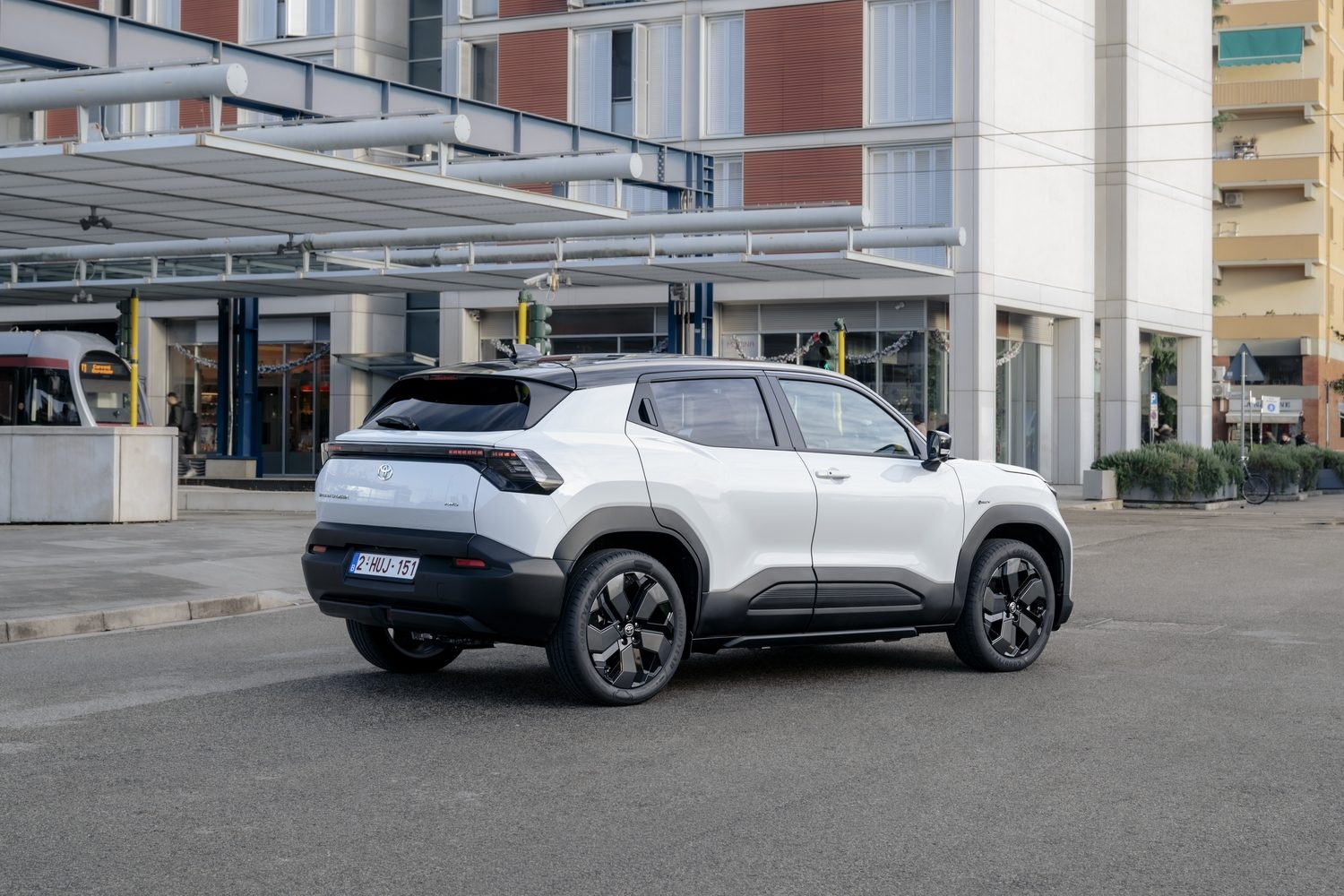
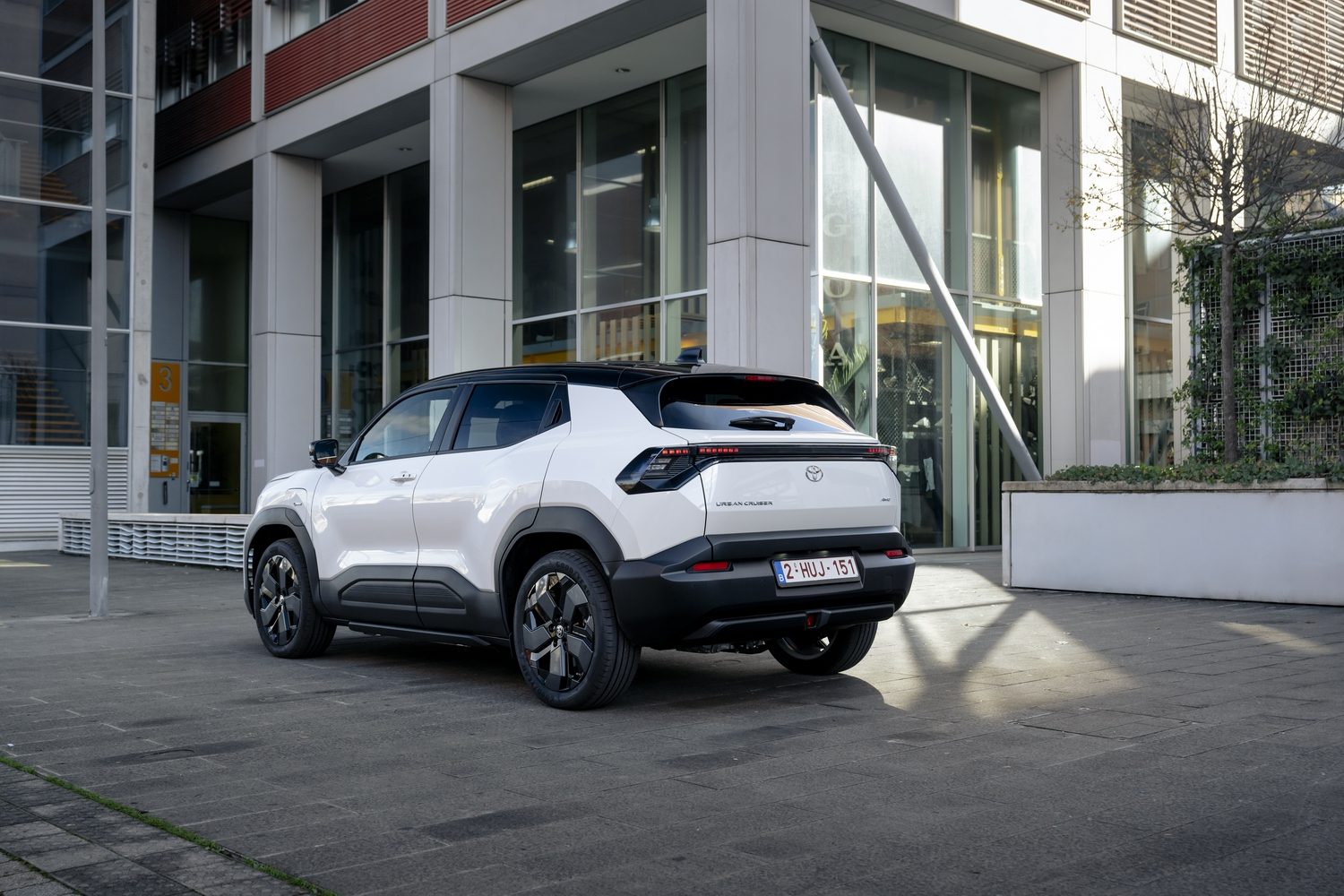
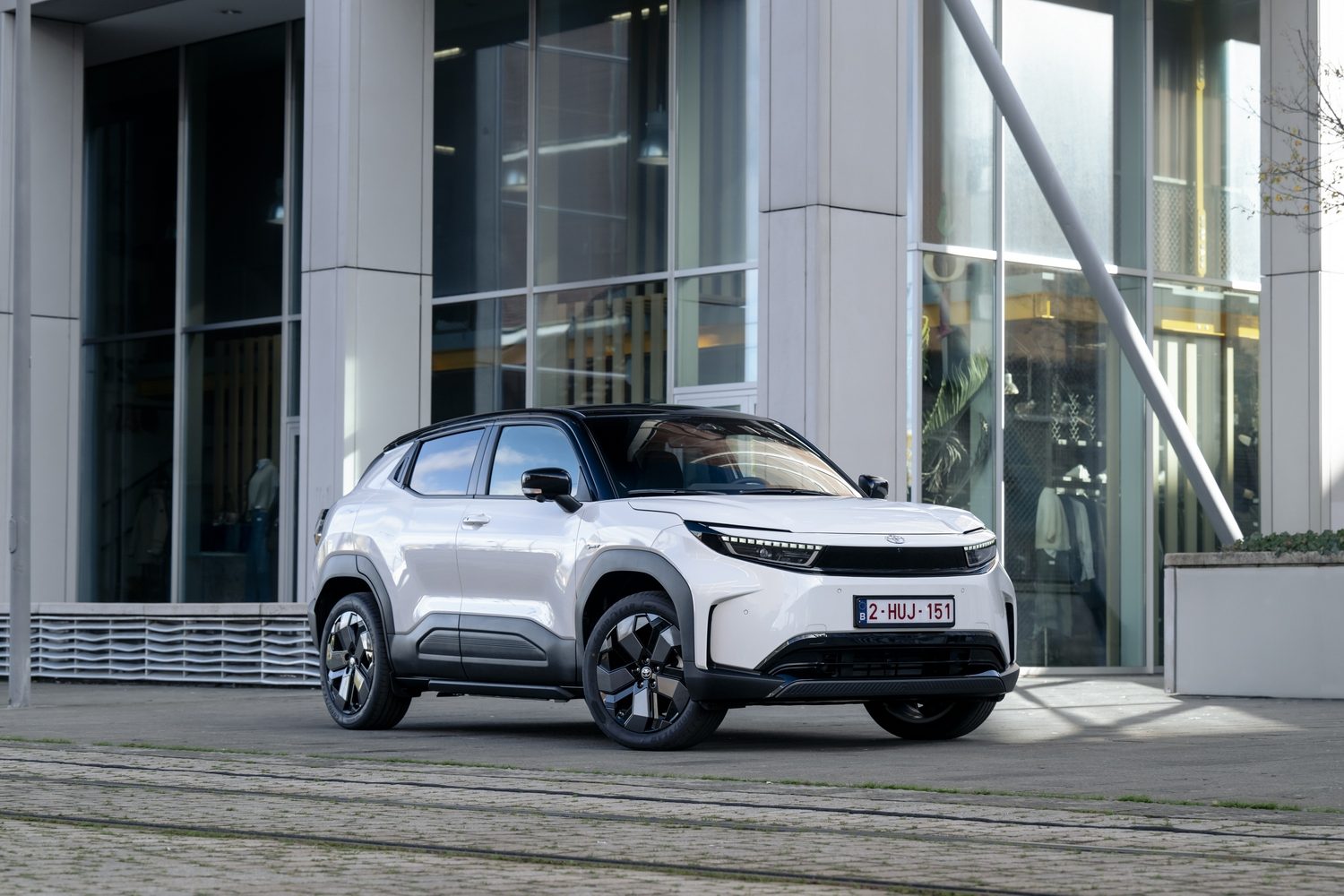
With black-plastic body cladding and some interesting angles, the Toyota Urban Cruiser certainly isn't ugly.
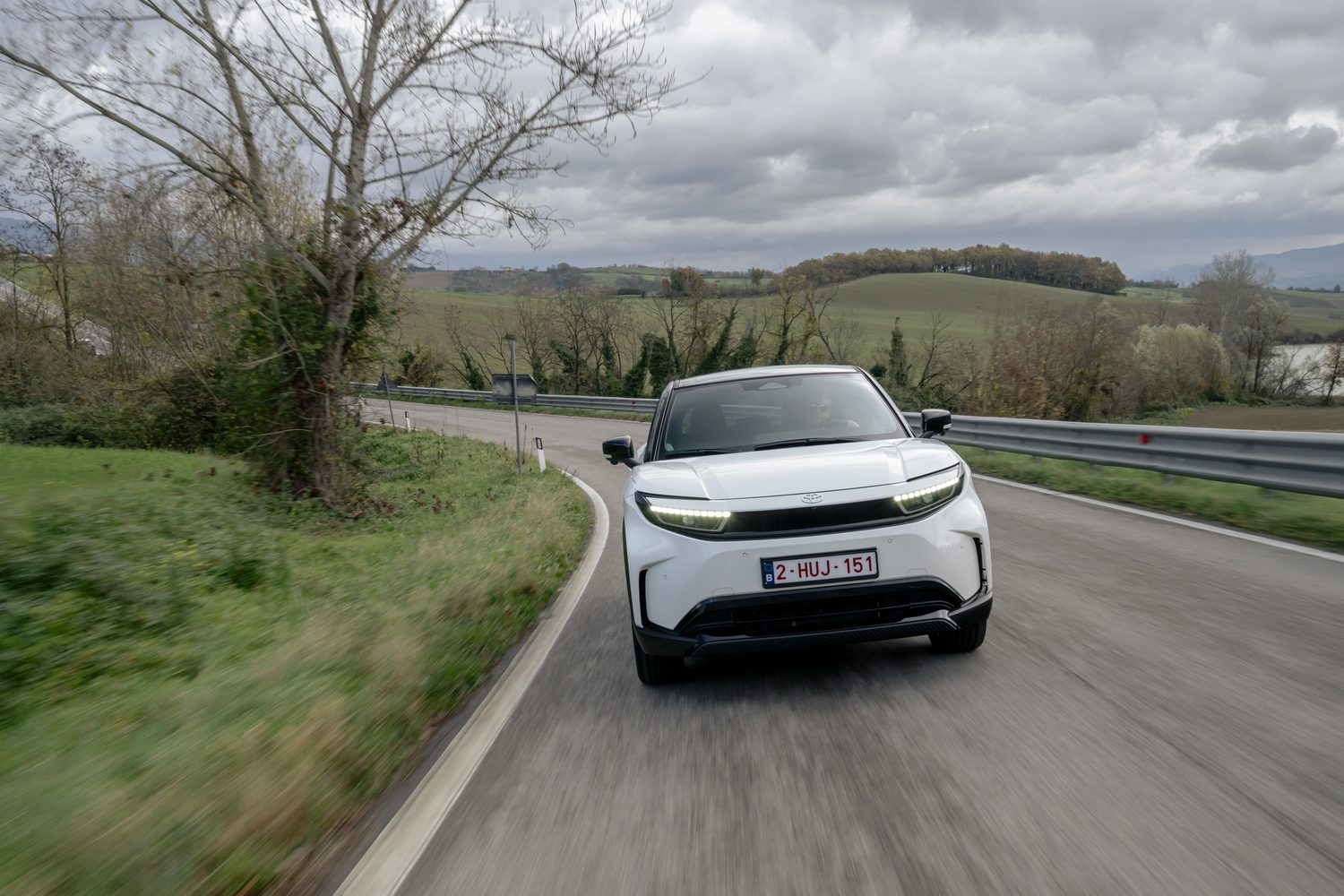
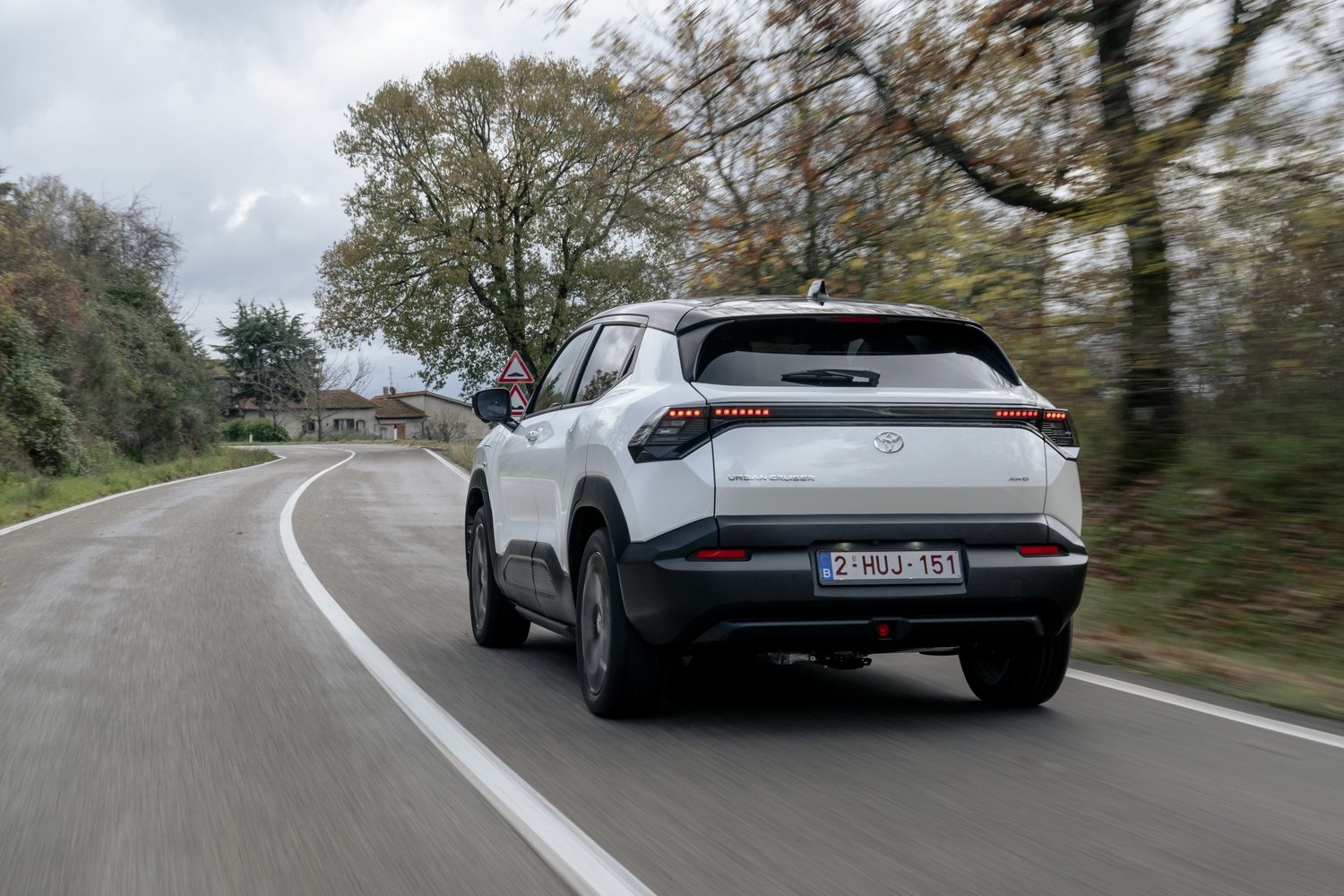
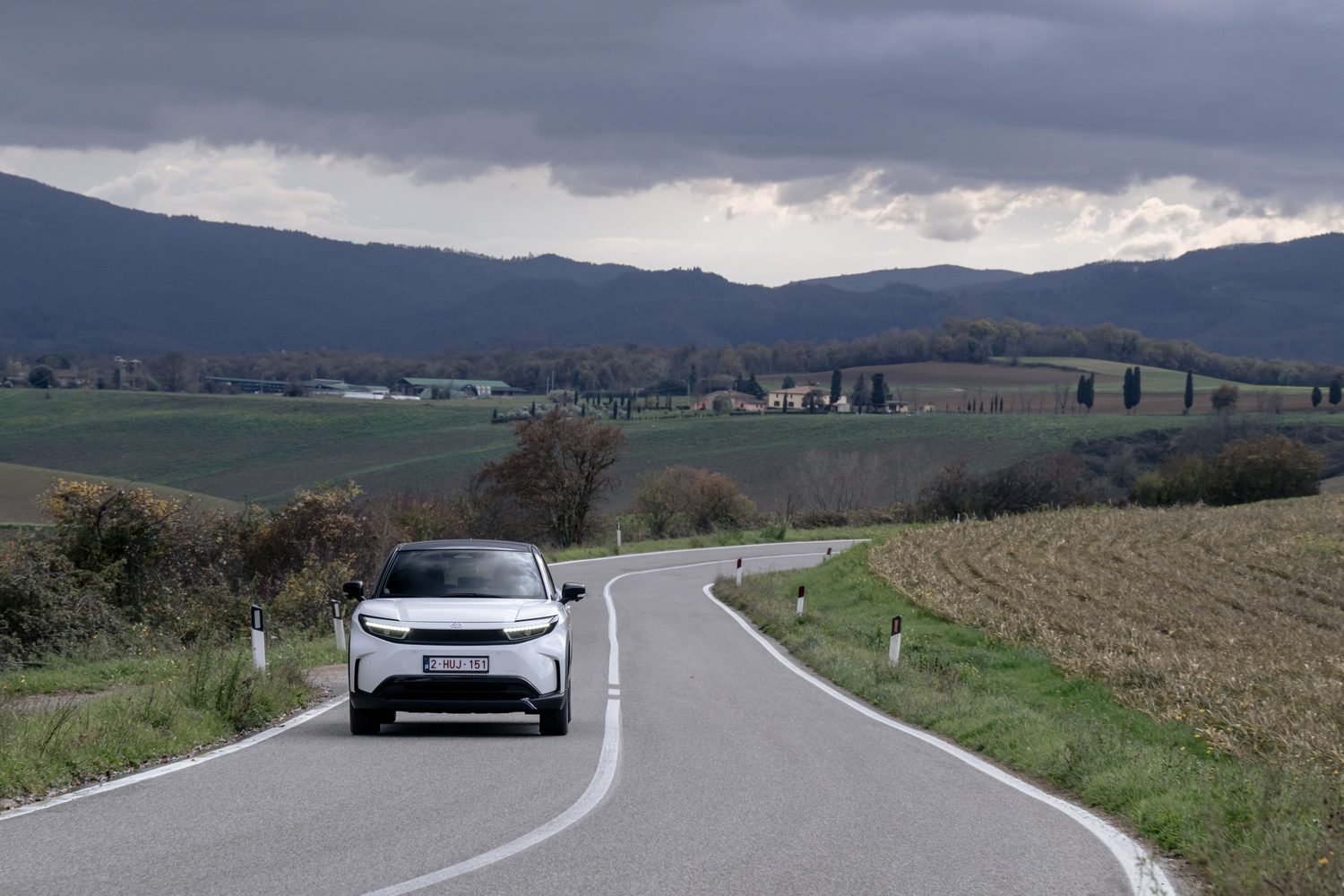
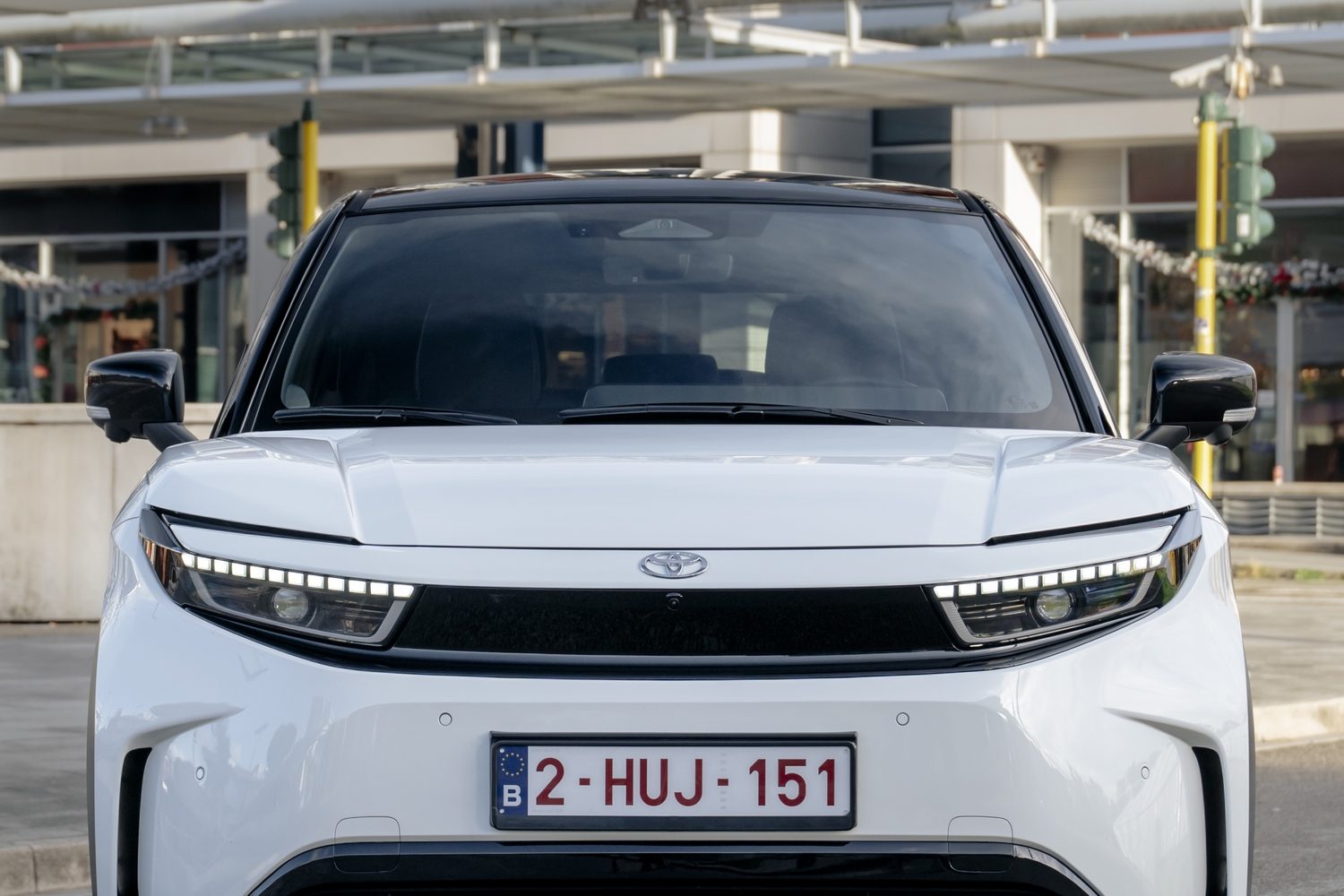
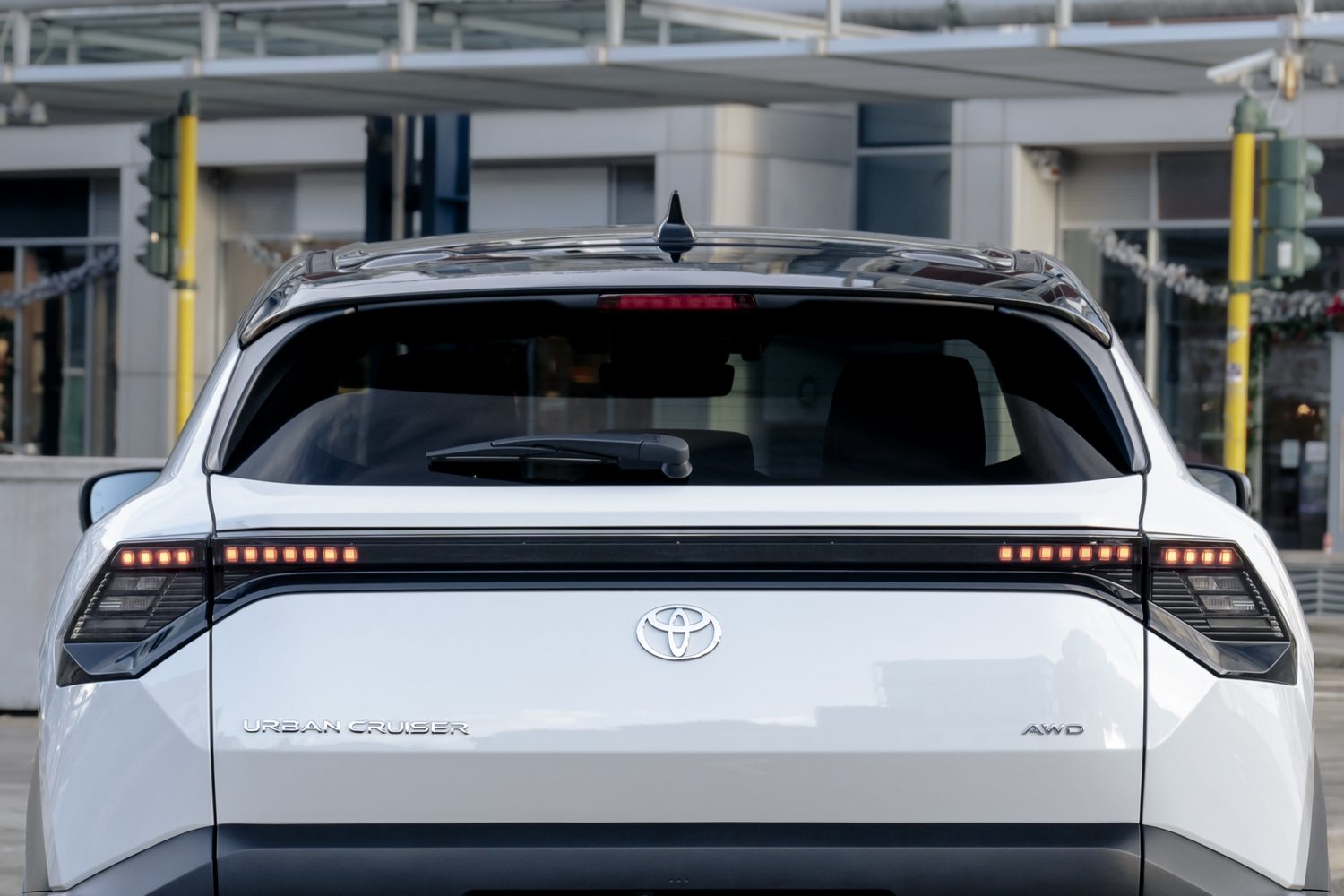
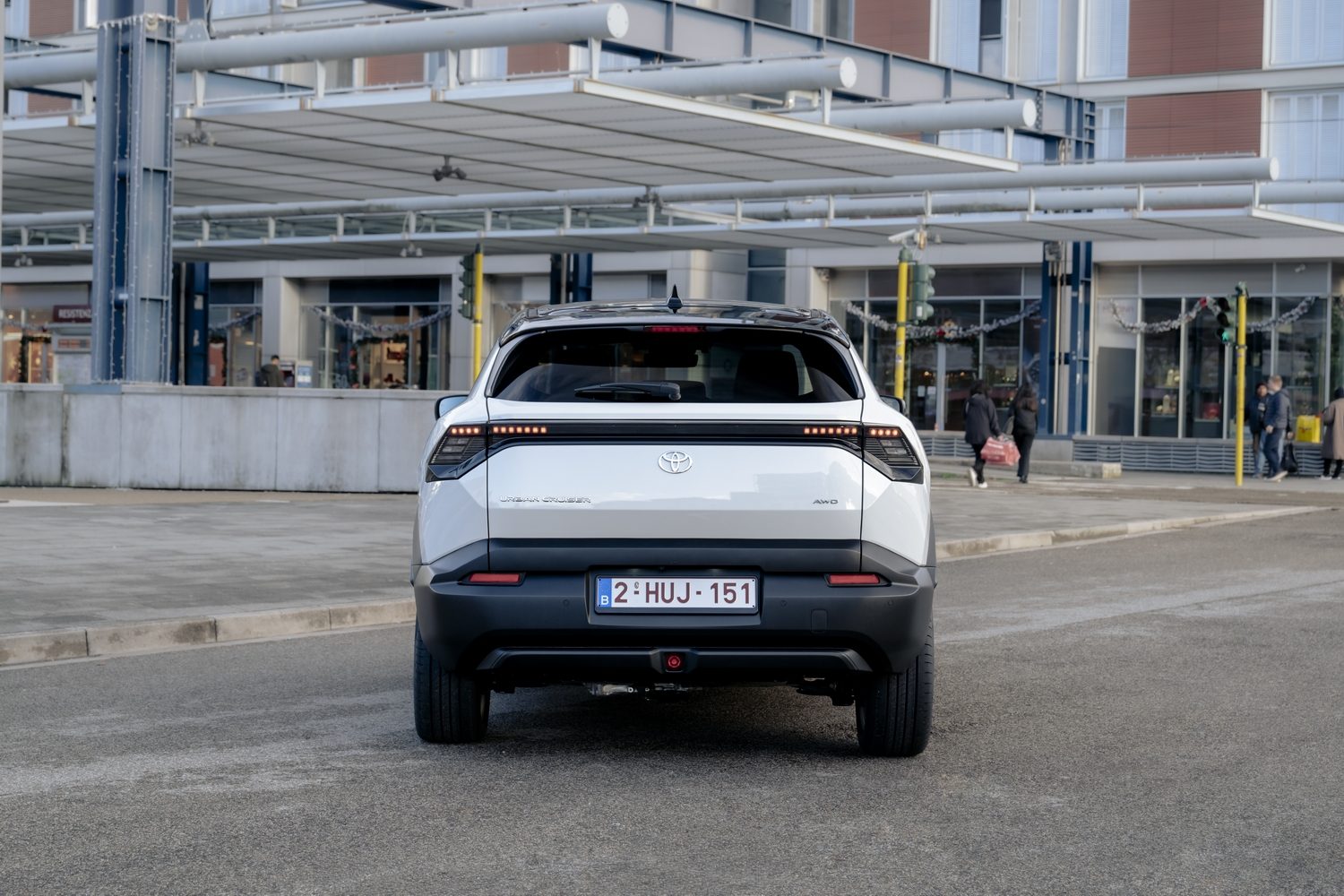
To tie it in better with some of the company's latest vehicles, like the Prius and the C-HR, the headlights and black strip linking them are described as the 'Hammerhead' design, and Toyota also fits its own design of rear-light signatures.

Otherwise, though, it's exactly the same vehicle as the Suzuki e Vitara - this is almost entirely a badging exercise by Toyota. To that end, the Urban Cruiser sits on 18- or 19-inch alloy wheels and comes in a fairly limited palette of colours, none of which are particularly vivid nor daring.
Interestingly, the redesign of the front end apparently makes the Urban Cruiser 10mm longer than the e Vitara, but aside from that the Toyota and Suzuki electric SUVs share exactly the same dimensions.
Dimensions of the 2026 Toyota Urban Cruiser
- Length:
- 4,285mm
- Width:
- 1,800mm (mirrors folded)
- Height:
- 1,635mm
- Wheelbase:
- 2,700mm
Interior, practicality, tech & comfort of the 2026 Toyota Urban Cruiser
- Useful interior configurability
- Nicely put together
- Too much reliance on touchscreen

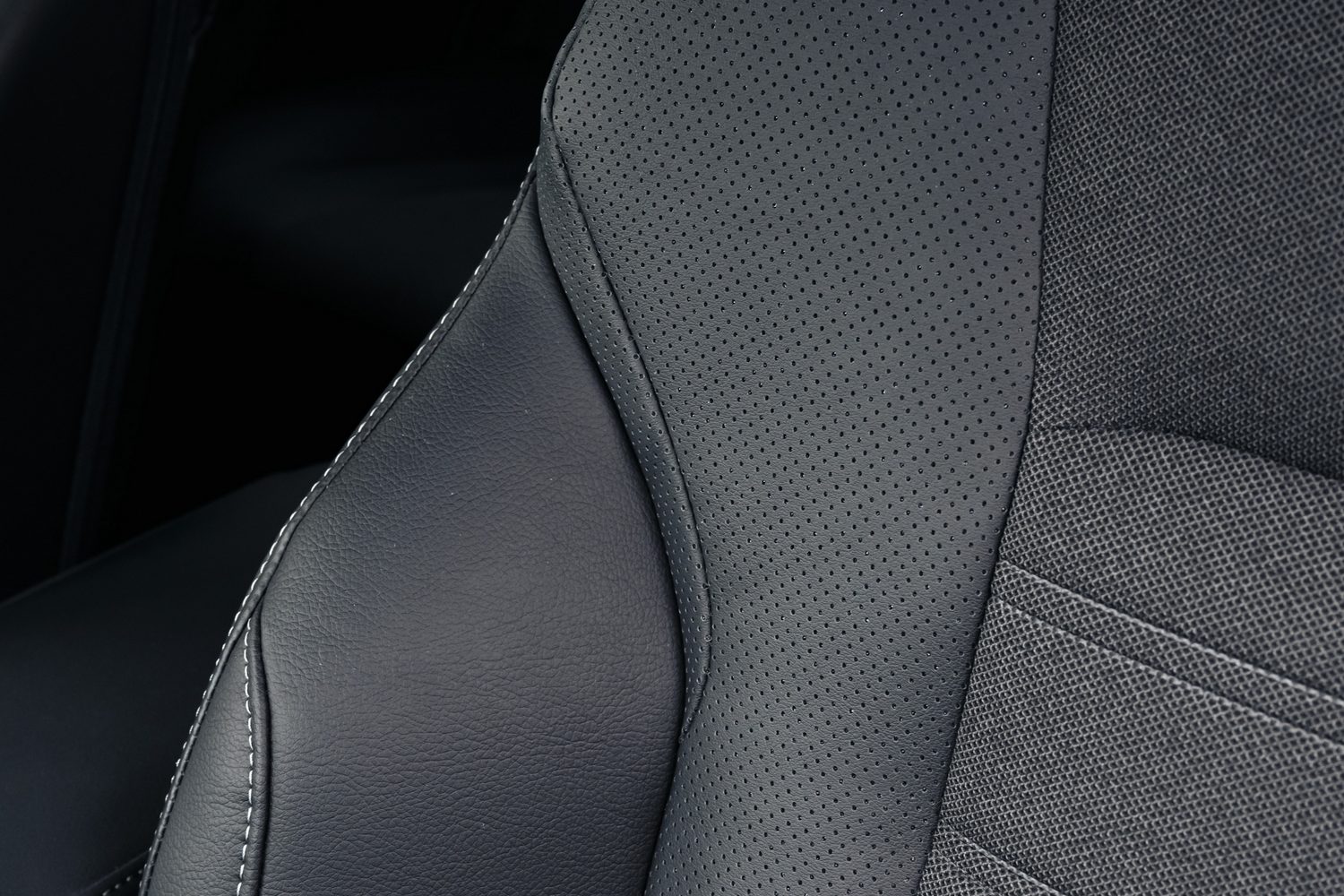
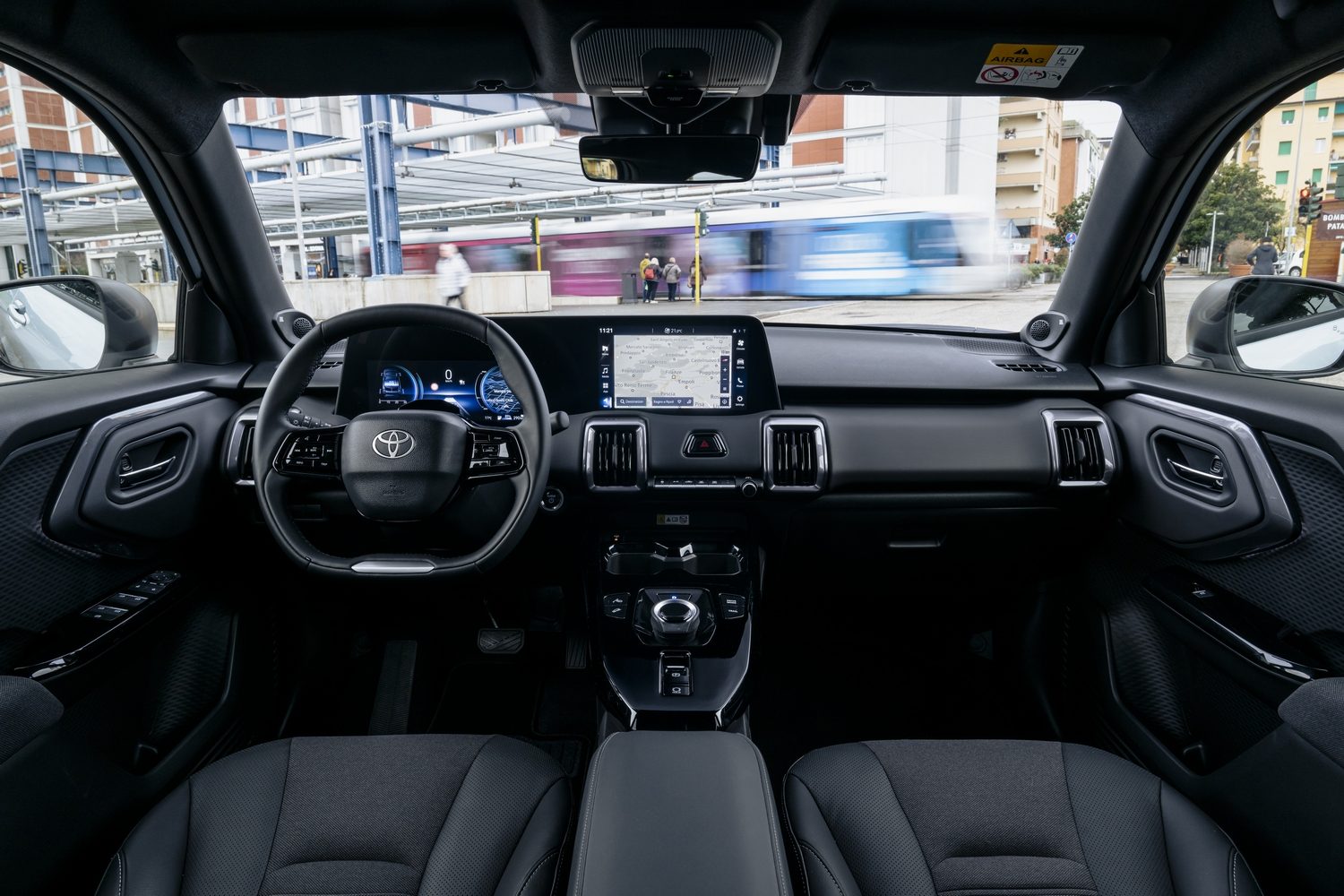
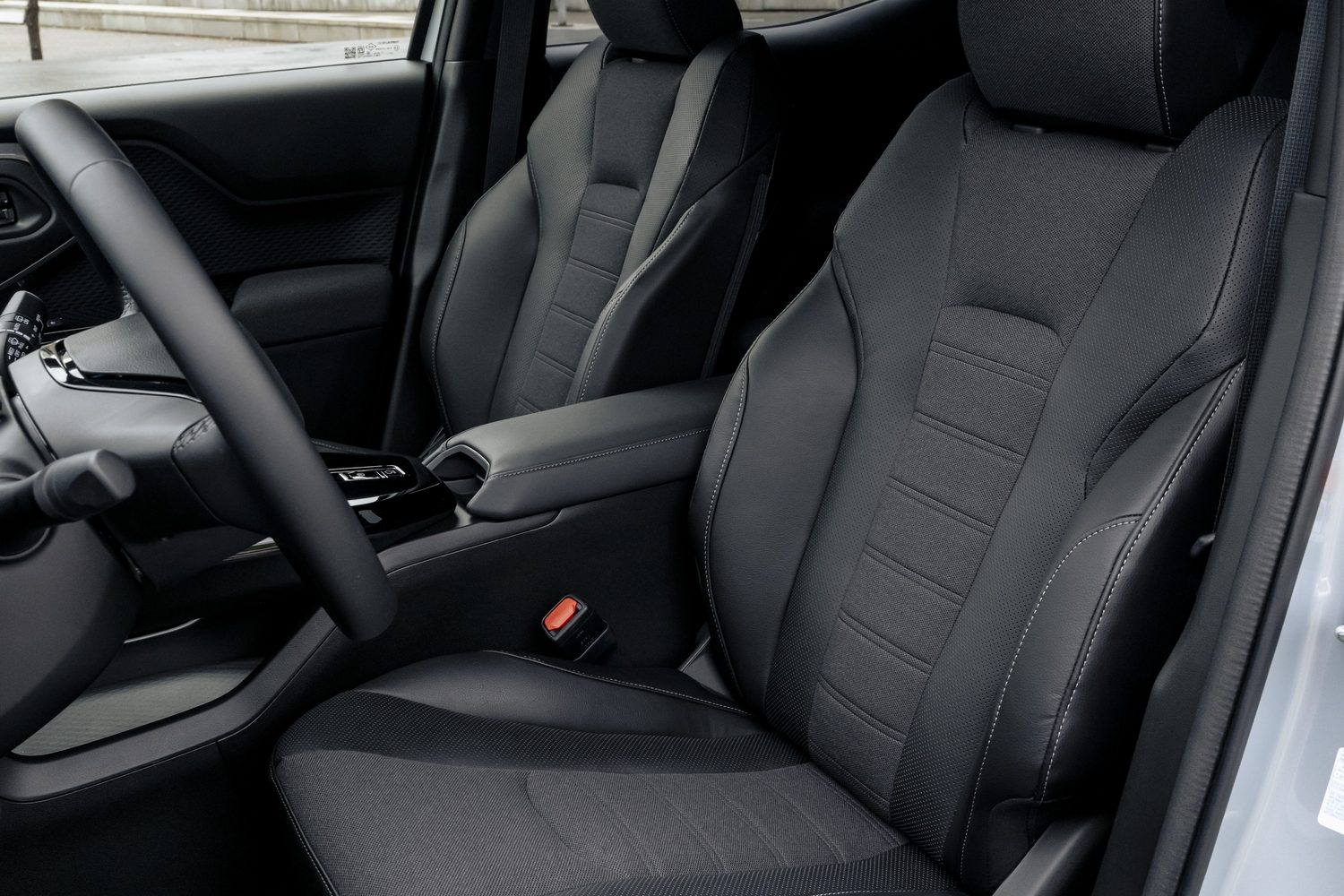
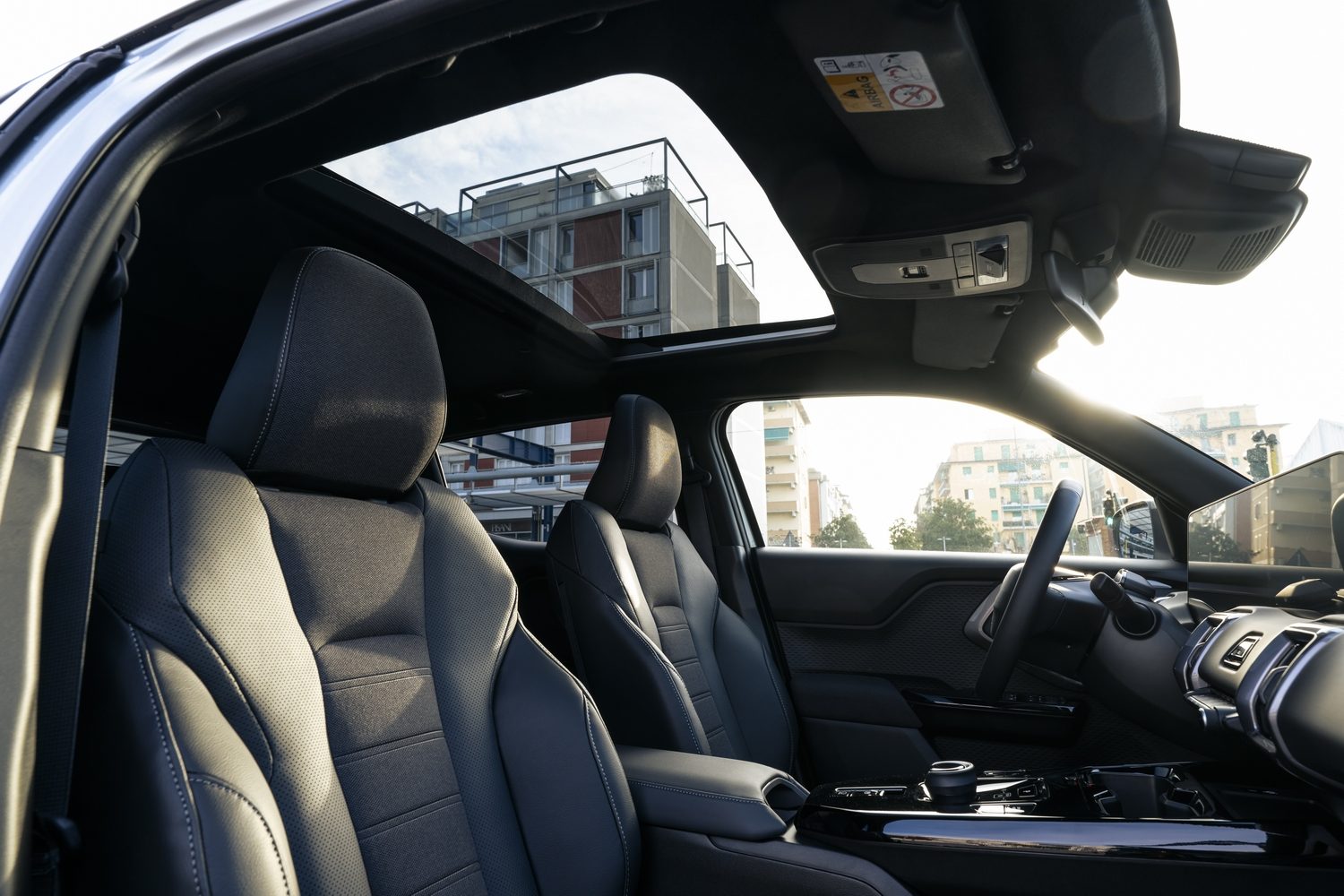
The interior of the Toyota Urban Cruiser is well-enough made and looks OK, although it's not a very daring cabin aesthetically - and Toyota doesn't seem to offer any upholstery choice other than black-on-black, which makes the passenger compartment quite dour.
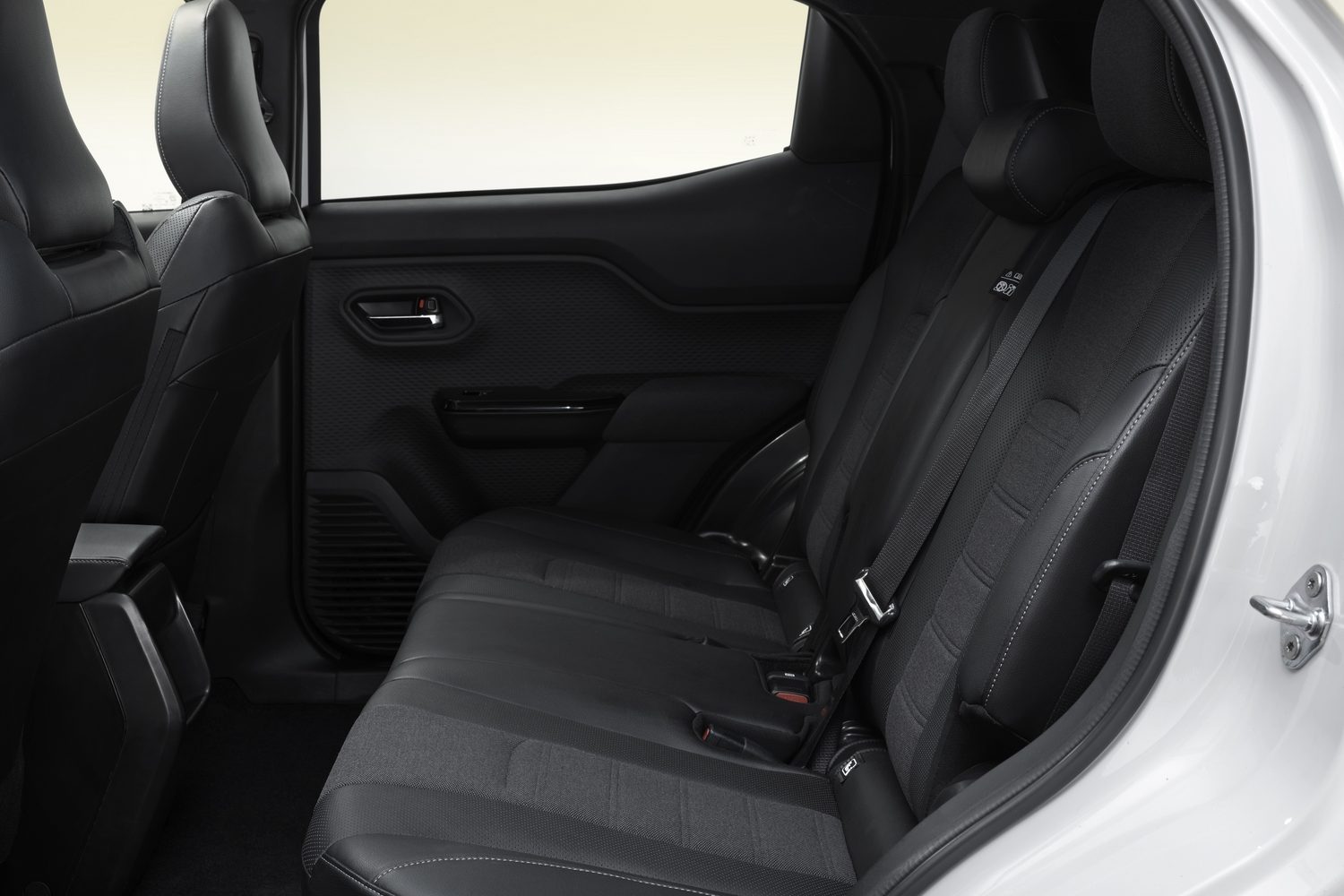
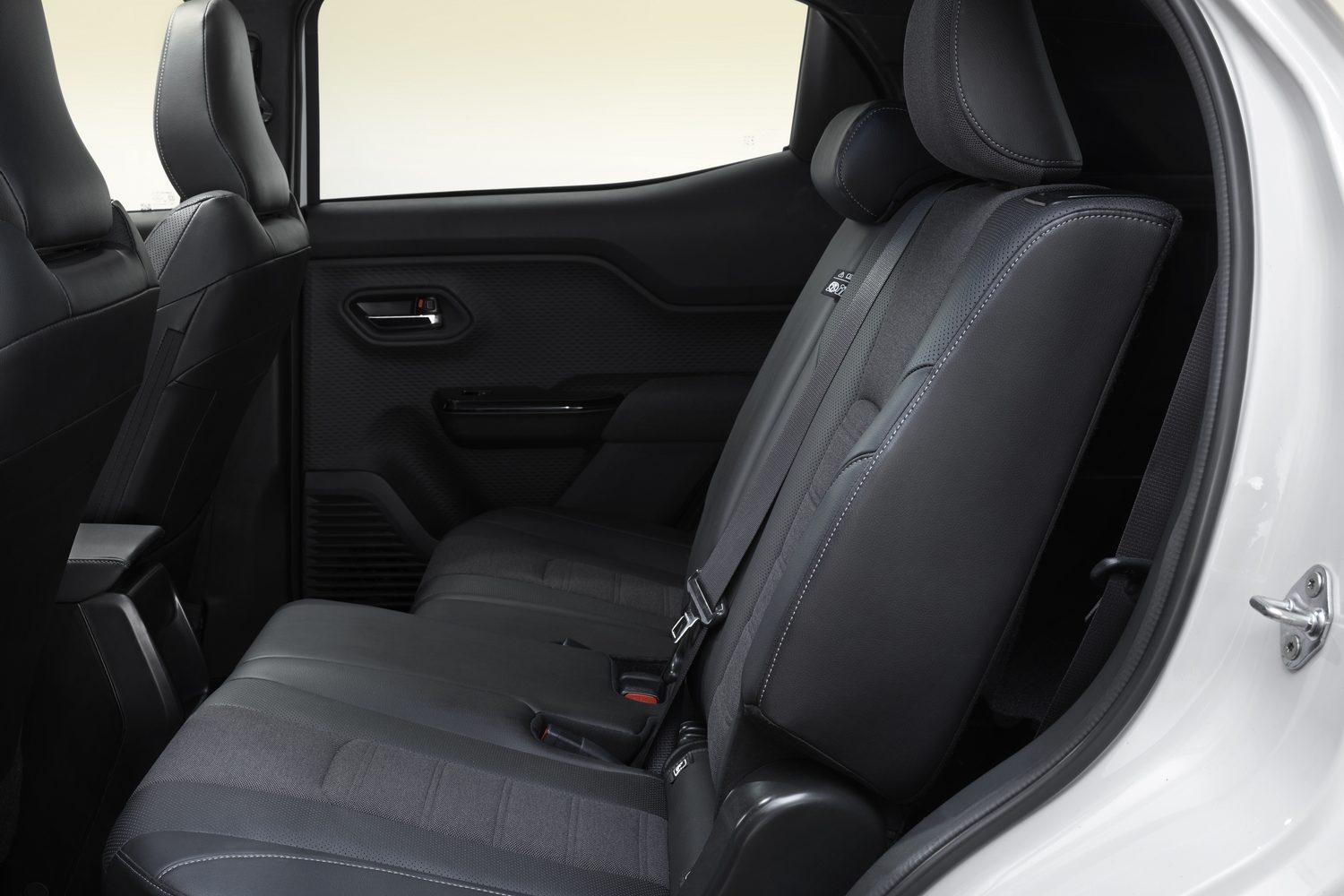
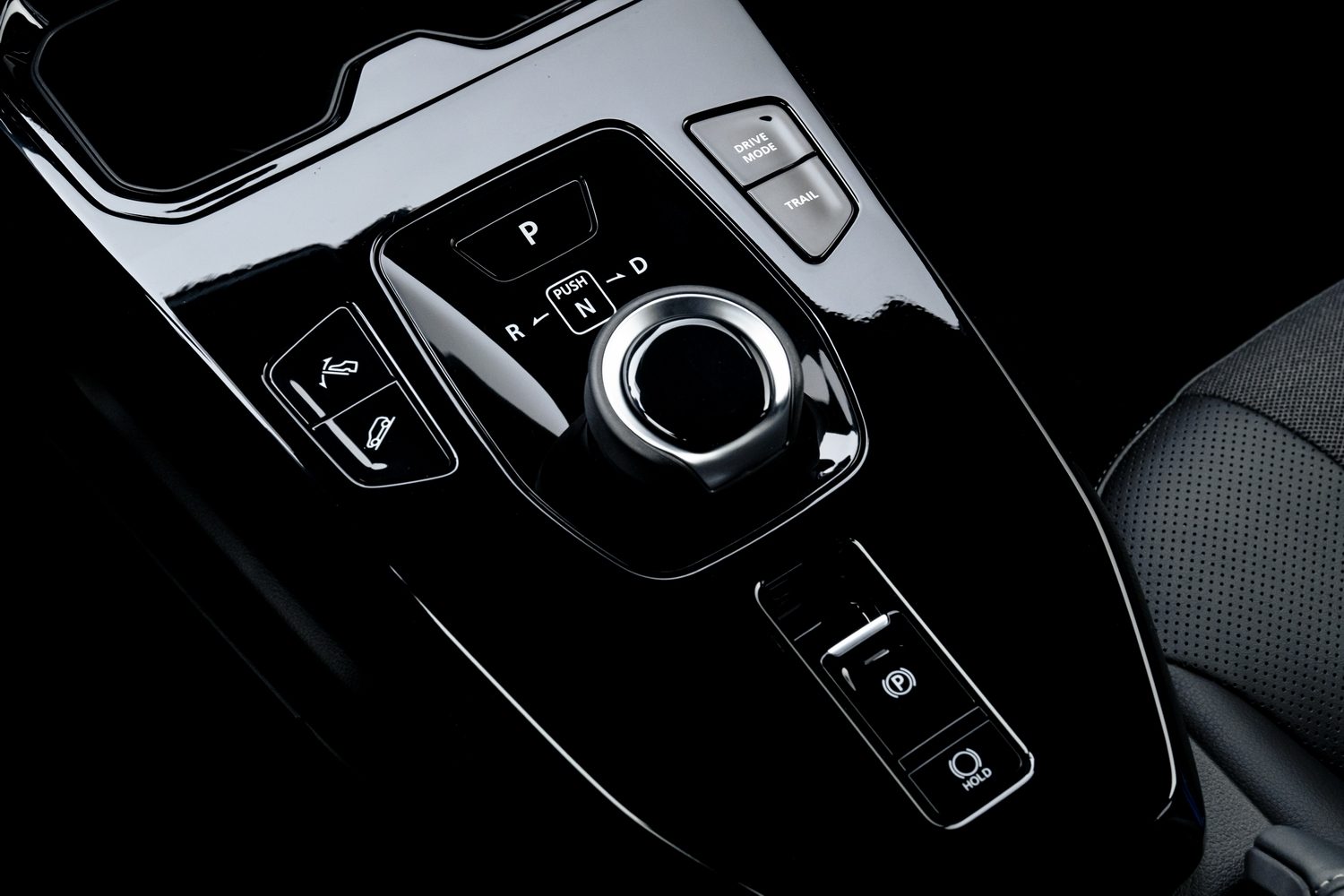
A clever trick with the rear seats blesses the Urban Cruiser with some useful practicality, but there are certain functions in the car which - when you want to turn them on or off - require far too much messing around with the main infotainment touchscreen, and would be far better handled by some straightforward buttons on the console instead.
Getting comfortable in the driver's seat
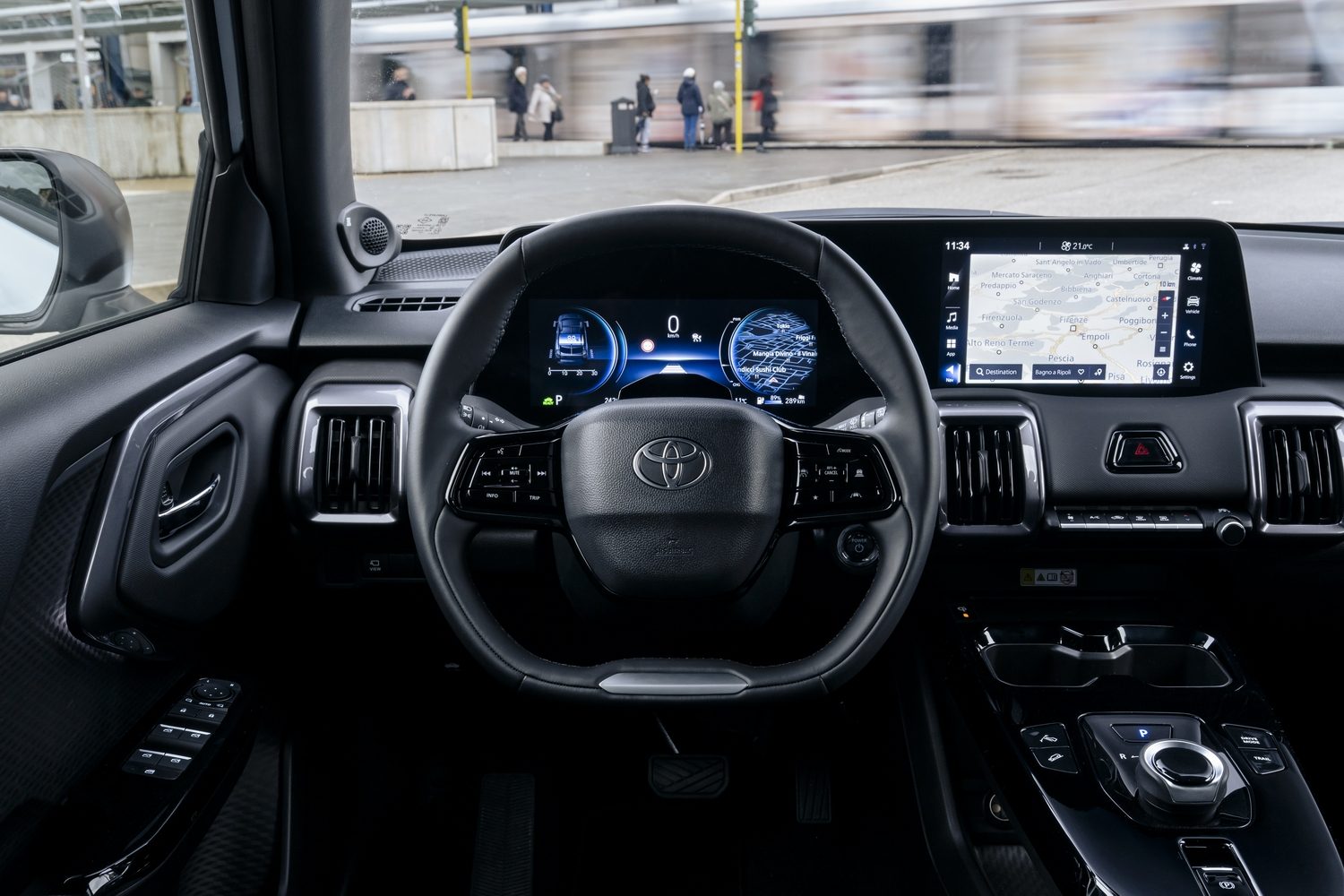
With manual seats on lesser models and fully electric front pews in the higher grades, getting a good driving position behind the wheel of the Toyota Urban Cruiser isn't too difficult. The steering wheel also adjusts for rake and reach, while the seats themselves are fairly accommodating.

Visibility is good in all directions, while what little switchgear there is within the Toyota is situated in easily reachable places.
Infotainment and technology
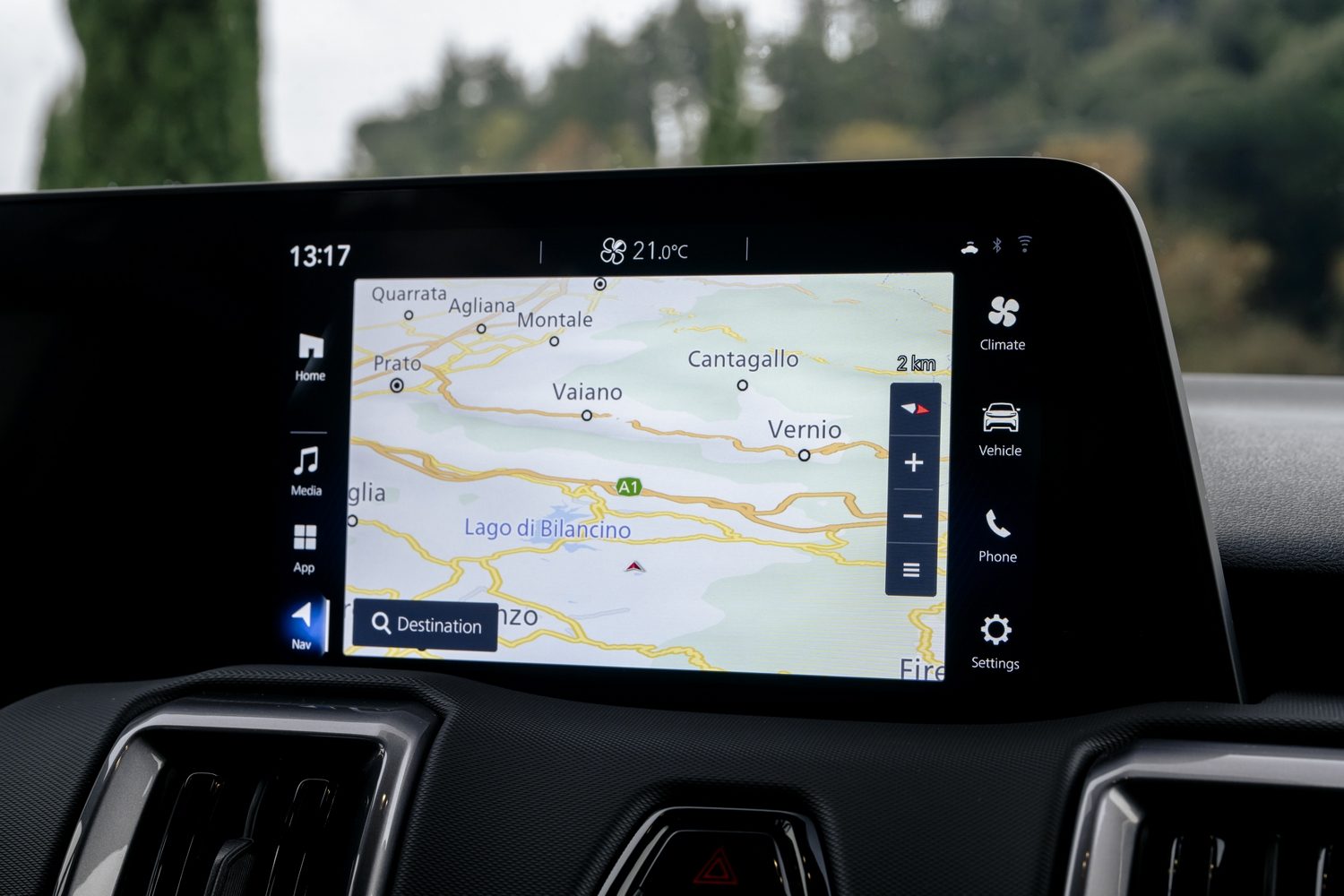
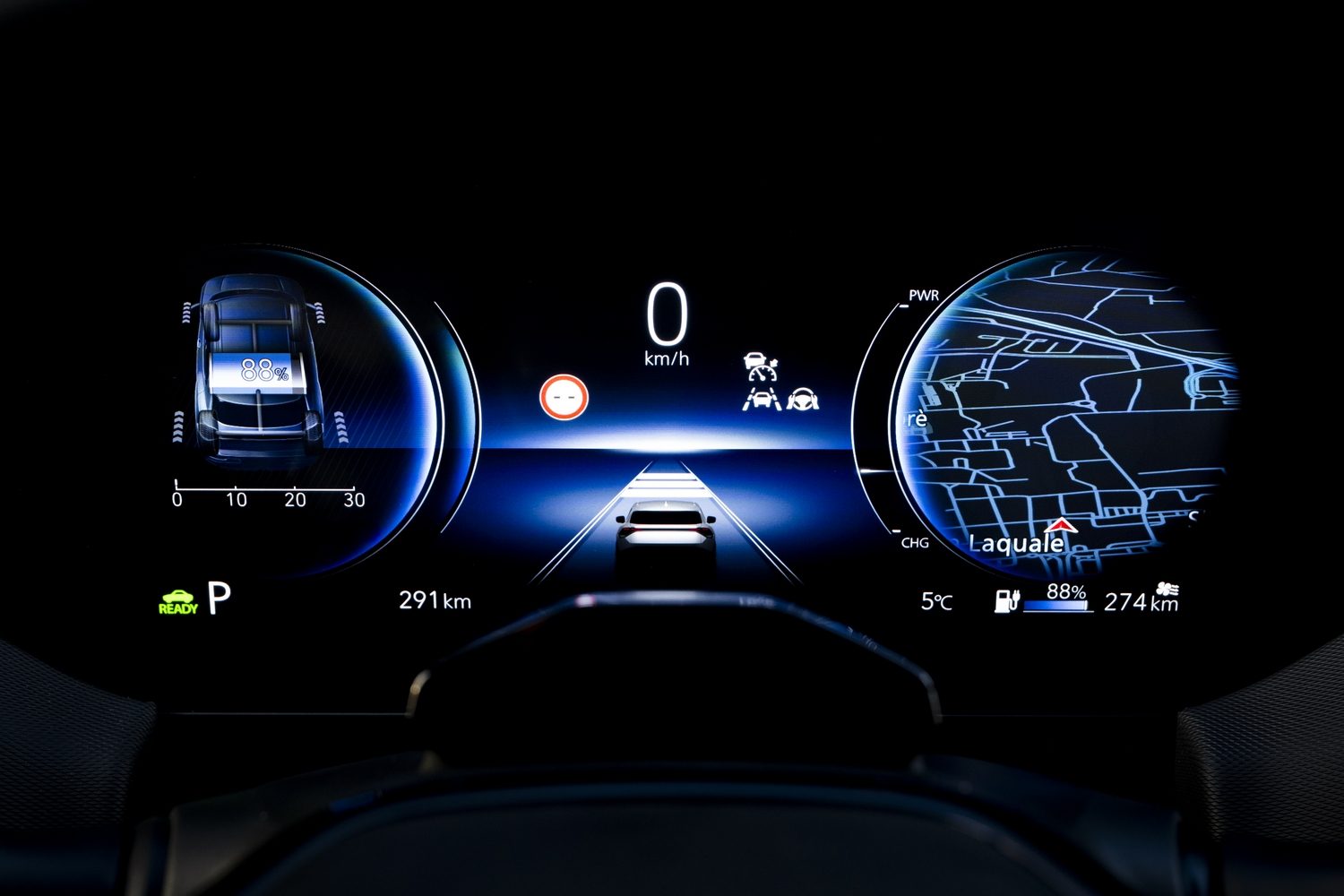
There's a 10.25-inch instrument cluster in the Toyota Urban Cruiser, augmented by a 10.1-inch central touchscreen. These are housed in one large, trapezoidal block but they're at different heights, so it's noticeable how much black plastic is sited above the driver's cluster.

That's not our biggest complaint with the set-up, though. No, it's how much of a faff it is to turn off various advanced driver assistance system (ADAS) functions through the central display, or that it's a minimum of five taps of the screen just to adjust the heated seats.
A drive the next day in an Aygo X, one of Toyota's own efforts, shows how infinitely preferable it is to just have some physical switches for the seat-heating elements especially, because you operate such things intuitively and in a near-instant.

What you have to go through in the Toyota Urban Cruiser requires you taking your eyes off the road for far too long, and it's a needless safety concern.
Practicality around the cabin
There are various pockets and storage solutions in the Toyota Urban Cruiser, but they're not class-leading or particularly inventive. There is a big central cubby, though, and a reasonable glovebox, so the Toyota should prove fairly useful.
Rear-seat passenger space
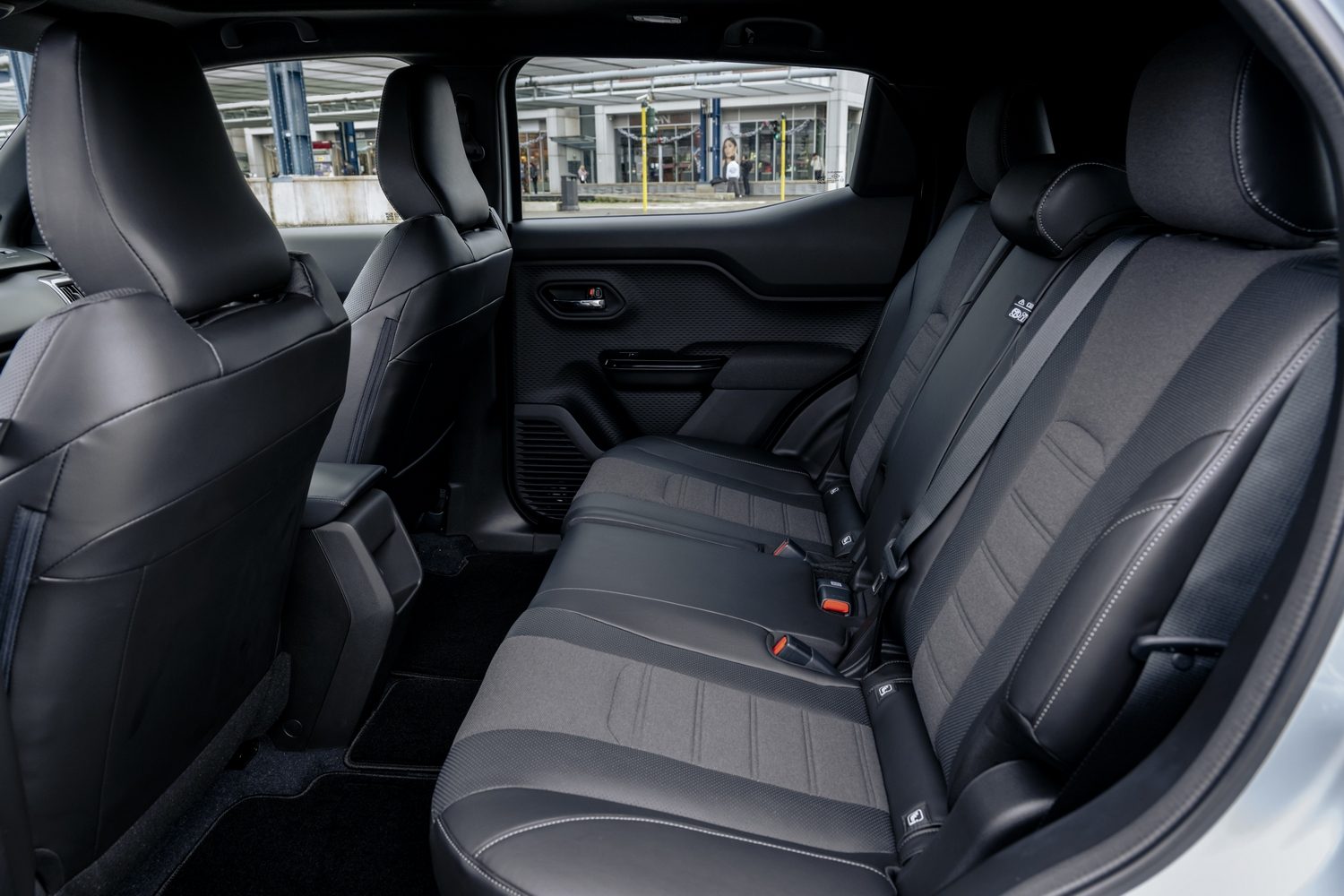
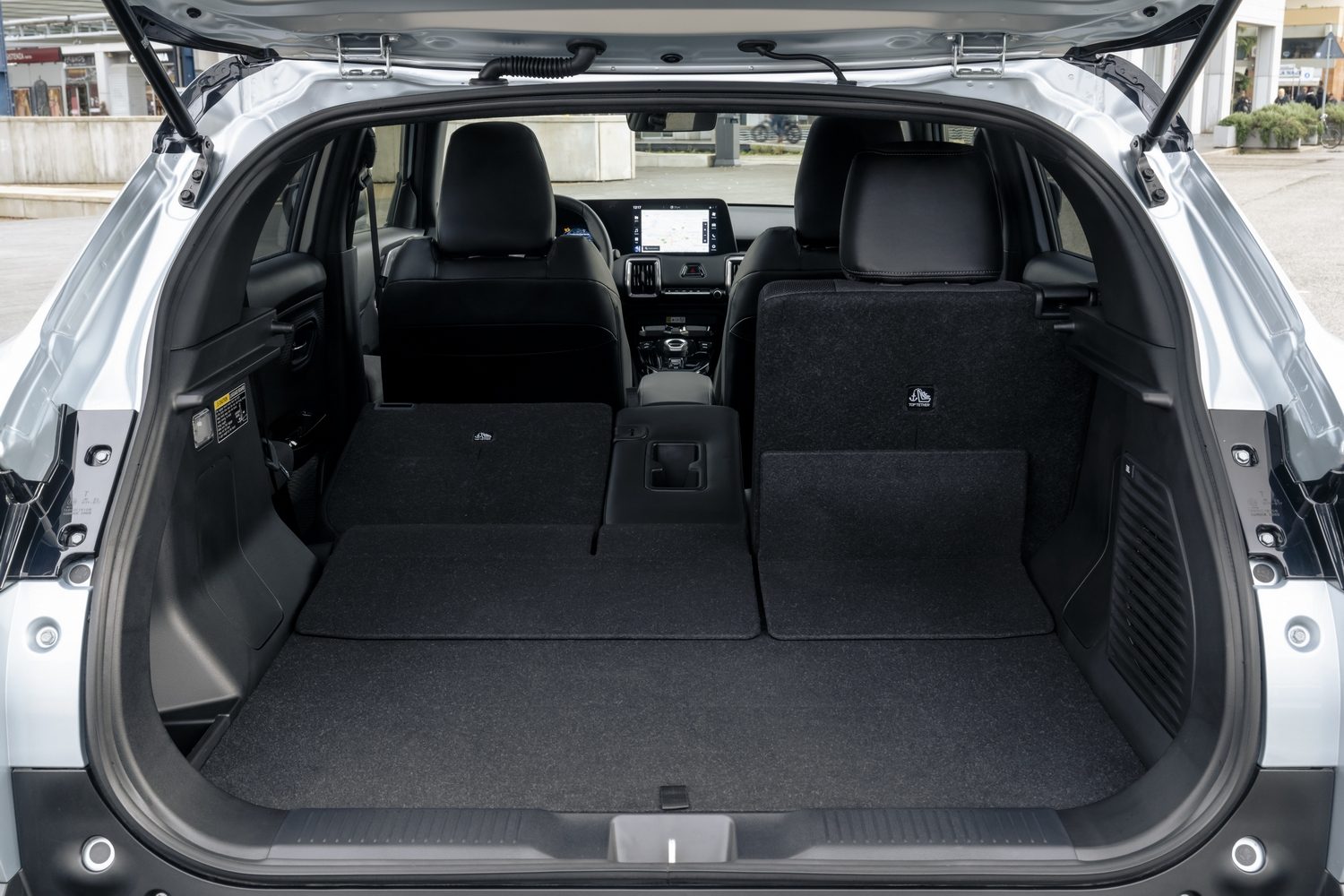
The rear seats split and fold in a 40:20:40 format, but they slide forwards and backwards by up to 160mm on a 60:40 basis.

With them fully back, there is a decent amount of legroom, but slide them forwards and really only children would be happy sitting back there.
The door pockets are small, and can accommodate nothing more than a single bottle, while the rear armrest completely opens up to the boot if it's down - so road noise will filter in from the back wheel arches.
Fitting child seats to the Toyota Urban Cruiser
There are two ISOFIX positions on the outer seats of the second row in the Toyota Urban Cruiser, and if you slide the seats right back by 160mm then getting a bulky chair for a child back there shouldn't be too difficult. The Euro NCAP rating for child occupant safety in the Urban Cruiser is a reasonably impressive 85 per cent.

Boot space in the Toyota Urban Cruiser
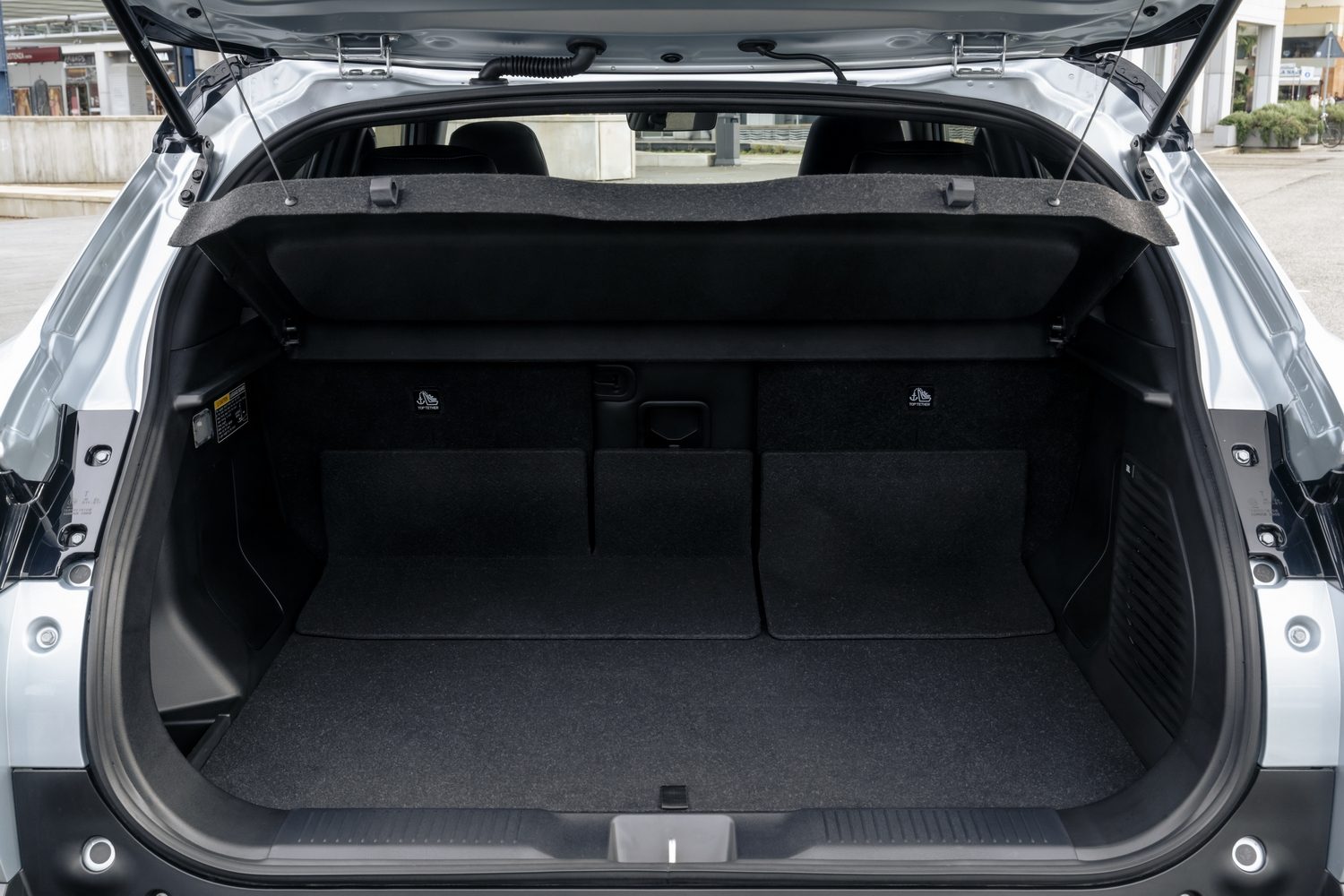
Those sliding seats we mentioned earlier are so you can mix cargo and passenger space as you require in the Urban Cruiser, but it's very much a choice of one or the other - not both at once.
And given the Toyota only holds 244 litres with the seats fully back and a modest 310 litres with them slid forward, then we're not talking about a cavernous boot at all; you also lose about six litres on each of these figures if the top-end JBL sound system is fitted, as a boot-mounted subwoofer uses that space.

A maximum figure of just 566 litres is quoted for the Urban Cruiser with the second row folded down, but we assume that's purely up to the window line - because it's a tiny number, in and amongst the rivals in this class, which will typically offer more than 1,000 litres with only two of their interior seats in use.
Towing with the Toyota Urban Cruiser
All three models of the Toyota Urban Cruiser are rated to tow just 750kg of braked trailer, so there's no advantage for going after the extra traction of the AWD variant - it's no more capable in this regard than a single-motor, front-wheel-drive Cruiser if you want to lug something behind the car.
Safety in the Toyota Urban Cruiser
There is an entry for the Toyota Urban Cruiser on the Euro NCAP page, but if you head into the report to read it in more detail then you'll see its score was gleaned by the safety body putting the Suzuki e Vitara through the process and then just transferring the scores to the Toyota.
Thus, the Urban Cruiser has the same four-star overall rating, and individual scores of 77, 85, 79 and 72 per cent for the adult occupant, child occupant, vulnerable road users and safety assist sections accordingly - all identical to the Suzuki.
Performance of the 2026 Toyota Urban Cruiser
- Three derivatives from launch
- One of them is dual-motor and AWD
- Single-motor models are slow

There are two versions of the front-wheel-drive, single-motor Toyota Urban Cruiser - one with a 144hp/193Nm propulsion unit and a 49kWh battery pack, and the other with a larger 61kWh set of power cells and another 30 horsepower too (although the peak torque is unchanged).
Fitting a second, smaller motor on the rear axle of the Toyota only ups the peak power from 174- to 184hp overall, but the maximum torque significantly climbs to 307Nm.

This makes the AWD the fastest-accelerating Urban Cruiser of them all, with a 0-100km/h time of 7.4 seconds. The other two run the sprint in 8.7 and 9.6 seconds, for the 174- and 144hp variants accordingly.
Driving the long-range 61kWh AWD Urban Cruiser on Italian roads
Regrettably, the Toyota Urban Cruiser is not the company's finest dynamic hour - not by a long shot. The Urban Cruiser stands out glaringly as something which was clearly sourced from another company. And it's a shame there wasn't any budget in Toyota's coffers to even have a look at retuning the suspension to make this car more acceptable.
The Urban Cruiser is an uncomfortable car the minute the road surface turns less than perfect. Its imprecise and too-soft suspension allows the body to wallow around markedly in the wake of big compressions to its springs and dampers, while the minute its alloy wheels go into even medium-sized dips in the tarmac, there's a loud thump through the seat base.

This means the Urban Cruiser isn't very good in the environment from where it takes its name: on broken urban streets, it's a surprisingly unpleasant vehicle to be travelling in.
Things don't massively improve at higher speeds, where the ride can still be unsettled by large transverse ridges and expansion joints in the road, while there's a little too much tyre noise beyond 80km/h as well.

You'd also have to have the AWD variant of the Urban Cruiser if you want any sensation of EV 'whoosh' when you accelerate, because quite how Toyota (or, more accurately, Suzuki) has managed to elicit so little torque from the front electric motor is astonishing.
Sure, city-biased runarounds don't need to be devastatingly quick, but despite sub-ten-second 0-100km/h times, the two front-driven Cruisers feel awfully weak for acceleration, especially once you're on open roads. It's the AWD which is much more capable in day-to-day driving, but it isn't that rapid either.

And don't go expecting a kinematic pay-off at the end here, with us suggesting the Cruiser is great in the corners to save the day. Its suspension is uncomfortable because it's too sloppy and wayward, not because it's overly firm and brittle, and that in turn results in loose handling that is further muted by the light, utterly feel-free steering.
So unless you're driving the Toyota at low speeds on the best-finished roads you can imagine, there's not much joy to being at the wheel of the Urban Cruiser at all.
Range, battery, charging and running costs of the 2026 Toyota Urban Cruiser
- Two batteries to choose from
- Modest range of 344-426km
- DC charging speed is slow

There is an entry-level power pack for the Toyota Urban Cruiser, and a larger unit which confers 'long-range' status on the models to which it is fitted - but that's a relative term, because this new EV isn't particularly setting any new parameters for its one-shot capabilities.
Also, the charging speeds are slow and the real-world electrical efficiency is substandard, so the Urban Cruiser certainly has some significant flaws in this regard.
Battery options and official range
Suzuki sourced the batteries for the e Vitara, upon which the Toyota Urban Cruiser is based, from Chinese firm Build Your Dreams (BYD). That means they are 'Blade' lithium-iron phosphate (LFP) items, with the smaller option rated at 49kWh and the bigger unit at 61kWh. These are the usable capacities.

Only one of the three derivatives has an official range beyond 400km, though. The 49kWh front-wheel-drive model is the one to avoid if you're a long-distance driver on a regular basis, as its range is pegged to just 344km.
The AWD increases that as a result of the larger cell capacity, with 395km theoretically possible, but it's the 61kWh FWD which records the greatest official range of 426km.
That, however, is not gigantic by class standards - something like a Kia EV3 can go more than 600km in certain specs, and even its base variant is capable of 435km in one hit.

Real-world range and efficiency of the Toyota Urban Cruiser
Making the Urban Cruiser's showing even worse is the worrying real-world economy. We found this when driving the Suzuki e Vitara, and sadly the Toyota doesn't appear to be any better.
Even at its most profligate - as this AWD model - it is supposed to be capable of something like 16.6kWh/100km.

Yet, while driving it around Italy in the Tuscan countryside near Florence, we never got anything better than a dismal 25.6kWh/100km - and that works out as about 240km of range.
We were driving the car in cool temperatures of eight degrees Centigrade, with the air conditioning on, and the route included a few hilly sections. We also drove fairly briskly at points, but even so there's no real defence for that sort of galloping electrical consumption.
Charging up the Toyota Urban Cruiser
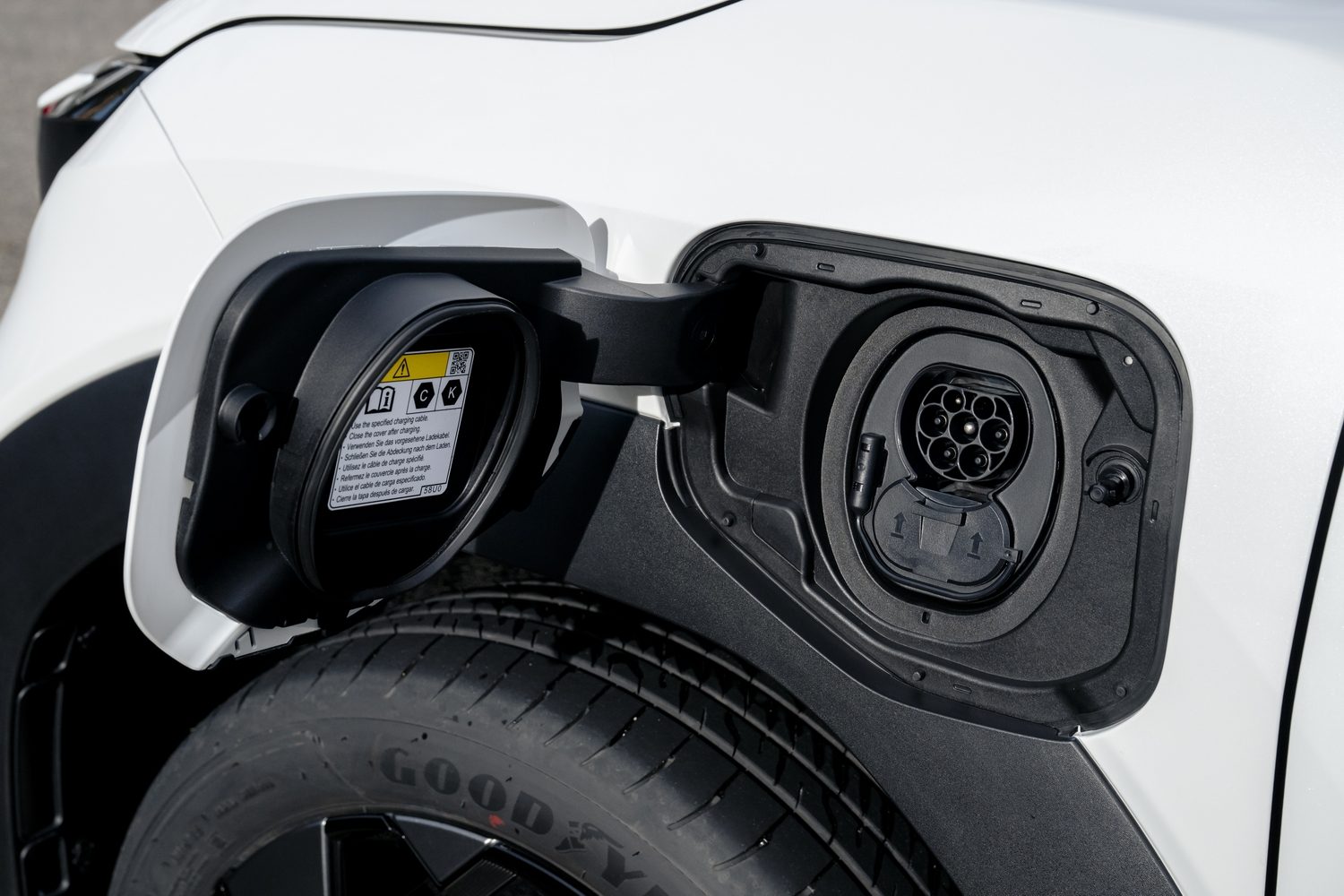
Toyota's seemingly so embarrassed by the peak DC charging rate of the Urban Cruiser that it won't even quote it in all the official bumf. It simply says it takes "45 minutes to go from 10-80 per cent on a public charger", but we know from the Suzuki that the maximum speed the Toyota will take on a charge is 70kW.
An 11kW AC rate doesn't really make up for that feeble DC figure either because most people just use a 7.4kW domestic wallbox or a fast DC charger when on longer journeys. As it is, on the former connection the battery should go from 15-100 per cent in six hours, while at home the Toyota would need nine-and-a-half hours for the same job.
Verdict - should you lobby Toyota Ireland to offer the 2026 Urban Cruiser?
No - we're not missing much here. The Urban Cruiser is stymied by the same limitations imposed upon it by the Suzuki e Vitara source material, because Toyota has done so very little with what it was given.
This means the Urban Cruiser rides poorly, isn't that refined, it feels dog-slow in single-motor format, the charging speeds, official range and real-world electrical efficiency are all way off the pace and, while the interior is OK, it's still an either/or choice for deciding between ample passenger space or what is only a passable cargo area.

What makes the Urban Cruiser look worse here is that it is not the company's only EV - both the C-HR+ and revised bZ show up this newcomer for what it is, a cheap and hasty way to fill a gap in Toyota's product portfolio.
So while the e Vitara itself isn't really any better to drive or live with, at least if you're a Suzuki fan and you want an EV, there's a good reason to buy it, as it's your only choice in that company's line-up. For the Urban Cruiser, there's just not the same incentive. And it is for that reason why the decision not to bring this underwhelming vehicle to Ireland is not a dreadful one by Toyota. In fact, it's something of a mercy.
FAQs about the 2026 Toyota Urban Cruiser
Does the Toyota Urban Cruiser have a 'frunk'?

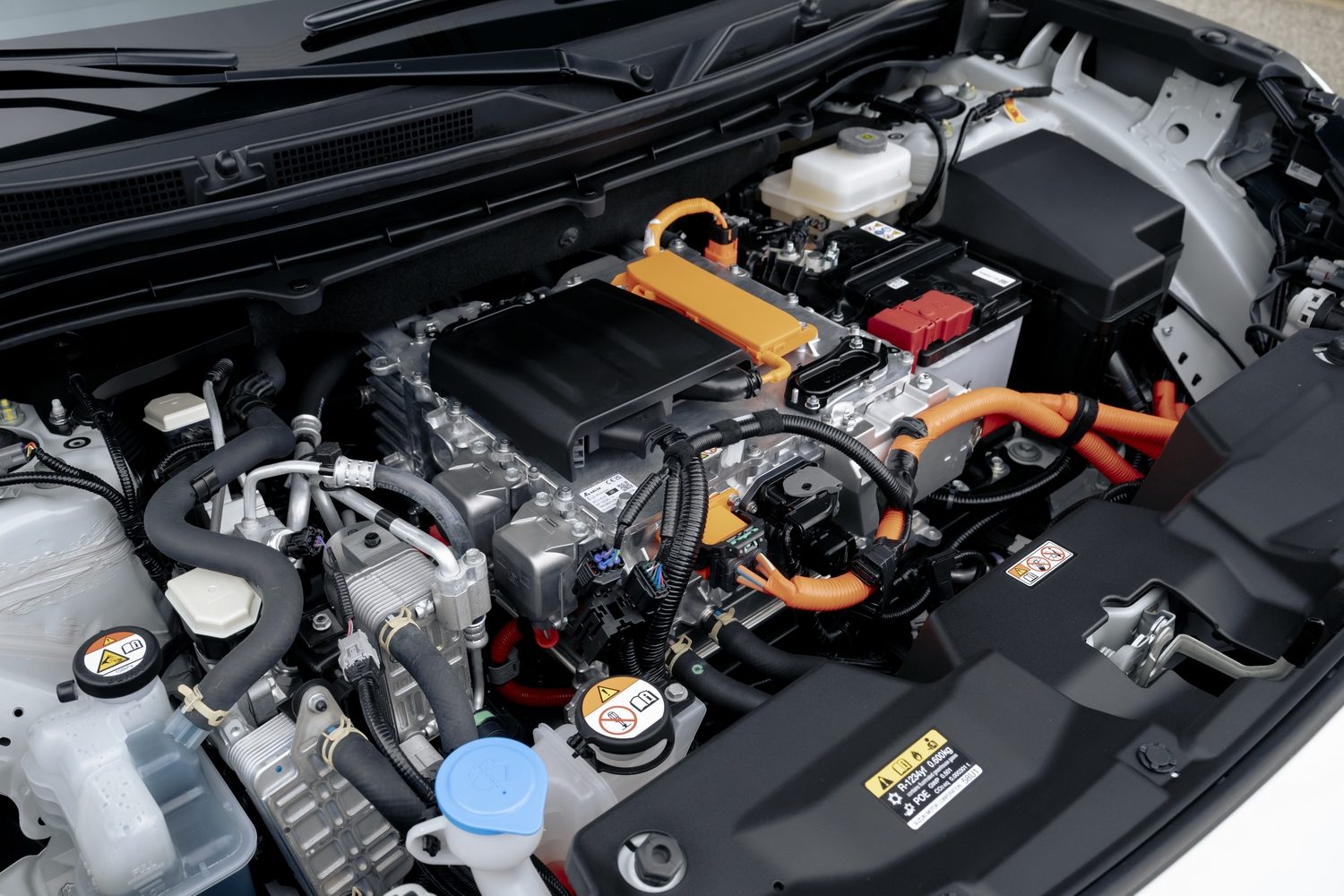
No, despite the fact its boot isn't very big and doesn't leave a lot of room for storing the charging cables, under the bonnet of the Urban Cruiser is a load of ancillaries for the propulsion system of the crossover.
Is the Toyota Urban Cruiser all-wheel drive?
Yes, if you opt for the dual-motor model, then a motor is added to the rear axle of the Toyota Urban Cruiser, and it then becomes all-wheel drive.

Did Toyota lead development of the Urban Cruiser and then hand it over to Suzuki?
No, in this instance Suzuki led the way and the Urban Cruiser therefore sits on the other Japanese company's Heartect-e platform. In fact, Toyota has done very little to the e Vitara at all in creating the Urban Cruiser, limiting itself to basically switching a few front-end panels, then adding Toyota badging on the outside and its own steering-wheel boss within.
Will the Toyota Urban Cruiser be reliable?
You would certainly hope so, based as it is upon Suzuki underpinnings and then backed up by Toyota's impressive aftersales care.
Is this the first time Toyota has sold a model called the Urban Cruiser?
No, there was an original sold here between 2009 and 2012, but it didn't sell well and was soon withdrawn from sale. The nameplate has then been used for a variety of Toyota-badged Suzuki models in various developing markets across the world, but it hasn't been seen in Europe since the Mk1.
Has Toyota Urban Cruiser been assessed for safety?
Well, it has a Euro NCAP rating, but if you click into the link then you see that the body actually tested the Suzuki e Vitara, then gave the Toyota exactly the same result - same four-star overall rating, same four scores for the sub-disciplines of the test, and a field which says 'Car tested: Suzuki e Vitara 61kWh GLX, LHD'. If you wish, you can view the Urban Cruiser's full report here.
Want to know more about the 2026 Toyota Urban Cruiser?
If there's anything about the new Toyota Urban Cruiser we've not covered, or you'd like help in choosing between it and other cars, you can avail of our expert advice service via the Ask Us Anything page.
Toyota Urban Cruiser history
The Toyota Urban Cruiser has had a convoluted past, ever since it was first unveiled as a khaki-coloured concept, styled by Toyota Motor Europe, at the 2006 Geneva Motor Show. A European version was subsequently released, both in Ireland and the UK, and it was a development of the Toyota Ist, but neither market took to it and it went off sale in 2012.
Since then, it has only reappeared in non-European markets and always as some form of rebadged Suzuki. There was a 2020-2022 variant sold in India and Africa, which was a Suzuki Vitara Brezza underneath; then a reworked Grand Vitara which was marketed as the Urban Cruiser Hyryder in India from 2022, and as just the Urban Cruiser in South Africa and the Middle East since 2023; and then the Toyota Urban Cruiser Taisor, again for India, which appeared in 2024 and was based upon the Suzuki Fronx.
Therefore, the electric model - the first destined for Europe since that original of 2012 - is just following recent convention, with Toyota repurposing a Suzuki for a 'quick win' in the compact crossover market.