


Exterior & design of the 2026 Toyota C-HR+
- Sleek body is aerodynamic
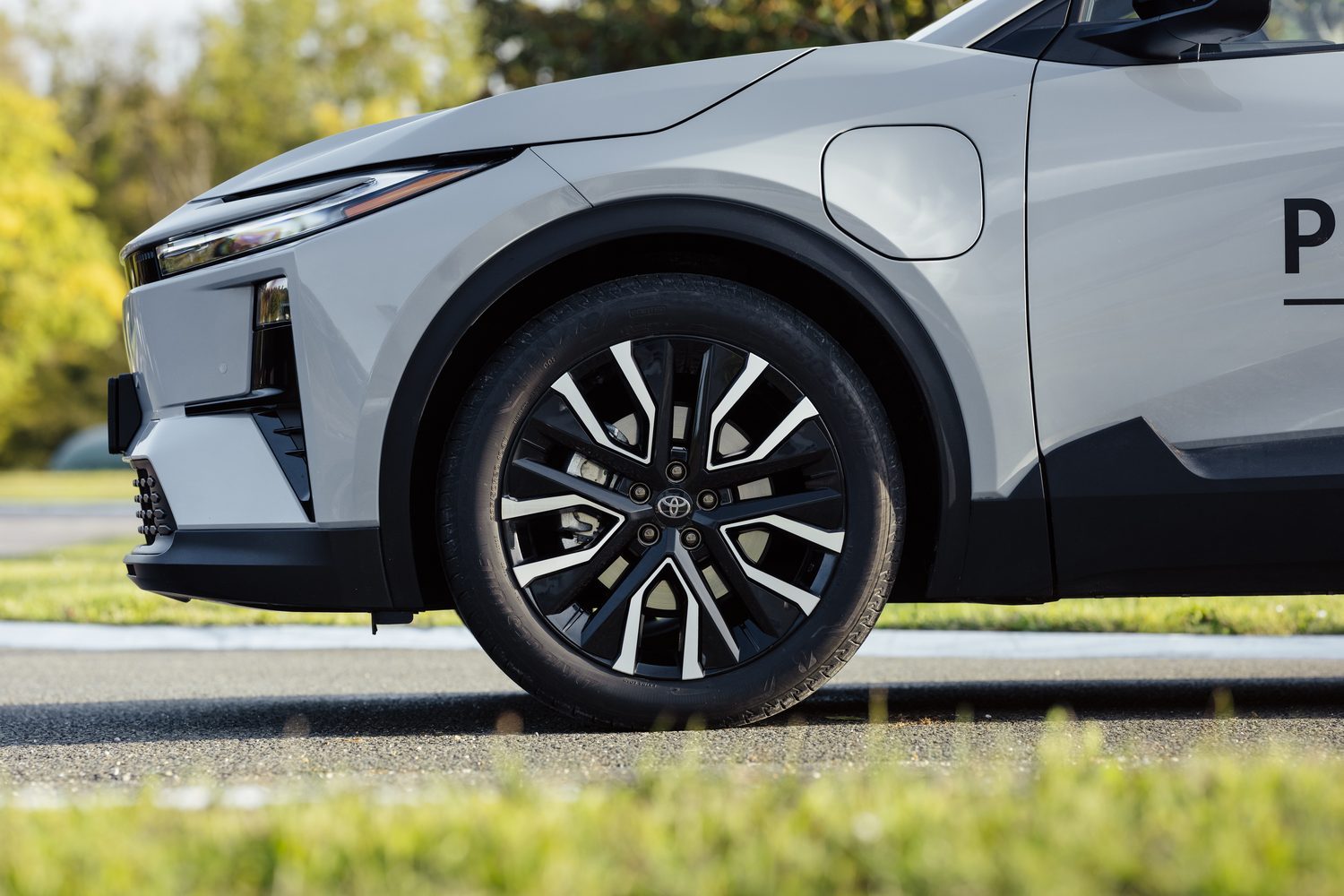
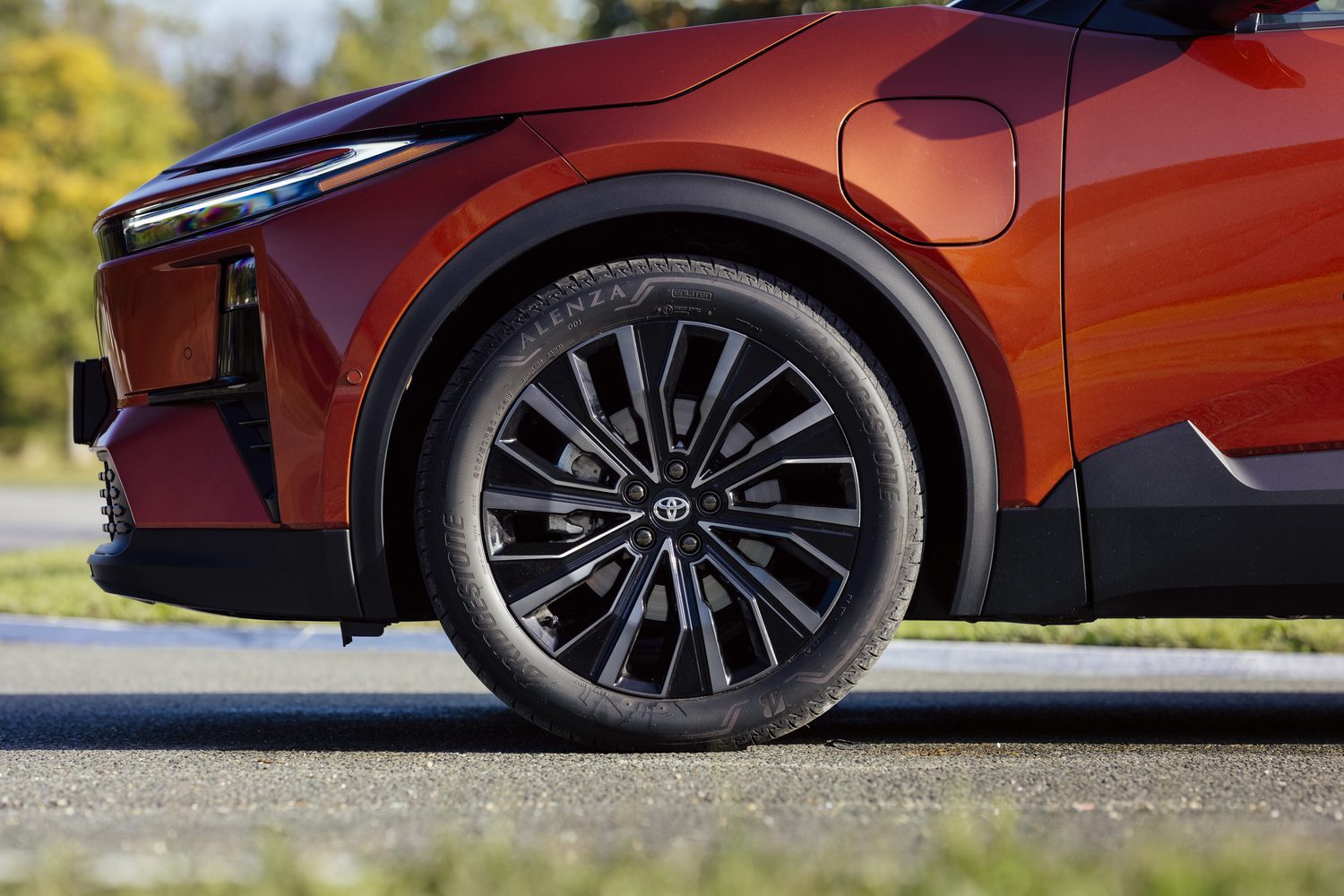
- 18-inch wheels preserve maximum range
- The Subaru Uncharted is its twin

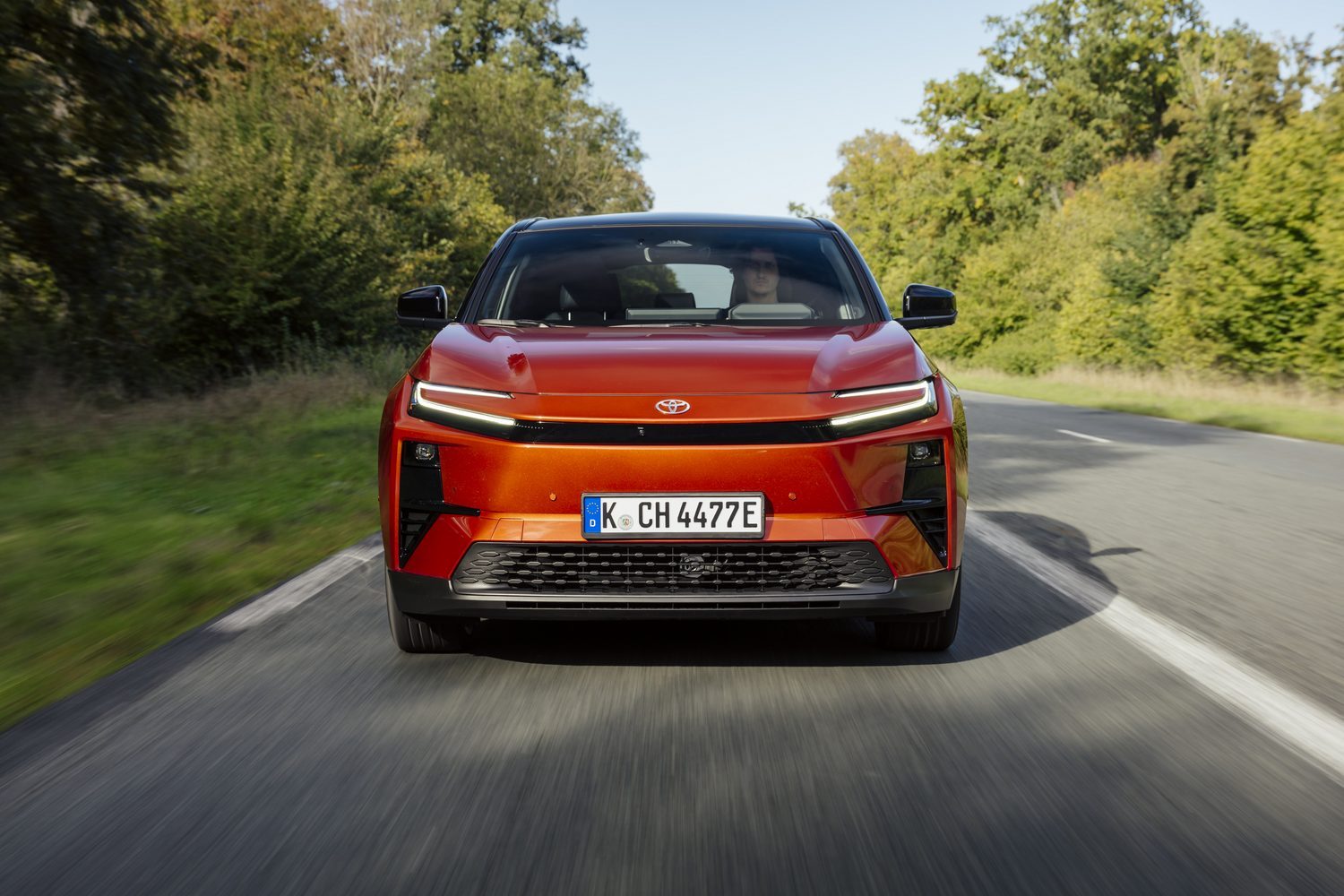
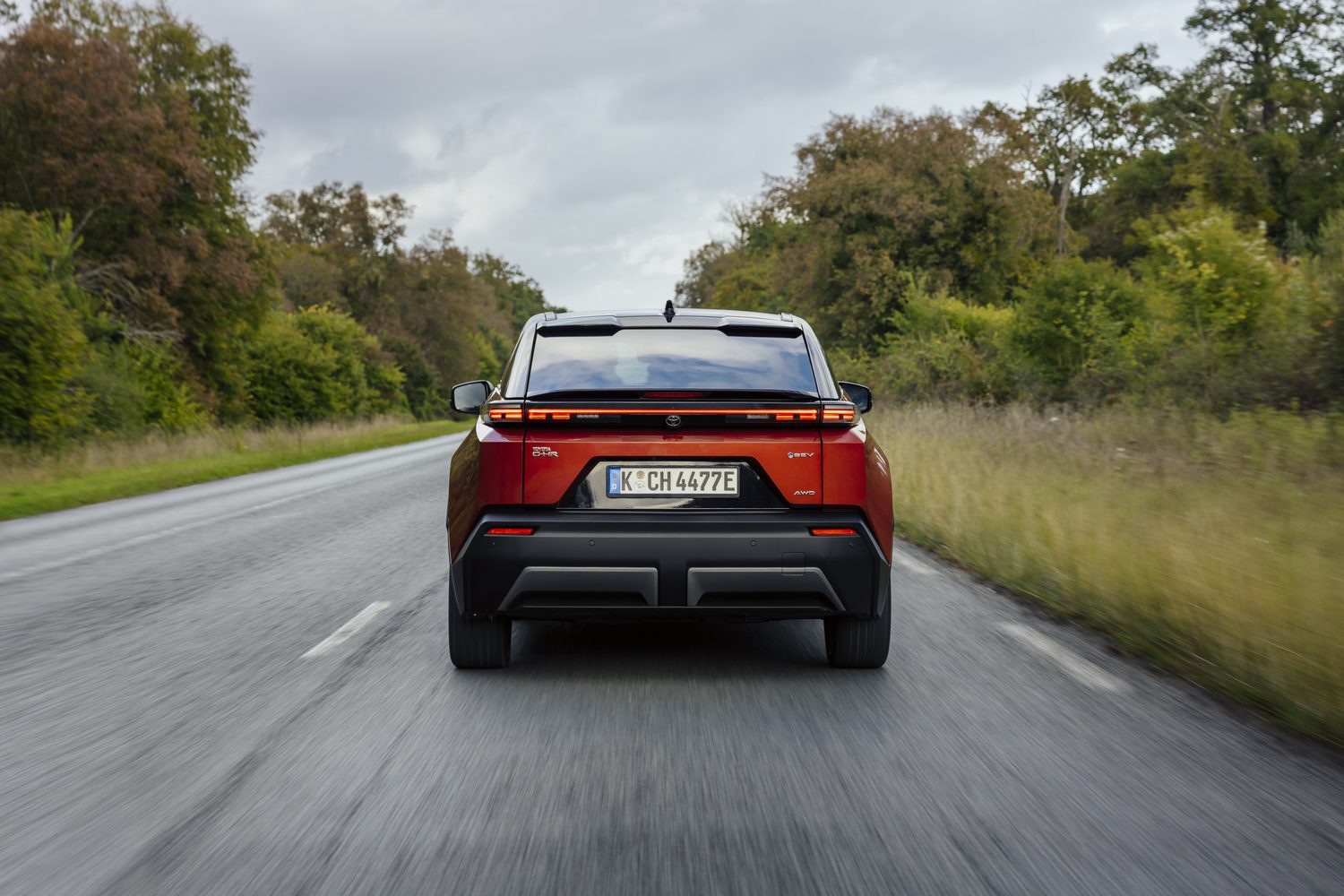
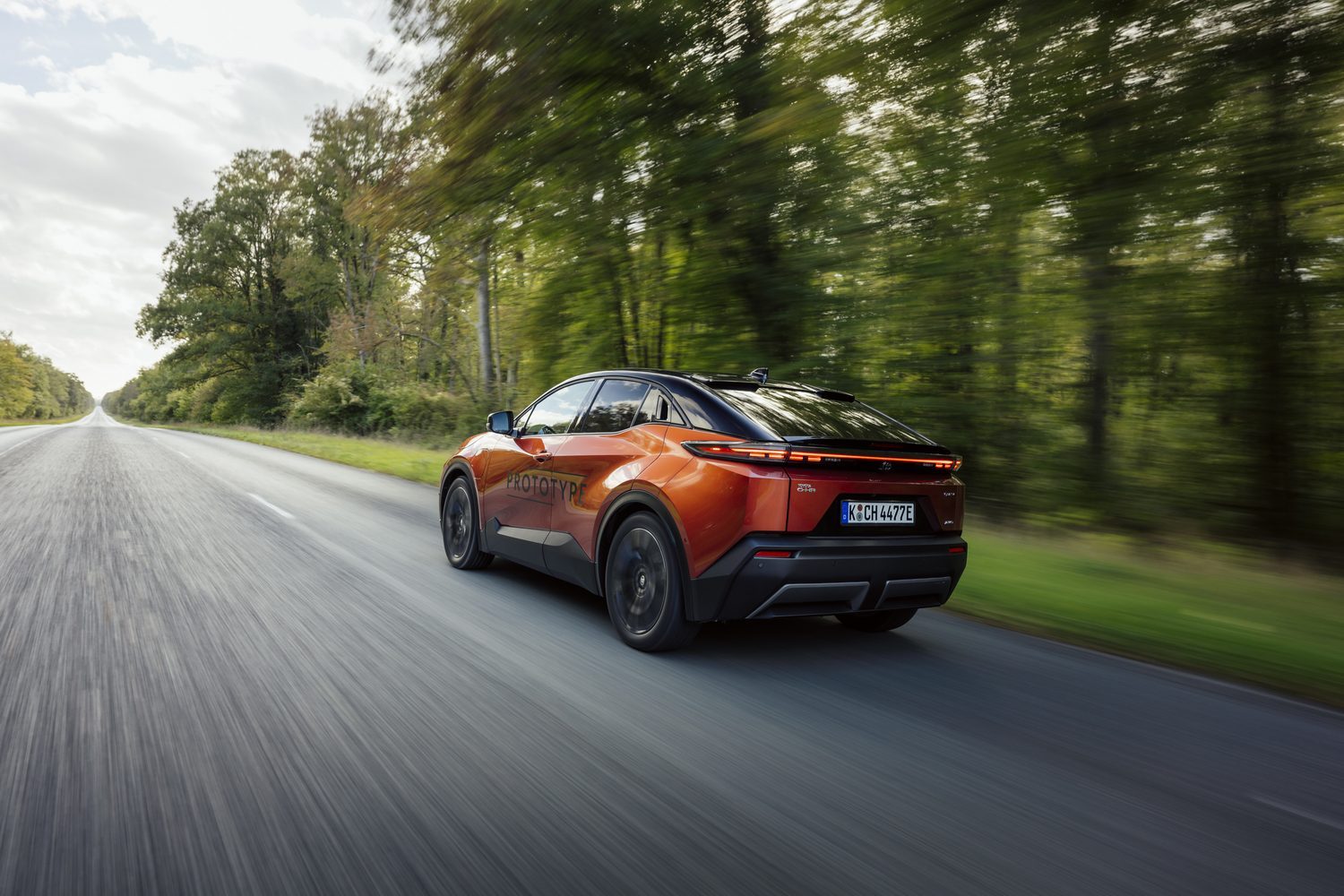
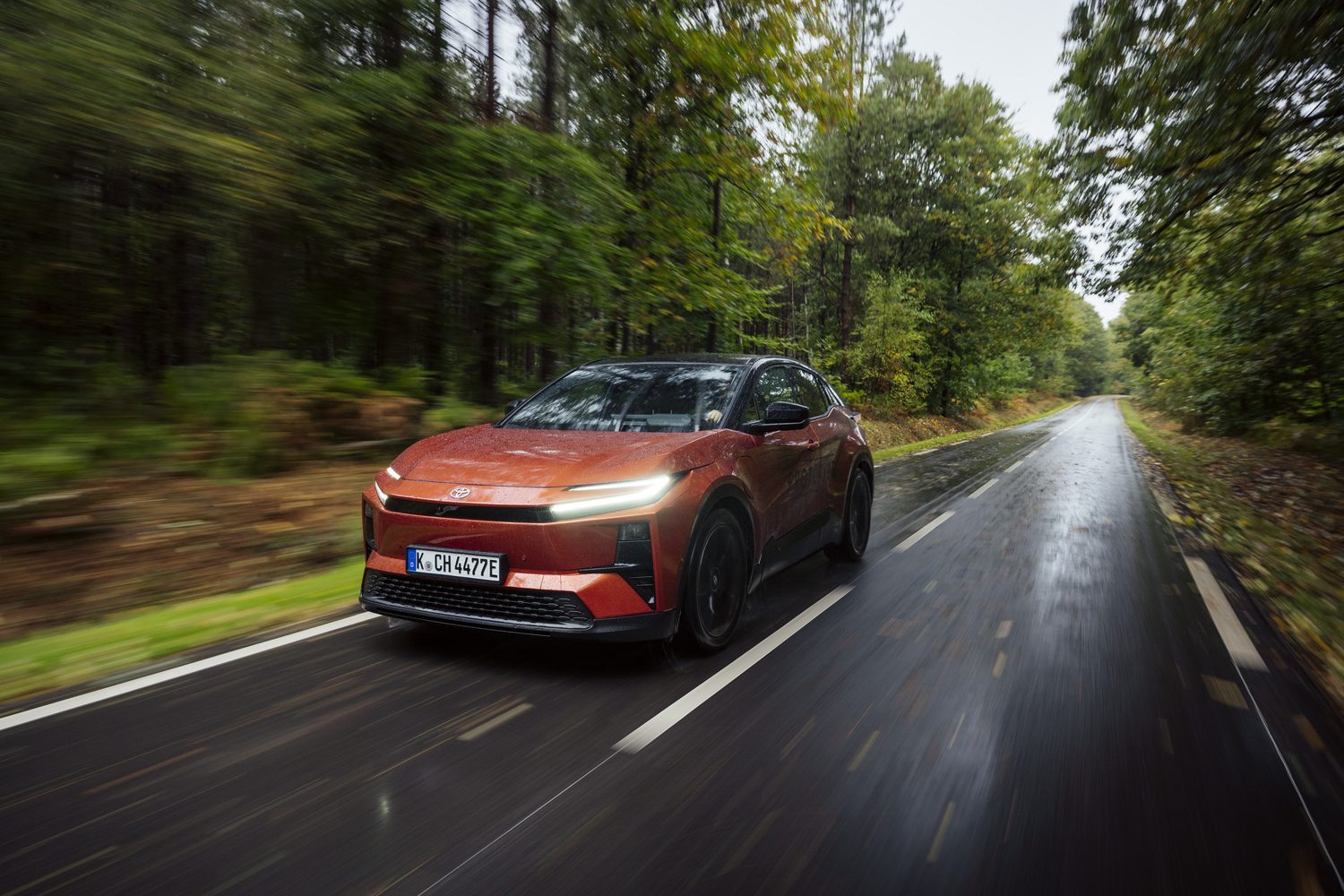
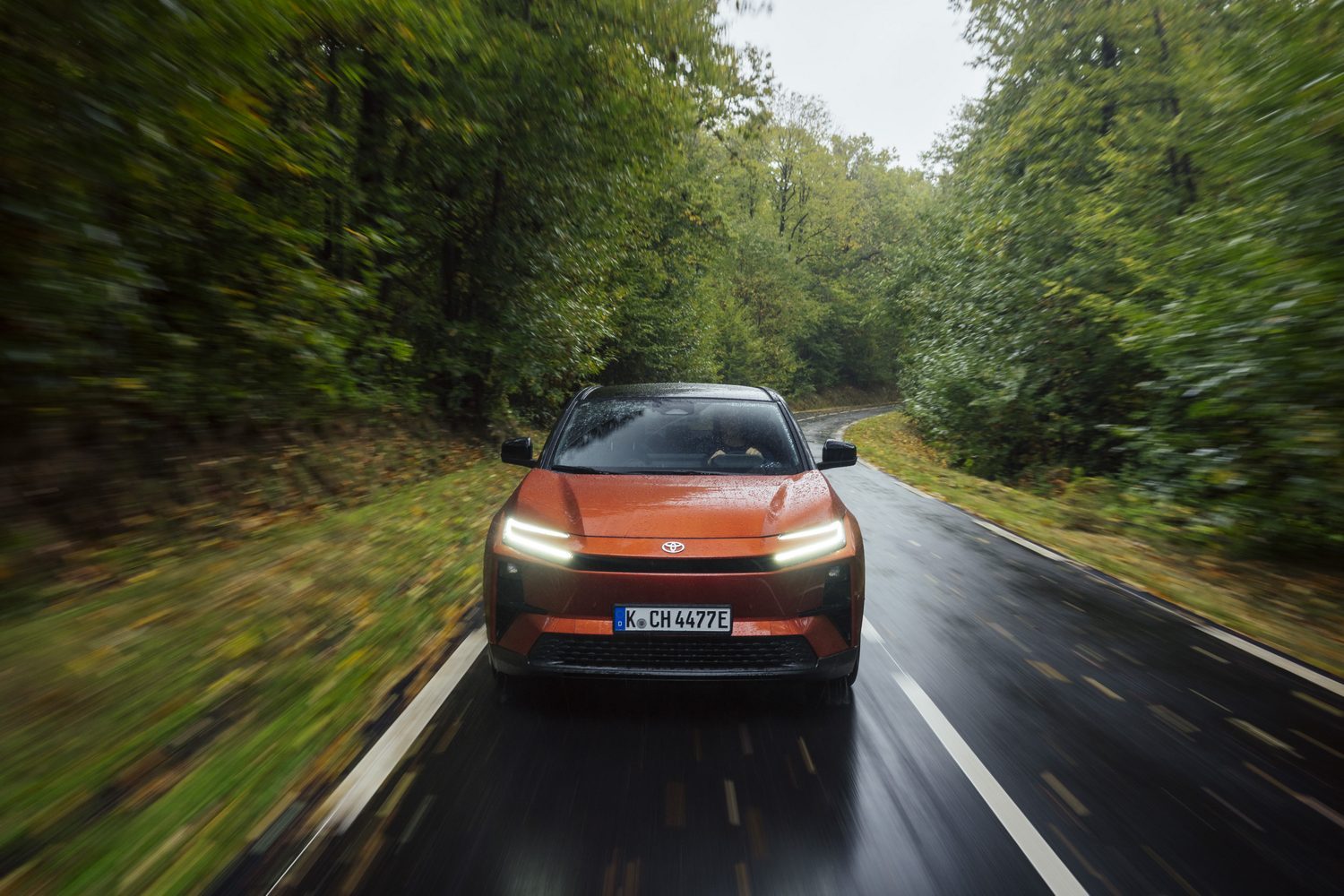
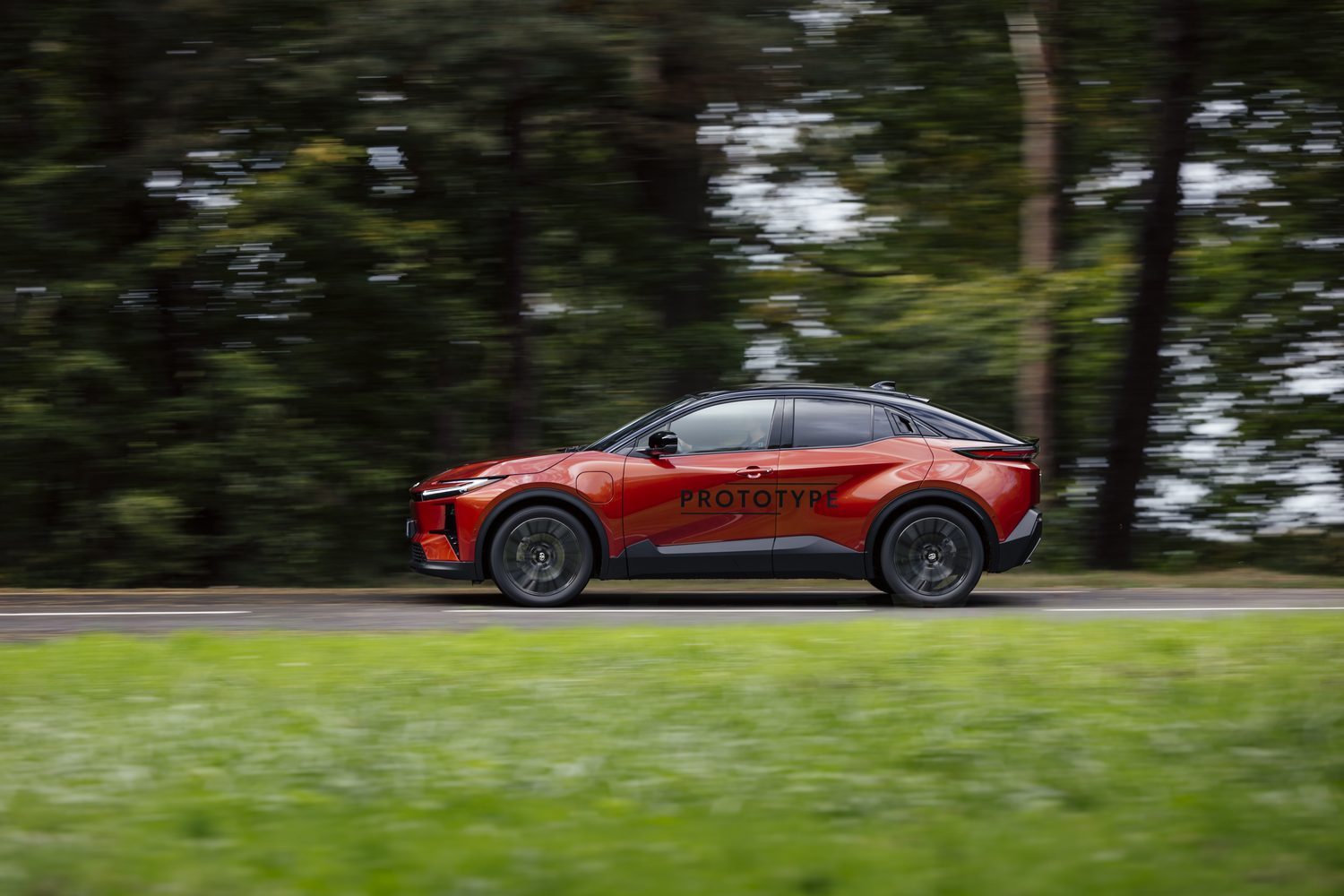
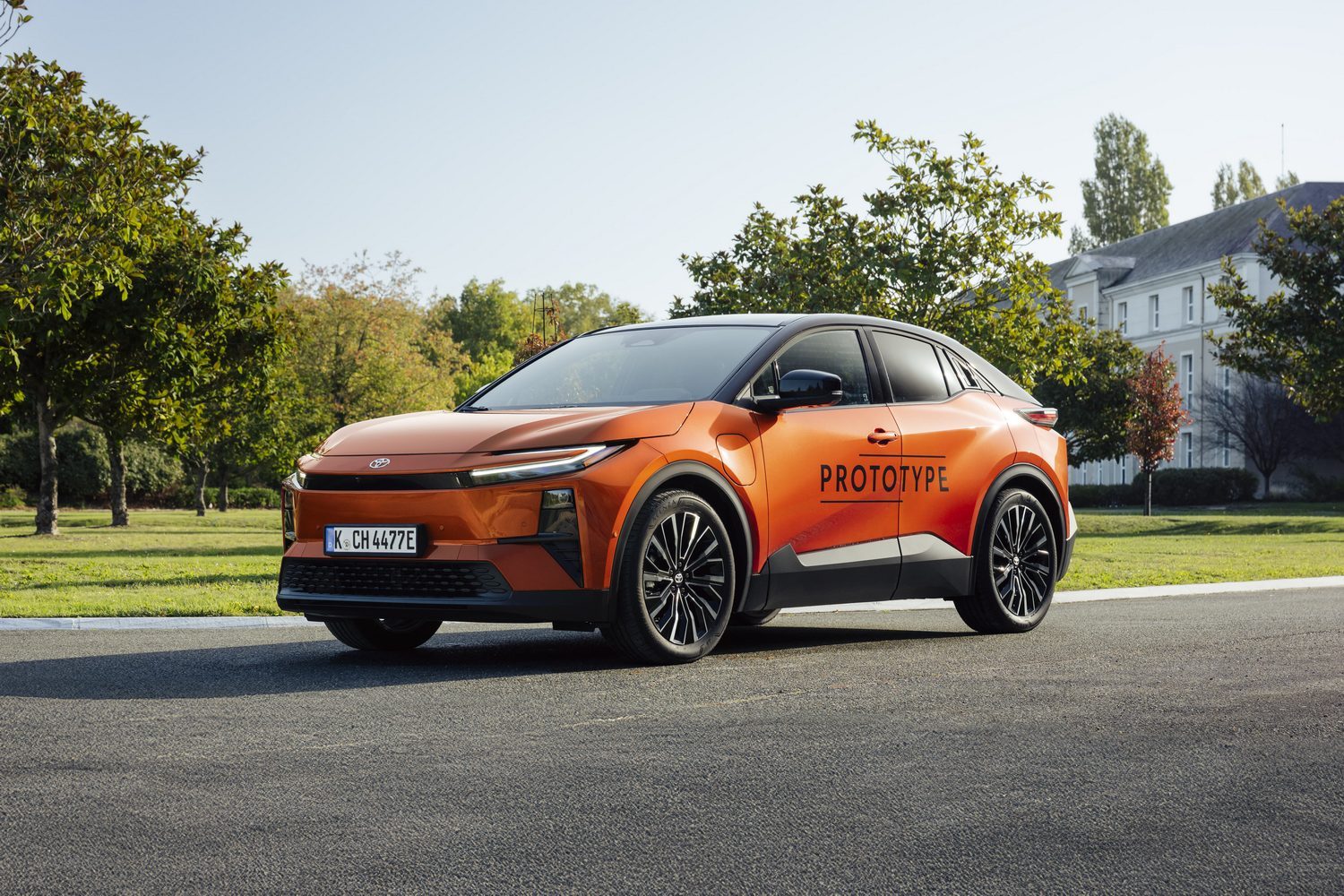
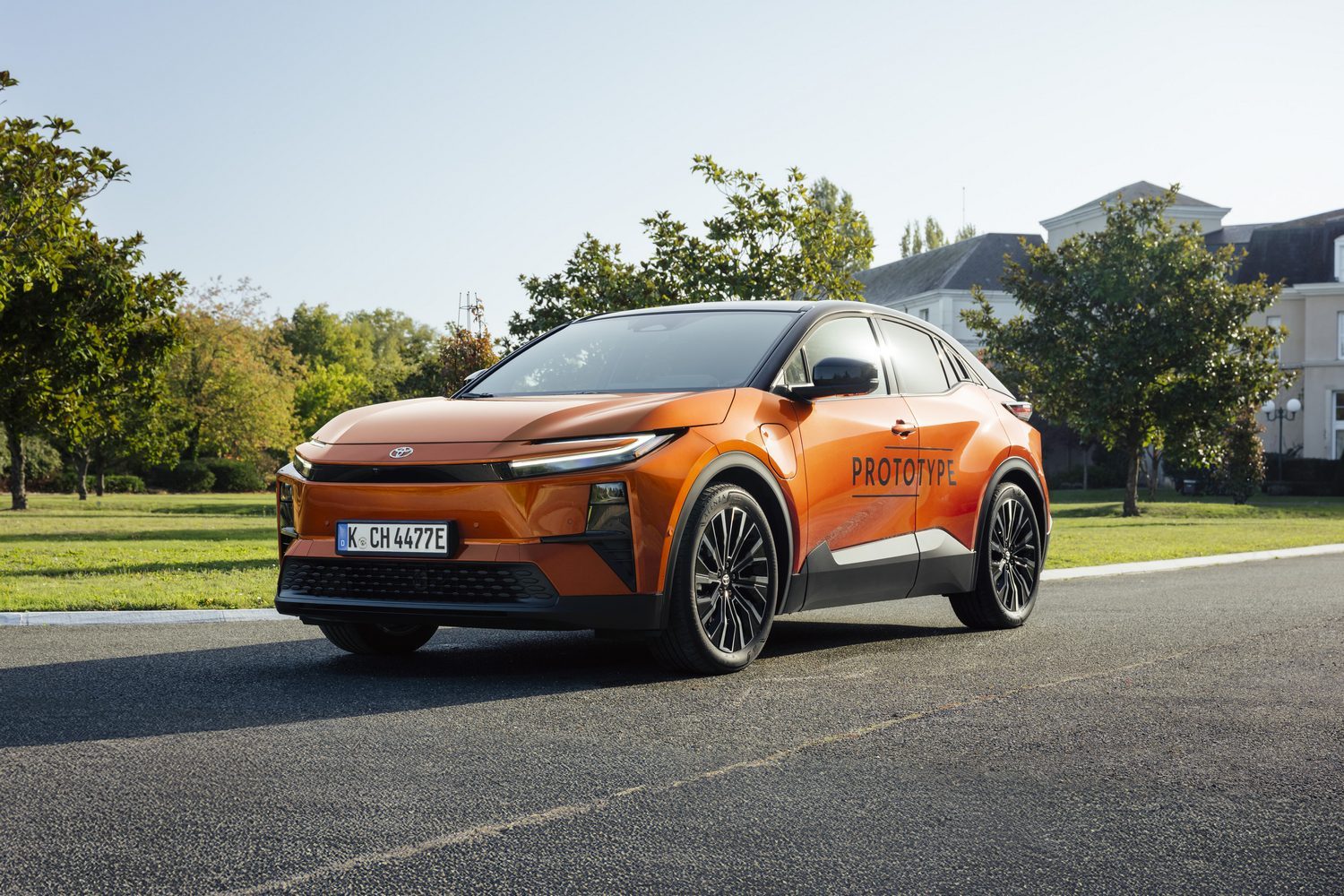
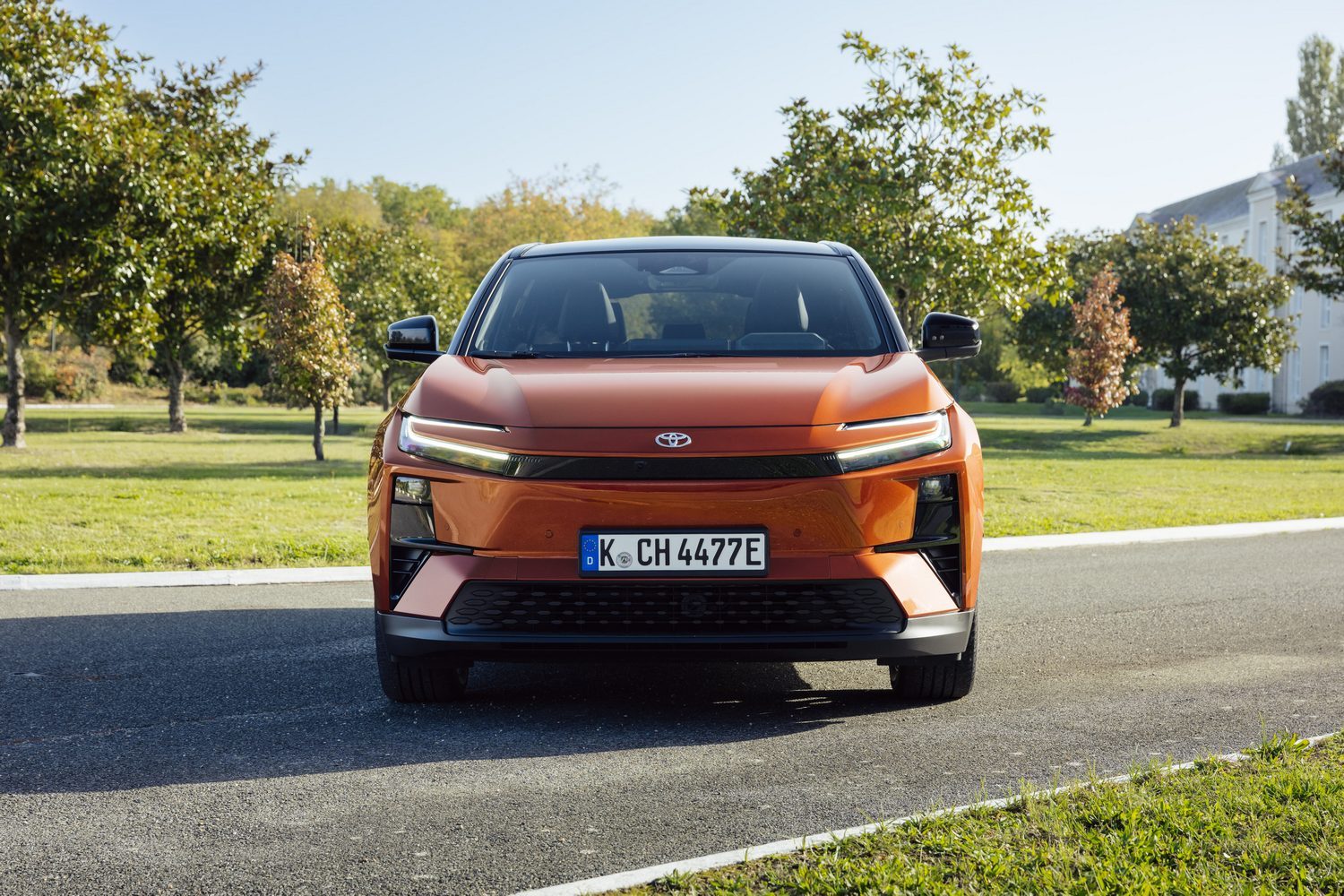
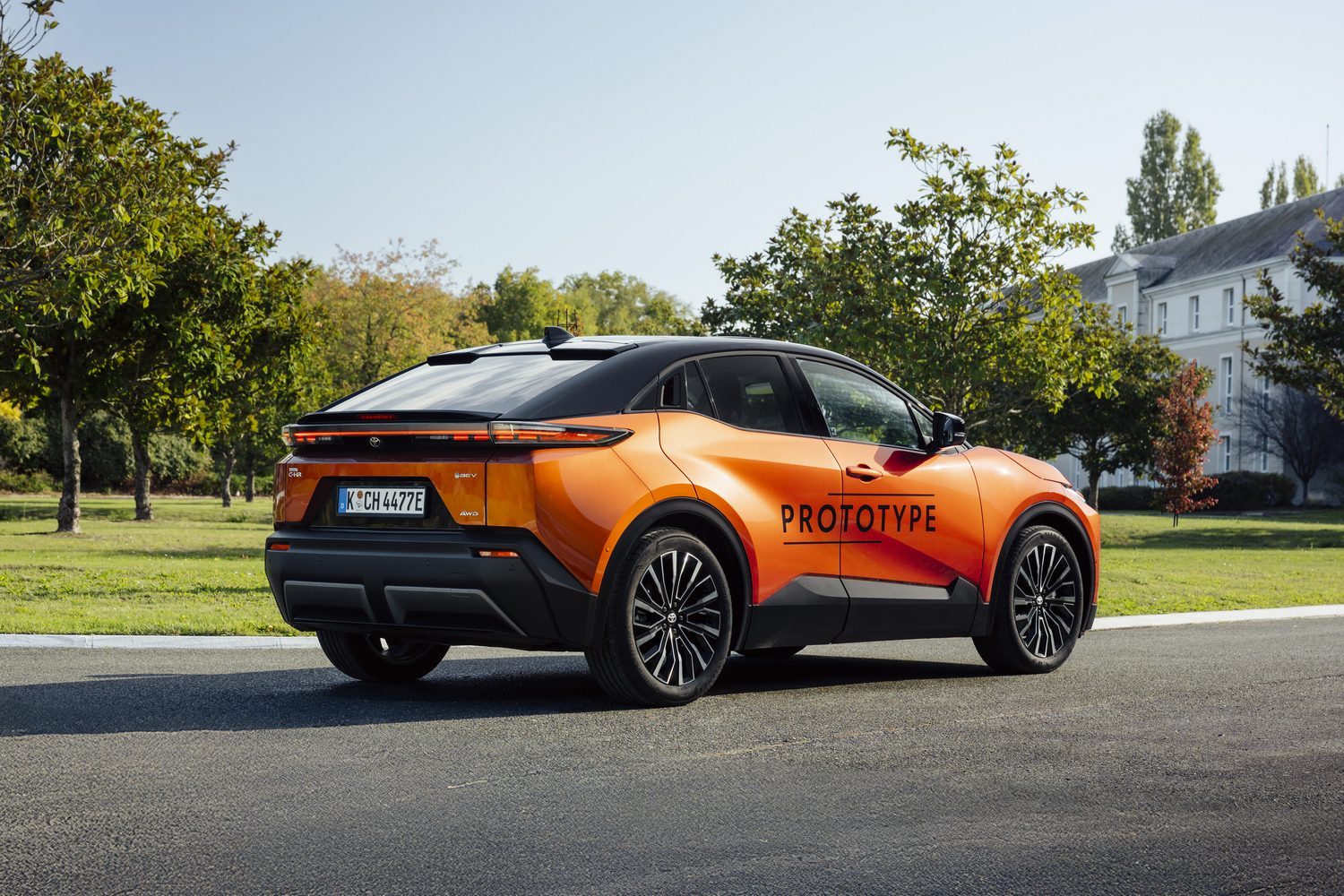
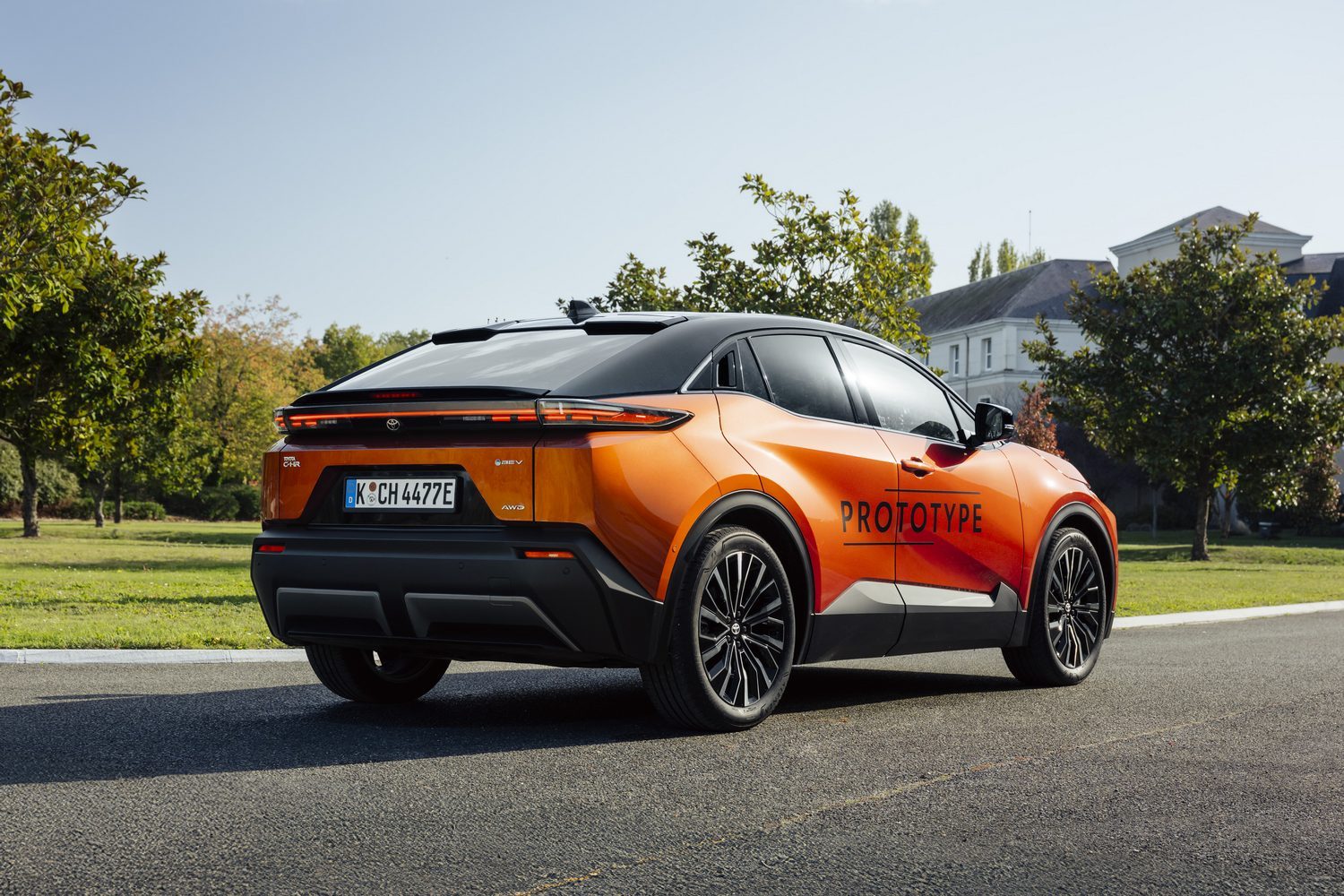
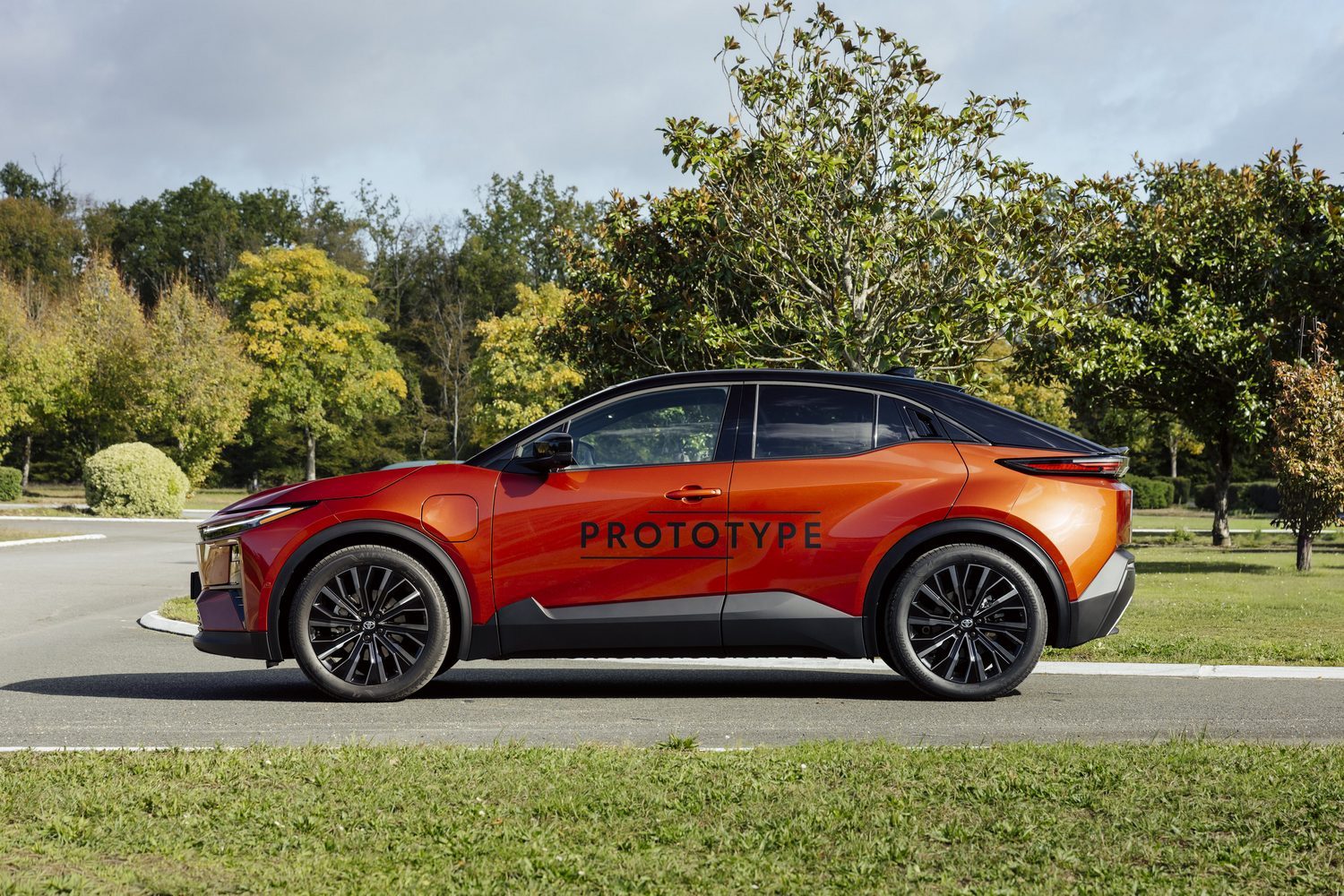
The Toyota C-HR+ looks very much like what you'd expect of a machine designed to fit into the line-up between the smaller C-HR and bigger bZ4X, borrowing elements of both of them to produce an overall pleasing shape.
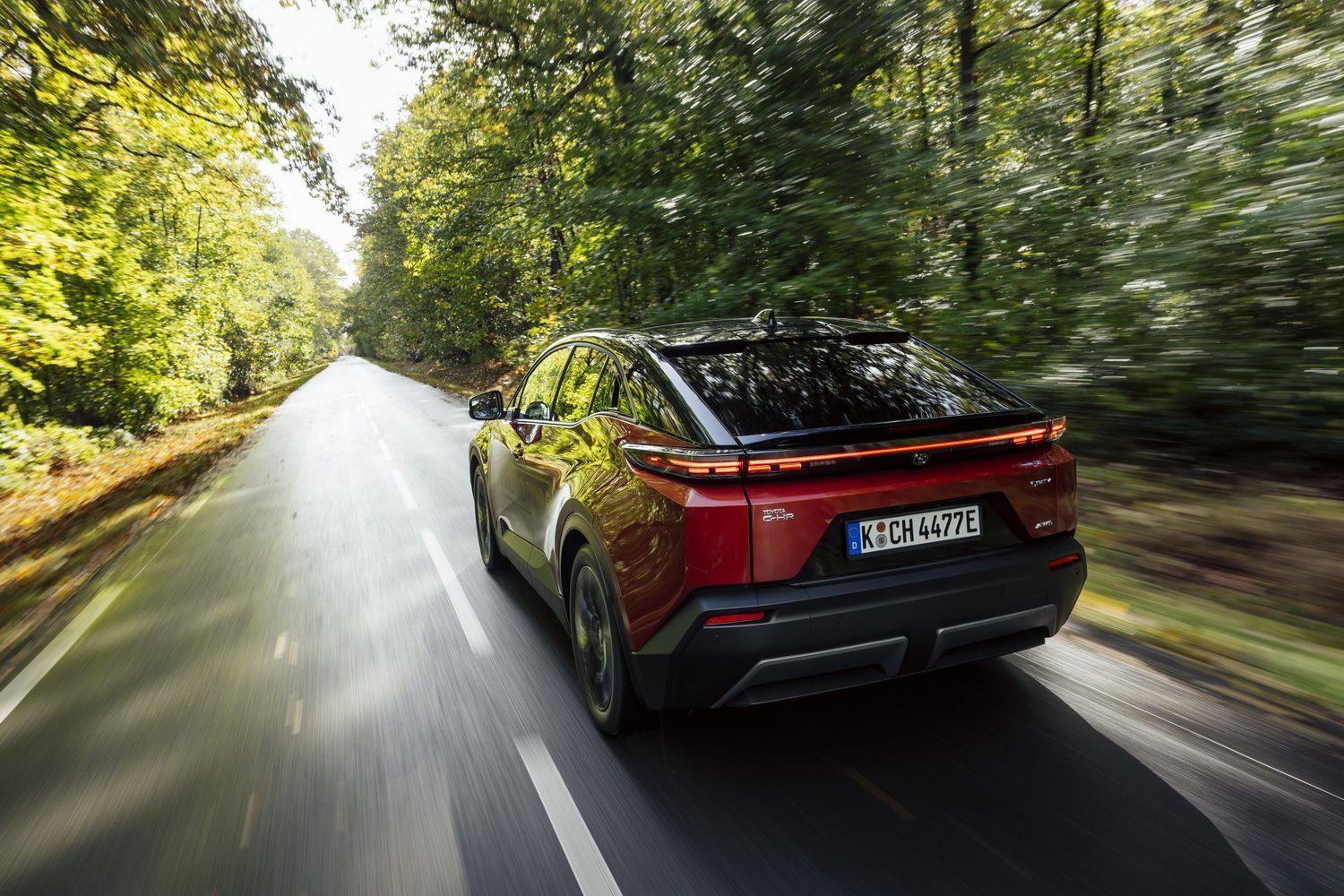
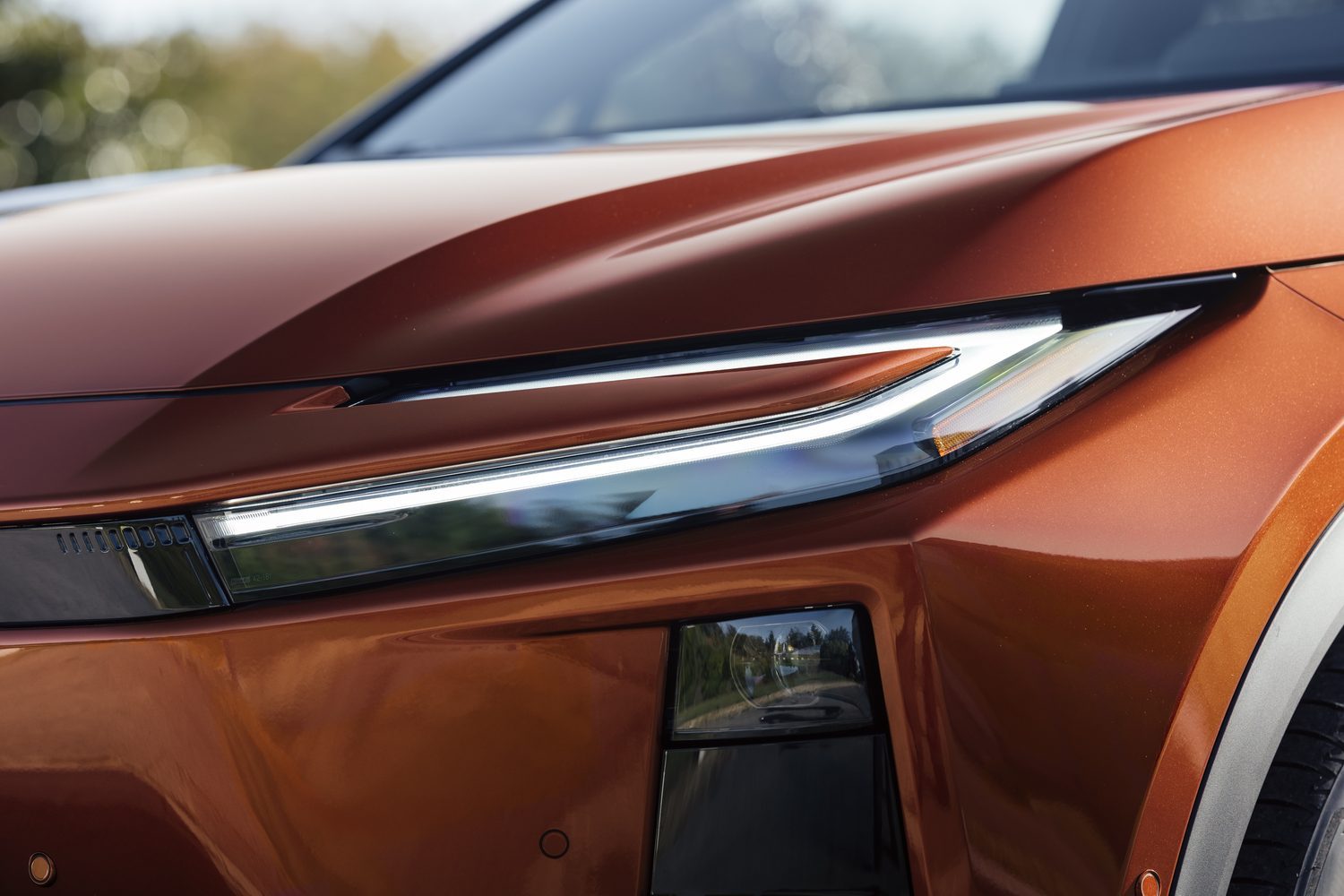
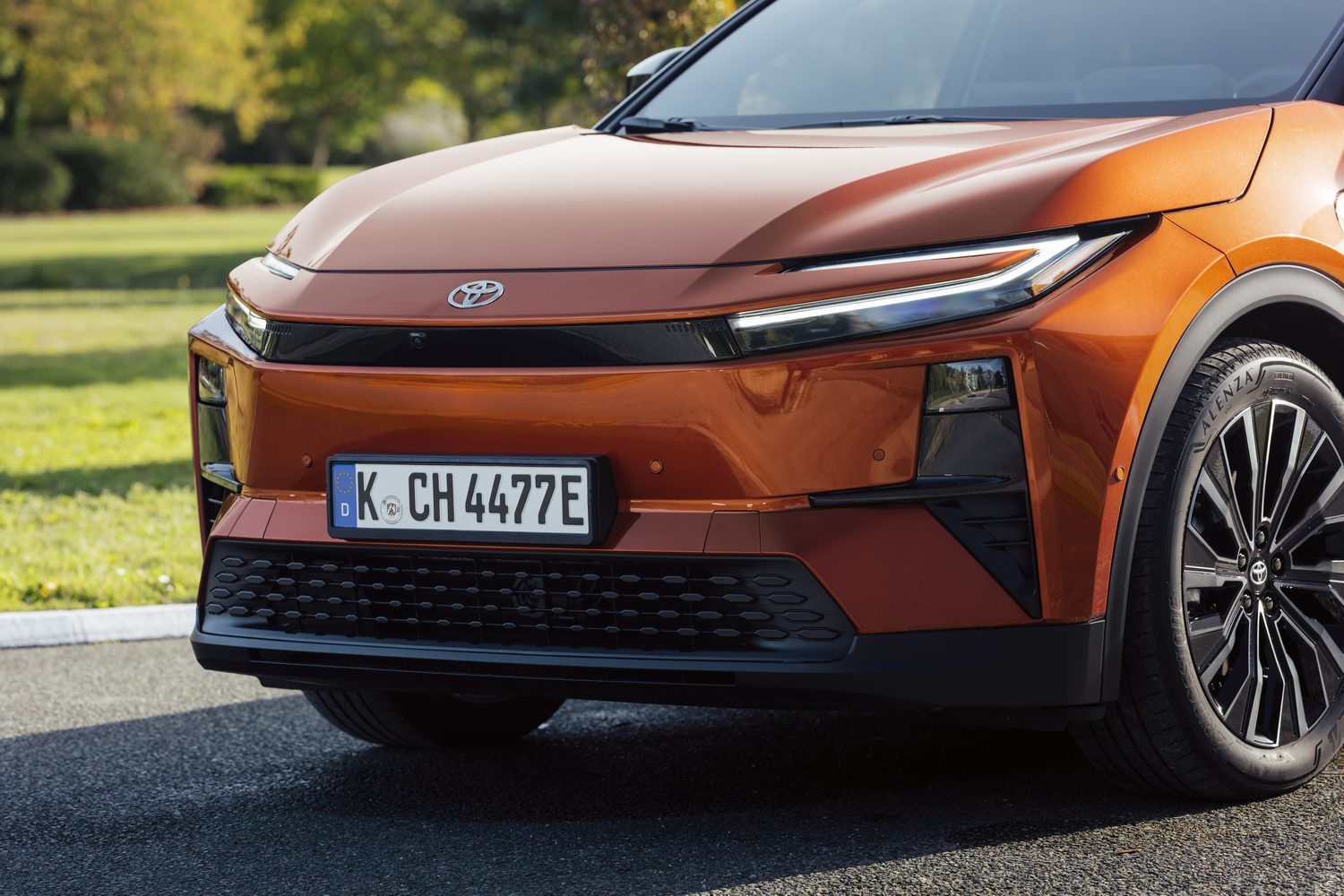
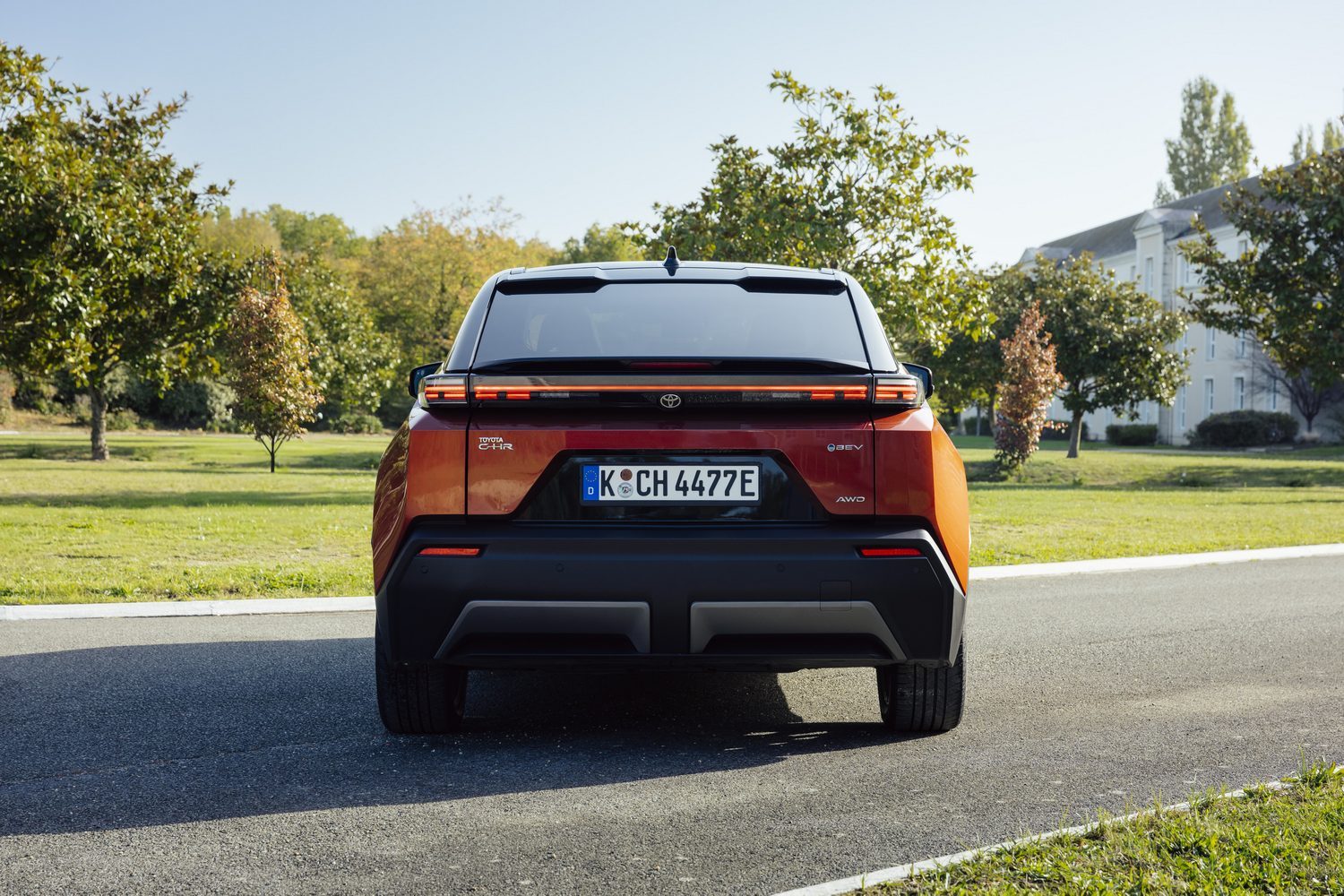
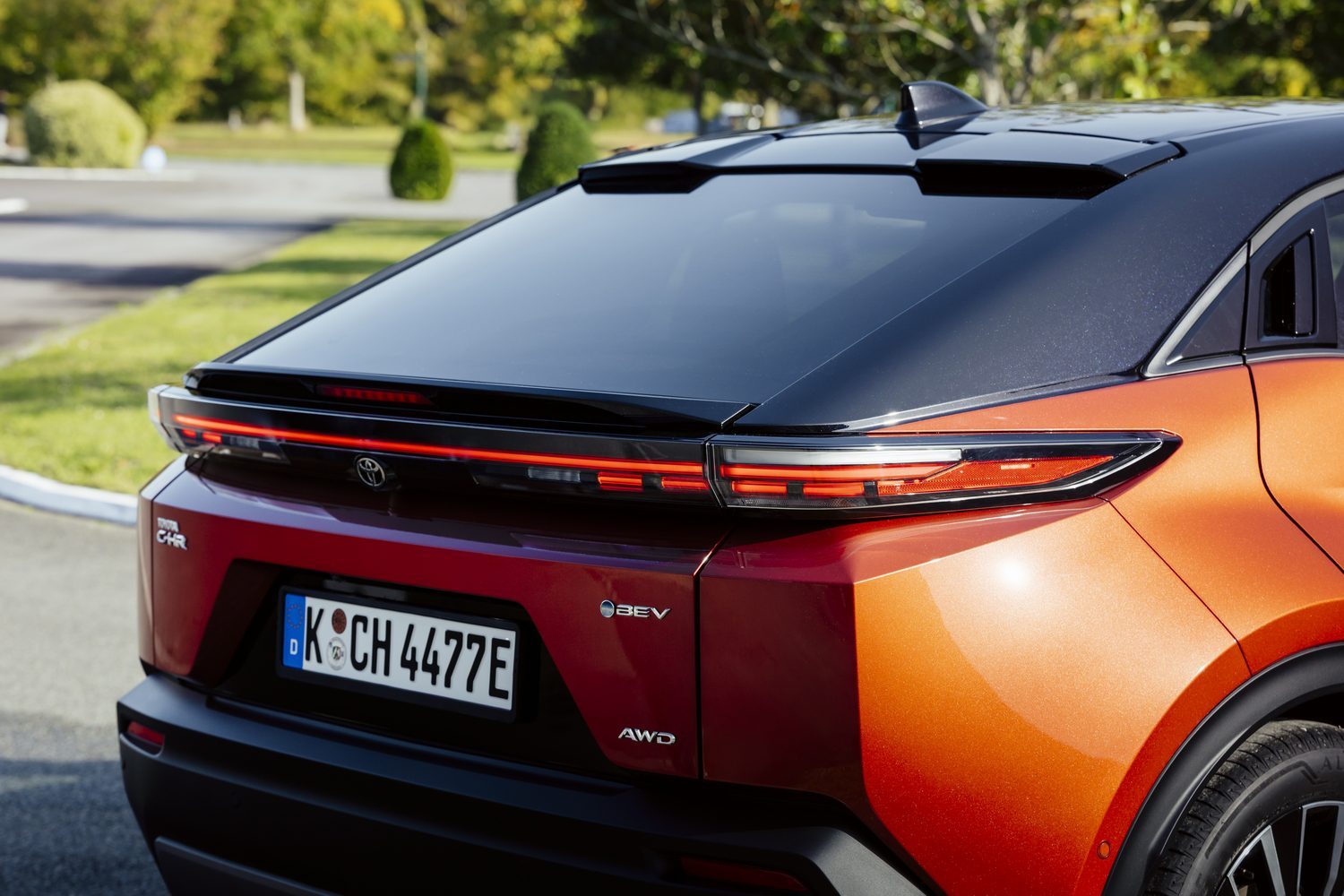
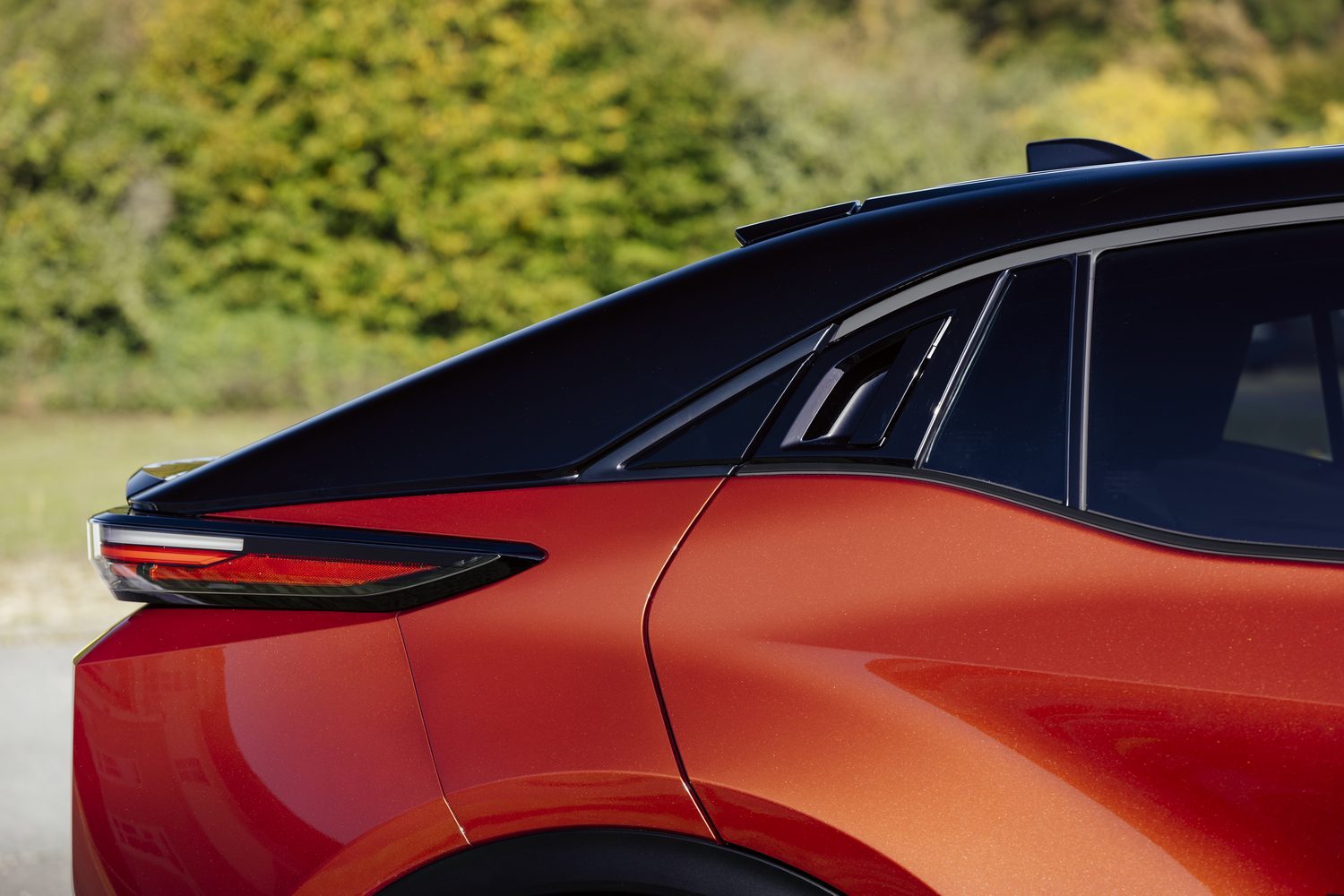
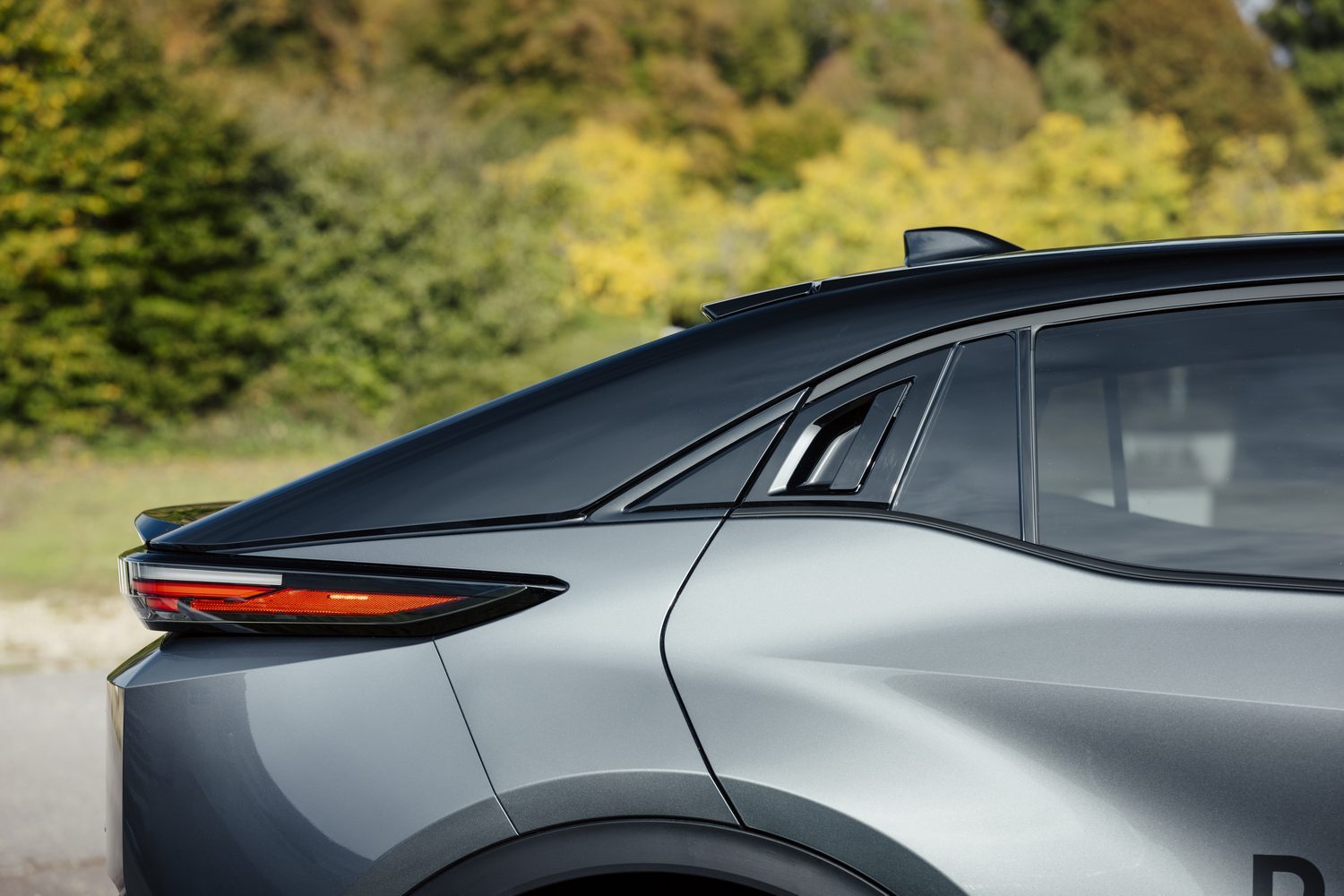
The C-HR+ is a swoopy, curvy effort with less angularity than the bZ4X, and it is denoted by a full-width light strip mounted high at the back, complete with bracket-shaped lamp units in the corporate 'hammerhead design' up front.

Wheel sizes for the entire family are either 18-inch items or uprated 20s, but the latter do have a negative effect on the C-HR+'s driving range when fitted.
Dimensions of the 2026 Toyota C-HR+
- Length:
- 4,520mm
- Width:
- 1,870mm (mirrors folded)
- Height:
- 1,595mm
- Wheelbase:
- 2,750mm
Paint colours for the 2026 Toyota C-HR+
We haven't got a full rundown of the colours which will come to Ireland on the Toyota C-HR+ range, nor how much they will cost. What we do know is that most of the colours are in the white-silver-grey-black palette, although there are a few nice blues and indeed a rather attractive orangey-red called Metal Oxide available too.

Other shades are called things like Cement Grey and Mineral, although there will be a bi-tone option that paints the roof and all body pillars above the lower window line in contrasting black.
Interior, practicality, tech & comfort of the 2026 Toyota C-HR+
- Twin screens and intelligent switchgear placement
- Plenty of storage and space
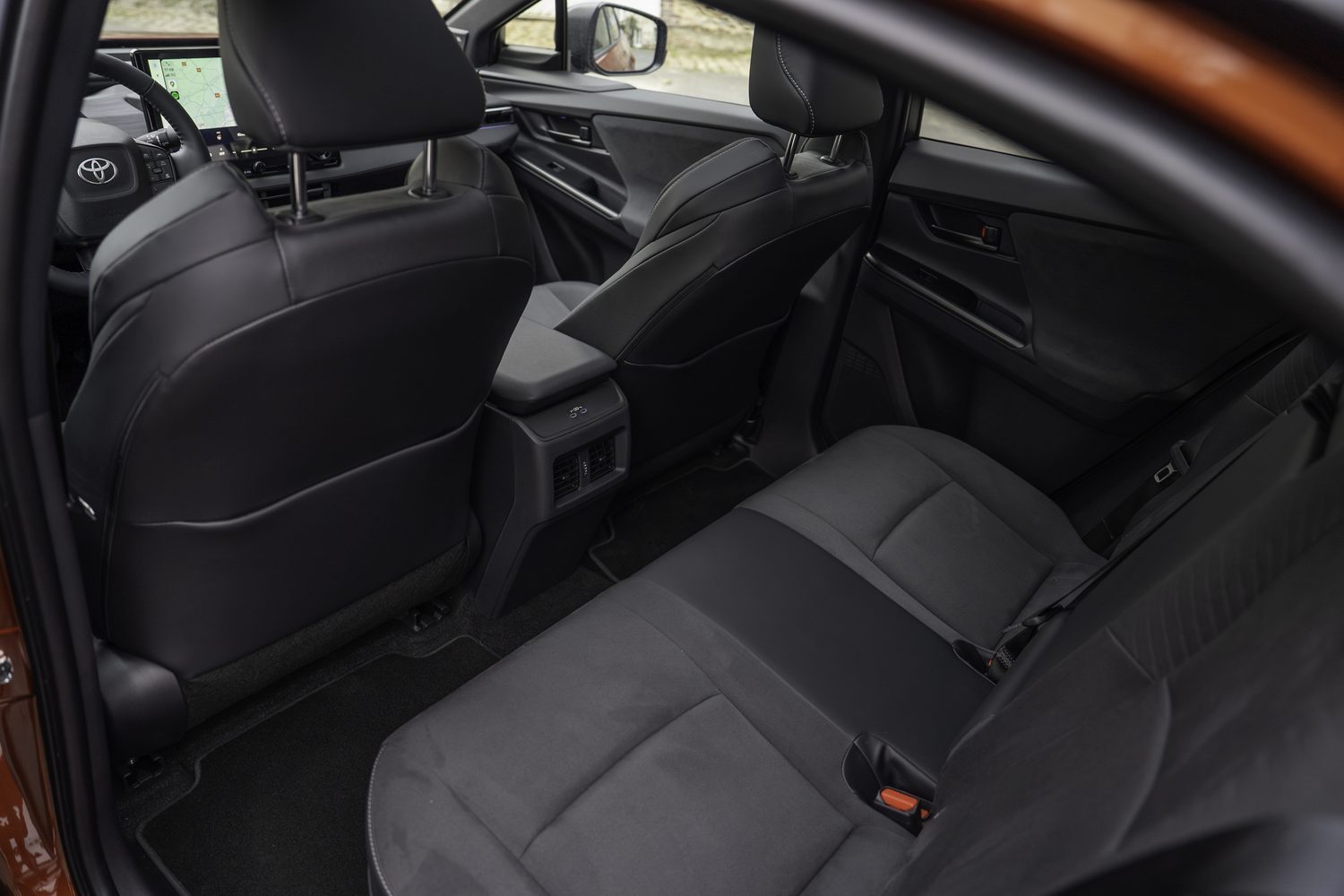
- Bit dark in the back

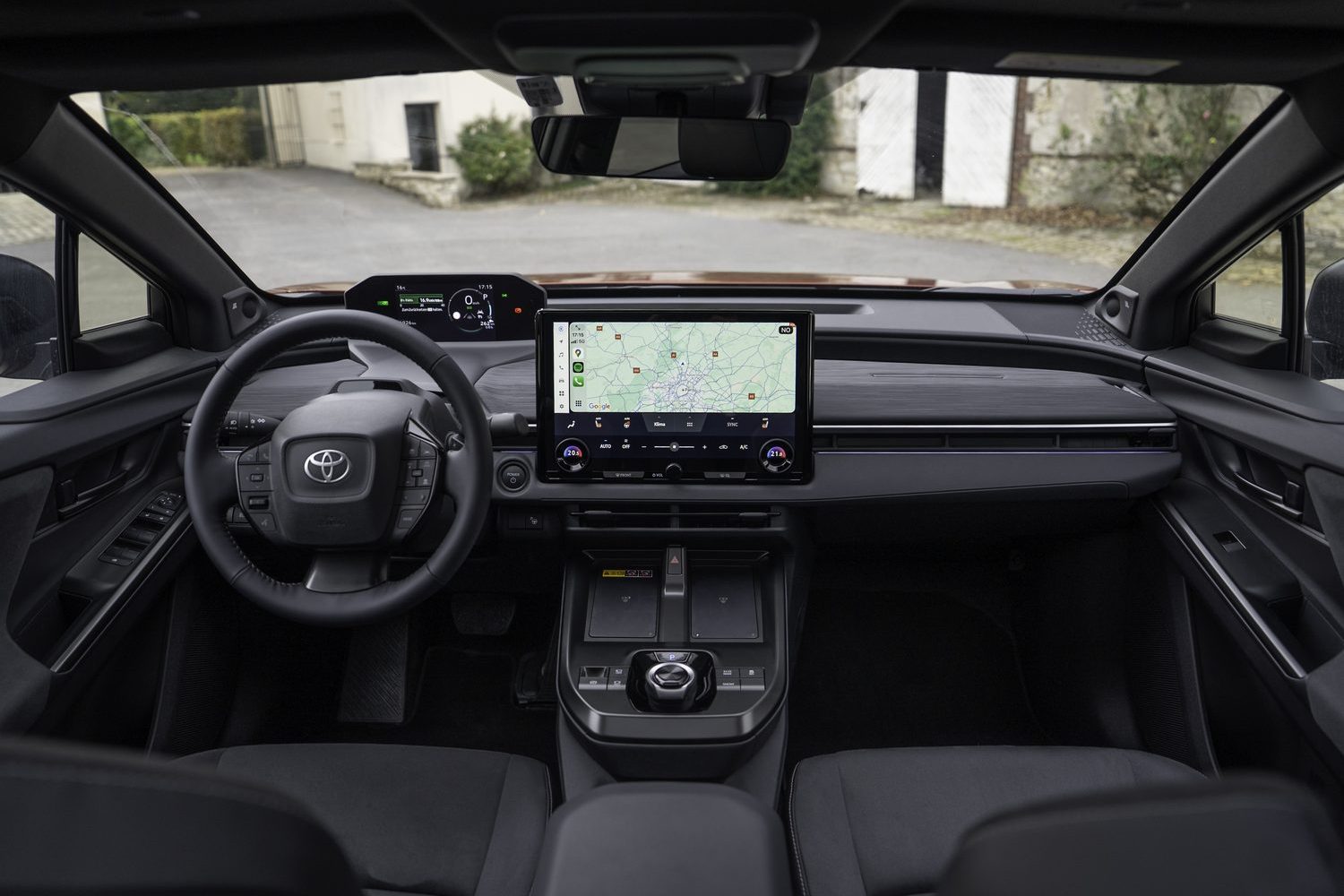
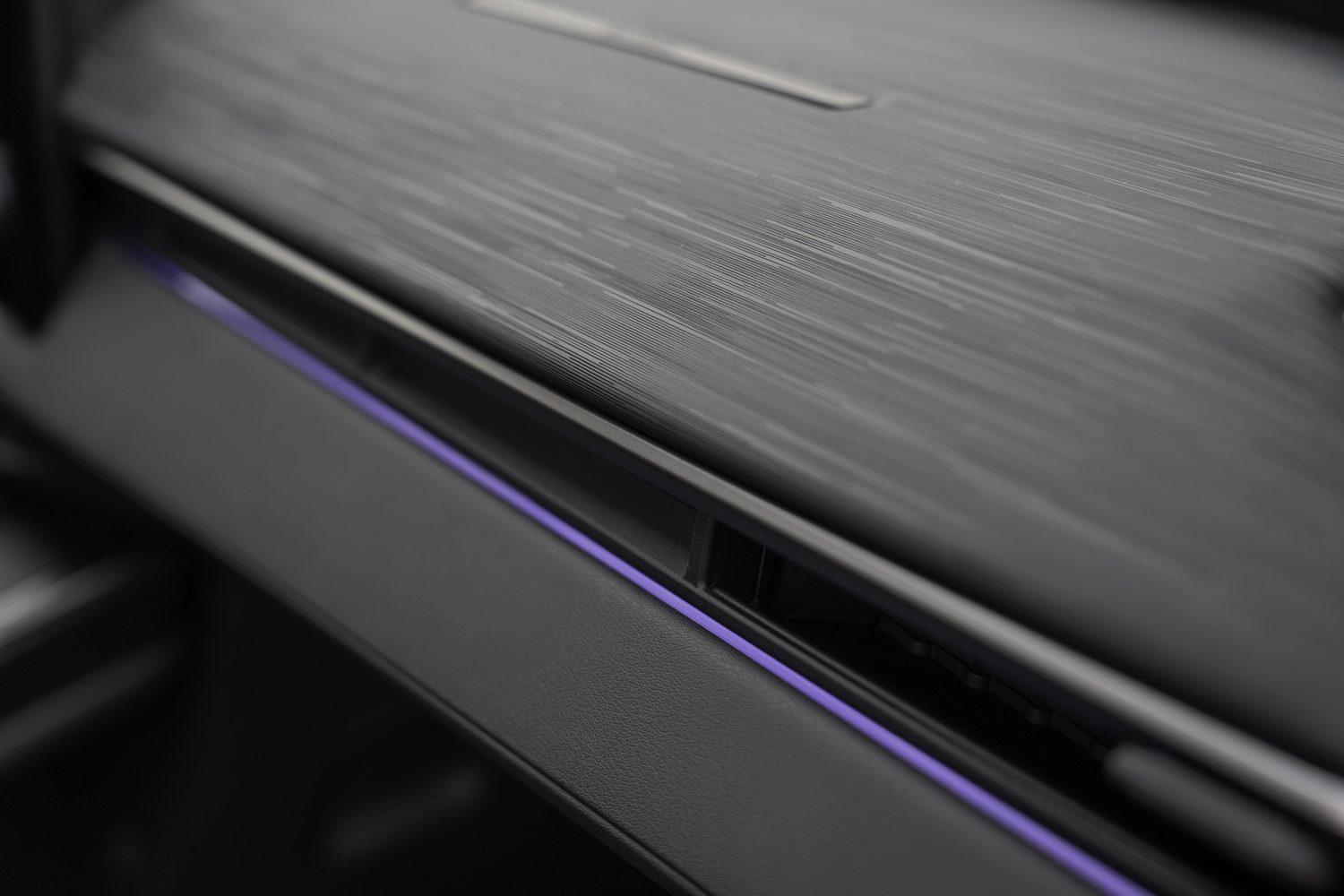
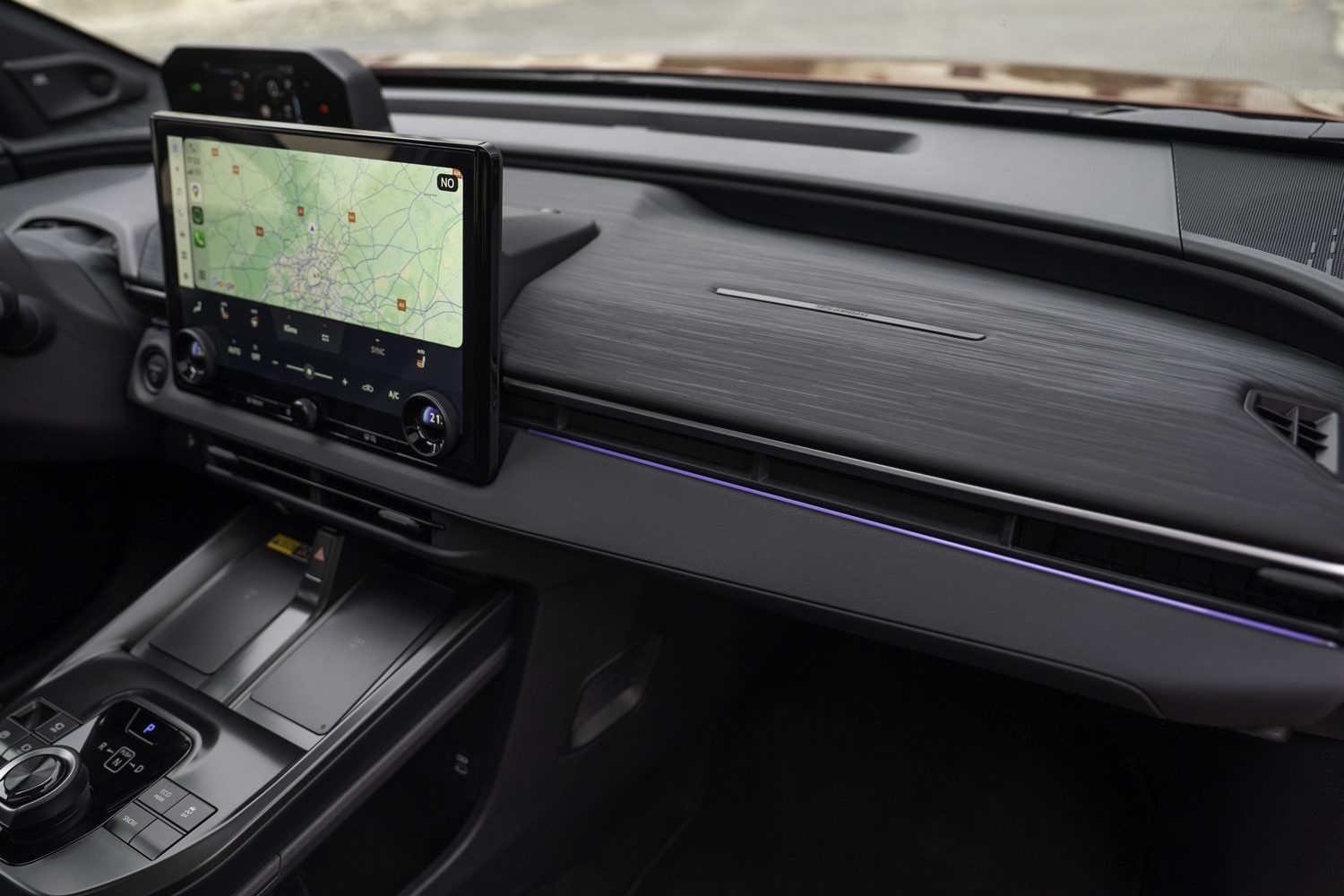
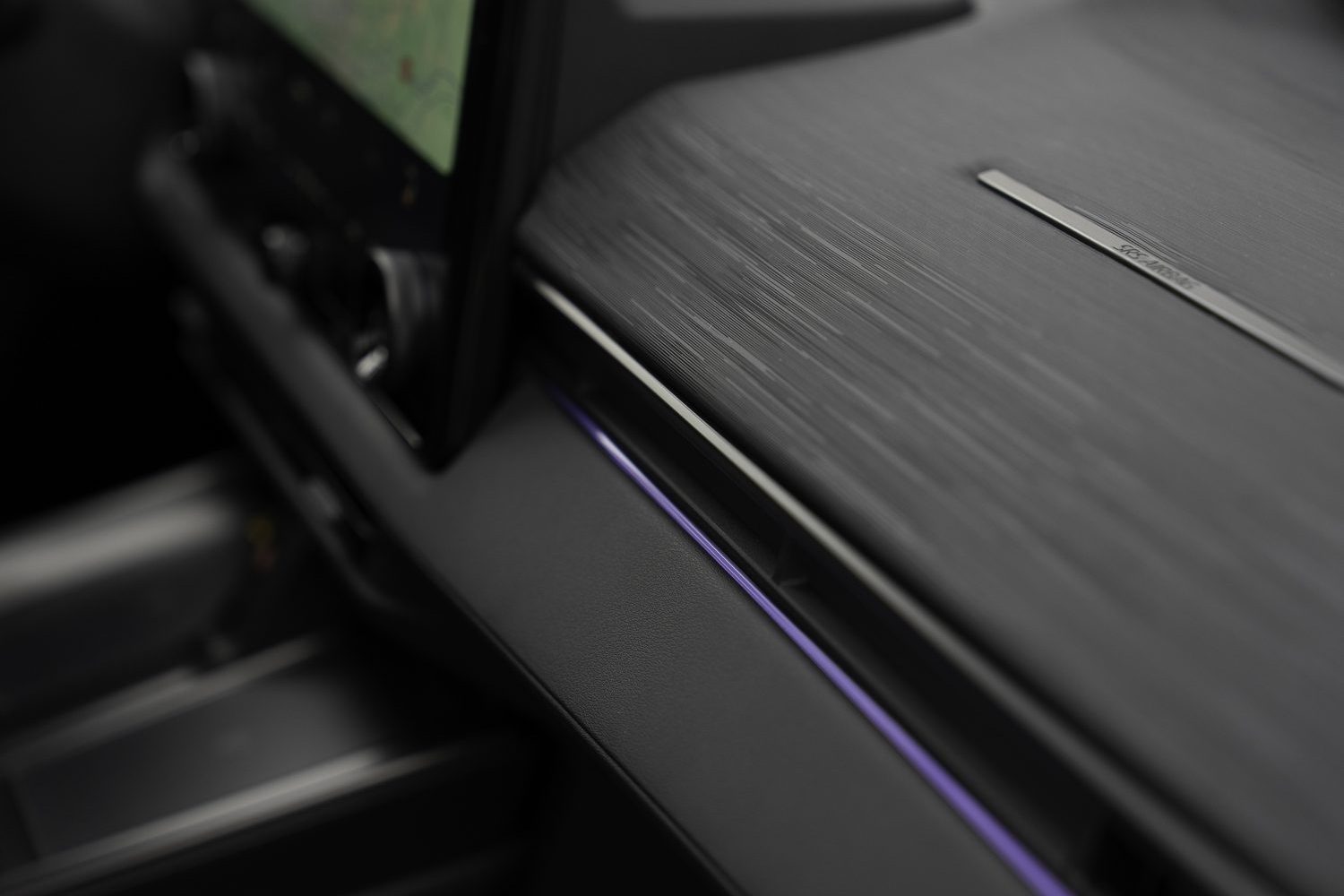
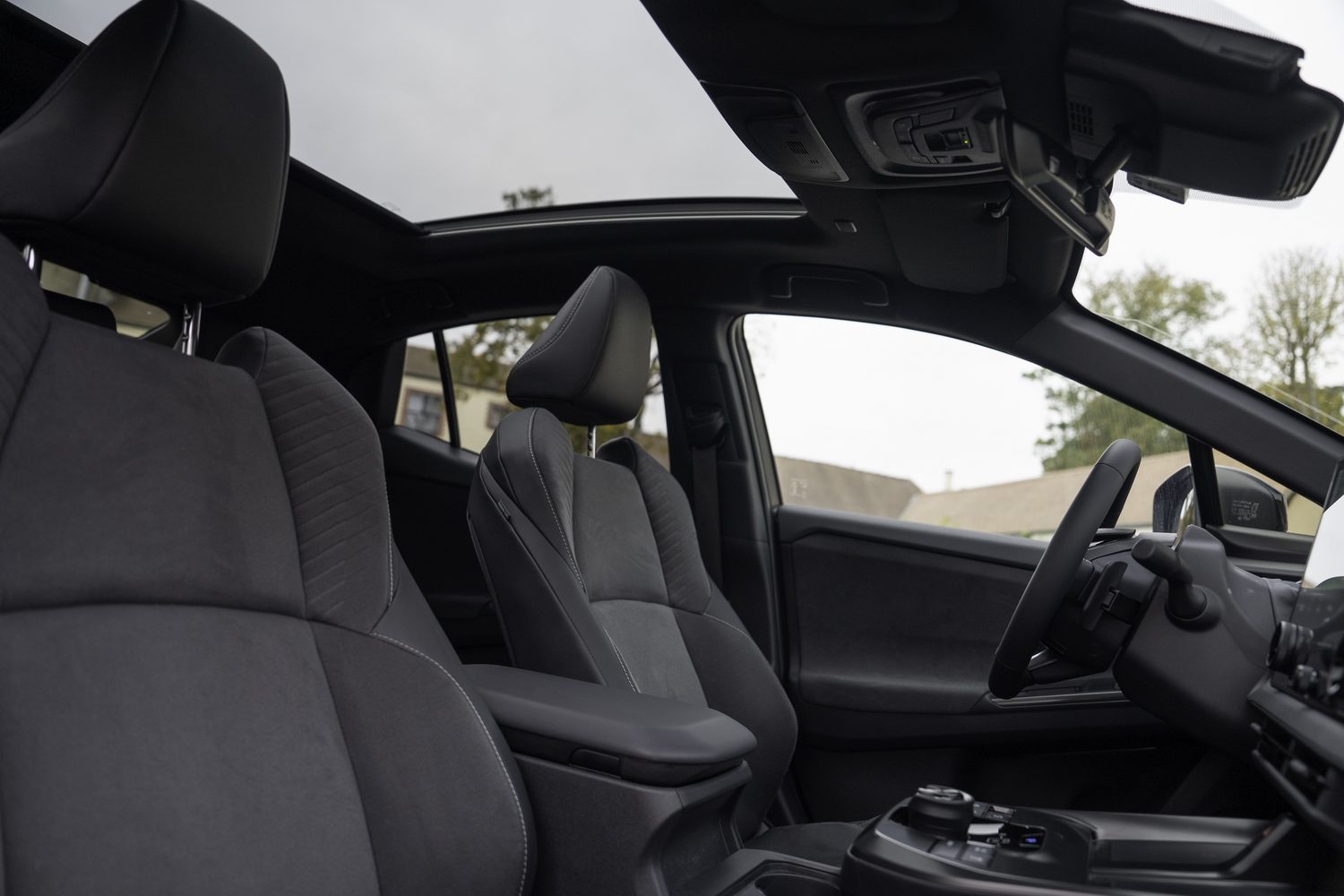
In terms of its fit, finish, ergonomics and general build quality, there's little to fault with the Toyota C-HR+'s interior. About the only thing we would say is that it'd be nice if Toyota made a bit more of the sculpture of the dashboard and surfaces by offering some different-coloured finishes - unfortunately, everything is either grey, dark grey, charcoal grey or black, so it doesn't look the most exciting cabin when you first get into the car.
Getting comfortable in the driver's seat
There's a good driving position attainable in the Toyota C-HR+, especially in the models with electric adjustment, but those of a taller persuasion will want to lower the driver's seat right down to the floor - otherwise, you feel like you are perched on the SUV, not hunkered down within it.

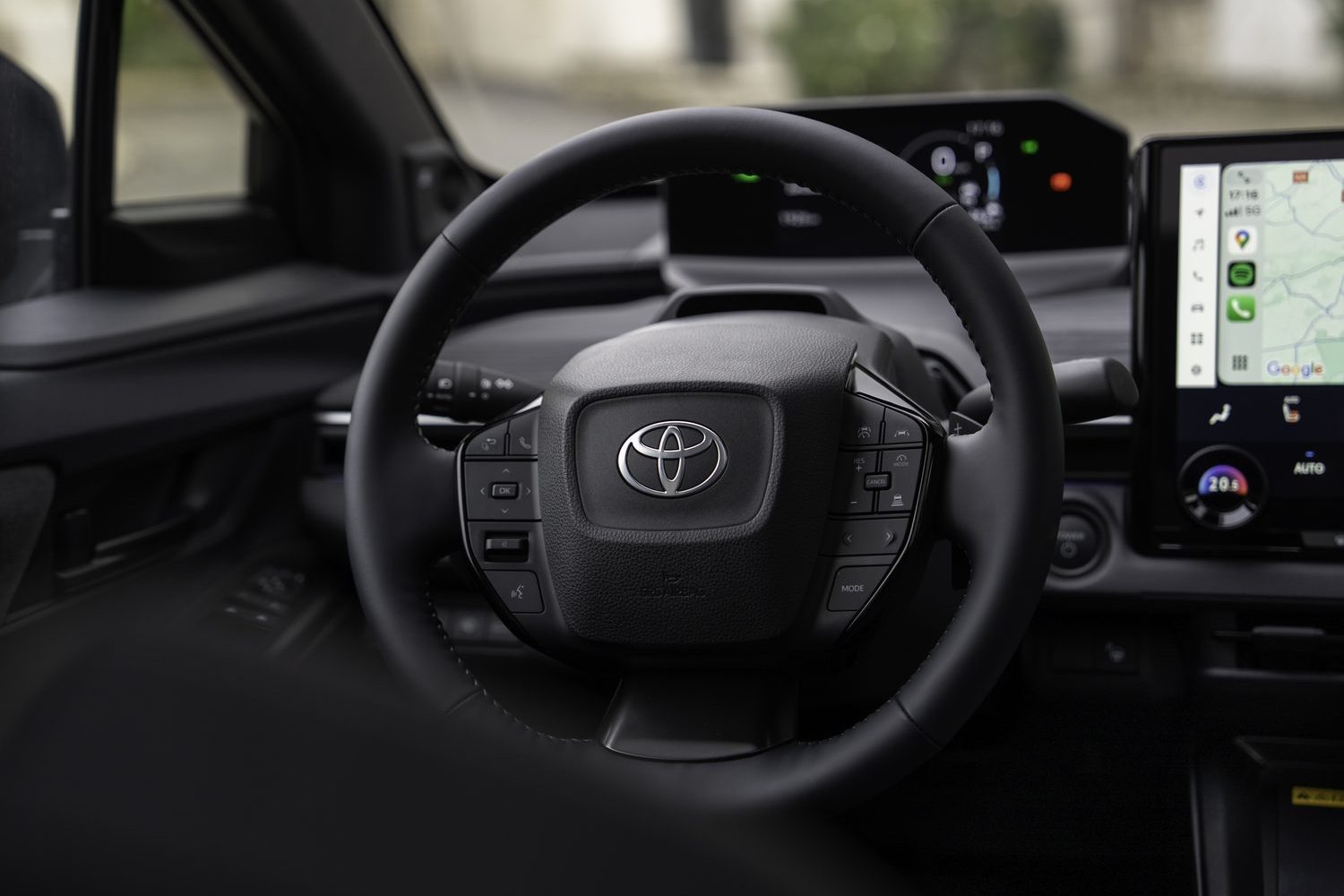
Even with manual controls, though, there's a good range of adjustability between seat and steering column, and there's nothing intimidating or unusual about the main switchgear on the Toyota, with sensible stalks either side of the wheel for indicators, lights and wipers.
The steering wheel is a bit packed with buttons, but it does at least feel good to hold in your hands as the rim is not over-padded.

Infotainment and technology
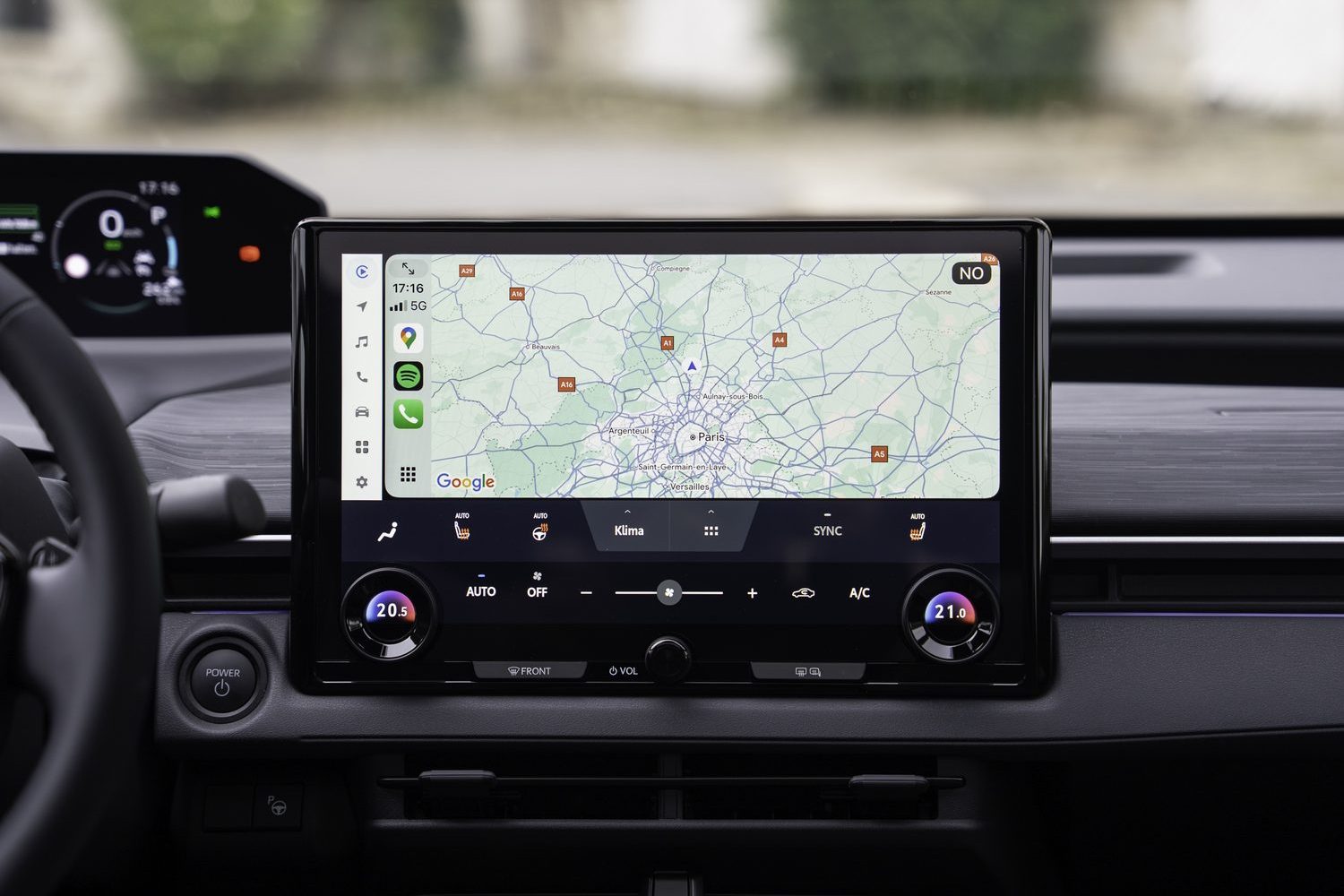
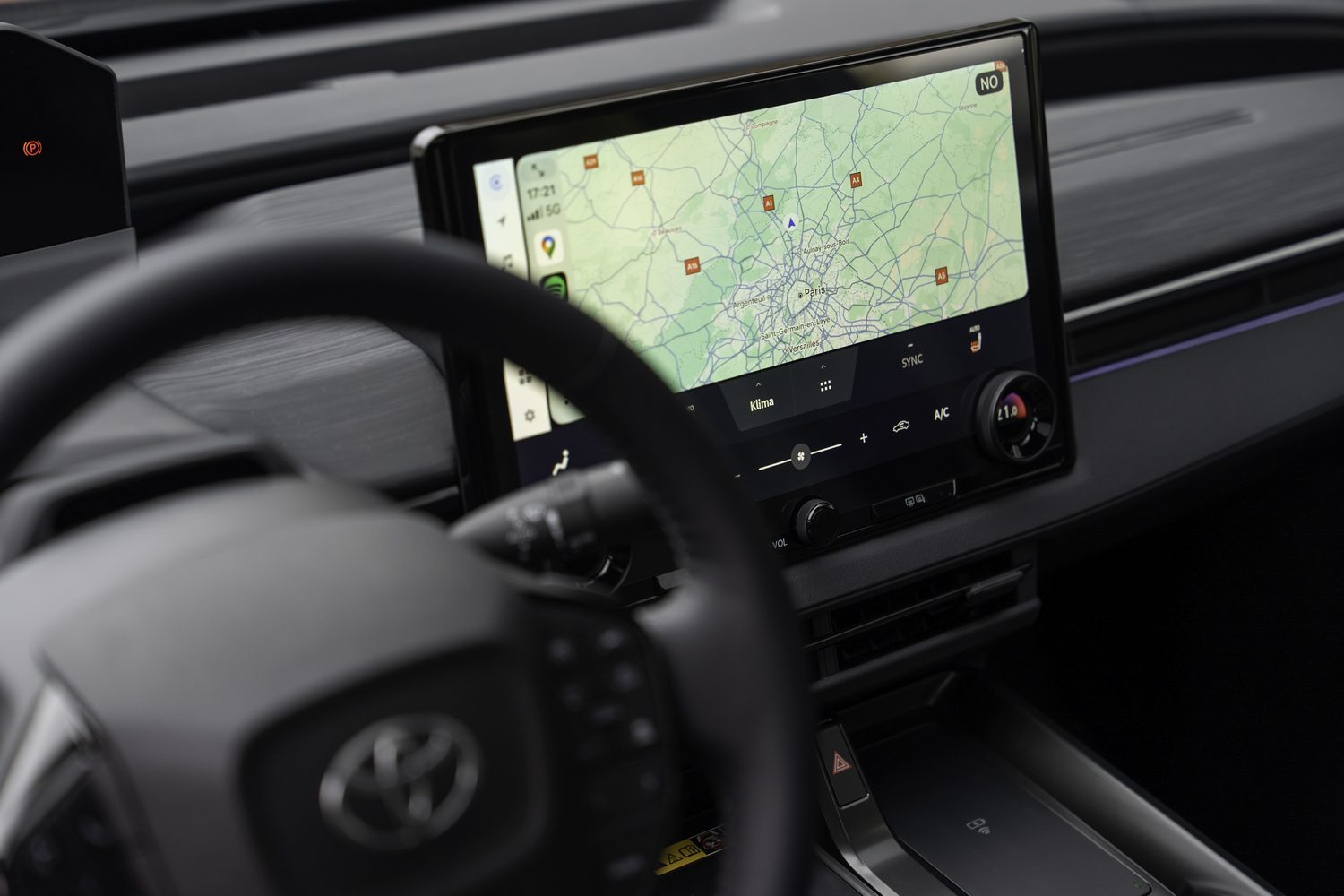
Toyota deploys two digital screens in the C-HR+, one a 14-inch item that runs the infotainment and another seven-inch unit perched right atop the dashboard that functions as the instrument cluster.

Graphically speaking, and in the way they respond to switch inputs or indeed finger taps of the central screen, there's nothing wrong with either of these, and we like the way the temperature controls for the climate system are integrated into handy dials on the infotainment display. Shame they both looked a bit plonked in position.
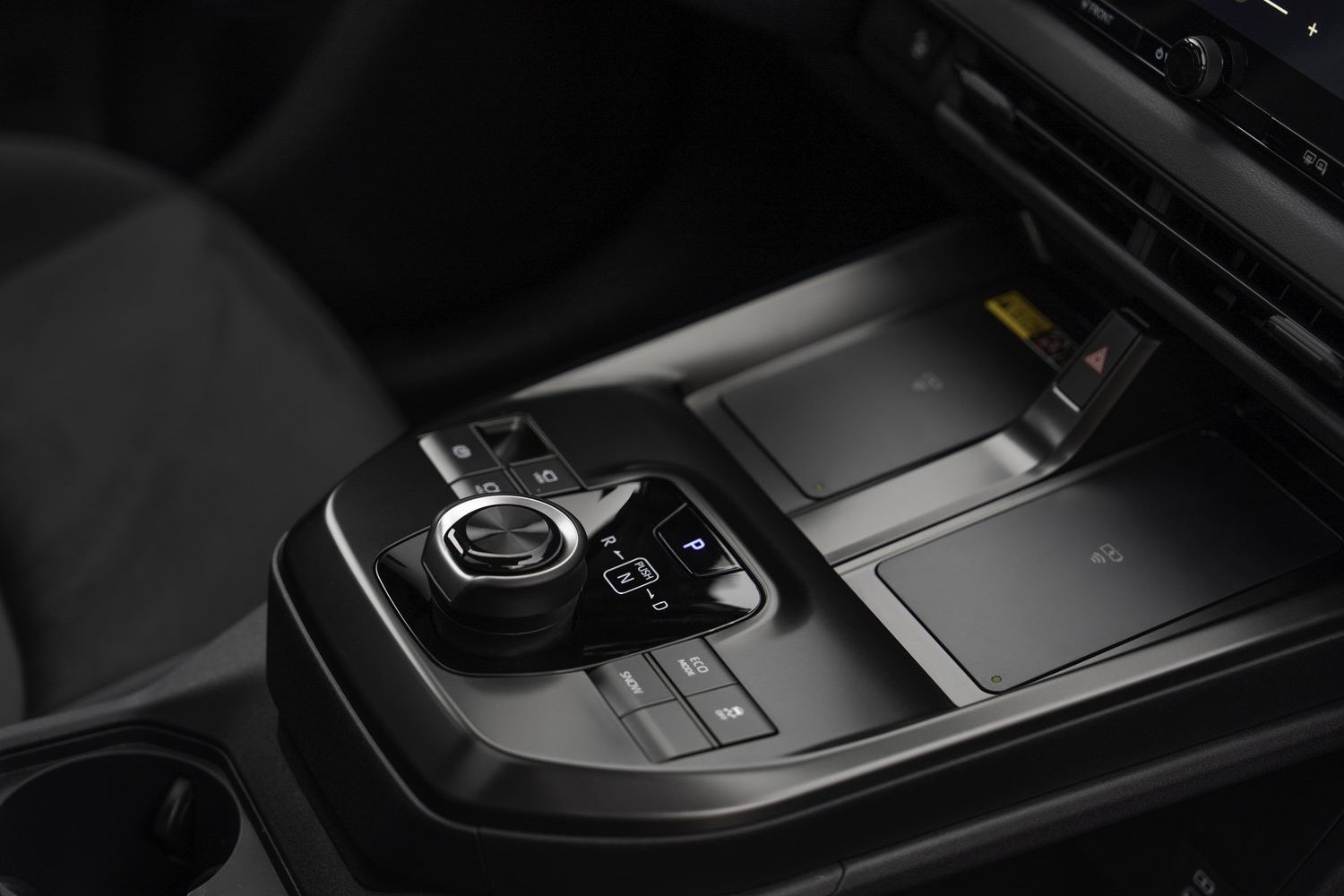
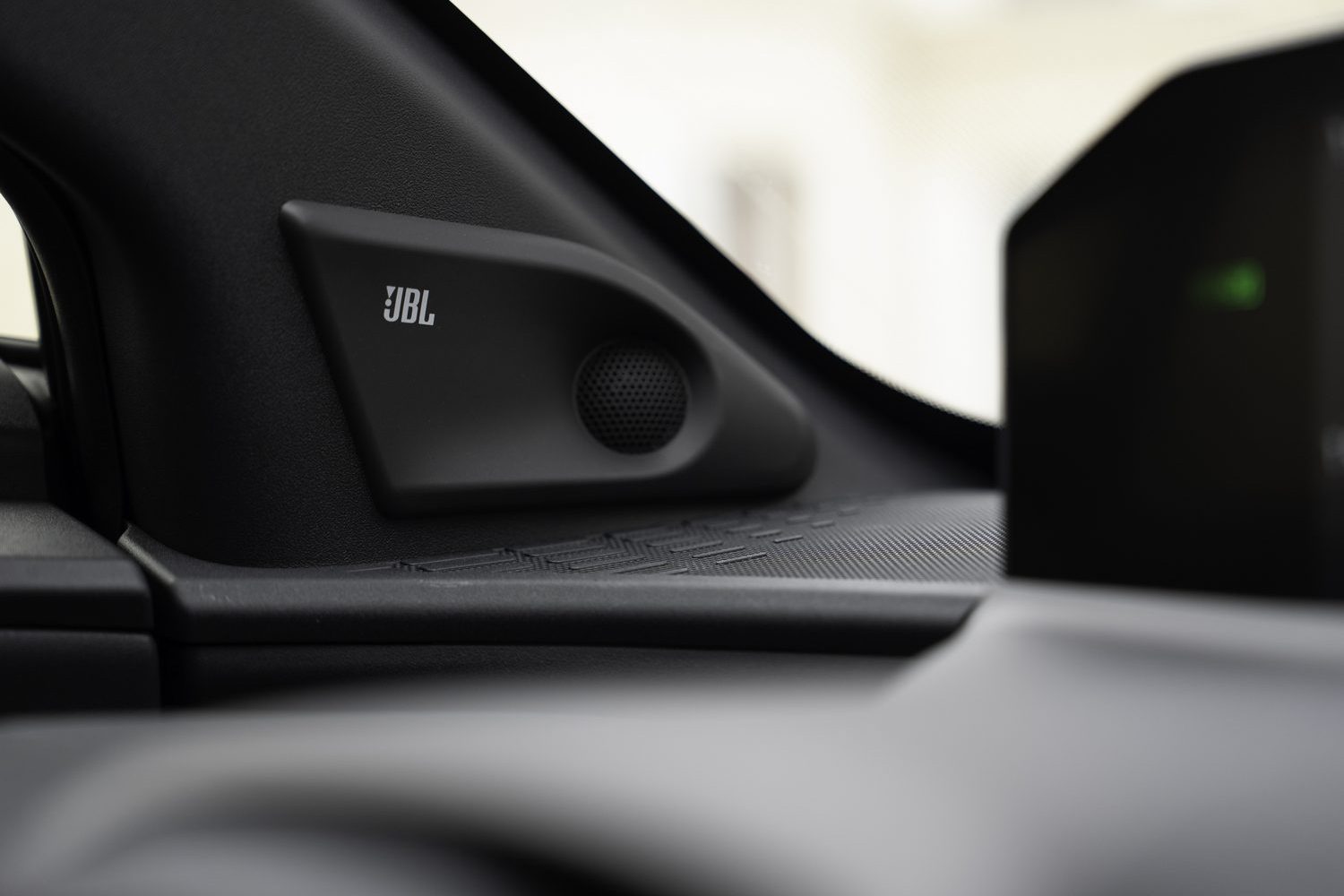
Other highlights include twin wireless smartphone charging pads in models, a good array of USB sockets in the area underneath the tall central tunnel, 64-colour ambient interior lighting and the option of a nine-speaker, 800-watt JBL Premium Audio system complete with a nine-inch subwoofer.

Practicality around the cabin
Good-sized door pockets, that under-tunnel storage area we've already touched on, a reasonable glovebox and then two cupholders between the front seats get things off to a good start in the Toyota C-HR+, while there's a large, lidded central cubby box that has a clever twin-hinged top - so it opens both ways according to whether the driver's or passenger's side release button is pressed.

Rear-seat passenger space
Rear-seat passengers will find themselves with plenty of room, because the long wheelbase (space between the axles) on the Toyota C-HR+ provides for more legroom in the back than this size and class of car normally provides.

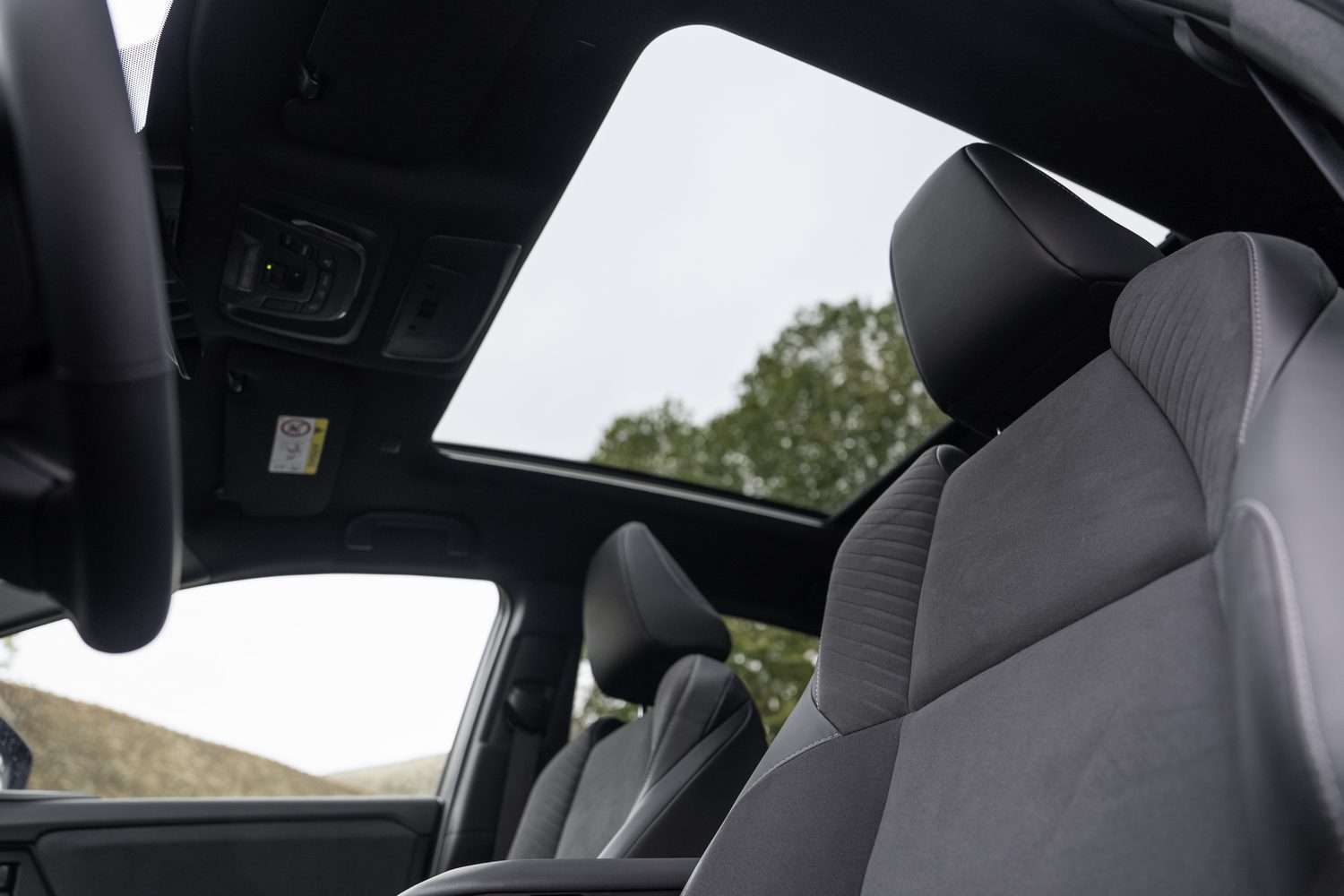
Outright headroom is limited by the sweep of the Toyota's roofline on the outside, but as long as people sitting in the back of the car aren't too tall then they should be comfortable back there.
Accessing the seats isn't difficult, either, as the rear doors on the C-HR+ open nice and wide, and they're a decent size as well.

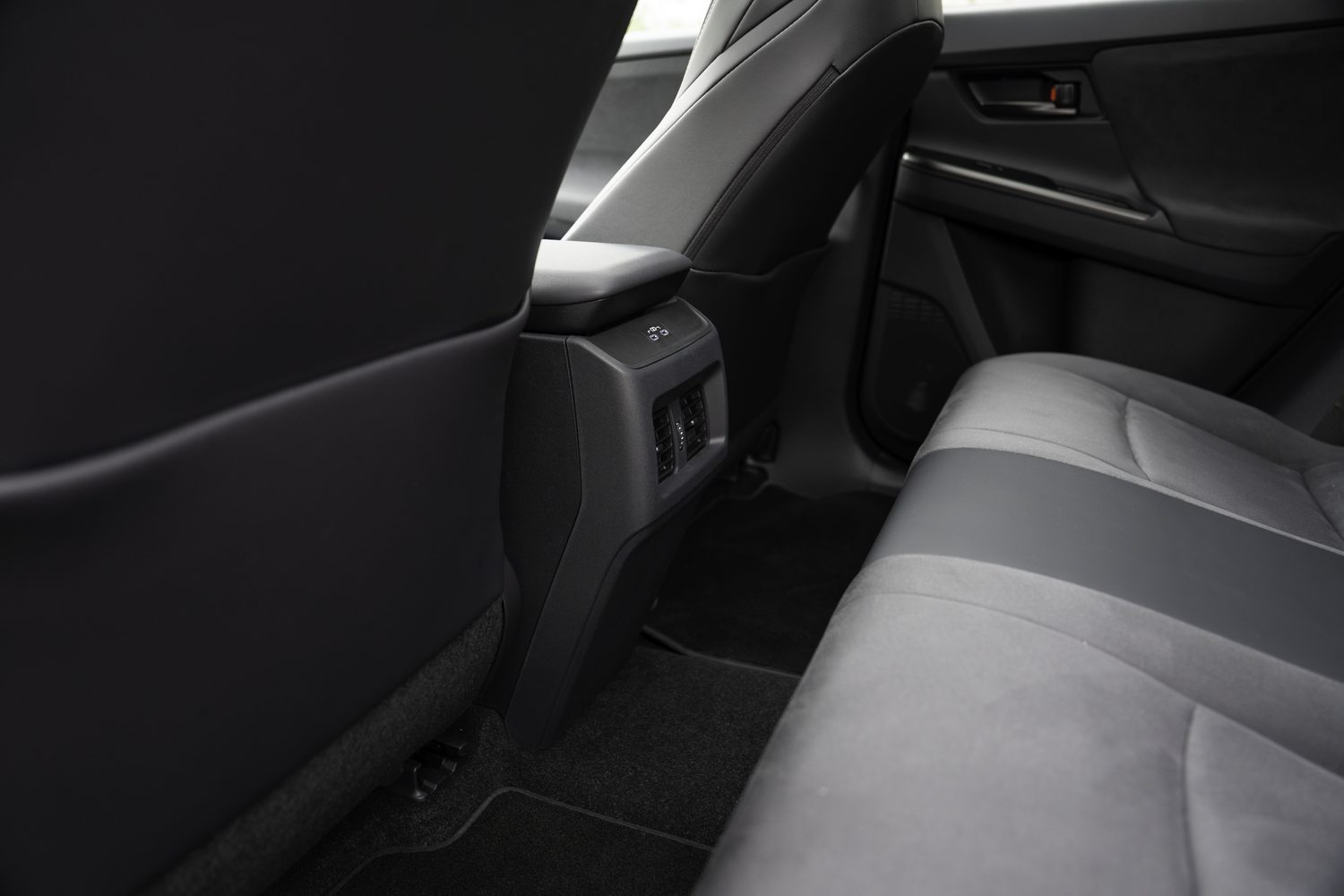
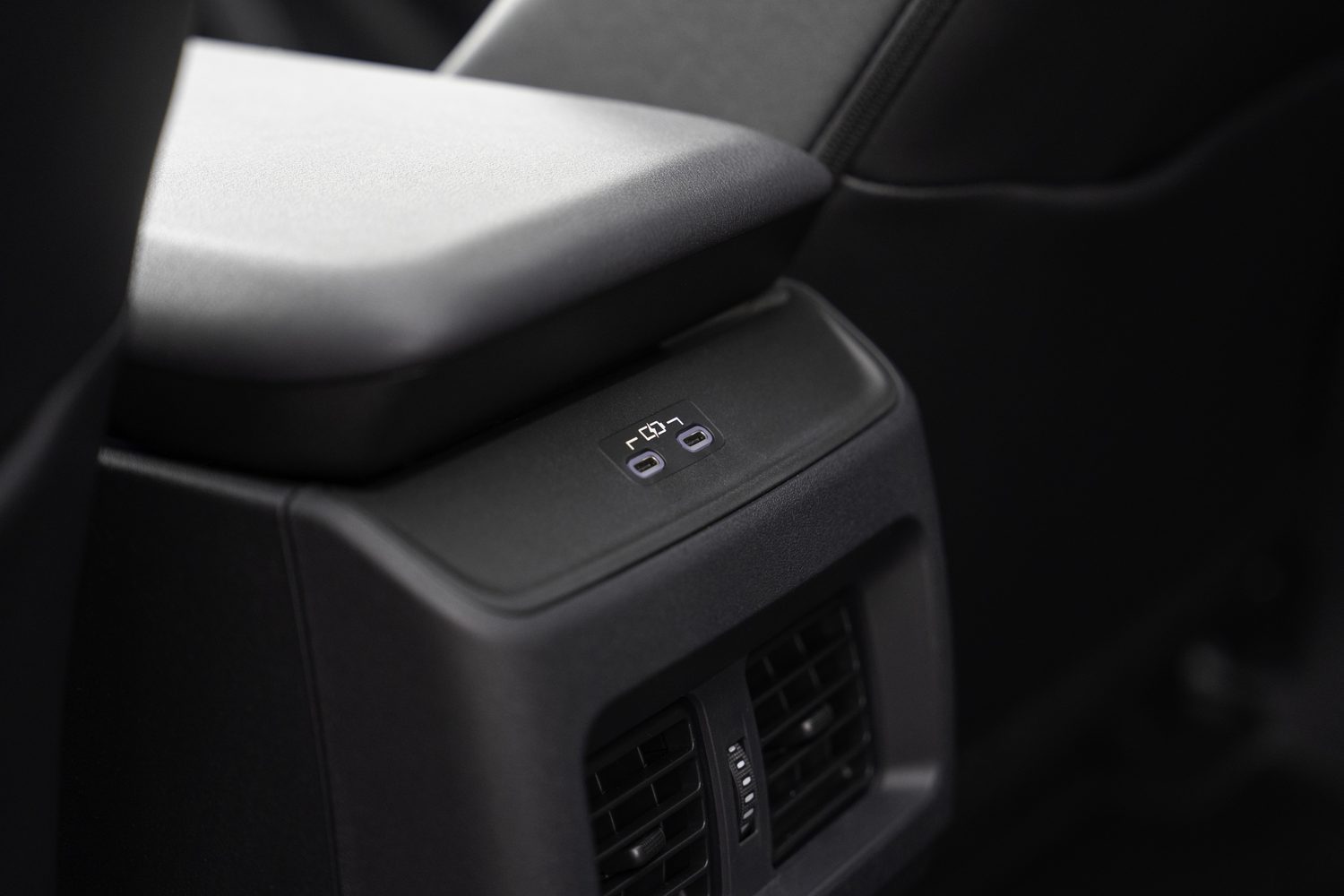
With two central air vents in the back, another capacious pair of door pockets and even a couple of USB-C ports, people sitting in the rear are well catered for.
Shame the fancy lower window-line on the C-HR+, coupled with its dark-grey interior ambience, means that sitting in the back of the Toyota feels a bit subdued - even if the actual space back there is more than adequate.
Fitting child seats to the Toyota C-HR+
There are two ISOFIX mounting points in the back of the Toyota C-HR+, which is what you'd expect of a car like this, but the good news is that even bulky baby seats should be easy to fit back there.
This is not only because of the wide-opening and large rear doors, but because the C-HR+ has a generous 900mm front-rear couple distance - that's the space between the bottom of the rear-seat backrest and the back of the front seat ahead of it.
Boot space in the Toyota C-HR+
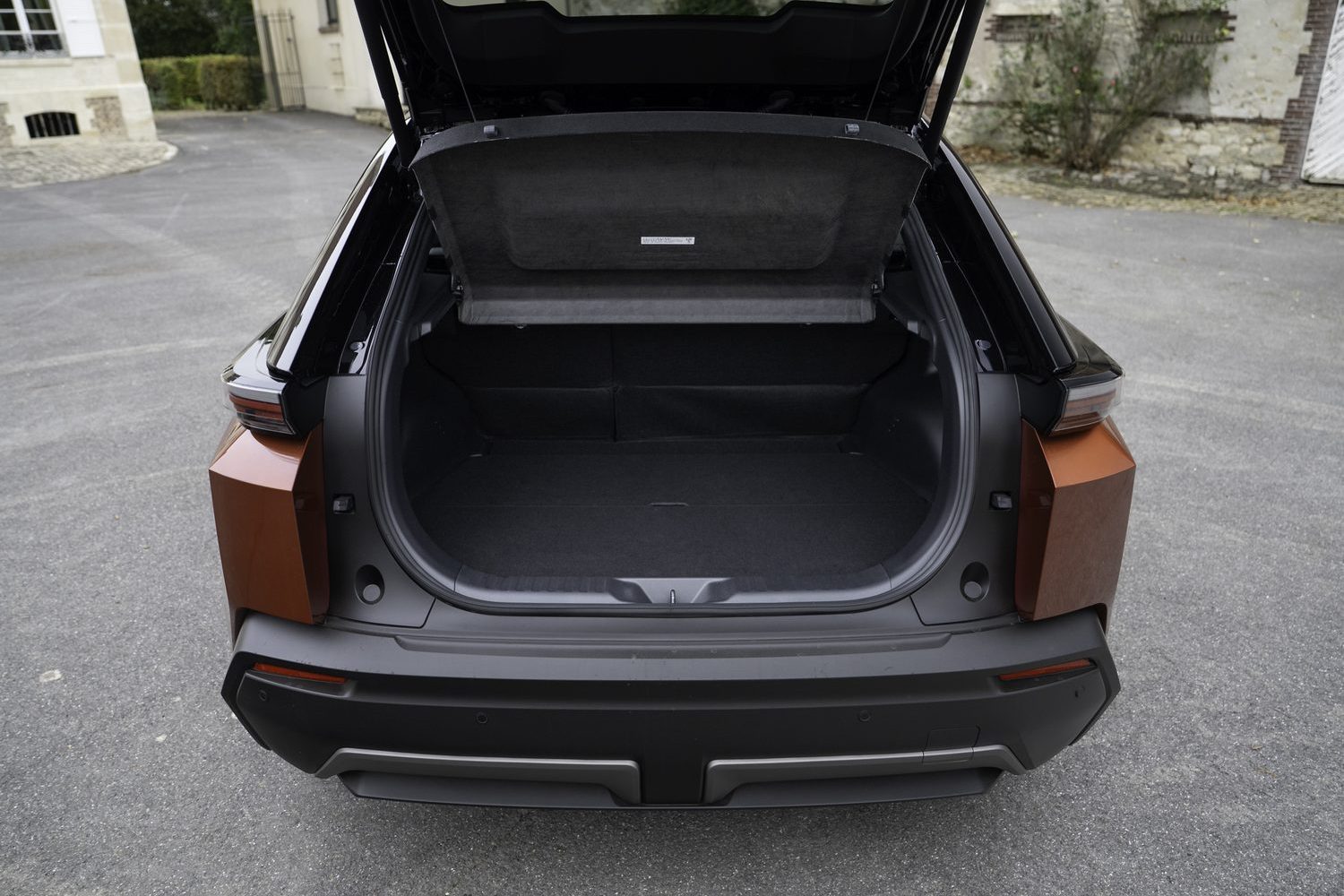
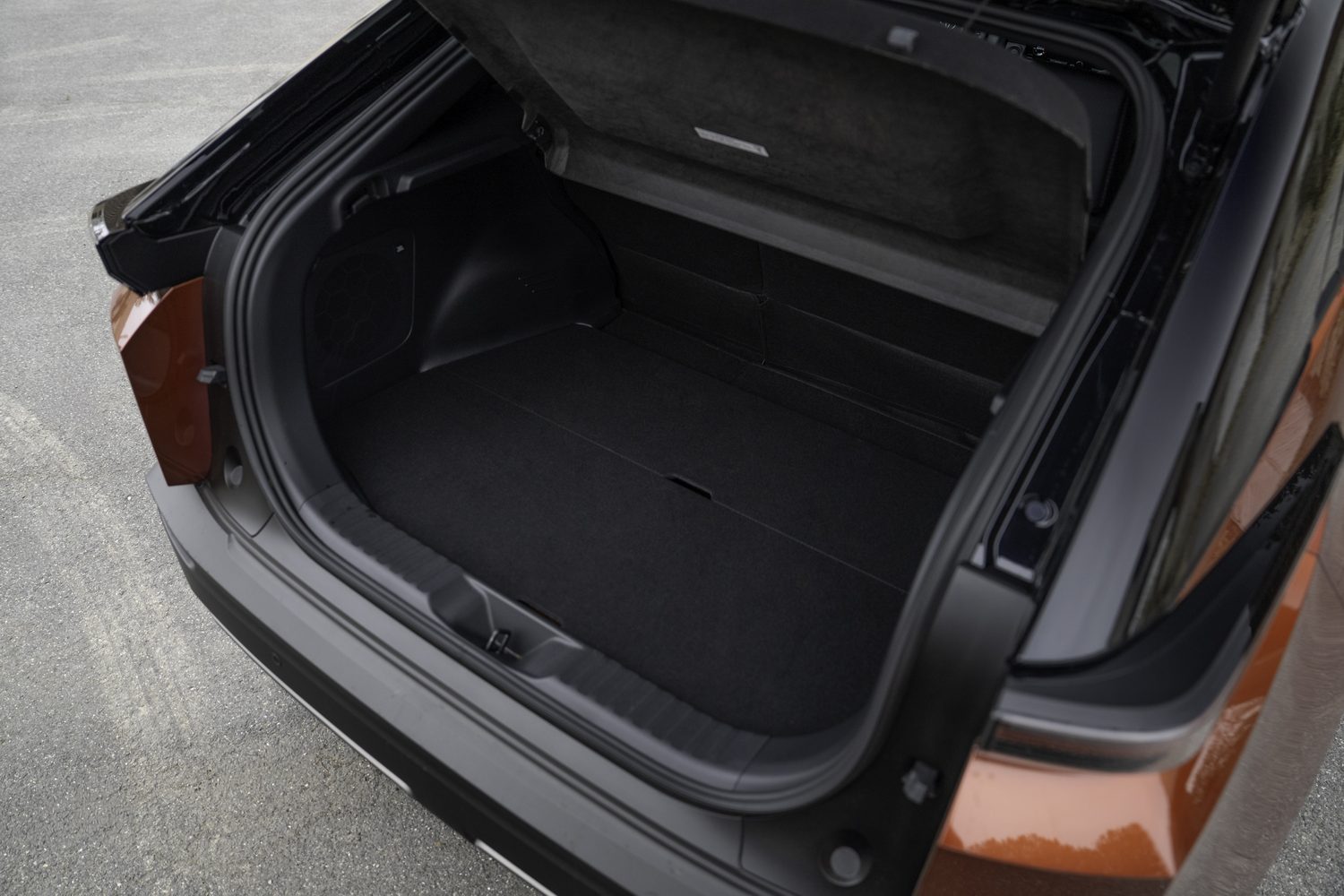
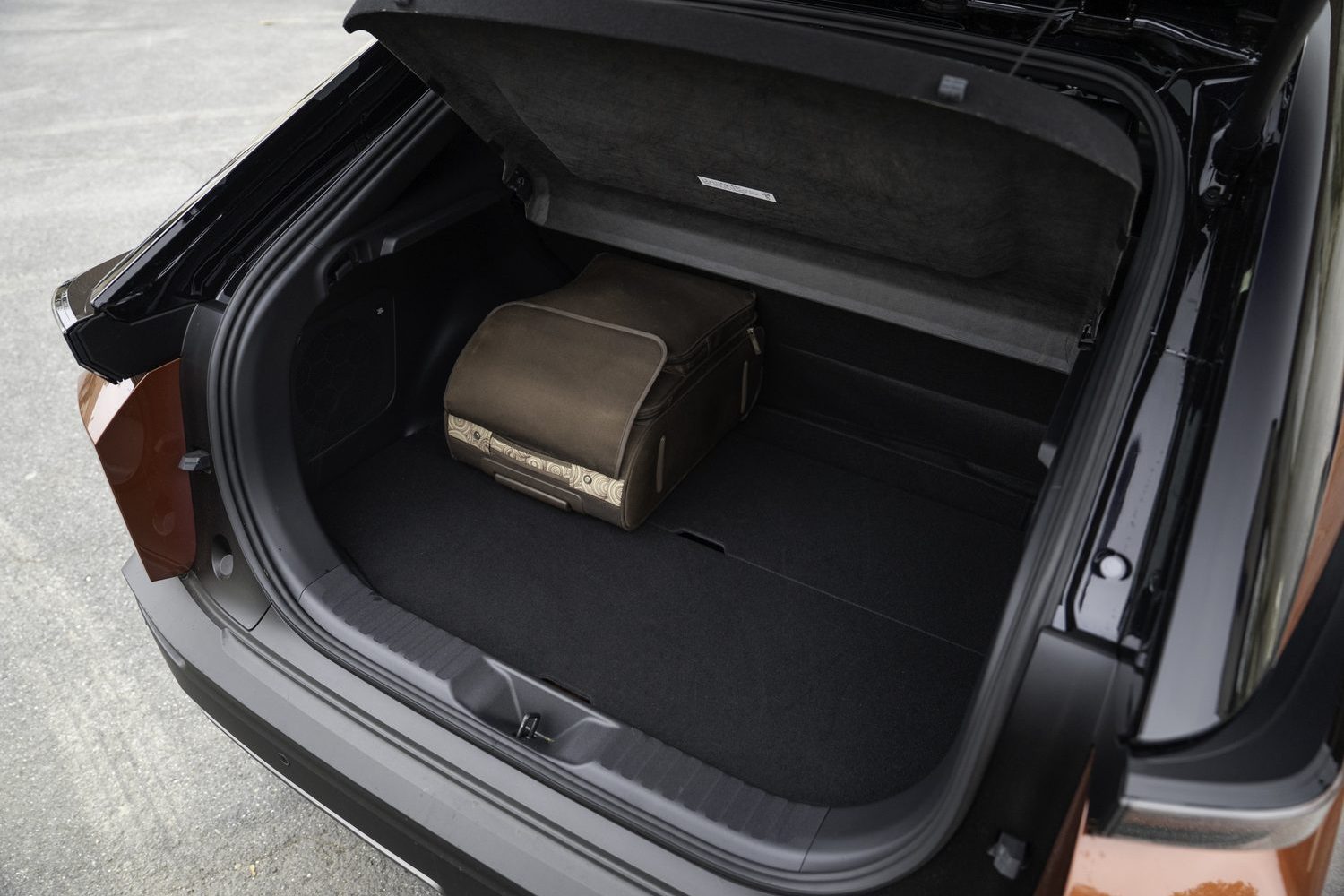
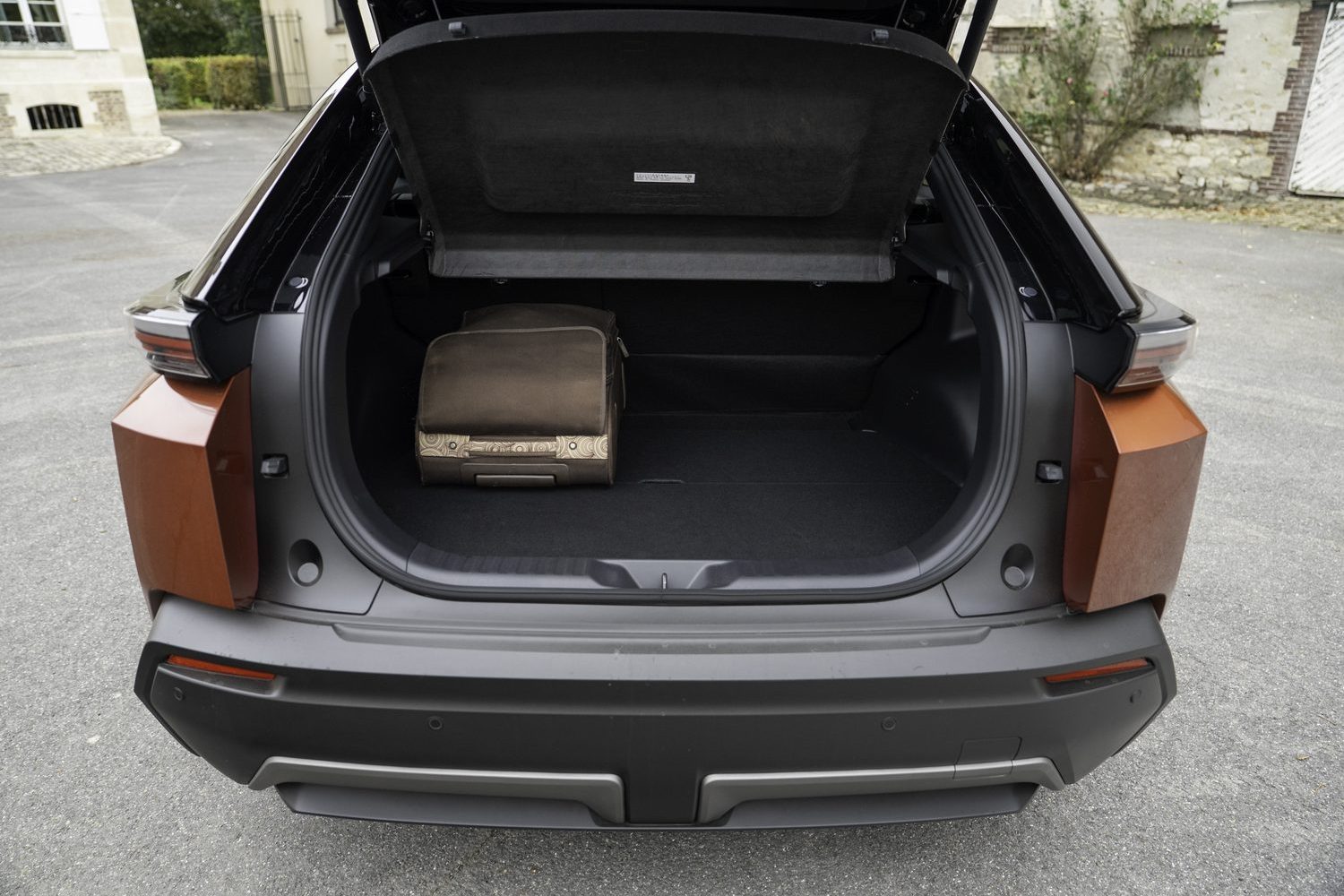
The boot space in the Toyota C-HR+ is quoted as 416 litres on all models, and the company doesn't yet quote the capacity you'd have with the 60:40 split-folding back seats folded down. That's not huge by class standards, but it's a decent shape and it isn't far off the bigger bZ4X in terms of sheer volume.

Storage for the charging cables is under a weird two-piece boot floor, that's adjustable for height, but there's no front boot ('frunk') in the C-HR+.
Towing with the Toyota C-HR+
If you want to tow with the Toyota C-HR+, you need either of the big-battery models. The entry-level front-wheel-drive car with the 57.7kWh battery pack is not rated for towing at all. Stepping up to the long-range variant of the front-drive C-HR+ sees the towing weight increase to a rather modest 750kg, while those with bigger trailers or caravans will need the dual-motor AWD model, which is slated to tow up to 1,500kg.
Safety in the Toyota C-HR+
The Toyota C-HR+ comes with a good array of advanced driver assistance systems as standard, including safe exit assist, blind-spot monitor, an adaptive high-beam system and a parking support brake set-up, while higher-spec models have lane-change assist, front cross-traffic alert, park assist and a 360-degree camera system, among more. The C-HR+ hasn't yet been tested by Euro NCAP.
Performance of the 2026 Toyota C-HR+
- Three powertrains possible
- Choice of battery sizes, plus front-wheel drive or AWD
- Long-range model is best to drive on the road

Toyota has created three powertrains for the C-HR+, made up of two different drive systems and two different battery sizes. The entry-level model is the only one to use the smaller battery and is a front-wheel-drive, single-motor version with 167hp and 269Nm (it's officially 268.6Nm, but we'll round it up) and a 0-100km/h time of 8.4 seconds.
Stepping up to the long-range, front-wheel-drive car with the bigger battery does not increase the torque at all, but power rises to 224hp and so the 0-100km/h time comes down to 7.3 seconds.

Finally, there's a dual-motor, all-wheel-drive flagship C-HR+, which features another electric motor on the rear axle for another 170Nm of torque all-in (so 439Nm) and sees the peak power output increase to 343hp. As a result, this is easily the swiftest C-HR+ of all: it'll run 0-100km/h in 5.2 seconds.
Driving the single-motor, long-range version
We're not sure what Toyota Ireland will call them, or which versions will even be offered for sale here, but for the purposes of our pre-production test drive overseas the company was calling the base single-motor car the Mid, the version we're driving here the Mid+ and the dual-motor range-topper is the High. We didn't drive the Mid, but we did have a go in the rapid AWD as a comparison to the Mid+.

In terms of the way the C-HR+ drives, the headline notes are that it's really comfortable for ride quality, it's reasonably quiet on the move thanks in part to its aerodynamic form and it handles cleanly and more than capably for this particular type of electric car.
It's fine in the corners, the C-HR+, but you won't come away from it raving about the roadholding. Which is fine - customers in this market sector don't usually care about such things anyway. For what it's worth, the single-motor, long-range car we're focusing on here was the nicer to drive in such circumstances, as it just feels that bit lighter on its feet than the two-tonne-plus AWD.

Both of them, though, rode with real elan and grace, which is of far more importance to the target buyer. In town, on open roads and at motorway speeds, the C-HR+ is always composed and always suitably hushed.
This is all the more impressive because the test cars were all on the bigger 20-inch wheels - whereas we'd expect at least two of the specs here in Ireland to come on more comfortable 18s instead.
The brake pedal, the accelerator pedal and the steering are nicely calibrated for easy control of the Toyota EV, although the steering is a bit light and feel-free. Again, though, its weighting is such that it makes the C-HR+ very amenable for manoeuvrability.

Our only real complaint here is that, on rougher road surfaces, there was a bit too much tyre noise cavitating about in the back of the Toyota's passenger compartment, although we were told by a chief engineer of the product that there was still a little bit of fine-tuning of the refinement to be done before the cars hit the showrooms. So we'll reserve judgement on this aspect of the C-HR+ for now.
Range, battery, charging and running costs of the 2026 Toyota C-HR+
- Biggest battery yet fitted to any Toyota
- Official range goes past 600km in right spec
- Up to 150kW charging on DC outlets
The Toyota C-HR+ is available with two different battery sizes and has enough driving range with the larger of these fitted that it can genuinely be considered one of the longer-legged EVs in this class.
Battery options and official range
The two lithium-ion batteries available for the Toyota C-HR+ are 57.7kWh and 77kWh. These are gross figures, and we were advised that the usable capacities of both are 54kWh and 72kWh, respectively. The smaller battery - only available on the lowest-powered C-HR+ and with 18-inch wheels - will deliver up to 456km. For now, there are no plans to bring this smaller battery into the Irish market.
Stepping up to the larger battery but sticking with one motor is for the range champions. Opt for 20-inch wheels in this format and the C-HR+ will go up to 563km but stick with 18s and you get the most range of any model - a theoretical 609km.
If you want the power of the AWD, you pay for it with range capability: it drops to 546km on 18-inch wheels and right down to 505km on the 20s, despite having the same 77kWh battery.
Real-world range and efficiency of the Toyota C-HR+
On a warm (17 degrees C) and dry day, with not many electrical drains running in the car, we managed to complete a 54km test loop in the front-wheel-drive, long-range Toyota C-HR+ and there was 75 per cent battery showing at the end (the vehicle didn't have a full charge when we got into it for this drive, incidentally), on which the car's trip computer reckoned it could do another 365km.
That would extrapolate out to about 487km from a fully charged battery, which doesn't look amazing considering the 600km-plus headline.
However, we'd cite the impressive real-world efficiency of 15.1kWh/100km in such circumstances as being something to celebrate. Most EVs of this size, build and power tend to go much closer to 20kWh/100km in similar driving conditions, so while we couldn't get near the astounding 11.8kWh/100km that would see the C-HR+ actually achieve something like 609km on a single charge, it's clear the real efficiency of the Toyota has been improved from early bZ4X cars.
Similarly, in urban stop-start conditions and with a bit more care, we have no doubt we could have got the car down to more like 14kWh/100km, or even better. And if you could achieve 13kWh/100km regularly, that would result in a realistic 550km-plus between charges.
Charging up the Toyota C-HR+
Toyota is proud of the fact that it has fitted the C-HR+ with both battery pre-conditioning and a heat pump, two features which help with its charging speeds in all climatic conditions and also its electrical efficiency.
That said, a 150kW DC maximum charging rate is not very fast by today's standards - some rivals can push a lot closer to 200kW in similar circumstances.
Anyway, it results in a 30-minute 10-80 per cent charge, which is perfectly adequate. On the AC charging side of things, all C-HR+ models can take 11kW as standard on a suitable charger, but on the higher specifications buyers can option up to a 22kW set-up.
On the typical 7.4kW domestic set-up, the place where most people charge their EVs, the small battery would need around 7.5 hours for a full charge, while the bigger unit would require more than ten hours for the same job.
Servicing the Toyota C-HR+
The accepted service interval for a Toyota EV worldwide is 12 months or 15,000km, whichever comes sooner, and we have no reason to believe the C-HR+ wouldn't fall under that remit.
Toyota C-HR+ warranty
Toyota provides a general five-year, 100,000km warranty on its EVs. There's also an eight-year guarantee on the battery, that it will maintain at least 70 per cent of its original capacity in that timeframe, but on top of that there's EV extended battery care that - provided a customer takes the EV in for its annual health check each year - will cover degradation of the battery and also its components for up to ten years or one million kilometres.
Irish pricing & rivals to the 2026 Toyota C-HR+
- Priced from €41,355
- Just above the hybrid C-HR
- Lots of competitors

On 16 October 2025 Toyota Ireland confirmed that the new C-HR+ will cost from €41,355 for the Sport version, rising to €51,035 for the C-HR+ Premiere. It also confirmed that only the larger battery will be offered to Irish buyers.
For reference, the hybrid-only, CO2-emitting C-HR kicks off at €40,530, but the updated bZ4X is priced at the exact same level as the C-HR+.
Every model should come with dual-zone climate control, 18-inch wheels, heated front seats and a heated steering wheel, cruise control and the twin digital screens inside, but things like the uprated stereo and the twin wireless smartphone charging pads will likely be restricted to higher trims.
The C-HR+ will almost certainly be a showroom success - given a MINI Countryman Electric starts from €39,250, a Volvo EC40 is the wrong side of 50 grand and Ford's controversial Capri starts at €45,799.
Verdict - should you buy the 2026 Toyota C-HR+?
There's no doubt the Toyota C-HR+ is going to be a big hit here, because we love Toyotas as a nation and a new EV from the company is almost guaranteed impressive sales figures in Ireland. The C-HR+ didn't need to be spectacular and, to be fair, it hasn't really done anything of the sort - it's quietly proficient and deeply comfortable, with a decent range. Nothing spectacular, then, but also there's nothing spectacularly wrong with the C-HR+, and so we expect to see a great many of these roaming the roads in the not-too-distant future.

FAQs about the 2026 Toyota C-HR+
Does the Toyota C-HR+ have a 'frunk'?
No, there is no frunk in the C-HR+. Cable storage instead is found underneath the boot floor.

Is the Toyota C-HR+ all-wheel drive?
Only if you order it in the flagship dual-motor specification with 343hp. The other two models of the C-HR+ are front-wheel drive only and we don't know if the all-wheel-drive powertrain will be offered in Ireland at all.

Are Toyotas reliable?
Yes, Toyotas have a great reputation for reliability and EVs doubly so as they have fewer moving parts to go wrong, so the C-HR+ should prove to be a highly dependable machine.
Does the Toyota C-HR+ qualify for the SEAI grant?
Yes, as long as it comes in between €18,001 and €60,000, it satisfies all the criteria of a passenger car to qualify for the maximum €3,500 of SEAI grant assistance.
Want to know more about the 2026 Toyota C-HR+?
If there's anything about the new Toyota C-HR+ we've not covered, or you'd like help in choosing between it and other cars, you can avail of our expert advice service via the Ask Us Anything page.