


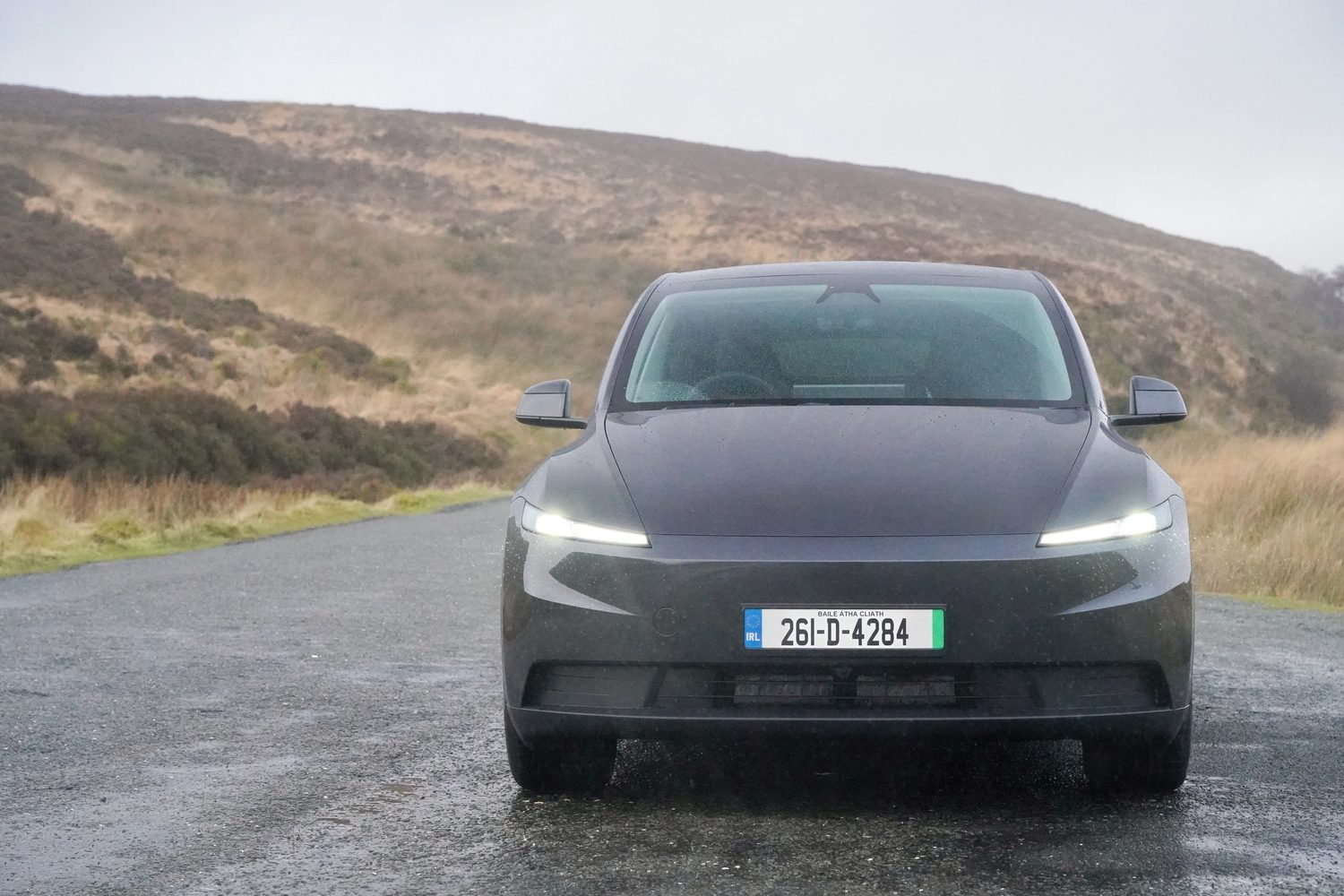
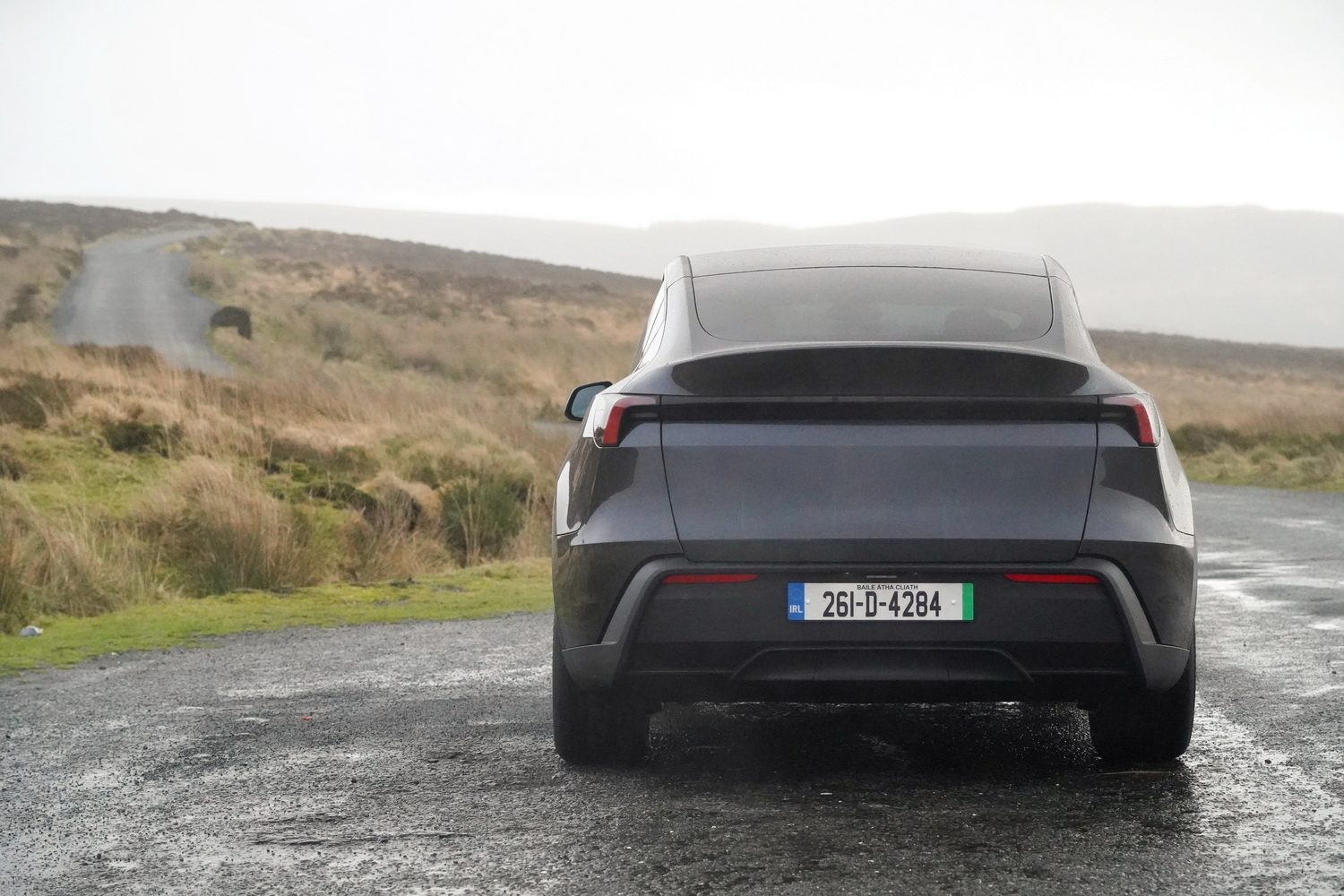

Exterior & design of the 2026 Tesla Model Y
- Limited colour palette
- Not very SUV-like
- Cool rear light design

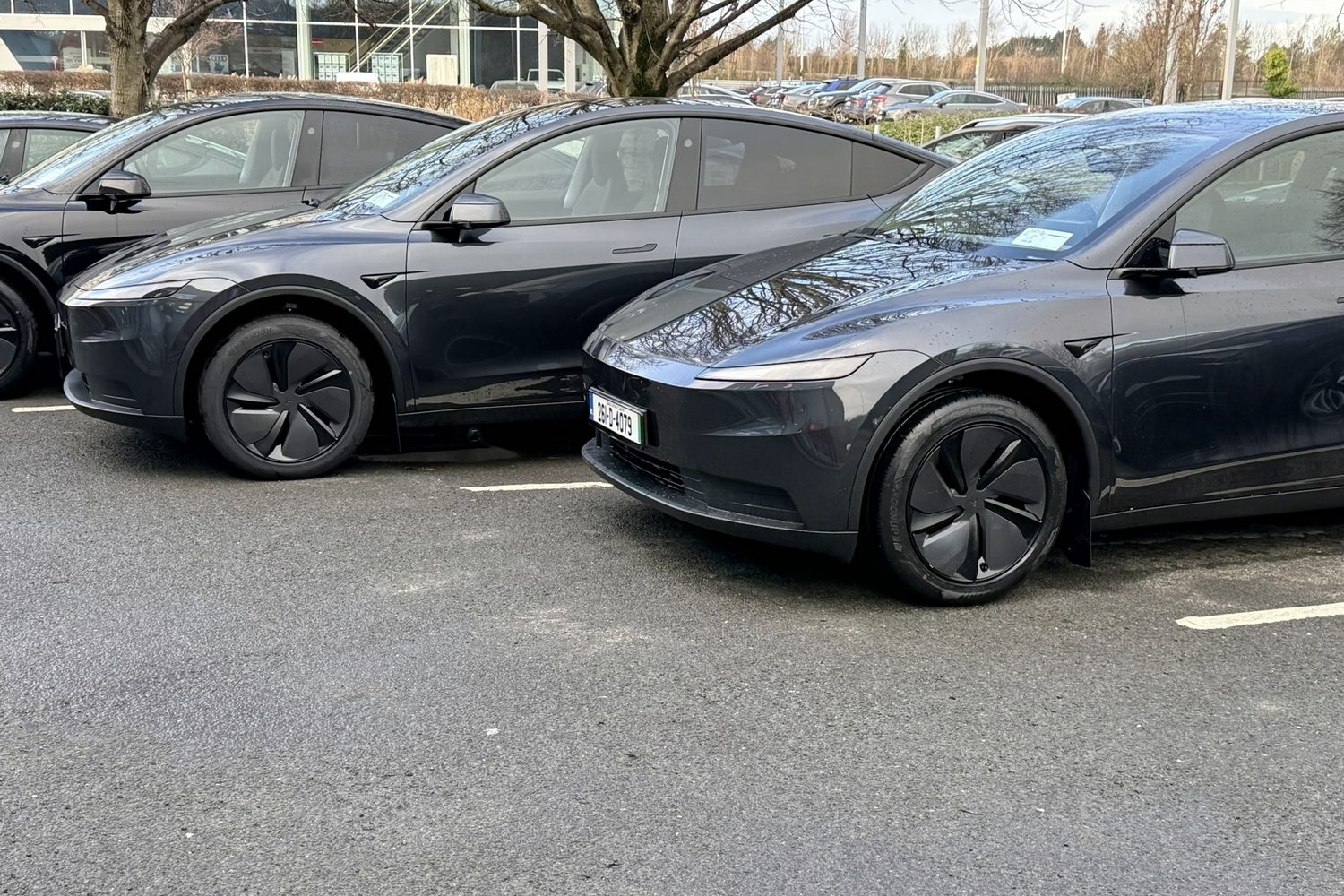
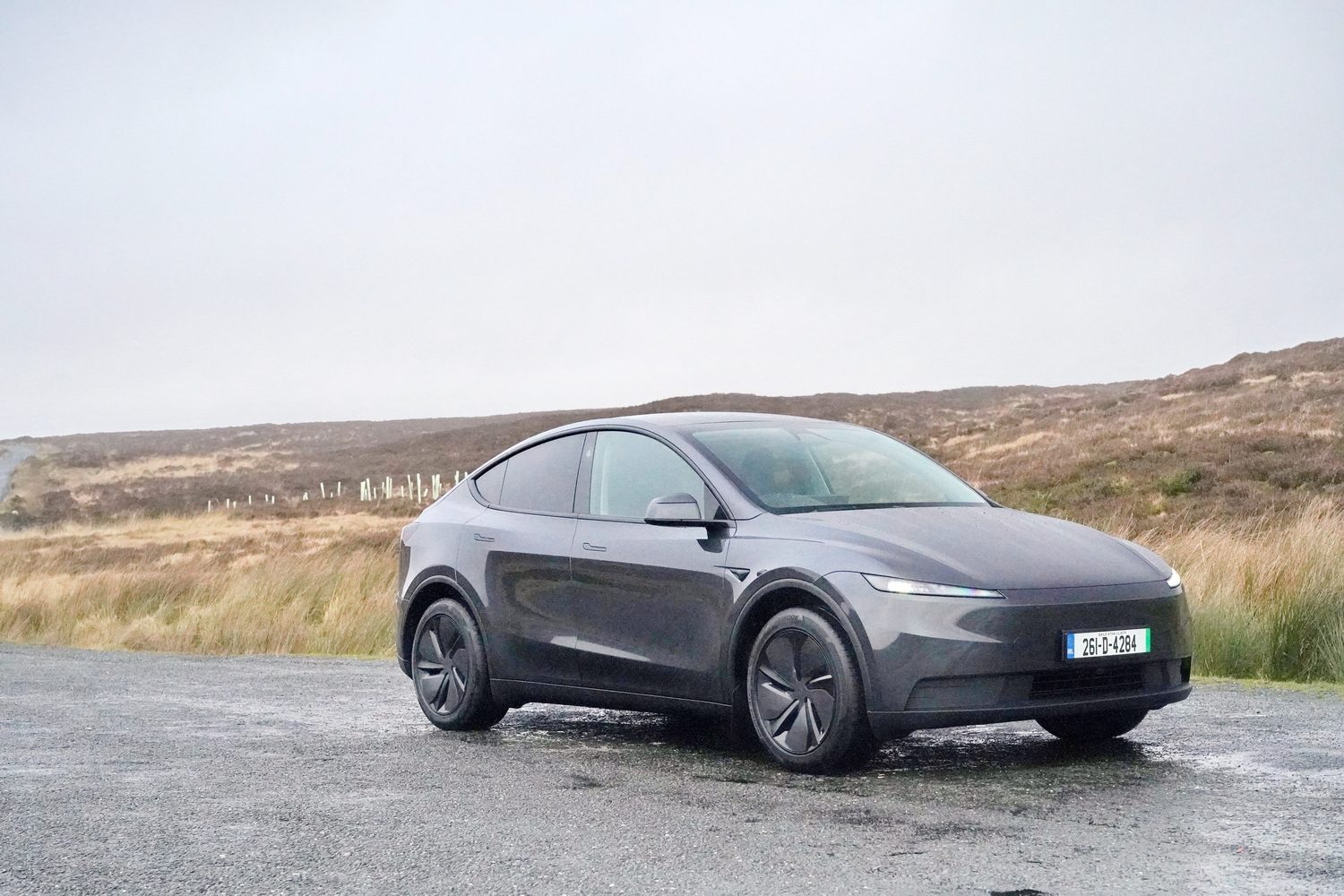
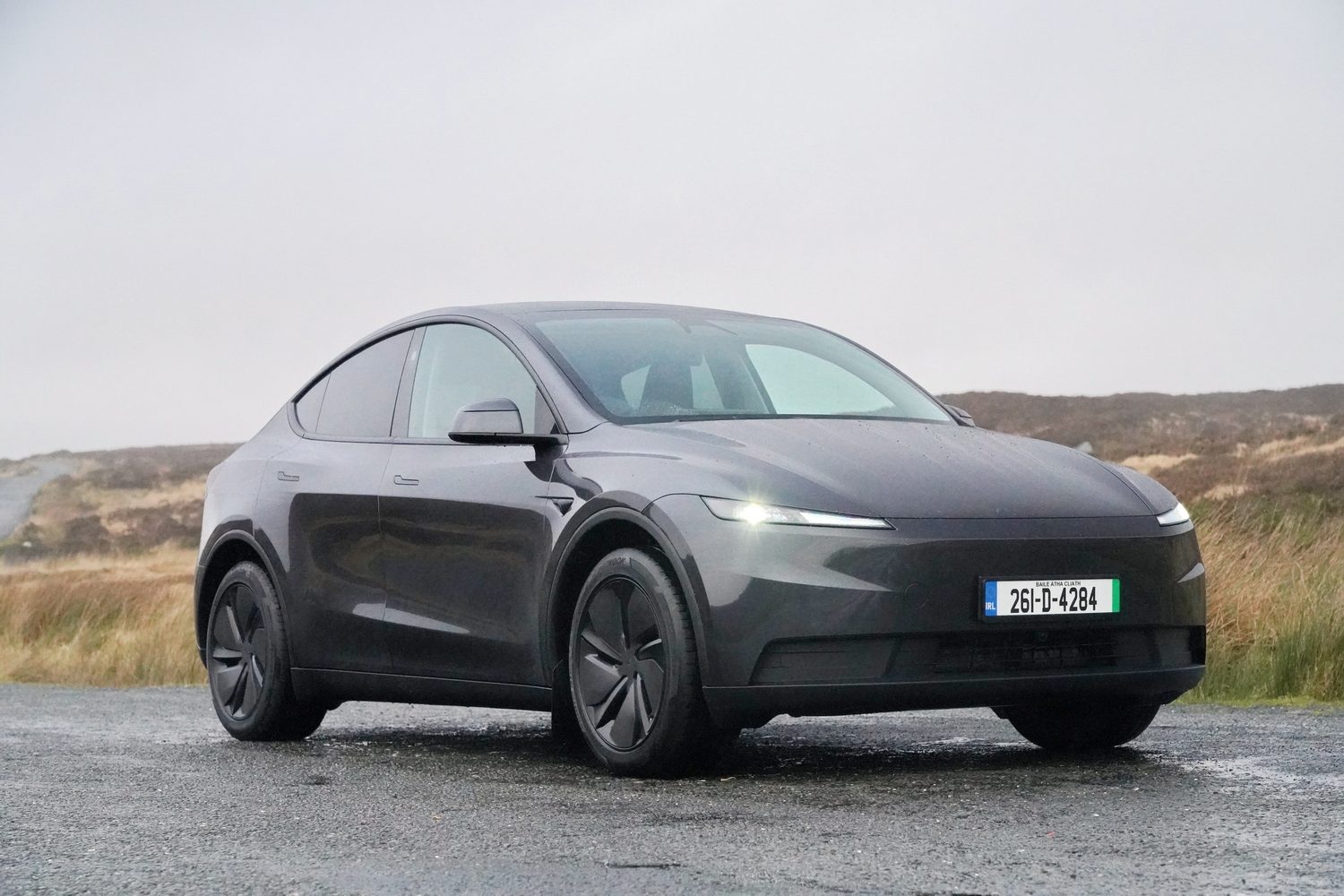
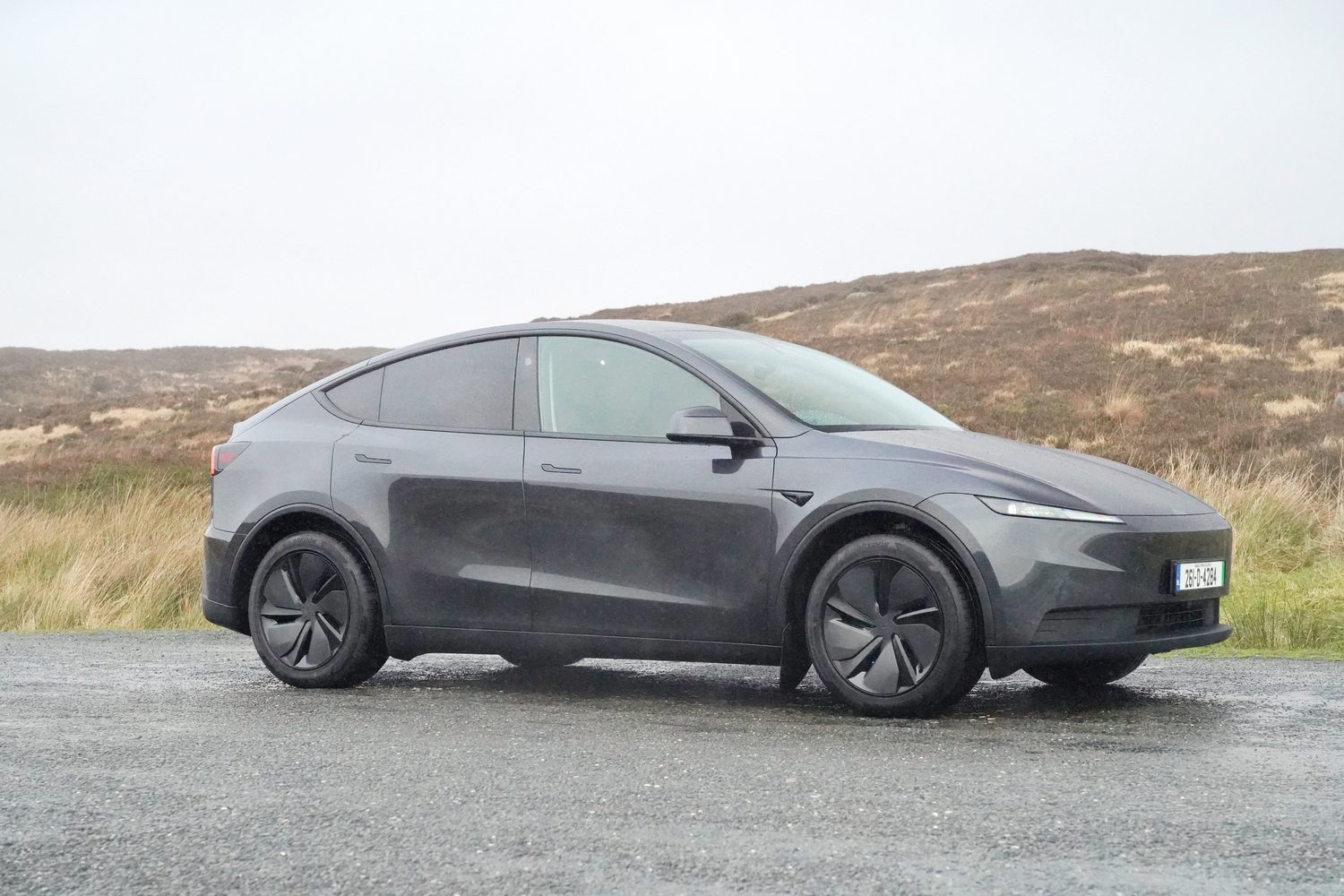
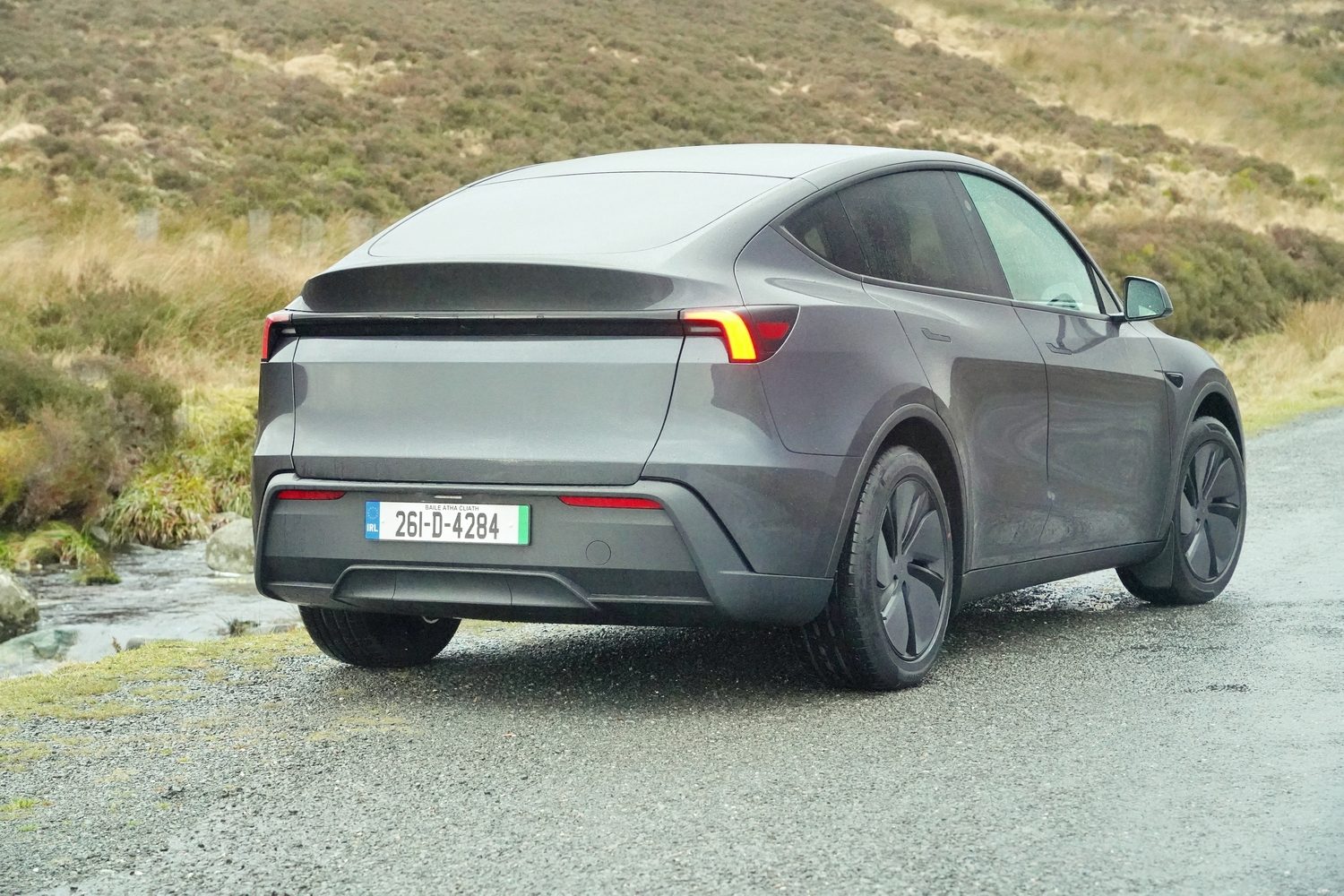
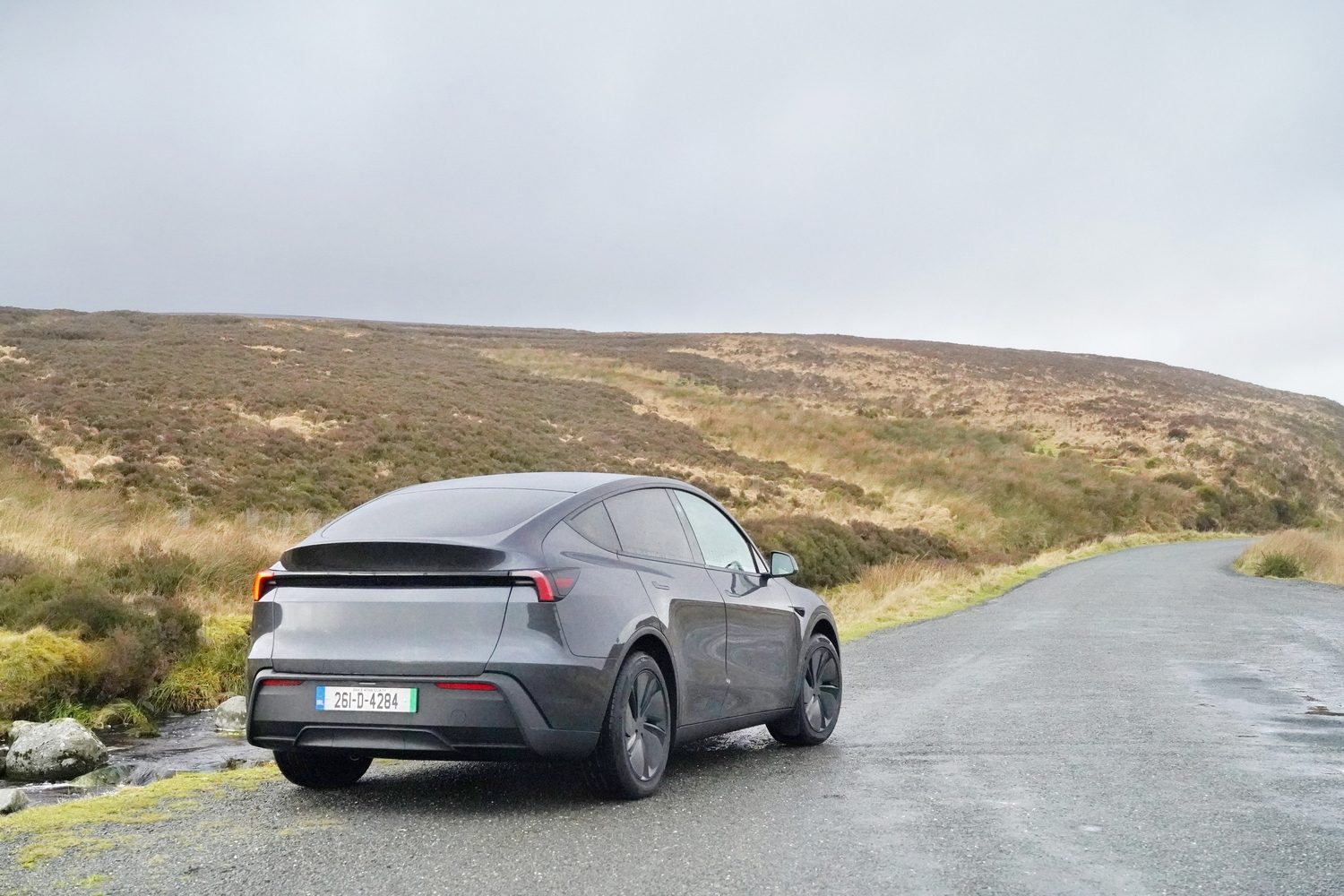
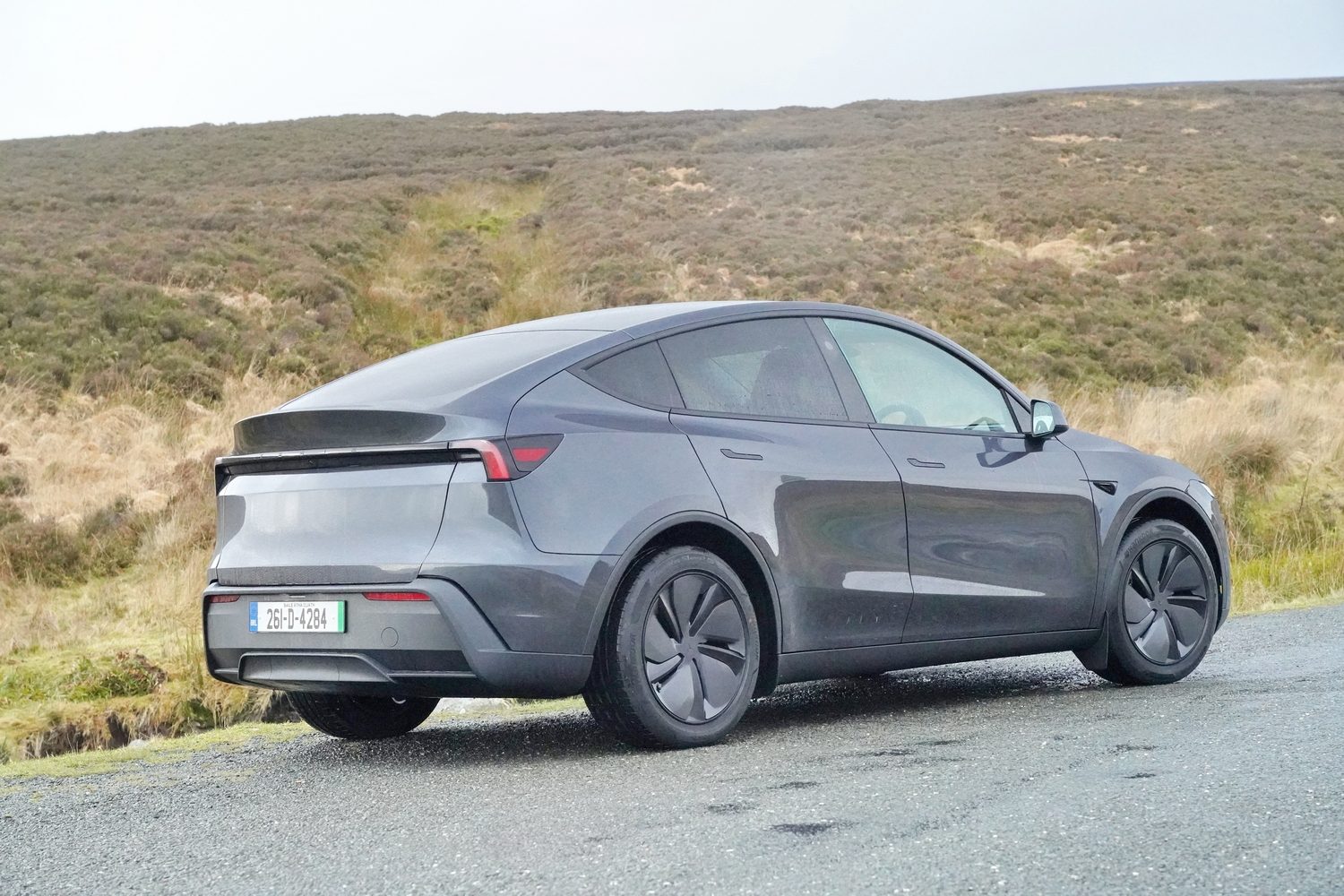
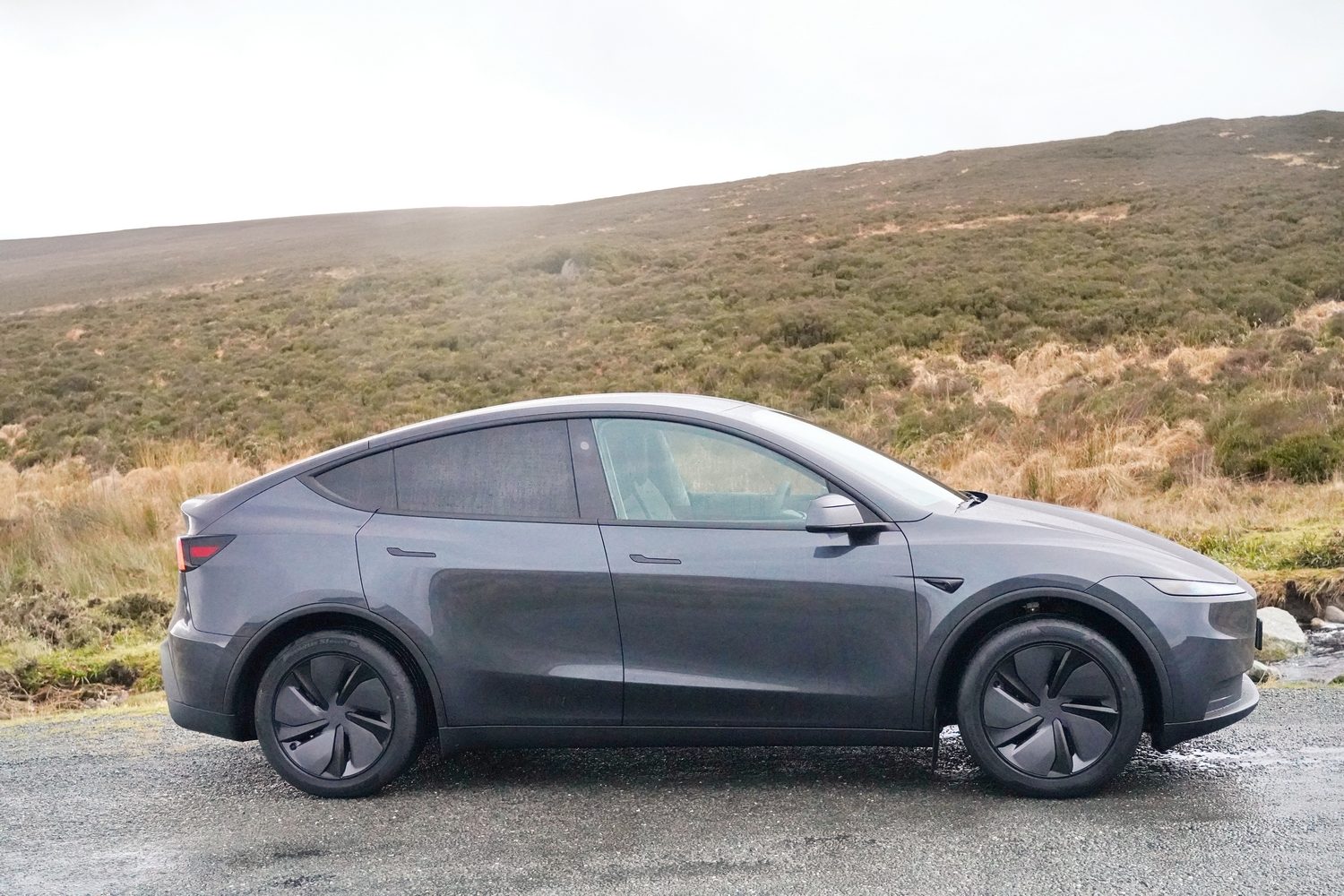
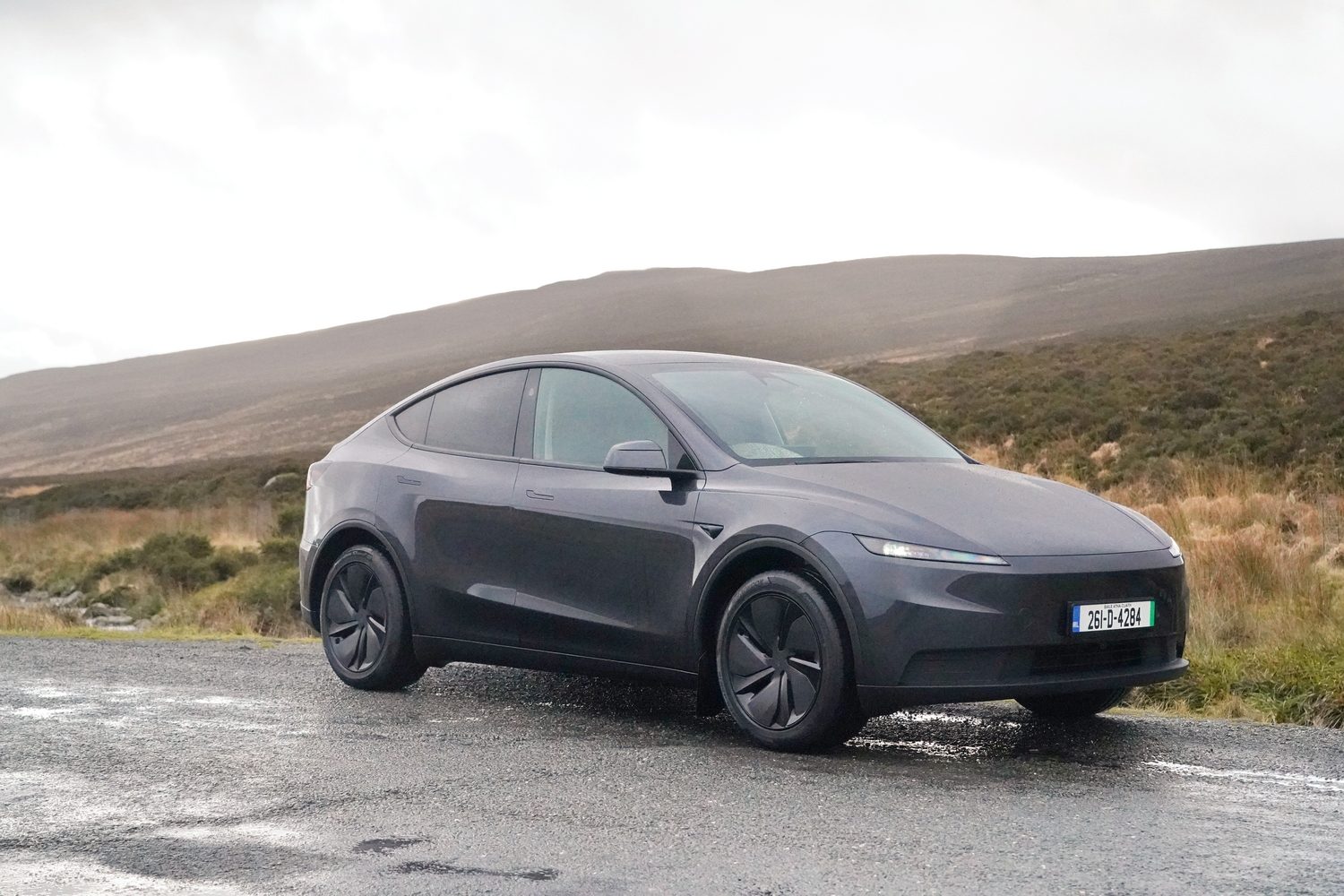
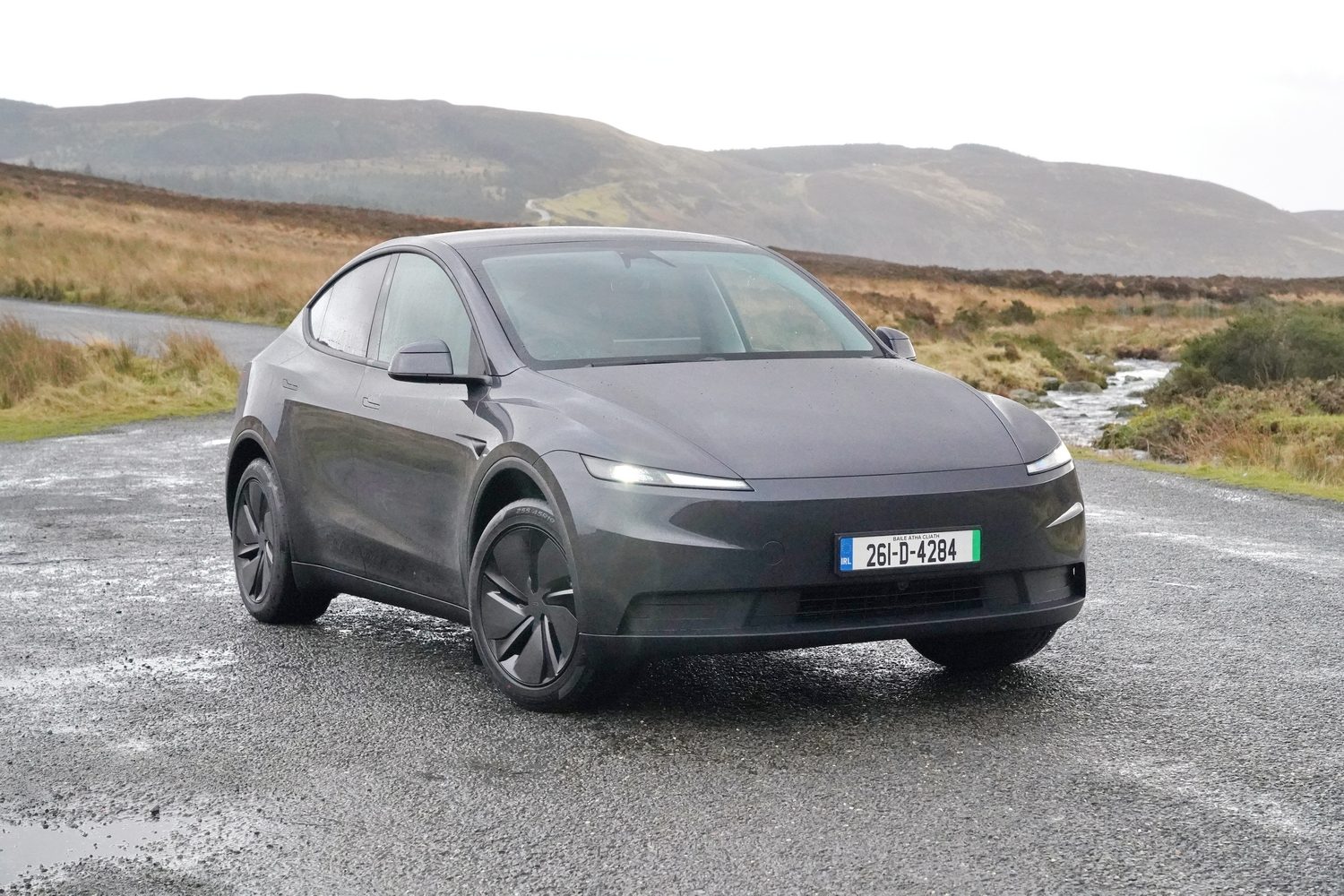
The Model Y's curvy profile was relatively unchanged in the move from first to second generation, so it remains one of the least SUV-like SUVs on the road in terms of design. In person though, you can appreciate how large it is, which isn't conveyed in images.
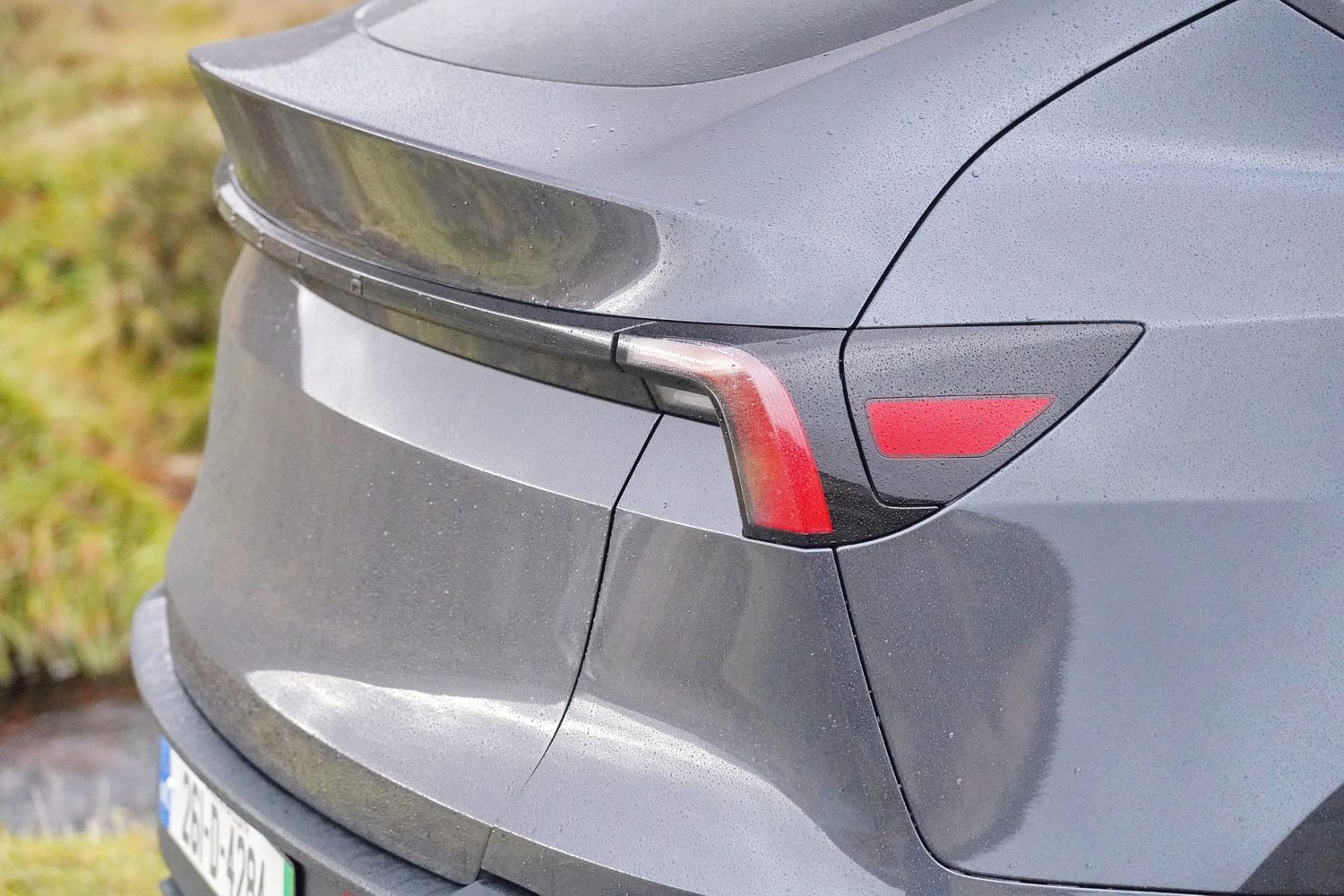
Modern LED lighting front and rear sets the newer car apart, and we really like the indirect red glow at the back in particular, though that is available on the entry-level version.

Most models in the range also get full-width lighting up front, where the Rear-Wheel Drive car has a slightly more pared-back appearance with less illumination of the nose and simpler bodywork below that.
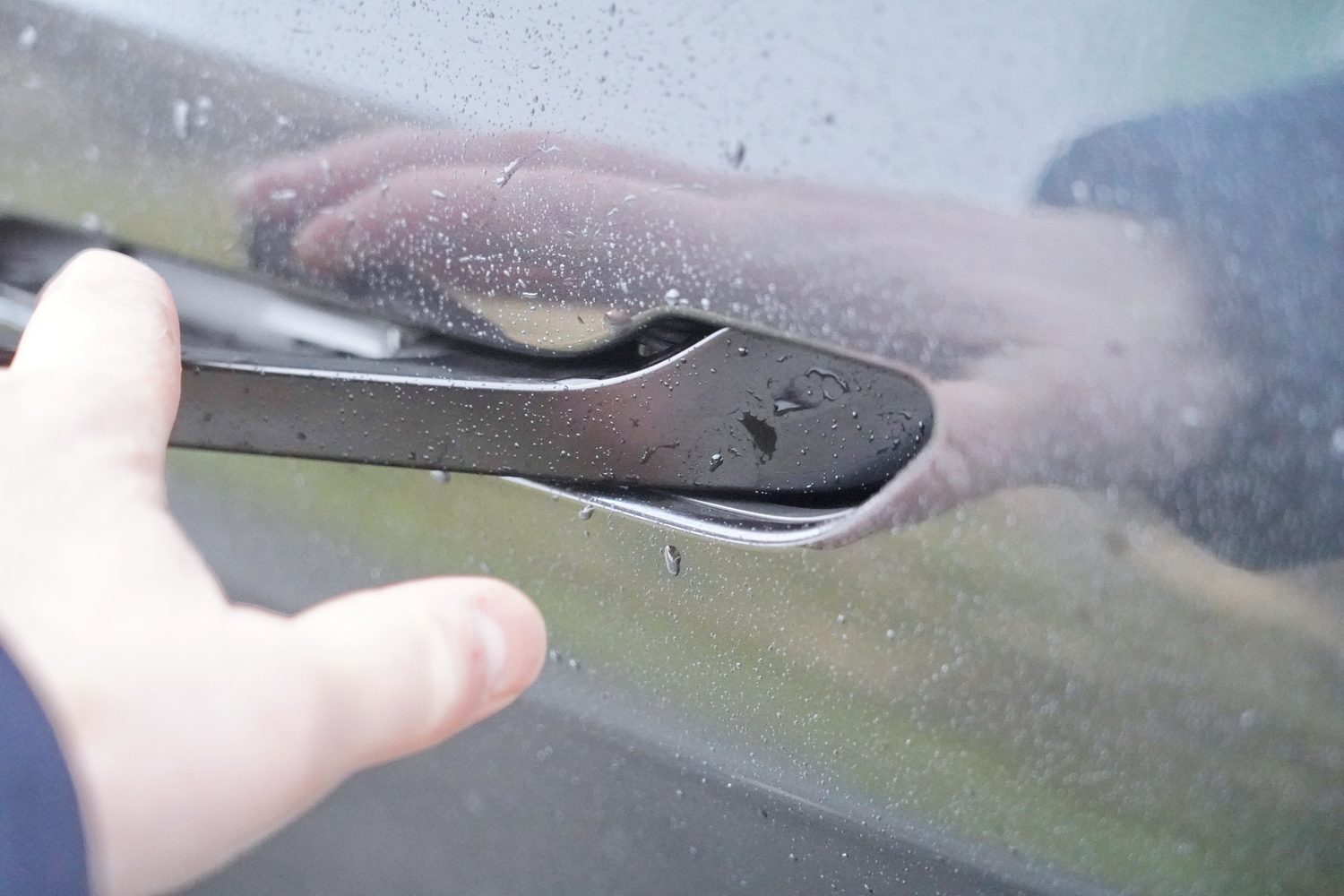
All versions of the Model Y still use the infuriating exterior door handles of the original.
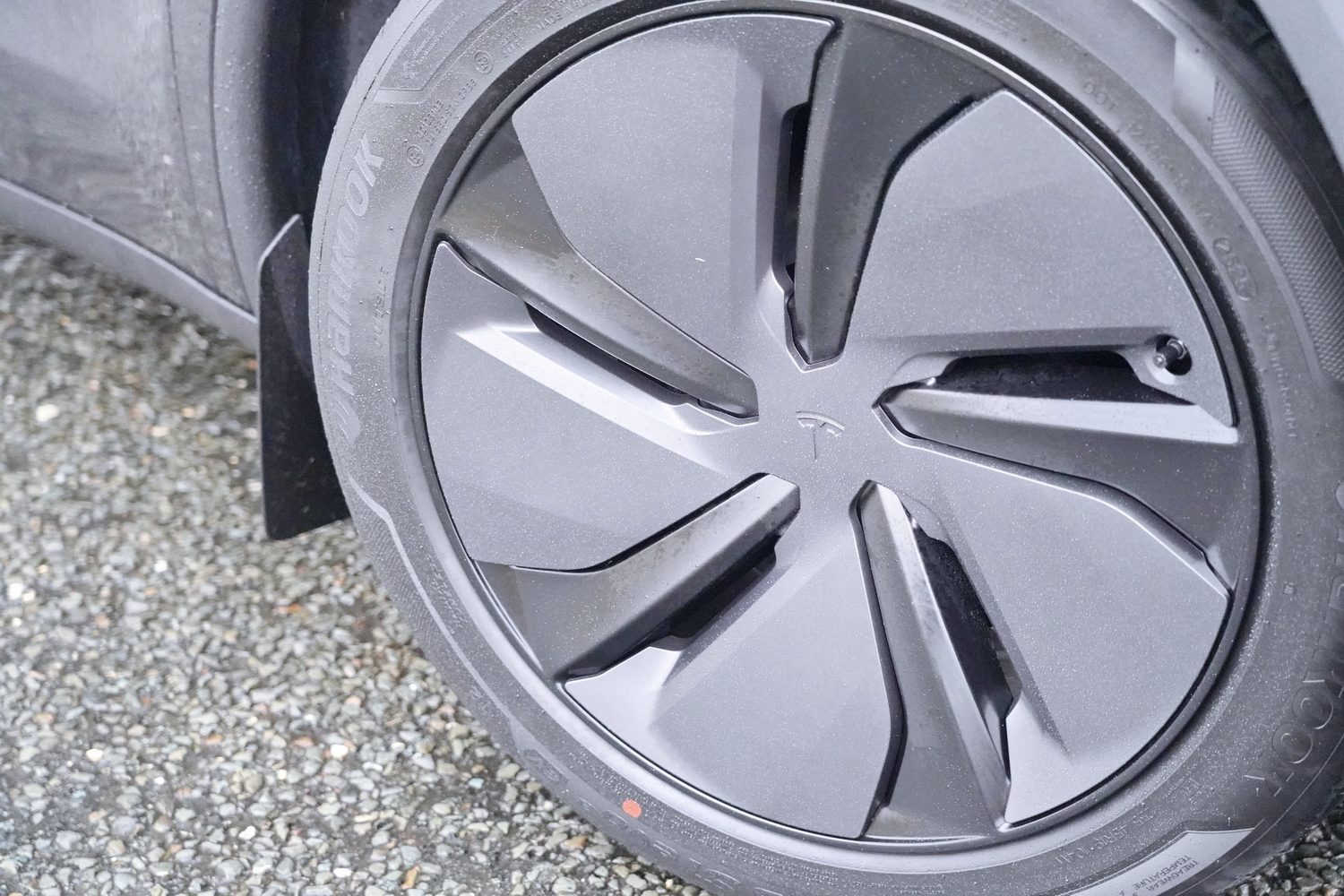
The minimum wheel size is 19 inches in diameter, a rather underwhelming design found as standard on all models other than the Performance. The latter gets a suitably sporty set of 21s, while other versions - aside from the Model Y Rear-Wheel Drive - can be upgraded to 20-inch rims.

Dimensions of the 2026 Tesla Model Y
- Length:
- 4,797mm
- Width:
- 1,982 (mirrors folded)
- Height:
- 1,621mm
- Wheelbase:
- 2,890mm
Paint colours for the 2026 Tesla Model Y
Stealth Grey is the only free colour for the Model Y, and if you're going for the Rear-Wheel Drive variant then the only other paint options available are Pearl White Multi-Coat or Diamond Black, both priced at €1,300.

Go for the Premium or Performance versions, however, and you can also choose from Marine Blue, Quicksilver and Ultra Red, though the latter two will cost you €2,600.
Interior, practicality, tech & comfort of the 2026 Tesla Model Y
- Touchscreen dominates
- Kids love the quirky features
- Loads of storage throughout

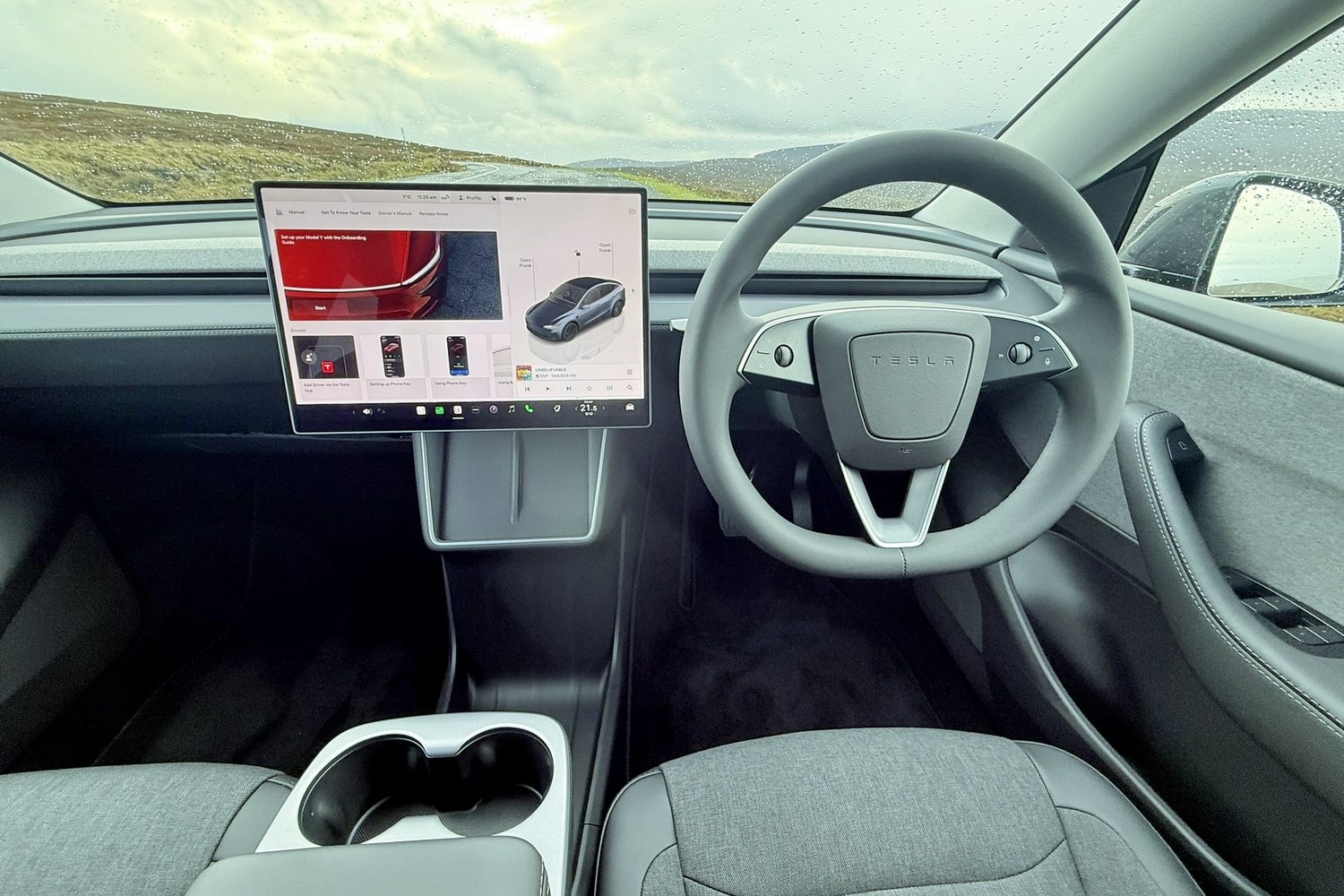
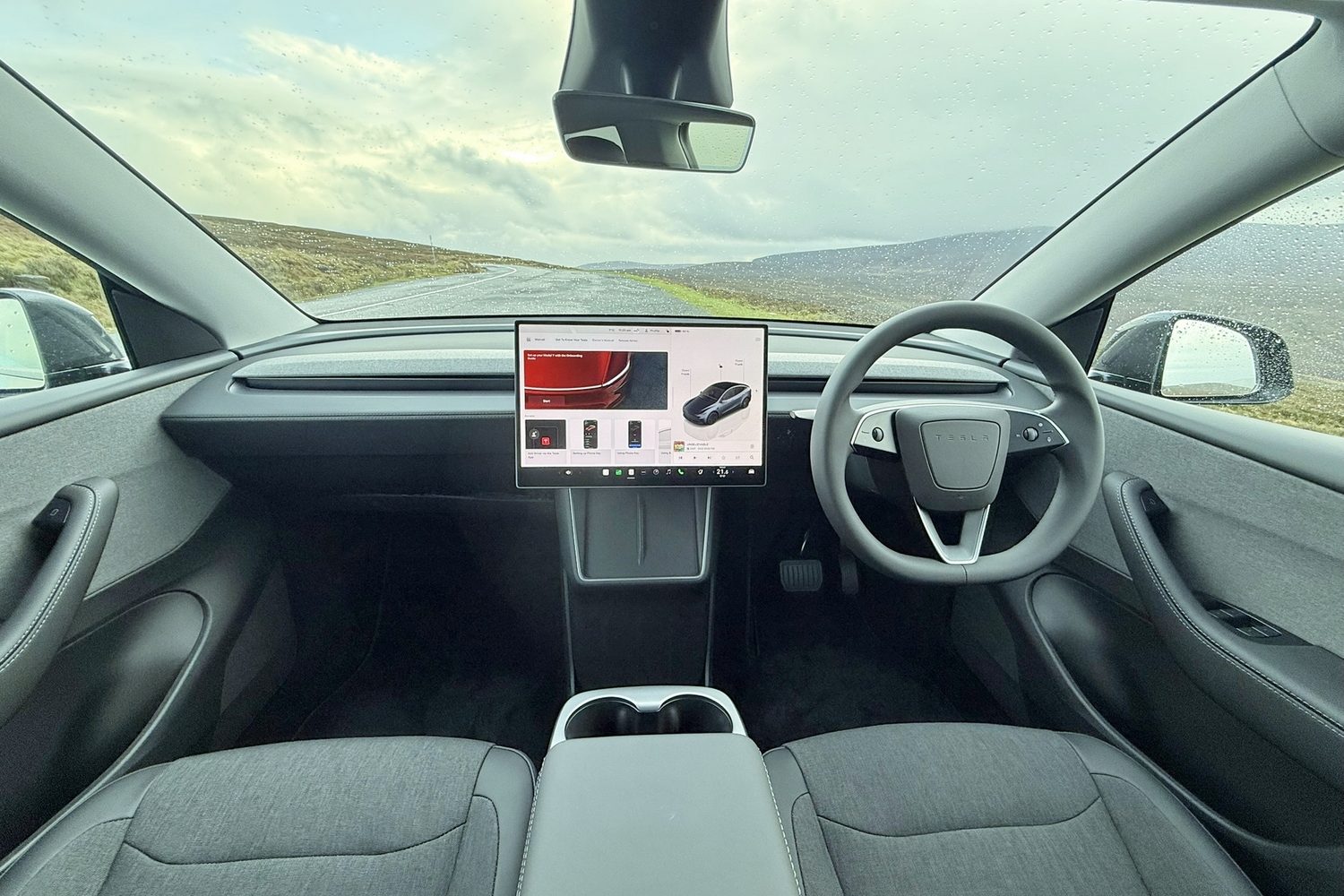
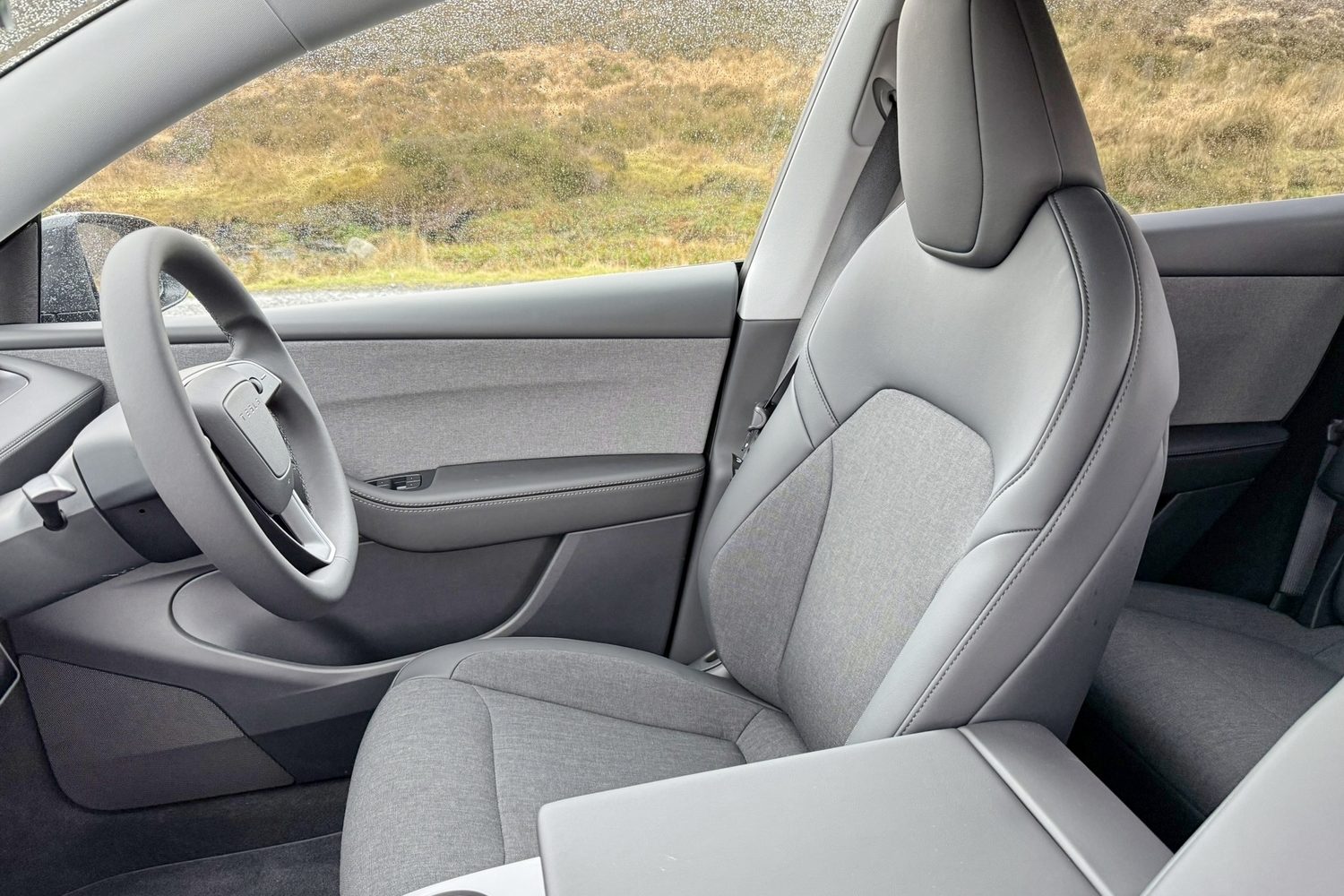
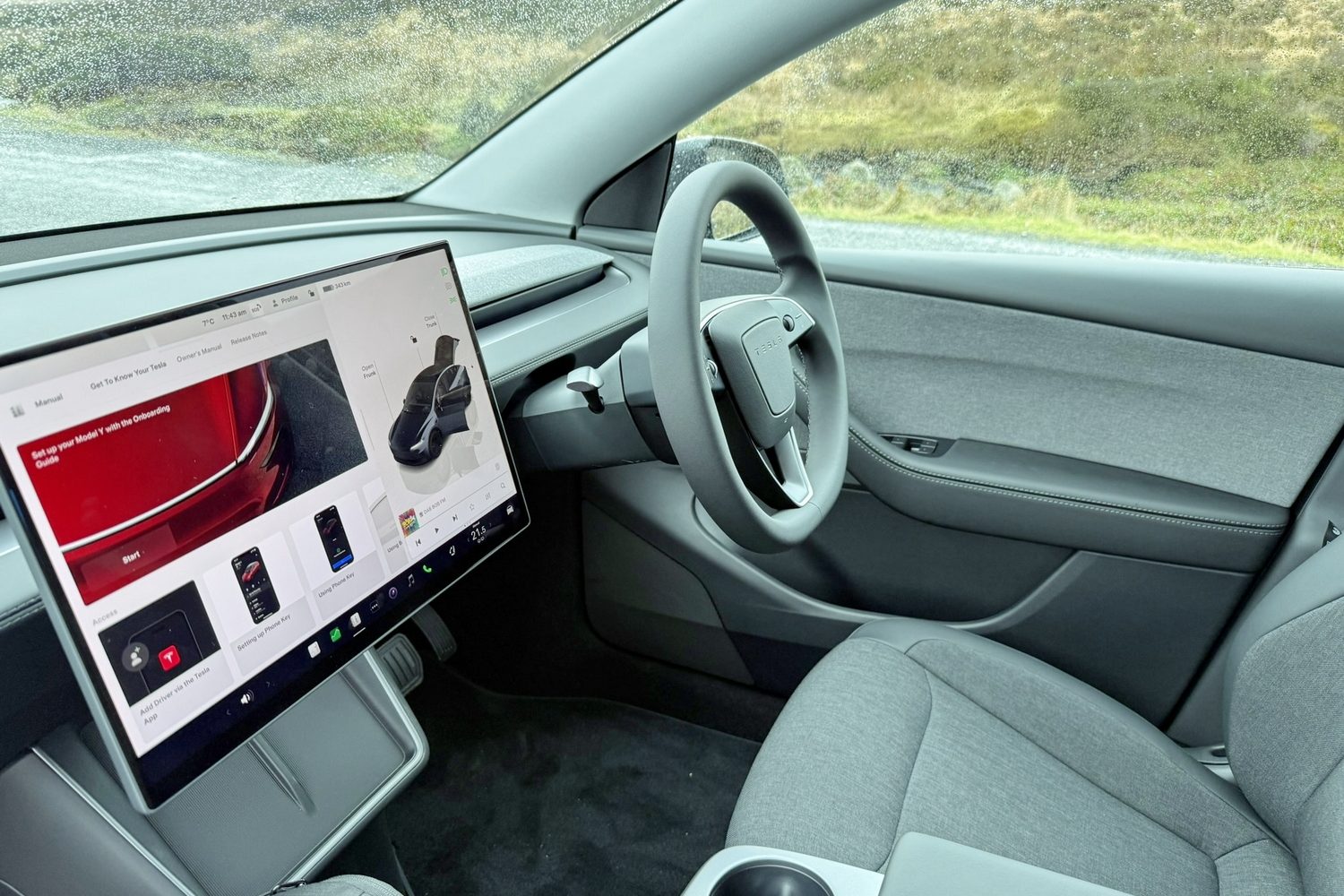
While all Model Ys come with minimalistic interiors dominated by a large central touchscreen and loads of space in all seats, there's a notable difference between the Rear-Wheel Drive cars and the others.
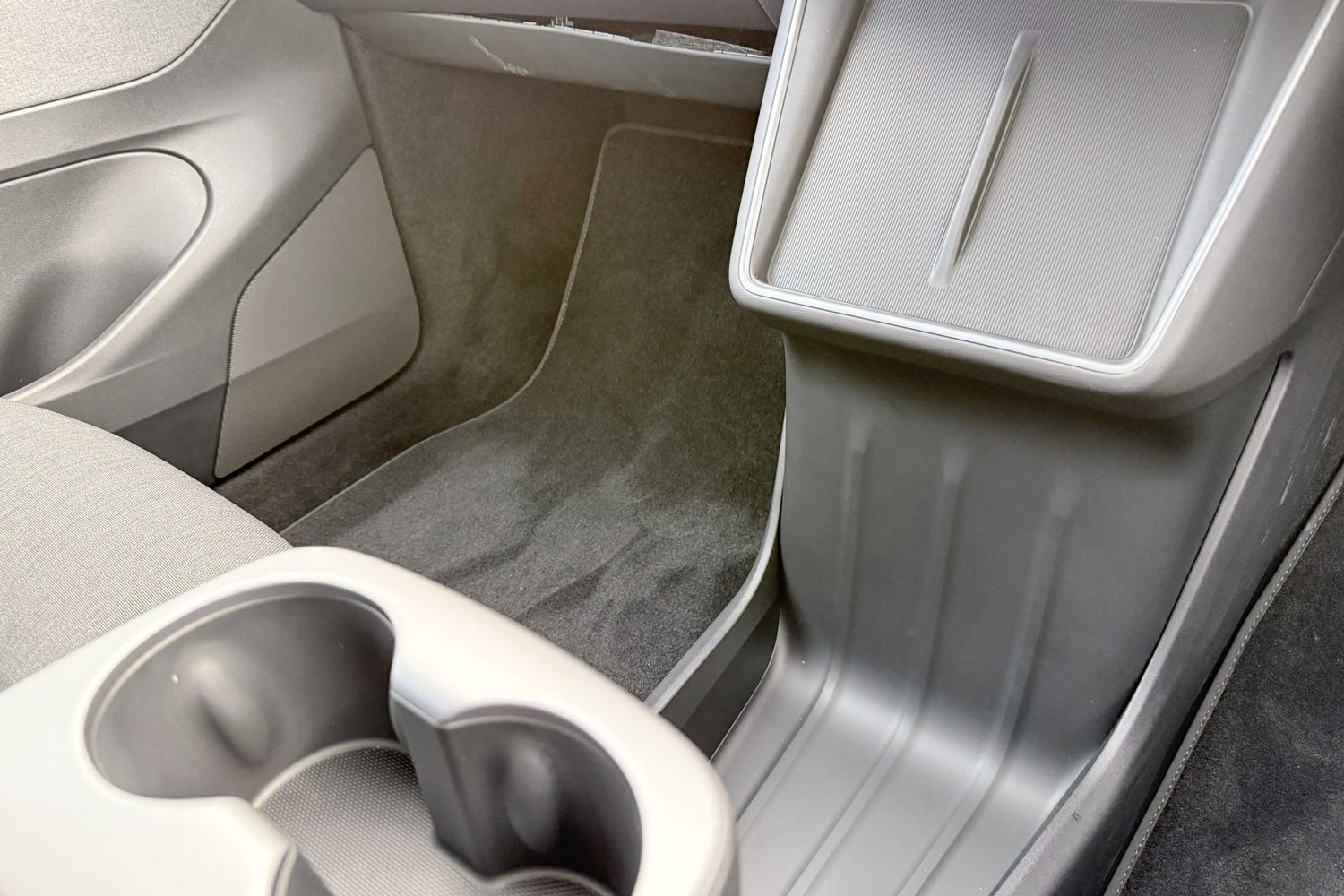
The entry-level models do without a full-length glass roof, for example (though, bizarrely, the glass roof is there hidden underneath the headlining), and it also get a more pared-back centre console with open storage. It feels a bit cheaper to the touch, but it does add to the spacious feeling up front.
Getting comfortable in the driver's seat

We prefer the simple manual adjustment of the steering wheel position found in the Model Y Rear-Wheel Drive over the electric adjustment you need to select via the touchscreen in other models. Either way, there's a lot of adjustment in the reach and rake available, which is great.
The simple steering wheel itself isn't the most aesthetically pleasing, but we commend the use of a proper circle shape, and the rim thickness and feel are spot on.
Annoyingly, while the front seats are electrically adjusted, you need to delve into the touchscreen menu to do so, which is far from ideal when you're driving along and you just want to tweak the backrest a touch.

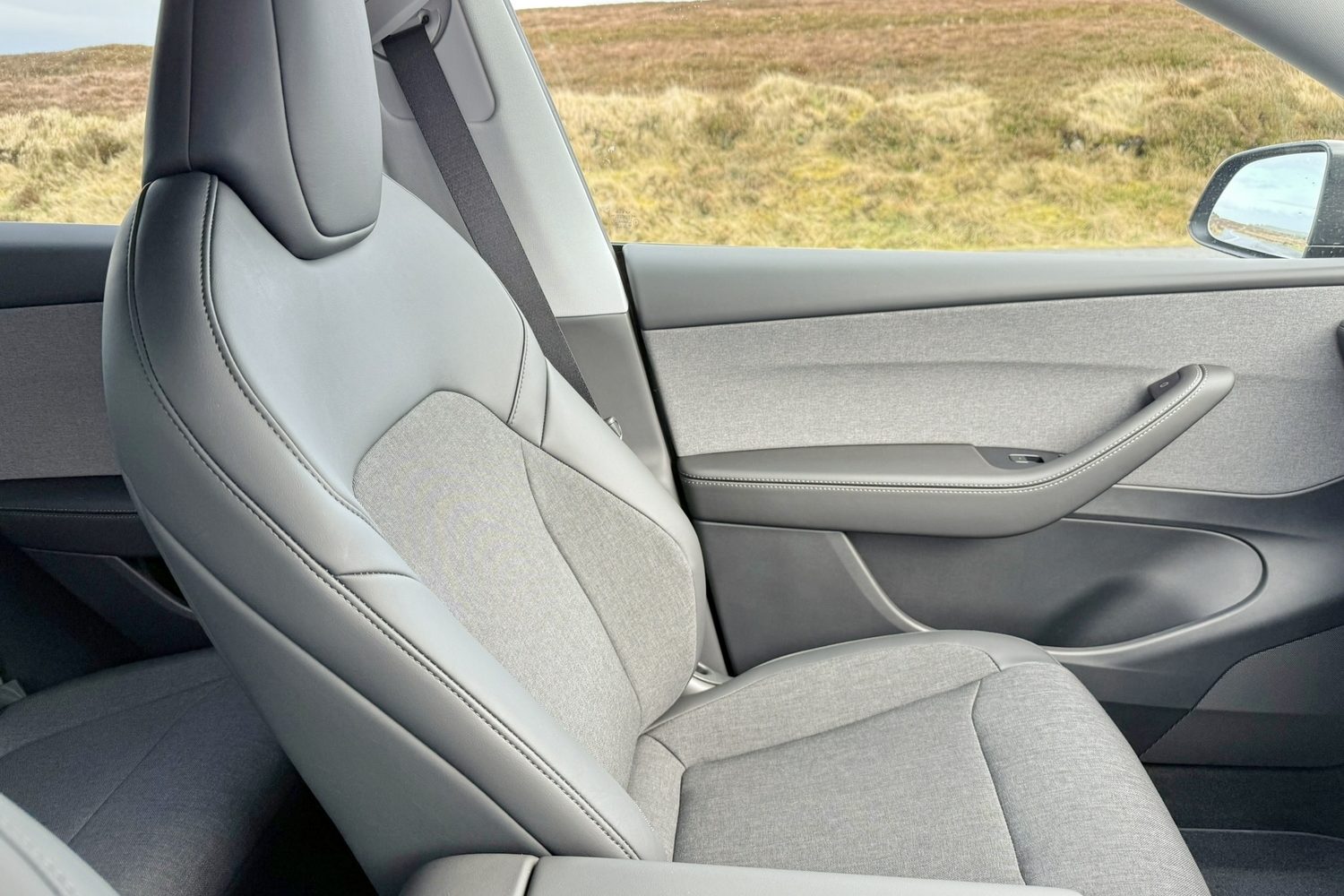
Tesla does a good job on its seat upholstery, though. From the part-textile fabric of the Rear-Wheel Drive models up to the synthetic leather and suede options elsewhere in the range, they all look and feel good.
Front-seat heating is included across the board, but ventilated seats are missing from the Rear-Wheel Drive. The Performance variant gets its own sport seats with extra adjustments.
Infotainment and technology
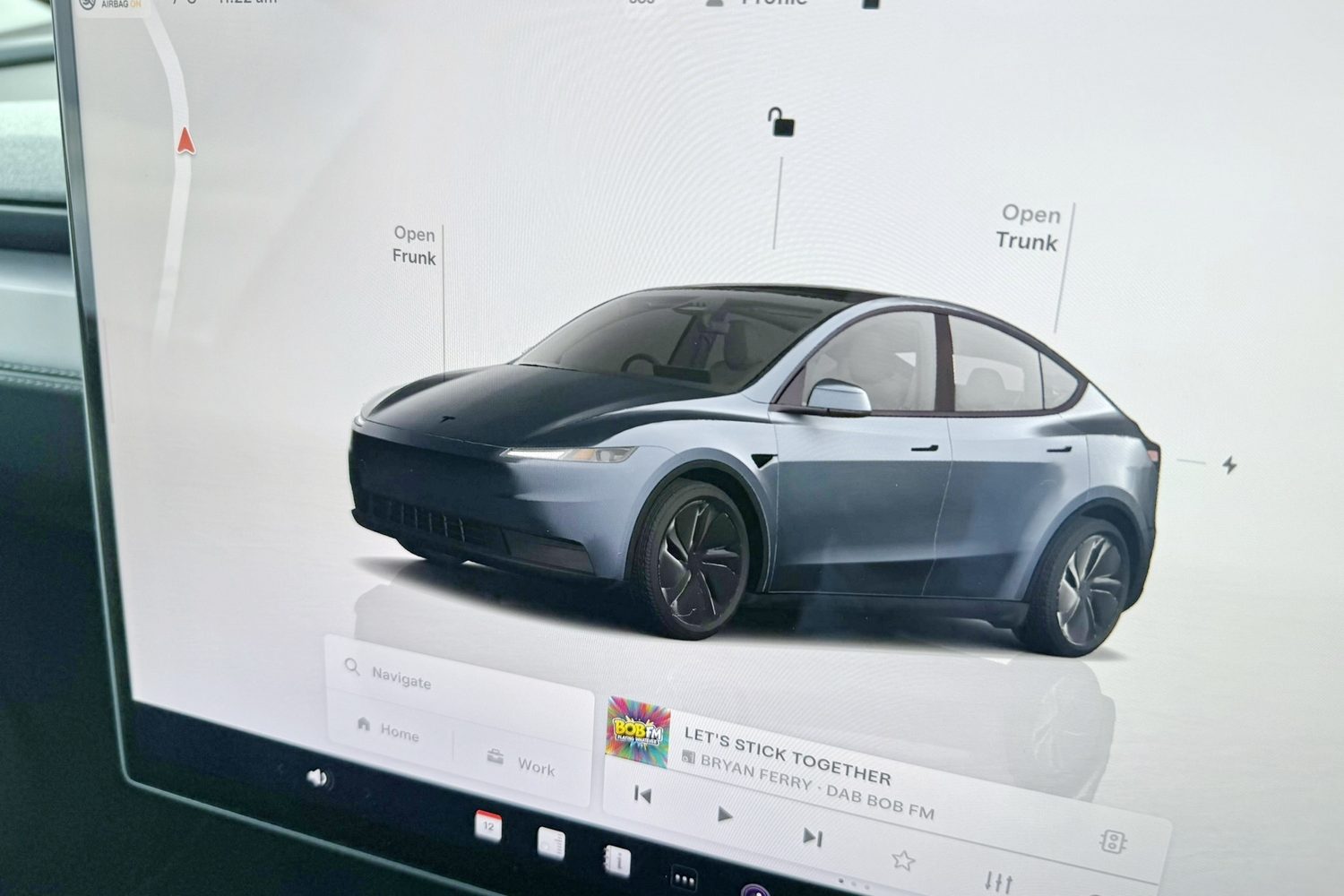
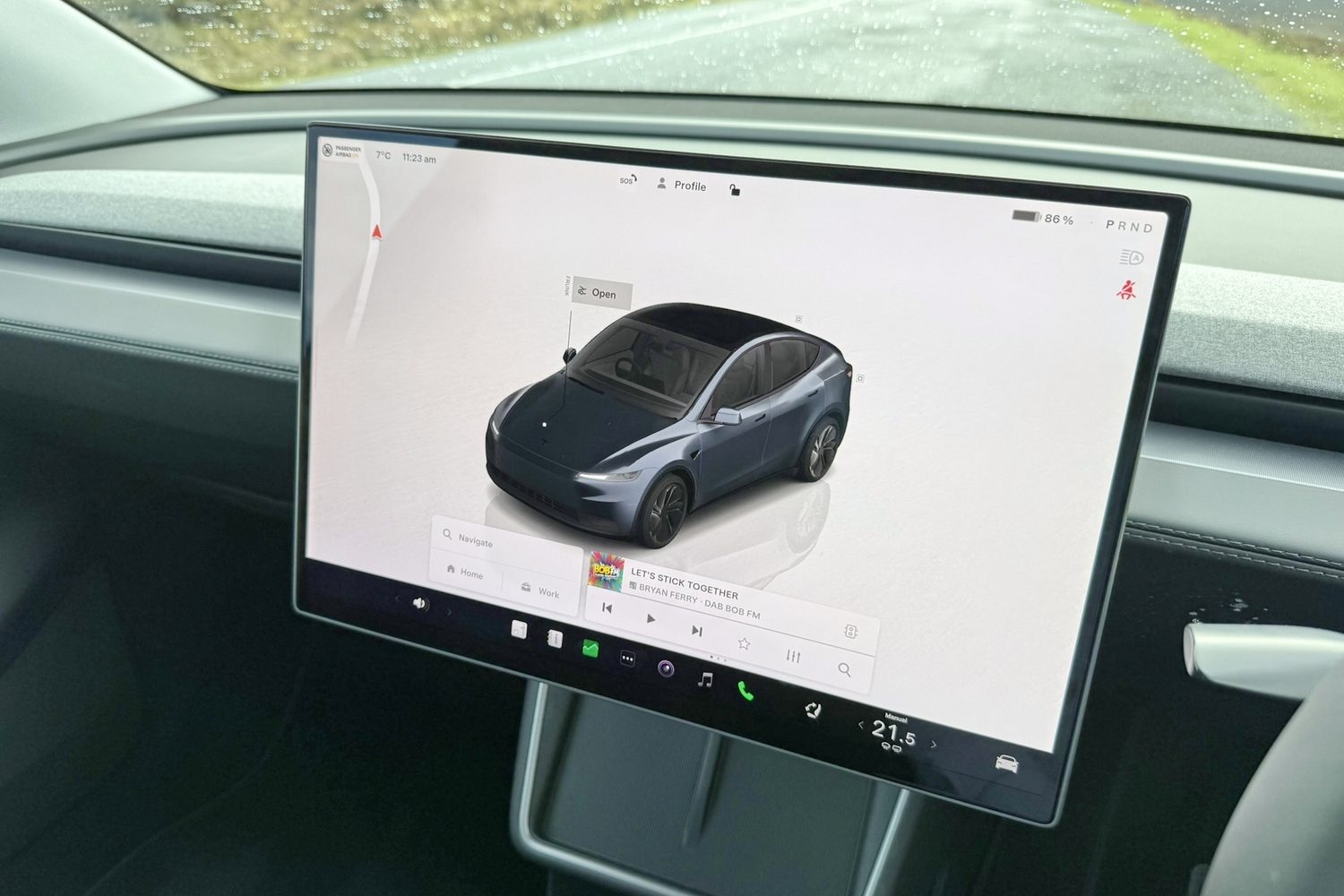
Tesla's 16-inch touchscreen is full of features and, while it takes time to find your way around its menu system, we don't have any issues with the interface. Indeed, some carmakers could learn a thing or two from it.

The issue is that the driver is reliant on the screen for far too many of the car's functions, so if it goes blank for any reason (we've seen it happen), you're goosed. Even the direction of travel is selected via the screen - though it does have an automatic drive selector option that works moderately well.
Kids (of all ages) will love the quirky side of Tesla's software, which goes way beyond simple games to keep everyone entertained. But with our serious hats on, it's annoying that there's no Apple CarPlay or Android Auto.

If you like your tunes, watch out for the sub-standard stereo system in the Model Y Rear-Wheel Drive - it has just seven speakers, while the rear-wheel-drive Premium model has nine and the top two cars in the lineup get 15 plus a subwoofer. Oh, and there's no ambient cabin lighting in the Rear-Wheel Drive version either. Let's put that in the folder marked "First World Problem”.
Practicality around the cabin
Large door pockets and a big, covered bin under the central armrest up front are found in all versions of the Model Y. There's a sloped section under the dashboard to hold and charge two smartphones wirelessly, though the design of this varies between the Rear-Wheel Drive cars and the others.

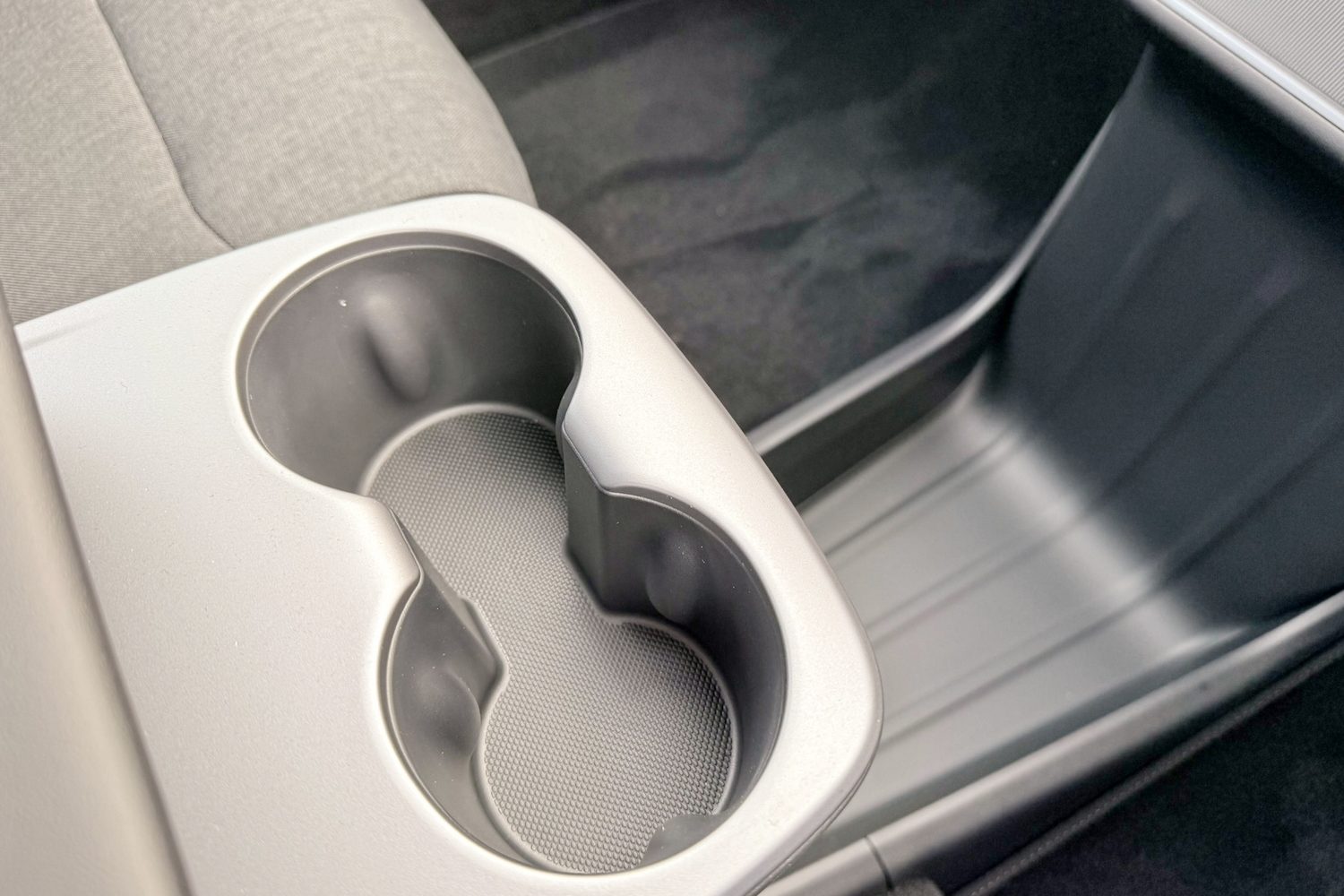
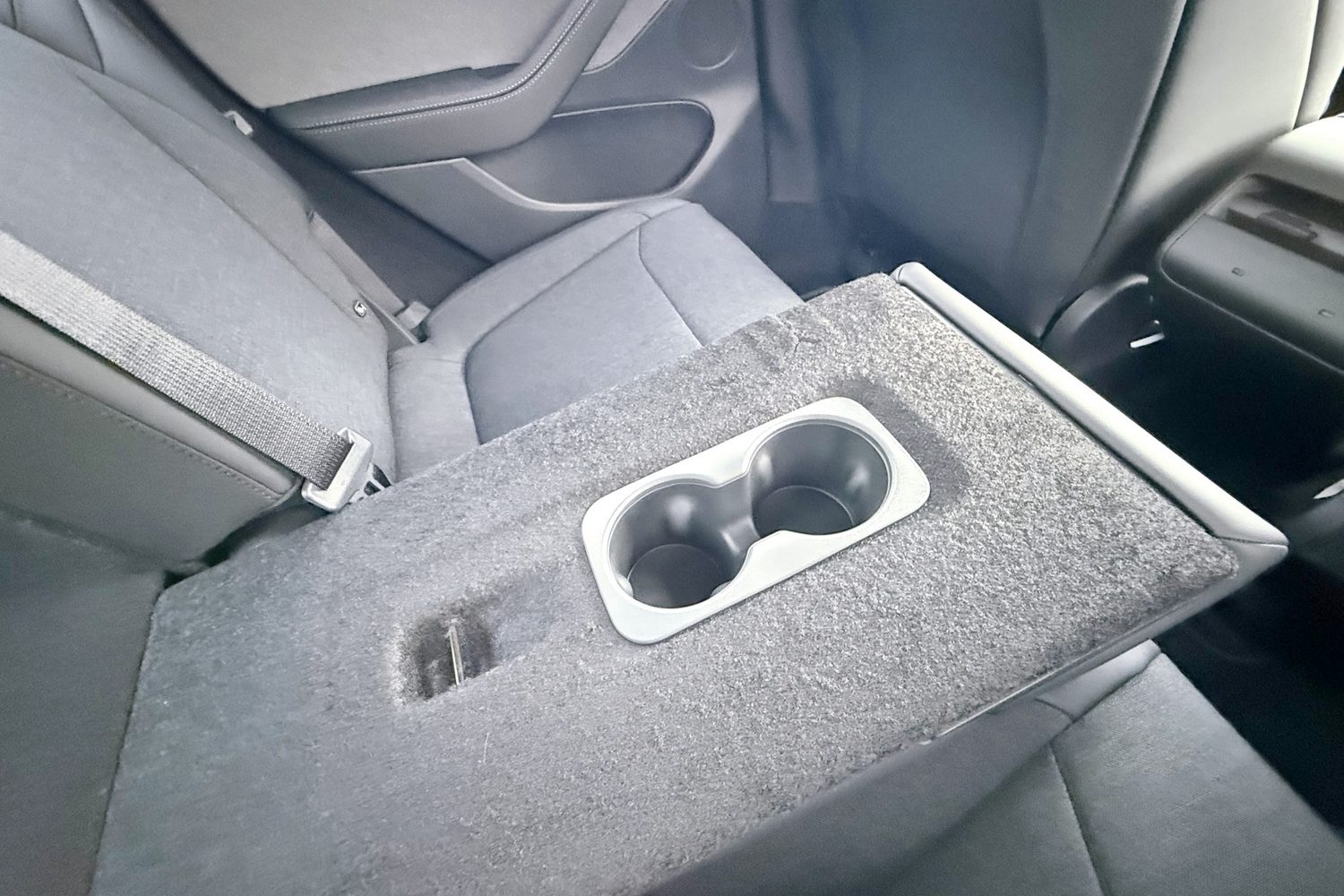
Likewise, the rest of the centre console. In higher-spec models, it's a vast covered area with cupholders and masses of storage space. In the Rear-Wheel Drive, the cupholders are always exposed and there's instead an uncovered area between the seats. In fairness, this still accommodates big handbags and other chunky items, just not hidden out of sight.
Rear-seat passenger space
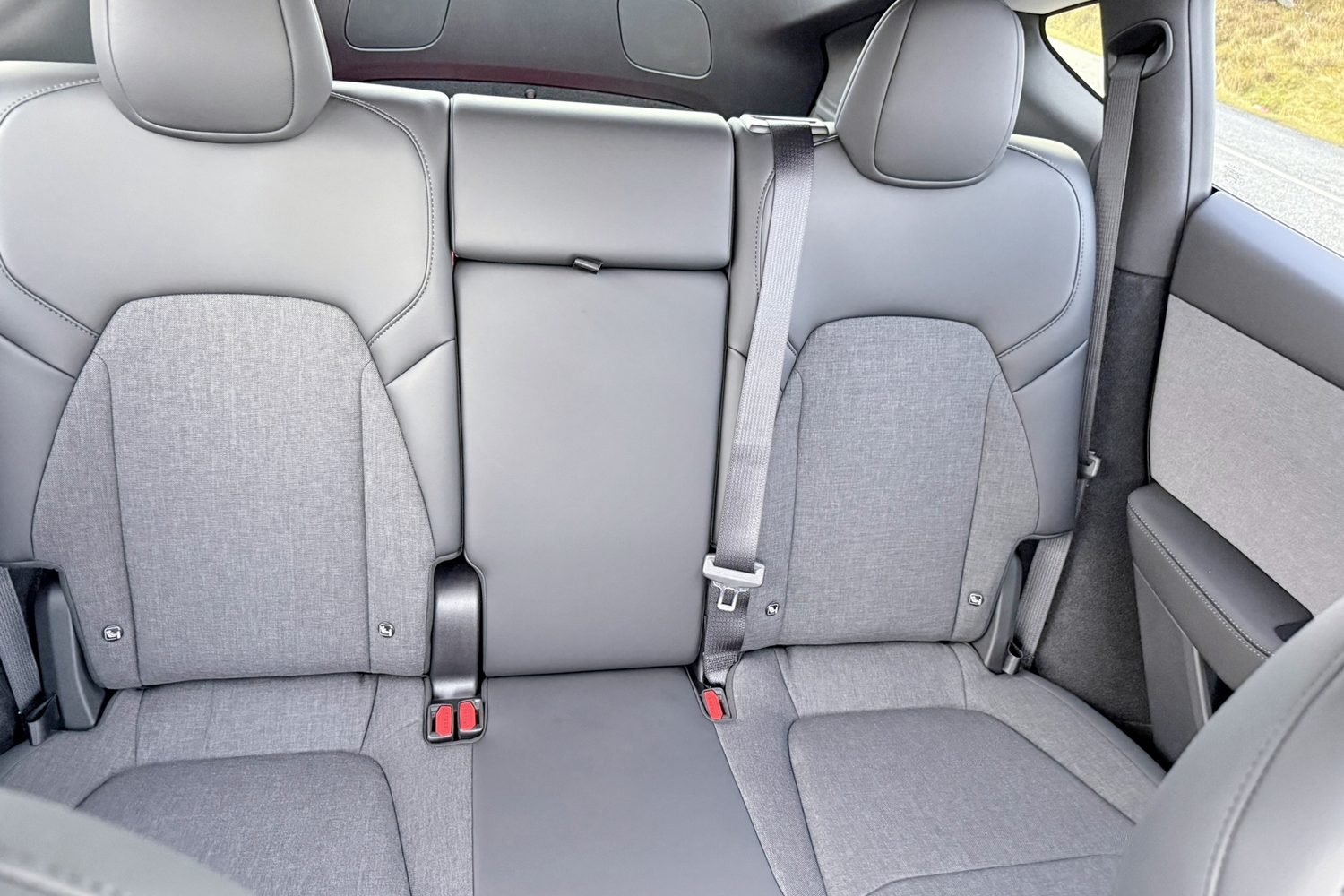
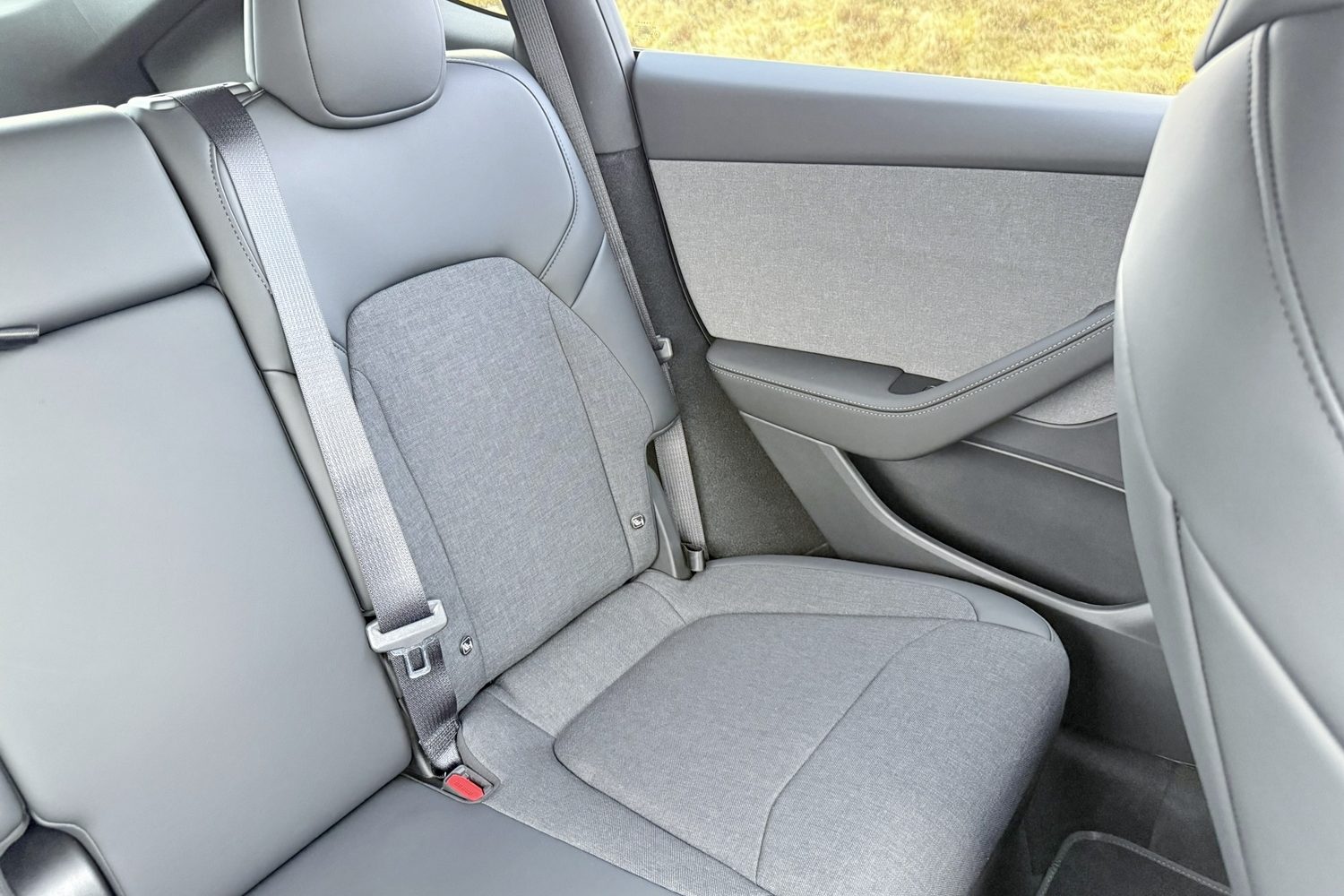
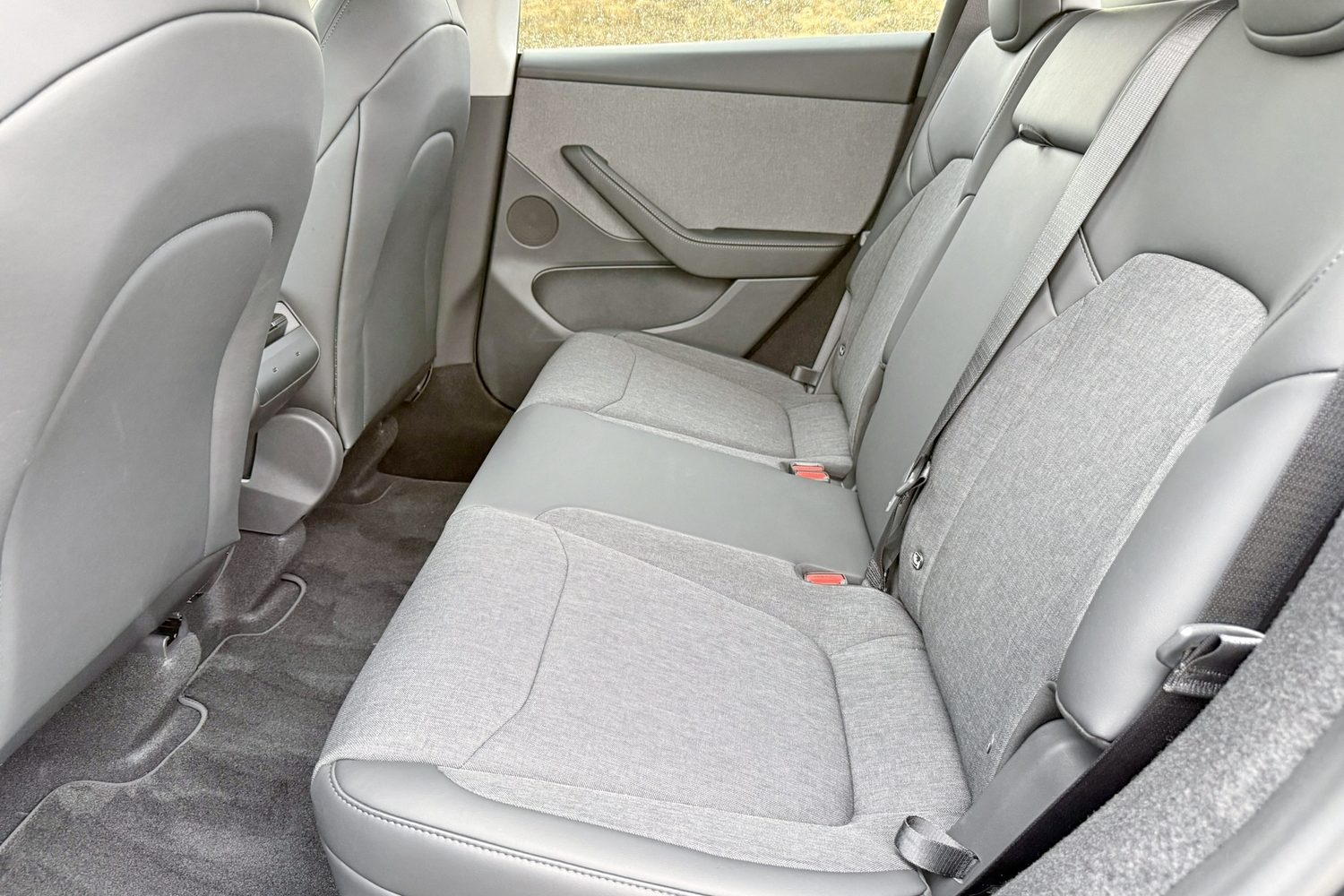
The Model Y is very spacious in the back, with loads of headroom, legroom and, thanks to a completely flat floor, space for feet. The Rear-Wheel Drive is slightly better in that regard as the back if the centre console has no infotainment screen for the rear-seat passengers, though they don't get seat heating, either. The other cars get an eight-inch screen and rear-seat heating.

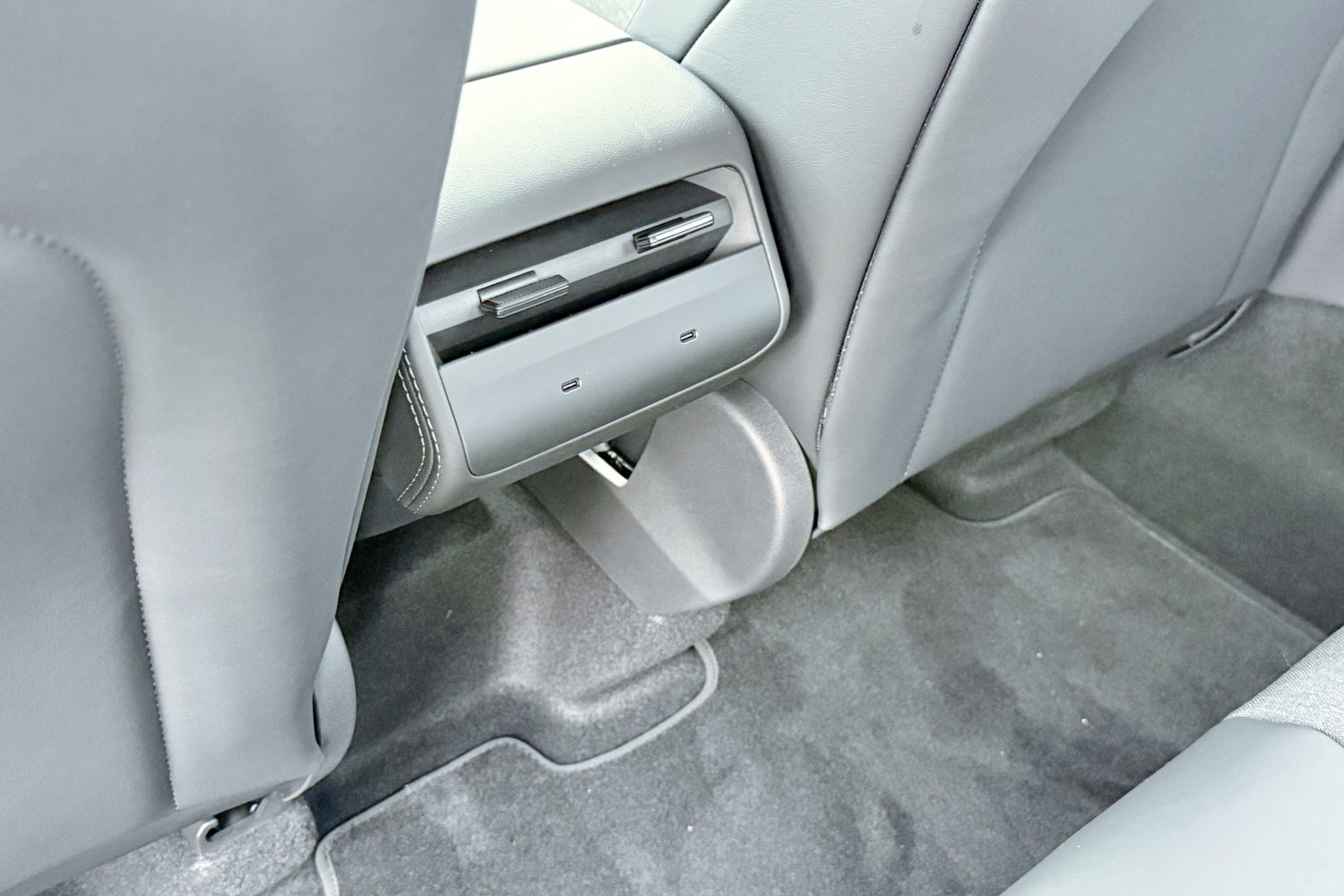
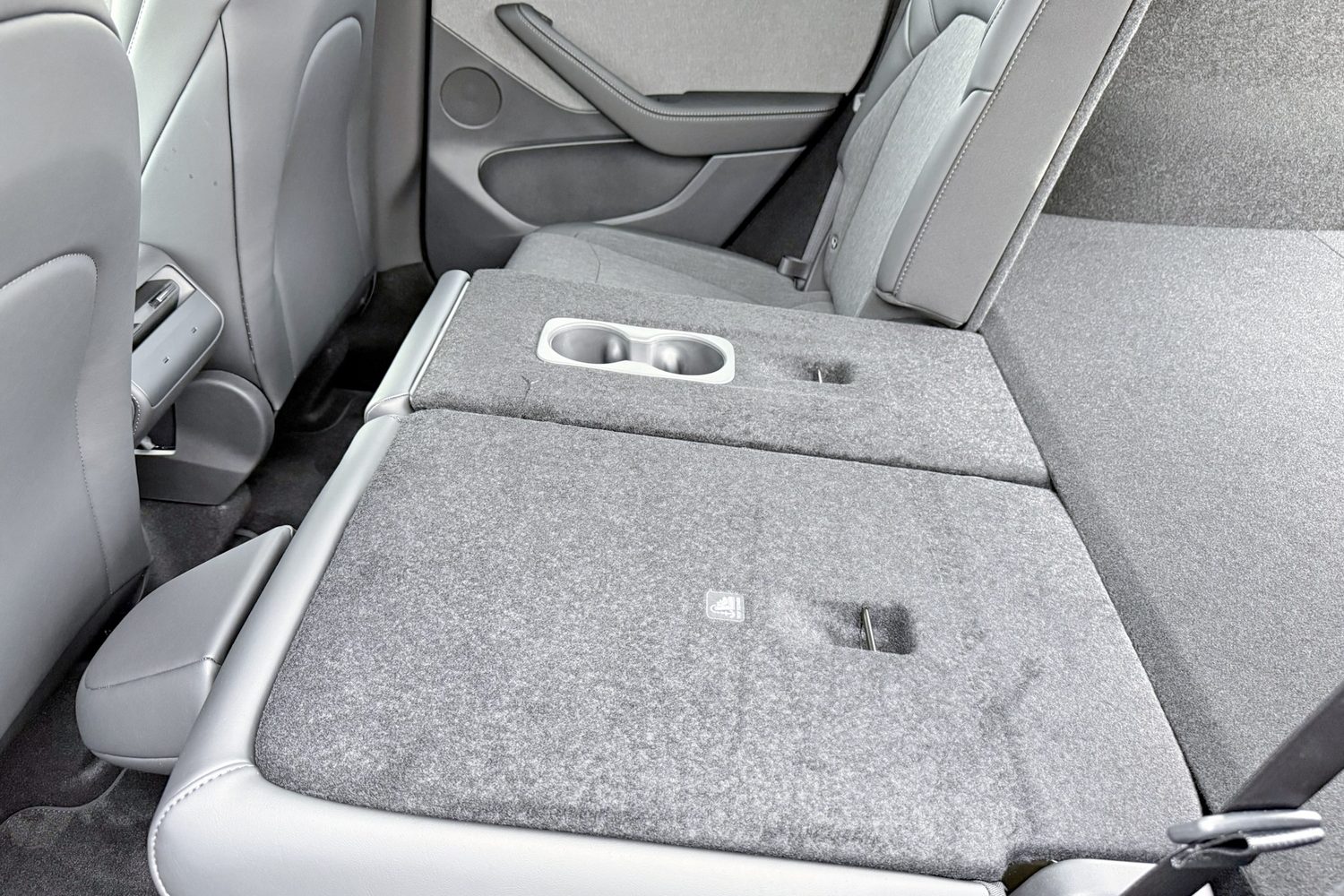
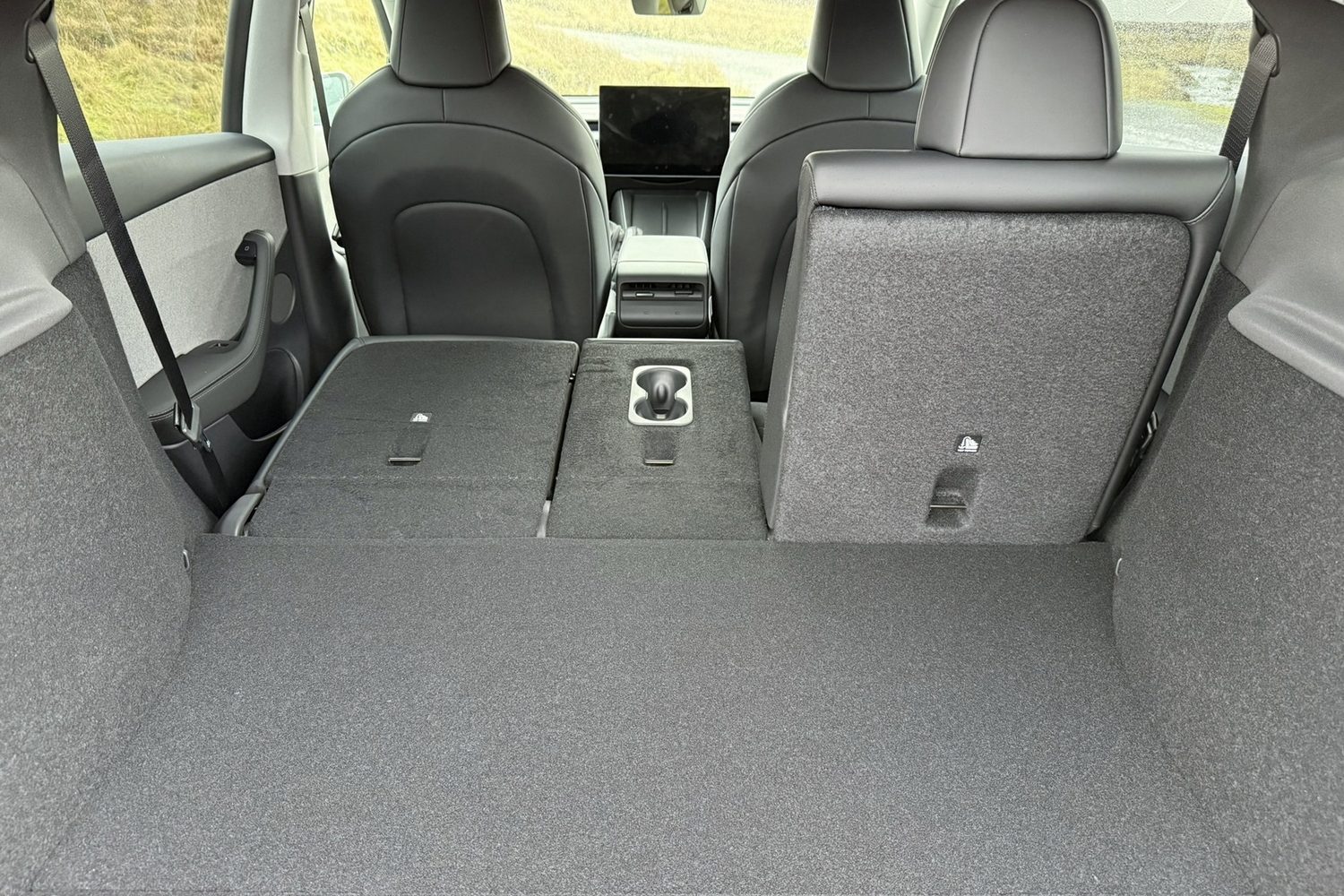
All versions get rear air vents and USB-C ports, though the centre armrest design differs - in the Rear-Wheel Drive car, the whole of the middle seat section folds down with cupholders built in, opening up the cabin to the boot. In the others, just a part of the seat does this job, keeping the rear isolated.
Fitting child seats to the Tesla Model Y
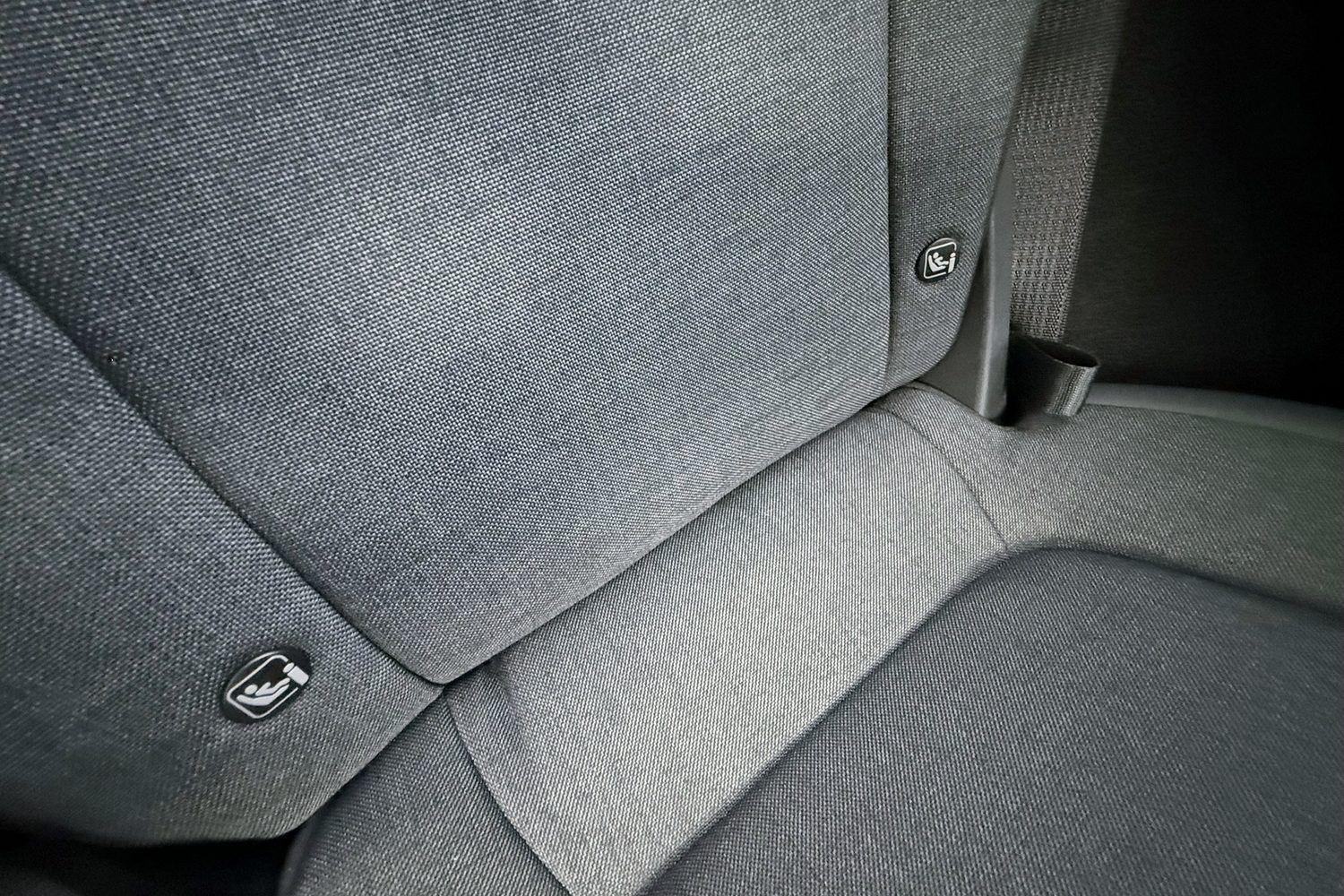
There are ISOFIX mountings in the two outer rear seats, as you'd expect, but none in the front seat of the Model Y. We don't believe you'd fit a booster or any other form of child seat in the middle of the rear seat as the space between the seatbelt buckles is too tight. However, the back doors open wide for easy access, and the large boot can easily swallow the biggest of buggies.
Boot space in the Tesla Model Y

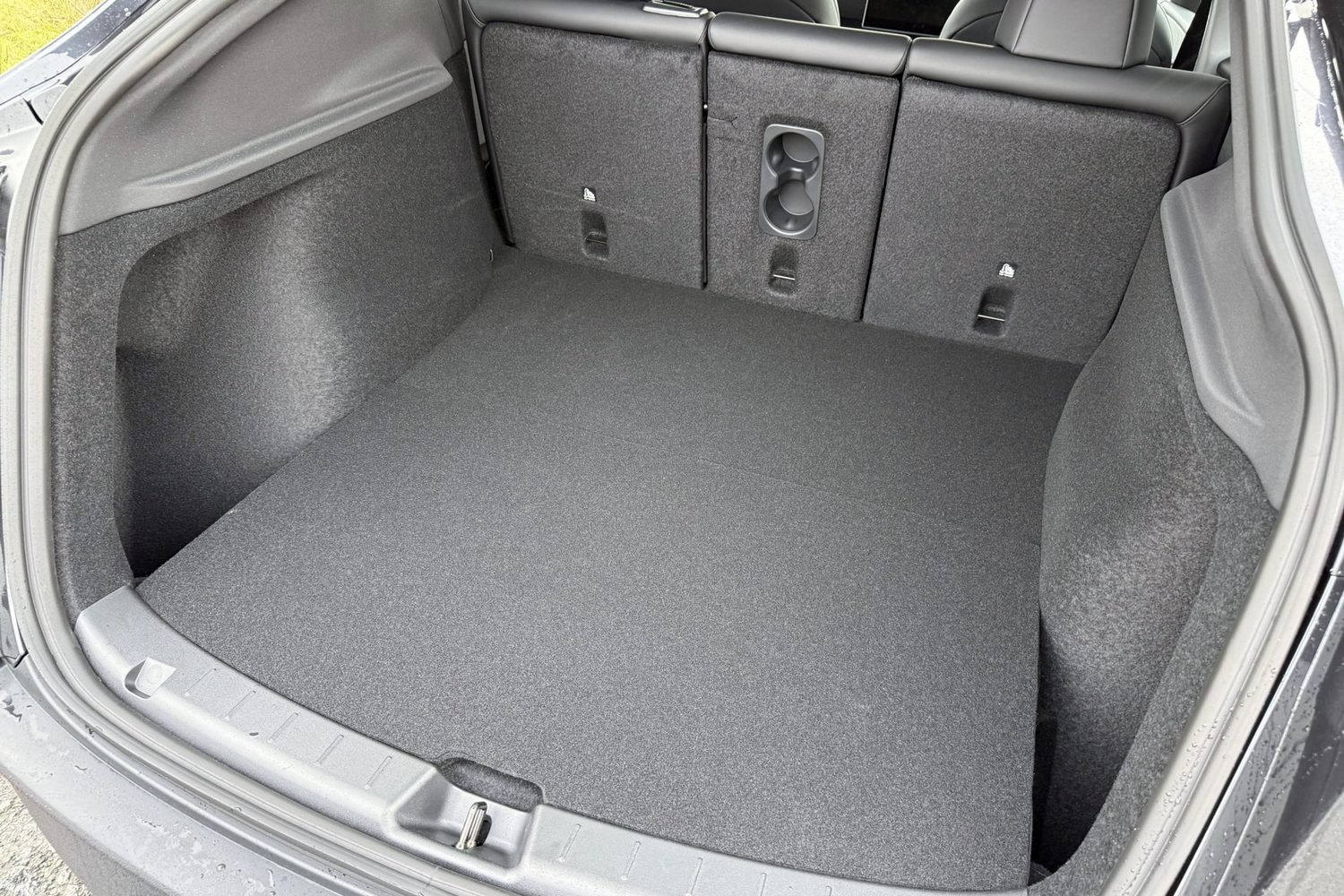
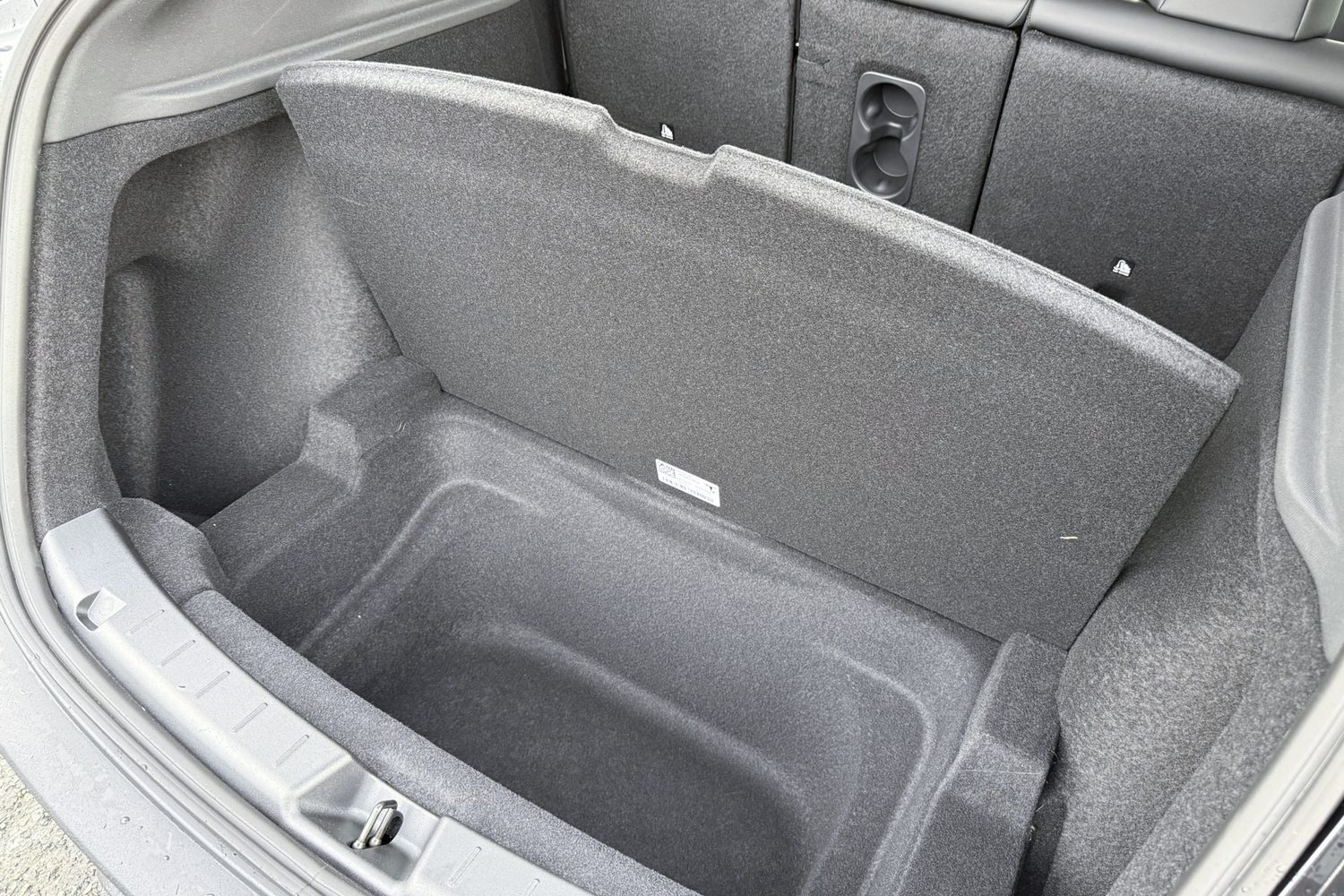
Tesla does its own thing when it comes to quoting boot space. While most carmakers give a figure for the space under the luggage cover, or to the window line, Tesla only tells us the maximum, to the roof. For the Model Y, with the rear seats in place, that means a decent 835 litres of space, and there's a useful hidden volume under the floor, too.
Higher-spec versions have electric-folding rear seats (Tesla calls it the "seat dance”), while the Rear-Wheel Drive makes do with manual movement. That's no hardship at all, and the rear seats retain adjustment for their backrest angles.

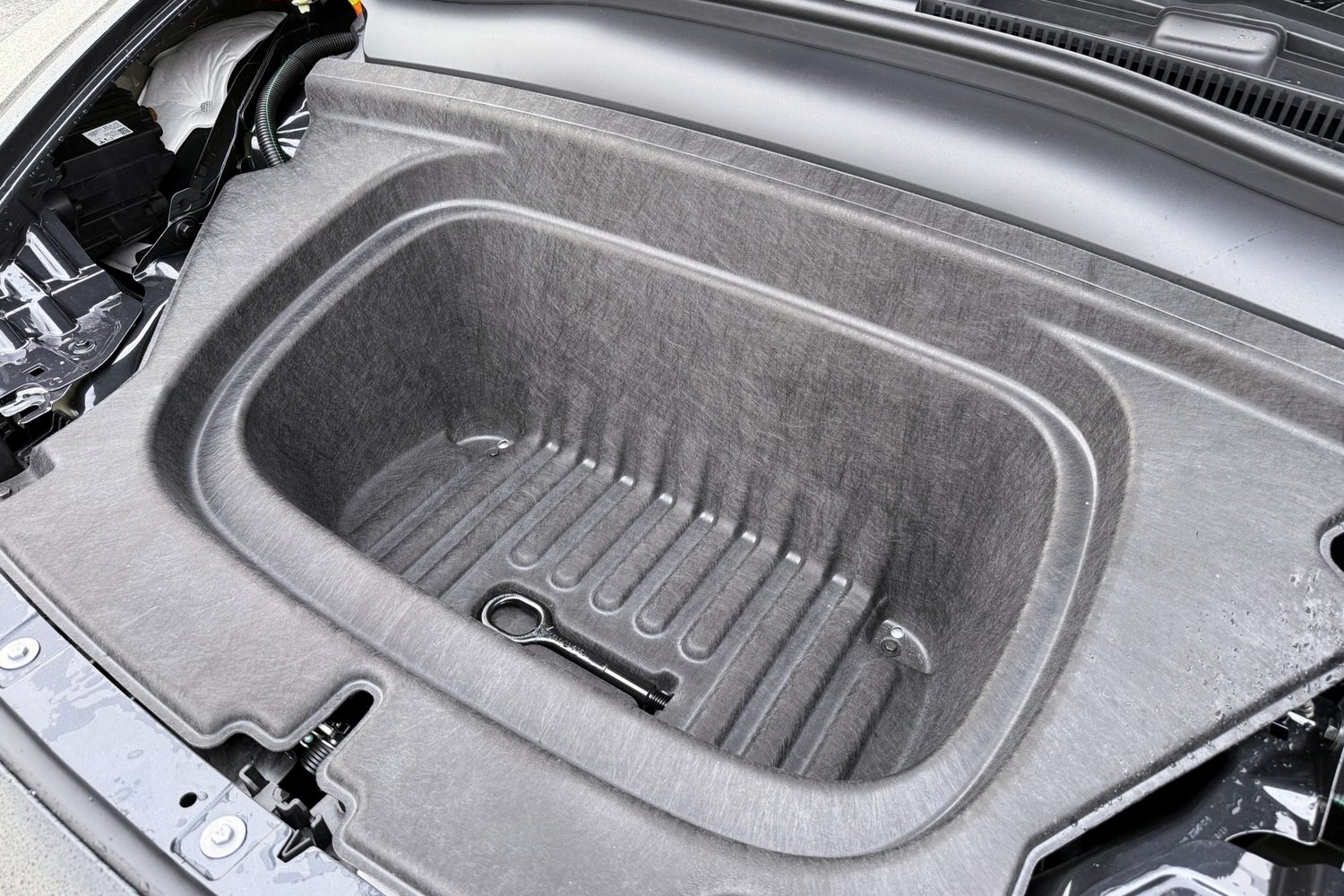
All this is supplemented by a large 'frunk' under the bonnet. Oddly, this isn't as nicely lined in the Rear-Wheel Drive models, and neither do those versions have a drain plug.
Towing with the Tesla Model Y
Tesla will sell you a towbar for €1,350, and there's a built-in Trailer Mode selectable via the infotainment screen. As is the norm, an unbraked load of up to 750kg is allowed, while all versions of the Model Y can manage a 1,600kg load so long as the trailer has brakes of its own.
Safety in the Tesla Model Y
The Model Y was tested by Euro NCAP in 2025 and it achieved an exceptional result, not only in terms of the full five-star overall rating, but also the individual scores of 91 per cent for adult occupant protection, 93 per cent for child occupant protection, 86 per cent for the protection of vulnerable road users and 92 per cent for the Safety Assist category covering driver assistance technology. Read the full report here for more information, but rest assured, the Model Y is a safe car.
Performance of the 2026 Tesla Model Y
- Variety of electric options
- Adaptive damping in Performance model
- Best comfort in Rear-Wheel Drive version

There are five different electric powertrain setups available in the Model Y, though Tesla is reticent to tell anyone the full technical details. Some presume that the Rear-Wheel Drive car uses the same electric motor on the rear axle as the Premium Long Range Rear-Wheel Drive variant (a 220kW unit - or 299hp), but unless it's massively detuned, that doesn't make a lot of sense, as the latter manages 0-100km/h in 5.6 seconds, while it takes the (lighter) Rear-Wheel Drive 7.2 seconds - as it does for the Long Range Rear Wheel Drive model (which is curious if it has a bigger battery to give it that long range...).
Adding an extra motor to create the Premium Long Range All-Wheel Drive drops that time to just 4.8 seconds, while we do know that the range-topping Model Y Performance's two motors peak at 460hp, enabling a super-fast 3.5-second 0-100km/h sprint.
The latter features electronically controlled dampers, while the Premium cars get a less-sophisticated, frequency dependent setup that can adapt somewhat to the road - but can't be altered by the driver. The Standard is fitted with basic, passive dampers.
Driving the Tesla Model Y Rear-Wheel Drive in Ireland
Whisper it, but we reckon the Rear-Wheel Drive is the best-suited Model Y to Irish roads. It may have the least-expensive suspension components of the range, but it makes for a more comfortable car in most scenarios, certainly when compared with others on 20-inch or 21-inch wheels.
Delve into the technical specifications and you'll discover that the two Rear-Wheel Drive models get less-sophisticated passive dampers where the other variants (aside from the Performance) have a semi-active system that reduces damping force when a wheel experiences certain frequencies - i.e. bumps. The downside of this setup is that the damping is firmer by default, hence the softer feeling of the entry-level cars.

The steering in all models is a little lifeless, but the chassis is accurate enough and the car is capable of quick cross-country driving should you need it to be. Likewise, the brake pedal is devoid of feel, but there's no issue with the stopping power.
Outright performance in the Rear-Wheel Drive car is notably down on the other versions, but it's not a slow car by conventional benchmarks and it's perfectly pleasant to drive, whether you're ambling along a motorway, running chores in town or taking a scenic drive through the countryside.
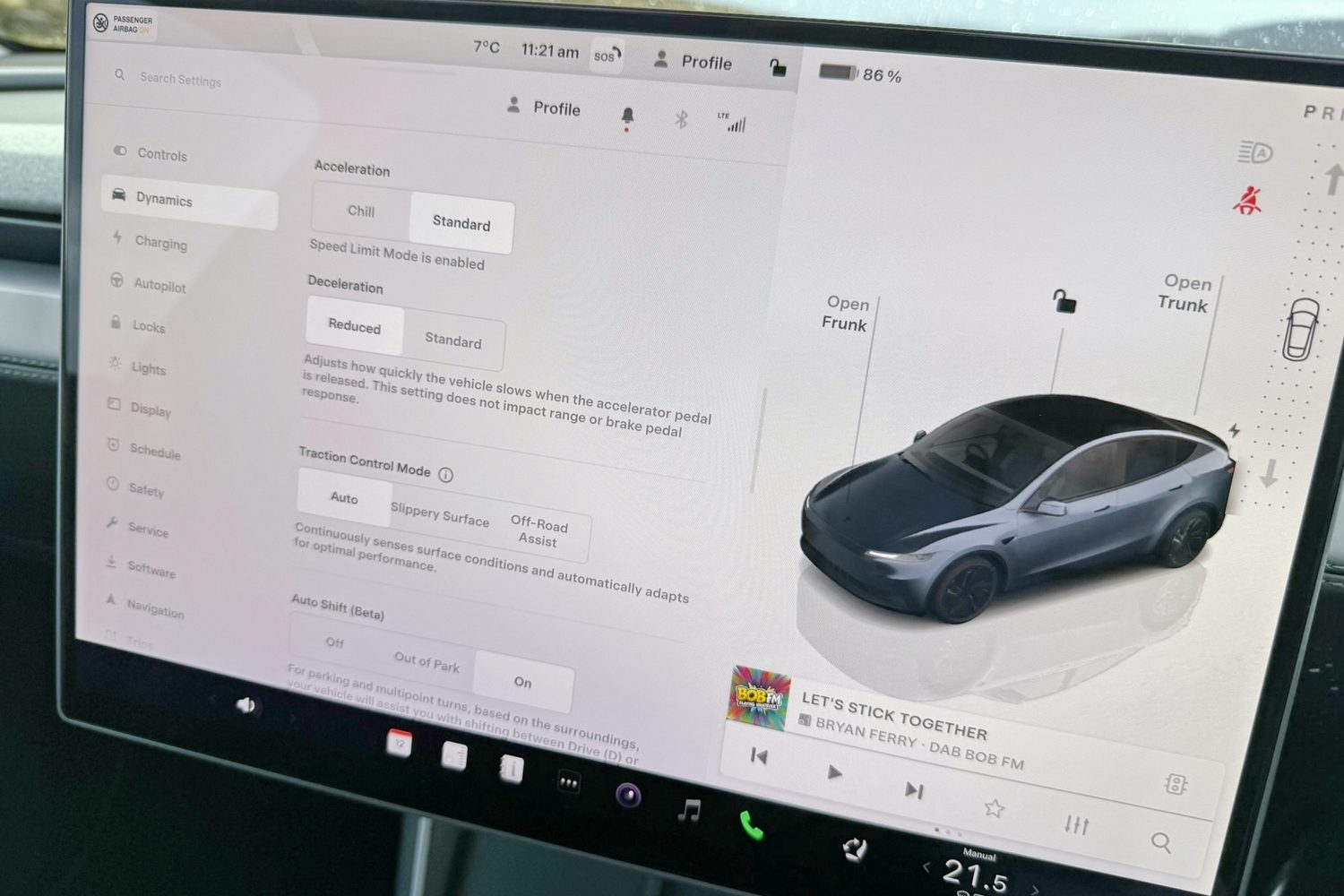
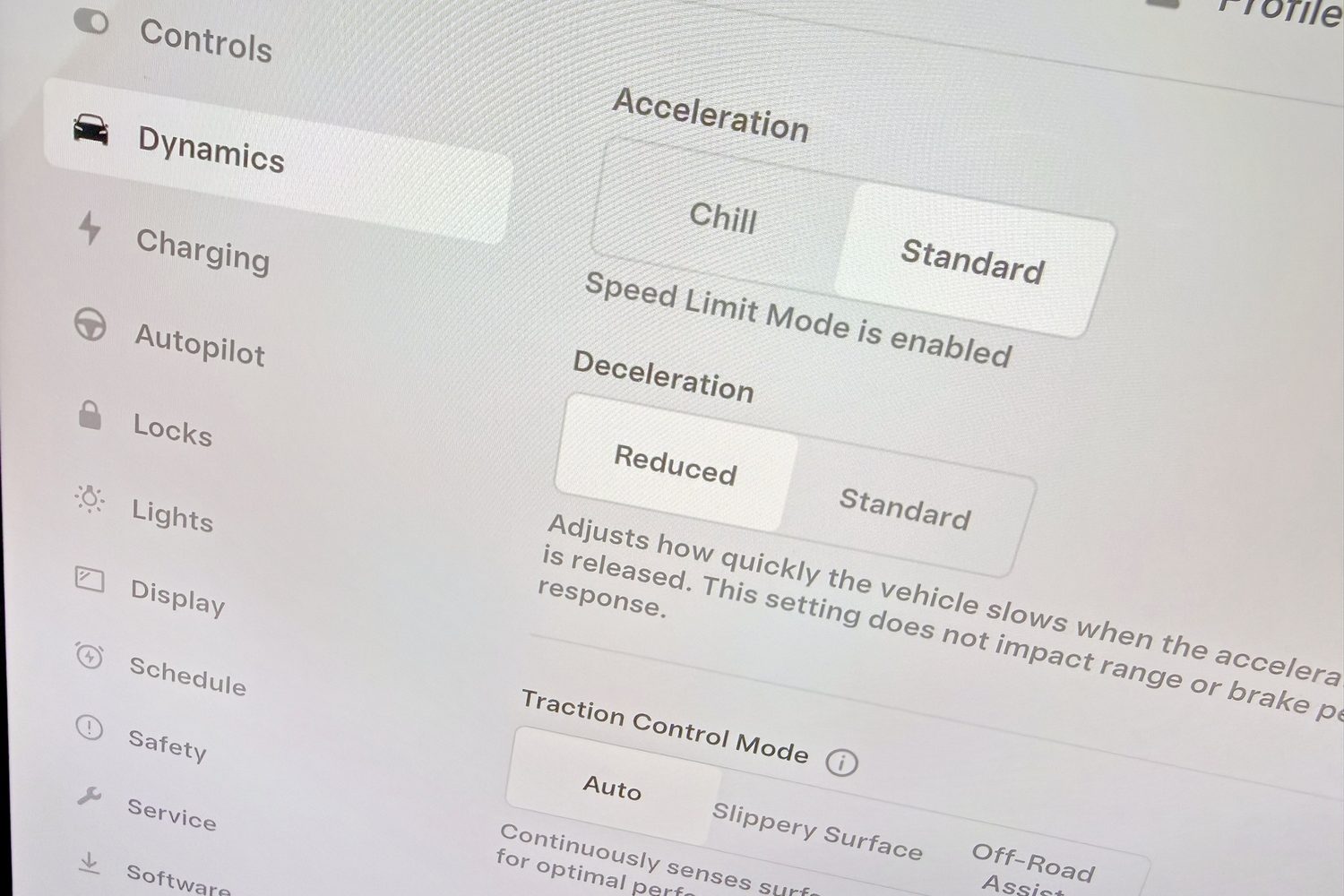
The default level of brake energy regeneration is a little strong for our liking, so we chose the "Reduced” setting for most of our driving, while the lack of response in the "Chill” setting for acceleration urged us to use the "Standard” mode instead.
Range, battery, charging and running costs of the 2026 Tesla Model Y
- Up to 622km range
- Tesla Supercharging network is good
- DC charging up to 250kW

As with the performance, there are five different levels of range in the Model Y, though in reality, most of them come with an official range of around 600 kilometres. The cheapest Rear-Wheel Drive car doesn't go as far on a charge, but it is efficient, meaning it costs less to go a given distance. A heat pump is included in all versions of the Model Y.
Battery options and official range
Again, Tesla doesn't like to divulge too much data, but it's believed that the Model Y Rear-Wheel Drive has an official range of 505km. Tesla quotes a 13.8kWh/100km energy consumption figure.
There's a Long Range Rear-Wheel Drive model as well, with an official range of 616km.
Above that is the Premium model, fitted with a 75kWh battery (we believe that is the usable energy capacity of it), allowing for up to 622km in the rear-wheel-drive version, or 600km in the dual-motor model. The associated energy consumption figures are 14.2kWh/100km and 15.9kWh/100km, respectively.

The Performance version comes with an official range of 580km, so it would be sensible to assume it uses the same battery, but it's understood to have a little more usable capacity - up to 79kWh. It's nowhere near as efficient as the other versions, with a 26kWh/100km consumption figure.
Real-world range and efficiency of the Tesla Model Y Rear-Wheel Drive
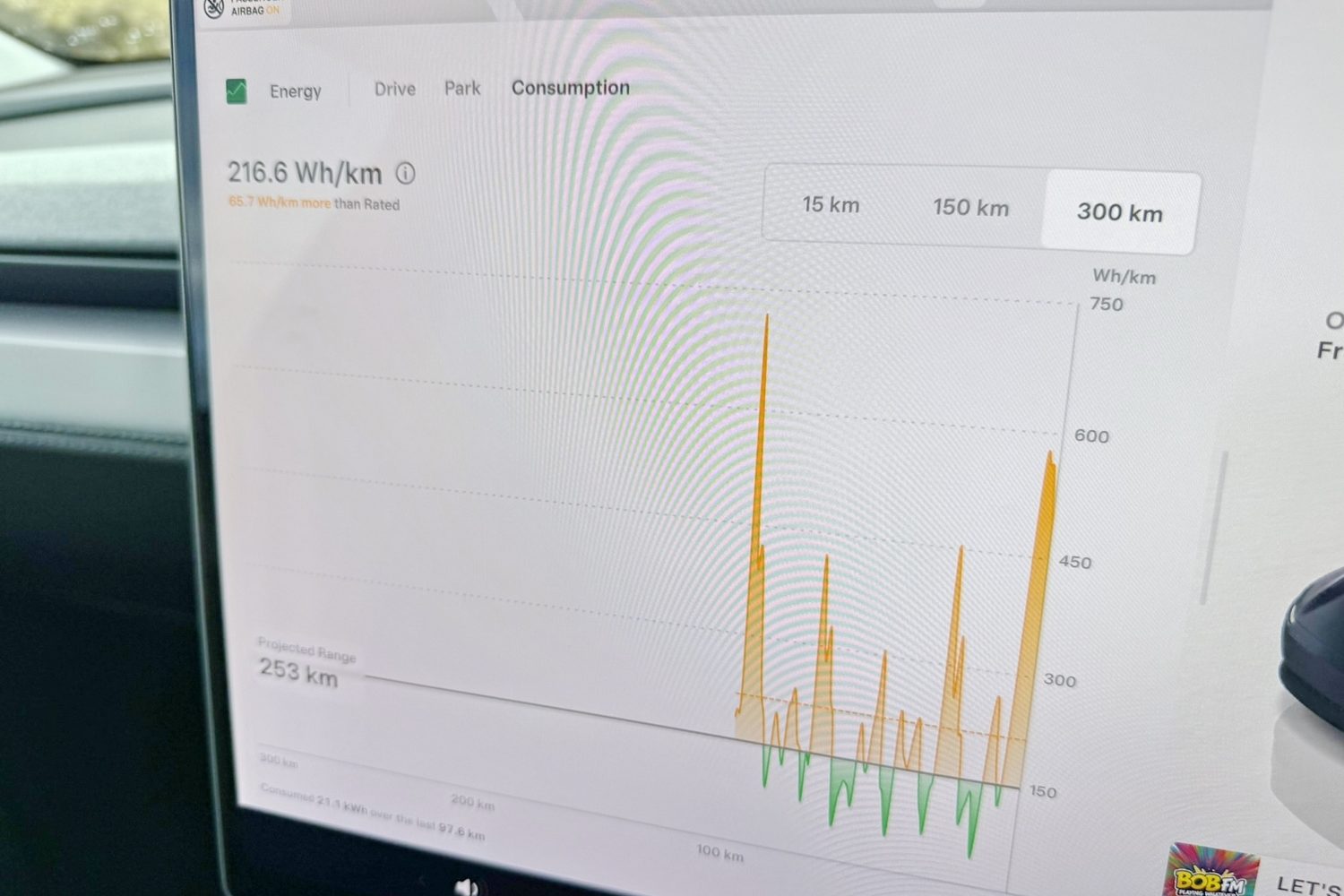
On a cold and wet winter day, we took the Model Y Rear-Wheel Drive on a loop that included the M50 at 100km/h, relatively free-flowing urban streets and then up into the mountains for photography. The average energy consumption for this was about 21kWh/100km, meaning a potential range under similar conditions of about 300km (if we're right about the battery size).

Encouragingly, if you exclude the hilly part of the route, the car managed as low as 16kWh/100km, so it certainly has the potential to be very efficient.
Charging up the Tesla Model Y
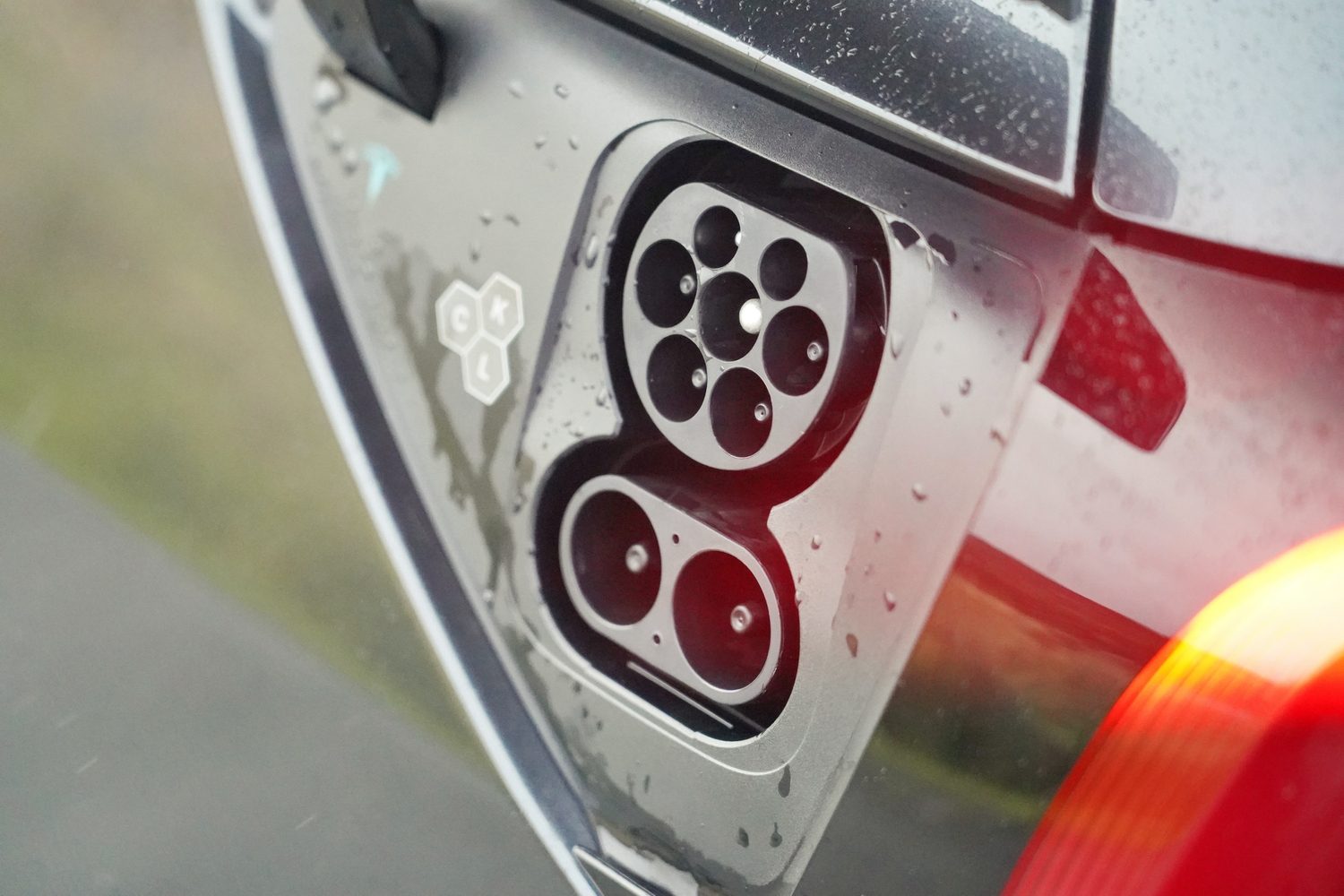
As is fast becoming the norm, the Model Y can manage up to 11kW on three-phase AC chargers. The entry-level Rear-Wheel Drive model is limited to 175kW on suitably fast DC chargers, which isn't much of a handicap, though the other variants can peak at 250kW.
The Tesla Supercharging network is unique and makes life on longer journeys easier for Tesla owners, though it's no longer the benchmark it once was.
Servicing the Tesla Model Y
Tesla doesn't stipulate when its cars should be serviced, so it's done as and when required. It has a team of "Rangers” on the road across the country to deal with issues as its service centres are few and far between.
Tesla Model Y warranty
The Model Y itself comes with a four-year/80,000km warranty, while the battery and motor are separately covered for up to eight years or 192,000km - whichever comes first.
Irish pricing & rivals to the 2026 Tesla Model Y
- From about €38,000 potentially
- Or a little over €300 a month
- Three core trim levels

Including the VRT rebate and SEAI grant, the Model Y Rear-Wheel Drive could be had from as little as €42,990. That's great value, despite the amount of content taken out of the car in comparison to the other variants in the lineup. On PCP it's €319 a month, on regular Hire Purchase, it's €549.
The Long Range Rear-Wheel Drive model is €46,990 (€349 a month on PCP).
The Premium model is €49,990 (€449 a month on PCP) in single-motor guise, or €52,990 with all-wheel drive (€499 a month).
Topping them all is the Performance car at €61,990, or €849 a month on PCP.

Verdict - should you buy the 2026 Tesla Model Y?
The Tesla Model Y mixes great practicality with decent efficiency and lots of technology for a compelling price. The Rear-Wheel Drive variants bring the price down further and are still good cars for everyday duties, though most will want to stick with the Long Range version of the entry-level trim. We still don't love the interior concept, but the Model Y is a difficult car to ignore if you're in the market for an electric SUV of this style and size.
FAQs about the 2026 Tesla Model Y
Is there a seven-seat version of the Tesla Model Y?
Such a thing does exist but is not offered in Ireland at this time.
Does the Tesla Model Y have a frunk?
It certainly does, quite a large one at that holding well over 100 litres. It's opened either through the Tesla app or via the car's touchscreen. Curiously, in a bid to reduce the price, the Rear-Wheel Drive's frunk is more rudimentarily trimmed and doesn't get a drain plug.
Can I fit three car seats in the back of the Tesla Model Y?

That's highly unlikely due to the relatively narrow space between the seatbelt buckles in the middle seat.
Where is the Tesla Model Y made?
In Germany, at Tesla's Gigafactory Berlin-Brandenburg.
Want to know more about the 2026 Tesla Model Y?
If there's anything about the new Tesla Model Y we've not covered, or you'd like help in choosing between it and other cars, you can avail of our expert advice service via the Ask Us Anything page.