







Exterior & design of the 2026 Renault Rafale
- Premium style for far less cash
- Gorgeous satin-finished paint
- French presidential seal of approval

In summer of 2025, before we had a chance to test the Rafale PHEV on Irish roads, Renault announced that it was chosen as one of the official cars of the French president, complete with extra lights, flags, sirens and some discreet armour plating. While the Rafale is handsome enough already, the thought of it also serving as a fast and agile official government car gives is an extra sheen of desirability.
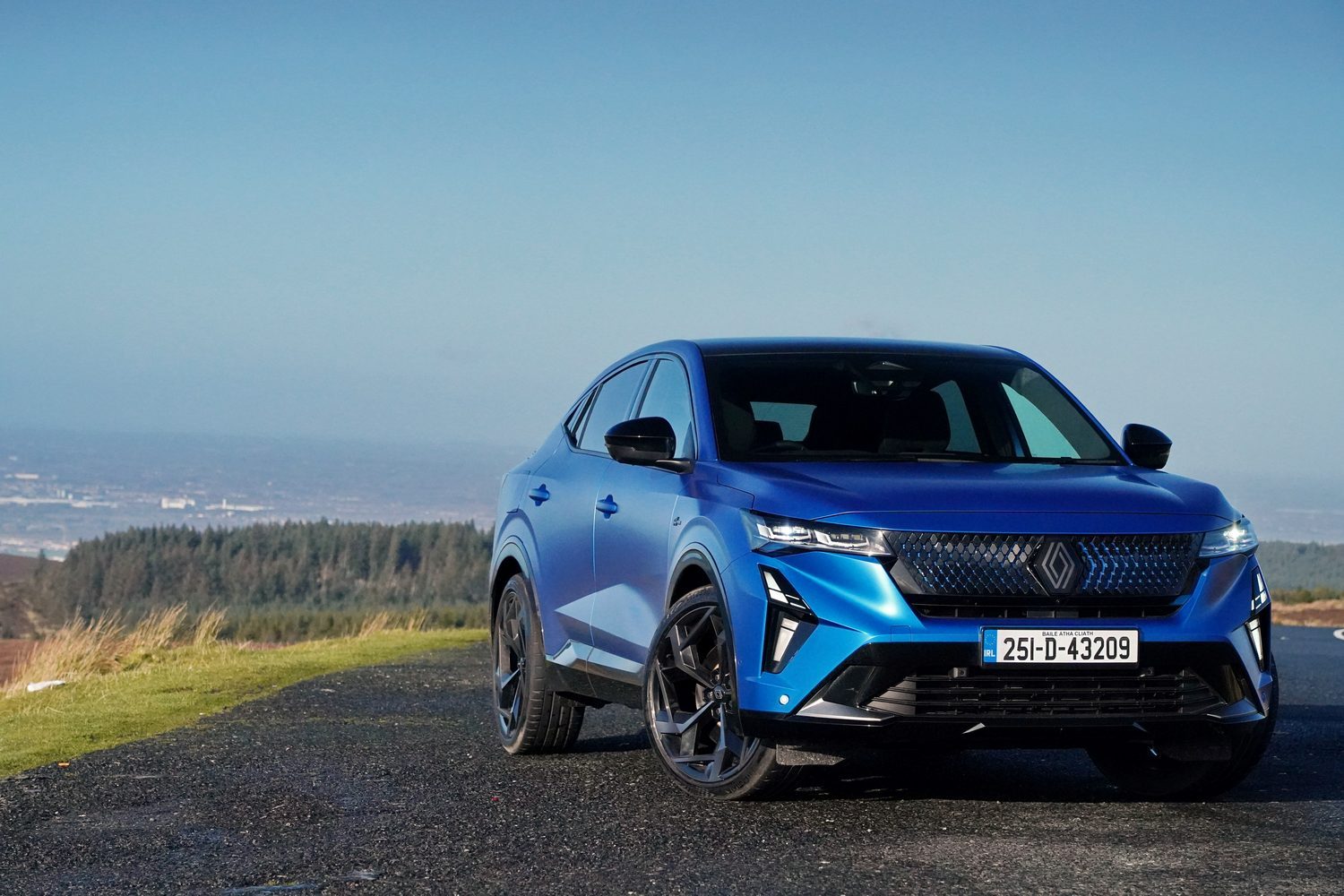
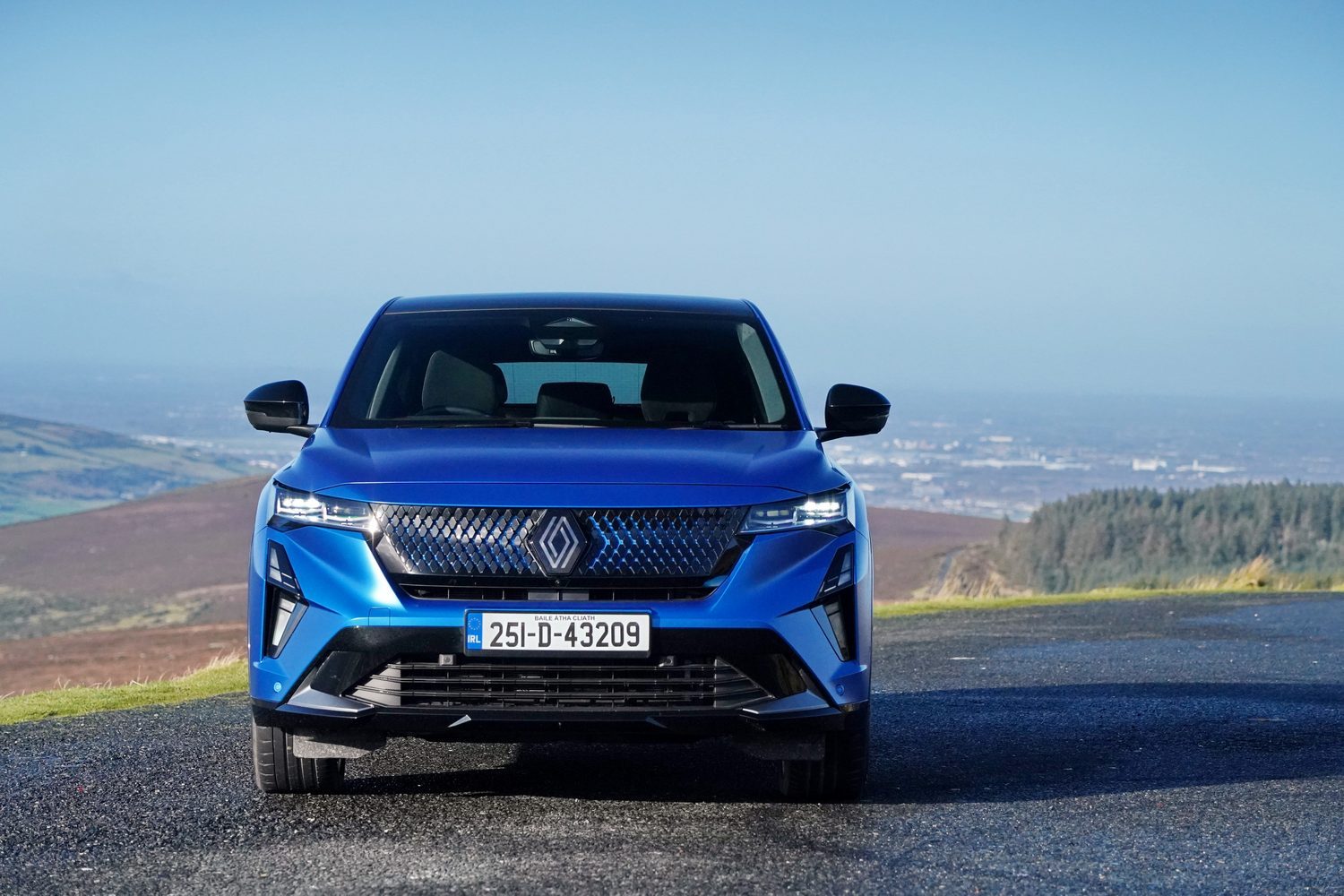
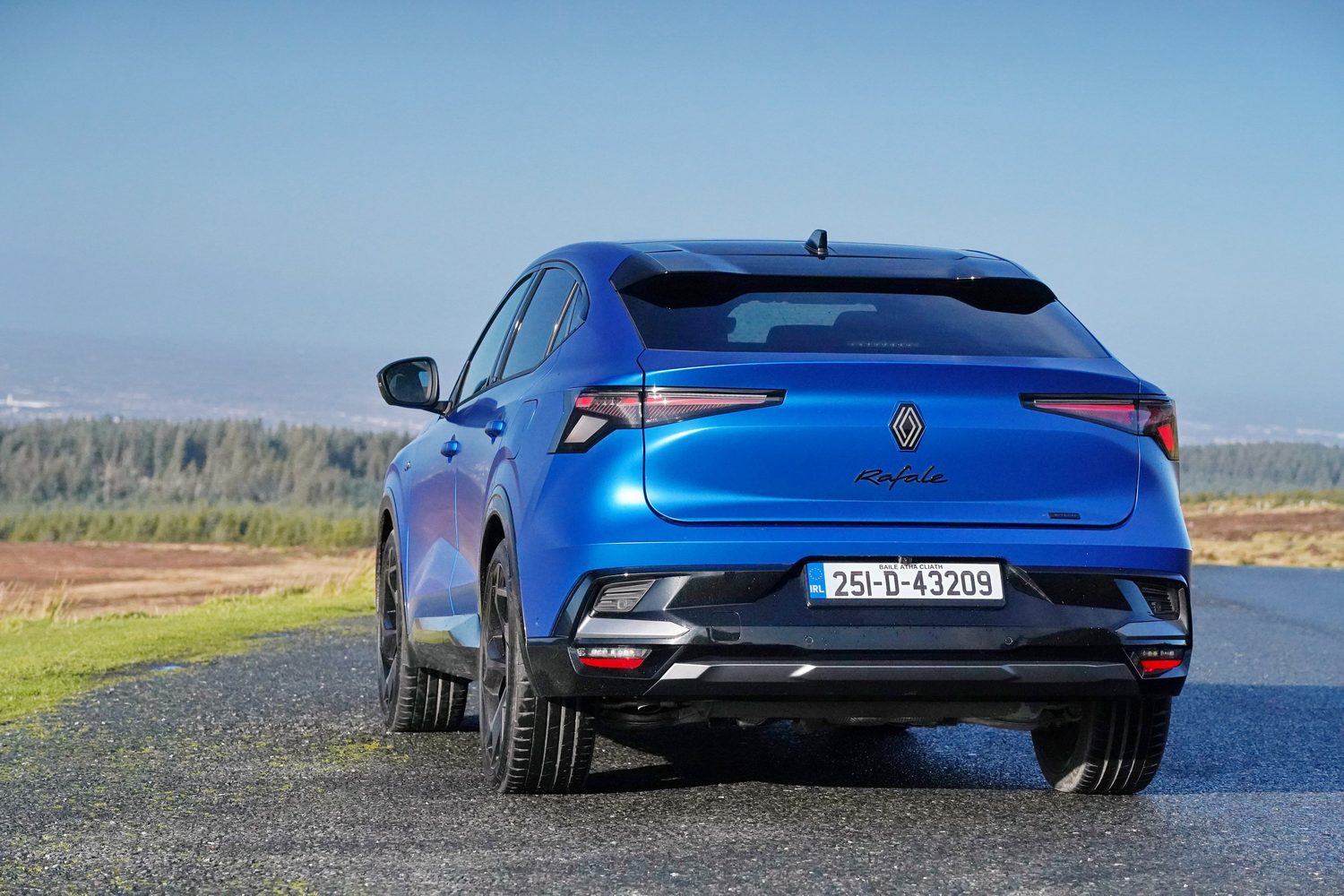
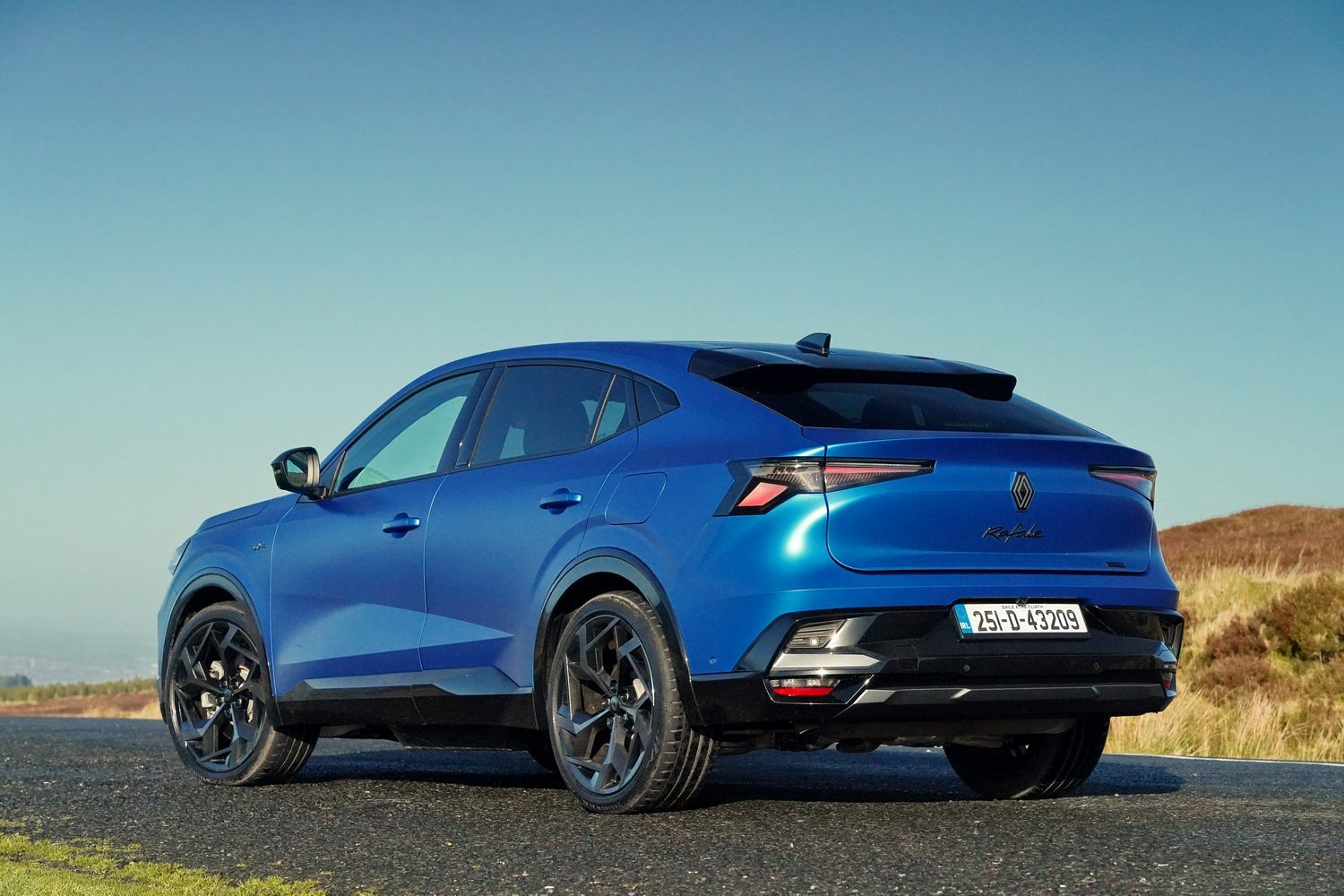
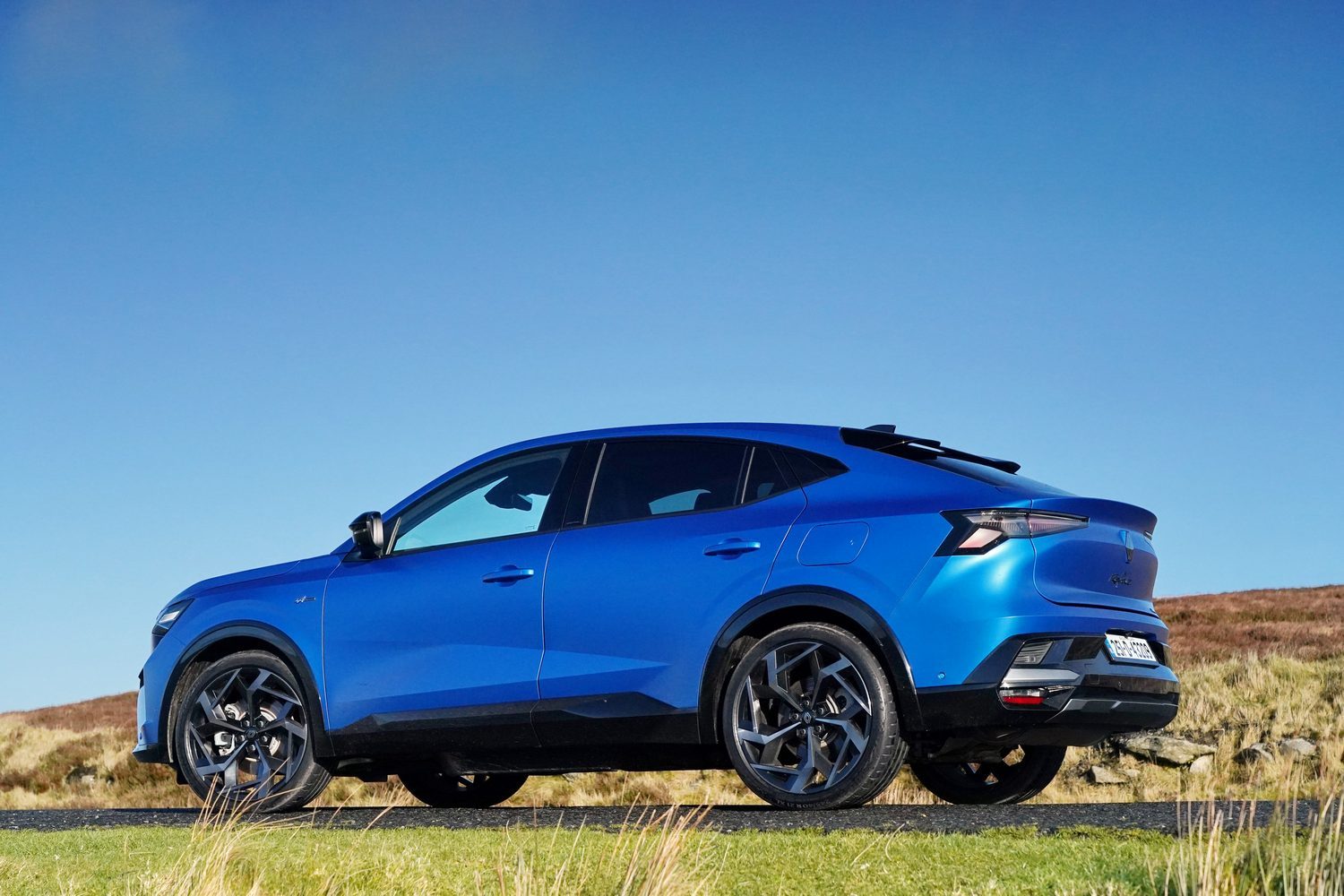
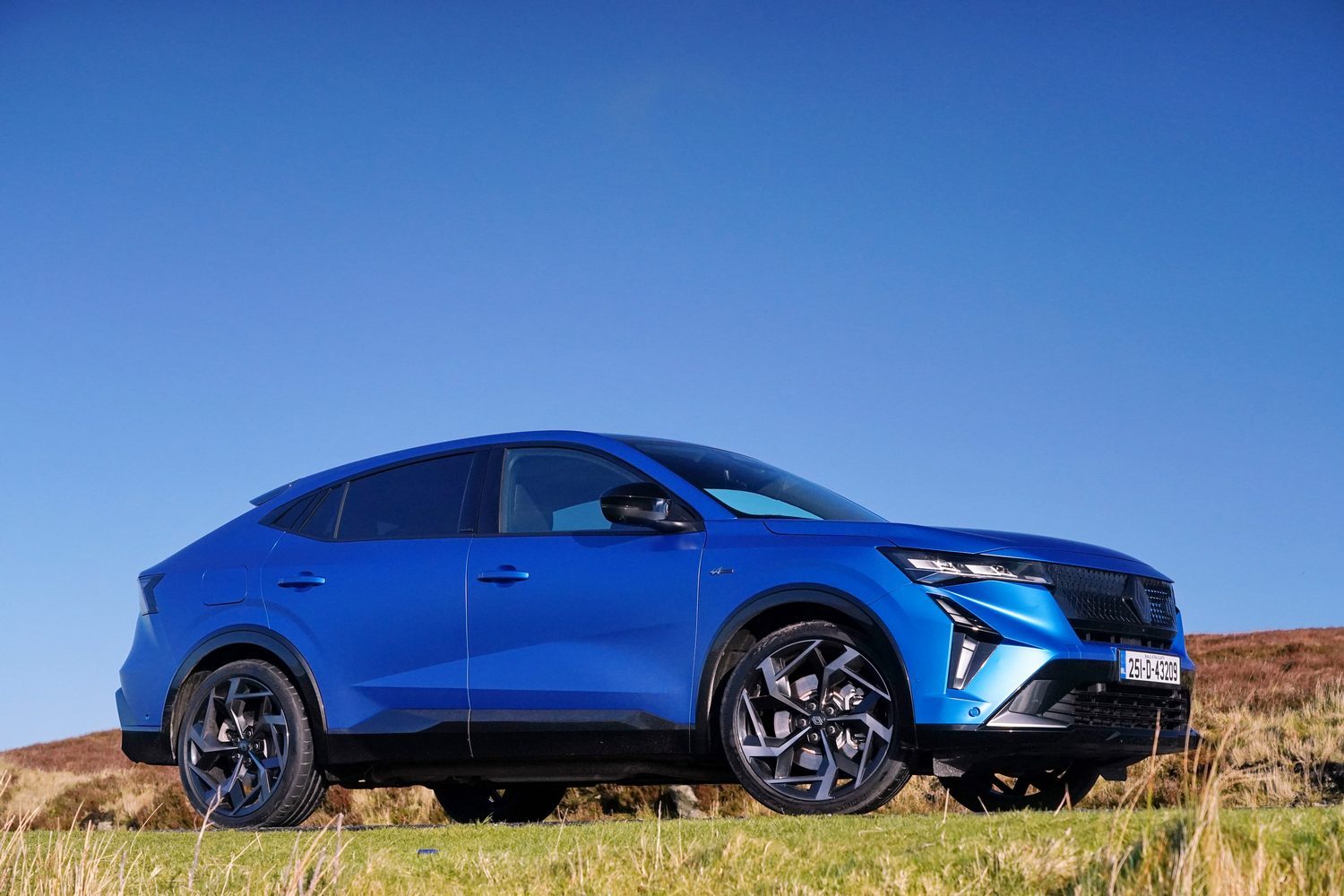
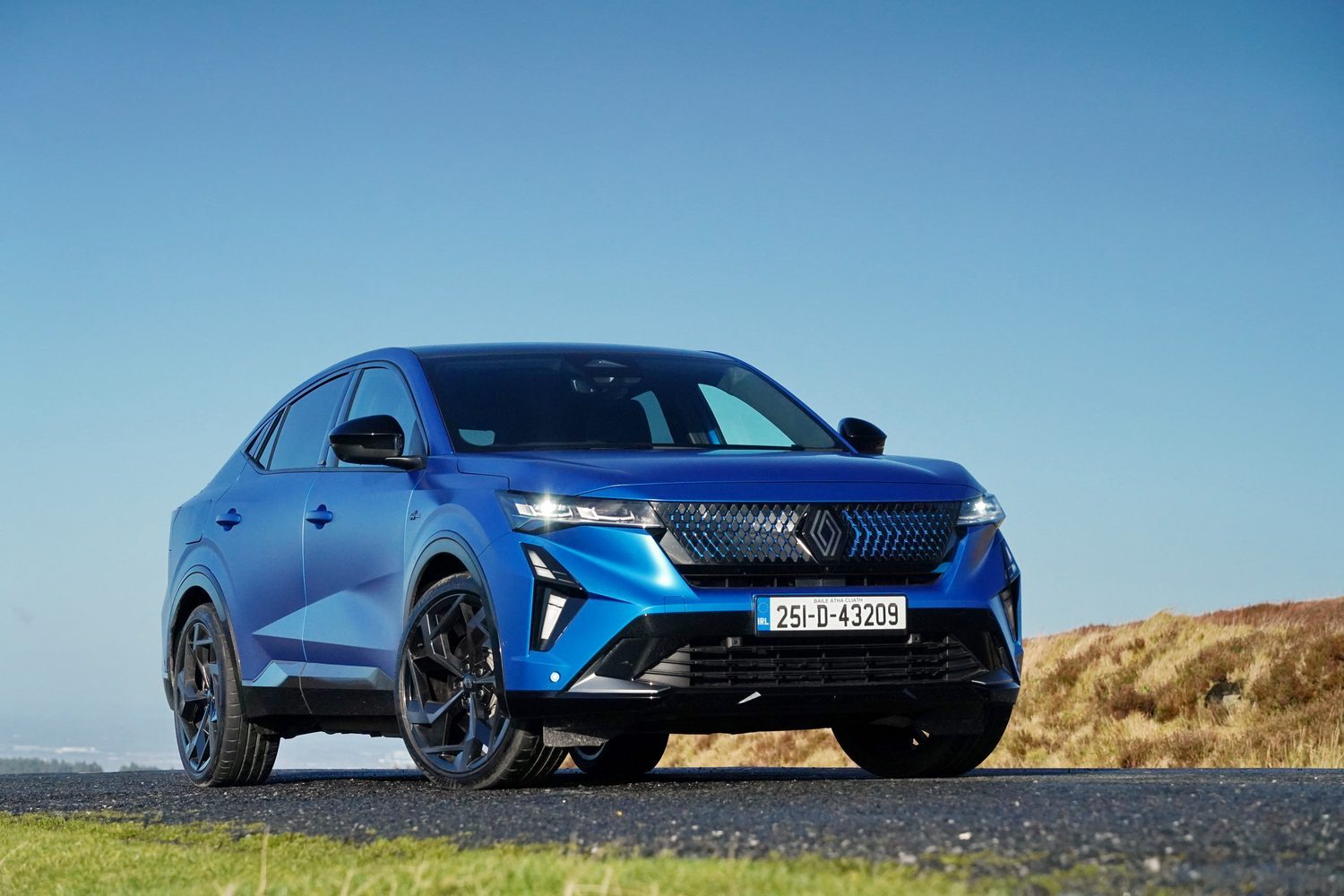
At first, the sharp edges of the Rafale's design are seemingly at odds with the curvier look of most other Renaults. Indeed, if you compare the Rafale to the Renault Austral SUV with which it shares a platform, the Austral looks much softer; the Rafale much pointier and more aggressive.

Not that this is a bad thing, and our top-spec Atelier Alpine test car was nicely set off by some dark-finished 21-inch alloys with spidery-like spokes, and a special paint finish unique to this model, which we'll discuss more below.
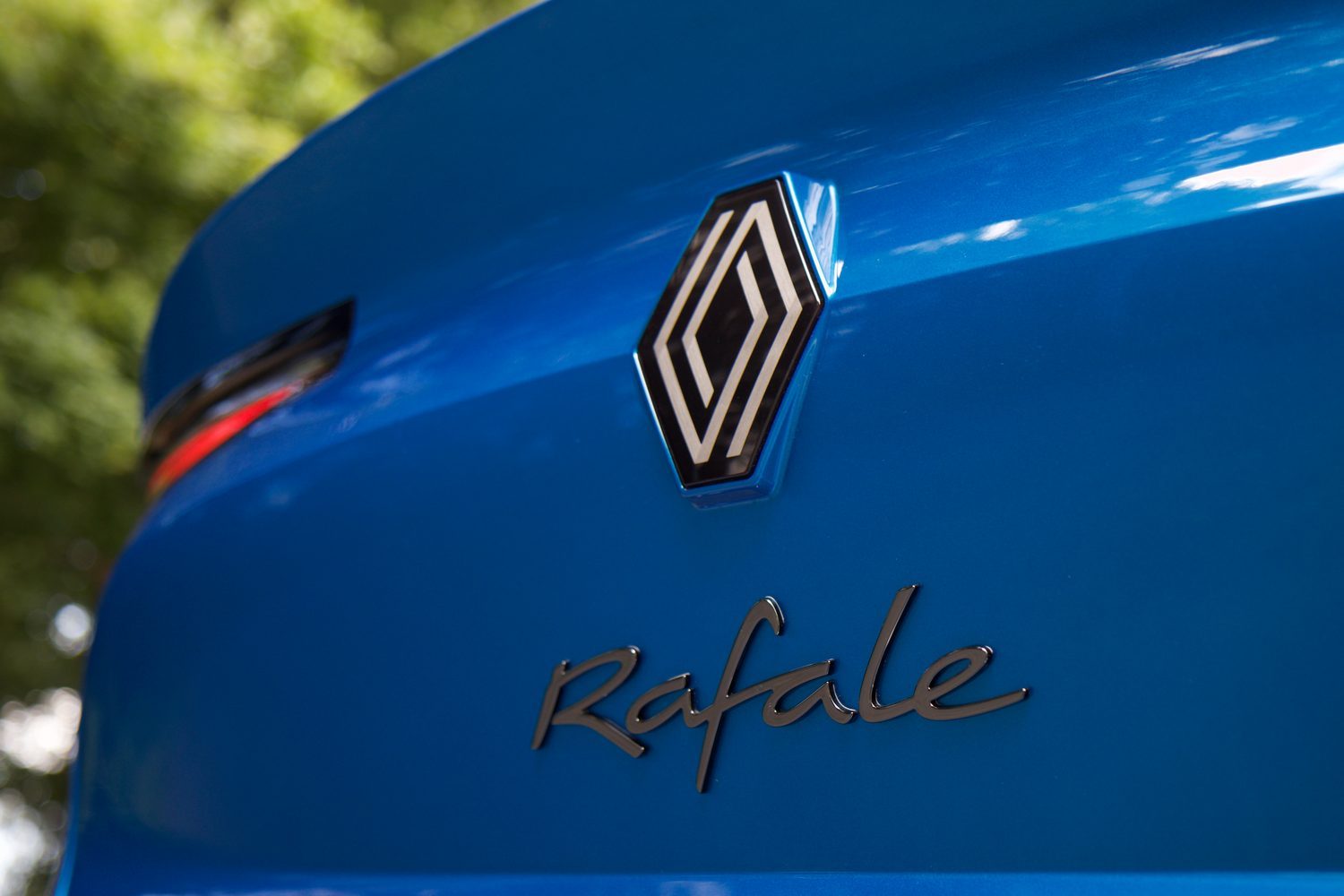
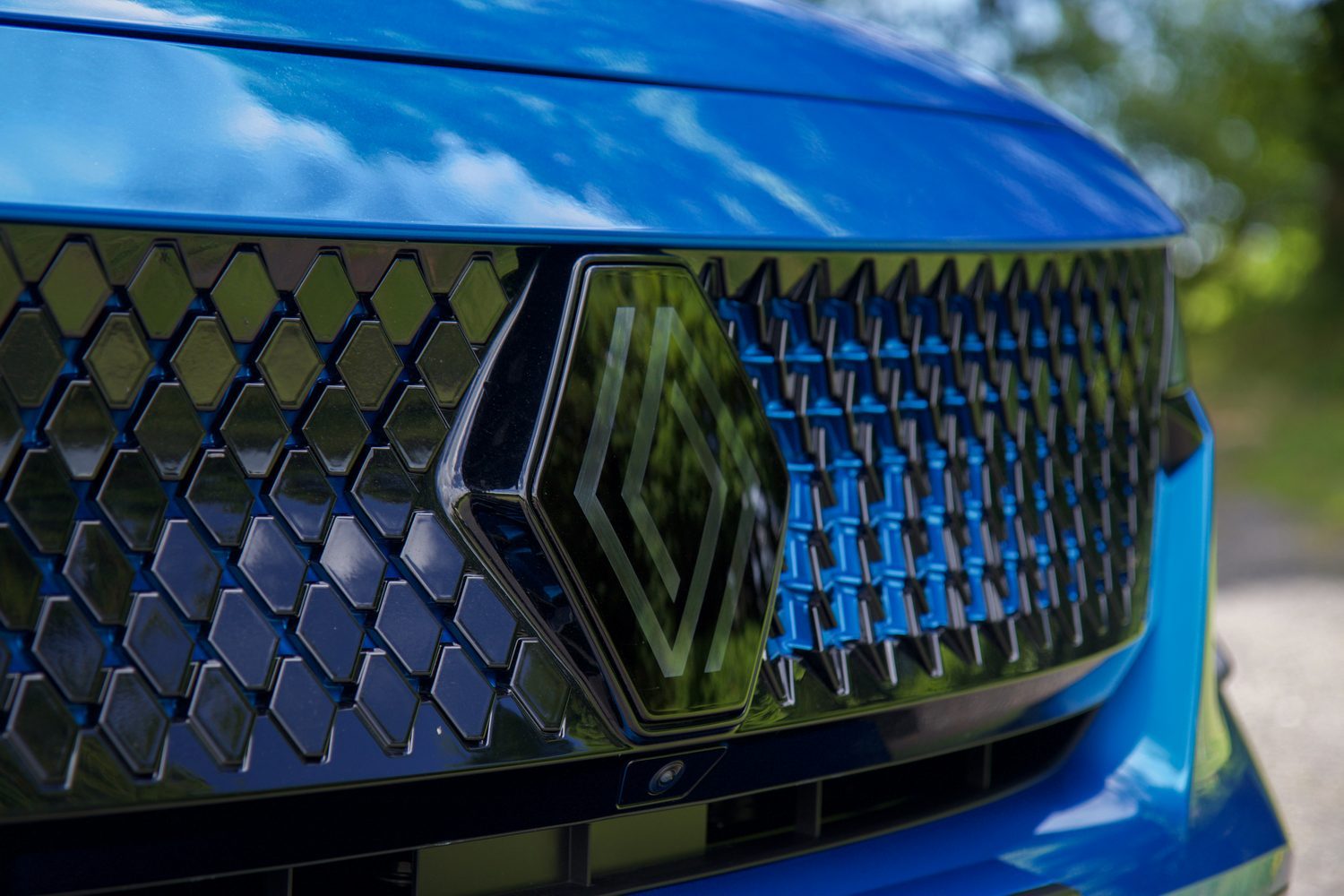
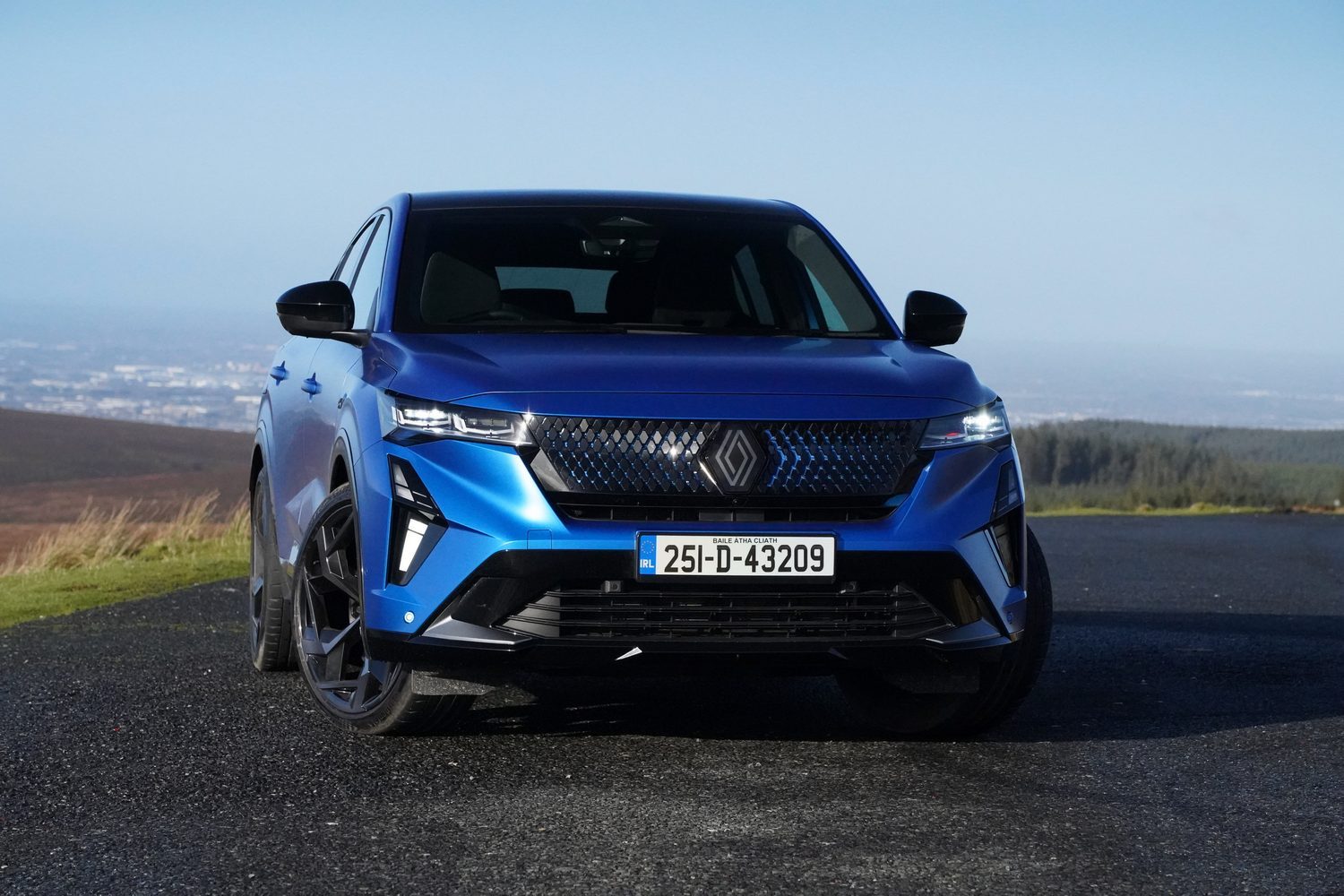
The combination of slim headlights, 'arrowhead' LED signature lights set low in the front fascia and a countersunk grille with its large Renault diamond badge certainly give the Rafale a distinctive face, while the tucked-down roofline makes a better job of the SUV-coupe look than the likes of BMW's X2.
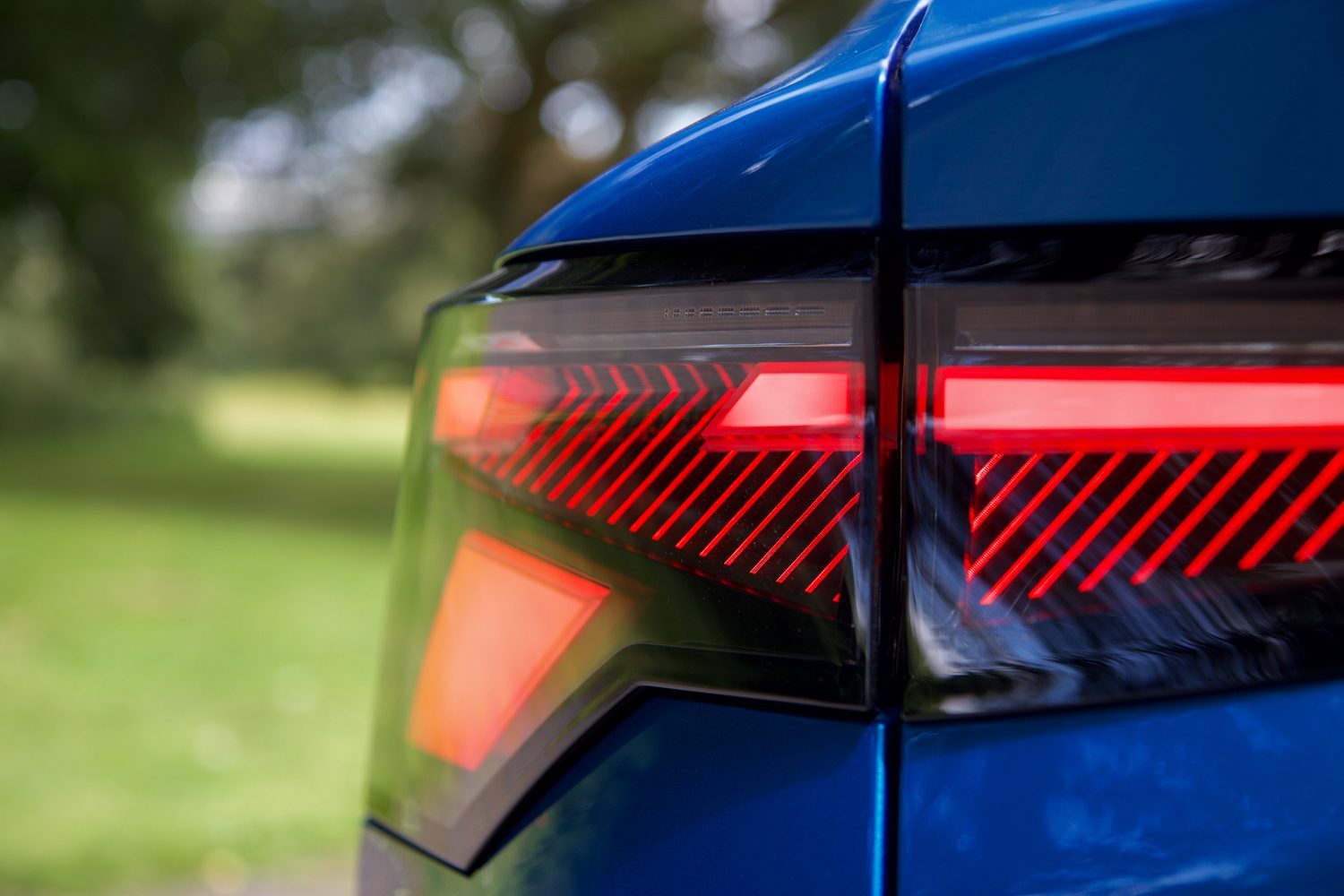
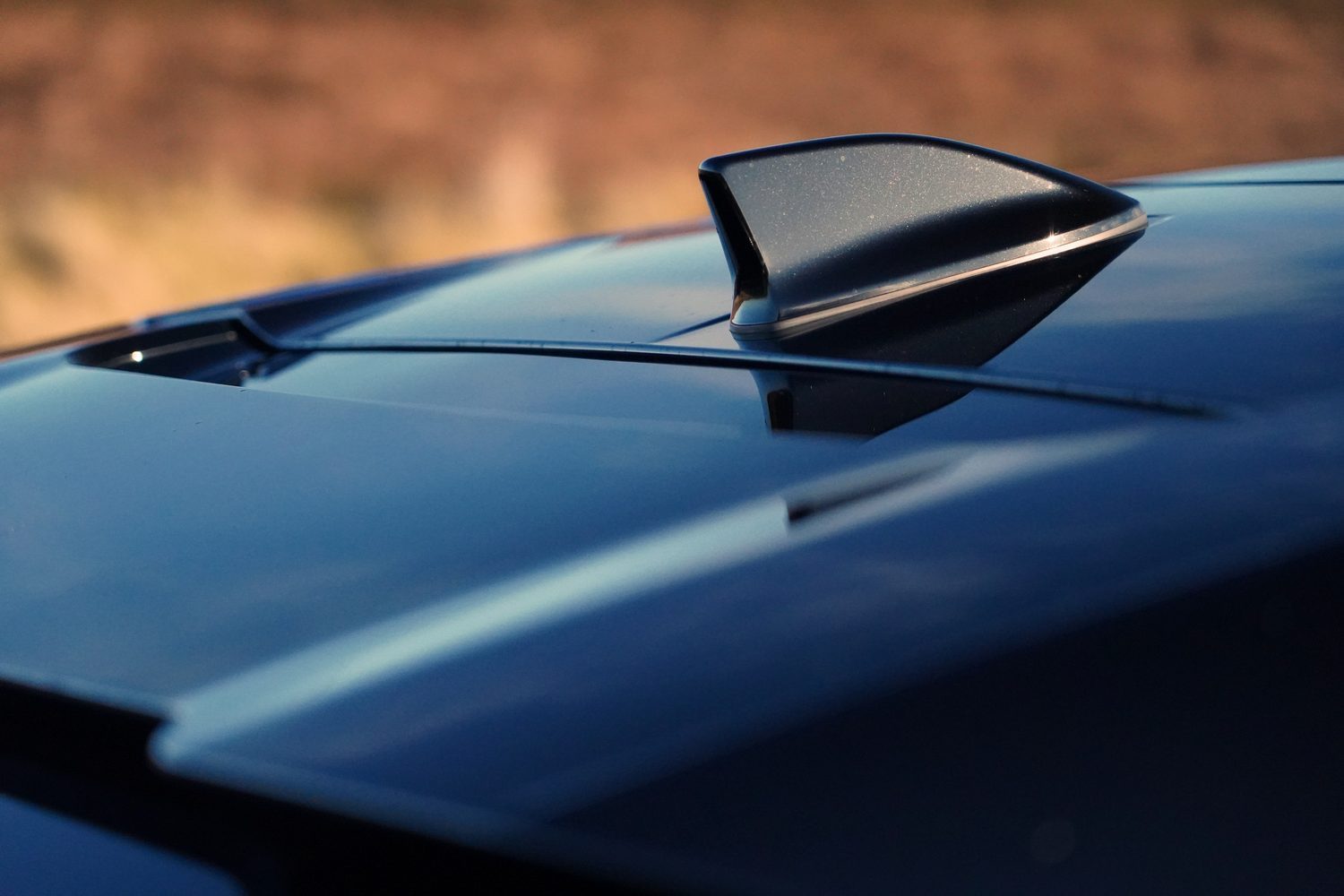
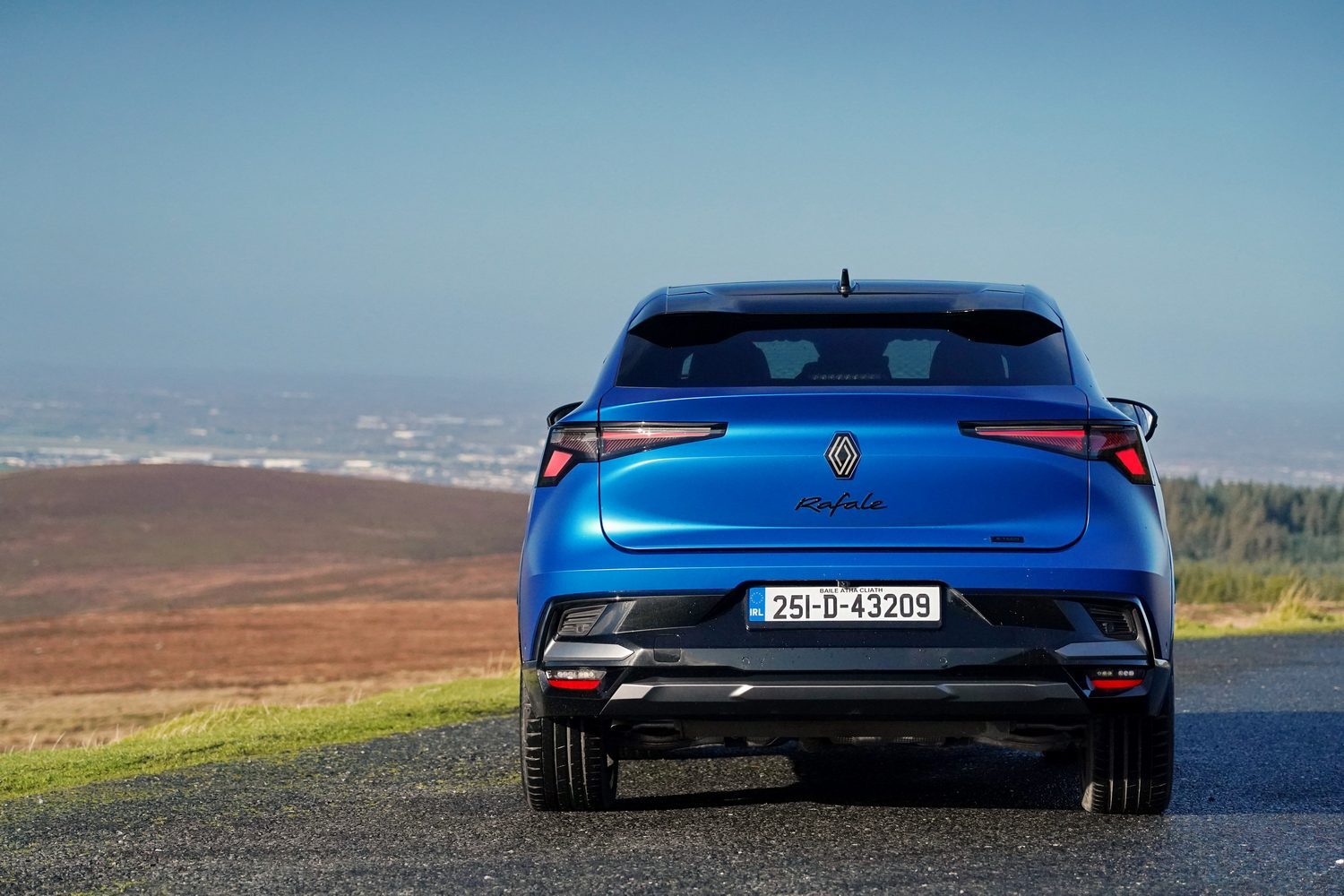
At the rear, there's a neat combo of a subtle flick-up effect in the trailing edge of the boot lid, along with a split-element spoiler mounted atop the glass.

Dimensions of the 2026 Renault Rafale
- Length:
- 4,710mm
- Width:
- 1,866mm (mirrors folded)
- Height:
- 1,613mm
- Wheelbase:
- 2,738mm
Paint colours for the 2026 Renault Rafale
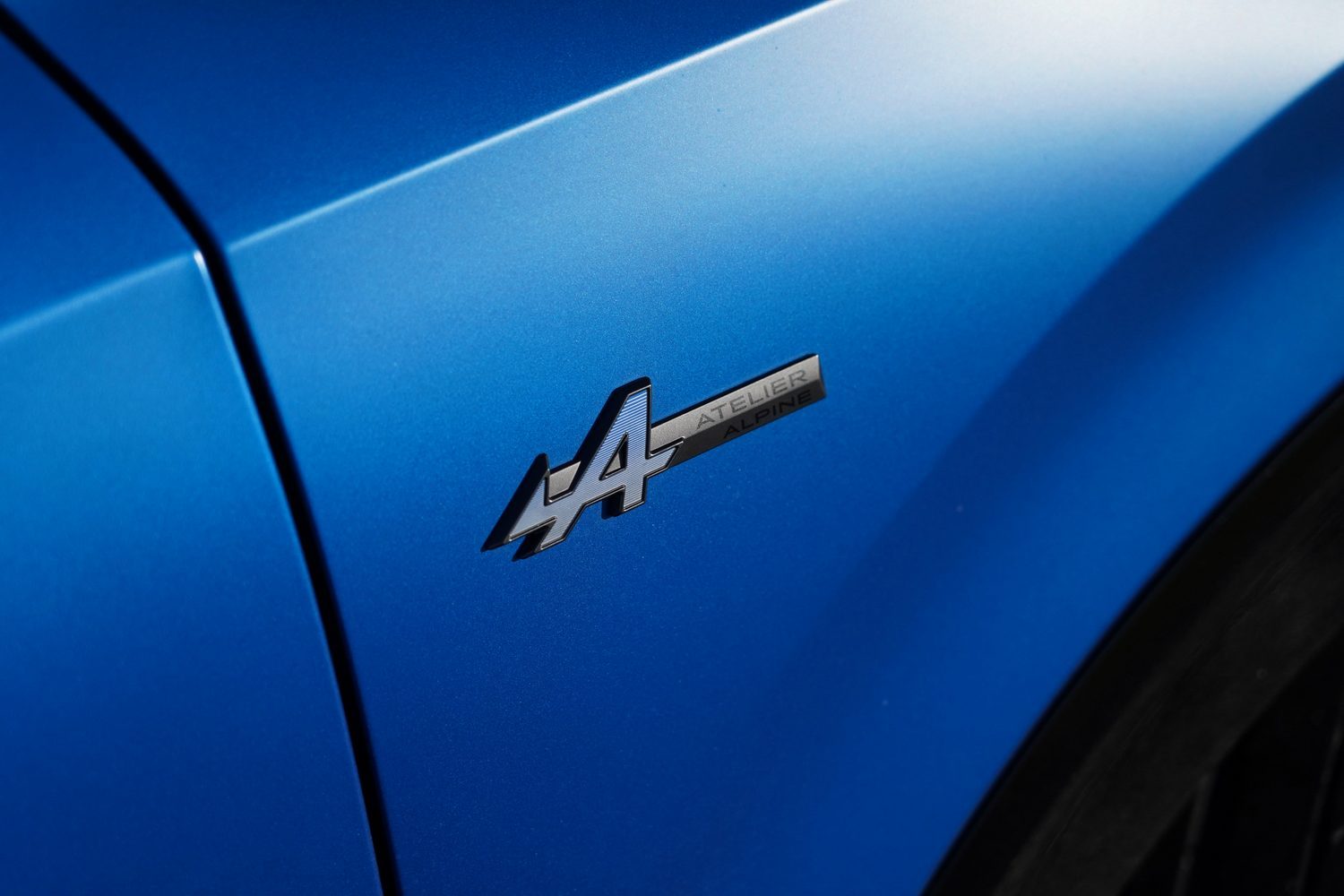
As standard, the Rafale comes with a choice of four metallic colours - Pearl Black, Shadow Grey, Flame Red or Alpine Blue. There's also a satin metallic option called Satin Pearl White, but the Atelier Alpine comes in a unique shade called Satin Summit Blue, which has a lustrous matte-like finish and a distinct shimmer under direct sunlight. It's a gorgeous colour. Renault's metallic paint prices start from €650.
Interior, practicality, tech & comfort of the 2026 Renault Rafale PHEV
- Decent cabin space
- Boot unaffected by battery
- Decent infotainment

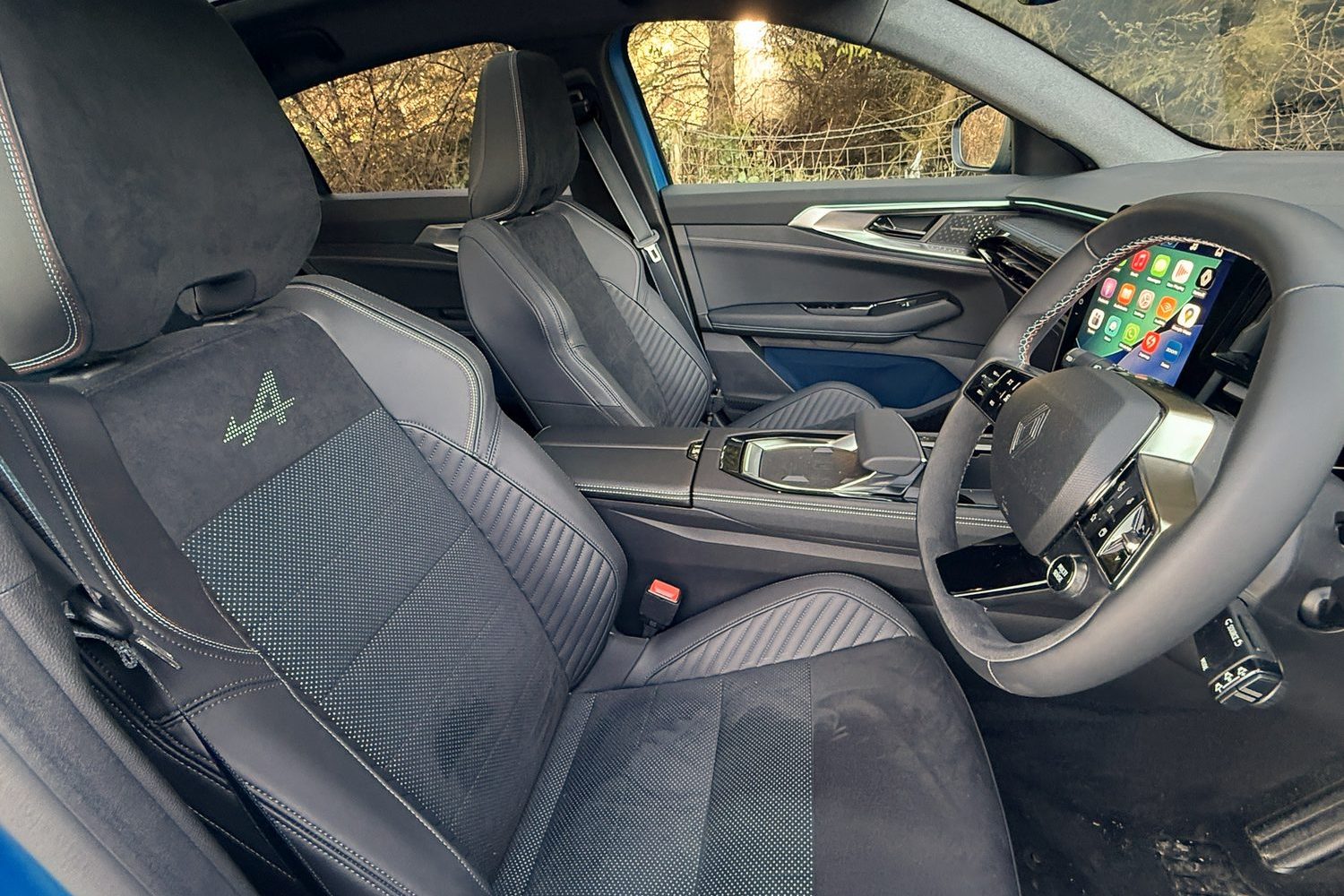
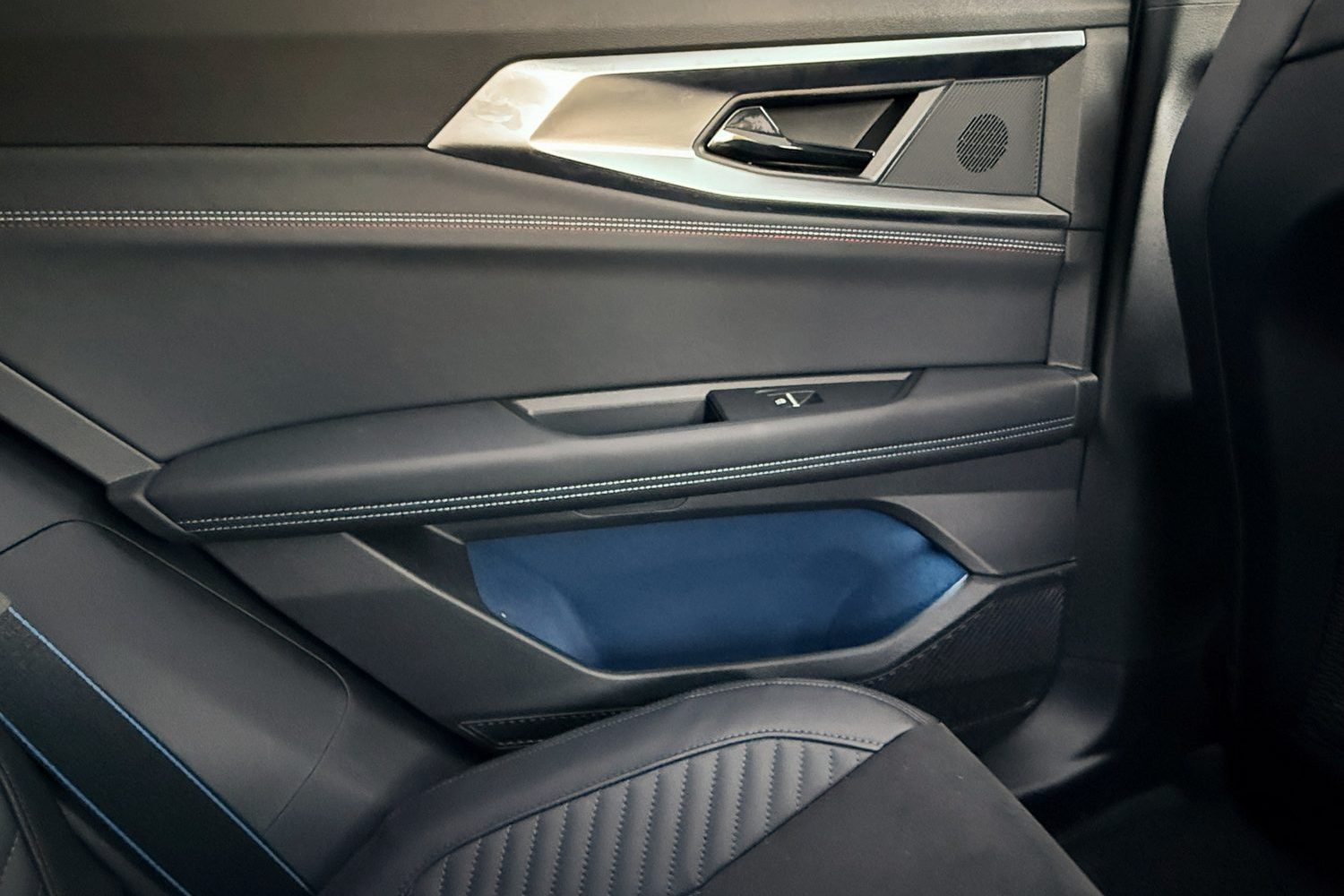
The top-spec Atelier Alpine version of the Rafale doesn't deviate much from the standard Rafale cabin (which itself is much the same as that of the Austral) bar some small details such as neat French tricolour stitching along the doors and dashboard and upgraded front seats.
Getting comfortable in the driver's seat
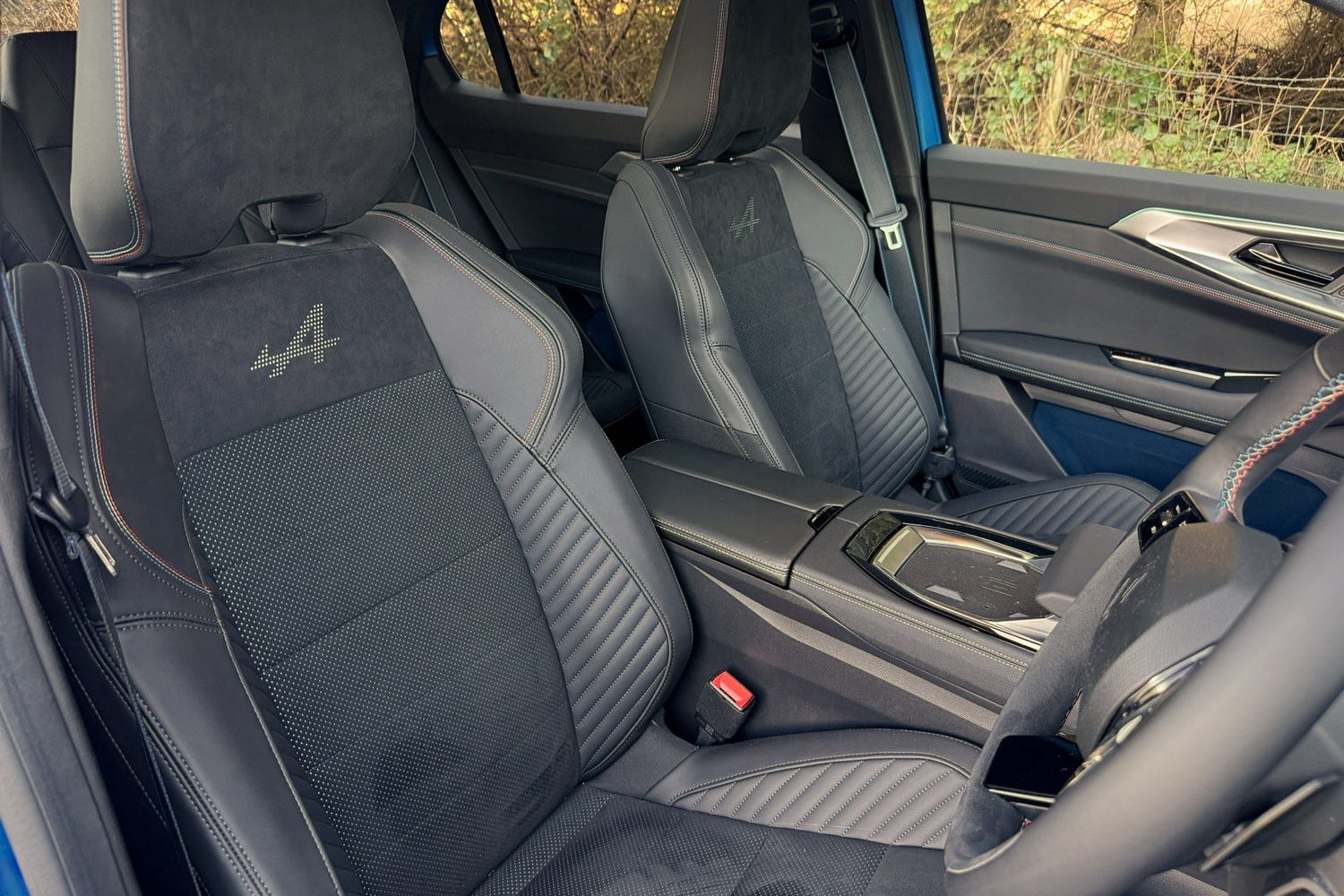
Comfort is a big thing for the Rafale Atelier Alpine, and it comes with a pair of wonderful front bucket seats, which are not only comfortable - and covered in a mixture of synthetic suede and leather - but also rather stylish, thanks to Alpine logos in the seat backs which appear, at first glance, to be stitched-in, but which are actually backlit too.

The front seats are heated and although an adjustable seat base for a touch more under-thigh support would be nice, they're very comfortable on a long journey as is.
There's plenty of adjustment fore-and-aft, as well as up and down, and there's an electric adjuster that alters the angle of the entire seat as well.
The slightly squared-off steering wheel isn't as good to hold as would have been a proper round wheel but it too has plenty of adjustment in both reach and rake, so you'd be hard-pressed not to find a comfortable driving position in the Rafale.

There is something of a blizzard of column stalks on the right-hand side of the steering column - the drive selector, wipers and satellite stereo controls are all there - but you do become accustomed to that.
Infotainment and technology
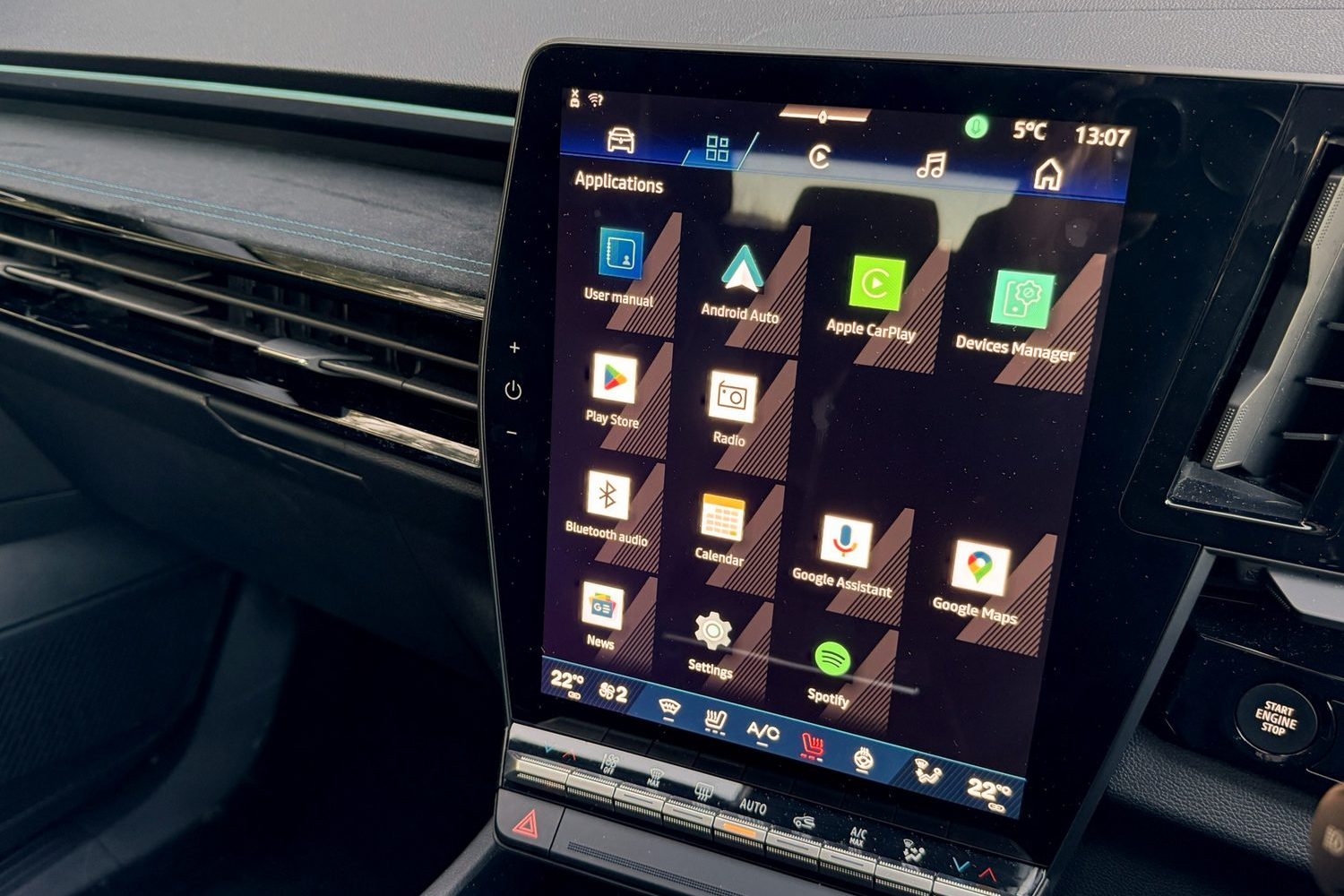
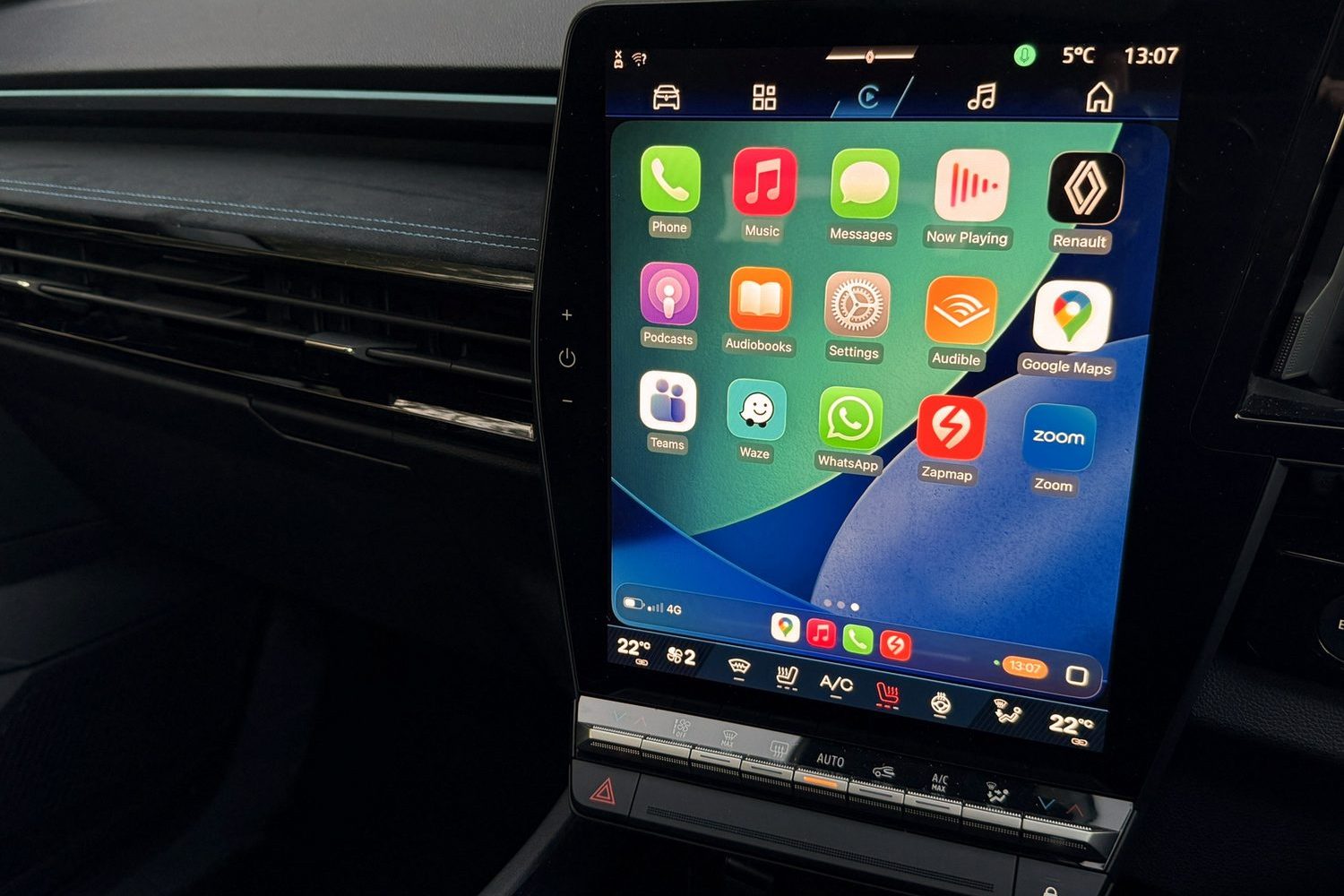
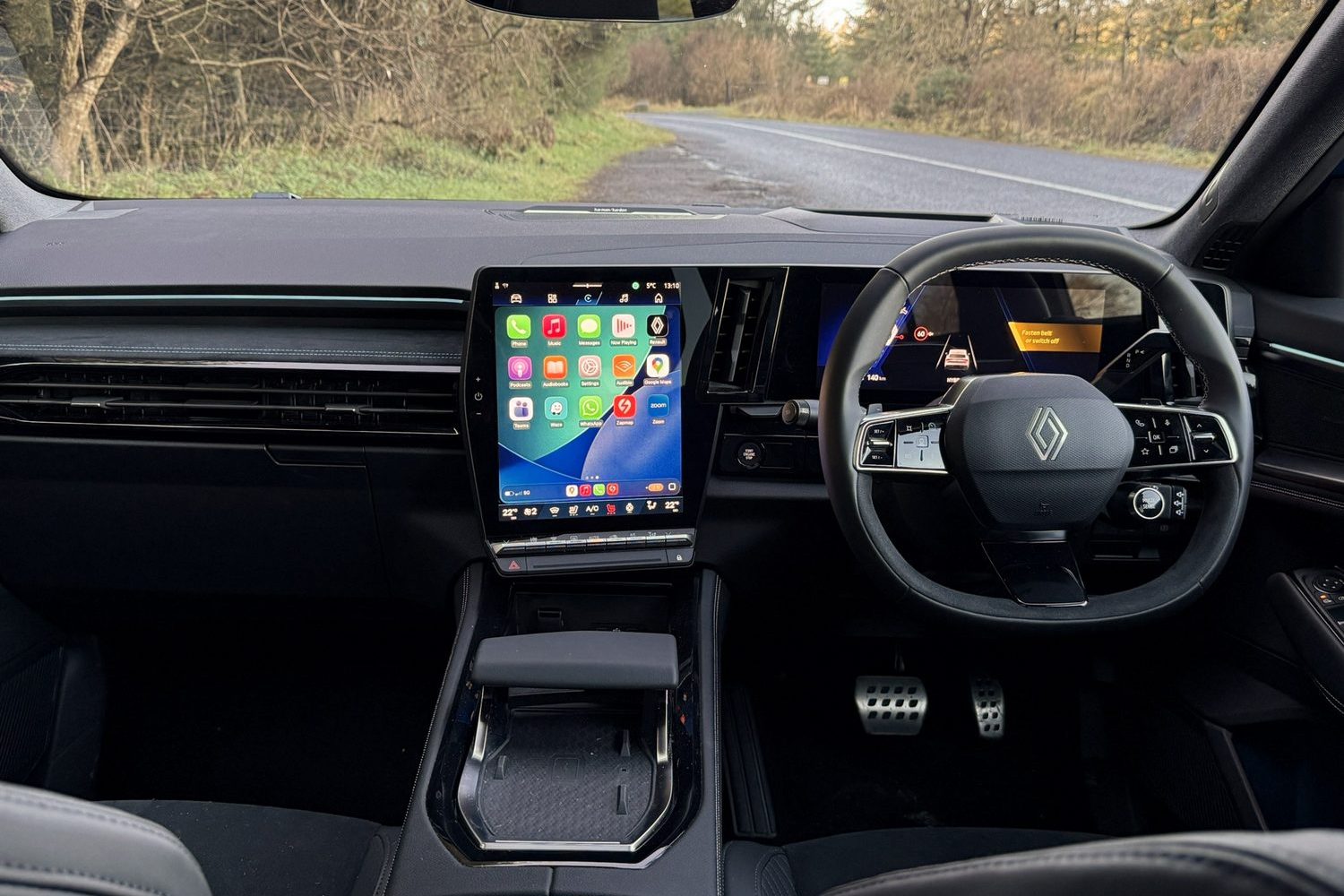
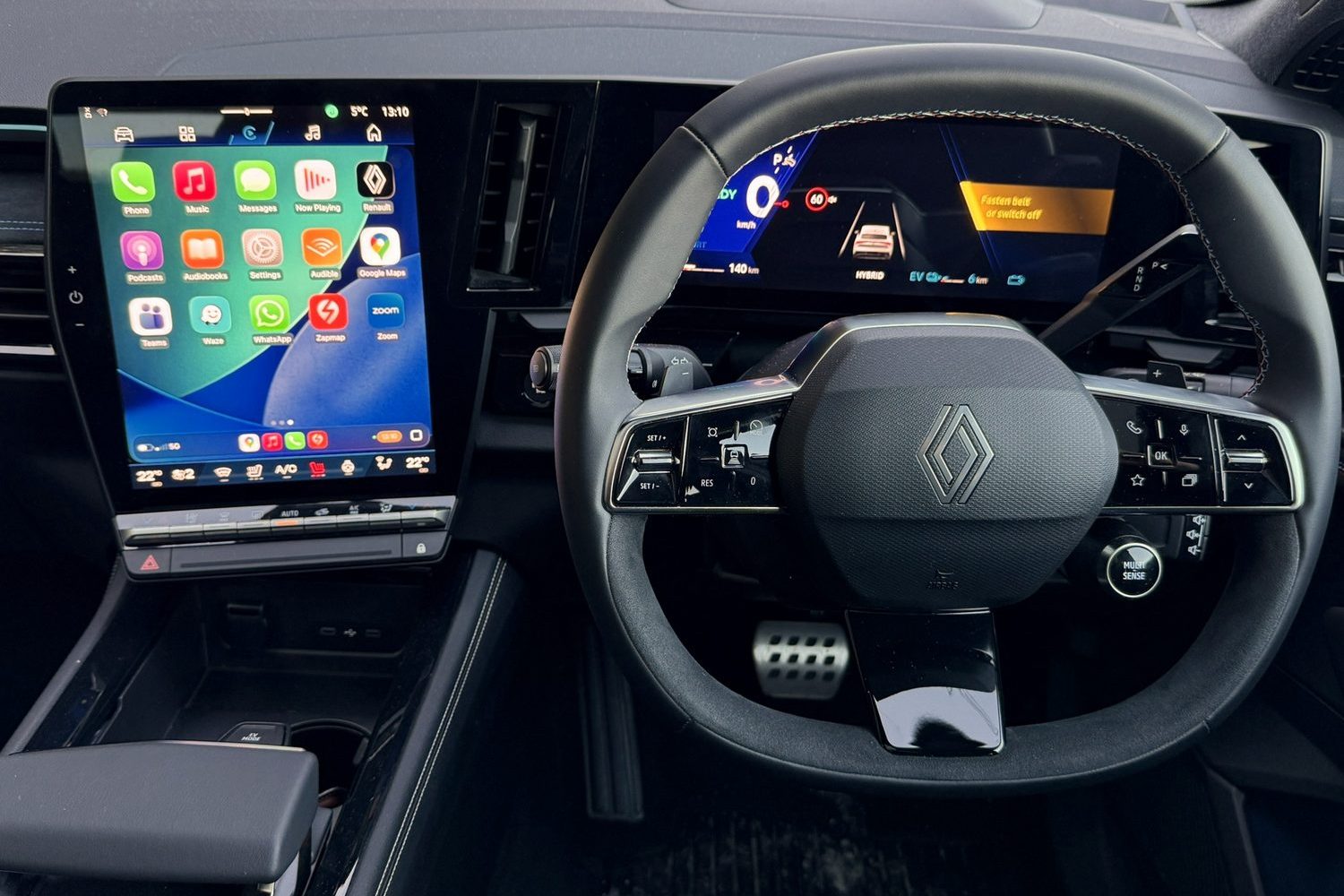
While this €63,995 Rafale has exactly the same infotainment and instrument screens as a humble €39,990 Renault Scenic, the big, upright, 12.3-inch touchscreen is absolutely one of the best in the business to use.

Renault has done an excellent job of overlaying its own graphics and menu system on top of Google-based software, so you get built-in Google Maps, Play Store and Google Assistant, but you also get some handsome-looking Renault menu screens, which for the most part are logical and simple to use.
Thankfully, Renault is one of those car makers which realises that drivers (and passengers) still need/want physical controls for common functions, so there are real buttons for the major climate control settings, which is a huge help.
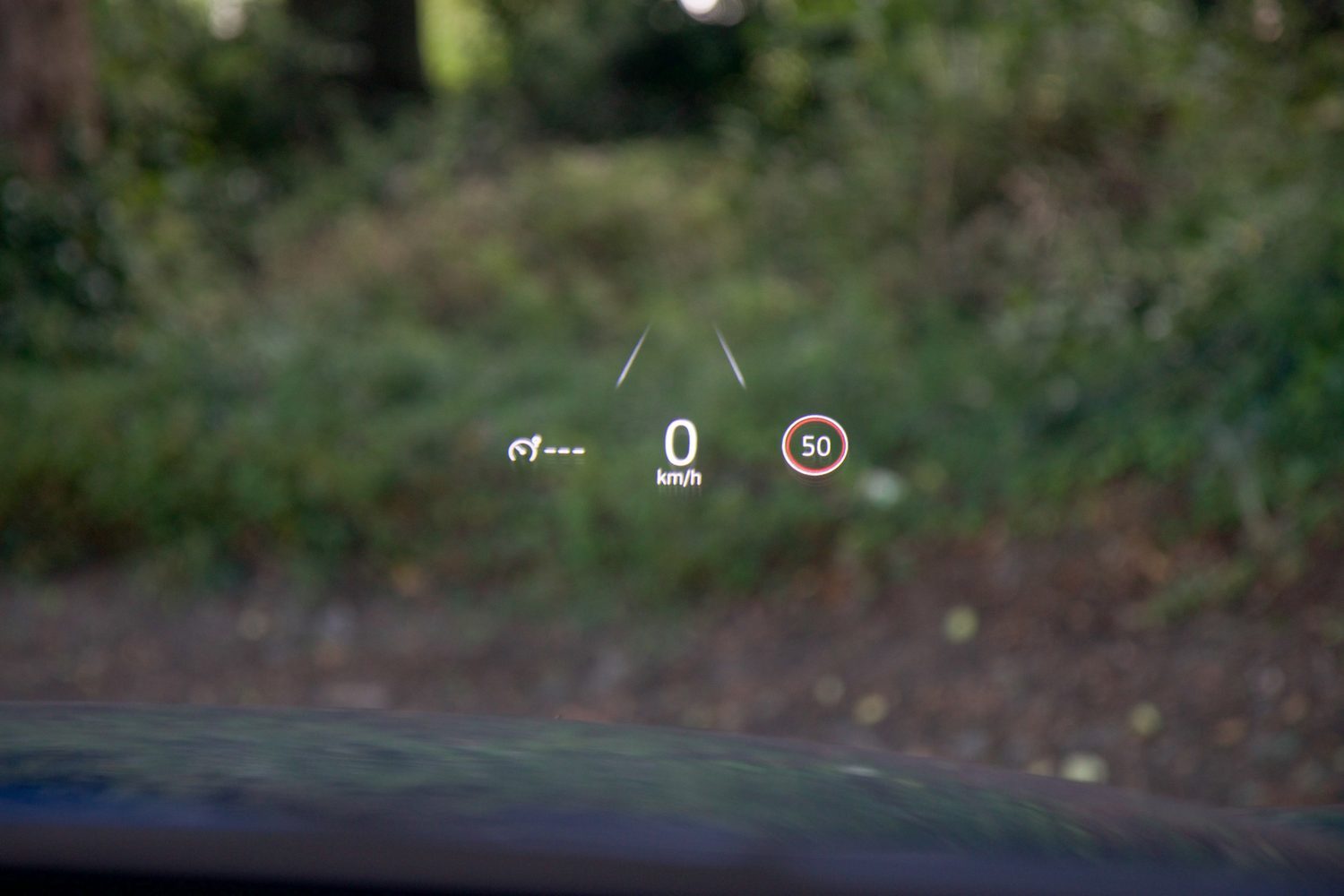
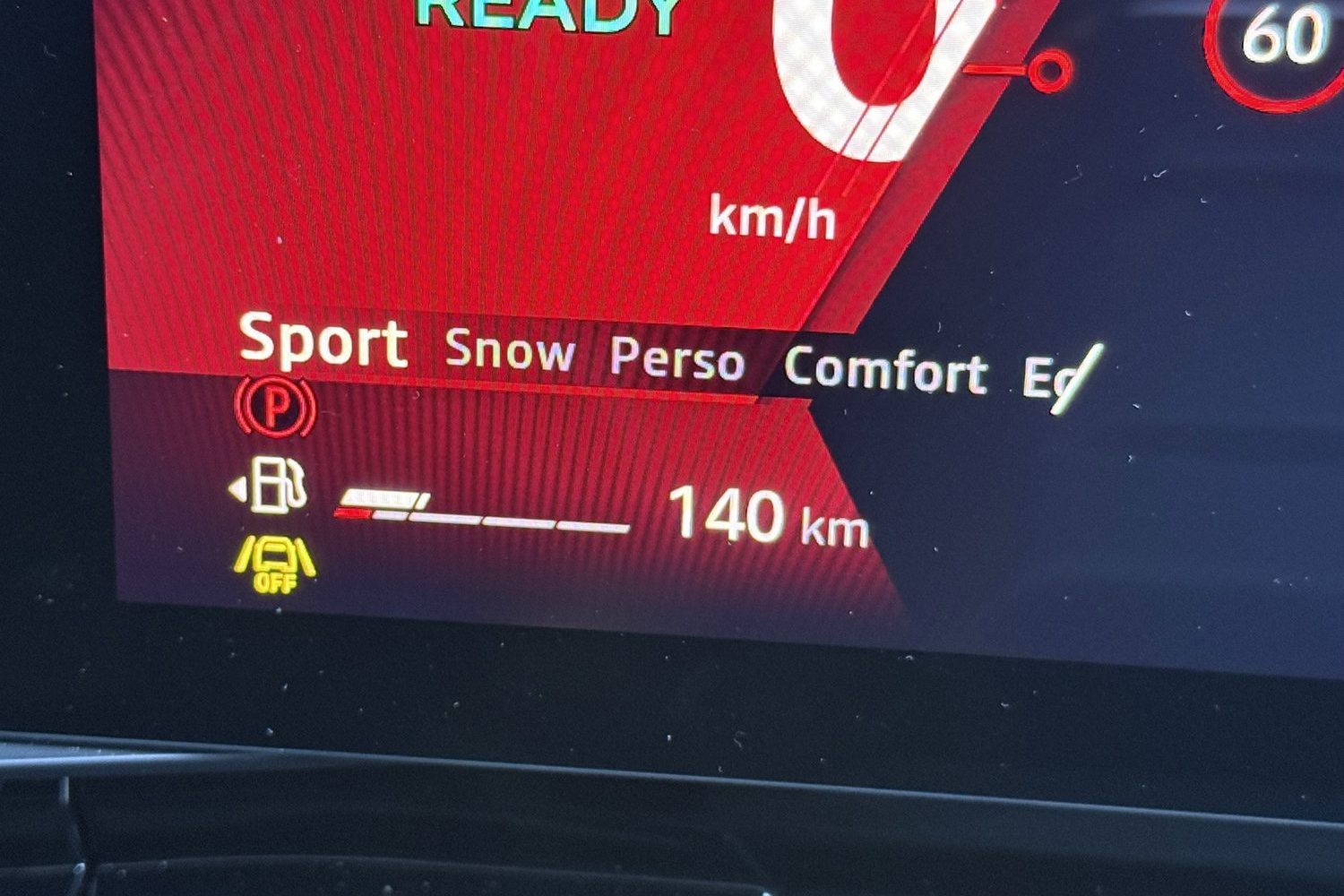
The steering wheel also has simple switchgear for the cruise control system and for changing and resetting the driver's display, which works well as you can shuffle easily from a simplified layout - which is easier on the eyes at night - to a full navigation display (Google Maps again) or other layouts, all of which change colour in line with the selected driving mode - or you can manually choose the colours.

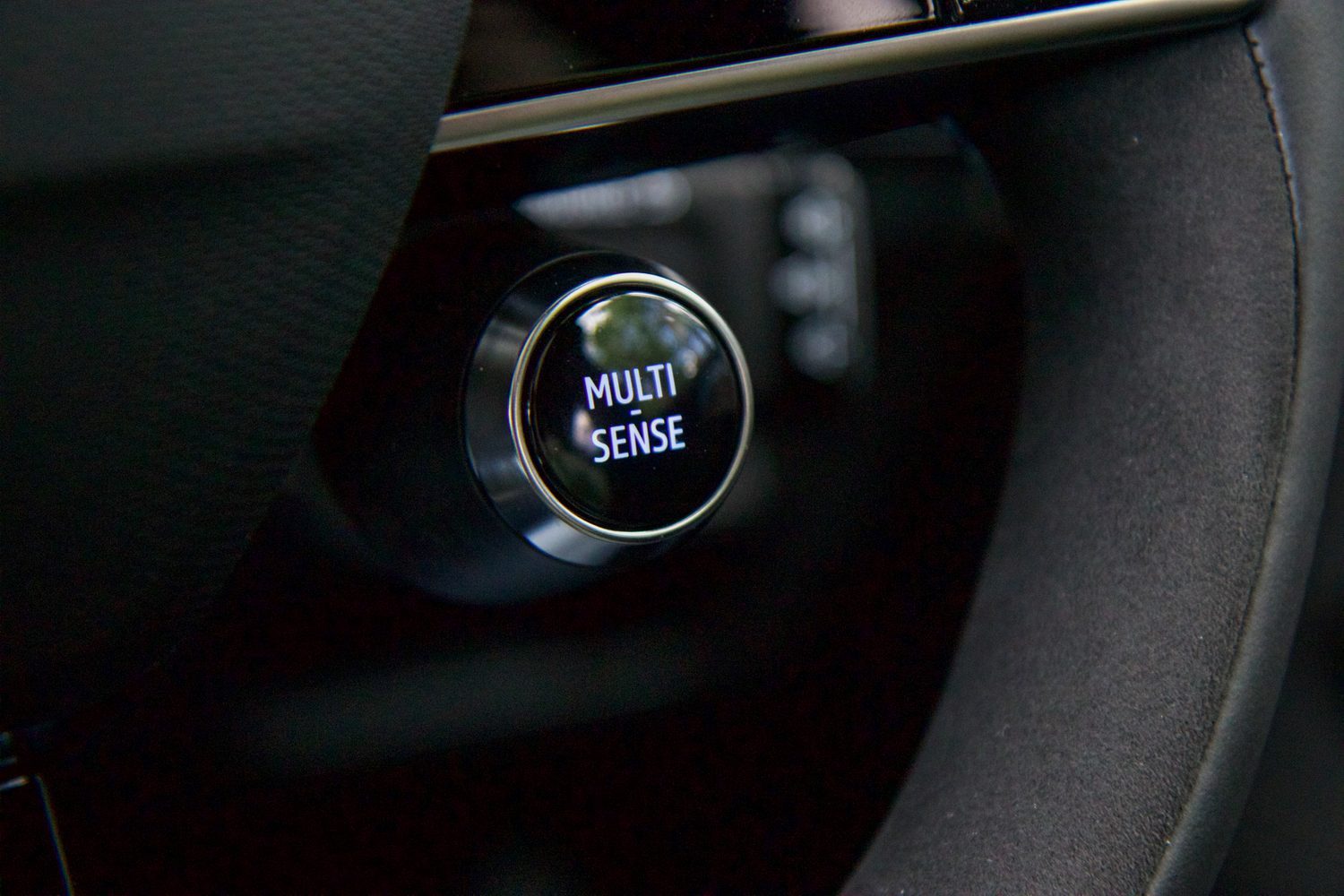
Those driving modes are selectable via a neat button hanging off the right-hand spoke of the steering wheel, and you can customise them so that you can have, for instance, the car in Eco mode for a bit of fuel saving but still have the steering in its sportiest setting. We approve of such customisation.
Practicality around the cabin
The Rafale is really very practical up front, with a large storage area under a butterfly-style armrest between the seats, and a decent open space under the centre console as well.

The door bins are a good size too, and so is the glovebox. The centre console has two storage areas. One just a simple storage box, and the other sub-divided into cupholders and more space, sharing a common sliding cover. This has a massive handle that has the appearance of the throttle lever for a commercial aircraft.
That cover slides back and forth (with, it has to be said, a very satisfying action) so that when one storage area is open, the other is covered. That's fine, until you realise that if you have a can of drink or anything taller than an espresso cup in the cupholders, you can't slide the cover forwards to open up the other storage area.

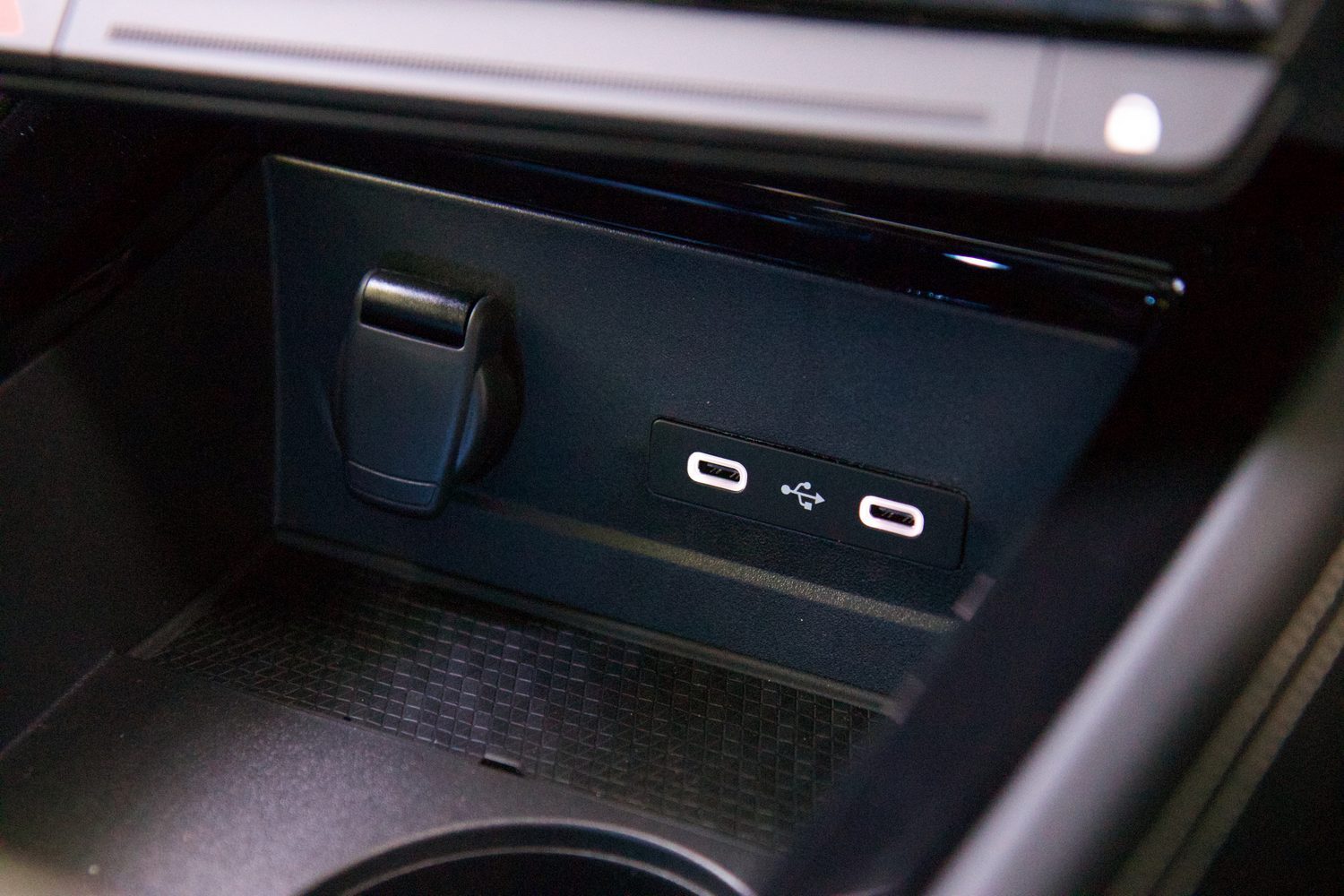
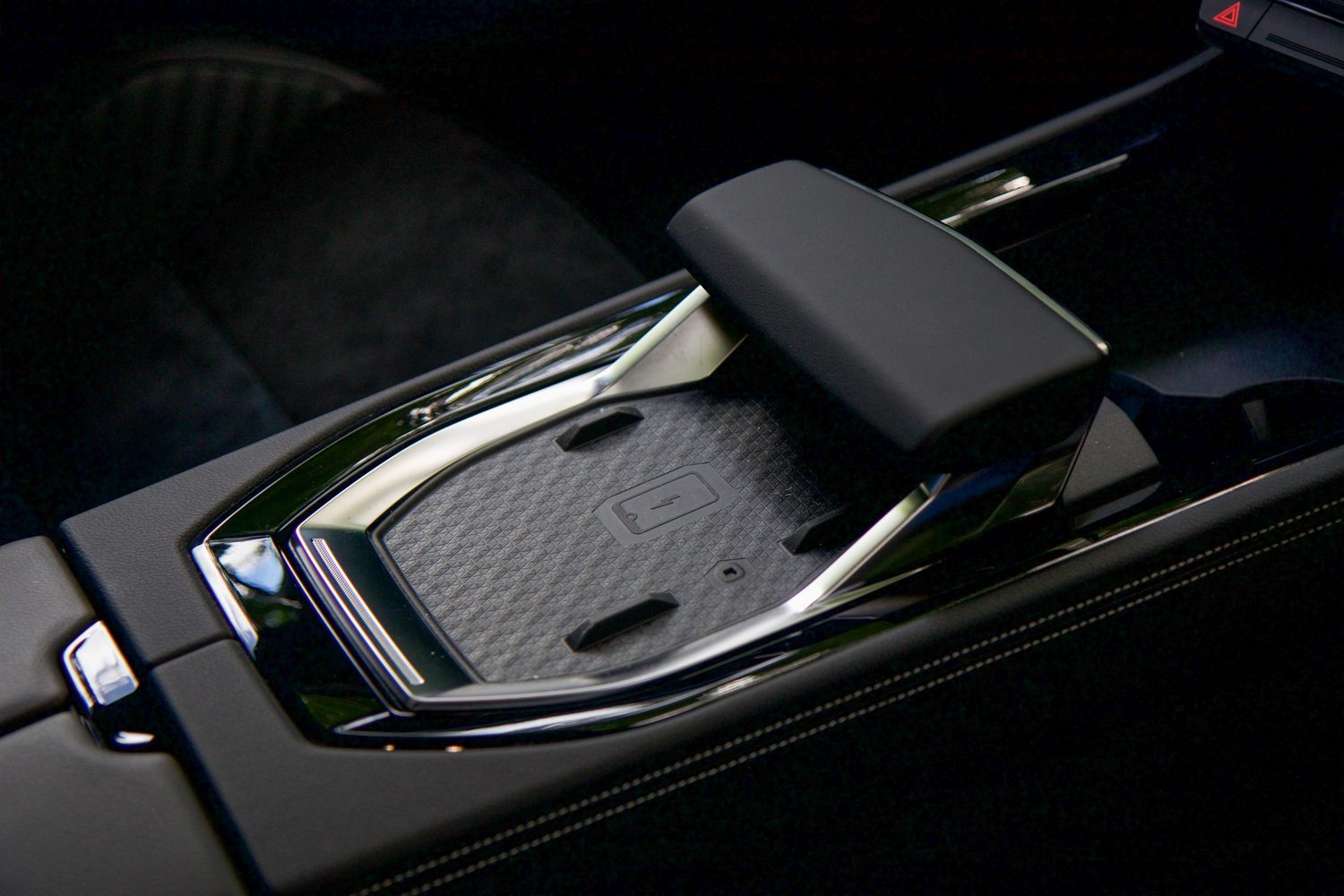
The cupholder area is also home to the pair of USB sockets, and there's a wireless charging pad (rubberised and grippy) on that sliding cover itself.
Rear-seat passenger space
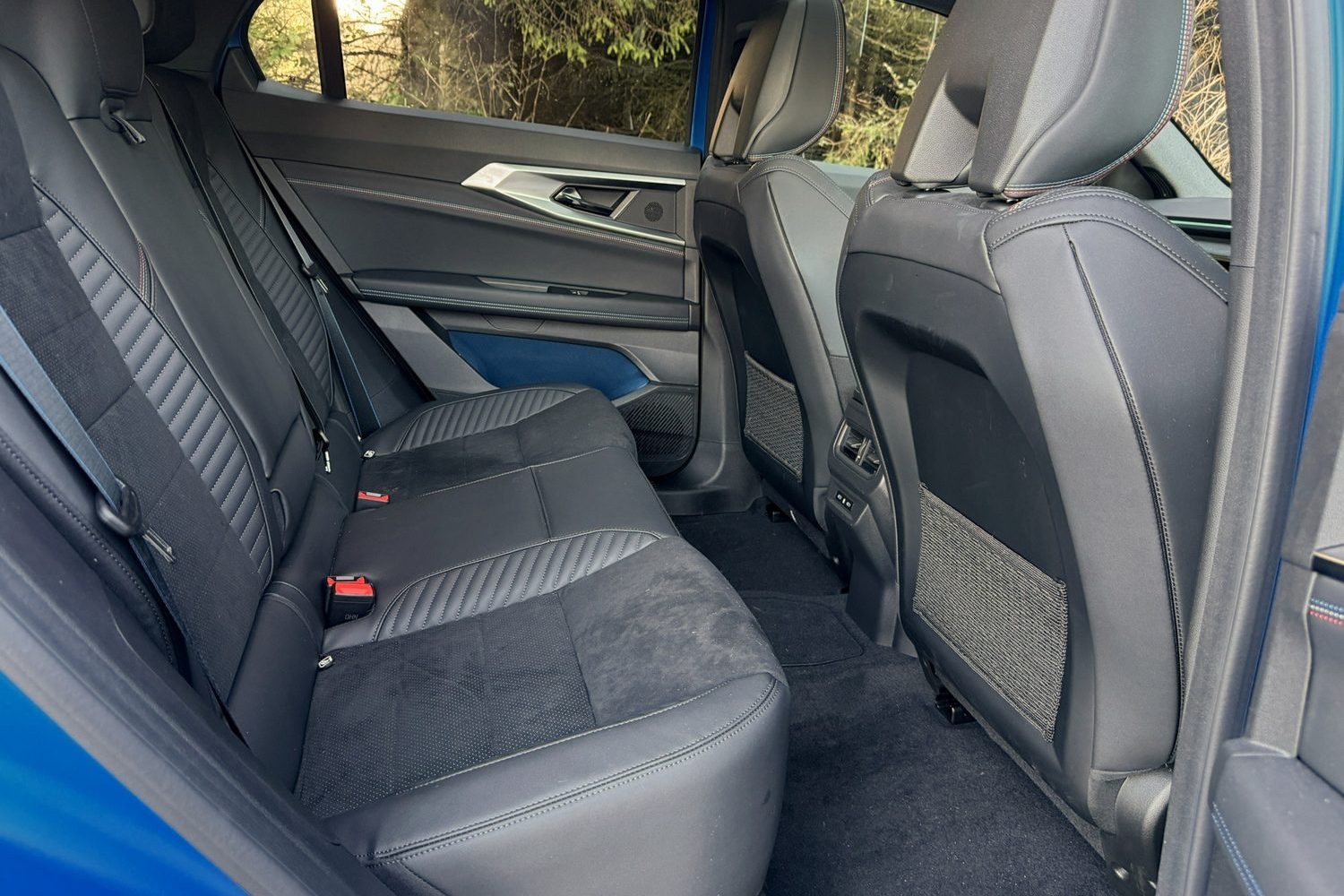
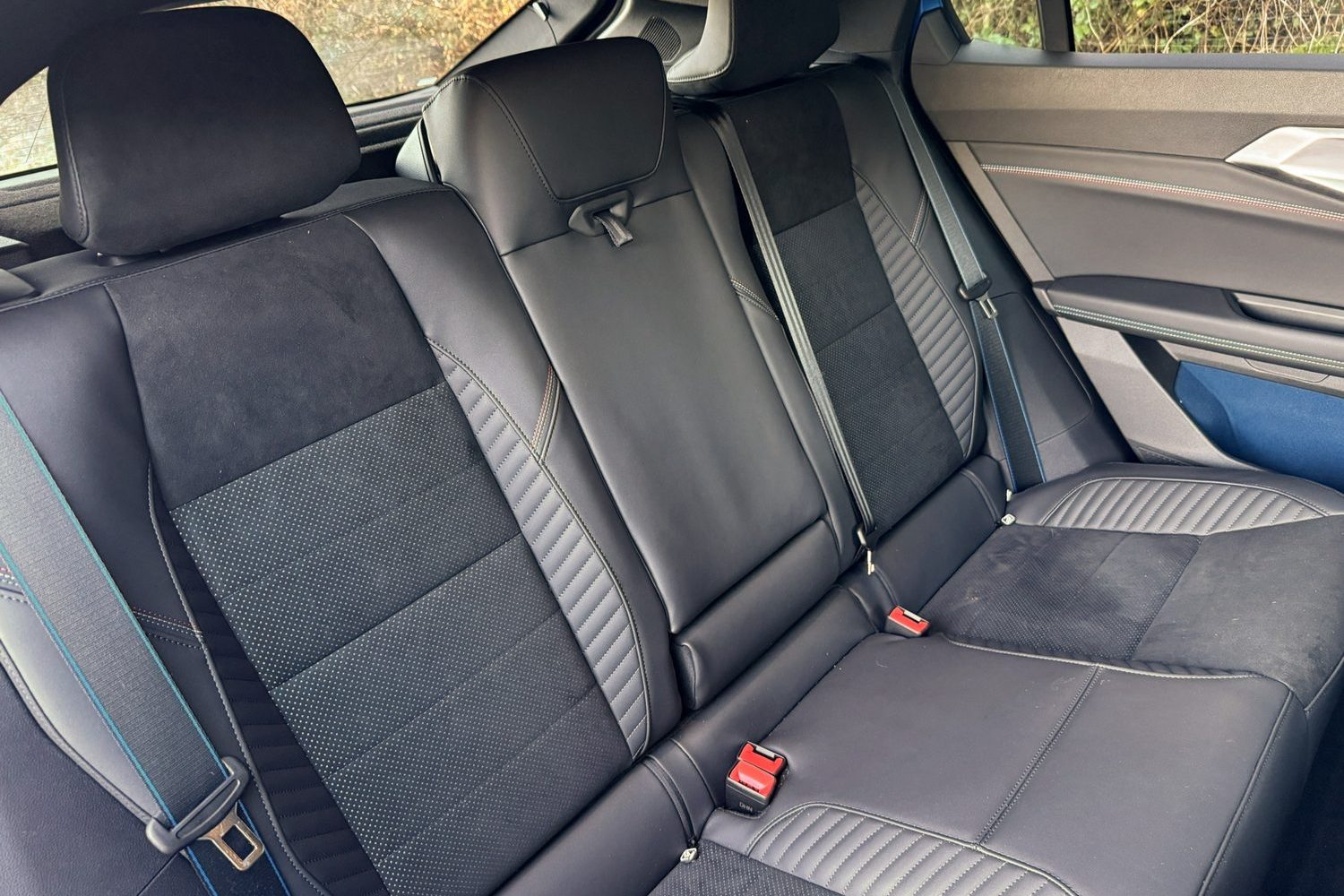
With a sloping roofline, you'd assume that the Rafale would be tight in the back, but actually it's very good for space. Certainly there's copious rear legroom (and a flat floor all the way across), even for taller passengers, and the slim front headrests mean you can see out to the front nicely.

The big glass roof has 'Solarbay' electric dimming technology so does without a sliding sunshade, which means that headroom in the back is perfectly fine too, although there is more headroom in the back of the related Renault Austral SUV.
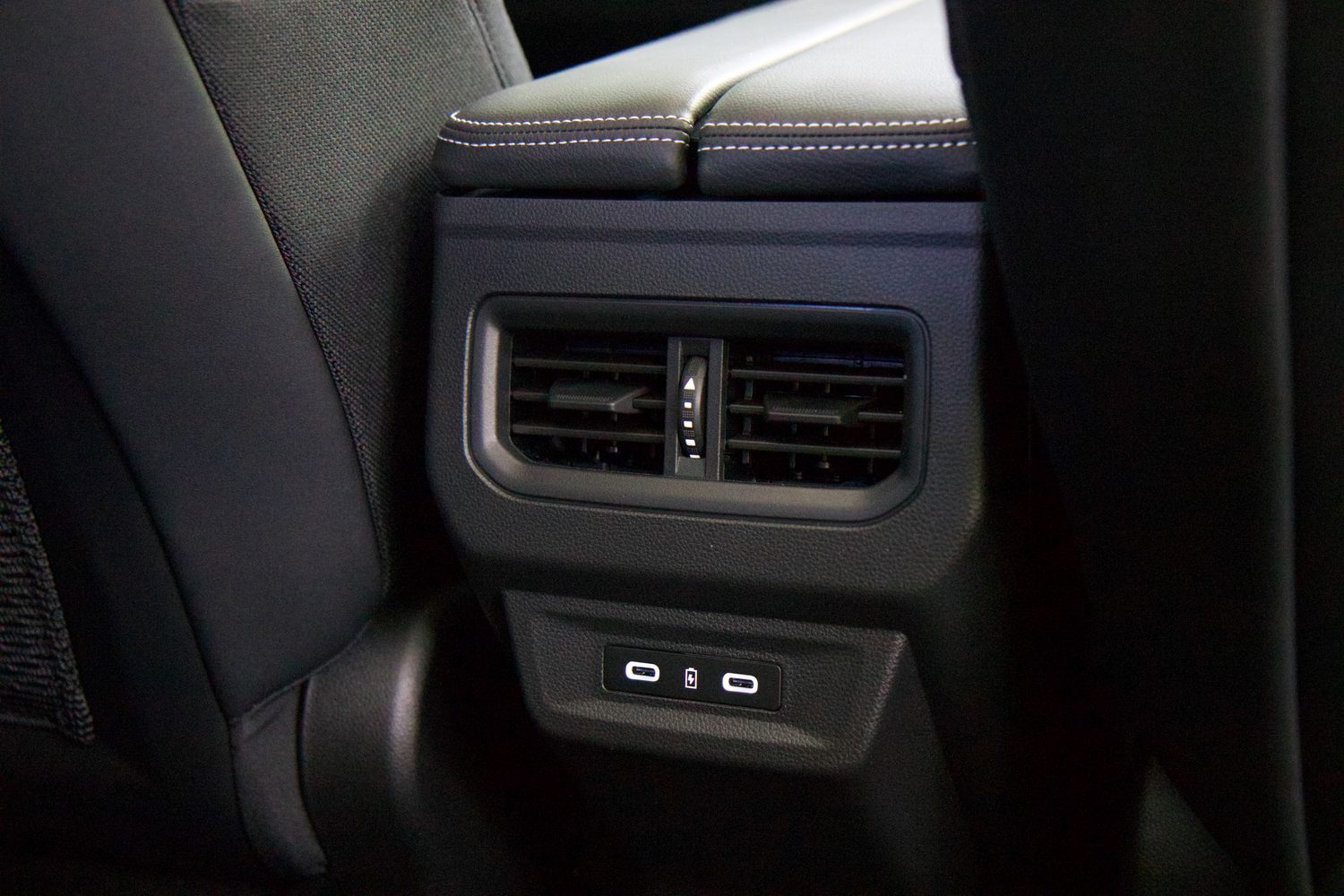
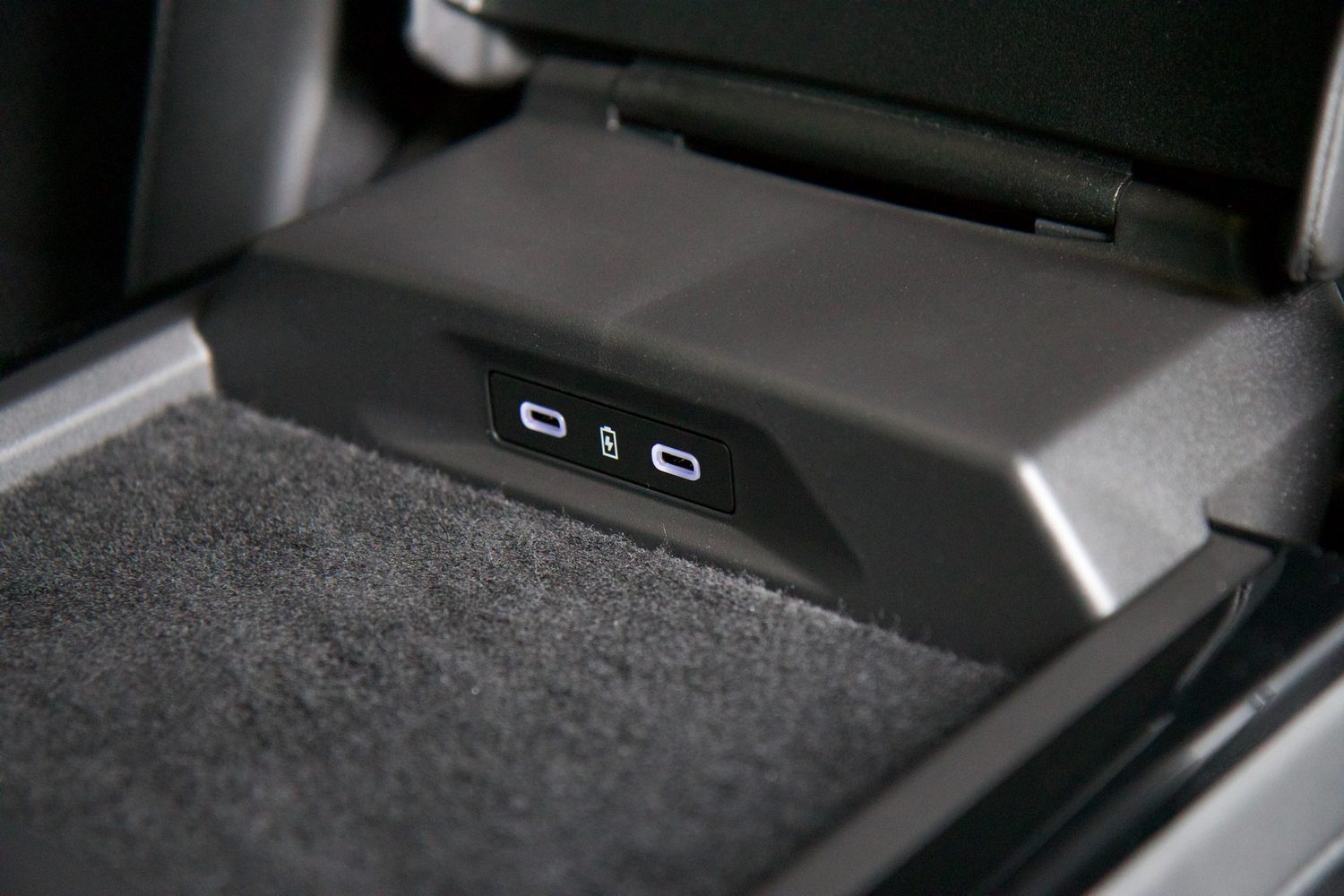
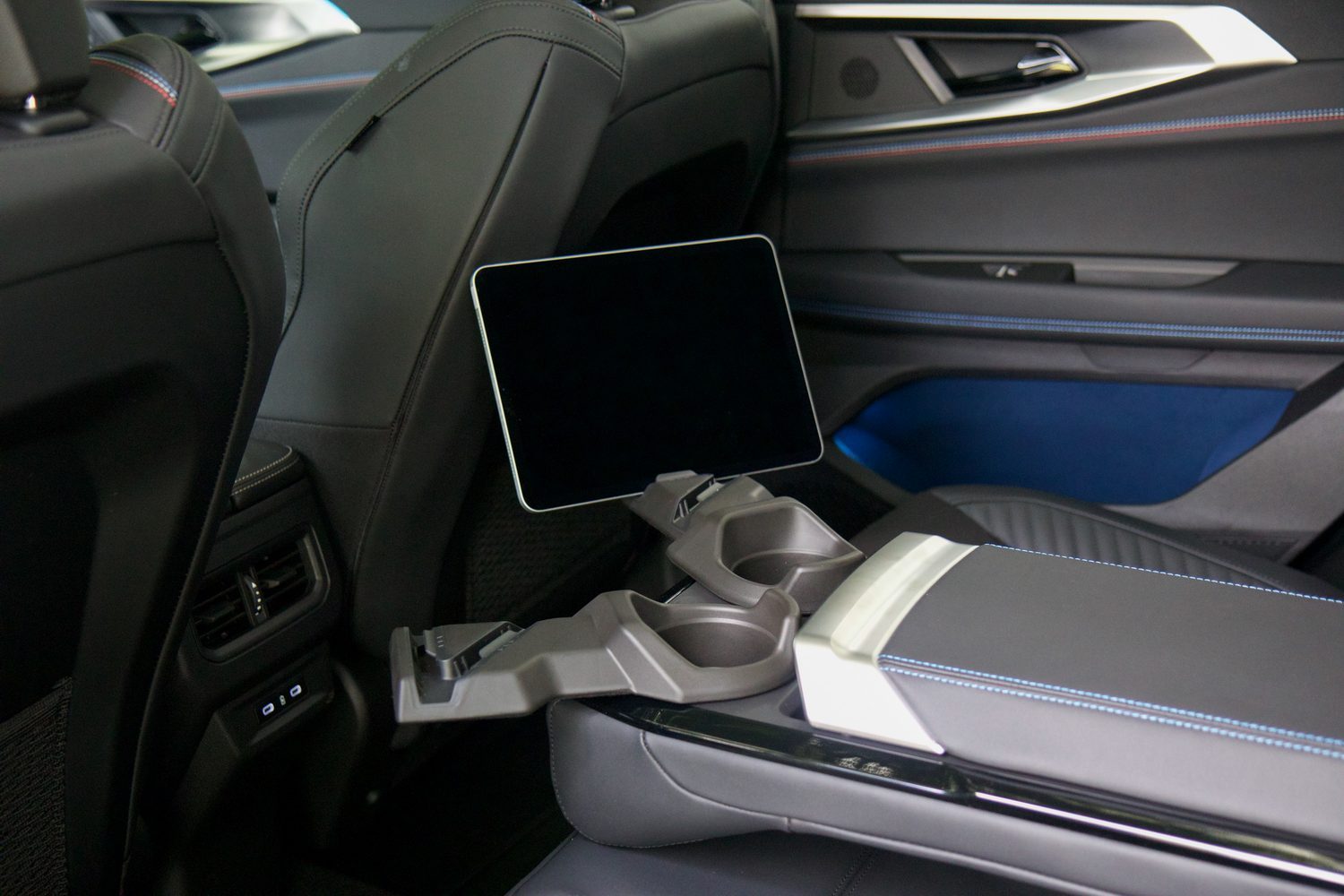
There are air vents and two USB-C sockets for rear passengers, plus a substantial-feeling folding armrest that includes a shallow storage area and two grippy cupholders, which also have sections that rotate out to act as stands for either a mobile phone or a tablet. There's another pair of USB-C ports within this.

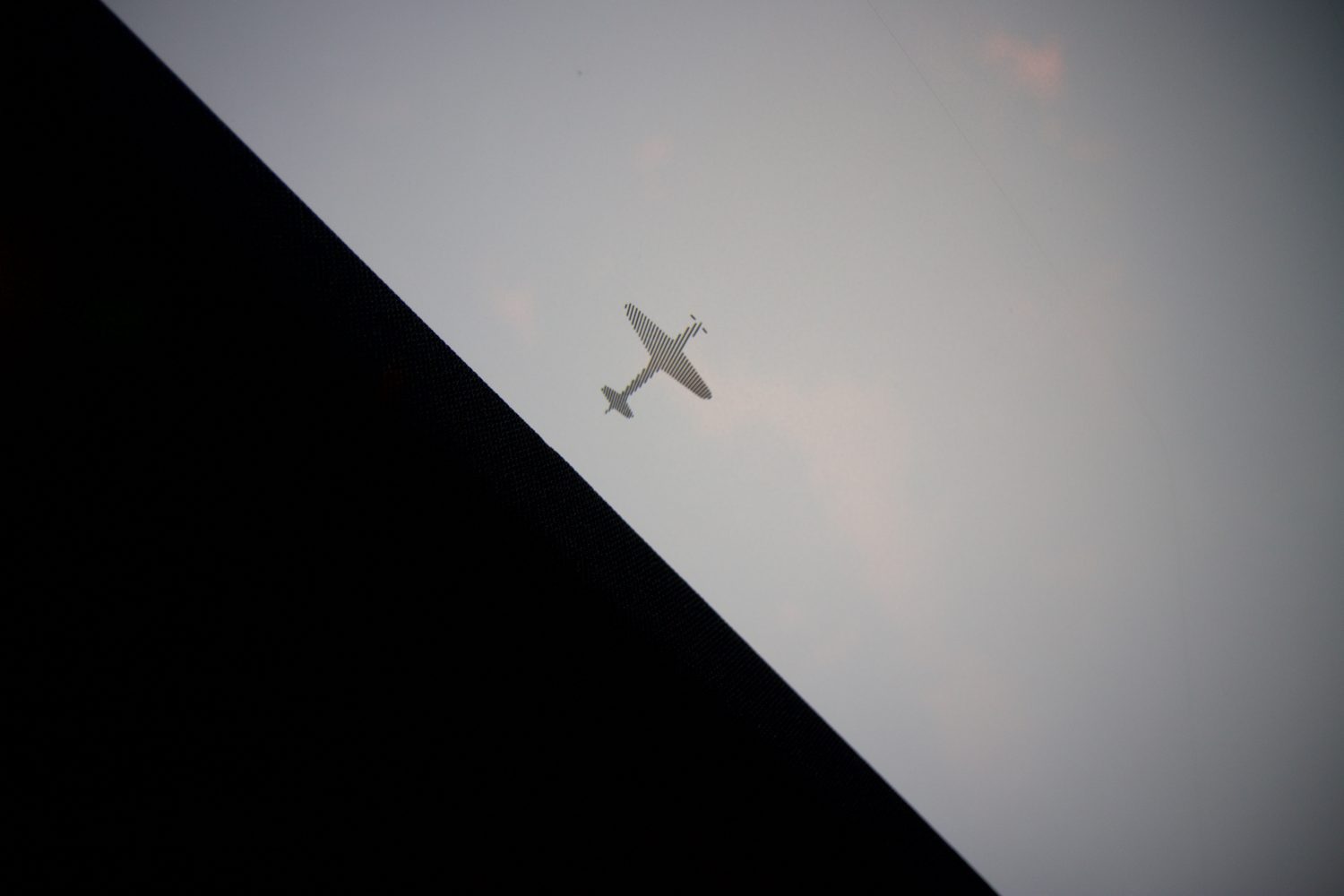
Rear passengers also get to admire the little silhouette of an aeroplane, etched into the rear part of the roof, which is a nod to the Rafale's name, shared with a sleek racing aeroplane which used a Renault engine in the 1920s.
Fitting child seats to the Renault Rafale
The Rafale is well set-up for child seats, as not only are there two ISOFIX anchor points in the back seat, but there's another ISOFIX point in the front passenger seat, with a simple switch inside the door panel to turn off the passenger airbag.

The rear doors also open nice and wide, and thanks to the rear legroom there's plenty of space to fit bulky rear-facing seats. There's not really enough room in the centre rear seat for an extra booster cushion, though.
Boot space in the Renault Rafale
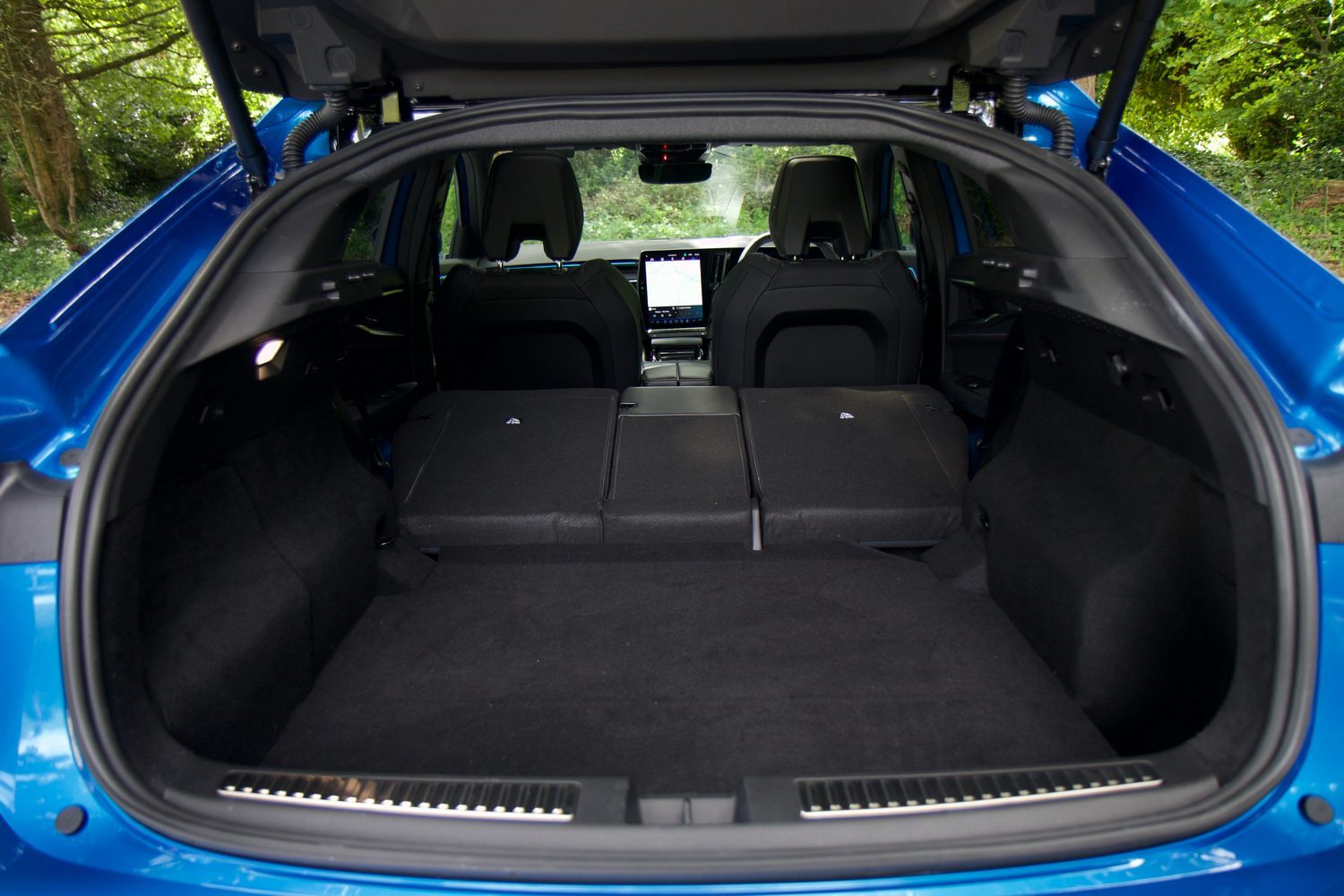
The Rafale's boot is really rather decent, and at 539 litres up to the luggage cover it easily beats similarly priced (but smaller) cars such as the Audi Q3 Sportback and the BMW X2. Indeed, the Rafale has more boot capacity than the larger, and considerably pricier, Audi Q5.
Fold down the back seats and there's a useful 1,826 litres of space, although obviously with the sporty roofline, taller and bulkier items will be a tight fit.

Equally, there's quite a bit of a load lip to the boot and with the rear seats folded (in 40:20:40 formation, with a large load-through thanks to the armrest) there's a large step between the boot floor and the backs of the seats.
Impressively, in spite of the big battery packaged underneath, there's no reduction in boot volume compared to the standard hybrid Rafale up to the luggage cover, although there is a slight reduction in the total seats-down volume.
Towing with the Renault Rafale
The Rafale PHEV has decent towing credentials, with the standard unbraked 750kg maximum load, and a braked load of up to 1,500kg.
Safety in the Renault Rafale
The Rafale was tested by Euro NCAP in 2022, and brought home a five-star overall score, with an 87 per cent rating for adult occupant protection, 83 per cent for child occupants, 69 per cent for vulnerable road users and 87 per cent for its electronic safety aids.
All Rafale models come as standard with automated emergency braking, blind-spot monitoring, rear cross traffic alert, all-round parking sensors and Renault's handy single button to choose which systems you want active every time you get on board.
The Atelier Alpine version also comes with adaptive cruise control, 360-degree parking cameras with automated parking, four-wheel steering and Matrix LED lights.
Performance of the 2026 Renault Rafale
- Standard hybrid is brisk and efficient
- Alpine PHEV model fast
- Four-wheel steering and four-wheel drive

As standard, the Rafale comes with a 200hp front-wheel-drive hybrid setup, which is reasonably sporty and certainly very fuel efficient. The PHEV model ramps all that up with four-wheel drive, four-wheel steering, adaptive suspension and 300hp.
Driving the Renault Rafale PHEV on Irish roads
Clearly, Renault has gone to town when it comes to providing this plug-in hybrid version of the Rafale with every performance and handling gizmo going. It's almost like an early-nineties Formula One car in that it has active steering and suspension, with a camera-based system able to warn the adaptive suspension dampers of upcoming bumps so that they're better prepared.

While the Rafale generally rides with good comfort, there's a physical limit to what clever electronics can do with 21-inch wheels, low-profile tyres and Irish roads. Certainly on some surfaces, the Rafale can thump noisily into imperfections.
In handling terms, the Rafale is certainly interesting, and ultimately satisfying thanks in no small part to the suspension and steering having been given the once-over by engineers from Renault's Alpine sports car division (so the Rafale's Alpine badges are actually earned, not just a simple trim level).
It doesn't have the firmly-tied-down sensation of a BMW X2 (but then equally doesn't have that car's over-firm ride either) and the four-wheel-steering system can induce an occasional odd wobble to the rear end, depending on the corner and how you're driving. You do get used to that though, and you learn to anticipate it.
The steering has weight that's close to ideal, and it's usefully direct, but ultimately there's not a huge amount of feel and feedback.
If you push the Rafale harder than it cares to, then it can start to feel rather too top-heavy and a touch unruly, but the trick is to drive it with some gusto, but be prepared to brake early, corner smoothly and then let the creamy rush of hybrid power pull the car out of the corner.
The Rafale has plenty of poke in reserve, so it never feels slow, and while the engine occasionally runs itself up to surprisingly high RPM in total disconnection with what speed you're doing (it's a quirk of Renault's hybrid system and its complex gearbox), the three-cylinder rasp sounds enticing when you're pressing on, though never too loud.
When we were driving the Rafale, our test coincided with a heavy early January snowfall - more than 15cm in some places - and in spite of the low-profile tyres, it coped admirably well, never once putting a wheel out of line.
Range, battery, charging and fuel economy of the 2026 Renault Rafale PHEV
- Battery officially gives a 100km+ range
- No fast-charging option
- Gets thirsty if not plugged in

The Renault Rafale PHEV has similar benefits and compromises to other plug-in hybrids, and you need to remember that this one is focused as much on performance as economy.
Battery and official range and fuel economy
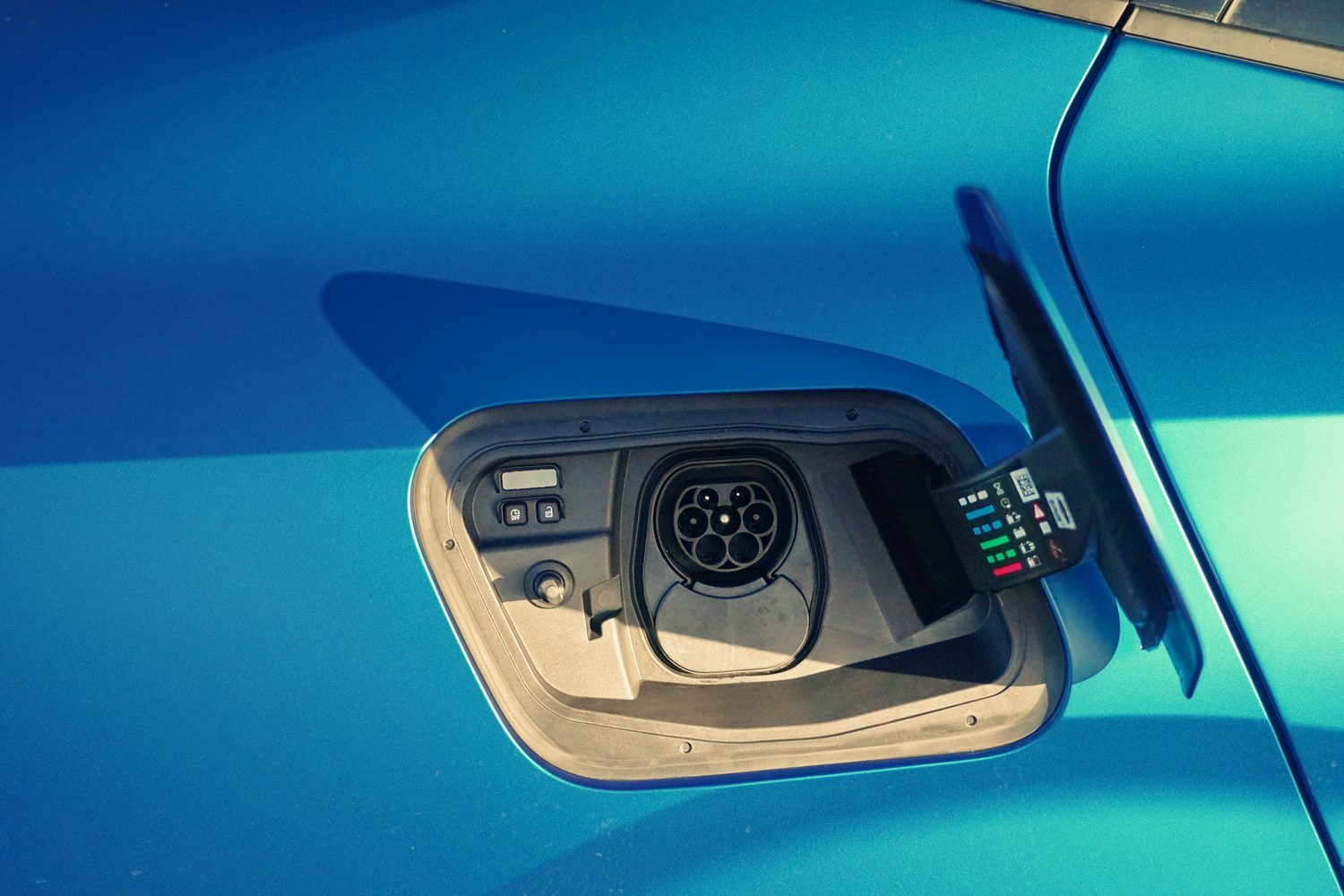
The Rafale PHEV is unique in the Renault lineup in that it's the only plug-in hybrid that the company currently sells. It uses a 22kWh nickel-manganese-cobalt (NMC) lithium-ion battery which can be charged up at 7.4kW on AC power.
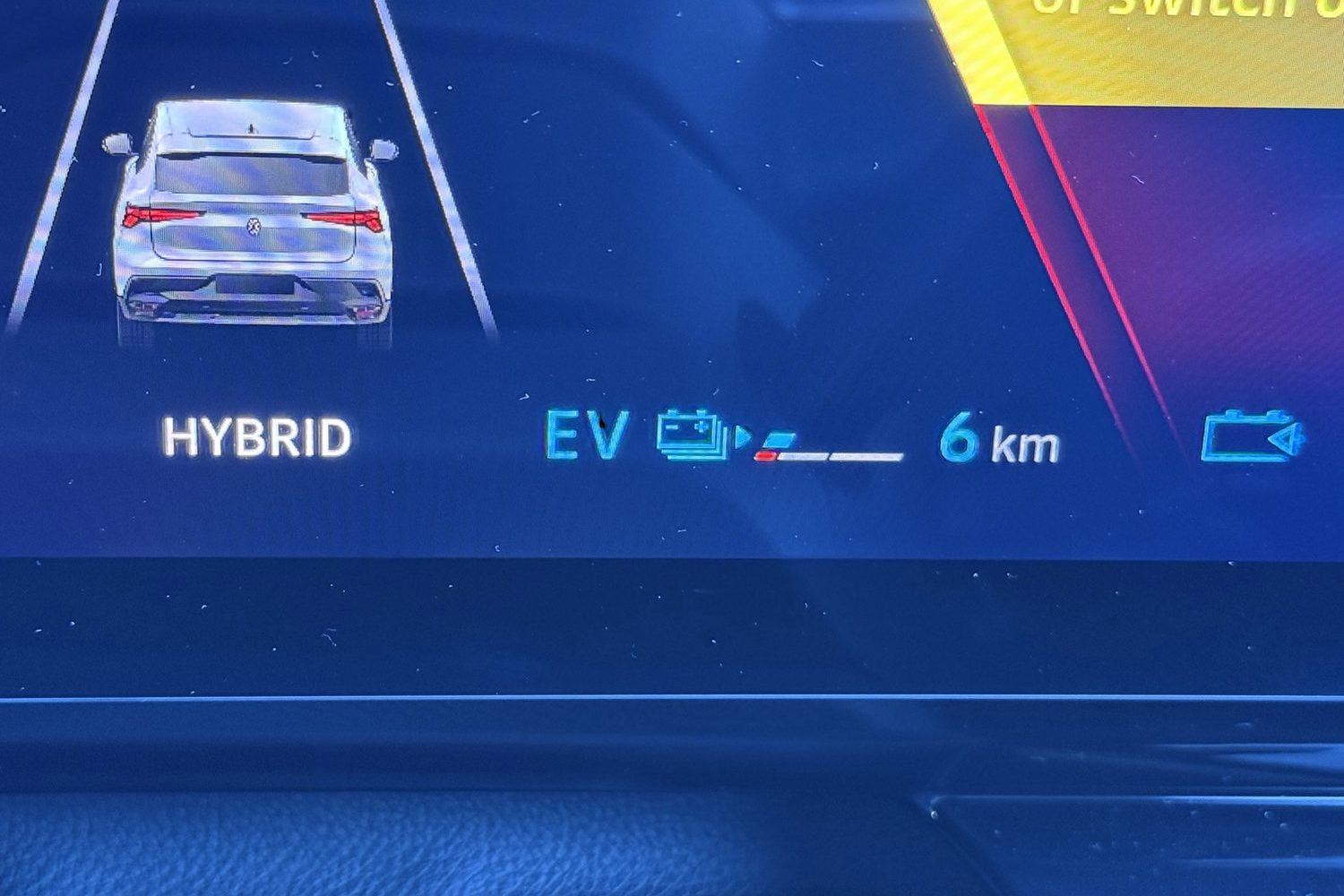
There's no fast-charging DC option, but the official range on a full charge is an impressive 105km. The WLTP fuel consumption works out at 0.6 litres per 100km (more than 400mpg) which of course is somewhat skewed by the way that plug-in hybrids are tested. Renault quotes a range of up to 1,000km on a combined fully charged battery and full fuel tank.
Real-world range and efficiency of the Renault Rafale PHEV
My recorded efficiency with the Rafale was skewed a bit by circumstance. First off, I can't charge at home (terraced house) which limited my opportunities to top up the battery. Second, I had to cover lots of long motorway journeys in the Rafale, which is always the sternest test of any PHEV.
Finally, the test took place in late December and early January, with the temperature gauge rarely budging above single Celsius figures.
So it's not all that surprising that the recorded figures - 8.0 litres per 100km fuel consumption and 6.8kWh/100km - are not especially representative. Based on my driving, I'd say a full charge of the battery should get you a 75km electric range (a touch less in the deeply wintry conditions of our test) and that would help improve overall fuel economy a good deal, as long as you are assiduous about plugging in and charging up.
Servicing the Renault Rafale
Renault recommends a minor service every 12 months for the Rafale, or a more substantial service every 30,000km.
Renault Rafale warranty
In Ireland, all Renault models come with a standard five-year warranty, which has unlimited mileage for the first two years, and which is then capped at 150,000km for the balance of that period. That also comes with five years' roadside assistance, a three-year paint warranty and a 12-year anti-corrosion warranty.
Irish pricing & rivals to the 2026 Renault Rafale
- Priced from €51,495
- Atelier Alpine version runs to almost €64,000
- German rivals more prestigious, but less interesting

The Rafale is Renault's range-topper, so there will be little surprise that even the most affordable Techno model has a starting price of €51,495.
In standard form, the Rafale comes with a turbocharged 1.2-litre three-cylinder petrol engine and hybrid system driving the front wheels - basically the same as the Atelier Alpine model, but minus the rear-axle electric motor.
Standard kit in Techno form includes 20-inch alloy wheels and the big 12.3-inch touchscreen, including Google Maps and five years of connected data services.

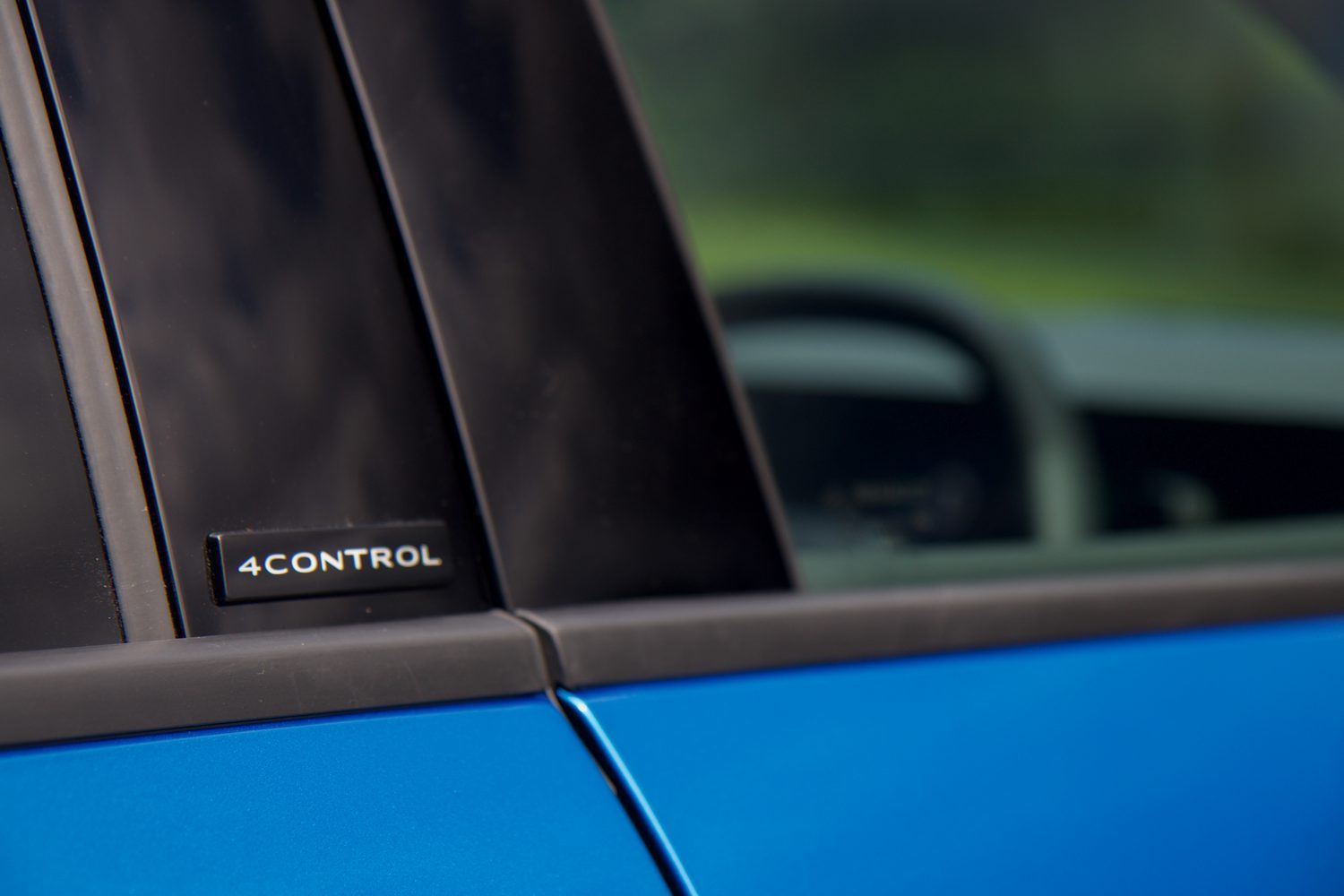
For €55,695 you can upgrade to the Esprit Alpine model, which includes the '4Control' four-wheel steering system, the clever rear armrest, Alcantara seat upholstery and Alpine styling.
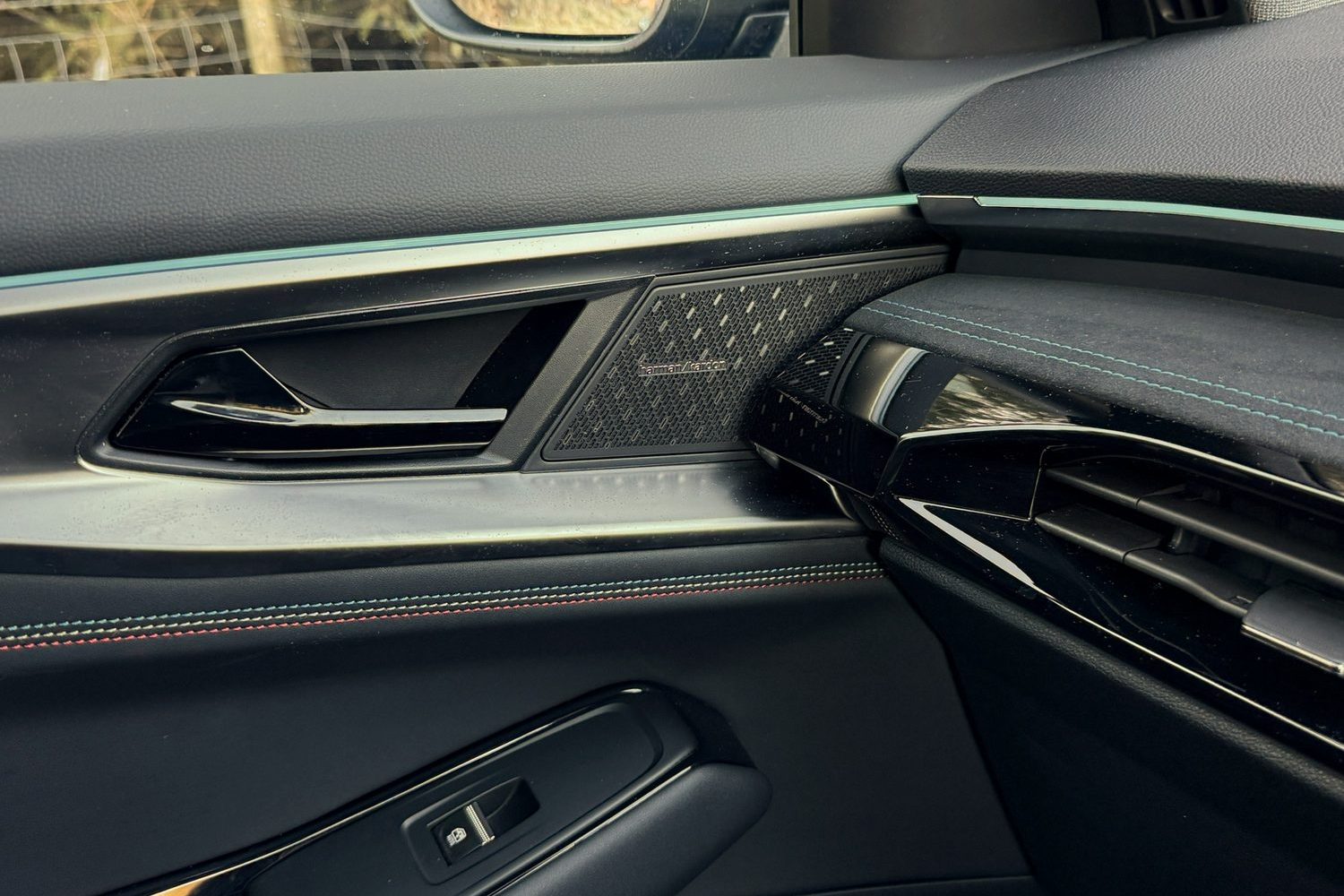
There's also an Esprit Alpine+ model, for €58,695, which includes a 12-speaker Harmon/Kardon stereo and a surround-view camera along with hands-free parking and heated door mirrors.
At €63,995, the Rafale Atelier Alpine is not quite the dreadful value you might think it to be. For a start, the Atelier Alpine version comes with pretty much every box ticked - quite apart from the four-wheel drive, four-wheel steering, Alpine-tuned adaptive suspension and 300hp hybrid setup, there's also expensive-looking-and-feeling seats and trim, an excellent Harmon/Kardon stereo, the brilliant touchscreen and good overall quality.
Certainly, it's distressingly easy to spec a BMW X2 or Audi Q3 up to and beyond the Rafale's price level without ever moving away from the basic engine offering in those cars - half the power, in the Audi's case. Of course, the Germans will have an easier ride when it comes to second hand value, so the Rafale buyer will have to be brave, or just want to hang on to the car for longer.
There's another interesting rival, likely priced at a similar level (we're waiting for confirmation on that) and that's the Alpine A390. All-electric, even more powerful, sportier to drive by far, but less practical, it's an intriguing cat amongst the sporty SUV pigeons and might be a better buy than the Rafale, if you're prepared to go all-electric.

Verdict - should you buy the 2026 Renault Rafale?
If you're generally a fan of quirky, interesting, good-to-drive French cars, and if you're prepared to take a deep breath of bravery when it comes to second-hand value, the Renault Rafale makes an interesting case for itself. It's handsome, good to drive, fast, practical and more fun than the German rivals.
FAQs about the 2026 Renault Rafale
Is the Renault Rafale reliable?
Yes. The Rafale uses well-proven engines and hybrid systems from the Renault Austral SUV. There's a five-year warranty for a bit of reassurance.
Is the Renault Rafale a good family car?

Yes, surprisingly good. There's lots of space in the back, three ISOFIX anchor points and a large boot so the Rafale is very capable when it comes to family life.
Want to know more about the 2026 Renault Rafale?
If there's anything about the new Renault Rafale we've not covered, or you'd like help in choosing between it and other cars, you can avail of our expert advice service via the Ask Us Anything page.