
Exterior & design of the 2026 Porsche Cayenne Electric
- Big machine on the outside
- Front-end styling divisive
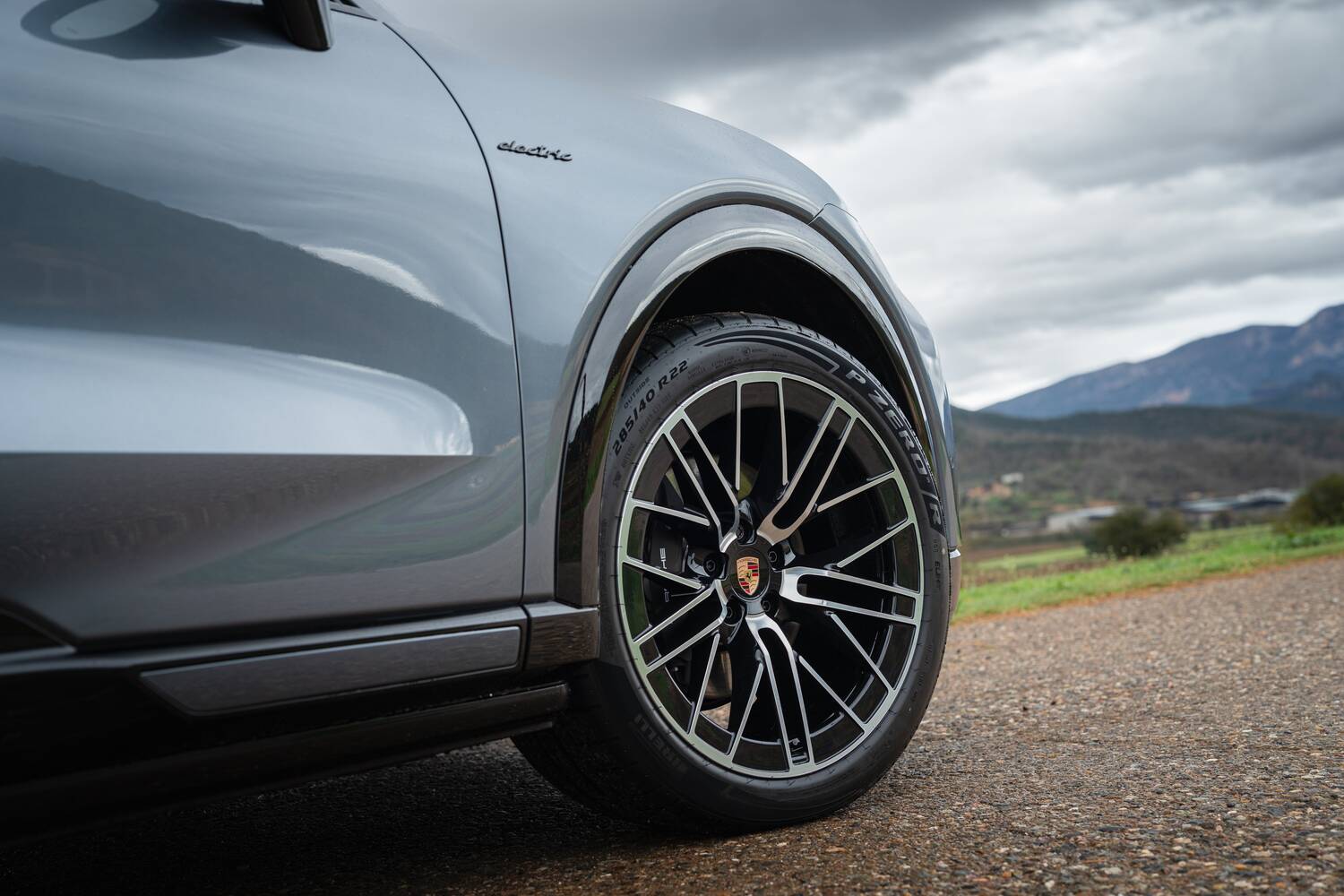
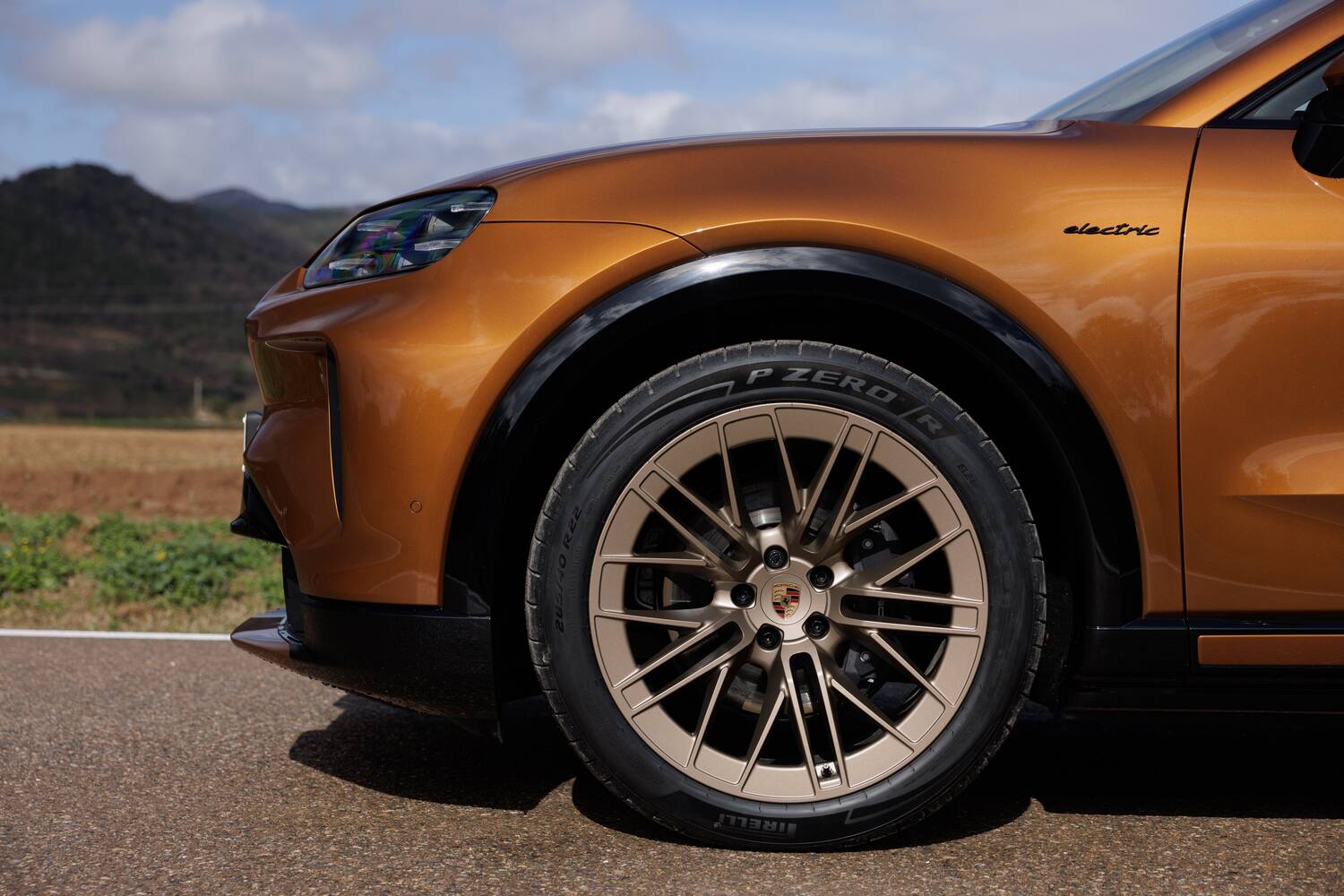
- 20- to 22-inch alloy wheels

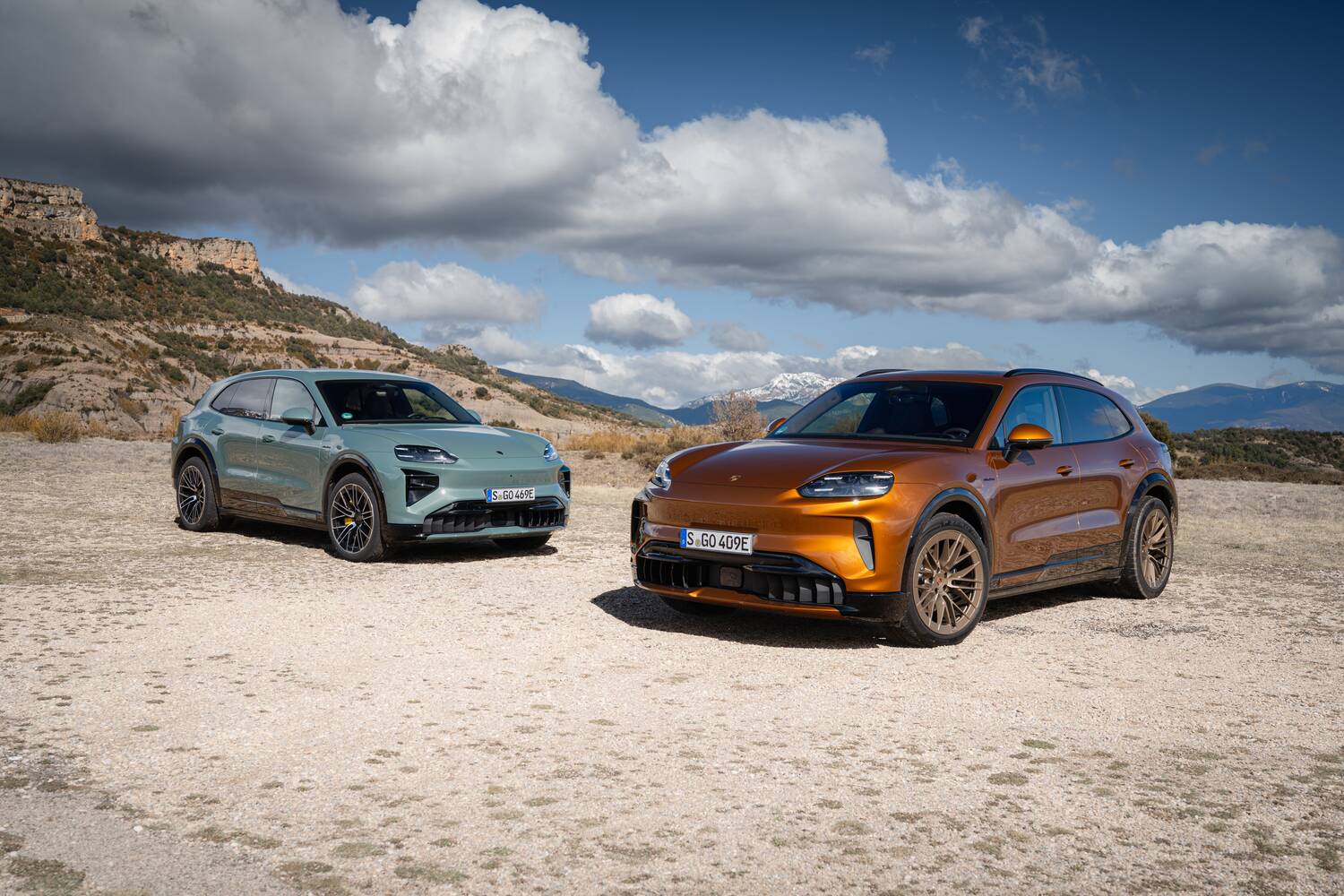
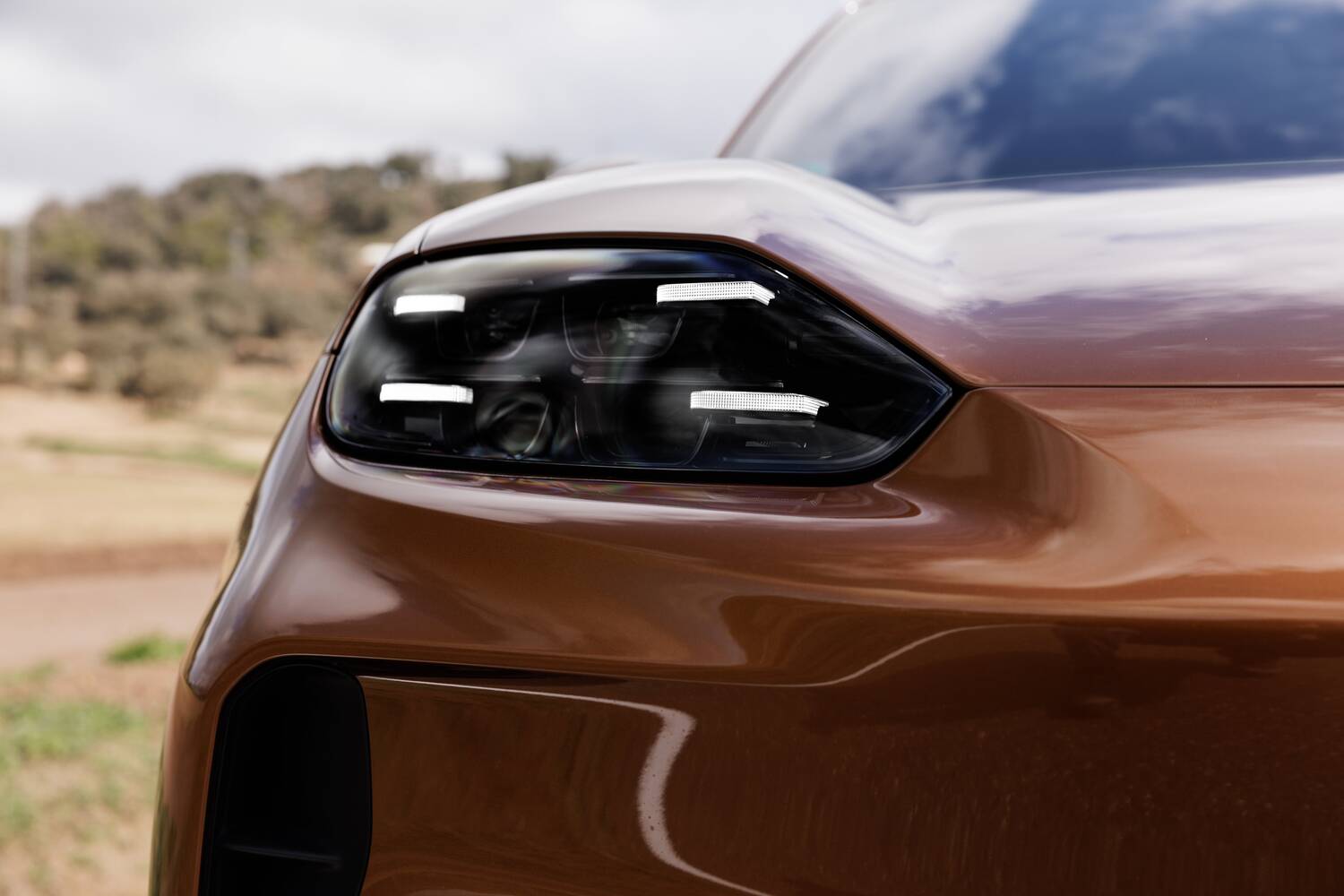
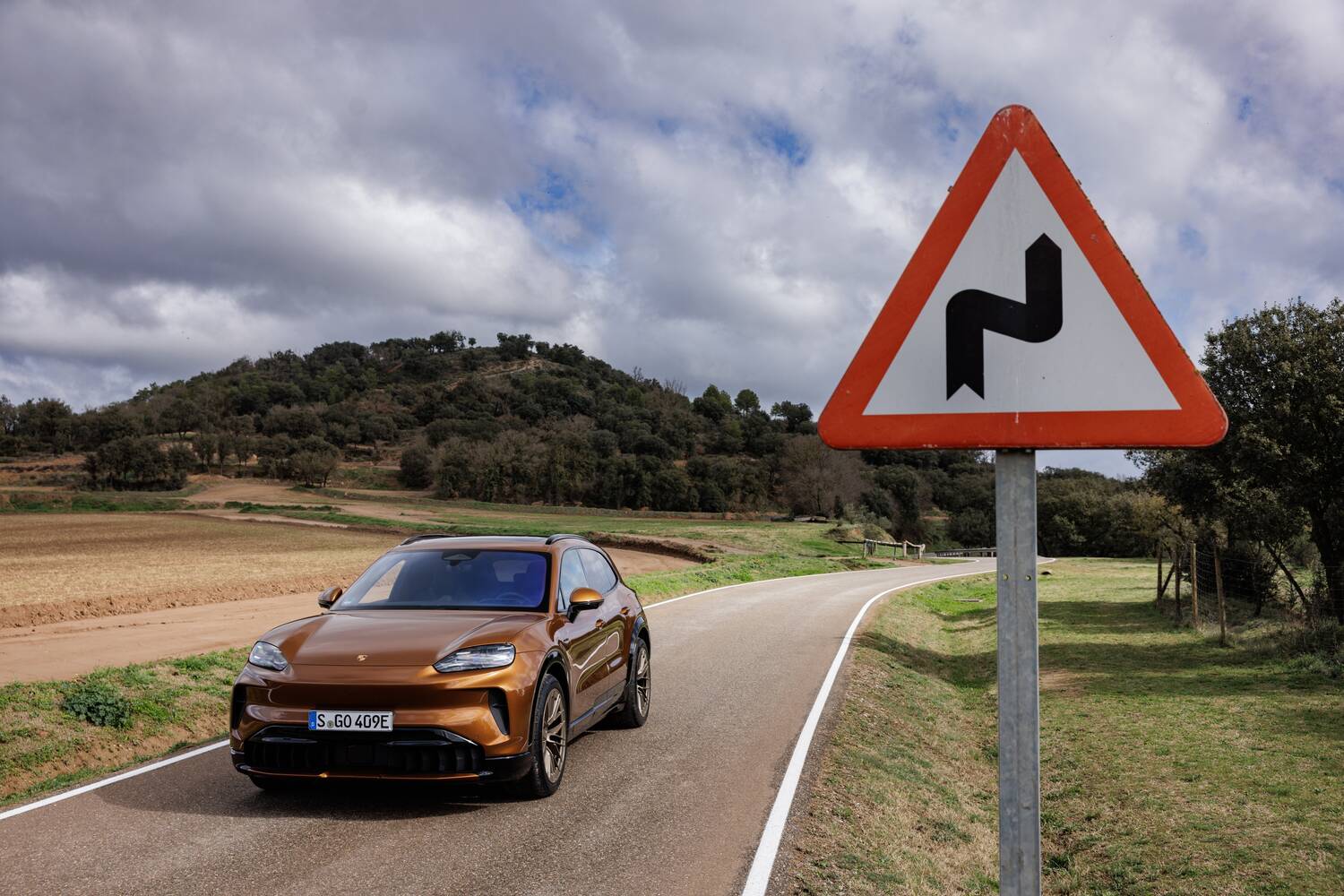
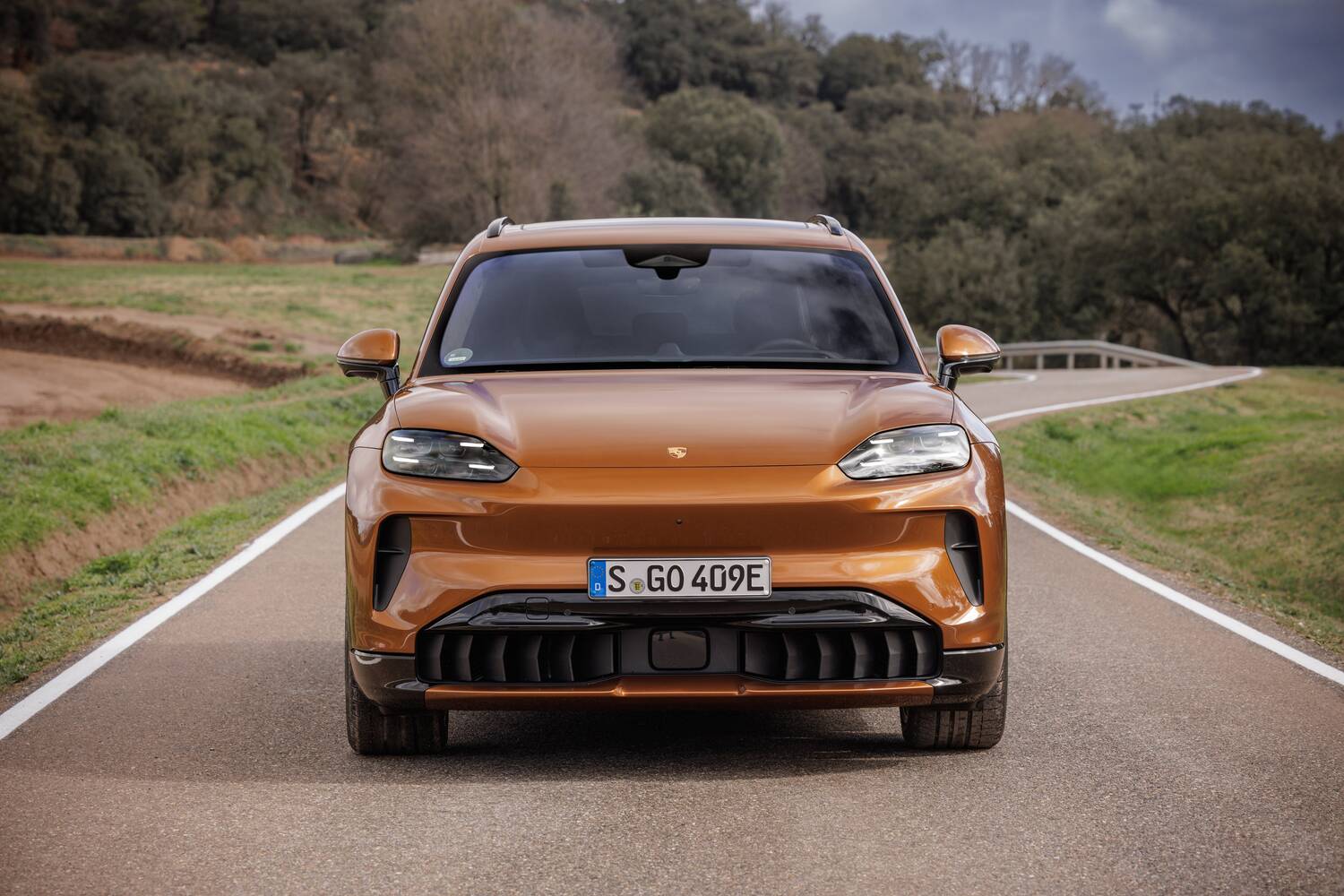
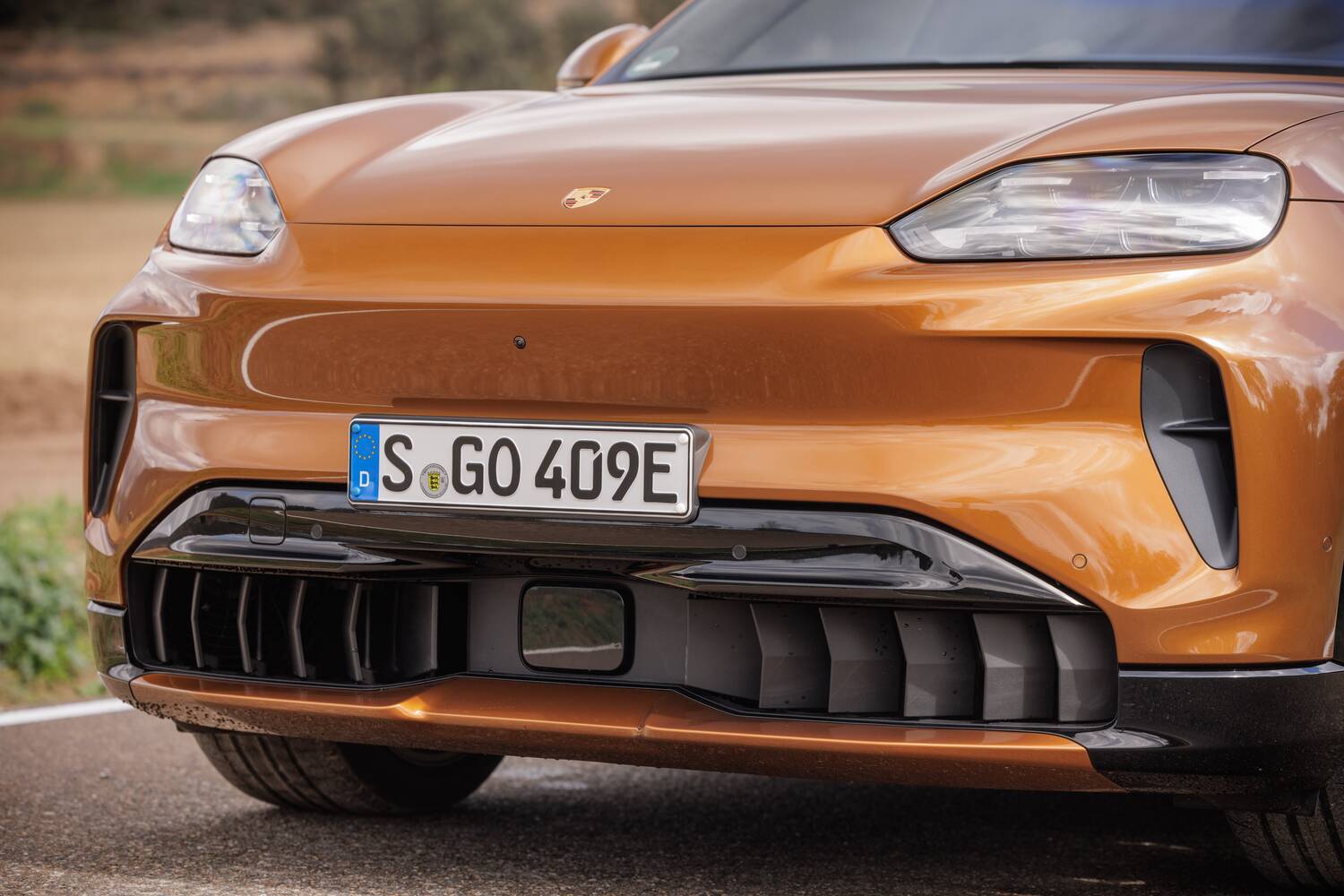
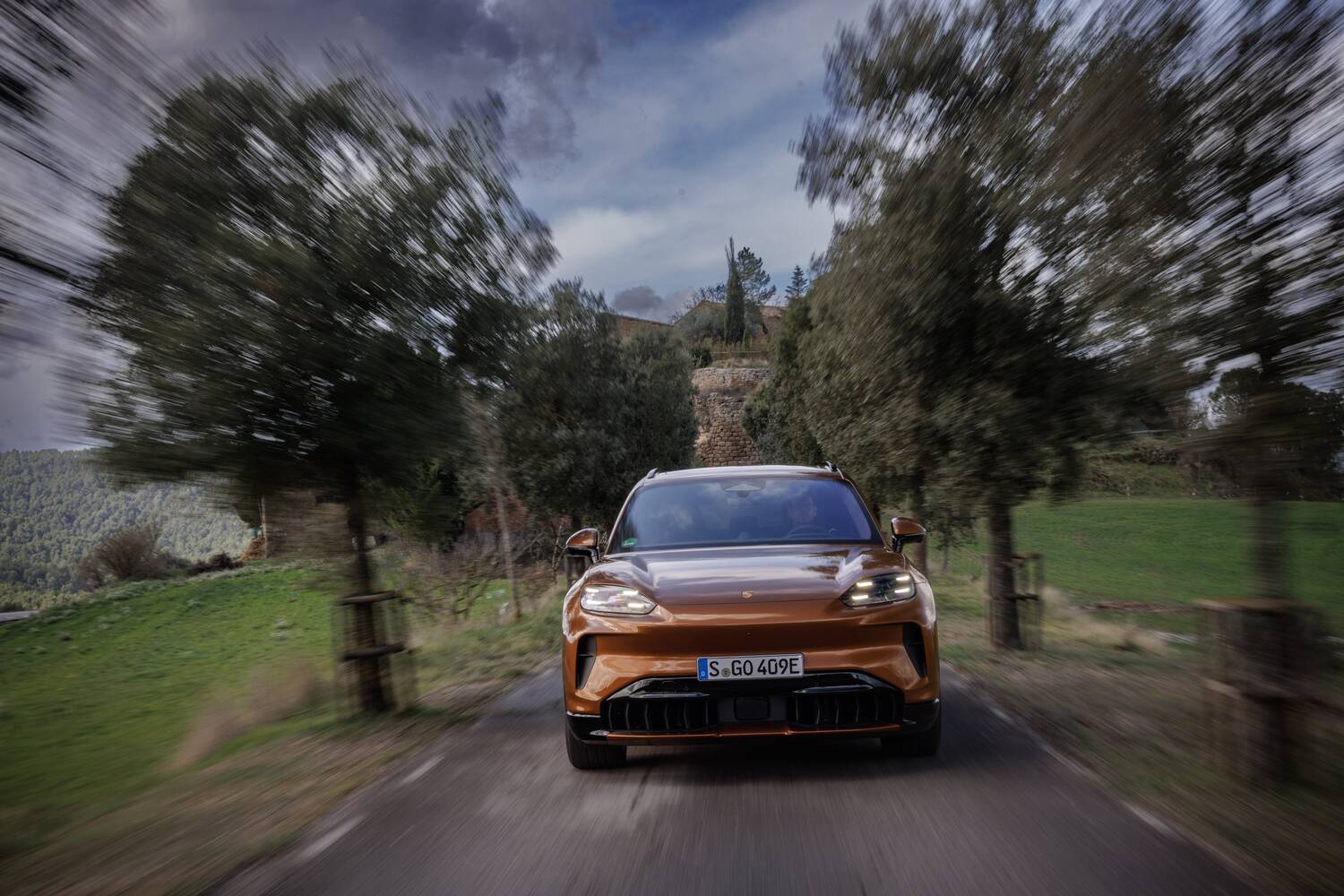
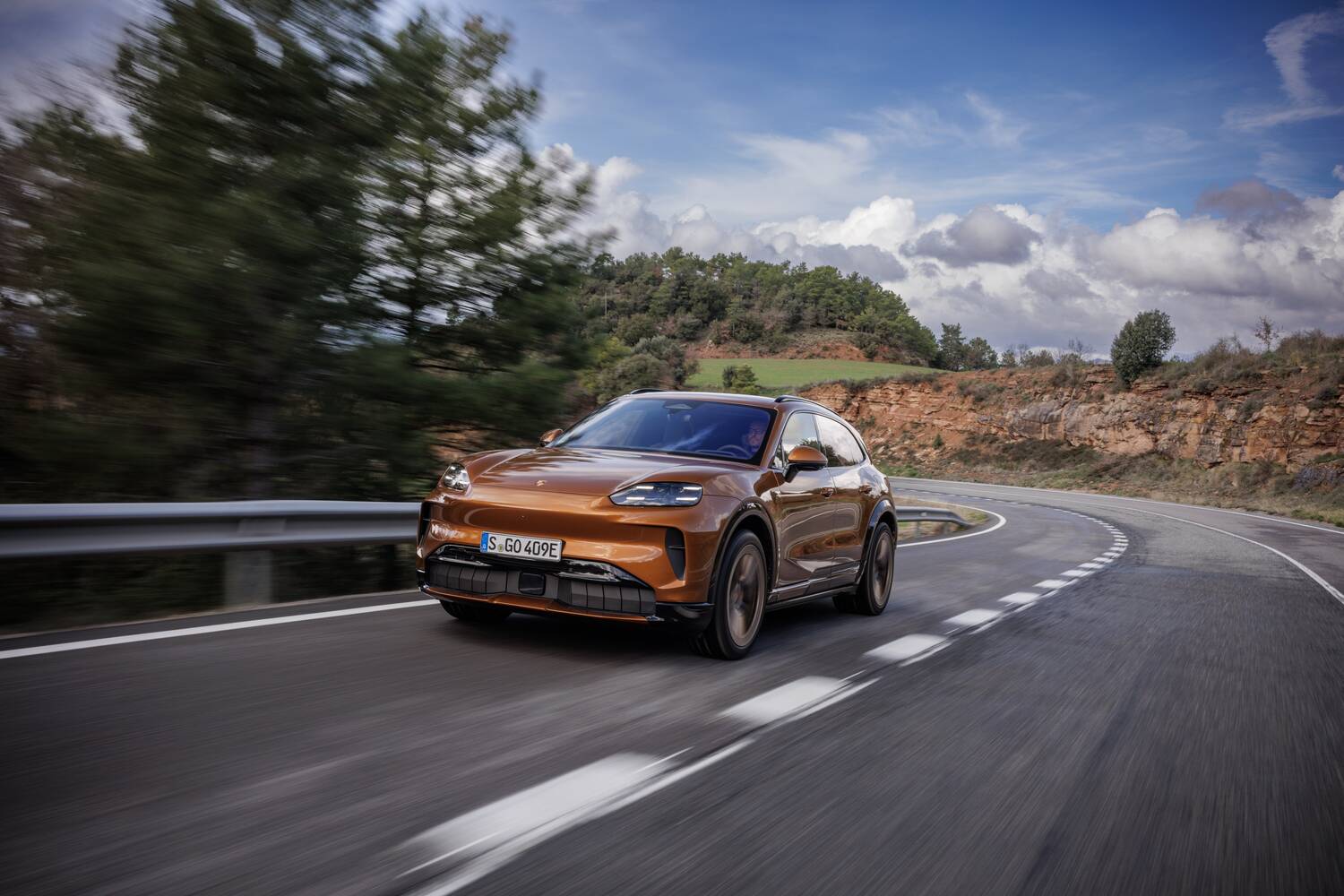
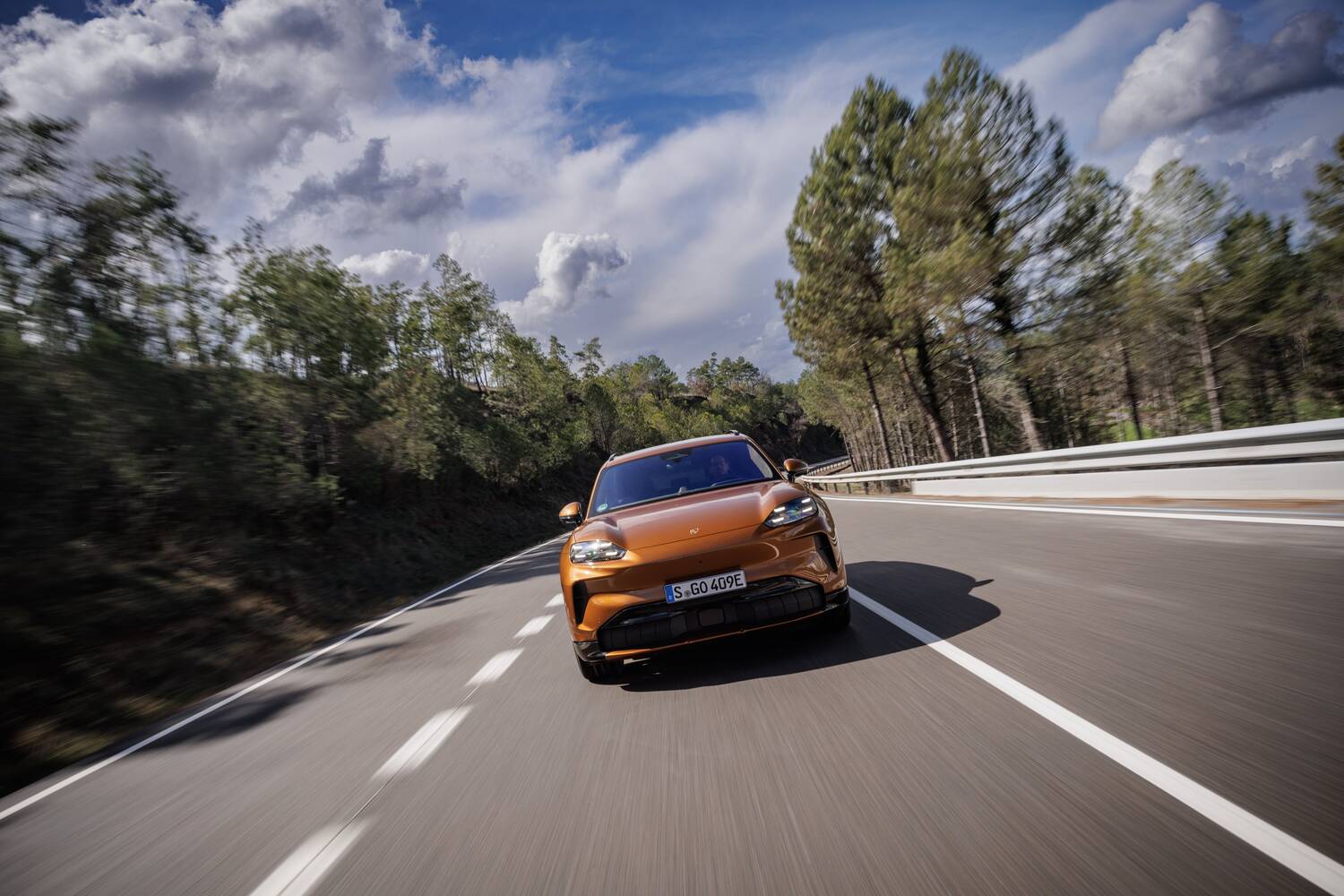
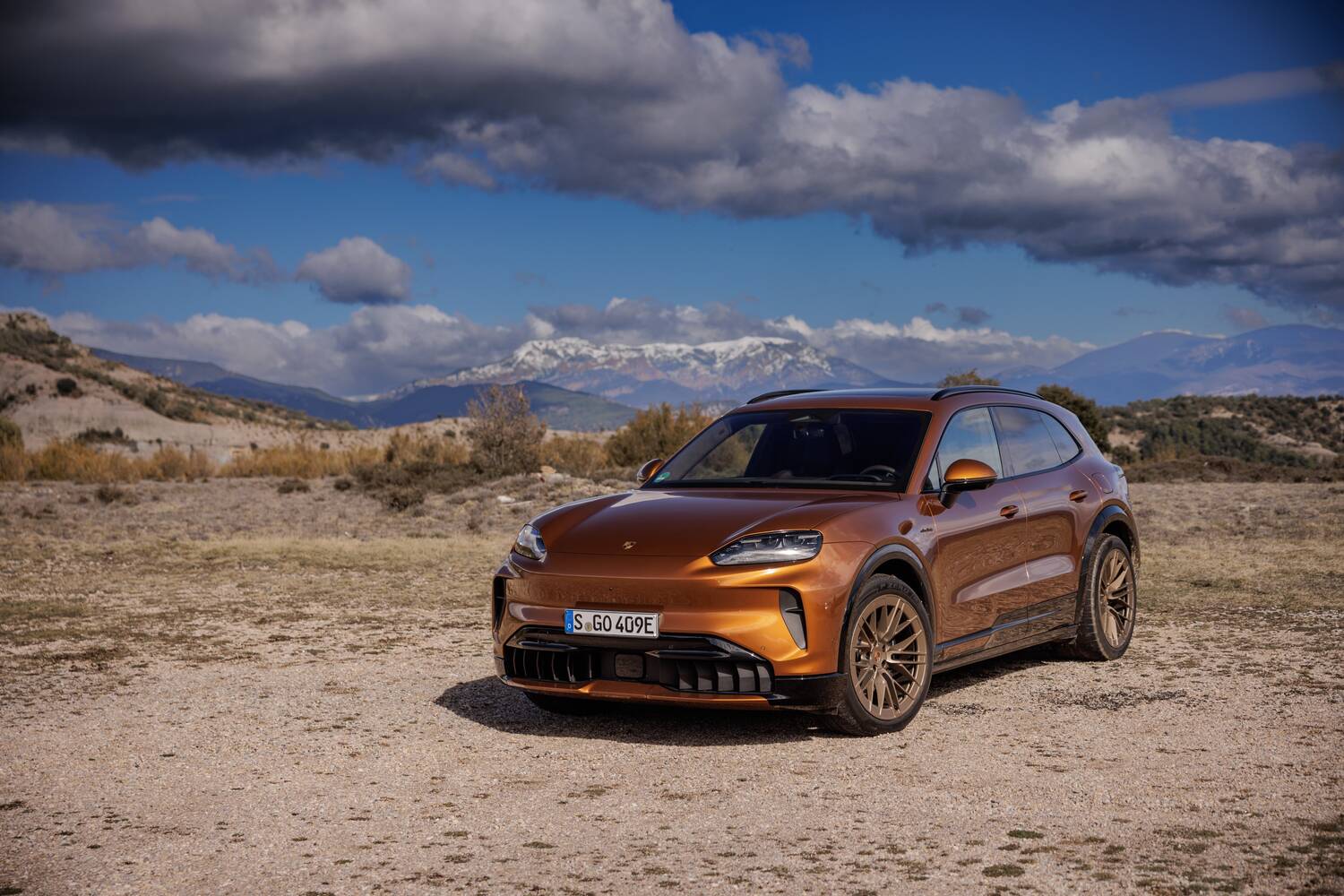
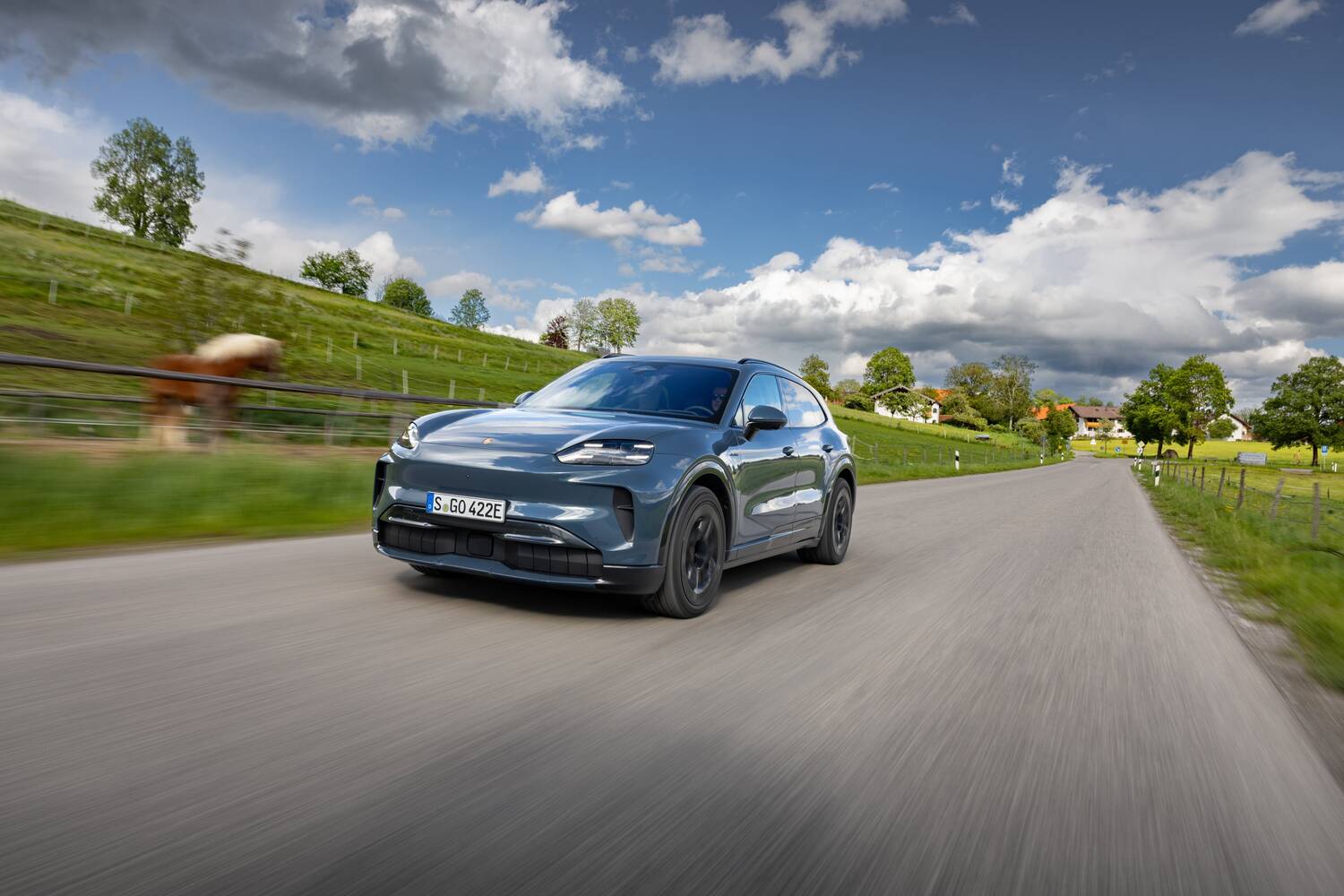
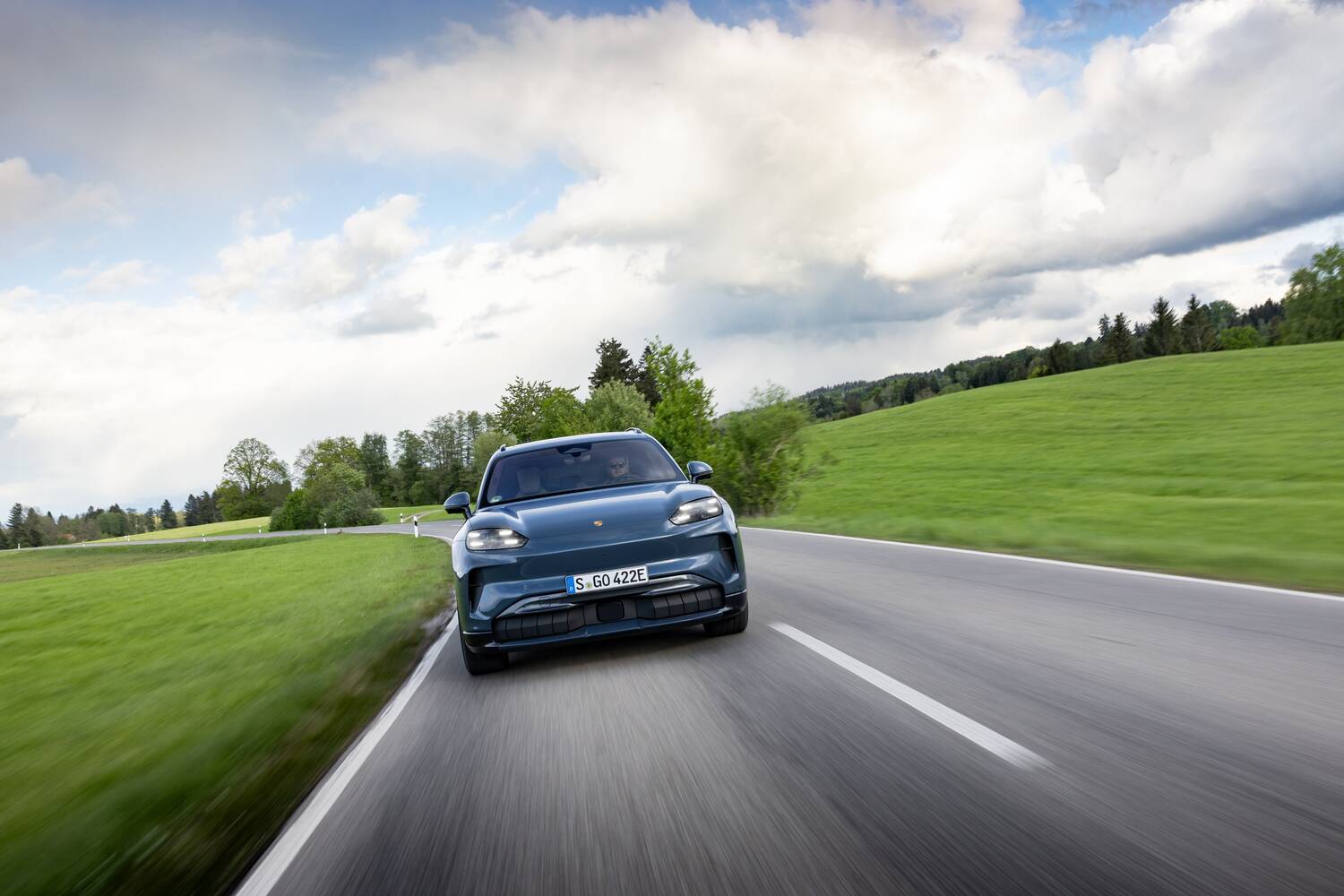
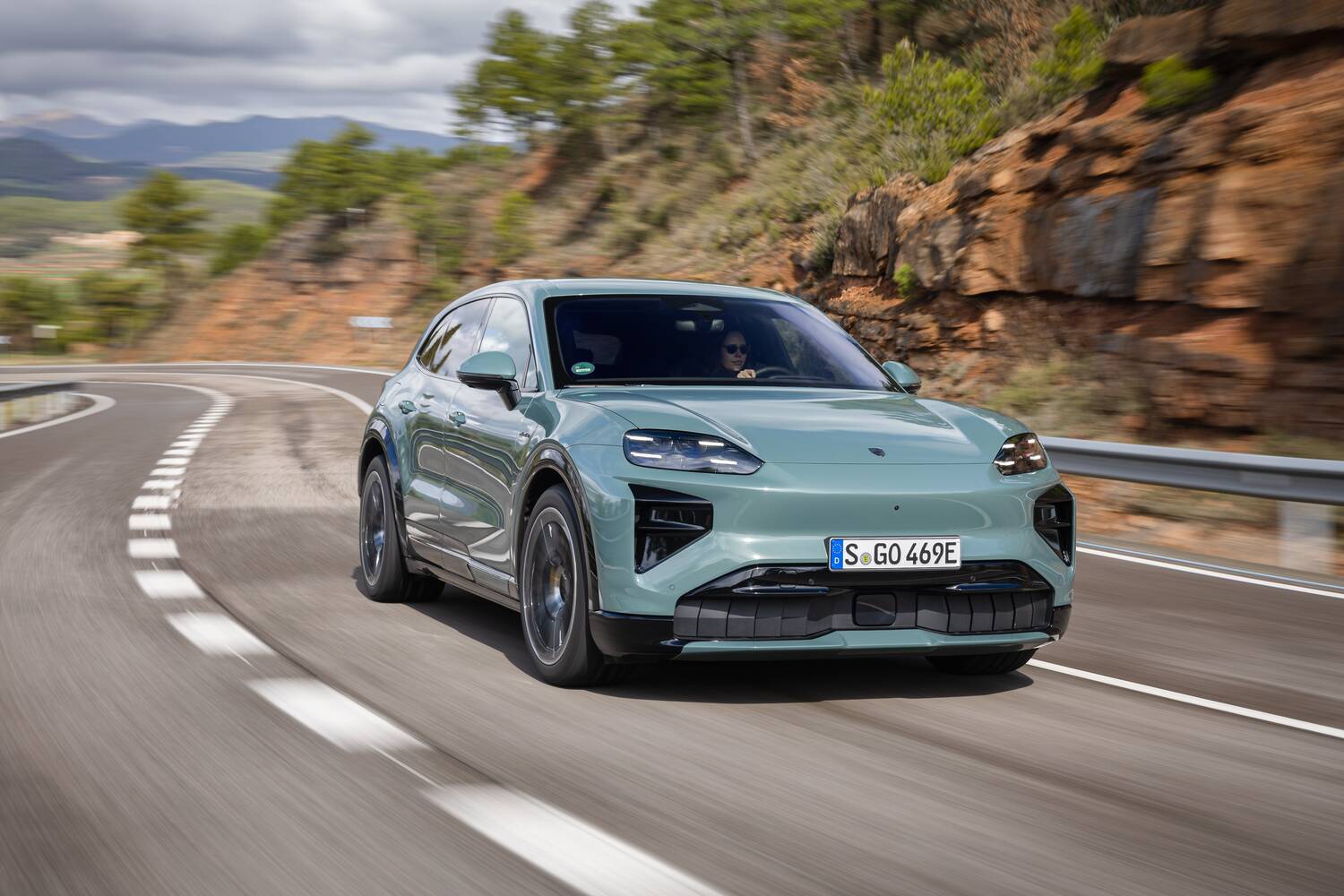
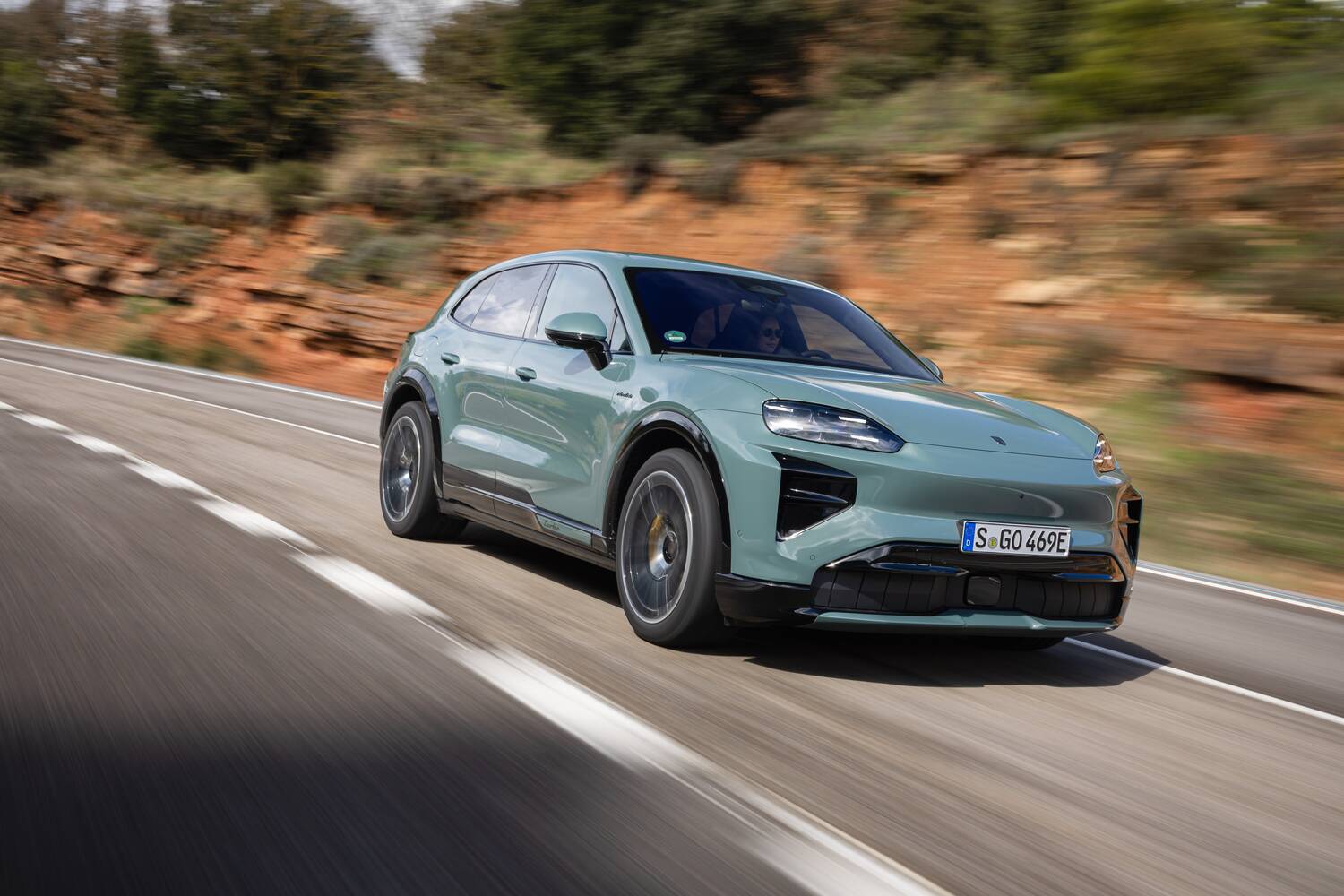
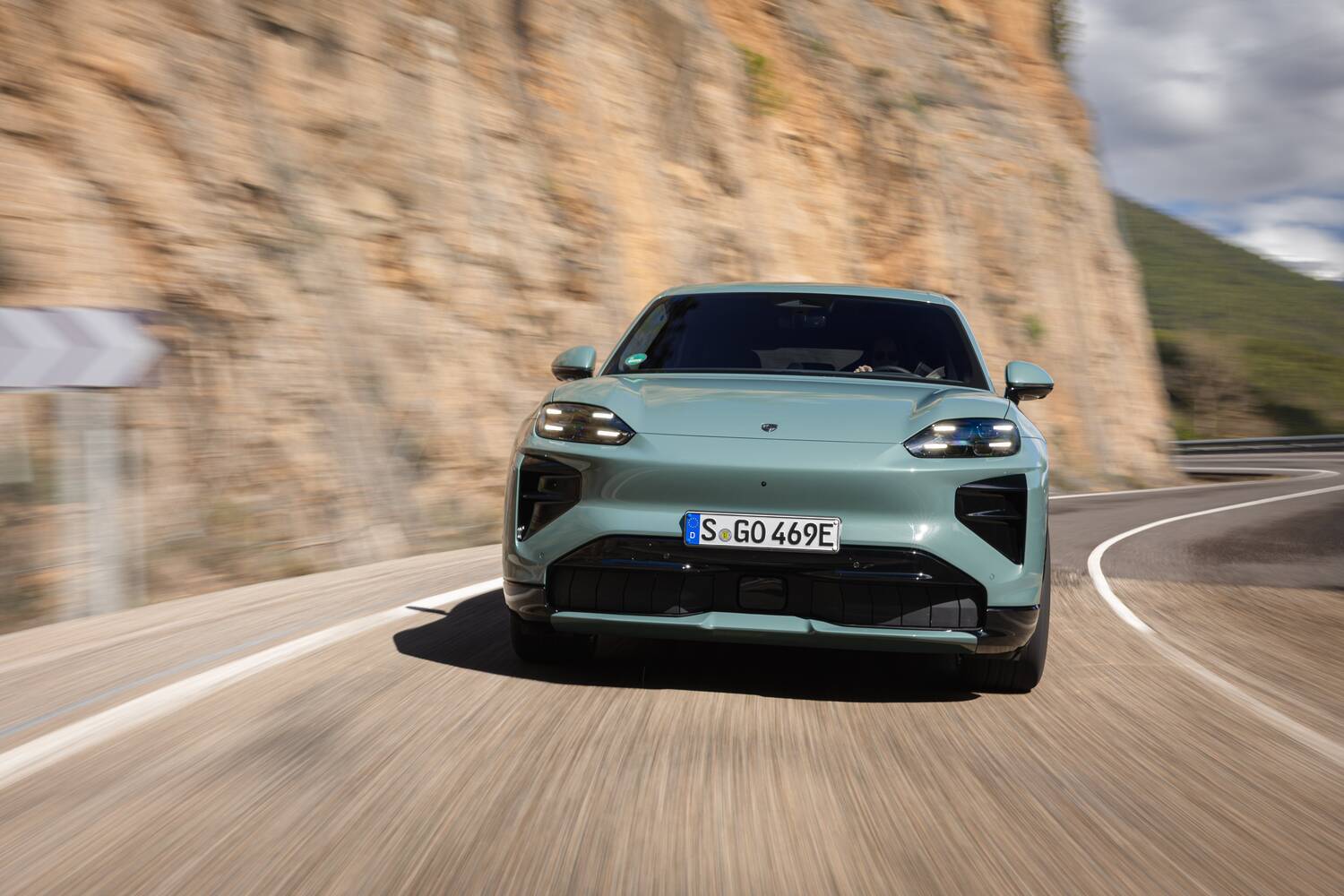
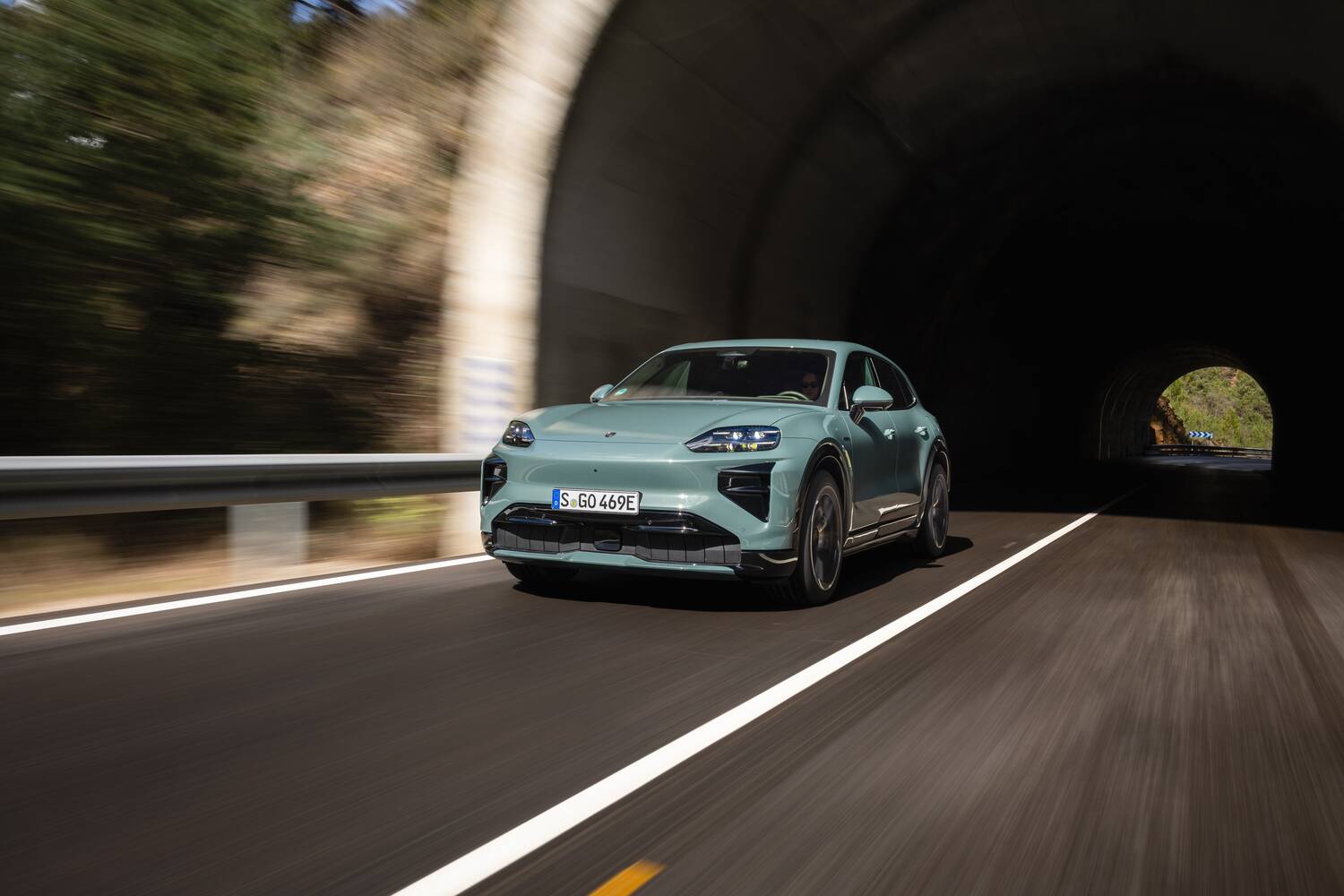
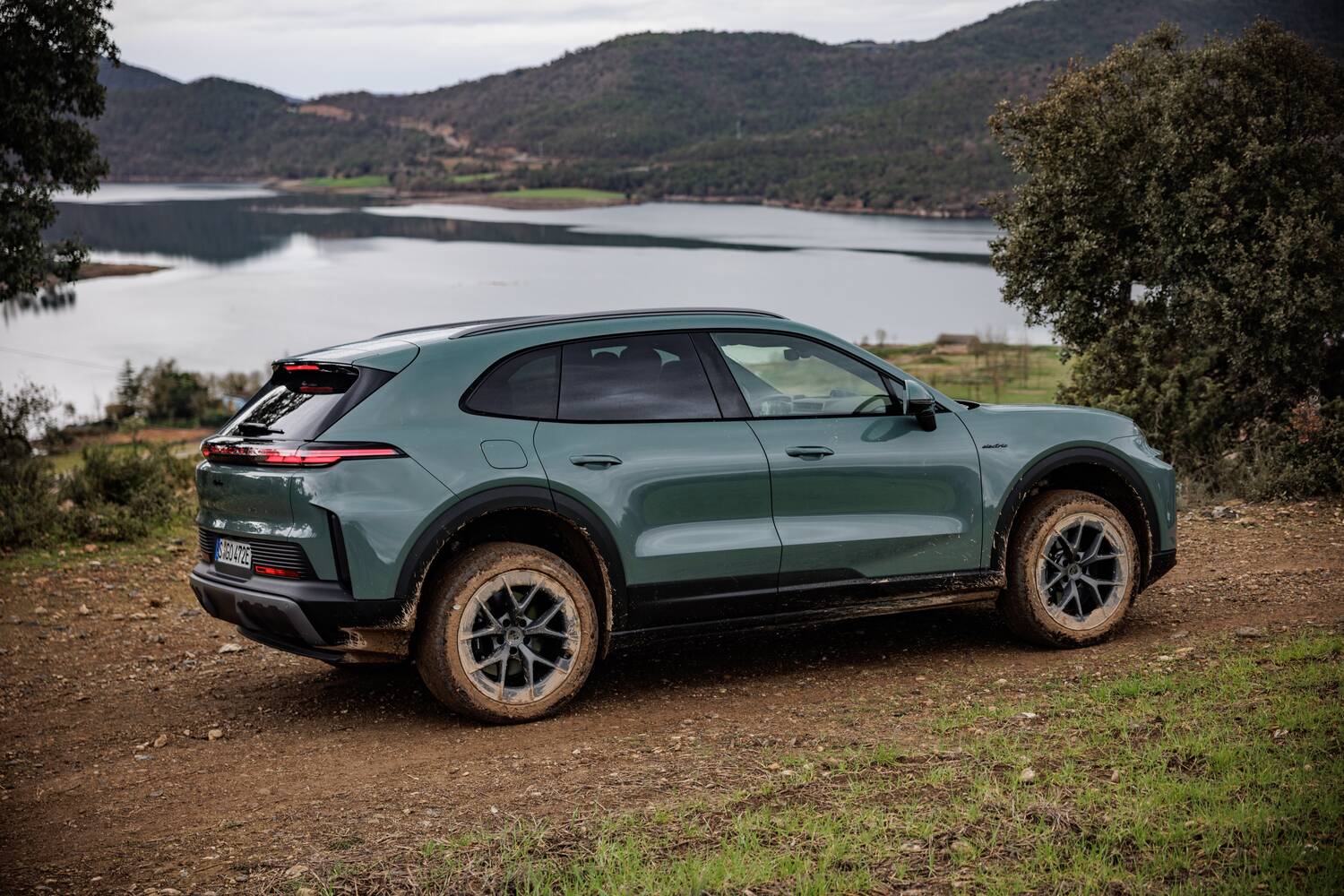
The Porsche Cayenne Electric adopts the smoothed-off front-end appearance of its two electric relations, which means it has the snub nose and flattened, rectangular headlights we've already seen on both Taycan and Macan.
Some don't mind this look (including us), but others think it's a little too generic and (whisper it) vaguely reminiscent of Chinese machines.

However, the benefit of the styling is that the Cayenne Electric is aerodynamic. This SUV's coefficient-of-drag figure is a properly slippery 0.25, which means it'll cut through the air quietly and efficiently at speed, to the benefit of both refinement and driving range.
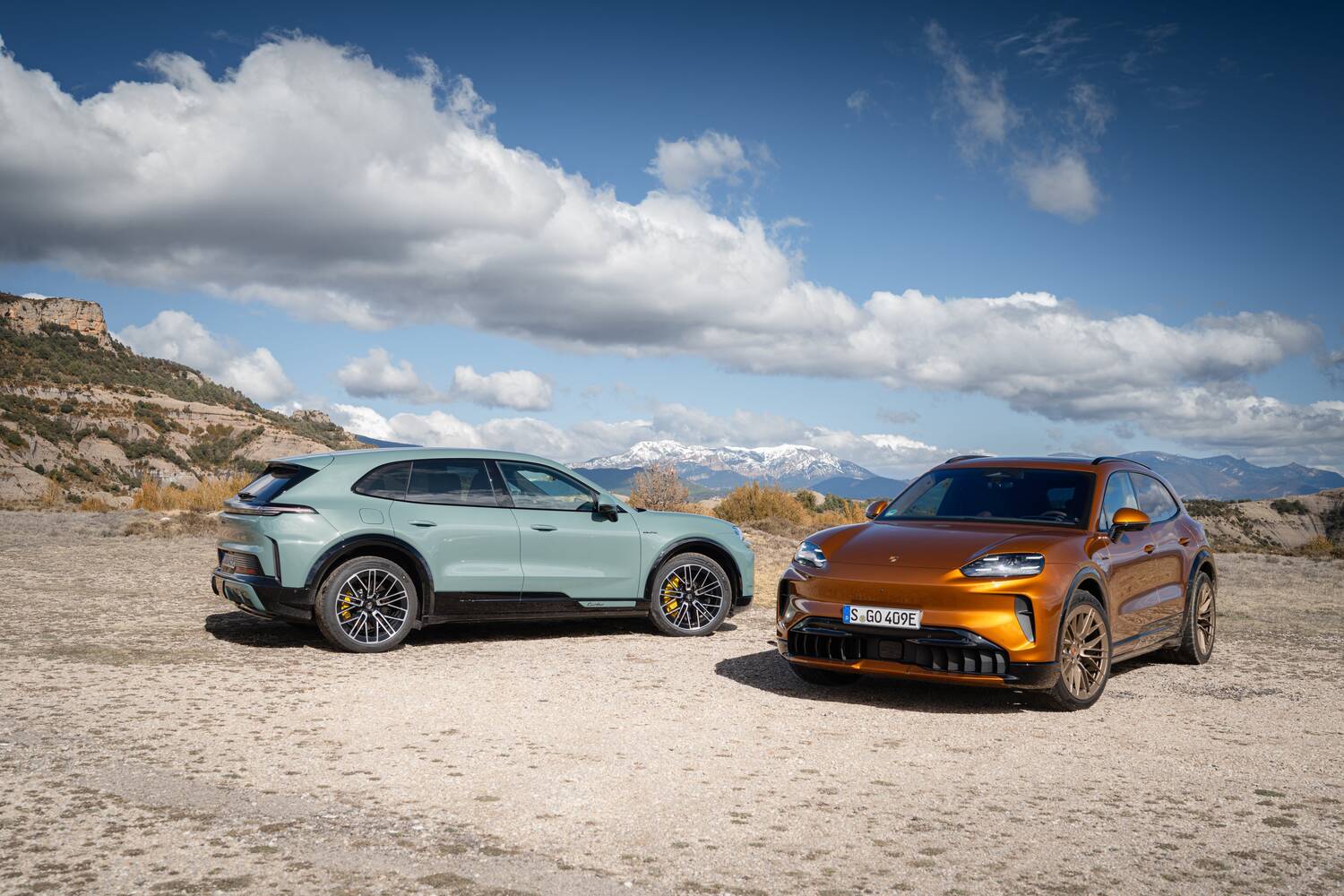
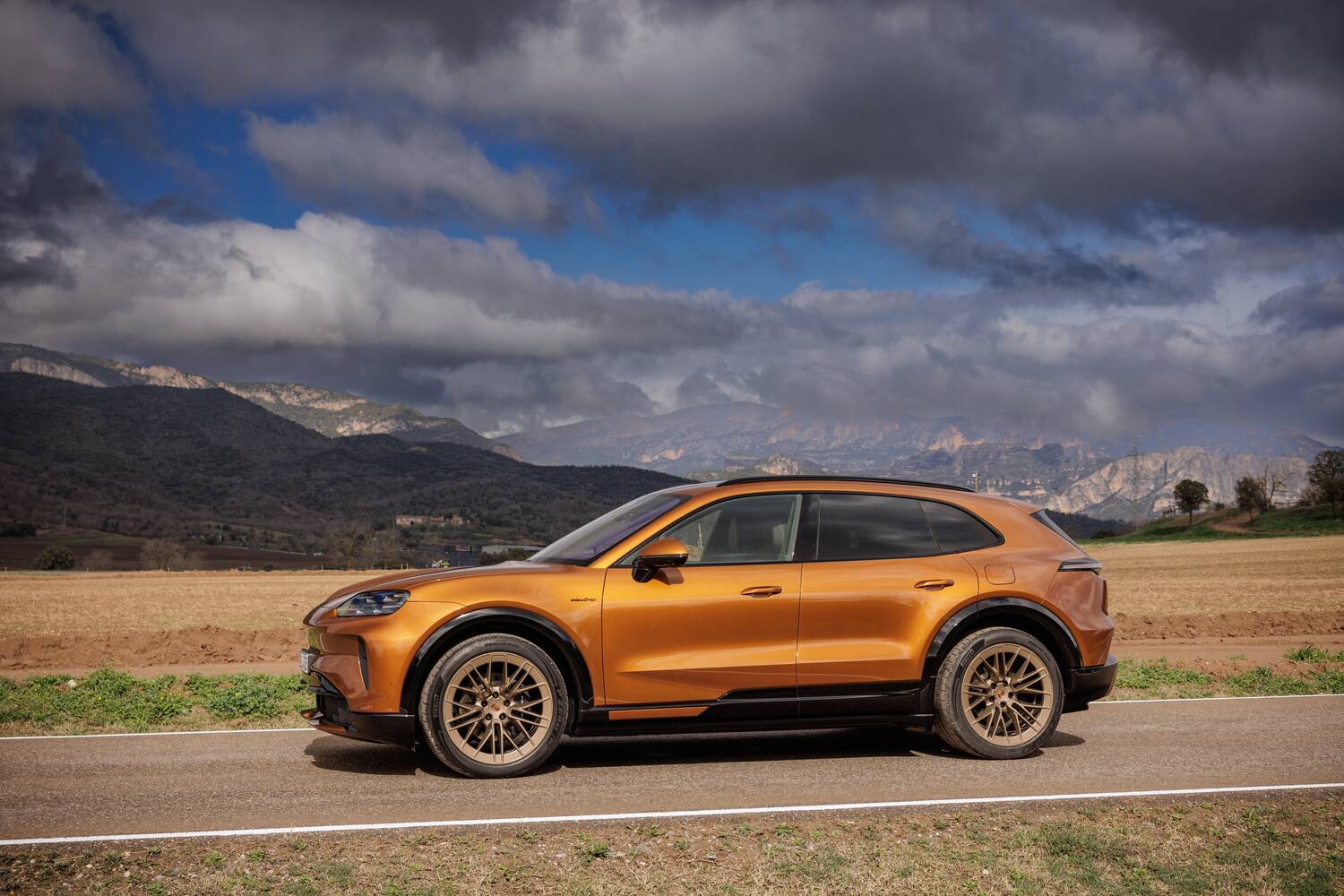
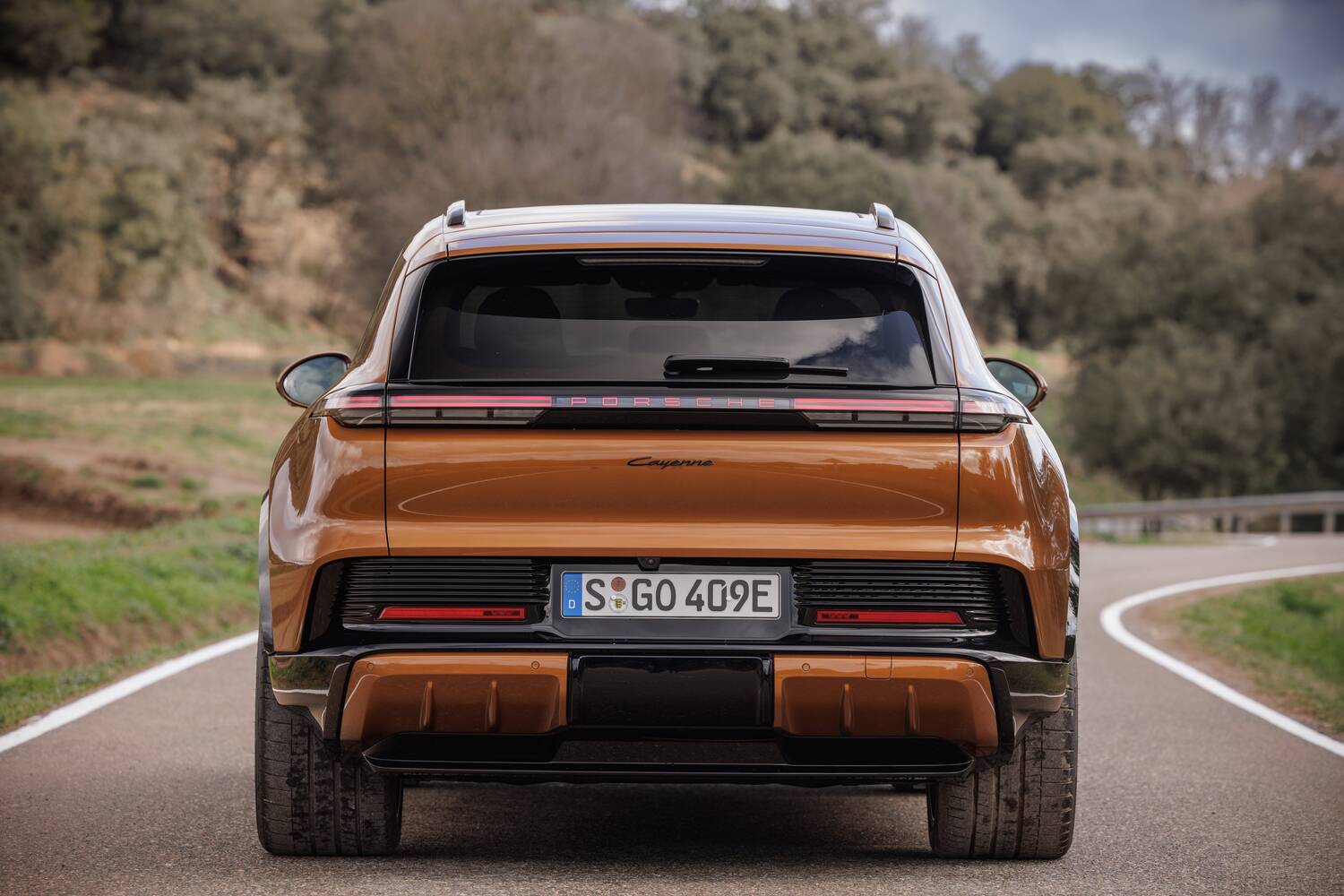
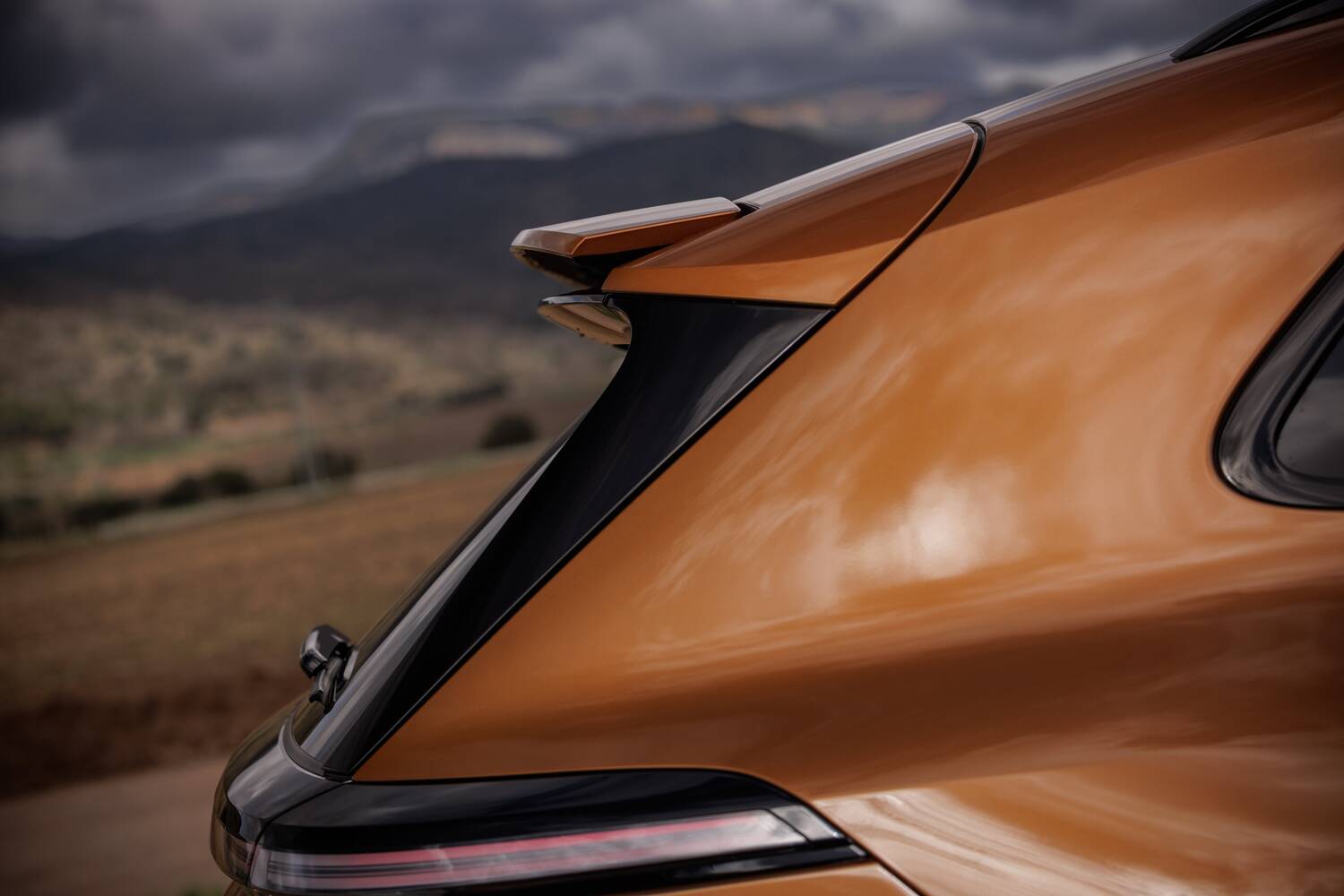
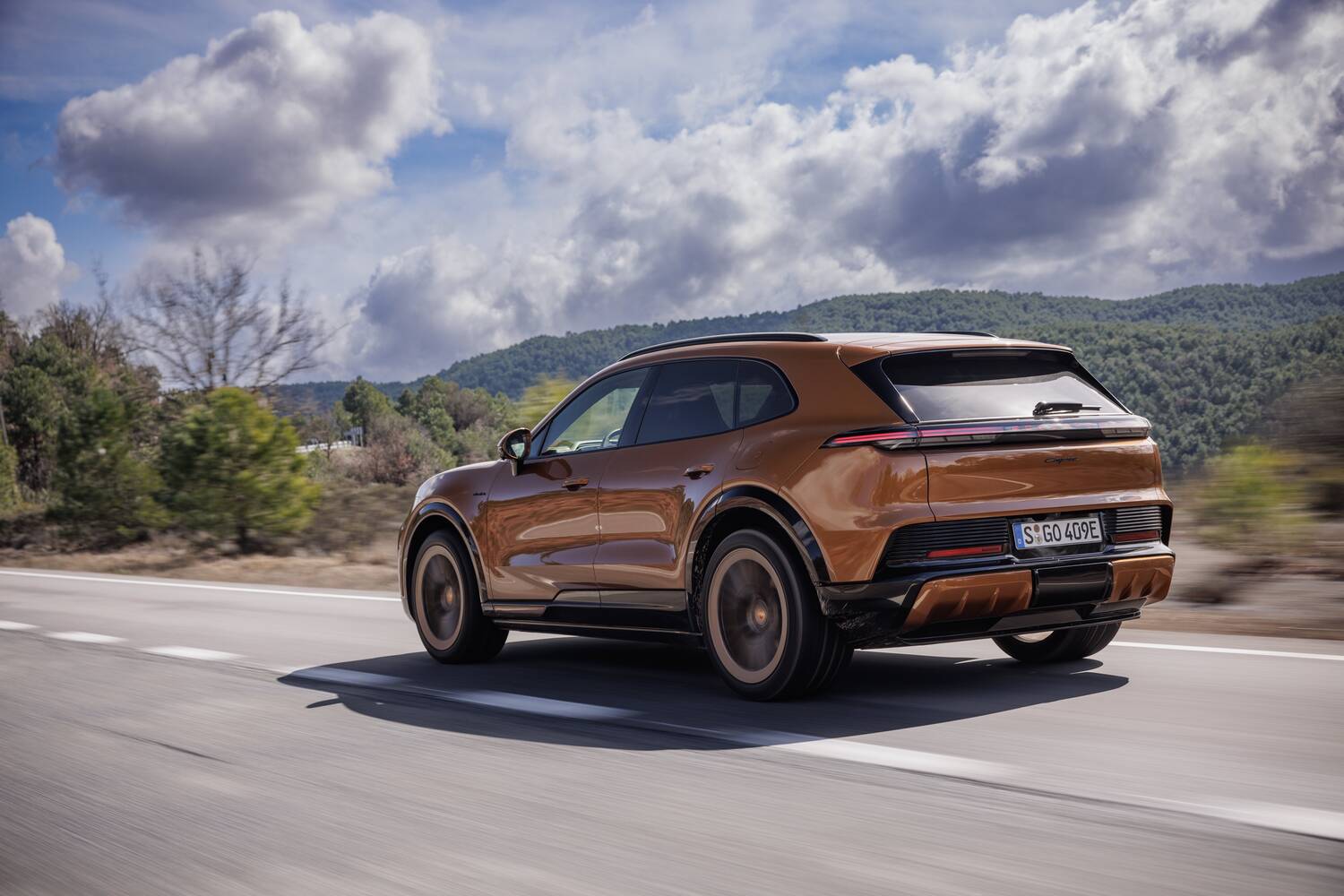
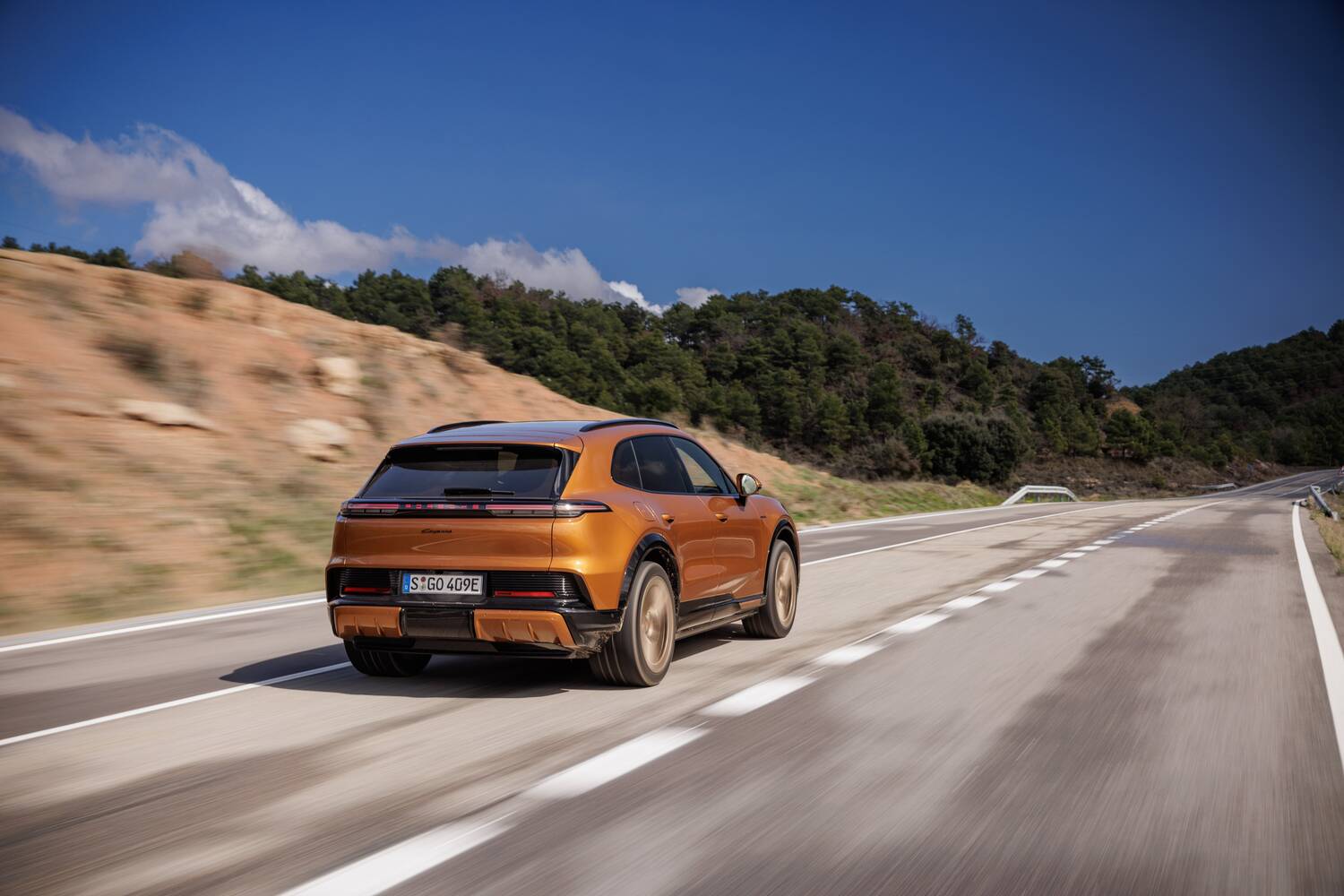
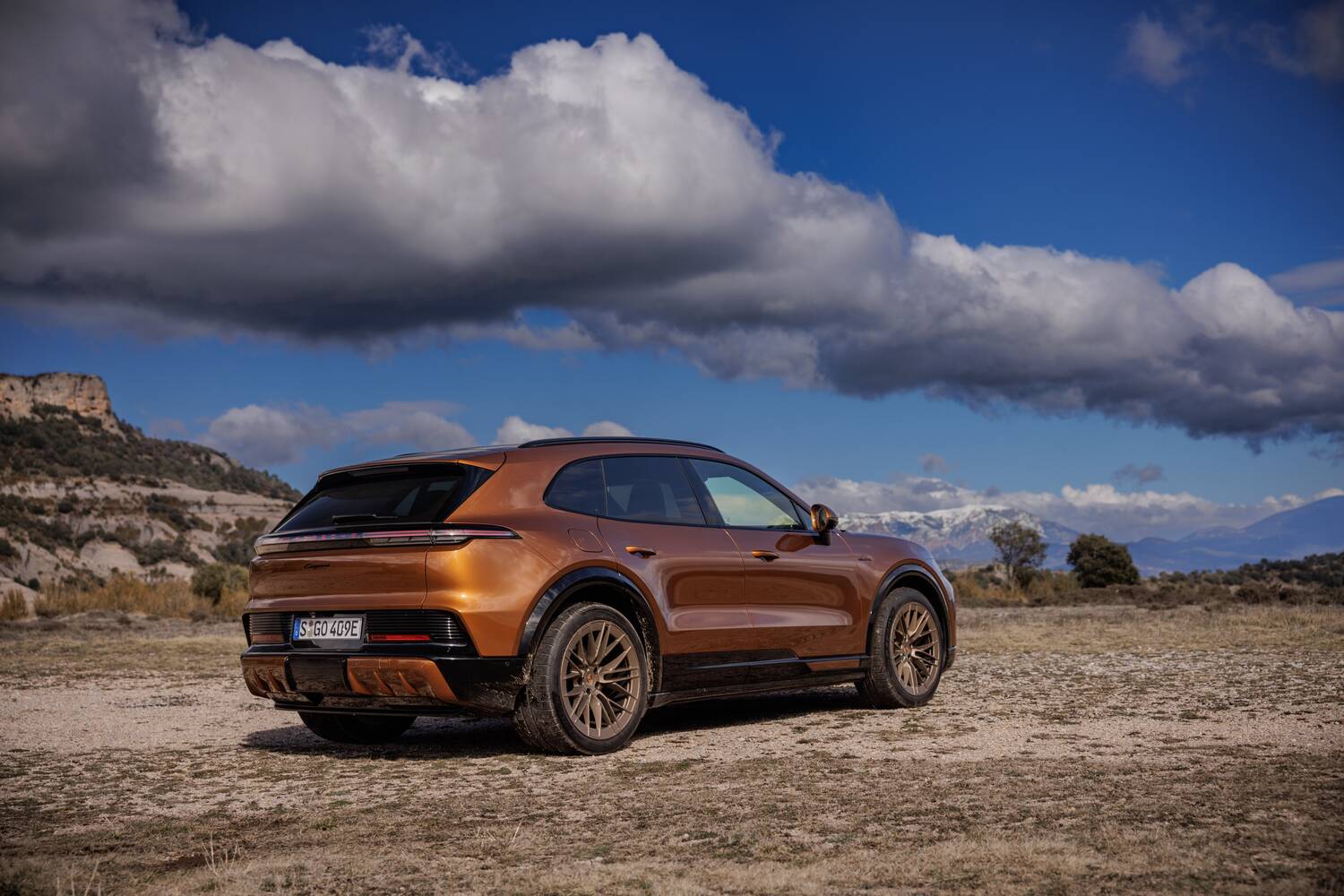
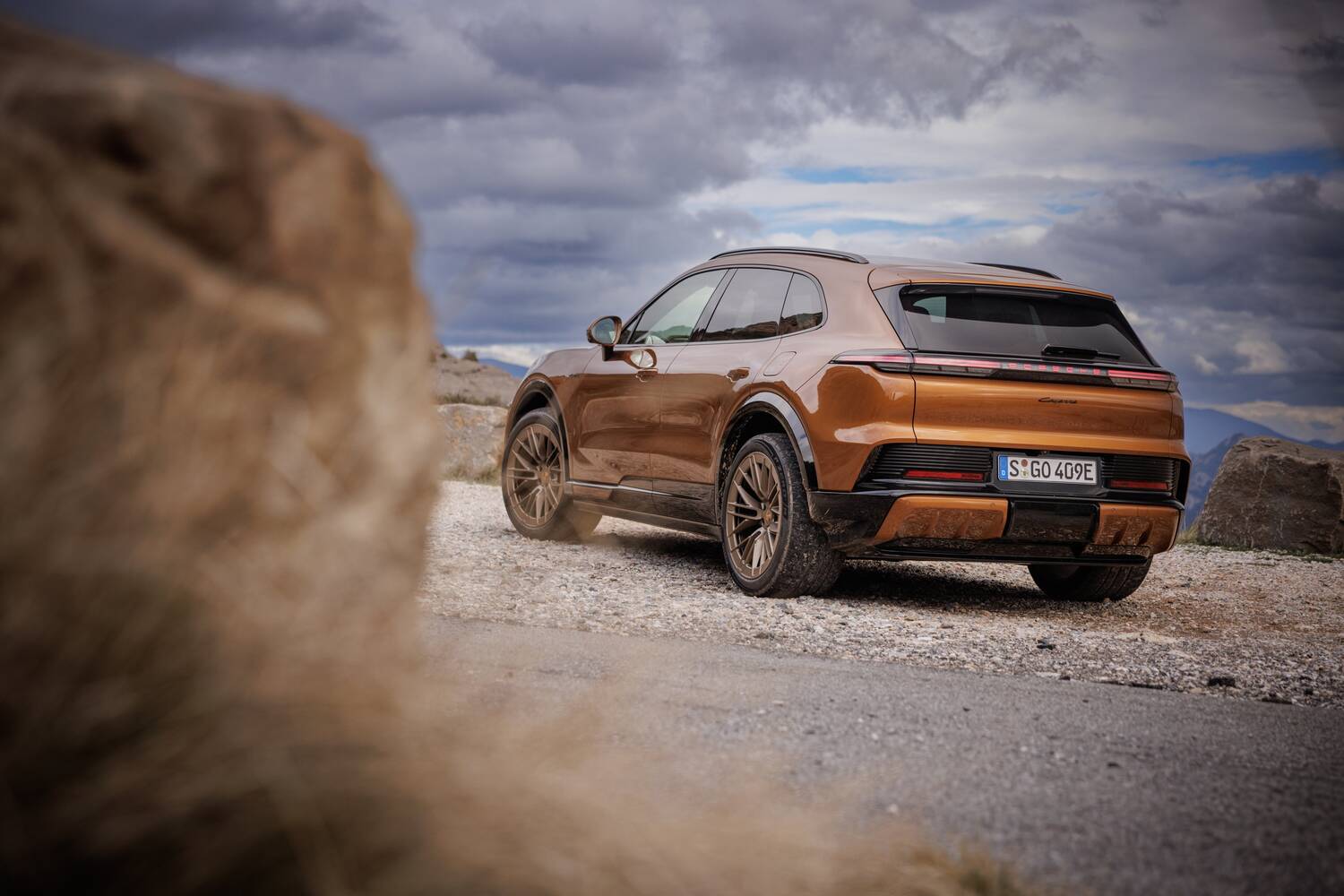
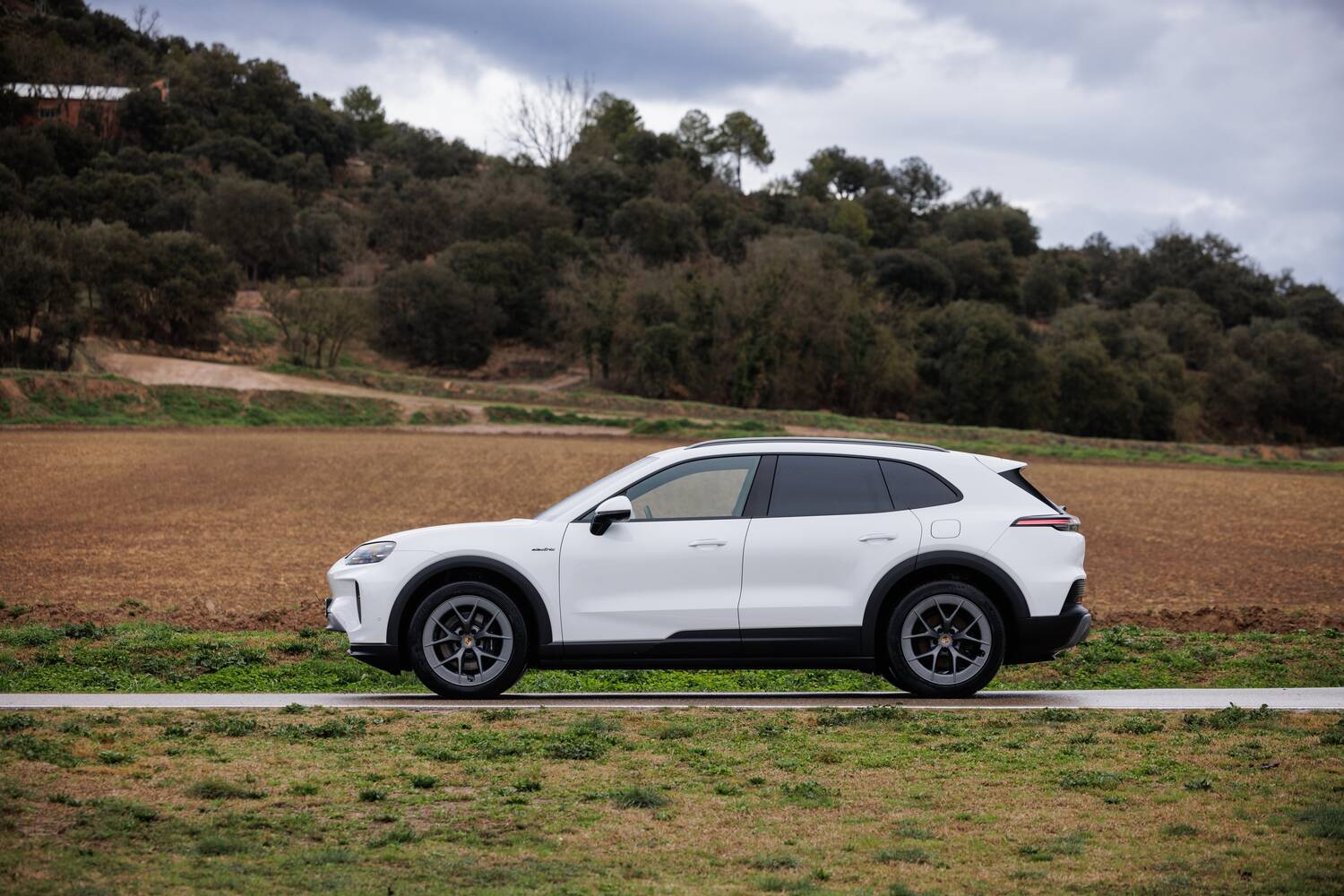
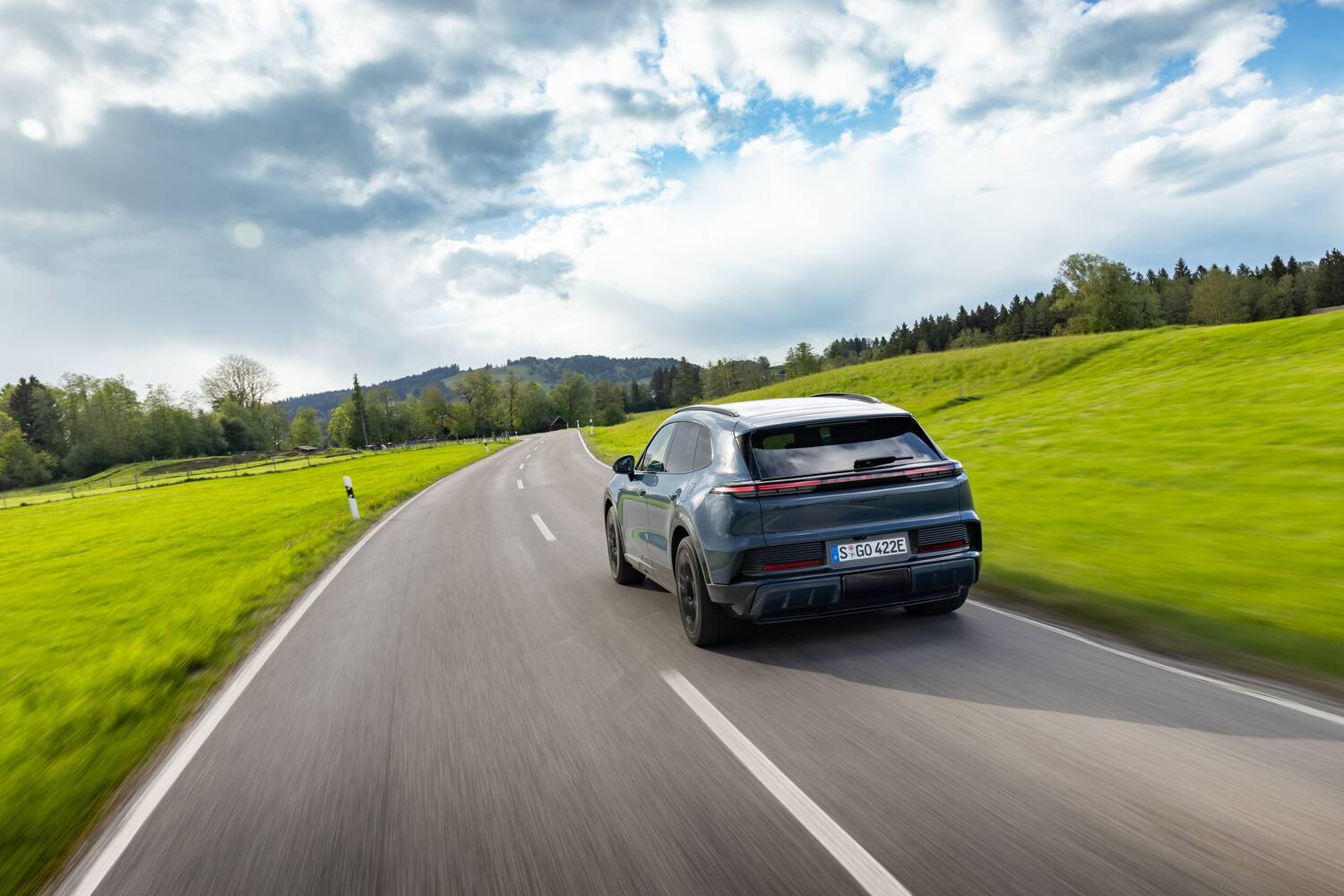
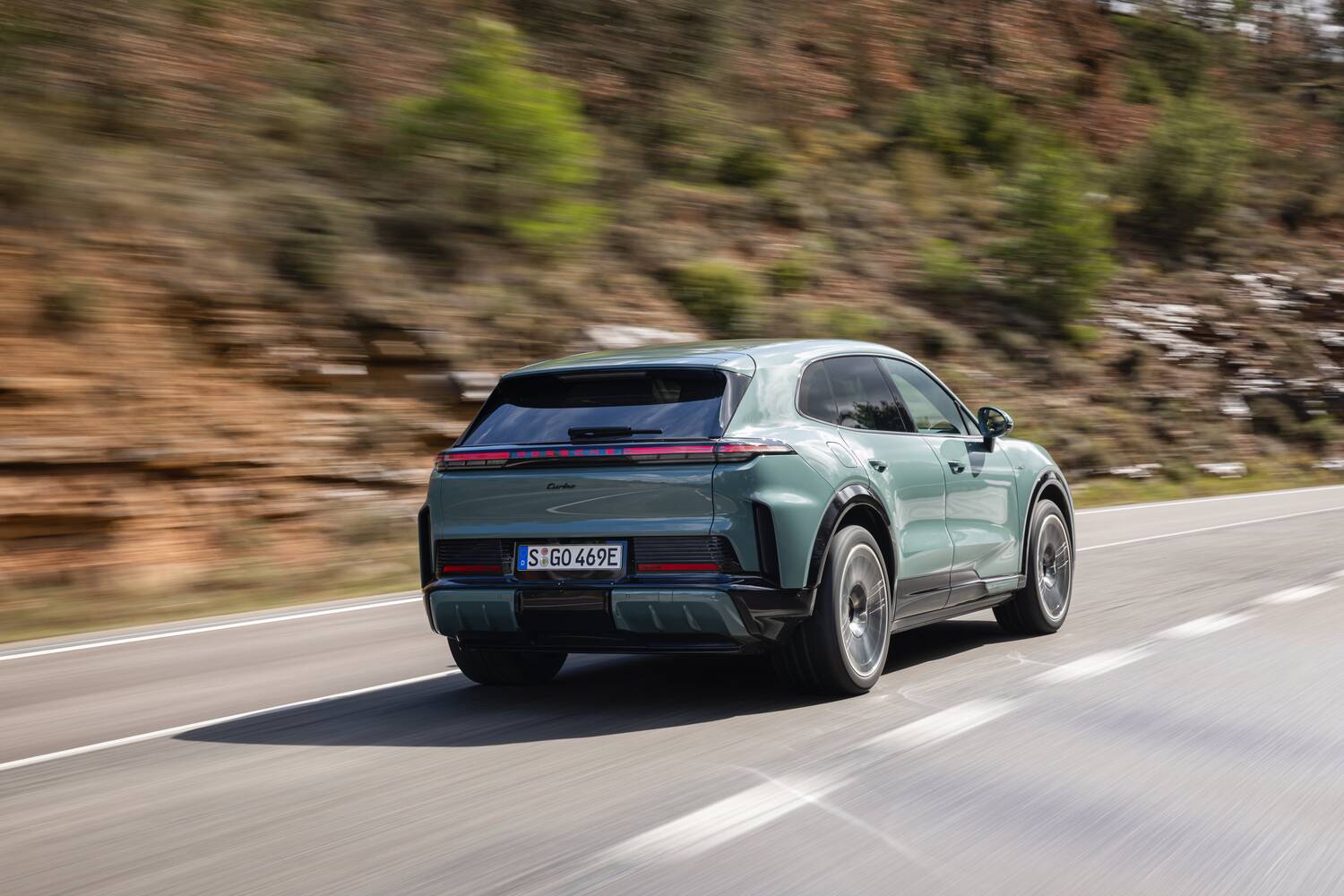
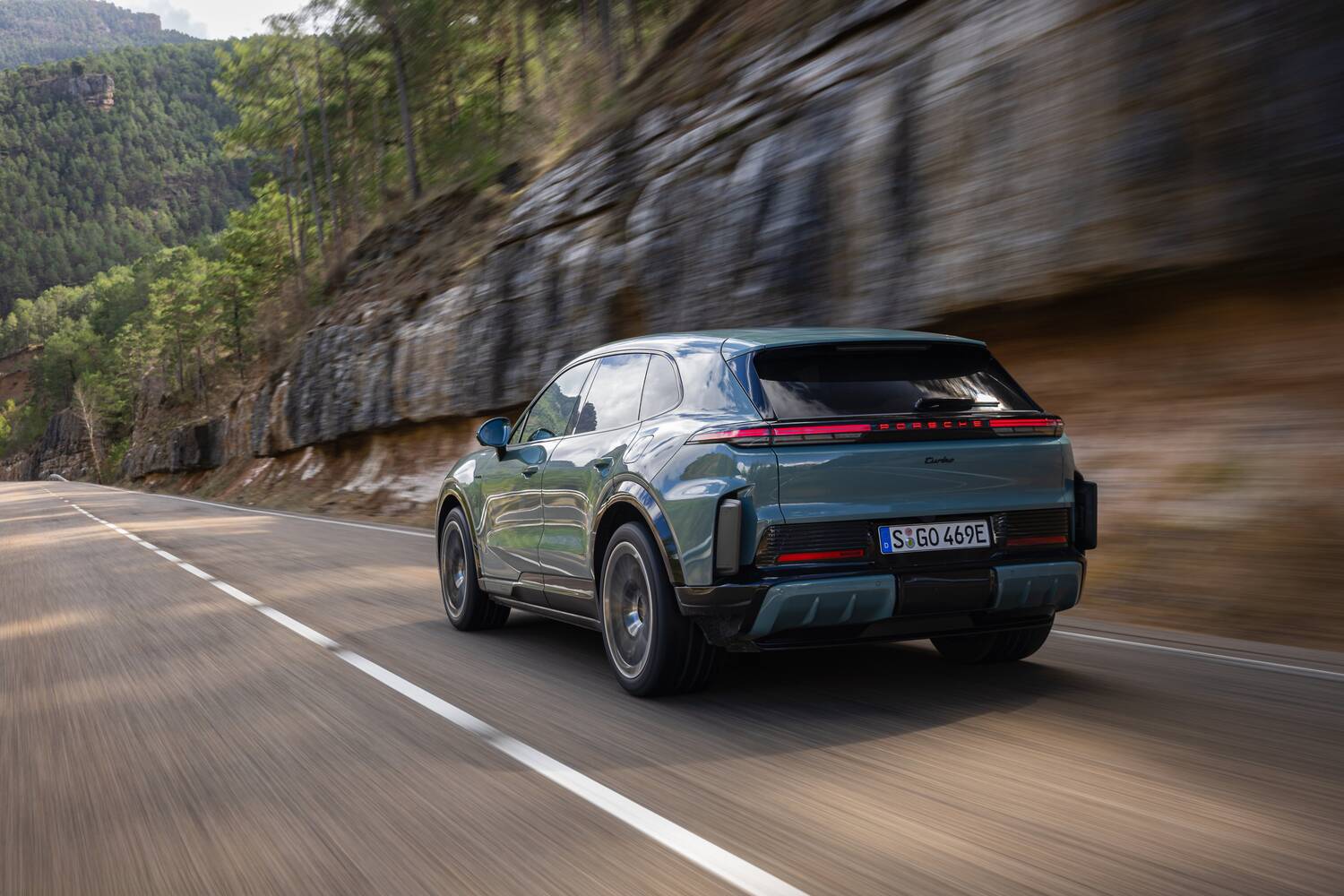
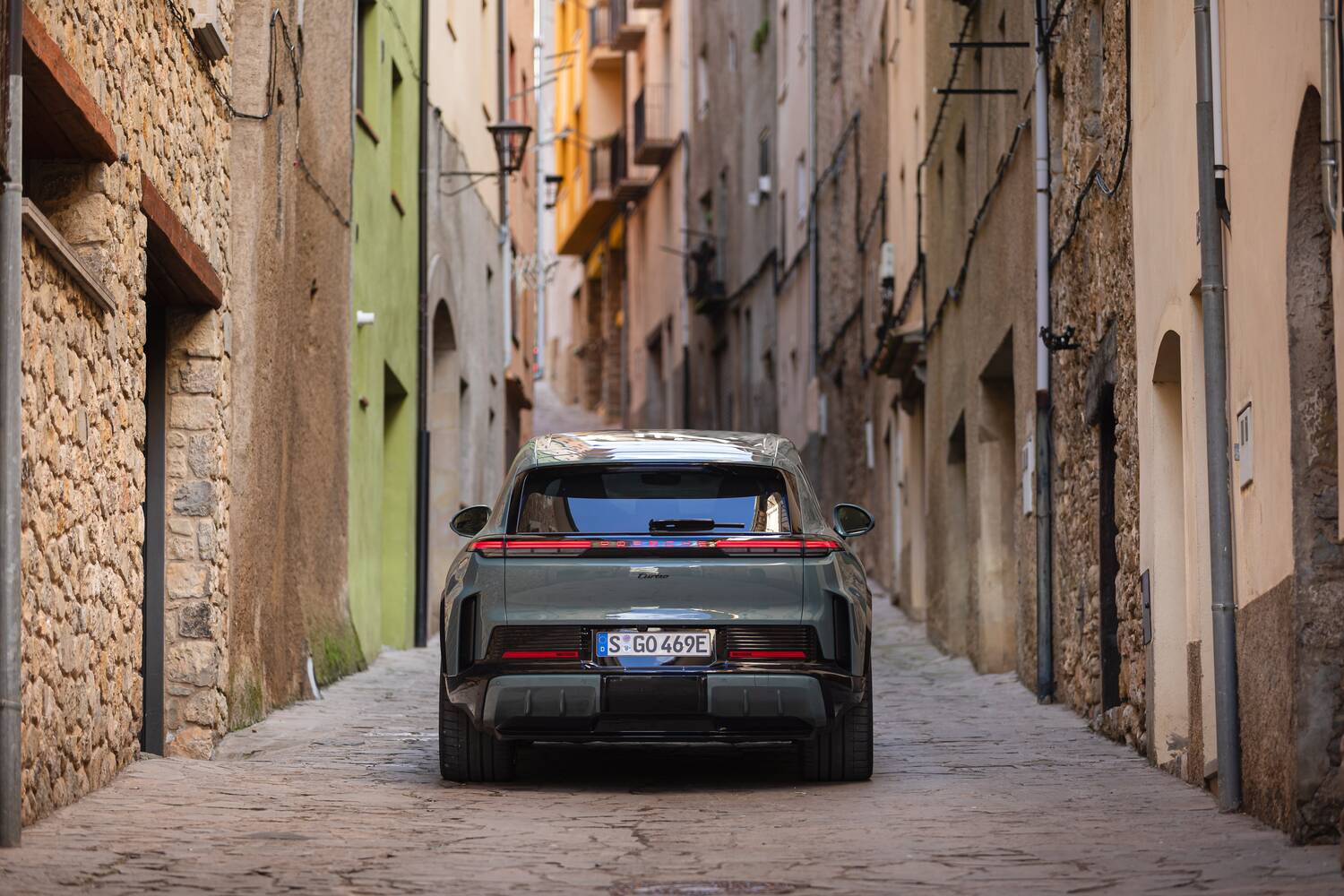
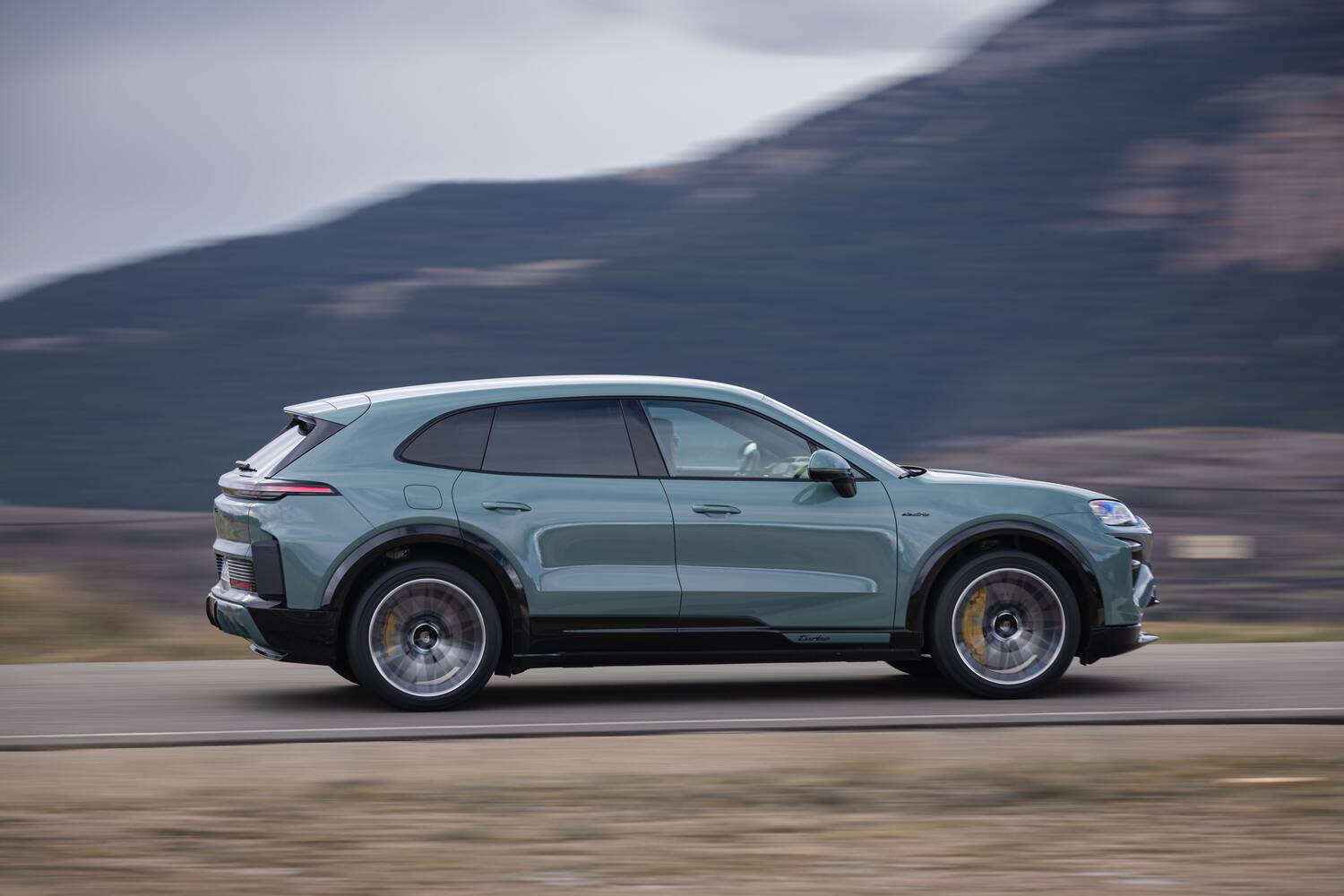
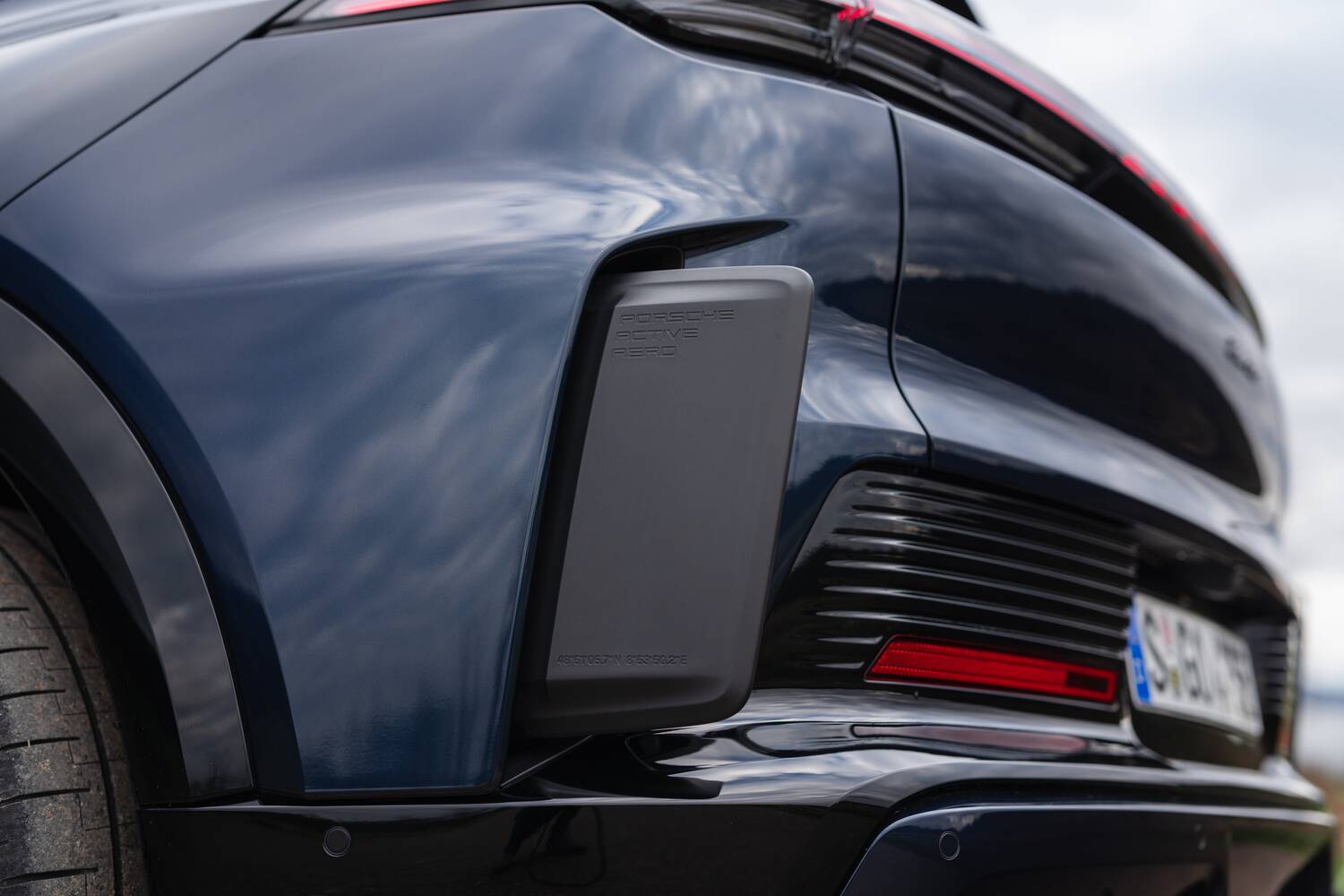
We'd argue the side and rear styling of the Cayenne (the latter which looks particularly hench) is rather appealing.
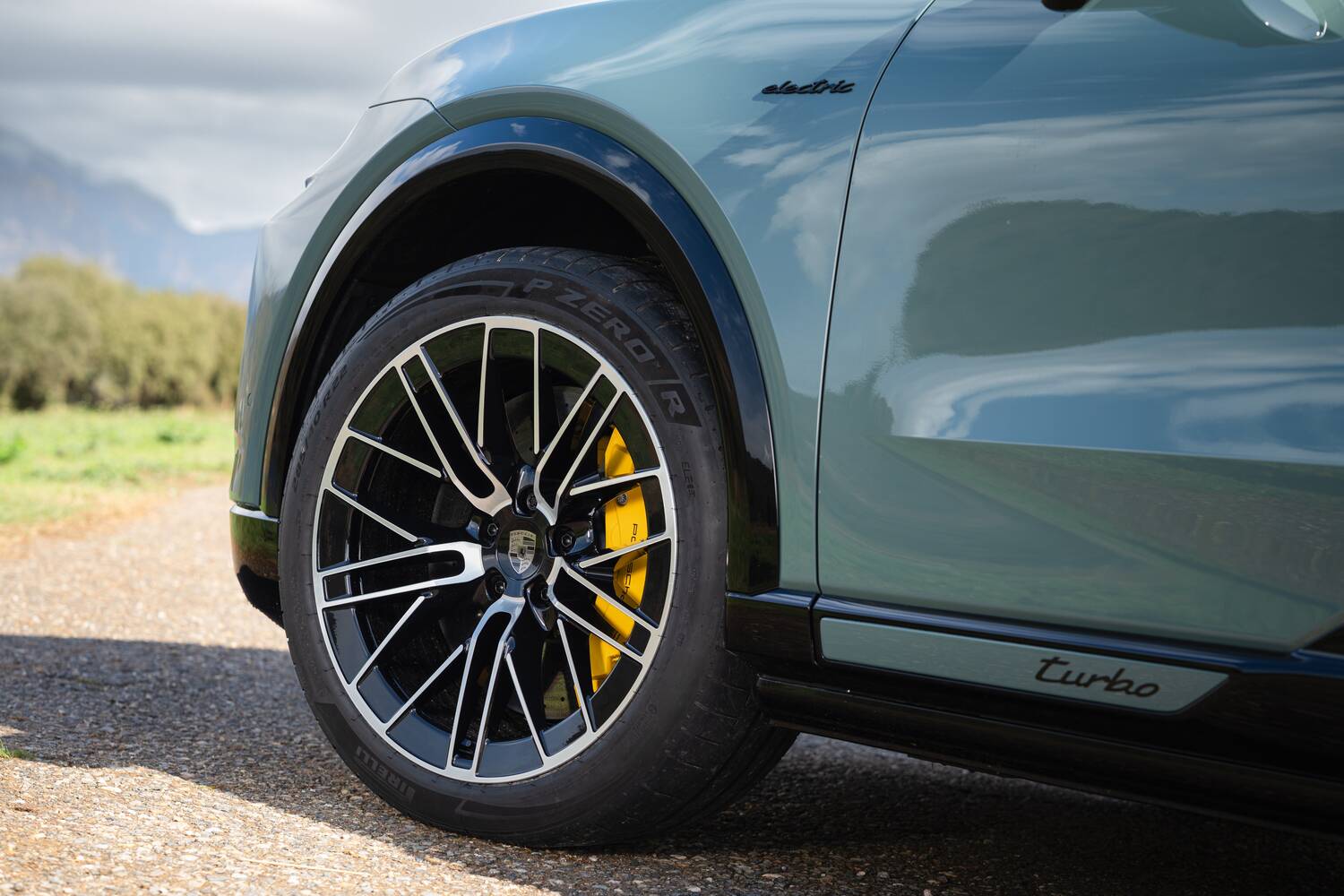
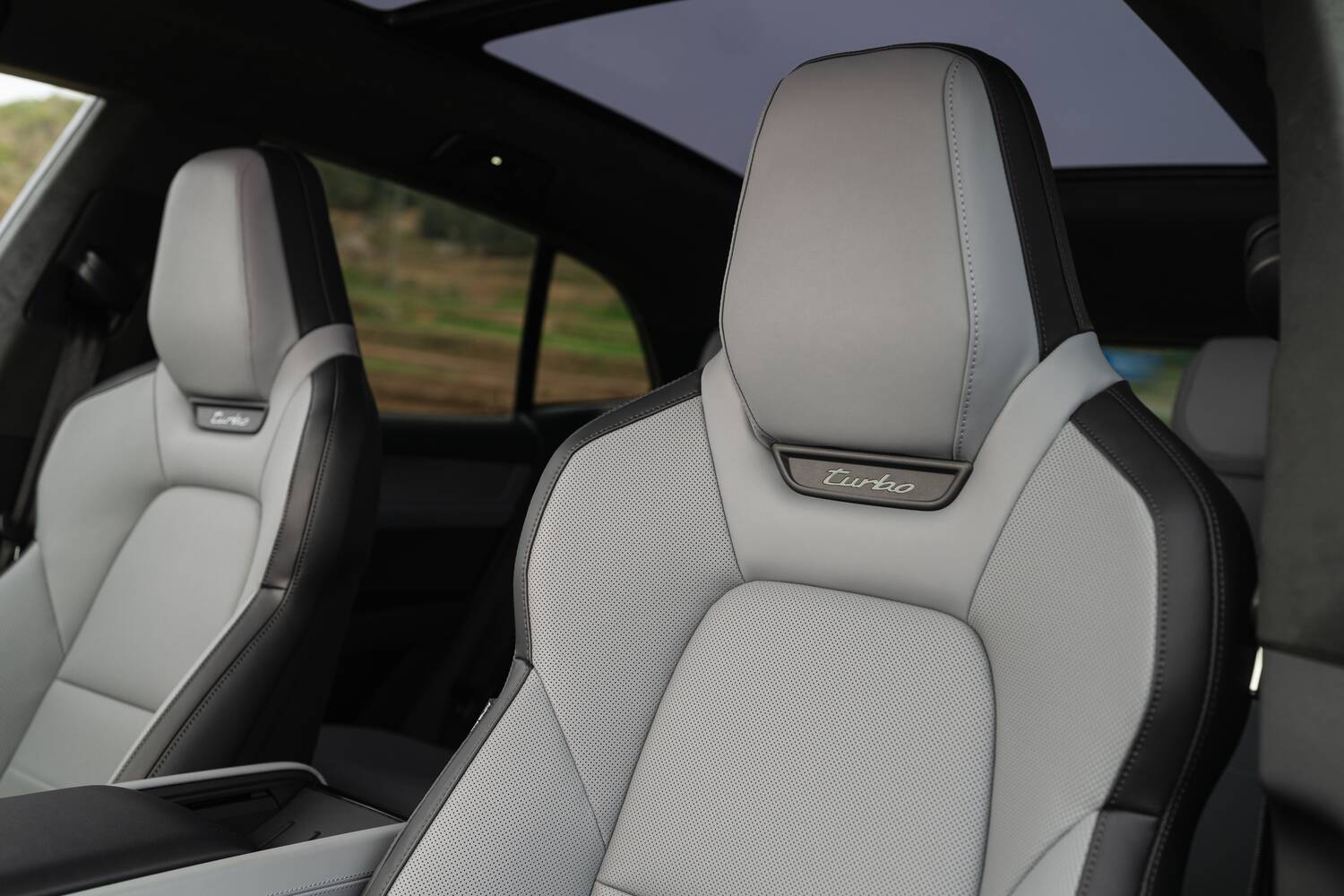
The Turbo model gets slightly more aggressive detailing and accoutrements, plus the use of 'Turbonite'-coloured accents to mark it out, but ultimately all versions of the big Porsche SUV are understated and classy.
Oh, and it is big: almost five metres long, nearly two metres across the beam without including the door mirrors and standing almost 1.7 metres tall (including roof rails) with its standard-fit air suspension at its regular ride height.
The Cayenne can move closer to the floor or up on its tiptoes according to which drive mode or setting it is in, so at its lowest it's 1,650mm to the top of its roof rails, while jacked right up it'll be 1,735mm high.

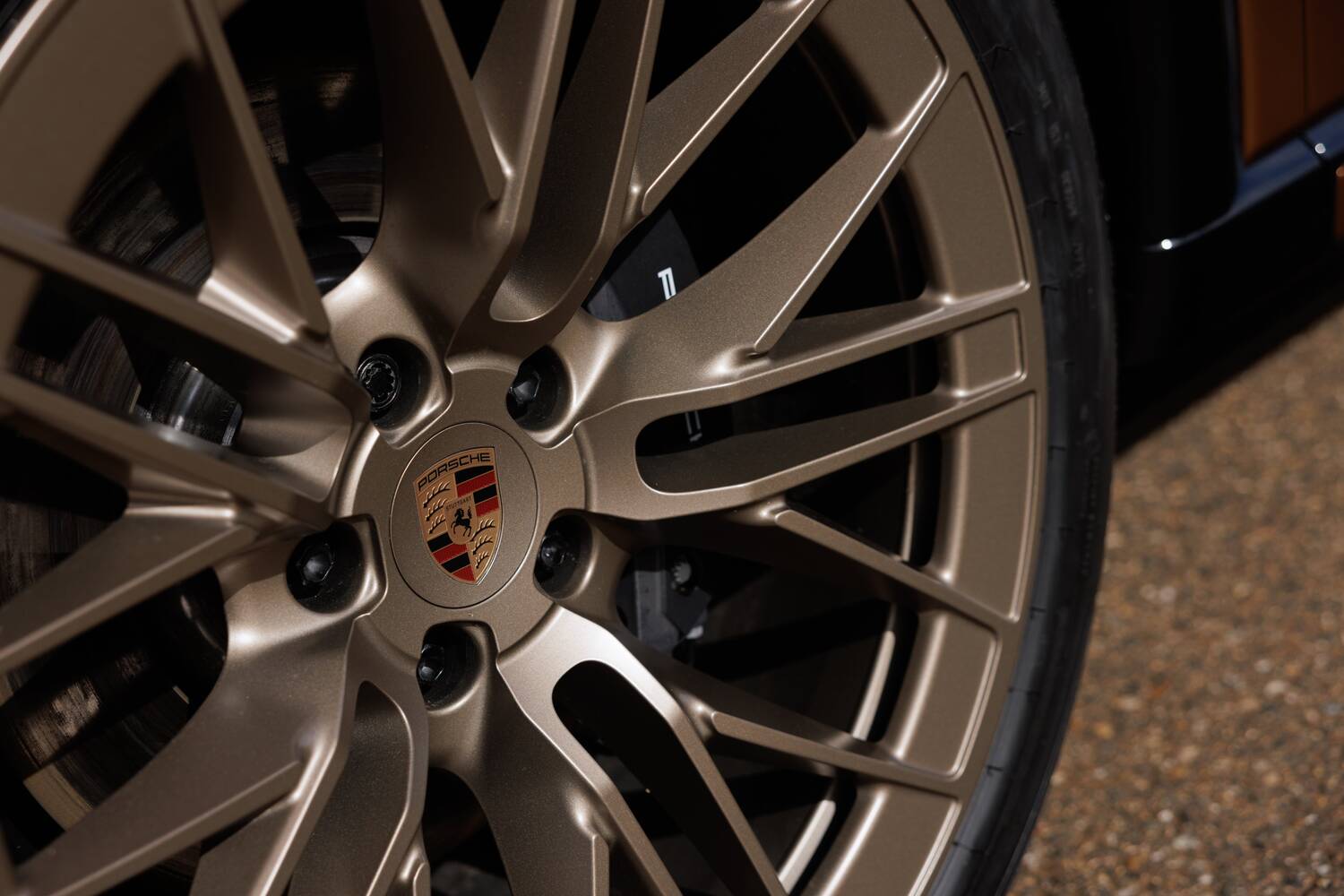
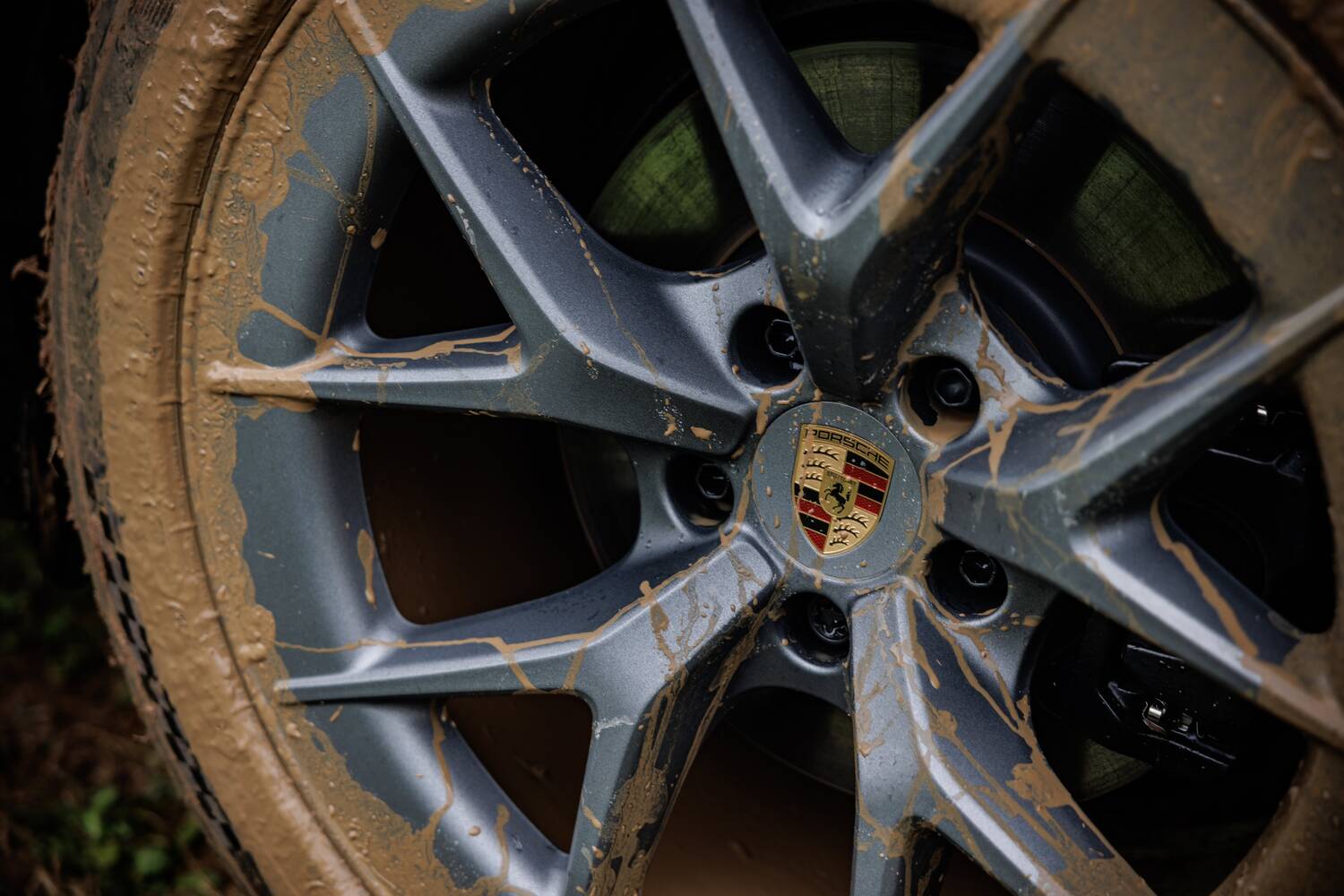
Wheel sizes across the range are from 20 to 22 inches in diameter, with each of the three models - Cayenne Electric, Cayenne S Electric and Cayenne Turbo Electric - coming with their own design of alloy; these are 20s in the case of the first two, and 21s for the Turbo. Beyond that, there are a few assorted options of 21- and 22-inch rims, for sizeable upgrade fees in most cases.
Dimensions of the 2026 Porsche Cayenne Electric
- Length:
- 4,985mm
- Width:
- 1,980mm (excluding mirrors)
- Height:
- 1,680mm (nominal, varies according to air-suspension ride height)
- Wheelbase:
- 3,023mm
Paint colours for the 2026 Porsche Cayenne Electric
Porsche says that "never before has it been possible to configure a Cayenne so individually to one's personal tastes". This is because there are 13 standard exterior colours to choose from, 12 interior colour combinations, nine designs of alloy wheel and up to five interior and five exterior accent packages.
That's before you even get to the Porsche Exclusive Manufaktur and Sonderwunsch programmes of bespoke individualisation that'll be on offer to buyers with the deepest of pockets.

The main colours are split into four palettes called Contrasts (€0), Shades (€1,095 apiece), Dreams (€1,749 each) and Legends (€3,331). Starting with the Contrasts, the choices are solid White or Chromite Black metallic. Moving up to Shades, the three paints are Vanadium Grey metallic, Carrara White metallic and Dolomite Silver metallic.
Brighter hues appear in the Dreams range, with Mystic Green metallic, Madeira Gold metallic, Algarve Blue metallic and Napali Blue metallic all available. And finally, the Legend paints are Oak Green Neo metallic, Pale Blue metallic, Slate Grey Neo and Monteverde metallic.

For the Cayenne Turbo variant, only the Legends paints listed will incur any extra fee. Basically, you have nine 'free' paints available to you as a Turbo customer, instead of just two on every other Cayenne.
Interior, practicality, tech & comfort of the 2026 Porsche Cayenne Electric
- New OLED 'Flow Display'
- Acres of room in cabin and boot
- Does it live up to its high price?

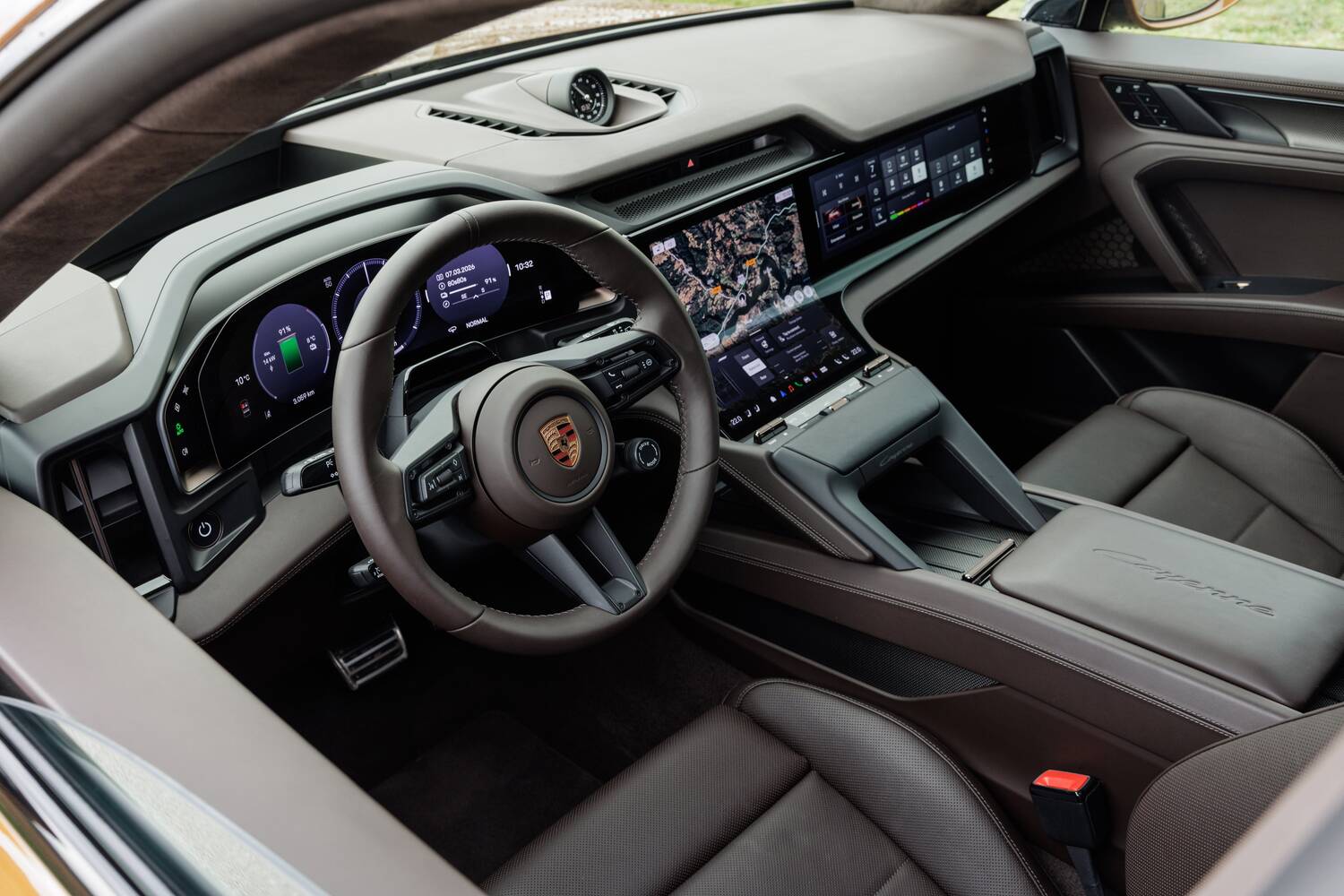
Due to its large exterior proportions, the Porsche Cayenne Electric has a huge interior - plus a whopping boot to go with that.
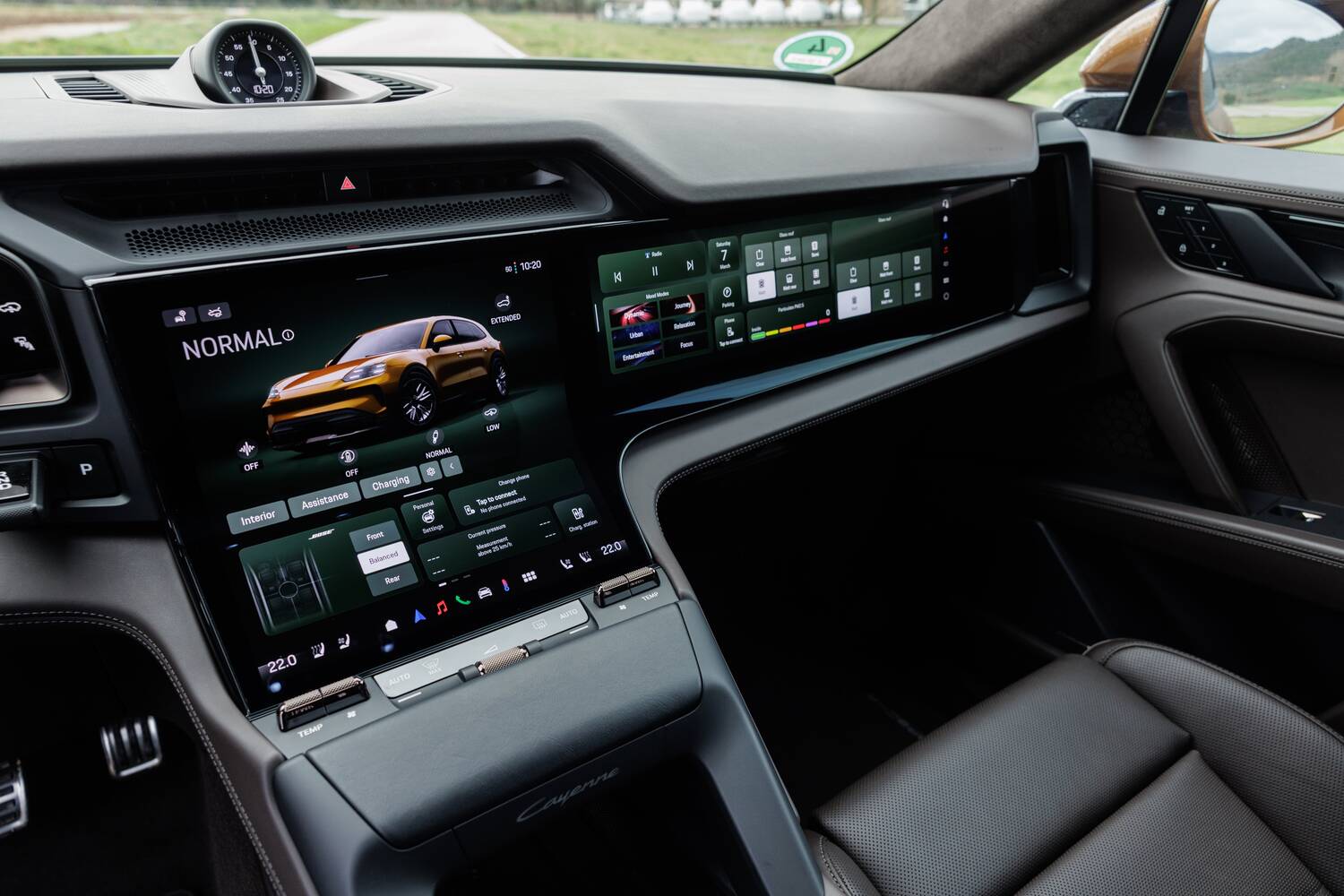
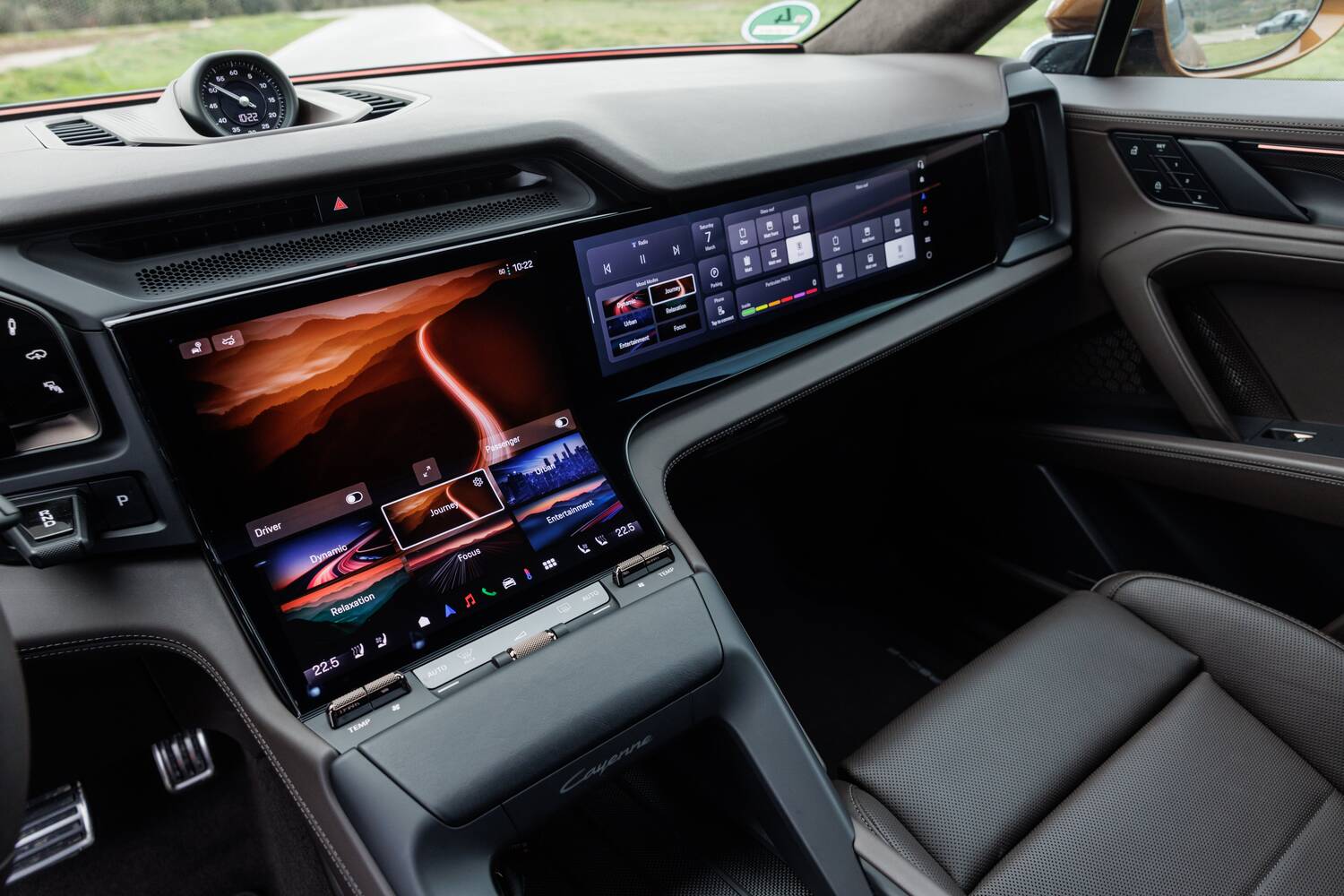
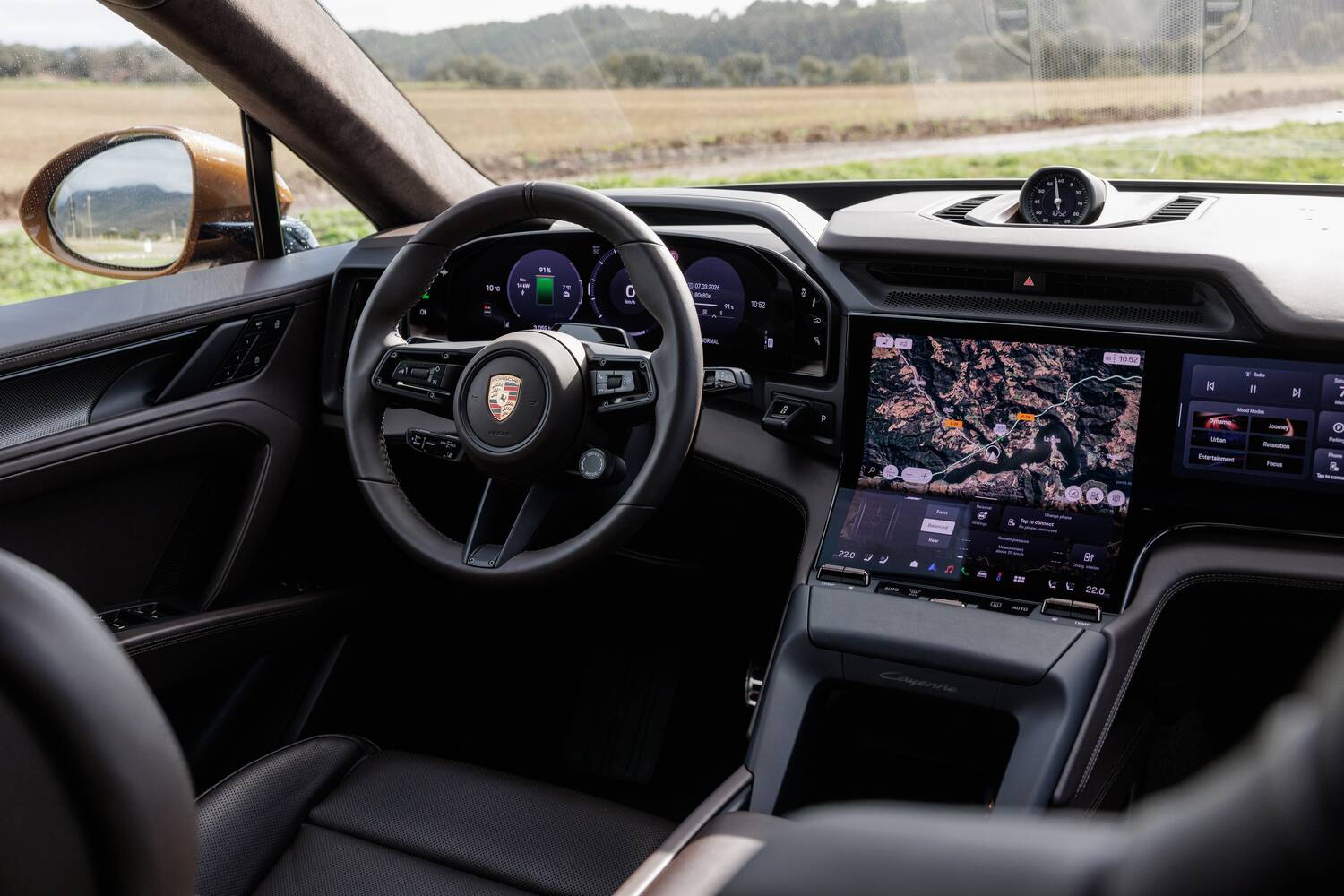
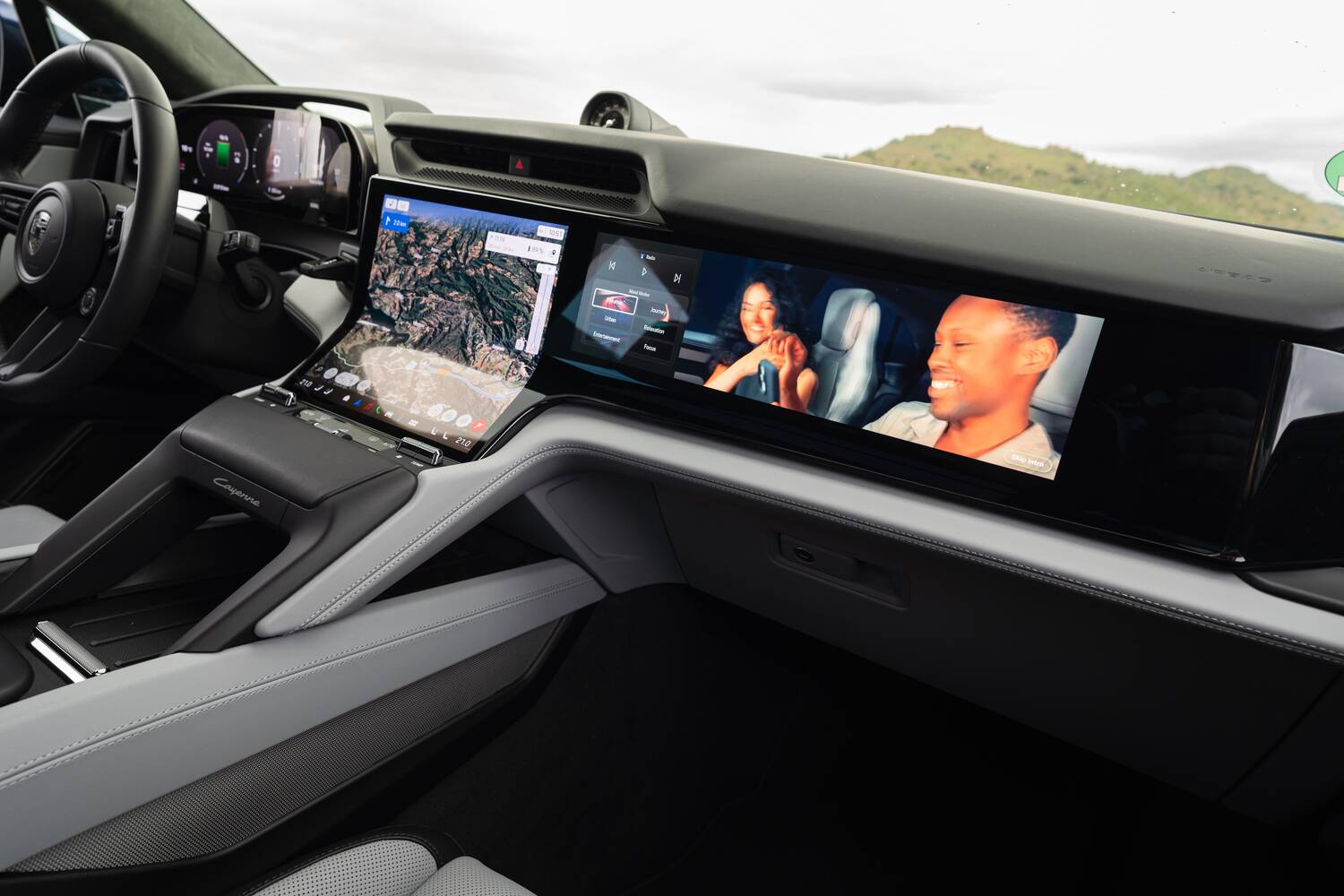
Further, the technology quotient has been increased inside this car, Porsche claiming there is 50 per cent more digital real estate up front than there is available in any version of the previous model.
However, there are some question marks about the standard of trim finishing in more hidden, out-of-the-way places, while the leather on the driver's seats of a couple of the launch cars was already beginning to look a bit saggy. Early production teething issues? Possibly.
Getting comfortable in the driver's seat

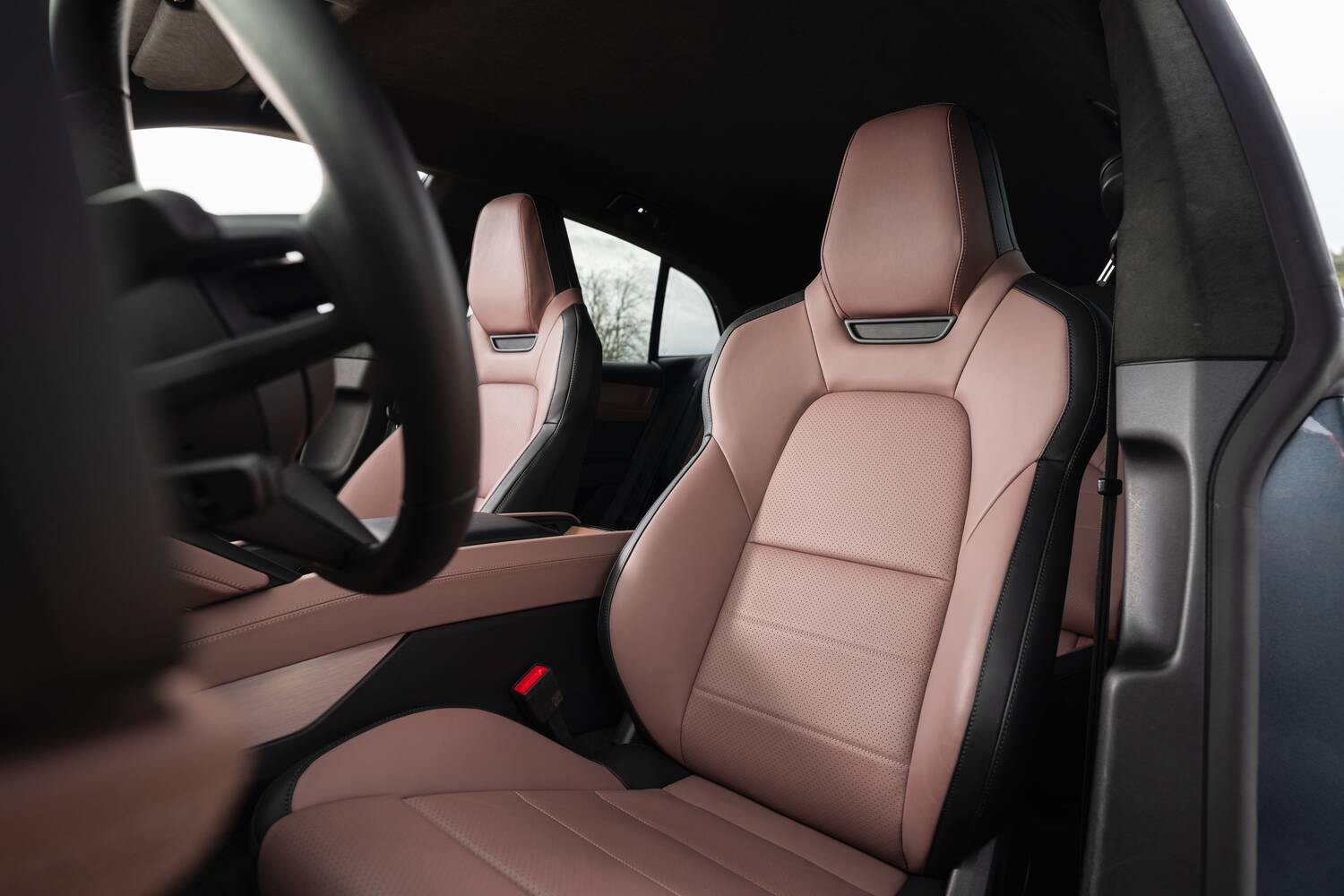
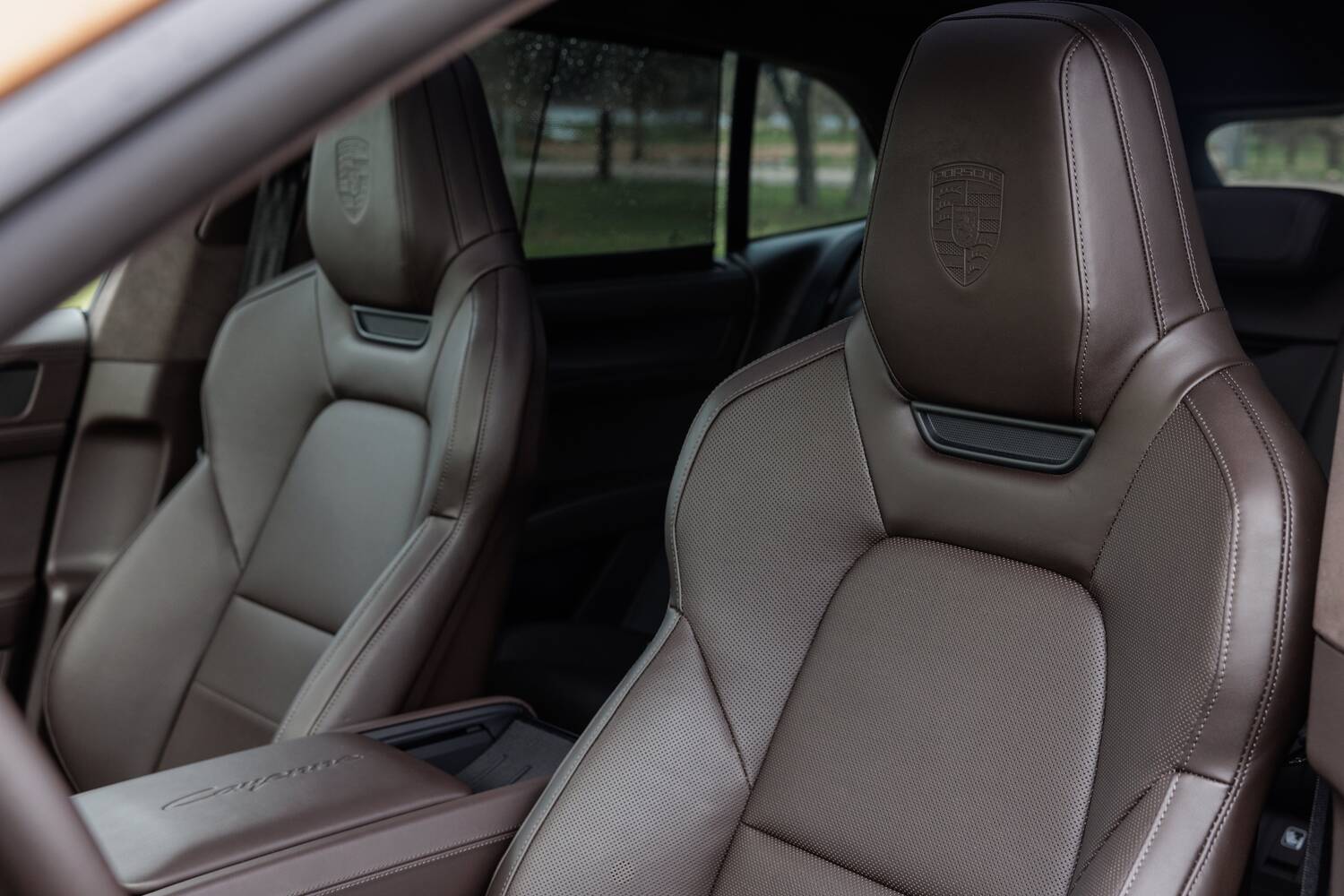
Fully electrically adjustable seats are standard up front on all models of the Porsche Cayenne Electric, while the reach-and-rake steering column is manually tweaked in the Cayenne Electric and Cayenne S Electric as standard, but electrically powered for the Turbo.
Attaining a comfortable driving position in any version of this Porsche SUV is a doddle; you end up sitting high relative to the road, but hunkered down in the vehicle itself, so it feels sporty and commanding all at once.

Visibility is also superb in all directions from the driver's seat, save for the observation that the tailgate screen of the car is a little shallow when viewed through the rear-view mirror.
The Cayenne Electric and its S spin-off come with eight-way electrically adjustable seats as standard, with the option to upgrade them to 14-way items for a four-figure fee.
For even more cash, 18-way Adaptive Sports seats are available to the two lower Cayennes, though these are standard-fit in the flagship Turbo - and they're exceptional.

Infotainment and technology
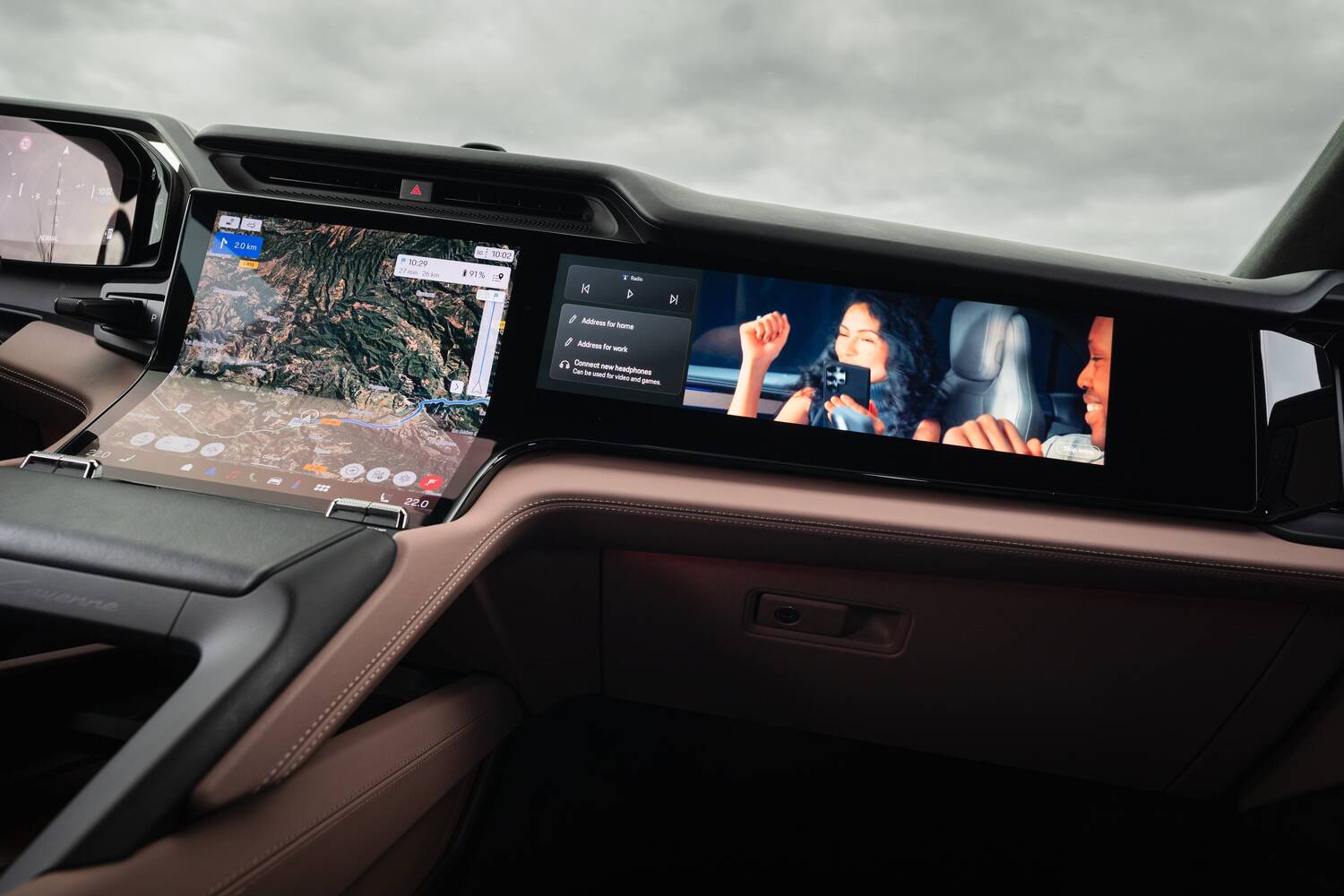
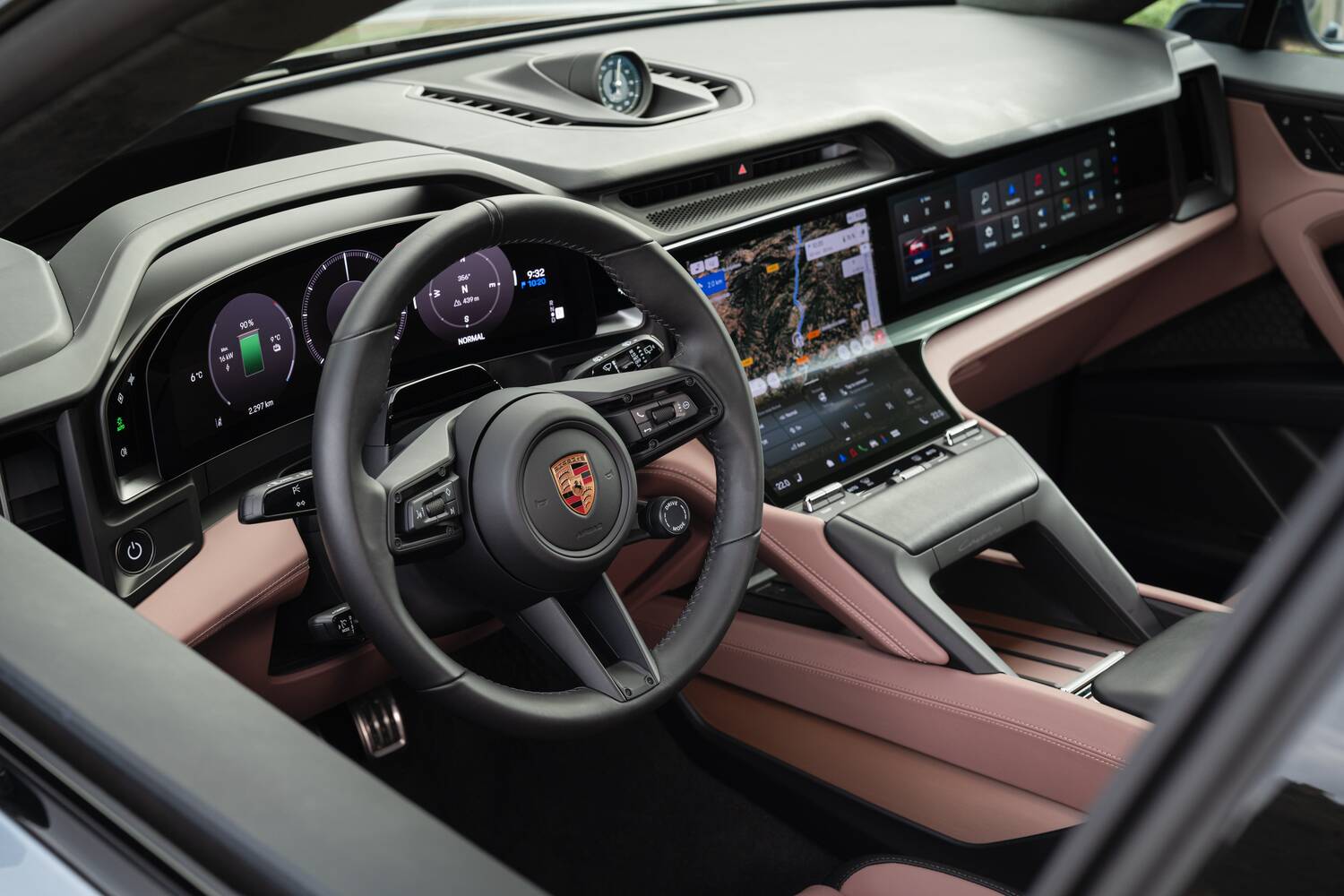
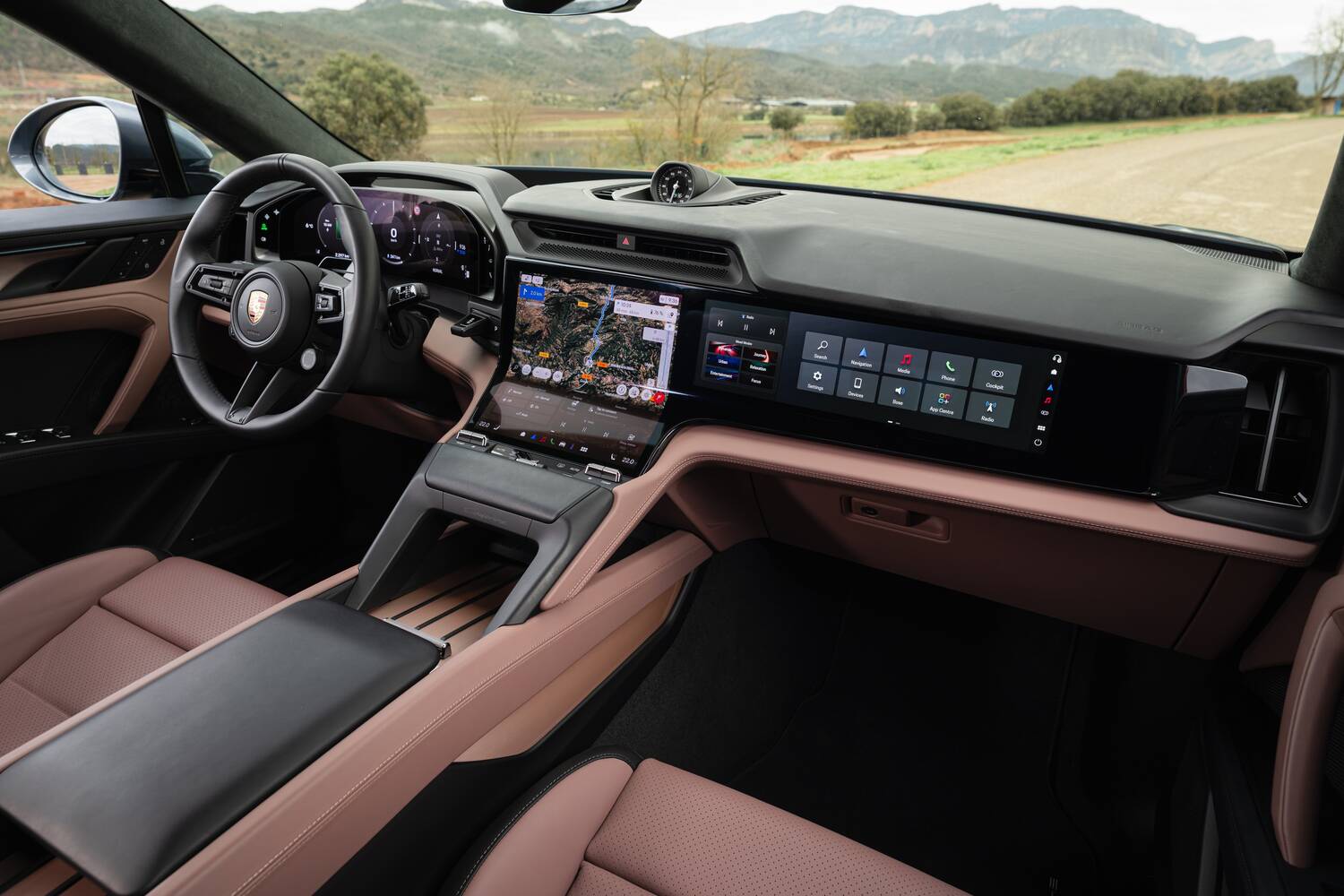
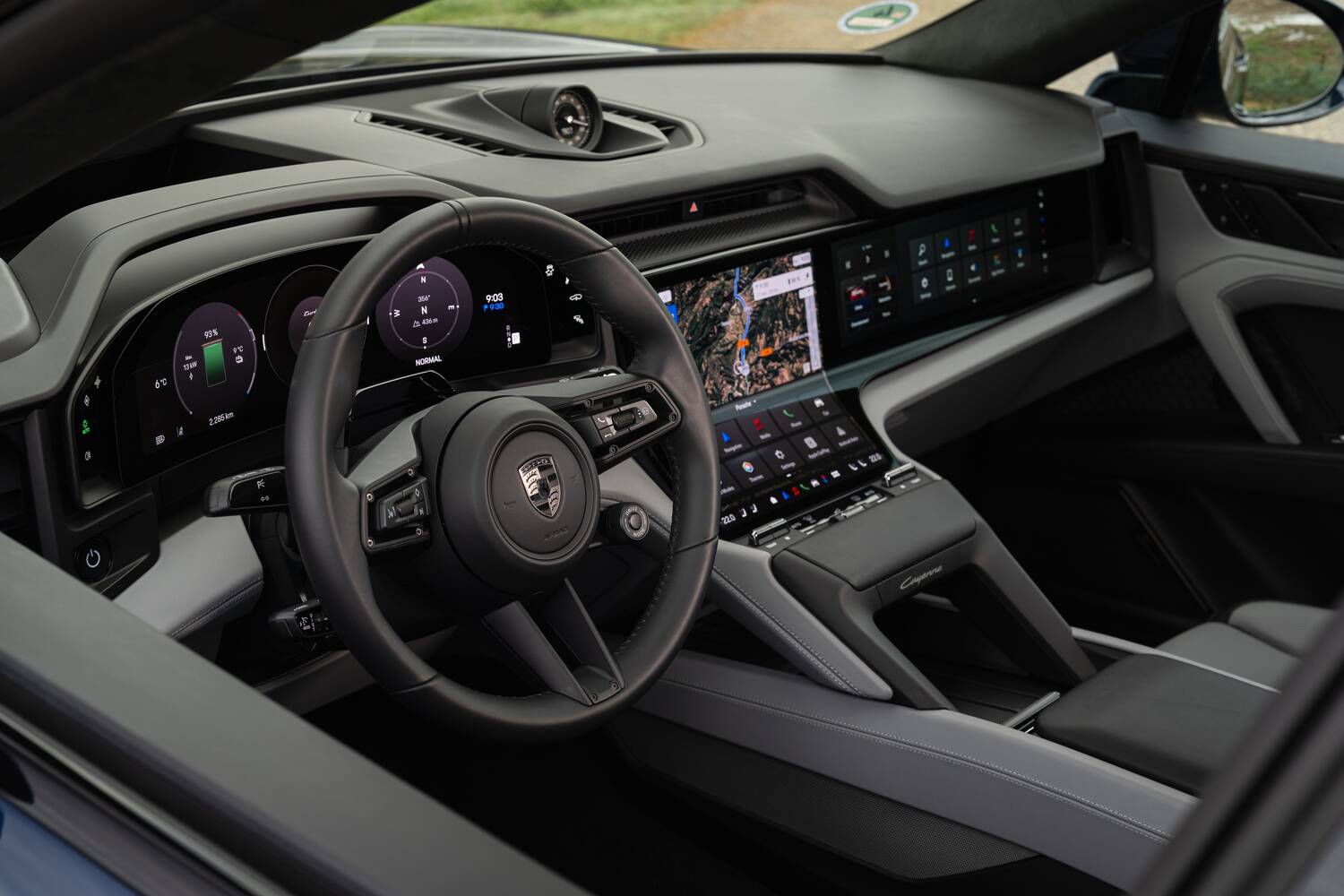
The OLED 'Flow Display' which runs the infotainment in the Porsche Cayenne Electric is a fabulous thing. It's graphically pin-sharp and very responsive to the touch, while there's a certain tactile pleasure in swiping up from the lower, angled portion to the vertical section above it, and watching the screen's information, well... flow upwards in reply.

We can see why Porsche called this display what it did, although we dread to think how much one of these panels would cost to replace if it ever goes wrong or gets broken.
Besides that, Porsche's excellent Curved Display instrument cluster receives a boost in size for the Cayenne, now measuring 14.25 inches across the diagonal. Ditto, the optional Passenger Display has grown, from 10.9 inches in previous Porsche installations to a gigantic 14.9-inch unit here, and there's an absolutely vast augmented-reality head-up display for the driver in some versions.

With all four screens fitted, it certainly is a digital onslaught in the visuals department of the Cayenne Electric's interface, but crucially all of this tech feels helpful and refreshing to use, not obstructive - and Porsche deciding to integrate a hand-rest pad for the Flow Display, plus physical climate switches beneath that kinked screen, can both be considered masterstrokes of ergonomic correctness.
The interior tech doesn't end there. Twin 25-watt wireless charging pads can be found in the central armrest area, while dual-zone climate control is standard, as are heated front seats and a heated steering wheel too.
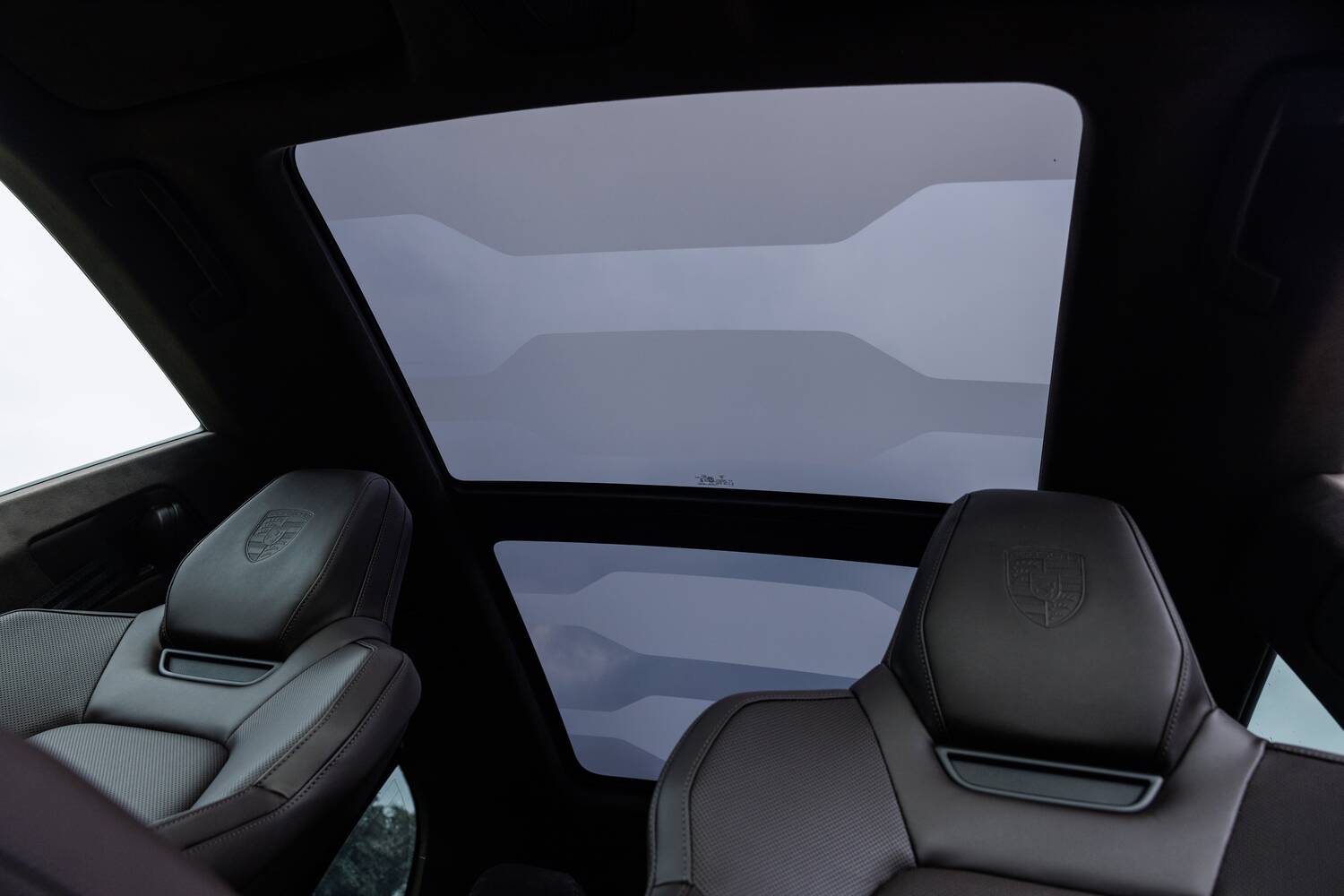
But there are even more gizmos available, such as two stereo improvements (a Bose Surround Sound set-up for €1,280 or a full-on Burmester 3D High-End Surround Sound arrangement for a much chunkier €5,634), a panoramic sunroof with electrochromic dimming functions, four-zone climate control and massage functions in the front chairs, not to mention heating and ventilation for all four main seats in the cabin.

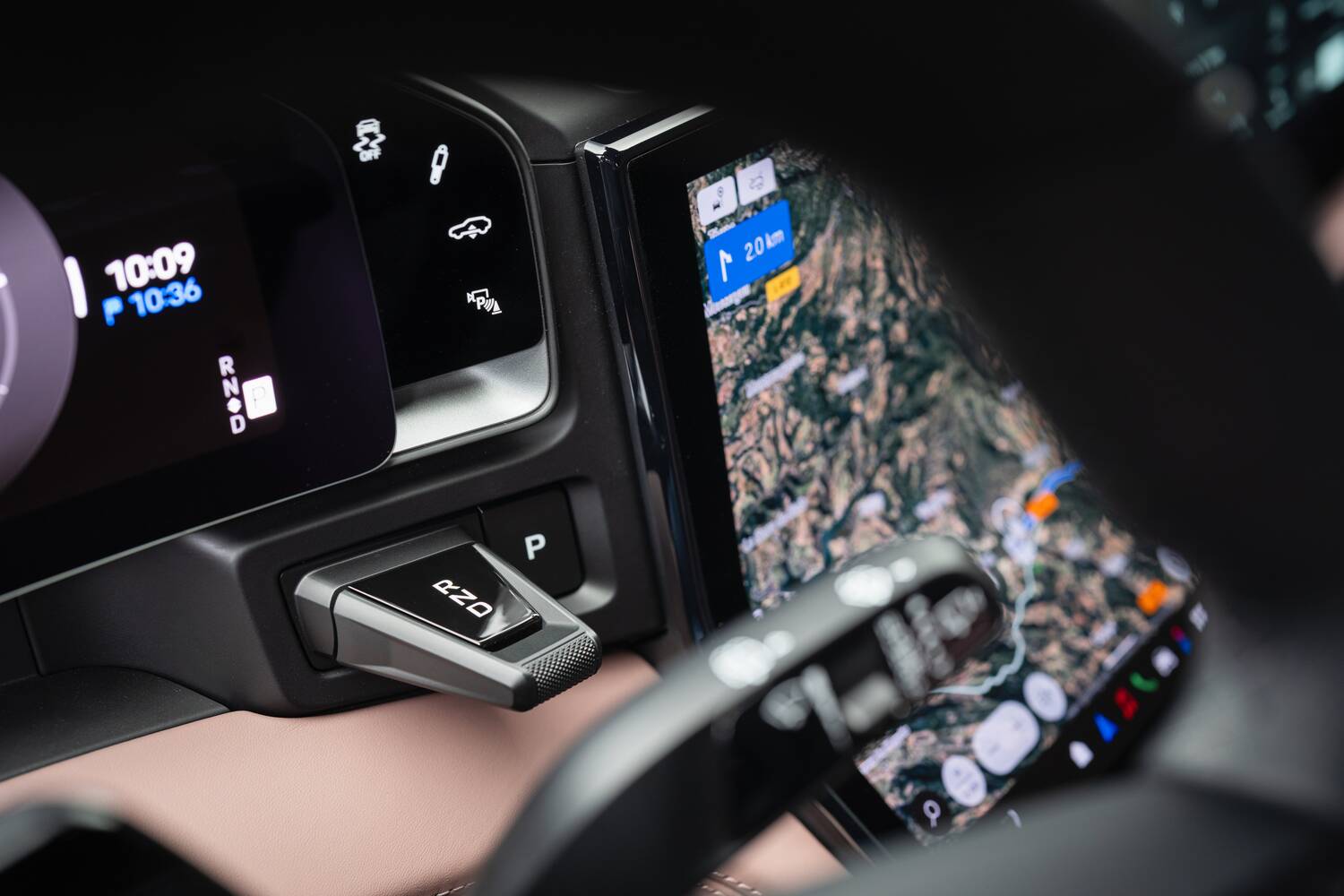
Another piece of technology to explain is called Porsche Electric Sport Sound (PESS). This makes the EV sound like an old Mk3 Cayenne V8 GTS when you choose Sport mode, and even more hard-edged and alluring in Sport Plus. The synthetic noises are also independently switchable from the drive settings, using either an icon to the left of the Curved Display cluster or by tapping on a menu that comes up on the Flow Display.
Practicality around the cabin
Up front, the glovebox is a decent size, and the door pockets are deep and scalloped-out enough that they would take a drinks bottle, but they're not very long.

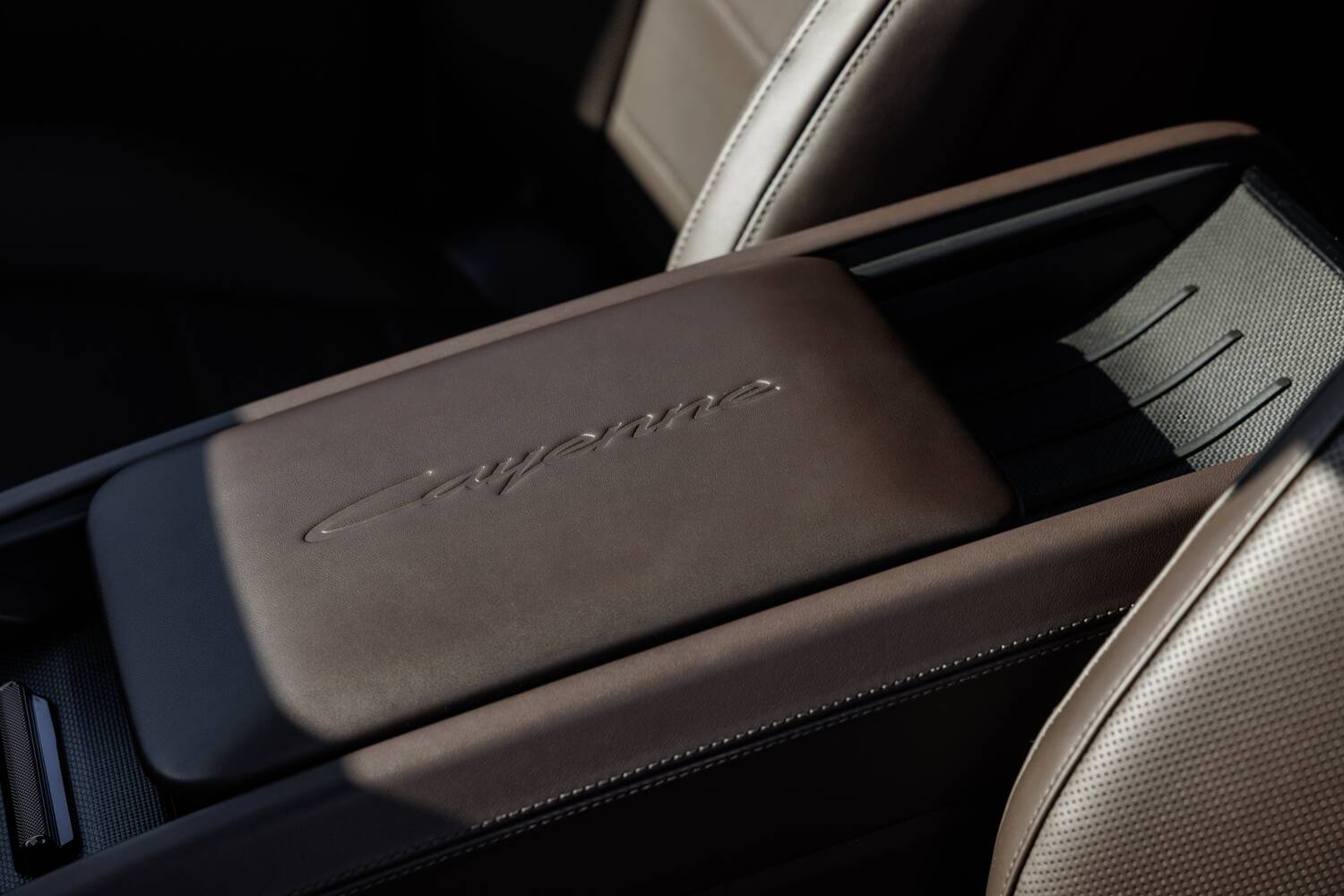
The main stowage area comes in the central armrest area, and this is both enormous and also highly versatile. There are multiple different flat surfaces at various levels, either hidden under retractable covers or beneath the sliding armrest itself, and even with the front lid slid back, it can still be used for storage as there's a void behind it which feels like it reaches all the way forward to the vehicle's bulkhead.
In this central storage unit are a couple of USB-C sockets (rated at 60W) plus the smartphone charging area, as well as two cupholders which have an adjustable height feature - or they can even be removed entirely if you need to configure the space differently.
Rear-seat passenger space

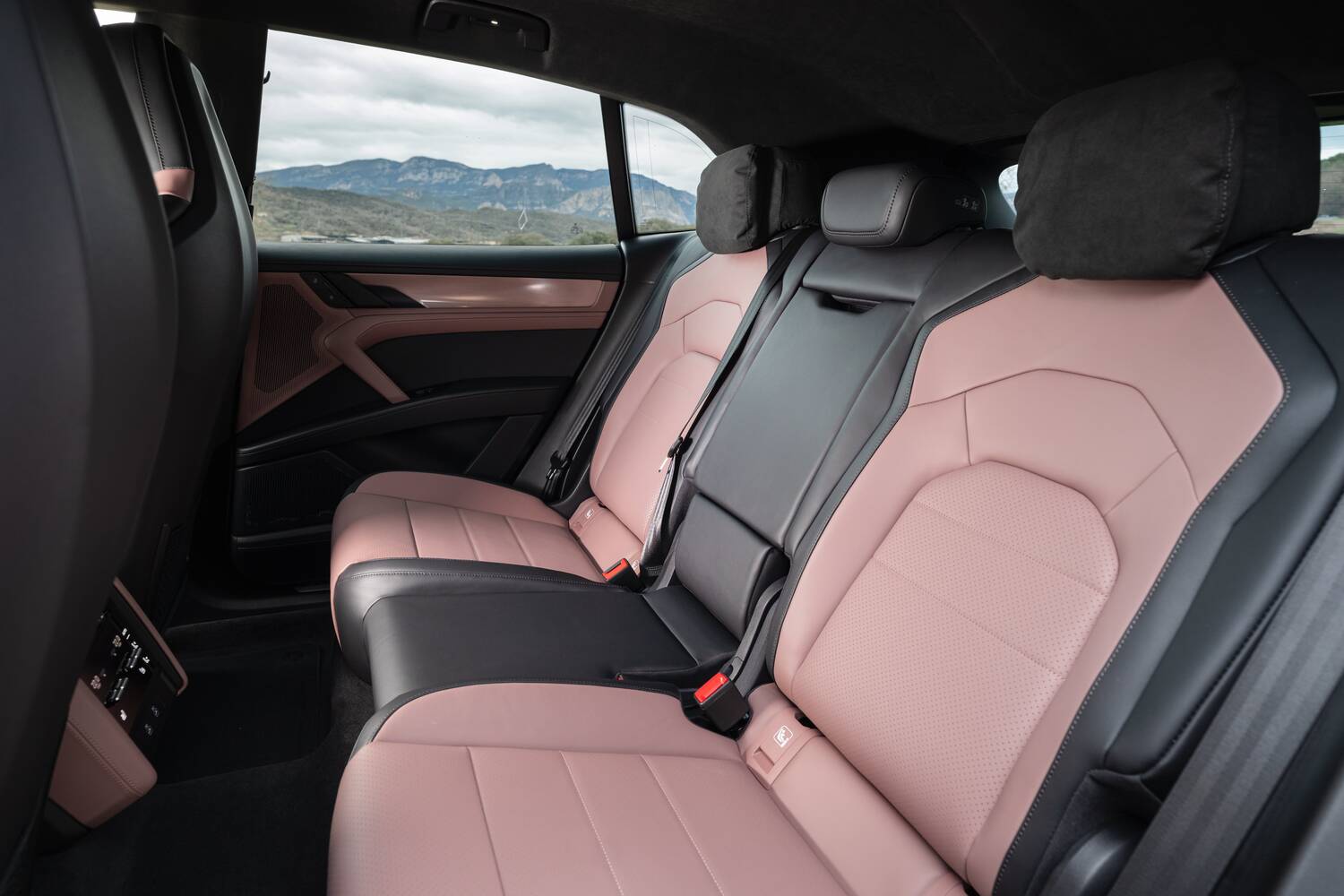
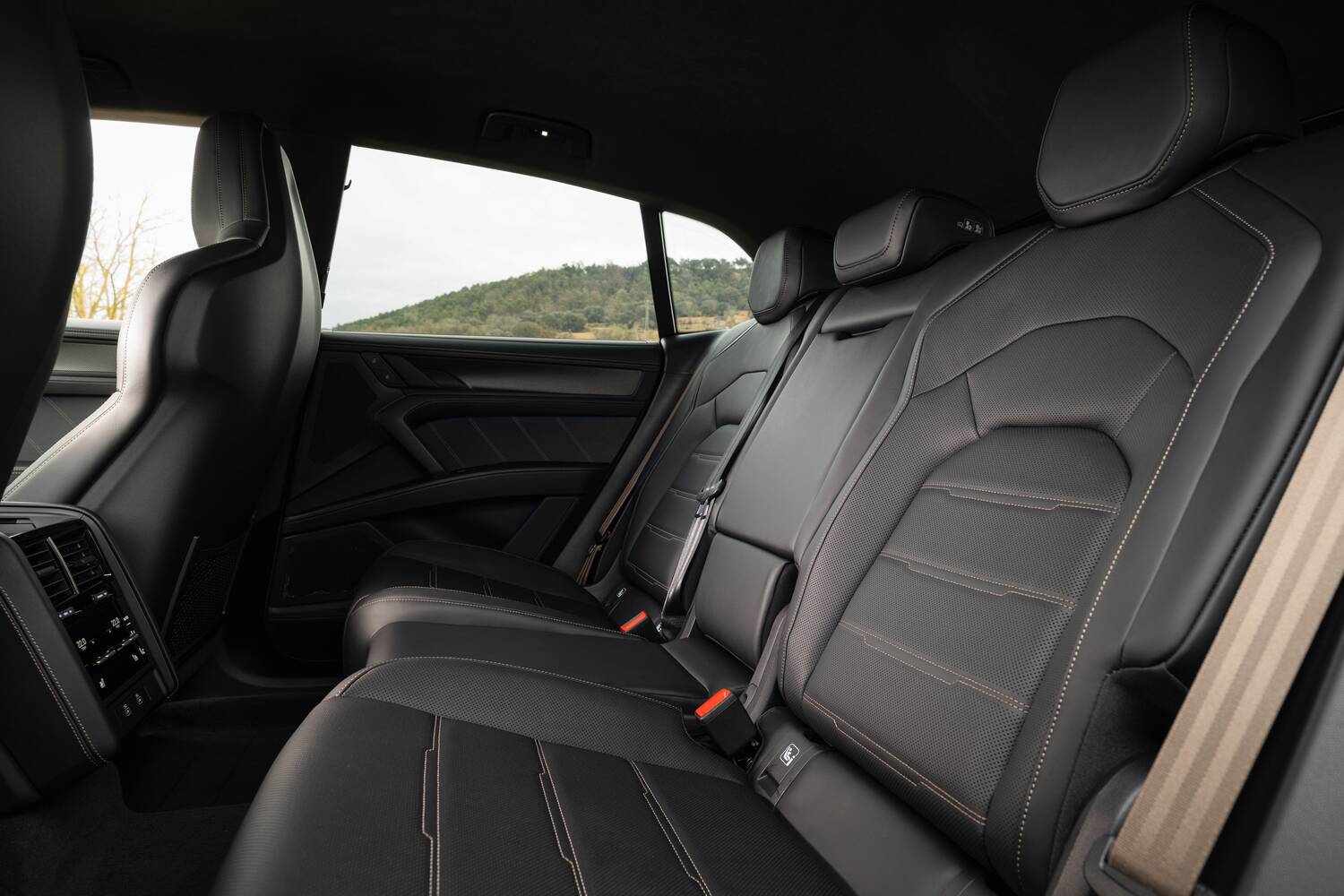
The three-metre-long-plus wheelbase of the Porsche Cayenne Electric comes right to the fore here. Space in the second row of this zero-emission SUV is generous, and the floor is of a good height too, so your legs feel properly supported by the bench's squab when you're sitting in the back of the Porsche as an adult.
Better yet, every model in the range has electric adjustment for the rear seats, but only on the outer two of the bench.
Despite the fact the floor is almost flat all the way across the rear, the German company is not trying to pretend the centre-middle rear seat is anything but a last resort. There's a three-point seatbelt there, sure, but the base of the seat is considerably narrower and less shapely than the two seats either side (it's almost like the Cayenne Electric has four bucket seats fitted to it, rather than two up front and a full bench at the back), plus the extrusion backwards of the front-centre armrest cuts into legroom.

The latter houses two air vents and two further USB-C sockets, and - if four-zone climate control is fitted - the controls for temperature in the rear too.
A central armrest pops down in the middle of the seats, revealing two larger cupholder recesses and a smaller receptacle in the middle for narrower drinks cans. There are also rear-facing air vents on the B-pillars of the Cayenne, but the door pockets - while still deep and looking like they might take a drinks bottle - are even smaller than they are in the front.
Fitting child seats to the Porsche Cayenne Electric
There are two ISOFIX positions in the back of the Porsche Cayenne Electric - but there are actually three top-tether fittings on the back of the split-folding rear seats. Thanks to the capacious legroom of the Porsche Cayenne and its ginormous rear doors, there should be no struggle to load child seats of any size and weight into the back of the electric SUV.
Boot space in the Porsche Cayenne Electric

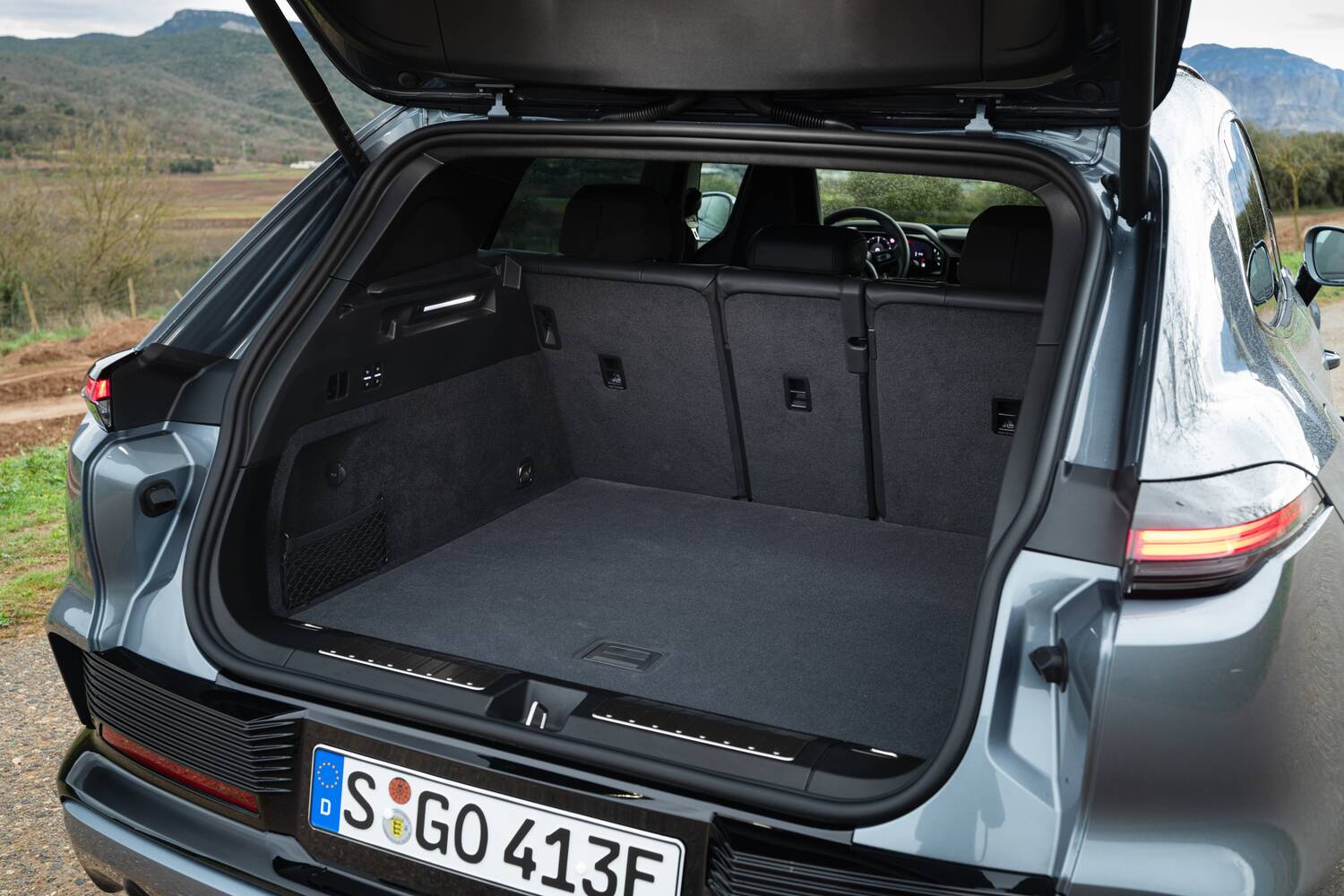
On pure volume, the 'all-seats-in-use' figure of the Porsche Cayenne Electric is eyebrow-raising: it is rated at a colossal 781 litres. That, though, is with the seatbacks of the electrically adjusted rear chairs in their most upright positions.
If your occupants in the second row want to be comfortable as you drive along in the SUV, then with the backrests tilted the capacity reduces to 553 litres. Still decent, of course.
Similarly, with the useful 40:20:40 split-folding rear bench folded down, 1,588 litres of cargo space isn't a new benchmark in this class.
Kudos to Porsche for the versatility of the boot area, however. Due to the car's air suspension and its electric rear seats, there are switches on the left-hand side of the cargo bay to easily raise or lower the back of the vehicle to help with loading in heavy loads, while dropping the backrests of the seating in the rear of the SUV is also done on a button. And if you option up an electrically deploying towbar, then the switch for that is located there too.
There's also a shallow underfloor stowage area with provision for storing the luggage cover when it's not in use, plus two recessed pockets behind the wheelarches which are fronted with little nets.

In the left-hand one of these, you find both a moulded plastic base and a 12-volt socket, while up top in the luggage-cover's rails are two LED light strips for boot illumination, plus a pair of hooks are moulded into the upper plastic trims.
There are four lashing eyes in the boot's floor, and there's a vehicle-to-load socket in the right-hand wall of the cargo bay, too. All in all, it's about as practical as car boots can be.
Safety in the Porsche Cayenne Electric
The Porsche Cayenne Electric was tested by Euro NCAP at the end of 2025 and, under the latest, more stringent exam conditions, managed to put in an impressive set of subsection scores - 91, 89, 81 and 79 per cent, for adult occupant, child occupant, vulnerable road users and safety assist, respectively - on its way to a full five-star overall rating, so it's an SUV which should give plenty of peace-of-mind to its owners.
To achieve these numbers, Porsche fitted it with a wealth of advanced driver assistance systems (ADAS) as standard, with even higher-end active safety kit on the options list or fitted to the grander models. Read the full report from Euro NCAP here.
Performance of the 2026 Porsche Cayenne Electric
- Absolutely extraordinary performance
- All versions are fast
- Great handling and refinement

At launch in 2026, there are three models of the Porsche Cayenne Electric available. The first is called just that, and runs at 408hp normally, with a time-limited 'overboost' phase in Launch Control ramping up its power to 442hp, with torque peaking at 835Nm too.
Despite weighing 2,600kg with a driver onboard, 0-100km/h takes just 4.8 seconds and it'll run 0-200km/h in 18.4 seconds. We would not normally quote the latter, but it'll become pertinent why we've done so when we talk about the Turbo model in a moment.
In the middle sits the Cayenne S Electric. This operates at 544hp regularly, but in either Launch Control or if you press the 'Push To Pass' (PTP) button on its drive-mode rotary switch on the steering wheel, it adds another 90kW of electrical power to the mix - temporarily raising its outputs to a devilish 666hp, accompanied by 1,080Nm. Accordingly, the 0-100km/h time tumbles a full second to 3.8 seconds.

But the Cayenne Turbo Electric is the one making the headline-grabbing numbers. Even in its most docile settings, this one delivers a goliath 857hp. Press the PTP button on the steering wheel and it ramps things up to 1,034hp.
But opt for the lunacy of Launch Control, and this Porsche SUV delivers disgraceful outputs of 1,156hp and 1,500Nm. With a kerb weight 20 kilos beyond 2.7 tonnes, its figures are difficult to comprehend: 0-100km/h takes 2.5 seconds, 0-200km/h is done and dusted with in just 7.4 seconds.
Not that last stat is a full eleven seconds faster than the entry-level Cayenne Electric manages, and even a second quicker than the mighty Porsche 911 Turbo S T-Hybrid Cabriolet can do the same thing. Astounding.
Driving the Porsche Cayenne Electric on Spanish roads
Words by Matt Robinson on 27 March 2026
All models in the Cayenne Electric family come on air suspension all round, teamed to Porsche Active Suspension Management (PASM) adaptive dampers, so they've got a capable chassis set-up to start with.

Our first drive in an optioned-up Cayenne Electric, complete with Rear-Axle Steering, 22-inch wheels, Adaptive Sports seats and the supremely well-judged Porsche Electric Sport Sound (PESS) proved eye-opening. Because it's a sensationally talented all-rounder.
In terms of refinement, it's as close to faultless as you're going to get - there's hardly any tyre, wind or suspension noise filtering into the cabin at any speed.

Despite a little bit of fully understandable, underlying firmness to everything the Cayenne does, and the very occasional impression you get of the considerable unsprung mass of the big wheels hanging at each corner of the vehicle, it otherwise cushions out most major imperfections and ridges in the road's surface with effortless grace.
Furthermore, steering with majestic weighting and heft makes placing the car on the road a treat, while both the accelerator and brake pedals are calibrated as exquisitely as you'd demand from Porsche. With the thumping great midrange of its twin-motor set-up, pace is always there in abundance, and the Cayenne Electric turns out to be a joy to drive in everyday scenarios.
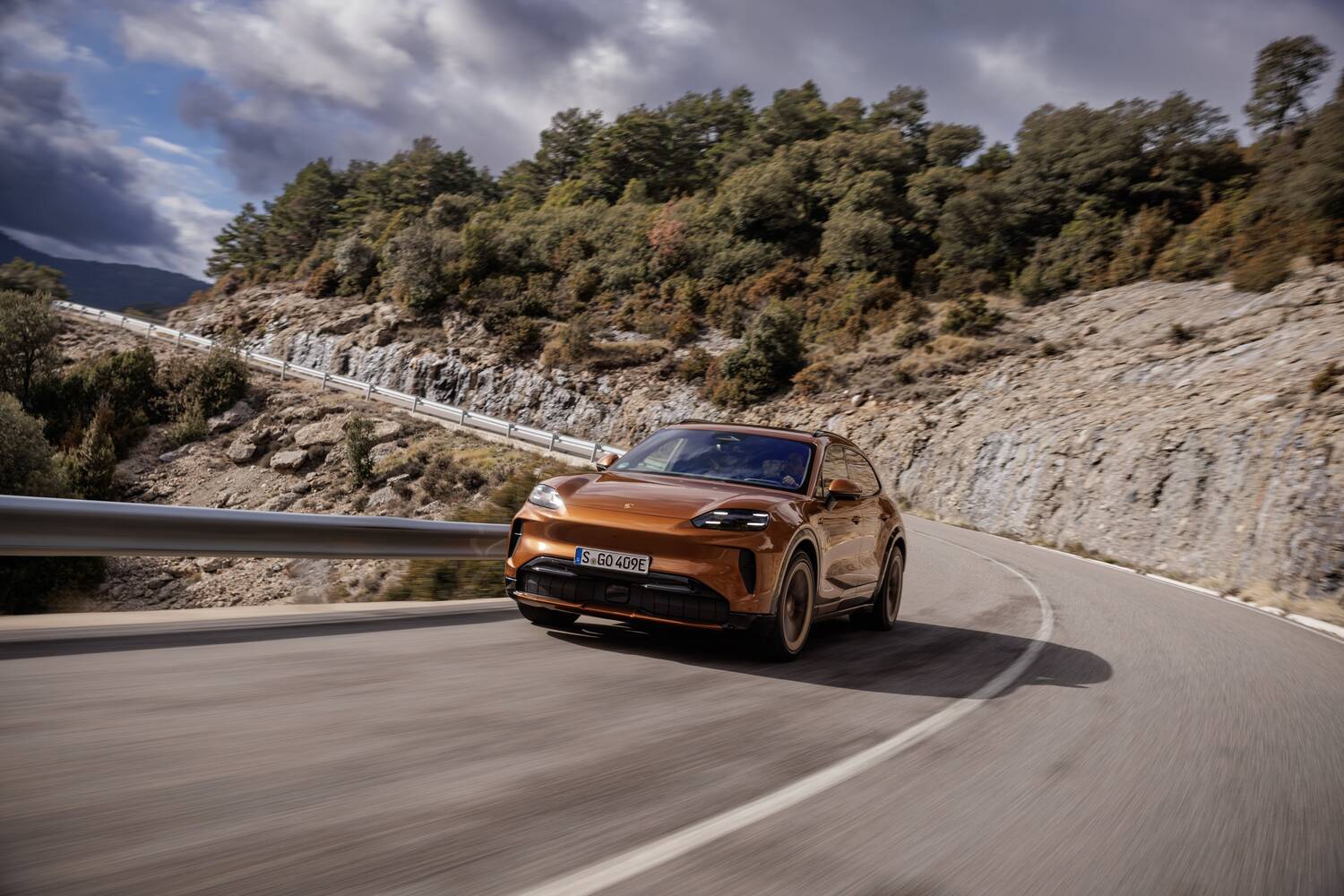
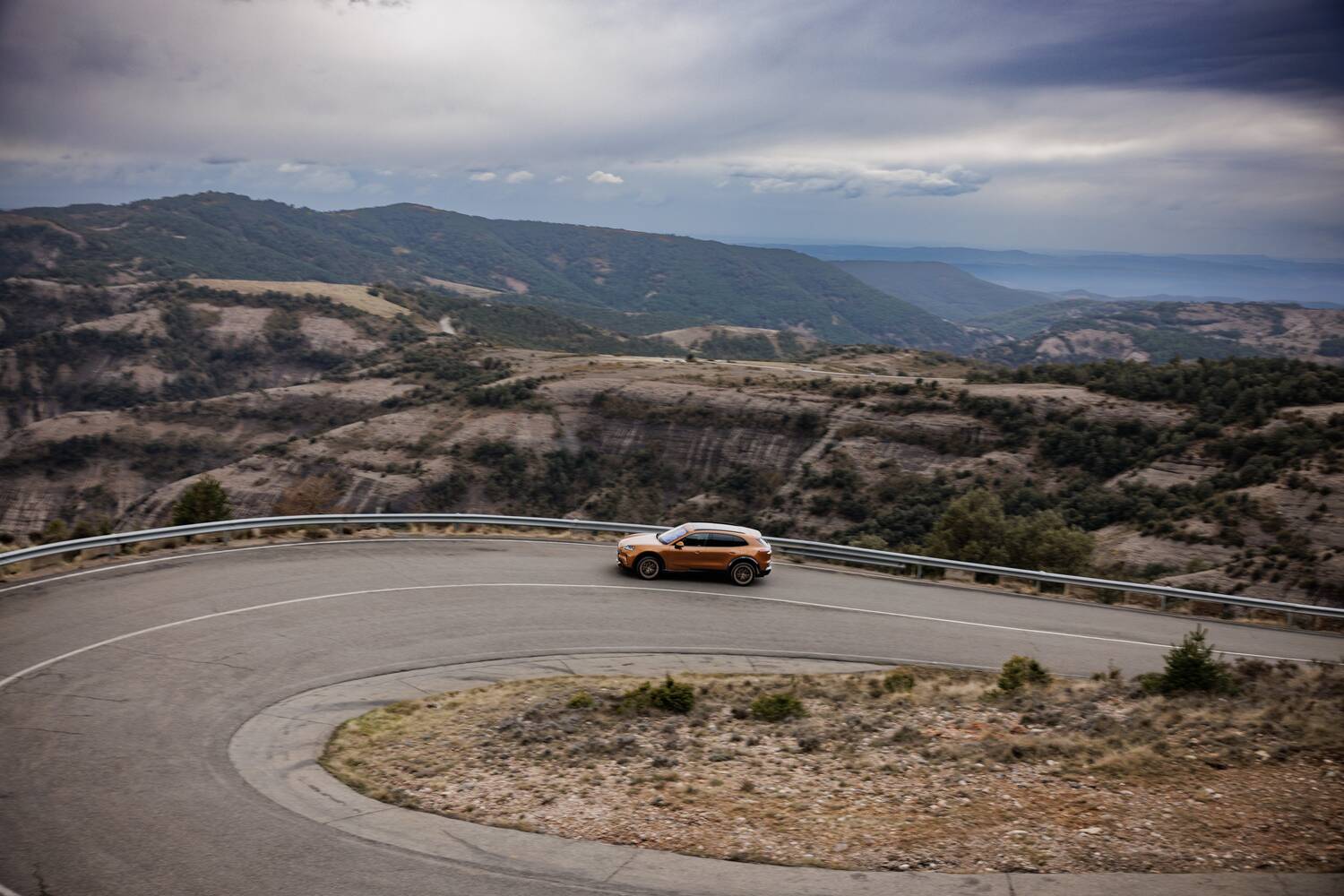
A later blast in a second, different Cayenne Electric took place on deserted mountain roads, so the driving style was more, shall we say, 'intense'? But even there, the Porsche demonstrates a preternatural agility and sensational level of chassis balance that completely belies its 2.6-tonne kerb weight.

Hustling the Cayenne SUV along some Pyrenean roads that are barely any wider than it is, its two-metre breadth is always playing on your mind. Yet you never think it a heavy, lead-footed thing; it just feels properly Porsche-like.
Driving the Porsche Cayenne Turbo Electric on Spanish roads
Words by Matt Robinson on 27 March 2026
Let's be clear: nobody needs a 1,156hp SUV. It's just daft, both in principle and practice. But allow us to follow that initial thought up: you might not 'need' it... yet you're sure as eggs is eggs going to want it with every fibre of your being once you've tried the almighty Cayenne Turbo Electric.

It takes everything the 408hp Cayenne Electric does and ramps the experience up in all departments by several scintillating notches. Its chassis hardware is more advanced, coming with the option of Porsche Active Ride tech; mega Porsche Ceramic Composite Brakes (PCCB) are on the menu; and it gains a Porsche Torque Vectoring Plus (PTV Plus) electronically controlled limited-slip differential at the rear.
It also comes with 850kW dual electric motors. The net outcome is that the Cayenne Turbo Electric is ridiculously quick, yet also beautifully progressive and torque rich. Because you don't need to push the accelerator very far down in regular driving to get the thing surging forward with serious intent, it's an even more relaxing, cosseting and prestigious-feeling daily-driving machine than the Cayenne Electric.

Yet hurling it about like it's some oversized hot hatch is every bit as rewarding and edifying as you could possibly imagine for a vehicle like this. Again, it never, ever feels close to its 2,720kg weight, and the sheer, unspeakable but at the same time invective-inducing way it adds on tens of km/h at a time in great, heaping chunks of acceleration is, plain and simple, gobsmacking.
Our final impression comes with Launch Control, the mode in which the Cayenne Turbo Electric hurls its full 1,156hp, 1,500Nm force at the surface of planet Earth with such imperious disdain. Sport Plus mode engaged, left foot on the brake, stamp your right foot down. The noise of 'revs' rises and holds, then you sidestep the left-hand pedal.
To say the Cayenne Turbo Electric explodes away into the middle distance would be underplaying the violent ferocity of its acceleration to an almost comical degree. So astonishing was this experience that our driving companion in the passenger seat was, quite literally, rendered breathless: he realised he didn't inhale between the point we launched the Cayenne and the moment we finally let go of the accelerator pedal. Absolutely amazing stuff.

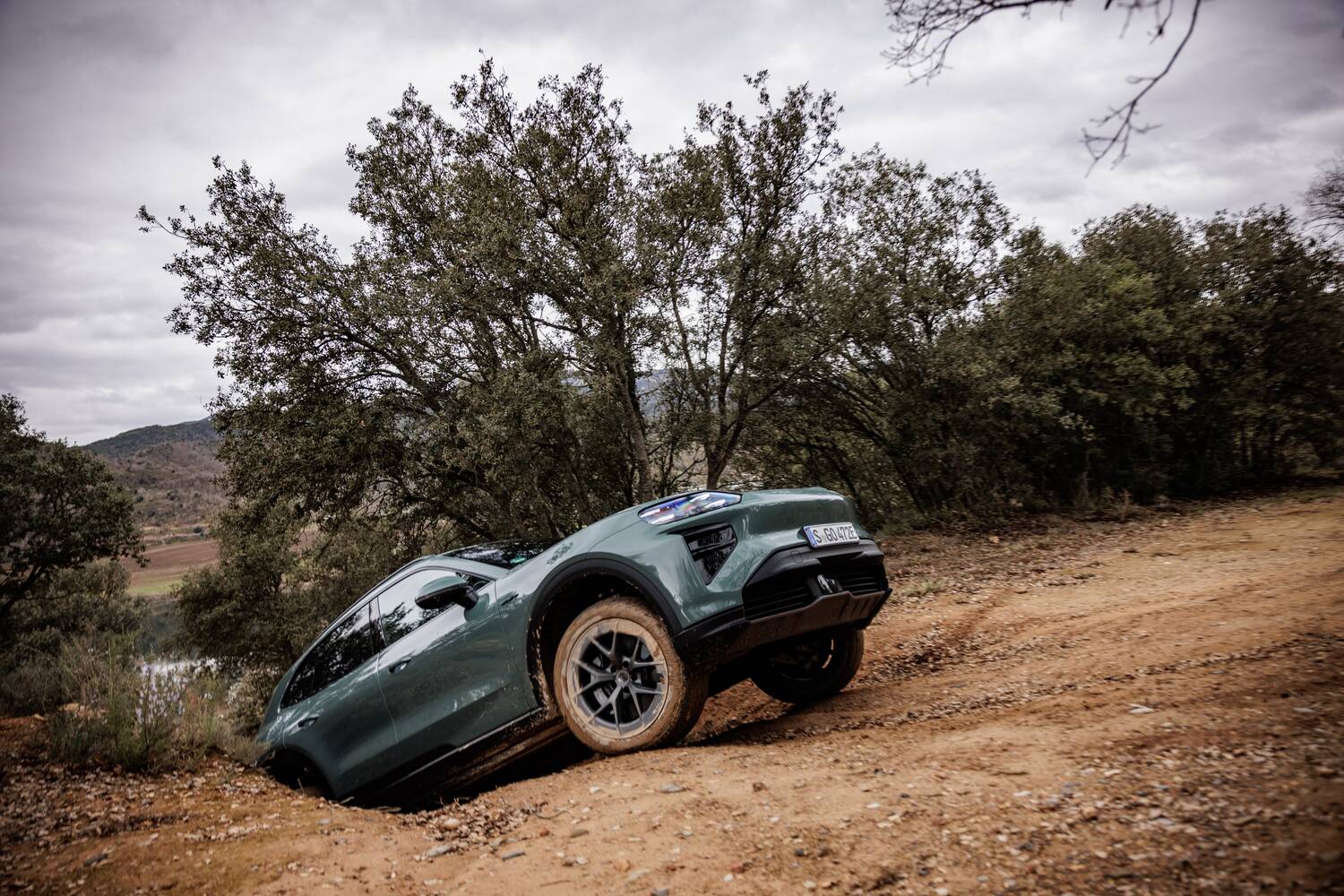
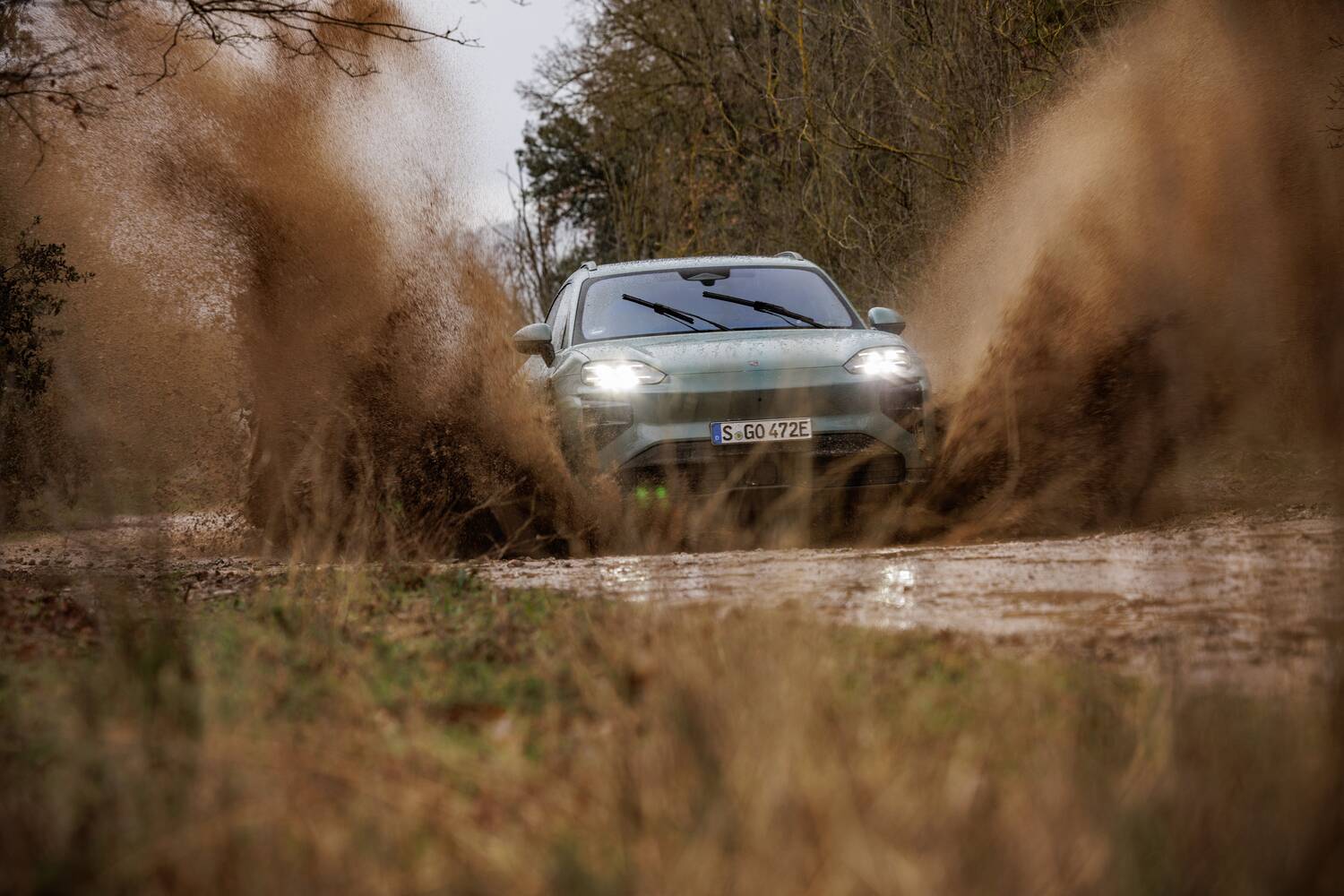
Later on we even got to take another Turbo off-road on a fairly challenging course, where it aced the route and proved far more capable on road-biased all-terrain tyres than it has any right to be.
Yet we're pretty confident in our assumption that owners will never do much more with the Cayenne Electric than subject it to wet grass, so its rough-roading capabilities (there's even a dedicated Offroad Package for it, which makes it approach angles better and allows it to tow the full 3,500kg of braked trailer) are way in excess of what Porsche's customers will demand of it.

Driving the Porsche Cayenne S Electric on German roads
Words by Matt Robinson on 3 June 2026
The Cayenne S Electric promises to be something of a happy halfway house between the entry-level Cayenne Electric and the monstrous range-topping Turbo, offering a useful slug of extra power and torque over the base-level SUV along with some of the upmarket chassis trimmings of the Turbo - although many of those are options on the S.

Principally, where the Turbo gets Porsche Torque Vectoring Plus (PTV Plus) - an electronically controlled limited-slip differential on the rear axle - as standard, it is an option that can be fitted to the S, but not to the 442hp Cayenne.
Similarly, buyers of the S also have access to Rear-Axle Steering and Porsche Active Ride, again as cost options (as they are on the Turbo), where the base-model SUV cannot be specified with such chassis-sharpening tech.

We drove our German car with PTV Plus fitted and the Offroad Package, which improves its approach/departure angles with different front- and rear-bumper treatment, and also increases the towing weight to 3,500kg.
To drive, it is every bit as sublime as the other two models in its family, but it feels slightly stuck between two stools. As in, the S is undeniably swift - its 0-100km/h time, for instance, is a second quicker than the 442hp Cayenne Electric's and it'll hit 200km/h from rest almost 6.1 seconds swifter than its cheaper relation - but conversely it lacks the ferocious punch of the 1,156hp Turbo.

And while it has a longer range than the Turbo, officially to the tune of almost 30km, it's only 10km up on the entry-level model, which is a useful €23,070 cheaper.
So the Cayenne S Electric is beautifully comfortable and refined, it's supremely fast to charge up, it handles brilliantly for a 2.6-tonne-plus machine and it's as effortlessly quick as you'd expect of an EV that has in excess of 1,000Nm of torque at its disposal. In and of itself, it's a brilliant thing.
But if you just want a nice, approachable, long-legged, zero-emission SUV, the cheaper Cayenne Electric offers up 99 per cent of what the S does for a chunk less cash. And if you want to terrify your friends with the sort of incomprehensible straight-line acceleration that feels like it is defying Einstein's theory of relativity, then the Turbo is the only answer.
Sometimes, the middle way is the sweet spot of the range, but in the Cayenne S Electric's case, we don't think that turns out to be true, sadly.
Range, battery, charging and running costs of the 2026 Porsche Cayenne Electric
- All models have large 108kWh battery
- Ultra-rapid charging from 800-volt tech
- Up to c.650km of range available
All Porsche Cayenne Electrics are fitted with the same enormous battery pack, which'll give every version more than 600km of driving range.

Charging speeds are also quick thanks to its advanced 800-volt architecture, while the Cayenne Electric is the first EV in the world to offer inductive (wireless) charging to customers as an option.
As a final cherry on the cake, nothing which can perform anything like the Porsche Cayenne Turbo Electric can possibly offer running costs any lower than its zero-emission platform provides.
Battery options and official range
All three Porsche Cayenne Electric derivatives have a 113kWh nickel manganese cobalt (NMC) lithium-ion battery pack - of which 108kWh is usable. That makes it one of the largest batteries available for any EV sold by any manufacturer.
Officially, Porsche says the Turbo will do 564-624km to a charge depending on its exact spec, while the Cayenne Electric at the other end of the line-up will manage 576-643km.

Oddly enough, Porsche's official data suggests the mid-grade Cayenne S Electric goes further to a charge than the less-potent entry-level model, at 588-652km.
Real-world range and efficiency of the Porsche Cayenne Electric
A steady, mainly motorway-speed run in the Cayenne Electric yielded an acceptable 22.4kWh/100km energy consumption figure, when driven almost 76km at an average speed of 58km/h - one traffic jam in the middle of proceedings bringing the overall pace down.
The weather was very warm (c.19C), so we alternated between using the air conditioning to cool the cabin and also opening the windows plus the panoramic sunroof to stay comfortable, so that's not a bad return compared to the official figure. That would equate to a real-world 482km if you could replicate it.

However. If you enjoy the startling performance of the Cayenne Electric, you'll find you're draining your battery charge considerably quicker than that.
Day two dawned with a 132km blast into the Pyrenean foothills in a fully optioned-up Turbo, which ultimately ended up at 35kWh/100km by the end of the 1hr 50min drive (average speed: 73km/h).
Temperatures were similar on this day and there was some motorway cruising involved, but at one point while it was charging up sinuous mountain roads, its trip computer said the consumption had increased to 44kWh/100km. Even at 35kWh/100km, the battery would be done and dusted within 309km.
A shorter 70km loop on the same mountain roads, conducted later on the same day and in the same conditions as we drove the Turbo, yielded 34.4kWh/100km from a Cayenne Electric at a 72km/h average - proving that even the base-spec SUV will be electrically 'thirsty' if you thrash it.

We did later get 24.5kWh/100km from the very same car on a steadier drive, so it shows that there's a fine line between the point where the Cayenne Electric switches from economical to eager to consume its resources in a frenzy.
Charging up the Porsche Cayenne Electric
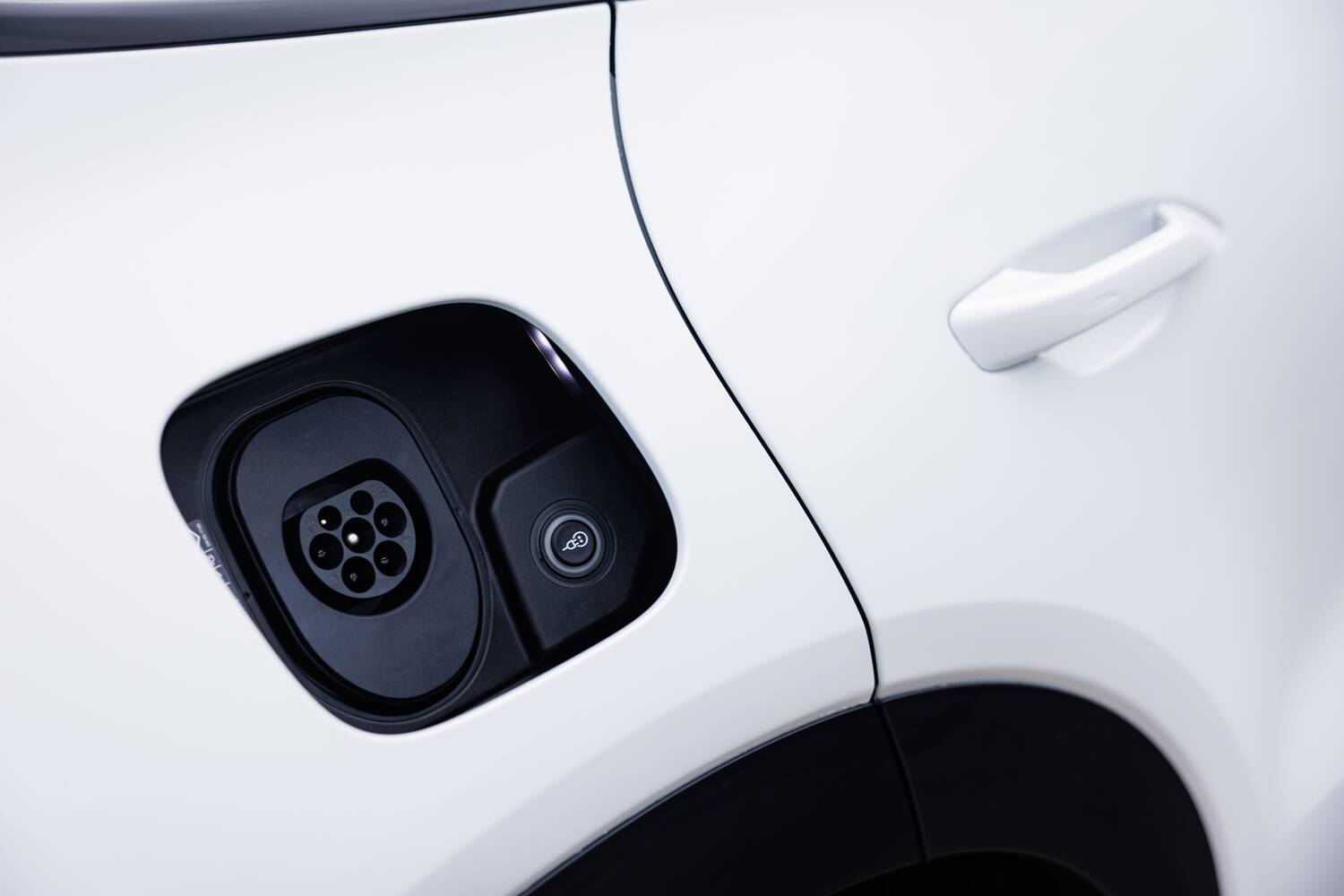
The Porsche Cayenne Electric is built on 800-volt architecture and has a maximum AC charging rate of 22kW, with DC peaking at an impressive 400kW.
At its fastest top-up rate, 10-80 per cent state-of-charge in the battery will take less than 16 minutes, while 325km of range will be added for every ten minutes of hook-up. Meanwhile, at half that (200kW DC), you'll still only be looking at 26 minutes for 10-80 per cent.
On three-phase AC, at 22kW, the battery will go from completely discharged to completely charged in five hours 48 minutes, and it will take 11 hours at 11kW.
On the much more commonplace 7.4kW domestic wallbox, it's going to be in excess of 15 hours to do the same total-charging job.
Porsche has already confirmed that a wireless charging pad will be offered to customers for this generation of the Cayenne Electric. It will charge at a peak rate of 11kW.
Servicing the Porsche Cayenne Electric
Porsche's EVs tend to have a longer, 24-month maintenance cycle than its combustion- and hybrid-powered models, so we're hopeful the service schedule of the Cayenne Electric will follow this two-year pattern.
Porsche Cayenne Electric warranty

Porsche's standard warranty is for three years and has no distance cap on it, but as long as your vehicle is less than 15 years old then there's an option to extend the warranty for a fee - although a limit of 200,000km then comes into effect.
Like most EVs, the Cayenne Electric should be covered by an eight-year, 160,000km guarantee on its high-voltage battery and associated systems.
Irish pricing & rivals to the 2026 Porsche Cayenne Electric
- All models are six-figure cars
- Turbo pushes nearer €200,000
- Few vehicles, if any, match its all-round appeal

Porsche prices the Cayenne Electric at €113,660, the S at €136,730 and then the Turbo at €179,280. The seemingly elevated price of the latter is not only because of its extra potency, but due to the fact it has a more comprehensive kit list as standard - items like PTV Plus, PESS, HD-Matrix LED headlights and the panoramic roof are all thrown in, among more.
Porsche has got the jump on most of its premium rivals by getting the Cayenne Electric to market first, so while there are fact-accelerating electric SUVs from the likes of Audi, BMW, Volvo and Tesla, among more, there's pretty much nothing that can get close to the Cayenne Turbo as yet. And we're not measuring these things purely on 0-100km/h times in any case.
Verdict - should you buy the 2026 Porsche Cayenne Electric?

As you would expect from this company, Porsche has executed the all-electric Cayenne to near-perfection. Aside from some very slight reservations about both the interior finishing in out-of-the-way parts of the cabin and the leather on the front seats, and accepting that not everyone will love the snub-nosed face of the Cayenne Electric, in every other respect this is a stunning creation from the German firm. And in Turbo form, it sets the gold standard for ultra-high-performance electric SUVs that every other manufacturer must now somehow attempt to match.
FAQs about the 2026 Porsche Cayenne Electric
Is the Porsche Cayenne Electric all-wheel drive?

Yes, all versions of the car come with dual electric motors, one on each axle, for what Porsche terms its 'ePTM' AWD system.
How fast is the Porsche Cayenne Electric for acceleration?
The base car does 0-100km/h in 4.8 seconds, while the mid-level S trims that time back to 3.8 seconds. The Turbo, though, is quicker than most super- and hypercars: despite its significant kerb weight, it will do 0-100km/h in just 2.5 seconds.
Want to know more about the 2026 Porsche Cayenne Electric?
If there's anything about the new Porsche Cayenne Electric we've not covered, or you'd like help in choosing between it and other cars, you can avail of our expert advice service via the Ask Us Anything page.
Porsche Cayenne history
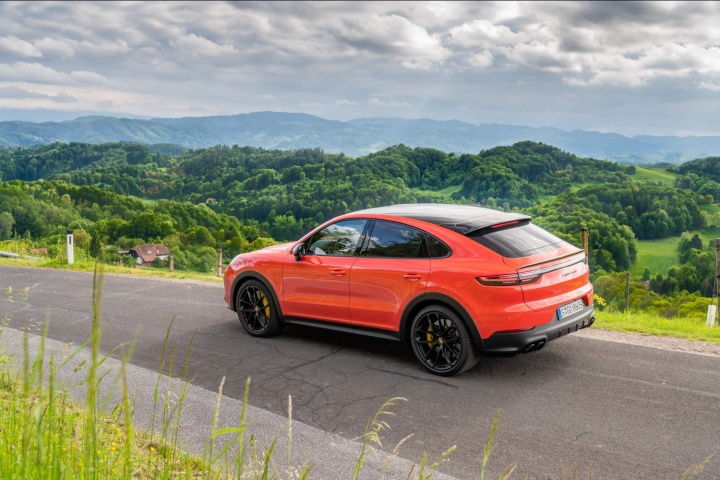
Many people argue that the first Cayenne, which arrived back in 2002, was the vehicle which 'saved' Porsche, although we'd contend that the Boxster roadster of 1996 laid the foundations and the Cayenne simply built on that success.
Whatever; what cannot be argued is that Porsche had spotted the zeitgeist and decided that, in the face of much public opprobrium about a sports-car manufacturer making an SUV at all, it needed to put out a high-riding vehicle. Less easy to counter is the accusation that the Mk1 Cayenne was ugly enough to frighten horses: the styling, a contemporary 911's shape stretched over a 4x4's bulky frame, was bad then, and it hasn't aged well in the interim. See an original Cayenne these days and it's still a challenging thing to behold.
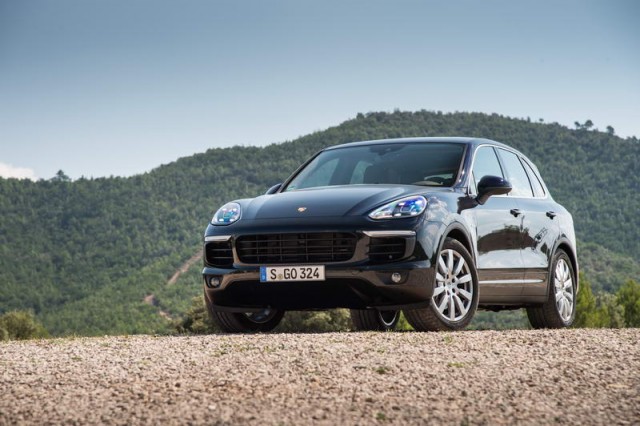
The second-generation Cayenne of 2010 was more smoothed-off and acceptable on the eyes, and it was also the iteration of Porsche's biggest SUV which debuted plug-in-hybrid power (PHEV). Furthermore, it was the generation when Porsche rowed back from diesel engines, so while you can get Mk2 Cayennes with diesel powertrains, they're a rarer sight than the petrol variants.
By the time the Mk3 Cayenne arrived in 2017, you could almost call the big Porsche SUV handsome. The main development here is that, for the first time in the Cayenne's life, another body style beyond the regular five-door, five-seat SUV shape arrived: the Cayenne Coupe.