




Exterior & design of the 2026 Porsche 911 GT3 Weissach Club Sport
- Winged car looks aggressive
- Lots of carbon panels
- White really suits it - and is 'free'

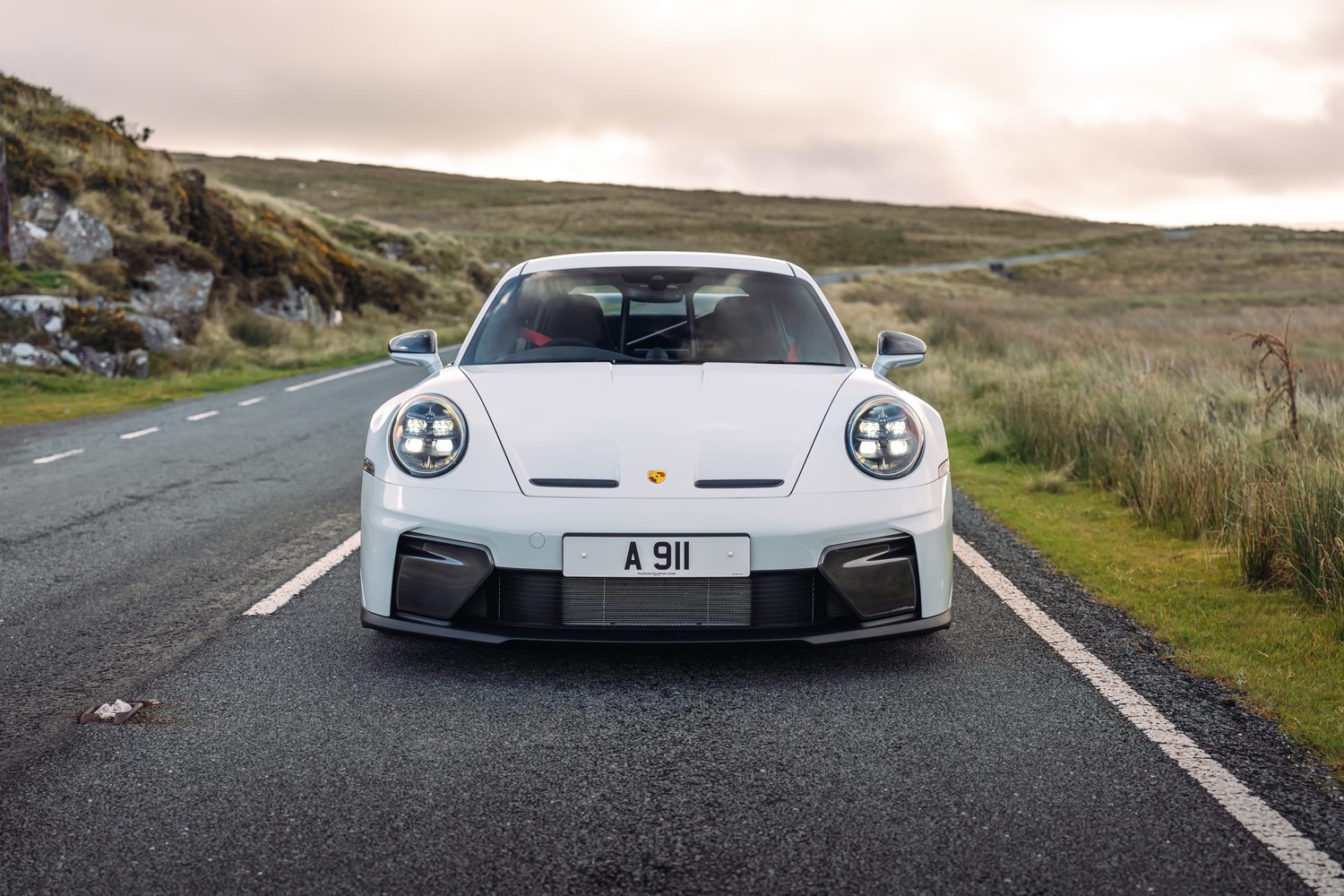
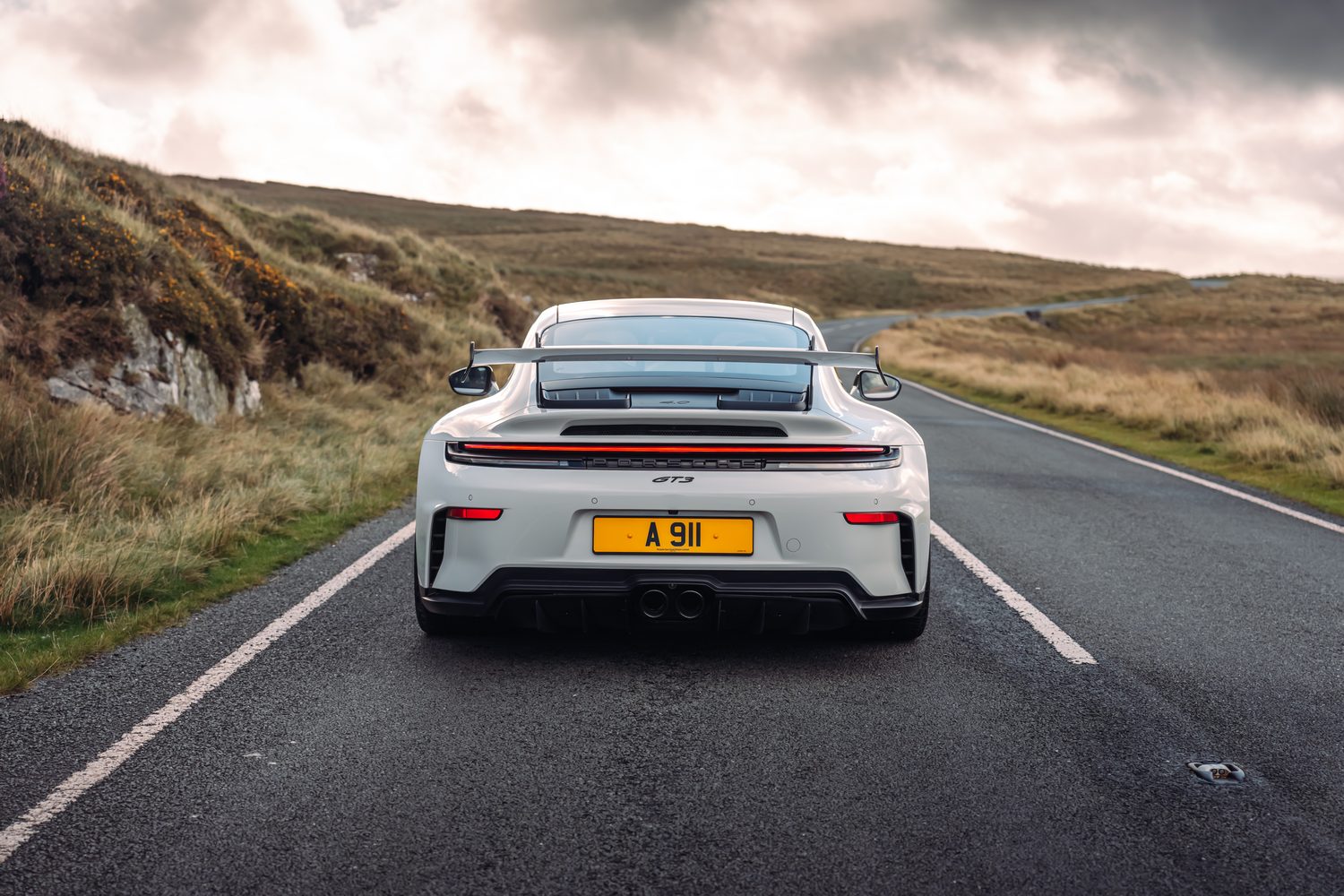
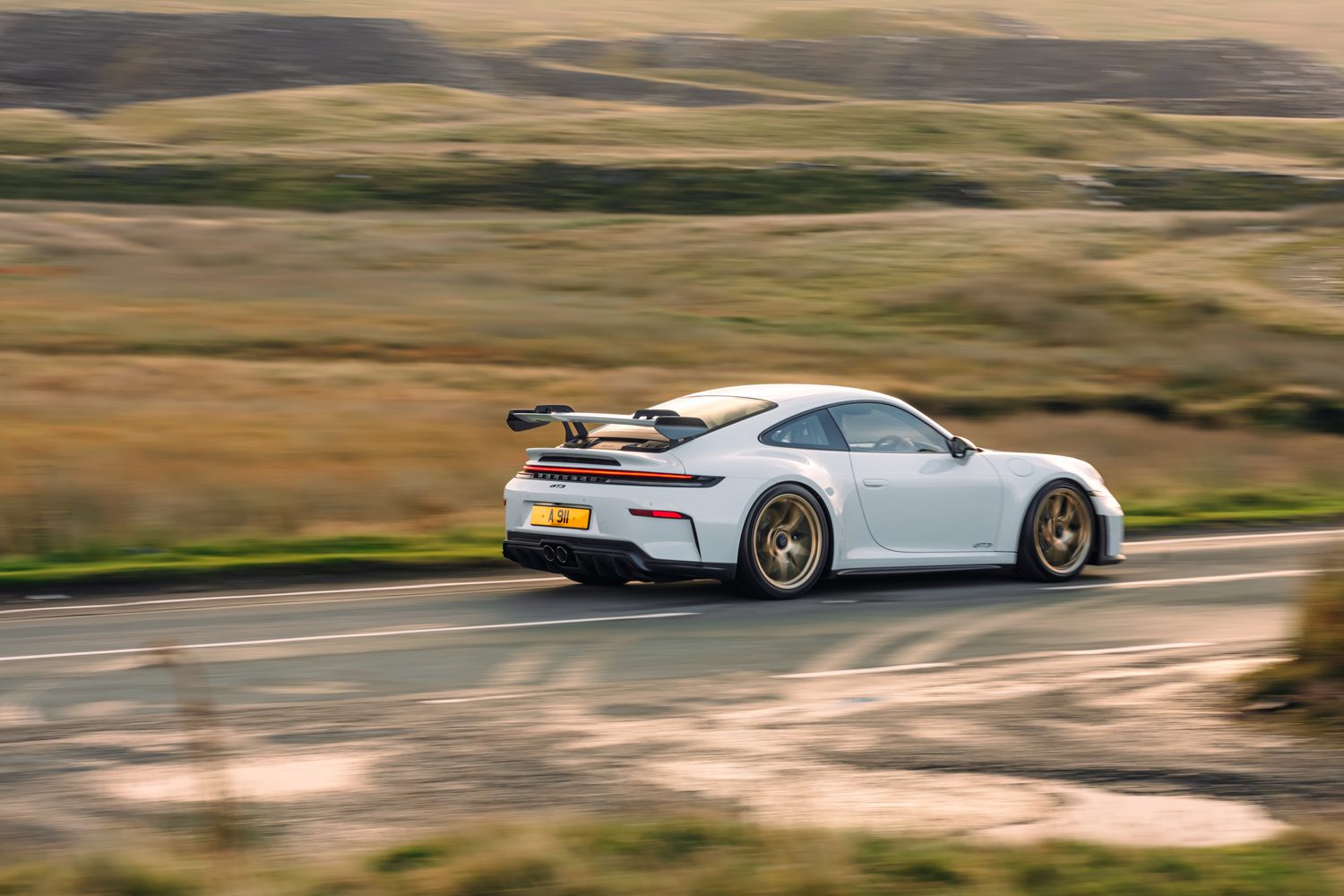
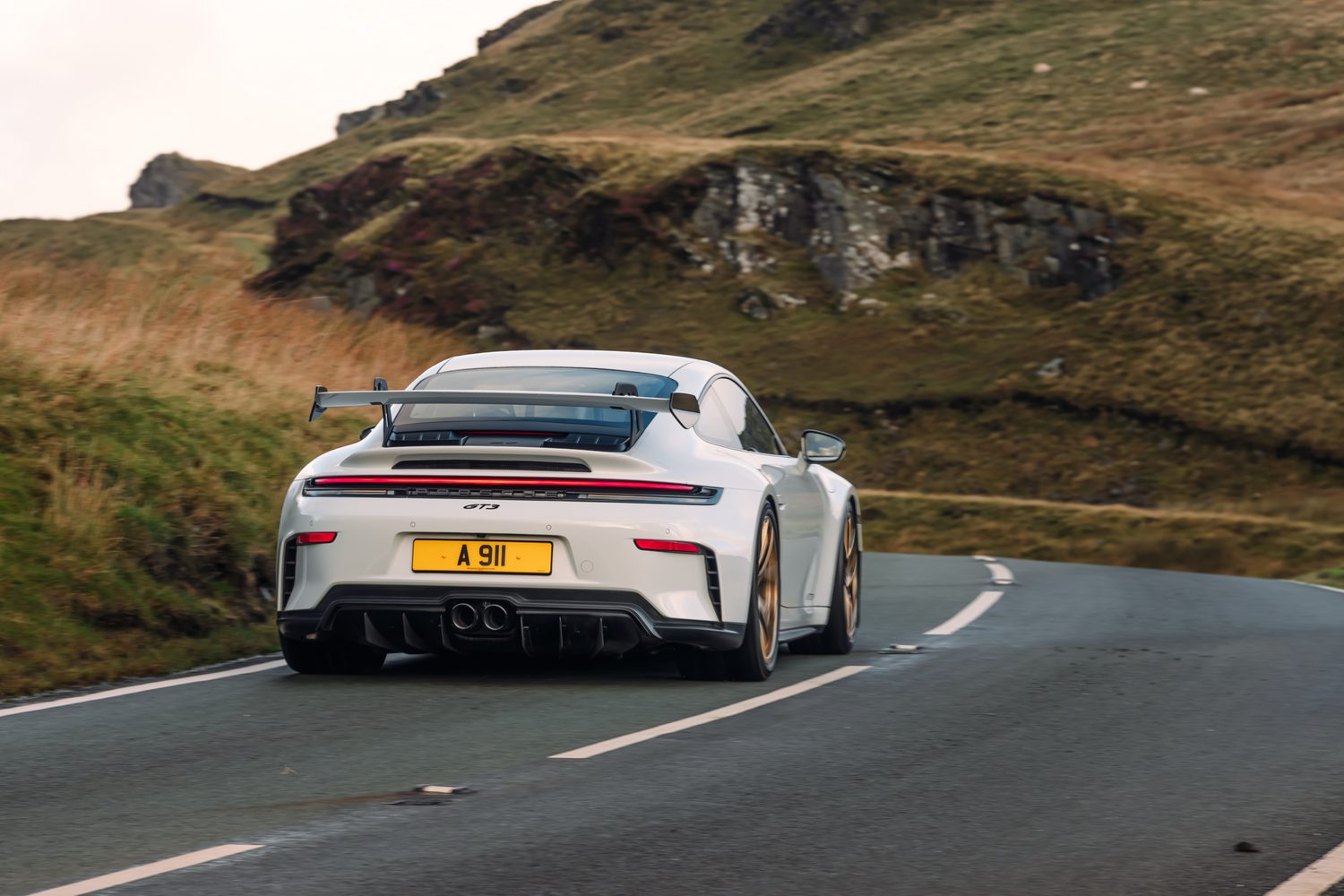
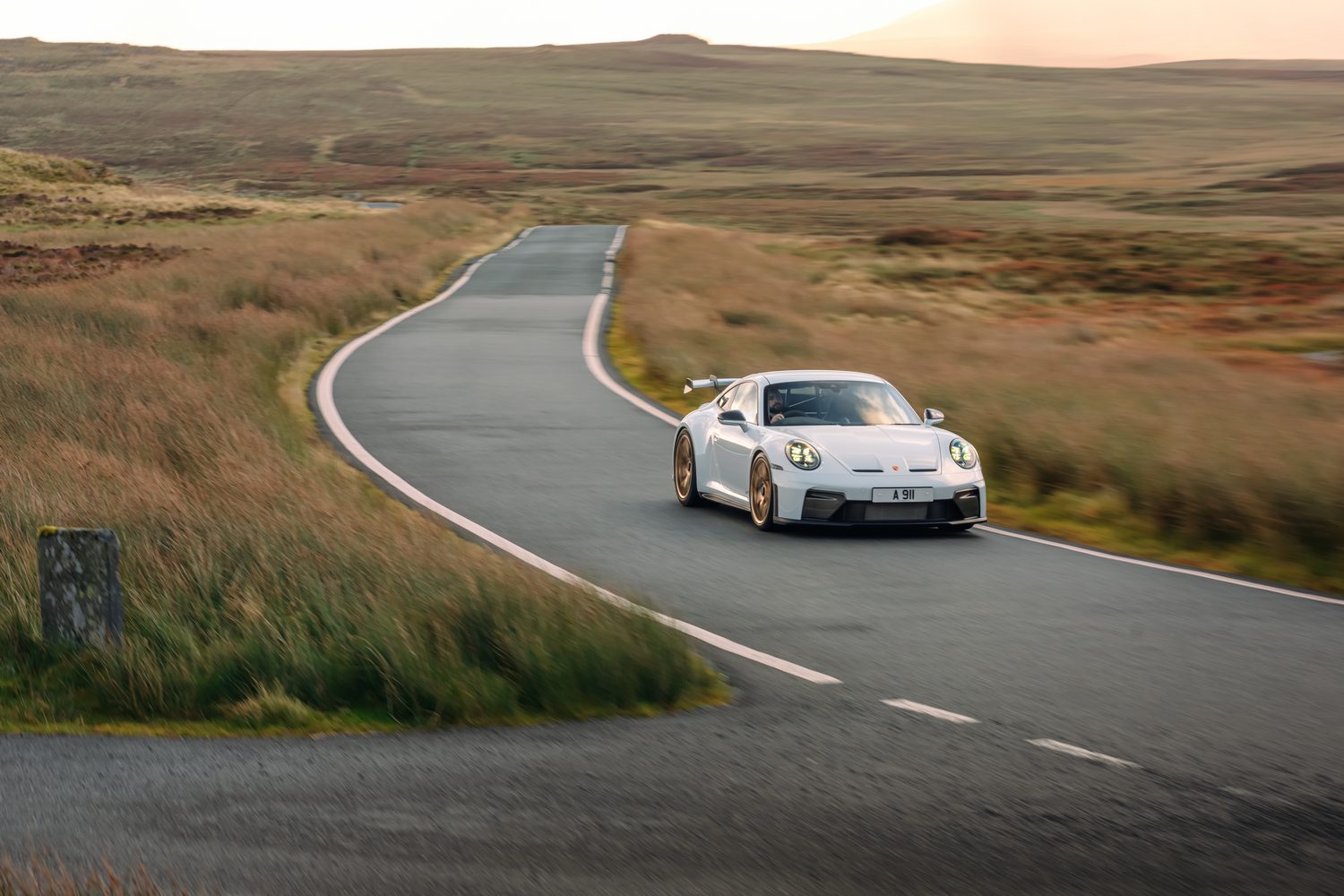
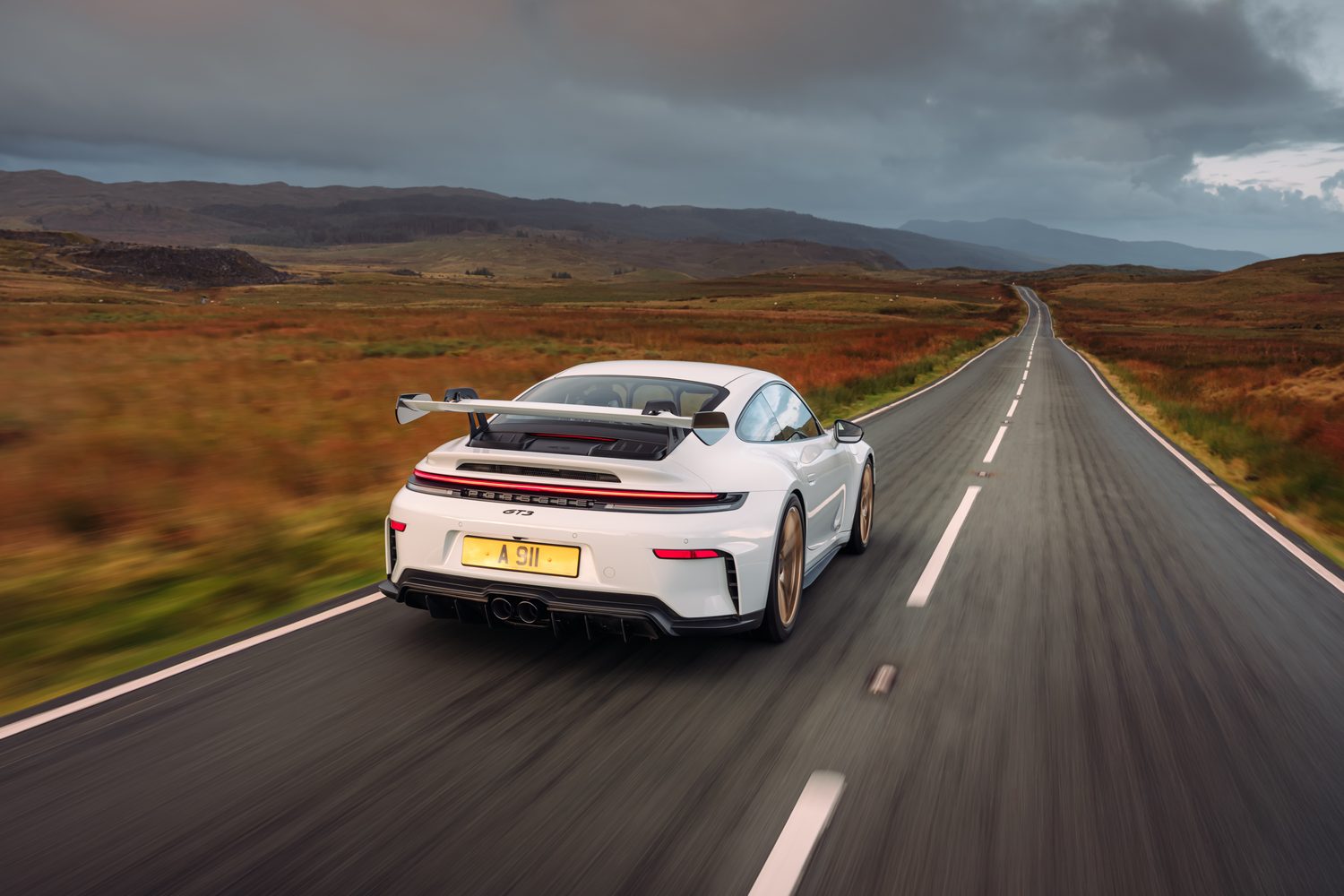
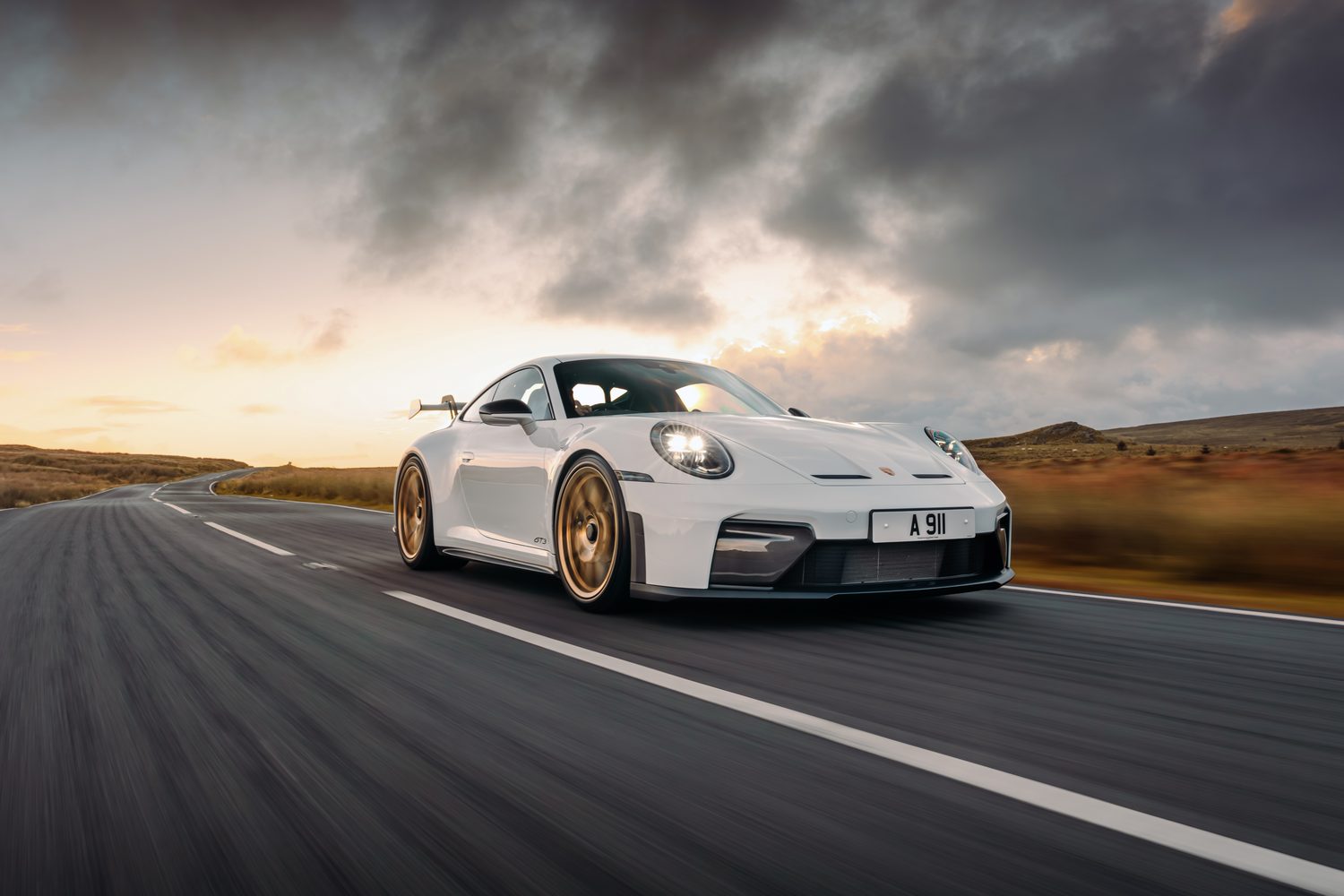
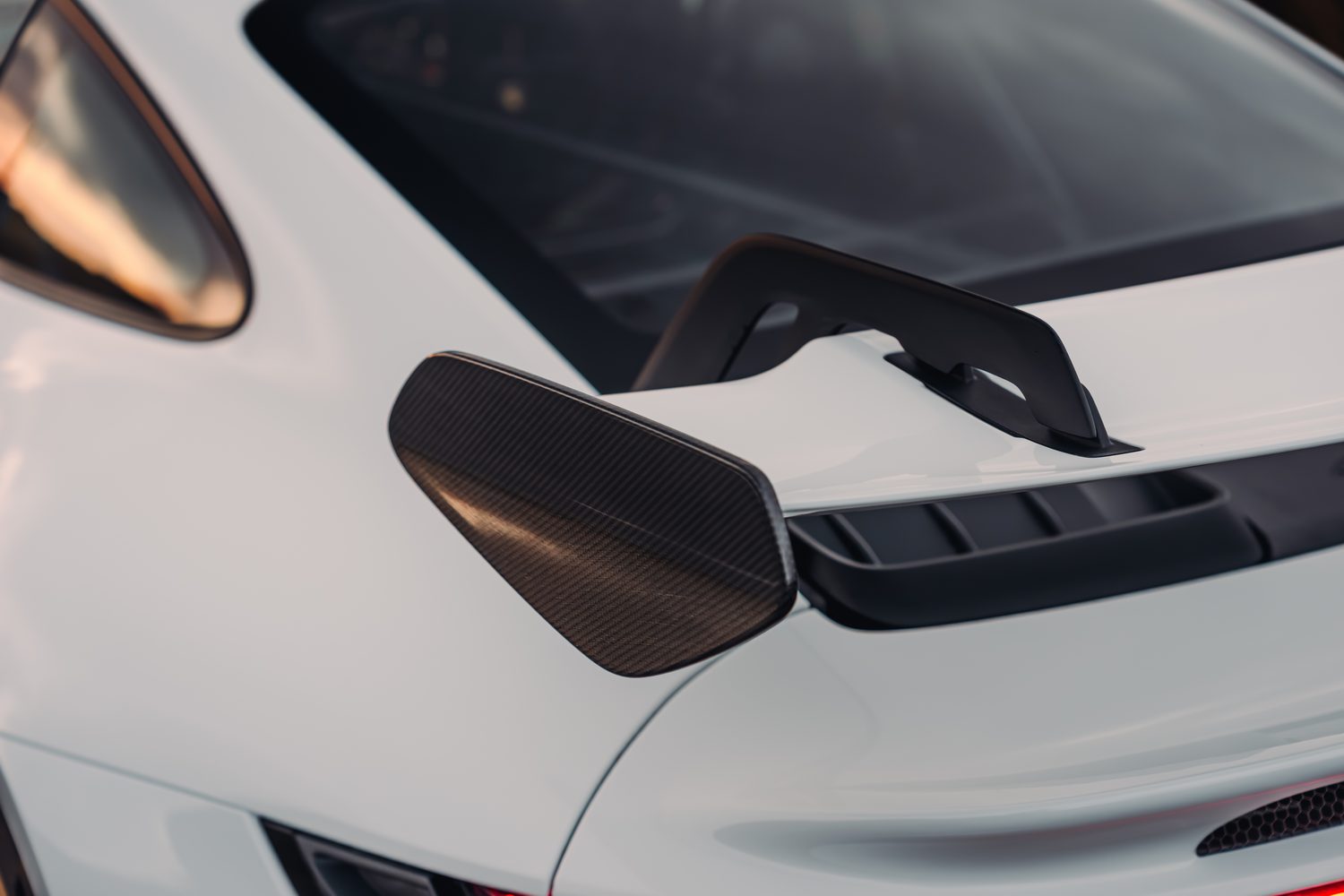
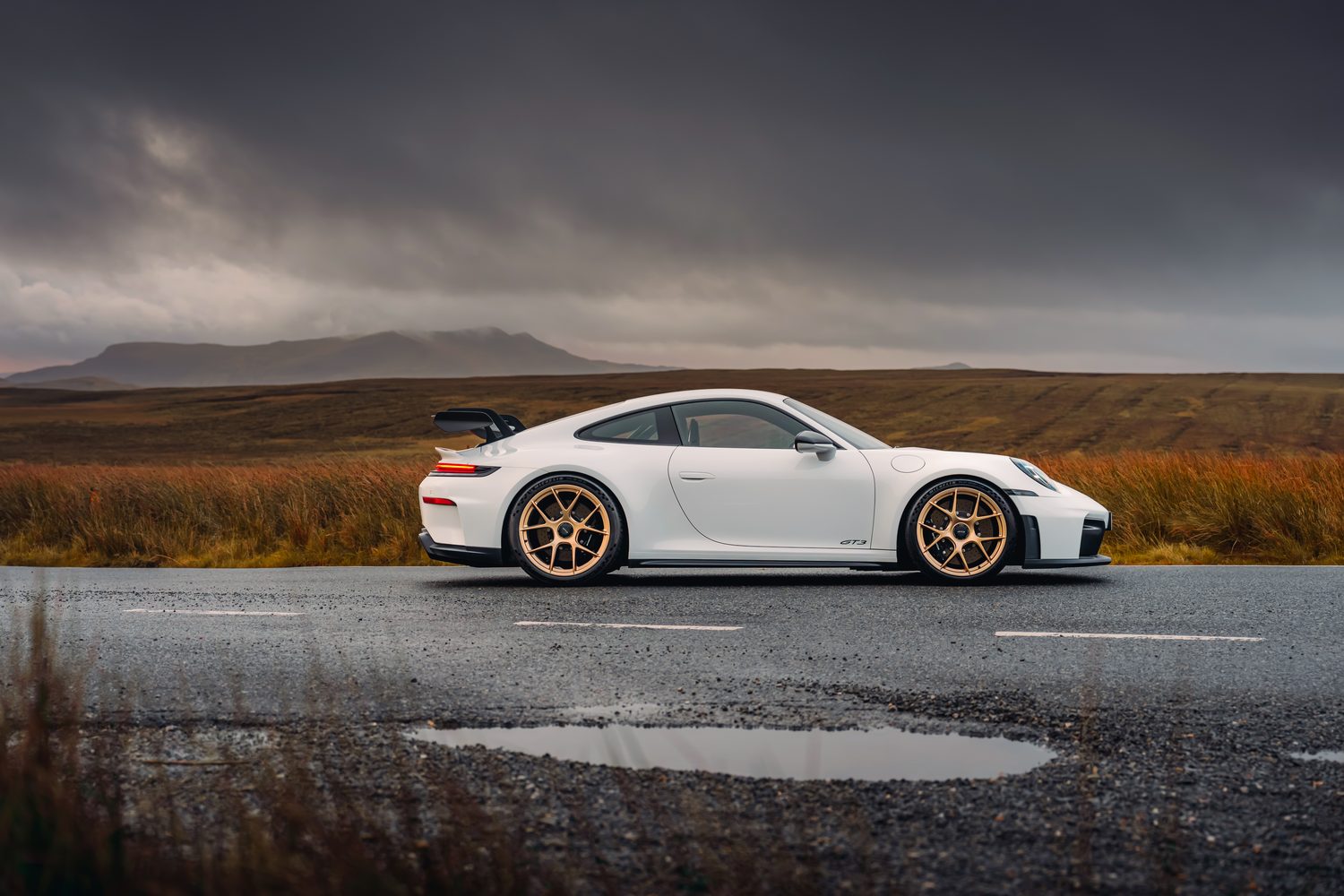
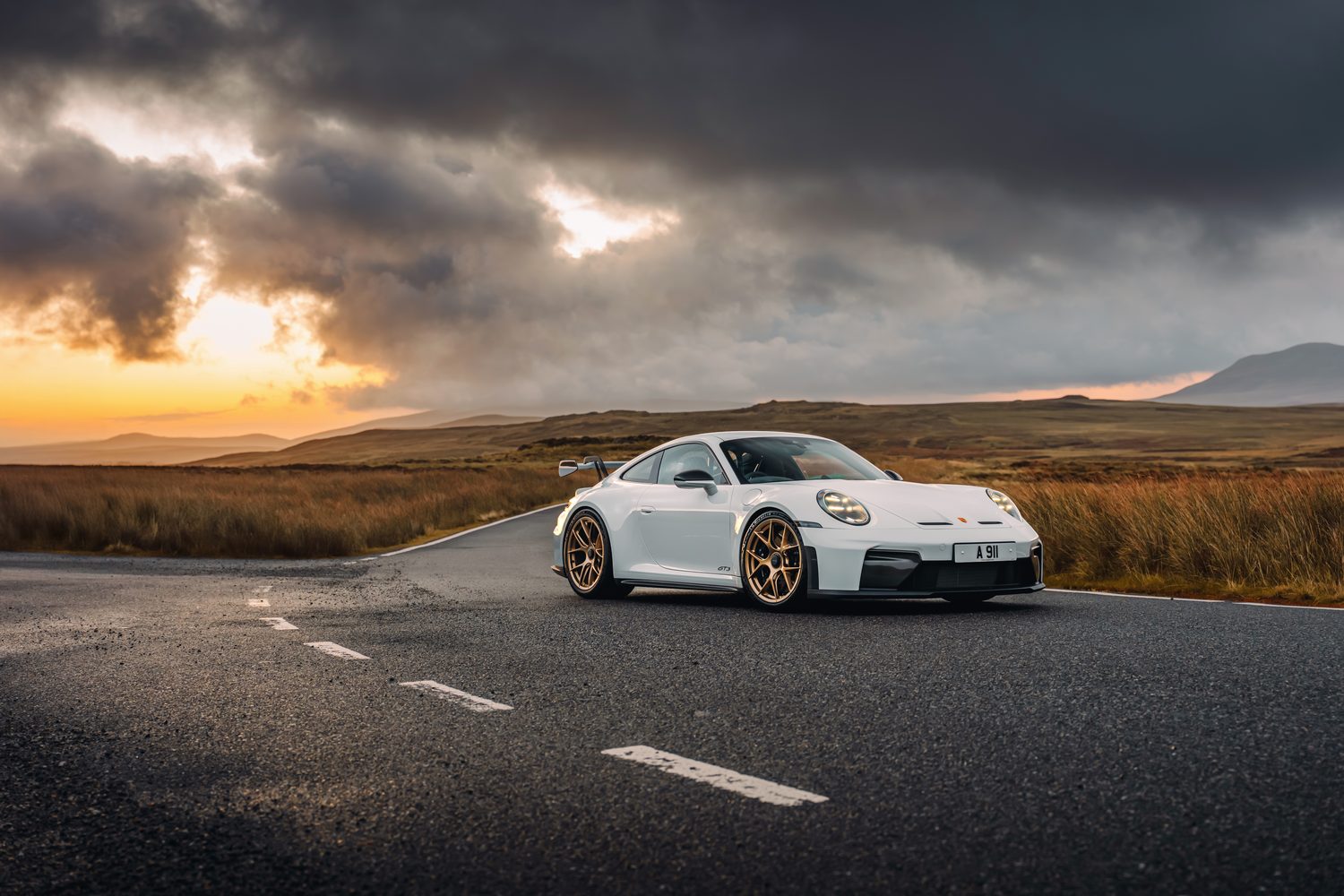
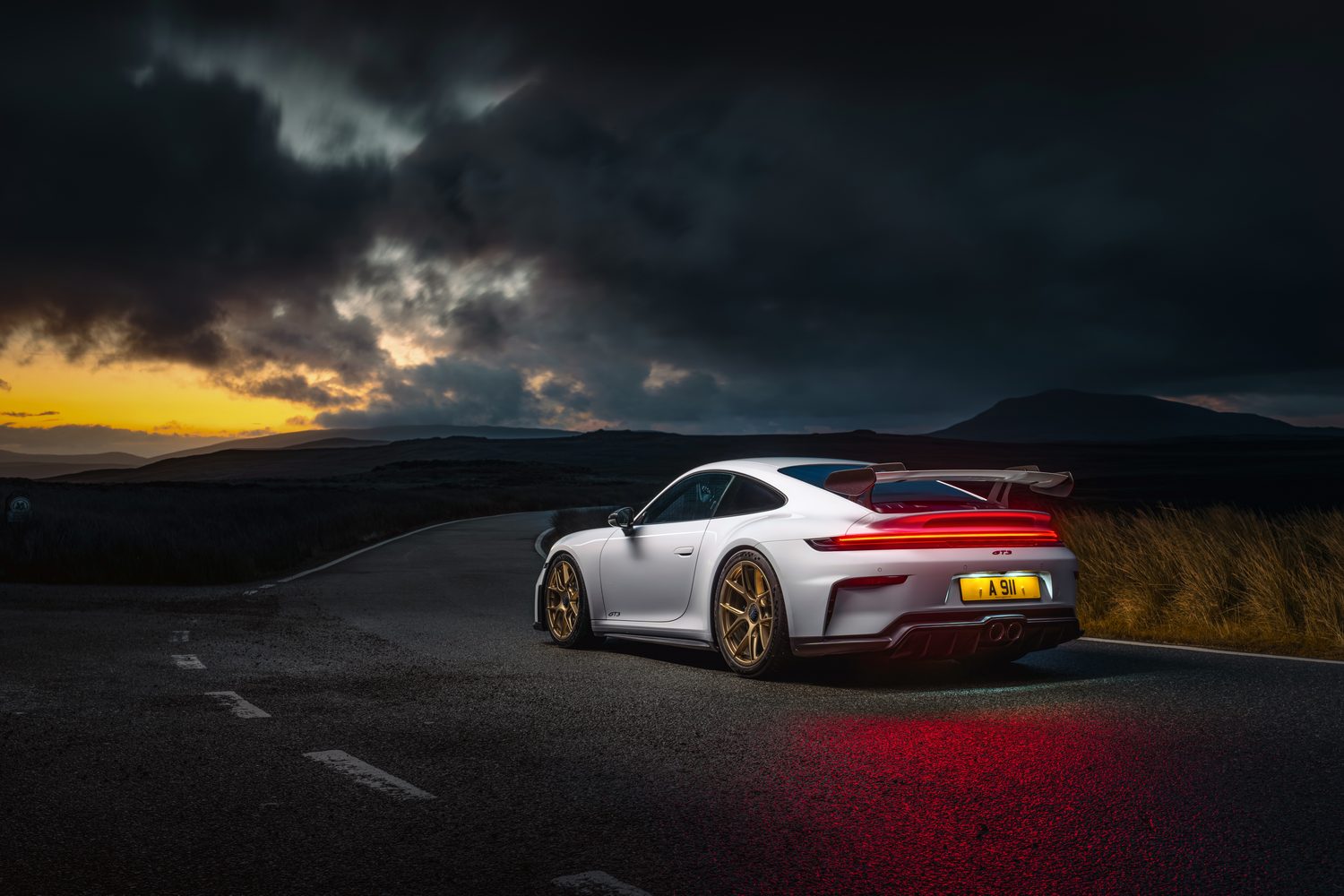
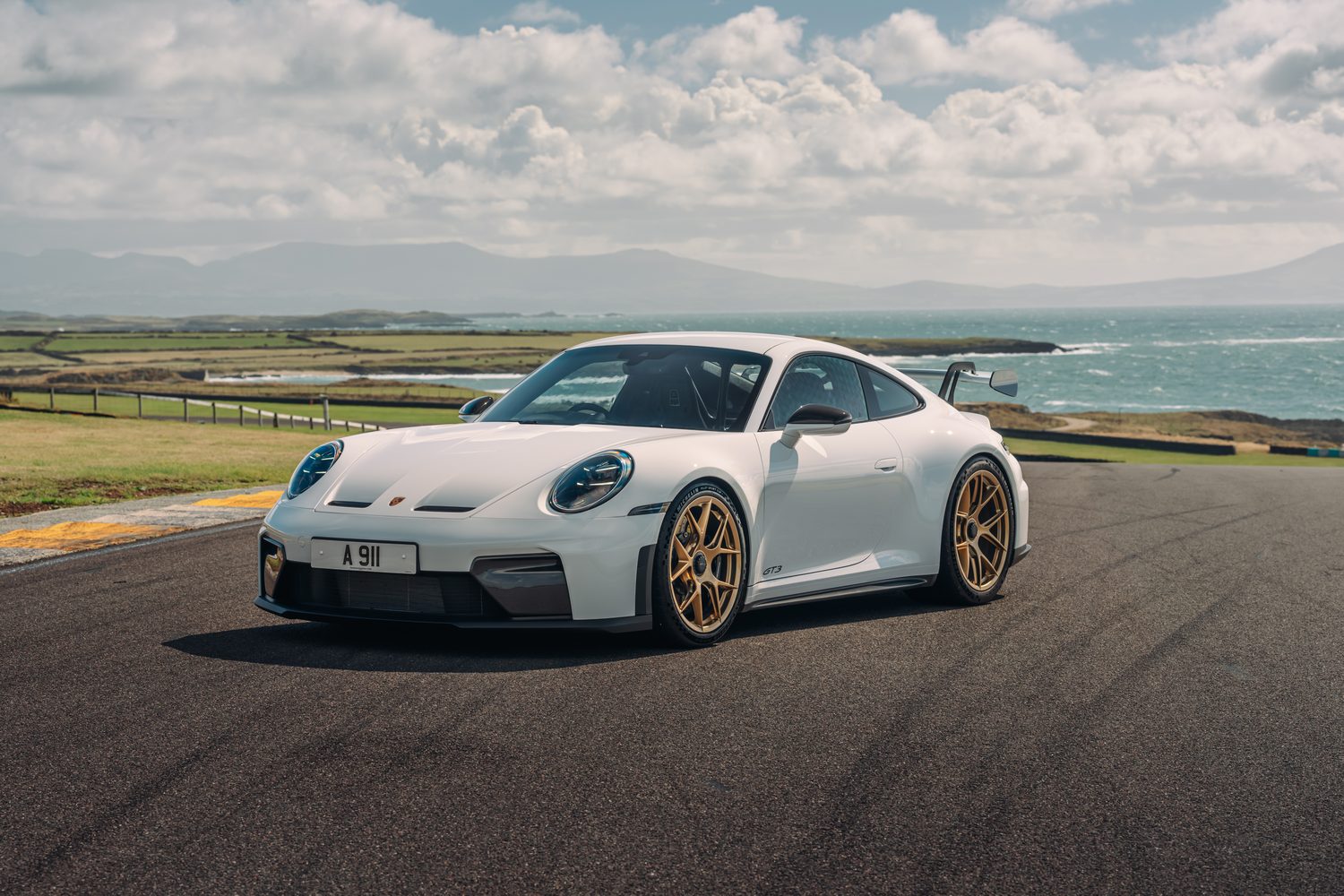
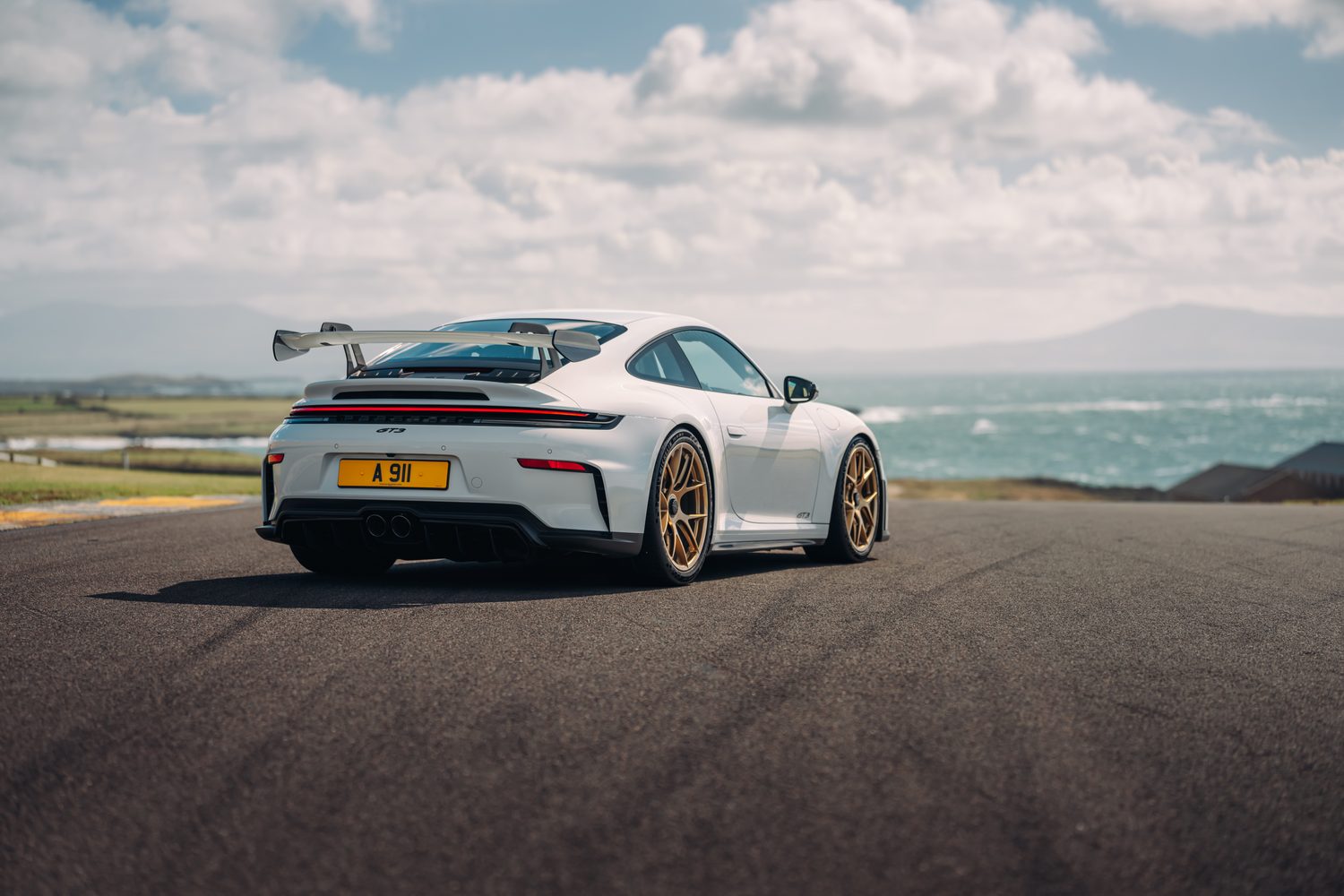
While big spoilers and splitters might not be to all tastes, the 'winged' car is what the latest Porsche 911 GT3 should look like as standard, for want of a better word. You have to tick a specific box to get it in the cleaner Touring specification, so really this is the norm for a GT3.
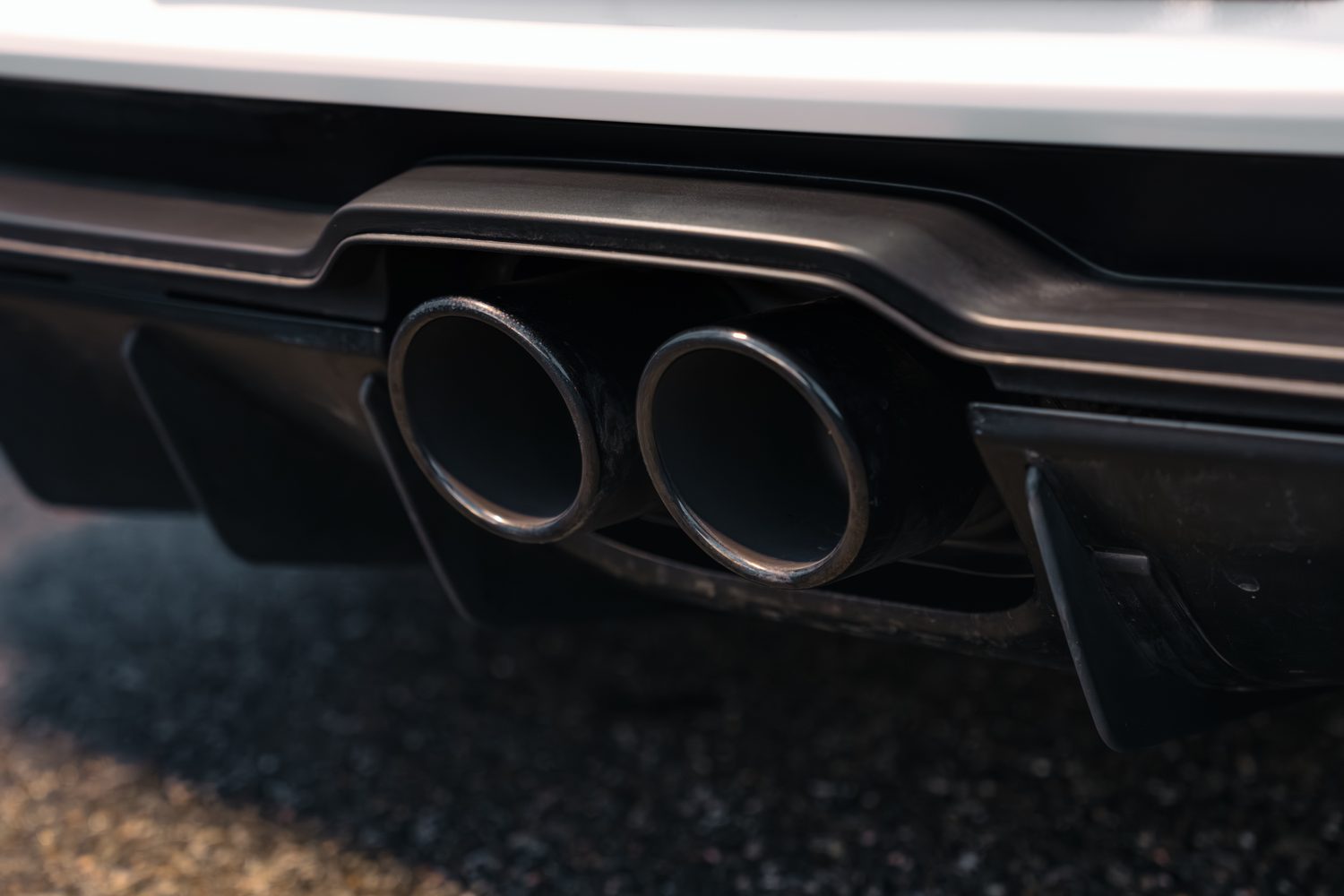
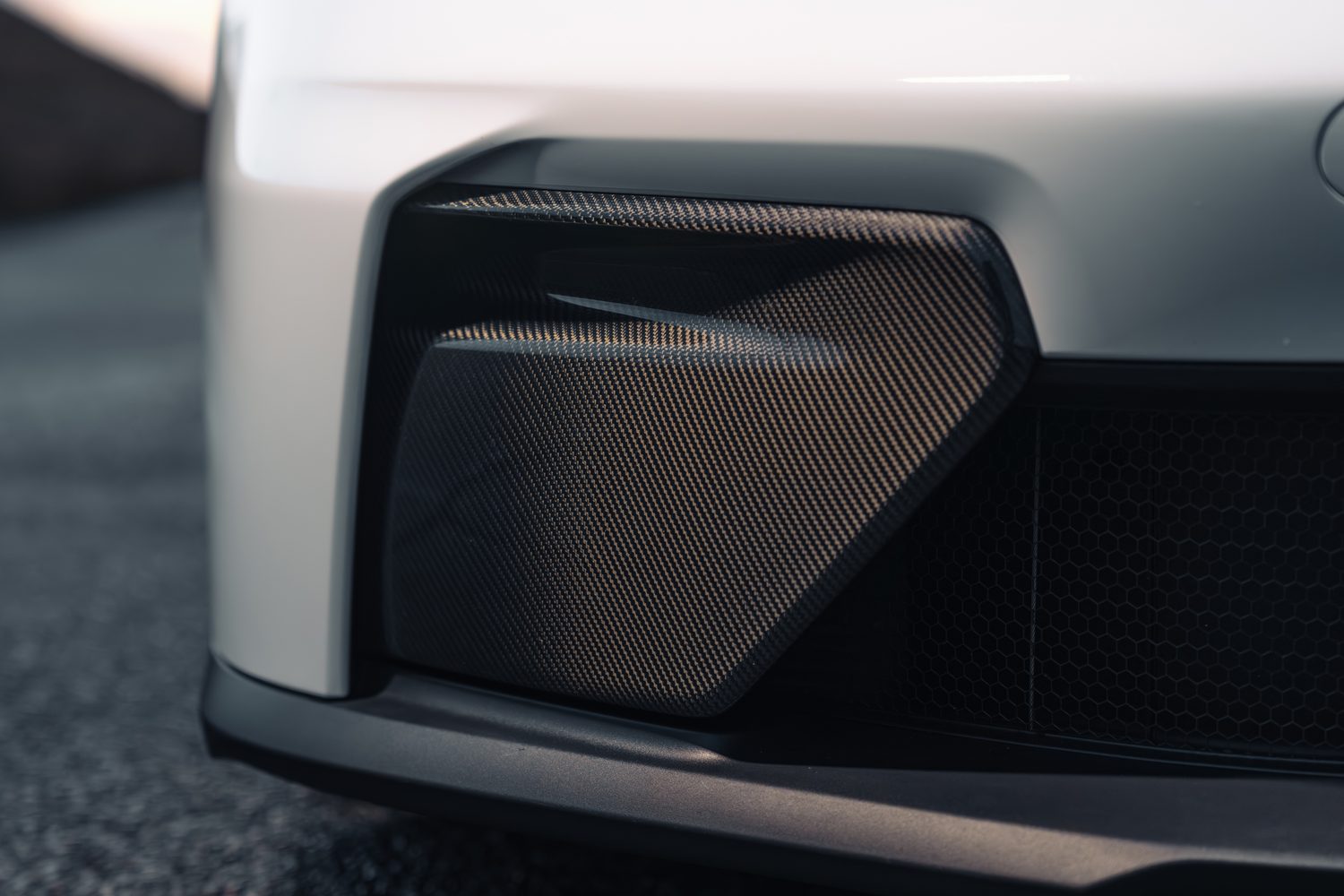
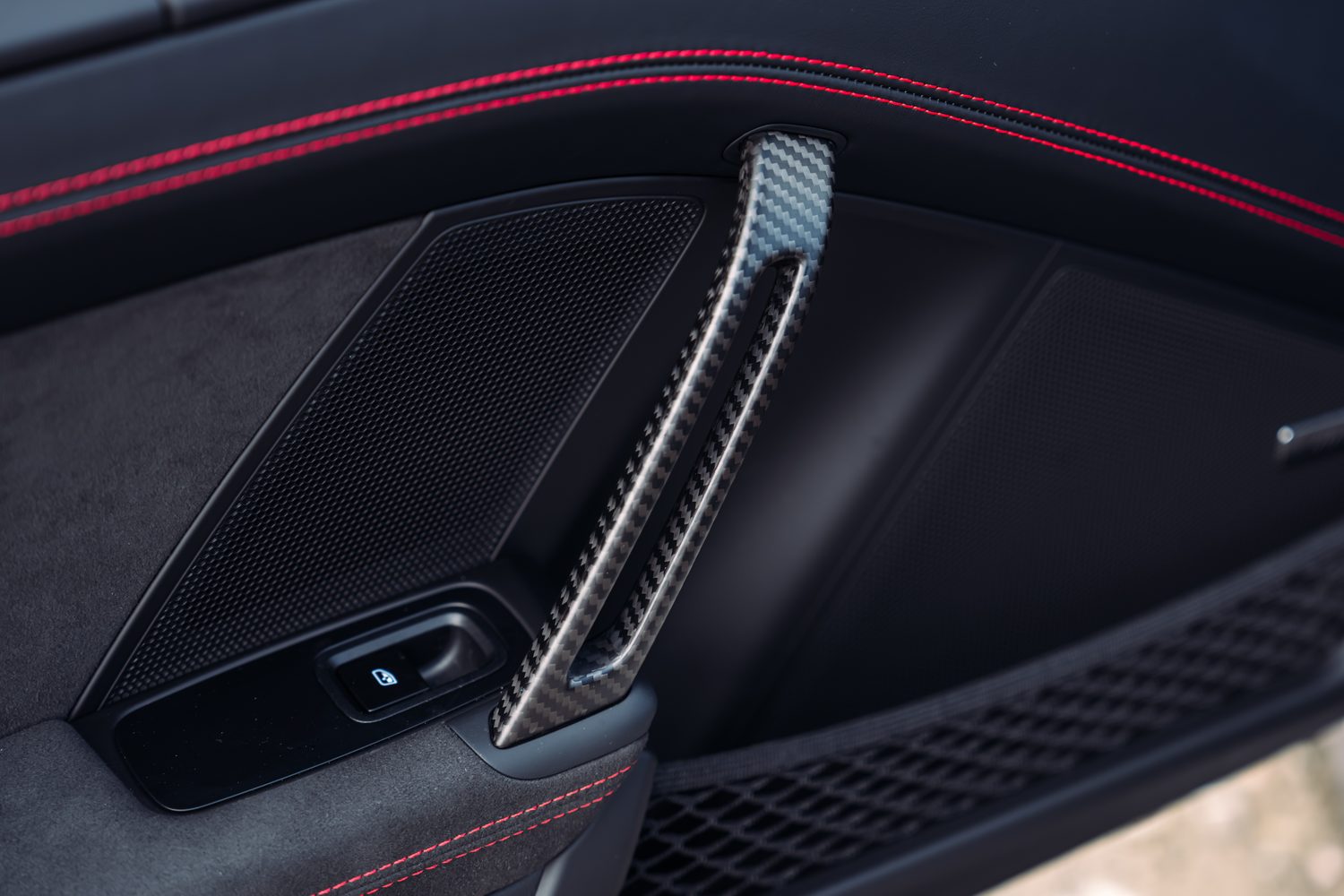
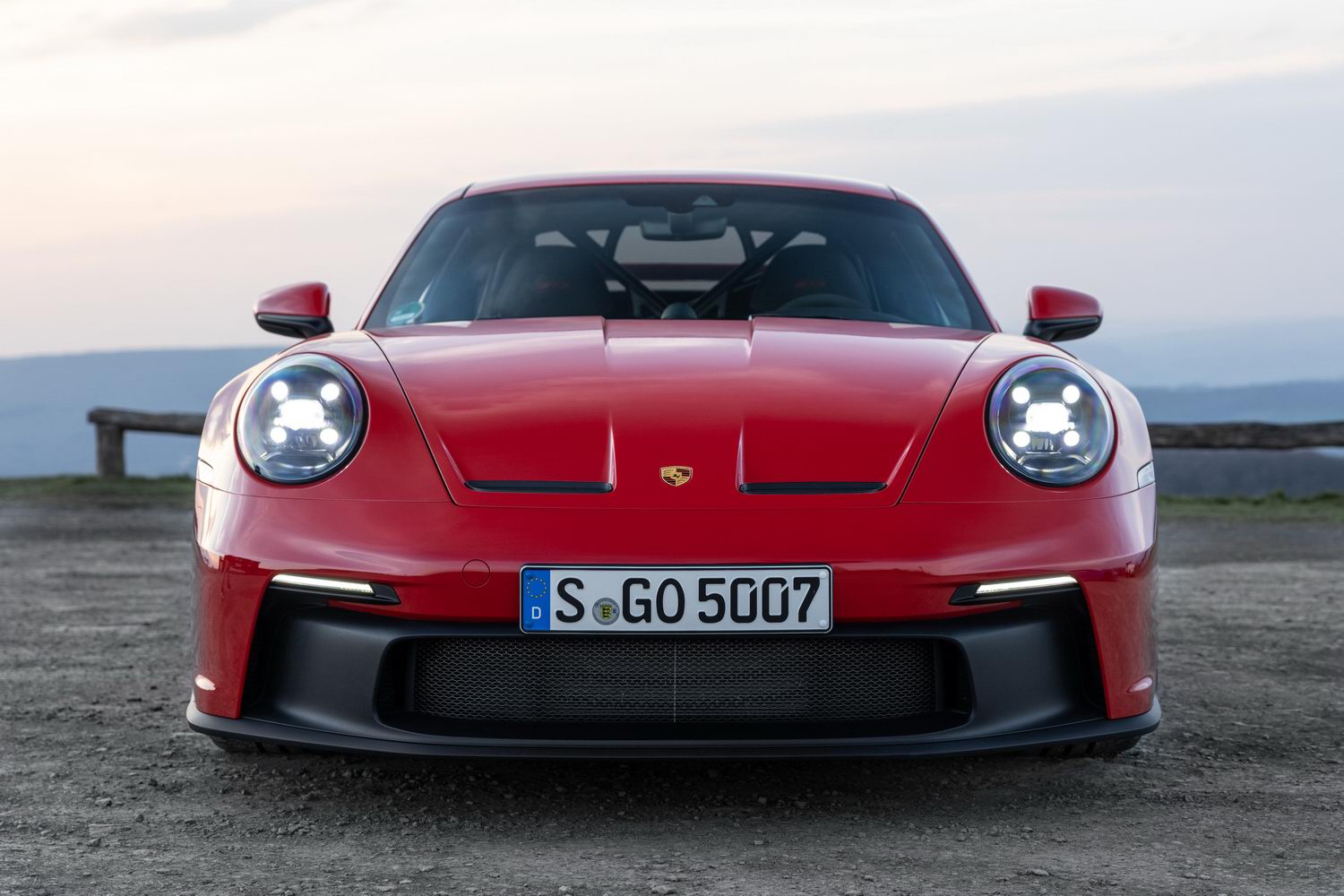
However, beyond the swan-neck rear wing (a feature lifted from racing 911s), the Weissach package brings exposed carbon-fibre trim in places, such as in the front air intakes, on the side plates of that spoiler at the back of the car and for the upper caps of the door mirrors.

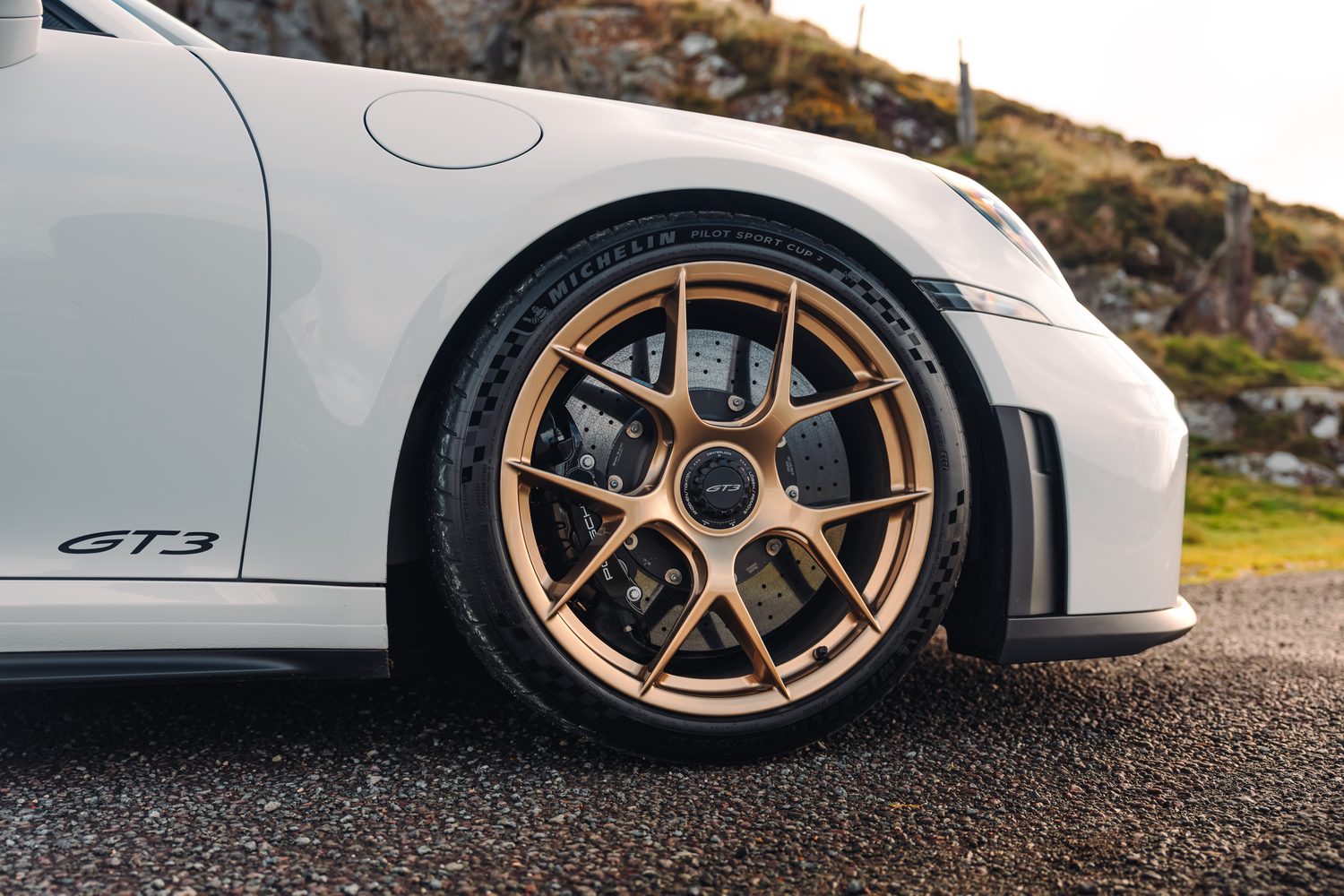
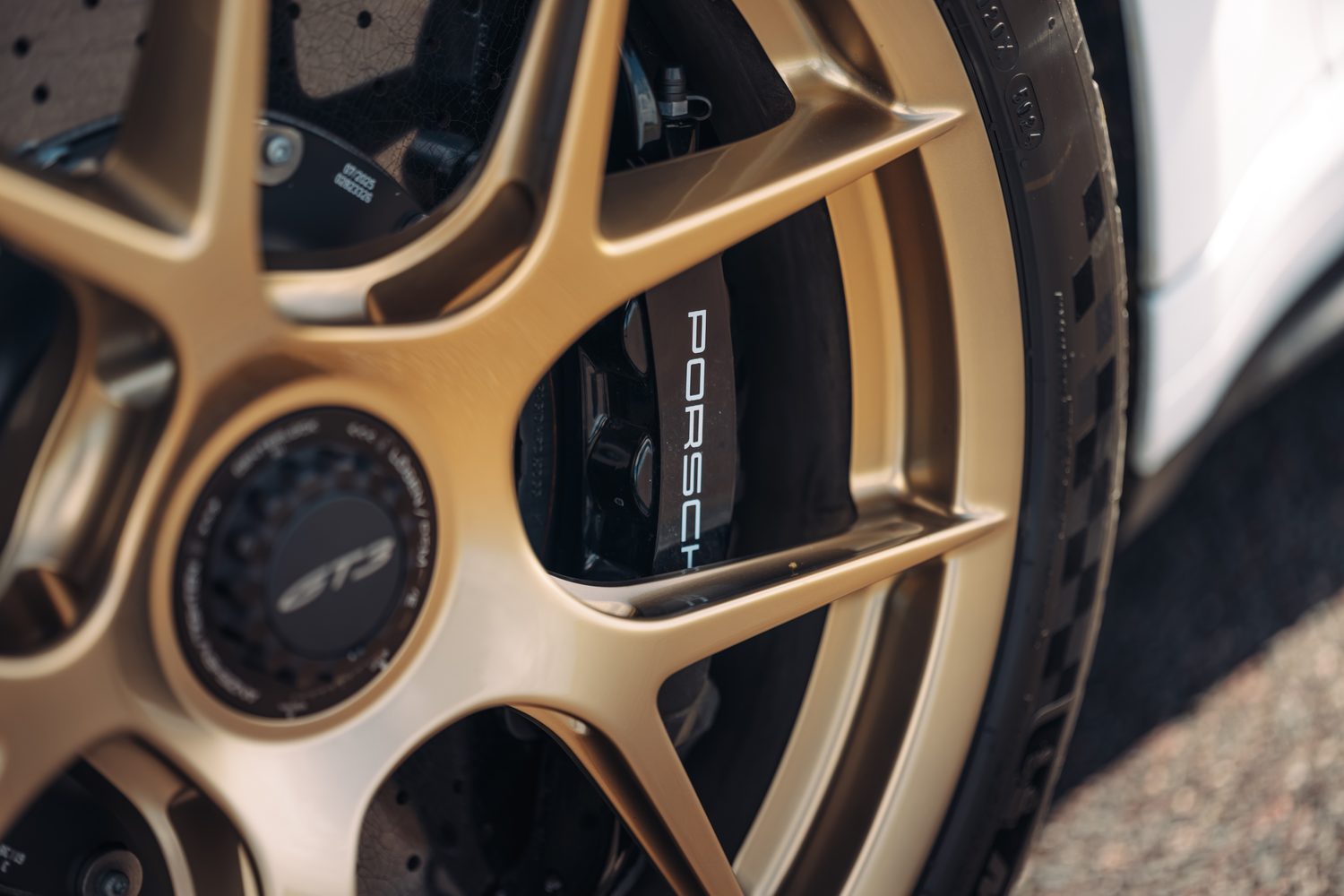
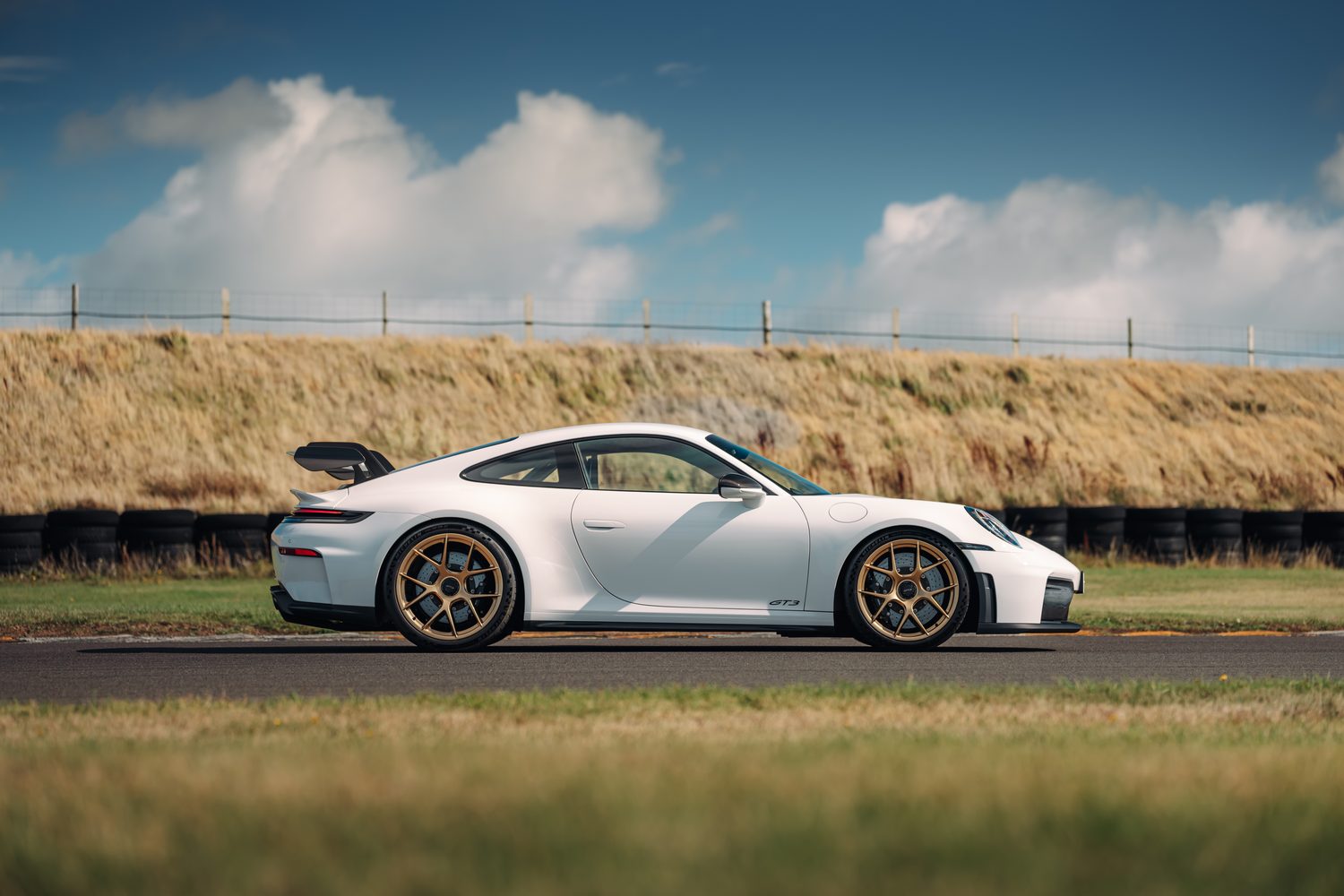
It looks even more eye-catching with the gold-coloured forged magnesium alloy wheels (20-inch front, 21-inch rear) fitted but bear in mind these are a colossal €23,034 option over the standard silver wheels, which are forged aluminium affairs.
Moving back to the Weissach package, while some of the carbon included within it (all part of a 12kg weight-saving programme on the regular car) is visible, all of the roof, the bonnet and the towering rear spoiler are made of CFRP (Carbon-Fibre Reinforced Plastic) too, although these are painted body colour to lessen the visual impact.

Dimensions of the 2026 Porsche 911 GT3 Weissach Club Sport
- Length:
- 4,570mm
- Width:
- 1,852mm (mirrors folded)
- Height:
- 1,279mm
- Wheelbase:
- 2,457mm
Paint colours for the 2026 Porsche 911 GT3 Weissach Club Sport
Speaking of paints, white is a great colour for the winged GT3 Weissach Club Sport, as it shows off the car's motorsport-inspired styling all the better - with the best news being that white is a no-cost option in the first place.
There is one other free colour, which is standard black, but after that there are four metallics in the 'Shades' range at €1,787 apiece (Jet Black, Vanadium Grey, GT Silver or Ice Grey), then another quartet of colours in the €2,853 'Dreams' palette (Guards Red, Gentian Blue metallic, Cartagena Yellow metallic or Lugano Blue), and then two chunky alternatives making up the 'Legends' selections - Oak Green Neo metallic or Slate Grey Neo, which'll set you back a thumping €5,414 each.
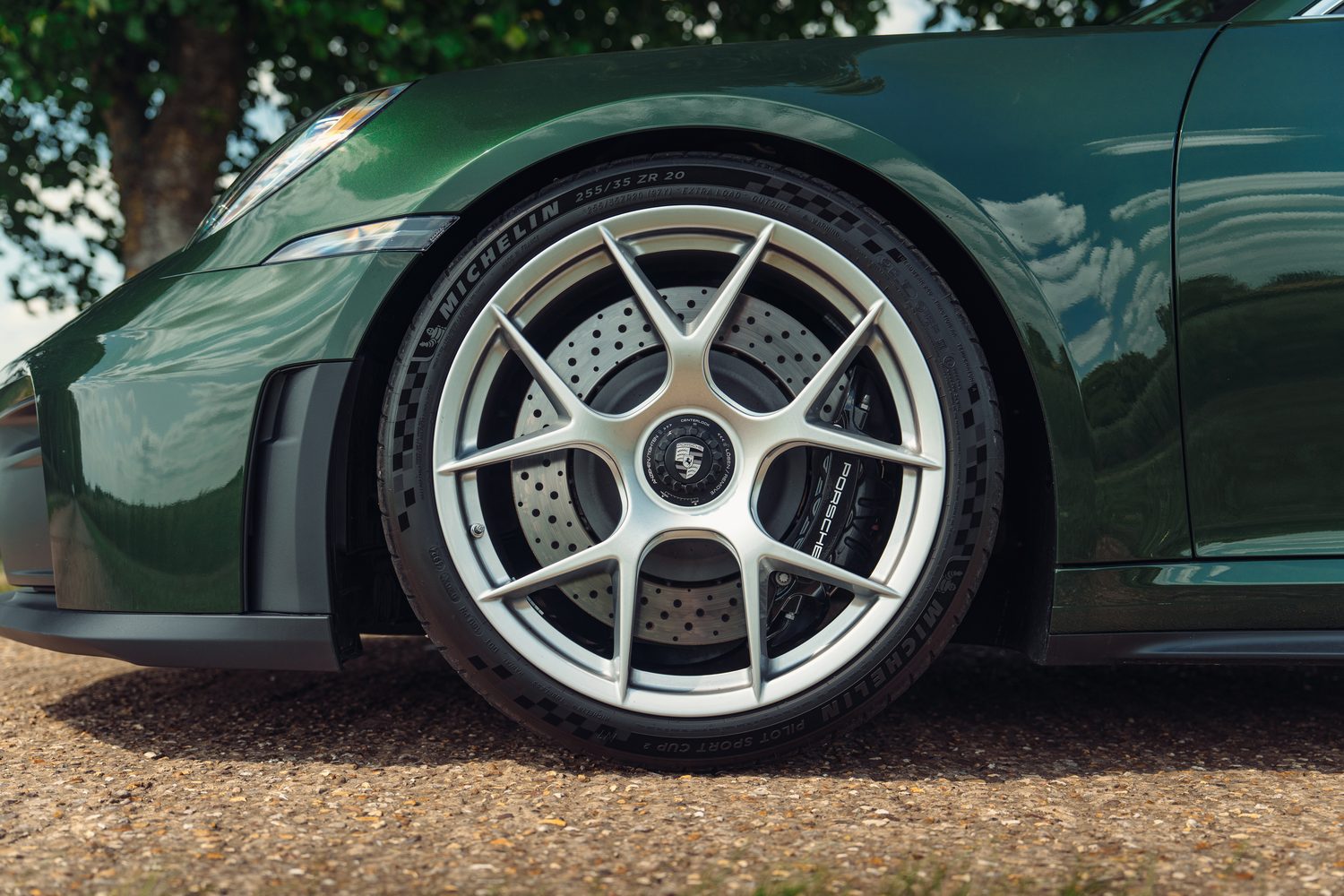
And as if that weren't enough, Porsche's Exclusive Manufaktur bespoke department provides the 'Paint to Sample' range, a collection of more than 190 historic and unusual colours that you can choose for your vehicle. However, as Porsche will only make as much of this paint at a time as is needed to clothe your car, it needs three months in advance to brew the colour up, and so each finish is a scarcely believable €17,256 a go. We'd stick with white...
Interior, practicality, tech & comfort of the 2026 Porsche 911 GT3 Weissach Club Sport
- Weissach kit can have roll cage
- Least practical 911 interior of all
- Optional bucket seats are terrific

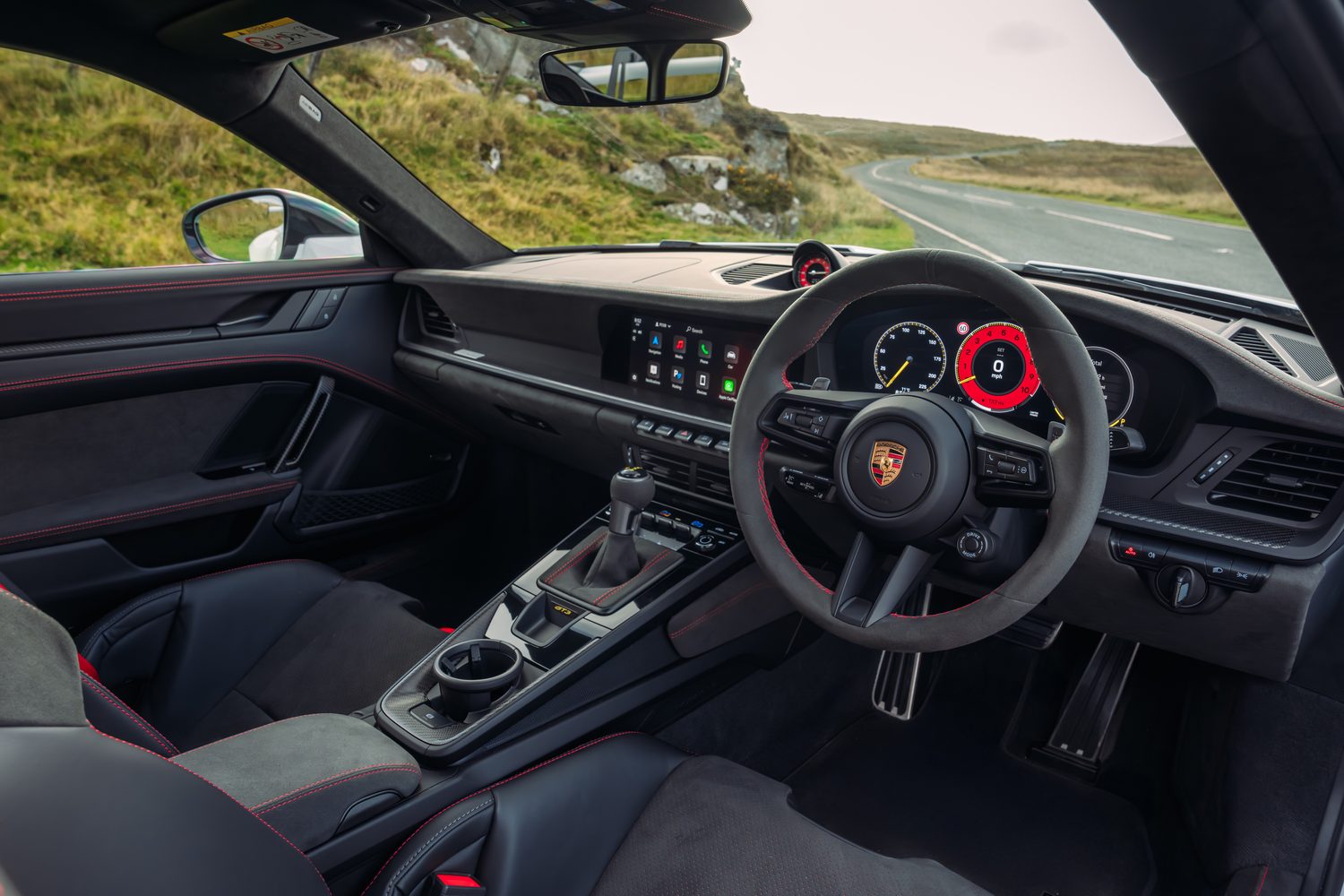
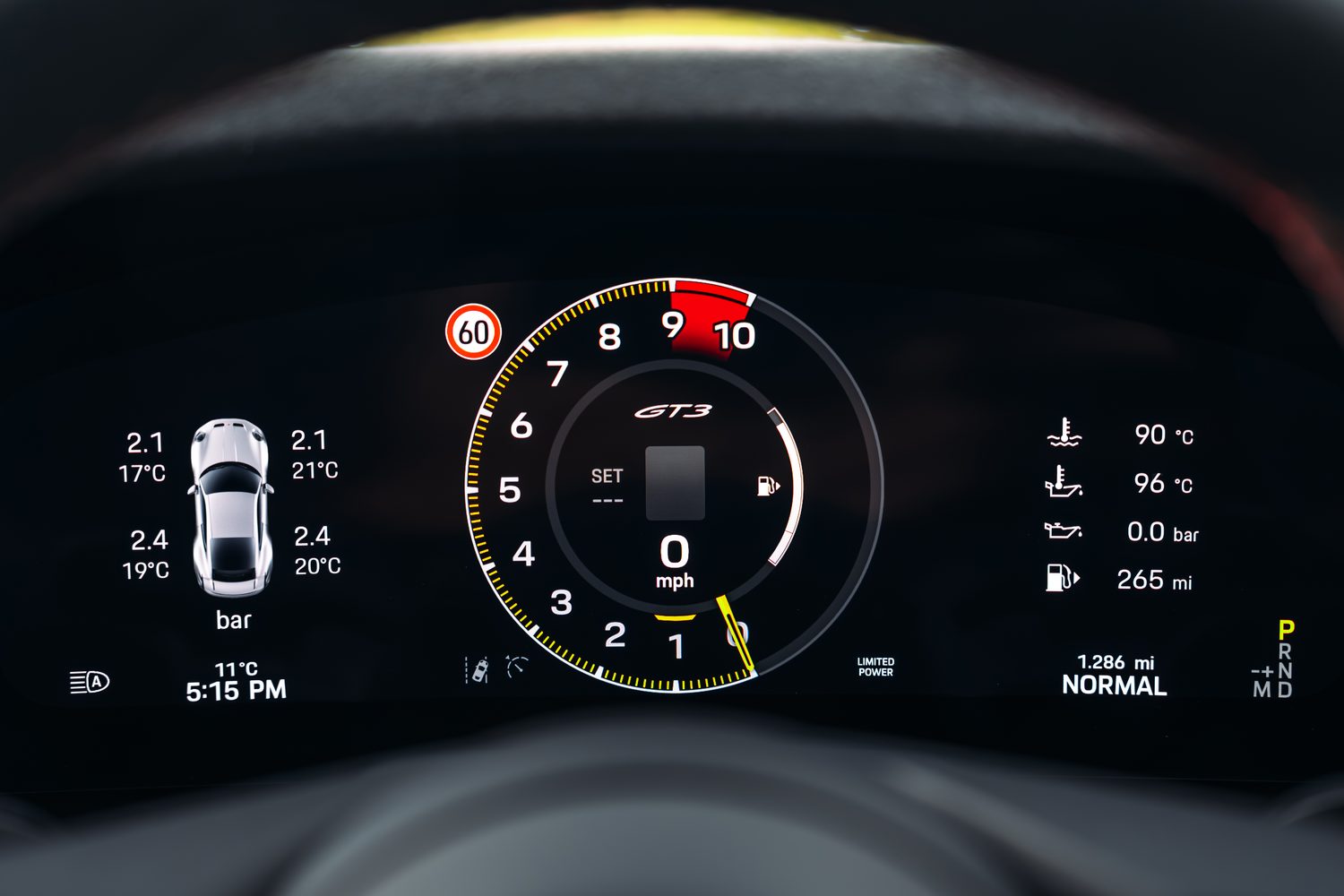
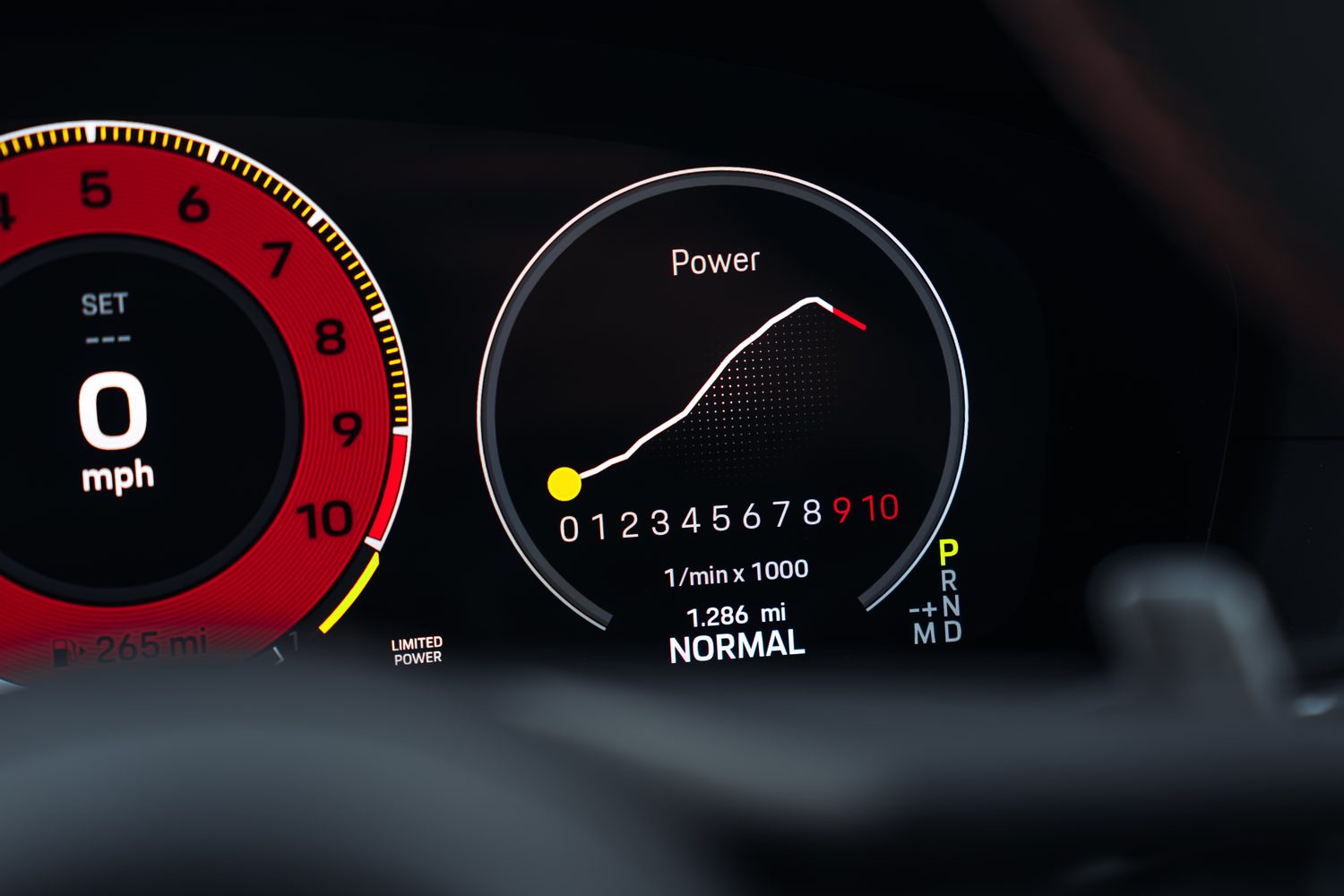
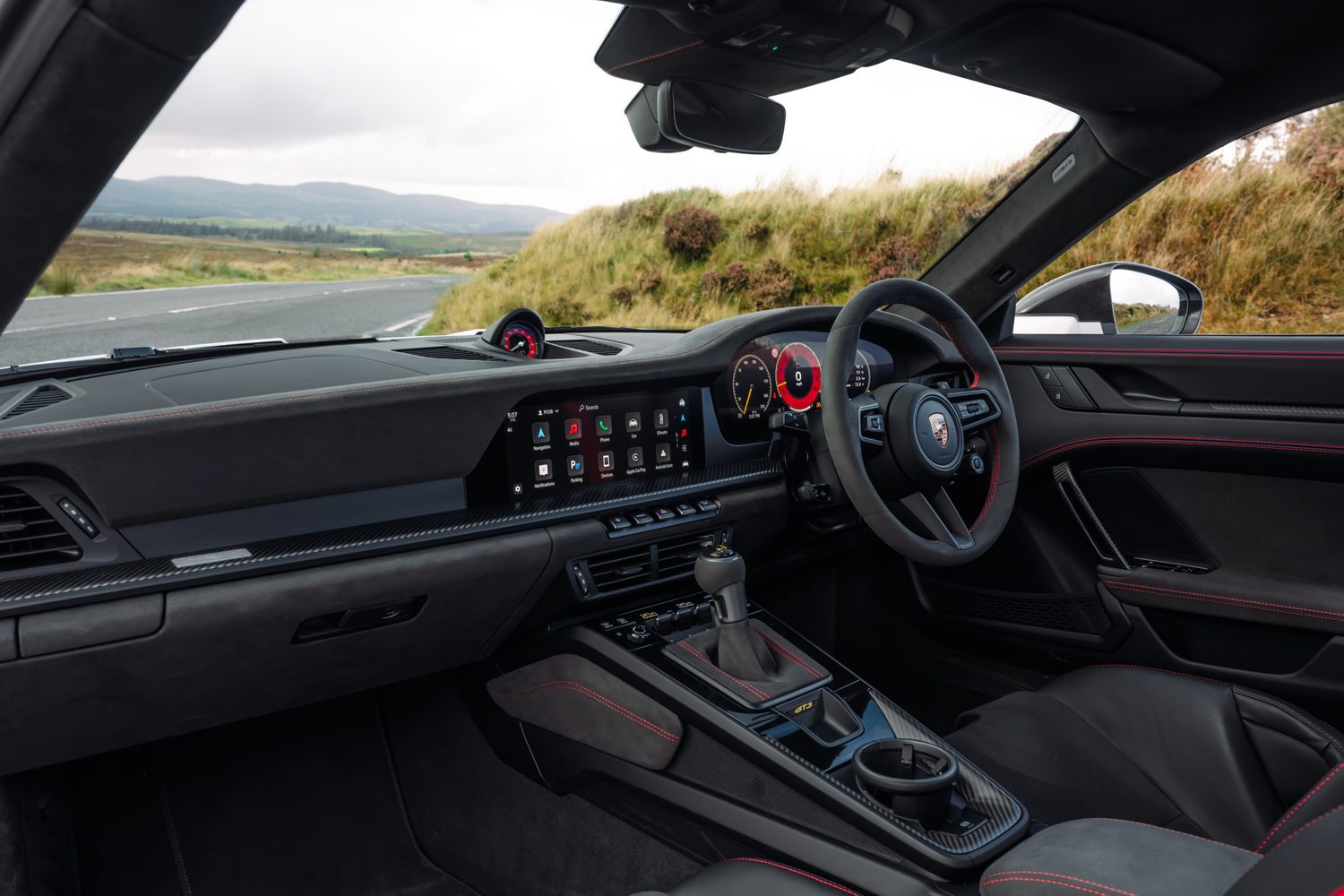
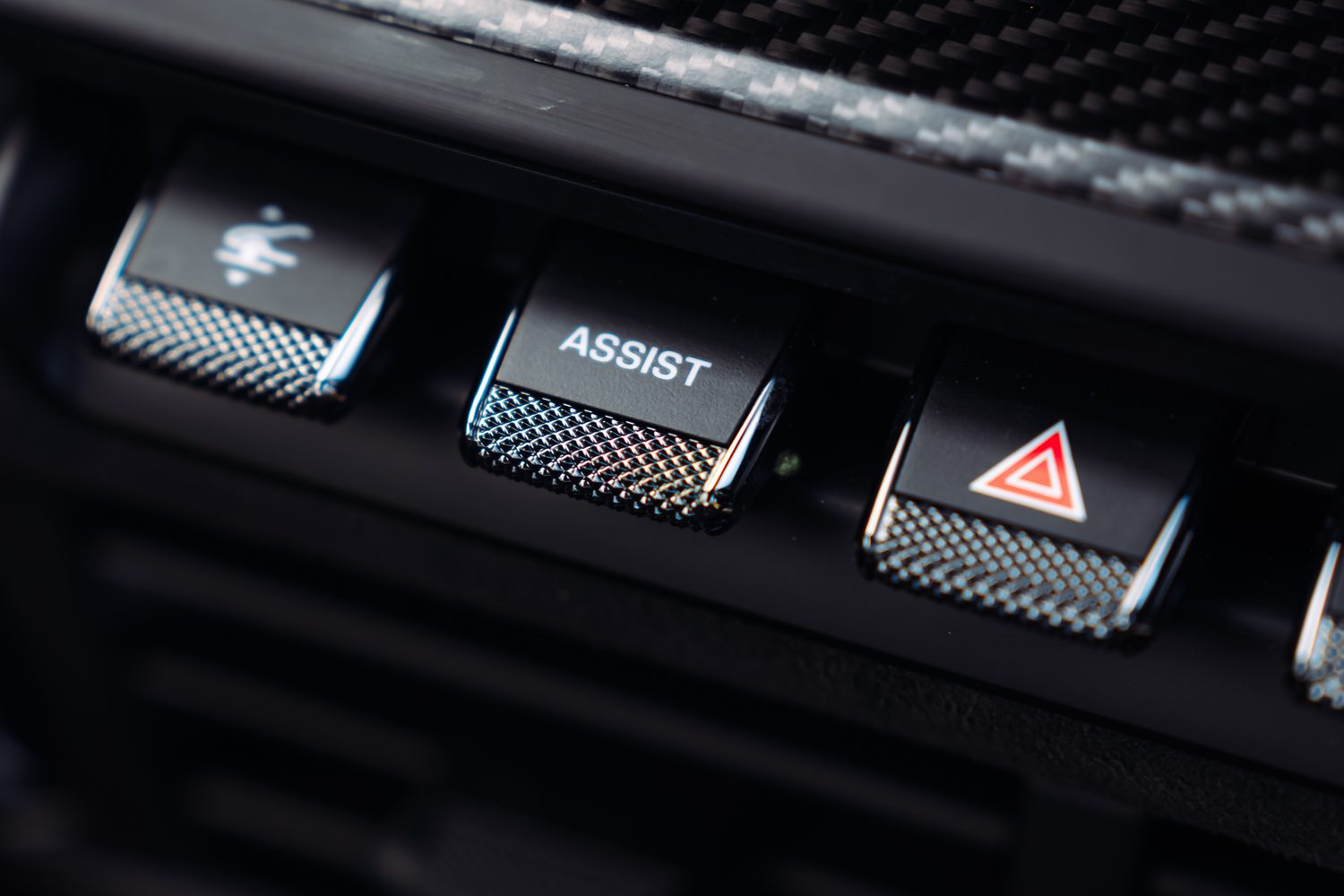
The usual eighth-generation 911 cabin is present and correct in the winged GT3, complete with the few flourishes that are specific to the high-revving 4.0-litre model. These include a different switch to start the engine, a different cluster with a 10,000rpm digital and rotating rev counter, different shortcut switches beneath the infotainment and a different sun-shading upper lip to the fascia.
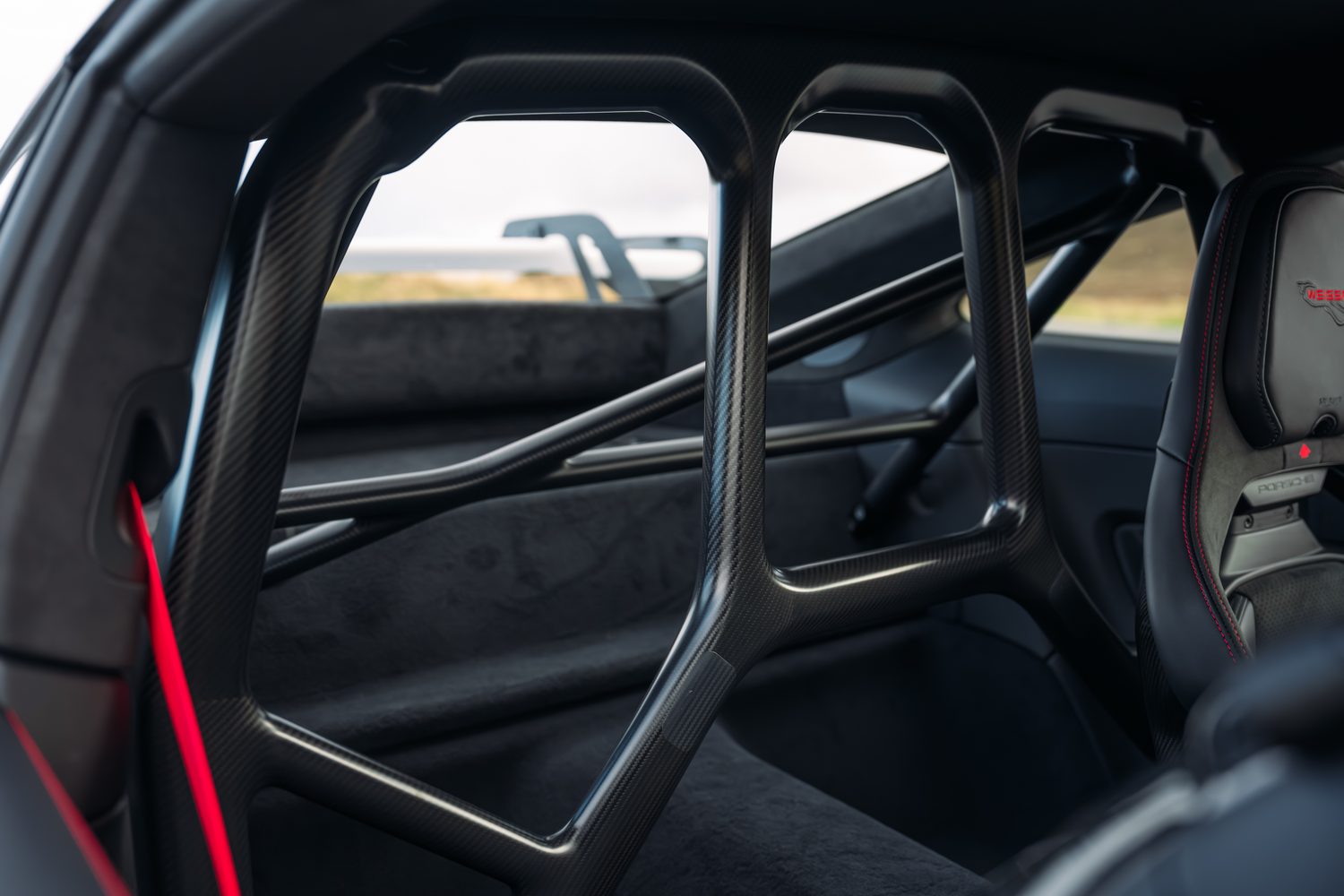
Building on this, the Weissach package can be had with or without a roll cage in the back, although our test car had this fitted for the most racetrack-like interior character.
Getting comfortable in the driver's seat
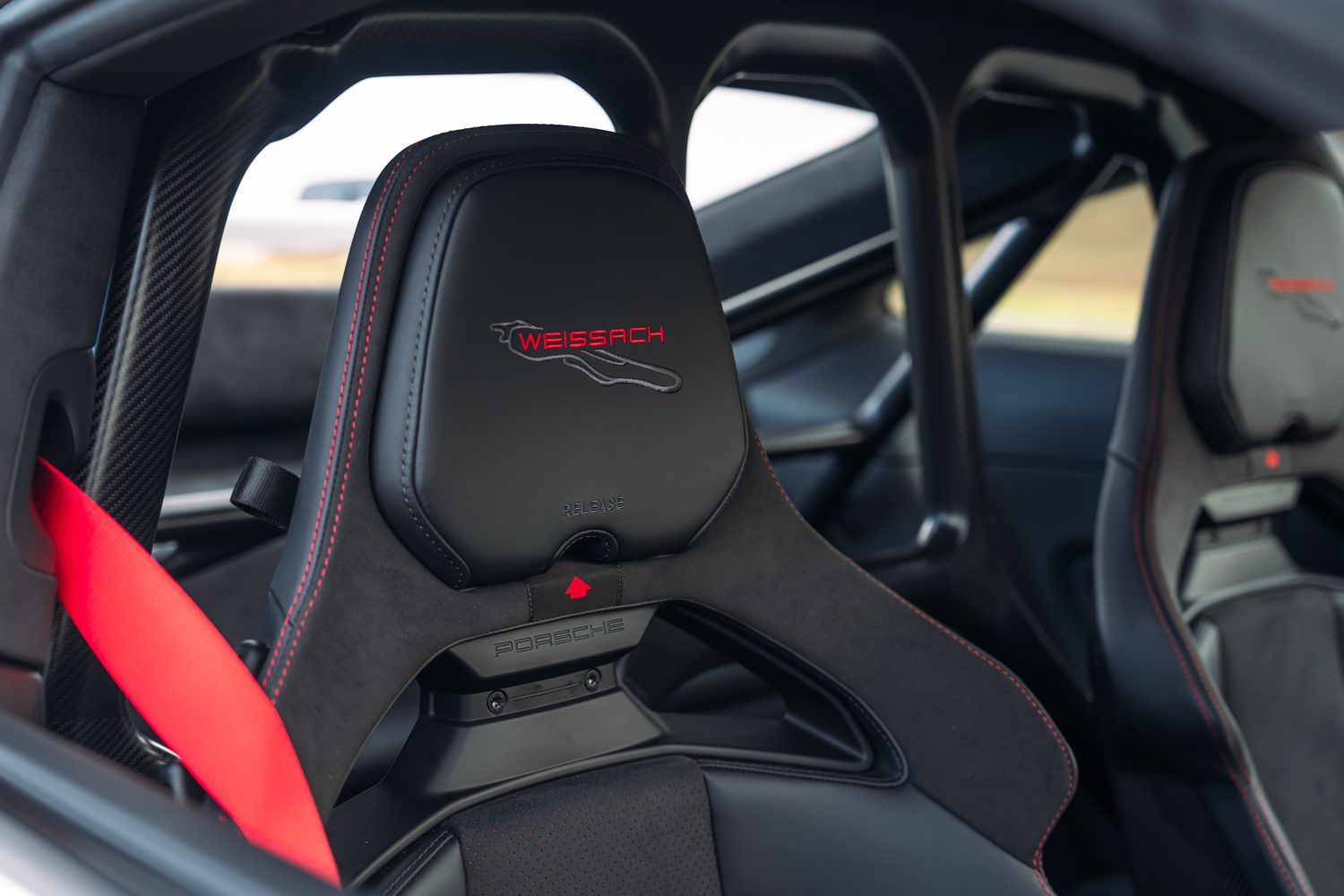
The car we sampled had the glorious carbon-backed, lightweight and foldable bucket sports seats fitted, which look fabulous. The problem is, they have tough, fixed shells so climbing into and out of the GT3 Weissach Club Sport isn't the easiest job, unless you're really fit and limber.

The seats also only have electric height adjustment, with manual fore-and-aft sliding, but despite all this you'll enjoy one of the best driving positions in the automotive world when you've got the chair in your preferred set-up - you end up nice and low relative to the car but still situated high enough to see out of the 911 easily.
Infotainment and technology
There's nothing specific to the Weissach or Club Sport packages inside this 911 from a technological perspective, so it deploys the same 10.9-inch touchscreen infotainment screen - which is excellent and one of the best in the industry - in the middle of the dash, along with a glitzy 12.6-inch 'Curved Display' digital instrument cluster.
This latter item is not without its controversy, as it means the old central analogue rev counter has gone and been replaced by a computer-generated one. But there's a neat trick that's now available as a result of the Curved Display, as the rev counter rotates anticlockwise in the car's top drive mode, so that the 9,000rpm redline is top-dead centre, instead of sitting off to one side.

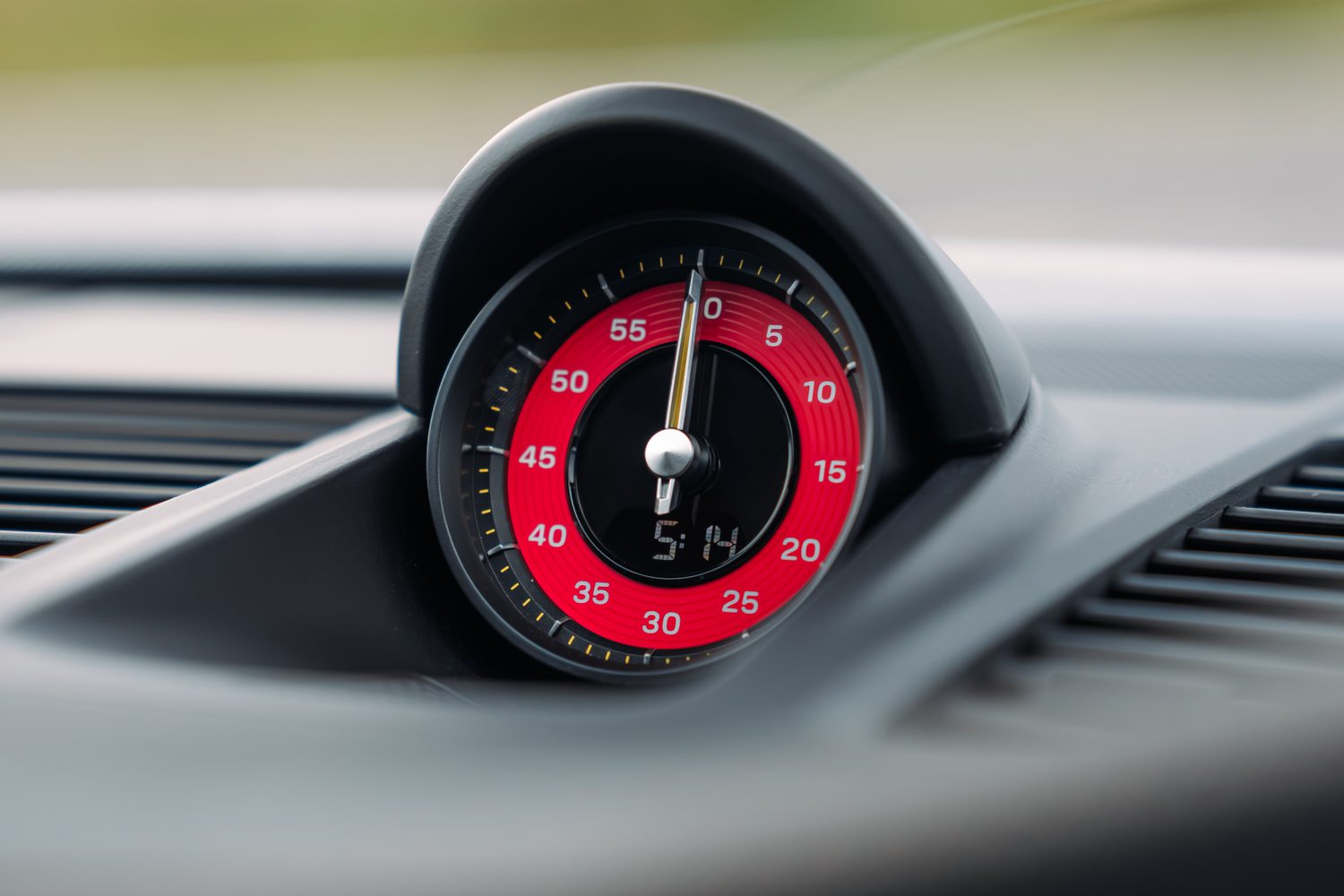
Further options fitted to our test car included an excellent 12-speaker, 570-watt Bose Surround Sound system (€2,123) and the face of the standard-fit Sport Chrono dash-mounted stopwatch was painted Guards Red, requiring an additional fee of €774.
Practicality around the cabin
As top-end sports and supercars go, the Porsche 911 is one of the more user-friendly ones out there - ordinarily.

But, as you can imagine, cramming the interior with scaffolding and unyielding bucket seats does not make this the most usable vehicle in the world. There are a few handy storage solutions, like a lidded cubby in the central armrest, modest door pockets, a deep glovebox and a single fixed cupholder for the driver (with the passenger's item neatly concealed in the dashboard until needed).
However, this is not the most practical car in the world, by any stretch of the imagination.
Rear-seat passenger space
We'd normally take this section out of the review entirely in the instance of a car with just two chairs like this, but we should explain that this is an area where the Touring GT3 has an edge over the winged Weissach car.
If you need rear seats at all, even the small ones you'll find in the back of any 911, you must have the Touring, where they're a no-cost option. In the winged car, they're not offered at all - so even if you don't go for the full Weissach package with roll cage, you still can't option up rear seats in a GT3 with a fixed rear spoiler.
Boot space in the Porsche 911 GT3
The usual 135-litre front boot of the 911 is still to be found in the GT3 Weissach Club Sport, so that's a helpful cuboid cubby which'll carry a bit of luggage if you need it.

Porsche then, in 911 coupes with no rear seats (like this one), lays claim to 373 litres of stowage room in the back of the passenger compartment, supposedly one of the benefits of not having those minuscule second-row pews.
However, two caveats for this wild GT3 in particular: one, the roll cage surely reduces that 373-litre figure considerably, seeing as it occupies most of the area; and two, even accessing this interior 'boot' will be tricky, because while the front carbon seats fold forwards, the aperture they create to load things into the rear of the car is narrow and triangular-shaped. Getting big, bulky items back there simply won't be possible, and even medium-sized bags may require owners to try threading cargo items through into the rear of the cabin by passing them between the front-seat head restraints.
Performance of the 2026 Porsche 911 GT3 Weissach Club Sport
- Majestic NA flat-six engine
- Tremendous chassis balance
- Less refined with the Weissach upgrade

Adding the Weissach package, or even going for the winged car without it, doesn't bring any extra power to the drivetrain of the 911 GT3, but then when the normally aspirated 4.0-litre flat-six petrol engine makes suitably healthy outputs of 510hp and 450Nm, it doesn't really need to.
As with the Touring, there's a choice of a six-speed manual gearbox coupled to a mechanical limited-slip differential on the rear axle, or a seven-speed PDK dual-clutch automatic with an electronically controlled differential instead.

The former offers a higher (and meaningless) top speed of 312km/h instead of 311km/h, but it's also half-a-second slower for 0-100km/h - at 3.9 seconds, instead of the launch-control-assisted 3.4 seconds this PDK car can achieve.
Driving the 911 GT3 Weissach Club Sport on UK roads
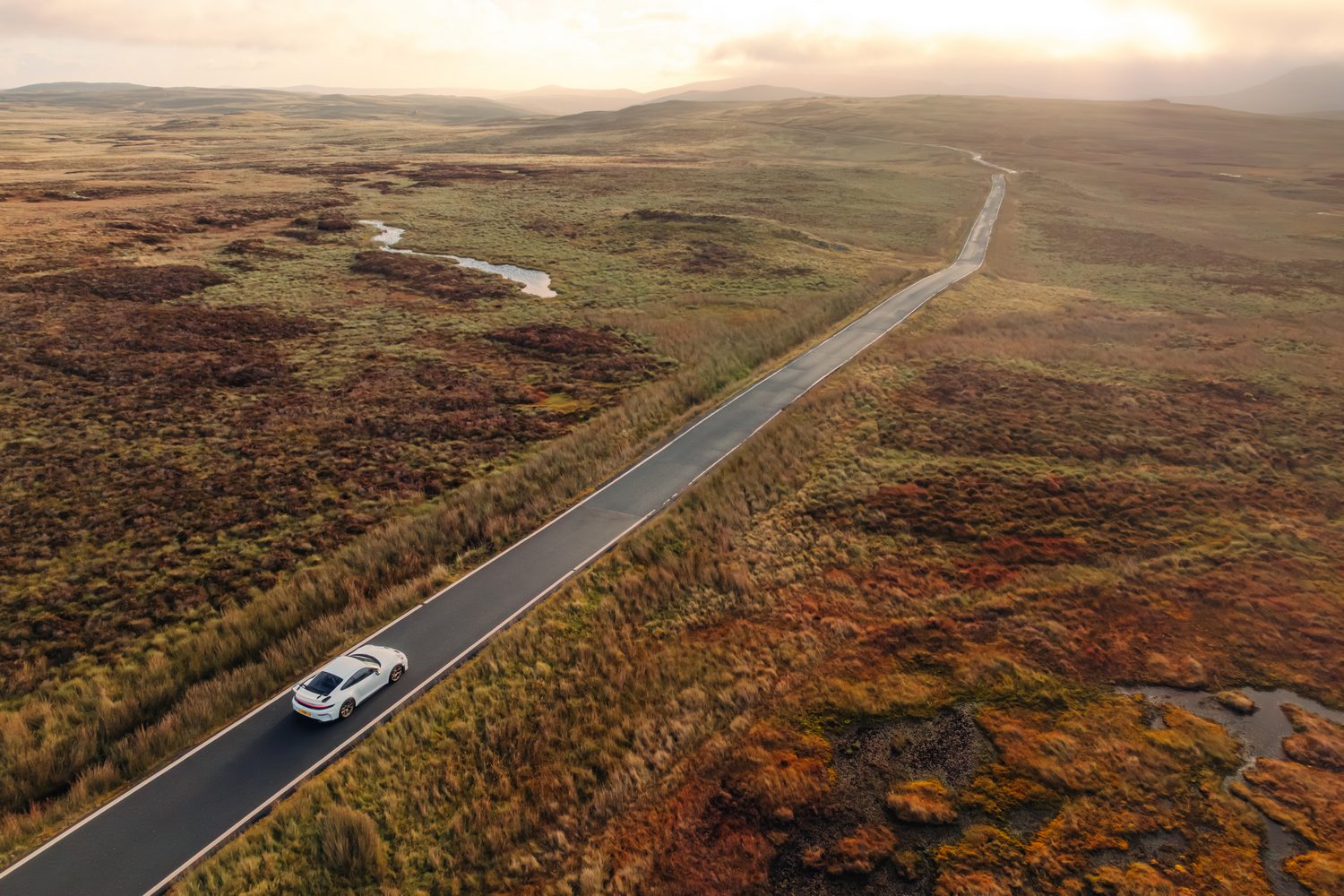
In terms of the overall dynamic experience, the Weissach Club Sport is as energising, as involving and as invigorating as any other 911 GT3 model; if anything, its ultimate focus on stripping out weight and putting its driver right at the heart of the action makes it even more thrilling than a manual Touring model, although there are a few compromises to deal with.

Such as increased road noise at speed, plus less isolation from the clunking noises of the advanced suspension in action. The ride comfort on the Weissach Club Sport is really no more firm than it is on the Touring GT3, but as you're acutely aware of increased tyre chatter echoing around in the rear space of the passenger compartment at motorway speeds - plus, you're clamped into the unyielding (but comfortably sculpted) bucket seat with a view through a dominating roll cage ever-present in your rear-view mirror - the winged 911 just conveys the impression that it's a little less road-polished and sophisticated than the Touring.
Nevertheless, as we've said, it's no less magnificent to drive as a result. The steering is heavenly and out of this world, with the front end of the 911 GT3 so eager to bite into corners at the merest flick of the driver's wrists. Balance and grip are also mesmerising in the Weissach Club Sport, with any impending upset to the Porsche's stance or breach of the tyres' limits of road adhesion clearly telegraphed to the car's pilot through both the base of the seat and the fizzing feedback evident in the rim of the wheel.

Few cars with in excess of 500 horsepower have the flyweight agility of the GT3, which is what makes it such a sumptuous thing to drive.
And this is saying nothing of the powertrain, the passing of which we will lament so bitterly once it is killed off by emissions laws. It is a coruscating jewel of a thing, a motor from the very highest echelons of automotive engineering capability.
Listening to it switch through its three distinct voices - sort of like any other six-cylinder 911 up to 3,000rpm, then snarling and angry and portentous in the midrange as its induction note hardens up, before erupting into an evocative, spine-tingling howl like no other car on Earth if you dare to spin it past 7,000rpm and all the way on to that stratospheric 9,000rpm redline - is one of humankind's greatest-ever symphonies eked out of any instrument you care to mention.

But it's the sheer immediacy of the throttle response and the beautiful gradation of its engine braking - brought about by the lofty 13.3:1 compression ratio and meaning you don't often have to lean on the 911's mega brakes on give-and-take roads, if you're just in a nice midrange flow and know when to time your lifts of the throttle to the inch - which is what adds up to a genuinely seminal driving experience in the 911 GT3 Weissach Club Sport.
Even the PDK doesn't let the side down and is possibly the finer match for the Weissach's particularly singular nature than the H-pattern, three-pedal six-speed manual.
Everything the 911 GT3 does is just so. From a kinematic perspective, you'd change absolutely nothing about it at all.
Irish pricing & rivals to the 2026 Porsche 911 GT3 Weissach Club Sport
- Winged car same price as Touring
- Options bring enormous extra expense
- Few rivals drive as well as the Porsche

At almost €302,000 before options, the 911 GT3 is not a cheap car to begin with. It is the same price whether you opt for the non-wing Touring package or stick with the model fitted with the big fixed spoiler, but as we've already touched upon several times in this piece, there are some hefty options which will quickly ramp the Porsche not just up to the realm of €350,000, but perhaps even closer to €400,000.
For example, if you add the Weissach package with the roll cage (€32,692, and it's €26,110 without the cage for reference), and the forged magnesium wheels (€23,034), and a Paint to Sample colour (€17,256), and the lightweight folding bucket seats with carbon backs (€9,025), and tinted HD-Matrix headlights (€4,178), and a front-axle lift kit (€4,520)... then you've totted up €90,705 of luxuries, and as a result will be looking at a Porsche 911 that's €392,614, rather than just beyond €300,000.

And there are still plenty of honking great four-figure options on the Porsche configurator beyond these items.
Still, there are few cars available - even at this exalted level of the market - which can offer such a visceral experience as the winged 911 GT3, and furthermore GT Department Porsches like this tend to hold their value remarkably well on the used market.
Thus, the old adage of "if you have to ask, you can't afford it" probably applies here. Oh, and as a sop to all these outgoings, at least the Club Sport package is free of charge - although it's really only a fire extinguisher and some six-point harnesses. It also brings in a half-cage in the back if you don't buy the Weissach with roll cage, but you can only have the Club Sport kit with the nine-grand carbon buckets equipped.

There are exotic, driver-focused cars from all of the usual rivals - such as BMW, Aston Martin, Ferrari and McLaren, among more - which would stand comparison to the Porsche 911 GT3, but none of its natural competitors manage to blend all of the desirable features of the German car (low weight, manual gearbox, normal aspiration, rear-mounted engine) together into one cohesive bundle like this. About the only thing which'll really top it is the outrageous RS spin-off of the GT3.
Servicing the Porsche 911 GT3
Ordinarily, Porsche recommends a servicing schedule for the 992.2 GT3 of either every two years or 20,000km, whichever comes sooner. But if owners regularly use the car on track, the company suggests switching it to an annual/10,000km interval instead.
Porsche 911 GT3 warranty
Porsche Ireland's standard warranty on all its new vehicles lasts for three years and is unlimited distance.
Verdict - should you buy the 2026 Porsche 911 GT3 Weissach Club Sport?
While we accept the big wing on the back and the interior complete with roll cage might seem like ludicrous overkill on a road car, we're still completely in awe of the 992.2 Porsche 911 GT3 Weissach Club Sport regardless.

So the ultimate outcome of this test of the winged model is therefore this: PDK or manual, winged or Touring, Weissach package or not, it doesn't really matter how you specify a 992.2 Porsche 911 GT3 - because, whatever you do with it, you're going to end up with something that is as close to motoring perfection as you're ever realistically going to get.
It is a thoroughly sublime car in every conceivable way, and once it has shuffled off the mortal coil of its life cycle and passed into history, we are unequivocal about the fact this German sports coupe is going to go down as one of the most legendary cars of all time - and possibly in the argument for the 'GOAT'. It's that good.
Want to know more about the 2026 Porsche 911 GT3 Weissach Club Sport?
If there's anything about the new Porsche 911 GT3 Weissach Club Sport we've not covered, or you'd like help in choosing between it and other cars, you can avail of our expert advice service via the Ask Us Anything page.
Porsche 911 GT3 history
Although there have been eight distinct generations of the 911 since it first appeared in 1964, the GT3 derivative didn't arrive until the Mk5 '996' version of the sports car, back in 1999.
It was originally a lightweight and focused iteration of the 911 with a 360hp 3.6-litre flat-six petrol engine and a 4.8-second 0-100km/h time, before the updated and facelifted car in 2003 went to 380hp (0-100km/h: 4.5 seconds).
In 2004, the even-more-hardcore GT3 RS was added, with all versions of this sold in white with the option of red or light-blue side decals, this detail harking back to the iconic 1973 Carrera 2.7 RS 'ducktail' machine.
By 2006, the all-new '997' GT3 went to 415hp, but from the same 3.6-litre engine - 0-100km/h was now done and dusted in 4.3 seconds. A big change for the GT3 appeared here during the 2009 facelift, when the engine's capacity was increased to 3.8 litres, realising 435hp and a 4.1-second 0-100km/h time.
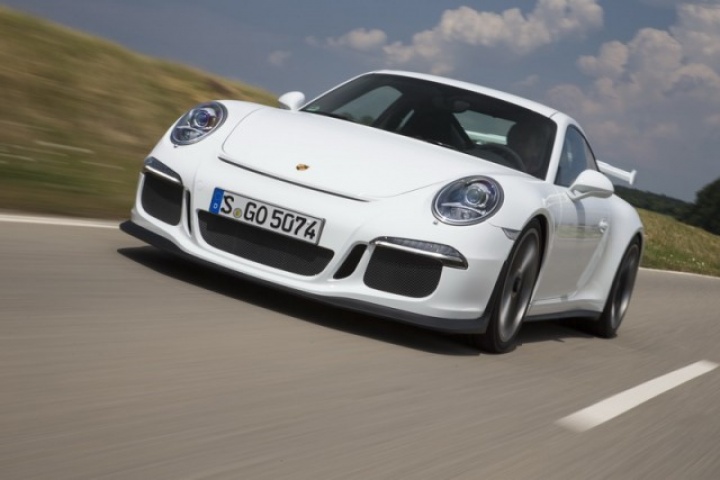
In 2013, Porsche released the 991.1 generation of car but annoyed the driving purists as it only offered the GT3 with a PDK transmission. Capacity was still 3.8 litres, but it was a different engine and not the legendary 'Mezger' unit.
However, the PDK and 475hp brought the GT3's 0-100km/h time down to a searing 3.5 seconds, with Porsche rectifying its mistake on the gearbox with the 991.2 facelift of 2017 - the company reintroduced a six-speed manual option but also brought in the 4.0-litre engine which continues to this day.
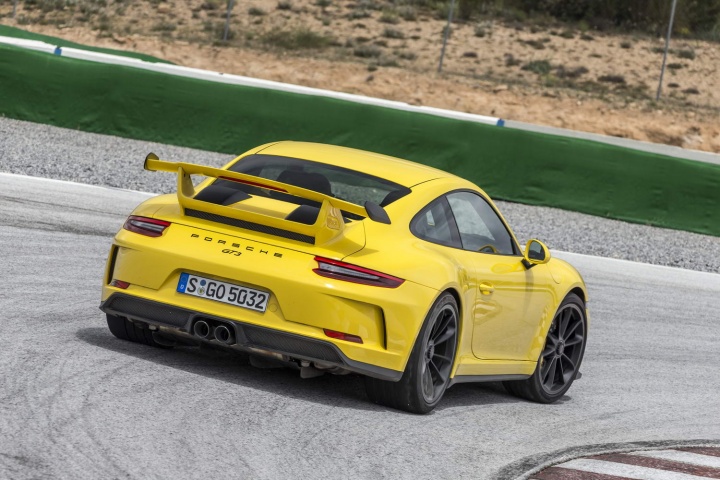
At its fastest, the 991.2 911 GT3 could run 0-100km/h in the same 3.4 seconds as the current car, while it could almost top 320km/h flat out.
By the time of this fourth GT3's launch in 2021, the rest of the 911 range was powered entirely by turbocharged engines, so the variant has a real USP with collectors as the last of the naturally aspirated cars.
It was also the most intense GT3 so far, blurring the lines between road and track 911s more than ever before thanks to the use of double-wishbone front suspension up front, a four-way adjustable swan-neck spoiler at the rear and all the aero-optimised body parts.
Power climbed to 510hp and torque maxed out at 470Nm, with this GT3 being the first to lap the Nordschleife at the Nürburgring in less than seven minutes.
Then, in 2025, this 992.2 GT3 built on its immediate predecessor's abilities. Power was the same at 510hp but due to having to meet global emissions regs, changes to the exhaust system reduced the peak torque to 450Nm; arguably the first genuine 'backwards' step in the GT3's storied history.
However, Porsche shortened the gearbox ratios by eight per cent to compensate, tweaked the suspension to make the car's front end less nervous and worked even harder at trimming weight from the 911's form.
The result is what could be argued the ultimate GT3 in a long line of the things - but, in a poignant moment, it could also be the last of the normally aspirated, non-hybrid GT3s we'll ever see; surely, something which grants this 992.2 model even more greatness than it already possesses.