

(Updated on December 3, 2025 with new pricing for 2026)
Introduction to the Polestar 2
The Polestar 2 was the Swedish brand's first all-electric car and the model with which it launched on the Irish market back in 2022. Since then - when Polestar operated out of an innovative, single-car showroom constructed from shipping containers - the marque has considerably expanded its lineup while upping its showroom game to a level expected by those that buy premium cars.
At the same time, the Polestar 2 has been gently upgraded over the past few years, most significantly with the move to a rear-drive layout for the single-motor models, in the process enhancing the performance, efficiency and range on offer. It represents a great-value way into executive electric car ownership, notably so in entry-level Business Edition guise.

Pros & cons of the Polestar 2
Pros:
• Stylish exterior
• High-quality cabin
• Great value
Cons:
• No wireless smartphone mirroring
• No rear wiper
• Newer Polestars are more modern
Exterior & design of the Polestar 2
• Still a fresh design
• Limited range of colours
• Performance pack adds gold accents

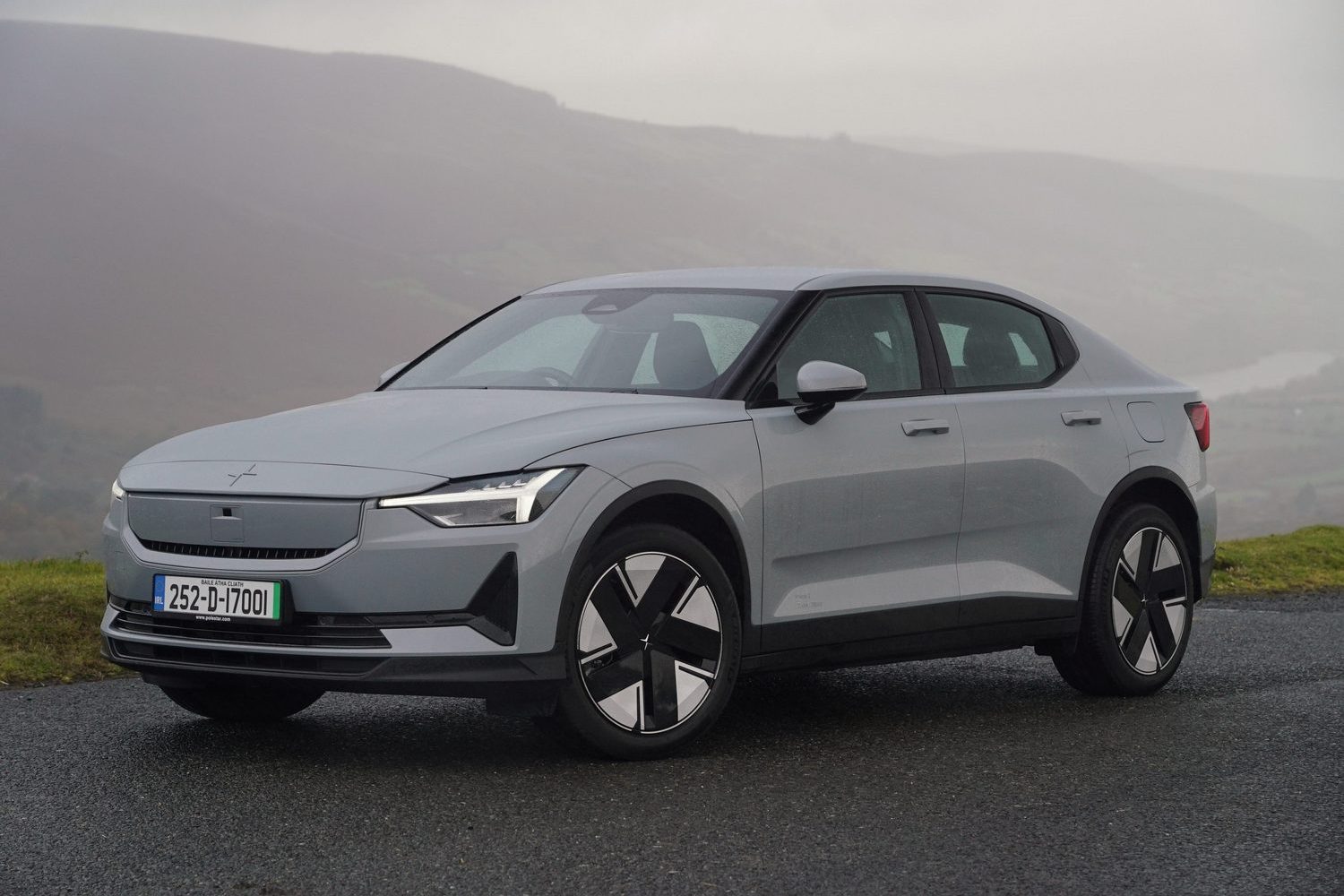
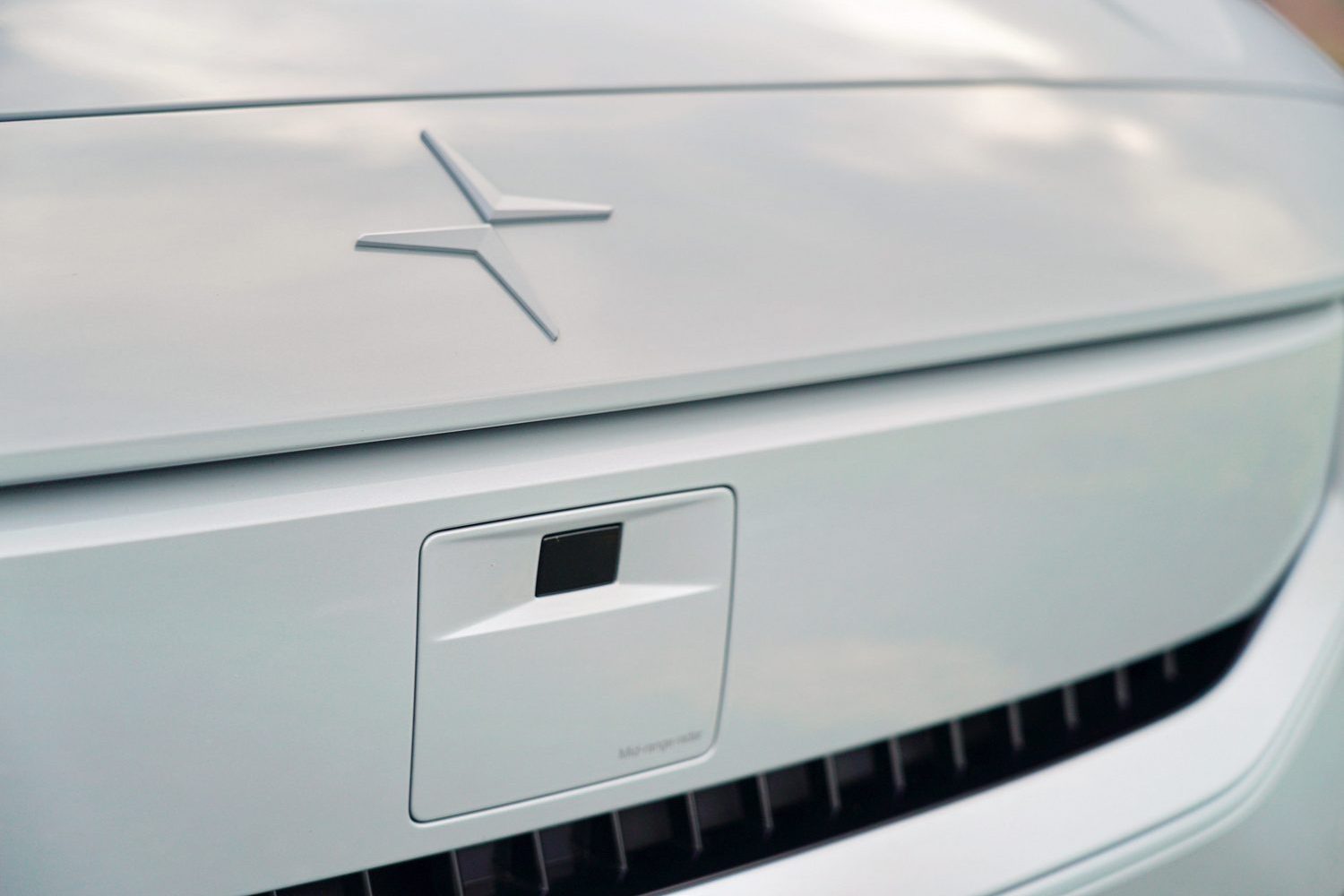
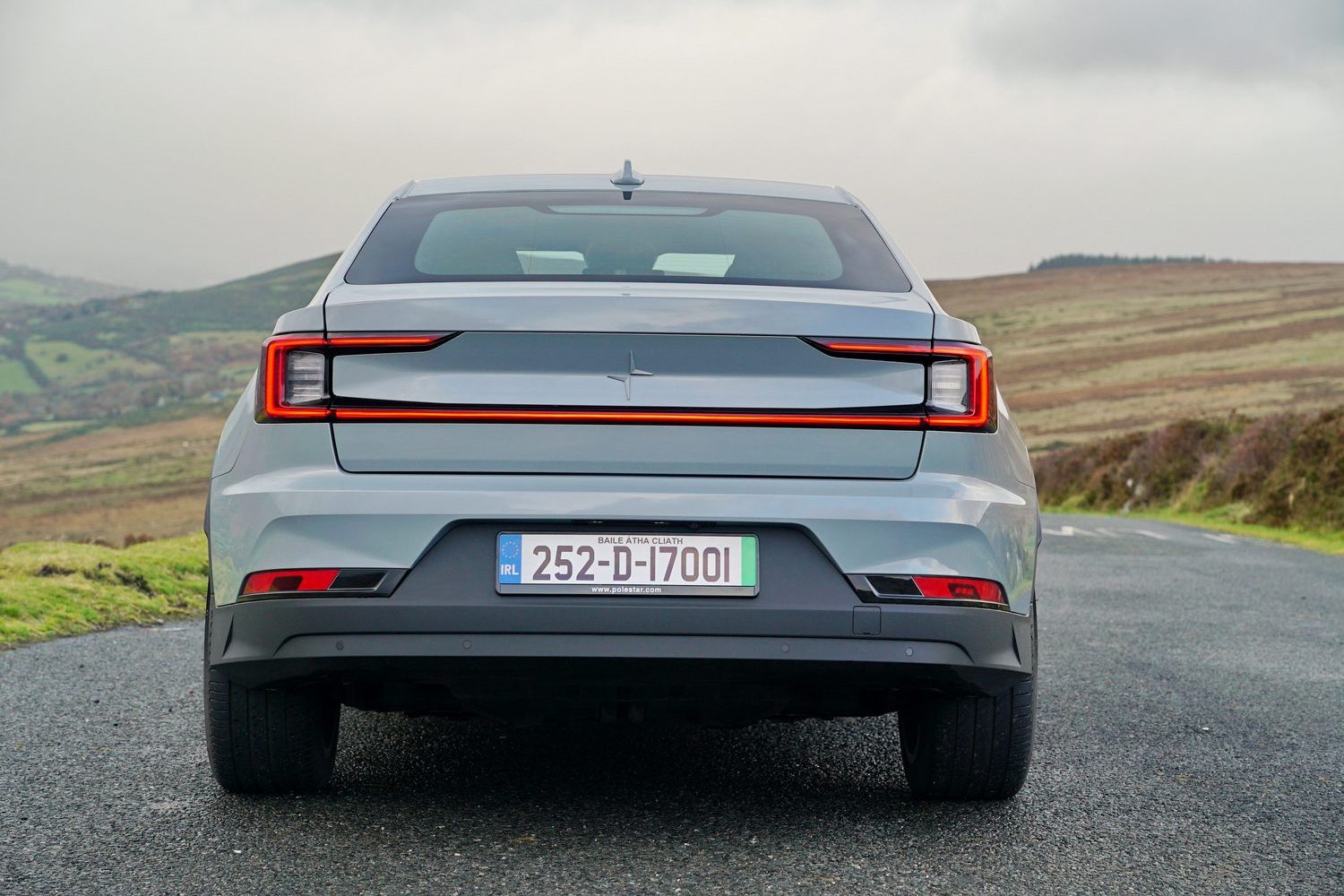
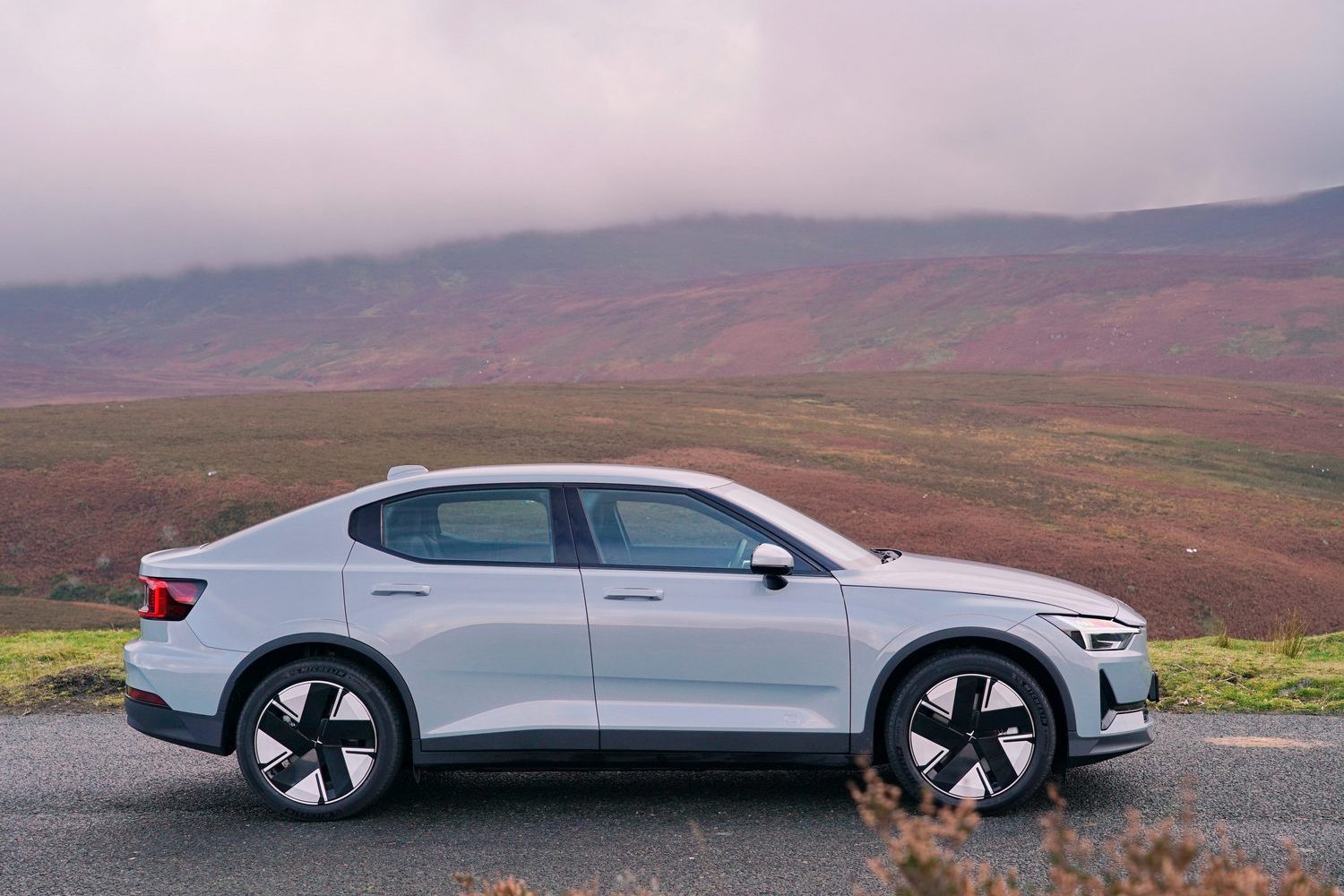
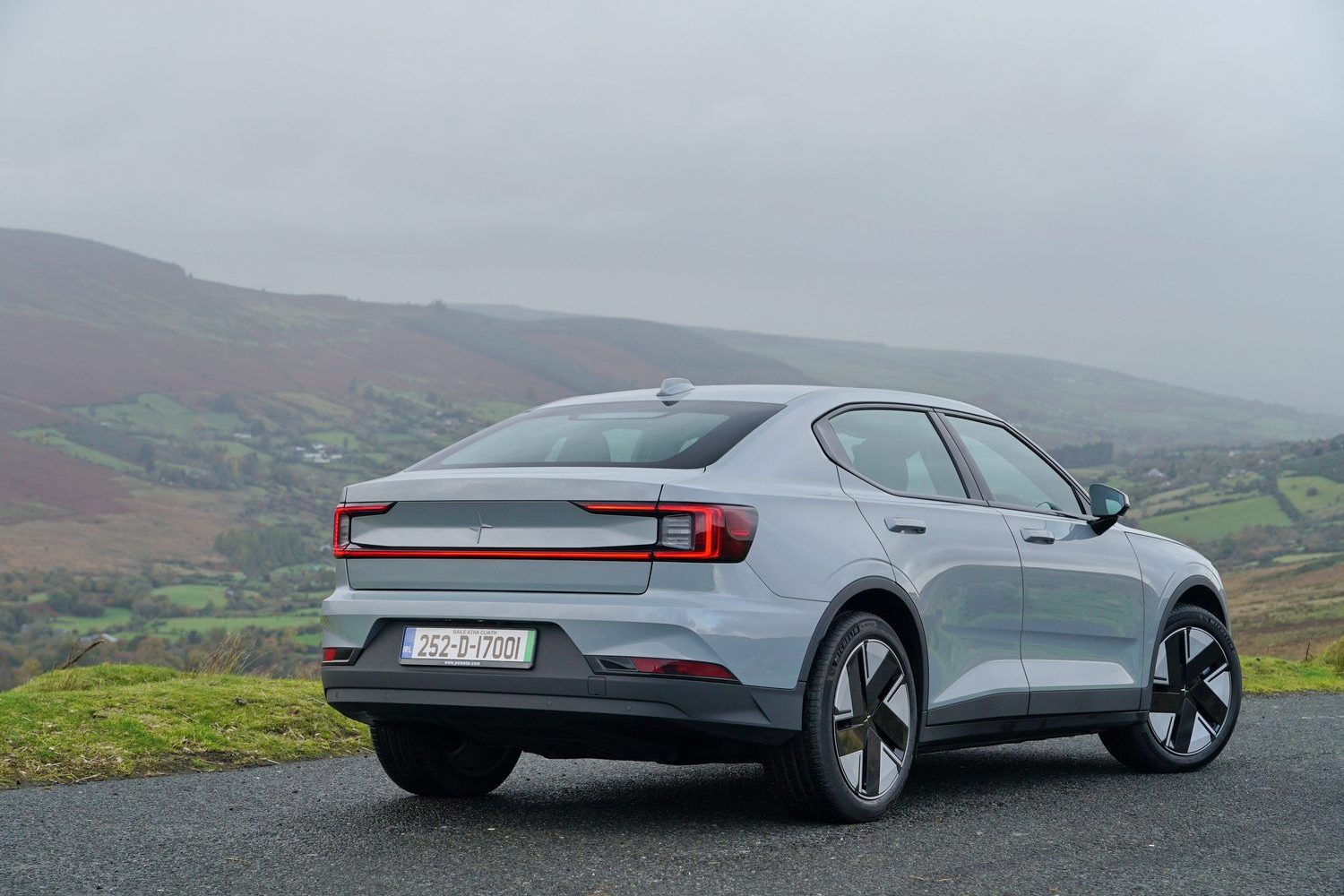
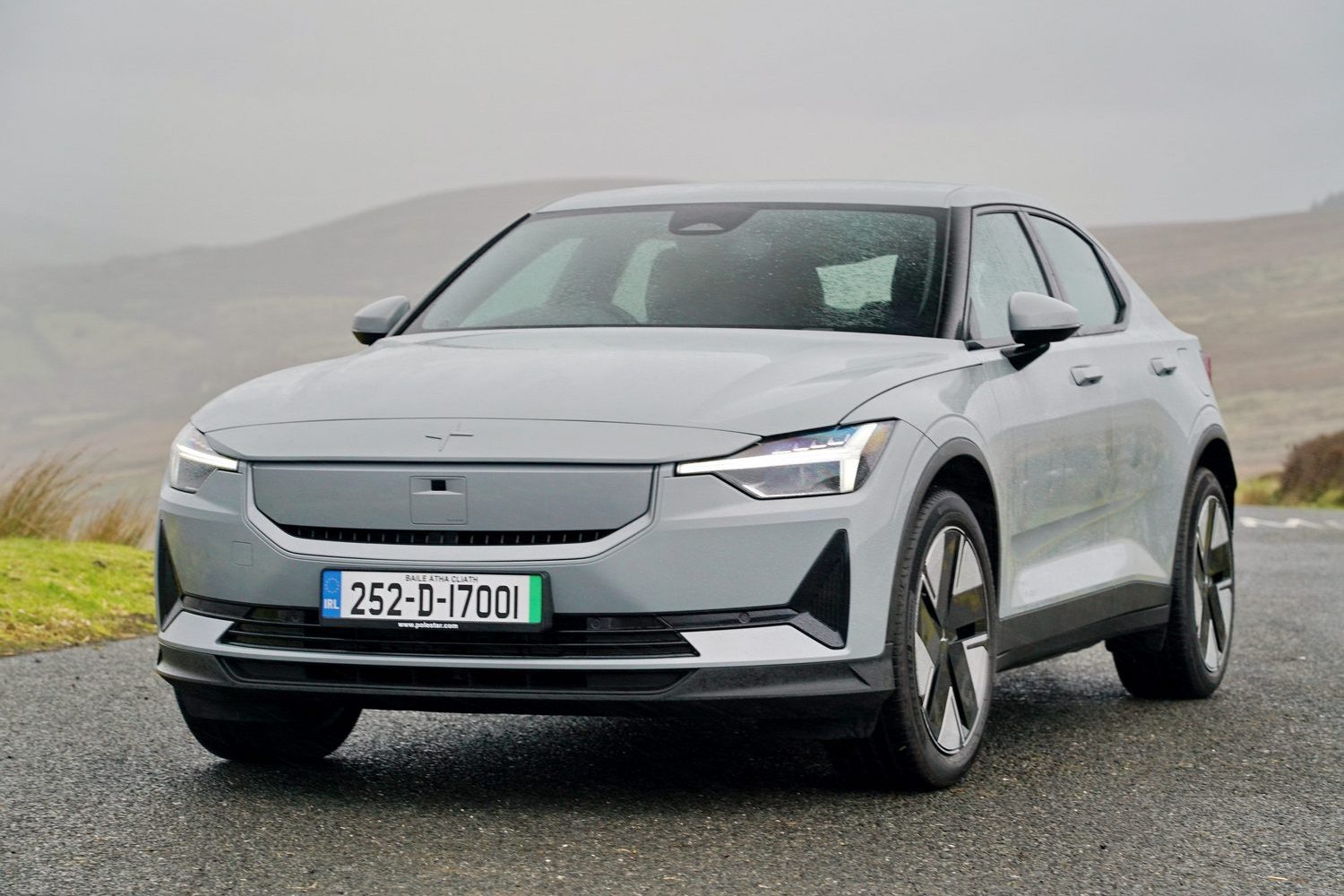
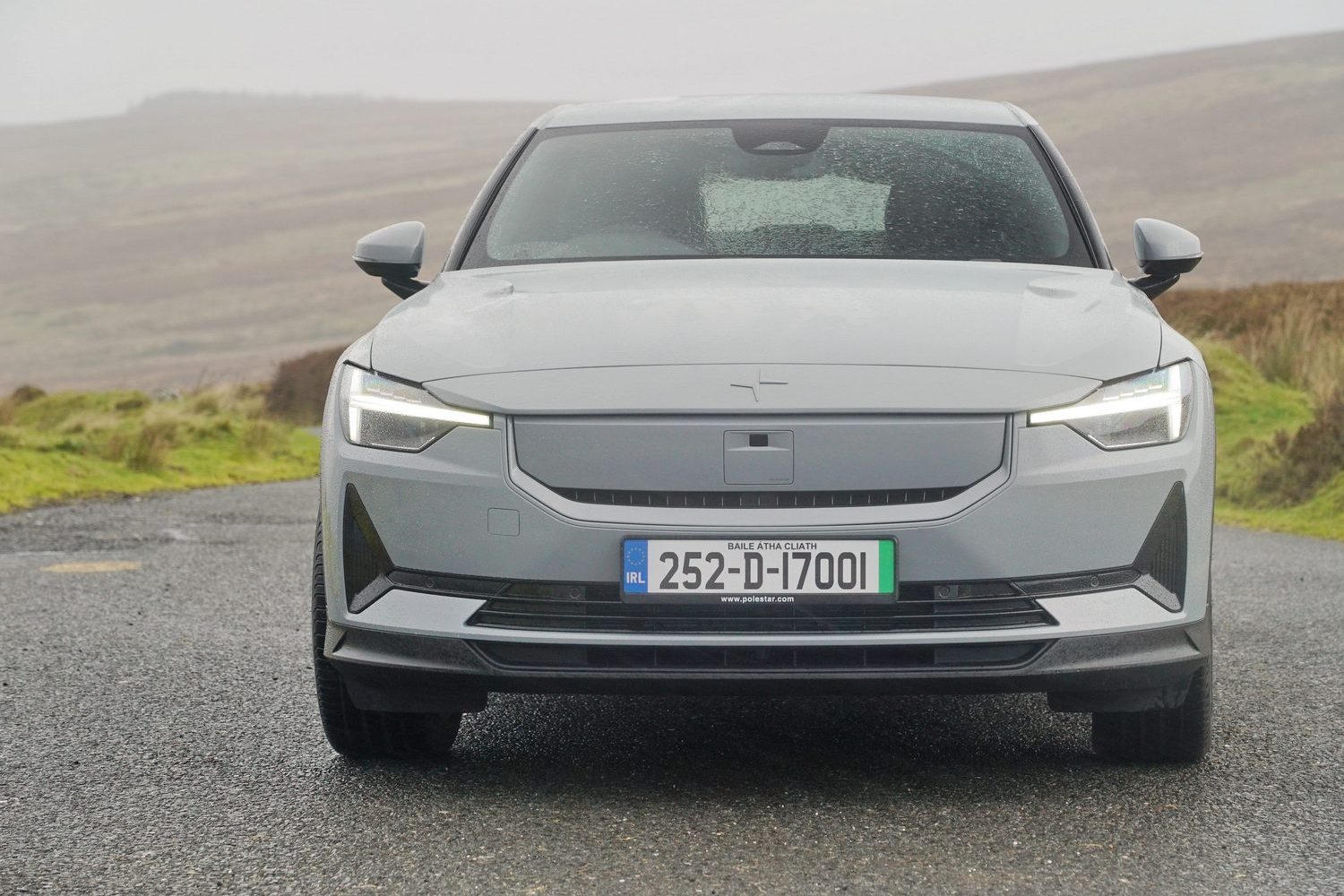
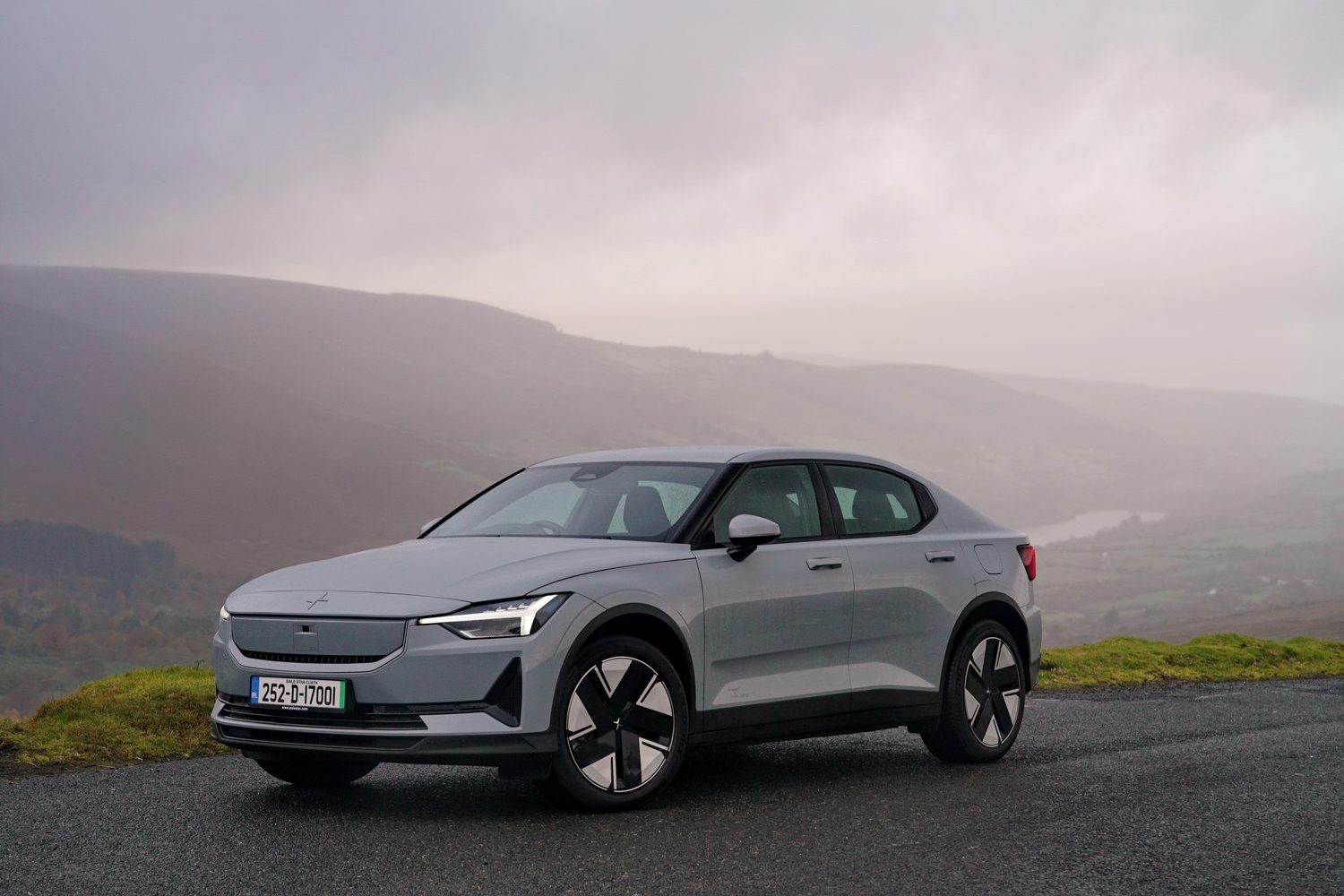
The Polestar 2 is a five-door vehicle that's a little difficult to pigeonhole as it's taller than most sports saloons yet definitely lower than any SUV. We refer to it as a fastback because it has a sloped rear window with a hatchback opening.
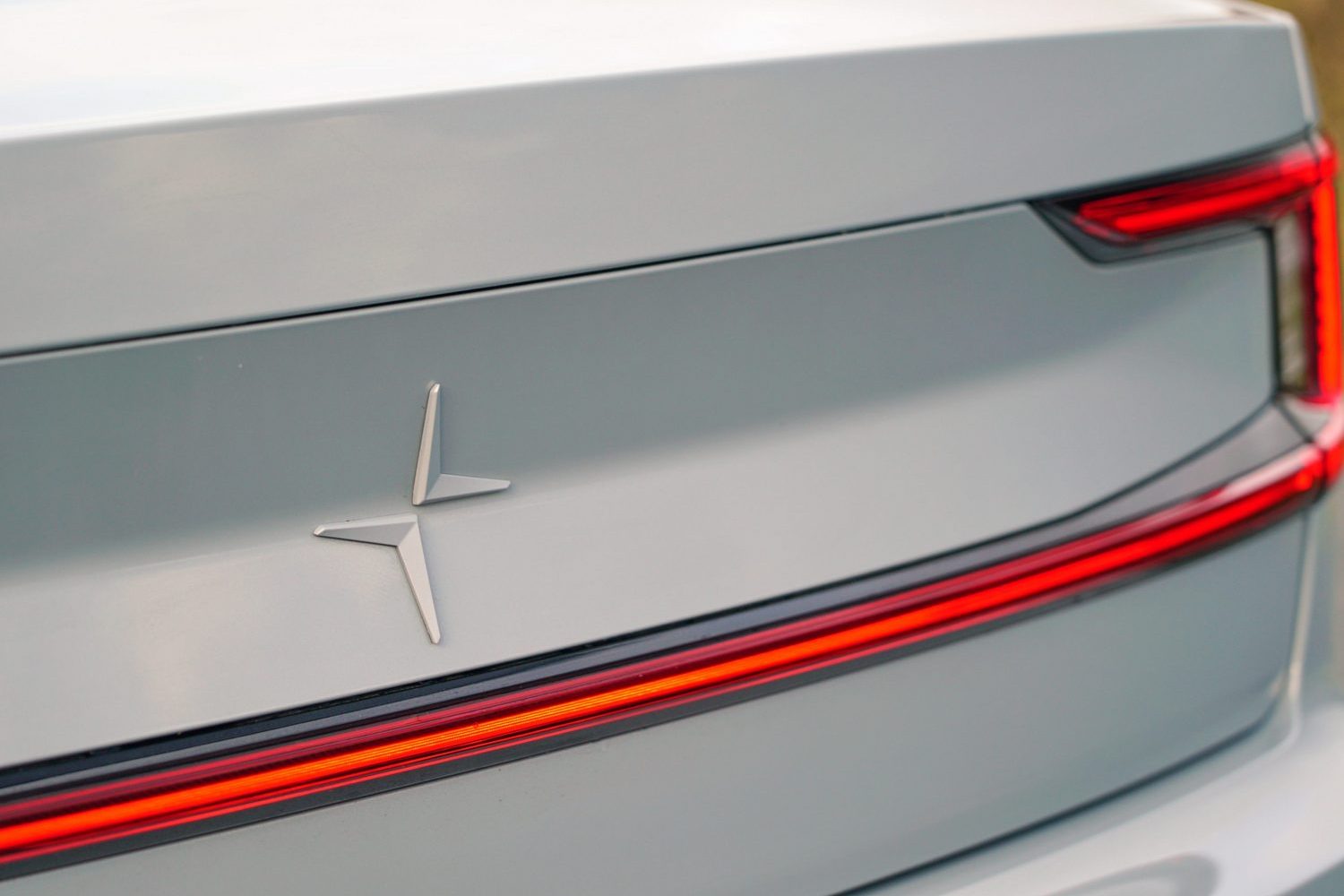
It's quite an unassuming shape, but it has aged well, thanks in no small part to the high-tech appearance of the full-width LED lighting at the rear.
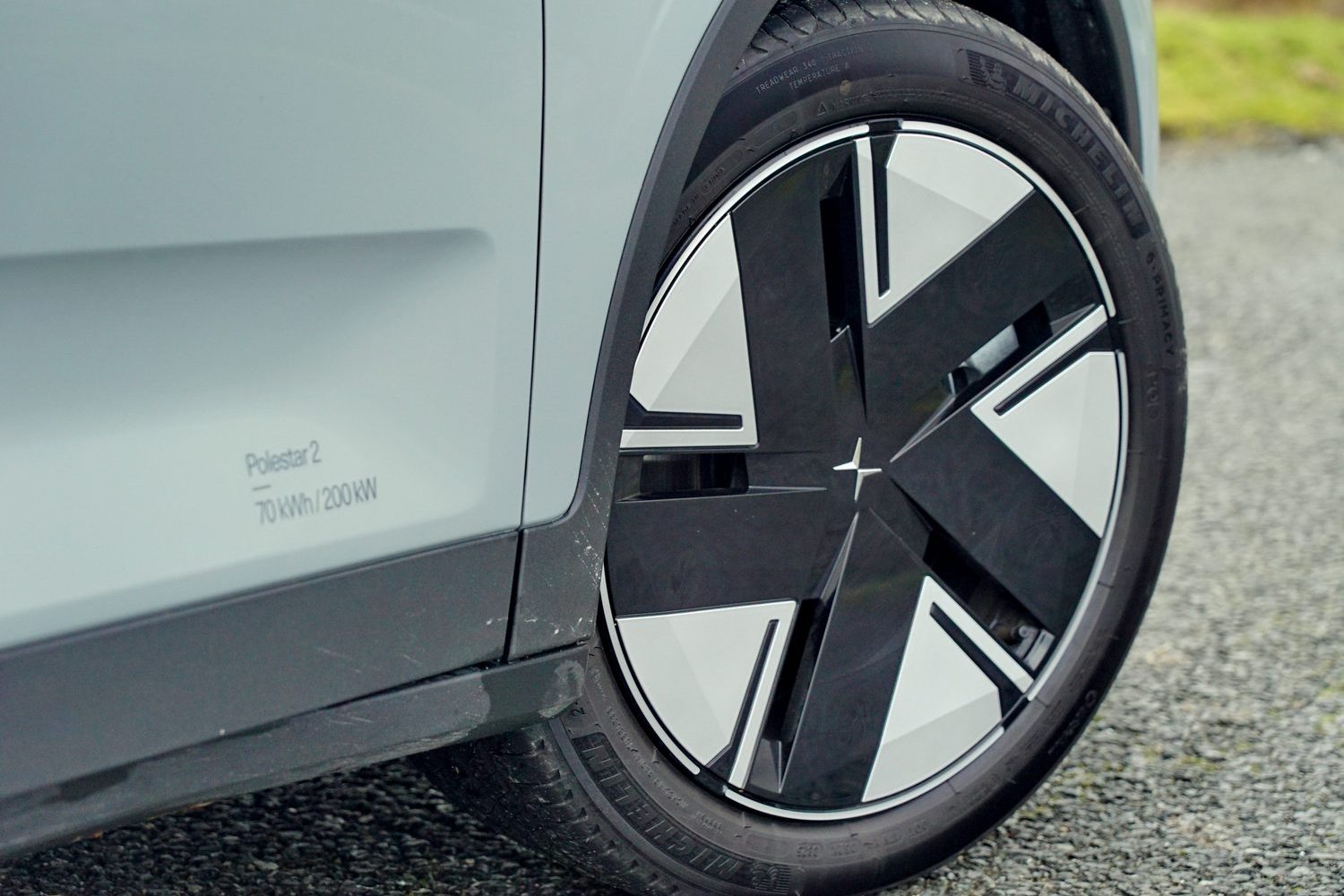
The Business Edition and Plus models wear modest 19-inch aero wheels, though these can be upgraded to a dark-grey 20-inch rim as part of the Pro pack, giving the Polestar 2 a more appealing stance. A more open design of 20-inch wheel marks out the Performance pack, all the better to spy the 'Swedish gold' Brembo brake callipers behind.

Other exterior differences between the trim levels include privacy glass for the rear windows, a panoramic glass roof and a headlight upgrade to use adaptive Pixel LED technology.
Dimensions of the Polestar 2
Length: 4,606mm
Width: 1,985mm (including mirrors)
Height: 1,479mm
Wheelbase: 2,735mm
Paint colours for the Polestar 2
There are only six exterior colours available for the Polestar 2 and Vapour (a grey) is the only free one. Most of the others cost €1,100 extra, including Midnight (a dusky bluey-grey), Storm (a darker grey than Vapour), Space (black) and Dune (an unusual, sandy hue). Snow, which is white as you'd expect, is priced at €1,300 for some reason.
Interior, practicality, tech & comfort of the Polestar 2
• Classy mix of materials
• Better with panoramic glass roof
• Google built into infotainment

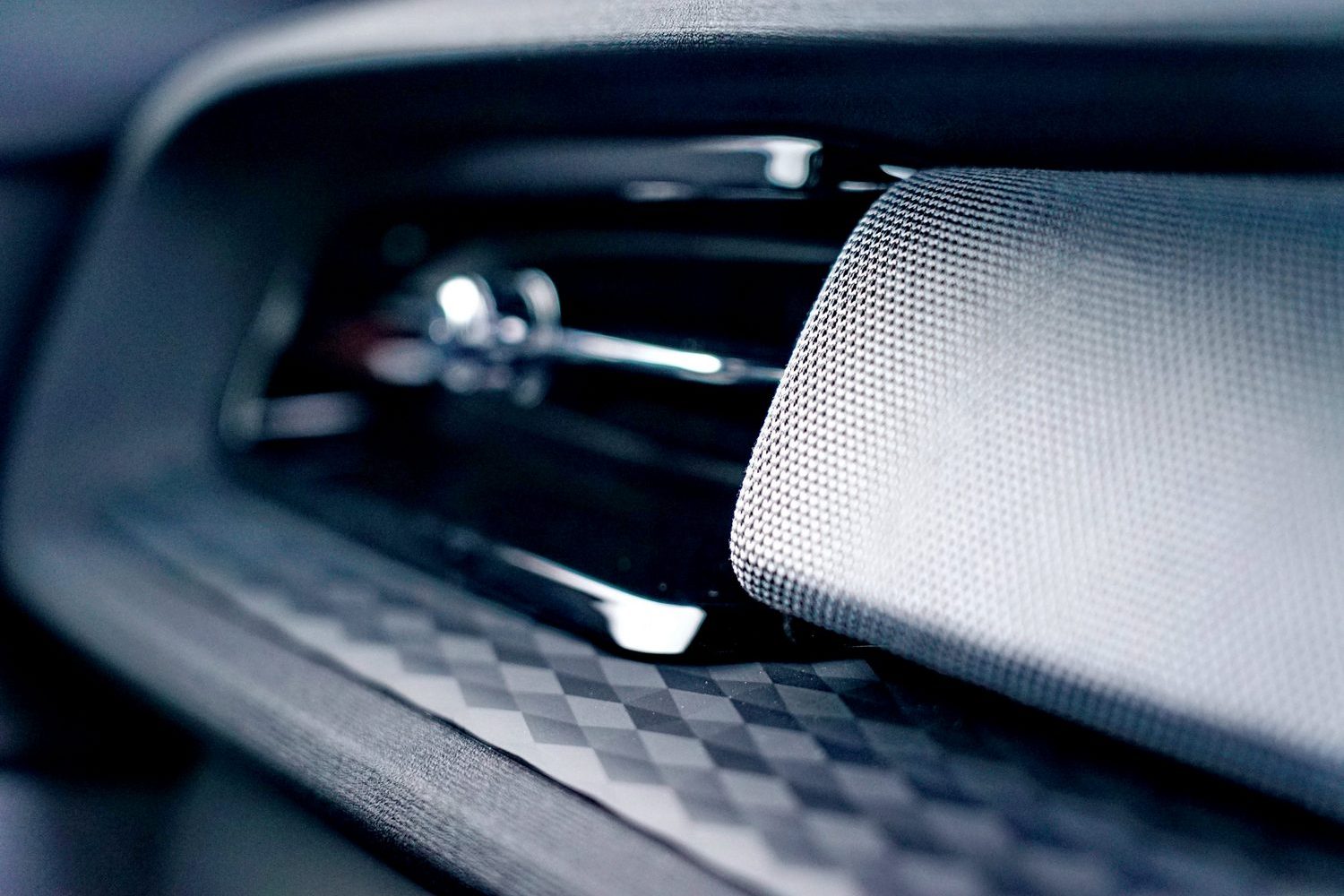
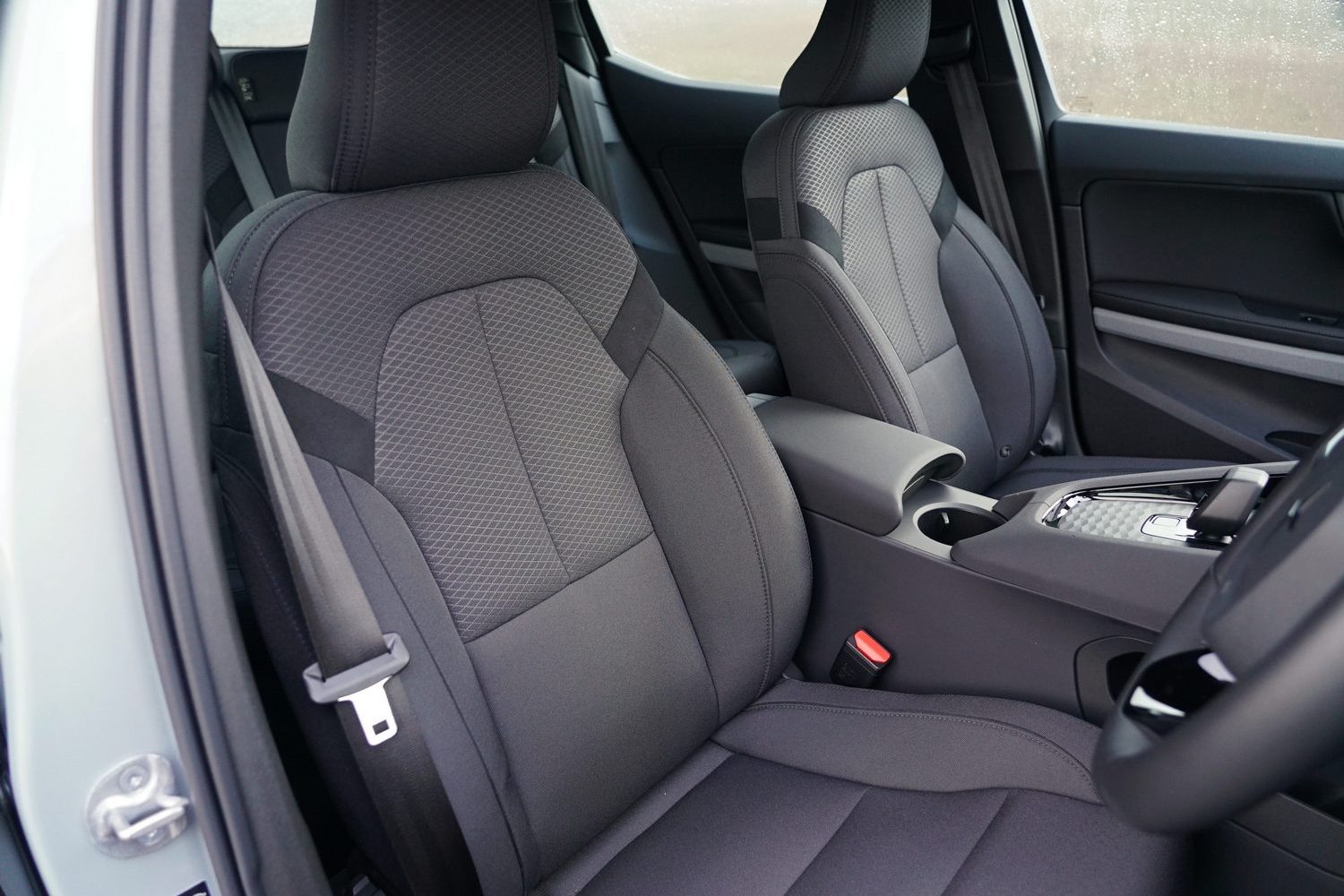
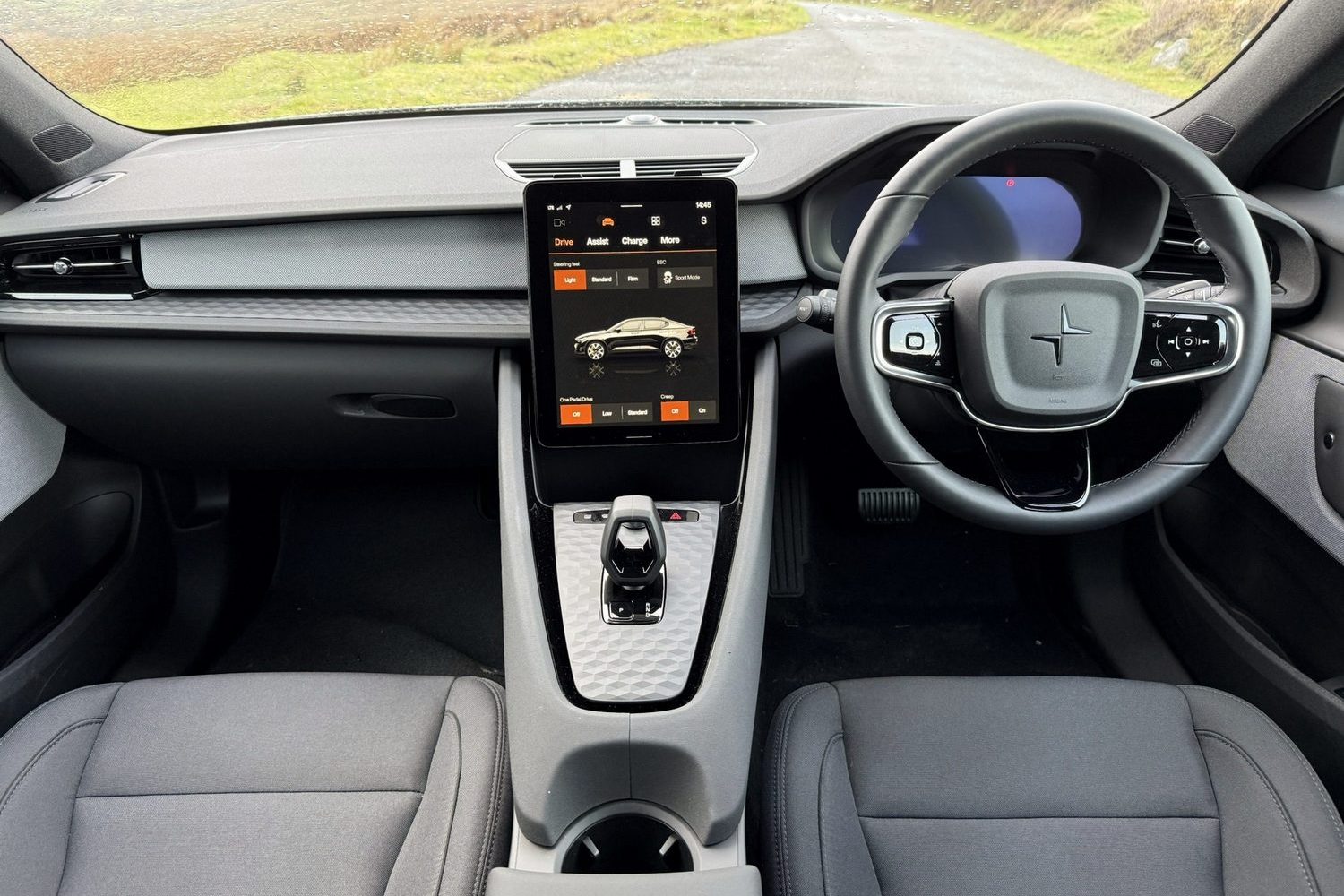
The layout of the Polestar 2's interior hasn't changed since the car was first launched, though the materials used have, and there's a mix of textured, tactile finishes throughout, with less reliance on shiny 'Piano Black' plastic than before. Given that surface's propensity to attract scratches and smudged fingerprints, it's a welcome approach.
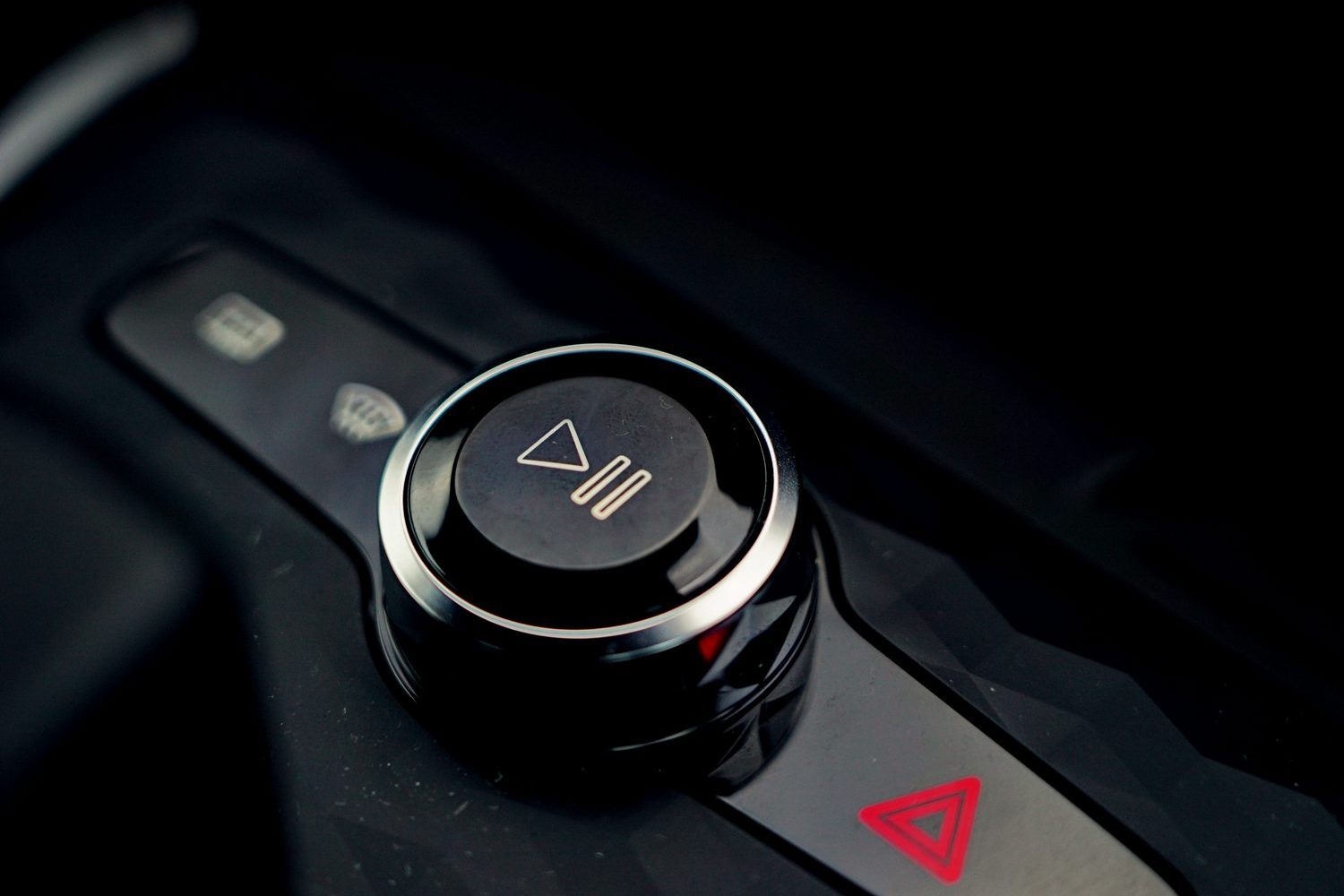
While the newer Polestars look more modern inside, the Polestar 2's cabin is still of high quality and it's clear where the inspiration for its siblings' minimalist style came from. The grey cabin of the Business Edition is lifted by the presence of the upright touchscreen with its pin-sharp graphics, though we'd prefer to have a few more physical buttons dotted around the place.

If budget allows, it's well worth upgrading to the Plus model, as it brings a few nice touches to the cabin, including the lovely glass roof with the Polestar logo projected onto its surface, subtle ambient lighting and more.
Getting comfortable in the driver's seat
The Business Edition is the only version to do without full electric adjustment of the front seats, so you'll need to decide how important that is to you. Even without it there's plenty of scope for altering the position of the driver's seat and steering wheel, so we wouldn't call it a deal-breaker. Though the Plus pack also brings with it extendable fronts to the seats, which some people do need for comfort.

The seats themselves are supportive and comfortable over long distances and the default upholstery across the range is made from sustainable materials. If you really do want leather, it's a €4,900 upgrade, which is a lot, but it undoubtedly enhances the interior of the car.
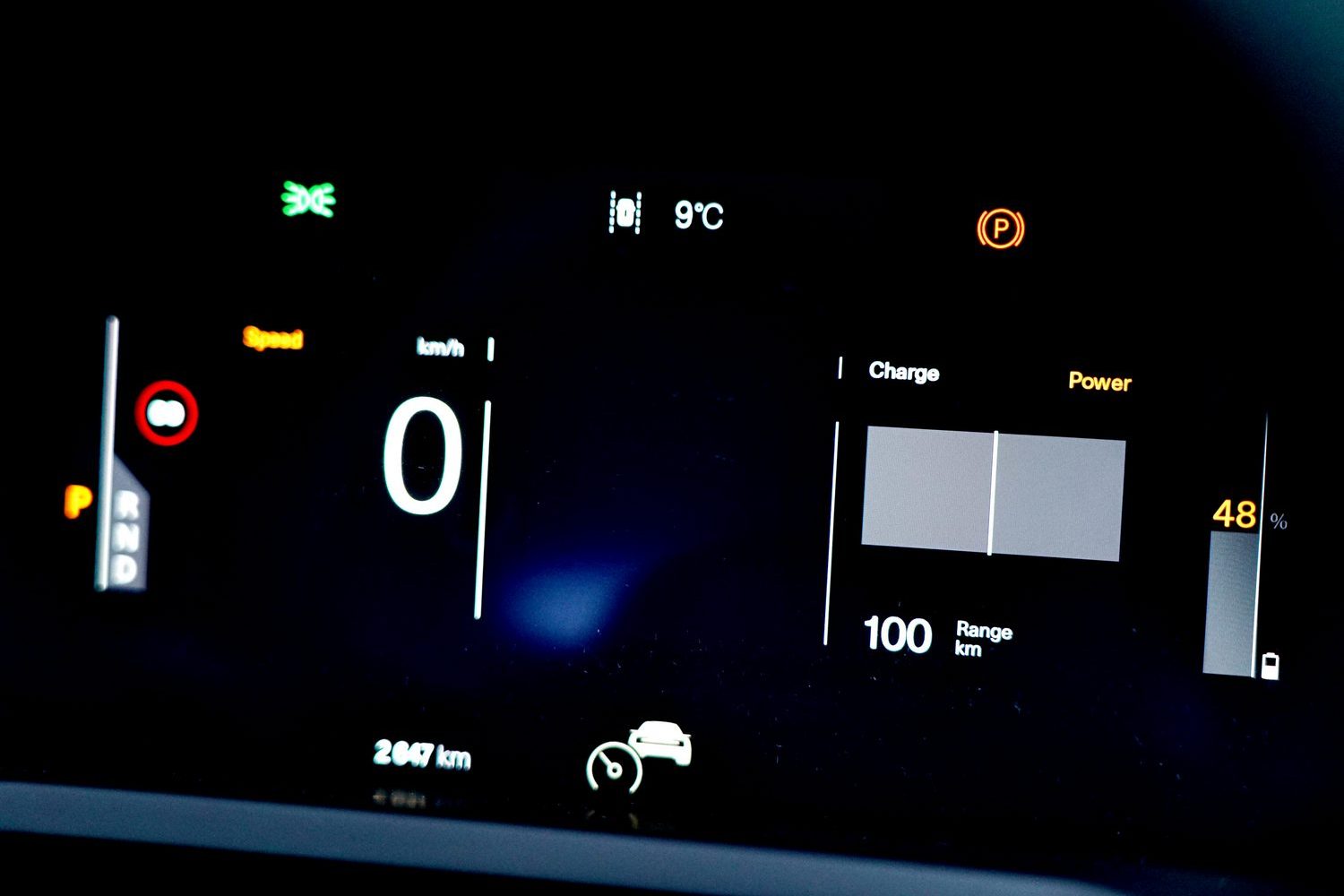
Digital instrumentation is standard, displayed on a 12.3-inch screen ahead of the steering wheel. Its view can be altered over various appearances, from simple and uncluttered data to a wide map of the road ahead.

Infotainment and technology
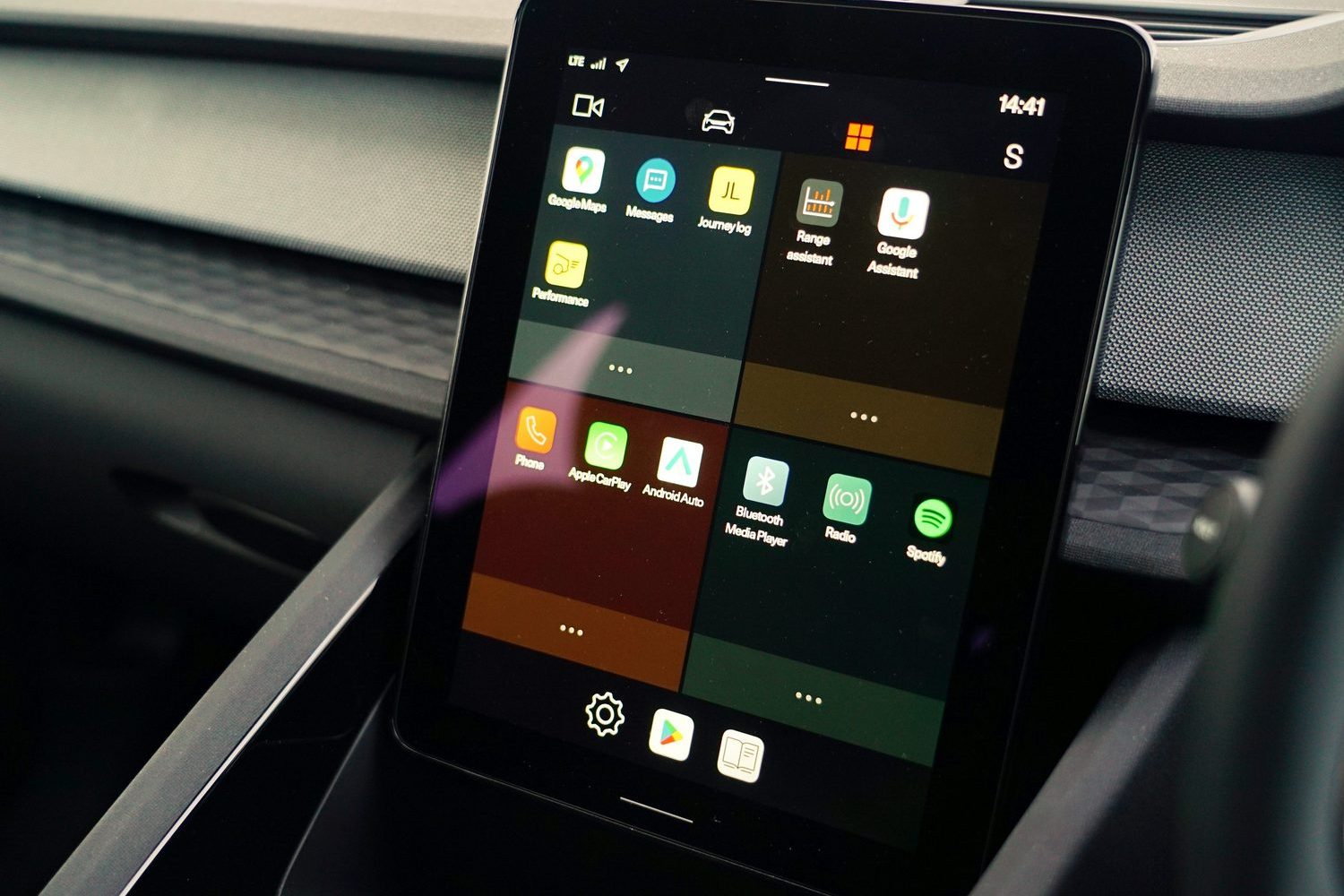
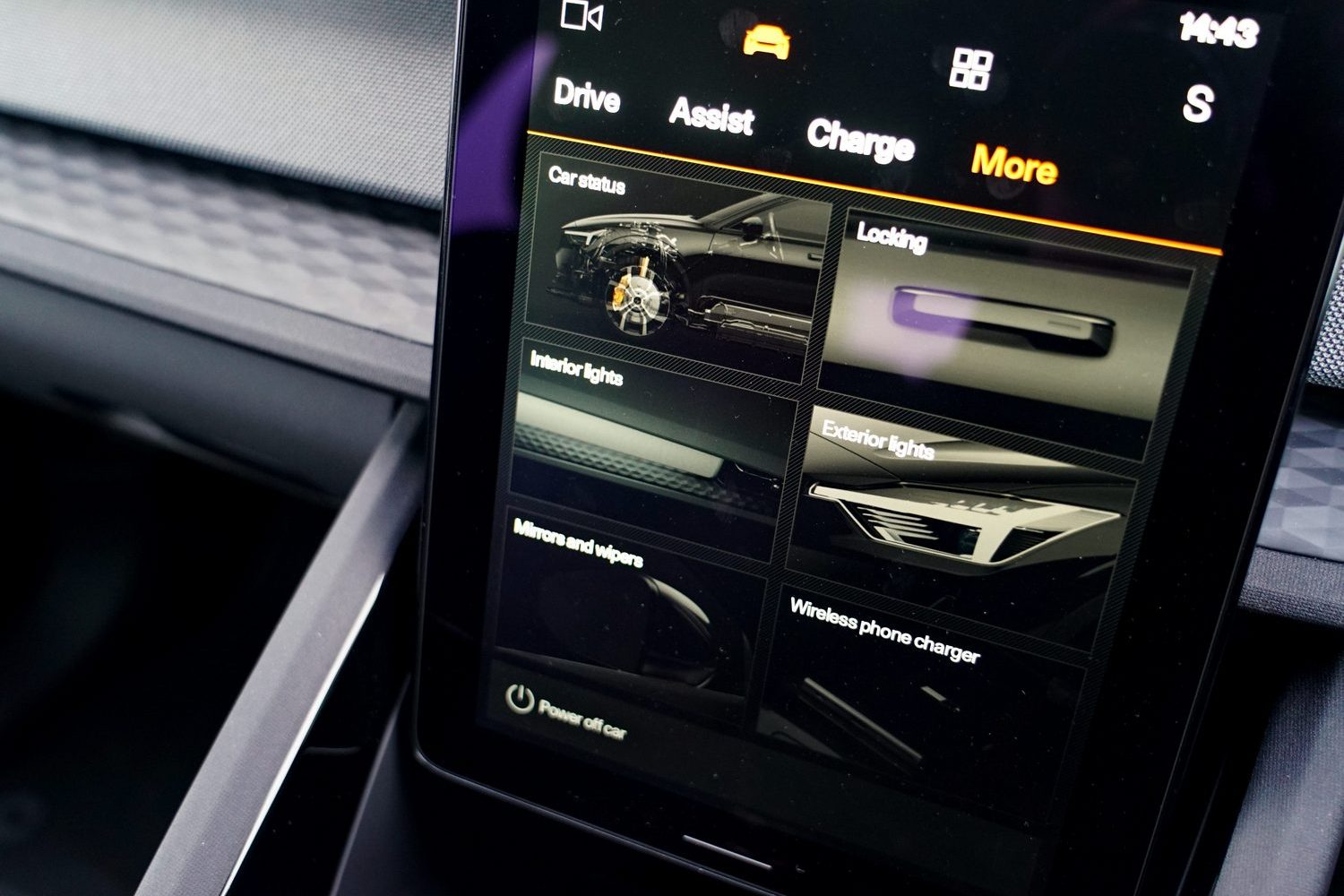
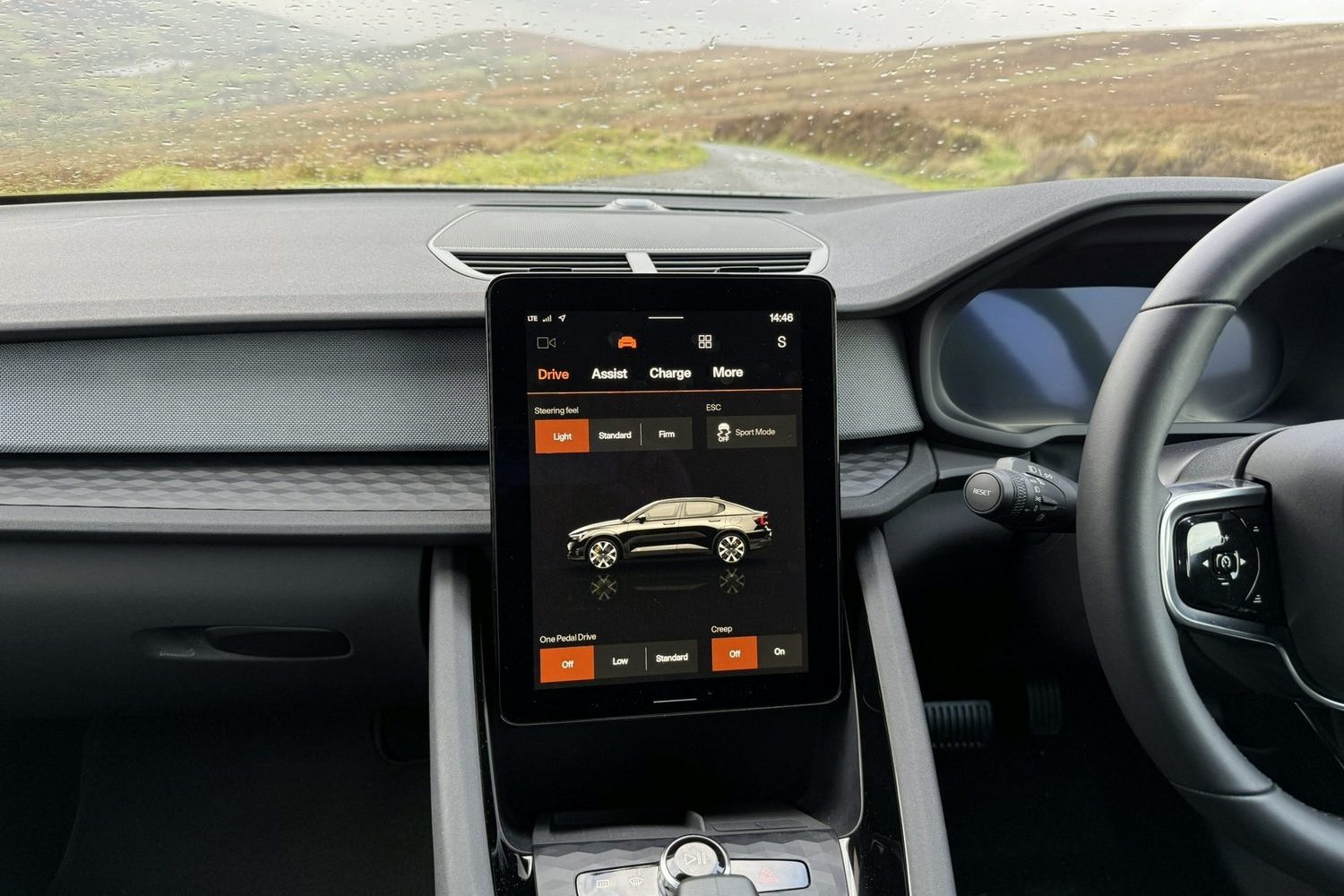
Polestar fits a 11.2-inch, portrait-style touchscreen to all versions of the 2 and it must be commended for the stylishness of the graphics and fonts throughout the system.
While there's plenty of Polestar-specific content within this, the software is run through Android Automotive OS, so Google is built in and there's the option to add plenty of apps. An owner will no doubt log into the car with their own details and have access to all their Google Maps preferences and searches from then on.

This is particularly useful when you take a look at a route on your phone at home before setting out on a journey and then seamlessly continue the navigation when you hop into the car.
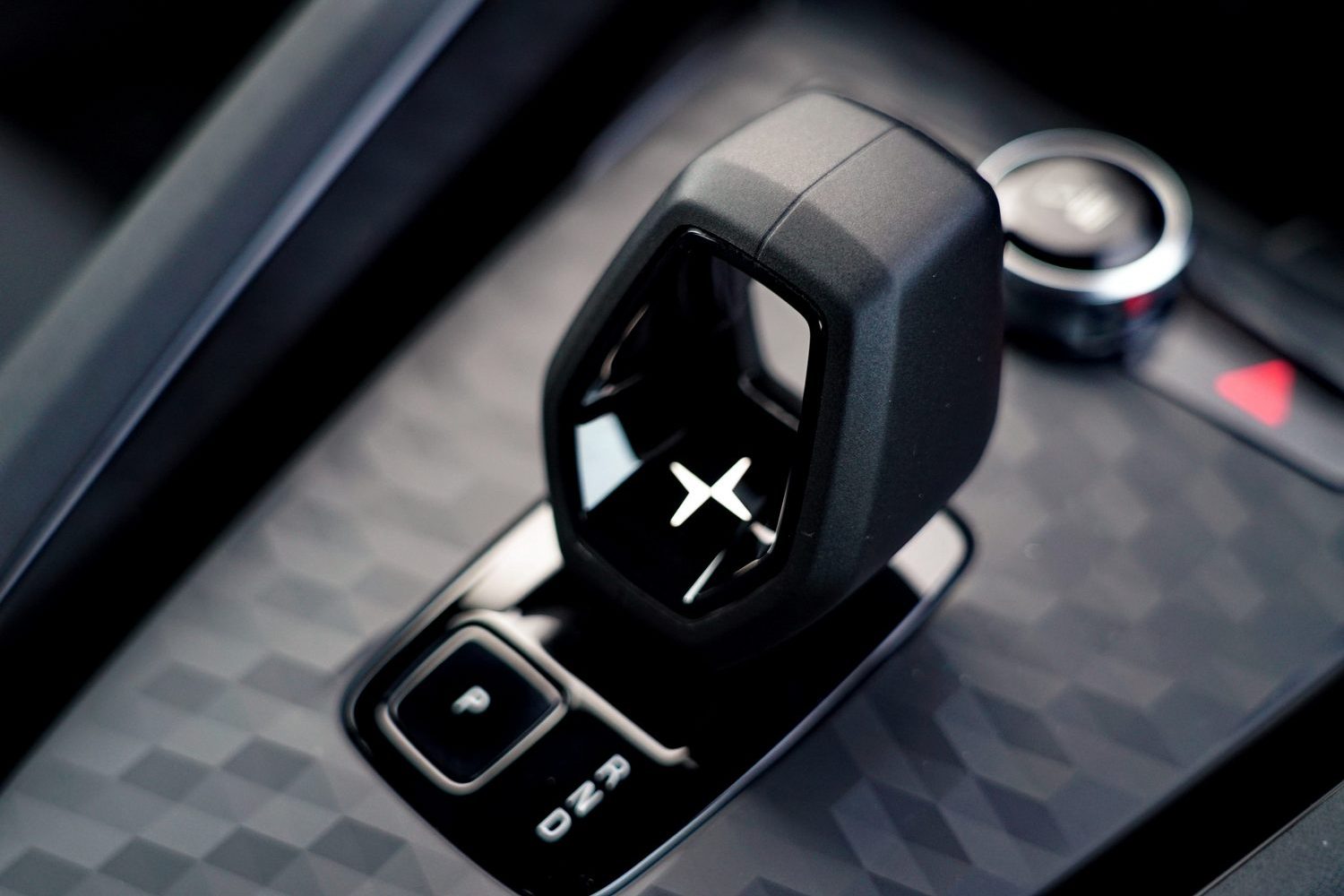
This functionality partially makes up for the lack of wireless smartphone mirroring, so if you want Apple CarPlay or Android Auto, you'll need to plug your phone into the USB-C port ahead of the drive selector.
Someone at Polestar likes their tunes, as even the entry-level sound system has eight speakers and a 250-watt amplifier. The Harmon Kardon upgrade on the Plus model has 13 speakers (including an air-ventilated subwoofer, whatever that is) and a 600-watt amplifier, which sounds crystal clear and powerful.

Audiophiles might be willing to shell out an extra €2,000 on the Bowers & Wilkins option, boosting the amplifier to 1,350 watts while adding another speaker to the mix.
Other technology available includes a digital key (i.e. you just use your phone), Wi-Fi and over-the-air updates.
Practicality around the cabin
The USB-C port mentioned above sits hidden under a rubber cover next to another unless in use and to their left is the wireless phone charger. It's a 15-watt system, while the slope and material of its surface help keep a device in place better than most.

At a glance, you might wonder why there's just one cupholder between the front seats, even if it is a generously large one. This layout helps maximise room in those front seats, and there's actually another cupholder hidden under the central armrest. The door pockets are a good size, as is the glovebox, while there's extra storage either side of the centre console for bits and pieces.
Rear-seat passenger space
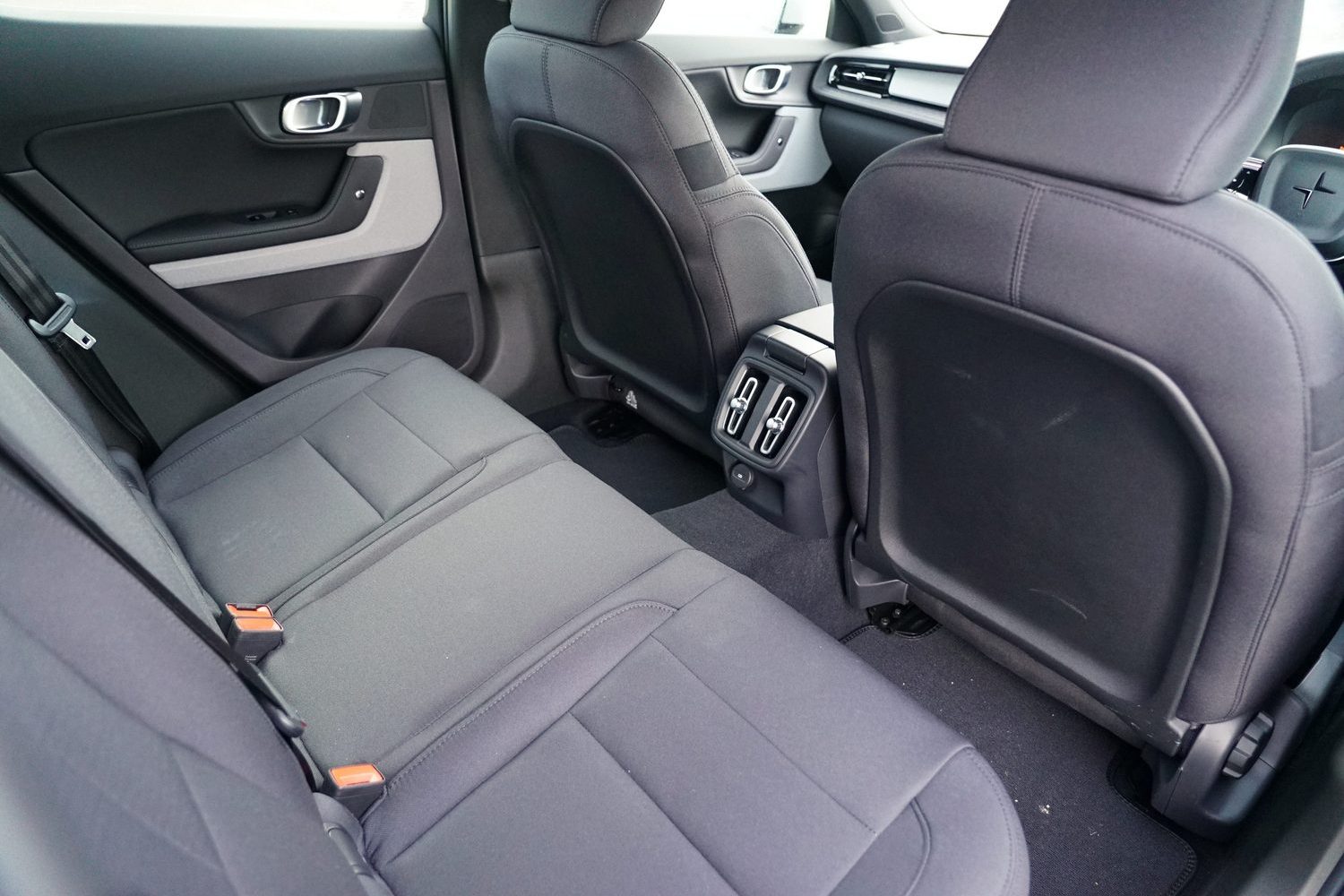
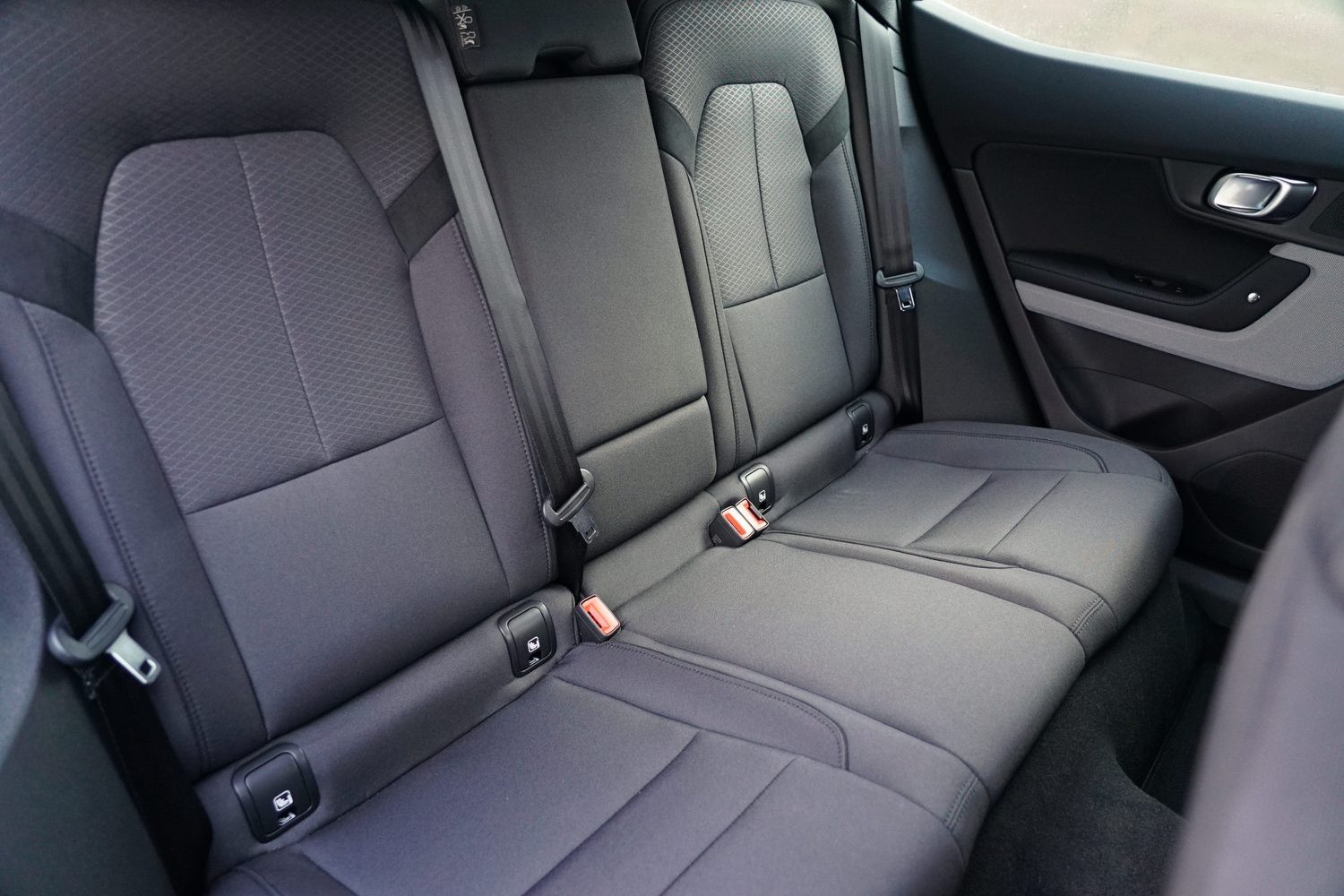
The high-quality feel of the cabin continues into the rear, where items like the metal door handles and sculpting of the door cards subtly remind the occupants that this is a premium car.

There's plenty of space in the back as well, certainly in terms of seat width and headroom, though there's a tall 'transmission tunnel' in the middle of the floor that reduces the chances you'll buy this car to regularly transport three adults - or tall teenagers - in the back.
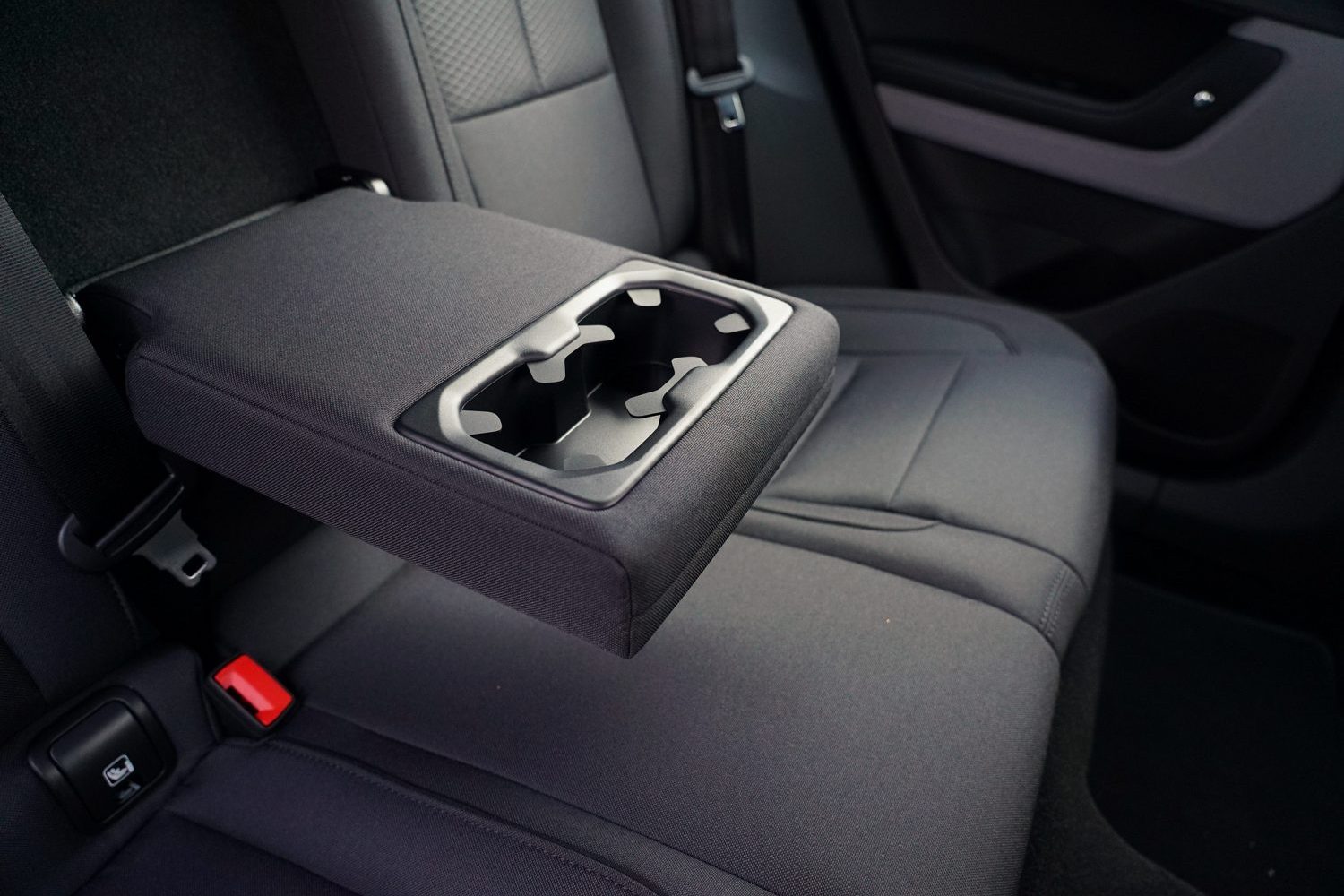
If you're only using the outer seats, a central armrest with two built-in cupholders can be deployed.

We're glad to see air vents for rear passengers, and there are two USB-C ports back there, too.
Fitting child seats to the Polestar 2

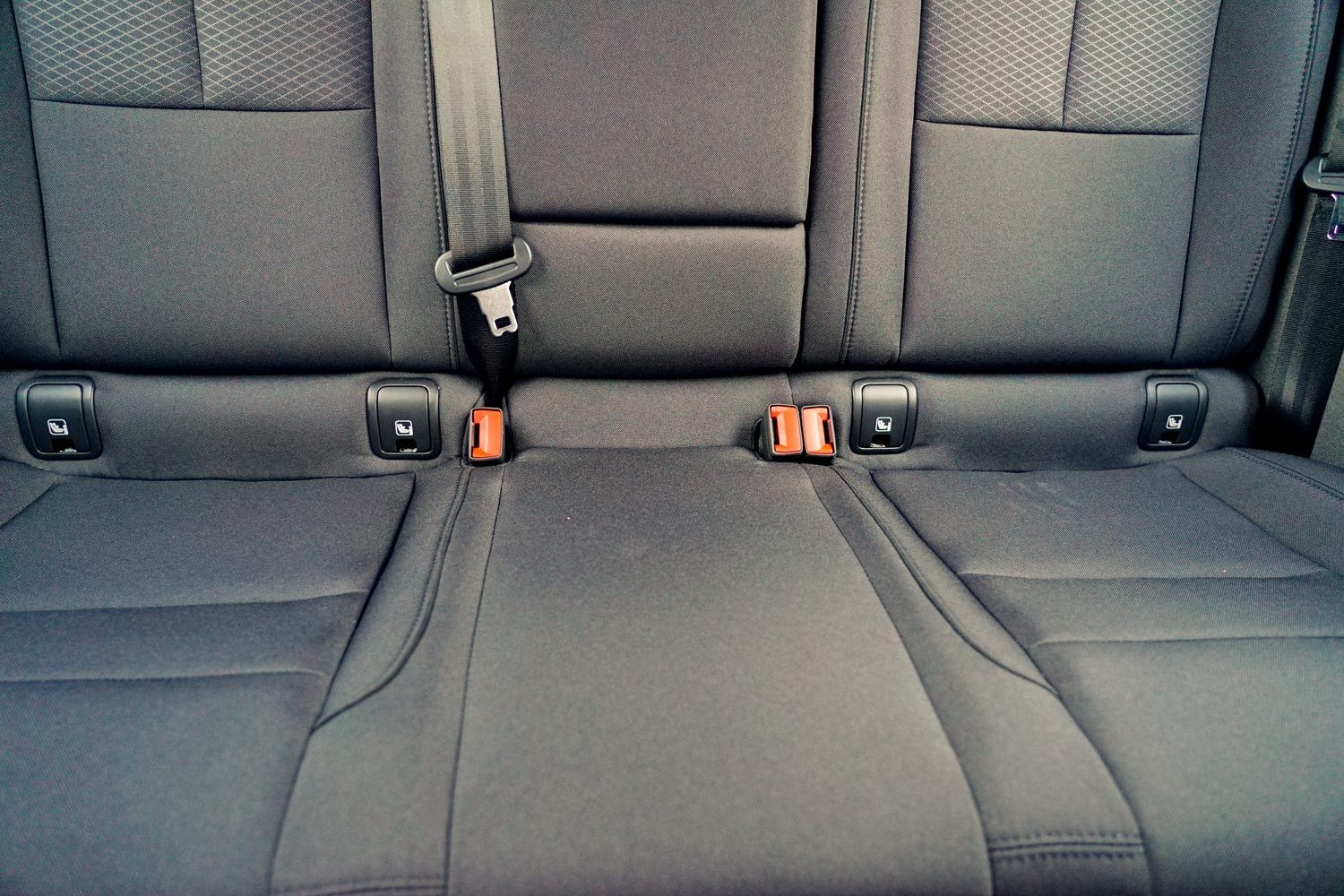
Parents that use ISOFIX mountings for their kids' seats will approve of the set incorporated into the front passenger seat, though of course the Polestar 2 has the usual ISOFIX brackets in the outer two back seats as well. The middle rear seat is a little wider than the norm, so, depending on the bulkiness of the child/baby seats, you might get a booster in there as well, held in place by the seatbelt.
Boot space in the Polestar 2
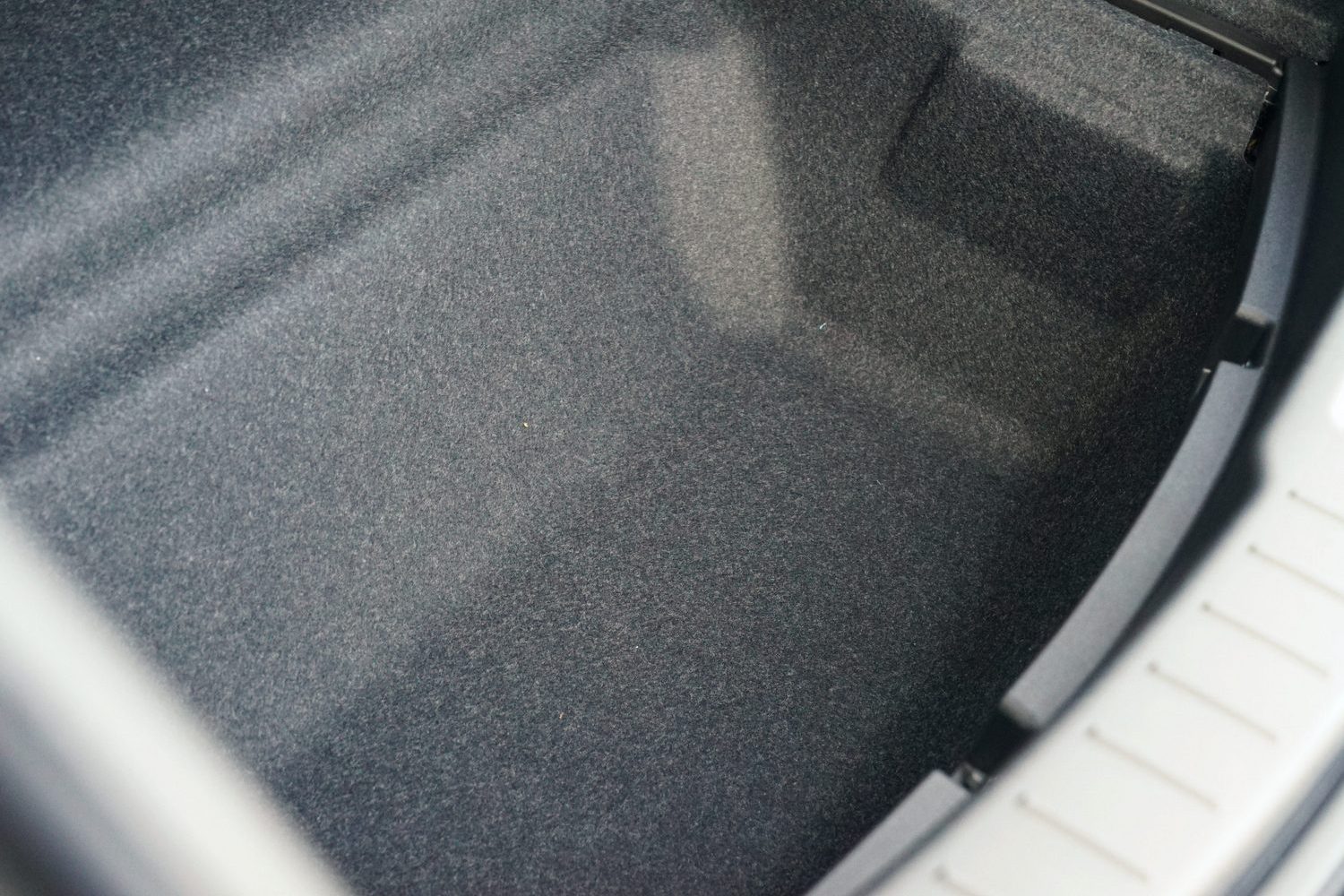
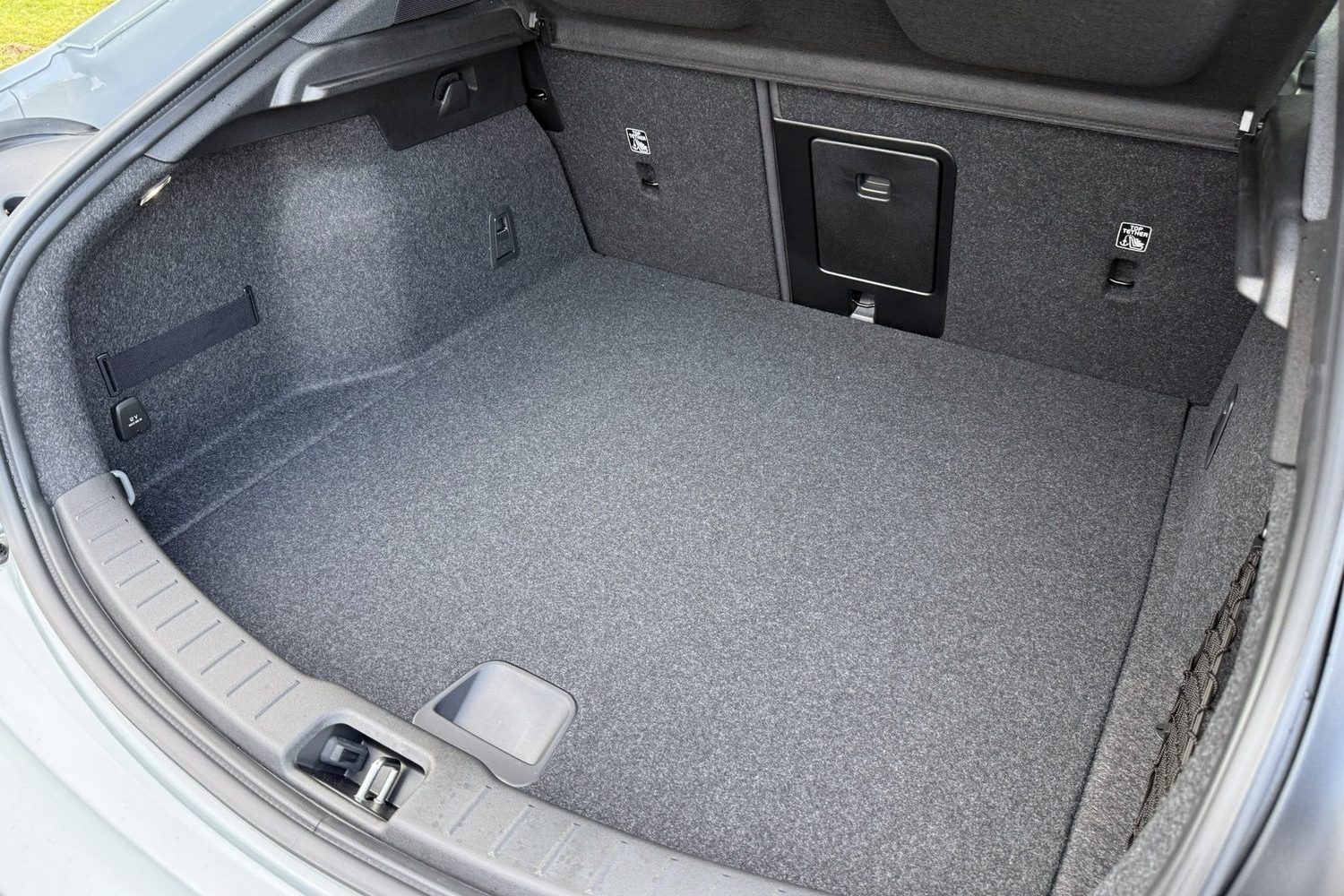
The official volume of the Polestar 2's boot is 407 litres, which doesn't sound huge - a Golf holds 380 litres for example - but it's more than adequate for everyday use and it's easily accessed by a wide-opening tailgate.

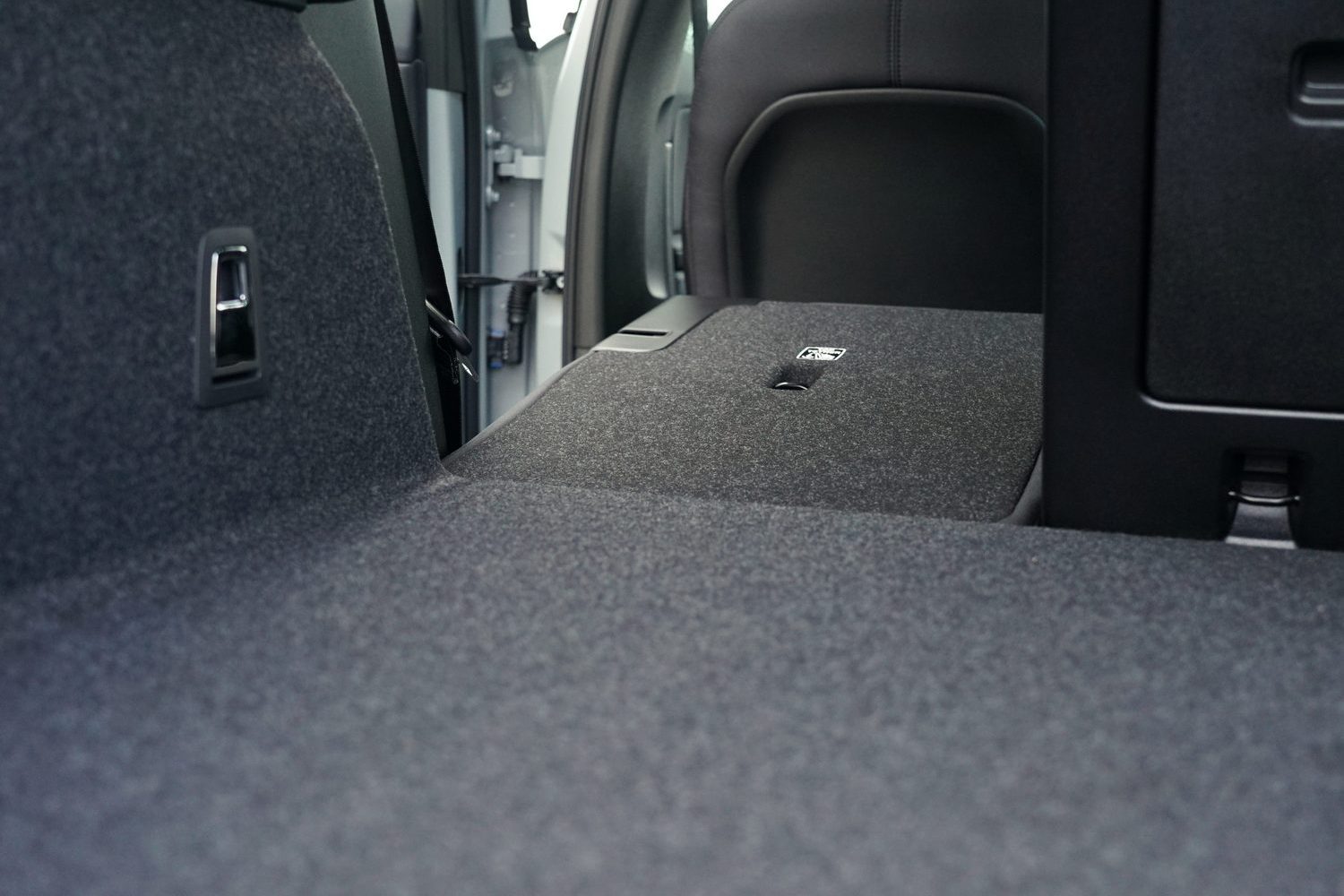
That allows for big and bulky items to be carried if you fold down the split rear seats, and there's a ski hatch in the middle, too, for if you need to carry something long and thin. Like skis we suppose.
Under the floor is a large hidden storage well, and there are other practical touches such as hooks and nets on the sides of the boot. From the Plus model up, the boot floor features a rigid fold-up section that allows easy dividing up of the space.

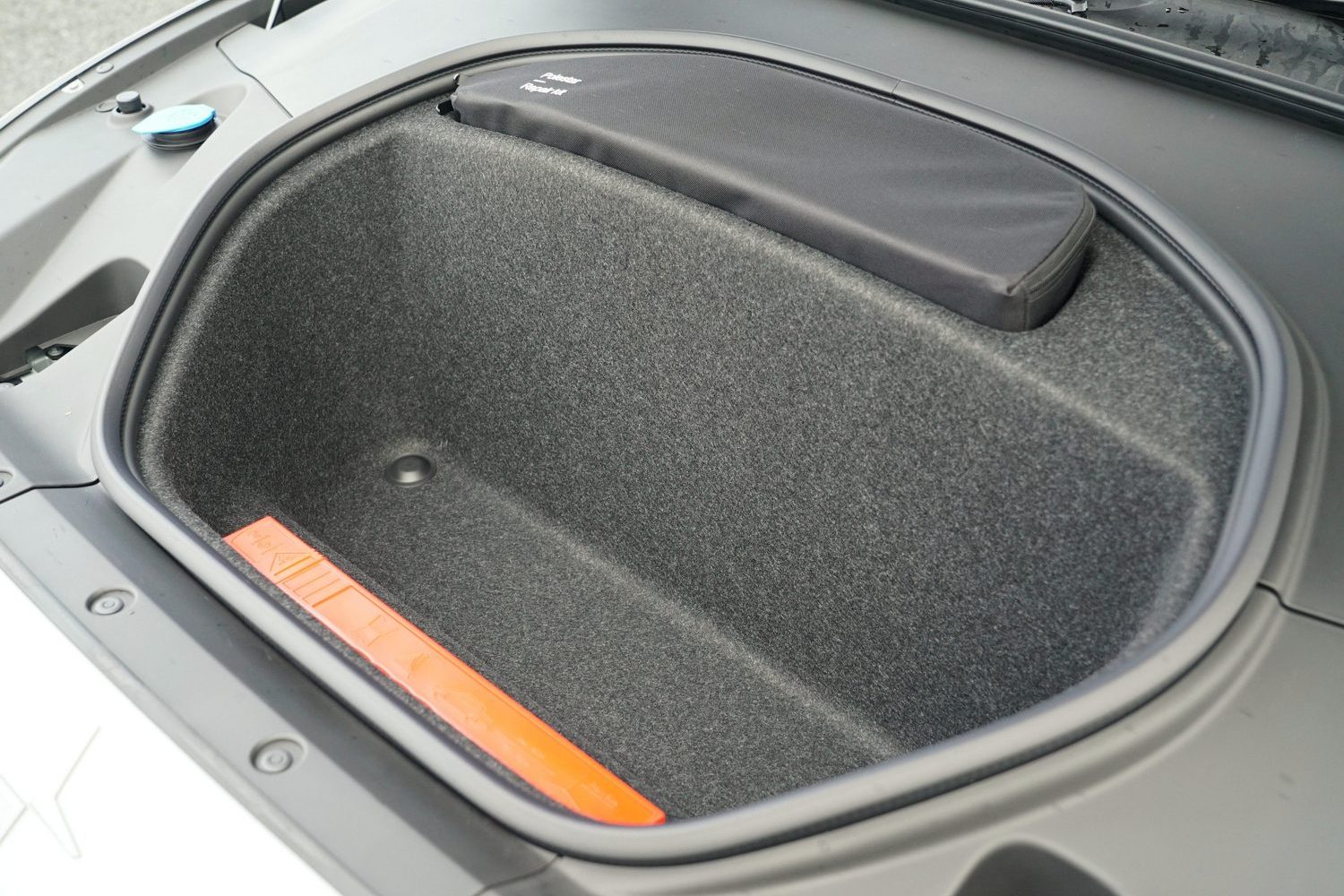
A usefully large extra bit of storage room can be found by popping the bonnet, where you'll easily fit in all your charging cables, and more besides.
Towing with the Polestar 2
All versions of the Polestar 2 are rated to tow a braked load of up to 1,500kg.
Safety in the Polestar 2
The Polestar 2 was assessed by Euro NCAP in 2021 and, given the firm's roots in Volvo, it's not surprising to see a full five-star result, with 93 per cent for adult-occupant protection, 89 per cent for child-occupant protection, 83 per cent for 'Safety Assist' and 80 per cent for protection of vulnerable road users.

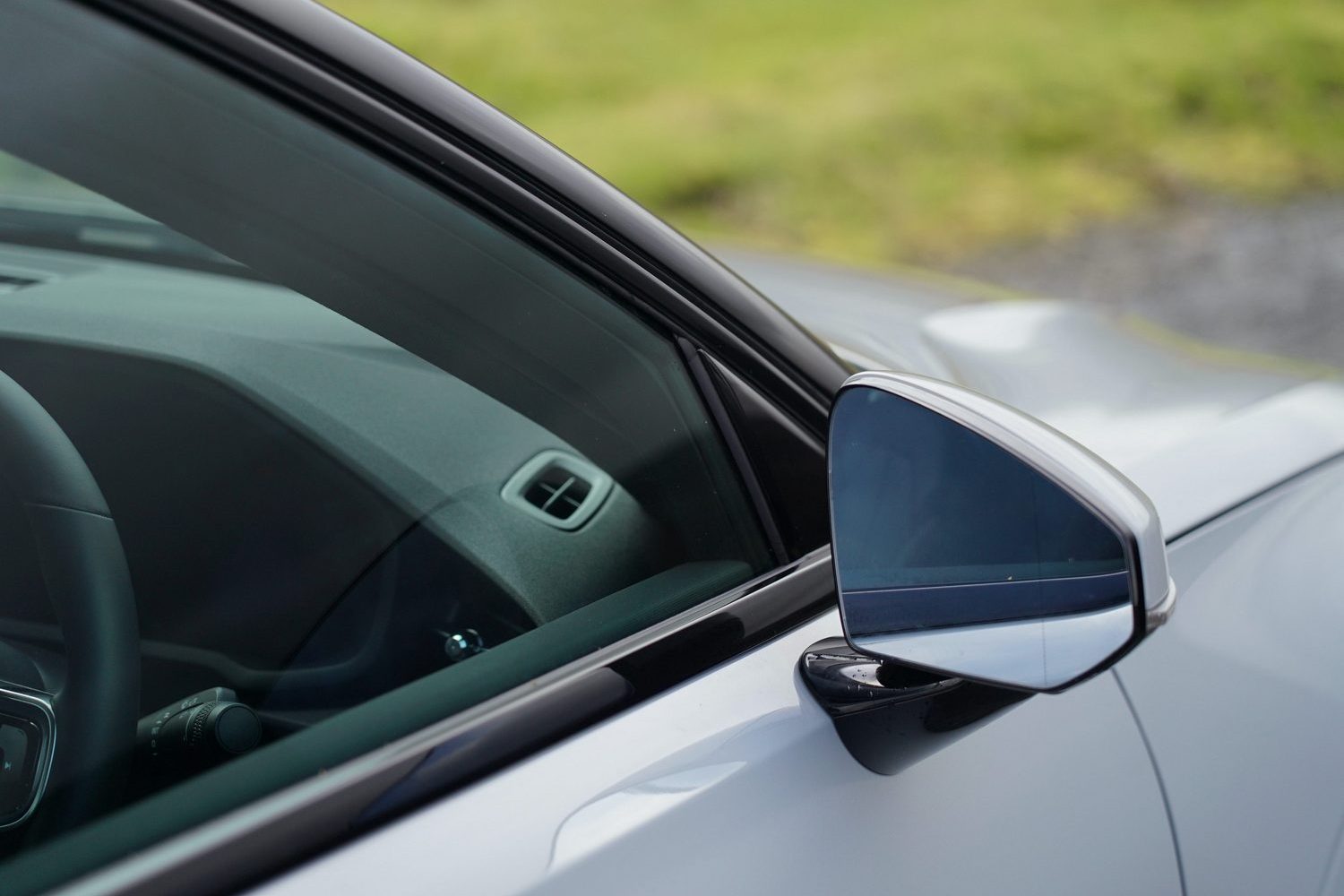
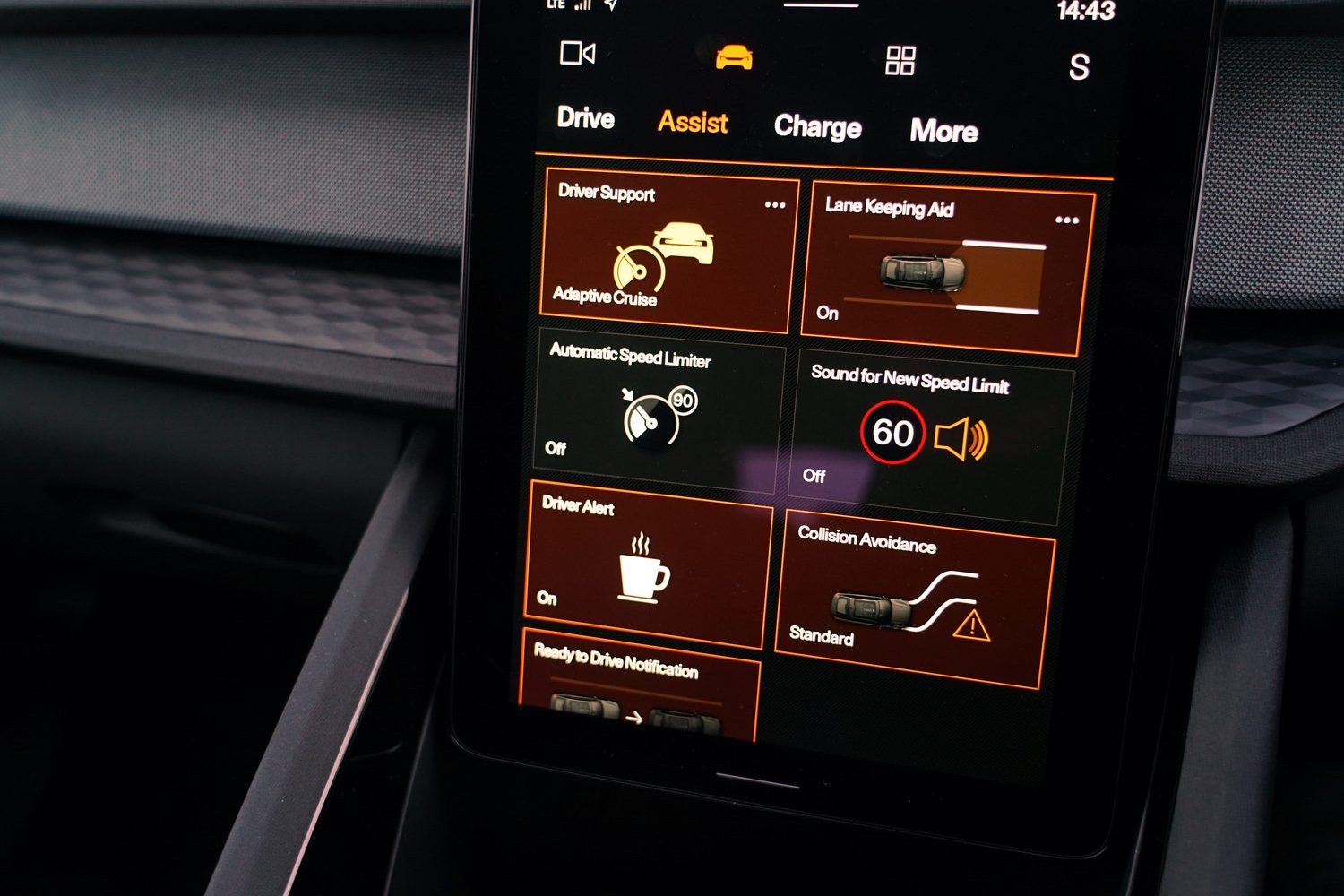
Polestar includes almost the full Advanced Driver Assistance Systems (ADAS) suite across the range, with the exception of the items that are part of the Pilot pack, including Pilot Assist (half a step on from adaptive cruise control), Driver awareness, Emergency Stop Assist, Blind Spot Information System with steer assist, Cross Traffic Alert with brake support, automatically dimming exterior mirrors and a 360-degree camera system.
Performance of the Polestar 2
• Minimum of 272hp
• One or two electric motors
• Up to 476hp and 740Nm

To keep costs down, most buyers of the Polestar 2 will stick with one of the single-motor models. They're rear-wheel drive (while the early models were front-wheel drive) and, depending on battery size, peak power is either 272hp or 299hp. Maximum torque is the same for both, at a useful 490Nm. Hence, the slowest-accelerating Polestar 2 still manages to hit 100km/h from rest in a sprightly 6.4 seconds. No doubt made possible by weighing (just) under 2,000kg.
The dual-motor versions are much more rapid, with peak torque upped to 740Nm in both and then either 421hp as standard or 476hp in the Performance pack model. Hence a 0-100km/h time as low as 4.2 seconds. There are versions of the Porsche 911 on sale today that are slower than that.
That Performance pack variant has a few other chassis tricks up its sleeves, including upgraded brakes (the gold callipers are not just for show), 'Polestar Engineered' enhancements including a lower ride height and a set of Öhlins Dual Flow Valve dampers with 22 settings. Oddly, you need to manually change the dampers, so these are probably best left alone unless you really know what you're doing.
Driving the Polestar 2 Business Edition on Irish roads
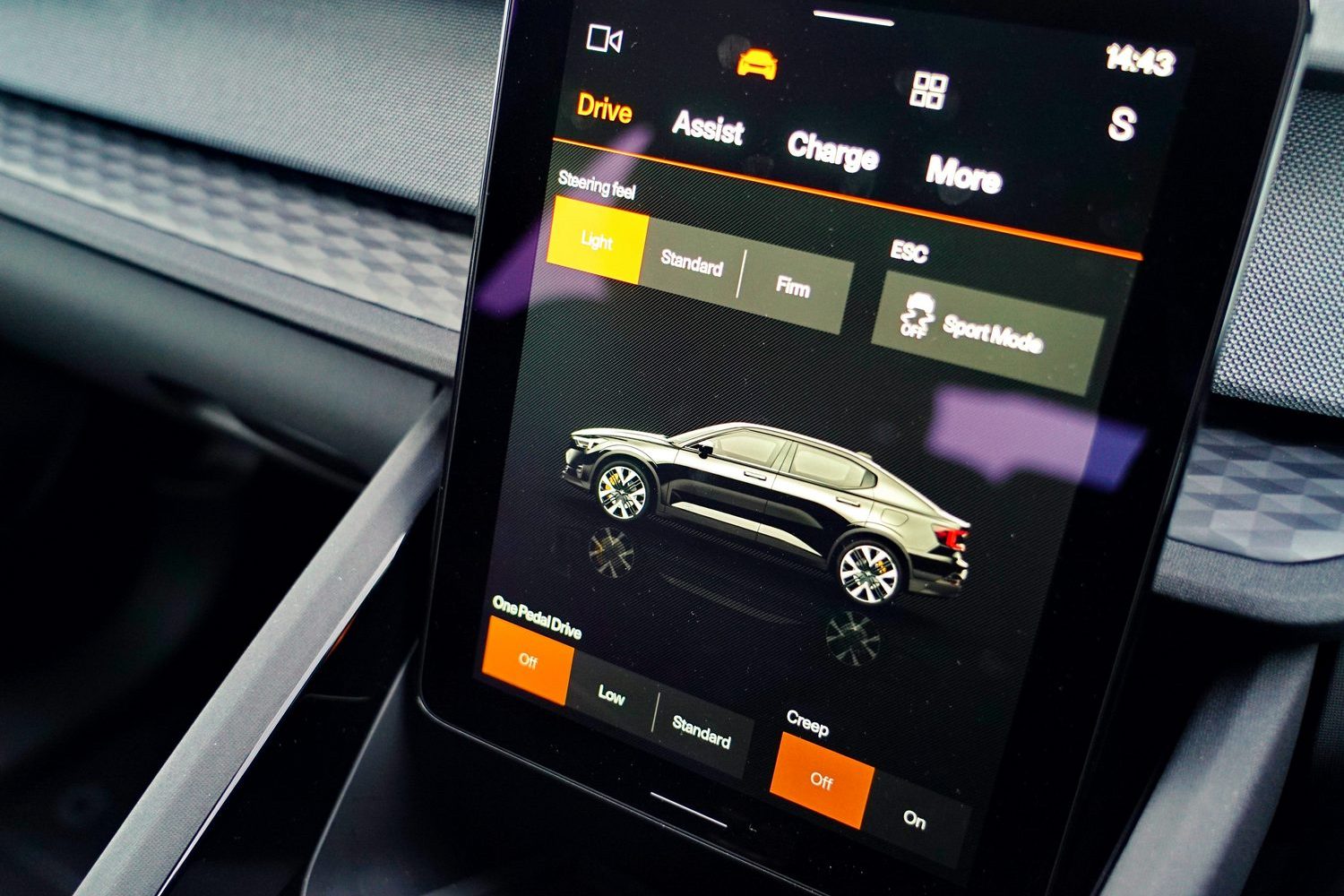
Tellingly, even the entry-level Polestar 2 is good to drive. There's a natural weightiness to the steering for starters, even in its 'Light' setting, making it feel a more organic experience than the artificiality of many EV steering systems. Likewise, the brake pedal calibration and feel are well-judged.

There is a little initial firmness to the suspension, but it soaks up big impacts with aplomb and doesn't run out of ideas if you push on over a bumpy road. Once up to speed on the motorway, the car is comfortable and it feels utterly stable, too.
All of the above applied to the original, front-drive Polestar 2, which was decent enough to drive, but now that it uses a rear-mounted electric motor instead, it also gets a smidge more driver interaction that'll appeal to those that like to drive. BMW owners will feel at home in this car, that's for sure, and it's a bit more fun in the Sport mode of the stability control without ever feeling unruly.
In normal driving, the Polestar 2 is smooth and easy to get along with, isolating those inside the car from what's going on outside to a decent level.

The only other driving setting of note relates to the so-called 'one-pedal driving', using the electric motor to slow down the car and charge the battery at the same time.
I prefer the more natural feel of coasting when I stop accelerating, so I favoured the 'Off' setting for this. There are two levels to try and the 'Standard' one results in a strong braking effect, so you'd never need the brake pedal in stop-start traffic, for example.
Range, battery, charging and running costs of the Polestar 2
• Minimum of 554km range, up to 659km
• Two battery sizes to consider
• Can charge at up to 205kW

Buyers of the Polestar 2 can choose between two different battery sizes, referred to as 'SR' for Standard Range and 'LR' for Long Range, with all cars capable of over 550 kilometres on the WLTP cycle and one achieving an eye-opening 659km. Not bad for a model that's been in production since 2019.
Battery options and official range
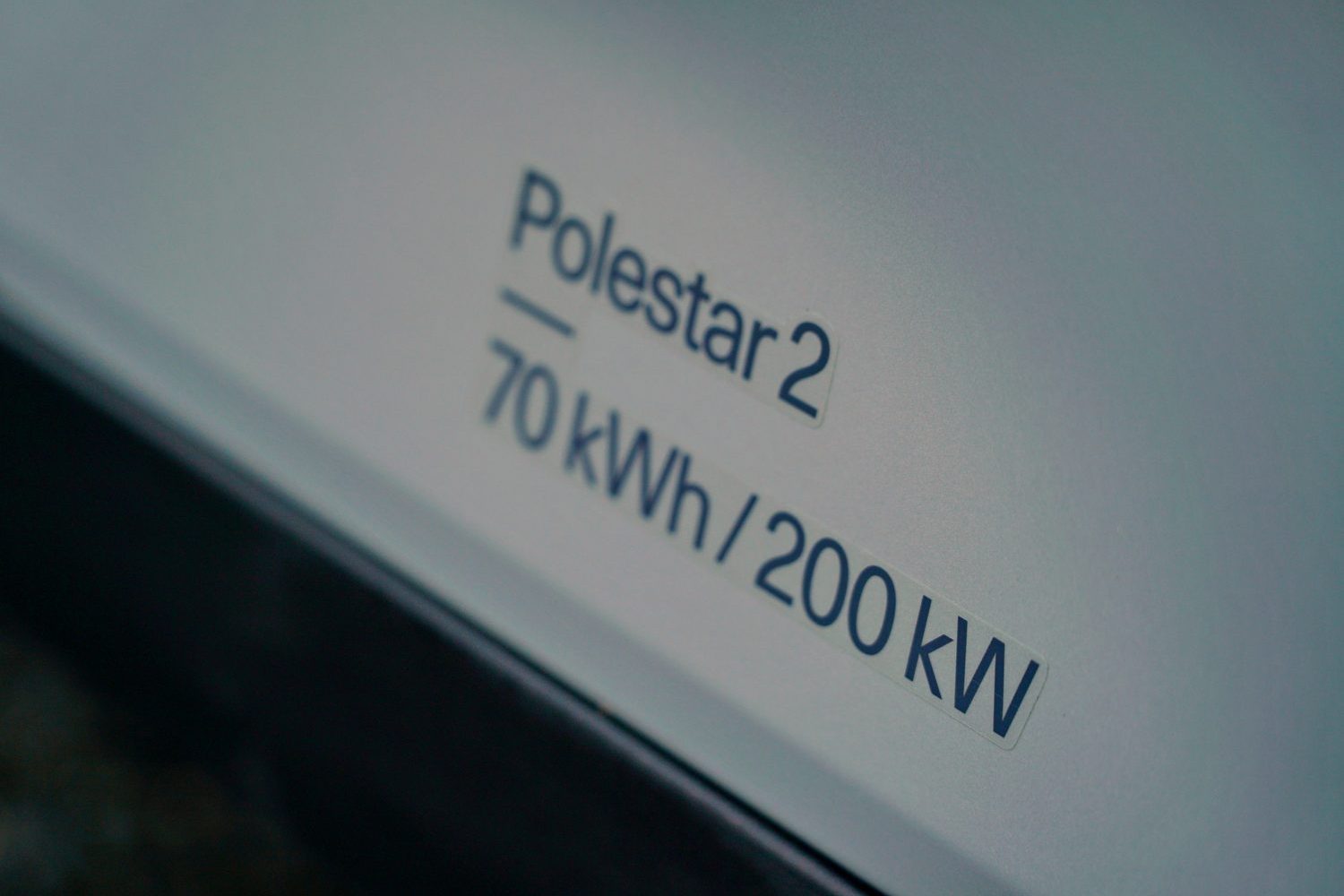
The 'Standard Range' battery is a 70kWh unit, allowing for a WLTP range of 550km depending on specification, translating into energy consumption at 14.9-15.8kWh/100km.

Cars with the 'Long Range' battery have energy storage of 82kWh, allowing a range as high as 659km for the single-motor model. The dual-motor variants use the bigger battery and manage 596km for the standard car or 568km for the Polestar 2 with Performance pack.
Real-world range and efficiency of the Polestar 2 Business Edition
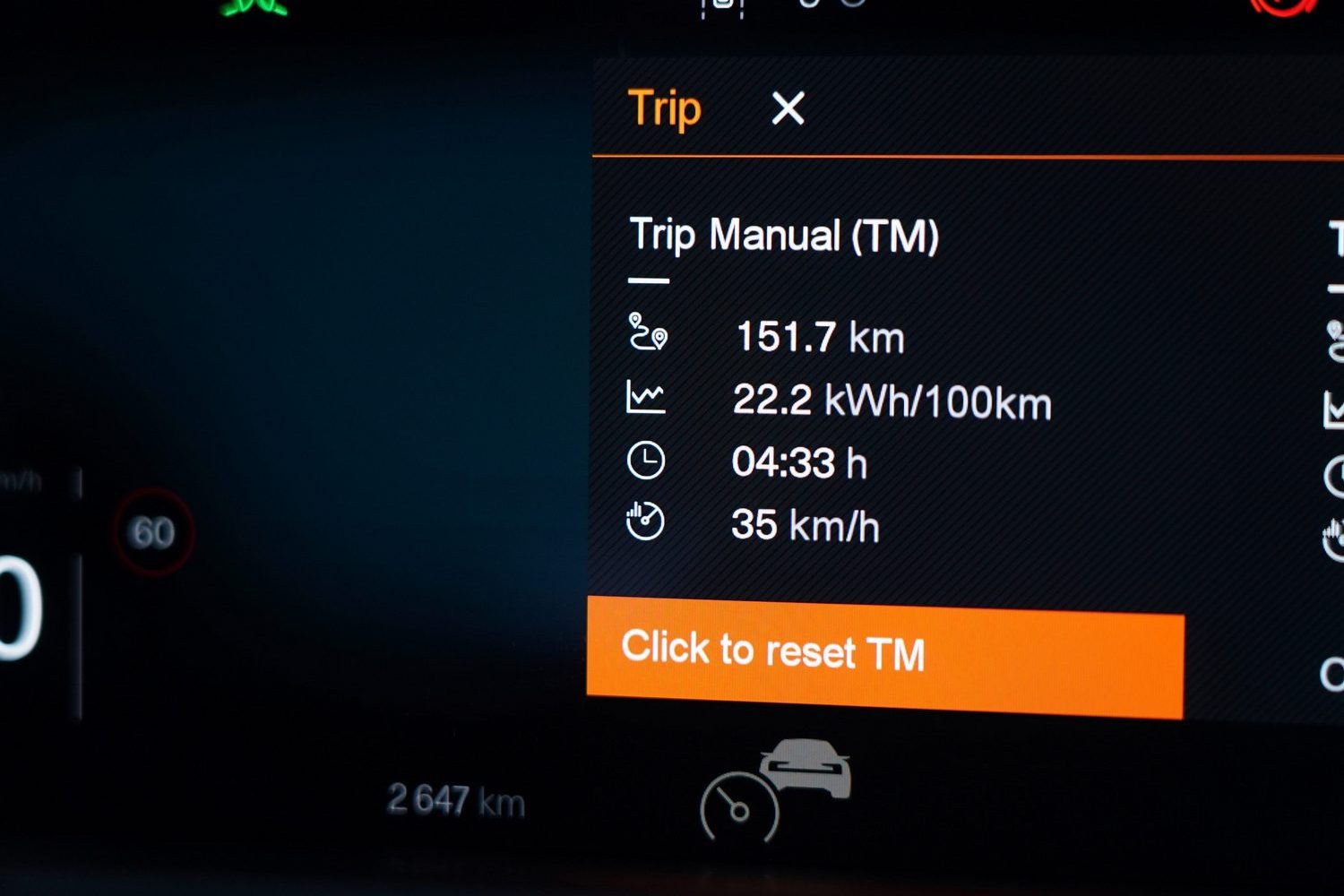
In cold, wet, manky Irish weather conditions in November, over a mix of roads and nearly always using the heating and heated seats, we averaged 22.2kWh/100km in the Business Edition model, which means a range in these conditions of more than 300km.

That's higher consumption and lower range than the official numbers, obviously, which are achieved in balmy laboratory conditions. It doesn't help this particular version that there's no heat pump fitted. Good news is that it's standard across the rest of the range.
Charging up the Polestar 2
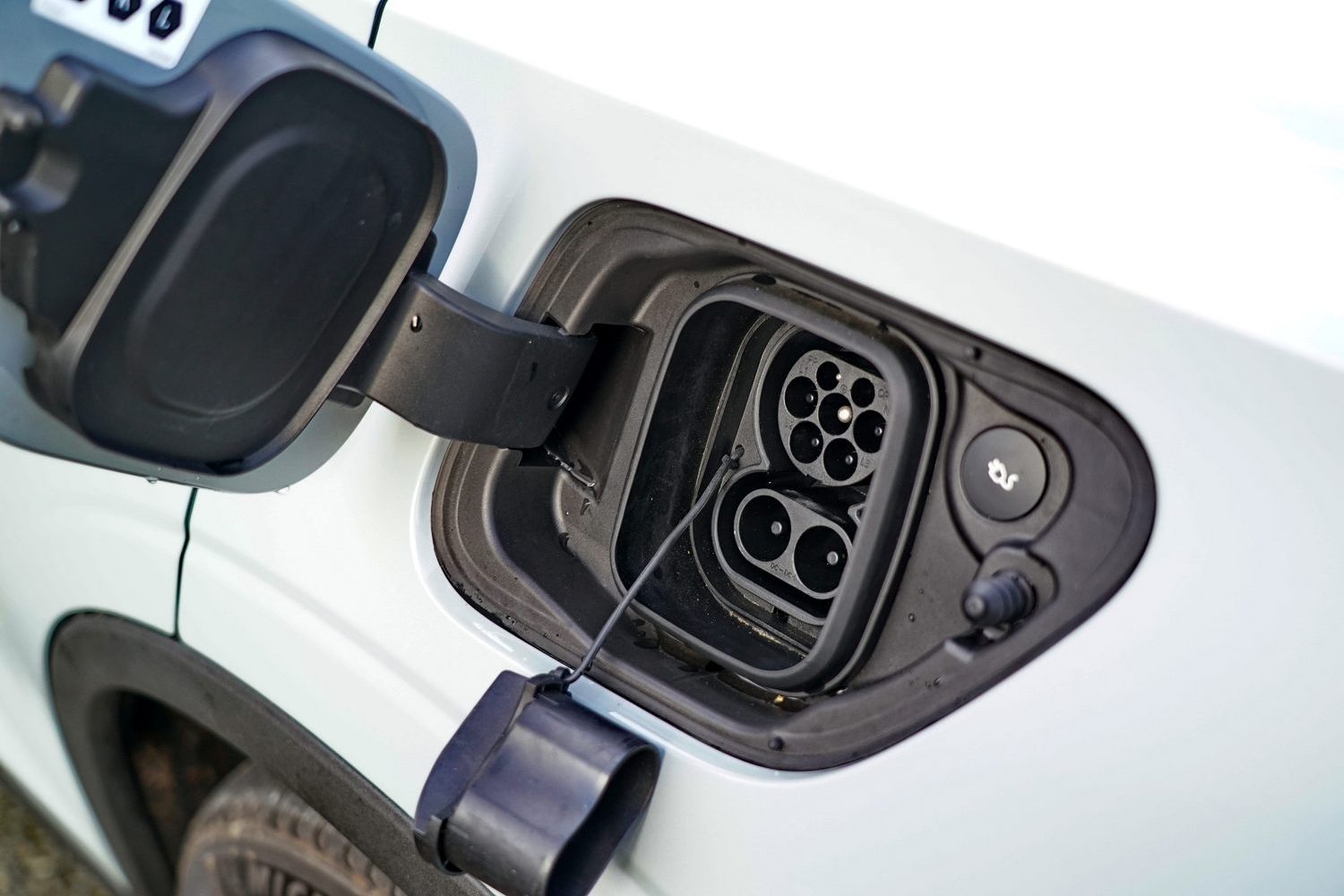
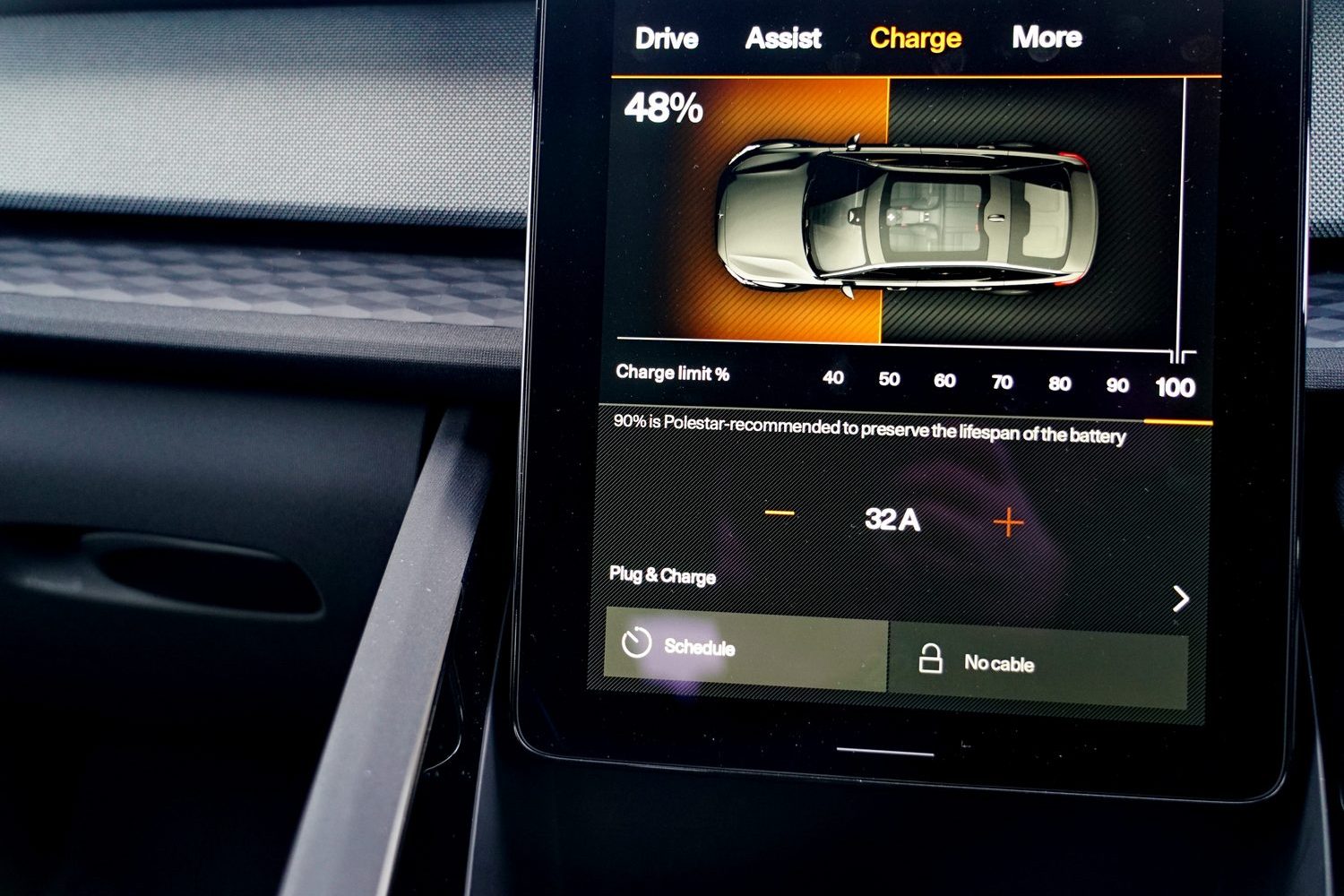
Most EV owners will charge up at home to make use of cheap-rate nighttime electricity, but if you have to use the public network for charging the Polestar 2, it can manage 11kW on three-phase AC outlets for a 0-100 per cent charge in seven hours. At rapid DC chargers, the peak charging rate is 180kW for the Standard Range battery, meaning a 10-80 per cent charge in 26 minutes. The fastest rate is upped to 205kW for the Long Range battery.
Servicing the Polestar 2
Like all electric cars, the Polestar 2 has much fewer moving parts than a vehicle powered by an internal-combustion engine, so it requires less-frequent maintenance. Polestar says the 2 needs a service either every 30,000km or every two years - whichever comes first.
And don't worry about bringing the car back to the sole Polestar showroom, in Dublin, as servicing can be done at one of five approved service points in the Volvo network - one in Cork, one in Wexford, one in Waterford, one in Naas and another in Dublin.
Polestar 2 warranty
All Polestars get a three-year, unlimited mileage warranty, transferrable with the vehicle if it changes hands. The high-voltage battery comes with its own eight-year, 160,000km warranty, guaranteeing at least 70 per cent of the original energy capacity. Finally, there's a 12-year corrosion warranty.
Irish pricing & rivals to the Polestar 2
• Business Edition under €40,000
• Tesla Model 3 and BMW i4 among rivals
• Lots of options in the range

After the SEAI grant and VRT rebate, the entry-level Business Edition costs €39,897.
The 'SRSM' (Standard Range Single Motor) Plus is €45,143, which is a big step up in price, but as you may have noticed from above, it comes with a lot more equipment as standard. Add the bigger battery - to create the LRSM (Long Range Single Motor) - and it's €47,771. This is the most popular Polestar 2, incidentally.
It's less than €3,000 more for the LRDM (Long Range Dual Motor) Plus, at €50,691, which has considerably more performance and all-wheel drive.
At the top of the Polestar 2 tree is the Performance pack variant, at €55,295.

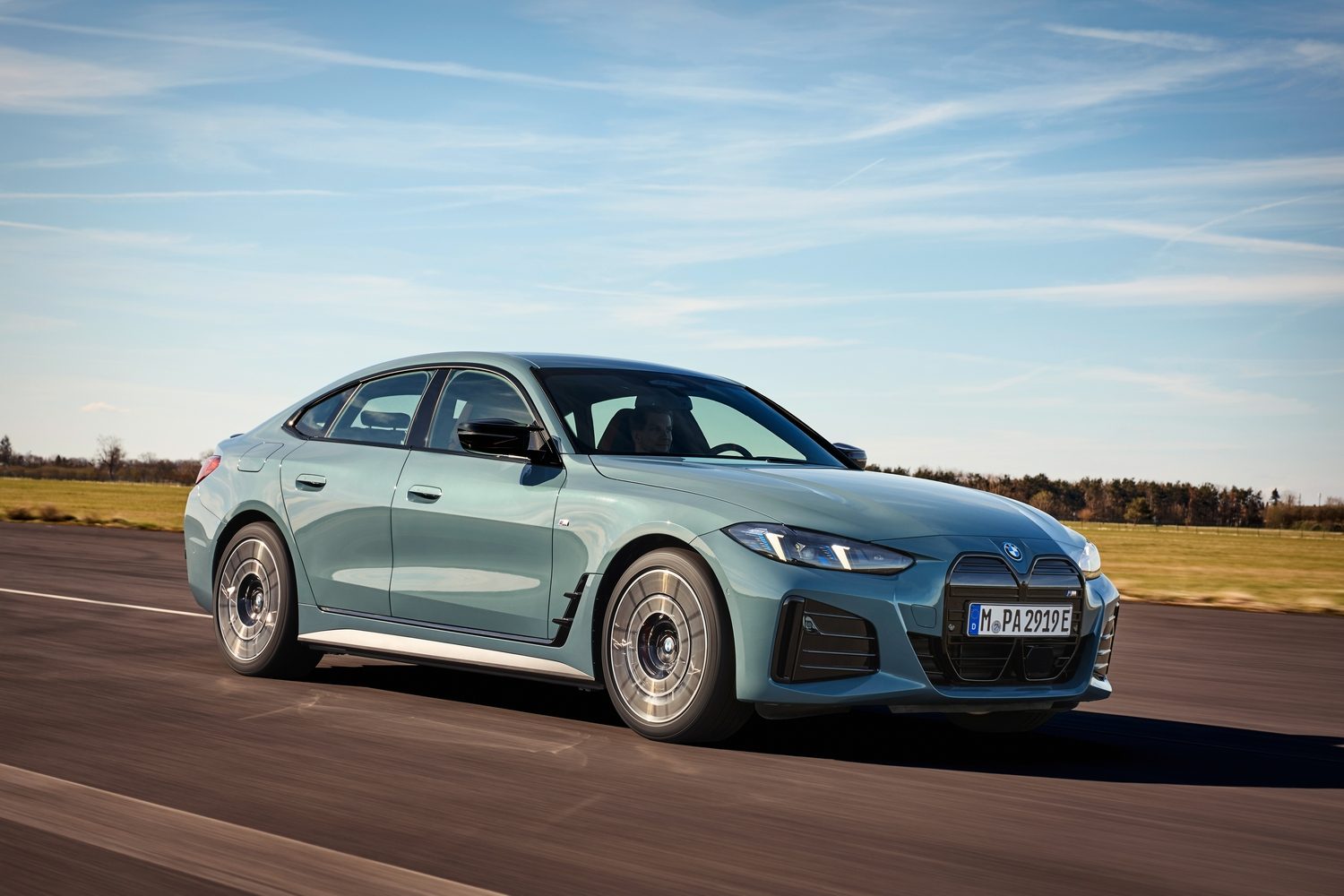
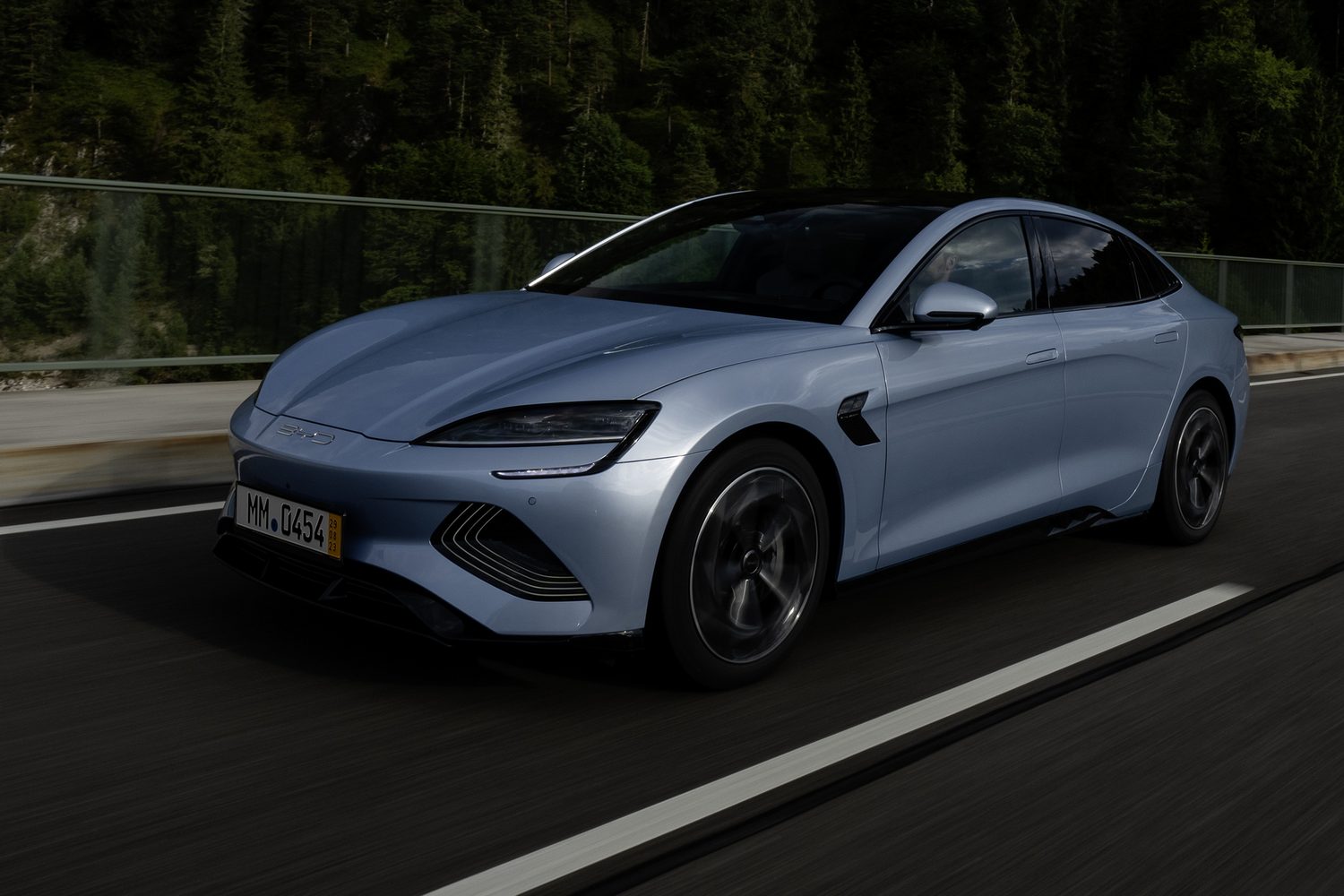
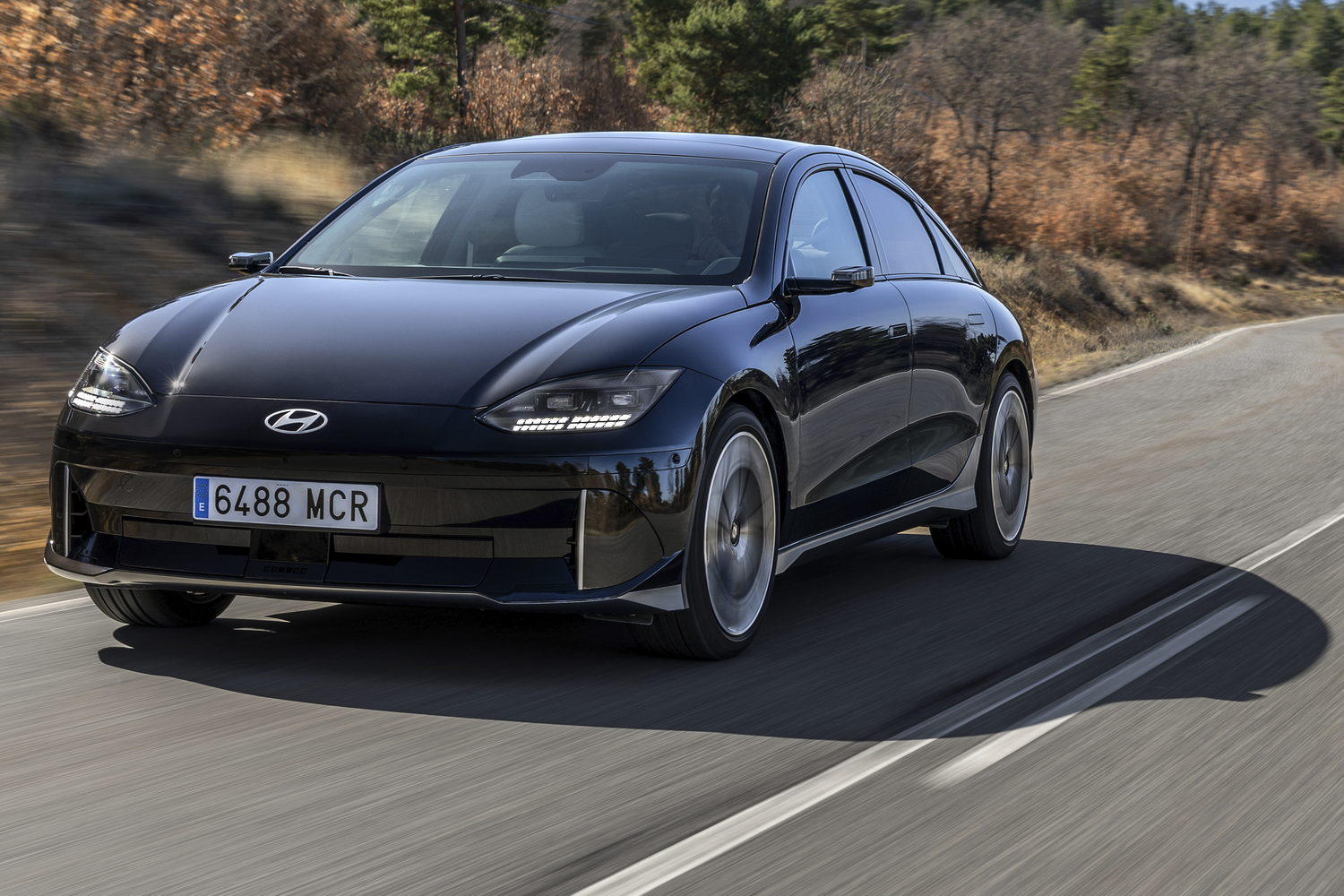
As for alternatives, the most direct rivals to the Polestar 2 that we can think of are the BMW i4, BYD Seal, Hyundai Ioniq 6 and Tesla Model 3. They're all pleasingly different with their own pluses and minuses so we suggest you test drive them for yourself and send us a question through the Ask Us Anything page if you'd like help choosing when you have a specific budget in mind.
Verdict - should you buy the Polestar 2?
At the time of writing, I own an early, front-drive version of the Polestar 2 and a year-and-a-half into ownership we (it's our family car) are still very happy with it, so yes, we would recommend the car. It's a high-quality item, we reckon it still looks sharp and it's a pleasure to drive.
The rear-drive one is even better on that score, though having gone through the specifications of the various models, we'd suggest that the pick of the lineup is a Plus version unless you're a company-car buyer attempting to minimise BIK. Only then does the Business Edition make sense. It's a lovely car by any measure, but the Plus is lovelier again.
FAQs about the Polestar 2
Does the Polestar 2 have a frunk?
It certainly does. Pull a lever in the driver's footwell, then release the bonnet from the front and it rises up itself on its hinges. There's a deep, carpeted storage well in the middle with a separate recess for the 'Repair kit' and loads of space for all the charging cables you might need.
Can I tow with the Polestar 2?
You certainly can. All versions are rated to tow up to 1,500kg, so long as the trailer has brakes.
Where can I buy a Polestar 2?
If you wish, you can go through the entire purchase process online at Polestar Ireland's website, but we highly recommend visiting the Polestar 'Space' (it's what Polestar calls its showrooms) in Sandyford in Dublin, as it's a very nice experience to do so. See our video below for a look around it.
Want to know more about the Polestar 2?
If there's anything about the Polestar 2 we've not covered, you can avail of our expert advice service via the Ask Us Anything page.
History of the Polestar 2
The Polestar 2 actually began life as a Volvo concept car, the '40.2' of 2016, a year before Polestar officially went it alone.
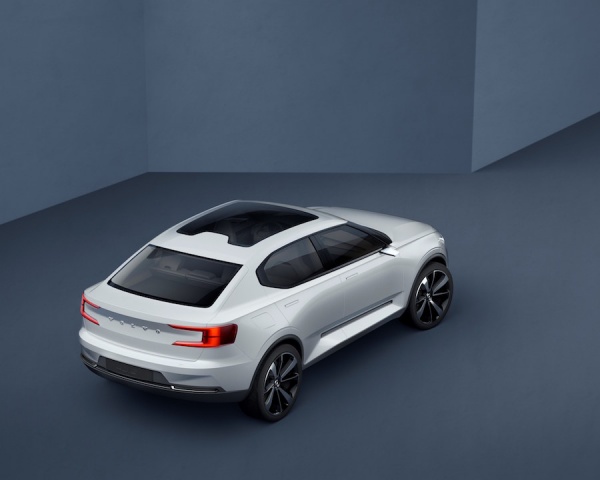
In 2019 the production-ready Polestar 2 was unveiled, remarkably true to the original Volvo concept, but because the Polestar marque was in its infancy, it took another three years for the 2 to launch in Ireland. It has since been joined by the Polestars 3, 4 and 5. You'll never guess what's coming next...