










(Updated on November 25, 2025 with details and review of Peugeot E-408)
Introduction to the 2025 Peugeot 408
The Peugeot 408 first launched in 2022 to provide a kind of bridge between the 508 and Peugeot's lineup of taller SUVs. The 408 is a classic crossover in that it has a body that's actually quite low-slung in its shape, but it has some of the ride height and the chunky body extensions of an SUV. In Ireland, Peugeot offers the 408 as a hybrid model or the fully electric E-408.

Pros & cons of the 2025 Peugeot 408
Pros:
• Engaging to drive
• Roomy inside
• Usefully efficient
Cons:
• Hybrid is not quick
• Fiddly touchscreen
• No rear wiper
Exterior & design of the 2025 Peugeot 408
• Looks like a squashed Lamborghini
• Crossover style is popular
• Highly distinctive shape

Peugeot's recent car designs have certainly been interesting. The likes of this 408, and the latest Peugeot 3008 and 5008, all have very distinctive designs which are just short of OTT.
Doubtless, this means that they're not universally appealing, but for those who crave inoffensiveness, there are other brands in the same Stellantis group that can offer less-challenging designs. Perhaps that's the point.

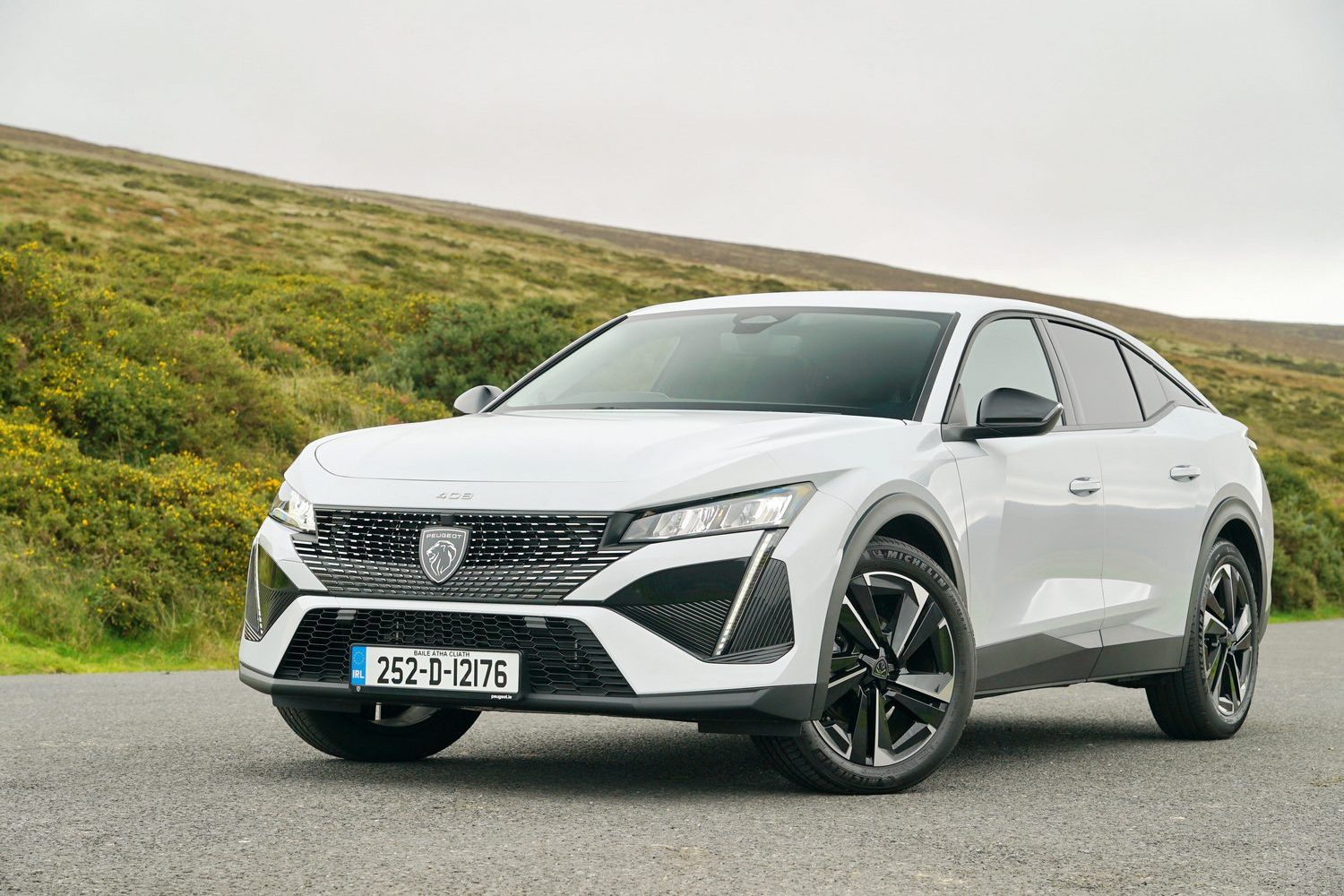
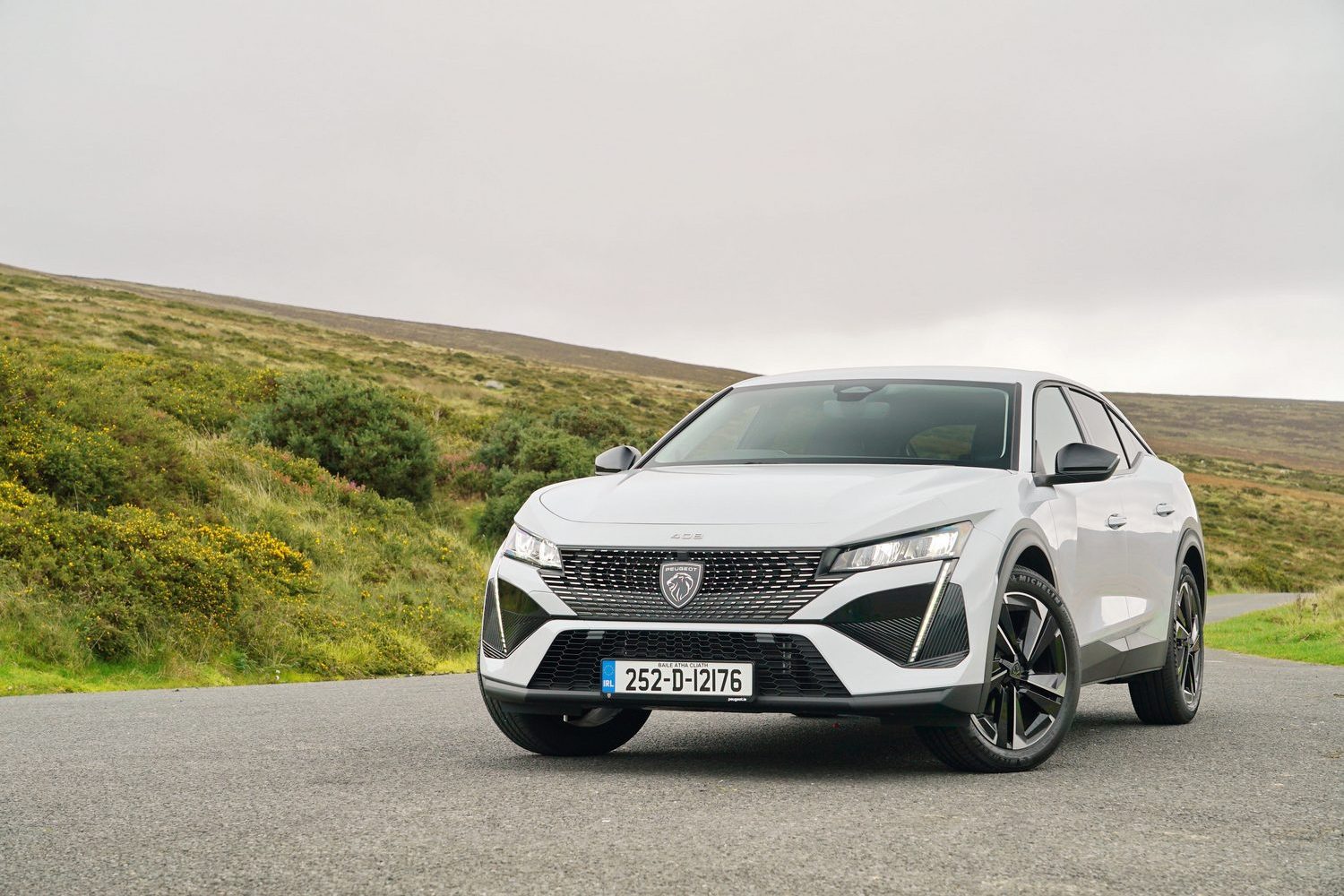
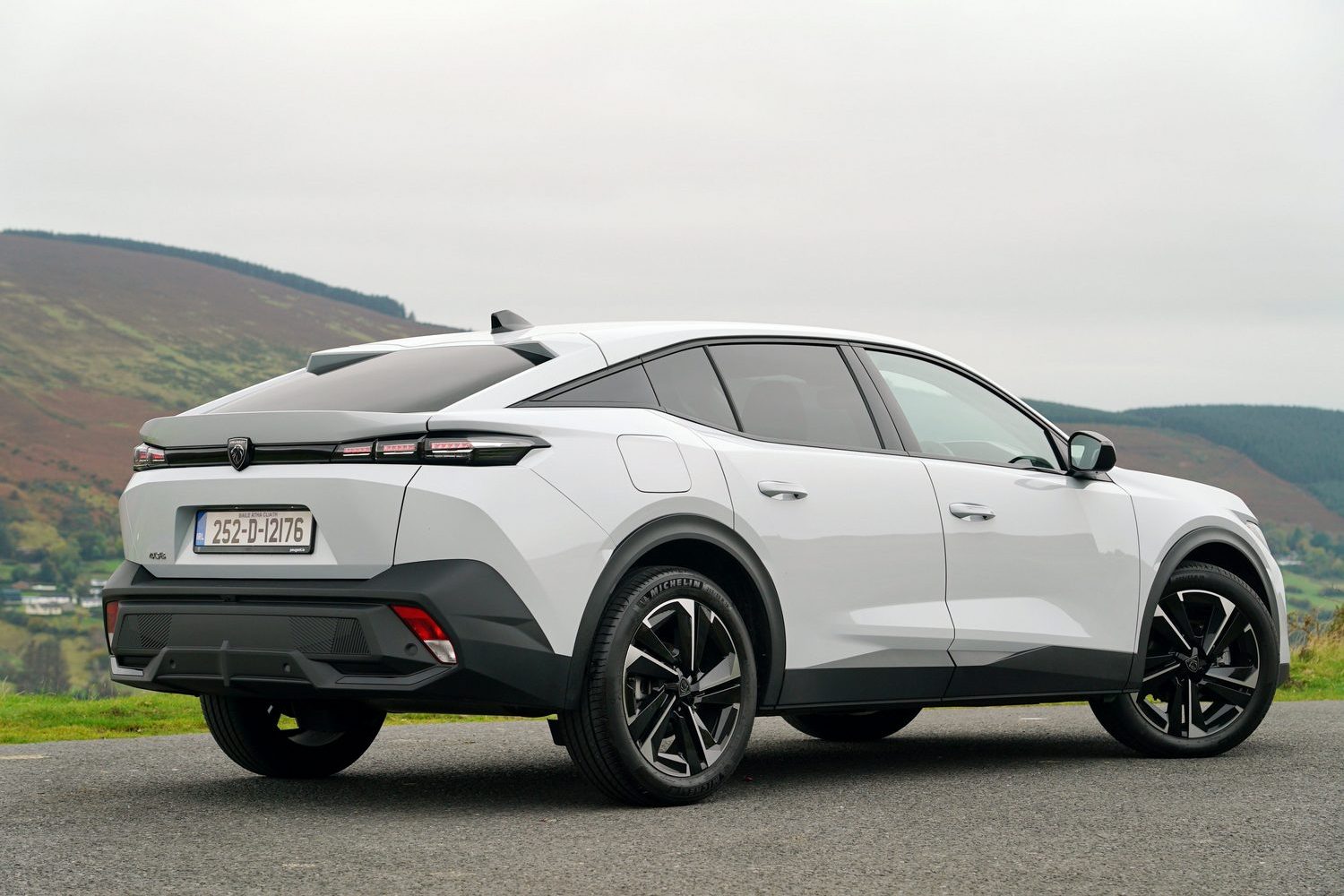
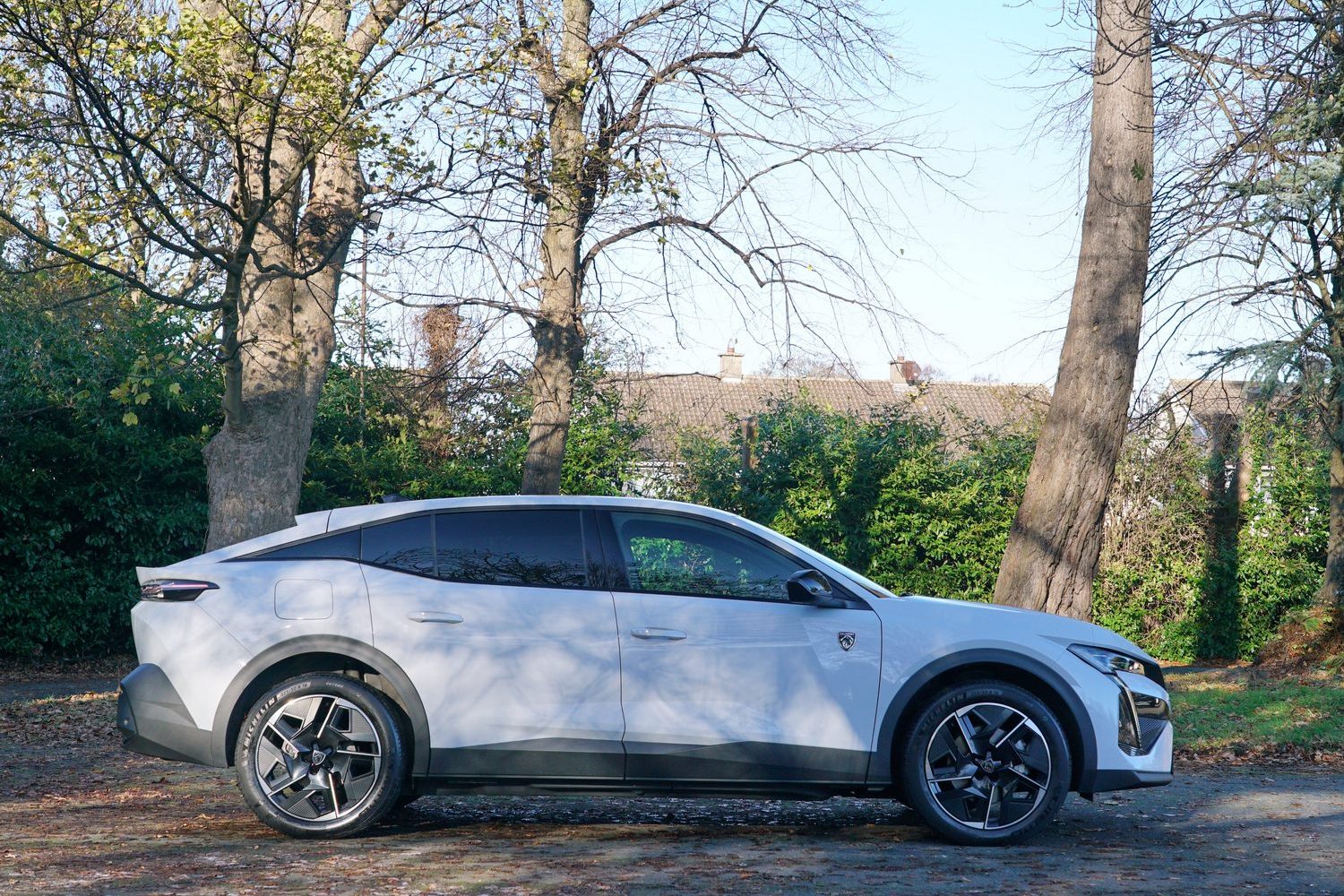
The 408 certainly makes a dramatic styling point. I reckon that it looks very much as if you took a Lamborghini Urus and squashed it flat, and yet the Peugeot still manages to look more interesting and better-resolved than the vastly more expensive Lambo.
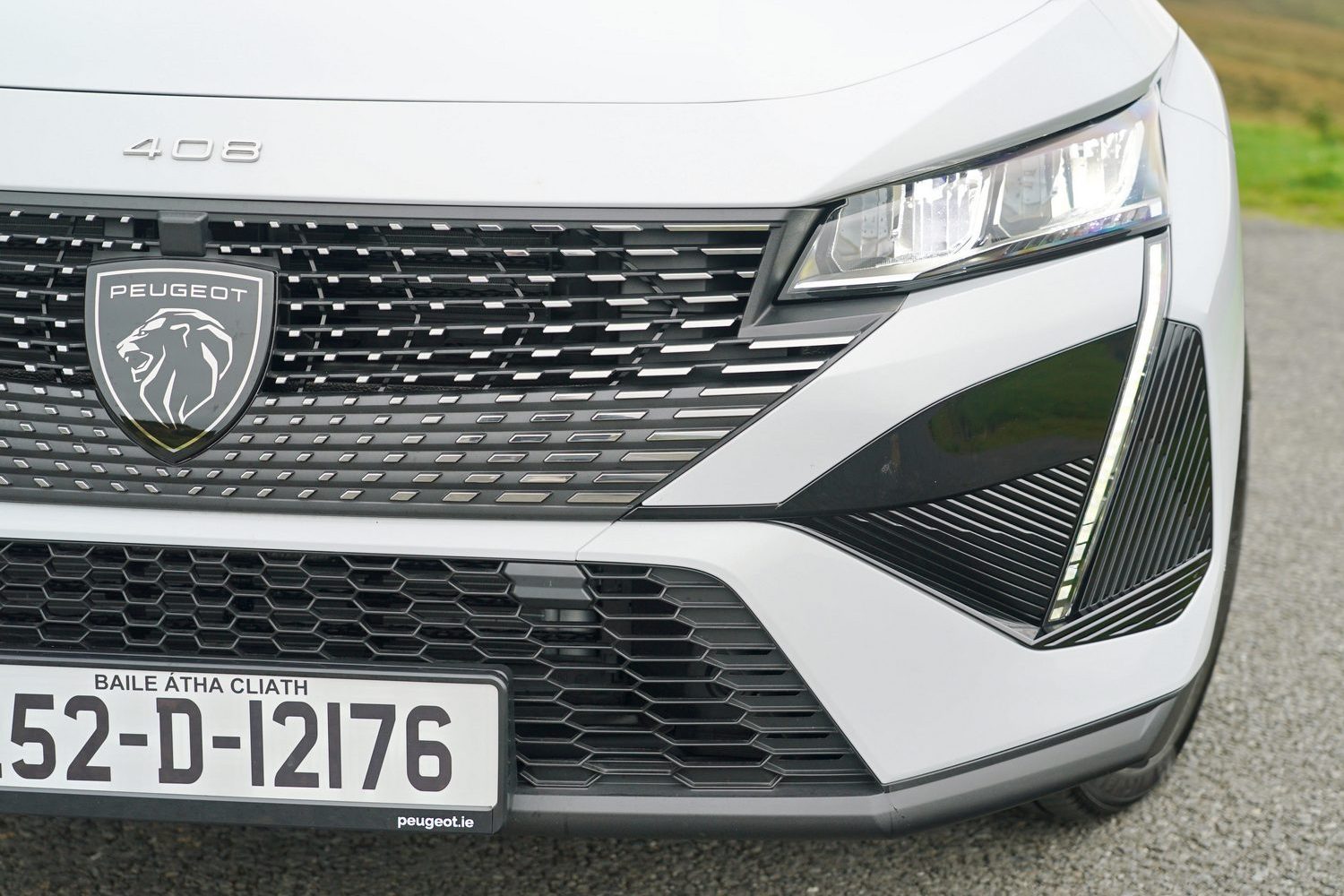
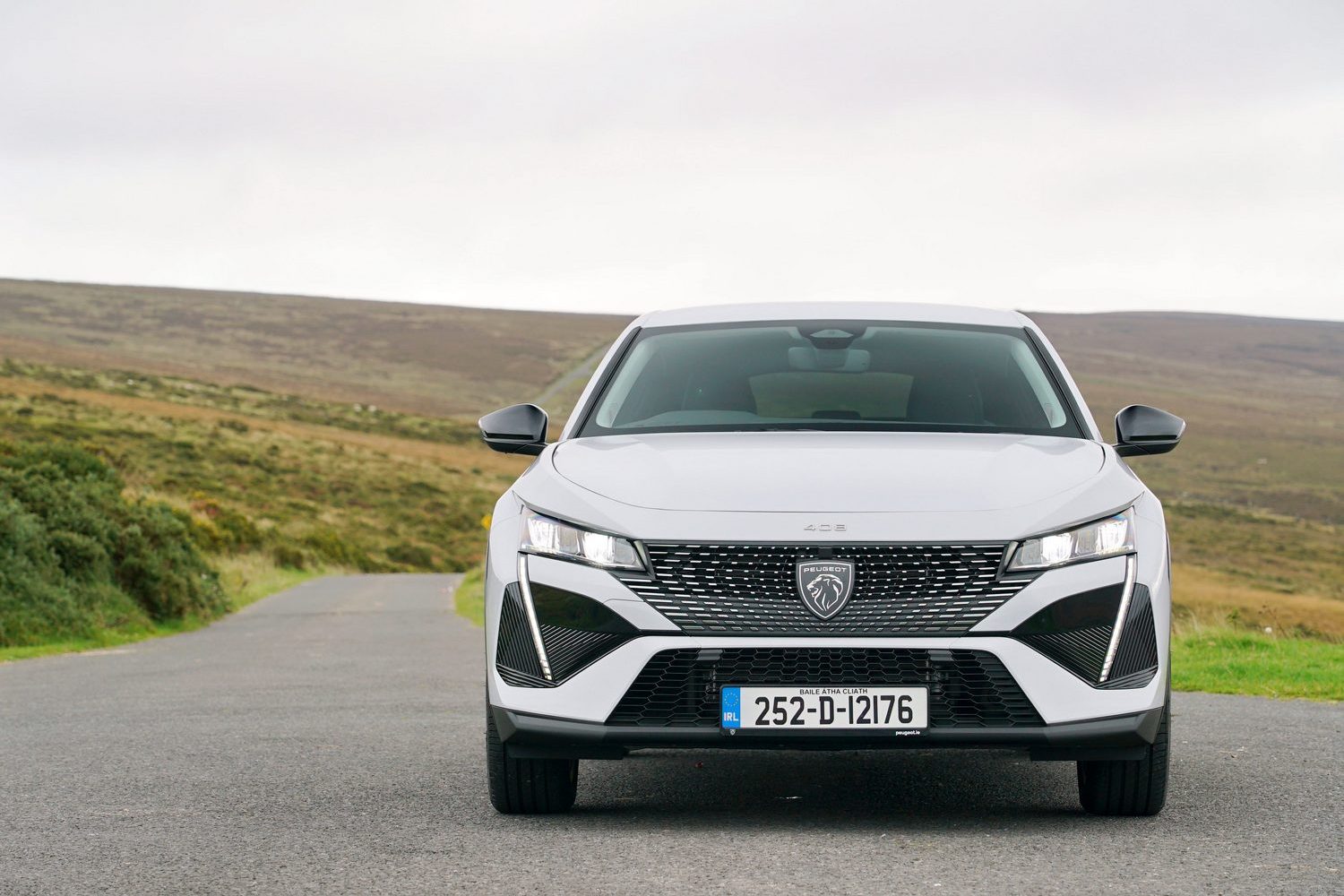
You can tell it's a fractionally older design than the likes of the 3008 because it has just the one daytime running light, a singular 'fang' that slices into the edges of the front bumper - rather than the three-claw motif of the 3008 and 5008.

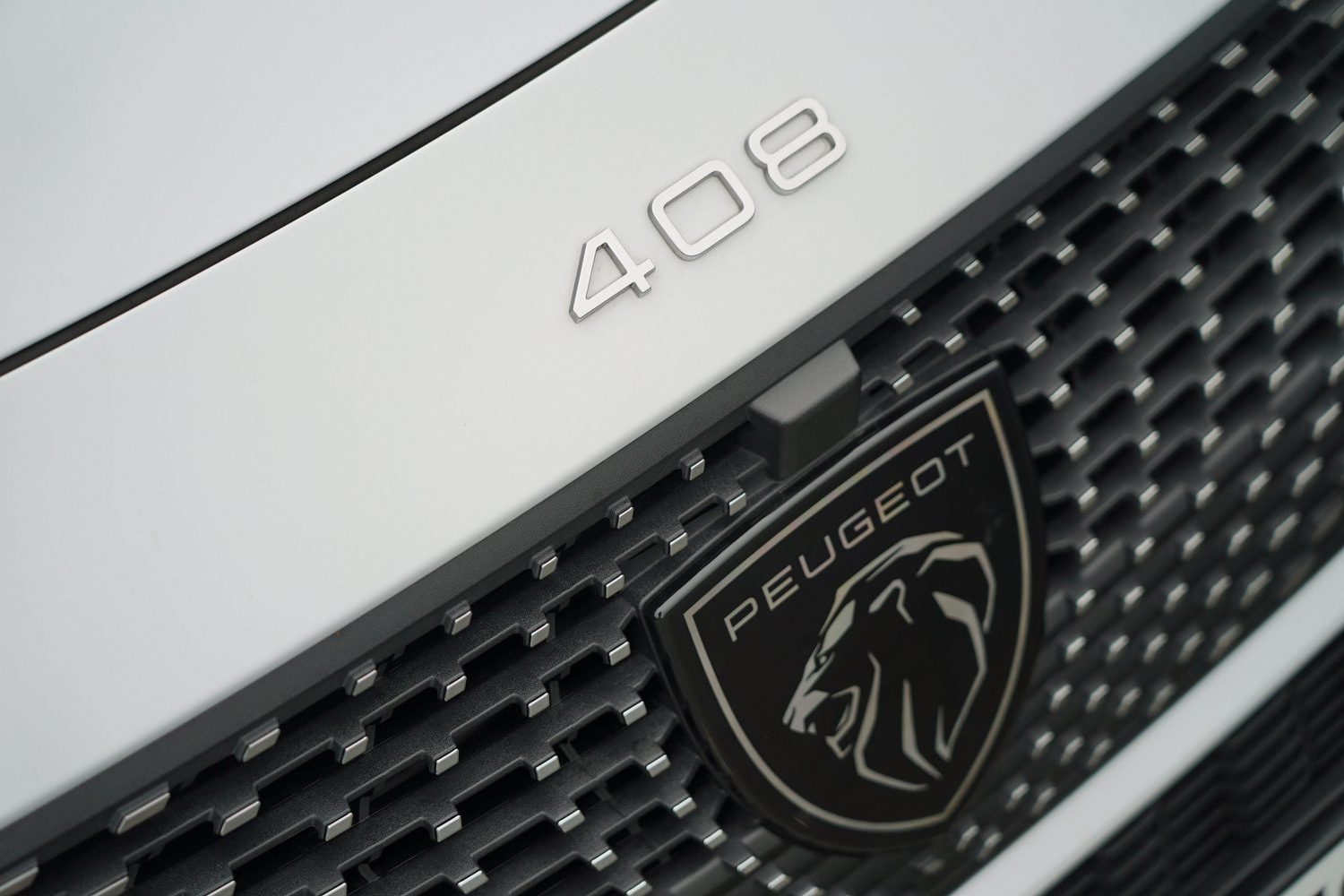
The 408 also has a more conventional grille than either of those cars, and it looks pleasantly glowering and mean at the front.
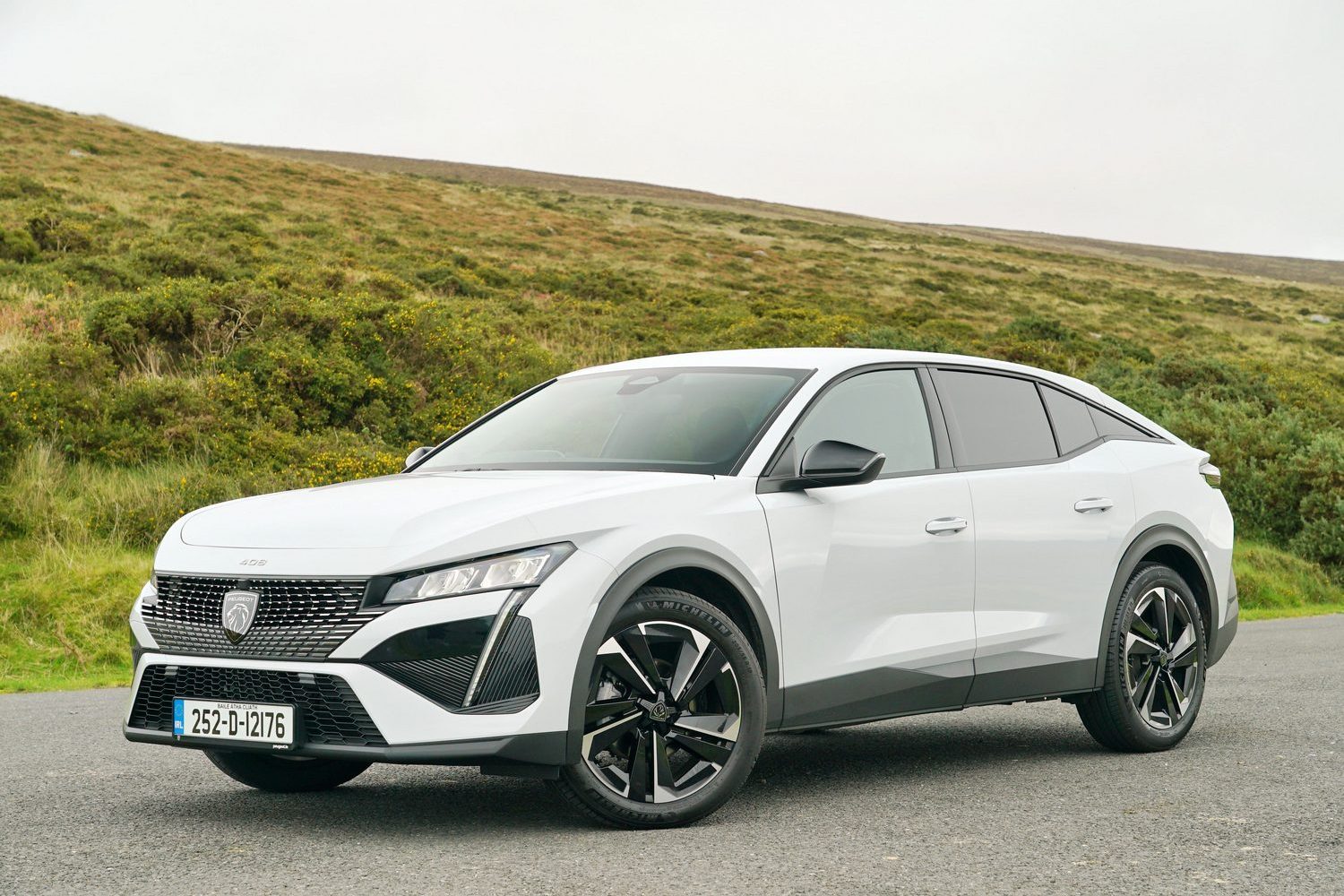
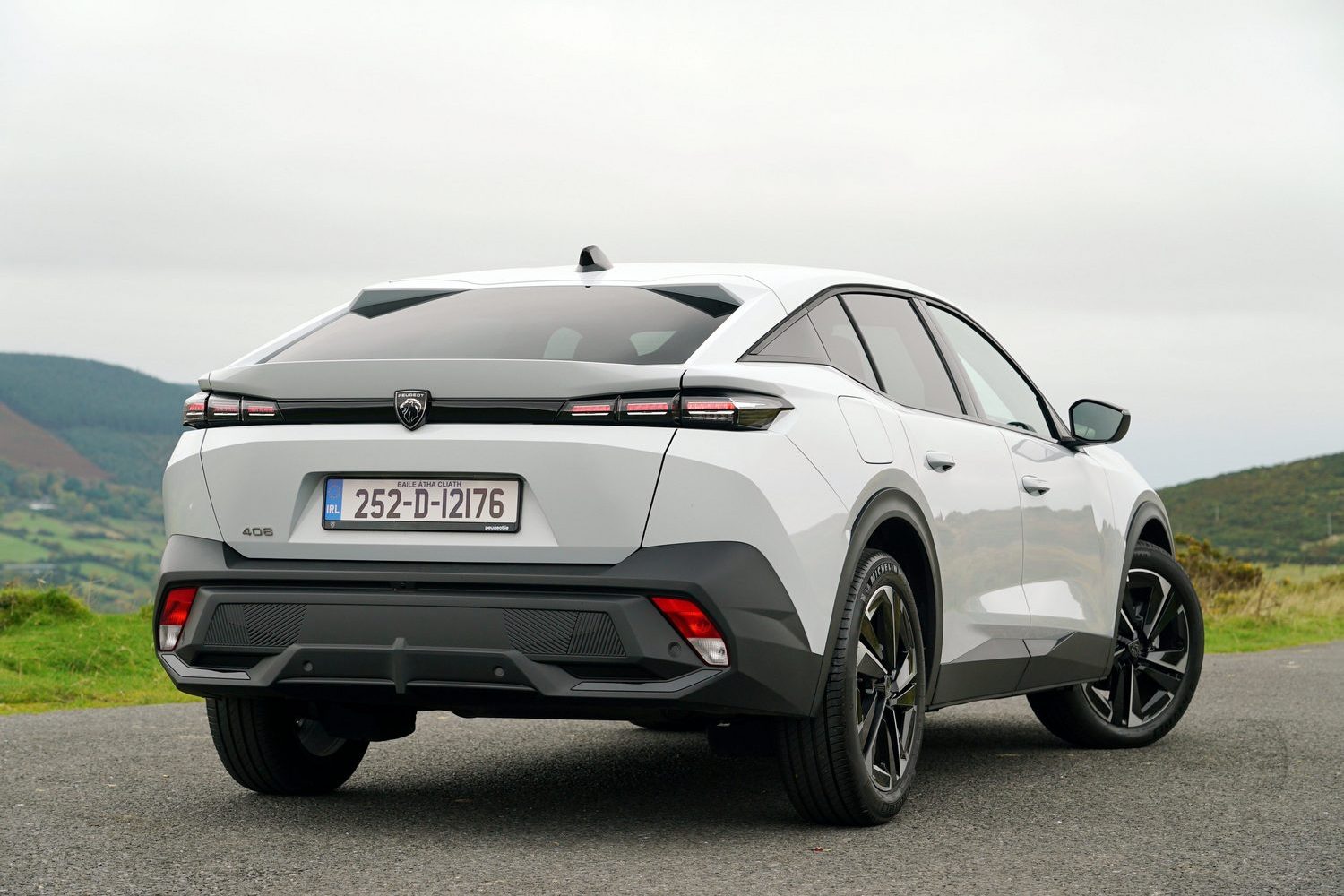
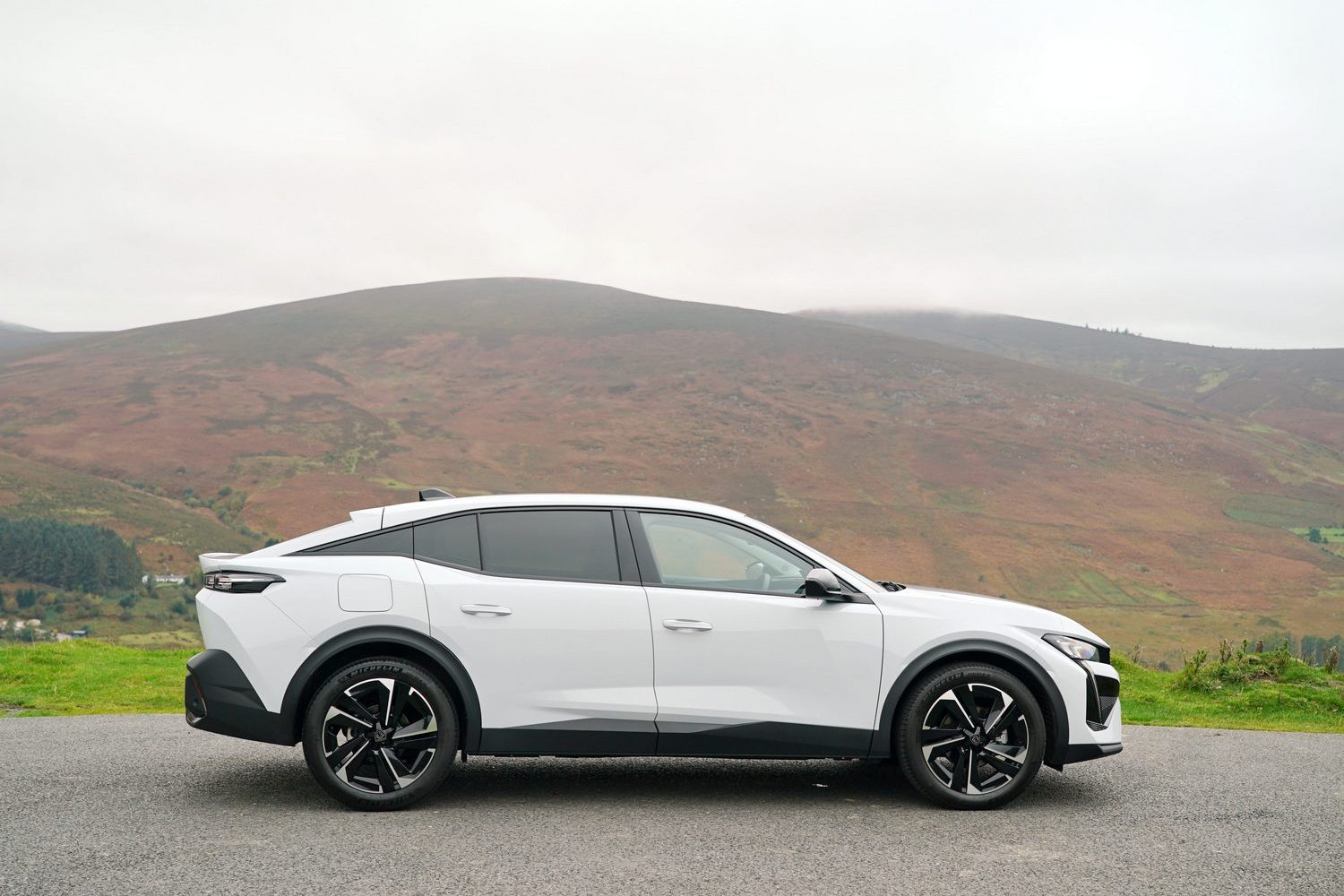
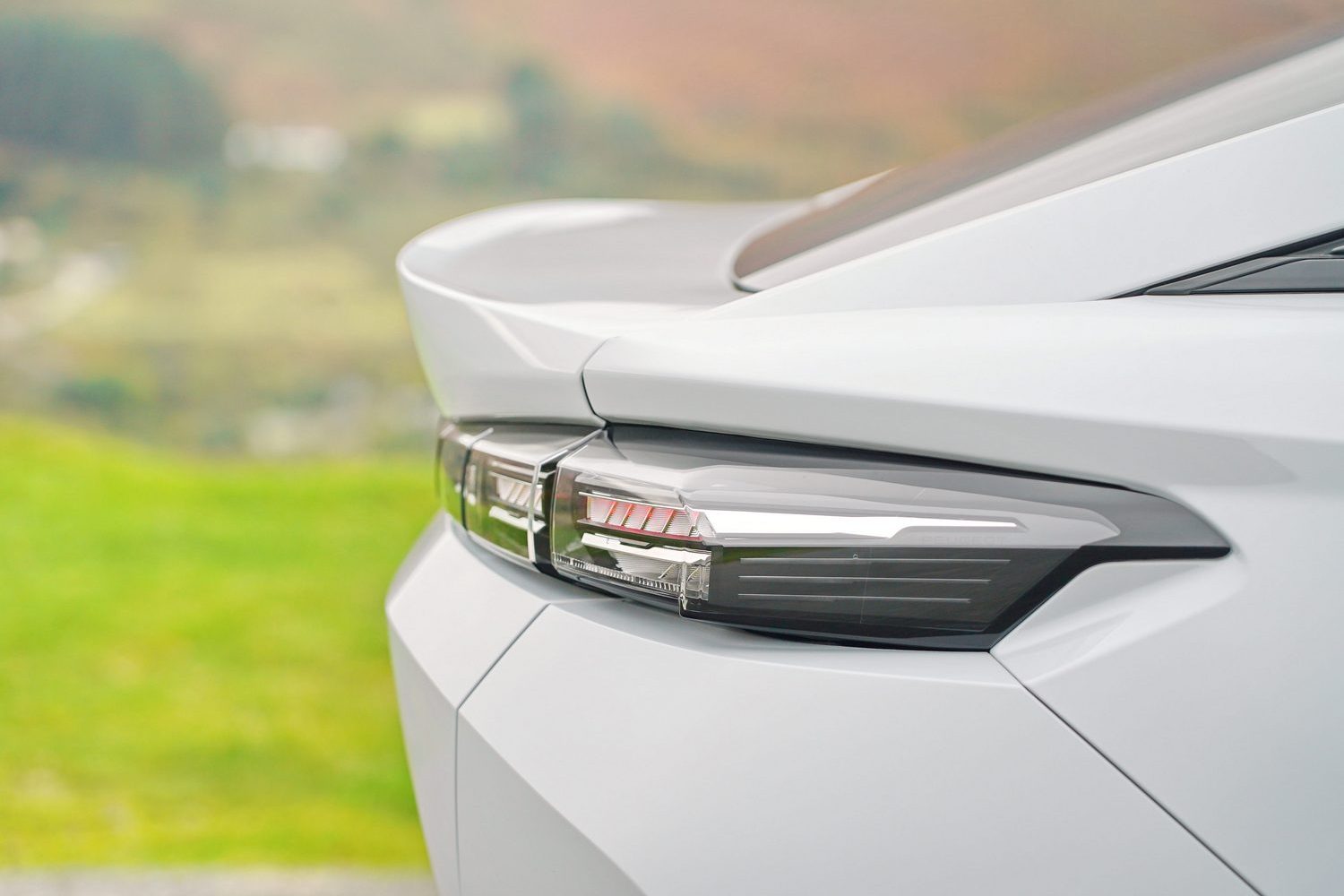
Down the sides, thanks to its relatively low roofline (relative to the rest of the bodywork, we mean, as the 408 has quite a bit of air under its chassis - around 200mm of ground clearance), it looks pleasingly sleek, and the fastback rear is nicely done.

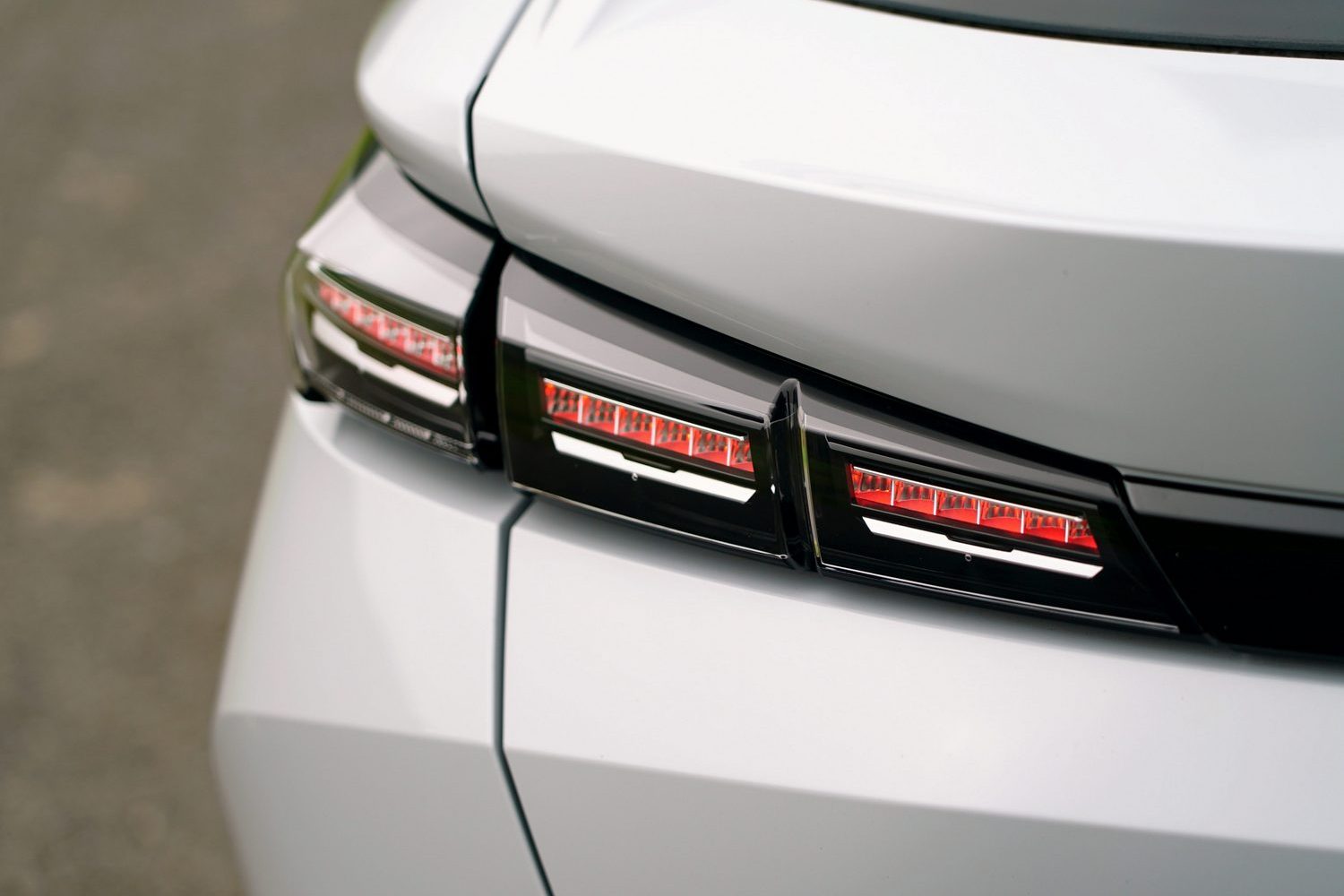
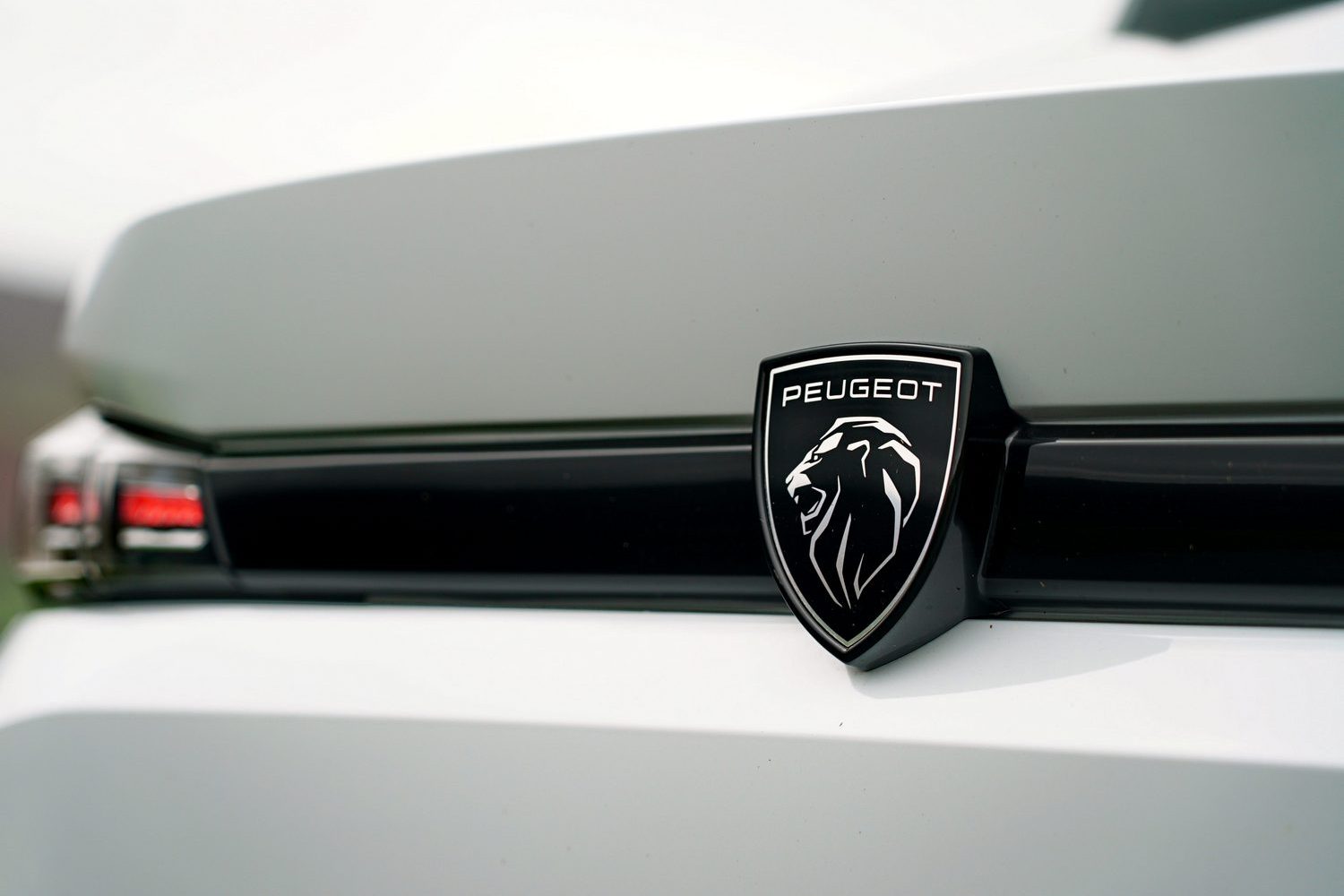
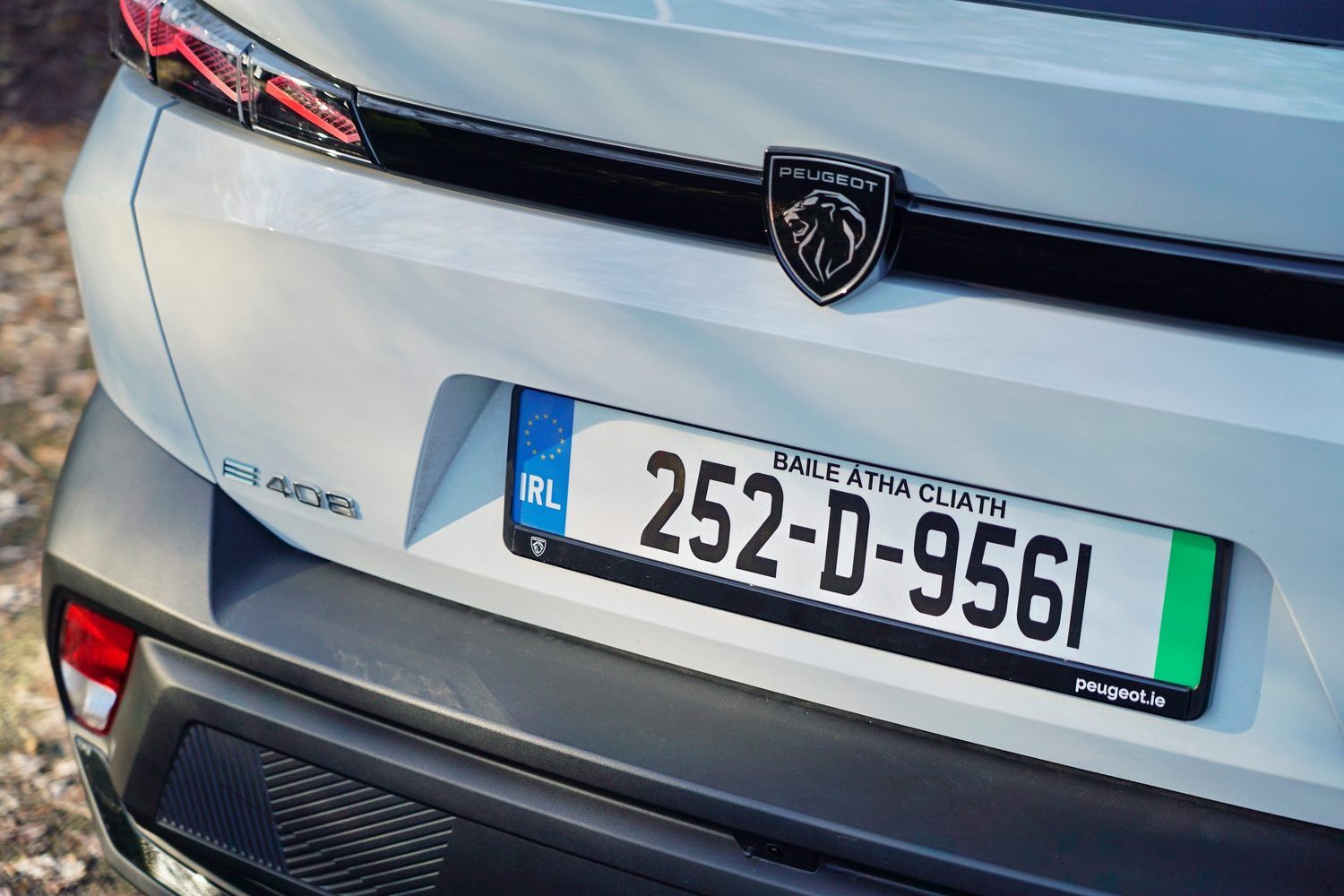
The only weird part is the rear bumper, which sticks out from the rear bodywork, almost like a pouting lip. It's finished in dark grey plastic, so it's always obvious and we can't quite decide whether it's awkward or distinctive.
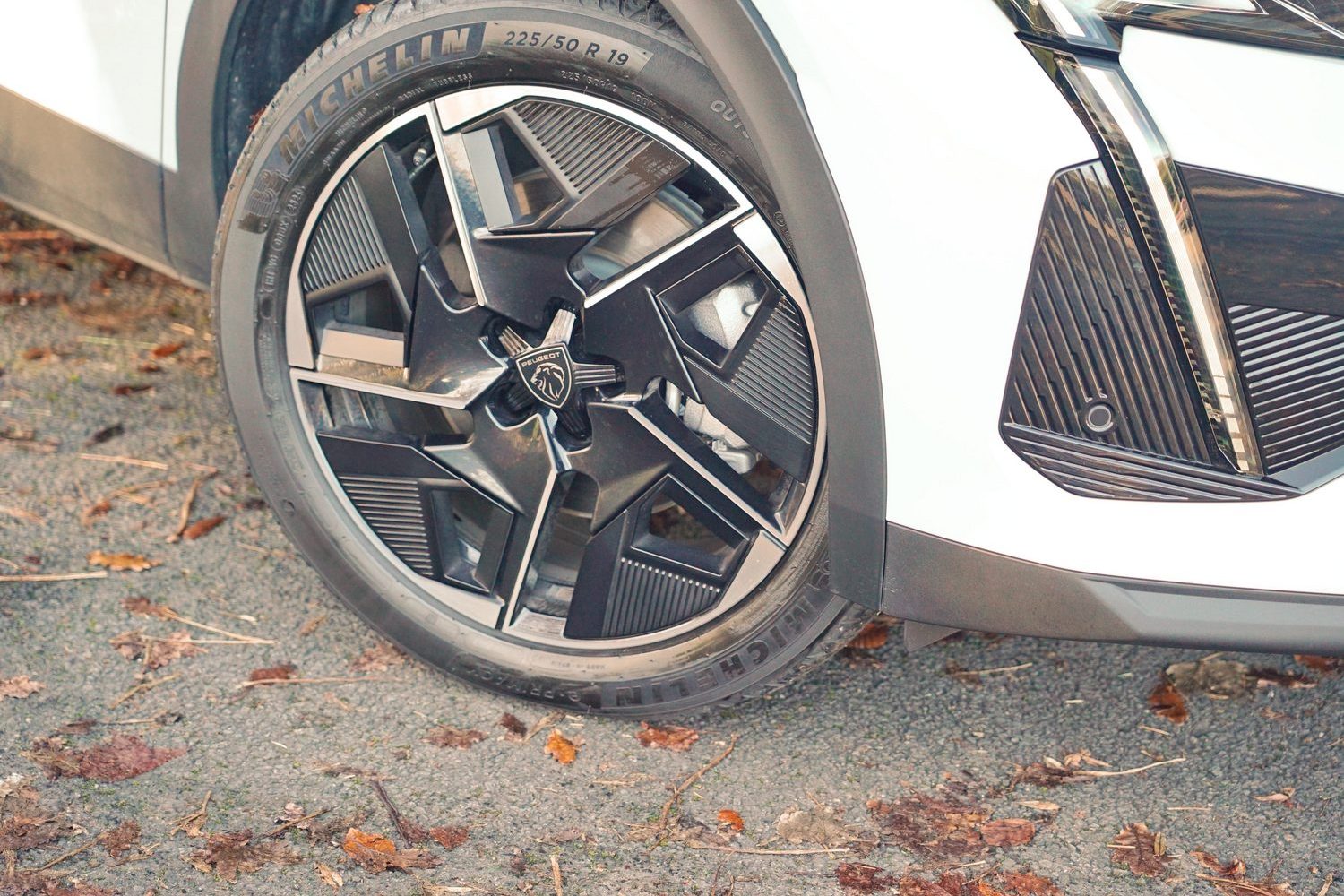
A set of 17-inch alloy wheels is standard on the hybrid-powered Allure, while 19-inch rims are fitted to all versions of the E-408. Those art part of the GT package for the hybrid as well, while there's a particularly stylish set of 20-inch wheels on the options list.

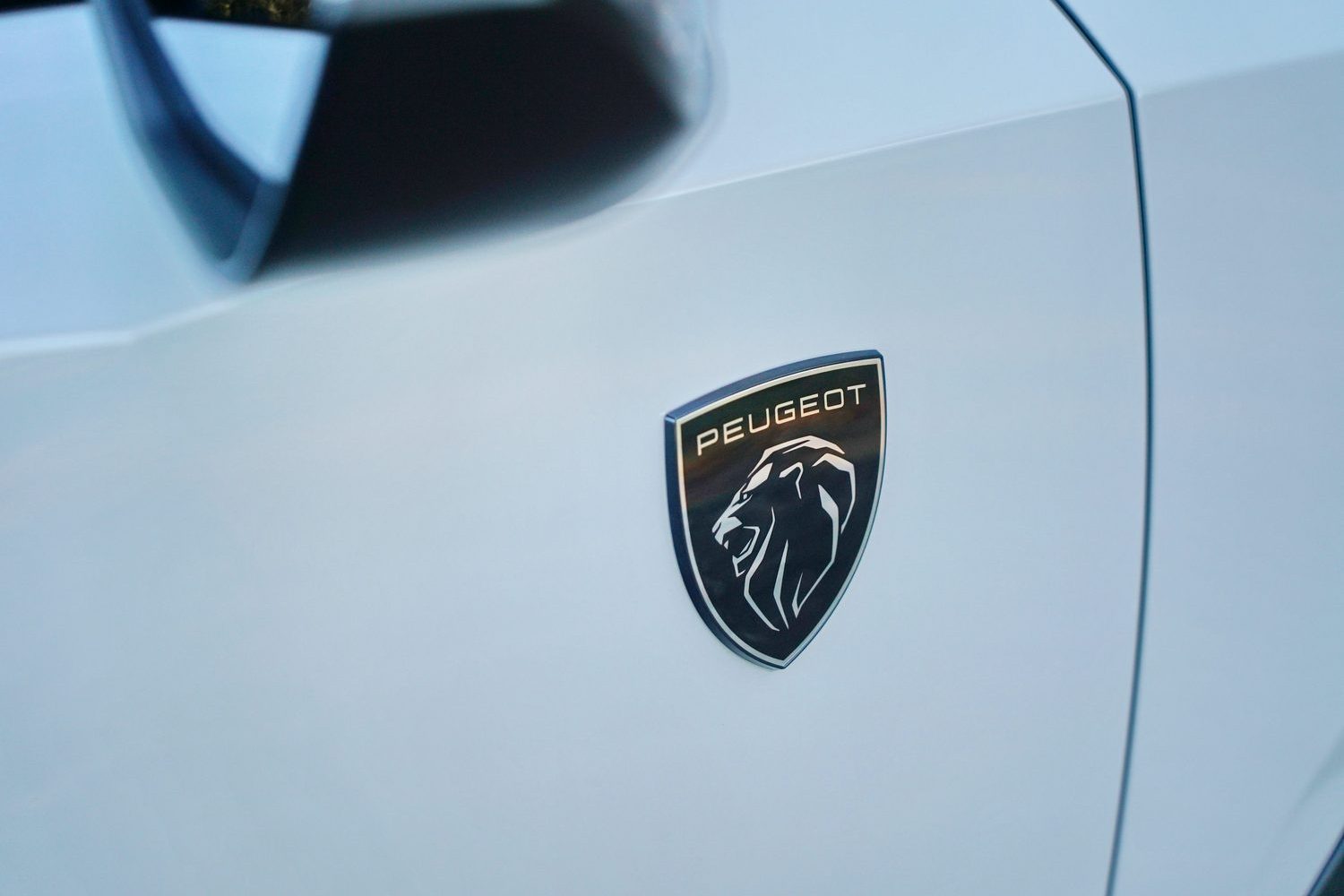
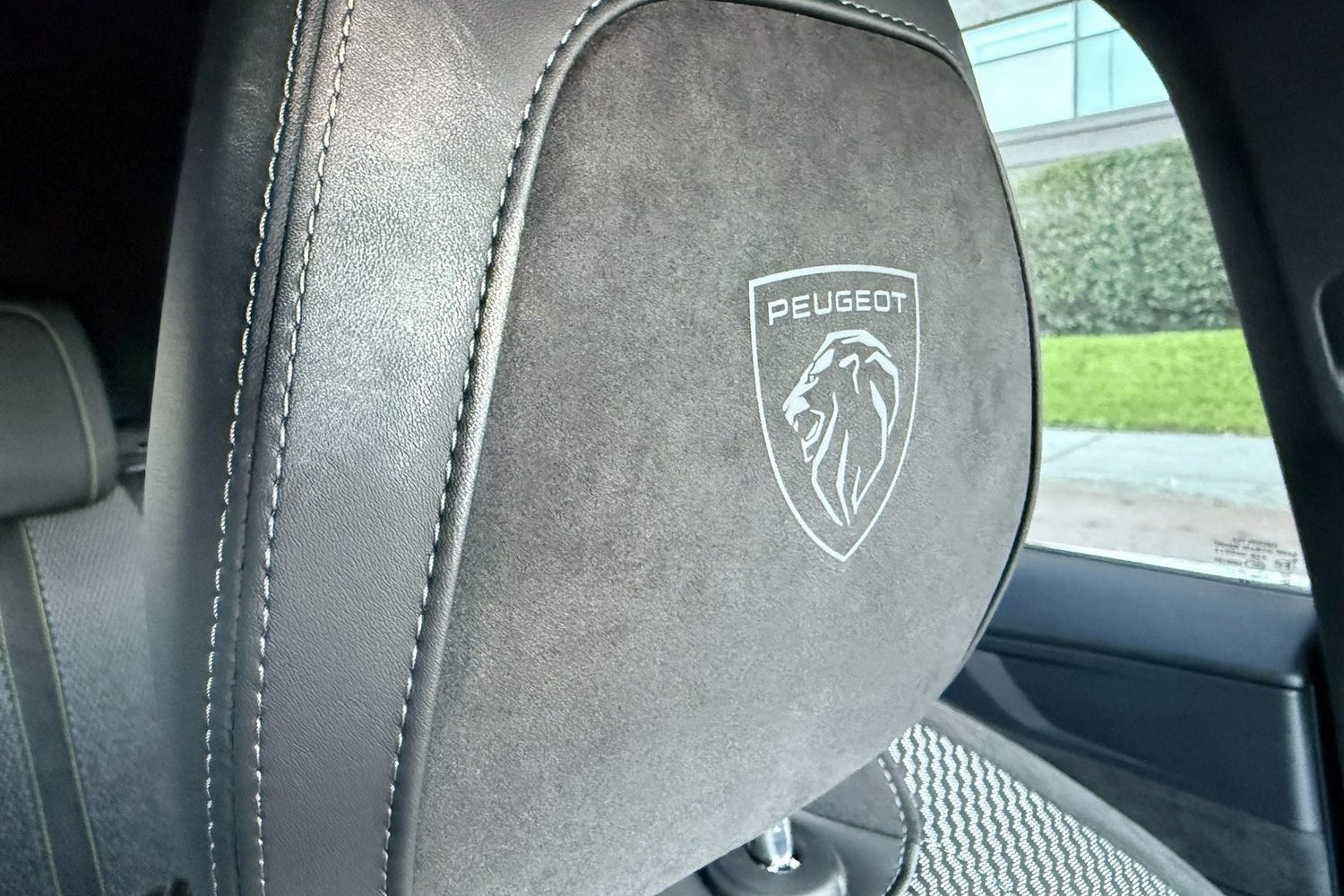
The GT car gets other bits and pieces to help it stand out, including higher-spec LED lighting with a fancy welcome sequence and Peugeot crests on the front doors.
Dimensions of the 2025 Peugeot 408
Length: 4,687mm
Width: 1,848mm (2,062mm including mirrors)
Height: 1,478mm
Wheelbase: 2,787mm
Paint colours for the 2025 Peugeot 408

Metallic paint comes as standard for the Peugeot 408, and the no-cost colour option is Okenite White, which was the colour of our test car. It's a darker shade than you might think, as it's closer to being an off-white pale grey, which you really only notice when you park next to another plain white car. You can also choose from Nera Black, Selenium Grey and Obsession Blue (not by Calvin Klein...), each of which cost €900. There's a final paint option, and it's the best one - Elixir Red 'premium' paint, priced at €1,125.
Interior, practicality, tech & comfort of the 2025 Peugeot 408
• Surprisingly practical
• Excellent comfort and quality
• Touchscreen could be better

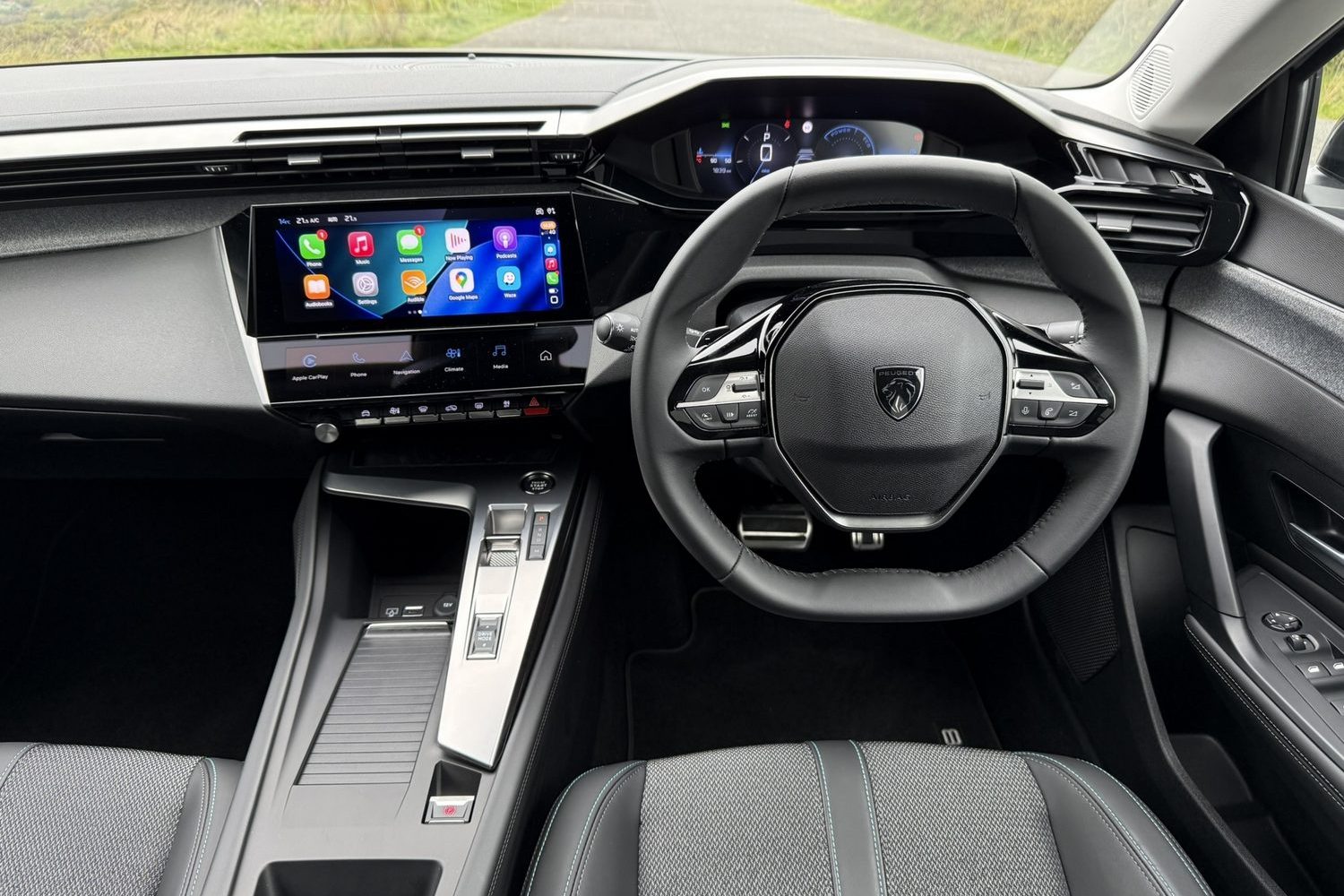
The 408's cabin is, to all intents and purposes, identical to that of the Peugeot 308 hatchback, as both cars are based on the same 'EMP2' platform, which will slowly but surely be phased out in favour of the more up-to-date 'STLA Medium' and 'STLA Small' architectures. Does that mean the 408 has an outdated interior? Not really.
Getting comfortable in the driver's seat - Neil Briscoe
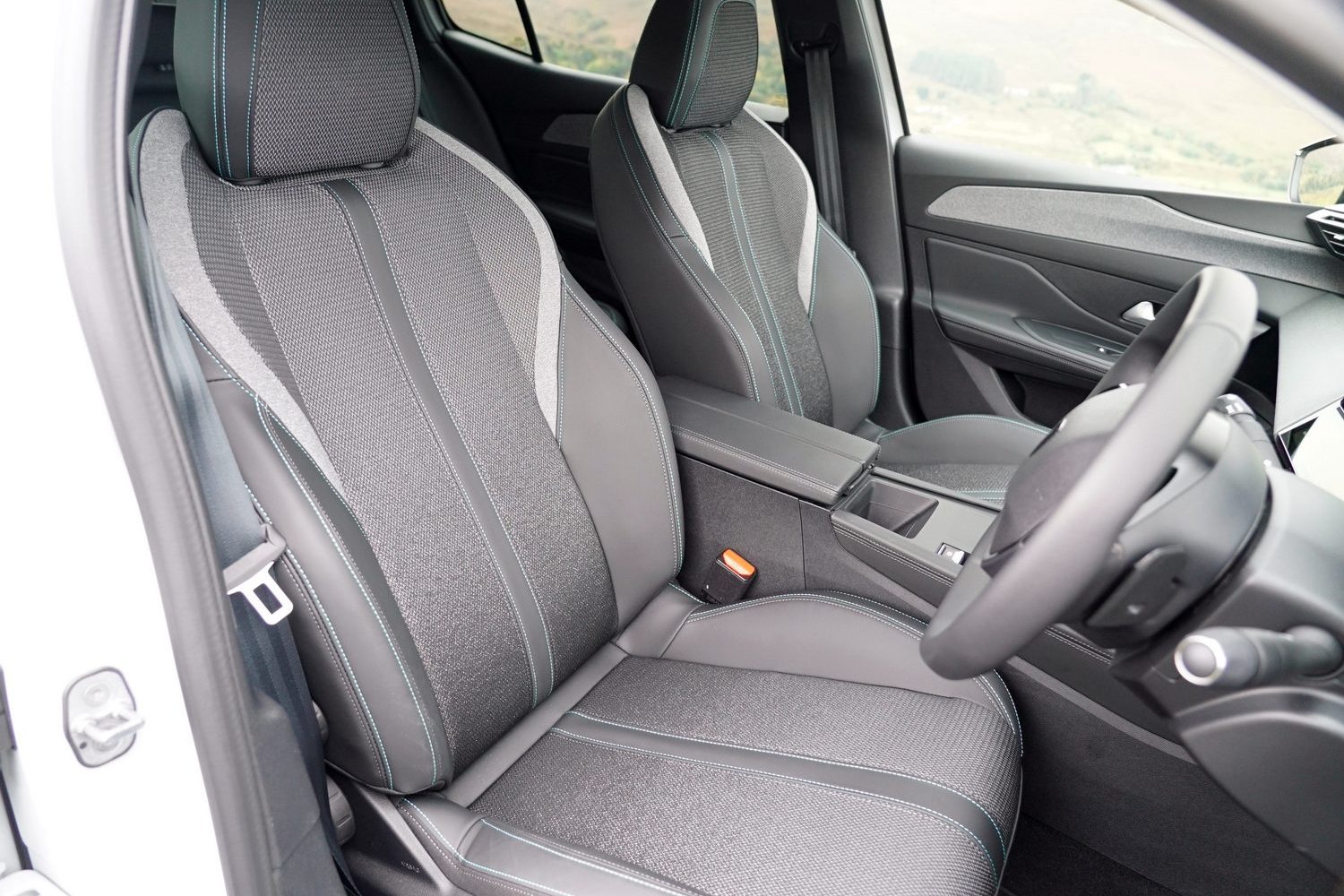
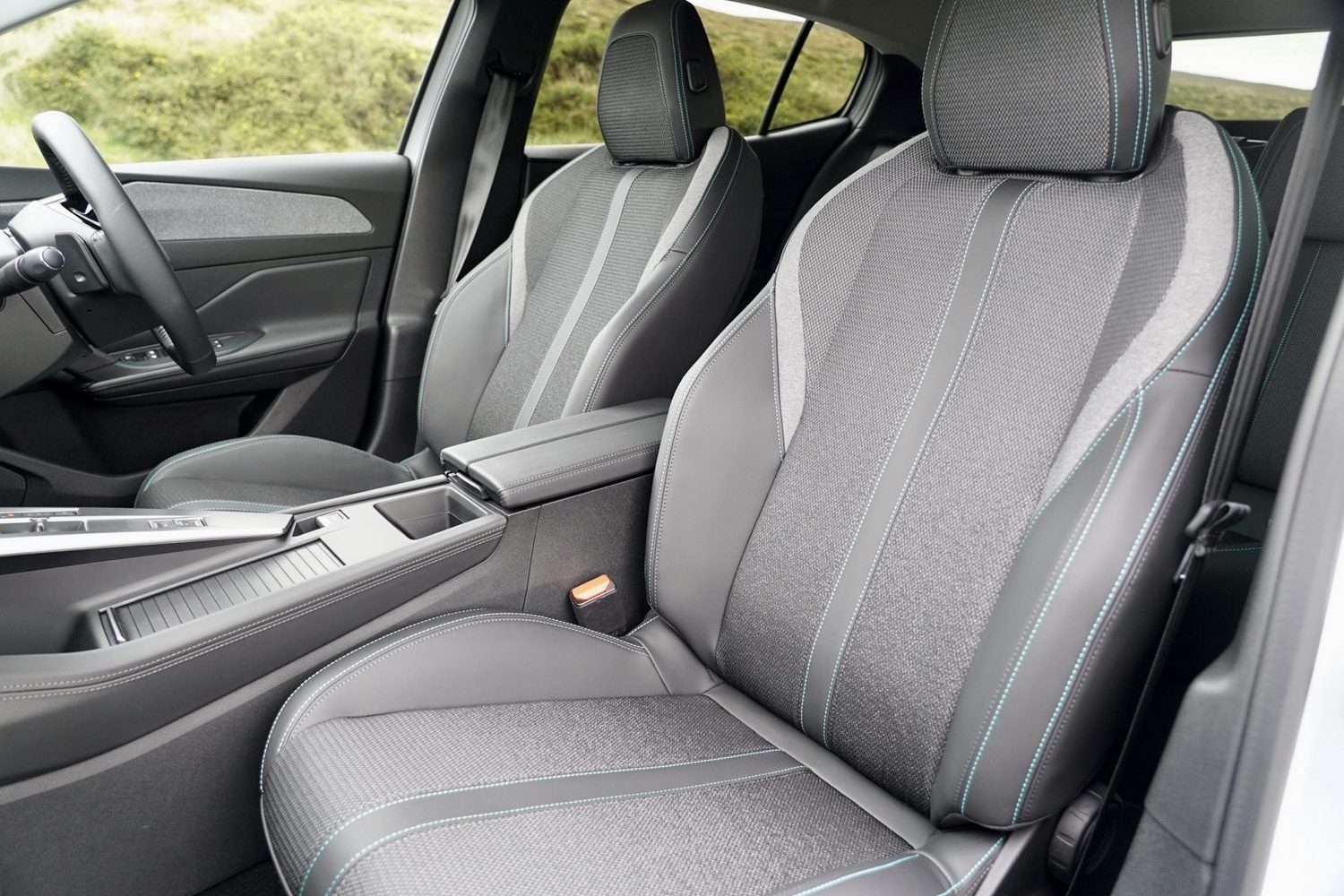
I learned to drive in a 1988 Ford Sierra, which had one of the lowest and most laid-back driving positions of any big family car, so the driving position in the 408 suits me perfectly. Your preference may differ, but I was instantly comfortable in the 408, with the driver's seat set to its lowest possible level (done manually) and the steering wheel almost at its lowest (not quite; I'd say I had it about 3mm off the bottom) and pulled all the way out on its reach.

With that, I had a pleasantly comfortable, laid-back driving position, and there's plenty of adjustment in that small, hexagonal wheel and in the seat itself - although if you're big like me, you might find that seat to be just a touch narrow.
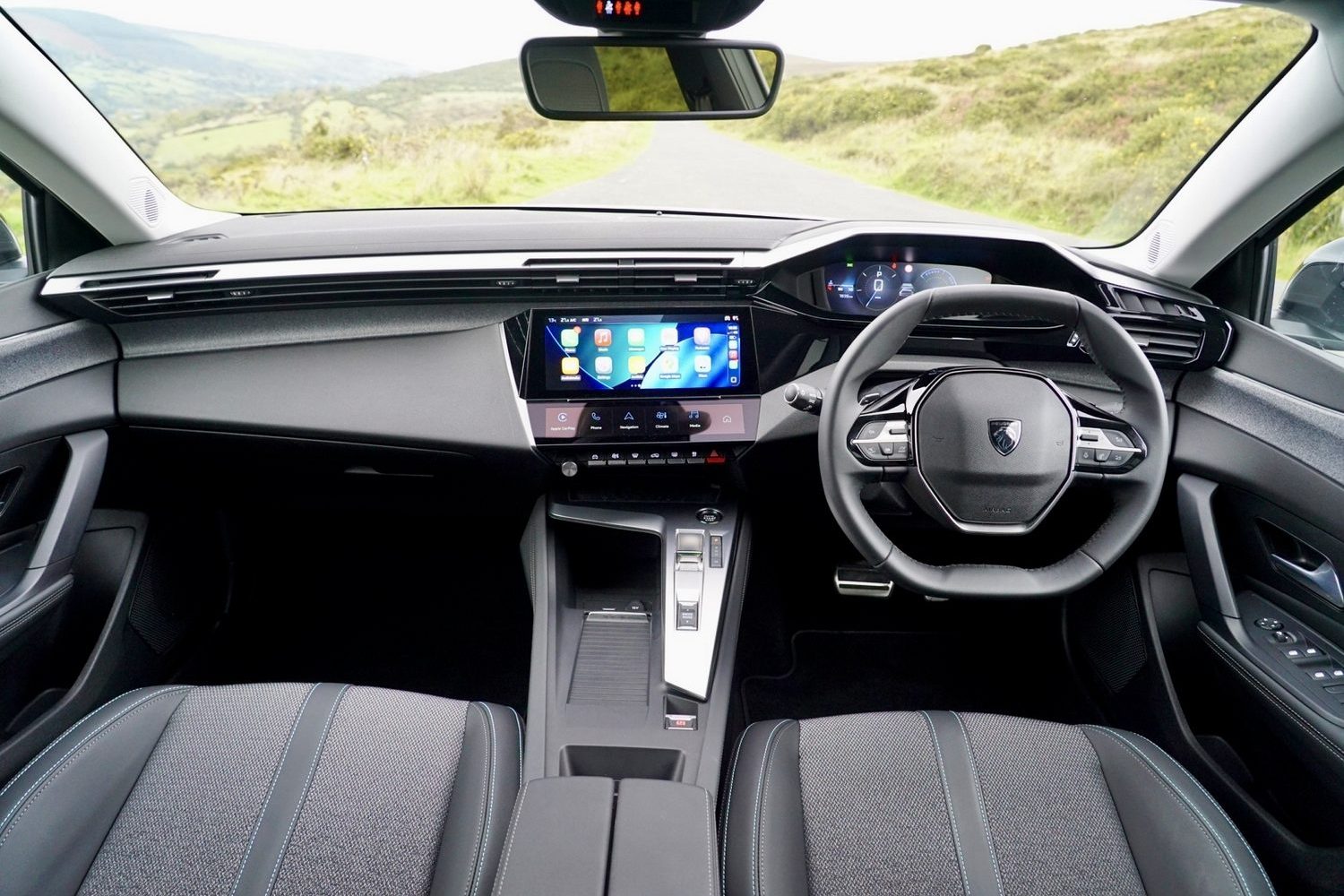
Not everyone gels with the small-wheel-high-up-instruments layout of Peugeot's 'i-Cockpit' layout, but I like it and find it works for me. It's definitely something you'd want to try before you buy, however.
Infotainment and technology
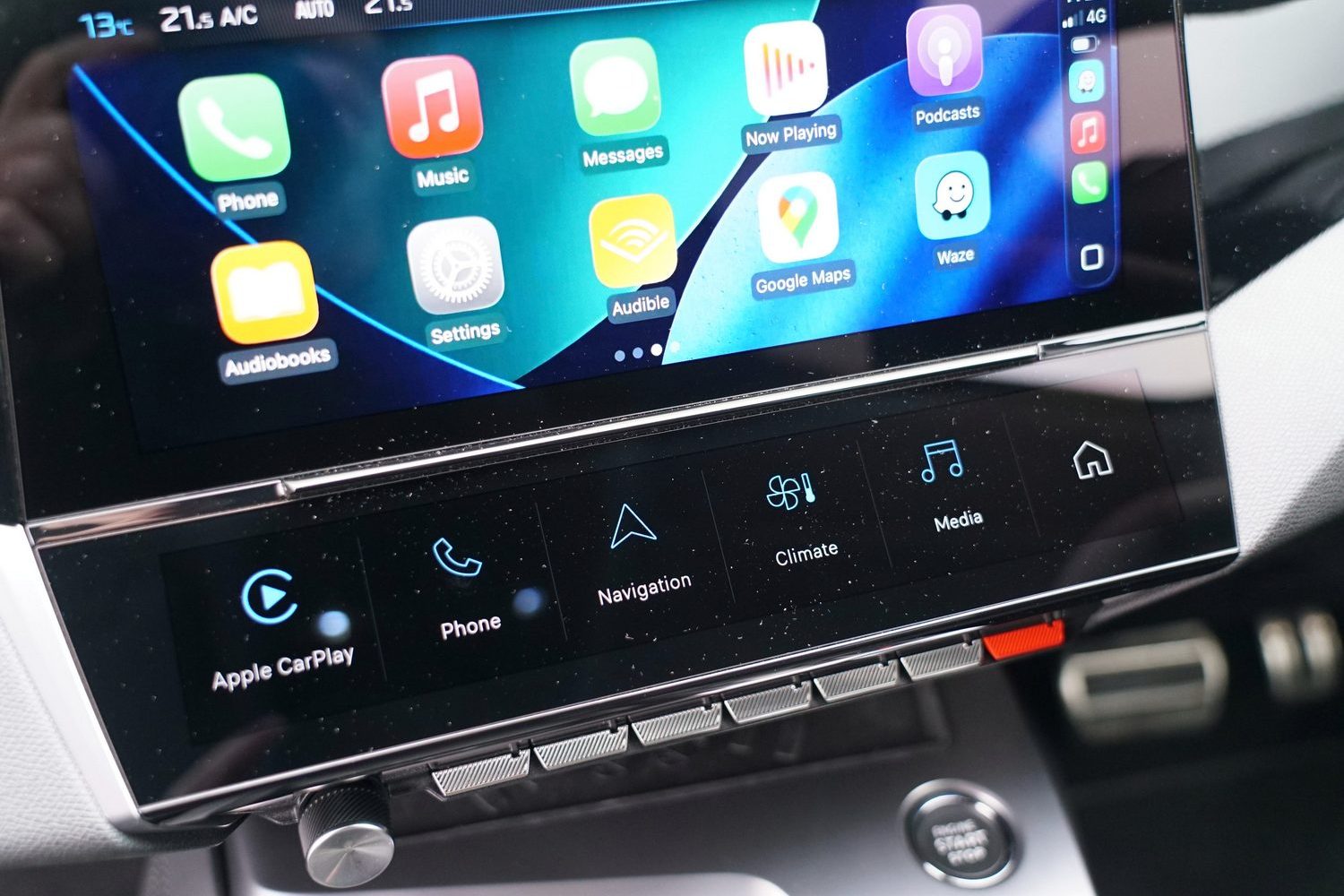
The 408's cabin certainly looks suitably techy, with its big ten-inch central touchscreen and a matching size for the digital instrument panel.

There's also the glossy-looking lineup of 'i-Toggle' touch-sensitive buttons below the main screen, which are customisable and offer fast access to commonly used menus in the infotainment.
However, the big screen has a somewhat byzantine menu layout which can be tricky to find your way around until you're used to it, and the i-Toggles are only a partial solution to that.

The screen itself is not quite as responsive as we'd like, and this is annoying when you're trying to adjust the cabin temperature on the move.
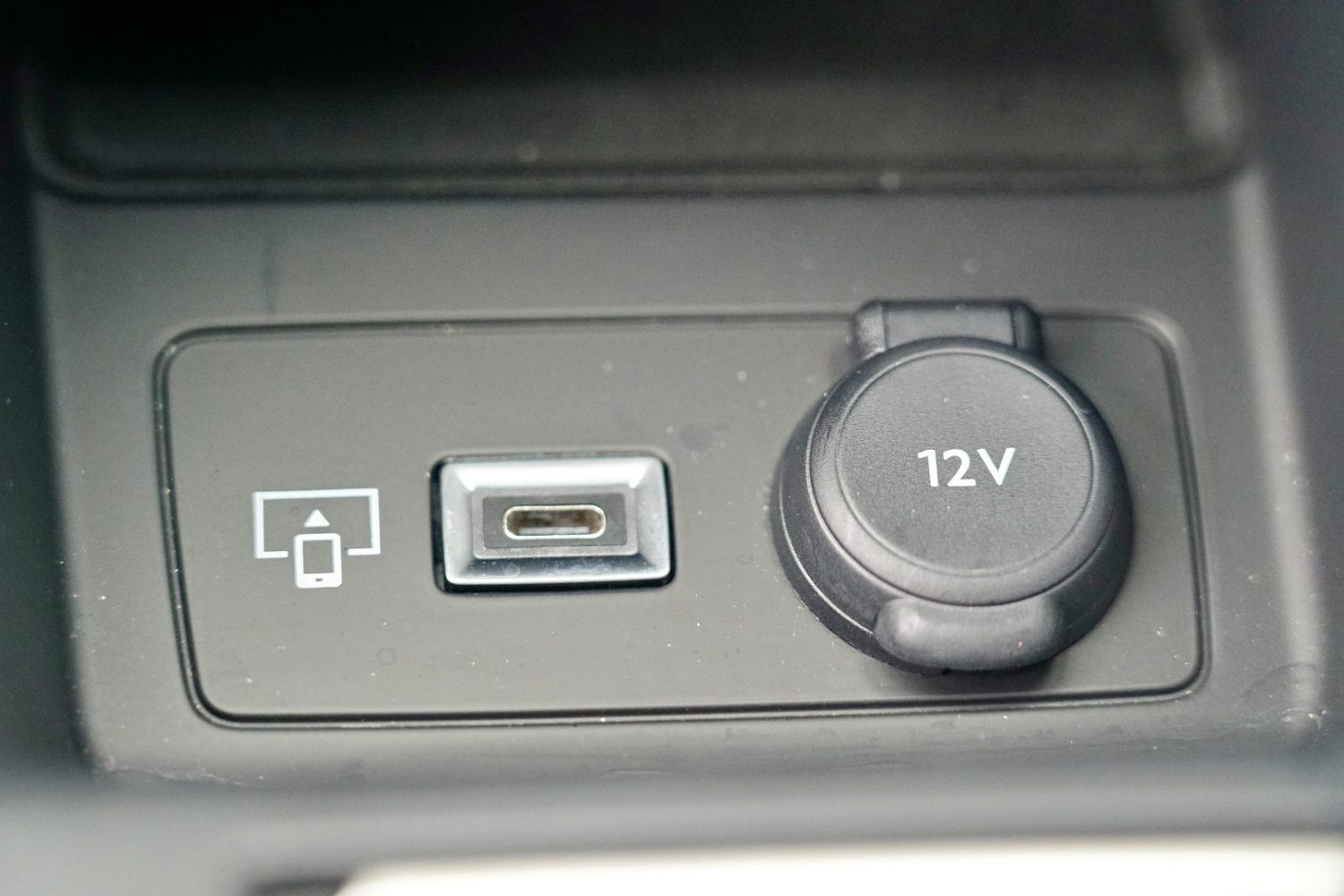
While there are some actual physical buttons below the i-Toggles, which activate the likes of screen demisting and more, to change the temperature up or down, you have to use the screen, which means navigating away from what you're currently using - such as Apple CarPlay - and going to the climate control menu, then tapping the screen to change the temp.
However, the screen doesn't always respond instantly, so you often have to tap again to get to the desired temperature, which involves more time with eyes off the road. It's frustrating.

Basically, the newer infotainment system in the Peugeot 3008 and 5008 is vastly superior to this.
Practicality around the cabin
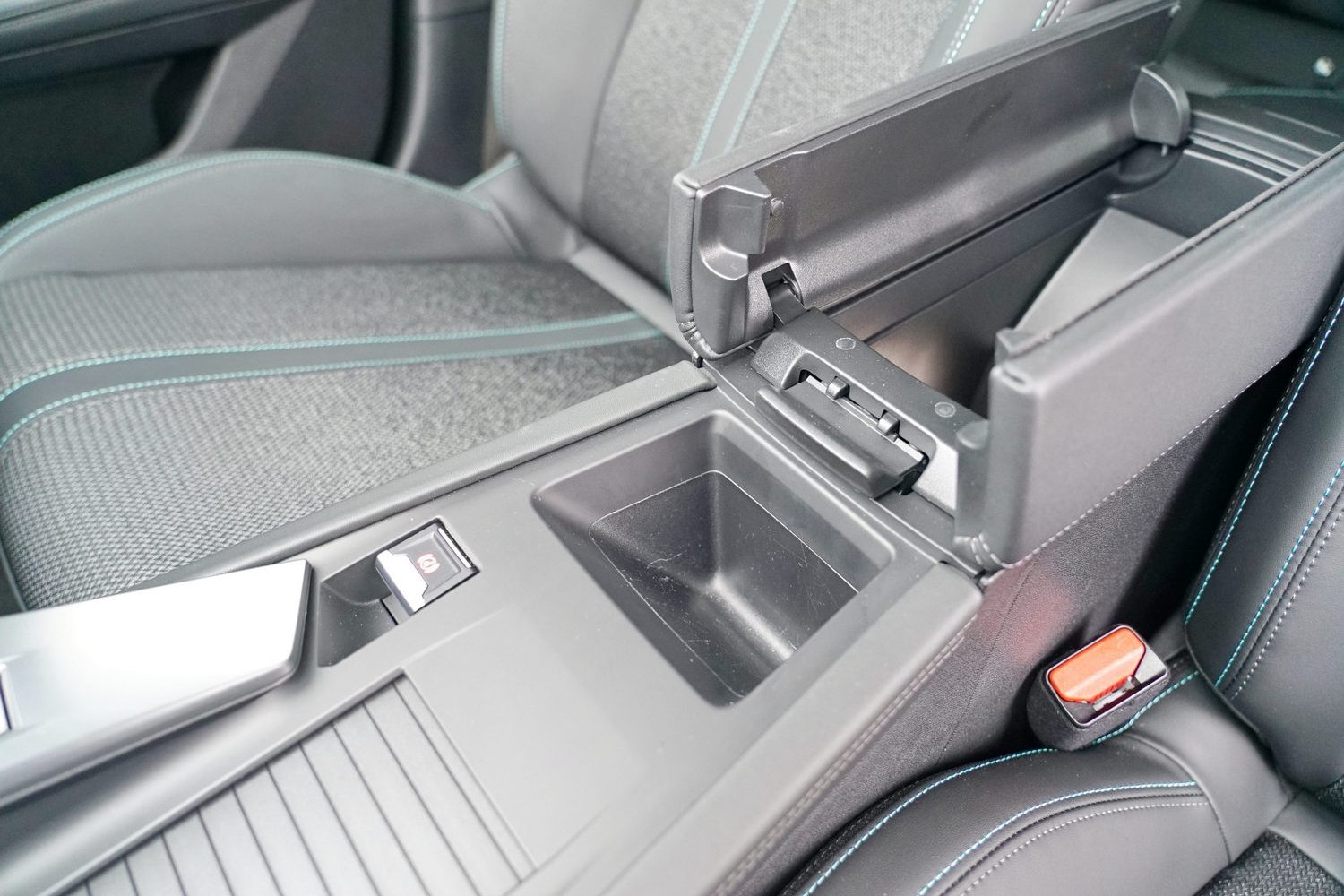
The 408 might be low slung, but its cabin is fairly practical. There are two cupholders under a sliding cover on the asymmetrical centre console, and in front of those space for storage, with an optional wireless phone charger above that space.

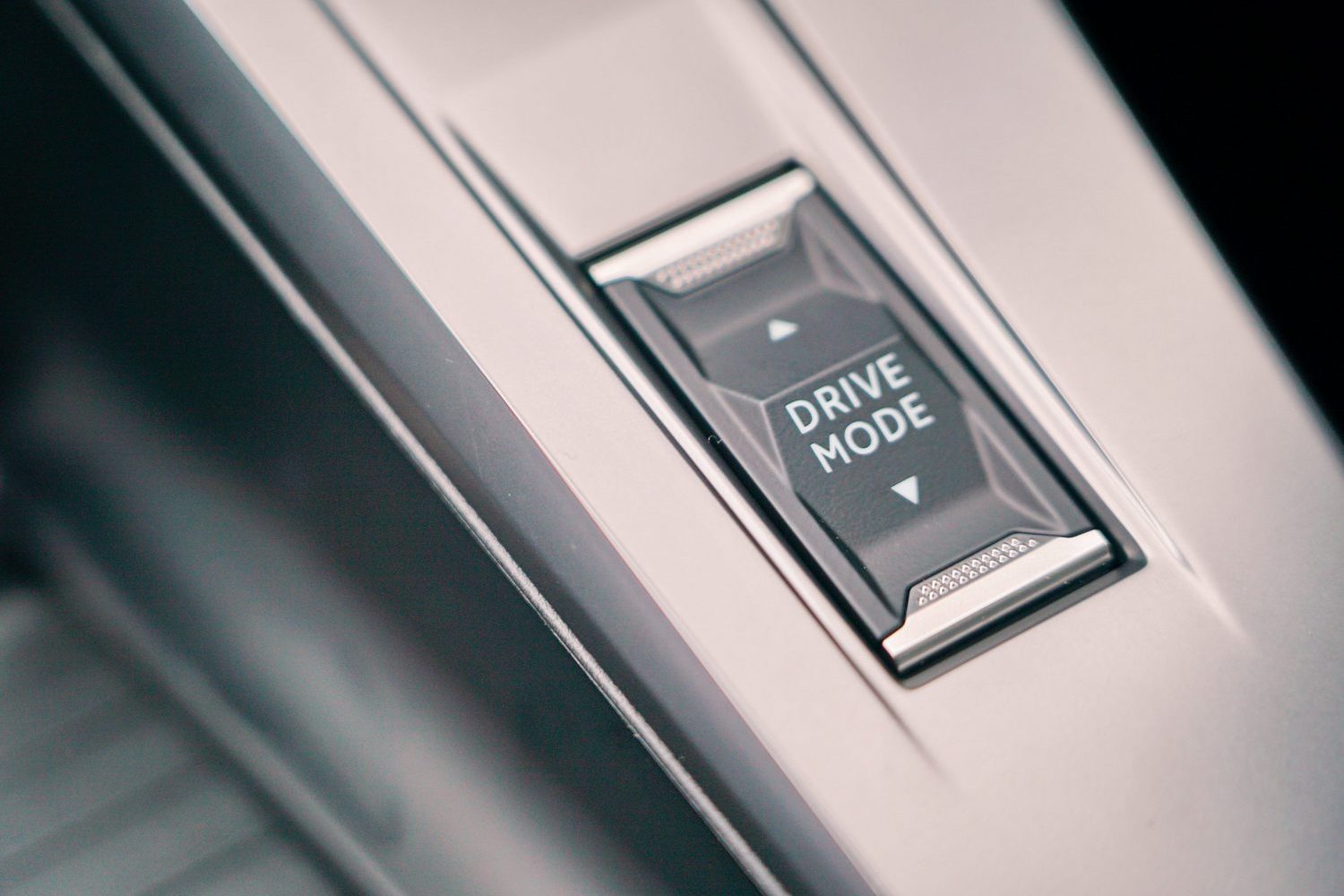
Behind those and the toggle for the drive selection and the button for the parking brake, there's a small, angled space which is an ideal dumping ground for keys or for mobile phones (not both, though - scratches ahoy).
The armrest lid is 'butterflied' so that it has two sections which open outwards, meaning your passenger can root around in the useful space below while you keep your side shut. The door bins are also useful, but they're not massively wide, so bulkier drinks bottles might be a bit of a squeeze.
Rear-seat passenger space

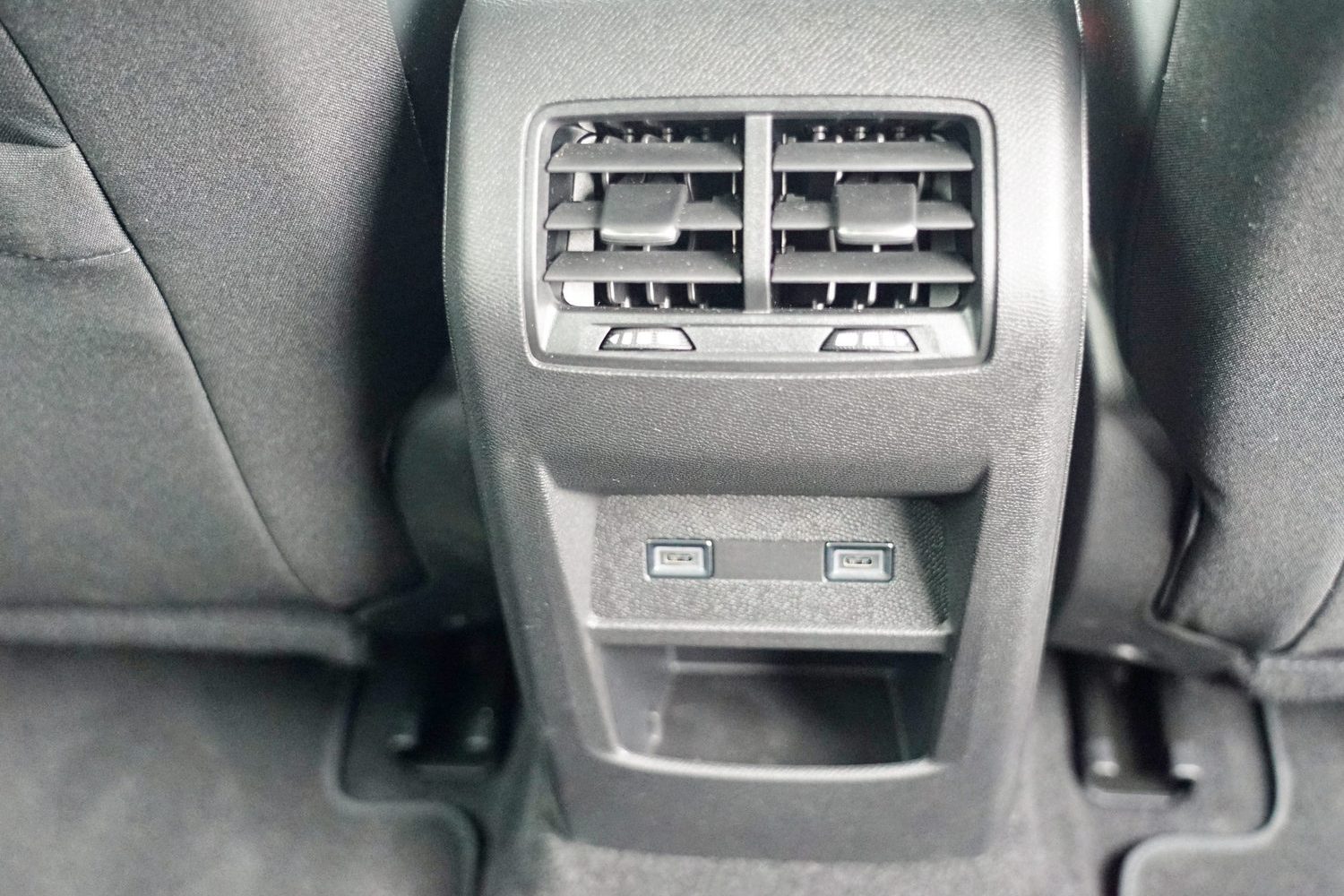
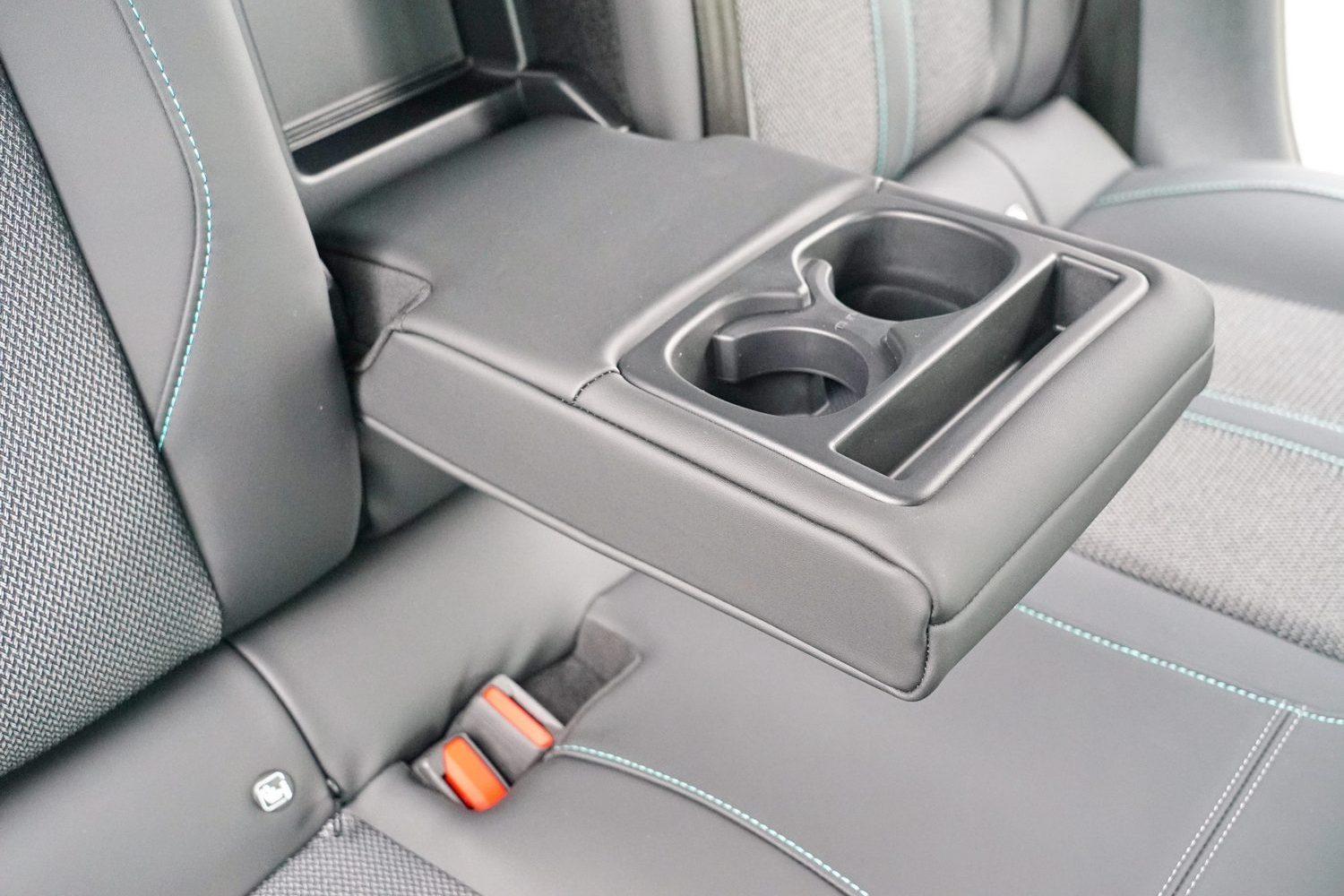
Here's where the 408 really surprises - space in the back is fine. OK, so it's only fine, and not especially generous, but there is adequate rear kneeroom even for taller adults, and headroom is only going to be a problem for the exceptionally tall.
Fitting child seats to the Peugeot 408

The 408 gets two ISOFIX points, in the outer two rear seats, which means that if you need to fit a third child car seat, it's going to have to go in the front passenger seat using the seatbelt. The rear door openings are a touch shallow if you're used to a taller SUV, and big, bulky rear-facing seats might be a bit of a squeeze. The centre rear seat is just about wide enough for a booster cushion to fit in, though.
Boot space in the Peugeot 408
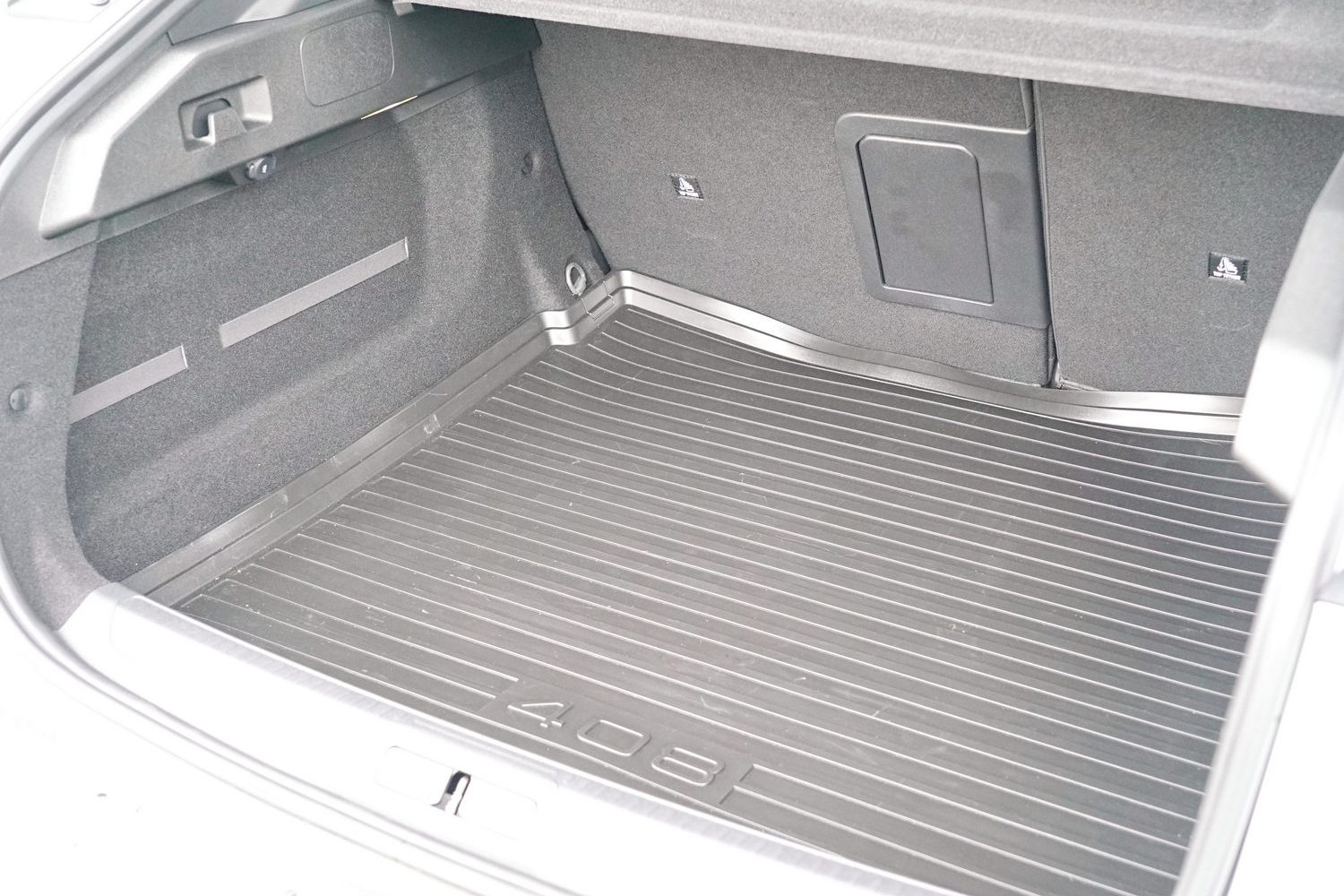
In Hybrid 145 form, the 408's boot measures a fairly generous 536 litres up the two-part rigid luggage cover, which means that - as with rear seat space - the 408 is more practical than you might expect.

That volume does shrink a bit if you specify your 408 with the optional Focal stereo, dropping to 508 litres.
The all-electric E-408 offers 471 litres of boot space because of the battery's incursion. The boot itself is practical, with no loading lip, and there are handy levers inside the boot for folding down the back seats, which expands the available space to a handy 1,610 litres for the Hybrid, and 1,545 litres for the EV.
However, the seatbacks don't fold flat, leaving a slope upwards once you're past the boot floor itself. As compensation, there are some handy moulded-in bag hooks, as well as a netted area to the right-hand side, and an elastic strap for securing taller items.

There's also a load-through flap for anything long and narrow.
Towing with the Peugeot 408
Of all the 408 versions, the electric E-408 is the one you simply can't tow with - it has no rated maximum towing weight. The Hybrid 145 can manage a maximum braked trailer weight of 1,300kg.
Safety in the Peugeot 408
Tested by Euro NCAP in 2022, when it was first launched, the 408 was given a four-star score for safety, with a 76 per cent rating for adult occupant protection, 84 per cent for child occupants, 78 per cent for vulnerable road user protection and 65 per cent for its active safety assistance systems.
Performance of the 2025 Peugeot 408
• Hybrid and electric available
• No diesel option
• PHEV not sold in Ireland

Buyers can choose from two powertrain options for the 408, starting with the 145hp Hybrid model, which uses a turbocharged 1.2-litre petrol engine mated to a 21kW electric motor mounted in the standard-fit six-speed dual-clutch automatic transmission.
It drives the front wheels and there is no option for a four-wheel-drive 408.
Or there's the all-electric E-408, which couples a front-mounted 210hp electric motor with a 58.2kWh battery pack. Ireland doesn't get the plug-in-hybrid model, which is available in other markets.
Driving the Peugeot 408 Hybrid 145 on Irish roads - Neil Briscoe
For the first few seconds, I was worried that the 408 Hybrid was going to be a disappointment. At very low speeds, its suspension seems to rumble and rock too much over small imperfections, and with a long week featuring lots of urban mileage ahead of me, I fretted that the sleek Peugeot was going to annoy me with its ride comfort.
I needn't have worried. Yes, that low-speed grumbling is there, but it smooths out considerably at any speed above 15km/h or thereabouts, and the 408 proves to be a pretty easy-going car when it comes to comfort, making maximum use of its generous ride height. Also, our test car sat on the larger wheels of the GT model, so if comfort is your priority, perhaps stick to the standard rims.

I needn't have worried. Yes, that low-speed grumbling is still there, but it smooths out considerably at any speed above 15km/h or thereabouts, and the 408 proves to be a pretty easy-going car when it comes to comfort, making maximum use of its generous ride height.
It's also quite good fun. While you'd never accuse the 145hp hybrid system of being especially quick, there is a useful low-down kick of fill-in torque from the electric motor while you wait for the little three-cylinder engine to get up to speed, and so the 408 Hybrid feels brisker than its claimed 0-100km/h time might suggest.

The small steering wheel makes the nose feel initially more agile and 'pointy' than it really is, but while the understeer steadily builds up from the turn-in point, overall, the 408 feels really rather engaging and enjoyable to drive.
There's not quite enough steering feedback for it to count as truly entertaining, but it's far from dull, and you can definitely enjoy and exploit it on a twisty road, helped by the fact that it weighs a relatively trim 1,400kg at the kerb. The brakes feel a touch soft, for our liking, though, and could do with a little more bite.
On long runs, there's a touch of road noise when cruising on the motorway, but it's not especially loud, and you'll knock off a long journey with ease in the 408. It might be worth the extra €1,300 and the slight drop in boot space to get the Focal stereo if you're on the motorway a lot.
Driving the Peugeot E-408 on Irish roads - Shane O' Donoghue
The E-408 is noticeably quicker than the hybrid to drive, as it should be with over 200hp and more torque available as soon as you touch the accelerator pedal, though it's no sports car in disguise. More important than the outright speed is the delivery of the performance, which is measured and smooth at all times. No matter how good the hybrid's automatic gearbox is, it can't compete with the single-speed transmission of an EV when it comes to seamless acceleration

The extra weight of the E-408 seems to help with ride comfort as it's noticeably better in that regard than the hybrid, even over poor surfaces.
We also found that it was well worth selecting the Sport driving mode as it made a noticeable difference to the steering weighting and response to the accelerator, enhancing the driving experience without any obvious downside.
Fuel economy, range, battery, charging and running costs of the 2025 Peugeot 408
• Hybrid has solid economy
• No electric range for the Hybrid
• E-408 is efficient and light

The E-408 uses a compact, light battery of 58.2kWh usable capacity, helping to keep the car's weight down to about 1,800kg when many EVs are over two tonnes. Peugeot quotes up to 453km on a full charge.
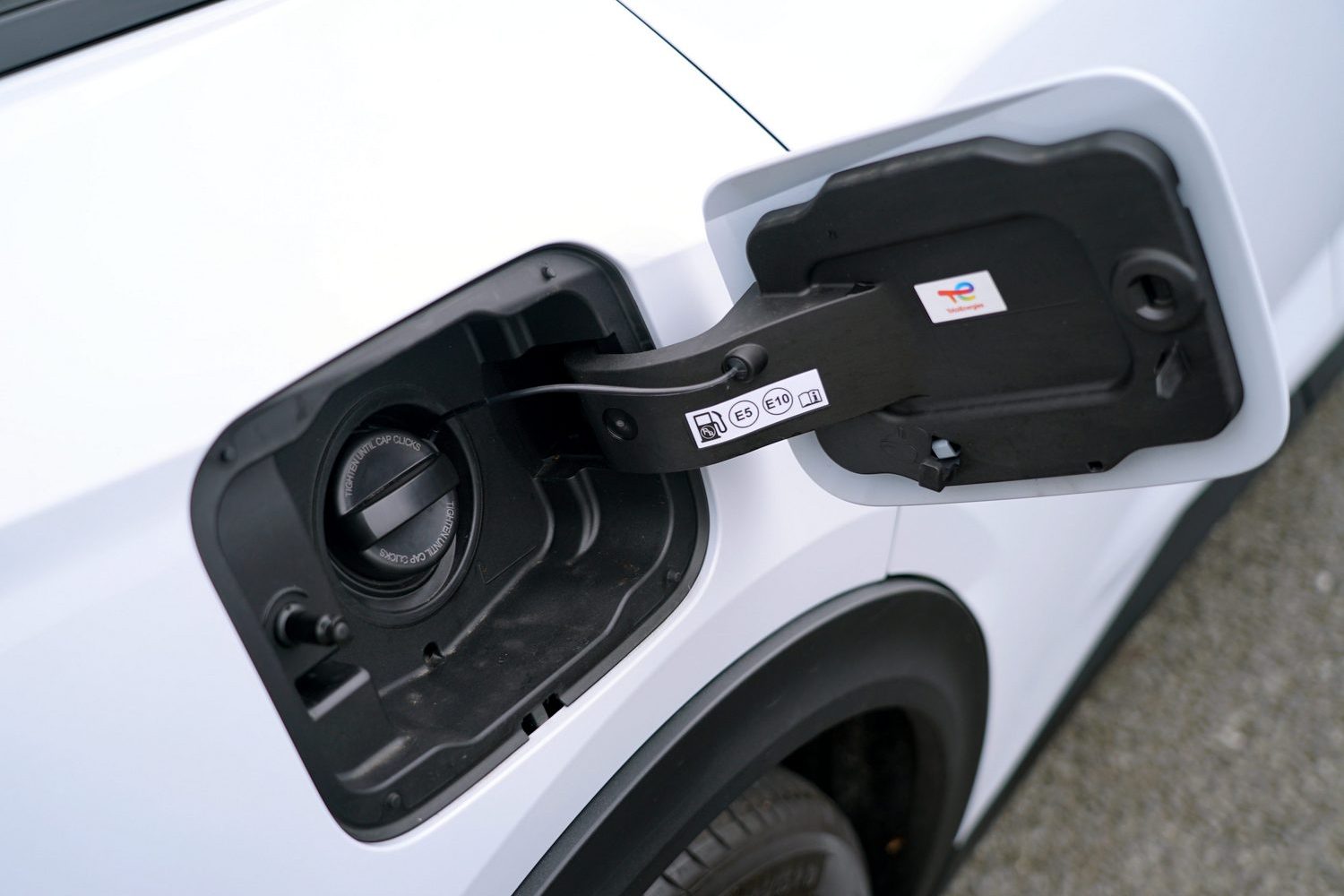
The 408 Hybrid 145 has official CO2 emissions figures of 114-117g/km and fuel consumption of 5.1-5.2-litres per 100km.
Real-world efficiency of the Peugeot 408 Hybrid 145
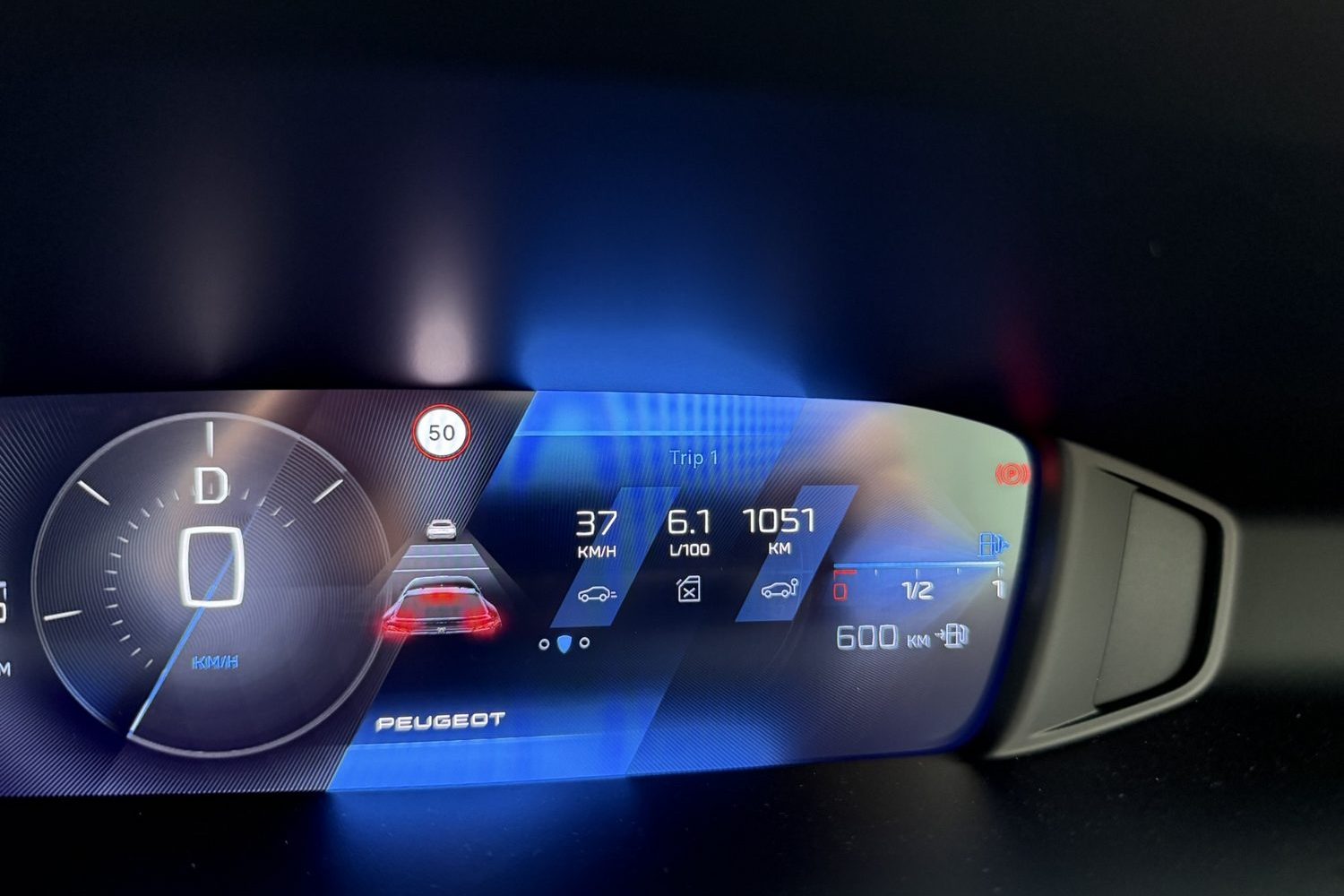
Happily, the 408 Hybrid 145 gets impressively close to its official fuel economy in real-world driving. Over the course of a week with the car, including several long motorway runs and plenty of stop-start urban mileage, we averaged 6.0 litres per 100km, which is certainly acceptable.
Technically, the 408's hybrid system kind of falls between the mild-hybrid systems offered by many car makers and a 'full' hybrid as typified by Toyota. While the Peugeot setup is closer to a mild-hybrid, it does revert to electric-only power quite frequently when driving around town.
Real-world efficiency of the Peugeot E-408
Our time in the E-408 coincided with a bit of a cold snap, which does EV batteries no favours, thought the electric 408 does come with a heat pump as standard, designed to enhance efficiency.

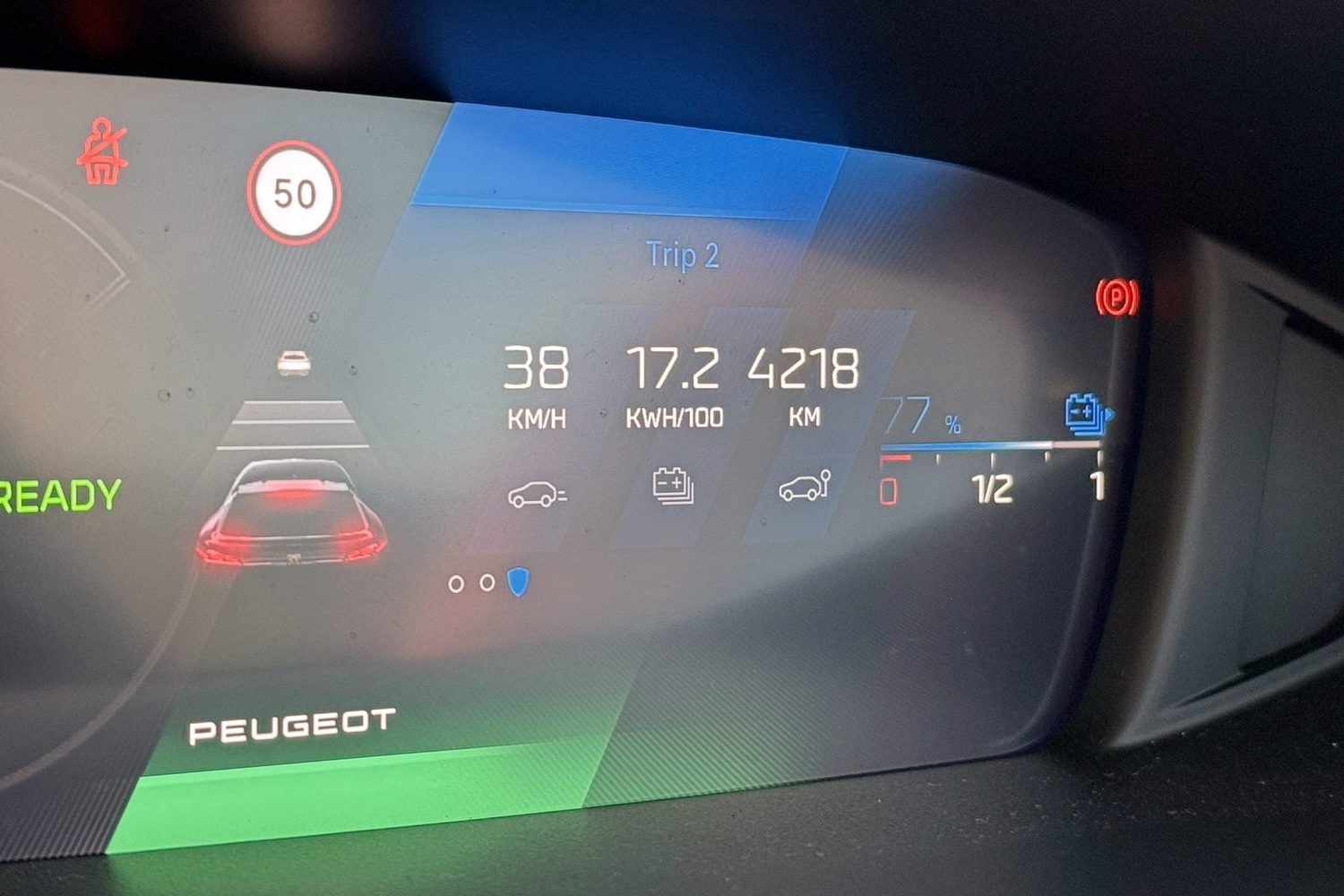
Tellingly, while our test car managed to average a creditable 17.2kWh/100km over its previous 4,200km of driving, the consumption rose to over 20kWh/100km in freezing conditions with copious use of the heated seats, steering wheel and the heating system itself. That suggests a worst-case achievable range of about 300km.
Servicing the Peugeot 408
Peugeot recommends servicing its hybrid-engined models every two years, or at 30,000km intervals (although we'd always suggest an annual onceover). The electric E-408 gets two-year servicing intervals too, but the recommended mileage is 10,000km, with the first service set at one year or 5,000km.
Peugeot 408 warranty
Peugeot Ireland offers a generous five-year warranty, which is limited to 100,000km, and includes roadside assistance in the event of a breakdown. If you're buying the E-408, there's also a separate battery warranty for eight years, or 160,000km, which covers you if the battery's energy storage capacity falls below 70 per cent of its original level.
Irish pricing & rivals to the 2025 Peugeot 408
• Well-priced in Allure form
• EV only costs €1,000 more than base hybrid
• More affordable than the Peugeot 3008

Prices start at €37,995 for the Allure-spec 408 Hybrid 145, and once you take government grants and rebates into account, there's only an extra €1,000 needed to get yourself into the E-408 in the same specification.
Standard equipment is generous and includes metallic paint, 17-inch alloy wheels, a reversing camera, rear parking sensors and adaptive cruise control, while the E-408 Allure adds 19-inch wheels and a heat-pump heating system.
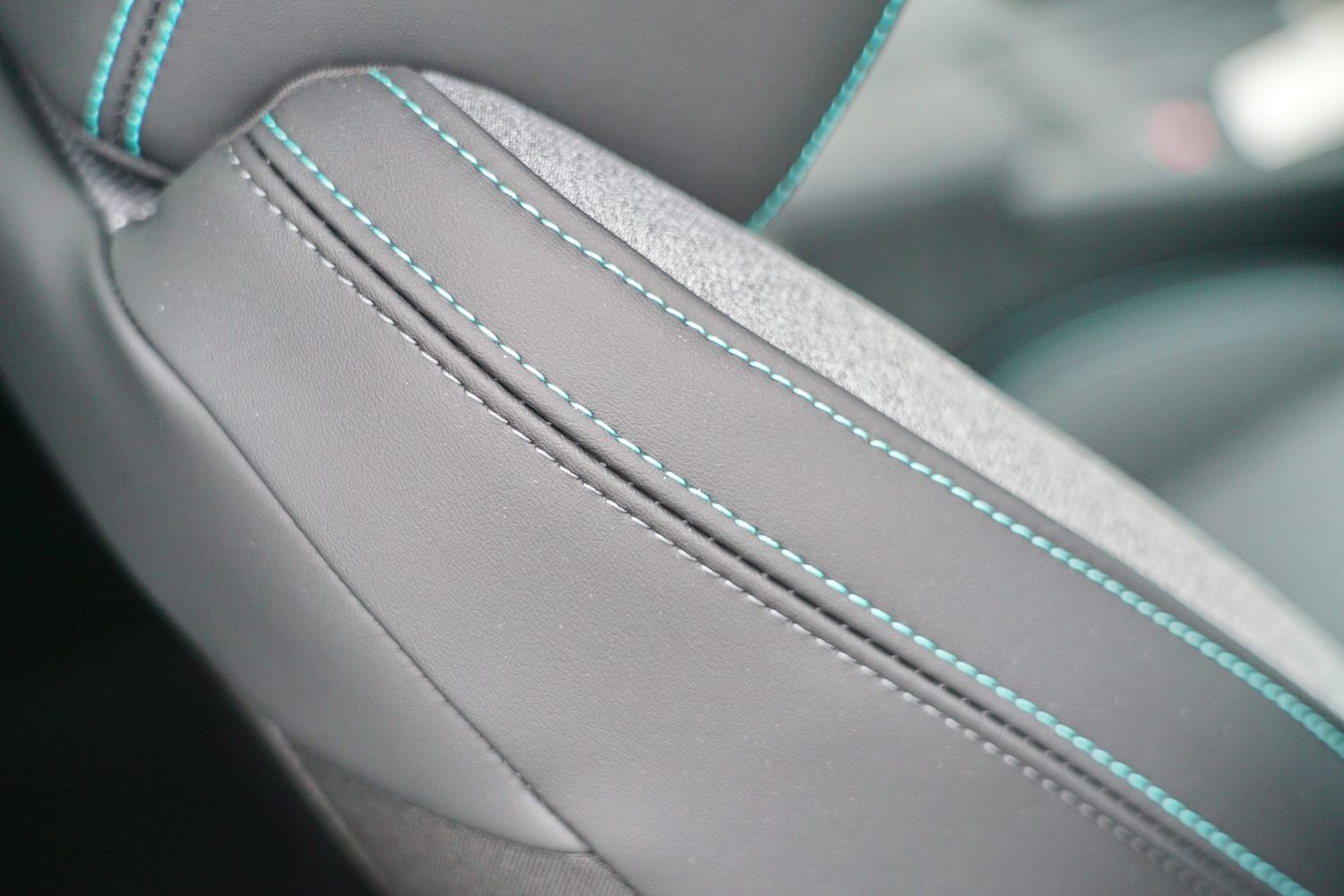
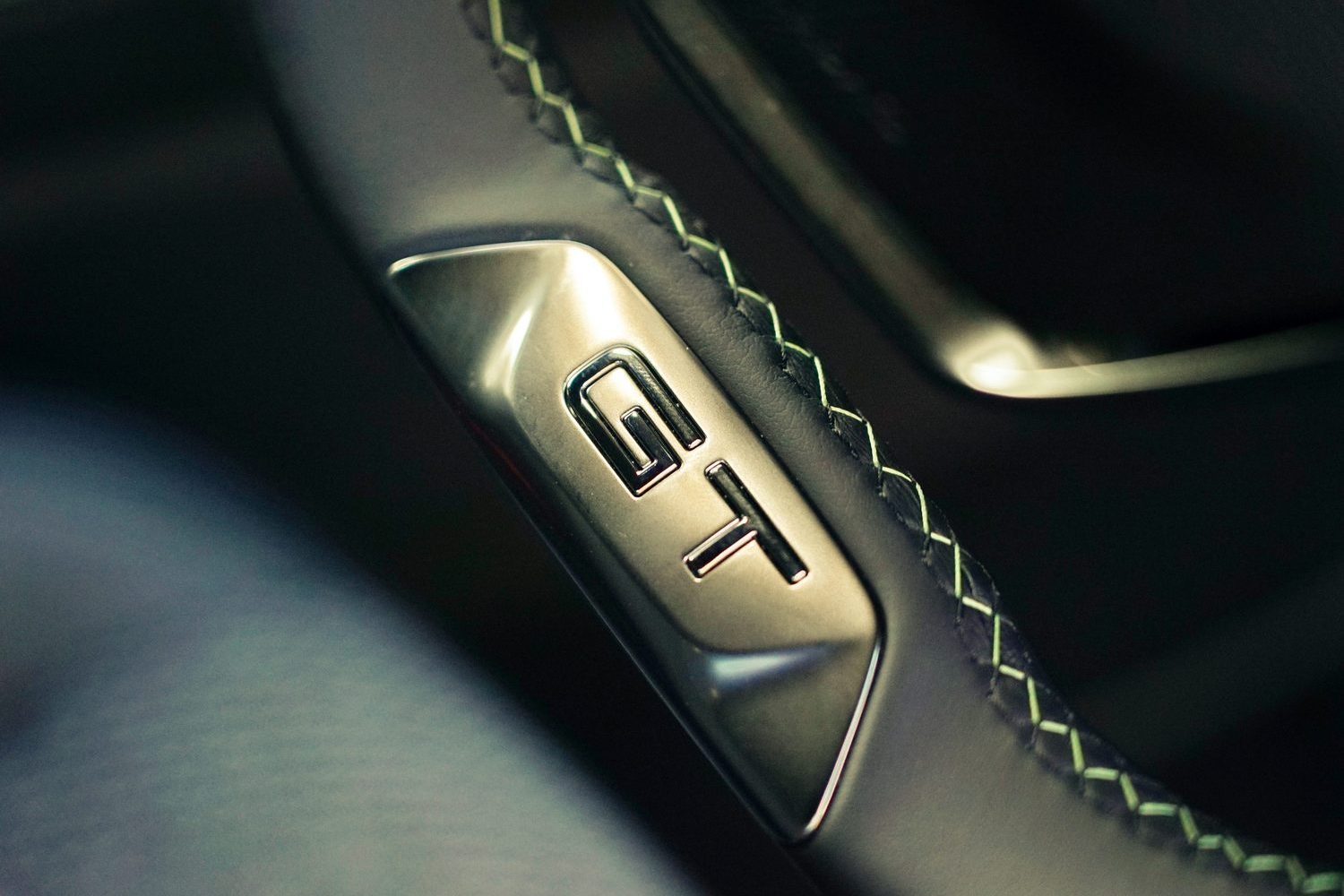
Higher-spec GT versions add cabin ambient lighting, '3D' digital instruments, Matrix LED headlights, a heated steering wheel, a powered tailgate, 19-inch alloys and part-leather seats. Prices for the GT models start at €41,995 for the Hybrid 145 and €44,250 for the E-408.

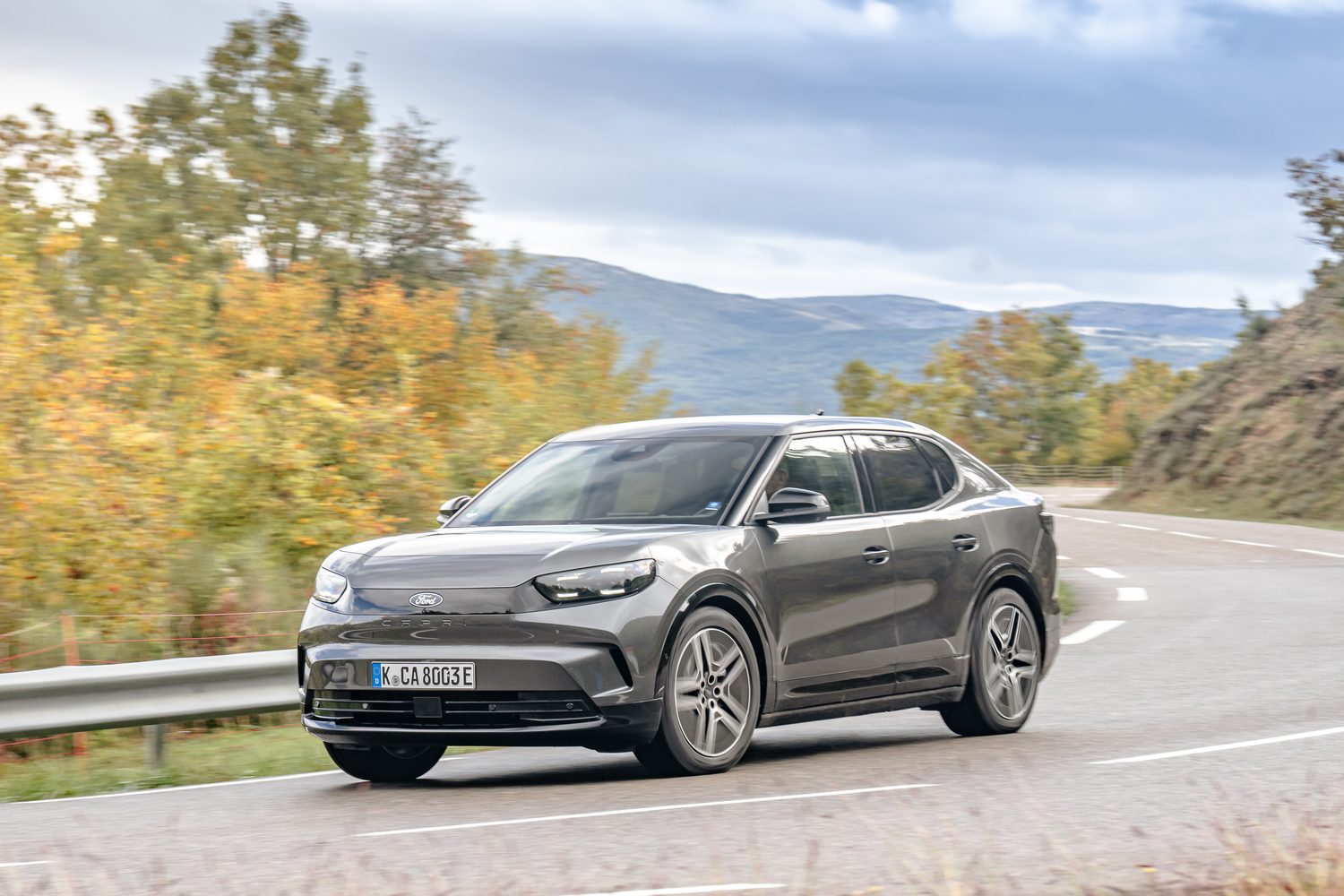
It's a little hard to find a direct rival to the 408, as it sits in its own niche even within the Peugeot lineup. In some senses, Ford's all-electric Capri follows a kind-of-similar fastback SUV style, although it's much bulkier, and of course doesn't come as a hybrid.
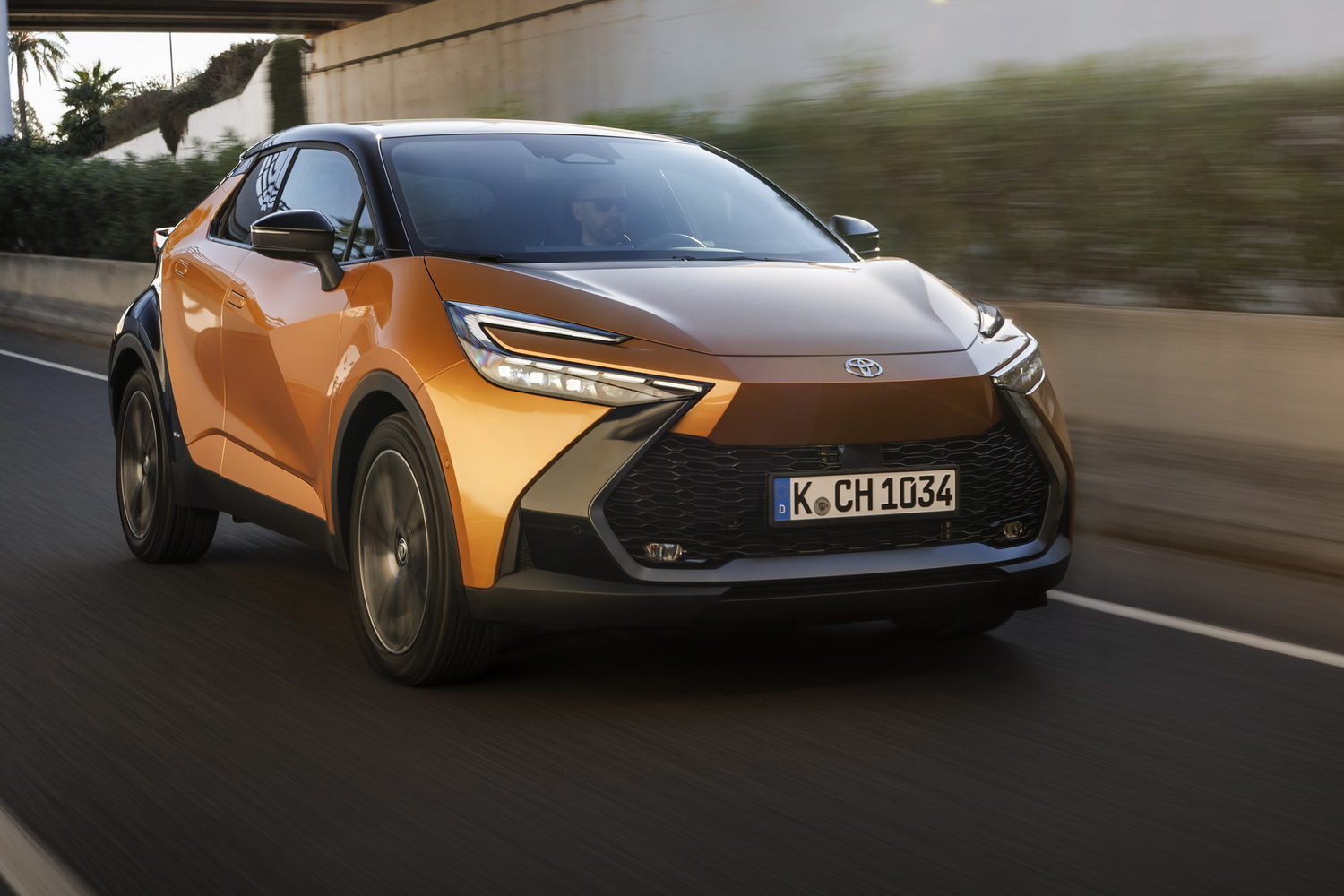
The BMW X2 and iX2 follow a similar style template, too, but are far more expensive, while the Toyota C-HR is smaller and less practical. The 408 has a little corner of the market to itself, really.
Verdict - should you buy the 2025 Peugeot 408?

Yes, you should - while it's not as sophisticated as the newer and more expensive Peugeot 3008, the handsome 408 makes a solid case for itself with surprising practicality, an engaging driving experience and decent economy. The E-408 is undoubtedly the pick of the range, with more performance, a better driving experience and smoother manners - not to mention lower running costs - so go for that one unless you can't, or don't want to, install a home charger or you're not ready to go electric. The hybrid model is perfectly fine, too.
FAQs about the 2025 Peugeot 408
Is the Peugeot 408 a good car to buy?
Yes, it is - the styling won't be to all tastes, but it's good to drive, economical and surprisingly roomy.
What is the difference between the 408 and 408 GT?

The GT version of the 408 doesn't offer any extra performance, so it's really just a range-topping trim level that includes larger alloy wheels, part-leather trim, a powered tailgate and more.
Does the Peugeot 408 have cruise control?
Yes, as standard in Allure trim the Peugeot 408 comes with adaptive cruise control.
Want to know more about the 2025 Peugeot 408?
If there's anything about the Peugeot 408 we've not covered, or you'd like help in choosing between it and other cars, you can avail of our expert advice service via the Ask Us Anything page.