


Exterior & design of the 2026 Opel Astra Sports Tourer
- Electric estates are thin on the ground
- Glorious green specific to Sports Tourer
- 16- to 18-inch wheel choices

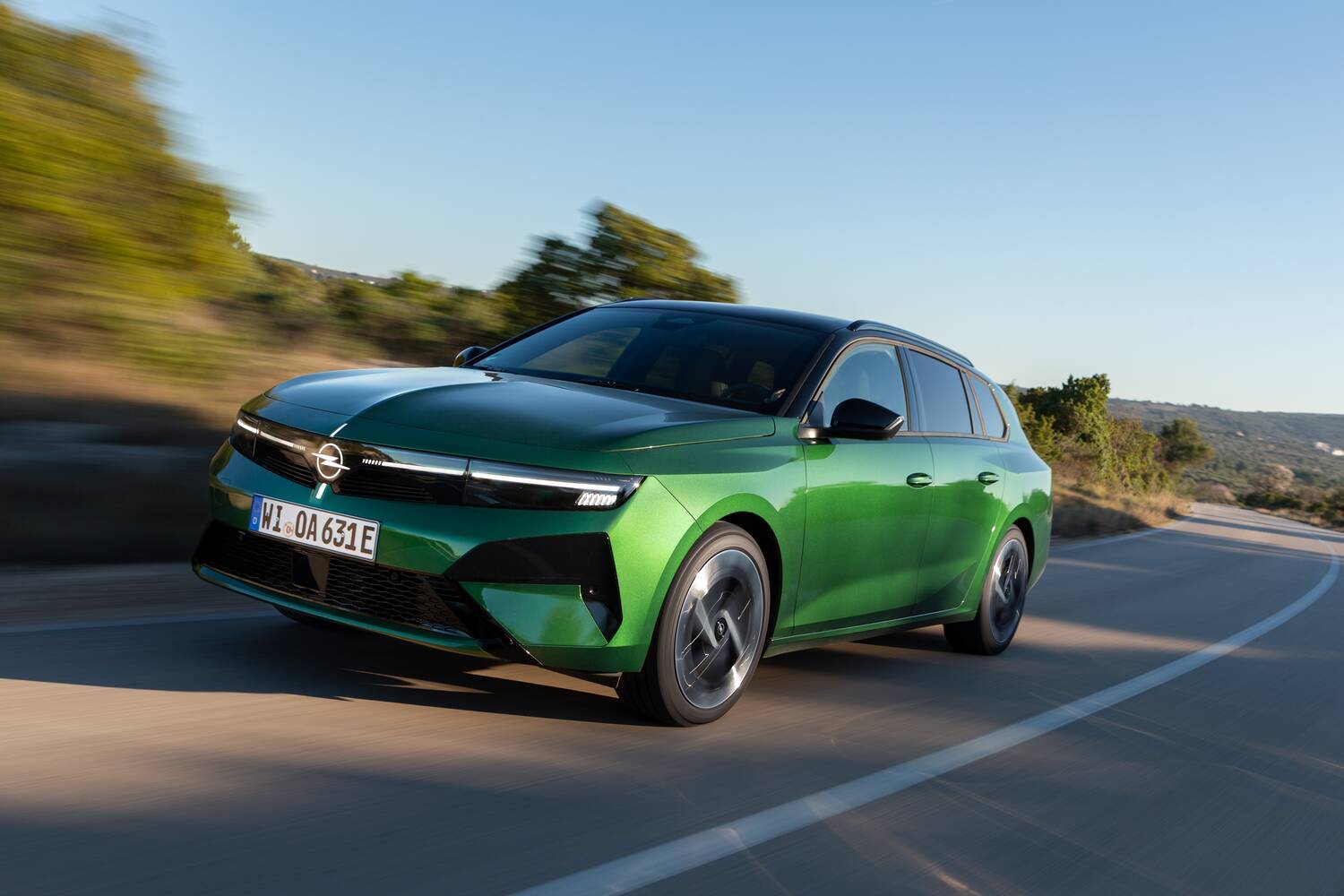
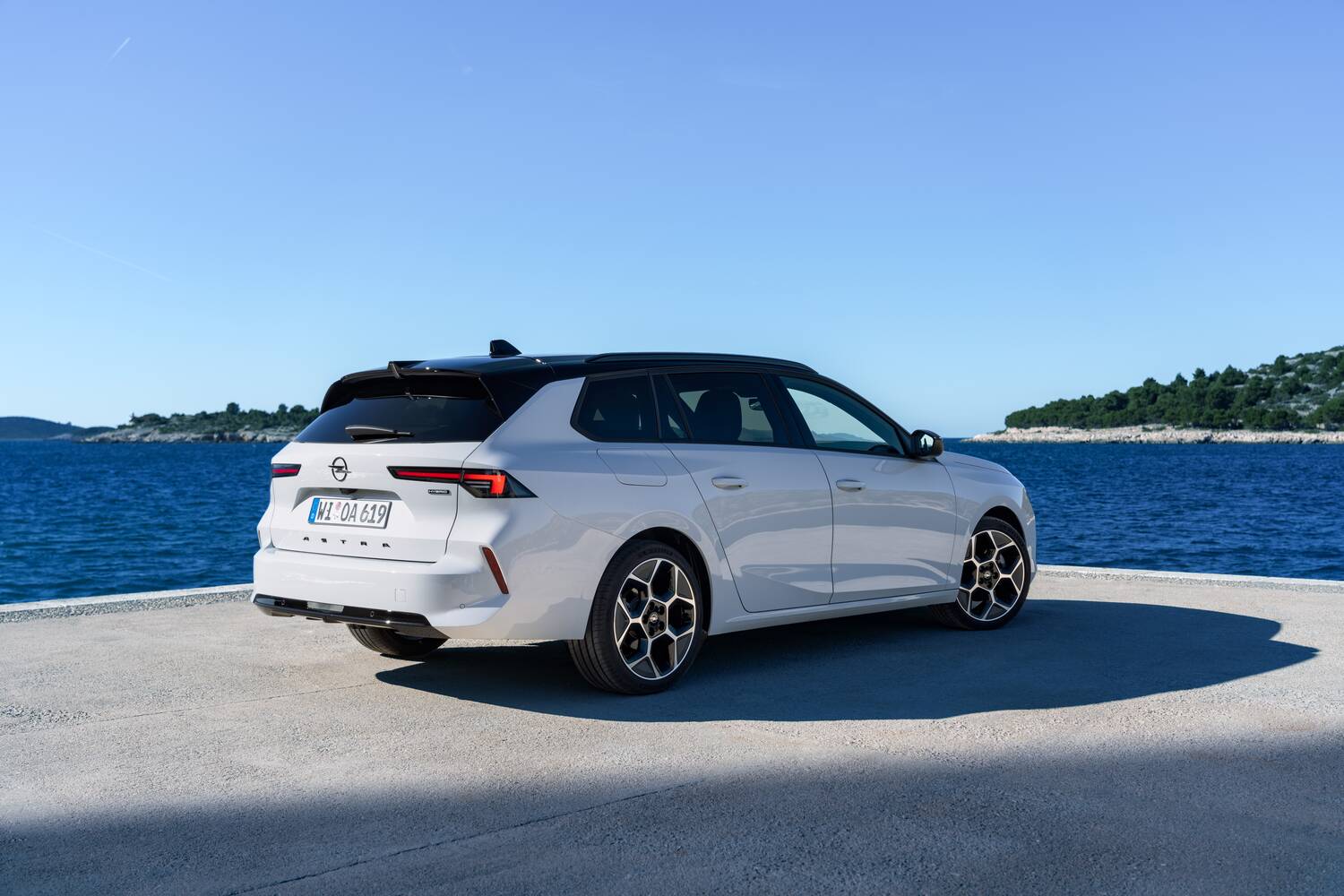
We know that estates are not the preferred choice in this country, but surely anyone who looks at this and the regular hatchback model of the Opel Astra would have to concede the Sports Tourer is the more appealing creation?
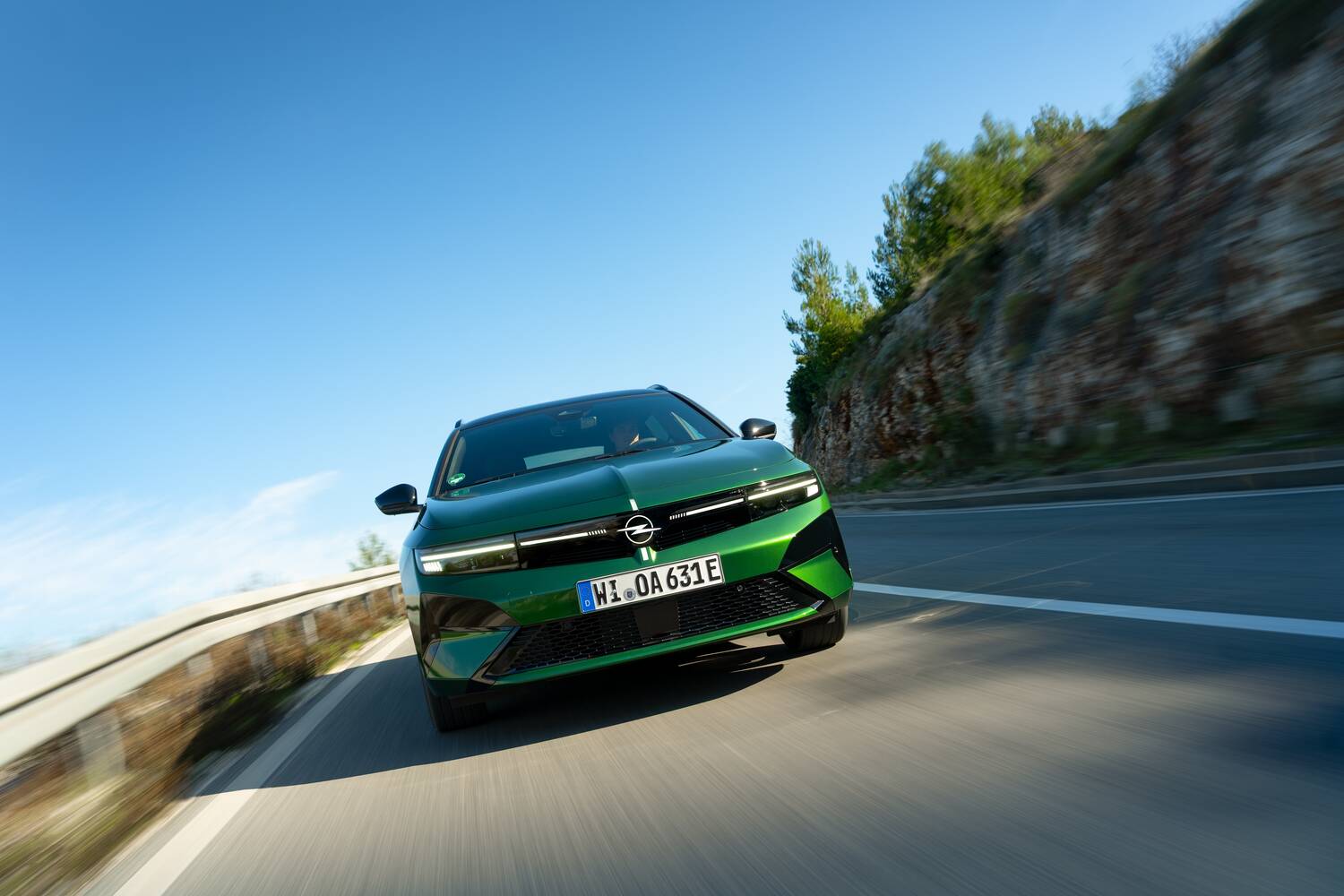
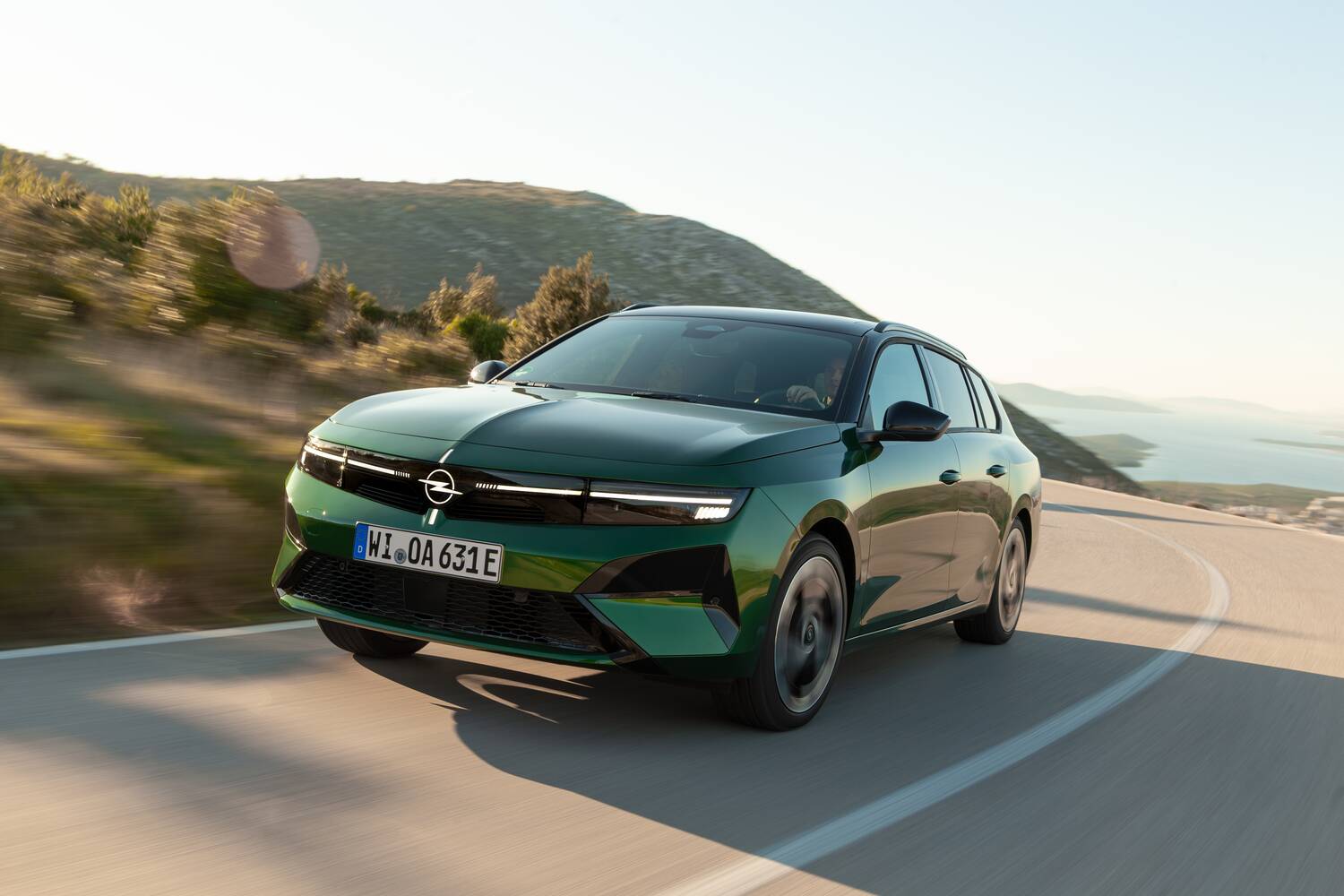
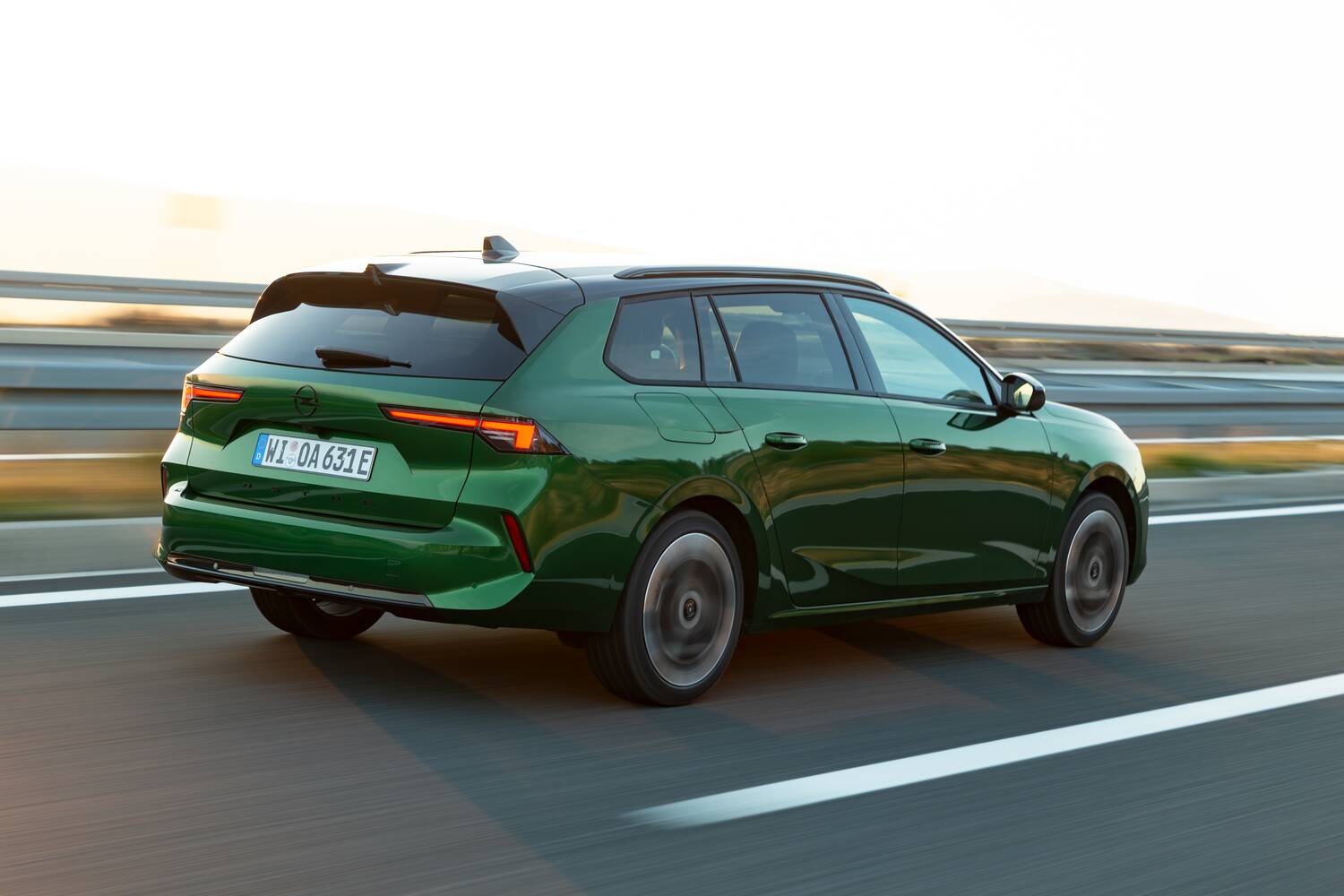
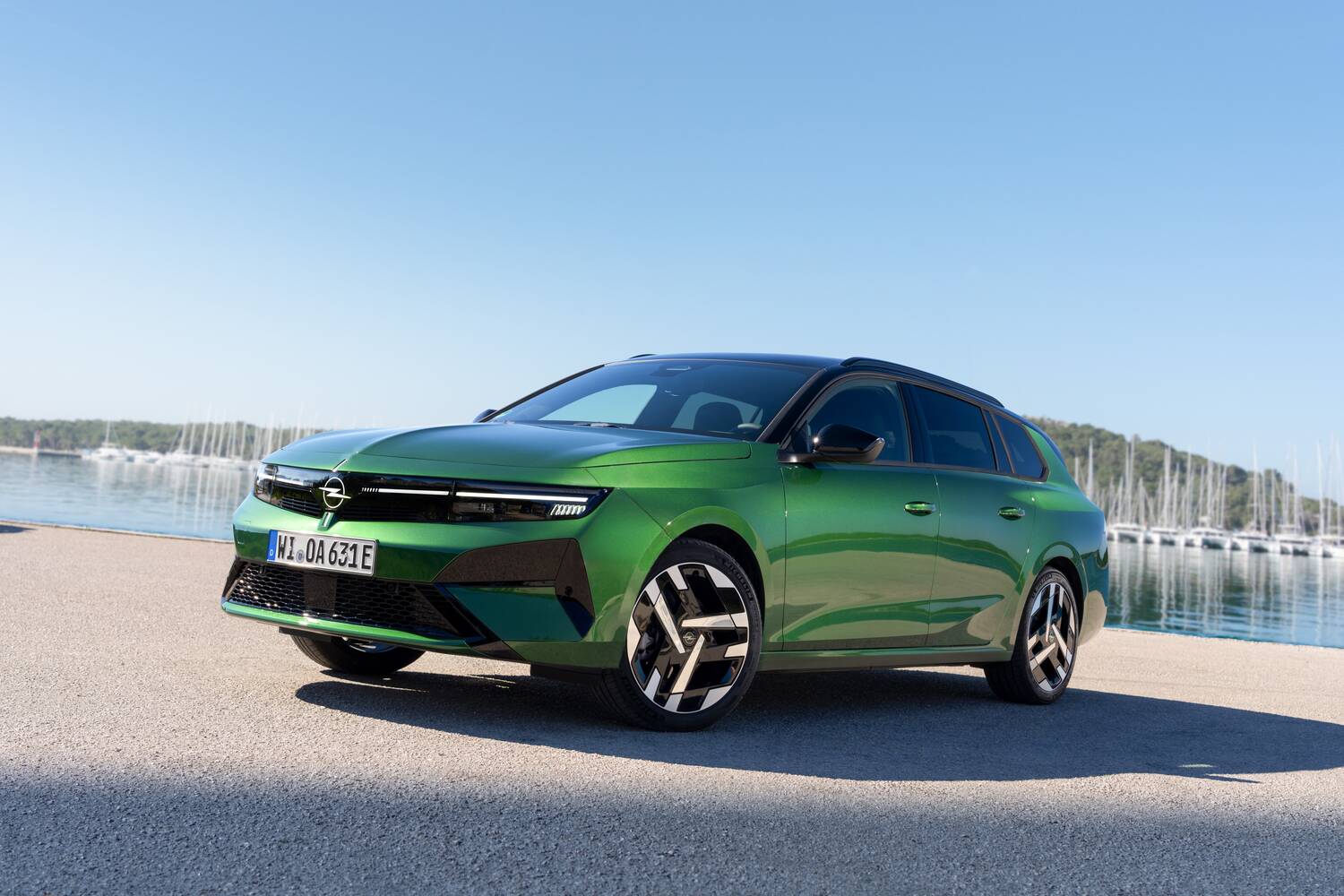
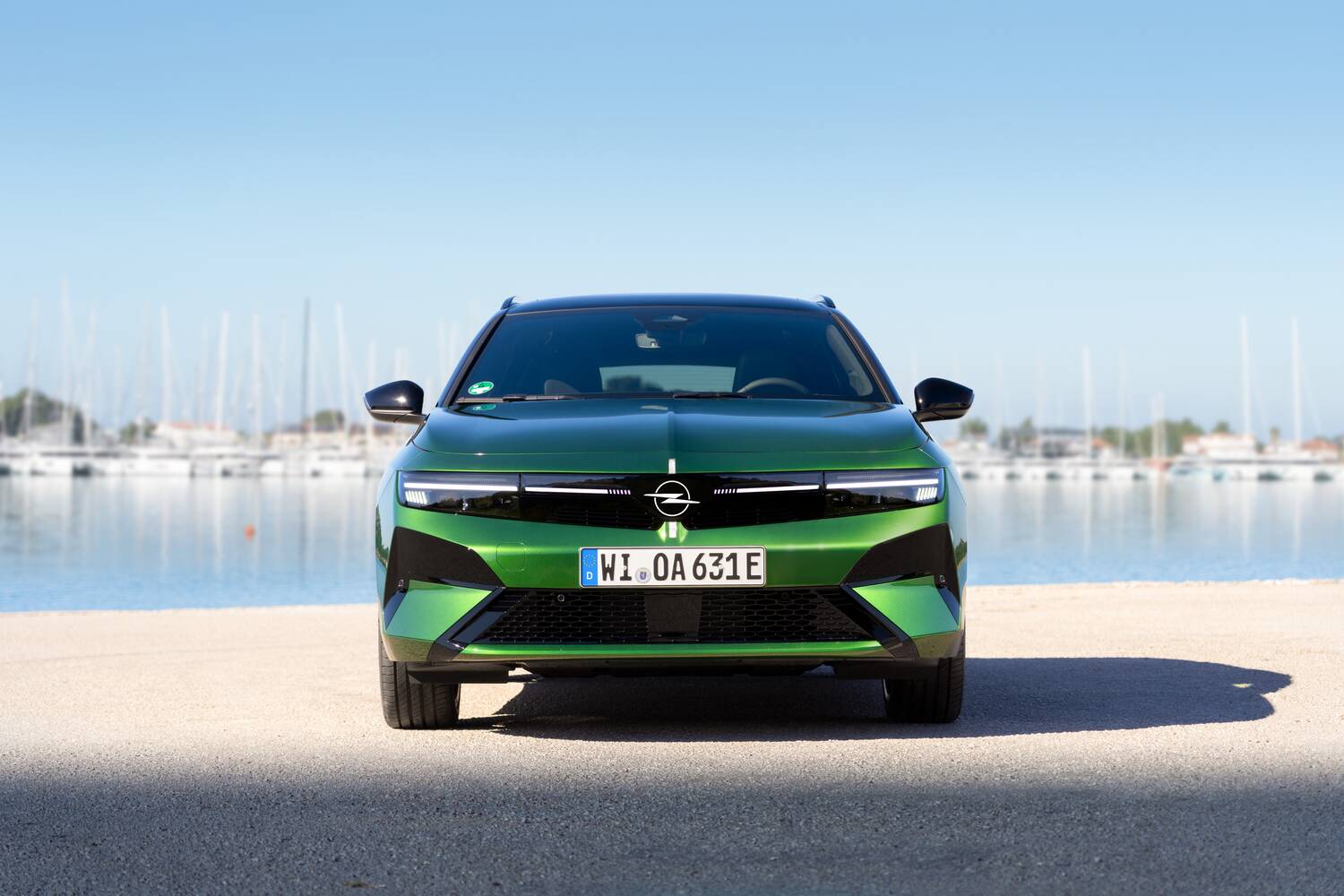
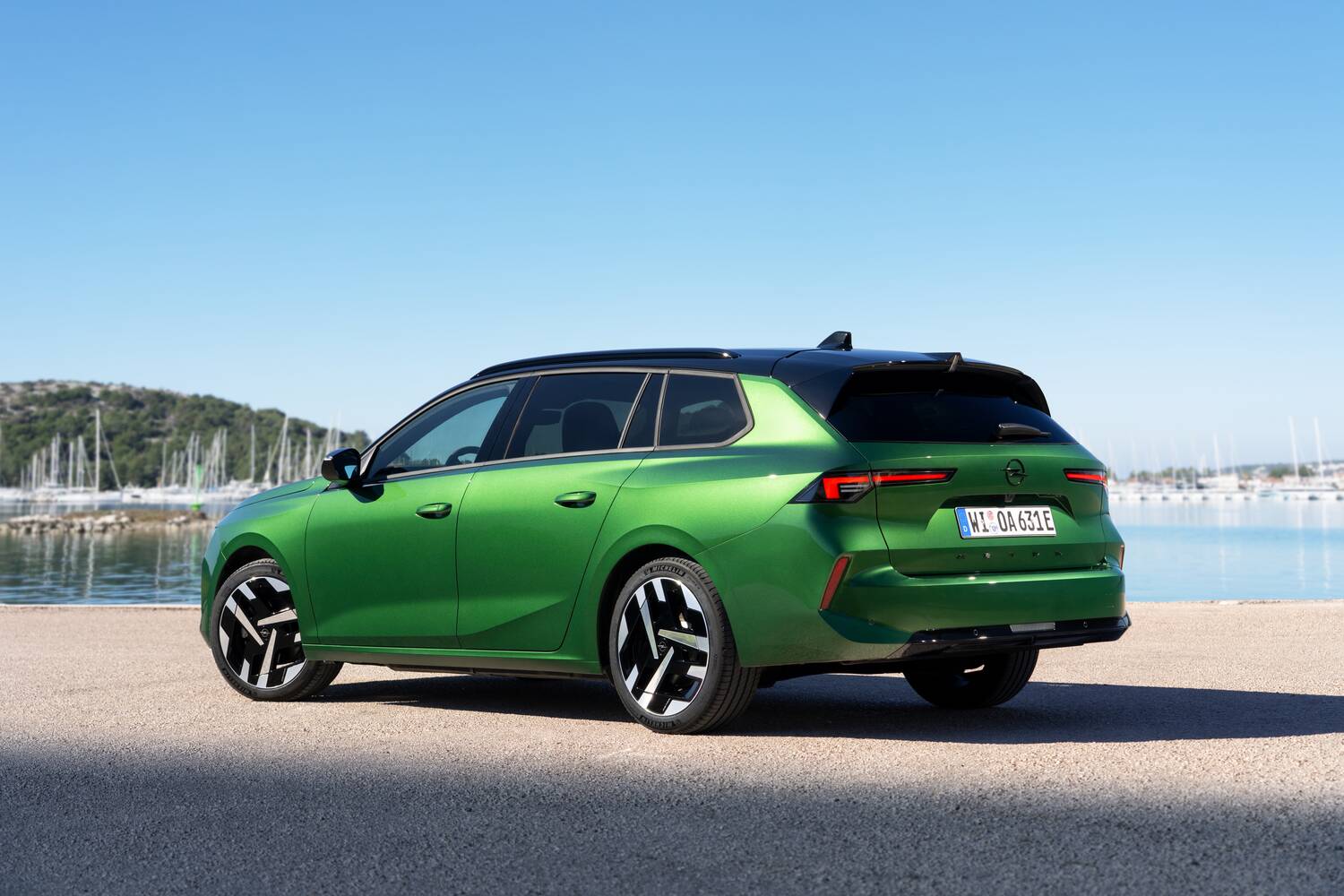
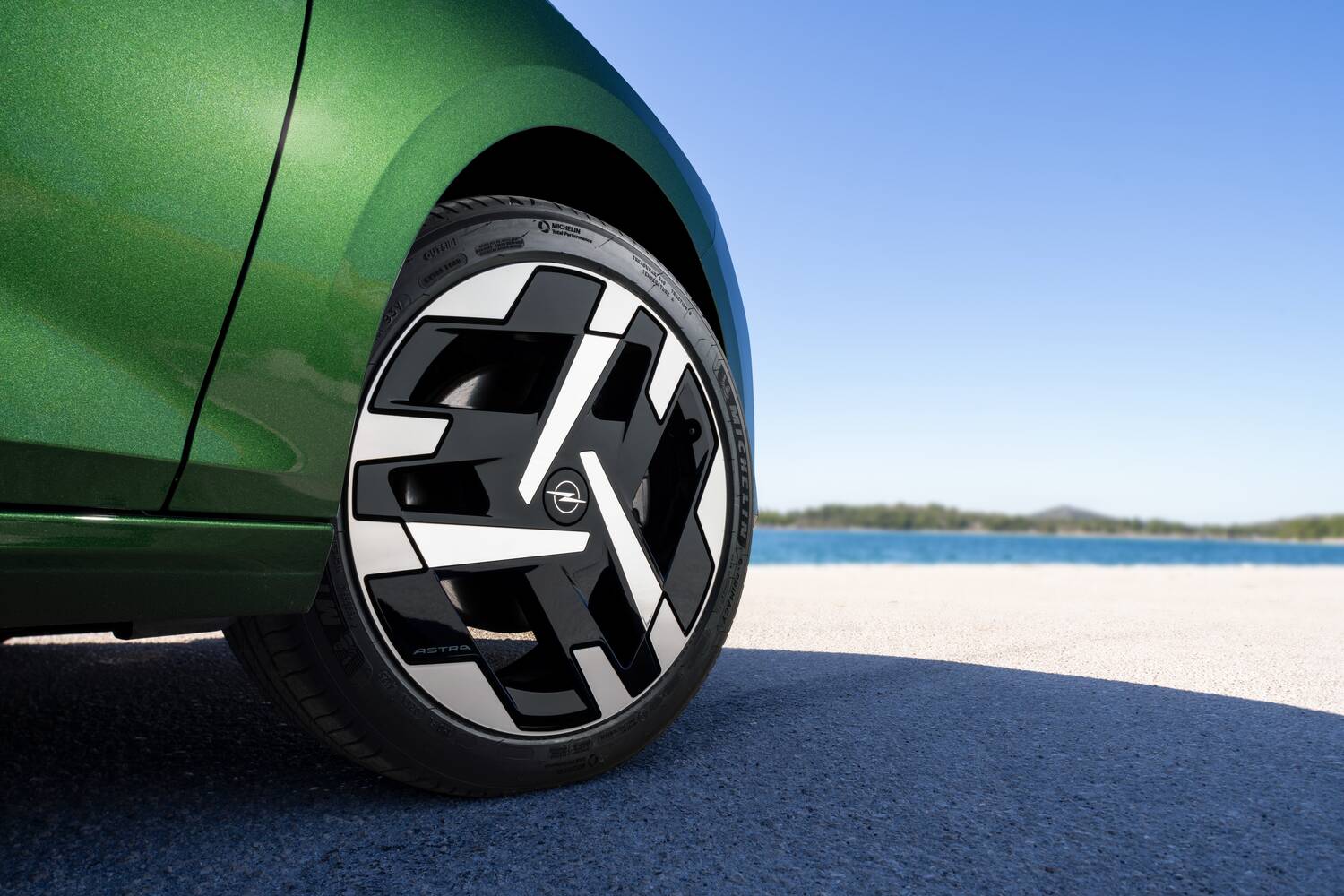
Helps, of course, when it's in the spectacular green, which is a new and exclusive colour for the Sports Tourer only, and also sitting on the fresh design of 18-inch alloys specifically hewn for the Electric Astra - these attractive rims are aerodynamically optimised and feature the word "Astra" on one of the spokes, for reference.
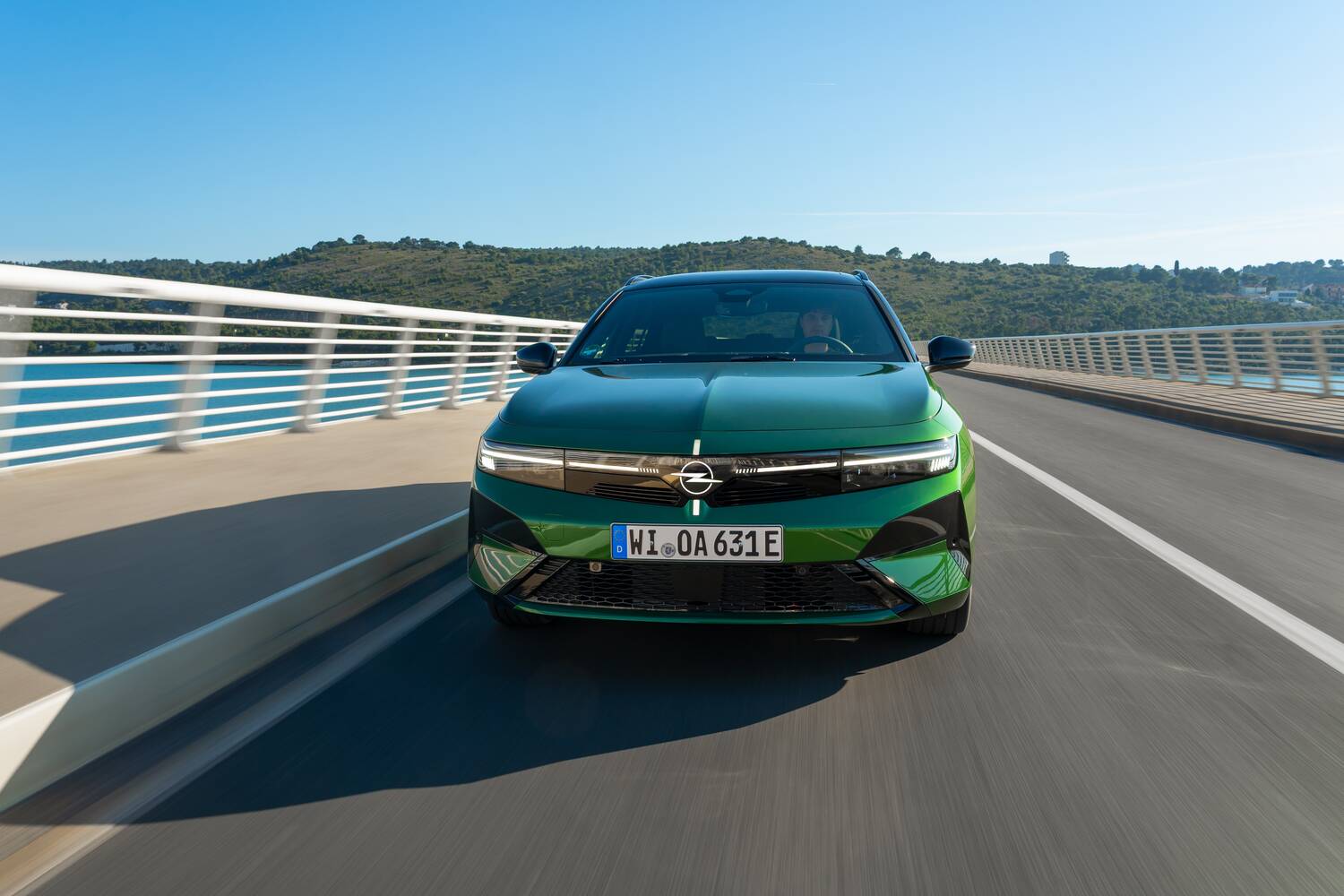
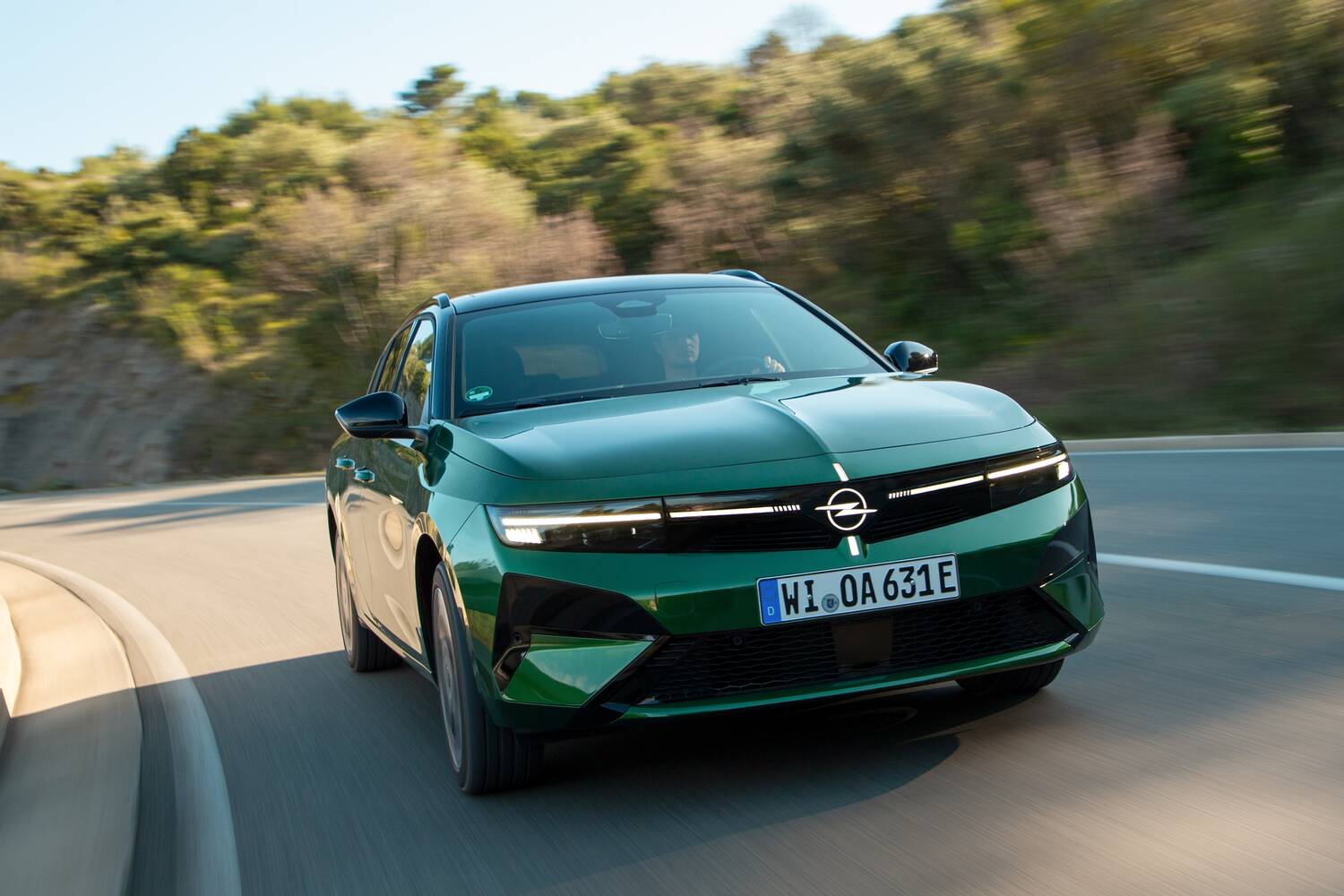
Beyond that, the Sports Tourer benefitted from a visual update in 2026, which is the blending of the sleek 'Vizor' black grille area (which the Mk8 Astra has had since it appeared in 2022) with the new 'Compass' light signature.
This forms a cross on the front end of the car, with a wide horizontal line linking the headlight clusters complemented by a small vertical detail in the middle, which frames the illuminated Opel logo in the nose.

It's an effective piece of work and looks quite smart and concept-car-like (perhaps because it was first seen on the Opel Experimental concept of 2023), due to the fact the Astra is an angular, striking and proportionally lovely thing in the first place.
For reference, the Sports Tourer is 268mm longer than the Astra Hatch, with an additional 57mm of stretch in the wheelbase (the distance between the front and rear axles). It's also nominally 10mm taller, too, although that's essentially represented by the roof rails added to the estate.
The Sports Tourer has the same range of 16- to 18-inch alloys available to it as the Astra Hatch.

Dimensions of the 2026 Opel Astra Sports Tourer
- Length:
- 4,642mm
- Width:
- 1,859mm (excluding mirrors)
- Height:
- 1,498mm
- Wheelbase:
- 2,732mm
Paint colours for the 2026 Opel Astra Sports Tourer
Clover Green truly 'pops' in bright sunshine, whereupon it looks exquisite, but it is stunningly dark and moody when the skies cloud over, and it works as well in the monotone body finishes of the lower SC- and Elegance-spec Astras as it does with the contrast black roof of the flagship GS trim.
Better still, it is exclusive to the Sports Tourer Astra - the Hatch has its own signature colour which is not available to the estate, and that's Yellow Amber. But while we like that bright shade on the Hatch, Clover Green completely eclipses it - and further strengthens our resolve that the Sports Tourer is the aesthetic winner in the Astra family.

There are some other choices if you want them, including Contour White, Cobalt Blue, Crystal Silver, Perla Black and Grafik Grey.
Interior, practicality, tech & comfort of the 2026 Opel Astra Sports Tourer
- More room in rear than Hatch
- Staid dashboard lets cabin down
- But it is ergonomically correct

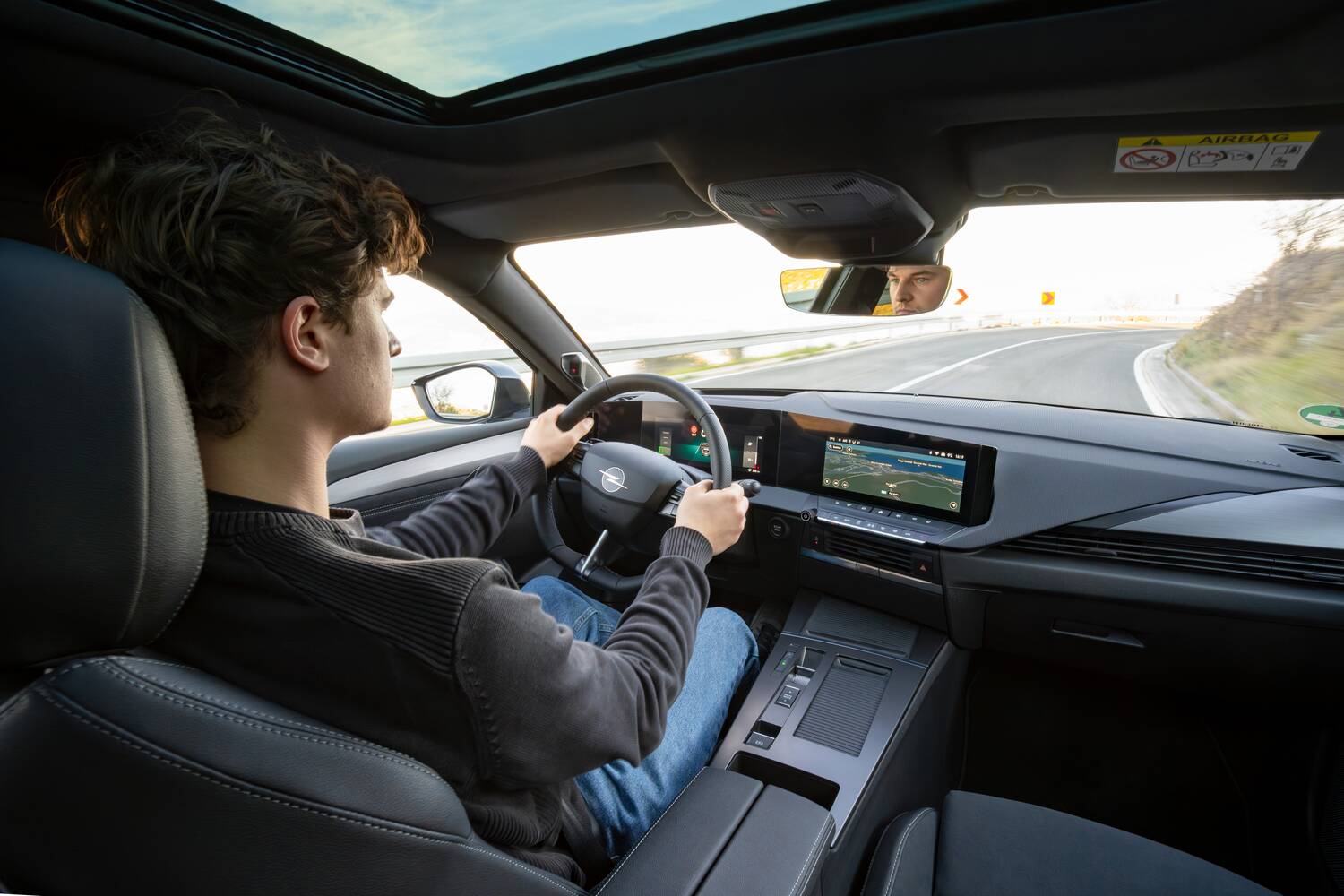
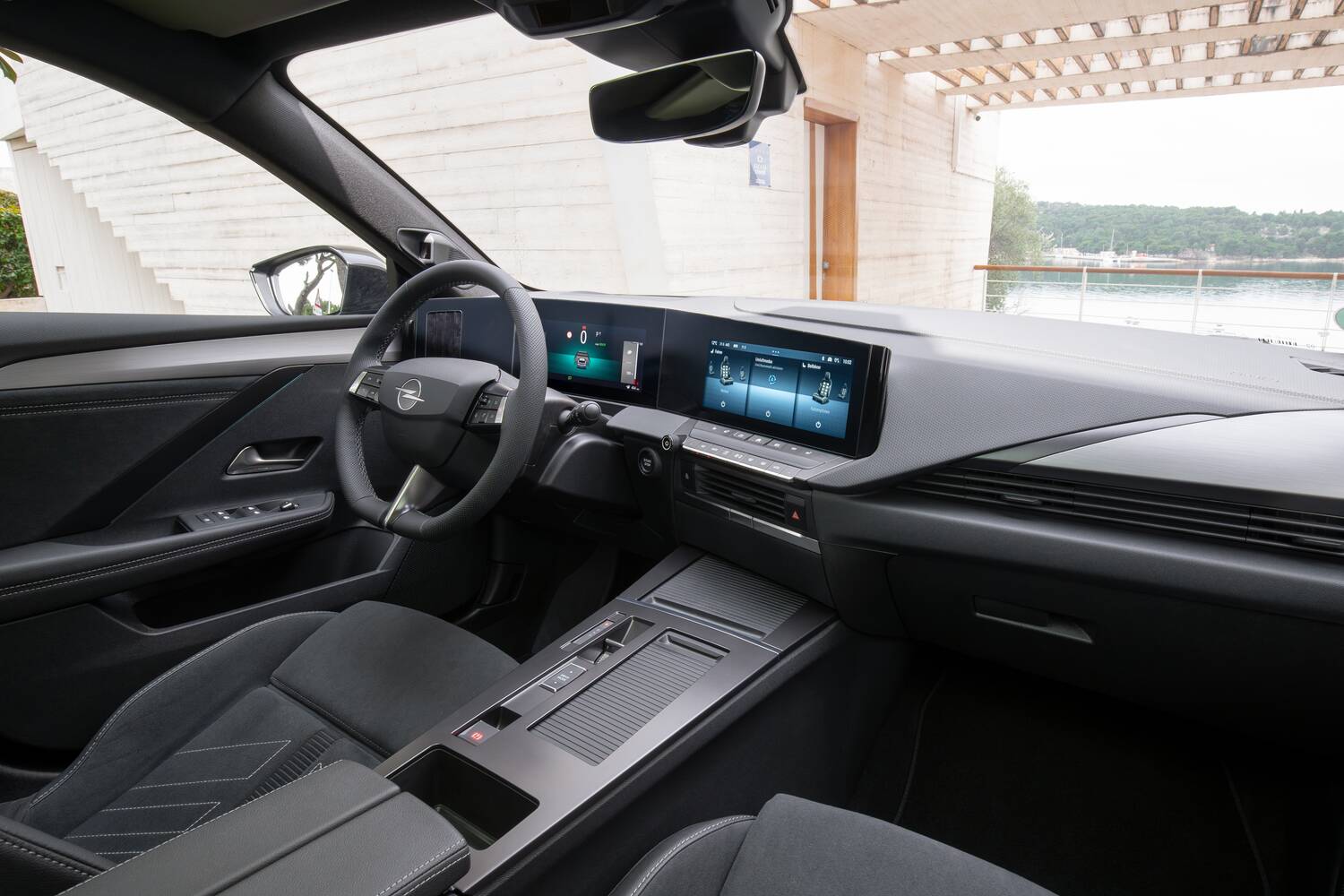
The Opel Astra Sports Tourer has a roomy and well-built interior, but the dashboard design is dull - especially when compared to the cabin of the related Peugeot 308, and this also despite the fact the German firm says it improved material quality for various trim finishes in the 2026MY cars.
However, the interior is ergonomically sound and comes with plenty of useful kit and storage spaces, so the estate's passenger compartment can generally be considered a positive aspect of the Astra ownership experience, as long as you're not looking for flashy cabin aesthetics.
Getting comfortable in the driver's seat
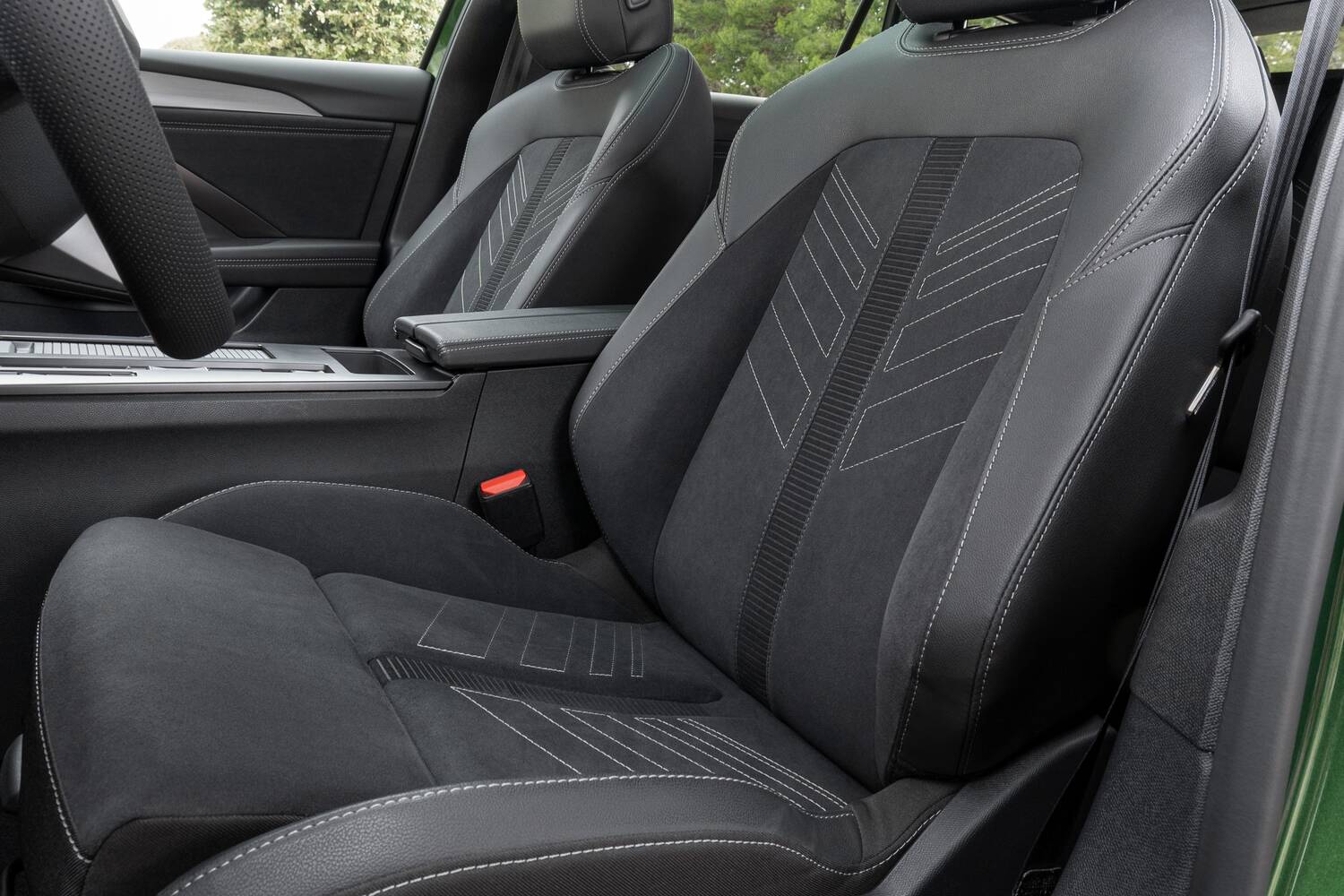
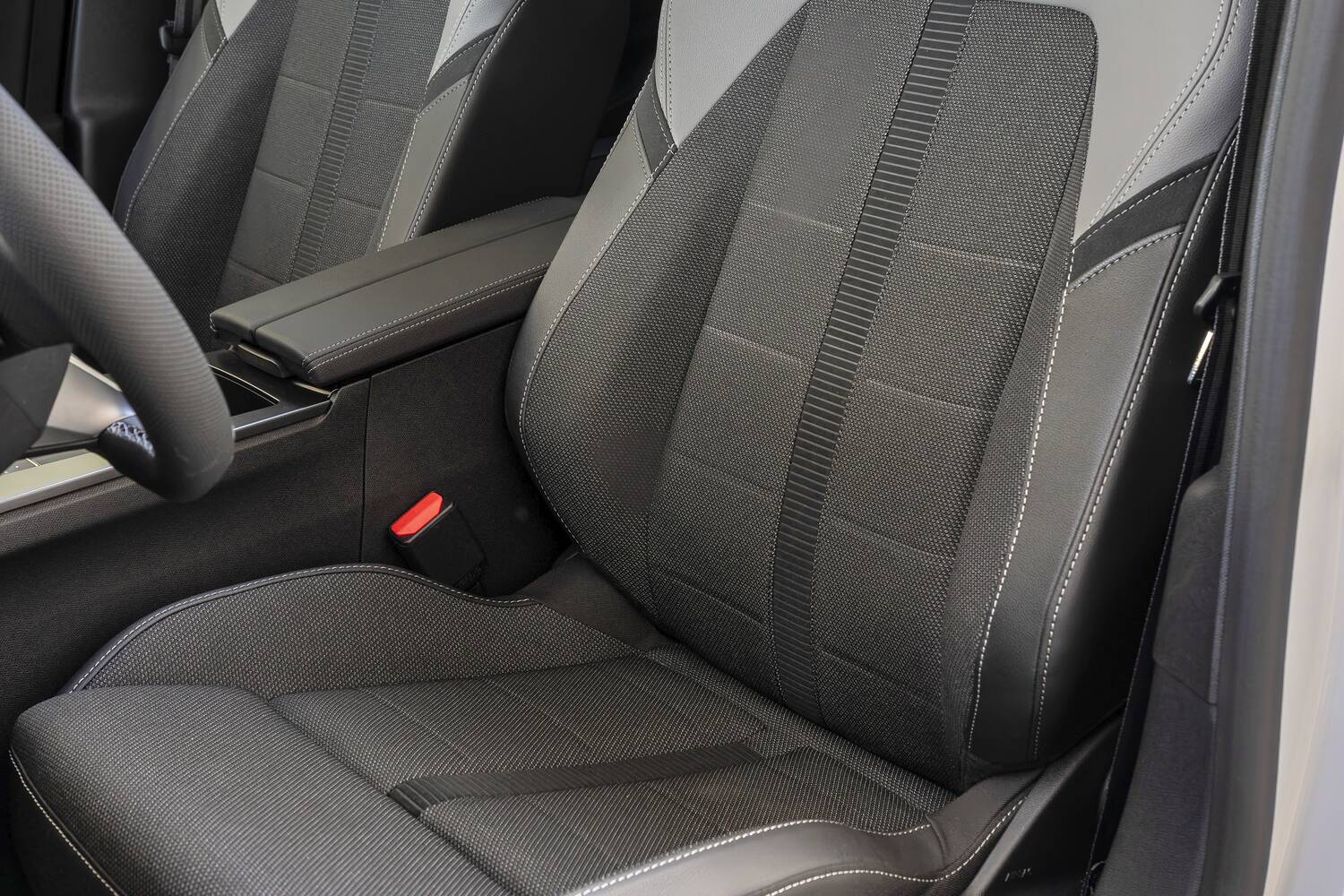
With a good range of adjustment in the front seats, whether they're manually tweaked on lower-spec Astras or electrically powered in the GS, as well as the reach-and-rake steering column, the Sports Tourer provides an excellent driving position for people of all sizes and shapes.

Visibility all around the glasshouse is excellent too, while the newly shaped seats have a recessed section in their base which is supposed to relieve the build-up of lower-back pressure on long journeys.
Infotainment and technology
The twin 10-inch displays in the Astra which form the 'Pure Panel' display are both clear enough and easy enough to read and use, with the upper Elegance and GS variants gaining an edge-to-edge glass frontage for the screens which Opel terms the 'Pure Panel Pro'.
For those who prefer mirroring their smartphones, the Sports Tourer runs both Apple CarPlay and Android Auto wirelessly.

Speaking of which, there's a wireless smartphone charging pad as well, but both it - and an uprated six-speaker sound system - are only fitted from Elegance grade upwards.
Practicality around the cabin
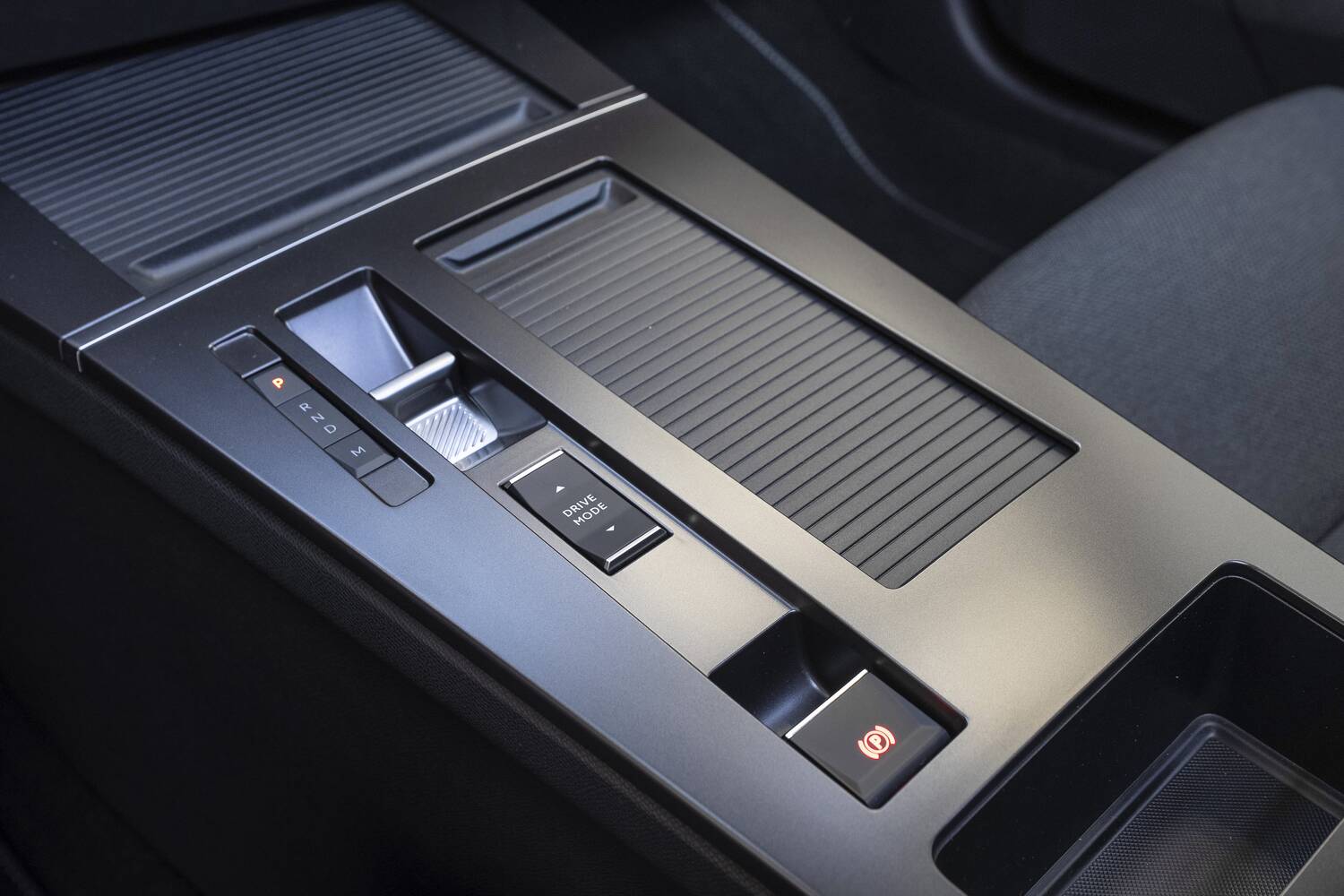
Up front, there are good-sized door pockets, a large cubby beneath the lidded central armrest and two cupholders arranged longitudinally underneath a retractable cover on the transmission tunnel.
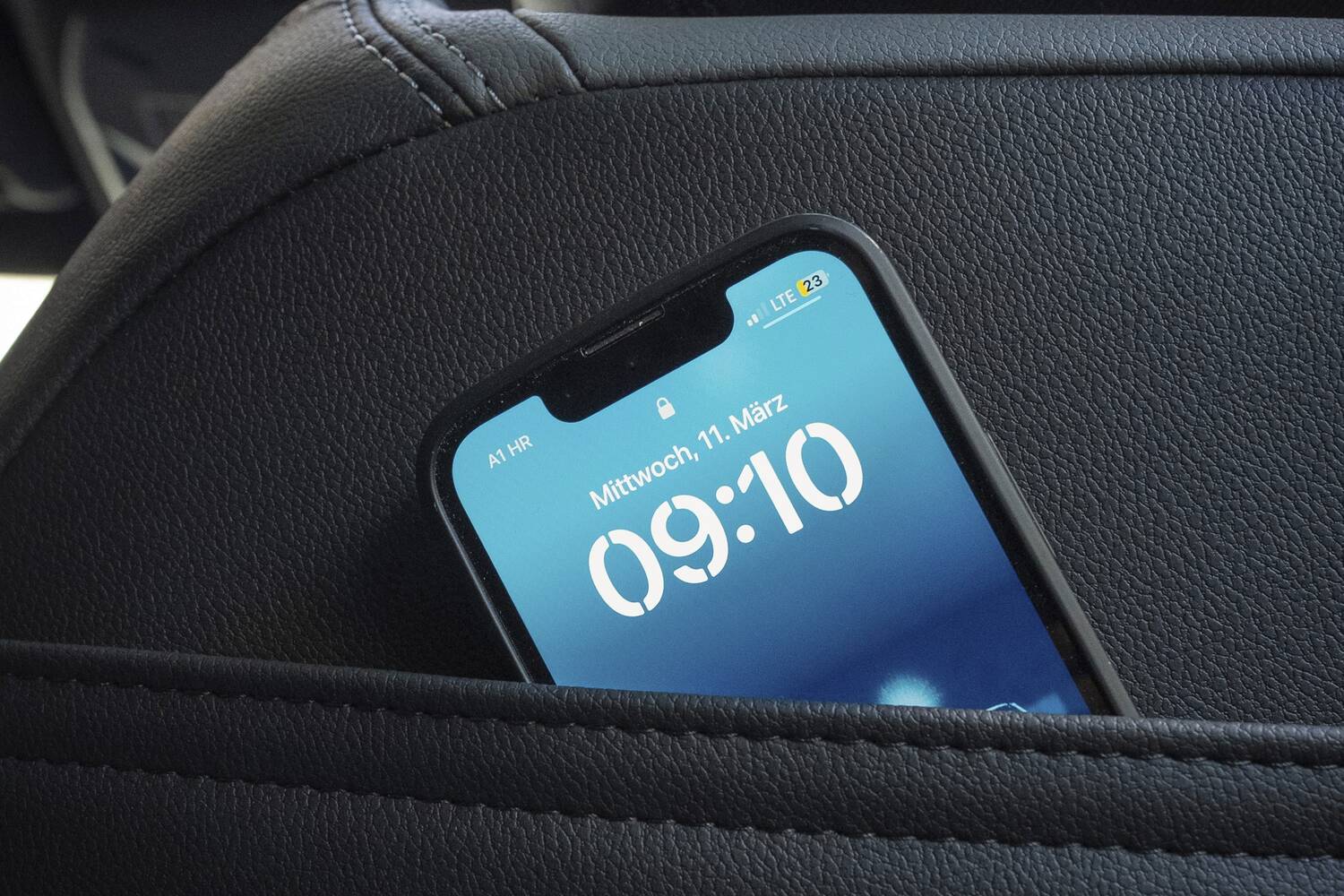
There's also a forward storage zone with one 12-volt and two USB sockets in it, plus a neatly hidden little pop-out pocket for sunglasses at the bottom of the centre stack.
Rear-seat passenger space
Due to the extra room between the front wheels and the rears, and the roof staying high for the cargo bay at the back, the passenger space in the second row of the Opel Astra Sports Tourer is marginally more accommodating than it is in the five-door Hatch.
It's not transformative, though, and while the floor is quite flat in the rear, the centre console impinges on legroom in the middle of the second row, which means the Astra estate is going to be a far more comfortable four-seater than it is with a full complement of five crammed into its interior.
Otherwise, the Sports Tourer has useful door bins, two air vents and a single USB port, a drop-down centre armrest with dual cupholders within it and a small, open stowage compartment down near floor level to make accommodation in the back of the cabin that little more amenable.
Fitting child seats to the Opel Astra Sports Tourer
The Opel Astra Sports Tourer has two ISOFIX positions with top tethers in the outer pair of chairs of the second row, while large rear doors that open wide mean loading in bulky child seats should be no problem.
Boot space in the Opel Astra Sports Tourer

Obviously, the reason you buy the Sports Tourer in the first place, and not the Opel Astra Hatch, is that you need more boot space than the regular five-door car can provide.
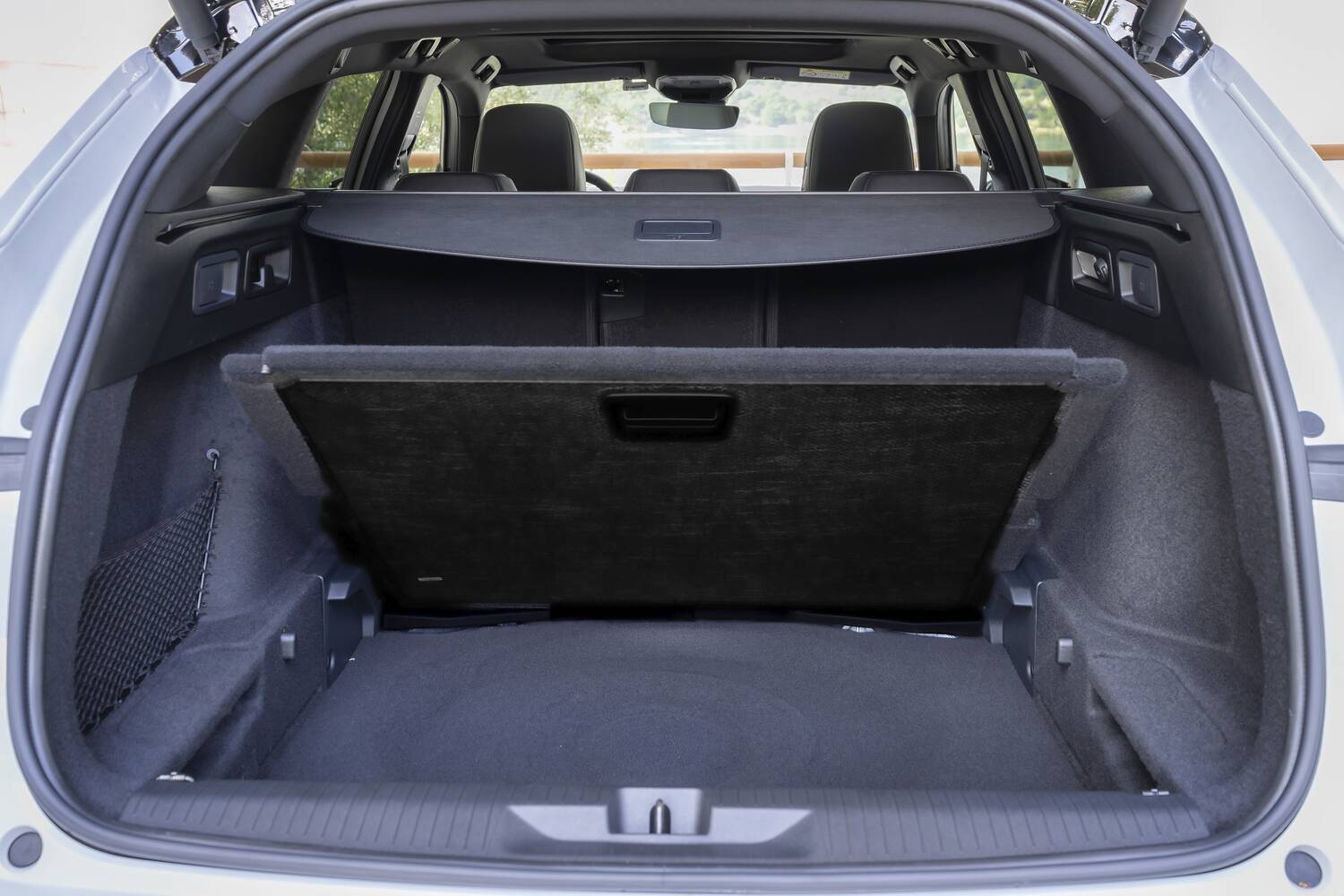
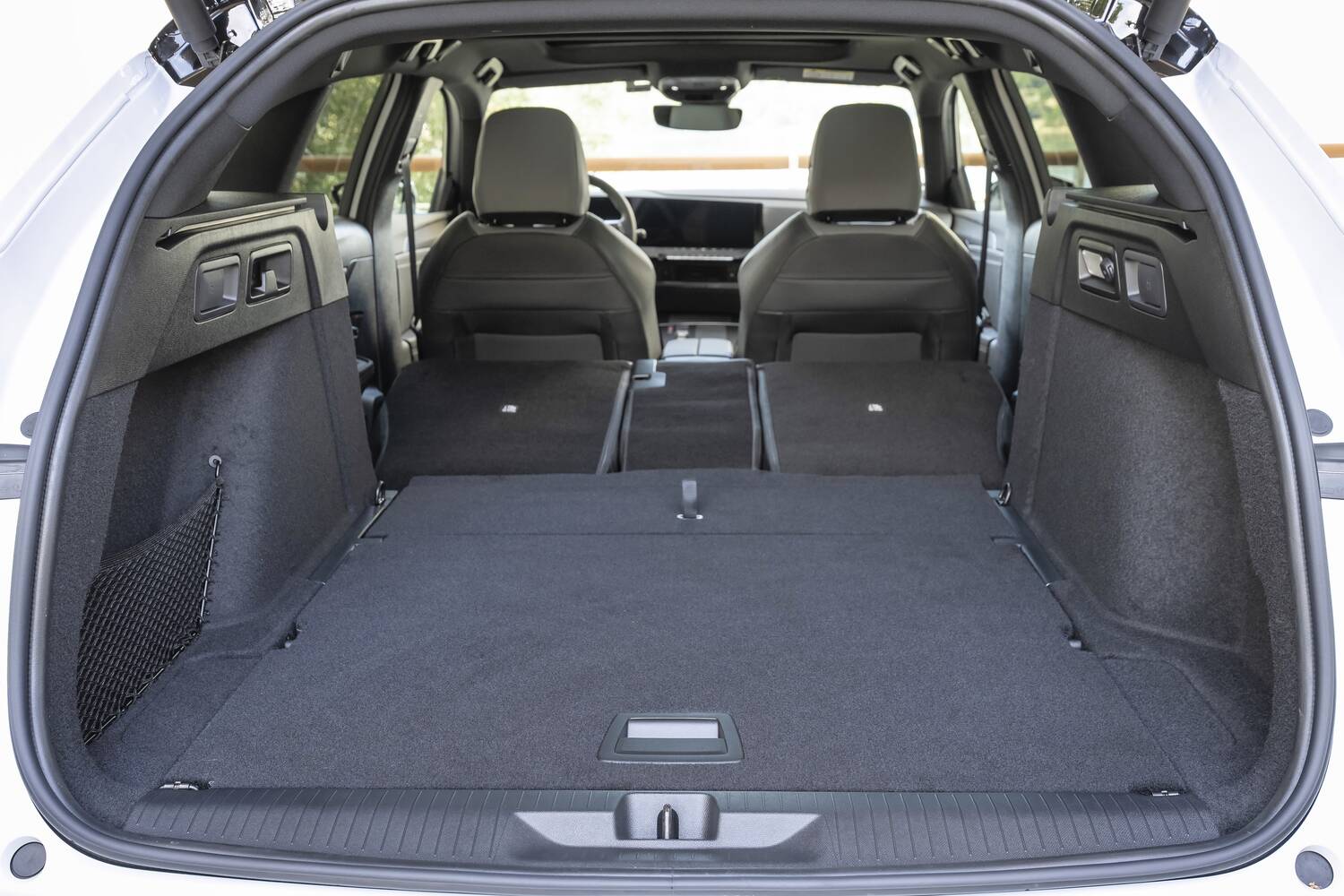
Naturally, the ST delivers: it has 164 litres more capacity with all seats in use than the Astra Electric Hatch, with 516 litres on offer.
Fold the 40:20:40 split second row down (another advantage over the Hatch, which only has the less configurable 60:40 arrangement) and up to 1,553 litres of carrying capability is liberated, so it's a useful load-lugger - although the caveat here is that these are figures for the Electric estate, whereas the Hybrid model of the Astra estate manages 597-1,634 litres as it doesn't have to accommodate a huge battery in its platform.
Nevertheless, electric estates are not commonplace in the market and so this straightforward volume is a key selling point of the zero-emission Sports Tourer.

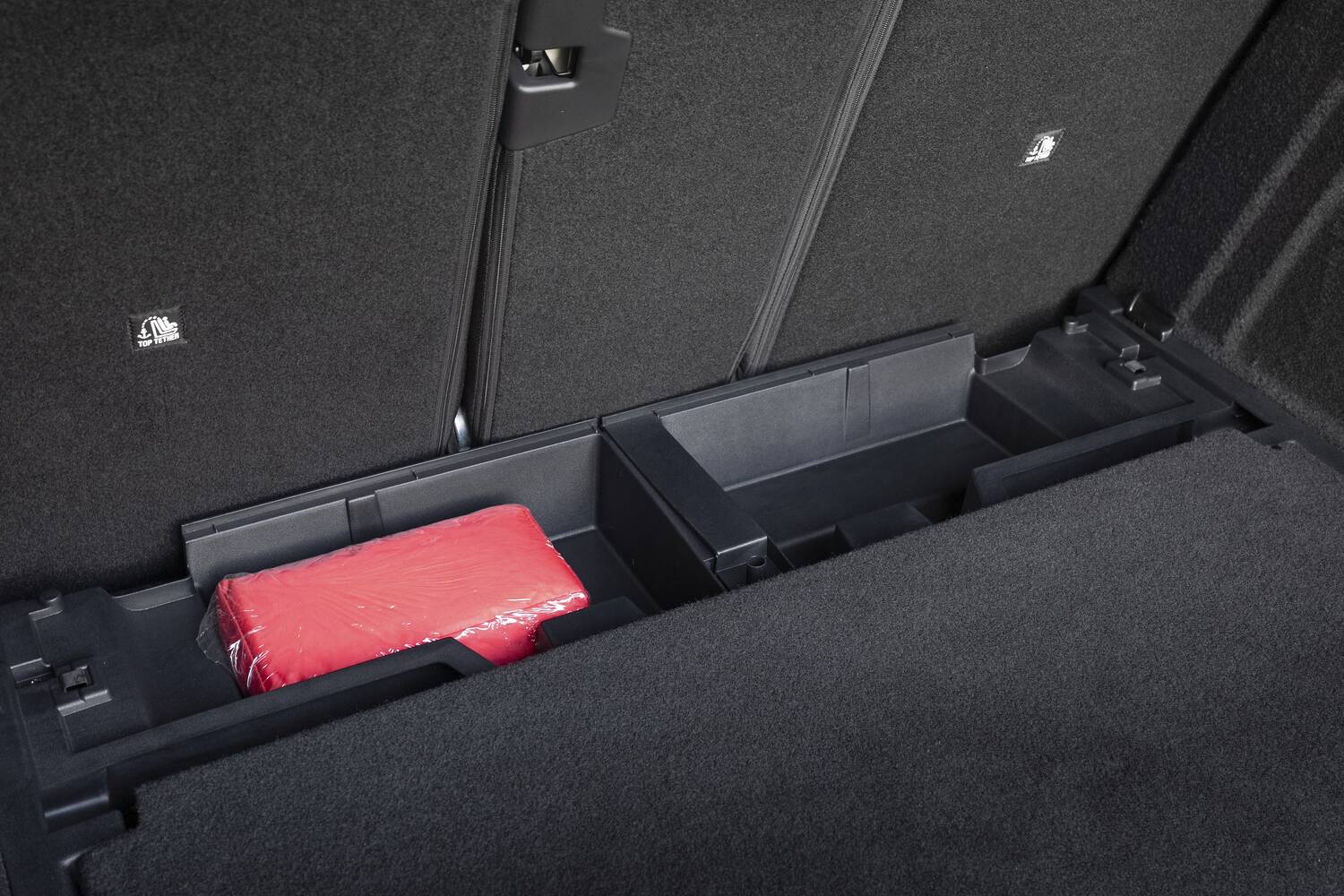
Yet its boot is also versatile - not only does it have that three-way split of the backrests, but there are two levers on either side of the cargo area to drop the seats, there's a built-in hook on one side of the boot and a 12-volt socket plus light on the other, and underneath the floor is a shallow, moulded polystyrene tray for the storage of various items, although there's only a puncture-repair kit in the car and no spare wheel to speak of.
Safety in the Opel Astra Sports Tourer
Back in 2022 when it launched, this generation of the Opel Astra scored a so-so four-star Euro NCAP safety rating, with a set of unremarkable subdiscipline scores of 80, 82, 67 and 66 per cent for adult occupant, child occupant, vulnerable road users and safety assist, respectively.

Making matters worse is that the Euro NCAP regime has become more stringent during the intervening period, so it might even be the case that the Astra wouldn't achieve four stars if it were retested today. If you want to find out more granular detail about the Opel's safety rating, you can read the full Euro NCAP report right here.
Performance of the 2026 Opel Astra Sports Tourer
- Petrol, diesel, hybrid or electric power
- No model is fast as such
- Estate rides quite well, though

As with the Astra Hatch, Opel provides a good spread of drivetrains for the Sports Tourer. That said, it looks like we won't be getting the uprated plug-in-hybrid (PHEV) model here, sadly, with its 196hp system power and fresh seven-speed automatic, but having driven it in Croatia at the launch, it's not the biggest miss in the world from a refinement and handling point-of-view.
Despite this omission, an expected choice of petrol, diesel, hybrid and electric power should be more than enough to satisfy any potential Sports Tourer buyers, and the last of these four is what makes this estate stand out in the current marketplace.

Both the turbocharged 1.2-litre three-cylinder petrol engine and 1.5-litre four-cylinder turbodiesel Sports Tourers make 130hp. They come with the traditional eight-speed automatic - as the sole transmission for the diesel and an option on the three-cylinder petrol engine. The latter car features the only manual gearbox (a six-speed unit) in the entire Astra range.
The electrified cars are the ones Opel would like you to focus on predominantly, though, with a 145hp Hybrid deploying the 1.2-litre PureTech petrol engine as outlined above, accompanied by a 21kW electric motor and small 0.9kWh battery.
With 230Nm backing it up and a sub-1.5-tonne kerb weight to shift about, plus the predicted absence of the PHEV from Irish price lists, this is the most accelerative Astra Sports Tourer of the lot with a nine-second 0-100km/h sprint.

That leaves the Electric, the showpiece model of the Sports Tourer family. It's the most powerful model going, with up to 156hp and 270Nm to call upon, but it's also the heaviest Astra model of them all, be that hatchback or estate, at 1,765kg.
This means its 0-100km/h time is half-a-second behind that of the Sports Tourer Hybrid, at 9.5 seconds.
Oh, and like so many Stellantis EVs of differing peak outputs, the Astra Electric only makes those headline figures in Sport mode. In Normal mode, which is what the car defaults to each and every time it starts up, it trims these figures back to 145hp and 250Nm, but in Eco the Opel drops right back to 109hp and 220Nm, which has a profound effect on the way its accelerator feels and the responsiveness of the drivetrain.

However, even in Eco and Normal, if you activate the last little bit of 'kickdown' travel at the very bottom of the pedal's movement, the Opel's onboard systems will override the setting selected and give the full drivetrain power, as a safety function if you need to, for example, complete an overtake or nip out of a side junction in short order and you don't want to be desperately groping for the mode switch down on the tunnel to liberate maximum acceleration.
Driving the 2026 Opel Astra Electric Sports Tourer in Croatia
Words by Matt Robinson on 25 March 2026
Driven back-to-back with PHEV and HEV versions of the updated Opel Astra, the Electric Sports Tourer proves to be a satisfying middle ground in the German company's range.
It's not quick, of course; that 0-100km/h time tells only a fraction of how leisurely the power delivery is in this EV. Thankfully, the Astra Electric is brisk enough to get out of its own way, certainly in and around town and when moving at up to 80km/h, so it doesn't feel unnervingly slow.

Where the Sports Tourer differs from the Hatch is in terms of the ride comfort, as this car is just better than the regular Astra. Features of the estate which help in this regard are its longer wheelbase, its increased kerb weight and Opel's revisions to the rear suspension - something that happens on all estates when compared to their equivalent hatchback relations, because the wagons are more likely to be taking heavy loads in their boots and so the engineers needed to tune the springs and dampers to compensate.
The resulting Astra Sports Tourer EV is not impeccable - its 18-inch wheels still have a tendency to transmit thumps into the passenger compartment more often than is desirable, while the primary ride is not as controlled and smooth as its secondary function (i.e., the Opel is much better cruising at high speed on a well-finished motorway than it is dealing with undulating surfaces and attempting to isolate big disturbances to the suspension's status quo in the sub-80km/h zone).
But the Sports Tourer is assuredly that little bit more cosseting and agreeable than the Hatch.
It's no better in the corners, of course, and arguably is slightly worse given its increased mass and larger physical size. But the handling of the Electric Sports Tourer is perfectly adept and capable for the sort of slightly faster backroads hustling that owners might reasonably ask of it from time to time.
If you go slinging it into corners like some sort of engine-redacted hot hatch, you'll ultimately be disappointed with the lack of meaningful steering feel and slightly slovenly body and wheel control in extremis.
But for the kind of possible 'we're in a rush' scenario owners may conceivably encounter, such as making up a bit of lost time while taking the longer cross-country route when the motorway is clogged up with a traffic incident, the Astra performs OK.
Also, we should commend the sound insulation for rolling refinement. While the suspension and wheels might clonk and boom on occasion, both wind and road noise are supremely well-suppressed. So as long as the arterial route you're travelling on has some pristine tarmac, the Opel Astra Sports Tourer will be running along in a dignified, comfortable manner.
Range, battery, charging and running costs of the 2026 Opel Astra Sports Tourer
- Battery enlarged to increase range
- Charging speeds not too hot
- Reasonable real-world economy

Along with the PHEV, it's the Electric model in the revised Opel Astra range which sees the biggest technical alterations, including a larger battery with a different chemistry. Shame Stellantis didn't up the fastest DC-charging speed of this unit at the same time, though.
Battery options and official range
Where previously it had a 54kWh battery pack for an official range of 412km, now the Opel Astra Electric Sports Tourer has a 58.3kWh (55.4kWh usable) nickel-manganese-cobalt (NMC) battery that gives it a proposed range of 444km - a handy 32km increase on the old car's.
Real-world range and efficiency of the Opel Astra Sports Tourer
On a 90km loop driven in 15-17 degrees Centigrade temperatures, with the in-car climate on and some steeper hills encountered (but the full acceleration of the car rarely used during the test), the Opel Astra Electric Sports Tourer averaged an indicated 16.6kWh/100km.
That, on the battery's usable capacity stated by the manufacturer, would result in something like 335km to a charge, rather than 444km; not ideal, given the conditions and driving circumstances - save for the use of the climate control - were largely in the EV's favour.
Perhaps the one thing in its defence here is that the route was almost all extra-urban, so with a bit more town driving (and associated regenerative-braking cycles) mixed in it might be possible to nudge the Opel closer to a real-world 400km.
Charging up the Opel Astra Sports Tourer
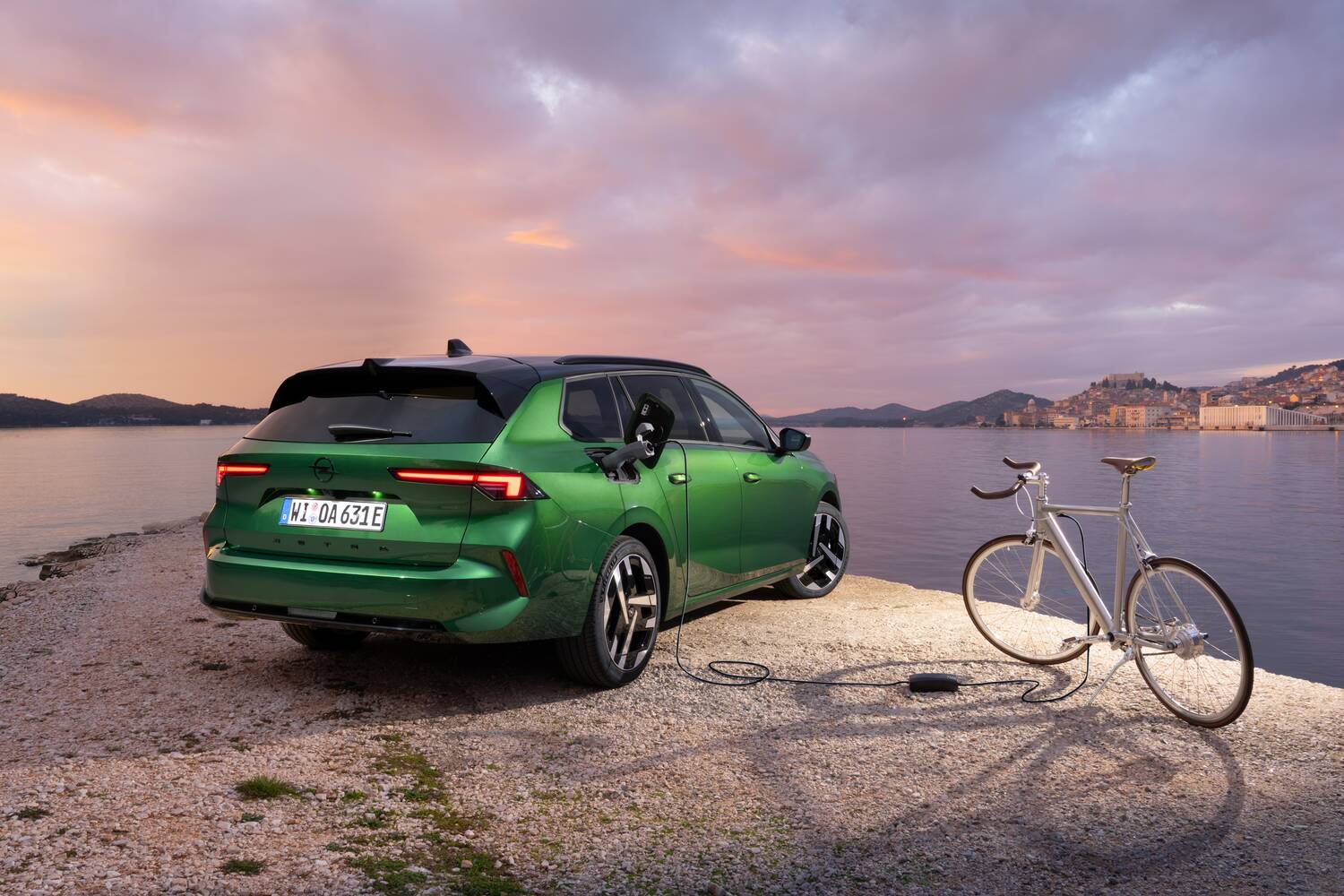
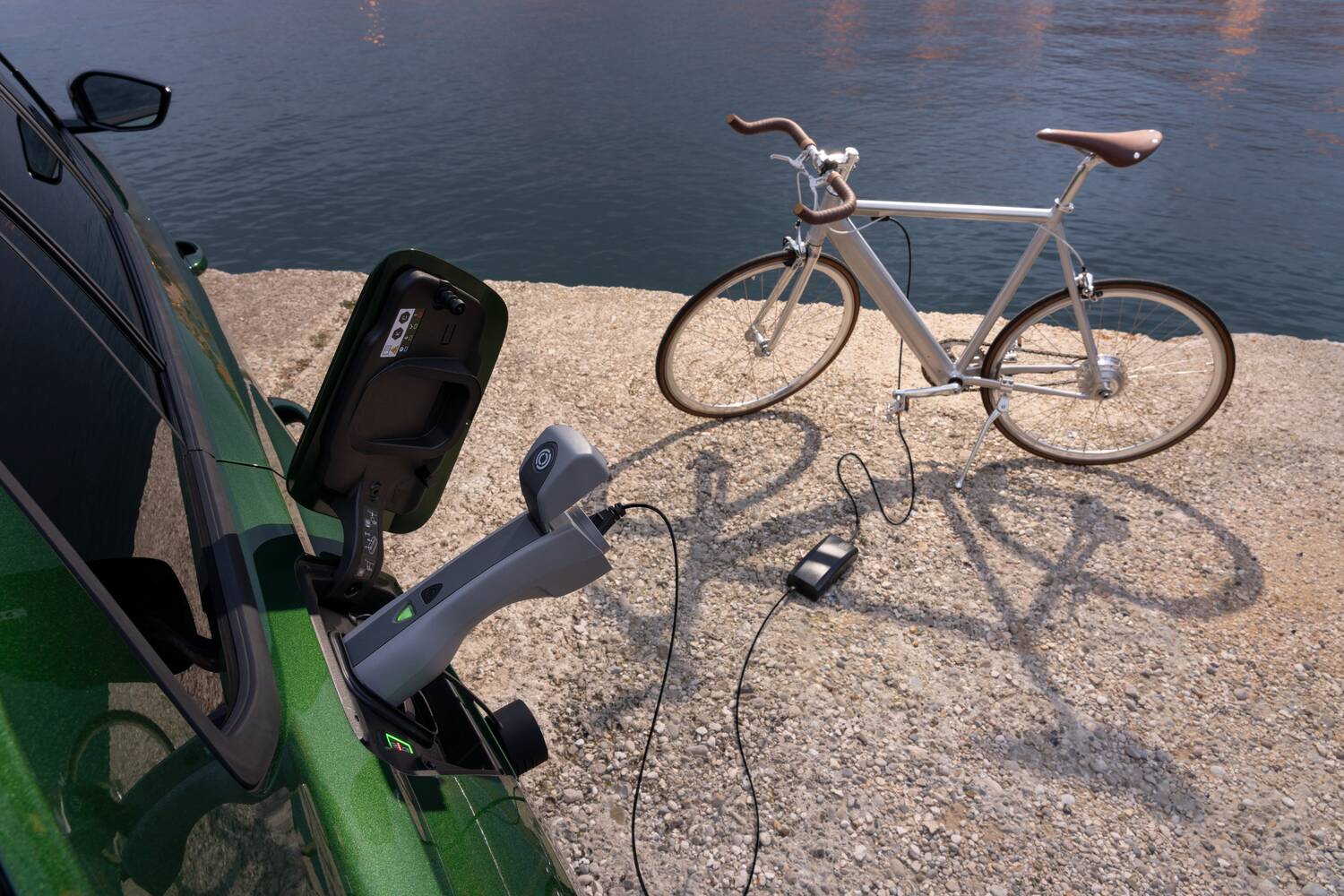
The Opel Astra Electric's peak charging speeds are 11kW on AC and 100kW on DC. It's the latter figure which isn't setting fire to the EV scene right now, as many rivals - especially ones with more advanced 800-volt architecture as opposed to the Sports Tourer's 400-volt framework - can get nearer to or even past 200kW.
This means that, at the Astra Electric's very fastest rate of replenishment, a 20-80 per cent charging cycle would require 32 minutes at 100kW, three hours 20 minutes on an 11kW AC connection and around five hours with a typical domestic 7.4kW wallbox.
The usual 10-100 per cent charge at the latter of these, which is what many owners do with their electric cars as an overnight process, would take somewhere in the vicinity of eight hours.
Servicing the Opel Astra Sports Tourer
The servicing schedule for the Opel Astra is, like other vehicles from the manufacturer, every 12 months or 30,000km, whichever arrives sooner.
Opel Astra Sports Tourer warranty
Opel's warranty in Ireland is among the best in the business, as it provides cover for five years - and there's no distance cap on that provision, either. The updated Astra Electric Sports Tourer will qualify for exactly the same level of back-up.
Irish pricing & rivals to the 2026 Opel Astra Sports Tourer
- Sports Tourer a little dearer than Hatch
- Should be good level of equipment
- Far fewer competitors for electric wagon
Although the Sports Tourer is going to be more expensive than the Opel Astra Hatch, the relative paucity of electric estates plays in its favour.
Something like €33,000 brings you a lot of choice, besides the Astra, in the C-segment electric hatchback world; but even up to €40,000 won't get you many other zero-emission estates, save for the closely related Peugeot E-308 SW. Which is why the most obvious alternatives to the electric Sports Tourer will likely be SUVs of some type.
Opel offers three trims for the Sports Tourer, which are the same SC, Elegance and GS hierarchy as for the Astra Hatch. Base-grade cars come with 16-inch alloys, the twin-screen interior arrangement and climate control as standard, but if you want heated front seats and a heated steering wheel too, plus other creature comforts like wireless smartphone charging, keyless entry and go, and a reversing camera to go with your all-round parking sensors, you'll be needing the Elegance as a minimum.
All the GS really adds on top of that is the two-tone exterior appearance, 18-inch alloy wheels, a 360-degree camera system and dual-zone climate control for the passenger compartment.
Verdict - should you buy the 2026 Opel Astra Sports Tourer?
We've got more compelling reasons to recommend the Sports Tourer version of the Opel Astra to you than the Hatch - although we suspect that still won't make the wagon popular here.
But we think it looks better on the outside, and it certainly rides in a more composed fashion, thanks to a slightly longer wheelbase, greater kerb weight and changes to the rear suspension to cope with loads in its boot.
Sure, there are still minor foibles with it but as there are far fewer electric estates floating around in the world than there are electric hatchbacks, or indeed combustion-powered C-segment cars, the Astra Electric Sports Tourer seems to have more purpose in the world than the Hatch, and so it's considerably more likeable as a result.
FAQs about the 2026 Opel Astra Sports Tourer
Is the Opel Astra Sports Tourer all-wheel drive?
No, it is exclusively front-driven, whether you go for the diesel, petrol, hybrid or electric powertrains offered.
Does the Opel Astra Sports Tourer have an automatic gearbox?
It is almost exclusively offered with self-shifting transmissions, with the only manual gearbox provided on the base-spec 1.2-litre petrol model.
How many ISOFIX positions are there in the Opel Astra Sports Tourer?
There are two, on the outer seats of the rear bench, and they have mounting points with top tethers to accompany them.
Want to know more about the 2026 Opel Astra Sports Tourer?
If there's anything about the new Opel Astra Sports Tourer we've not covered, or you'd like help in choosing between it and other cars, you can avail of our expert advice service via the Ask Us Anything page.
Opel Astra Sports Tourer history
There have always been estate versions of the Opel Astra, and indeed also wagon variants of the Opel Kadett predecessor which forms its blended heritage.
Amusingly, the first Kadett estate of 1963 was termed the 'Car-A-Van', which later was smoothed off into just 'Caravan' for the following two generations of the car up until the Mk4 of 1980, which - over in the UK - became the first vehicle worldwide to wear the Astra nameplate.
Those original three variations of the Kadett Caravan were all three-door machines with rear-wheel drive, but the Mk4 Kadett/Astra switched to a front-wheel-drive layout, as well as offering both three- and five-door estate body shells. The Caravan name lingered with this generation and also the following rounded successor, the Kadett E, in certain markets, but by this point most people were simply calling the wagon either the Kadett or Astra Estate.
By 1991, and the advent of what should have been the Kadett Mk6, the Astra name was adopted globally for Opel cars as well as Vauxhalls. Also, the three-door estate disappeared for this generation, with all Astra wagons now featuring five doors as standard.
It wasn't until the wagon variant of the fourth-generation Opel Astra (or the sixth, if you're talking about the Vauxhall derivative) arrived in 2010 that the estate got the Sports Tourer name. And it is the ST nomenclature that has stuck with the Astra estate ever since.