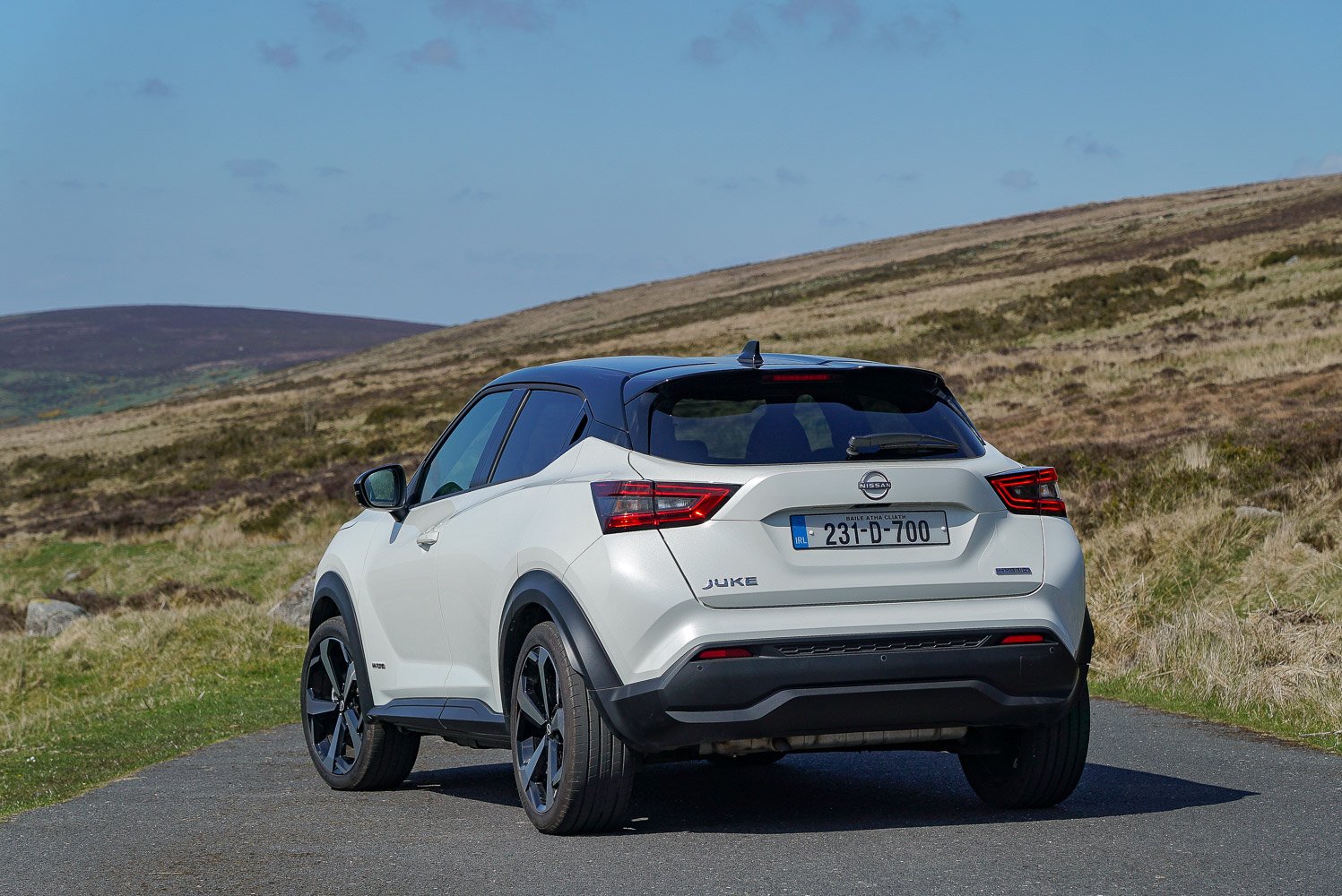
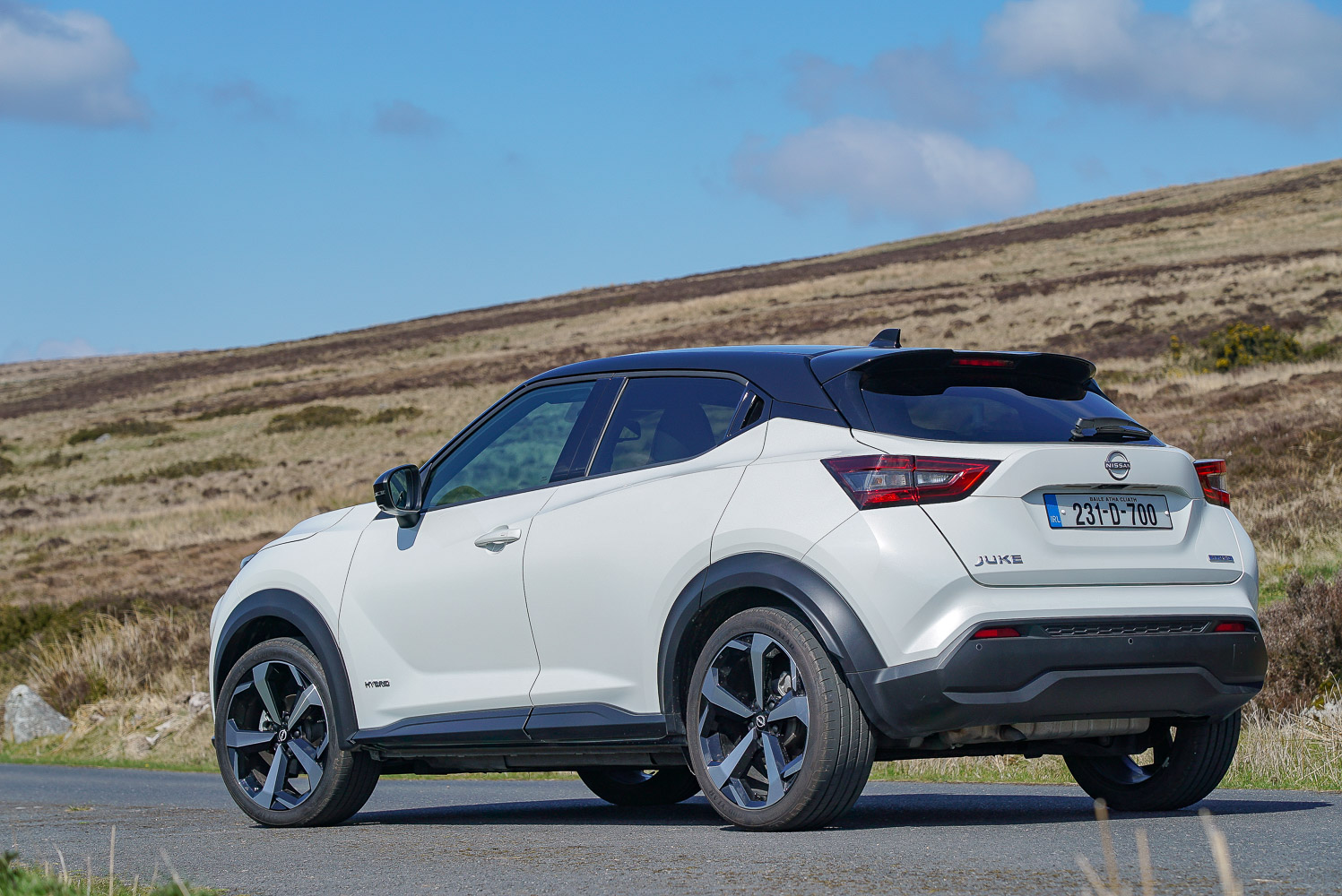
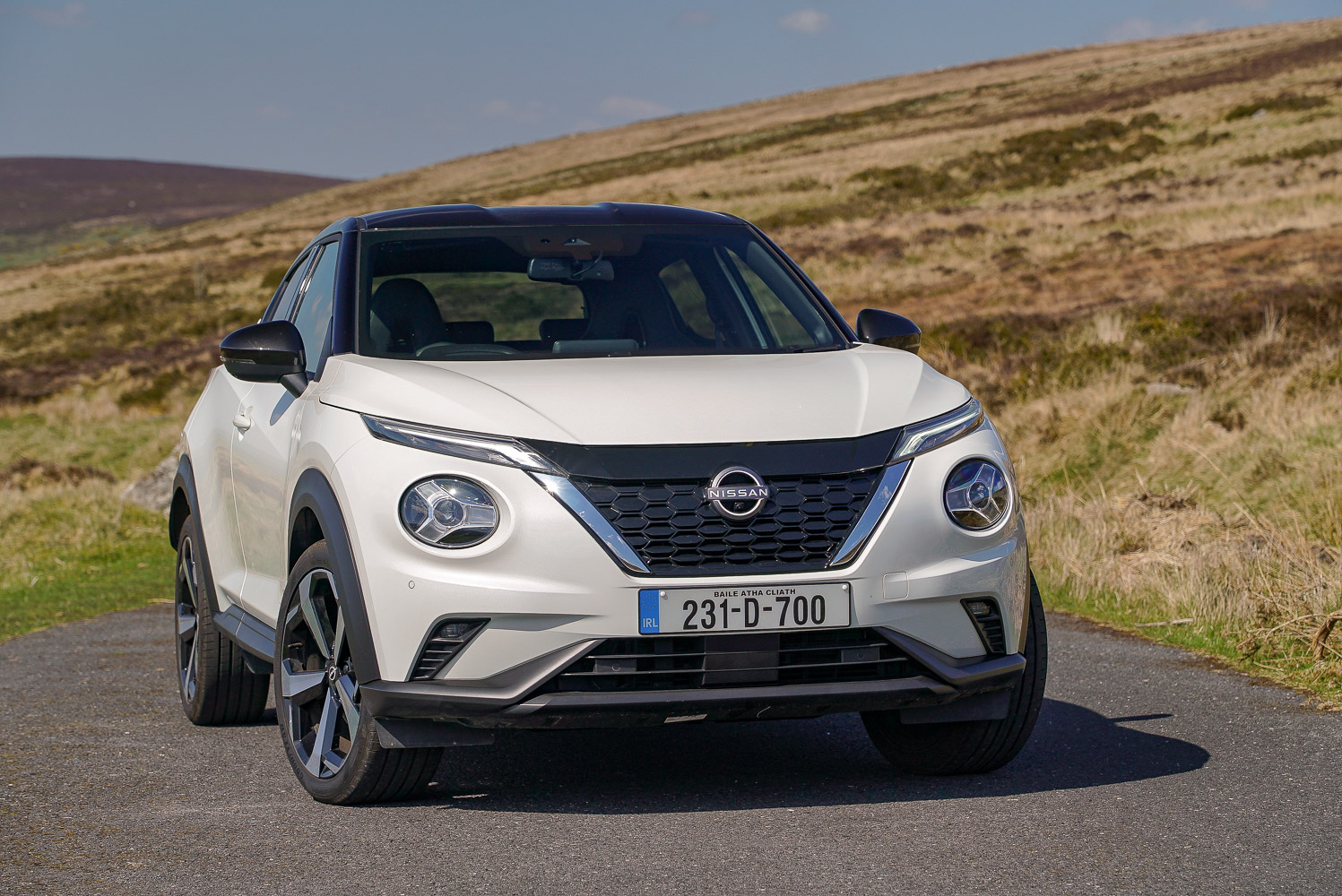
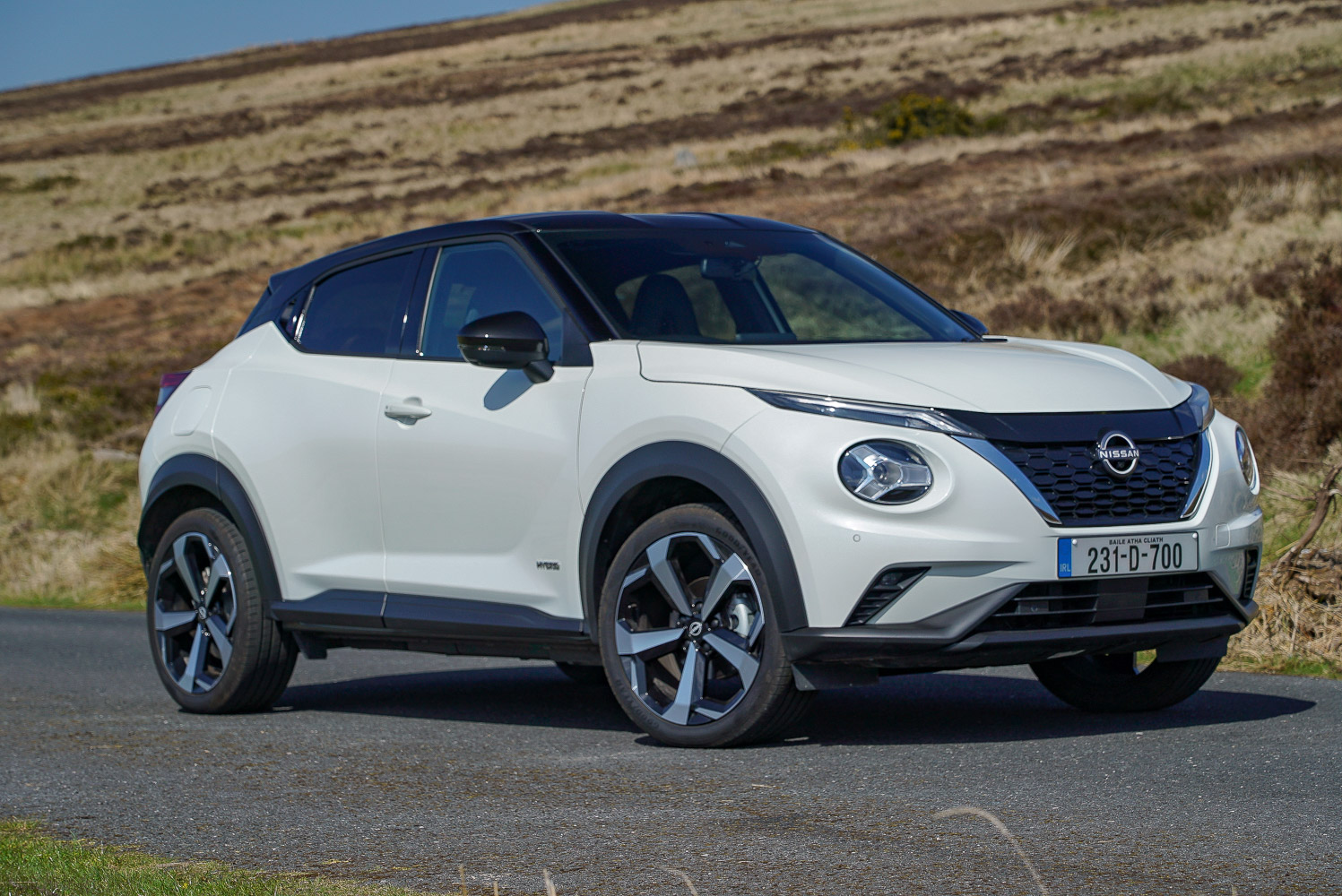

Nissan Juke Hybrid overview
Up until now, and much like many other small SUV/crossover, the second-generation Nissan Juke has been offered with engine options that offer just enough performance, but not a lot more. Unlike some rivals, there isn't even an electric powertrain to choose from (surprising when you consider Nissan's electric history with the Leaf), but it's redressing the performance deficit - and adding electrification - with this new Juke Hybrid.
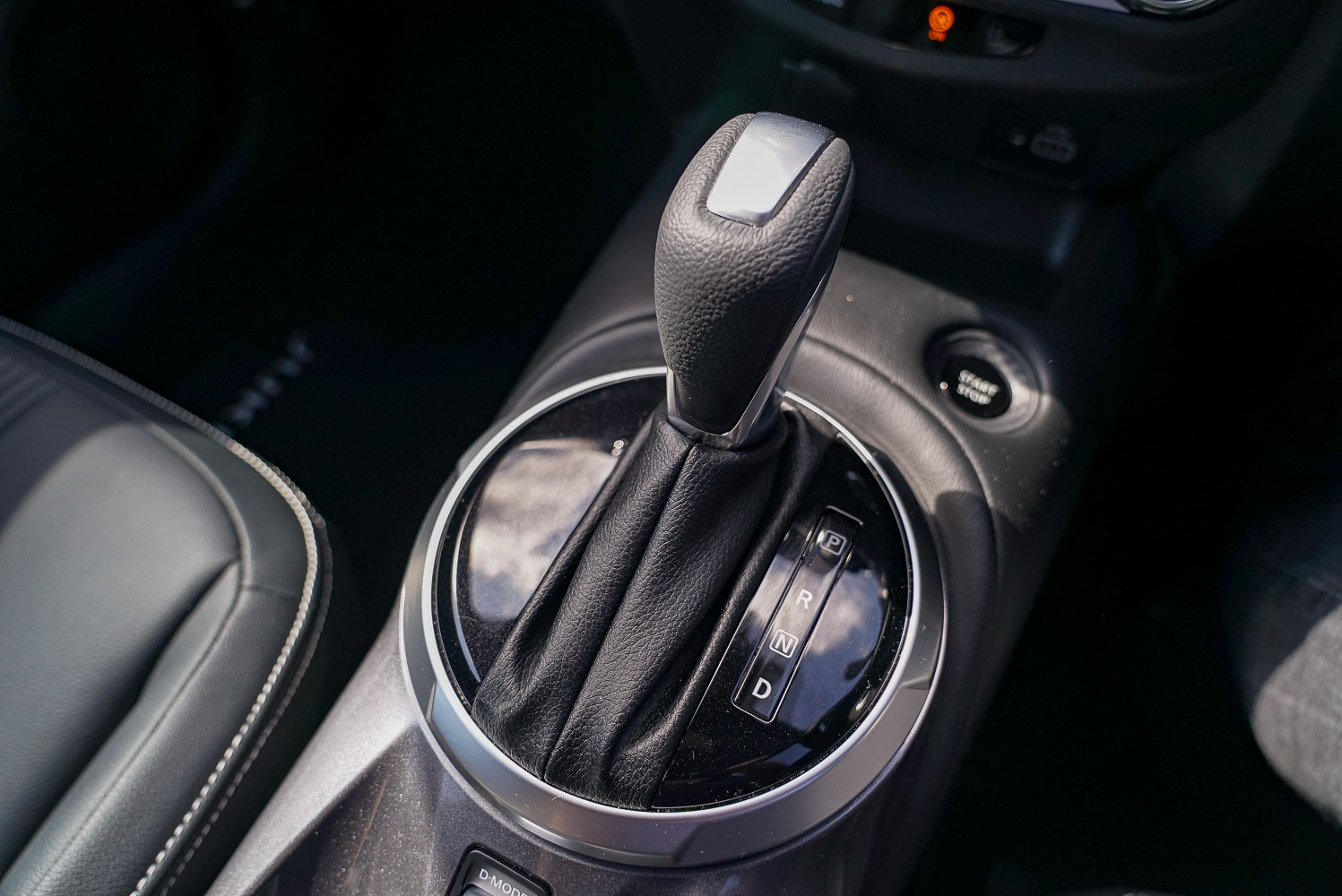
Nissan hasn't simply bolted an electric motor to the existing Juke's engine. Instead, the Juke Hybrid features an all-new powertrain. It's made up of a 94hp 1.6-litre four-cylinder naturally aspirated petrol engine and a 49hp electric motor, which combine to offer a maximum system output of 143hp, which is almost 30hp more than the existing DiG-T 1.0-litre turbocharged petrol option. This is connected to an automatic gearbox, which offers two speeds for the electric motor and four speeds for the petrol engine, and manages energy flow from both sources.
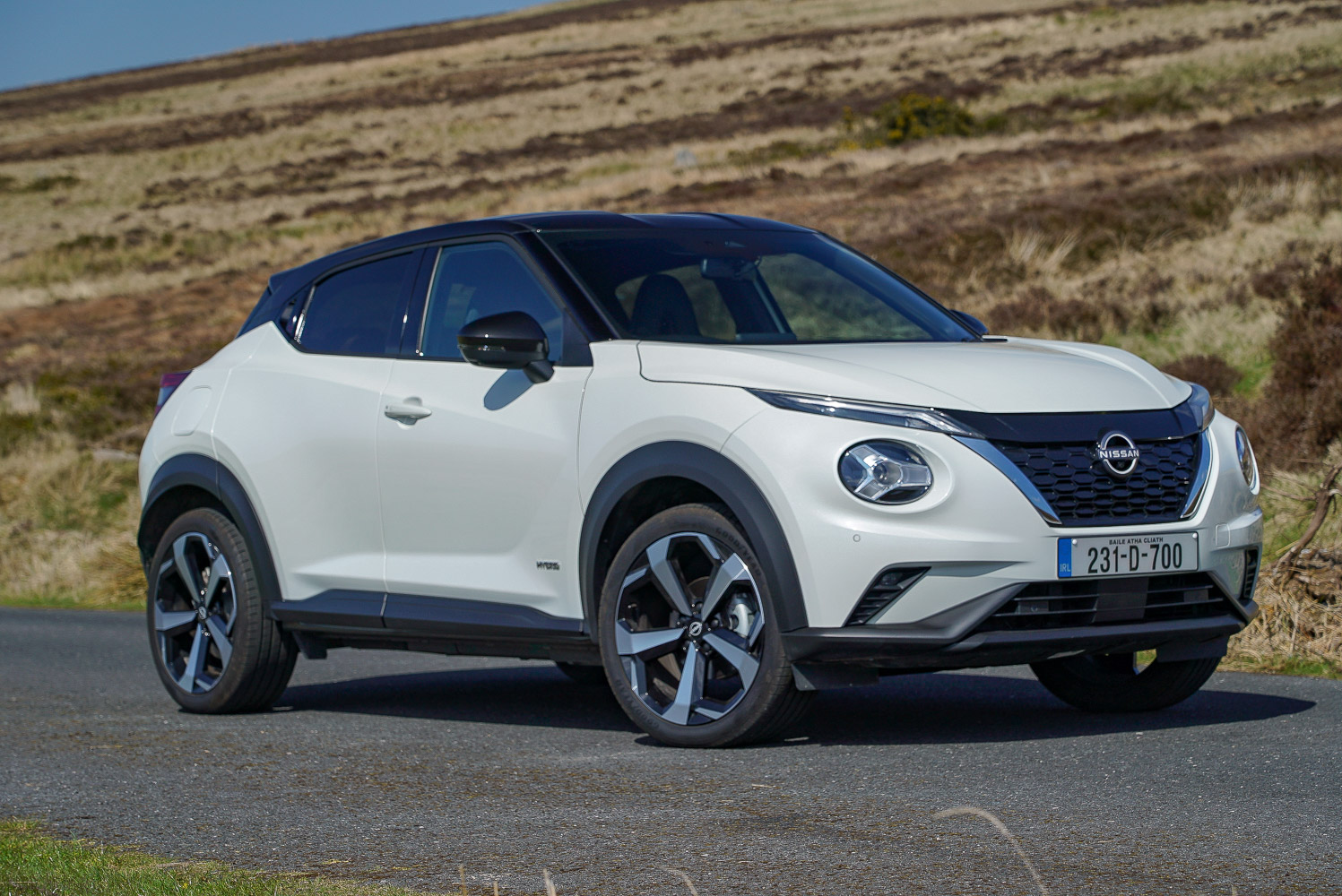
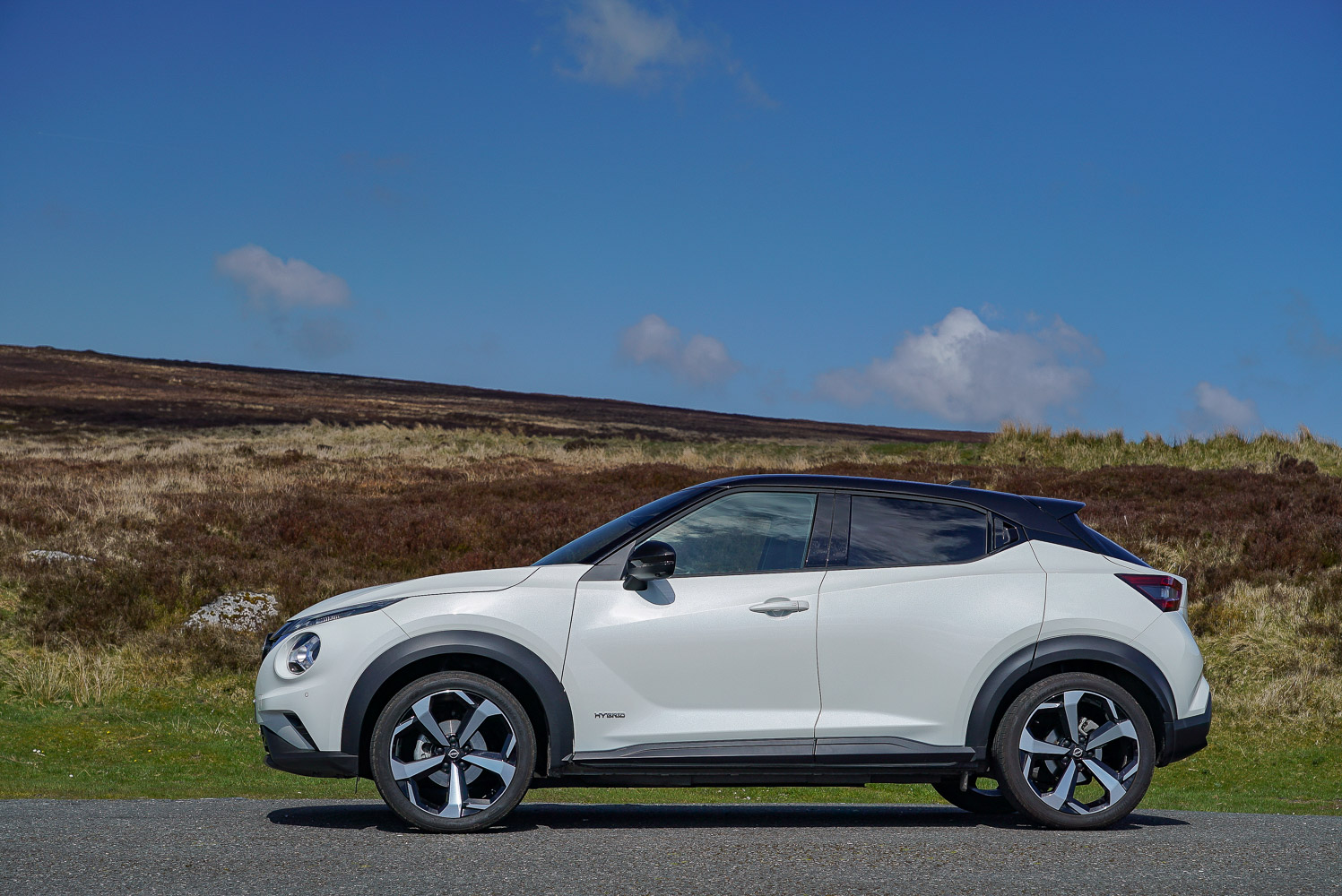
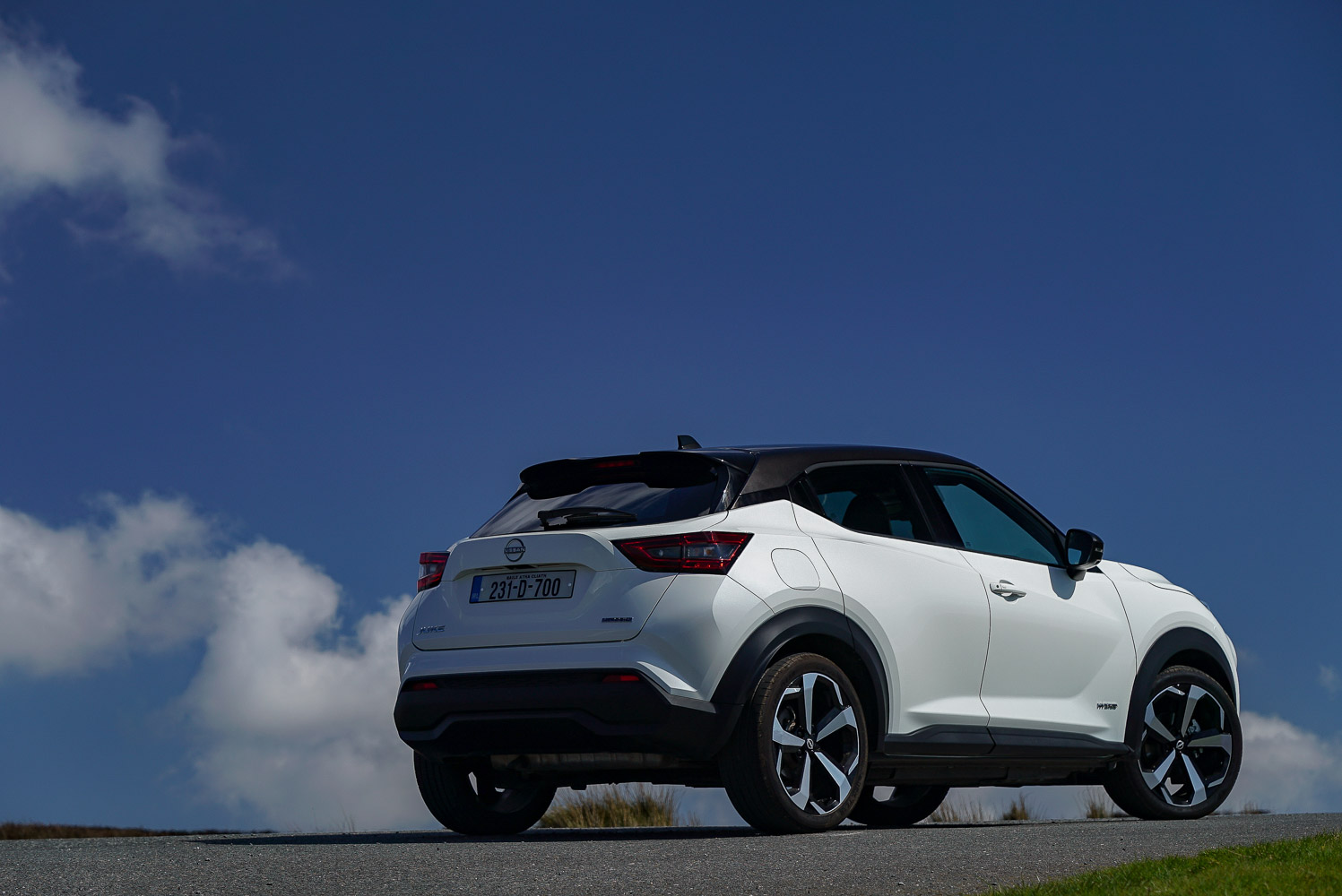
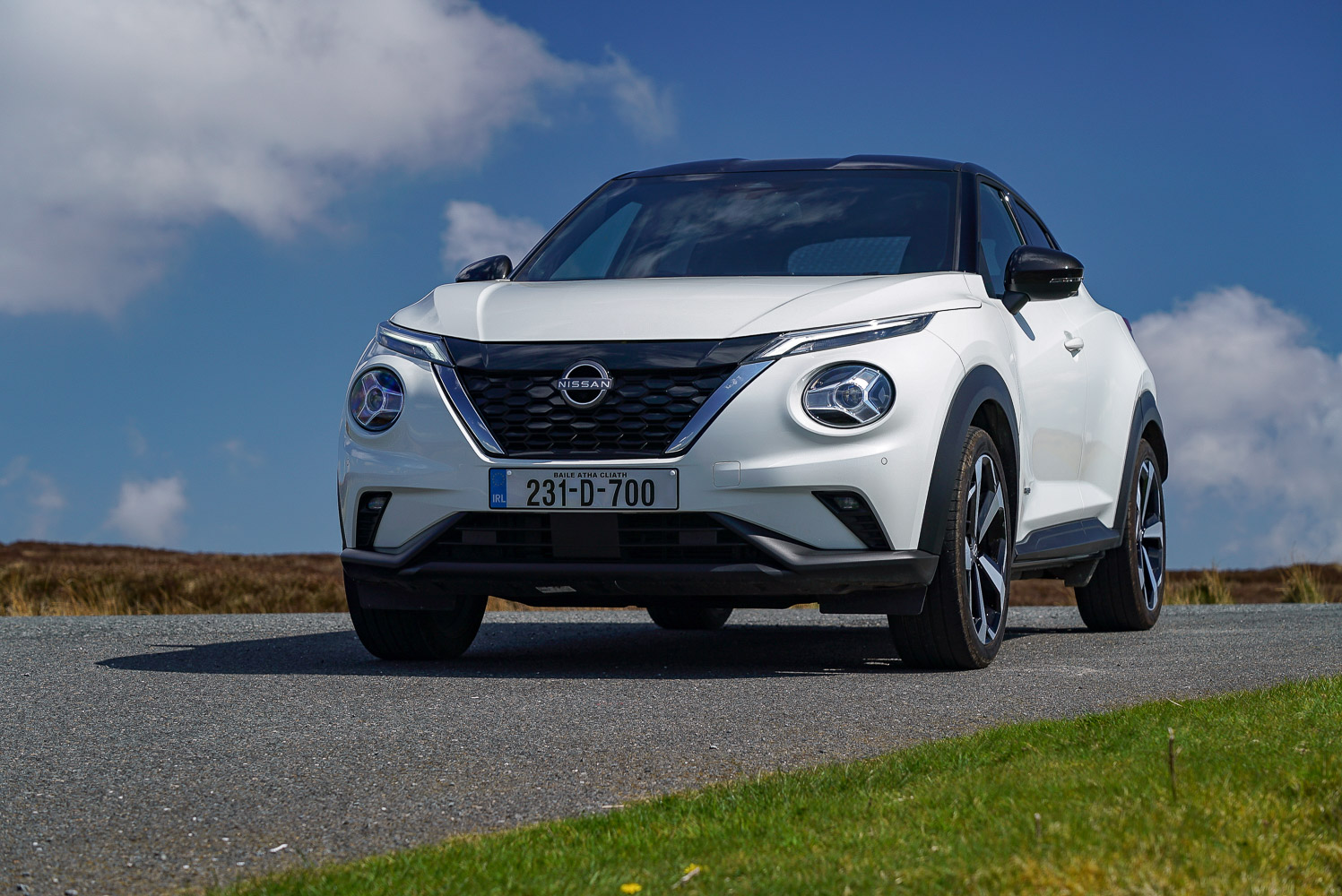
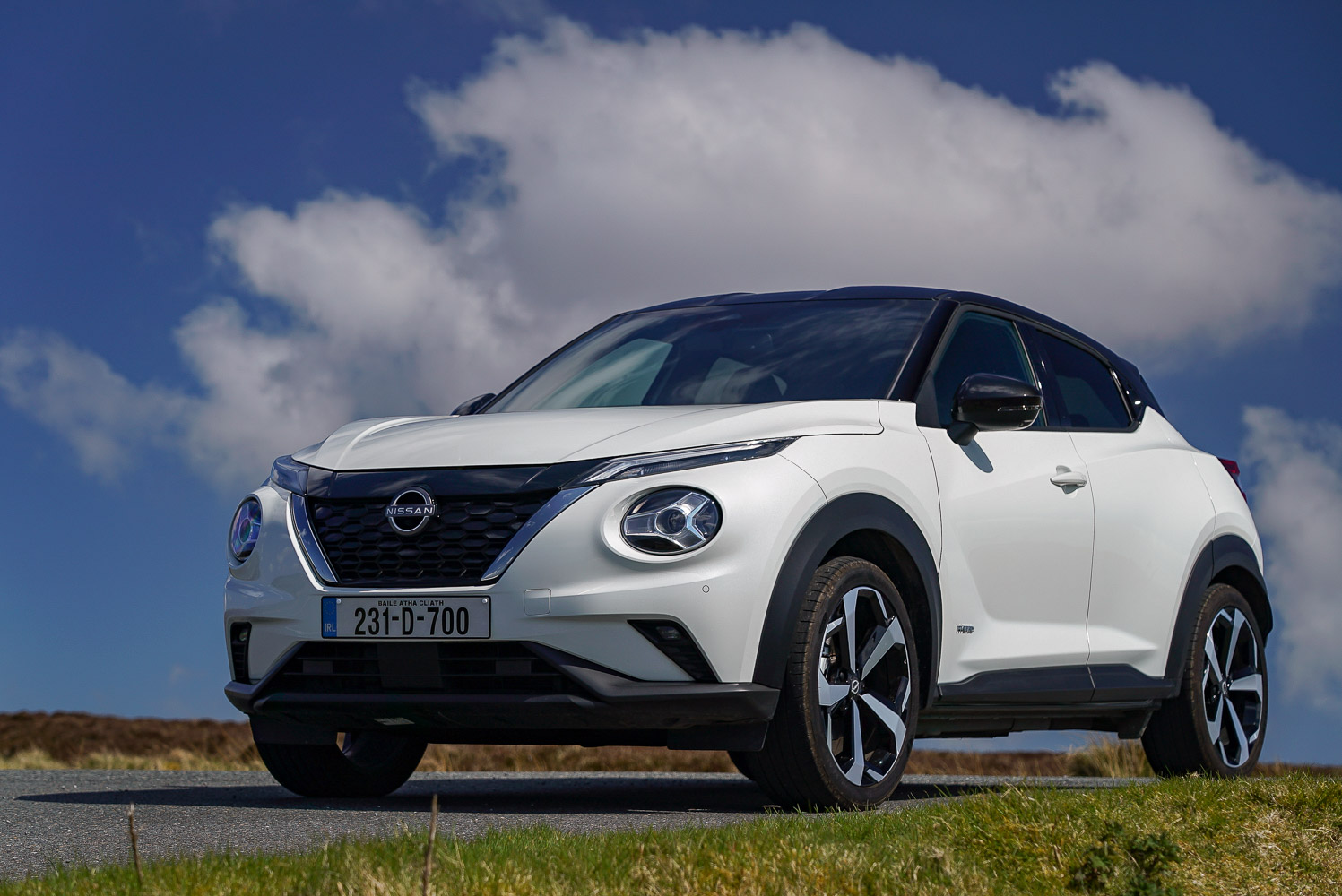
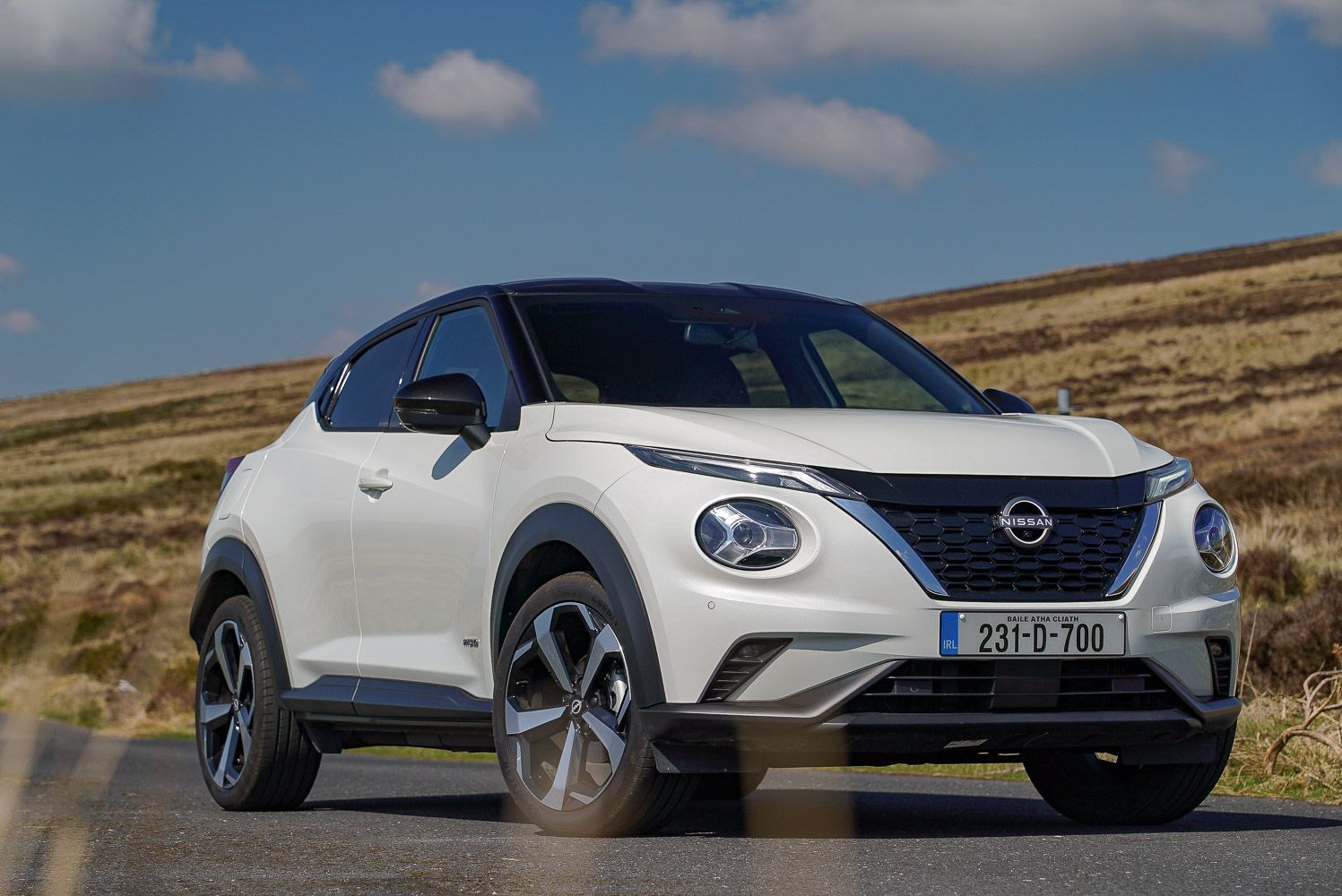
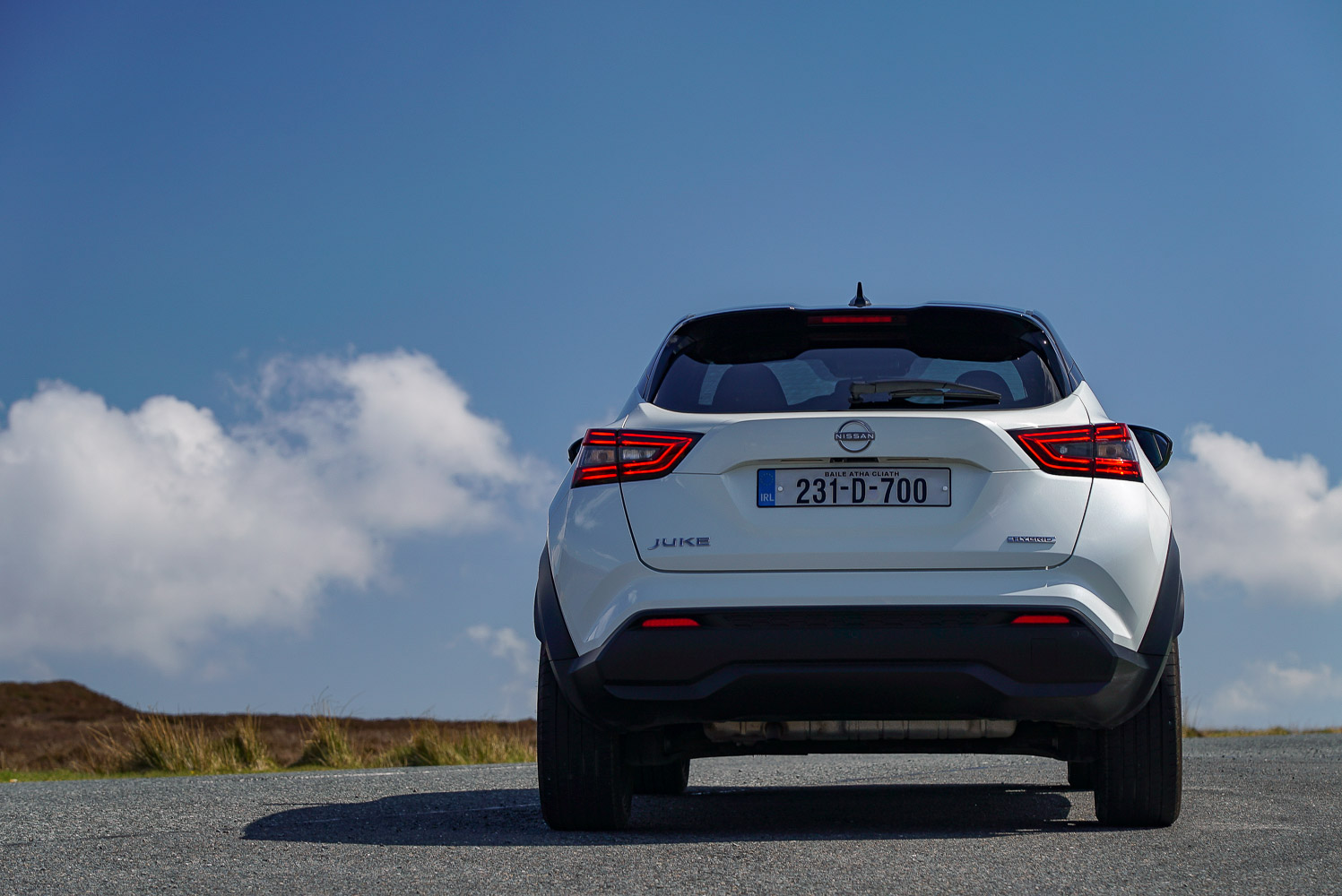
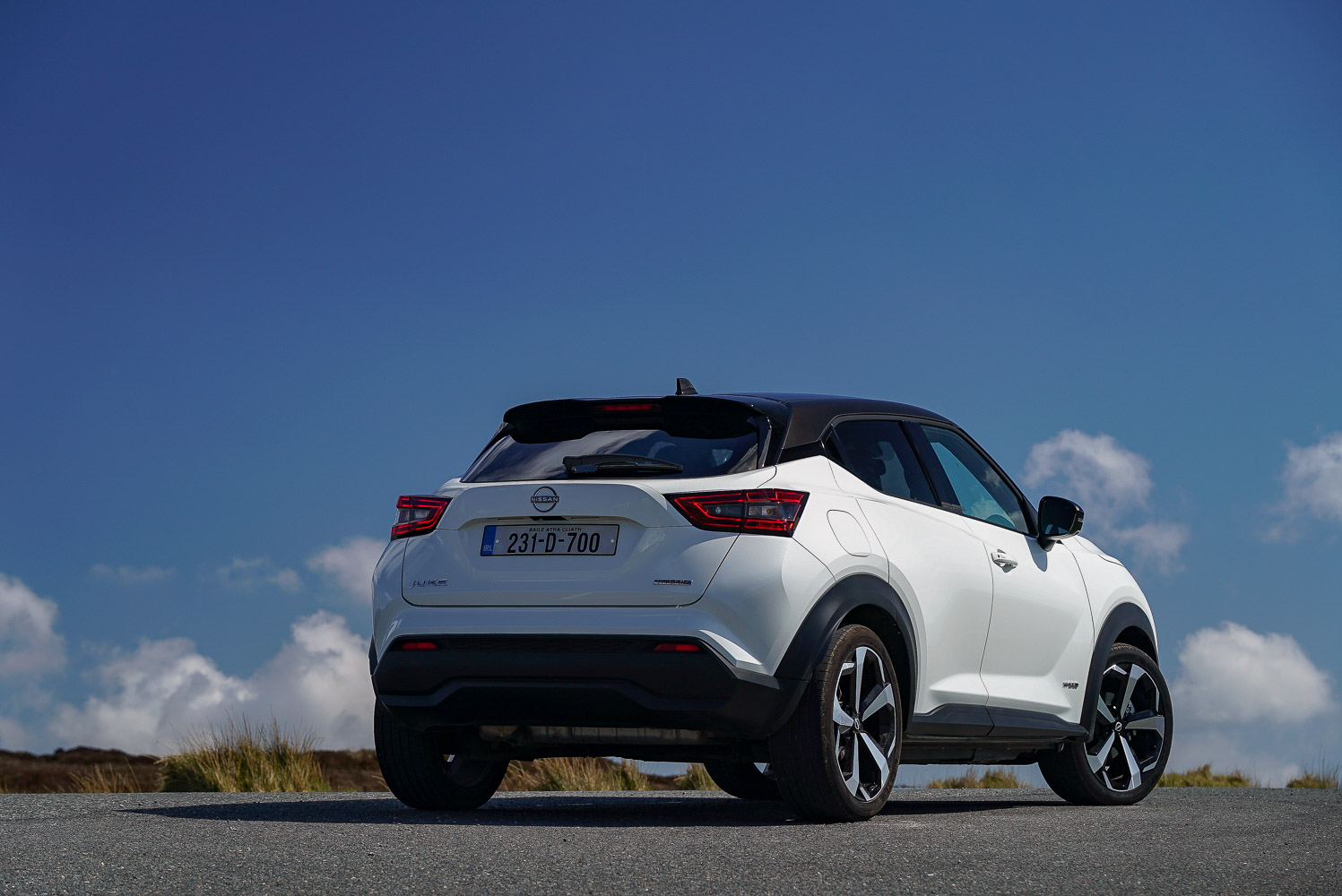
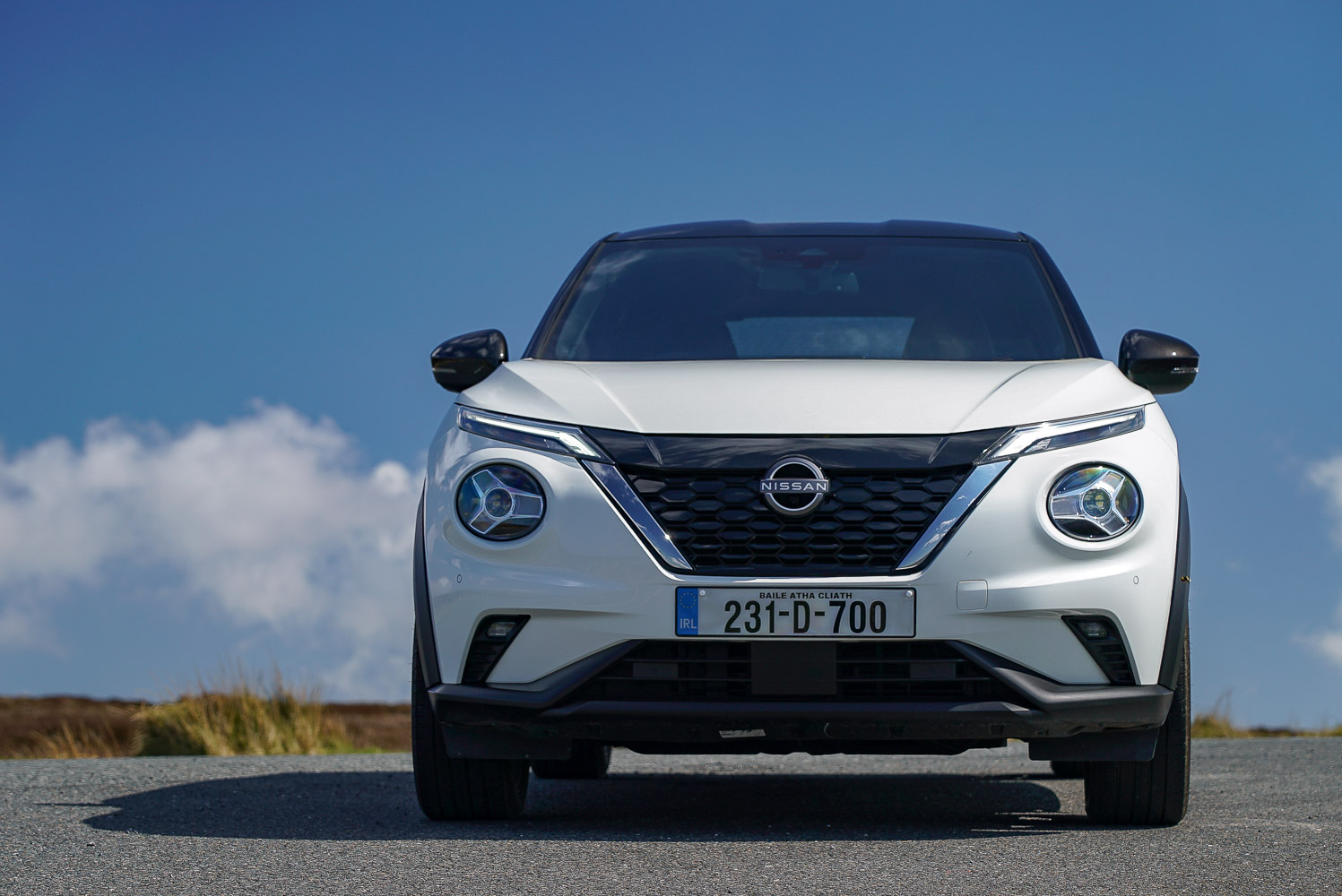
The end result is a powertrain that promises improved performance and fuel economy, so not only is the Juke Hybrid faster from 0-100km/h (a figure of 10.1 seconds is six-tenths of a second faster than the 1.0 DiG-T manual manages, and a healthy 1.7 seconds faster than the CVT auto-equipped version), it's also more economical (a best of 4.9 litres/100km, compared with 5.8 litres/100km and 6.0 litres /100km for the manual and automatic petrol versions, respectively). Apart from the new engine, the Juke Hybrid is largely identical to the standard version. There's a smoother grille design up front, Hybrid badging and new wheel designs. But that's about it.
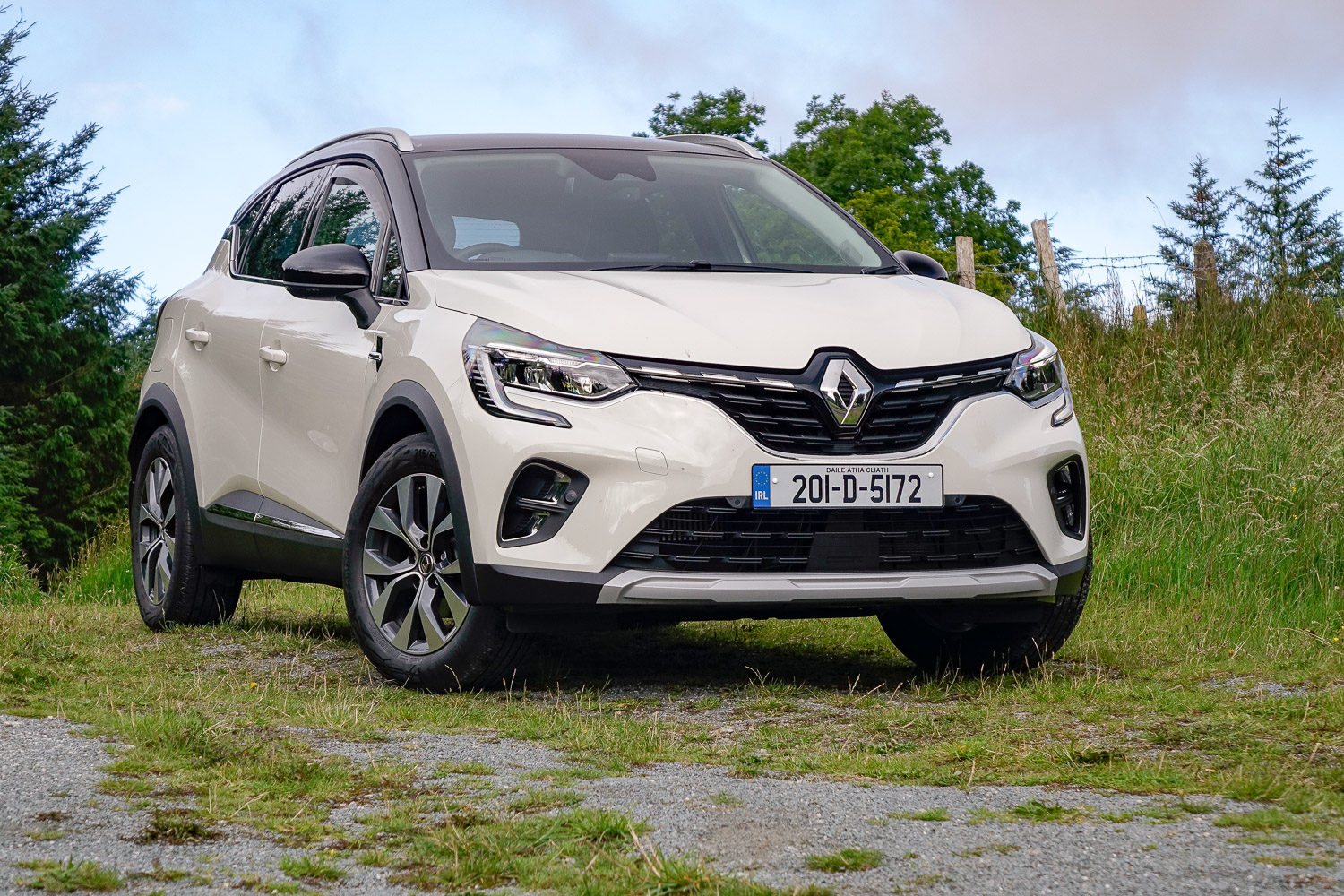
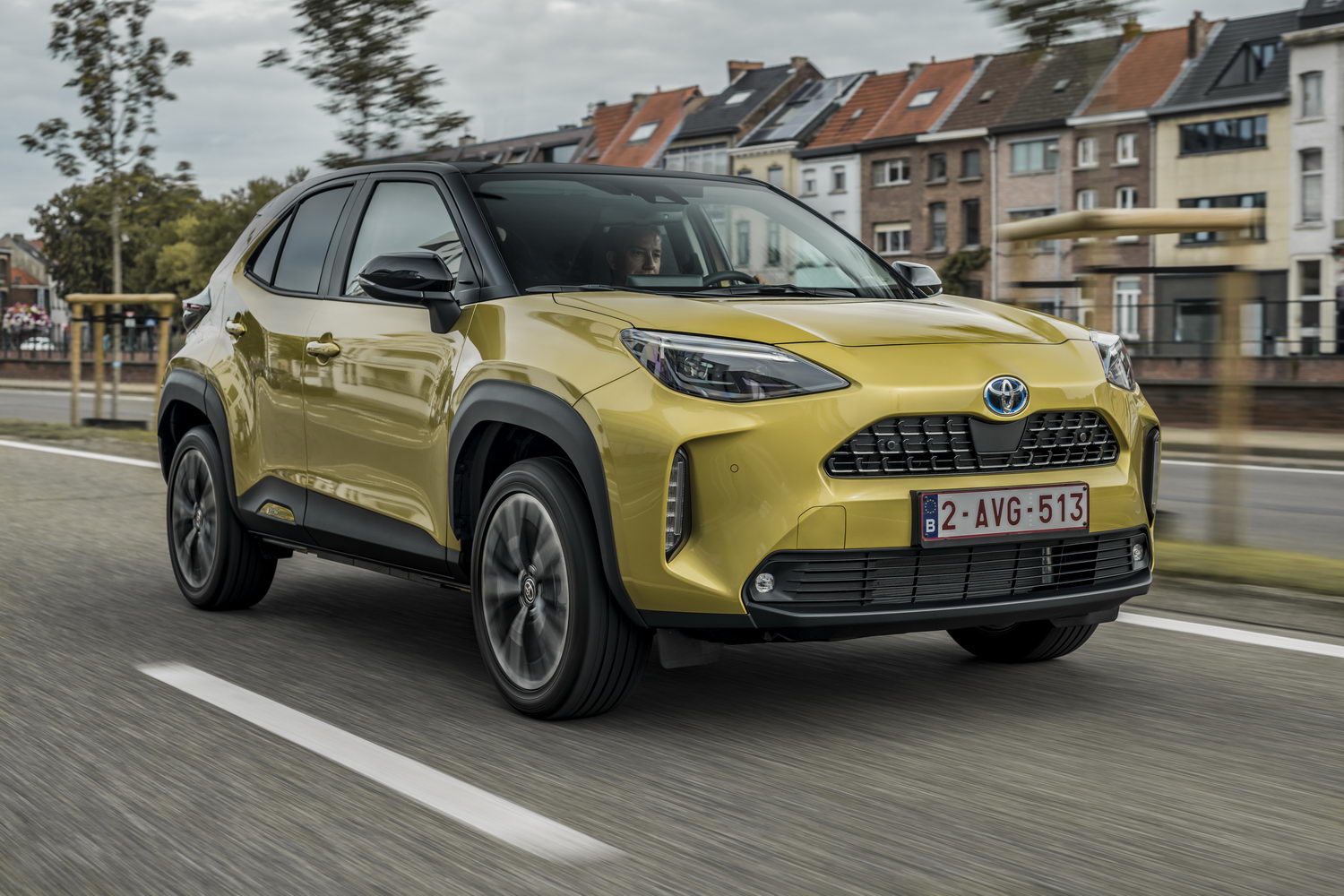
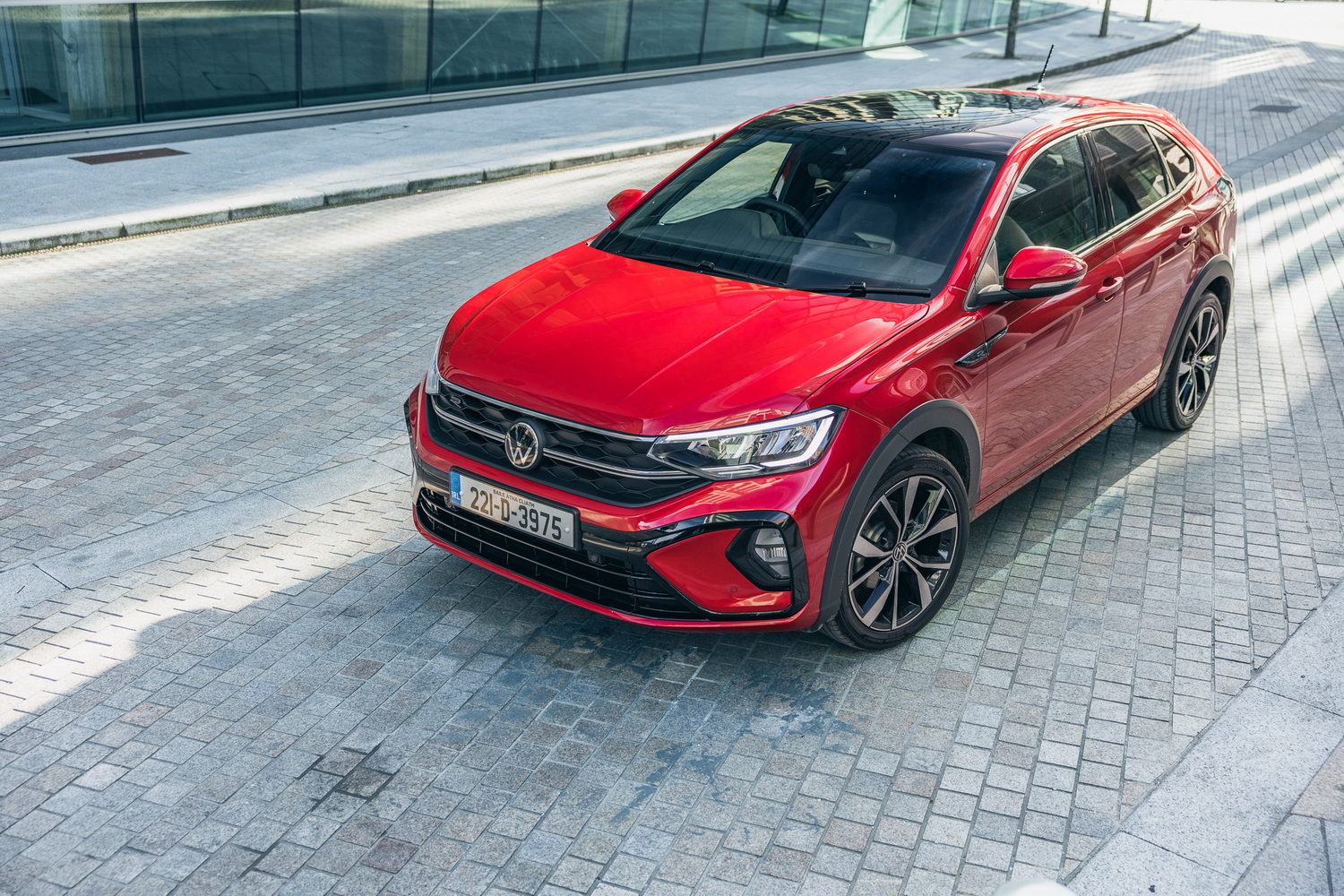
The introduction of the Juke Hybrid will help Nissan take on its rivals in the small SUV sector - a class that it can take some credit in creating when the first-generation Juke arrived in 2010. The Renault Captur shares engines and running gear with the Nissan, while the Peugeot 2008, Opel Mokka and DS 3 are all closely related to each other. The Citroen C3 Aircross uses slightly older tech than these other Stellantis models, but is still a practical small SUV. Elsewhere, the Kia Stonic and Hyundai Bayon are SUV versions of their respective firm's superminis (the Rio and i20), while the Volkswagen Group offers the SEAT Arona, Skoda Kamiq and two VW options, the T-Cross and Taigo coupe-SUV. The Toyota Yaris Cross is another high-riding alternative to its namesake supermini cousin.
The Nissan Juke Hybrid model range
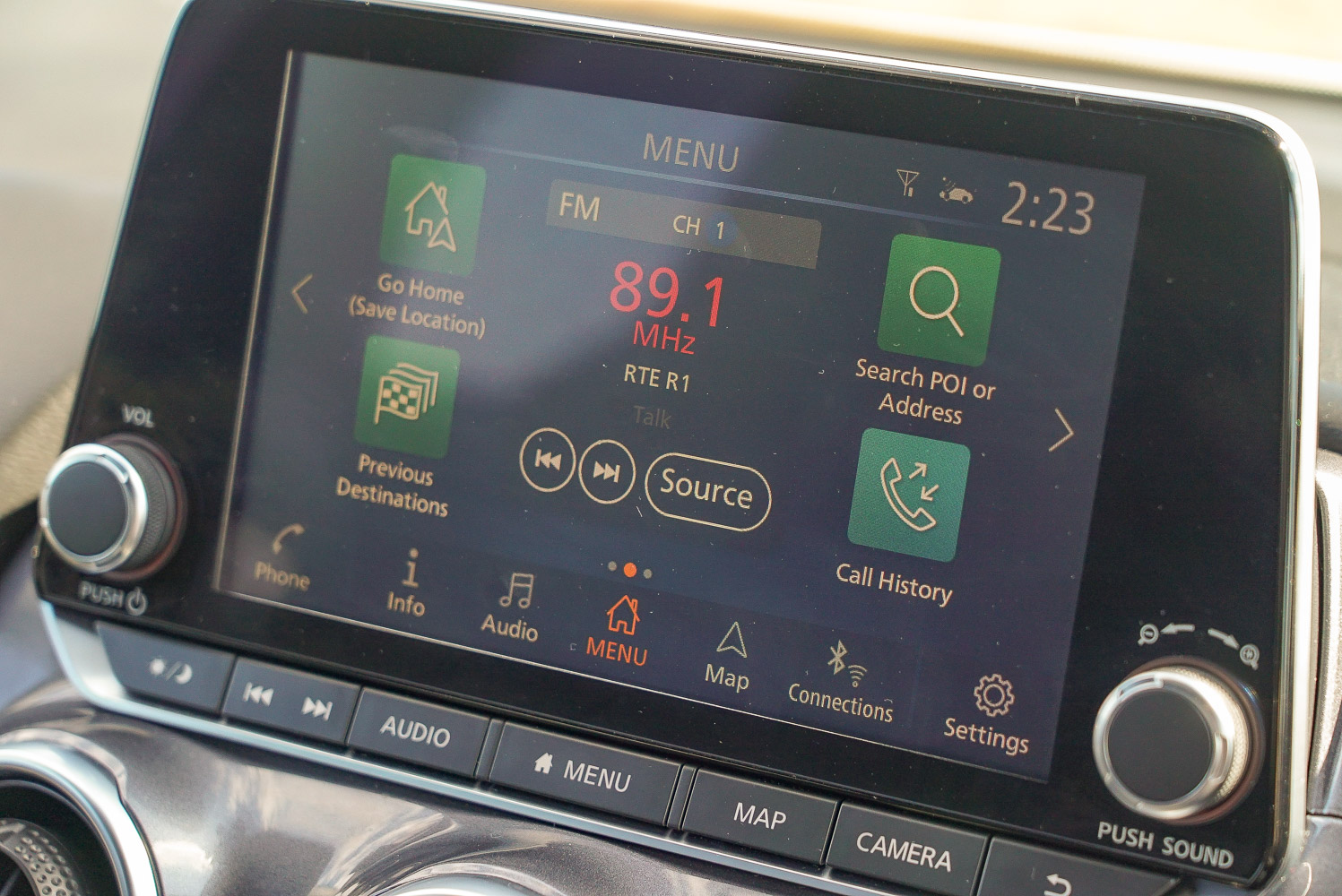
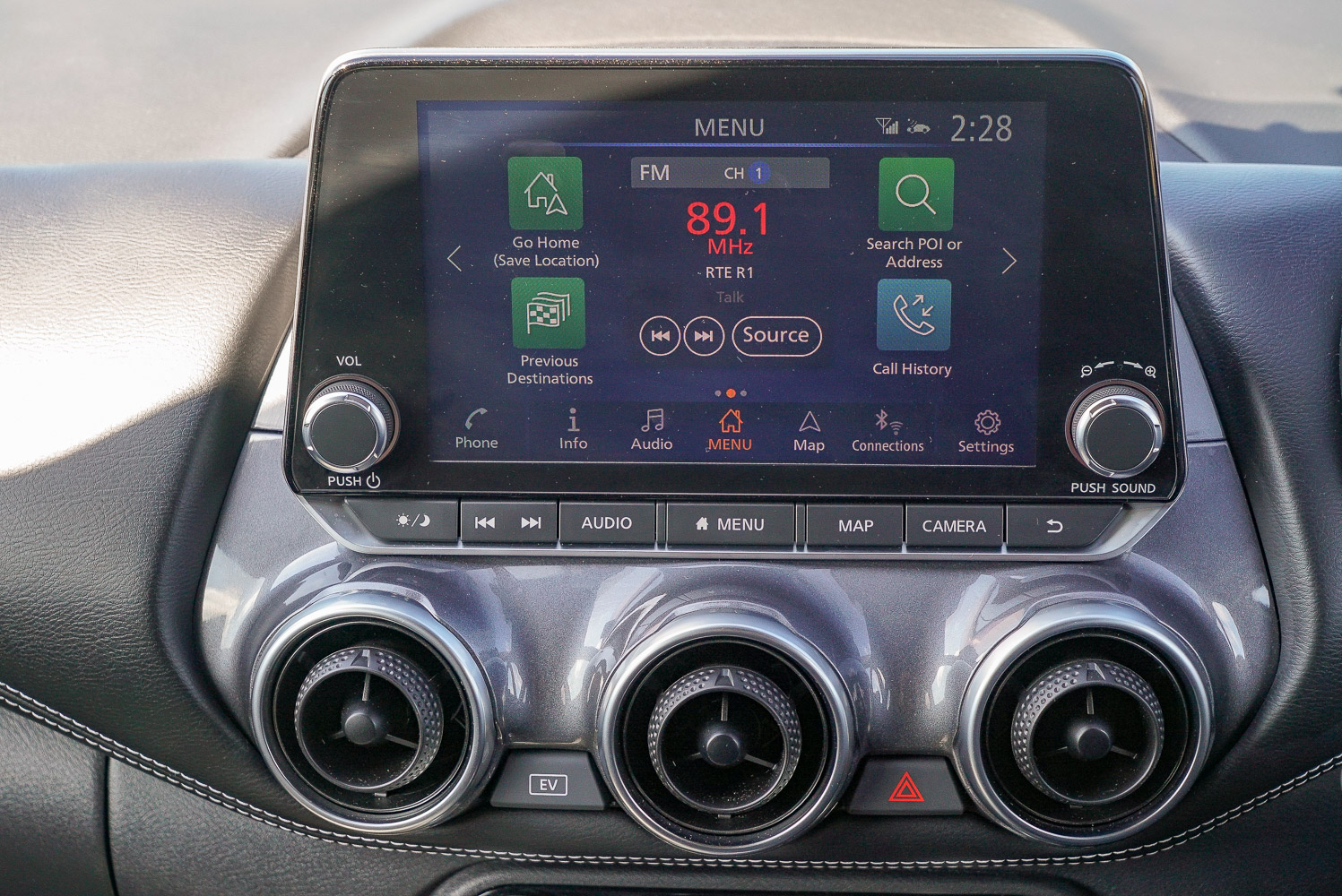
Prices for the Nissan Juke start at €26,995, but the Hybrid version kicks off at €34,600. That's quite a jump, but it's worth highlighting that you can only get the Hybrid model in the Juke's top three trim levels - compare it with the 1.0 DiG-T CVT auto in SV Premium trim, and it's a step up of €2,700. Standard equipment includes LED headlights, 17-inch diamond-cut alloy wheels, heated and electrically folding mirrors, climate control, keyless entry and starting, seats that are partially trimmed in synthetic leather, rear parking sensors and a reversing camera, plus an electric parking brake with auto hold. The infotainment system features an eight-inch touchscreen with Apple CarPlay and Android Auto, while Bluetooth is included, as is voice control and USB sockets for front- and back-seat passengers.
Safety equipment includes automatic emergency braking with pedestrian and cyclist recognition, traffic sign detection, lane assist and the usual suite of airbags and ISOFIX child seat mounts in the rear. On top of this, the optional Tech Pack is available, which adds 360-degree cameras, driver tiredness alert, navigation, rear cross-traffic alert and ProPilot, Nissan's suite of driver assistance tech that includes adaptive cruise control, blind-spot detection and smart emergency braking.
Move up to N-Design trim for €2,000 extra, and the wheels jump from 17- to 19 inches in diameter, while a two-tone roof is added to the exterior. Ambient lighting is also included, while the Tech Pack, a Bose surround sound system and different interior colours are available as options.
At the top of the range, the SVE model is only €1,000 more than N-Design, and it comes with the Tech Pack as standard, plus features a different 19-inch wheel design and ambient cabin lighting.
The Nissan Juke Hybrid interior
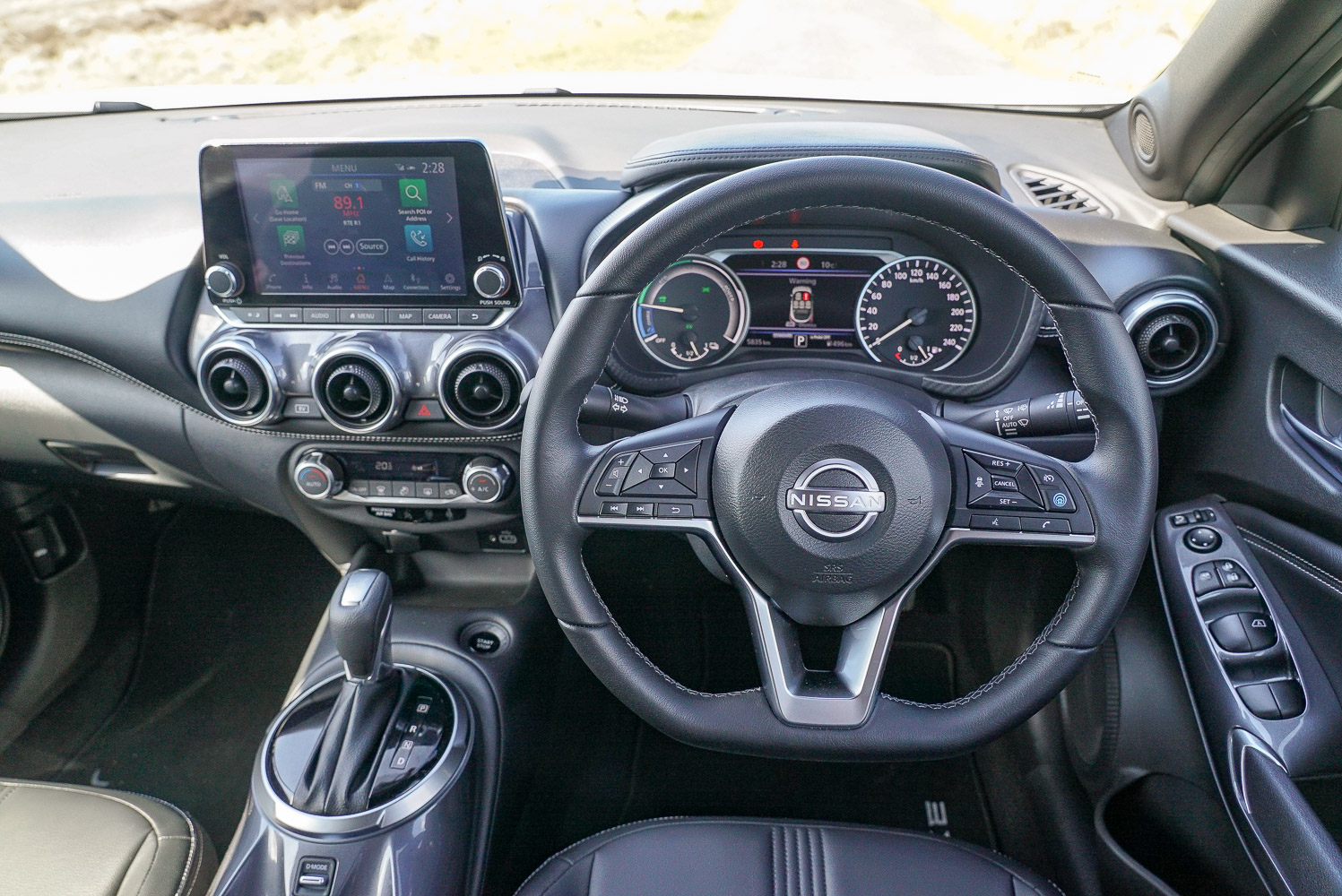
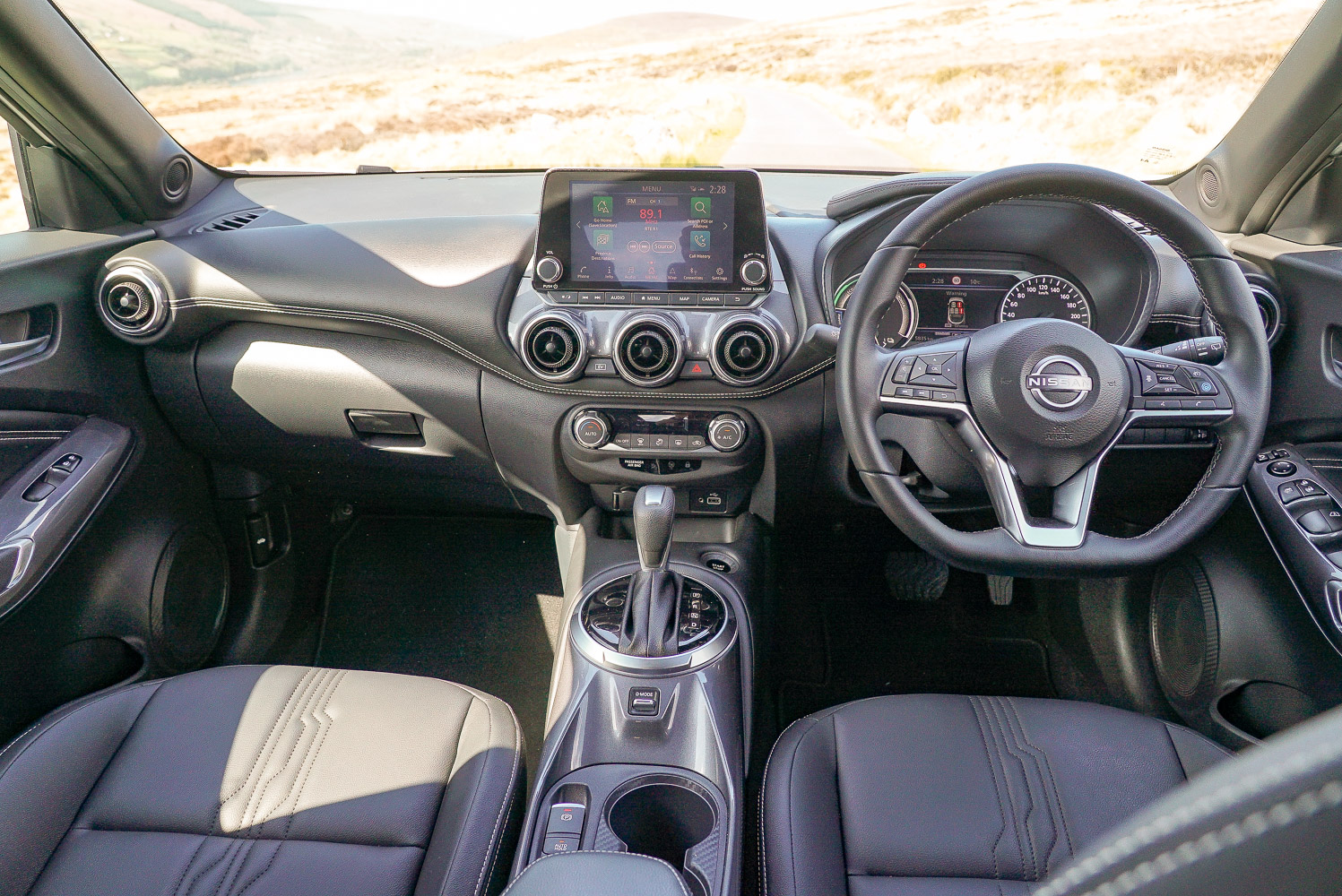
The first-generation Nissan Juke was an exercise in style over practicality, but while the Mk2 has a look that's an evolution of what's gone before, Nissan has been able to extract more space inside. It's still not the roomiest small SUV out there, but it's a lot better than it was.
The top-spec SVE features seats that are trimmed in part with synthetic leather, and there's a wide range of adjustment on offer to get comfortable at the wheel. Build quality inside is a definite step up from its predecessor, too. While the layout of the cockpit hasn't changed very much - the centre console still has a look that's inspired by a motorcycle fuel tank - everything feels much better built; it feels like a premium product.
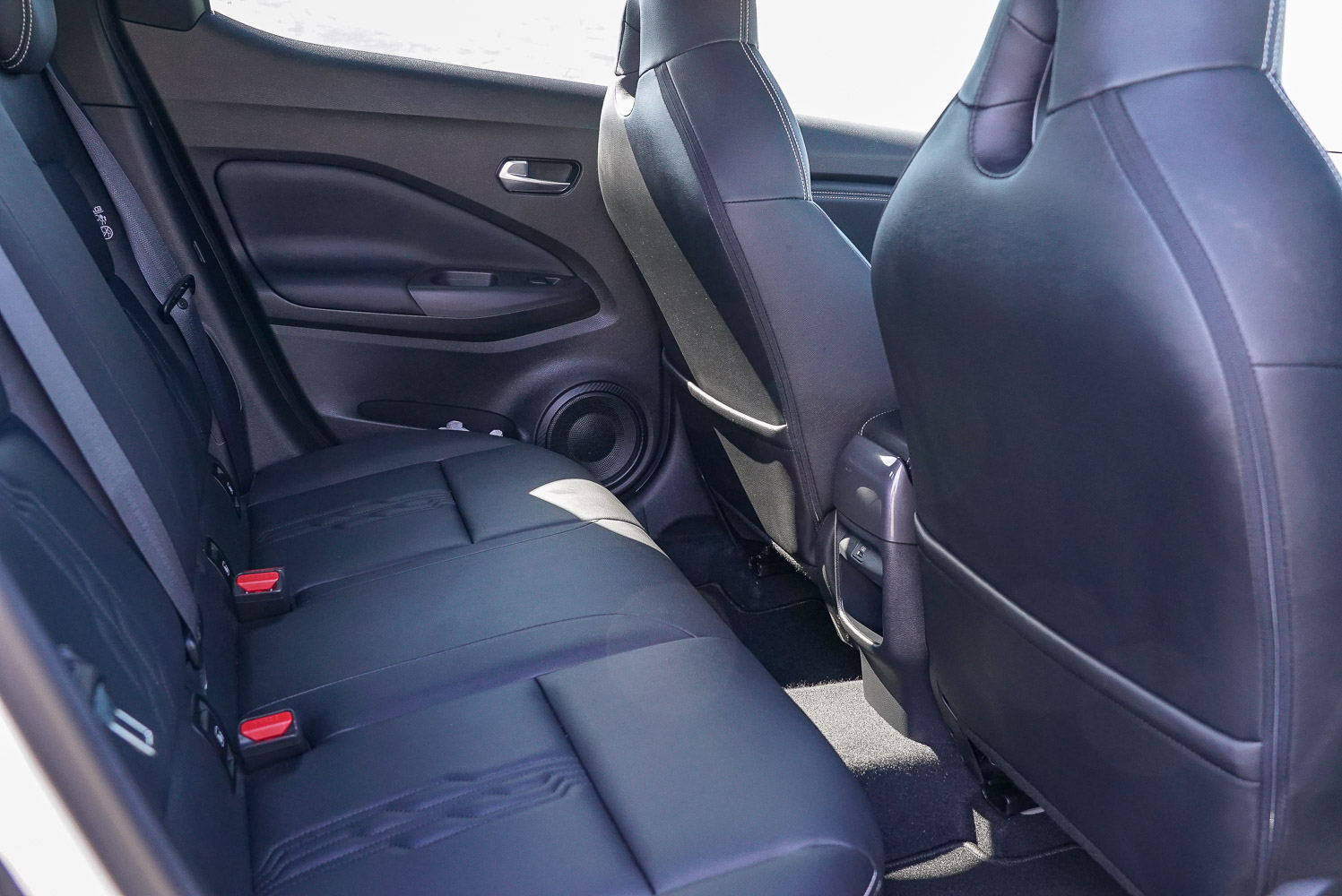
In the back, the small windows still make it feel a little claustrophobic, but there are no real issues with the amount of space on offer. It's roomy enough for two adults, but will be a squeeze for three across the back - but that will be the same with any of its rivals.
Boot space was very tight in the last Juke, but while the Mk2 has more space on offer, it's compromised in the Hybrid version. There's 354 litres available in five-seat mode, while folding the back seats creates 1,237 litres of space, but those figures are 68 litres less than you get in the standard petrol Juke.
The Nissan Juke Hybrid driving experience
It's easy to get a good driving position, and the addition of a hybrid powertrain has boosted the Juke's driving ability, too. It's not just the benefit of the extra power that makes it more appealing, it's also the way it delivers its performance. The electric motor provides a much-needed boost of torque at low speeds, and fills in the power curve as the engine gets up to speed, too.
Nissan claims that the Juke can drive at speeds of up to 55km/h on electric power - as long as there's enough charge in the battery - and in stop-start traffic the system kicks in on a regular basis. In fact, it's around town where the Juke Hybrid performs at its best, because it feels like a nimble and wieldy machine - we'd go as far to say it's fun.
There are three drive modes (Sport, Normal and Eco) that are selectable via a 'D-mode' button on the dashboard, but we couldn't feel much difference between the settings. There's also a separate button to activate the 'ePedal' mode. This is a system that was first seen on the second-generation Nissan Leaf and allows for one-pedal driving, where you just modulate the throttle pedal to accelerate and slow down. It's a clever system that can take more stress out of driving if you can get used to it.
Venture beyond the city limits, and the Juke Hybrid is still a decent performer. The hybrid system isn't the quietest around, but it's not outrageously intrusive - the lack of wind or road noise only makes the powertrain seem more vocal. This isn't a car that's optimised for the motorway, but at least ride comfort on the standard-fit 19-inch wheels is bearable - although we expect it will be even better on smaller rims.
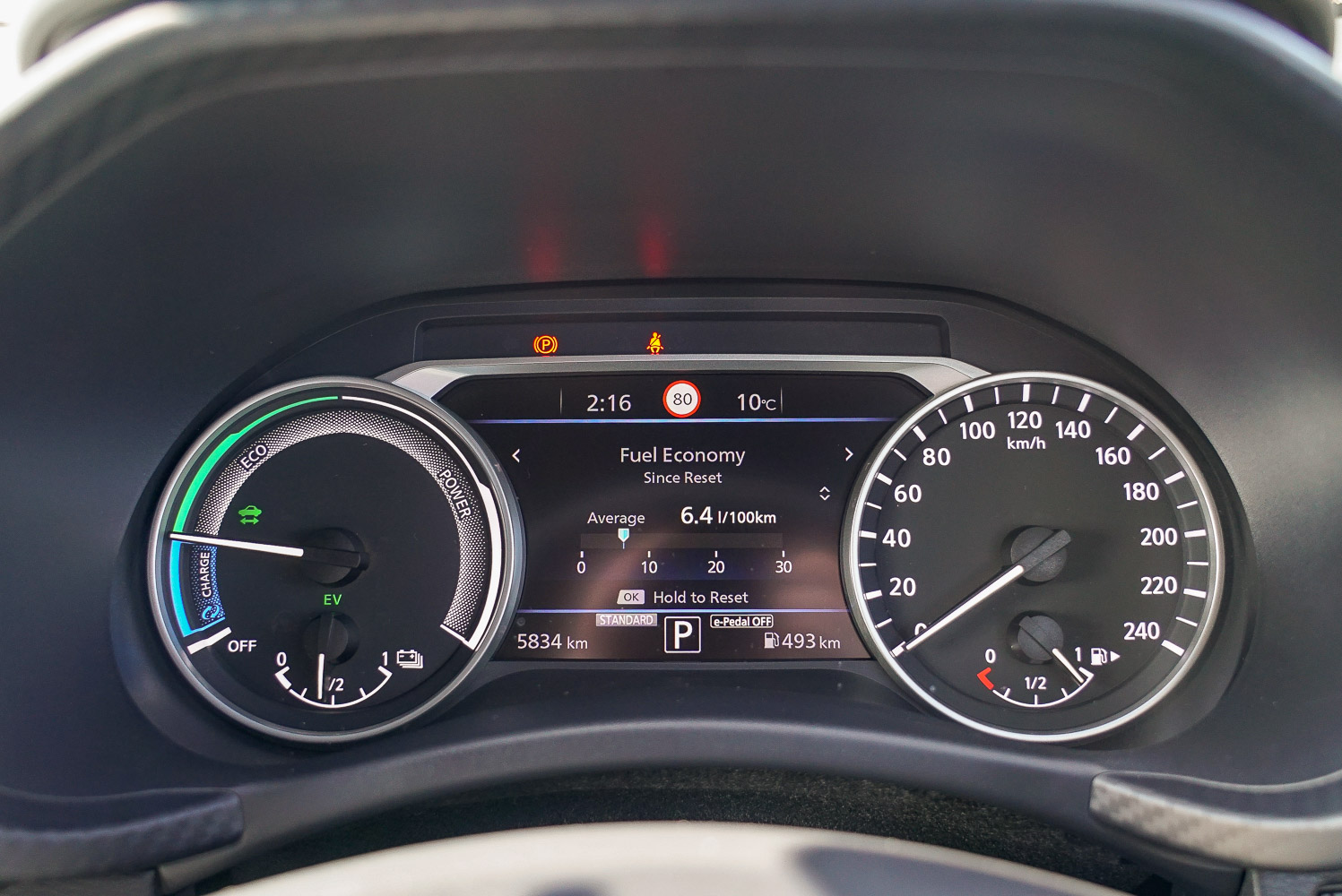
The hybrid system delivered decent fuel economy during our time with the Juke, and we saw a return of around six litres/100km during our time with it, which is in the ballpark of Nissan's official figures.
Our verdict on the Nissan Juke Hybrid
Adding hybrid drive to the Nissan Juke has addressed one of the issues we had with this second-generation model, because the low-down oomph of the electric motor helps it to deliver far better performance than before. It's still a small crossover that's better suited to urban driving than longer trips, but it offers decent space for passengers and luggage in an upmarket cabin, and the top-spec SVE model is very generously equipped.