





Exterior & design of the 2026 Mazda CX-5
- Longer than the previous model
- Up to 19-inch wheels
- Good colour options

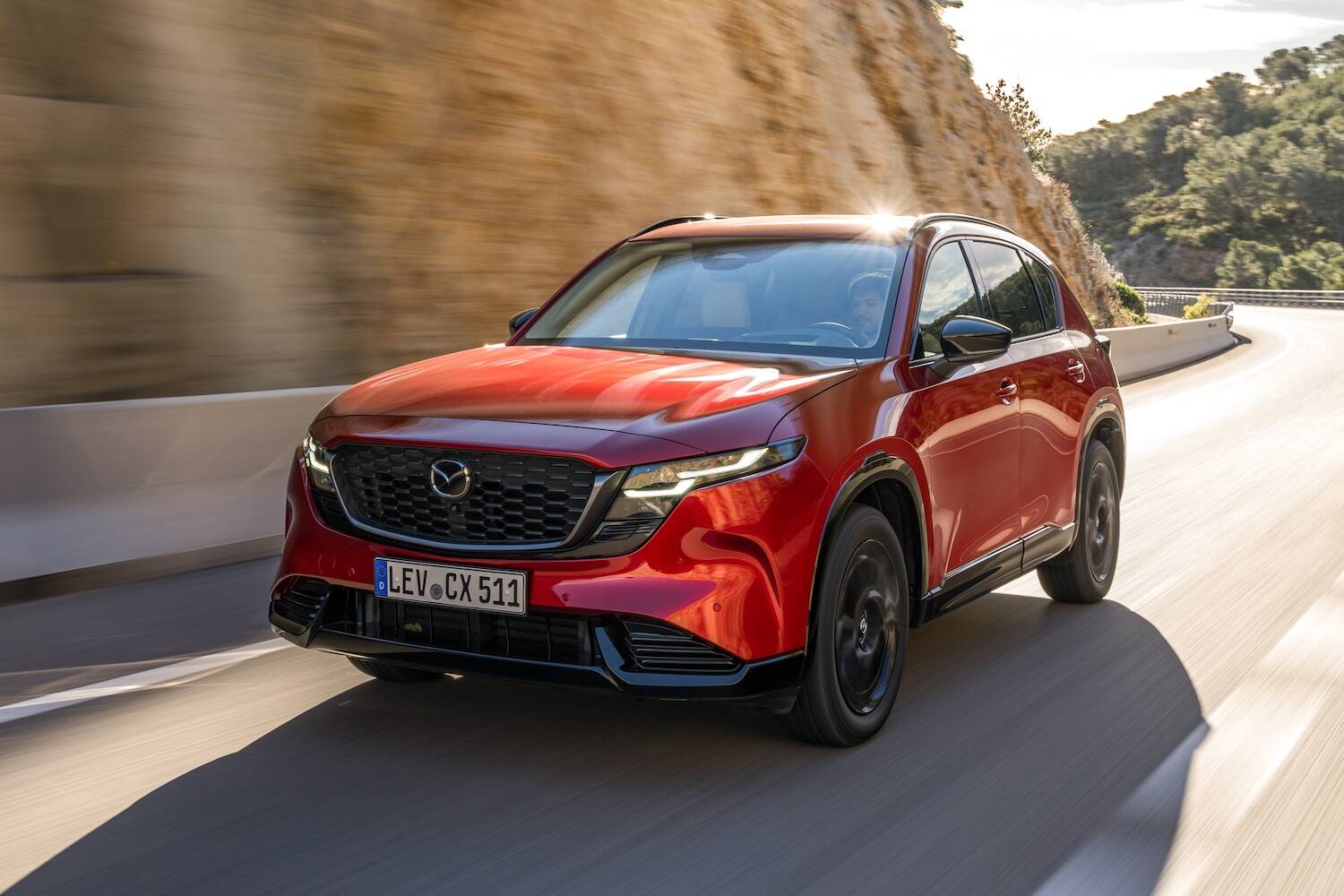
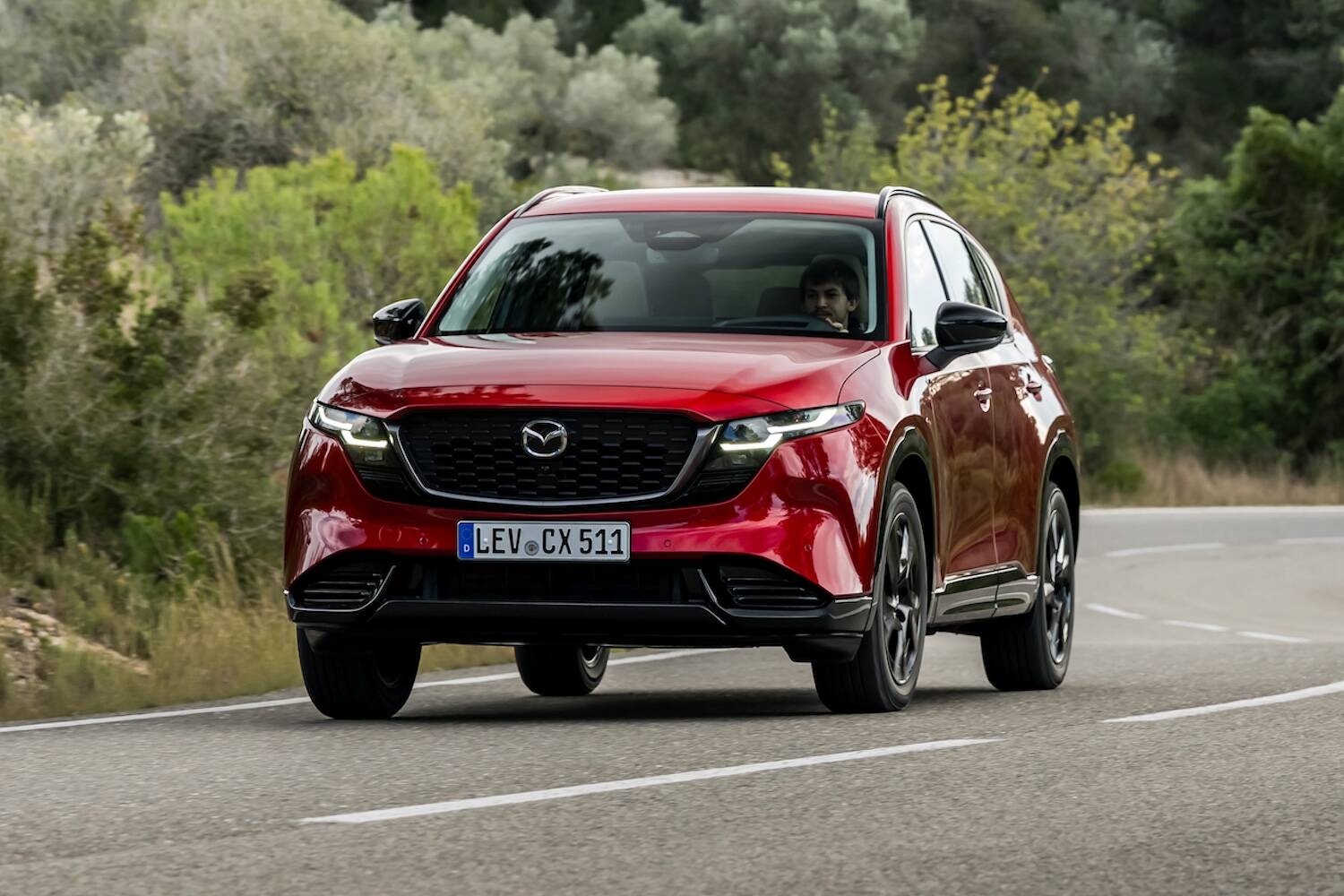
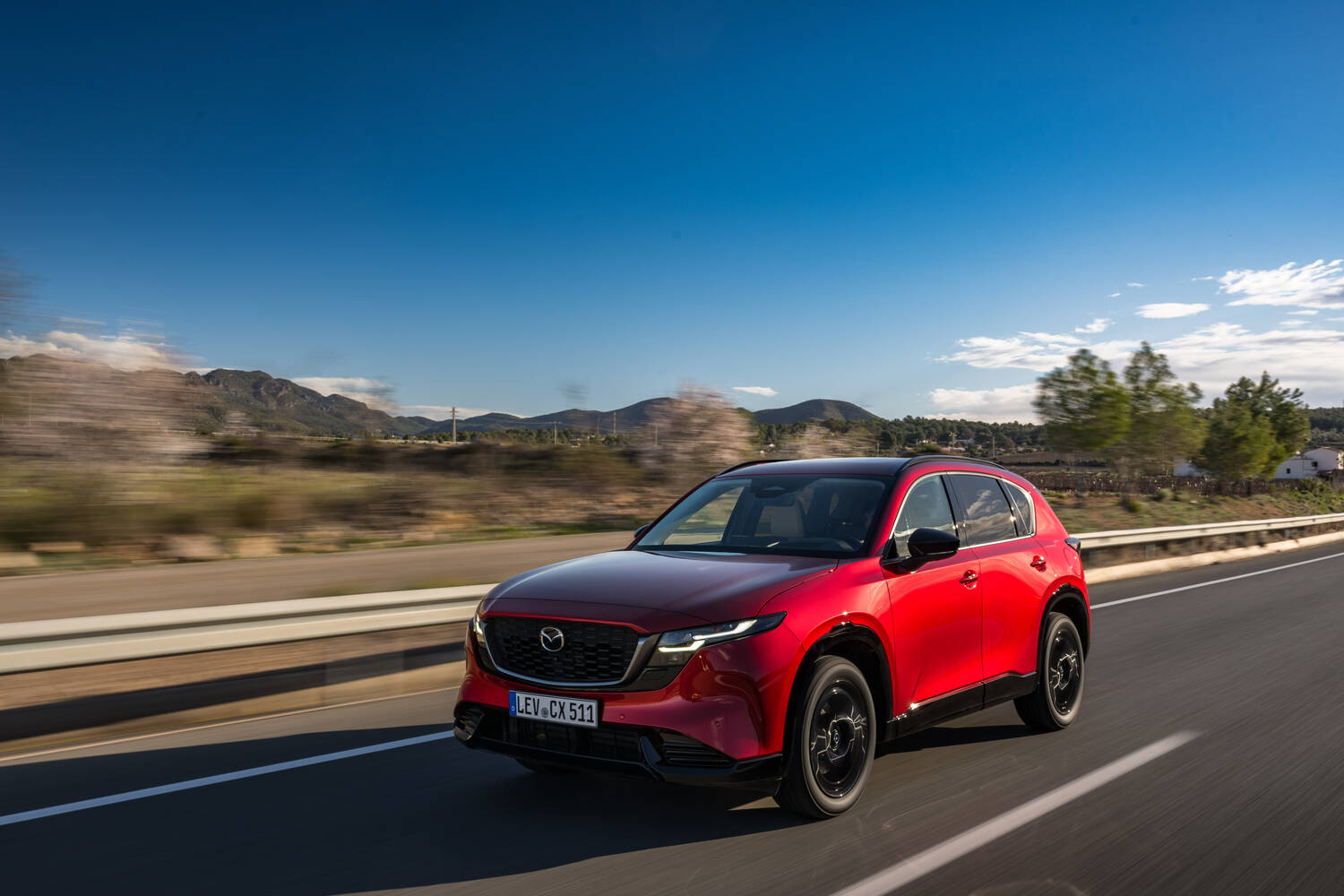
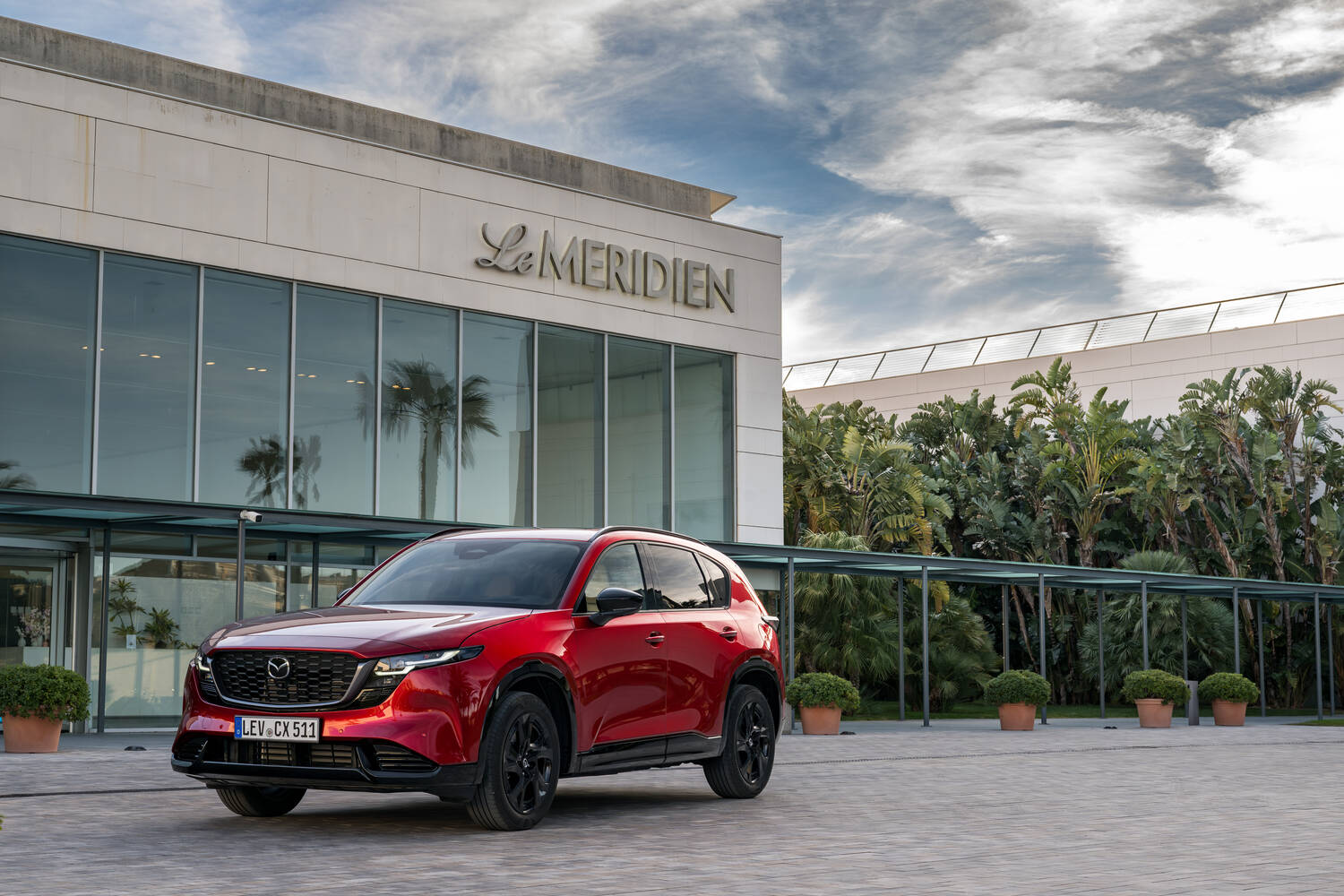
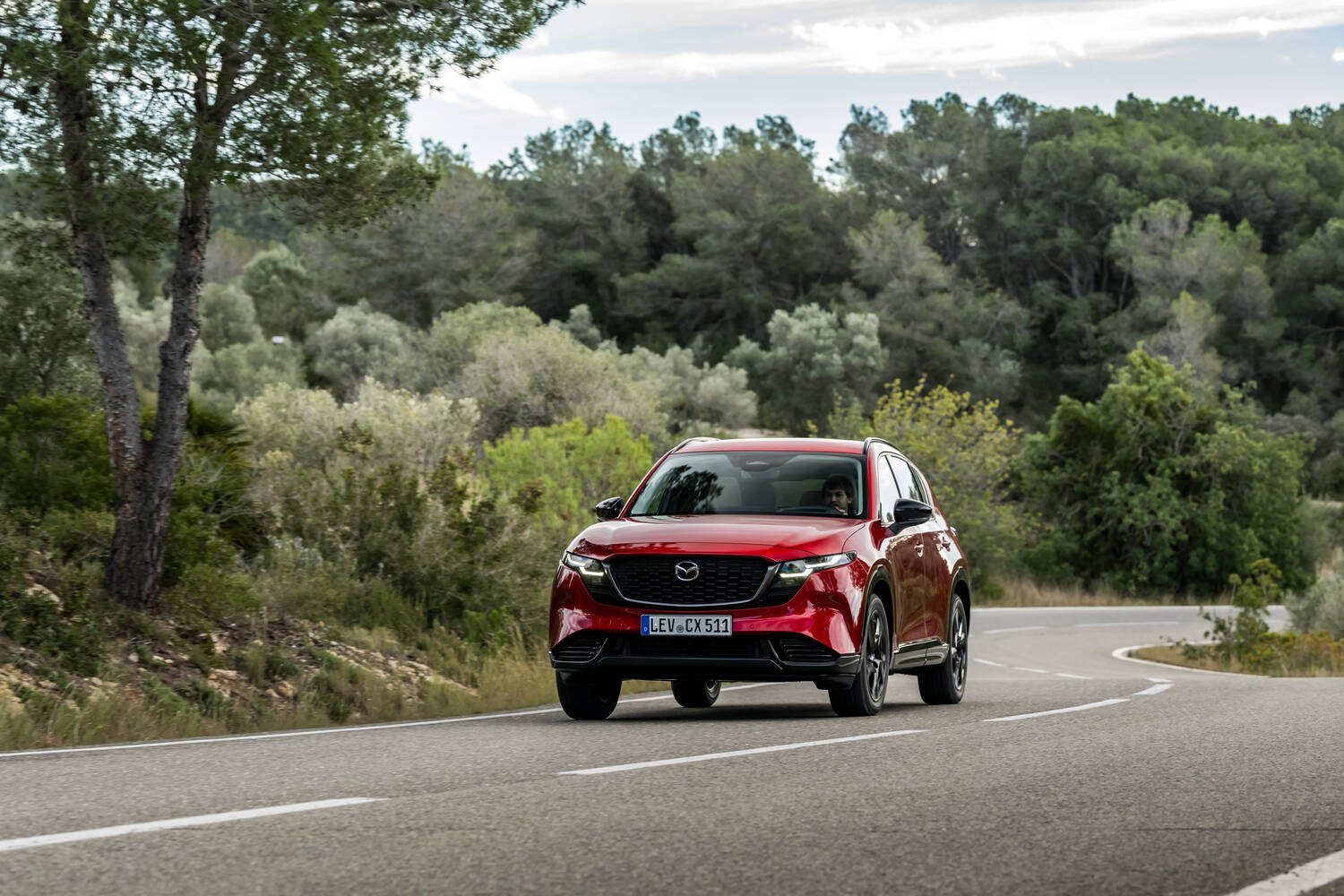
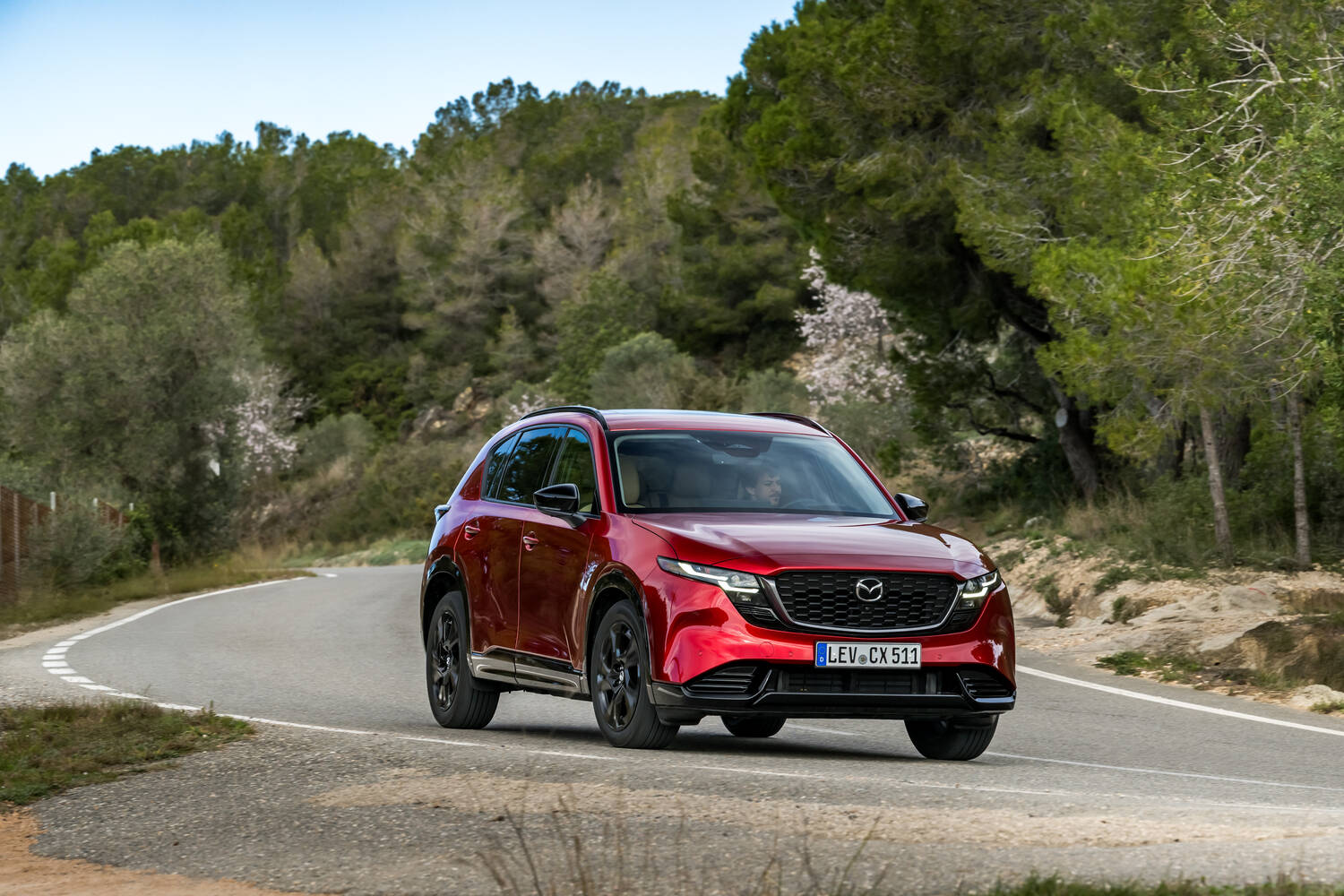
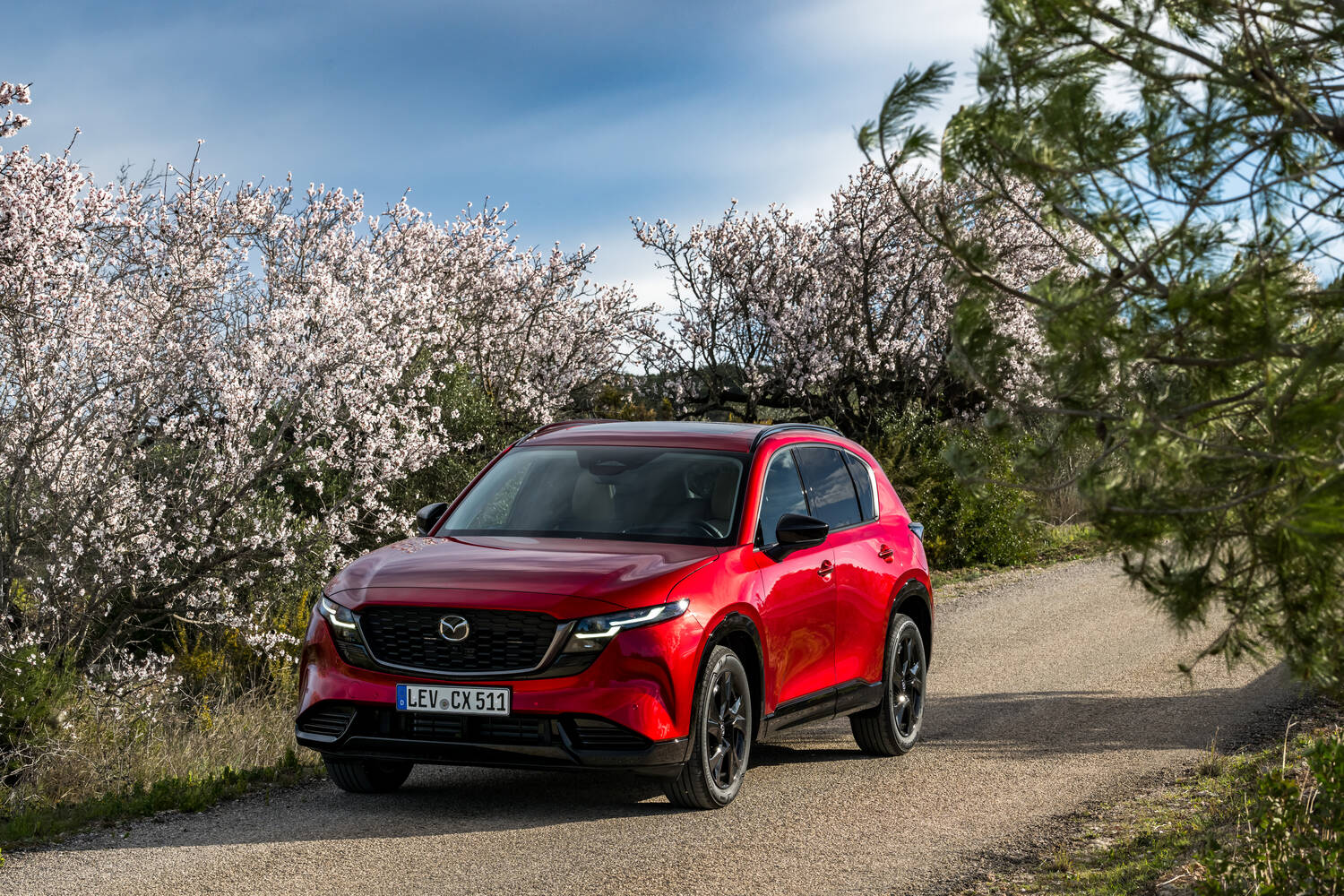
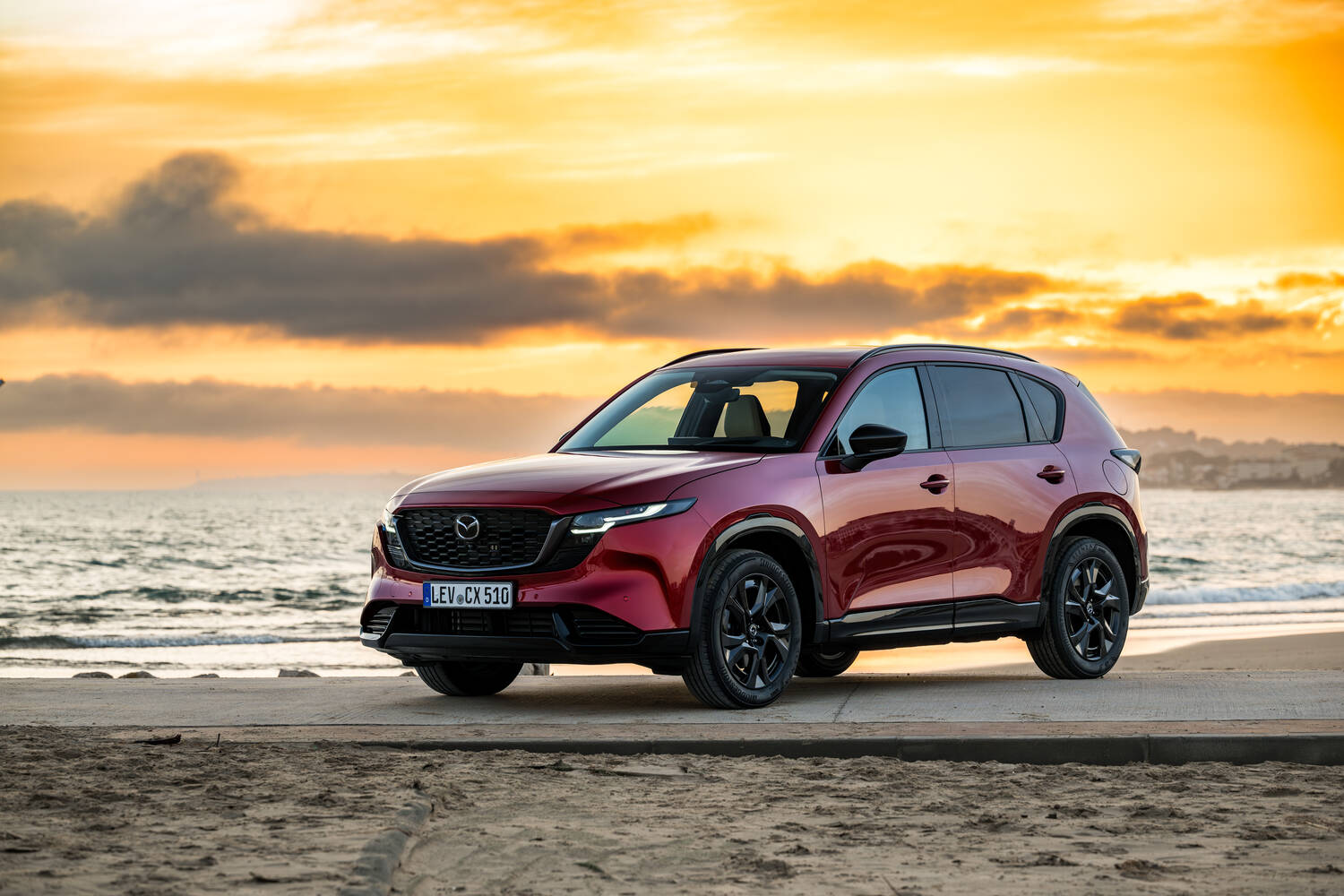
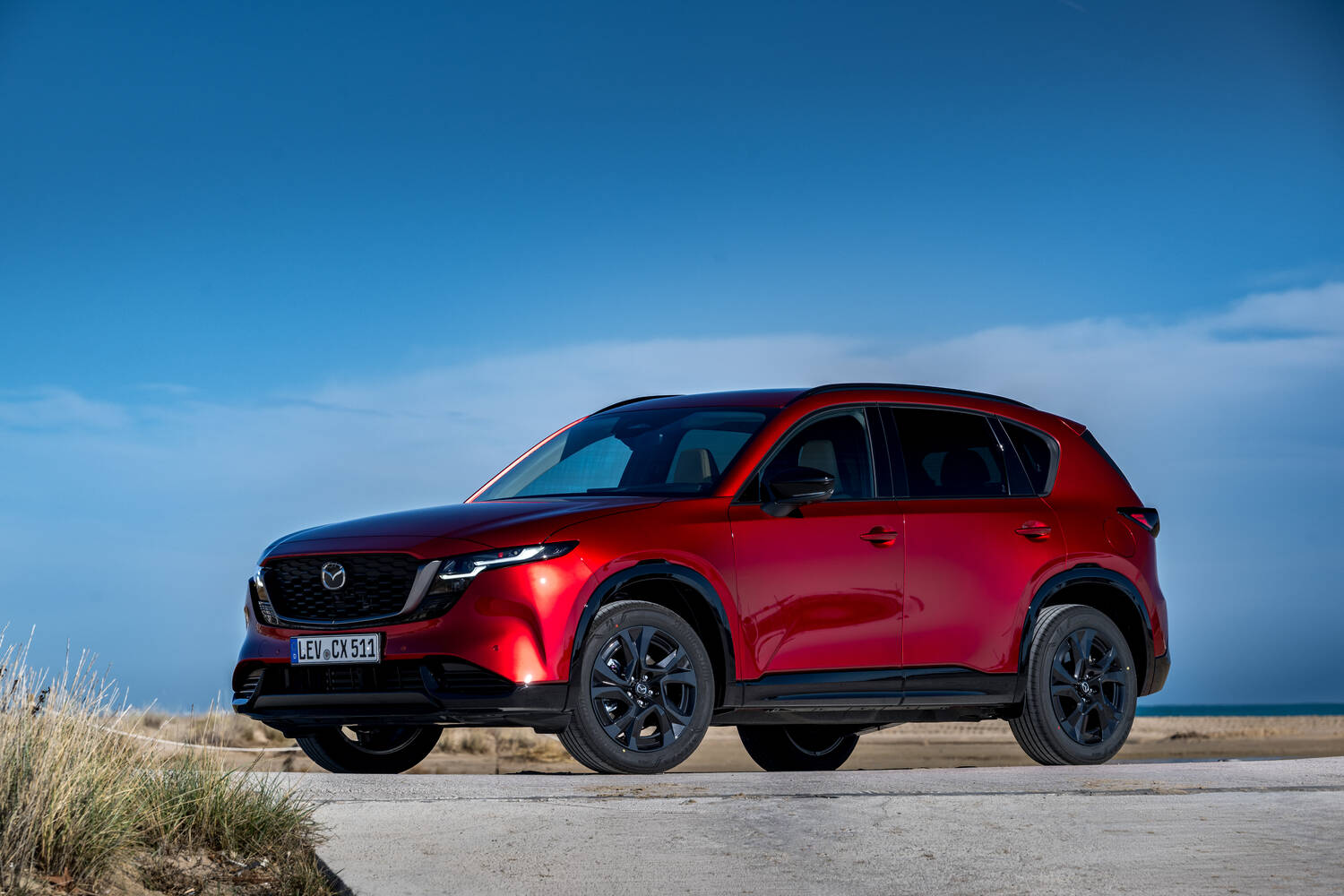
All Mazda cars these days are influenced by the company's 'Kodo' design language, which began with the original CX-5 back in 2012. The third-generation model looks quite different and features some elements that are similar to Mazda's larger SUVs, the CX-60 and CX-80.
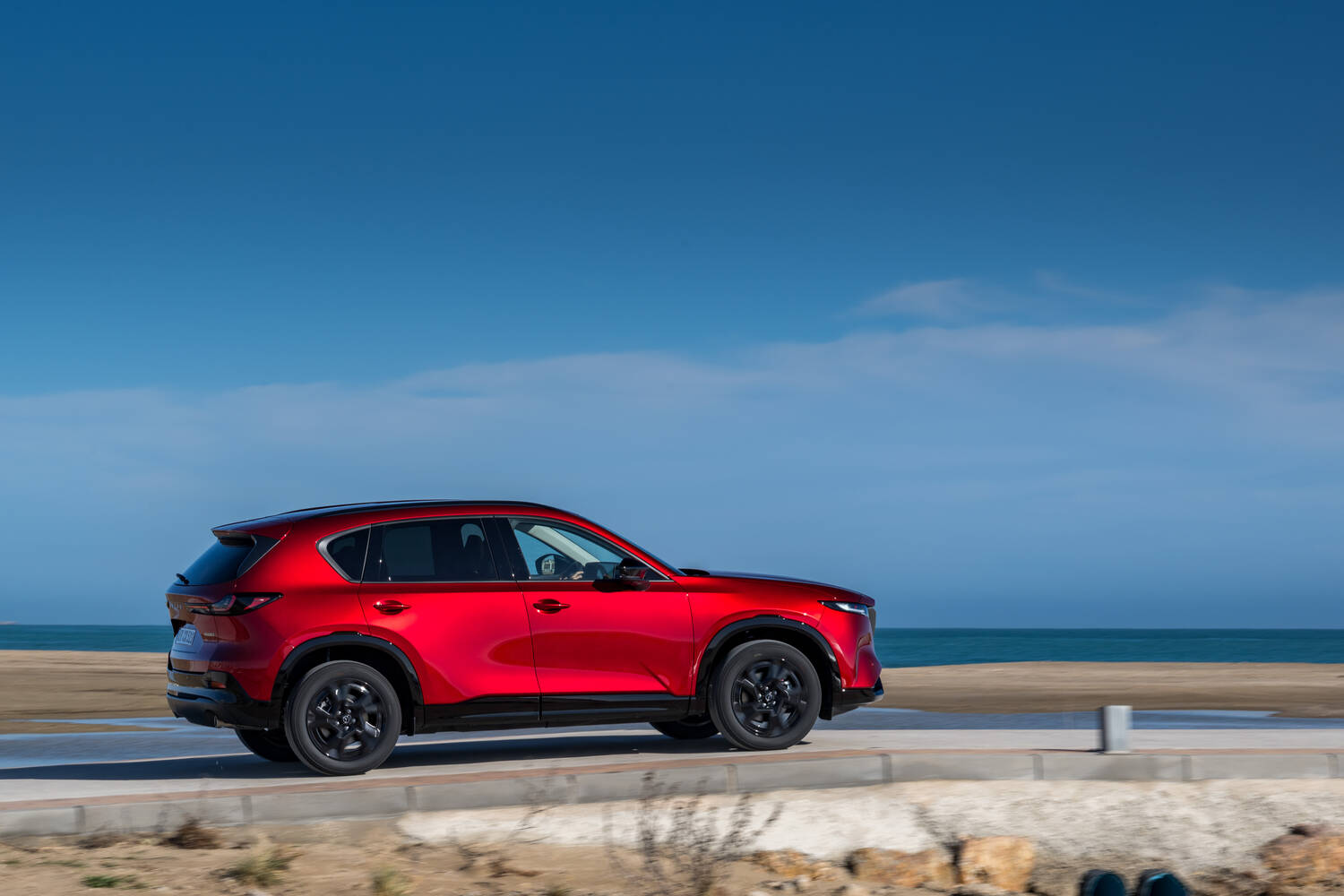
Proportionally, the CX-5 sticks with a somewhat conventional approach for a mid-size SUV, though dimensionally it was changed for this generation.

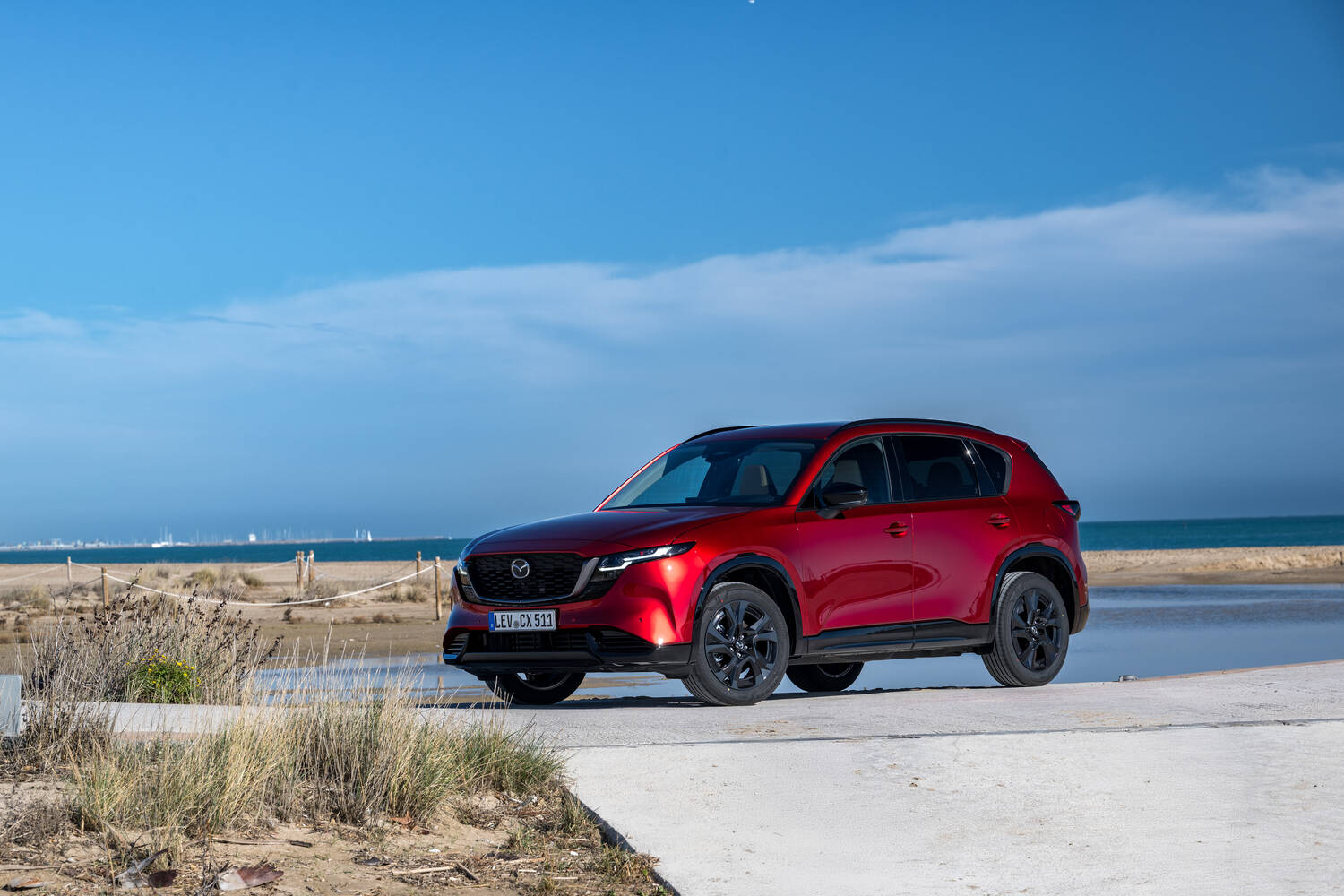
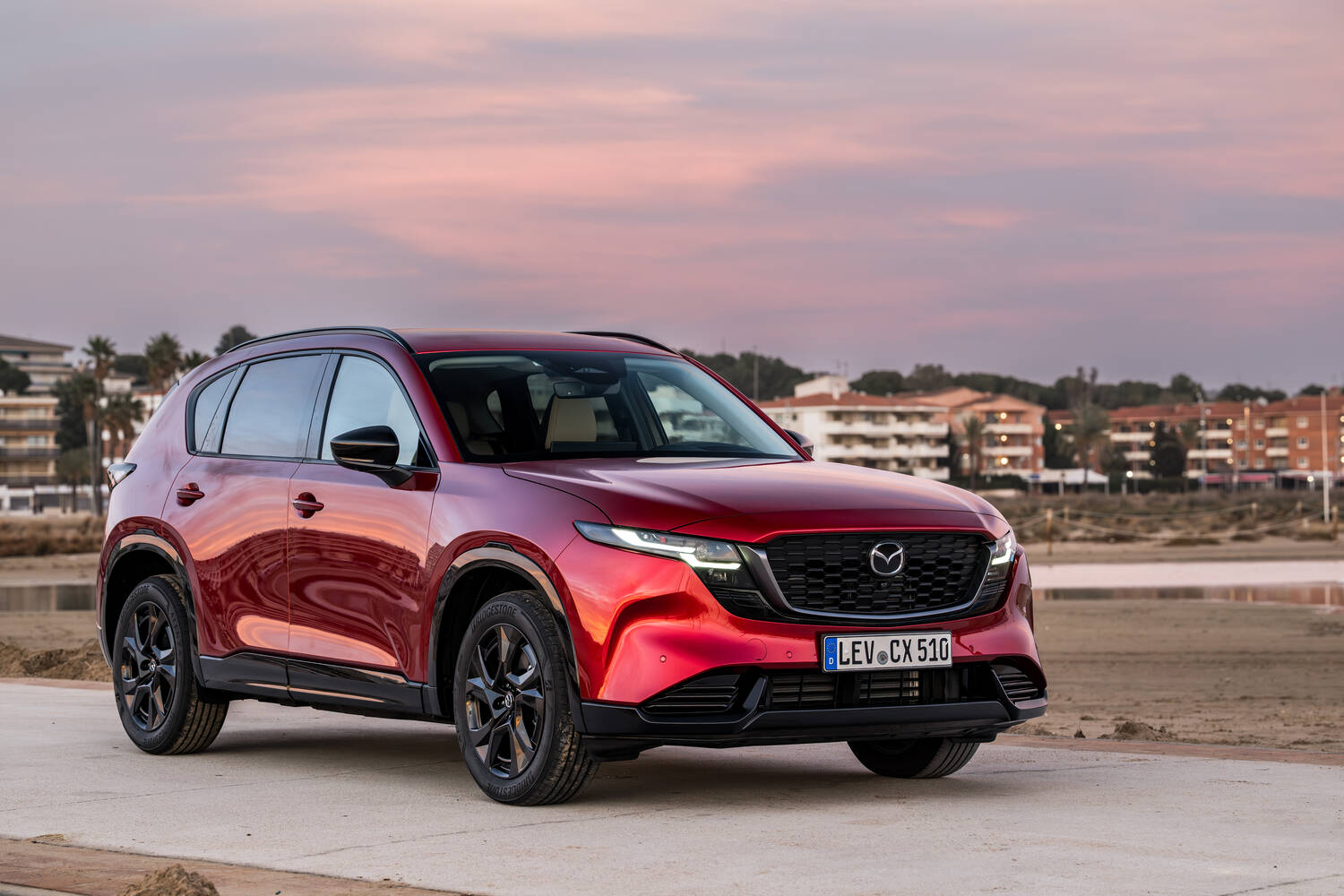
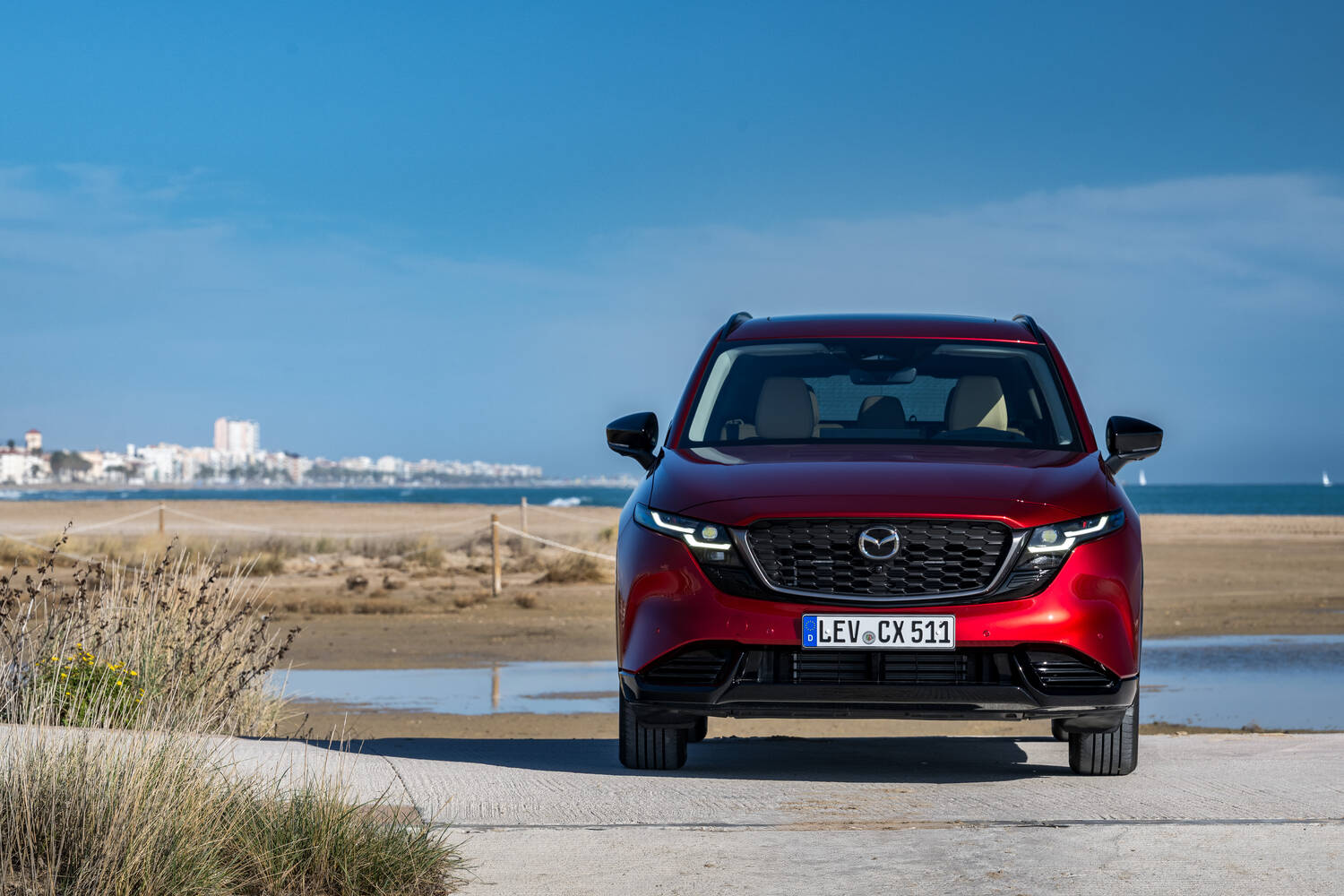
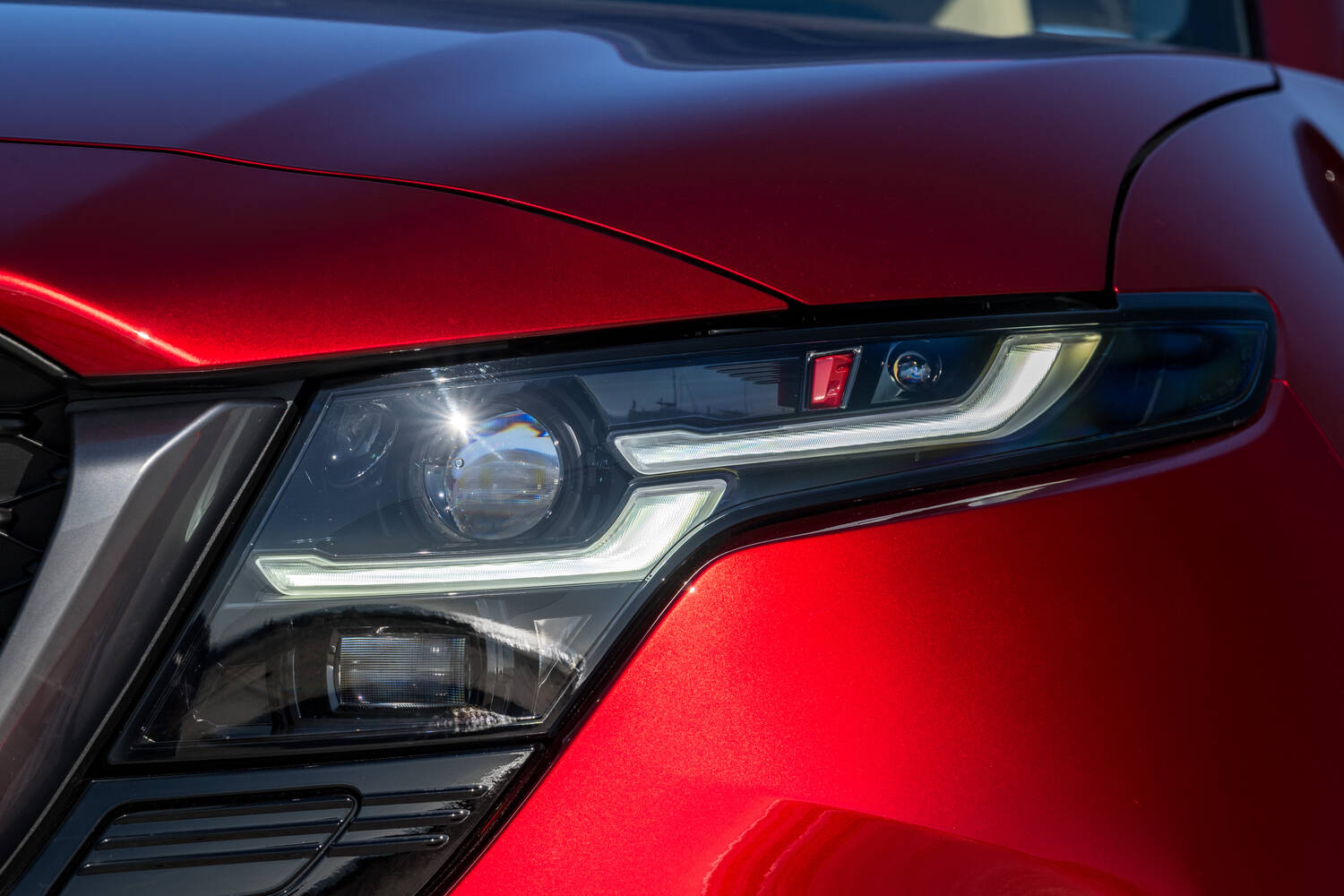
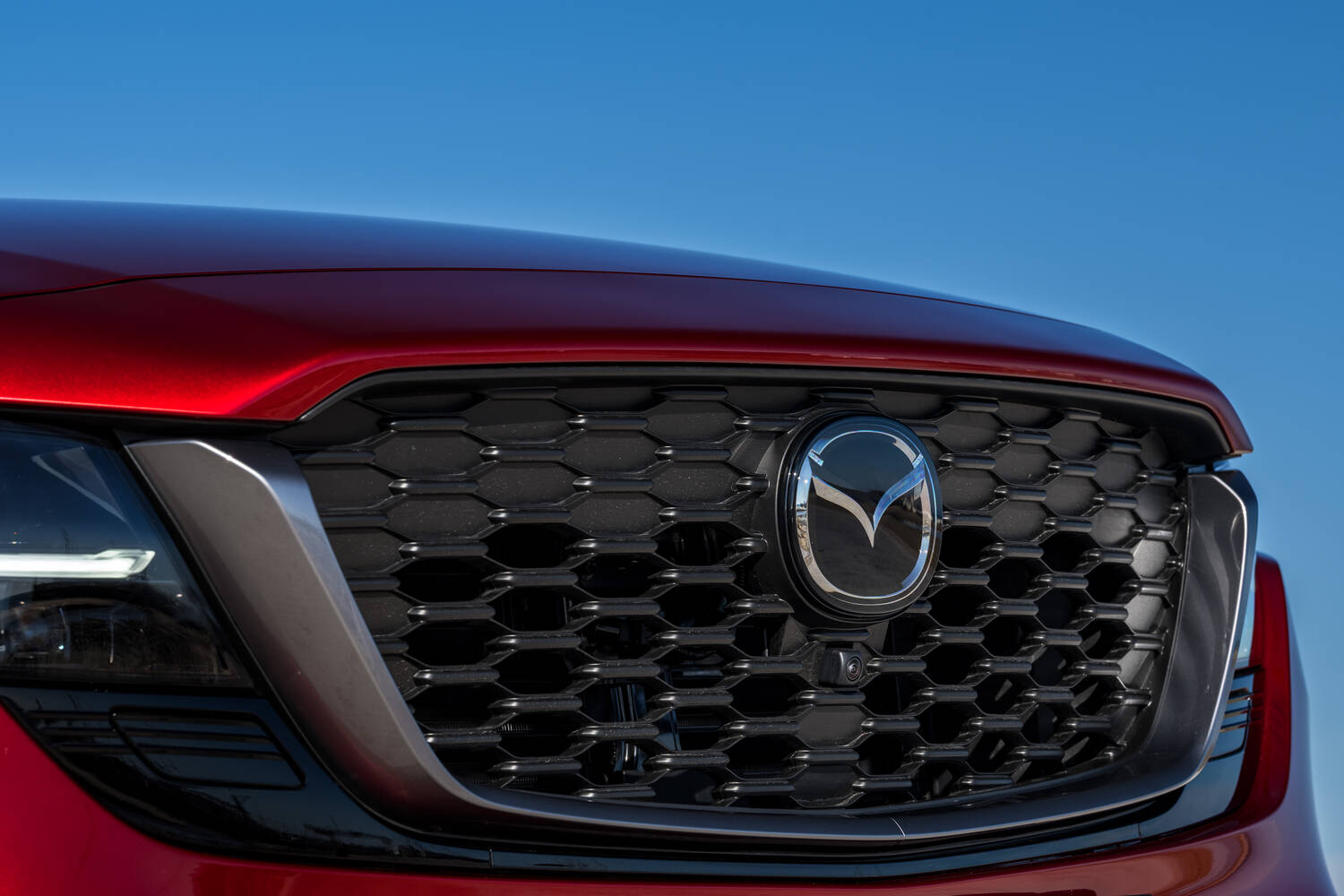
At the front, Mazda's signature wing element grille forms a singular element with the headlights. These are stacked and placed against the grille, with a double-level LED daytime running light signature that repeats a look seen in other Mazdas.
The nose is higher than before, which was done to not only alter its appearance but also to make the front wing lines more visible from the driver's seat, thus aiding spatial awareness in tighter confines.

For those who question making the front of an SUV taller, this CX-5 achieved a significant improvement in its safety rating from Euro NCAP in the area of protecting vulnerable road users, jumping from a 78 per cent score to 93 per cent.
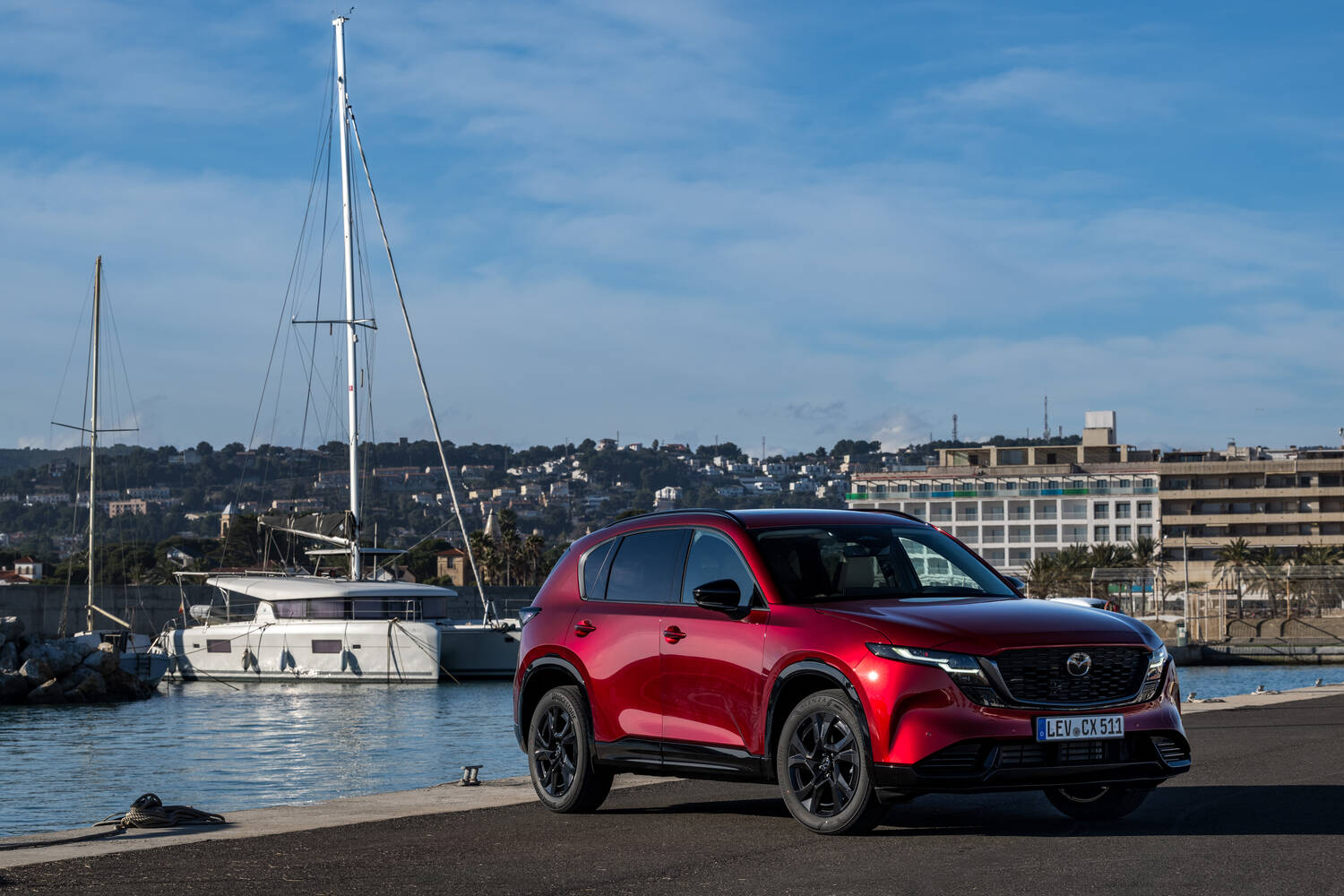
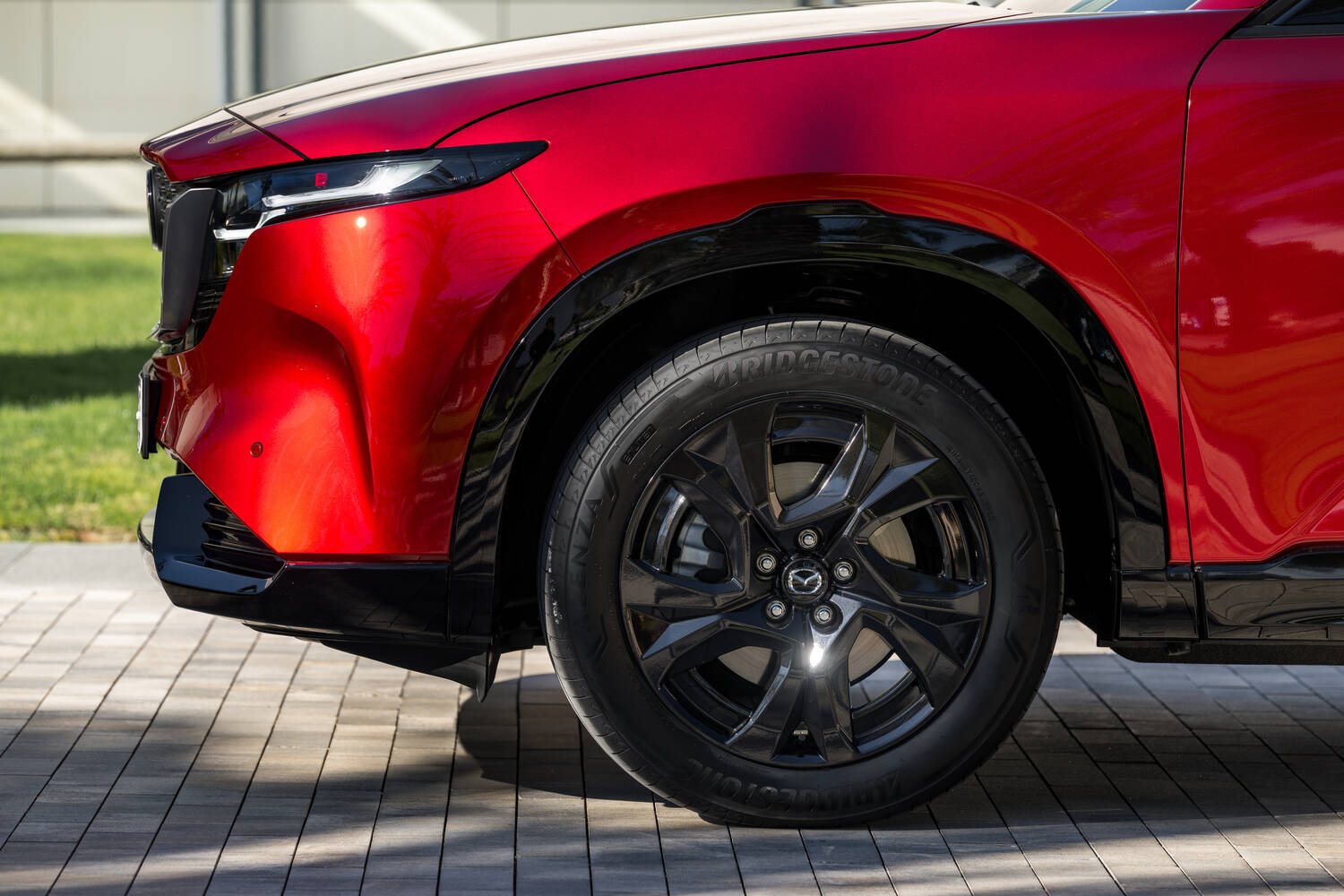
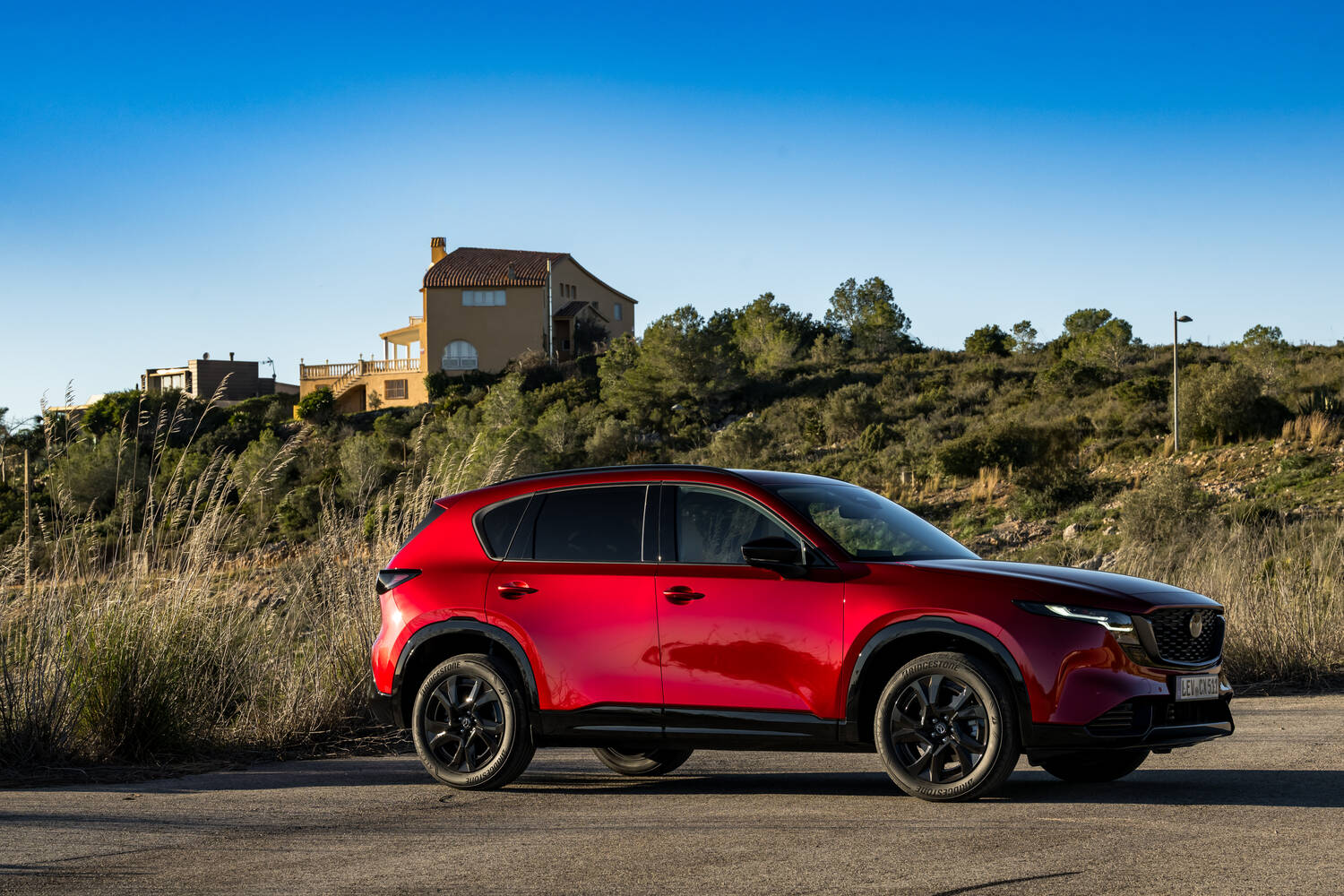
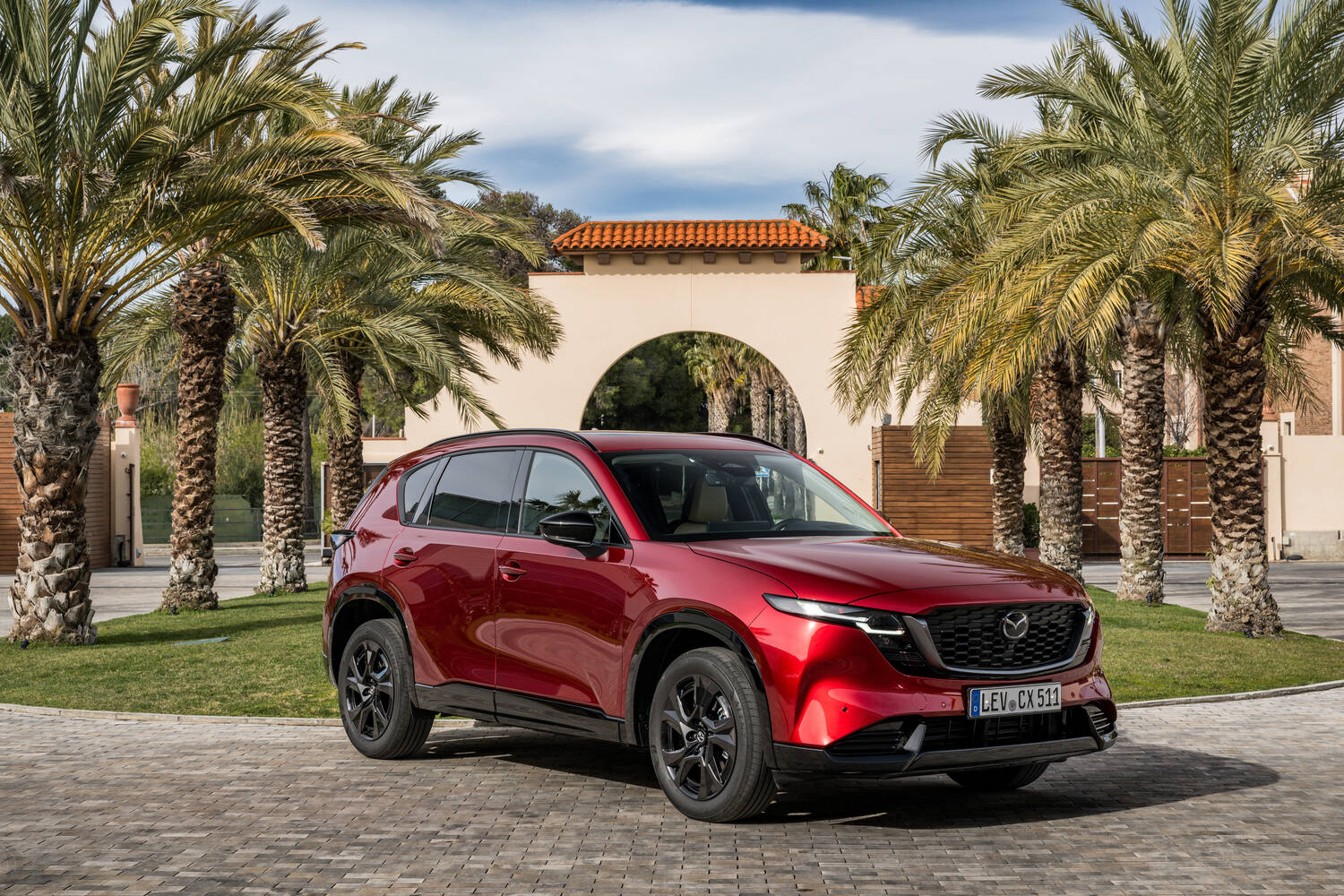
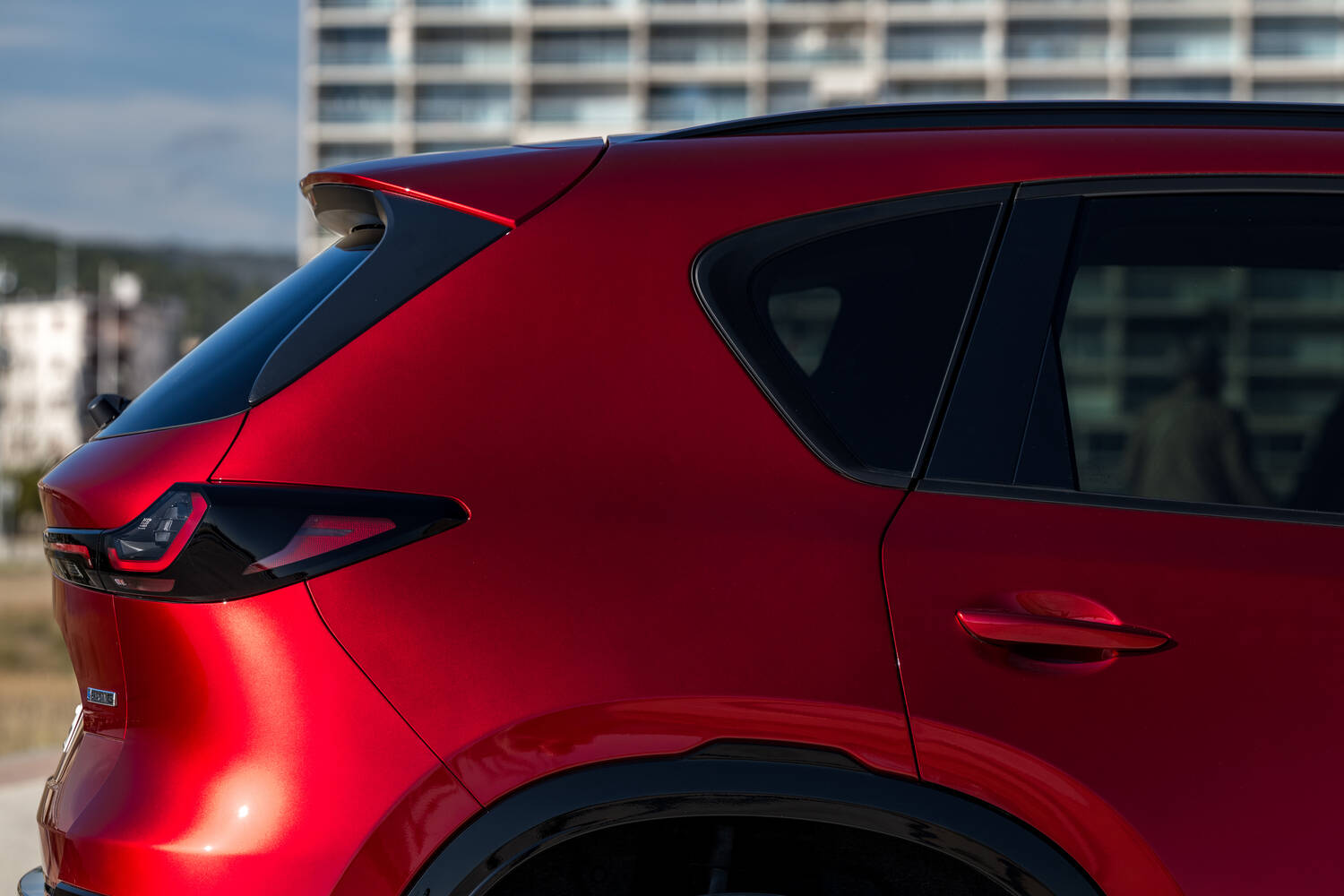
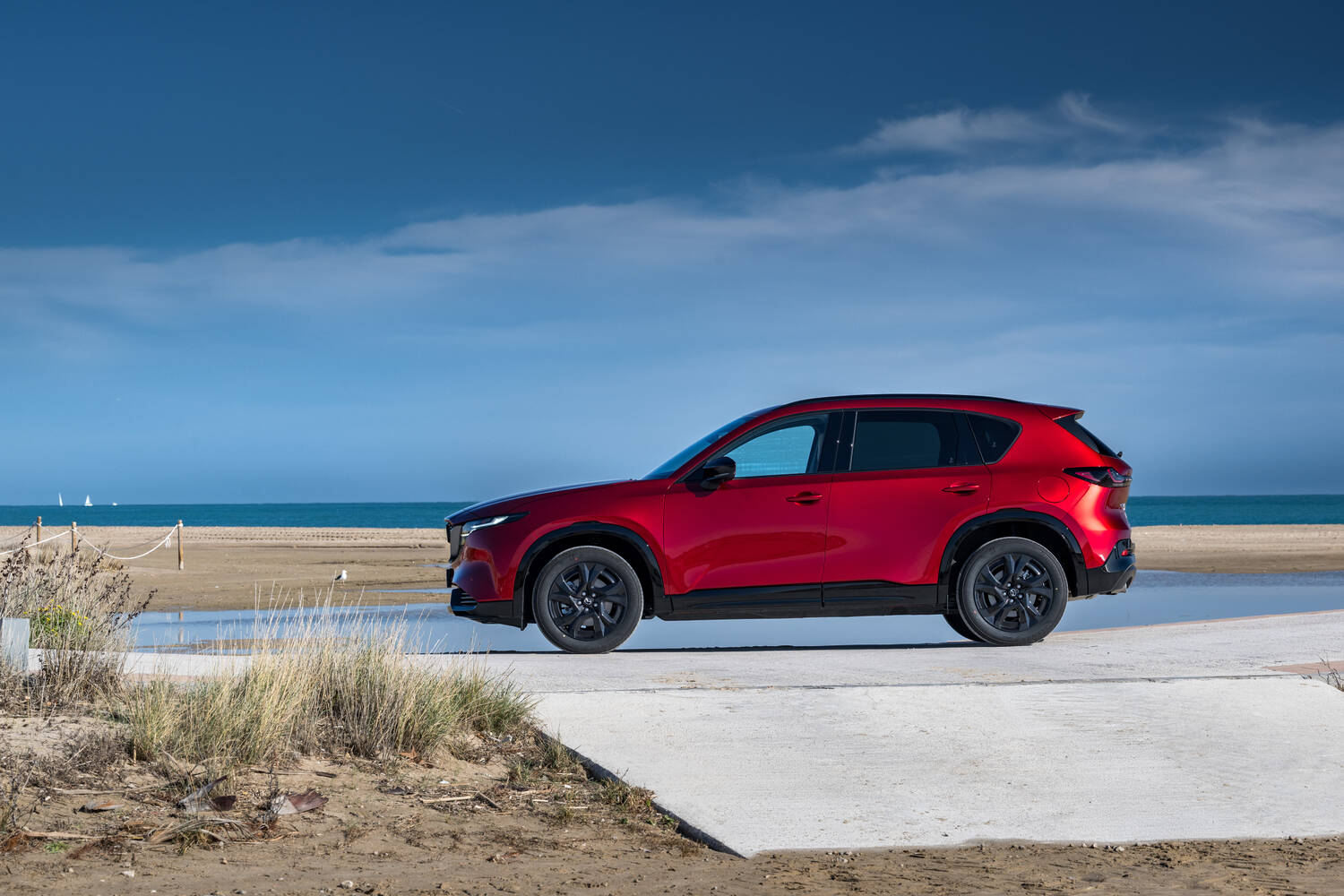
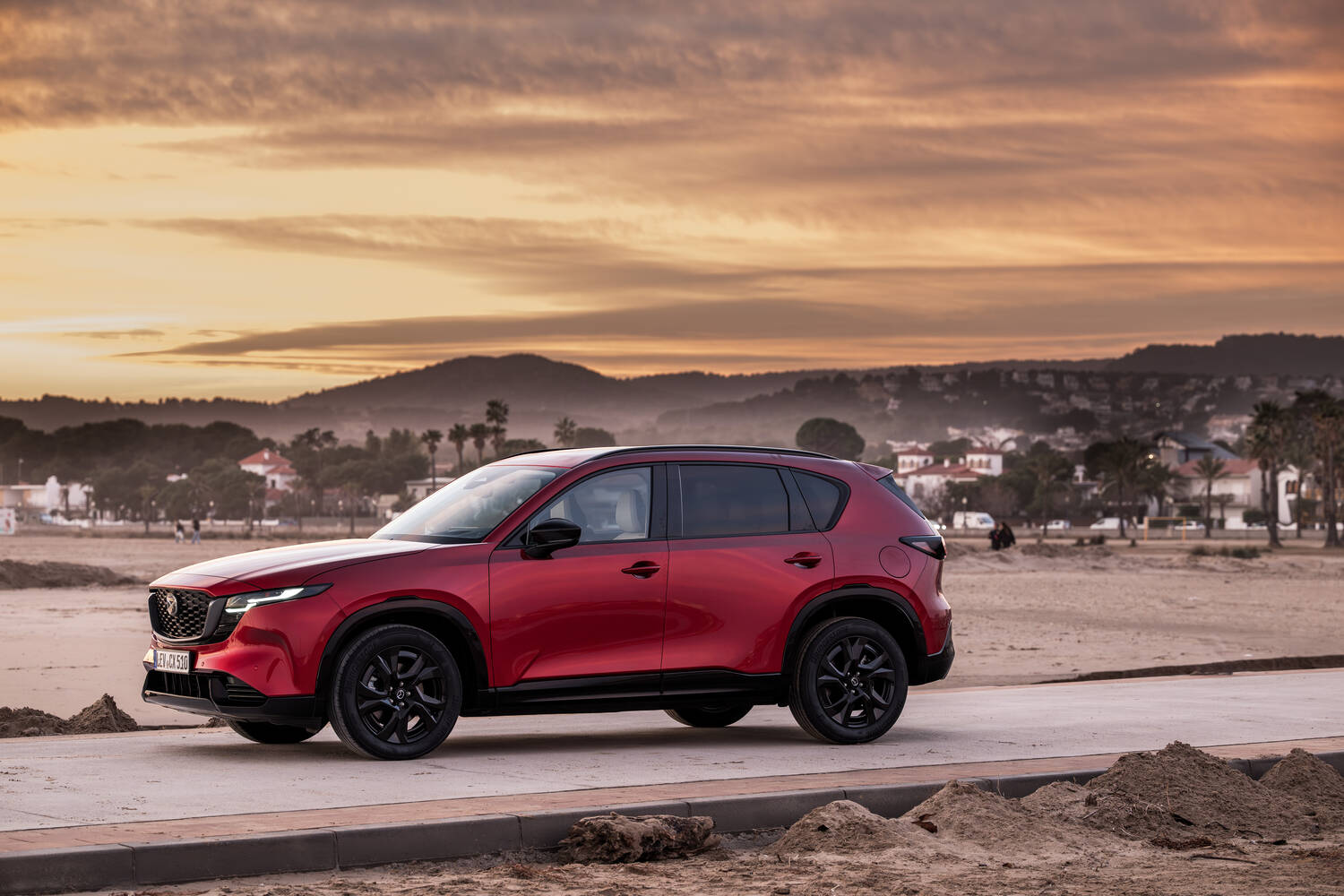
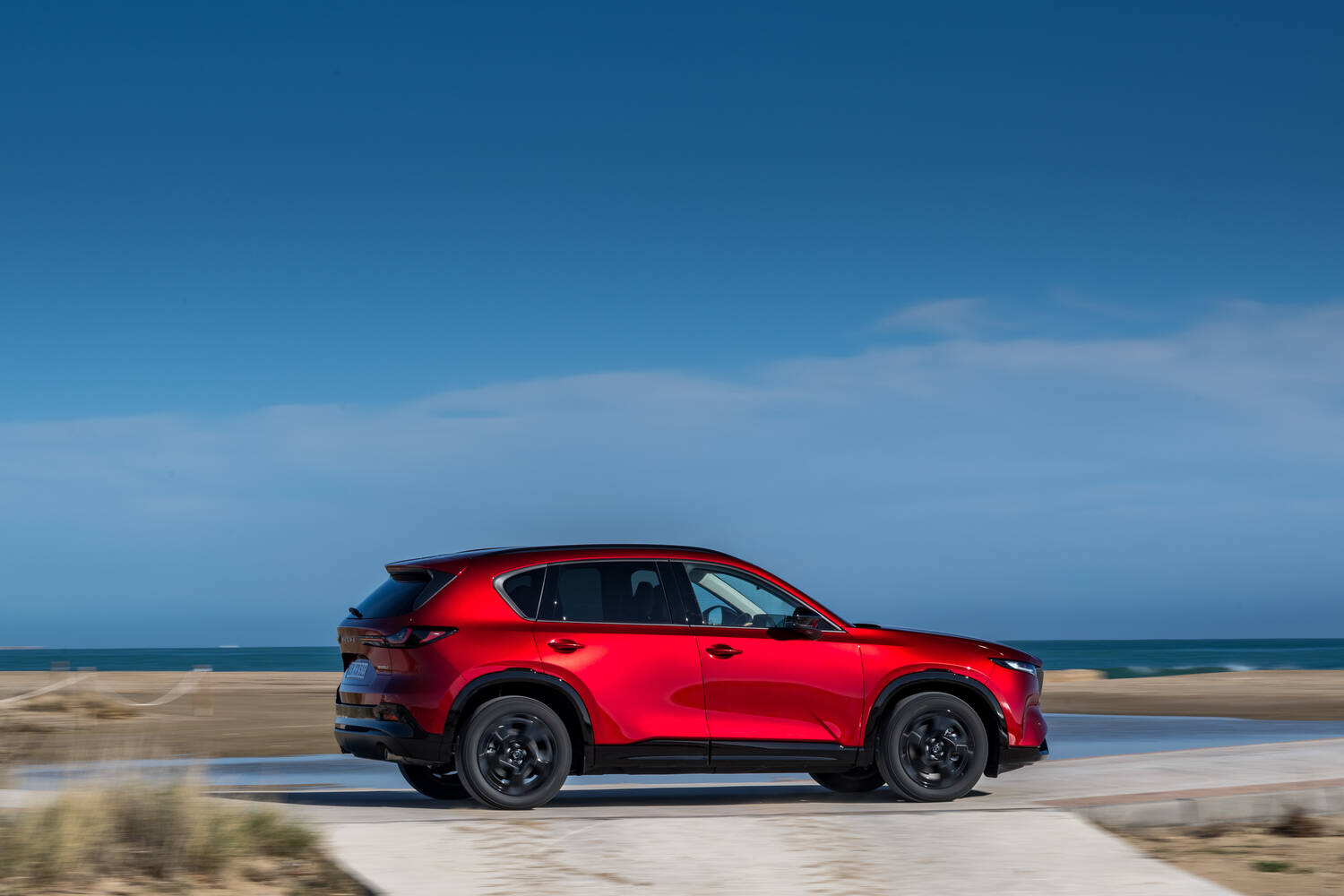
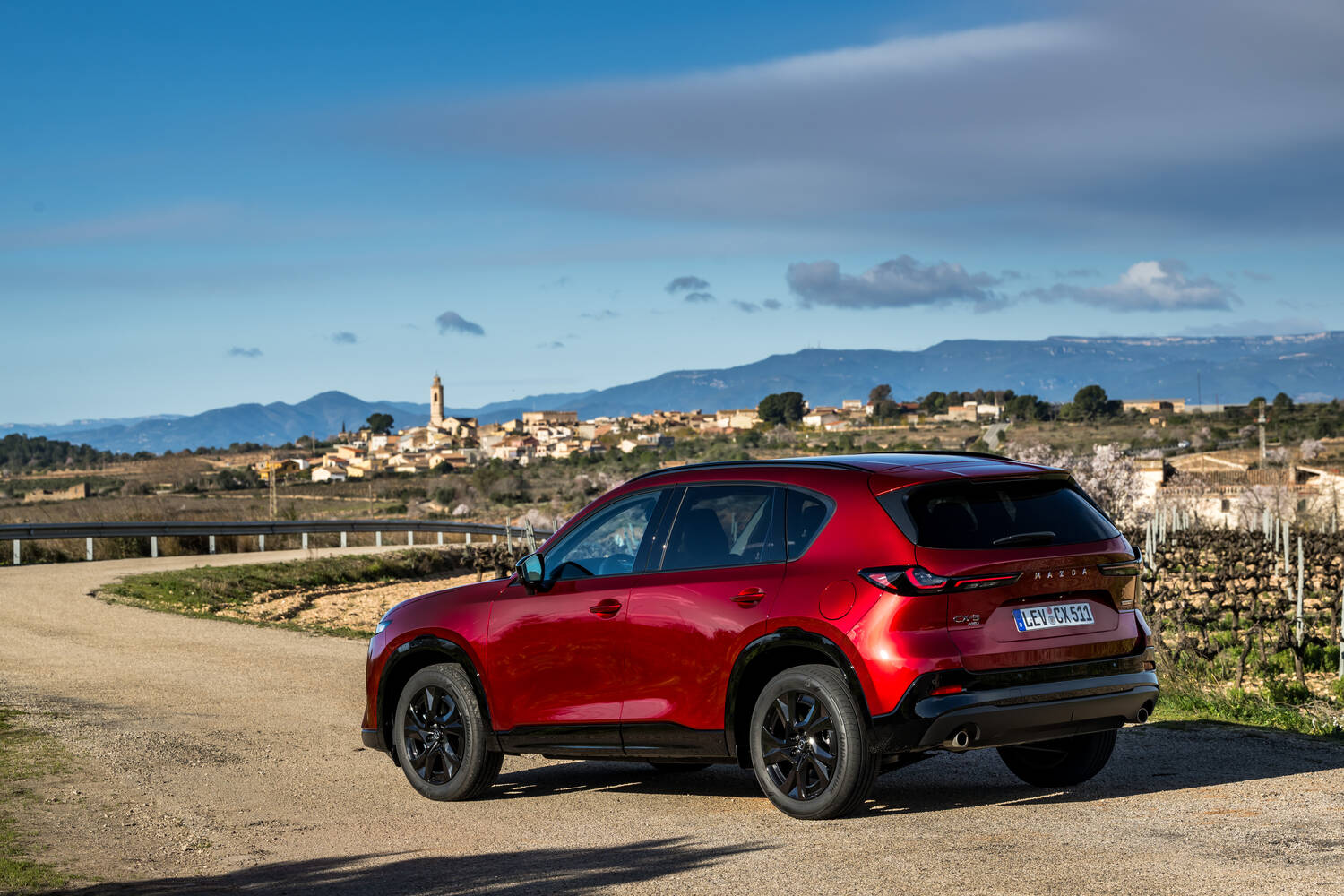
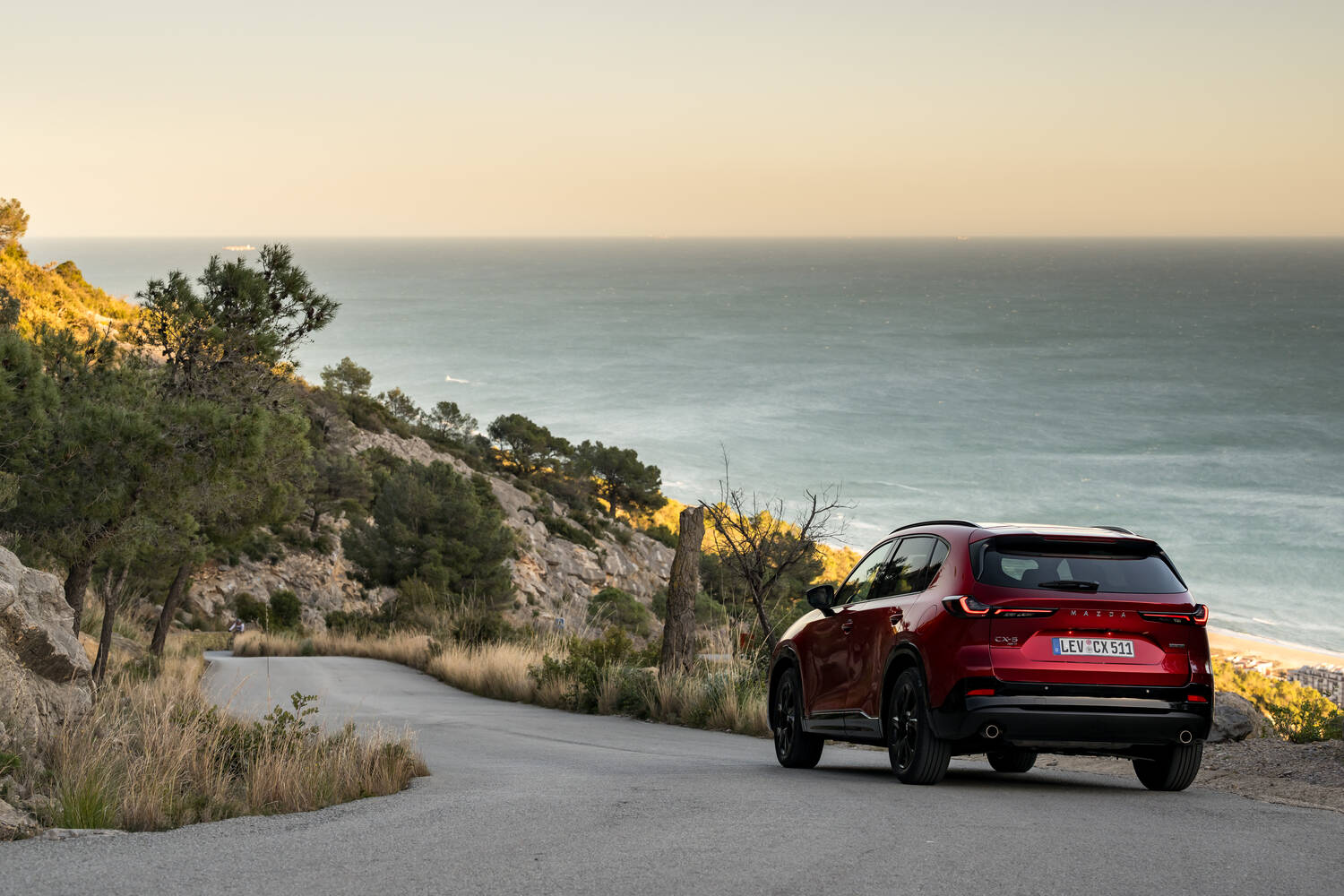
Mazda's designers have lengthened the car by 115mm in comparison to its predecessor to the benefit of the appearance and interior space, especially for rear-seat passengers. The CX-5 retains a clear SUV look with plastic cladding around the wheel arches, which is finished in a high-gloss black on higher-grade models.
The tops of the wheel arches have a flat top, a symbol of strength according to the traditional Japanese building technique called 'Kigumi'.

There is a range of wheel designs available, starting with a 17-inch version on the Prime-Line, while Centre-Line and Exclusive-Line models get machined 19-inch wheel options. Top-spec Homura models get black 19-inch wheels.
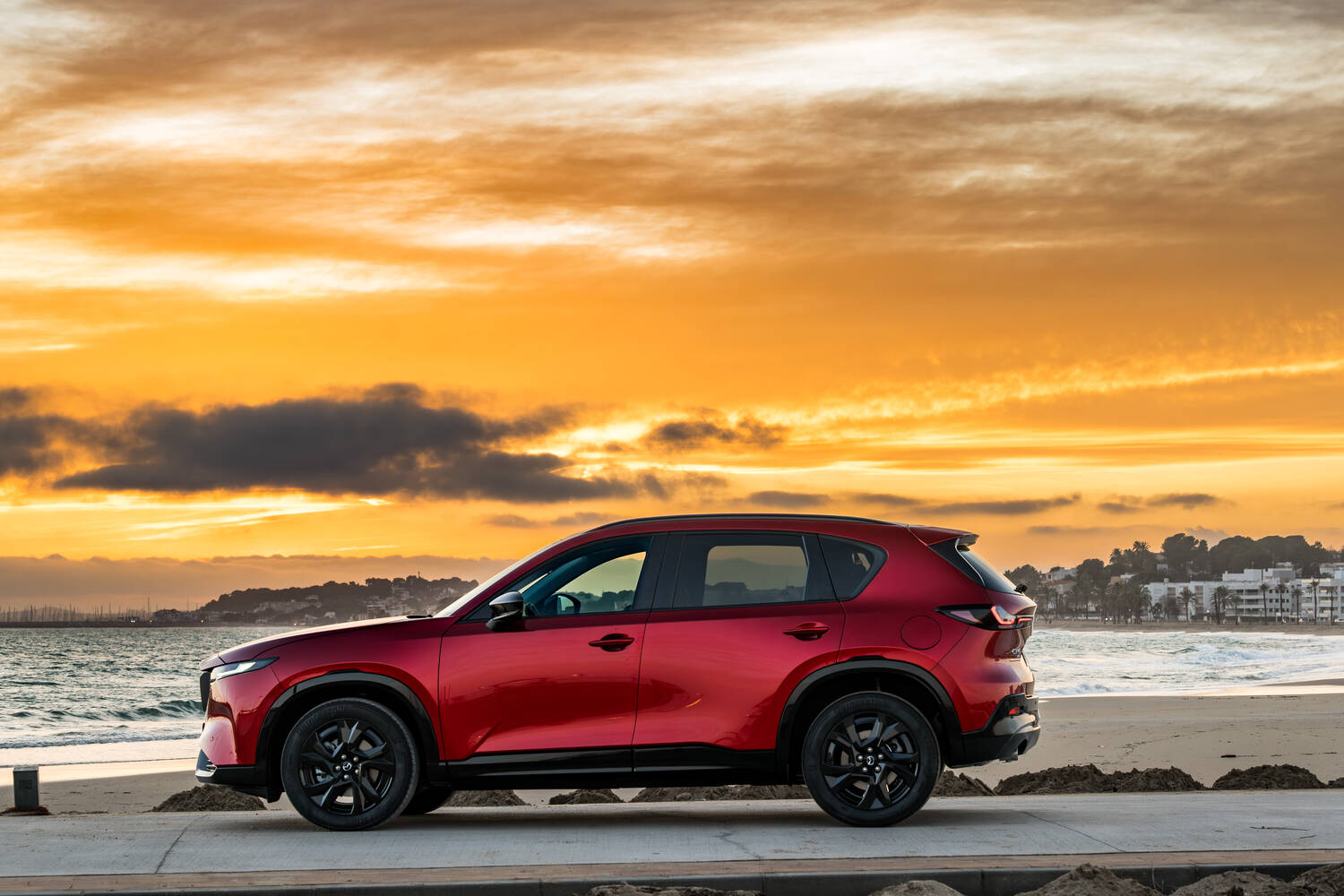
In comparison to some of Mazda's other cars, there isn't the same depth of surfacing and contouring in the CX-5's flanks, but equally, there's a simplicity to its appearance that is refreshing.
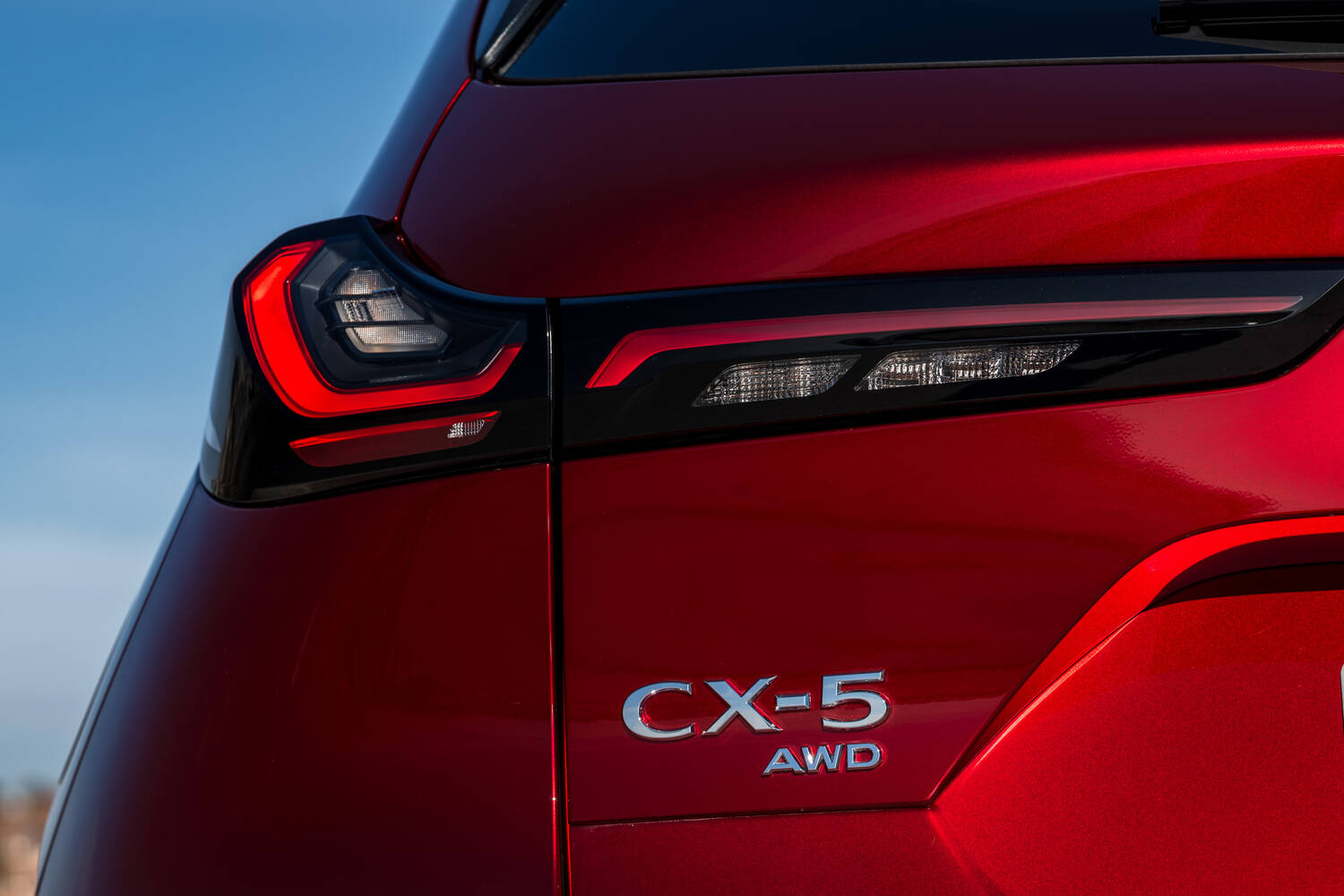
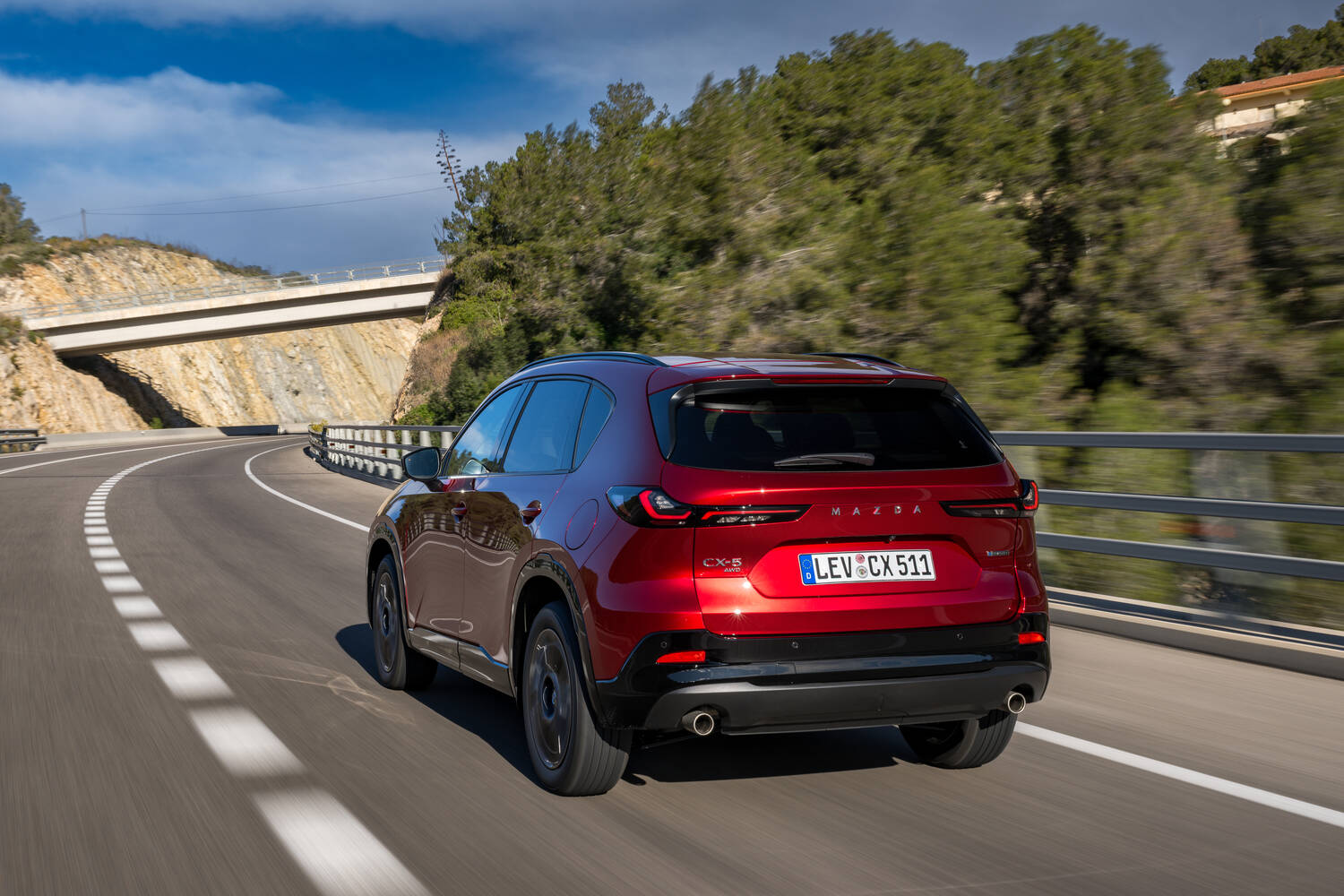
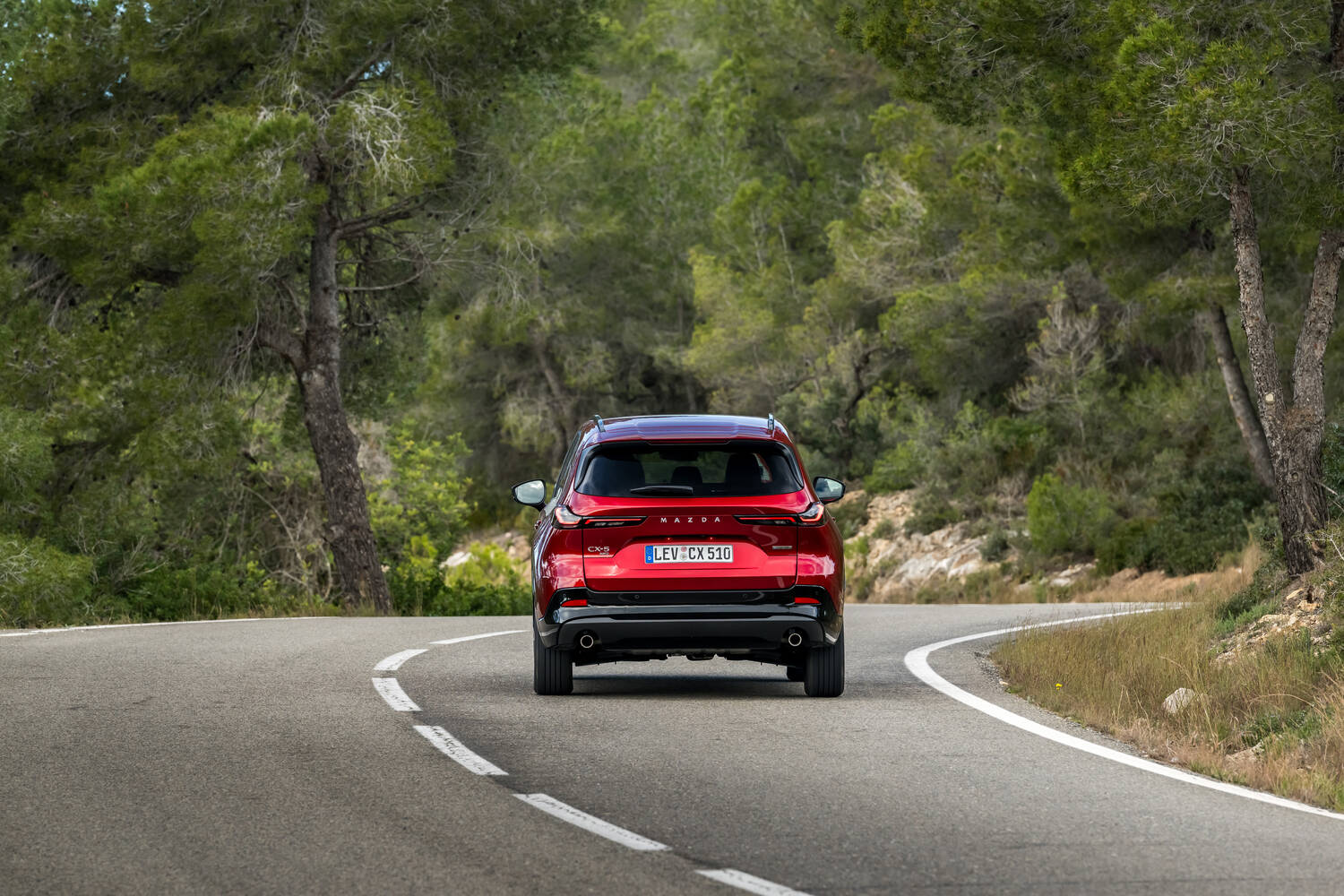
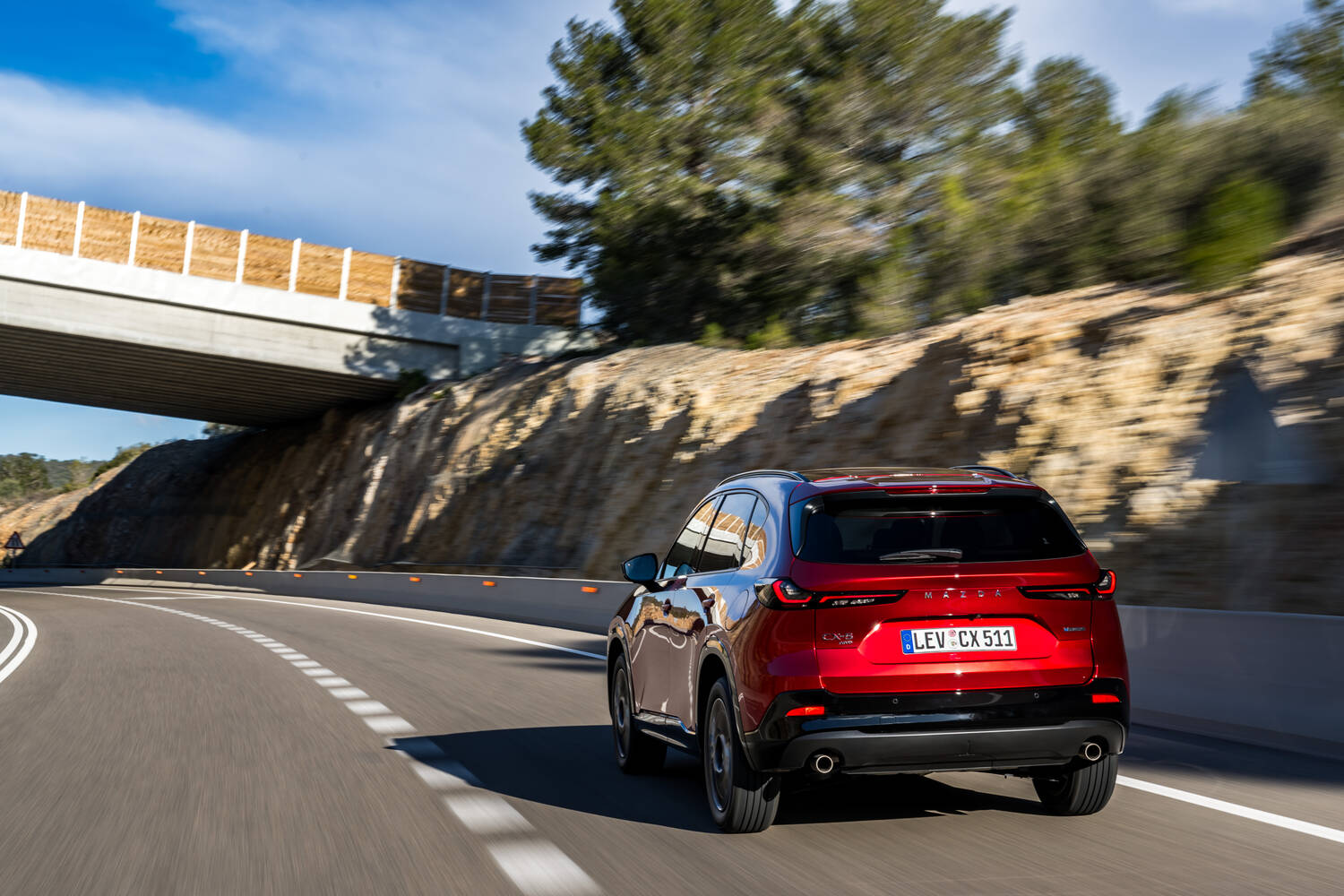
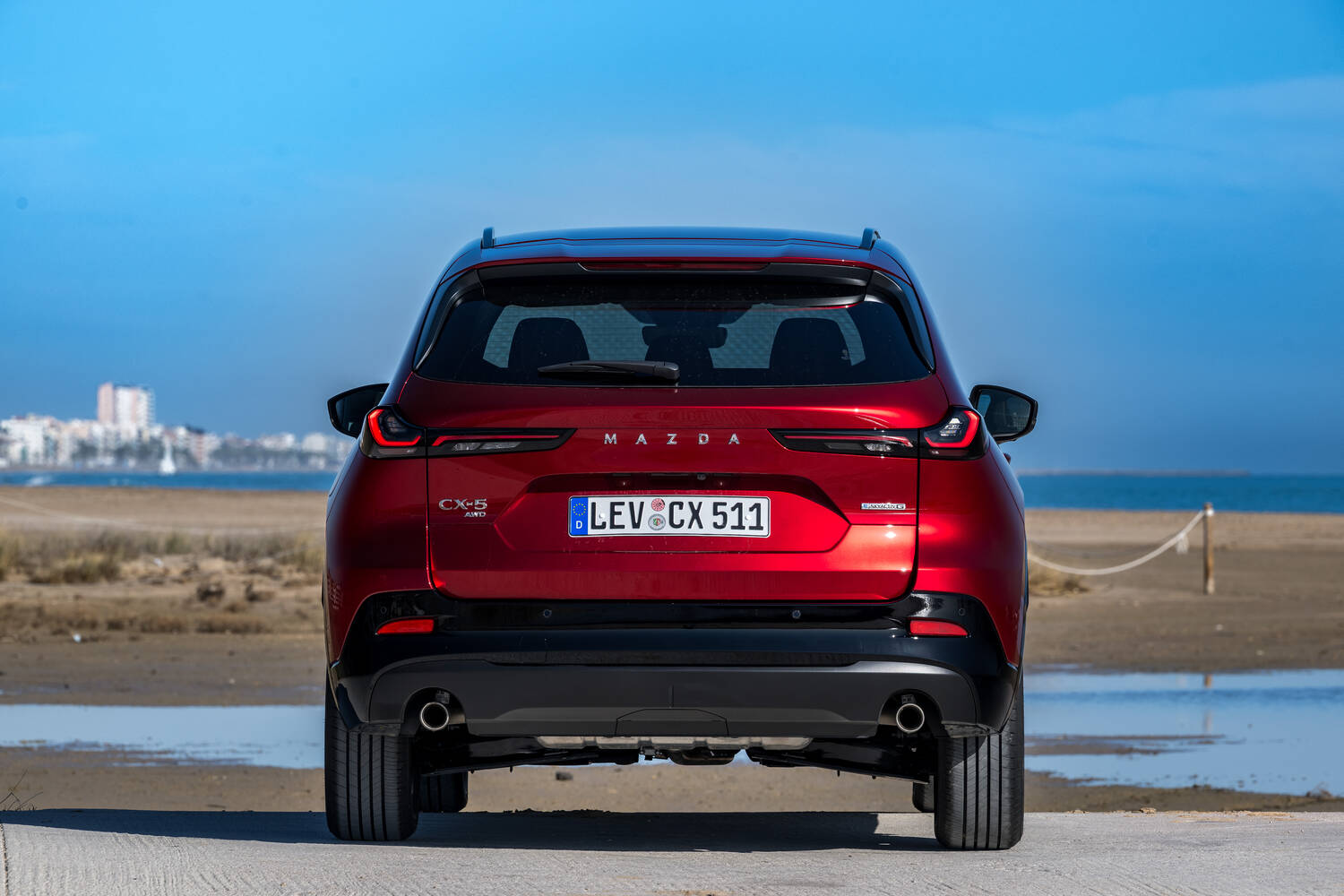
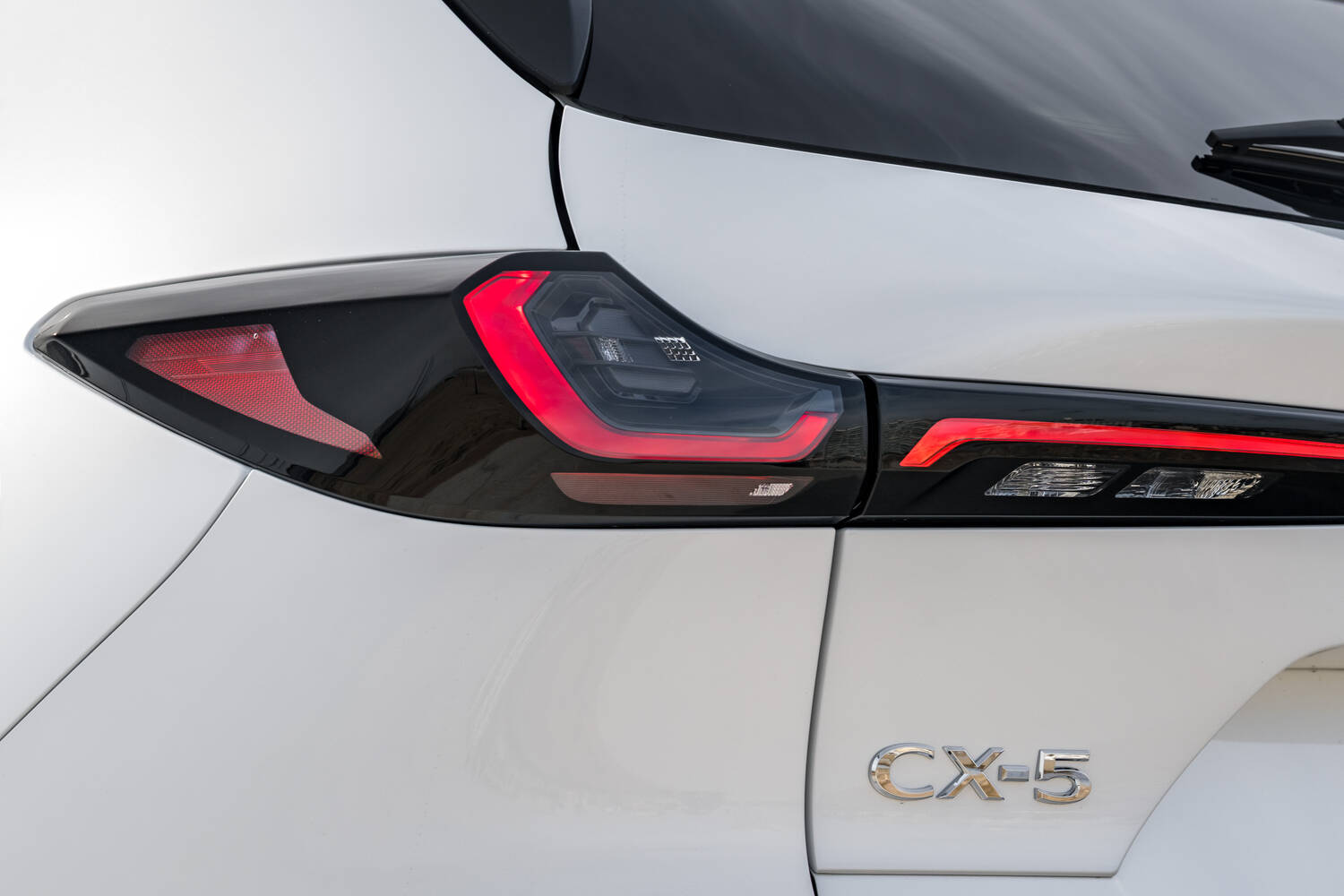
An increase in width of 15mm, including wheel tracks, adds to what is a planted look. At the rear, the lights have a sculpted look and protrude from the bodywork.

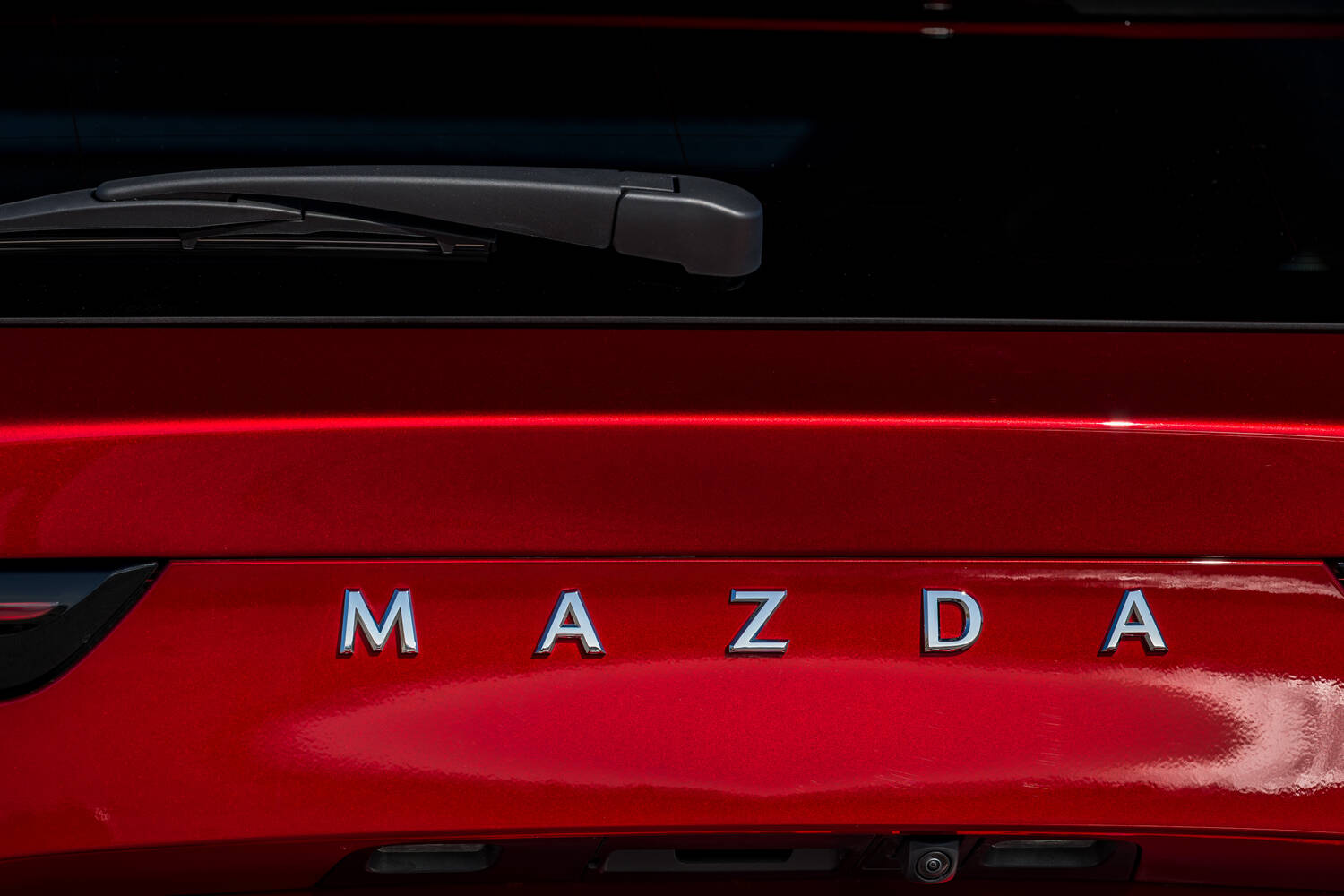
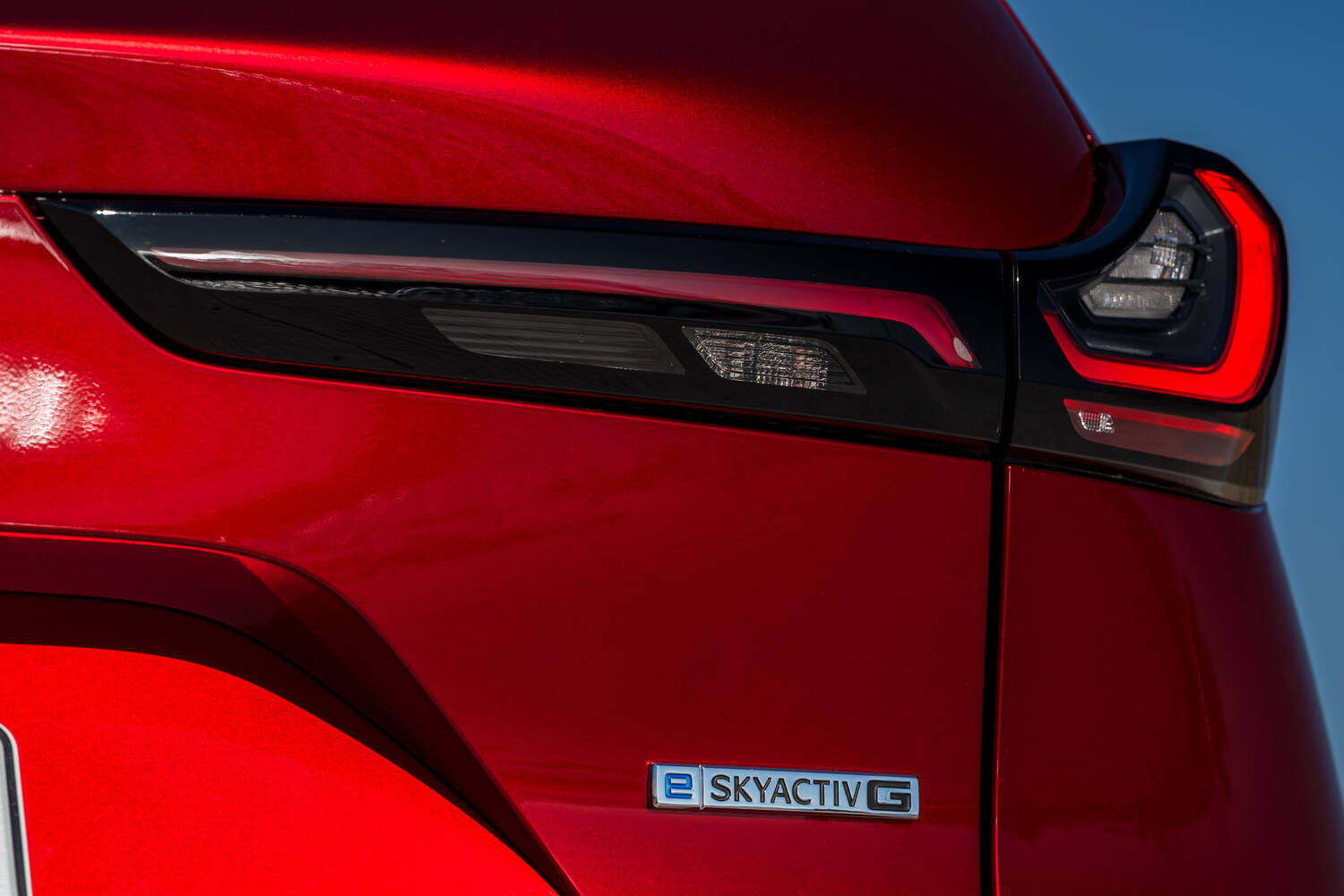
There's a Mazda word mark rather than a logo badge at the rear, which seems to be the trend with all brands these days, while the lower bumper section gets a gloss-black finish.
Dimensions of the 2026 Mazda CX-5
- Length:
- 4,690mm
- Width:
- 1,860mm (without mirrors)
- Height:
- 1,695mm (excluding roof rails)
- Wheelbase:
- 2,815mm
Paint colours for the 2026 Mazda CX-5

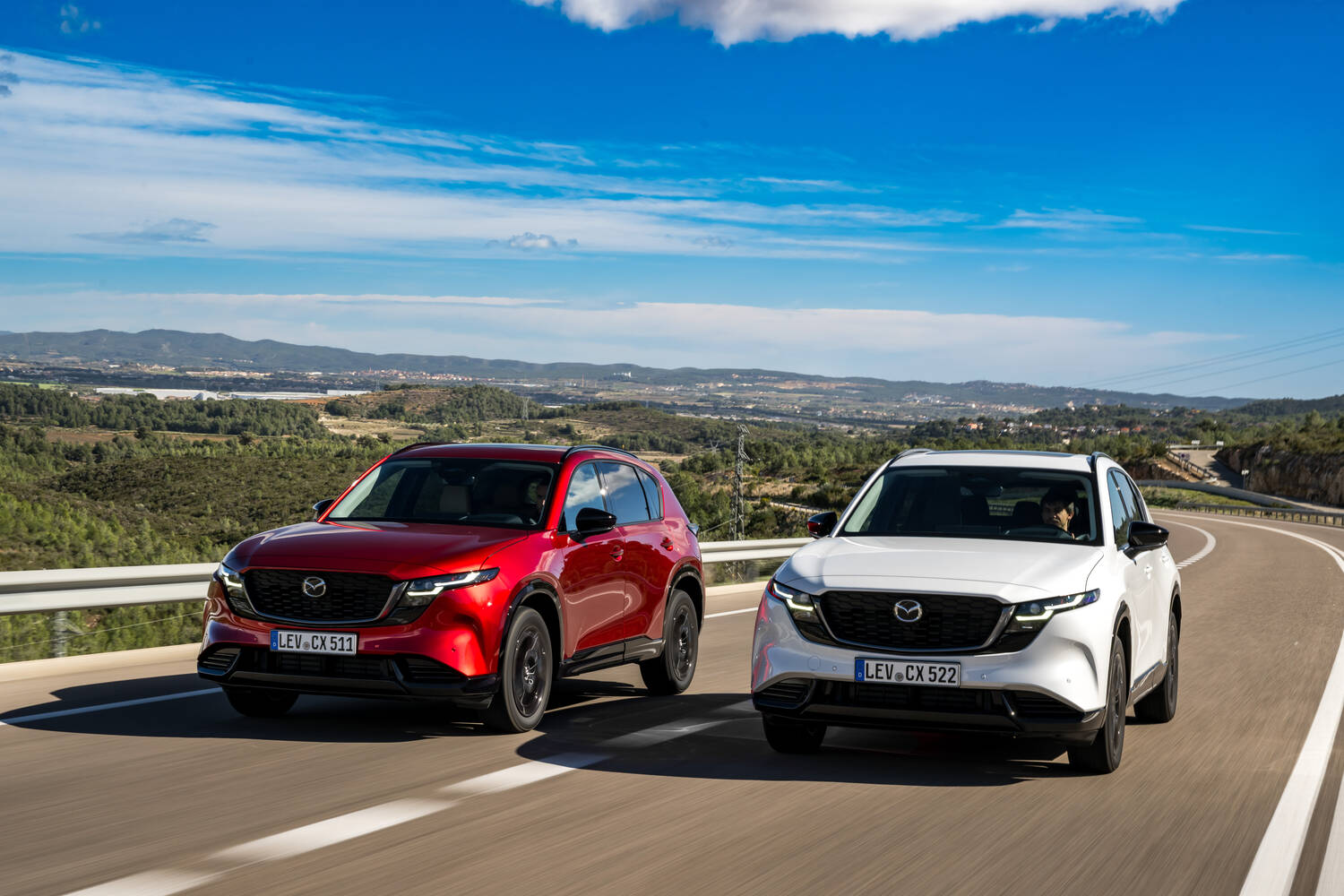
Buyers get a choice of eight exterior colours for the Mazda CX-5, with Arctic White being the only non-cost option. Jet Black, Navy Blue, Polymetal Grey and Aero Grey all cost €850 extra. Rhodium White and machine Grey cost €1,000, and Soul Red Crystal adds €1,150 to the price.
Interior, practicality, tech & comfort of the 2026 Mazda CX-5
- Good-quality interior
- Two different touchscreen sizes
- Large boot at the back

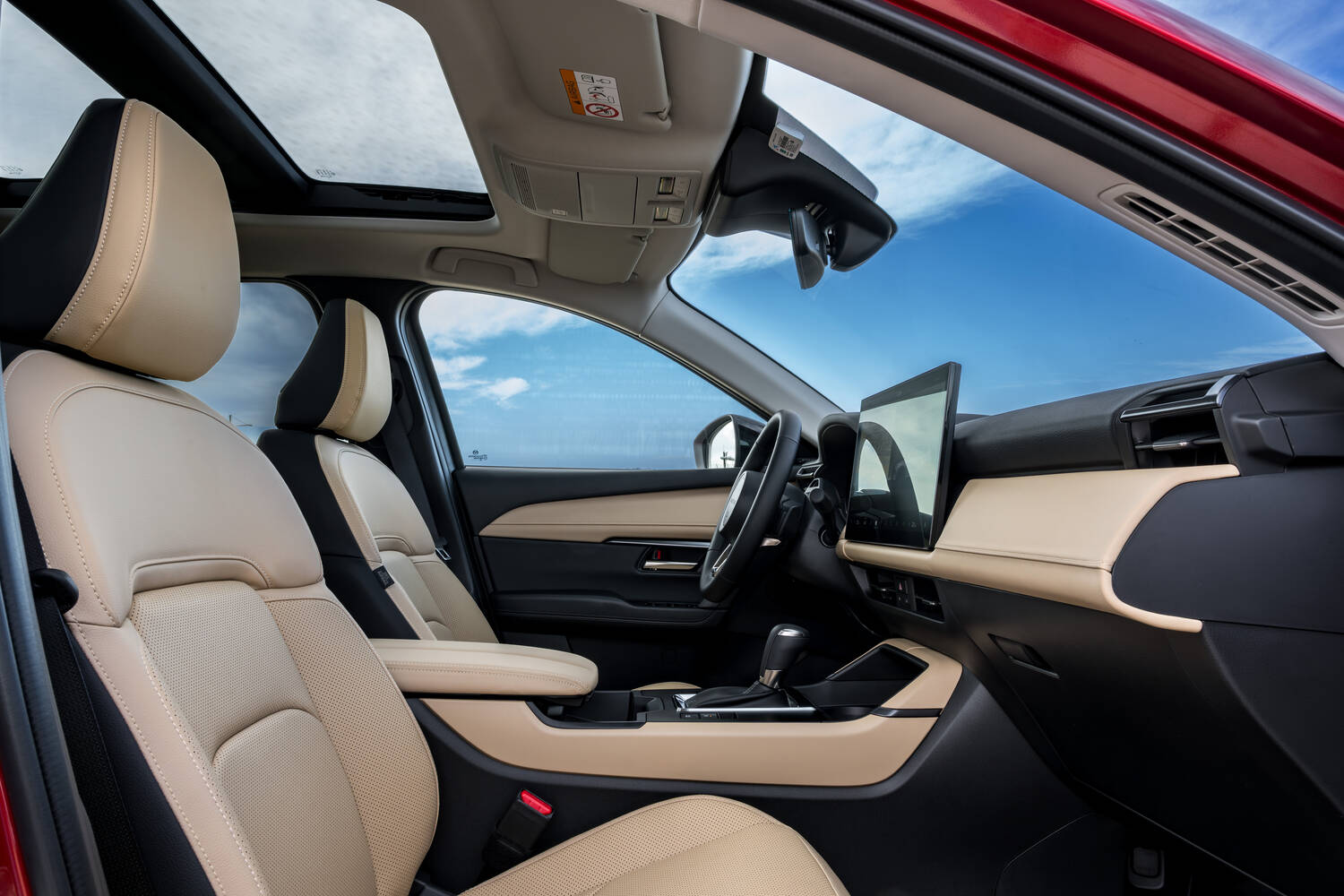
The third-generation CX-5 sees Mazda take a fresh approach to how it does interiors, though not everyone is going to like it.
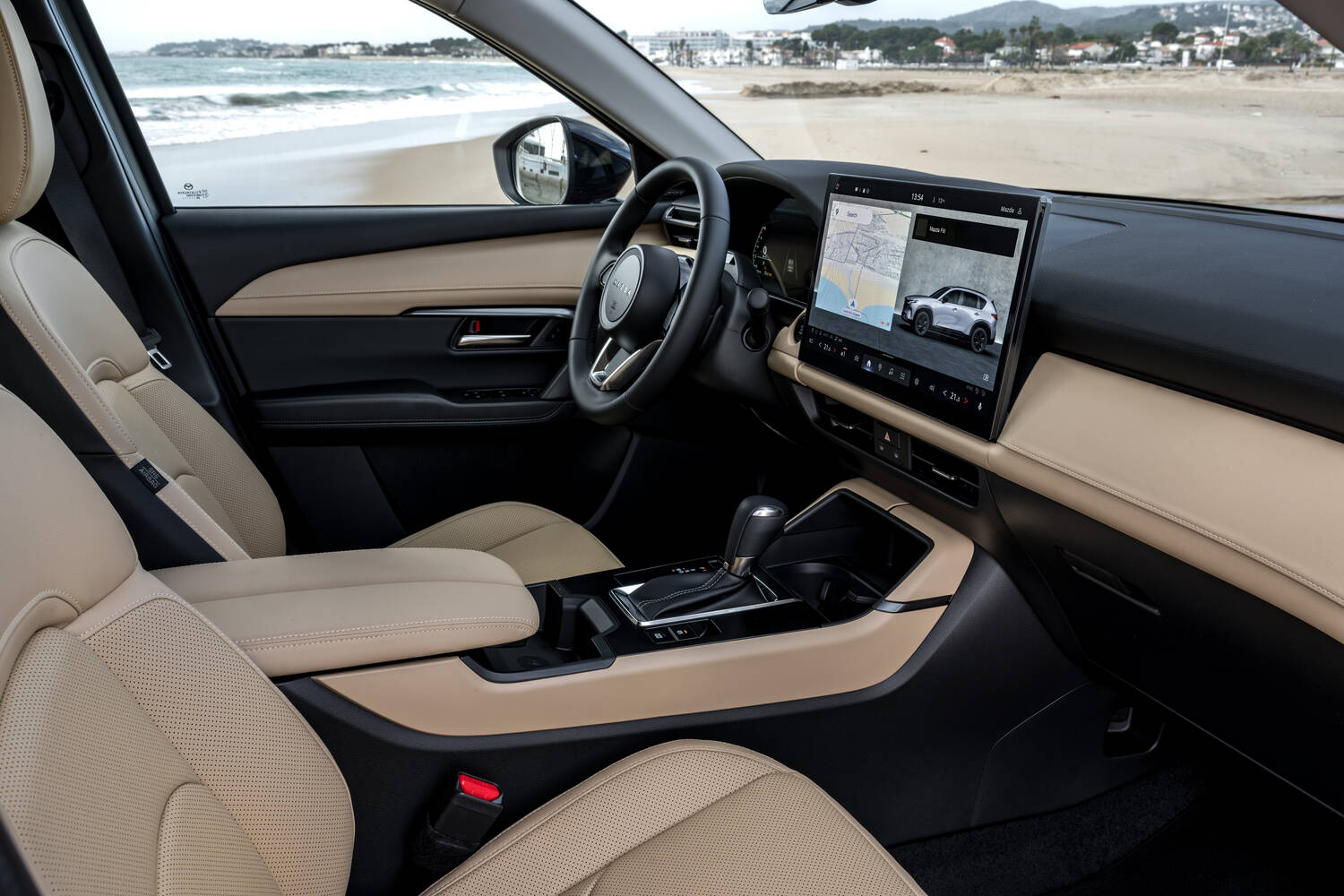
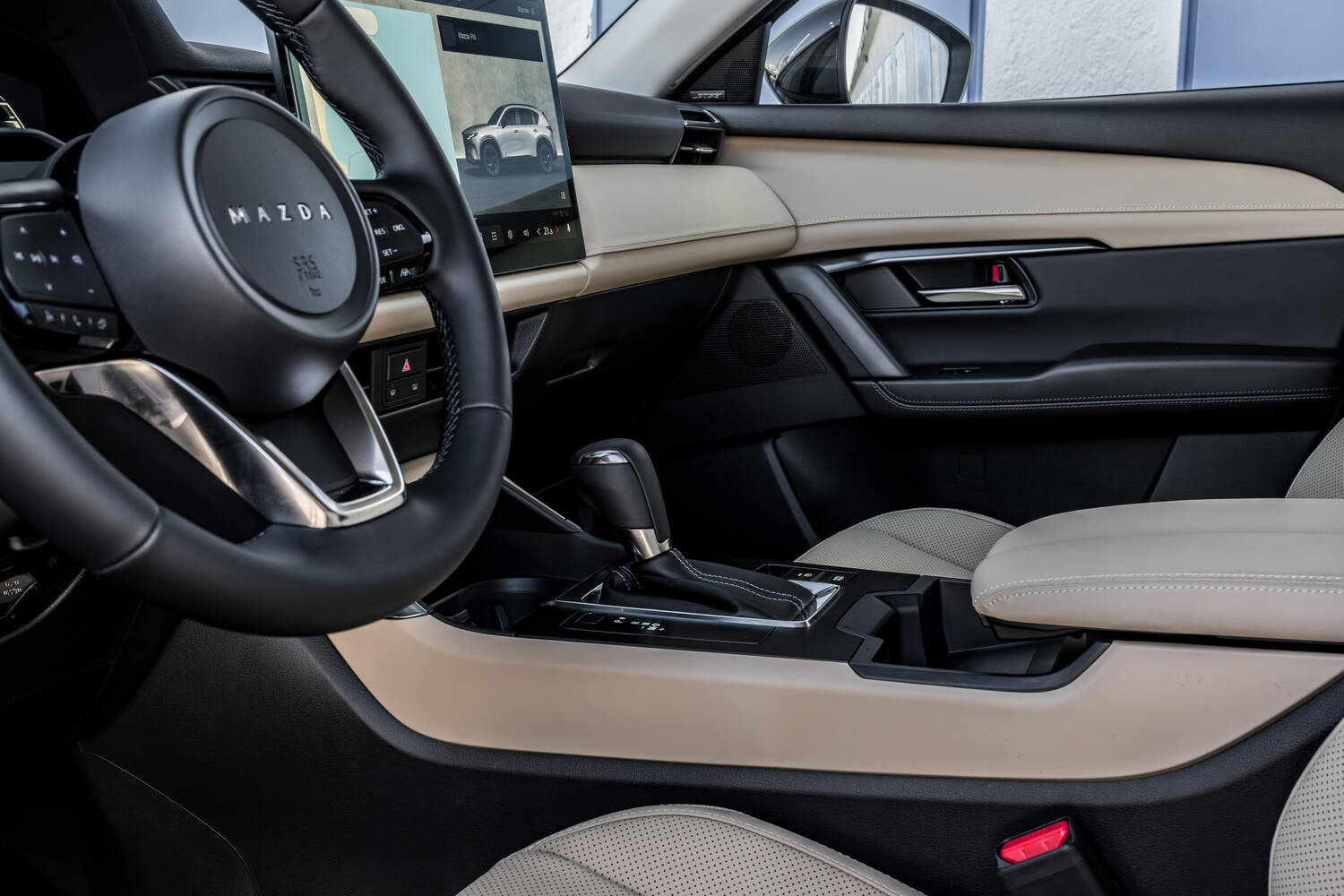
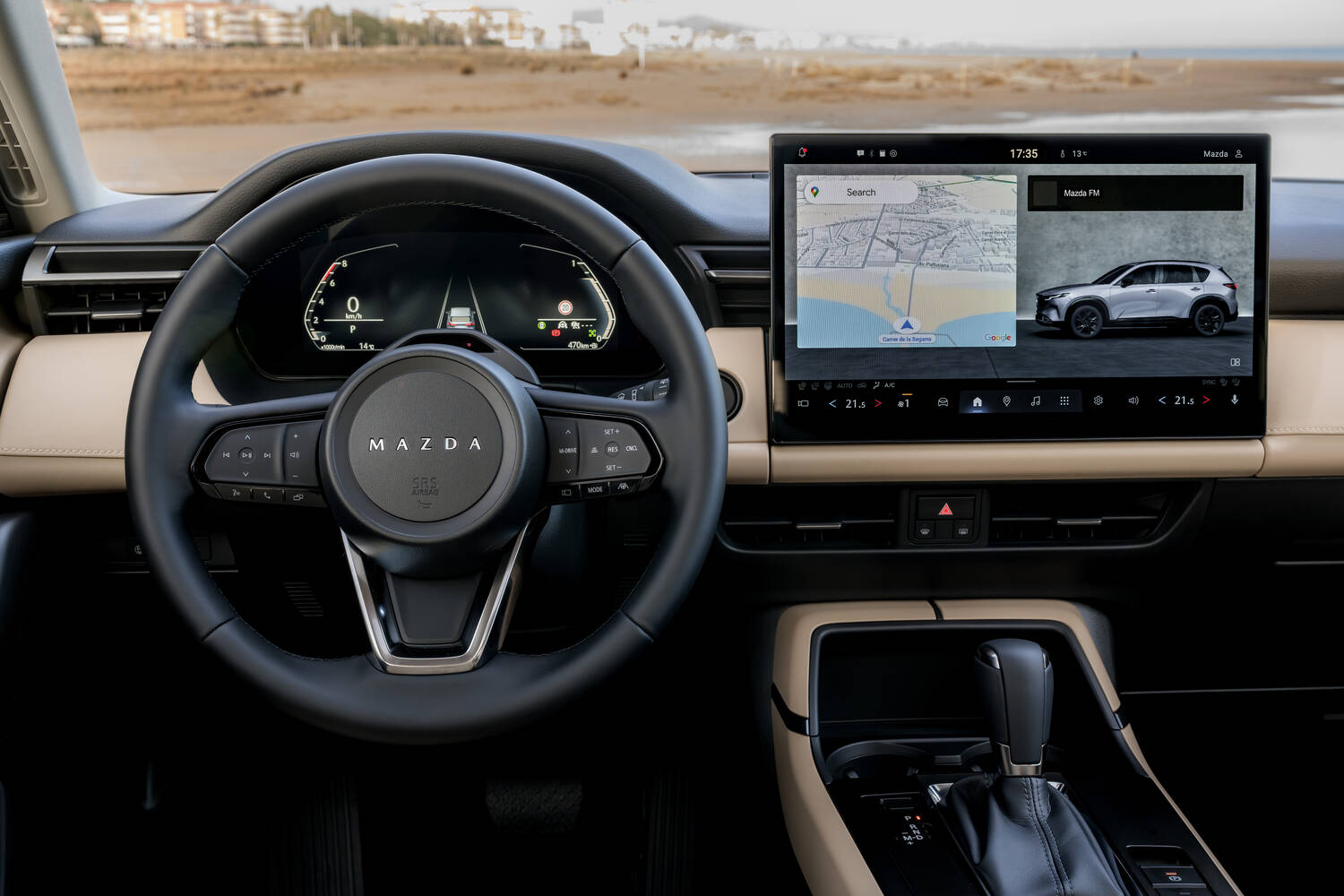
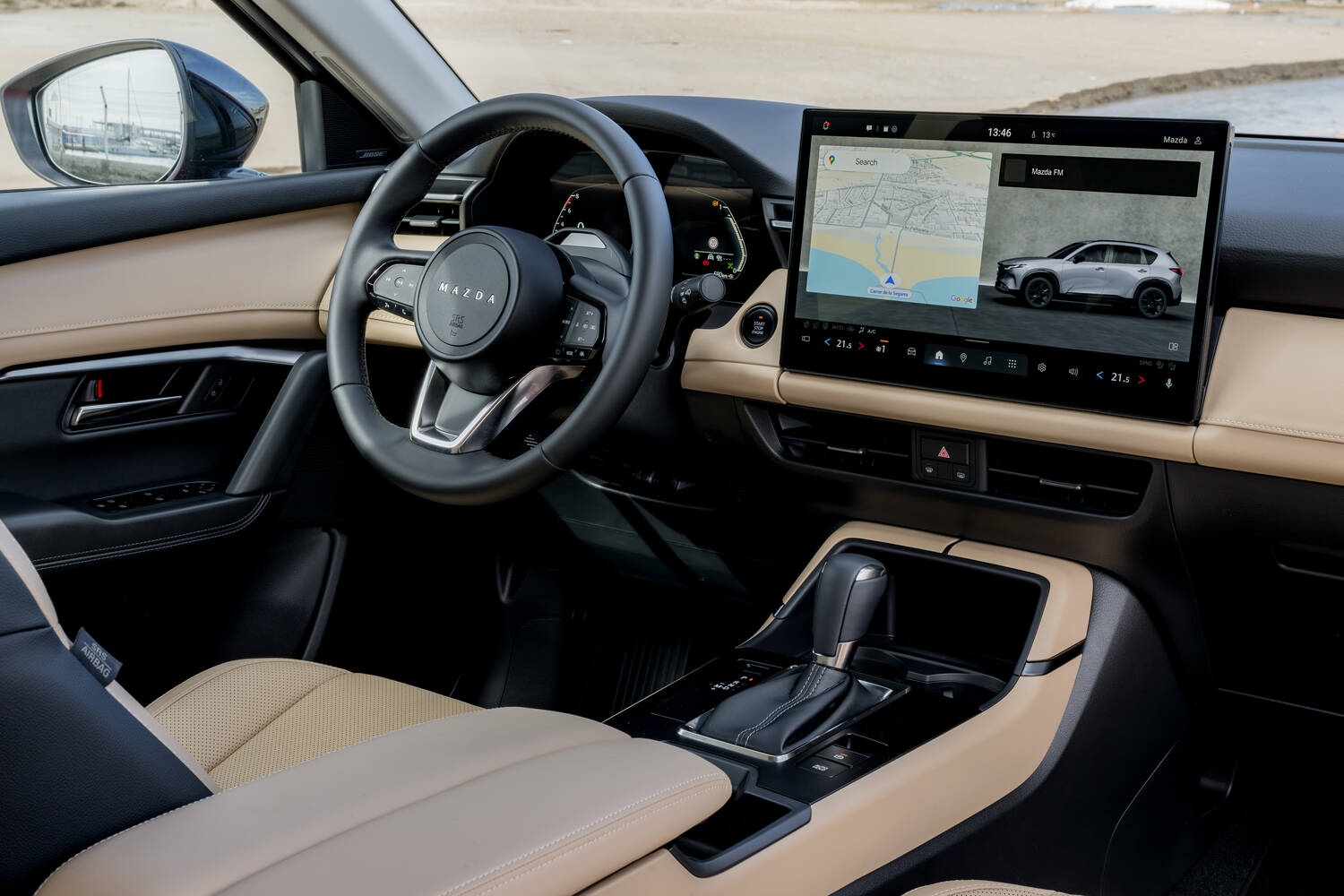
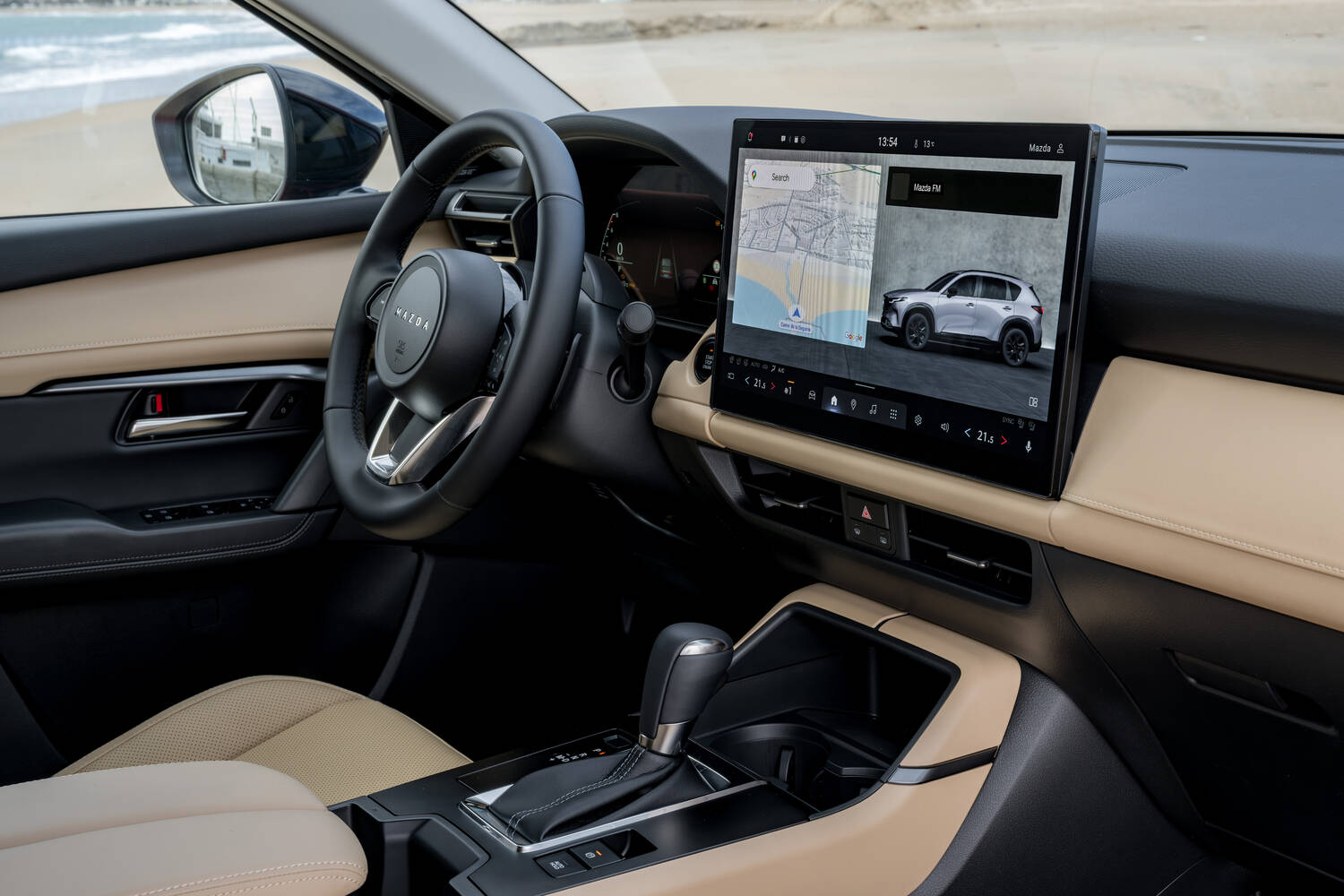
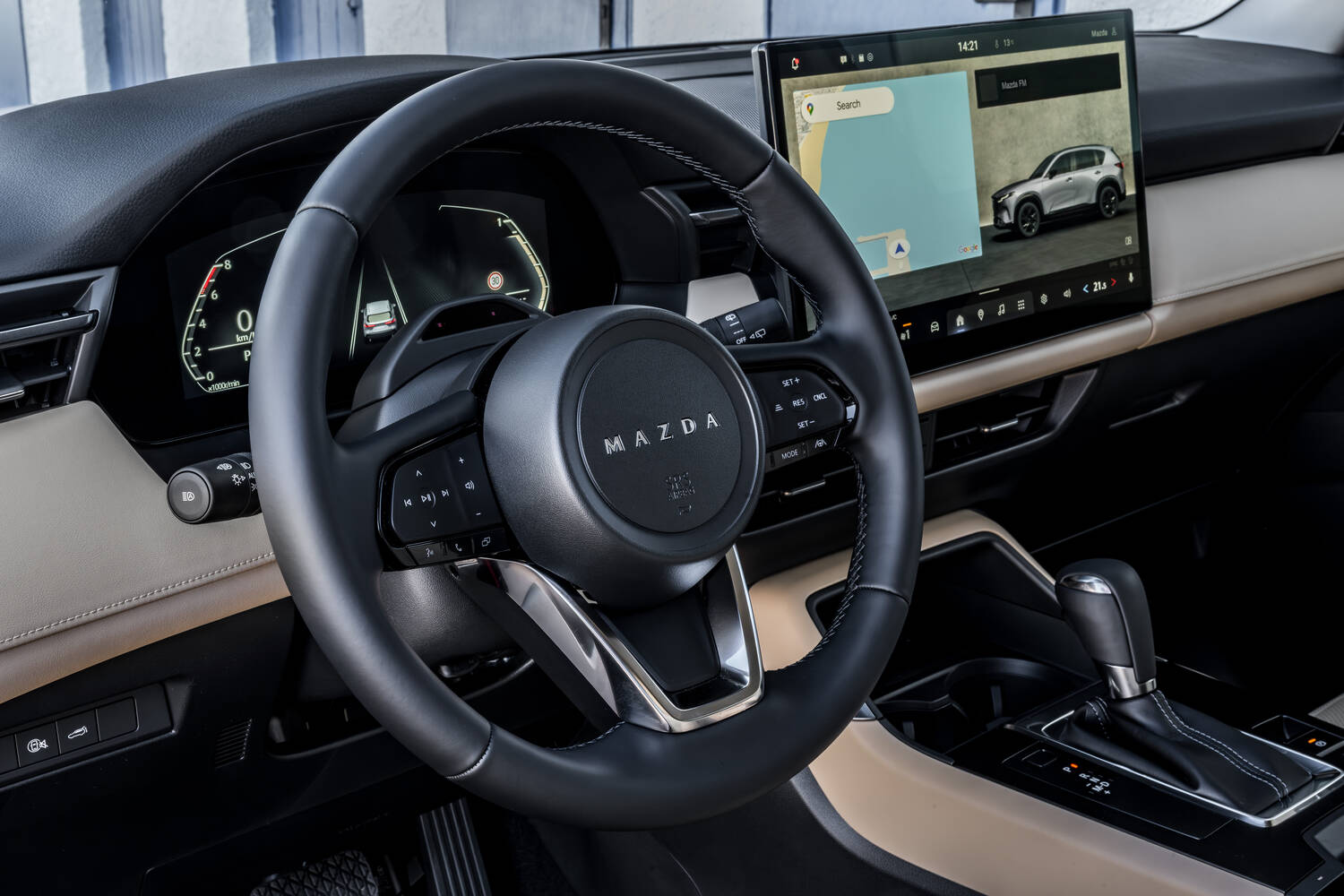
As first seen in the Mazda 6e, the cabin has a 'digital-first' approach with almost no physical buttons, in favour of a central touchscreen.
Still, everyone will appreciate the increased interior space - thanks to that increase in vehicle length - and that also means a more capacious boot.
Getting comfortable in the driver's seat

It is very easy to get in or out of the Mazda CX-5. The 30mm increase in height in comparison to the old car may not sound like much, but it's enough extra space to make the difference.
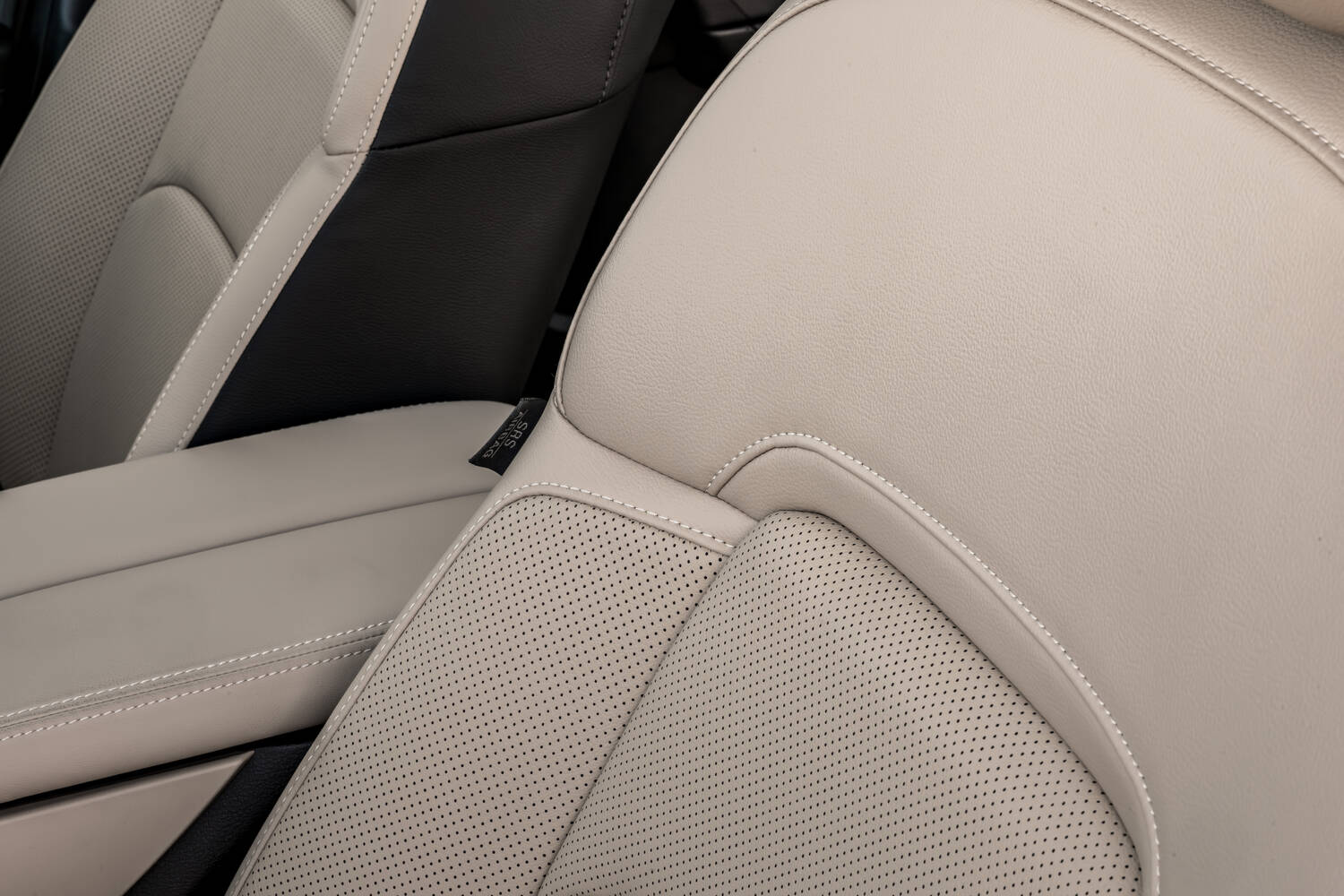
In a further effort to increase comfort, the seats are designed to reduce body sway when on the move and feature a specifically designed shape and cushioning beneath the pelvis that helps keep the spine in a natural 'S-curve' position. Mazda says this results in less unwanted head movement and reduces the likelihood of motion sickness.

From Centre-Line upwards, the driver's seat is electrically adjustable with heated functionality, while the Homura specification adds ventilation to the front seats. The steering wheel is manually adjustable and moves over a broad range of reach and rake.
Infotainment and technology
As mentioned, the CX-5 features more in-car tech than ever, and that includes the digitalisation of the dashboard. All models get a 10.25-inch digital instrument display as standard, and this can be configured in a few different ways to show the preferred diving data and information.

A similarly sized colour head-up display that projects vital driving information onto the windscreen comes as standard from Centre-Line upwards.
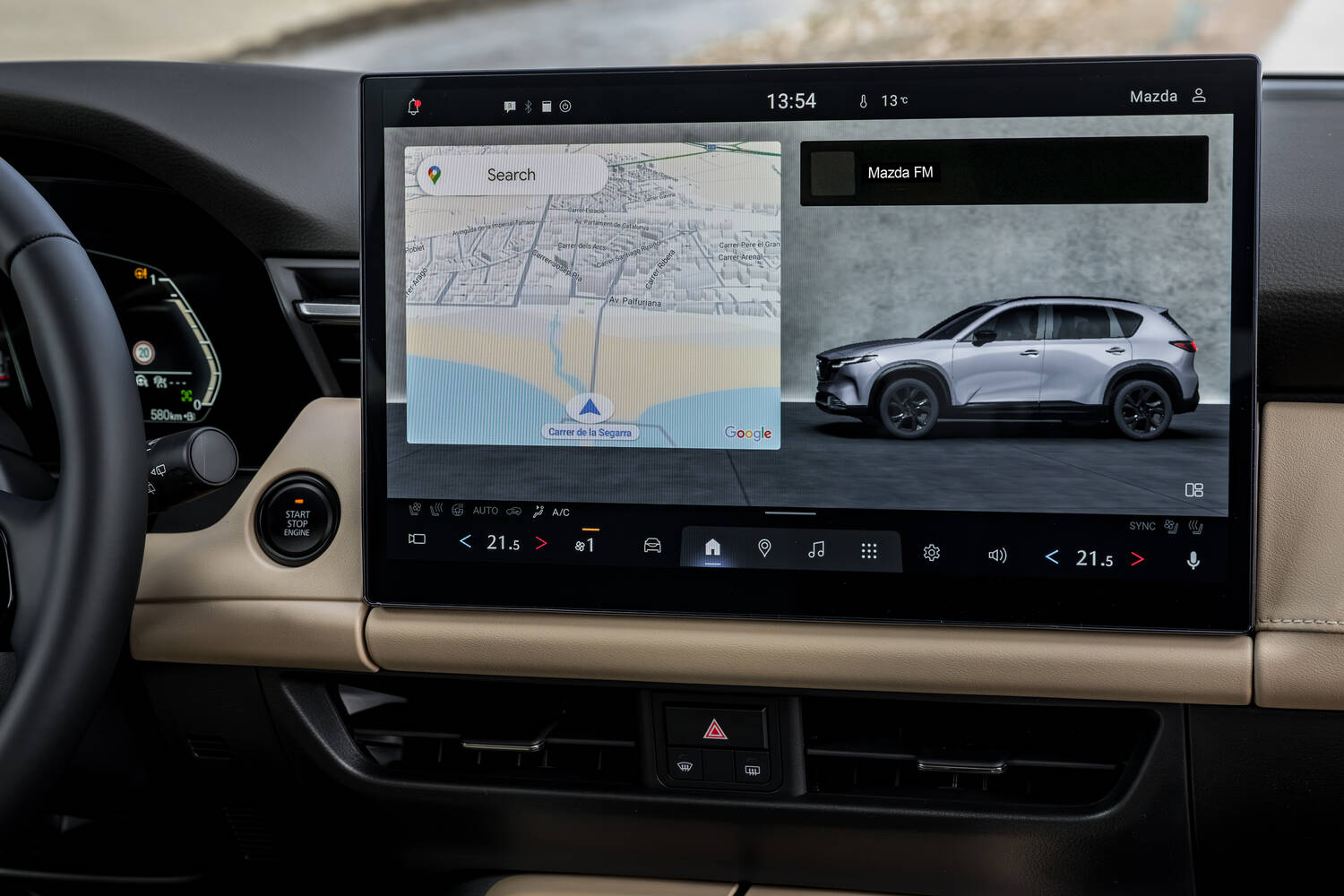
There are two sizes for the infotainment touchscreen in the CX-5, with the standard display measuring 12.9 inches across the diagonal.
The native system now comes with Google built-in and that includes Google Maps for navigation and Gemini for more conversational digital assistance. Owners can also access the Google Play Store to add different apps to the system.
Supporting connectivity, there is wireless Android Auto and Apple Car Play available as standard from Centre-Line upwards (they're wired on Prime-Line), in addition to the standard Bluetooth.
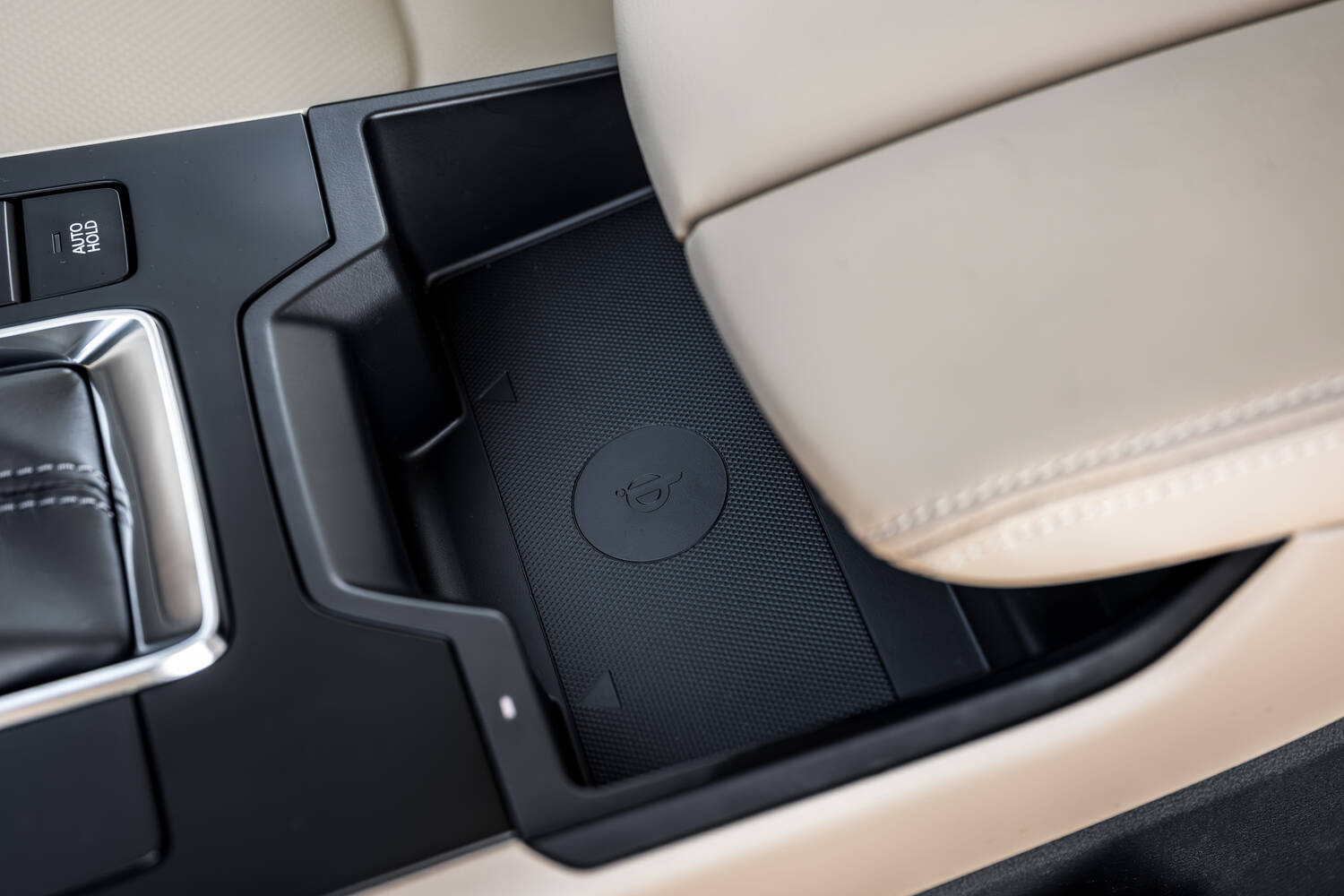
There are USB-C charge ports in the front and rear of the cabin, plus a wireless charging pad between the front seats. A 12-speaker Bose stereo system is standard on Exclusive-Line models.
A 15.6-inch display is standard on the Homura grade, and it performs the same features, albeit with a larger screen.

Unfortunately, the use of these impressive screens results in fewer physical buttons around the cabin, so functions such as the temperature and climate settings are now performed via the display only.
Mazda is adding to its suite of ADAS features with a system called Proactive Driver Assist that helps to enhance the driving experience by performing controlled deceleration once the accelerator is released when approaching a slower-moving vehicle or a bend ahead.
Practicality around the cabin
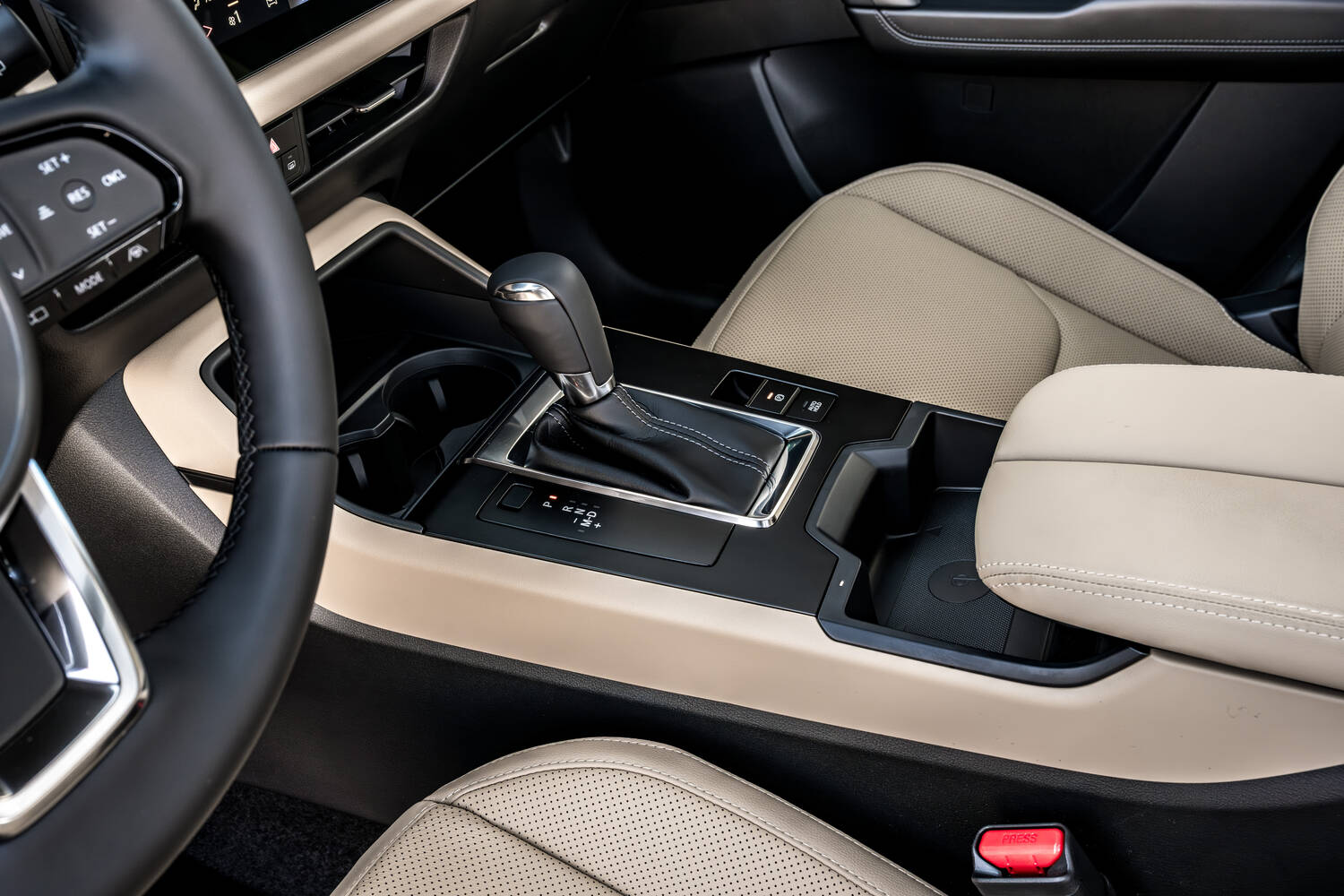
You don't have to look too far to find places to put your odds and ends inside the Mazda CX-5, though its cabin also demonstrates one of the noticeable differences between some combustion-engined cars and electric vehicles. Between the front seats, where on EVs there's often a large open storage area, the CX-5 has to concede room for its all-wheel-drive transmission system underneath, meaning you don't get as much open space in the cabin.

Still, there's a cubby area at the base of the dashboard, two cup holders and room for a wireless charging pad. Beneath the central armrest is a further storage area that's useful for keeping items out of sight. The door bins are a useful shape and have enough room for drinks bottles and other items.
Rear-seat passenger space
The main positive from the increase in length in the CX-5 is improved rear passenger space. To begin with, the rear doors have a generous aperture, helped further by the car's increase in height, and they open to an almost-90-degree angle. That will be a particular boon to parents as they get smaller passengers in and out of their child seats.

Adults will also appreciate how much space there is when sitting in the rear seats. Even the tallest of passengers will find little issue with how much headroom and legroom are available.
We also like how high the front seats are set from the floor, as it creates more space to stretch feet out underneath them. The middle rear seat does lose out on foot space due to the required transmission tunnel, though the middle pew isn't the most uncomfortable we've come across.
Fitting child seats to the 2026 Mazda CX-5
The CX-5 is capable of accommodating ISOFIX child seats in each of the outer rear seats. The mounting points are easily accessible.
Boot space in the 2026 Mazda CX-5

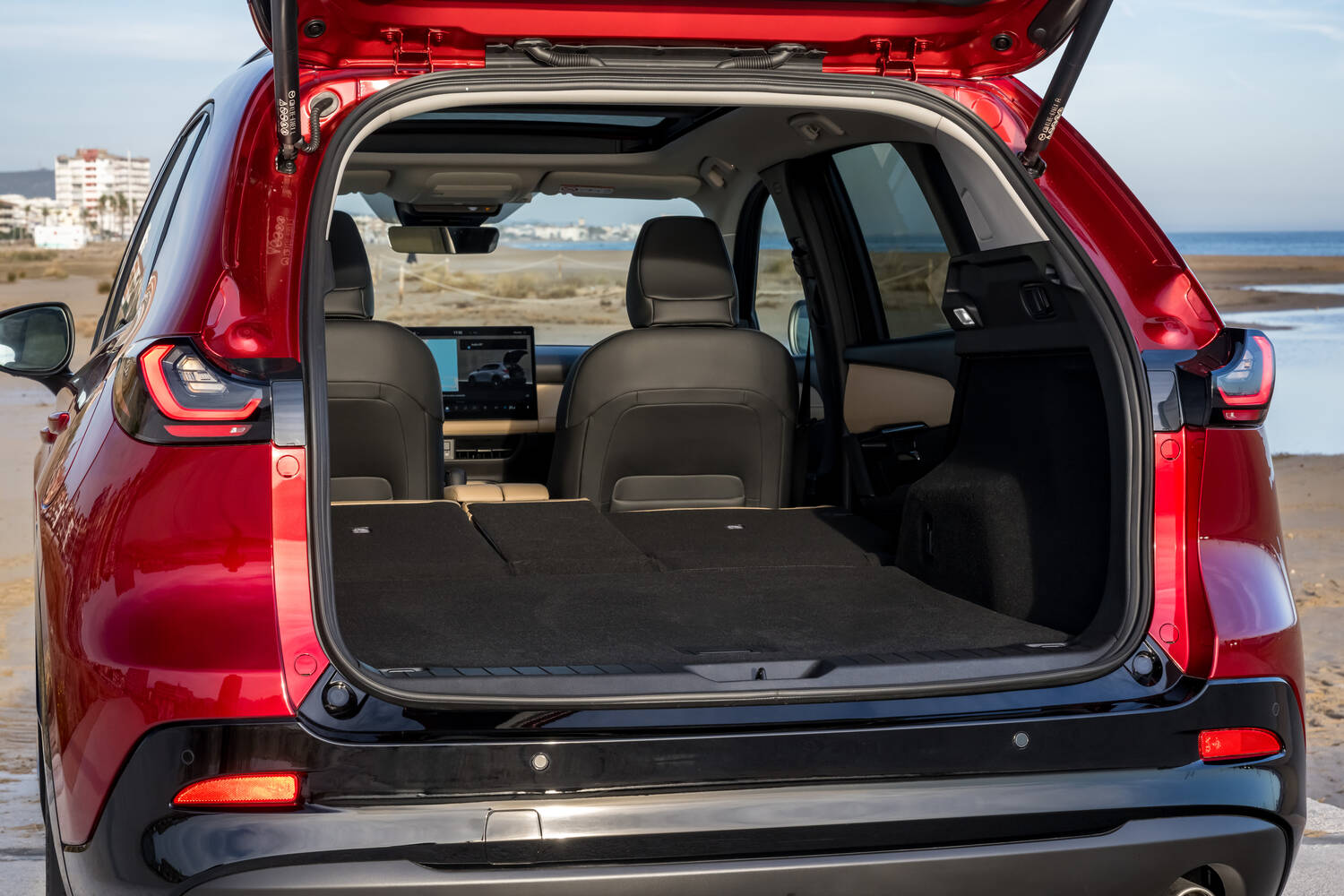
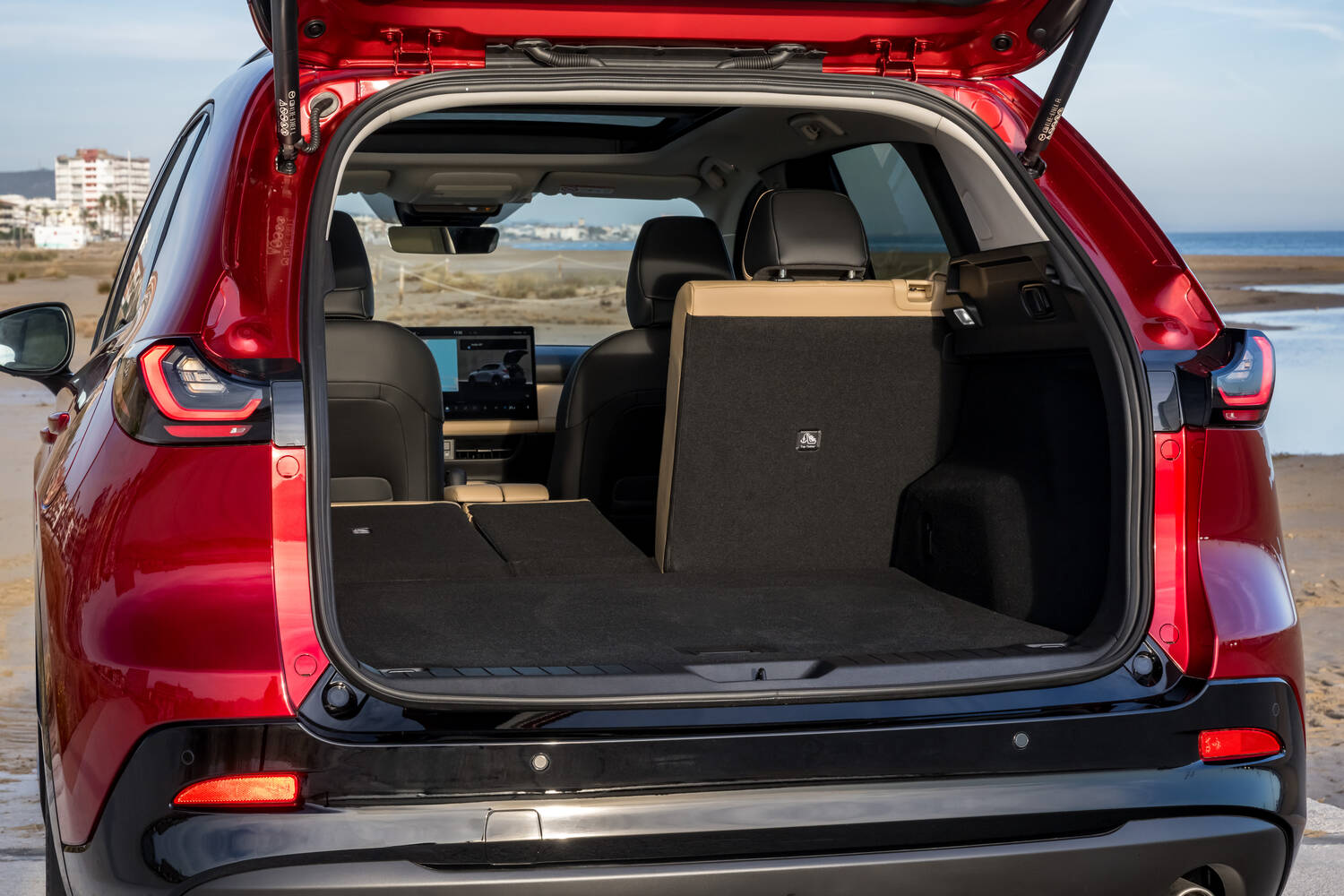
Boot space is another aspect of the Mazda CX-5 that has been improved upon over its predecessor. At 583 litres, the CX-5 gets a 61-litre increase over the last generation, and it's also a more practical shape.
The load-in height has been reduced by 18mm, and there is an even load level, too. The cargo space is 45mm longer, as well. When you need even more carrying capacity, the rear seats can be easily folded via pull handles on either side of the boot.
The rear seats have a 40:20:40 split and form an almost entirely flat load level when folded. The expected bag hooks are present, as is a power socket and, conveniently, the luggage tonneau cover can slot into a storage compartment beneath the boot floor when it's not being used.

Towing with the 2026 Mazda CX-5
The Mazda CX-5 steals an edge over several of its competitors when it comes to towing, with a maximum rating of 750kg for an unbraked trailer and 2,000kg for a braked load.
Safety in the 2026 Mazda CX-5
The Mazda CX-5 achieved a five-star safety rating from Euro NCAP in 2025. The result included a 90 per cent score for adult occupant protection and 89 per cent for child occupant protection. A welcome 93 per cent score for protection of vulnerable road users and 83 per cent for safety assist puts the CX-5 at the sharp end of the pack when it comes to safety.
The only areas it lost marks were for the lack of an active bonnet; not having an ISOFIX point in the front passenger seat or an integrated child seat; and the lack of a front passenger knee airbag and a centre airbag for the front.
Performance of the 2026 Mazda CX-5
- Only one engine offered
- Large capacity may deter some
- Automatic transmission feels sluggish

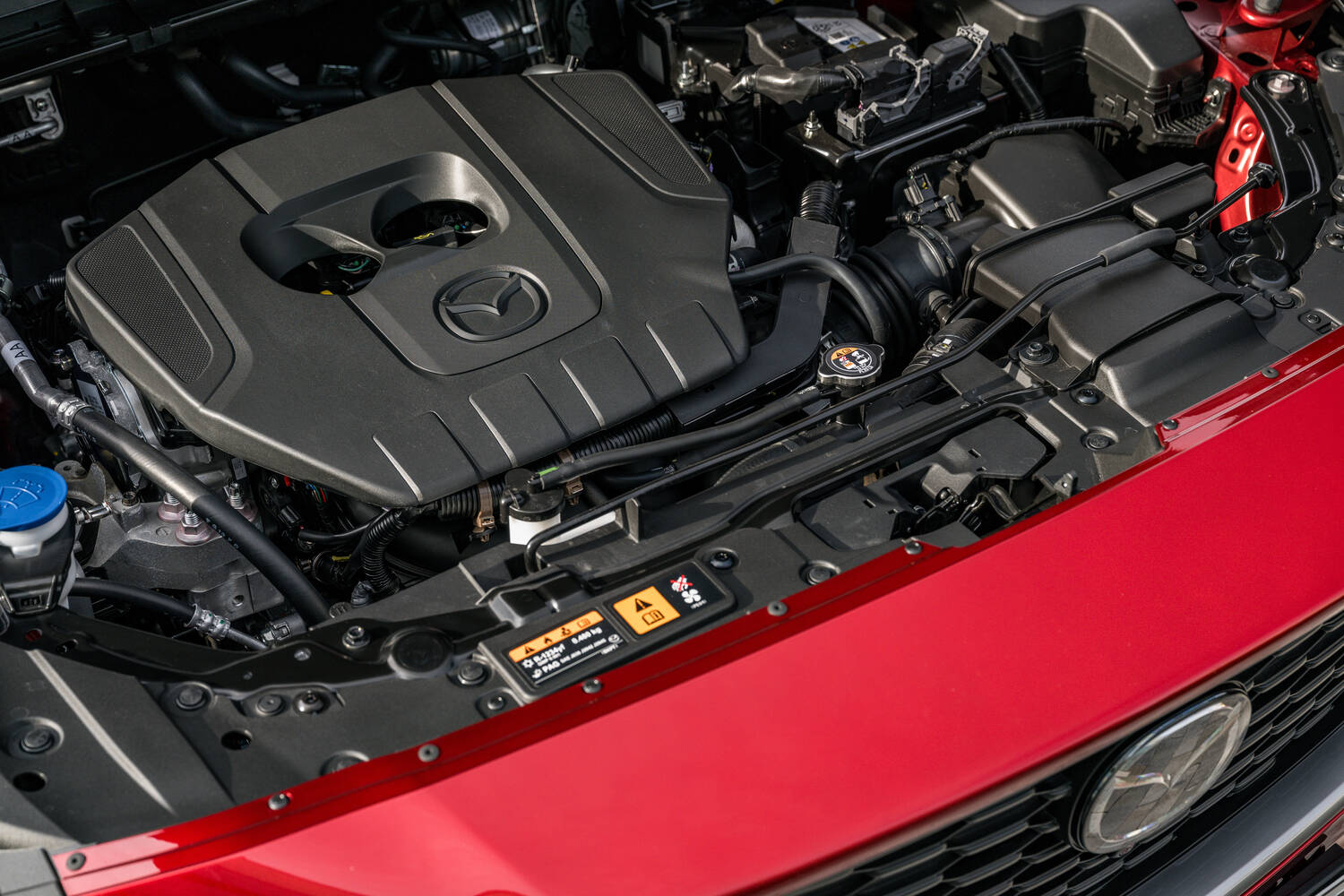
There is only one engine available in the third-generation Mazda CX-5, a naturally aspirated 2.5-litre four-cylinder petrol unit.
It uses 24-volt mild-hybrid tech to help lower emissions, though they remain higher than those of some competitors, which offer more electrified options.
Peak power output is 141hp at 4,500-5,000rpm and torque maxes out at 238Nm at 3,500-3,750rpm.

Mazda sticks with a larger-than-average engine capacity as it reckons it's the sweet spot for efficiency and performance without relying on turbocharging. Compared to the outgoing 2.0-litre engine, Mazda says torque delivery below 4,000rpm is improved by up to 19 per cent.
It is also equipped with cylinder deactivation, so when cruising on part-throttle, in some instances, it will shut down combustion in two of its four cylinders to reduce fuel consumption.
Drive goes to either the front or all wheels via a six-speed automatic gearbox - a conventional torque-converter design.
Driving the 2026 Mazda CX-5 in Barcelona, Spain
Words by Dave Humphreys, published on 26 February 2026

The CX-5 is a car that very quickly gets under your skin in many of the right ways. Right from the off, it's evident that it drives with a finesse and poise that are lacking in many other SUVs. It's all subtle things, but they start to quickly add up.
The steering feels crisper than most and keeps you in touch with what the front of the CX-5 is doing. More impressive still is the suspension, which, even on the larger 19-inch wheels, does a very comprehensive job at soaking up surface imperfections and soaks up even the harshest of speed bumps gracefully and without tossing you around in your seat.

If there's one weak link in the CX-5's armour, it is the engine, which in certain instances feels underpowered. This is most evident when trying to quickly getting up to speed, such as when joining a motorway.
With just 141hp and up to a 1,711kg kerb weight to deal with, the four-cylinder engine sometimes has its work cut out. The six-speed automatic transmission makes sense on paper, but in a world of seven, eight and even ten-speed gearboxes, the six-speeder feels a bit old hat.

Mazda has added more driver assistance tech to the CX-5 this time around, and generally, it all works very well. The Proactive Driver Assist automatically slows the CX-5 when it detects a slower-moving car in front (so long as you're already off-throttle) and does the same for bends and corners. It works in a way that doesn't feel as if it's taking over control of the car or intervening in an oppressive way; it's more helpful than that.
Aside from when the engine is being worked harder than usual, the CX-5's cabin feels refined, and there are decent levels of sound insulation and a lack of excessive road noise.
It does its best work in urban settings, which is likely where most people will end up using it. On part-throttle, the engine feels at ease, and we found the fuel consumption to be close to its official figures.

Fuel economy and running costs of the 2026 Mazda CX-5
- Only mild hybrid for now
- Cylinder deactivation improves economy
- AWD doesn't use much more fuel
With only one engine offered, the CX-5 is slightly on the back foot compared to its competitors and is a further outlier as it uses a large-capacity naturally aspirated petrol engine. It does get mild-hybrid electrification (MHEV), but that does little more than provide slightly longer engine off-periods for stop-start and a smoother engine restart thanks to its integrated starter generator. There will be a full hybrid (HEV) coming, but that is unlikely to be until 2028.

Official CO2 and fuel consumption of the 2026 Mazda CX-5
The front-wheel-drive Mazda CX-5 has a combined fuel consumption figure of 7.0 litres per 100 kilometres and CO2 emissions of 157-159 g/km. The consumption increases to 7.4-7.5 litres per 100 kilometres for the all-wheel-drive variant of the CX-5, with CO2 emissions of 168-169g/km.
Real-world fuel consumption of the 2026 Mazda CX-5
We had the opportunity to drive both the front- and all-wheel-drive variants of the Mazda CX-5 at its launch and in both instances found the fuel consumption to be close to the official figures.
A mixed drive in the front-wheel-drive CX-5 saw an average of 7.4 litres per 100 kilometres, and that was with three people onboard with some luggage. Consumption on the AWD crept over 8 litres per 100 kilometres, but our journey was mostly done on the motorway at higher speeds.
Servicing the Mazda CX-5
Mazda has not yet announced what the scheduled service intervals will be for the CX-5.
Mazda CX-5 warranty

Mazda offers a six-year warranty on all new cars up to 150,000 kilometres.
Irish pricing & rivals to the 2026 Mazda CX-5
- CX-5 priced from €39,965
- Four specification grades available
- Front- or all-wheel drive
Pricing for the Mazda CX-5 starts at €39,965 in Ireland for the front-wheel-drive variant in Prime-Line specification. There are four grades available and, with the addition of an all-wheel-drive transmission option, pricing can rise up to €51,045 before adding optional extras.

Verdict - should you buy the 2026 Mazda CX-5?
There's plenty to like about the Mazda CX-5, from its exterior styling to the high-quality finish inside, especially on the higher trim levels. It's also a lovely thing to drive with a good suspension setup that delivers a comfortable, supple ride and well-judged steering, not to mention useful driver assistance features. Despite the unusual engine configuration, it does seem to be reasonably fuel efficient for this size of car, too.
FAQs about the 2026 Mazda CX-5
Will there be other engine options available?
Mazda has said that it will add a full-hybrid powertrain to the CX-5 range, but that is unlikely to go on sale until 2028.
Want to know more about the 2026 Mazda CX-5?
If there's anything about the Mazda CX-5 we've not covered, or you'd like help in choosing between it and other cars, you can avail of our expert advice service via the Ask Us Anything page.