



Exterior & design of the 2025 Leapmotor C10 REEV

- Smooth styling, if a little bland
- About the same size as Skoda's Kodiaq
- Good choice of paint colours
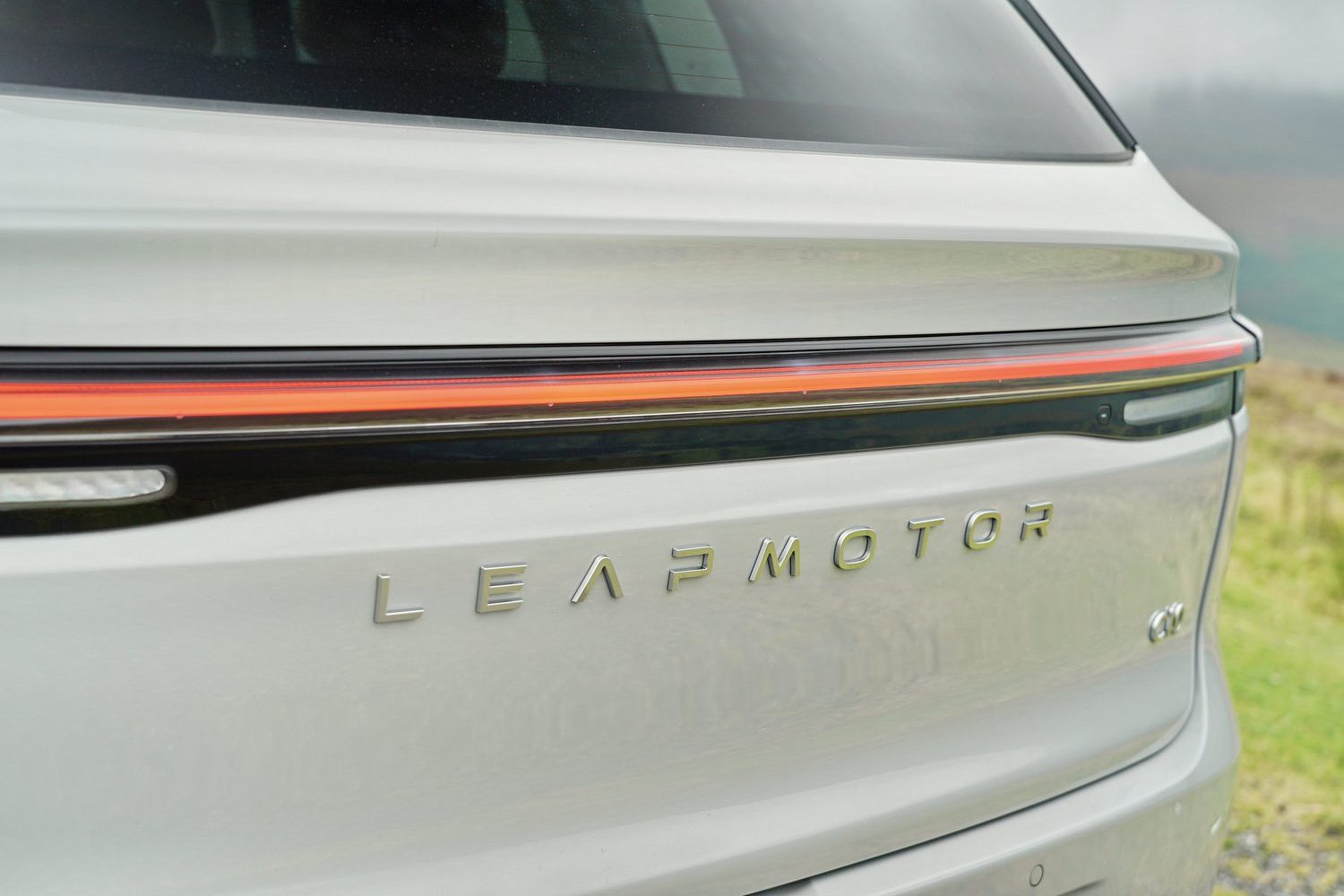
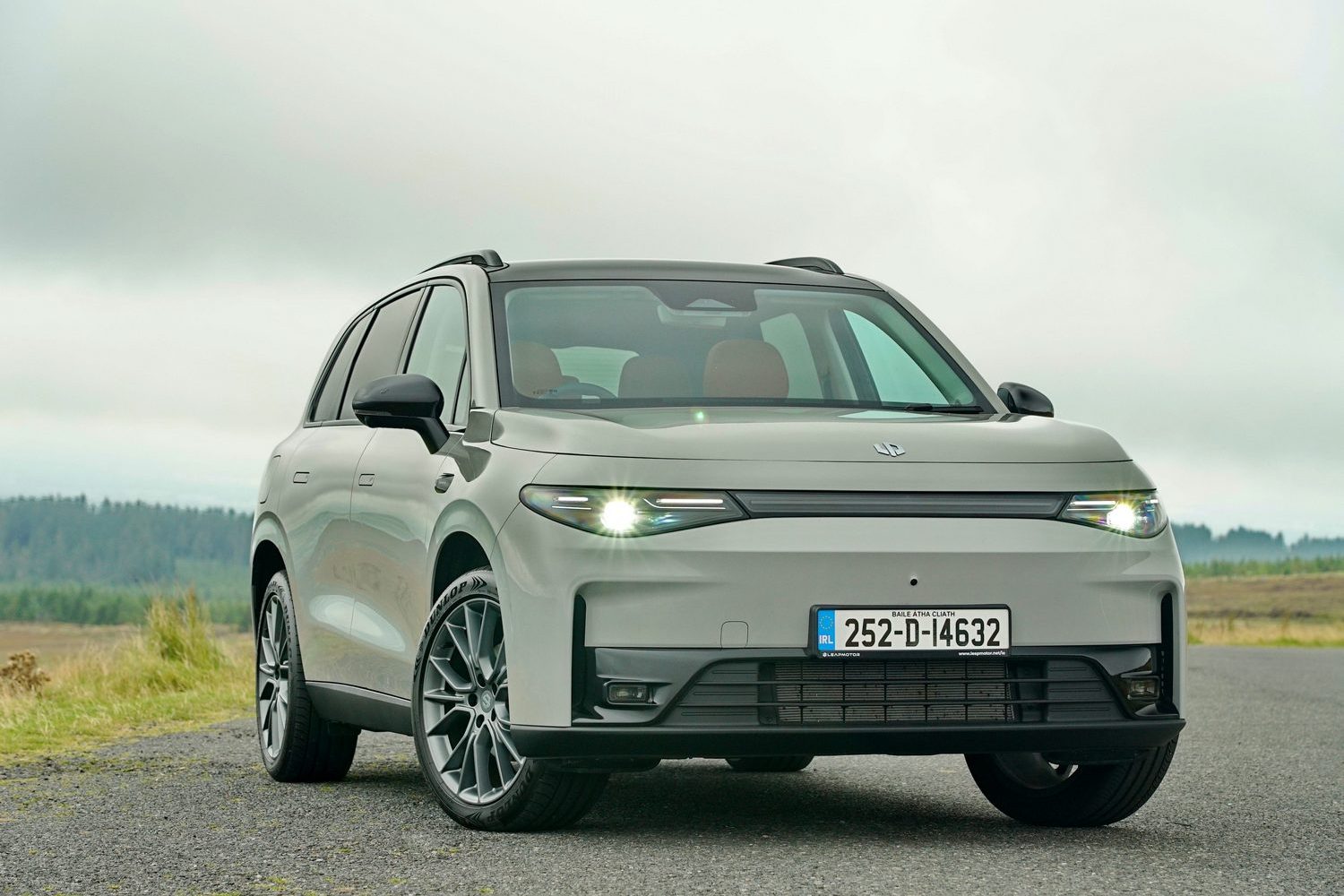
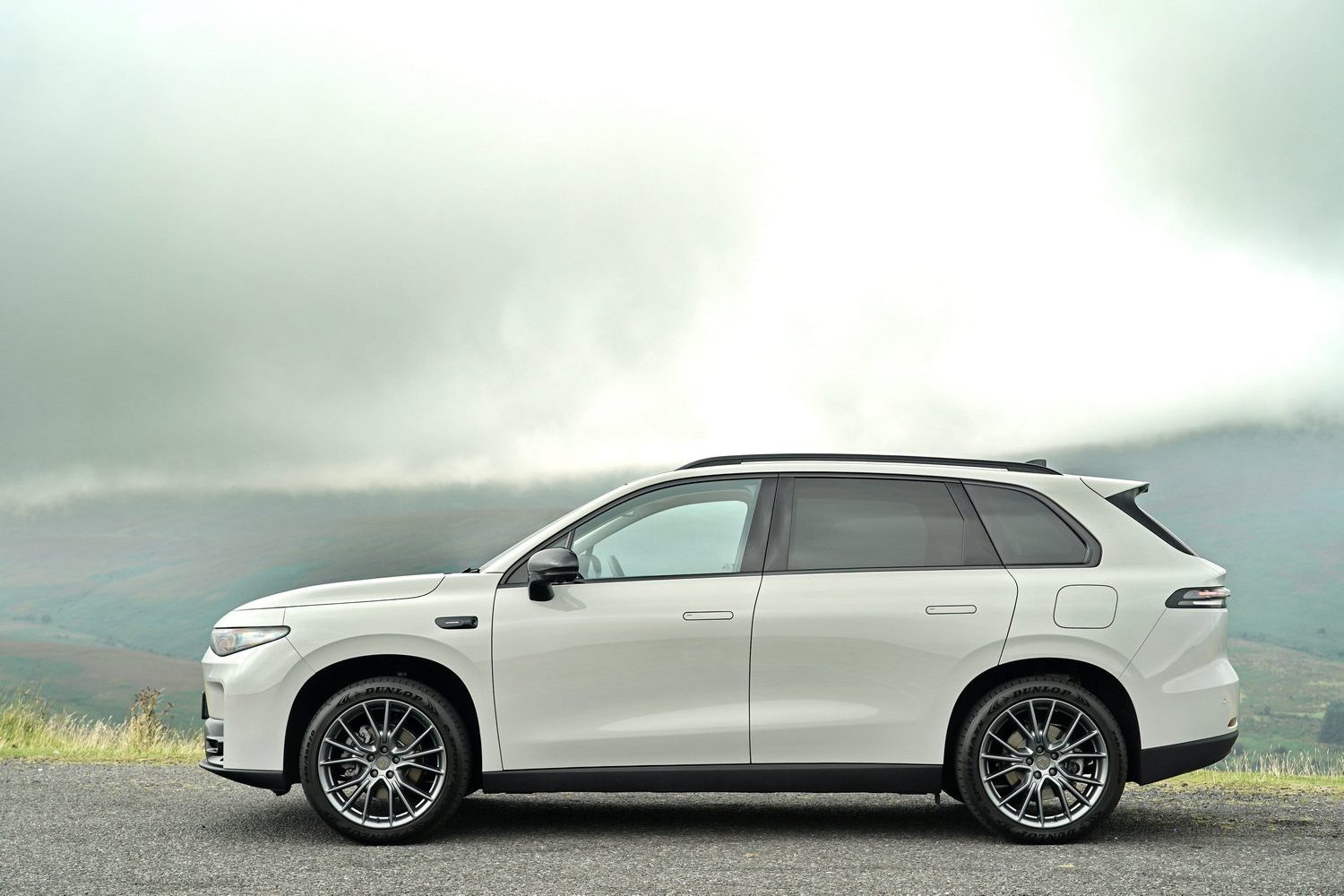
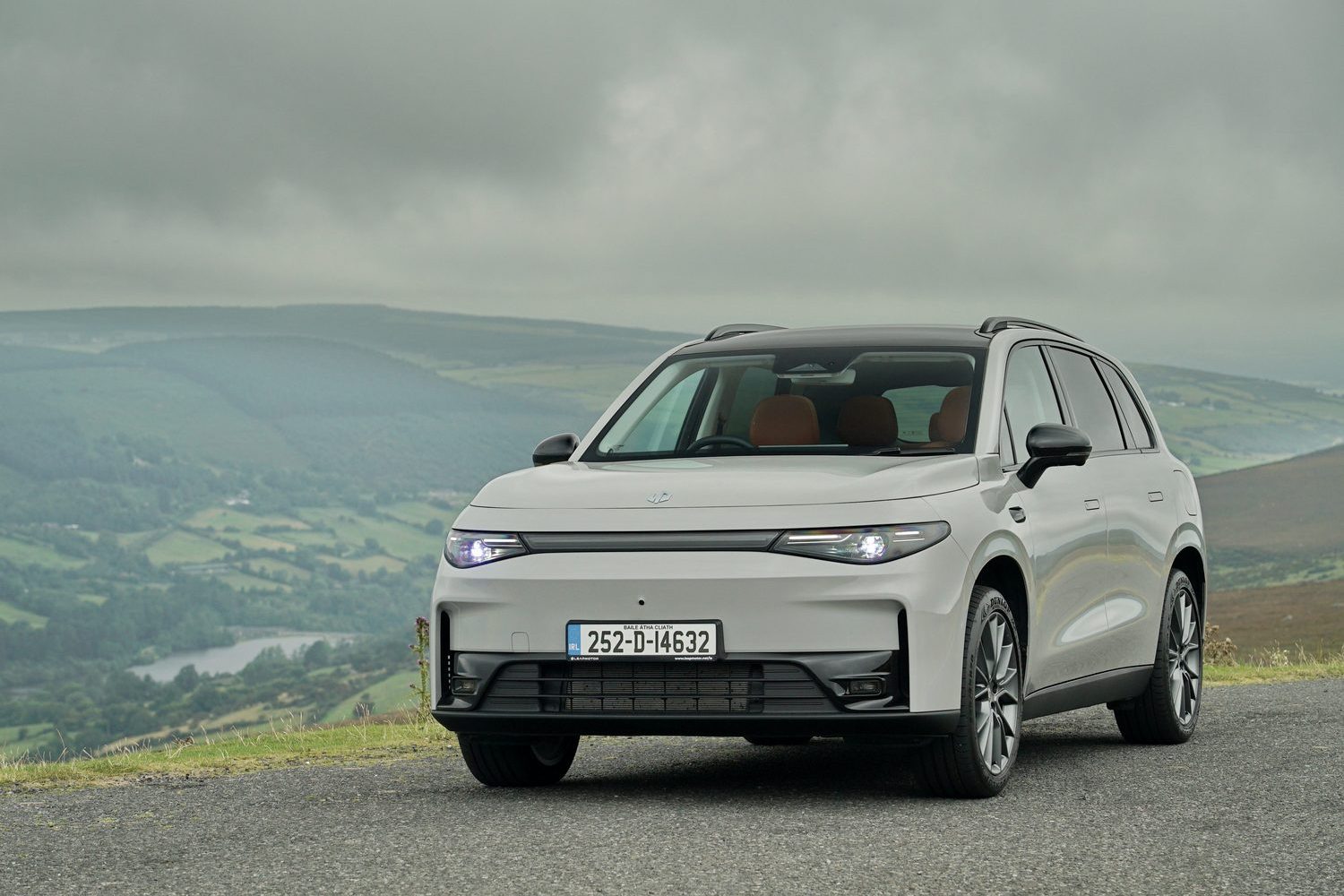
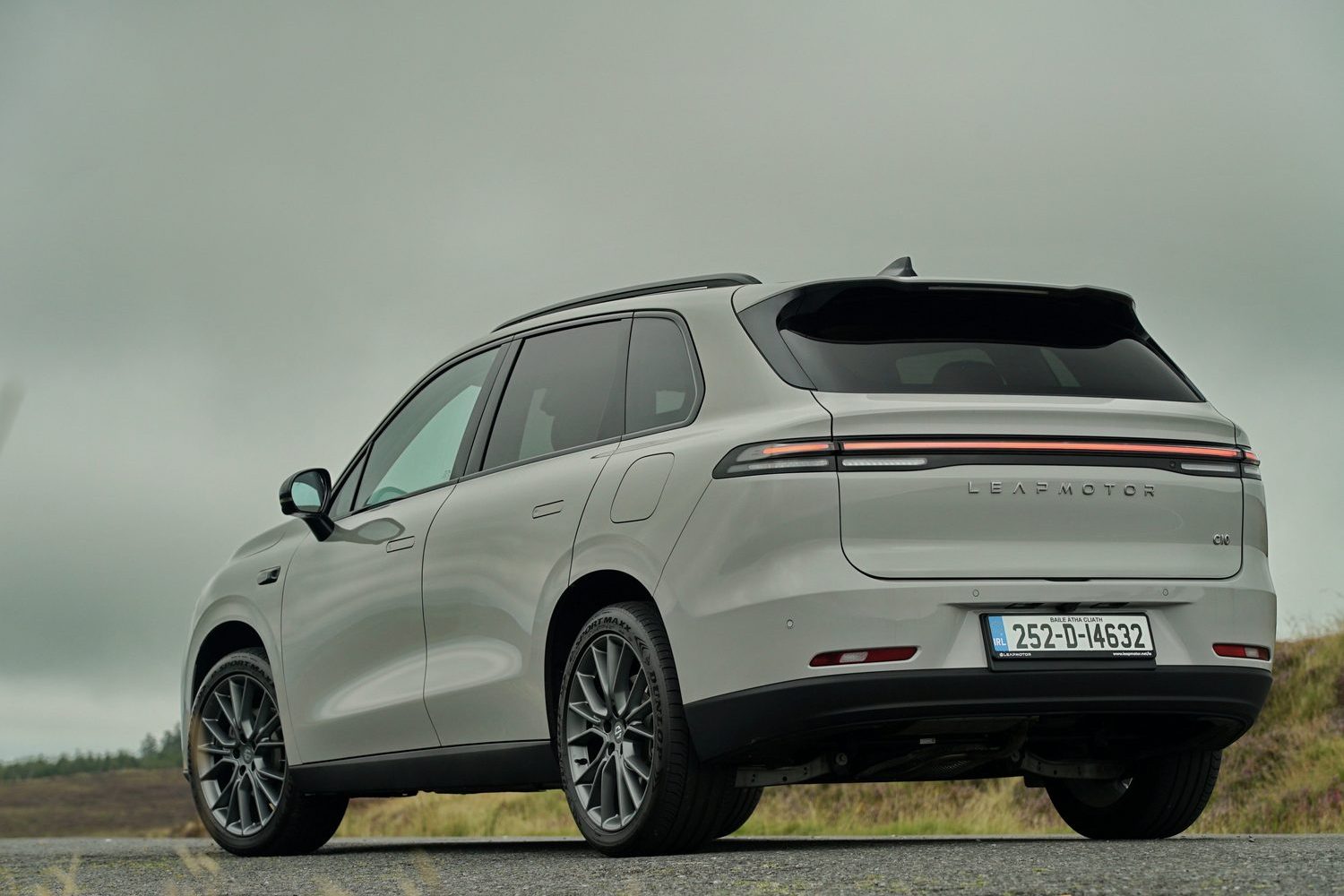
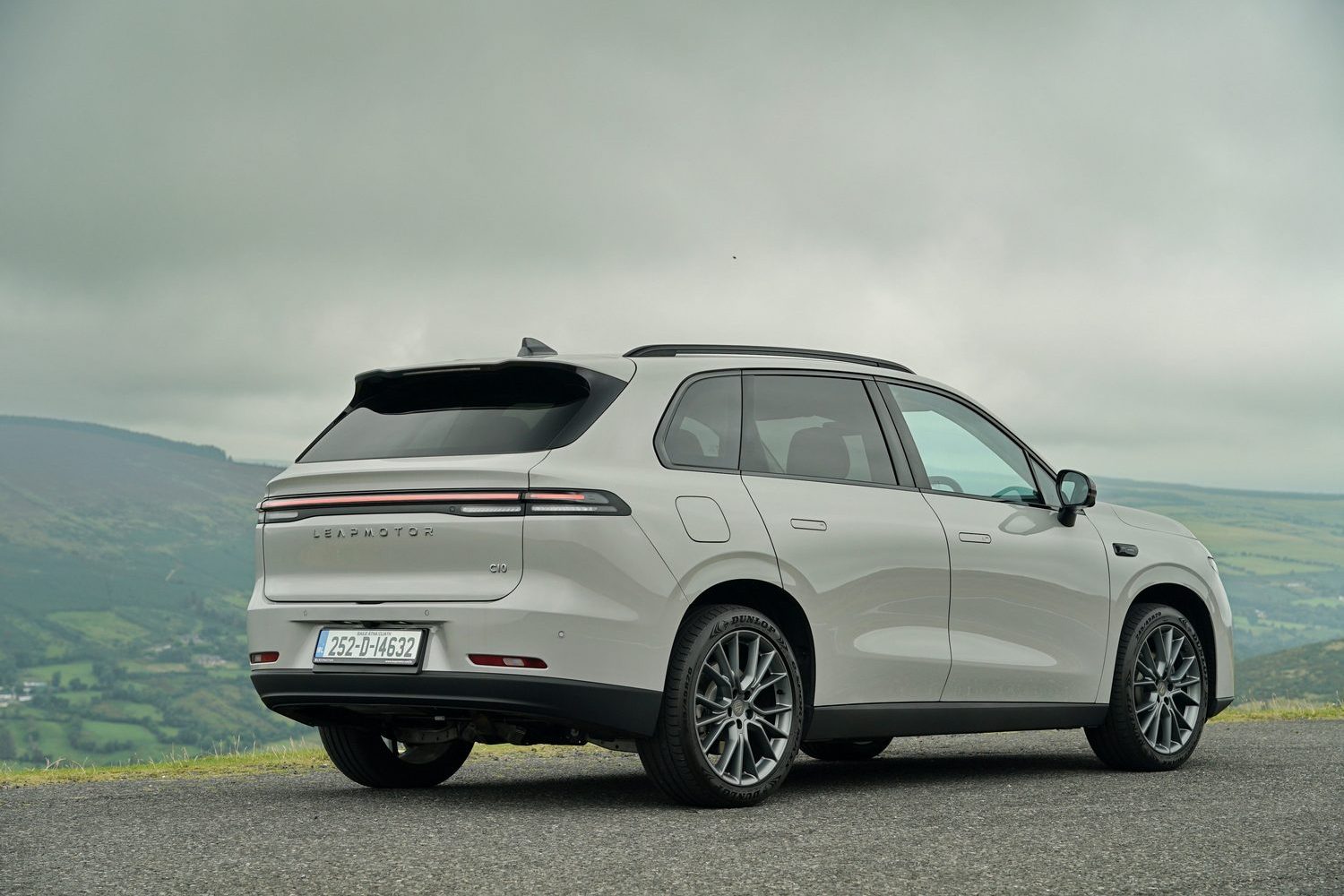
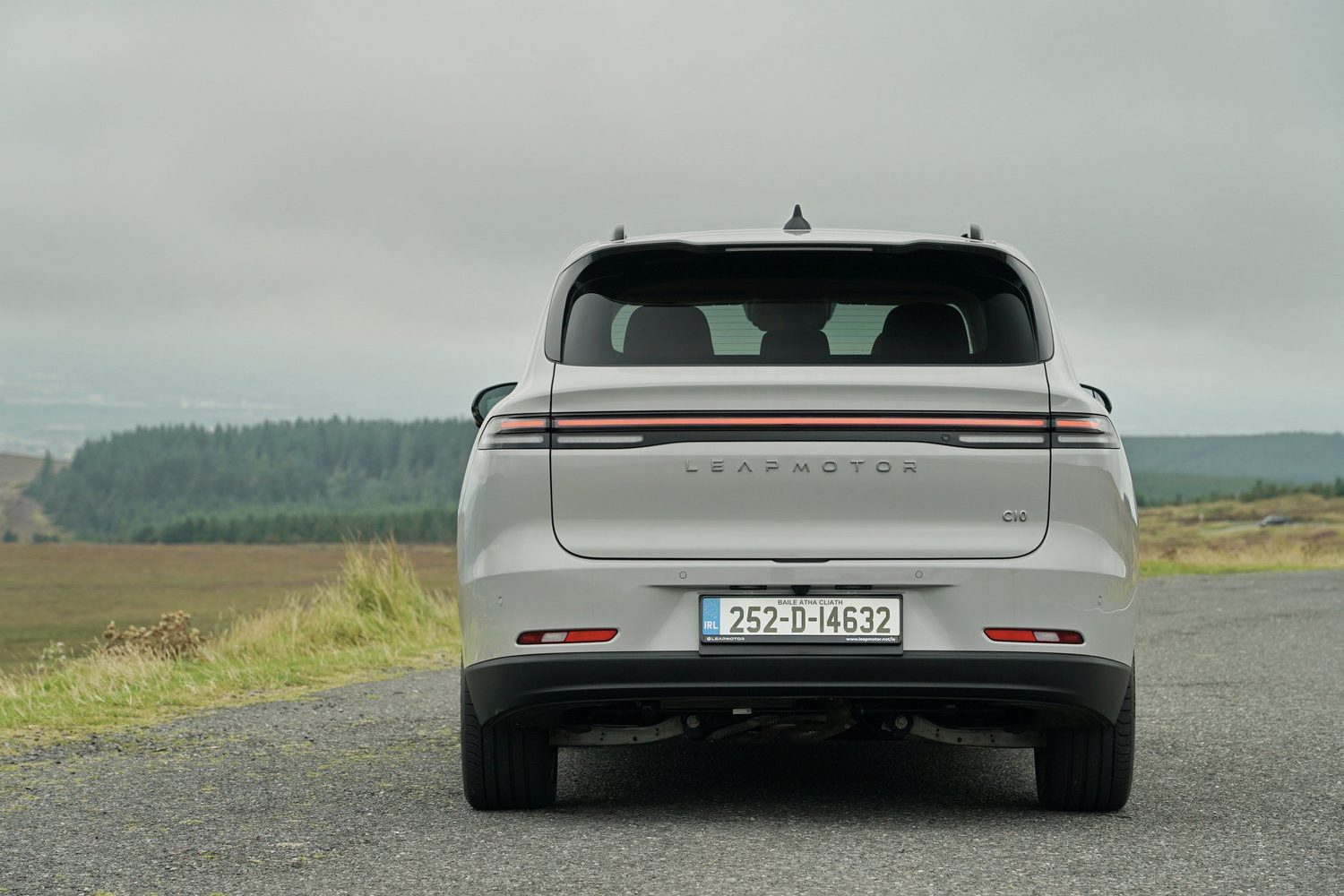
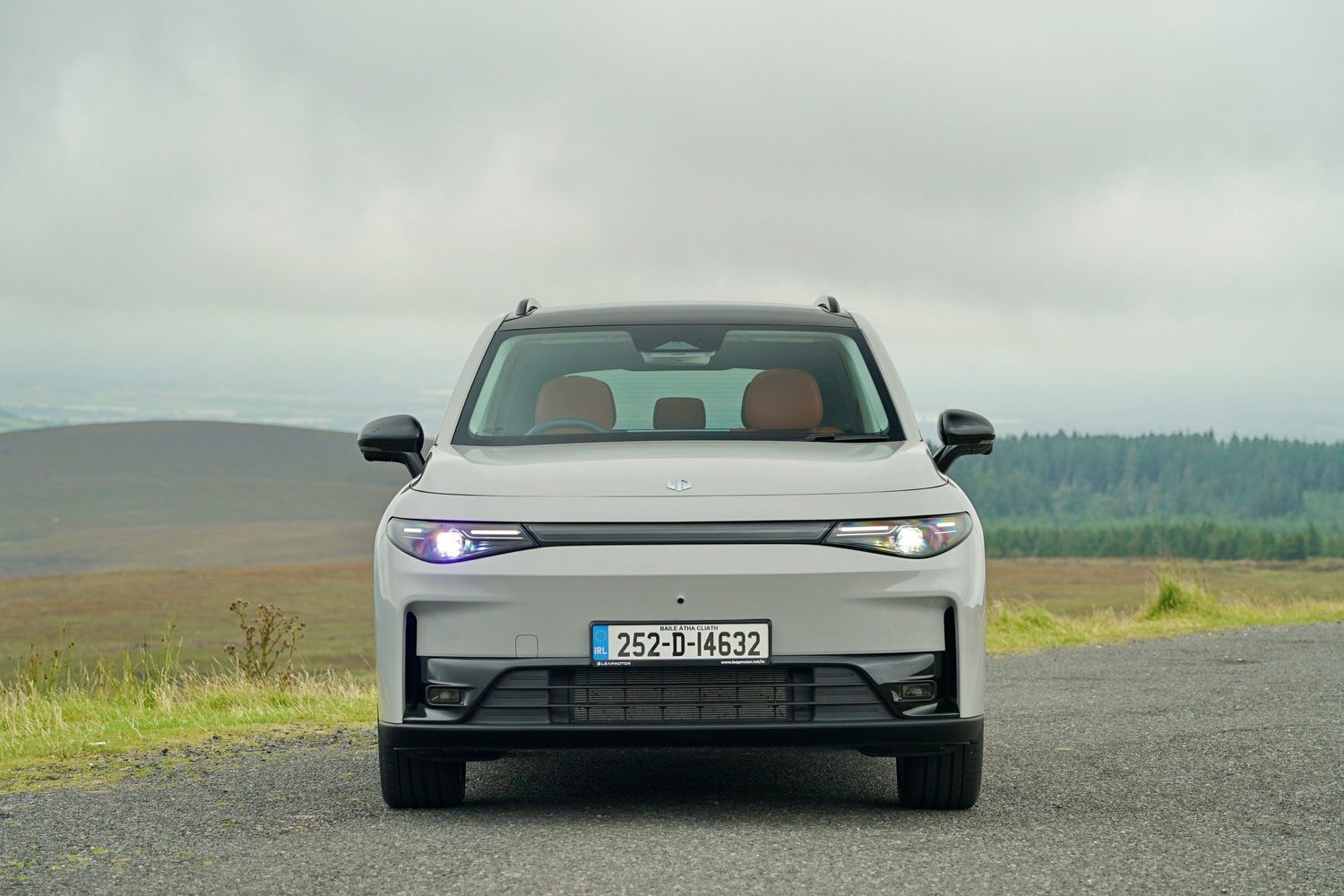
The C10 gets off to a decent start with handsome exterior styling using in-vogue full-width lighting front and rear and smooth detailing such as the flush door handles. The Leapmotor name is emblazoned across the tailgate and there are roof rails up top to emphasise that this is an SUV.
The C10's overall dimensions are:
- Length:
- 4,739mm
- Width:
- 1,900mm (excluding mirrors)
- Height:
- 1,680mm
- Wheelbase:
- 2,825mm

Those figures put the C10 in the same size bracket as the Volkswagen Tayron and Skoda Kodiaq, among others, with a notably long wheelbase. View the car from the side and it's clear that translates into a huge rear door, to the benefit of access for back-seat passengers.
Interior, practicality, tech & comfort of the 2025 Leapmotor C10 REEV
- Exceedingly spacious in the cabin
- Boot volume not so impressive
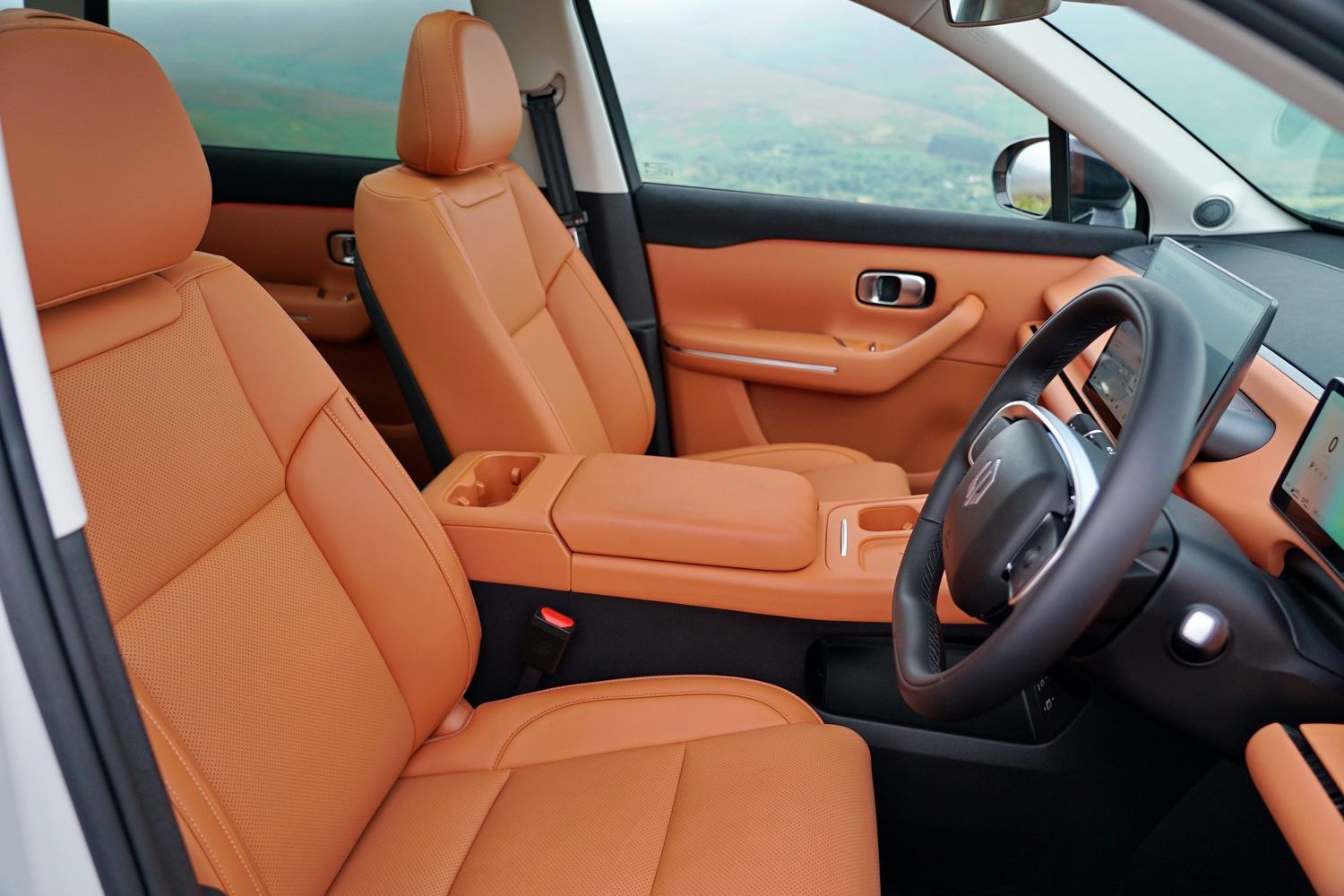
- Lurid orange interior optional

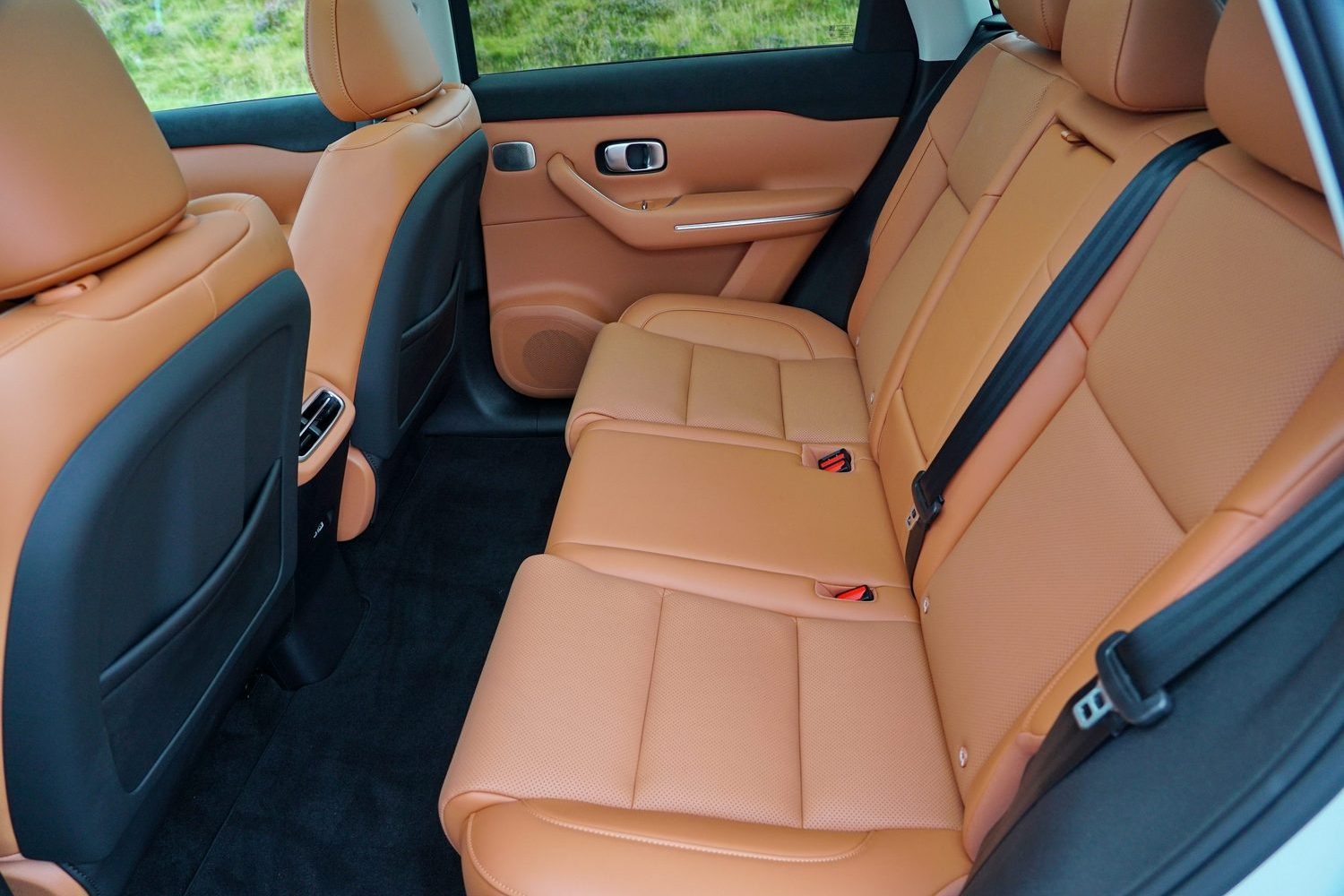
The C10's large exterior dimensions translate into a hugely spacious cabin within, likely surpassing any similarly priced rivals, albeit with no option of a third row of seats.
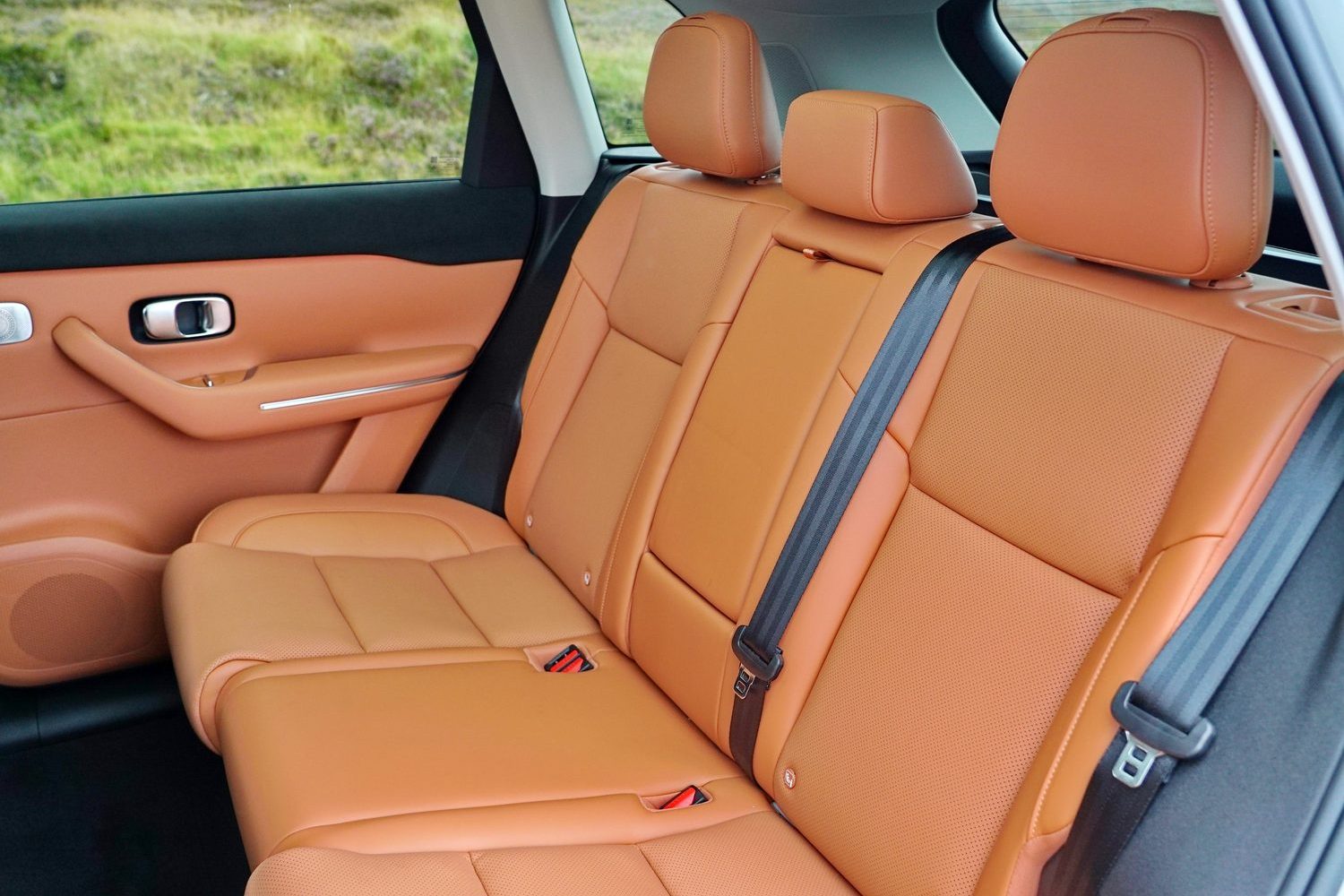
Nonetheless, there's a vast amount of space in the five seats there are, with plenty of electric adjustment for the front seats and a flat floor across the rear, too. What's more, the C10 is one of the few five-seat cars we've tested in a long time that has what looks to be a big enough gap between the seatbelt buckles in the middle to fit in a booster seat. I.e. it should be possible to fit three children across the rear. Or three adults/teens in comfort of course.

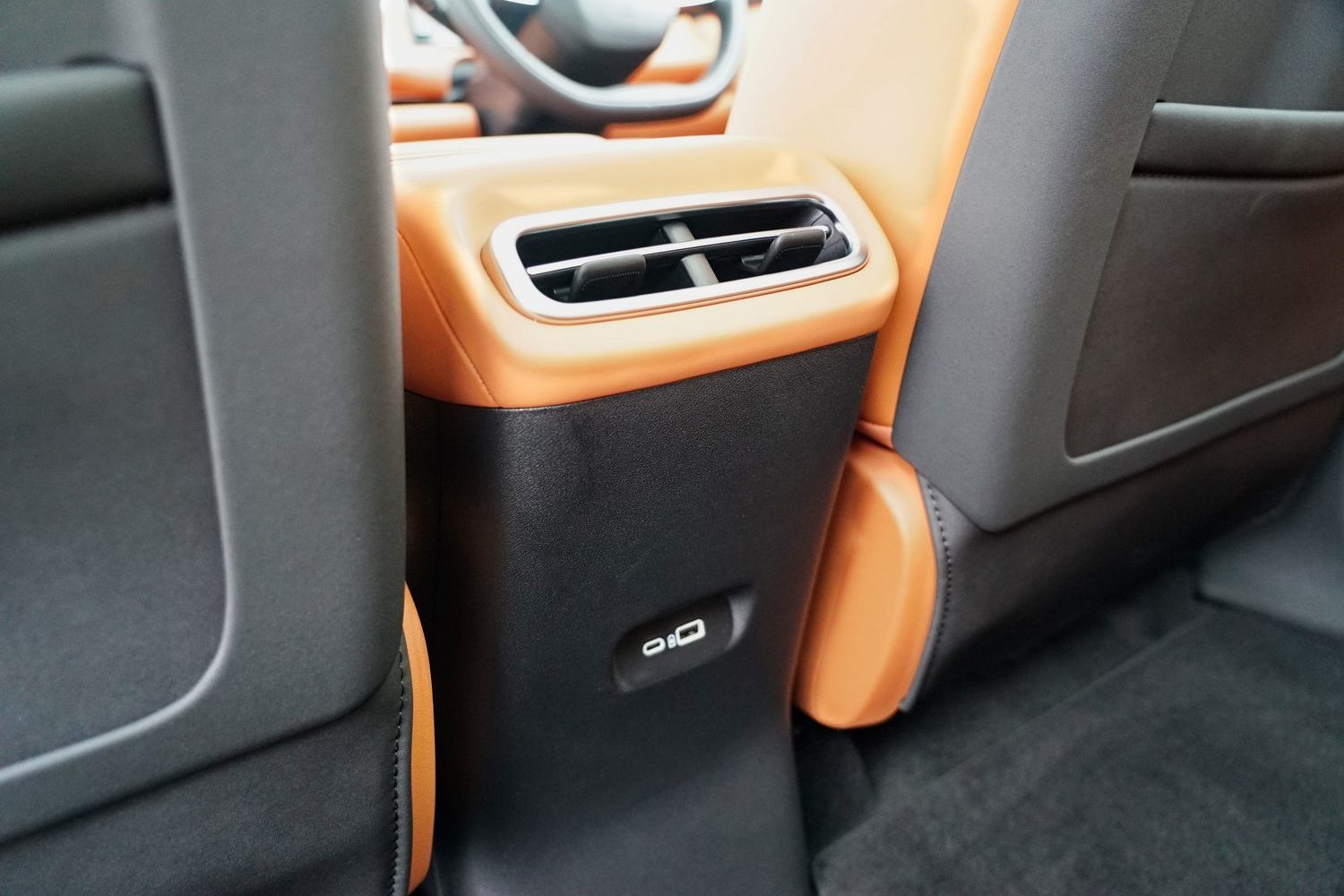
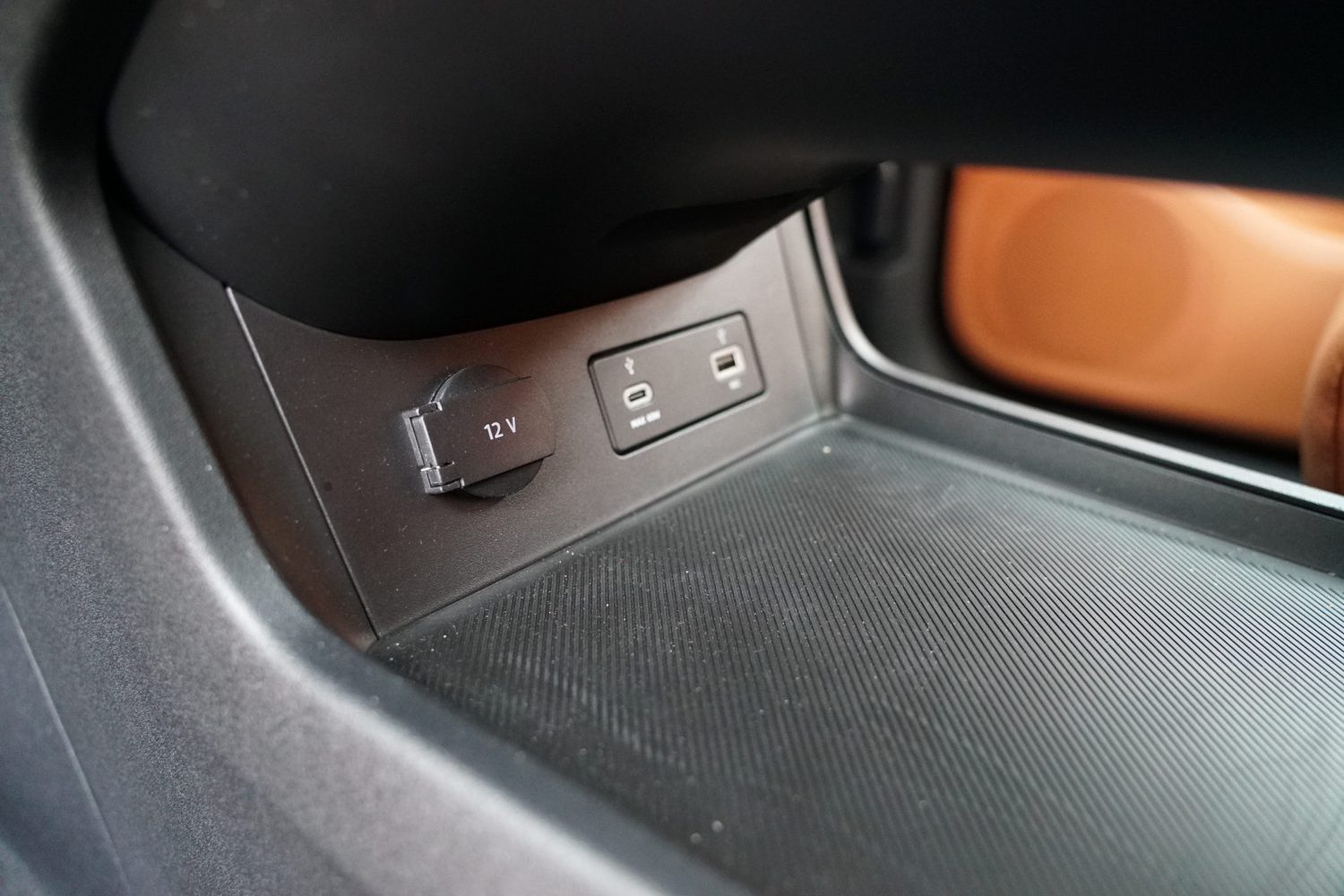
There's an air vent and USB ports for rear passengers, and a central armrest for when the middle seat isn't in use. Oddly, that doesn't have cupholders within it, though there is a pair moulded into the back of the centre console instead.
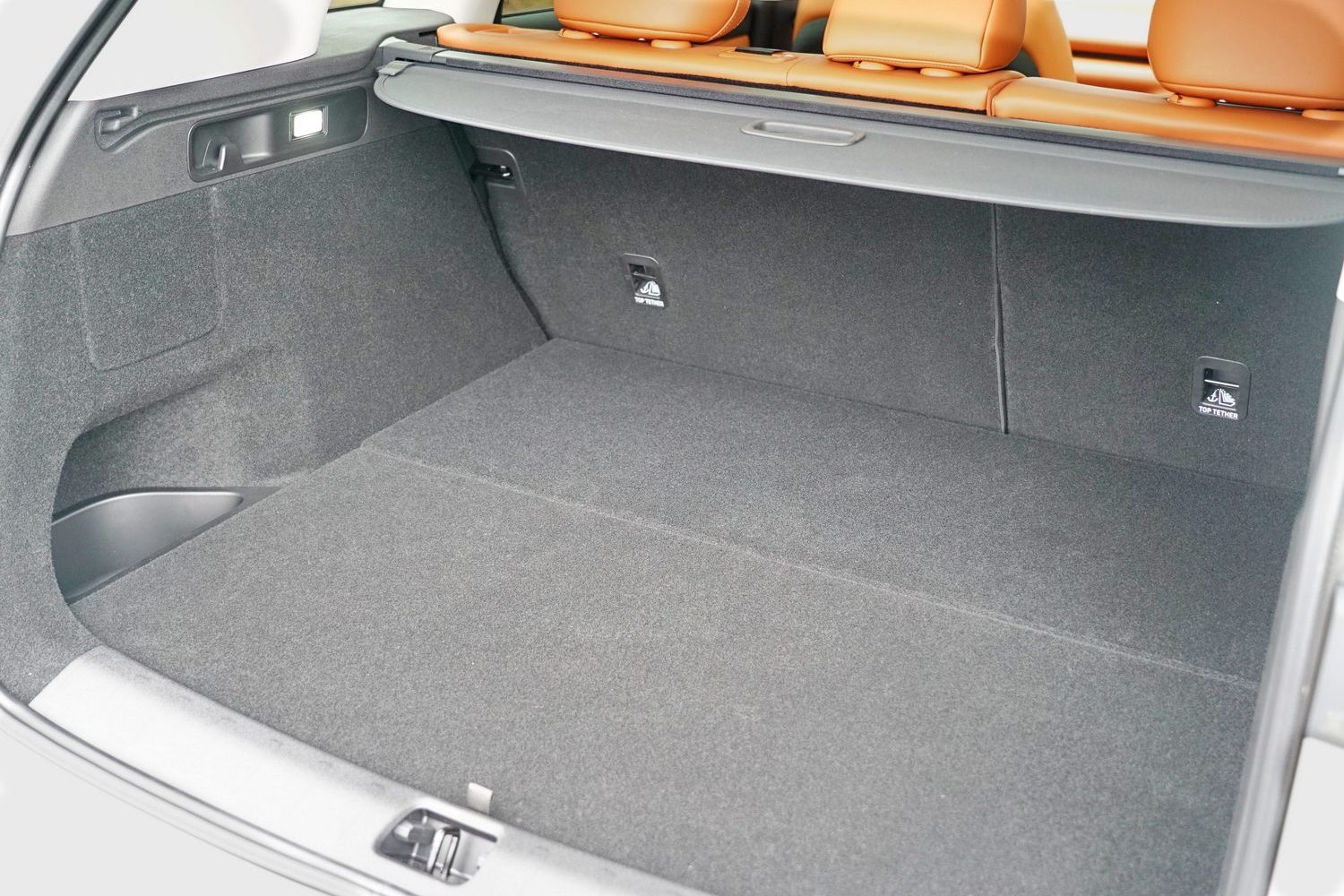
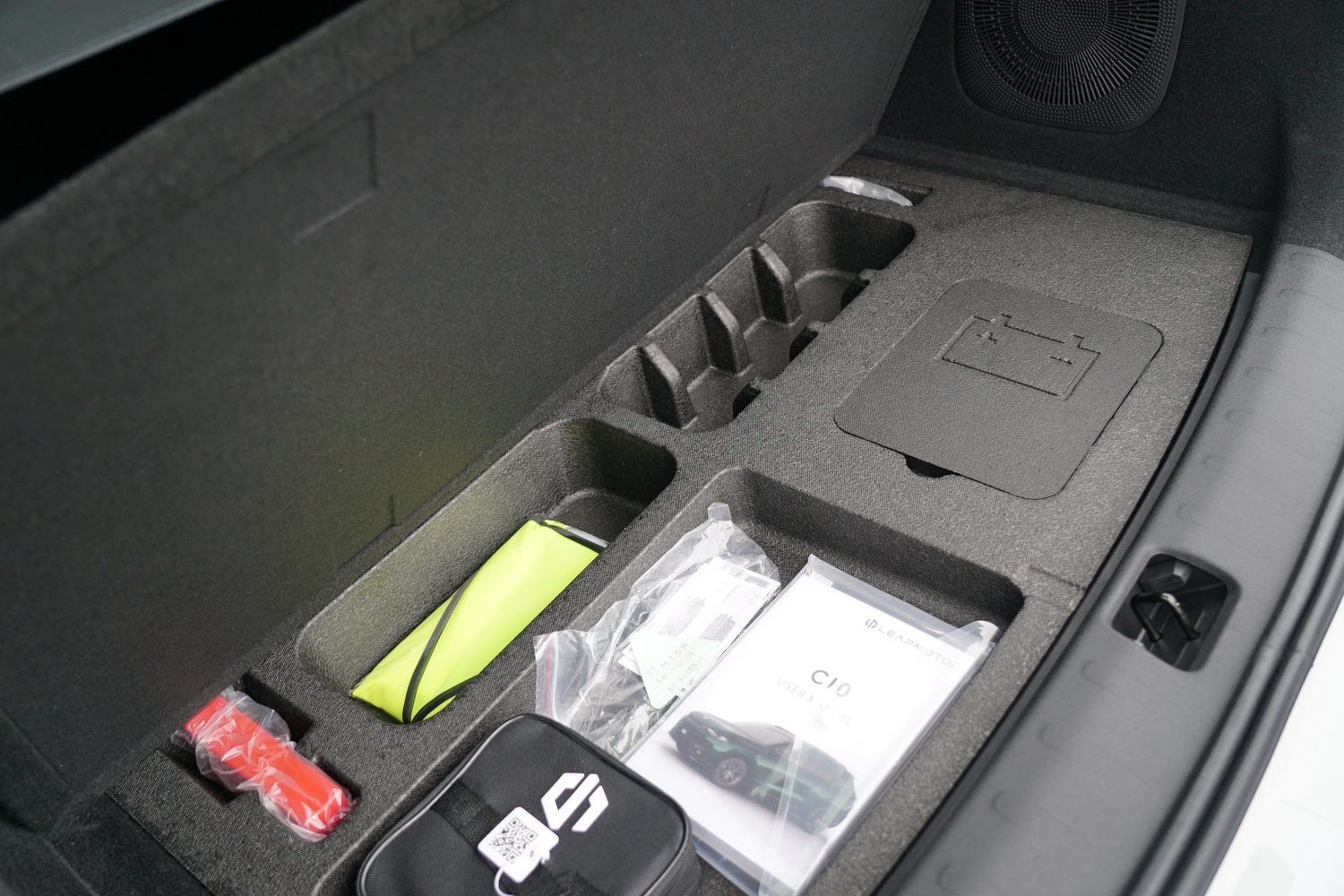
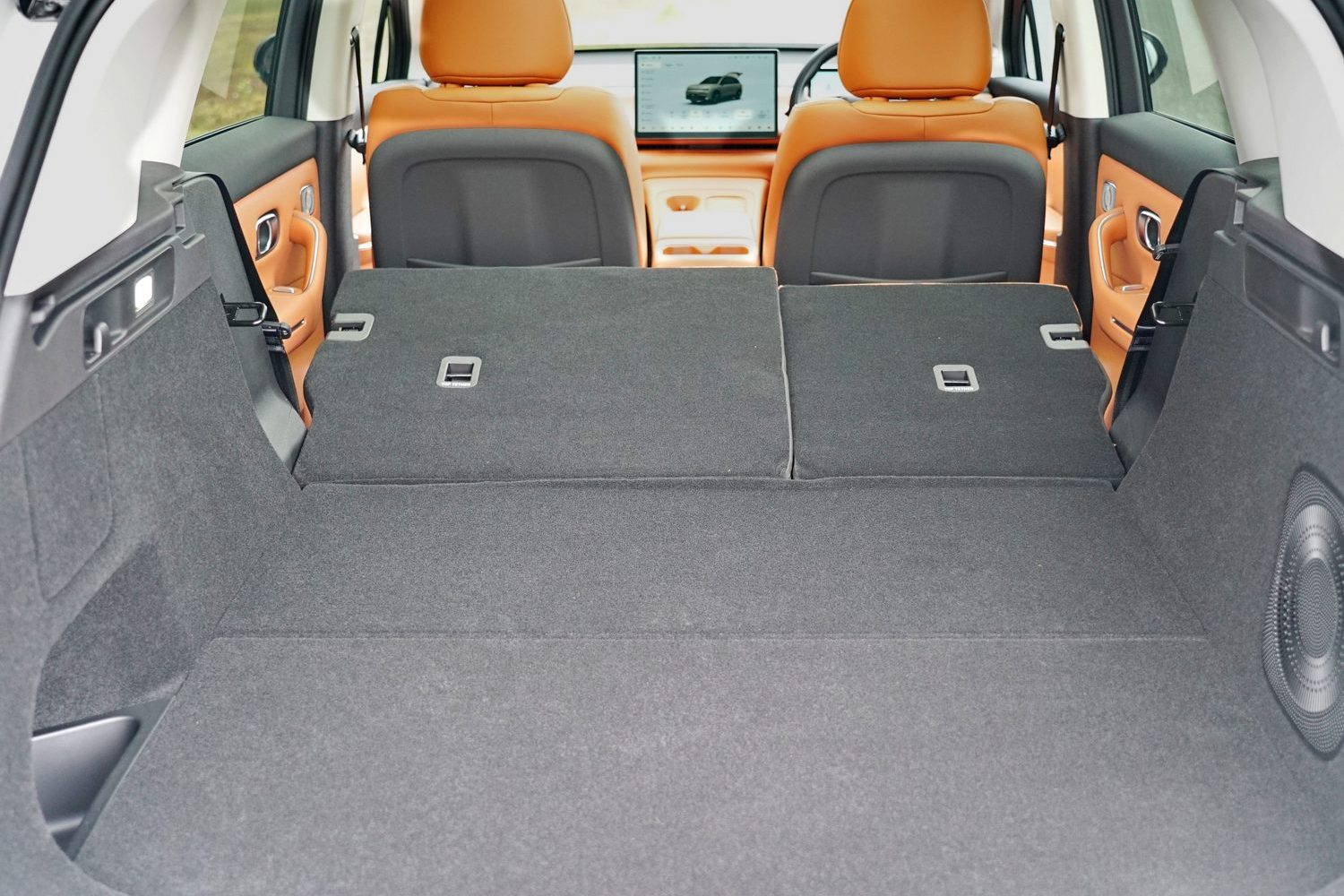
The rear seat back splits 60:40 and folds down to create an almost flat surface from the rear of the car to the backs of the front seats. You may well need that, as the boot - at 400 litres - is quite small given the size of the rest of the car. Leapmotor prioritised passenger space when packaging this car it seems.

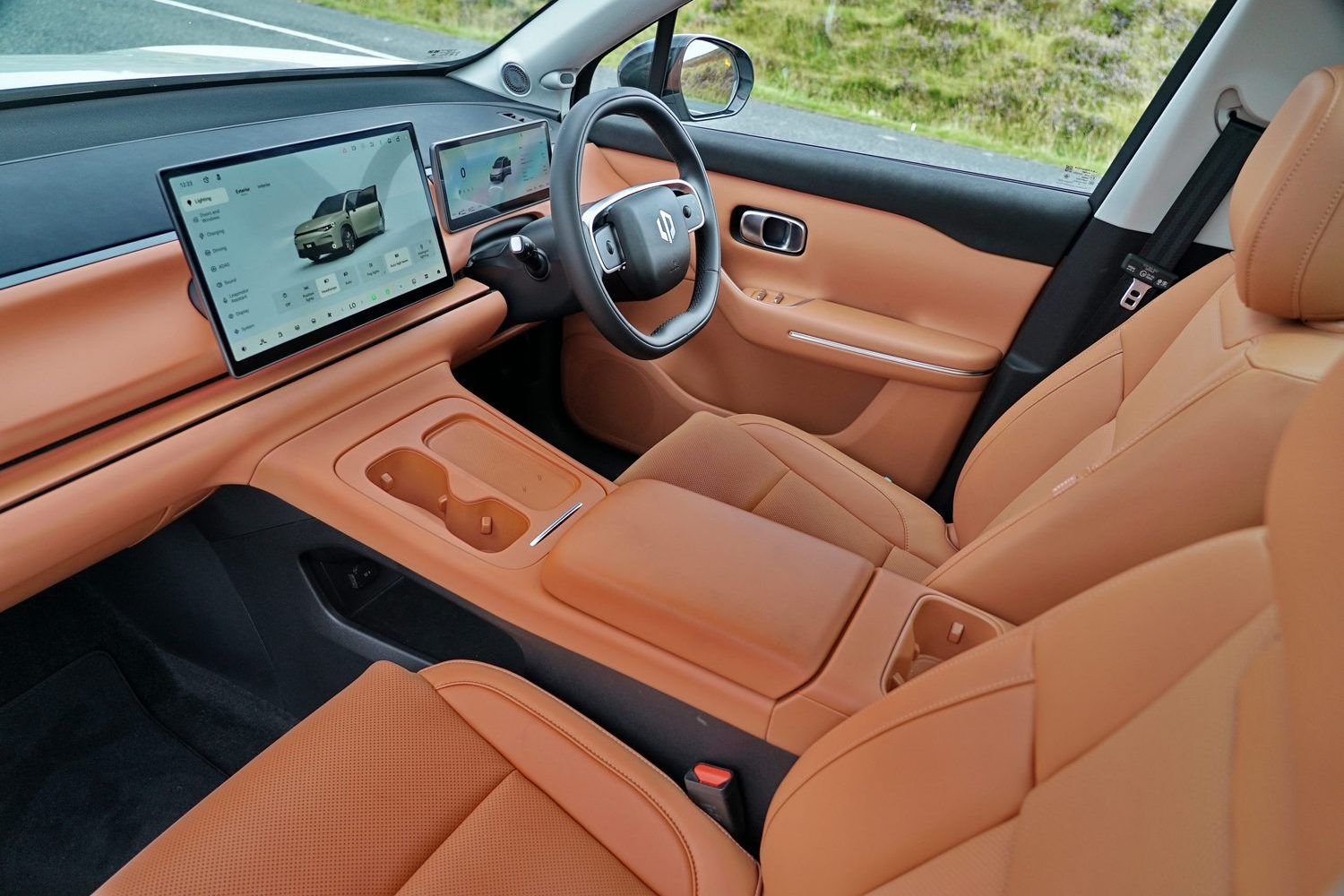
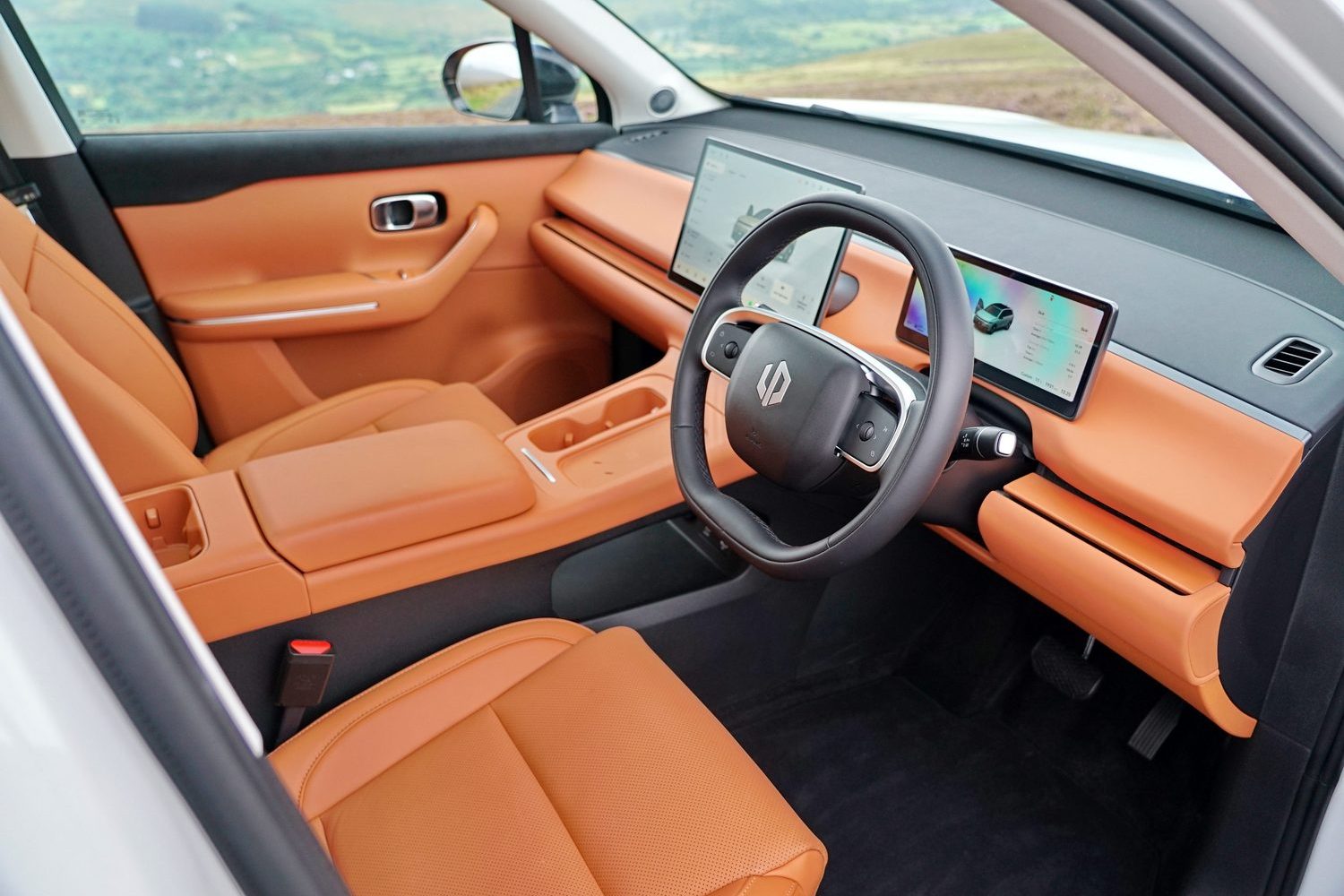
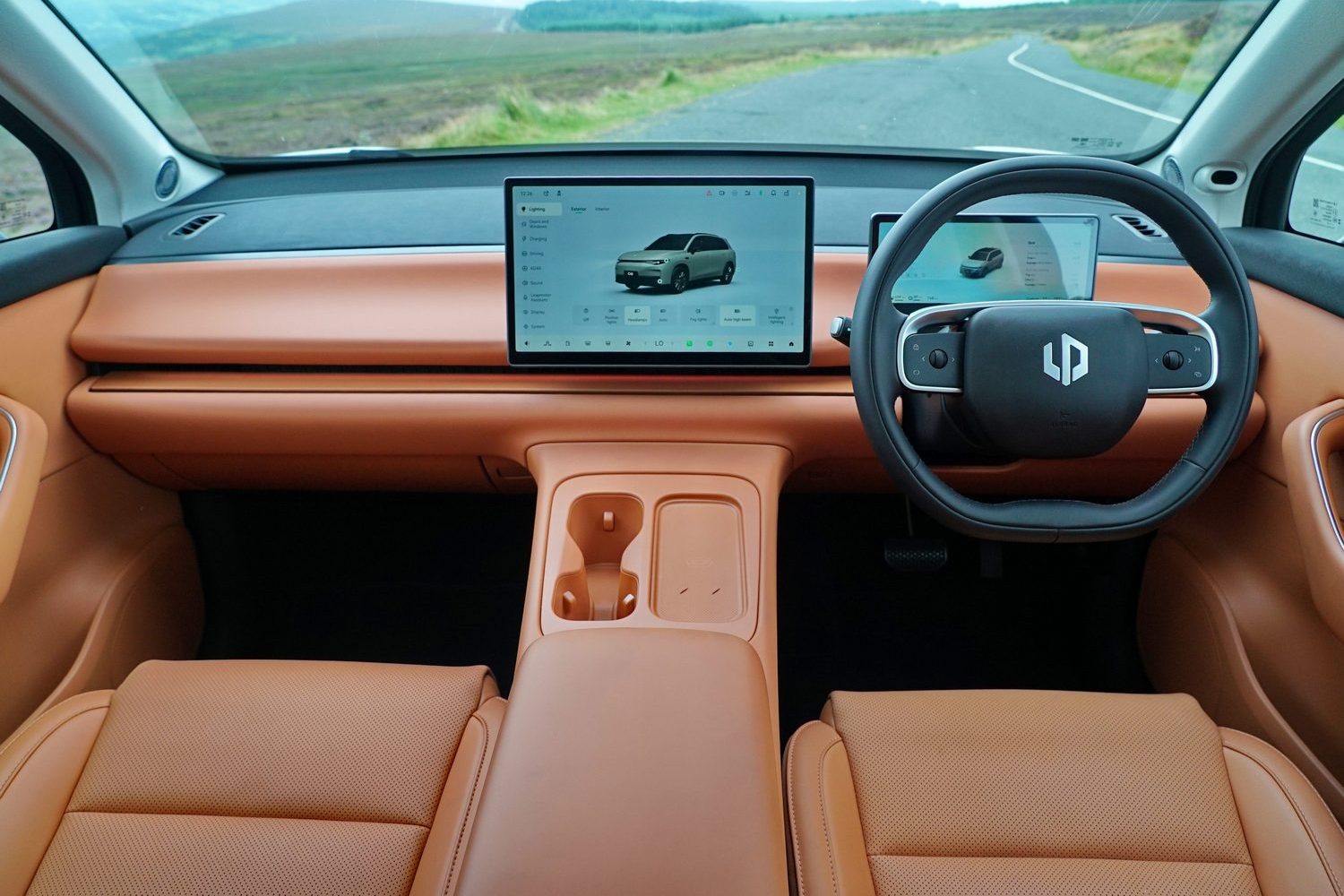
Up front, the C10 has a pleasingly modern look with a clutter-free dashboard. We're not sure about the lurid orange finish pictured here, so thankfully there's a more subdued colour finish available, too.
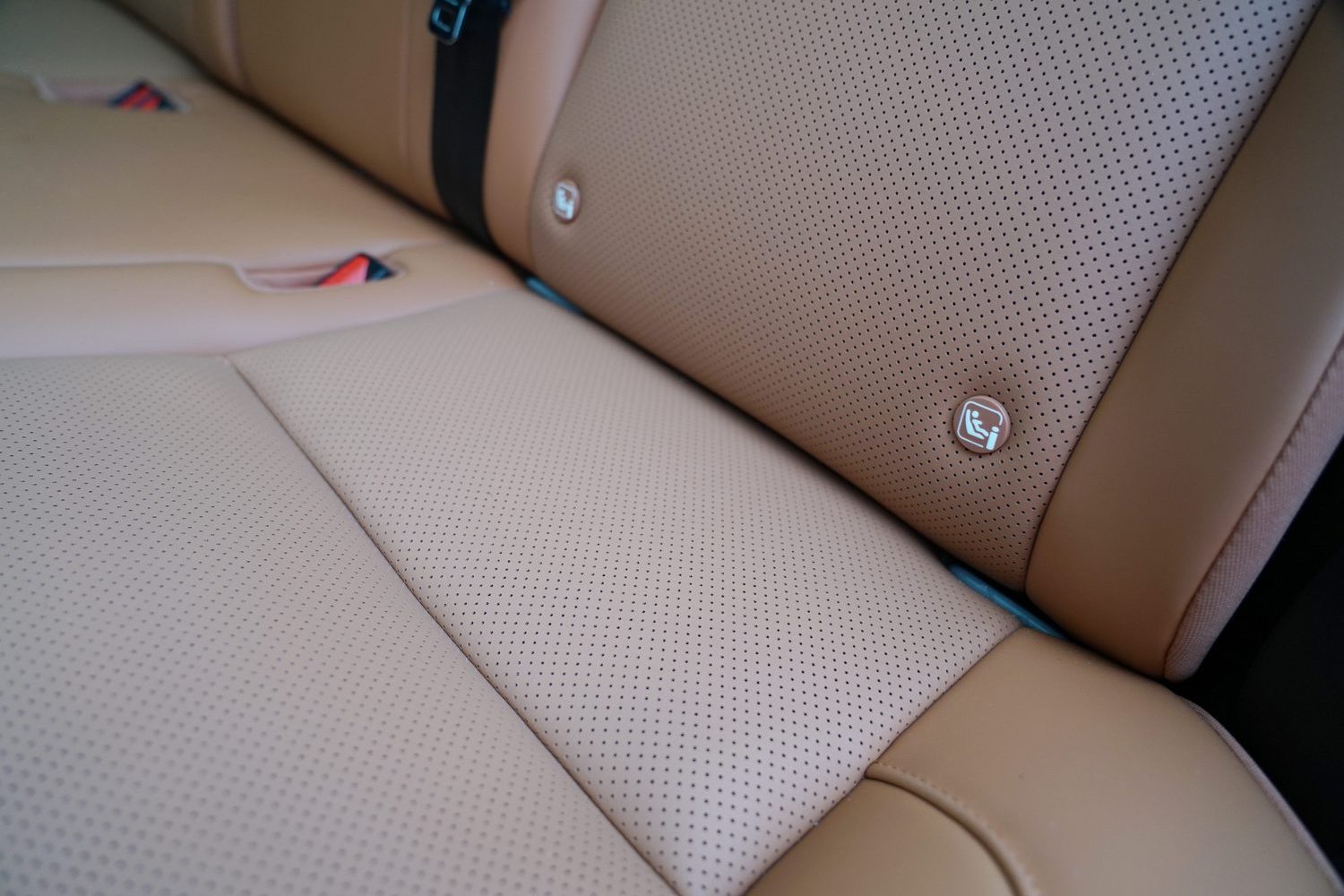
No matter what you think of the colour, the synthetic leather upholstery feels of good quality, as do most other materials in the cabin, including the steering wheel rim and column stalks.
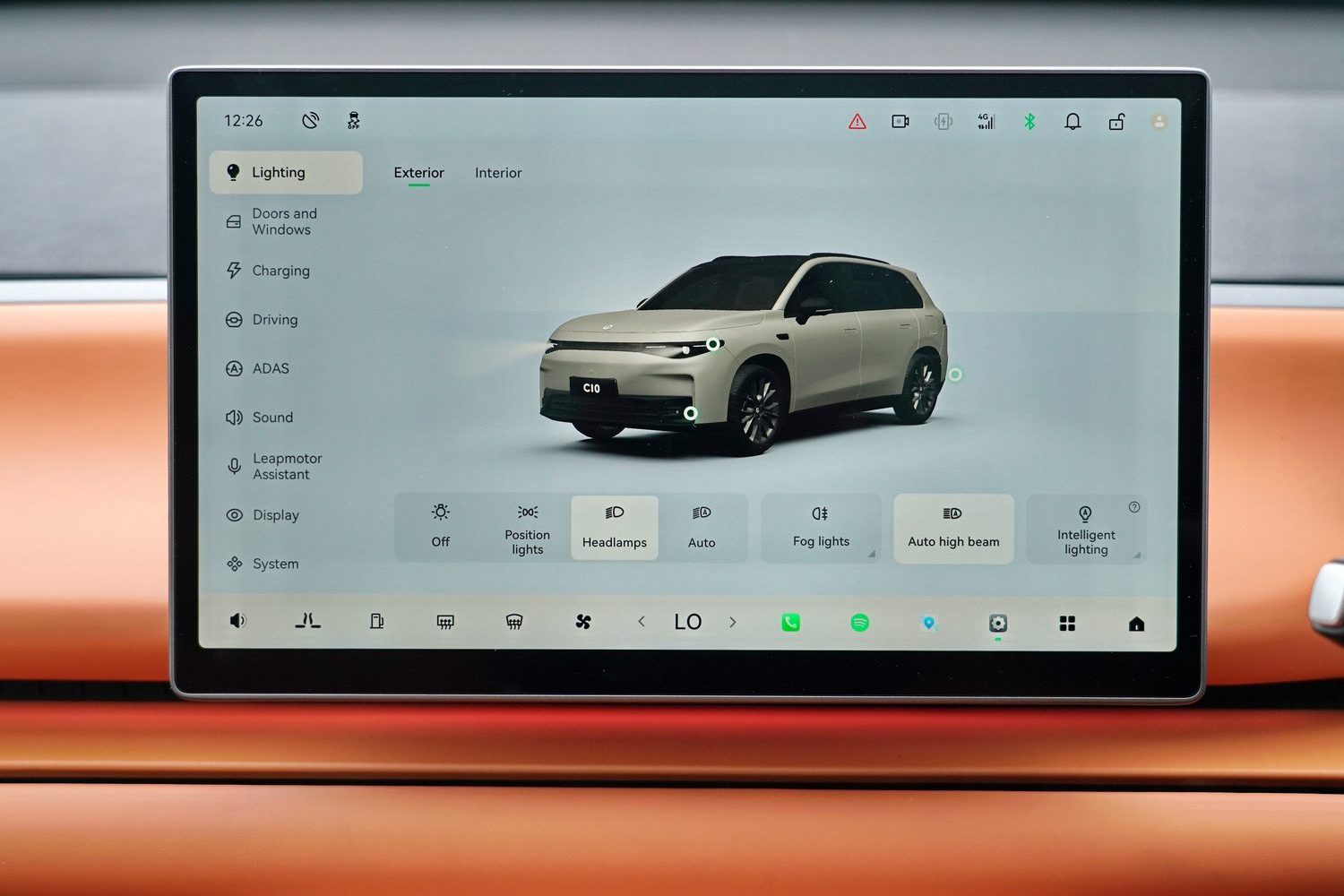
There's more than a little Tesla influence in the graphics of the 14.6-inch touchscreen, and it undoubtedly looks smart. Leapmotor avoided the cringeworthy apps Tesla favours, and the system responds rapidly enough to your input.

Unfortunately, there's not a single button on the dashboard, so you have to use the touchscreen for almost everything. We're not fans of that approach at all and what's more, at the time of writing, there's no Apple CarPlay or Android Auto. Hopefully a future over-the-air approach will fix that latter point at least.
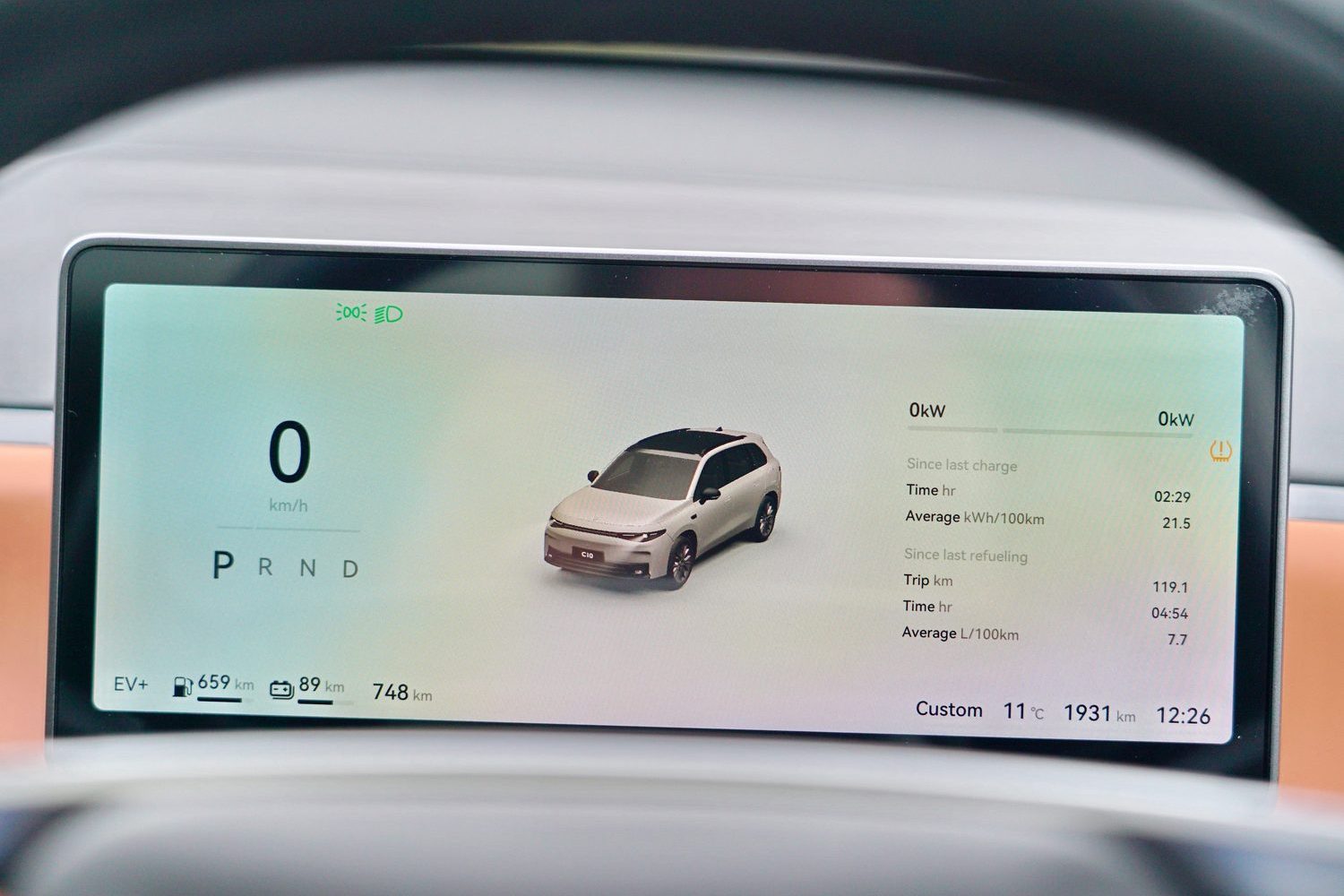
Thankfully, there's a separate display for the instrumentation, taking the form of a 10.25-inch screen in front of the driver. It's as slick as the infotainment system.
There's decent storage in the centre console up front, both within a large, covered cubby and also in an open section below the level of wireless phone charger and cupholders. The glovebox is small though, as are the door pockets.

One last bit worth pointing out about the C10's interior is the 'Nap' mode selected from the touchscreen. This closes the sunblind on the large glass roof, locks the car, closes the windows and reclines the driver's seat all the way back.
Performance of the 2025 Leapmotor C10 REEV
- Modest performance
- Commendably smooth and quiet
- Disconnected driving experience

While we acknowledge that few car buyers in the market for an SUV such as the C10 are interested in driving dynamics or involvement, we found the driving controls a little wanting. Sure, turn the steering wheel and the car obediently goes where you've asked it to, but the system is devoid of any feedback whatsoever.
It's too light for driving on the open road, even if you choose the Sport driving setting, though it admittedly makes parking and manoeuvring a doddle.
Similarly, the brakes have plenty of stopping power, but it all seems to happen at the top of the pedal, even if you gently press it, making it difficult to modulate them smoothly, especially when coming to a stop in busy traffic. It wouldn't take much of a software tweak to alter this characteristic, so hopefully Leapmotor listens.
That's pretty much it for the negatives, though, as the C10 is a notably smooth car to drive. The performance is adequate - if never impressive - and it's delivered in a refined manner. Even when the engine cuts in to charge up the battery, you're only vaguely aware of its operation.

Backing that up is low road noise and wind roar, while the suspension itself offers a good blend of comfort and stability.
It's worth taking a moment to adjust the many driver assistance systems to your liking before driving the C10, however, as they can be a little eager to prove their worth and therefore end up being annoying rather than helpful.
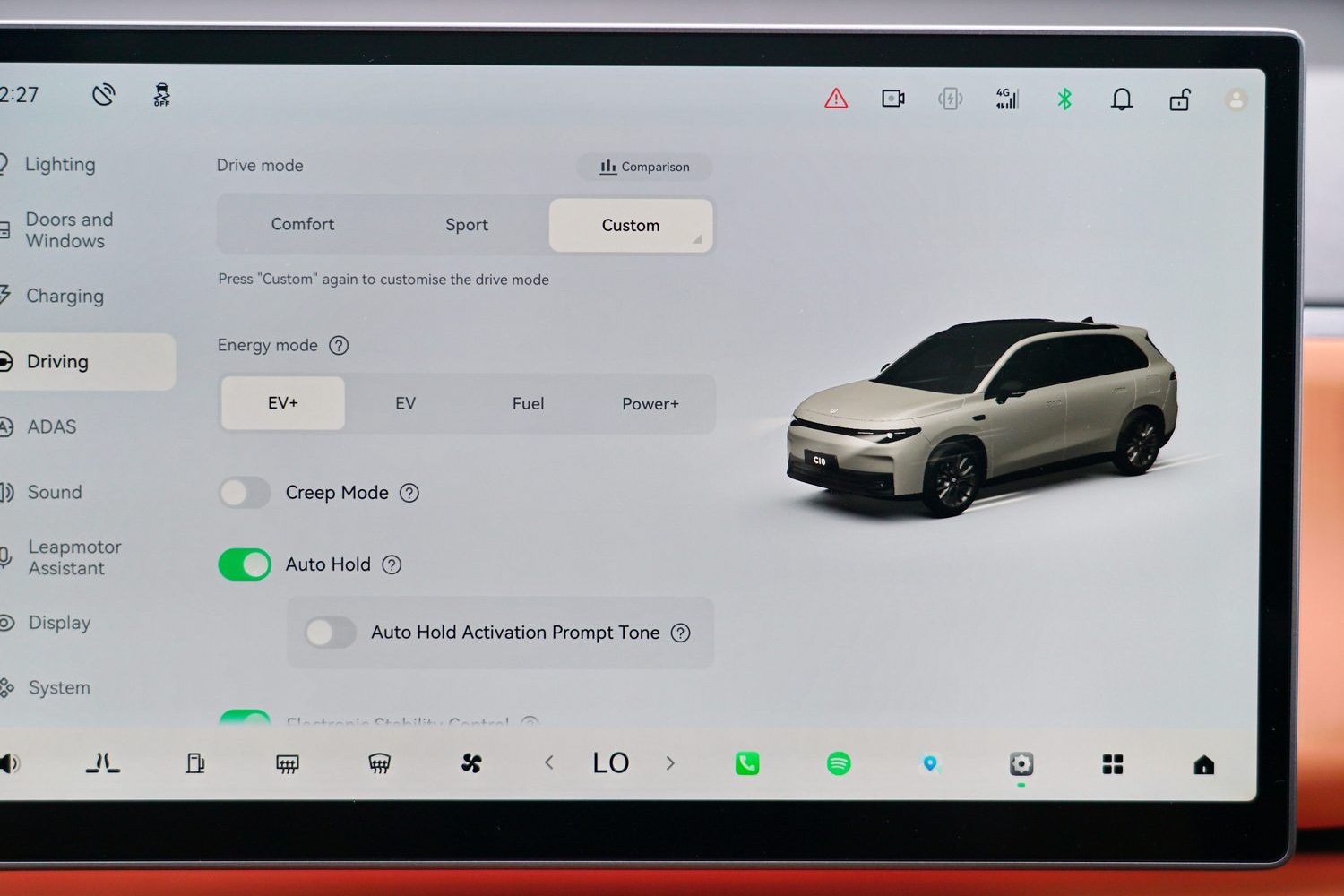
While doing that you'll discover there are lots of driving settings to tweak as well. The 'energy modes' are EV+, EV, Fuel and Power+ which seems a little excessive. From what we can gather, EV+ lets the car choose how often the engine charges the battery; EV is a pure-electric setting (for as long as there is battery charge); Fuel maintains the battery at minimum 80 per cent charge; and Power+ keeps the engine running so the battery is always able to provide maximum energy to the electric motor.
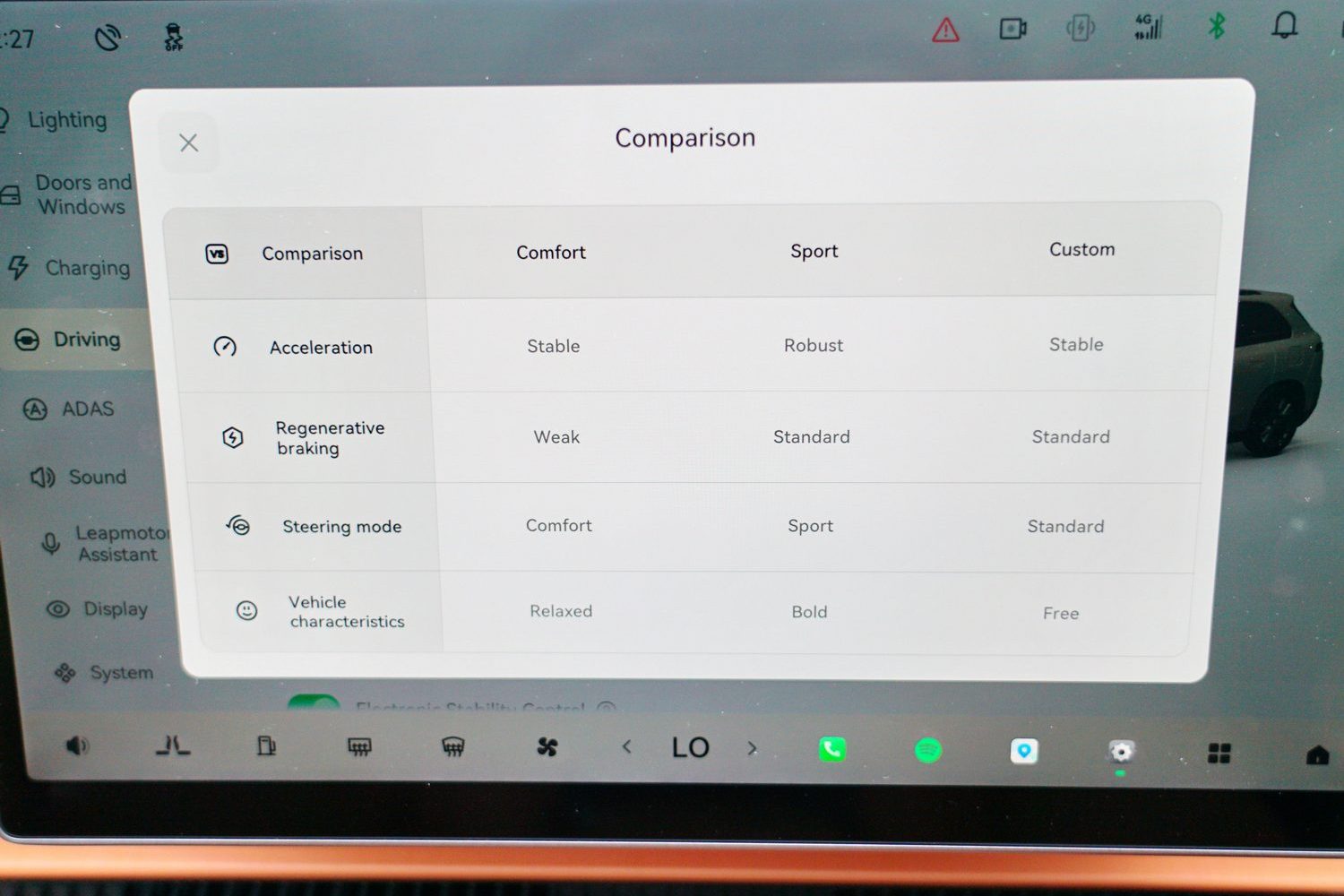
That motor turns the rear wheels only, which we had no issue with during the dry conditions of our test. The responsiveness of this is adjusted depending on whether you've chosen the Comfort or Sport driving modes, though there's not a massive difference between the two.
Also altered are the intensity of the brake energy regeneration and the weighting of the steering. Most people will just leave everything in their default settings.
Range, battery & charging of the 2025 Leapmotor C10 REEV

- Unusual powertrain setup
- Petrol engine is just a generator
- Can be DC-charged at up to 65kW
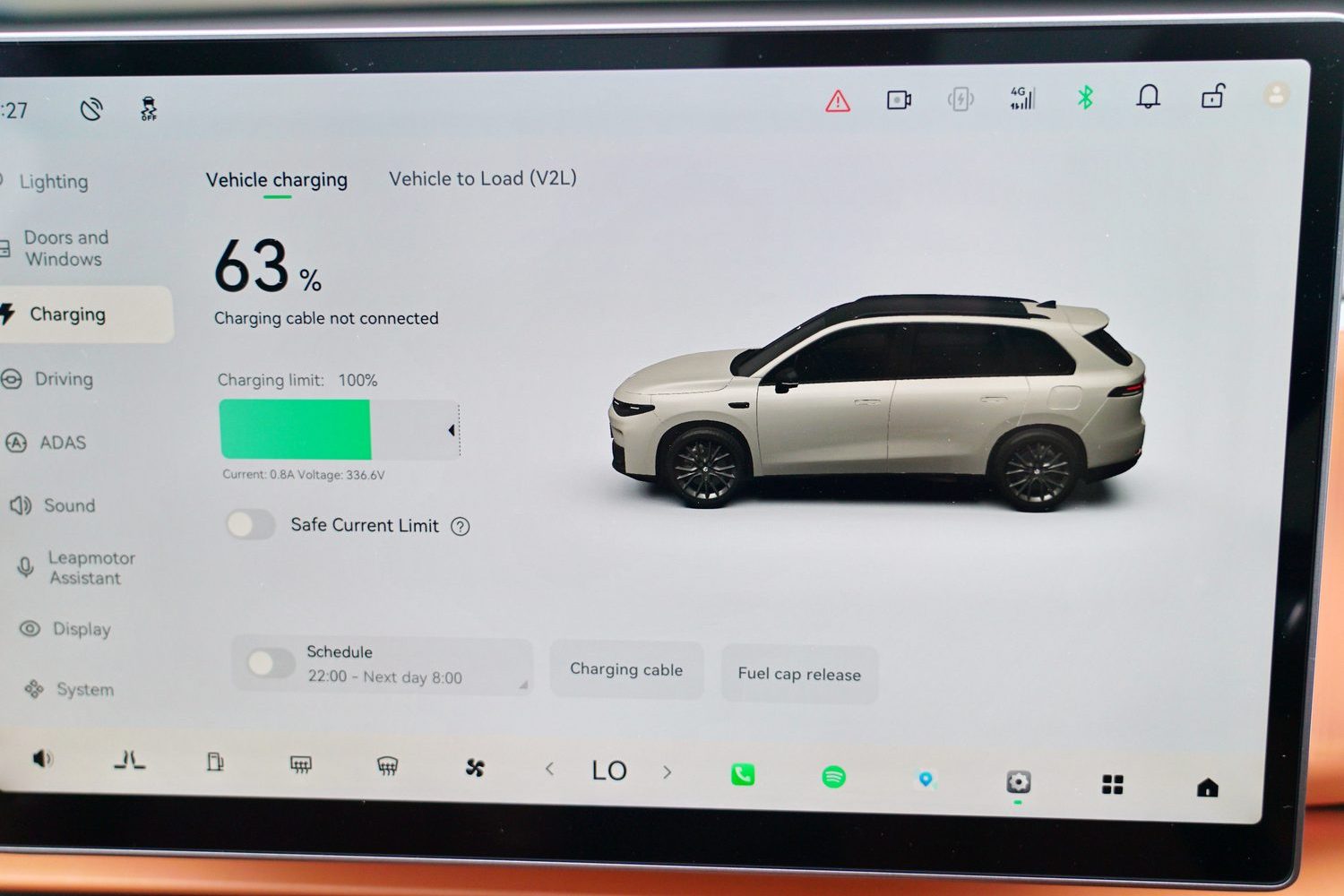
Leapmotor proudly talks about a 975km range for the C10 REEV, but that is of course for a full tank of fuel and a fully charged battery. In official WLTP conditions, the C10 manages 150km on electric power alone. That's more than most plug-in hybrids can manage.
As with any PHEV, the presence of a petrol engine means there's no worrying about where to charge up on a long journey and how long that might take. You could in theory never plug the C10 in and just rely on the fuel in the tank to use the engine to charge the battery. Obviously, that wouldn't be the most efficient way to run this car.

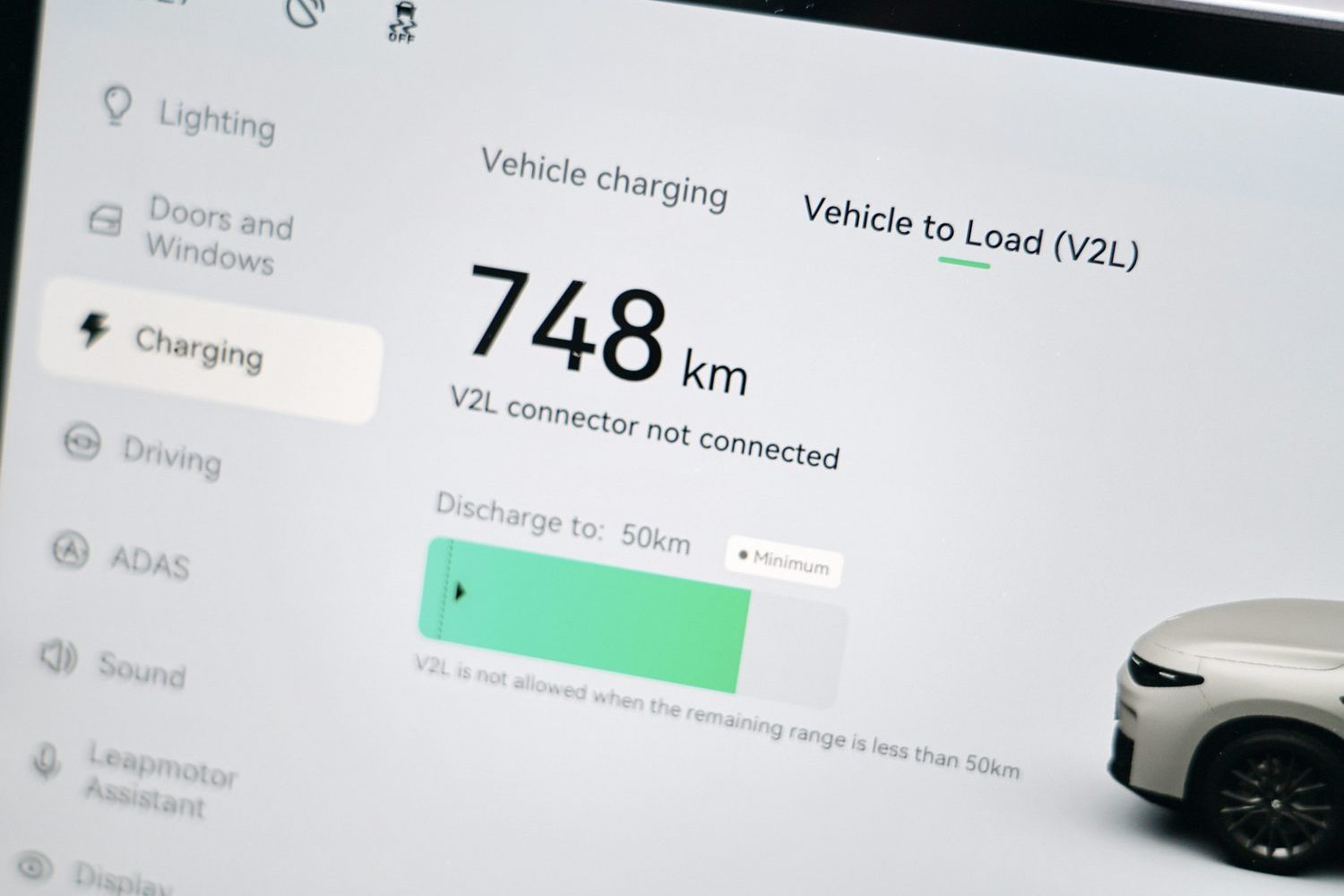
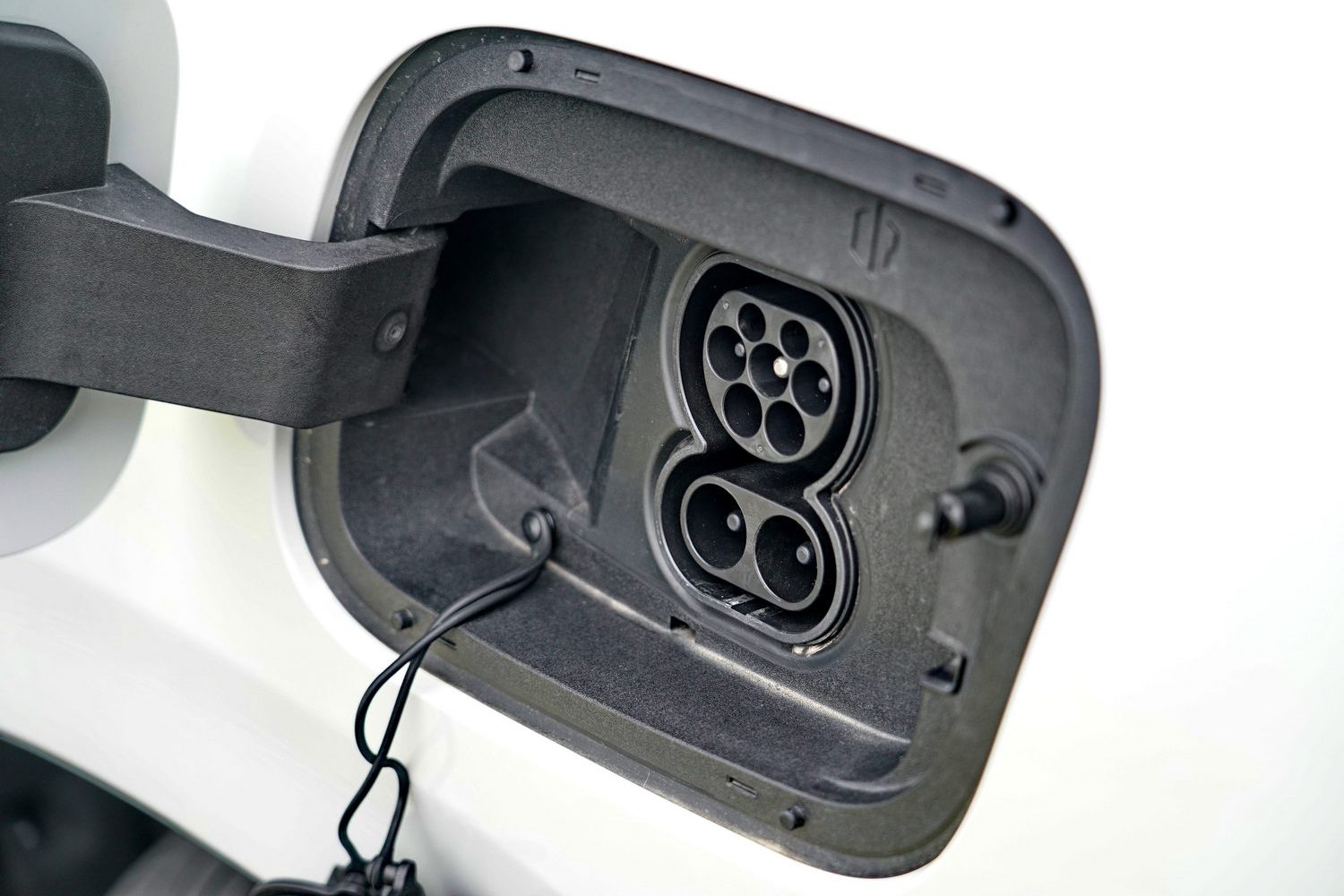
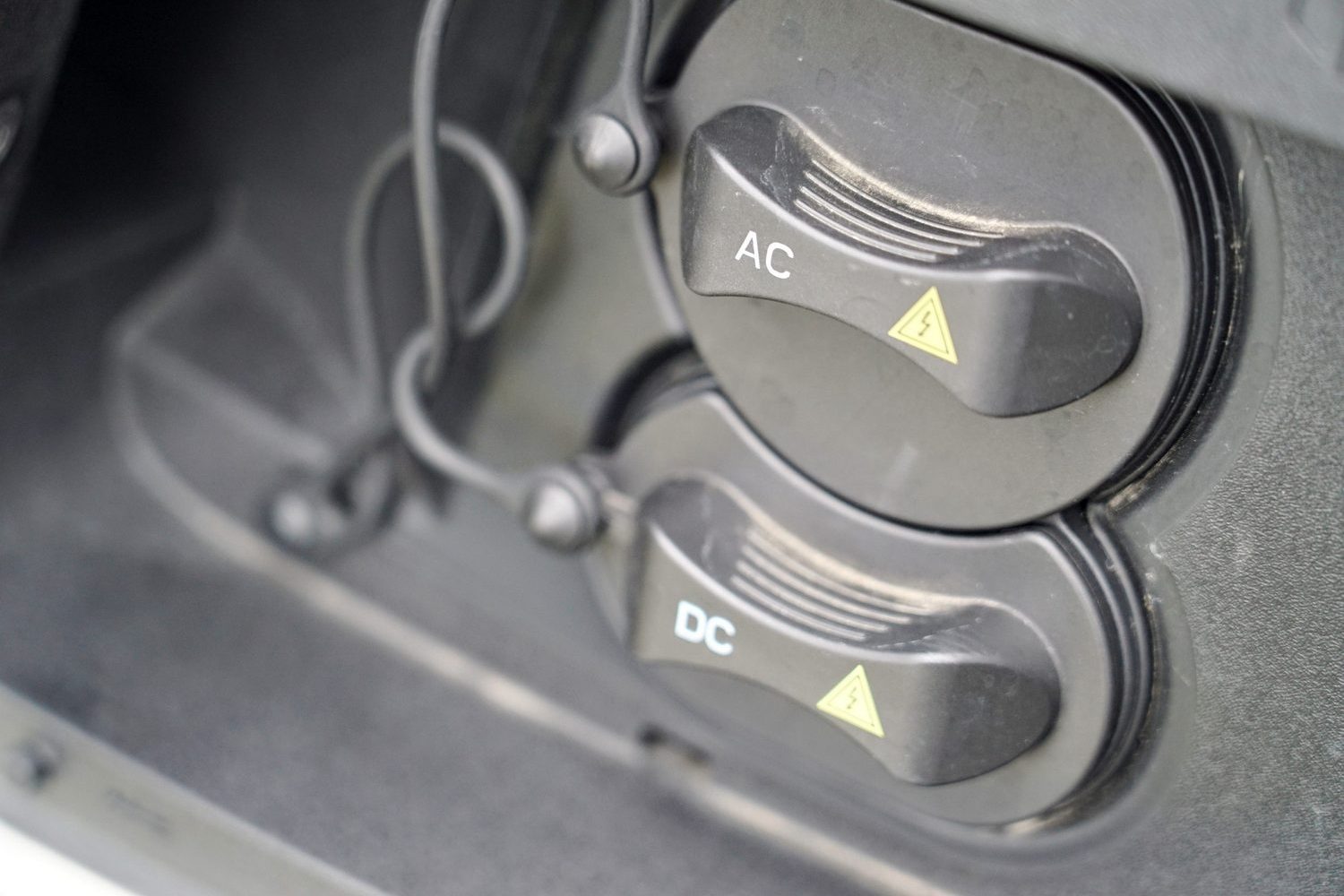
It's a shame, therefore, that AC charging is limited to just 6.6kW. That's fine for those doing most of their charging up at home, but it will mean owners won't ever make use of kerbside AC chargers. Using a fast DC charger makes more sense, though, as the peak recharging rate is a useful 65kW. And the C10 REEV gets V2L (Vehicle to Load) capability, at up to 3.3kW.
During our time with the car, we observed an average energy consumption figure of 21kWh/100km over a mix of roads and conditions, with a low of 14kWh/100km achievable at lower speeds.
Irish pricing & rivals of the 2025 Leapmotor C10 REEV

- Range extender from €45,420
- Leapmotor targeting Kodiaq PHEV
- Electric model also on the way
Leapmotor Ireland has confirmed that the C10 will start at €38,995 for the electric model when the SEAI grant and VRT rebate are taken into consideration. That really isn't bad given the size of the vehicle and the cars it ostensibly could be compared with. The REEV is a good deal more, starting at €45,420 in Style specification - or €46,995 as tested in Design guise.
There are Style and Design trim levels and both get electric adjustment for the front seats, dual-zone air conditioning, the big touchscreen, wireless charging, USB ports front and back, automatic lights and wipers, roof rails, electric windows all round, a big glass roof, rear parking sensors, 360-degree camera system, adaptive cruise control and a long list of active safety features.

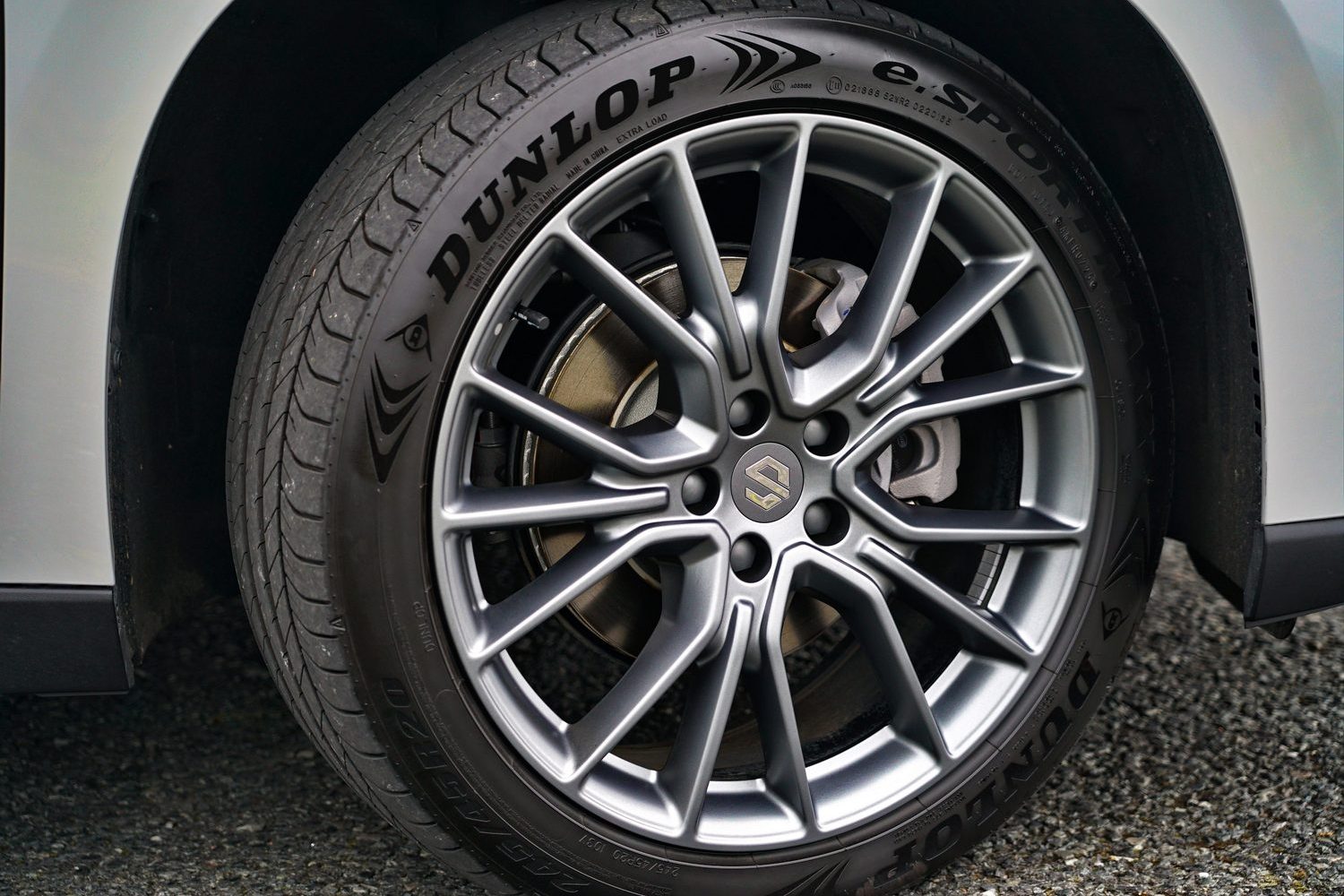
The C10 Design additionally gets a heated steering wheel, synthetic leather upholstery, heated and ventilated front seats, ambient lighting, 20-inch alloys (the Style's are 18-inch items), an electric tailgate, rear privacy glass and upgraded rear light design.
As mentioned elsewhere, the C10 will also be offered as an EV, with a range of 420 kilometres.
Verdict - should You buy the 2025 Leapmotor C10 REEV?

The Leapmotor C10 is strongly priced as a pure EV, though less so as the REEV. Not that it needs a crazy-low price to justify its existence. It's quite good looking, huge inside, comfortable, smooth and really very well equipped. The biggest challenge will be convincing buyers to give an unknown badge their attention.
FAQs about the 2025 Leapmotor C10 REEV
Does the Leapmotor C10 REEV have a 'frunk'?

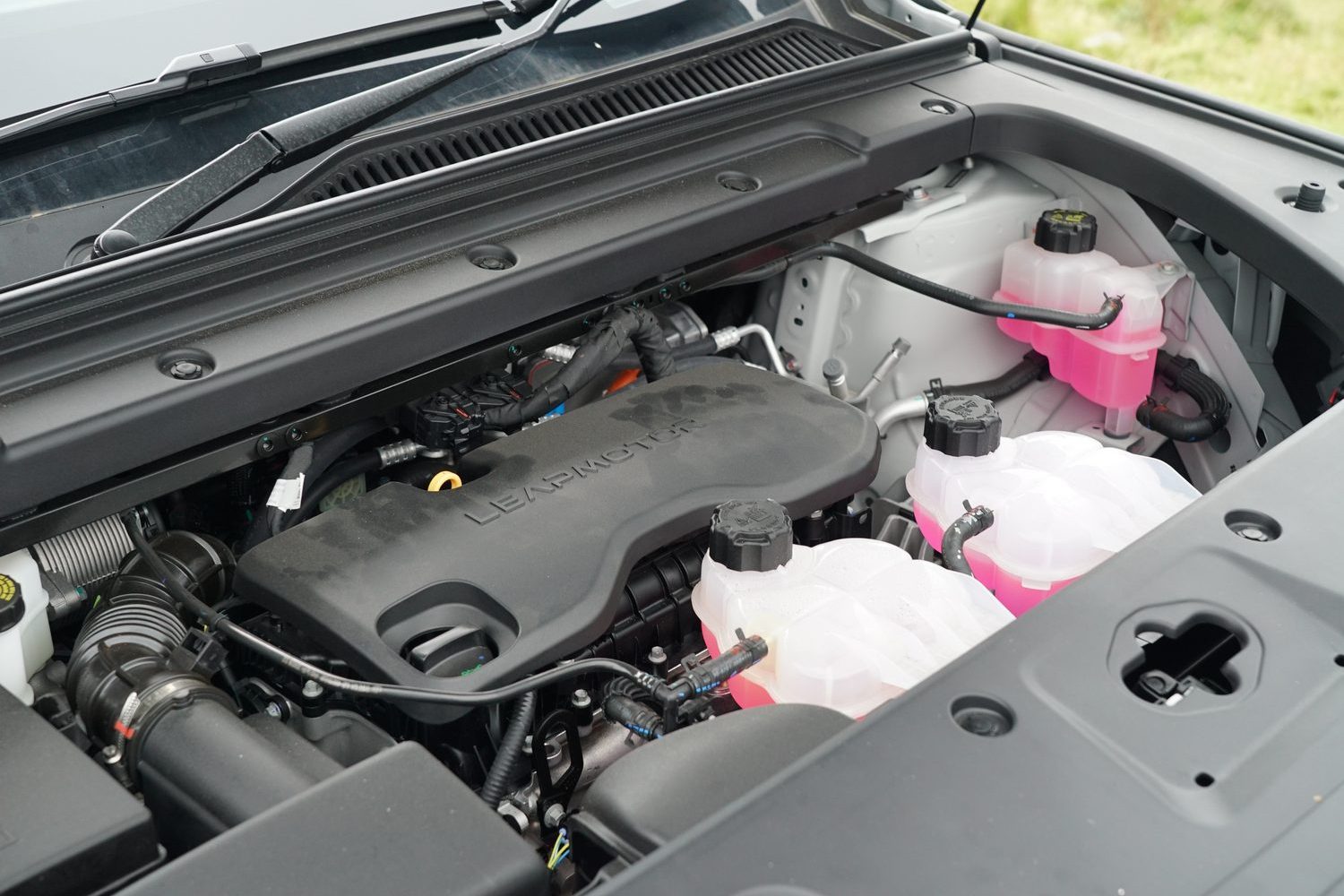
It does not. There's an engine under the bonnet acting as a generator.
How many child seats fit in the back of the new Leapmotor C10?

Two at a minimum, using ISOFIX points if you need them, but there's also a wide middle seat so it may well be possible to fit a third child seat using the central seatbelt.
Does the Leapmotor C10 REEV qualify for the SEAI grant?
No it doesn't; only fully electric cars are eligible for the scheme. The all-electric C10 is likely to qualify, but not this REEV version as it has an engine that emits pollutants.
Has the Leapmotor C10 been assessed for safety by Euro NCAP?
Yes it has and it scored a five-star result thanks to 89 per cent for adult occupant protection, 85 per cent for child occupant protection, 77 per cent for protection of vulnerable road users and 76 per cent for the 'Safety Assist' category. Read the full Leapmotor C10 Euro NCAP report here.
Want to know more about the 2025 Leapmotor C10 REEV?
If there's anything about the new Leapmotor C10 we've not covered, or you'd like help in choosing between it and other cars, you can avail of our expert advice service via the Ask Us Anything page.