



Exterior & design of the 2026 Kia PV5 Passenger
- Futuristic look
- Designed for affordable repairs
- Two-tone design on all versions

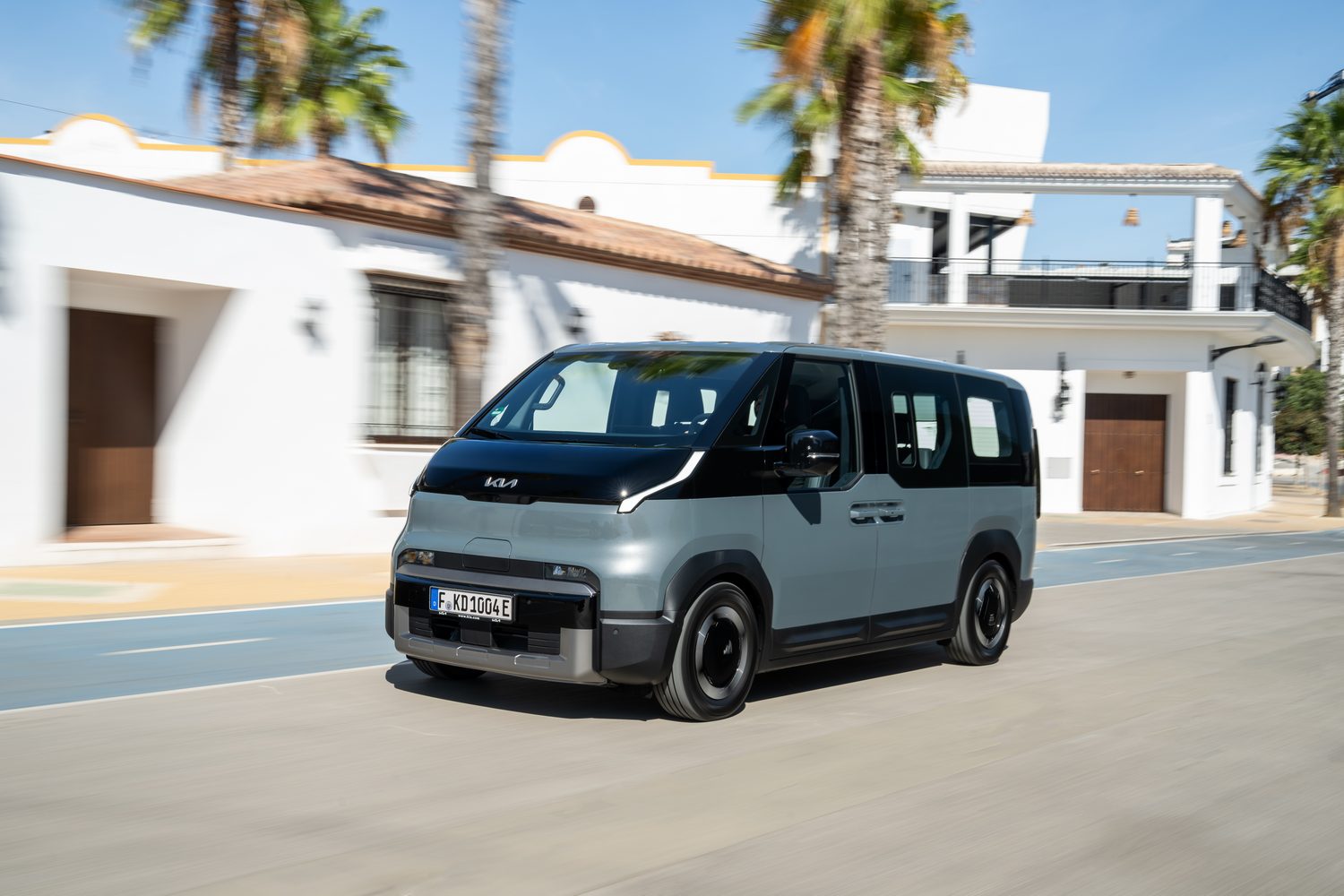
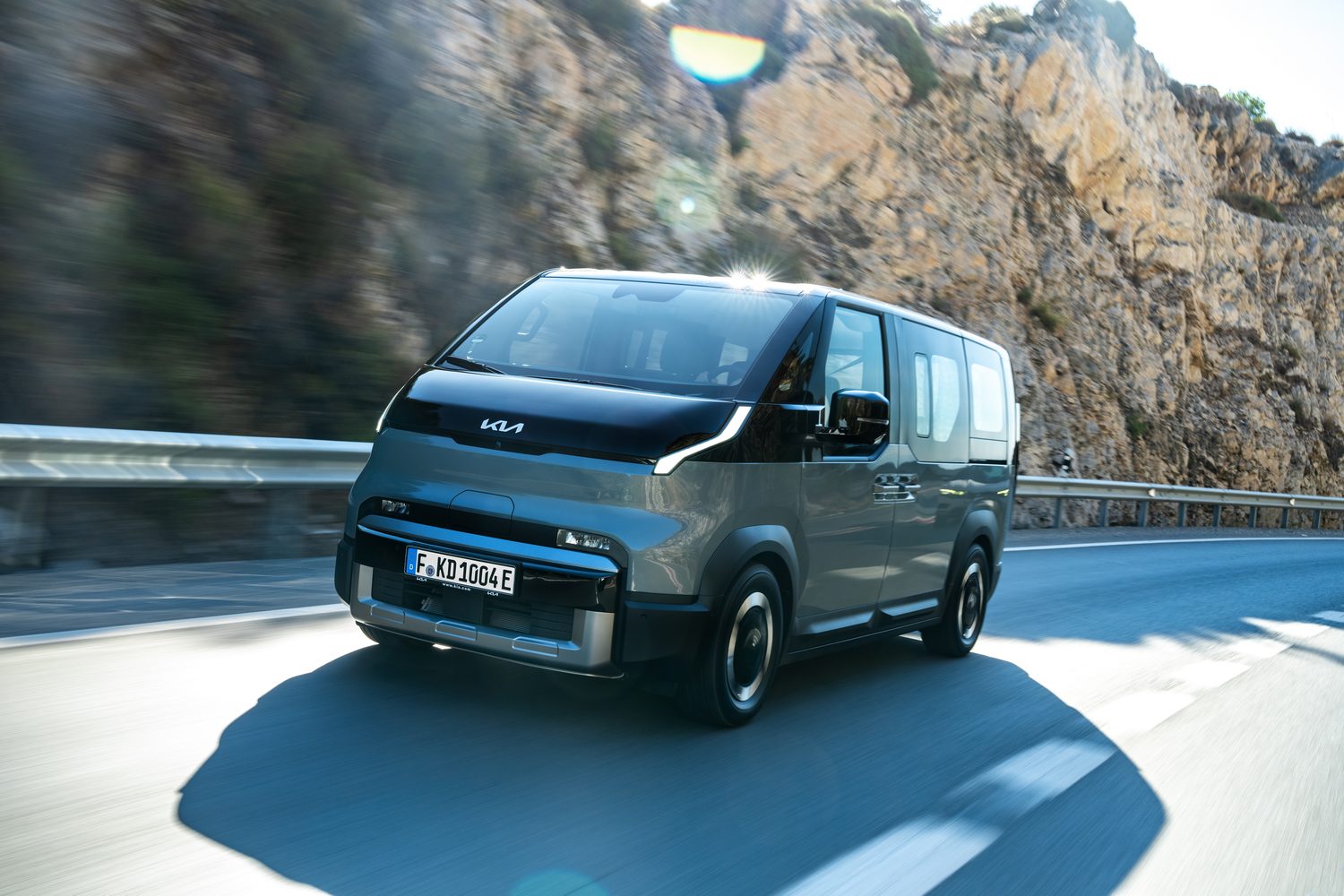
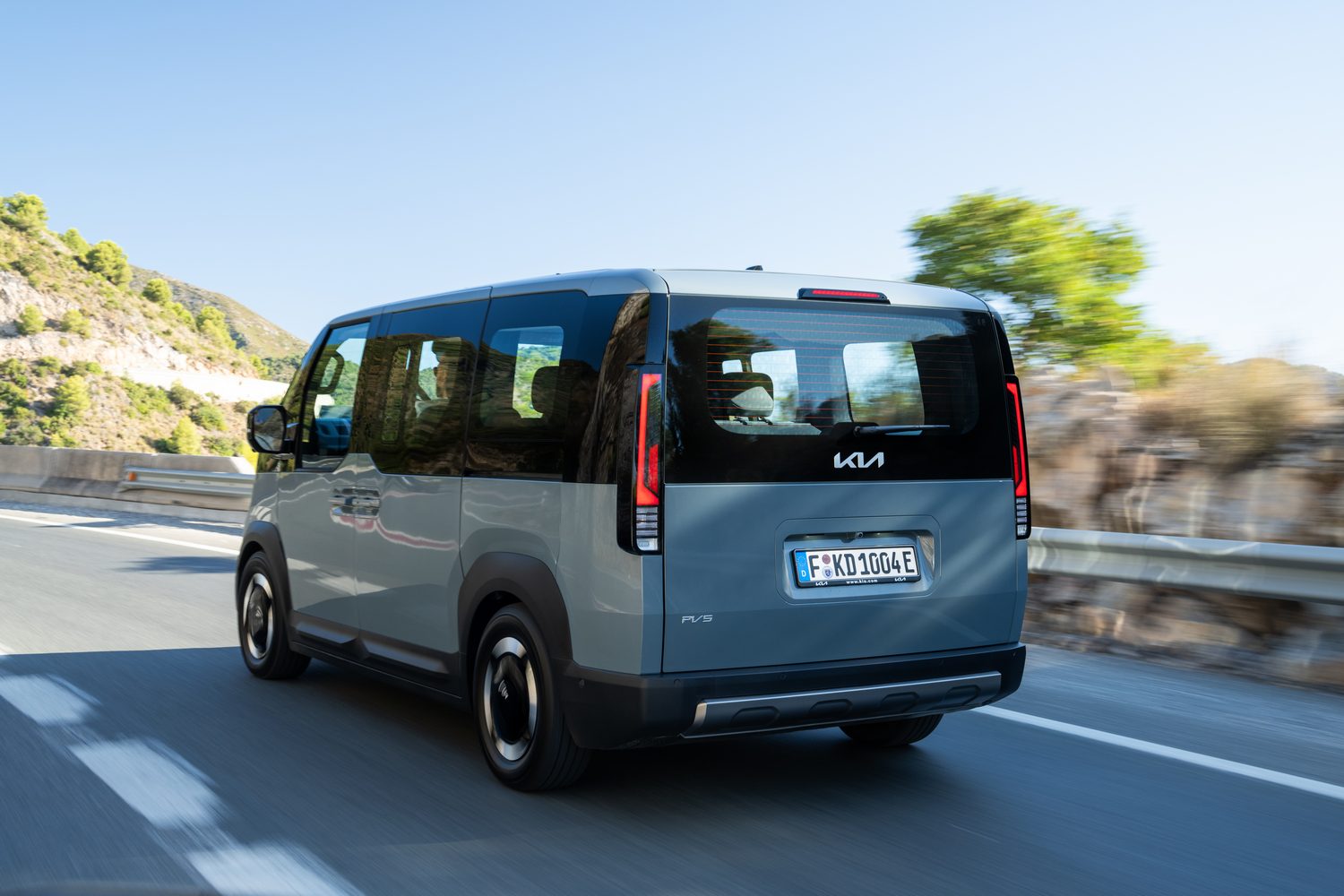
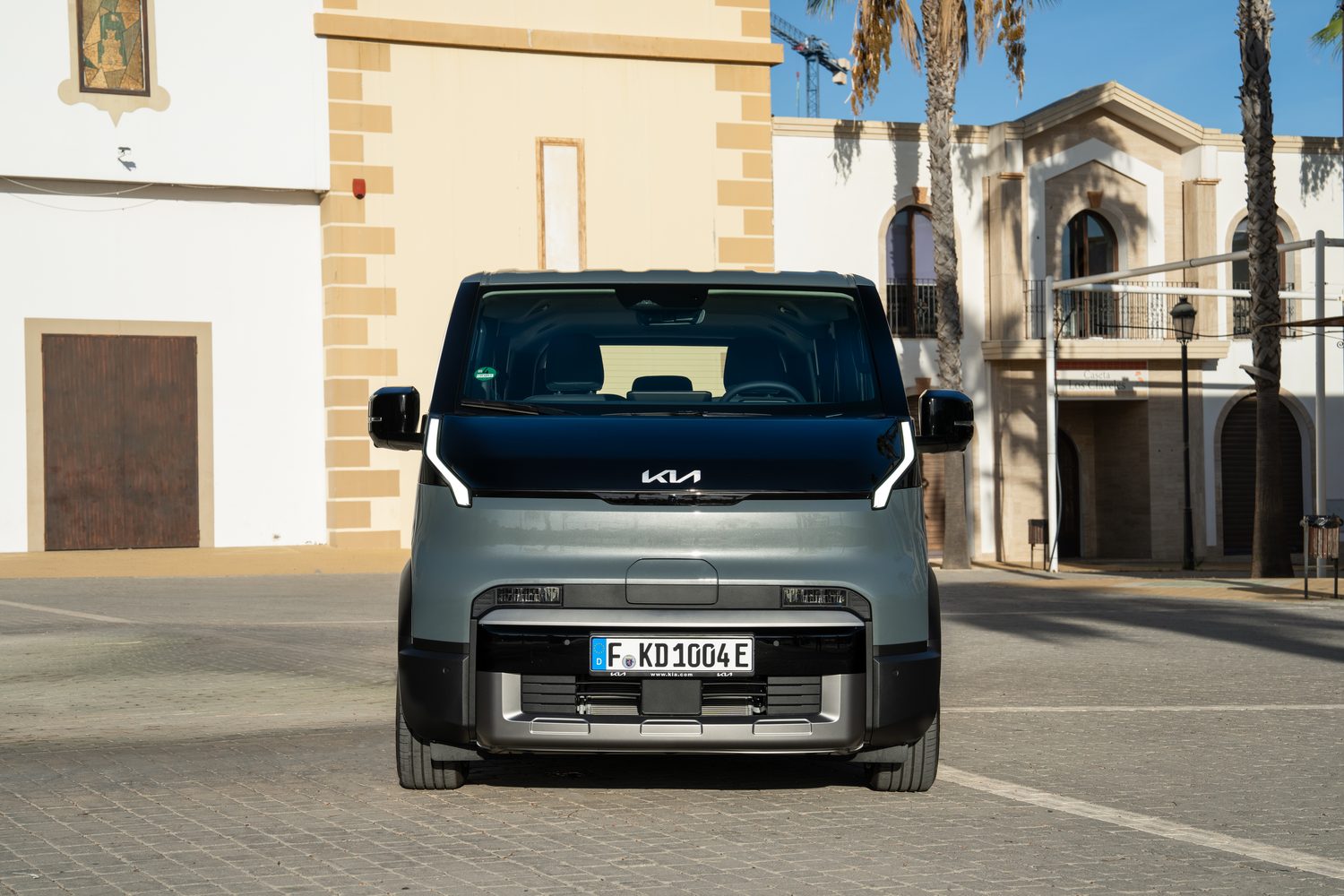
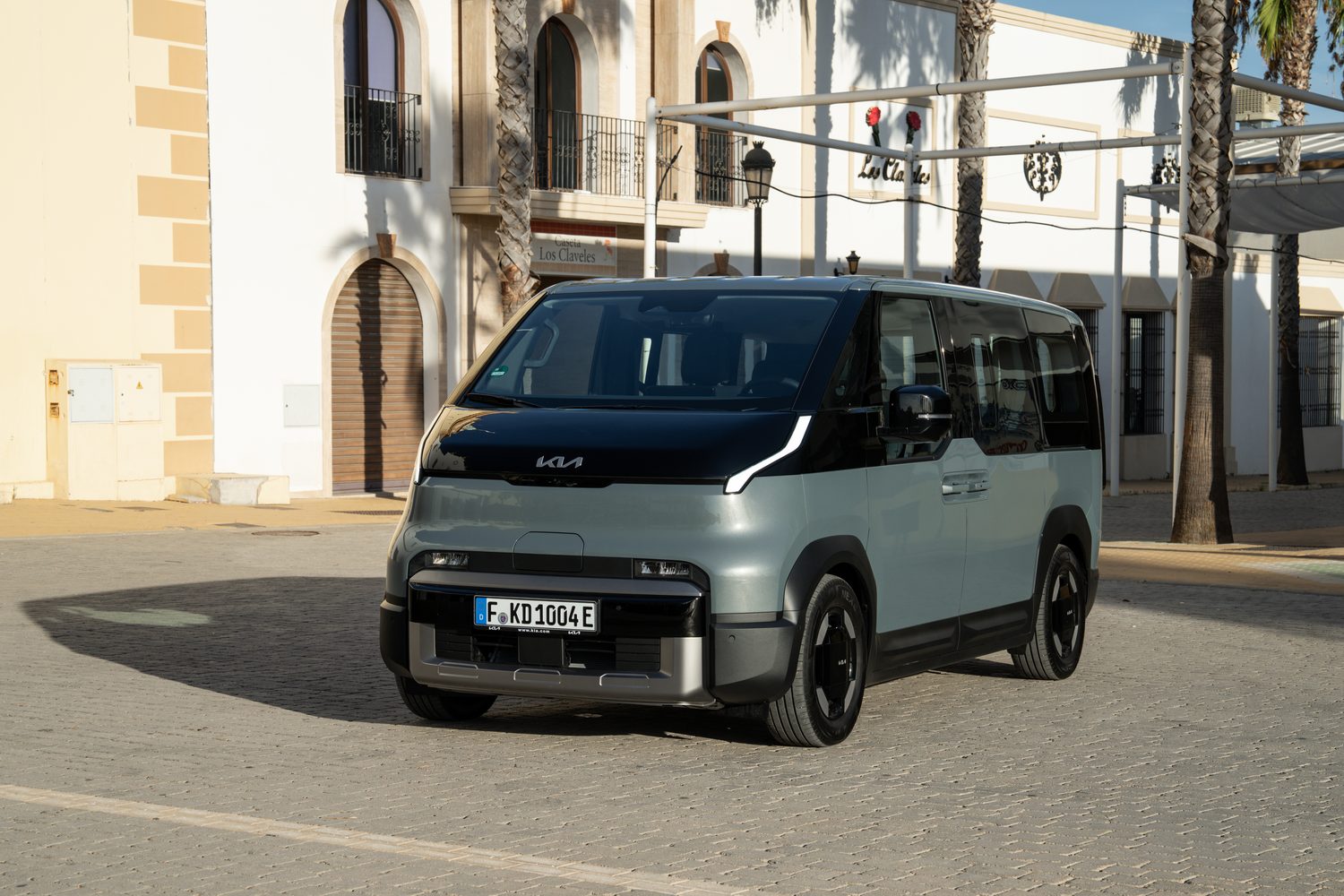
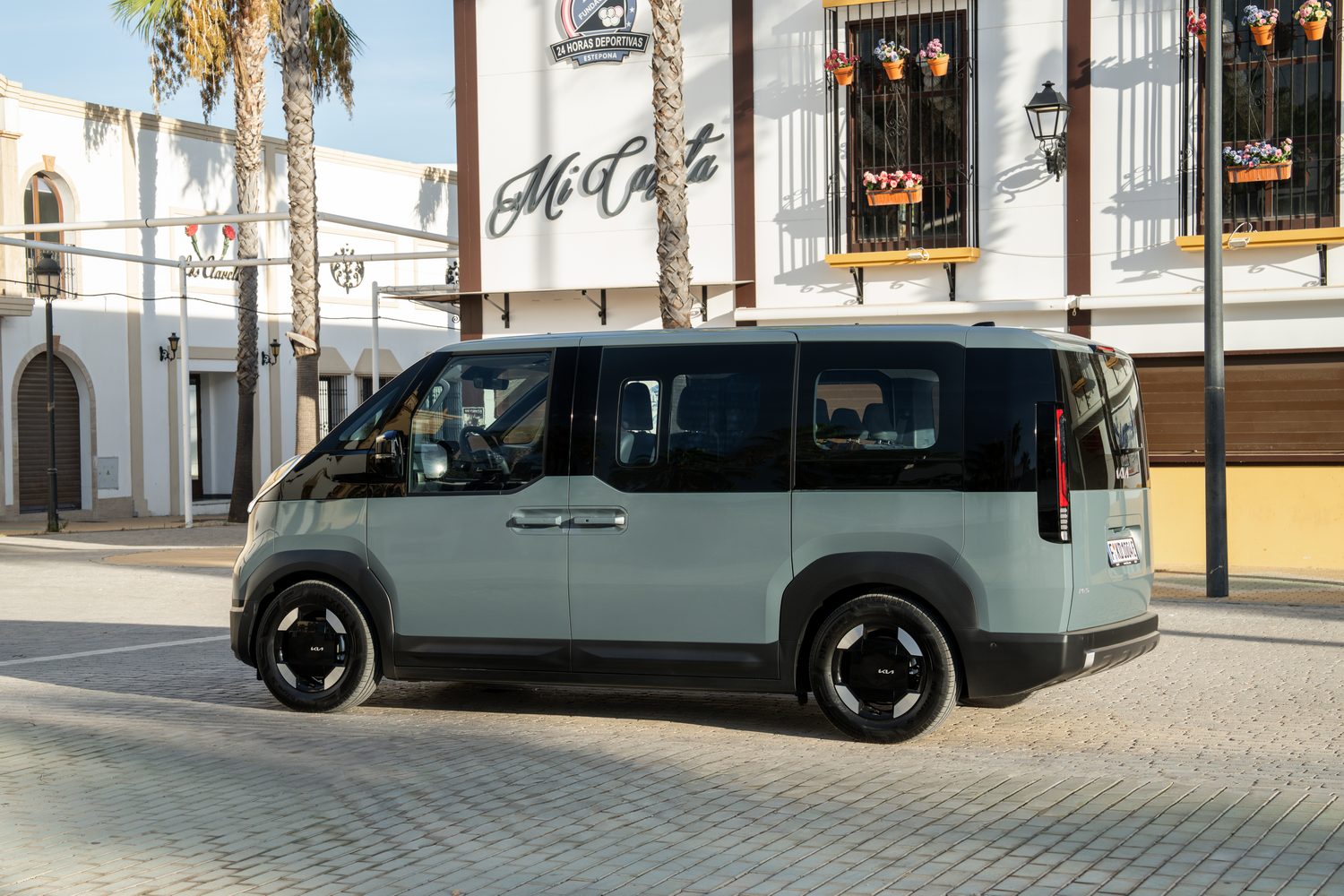
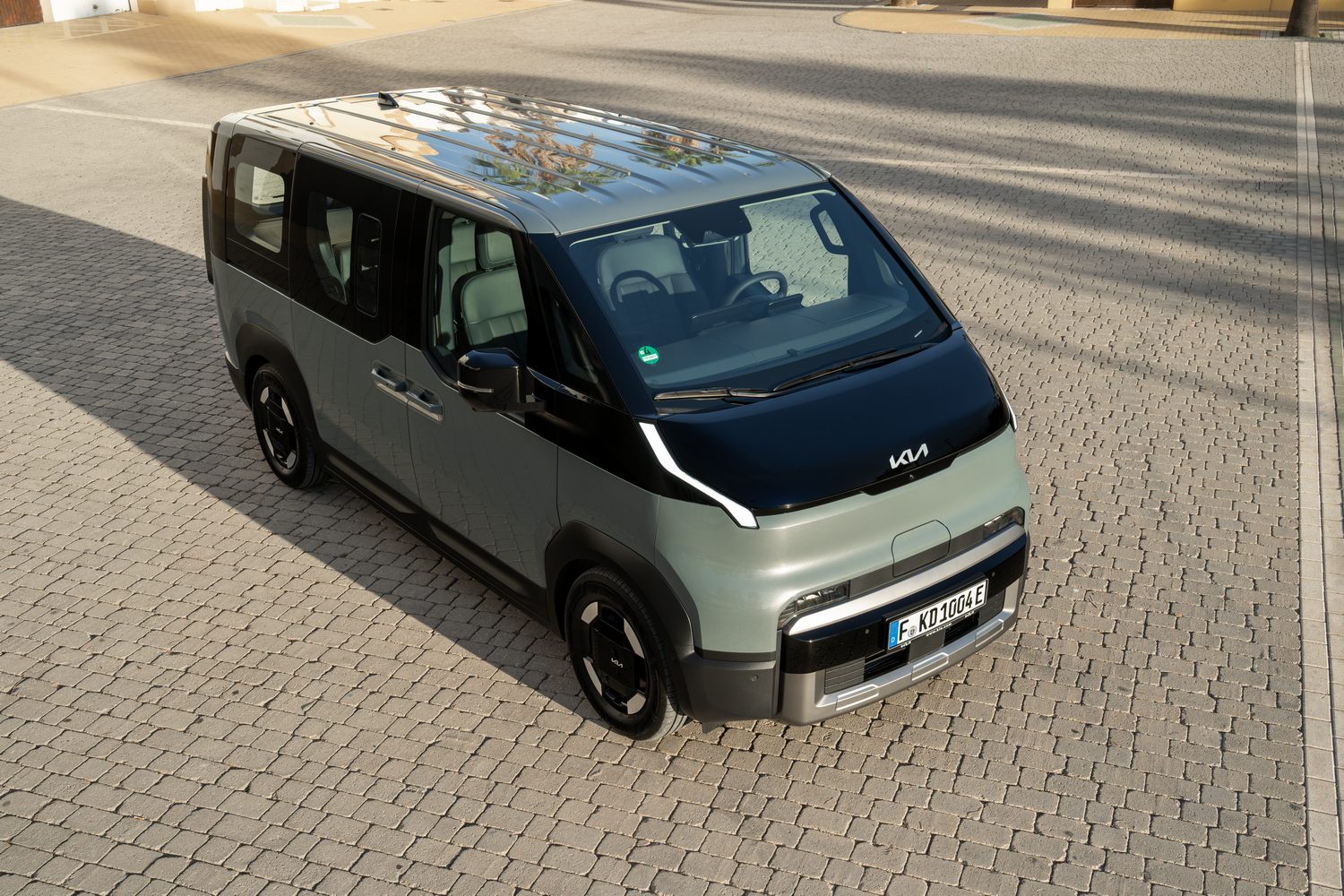
It might look like something from a science fiction movie set, but there's a practical reason why the Kia PV5 Passenger looks the way it does. The front end is shared across all variants of the PV5 as a way of managing production costs, but the design is also about minimising costs for owners. The front bumpers, for example, are shaped in sections to make it more cost-effective to replace just one part rather than the whole front if it's damaged.
The LED daytime running lights are located high up to improve visibility, with the main LED headlight units placed lower down and more towards the centre, sitting either side of the charging port. Such an upright front-end design maximises interior cabin space and reduces front overhangs, so there's less of the PV5 ahead of the front wheels, making it that bit easier to squeeze into a parking space.

The exterior dimensions for the 2026 Kia PV5 Passenger are:
- Length:
- 4,695mm
- Width:
- 1,895mm (2,255mm including mirrors)
- Height:
- 1,899mm
- Wheelbase:
- 2,995mm
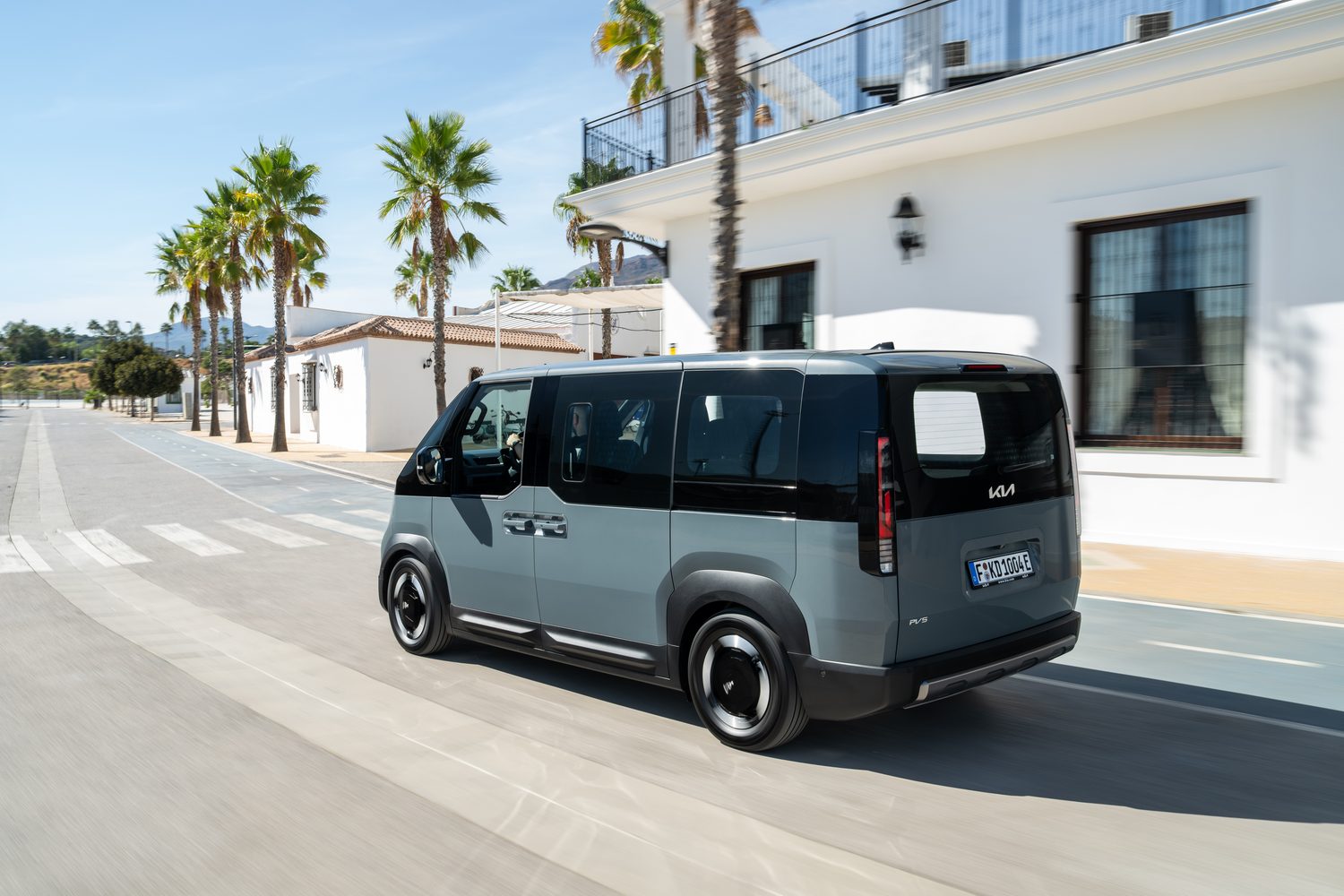
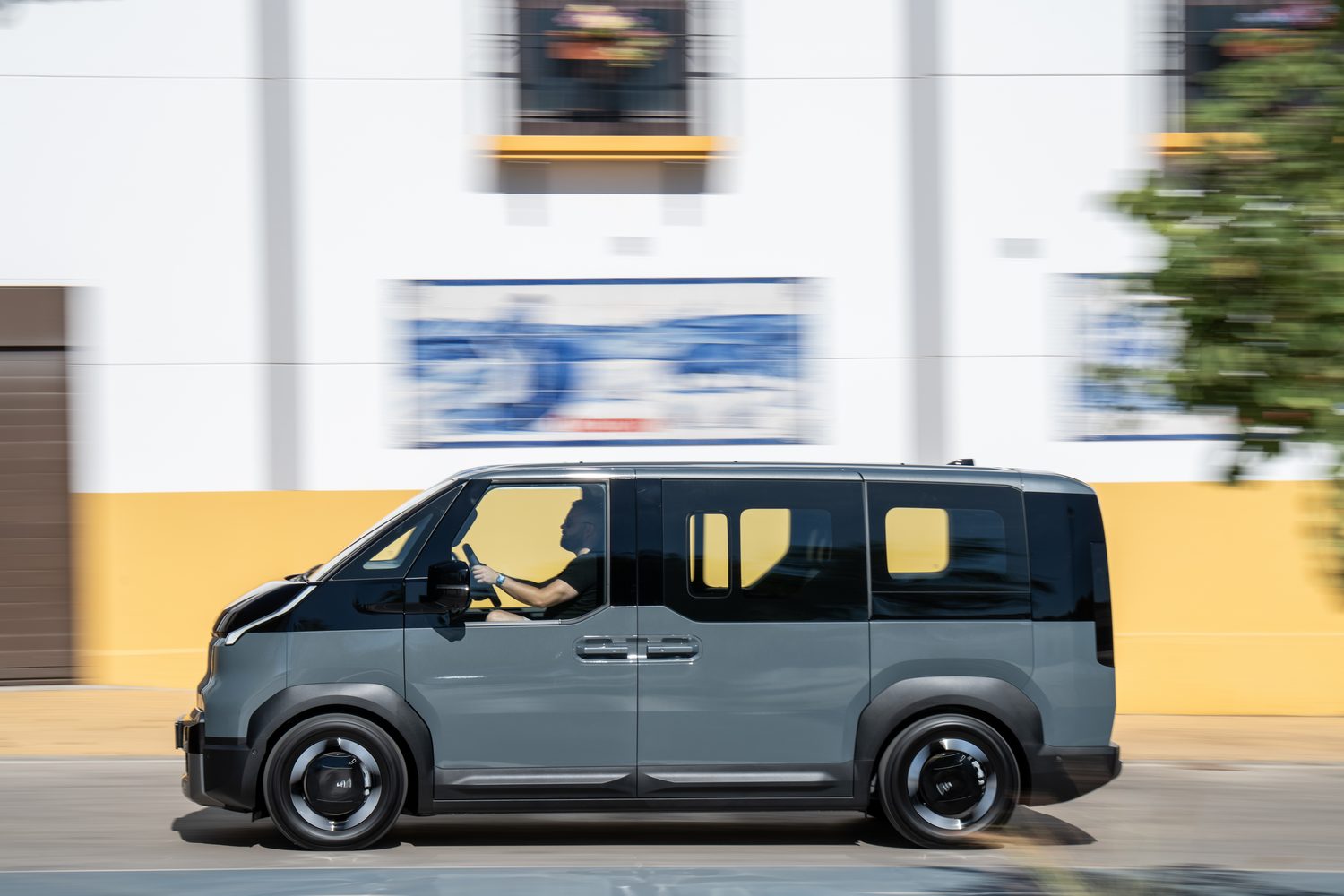
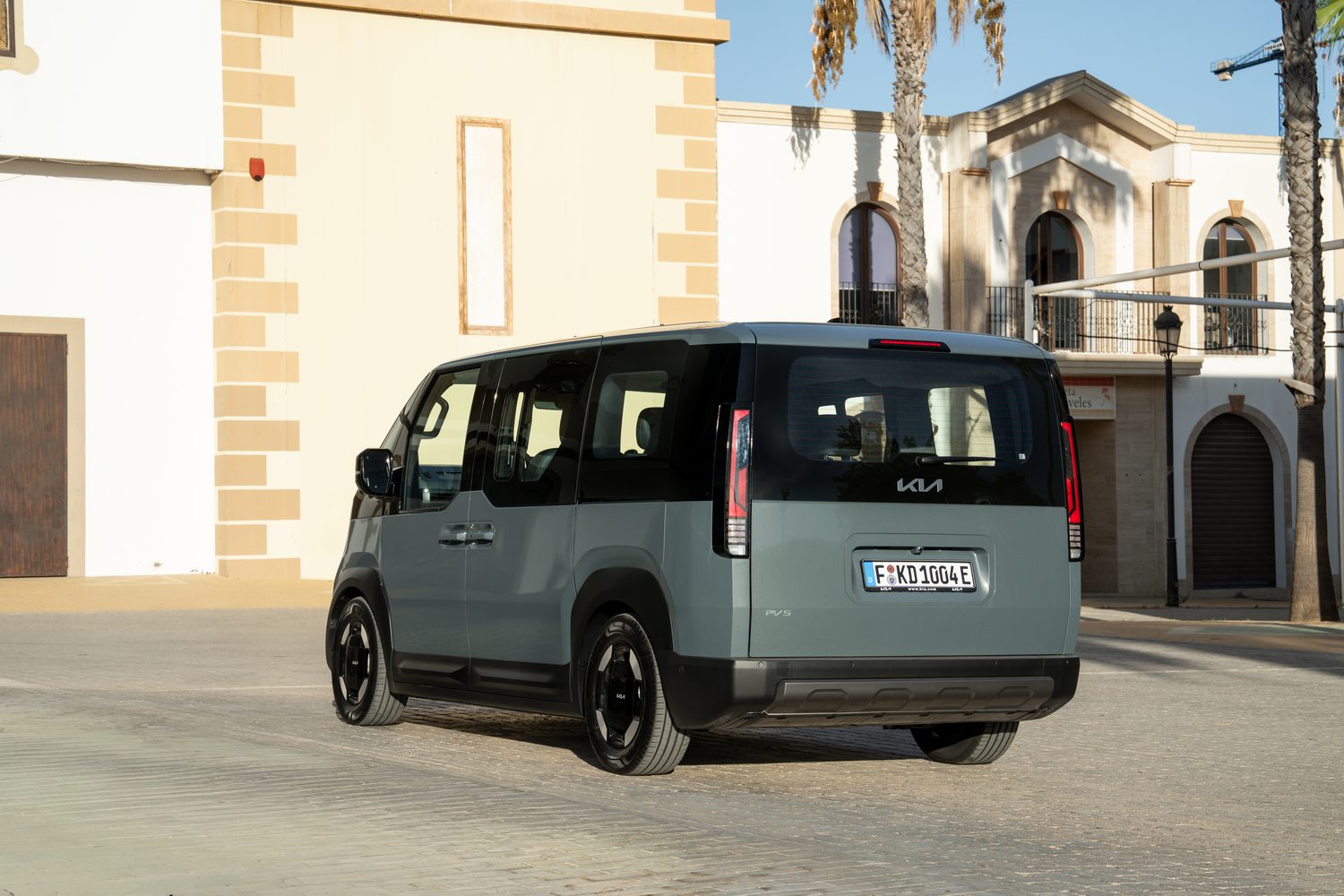
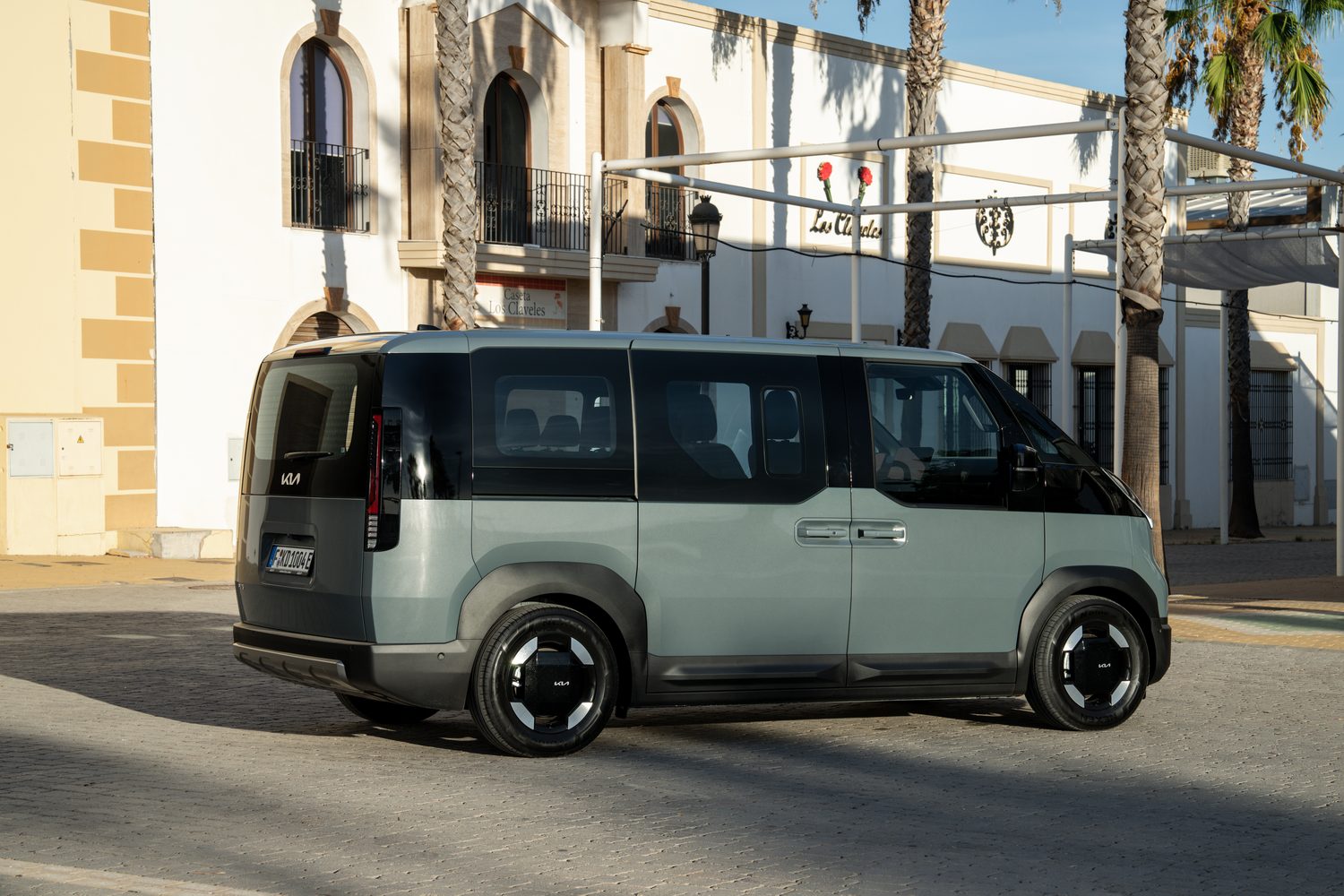
Using such a long wheelbase means there's lots of interior space, but it's worth noting that the PV5 Passenger also has low ground clearance. While that might limit some off-road ability (not that this is designed for such things), it does make entry a bit easier. The large sliding doors on either side of the PV5 Passenger provide great access and there's a lift-up tailgate at the rear, too.

As standard, the Kia runs on 16-inch steel wheels with a geometric wheel cover design, though buyers can opt for 16-inch alloy wheels instead.
A total of nine exterior colours is available on the PV5 Passenger. All get the two-tone look with a gloss black bonnet and black surrounds on the glass area, with the roof matching the body colour.
Interior, practicality, tech & safety of the 2026 Kia PV5 Passenger
- 1,500kg towing ability
- Massive 1,320-litre boot
- Seven airbags included

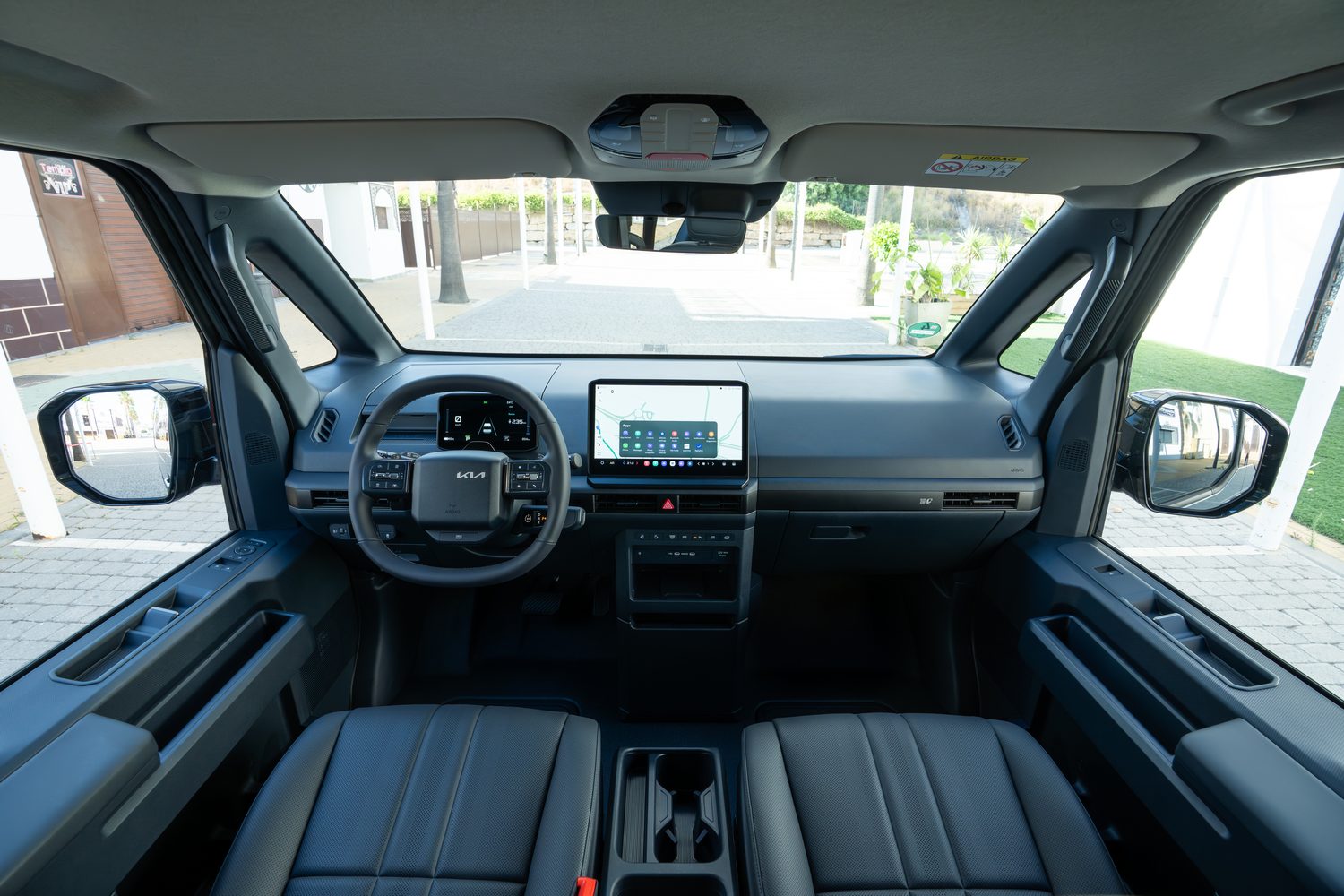
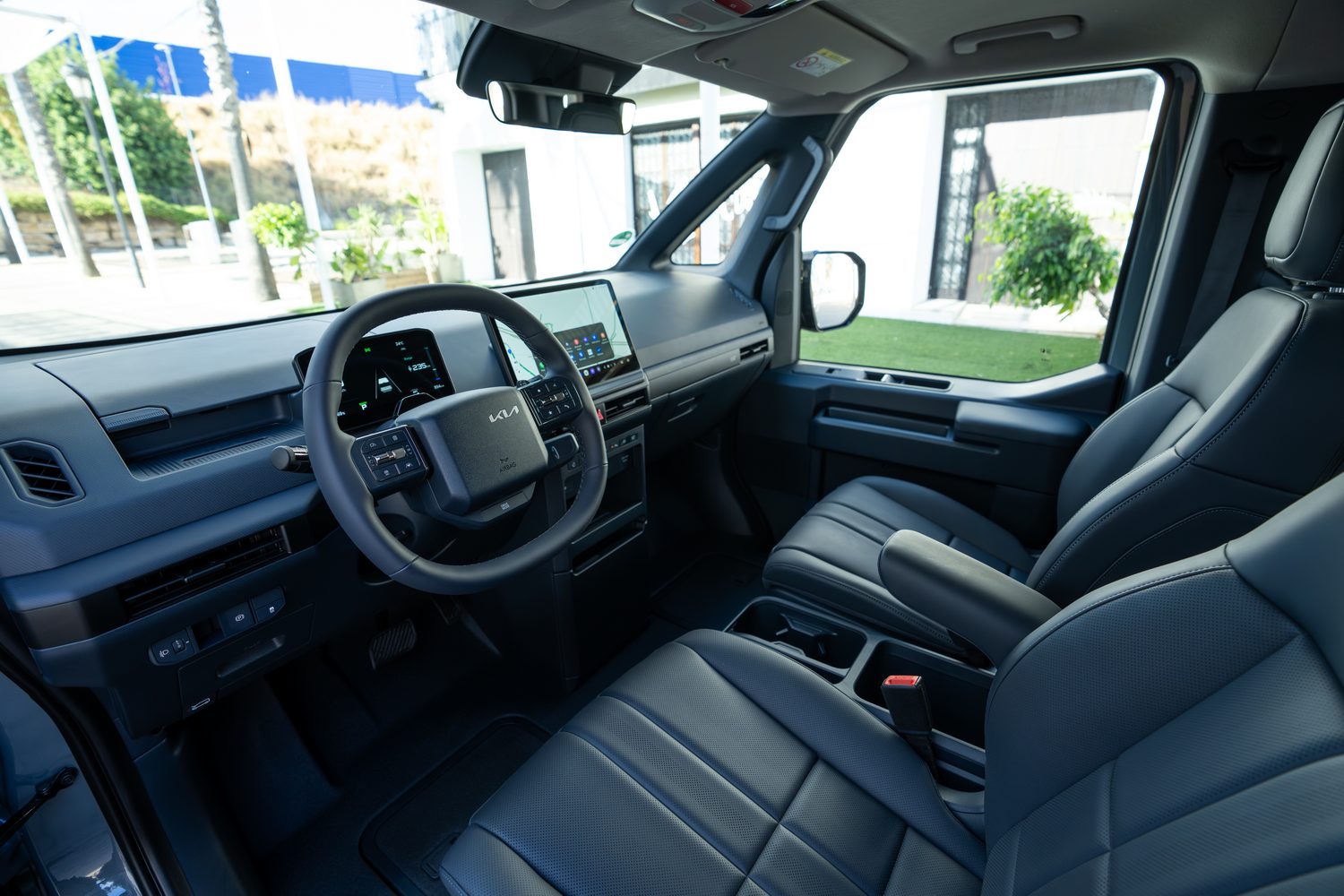
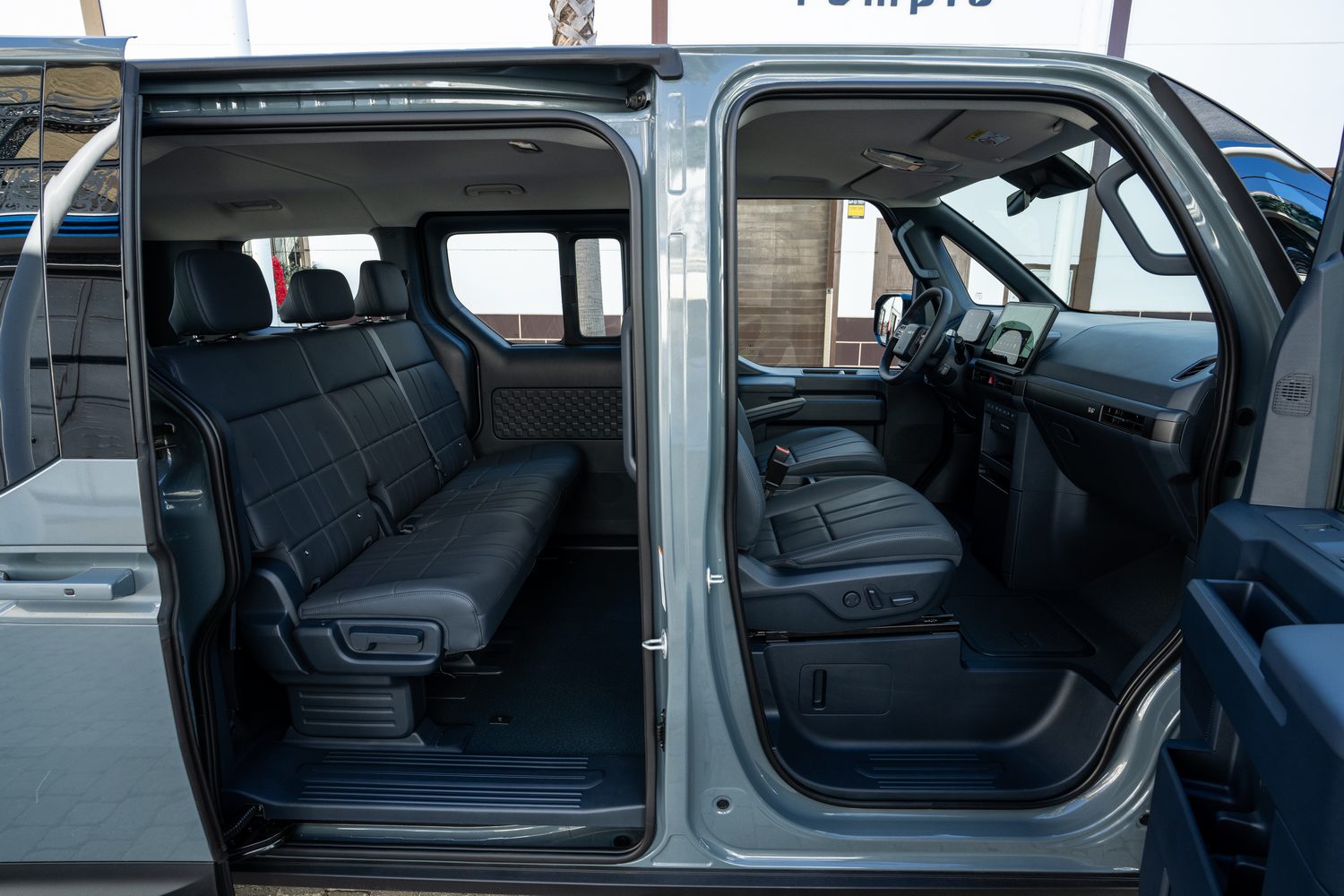
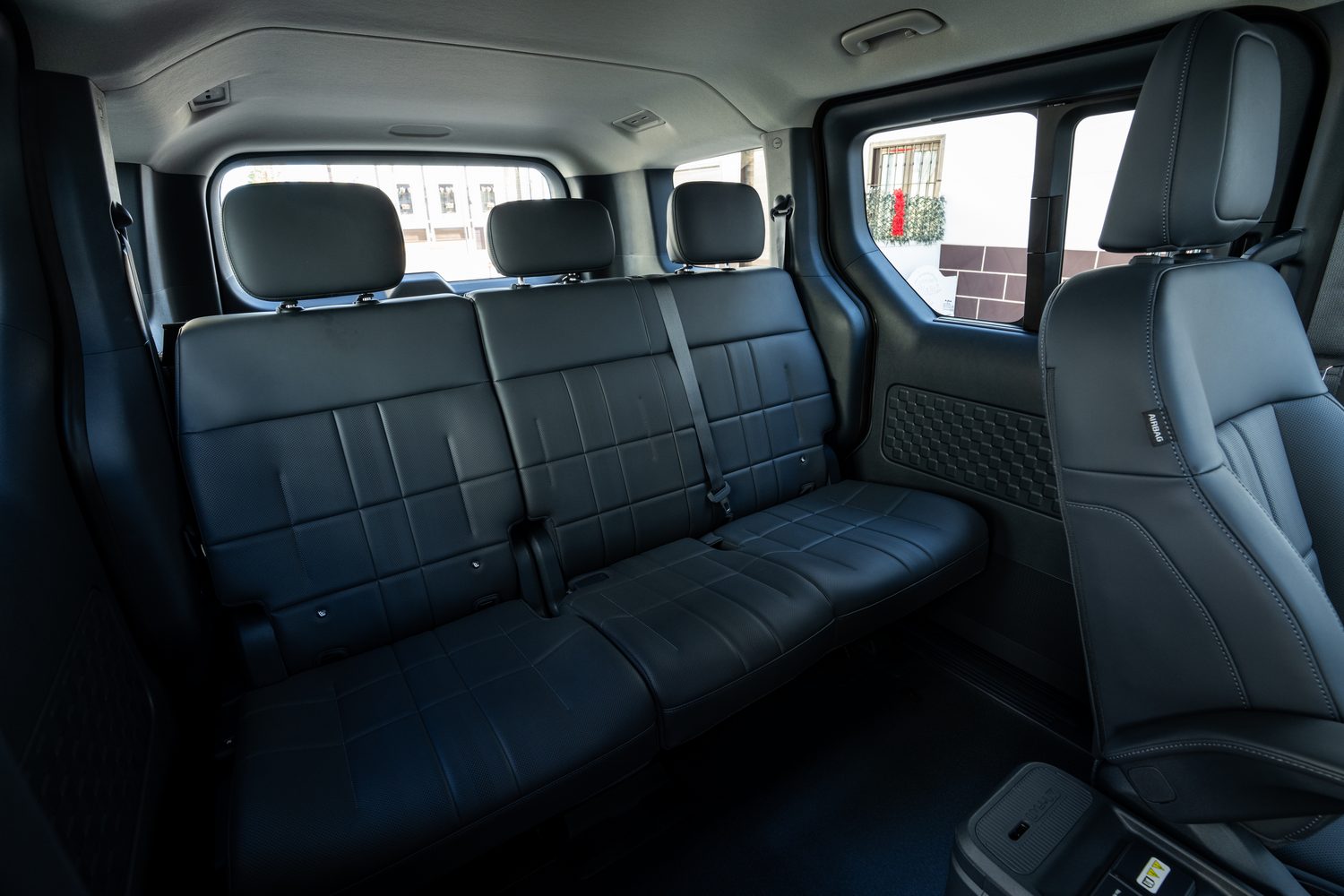
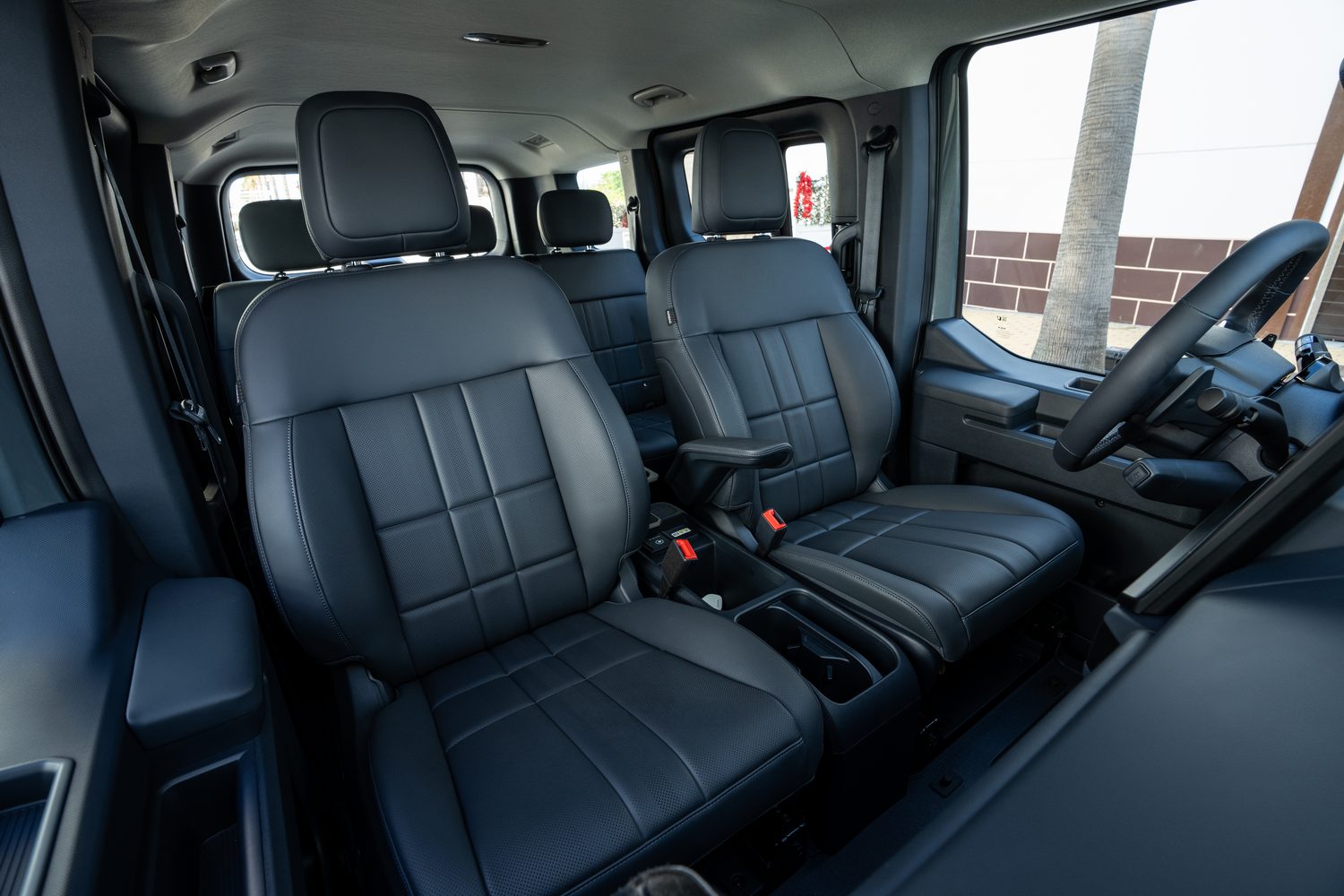
Such a boxy exterior shape means there is a lot of space on the inside of the Kia PV5 Passenger. Our test vehicle was the five-seat variant, which is what will be initially available, but Kia plans on rolling out further seating configurations, including six- and seven-seat layouts.
The latter will be positive news for larger families and taxi drivers. Cue parent jokes about them being one and the same.

Up in the driver's seat, the view outwards is generally good, though the split A-pillar design can leave some objects in a blind spot in certain situations. You sit reasonably close to the windscreen, much closer than in a Volkswagen ID. Buzz, for example, and the steep front end means you have a great sense of space when it comes to positioning the car in a tighter spot.
The interior look and feel are more commercial vehicle than passenger car, though it's not a bad compromise overall.
The squarish steering wheel is a simple two-spoke affair with the multifunction controls a cinch to operate with your thumbs. Other controls are fixed around the steering column, including lights, wiper stalks and a third stalk for the start and drive selection. Locating it here frees up space on the centre console.

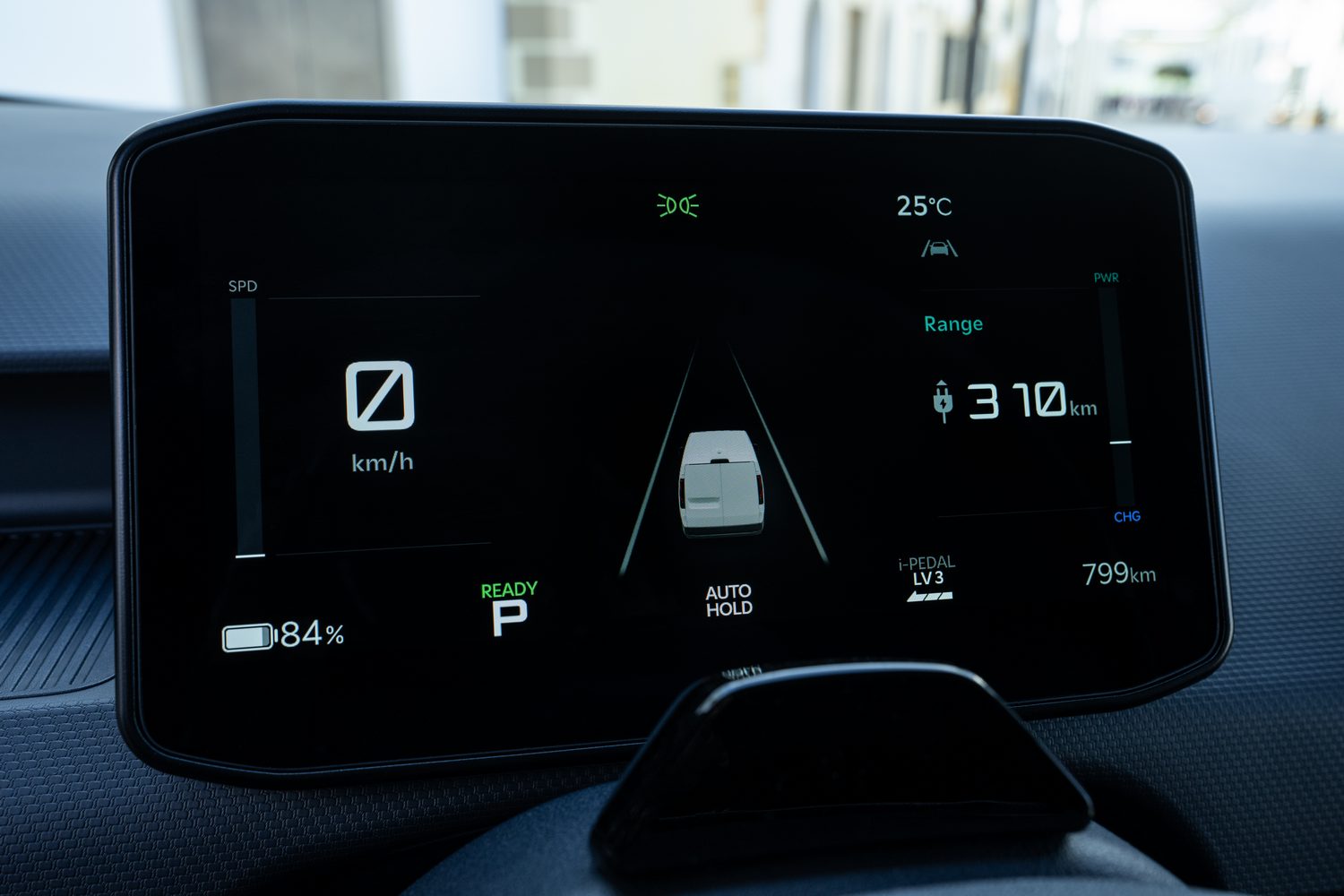
Ahead of the wheel is a 7.5-inch digital instrument display that has a basic enough layout but presents all the relevant driving information in a straightforward way. On top of the dashboard, just behind this display, is a tray-style storage area with a lid to keep items out of sight.
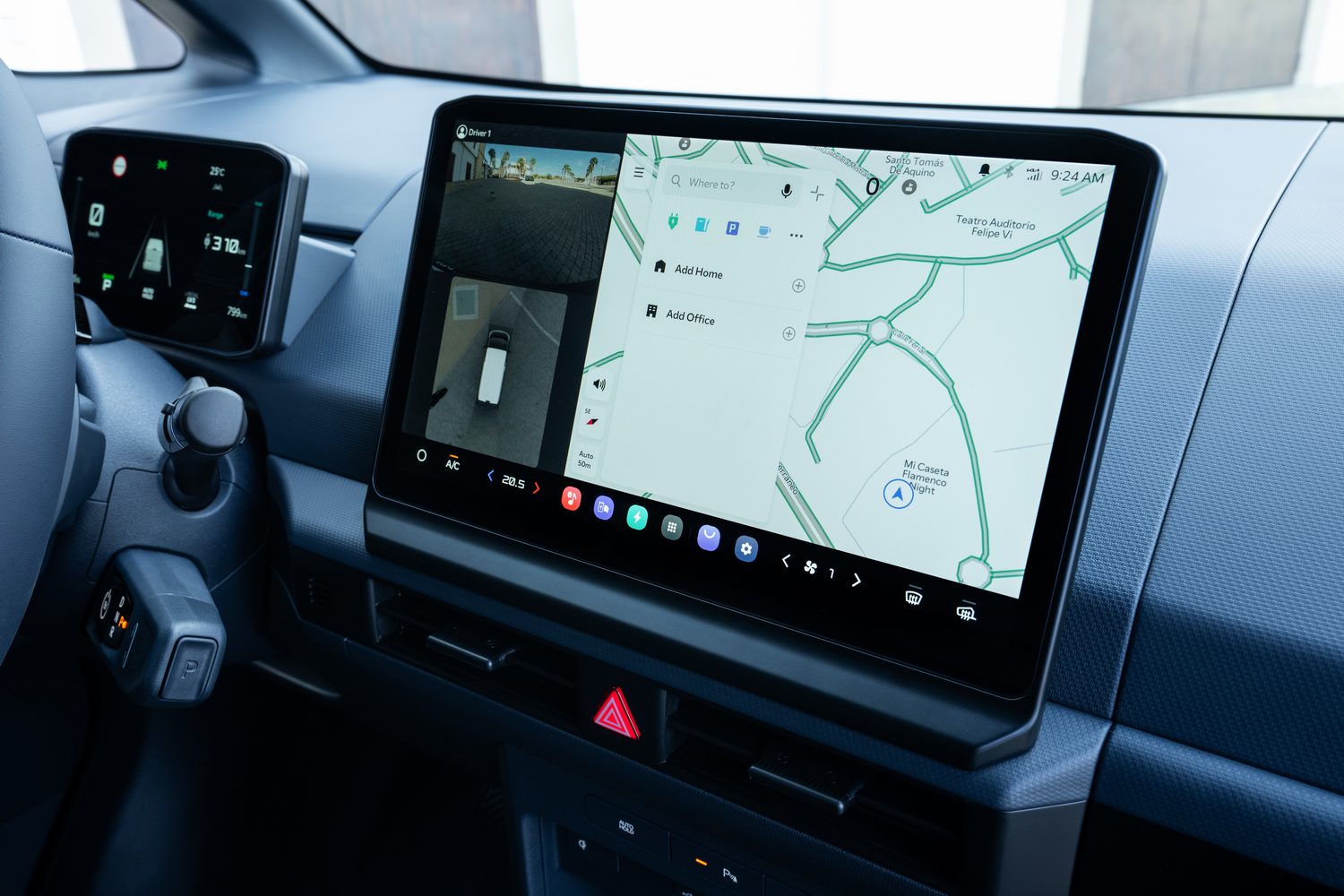
A 12.9-inch touchscreen runs a new type of user interface for Kia, based on Android Automotive OS (AAOS). It is very intuitive to use and is open to integrating with bespoke software.
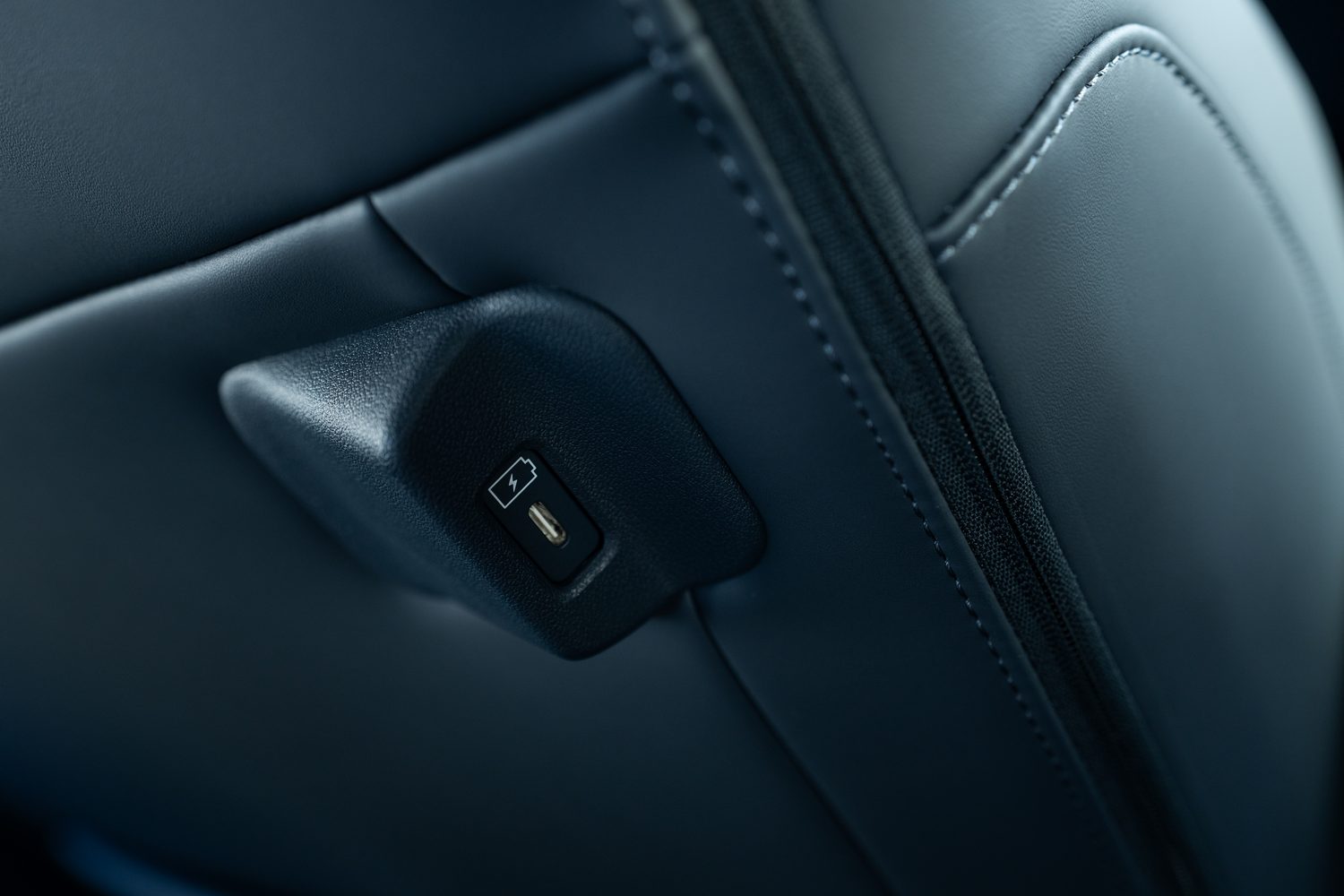
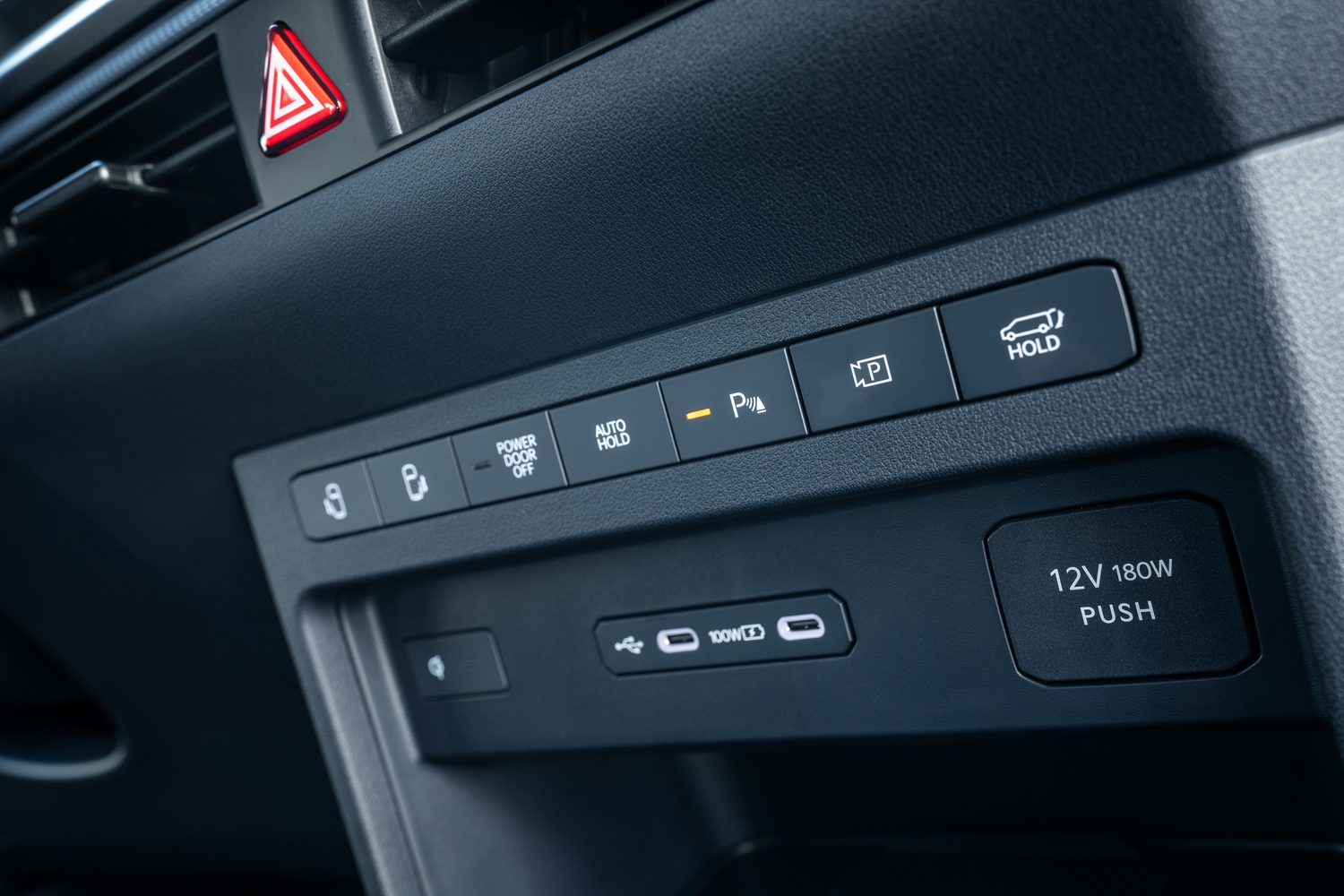
The lack of proper physical heating and climate controls is a little disappointing given the available space; instead, these are integrated into the touchscreen. There's the usual smartphone mirroring software on hand and a wireless charging pad with high-power USB-C ports.

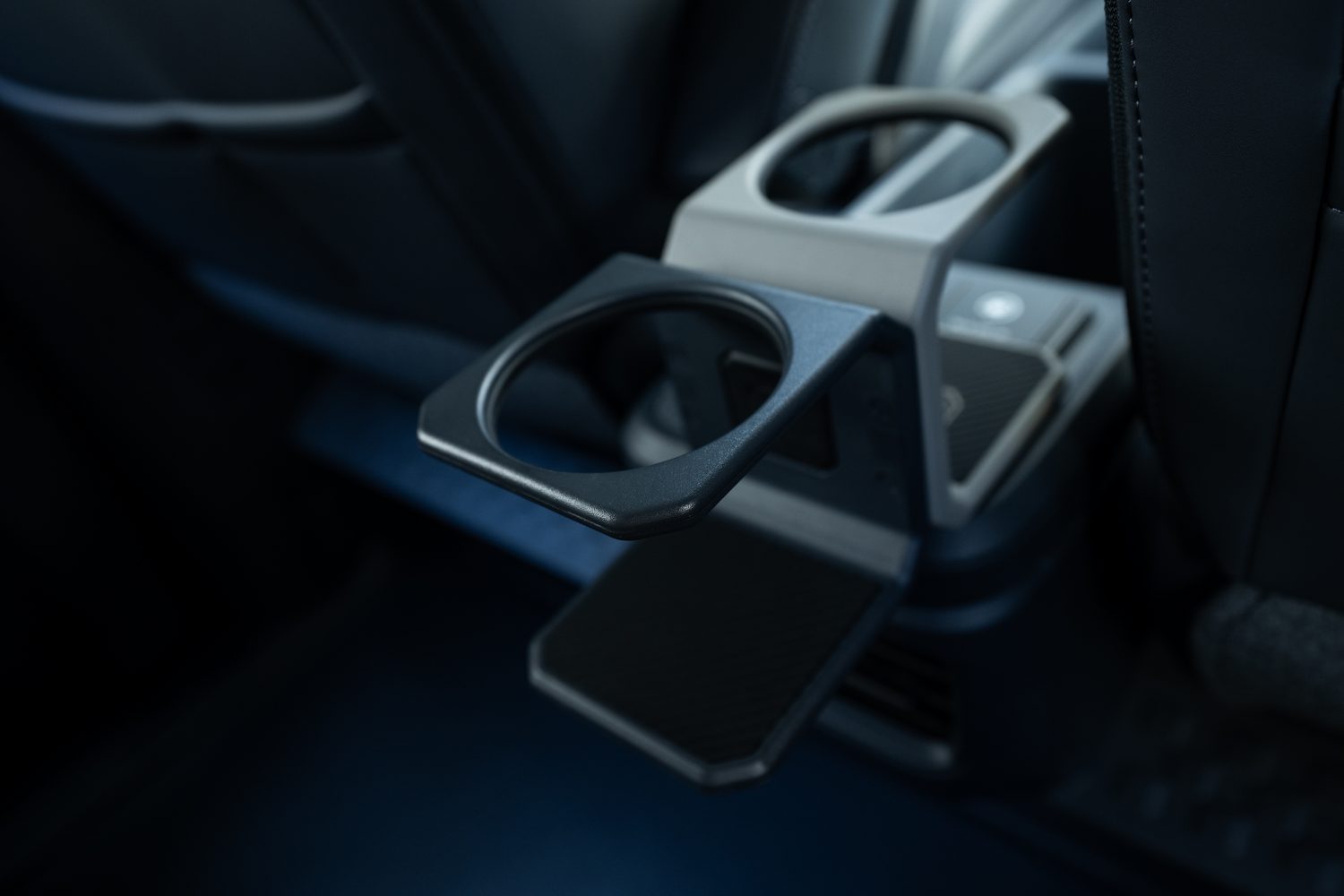
A large storage bin sits at the base of the centre console, and there are numerous other practical features, including cupholders between the front seats, door liners that can carry bottles of up to 1.5 litres and useful storage trays integrated into the armrests. Under the driver's seat is a pull-out storage bin large enough to carry charging cables and the footwells contain hidden storage bins.
The five-seat layout of the PV5 Passenger features a 60:40 split-folding arrangement for the back seats. The middle seat is still a decent size if a little narrower, and both outer rear seats are equipped with ISOFIX anchor points.

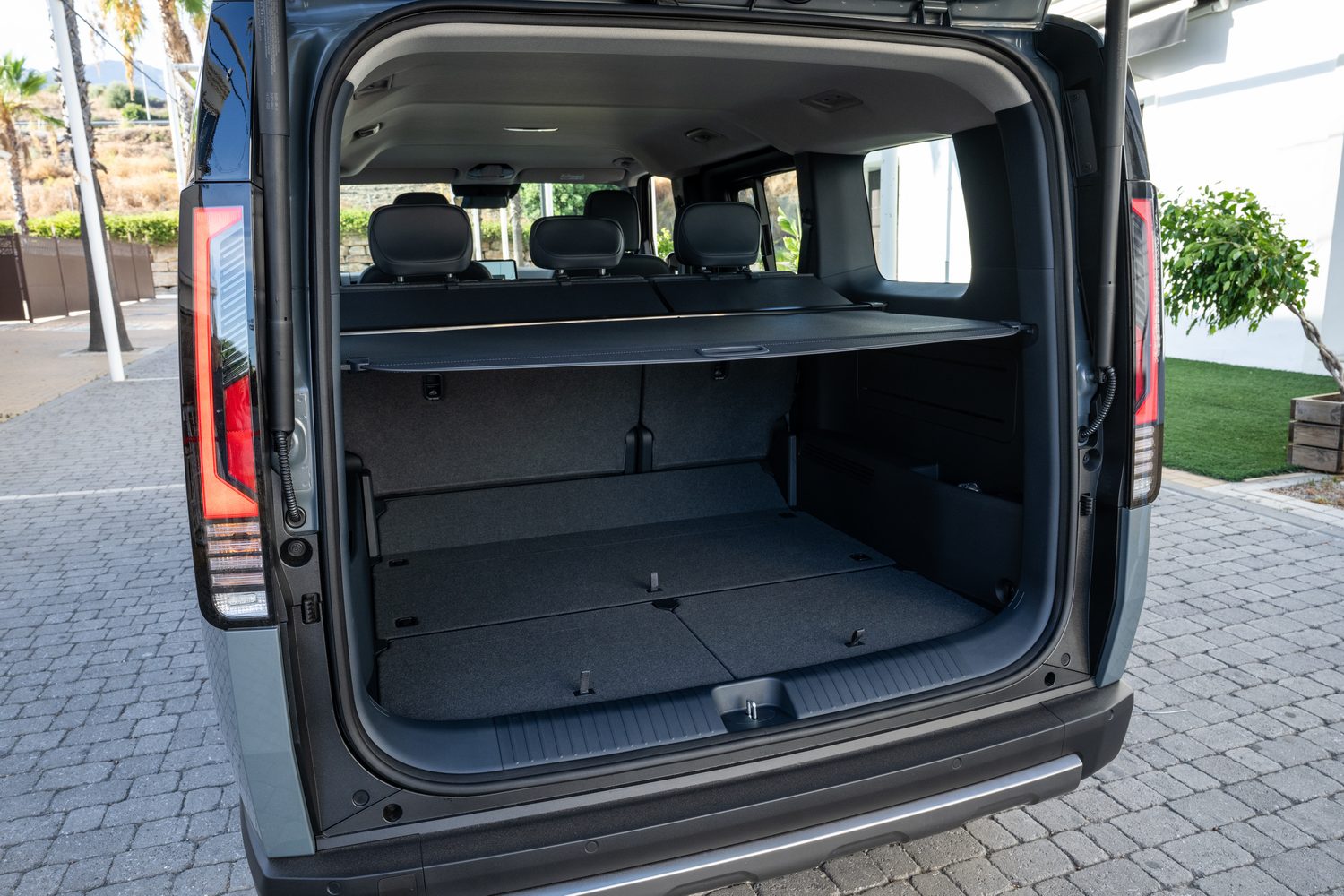
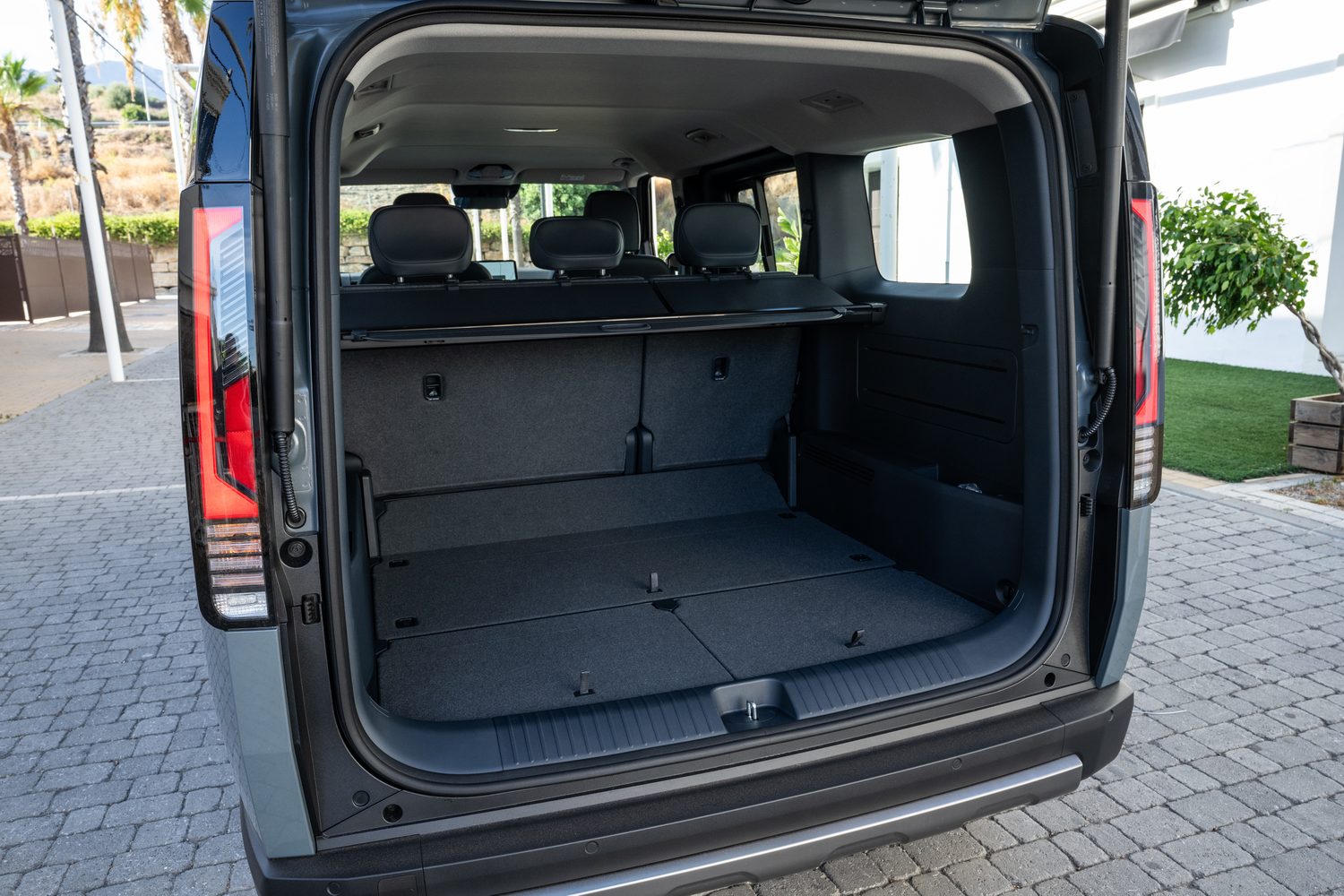
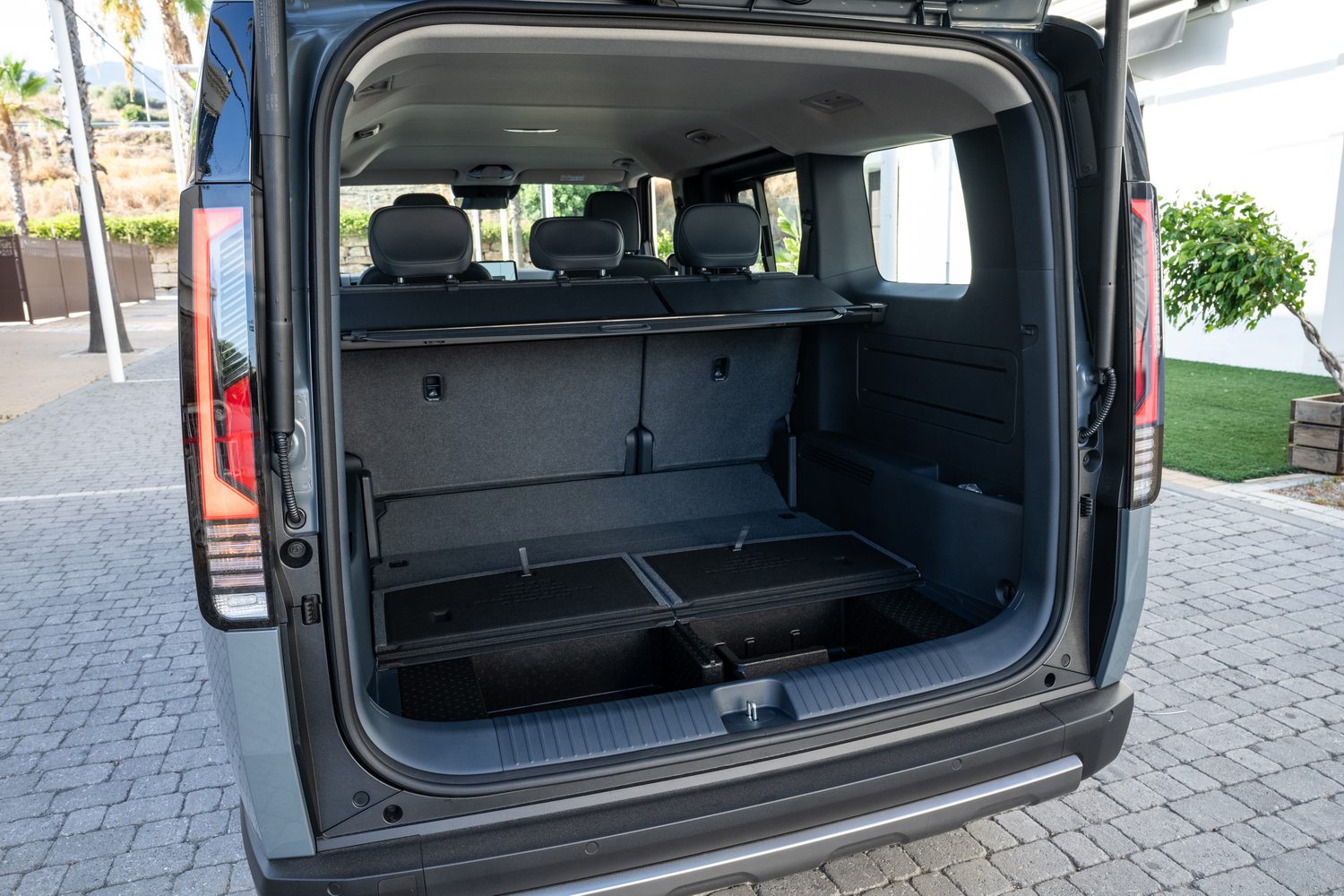
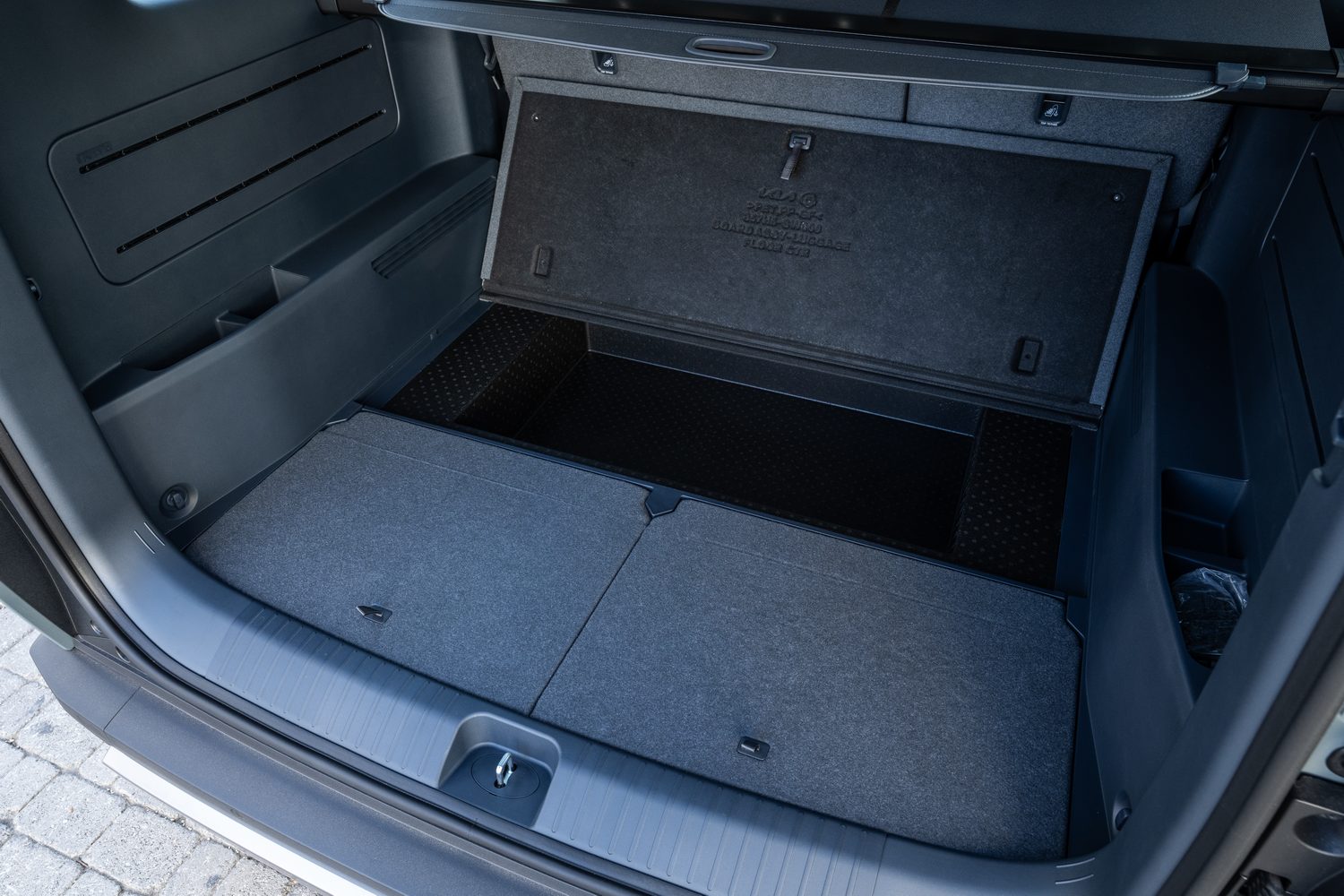
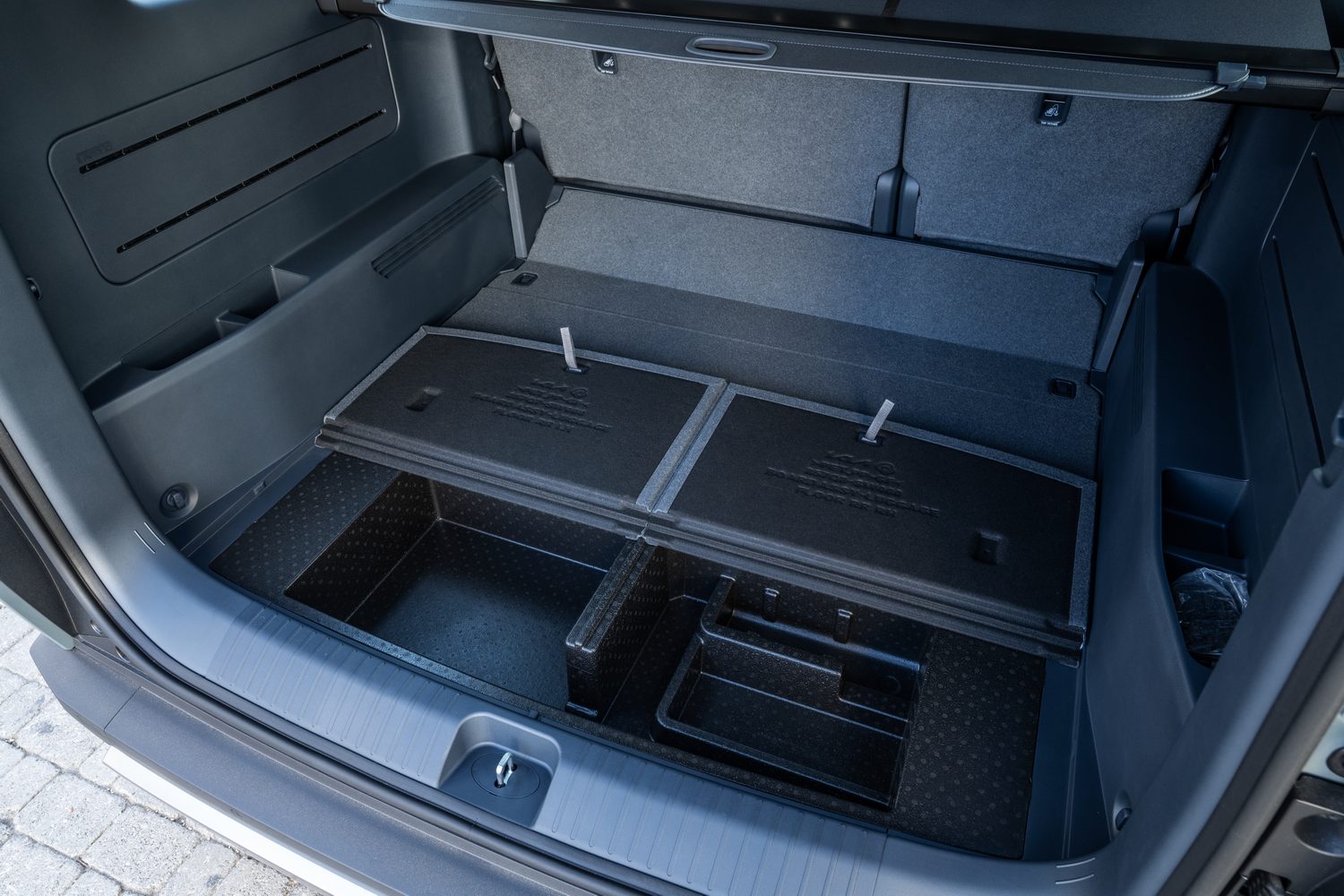
In the five-seat configuration, there's ample cargo space, with 1,320 litres when all seats are upright. These can be folded down to boost volume further. Kia gives the PV5 Passenger a towing capacity of up to 1,500kg.
As the PV5 Passenger is built on an evolution of the electric platform that underpins Kia's other models, such as the EV6 and EV9, it gets all of the latest safety and driver assistance systems available, including multiple collision avoidance systems, such as a safe exit warning that alerts you to the presence of a vehicle or cyclist if you attempt to open the door.

A driver-facing monitor keeps an eye on you to make sure you're not distracted, and the very useful blind-spot monitor displays a live feed from cameras in the mirrors to give you an enhanced view of anything that may be in your blind spot. This system is an excellent supplement to the mirrors and is especially useful when joining motorways.
Other safety tech includes adaptive cruise control with lane-following assist and a 360-degree camera system that lets you move the view around with your finger to see everything that's around the car.
The PV5 Passenger is equipped with seven airbags, including a central airbag up front to prevent passengers from colliding in the event of a crash.
Performance of the 2026 Kia PV5 Passenger
- Polished driving experience
- Smooth power delivery
- Quiet on the move

Generally speaking, most van-based passenger models don't drive with anywhere near the same level of comfort or refinement as dedicated passenger cars. The switch to electric powertrains in recent years has helped reduce this gulf, though, and the Kia goes one step further with the PV5 Passenger.
Let's start with the noise, or general lack thereof. You see, Kia wanted to make the PV5 as efficient as possible and did things like enclosing much of the underbody to aid airflow and aerodynamics.
The shape of the whole front end and even the mirrors have been considered so as to generate less noise on the move. Even the way in which the side windows sit flush with the bodywork is all about helping boost range and reducing noise.

The result is a pretty quiet cabin even at motorway cruising speeds. Of course, being electric also helps, as there's little to no noise from the electric motor, even though it's located on the front axle driving the front wheels.
The PV5's power delivery is linear and smooth, though it's not the most potent of electric people movers. Kia instead has kept the performance at a level that works in the real world, and no, we aren't expecting a high-performance 'GT' version of the PV5 to come along.
The 163hp motor gets things up to speed in a reasonable manner, and the PV5 feels quite stable and surefooted. The low centre of gravity complements the suspension setup, which is on the more advanced side for this segment of the market. It soaks up bumps well and retains composure even on less well-paved road surfaces.

Many will like the elevated driving position, which is taller than in most SUVs. Despite its size, the PV5 is easy to place on the road, and a class-leading (according to Kia) 5.5-metre turning circle is testament to its manoeuvrability. It's also worth mentioning that it's an easy car to drive from the perspective of how the various assistance systems come together.
Of course, the speed limit warning system that's now the norm doesn't always get it right, and it's not as easy to deactivate as on some other vehicles, but that aside, the lane-keep and lane-following systems as part of the adaptive cruise control are useful, and the ability to alter the levels of energy recuperation is a plus in our books.
When set to its highest, the 'i-Pedal 3.0' system is great for town and city driving, making it easy to slow the PV5 down to a stop by modulating only the accelerator pedal.
Running costs, charging and range of the 2026 Kia PV5 Passenger
- Fast charge in 30 minutes
- Up to 412 kilometres of range
- V2L functionality

There are two battery sizes available for the Kia PV5 Passenger: a 51.5kWh and a 71.2kWh pack. The WLTP range for the smaller battery is 295 kilometres, versus 412 kilometres for the larger capacity battery.
AC charging at up to 11kW is standard with a full charge taking 4 hours 45 minutes for the 51.5kWh battery or 6 hours 30 minutes for the 71.2kWh unit.
Using a domestic wallbox that is capped at 7.4kW will take longer of course. Kia will offer a 22kW charging option for the PV5, though this is more useful in industrial settings where three-phase power is more common.
All versions get a 150kW DC charge rate that is sufficient to recharge from 10 to 80 per cent capacity in around 30 minutes. Kia also equips the PV5 with a heat pump to improve efficiency.
As in other Kia models, the PV5 Passenger is capable of bi-directional charging with Vehicle-to-Load (V2L) and even Vehicle-to-Vehicle (V2V), with some markets offering Vehicle-to-Grid (V2G) whereby the PV5 can power a home in the event of a power cut.
Irish pricing & rivals of the 2026 Kia PV5 Passenger
- Starts at €42,550 for PV5 Passenger
- Usual seven-year warranty from Kia
- More variants to follow

The Kia PV5 Passenger will have a starting price of €42,550 in Ireland for a model using the larger capacity battery, and it will be available to order through a network of nine dedicated 'PBV' dealers nationwide. All PV5s are available with 3.9 per cent PCP finance and are accompanied by Kia's usual seven-year warranty.
There are some interesting rivals to the PV5 Passenger, most notable of which is the seven-seat Volkswagen ID. Buzz. There are other van-derived passenger models to consider, including the Peugeot e-Traveller and Citroen e-Spacetourer.
Verdict - should you buy the 2026 Kia PV5 Passenger
The Kia PV5 Passenger is a great addition to the van-derived passenger vehicle market, even if its electric-only powertrain doesn't have mainstream appeal as yet. Being designed as both a panel van and a passenger vehicle from the outset has meant little compromise inside. With other variants coming down the line with additional seating, this is a model that will make for a great rival to some established names and serves as an alternative to large SUVs.
FAQs about the 2026 Kia PV5 Passenger
Can the Kia PV5 be registered as a private vehicle?
Yes, there's no reason why a van or in this instance a PV5 Passenger, can't be registered to private individuals; you don't need to have a business. There are some minor differences, such as tax on the purchase price, if buying privately rather than through a company.
Is the Kia PV5 Passenger suitable as a taxi?

Yes, the PV5 would function well as a taxi due to its ease of access for passengers, generous luggage space and, in time, the option of higher capacity seating options. There's also a wheelchair accessible version coming that will be outfitted in the factory.
Want to know more about the Kia PV5 Passenger?
If there's anything about the Kia PV5 we've not covered, or you'd like help in choosing between it and other cars, you can avail of our expert advice service via the Ask Us Anything page.
If there is anything about this car we have not covered, or you would like help choosing between it and other cars, you can avail of our expert advice service via the Ask Us Anything page.