


Exterior & design of the 2026 Jeep Compass
- Longer wheelbase than before
- Hard-wearing bumpers
- Dedicated off-road package available

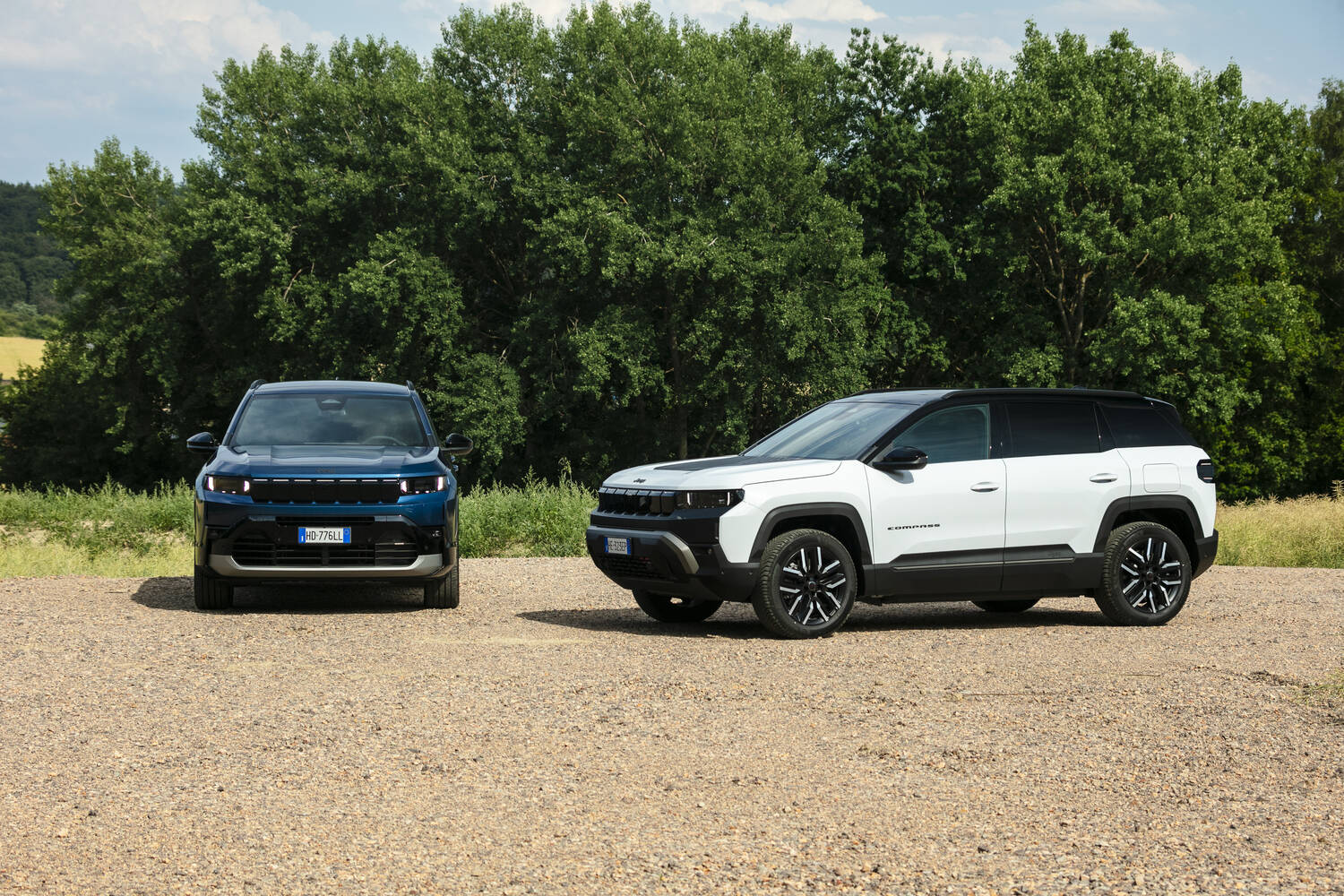
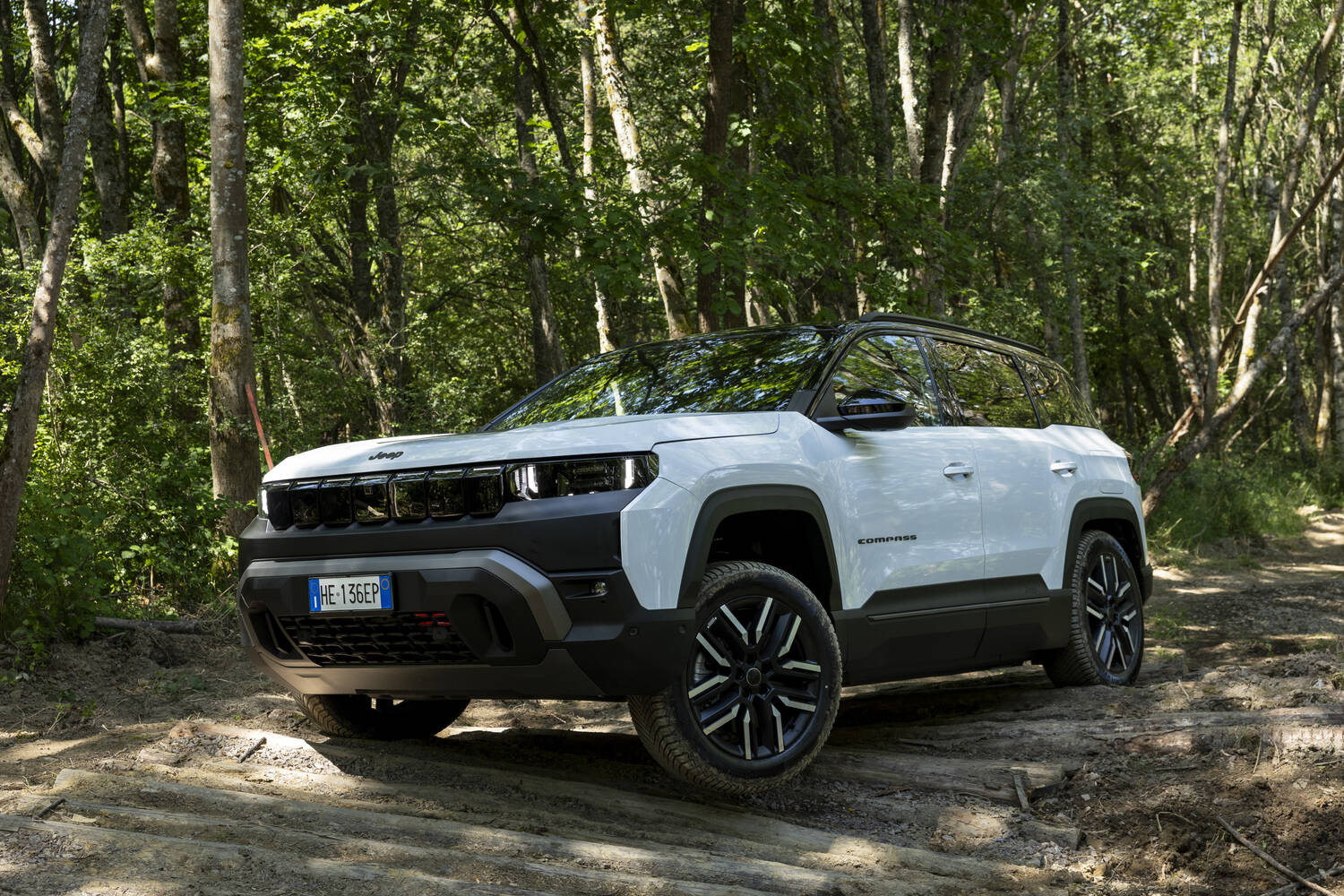
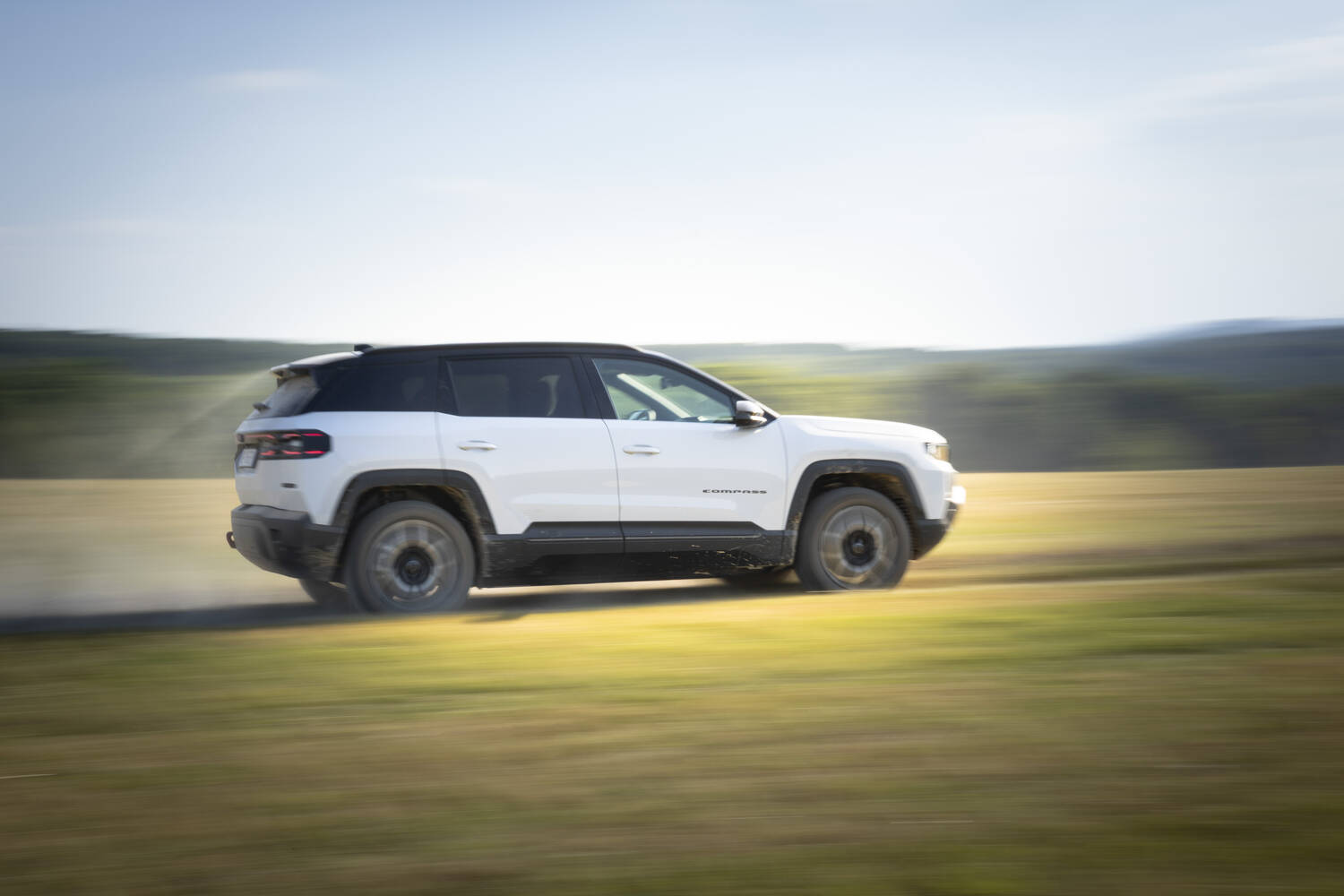
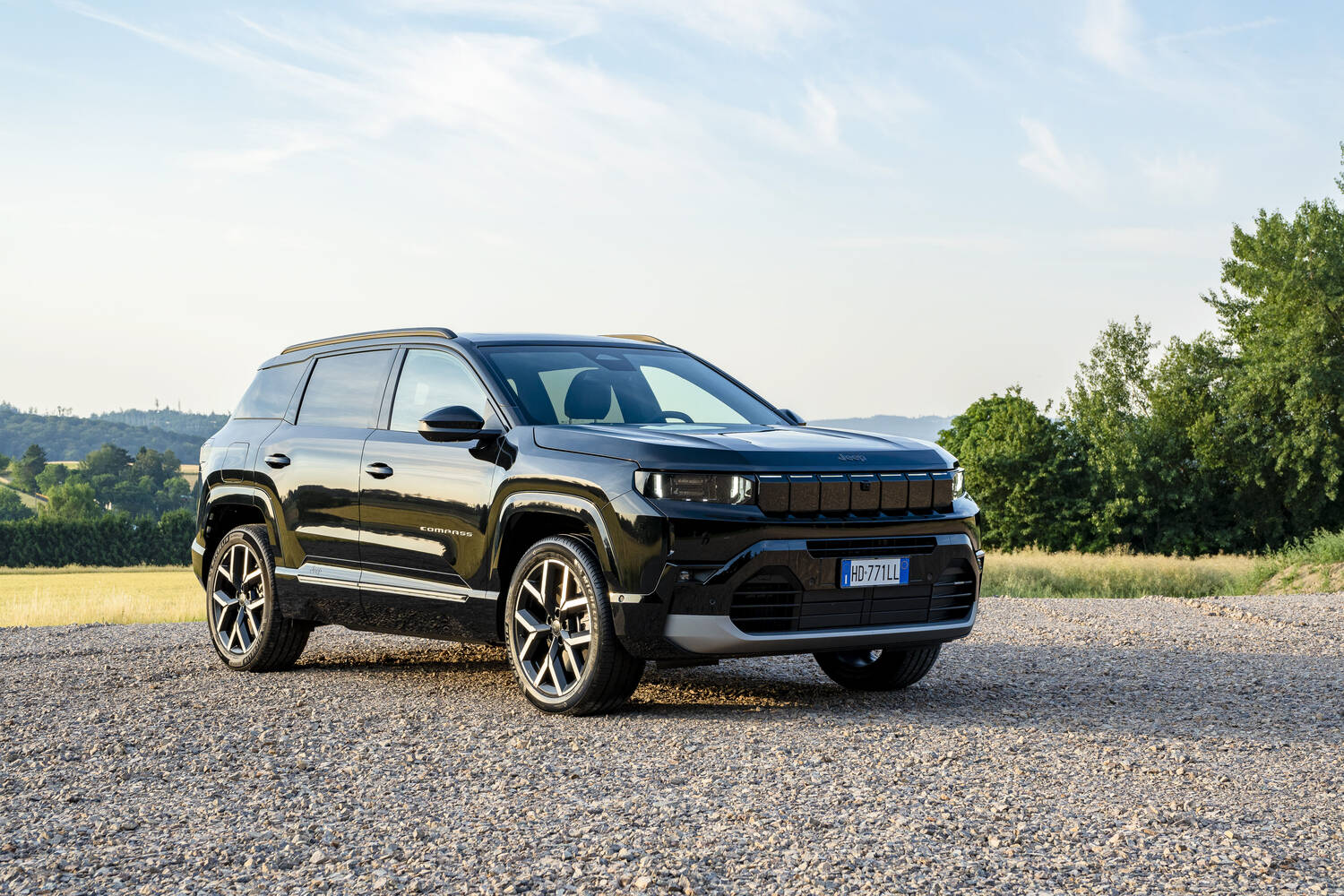
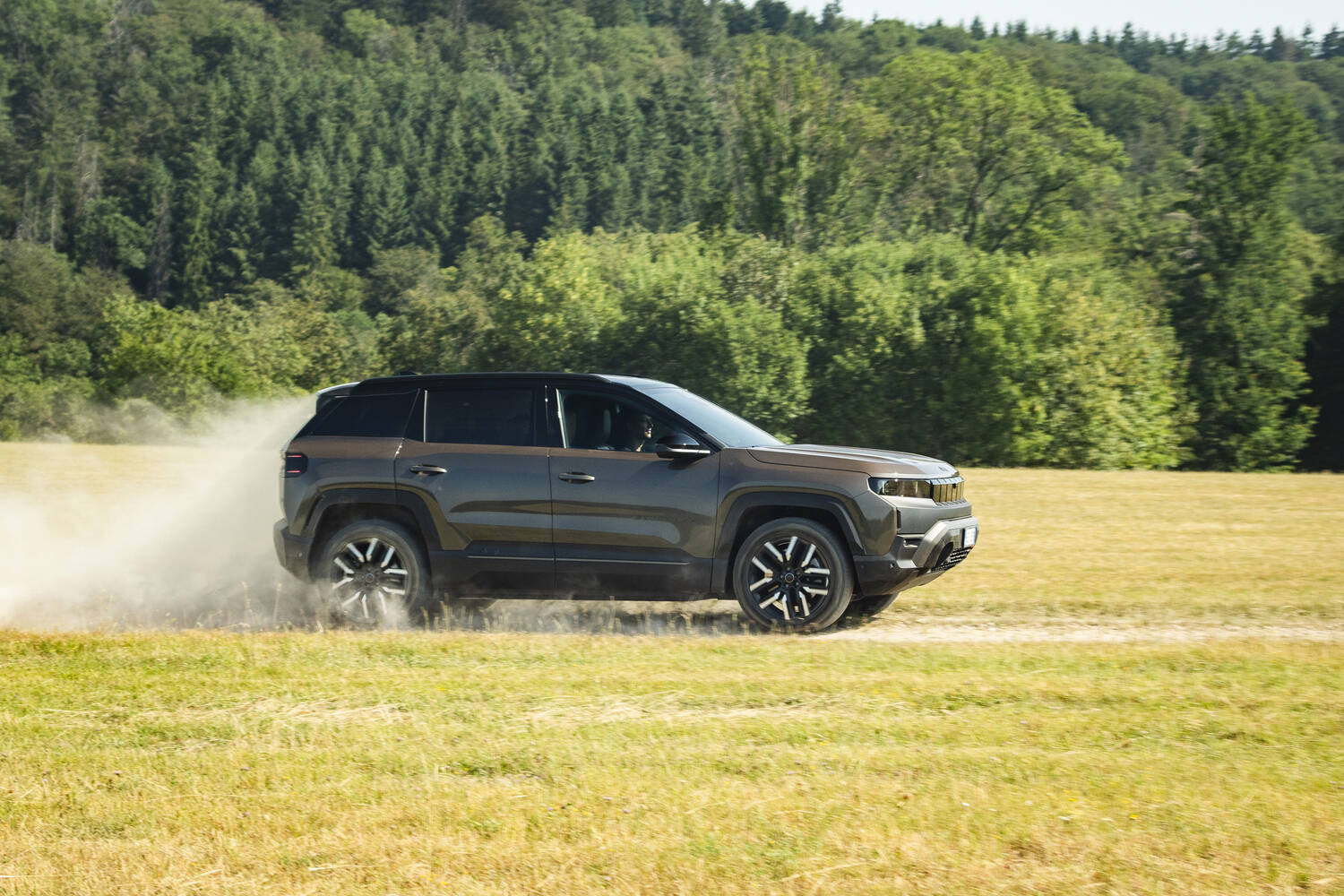
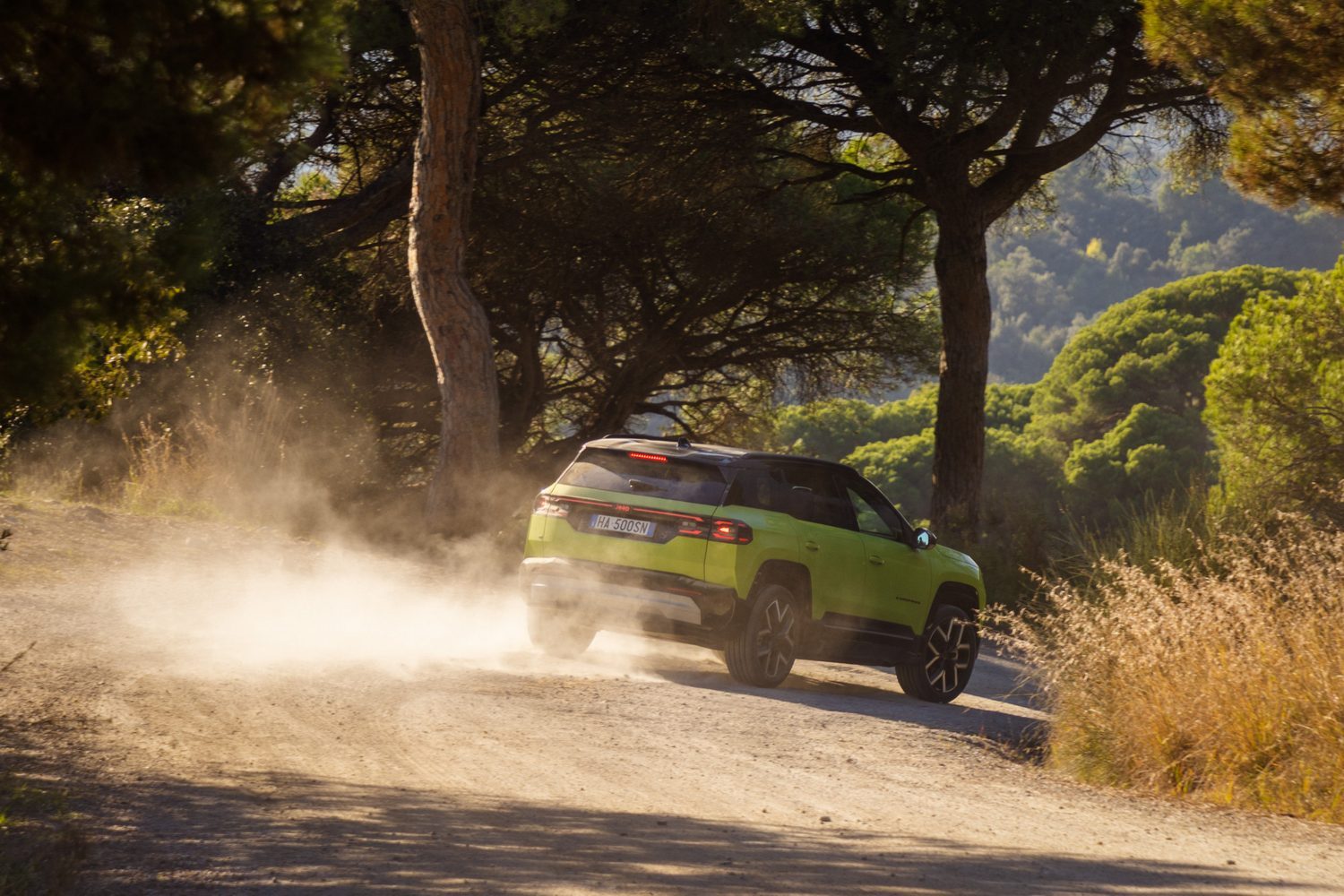
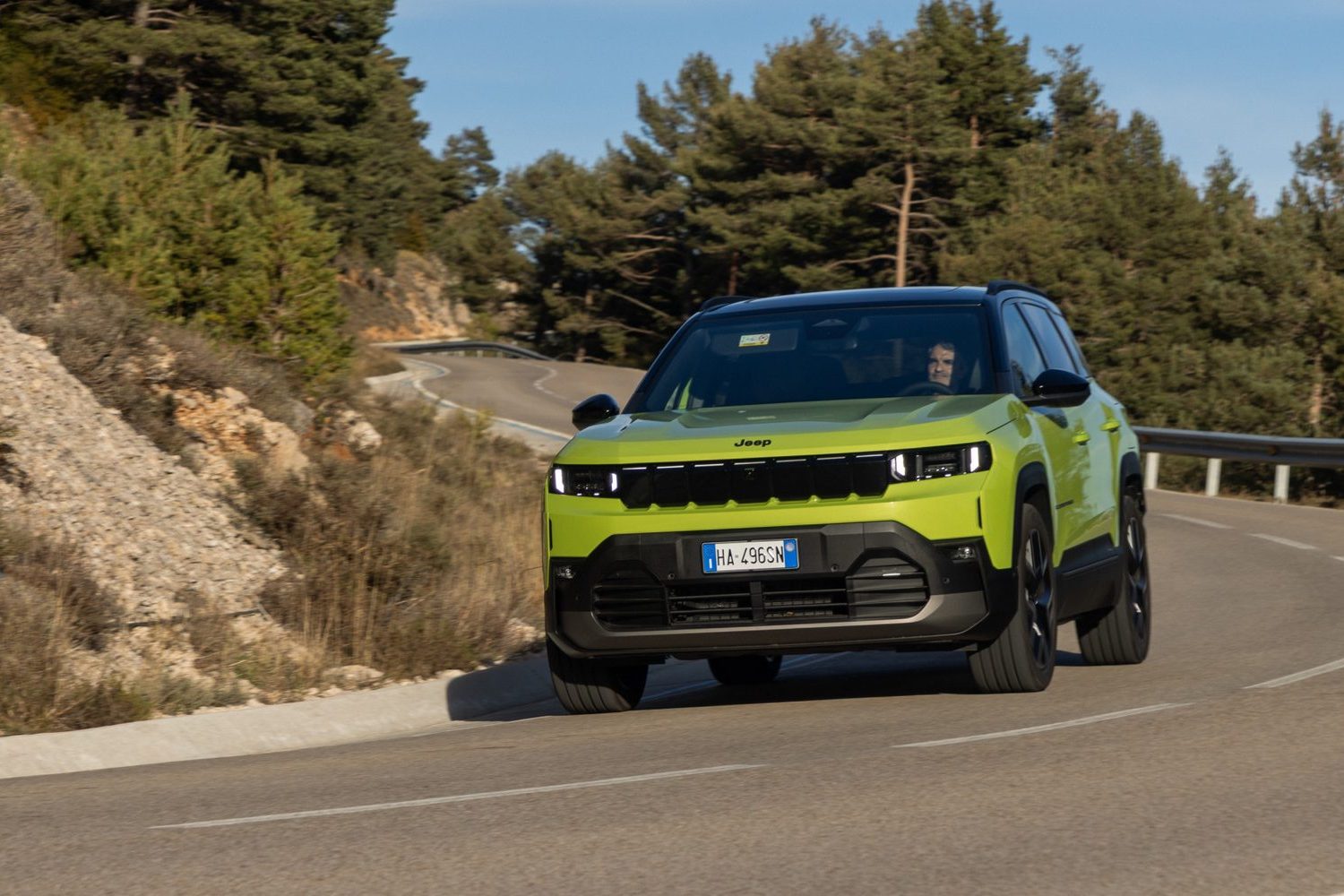
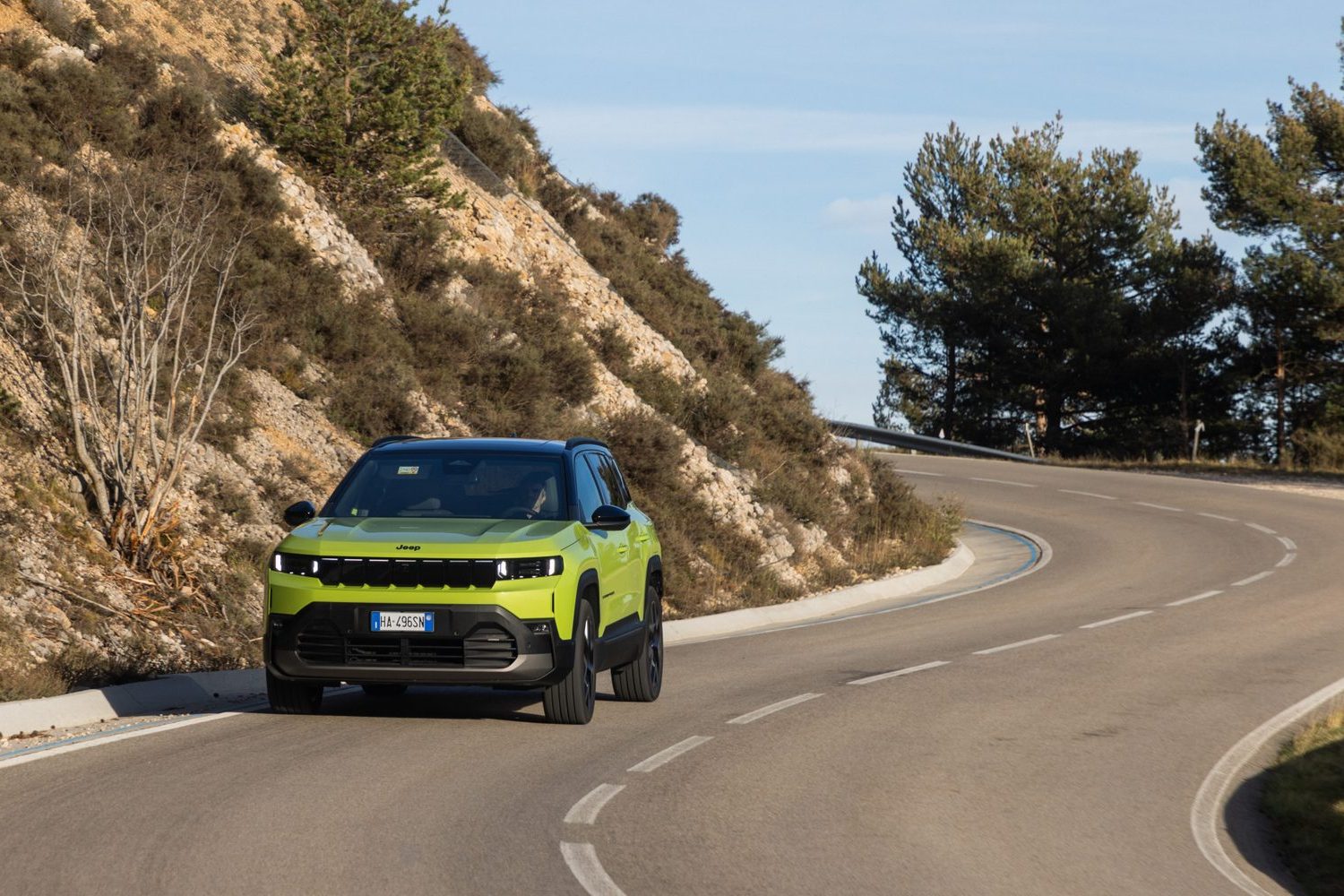
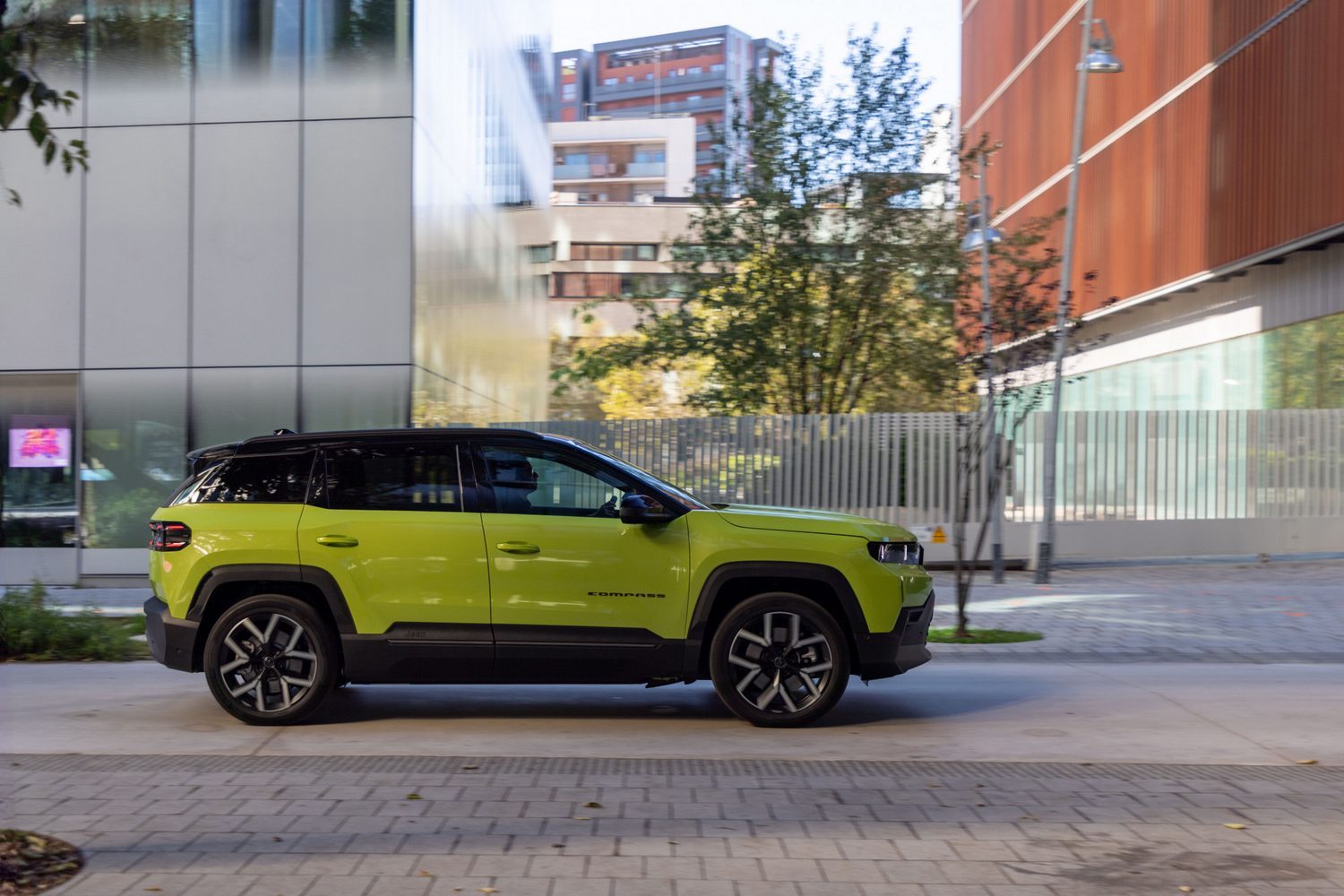
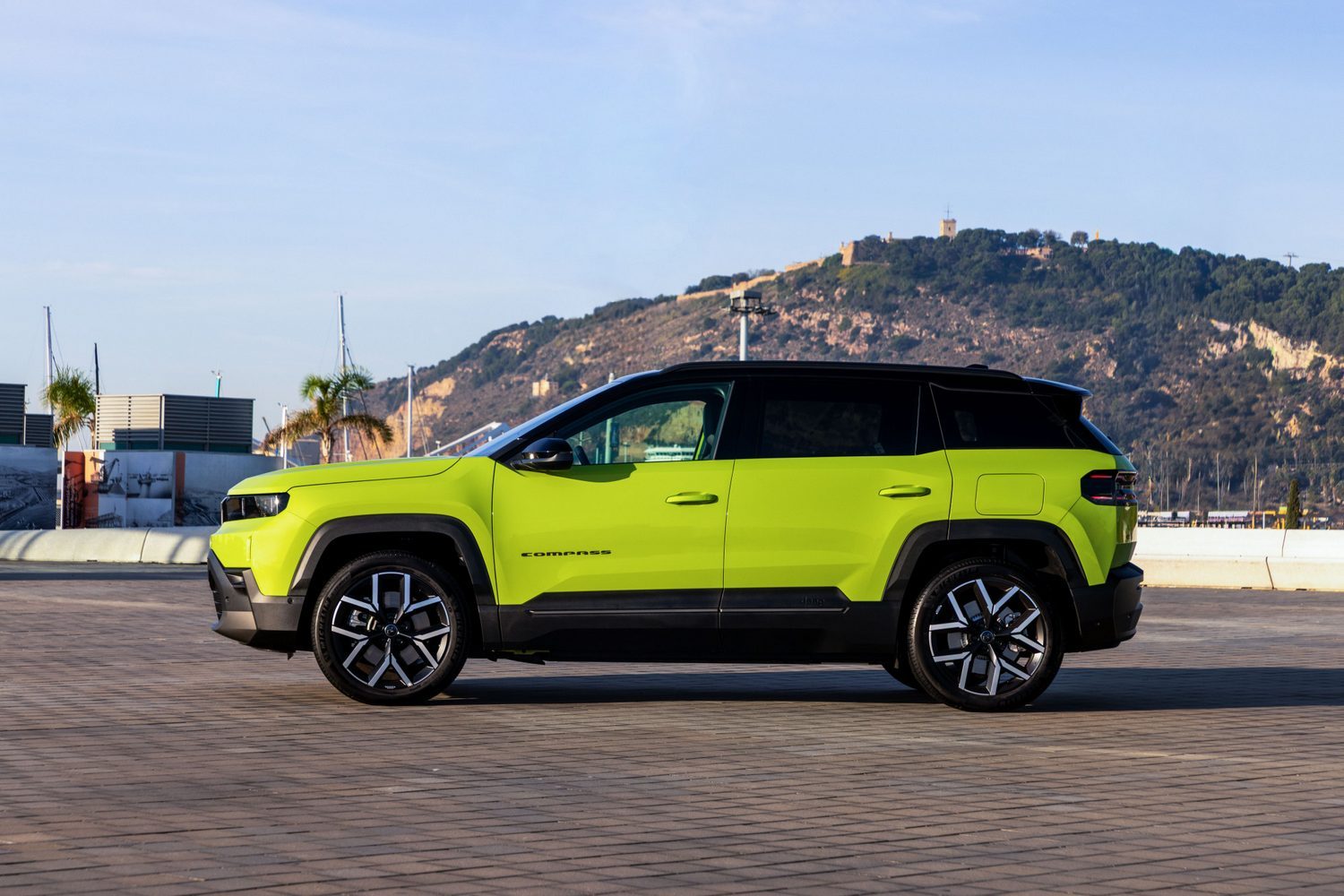
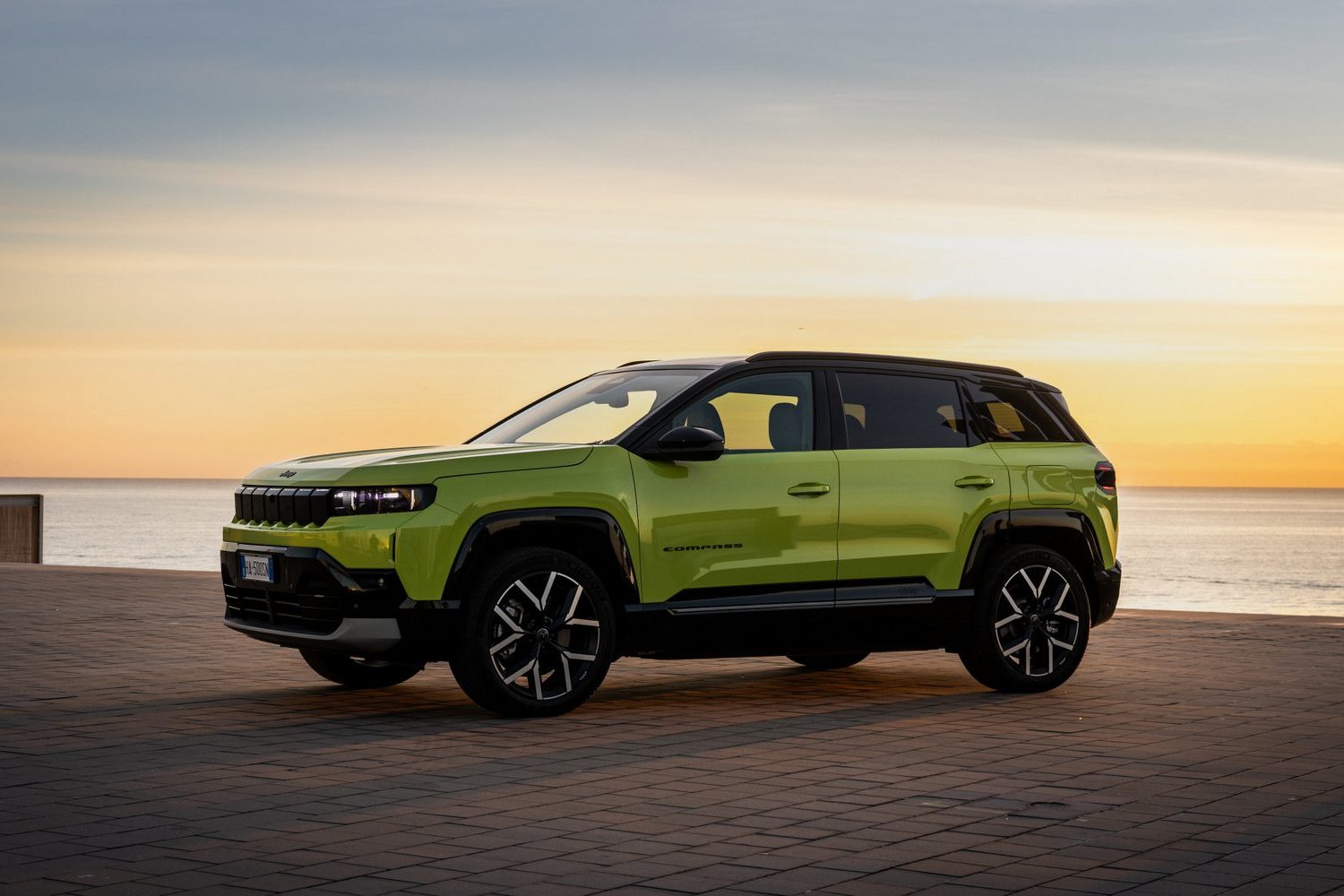
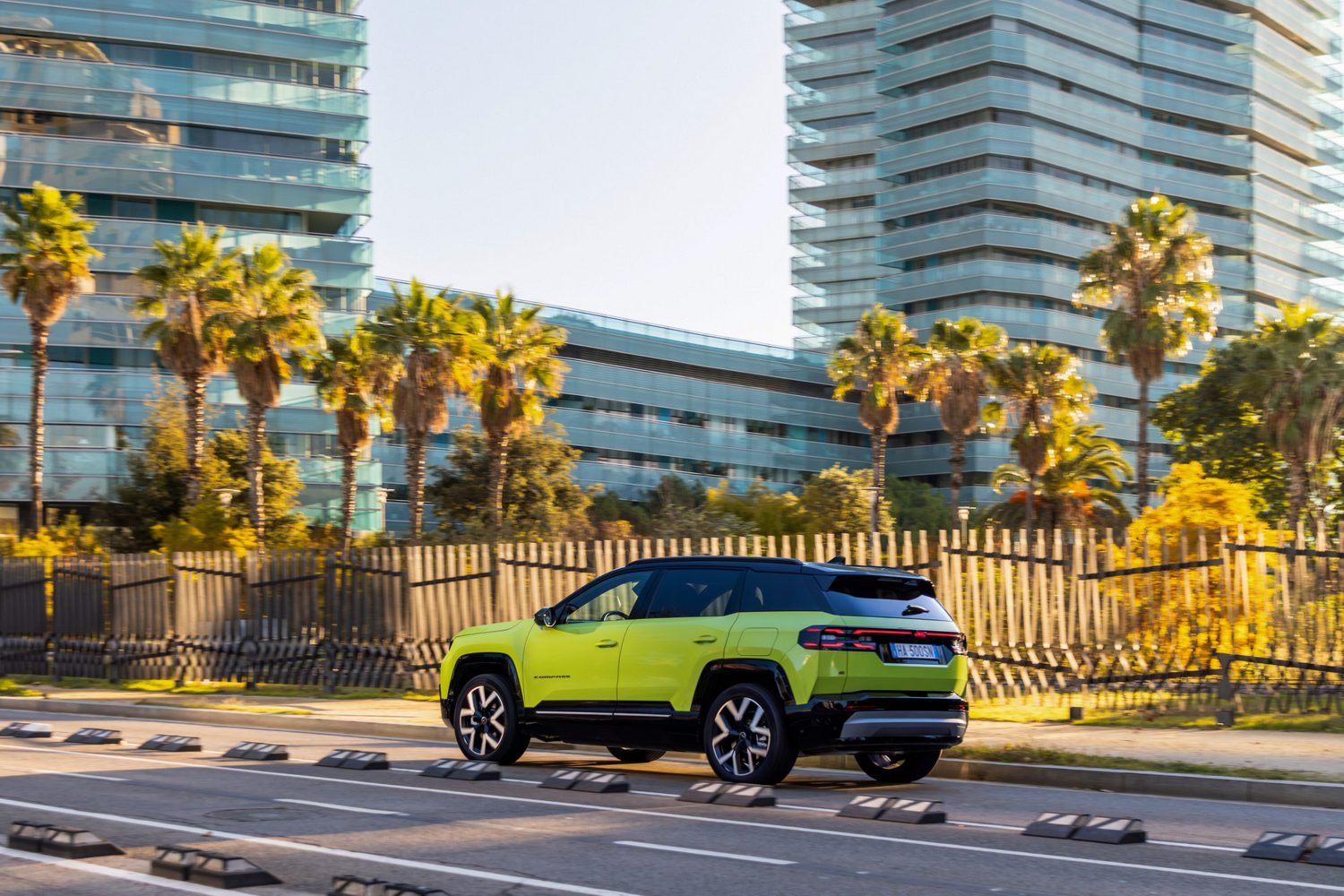
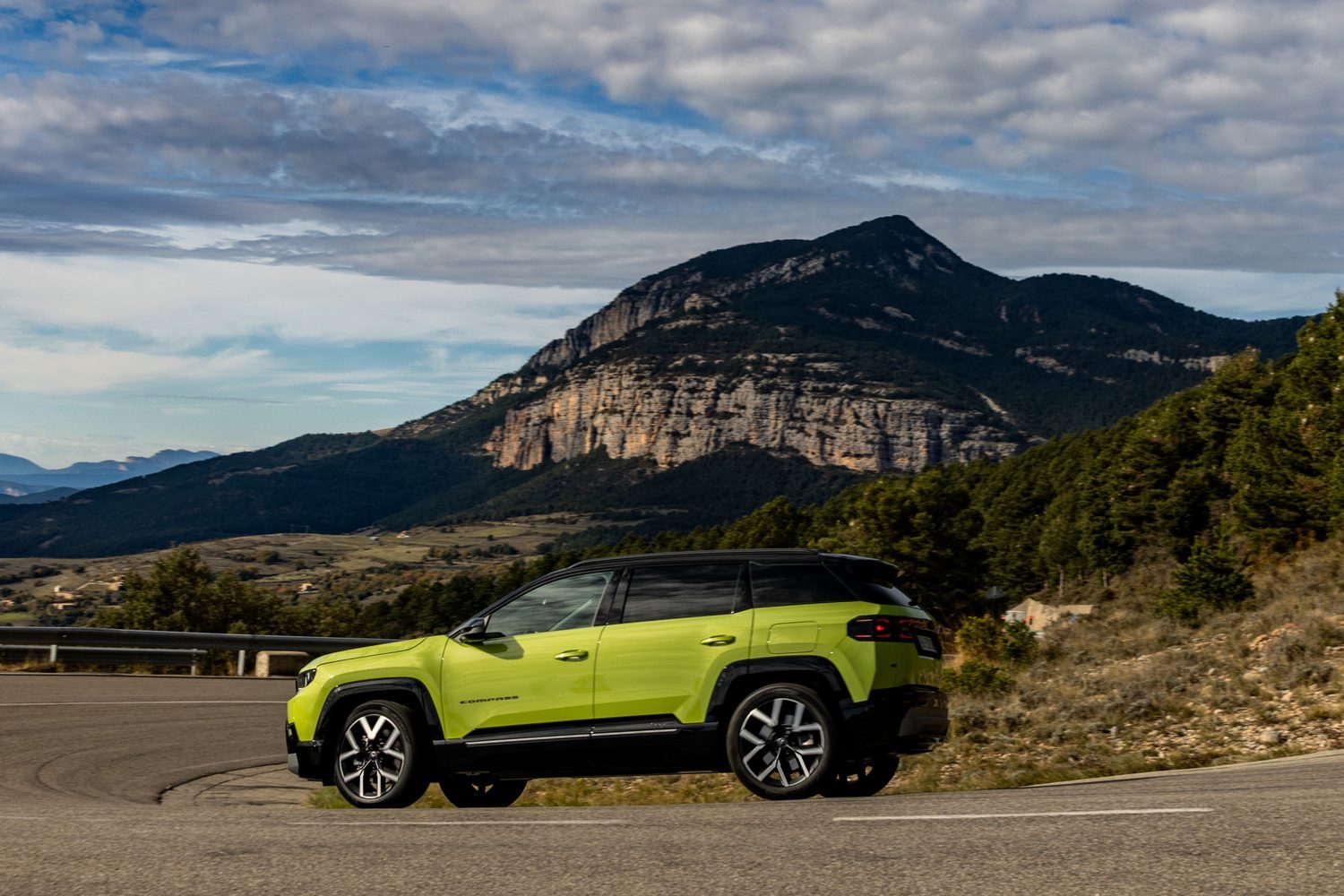
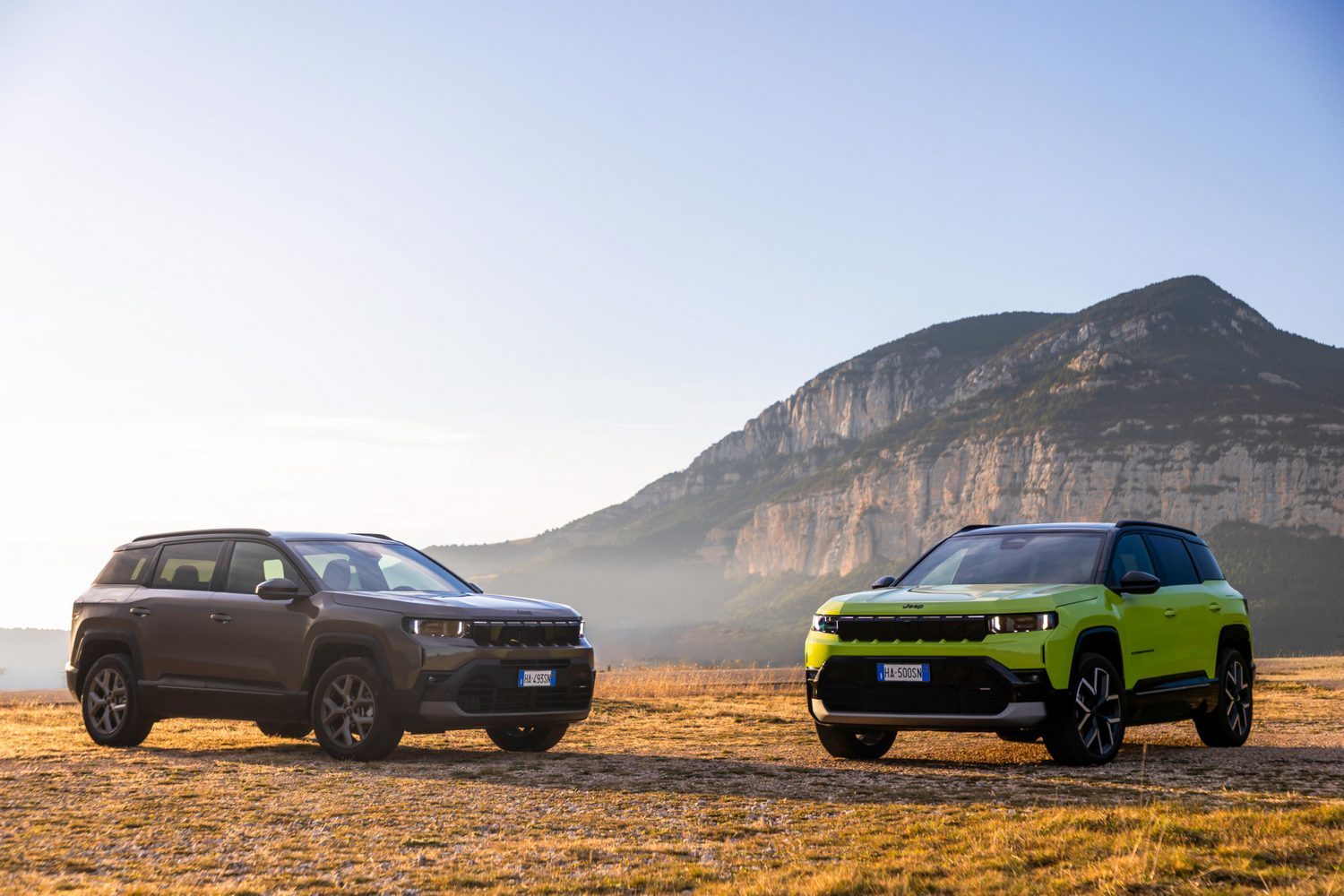
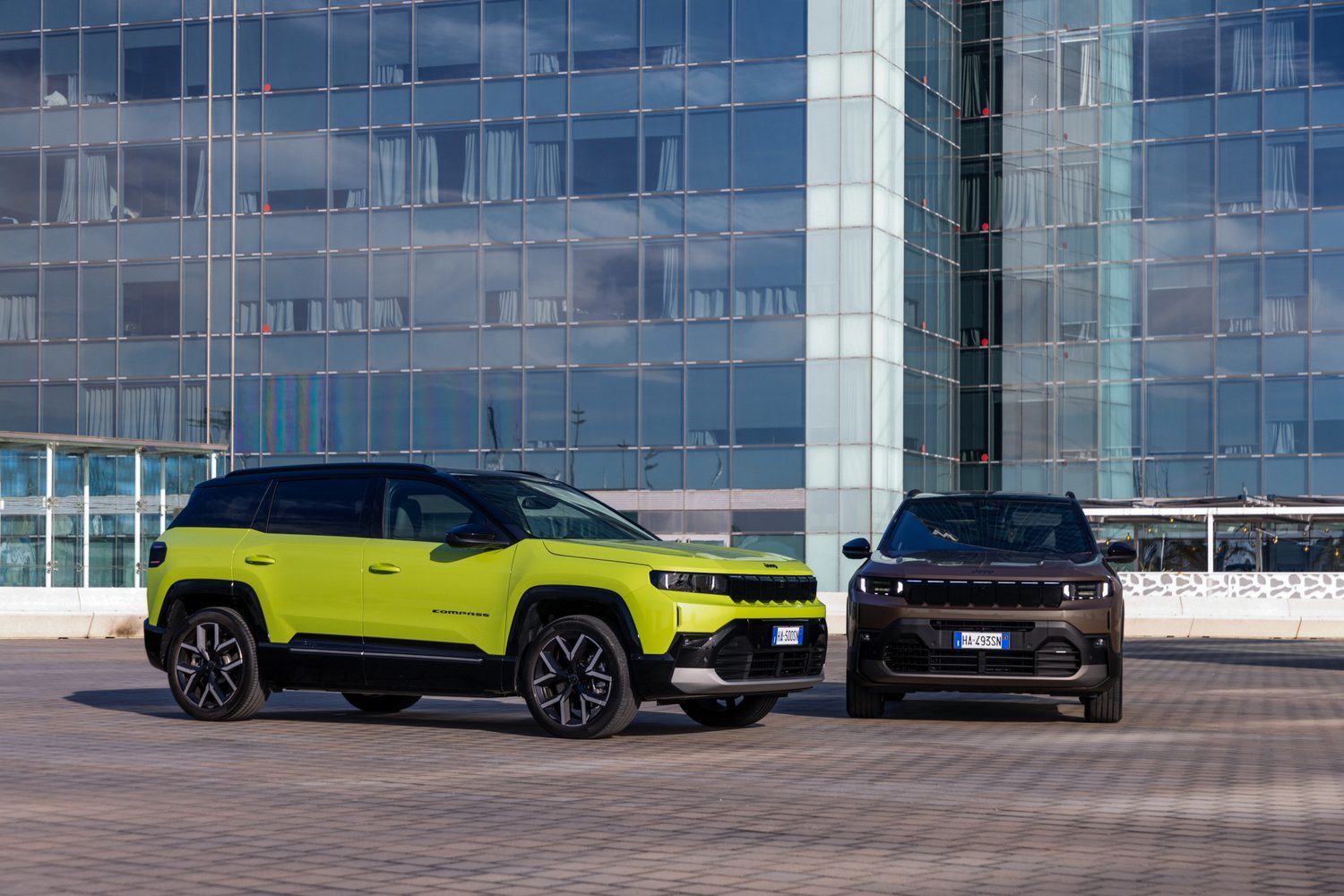
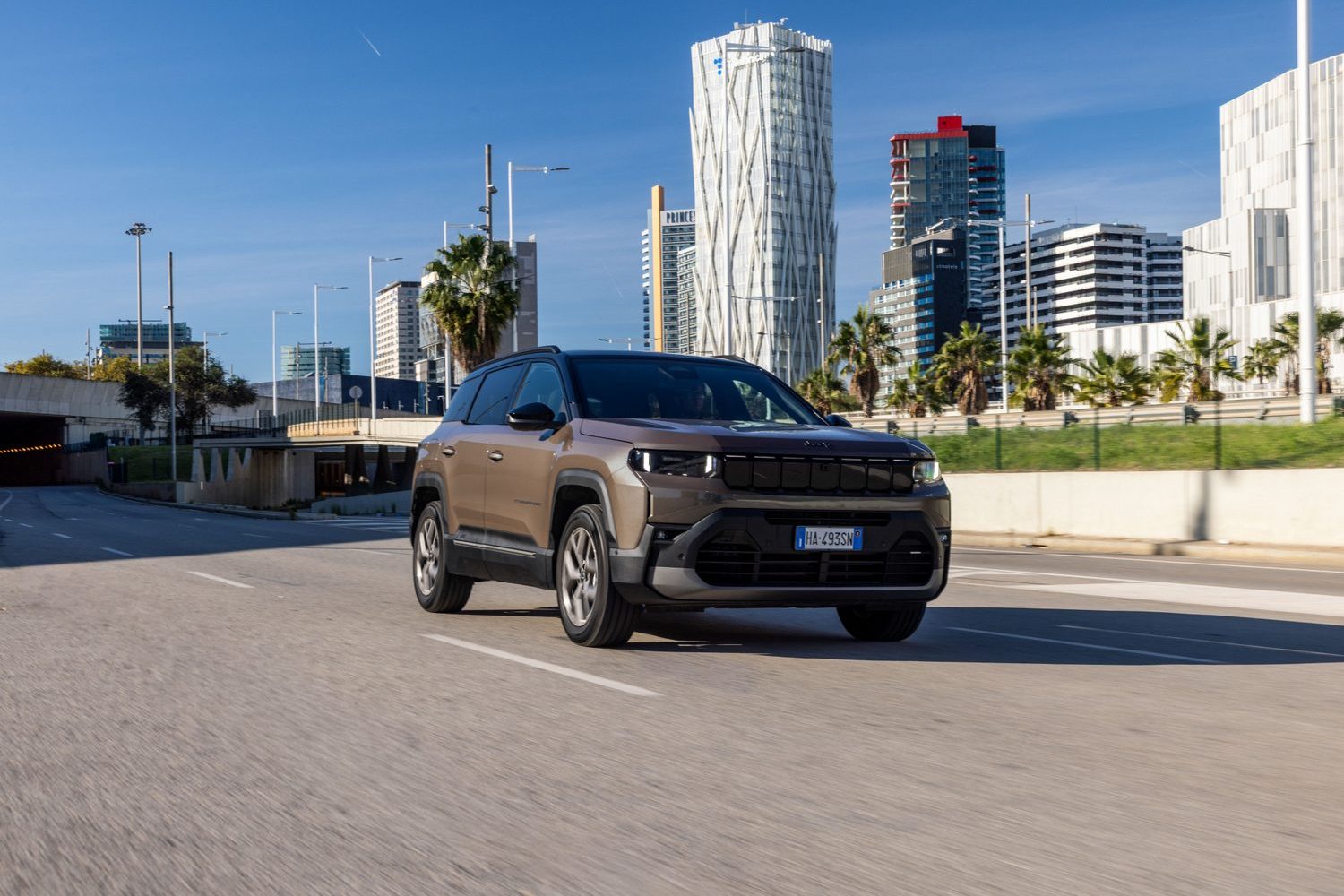
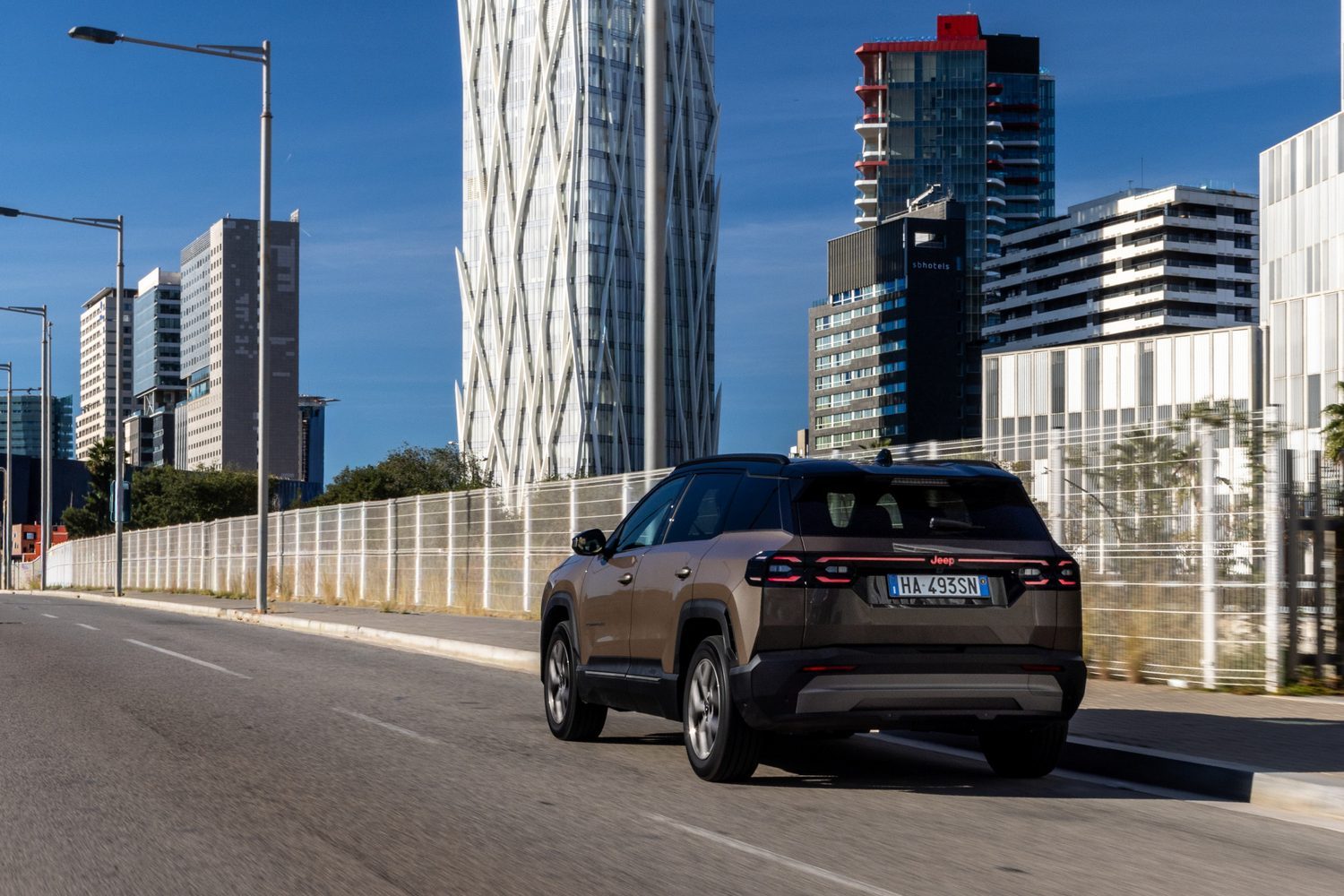
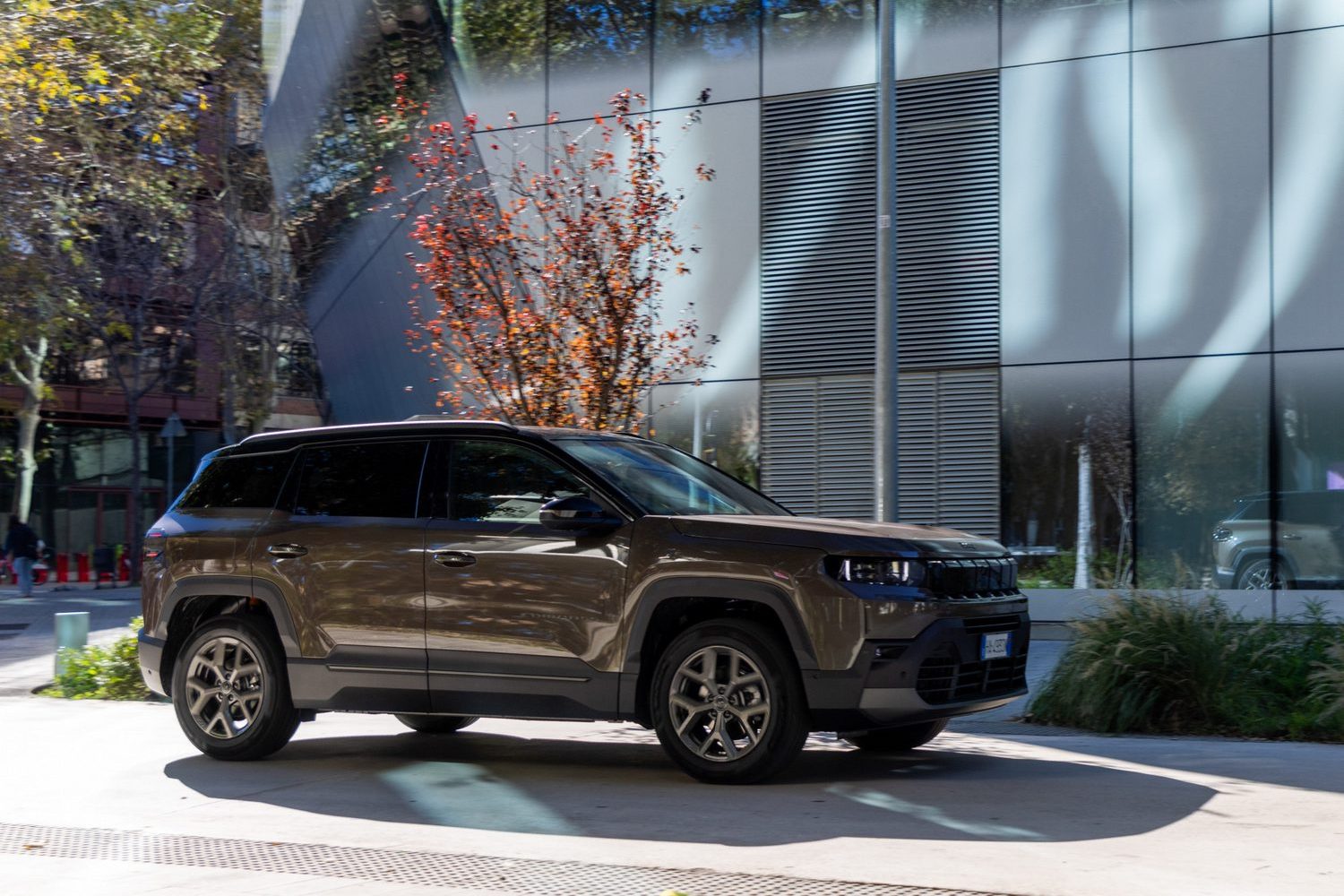
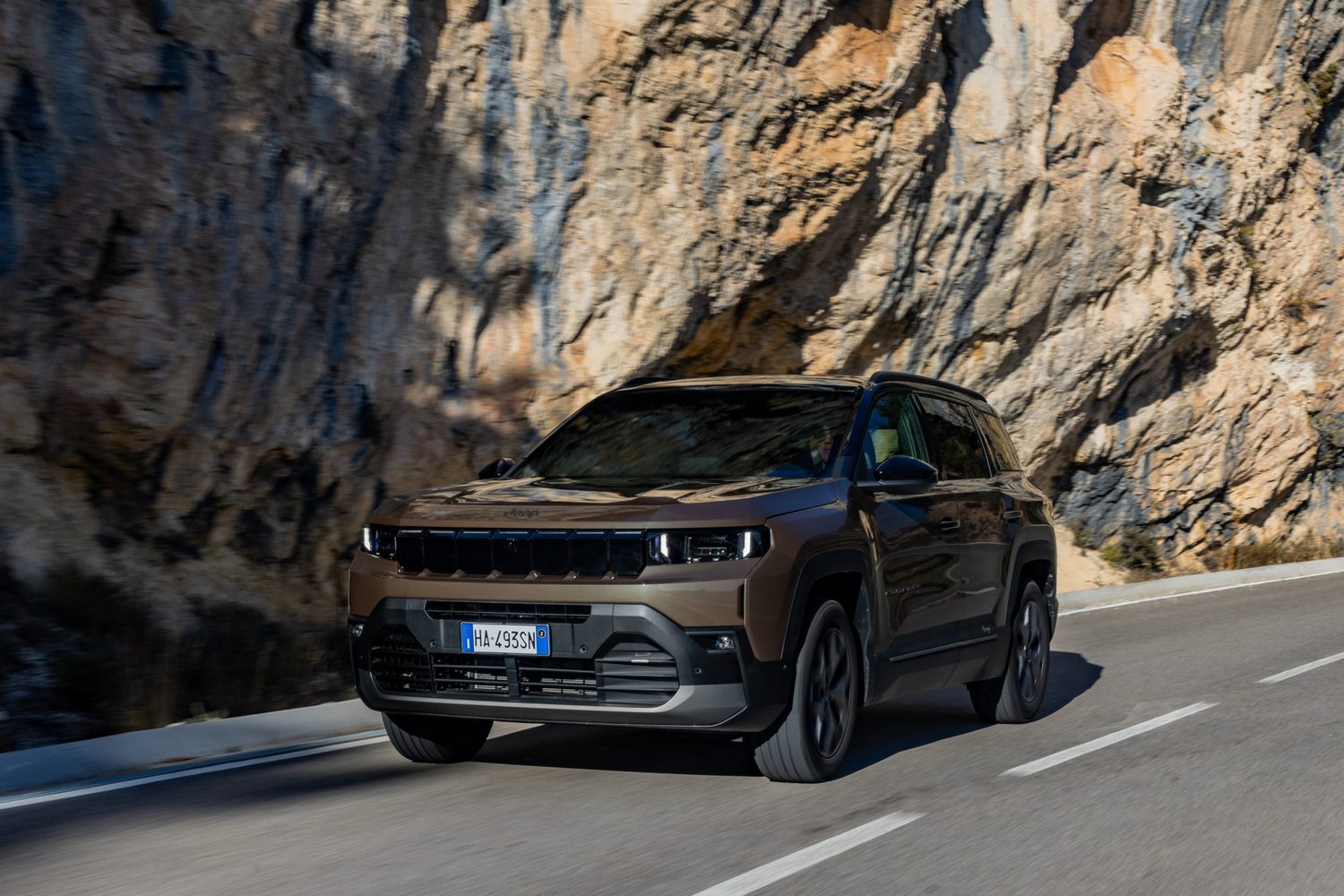
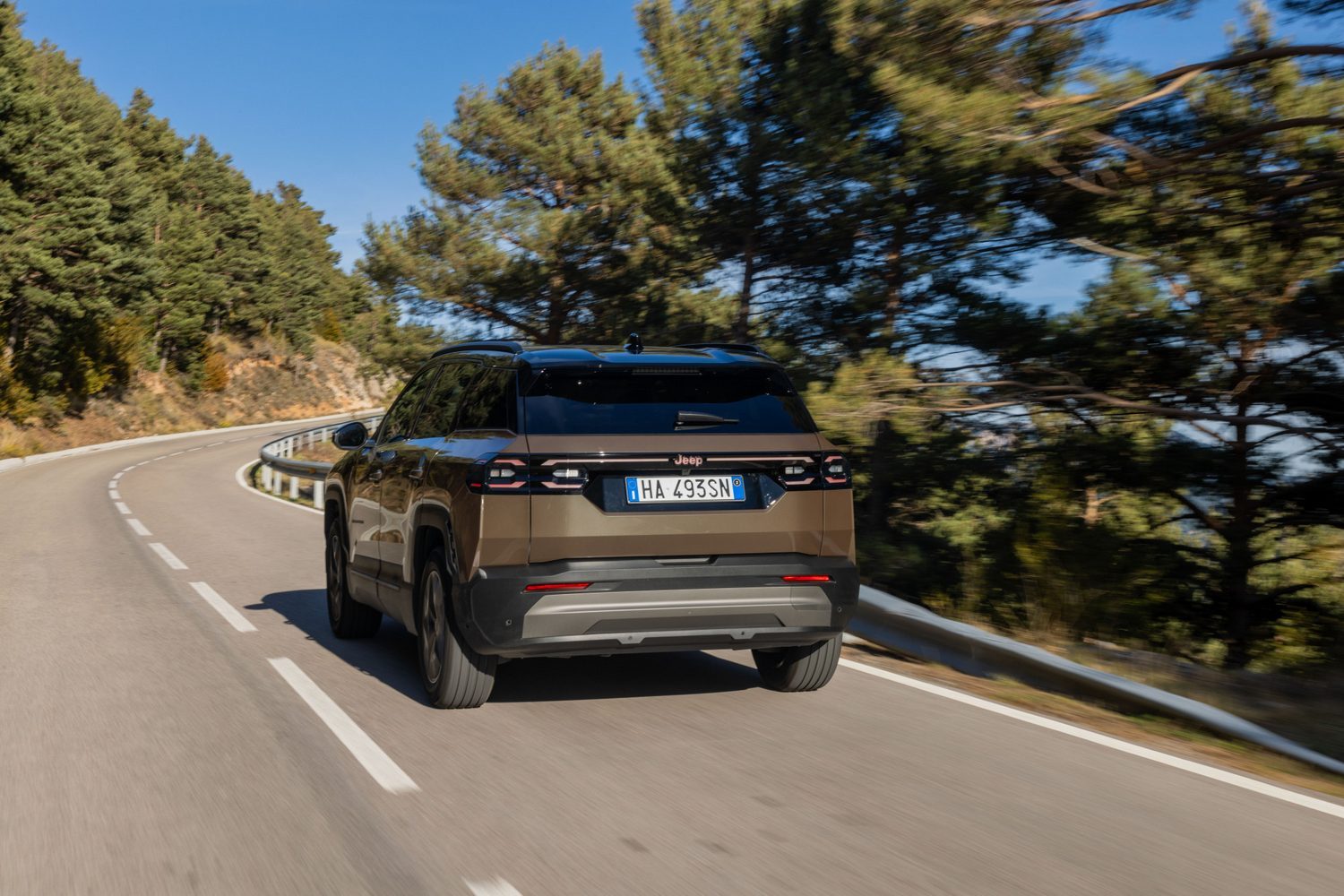
The design of the Jeep Compass plays on the tough, rugged image that the brand is known for, with a blockier and more purposeful silhouette than its predecessor.
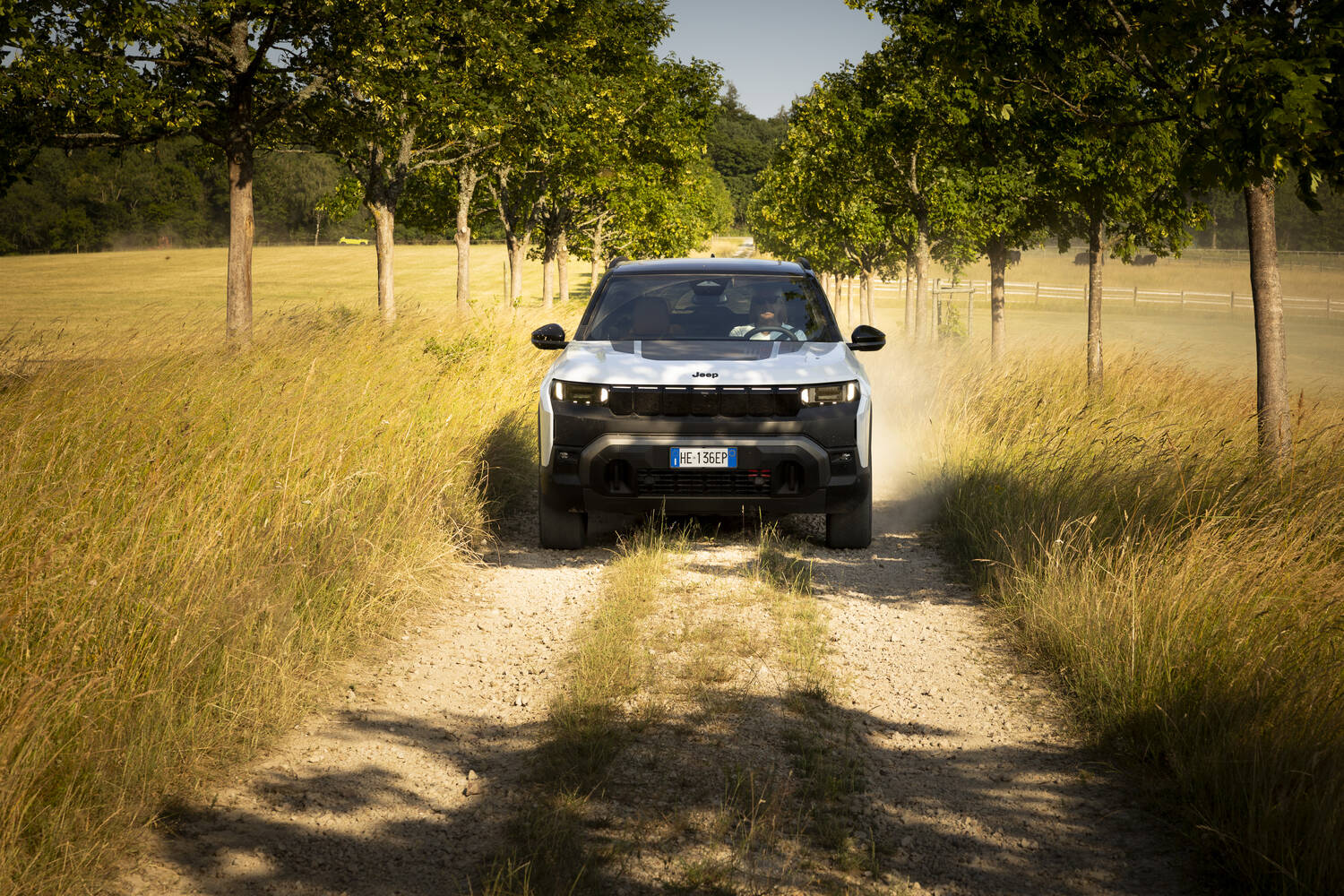
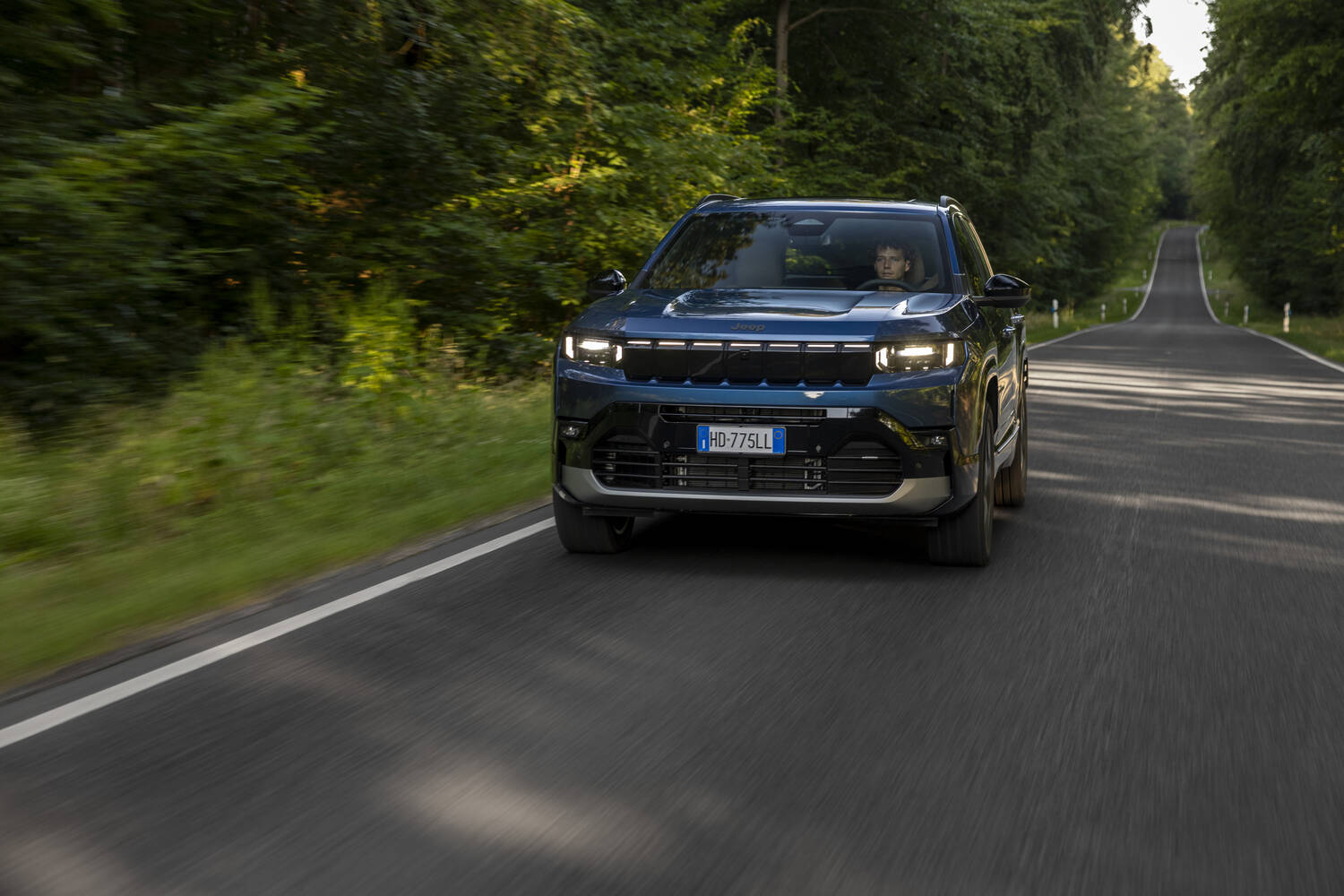
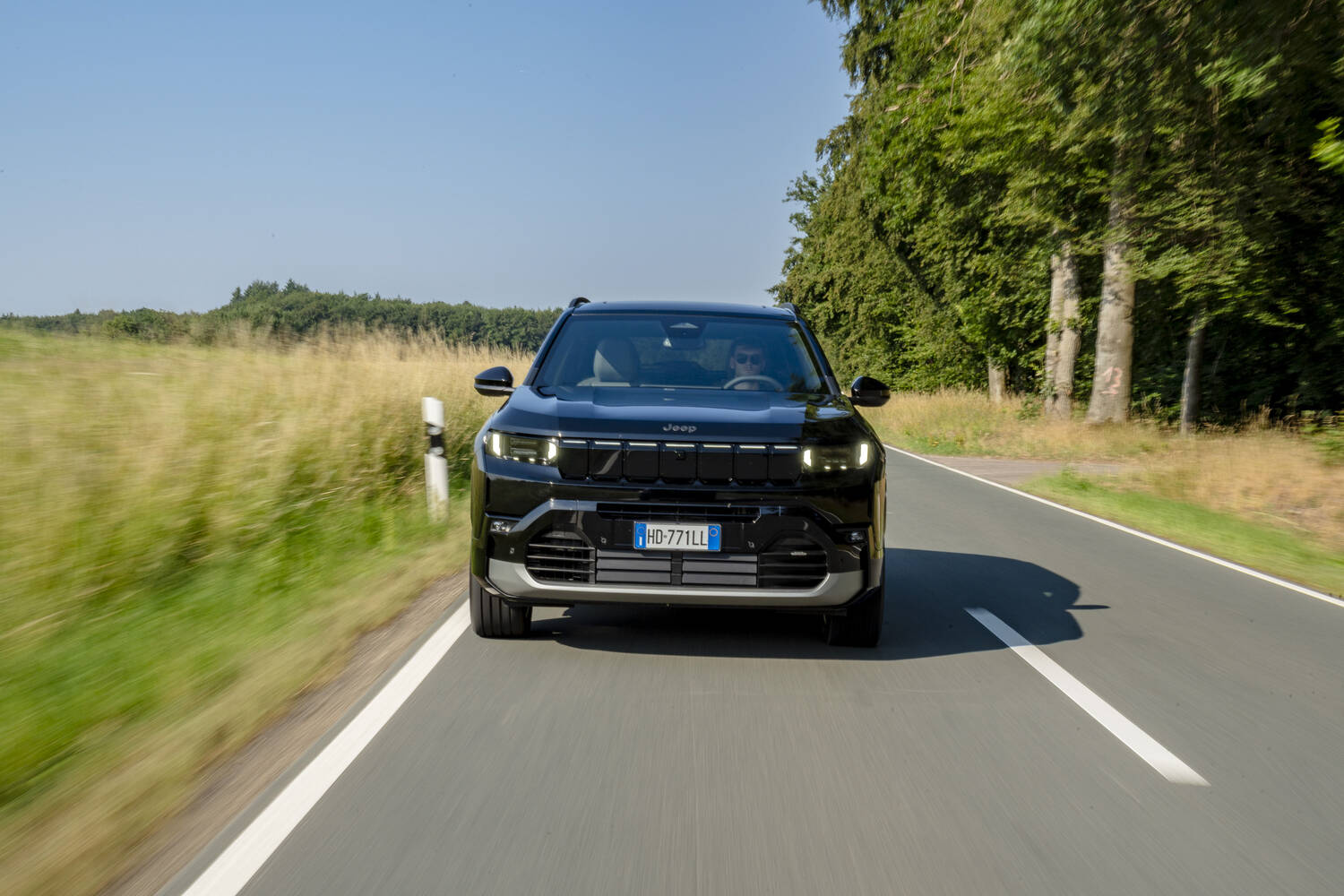
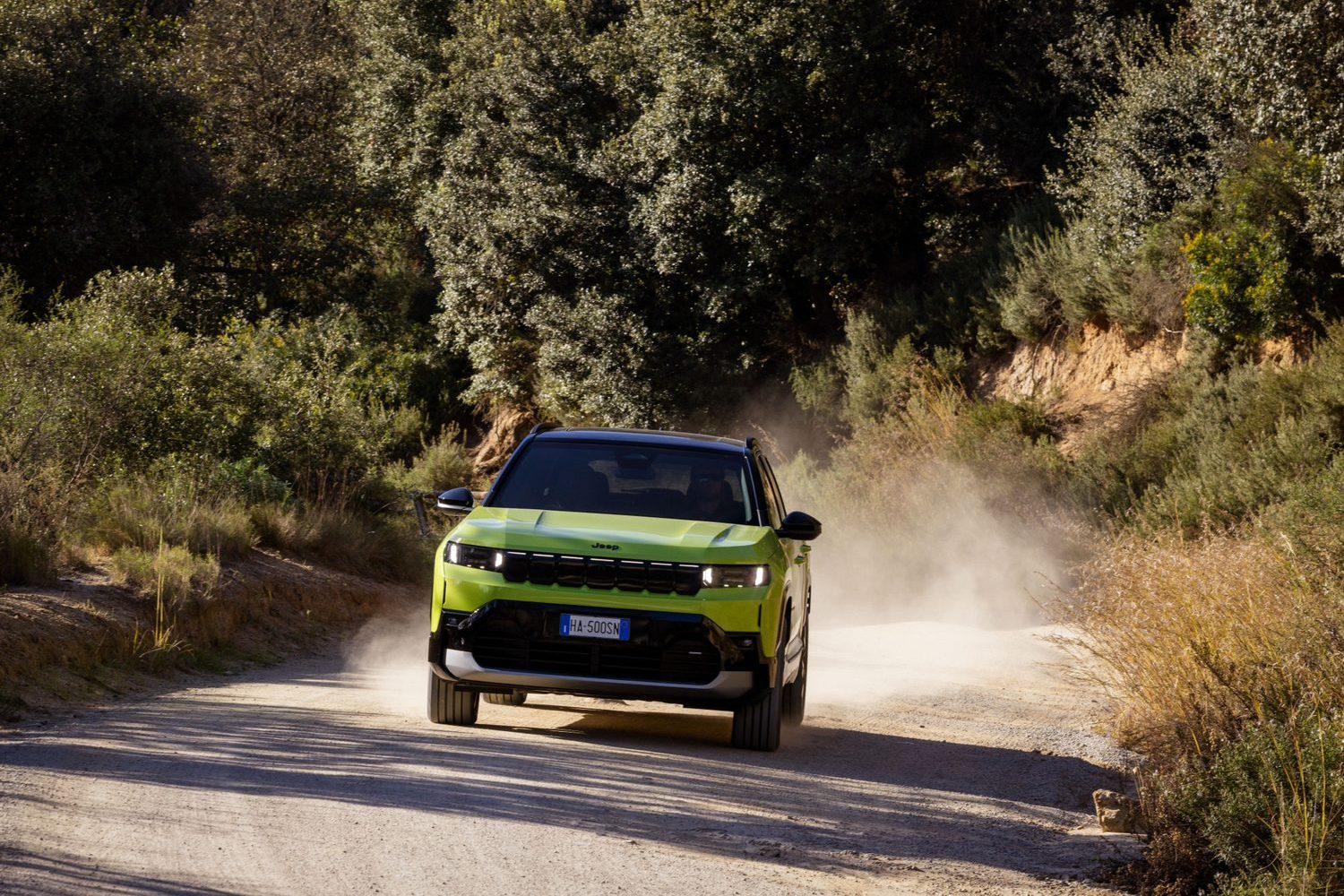
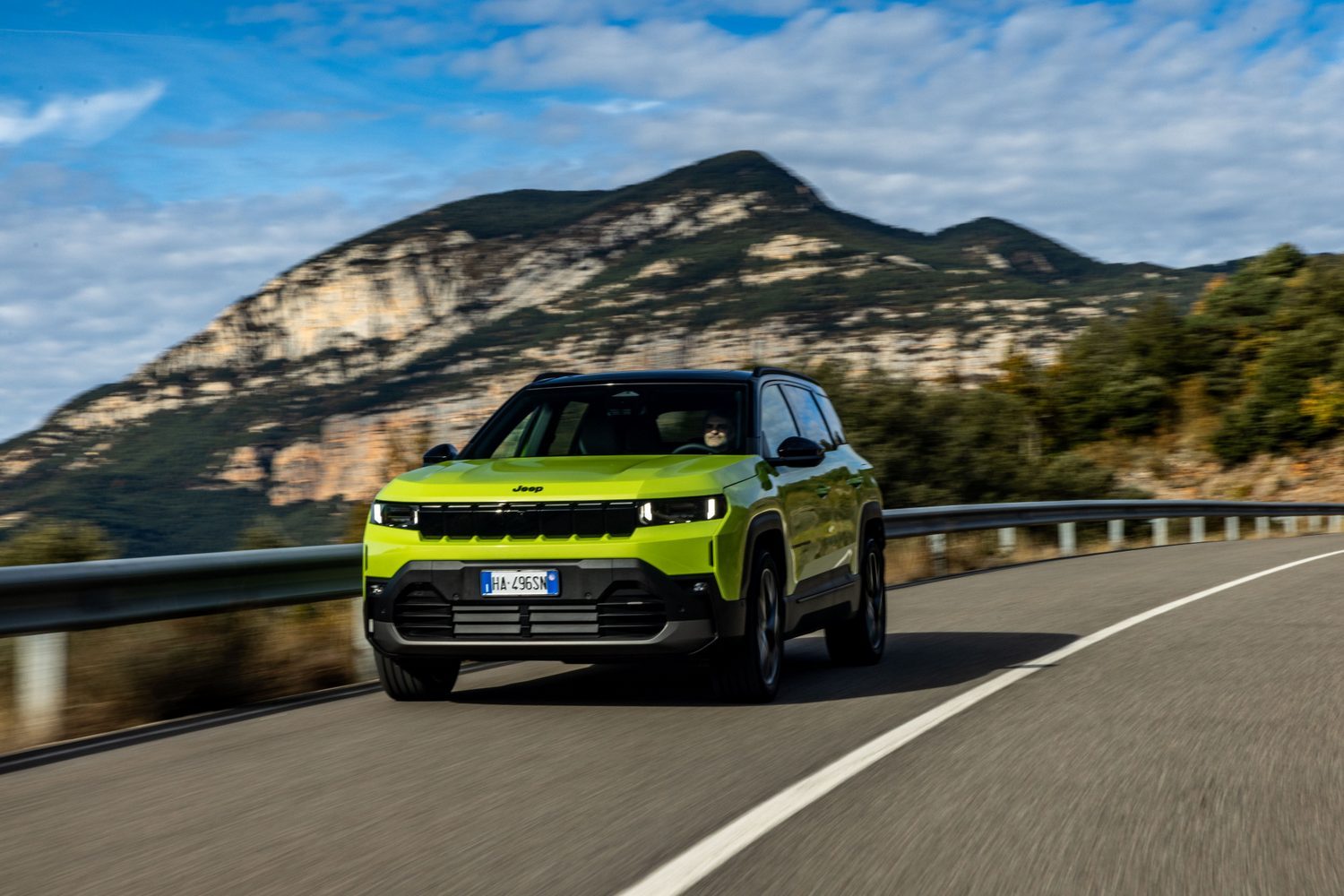
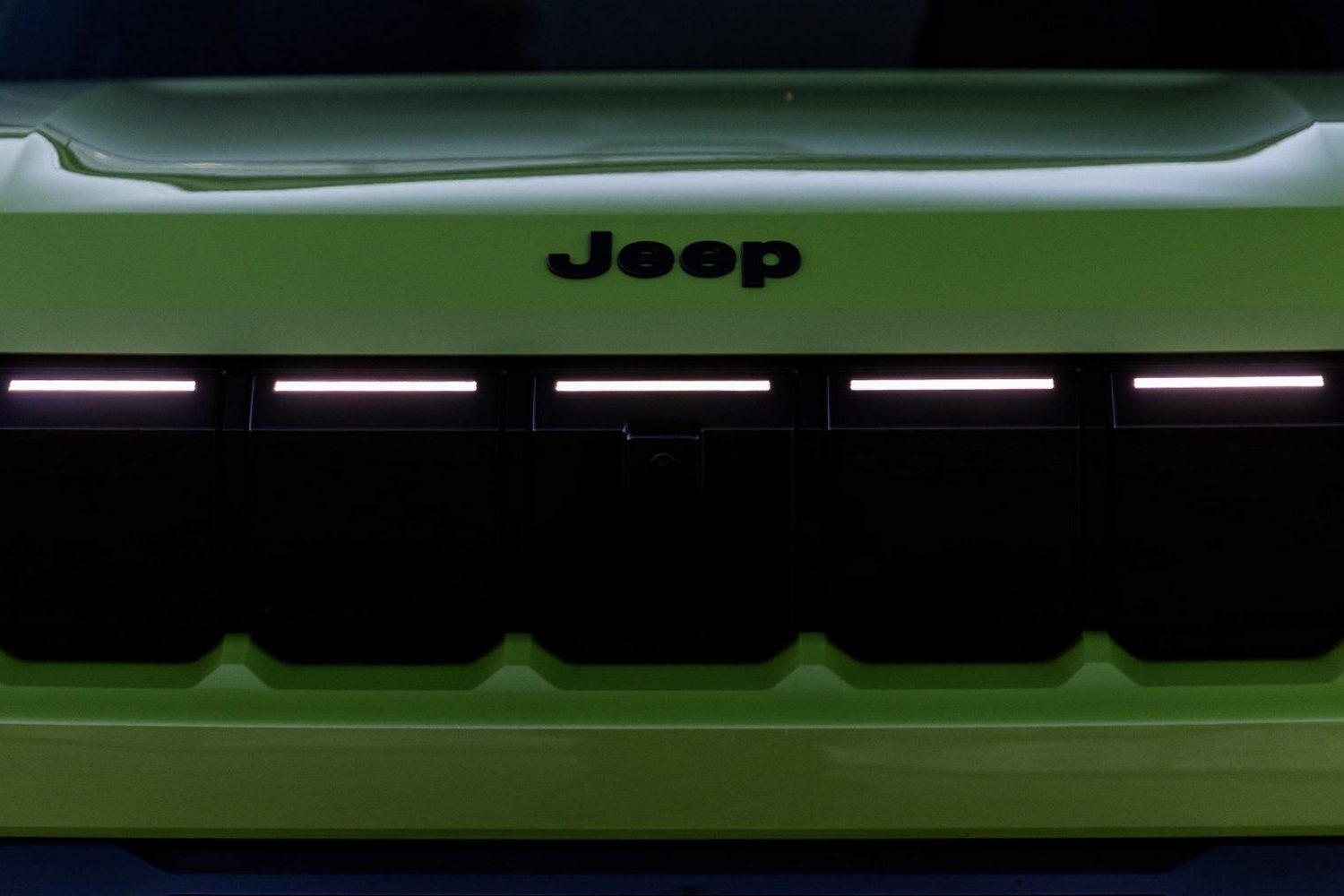
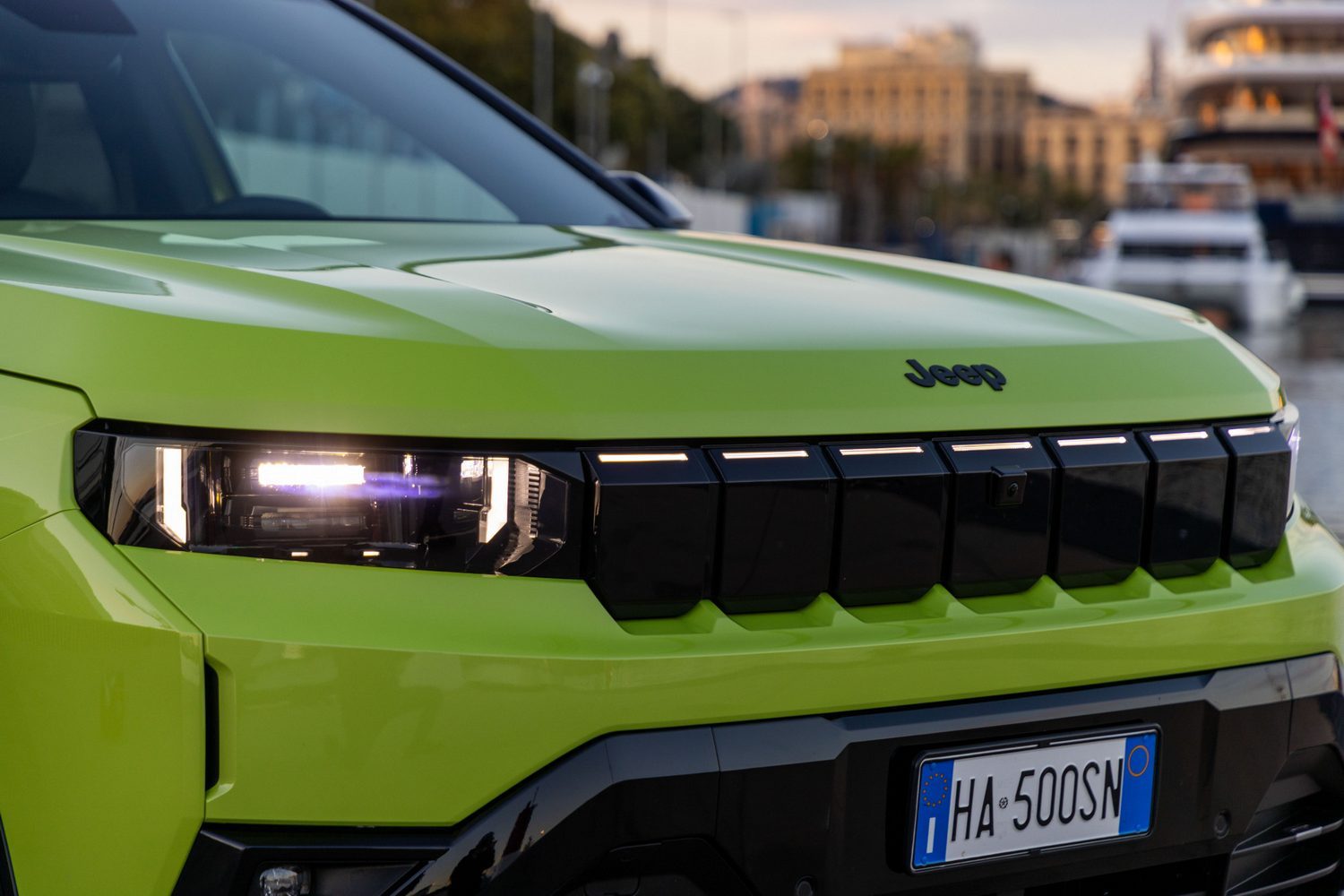
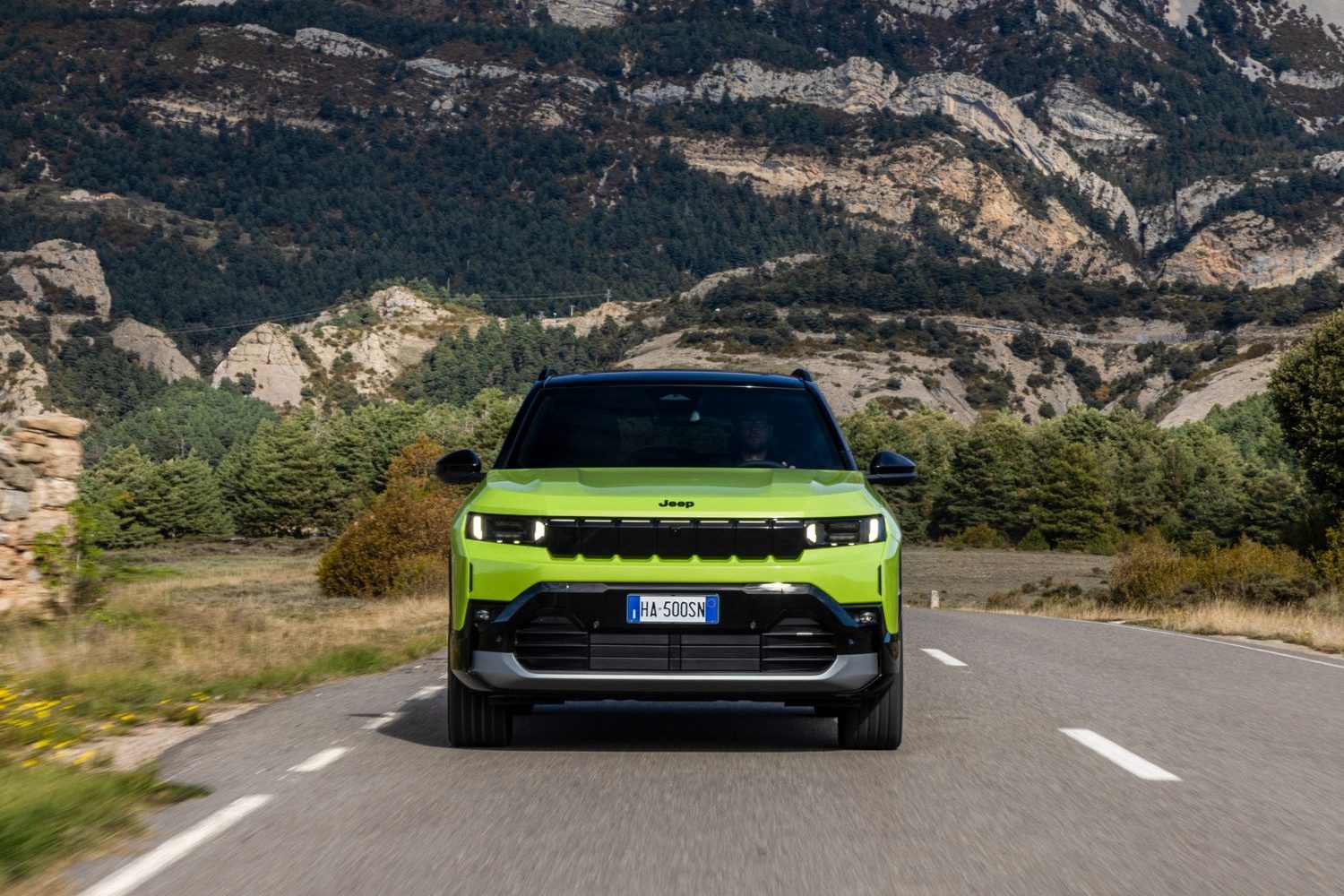
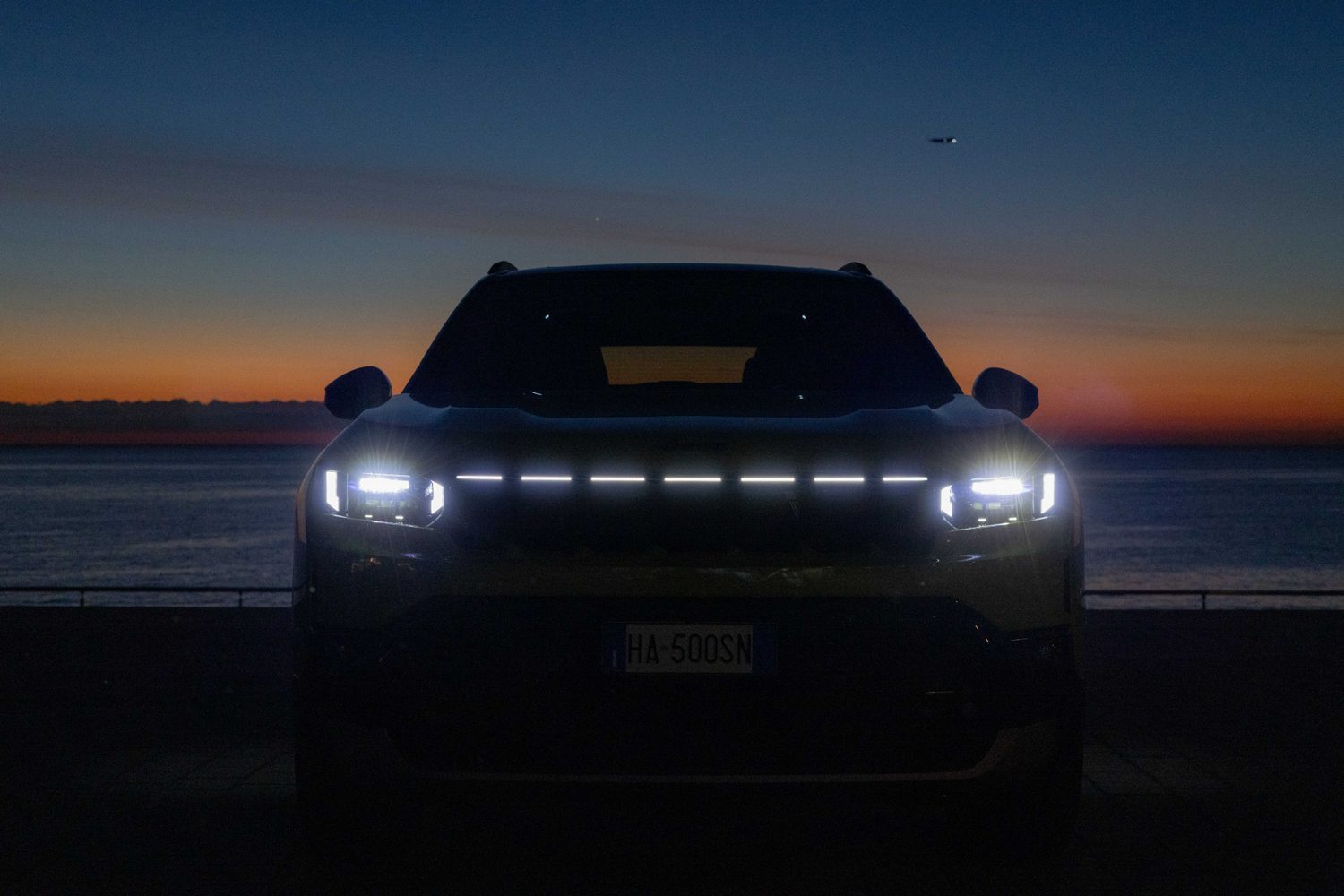
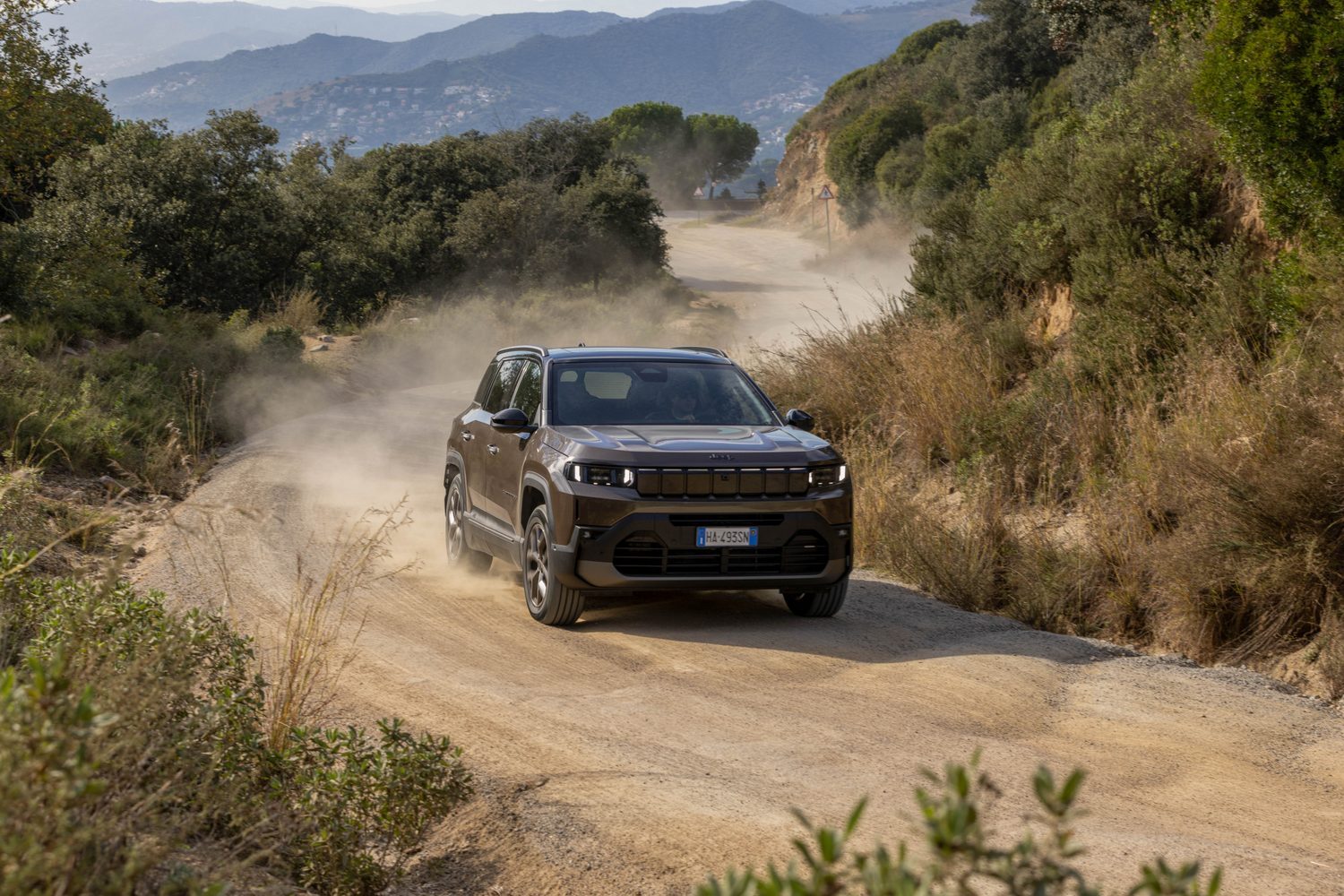
The robust look is most evident at the front where the Compass prominently features the company's signature seven-slot grille. In the case of the Compass Electric, it's only for style as the necessary cooling for the electric powertrain is drawn in from a lower section in the front bumper.

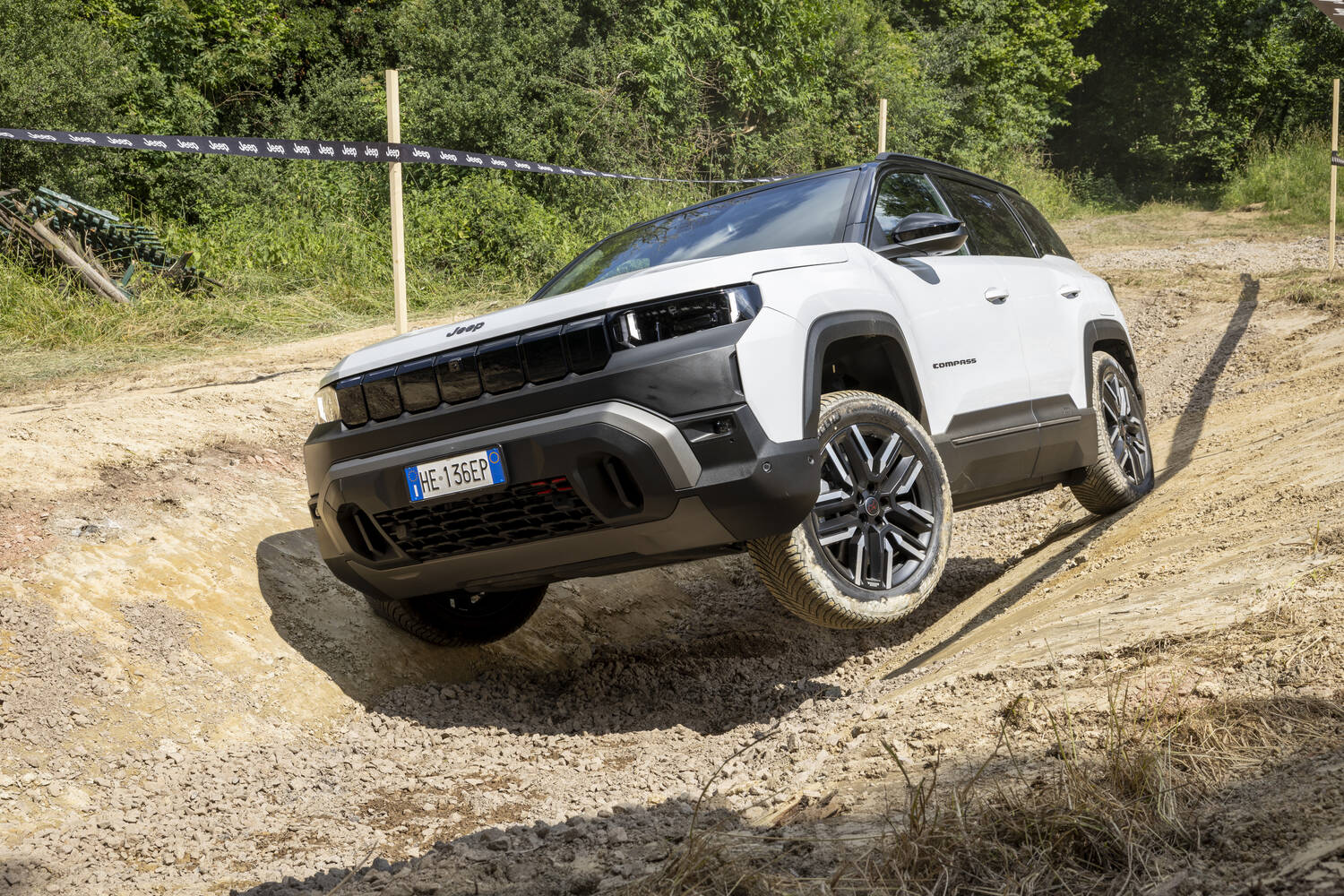
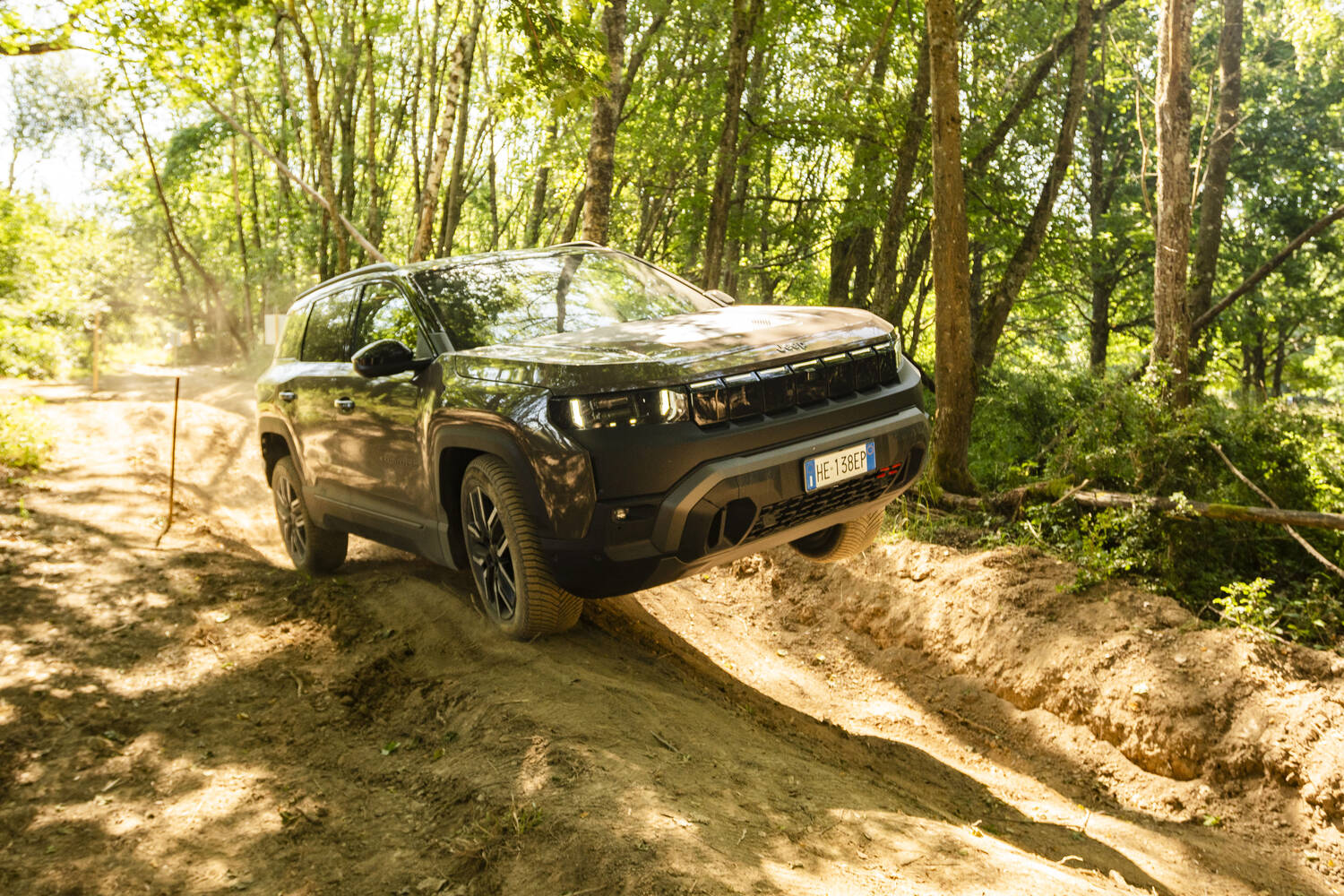
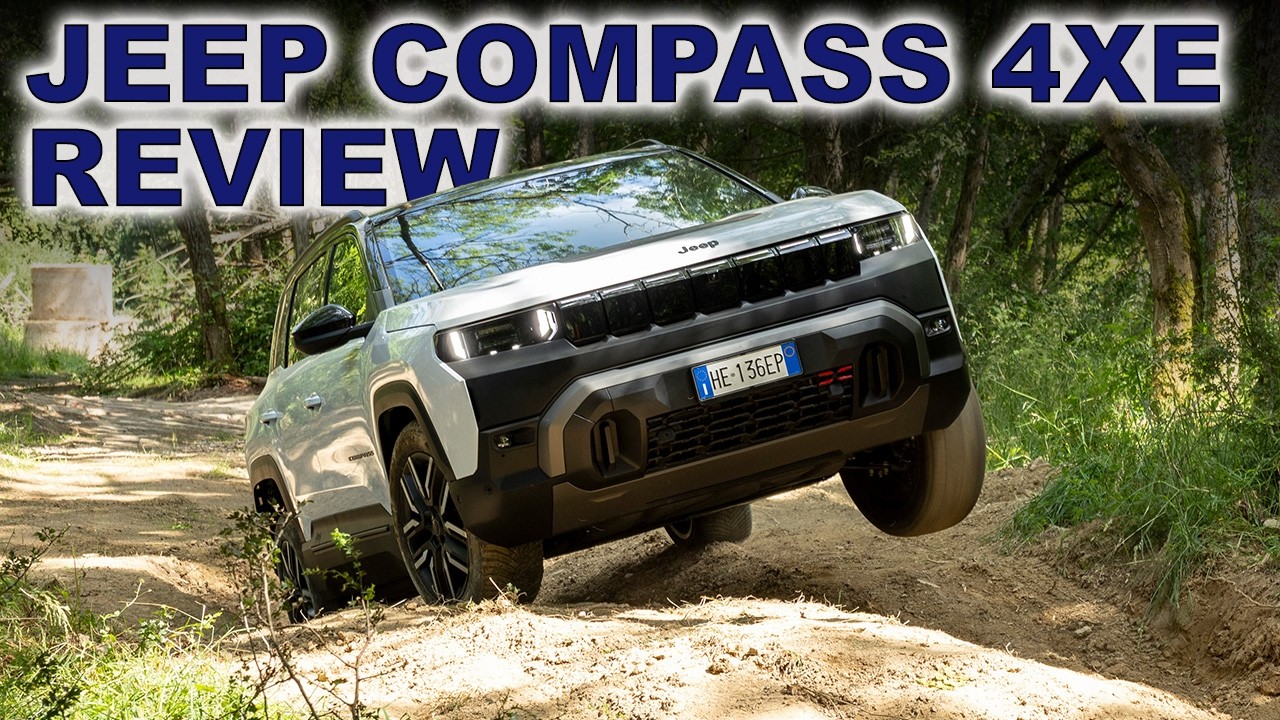
To emphasise the Compass's off-road-readiness, its front and rear overhangs have been kept as short as possible, while Jeep will also offer a dedicated off-road package that further increases the approach and departure angles.
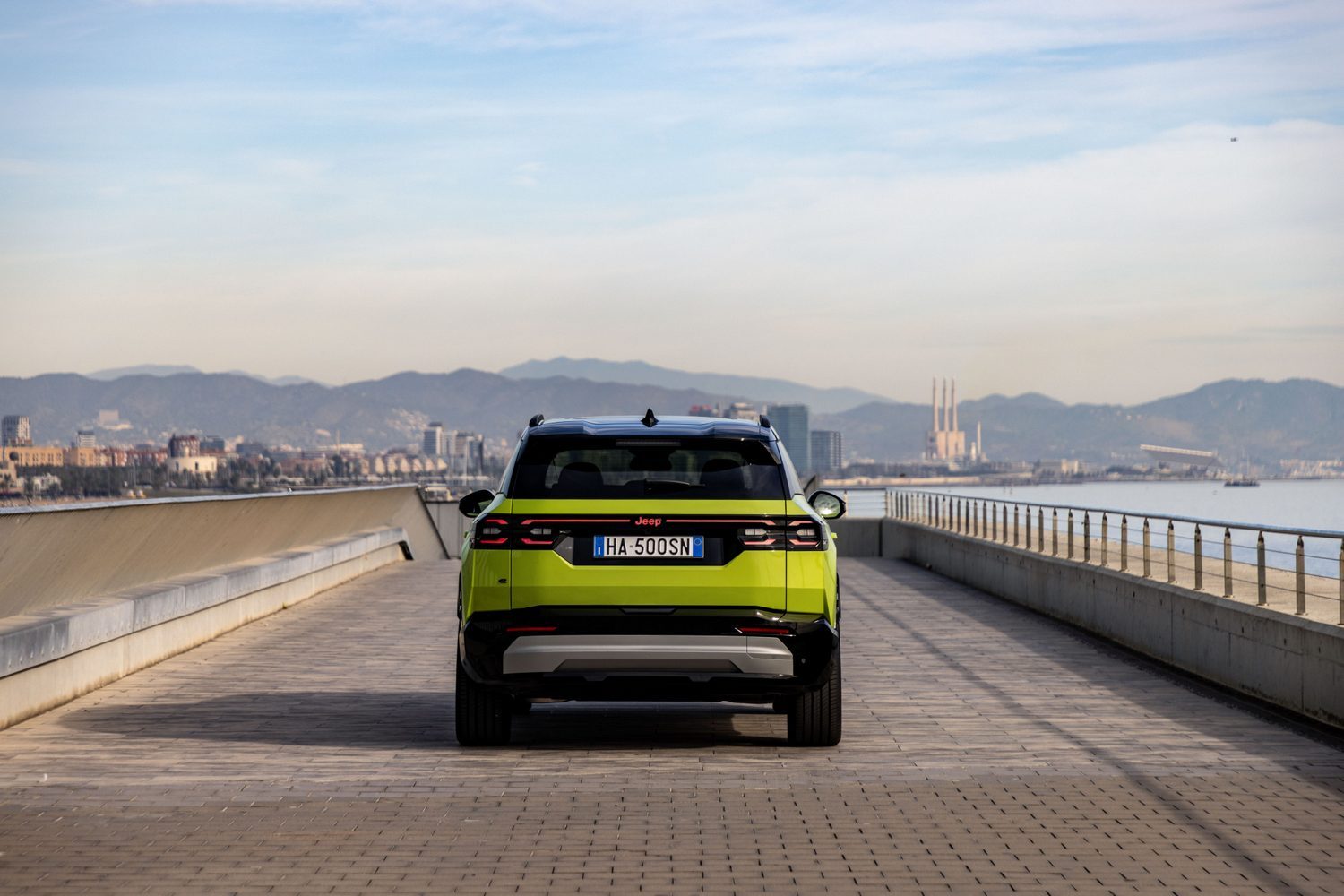
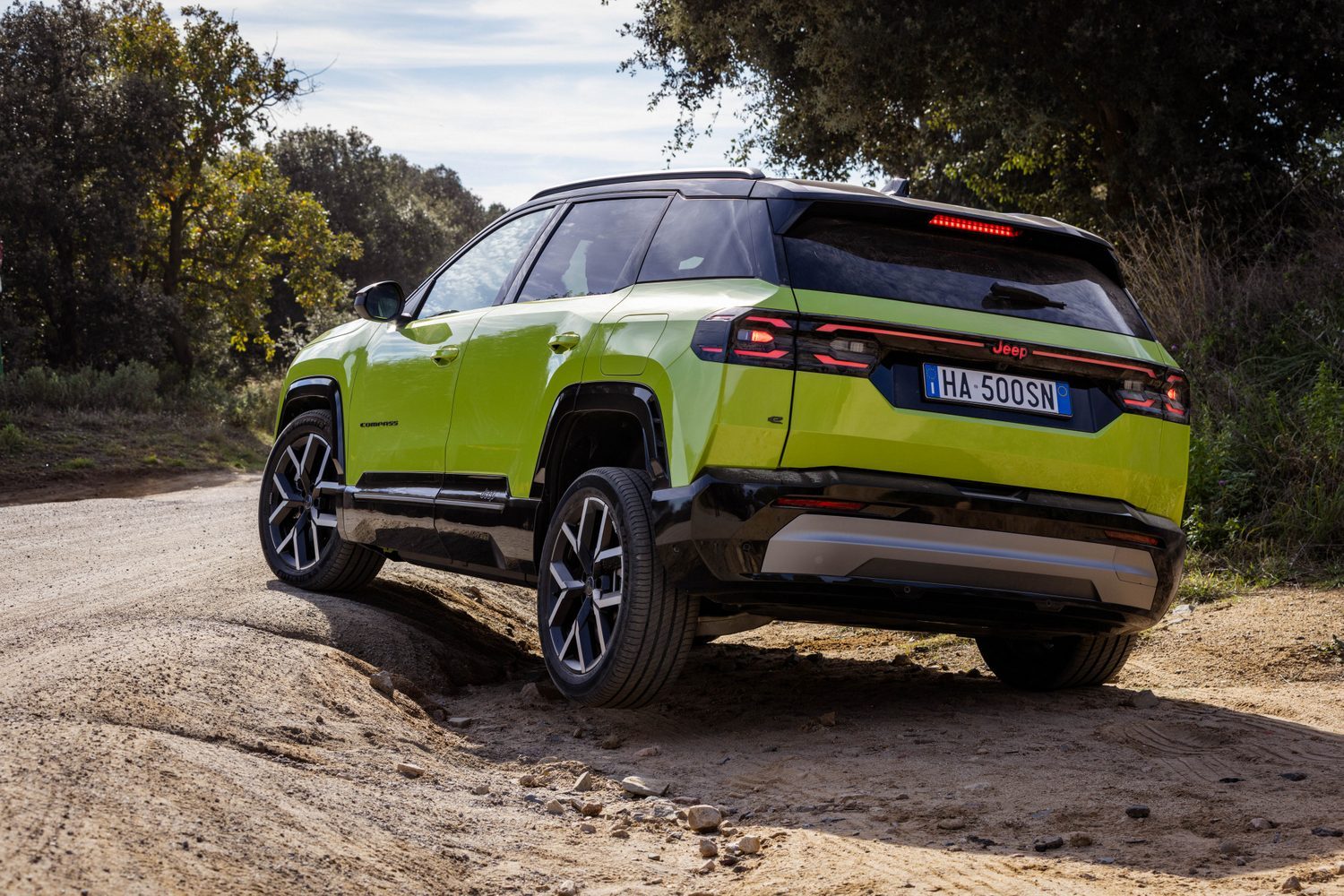
Standard models feature a silver section on the bumper's base that, rather than being painted, is made from plastic impregnated with the colour, so any scrapes should be less obvious.

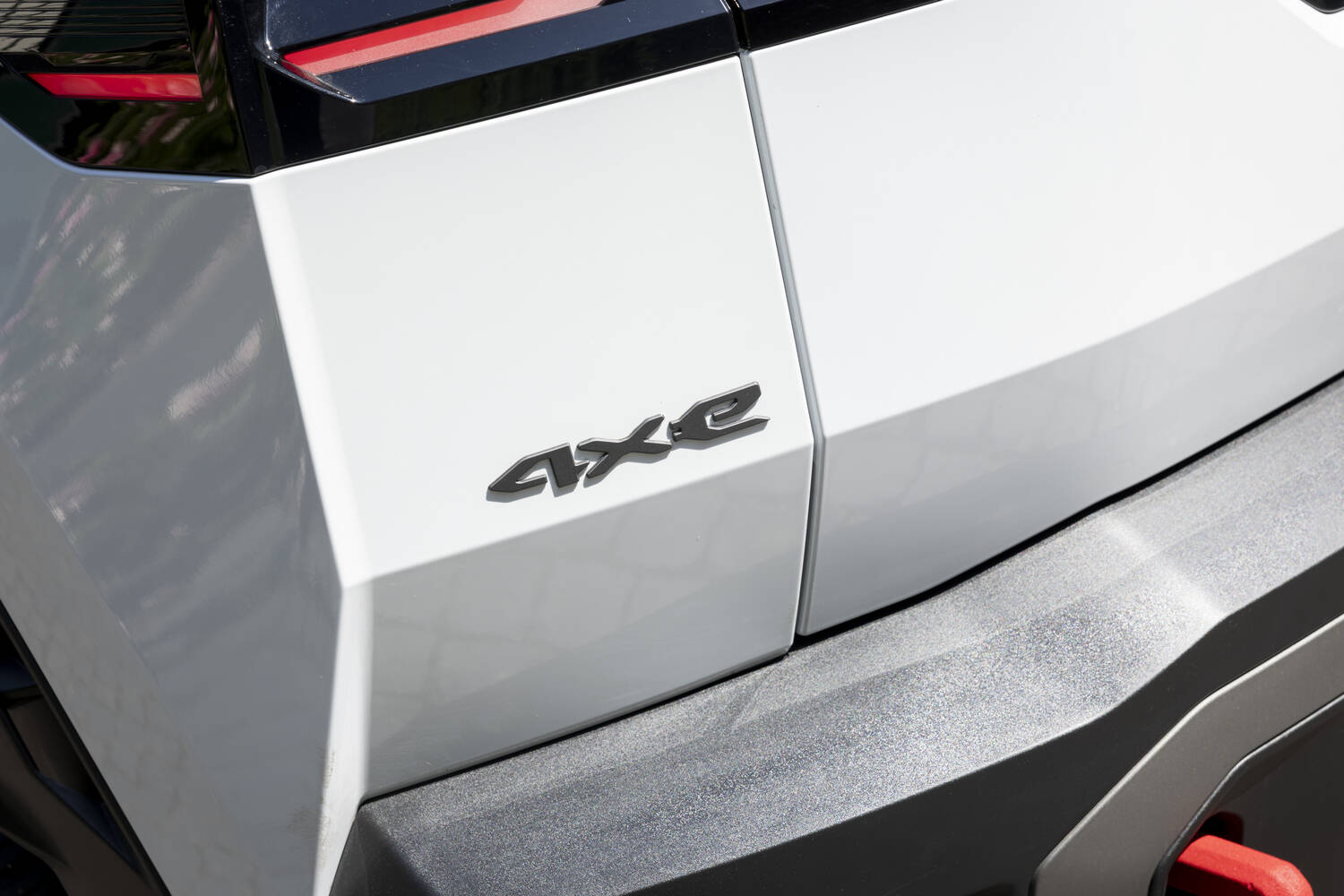
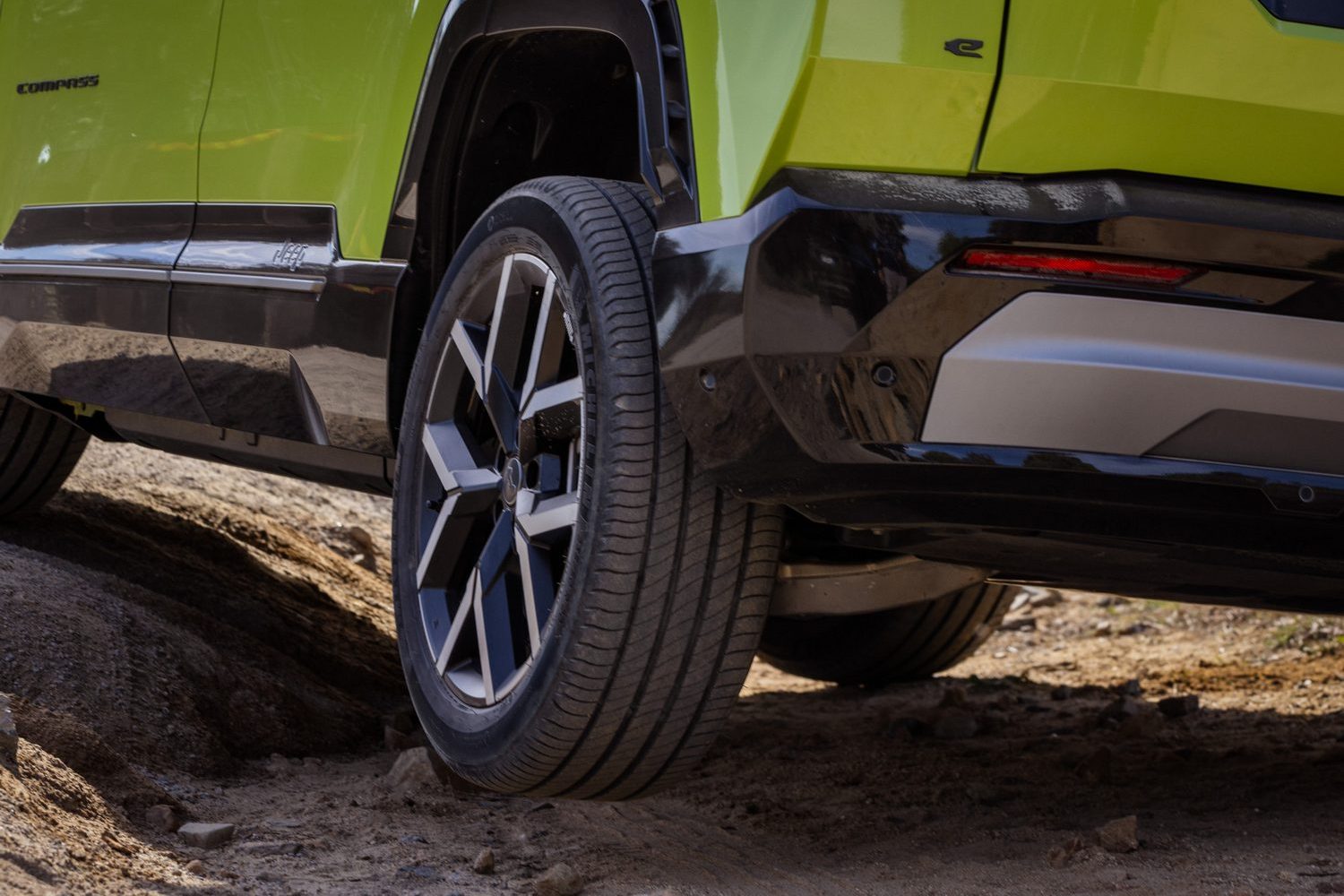
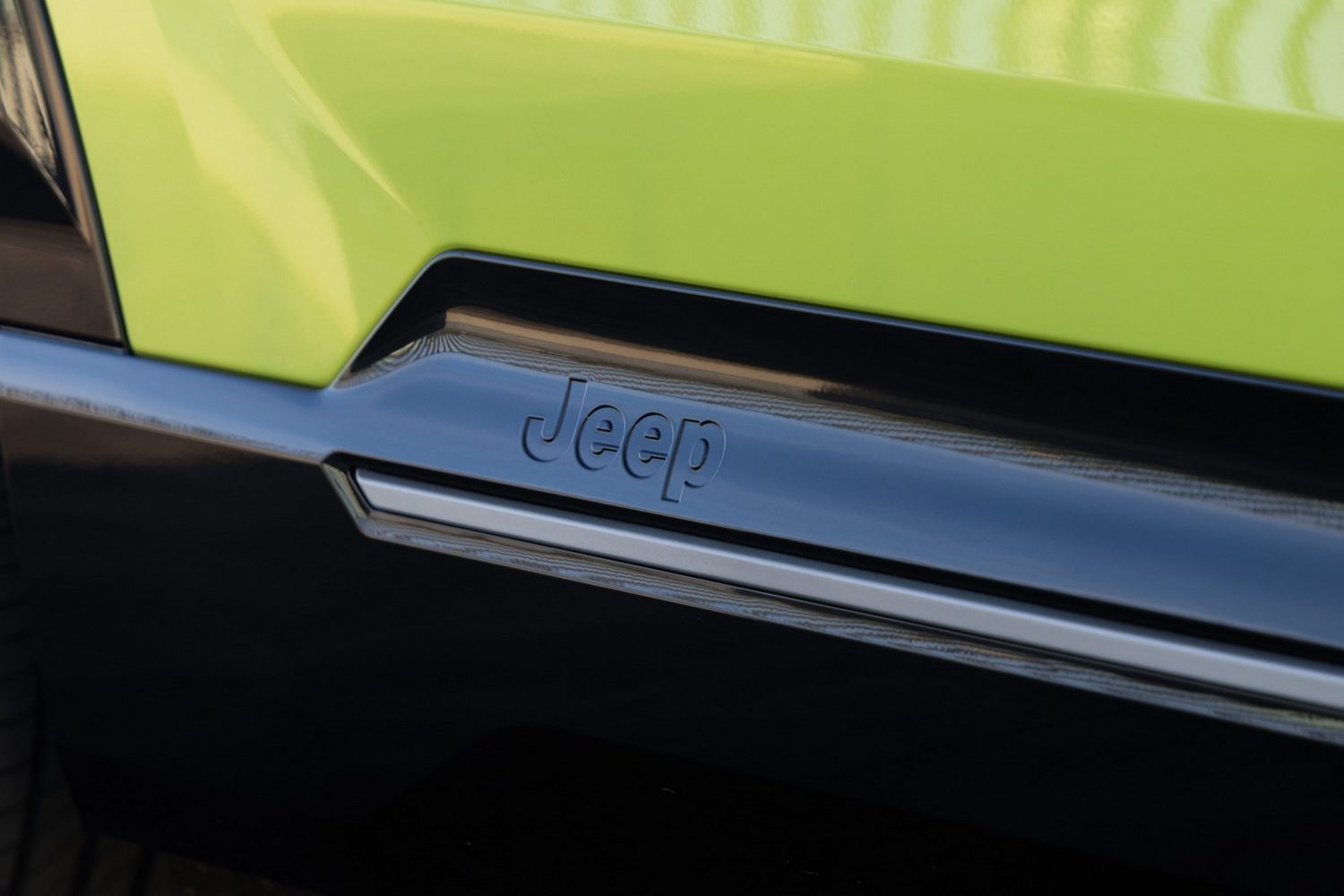
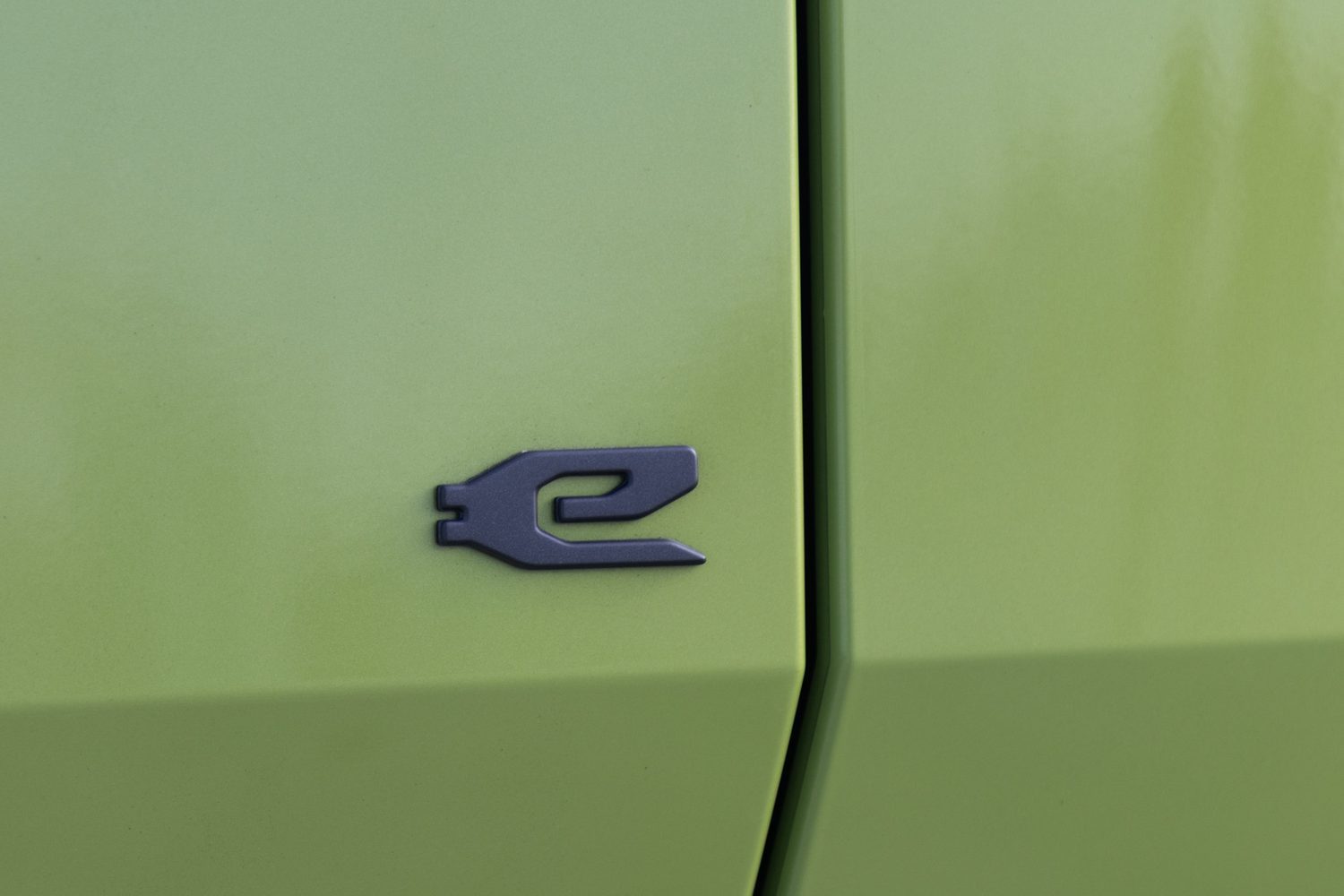
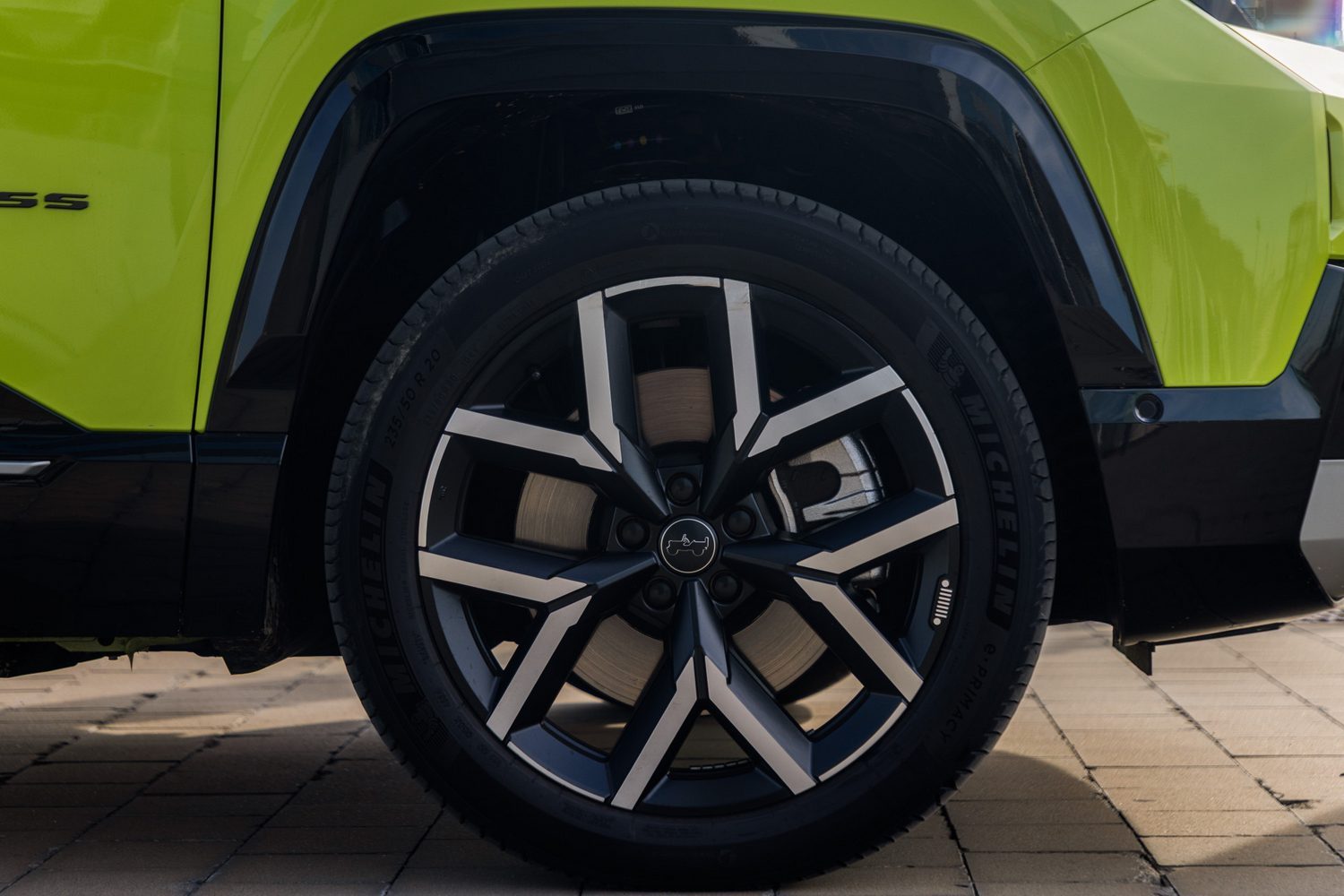
The Compass Electric sits on 19-inch wheels as standard, whereas the mild-hybrid rides on 18-inch rims and the 4xe and PHEV models get 20-inch wheels. The squared-off wheel arches and sills are finished in a gloss black, and buyers can pay to have the roof and C-pillars in a matching contrasting black colour.
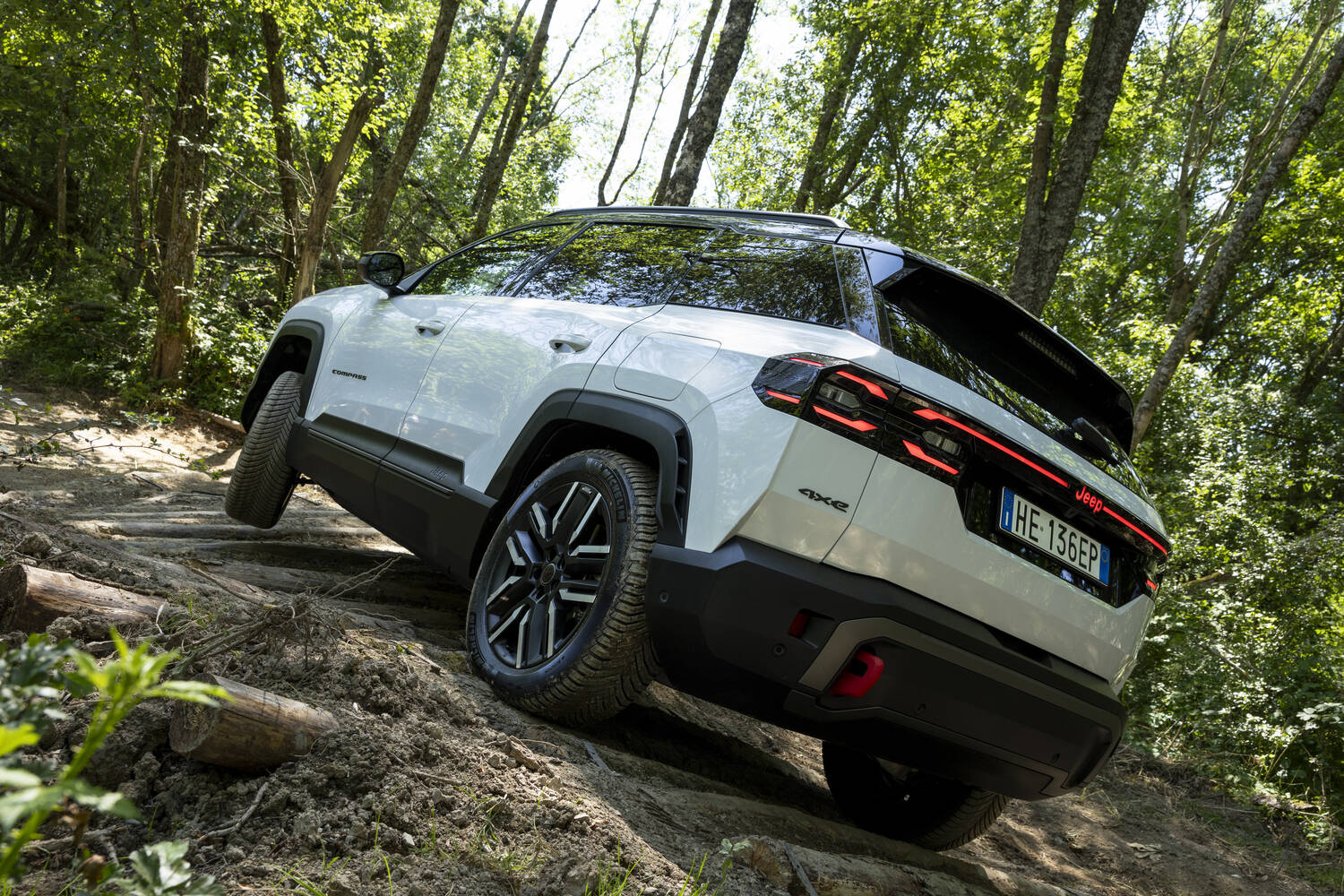
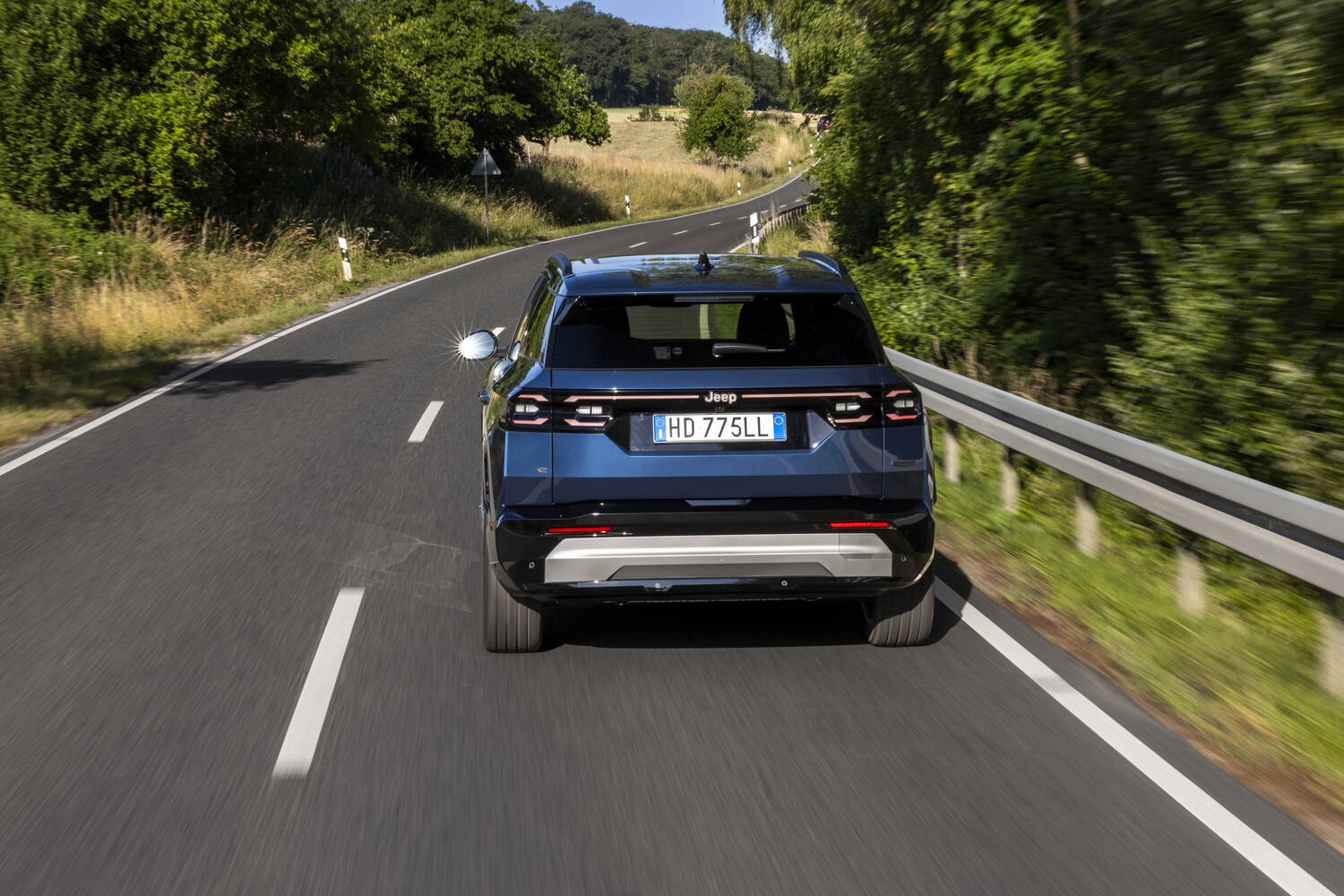
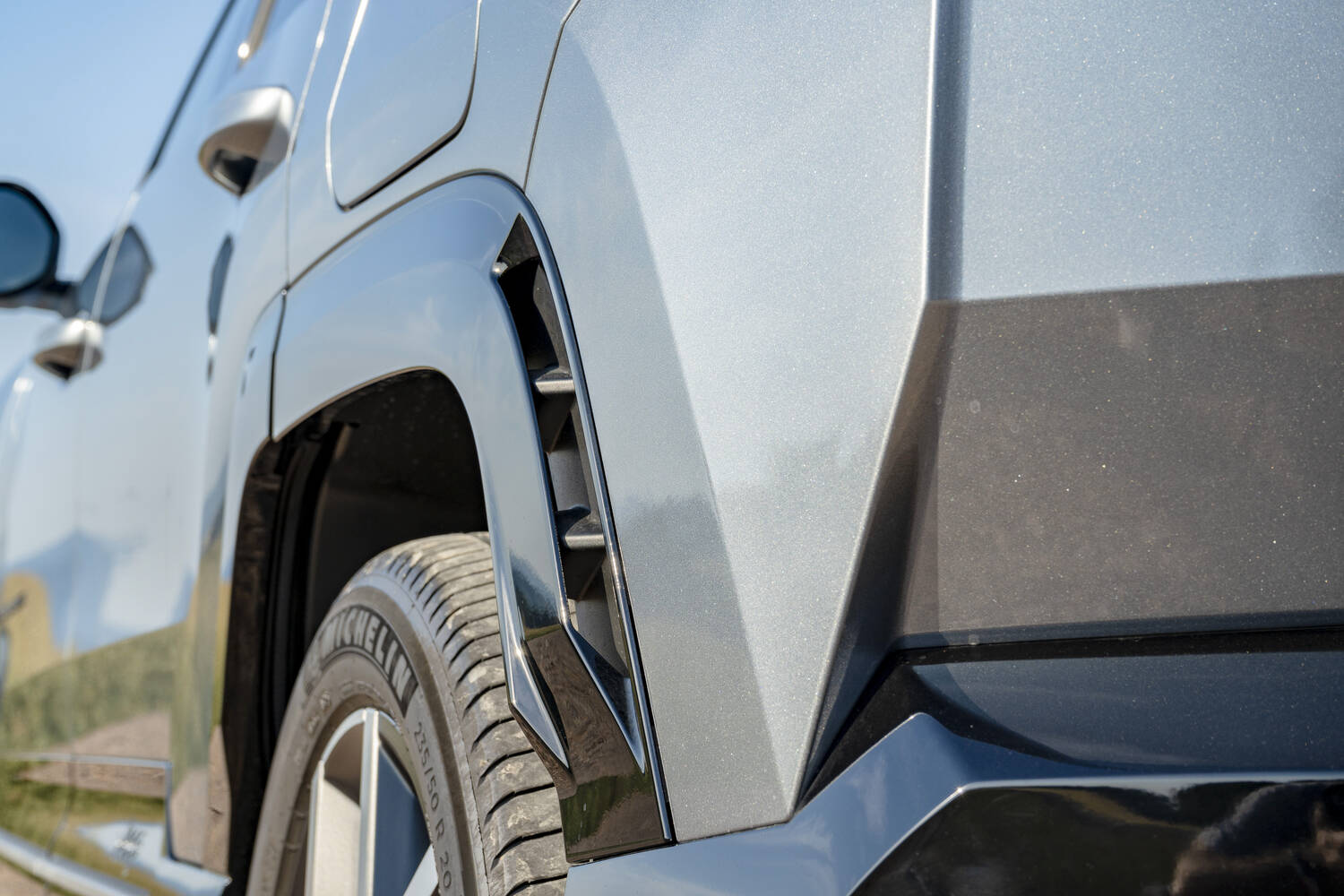
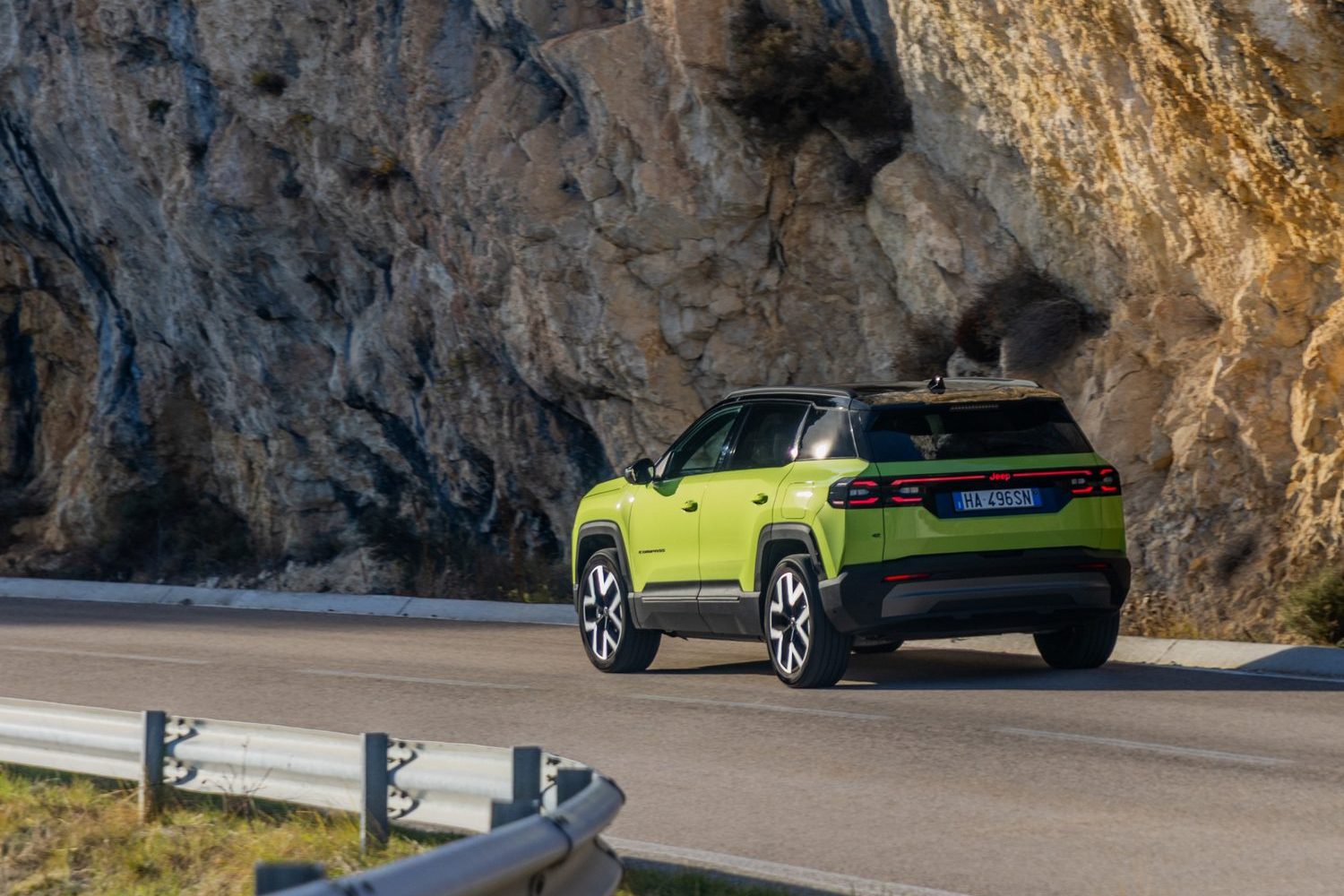
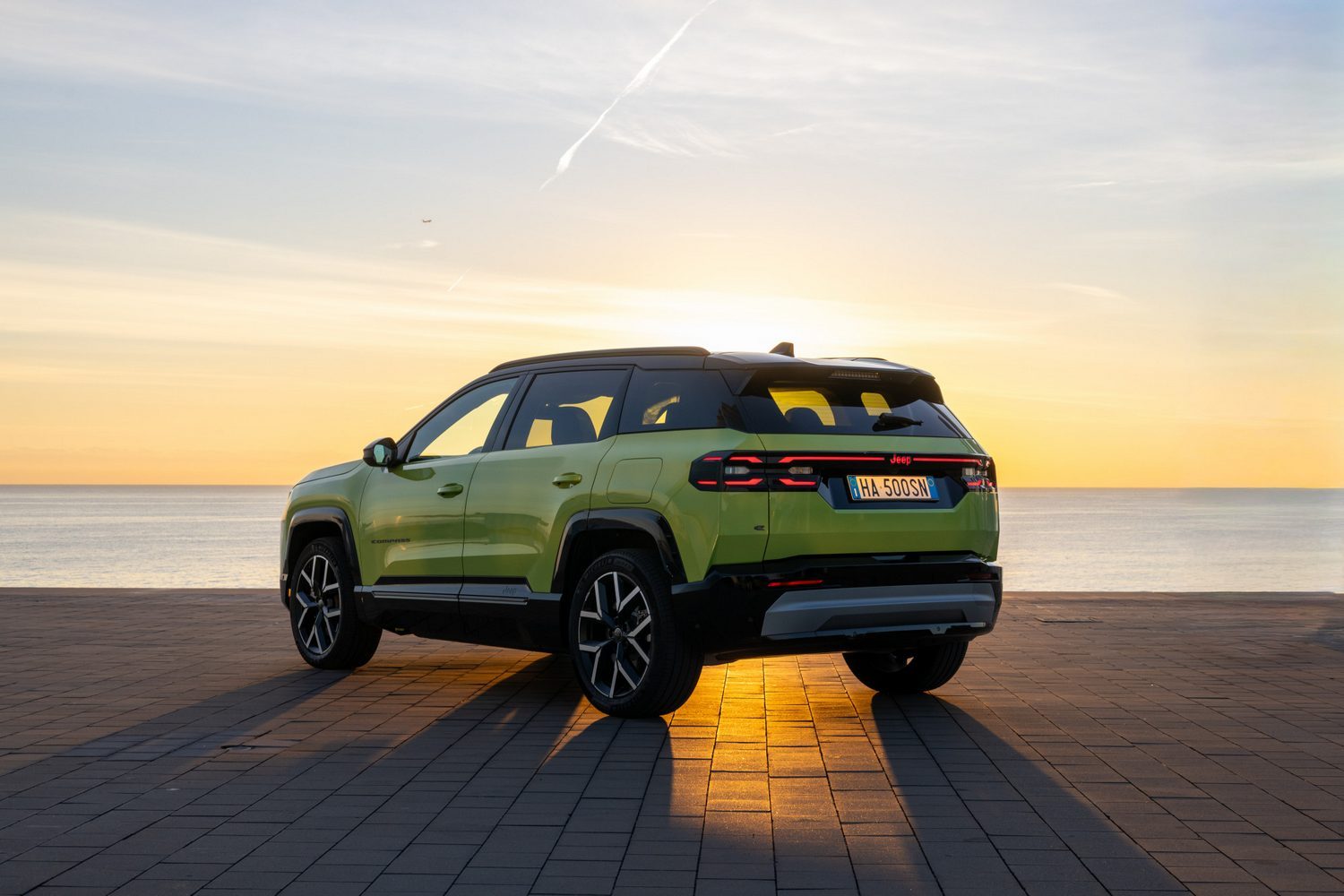
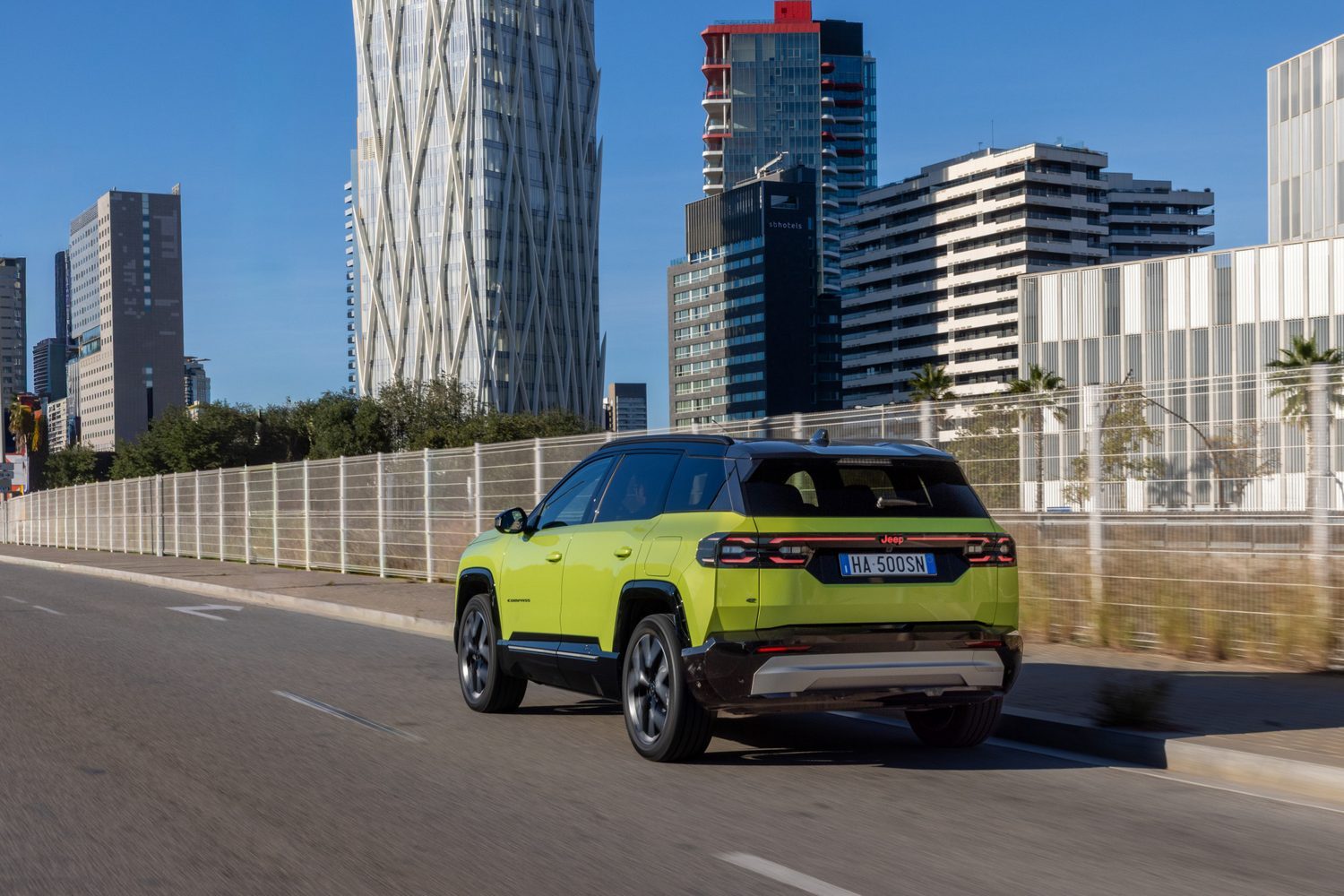
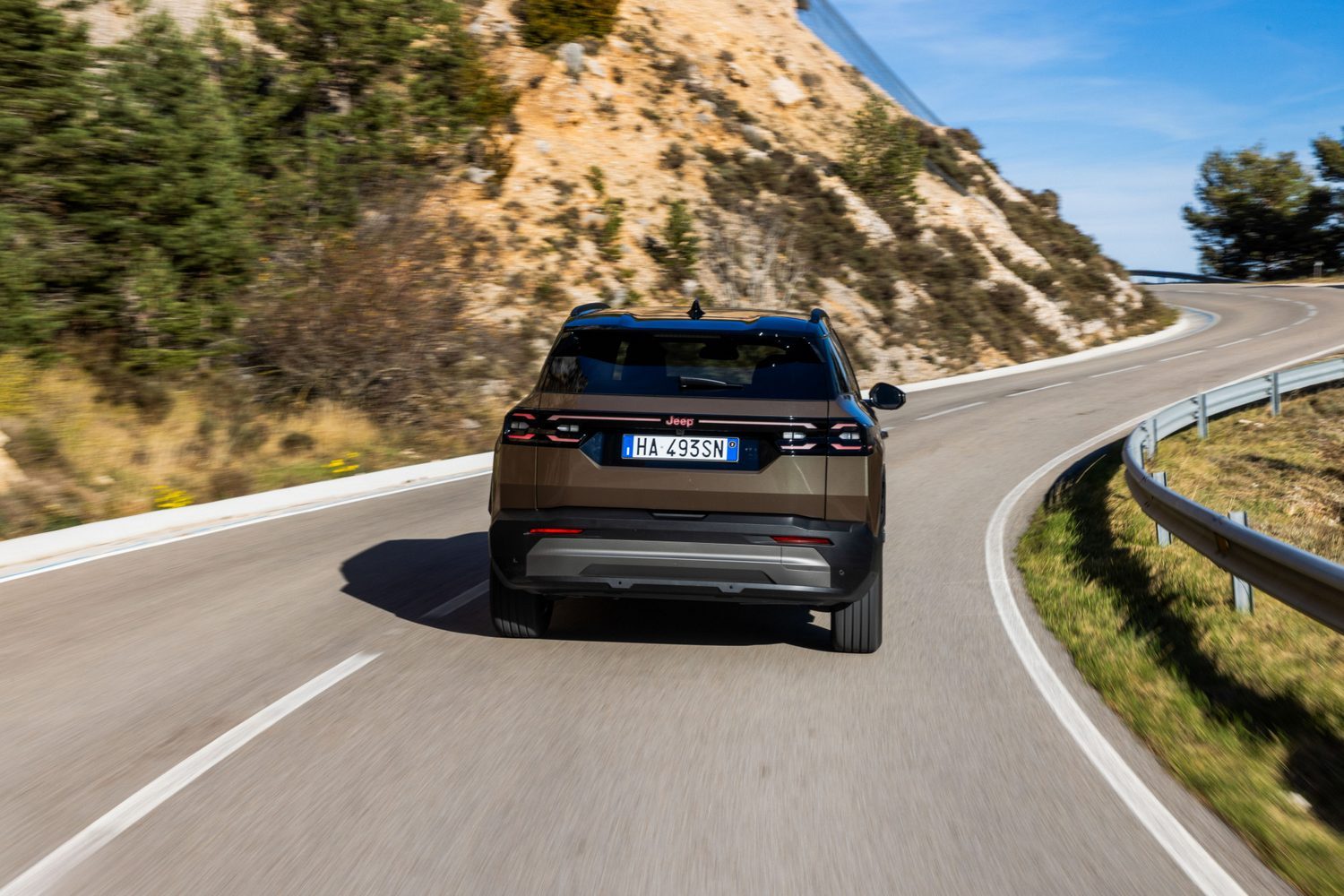
Sharp body lines at the rear corners of the car are there to cut off airflow, thus boosting the aerodynamics.

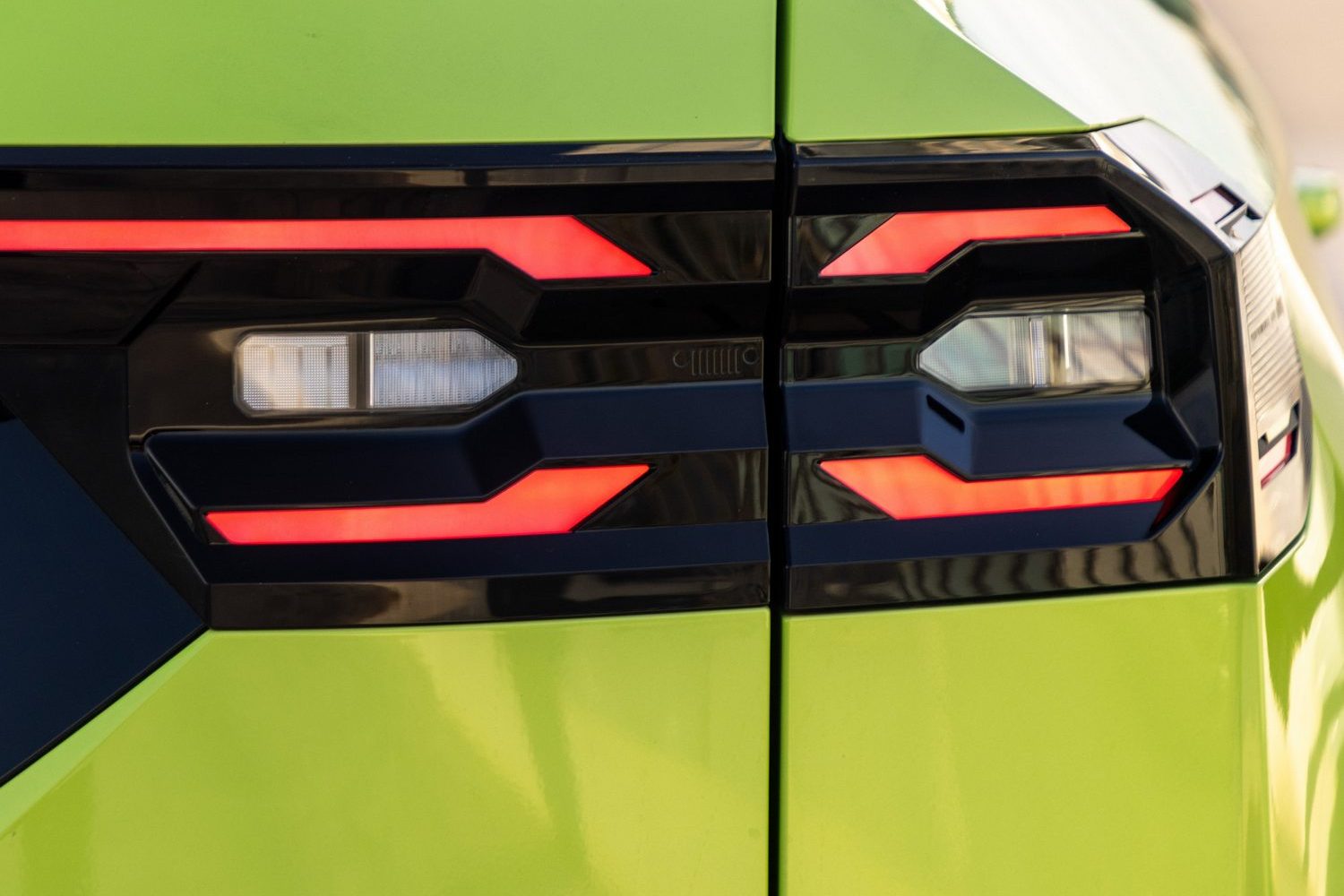
Its rear light signatures form an X-shape of sorts (it's meant to evoke the shape of old fuel jerrycans) and have an illuminated bar that spans almost the full width of the rear, with the Jeep logo lit up at the centre.
Dimensions of the 2026 Jeep Compass
- Length:
- 4,552mm
- Width:
- 1,928mm
- Height:
- 1,675mm
- Wheelbase:
- 2,795mm
Paint colours for the 2026 Jeep Compass
Buyers can choose from six exterior paint colours for the Jeep Compass, and they are all named after various parts of the world. They are Hawaii (bright green), Pacific (navy blue), Yosemite (light grey), Antarctica (white), Amazonia (dark green) and Vulcano (black).
We approve of the fact that Hawaii is included in the price of the car, while all other colours cost €950 extra. Buyers can order a black contrasting roof for €800 with the bright green paint or €1,600 for all others.

There are also aftermarket accessories to further customise the car's look, such as a black bonnet sticker.
Interior, practicality, tech & comfort of the 2026 Jeep Compass
- Useful storage throughout
- Rugged materials
- Massaging seats available

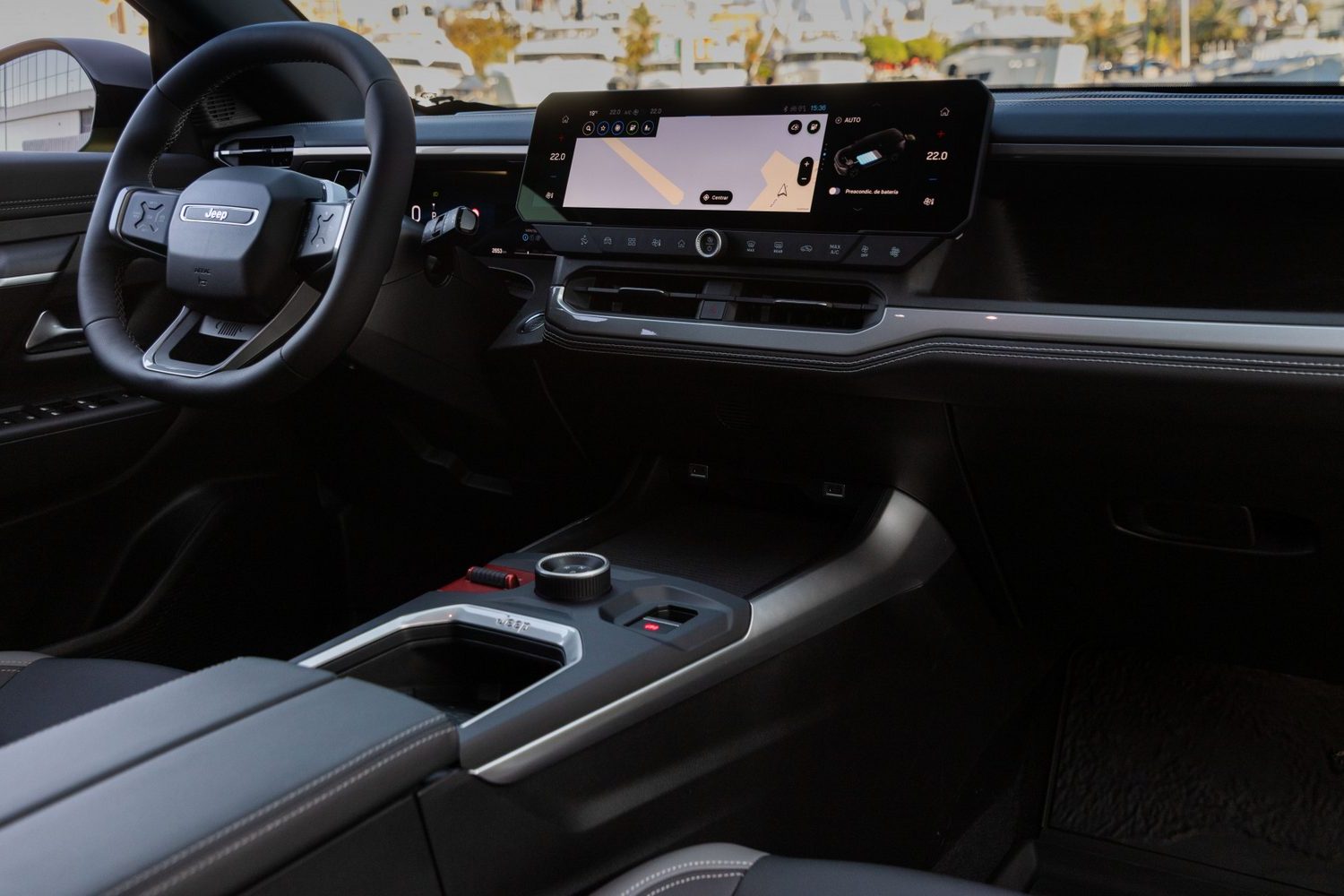
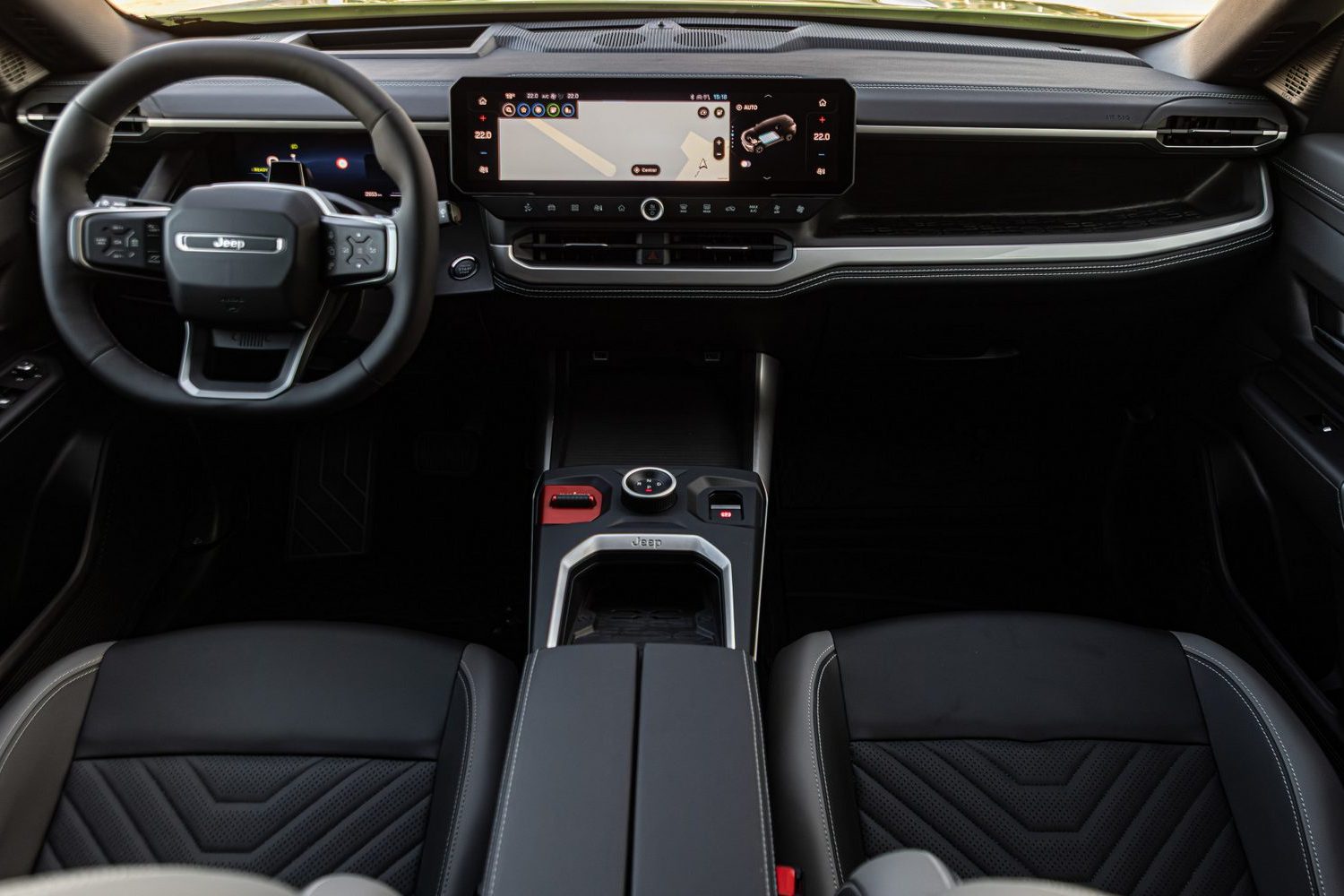
Replacing what was a dated-looking interior in its predecessor, the cabin in the Compass is not only a more contemporary design, but it also features better materials and has more storage space than before.
Aping the horizontal lines of the exterior, the inside has a structured layout with a sensible approach.

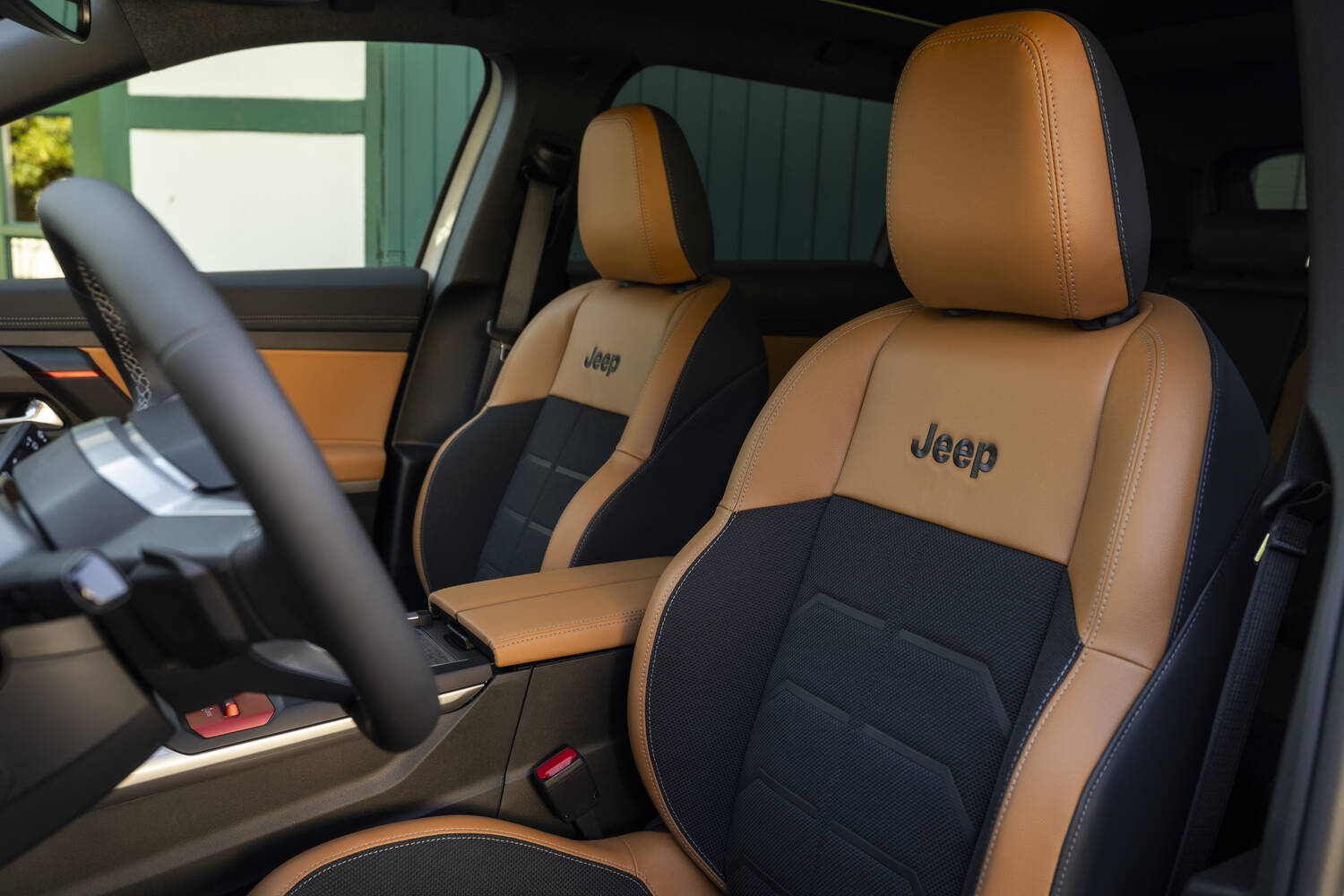
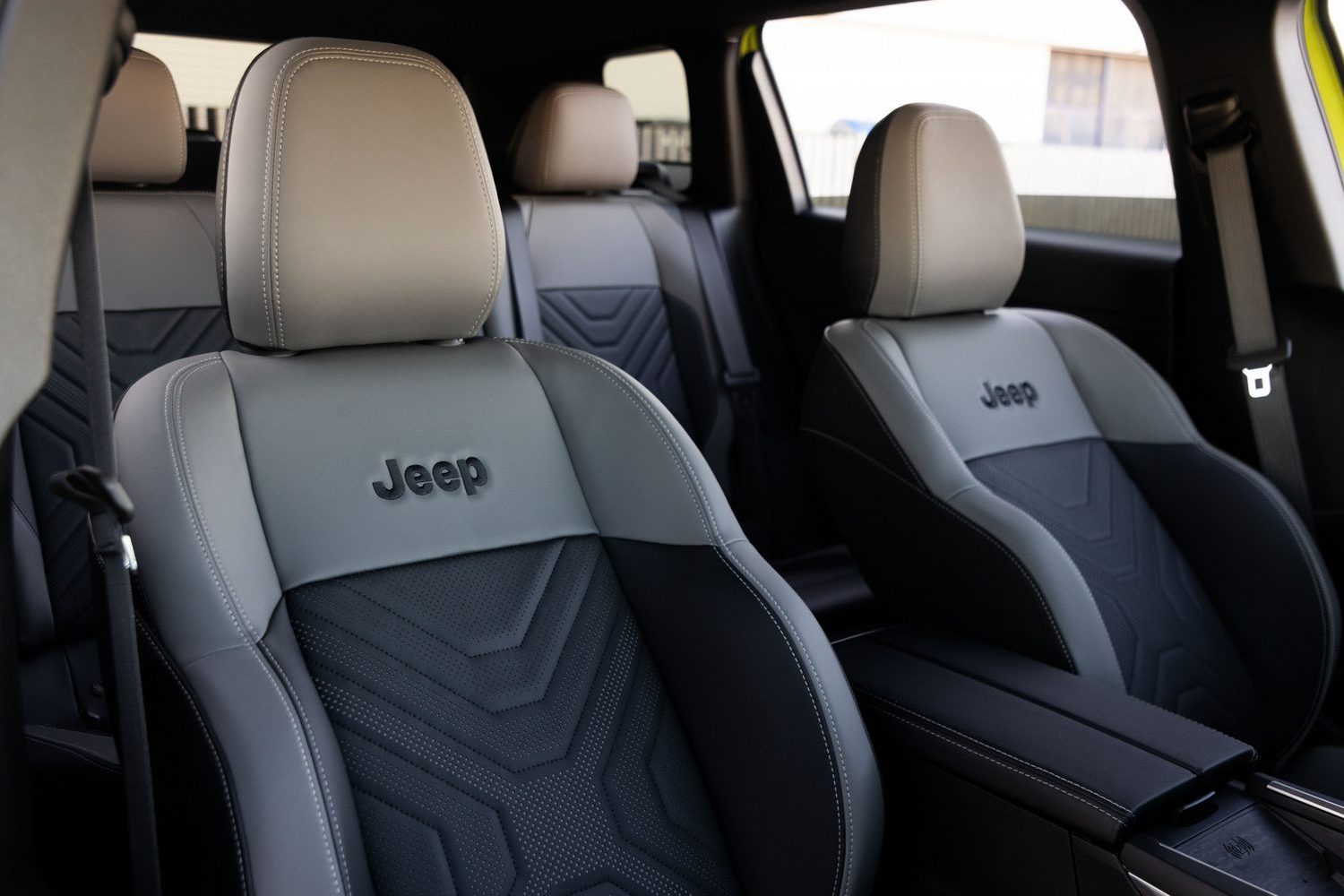
The 4xe model gets a bi-colour interior, with tan-coloured inserts which really lift the somewhat gloomy feeling of the standard all-black cabin.
Getting comfortable in the driver's seat
The Jeep Compass has a manually adjustable and heated driver's seat as standard with fabric upholstery.

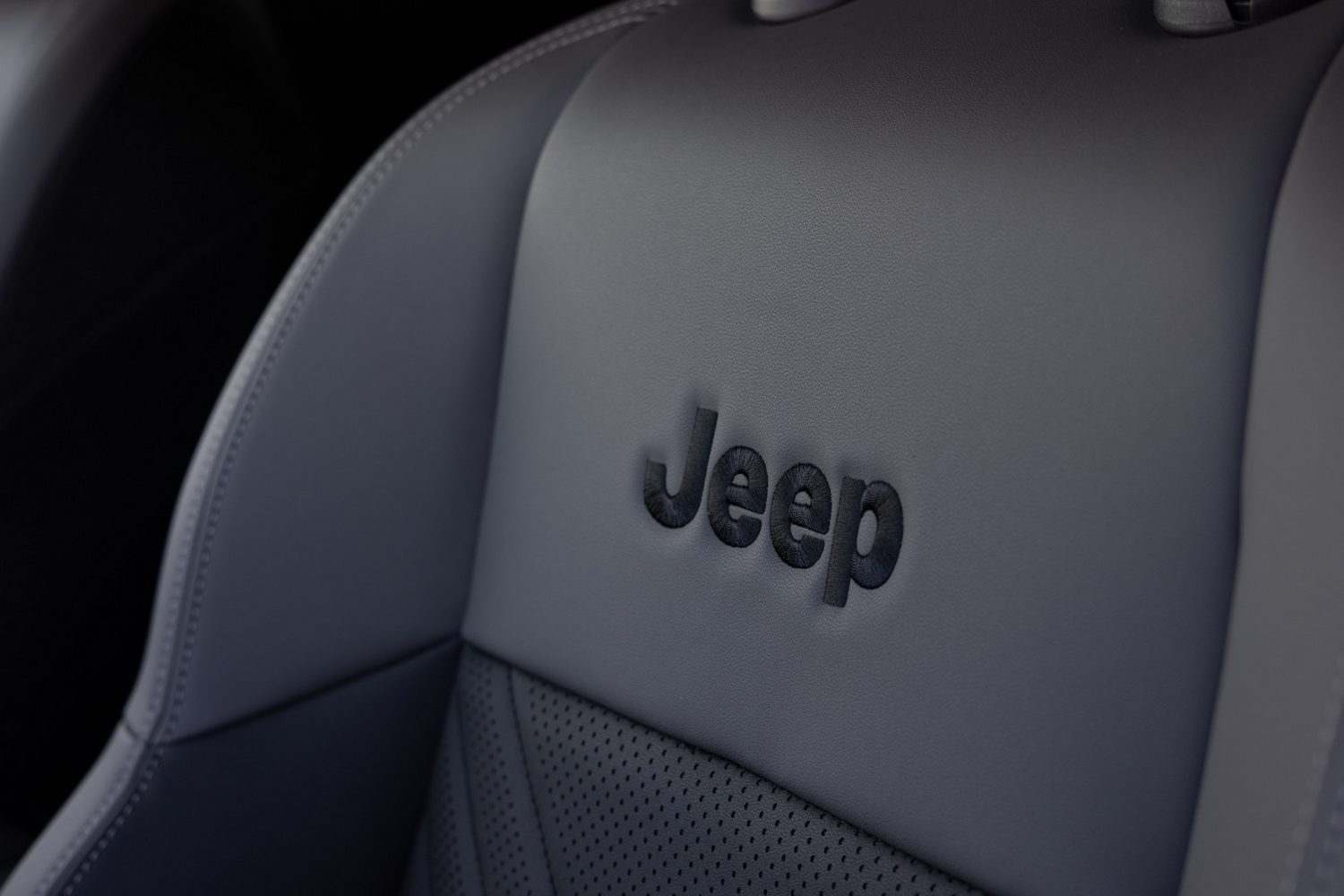
Our car was equipped with the optional electrically adjustable seat that features ventilation and massaging functions with vinyl upholstery.
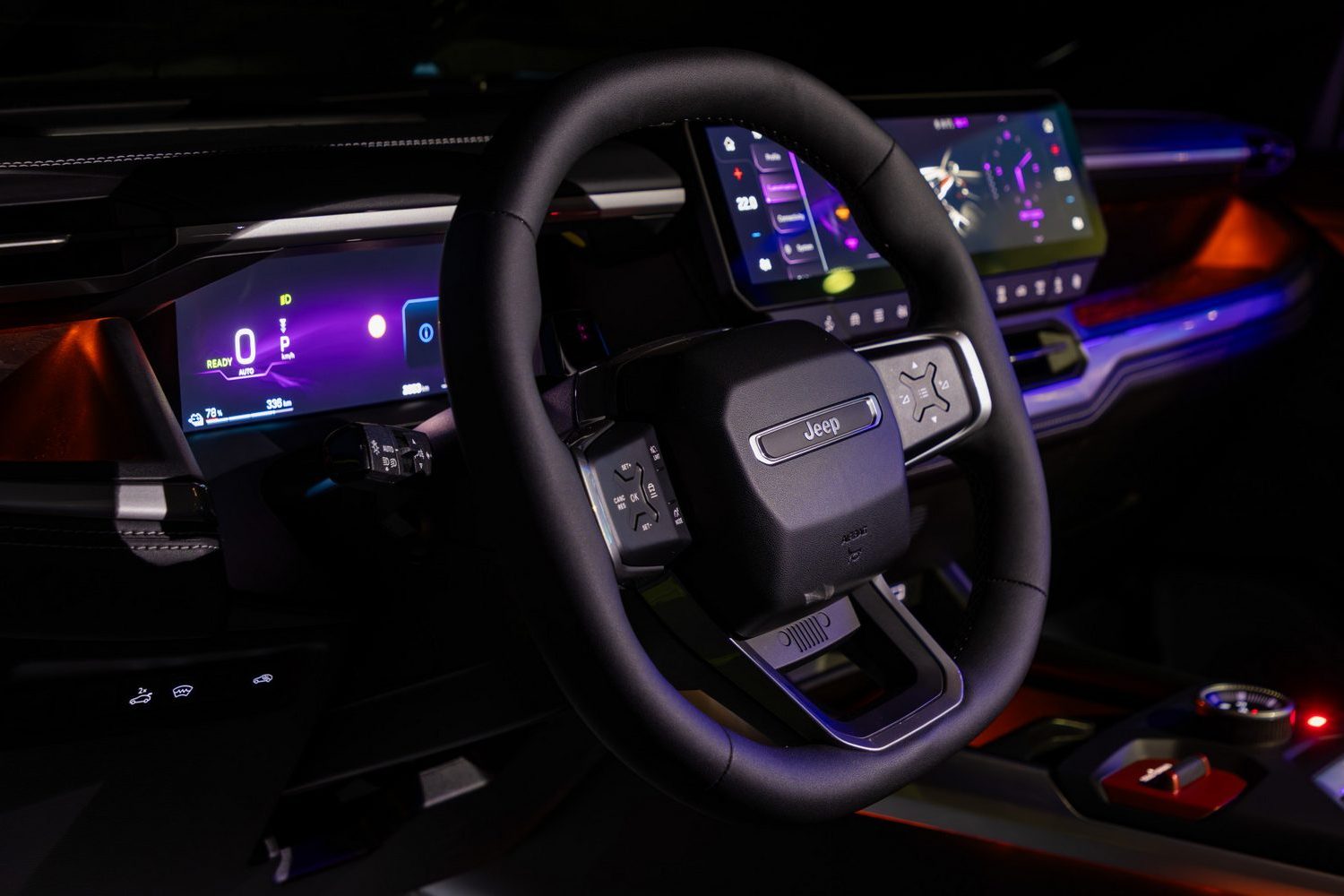
Adjustment of the steering wheel for reach and rake is done manually. There's more than sufficient movement in it, and the driving position is very comfortable.
Infotainment and technology
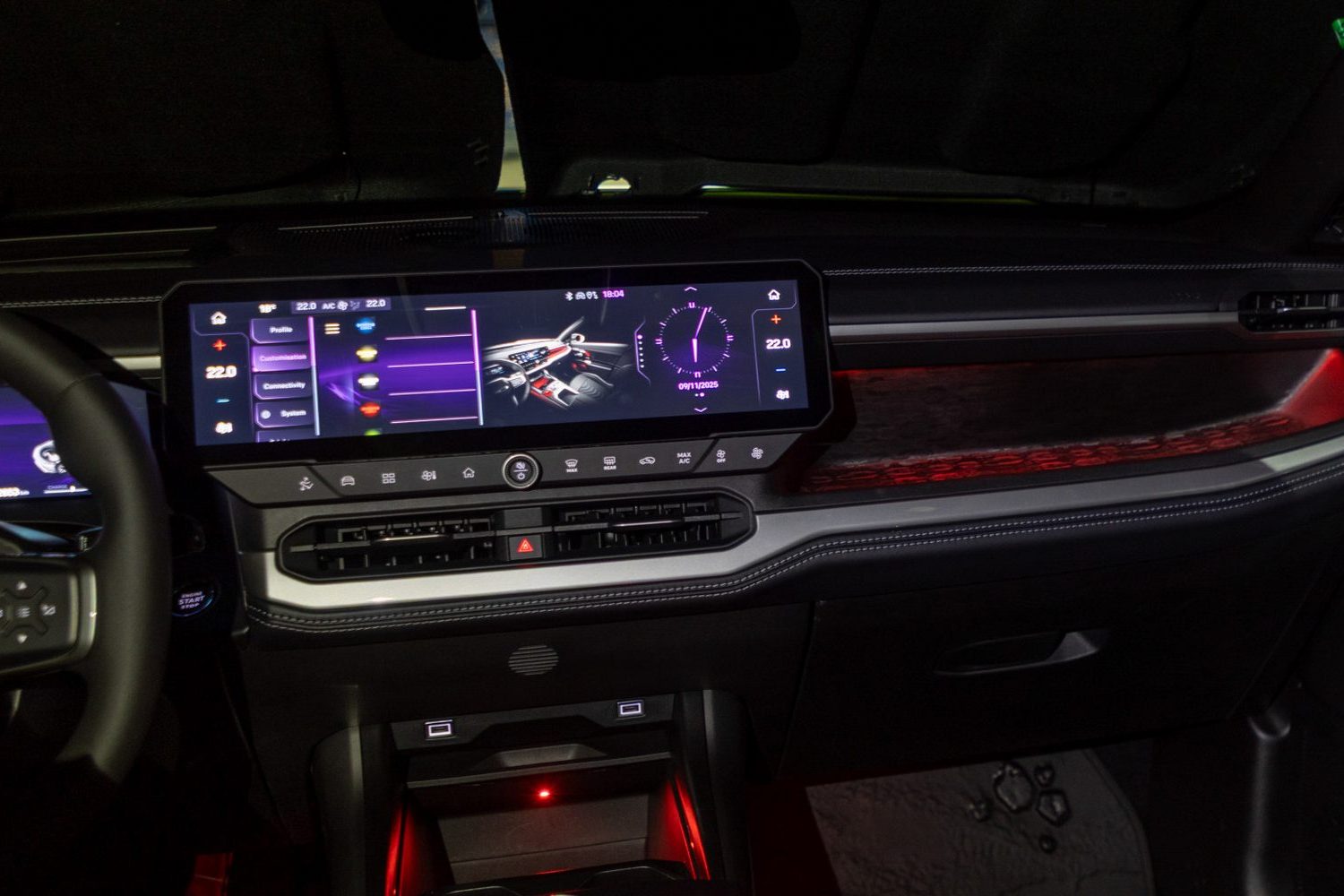
For the driver, there is a 10-inch digital instrument screen that is wider than it is tall. As such items go, this is a decent size, while the optional head-up display is a nice feature to have, as it puts everything directly into your eye line.

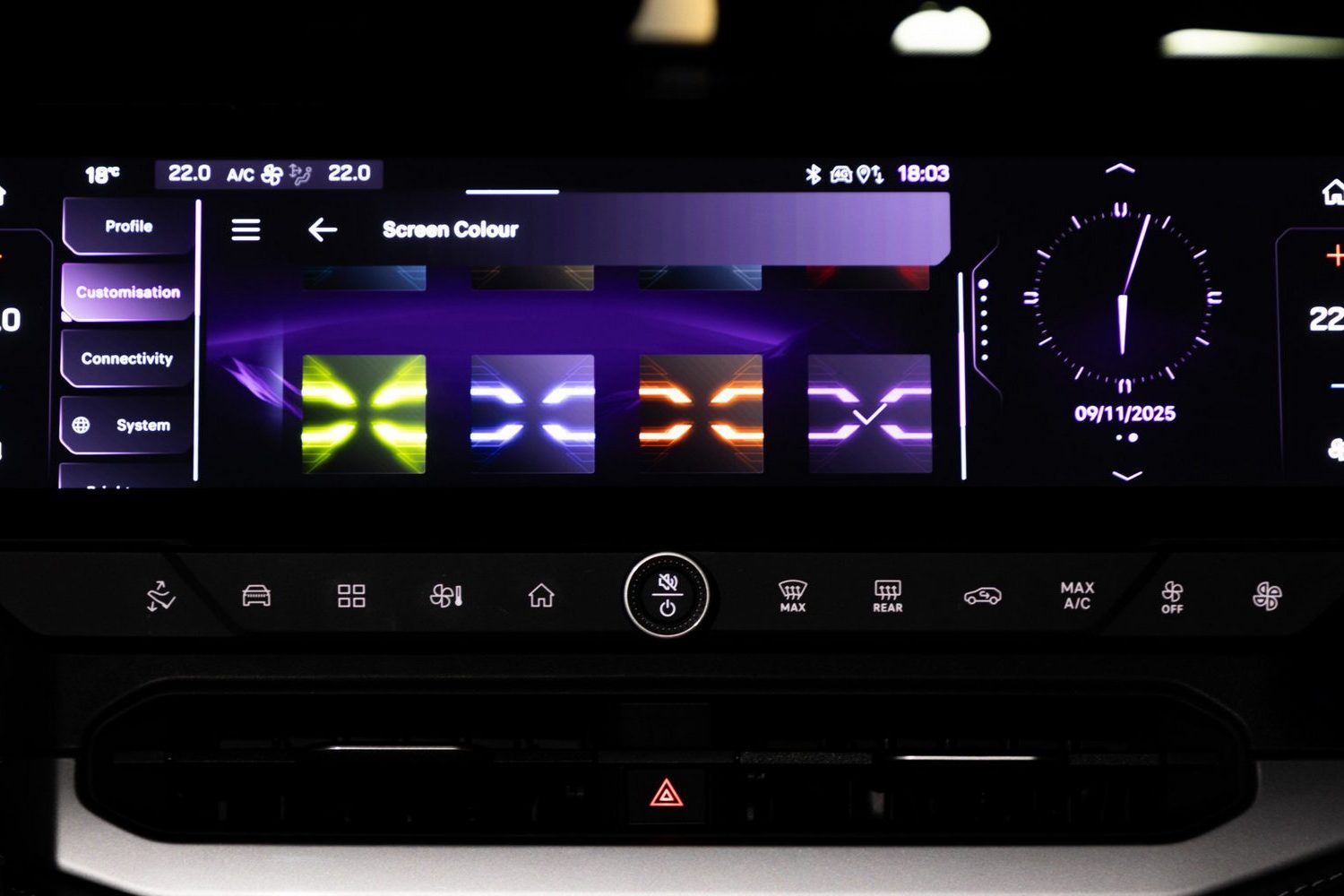
Better still is the 16-inch infotainment display that not only looks great but reacts quickly to inputs.
Jeep's native menu system is a little complicated with various layers, but we do appreciate the bank of haptic buttons beneath that act as shortcuts. The two bars these are placed on move in and out like large buttons and there's a volume dial in the middle.
Having temperature settings placed on either side of the screen for driver and passenger is useful, but still not as practical as having proper dials or knobs.

A wireless charging pad is standard in the Compass and has ventilation to prevent your device from getting too hot. There are USB-C charge ports available too and, for smartphone mirroring, both wireless Android Auto and Apple CarPlay are included.
Practicality around the cabin
Jeep's designers have done a lot of work to make the Compass's cabin more useful than before. The layout sees better use of space, with more than double the stowage volume, increased from 14 to 34 litres.

This includes a shallow shelf in front of the passenger seat, door bins that can more easily fit large bottles and a big storage area at the base of the centre console, just ahead of two cupholders.
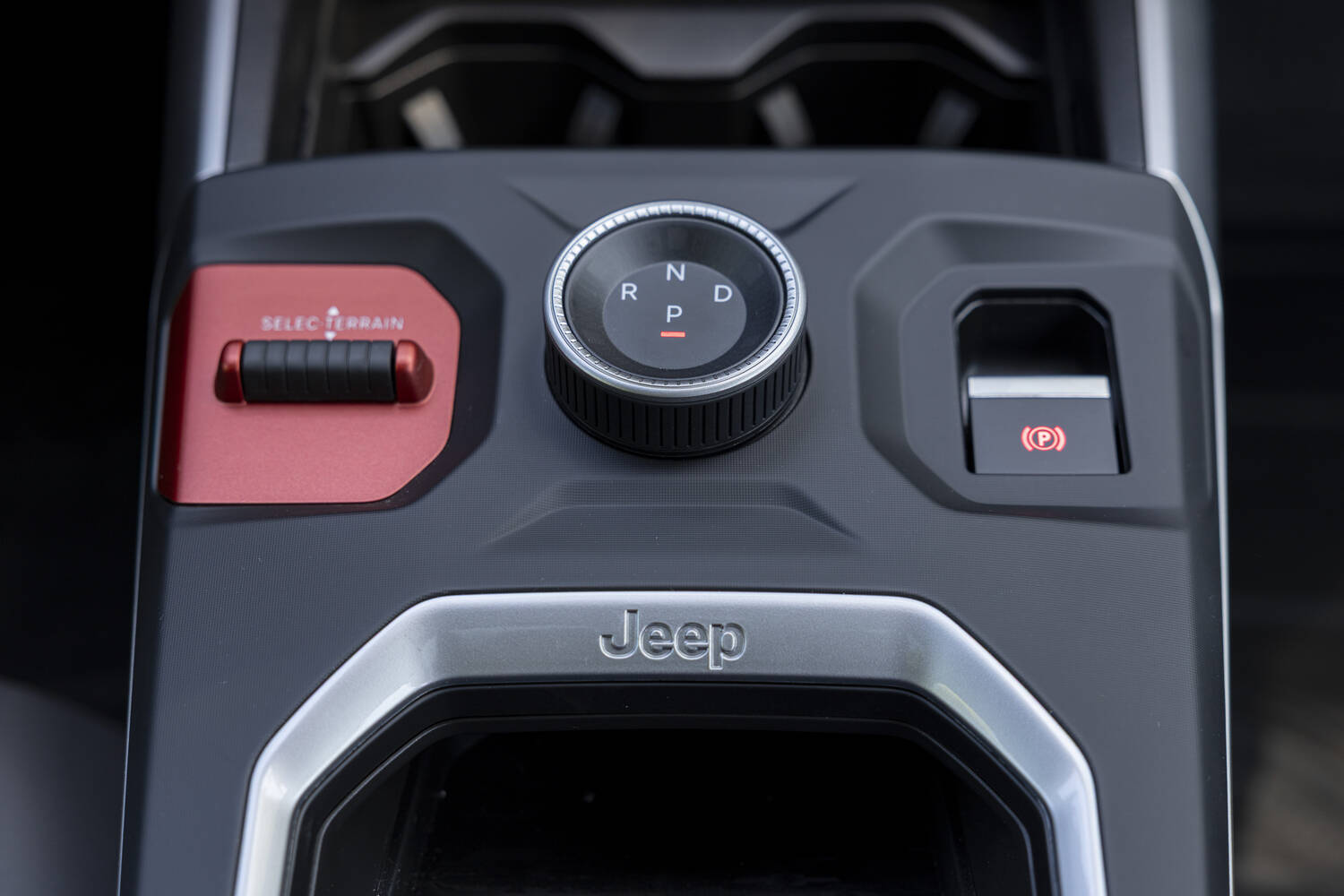
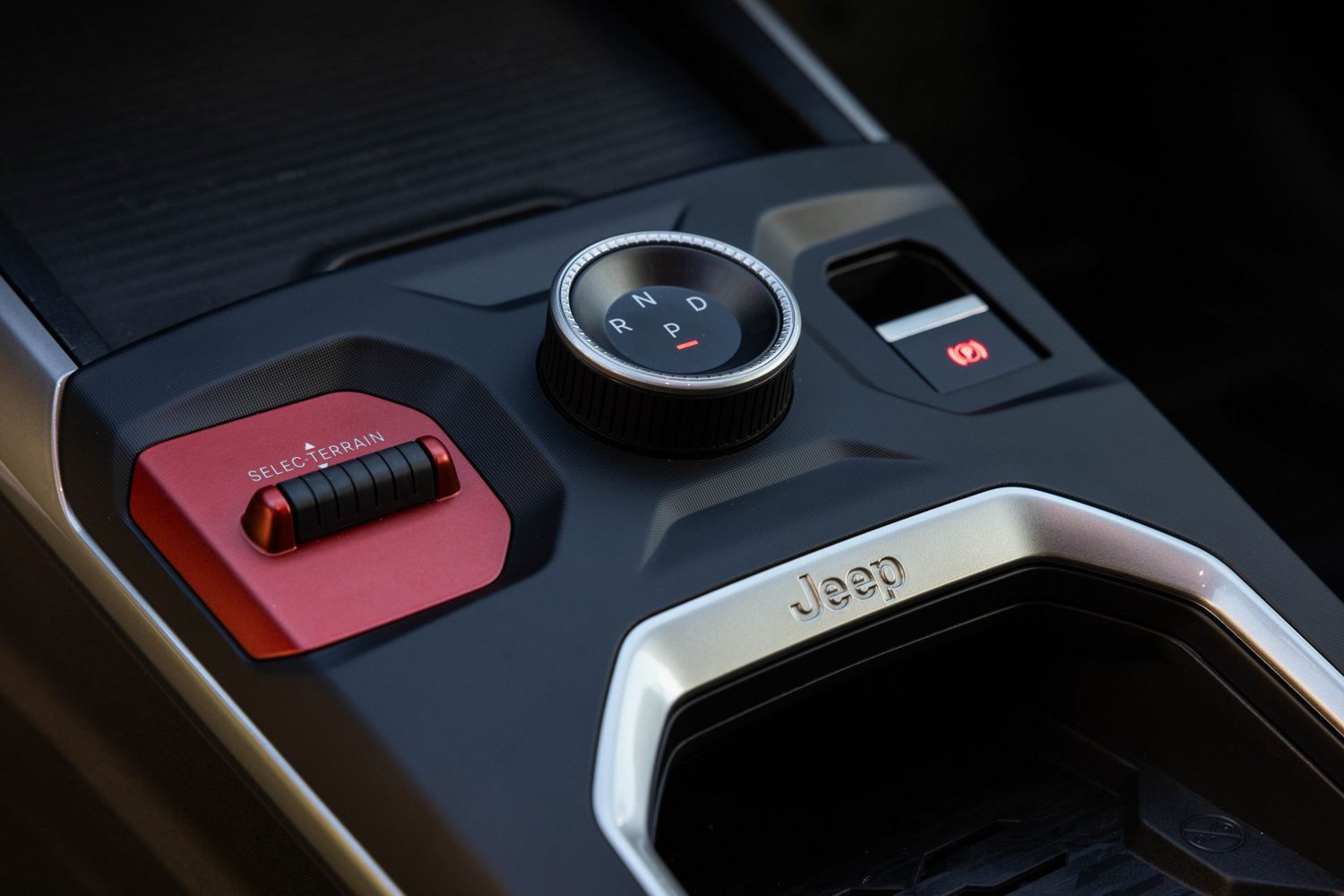
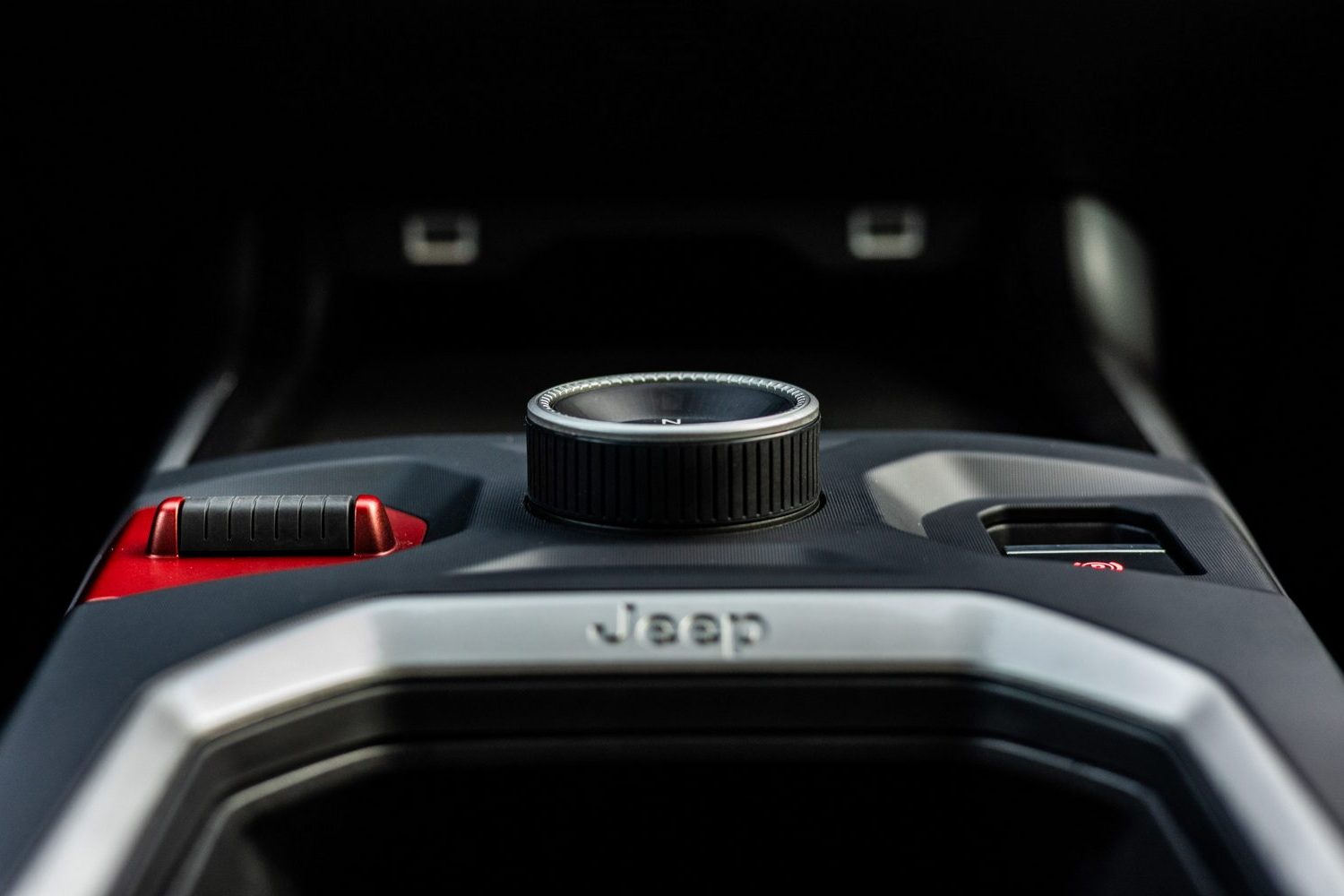
By using a compact rotary dial for the driver selector, the designers have also created more free space between the front seats.
Rear-seat passenger space

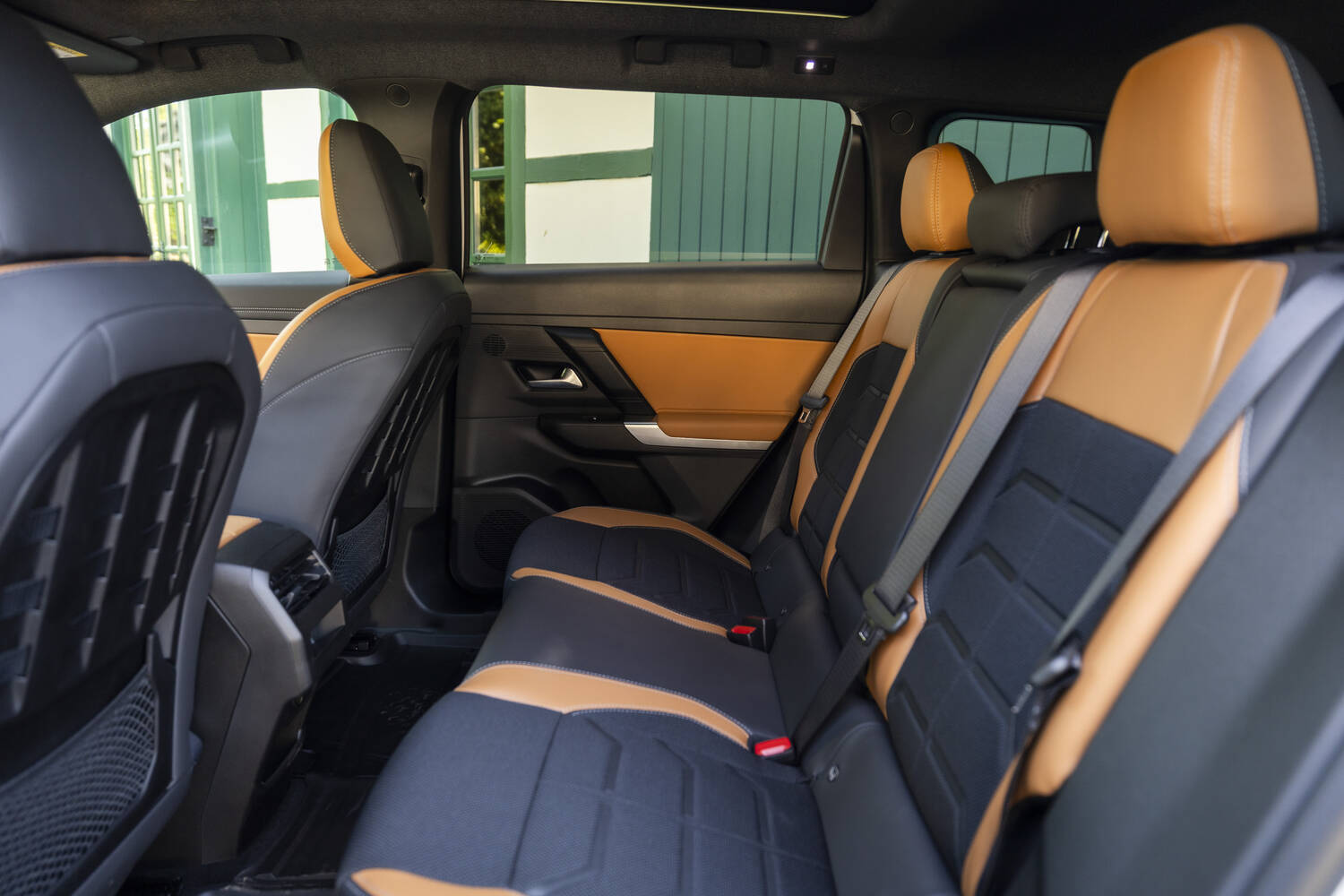
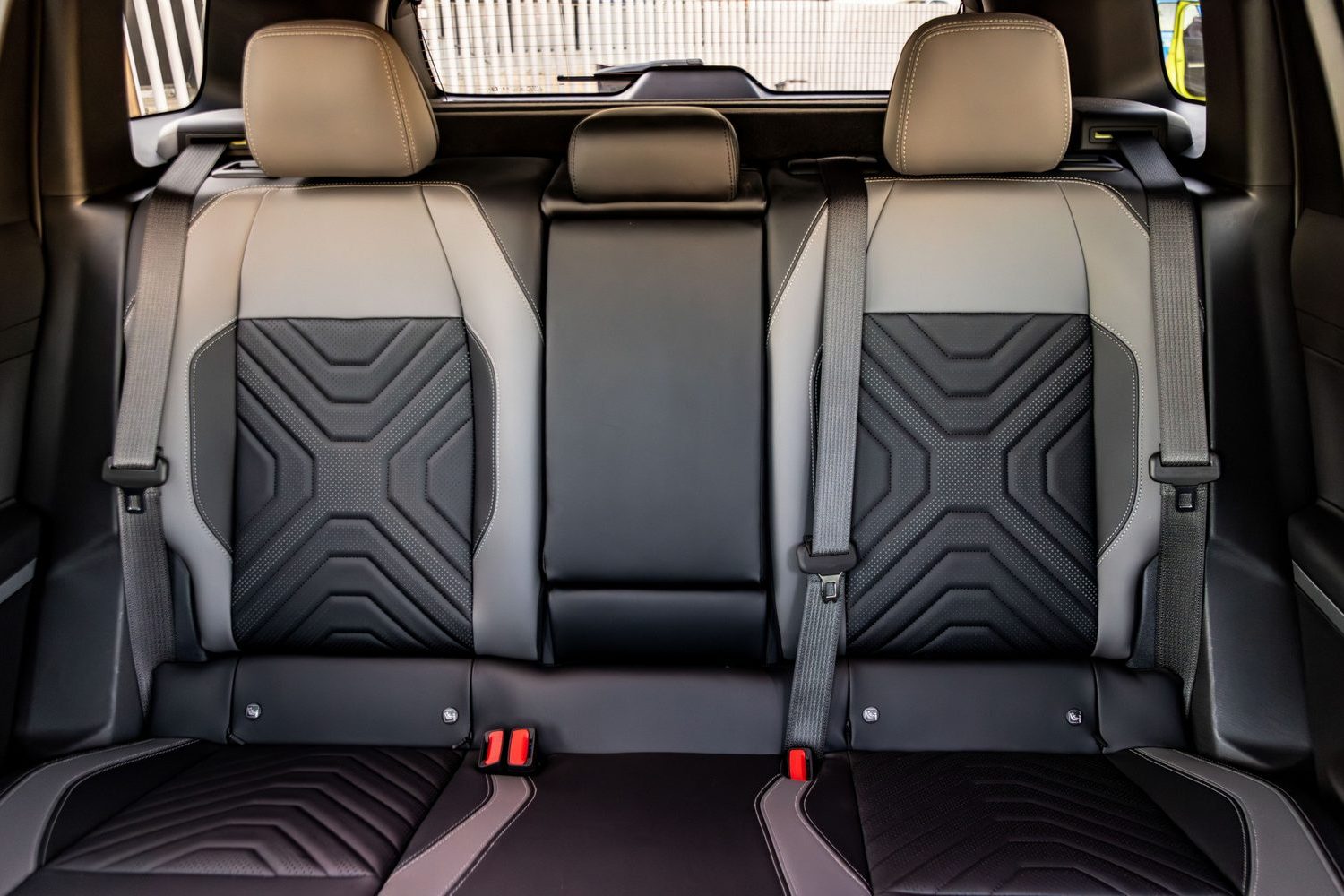
There is a good amount of rear passenger space thanks to the long wheelbase, and there is also an almost entirely flat floor across the back. Adults of average height will find it reasonable roomy in terms of legroom and also headroom, though in the case of the middle rear seat, legroom is slightly compromised by the placement of the centre console. A 40:20:40 split across the back seats adds some further versatility.
The 4xe version gets an interesting addition - seatbacks that feature a rugged panel to prevent scuffs and marks from kids' shoes or pets' paws. These also get fabric loops, rather like an army-style backpack, to which you can add clips and loops to store extra items such as water bottles, torches and so on.

Fitting child seats to the Jeep Compass
You will find two ISOFIX points in the rear of the Jeep Compass, in the outer seats. Parents will appreciate the wide angle at which the rear doors open, as that can make access easier. The middle seat isn't as generous in terms of width as the outer seats, which is something to keep in mind.
Boot space in the Jeep Compass Electric
The Jeep Compass Electric has 550 litres of boot, rising to 1,695 litres when you fold down the rear seats. The load height is average for the segment, though we fear the gloss-black paintwork on top of the rear bumper will be prone to scuffing and scrapes from loading in items.
The boot aperture is a practical, squarish shape, so bulkier objects such as bikes should go in with relative ease. It is possible to adjust the boot floor to a lower level, or to use that space as a separate area for charging cables and other items. There is no 'frunk' in the Compass Electric and nor are there any handy bag hooks nor straps in the boot, which seems like a bit of a missed opportunity.
The 4xe model loses some cargo space, as the luggage capacity, up to the parcel shelf, falls to 515 litres.
Towing with the Jeep Compass
There is a maximum braked towing weight of 1,000kg for the Jeep Compass Electric. The mild-hybrid petrol variant can do slightly better at up to 1,150kg.

The all-wheel-drive electric 4xe can cope with 1,300kg on a braked trailer while the e-Hybrid Plug-In can manage up to 1,500kg.
Safety in the Jeep Compass
In 2025, the Jeep Compass achieved a four-star safety rating from Euro NCAP, including individual scores of 80 per cent, 85 per cent, 74 per cent and 66 per cent for adult-occupant protection, child-occupant protection, vulnerable road users and 'Safety Assist', respectively. Read the full report here.
There are numerous safety systems as standard, many of which are part of the mandatory GSR2 legislation. These include speed limit warnings and driver attention monitoring, but there is also autonomous emergency braking, front and rear parking sensors, plus a reversing camera.
Interestingly, Jeep has moved the radar unit from its normal position down low in the front bumper, to a point behind the centre section of the 'seven-slot' grille. This protects this expensive bit of equipment from being knocked against rocks or trees when off-roading (or just an unexpected parking knock).
A more advanced 360-degree camera system is optionally available. The Compass is also equipped with several driver assistance features, including adaptive cruise control and a lane positioning assist system.
Performance of the 2026 Jeep Compass
- Standard EV has 74kWh battery
- Rugged 4xe is electric AWD
- Plug-in hybrid also available

The Jeep Compass Electric has a 74kWh battery that provides enough energy for 477-498 kilometres of driving range according to the WLTP standard - depending on specification. This uses a 213hp electric motor producing up to 345Nm and it is capable of 0-100km/h in 8.5 seconds, making it faster at accelerating than the mild-hybrid petrol model.
That gets a 1.2-litre engine with a total output of 145hp that is supplemented by a small 21kW electric motor fed by a compact 0.88kWh battery. There's no need to charge this setup or plug it in (in fact, you can't), as it simply acts as a boost to the turbocharged three-cylinder petrol engine.
There's also a front-wheel-drive variant with 231hp and a much bigger (97kWh) battery and the longest range of the Compass lineup at 674 kilometres. The all-wheel-drive 4xe variant shares that battery, but with slightly less available net capacity, at 96.1kWh, and that gives it a range of 606km.

Splitting the difference between hybrid and electric models is a plug-in-hybrid, front-wheel-drive version which has a combined 225hp, and an electric range of up to 94km.
Driving the Jeep Compass PHEV on the road in Germany
Words by Neil Briscoe on 15 July 2026
The plug-in-hybrid version of the Compass gets off to a good start, especially when you compare it to the standard, slightly underpowered, 145hp hybrid, in that it has way more useable power.

True, there's a slightly bland drone from the engine, in the classic hybrid manner, when you stretch out the revs, but in general this 225hp setup performs well, and feels suitably muscular.
The Jeep's steering is initially light and quick-geared, but you soon learn that the bluff nose is more likely to push wide of the apex of a corner than it is to tuck in tightly.

Perhaps that's only to be expected and you soon learn to stop trying to corner the Compass too fast and instead rely on the steady flow of torque from both the petrol engine and the electric motor to make up time.
However, there's a big flaw here and it's the ride comfort. Our Summit-spec test car came with 20-inch alloy wheels, and they induce far too much fidgeting and even banging into the already stiff suspension.
We managed to find some unkempt rural road surfaces in Germany, near Koblenz, and on those bumps - not unlike an Irish country road - the Compass plug-in felt really uncomfortable to drive.
Jeep needs to either soften off the springs, or go down an inch or two on the wheel rim, allowing for more cushioning tyre sidewall.
Driving the Jeep Compass 4xe on and off the road in Germany
Words by Neil Briscoe on 15 July 2026
The all-electric, four-wheel-drive Compass 4xe gets off to a better on-road start than the PHEV model. Possibly because the massive 96kWh battery pack is pushing down harder on the springs.

Or maybe it's the extra 10mm of ride height that the 4xe gets, bringing it to a total of 210mm or perhaps it's the chunky mud-and-snow tyres on 19-inch alloys, but whatever it is, the all-electric Compass feels a little comfier, although still noticeably stiff over really lumpy surfaces.
It's also quick. While 375hp doesn't sound like all that much from a four-wheel-drive electric car these days, the muscular torque - 345Nm from the front motor and 232Nm at the back - mean that the 4xe surges forward with real venom when you want to, and the 5.4-second 0-100km/h time is entirely believable.

The 4xe does suffer from some of the heavy-footed feeling in corners that affects the PHEV, but in Sport mode, the torque mix of the two motors (and the rear motor is entirely bespoke to Jeep, unrelated to other four-wheel-drive Stellantis electric models) switches to a rear bias, which makes it feel a little better balanced. It's still no Mazda MX-5, but then it was never going to be.
In spite of the chunky tyres, the Compass 4xe is refined and mostly smooth, so it's a good cruiser. Of course, that's doubly true for the more efficient and more affordable front-wheel-drive versions, so why step up to the more expensive model?
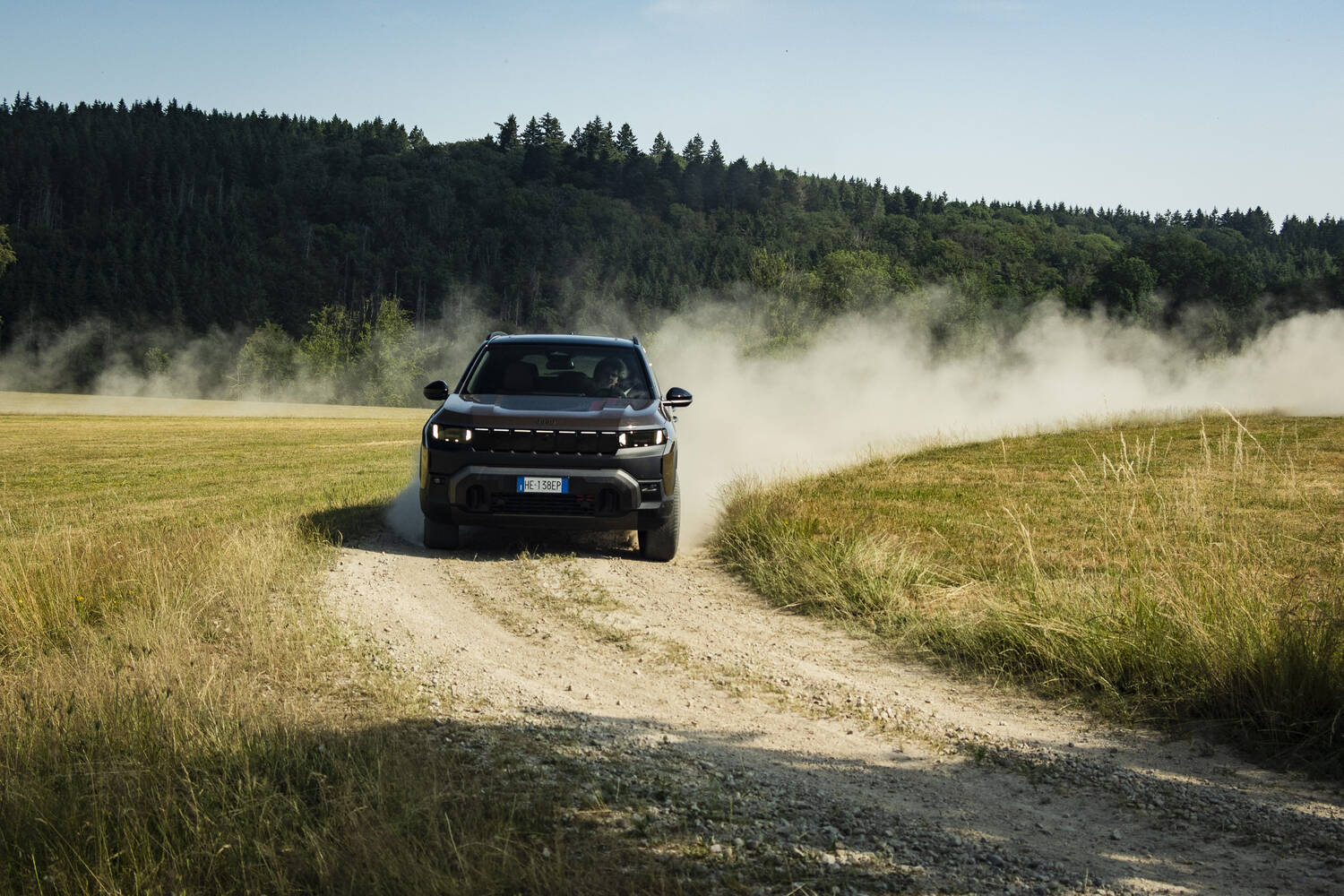
Simply this: if you're buying a car with a Jeep badge, surely it behoves you to buy a car with proper Jeep abilities? The Compass 4xe is almost ludicrously over-capable in off-road conditions.

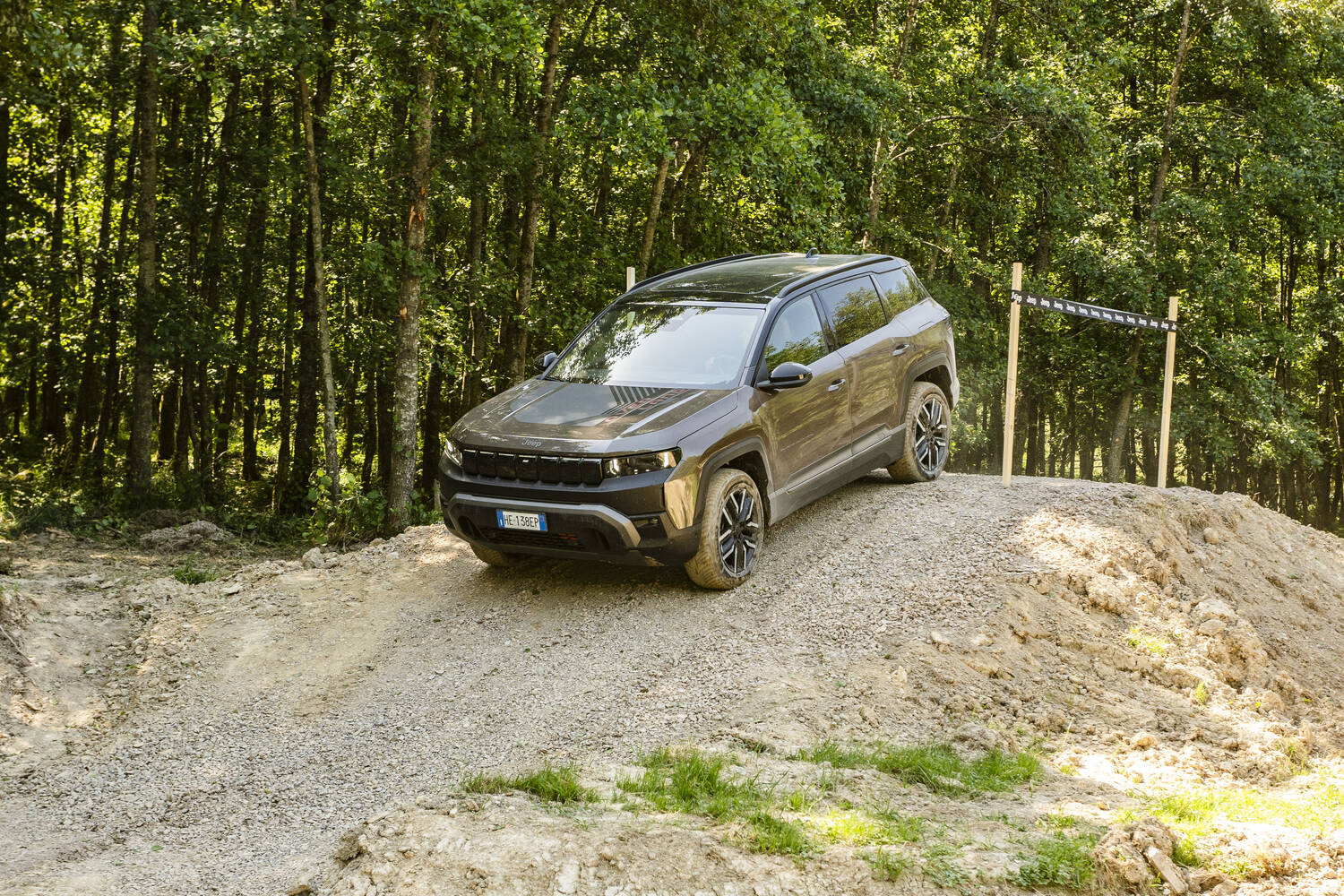
Jeep set us free amid acres of gorgeous German fields and woodland to prove the point. It was bone dry weather, so there wasn't much in the way of slippery, sloppy mud but the combo of rough gravel roads and gnarly forest tracks, made lumpy by huge tree roots, proved that the Compass 4xe will go further than any owner is likely to push it, and still come back smiling.
Both off-road and on-road performance are boosted by a clever predictive traction control system which Jeep calls Slip Target Control.

Instead of waiting for a wheel or wheels to spin, and then controlling that, this somewhat omniscient system works out - from sensors monitoring the steering, throttle, wheels, motors etc - where and when slip is likely to occur and steps in just before it happens.
The extra ride height and undercut bumpers mean that the Compass 4xe can tackle a 28-degree approach slope and a 31-degree departure slope, so not much is going to get in your way.
Come across a river to ford, or a road flooded by winter rains, and the 4xe will cope with up to 480mm of standing water, with no modifications. It feels reassuringly rugged.

Driving the Jeep Compass Electric on the road in Spain
Words by Dave Humpreys on 3 December 2025
The Jeep brand has literally become the byword for any SUV in everyday language, but the Compass Electric is very much a vehicle for the road, first and foremost.

Starting out on city streets it's clear that the Jeep Compass Electric has made a step forward in relation to build quality and refinement in comparison to its predecessor. Over speed bumps and broken tarmac, it feels solidly built, and even though the electric motor's output is modest by today's standards, it's more than adequate for seeing the Jeep through fast-flowing traffic.
The steering feel is light and quite direct, which is welcome when we get out of the urban confines onto more sinuous roads. That quick steering rack works well, tucking the front end neatly into apexes and making it easy to place on the road despite its exterior dimensions.

Drivers can adjust the level of energy recuperation via paddles on the back of the steering wheel or select a one-pedal mode via one of the shortcut buttons beneath the central touchscreen.
This setting does have quite strong levels of retardation, but it doesn't take long to get used to it. What is slightly strange is how the brake pedal also moves in and out as the system operates.

More importantly, it is how much more polished and refined the Compass Electric is in comparison to any of Jeep's previous products that makes the biggest impression. As we've mentioned, there is only modest performance on tap, but crucially, it's well balanced and suits the car for the tasks at hand.
Refinement is helped by it being electric, while other items, such as thicker glass, help to keep undesired sounds from penetrating the cabin.
Driving the Jeep Compass e-Hybrid on the road in Spain
Words by Dave Humpreys on 3 December 2025
Many people may, understandably, wonder if a 1.2-litre three-cylinder engine is up to the job in the Compass e-Hybrid. Given its size it's easy to see why some would think that it's too small an engine for such a car, but that's where the joys of some turbocharging and a mild-hybrid system come into play.
Now, we do need to clarify that this is by no means a high-performance vehicle, but it is brisk enough for urban life.

The three-cylinder engine has a distinctive thrum to it when it fires up and, combined with the mild-hybrid system that provides a further 21kW and 50Nm to fill in the gaps lower down, it makes a respectable effort of things at urban speeds.
Provided you're not too heavy-footed with the accelerator pedal, the engine sticks to its mid-range as the six-speed dual-clutch automatic gearbox works up through the ratios.
It feels quite different to the Compass Electric, not only due to the powertrain but also the reduction in weight, as the Compass e-Hybrid weighs a whole 510kg less than its battery-powered sibling.

While Jeep's engineers have altered the suspension to provide a similar dynamic flavour you can't help but feel the difference.
Almost any time that you lift off the accelerator the engine will disengage and shut off, switching to the hybrid element of the powertrain. In many instances the only way of noticing this happening is the speedometer font changing from white to blue.
The switchover happens smoothly thanks to how the hybrid system is setup and that remains true when going the opposite way, as the combustion engine restarts.

So long as there's some charge in the compact 0.88kWh battery (located under the passenger seat), it will travel for longer stretches than you might expect using only electric power.
It's worth noting that this mostly applies to lower speeds, but if you're willing to put the effort in and slightly alter your driving style, then you may see some reduction in fuel consumption.

Under harder acceleration the engine does become vocal, and it has to work hard to get the Jeep up to higher speeds when you're in a hurry. It will do it, but the coarser engine note isn't so sweet on the ears.
Nevertheless, it remains a reasonably good powertrain package and the ability to conduct low-speed manoeuvres, such as parking, without the petrol engine being active is a plus.

Mild-hybrid system aside, the Compass e-Hybrid remains a nice car to drive, and it feels every bit as robust as its electric counterpart. The refinement is still there and in some ways it's a better car to drive thanks to its lower weight.
Range, battery, charging and running costs of the 2026 Jeep Compass
- Electric range of up to 674km
- 160kW DC charging
- Up to 22kW on AC available

Jeep's use of a 74kWh battery as the base for the Compass Electric range will likely be more than enough for most buyers. It provides enough energy for nearly a 500-kilometre range.
If you really need more there's the 97kWh battery paired with a 231hp front-drive motor for a 674-kilometre range. The 4xe uses a 96.1kWh version of the same big battery for a WLTP range of 606km.
Meanwhile, the plug-in hybrid Compass, with its 17.4kWh battery, can manage up to 94km of electric driving before the petrol engine kicks in.
When it comes to charging, the Jeep Compass Electric gets 11kW AC capability as standard, and there is the option of upgrading that to 22kW.
At a peak rate of 160kW, the DC fast charging isn't the highest compared to what else is available.
Real-world range and efficiency of the Jeep Compass Electric
During our time driving the Jeep Compass Electric 73kWh, we recorded an average energy consumption of 20.5kWh/100km over a mixture of environments, including city driving and motorway. That is a little higher than Jeep's official figure and would indicate a real-world driving range of around 360 kilometres.

Taking a similar journey in the Compass e-Hybrid resulted in a fuel consumption figure of 7.9 litres/100km. That journey was with only the driver onboard, so we would expect that figure to increase a little more if you're driving with other passengers and luggage in the boot.
The plug-in hybrid easily beat that figure, uses less than four litres per 100km over a short test route driving in Auto mode, starting with a fully charged battery. We suspect that running in EV mode will give you a realistic range of around 75-80km.
The 4xe is, obviously, less efficient and much time spent off-roading didn't help much but our overall figure of 25kWh/100km isn't too shabby.
In more normal driving, you should easily get 450km out of the 4xe - maybe 500km if you're careful - and that's helped by the fact that the rear motor disengages at speeds above 15km/h until it's needed.
Servicing the Jeep Compass
Servicing for the Compass e-Hybrid will be at 12-month or 25,000-kilometre intervals, whichever comes first. The service interval for the Jeep Compass Electric is 12,500 kilometres or in the first 12 months. Then it's every two years or 25,000 kilometres.
Jeep Compass warranty
All new Jeeps in Ireland are covered by a three-year or 100,000-kilometre warranty from the date of registration (whichever comes first). Separately, the high-voltage battery is covered by an eight-year or 160,000-kilometre warranty.
Irish pricing & rivals to the 2026 Jeep Compass
- Starts at €42,995
- Same price for electric and hybrid
- Awaiting pricing for newer versions

The Jeep Compass has a starting price of €42,995 for the mild-hybrid or the Compass Electric in Altitude specification.
The higher-grade Jeep Compass First Edition costs €45,995 for either petrol mild-hybrid or electric.
We don't yet know prices for the 4xe, nor the long-range electric Compass, nor the PHEV, but those will be announced closer to their Irish on-sale dates, which are likely to be towards the end of 2026.

Verdict - should you buy the 2026 Jeep Compass?
The Compass's design ticks all the right boxes, and it's spacious inside for family life while still practical enough for even the most enthusiastic of outdoorsy folk. But what stands out the most is how much better it drives than its predecessor, so this is one Jeep that could get much more mainstream.
As for the 4xe, it will be expensive, and not everyone needs its genuine off-road abilities, but it feels right and proper that a car bearing the Jeep name can head off into the woods and the hills with this kind of aplomb.
FAQs about the 2026 Jeep Compass
Is there an AWD Jeep Compass Electric?

Yes - the range-topping Compass 4xe is fully electric, and is the only four-wheel-drive variant.
Is there a seven-seat option for the Jeep Compass?
No, the Jeep Compass is only available with a five-seat layout.
How capable is the Jeep Compass Electric off-road?

The Jeep Compass Electric has 200mm ground clearance with approach and departure angles of 20 degrees and 26 degrees, respectively. A wading depth of 470mm lets it get through reasonably high water levels. However, most models are front-wheel drive.
The Compass 4xe dramatically improves on those figures, and with its electric all-wheel drive it's spectacularly capable off-road.
Want to know more about the 2026 Jeep Compass?
If there's anything about the Jeep Compass we've not covered, or you'd like help in choosing between it and other cars, you can avail of our expert advice service via the Ask Us Anything page.