



Exterior & design of the 2026 Hyundai i20
- Sharp styling still looks crisp
- Two-tone paint finishes available
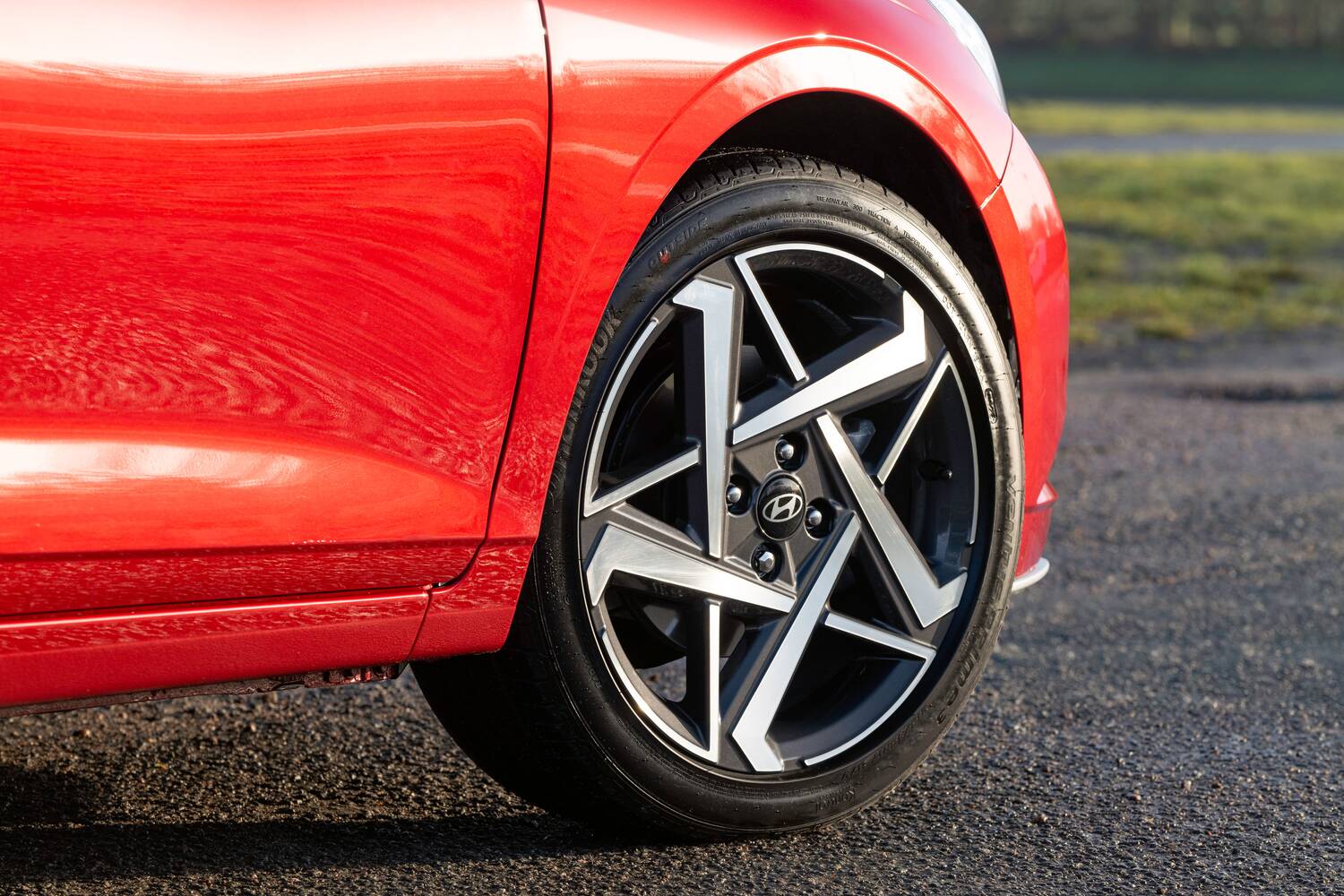
- 15-inch steel or 16-inch alloy wheels

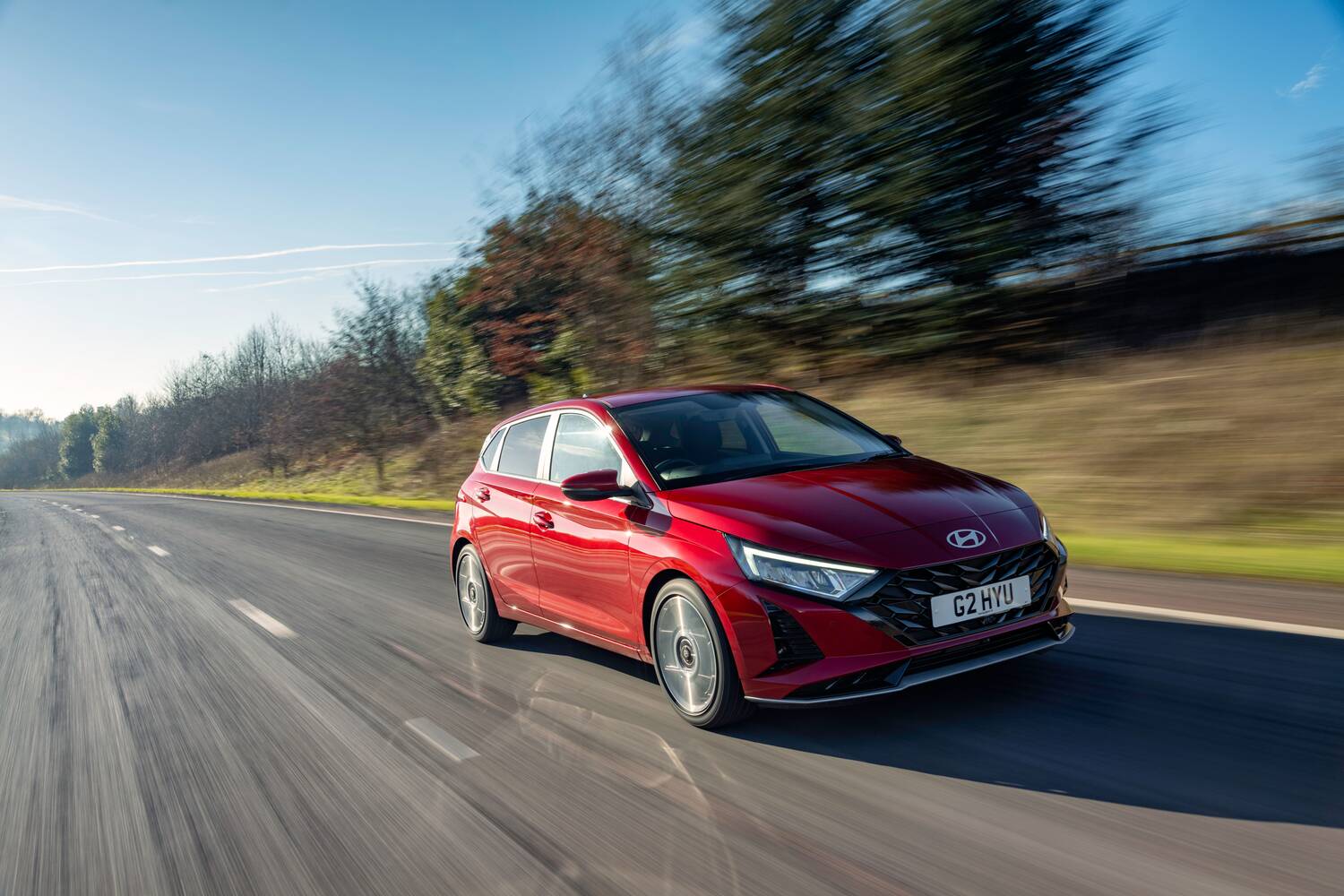
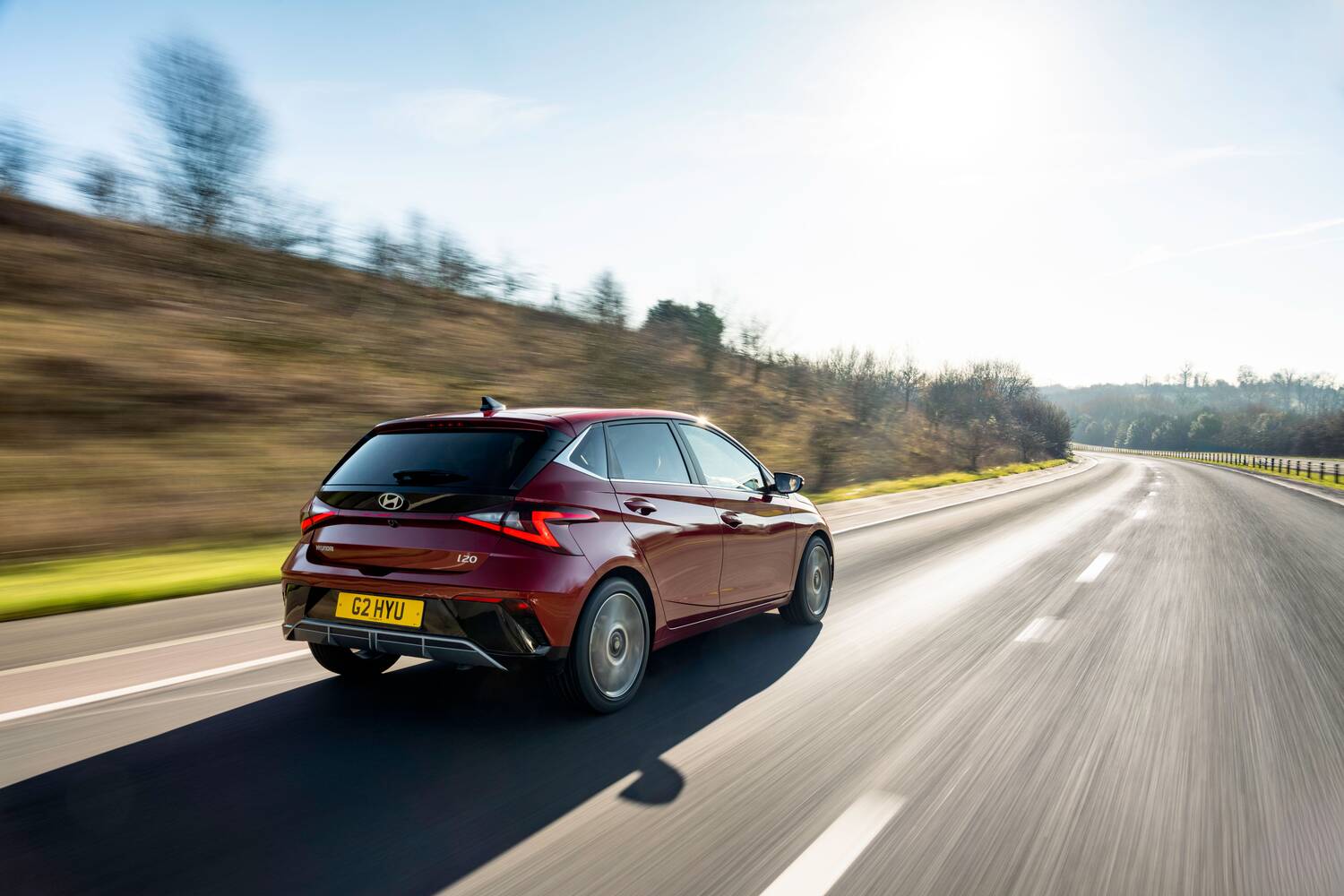
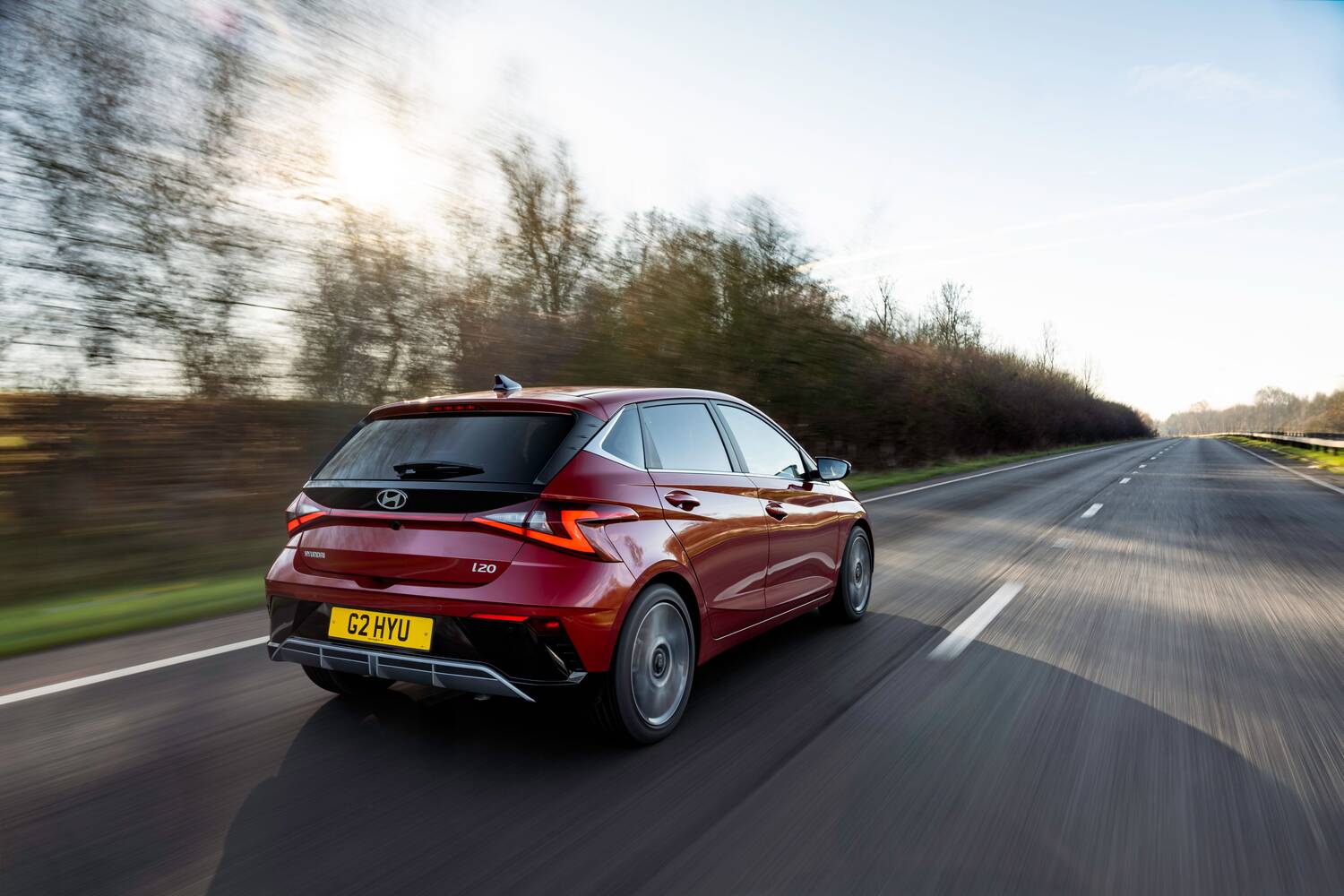
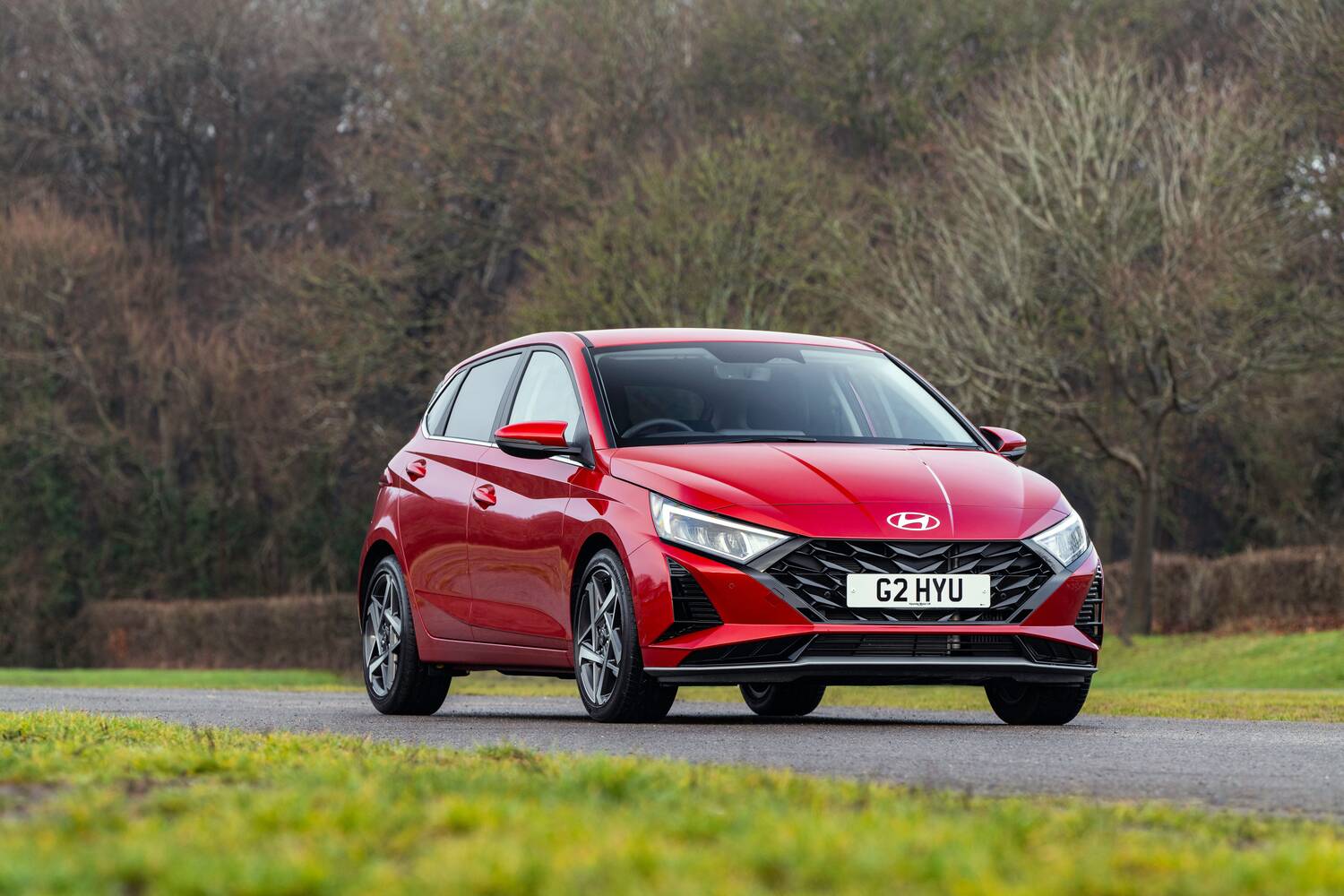
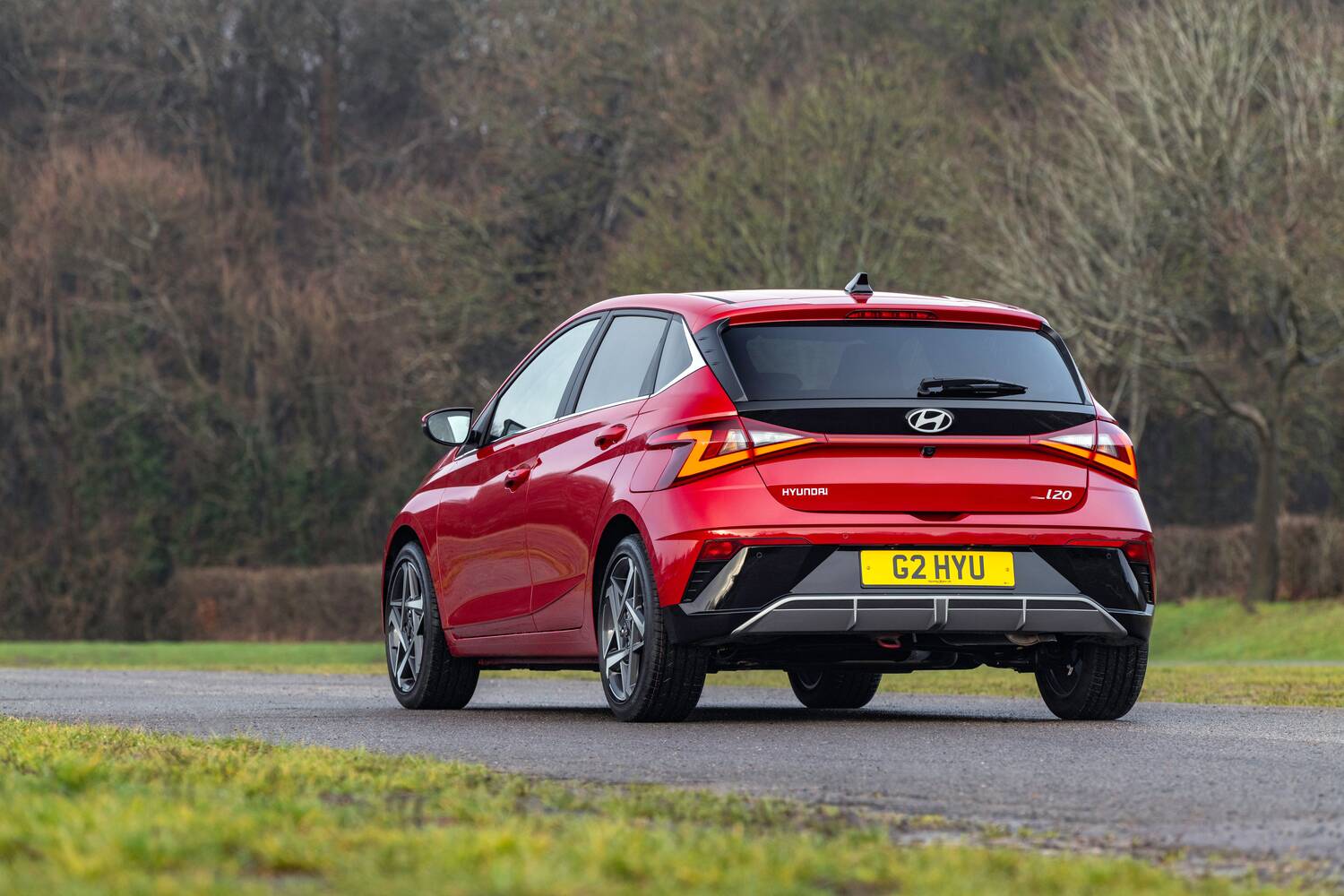
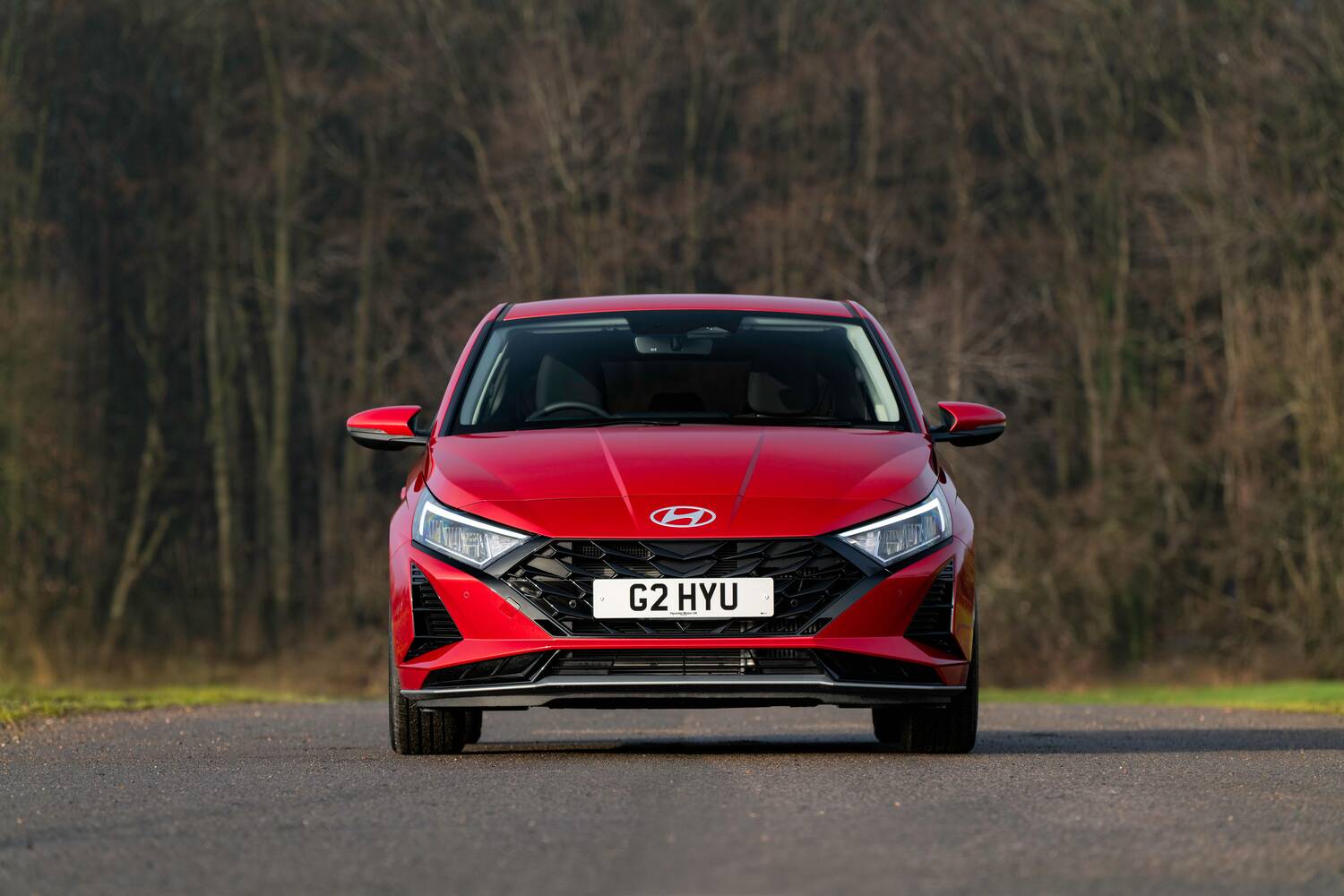
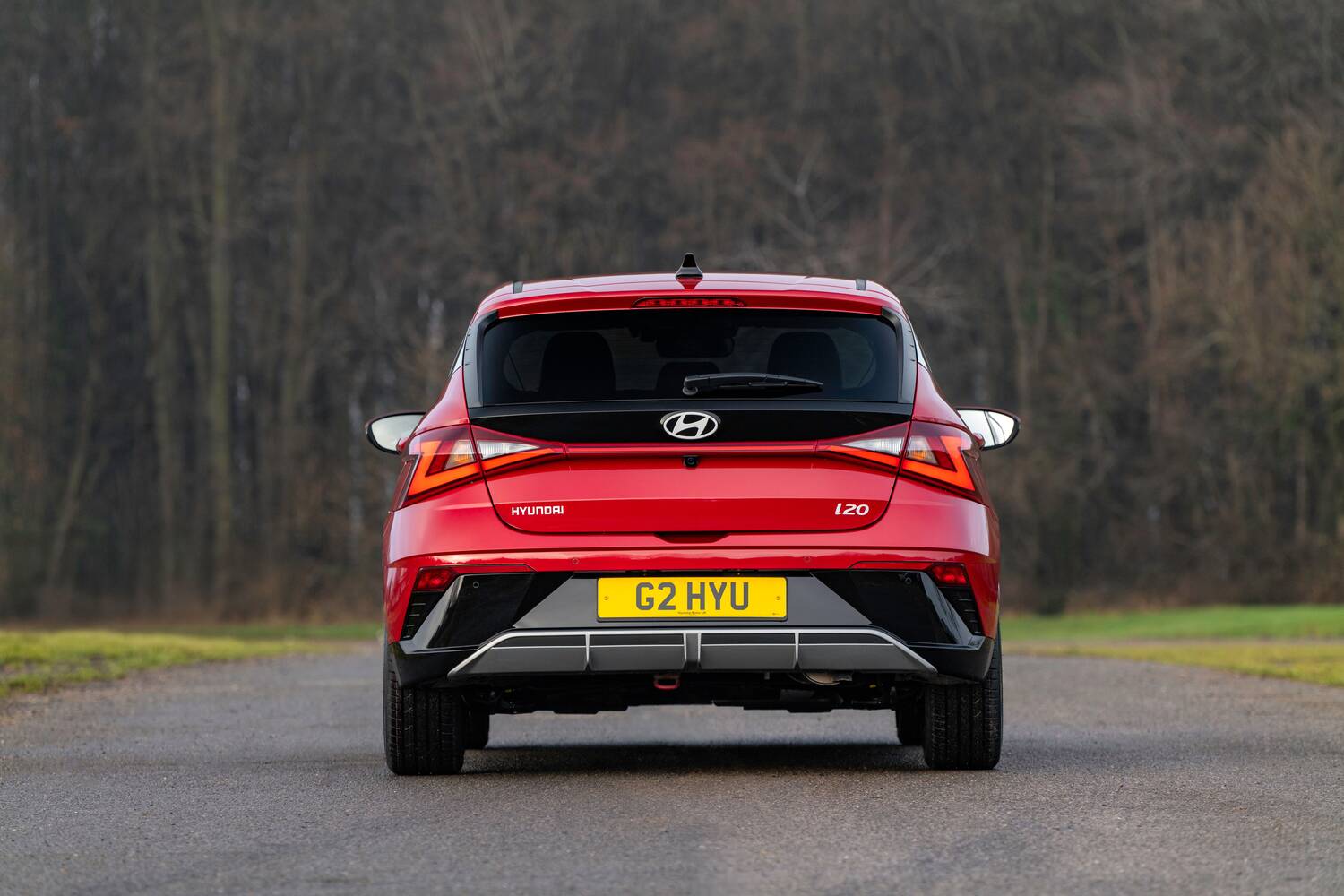
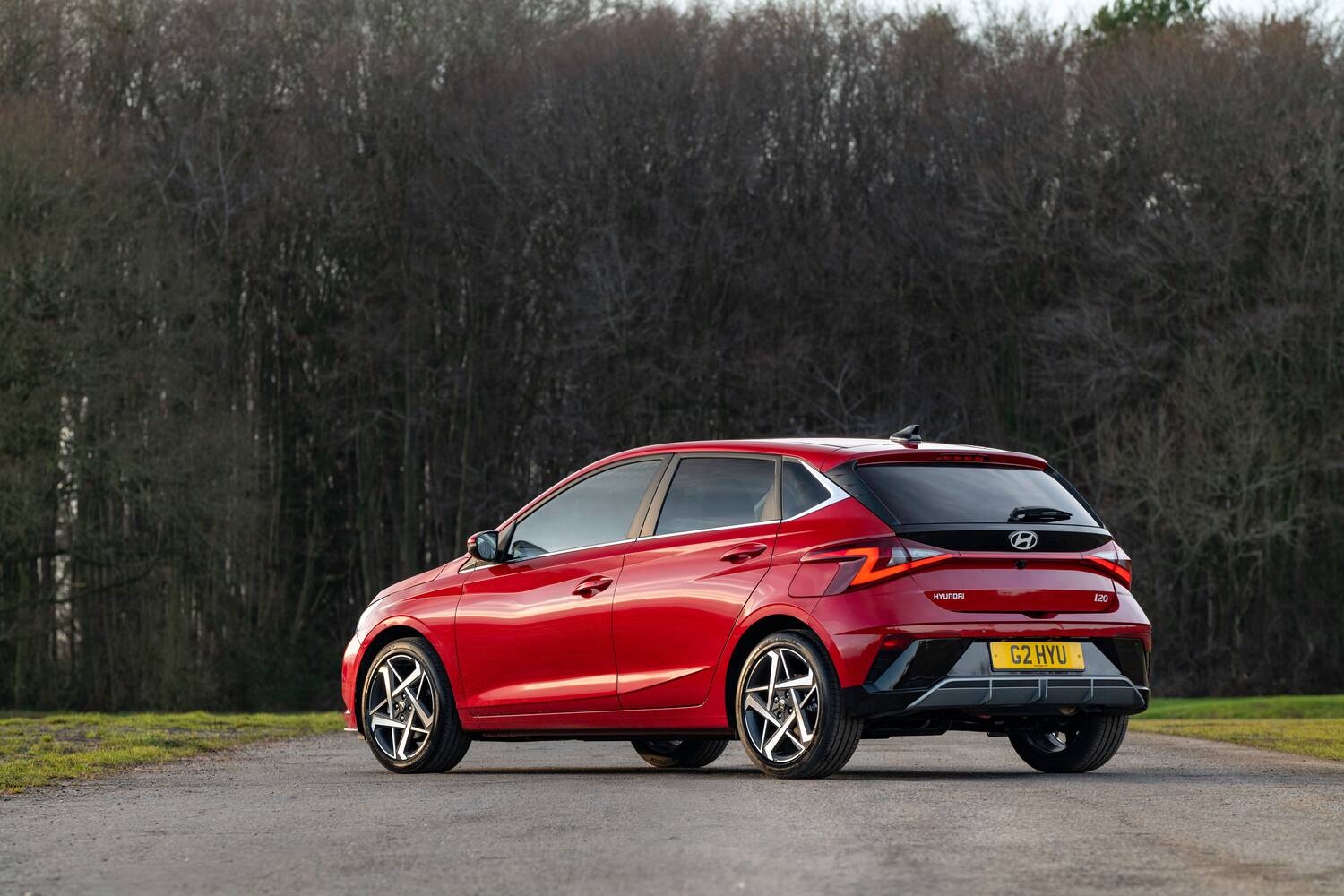
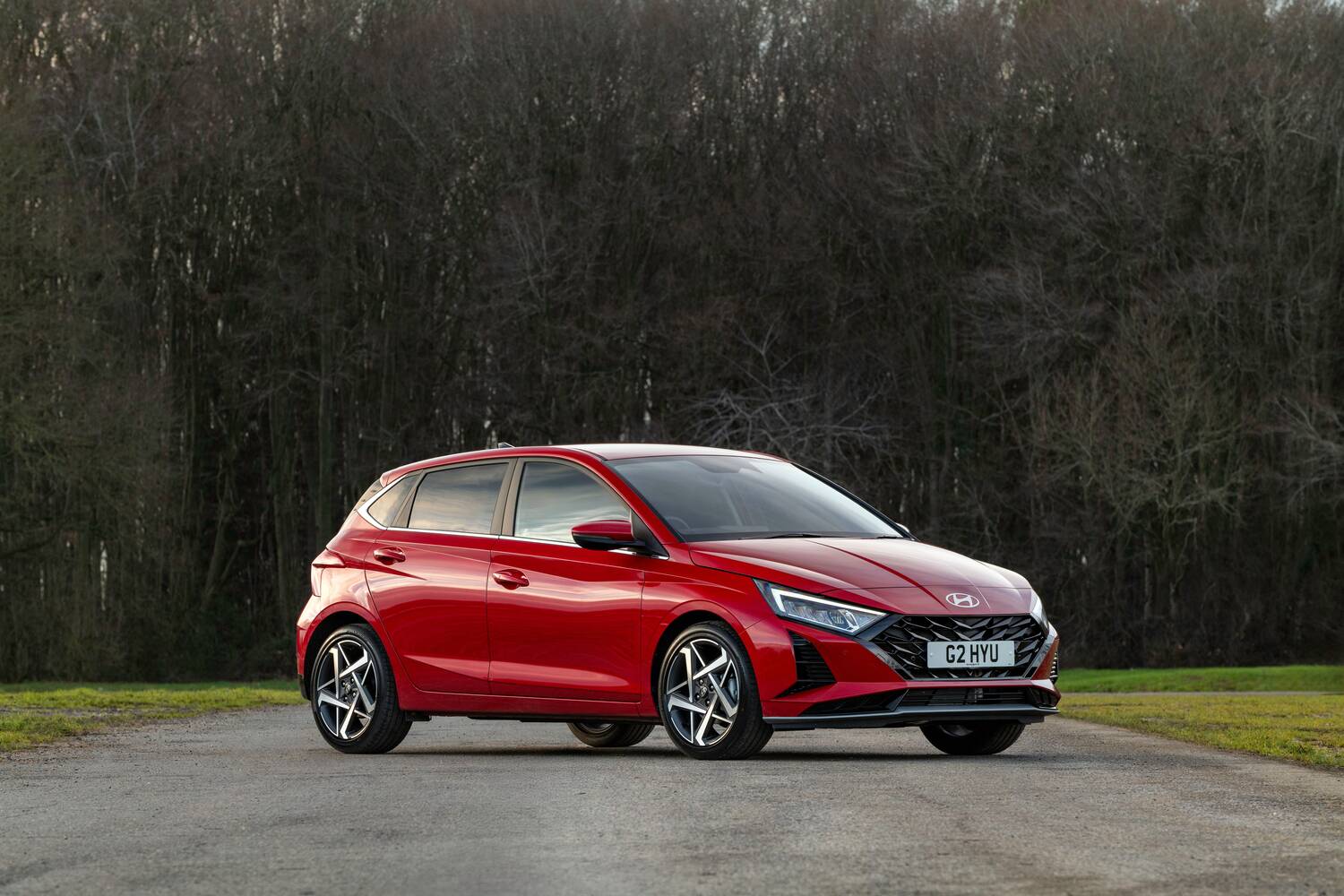
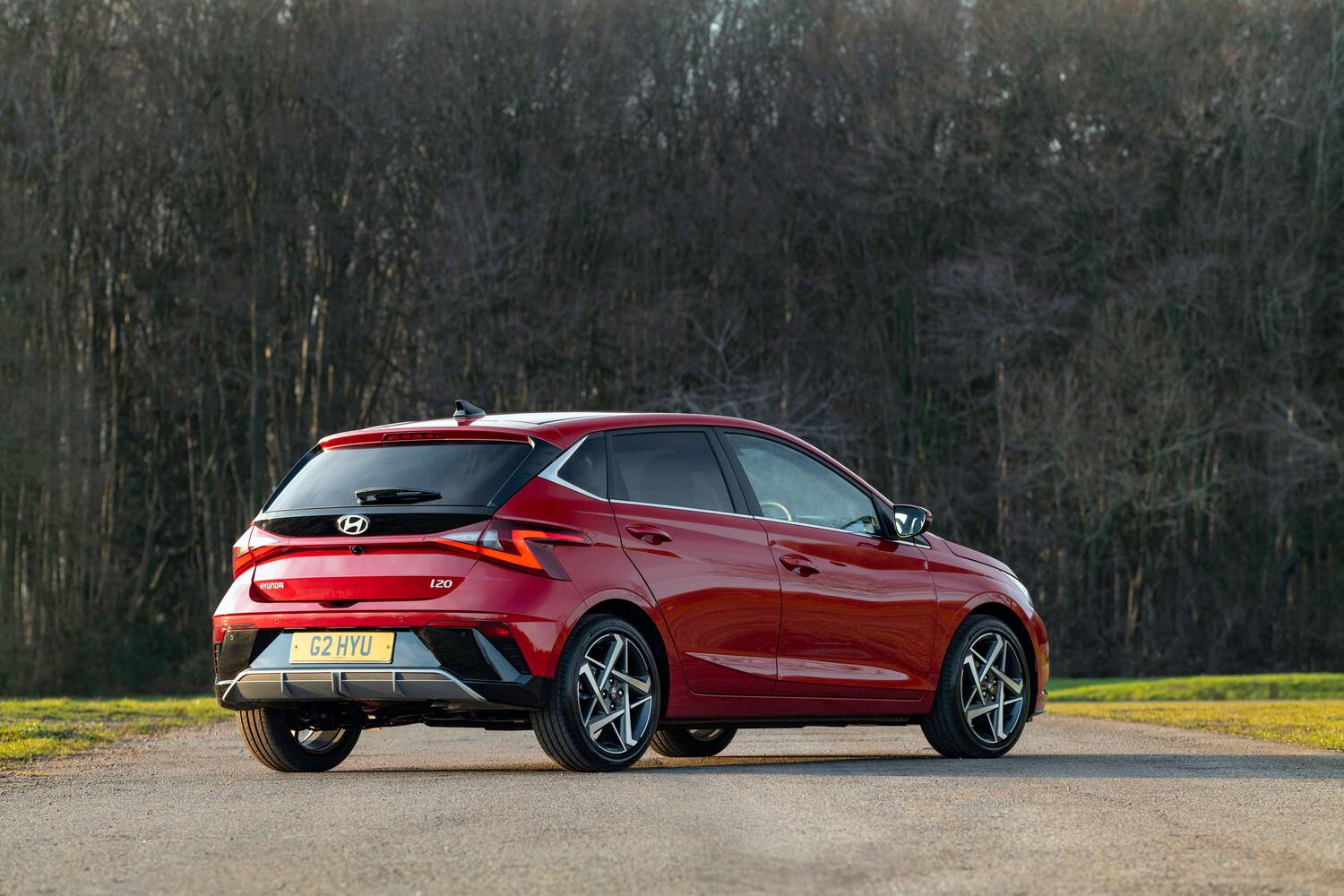
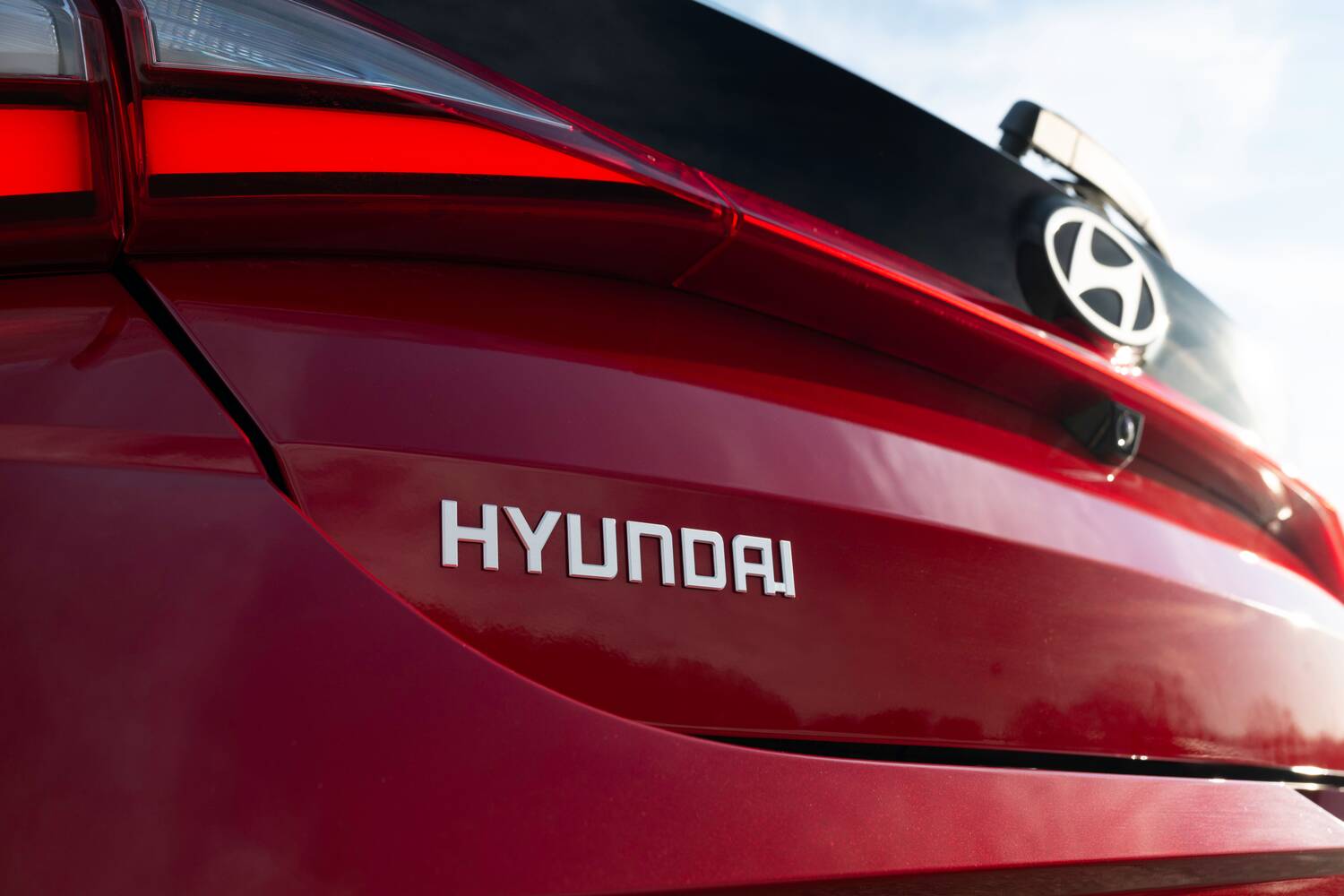
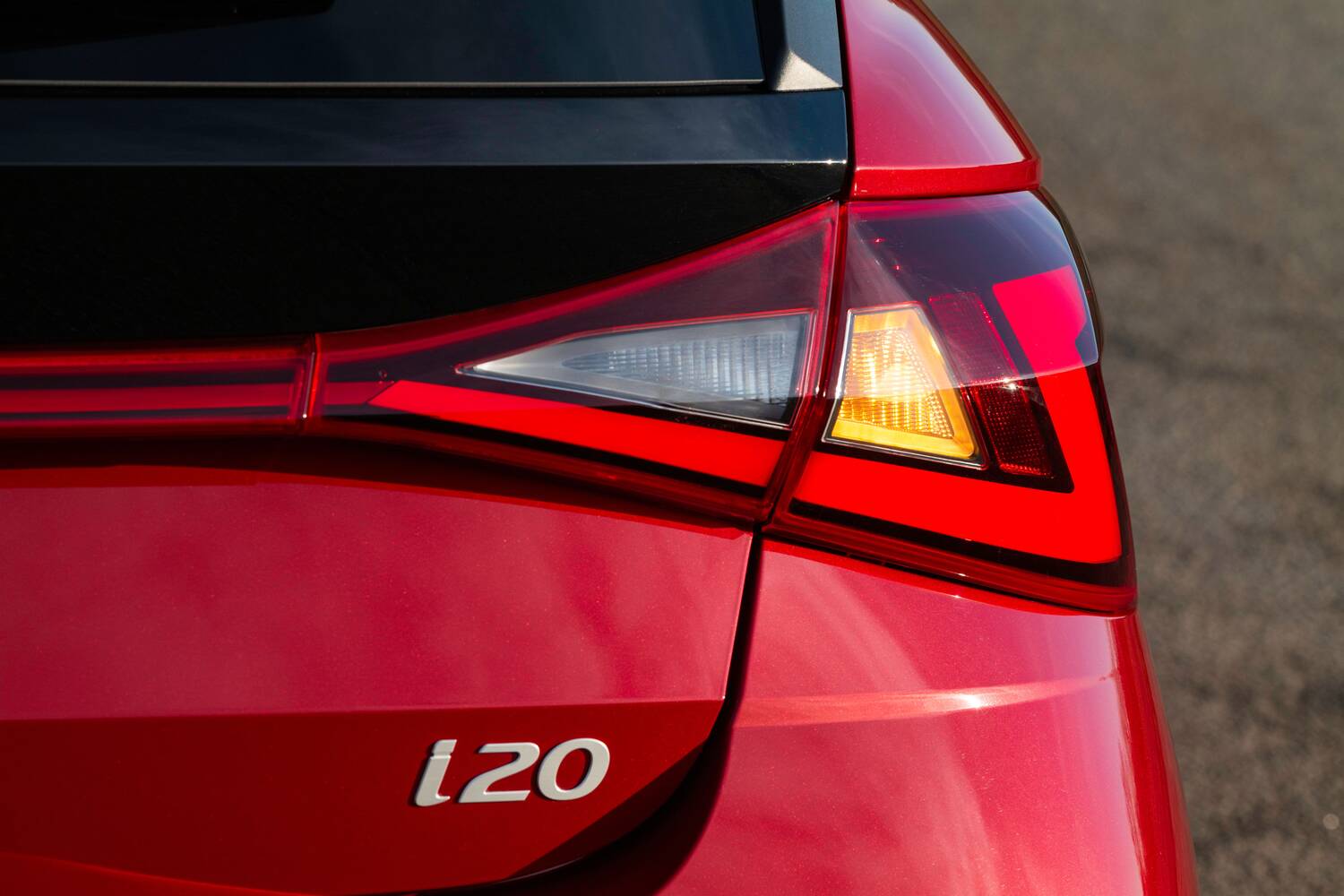
With its hawkish headlights and crease across the boot lid mimicking a full-width light strip, the Hyundai i20 has a lot of presence for a small car.
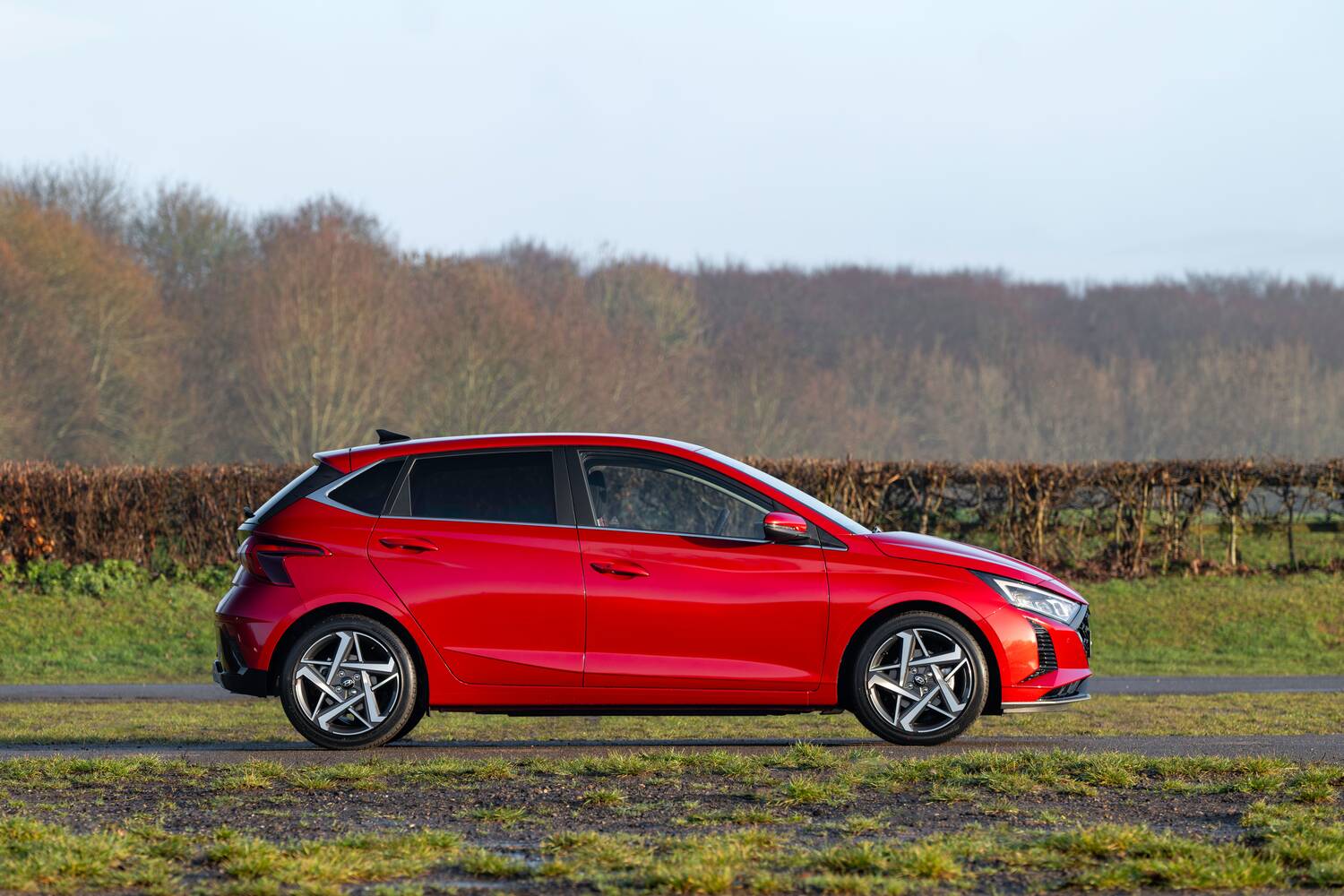
Its detailing, certainly in terms of swage lines on the flanks, is busy without being awkward, and with plenty of contrast black-and-silver trim on the exterior, it's a shape which really suits some of the more daring paints available in the range of colours offered.

The 2023 facelift only mildly altered the radiator grille and bumpers on the car, although the hooked-line daytime running light (DRL) signatures were added to the headlamp clusters to good effect.
In short, few competitors in this class look much better than the Hyundai, even if it has been around a while.

Dimensions of the 2026 Hyundai i20
- Length:
- 4,065mm
- Width:
- 1,775mm (excluding mirrors)
- Height:
- 1,450mm
- Wheelbase:
- 2,580mm
Paint colours for the 2026 Hyundai i20
There are eight colours for the Hyundai i20 range, starting with Atlas White, which is a solid finish. There's just one metallic shade, the distinctive Lucid Lime, while the other six paints are all pearl-effect - these being Phantom Black, Lumen Grey, Aurora Grey, Dragon Red, Mangrove Green and Meta Blue.

Of these, four of them - white, red, blue and lime - can all be teamed to a Phantom Black pearl roof for a two-tone appearance on the i20, although the bicolour bodywork is reserved purely for the higher-spec 1.0T car with a manual gearbox.
Interior, practicality, tech & comfort of the 2026 Hyundai i20
- Spacious and well-built cabin
- Design is easy on the eye
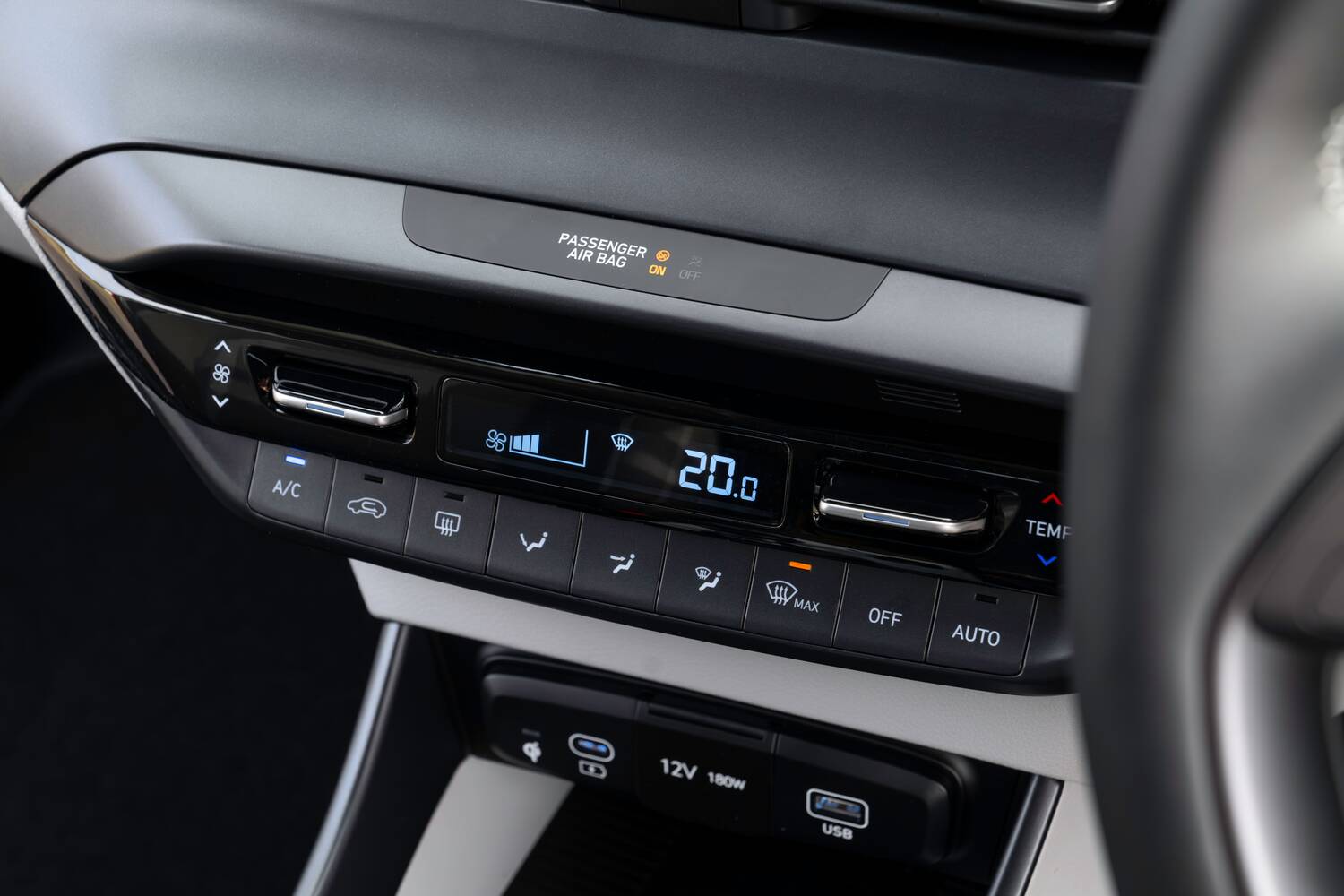
- Sensible retention of buttons

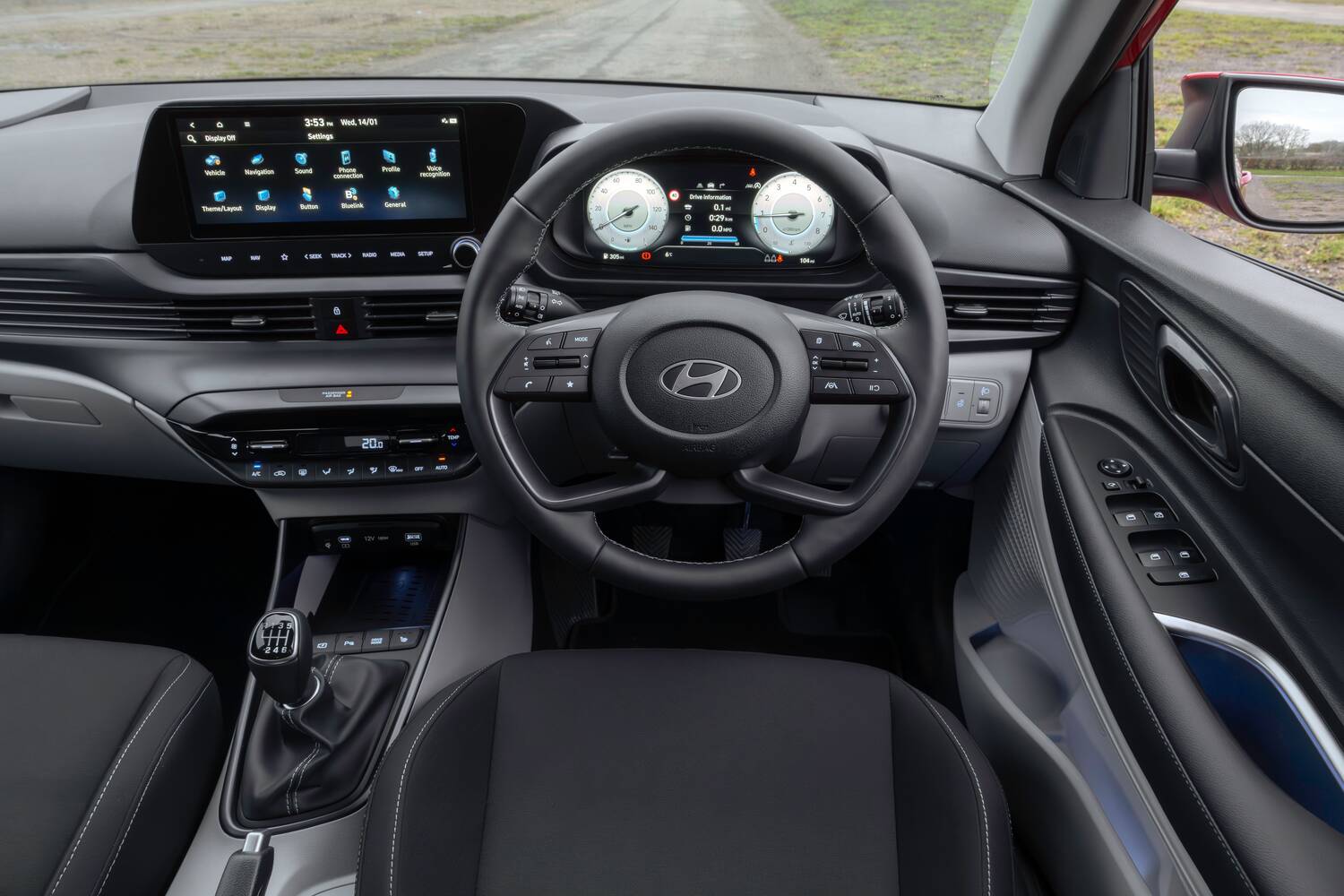
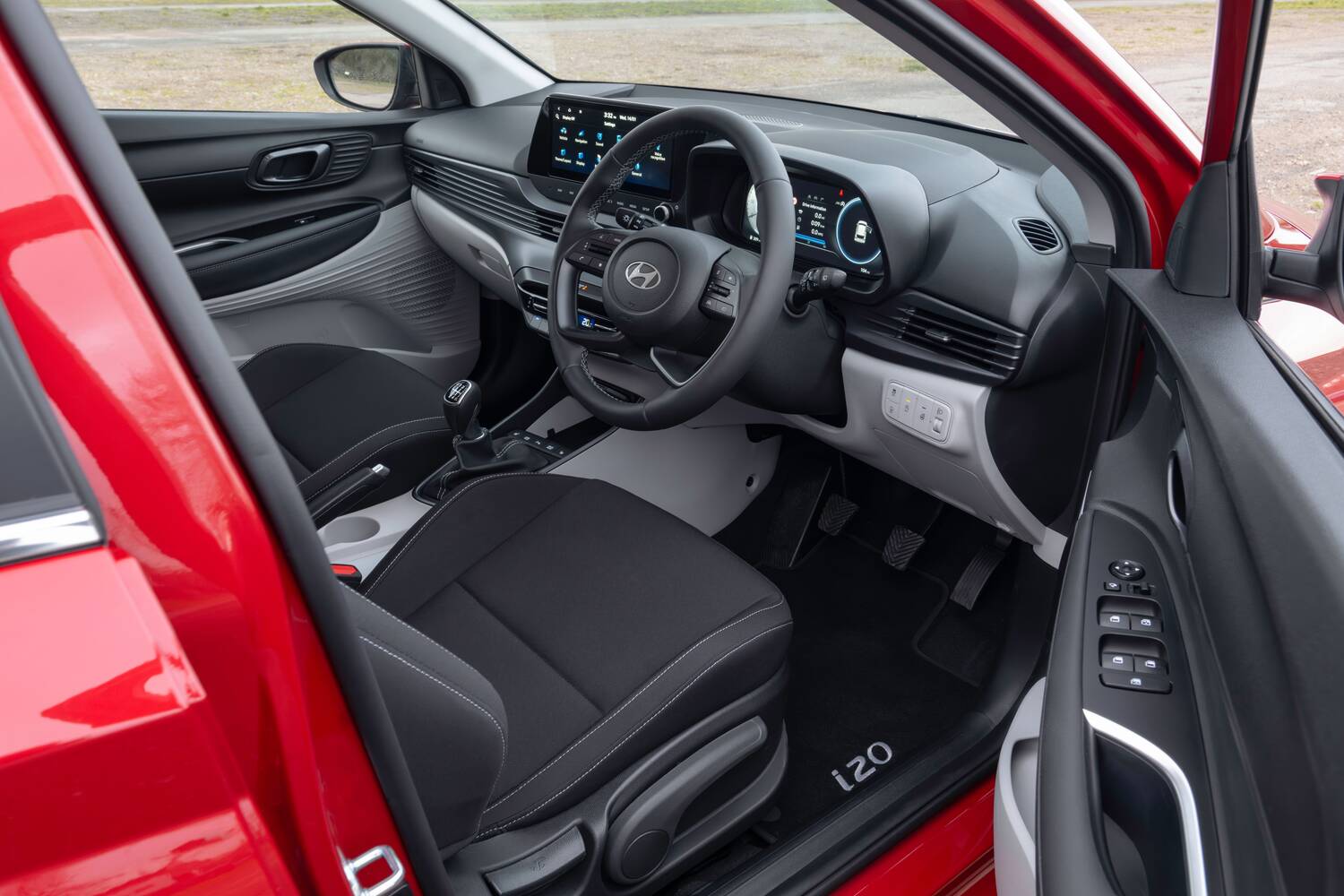
The i20's cabin is a signal example of making a cost-effective interior look and feel more premium than it is, because the ambience of the cabin - especially with the finish that brings in the light-coloured lower dash, transmission tunnel and door cards - is suitably upmarket.
There's impressive tech and lots of equipment in the Hyundai's interior, as you'd expect, but sensibly the Korean firm retains crucial switchgear to ensure the ergonomics are spot-on. Space is also more than acceptable within, particularly so in the boot.
Getting comfortable in the driver's seat

There aren't electrically adjustable seats in the Hyundai i20, but there's a good range of manual movement to both the driver's chair and the steering column, with the end driving position attainable being superb.
Visibility out of the car is great in all directions, too, while all the main controls and ancillary switchgear does fall easily to hand.

Infotainment and technology
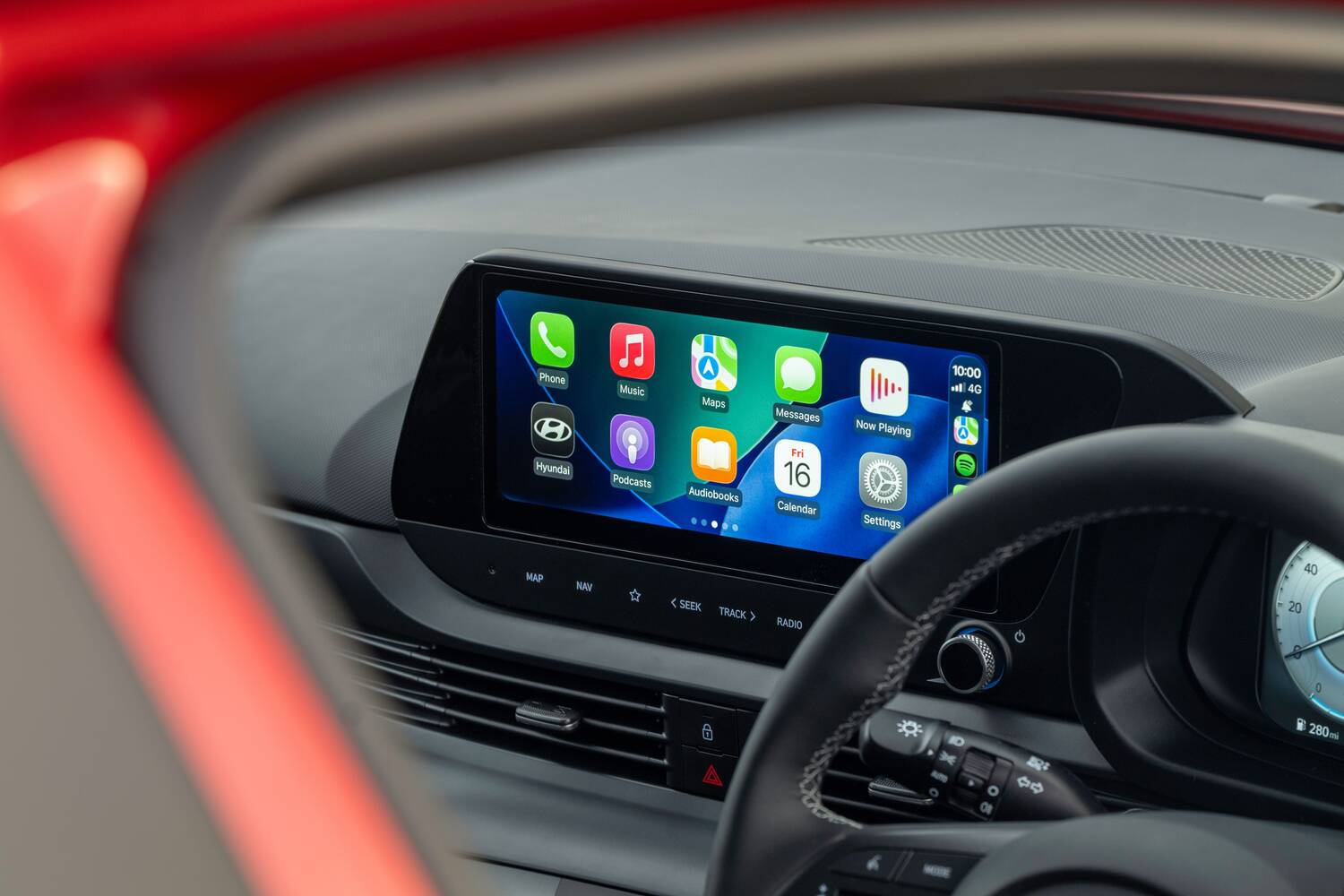
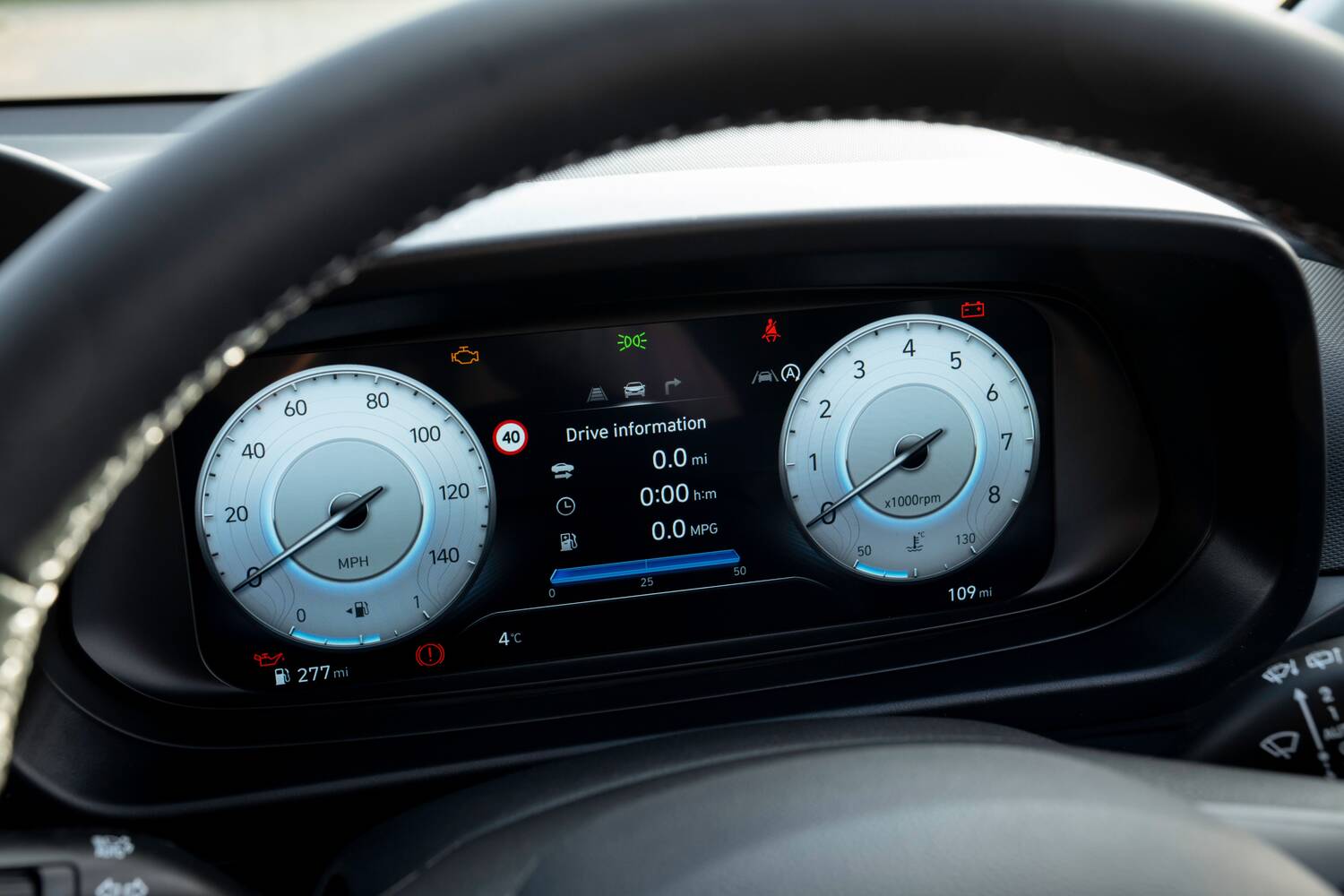
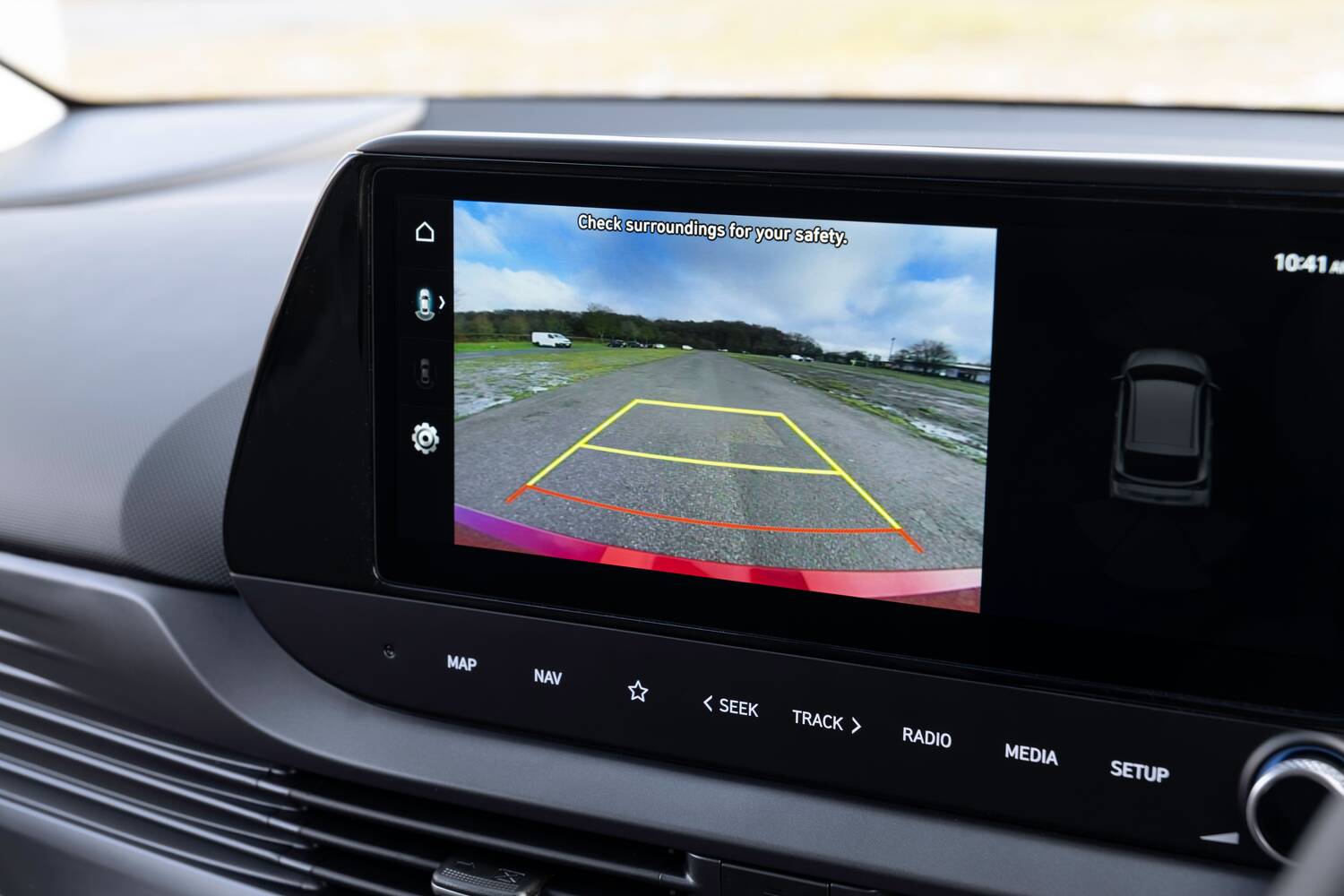
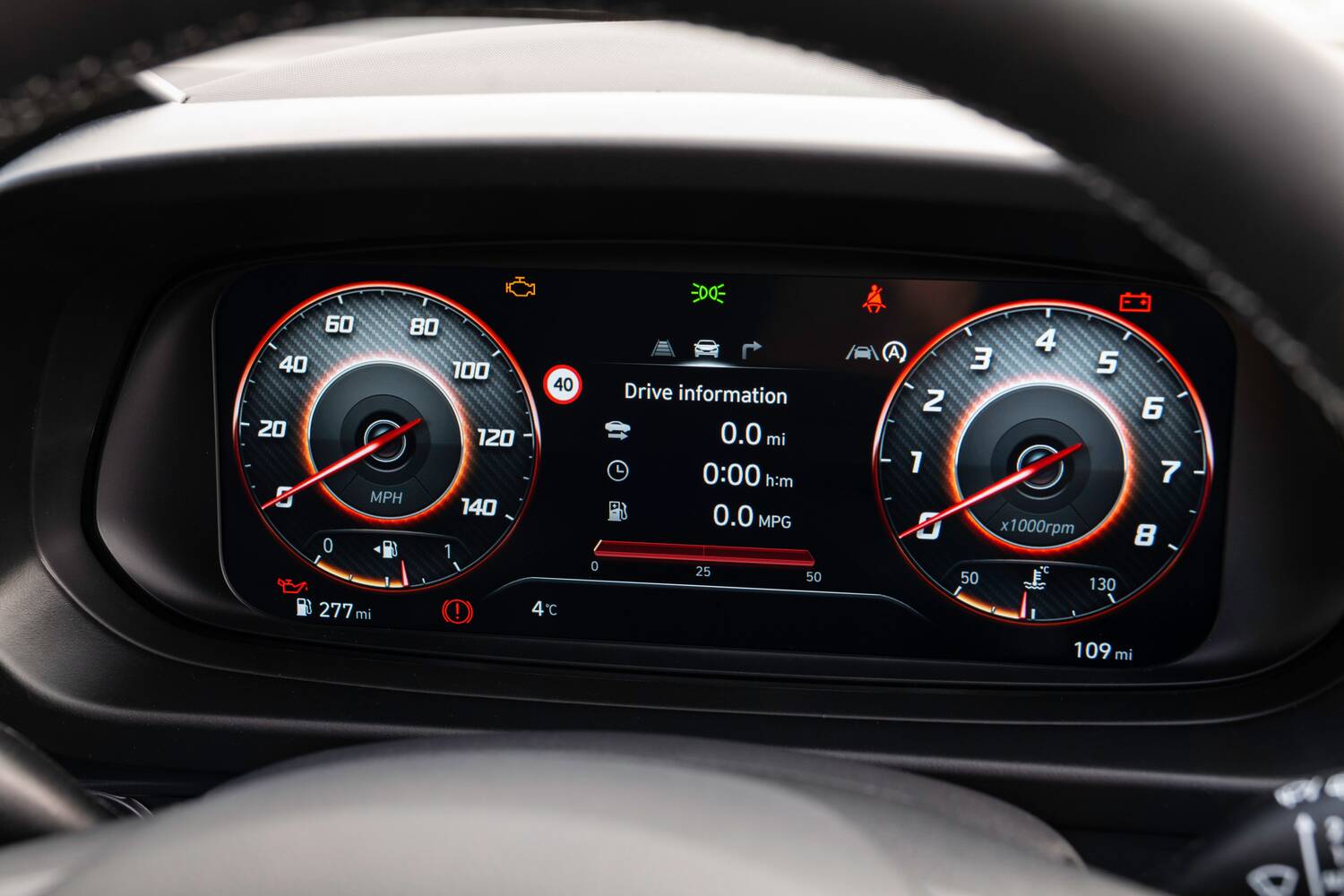
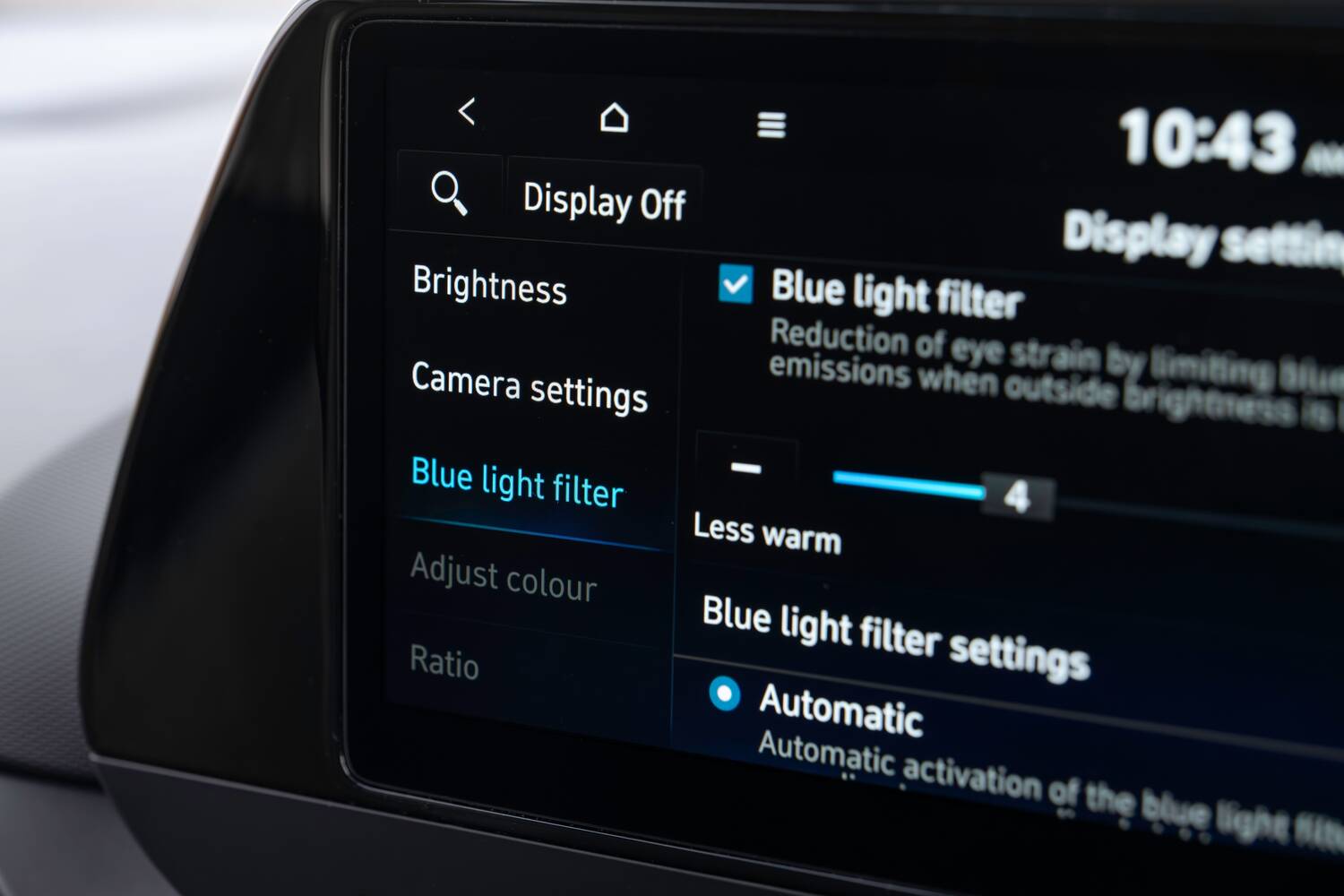
Two 10.25-inch digital screens form the technological focal point in the Hyundai i20 and very good they are too, with the instrument cluster being graphically clean and easy to operate, while the main touchscreen infotainment is fine - and it supports both Android Auto and Apple CarPlay connectivity if you prefer those interfaces.

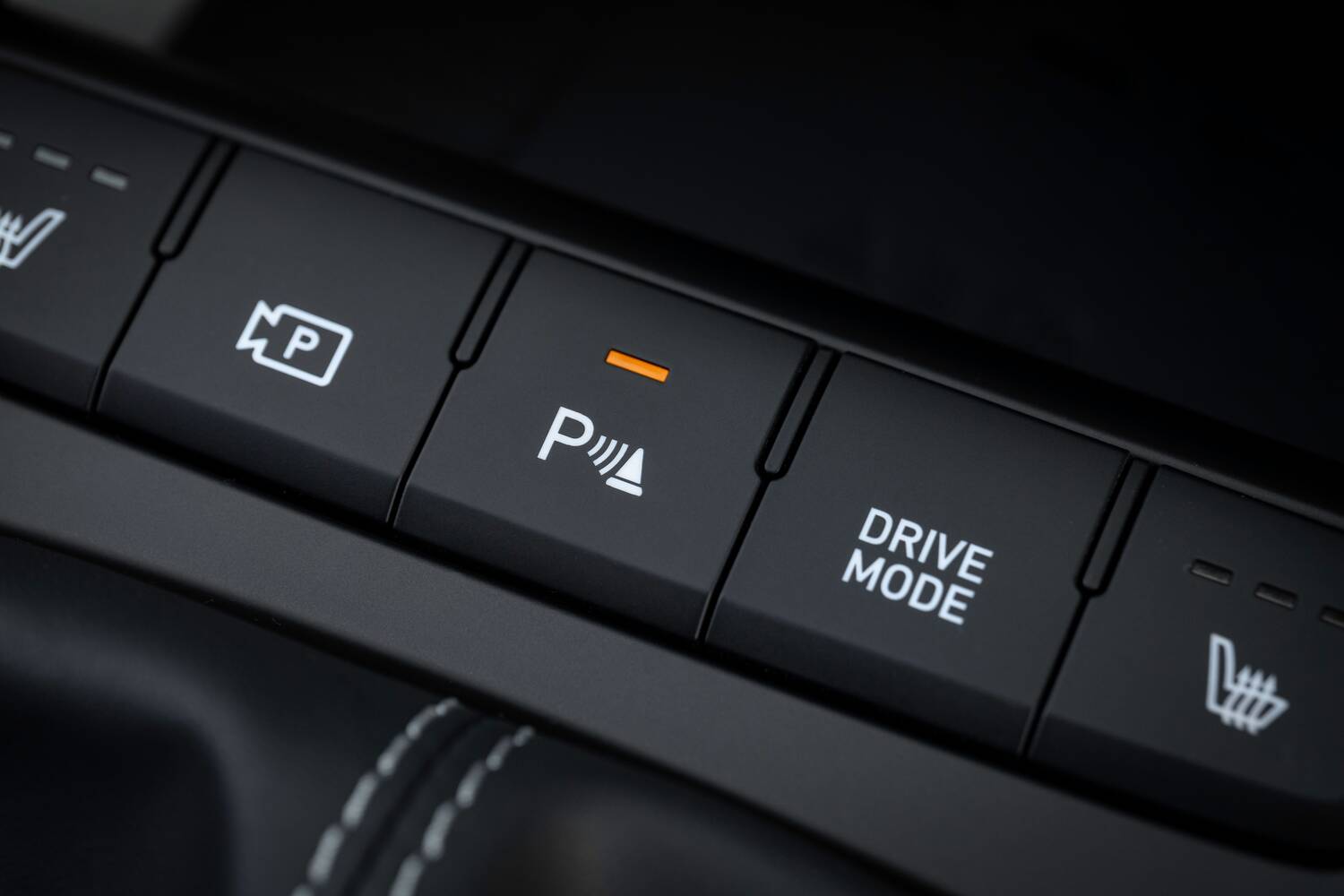
Manual air conditioning, cruise control, parking sensors and a reversing camera are standard-fit on all models, but items like the wireless charging pad are reserved for the higher specifications - and bear in mind the base-trim i20 doesn't have the 10.25-inch driver's cluster, instead making do with analogue dials flanking a 4.2-inch LCD screen instead.
Practicality around the cabin

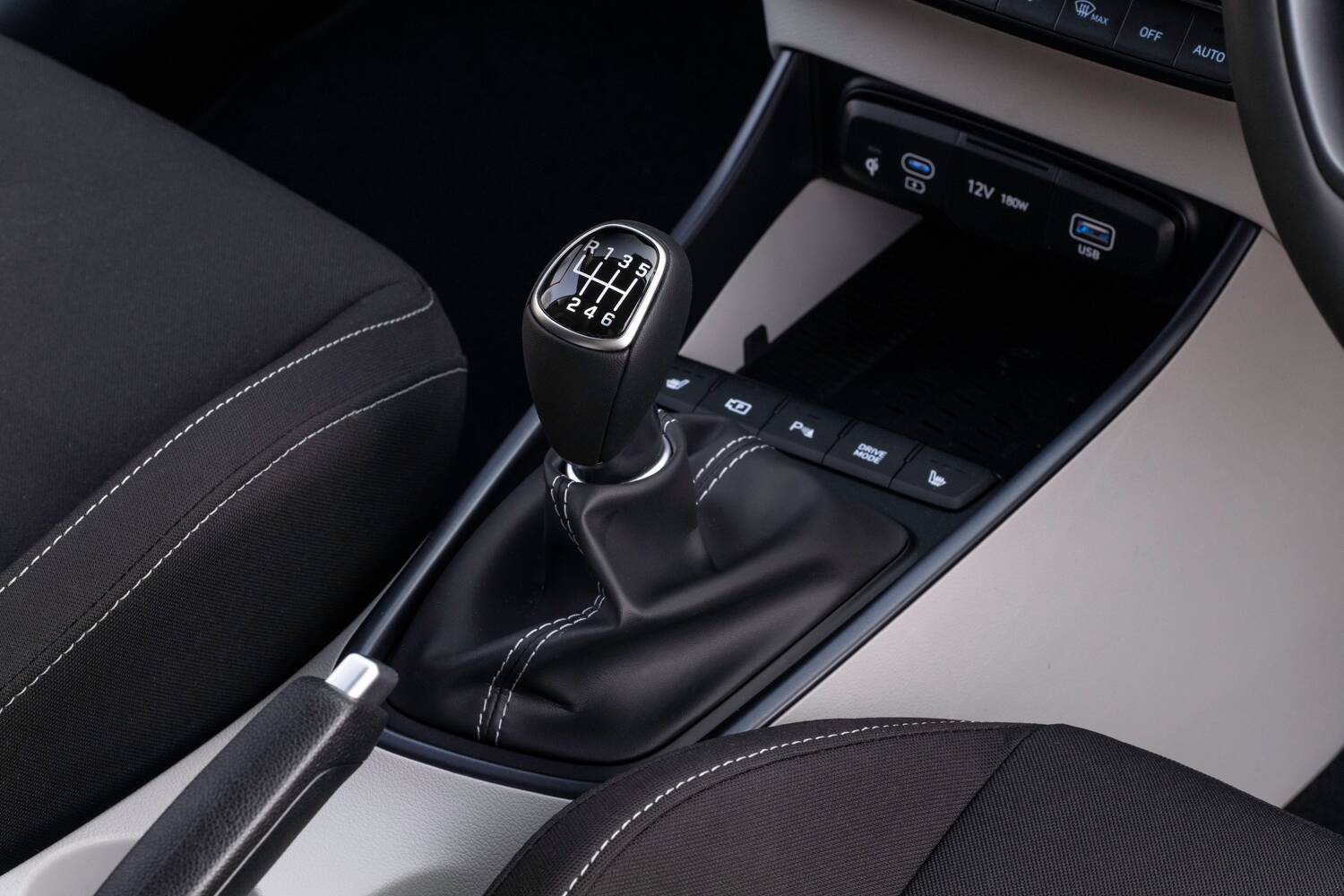
The practicality of the Hyundai i20's cabin is perfectly acceptable, with a sizeable glovebox, capacious door pockets, a lidded storage cubby under the centre armrest and a pair of moulded cupholders next to the manual handbrake lever (something you don't see very often anymore, in this day and age of electronic parking brakes).
Rear-seat passenger space
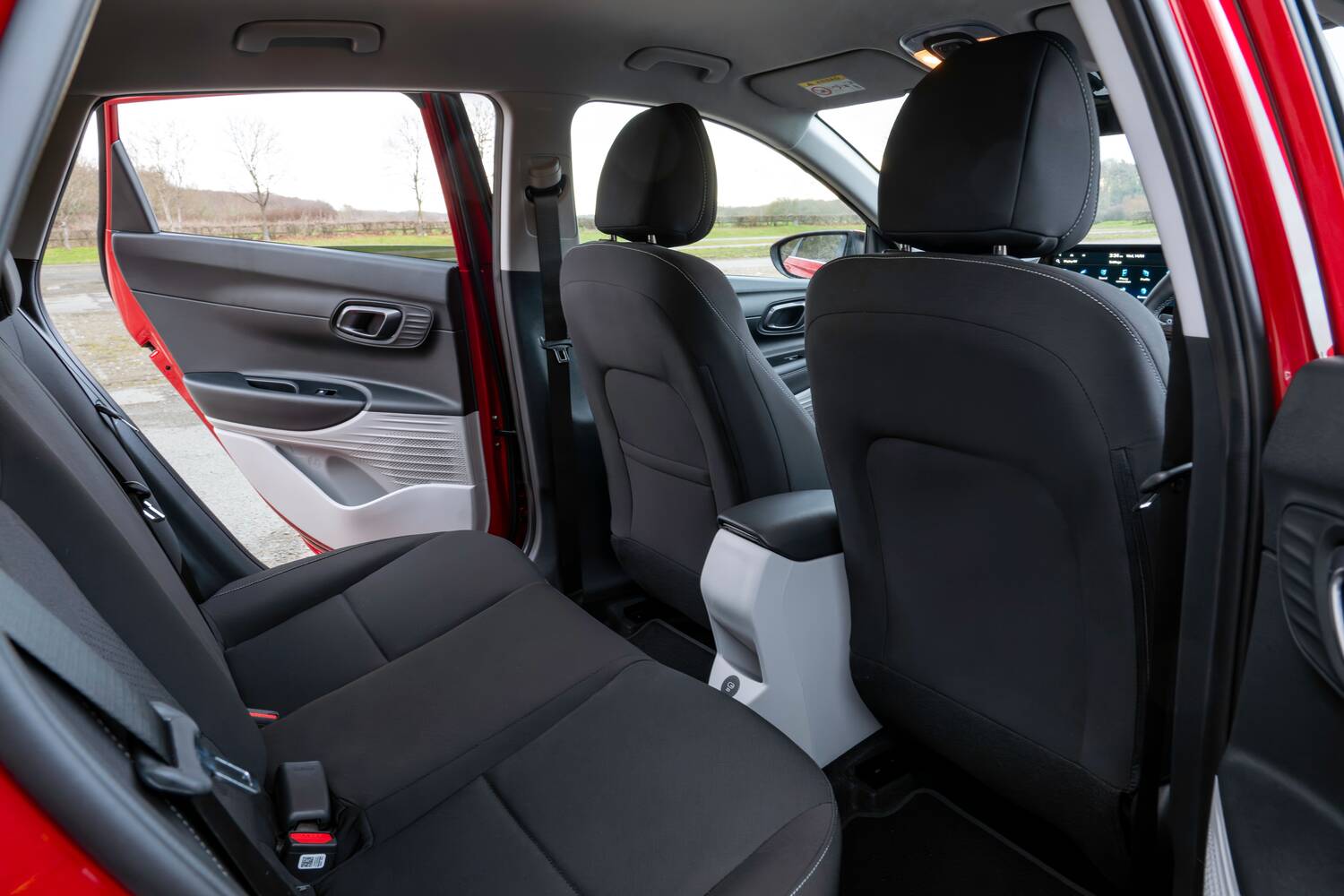
No supermini is generous in this regard, but the Hyundai i20 does a fine job of looking like it could accommodate four adults in a reasonable degree of comfort.

Leg- and headroom are above average for the class, while there are a few accoutrements to make life in the second row a little more pleasant - a single USB-C socket (on the high-spec model) and a small storage pocket can be found in the lower-rear area of the central tunnel construct, while the door bins are fair in the back of the i20 and they have a scalloped-out shape to allow them to swallow drinks bottles.
Fitting child seats to the Hyundai i20
There are two ISOFIX positions in the back of the Hyundai i20, complete with top tethers, and there's enough room in the rear of the cabin - plus fair-sized doors with which to access the space - that should mean even bulkier child seats should fit in there easily.
The Hyundai also scored a highest sub-discipline score of 82 per cent in its 2021 Euro NCAP review for the child occupant section of the test, which is reassuring for parents.
Boot space in the Hyundai i20

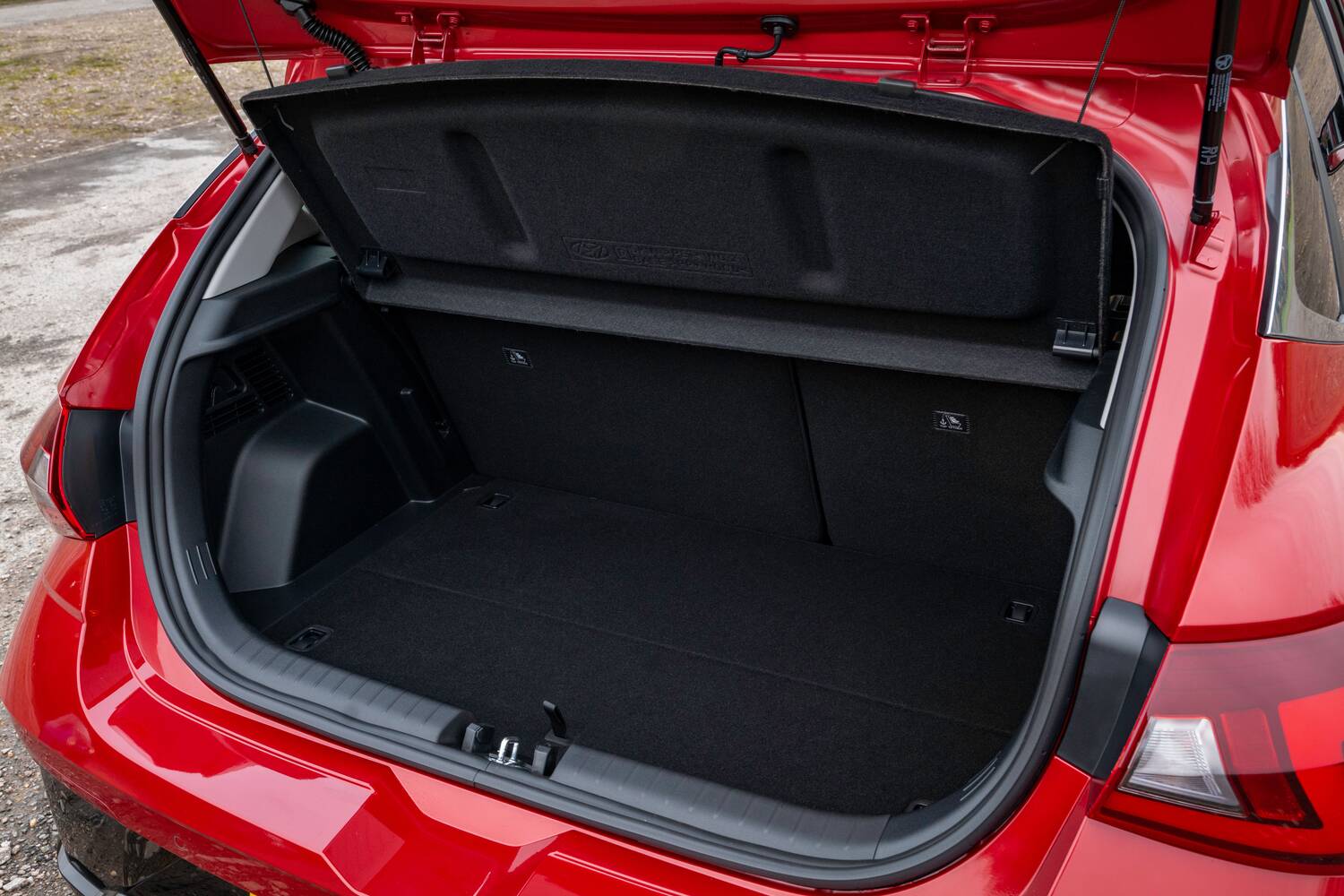
Hyundai has made sure the i20 has a good-sized boot for this class of vehicle, with the cargo bay measuring 352 litres with all seats in use and offering up to 1,165 litres of volume with the second row folded away.
That rear bench split-folds in a 60:40 arrangement, while the boot itself has a few lashing eyes, boot hooks and even some underfloor storage, just to make sure it's not simply a plain cargo bay with little in the way of helpful, practical touches.
Safety in the Hyundai i20
The Hyundai i20 picked up a four-star Euro NCAP rating when first assessed in 2021, and the safety body has made its examinations tougher in the interim. With individual sub-scores of 76, 82, 76 and 67 per cent for the protection of adult occupant, child occupant, vulnerable road users and safety assist disciplines respectively, it's clearly an safe car. You can read the i20's full Euro NCAP report right here.
Performance of the 2026 Hyundai i20
- Petrol power only
- Turbo engine definitely the best bet
- Really sweet and assured to drive

All new Hyundai i20s are front-wheel drive, purely petrol-powered and normally come with a manual gearbox - although there is an automatic option.
The 1.0 T-GDI engine comes with a six-speed manual as standard and a seven-speed DCT auto as the option (and it's the only engine which can be paired with a self-shifter), with the manual capable of 0-100km/h in 11.5 seconds and the auto lagging behind at 12.8 seconds.

The other engine choice is actually bigger on swept capacity and cylinder count, but the 1.2-litre four-cylinder unit does without a turbo so while power is only marginally down on the 1.0 T-GDI - at 84hp - the torque is substantially lower, peaking at 118Nm.
Thus, the 0-100km/h of this car is the slowest of all i20s, at 13.1 seconds, while it only comes with a five-speed manual gearbox. We'd definitely advocate for choosing the turbocharged engine as the preferred option.
Driving the Hyundai i20 1.0T manual on UK roads - Matt Robinson

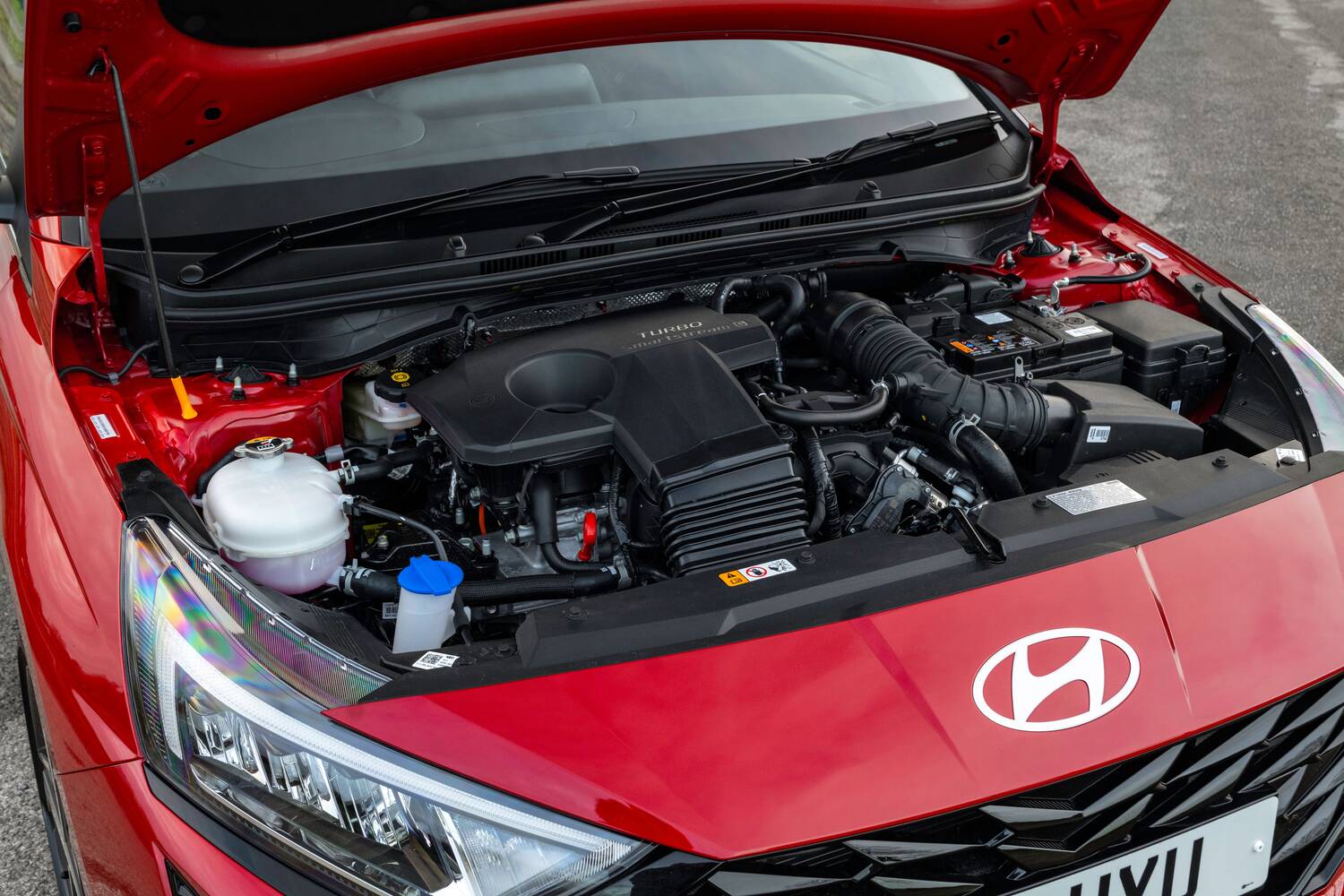
So much of what the Hyundai i20 does is classy and composed, as there's nice and fluid steering, the balance between ride comfort and body control is squared off sweetly, and the little three-cylinder engine under the bonnet remains as willing and as charismatic as it ever has done.
One of the highlights of the i20 1.0T, though, is the wonderful manual transmission. It's so light, slick and yet positive across the gate, so that stirring it around to elicit more revs, and therefore more power, from the three-cylinder engine is a pleasure, not a chore.
And when you've got the little Hyundai stoked up in its midrange, you'll be surprised at both the sharpness of the nose to get tucked into corners, as well as the beautiful balance of its chassis. This is a car you can get to flow down a challenging road in a rewarding and cohesive fashion, kind of like you used to be able to even in regular, run-of-the-mill versions of the late, lamented Ford Fiesta.

Of course, a small runaround like this, certainly a non-performance-oriented model like the 1.0T, is not supposed to be a thrill-a-minute beacon of handling prowess, so more importantly the i20 proves to be magnificent at the everyday stuff.
Its ride quality is excellent, considering its shortish wheelbase and trim mass, and few road surfaces can upset its dignity. It's also quiet and hushed at all speeds, the three-cylinder engine never becoming gratingly harsh even if you have to extend it.
About the only thing to report is a little bit of elevated tyre roar on poorer tarmac, but it's nothing to spoil the overall composure and graceful behaviour of the Hyundai i20. The best compliment we can pay this compact hatchback is that it often feels like a much larger, much grander and much more expensive car than it actually is.
Fuel economy and running costs of the 2026 Hyundai i20
- No hybrid assistance but decent fuel economy
- Acceptable levels of CO2
- Seems like it should get close to official numbers

The Hyundai i20 is only sold with petrol engines and there's no hybrid assistance technology at all, not even a mild level of electrification. That said, lightweight build and efficient turbocharged power means that the Korean car doesn't guzzle its fuel down too hastily, so it should prove affordable to run for buyers seeking parsimony in this class of vehicle.
Official CO2 and fuel economy figures
Hyundai says the manual 1.0-litre turbo model of the i20 will use 5.7 litres/100km on the WLTP cycle, while emitting 130g/km of CO2. Choosing the seven-speed DCT automatic transmission doesn't affect the official economy, but it does trim another 1g/km from the official CO2 stat.
Real-world efficiency of the Hyundai i20 1.0T manual
On a grotty, cold and wet day that is the normal sort of weather for this part of the world in February, we drove the i20 for almost 40km and managed to achieve a reasonable indicated consumption figure of 7.5 litres/100km.

Given that the car was being driven fairly quickly on country roads for almost the entire duration, more considered usage - such as cruising along dual carriageways and motorways or driven gently in semi-urban areas - should see the returns getting much closer to the manufacturer's figures for the i20 1.0T.
Servicing the Hyundai i20
Hyundai's recommended service interval for the i20 is every 12 months or 15,000km, whichever arrives sooner.
Hyundai i20 warranty

Hyundai has one of the best manufacturer warranties in the industry, because it's a five-year and unlimited-distance level of cover, accompanied by five years' worth of AA roadside assistance and free vehicle health checks on top of that, as well.
Irish pricing & rivals to the 2026 Hyundai i20
- Reasonably affordable across the board
- Good equipment levels - as you'd expect
- Few direct rivals these days

There are two specifications of the Hyundai i20, which are Classic and Deluxe Plus. Both engines are available at both trim grades, with the only deviations from an ostensibly four-model line-up being the two-tone roof option on the 1.0T manual, and then the automatic gearbox alternative for the turbocharged engine too.
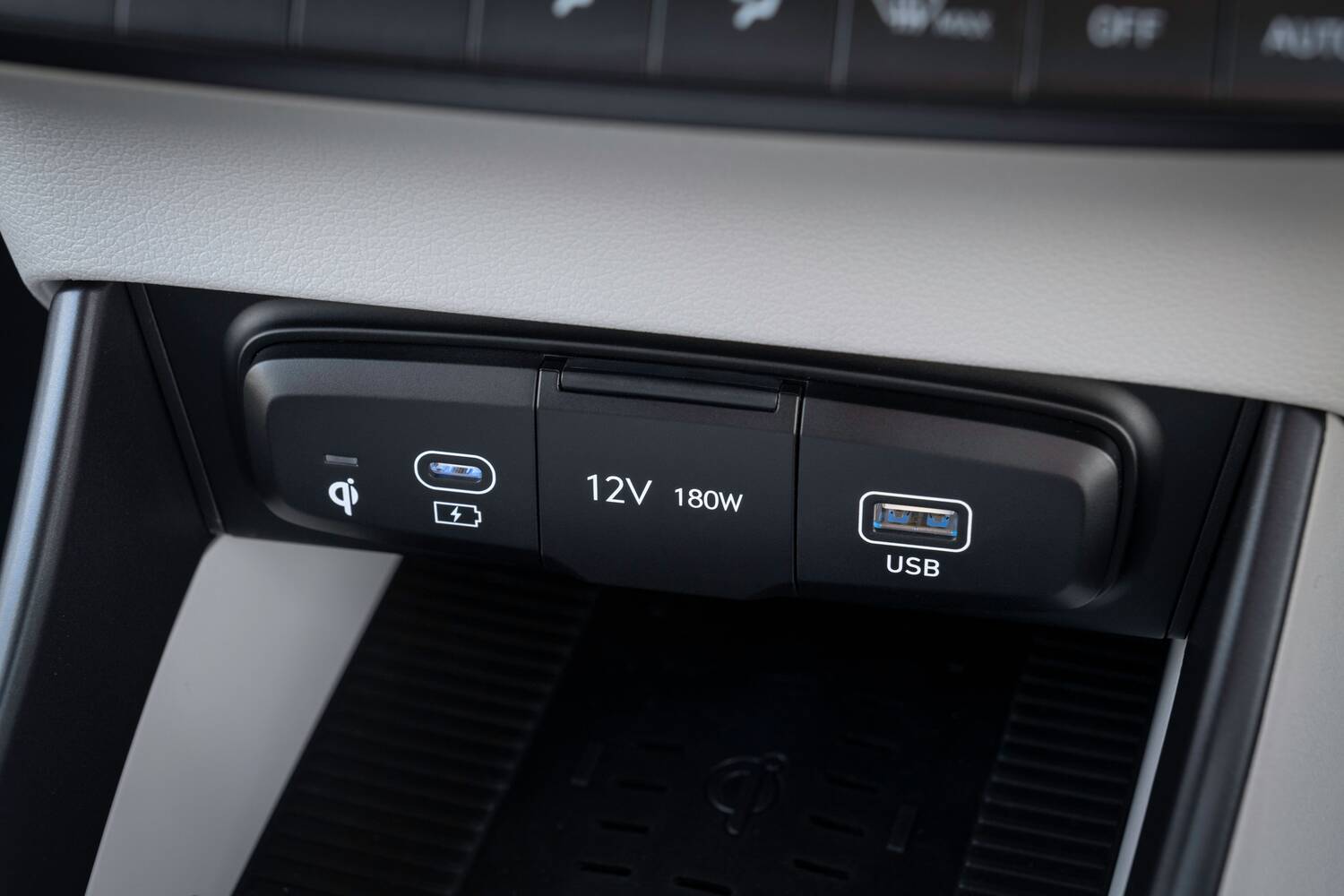
Every version of the i20, even the Classic, comes with a wealth of kit, but the Deluxe Plus does add some worthwhile and sought-after items such as 16-inch alloy wheels, ambient interior lighting, privacy glass, rear speakers for the in-car stereo system, USB-C ports front and rear in the cabin, a wireless charging pad and, perhaps most crucially of all, the 10.25-inch instrument cluster.
We should say that, admirably, the generous level of advanced driver assistance systems (ADAS) for safety is universal across the board on the i20.

In terms of rivals, the landscape of the B-segment supermini feels like it is changing dramatically, although there are still plenty of traditional, internal-combustion-powered alternatives for the Hyundai to have to see off.
With manufacturers claiming a few years back that there are no profits to be made in small hatchbacks any longer, and with the overlying industry shift towards electric vehicles (EVs) gathering pace year-on-year, we have seen some big developments in recent years - such as Ford killing off the Fiesta for good in 2023, after 47 years in production, and then Renault shifting the entire baseline of the sector by making the all-electric 5 E-Tech so brilliant.
A lot of the more traditional rivals, like the three Volkswagen Group alternatives - the VW Polo, the SEAT Ibiza and the Skoda Fabia - are also getting on a bit, though the Ibiza was updated in 2026 as well. Meanwhile, the Peugeot 208 and the Toyota Yaris are nearing replacement as well.
Bigger threats for the Hyundai probably come from budget offerings, like the Dacia Sandero and a host of cheap EV rivals, including Chinese products, but the big launch on the horizon is the next-gen Renault Clio. Until then, though, we maintain the Hyundai is one of the finest B-segment choices you can make.

Verdict - should you buy the 2026 Hyundai i20?
The Hyundai i20 remains a strong competitor in a class which is diversifying notably, providing a simple-to-understand proposition but one which does everything very well. It's a shame there's no hybridised option in the powertrain line-up, yet the 1.0-litre T-GDI is appealing enough that you soon forget about that and instead focus on how premium-feeling the i20 is in all driving scenarios. It therefore remains one of the leading lights in this market sector - even if it's an unashamedly old-school runaround underneath it all.
FAQs about the 2026 Hyundai i20
Is there a fully electric version of the Hyundai i20?
No, and there's not even a hybrid variant - the Korean compact car is purely propelled by petrol engines, either a 1.2 non-turbo or a turbocharged 1.0-litre three-cylinder unit with a little more power and torque.
How many child seats can I fit in the Hyundai i20?
Despite its small size, the Hyundai i20 still offers two ISOFIX mounting points on the outer two seating positions of the rear bench in the car.
Want to know more about the 2026 Hyundai i20?
If there's anything about the new Hyundai i20 we've not covered, or you'd like help in choosing between it and other cars, you can avail of our expert advice service via the Ask Us Anything page.
Hyundai i20 history
The i20 is one of the great cars to use as a case study to show the rapid evolution of parent company Hyundai, from a sort of budget alternative to the mainstream - as with the Mk1 i20 of 2008 - to the far more desirable and front-running Mk3, following its 2020 launch.
Throughout its life, the i20 has purely been sold as a supermini hatchback, with either three or five doors in the previous two generations - with the former format leading the Korean firm to christen the i20 Coupe the three-door Mk2 somewhat brazenly - but the model reviewed here has always been a five-door hatch.
It's also the Mk3 i20 which had the solitary performance derivative in the model's history. The scintillating i20 N appeared in 2021 with a turbocharged 1.6-litre four-cylinder engine producing 204hp and 275Nm, enough to thump it from 0-100km/h in 6.2 seconds. Sadly, production of the i20 N ceased at the beginning of 2024, meaning this is a B-segment hot-hatch superstar which shone ever so brightly, but ever so briefly too.