




Irish pricing & rivals of the 2025 Hyundai Inster
- Priced from less than €20,000
- High-spec Elegance model still affordable
- Rugged looking Inster Cross also available
The Inster caused a bit of a stir when it first arrived in the Irish market, with an entry-level price of just €18,995. At the time, that was only slightly more than the Dacia Spring.
Since then, the two cars' prices have diverged at bit, but the Inster remains a solid bargain at €19,595 for the entry-level Inster Signature, which comes with a 42kWh battery, a range of up to 327km and a 97hp electric motor.

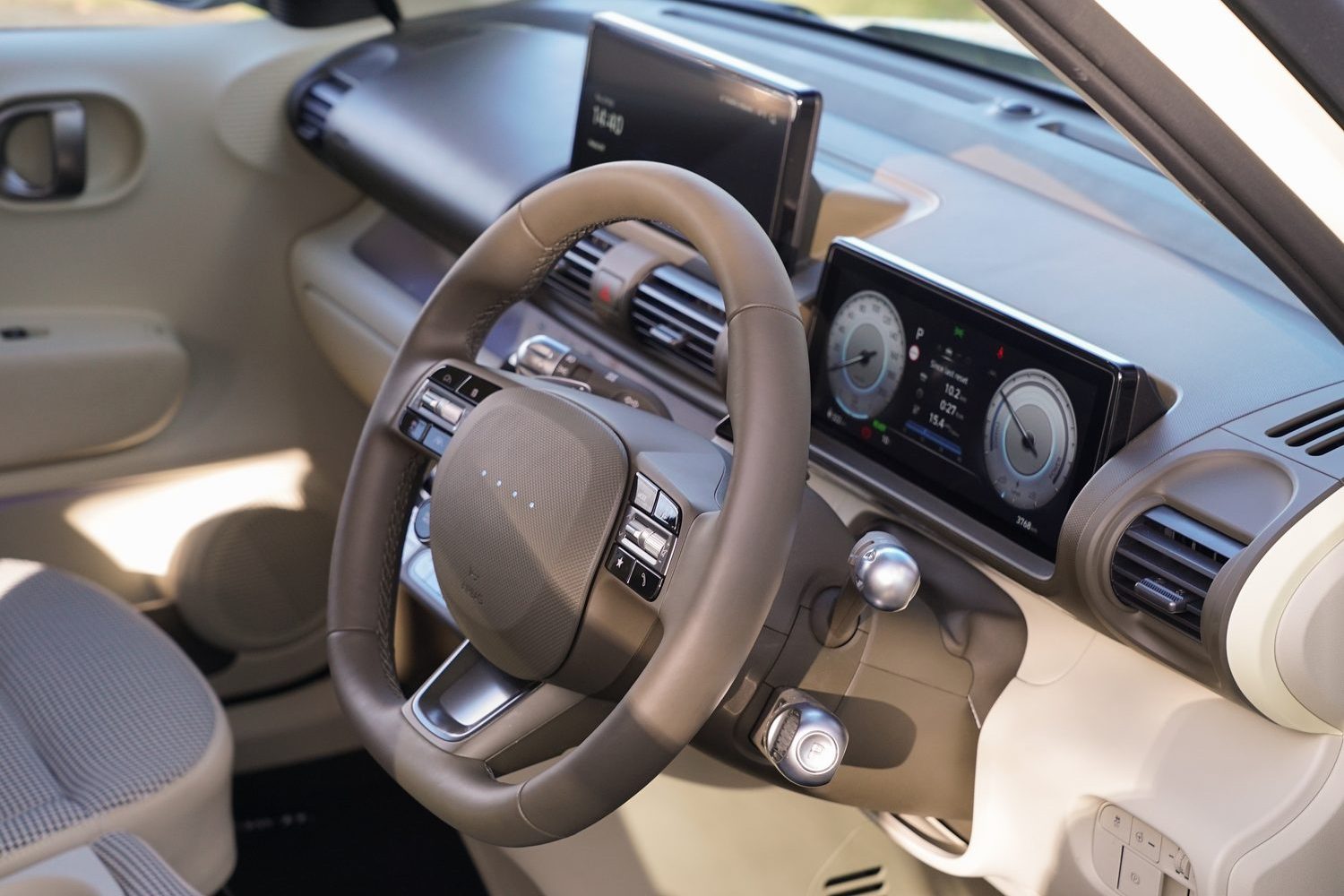
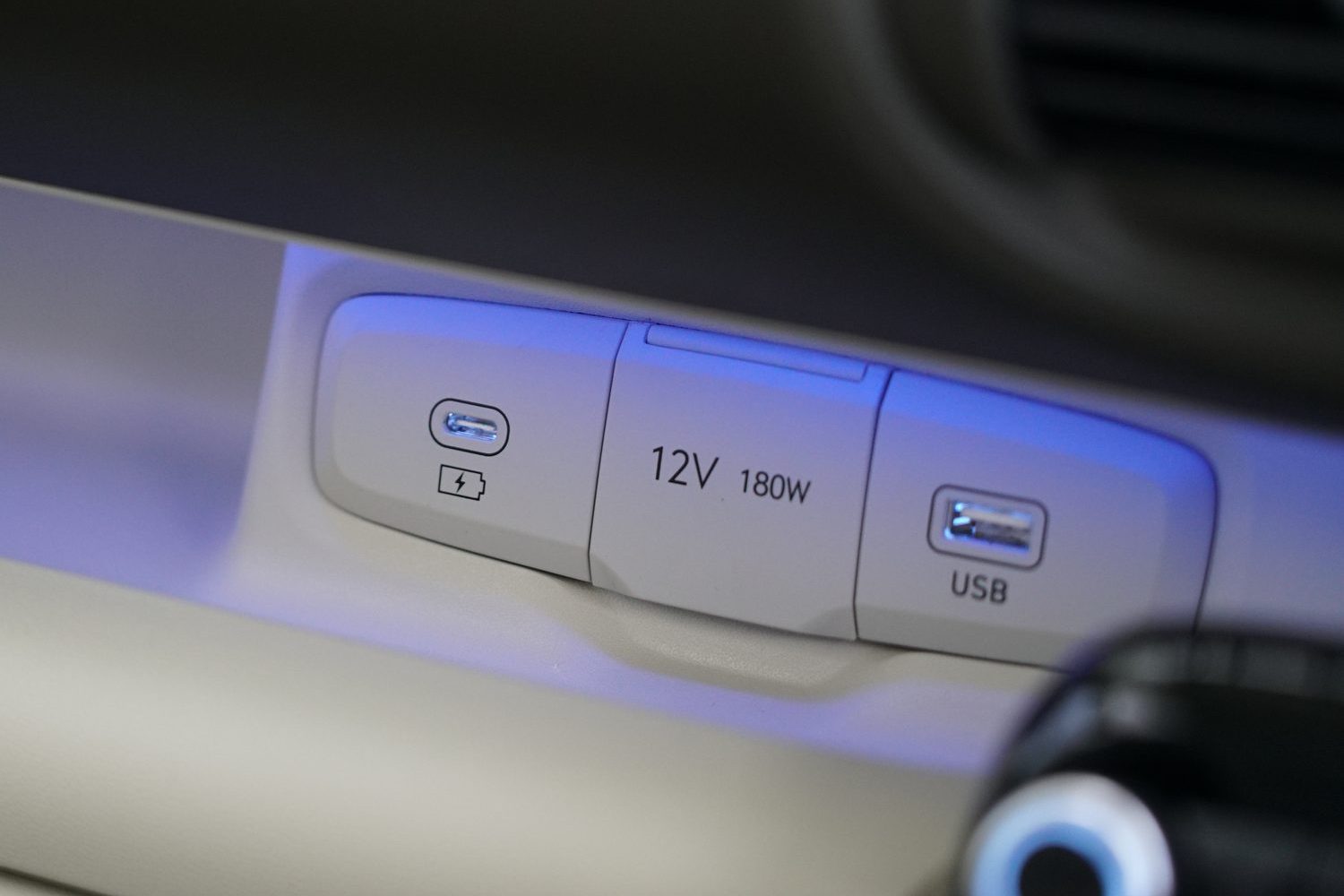
Standard equipment for the Signature includes twin 10.25-inch digital screens for instrumentation and infotainment, Apple CarPlay and Android Auto, two USB-C charging points, 15-inch alloy wheels, a leather-wrapped steering wheel, single-zone climate control, auto headlights and wipers, adaptive cruise control, a heated steering wheel, rear parking sensors and camera, and the usual suite of electronic safety aids including autonomous emergency braking and lane-keeping steering.
With impressive equipment like that, you might think that there's not much need to upgrade to the pricier Elegance model, and you'd be partially right, but there are some things you'll definitely want. The bigger battery and the more powerful 115hp motor are well worth having, as is the slightly faster DC charging speed (85kW versus 73kW).
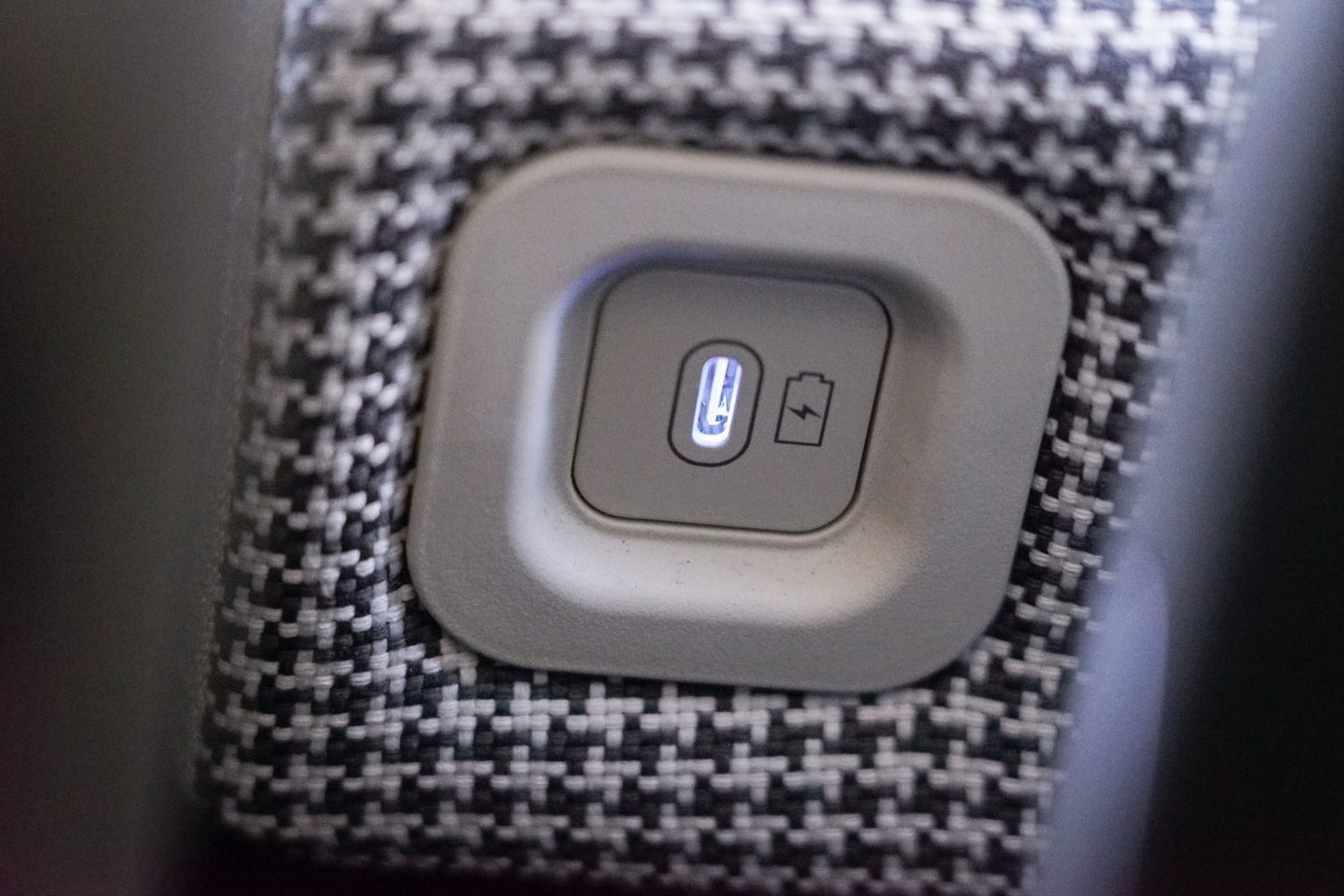
Most of all though, you'll want to have the adjustable back seats, which really transform the Inster's practicality. Other equipment for the Elegance includes extra stereo speakers, a rear USB-C charging port, wireless phone charging, front parking sensors, ambient interior lighting, auto dimming rear-view mirror, LED headlights, privacy glass, more interior lighting, 17-inch alloys and roof rails.

The top-spec Inster is the Inster Cross, which gets some 4x4-style exterior styling elements, as well as blind-spot monitoring and a rear anti-collision system, a sunroof, a surround-view camera and vehicle-to-load charging. Though it uses the same 49kWh battery as the Elegance, the range falls a bit to 359km - compared to the 370km.
Hyundai Ireland currently has a 4.99 per cent PCP offer for the Inster, with monthly repayments starting from €167 per month.
Exterior & design of the 2025 Hyundai Inster
- Small, but chunky
- Interesting Ioniq-style lights
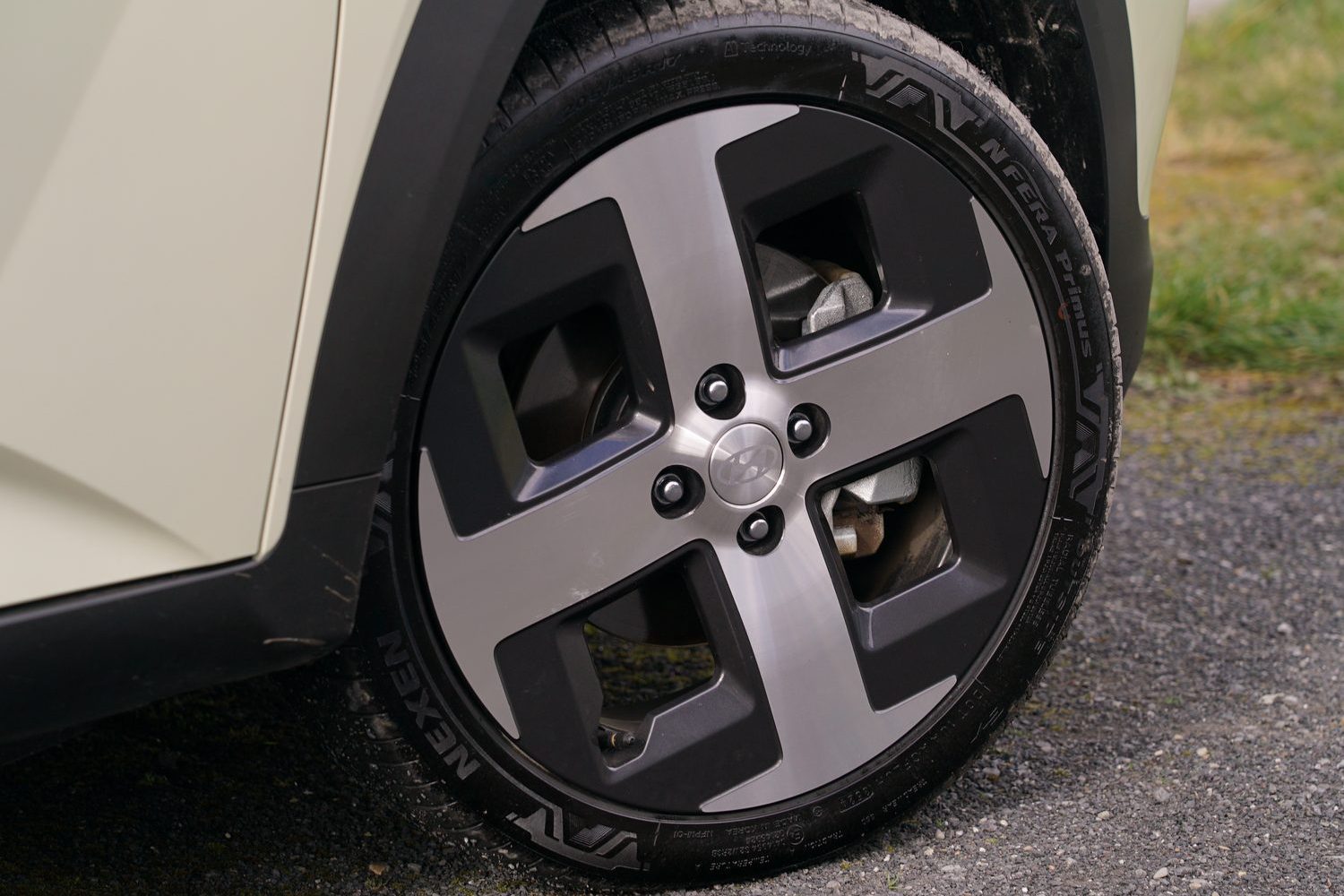
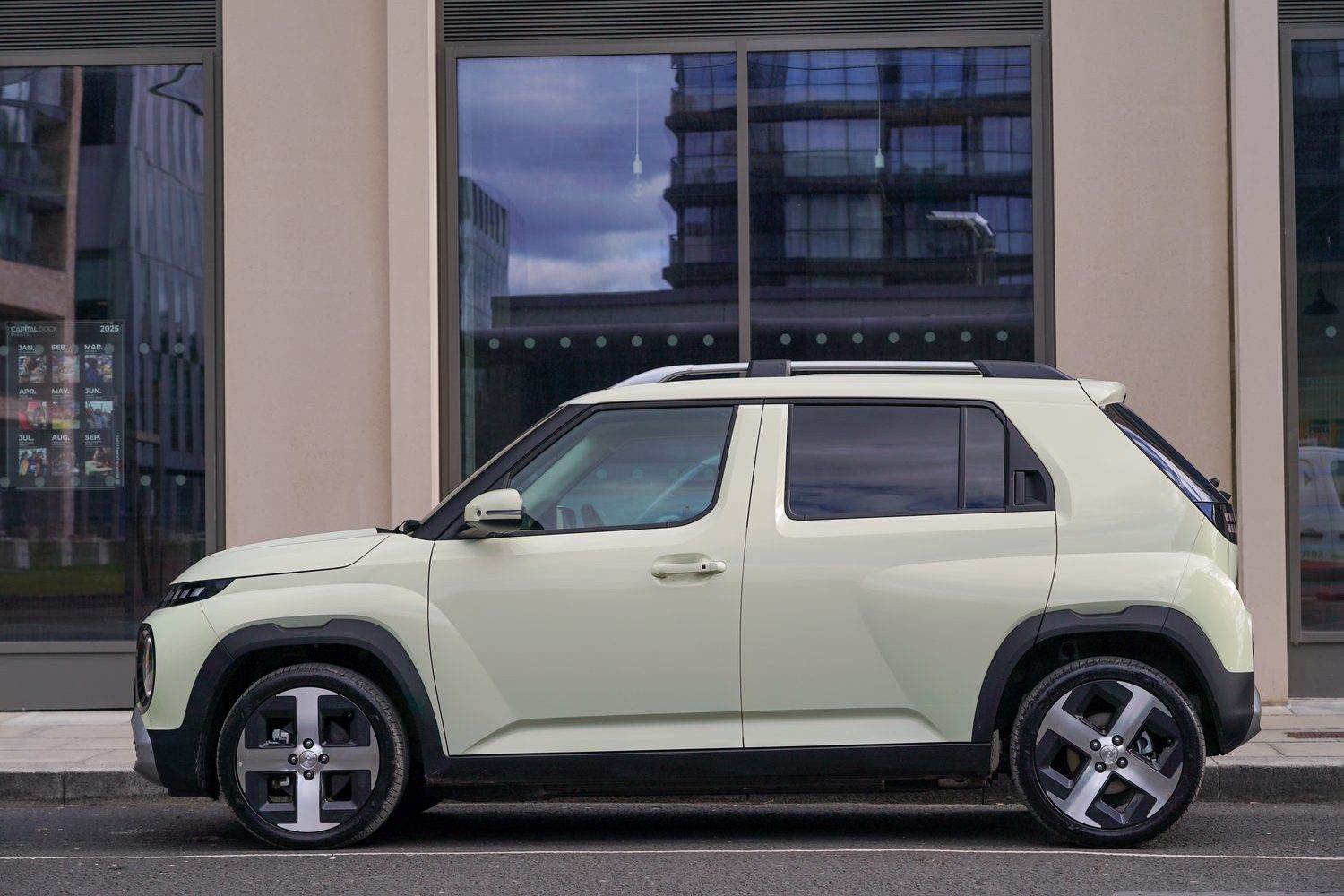
- Dramatic four-spoke alloys

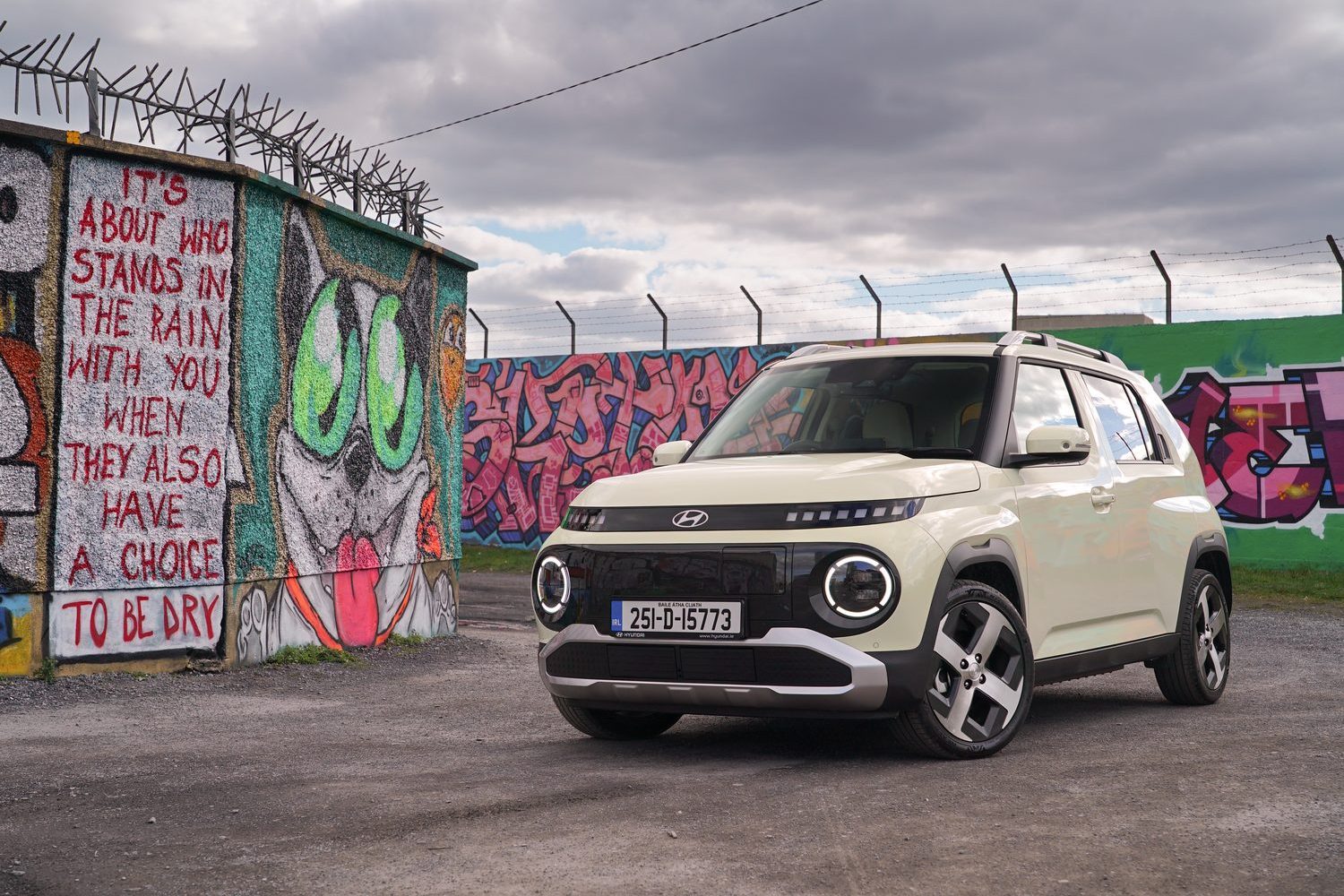
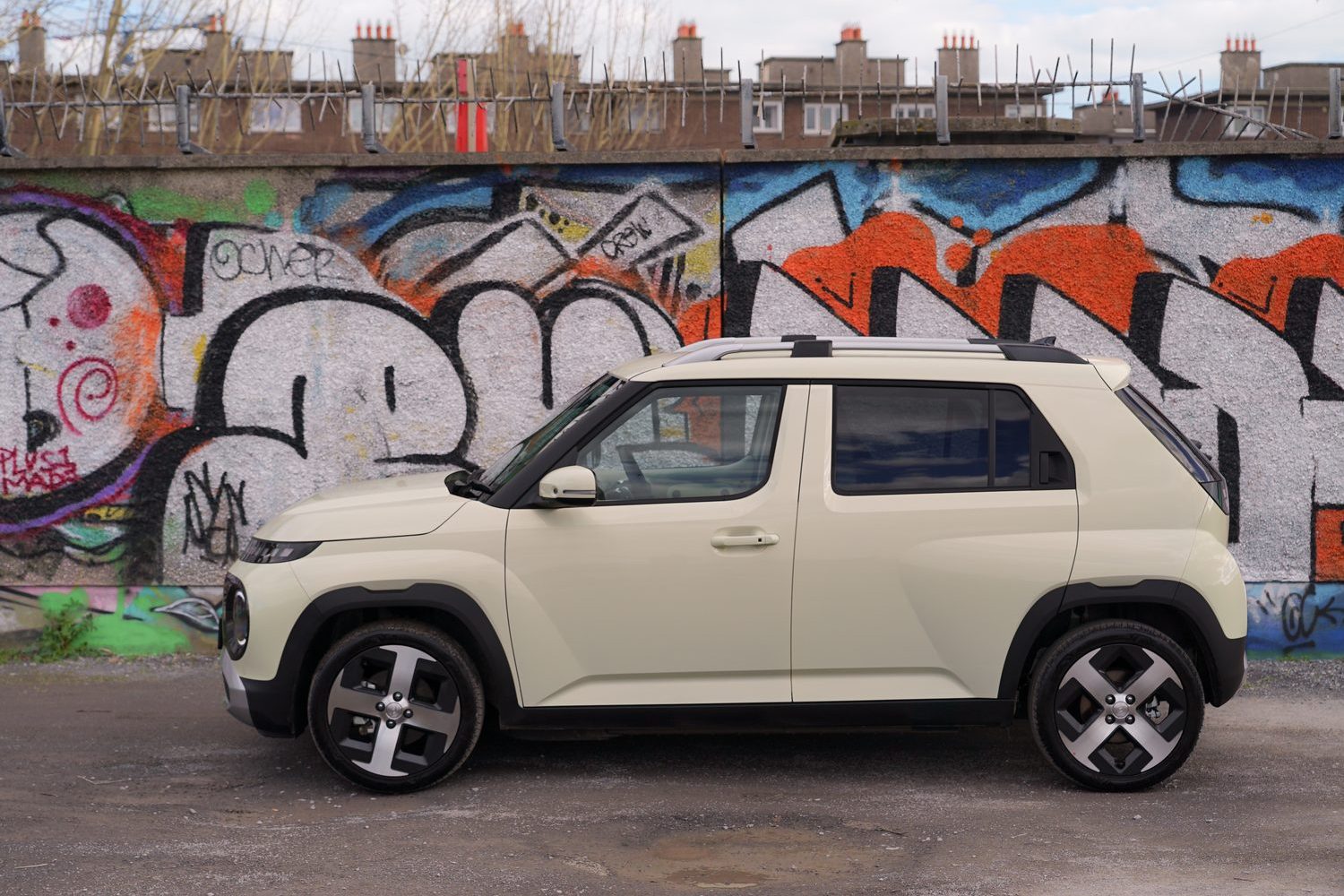
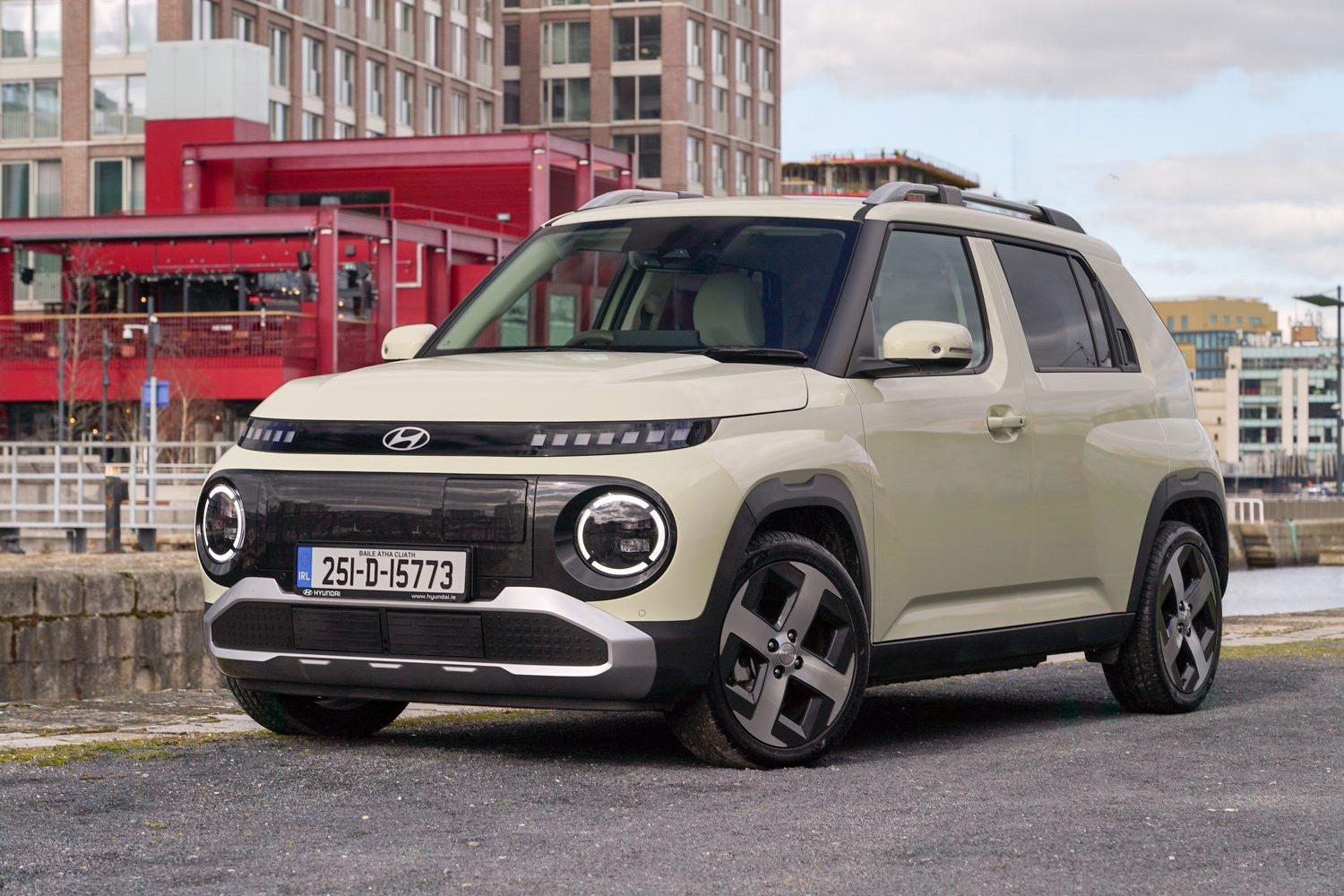
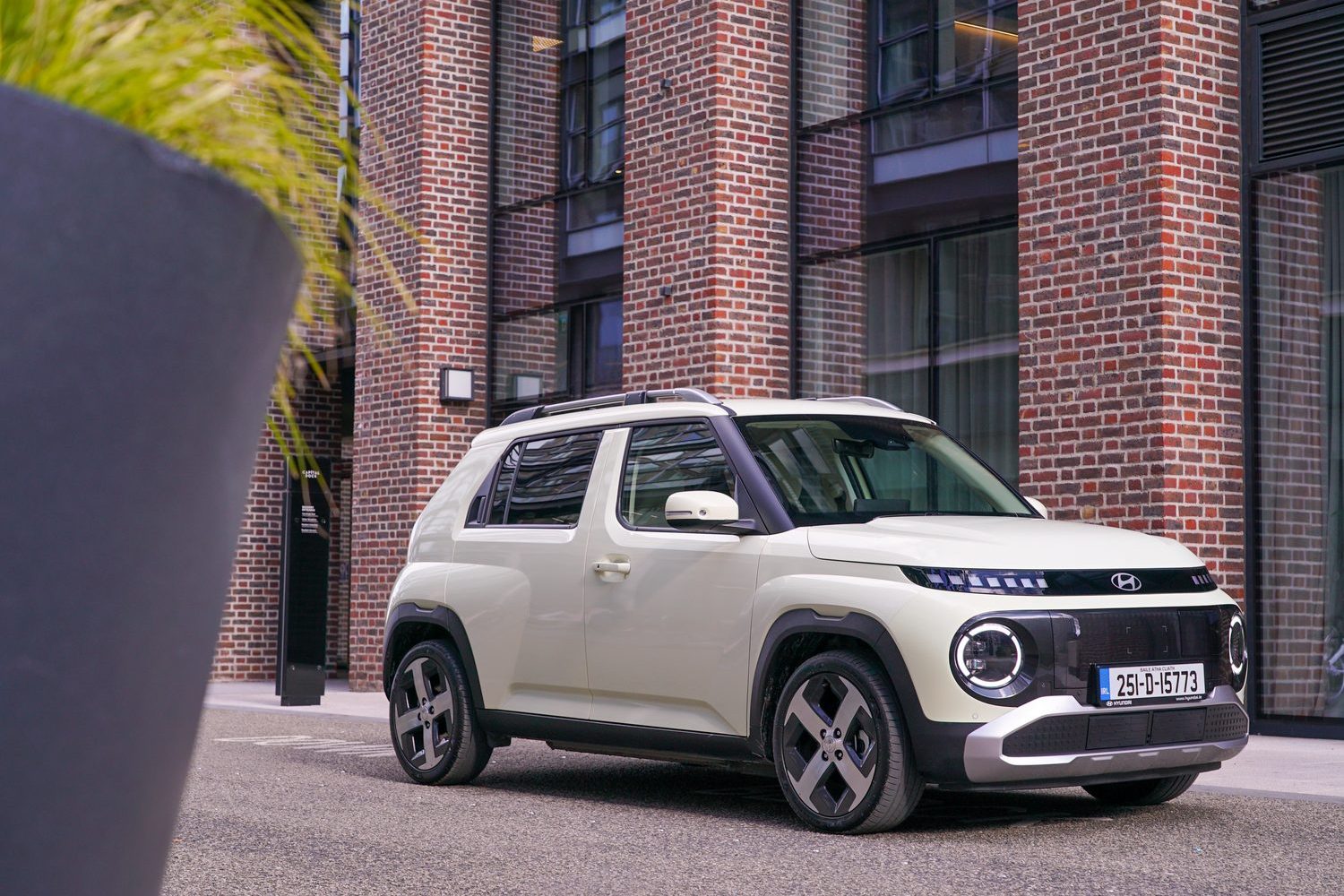
I think cute kind of covers it. The Hyundai Inster is really quite arrestingly small, and it's genuinely refreshing to come across a car - electric or otherwise - that's this compact and space-efficient.
The Inster's exterior dimensions are:
- Length:
- 3,825mm
- Width:
- 1,700mm
- Height:
- 1,575mm
- Wheelbase:
- 2,580mm
That means that the Inster is, for example, almost a full metre shorter than the Hyundai Ioniq 5, yet its wheelbase is only 420mm shorter. That might give the Inster slightly odd proportions from the outside, but it makes for truly impressive cabin space within.

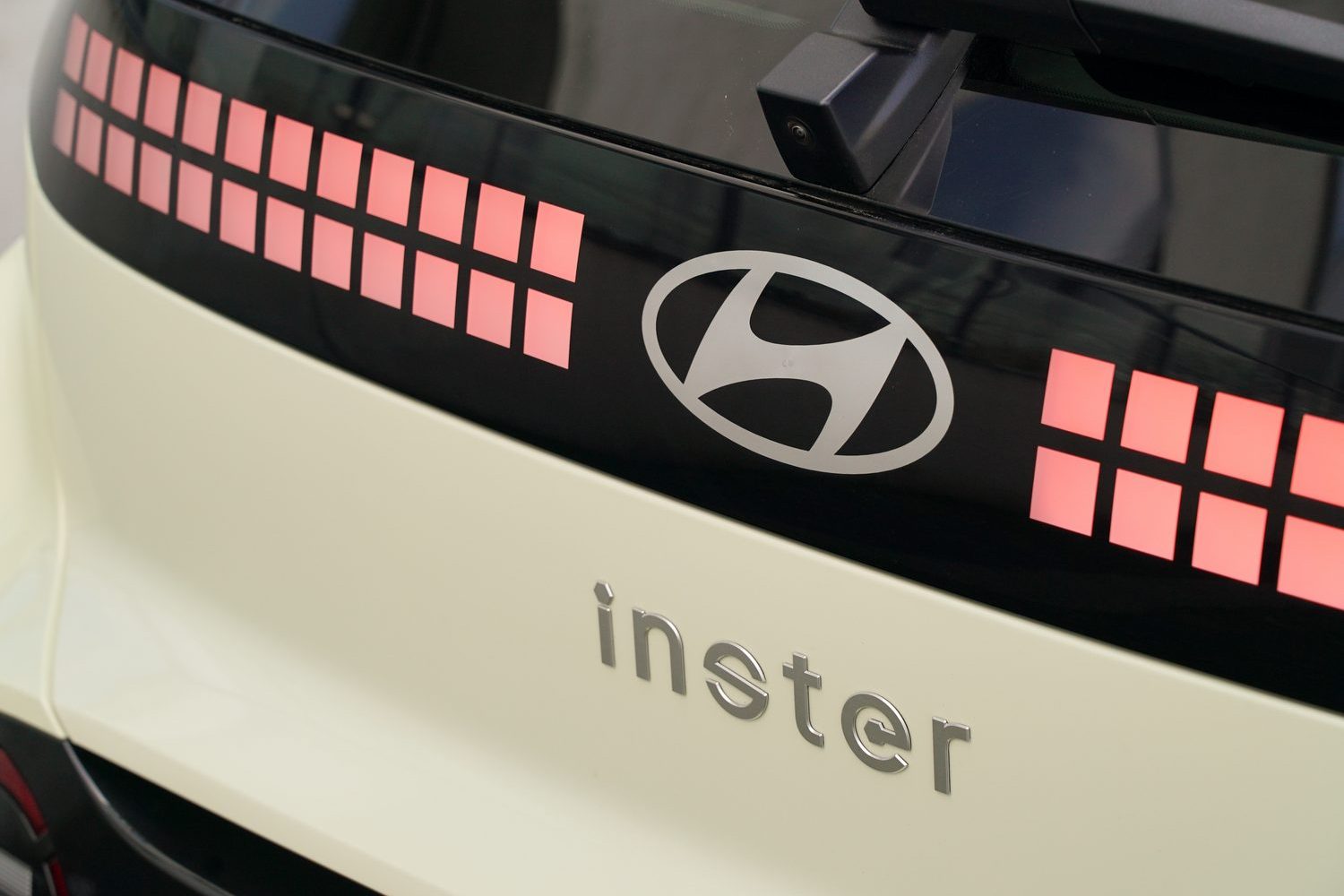
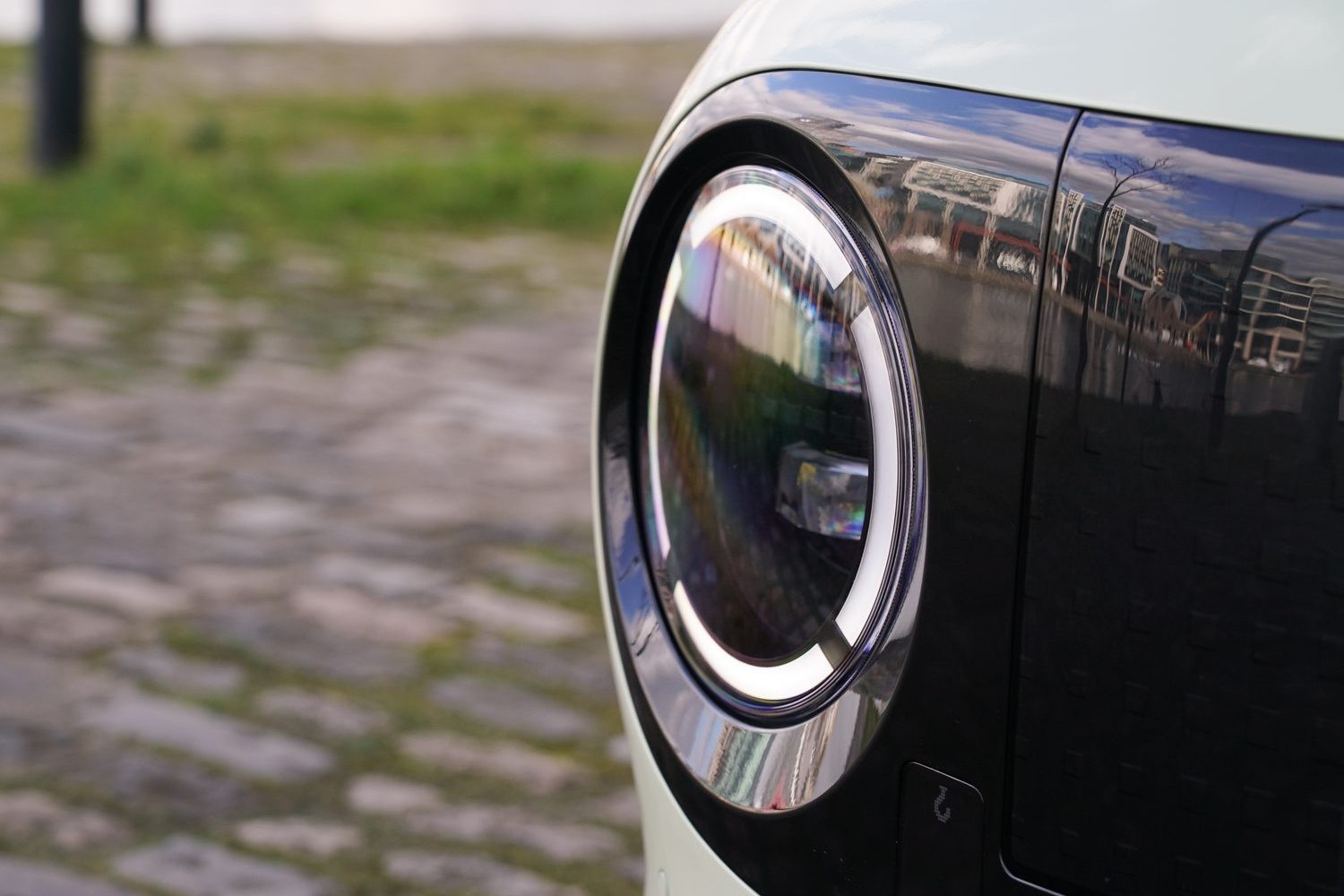
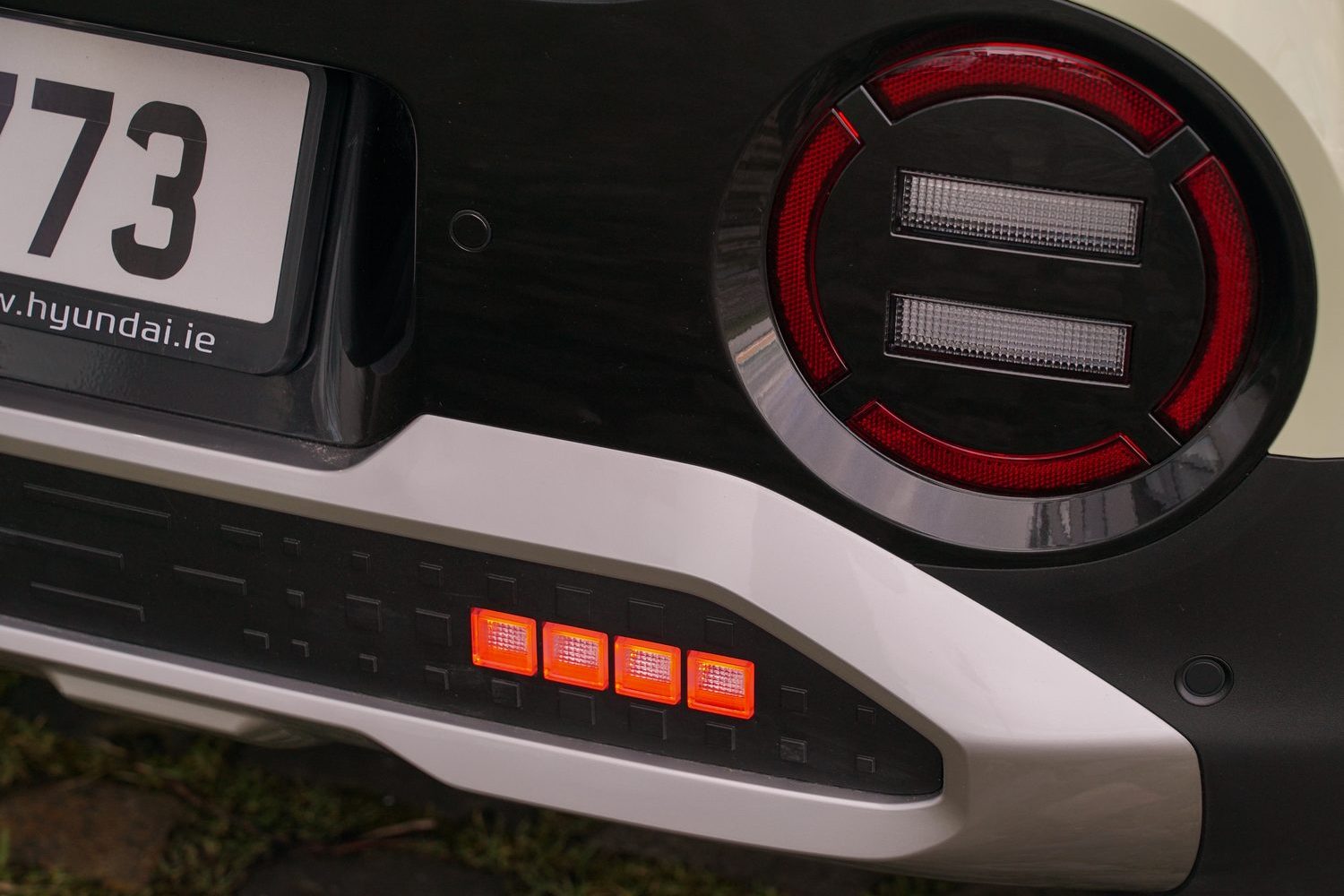
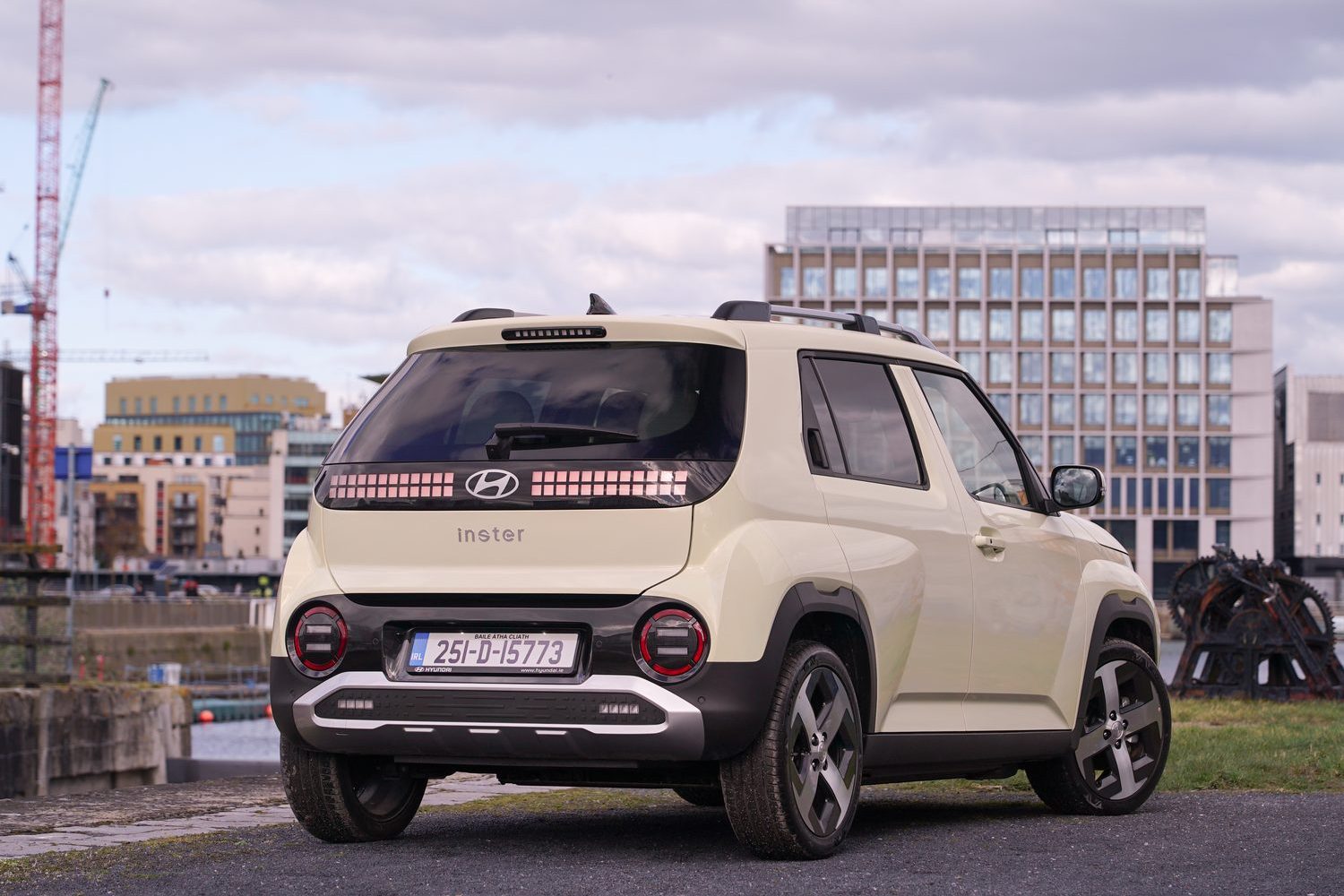
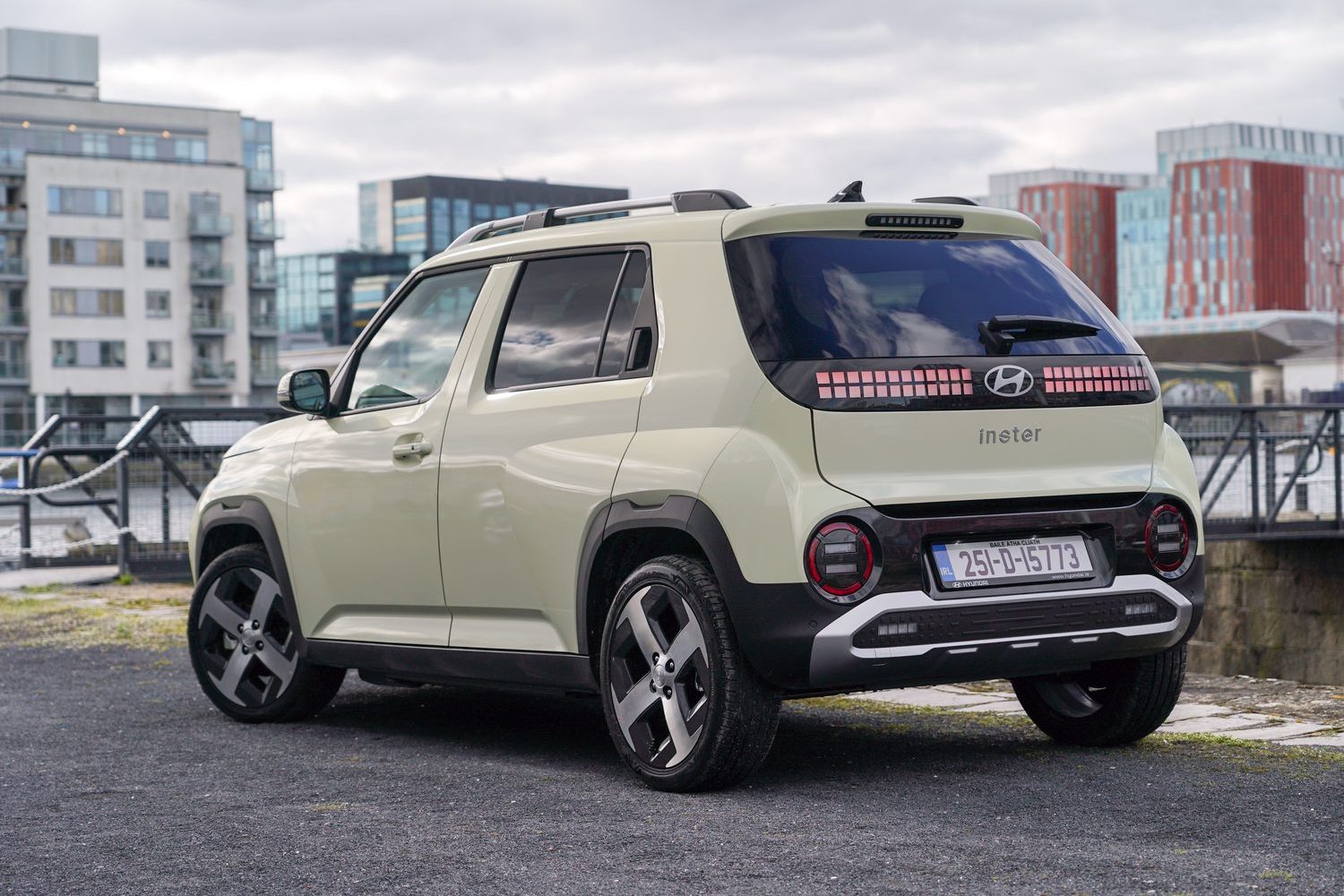
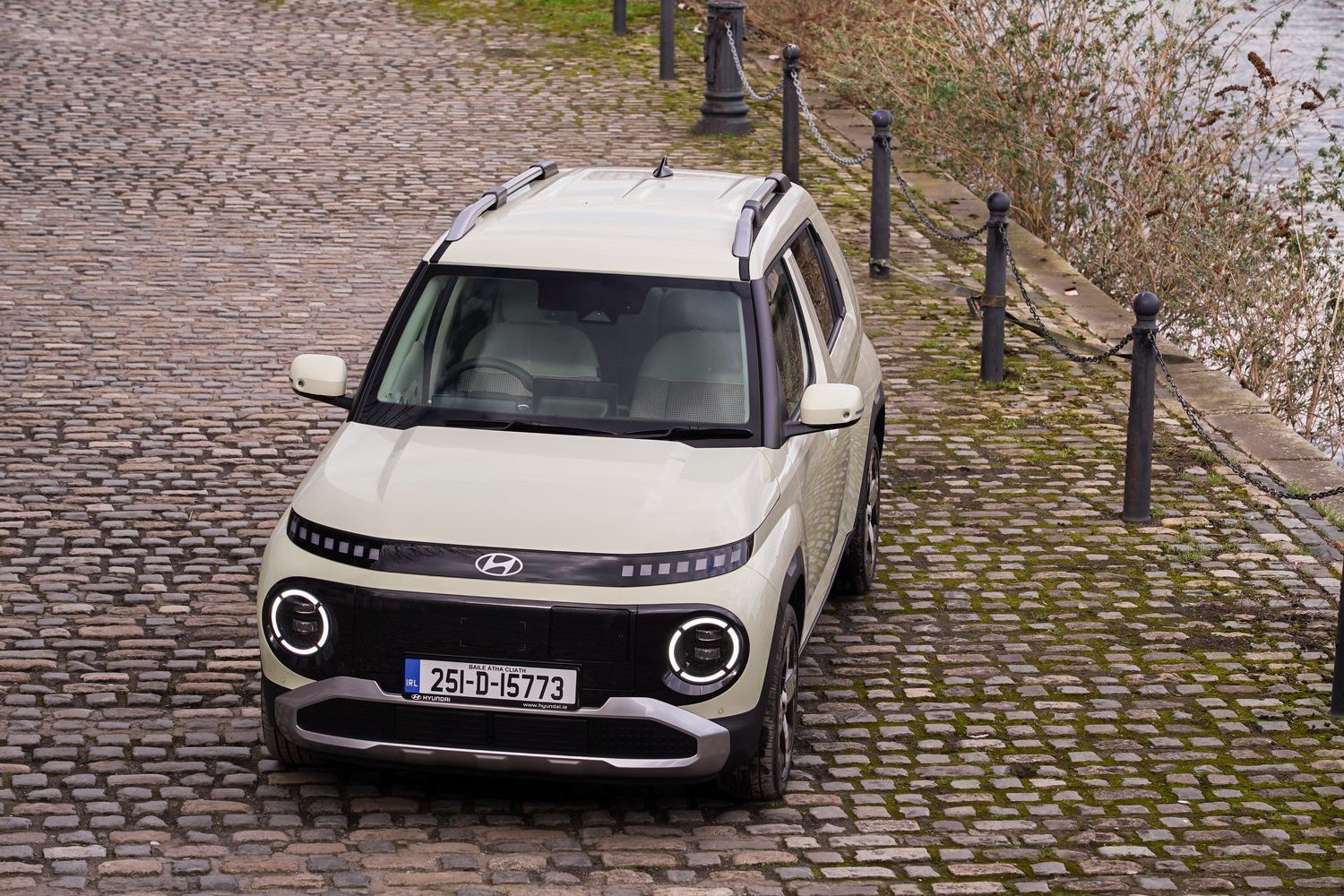
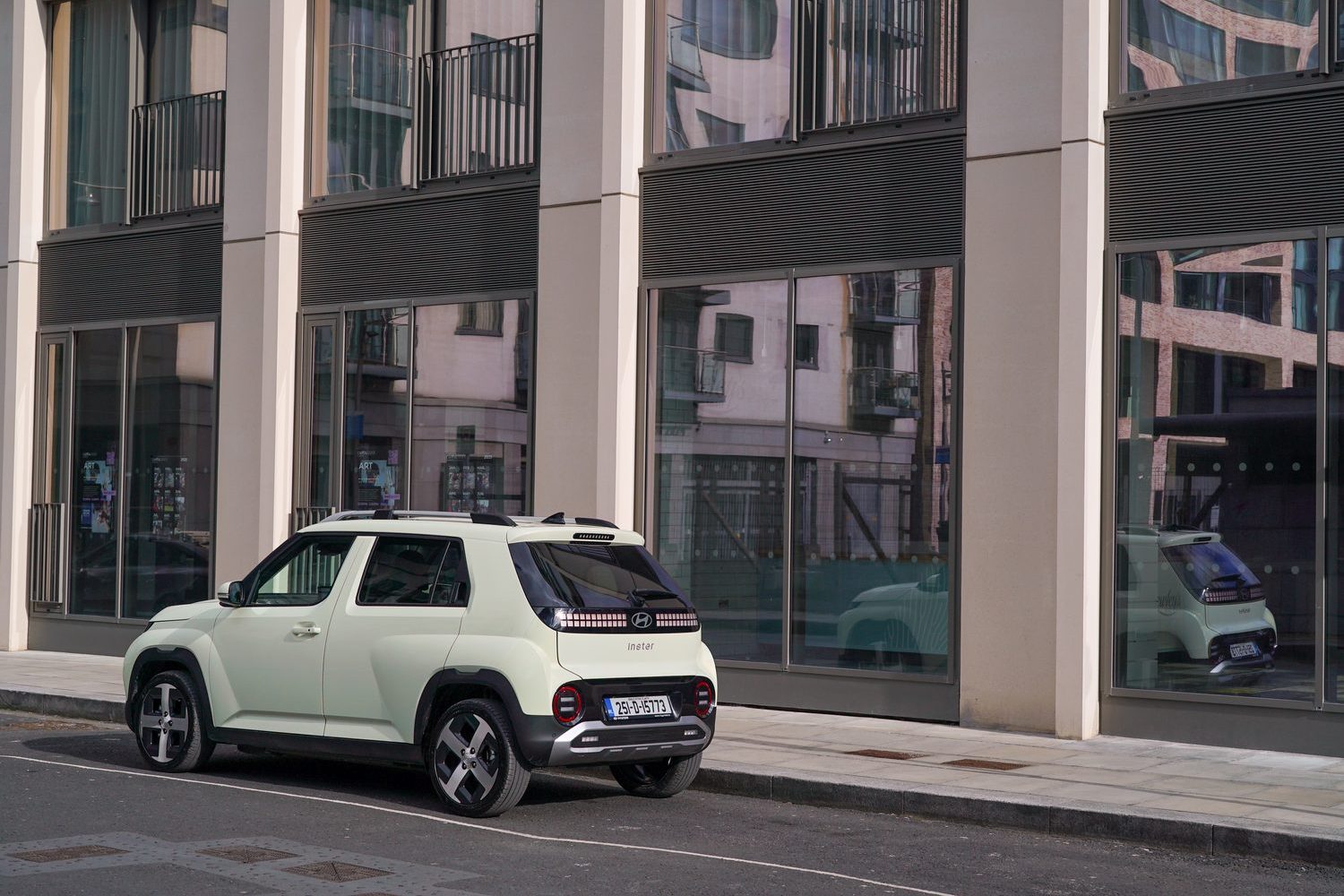
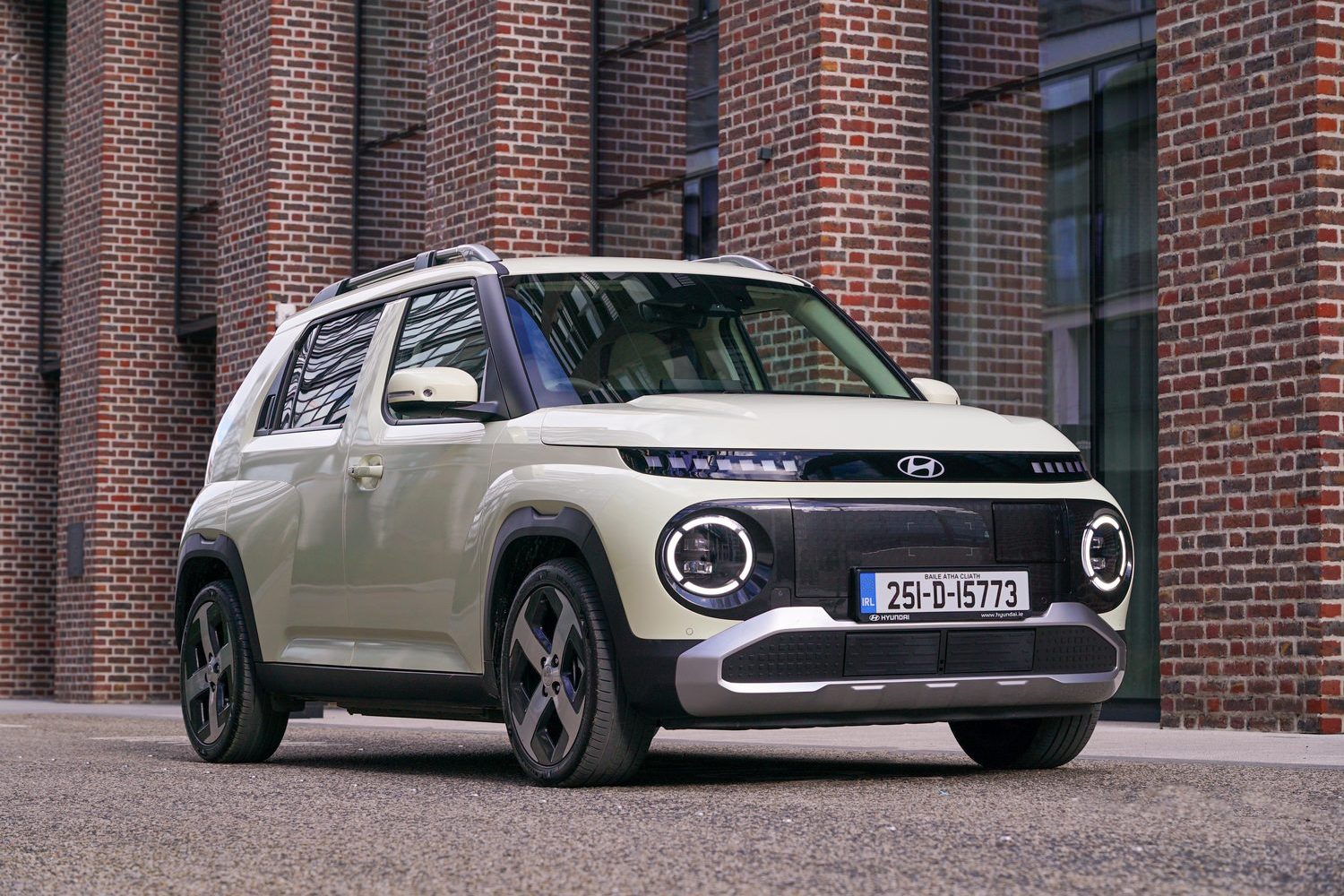
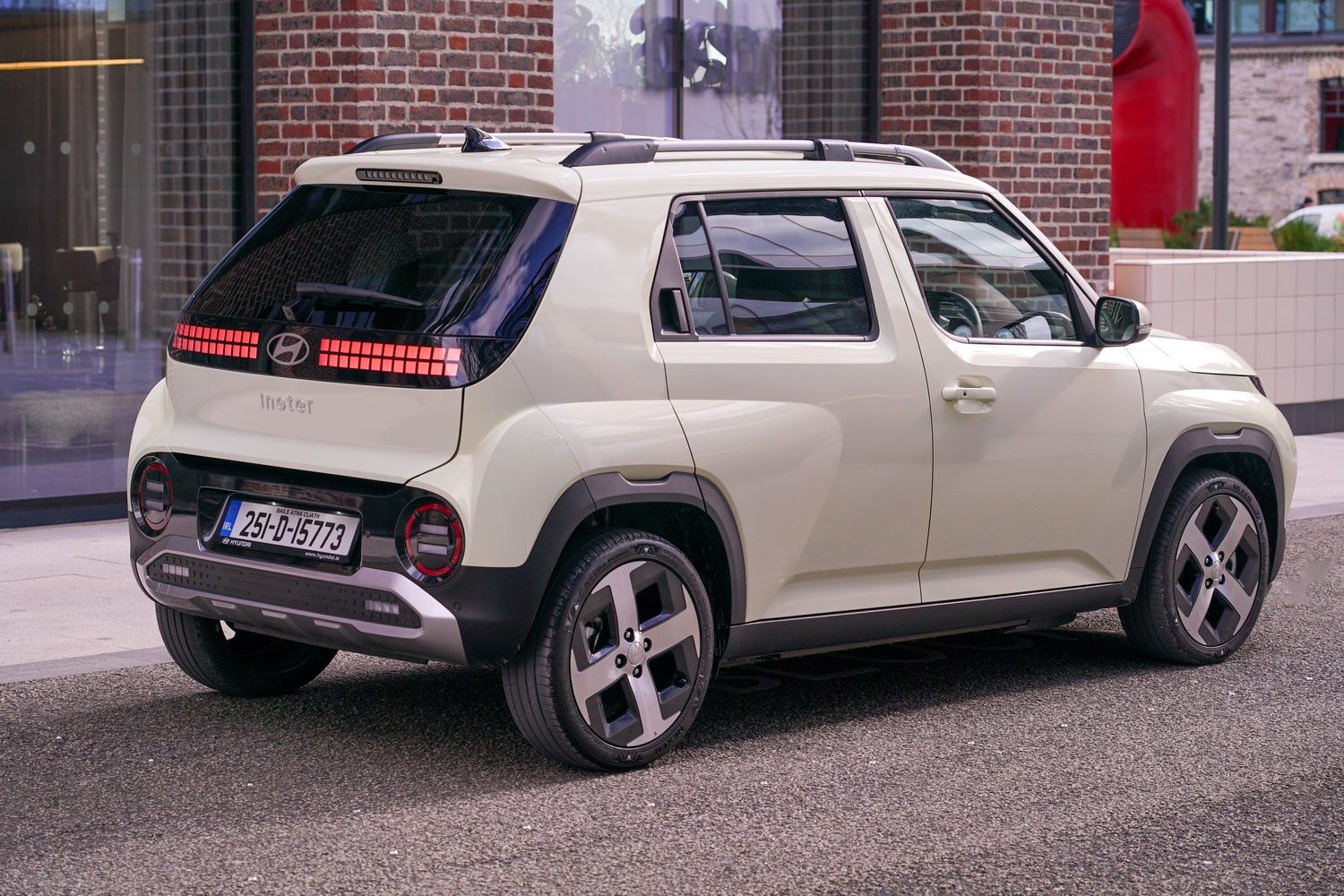
I stand by the summing-up of 'cute' though. The Inster just looks adorable. The big, round headlights set low down in the front fascia look quite arresting from some angles, and rather like the bigger Kona, there's an interesting combination of curved and flat panels going on. The additional 'Parametric Pixel' style lights brought over from the Ioniq lineup add to the sense of interest, and the four-spoke 17-inch alloys look genuinely dramatic thanks to their almost sword-like spokes.
Go for 'Buttercream Yellow' for maximum effect.
Interior, practicality, tech & comfort of the 2025 Hyundai Inster
- Well-laid out dashboard
- Lots of room in the back - with versatility
- Touchscreen could be more responsive

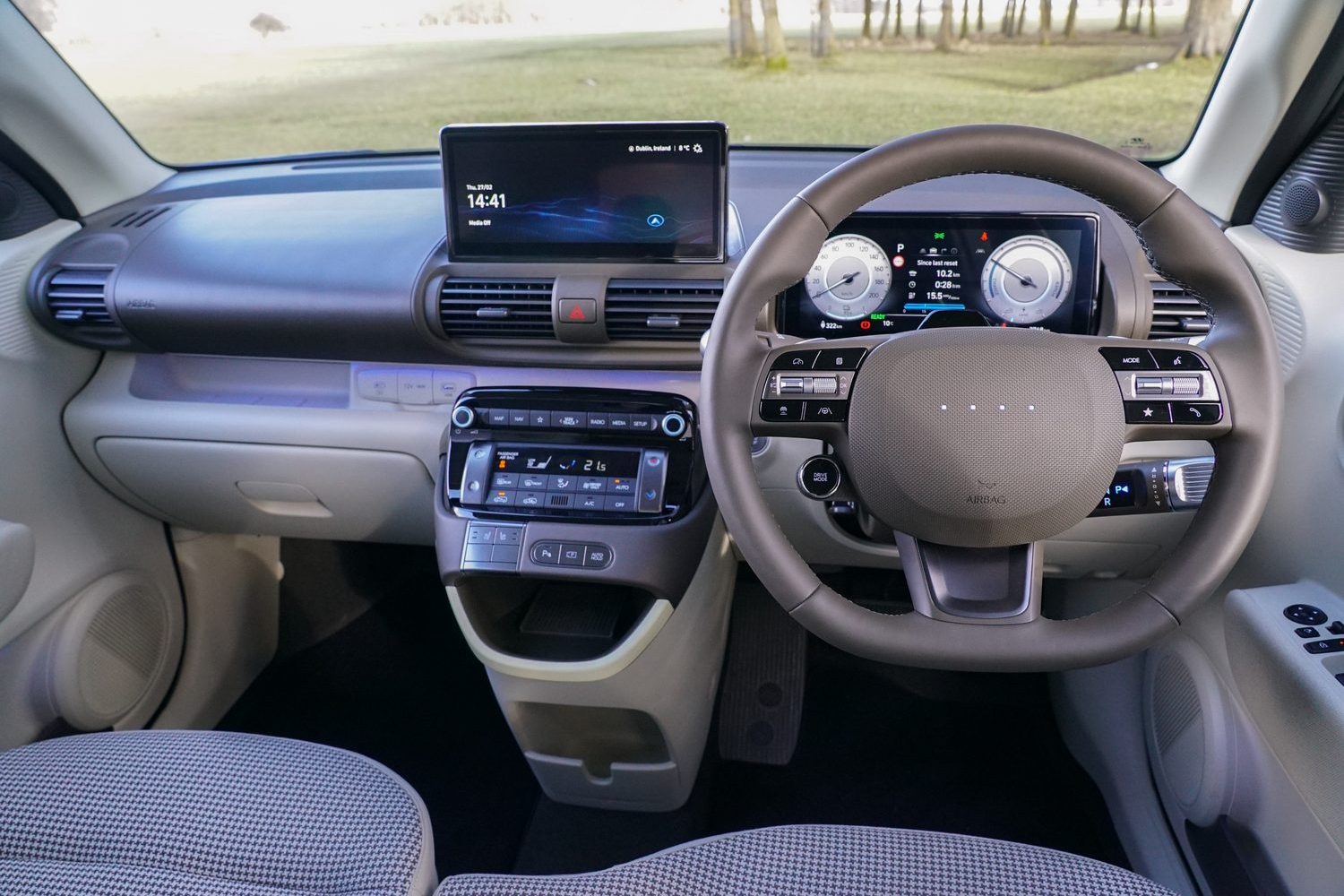
If the exterior of the Hyundai Inster is cute, then its cabin is an object lesson in how to design a truly functional vehicle interior. True, it lacks the aesthetic and design delights of, say, the Renault 5, but as a thing to use, the Inster's cabin is superior.
There are plenty of cheap plastics in the Inster's cabin, it's true, but none of them trip over into being cheap-and-nasty, and the overall sense is of solid construction and quality.

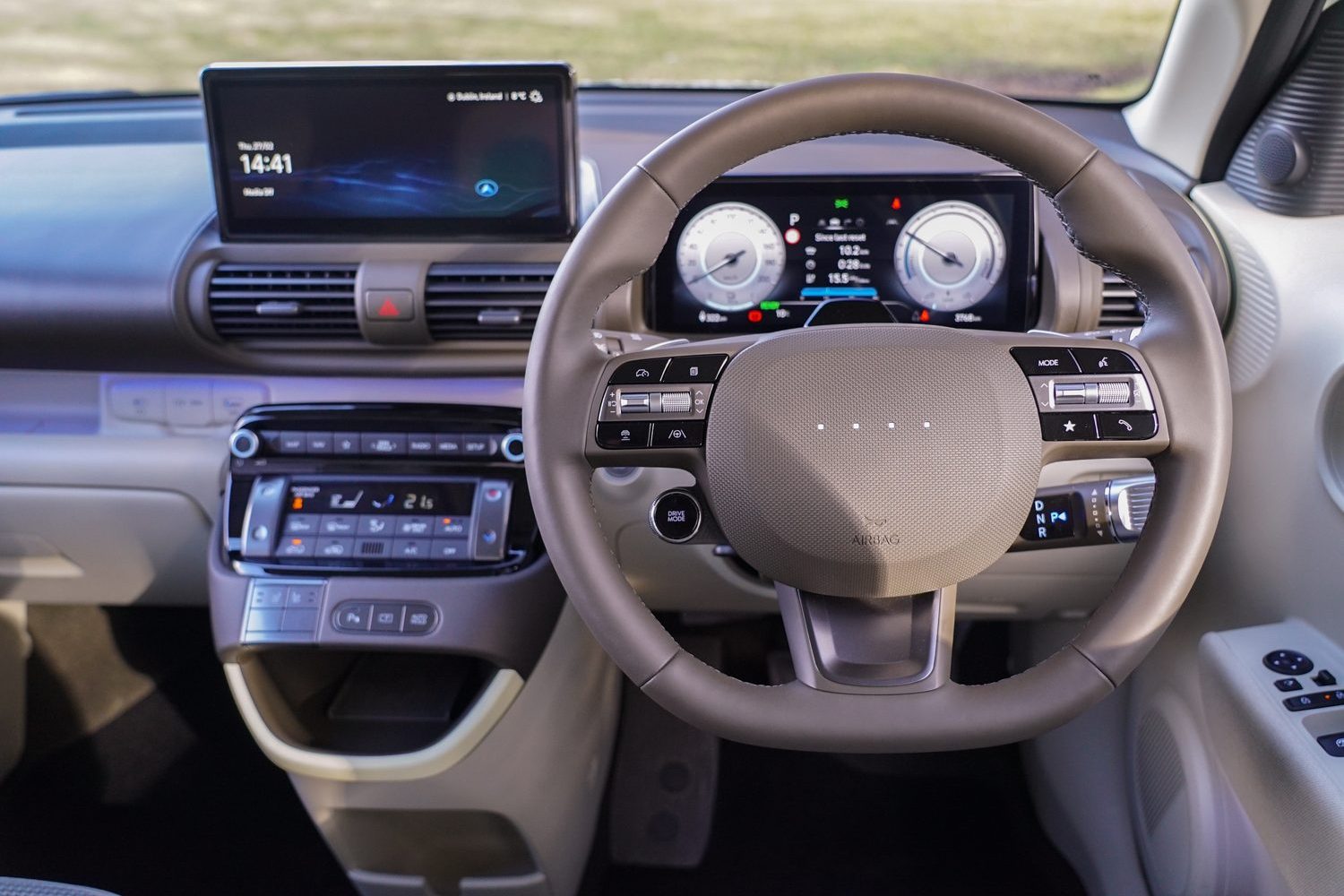
The main screens - both measuring 10.25 inches across the diagonal - are familiar from other Hyundai models, but we did notice that the main infotainment screen could be a bit slow to respond to a press at times, which could leave you hanging and waiting for the next menu to appear.
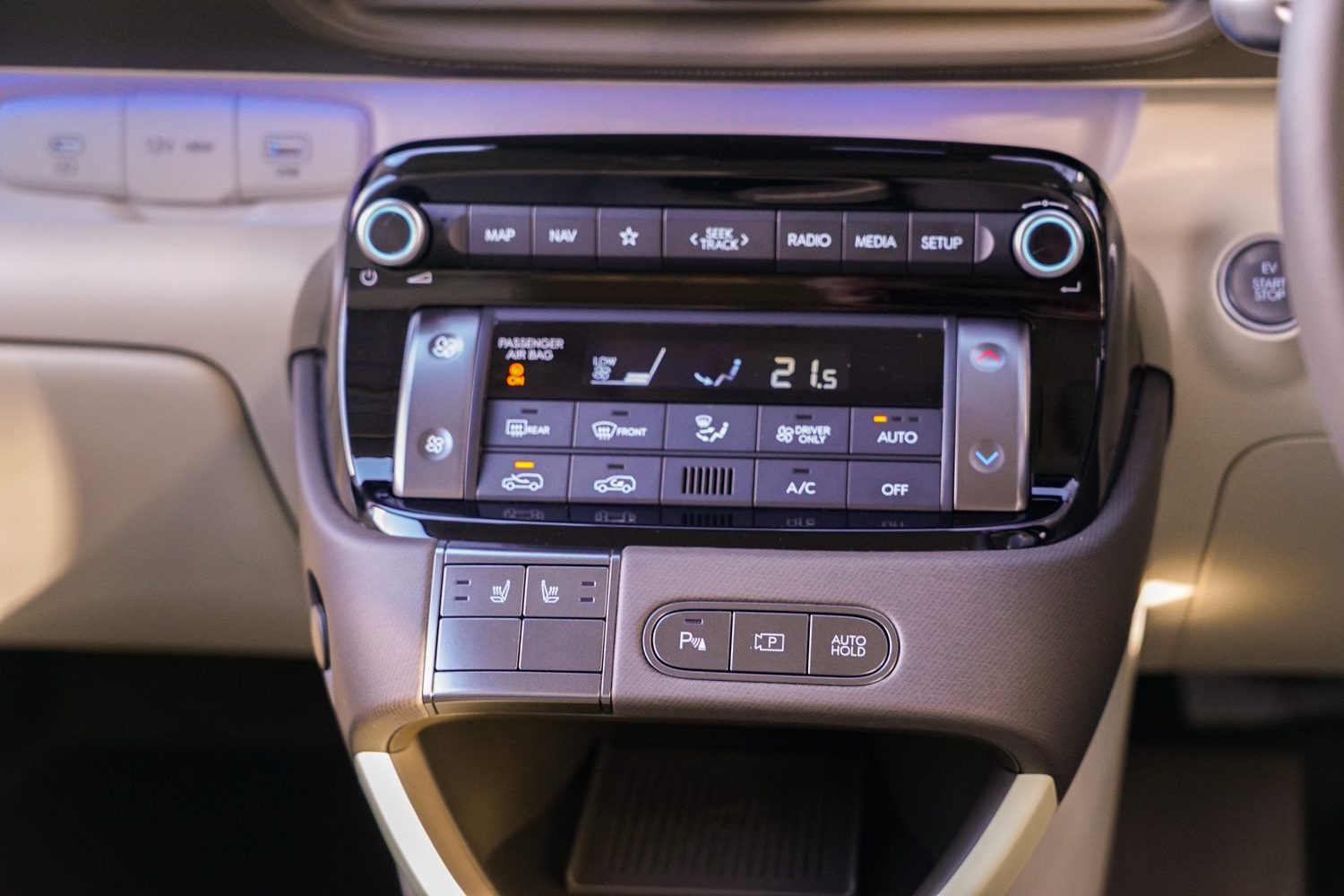
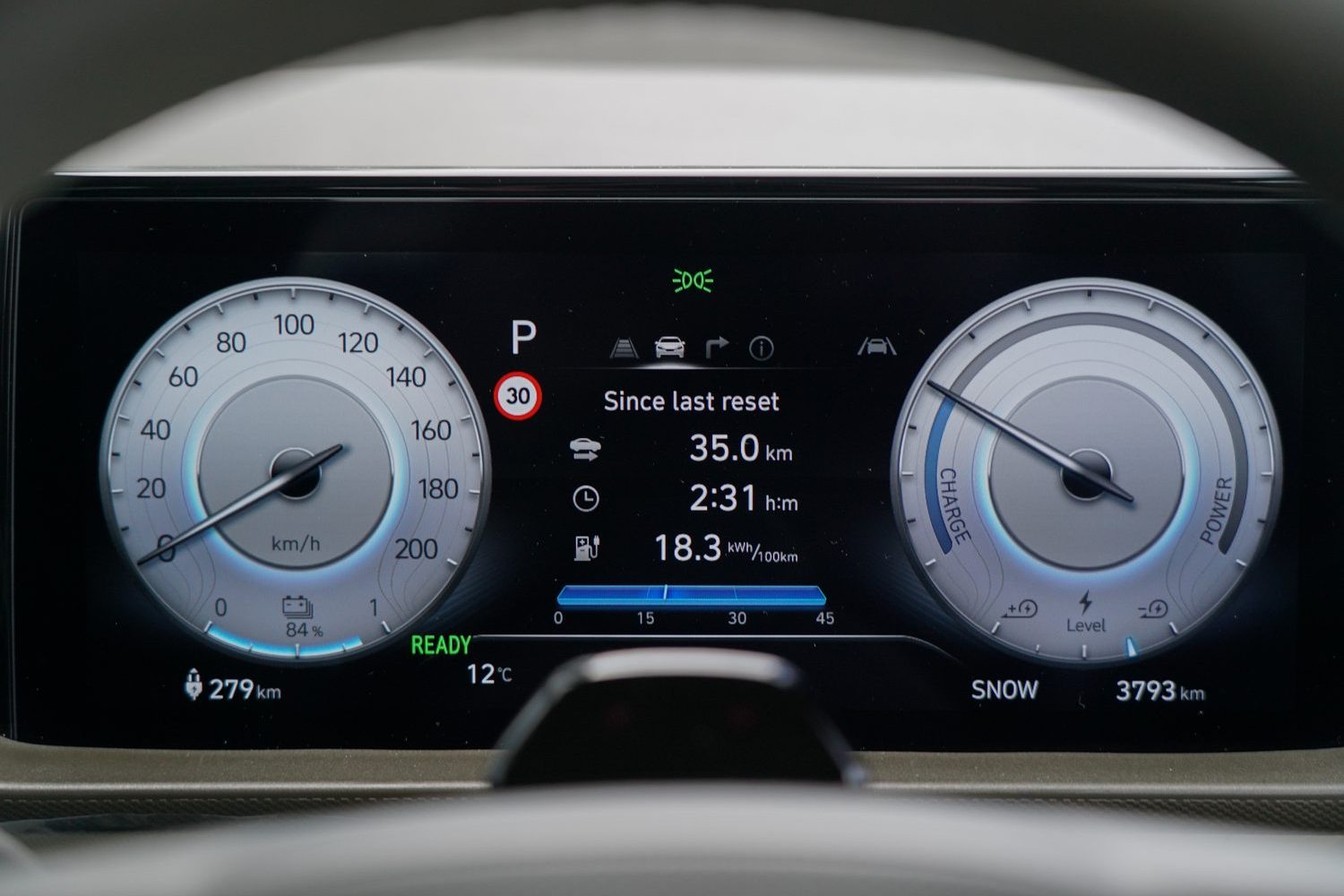
At least the layout of the screen is sensible, the information it presents is clear (ditto for the instrument panel) and as ever, major kudos go to Hyundai for being one of the too-few car makers to realise that physical air conditioning controls and menu shortcuts are what everyone wants.
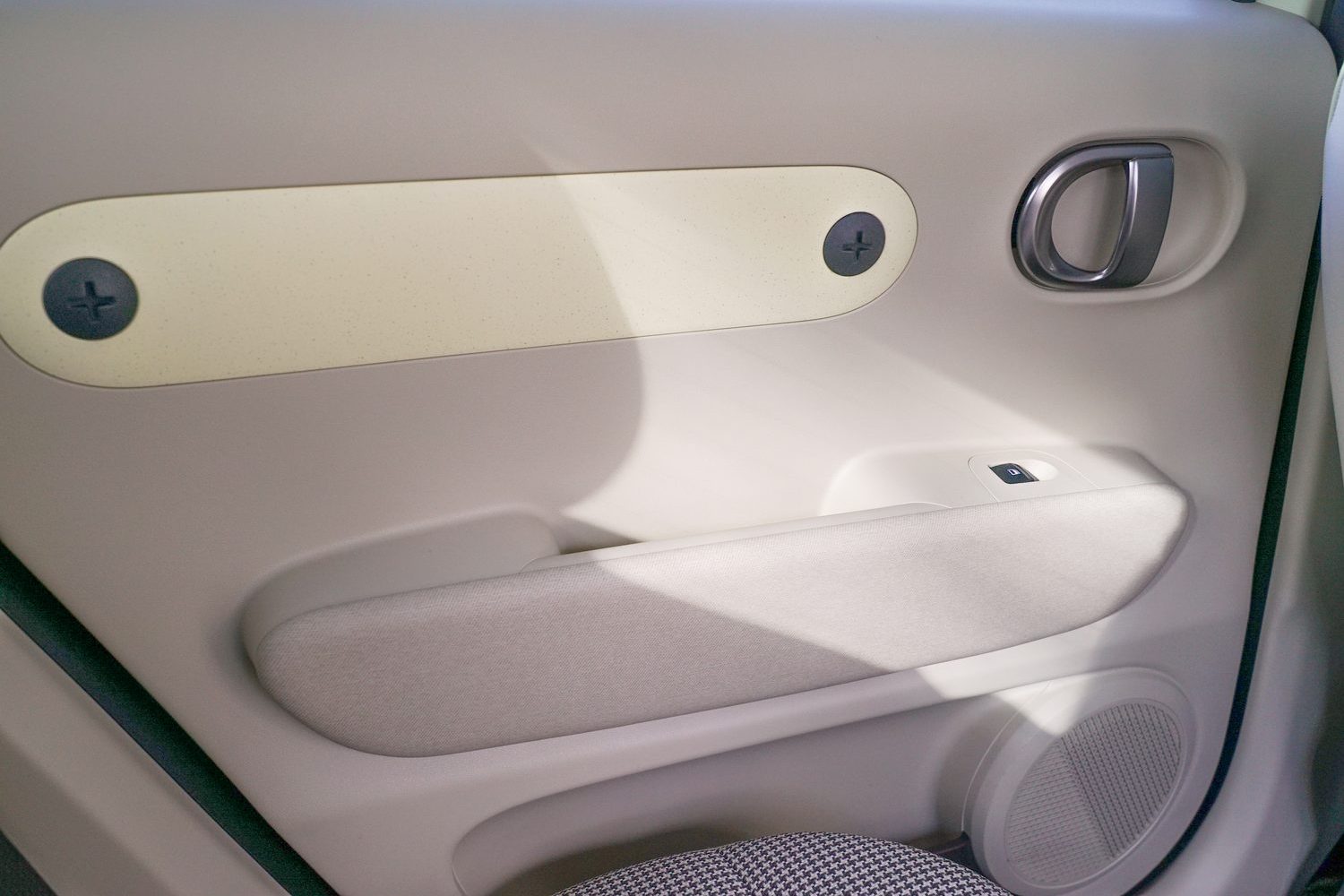
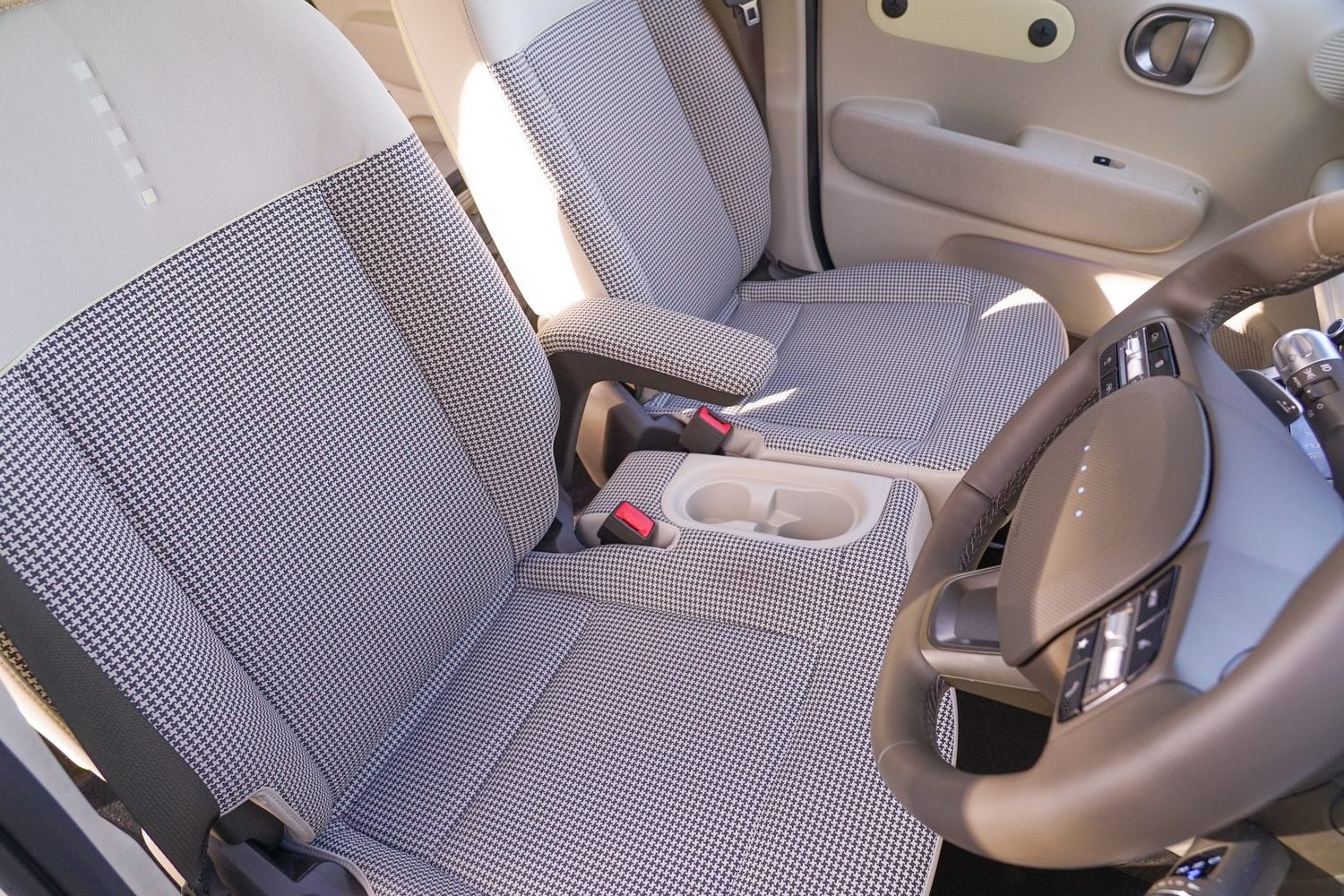
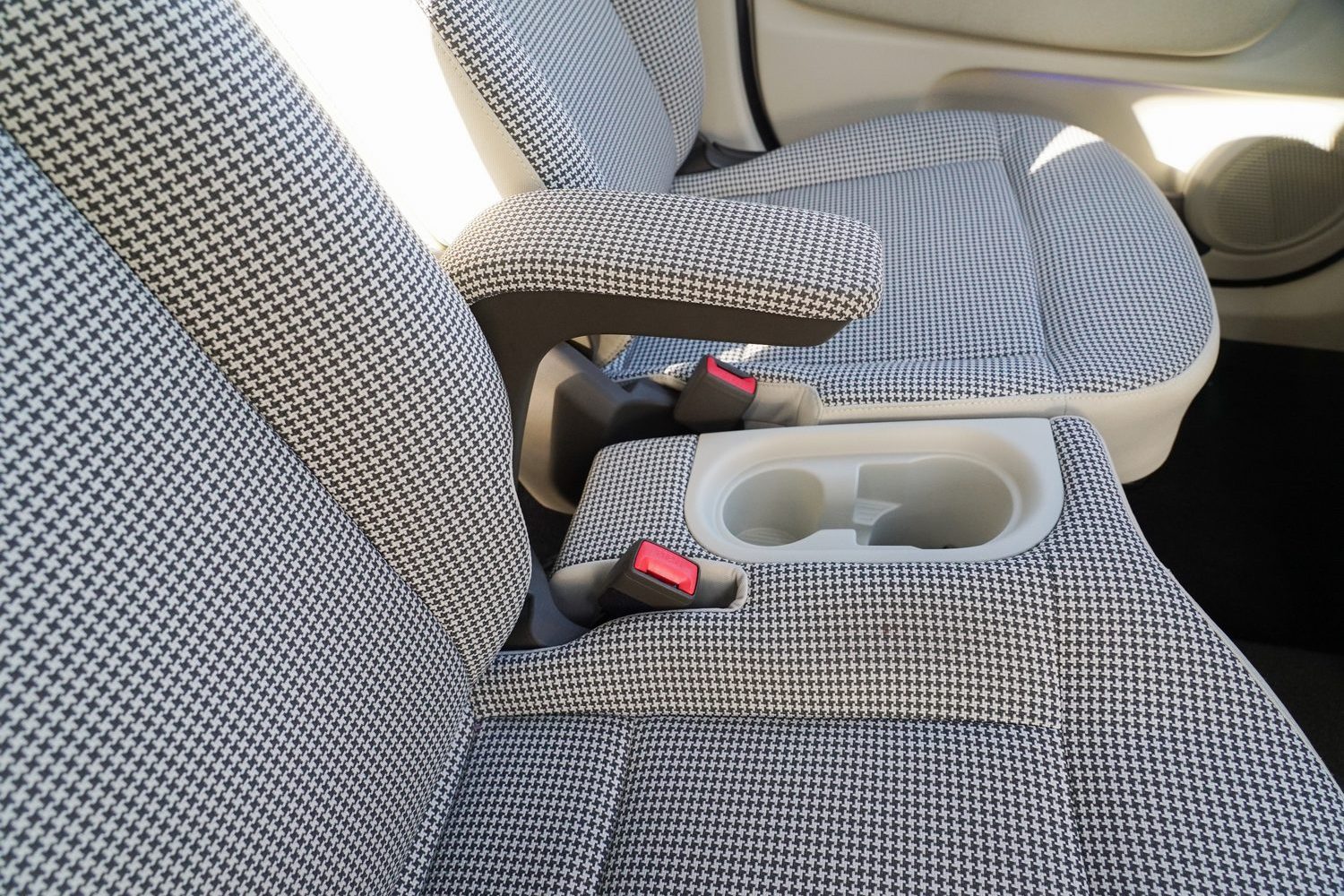
There's lots of handy little storage areas around the Inster's cabin, which makes up for door bins that are too narrow to be of much use. The cupholders are integrated into the driver's seat, and move back and forth with it, along with a small, but useful, flip-back armrest. When you line up the two front seats, they actually almost look like a continuous bench seat, which is kind of cool.

Those seats are very comfortable too, and are more supportive than you'd expect at this price point, although if you're as big as me, you'll find that your right arm gets a bit too squashed up against the door.
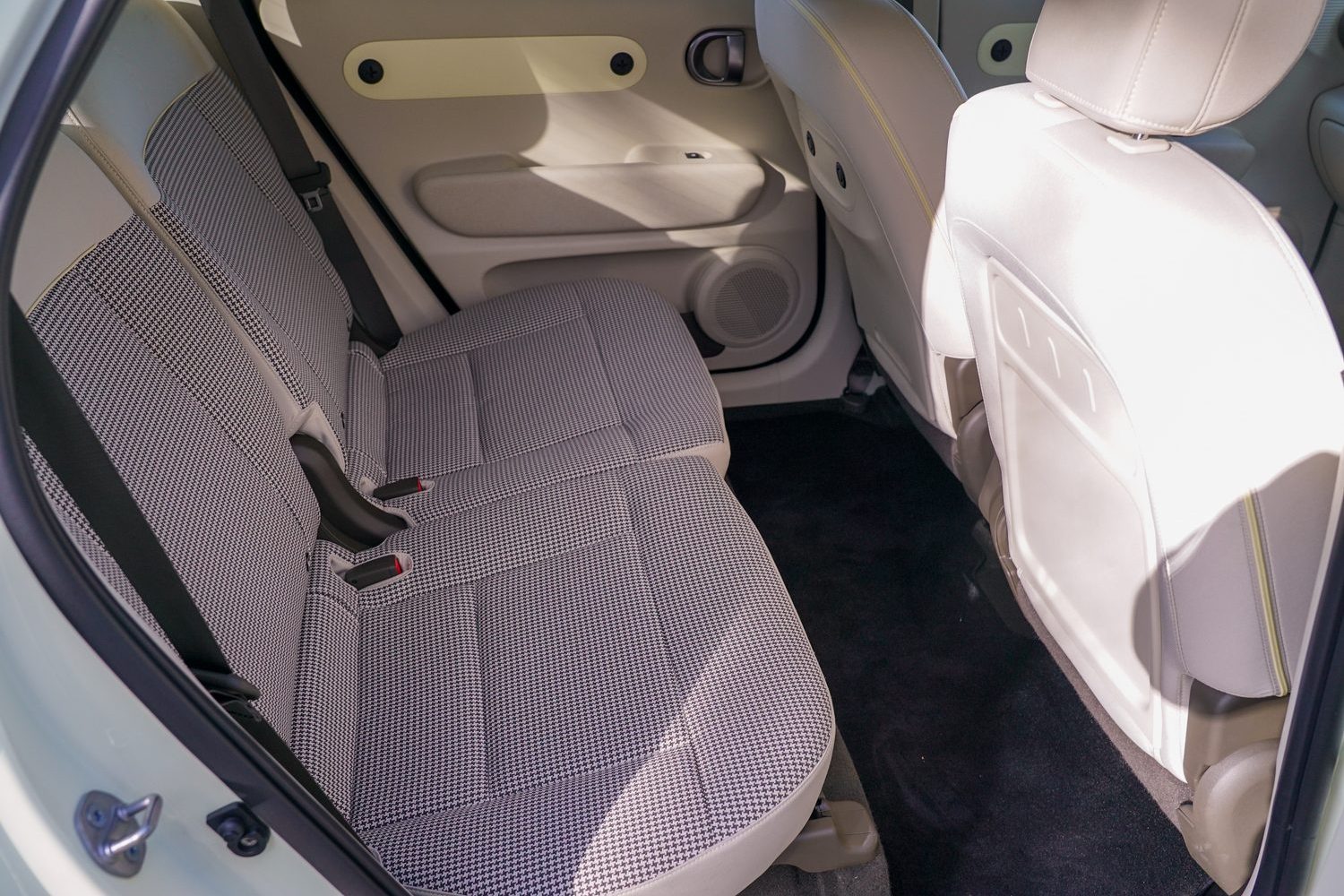
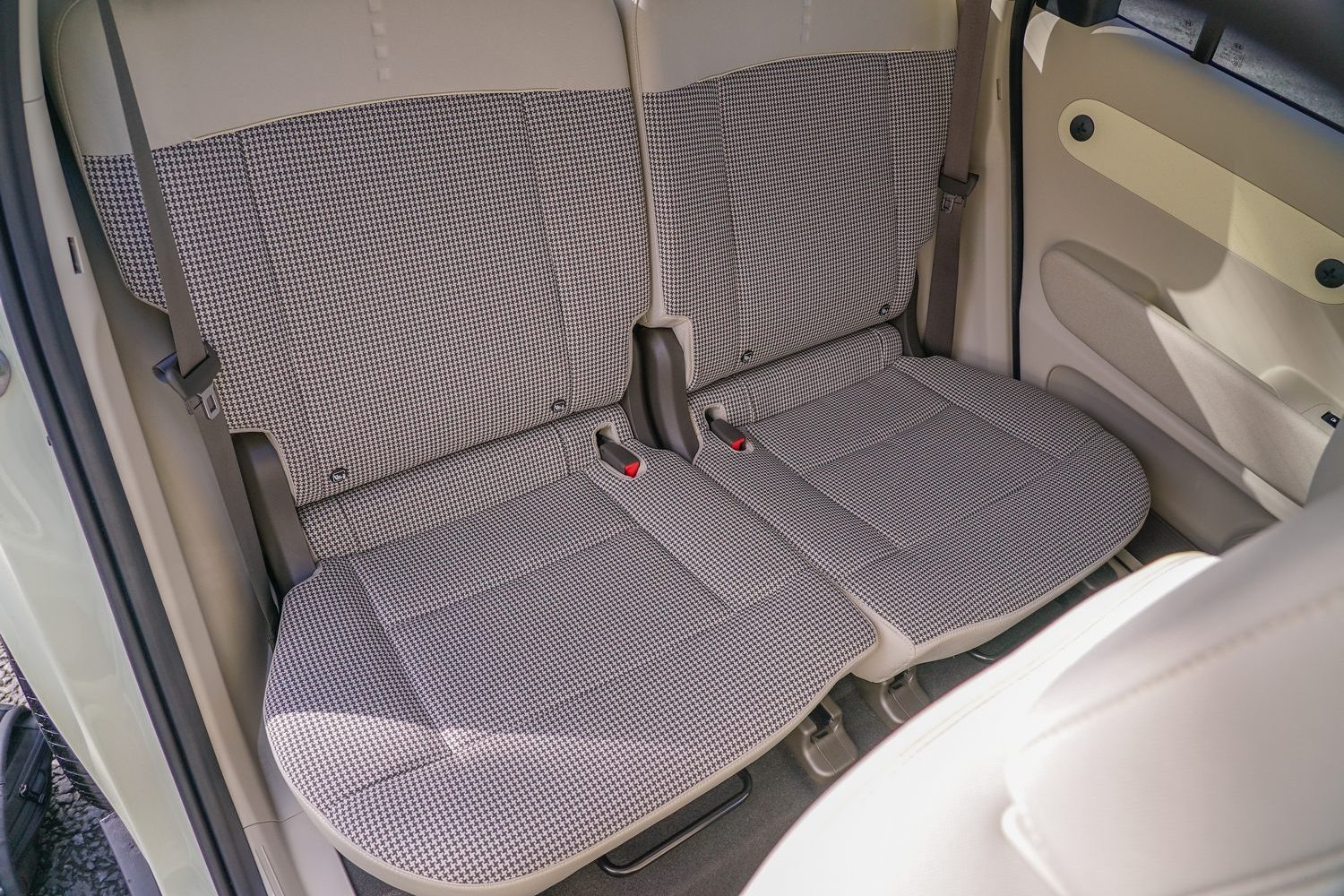
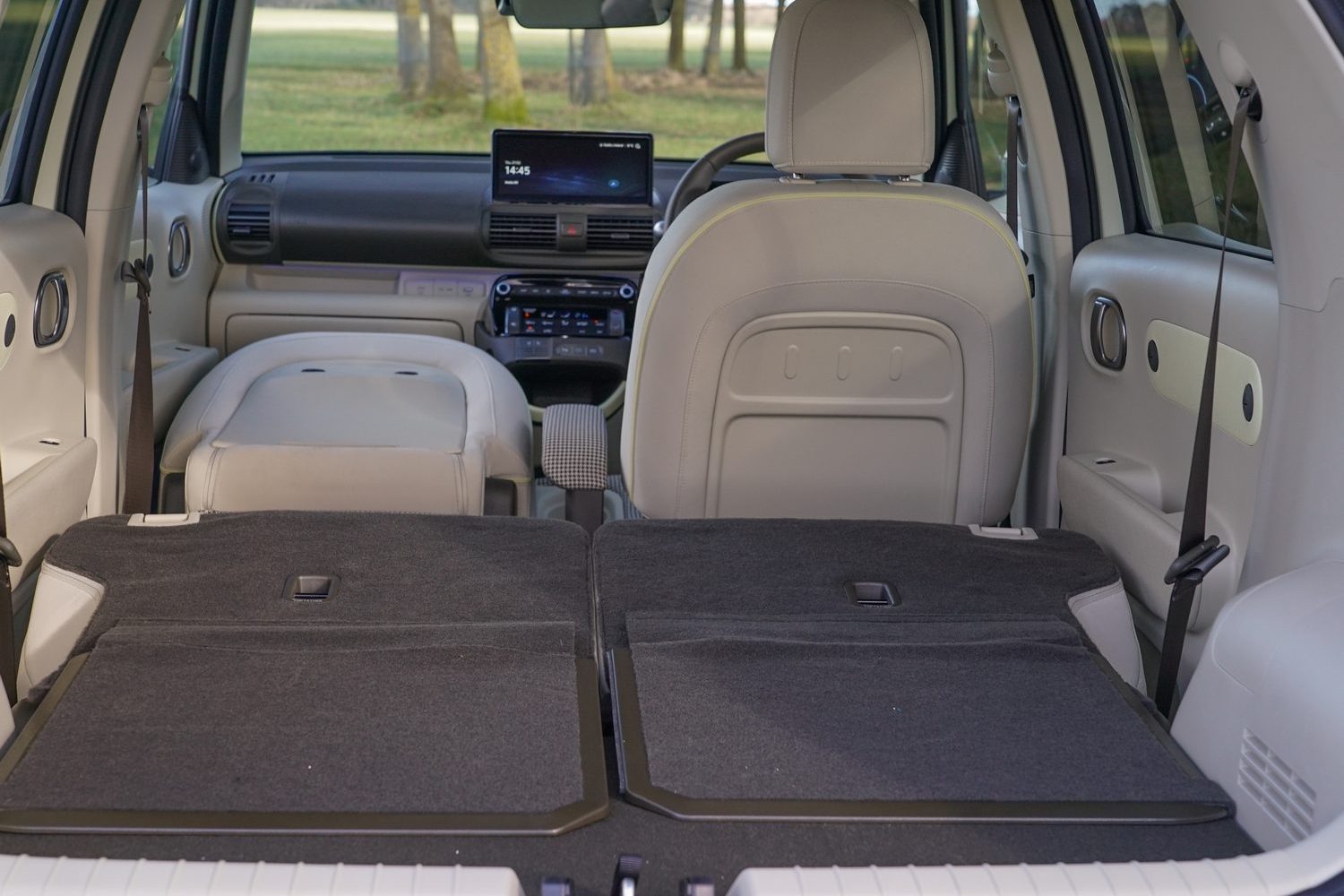
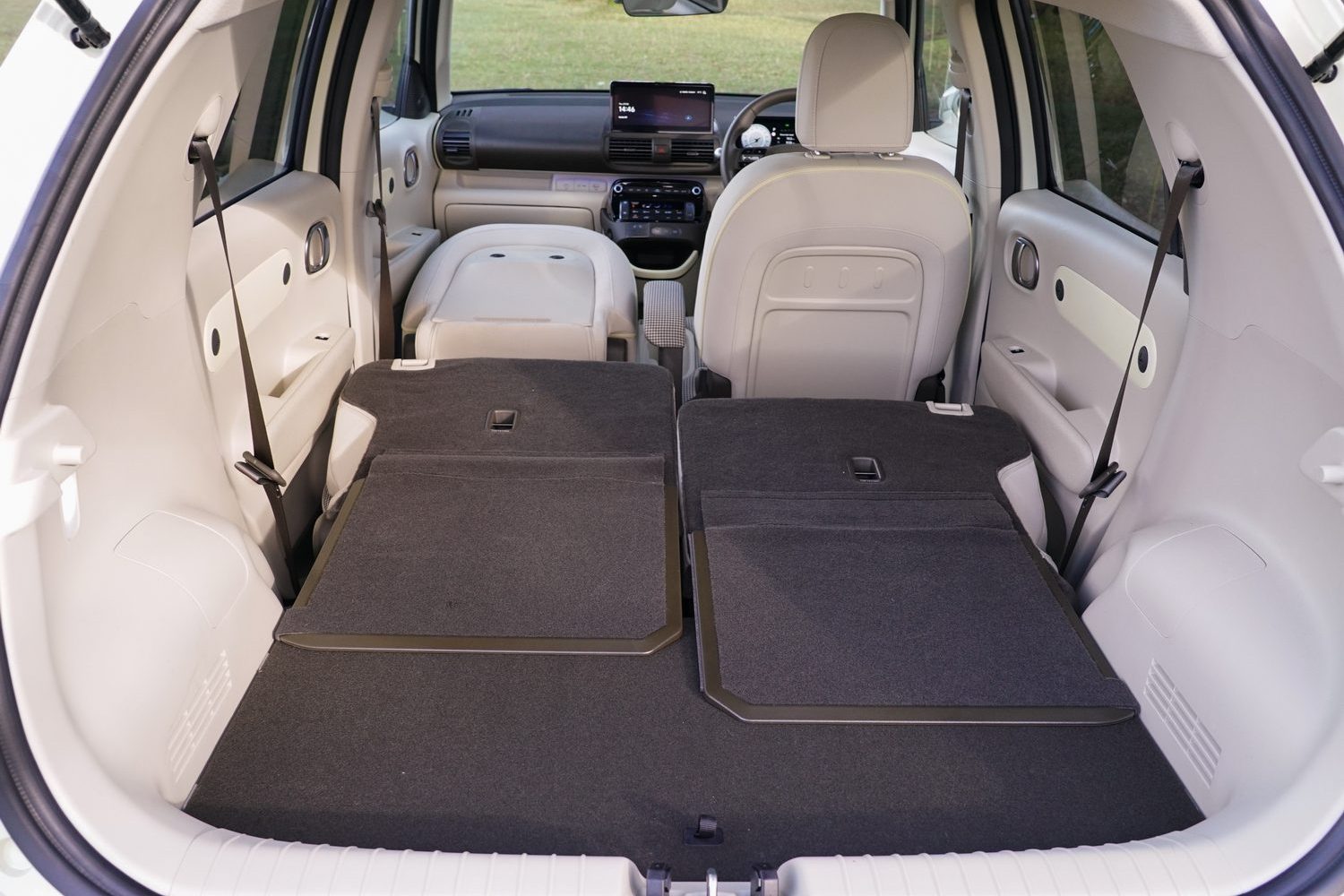
The back of the Inster is where things get really clever, but only if you've bought this Elegance model (or the Inster Cross) with the adjustable back seats.
The rear seats - and there is only two, with no central rear seatbelt, so bear that in mind if you're buying with family transport in mind - adjust through 160mm on their runners and do so individually.

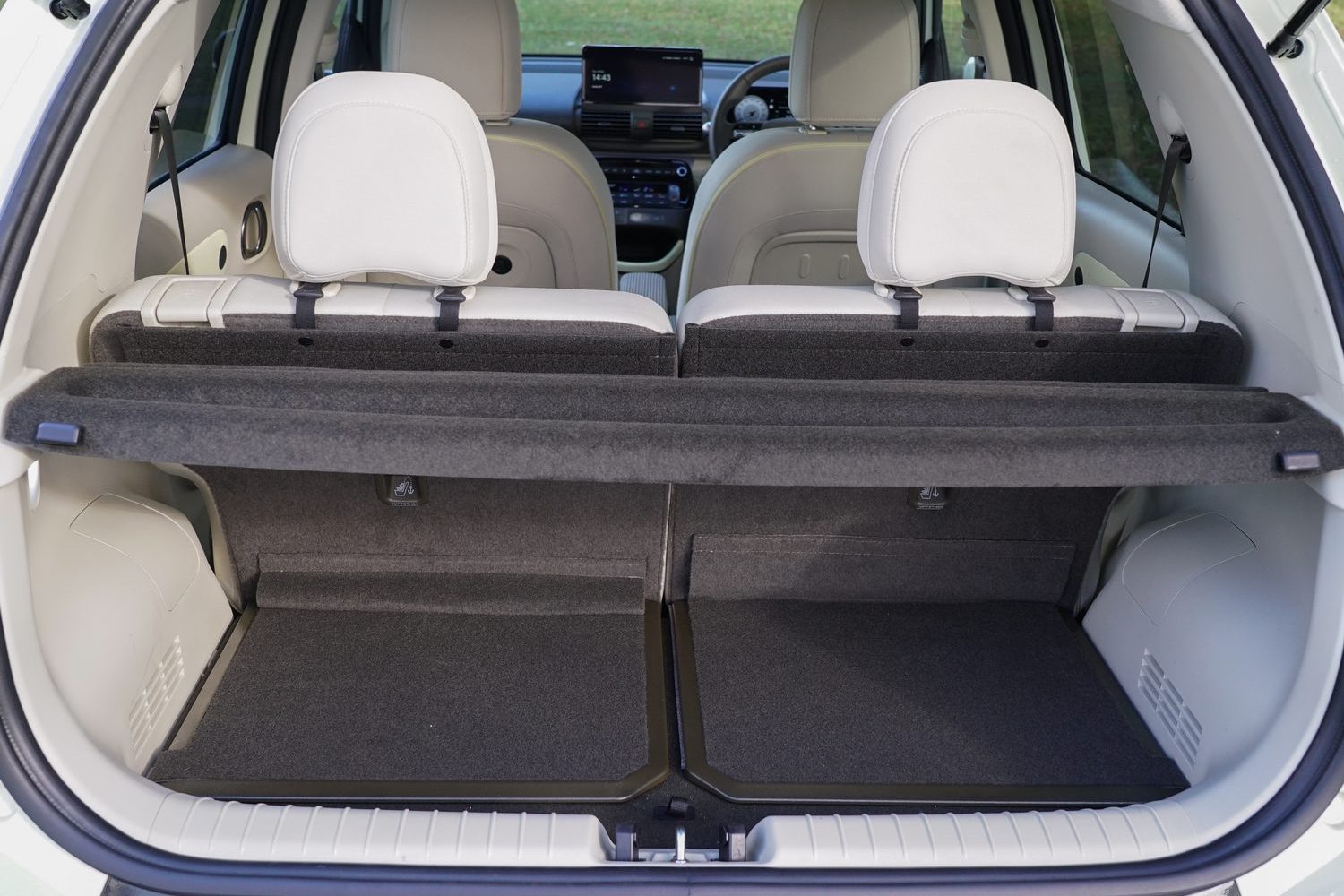
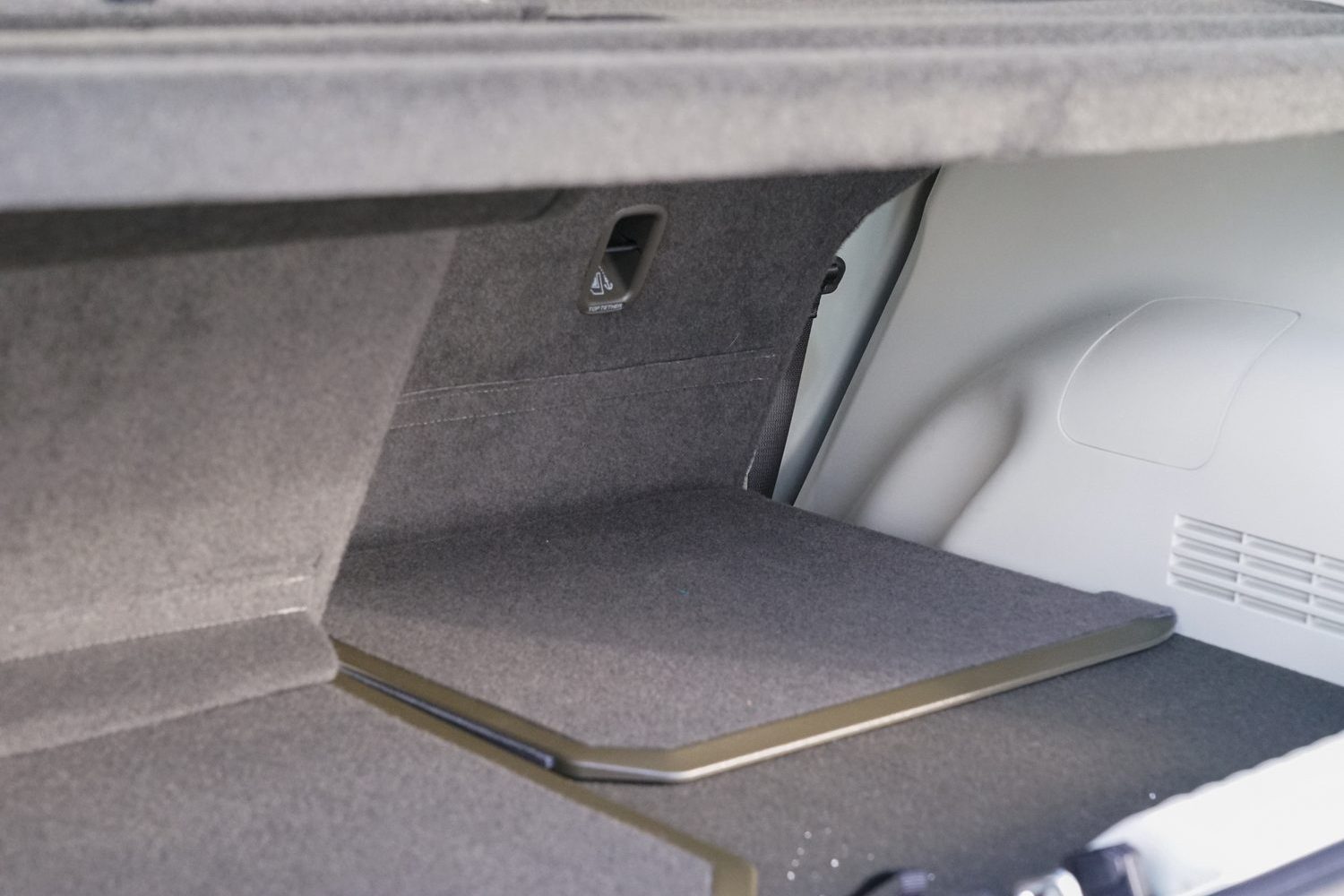
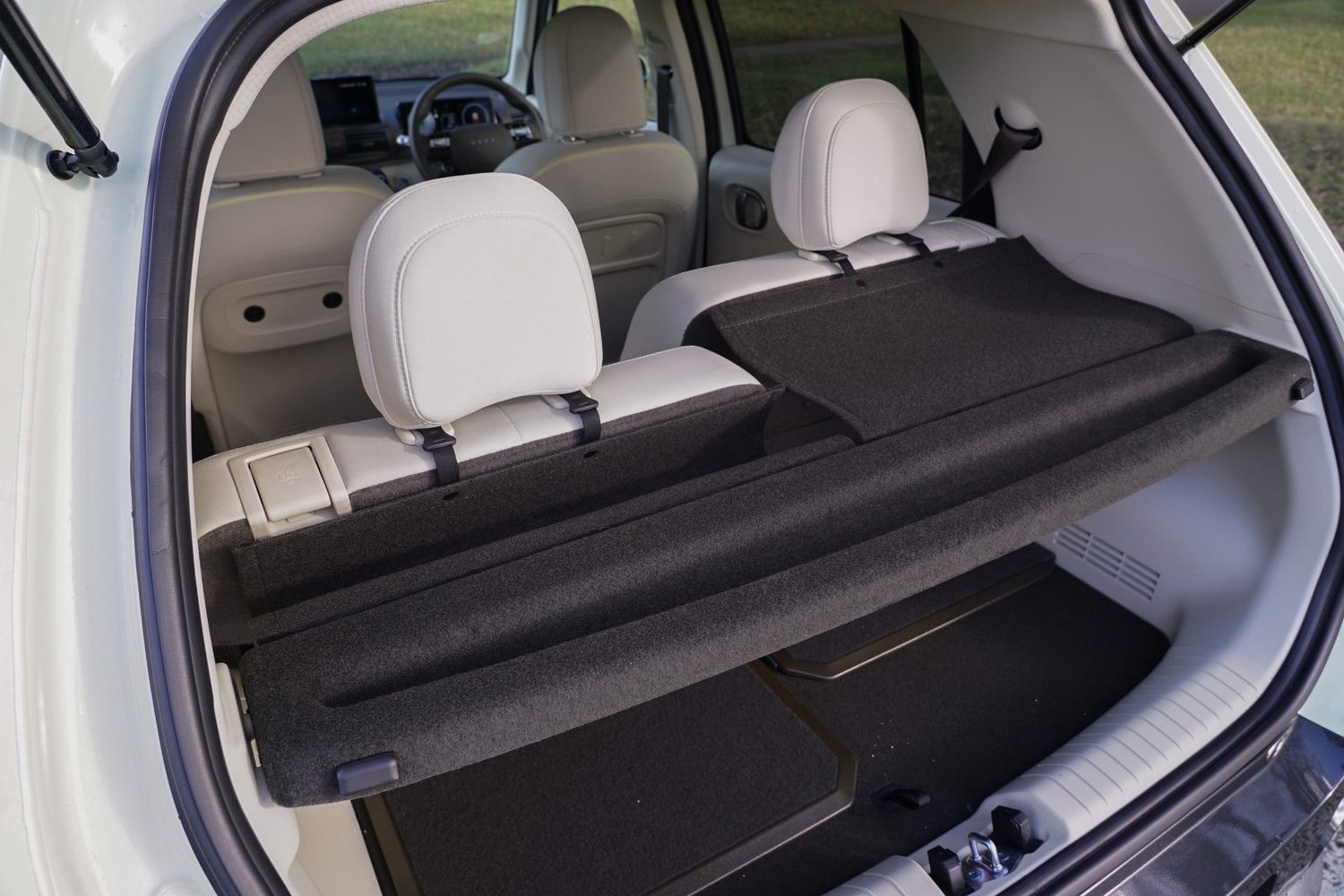
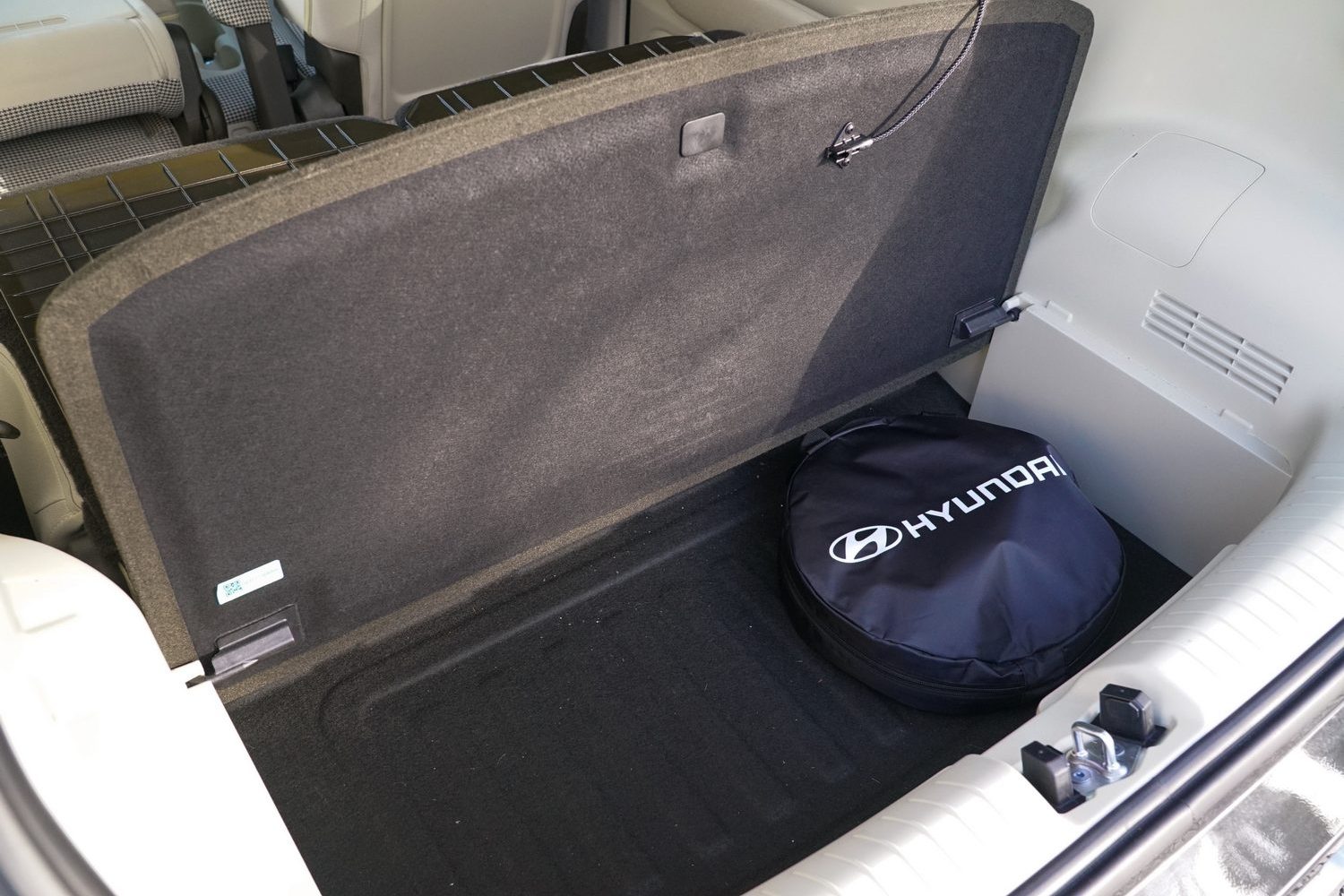
This ties directly in with boot space, as with the rear seats pushed all the way back, the nominal boot volume of 280 litres falls to 240 litres. It's still enough for a good-sized Saturday shop if you pack carefully, but it is a bit small.
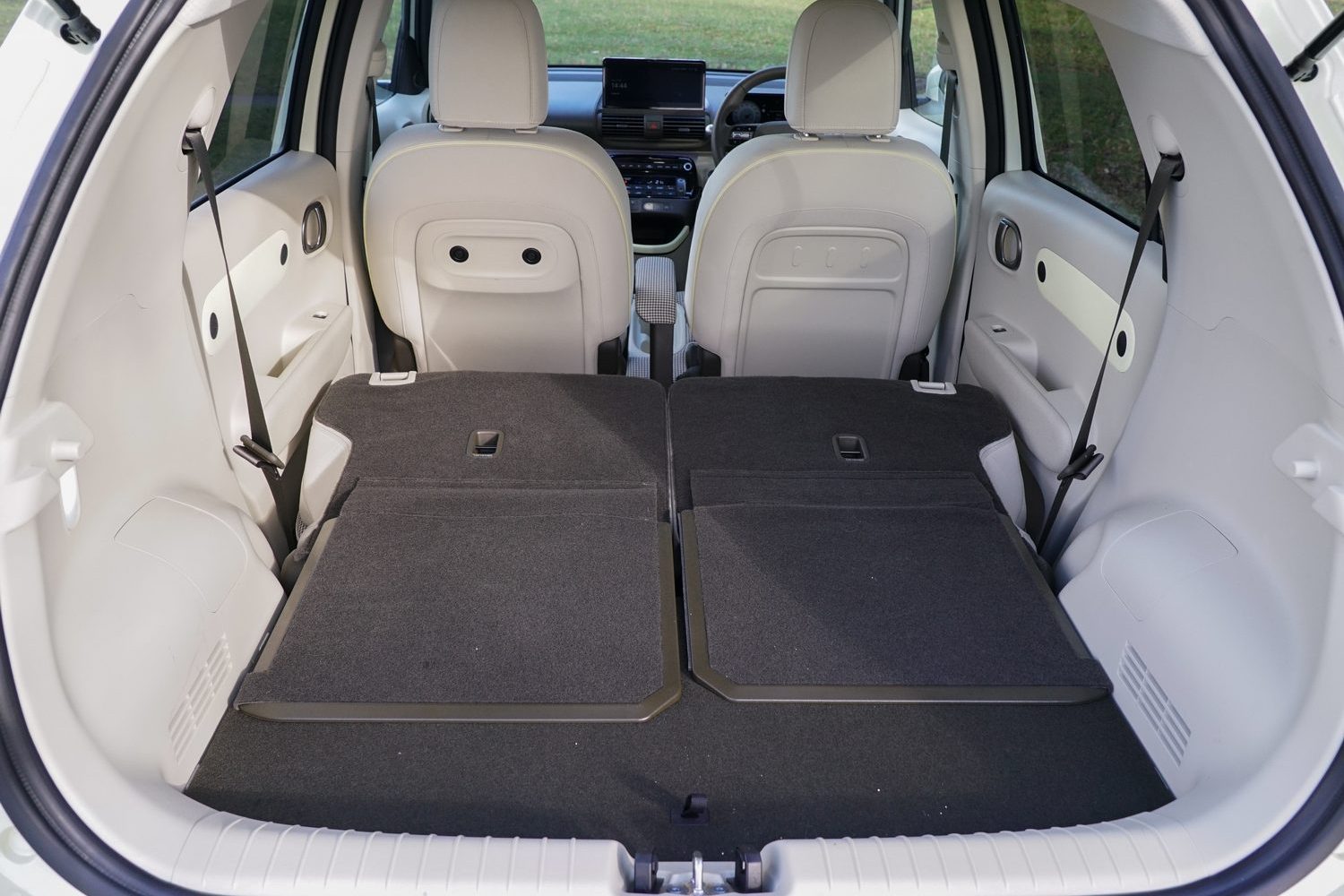
However, if you have only one person sitting in the back, you can slide one seat forward, liberating more boot space. If no-one's sitting in the back, you can slide both seats forward and extend the boot to a very useful 351 litres - as much as you'd get in a compact SUV from the class above. Or, on those days when you don't need to pack much into the boot, just slide the seats back all the way and there's copious legroom in the rear, so much that your 185cm correspondent can easily get comfortable, not least because the seatbacks also recline.

The front passenger seat also folds flat, forwards, so that it can be used as a desk or table, and so too does the driver's seat (once you've removed the headrest) so that you can flatten everything and lob in a an air mattress or similar for a bit of impromptu car camping (which in fairness is more popular in South Korea than it is here).
The only demerit really is that there are only two ISOFIX anchor points, one in each of the rear seats, but none in the front passenger seat (although of course you can always fit a child seat in the front using the seatbelt).

One final note: we love the houndstooth-like upholstery that comes with this specification, raising the cabin ambience way above the low purchase price.
Performance of the 2025 Hyundai Inster Elegance 49kWh on Irish roads
- Quick enough
- Comfortable ride
- Well-weighted steering

You're not going to buy an Inster - or any other small electric city car - if what you crave is pin-sharp precision driving. Try to attack an apex with some speed up in the Inster and you'll soon find the limitations of its narrow tyres, although the impressively low kerb weight of just over 1,300kg means that at least you're not being pulled into constant, dogged understeer by the heft of the battery pack.
Which is not to say that the Inster is in any way poor to drive. The Inster's steering is nicely weighted, but low on real feedback, which is hardly a surprise, and hardly an issue for 99 per cent of buyers.
The suspension is relatively firm, presumably to maintain control of the battery's mass, but thanks to the long wheelbase, the ride is fairly comfortable, and for the most part it deals well with urban obstructions, save for a slight tendency to become bouncy over speed ramps.

What the Hyundai Inster is, though - rather obviously - is a small car, and the driver can thoroughly enjoy the advantages that come with a compact size and a controlled weight. It's nippy and agile in traffic, and easy to slot into small gaps. The turning circle is tight, so parking is easy (aided by its inherent narrowness). It's bigger, and feels it, than the Dacia Spring, but doesn't suffer from the Spring's wayward suspension when tackling roundabouts.
Even on the motorway, the Inster doesn't feel out of its depth, and it cruises along pretty serenely, even at the 120km/h limit. True, wind and tyre noise pick up at those speeds, but it's noticeably a less tiring car to drive than, for example, a similarly sized Toyota Aygo X.
The official 10.6-second 0-100km/h sprint time makes the Inster sound slow, but it feels zippy in real-world conditions, and you're rarely left feeling that it needs any more power.
Range, battery & charging of the 2025 Hyundai Inster Elegance 49kWh
- 370km range is entirely realistic
- Can beat its WLTP efficiency
- DC-charging speed fine as the battery is small

I had blithely assumed that, what with the Inster being a small EV, it would struggle with my standard diet of long motorway runs, and that I'd have to stop off for a top-up on my usual Dublin-Belfast run up the M1 and A1.
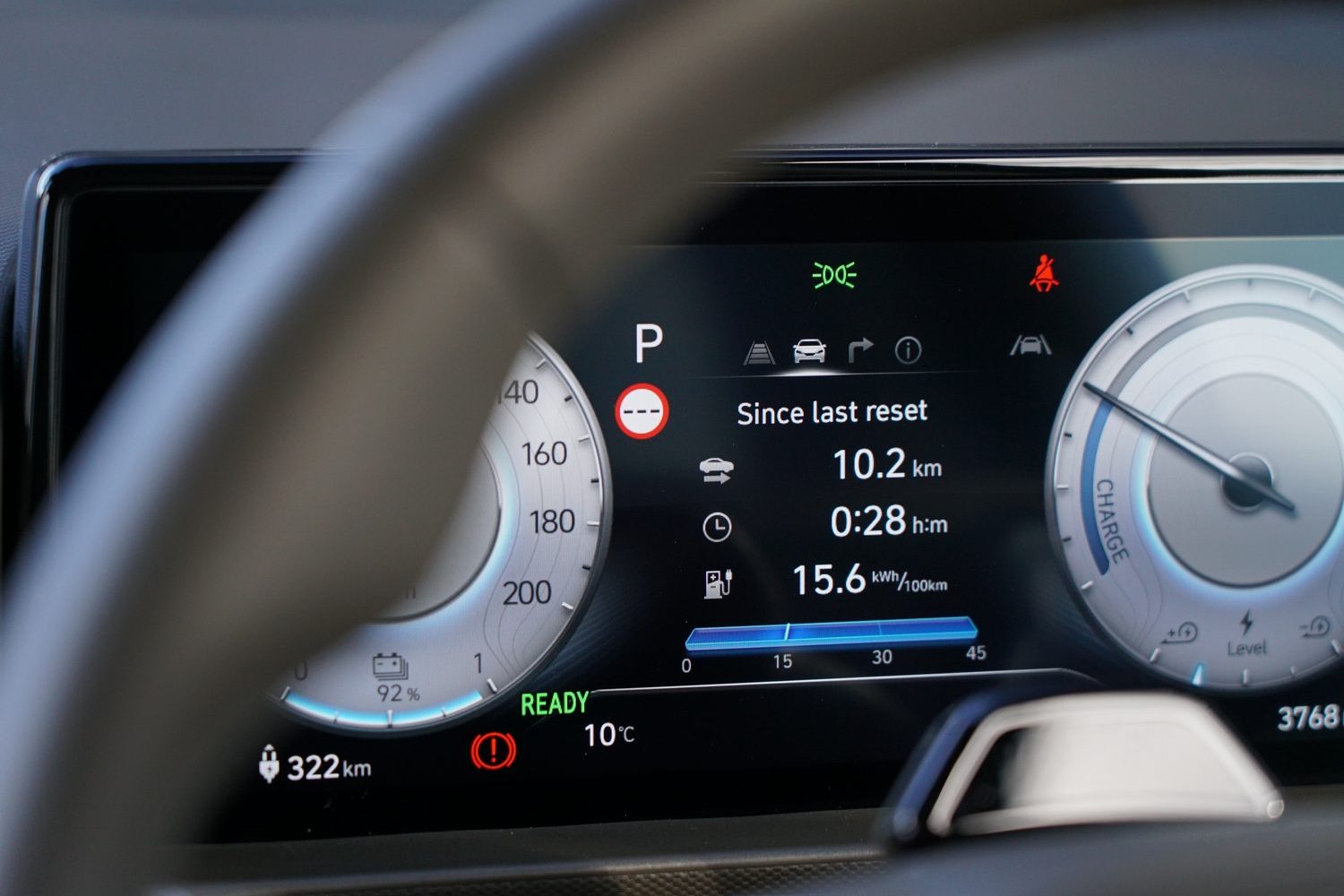
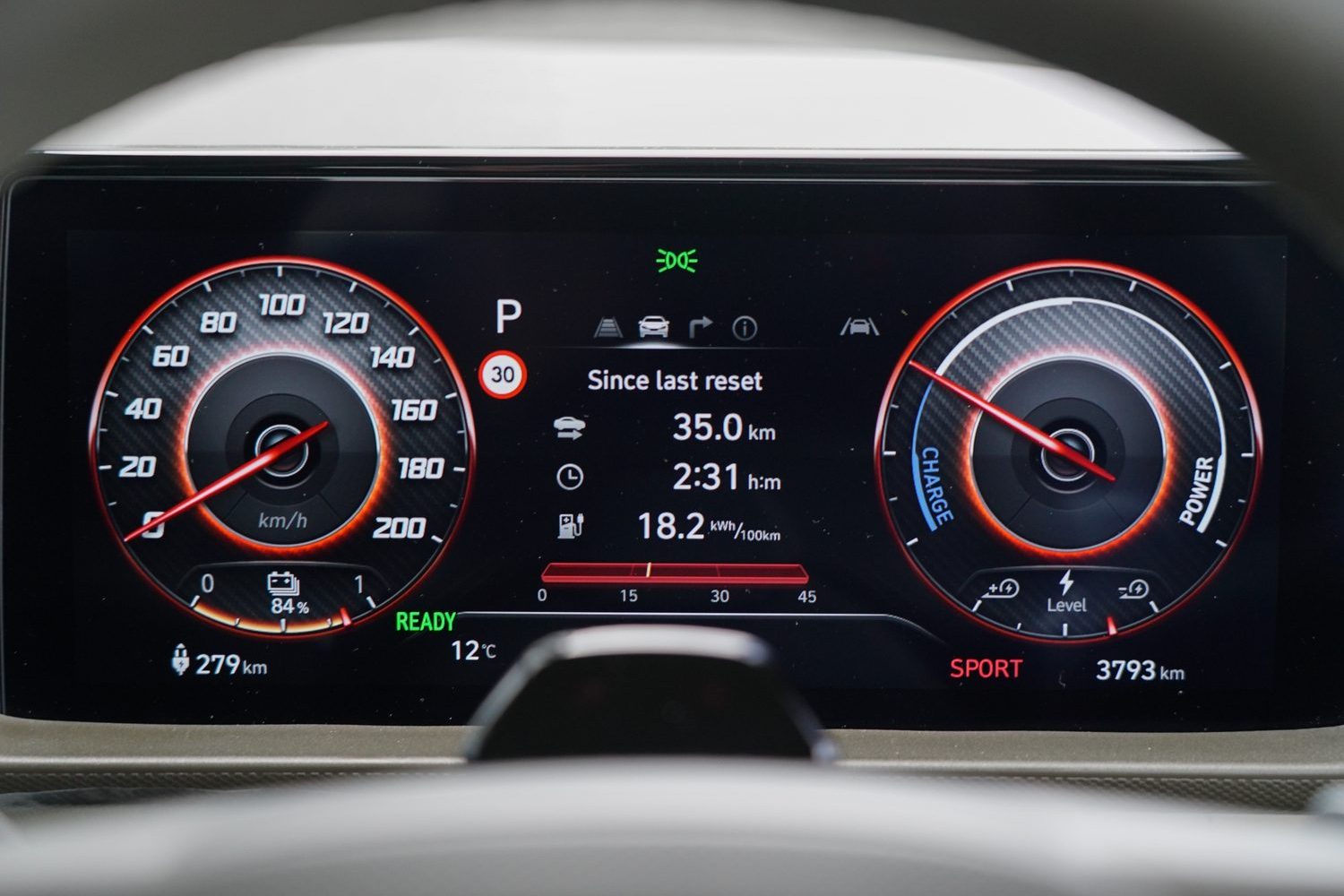
It was wrong. Very, very wrong. I'm happy to report that the Inster is one of the most efficient EVs I've ever driven, which is entirely in keeping with its size and weight. Officially, Hyundai quotes a range of 370km on a full charge, and 14.9kWh/100km energy consumption.
Now, usually, figures like that go right out the window when you start throwing long motorway runs into the equation, but - impressively - the Inster and its battery stepped up. Even with constant 120km/h running for much of the time, and with the air conditioning on, we managed to beat the WLTP rating and averaged 14.1kWh/100km.
Even allowing that might be a bit of a fluke, it seems like 320km at least is a reasonable touring radius for the Inster, meaning that it's more efficient, and about the same on useable range, as the Renault 5 E-Tech, in spite of the fact that the Renault's battery is slightly bigger.

Even if you're limited to public charging, the Inster is so efficient that most drivers would spend slightly less on charging than they would on petrol for a similarly sized car.
Of course, the Inster gets Hyundai's usual five-year unlimited mileage warranty, and the battery is separately warrantied for up to eight years or 160,000km. The main five-year warranty also includes five years of AA roadside recovery.
Verdict - should you buy the 2025 Hyundai Inster?

That's a huge yes from us. OK, so this version of the Inster isn't as arrestingly cheap as the entry-level model, but with its adjustable rear seats and extra range and power, the Elegance version becomes a car with a much greater bandwidth of skills and abilities. It's nippy to drive, hugely efficient even when on long motorway runs, cheap to own and run, looks cool and is wonderfully functional inside.
FAQs about the 2025 Hyundai Inster
Is the Hyundai Inster a good car?
Yes, it's really good. It has excellent one-charge range, is affordable to buy and run, has a versatile interior and it's well-made. Hard to beat, really.
How long does it take to charge a Hyundai Inster?
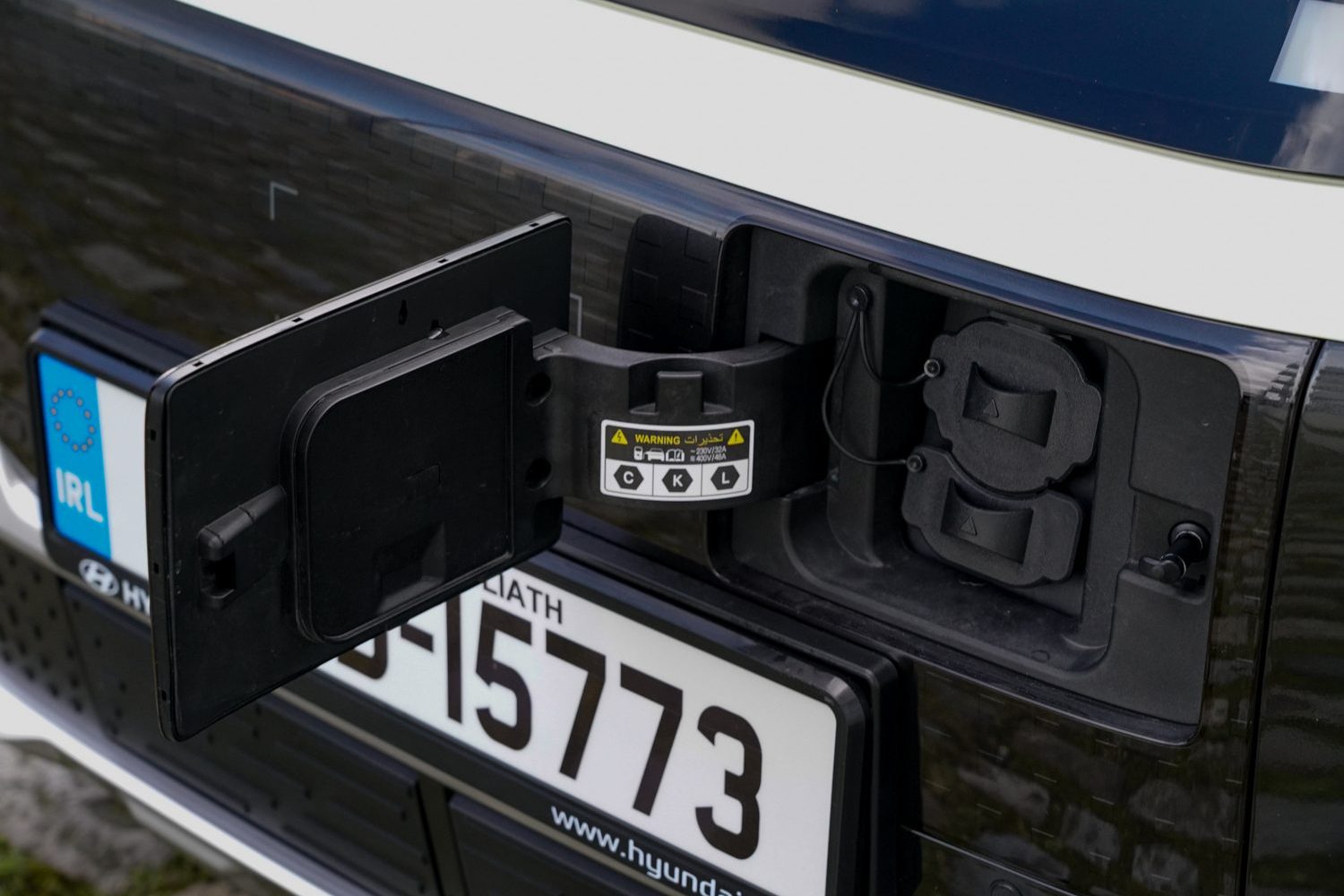
With an 85kW DC-charging speed for the Elegance model, the Inster will take about 30 minutes to do a 10-80 per cent charge on a high-speed charging point. At home, on a 7.4kW wallbox, a 0-100 per cent charge will take about six hours and 40 minutes.
Does the Hyundai Inster have heated seats?
Yes, the Inster has heated front seats as standard across the range.
How many ISOFIX points are in a Hyundai Inster?

Just the two, in the back seats. There's no ISOFIX point in the front passenger seat, although you could fit a seat there using the seatbelt. Bear in mind that there are only two seatbelts in the back of this car.
What is the safety rating of the Hyundai Inster
The Inster has received a four-star safety rating from Euro NCAP, which is impressive for such a small, affordable car. It achieved a 70 per cent score for adult occupant protection, which is a little low, but its child occupant rating of 81 per cent is very good. You can read the full Euro NCAP report here.
Want to know more about the Hyundai Inster?
If there's anything about the Hyundai Inster we've not covered, or you'd like help in choosing between it and other cars, you can avail of our expert advice service via the Ask Us Anything page.