
Introduction to the 2026 Honda Prelude
Honda has regularly done things its own way through the years and so it is again with the sixth-generation Prelude, a wonderfully stylish, relatively simple sports coupe in an era dominated by SUVs.

Pros & cons of the 2026 Honda Prelude
Pros:
• Great exterior design
• Remarkably efficient
• Agile and light-feeling
Cons:
• Not very powerful
• Tiny rear seats
• Digital interface needs work
Exterior & design of the 2026 Honda Prelude
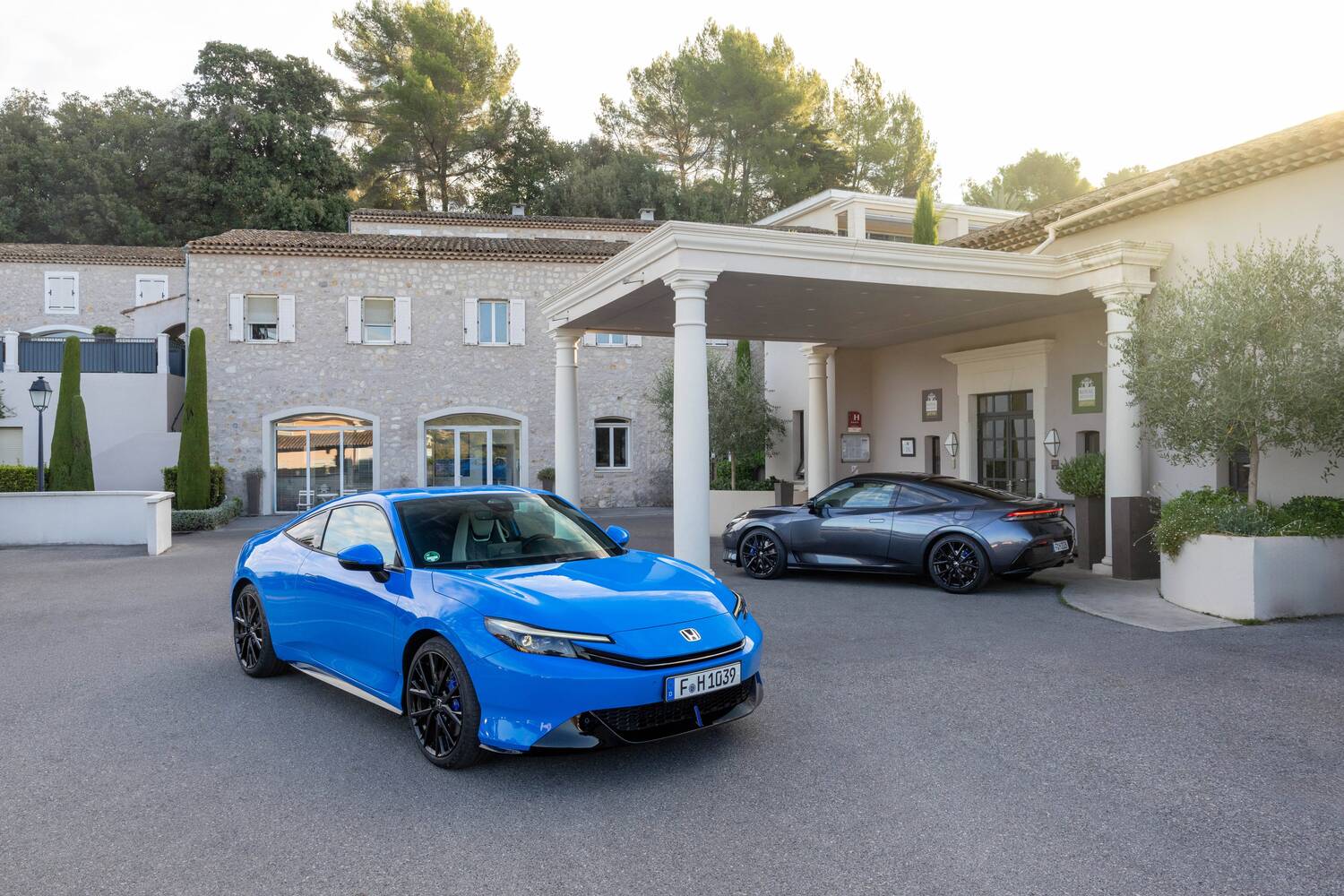
• Cool two-door coupe shape
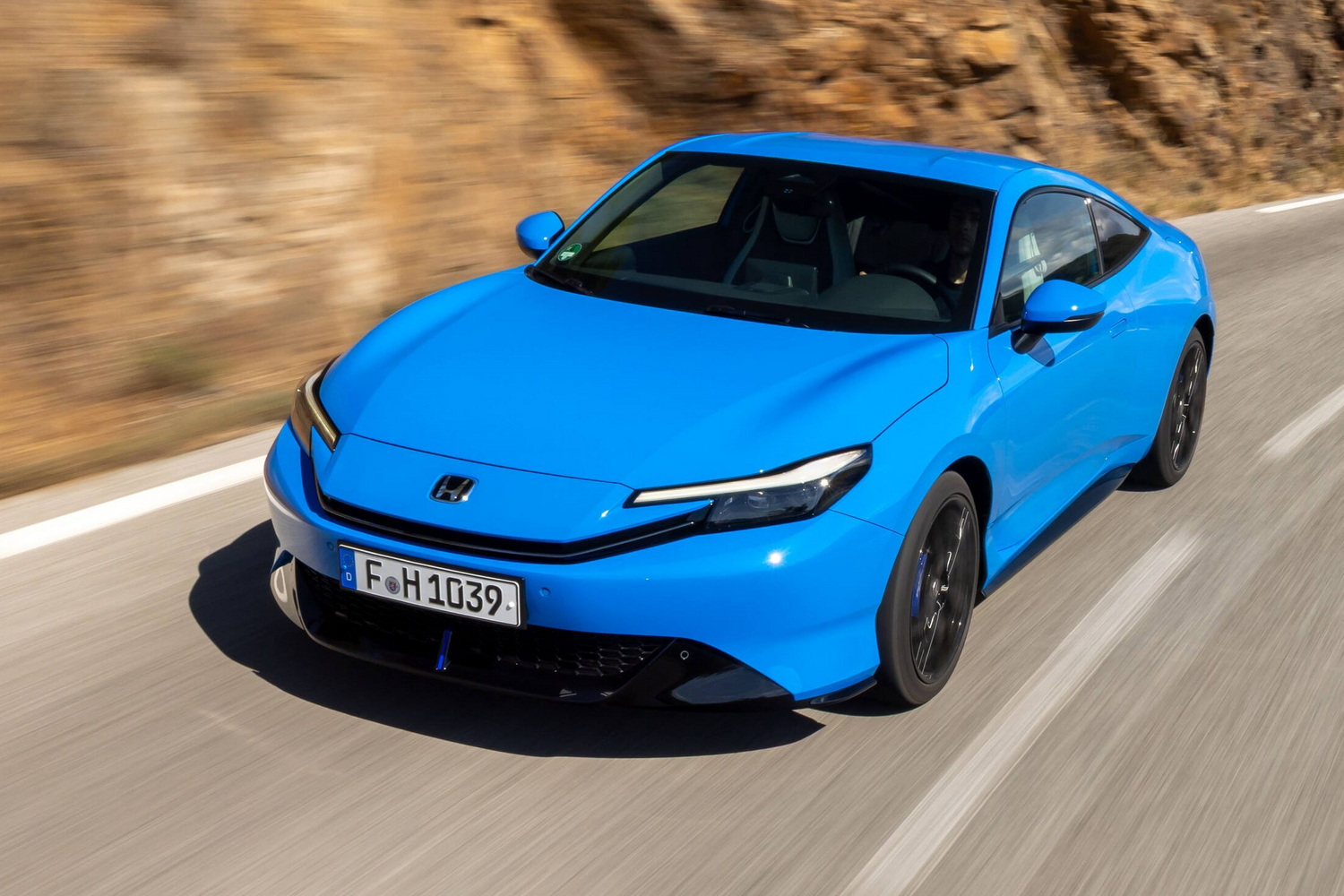
• Blue 'hero' colour a triumph
• Works well with black wheels

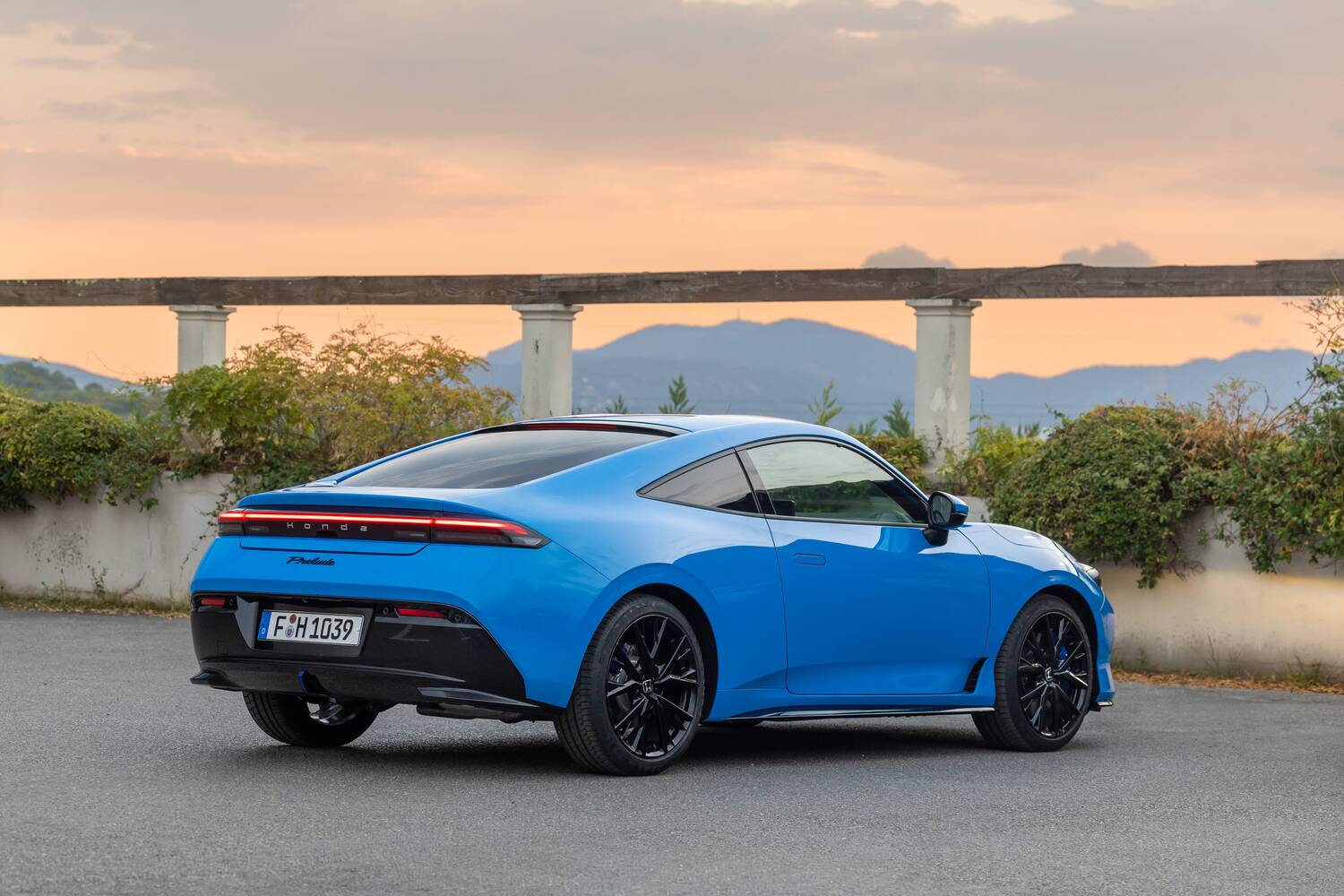
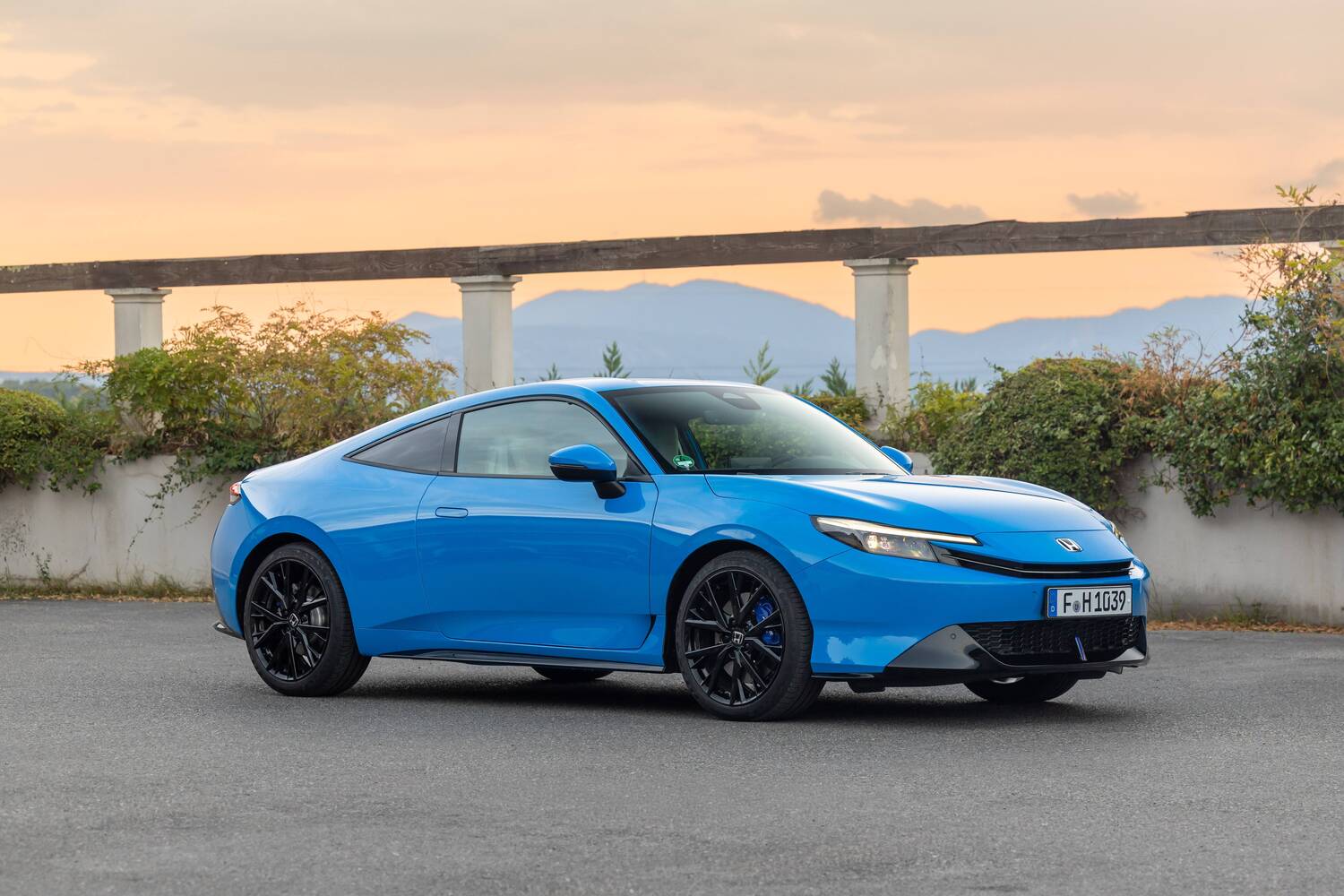
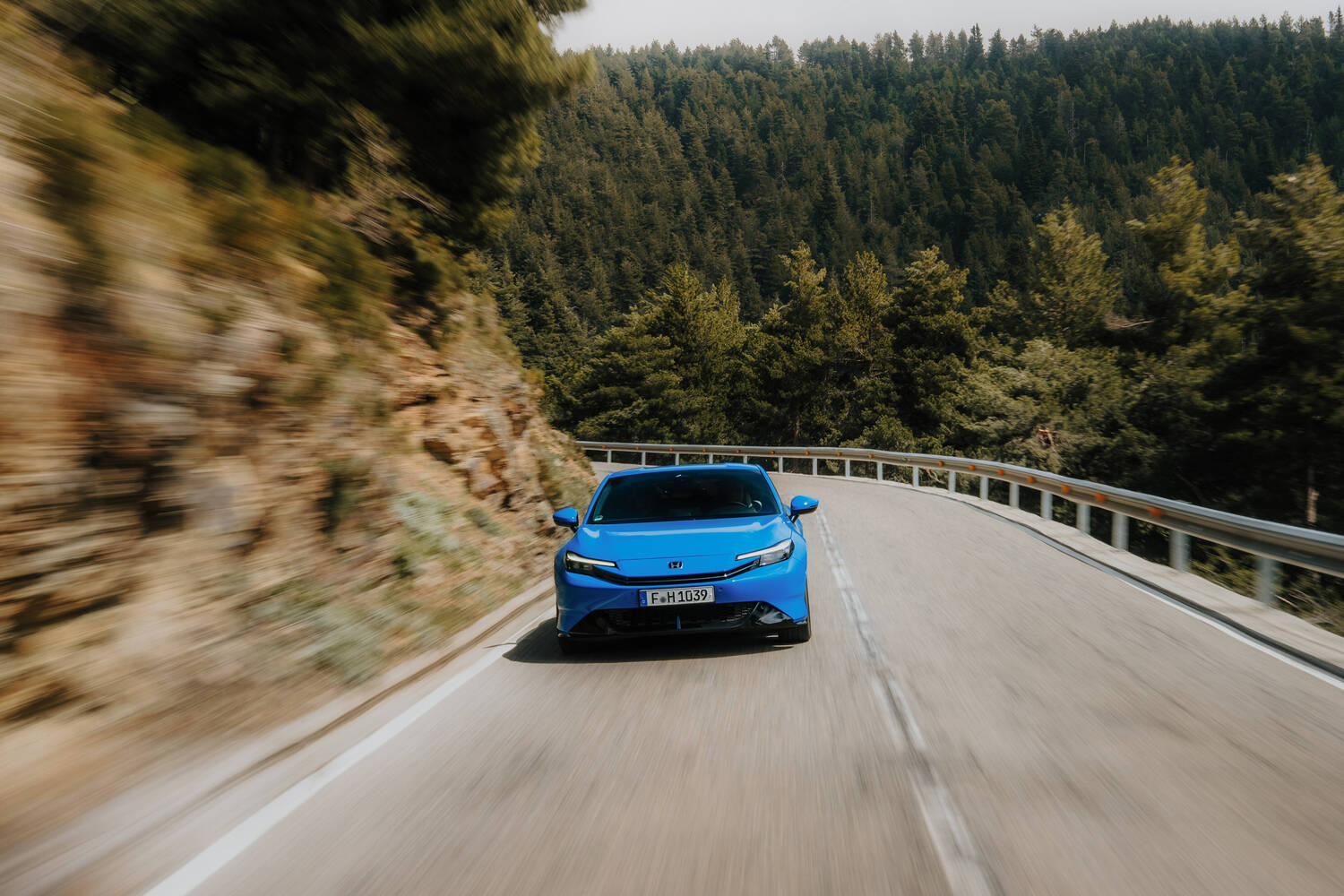
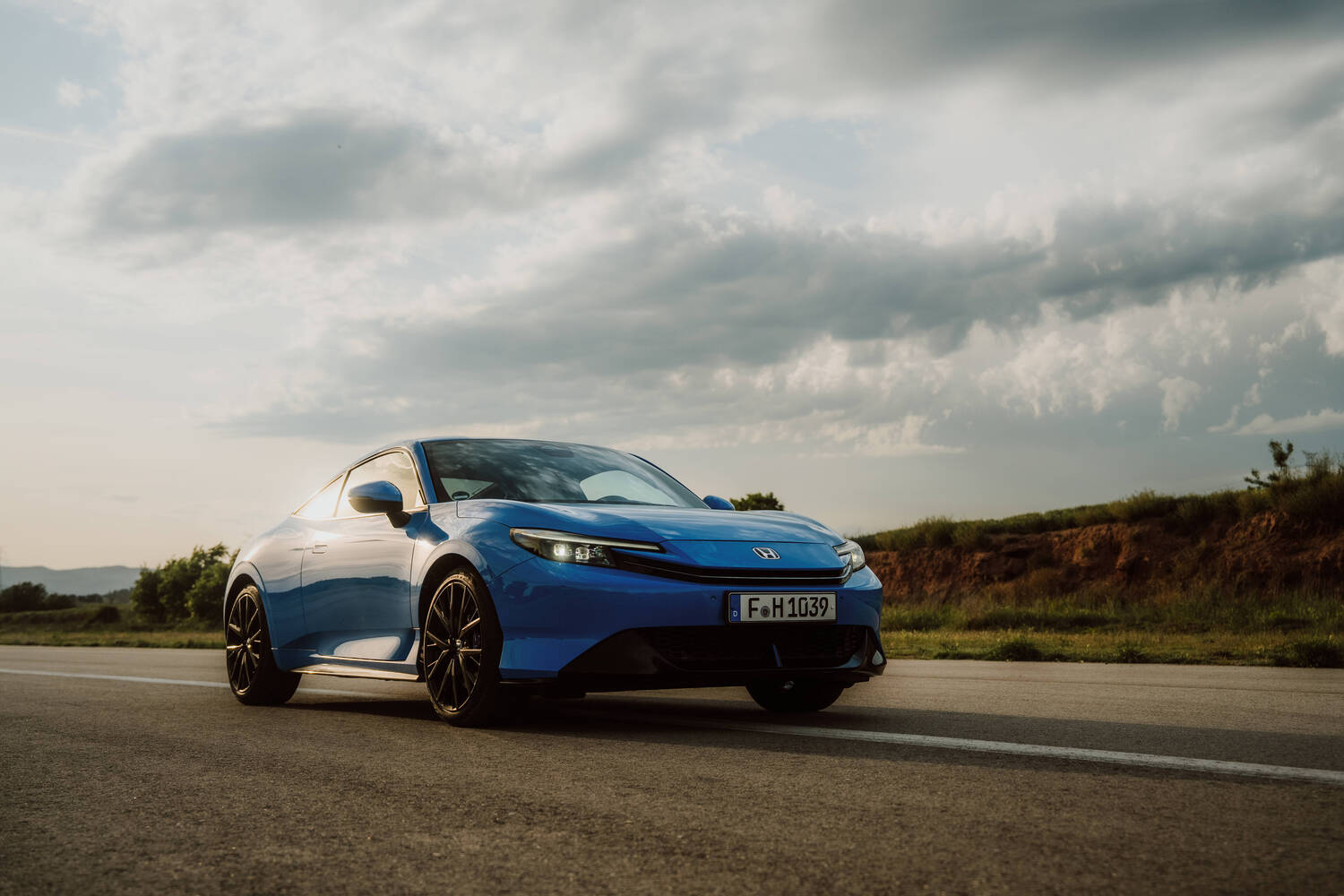
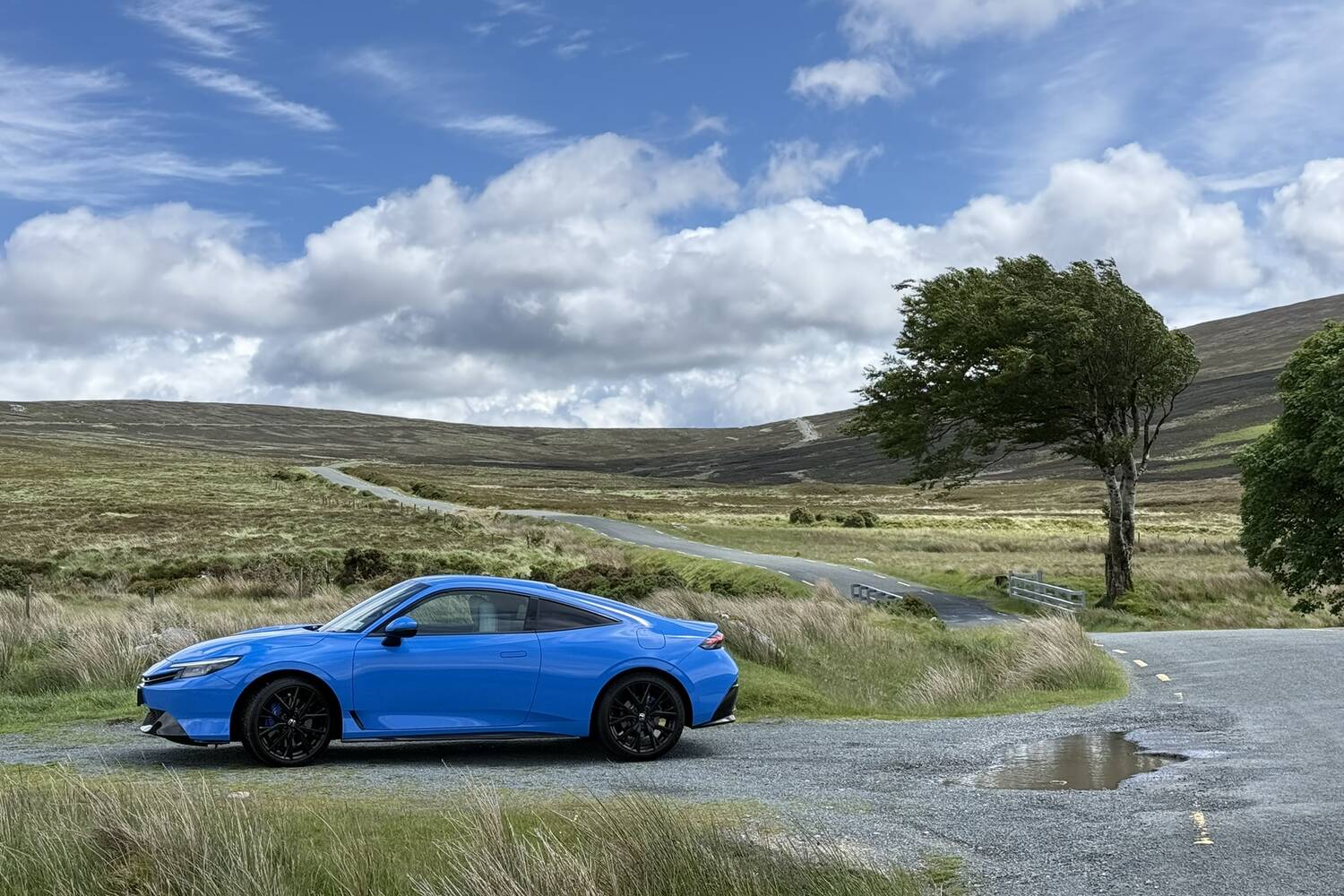
Honda tells us that the design of the Prelude was inspired by that of modern gliders, but we don't care where it took its influences, as the end result is stunning.
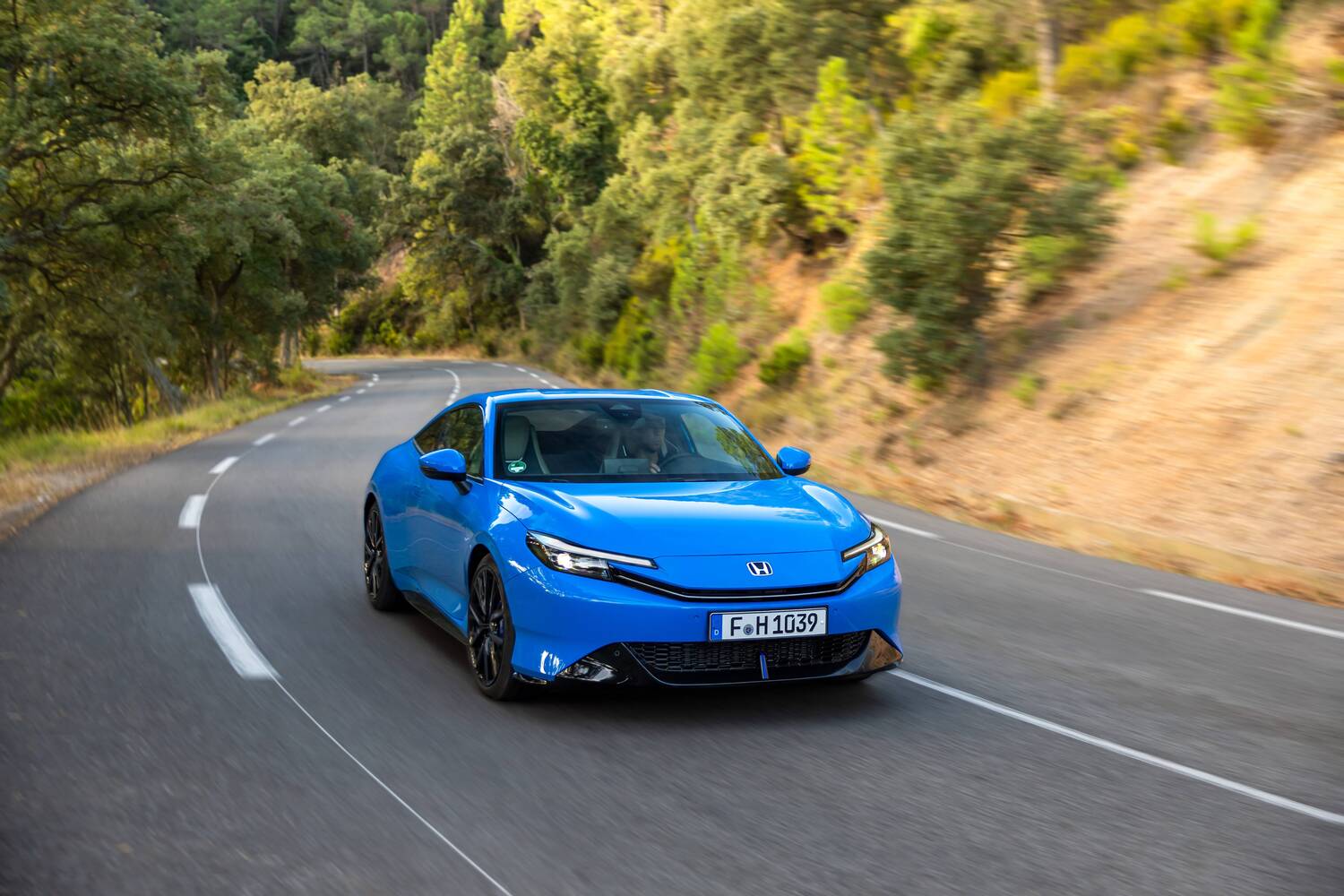
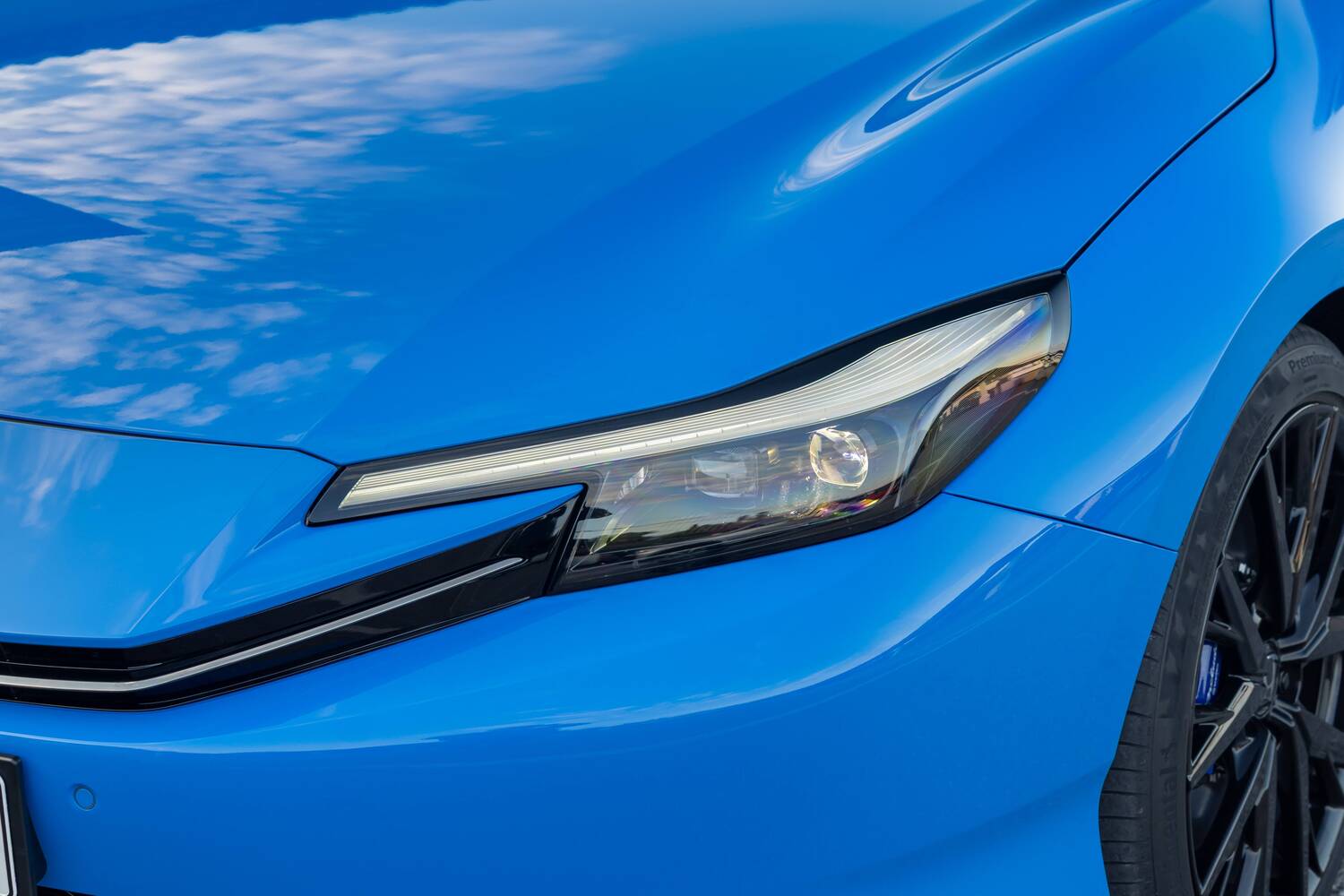
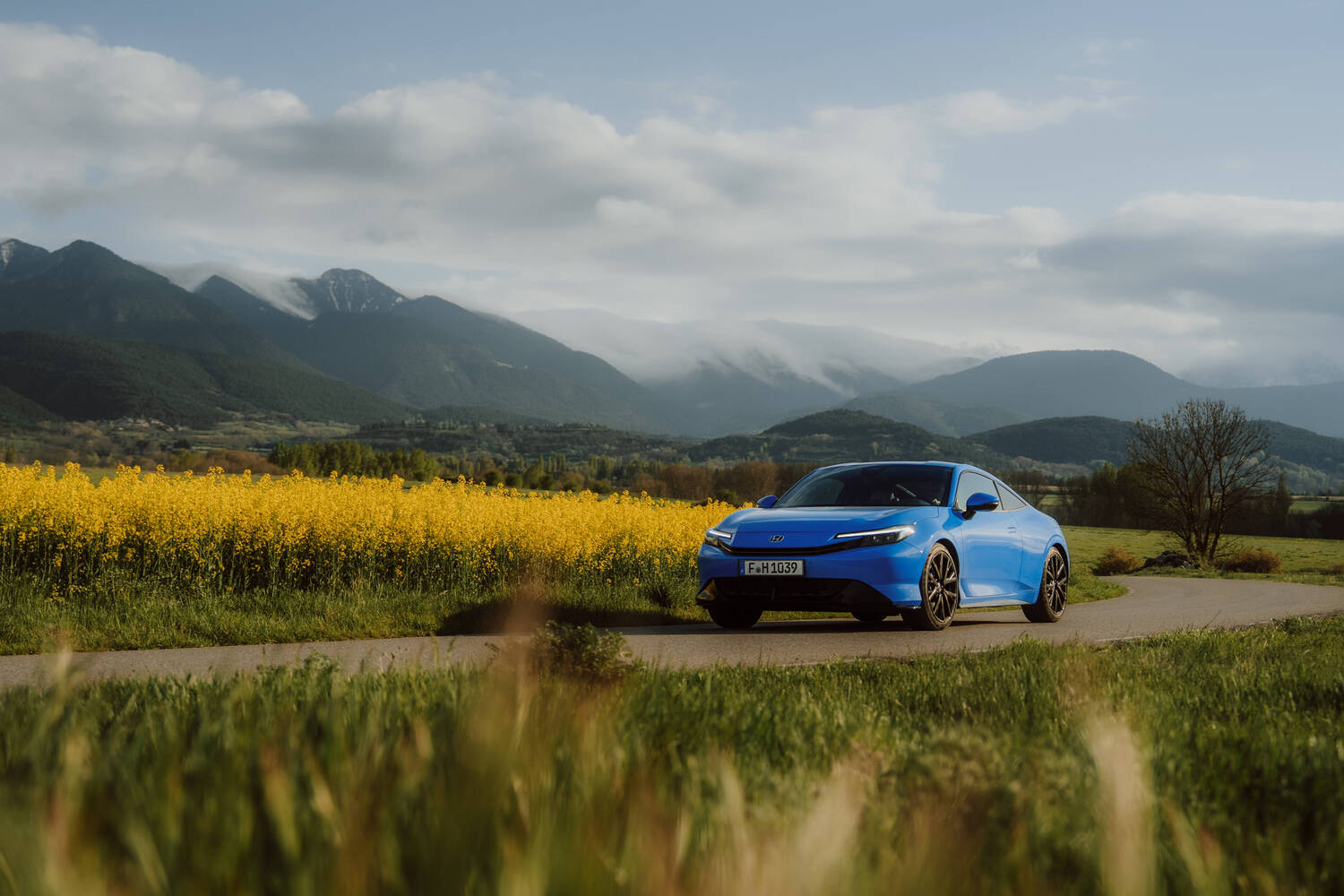
The Prelude is impossibly low, emphasising its wide stance, and relatively unadorned. Up front, there's a vaguely familial look with a protruding centre section, large lower air inlet and sharp LED daytime running lights, but it's from the windscreen back that it gets interesting.
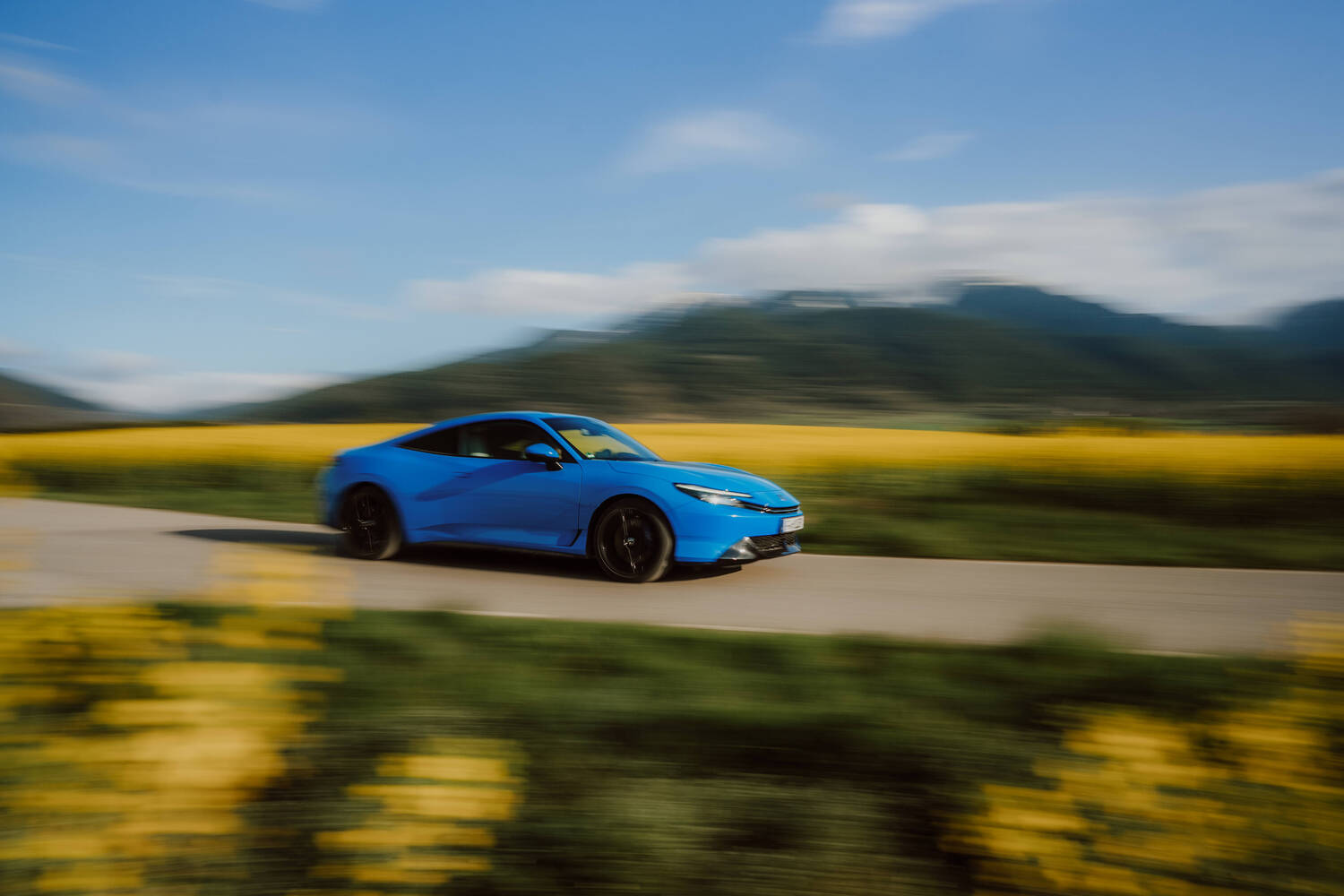
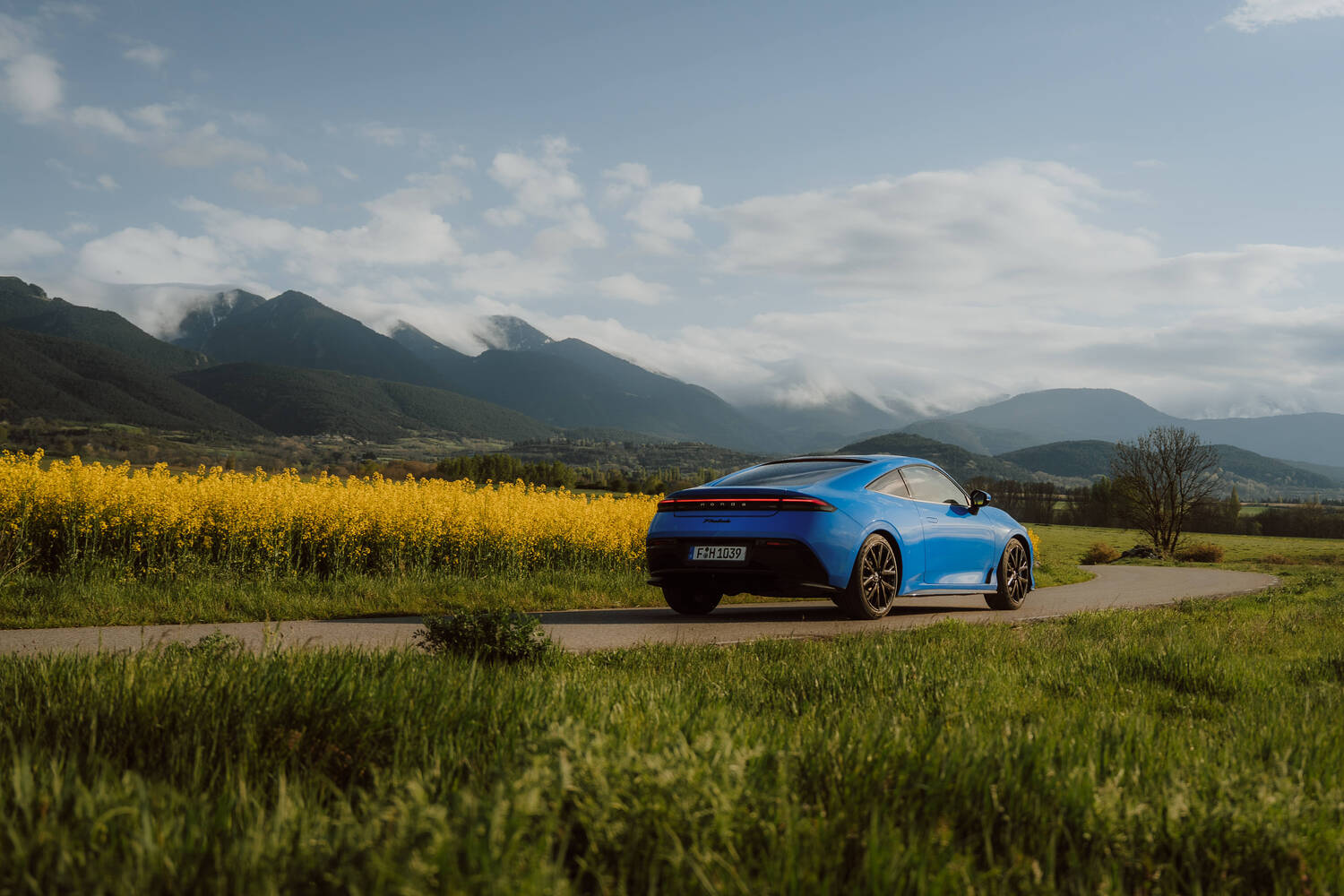
A double-bubble roof is employed, for example, harking back to Italian sports cars of yesteryear, and the side profile shows just how raked the rear of the Prelude is.

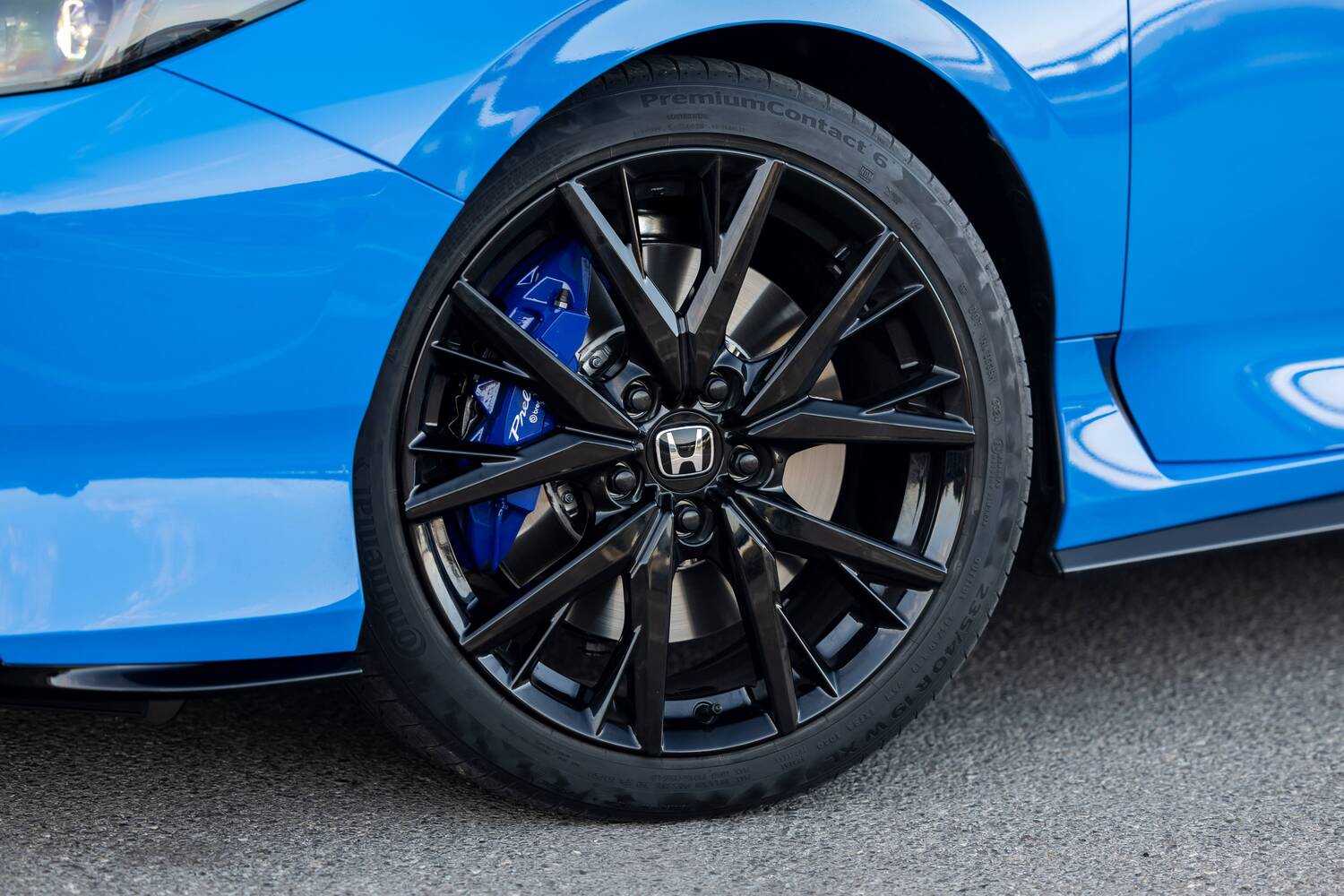
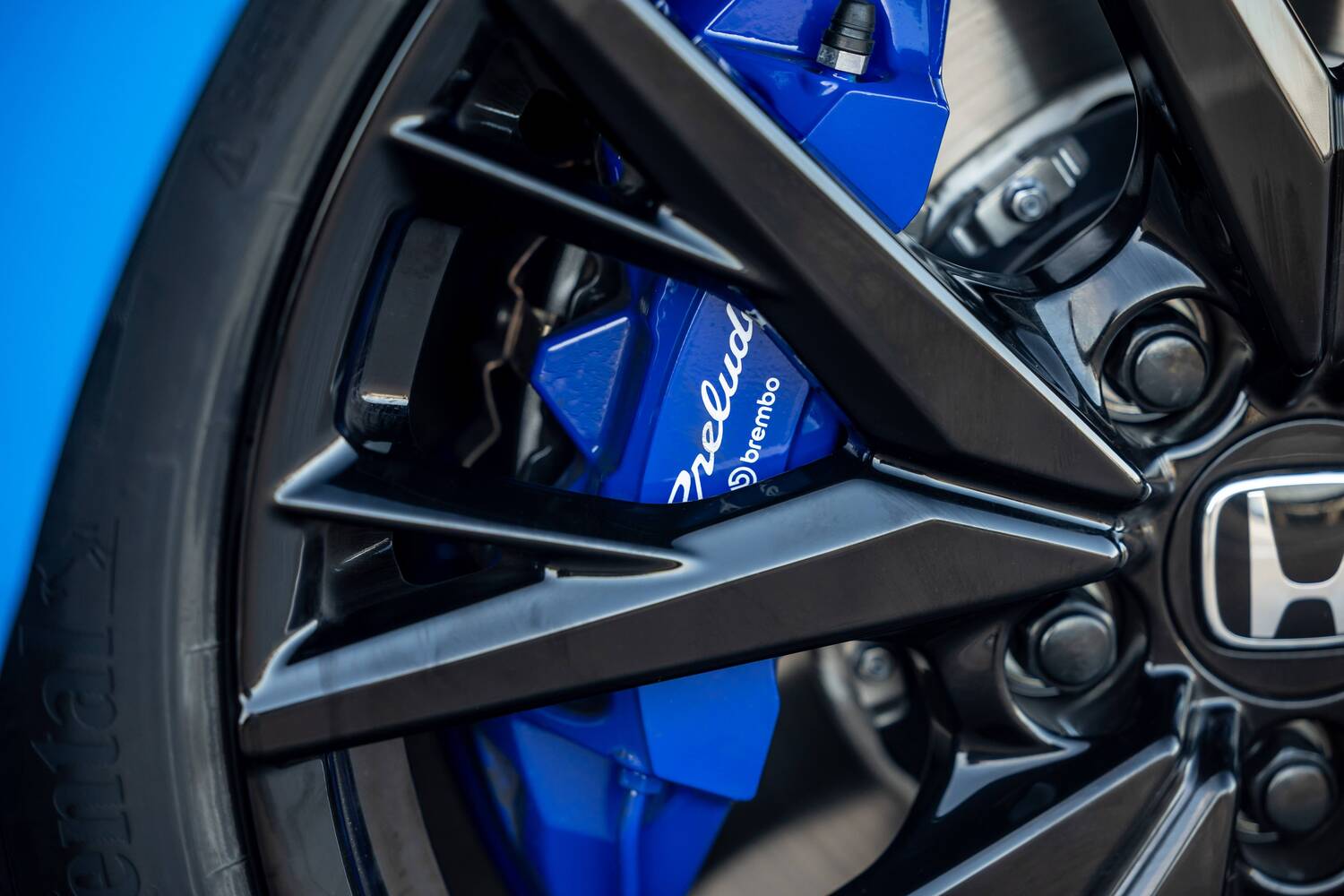
Pop-out door handles smoothen off the side, though vents low down and aft of the front wheels give it a technical detail, while the dark 19-inch alloys fill the arches convincingly - and we love the bright blue Brembo brake callipers with Prelude branding.
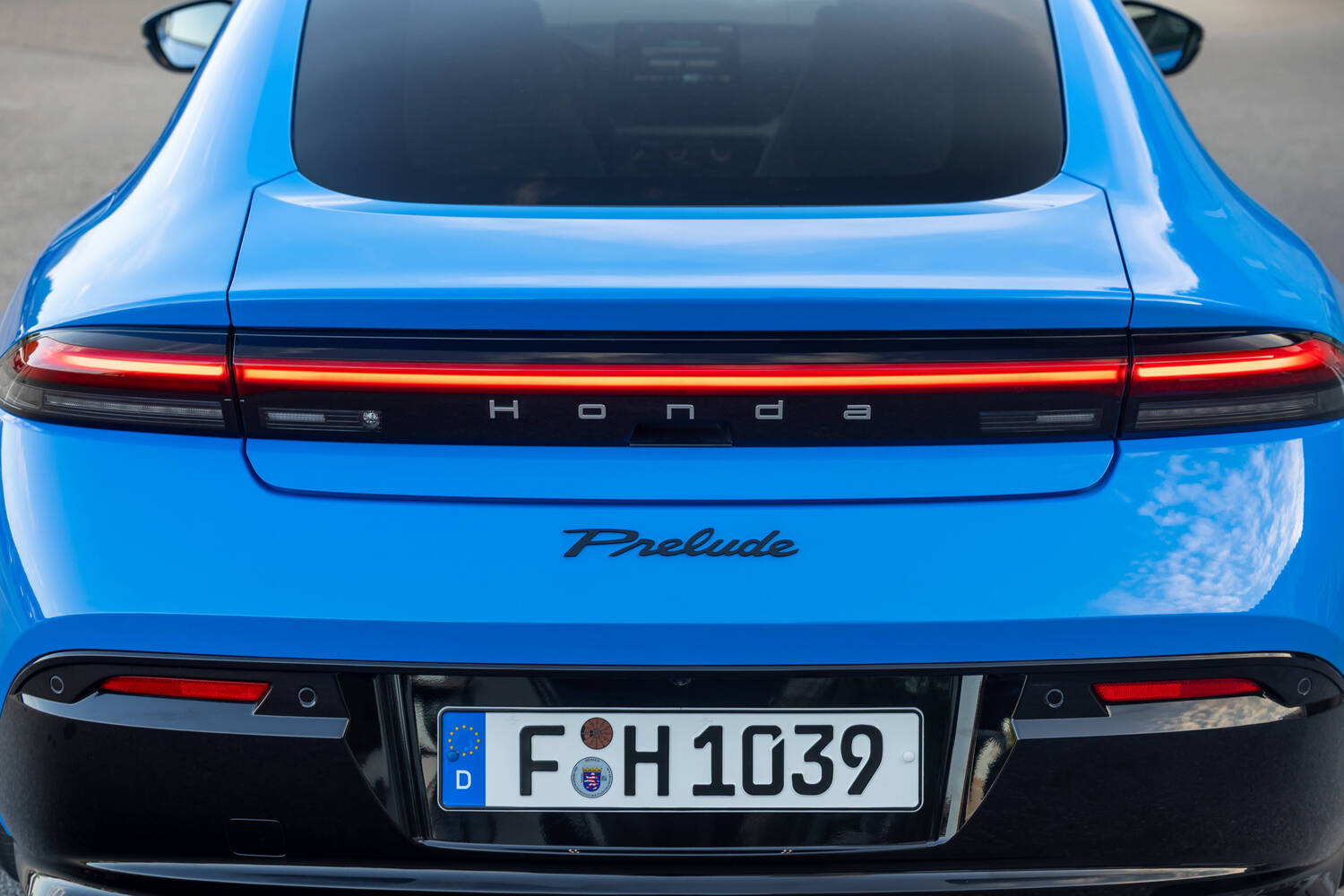
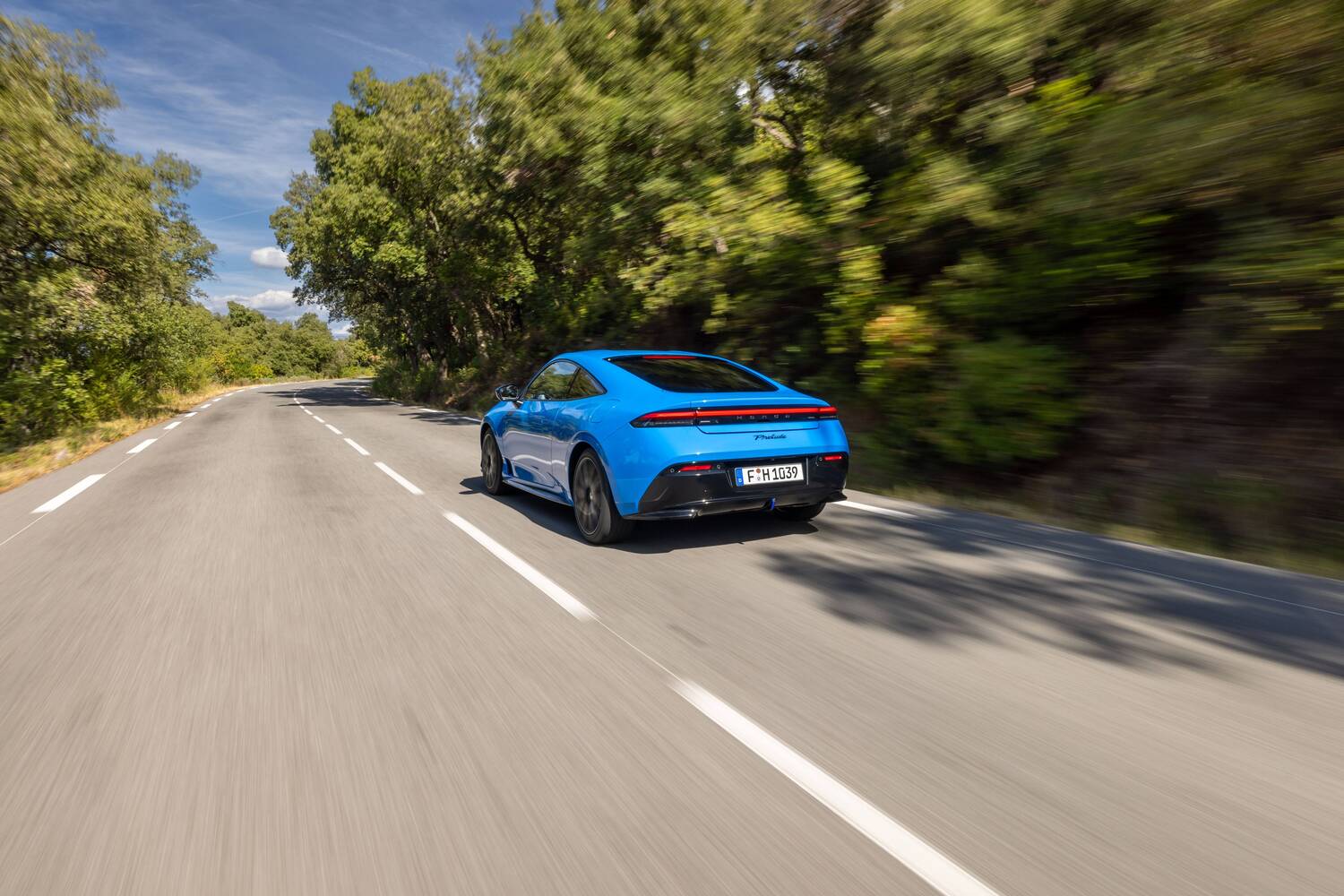
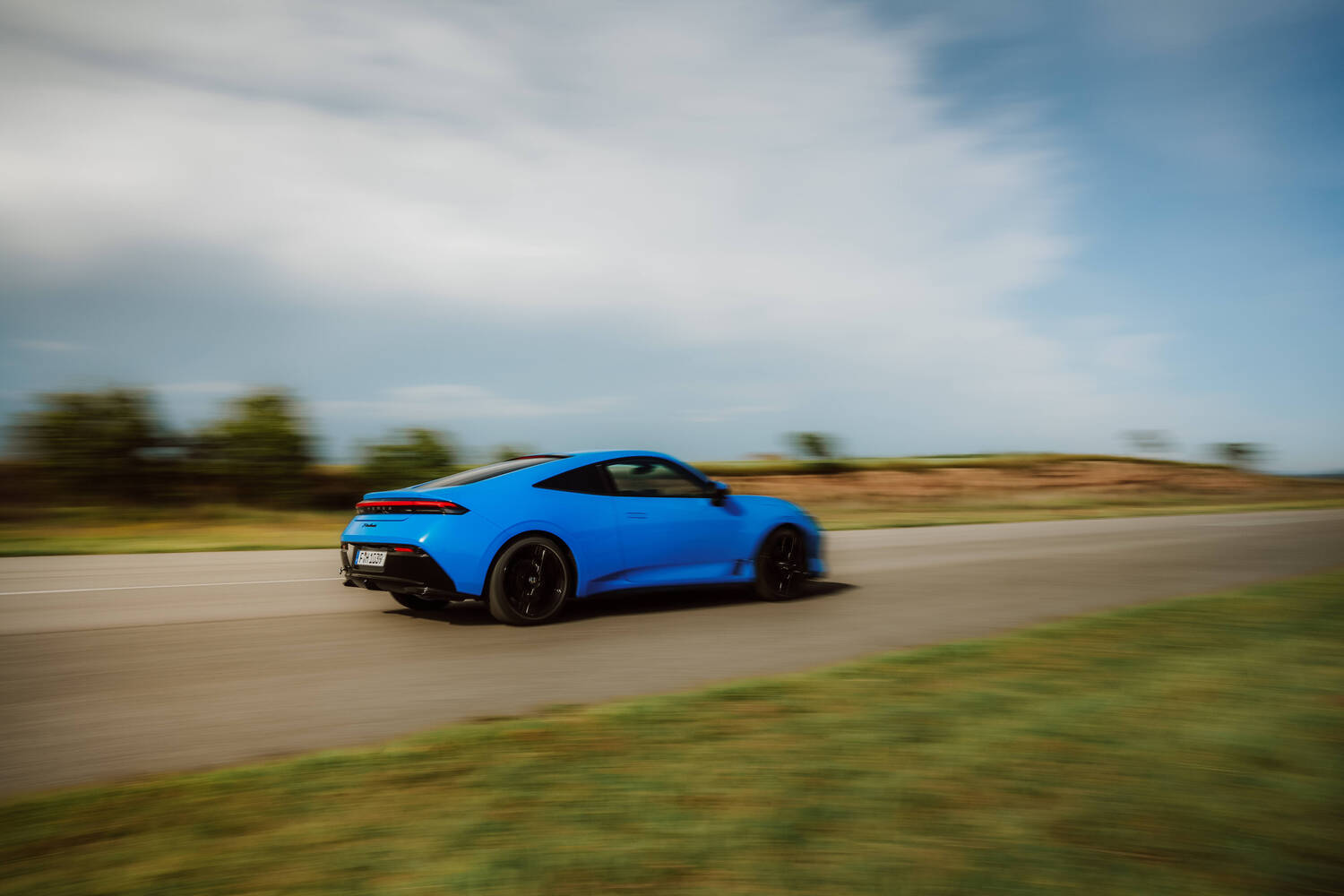
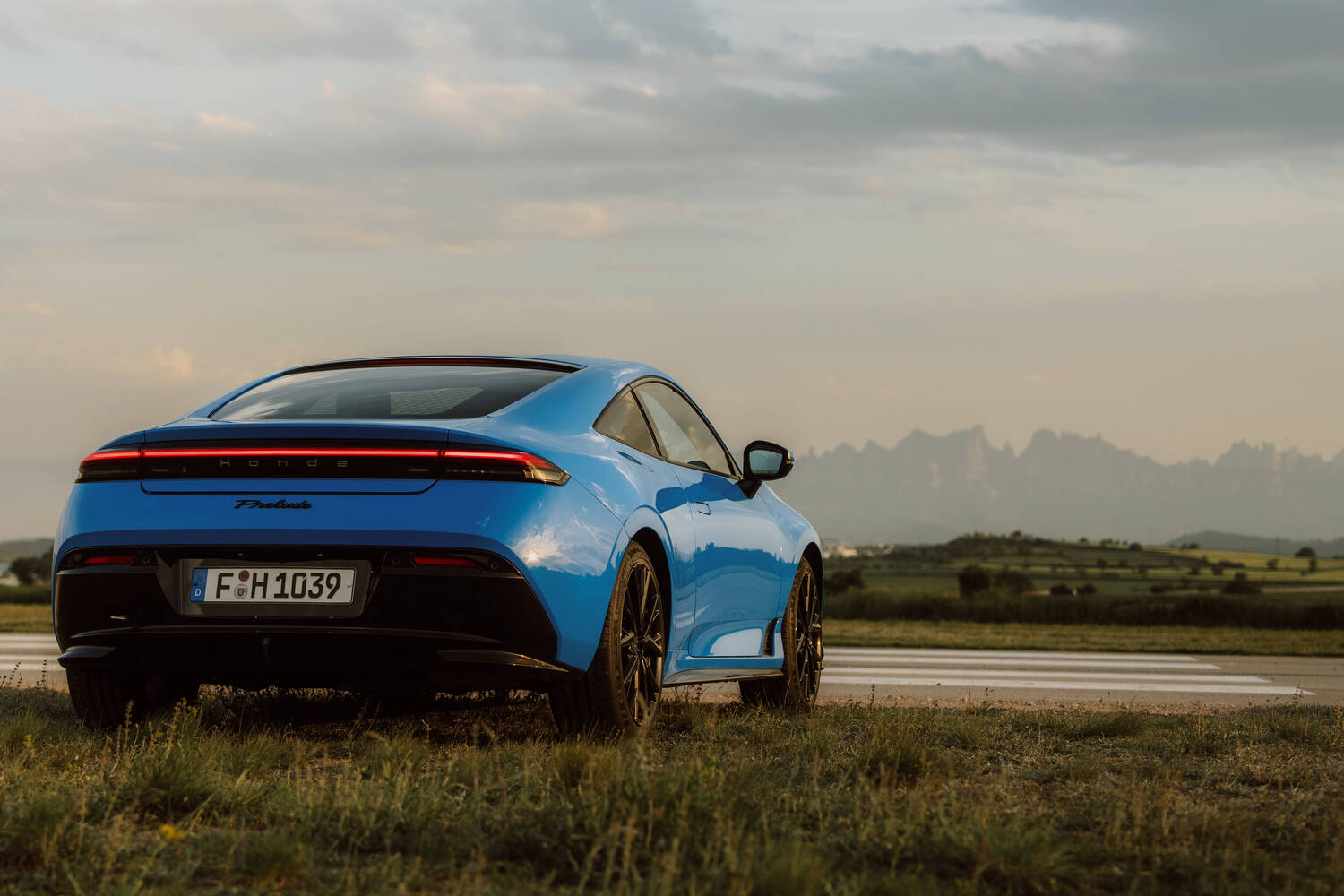
The roof neatly interfaces with the rear window and tailgate, falling to the stylish full-width rear lighting with a 'Honda' wordmark right below it and the distinctive 'Prelude' script on the car's body work.
Breaking up the expanse of body colour at the rear is a dark lower section, again adding a technical edge to proceedings.

What you can't see are hidden aerodynamic features underneath to reduce lift and obviate the need for add-on spoilers, helping maintain a clean, simple shape.
Dimensions of the 2026 Honda Prelude
Length: 4,525mm
Width: 1,880mm (excluding mirrors)
Height: 1,349mm
Wheelbase: 2,604mm
Paint colours for the 2026 Honda Prelude

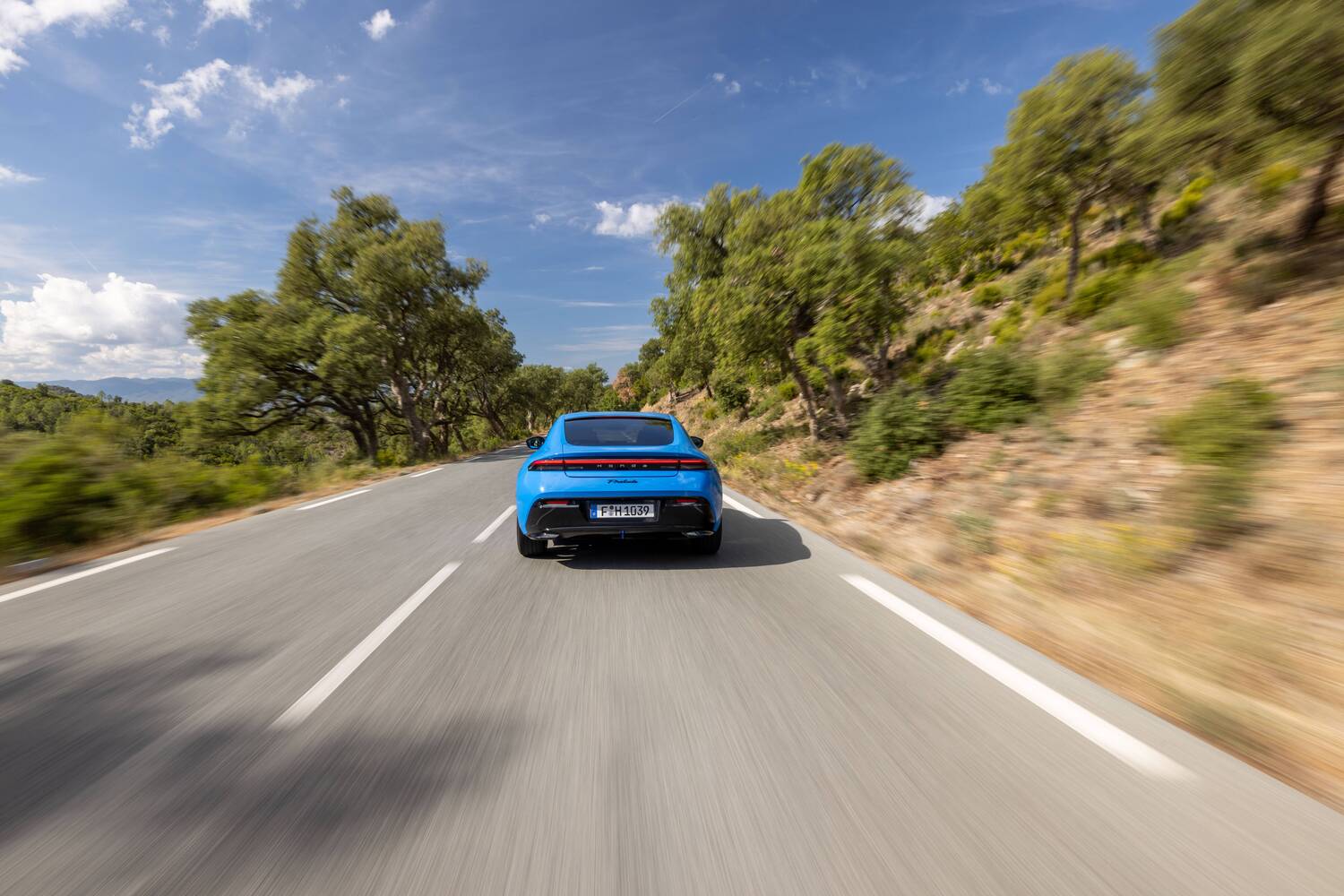
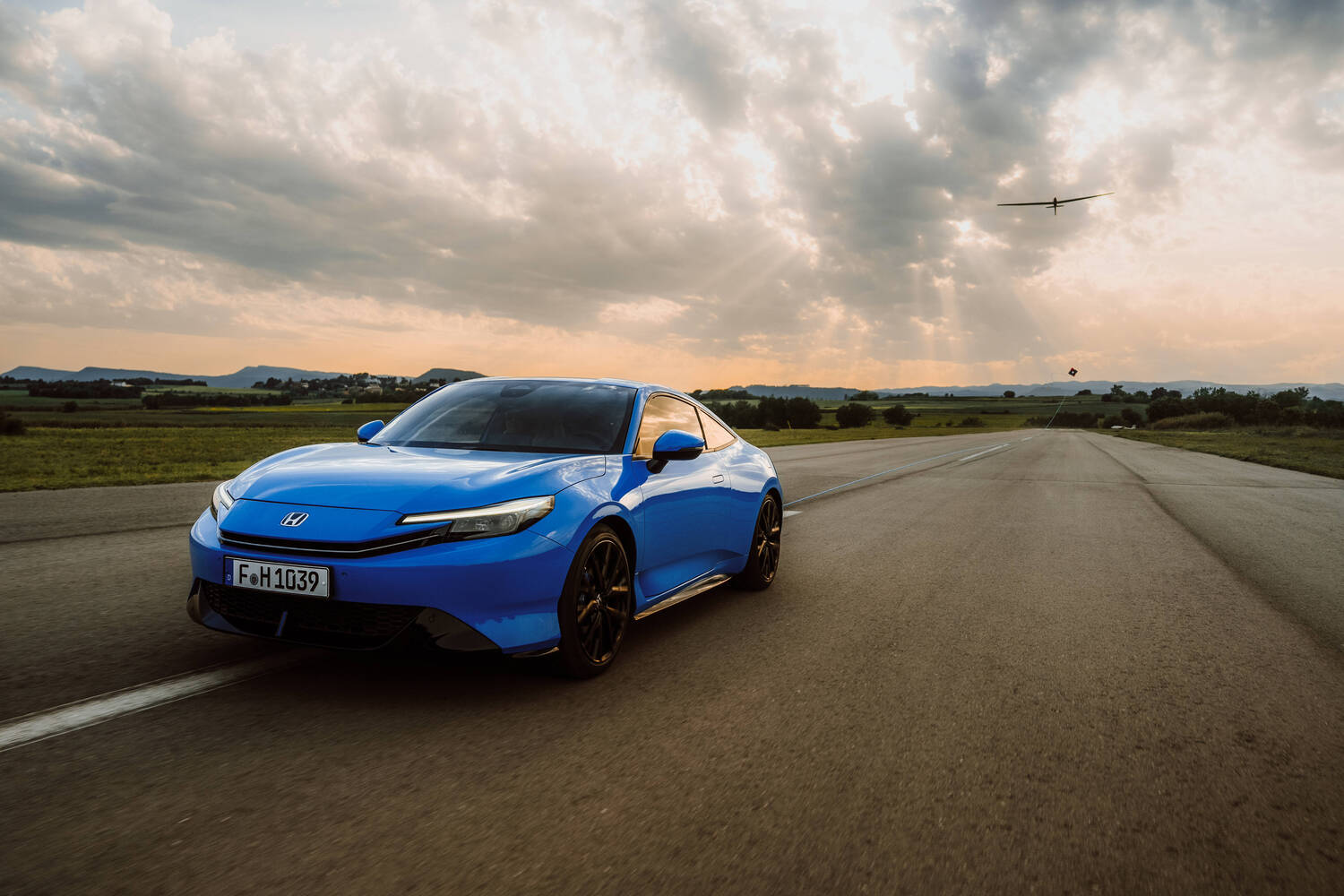
Pictured here is Racing Blue Pearl, the brightest paint colour available for the Prelude. Buyers can choose from just three other hues: Meteoroid Grey Metallic, Crystal Black Pearl and Moonlit White Pearl.
Interior, practicality, tech & comfort of the 2026 Honda Prelude
• Low-set driving position
• Two (small) seats in back
• Menu system not great

It's a little surprising - and a tiny bit disappointing - that the glass on the doors isn't frameless, as this would really enhance the coupe feel every time you get in.
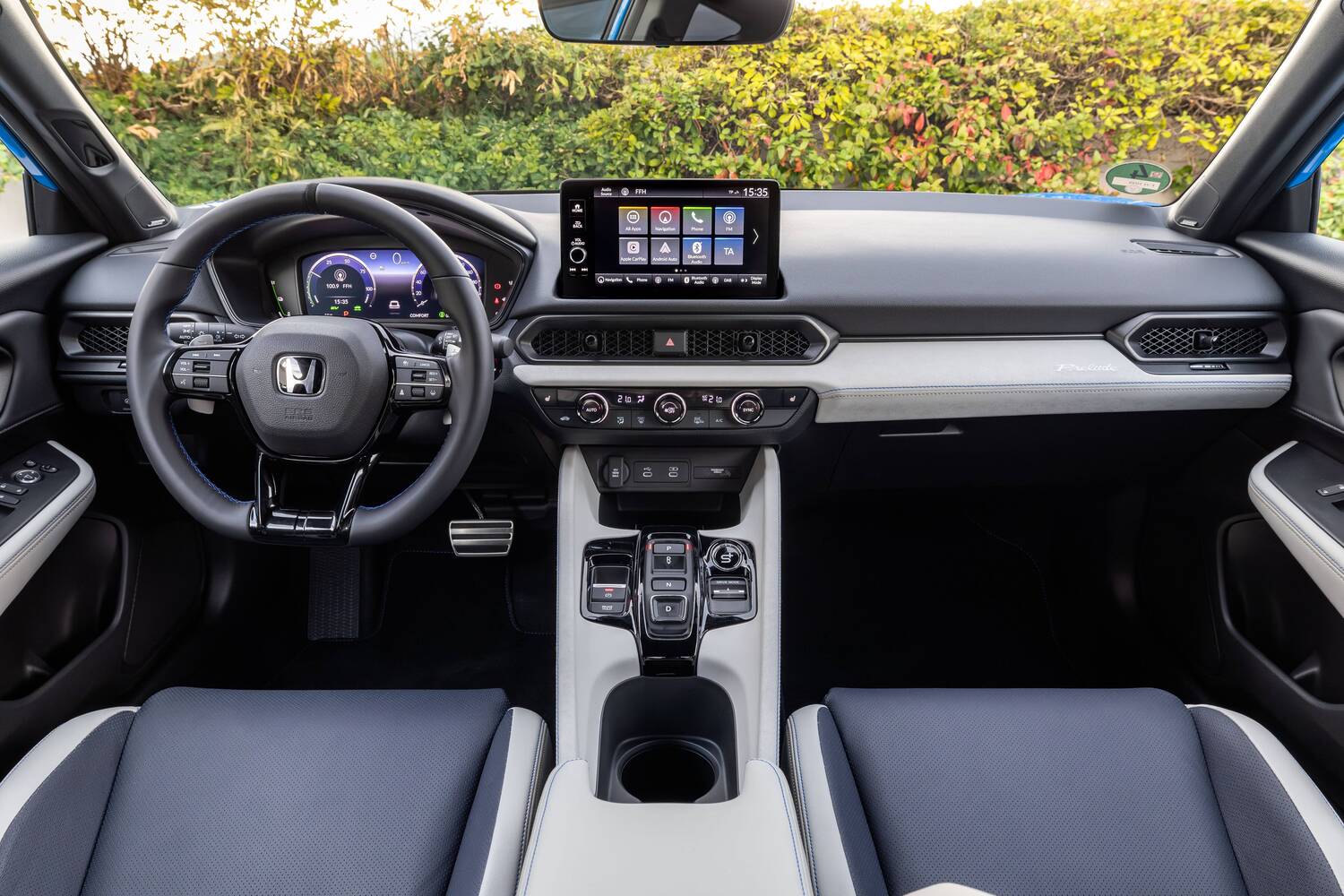
Still, Honda has done a decent enough job on the Prelude's cabin, mixing modern infotainment with plenty of physical switchgear and a sense that it's not just a two-door Civic.

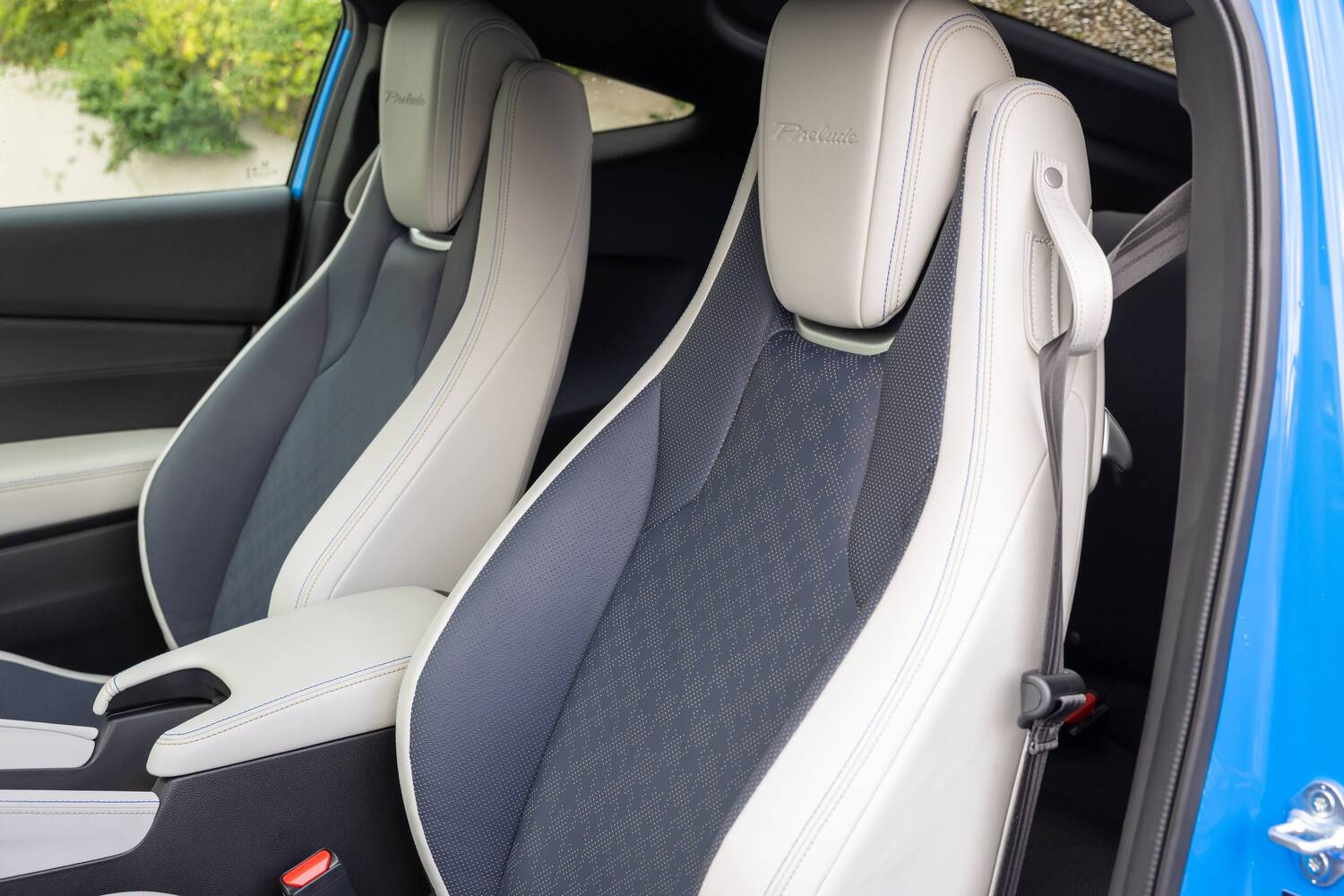
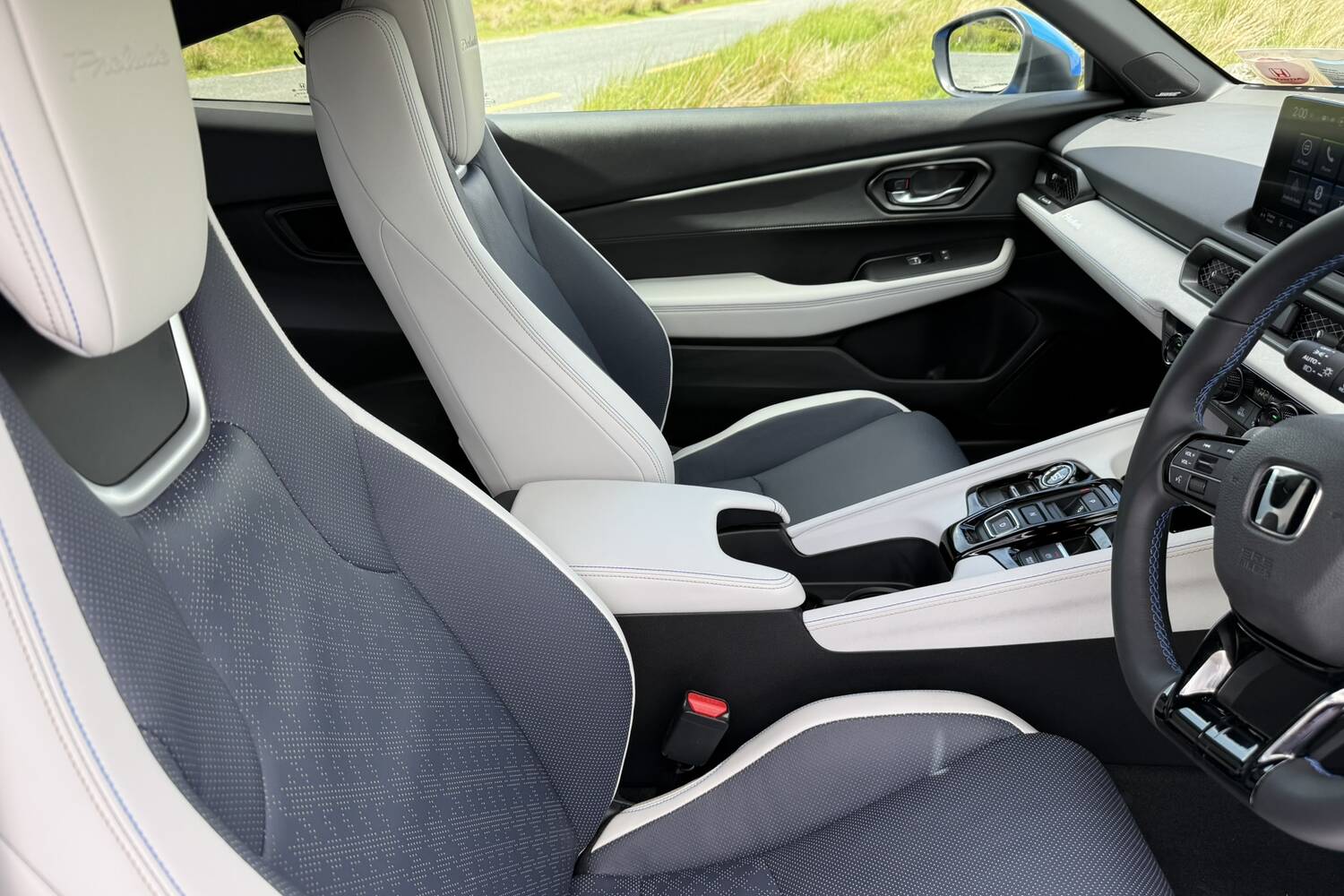
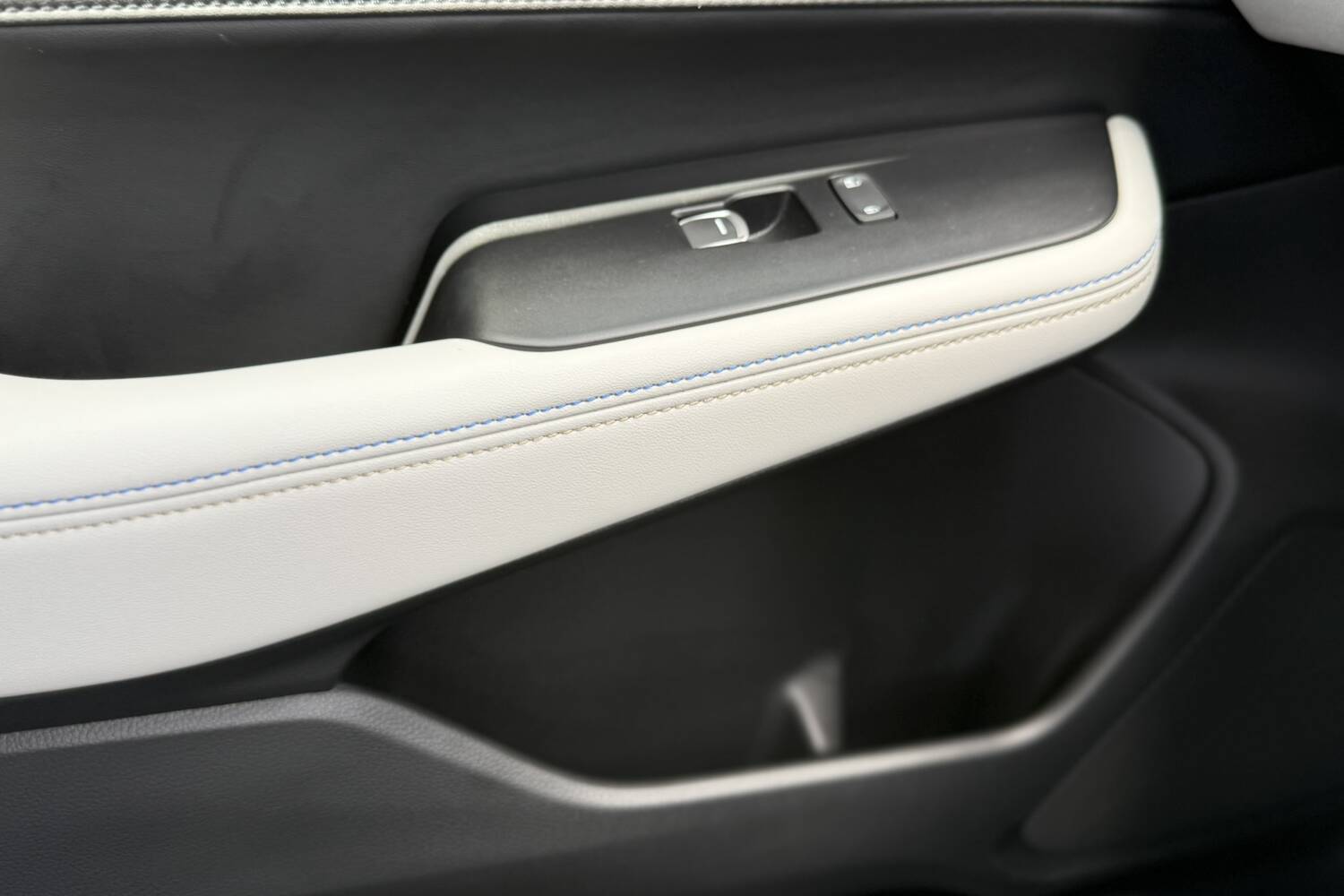
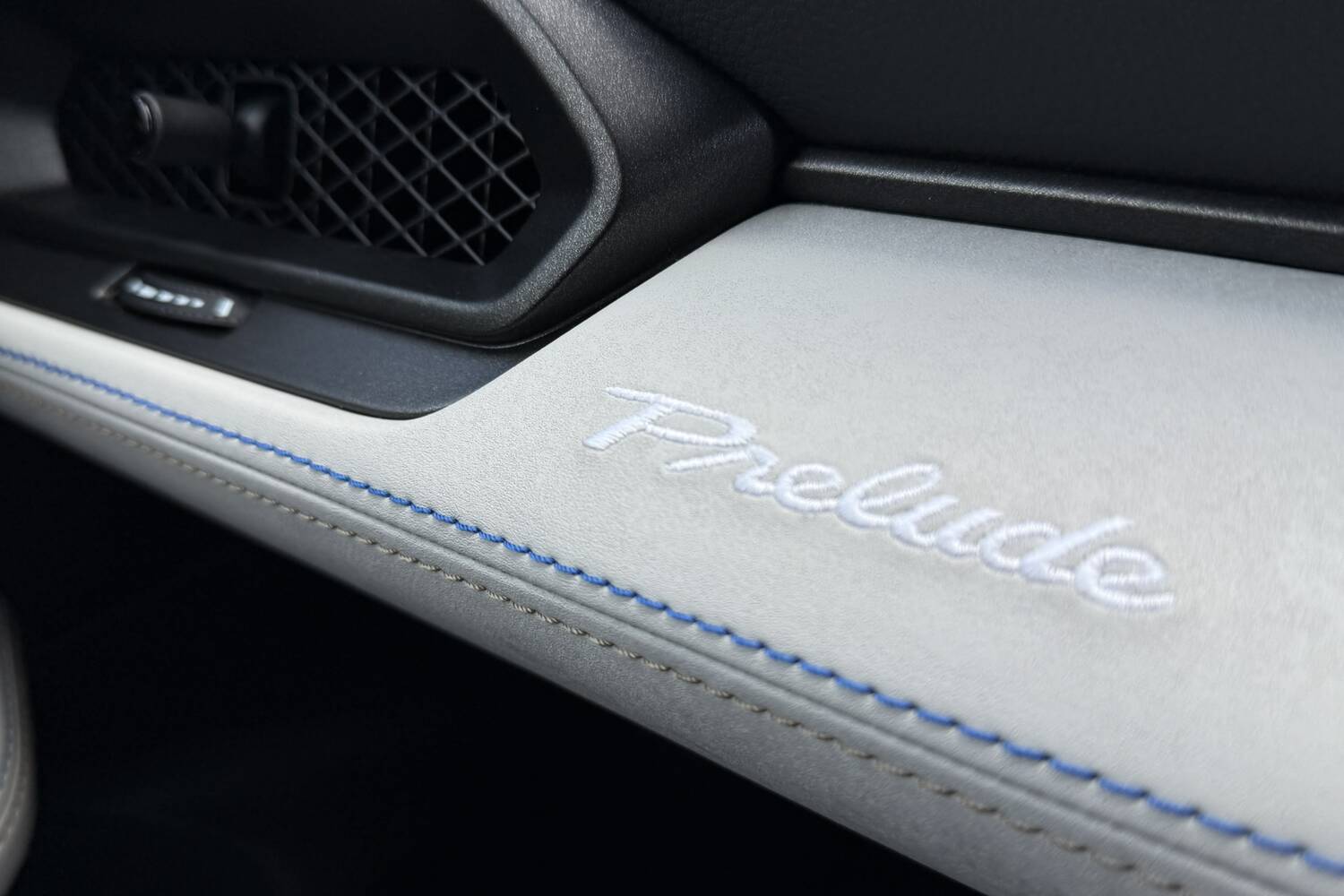
To that end, buyers choose from either a white-and-blue finish or a more conventional black-and-blue scheme. The Prelude script is picked out in the dashboard on the passenger side.
Getting comfortable in the driver's seat
The high-backed front seats are a highlight of the Prelude's cabin. They look great and are just as comfortable, allowing a wide range of manual adjustment - though we'd prefer a rotary control for the backrest angle in place of the lever design.

You'd probably not be able to tell at a glance, but the driver's seat has a little more side support and bolstering than the front passenger's chair, though both feature what Honda calls 'Body Stabilising Seat' tech, designed to be supportive to the lower body.
We do like how low to the ground the driver's seat can be set and visibility isn't bad, even though the rear window is quite small. Notably, the dashboard design is relatively low, meaning there's a great view of the bonnet and out the front in general.

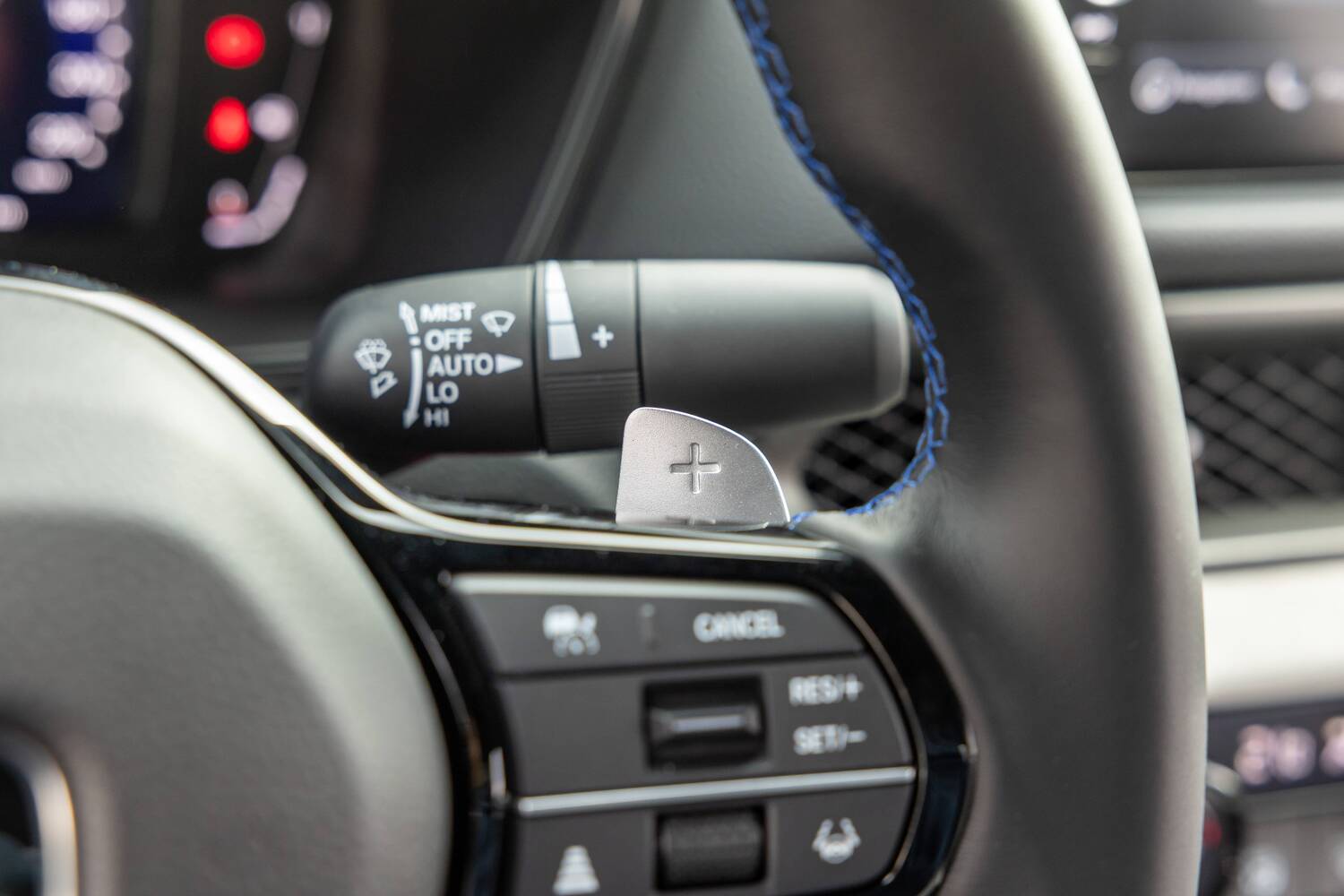
The steering wheel is a thick-rimmed, leather trimmed item with a slightly flat bottom, a subtle 12 o'clock marker and blue contrast stitching. It's good to hold, it adjusts for reach and rake, and the paddles behind it are proper metal.
Infotainment and technology

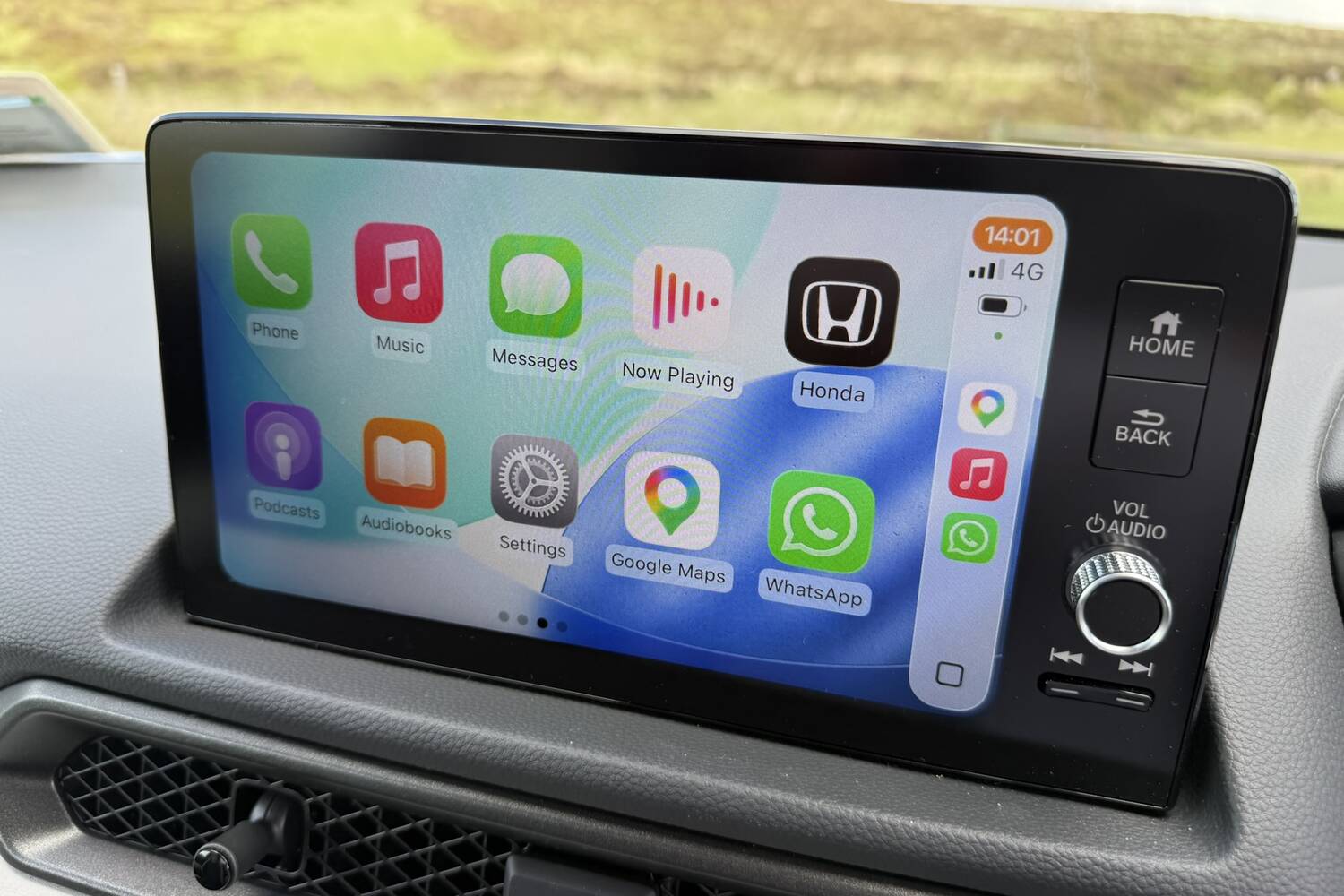
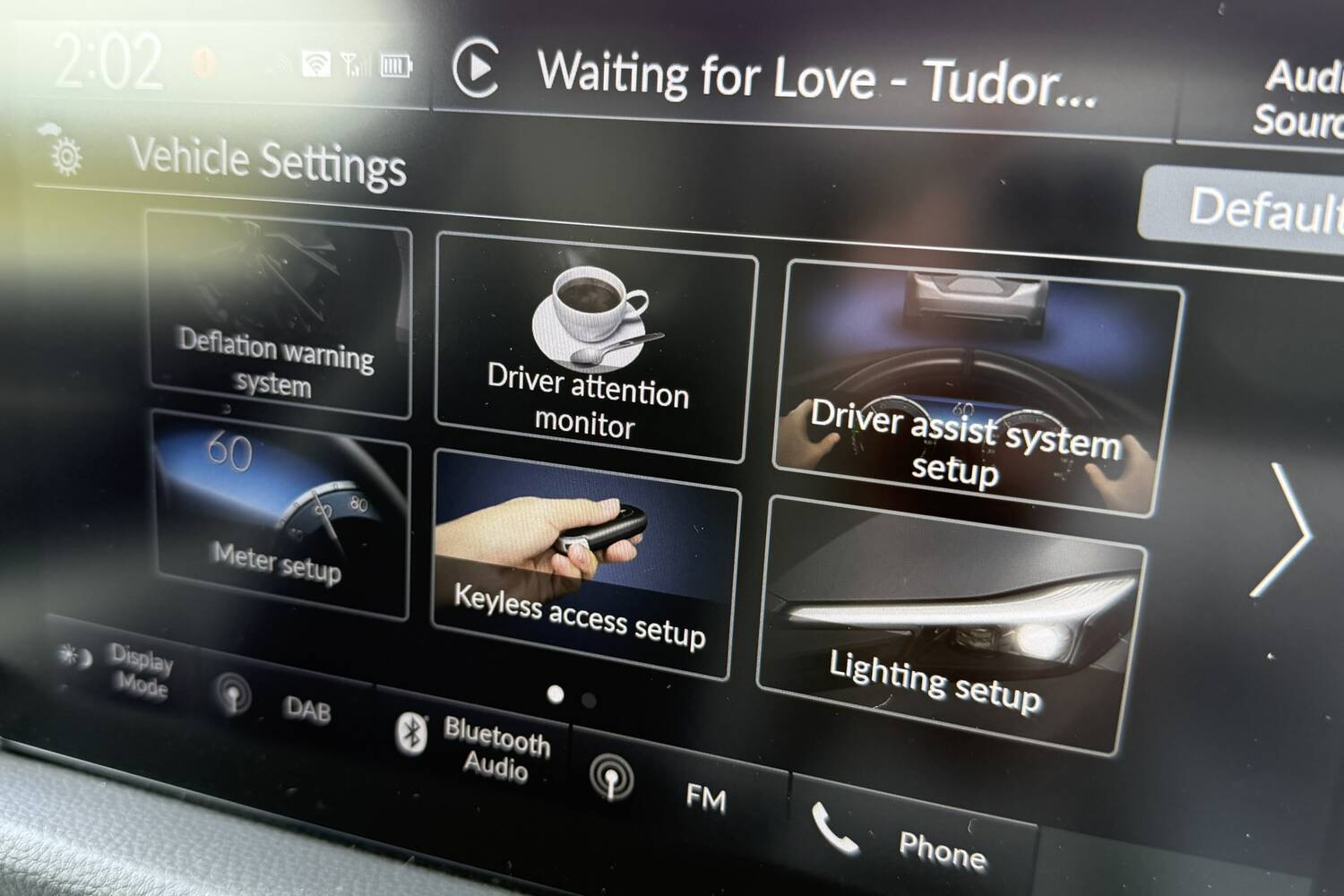
While we're delighted by the low dashboard design, it's helped by the fact that there's only a meagre touchscreen fitted to the Prelude. It measures nine inches across the diagonal and isn't the most intuitive system in the world to use.
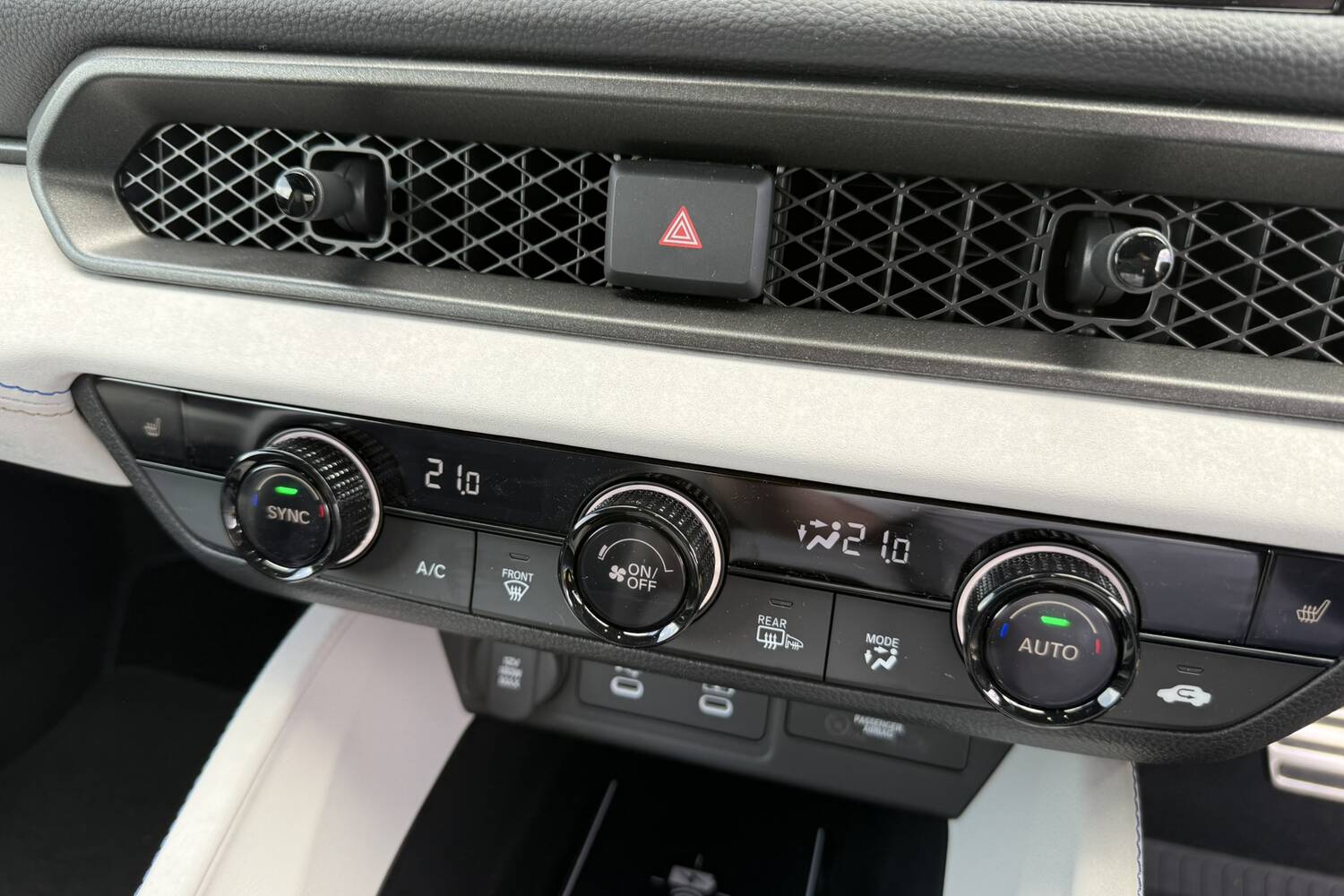
Saying that, it almost doesn't matter, as a) it features wireless Apple CarPlay and Android Auto anyway and b) Honda has sensibly stuck with rotary switchgear for the dual-zone climate control, so you don't have to use the screen very often when on the move if you don't want to.

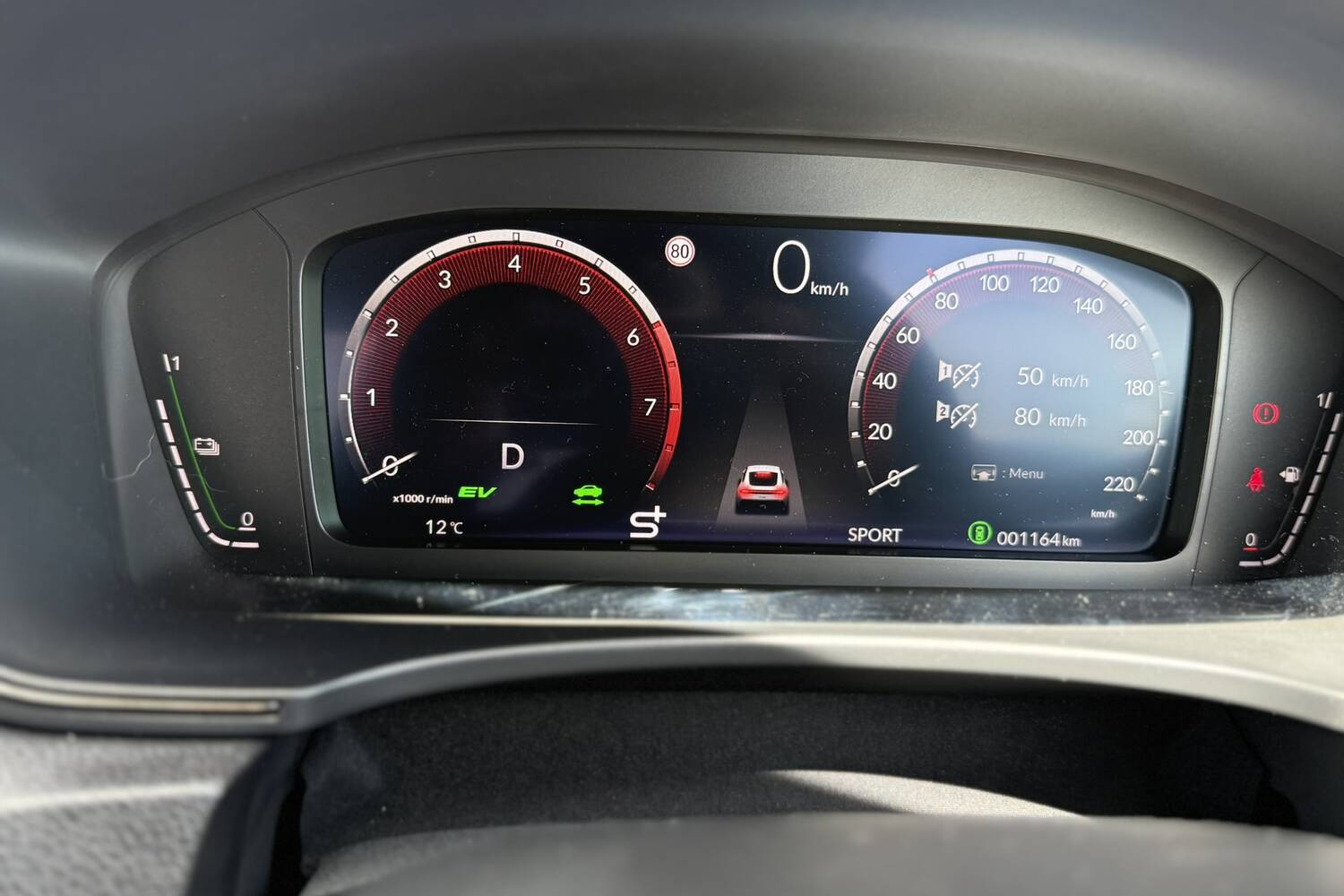
Indicating where Honda's priorities lie, the Prelude's digital instrumentation screen is bigger than the infotainment item, at 10.2 inches. It's customisable to a certain extent with various colours and graphics, while it can display a circular rev counter if required.
An eight-speaker Bose sound system is fitted as standard.
Practicality around the cabin

Up front, the Prelude's practicality is perfectly adequate for a car such as this. The glovebox is an ok size, and the door pockets are quite generously proportioned.
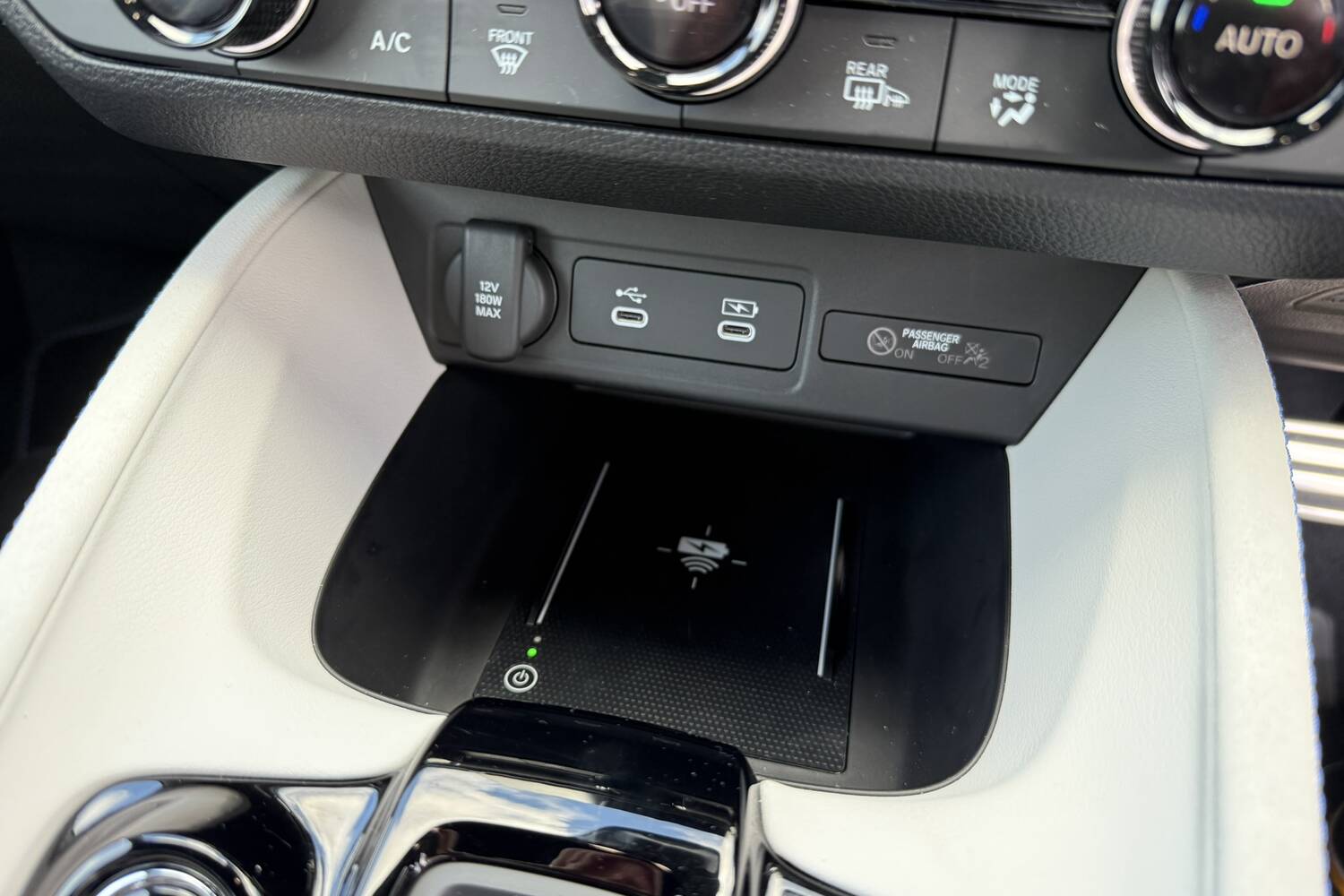
Between the front seats is a big area under the dashboard incorporating the wireless charging pad, with a useful on/off power button for it. Above that is a 12-volt socket and two USB-C ports.

Behind all the driving controls are two cupholders and a central armrest with a little covered storage underneath. There's a sunglasses holder in the roof behind the rear-view mirror, too.
Rear-seat passenger space
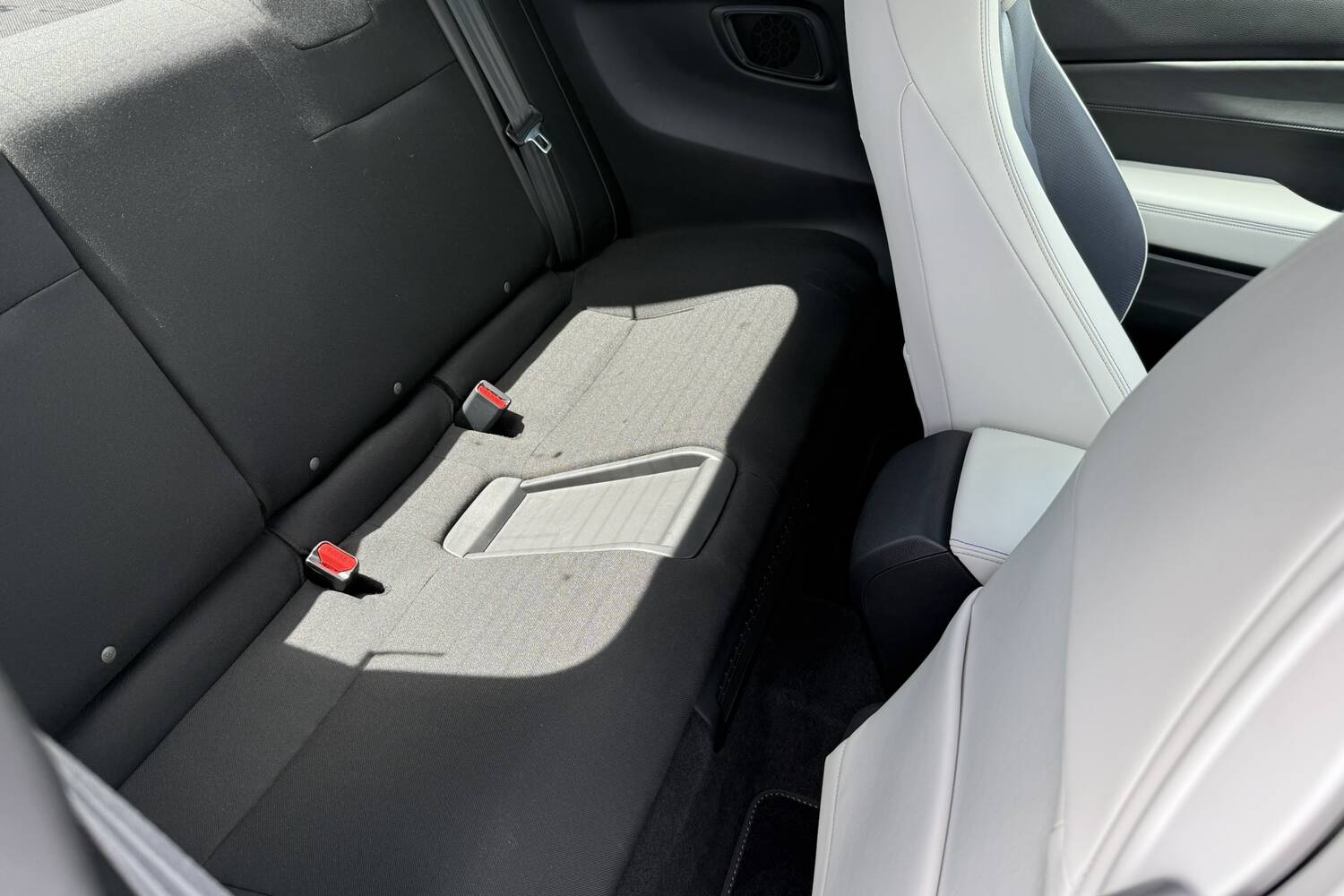
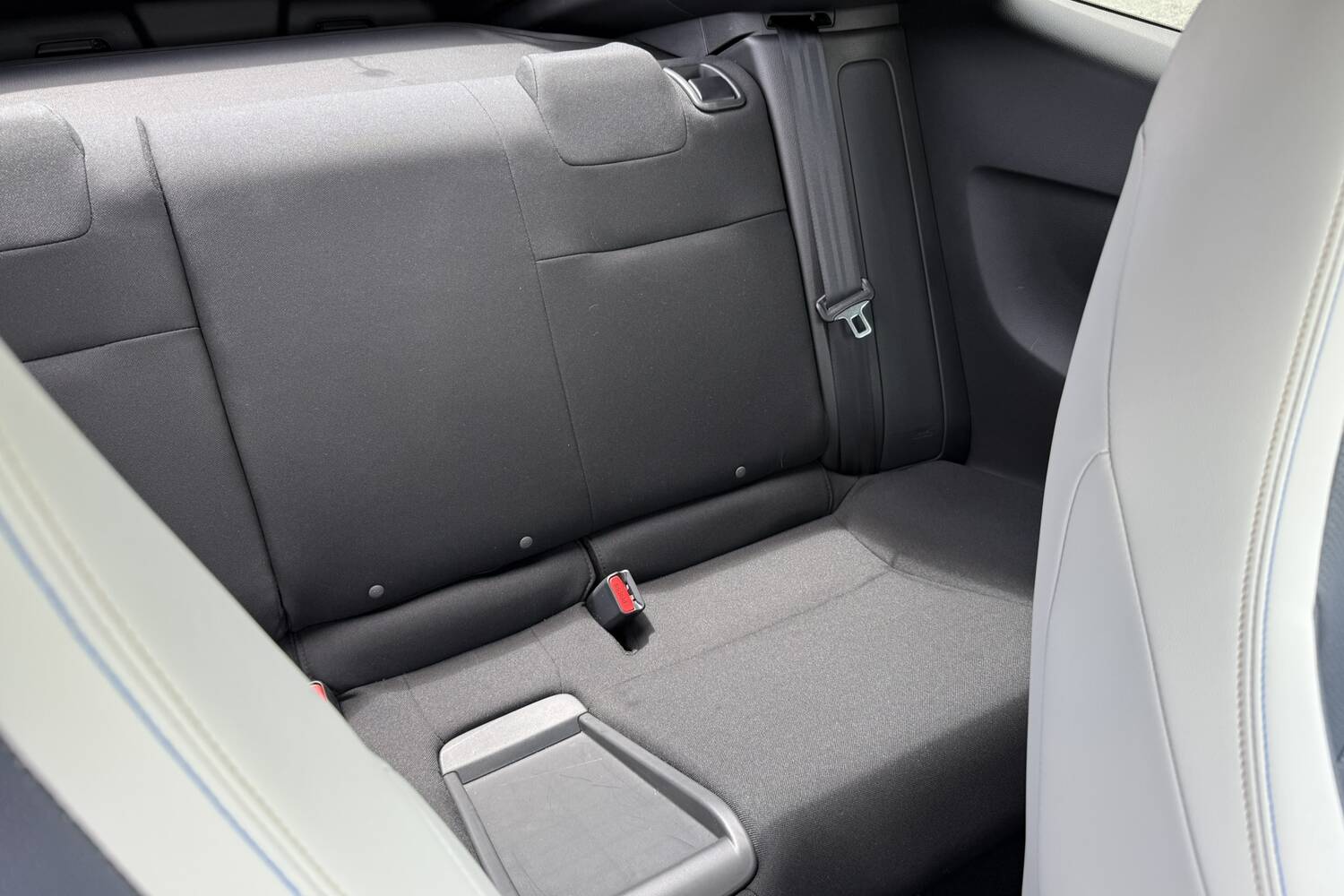
This clearly isn't a priority in a coupe such as the Prelude, but it does have seatbelts for two in the back. Legroom and headroom are at a premium, however, no matter how far forward the front seats are set.

Neither are there any vents or other niceties back there, just a small, flat storage space in the middle that might hold a phone.
Fitting child seats to the Honda Prelude
Good luck with that... There's no ISOFIX in the front passenger seat, but there are in the back. The space on offer would make it extremely challenging to fit in bulky rear-facing child seats, though, never mind the hassle of getting the things into the back of the car through the small space offered up by tilting the front seats forward.
Boot space in the Honda Prelude

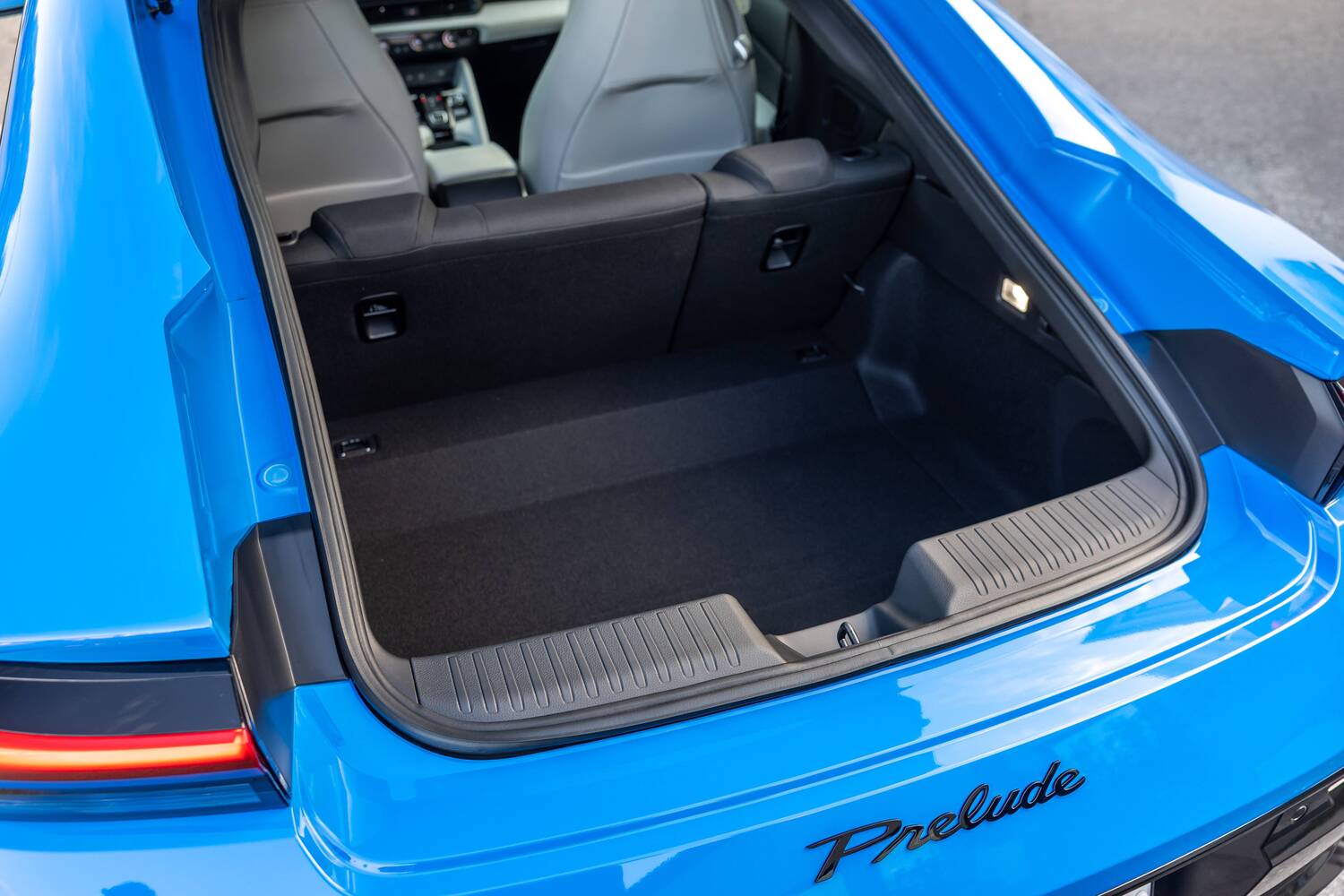
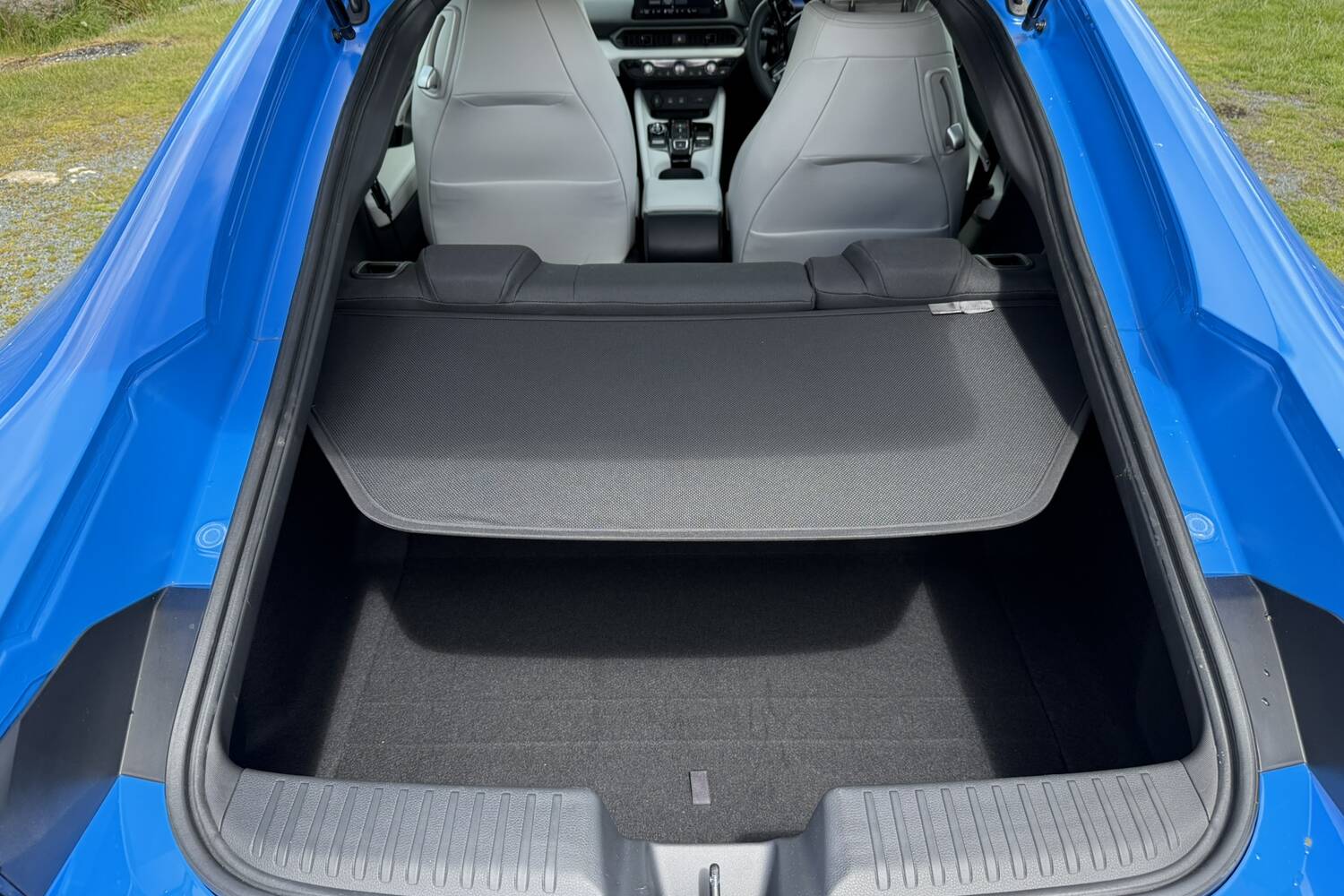
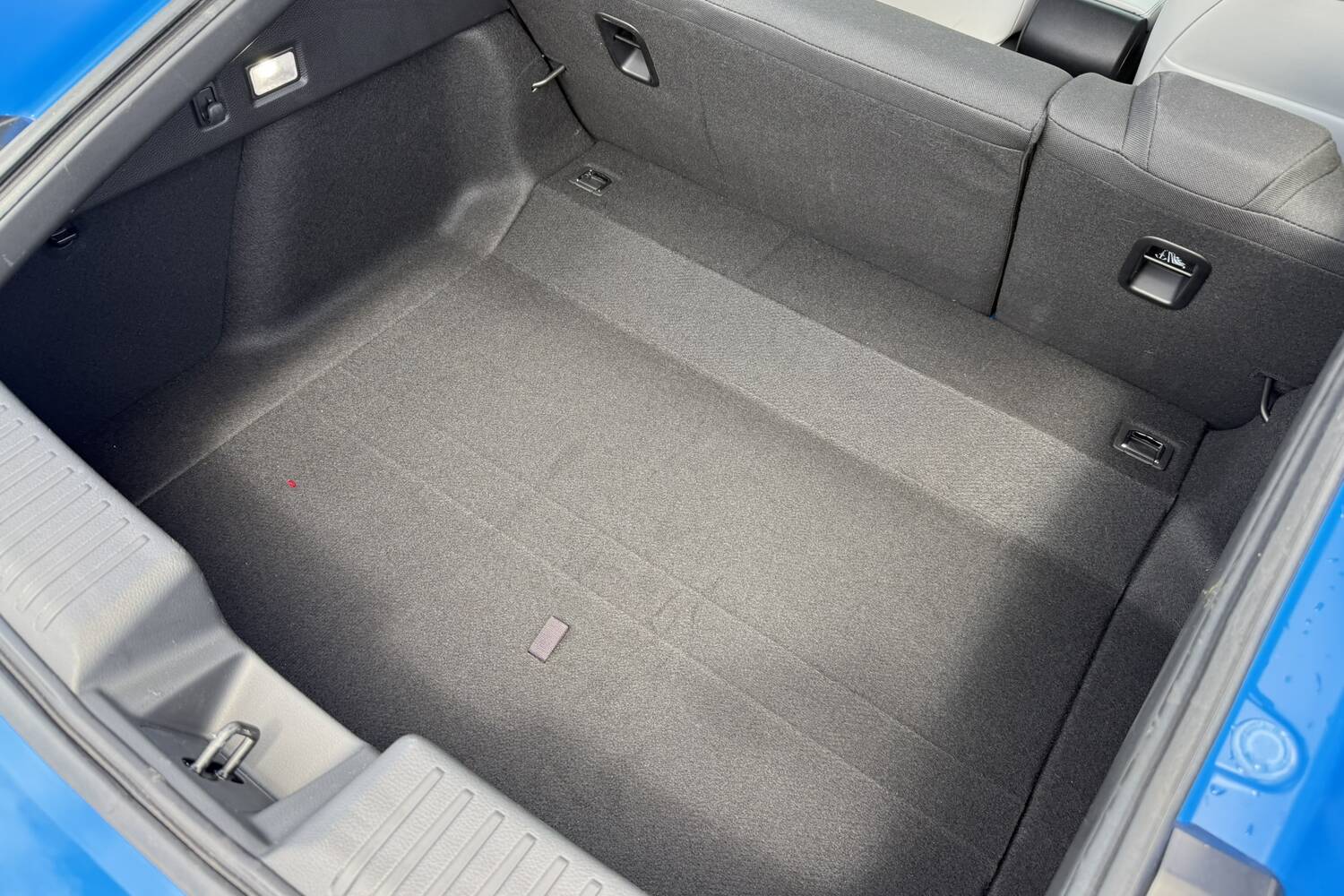
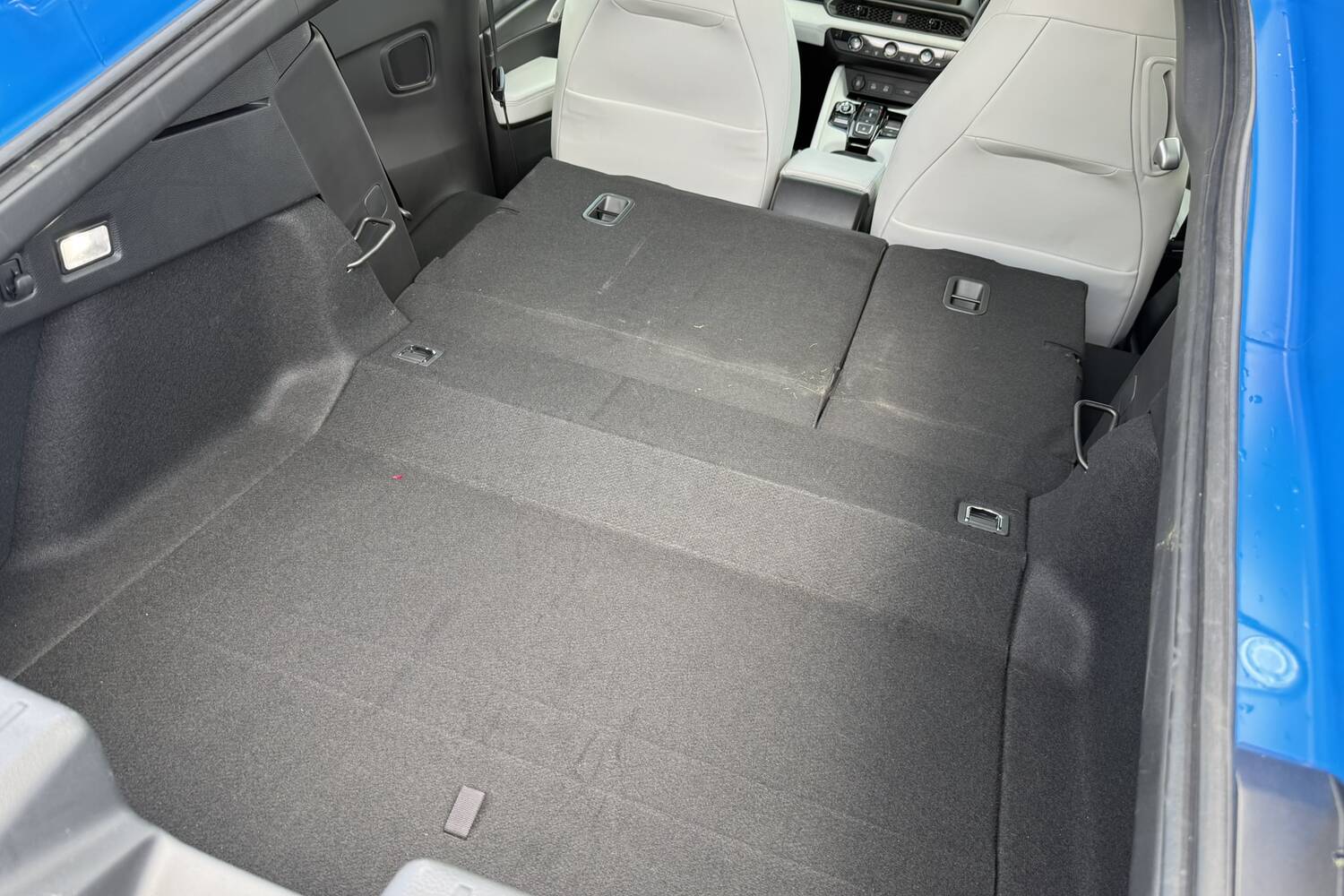
At 269 litres of luggage space - including the tiny underfloor area - the Prelude's boot isn't huge, though it'll accommodate a couple's luggage easily enough, and access to it is made easier by the high-opening tailgate.
Saying that, the lip is really quite high up, so I don't fancy trying to get anything heavy in or out of this boot.

If you need to carry bigger loads, it's a cinch to drop the 60:40 split-rear seats, though the less we say about the flimsy luggage cover provided, the better. Let's go with 'lightweight' as a benefit.
Safety in the Honda Prelude
Relatively small-volume cars such as the Prelude are rarely put through their paces by Euro NCAP so it's of no surprise that there's no rating for the coupe. It shares a lot with the Honda Civic, itself a five-star car according to the safety organisation, so that's encouraging.
This falls under the Honda Sensing suite of systems and is said to feature a high-speed processing chip to allow for accurate and early detection of objects.

Apparently, the adaptive cruise control, Road Departure Mitigation and Lane Keeping Assist have been recalibrated to suit the sportier character of the Prelude.
The Prelude also has a total of 10 airbags as standard, including knee airbags for both front seats, plus side airbags for the rear seats.
Performance of the 2026 Honda Prelude
• Modest peak power, but car is light
• Virtual gearchanges a gimmick
• Features adaptive damping

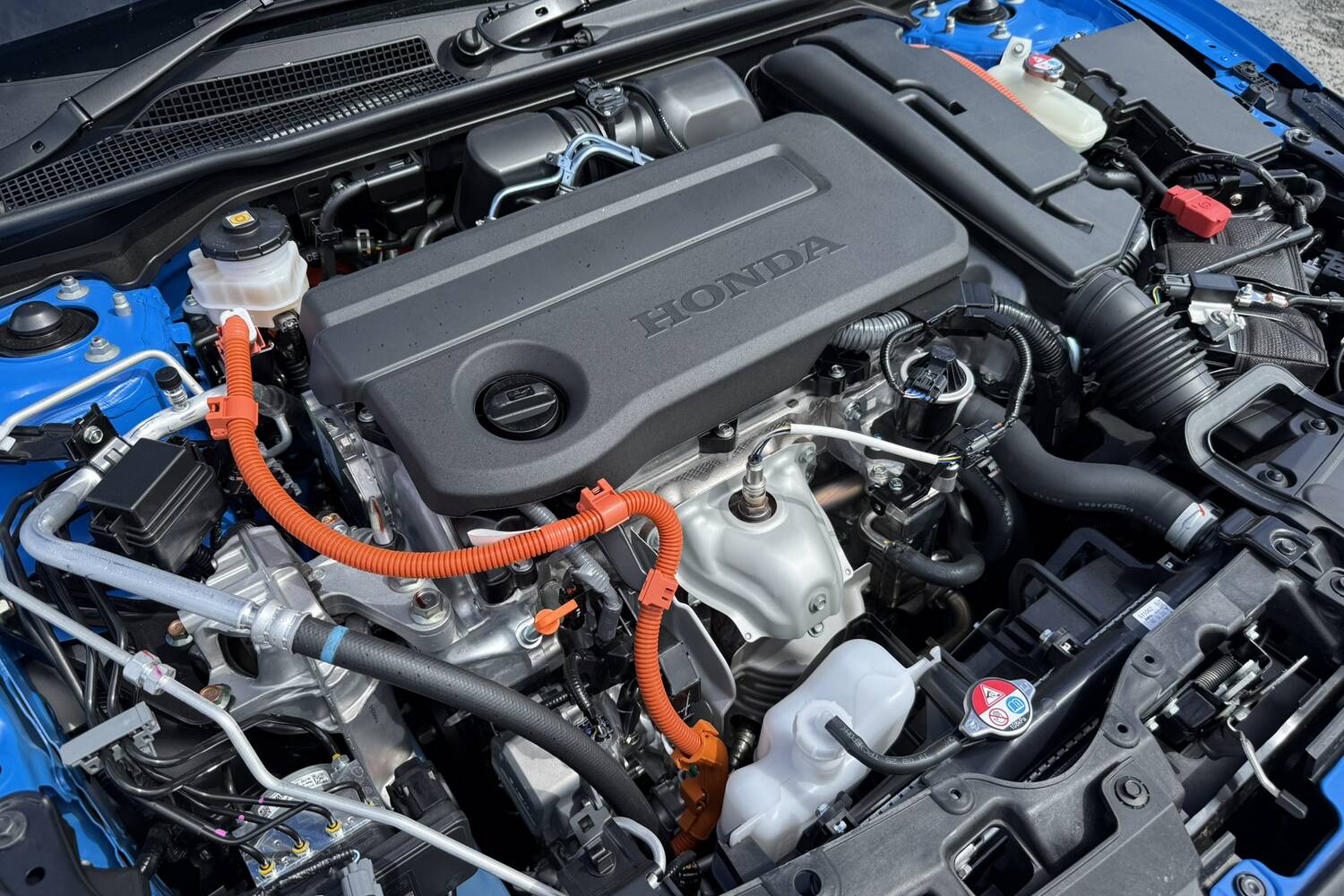
The Prelude adopts the Honda Civic's i-MMD (intelligent Multi Mode Drive) hybrid system made up of a 2.0-litre four-cylinder petrol engine, a drive motor and another motor that can act as an electricity generator.
This setup allows for three distinct modes, though not selectable by the driver as such. The first is purely electric driving, using the battery to power the propulsion motor. It can't do this for long as the battery is tiny by EV standards.

Next up, the one the car uses most in regular driving, is the hybrid mode. For this, the engine is running, but it's only used to turn the generator, creating electricity to power the propulsion motor that turns the front wheels. Finally, the engine can be connected directly to power the front wheels.
The peak power and torque figures quoted are those for the main electric motor, at 184hp and 315Nm of torque, resulting in a so-so 0-100km/h time of 8.2 seconds. Thankfully there's more to the Prelude than just its hybrid powertrain.
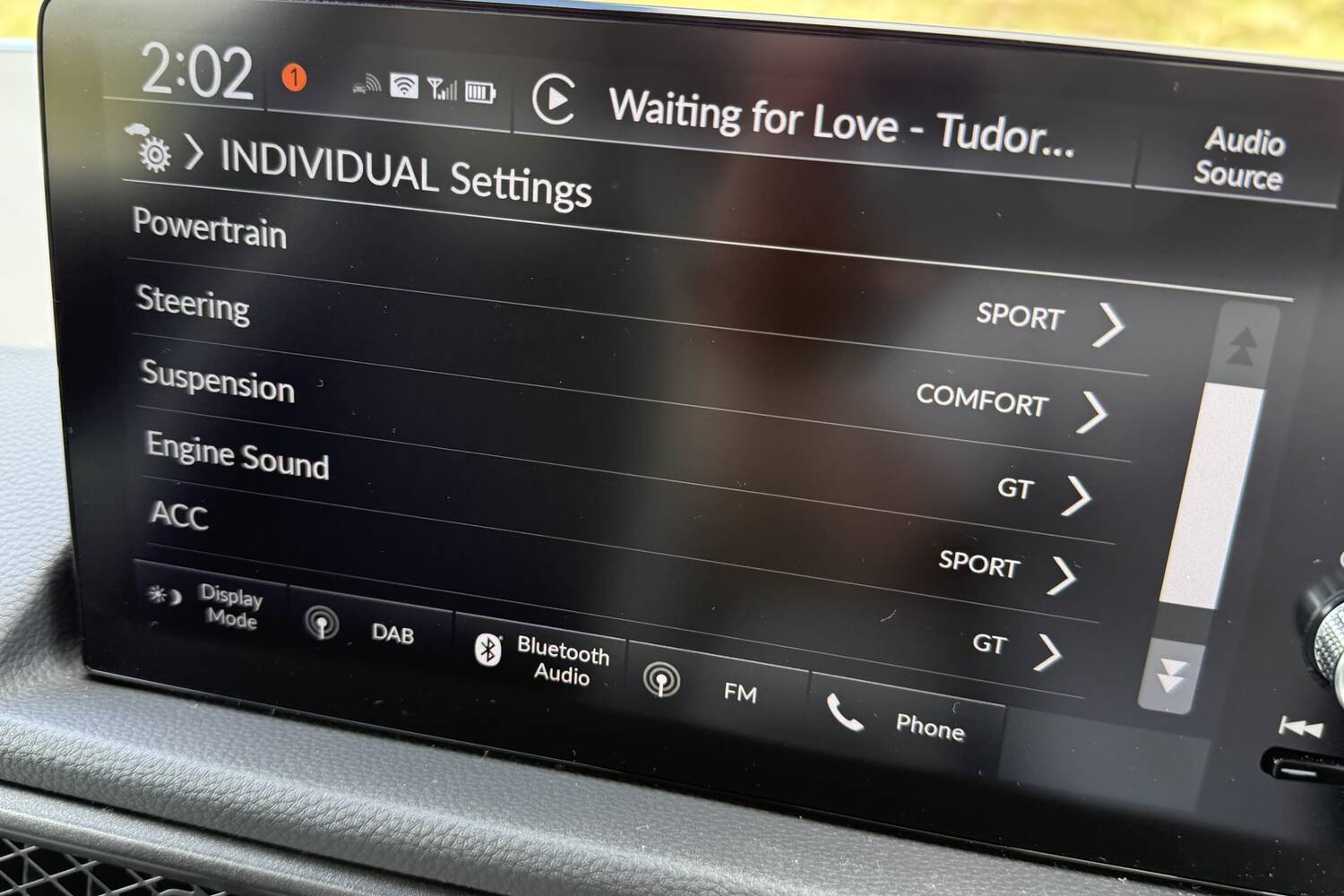
It's fitted with adaptive damping for a start, with three distinct baseline levels found in the selectable Comfort, GT and Sport driving settings. Those also alter the throttle response, power steering, instrument display and even the engine noise thanks to the Active Sound Control system. There's an Individual option to allow the driver pick and choose their favourite settings.

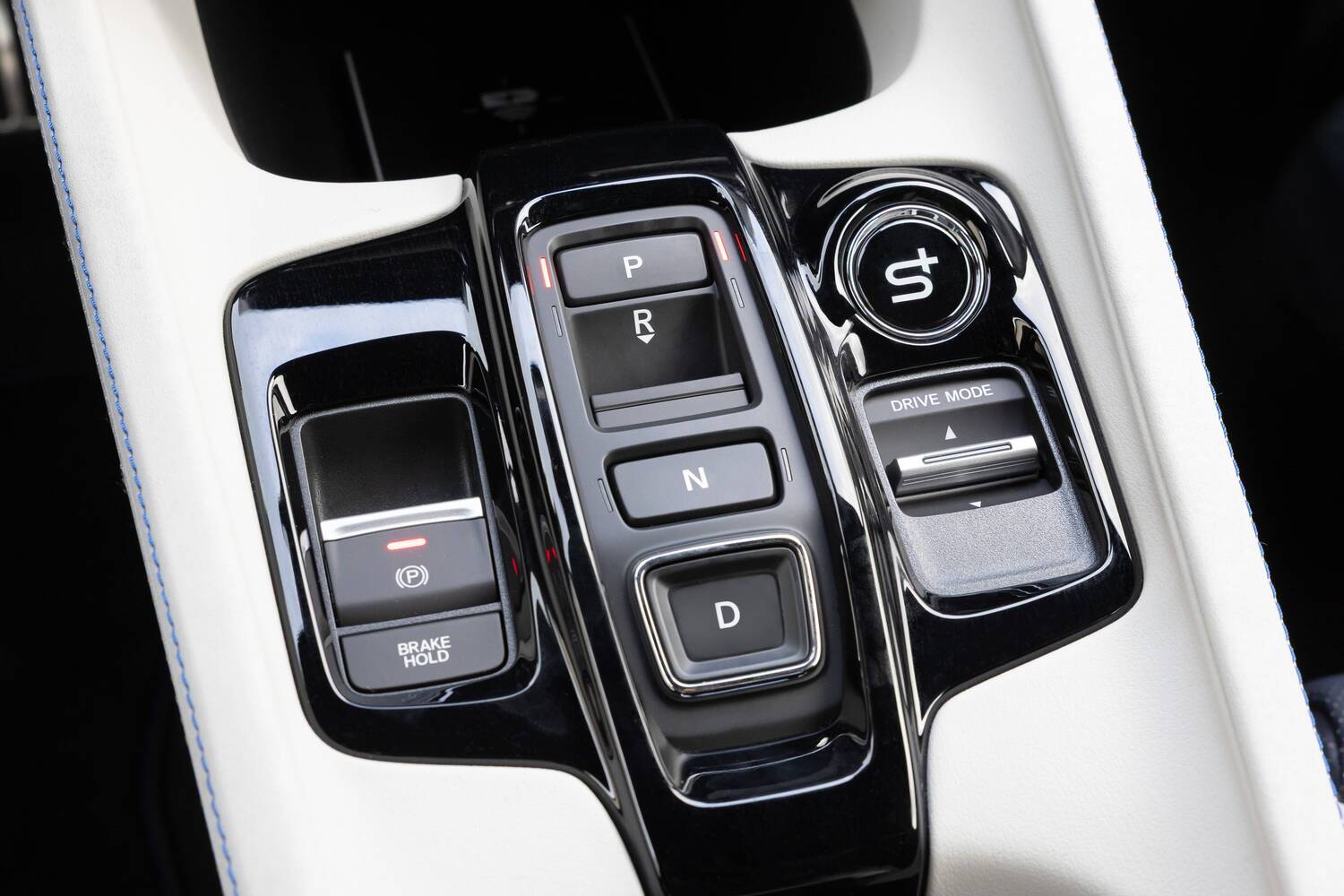
Those main driving modes are selected via a toggle switch on the centre console, where pride of place is given to a big button marked "S+". Press this to activate the Honda S+ Shift system, which is designed to simulate gearshifts, either automatically or by using the paddles behind the steering wheel.
These paddles operate the seven levels of brake energy regeneration at other times.
Driving the Honda Prelude in Ireland
Words by Shane O'Donoghue on 11 June 2026

There will be many that look at the racy design of the Prelude and then the relatively underwhelming performance figures and think it an opportunity wasted. And we get that, but the numbers don't tell the full story.
Peak power of 184hp is really nothing special these days, but a kerb weight of 1,480kg is notably trim when compared with two-tonne-plus EVs, and you feel that from the very beginning in the Prelude, as it moves effortlessly away from a standstill, as if it has little or no inertia.

The electric part of the complicated hybrid system is to thank for that, as the motor does most of the work, and it produces 315Nm of torque from a standstill. The result is smart initial take off and much better response to the throttle than you'd expect from such a setup.
Admittedly, acceleration tails off relatively quickly, which means an unimpressive 0-100km/h time of 8.2 seconds, but the car doesn't feel slow as such. Response to the accelerator is notably smarter when you choose the Sport driving mode.
Do that and the engine sound is enhanced as well. It sounds pretty good, but you begin to wonder how much of it is fake, especially as there's a notably different noise in each of the three main driving modes.

Those modes alter the power steering, the operation of the adaptive cruise control and the suspension as well. As mentioned above, the Prelude gets adaptive damping with the baseline switchable over three levels.
In the default Comfort setting, the Prelude feels tied down and sporty, but not uncomfortable. It's perfectly usable on all roads all of the time. Indeed, we preferred the steering calibration of this mode.
Next up is the GT mode, and it does firm things up on the suspension front but isn't so stiff it makes the car unusable on an Irish back road. The Sport level ramps up body control another notch, though can be a little unyielding when the road surface is poor.

While the Prelude is easy to place on the road, it never quite reaches the level of the best and most engaging sports coupes - or indeed hot hatches. Don't expect this to feel like a Civic Type R, for example. It's at its best driven at no more than 7-8 tenths.
Regardless of the chosen settings (and the driver can pick and choose for their own Individual mode), the Prelude's wide stance and low centre of gravity mean it corners flat without too much lean. We did find the suspension ran out of travel abruptly over some particularly challenging mountain roads, but for the most part it felt capable and agile. The steering feedback and directness are well-judged and the brakes are excellent, too.

We really wish Honda hadn't bothered with the S+ Shift system and its prominent button. It feels gimmicky and adds a layer of inauthenticity to a car that otherwise is quite organic in nature.
Nevertheless, you don't have to use it, and there's no doubt that the Prelude is the kind of car you'd take for a drive just for the sake of it.
Running costs of the 2026 Honda Prelude
• Efficient for a sporty coupe
• Low motor tax
• Only average warranty

With official fuel consumption of 5.2 litres/100km and annual motor tax of €190, the Prelude certainly has the potential to be cheap to run.
Insurance may be expensive as the insurance companies may not see beyond the 2.0-litre capacity of the engine and the car's sporty image, however, and Honda's new-car warranty is only average.
Then again, given its reputation for engineering excellence and reliability, you'd hope never to have to make use of the guarantee.
Real-world efficiency of the Honda Prelude
We didn't conduct any long motorway journey in the Prelude, but elsewhere, driven with a degree of enthusiasm, the car seemed capable of achieving as low as 5.0 litres/100km without much difficulty. Even after a spell of 'enthusiastic' driving it didn't go much above 8.0 litres/100km.
Servicing the Honda Prelude
Honda doesn't stick to a rigid service interval, preferring to use the car's on-board service indicator, which will give a driver a month's warning of needing to book in.
Saying that, Honda does recommend an annual oil change for the Prelude, or every 10,000km, and an oil filter change every two years, or 20,000km. There are inclusive service plans via 'HondaCare' which start from €299 for the first two workshop visits.
Honda Prelude warranty
Honda Ireland (part of Gowan Auto) only provides a pretty basic three-year, 100,000km warranty for the Prelude. The hybrid battery is separately warrantied for eight years or 160,000km.
Irish pricing & rivals to the 2026 Honda Prelude
• Single model available
• Very few rivals
• Likely to be a rare sight

Reflecting its expected rarity and low demand for such a car, the Prelude is offered in a single specification as described. It is notably well equipped and wanting for nothing, which you'd hope for given its €59,995 price.
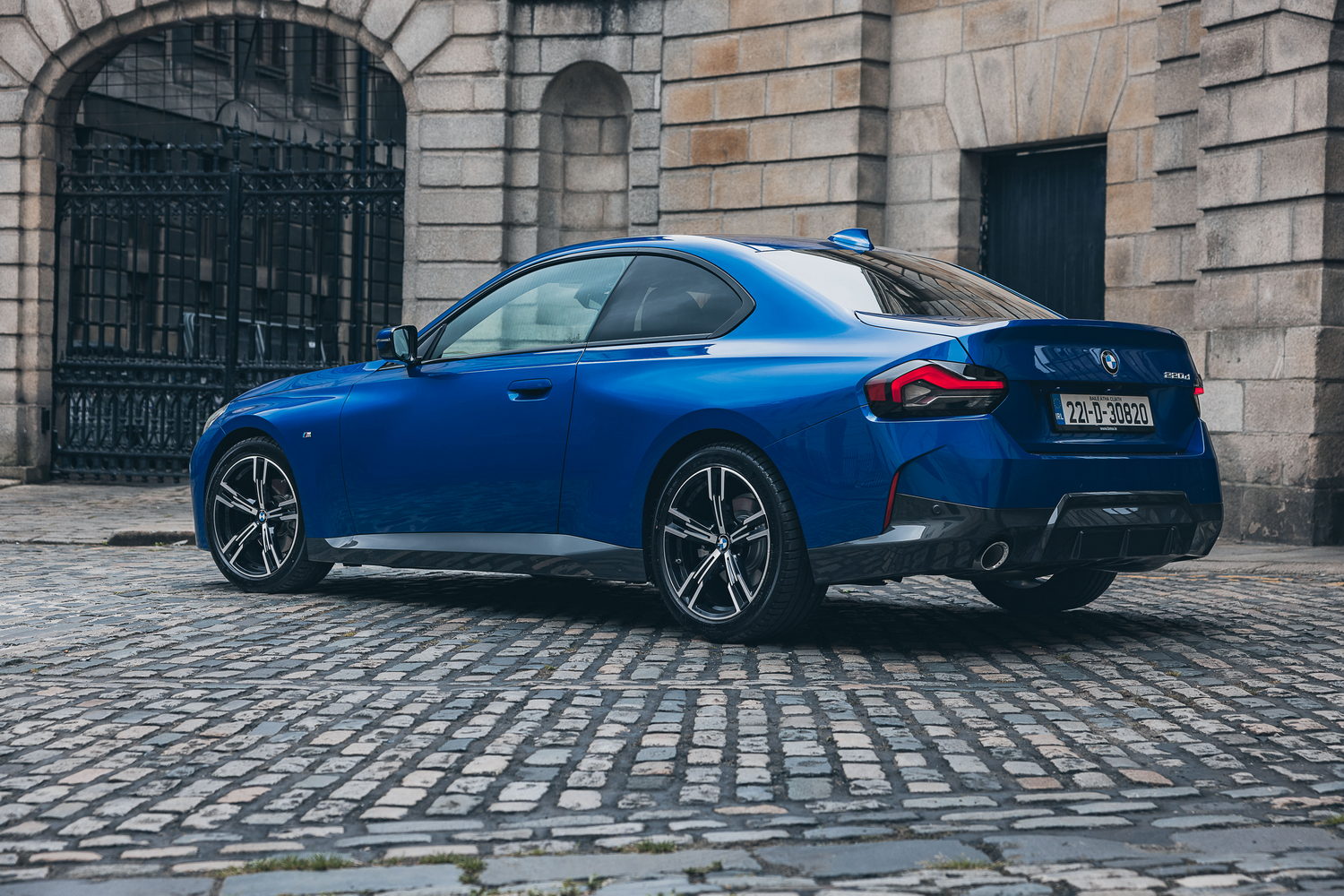
There are few direct rivals at any price, though whether a buyer can ignore the (cheaper, faster) BMW 220 Coupe on the way to a Honda showroom is debateable, accepting that they're vastly different cars.
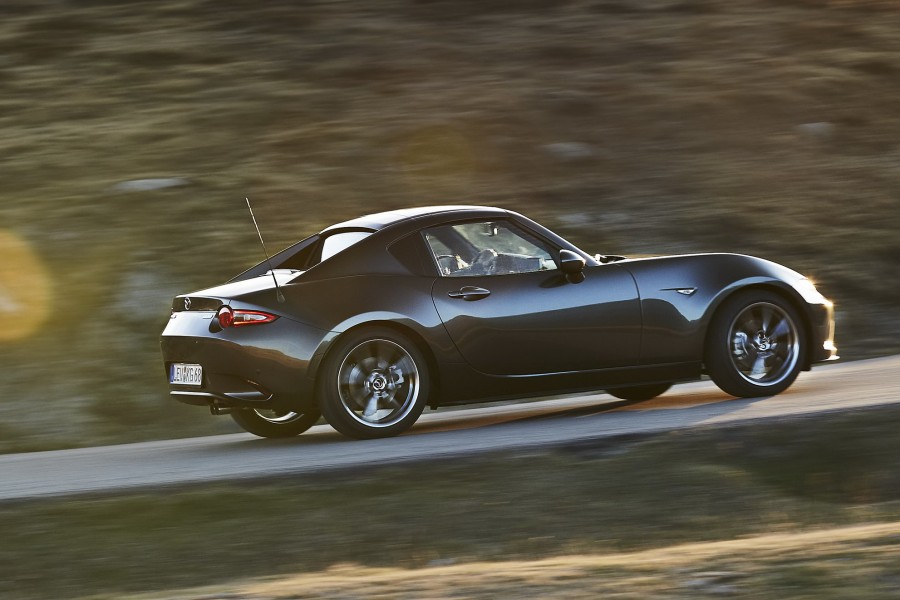
The most expensive Mazda MX-5 is far more affordable than the Honda, if also less sophisticated - but arguably more fun to drive.
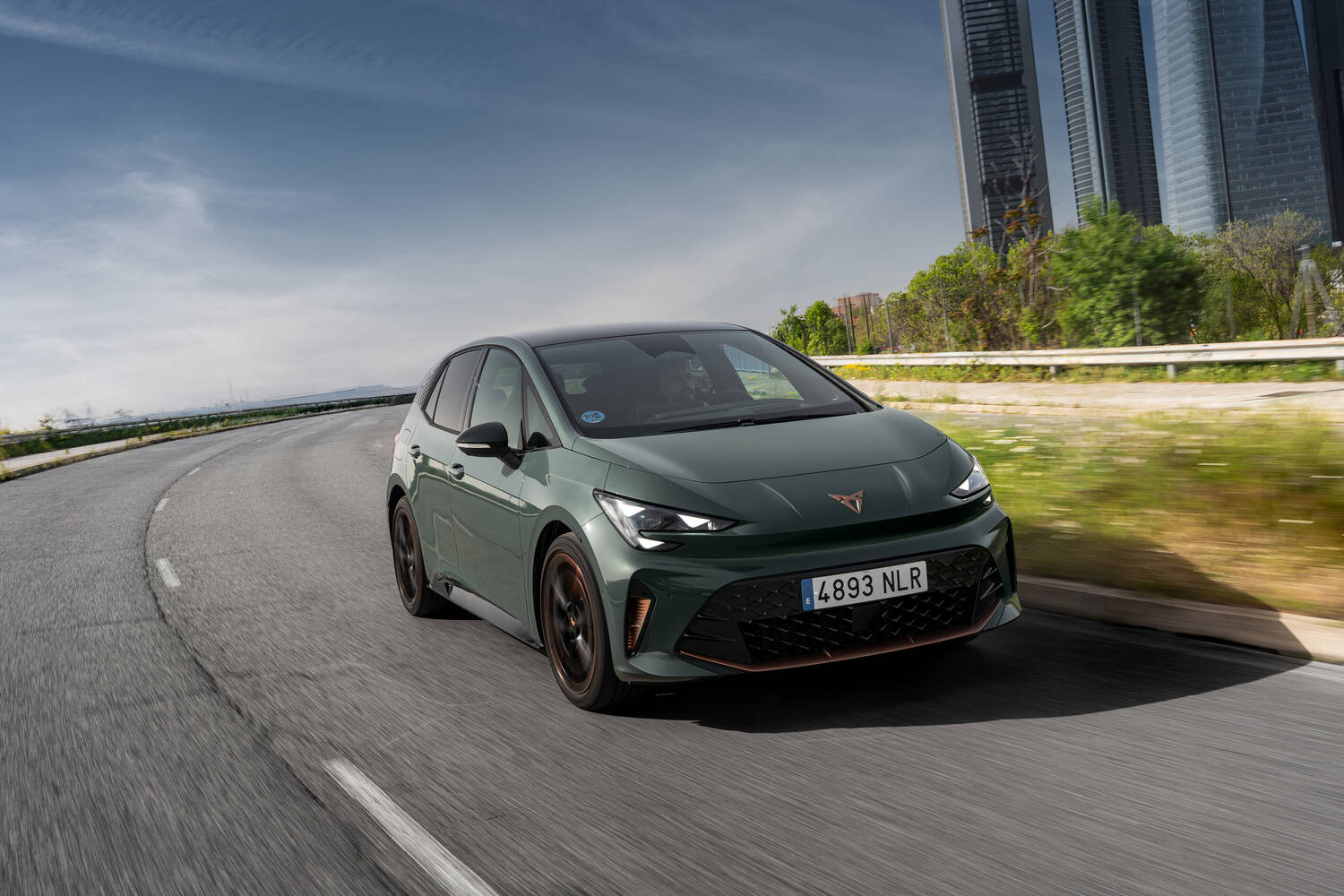
Then we're in the realms of fast EVs, such as the Cupra Born VZ.
Verdict - should you buy the 2026 Honda Prelude?

While the Honda Prelude is far from perfect, and it is a little expensive for the performance, it's also a car that gets under your skin, one that its owner will relish driving even if it's just commuting to work. It's fun and agile and light and responsive and yet also really easy to just jump into and go if that's all you need. Yet it'll still paint a smile on your face every time you look at it or you go around a corner. It's not the fastest or most rewarding sports car ever made, but we're very glad it exists all the same.
FAQs about the 2026 Honda Prelude
Does the new Honda Prelude have VTEC?
It does, but probably not in the way you might be thinking. When Honda first introduced VTEC (meaning Variable Valve Timing and Lift Electronic Control) in cars in 1989 it was for performance purposes, allowing a switch in the intake cam profile at higher engine speeds.
It evolved into i-VTEC with continuous adjustment of the camshaft angle and now it's VTEC-E, designed for efficiency. That's what's in the Prelude, allowing its engine to run on the so-called Atkinson cycle to the benefit of emissions and fuel economy. This is made possible by having an electric motor to help with the performance, specifically torque.
Will there be a Prelude Type R?
Never say never, but... Honda has made it clear that there is no intention to make a proper high-performance version of the Prelude. It does share some components and engineering with the dear, departed Civic Type R though.
How far can the Honda Prelude go on electric power?
Honda doesn't quote any distance as the Prelude's battery is so small. The car dips in and out of electric running more than you might expect, but not for any distance or significant time. You mostly notice it doing that when you're stuck in busy traffic.
Want to know more about the 2026 Honda Prelude?
If there's anything about the Honda Prelude we've not covered, or you'd like help in choosing between it and other cars, you can avail of our expert advice service via the Ask Us Anything page.
Honda Prelude history

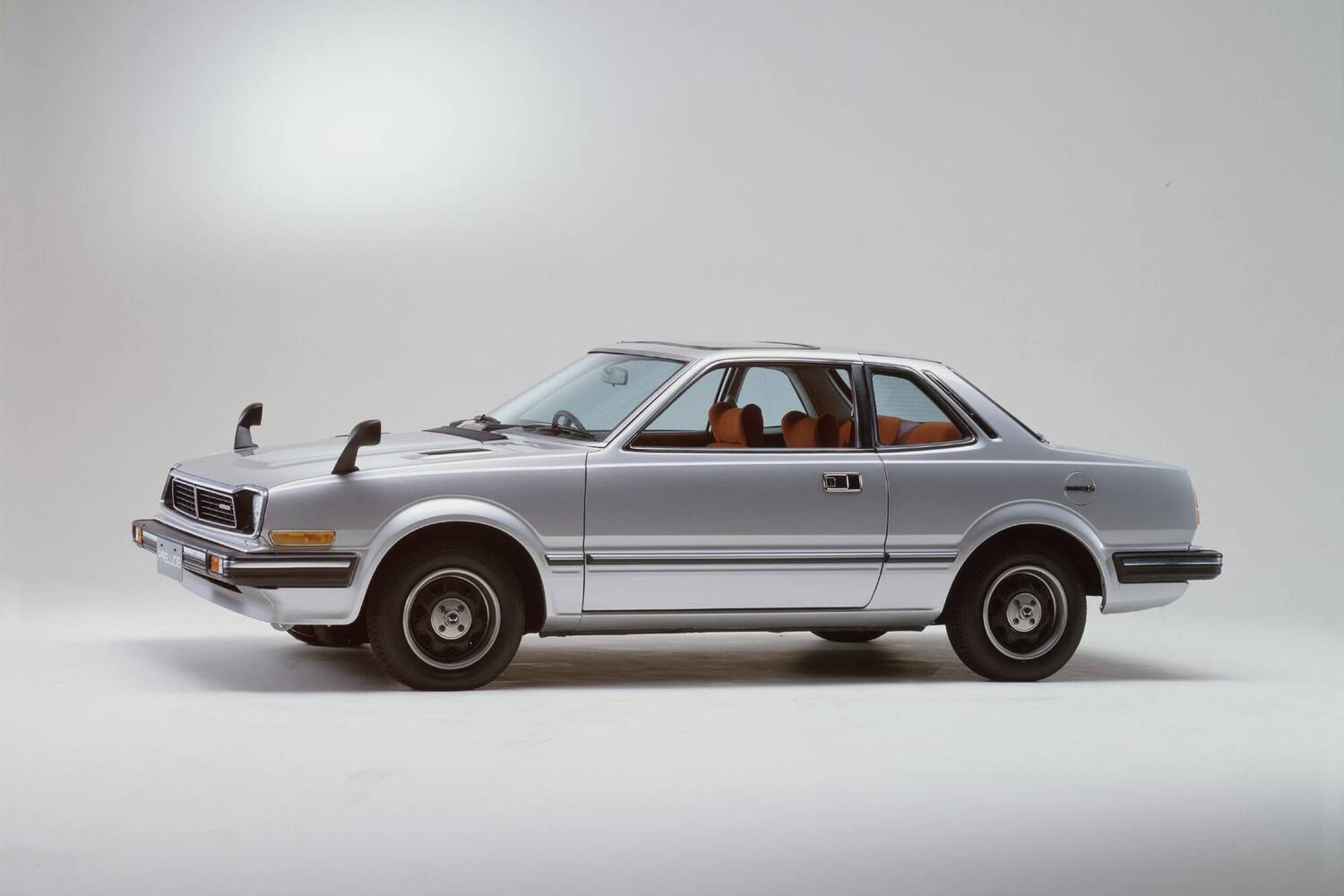
The first generation of the Prelude launched in Japan in 1978 and came to Europe a year later. The template was set from the start, with a two-door coupe body, four seats within and an efficient petrol engine up front powering the front wheels.
A 1.6-litre engine made 80hp, while in Japan it was also available with Compound Controlled Vortex Combustion (CCVC) technology to reduce emissions. The Hondamatic automatic transmission was also designed to reduce fuel consumption, while the Prelude had four-wheel independent suspension and the option of power steering - not at all the norm in the late seventies.

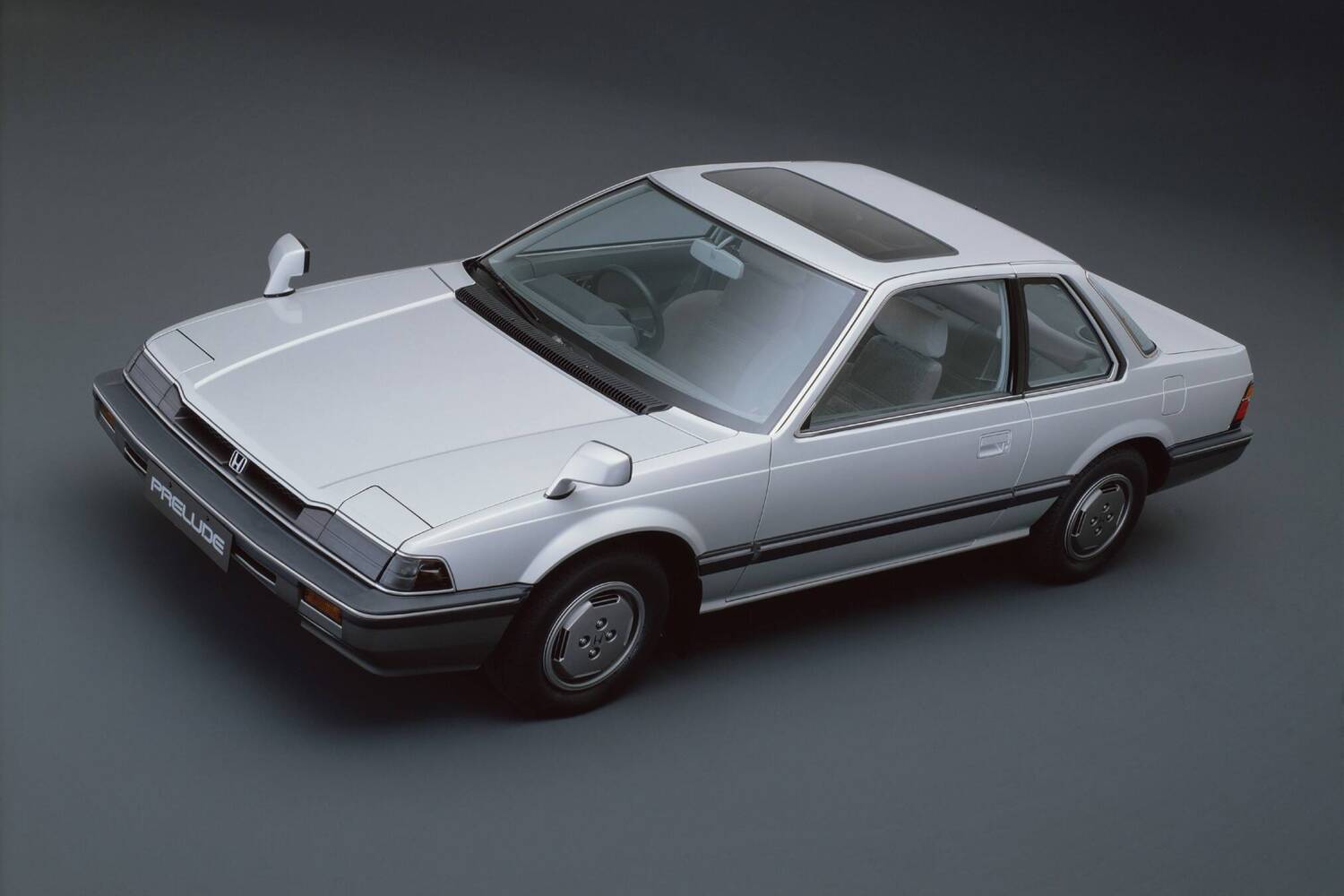
Launched in 1983, the second-generation Prelude will be remembered for its pop-up headlights, though it also supposedly took lessons learned from Honda's motorsport exploits in terms of programmed fuel injection and double-wishbone front suspension. Anti-lock brakes were introduced as an option.
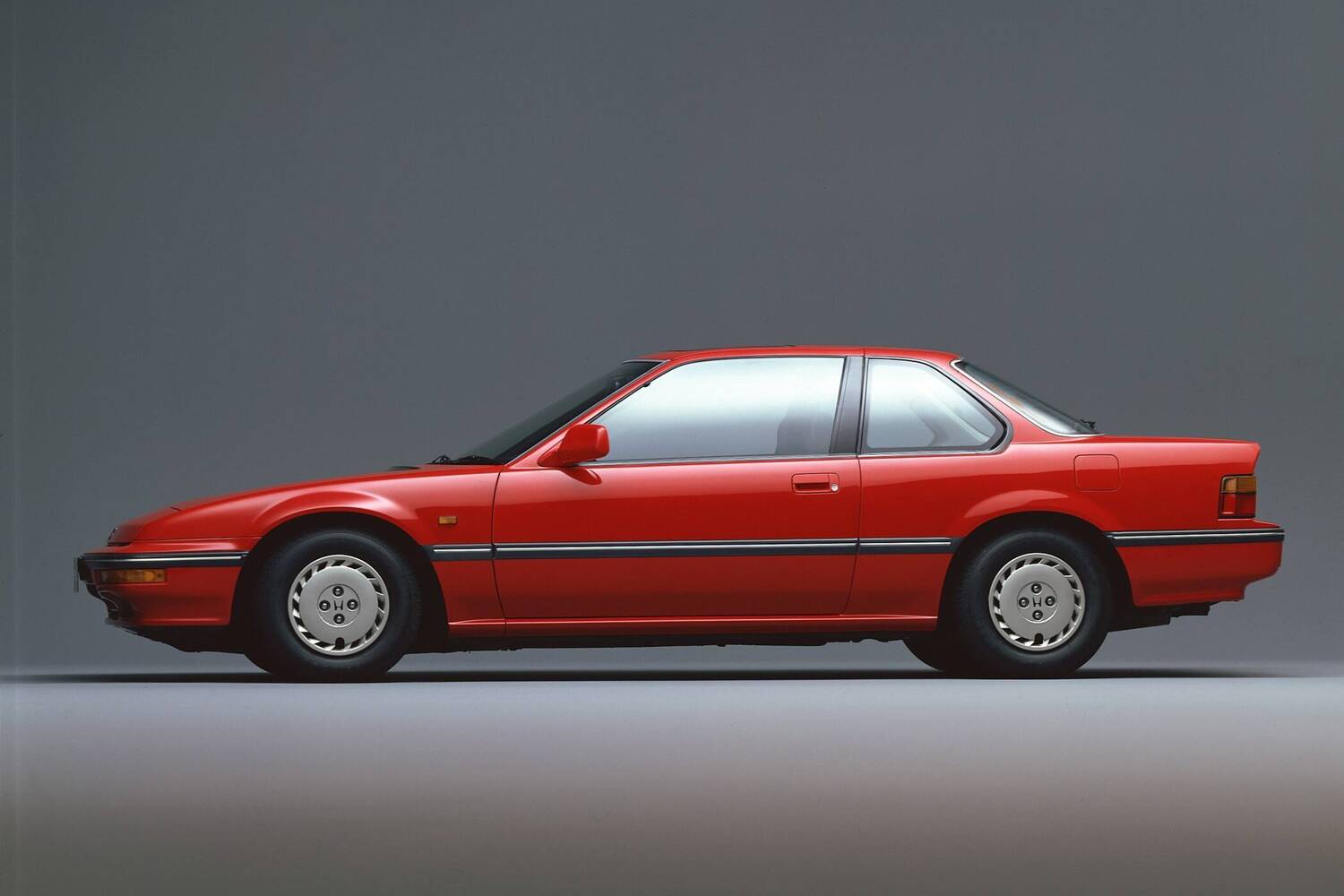
It would be easy to mistake the third generation - introduced in 1987 - of the Prelude for the earlier model as Honda took an evolutionary approach to its styling, retaining the pop-up headlights and the car's three-box profile.

Despite the appearance, this car was significantly larger and more luxurious, while it had the honour of being the world's first production car with a four-wheel-steering system.

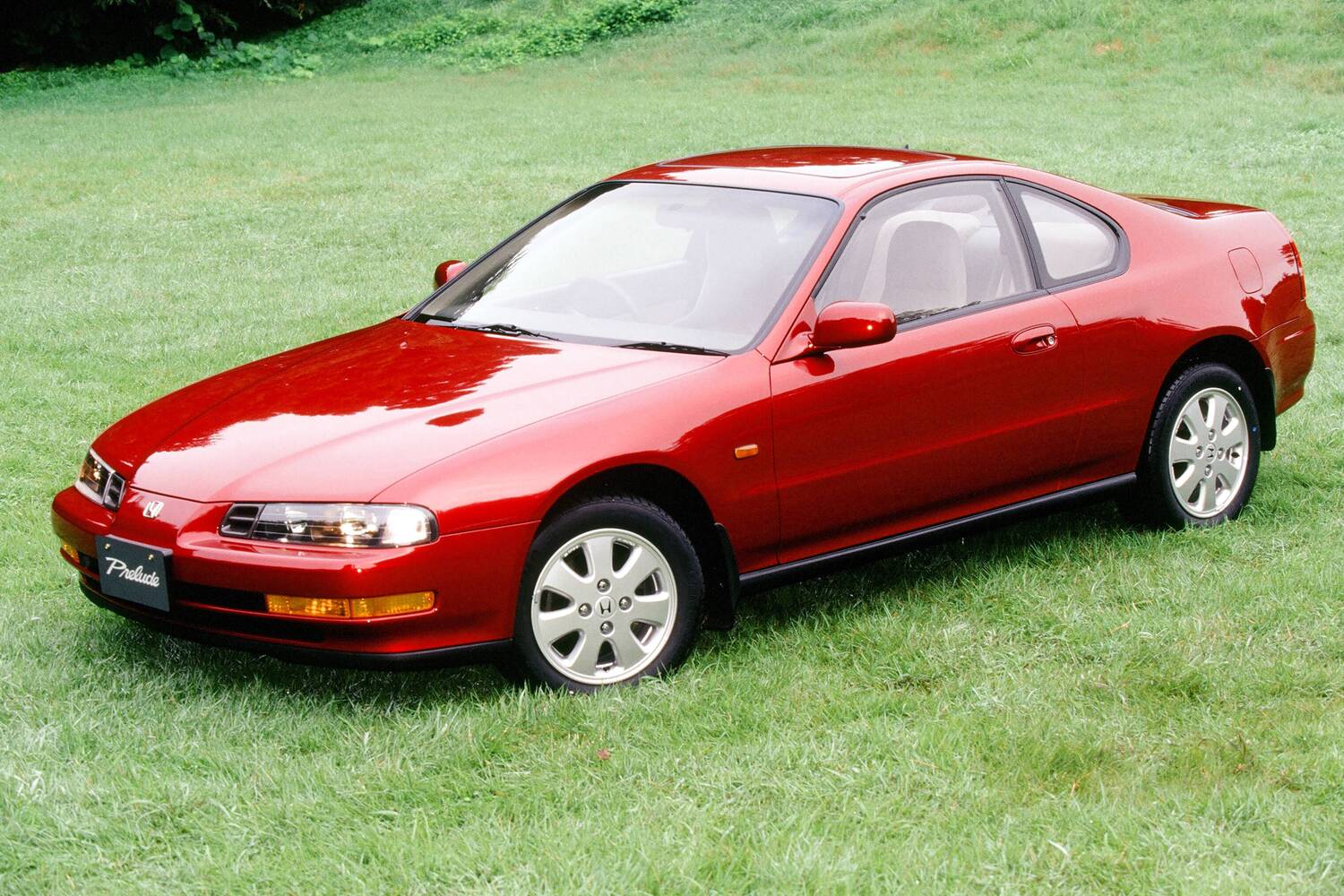
This was considerably improved for the fourth iteration of the Prelude, launched in 1991, memorable for its radically different exterior styling - at the expense of the pop-up lights. Topping the powertrain lineup was a 2.2-litre, four-cylinder unit using Honda's innovative VTEC system.
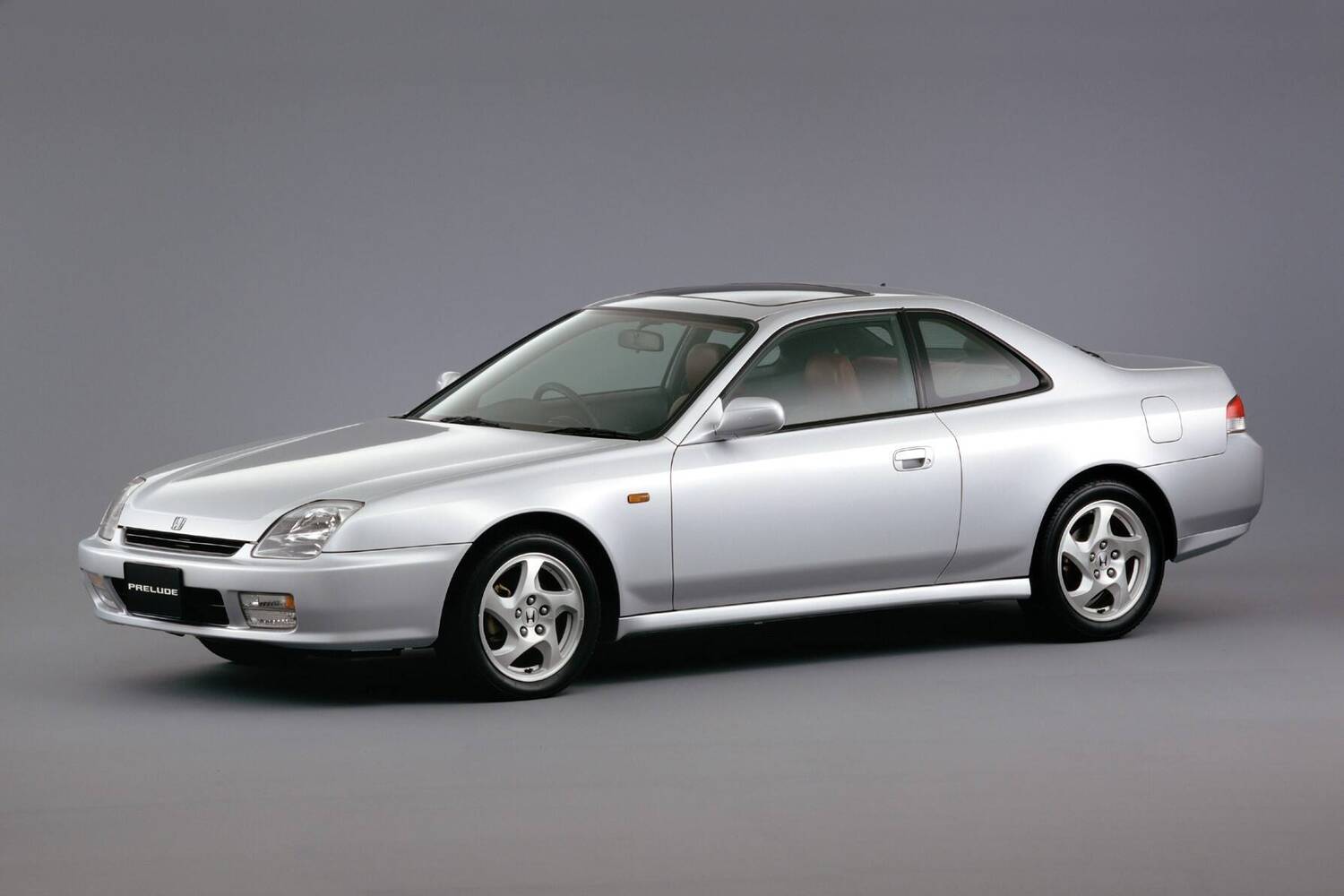
Strangely, Honda's designers reverted back to the three-box shape for the fifth Prelude, available from 1996. It retained all-wheel steering and the VTEC engine made up to 200hp. To help keep that in check this Prelude featured Active Torque Transfer System, one of the very first torque-vectoring systems created.

This generation was on sale until 2001, and there was a considerable 25-year gap before Honda launched the hybrid Prelude tested here.