


Exterior & design of the 2026 Denza Z9GT EV
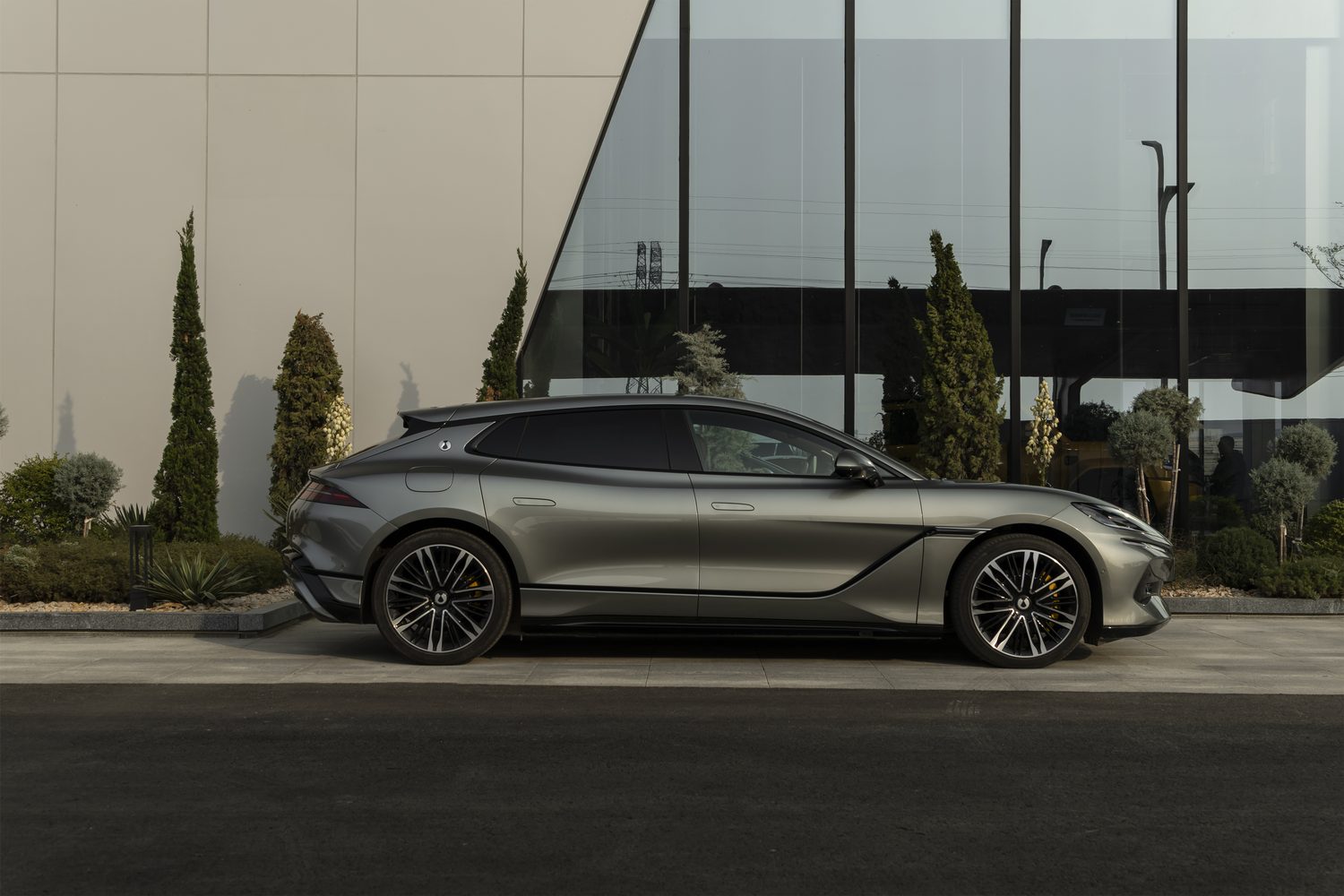
- Sleek bodywork - not very estate-like
- Styling said to be inspired by flowing silk
- Former Audi chief Wolfgang Egger in charge of design

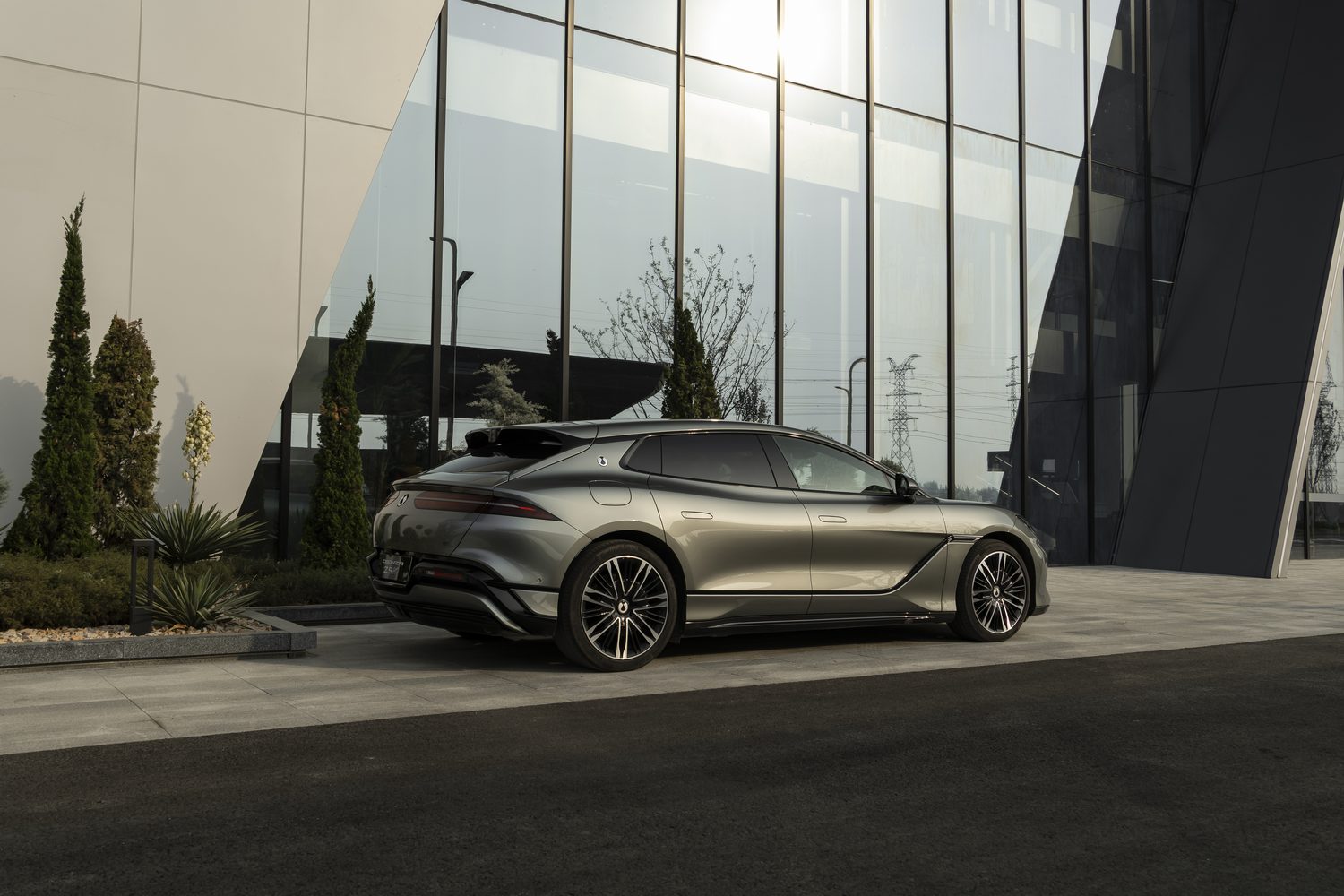
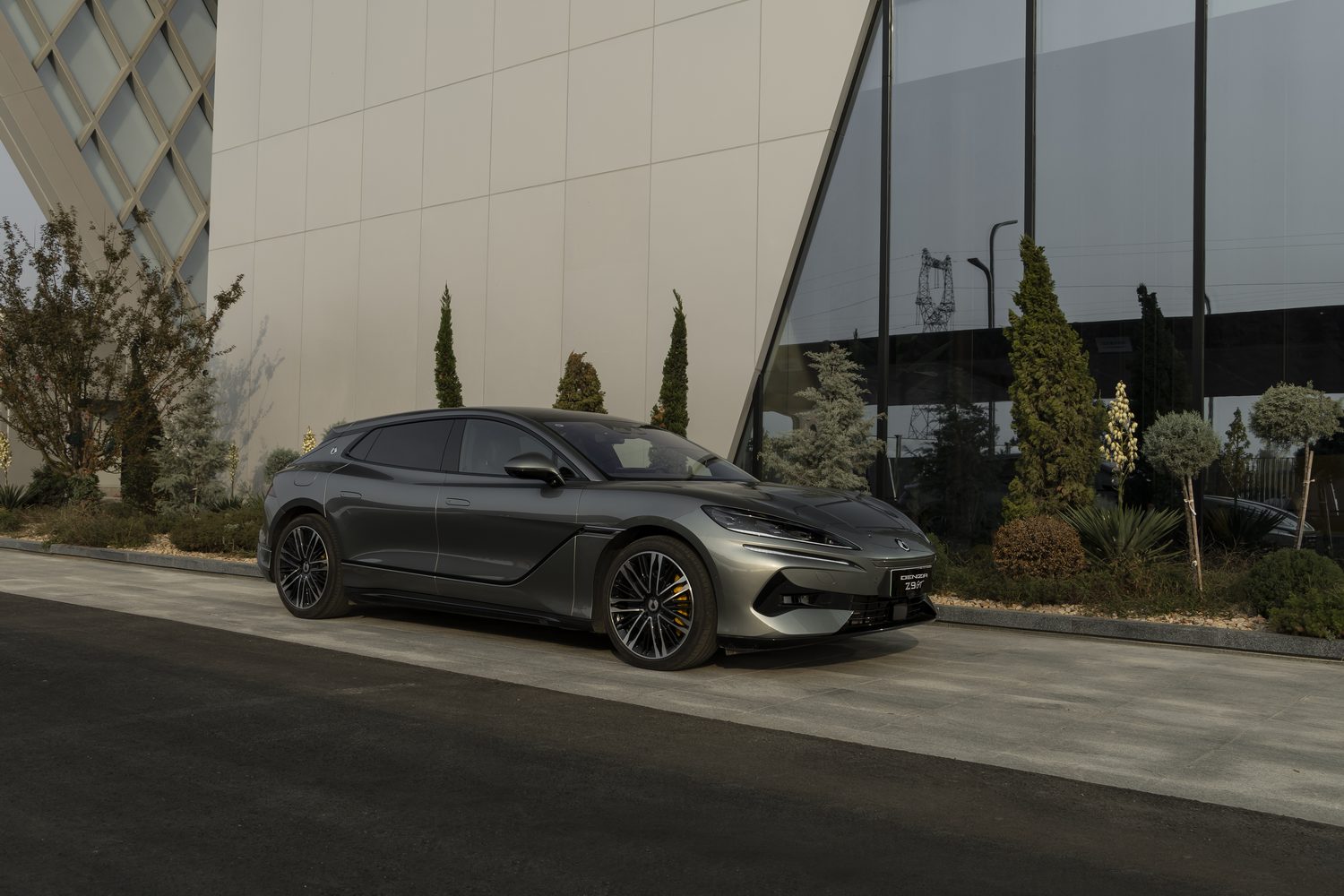
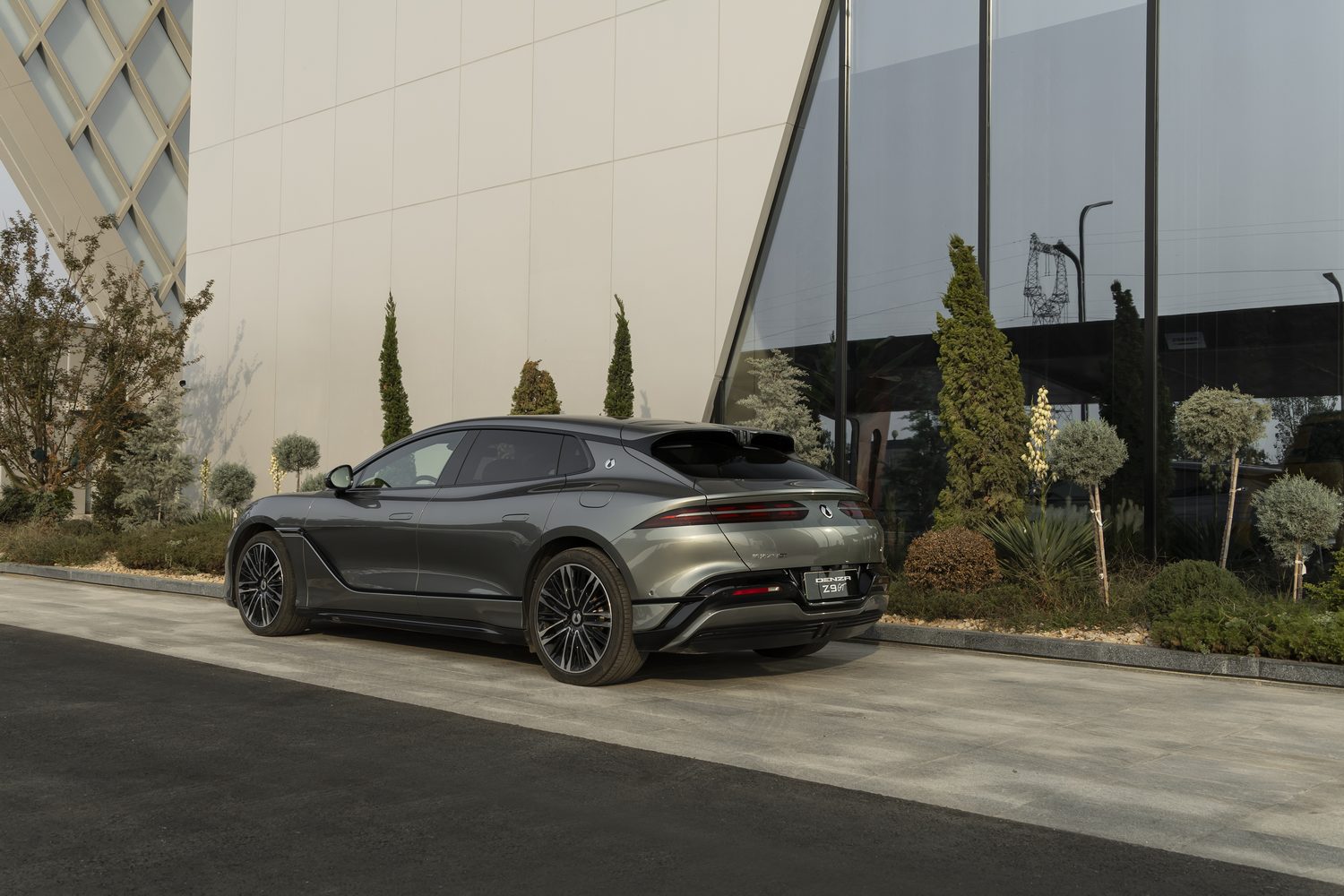
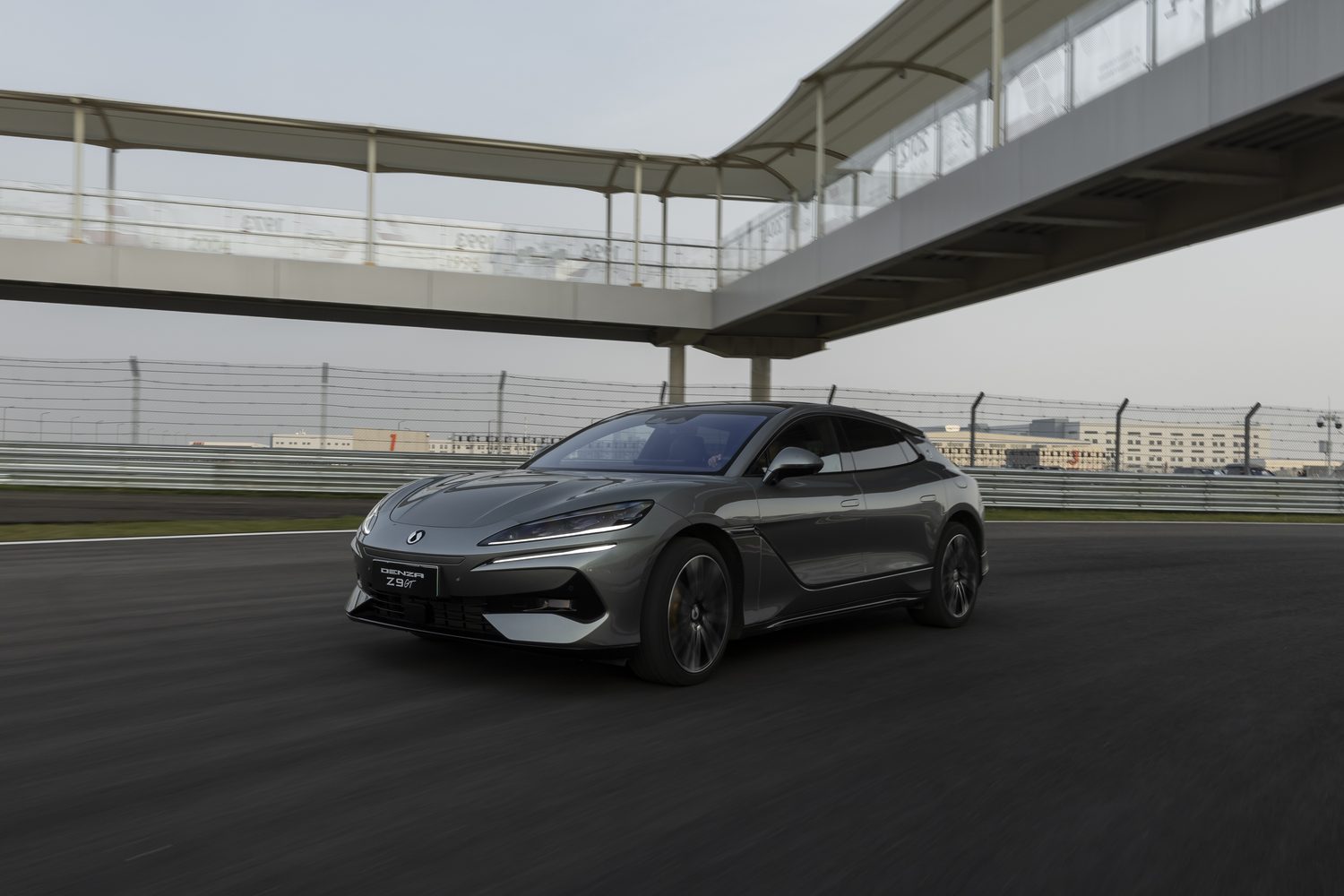
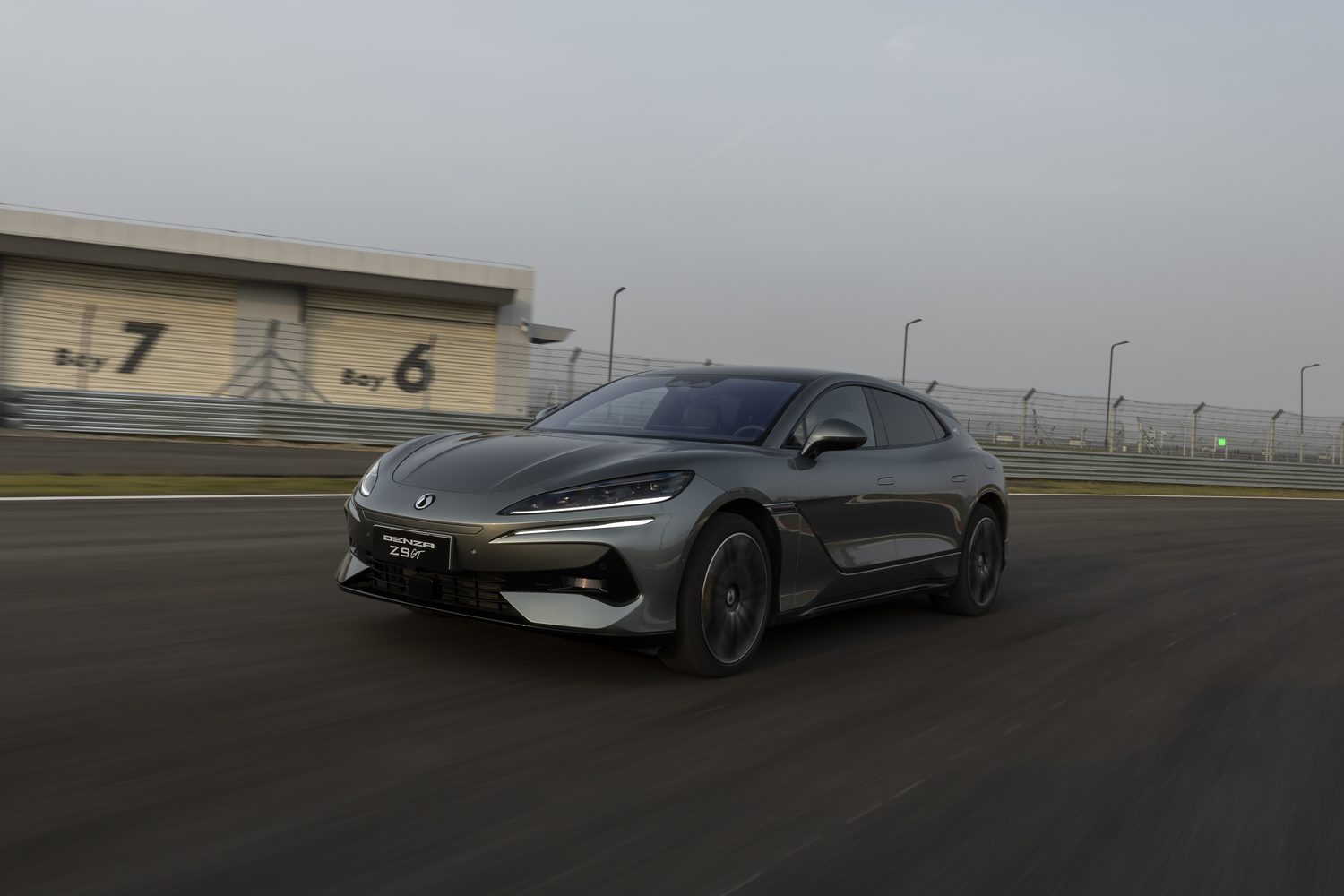
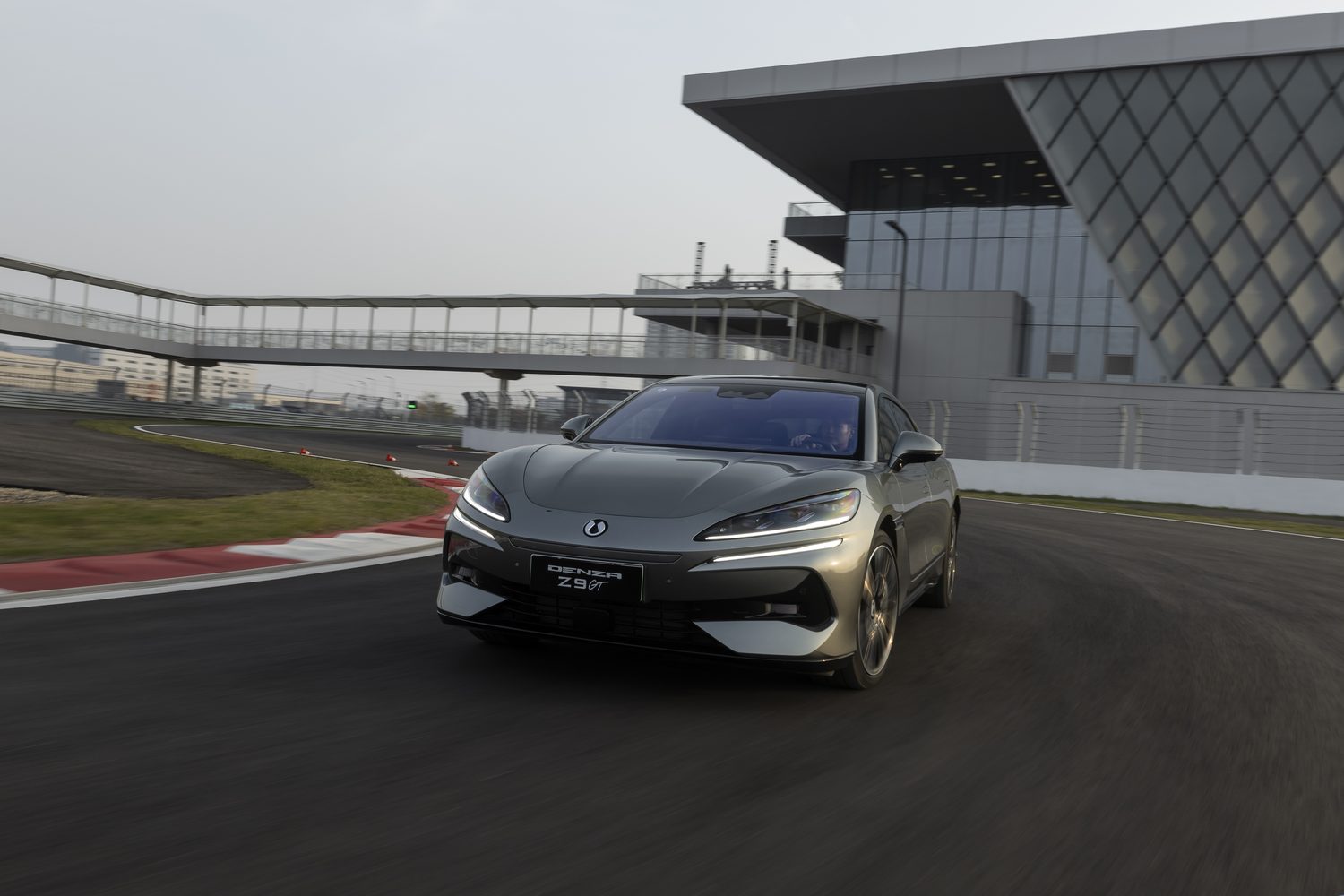
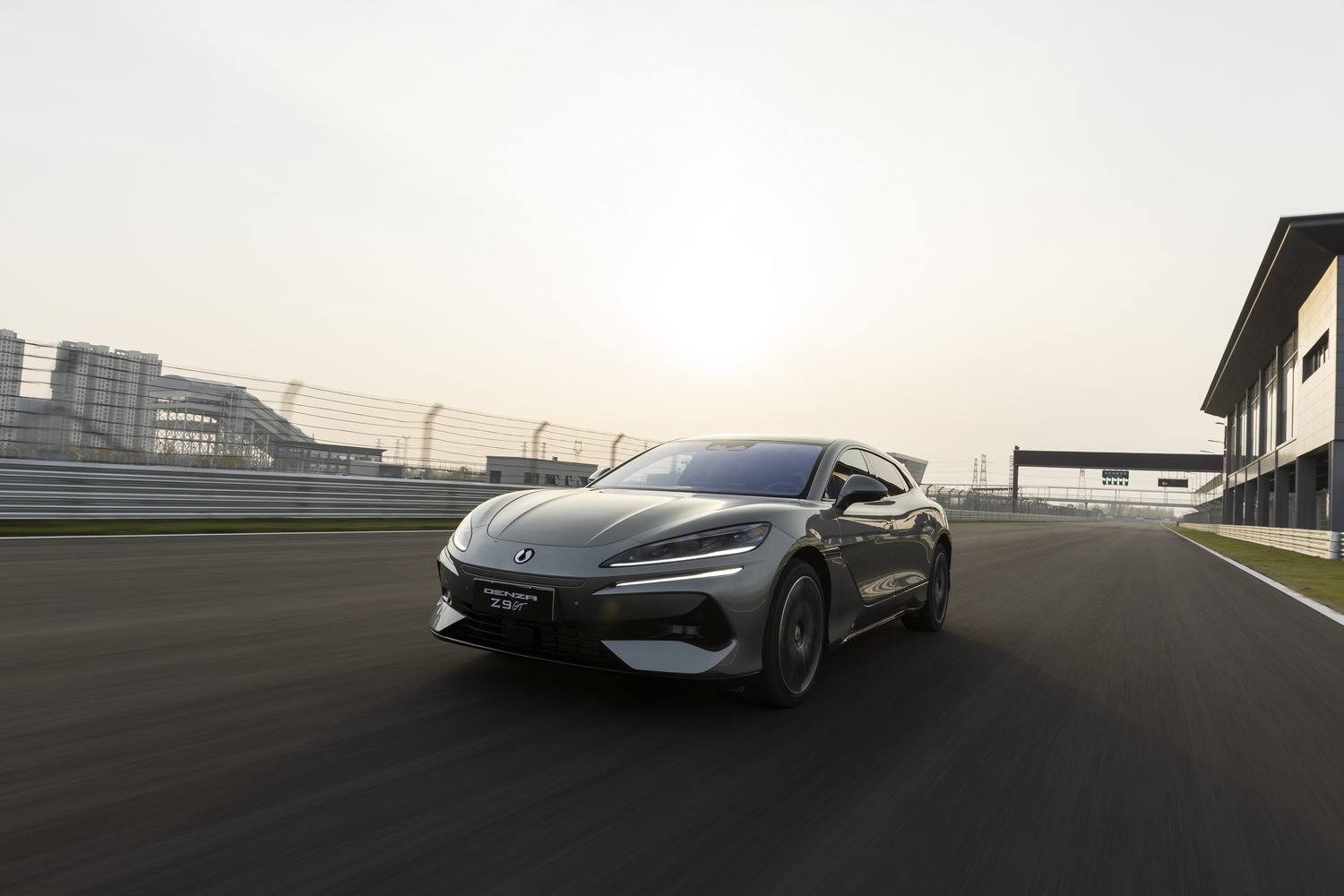
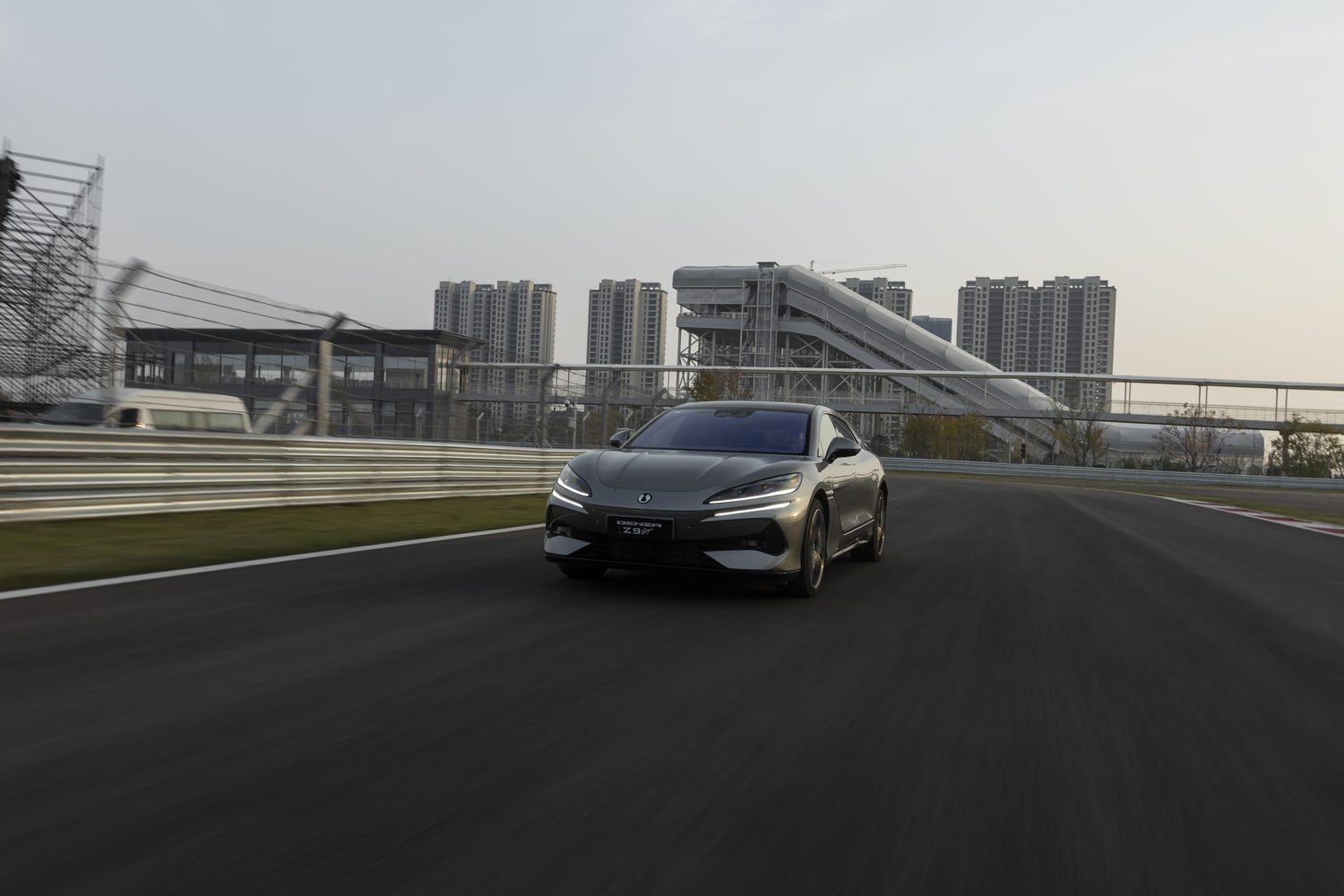
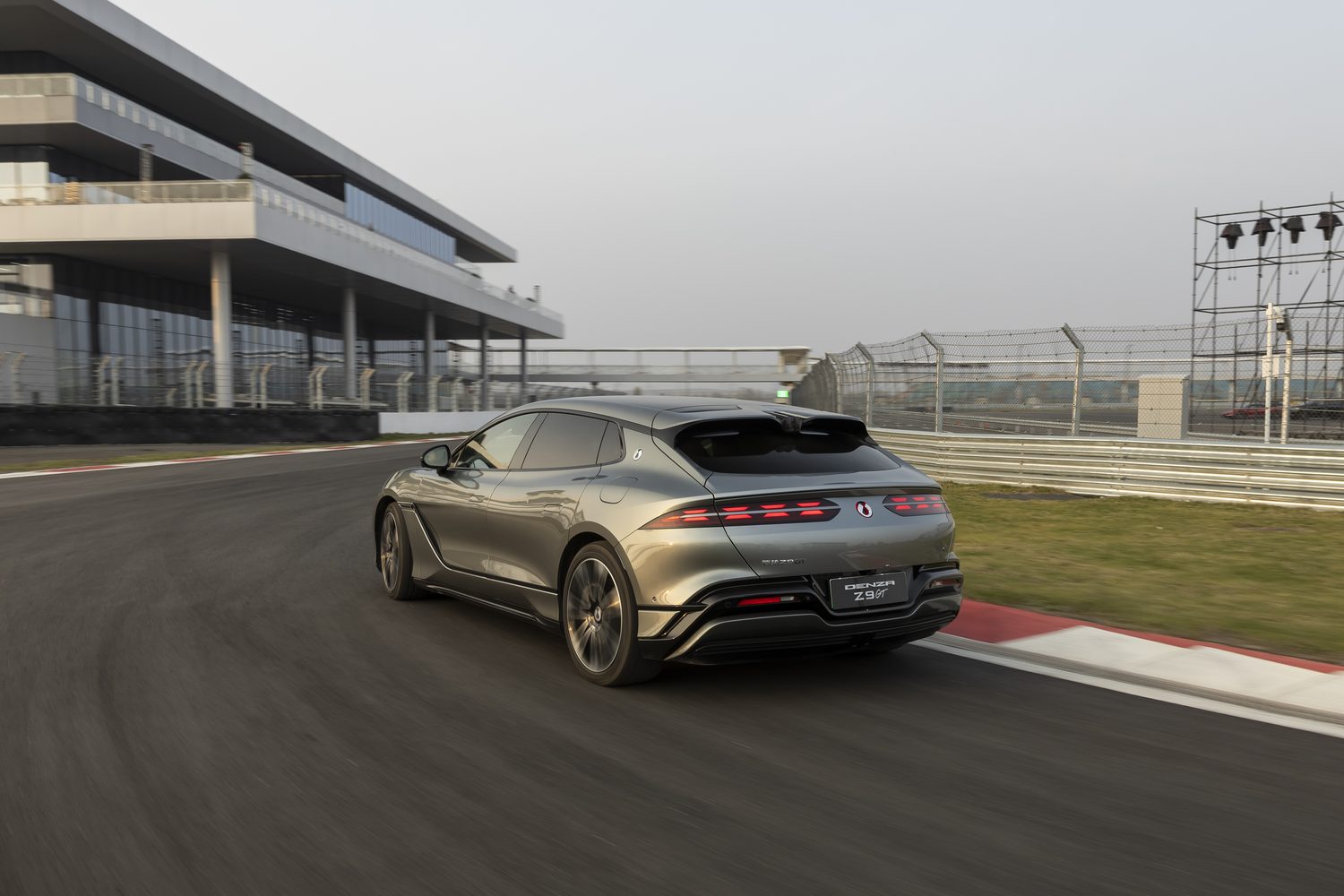
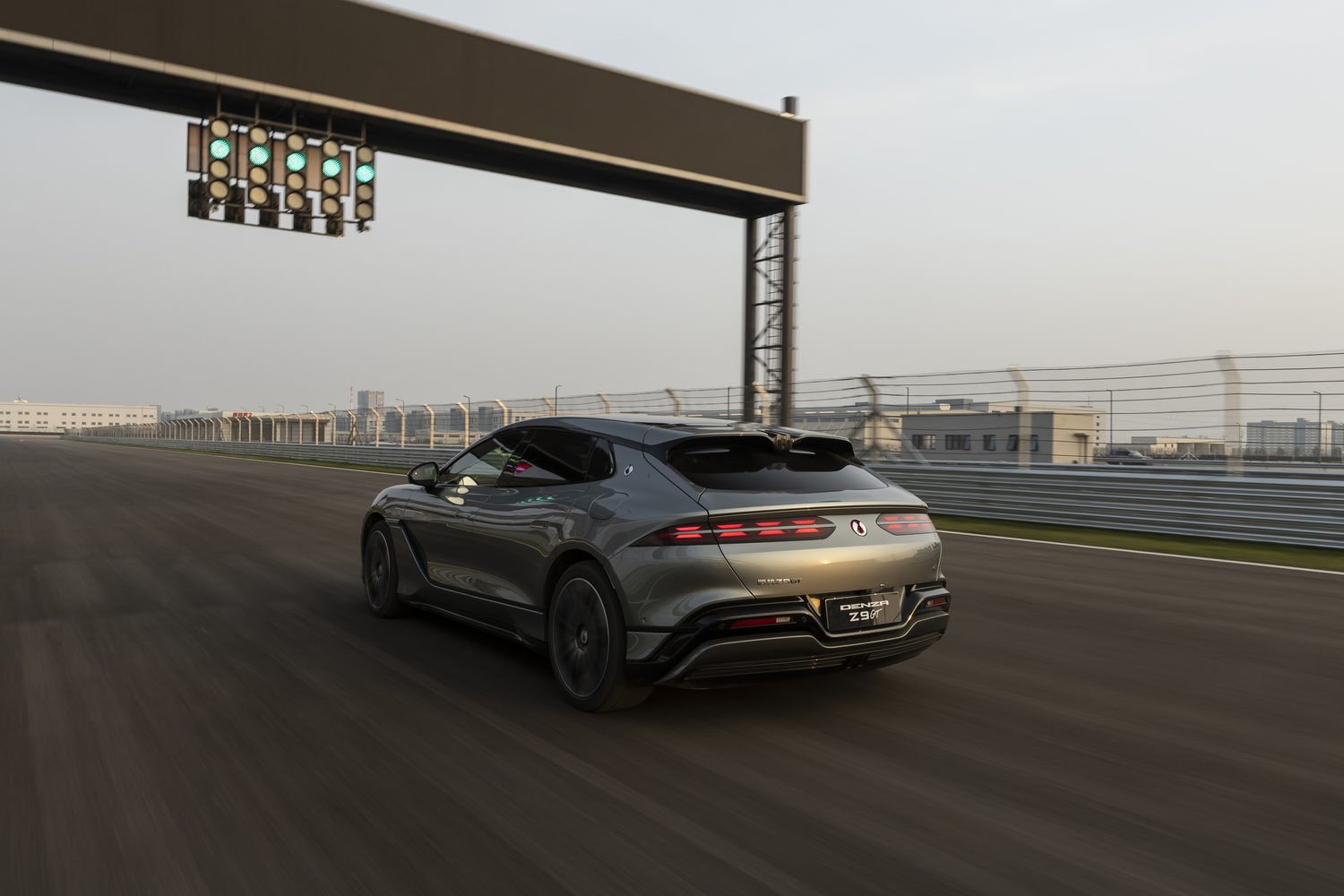
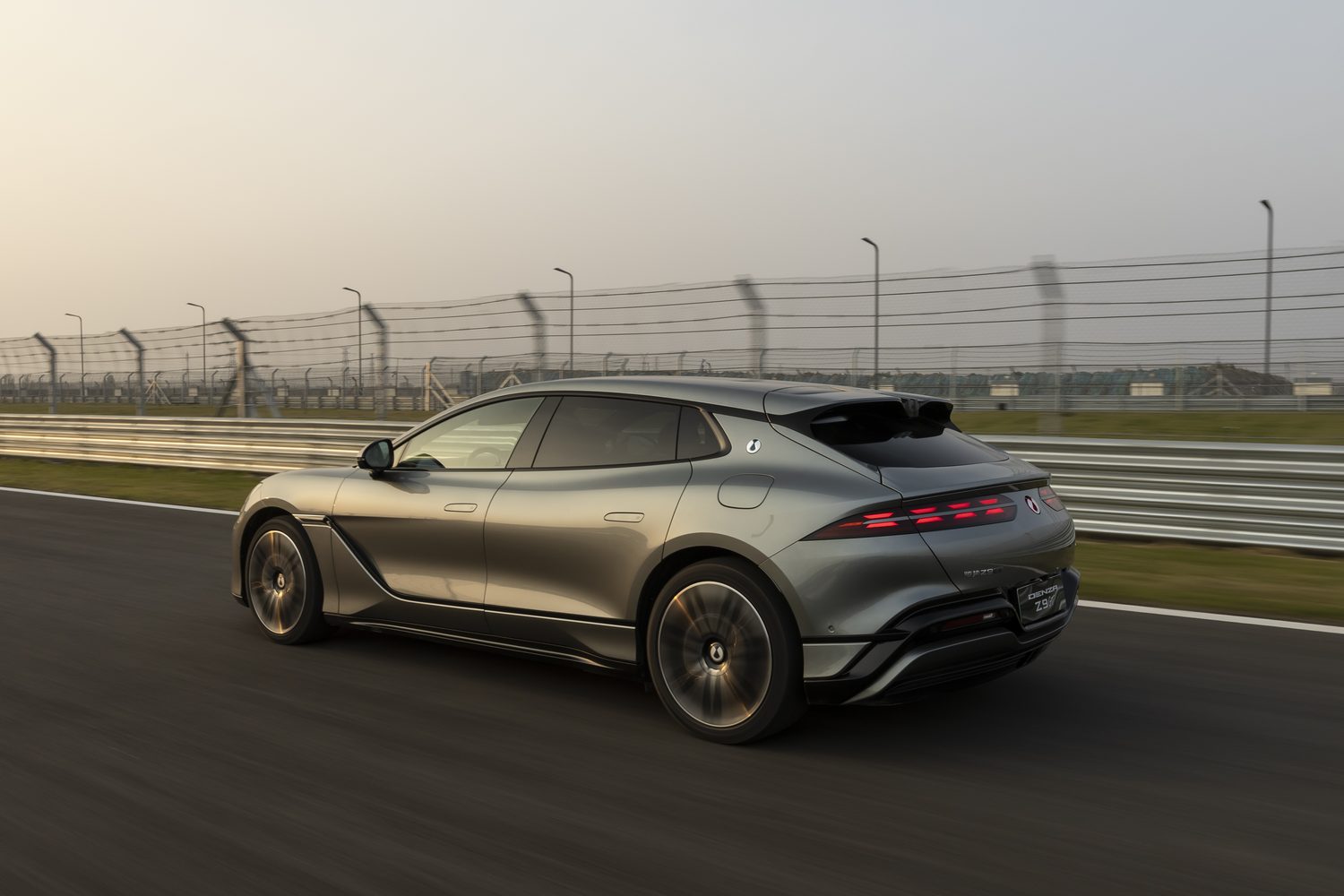
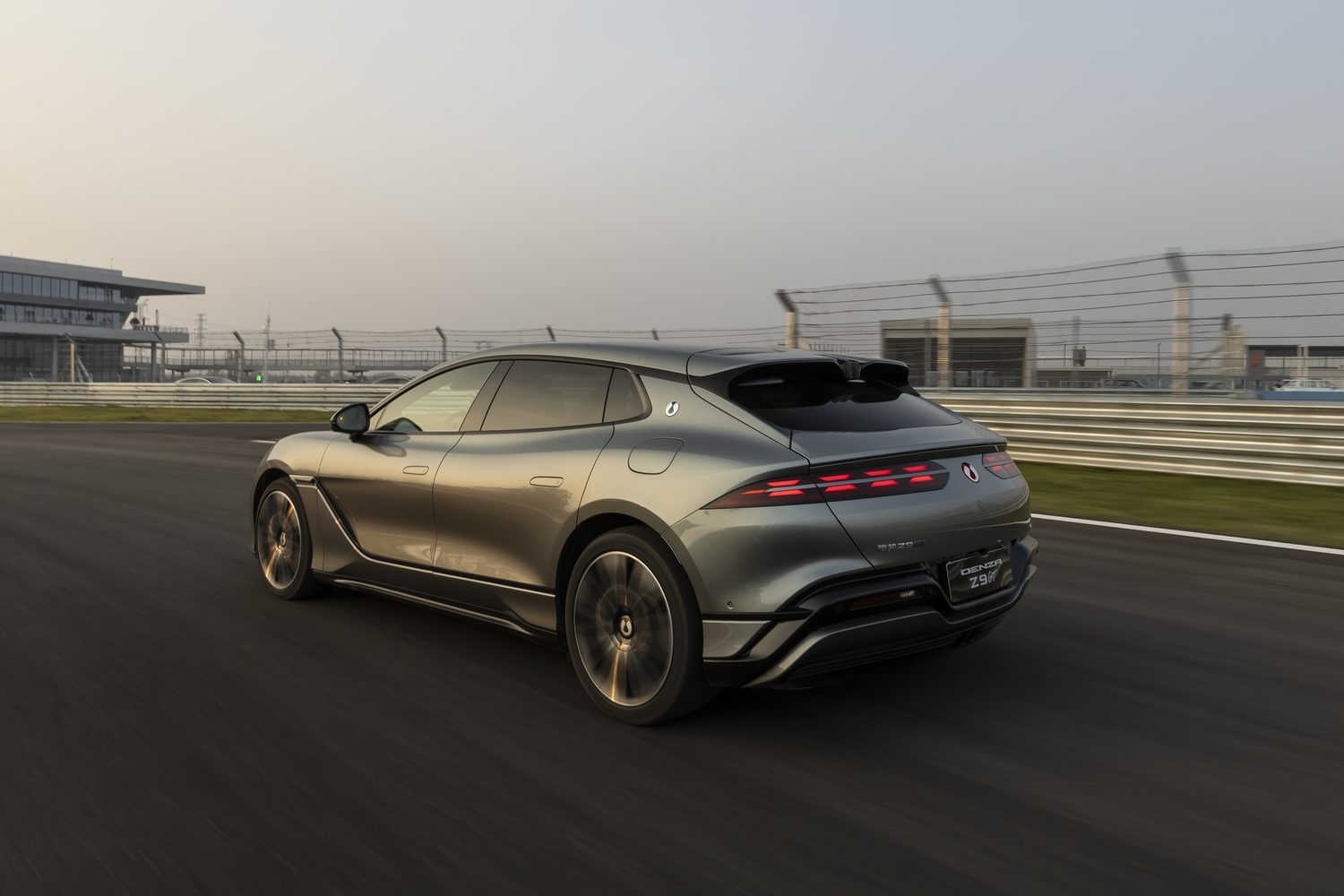
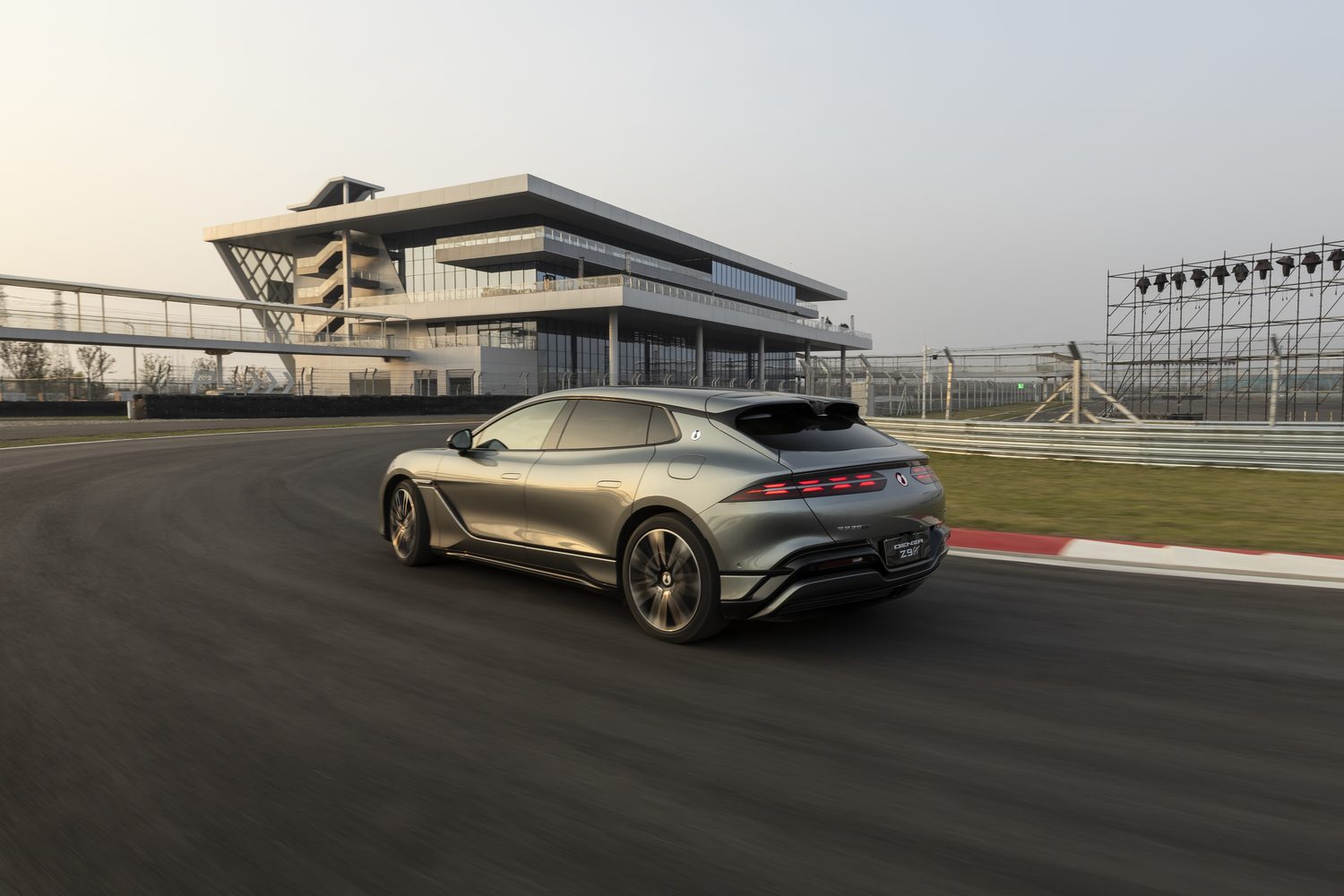
Although the Denza Z9GT EV is handsome in its own way, it's a slightly generic design that is unlikely to win over conquest sales on its appearance alone.
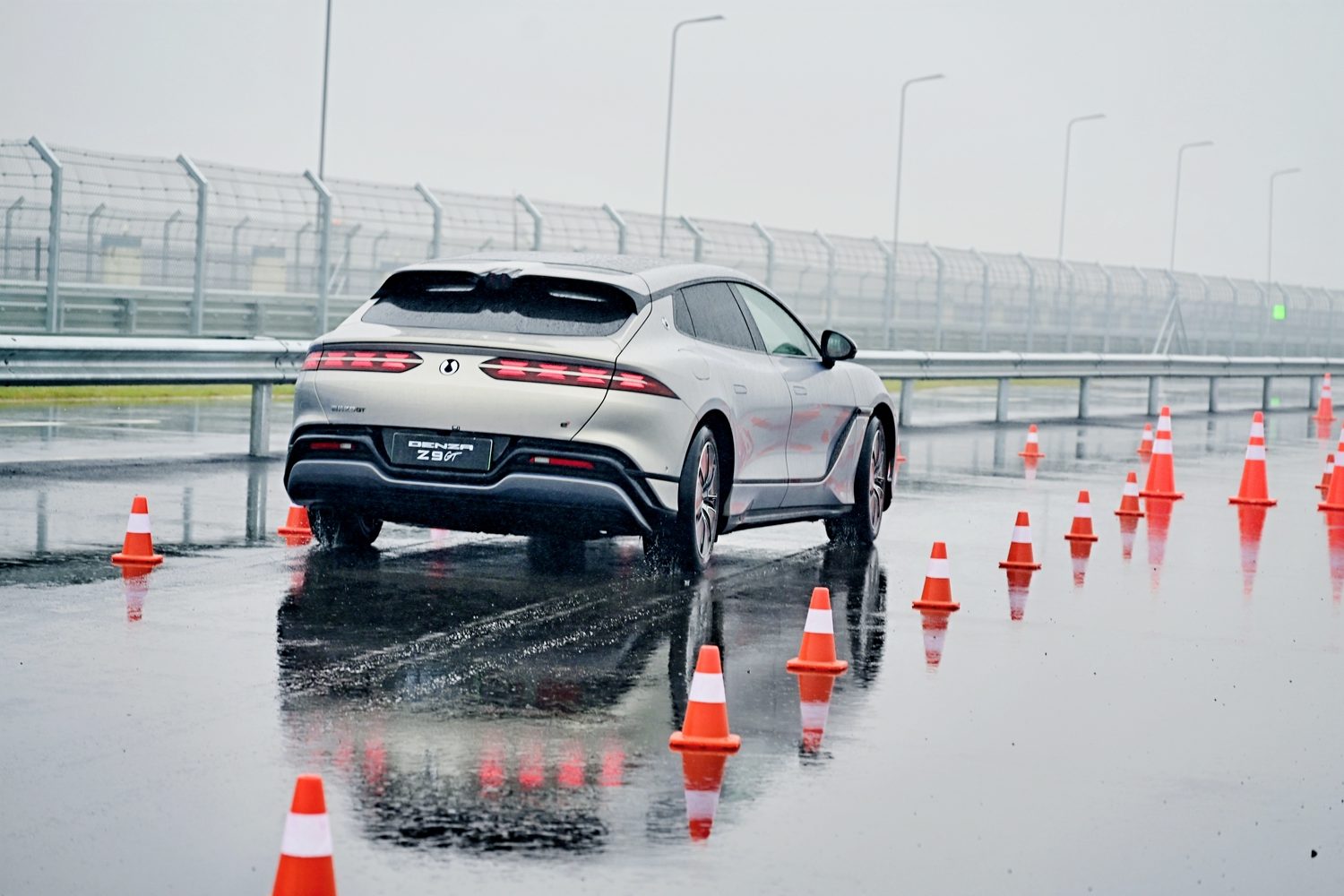
It's not bad, of course, with German designer Wolfgang Egger - formerly of the parishes Alfa Romeo, Audi and Lamborghini - taking inspiration from the way that most Chinese of materials, silk, flows when it is being moved.

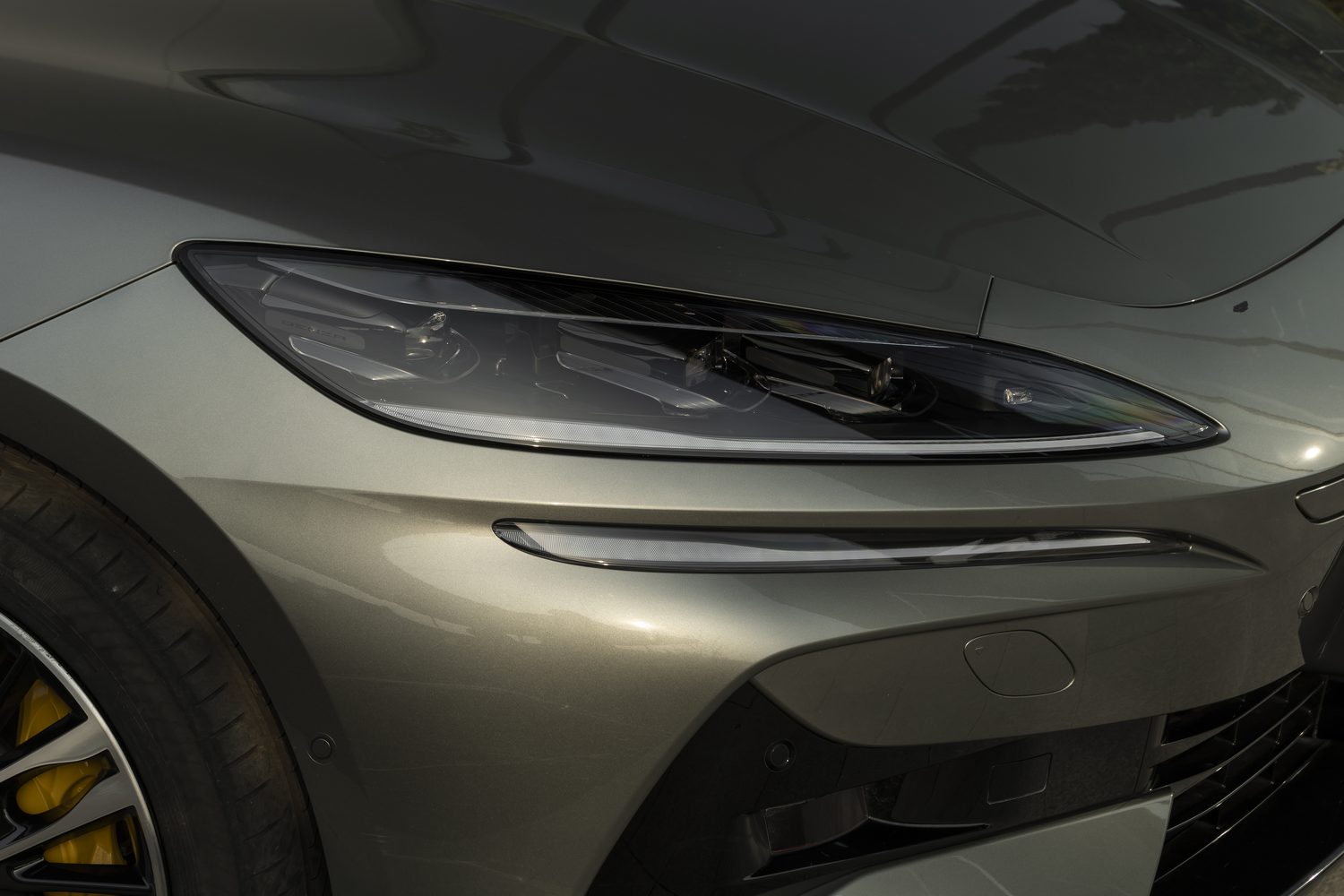
So there are interesting details, such as the elegant and wavy shoulder-line of the car, that feature which cuts through the front door and then curves into a line running parallel with the sills of the body, and the big, wide, expressive light clusters fore and aft.
But the overall shape isn't particularly striking or beautiful by the same token, while the sheer size of the machine - almost 5.2 metres from tip to tail and with a goliath 3.1-metre wheelbase - does make the 21-inch alloys look a tiny bit lost in the rear arches. It also loses some definition when it's finished in black and sitting on black wheels.
Nevertheless, the overall effect of the Z9GT EV is broadly pleasing, and furthermore it looks almost identical to the plug-in-hybrid version we've already tested.
Dimensions of the 2026 Denza Z9GT EV
- Length:
- 5,180mm
- Width:
- 1,990mm
- Height:
- 1,500mm
- Wheelbase:
- 3,125mm
Paint colours for the 2026 Denza Z9GT EV
As far as we're aware, the Denza Z9GT EV is available in a limited four-strong palette of colours that are clearly deemed to be 'premium' by overlord company BYD.

These are called Starry Black, Starlight Grey, Midnight Purple and Moonlit Beige, but whether more hues - such as attractive blues, deep reds and classy greens - will be added before the car is launched in Europe remains to be seen.
Interior, practicality, tech & comfort of the 2026 Denza Z9GT EV
- High-quality finishing
- Plenty of neatly integrated tech
- Masses of space in second row

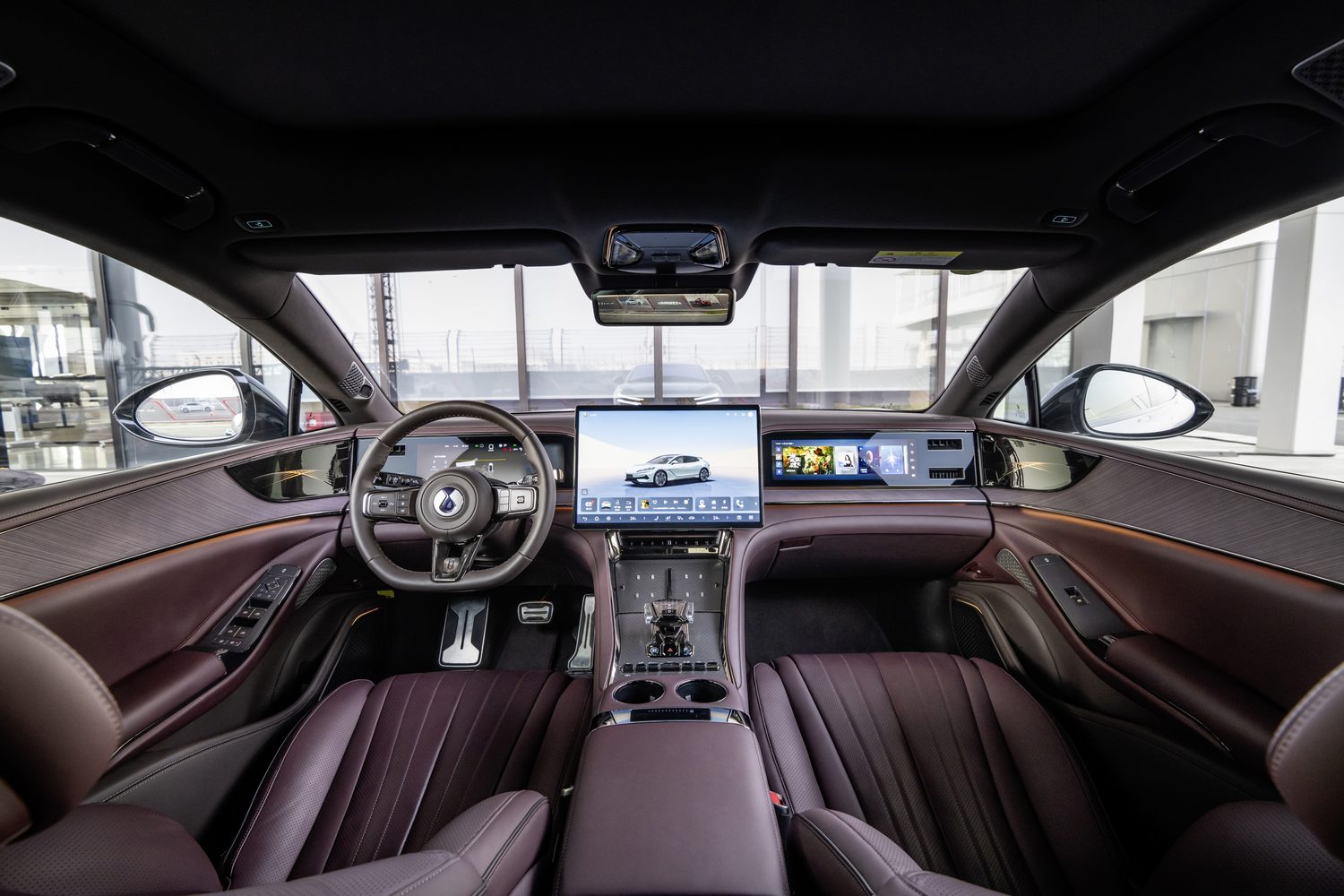
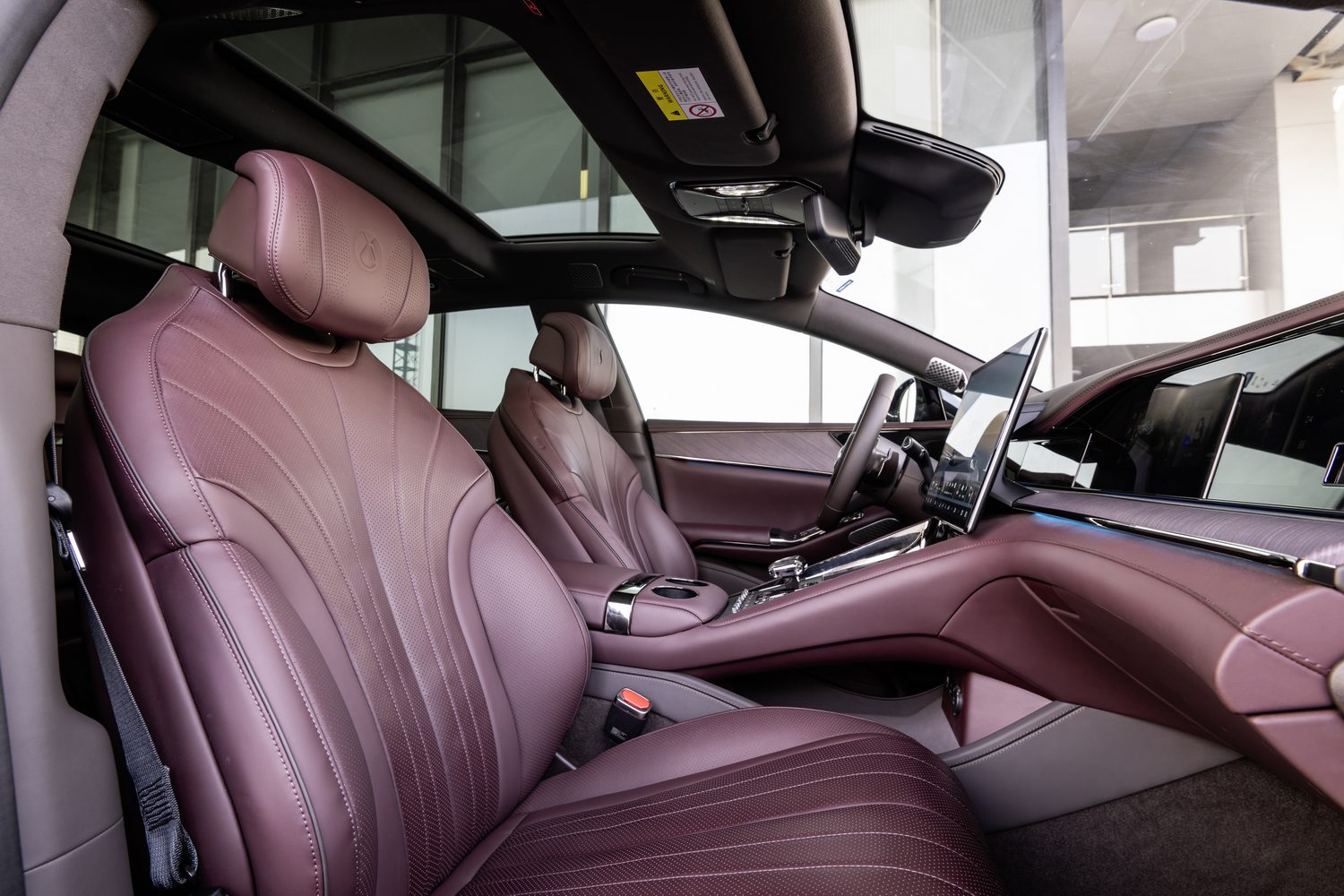
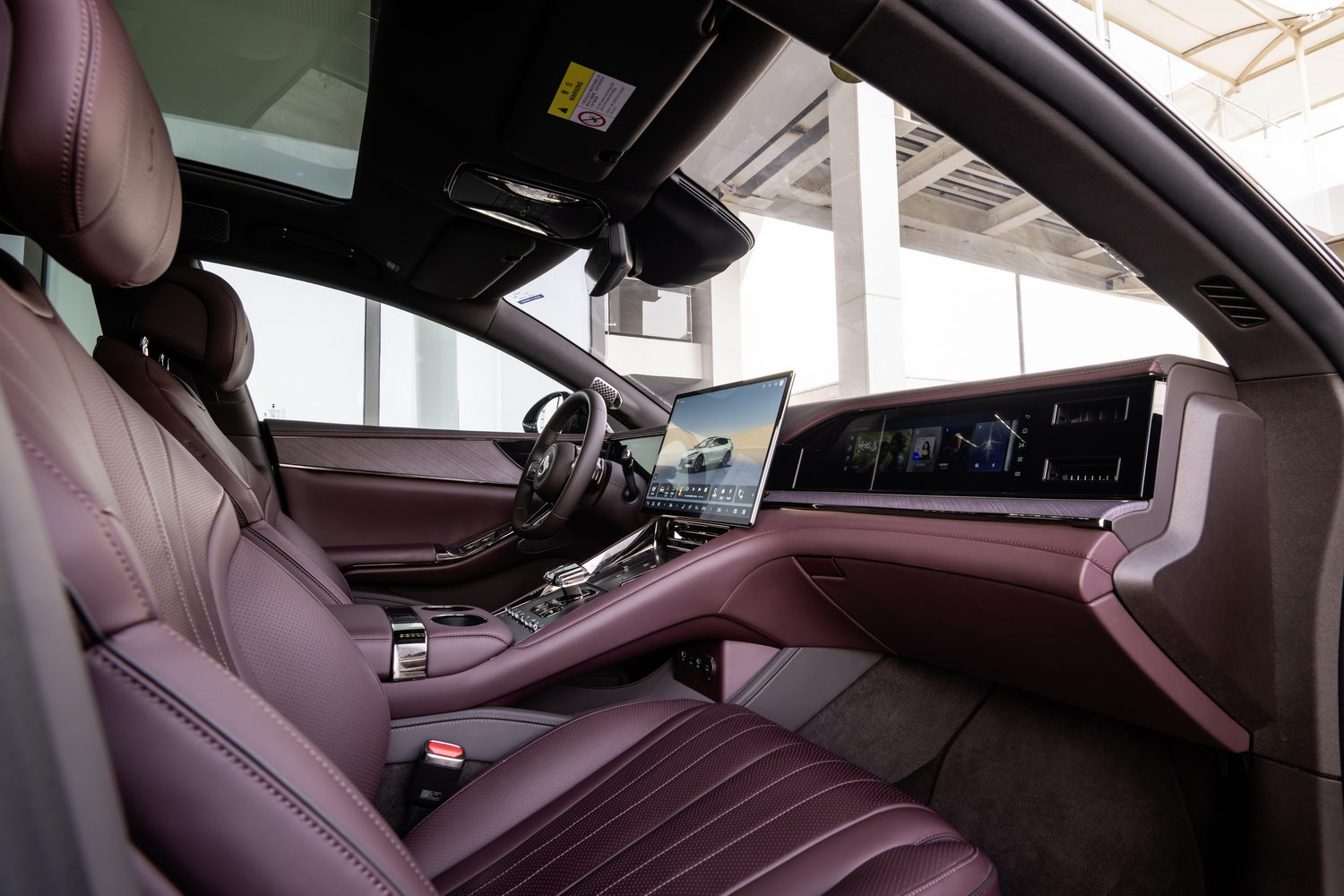
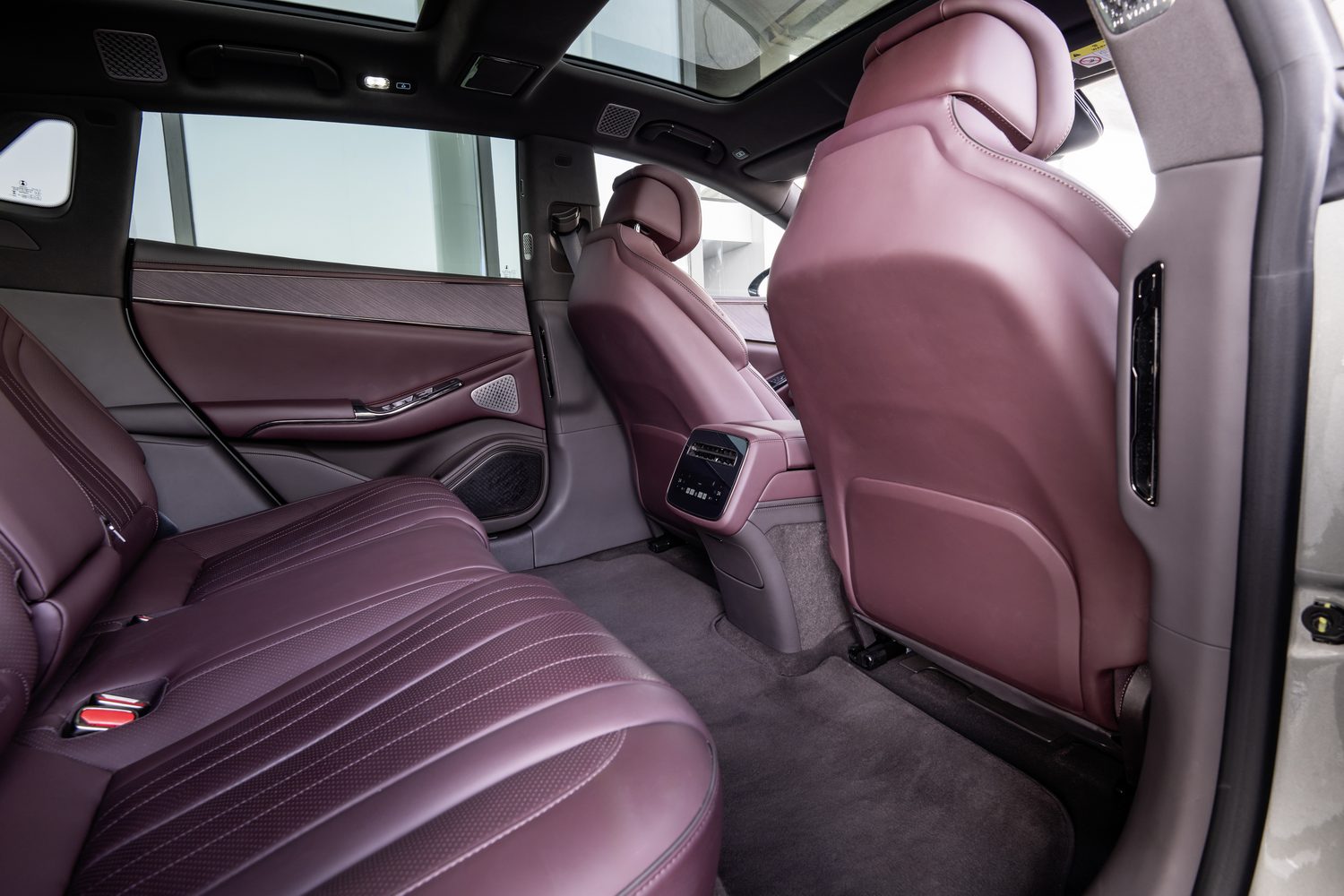
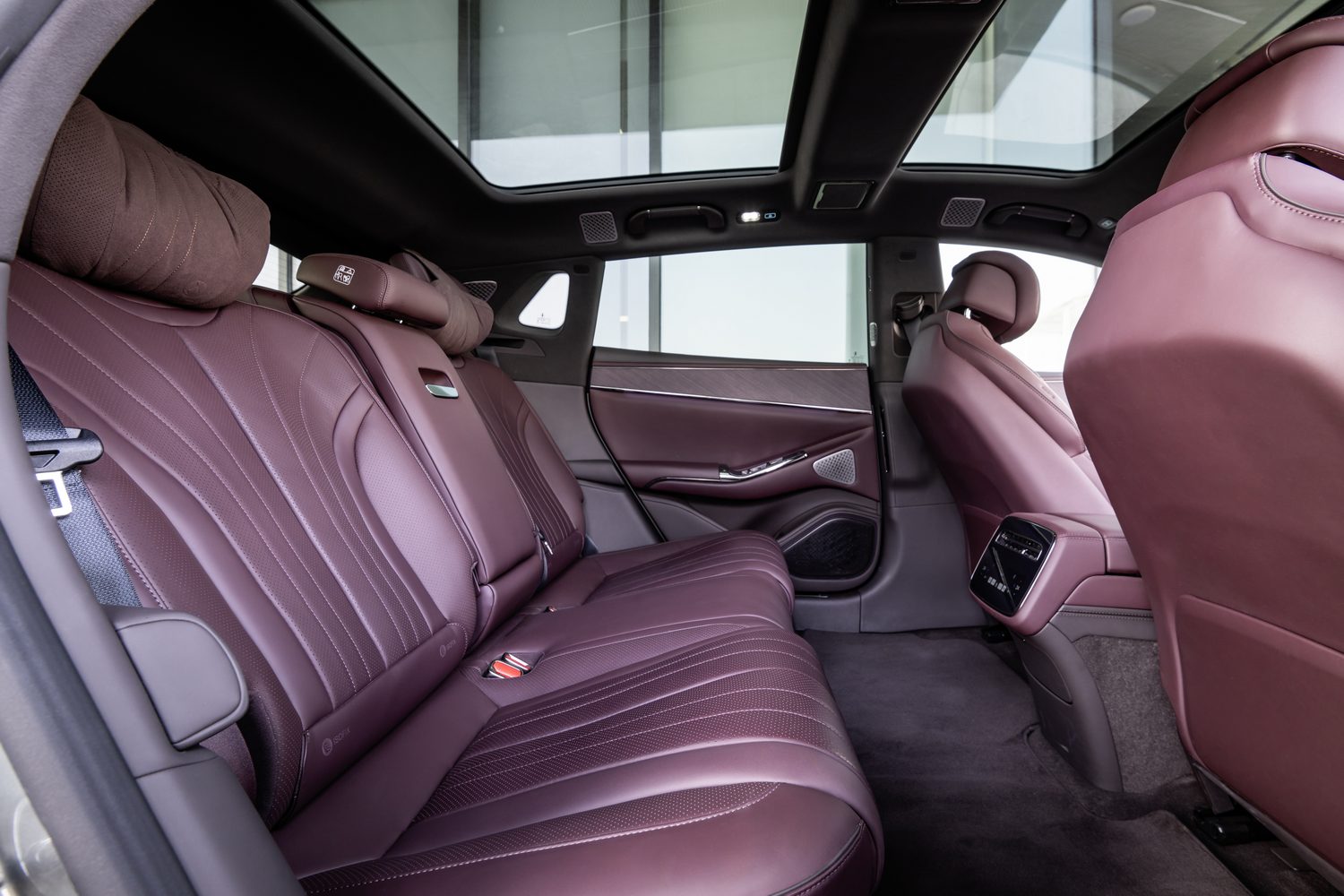
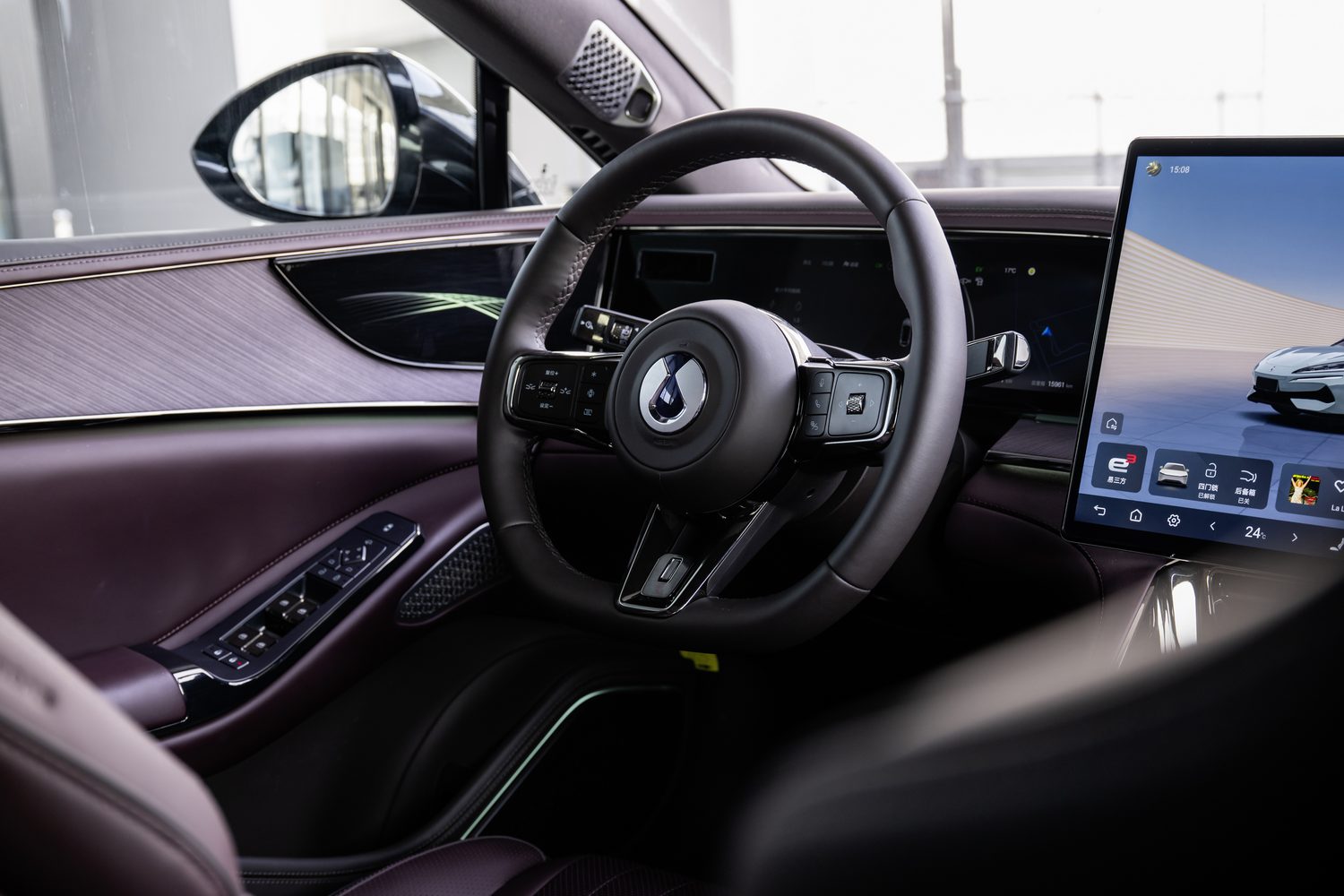
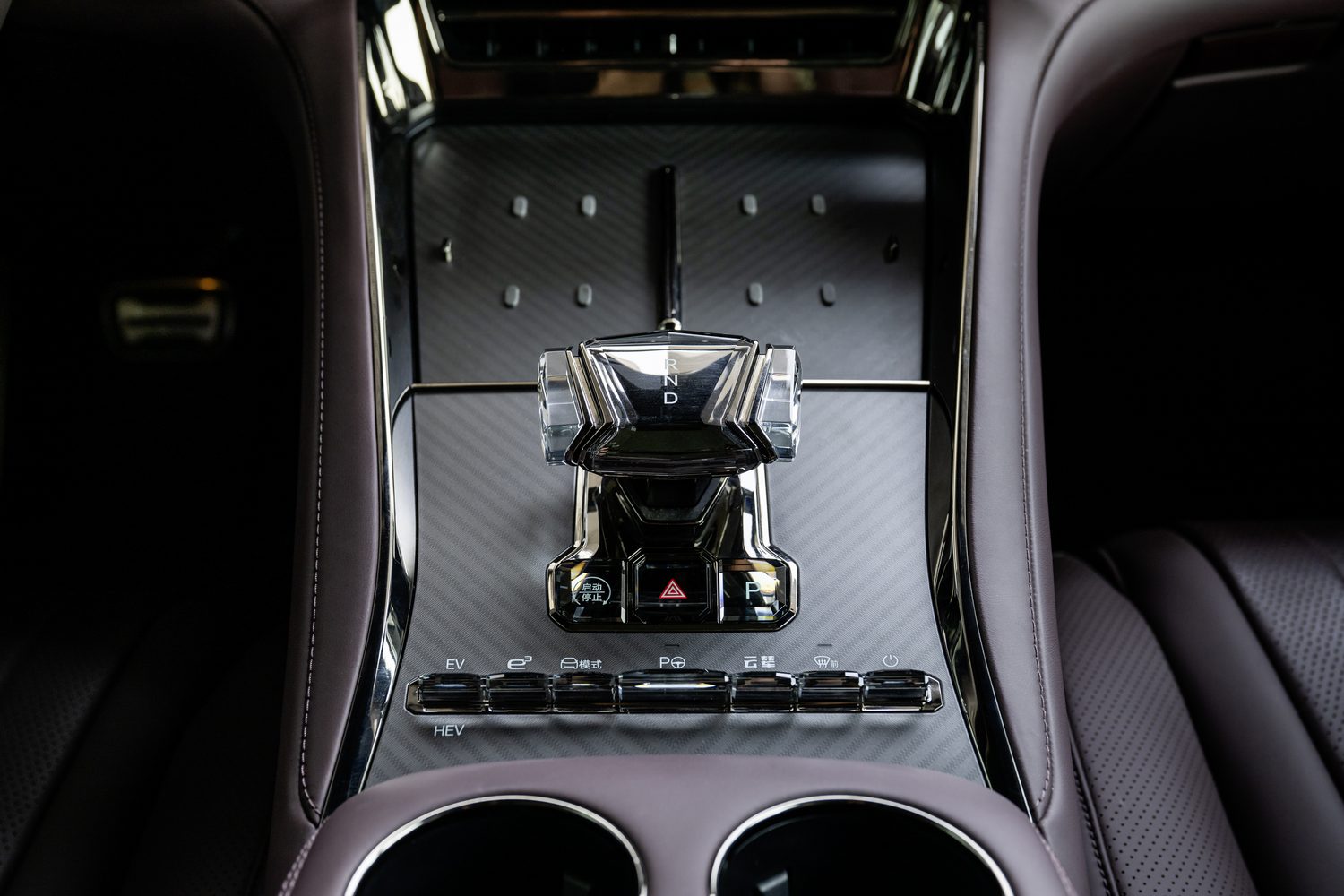
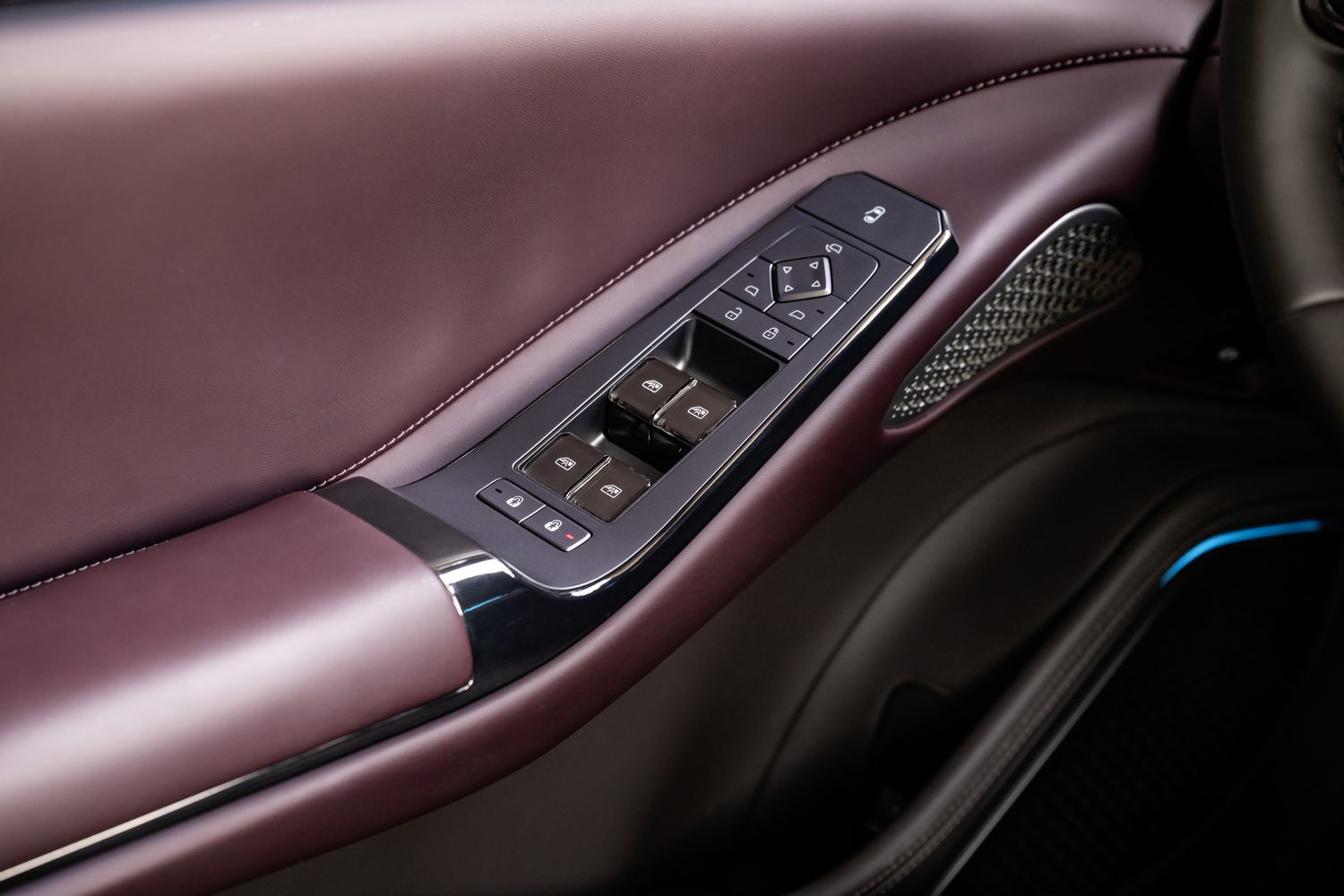
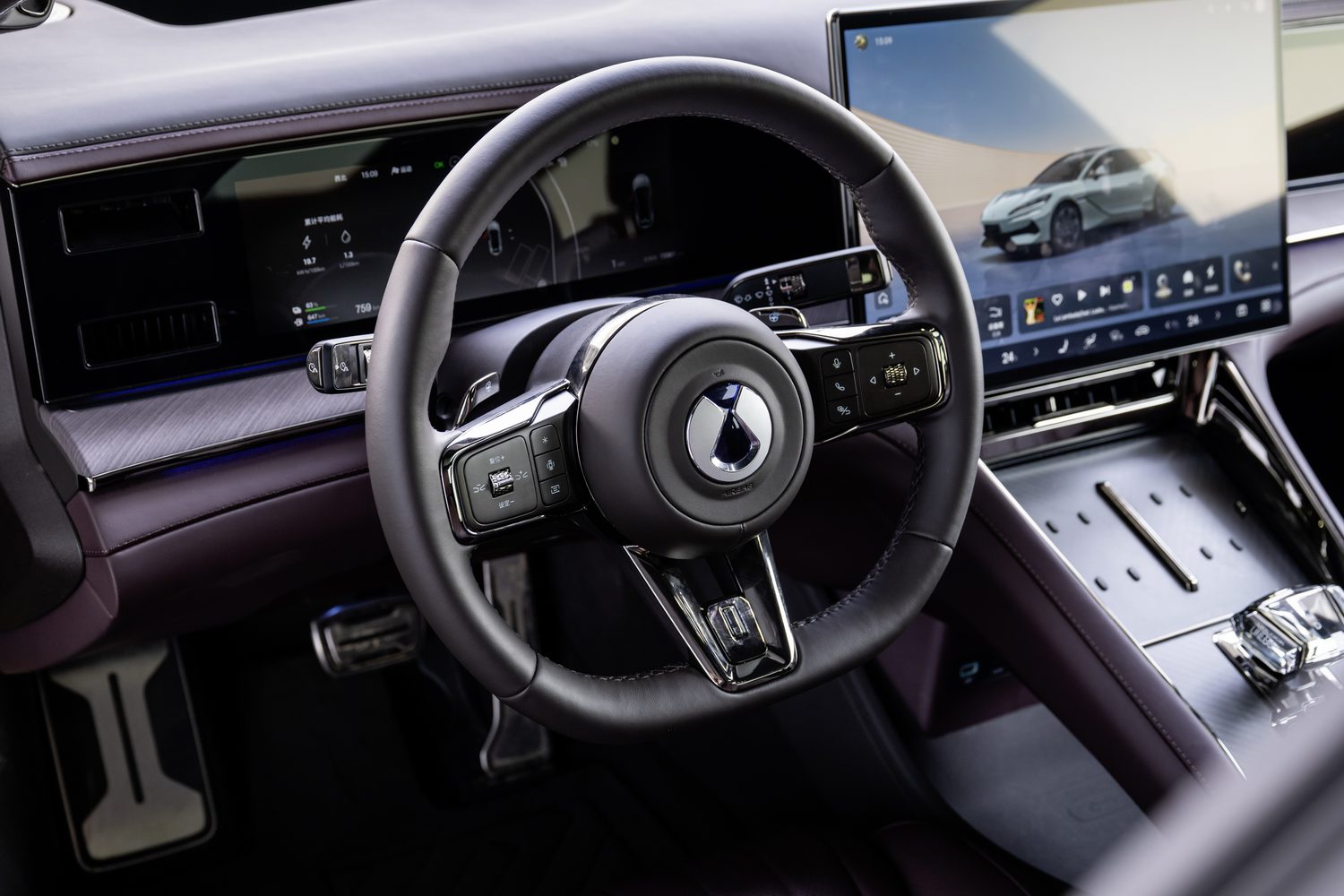
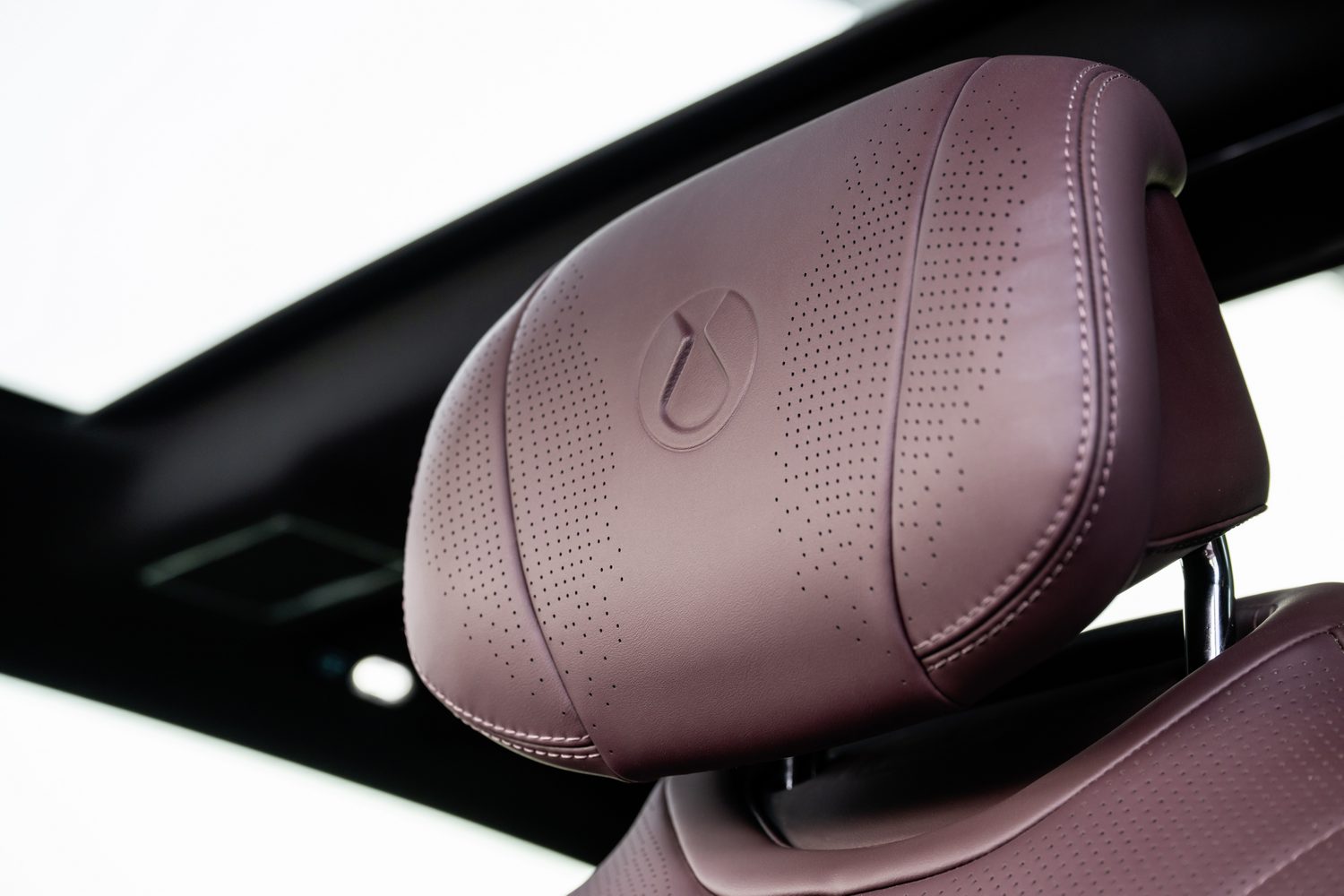
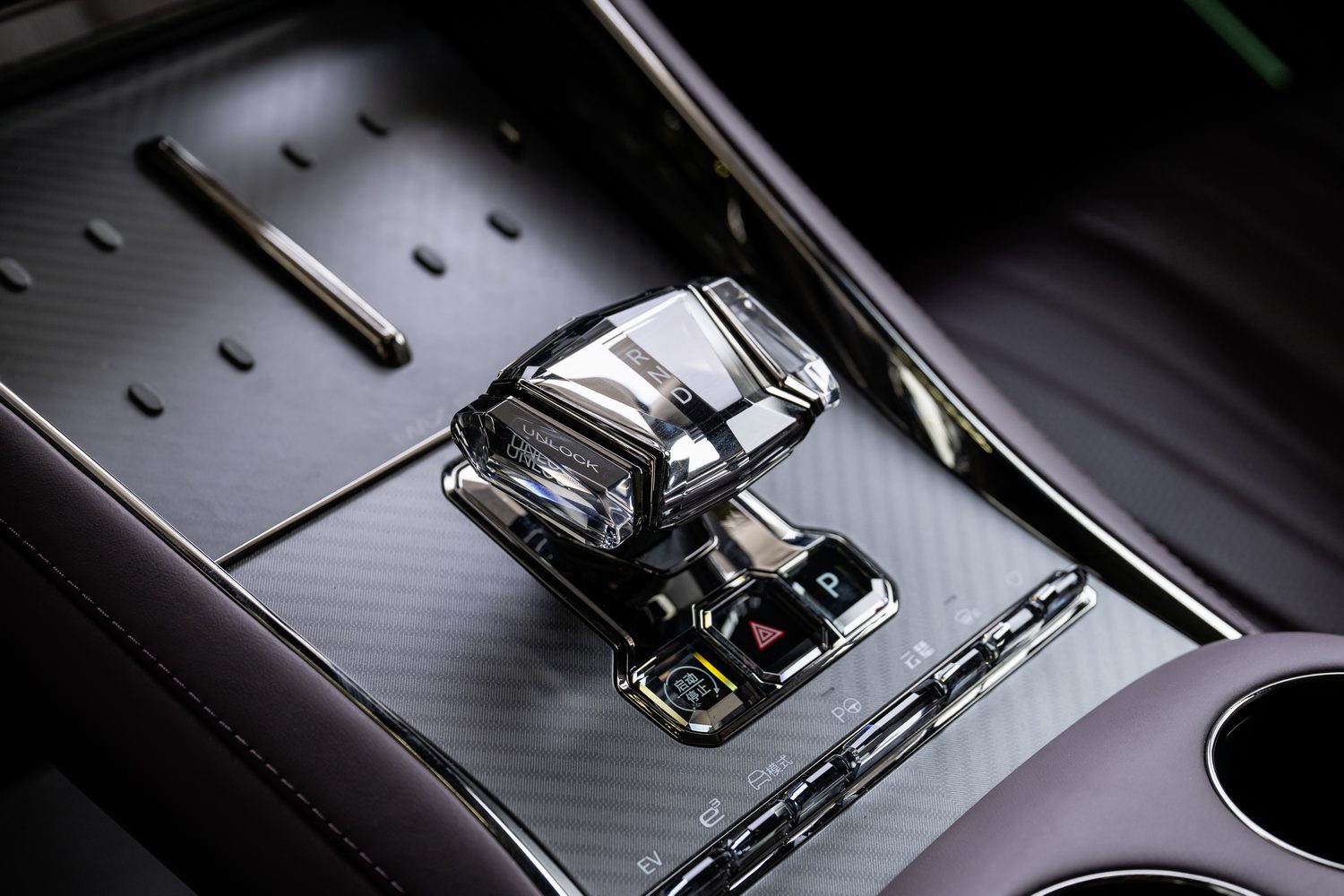
Denza has taken great pains to ensure the interior of the Z9GT EV feels suitably upmarket and, on first impressions, it seems to have worked.
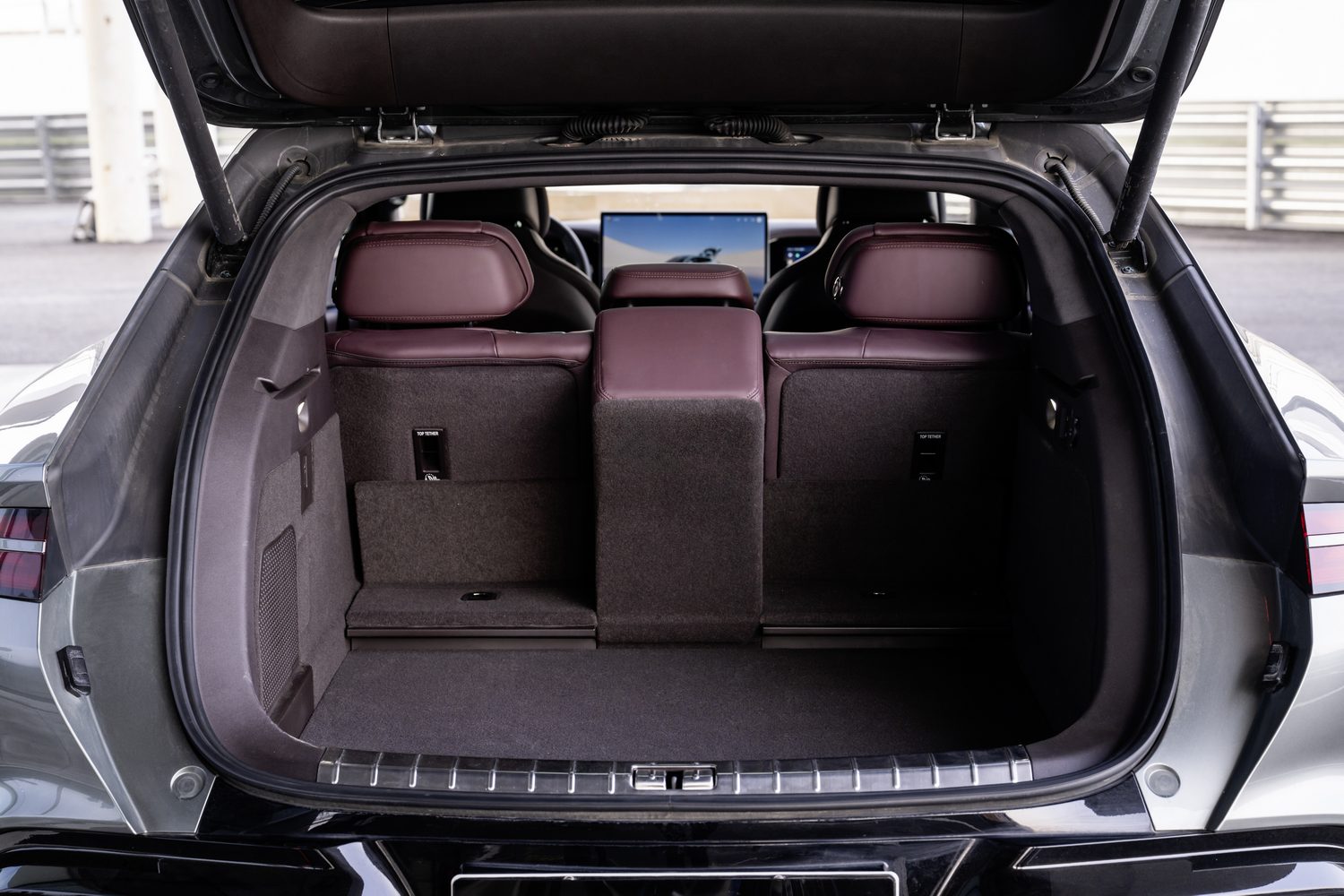
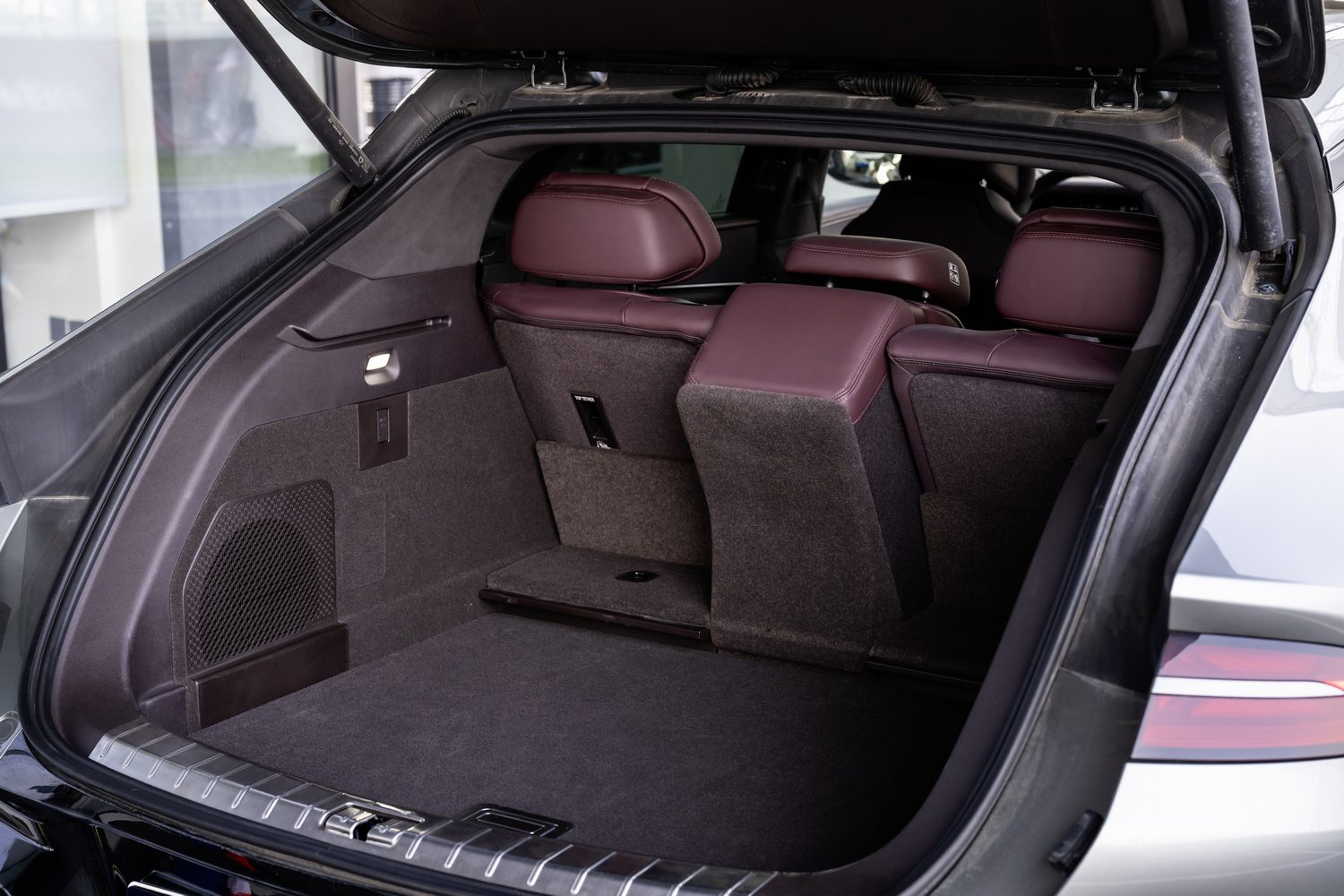
The fit and finish are excellent throughout, while the integration of the onboard technology is carefully done. There's also lots of room in the cabin, thanks to the mass of space between the front and rear wheels, although the boot is not the most capacious thing in the world, considering the GT's supposed estate nature.
Getting comfortable in the driver's seat
There's a full range of electrical adjustment on both the driver's seat and the steering column, so attaining a suitable driving position ought to be easy for people of varying builds and statures.

Visibility out of the cabin is also very good in most directions, although the rear-most pillars of the car are a little chunky and can slightly obscure the driver's rear three-quarter vision.
Infotainment and technology
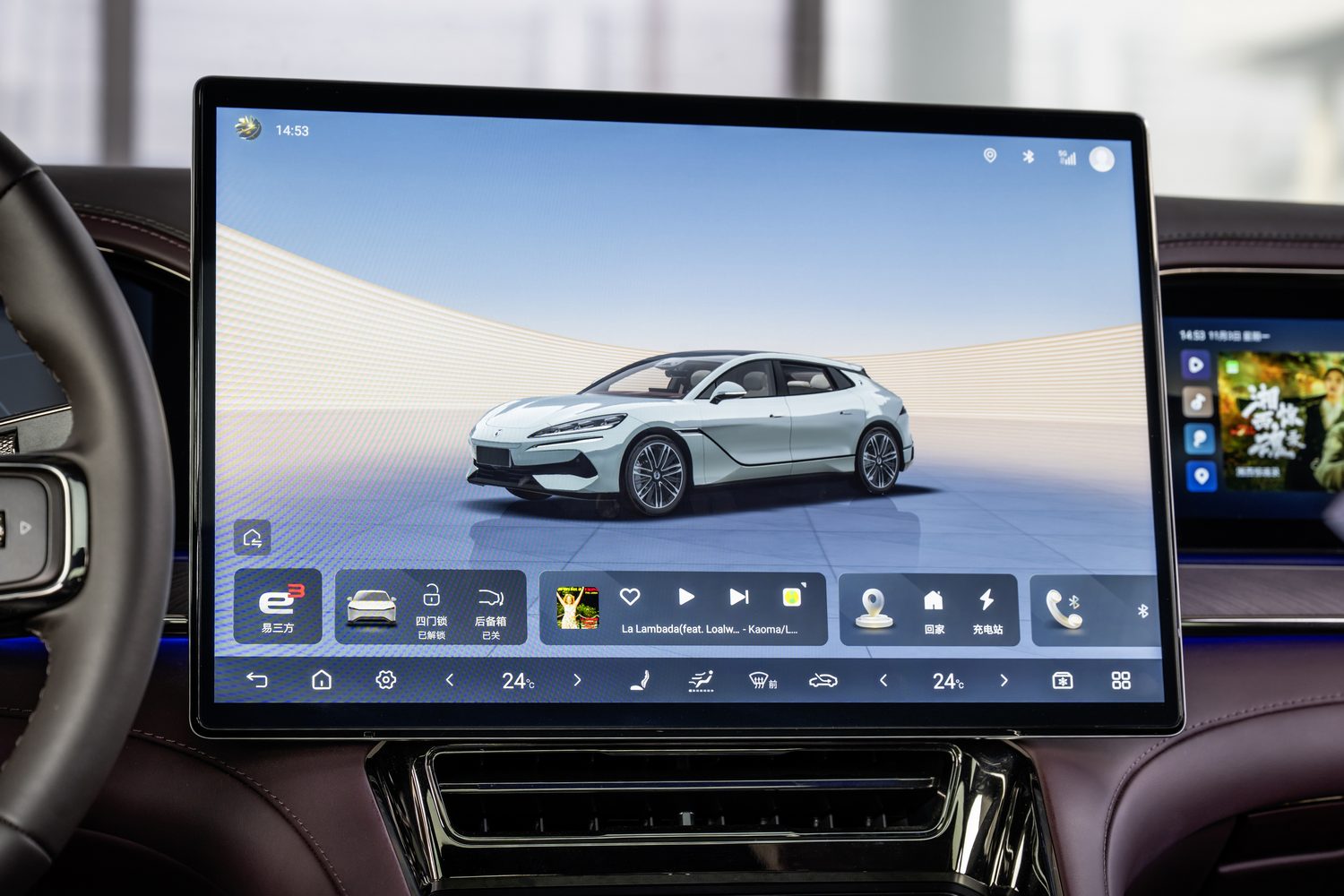
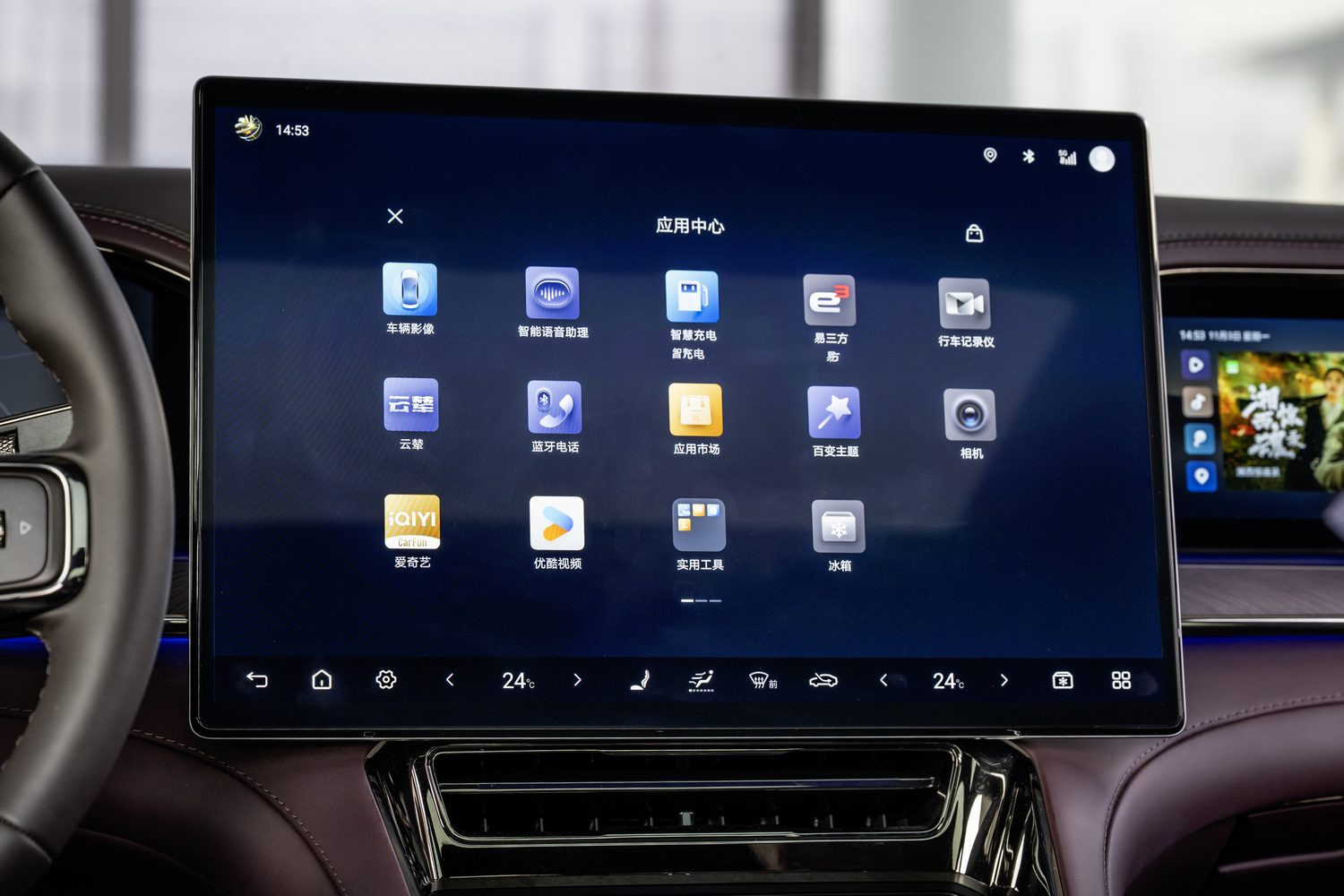
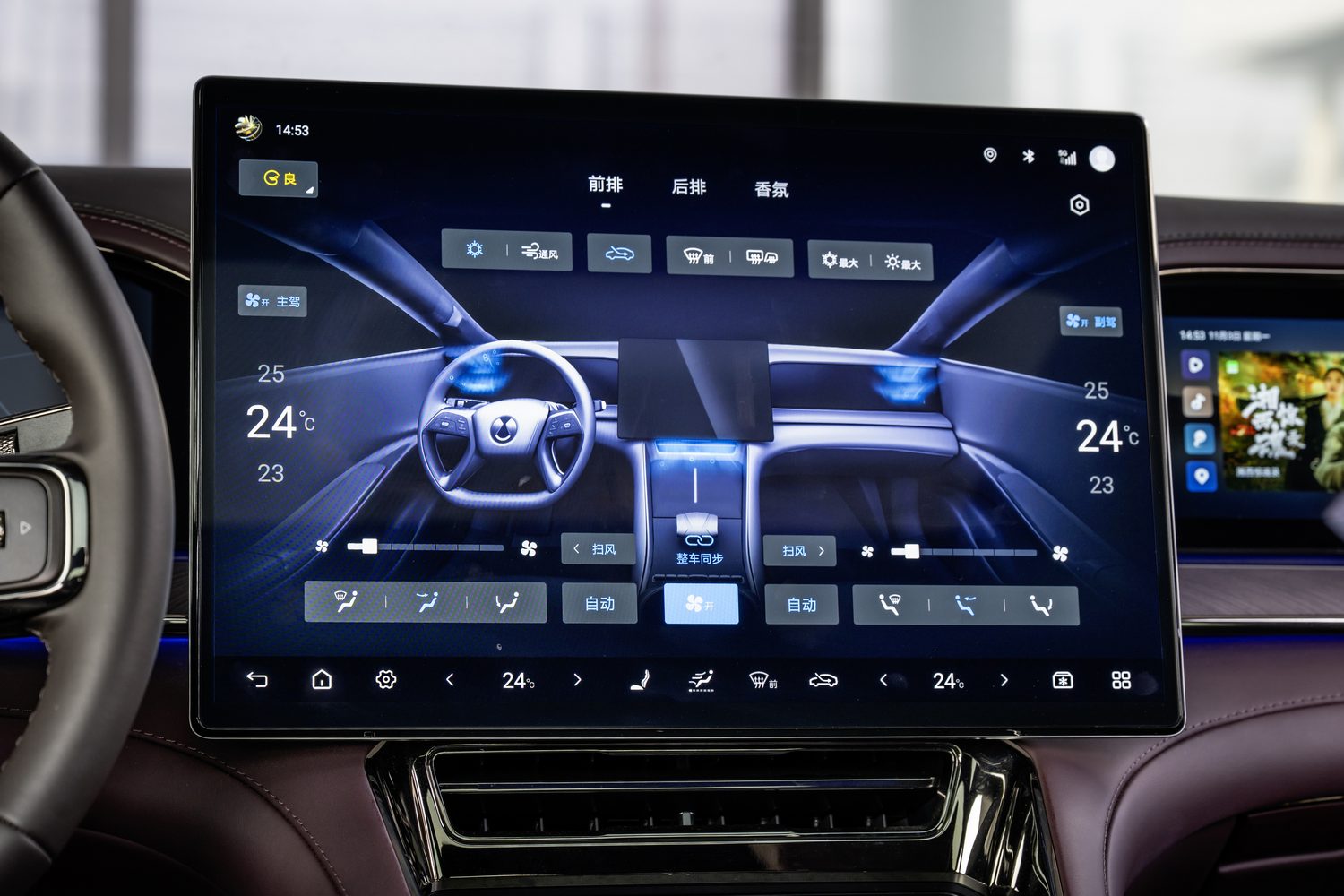
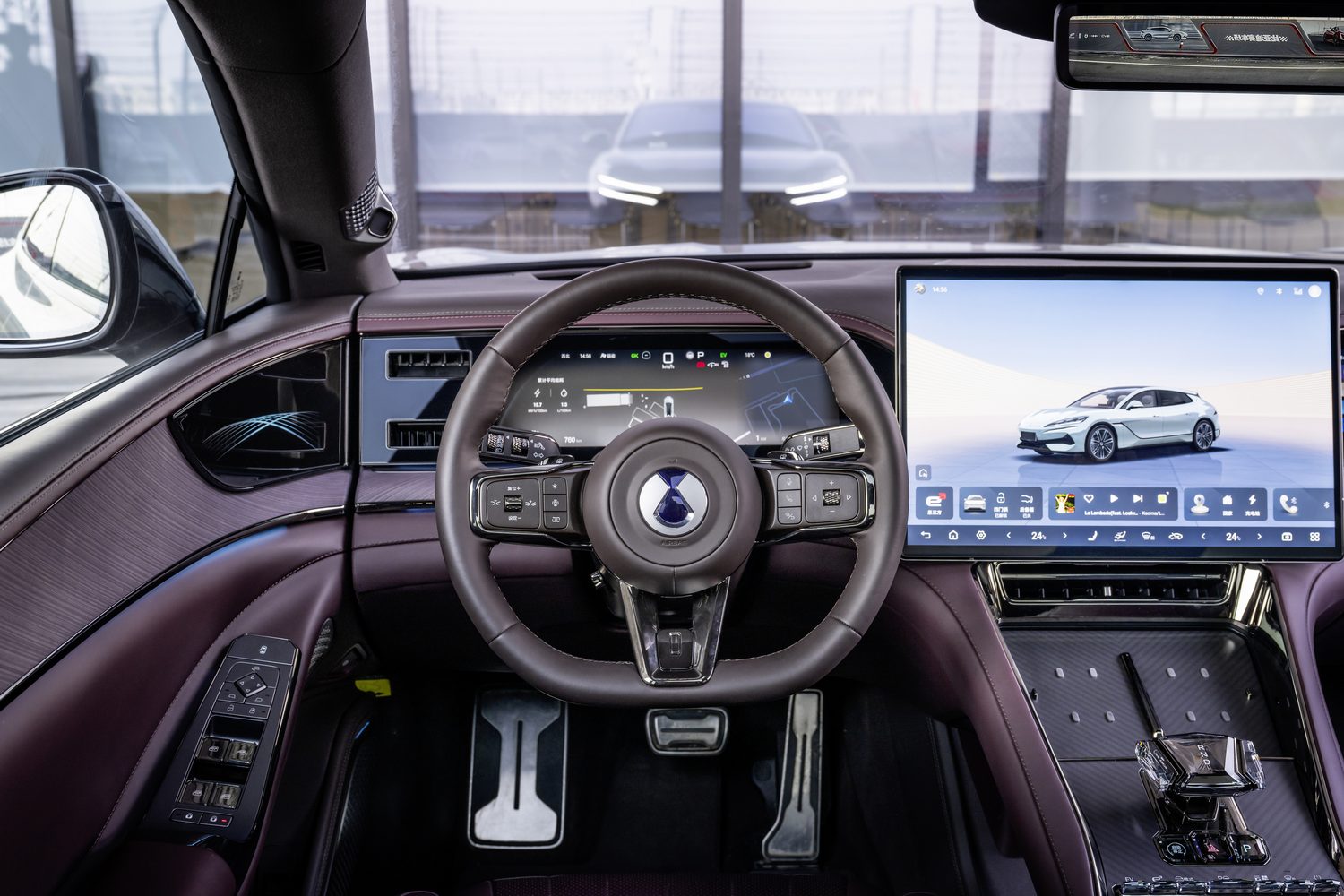
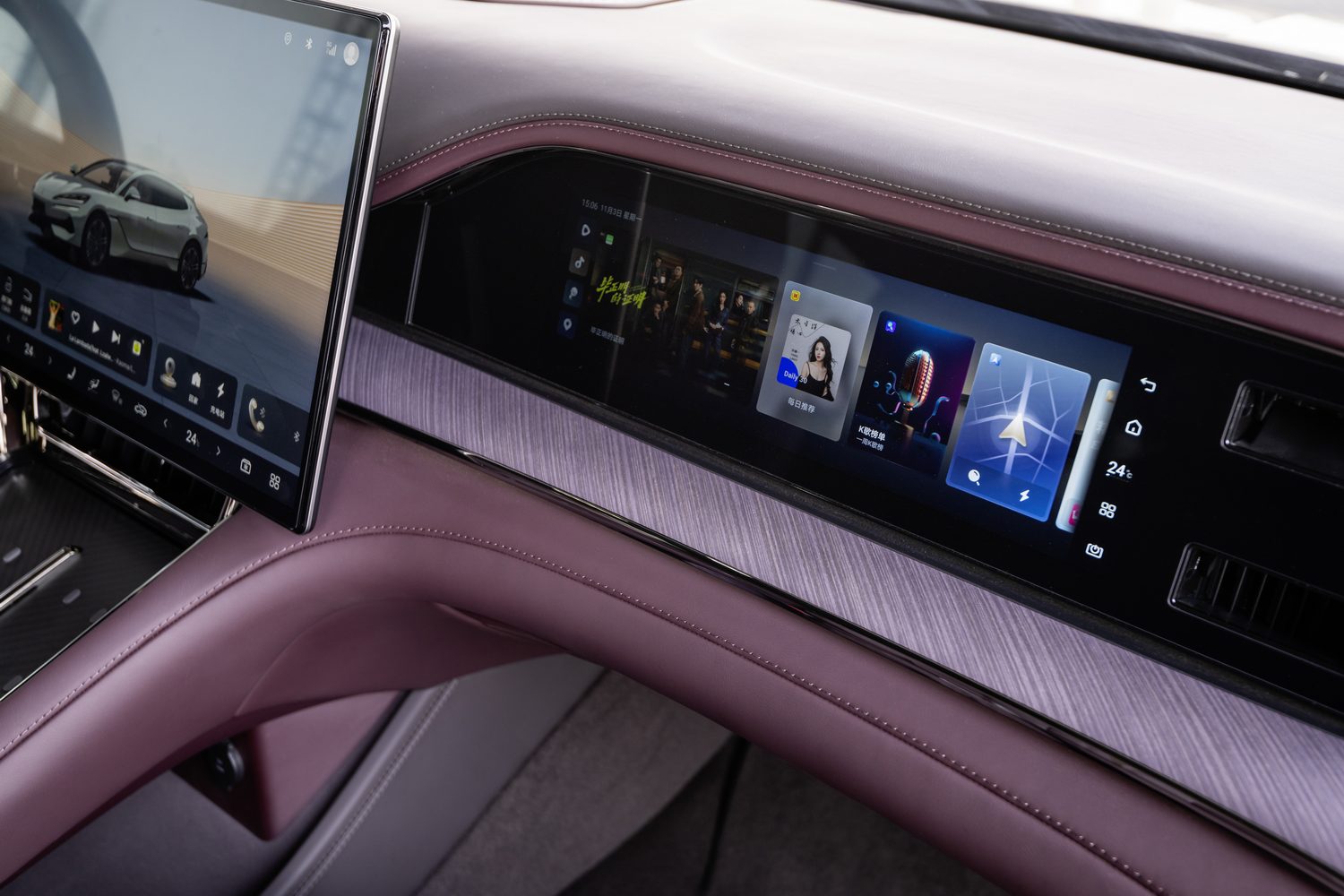
Denza, and indeed parent company BYD, likes a big screen, and the Z9GT EV has at least two of the things just to prove the point.

There's a 17.3-inch display for the infotainment and 13.2-inch digital instrument cluster, and both of these are clear and sharp - although as we drove the Z9 on track for a couple of laps, we didn't have a thorough investigation of how intuitive the main infotainment is to use for ancillary functionality. We'll reserve judgement on that until we've driven the car for longer.
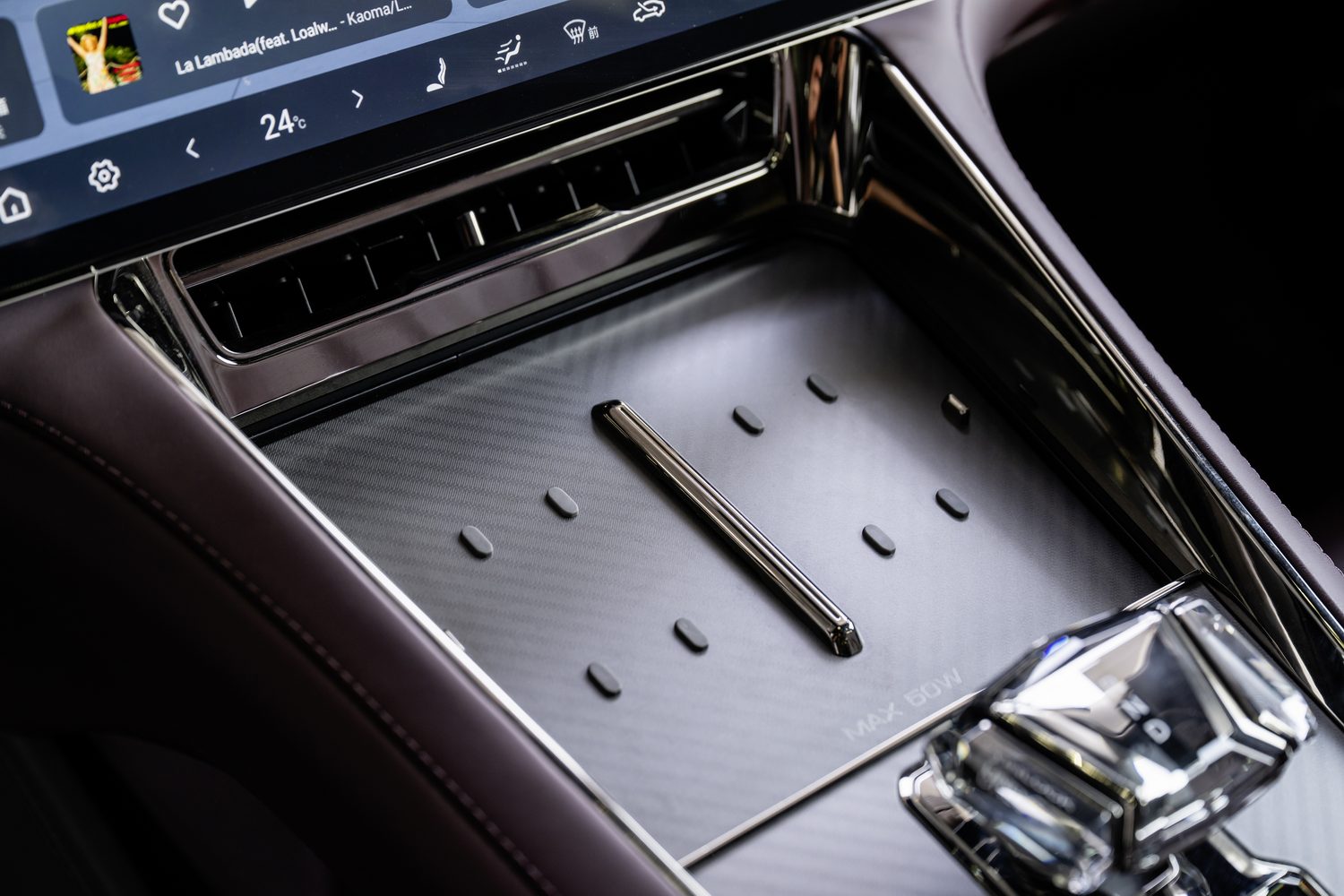
Other technologies onboard include 128-colour ambient lighting, twin wireless smartphone charging pads and even a passenger-side dashboard display, although whether that will be standard-fit or an option on European cars has not yet been confirmed.

Practicality around the cabin
No one will complain about the space afforded to passengers sitting in the rear of the Denza Z9GT. It's massive back there, a direct corollary of both its giant wheelbase and the clever 'cell-to-body' construction that makes the battery an integral part of the Z9's frame, which in turn leads to a completely flat floor in the back of the car.

It feels like three adult passengers could get comfortable in the Z9's second row with little difficulty.
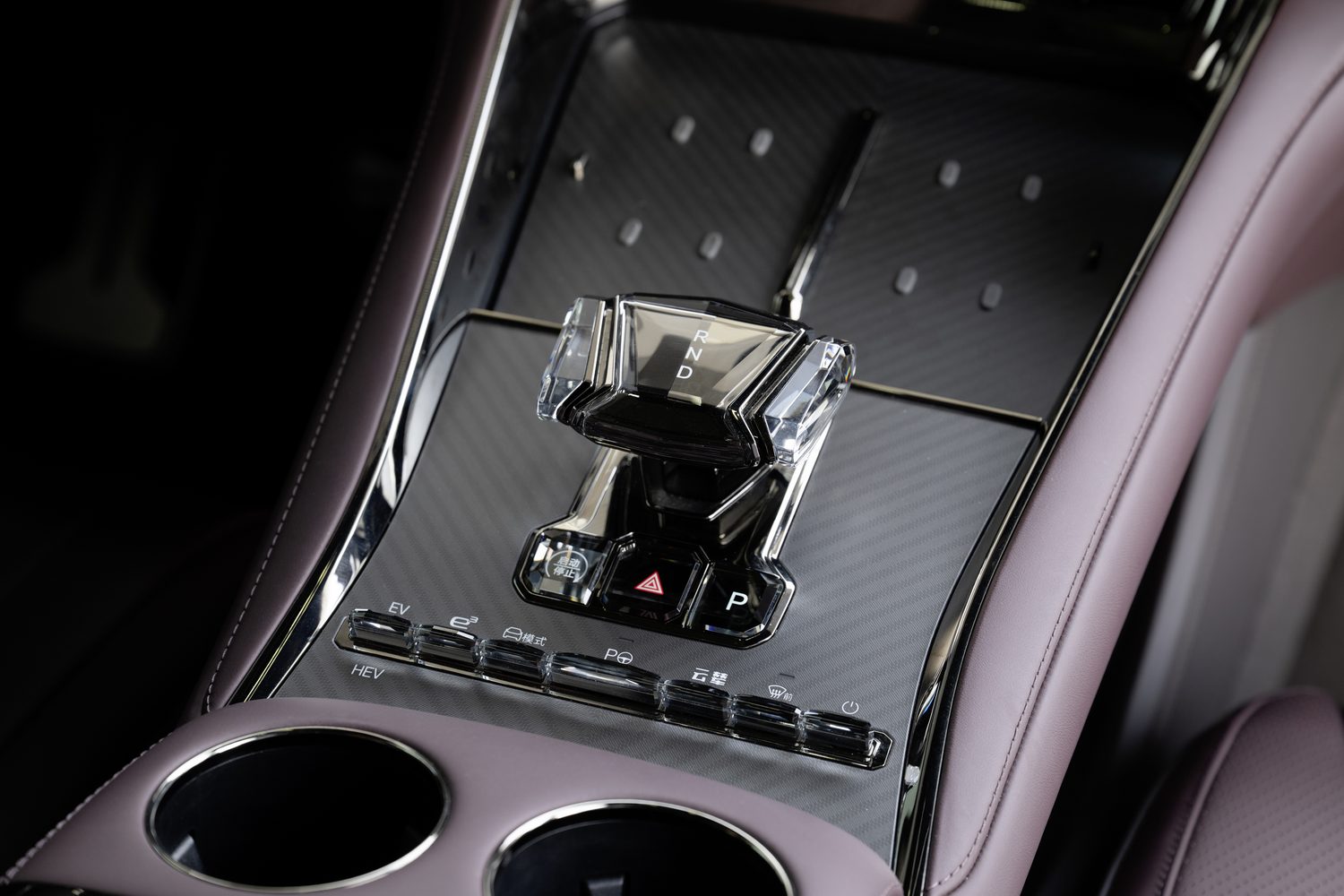
On other practicality matters, in-car storage solutions include a central lidded cubby in the front armrest, a couple of cupholders just aft of the gear lever, a decent glovebox and an under-tunnel storage tray where four power sockets (assorted USB and 12-volt) can be found, although the door pockets in the Denza are not the most capacious.

And, on that note, we only know one boot capacity figure, which is a rather modest 488 litres with all five seats in play. For an estate car, that's hardly what you'd call voluminous.
Performance of the 2026 Denza Z9GT EV
- Choice of DM-i PHEV or full electric powertrains
- Masses of power: up to 965hp
- European cars will have chassis revisions

Whether you go for the DM-i plug-in-hybrid (PHEV) model of the Z9GT or the full EV, you get a three-motor electrical set-up and simply huge outputs.
The PHEV employs a 2.0-litre petrol engine with the electrical gear, as well as a big (for a plug-in hybrid) 38.5kWh battery that allows for 201km of electric-driving range - impressive, in the wider PHEV scheme of things.

Combined with the petrol reserves, the DM-i can in theory go 1,101km without recourse to either petrol pump or mains socket, while its 870hp and 1,130Nm numbers allow it to thump from 0-100km/h in just 3.6 seconds.
However, the EV is even more potent. It drops the 2.0-litre engine and enlarges the battery to 100kWh, resulting in a range of 630km.
Power swells to 965hp and peak torque increases marginally to 1,150Nm, with the 0-100km/h time coming down to 3.4 seconds accordingly.
Driving the Z9GT EV on track in China
This was a very brief run for a few laps around the 1.76km test track at BYD's Zhengzhou facility in China, so we don't have a full rundown on high-speed ride comfort, motorway rolling refinement, real-world fuel economy and more; it's really just first impressions of such a monumental electric drivetrain.

Furthermore, we were told that the Z9GT EVs we were driving were Chinese-market specification. This means they have quite soft suspension and light steering, which are the preferences of consumers in the Denza's home market.
Apparently, the European-spec cars - which will help launch Denza in this part of the world - will have a firmer suspension tune and pointier steering to satisfy our tastes.
This will probably be needed, because the four-wheel-steer Z9GT EV felt pretty roly-poly in the corners, with imprecise steering feel to go with it.

Even so, it wasn't bad and had a decent amount of grip, with the car's impending relinquishment of its hold on the tarmac clearly telegraphed by the howl of the tyres.
Indeed, push-on understeer was a little too easy to elicit in this Chinese-spec car, despite the fact it was running on Continental tyres; that's probably a direct corollary of its eye-widening 2.9-tonne kerb weight. Yeesh.
However, there's no doubting the stonking speed of the Z9GT EV. We were told to follow a 1,306hp Yangwang U9 pilot car around the track in the Denza and that we had to keep a safe distance from the rear of the supercar - but the Z9 was so phenomenally quick that we had to keep backing off, as we appeared to be easily catching the Yangwang ahead of us.

A benefit of the soft suspension in the Denza is that, from what little we could discern while running around on an admittedly velvet-smooth track surface, it feels as thoroughly comfortable and plush as a good GT should do.
Here's hoping that any Euro-tune of the suspension to improve the handling doesn't sacrifice all the compliance that is clearly inherent in the Denza's chassis.
Range, battery, charging and running costs of the 2026 Denza Z9GT EV
- 100kWh 'Blade' battery
- DC peak of 270kW, but 1MW charging on the way
- Official range by Chinese standards
The single electric powertrain offered gives a reasonably impressive range on paper, with more than 600km possible, but that figure was gleaned under the beneficial test conditions of the Chinese light-duty test cycle (CLTC), so the Denza's WLTP figure - much more representative of 'real-world' usage and what every EV on sale over here must quote range by - is going to be considerably lower when it's published.
Battery options and official range
The 100kWh 'Blade' lithium-ion battery in the Denza Z9GT EV is a decent size, and that's a usable capacity too. It leads to a quoted range of 630km, which is certainly competitive - until you realise, as we've said above, that that was recorded under CLTC conditions, which are more favourable in terms of the overall range figure than WLTP, as the test is conducted at slower average and maximum speeds.
It's therefore likely that the WLTP range of the Z9 EV GT will be more like 450-500km, once official numbers are released.
Charging up the Denza Z9GT EV
Currently, the 800-volt architecture of the Z9GT EV means it should do a 30-80 per cent charge at its maximum 270kW DC rate in less than 20 minutes.
Meanwhile, at its 11kW AC peak, it'd be around nine hours for a full 0-100-per-cent top-up, but more like 13.5 hours on the usual 7.4kW domestic wallbox.

However, the big news here is that BYD - Denza's parent company - has developed 'flash' charging. This is a system which uses 1,000kW hyper-rapid charging, and if you want that in a neater figure then it's a straightforward megawatt (MW) of power.
At this rate, a car compatible with the BYD flash charger can have up to 400km of range added in just five minutes - and Denza says all the 'Blade' batteries in its products destined for Europe will indeed be capable of this super-quick charging. That includes the Z9GT EV, obviously.
The main issue is how many of these 1MW charging units will come to Ireland. Denza, and BYD, has committed to creating 6,000 sites outside of its homeland of China, with many of these due to be installed in Europe.
We'll wait and see if Ireland is going to benefit from a handful of these super-powerful units to make the most of the Z9's capabilities.
Denza Z9GT EV warranty
With Denza still an unknown quantity over here and not due to launch in Europe until well into 2026, all we can say is that its cars will probably have a similar warranty to BYD products - which means a six-year, 150,000km standard vehicle warranty, as well as eight years and 150,000km of cover on the electric motors, and eight years and 200,000km for the high-voltage battery.
Irish pricing & rivals to the 2026 Denza Z9GT EV
- Pricing yet to be confirmed
- Lacks for heavyweight badge cachet
- Likely to be well-equipped for its price

In its homeland of China, the Denza Z9GT EV is about 385,000 Yuan, which - on a direct exchange - is only in the region of €46,650.
It's probably way too much to expect the European cars to be as little as that when they get here, certainly not for a vehicle with getting on for 1,000hp, but there's every likelihood it will be considerably cheaper than something like a 952hp Porsche Taycan Turbo S Sport Turismo (from €231,963), a 925hp Audi RS e-tron GT performance (from €179,000) or the impending Polestar 5 - and, if it follows the usual pattern of Chinese newcomer cars in any automotive segment, then you can expect lots of desirable standard equipment, even for the potentially lower purchase price.
Verdict - should you buy the 2026 Denza Z9GT EV?
On the basis of a very brief go in a softly sprung Chinese-market model of the Denza, there's enough of significant merit in the Z9GT EV's make-up to consider it a highly worthwhile purchase once it arrives over here.

Key issues that will determine its ultimate fate will be how the European tuning of its chassis and steering affect the car overall, how much it will cost once prices are announced, and how much its range figure will come down once it is tested on the WLTP standard.
But if Denza can deal with these things in a capable fashion, then what you have here is a stylish, speedy and spacious luxury EV that should give the electric European establishment in this sector some serious food for thought.
FAQs about the 2026 Denza Z9GT EV
Is the Denza Z9GT EV electric only?
Well, if it has 'EV' in its nameplate, then yes, it is. However, the Z9GT (and its Z9 saloon sibling) will be sold as a practically identical plug-in hybrid called the DM-i. This still has 870hp, three electric motors and up to 201km of electric range, but a much smaller (38.5kWh) battery and also a 2.0-litre petrol engine onboard. Its combined range is a smidge beyond 1,100km.
Is the Denza Z9GT EV all-wheel drive?
Yes, as it uses the company's 'e3' platform. But this works in a slightly different way to the 'e4' system seen in bigger BYD-related products - whereas those cars have a motor in each wheel, the Z9GT EV has a 240kW motor associated with each rear wheel, but a single 230kW motor on the front axle to turn both wheels at the nose of the vehicle.
Does the Denza Z9GT EV have any special features?
It most certainly does. As a result of its three-motor set-up and clever four-wheel steering, the Z9GT EV can both 'crab walk' - which means it can drive diagonally forwards at lower speeds with all four wheels pointing in the same direction - and 'tank turn'.
This latter trick counter-steers the two rear wheels and sends torque to just one of the front wheels, in order to rotate the car about its central pivot axis. In other words, you can make the Denza Z9GT EV spin on the spot - although it's not very good for the car's tyres.
Where does Denza fit into the BYD group?
Denza is the premium arm of the BYD family, but it isn't quite as high-end in status as Yangwang. Thus, its products are seen as competitors for Audi, BMW, Mercedes, Volvo, Lexus and Alfa Romeo, primarily, with some overlap targeting of vehicles from the likes of Porsche and Maserati.
Want to know more about the 2026 Denza Z9GT EV?
If there's anything about the new Denza Z9GT EV we've not covered, or you'd like help in choosing between it and other cars, you can avail of our expert advice service via the Ask Us Anything page.