




Exterior & design of the 2026 Dacia Jogger
- Updated lights and 'pixel' grille
- 'Starkle' recycled plastic for protection
- Rear lights have a hint of Volvo

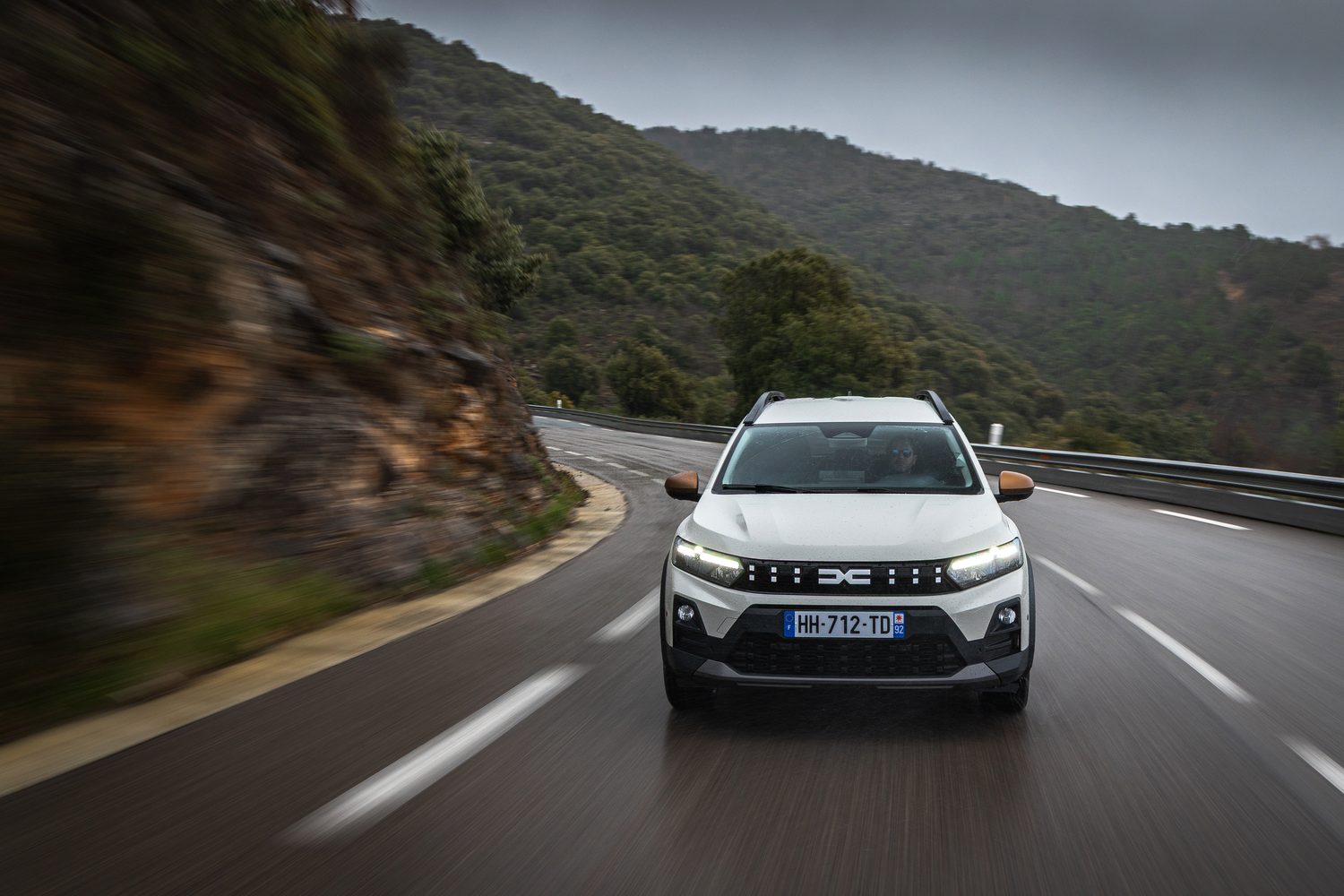
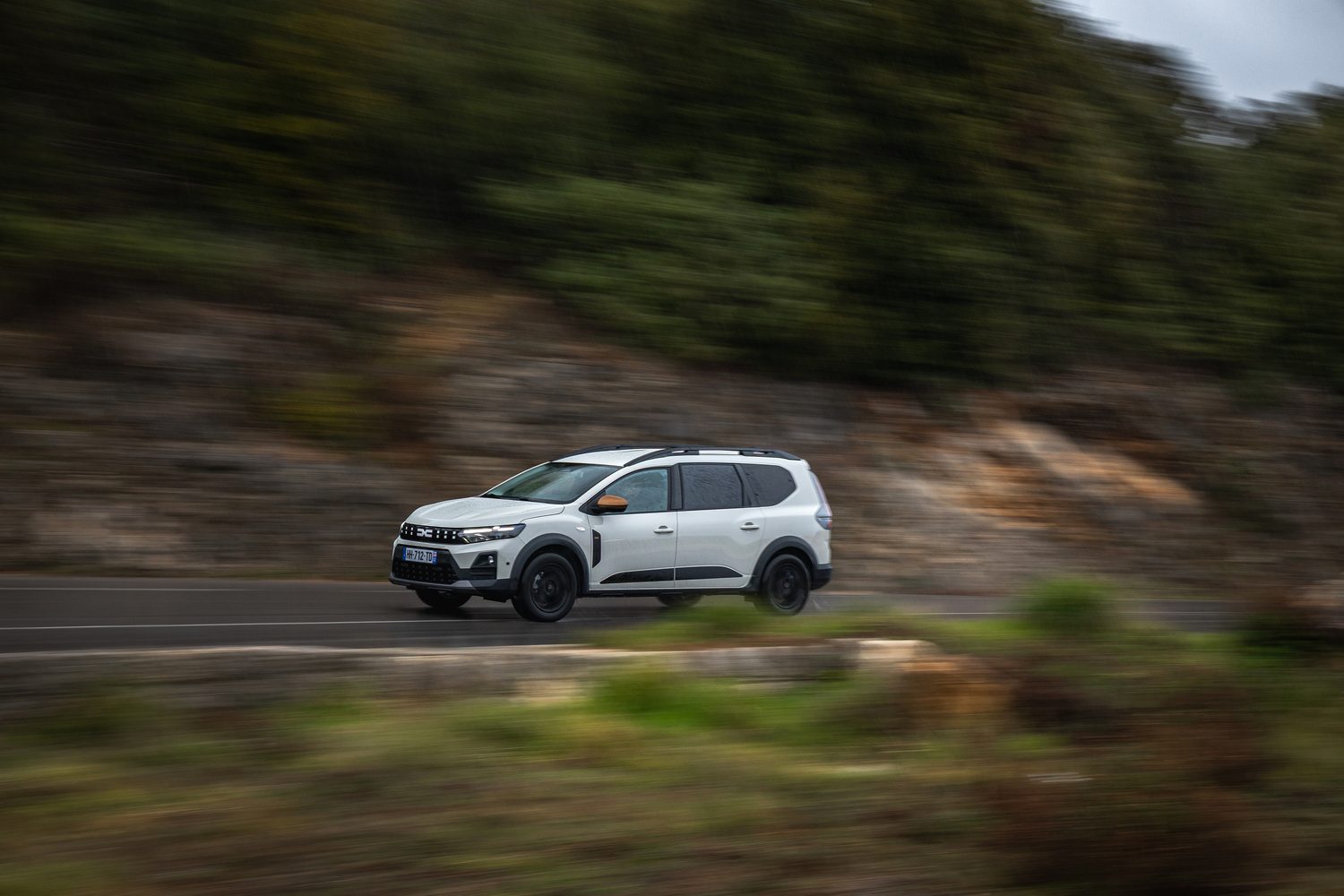
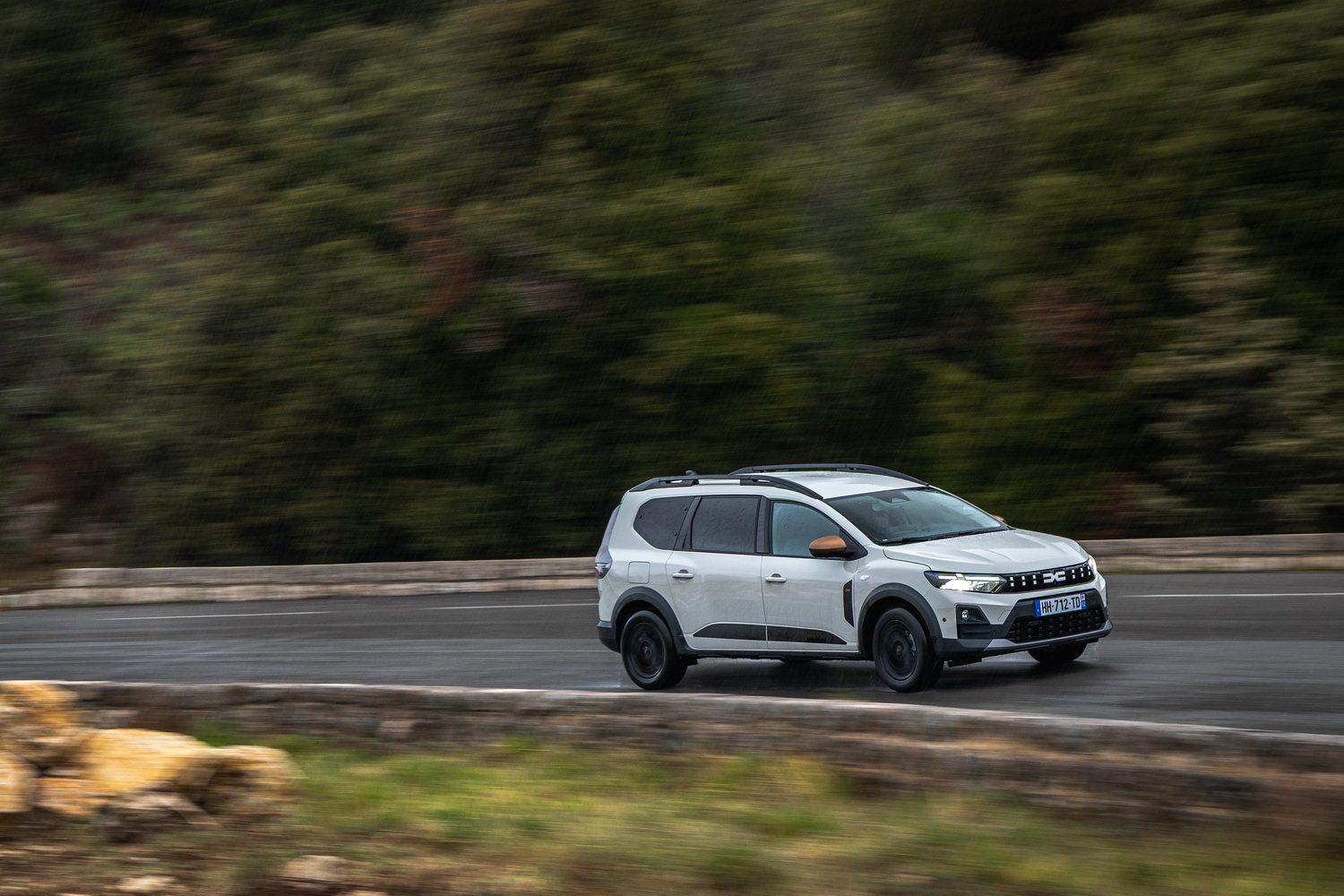
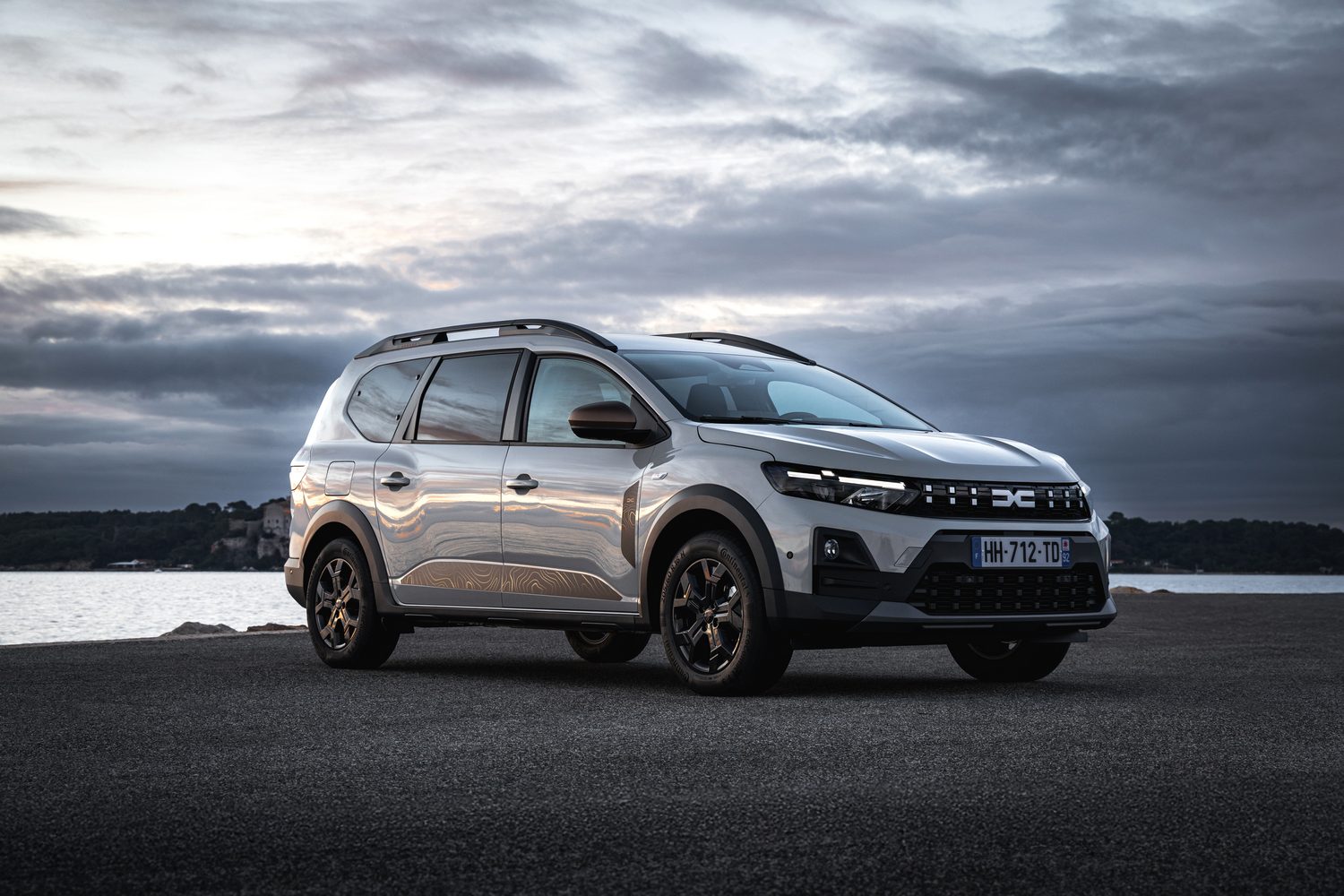
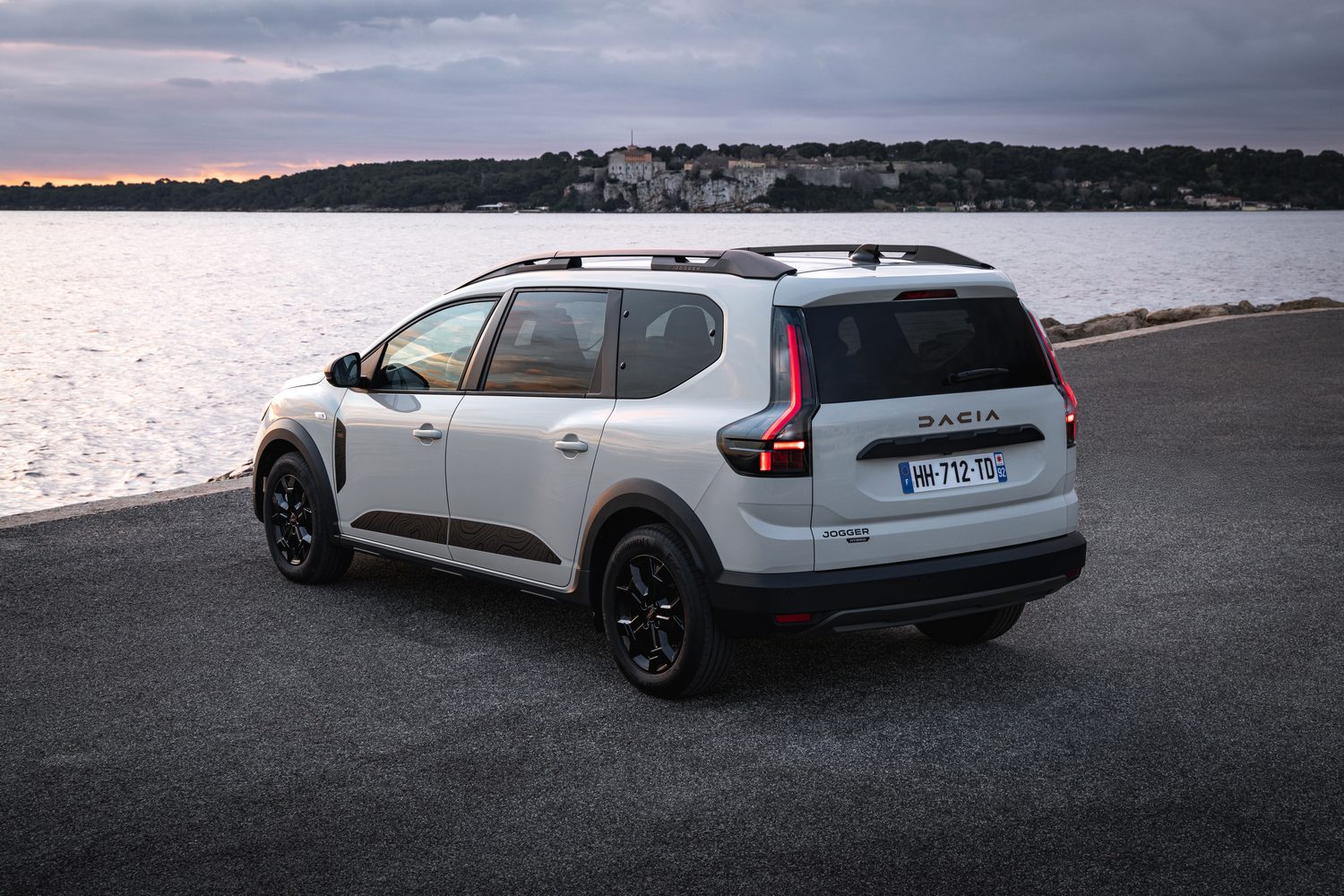
As with the smaller Sandero and Stepway, the Jogger doesn't look radically different for 2026, but it's had some detail visual tweaks which do freshen things up a bit.
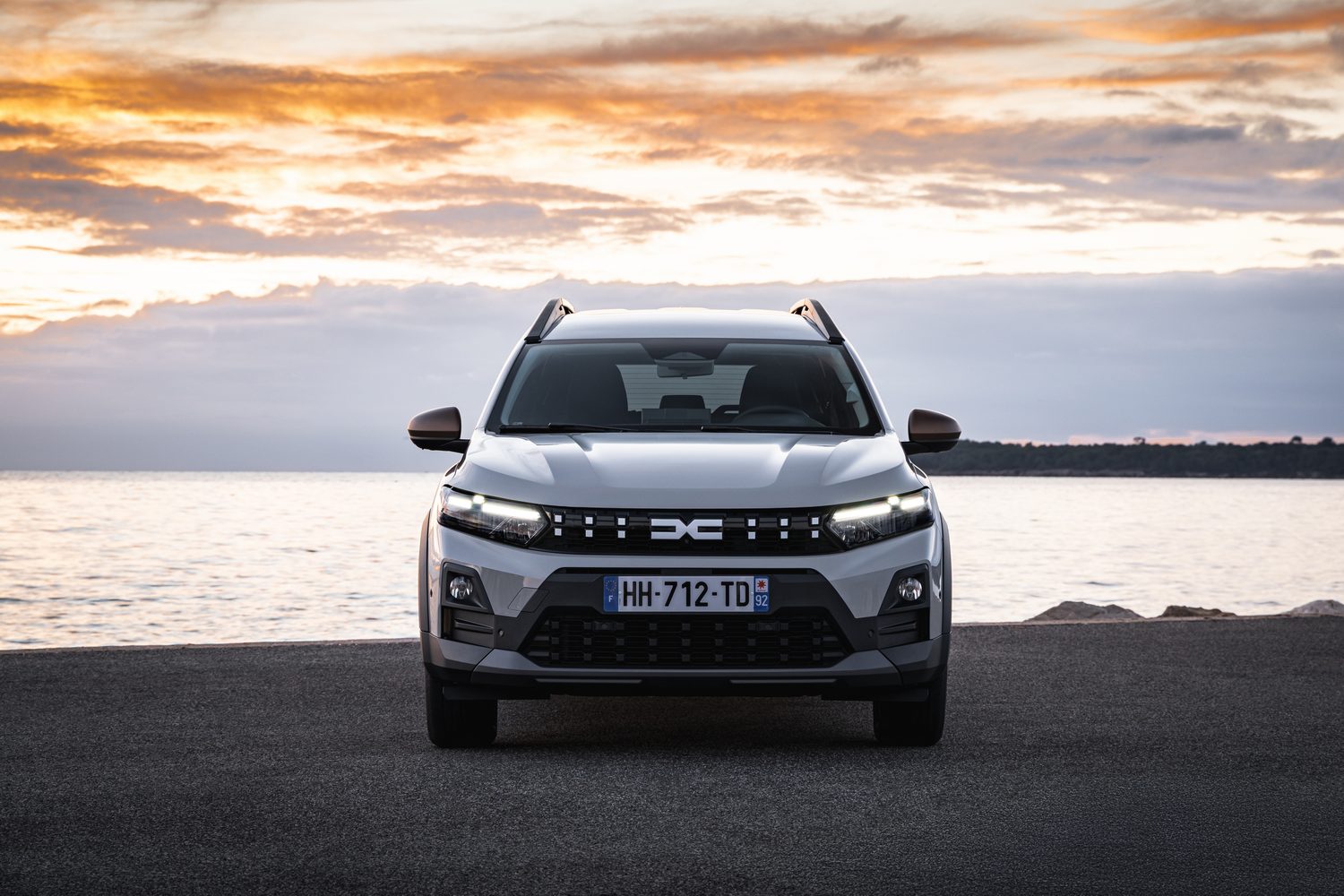
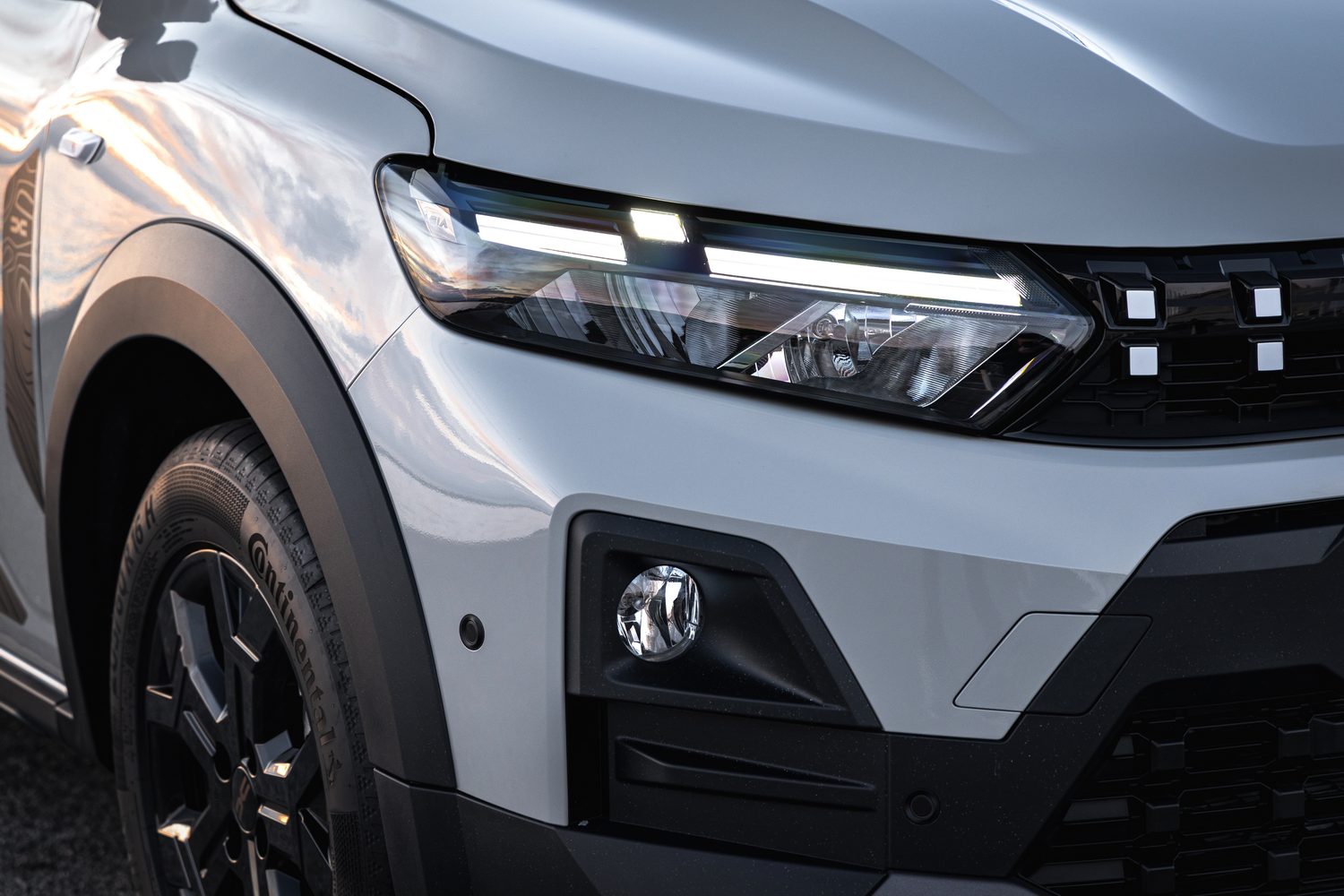
There are new lights, which are basically the same shape and size as before, but which now include new LED daytime running lights which take the shape of an inverted 'T' with two long horizontal sections broken up by a vertical part.

The grille was updated too, keeping the neat 'DC' Dacia badge in the centre, but instead of chrome to brighten things up, Dacia is using (more environmentally responsible) painted plastic, with blocky white highlights that are meant to mimic the pixels of a digital picture.
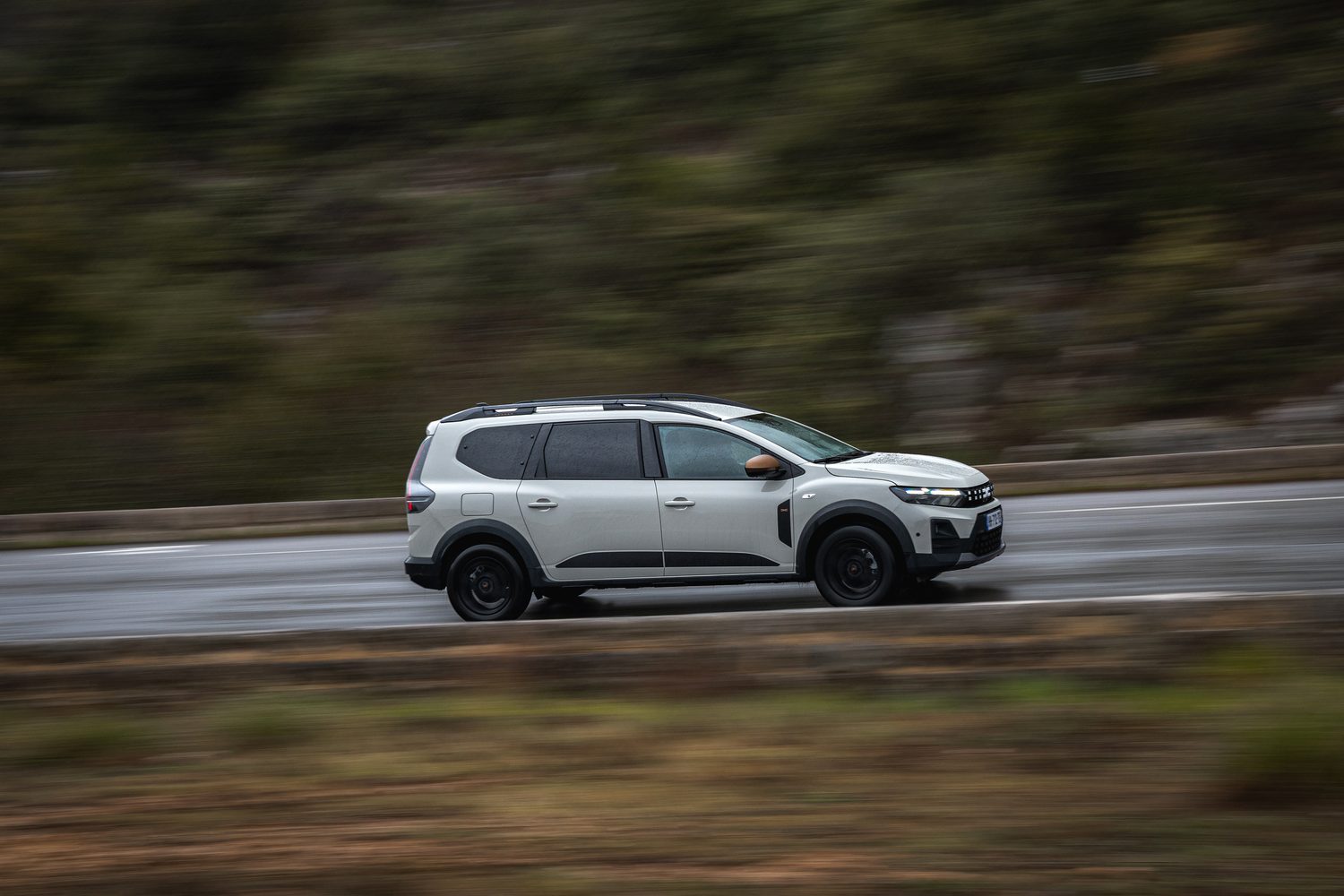
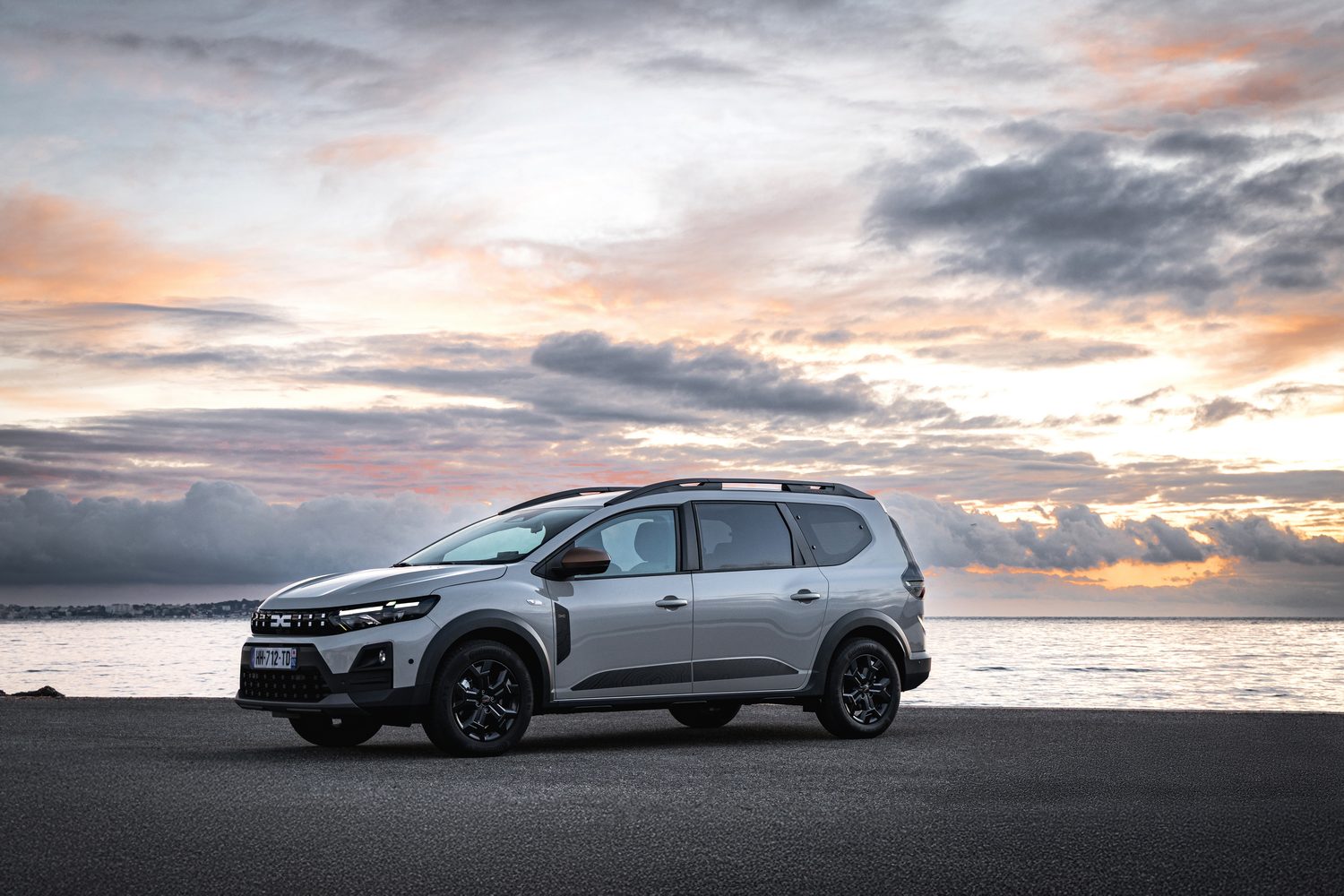
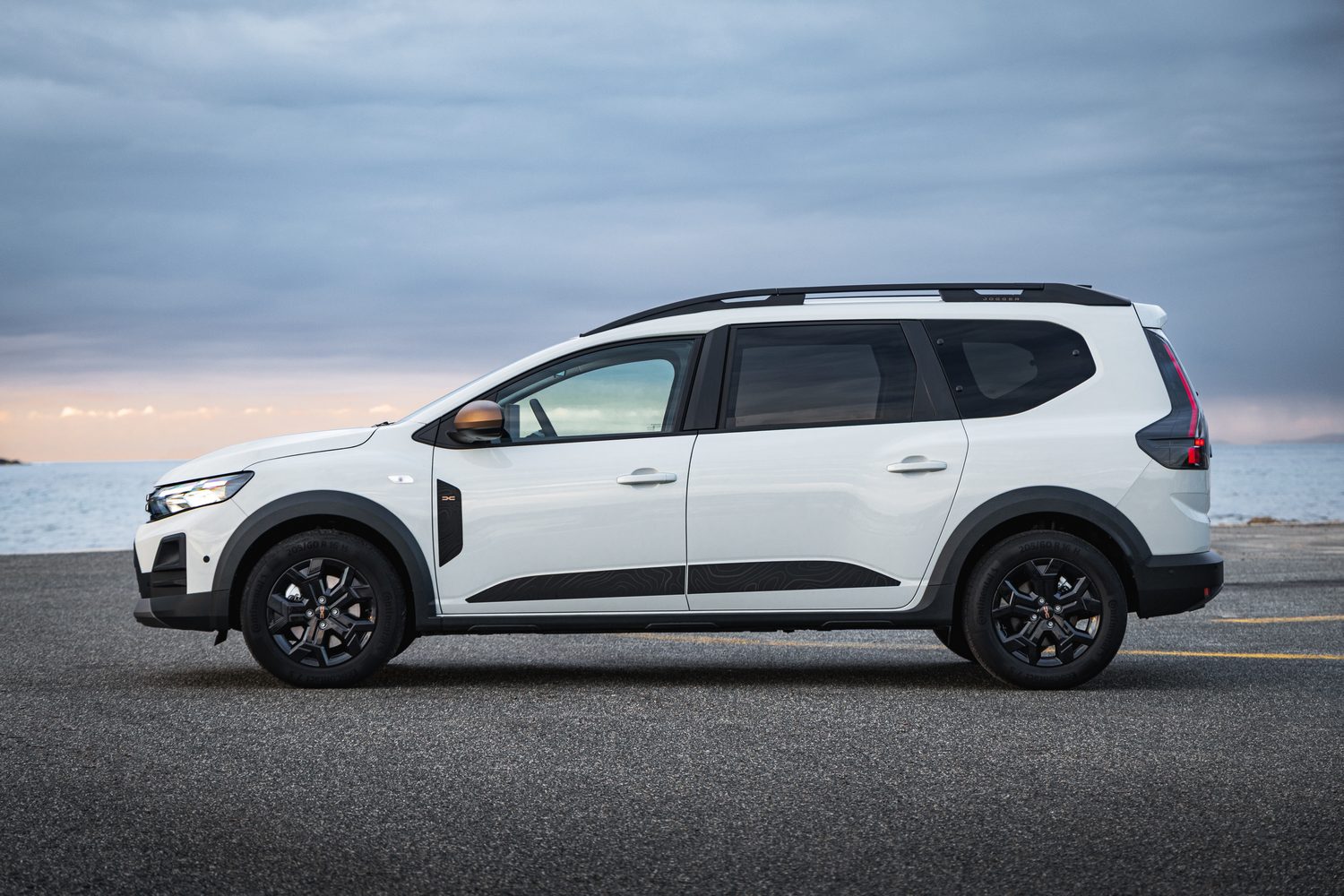
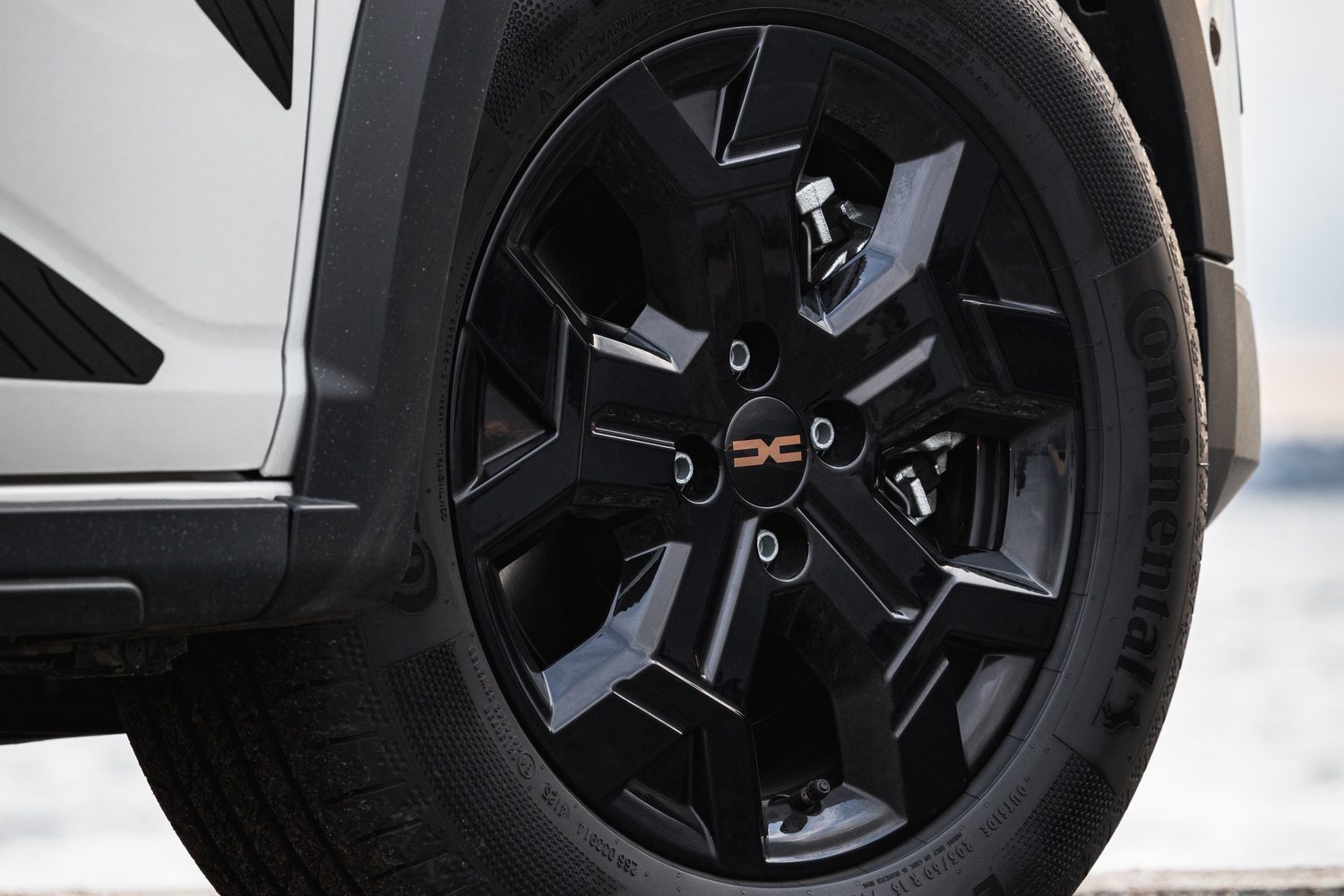
All Joggers get chunky dark plastic extensions to the wheelarches and bumpers, giving it something of a 4x4 look, and that plastic is Dacia's proprietary 'Starkle' material, which uses 20 per cent recycled material, and which features a faint white fleck, giving it its name.
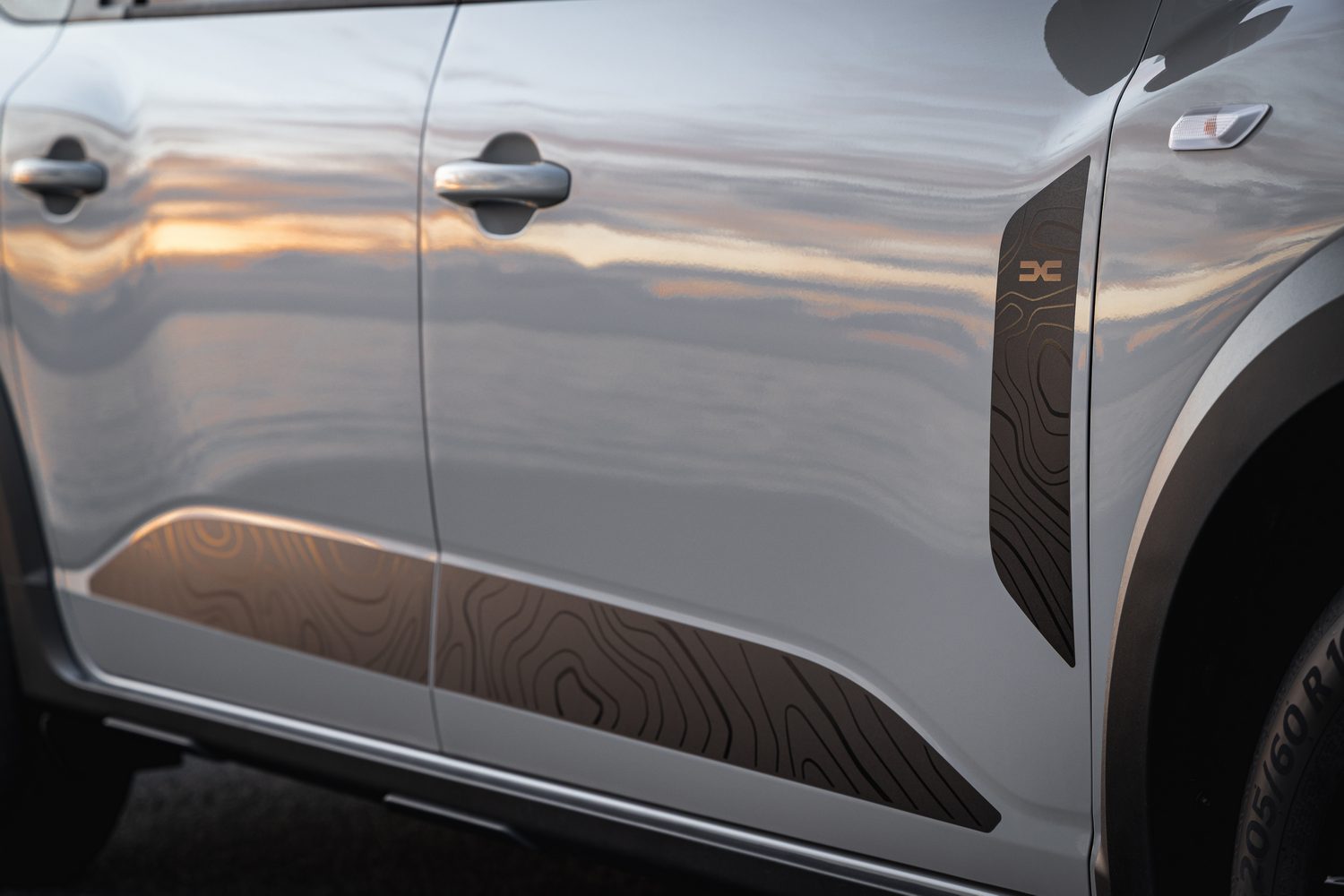
Unpainted, it's designed to be scratch and scuff-proof. If you're buying an Extreme model, that also gets decals down the side which feature a relief map graphic, emphasising the car's - and the brand's - outdoorsy nature.

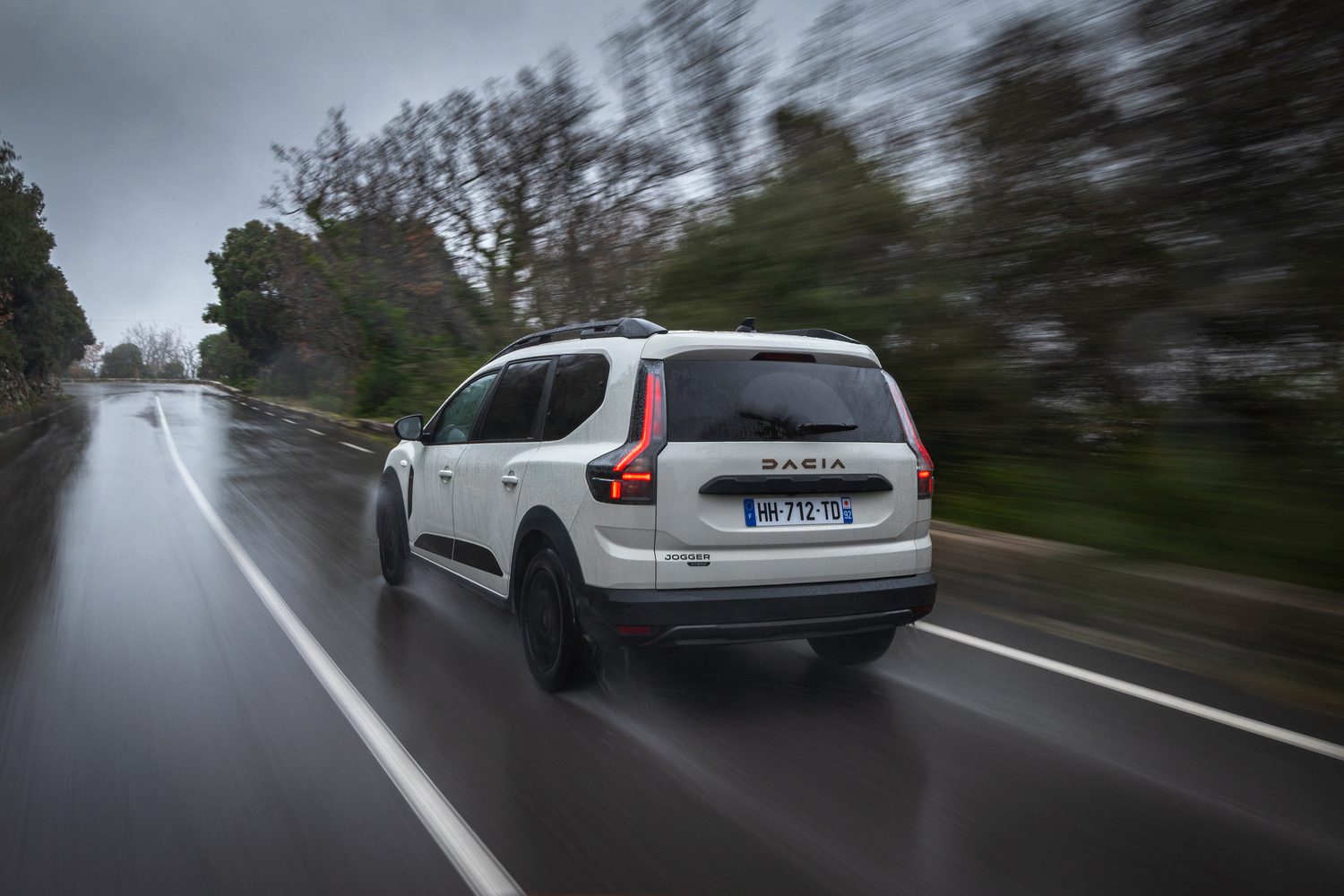
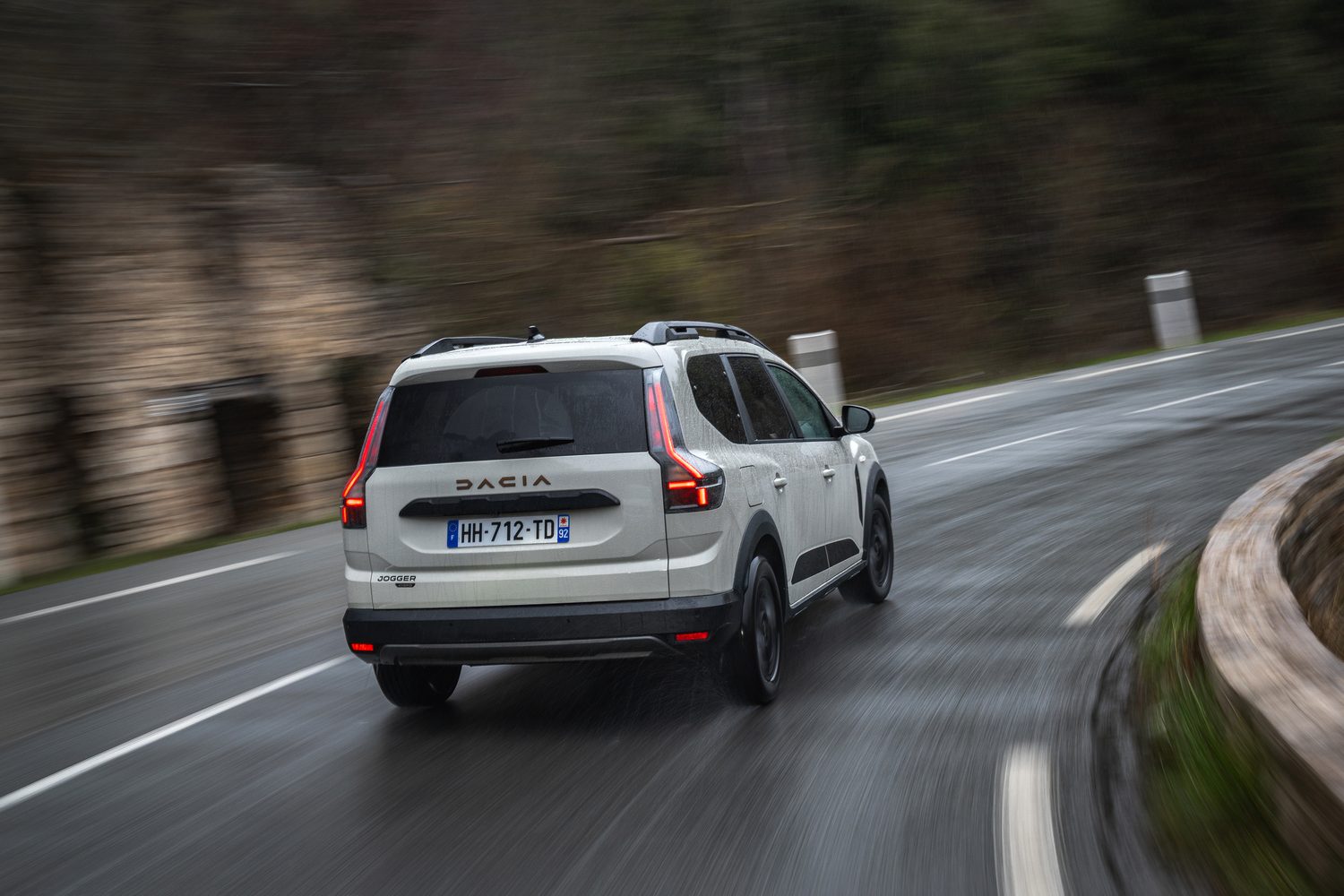
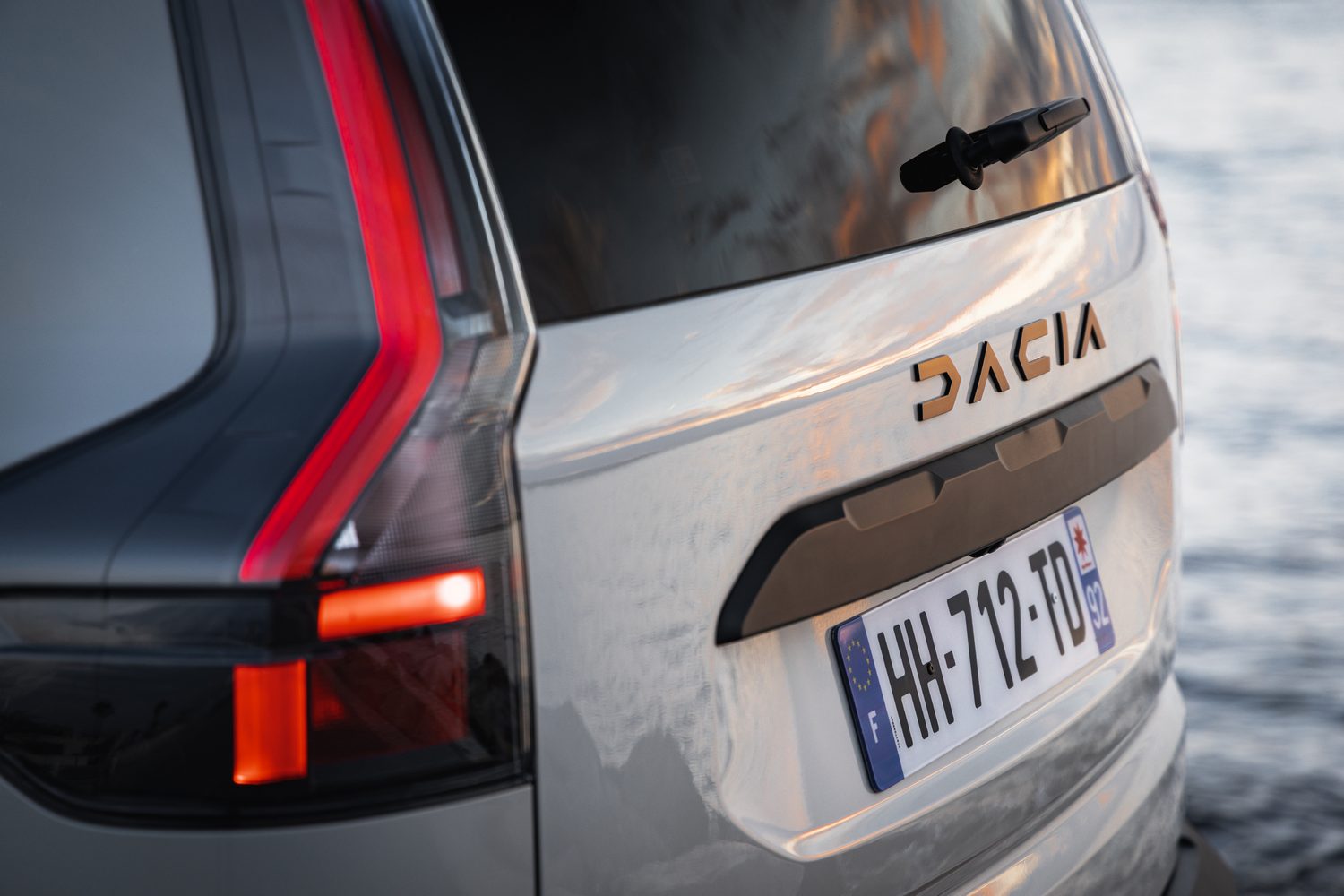
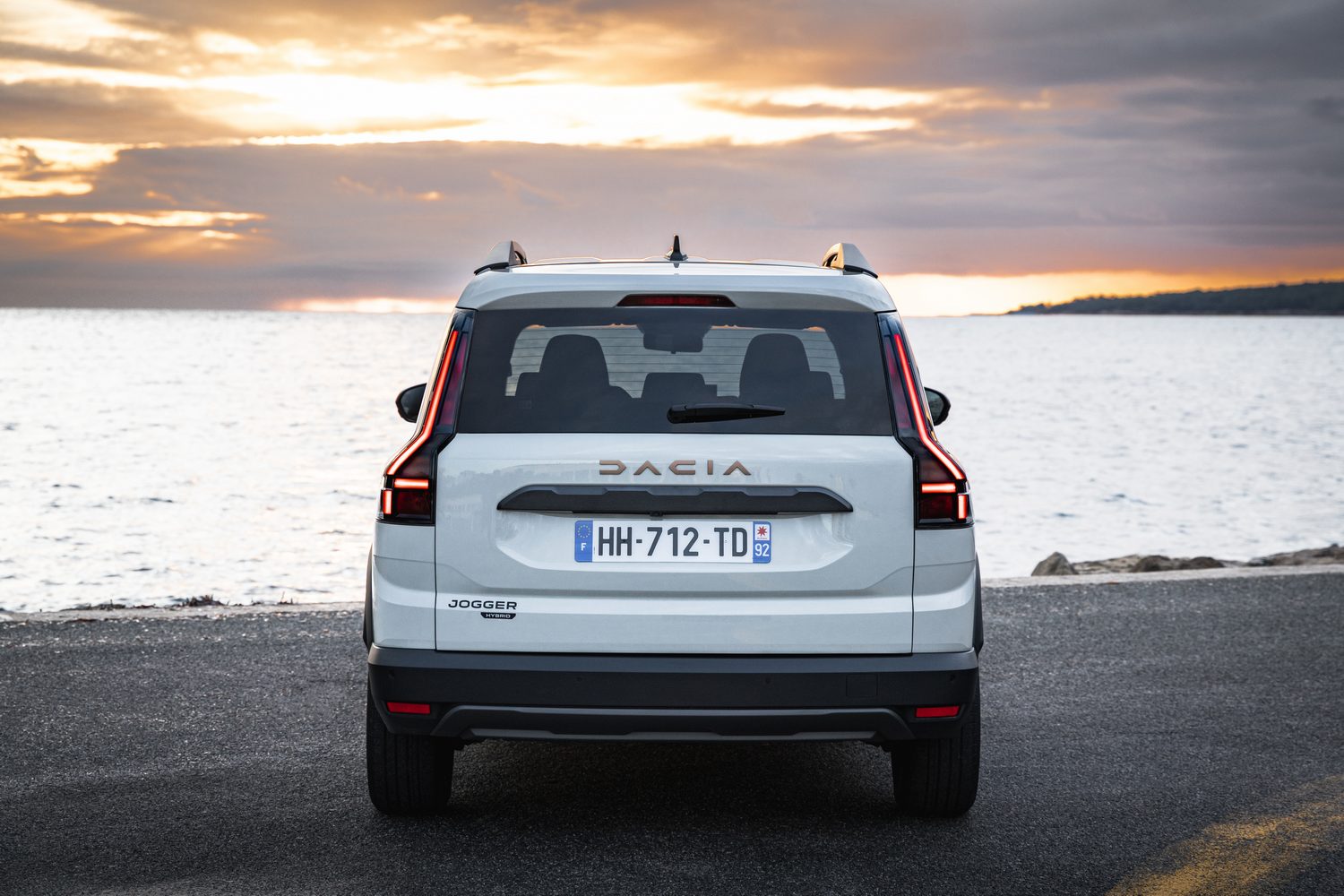
At the rear, the Jogger gets a lightly reprofiled tailgate and bumper, and new shoulder-mounted brake lights with LED highlights that are meant to emphasise the tumblehome of the rear bodywork, and which have more than a small whiff of early 2000s Volvo V70 about them (that's a compliment).
Dimensions of the 2026 Dacia Jogger
- Length:
- 4,550mm
- Width:
- 1,853 (mirrors folded)
- Height:
- 1,684mm (with roof bars)
- Wheelbase:
- 2,898mm
Paint colours for the 2026 Dacia Jogger
A new colour option - Sandstone - was added in 2026. This is the colour of our test car in the photos, and it's a pale soft grey, which has been seen previously on the Duster. It suits the shape of the Jogger.
It's also a €645 option, with Glacier White being, as usual with Dacia, the only 'free' colour. The Essential models only get a choice of Glacier White or (for €645) Pearl Black and Shadow Grey. If you're stepping up to an Expression or Extreme model, however, you also get the choice of Dusty Green, Amber Yellow and Terracota. Dusty Green or Sandstone would be our picks.
Interior, practicality, tech & comfort of the 2026 Dacia Jogger
- One of the most practical cars you can buy
- Comfortable up front and down the back
- Removable rearmost seats

One of the Jogger's strongest suits has always been its interior space and versatility, with genuine grown-up space in all seven seats (more or less).
Getting comfortable in the driver's seat
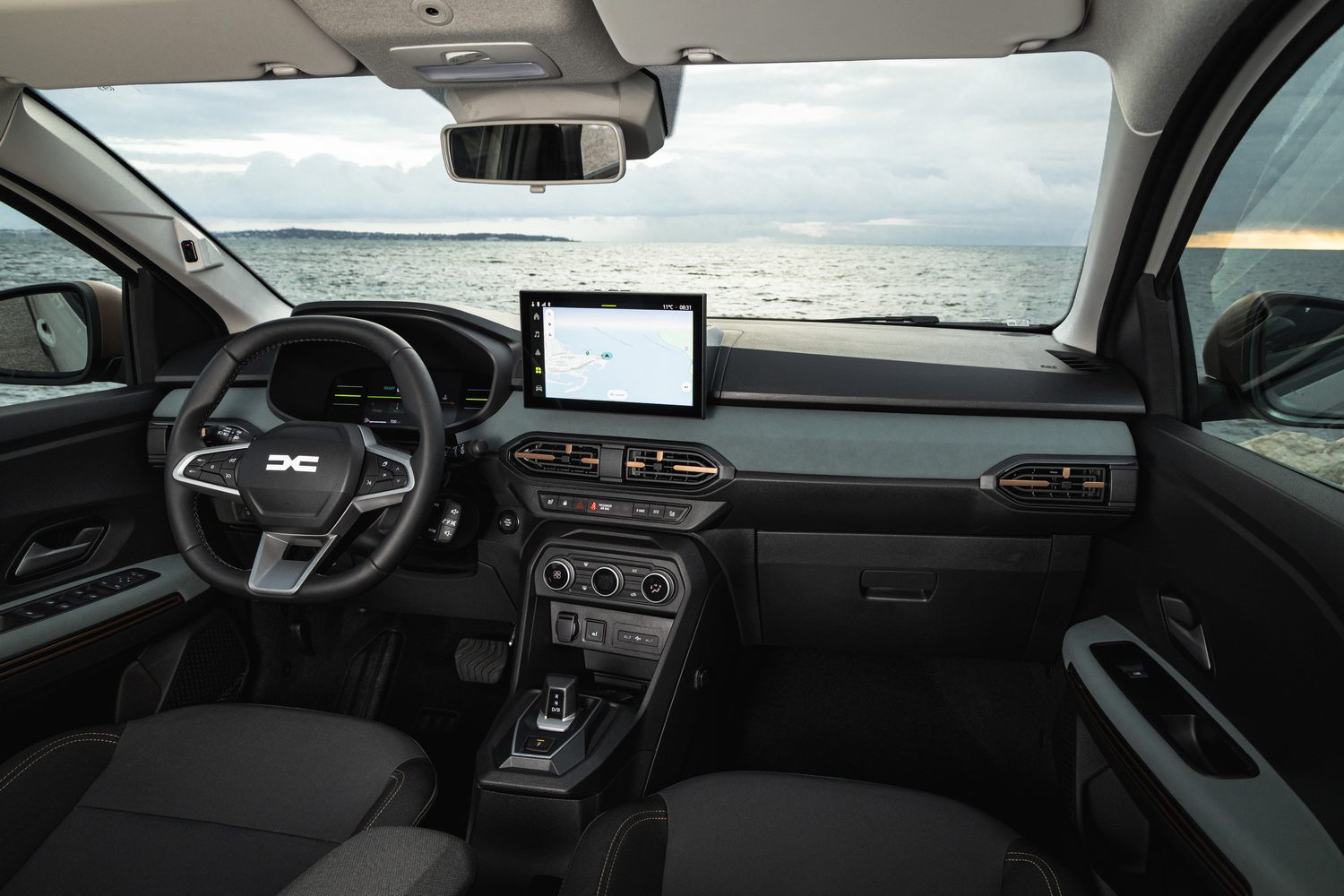
The Jogger is essentially the same as the Sandero in the front, aside from the fact that there's about 25mm more headroom thanks to the Jogger's higher roofline.

That, and the sensation that there's rather a lot more air behind your seat, lends a sense of spaciousness that the smaller hatch can't match, even if the two cars share a fundamentally similar driving position.
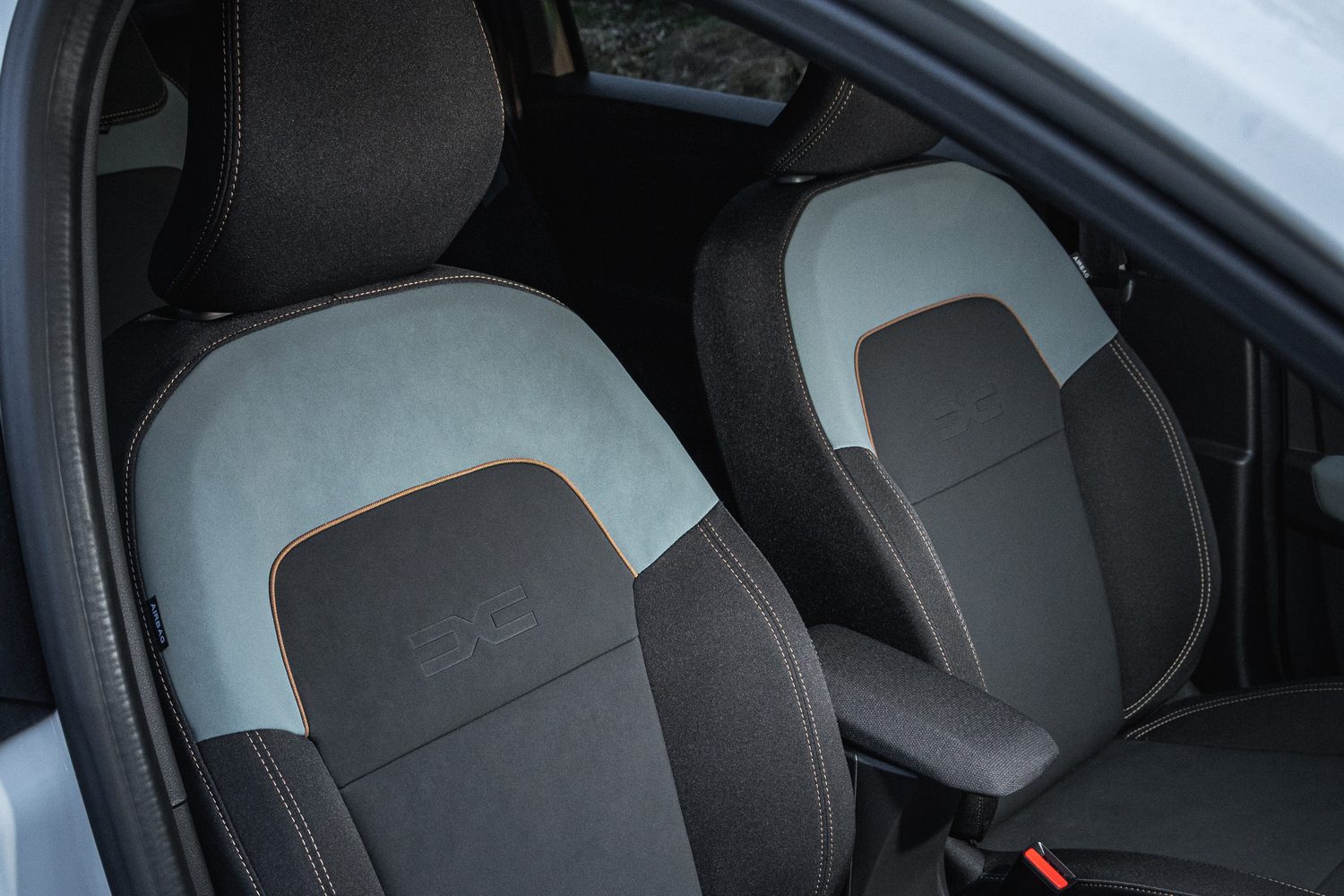
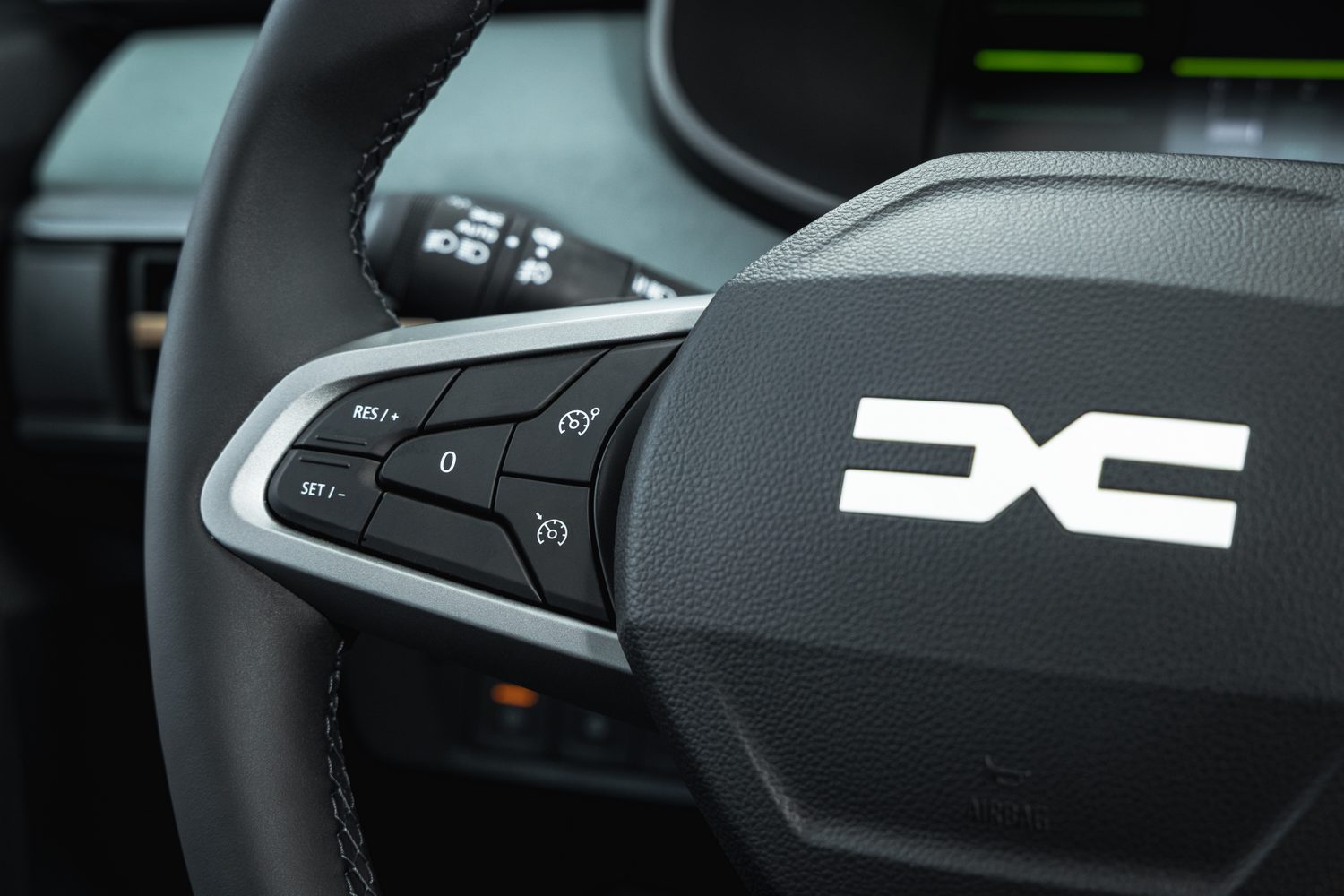
Thankfully, Dacia has abandoned the awful front seats that it used many years ago, in favour of something much comfier with nicely sculpted headrests and that, combined with plenty of adjustment in both the seat and steering wheel (the Jogger has height-and-reach adjustable steering as standard across the lineup), means you shouldn't have too much trouble getting into a good driving position.

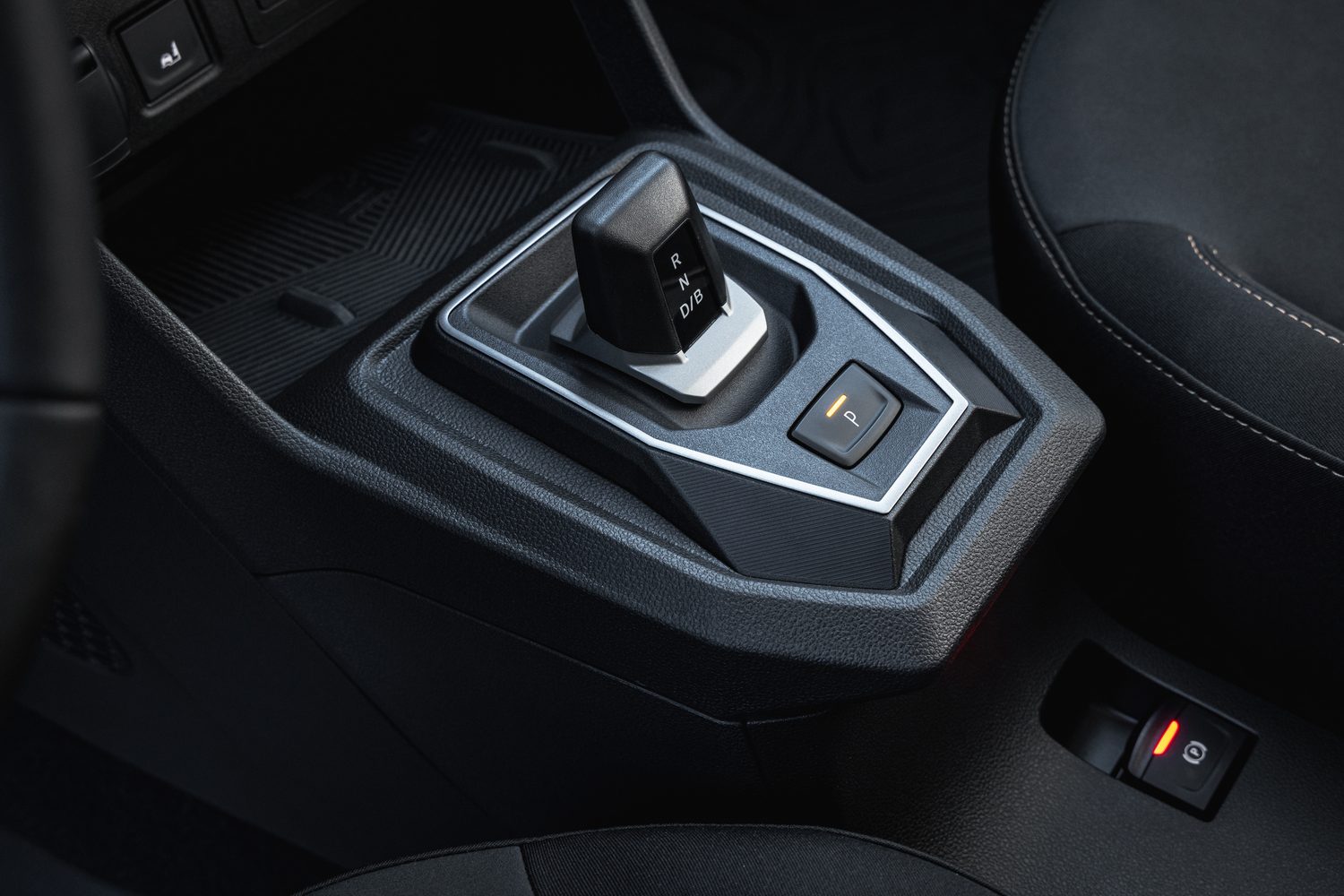
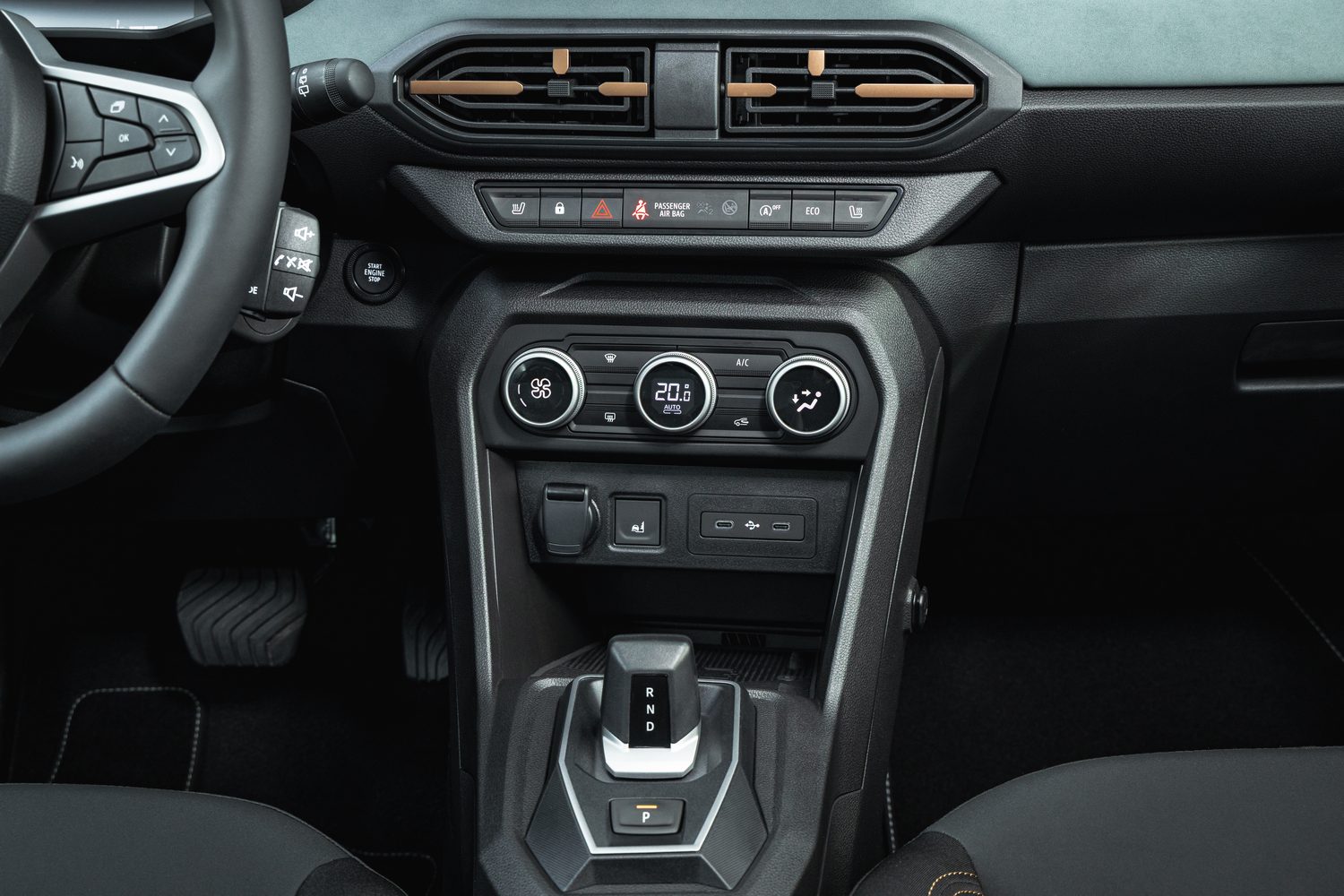
It's helped by the fact that, with the Hybrid 155 model using an automatic transmission, there's no clutch pedal to worry about.
Infotainment and technology
The most basic Jogger, the Essential model, comes with no touchscreen and instead gets a clamp for your phone and an app that turns it into the car's infotainment.

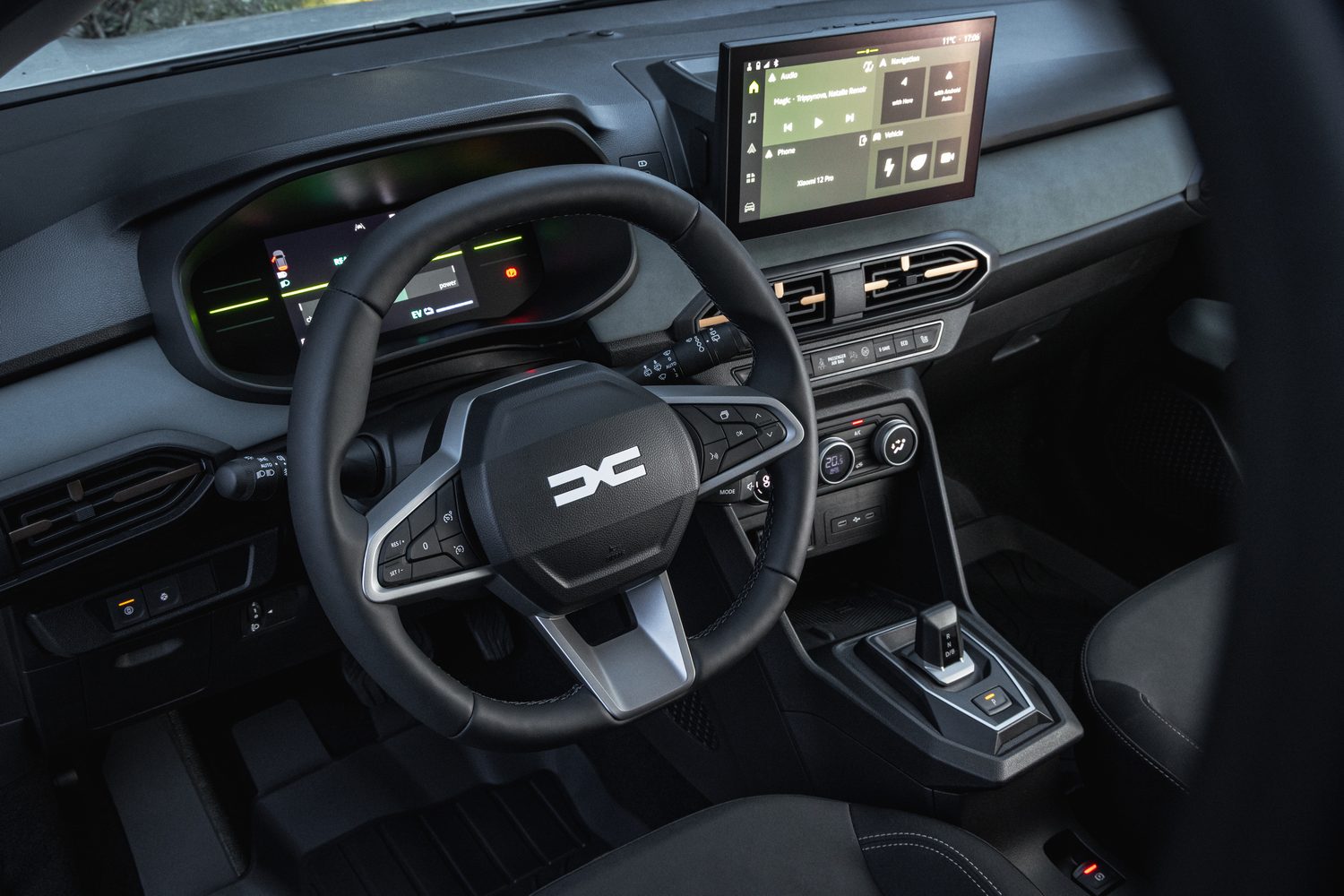
It's an elegant and simple solution, but alas Ireland doesn't get the Essential model of the Jogger, and our lineup starts with the Expression version, which does indeed get a ten-inch touchscreen sitting proud of the centre of the dashboard.
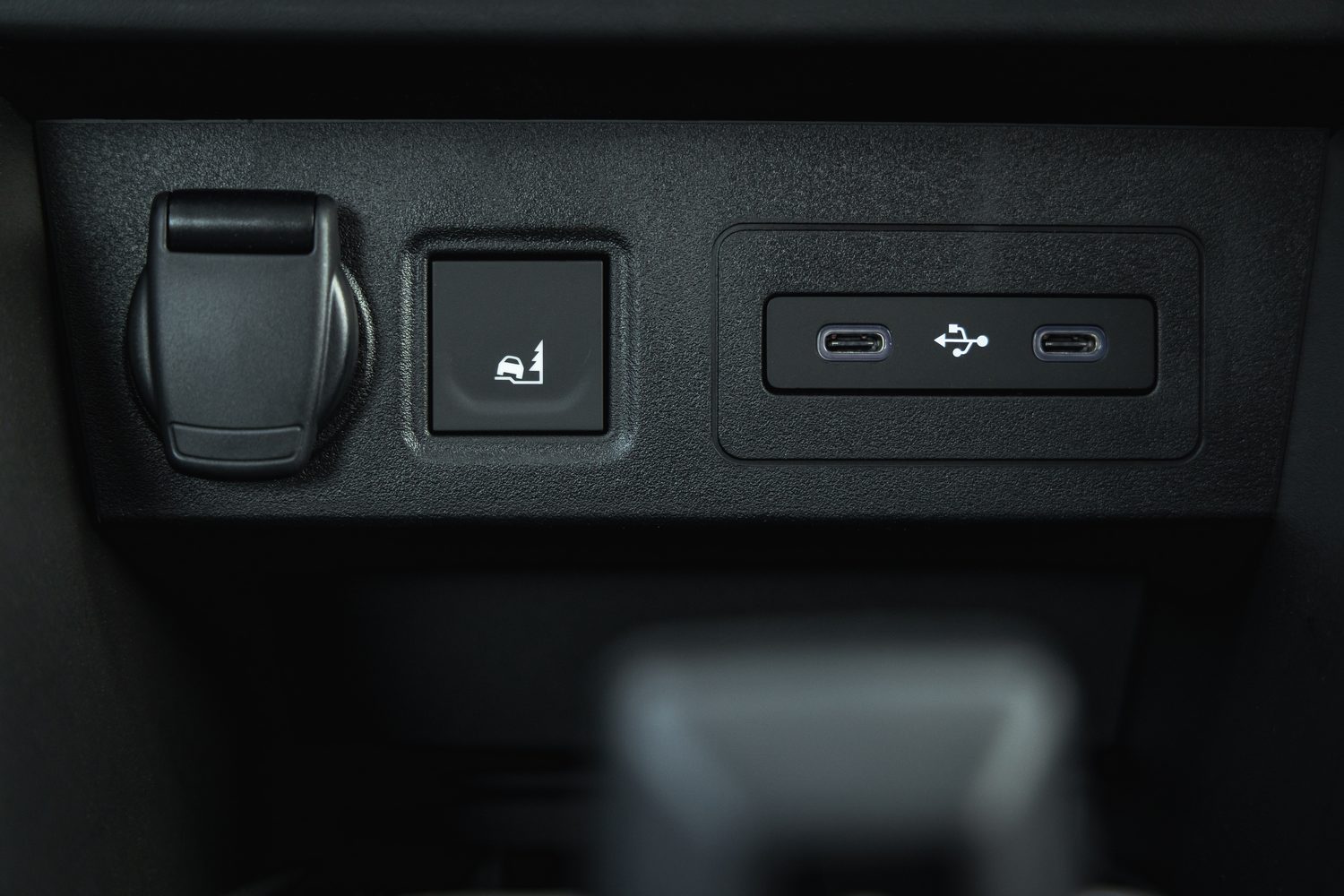
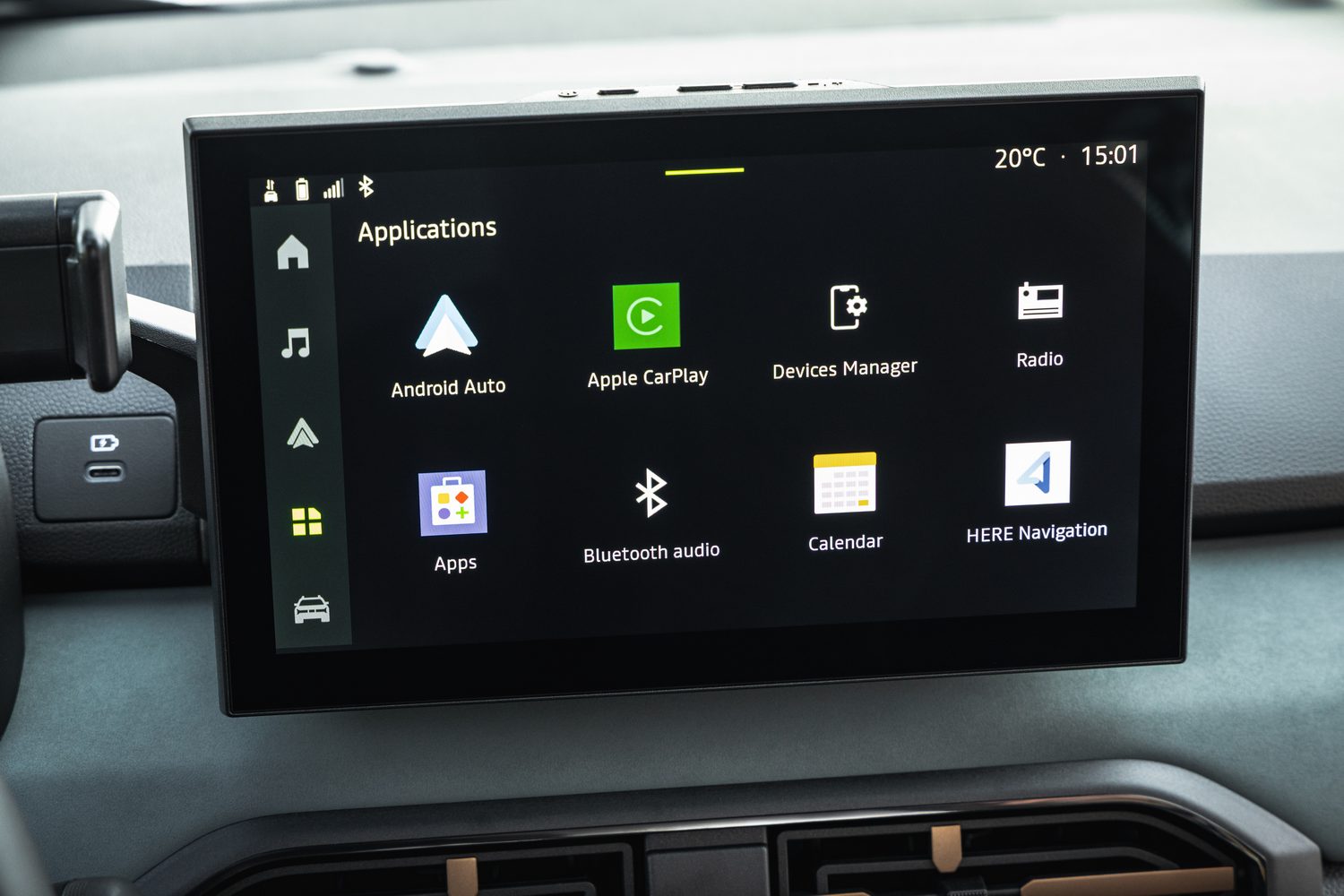
At least it's an easy system to use, and its relatively dark - almost monochrome - colour scheme is easier on the eyes at night than the too-bright setups used by some other cars. You do get Apple CarPlay and Android Auto connectivity of course (via USB, not wireless unless you upgrade to the Extreme model) and there are three USB-C sockets - two up front and one in the back.

Extreme models also get live connected services, including navigation provided by the European HERE mapping service, and live traffic info. If you're an Extreme buyer there's also the seven-inch digital instrument panel, although we rather like the Expression's standard, neat, analogue dials and trip computer.
Practicality around the cabin
The Jogger is certainly practical, although its relationship to the Sandero means the front of the cabin is slightly narrow, so the door bins are nothing to write home about.

There are two cupholders in the centre console, though, and an open storage area at the base of the dashboard, which is home to the optional wireless phone charger.
There's storage under the front seat armrest too (standard on all models in the Irish market) and a reasonable glovebox. There are also YouClip attachment points - Dacia's own in-house accessories range which literally clips on to little hooks in the cabin - and the Jogger gets four of those divided between the cabin and the boot. Neat new accessory ideas include a roll-up shopping bag made from recycled plastic, and a zip-up sunglasses case.
Rear-seat passenger space
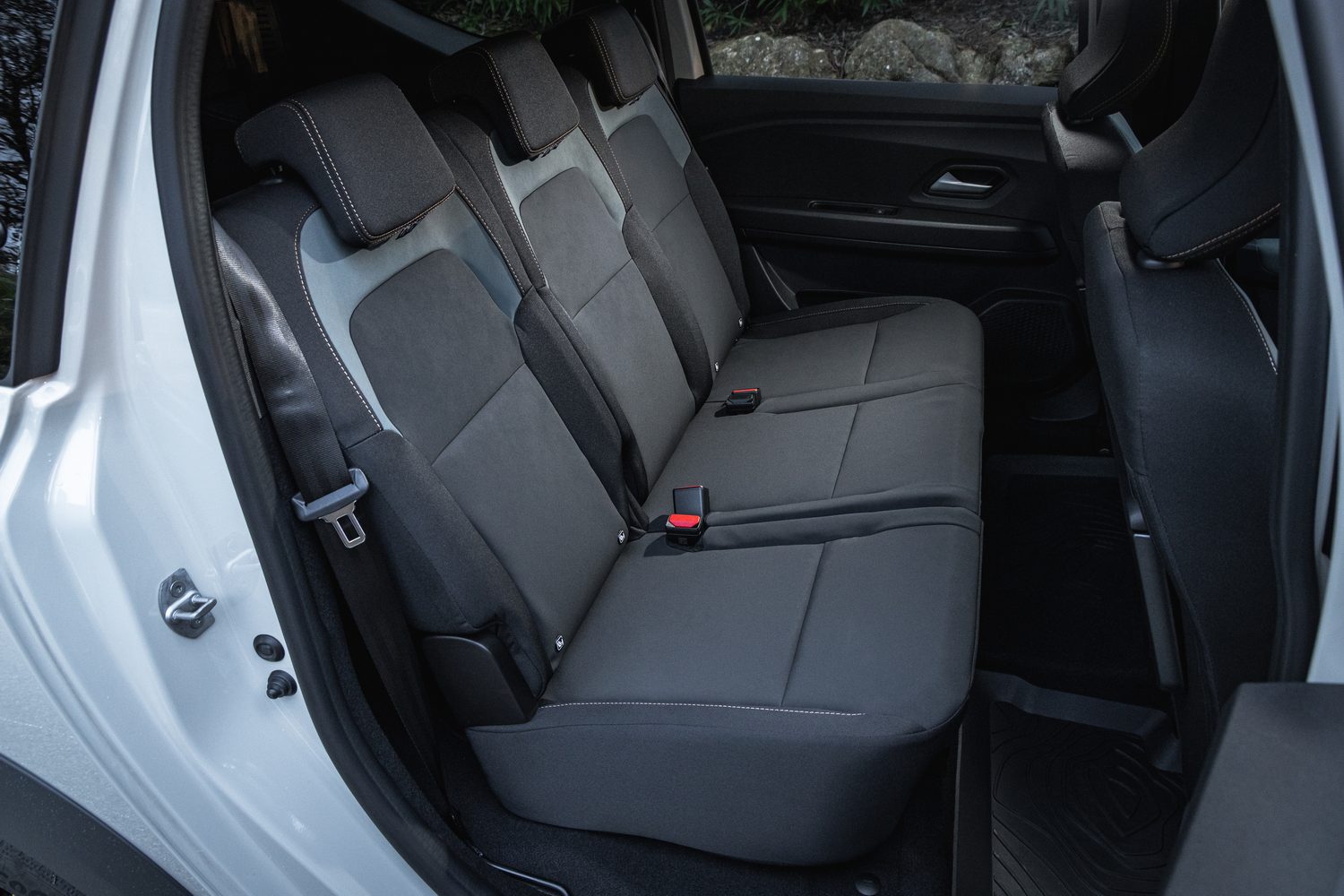
This is where the Jogger gets really roomy, although any adults climbing into the middle row might be a touch disappointed. For the record, at 185cm tall, I fit easily behind my own driving position, but the width of the seat - stretched out to accommodate three people - means that I'm pushed up against the door panel, with minimal elbow room.

The seat is also quite upright, so it's not the comfiest. There's space enough in the middle seat for me to fit, but the small transmission tunnel means that my feet have to be splayed out into the other passengers' footwells.
The little flip-up picnic tables, which come with Extreme spec, are a nice touch though, and there's plenty of headroom thanks to the Jogger's tall roof. And of course, cars such as this are bought more to carry kids in the rear most of the time, not adults.
The foldaway seats in the boot are actually better if you're tall. OK, so getting in and out can be a touch undignified, even though the middle-row seats fold and tumble out of the way, but once you're in, the seat shape and rake is more comfortable than those of the middle row, and there's enough legroom and headroom for even me to get comfy.
If you're carrying four tall people in a Jogger, you might be better off sitting people in row one and row three and leaving the middle seats for bags and coats. Odd as that sounds.
Fitting child seats to the Dacia Jogger
Given its seven-seat nature, the fact that the Jogger only has two ISOFIX points, both in the outer seats of row two, is a bit surprising, but then again, not every parent uses ISOFIX seats for their little ones.
On the upside, there should be enough width in the middle seat for a third child to have their safety seat or booster cushion attached via the seatbelt, and that's true too of the third-row seats.
Boot space in the Dacia Jogger

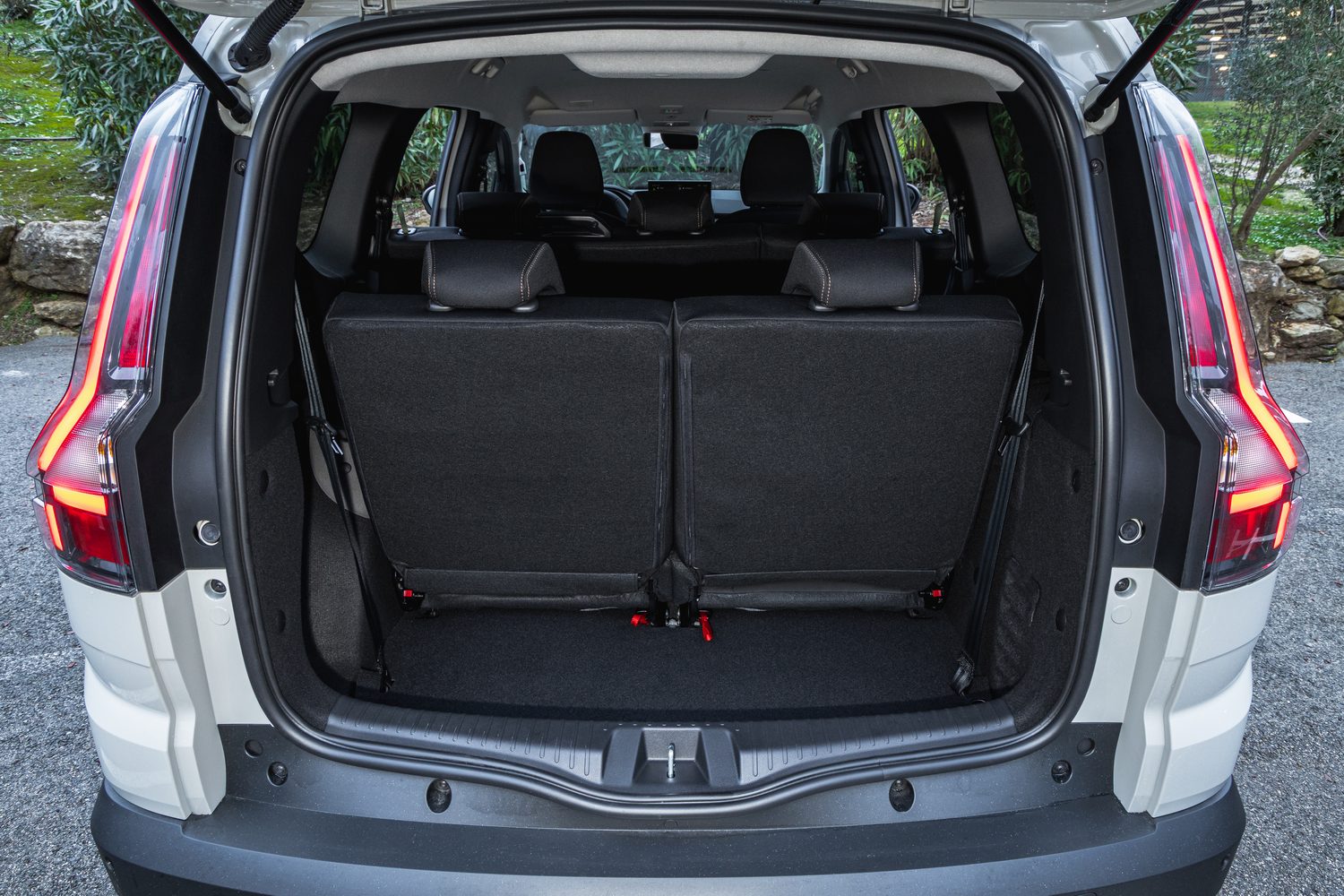
As with most MPVs, boot space in the Jogger is variable depending on how many seats you need to use. Fill all seven, and you're left with a small, if useable, 212 litres.
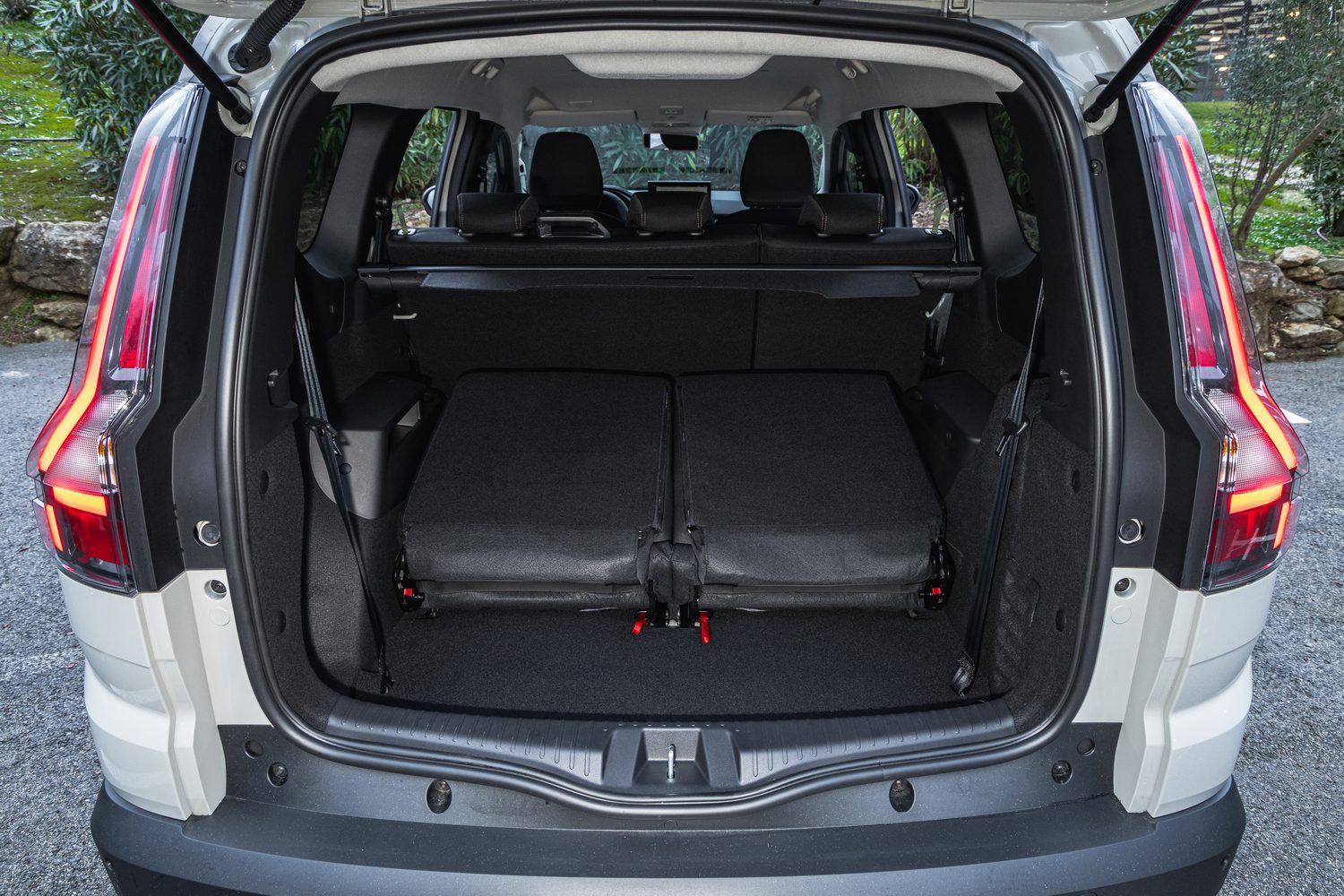
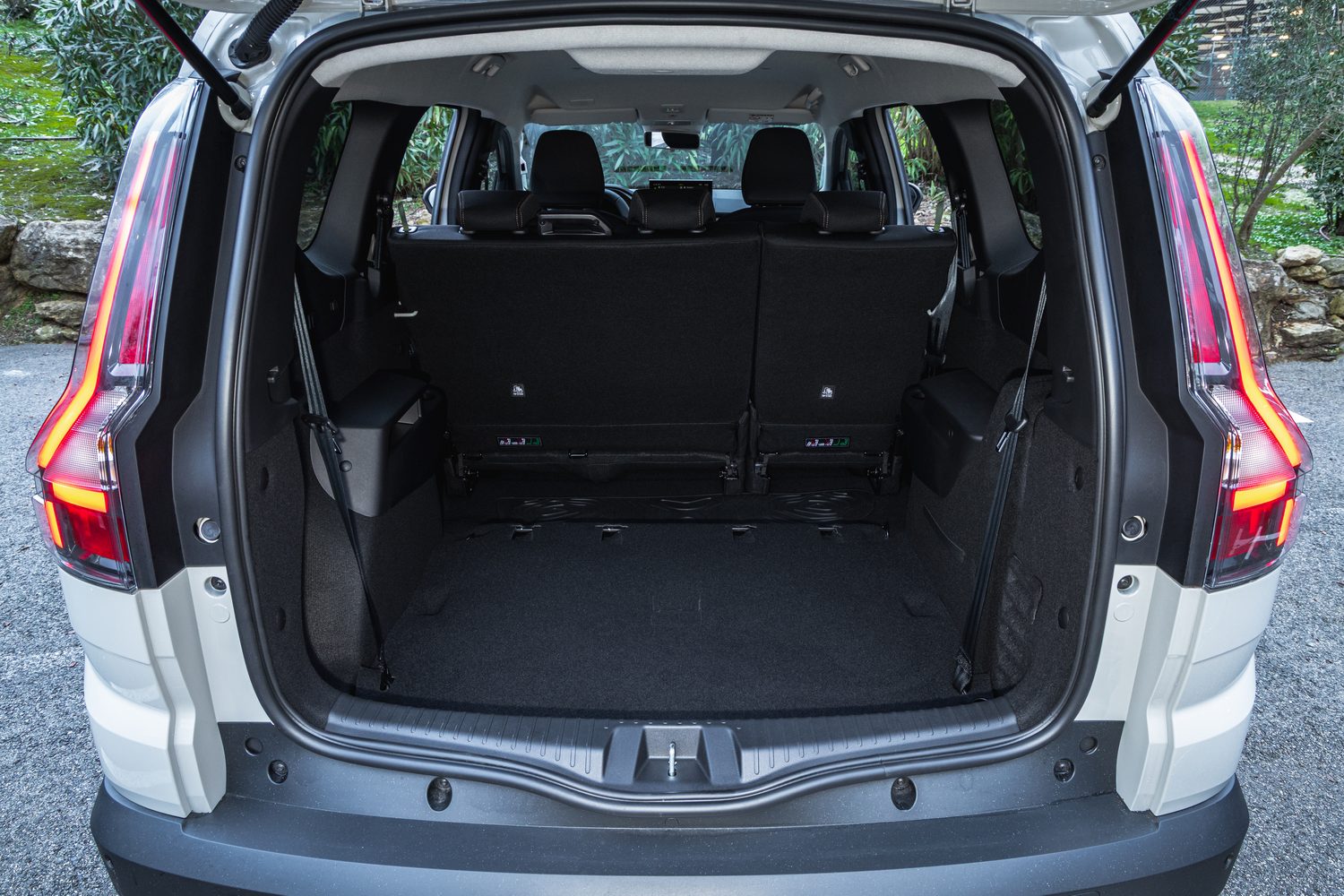
To get the much more useful 699-litre boot, you have to not fold the third row but actually fold and remove the two individual seats. This is a slightly fiddly operation and of course means that you'll have to leave those seats at home, which might not be the most convenient, but there's no denying the massive space on offer.

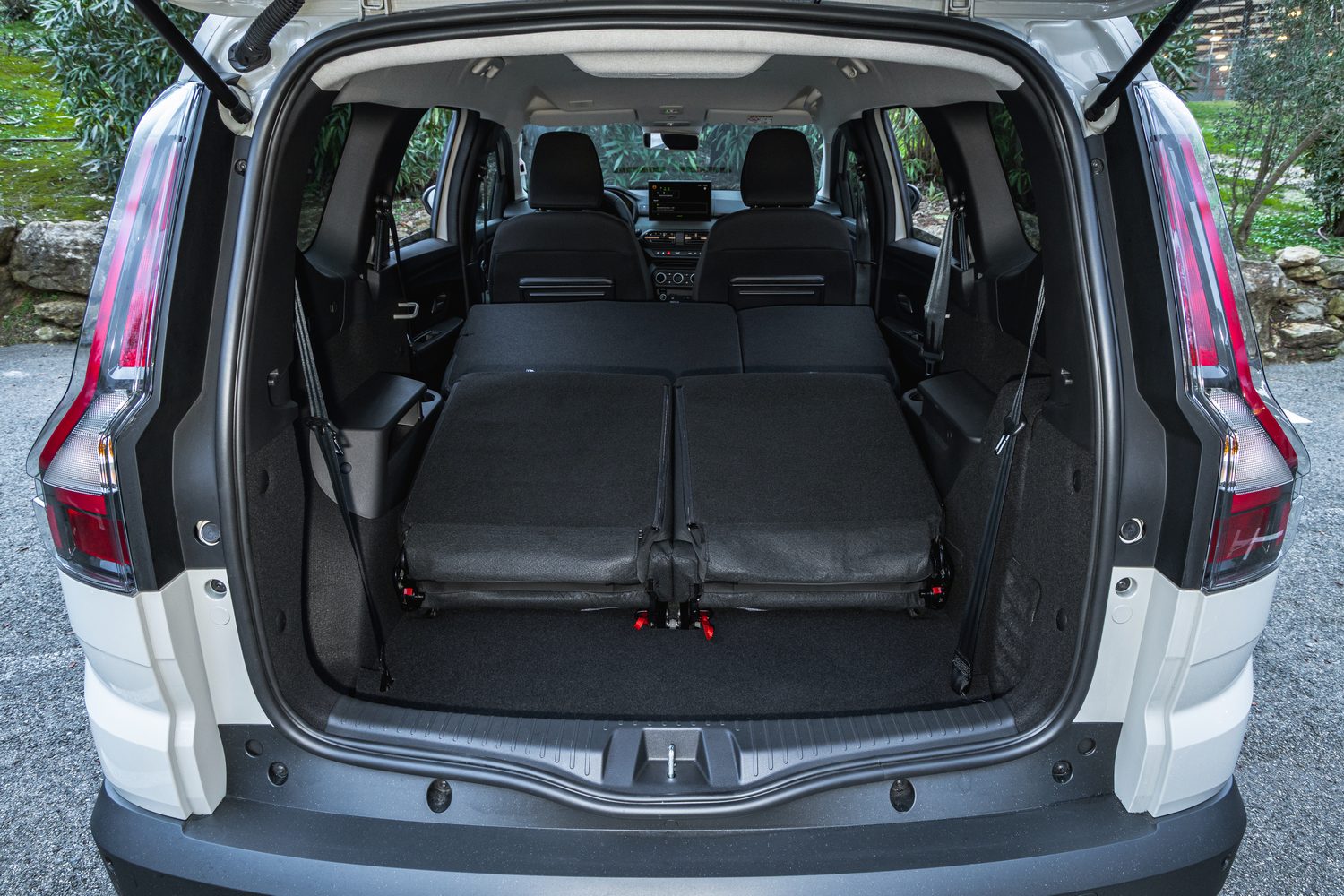
You can open up yet more space, by folding and tumbling the middle row, which gives you a whopping 2,085 litres of space. Plus there's the standard-fit roof rails, which can swivel through 90 degrees to give you a built-in roof rack.
You could, in theory, also remove the middle row if you needed to turn the Jogger into a temporary ersatz van, but that involves taking out bolts and disconnecting seatbelt sensors, so maybe don't bother. Incidentally, if you do decide to keep the third row in the boot, but just fold the seatbacks, then the available load space is a massive 565 litres, but obviously you're going to have to pack on top of and around the seats.
One of the joys of the Jogger is the optional Sleep Pack. This is a wooden box, which clips into the boot (once you've removed the third-row seats) and unfolds into a clever futon-style double bed lying across the back seats.

For just over €1,000 it turns the Jogger into a camper, and I can confirm - having spent two nights sleeping in one - that although it can be a touch awkward getting in and out, once you're in it's very comfortable indeed.
Added to that, you can now have the Jogger with a 3x3-metre awning that clips onto the roof bars, and even a pannier-style storage box called the TowBox, which hangs off the towbar, and which can hold 310 litres of extra luggage. There's also the option of a tent that clips onto the rear of the Jogger, as part of Dacia's 'In Nature' accessories lineup, designed to emphasise the brand's outdoorsy nature.
Towing with the Dacia Sandero
The Jogger is a decent tow car, especially when fitted with the Hybrid 155 engine, which gives you a maximum braked towing weight of up to 1,000kg.
Safety in the Dacia Jogger
The Jogger received a one-star rating from Euro NCAP when it was tested back in 2021, primarily because it scored so low in the active safety assistance category, thanks to Dacia eschewing the more expensive electronic systems.

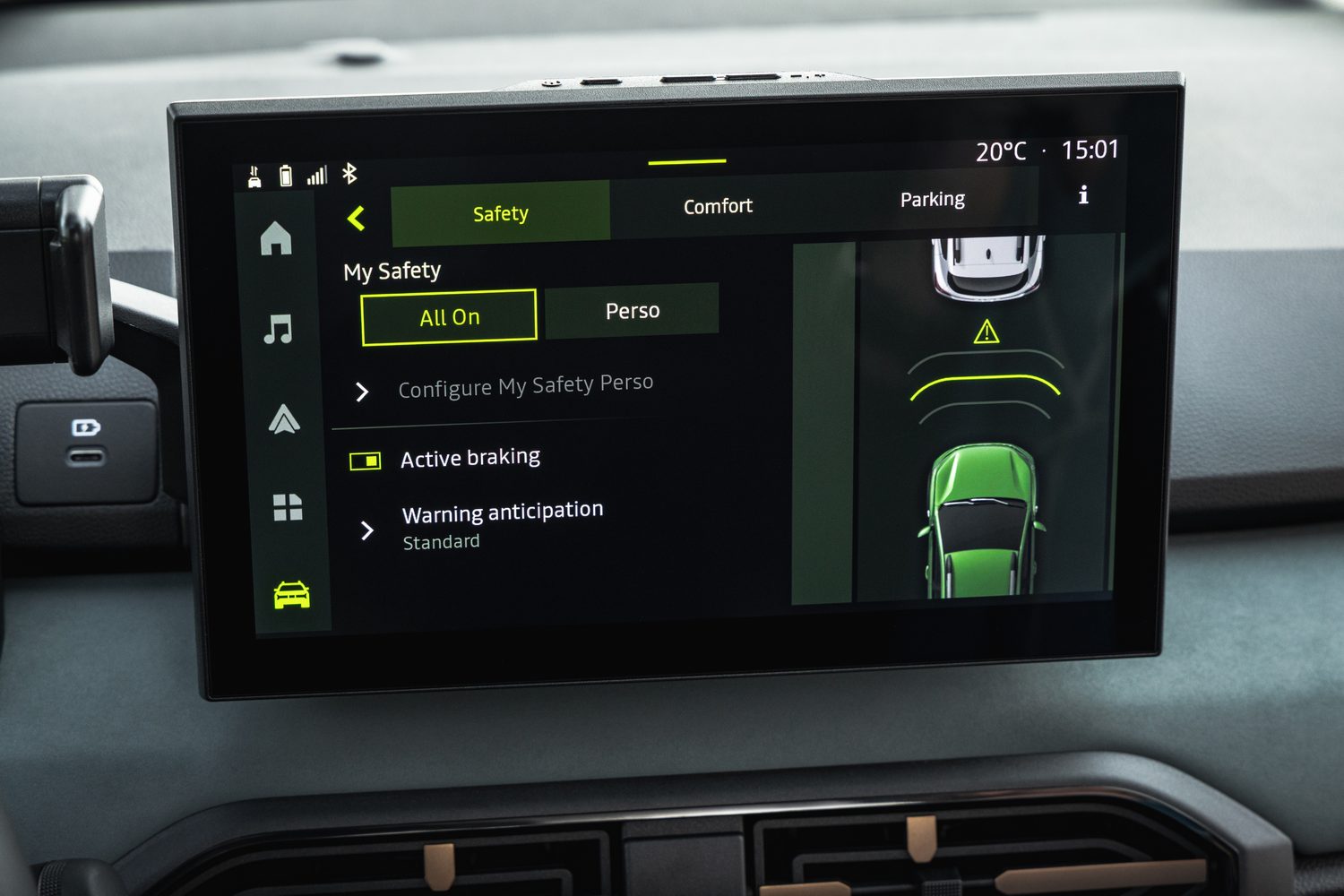
Category scores of 70 per cent for adult occupant protection, and 69 per cent for child occupants weren't actually that bad, though. The low scores for vulnerable road user protection (41 per cent) and safety assist systems (39 per cent) ought to be improved by the addition of new safety kit for the 2026 model year, including autonomous emergency braking with pedestrian and cyclist detection, plus a driver drowsiness monitor.
Performance of the 2026 Dacia Jogger
- Basic petrol engine gets the job done
- Hybrid is the best version
- Slightly noisy engines if pushed

The Jogger's lineup is divided between the simpler turbocharged 1.0-litre petrol engine with a manual gearbox, or the more sophisticated Hybrid 155 with its automatic transmission.
Driving the Sandero Jogger Hybrid 155 Extreme in France - Neil Briscoe
The Jogger was initially offered as a hybrid - the Hybrid 140, using a 1.6-litre petrol engine, tied into a 'multi-mode' automatic transmissions and a 1.4 kWh battery. This new Hybrid 155 gets an extra 15hp, and much of that is down to greater swept capacity, as the petrol engine is now a 1.8-litre unit, bringing the Jogger into line with the Bigster. This same engine will also be available in the Sandero Stepway.

Is it vastly different to what went before? Not hugely no, although there is a sense that there's a touch more muscularity to the Jogger Hybrid's performance, and it's not just a sensation either - a full 1.1 seconds has been knocked off the 0-100km/h time.
Not that you'll be lining the Jogger Hybrid up for traffic light Grands Prix or anything. As before, the petrol engine gets a bit loud when you ask for full acceleration, so the Jogger is much happier, and quieter, at a slightly more sedate pace, using the extra 87Nm torque from its electric motor to give you the odd boost in straight-line speed.

The Jogger's wheelbase - a full 200mm longer than the Sandero to which it's related - means that the ride quality in this seven-seater is much more comfortable than it is in the smaller car, so the Jogger is a relaxed and easy-going companion, which in spite of its extended bodywork, still feels easily manoeuvrable around town. Higher speed cruising unleashes a bit of wind and tyre noise, but I've done long hauls in Joggers previously, and it's not really an issue.
The steering is pretty vague about the straight-ahead, and not much more informative with a touch of lock on, but while the Jogger is hardly the most enthusiast-focused car around, it's perfectly pleasant to drive.

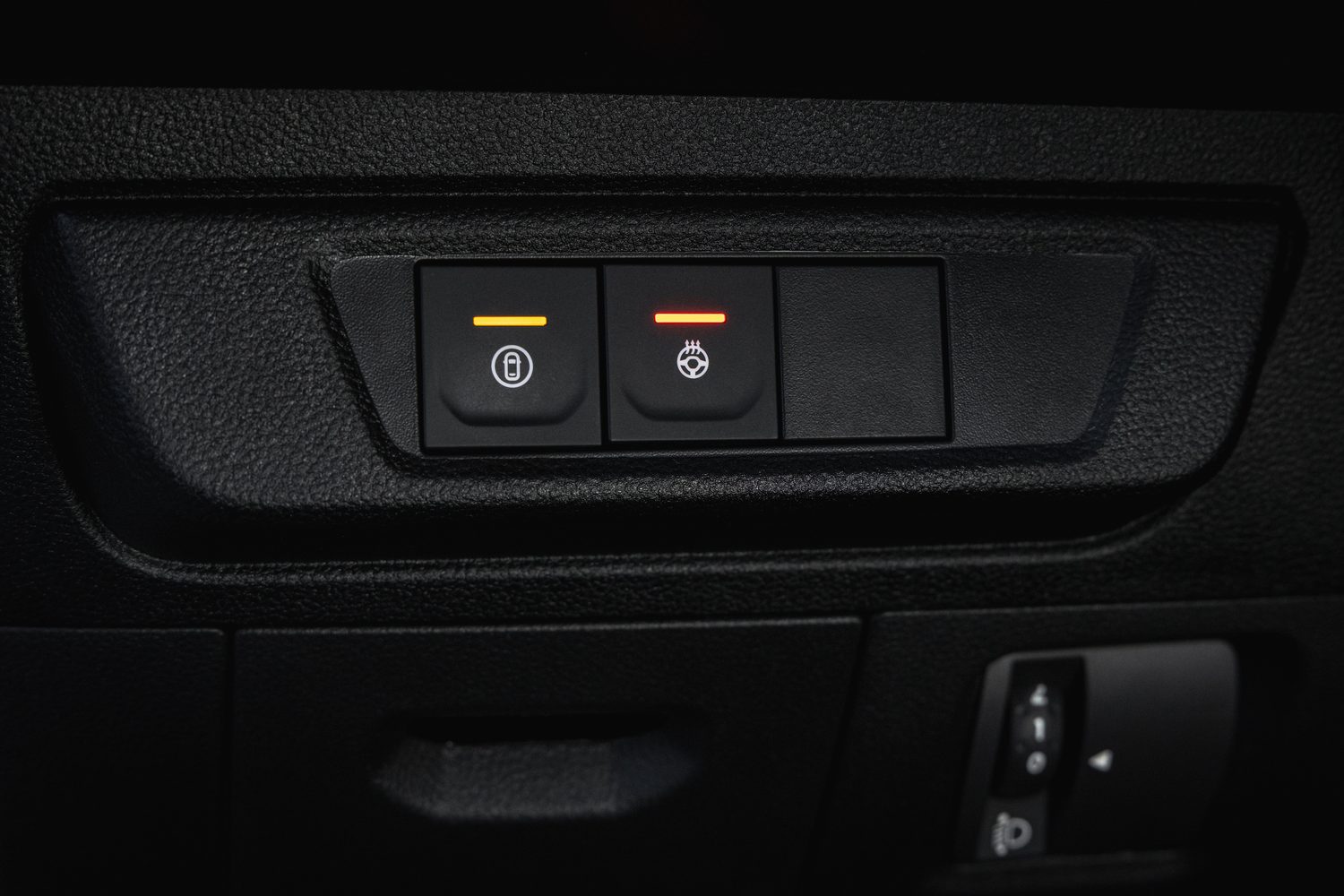
In spite of the Extreme add-ons, the Jogger is no off-roader, but there is a button on the centre console that activates the 'Extended Grip' mode - basically a traction control setting that maximises what the Jogger can do on slippery surfaces.
Fuel economy and running costs of the 2026 Dacia Jogger
- Low weight keeps consumption down
- Hybrid 155 is exceptionally economical
- Gets close to its WLTP figures
The Dacia Jogger is an astonishingly light car by seven-seat standards - just 1,388kg even with the hybrid system - and that really helps with its fuel economy.

Official CO2 and fuel economy figures
The 1.0-litre petrol-engined Jogger, with its 110hp, has an official CO2 rating of 136-137g/km, and fuel consumption of 6.0 litres per 100km. The Hybrid 155 has a CO2 rating of just 104g/km and economy of 4.7 litres per 100km.
Real-world range and efficiency of the Dacia Jogger
We've seen hugely impressive real-world economy from this Hybrid 155 system in the bigger, heavier Bigster SUV, which easily averaged 5.3 litres per 100km over a week with us. So the figure we recorded on this international test drive with the Jogger Hybrid 155 - 5.0 litres per 100km - might look a bit disappointing, but there are factors to consider such as that we (a) had the engine running during photography and filming sessions, and (b) it was quite a short route with not much time for the engine to warm up fully.

In those circumstances, 5.0 litres per 100km is actually very good, and there's potential for the Jogger Hybrid to meet its WLTP figure of 4.7 litres per 100km (that's 60mpg in old money) in real-world driving.
Servicing the Dacia Jogger
Dacia recommends a Jogger service every year, or every 20,000km whichever comes up sooner for a basic 'A' service, and two years or 30,000km for a more intensive 'B' type service. There's an inclusive service plan too, so you can spread your service payments as part of a Dacia finance package.

Dacia Warranty
Dacia offers a 100,000km, three-year warranty for all of its models, but you can extend that for a relatively reasonable sum.
Irish pricing & rivals to the 2026 Dacia Jogger
- Hardly any MPV rivals left
- Hybrid tech pushes price above €30,000
- Excellent value by any measure
In Expression spec, the Jogger Hybrid 155 costs €31,590 while the top-spec Extreme Hybrid 155 pushes that boat out to €33,090. It's not a huge amount of money, in the current car market at least.

There really aren't many multi-seat MPV options left in the market at this point, so the closest rival, at least in terms of offering lots of seats and cabin space, is the Citroen Berlingo, the cheapest seven-seat version of which costs €38,390.
Of course, there is a closer rival to the Jogger and that's the Citroen C3 Aircross, alongside the almost-identical Opel Frontera, both of which can be had for around the €28,000 mark in seven-seat forms, but both of which have really tiny third row seats into which only small children can fit.
Verdict - should you buy the 2026 Dacia Jogger

The Jogger represents the peak point in the graph at which practicality and value for money meet. It's a hugely versatile car, and one that looks distinctly stylish if you go for the cosplay off-road Extreme spec. It's fine to drive, exceptionally economical in Hybrid 155 form and has a truly useful seven-seat layout.
FAQs about the 2026 Dacia Jogger
How many seats does the Dacia Jogger have?
As standard the Jogger comes with seven seats, the third row of which (seats six and seven) can be either folded down, or removed entirely, to increase the boot space.
Can the Dacia Jogger tow?
Yes, it can, and the Hybrid 155 model has a maximum braked towing weight of 1,000kg.
Is the Dacia Jogger's roof rack useful?
Yes, it is - the standard roof bars have sections that fold out to 90 degrees to create a proper roof rack, and the maximum weight capacity of that rack is a useful 80kg.
Want to know more about the Dacia Jogger?
If there's anything about the Dacia Jogger we've not covered, or you'd like help in choosing between it and other cars, you can avail of our expert advice service via the Ask Us Anything page.