

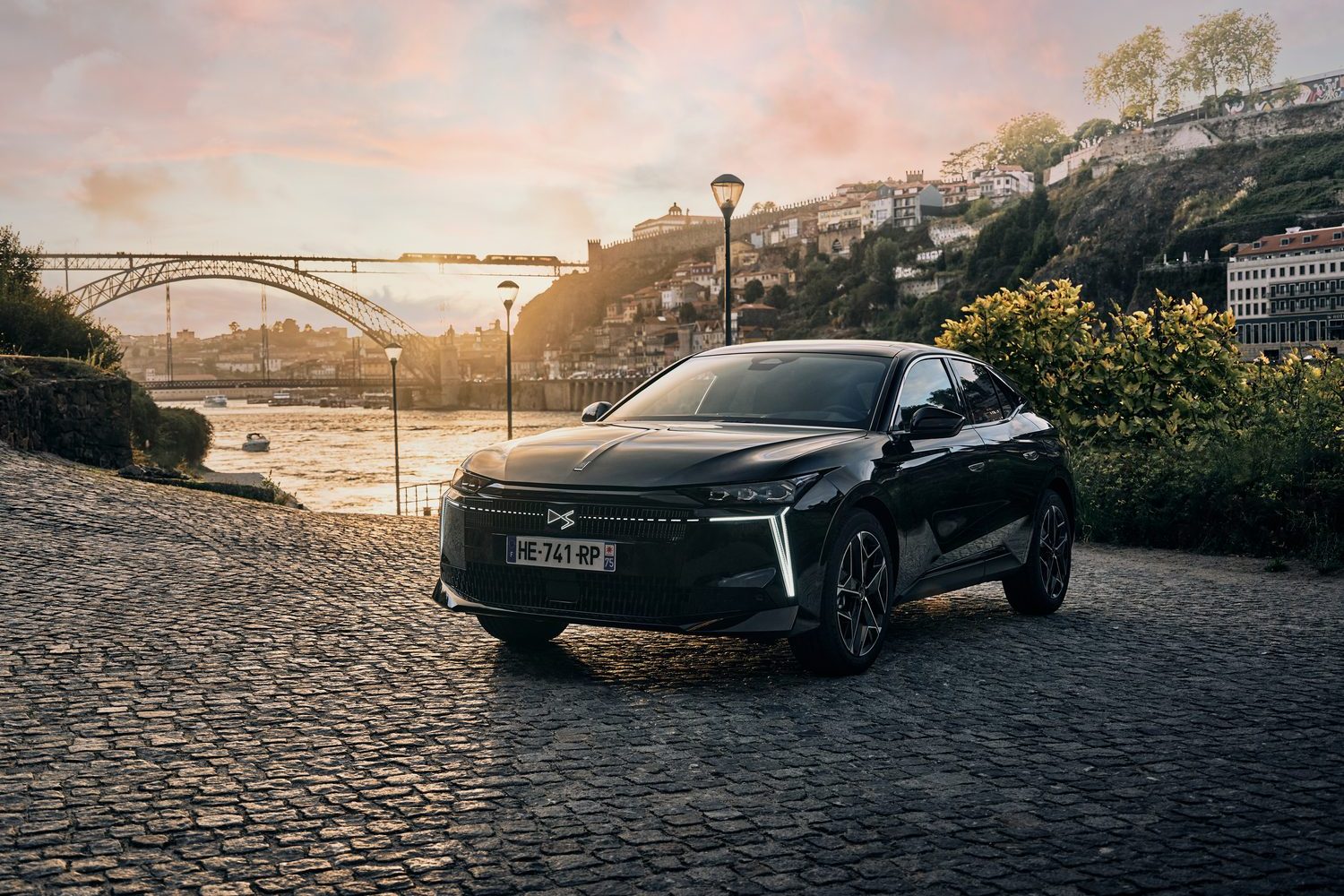
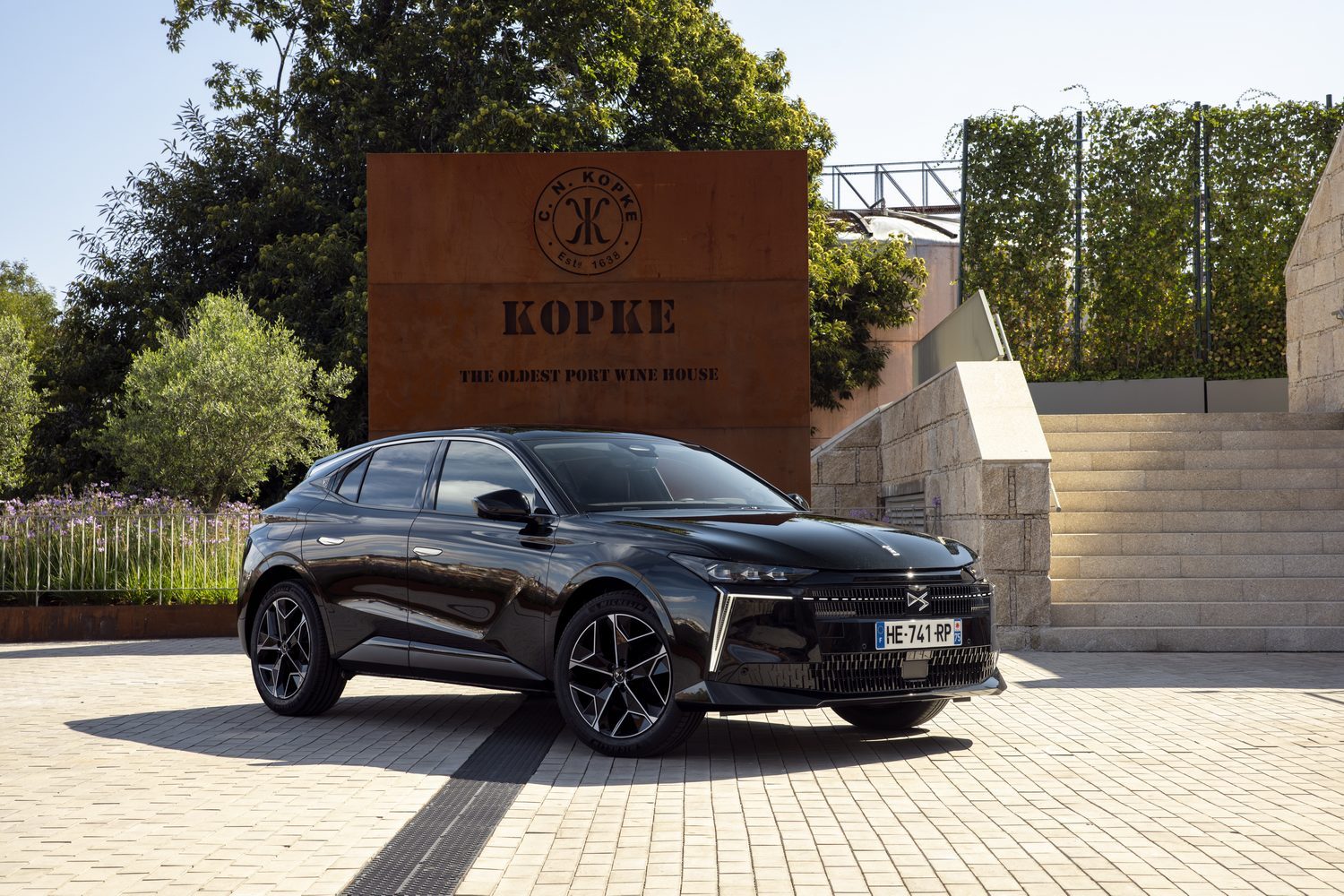
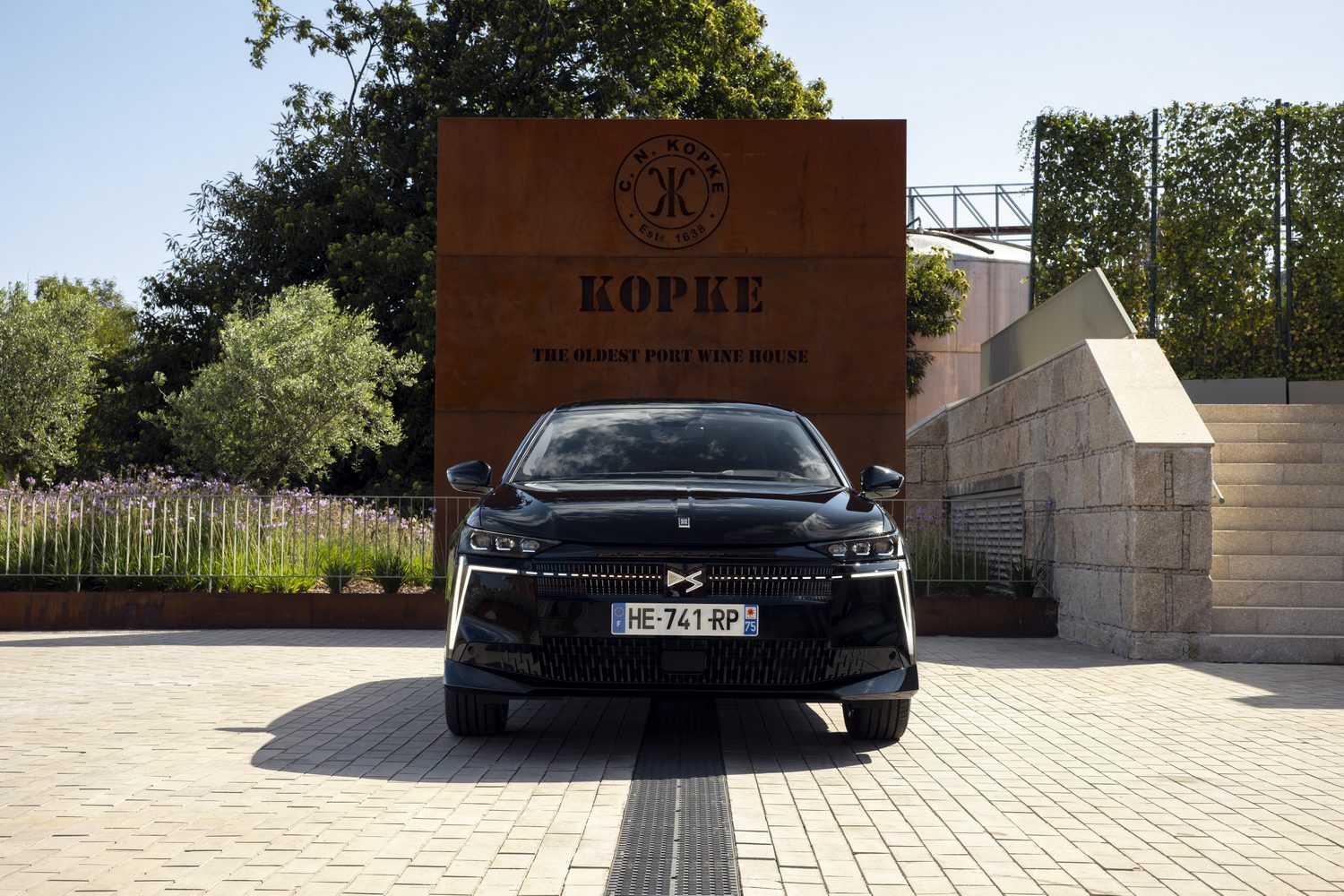
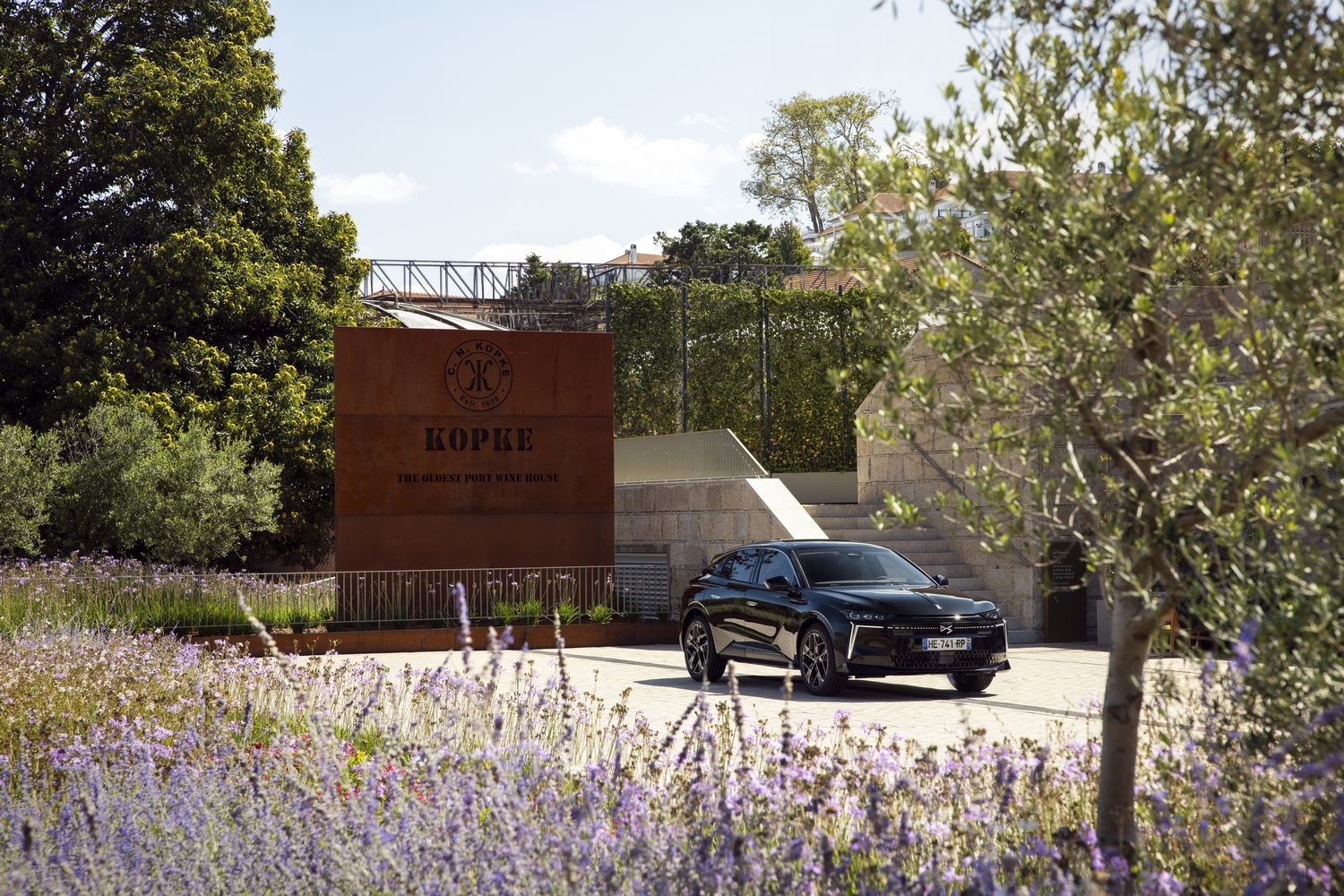
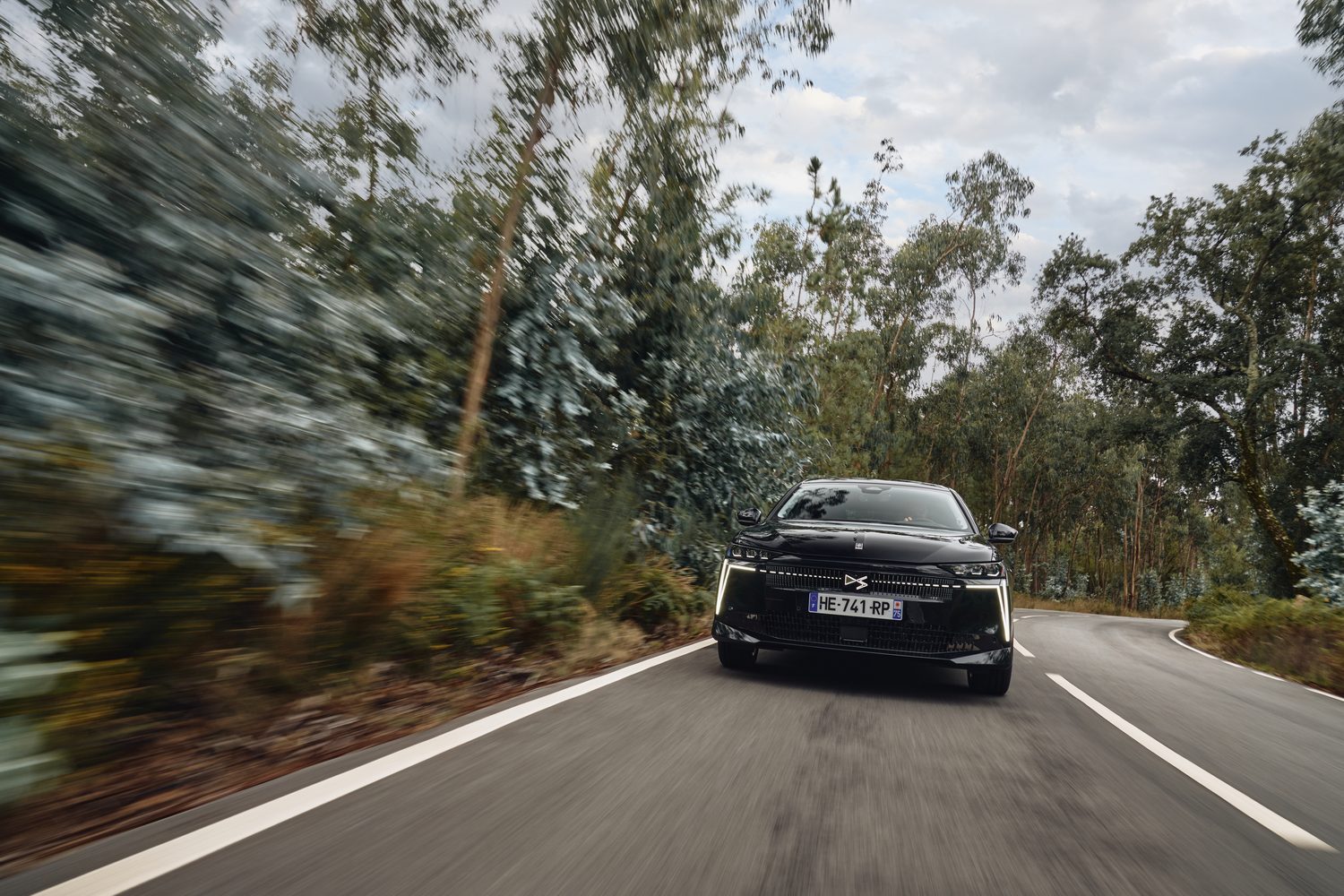
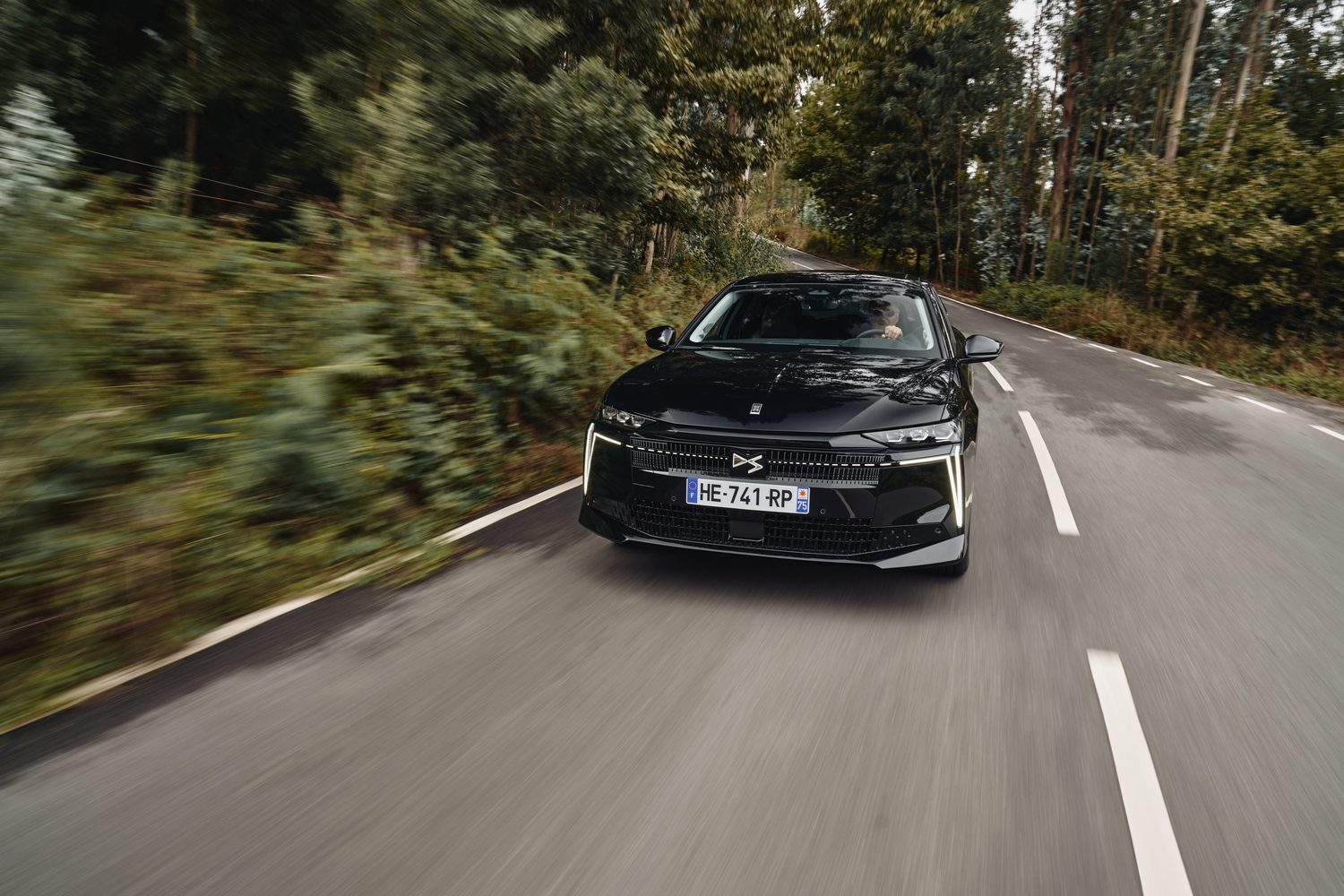
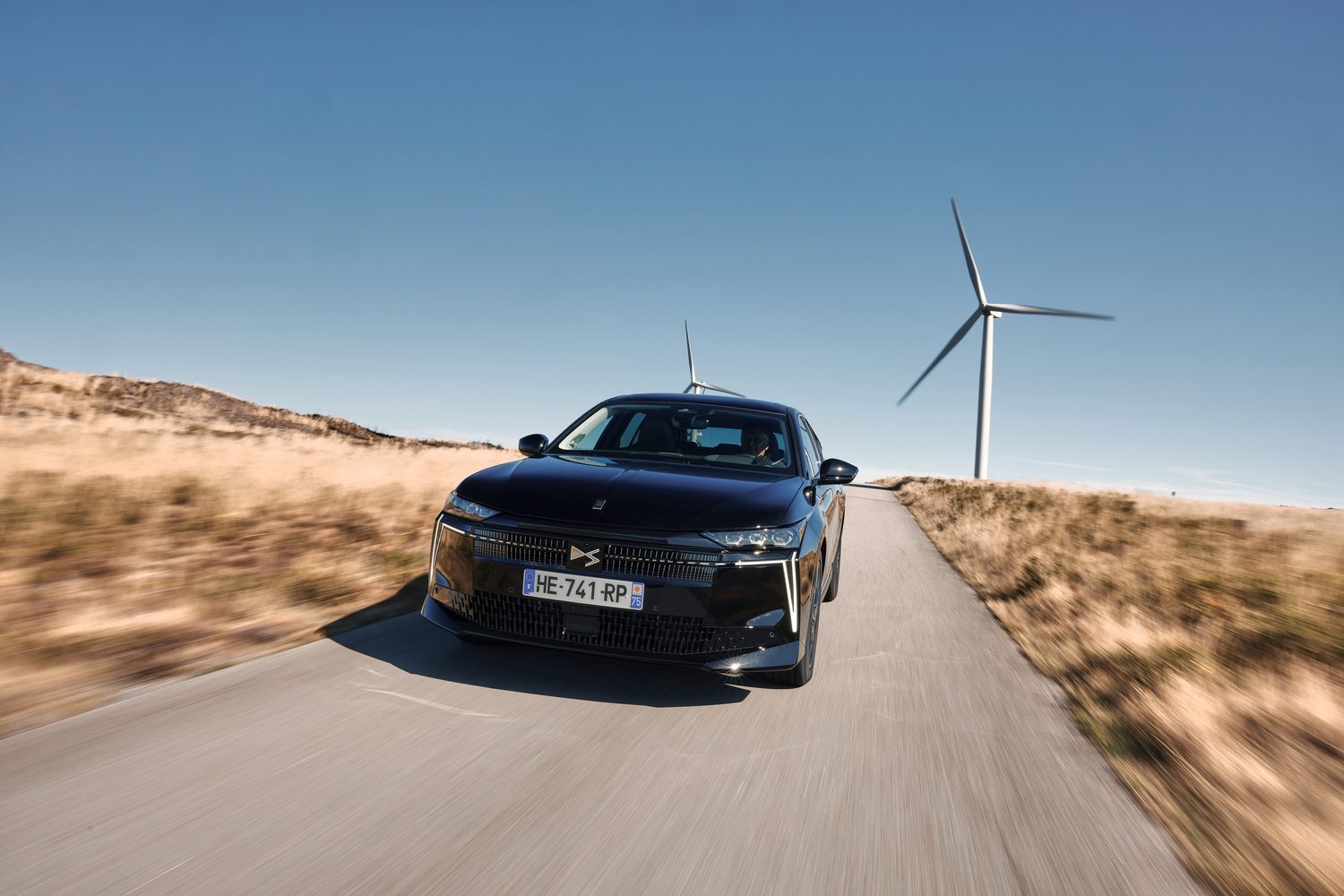
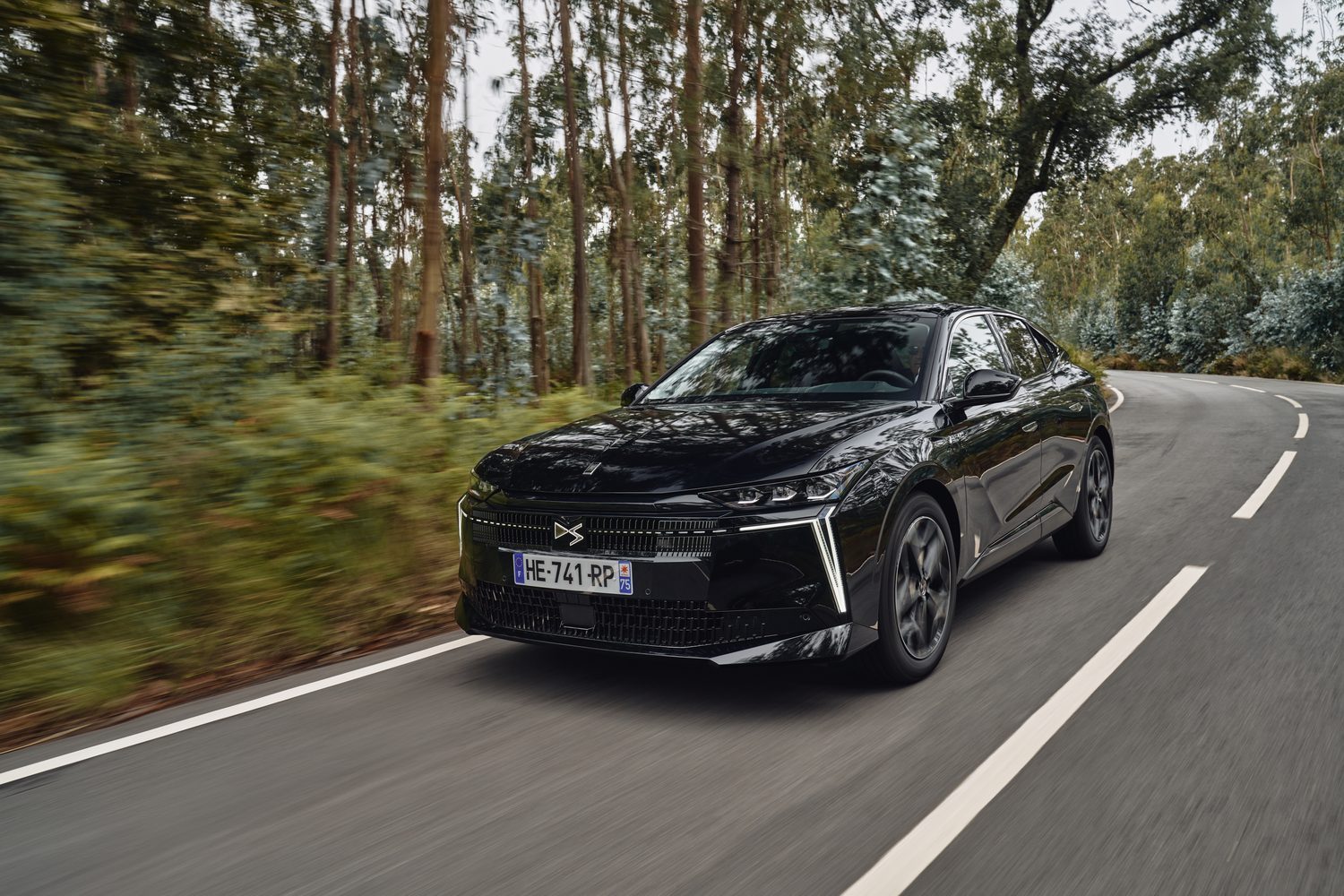
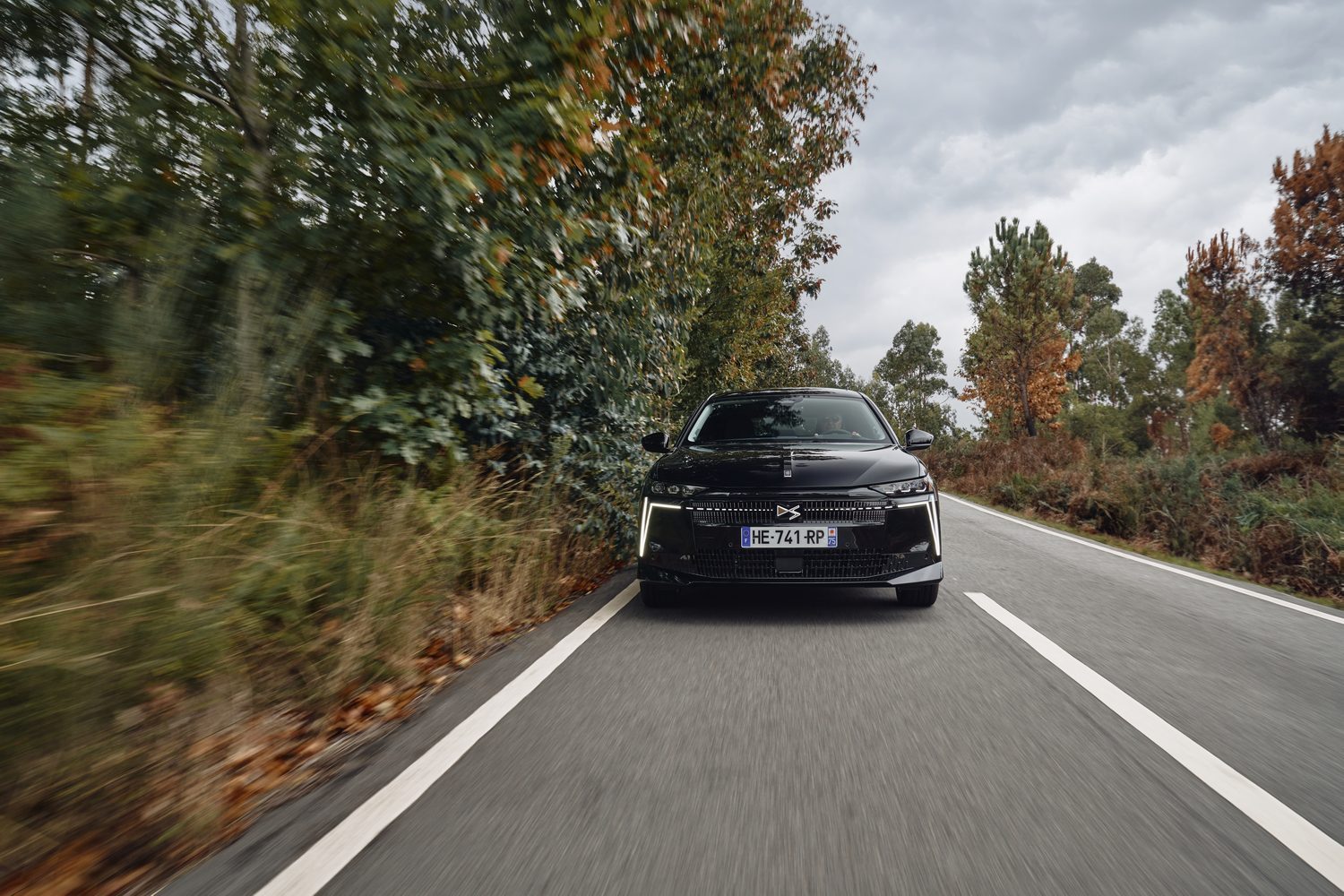
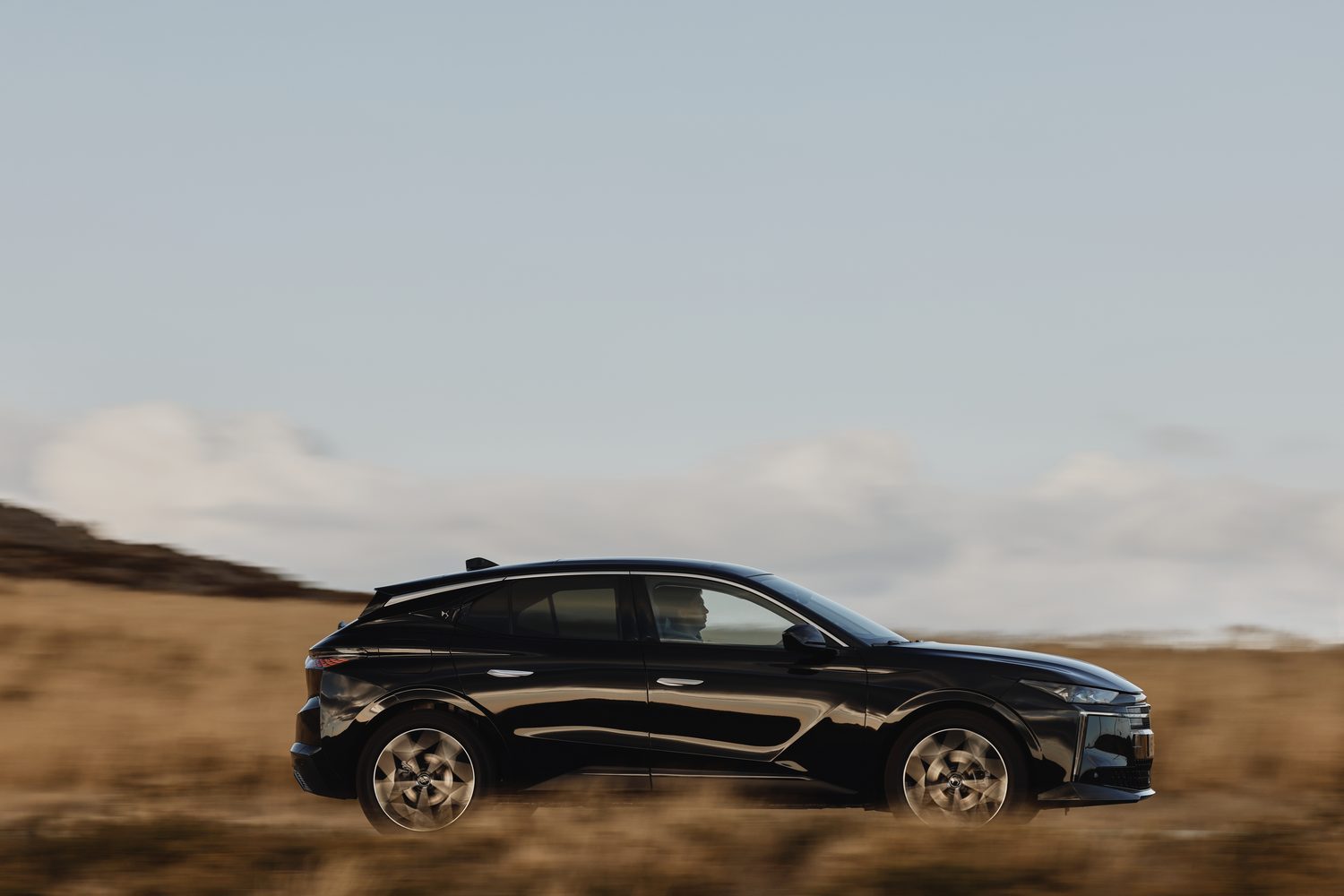


What's different from the DS No.4 E-Tense?

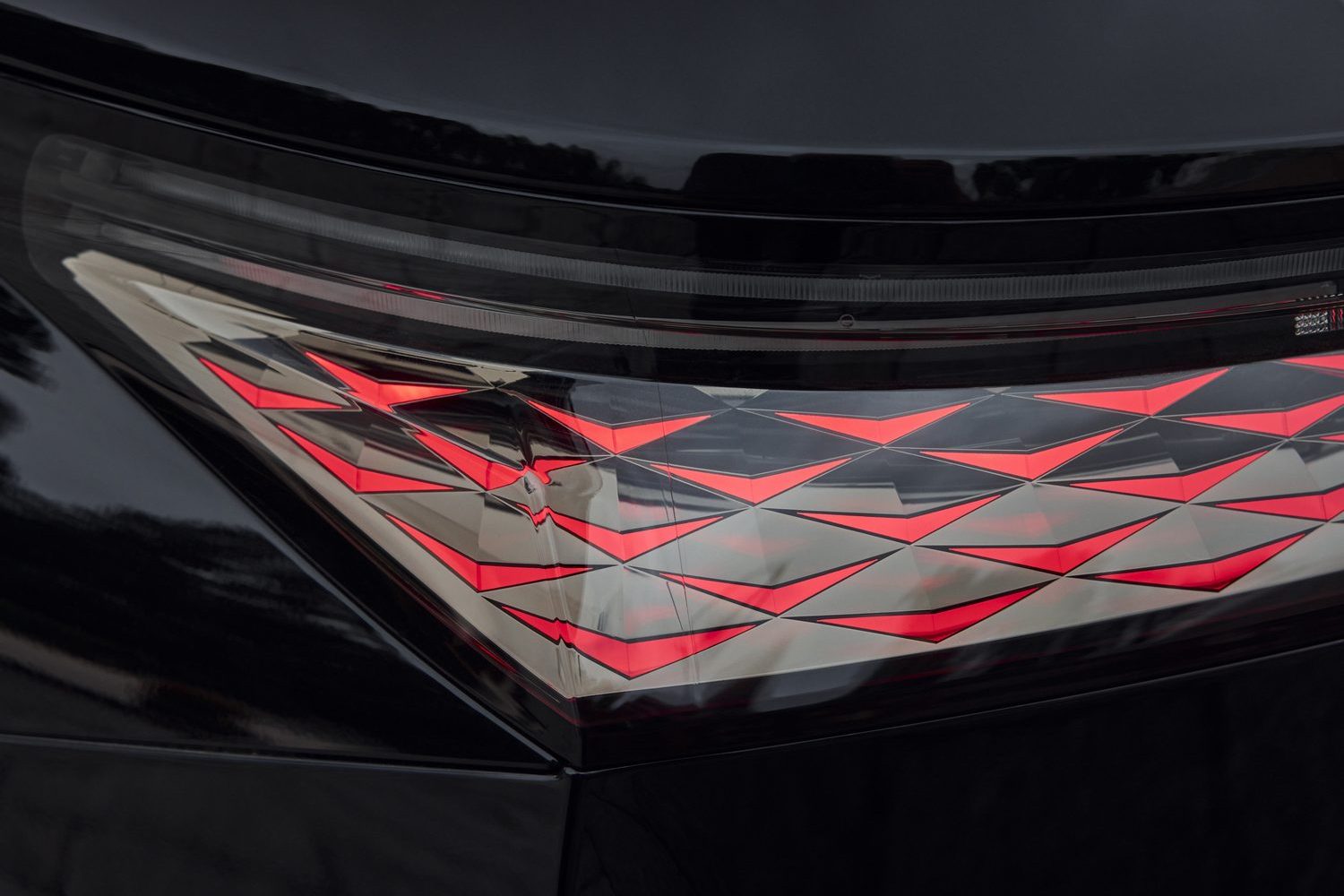
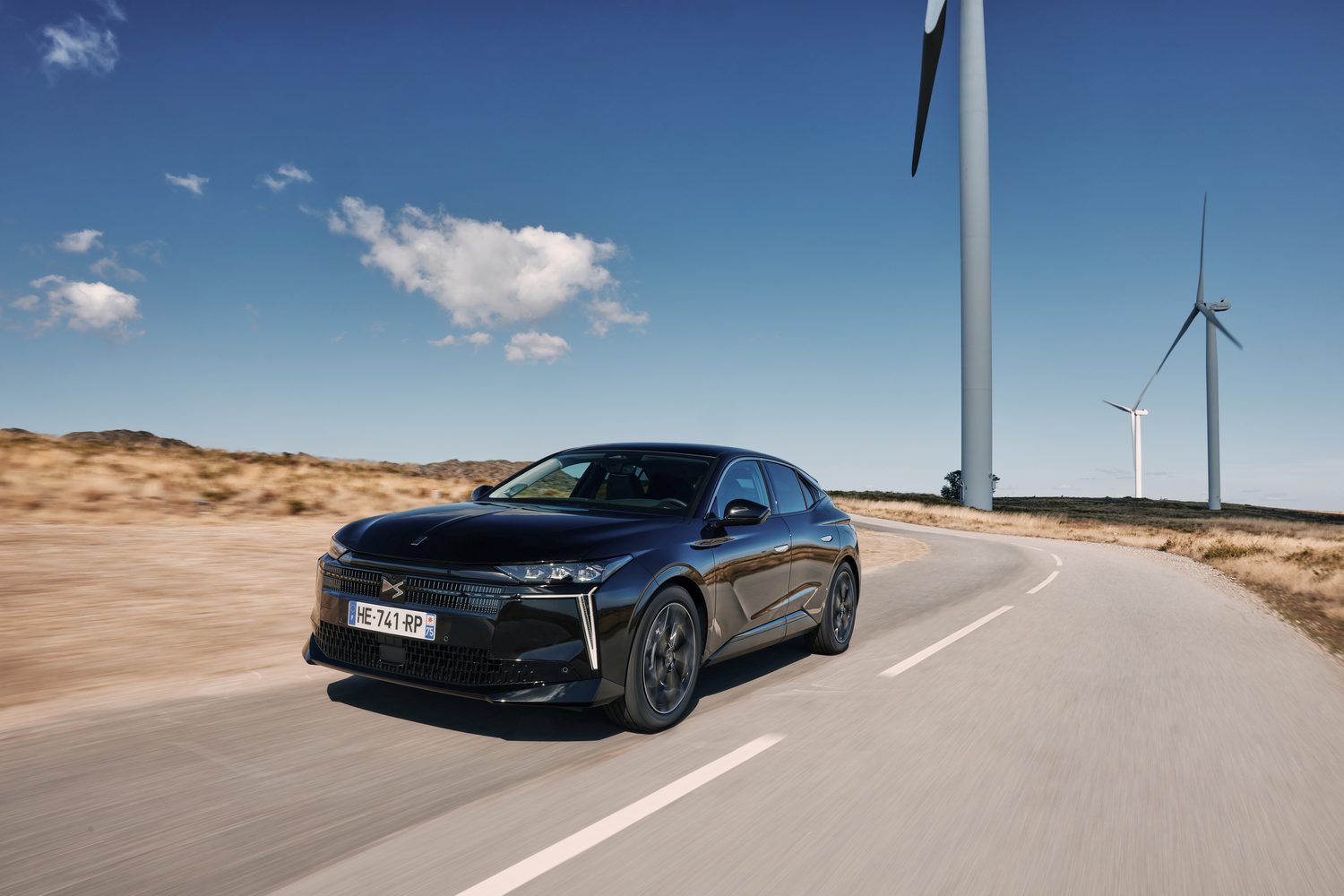
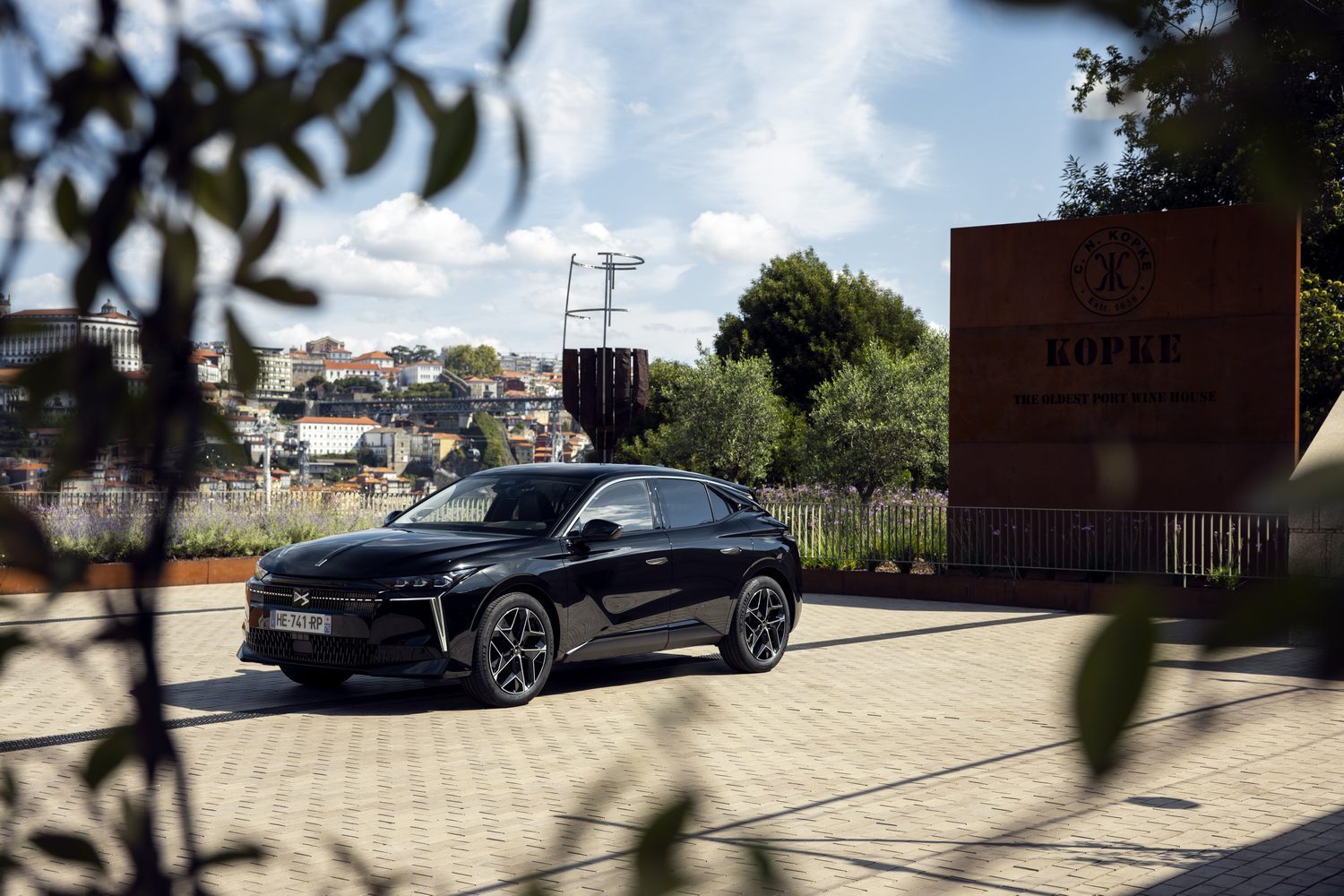
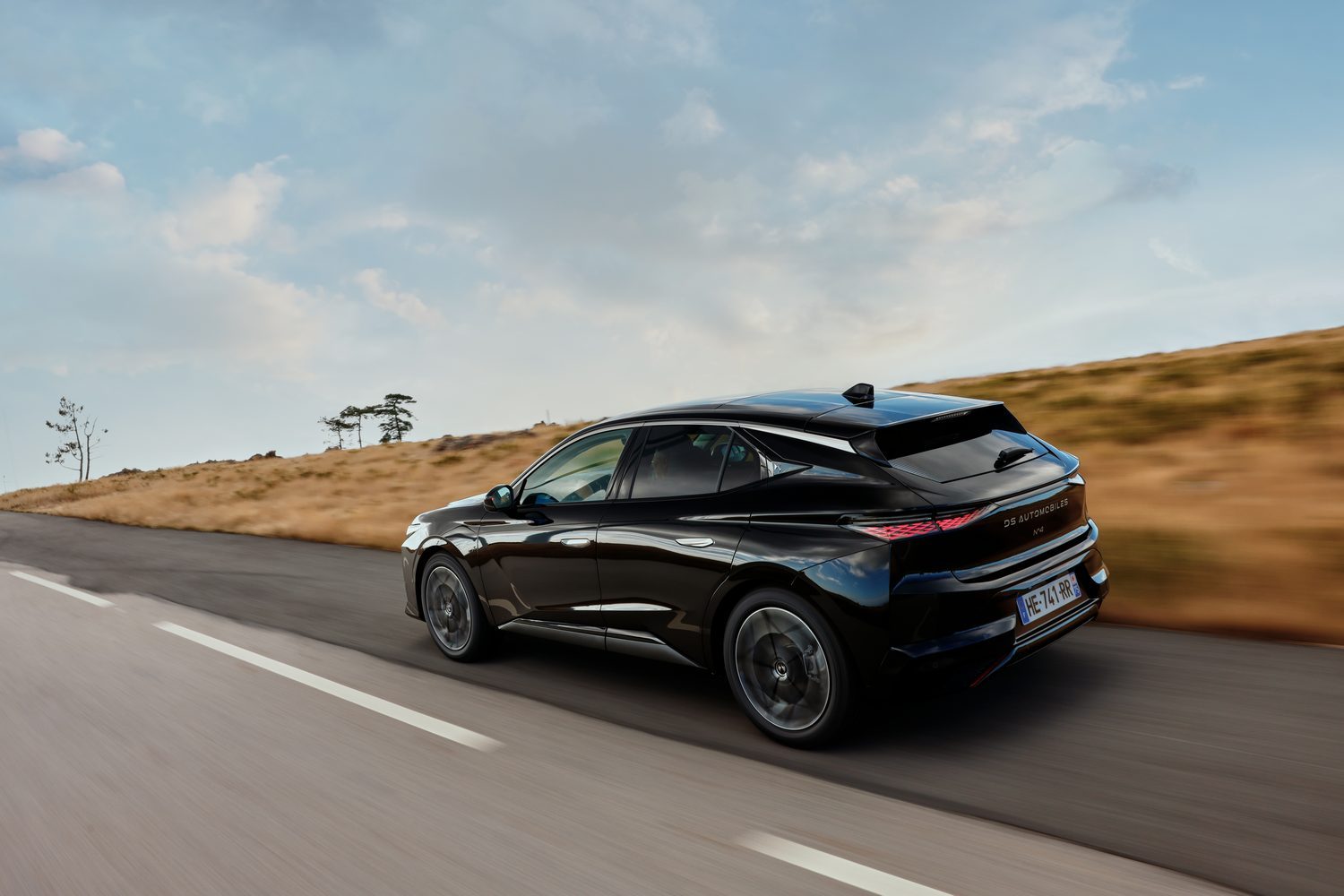
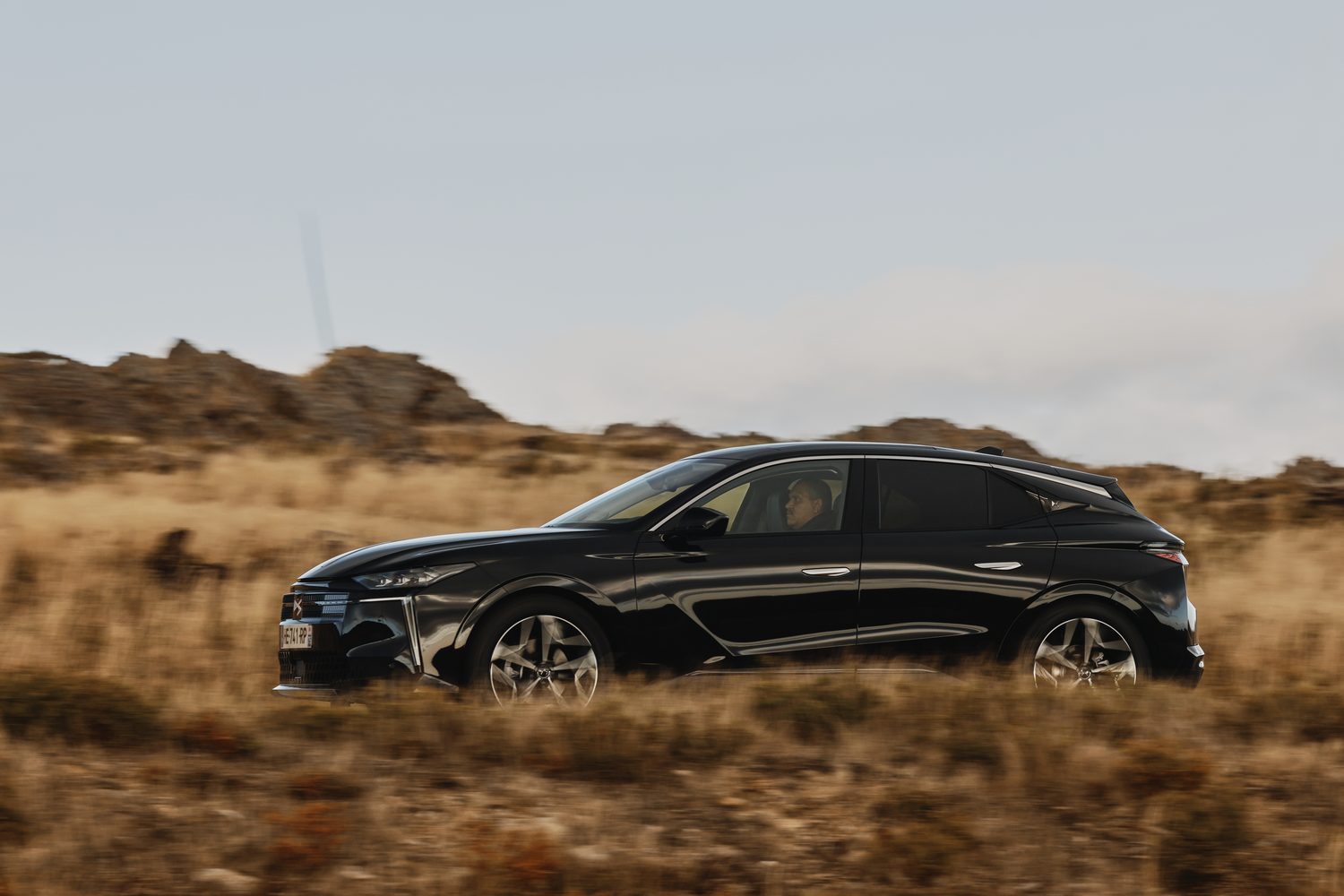
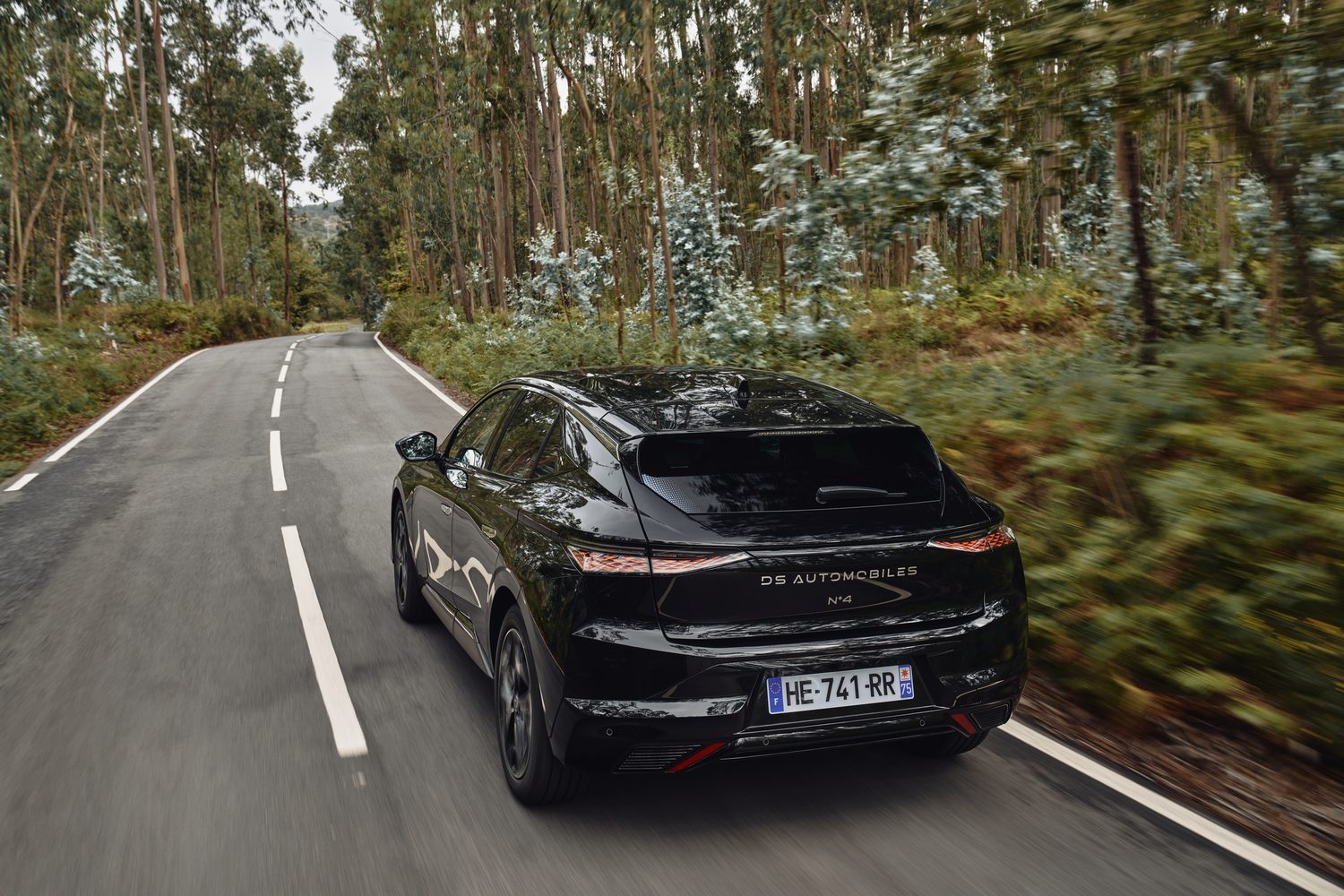
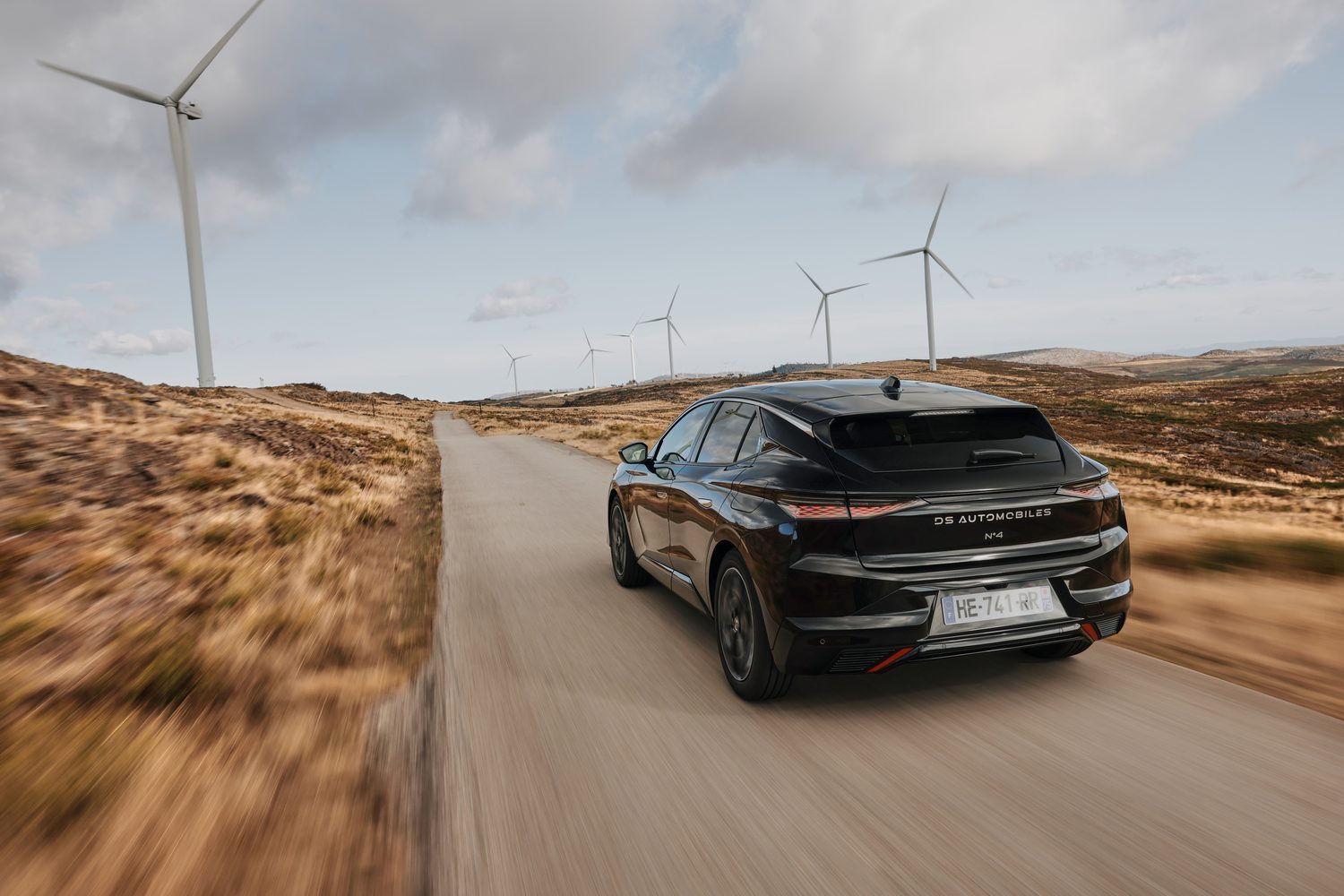
Visually, not an awful lot. Indeed, the only main things you'll spot to mark the PHEV out against the EV are that the former lacks for an 'E-Tense' badge under its centrally mounted No.4 logo at the back, while it also has two flaps - one on each rear wing - for both its charging port and its fuel tank; the zero-emission E-Tense clearly only has one for its CCS Combo 2 charging port.
The main difference, then, is that the PHEV has an internal combustion engine onboard, alongside a fairly potent 92kW electric motor and a battery pack that, at 14.6kWh, is larger than the unit in the old DS 4 E-Tense (yes, confusing, we know, but the E-Tense nomenclature used to belong to both PHEVs and EVs in DS's world, whereas now it is reserved purely for the full electric models).

This sees the official electric-driving range of the new car rise from 62km previously, to a fresh high of 81km.
Performance of the DS No.4 PHEV
- Feels pretty swift
- Engine can sound coarse
- Doesn't ride or handle as sweetly as the EV

Although the electrical portion of the PHEV's drivetrain has been upgraded, it still makes the same 225hp and 360Nm system peaks as it did before. Driving the front wheels through a seven-speed dual-clutch automatic transmission, the 0-100km/h time of the DS is a brisk 7.4 seconds, which only places it about three tenths behind the all-electric version.
Curiously, though, the overall driving experience of the PHEV is not as satisfying as that of the DS No.4 E-Tense. It begins with a ride that isn't quite as cushioned or as capable, with occupants of the car feeling more of the road surface's topography than you ever discern in the EV.

Coupled with a less supple ride is the elevated noise brought about by the petrol engine, which is not in the first flush of youth - it becomes raucous if you decide to rev it out. And while neither the PHEV nor the EV are slimline cars, the weight distribution in this car is clearly not as favourable as it is in the electric model, because this No.4 felt less playful and agile in the corners than the E-Tense.
It's all very fine margins, here, and if you only tried the PHEV fresh after visiting a DS showroom then you'd probably find it more than acceptable as a daily driver. But, for us, the new E-Tense is the one which best shows off the No.4's suite of strengths, plus it should also be a bit cheaper to buy.

Interior, practicality, tech & comfort of the DS No.4 PHEV
- High-quality material finishing
- Swish 10.25-inch instrument screen
- Various ergonomic quirks and not enough rear space

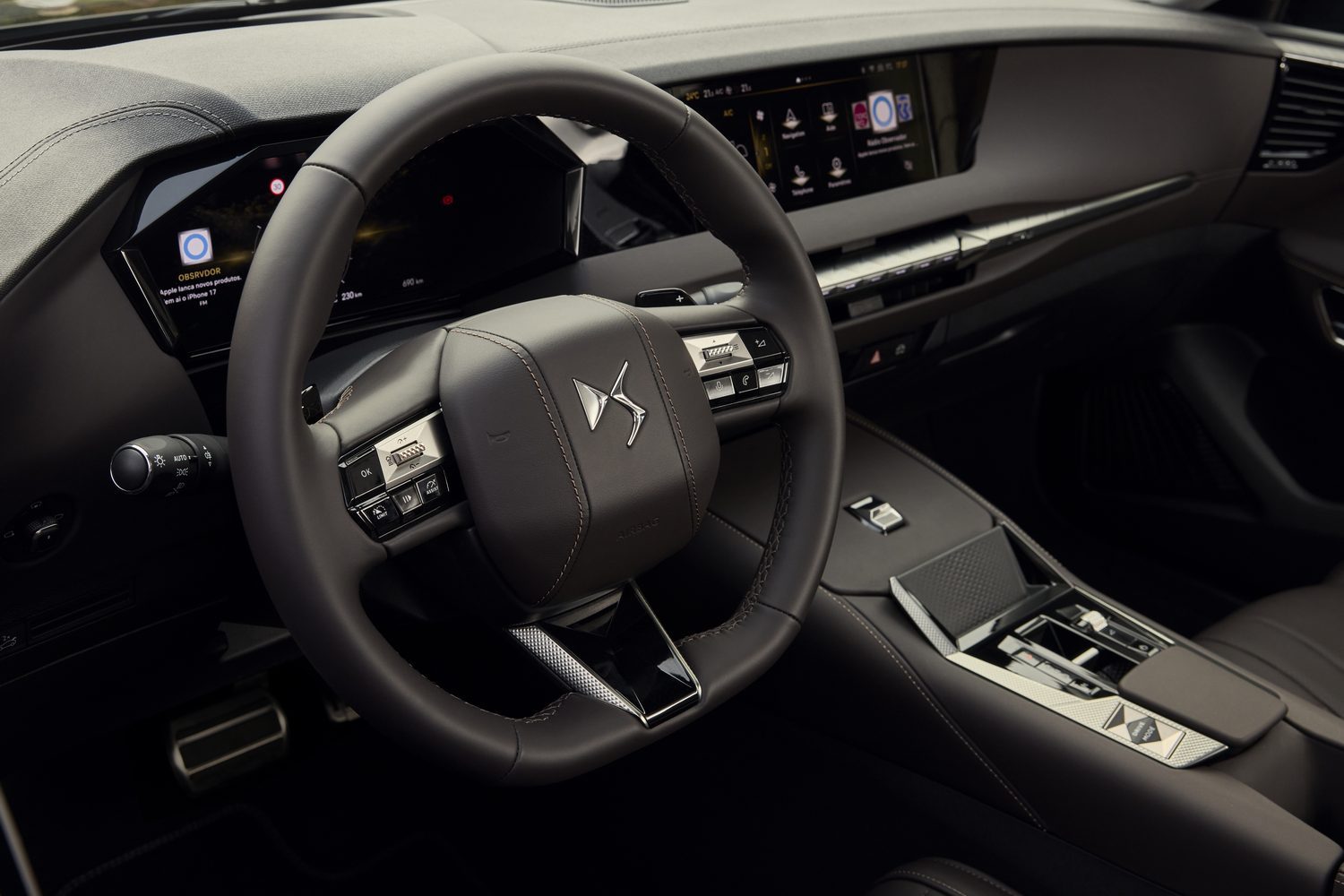
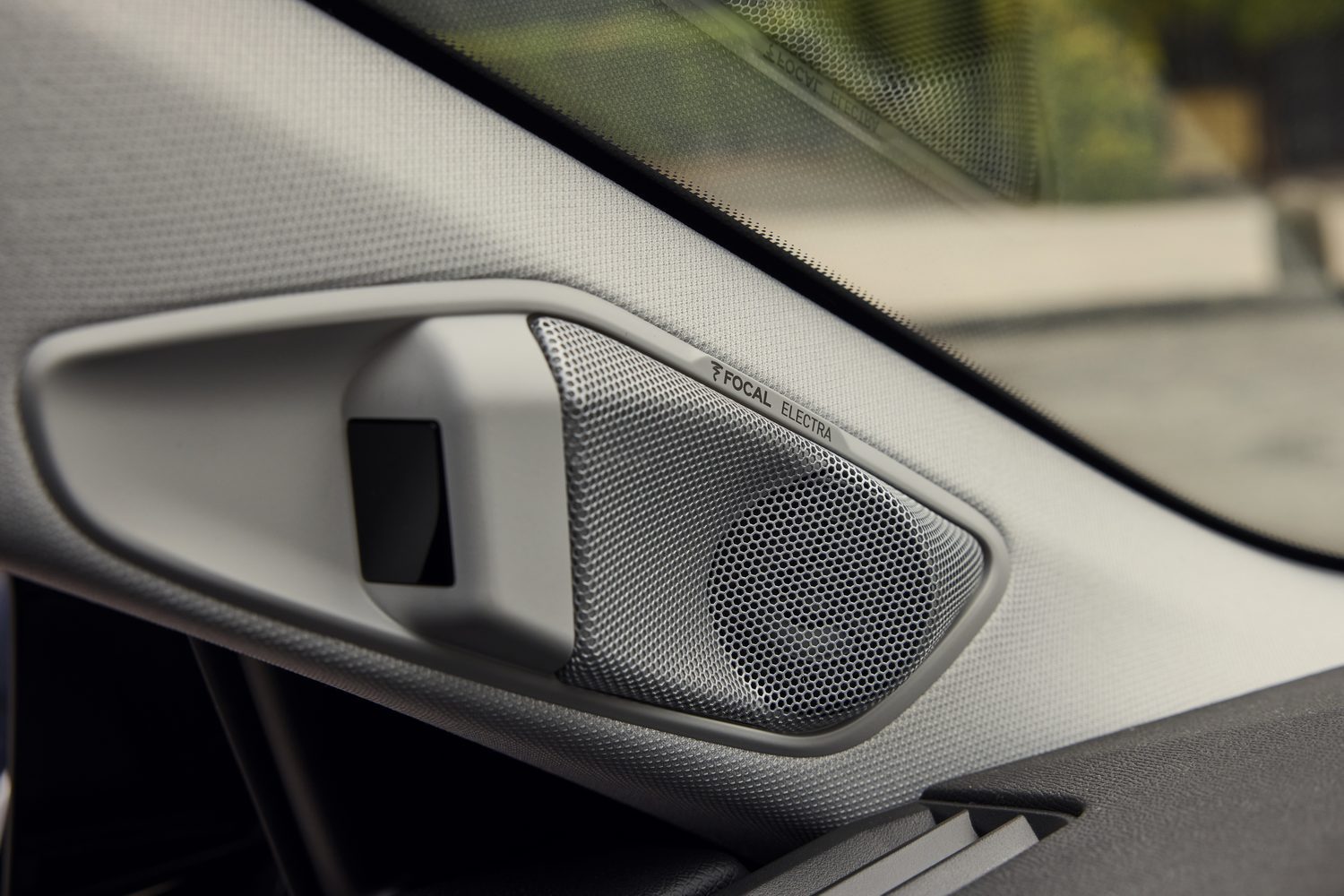
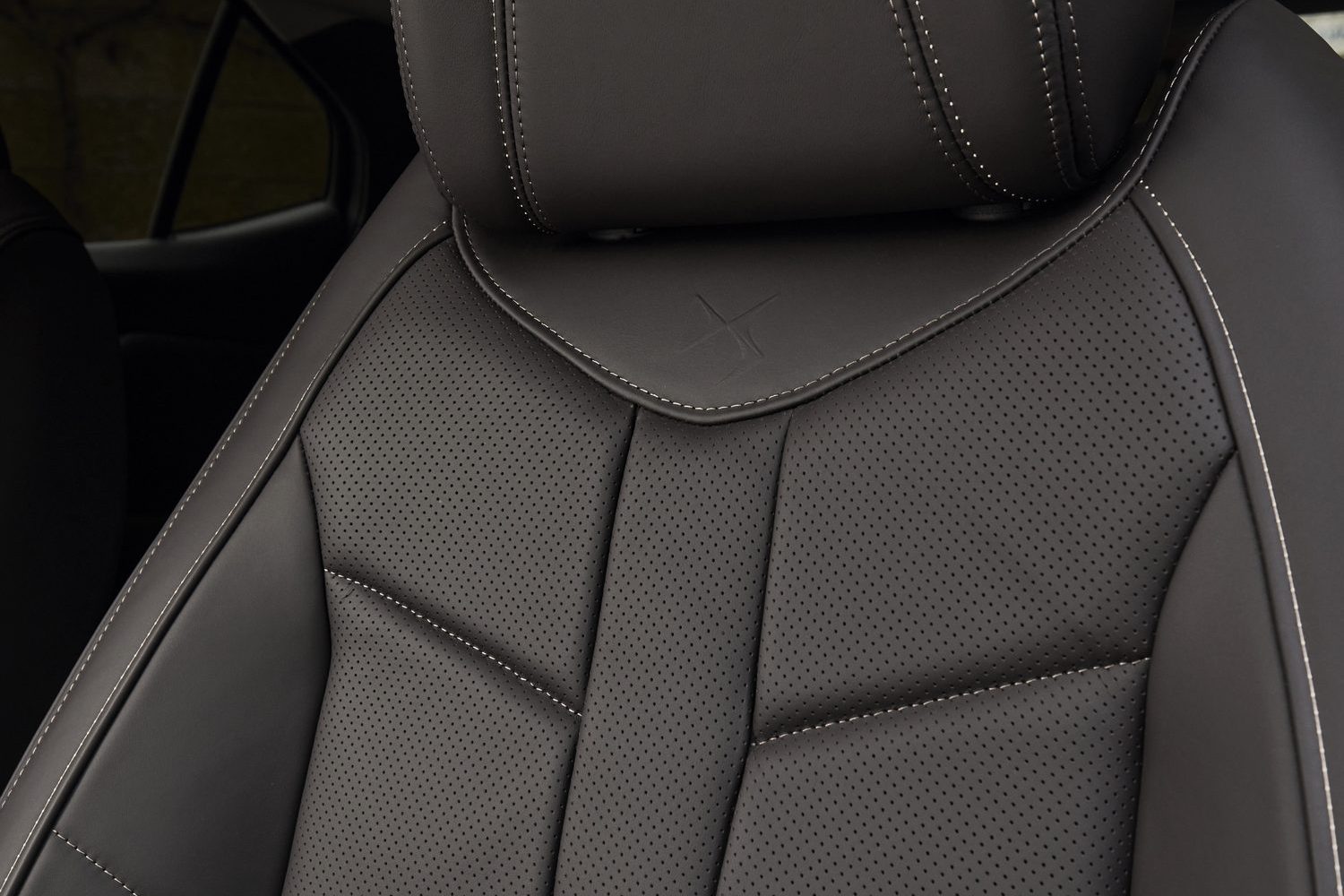
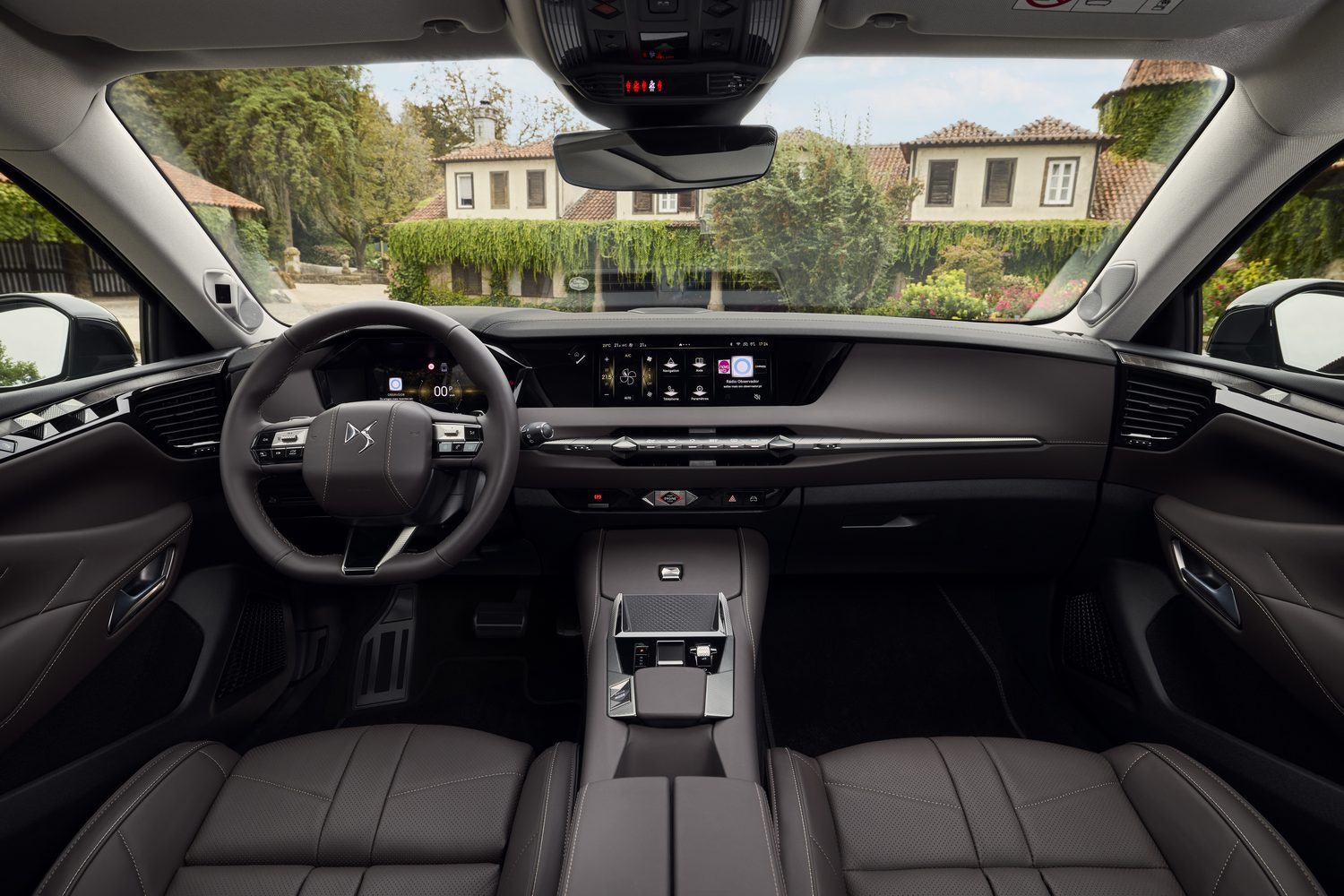
The interior of the DS No.4 is a triumph of high-quality materials and classy design, and it has been enhanced by an excellent 10.25-inch instrument cluster.
The graphics on this in the PHEV are subtly different to the ones seen on the display in the all-electric E-Tense, for obvious reasons, but in any No.4 the cluster is a big improvement on what went before.

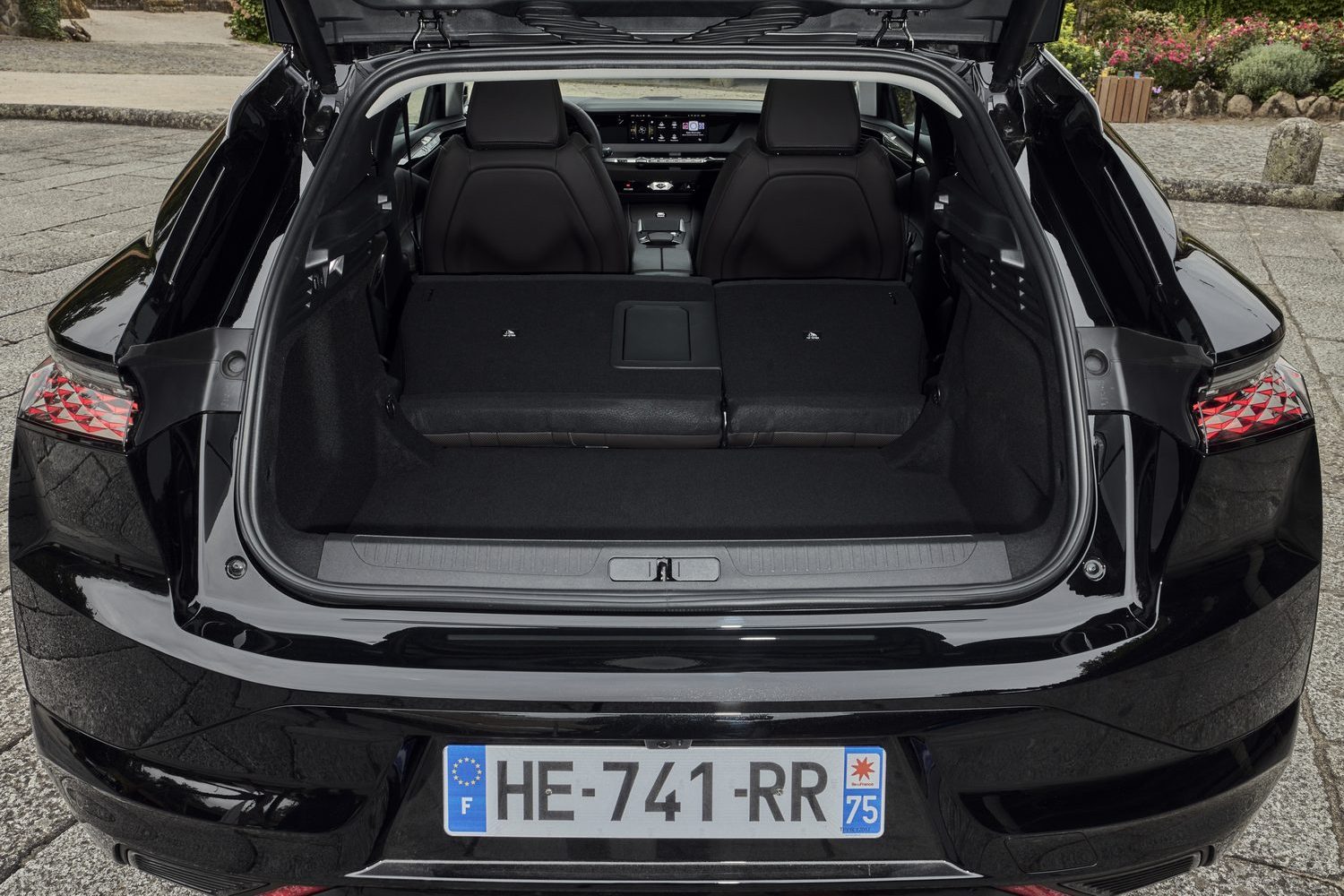
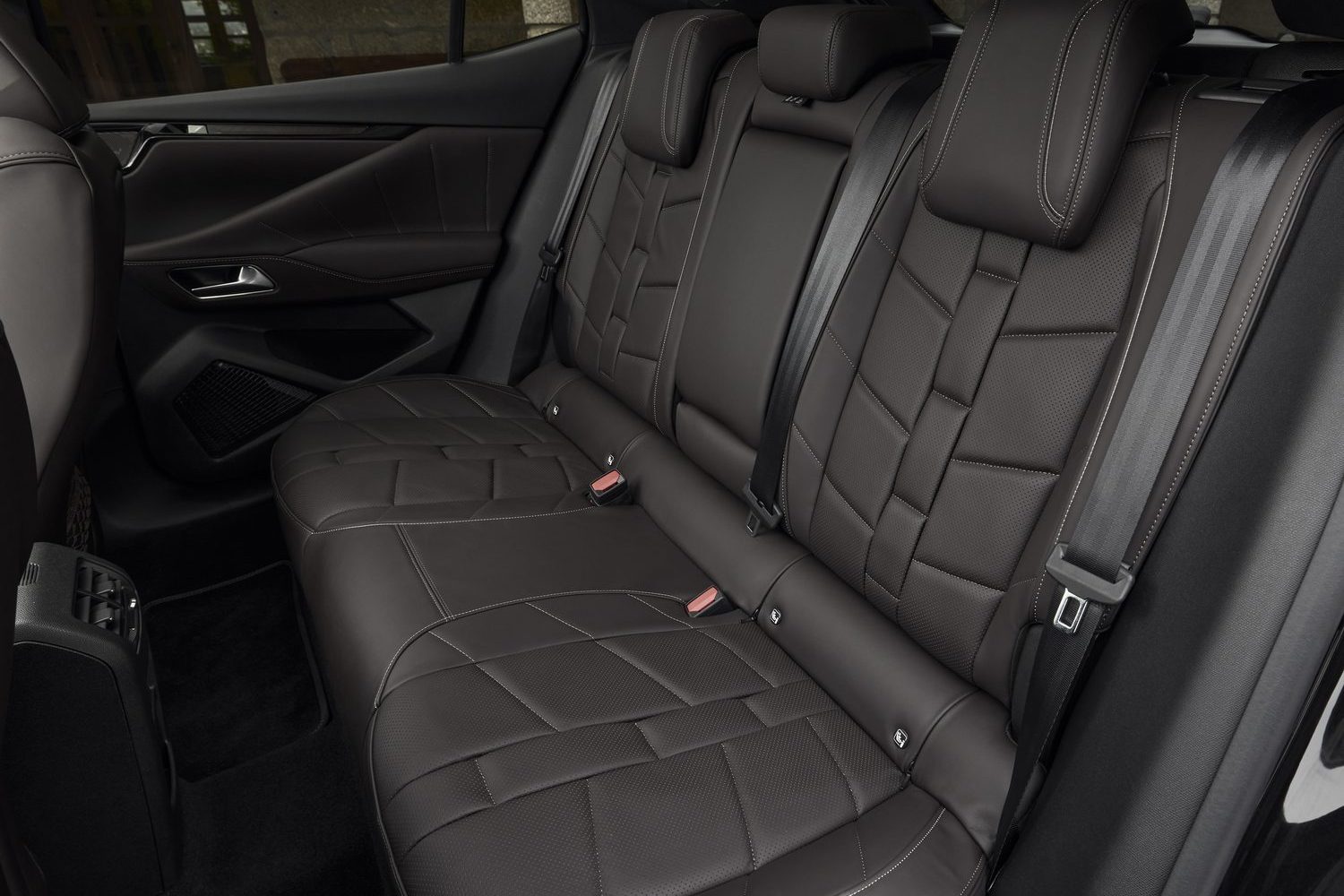
Where the No.4 PHEV falls down is on the same annoyances as the electric model. Rear-seat space is hardly generous, even for an average six-footer, so taller passengers will find head- and legroom limited in the back of the French car... unless the people sitting up front have the seats up close to the dashboard. Similarly, the PHEV doesn't have the biggest boot in the world.
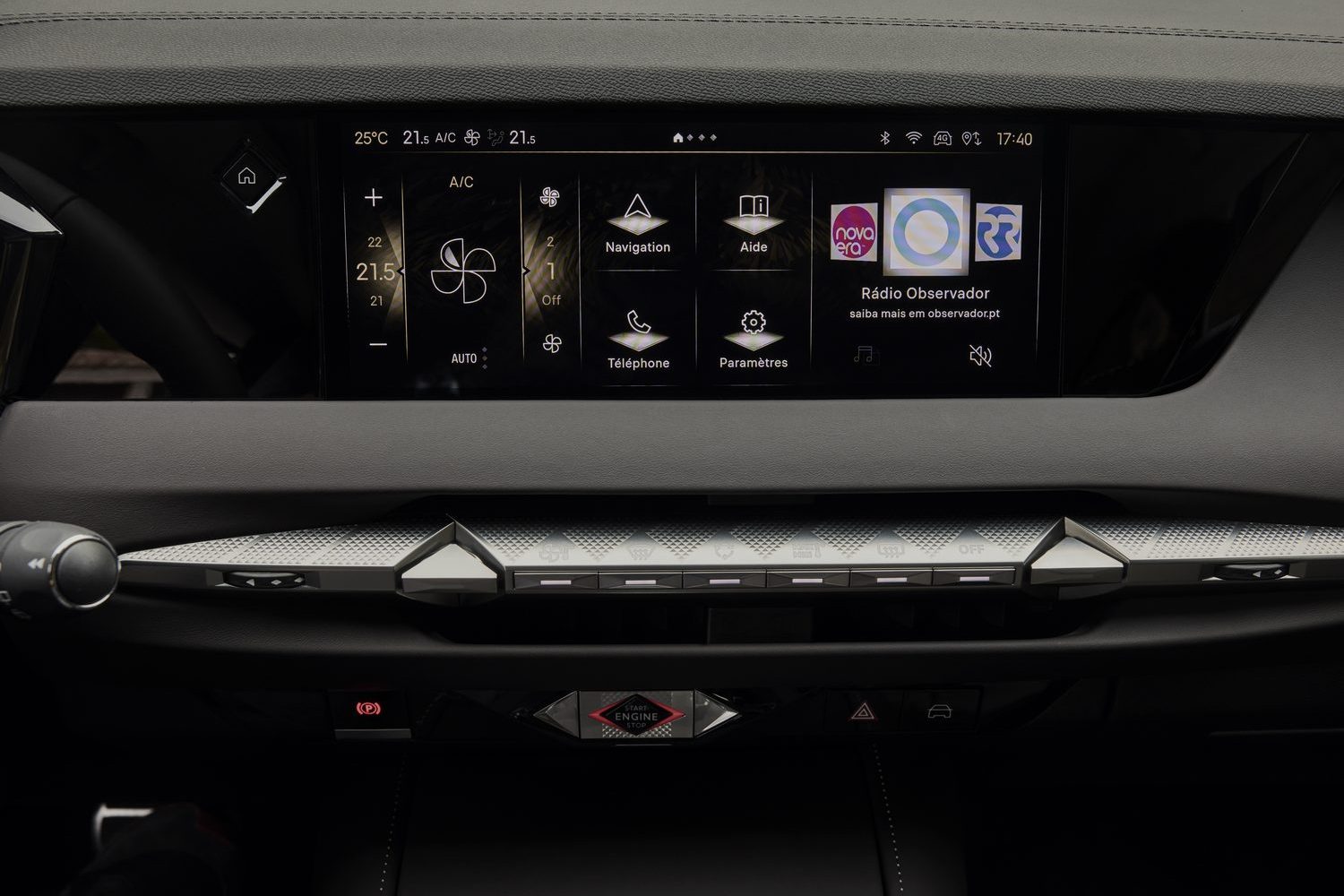
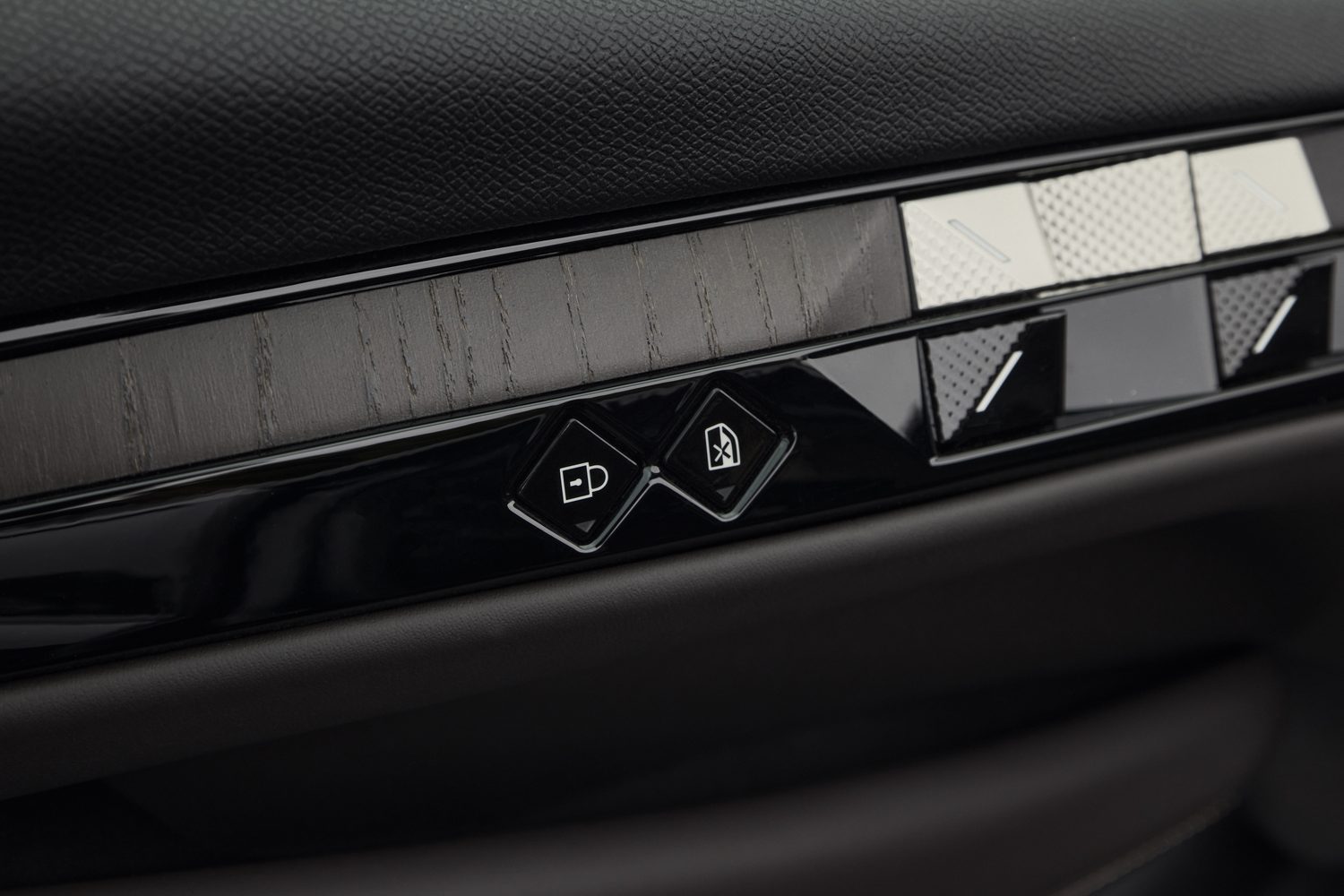
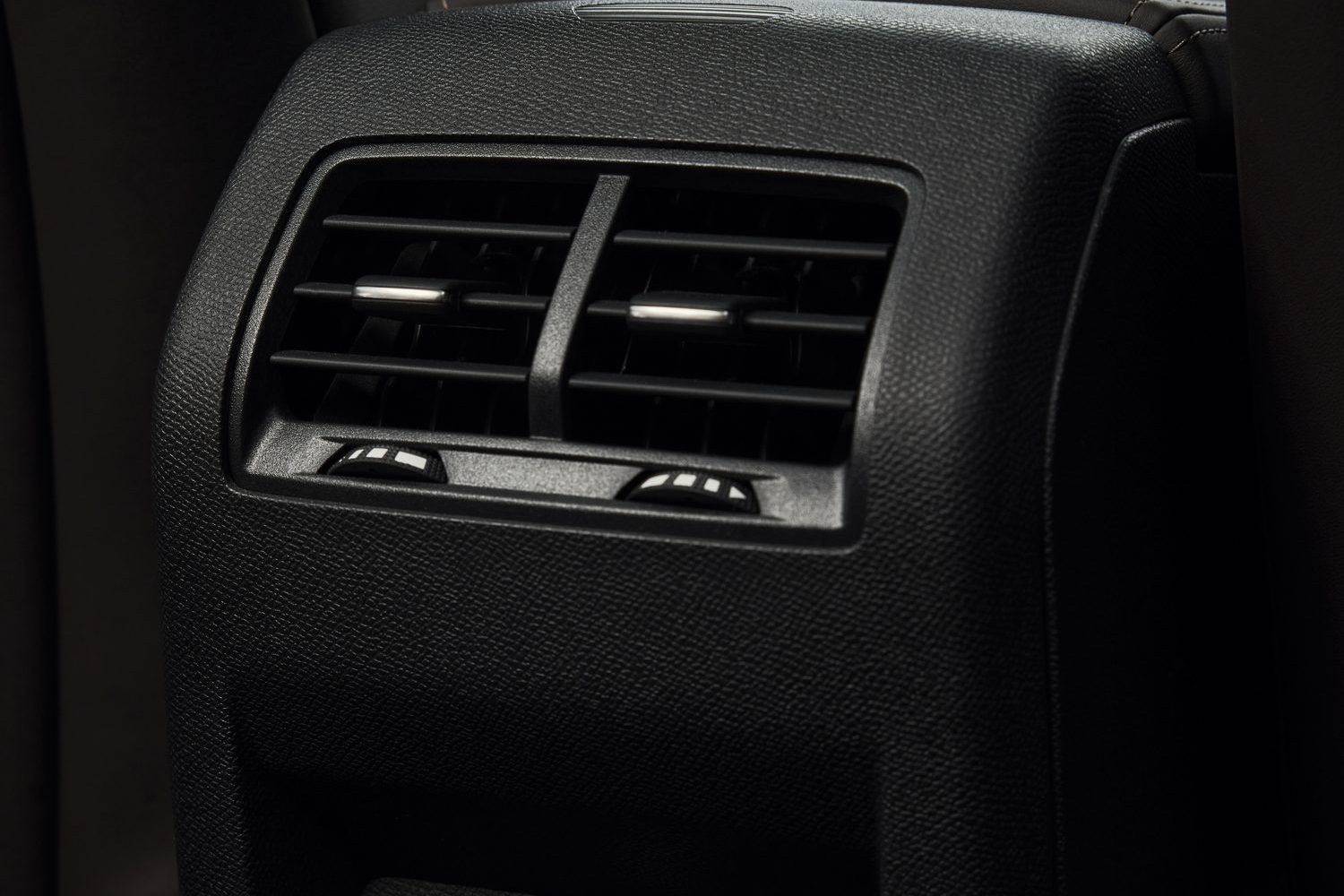
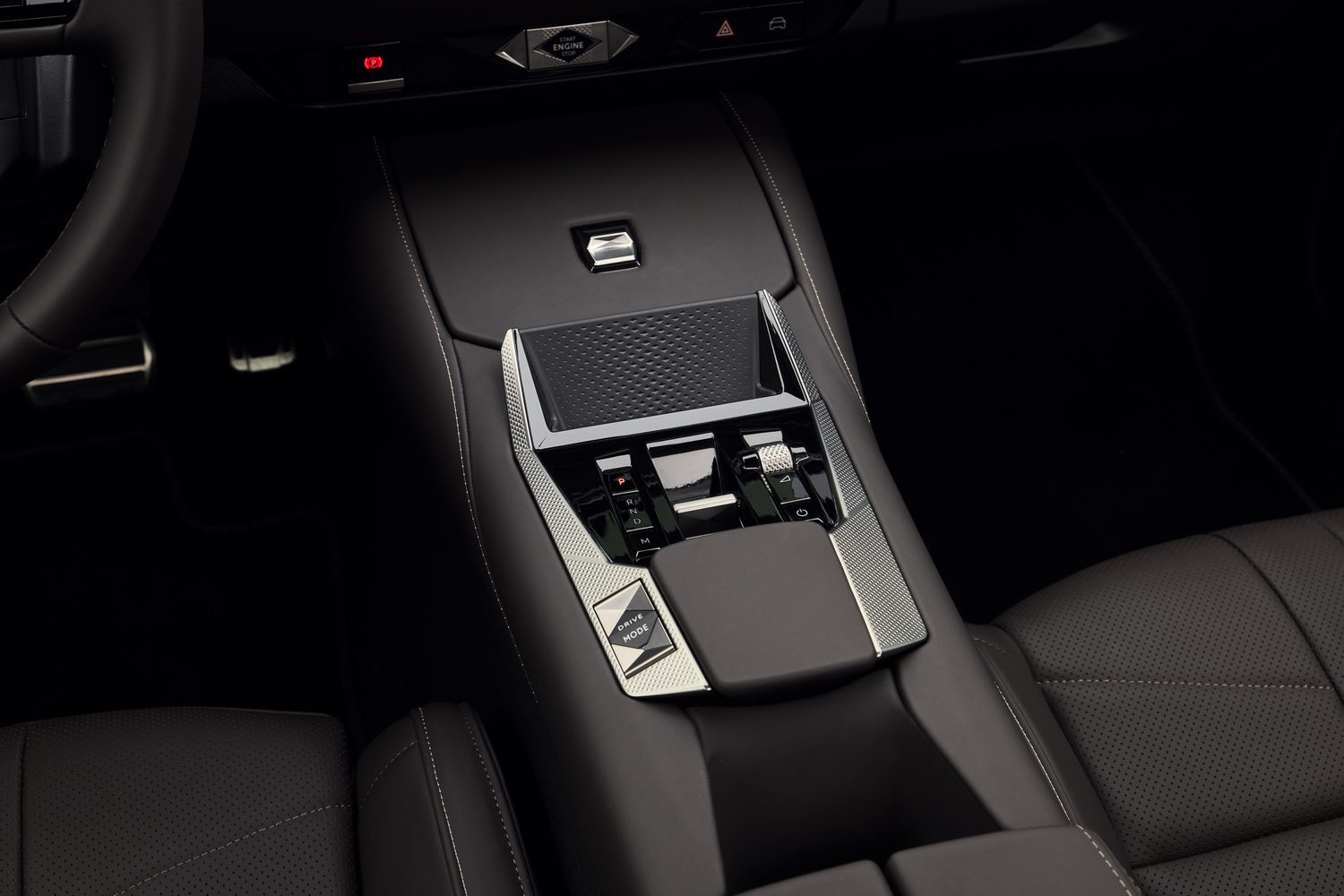
It's also a shame there's simply too much centre-screen-prodding required just to operate assorted ancillary items in the No.4, while some of the buttons and switchgear aren't sited in the most obvious places (the window controls being right up at the top of the door card, for instance) nor are they always all an intuitive design to use (the twin-lever central air vents being a prime example).

Similarly, as nice as that 10.25-inch instrument cluster is, as far as we could tell you can never display the trip computer data on it; instead, the info only ever comes up for short periods in the driver's head-up display, after pressing the double-arrow button on the end of one column stalk.
In fairness, DS has done nothing inside the No.4 that is terribly wrong, but there are a few too many minor irritations with the cabin that ultimately take the gloss off its overall ambience.
Irish pricing & rivals of the DS No.4 PHEV
- Regular hybrid from €35,995
- Grades are Pallas and Etoile
- PHEV model not for Ireland

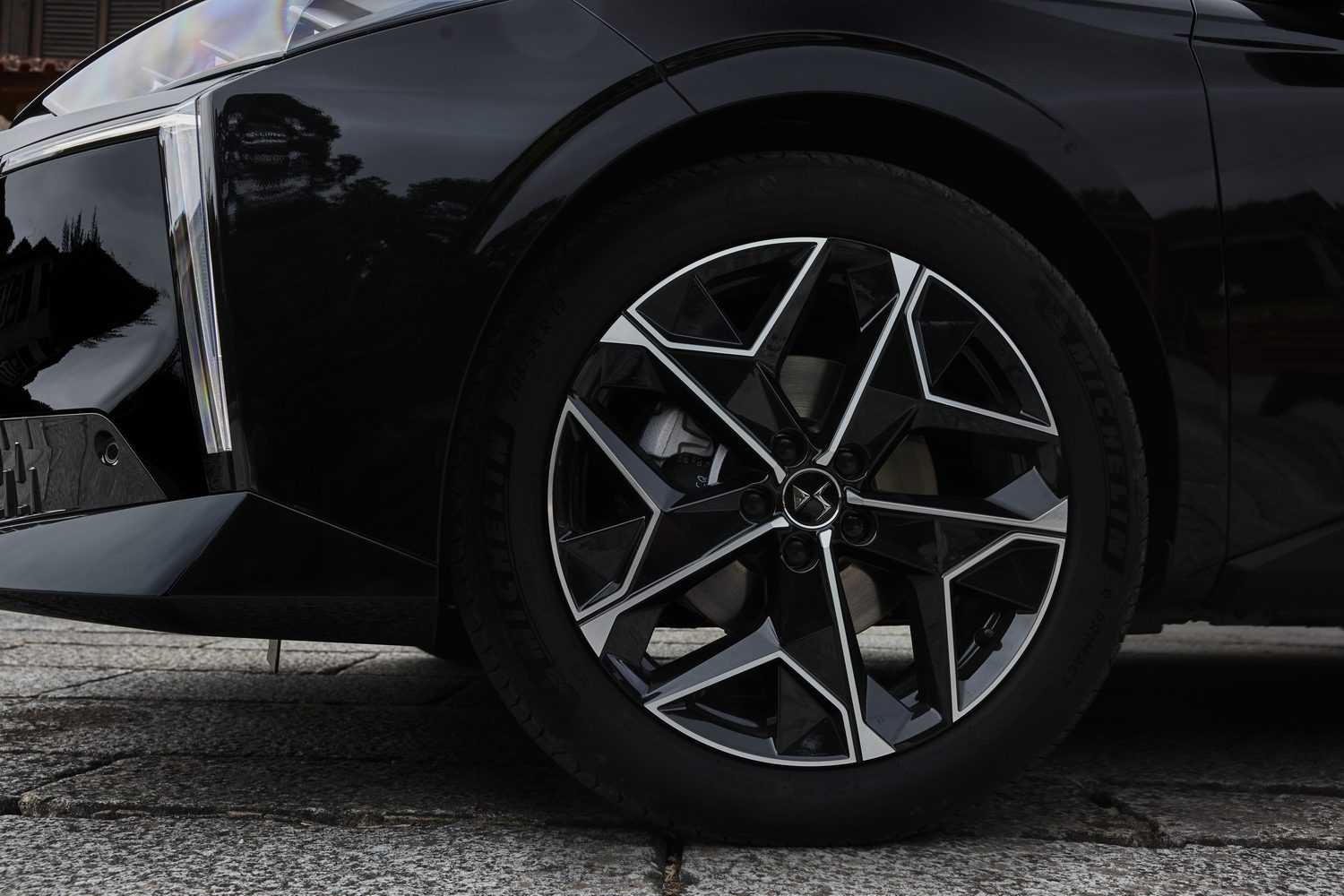
The entry-level DS No.4 is the (non-plug-in) hybrid model at €35,995 in Pallas specification. That includes 19-inch alloy wheels, the 10.25-inch touchscreen system with Apple CarPlay, Android Auto and Bluetooth, keyless start, heated and electrically folding door mirrors, auto-dimming rear-view mirror, LED lighting all-round, front and rear parking sensors, rear parking camera, cruise control and lots more.
In Pallas trim, the electric DS No.4E-Tense is priced at €44,010 after the SEAI grant and VRT rebate. As a top-spec Etoile, it's €49,870, vs. €42,995 for the hybrid.
Etoile spec adds special, part-Alcantara upholstery, electrically adjusted front seats, wireless phone charger, head-up display and plenty more technology.
DS will still have to convince badge-conscious buyers to ignore the Audi A3, BMW 1 Series and Mercedes A-Class in order to select the No.4, although arguably a bigger threat to its success comes from the multitude of crossovers and SUVs that you could get for about the same price as the French hatchback.

Verdict - should you buy the DS No.4 PHEV?
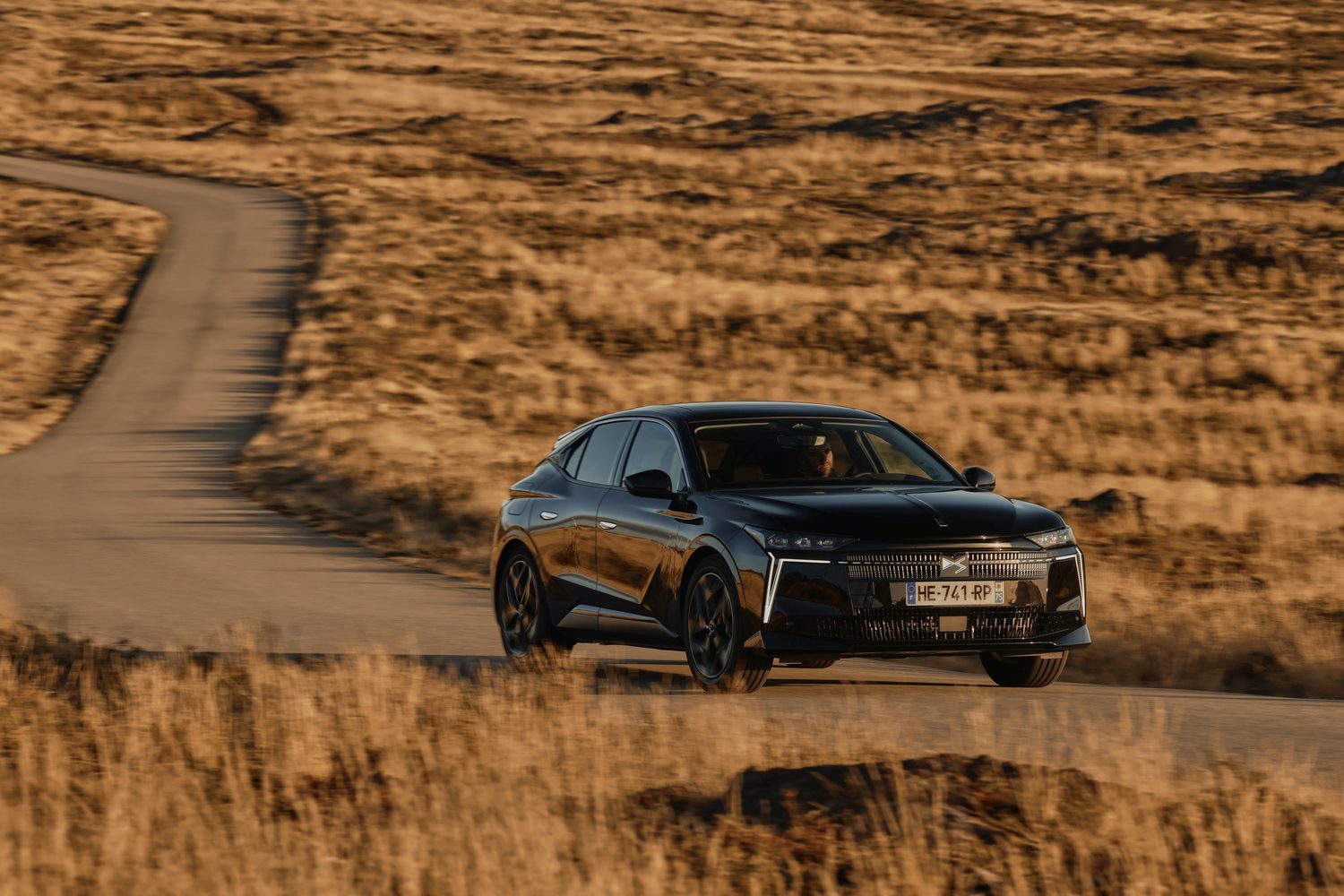
If you want something different and more comfort-oriented than the norm in this premium hatchback class, then the DS No.4 PHEV makes a strong case for itself. It looks suitably appealing outside and in, while its electrically improved drivetrain makes it a car that should be even more affordable to run than its predecessor - provided you plug it into the mains regularly, of course.
Having driven both it and the E-Tense, it's the fully electric version we prefer because it drives just that little bit better in all regards, yet if you need something long-legged that won't break the bank to run, the stylish PHEV could be the sensible bet. Well, it would if you could buy it in Ireland.
FAQs about the DS No.4 PHEV
Is the DS No.4 PHEV the only car with an engine in the entire line-up?

No, there's a hybrid model, based on the turbocharged 1.2-litre three-cylinder 'PureTech' engine, sitting below it in the range. With 145hp and 230Nm, it's considerably less powerful than either this PHEV or the E-Tense, so its 9.5-second 0-100km/h time is a good two seconds slower. But it might be the car many prefer here in Ireland, as it has no need to be plugged into the mains. It's also the most affordable model.
DS will sell a turbodiesel variant of the No.4 in various European markets, but not Ireland.
Want to know more about the DS No.4 PHEV?
Is there anything else you'd like to know about the DS No.4 PHEV? Or anything you feel we haven't covered here? Then just head over to our Ask Us Anything section and, well, ask us anything.