

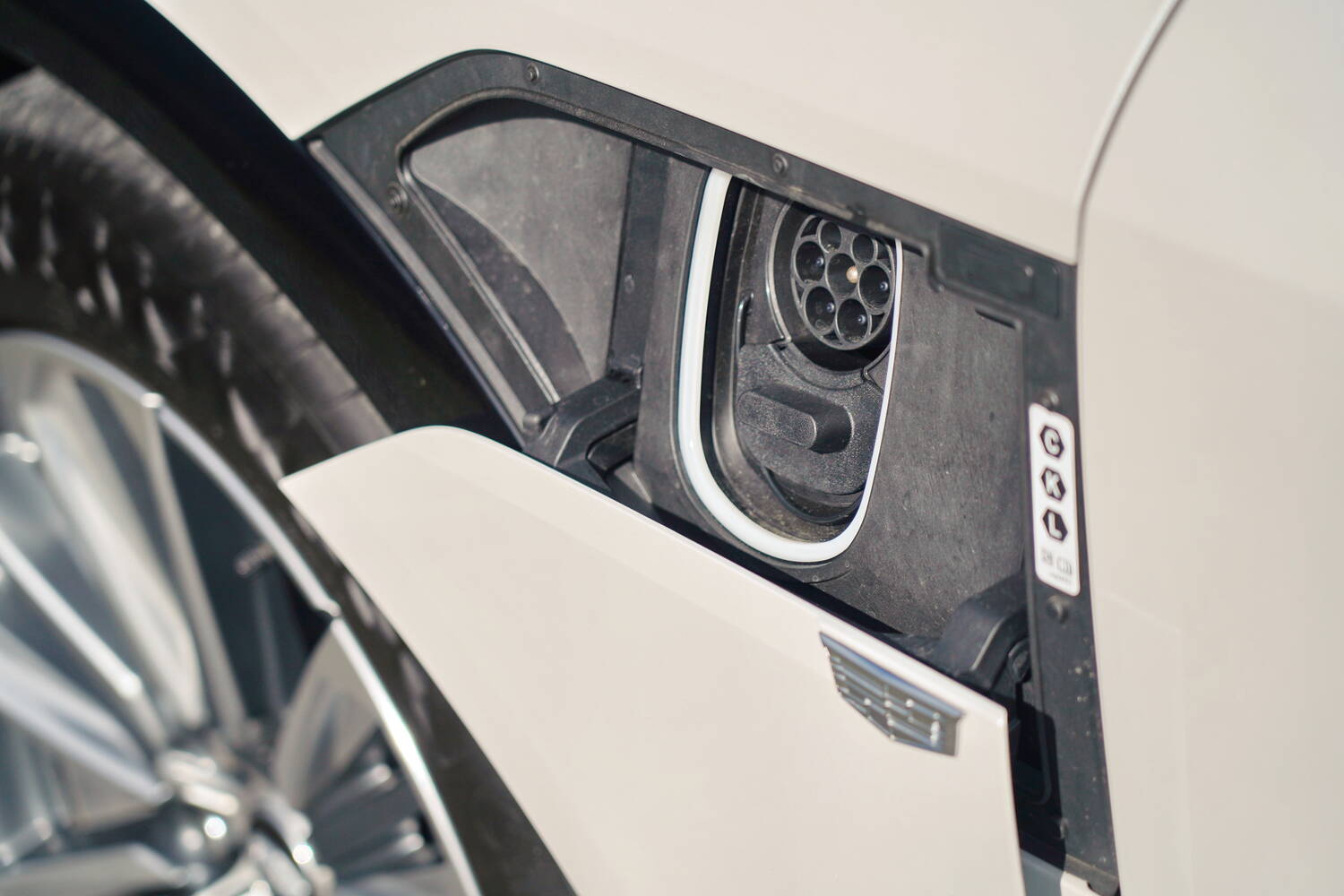


Exterior & design of the 2026 Cadillac Lyriq
- Seriously good looking
- Fastback rear makes it look lower
- Better-looking than German rivals?

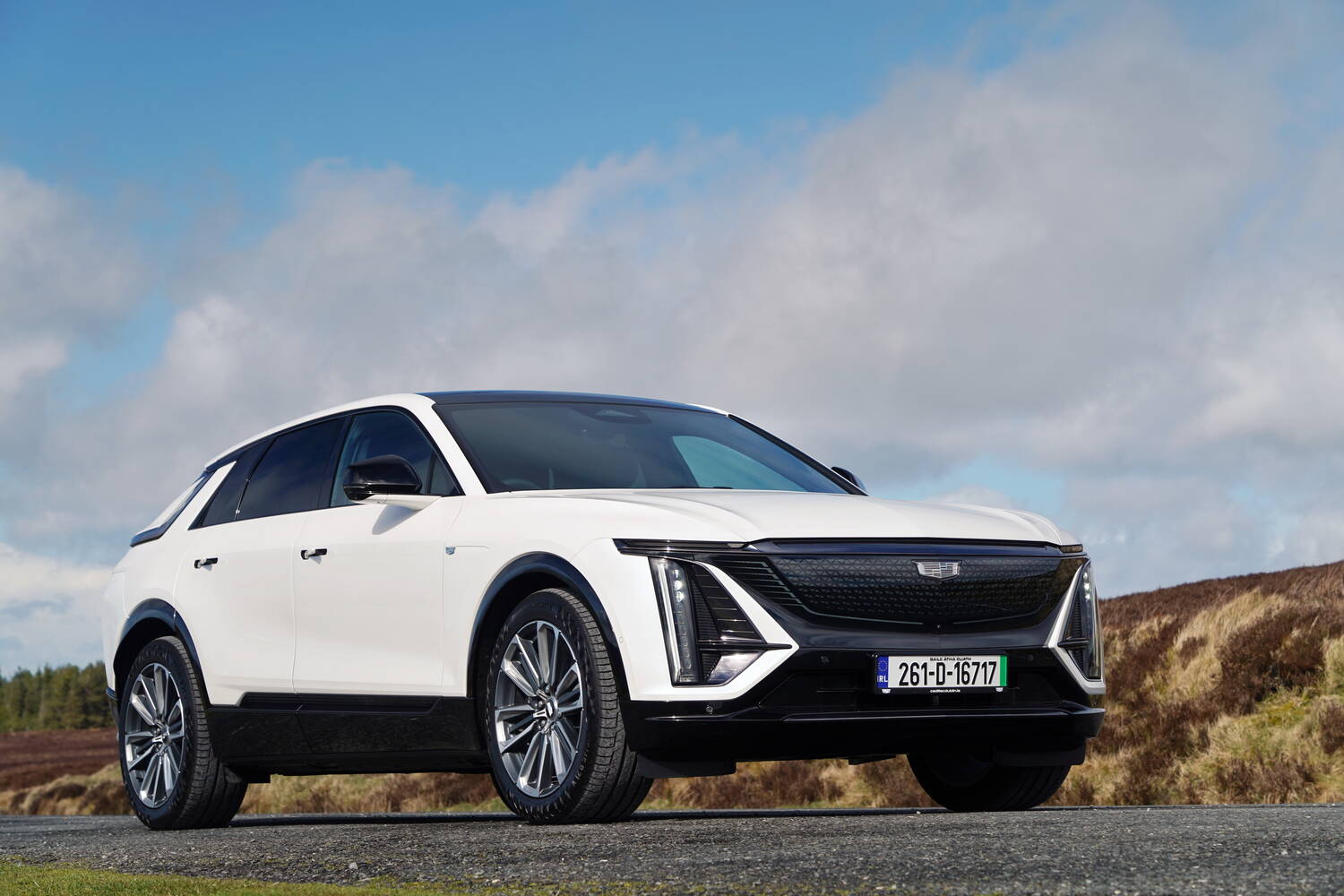
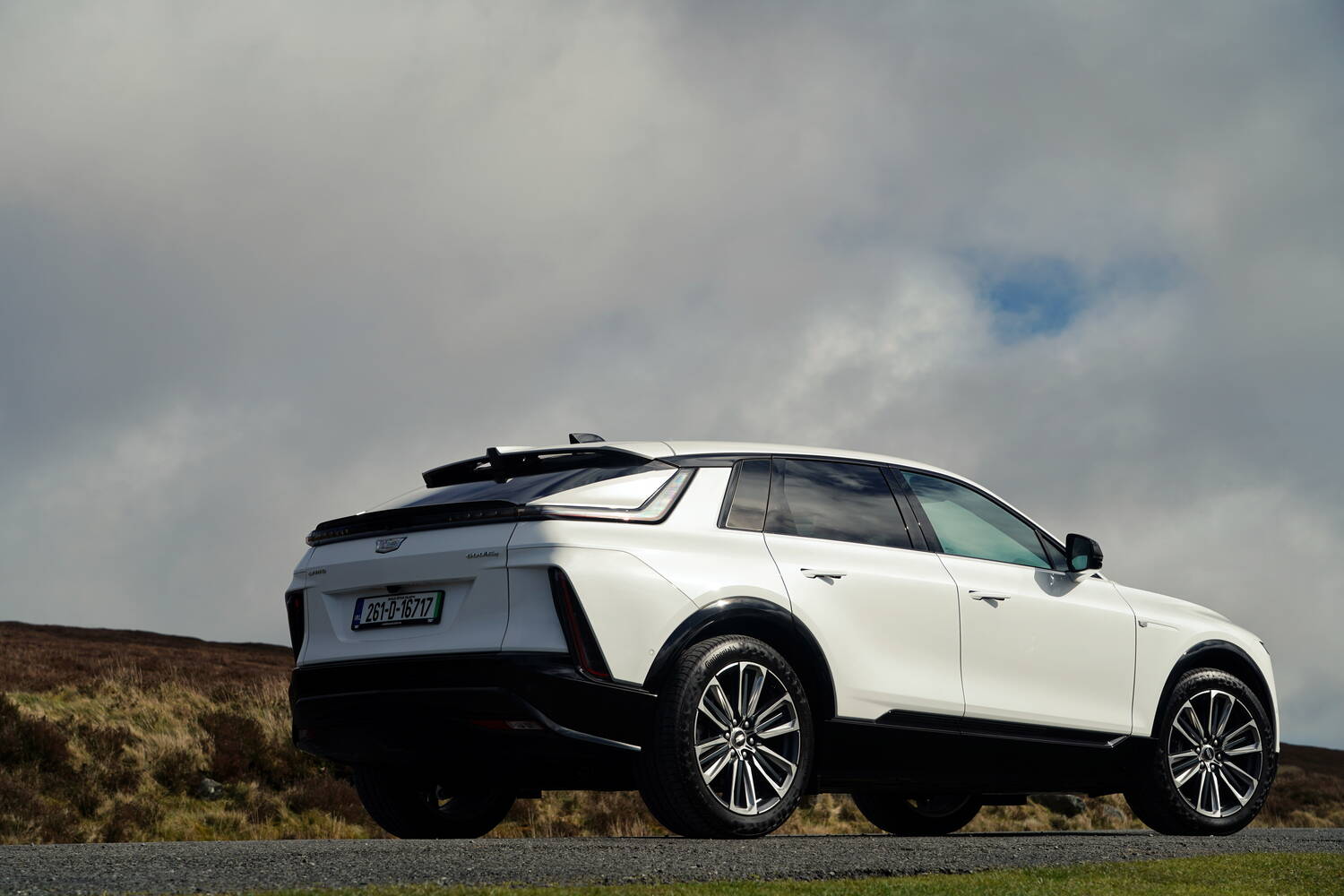
In one sense, the German rivals to the Lyriq - chiefly the BMW iX and Mercedes EQE SUV, both of which have similar retail pricing - have left Cadillac something of an open goal in styling terms, and the American has slotted the ball neatly into the net.
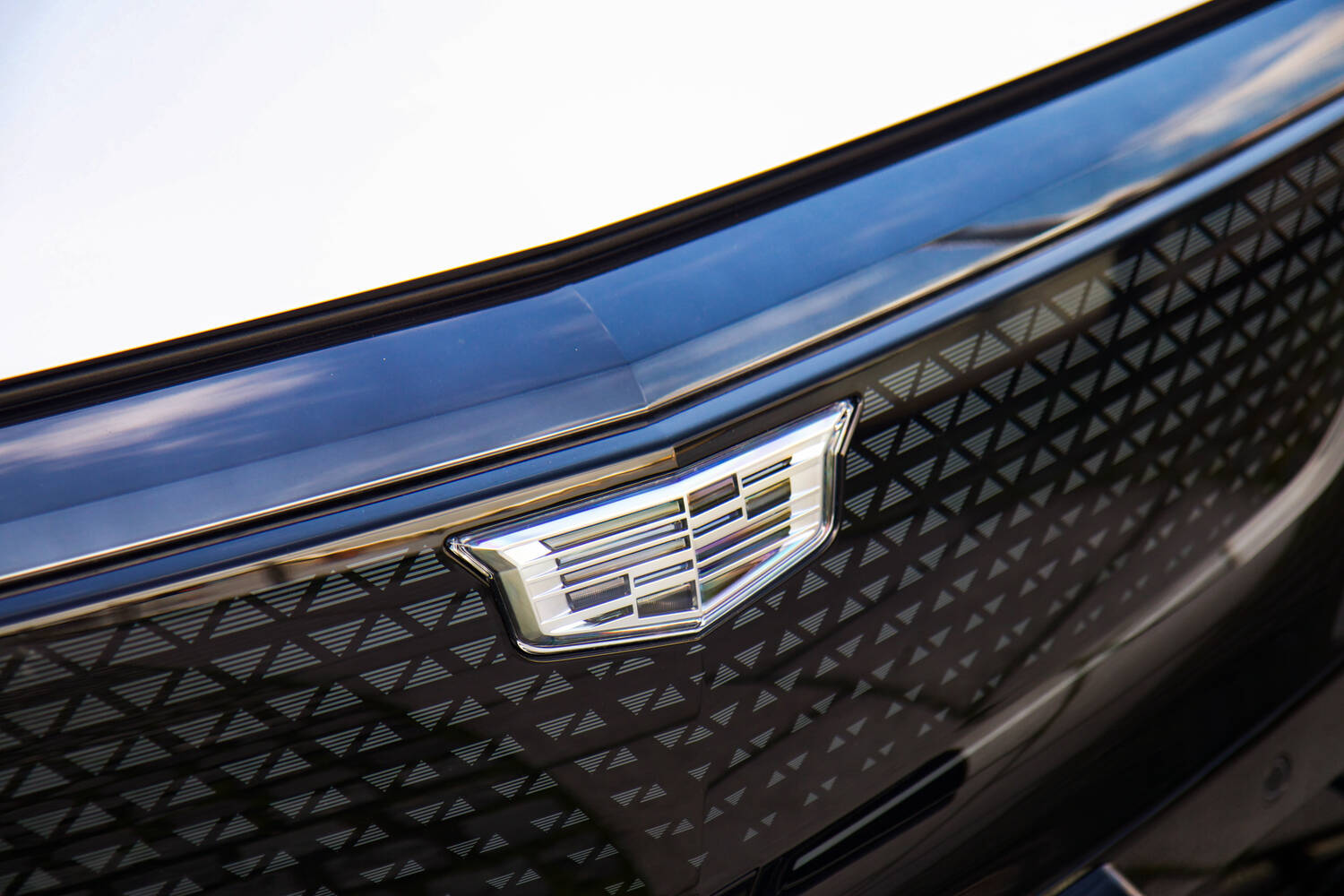
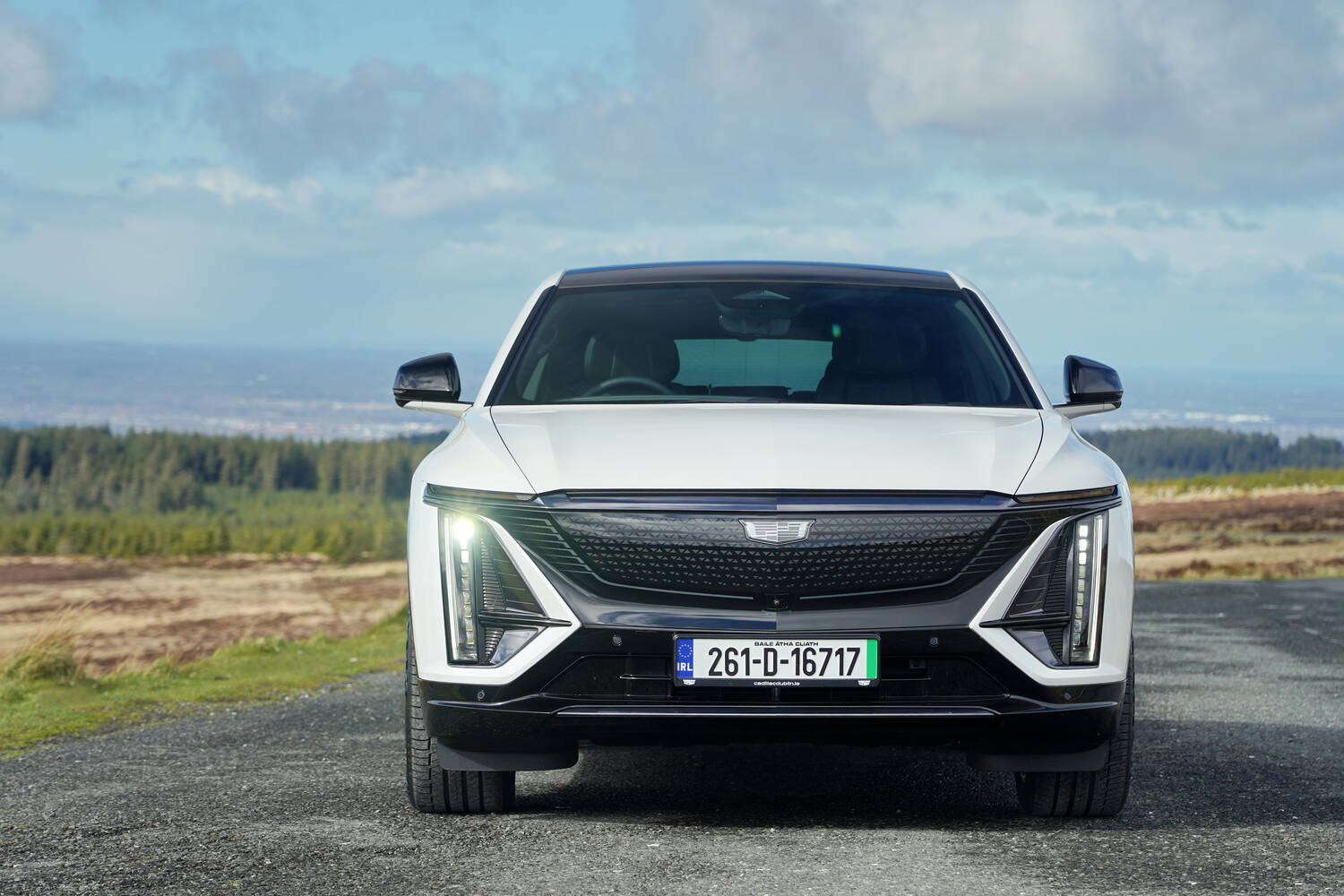
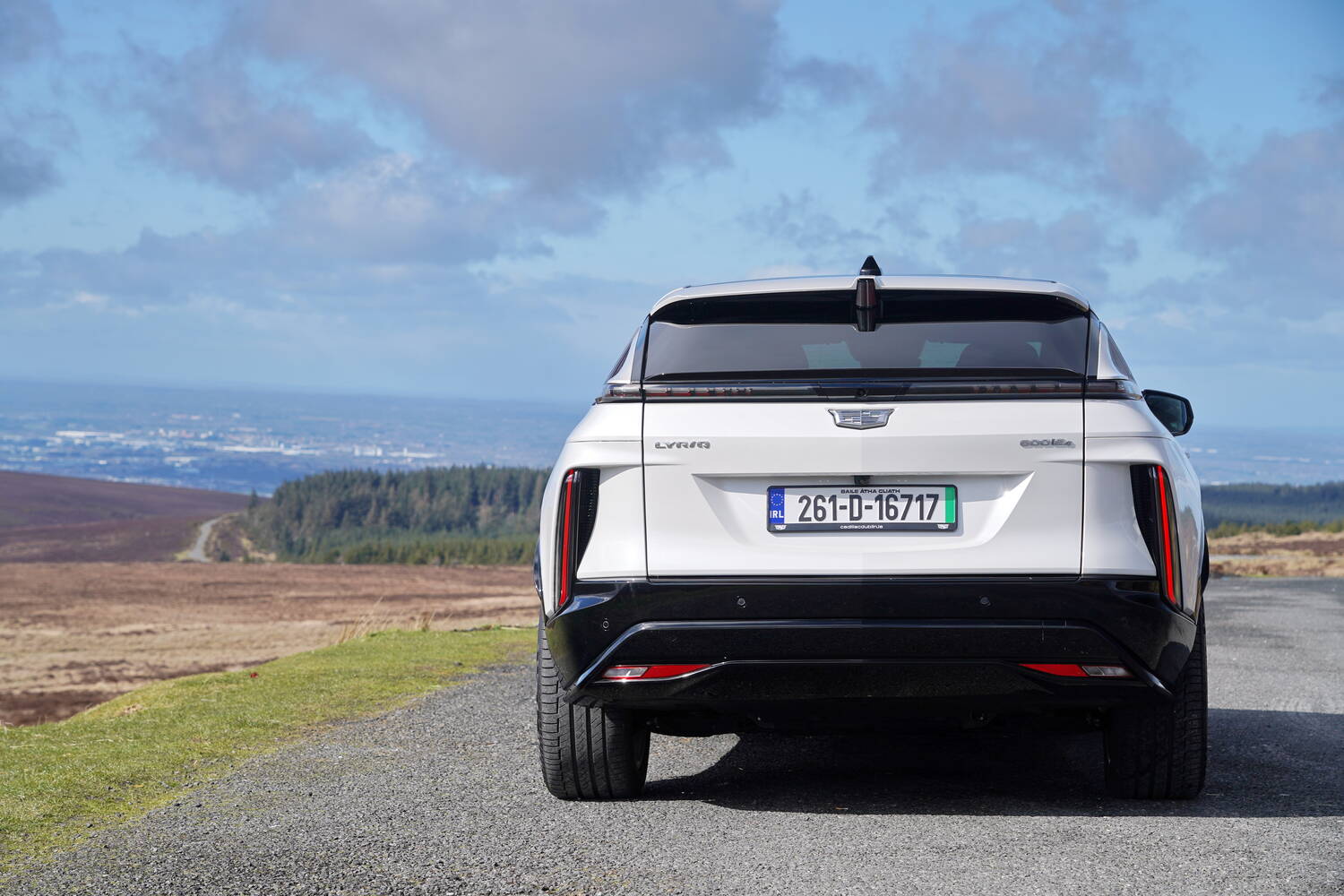
The Lyriq is, no question, a very handsome car indeed and does a far better job than BMW of giving its big electric SUV an imposing grille without such a feature becoming a complete eyesore. You could even call it quite subtle.

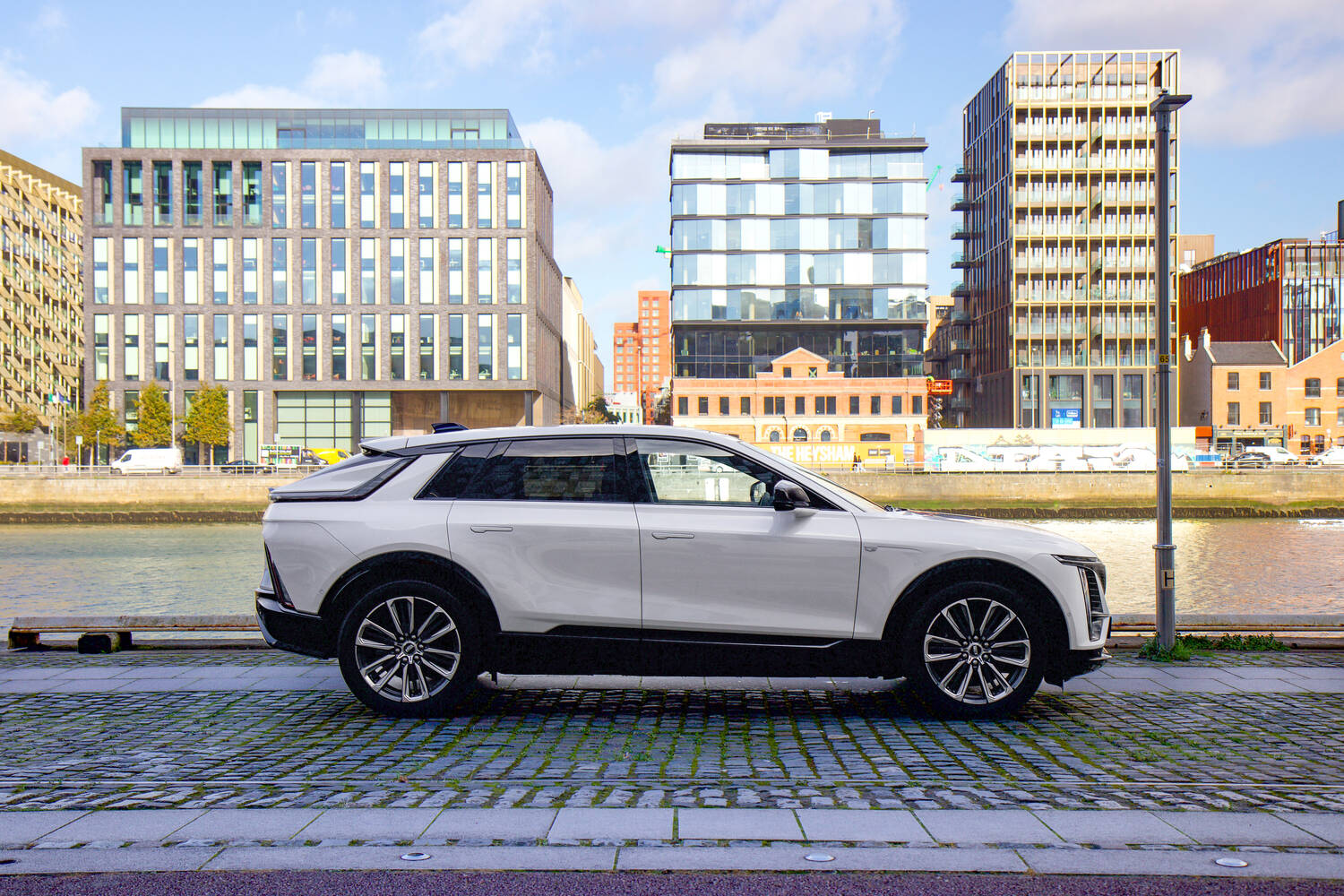
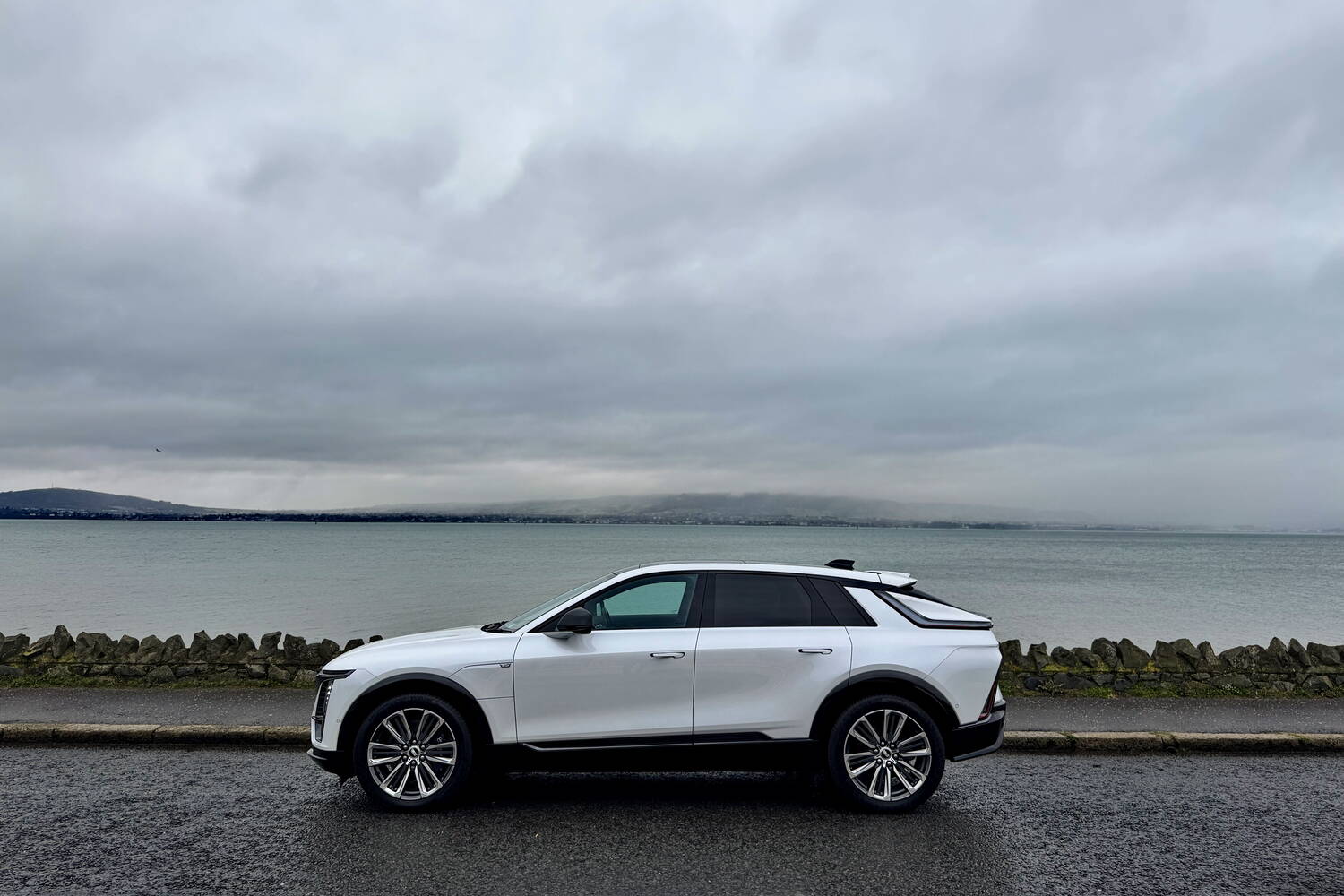
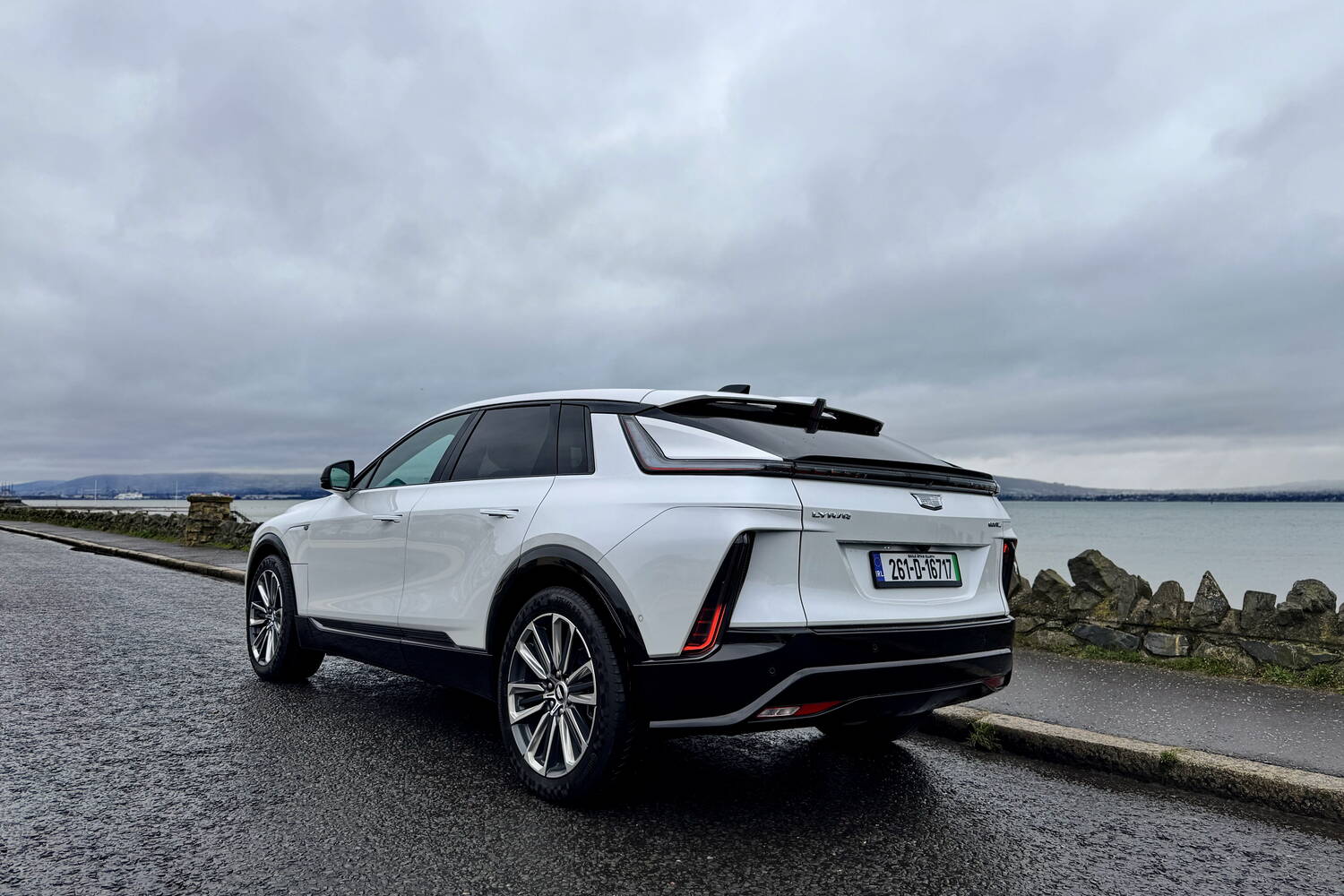
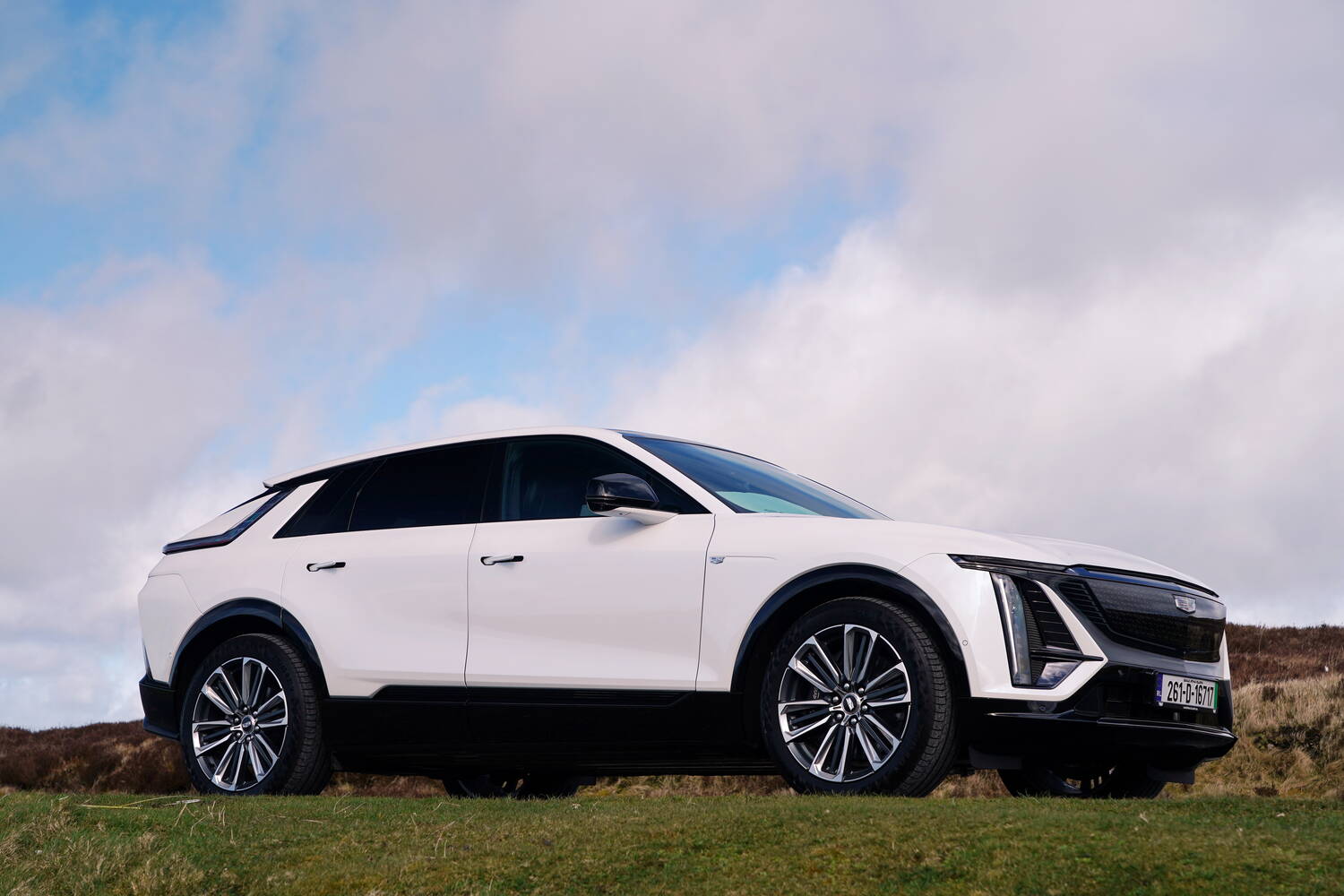
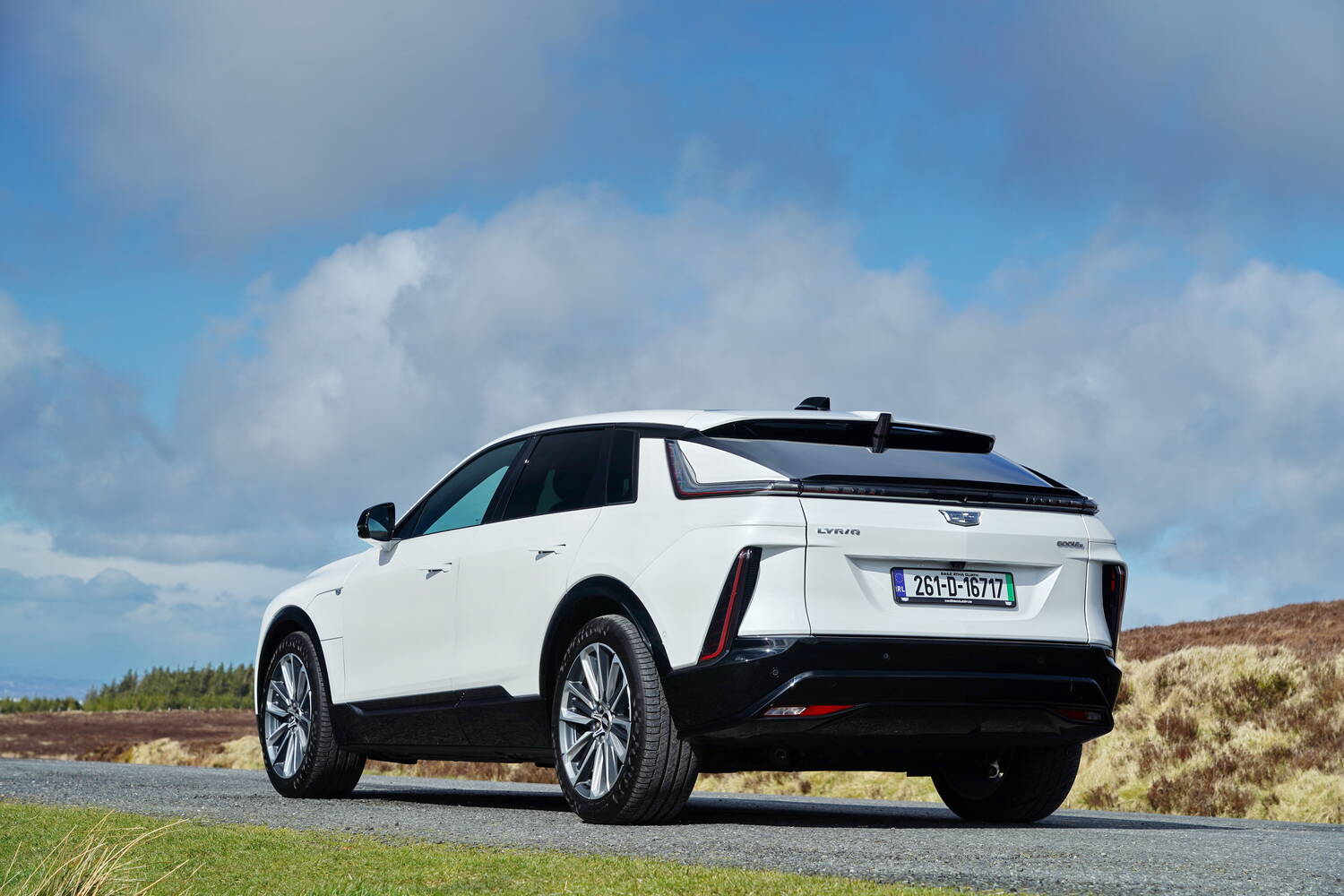
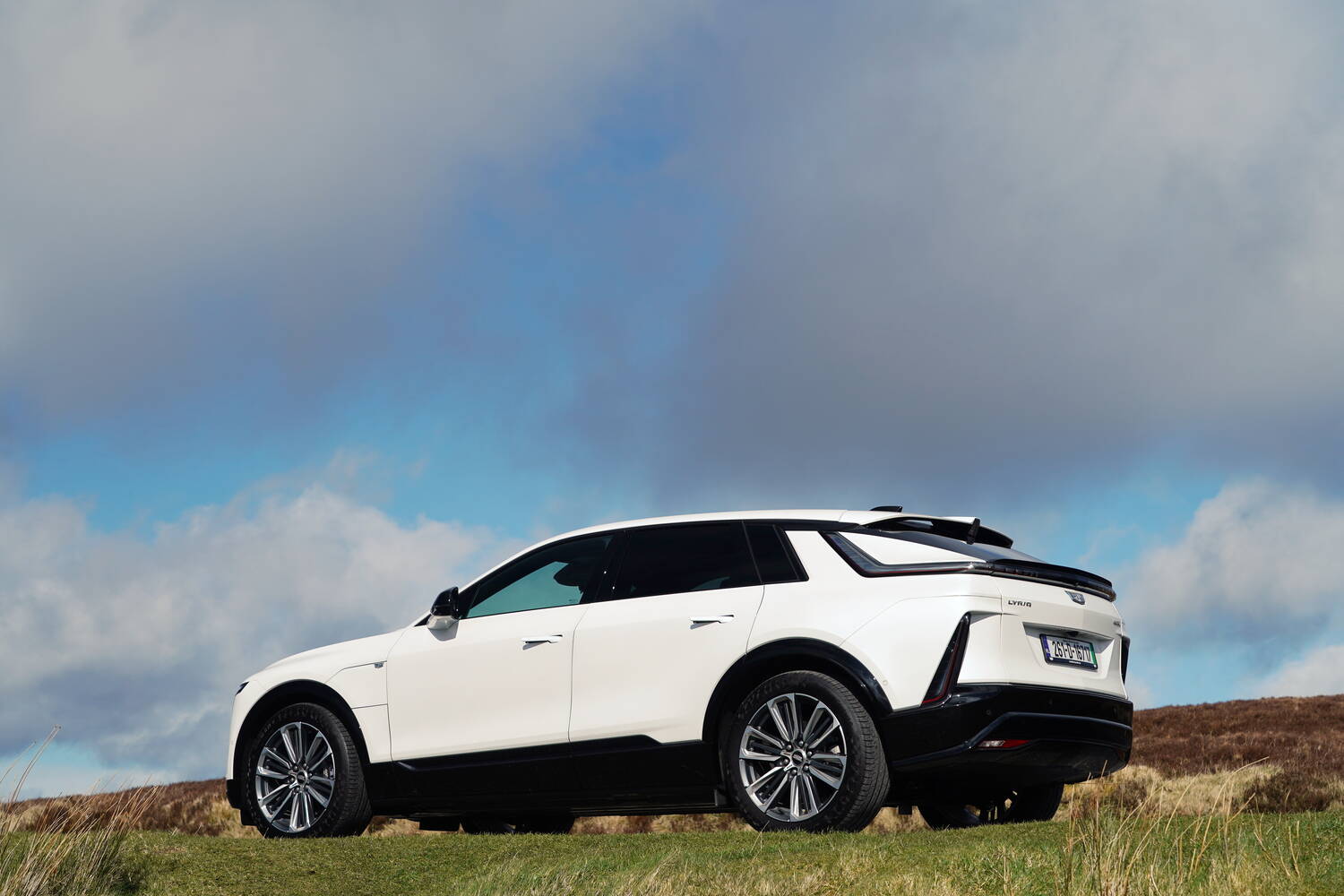
The fastback styling at the rear of the Lyriq makes it look, subjectively, much lower-slung than most of its opposition, although it's perhaps only us who would notice the distant visual relationship to the Lancia Beta saloon of the 1970s ...
The lengthy three-metre wheelbase also helps to make the Lyriq appear lower-slung than it is, and there's something of the Hyundai Ioniq 5 about the Lyriq's shape in the sense that, from far away, you think it's a far more compact and sleek car than it is, as then it's really quite enormous when you get up next to it.
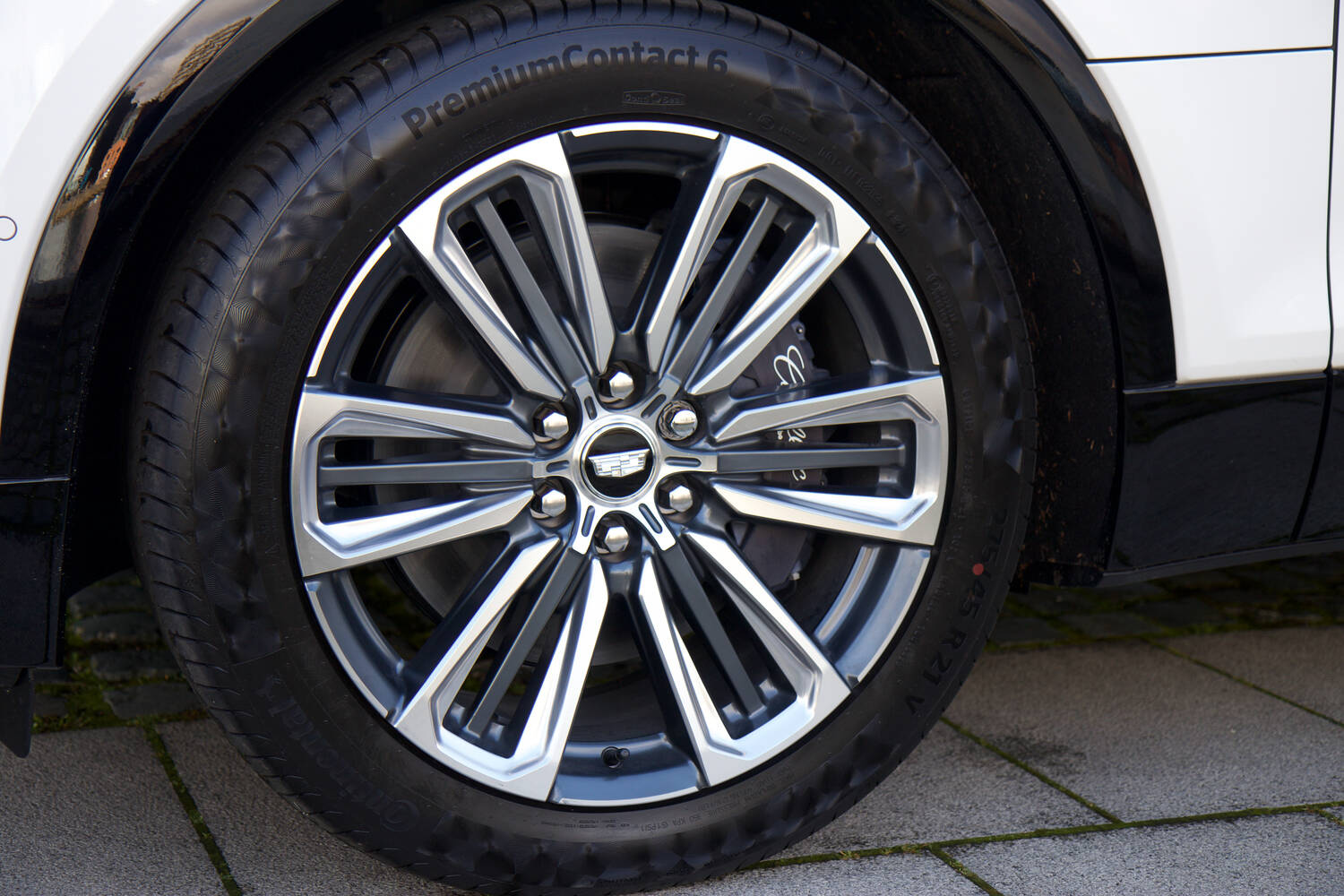
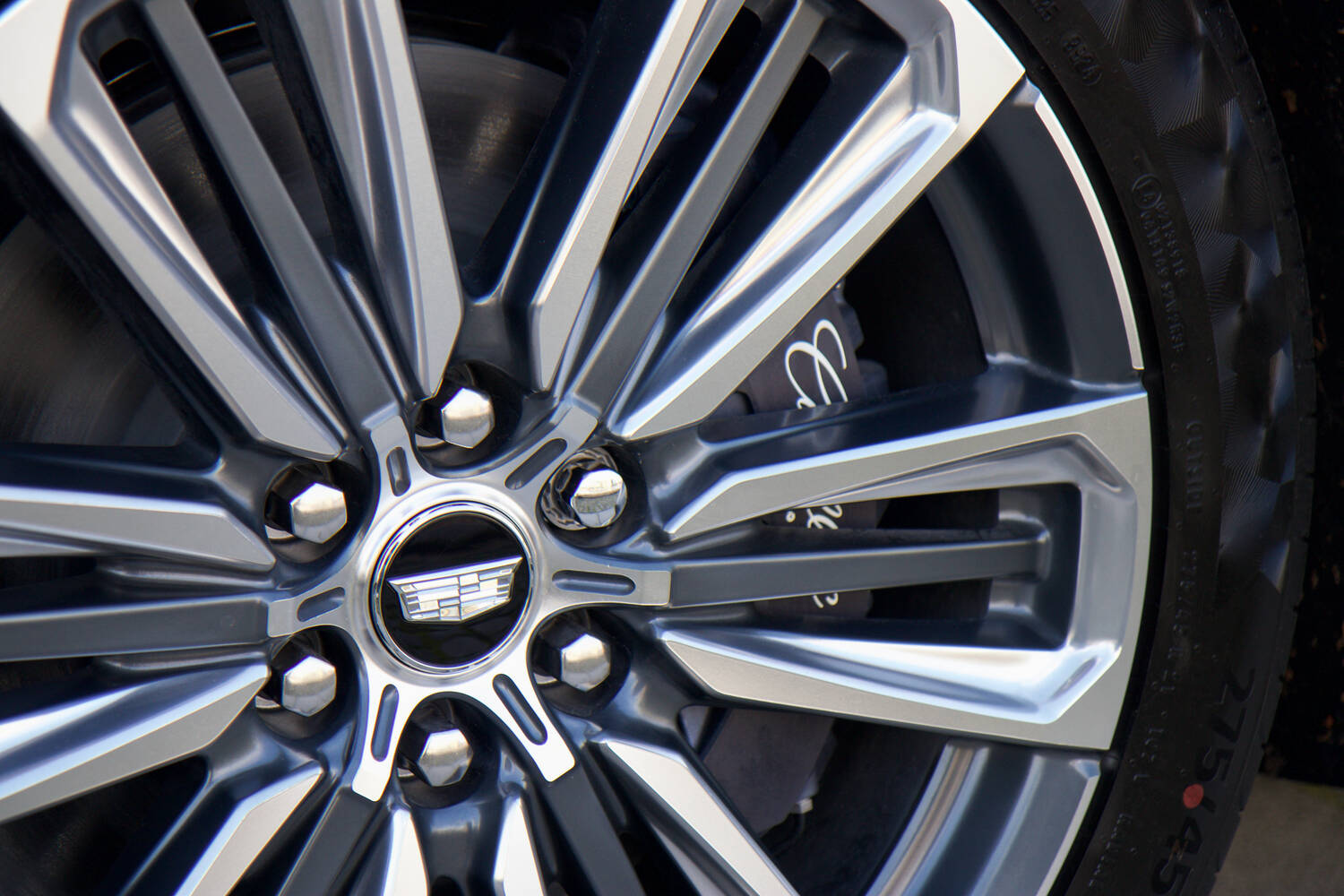
Given Cadillac's bling image, it's almost a disappointment to find that the alloy wheels are not chrome-plated but are rather subdued 12-spoke items with grey mid-spoke inserts, measuring 21 inches in diameter. They could actually do with being a bit more dramatic.

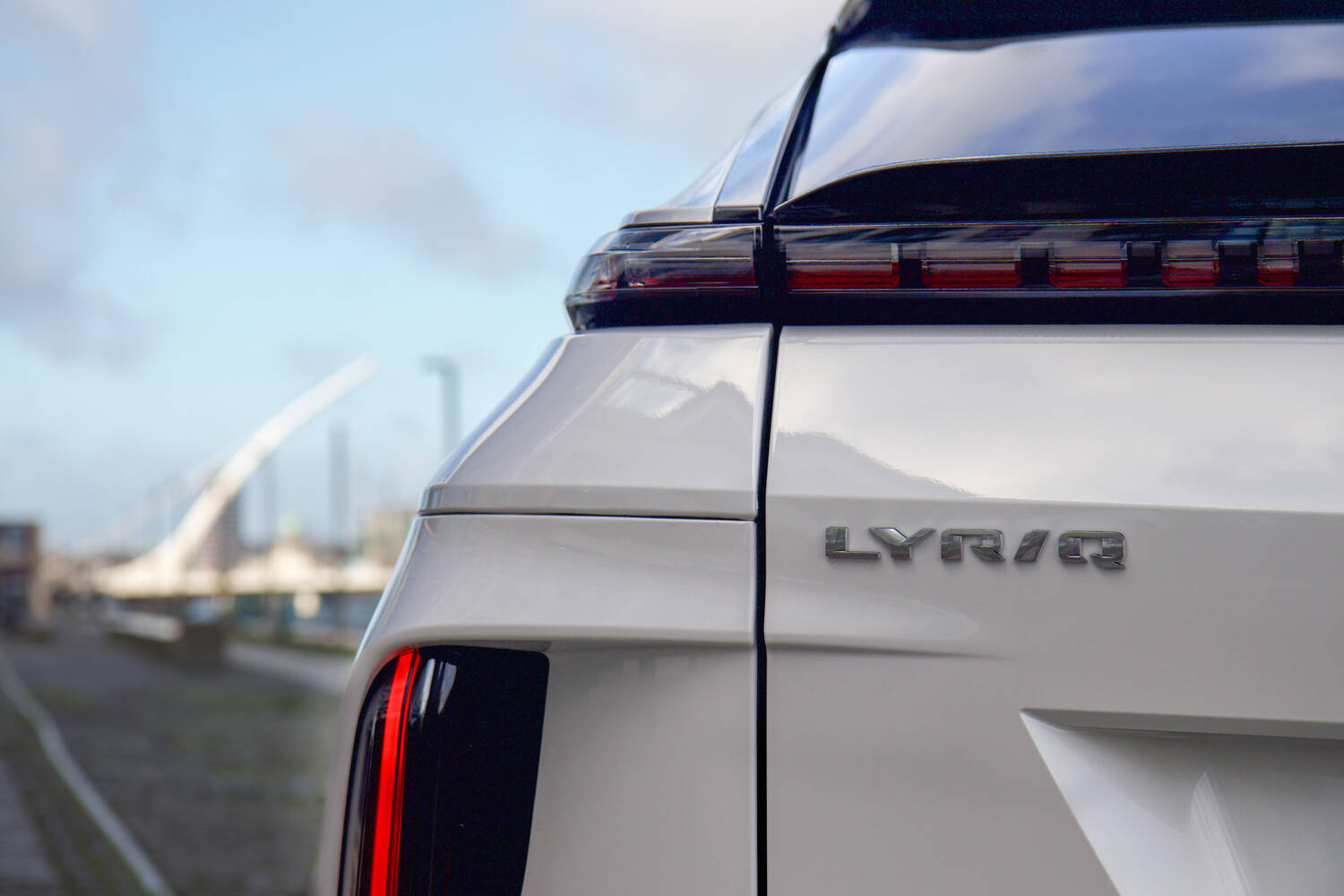
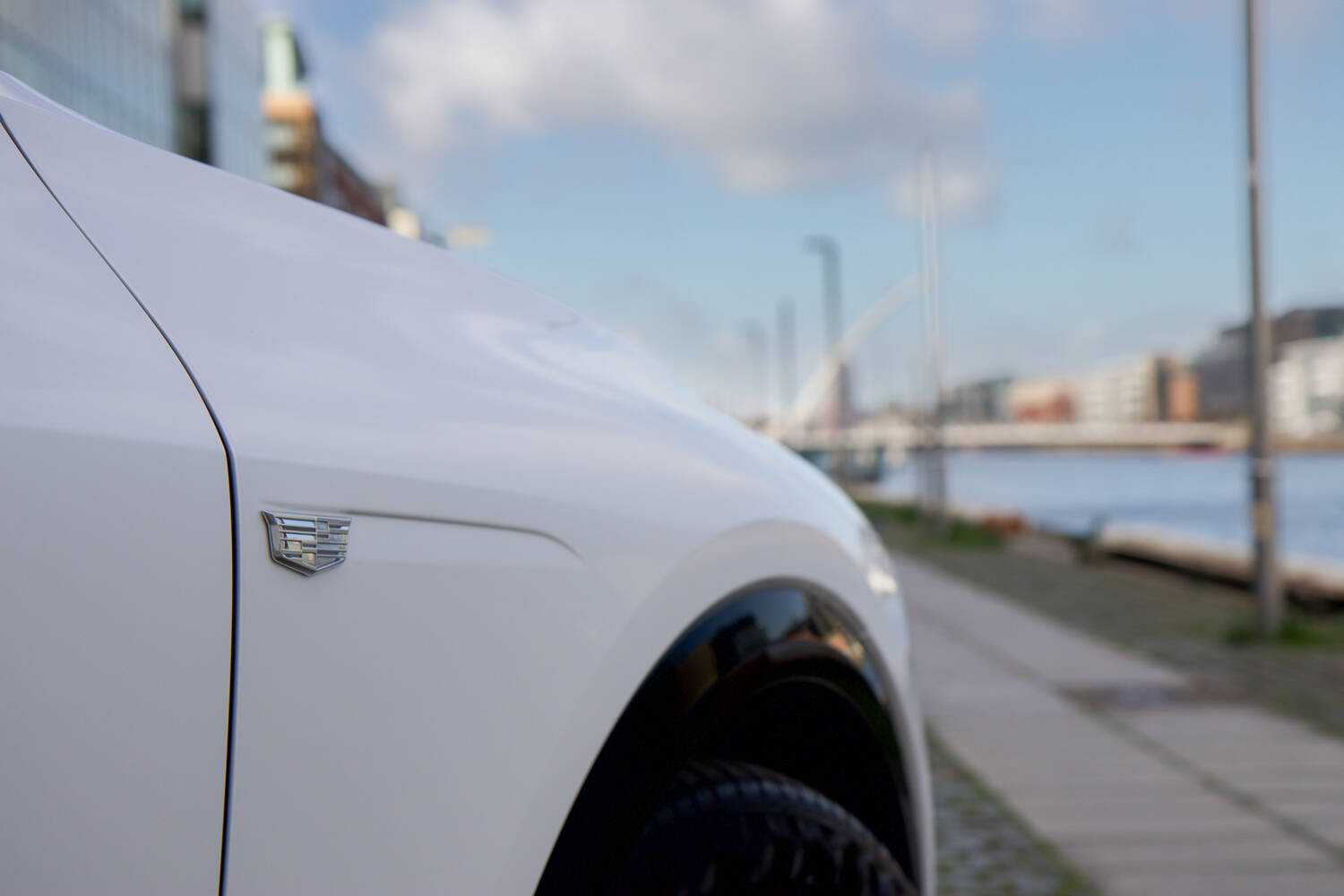
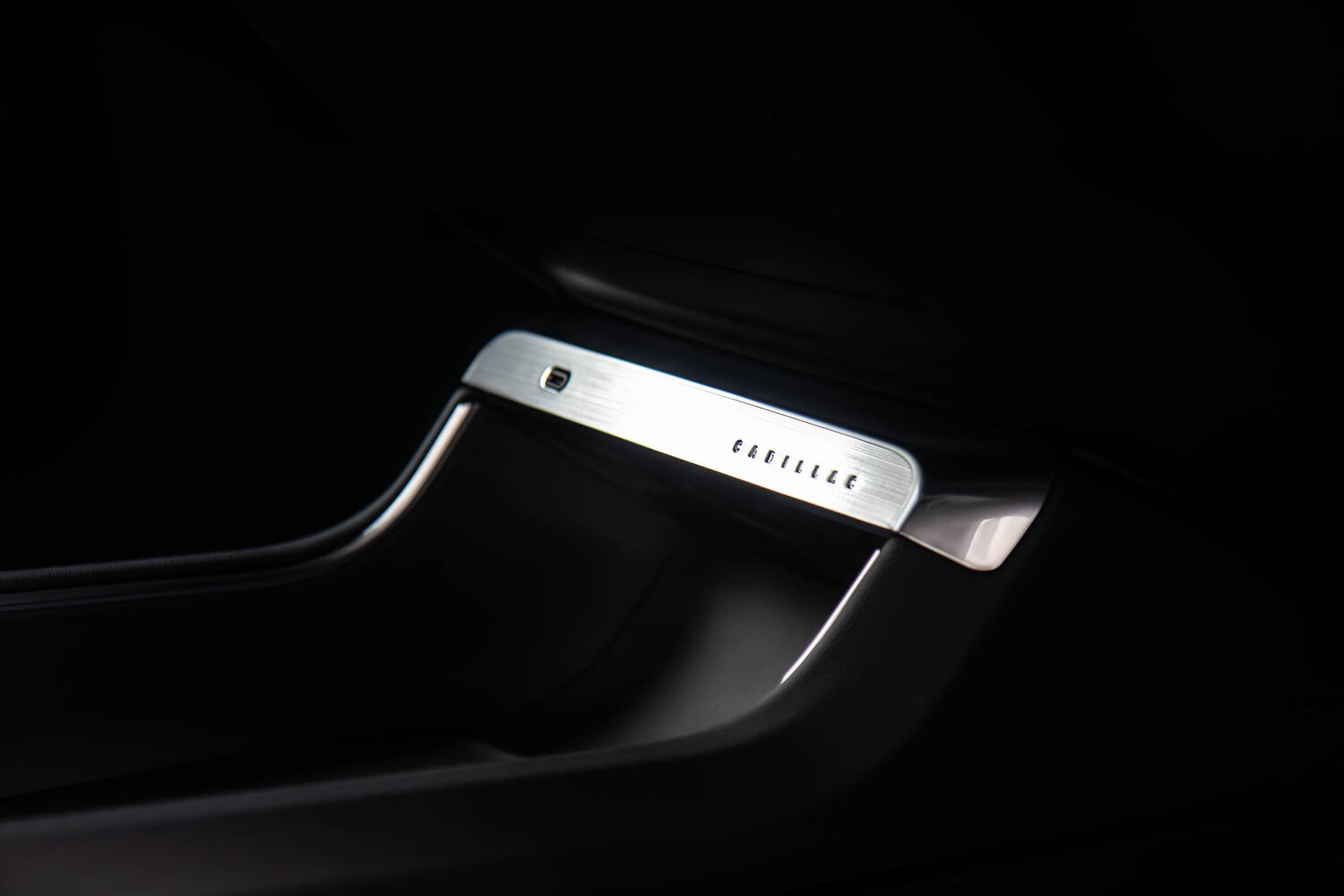
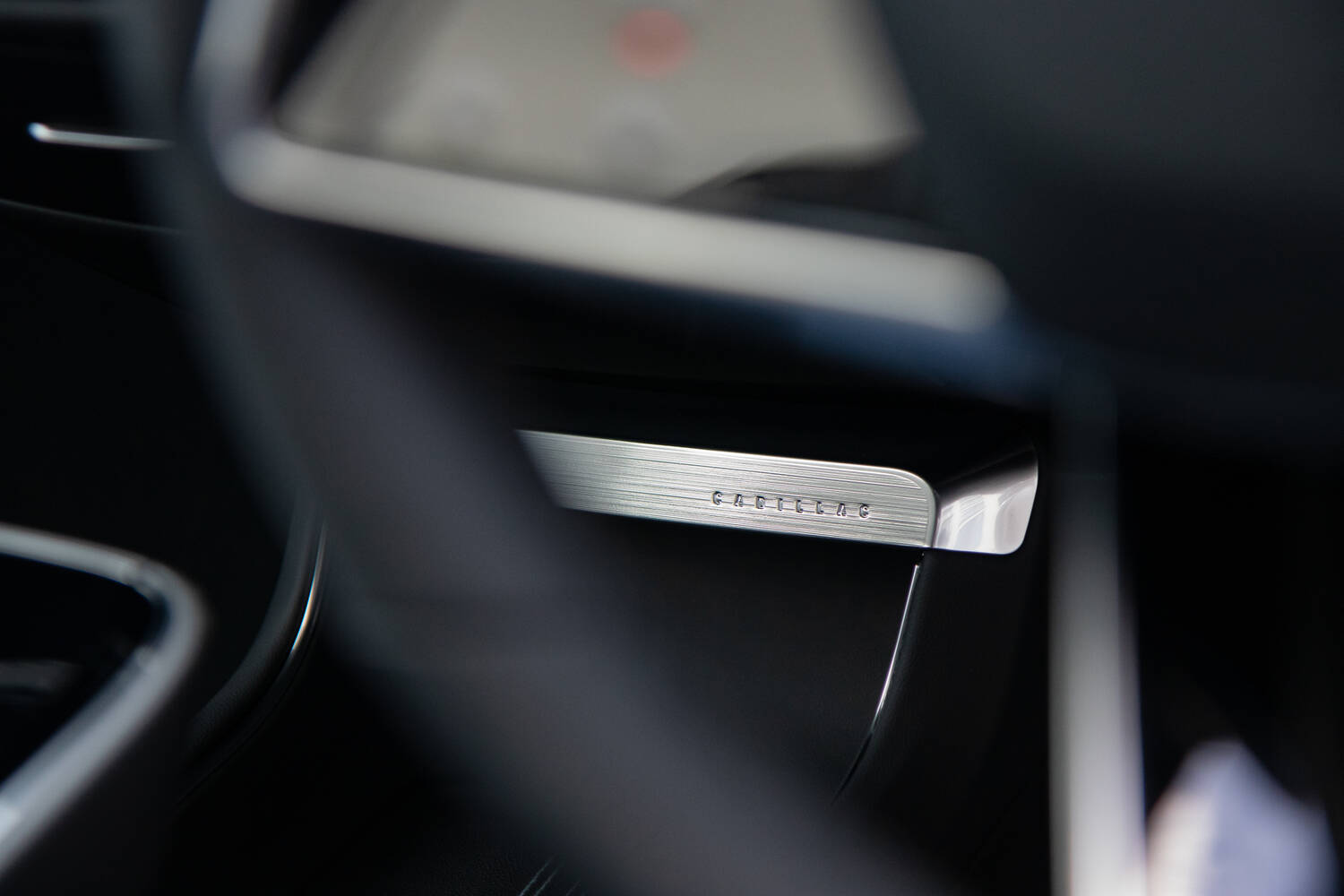
One thing - while there are silver-finished Cadillac badges front and rear, they're quite subtle and, perforce, unknown to the car-buying population here. Nowhere on the exterior of the Lyriq does the word 'Cadillac' appear, and you kind of start to wonder if that subtlety might be a problem.
Certainly during our time with the car, plenty of people gave it an admiring glance, but we suspect that equally plenty went away still entirely unsure of what they'd just glanced at.
Dimensions of the 2026 Cadillac Lyriq
- Length:
- 5,005mm
- Width:
- 2,207 (mirrors unfolded)
- Height:
- 1,623mm
- Wheelbase:
- 3,094mm
Paint colours for the 2026 Cadillac Lyriq
The Lyriq comes with one standard colour, which is Argent Silver Metallic. If you want any of Stellar Black Metallic, Opulent Blue Metallic, Emerald Lake Metallic or Celestial Metallic (a dark silver with purple-pink undertones) then it will cost you €1,015 extra but note that Opulent Blue is only available for Sport models, while Emerald Lake and Celestial are only available on Luxury cars.

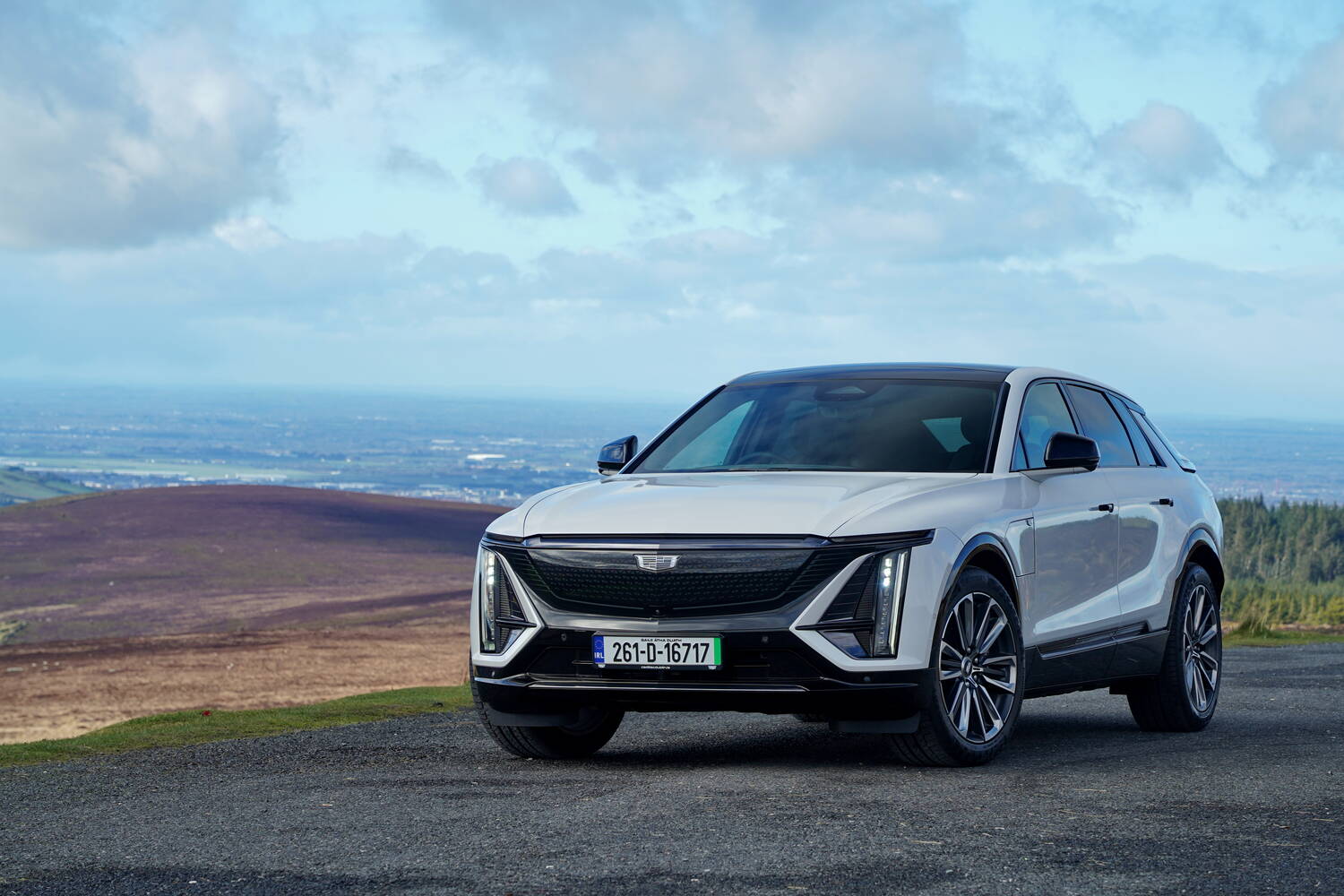
You can step up to Crystal White Tricoat (the colour of our test car, and far too plain a shade for something as striking as the Lyriq), or Radiant Red Tricoat, both of which cost €2,085. Perhaps unsurprisingly, we'd plump for Emerald Lake as the best colour option. Make green great again, and all that.
Interior, practicality, tech & comfort of the 2026 Cadillac Lyriq
- Stylish, spacious cabin
- Plenty of physical buttons
- Quality lags German rivals

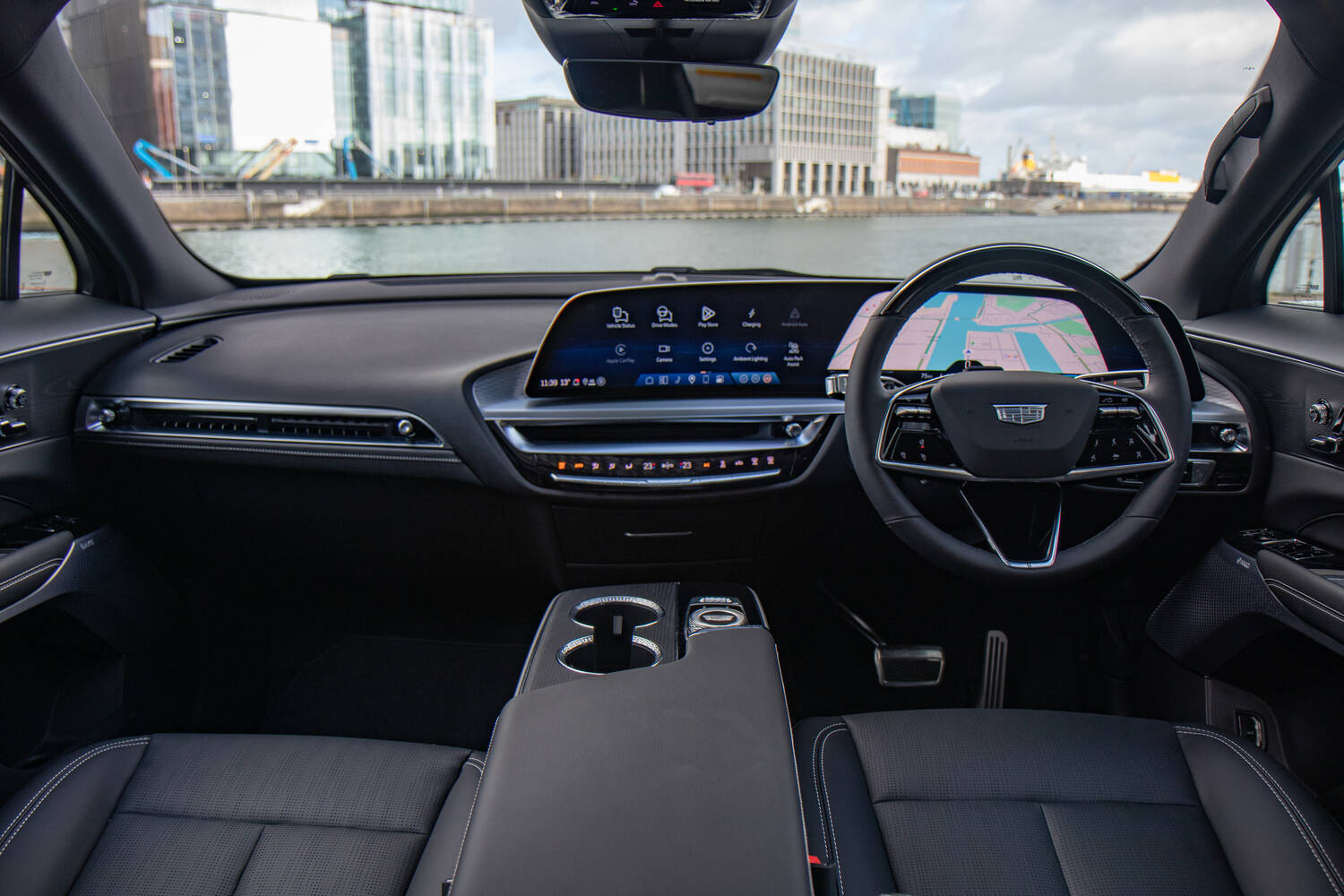
The Cadillac Lyriq's cabin gets a lot of stuff right - comfort, refinement, ease of use and space - but it's lacking the final quality polish of its big rivals.
Getting comfortable in the driver's seat
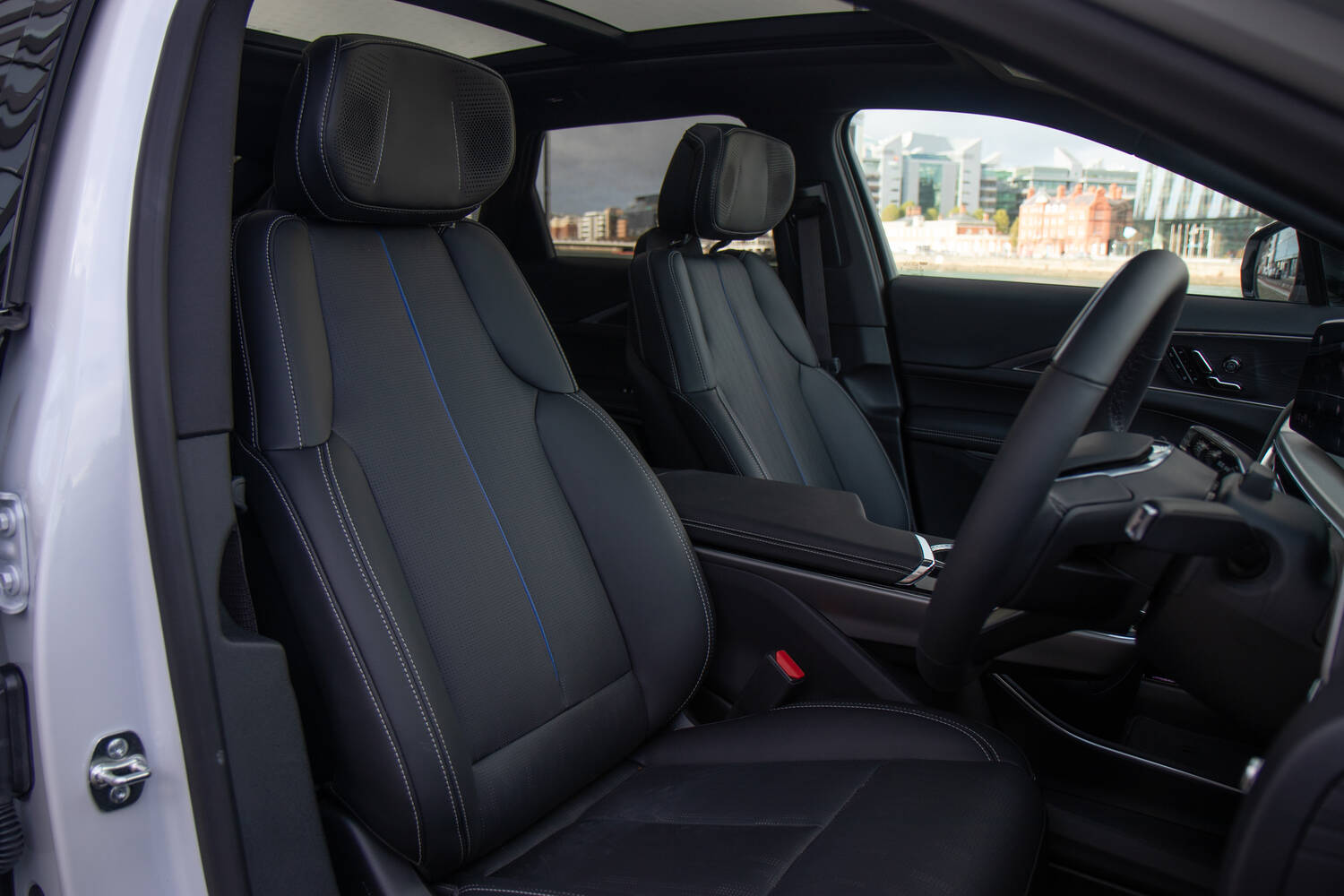
As you'd expect at this kind of price level, there's electric adjustment for both the front seats (heating and cooling too) and for the steering column.

Impressively for an EV, which often suffer in this regard, you can get the driver's seat nice and low, enough so that it feels as if you're wearing the window line as the raised collar of a trench coat.
This is important in a Cadillac. Even if you don't want to do that, there's a huge range of adjustment in the seat and wheel, so everyone should be able to find a good driving position.

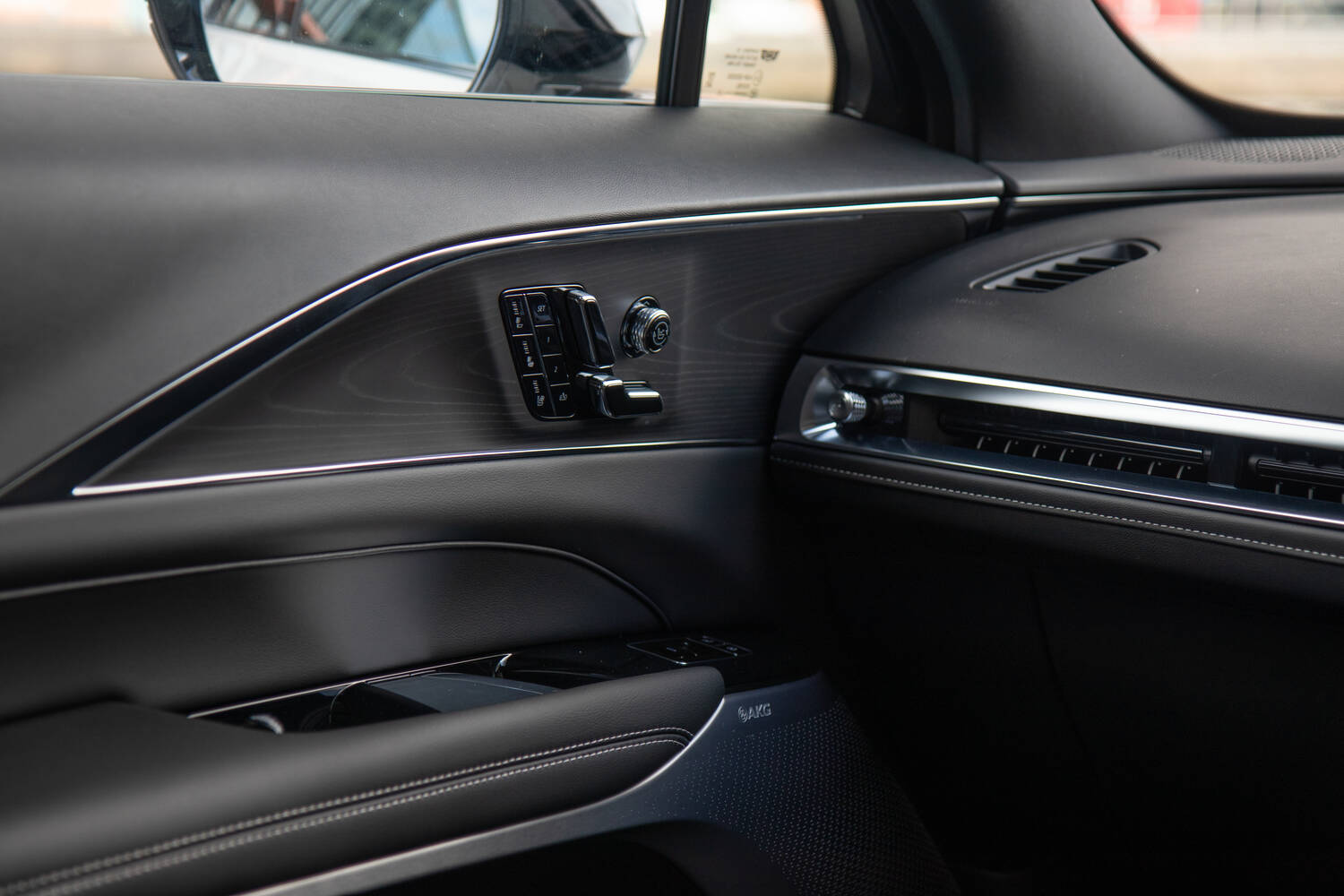
Bonus points to Cadillac for fitting a steering wheel that's also just round, with no faddy flattened nor squared-off sections. The seat adjustment controls are on the door panel (along with the heating and ventilation controls) so they're easy to find, with no fumbling down the side of the seat needed.
There's also a small rotary controller there which manages both the lumbar adjustment and the seat massage function, but this proves a bit confusing to use, even with practice.
Infotainment and technology
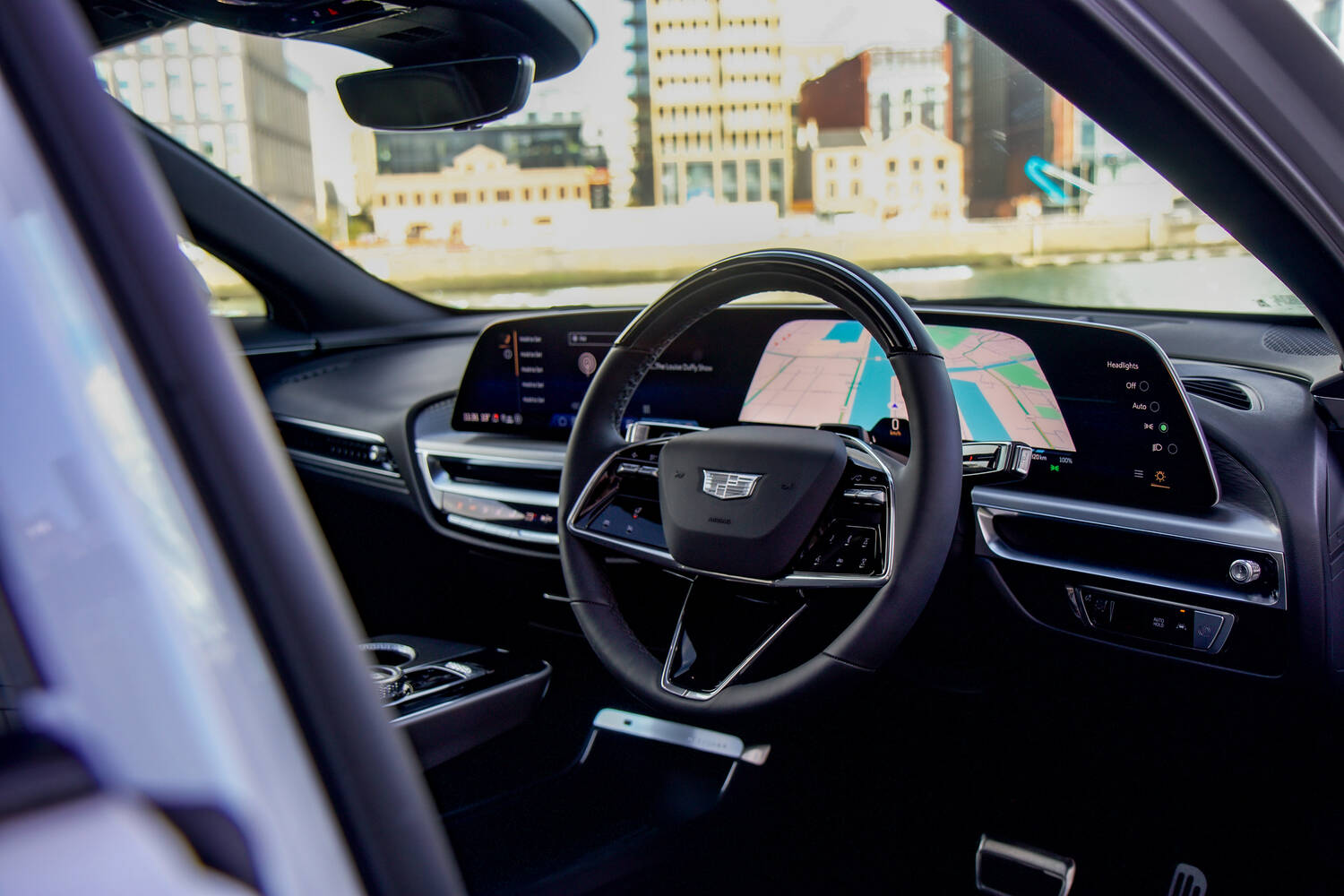
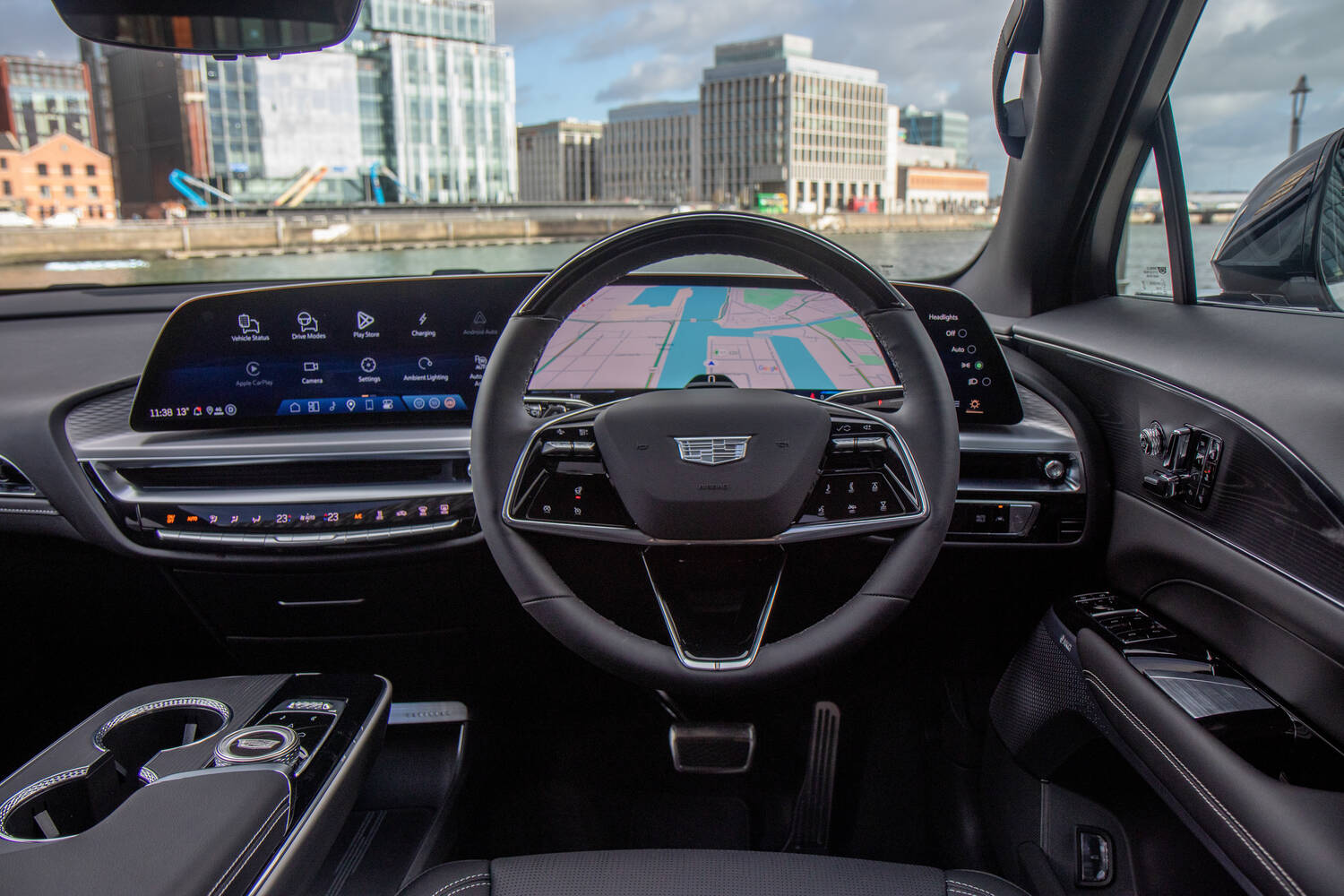
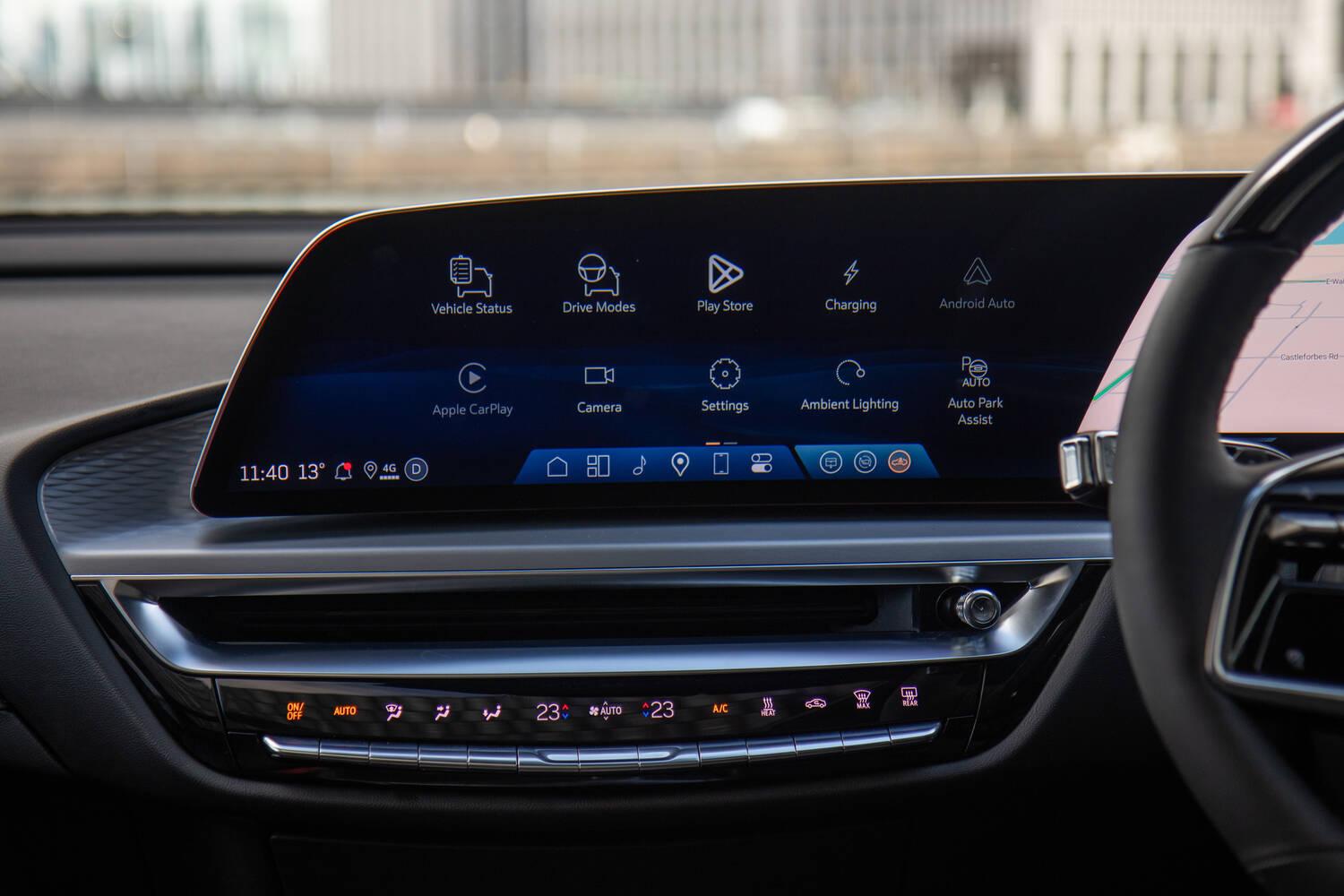
You'd expect a cabin which contains a 33-inch touchscreen to be utterly dominated by pixels, but impressively, Cadillac has managed to craft a layout inside the Lyriq which is quite well balanced between screen and physical controls.

That screen really is an unbroken 33 inches across its diagonal measurement - something that you can most clearly see when getting in, as the display flashes up a rather gorgeous high-def image of a side-on view of the Lyriq against a background of simulated light bars, which indicate the battery state-of-charge - but in normal use it's divvied-up into two sections, one for the driver's instruments and one for the infotainment.
The instruments are clear and simple but arguably lacking a touch in character. However, Cadillac has again opted for simple clarity of operation. To the right of the instruments is a simple, switchable display area which flips between the trip computer and the headlight control, depending on what you want to see. This works well.
On the big screen, the Lyriq's software is Google-native, so you get Google Maps for the navigation, into which you can log and bring all of your personal searches and history with you. There's also, of course, Android Auto and Apple CarPlay, although the latter looks a little underwhelming, displayed on an inset screen-within-the-screen.
The overall logic and layout of the software isn't bad, although it's a touch limited in its functionality if you're playing with it while stuck in a traffic jam. There is at least some entertainment in switching the digital rear-view mirror to a conventional mirror view and back again.

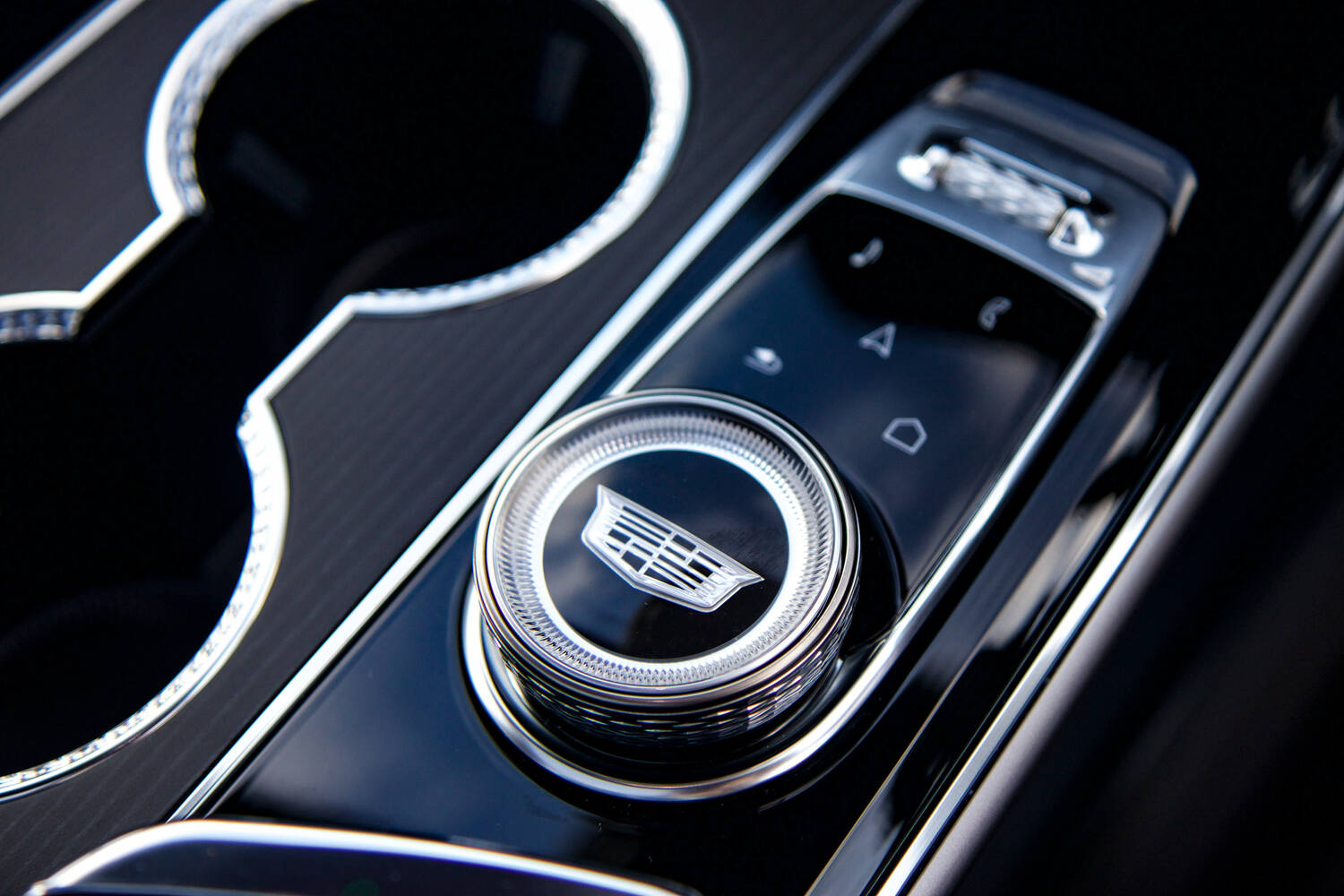
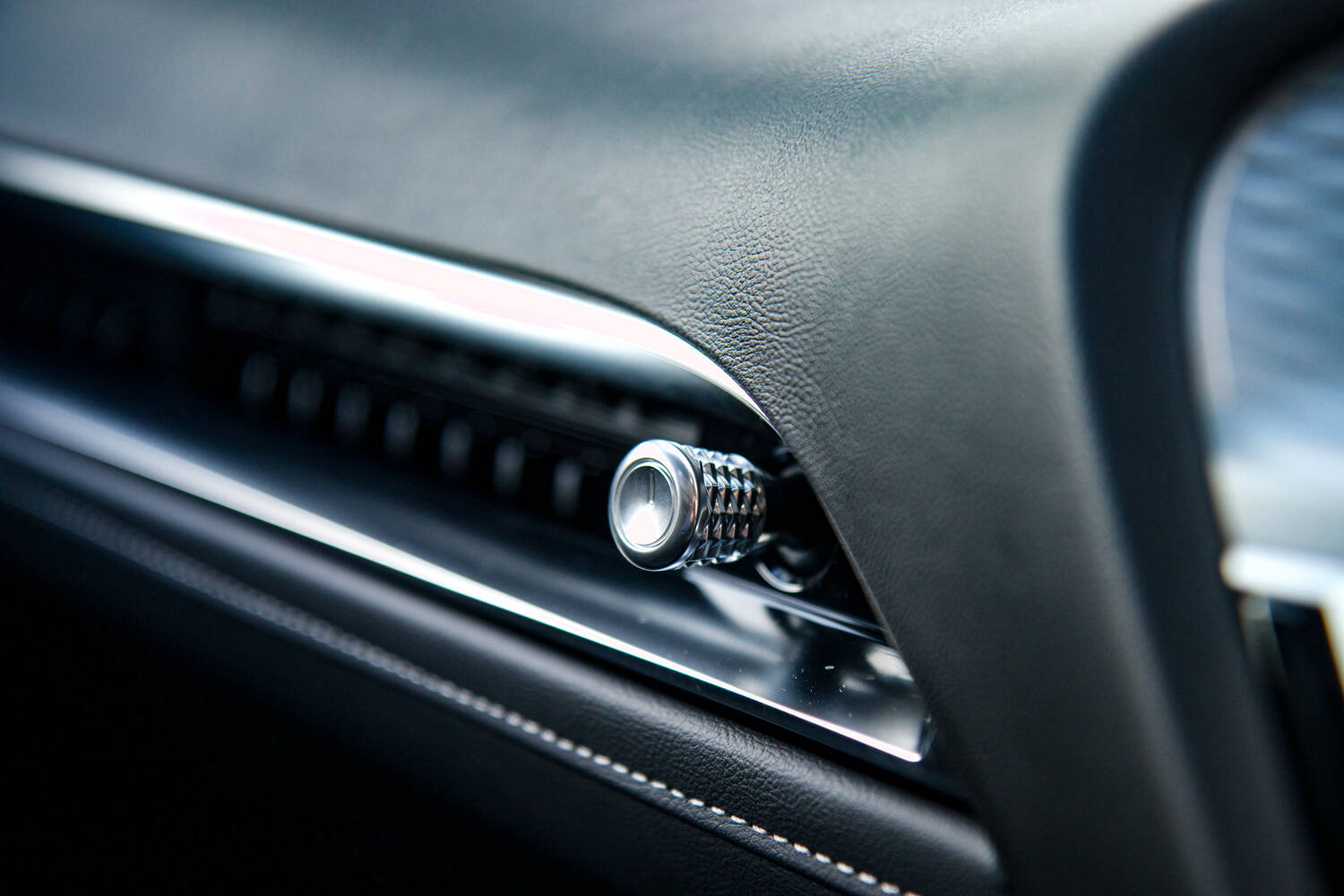
We'll give a big round of applause to Cadillac though for fitting plenty of physical controls in the Lyriq's dashboard. All of the heating, ventilation and air conditioning controls get proper buttons, and there's both a physical volume control and a BMW iDrive-style click-wheel controller which makes it easier to manage the infotainment when you're on the move.
You also don't have to go looking on the screen for your door mirror adjusters - you'll find the buttons for that on the driver's door panel, along with four individual switches for the electric windows. Bliss.
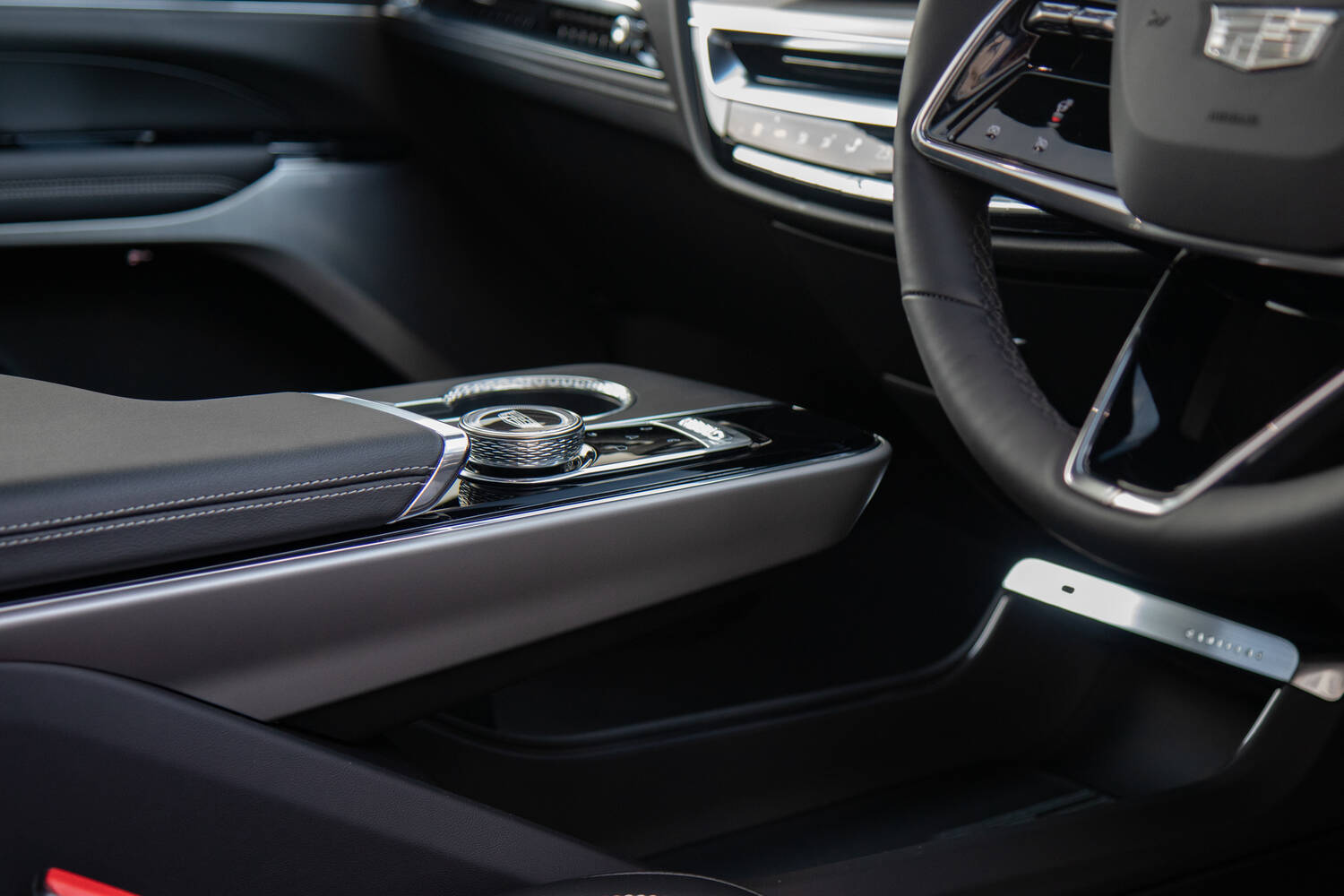
There's a mixture of physical buttons and touch-sensitive pads on the steering wheel, which work fine, and the drive selector is a stalk behind the right-hand-side of the wheel.

Overall quality looks good - certainly, you'd have to say, the Lyriq's cabin looks stylish - but in practice, it needs improving. Drive along a bumpy road, and the Lyriq's cabin creaks in sympathy with the suspension, not something that's really acceptable in a €95k luxury car.
True, the rival Mercedes EQE SUV also has pretty suspect cabin quality, but the BMW iX feels rock-solid within. Cadillac needs to do better.
Practicality around the cabin
Practicality simply isn't an issue, something that you'd hope would be the case when Cadillac quotes an unusual 'passenger volume' figure of 2,976 litres.

Certainly, the Lyriq has plenty of storage space dotted around the cabin. There's a usefully large cubby under the front armrest, although that rear-hinged armrest itself is quite big, which makes opening it on the move a bit awkward.
Ahead of that, there are two cupholders, which have one of the few bum-notes in the cabin: a slightly too chintzy chromed plastic trim around both cupholders. Ahead of the centre console, and below, is a large open storage area that's plenty big enough for a decent-sized backpack or a large handbag.
The door pockets aren't massive, but they do include little moulded cupholders too, which are handy for 500ml bottles. There are smaller trays integrated into the door handles as well.
The glovebox - generously sized and felt-lined so that items won't rattle - is opened, slightly annoyingly, by a button on the touchscreen.

Best of all though are the drawers. There are two of them, both mounted below the air conditioning controls. Press the top one and it slides out horizontally with a lovely, damped motion revealing a small, leather-lined, storage space inside, which is about the right size for a mobile phone, or a wallet, or a small purse. Below that is a second, similar, but slightly smaller, drawer.
Rear-seat passenger space
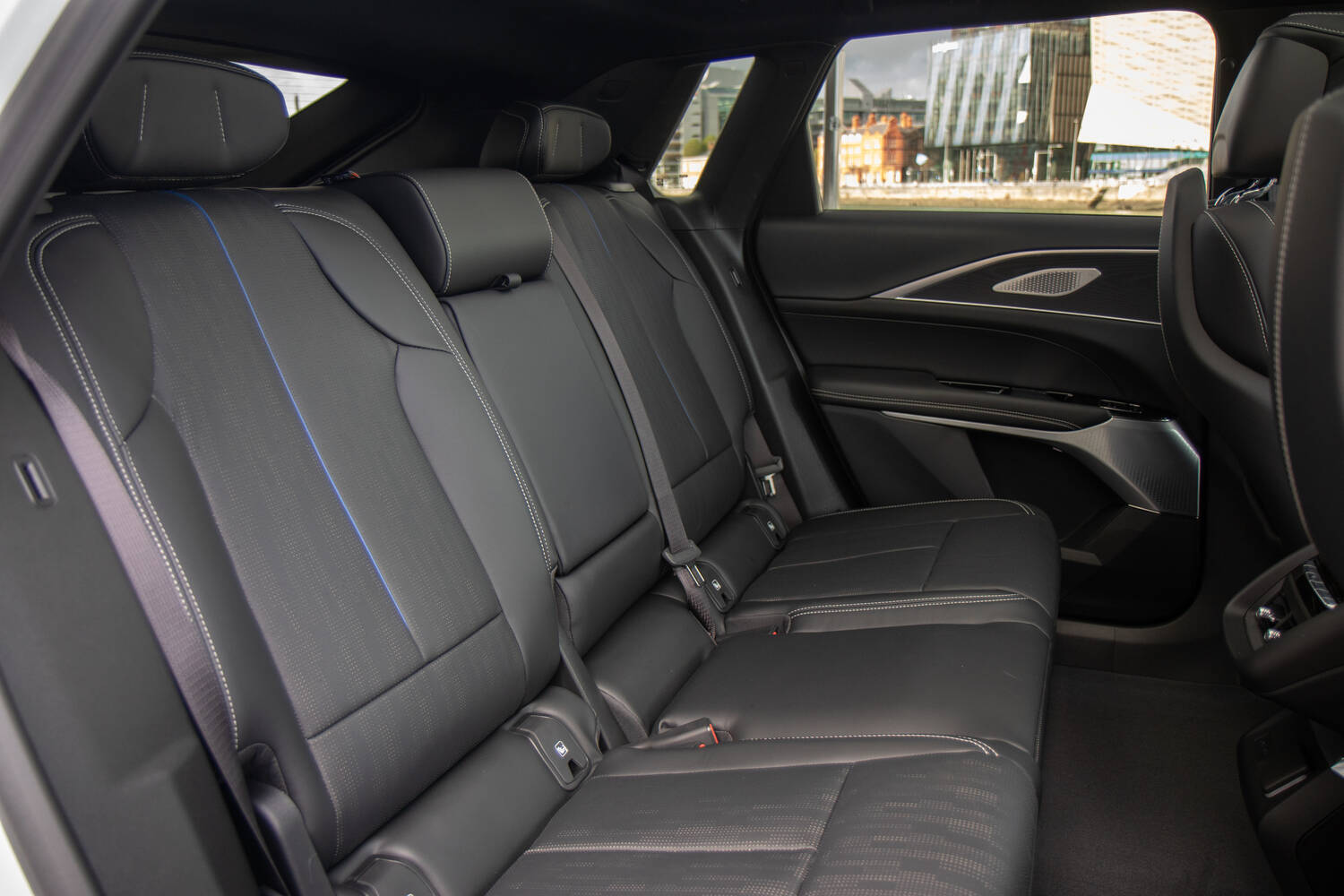
You'd expect a Cadillac, especially one with a massive wheelbase like this, to offer cosseting space in the back for your passengers, and this Lyriq for the most part does not disappoint.

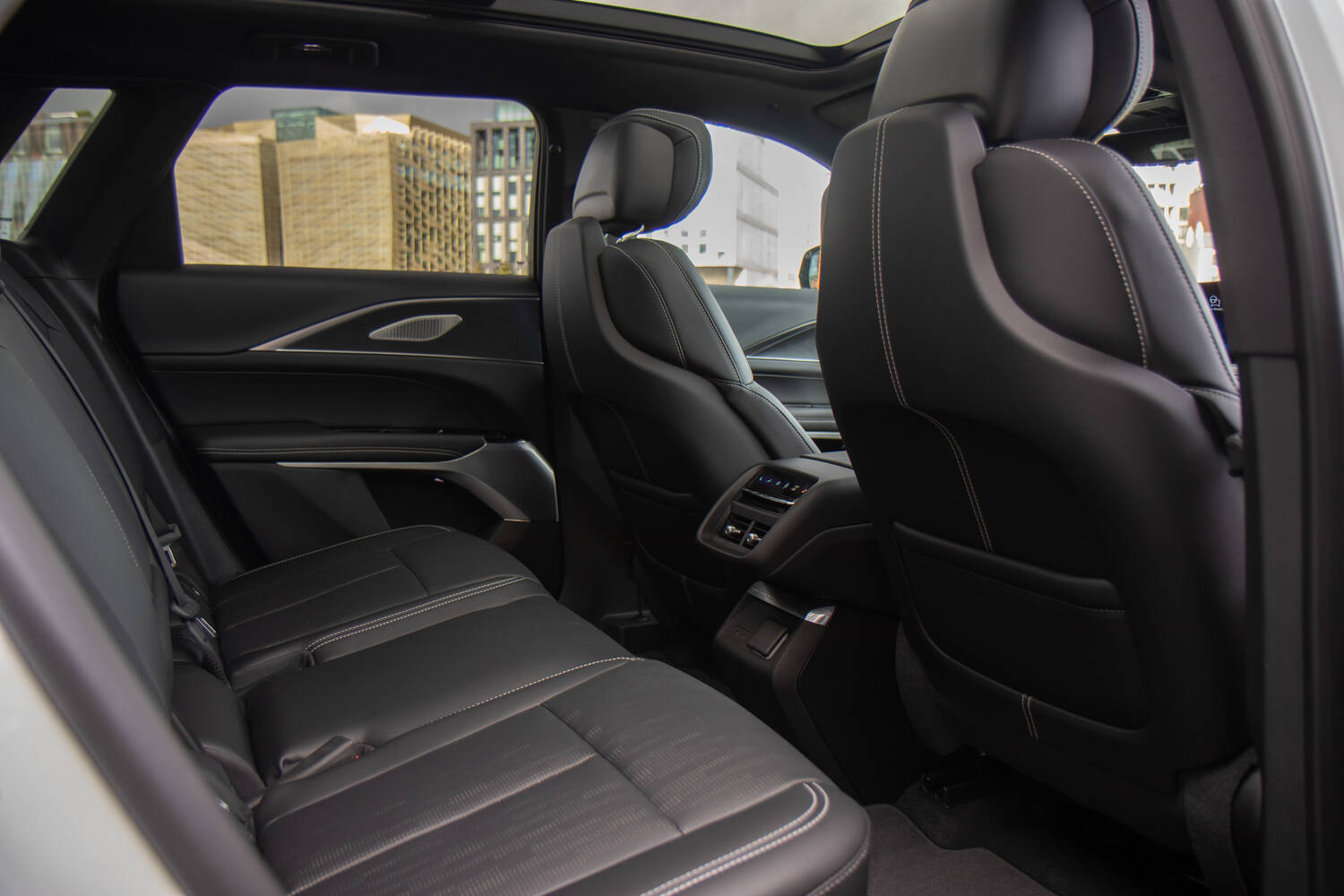
Legroom is very generous, with plenty of clear air between my knees and the backs of the front seats. There's also room enough to get your feet under the front seats, which is not true of all flat-floored EVs.
Rear seat comfort is also excellent, although the simple, uncovered cupholders in the rear armrest ring an unpleasingly cheap note.
Headroom is a touch tight, certainly with the big glass roof and its sunshade eating into space, but it's adequate and will only be an issue for the exceptionally tall. The rear is well-appointed too.

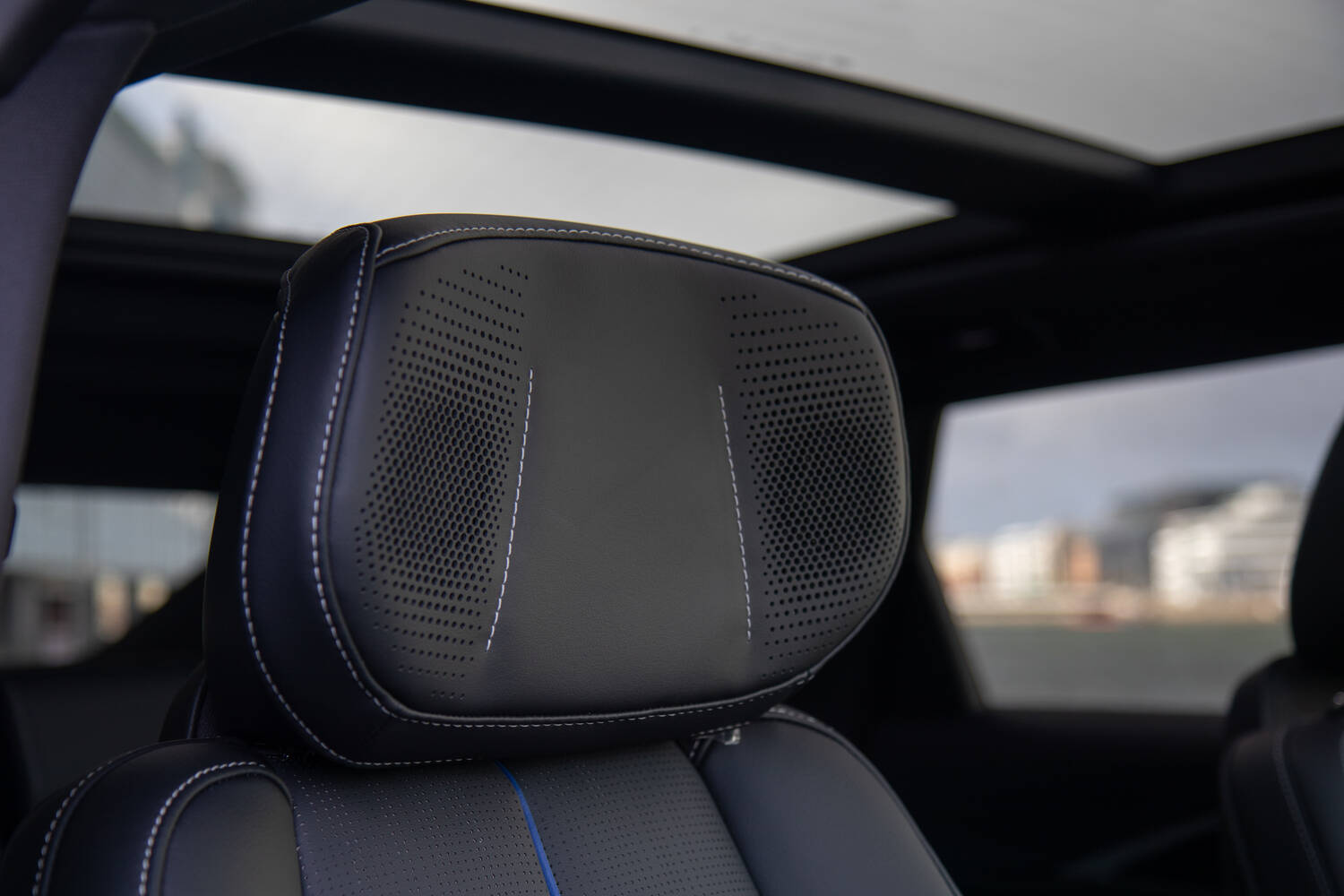
There's a large leather-covered fairing (for want of a better word) on the backs of the front seats which doubles as a coat hanger, while each seatback also gets a large storage pocket.
On the back of the centre console there are two USB-C sockets (matching the three in the front, which are under the central armrest) and there's even a three-pin domestic-style socket there too.
Fitting child seats to the Cadillac Lyriq
The Lyriq comes with two ISOFIX anchors in the outer rear seats (none in the front passenger seat, though) and these are clearly marked, under lift-up plastic covers.
Combine those with the large rear doors and copious rear space and there should be no issues with loading or unloading even the bulkiest child car seats. The centre rear seat is pretty narrow, though, so squeezing in even a booster cushion in there might be a struggle.
Boot space in the Cadillac Lyriq

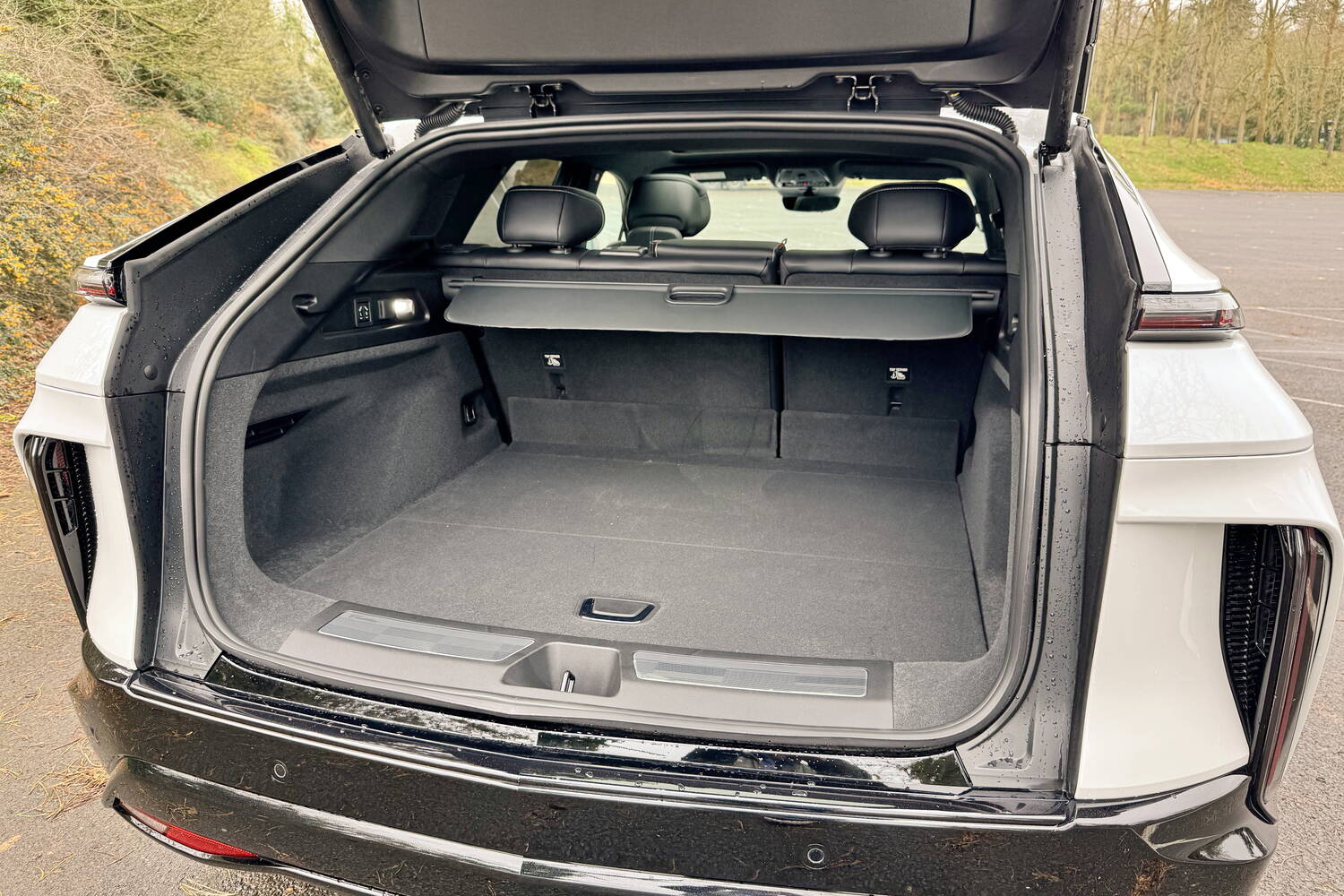
There's 588 litres of luggage space in the back of the Lyriq, up to the retracting cover (which annoyingly can't be stashed under the boot floor when you don't need it). If you want to load to the limits of the fastback rear glass, then there's a very healthy 793 litres of space, according to Cadillac's official figures.
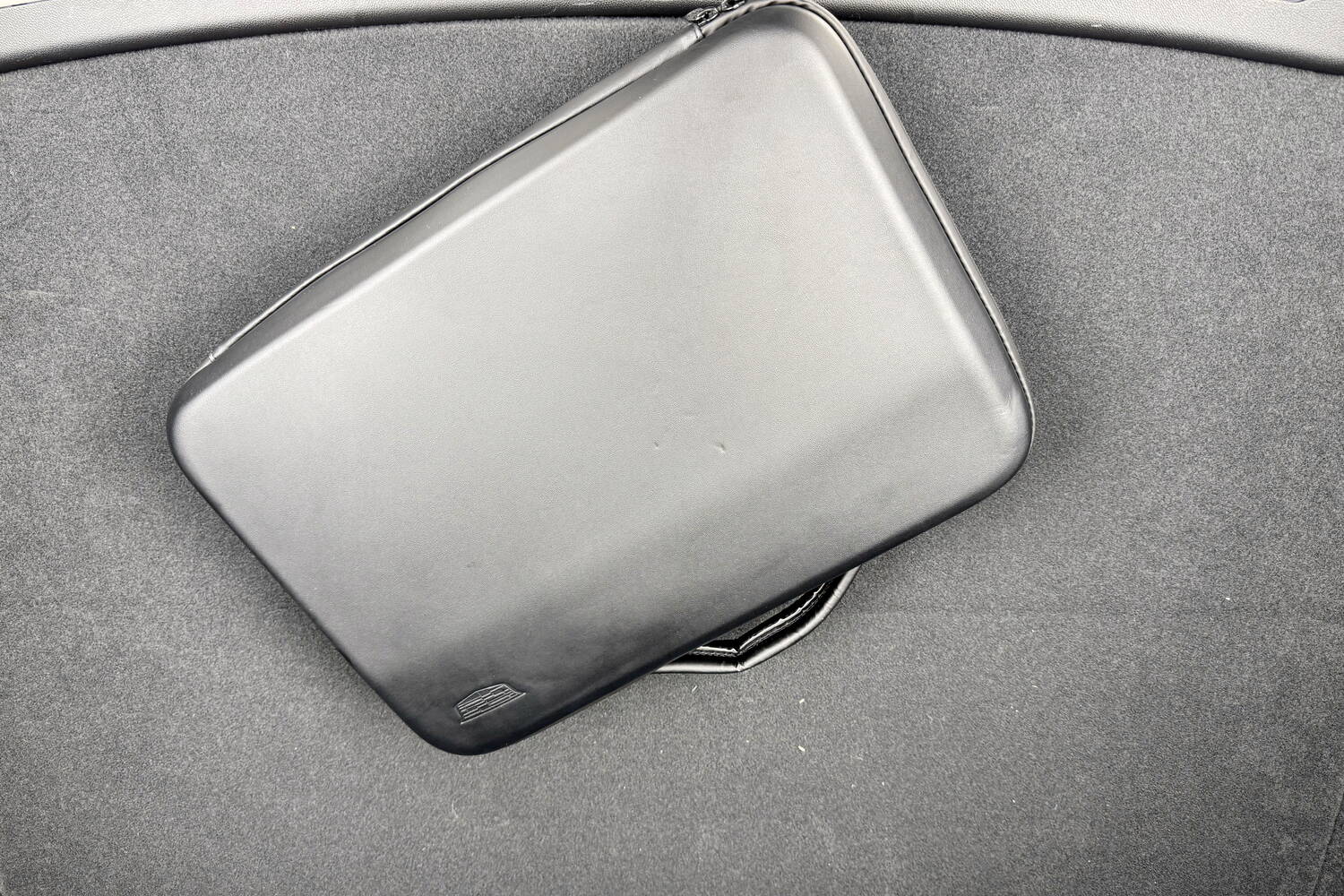
That does include some under-floor storage, in which you'll find one of the Lyriq's nicest - and most Cadillac-like - touches. For stowing your Type 2 charging cable, most car makers will give you a simple nylon bag. Not Cadillac, which instead gives you a sleek attaché-style briefcase, complete with a monogrammed Cadillac badge.

Fold down the back seats, and there's more than 1,700 litres of space to play with, and although the seatbacks don't fold 100 per cent fully flat, you can at least easily tumble them down simply by pressing a button in the boot. The spring-loaded seats then flop forwards, although you do have to go and put them back into place by hand - the agony...
The only issue, really, is that the Lyriq's boot lacks some practical touches, such as hooks for bags etc. There are some lashing points, and a 12-volt socket, but that's your lot.
Towing with the Cadillac Lyriq
The Lyriq is rated to tow up to 1,587kg of weight on a braked trailer which is a slightly odd figure until you realise that it translates to almost 3,500lb and Americans still like their imperial measurements.
Safety in the Cadillac Lyriq
The Lyriq hasn't yet been tested by Euro NCAP, but it did bring home a five-star safety rating from the tough National Highway Traffic Safety Administration (NHTSA) test in the US, so that's encouraging.
Standard safety kit includes the expected lane-keeping and adaptive cruise control (which works fine), adaptive LED headlights, blind-spot monitoring with steering intervention, forward collision alert and emergency braking with pedestrian and cyclist detection, plus automated parking.
There's also a 'buckle-to-drive' function, which won't allow you to shift out of P and into D without doing up the driver's seatbelt, although this can be disabled through the touchscreen.
Performance of the 2026 Cadillac Lyriq
- Two-motor model only in Ireland
- 528hp means plenty of poke
- Could do with more engagement

There is a rear-wheel-drive Lyriq available in the US market, but that's not coming here, and nor for the moment at least, is the 615hp Lyriq V high-performance model. Still, we're not exactly short-changed with the current Lyriq...
Driving the Cadillac Lyriq in Ireland
Words by Neil Briscoe on 2 April 2026
Thinking back beyond that Cadillac CTS test drive, all those years ago, I actually managed to notch up a Caddy test drive very early on in my career as a writer of all things motoring. Way back in 1997, working for a classic car magazine, I wangled a test drive in a 1962 Cadillac DeVille Coupe - one of the iconic Caddies of that era, not quite with the massive fins of the 1959 edition, but still with pretty lofty and pointy additions at the rear, not to mention about half-a-tonne of chrome at the front.
It was so huge that it seemed like a metallic green aircraft carrier and drove pretty much like that; heeling over onto its soft springs at the suggestion of a corner, and with about 25 degrees of slack in the steering before the front wheels would respond. Still, with its mighty 6.2-litre V8 woofling distantly away in a separate Eircode beyond the chrome and pastel dashboard, it had an appeal all of its own.

Does the modern Lyriq evoke any of the same sensations? For a start, thankfully, the Lyriq's suspension is far better sorted than that of Cadillacs of the 1960s, with a general sense of softness, but an underlying firmness that speaks of decent body control.
The steering is still a touch distant, certainly not plugged-in in the manner of a Lotus, but there's a firm-ish sense of resistance and some small hints of feedback, allowing you to place the Lyriq with confidence.
Which is just as well, as the one thing this Lyriq and that classic 1962 Caddy share is bulk. While the Lyriq might look sleek compared to a BMW iX, it's still a massive car, and takes up a lot of width on the road, so be thankful that the steering allows you to place it with accuracy through a series of country road corners.
It's not precise nor involving enough to be fun - the BMW has the Lyriq well beaten in that respect - but it's tidy, comfortable and entirely satisfying.

On a motorway cruise, the Lyriq is in its element, with excellent refinement levels, although when you get back onto smaller roads, the suspension has an unnerving habit of clonking over sharp bumps. It's not that the suspension isn't coping well, it's just that it's noisy (especially without a V8 backbeat to disguise it and in spite of the fact that there's an active noise cancellation system in the cabin) and again, this is an area Cadillac needs to work on if it's going to be taken seriously against European opposition. Possibly air springs, or adjustable dampers, might help, but the Lyriq in this form has neither.
Which is not to say it's disappointing. It's at least as good to drive as a Mercedes EQE SUV, and certainly for now has the benefit of novelty. And it does share one thing with that classic 1962 Cadillac - a vast bonnet, stretching out in front of you, leading the way to your next destination.
Range, battery, charging and running costs of the 2026 Cadillac Lyriq
- One big battery option
- Gets close to its WLTP range
- DC charging up to 190kW

Just the one battery option for the Lyriq, but as we shall see, it's a good one...
Battery options and official range
As standard, the Lyriq comes with a 102kWh (that's the net useable energy capacity) nickel-manganese-cobalt (NMC) battery slung beneath the bodywork, whose size as much as any dynamic imperative is responsible for the vast three-metre wheelbase.
Officially, the Lyriq has a WLTP range of 530km, which leaves it some way adrift of the likes of the BMW iX and Mercedes EQE SUV.
Real-world range and efficiency of the Cadillac Lyriq
If we all know one thing about Cadillacs, it's that they have massive V8 engines that make gas-guzzlers look parsimonious. Well, not the Lyriq - 530km on paper doesn't look like all that much range, but the Lyriq, impressively, manages to get very close to its official figure in day-to-day driving.
Even better, the weather was largely chilly and wet during our test drive, yet time after time, the Lyriq would doggedly insist that it could do around 500km on a full charge. True, on long motorway runs that dips somewhat, but even so, a roughly 400km real-world motorway range isn't bad.
The official WLTP energy consumption is 19.2kWh/100km and we generally saw between 22kWh and 24kWh/100km on our test.
Charging up the Cadillac Lyriq
Built-in 22kW AC charging is brisk and very useful for adding quite a bit of charge, quite quickly, from kerbside or car park chargers. Slightly less impressive is the 190kW DC fast charging figure, which is behind the class benchmark these days, although to be fair the Lyriq never left us waiting very long for a fast top-up, and Cadillac claims it will add 200km of extra range in 15 minutes of fast charging.
Servicing the Cadillac Lyriq
Cadillac's standard servicing interval is 20,000km or one year, whichever is soonest.
Cadillac Lyriq warranty

The Lyriq comes with a four-year, 100,000km warranty, which is slightly more generous than you'll get from its main German rivals. There's also a separate eight-year, 160,000km warranty for the battery.
Irish pricing & rivals to the 2026 Cadillac Lyriq
- Expensive, but in in line with rivals
- Two grades, both well-equipped
- Long-term values to be proven
Cadillac has a lot of work to do to get itself established as a genuine rival to existing European and Japanese luxury brands, and that's not going to be easy. When even the likes of Lexus and Jaguar still struggle for sales and market share, compared to the German 'Big Three' you can see the scale of Cadillac's challenge, and its long and storied US history won't help it much on this side of the Atlantic.
In one sense, then, pricing the Lyriq at €95,109, directly up against the likes of the BMW iX and Mercedes EQE SUV, is ambitious, but there's method in the madness. Cadillac clearly thinks that at this price level, buyers aren't after a bargain but instead are looking for something that's reassuringly expensive.
Certainly, the Lyriq is well-equipped. There are two models, Luxury and Sport, but these basically mean whether or not the car has bright chrome or dark trim on the outside.

For the rest of it, they're essentially identically equipped with leather upholstery, the big 33-inch dashboard, heated, cooling and massaging front seats and heated rear seats, 22kW AC charging, 21-inch alloys (slightly different designs between Sport and Luxury), all the expected safety kit, power adjustment for everything and an excellent AKG 19-speaker high-performance stereo.
The only options are paint, the twin panoramic sunroofs and a black contrast roof, all fitted to our test car.
As we've mentioned multiple times, the first hurdles that the Cadillac will have to jump are the closely matched BMW iX and Mercedes EQE SUV, and quite apart from equalling those cars on the road, it will also have to try to compete with them for residual values, or business buyers will stay away.
That could be the Lyriq's toughest challenge of all, at least early on and until Cadillac becomes more established in the market. It's also worth considering the Lexus RX hybrid as a rather more conventional rival, or indeed the Porsche Taycan Sport Turismo estate, which isn't as practical, but which is on another planet in terms of driver appeal.

Verdict - should you buy the 2026 Cadillac Lyriq?
Clearly, residual values will need to be established, and Cadillac also needs to work on its cabin quality, but relative to its main German opposition, the Lyriq is a more handsome machine, and never underestimate the appeal of aesthetics. It's also pleasant to drive, and really rather good at stretching its range on one charge, so it's certainly worth giving a chance to the Lyriq if you're shopping for a big, premium electric SUV.
FAQs about the 2026 Cadillac Lyriq
What is the range of the Cadillac Lyriq?
Officially, the Lyriq's range is 530km on one charge, and actually it gets very close to that in real-world driving. Figure on between 450km and 500km in real-world conditions.
Does the Cadillac Lyriq have a frunk?
No, there's no frunk in the Lyriq, but the 588-litre boot is pretty big, so it's not a major issue.
What does the Cadillac Lyriq's name mean?

Apparently, it's a reference to Cadillac being among the most-mentioned brand in song lyrics, although we reckon that most of those must presumably be referring to the bigger, far more vulgar, Escalade SUV.
Want to know more about the 2026 Cadillac Lyriq?
If there's anything about the new Cadillac Lyriq we've not covered, or you'd like help in choosing between it and other cars, you can avail of our expert advice service via the Ask Us Anything page.
History of the 2026 Cadillac Lyriq
The Lyriq itself specifically doesn't have much history, as it's a brand-new model for the Cadillac brand, with no real direct antecedents. The Cadillac brand, though? Oh boy, does that have some history...
Astonishingly, Cadillac - which was founded in 1902 - was originally, in part, founded by Henry Ford, but Ford soon fell out with his fellow founders, William Murphy and Lemuel Bowen, who then called in respected engineer Henry Leland to work on the first Cadillac cars. The brand is named after the French explorer, Antoine Laumet de La Mothe, sieur de Cadillac, who founded the city of Detroit, the company's hometown.
Cadillac's early models were the sort of horseless carriage machines that most of us would probably find comical these days, but after Cadillac was bought by General Motors (GM) in 1909, the story really took off.
In 1915, Cadillac was one of the first car makers to introduce a V8 engine, which allowed its cars a top speed of more than 100km/h, almost unheard of at the time. Synchromesh gear changing was another Cadillac innovation, and by 1930 Cadillac had become the first car maker to introduce a V16 engine, a mighty 7.4-litre unit with 165hp (a lot for the time, in fairness). It's just a shame that the world was succumbing to the Great Depression when the V16 was introduced.
After the Second World War (during which, in 1941, Cadillac had become the first car maker to use a mass-produced automatic gearbox) Caddy would focus on V8 engines instead and become a master of the layout.
It also began making cars with fully enclosed bodywork and was one of the first to bring tailfins to the market, in 1948. These would reach their apogee with the 1959 DeVille Coupe, and start to shrink after that, but there's no denying that from 1950 until the mid-1960s, Cadillac was easily the equal of the great European luxury brands. Heck, Rolls-Royce all-but copied Cadillac's V8 engine in the 1960s, and that unit remained in production until the 2010s. Cadillac introduced front-wheel-drive models in 1967, a move that few, if any, of its major rivals have copied.
By the early 1970s, though, the cracks were beginning to show. While classic names from the '30s, '40s, '50s and '60s remained - Brougham, DeVille, Fleetwood and more - the cars became progressively cheaper and more vulgar, especially after the oil shocks of the early 1970s.
Cadillac of the 1980s is probably best glossed over, other than to note the appalling Cimarron saloon (basically a gussied-up Chevrolet) which Cadillac even tried, briefly, to sell with diesel power. It was not a success.
However, from the late 1990s onwards, GM gave Cadillac more room to develop its own, bespoke models and the range started to improve. The attempt at European sales in the early 2000s fell flat, but in the US Cadillac was back to some of its best, and with models such as the massive Escalade, and the really rather good later versions of the CTS saloon (especially the BMW M5-baiting V8-engined CTS-V and Blackwing models) Cadillac has flourished anew.
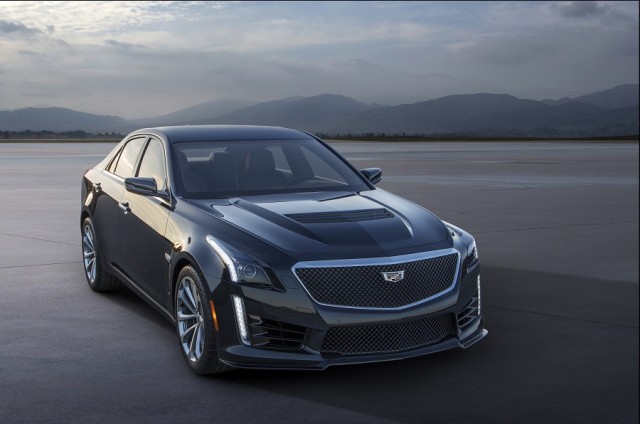
It has even now replaced the former CT6 saloon with an all-electric model as its flagship, the Celestiq (which looks like a bigger, sleeker, grander Lyriq).
Now, 'The Standard Of The World' is back in Europe, ready to take on the big German, Japanese and British luxury brands. Will it be more successful this time around?