



Exterior & design of the 2025 Bentley Flying Spur
- Styling of the Spur now at its best
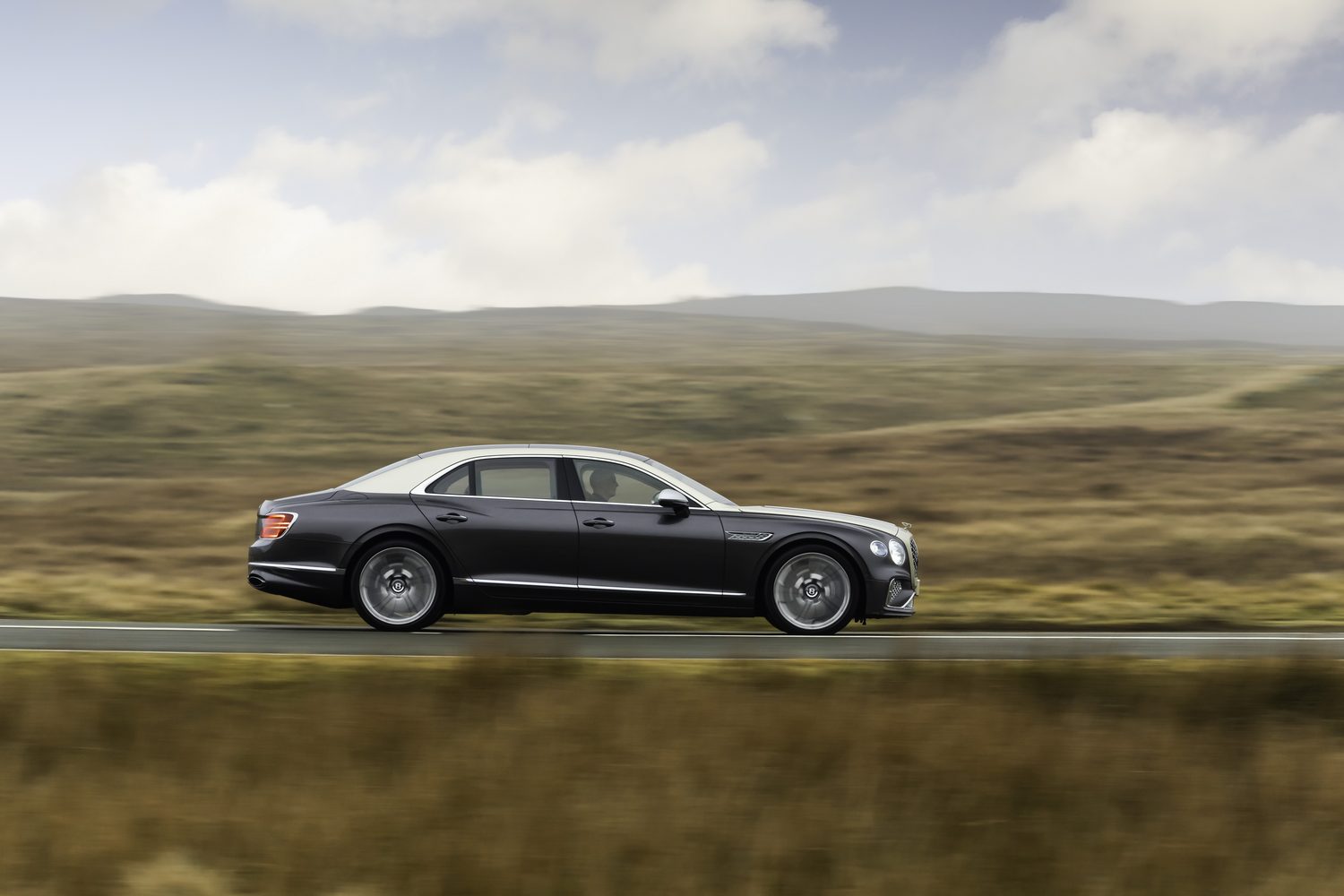
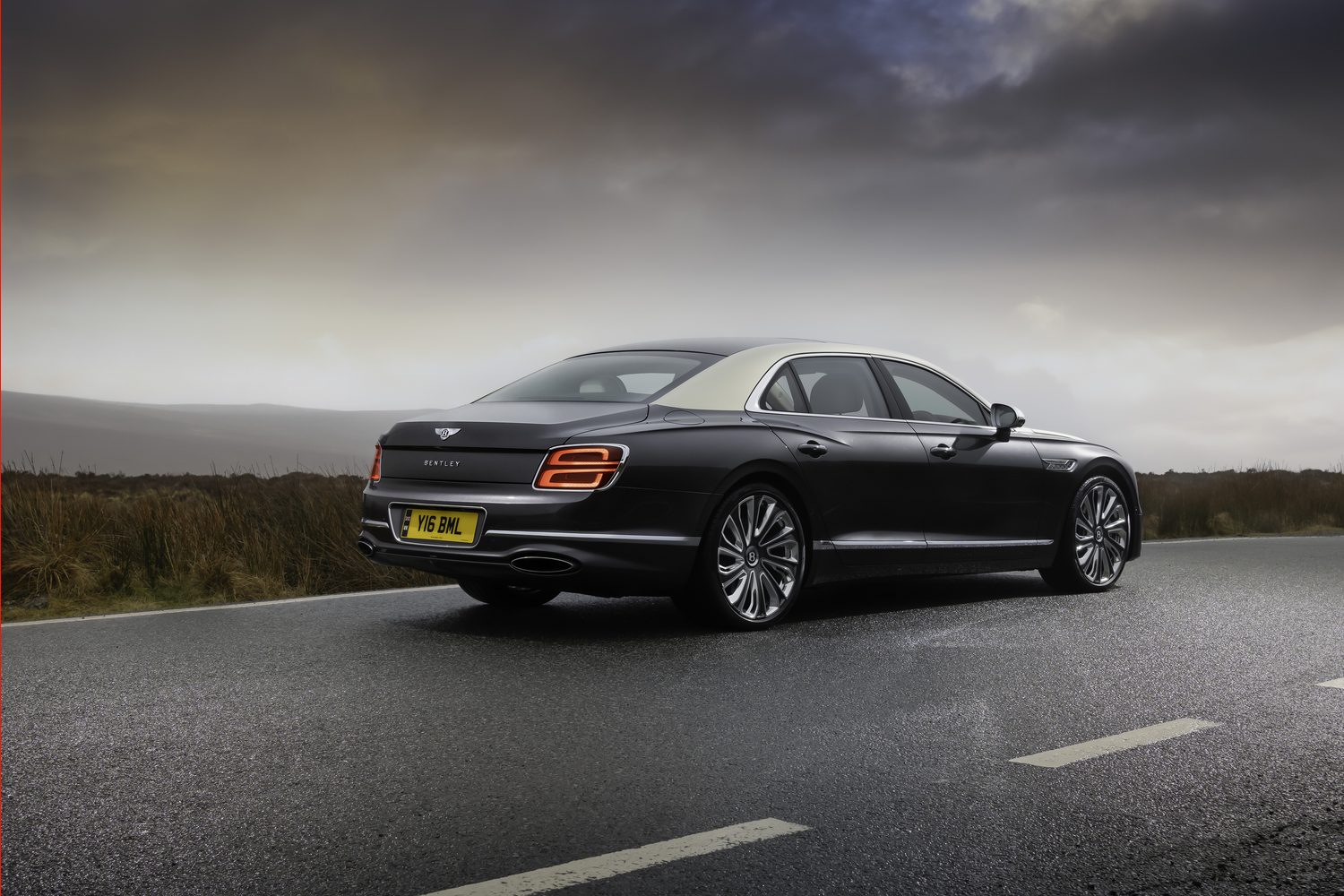
- Long 5.3m body still looks elegant
- Huge 22-inch wheels in the arches

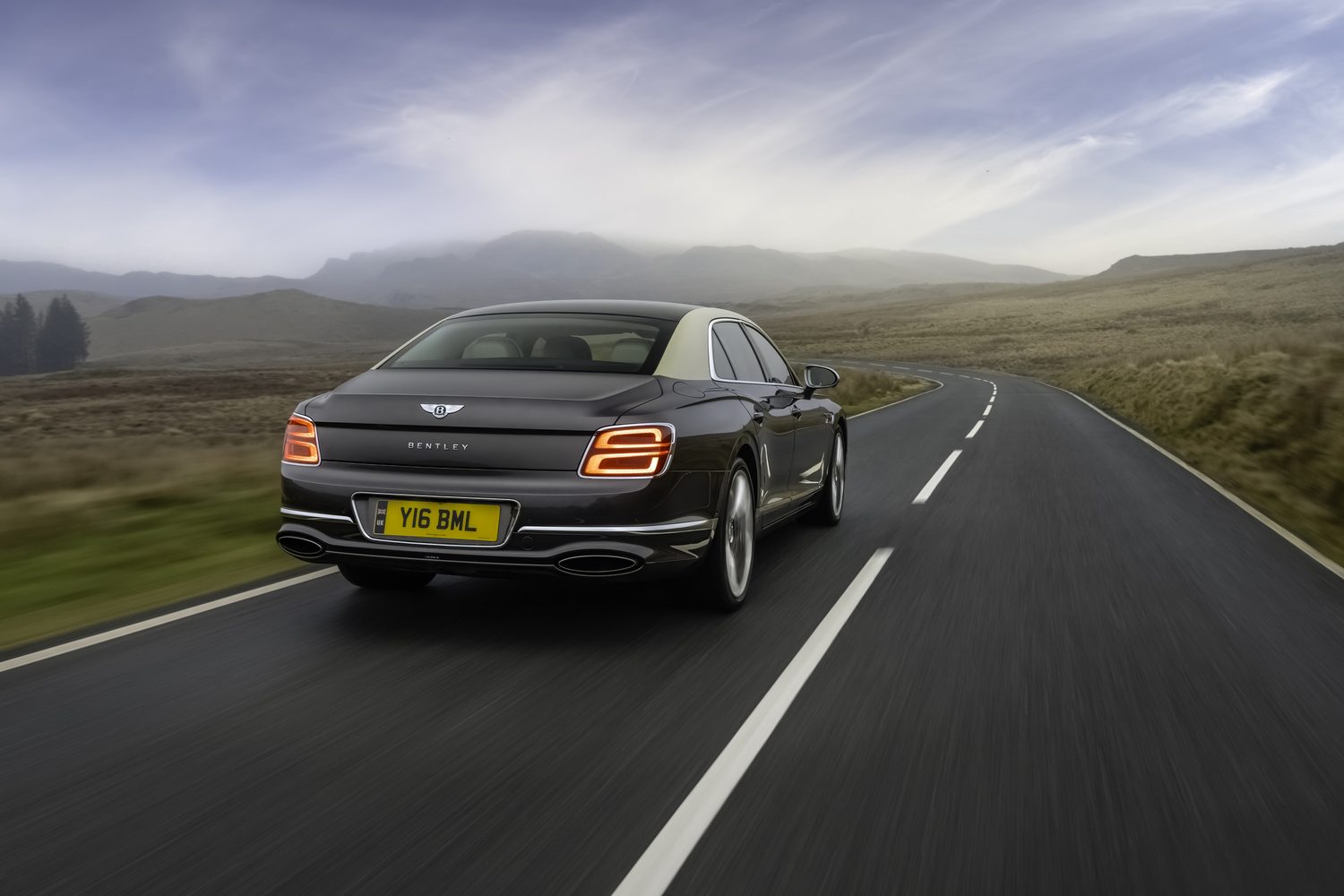
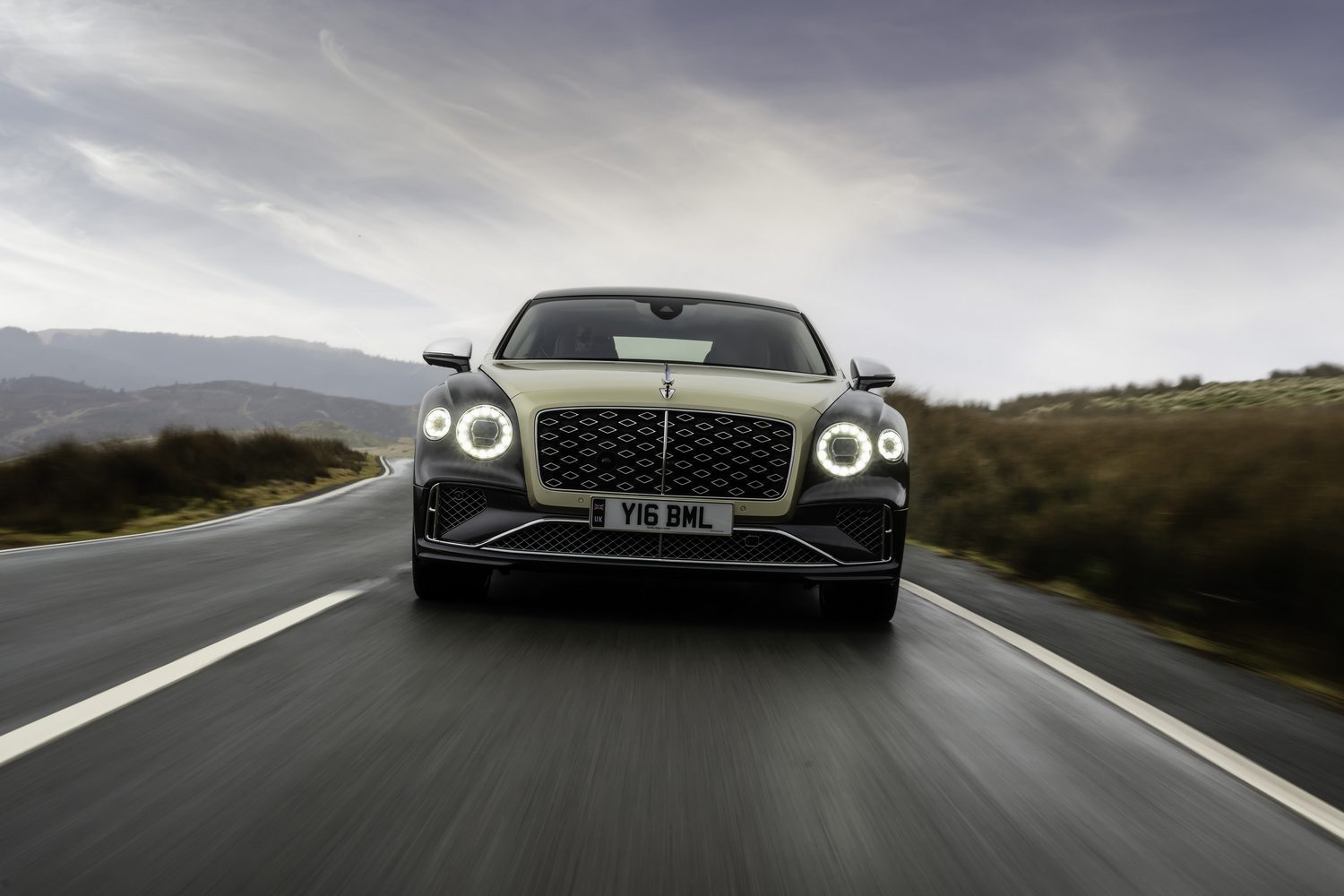
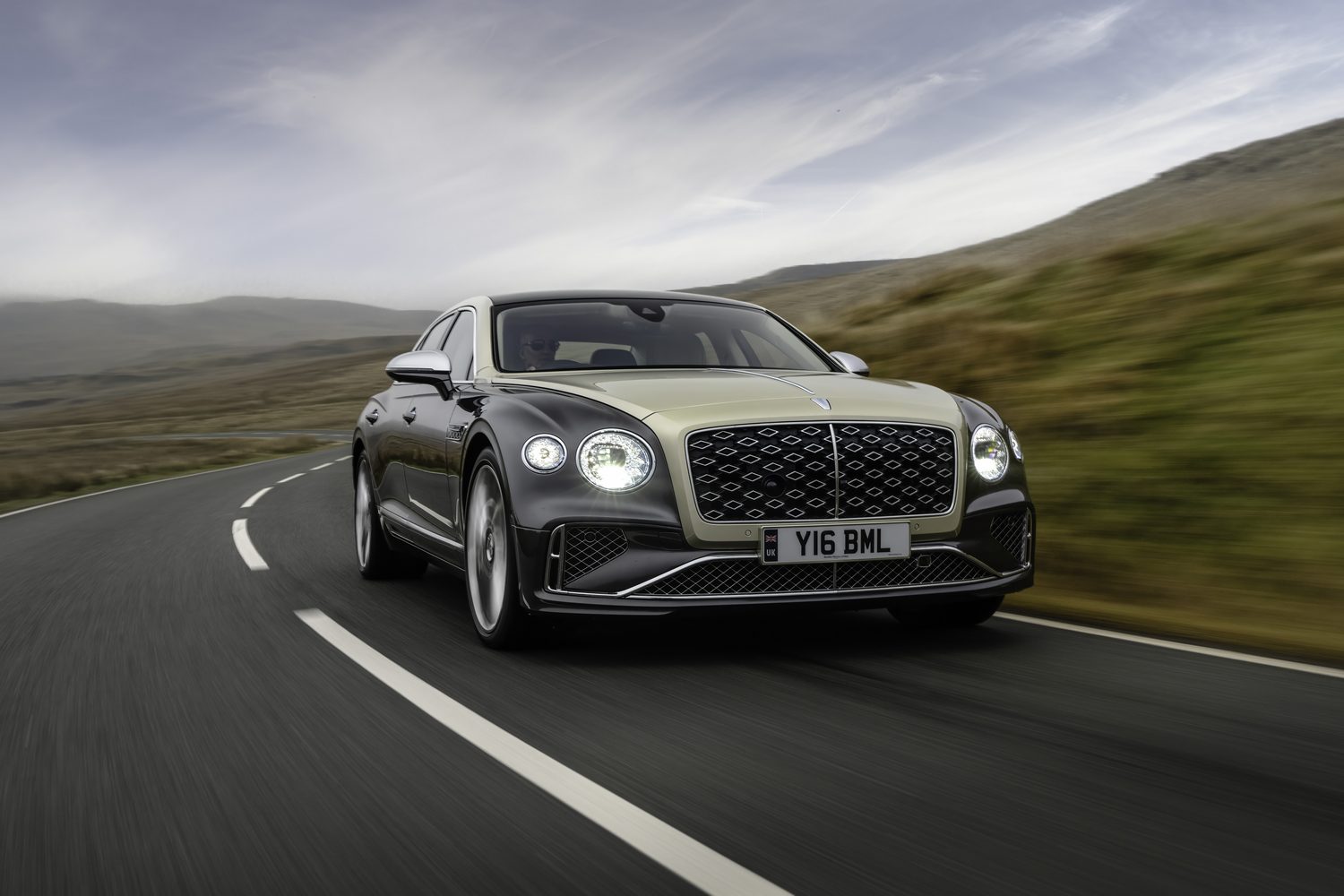
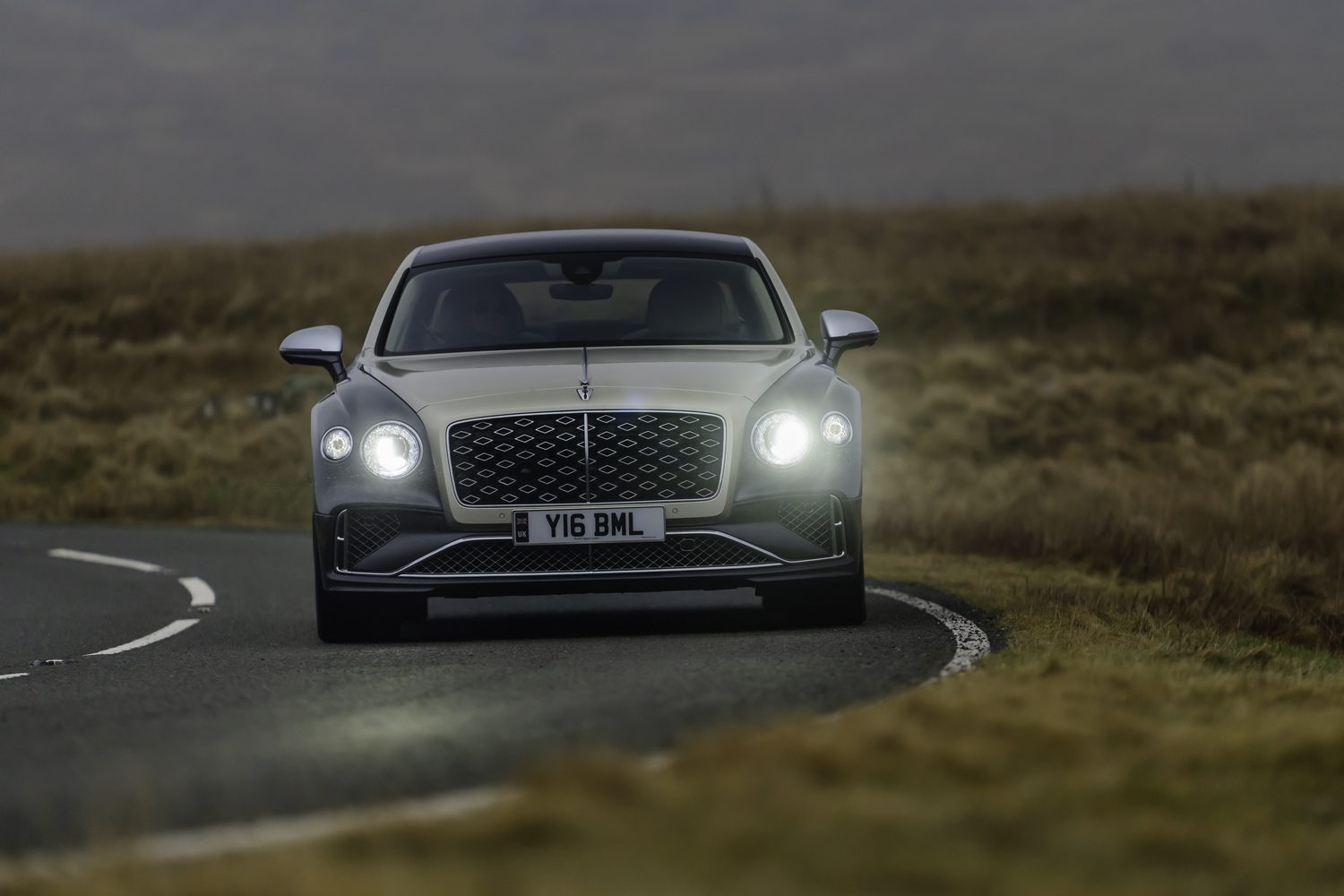
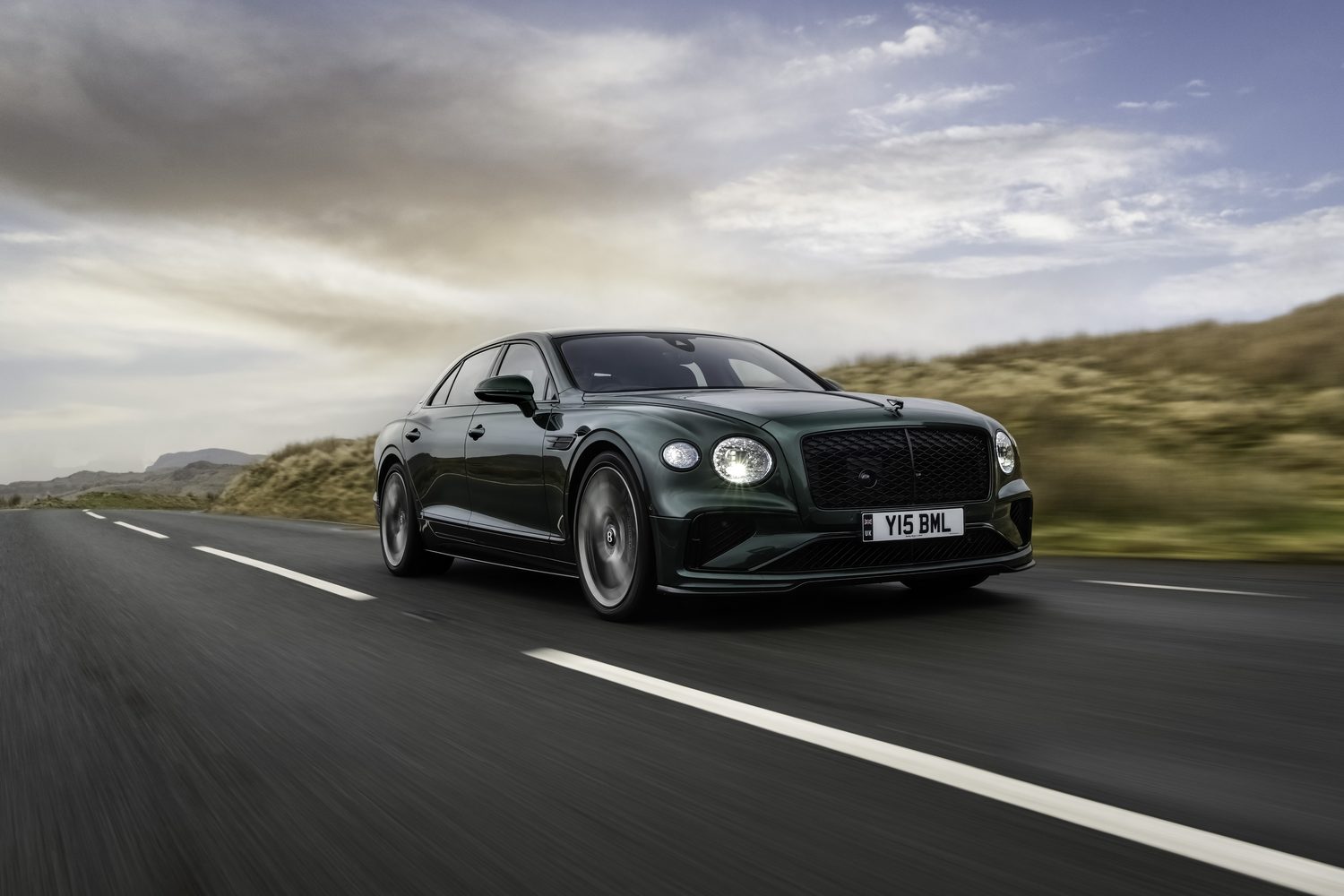
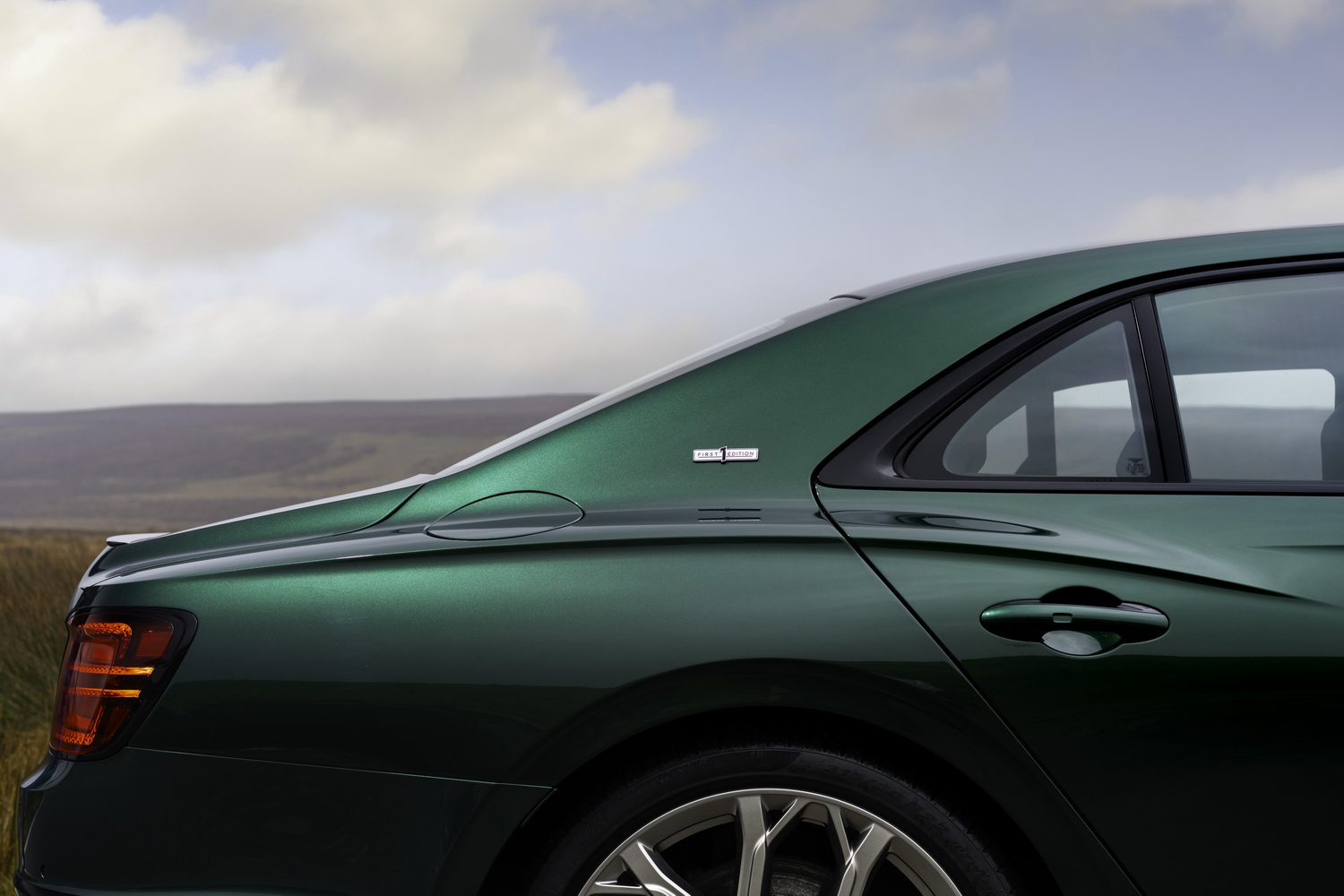
While the related Bentley Continental GT coupe and GTC convertible models got a significant visual update when they received the same V8 PHEV powertrains as the Spur, Bentley has left the aesthetics of its big four-door GT well alone.
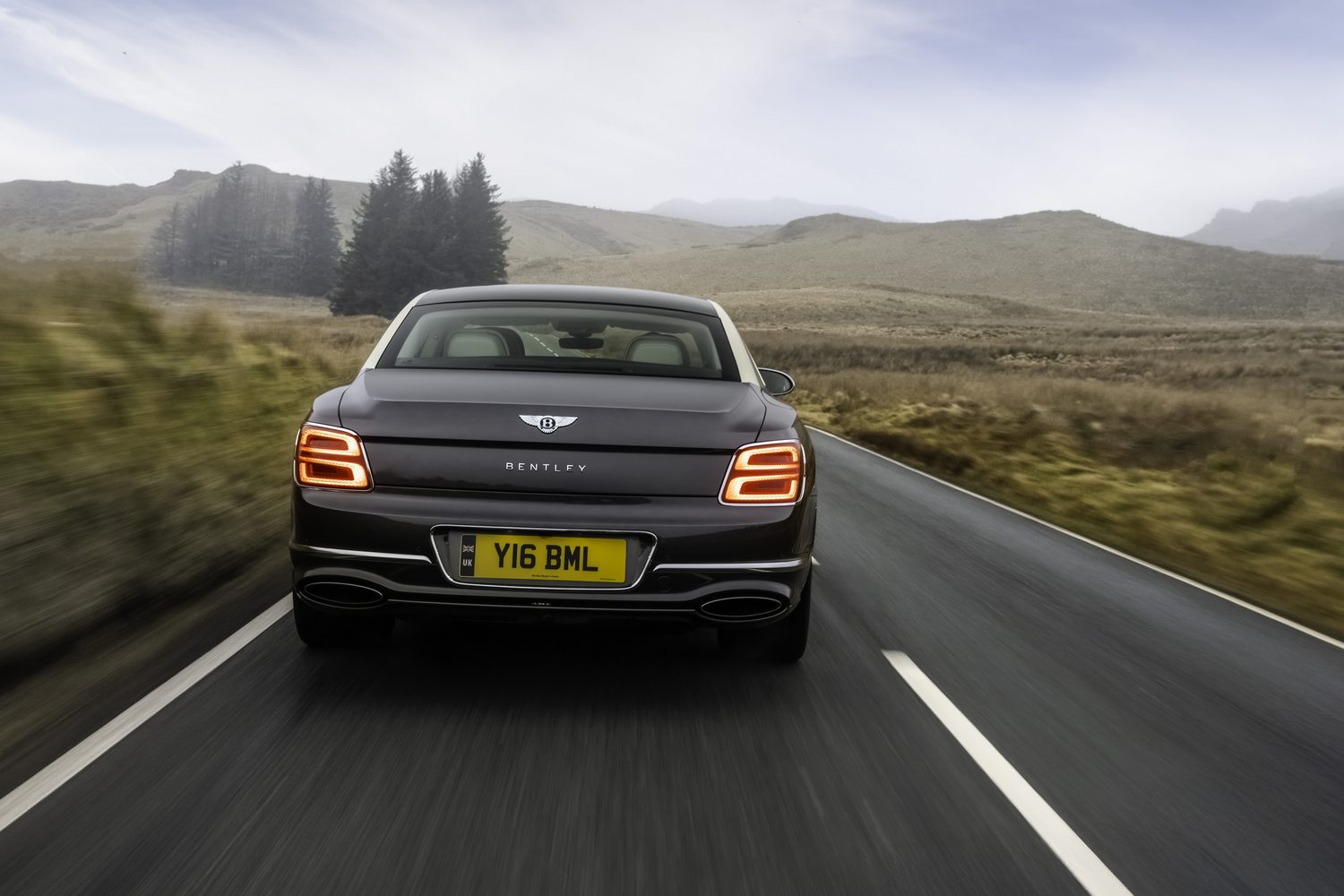
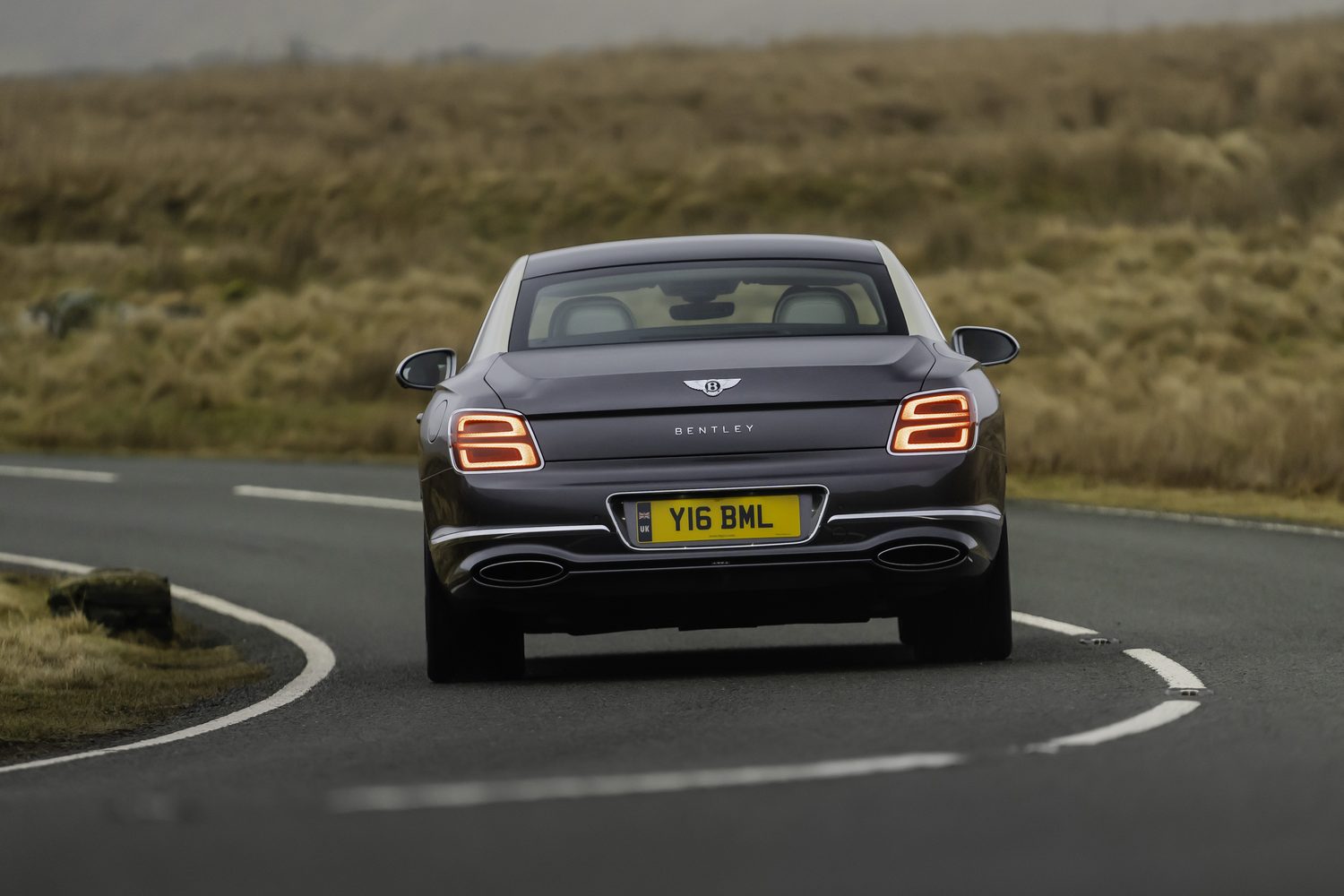
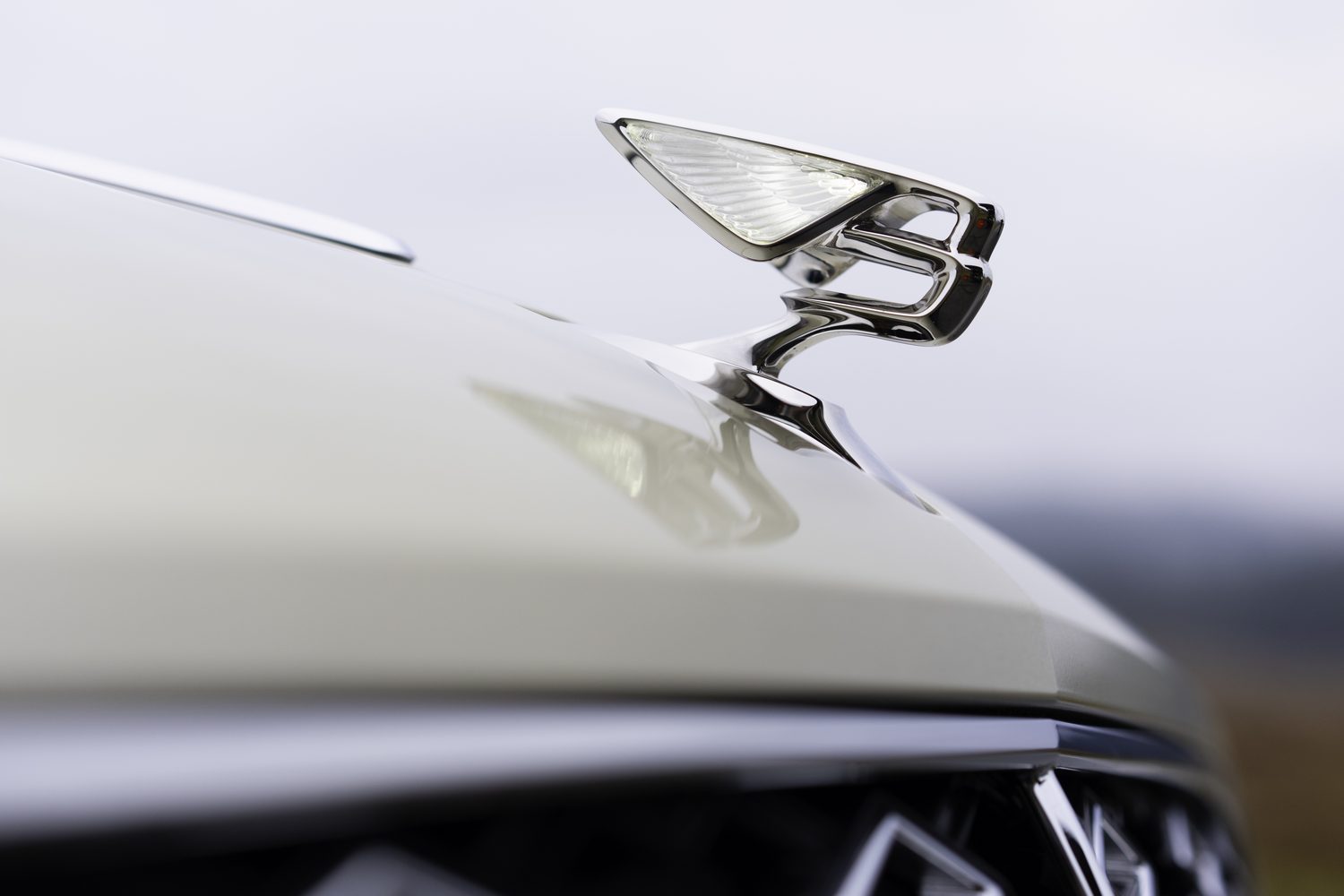
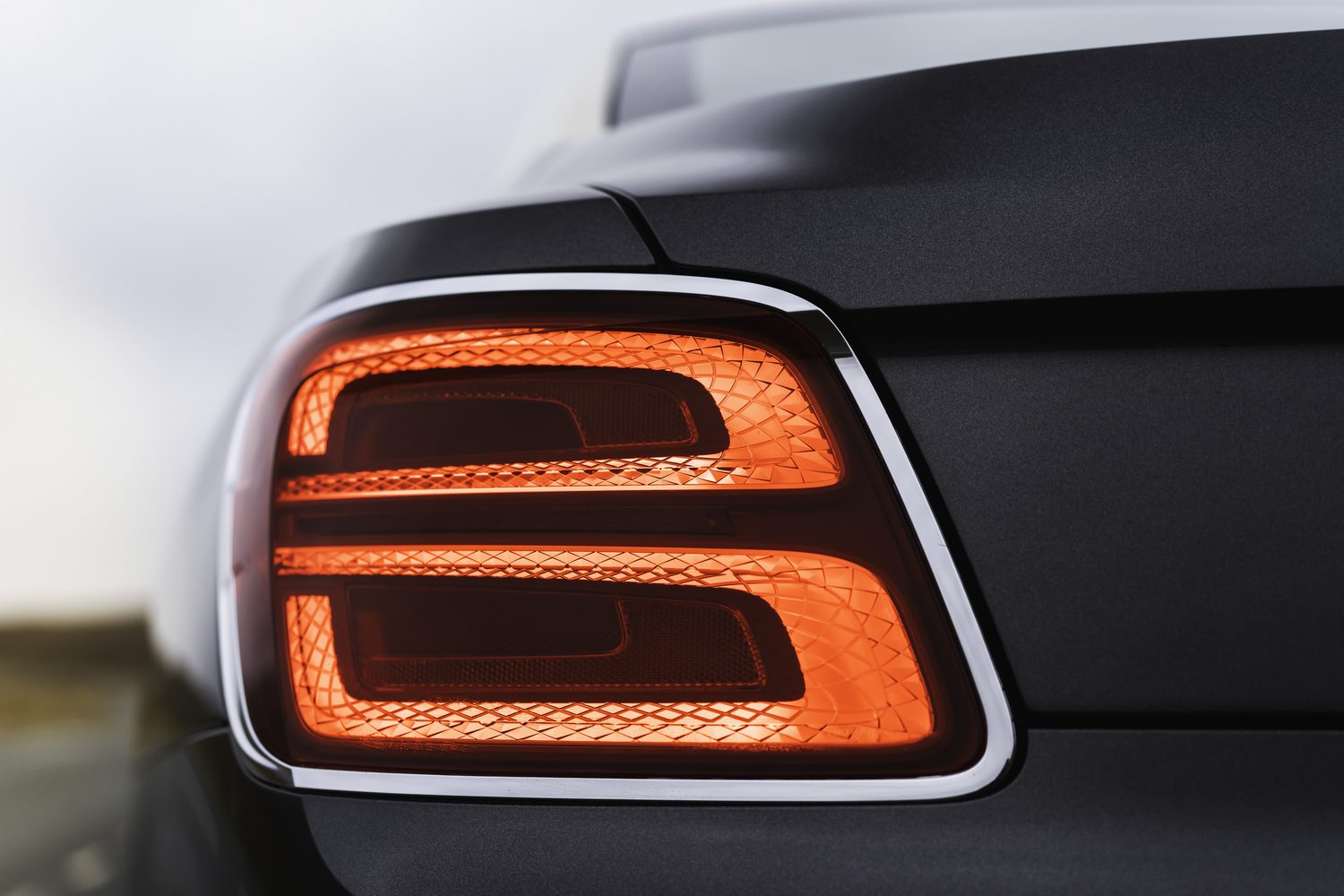
This is no bad thing at all, because the Flying Spur is a wonderful-looking car, complete with its round headlights, large square grille, the B-signature rear lamp clusters and of course, the retractable 'Flying B' emblem at the prow of the vehicle.

It's a shape that oozes distinction, so there was no need to make remedial changes to it as it continues to look like a class act into 2025 and beyond.
Dimensions of the 2025 Bentley Flying Spur
- Length:
- 5,316mm
- Width:
- 1,988mm (mirrors folded)
- Height:
- 1,474mm
- Wheelbase:
- 3,194mm
Paint colours for the 2025 Bentley Flying Spur
We could be here all day listing you paint colours for the Spur, because - at this level of automotive wealth - the choices are essentially endless.

For what it's worth, the company does provide a 'standard' palette of 11 shades of blacks and dark greys, 23 blues, 14 golds, oranges and browns, 12 greens, 15 reds and purples, 14 silvers, and 14 whites and beiges, with a further 24 two-tone options that are made of some combination of the above finishes. And if you don't like any of that lot, Bentley will do you a full bespoke matching paint service for a hefty fee.
Speed models have more aggressive looking air intakes and bumpers as they're largely dechromed, as well as darker finishing for exterior detailing and a more monotone look overall.

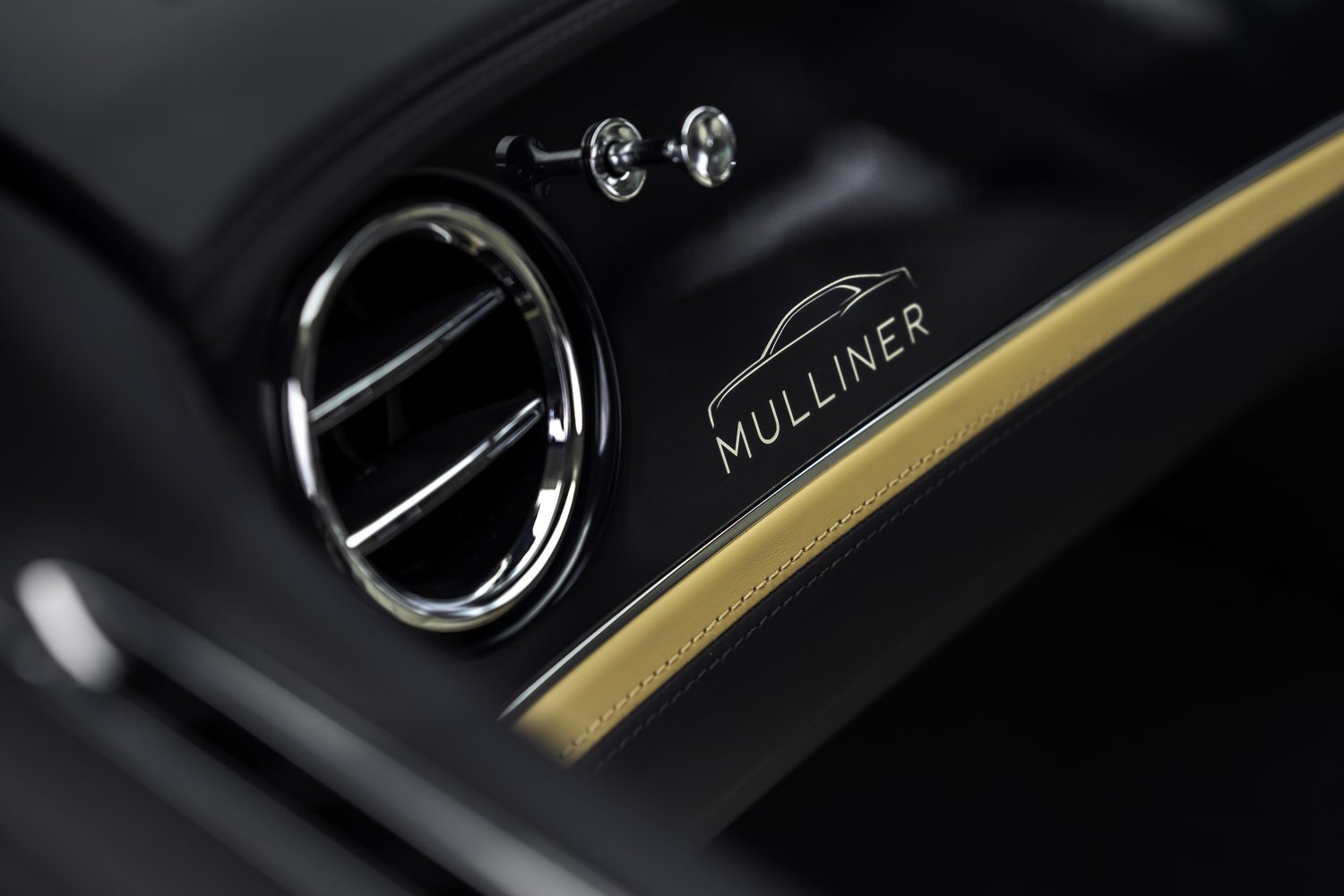
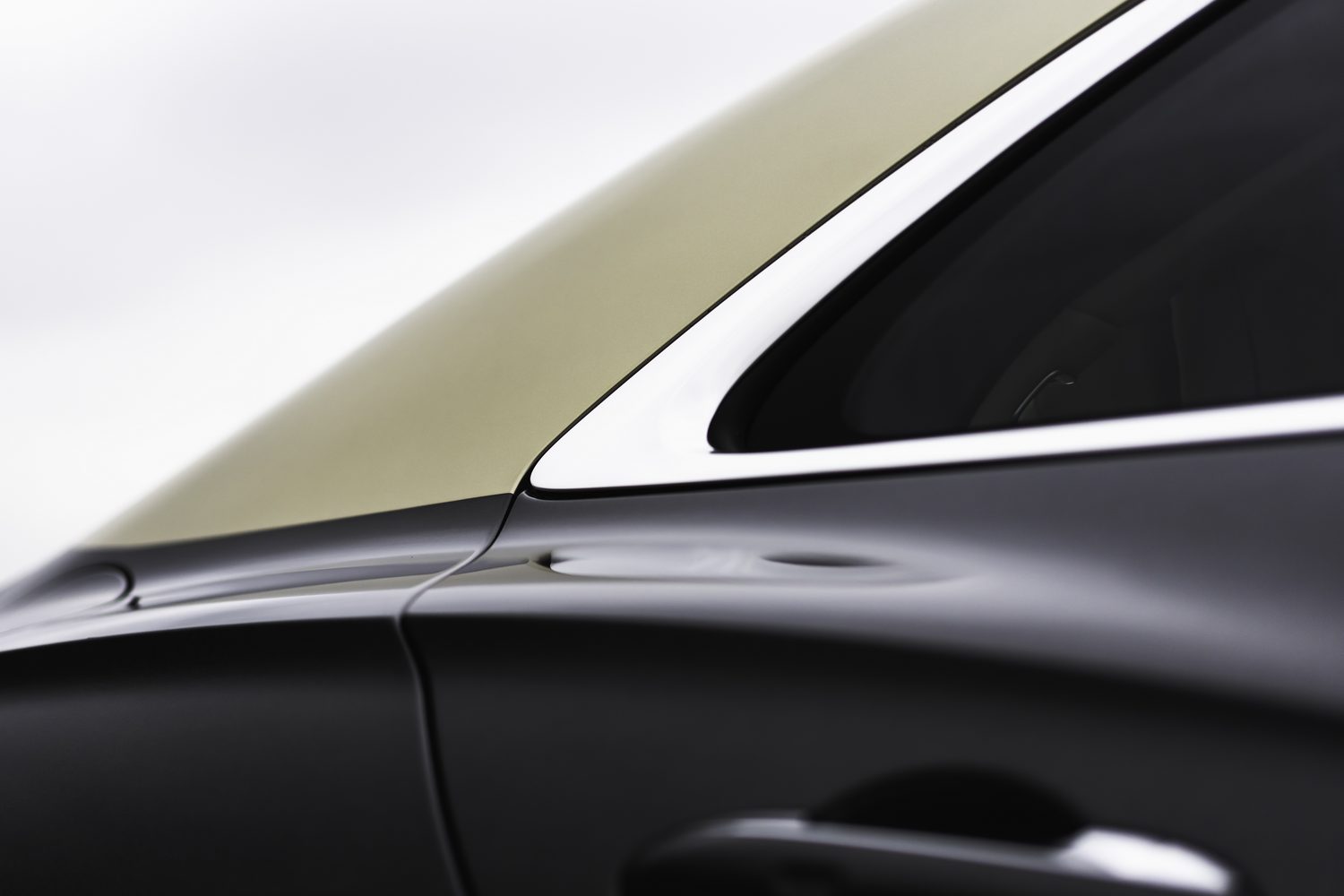
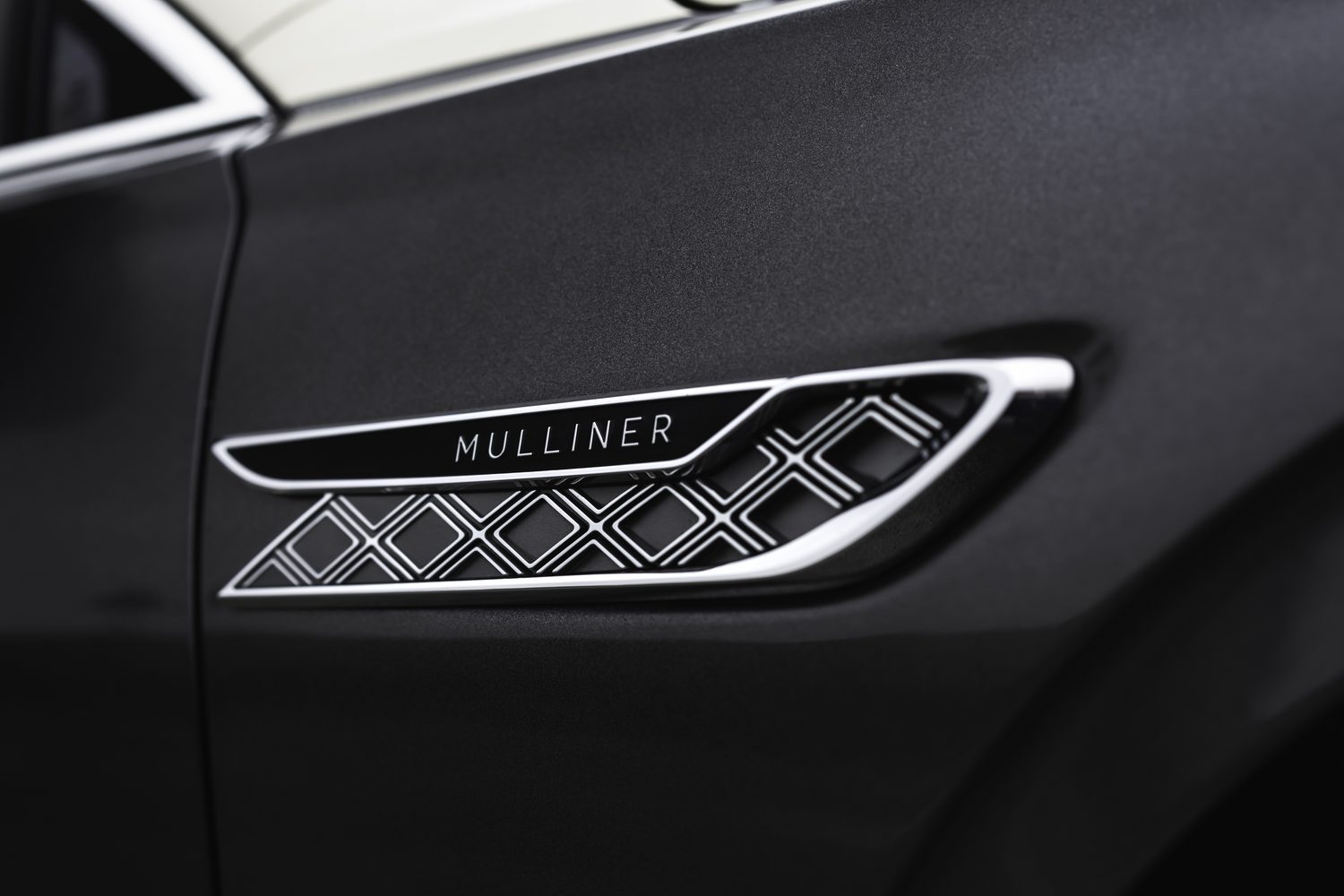
But the Mulliner is supposed to be the ultimate expression of Bentley luxury - so our two-tone test car came in Patina over Magnetic. It's a bold combination that won't please everyone, but it's pretty hard to make the Flying Spur look ugly, no matter how you finish its lithe bodywork.
Interior, practicality, tech & comfort of the 2025 Bentley Flying Spur
- Exquisite material finishing
- Acres of room for four people
- A very special place to be for all occupants

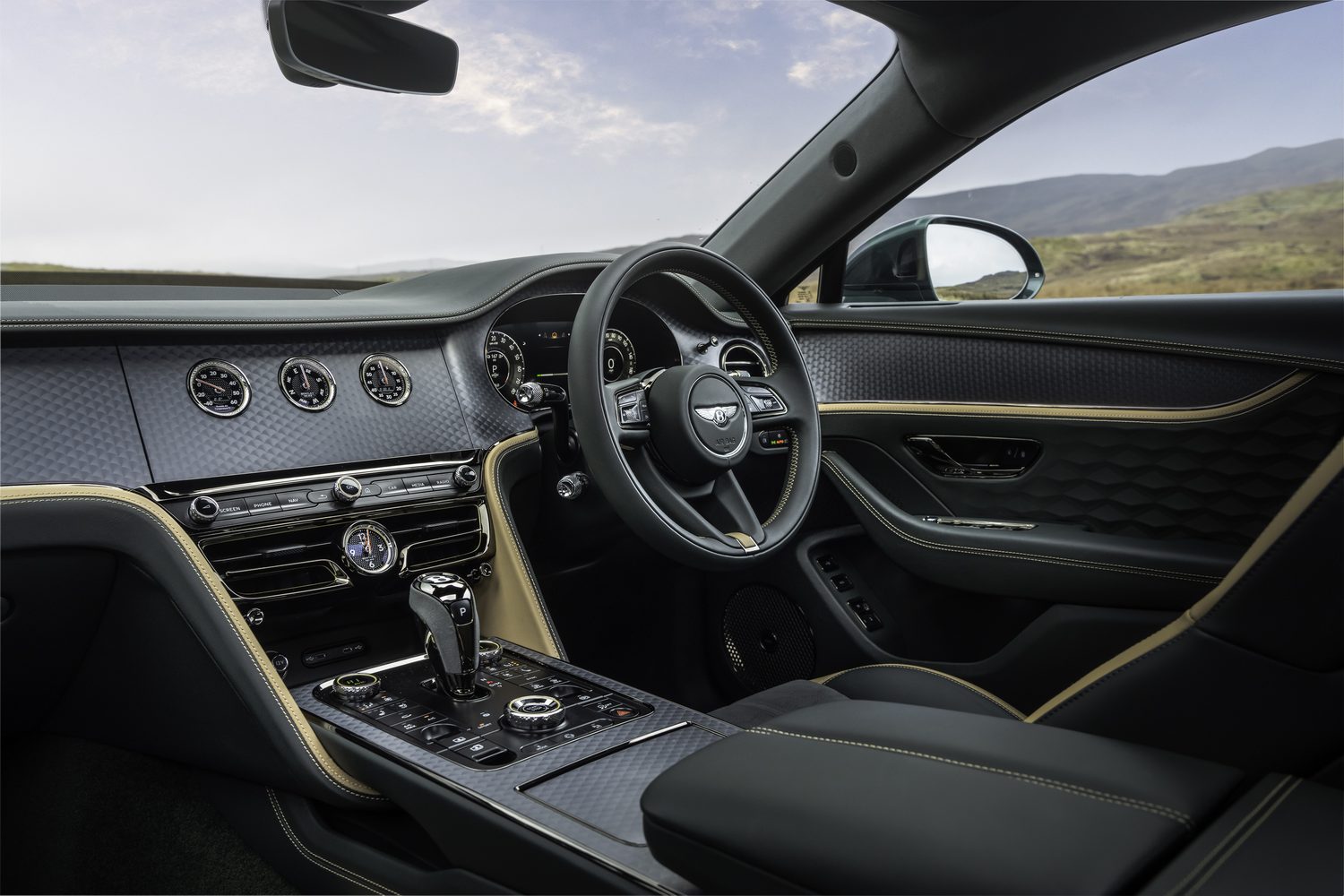
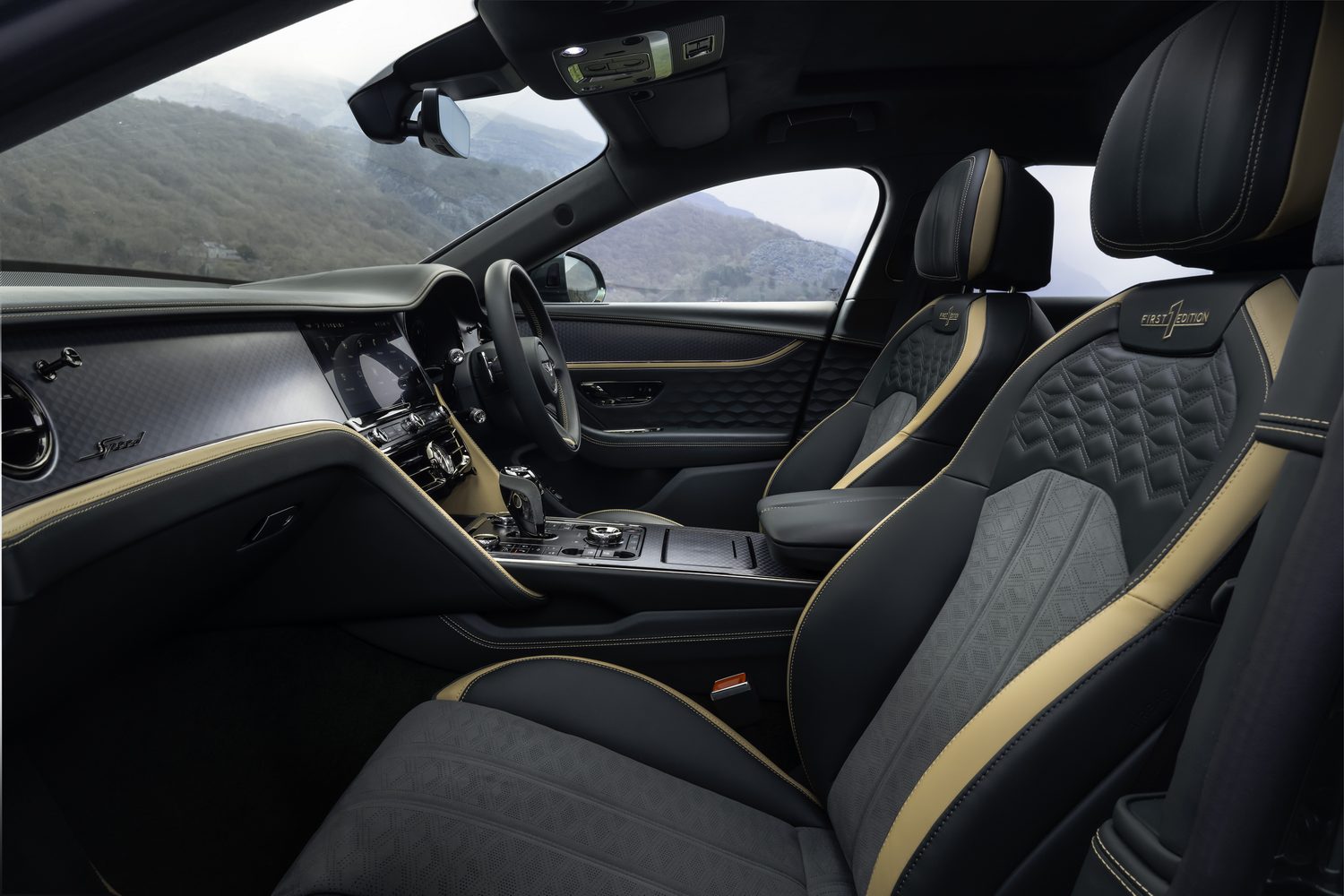
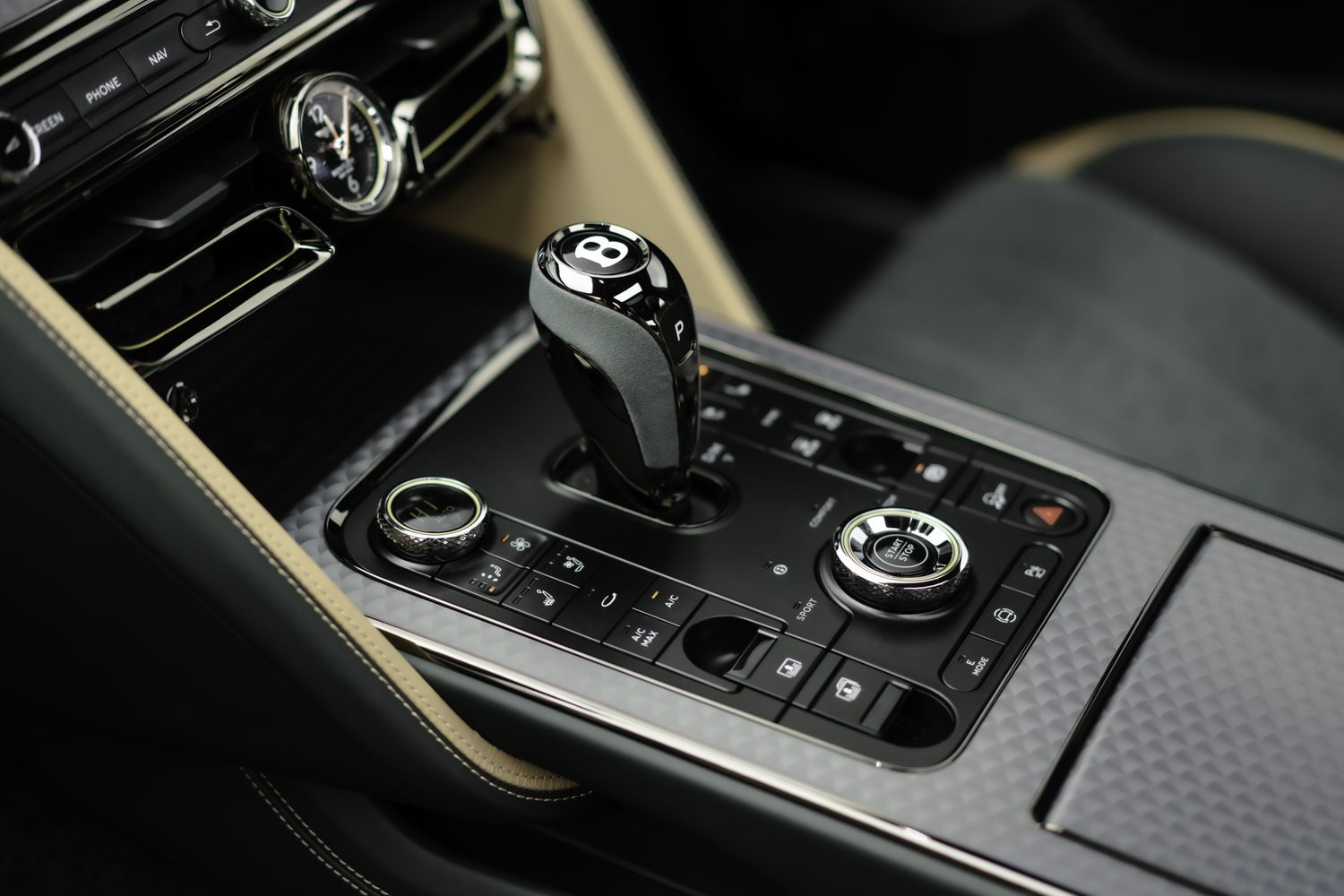
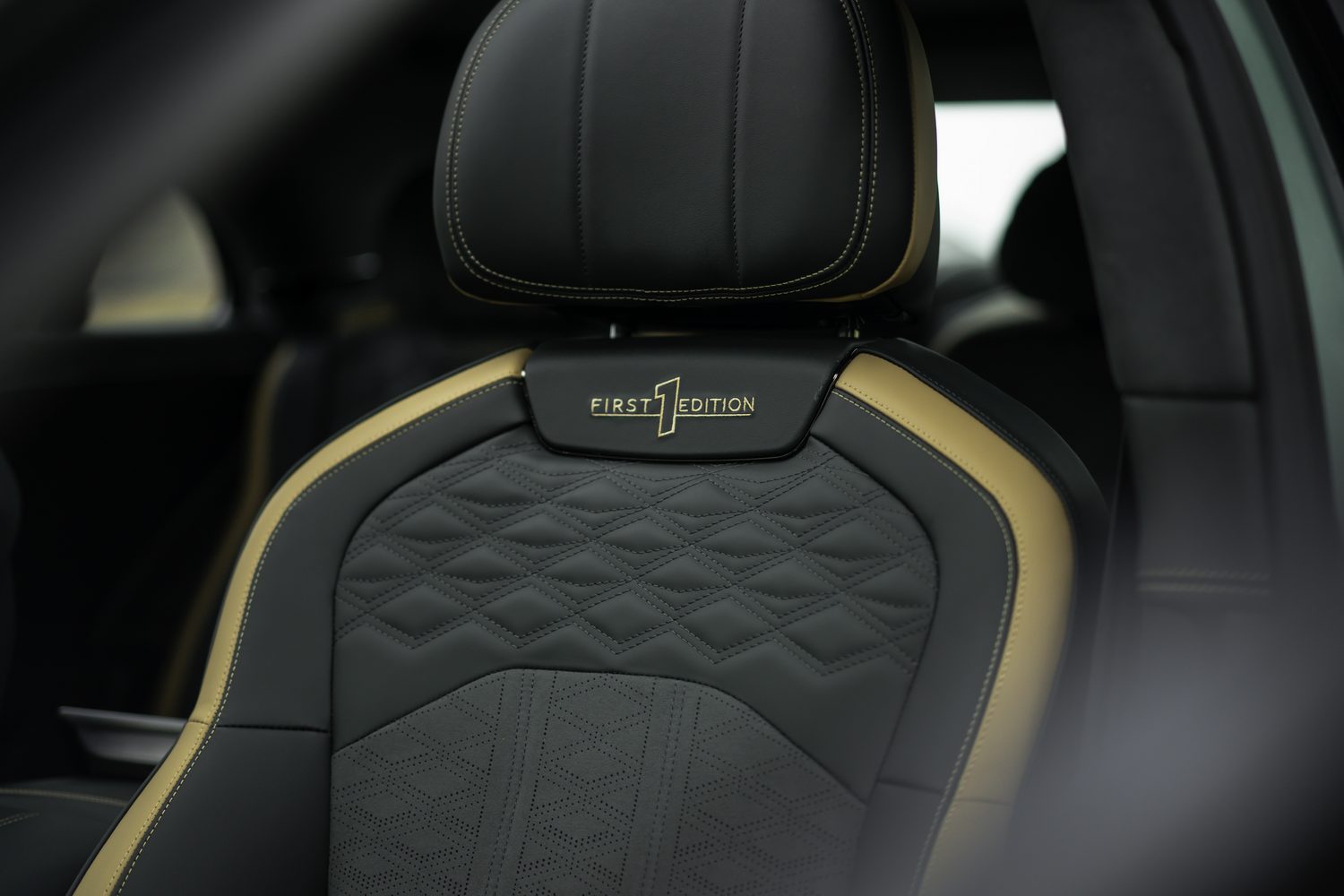
Few cars in the world get close to matching the interior quality of the Bentley Flying Spur, and precious little truly eclipses the machine's passenger compartment. A blend of the finest materials and latest technology, it's a place where both the traditions of the past and the demands of the future co-exist happily, rather than battling in an unseemly fashion with one another. And there's enough room onboard to hold a football match inside the Spur, too.
Getting comfortable in the driver's seat
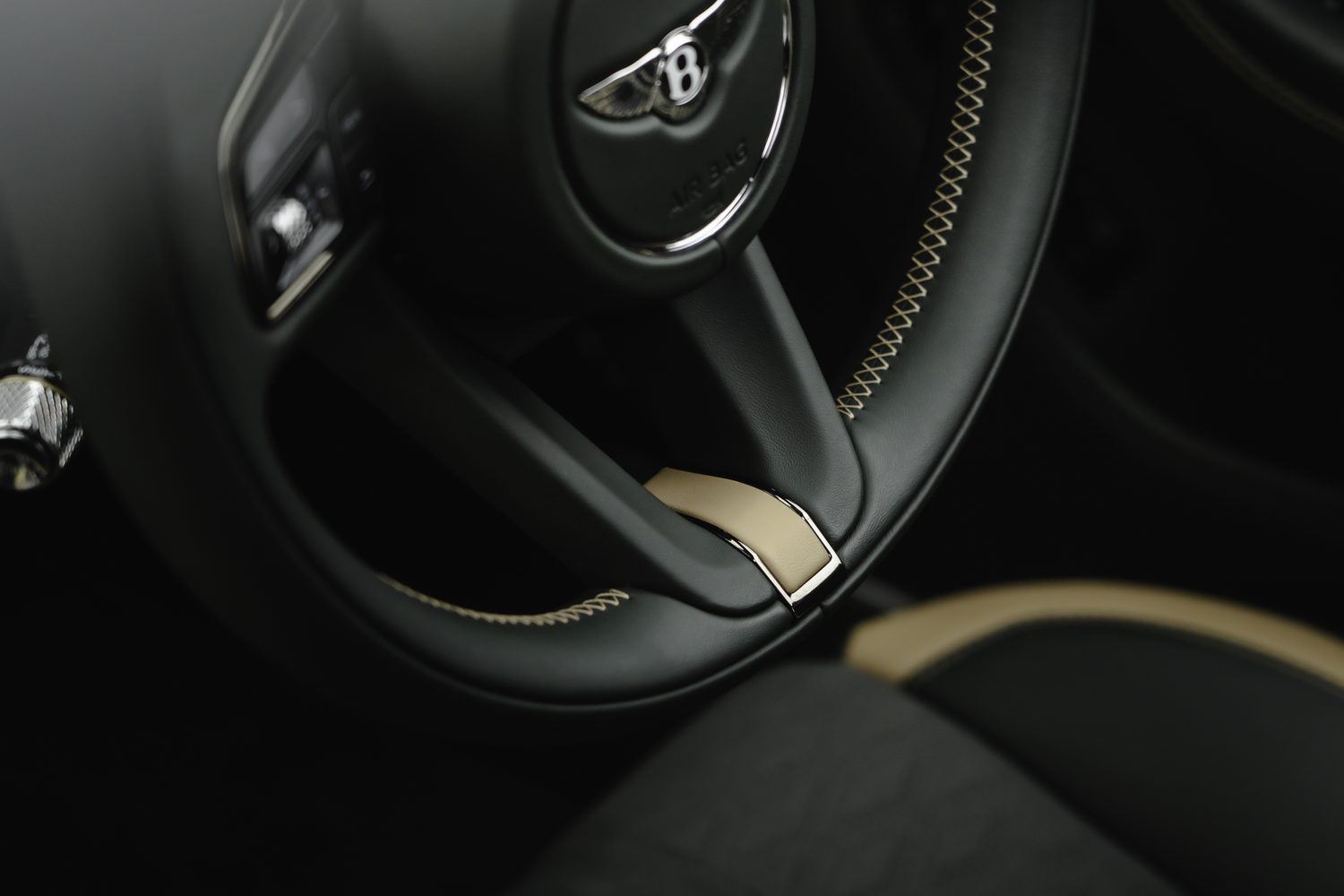
If you can't get a good driving position in the Flying Spur Mulliner, there's probably no hope for you. Its seats are every which way electrically adjustable - including for lumbar, the thigh-rest and the side supports - and so is the steering column, so it should be able to cater for anyone, from the very shortest drivers right up to veritable giants.

Add in full climate control functions in all seats, as well as a massage function in every position, and behind the wheel is a mighty relaxing place to be.
Infotainment and technology
The Bentley Rotating Display remains one of our favourite features in any car on sale today, at any price level. In fact, it's one of our favourite features in any car, ever.

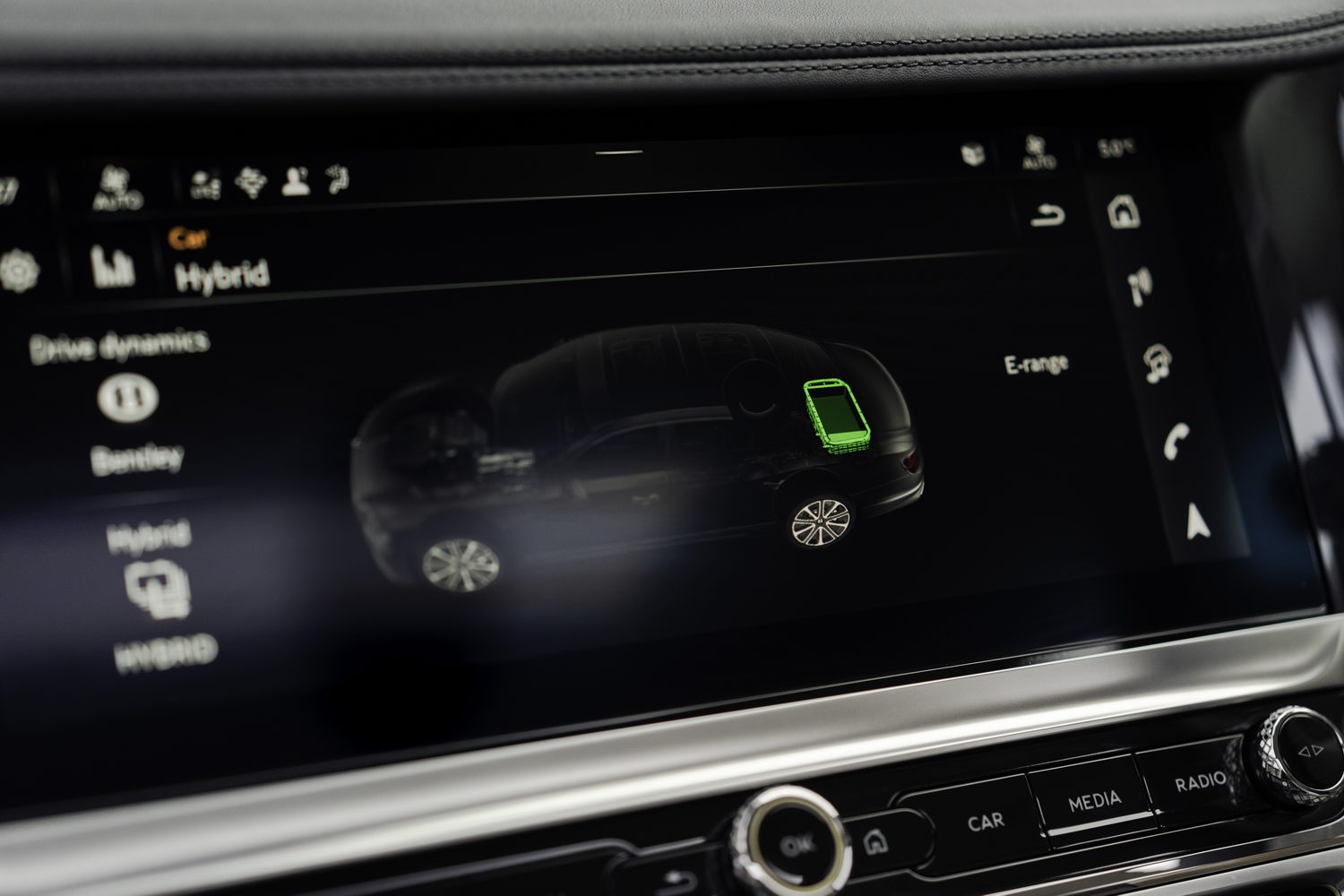
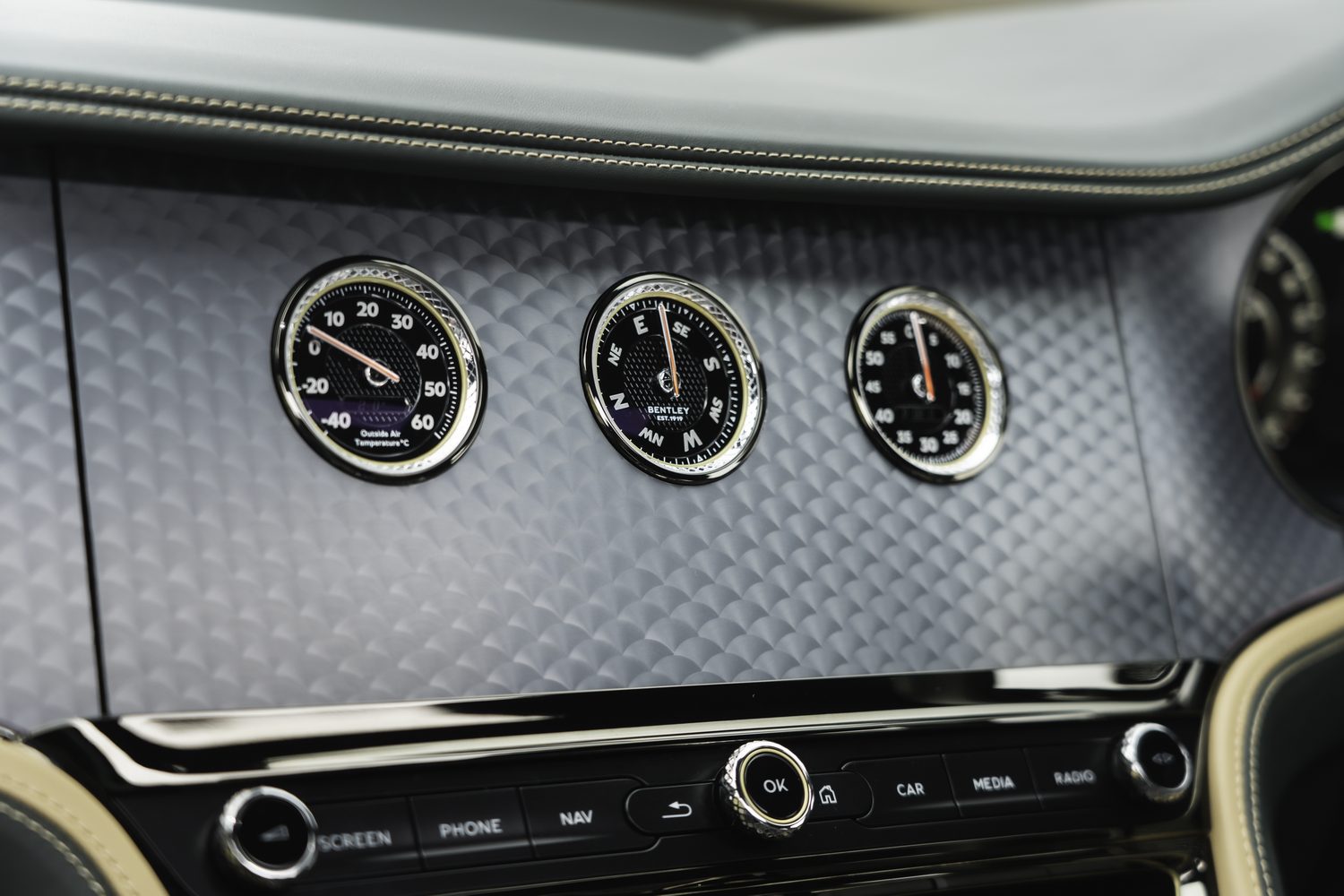
A James Bond-esque prism of dash trim, it houses the main navigation and infotainment screen (measuring 12.3 inches and a delight to use), a selection of three analogue dials (our preferred view, as long as we're not using nav) and then a pane of unbroken veneer, which it reverts to when the car is parked as a security feature.
It's a splendid piece of kit and has lost none of its wow factor - as it whirrs silently through its motions to gasps from onlookers who haven't seen it in operation before - since the first time we tried it in a Continental GT some years back.
Alongside this is a configurable and equally excellent digital instrument cluster, with a handful of themes to cycle through, and three high-power audio systems to choose from.

The basic array is decent enough, with 10 speakers and 650 watts of power, while stepping up to the mid-grade Bang & Olufsen set-up brings 16 speakers with illuminated grilles and a mammoth 1,500W output - enough to outstrip almost any competitor's supposedly 'premium' sound system.
But true audiophiles will want to splash out on the Naim flagship arrangement. It's a 19-speaker, 2,200W monster of a system with Active Bass Transducers built into the front seats, plus eight different sound modes. You won't ever get this thing to distort, no matter how loud you crank it up; your eardrums will pop long before the sound system reaches its maximum operating potential. It's sensational.

Beyond that, wireless smartphone charging, multi-zone climate control, configurable ambient interior lighting, voice control, gesture control, wireless Apple CarPlay and Android Auto, over-the-air mapping updates, remote cabin pre-conditioning, remote charging status - it's all in there.
Practicality around the cabin
Voluminous door pockets, a deep glovebox, a big central stowage compartment in the transmission tunnel, two cupholders just ahead of that, storage slots for smartphones on the sides of the tunnel, and more solutions for passengers in the rear - including fold-down tables on the backs of the front seats in the Mulliner we tested - make for a car that is as practical as you could reasonably expect, given its vast exterior road footprint.
Rear-seat passenger space
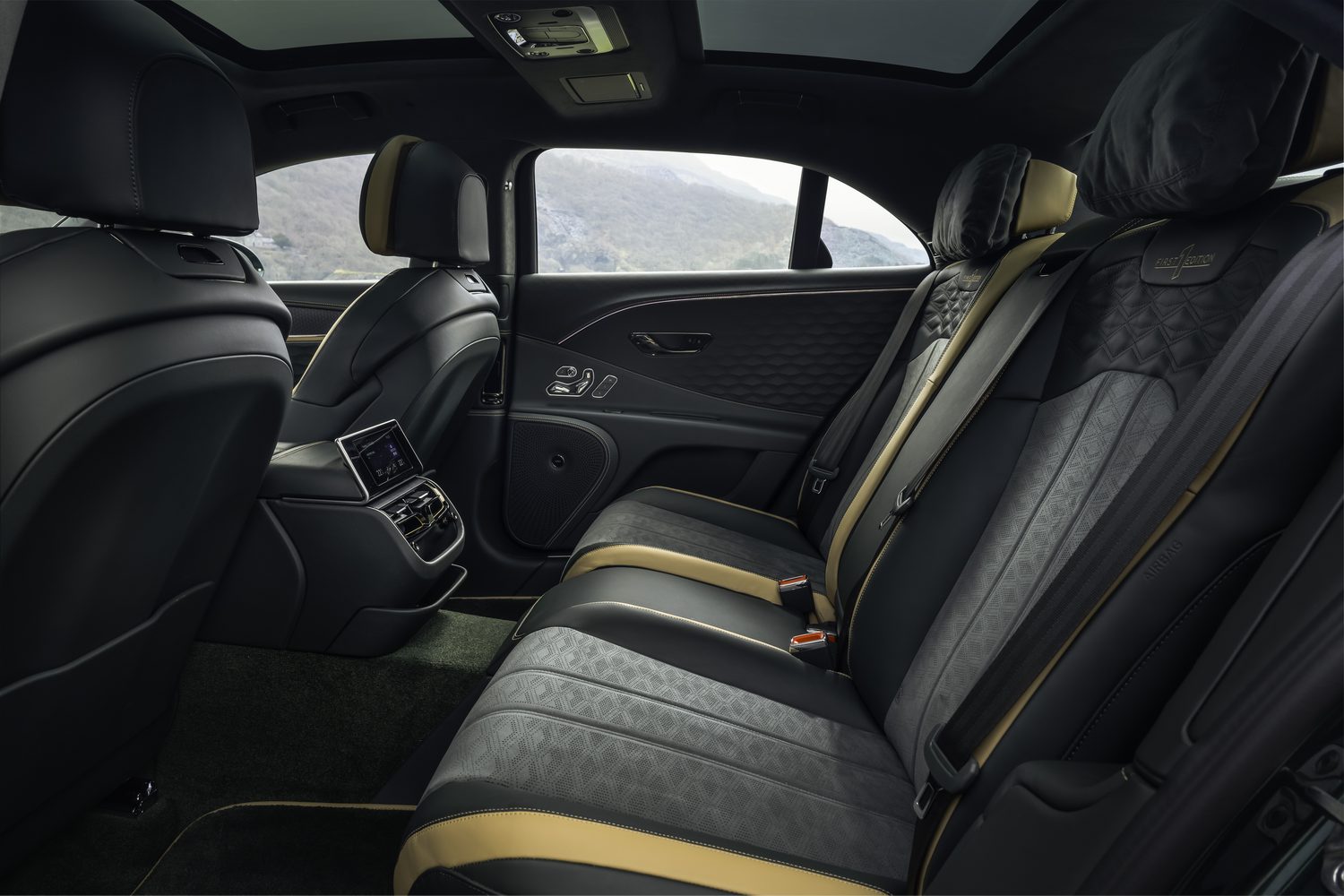
Aside from a Rolls-Royce (sorry, Bentley), there is no better rear-seat experience in the automotive world than in the back of a Flying Spur.

You can configure it with 'five' seats of a fashion, in what is known as the '4+1' specification which junks the centre-rear armrest arrangement for a token central pew. But most owners will go with the full sophistication of the four-seat cabin.
If they do, then those sitting in row two of the Bentley are arguably getting an even better experience than those up front. Legroom is simply enormous, thanks to the car's 3.2-metre wheelbase, and the rear seats have all the same electric adjustability and comfort functions (heating, ventilation and massage) as the fronts.

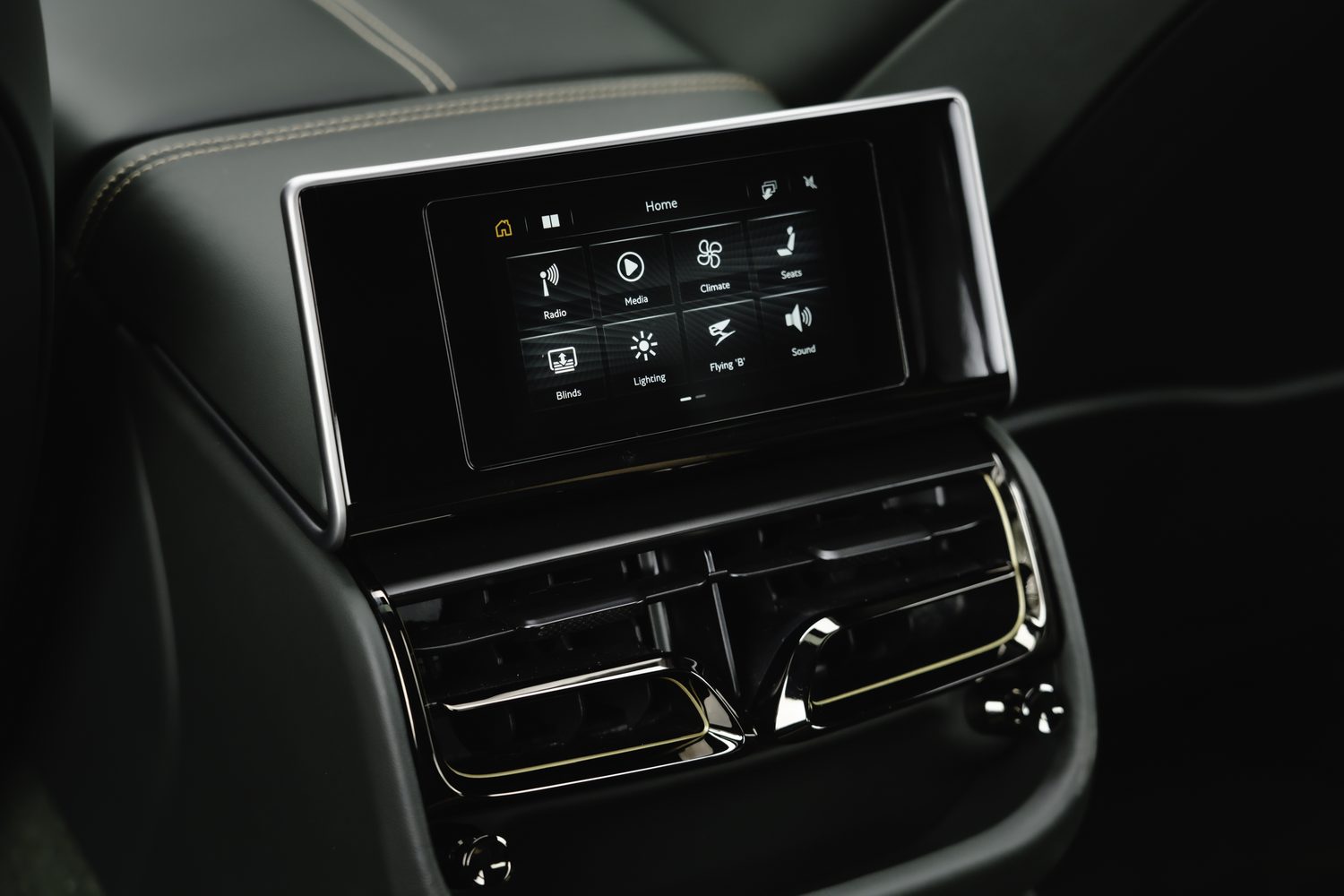
There's also a secondary wireless smartphone charging pad back there, a large storage compartment in the central (fixed) armrest, more cupholders and a fabulous little digital control pad - which not only deals with the split-zone climate in the back, complete with central air vents with weighty organ-stop buttons - but can also change various things about the rest of the car too. Including raising or lowering that Flying B at the front of the vehicle when on the move.
Boot space in the Bentley Flying Spur
Sadly, the boot space of the Flying Spur is less impressive. For such a leviathan machine, a 346-litre boot is not brilliant at all. It's a good deal less than a Volkswagen Golf has, for instance, and is savaged to such a figure as a result of the car's plug-in hybrid format - the battery pack has to go somewhere and take space from something else, and in this case it's the boot.
A chunky but suitably high-end bag for the Bentley's charging cables doesn't help either, so you'd have to leave that at home if you were packing a couple of Carl Friedrik latched trunks in there for a European road trip. Not ideal.
Safety in the Bentley Flying Spur
The Flying Spur comes with a huge selection of advanced driver assistance systems as standard, while the Touring Specification as fitted to our Mulliner test vehicle includes lane assist, adaptive cruise control, a head-up display and Bentley Safeguard Plus (a collision-mitigation preparation system), but also Night Vision - not a feature you find on many cars these days.
Performance of the 2025 Bentley Flying Spur
- Two PHEV choices: either 680- or 782hp
- Does 0-100km/h in 3.5 seconds
- Can run for long distances on electric power

For what Bentley is calling the 'Mk4' Flying Spur, all the previous three powertrain choices - a V6-derived PHEV, the regular 4.0-litre V8 and then the old Bentley 6.0-litre W12 - have been abandoned.
In their place comes a straight choice of two 4.0-litre V8 PHEVs, which the company terms the High Performance Hybrid and the Ultra Performance Hybrid.

For the former, you get 680hp and 930Nm, and this is used for the 'regular' (such an inadequate word for any Bentley, but here we are) entry-point model and the wellness-oriented Azure.
The Ultra Performance Hybrid ups outputs to 782hp and 1,000Nm, and is deployed in both the Speed - ostensibly the most dynamic Flying Spur of all - and the Mulliner, which is the most sybaritic specification you can get.
Driving the Flying Spur Mulliner First Edition on UK roads
The unadulterated grunt of the new Ultra Performance Hybrid powertrain simply cannot be underestimated. Power and torque have gone up 19 and 11 per cent respectively compared to the old Flying Spur Speed with the 6.0-litre W12, so a 0-100km/h time of 3.5 seconds only tells a small fraction of the story of the Mulliner's brutal, brutal muscularity.
At any revs on the counter, or even if the V8 engine is lying docile, if you plant your right foot beyond halfway of the throttle pedal's travel, then all unholy hell breaks loose and the Flying Spur vaults off up the road like it has just been rear-ended by a rogue planet.

With the absolutely demented acceleration accompanied by nothing more than a discreet but sumptuously rich V8 rumble from the exhausts, turning it into a PHEV looks like it was a masterstroke on Bentley's part.
You simply do not need any more speed than this creation can summon up. There's a good argument to be made that you don't need this much pace on the road at all, frankly.
But the transition to PHEV might be more than a masterstroke. You could deem it a silver bullet, even. Because being a hybrid appears to have enhanced the Flying Spur in many areas and denuded its abilities in none.

Even adding 200kg or so to the old W12 Speed's kerb weight is not the impediment it might be with other PHEVs, given you're starting with cars well beyond the two-tonne barrier in the first place.
So the Mulliner still corners brilliantly for something so gigantic and heavy, with the communicative and rewarding Bentley steering deserving real praise; don't just let your chauffeur get behind the wheel, is what we're saying here.
Of course, flip it the other way, dial the car down into Comfort, and it glides along the road surface with barely any ripples of discomfort spoiling the millpond-calm and quiet of the passenger compartment.

It's the electric driving that really bolsters the Spur experience, though. When the car is supremely quiet and comfortable anyway with its V8 engine running, you can only imagine how distinguished it is as it creeps about on its 190hp, 450Nm electric motor and nothing else.
It is silken and almost totally silent, a sensation that only makes the Bentley feel even more upmarket. There's also enough grunt available in electric mode to ensure the Flying Spur remains suitably swift, without having to resort to powering up its V8 to help out.
And while the PHEV selection was probably made by Bentley's top brass for reasons of enhancing both the straight-line performance and also that low-speed rolling refinement in zero-emission mode, we're going to make a quick mention of fuel economy here (even though we know this does not matter one iota to the sort of people who can even contemplate owning a new Bentley).

We did almost 500km in the Mulliner in a week of driving, with it recording a best figure of 9.2 litres/100km across a 160km motorway cruise, and an overall 10.4 litres/100km from the entire test drive.
You'd have only got those sorts of numbers from the old W12 Speed if you'd pushed it over a cliff. In a particularly strong tailwind. With its engine entirely switched off. Remarkable stuff from the new PHEV Flying Spur.
Driving the Flying Spur Speed on UK roads
We'll keep this very brief: there's not much difference at all between the Speed and Mulliner models when it comes to the lunacy of the straight-line performance and the excellence of the roadholding.
True, the Speed is a little more tautly suspended and just feels that tad more controllable approaching the car's (exalted) kinematic limits, but we're talking very small degrees of separation here.

Both the Speed and the Mulliner ride beautifully and handle with a grace you'd rarely expect of 2.65-tonne limousines, so really, it's more about how the two cars look, inside and out, which'll make up your mind on which is the preferred option.
As a short addendum, on the same day we drove the Flying Spur Speed, we did manage to sample a Continental GTC Azure with the 'lesser' High Performance Hybrid powertrain. Conjecture it may be, but we have little doubt that the 680hp set-up would be absolutely fine in the bigger Flying Spur's body.
Charging up the Bentley Flying Spur
The Bentley Flying Spur Mulliner First Edition is a plug-in hybrid, so it doesn't have a huge battery pack like a full EV would - although with 21.8kWh of usable capacity, it is big by wider PHEV standards.
Sadly, unlike some other long-legged PHEVs of the modern day, there is no DC-charging capability on the Bentley, so its peak rate is 11kW on AC outlets.
On that sort of connection, a full charge would take around 2 hours 45 minutes, although a 7.4kW wallbox at a domestic property would require more.

Once charged, though, Bentley reckons the Flying Spur Mulliner will go up to 76km on its electric reserves. It might not actually do that in real life, if our experience is anything to go by, but 50km-plus looks eminently achievable.
Brim the giant 80-litre fuel tank and fully charge the 21.8kWh battery pack, and Bentley reckons you'll have a cruising range on the Flying Spur Mulliner of 829km.
Irish pricing & rivals to the 2025 Bentley Flying Spur
- Expect to pay well over €300,000 to import one
- Would have to be sourced from Belfast
- Maybach S-Class a little more affordable

With no official dealer south of the border, the closest place to get a Bentley from - any model, not just the Flying Spur - is Charles Hurst Bentley in Belfast. This means importing and, with our test Mulliner First Edition costing around £244,000 as specified, we'd estimate on something like €320,000 to bring one here.
Things playing in the Flying Spur's favour, though, are that it sits in the lowest band for VRT, due to emissions of just 33g/km, while its hybrid status means there won't be much of a NOx levy on top of its price either.
Nevertheless, we're clearly not trying to say either the Mulliner or the Speed (it's of a comparable price - with or without options - to its 782hp sibling, give or take) are great value. That said, is anything at this level cheap? Of course not.
A Mercedes-Maybach S-Class starts from €242,655 as the S 580 e PHEV, but to get similar performance to the Flying Spur Mulliner you'd need a minimum of €382,515 for an S 680.

BMW's i7 EV and 7 Series start from €125,355 or €132,585 respectively, while the distantly related Audi A8 is even cheaper at €111,580 - but we'd argue you'd need to go right to the top of both of these German cars' line-up trees to get anywhere near the experiential nature and sheer quality of the Bentley.
Going the other way, a Rolls-Royce Ghost or Phantom would be even more money than the Flying Spur, and they're majestic things both, but they don't drive with the same sharpness of the Bentley.
Perhaps the leftfield choice as an alternative to the Flying Spur Mulliner - or, perhaps more accurately, the slightly more dynamic Speed variant with the same powertrain - is the Porsche Panamera Turbo S E-Hybrid, which currently costs from €234,775.
Underneath, it has precisely the same 4.0-litre V8 PHEV set-up as the Bentley, with the same 782hp and 1,000Nm, but because it's more than 200kg lighter than the Spur and also because it wears a Porsche badge, the Panamera places far more emphasis on speed and handling prowess than it does interior finishing and a feeling of glorious wellbeing.

There's no way you'd say the Panamera's cabin was poor, you understand (it's not, it's brilliant), but the opulence levels on the Bentley are considerably higher than in the Porsche.
Servicing the Bentley Flying Spur
Bentley recommends an annual or 15,000km servicing schedule for its models, whichever comes sooner. There are a number of fixed-price packages owners can buy to cover multiple years of maintenance at a cost that would be lower than buying each service individually, including cover for cars from three to seven years old, and even another layer for cars more than seven years old.
Bentley Flying Spur warranty
The standard Bentley warranty is a reasonable three-year, unlimited-distance level of cover. However, for a fee and provided owners maintain regular servicing schedules at approved centres, the warranty can be extended for up to ten years.
Verdict - should you buy the 2025 Bentley Flying Spur?

Fitting the Bentley Flying Spur Mulliner (or Speed) with this V8 plug-in hybrid drivetrain is little short of genius on the company's part. In several key regards, it has made the Spur significantly better than the old Speed with the 6.0-litre W12: the new car is markedly faster, it's going to be easier on the wallet to run (incrementally, admittedly), it sounds superior and the low-speed rolling refinement is off-the-scale good when the car is running in full EV mode. Arguably, Bentley can lay claim to creating one of the greatest all-round cars that money can possibly buy with this marvellous PHEV Flying Spur.
Want to know more about the 2025 Bentley Flying Spur?
If there's anything about the new Bentley Flying Spur we've not covered, or you'd like help in choosing between it and other cars, you can avail of our expert advice service via the Ask Us Anything page.
Bentley Flying Spur history
The Flying Spur epithet was first used on the Bentley S2 Continental (1959-1962) and the S3 Continental (1962-1965) models in the company's older days, when it was affiliated to Rolls-Royce, but the badging was revived in the 21st century for the 2005 Continental Flying Spur.
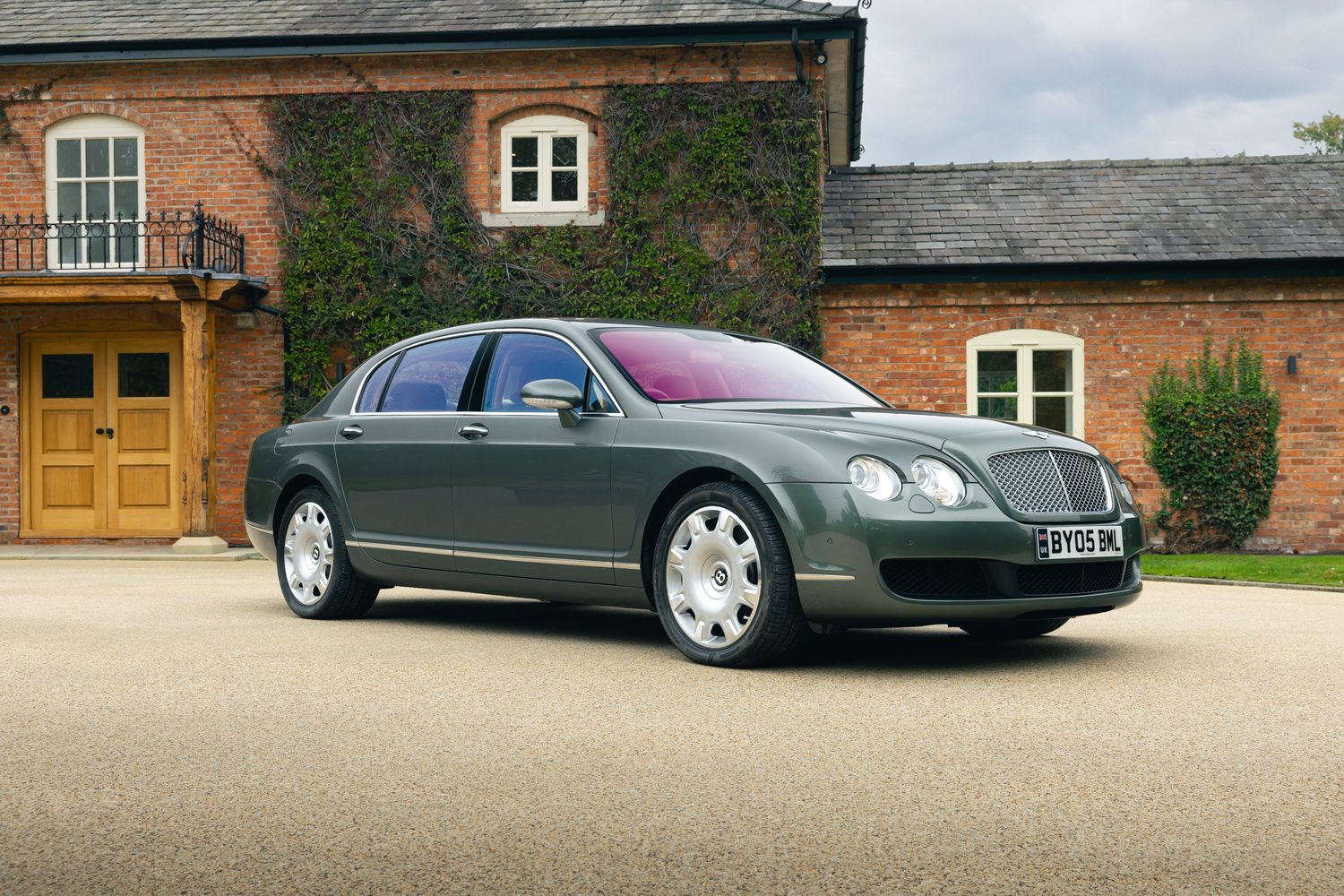
That looked a lot like a stretched version of the two-door sports coupe of the time, hence the use of the word 'Continental' in the name, but by the second-generation vehicle of 2013, it had gained enough of its own visual identity that the Continental bit was dropped and it simply became the Bentley Flying Spur.
The third generation arrived in 2019 and is a brilliant big GT and though Bentley itself refers to the latest V8 hybrid cars as the fourth generation, we'd still consider this a heavy technical update of the Mk3.