




Exterior & design of the 2025 BYD Sealion 7
- Shares cues with Seal saloon
- Looks sleek
- Less divisive design than some

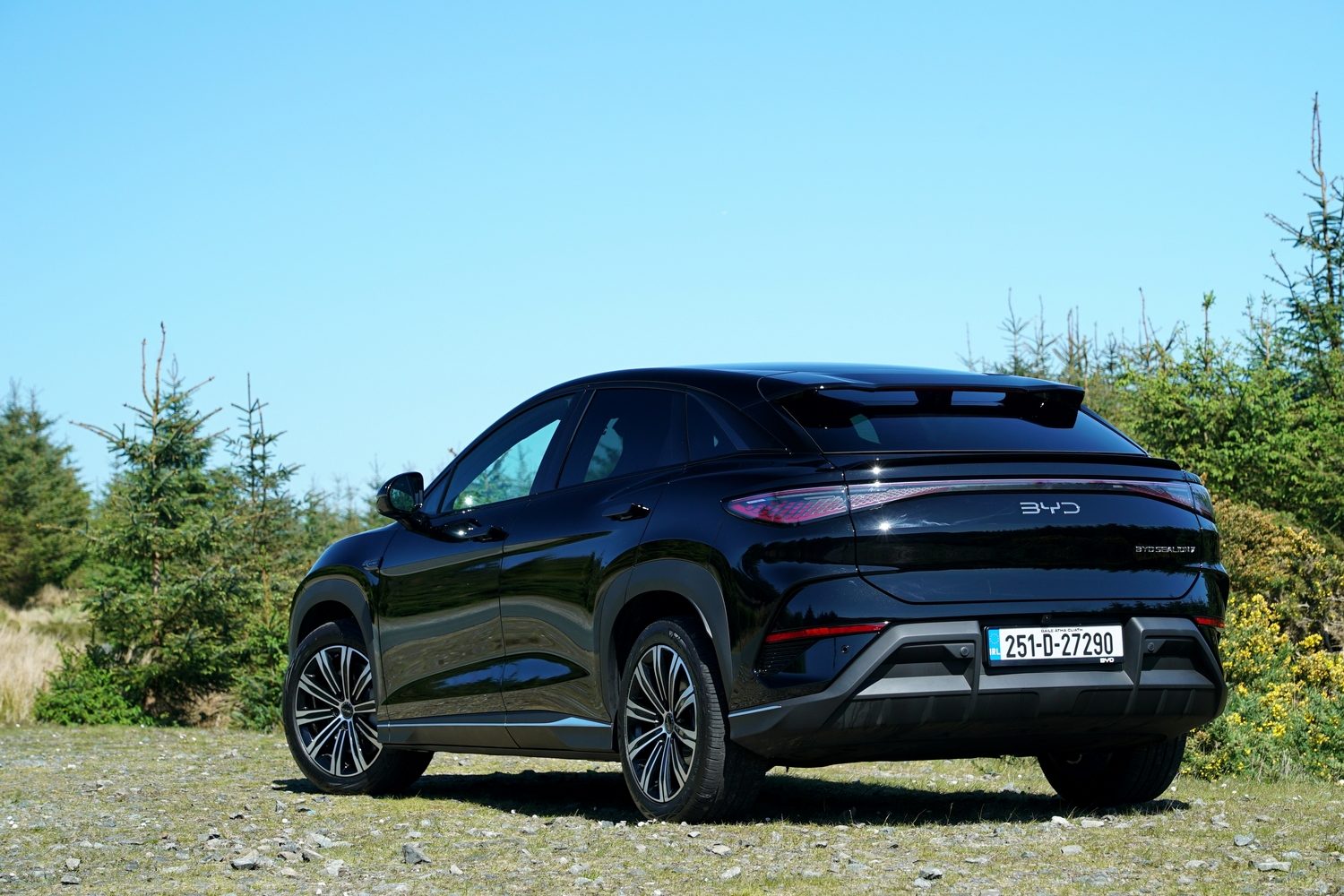
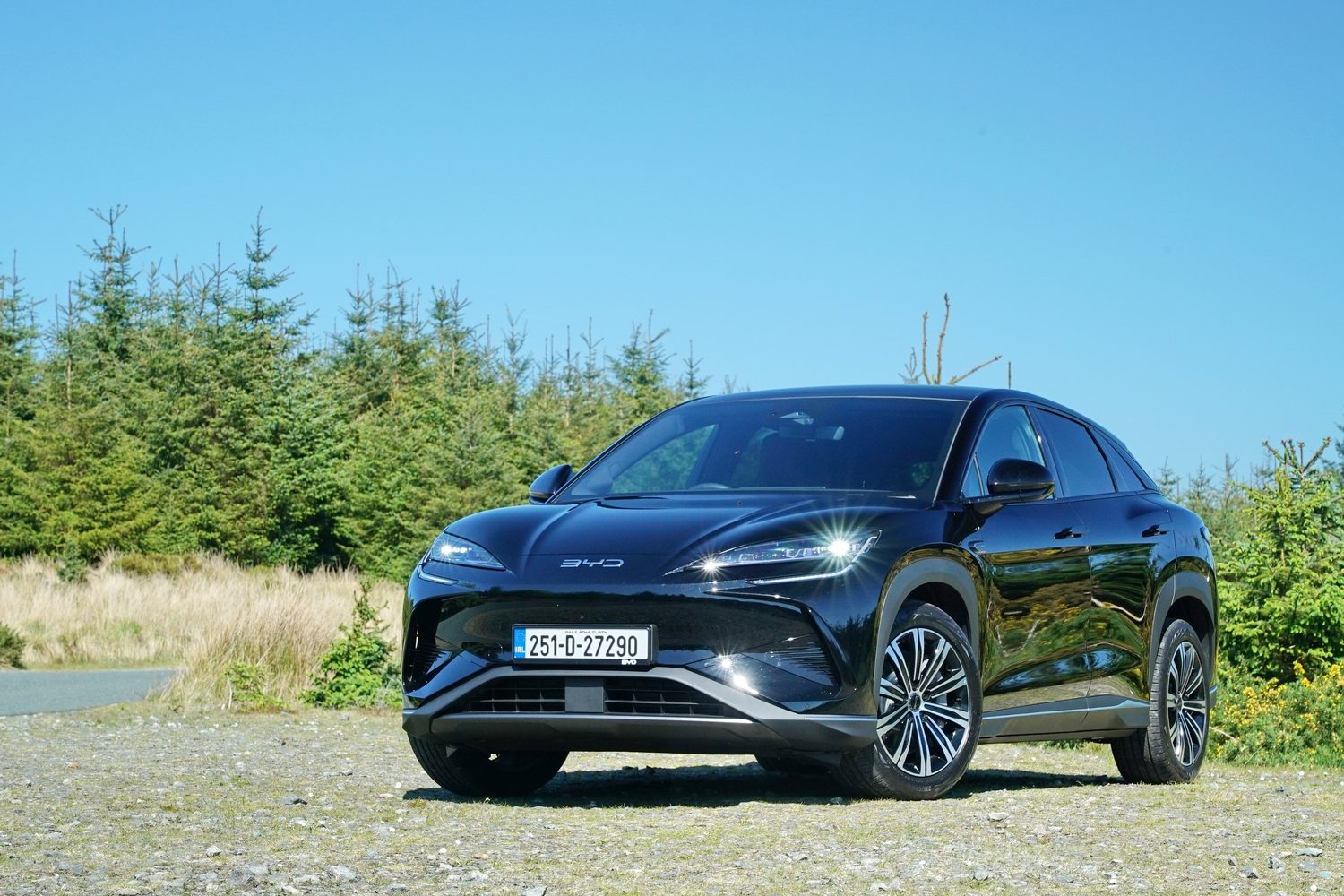
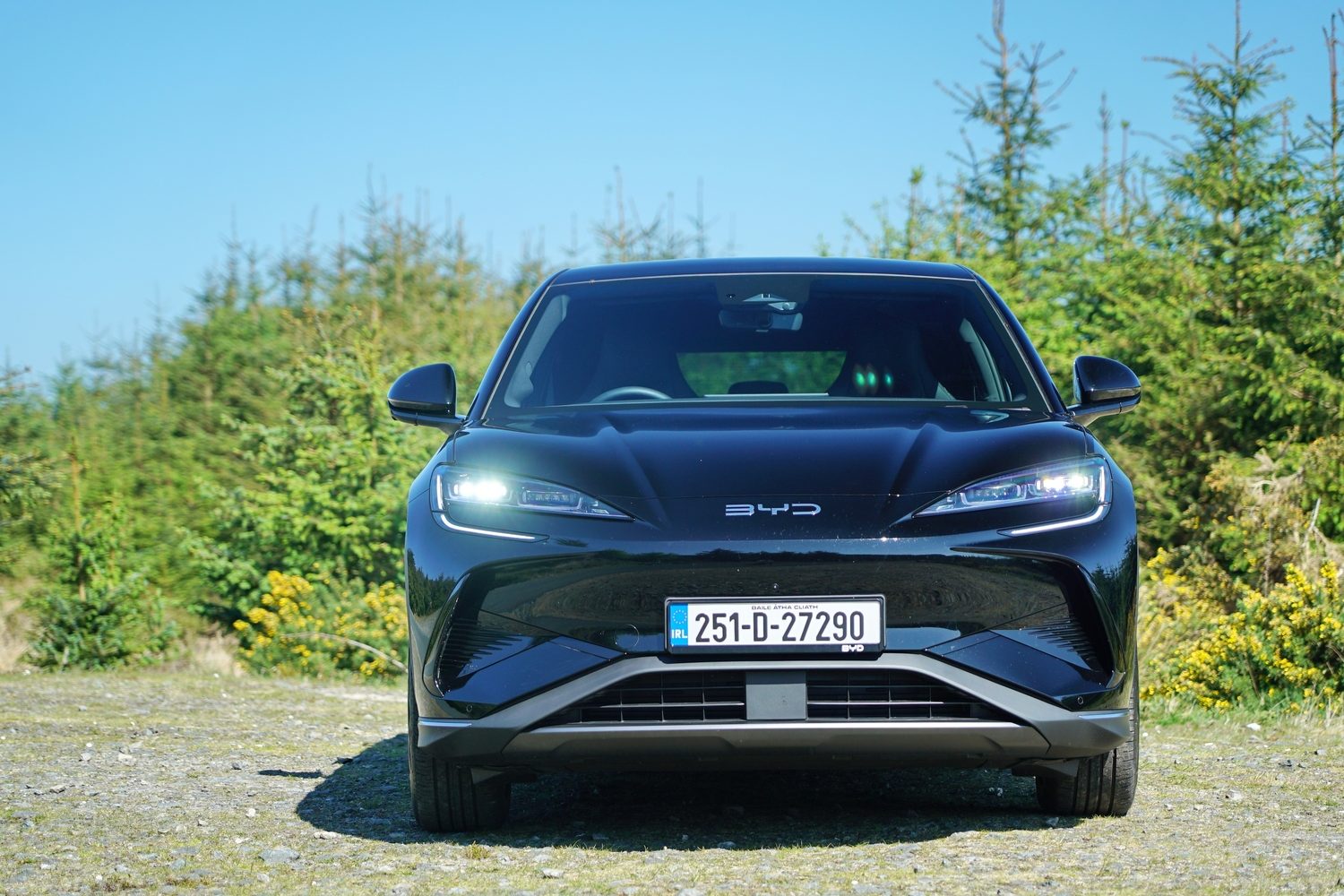
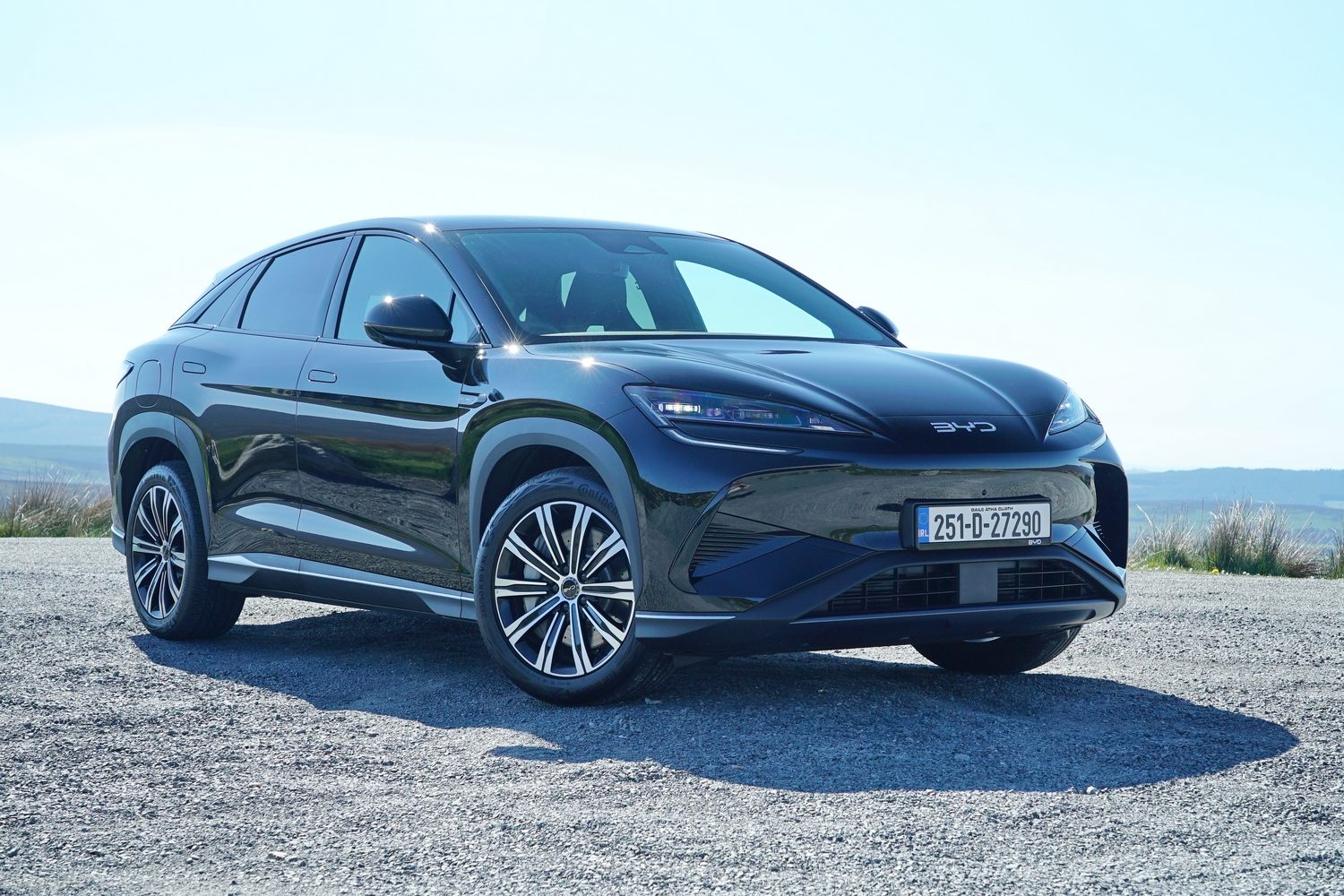
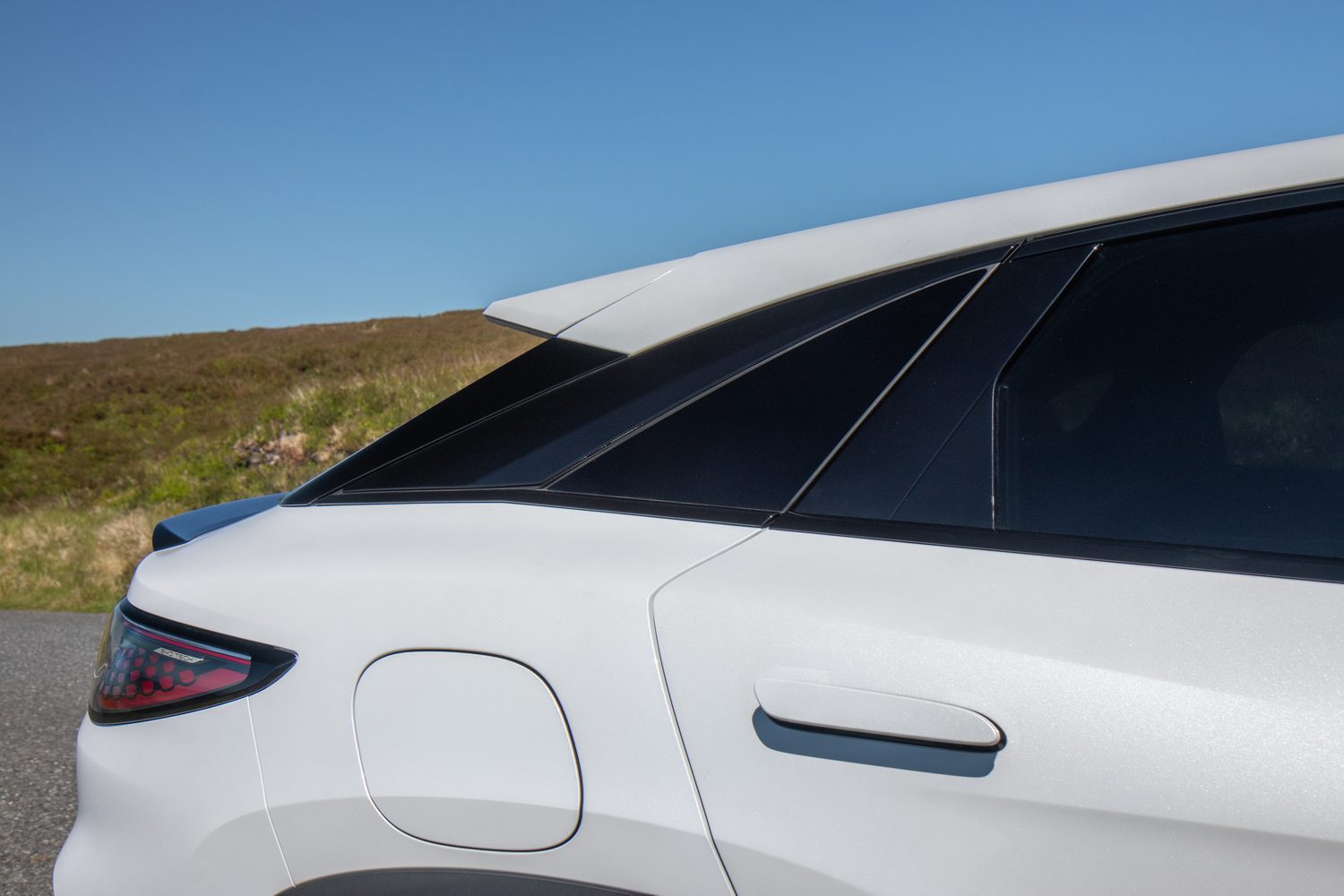
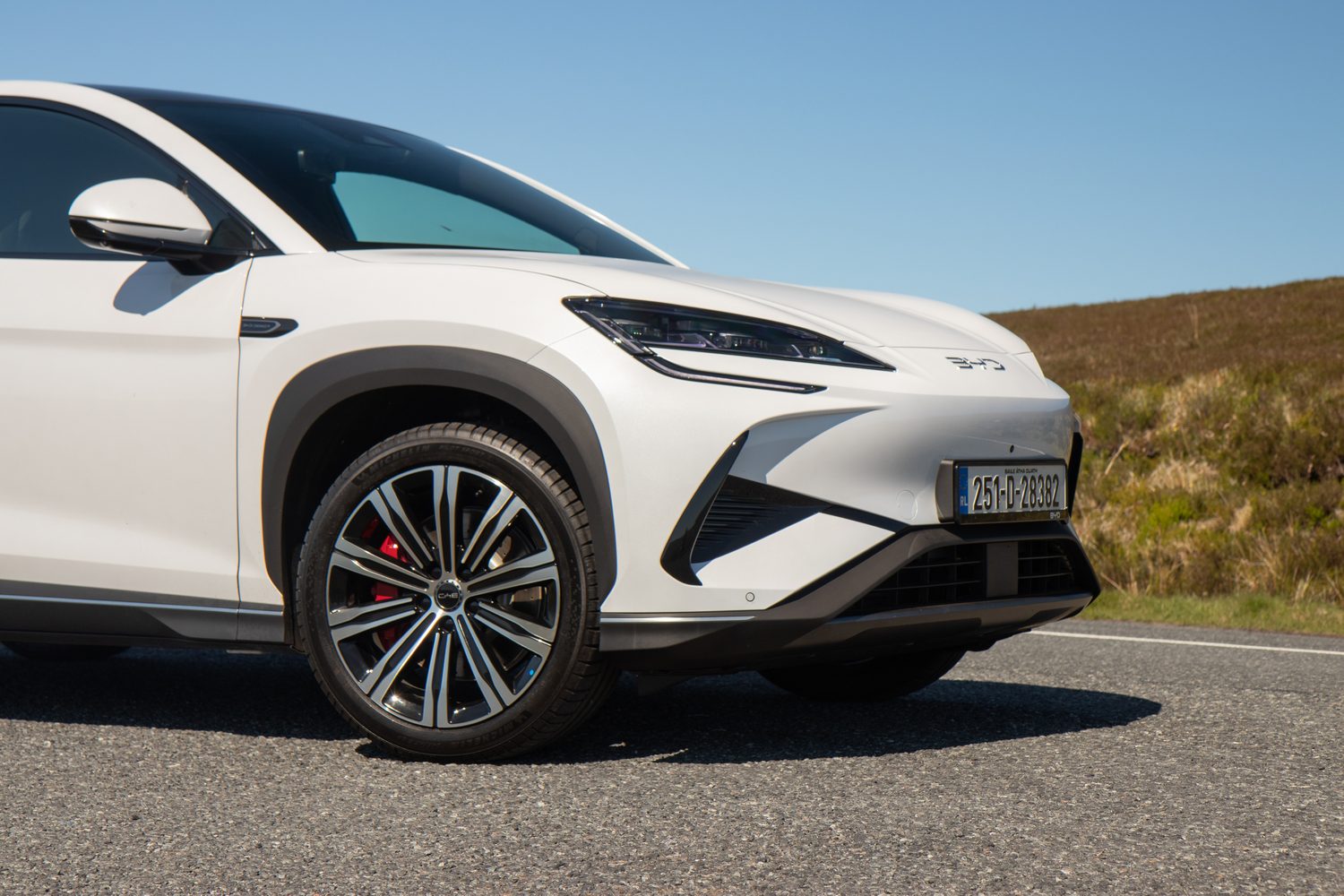
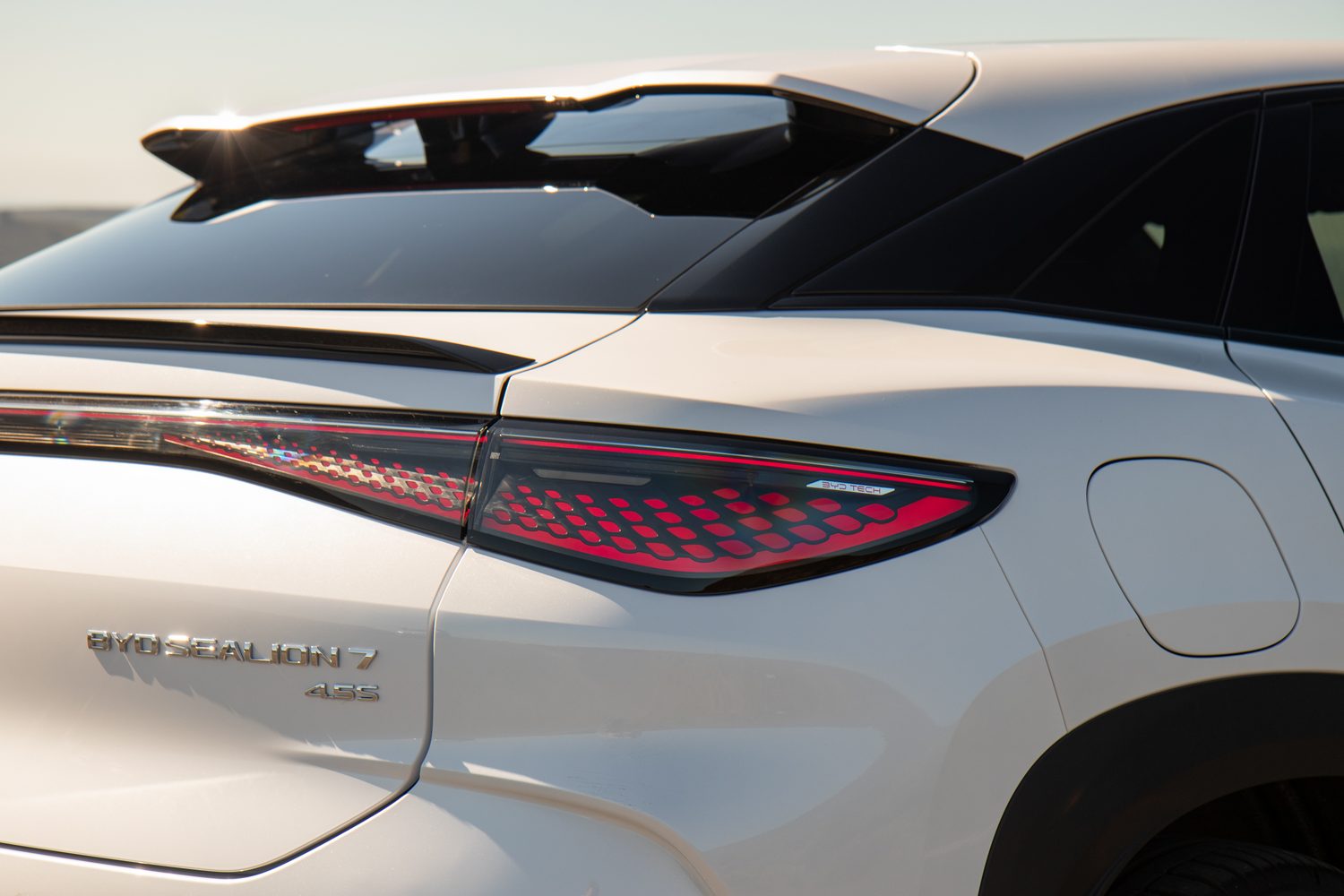
The Sealion 7 may not win any industry awards for design, but it's certainly not a bad looking car. You can see the clear and obvious kinship with the BYD Seal saloon around the lights, where the two cars share the same distinctive almond-shaped main bean units with slim tails of daytime running lights.
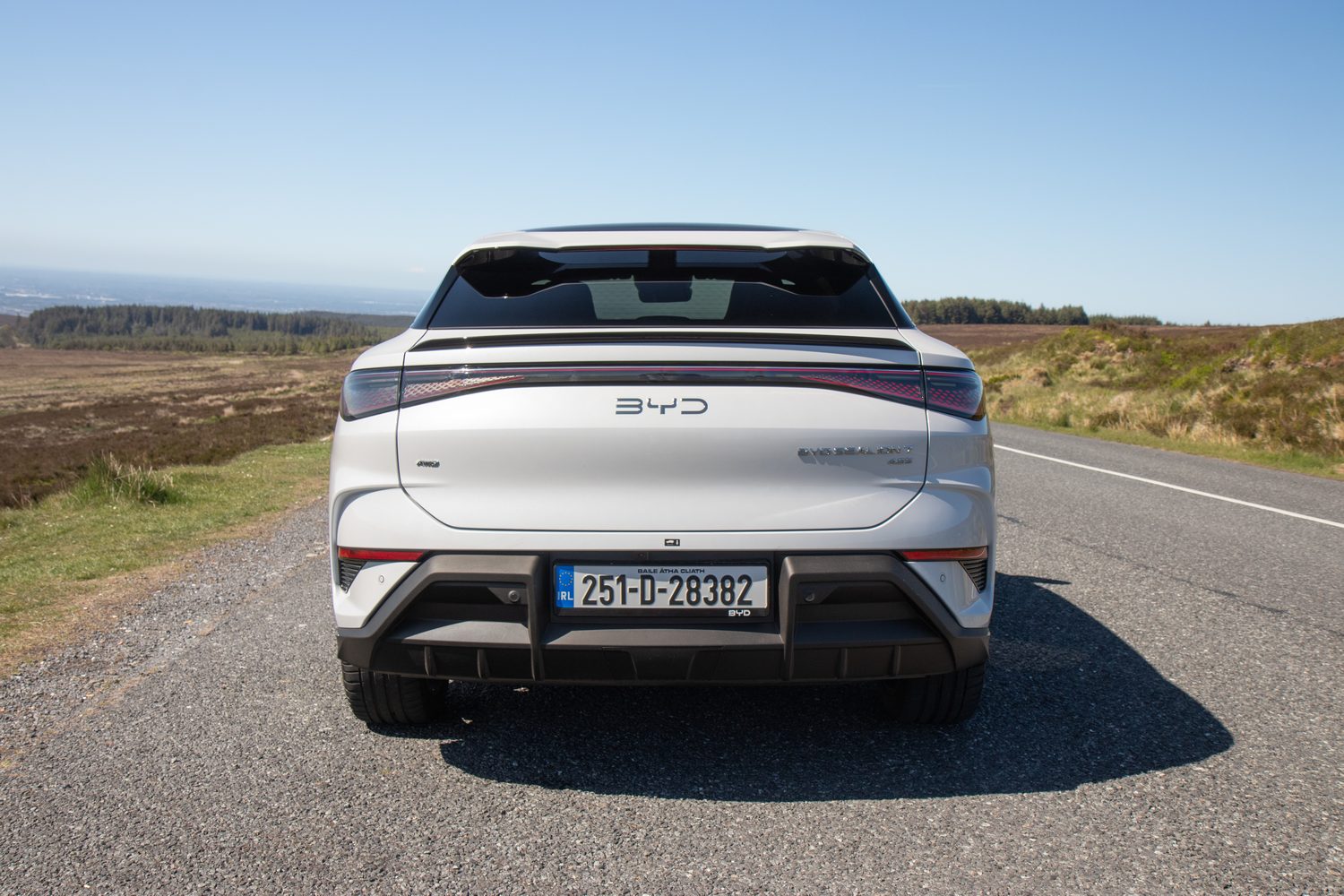
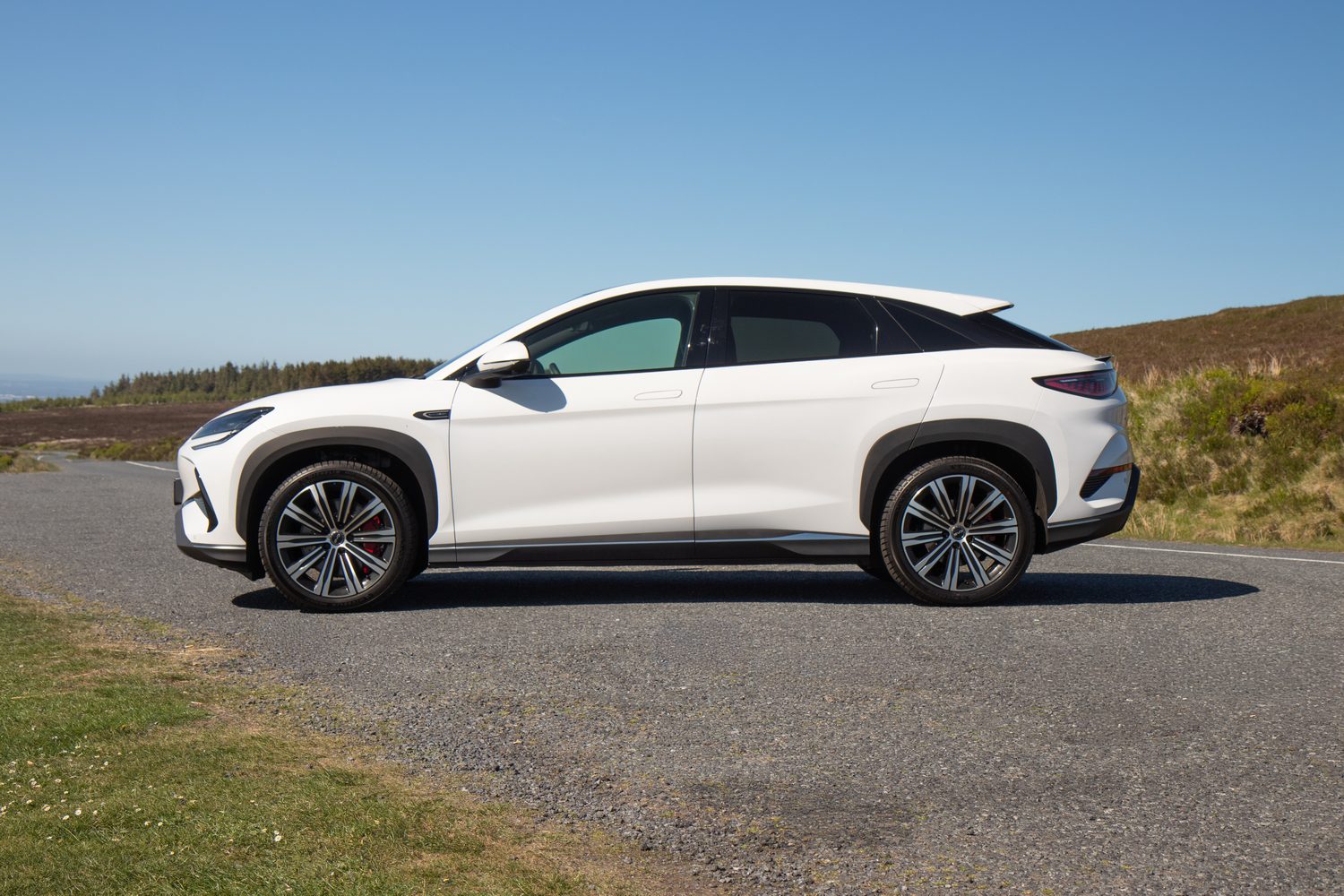
The roofline isn't coupe-low, but it's fairly sleek and the rear end is devoid of bulk, so this is definitely one of the sharper-looking electric SUVs, and it avoids the egg-like shape of both the Xpeng G6 and the Tesla Model Y.

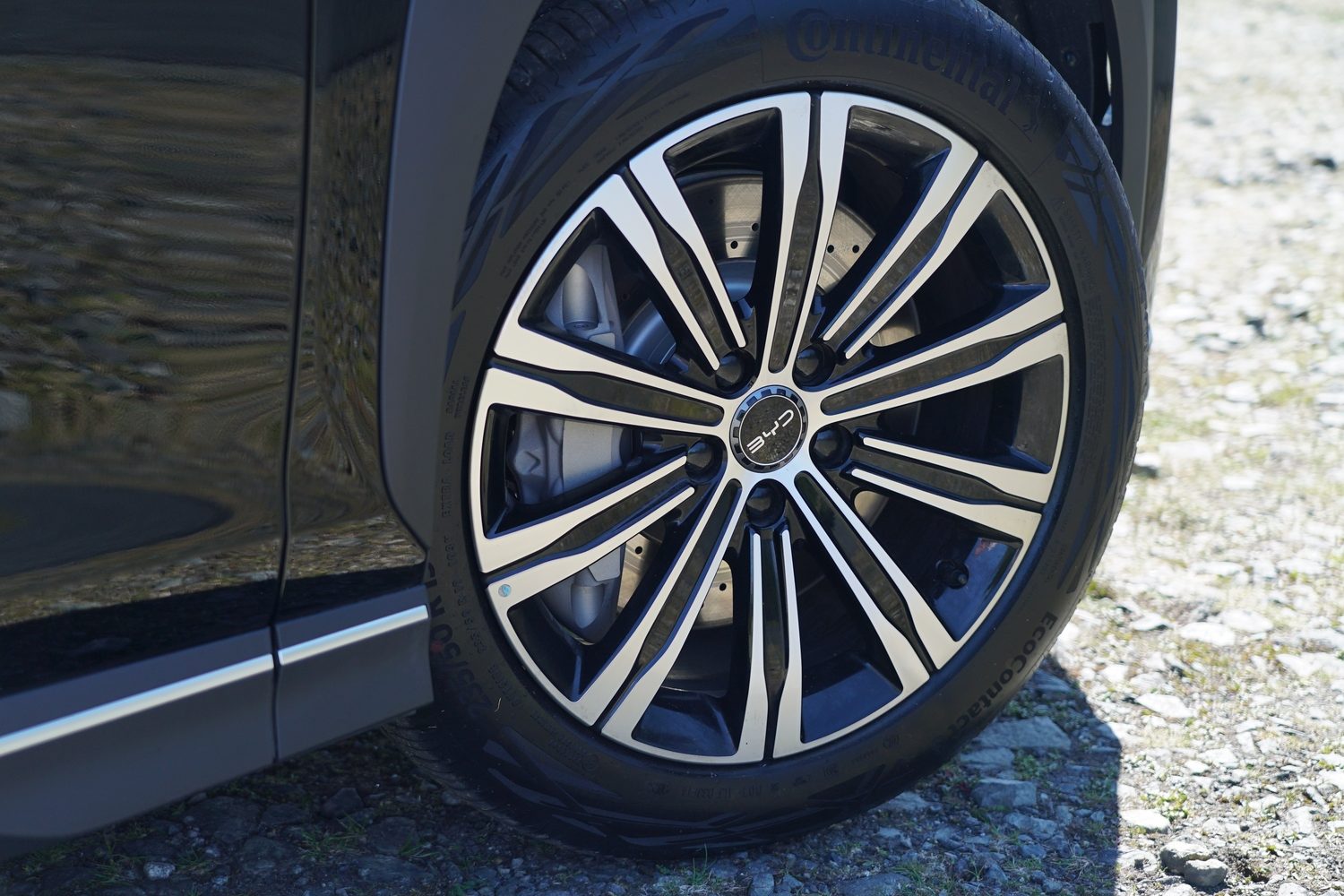
Entry-level Sealion 7 Comfort models get 19-inch alloy wheels, but the mid-sped Design and the top-spec Excellence model get 20-inch rims - although the design of those wheels seems hardly to vary at all from one to the other. A bonus for buyers of the most affordable model, we guess.
The front of the Sealion 7 avoids looking too bluff thanks to a deep undercut for the front air intake (yes, electric cars need air too, primarily for battery cooling) and the big vents at the side of the front bumper - which are actually functional, contributing to the car's aerodynamic performance.

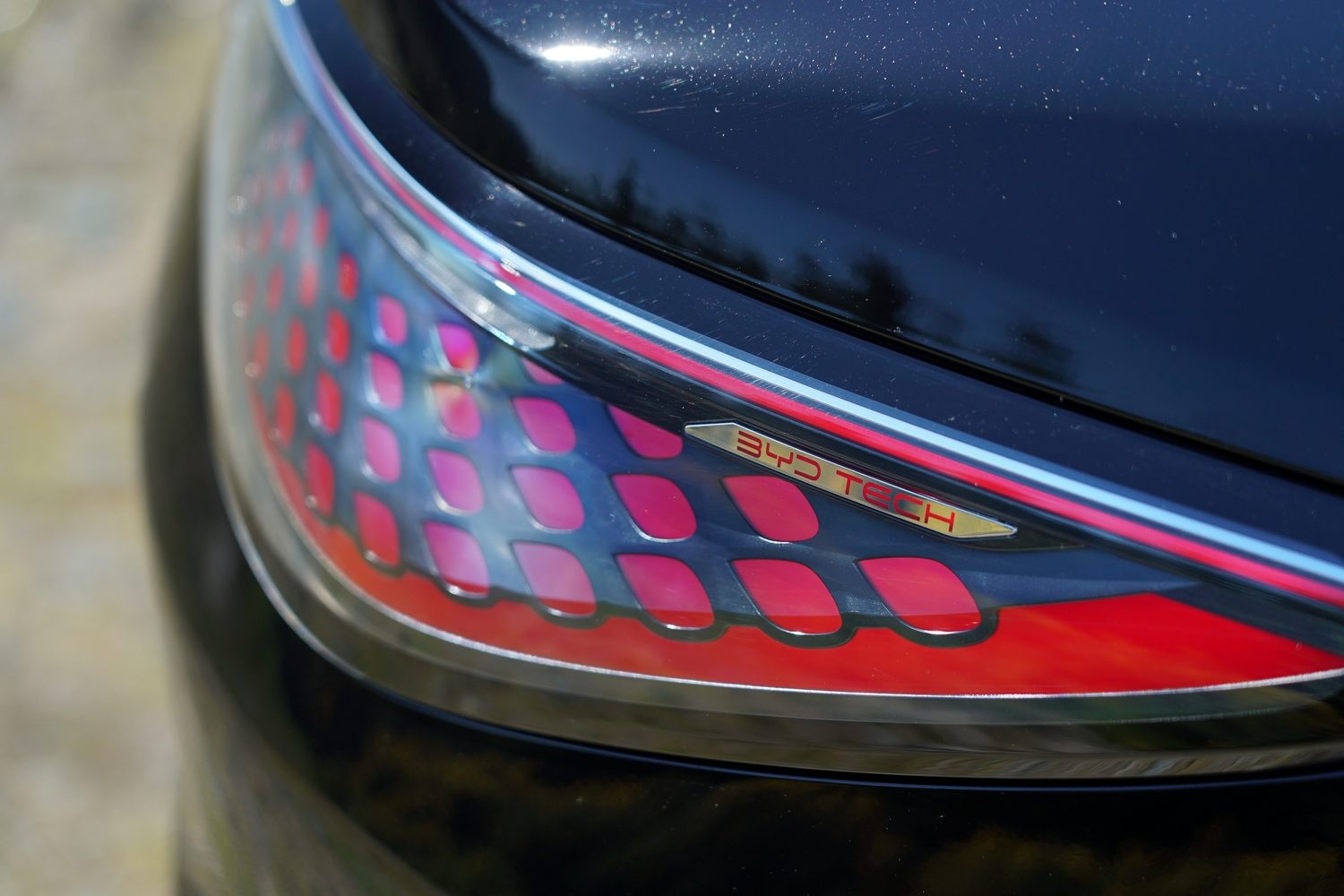
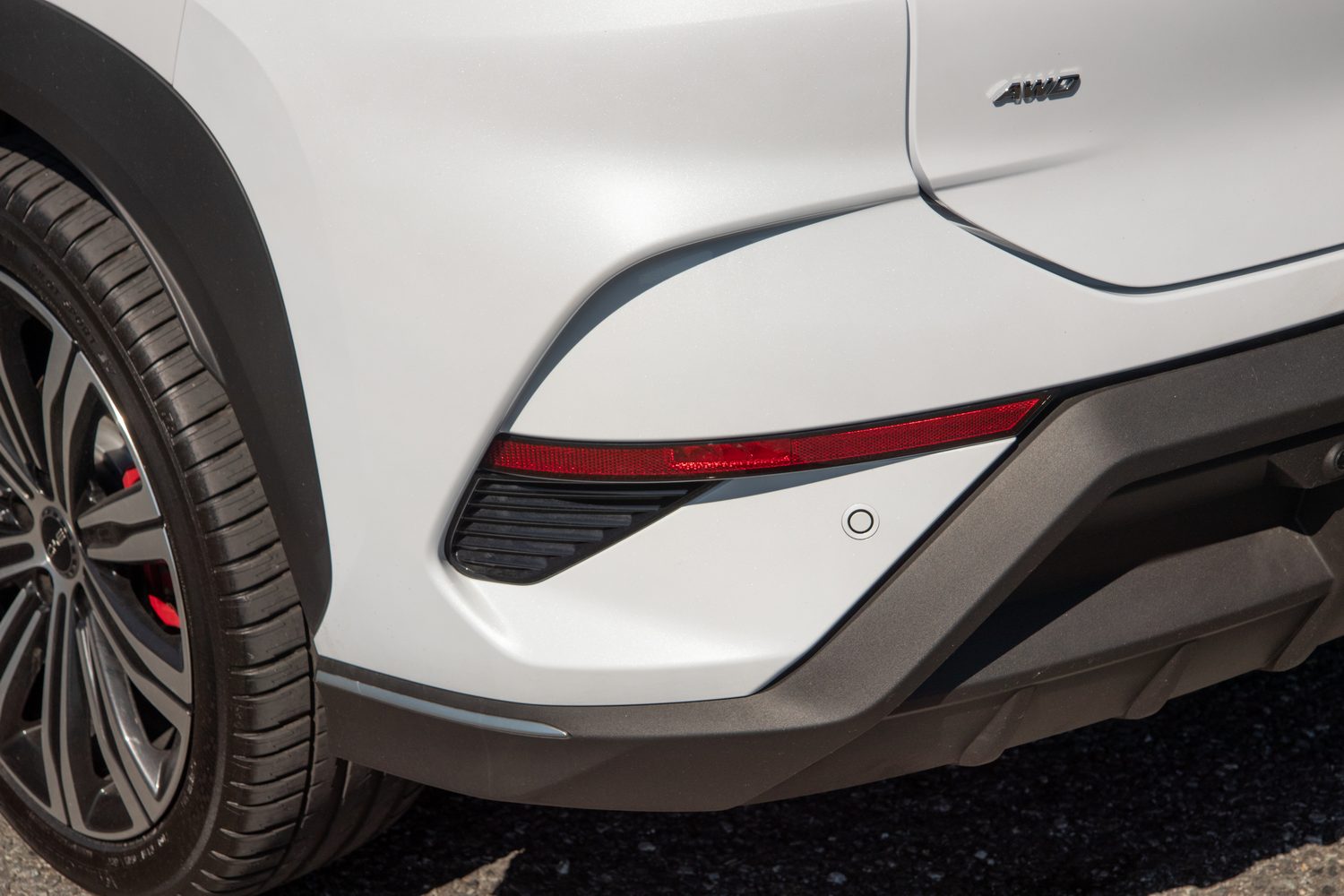
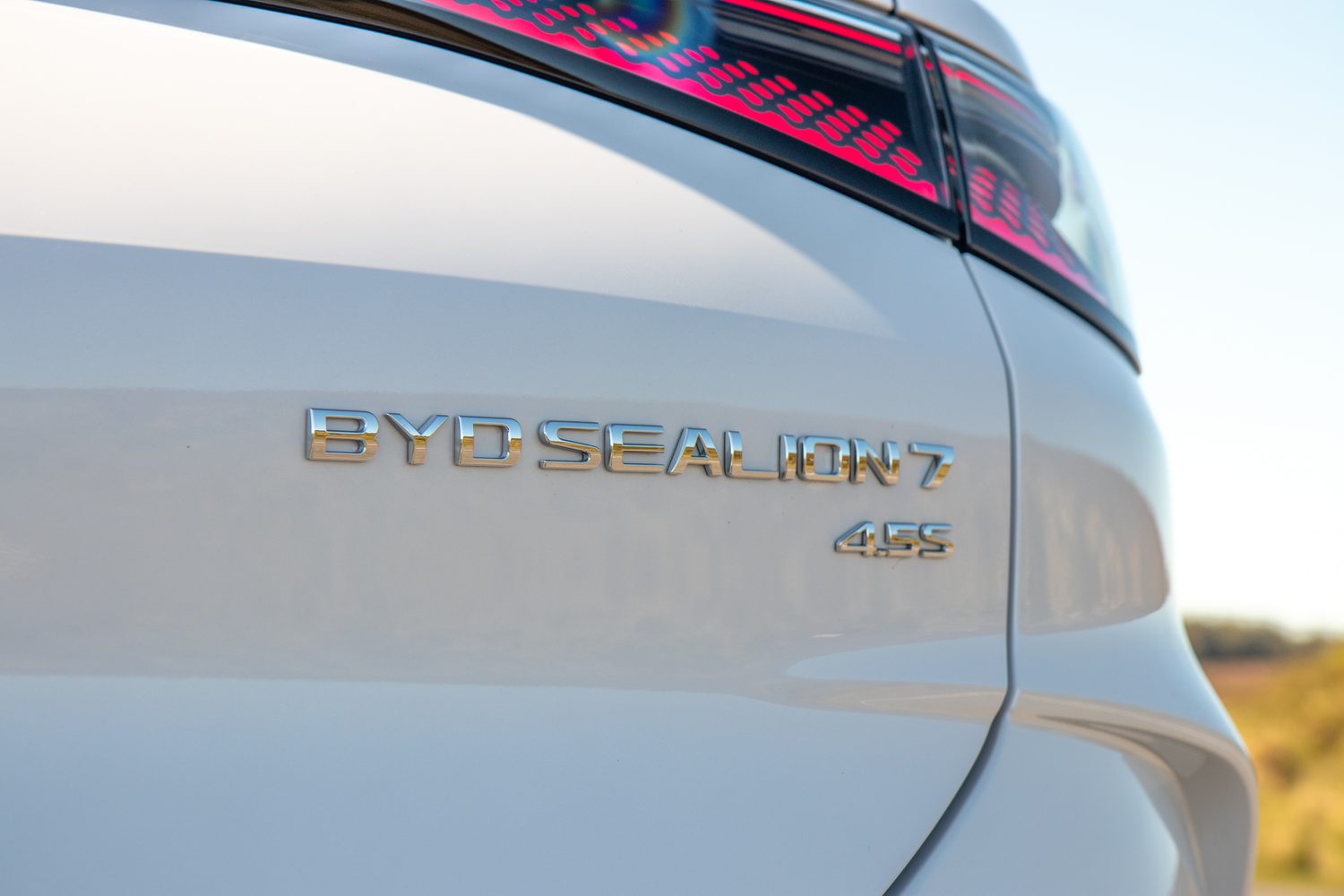
At the rear, the brake lights - almost tear-drop shaped - have an intricate pattern within them, and below those you'll find both the "Sealion 7" badge and, for the all-wheel-drive Excellence version, the 0-100km/h time of 4.5 seconds. No shrinking violet, this BYD.
Dimensions of the 2025 BYD Sealion 7
- Length:
- 4,830mm
- Width:
- 1,925mm (mirrors folded)
- Height:
- 1,620mm
- Wheelbase:
- 2,930mm
Paint colours for the 2025 BYD Sealion 7
There are only four colour options for the BYD Sealion 7 and if you're hoping to liven things up with a strong red or a vibrant yellow, well I'm afraid you're going home disappointed. Instead, you get a choice of Atlantis Grey (a dark sea-grey blue); Polar White; Indigo Grey (a pale grey, not dissimilar to Porsche's famed 'Crayon' colour); and Obsidian Black.

If you're buying a Comfort model, then only Atlantis Grey comes as standard, while all the other paints are a €1,595 option. If your Sealion 7 of choice is a mid-spec Design version, then all bar Atlantis Grey are an €1,100 option. If, though, you've gone for a top-spec Excellence, all the colours are available at no extra cost.
For our money, the Indigo Grey is probably the best colour - it looks classy, and it offers some contrast to the darkened glass of the roof, and the dark grey plastic wheelarch protectors.
Interior, practicality, tech & comfort of the 2025 BYD Sealion 7
- Cabin looks and feels classy
- Big screen easier to operate than when launched
- Plenty of space inside

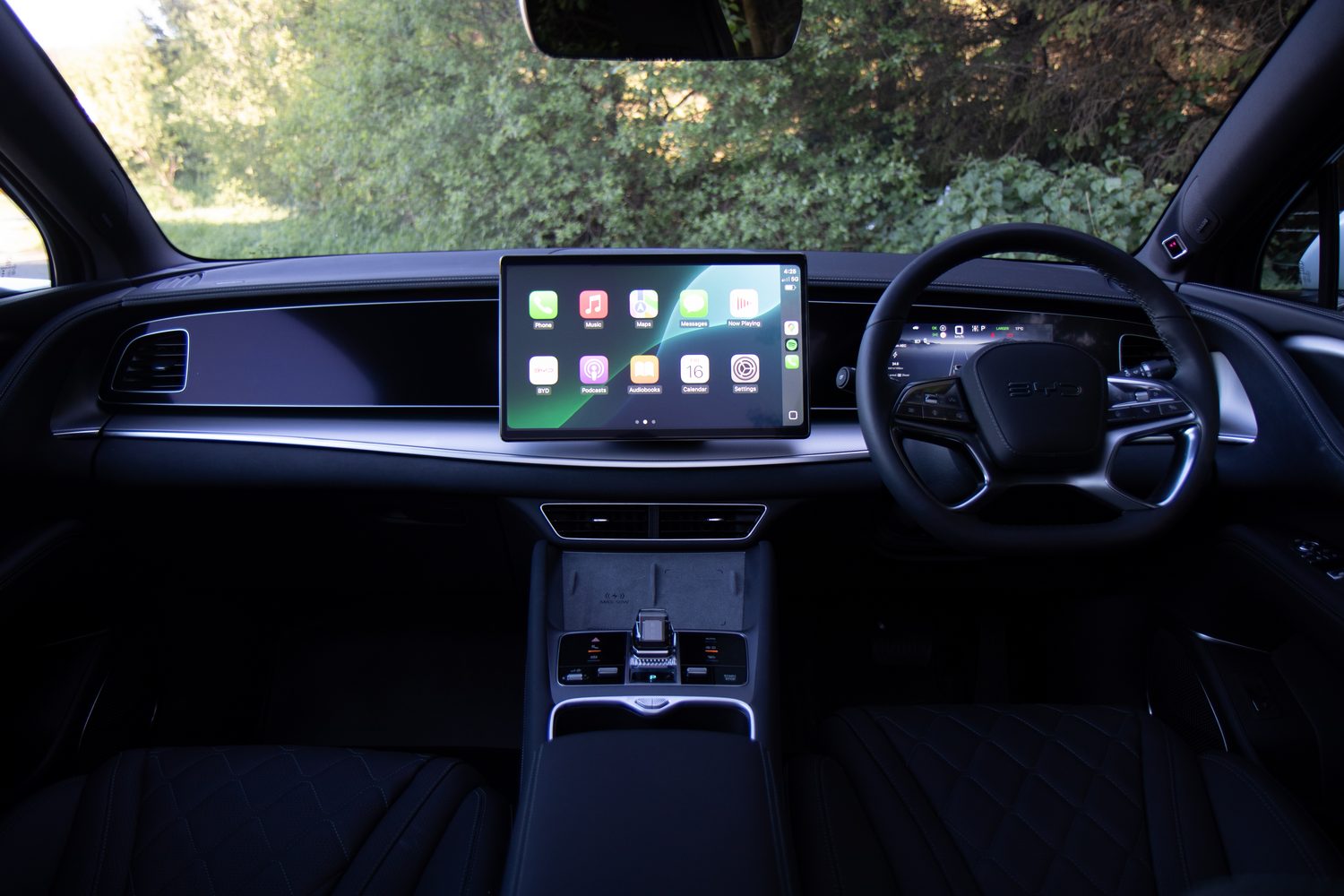
The BYD Sealion 7, unsurprisingly, picks up many of the interior design cues of the Seal saloon, although the overall design is a little more solidly upright, and a little less self-consciously swoopy.
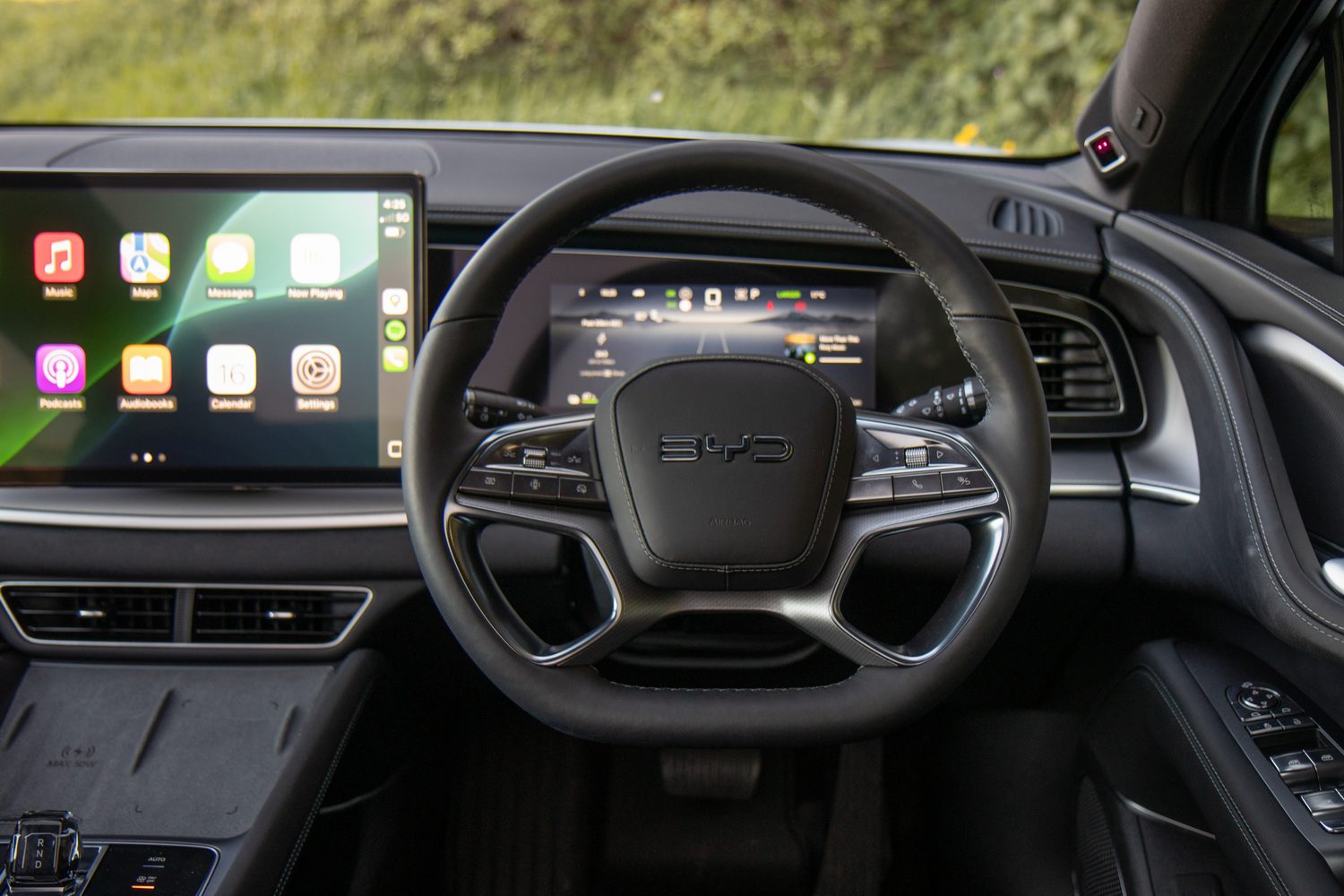
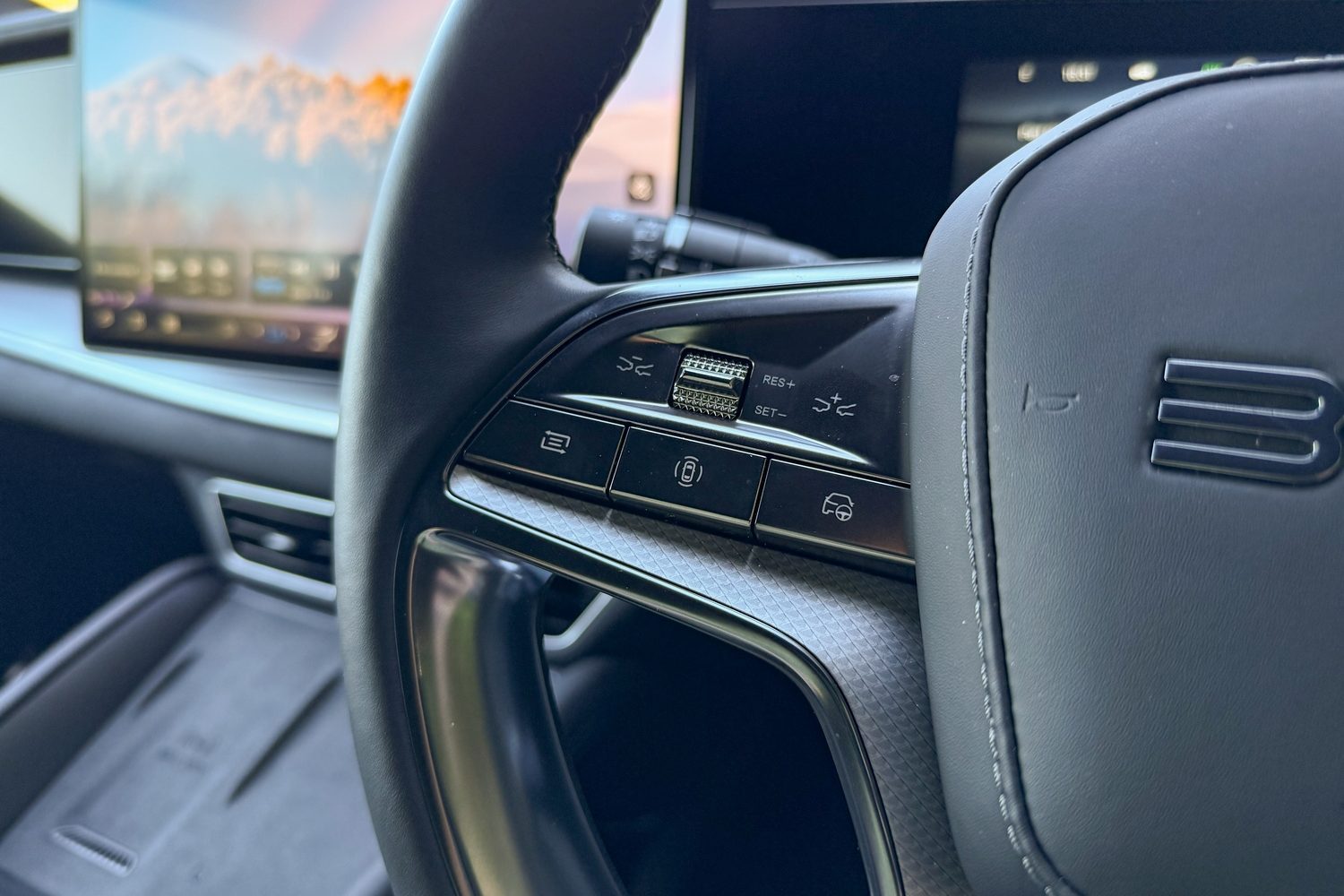
The four-spoke steering wheel with its off-square centre looks a little classier than the circular three-spoke affair in the Seal, as does the more solid-looking dashboard background. Nothing groundbreaking here, but plenty that impresses.
Getting comfortable in the driver's seat
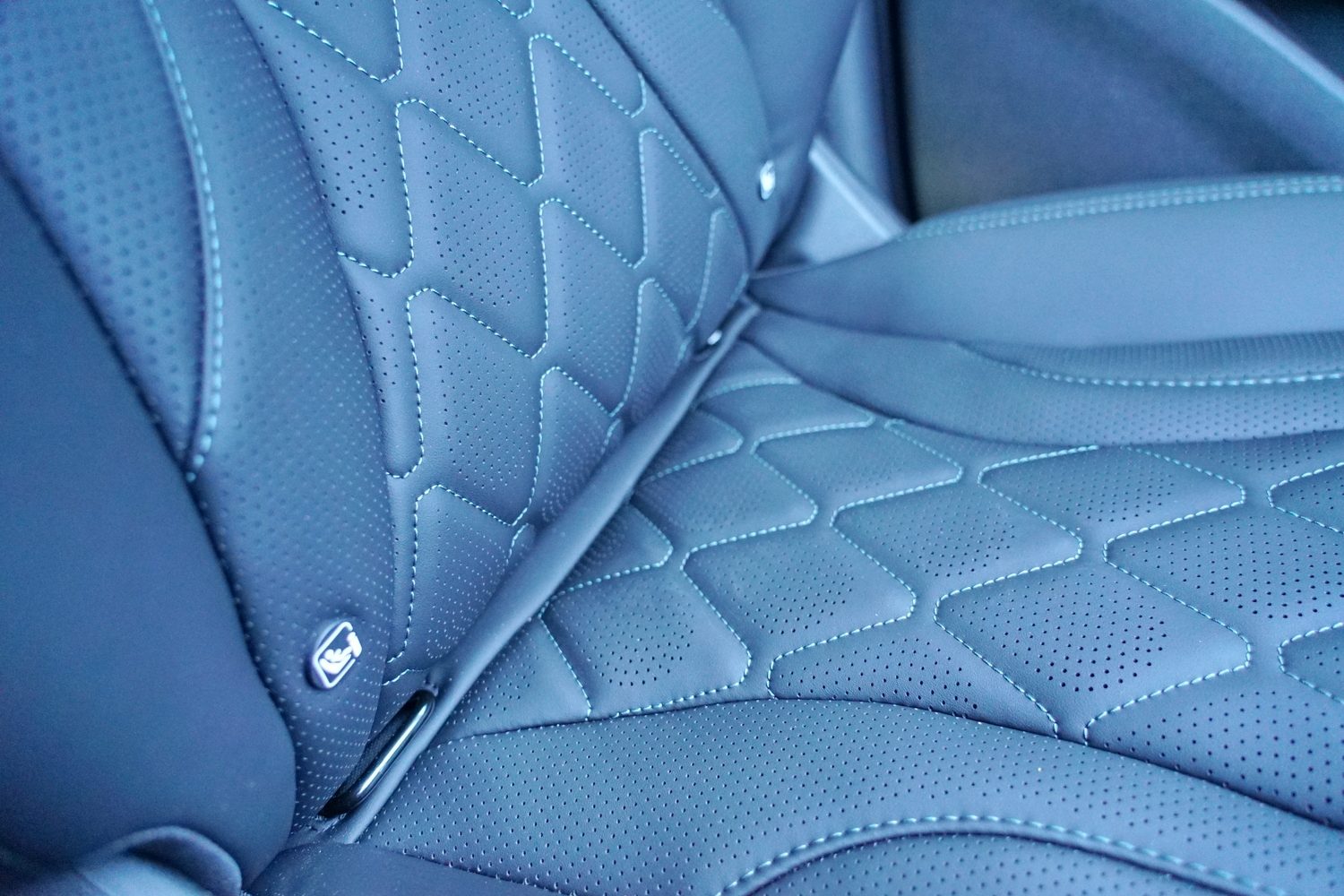
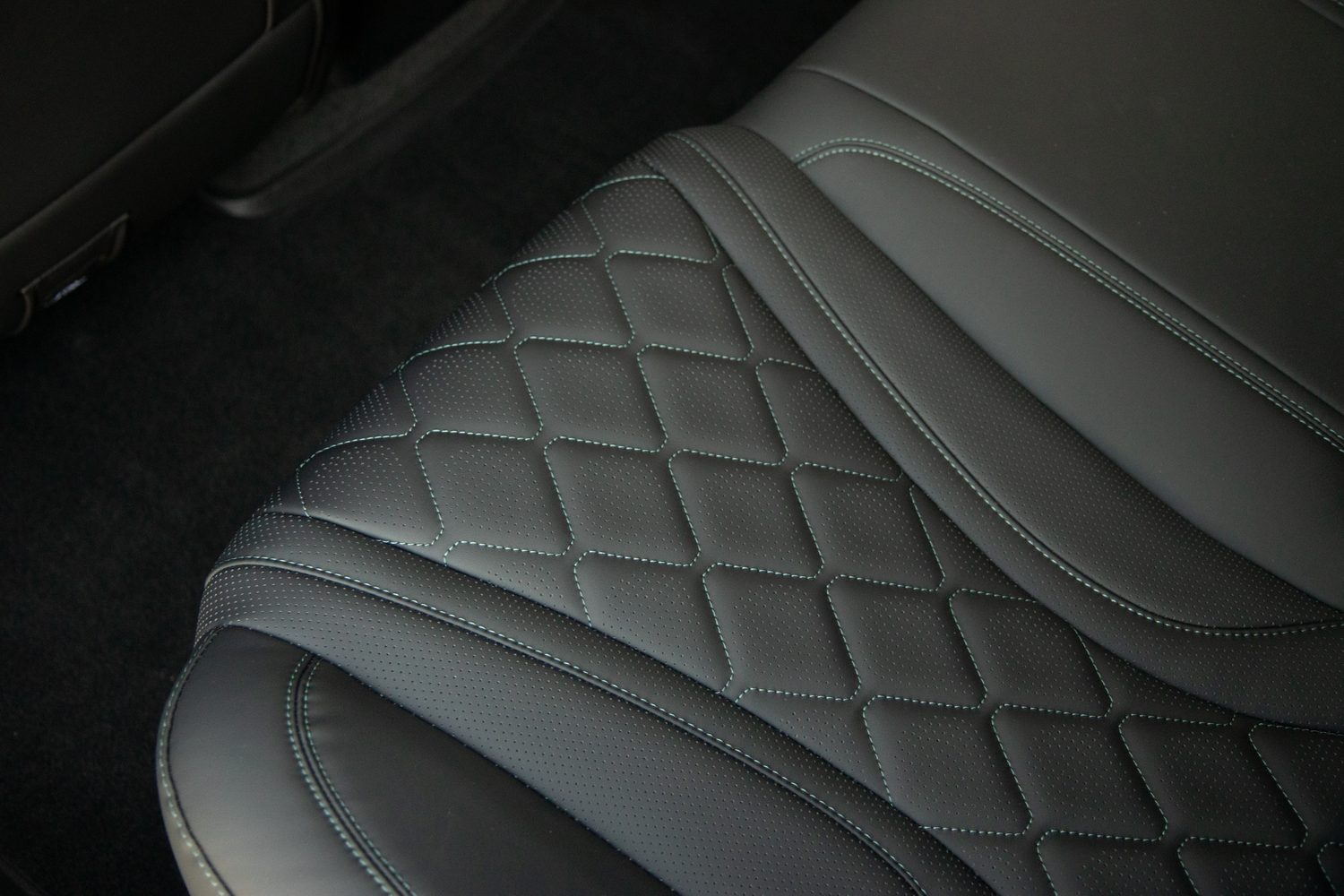
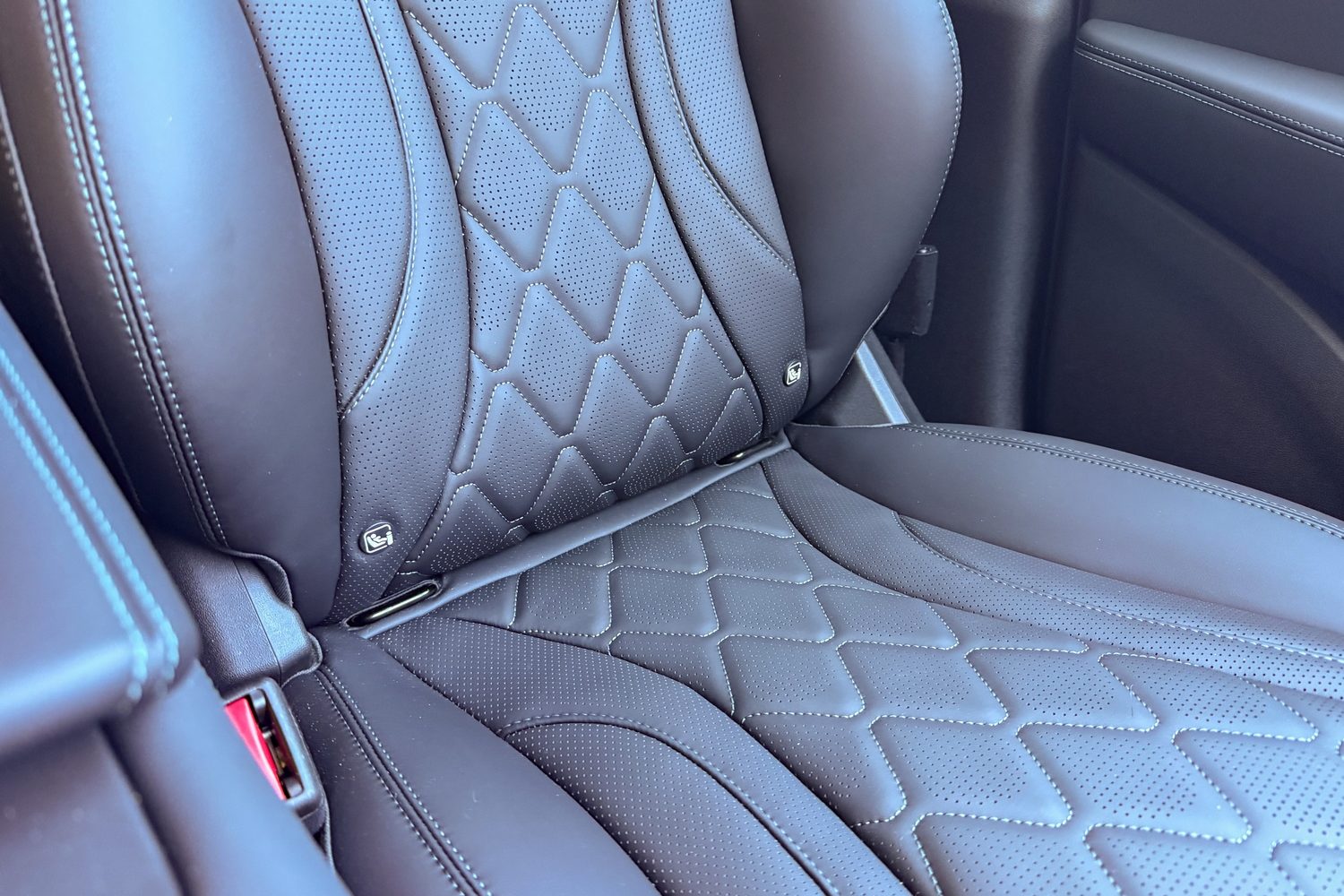
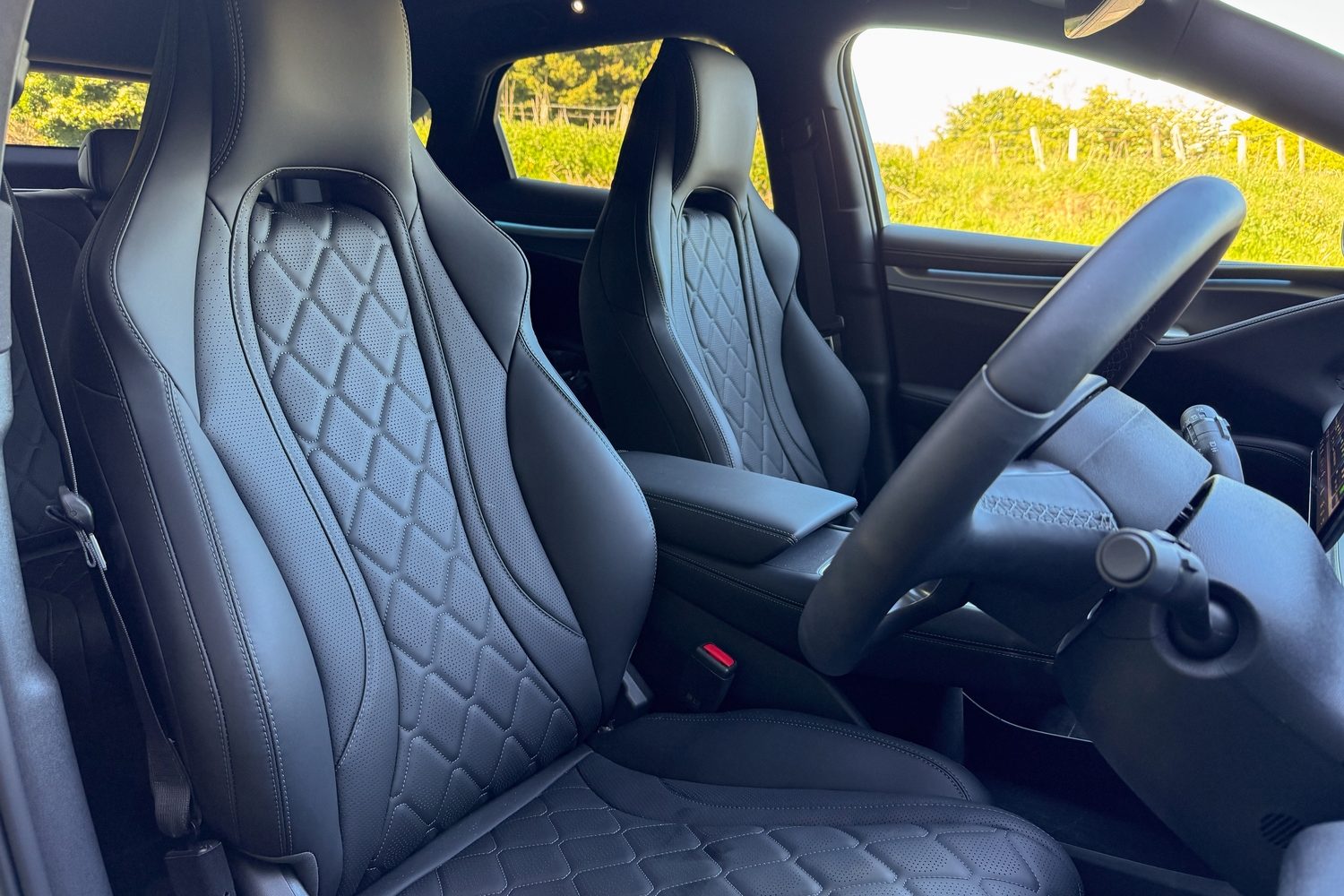
The Sealion 7 has terrific seats, with a nice, classy touch of quilted leather in the centres. The Excellence model gets actual leather, not the faux-cow vinyl that comes as standard elsewhere. The front seats are also both heated and ventilated, as standard, across the range.

You sit fairly high up, more so than is ideal for a taller driver, but more comfortably than you do in a Tesla Model Y. If anything, the Sealion 7 feels closer to the Hyundai Ioniq 5 in terms of its comfort and seating position.
The seats adjust electrically, as standard, and there's plenty of reach and rake adjustment in the steering wheel, too.
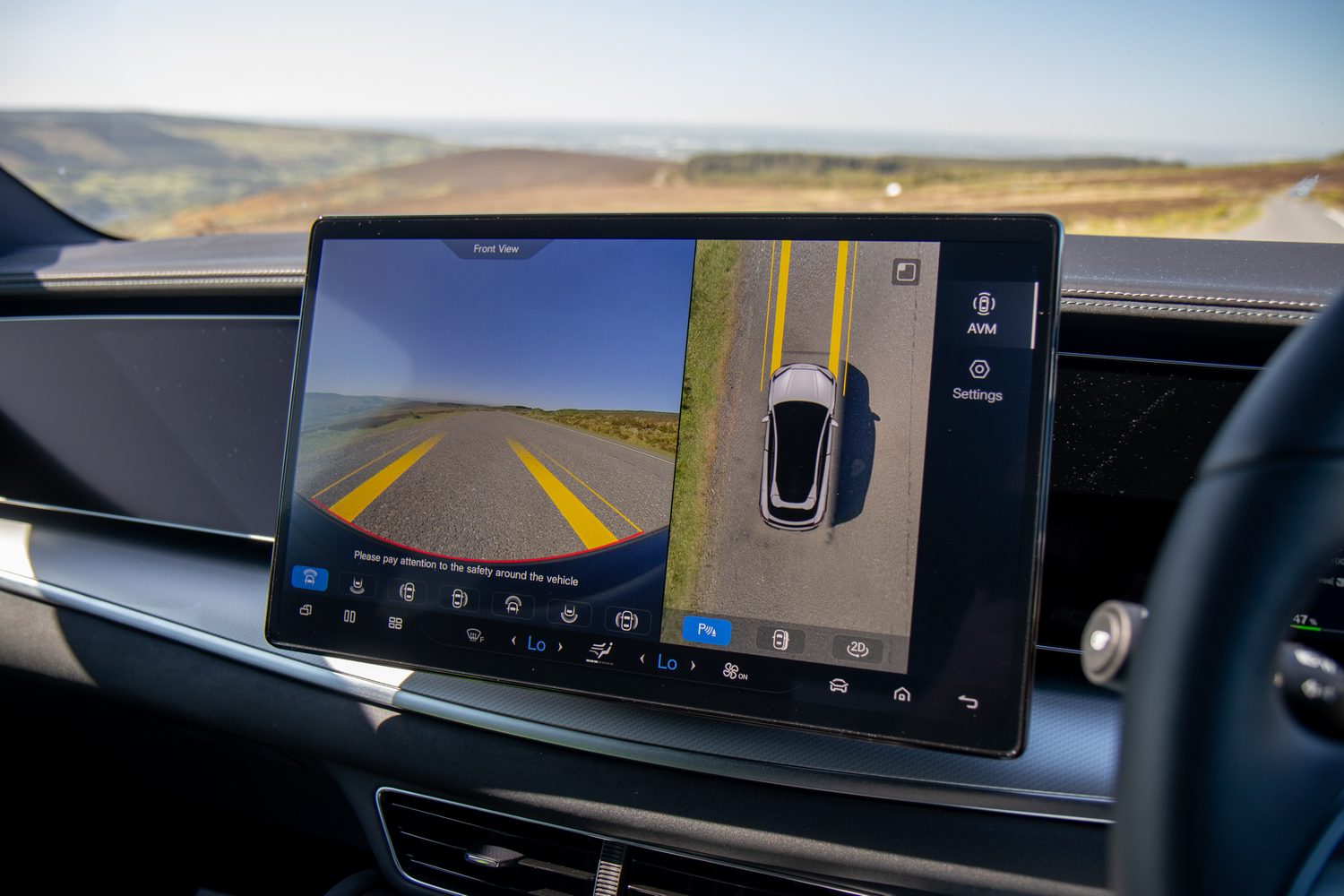
The only issue is rear visibility - the rear windscreen is quite small, and the roof pillars quite large. The all-round camera system helps with this, but a bit more natural visibility would be helpful.

Infotainment and technology
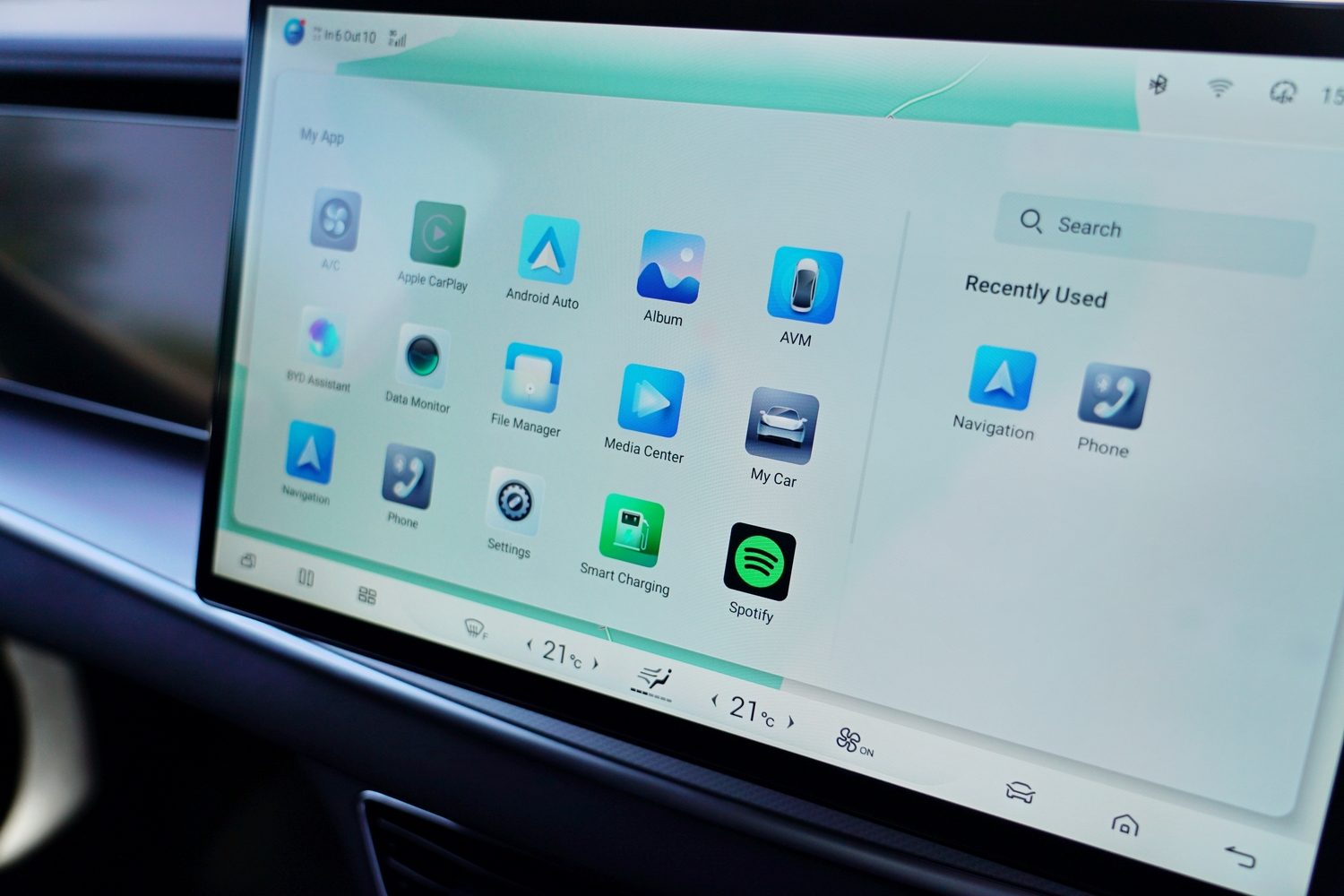
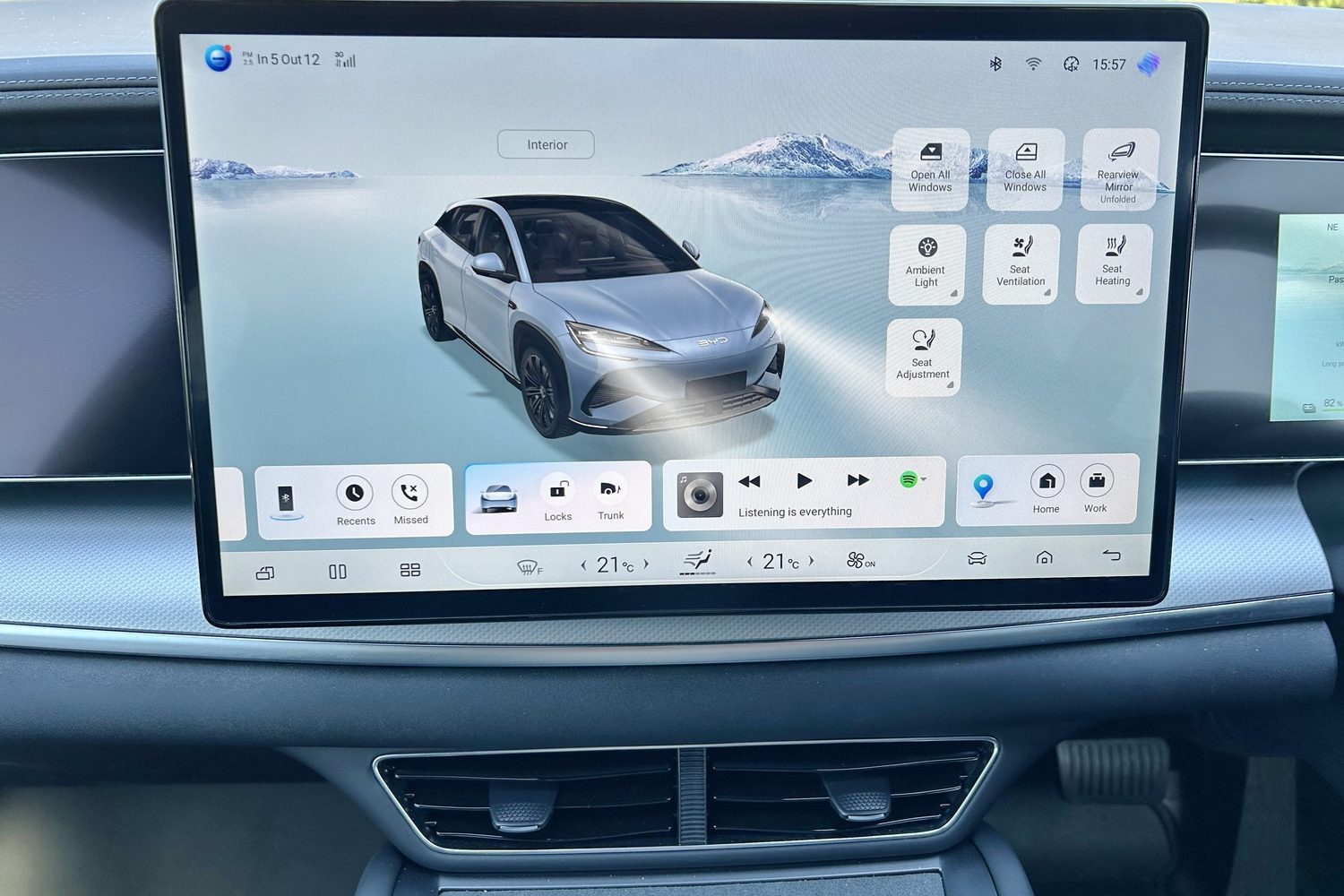
As you'd expect, the BYD Sealion 7's cabin is dominated by its big 15.6-inch touchscreen. This, as with other BYDs, can rotate through 90 degrees, so that you can have it in portrait or landscape styles, which can be handy (portrait is great if you're using the native navigation for instance) but the top of the screen impinges slightly on forward visibility when it's in portrait mode, and you can't run Apple CarPlay nor Android Auto with the screen turned upright.

BYD upgraded the system after launch with 'multi-touch' functionality for the screen. Swipe from left to right - on any screen or menu, including CarPlay and Android Auto - and you'll adjust the cabin temperature up or down, while a three-finger swipe up or down will adjust the fan speed. This saves rifling through menus and screens to get to and from the air-con menu, but it's still not entirely a satisfying replacement for a simple physical control.
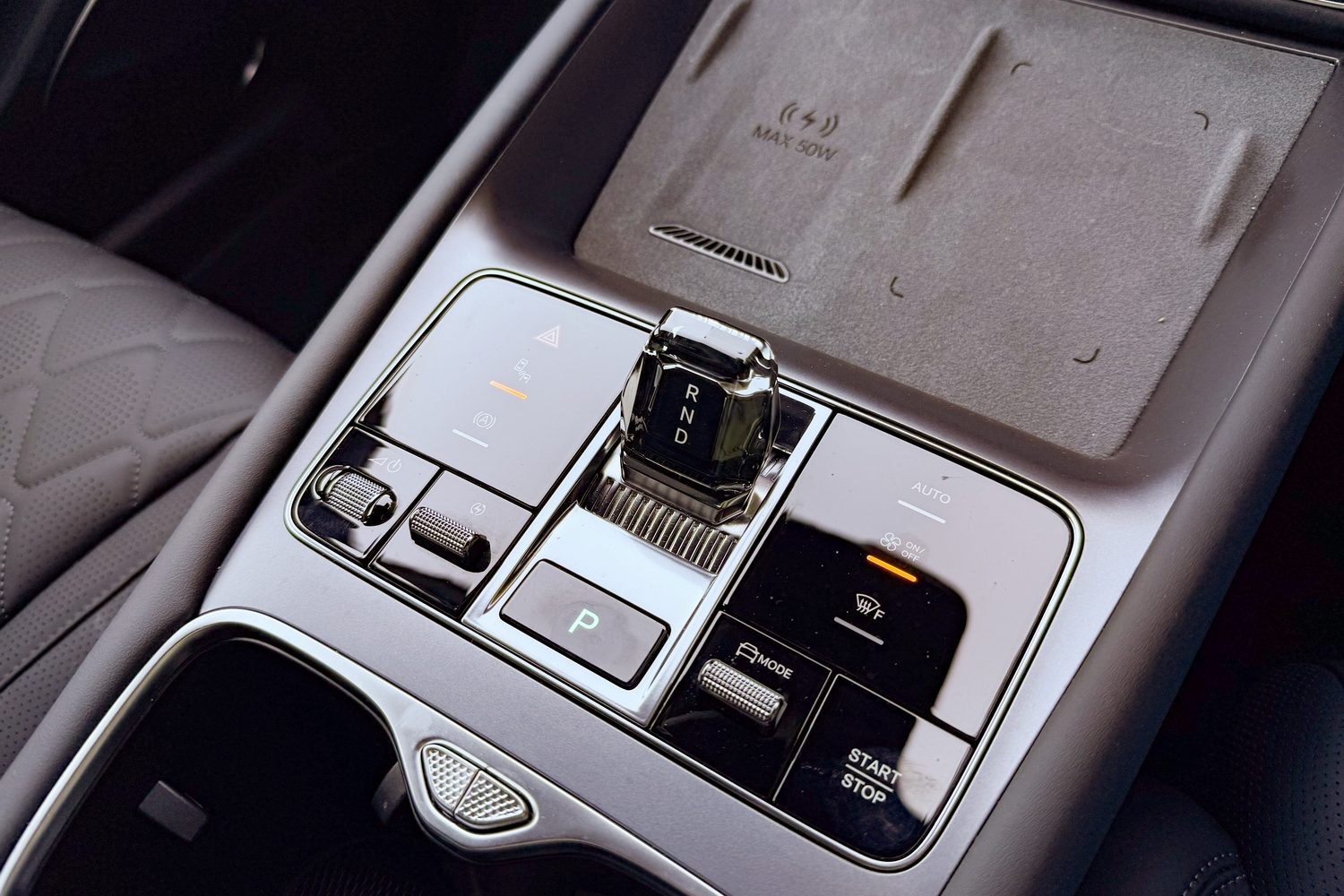
That said, at least BYD does offer you some real buttons. Down on the centre console, next to the neat little crystal drive selector (more of a toggle switch than a gear lever) there are buttons for the blind-spot monitor, the hazard lights, auto hold, stop-start, the regenerative braking mode, the driving mode, stereo volume, defrosting and the climate control auto function.
Meanwhile, over on the door panel, there are four electric window switches, and buttons for adjusting the door mirrors - other car makers, take note please.

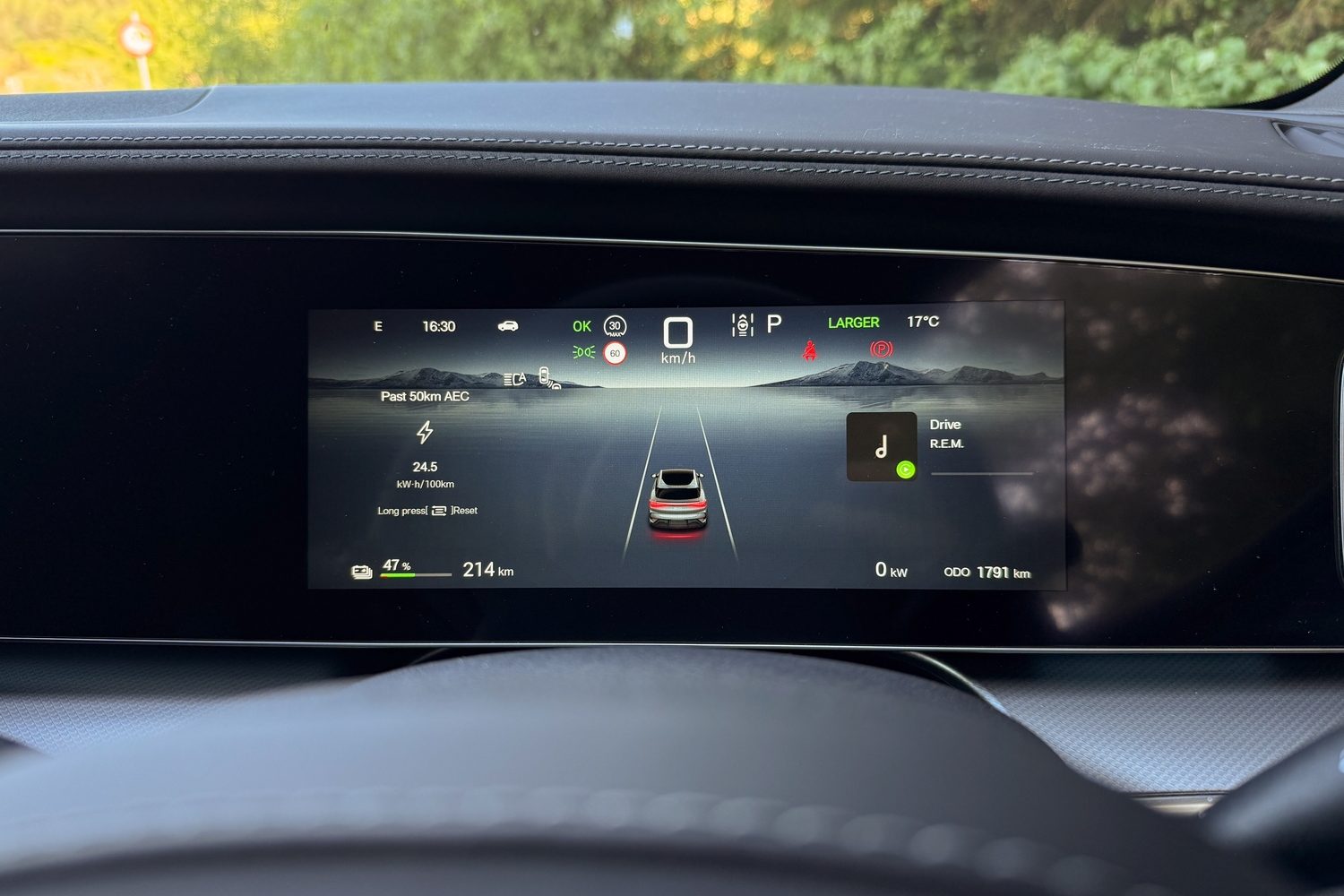
Up behind the steering wheel, there's a large 10.25-inch screen which is your instrument panel, and on Excellence models that's augmented by an impressive head-up display projected onto the windscreen.
That panel is hugely informative, and you can neatly integrate both navigation information and a representation of what the car's various exterior sensors are 'seeing', but the display can look a touch crowded at times - a 'quiet screen' mode might be helpful, especially at night.

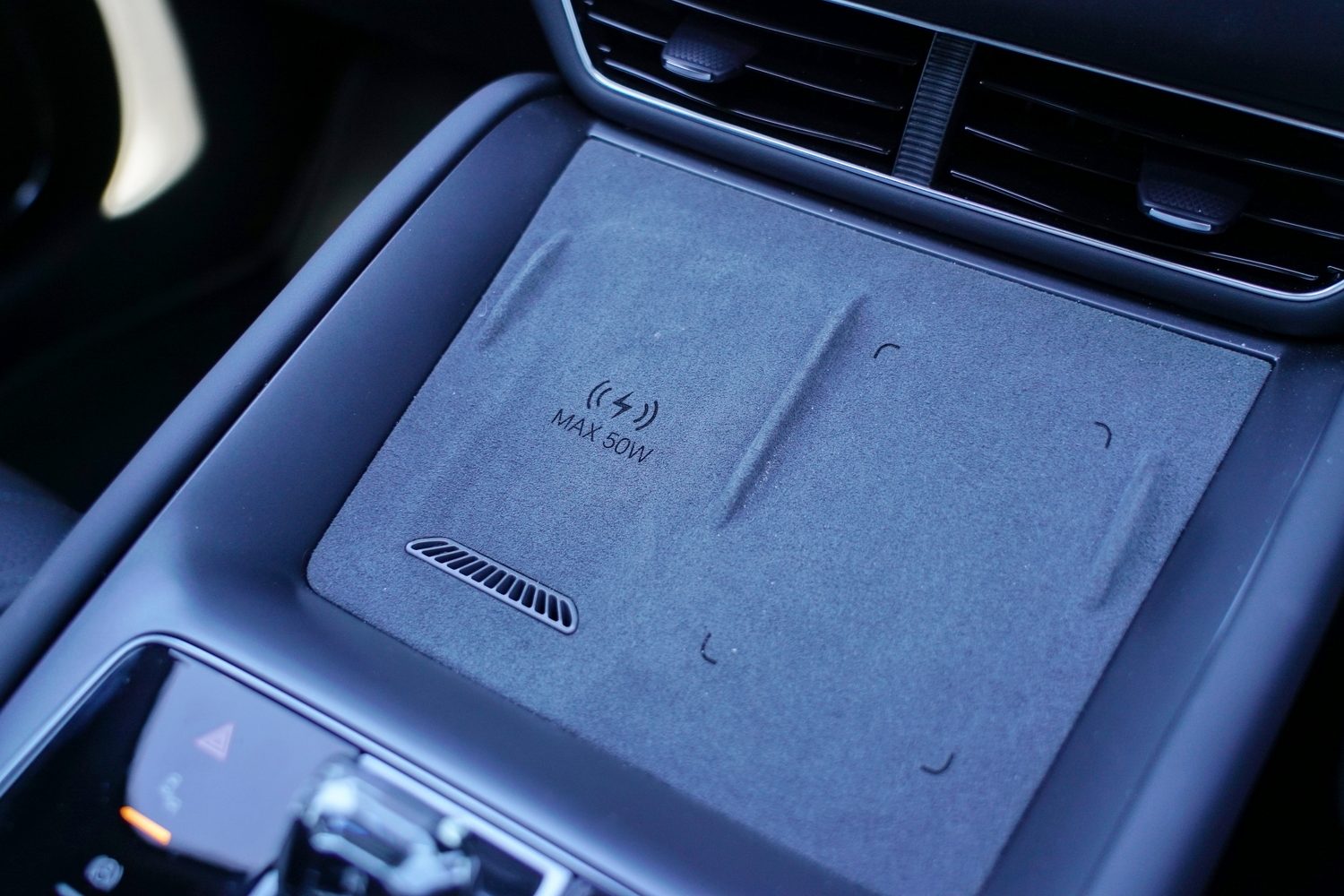
There's a wireless phone charging pad on the centre console (it looks like there's two, but there's just one, with a ventilation port so your phone doesn't heat up too much) and that works at up to 50 watts.
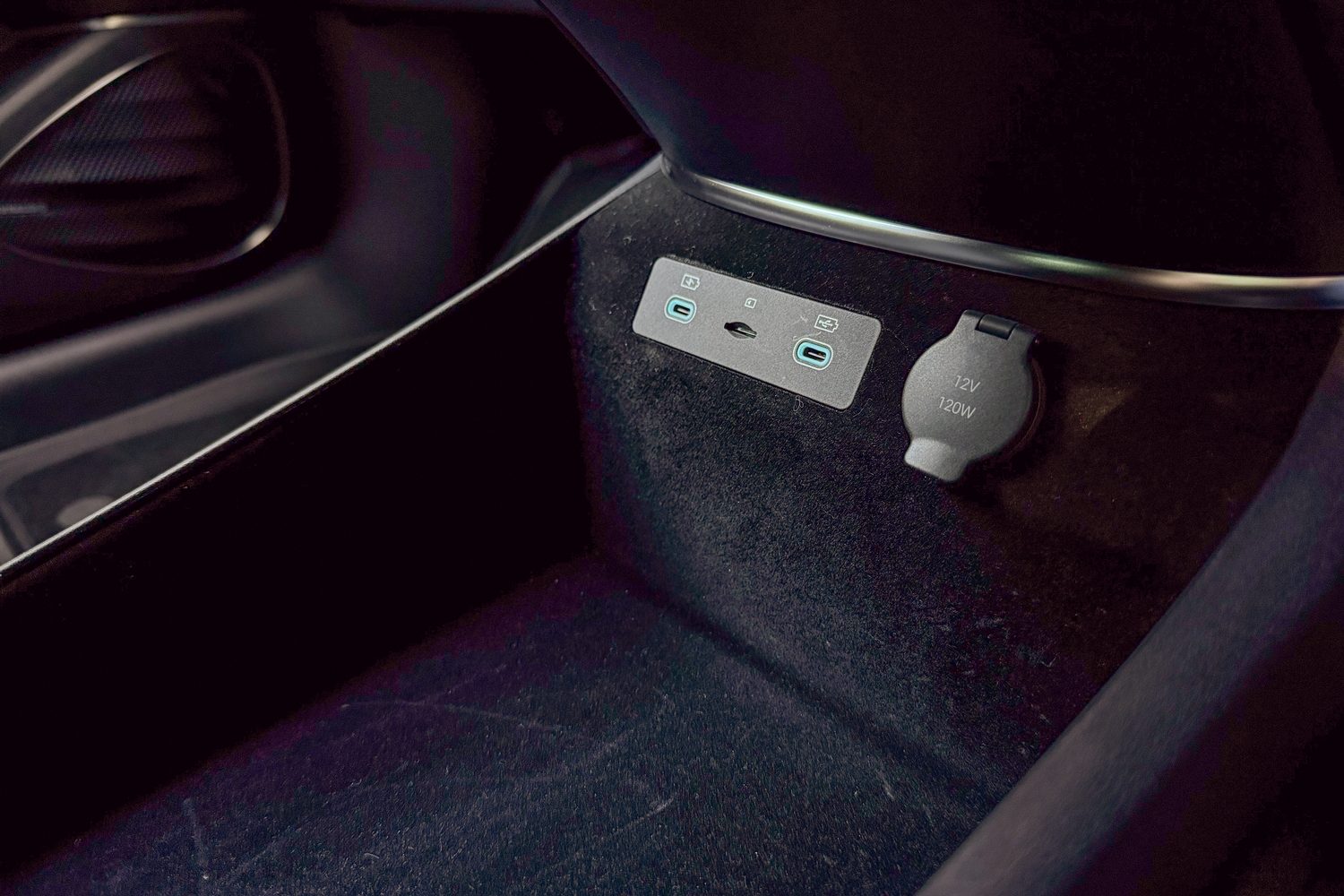
There are also two USB-C sockets, one running at 18 watts, and one at a laptop-friendly 60 watts (there's another pair of these in the rear).

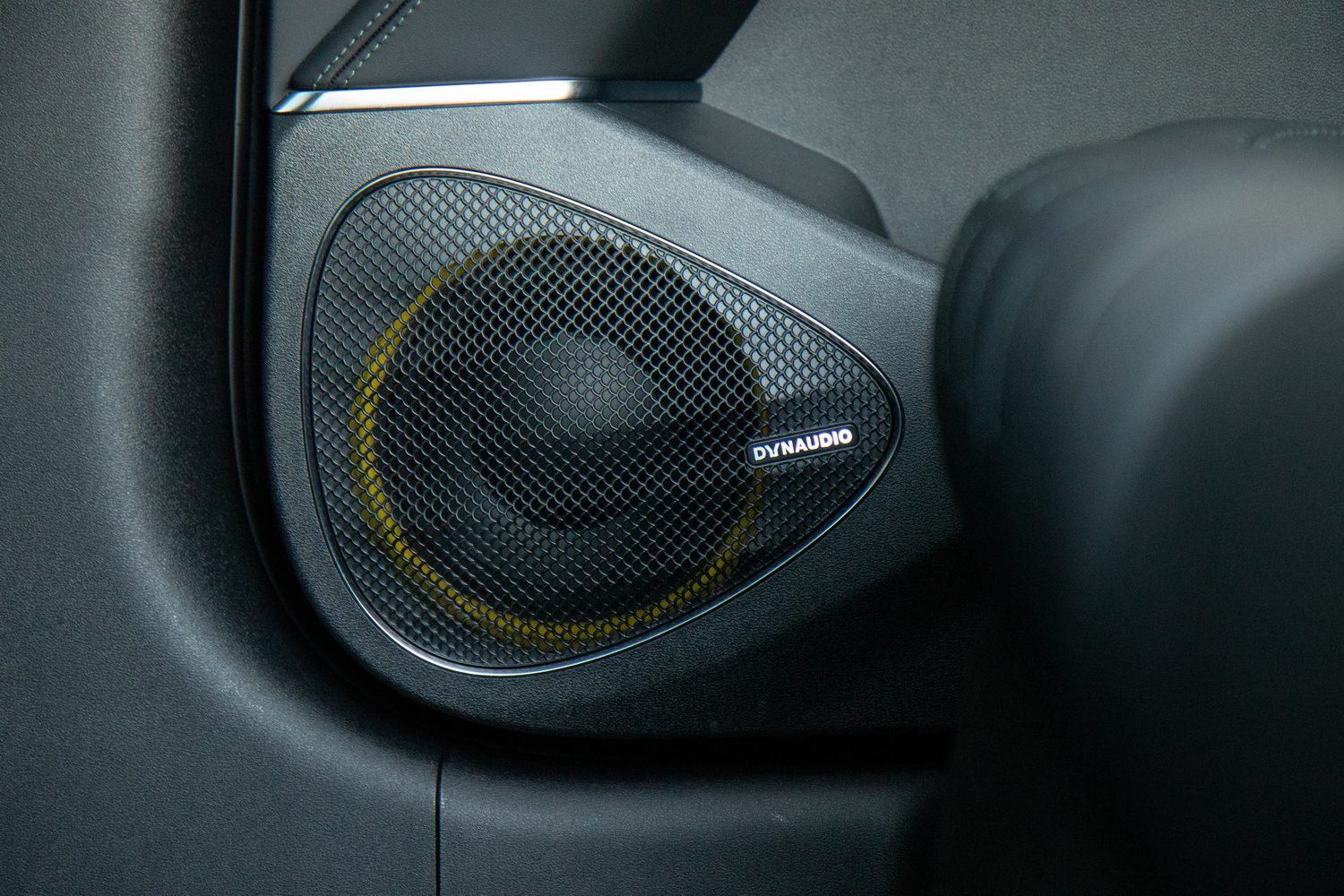
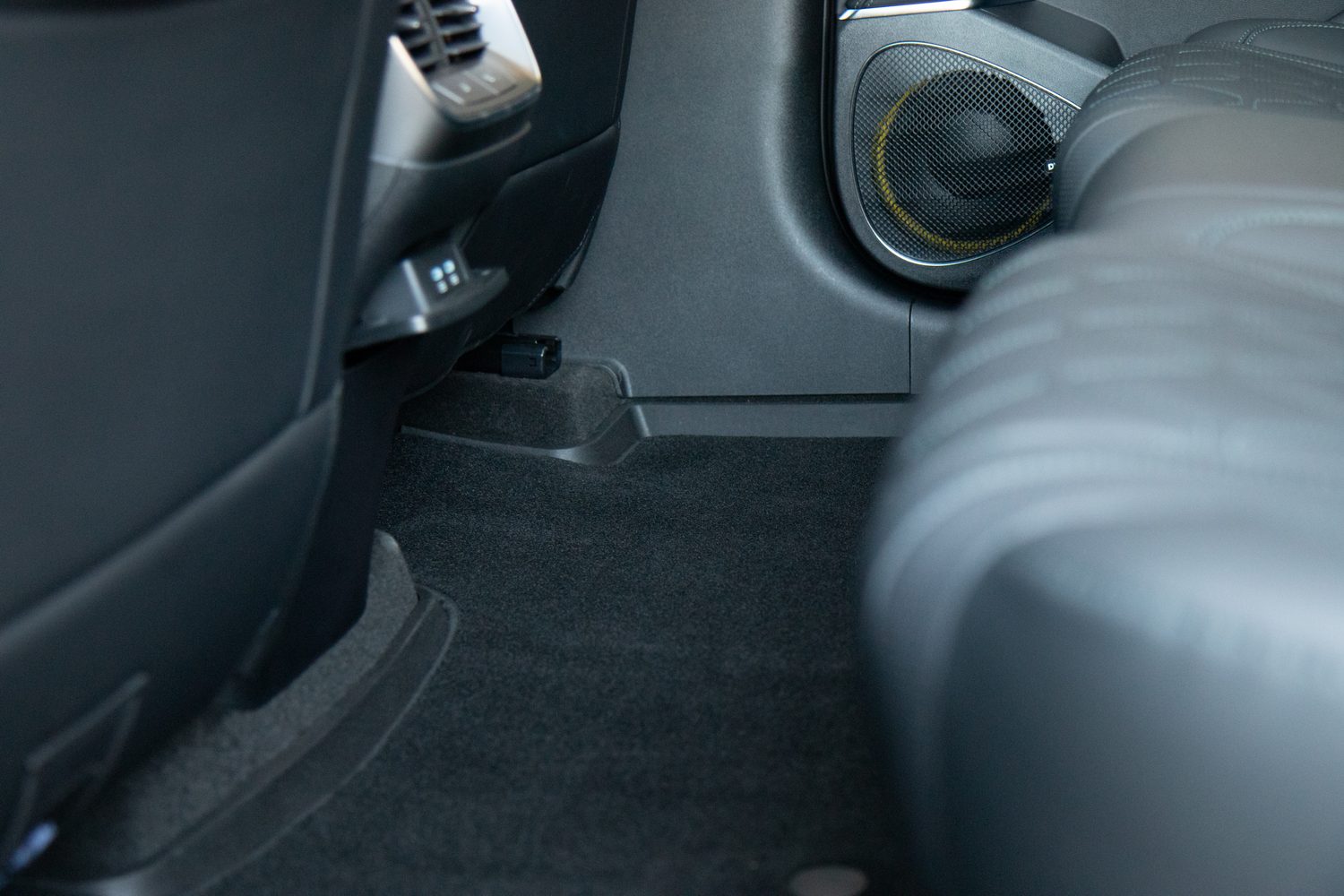
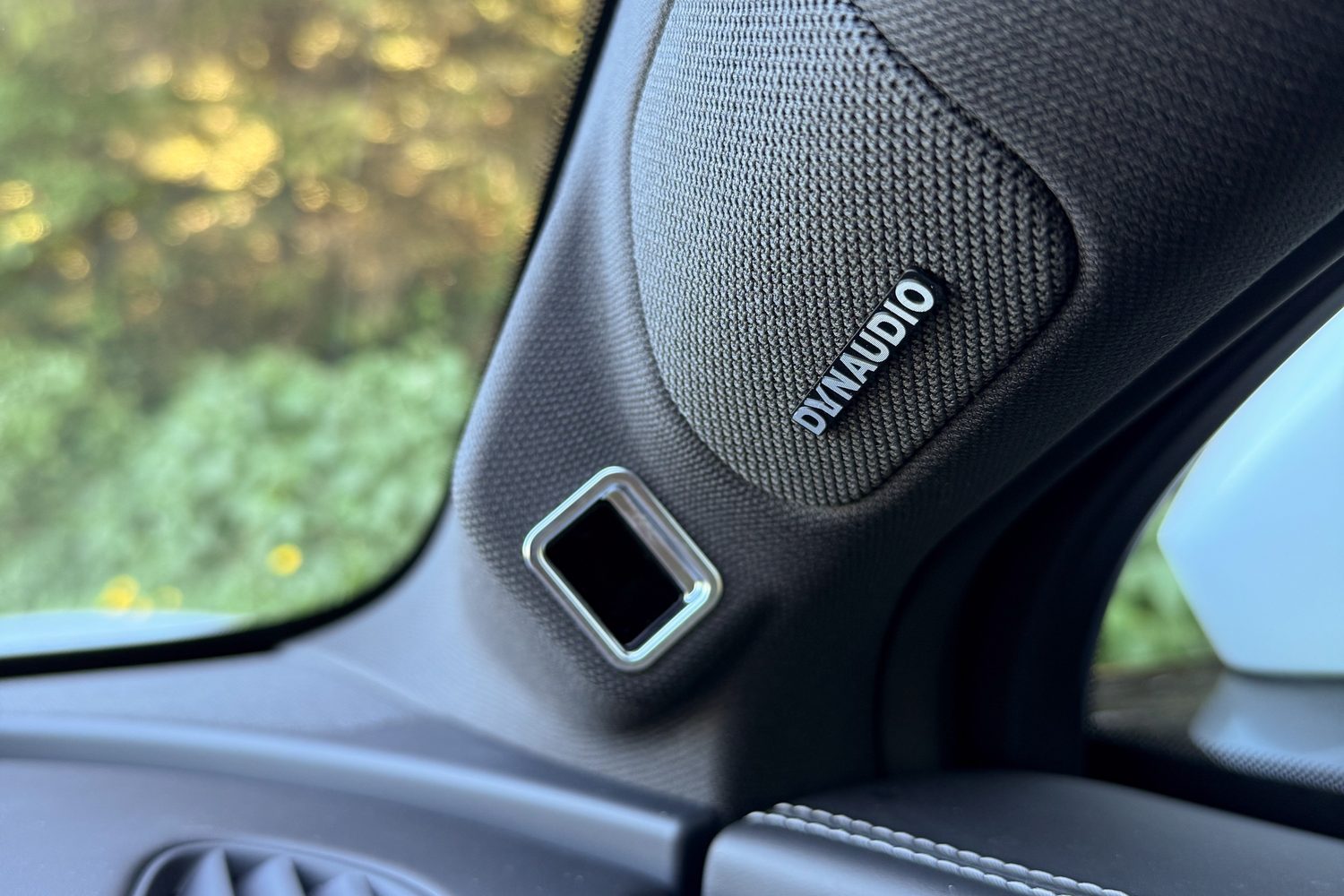
The stereo is an excellent 12-speaker Dynaudio system if you've chosen a top-spec Excellence model, and there's a "Hi, BYD" digital voice assistant too, which can tell which seat each request comes from, although it's as hit and miss as most other such systems when it comes to actually understanding what you want.
Practicality around the cabin
Few will complain about space in the Sealion 7's cabin, and there are plenty of practical touches. There's a large open space under the centre console, which will easily swallow a large handbag or small backpack, and plenty of space under the front centre armrest if you want to tuck anything safely away.

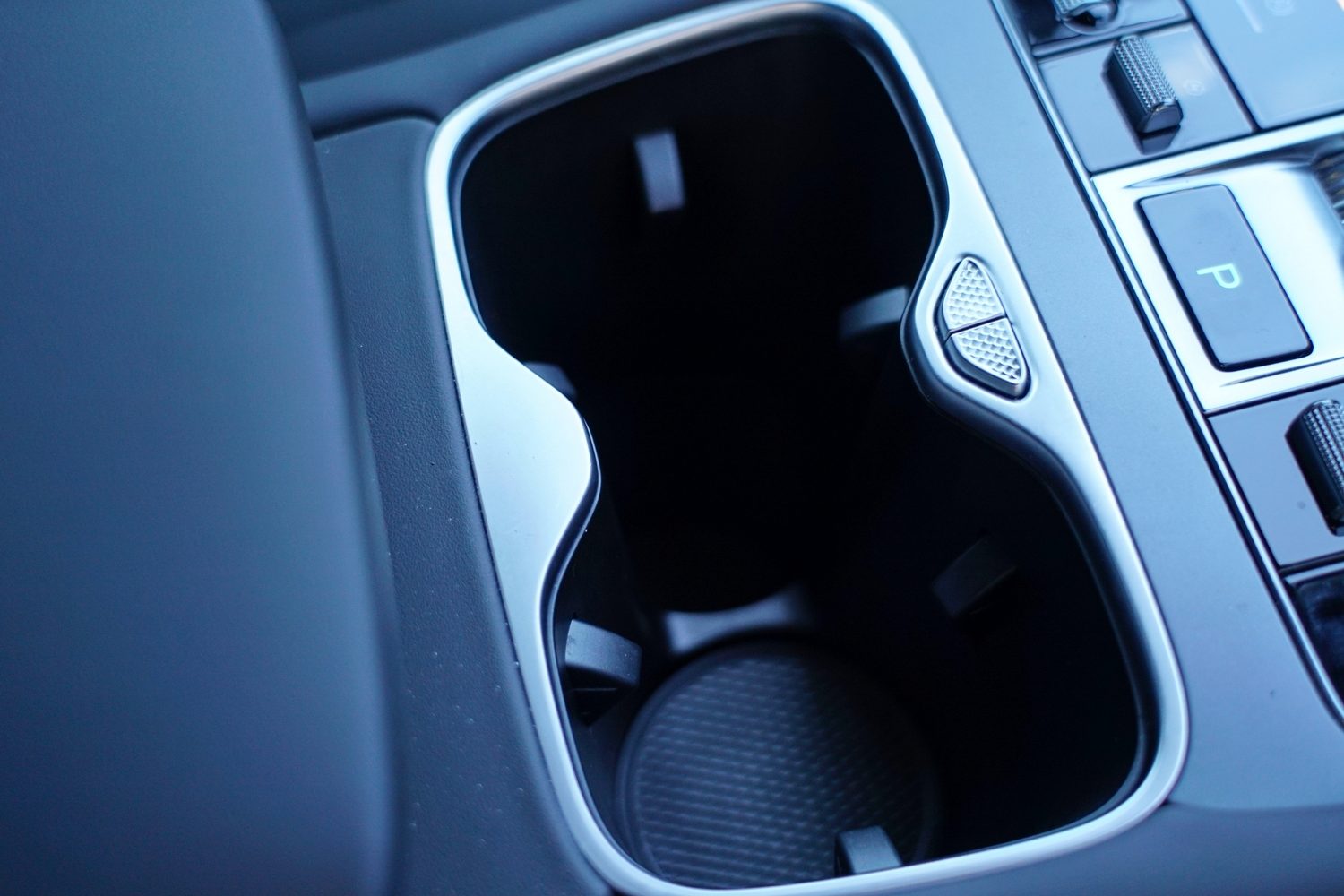
The glovebox is a good size too and felt-lined so nothing will rattle around in it. The front door bins are useful as well, although the slightly swoopy styling can be a hinderance to getting some items in and out, and there are two decent cupholders just in front of the armrest.
Rear-seat passenger space
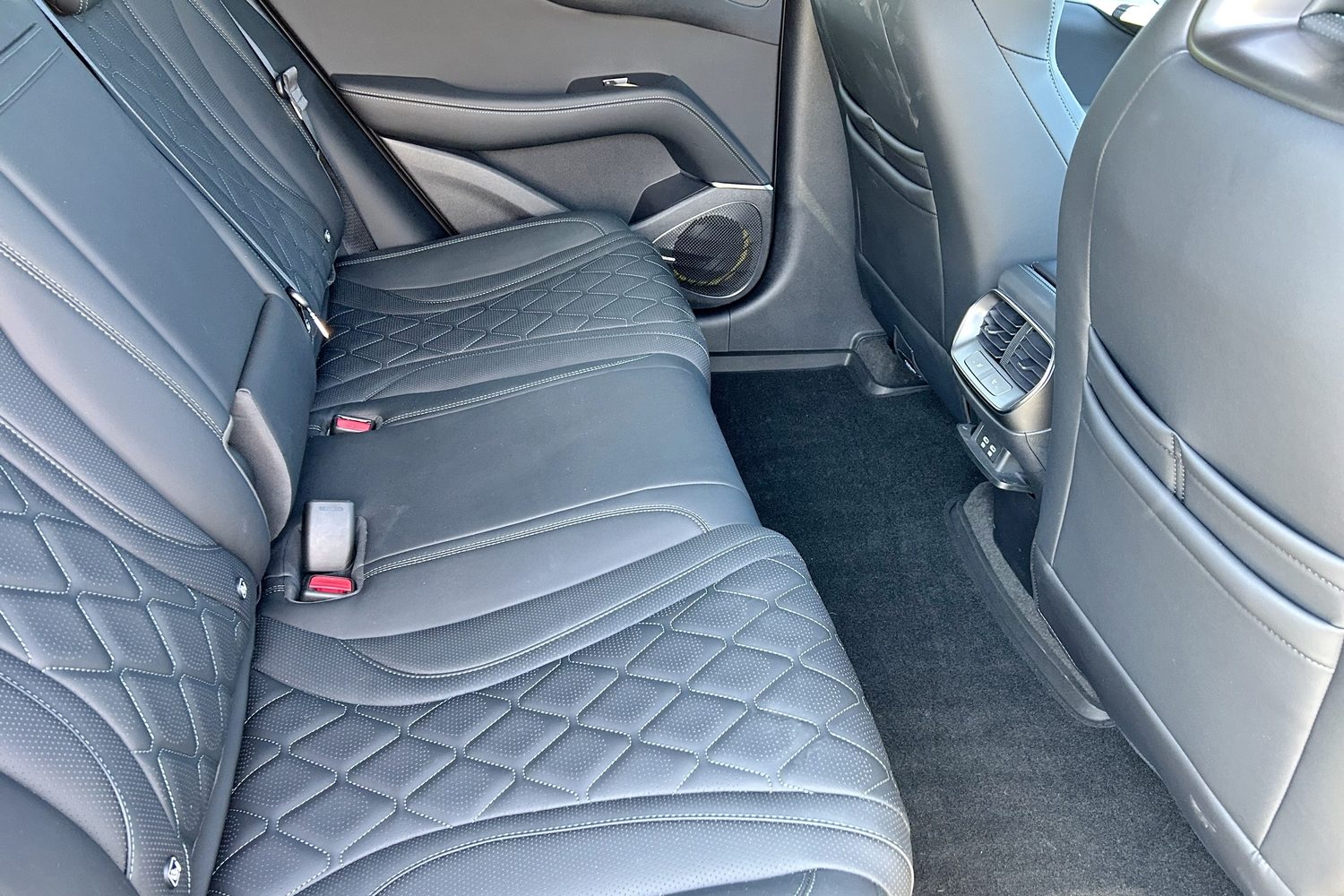
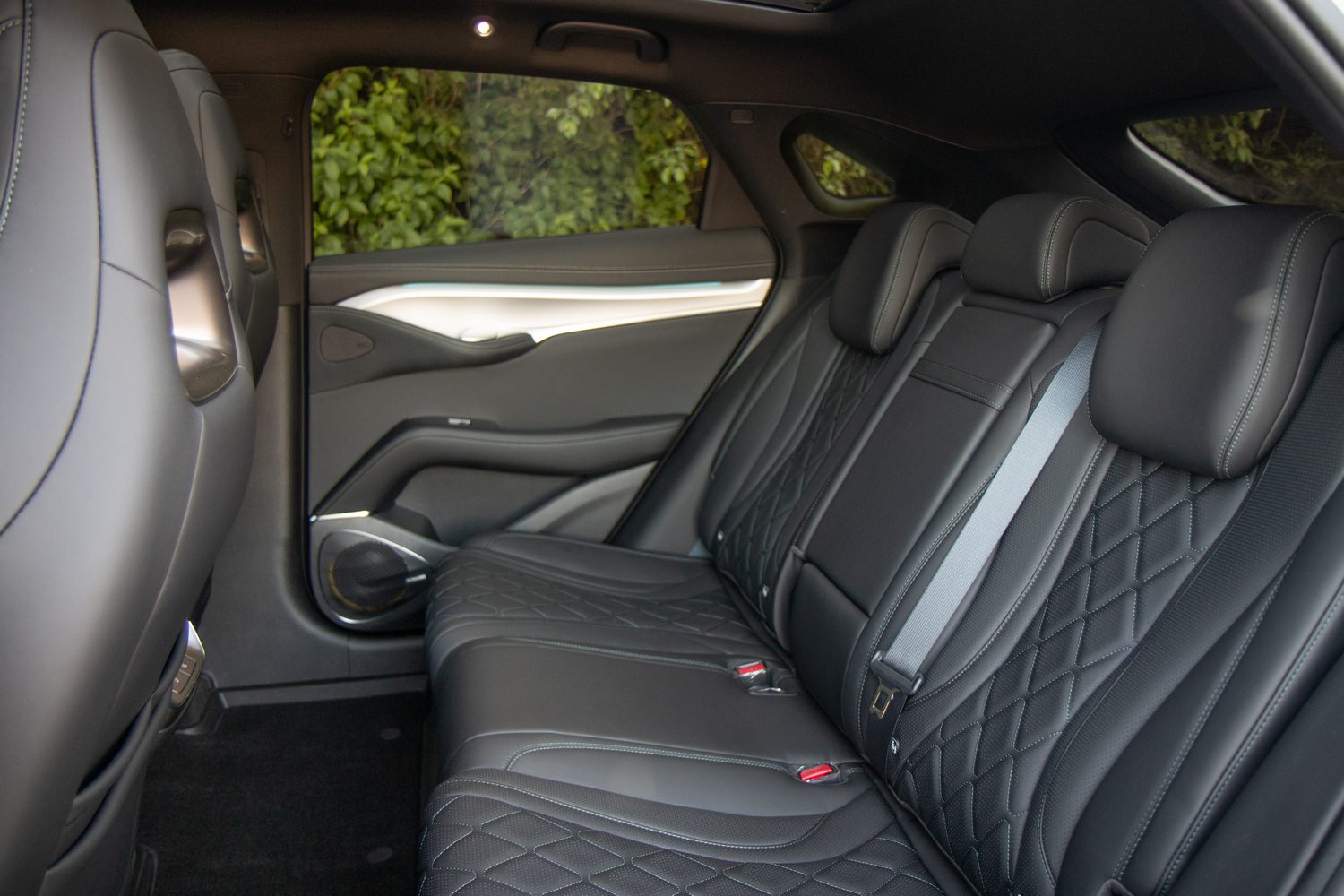
The Sealion 7 has acres of space for rear-seat passengers. In spite of the sleek roofline and the panoramic glass roof with its retracting sunshade. In fact, it's one of those Chinese cars that seems to sacrifice a little bit of boot space to create more legroom for those in the back - something Chinese customers still seem to favour.

Very, very tall rear-seat passengers might find headroom a little sung, but that's only for the freakishly tall. The seats get the same quilted look as the front ones, and they're heated in the back too. The backrest also reclines, but manually not electrically.
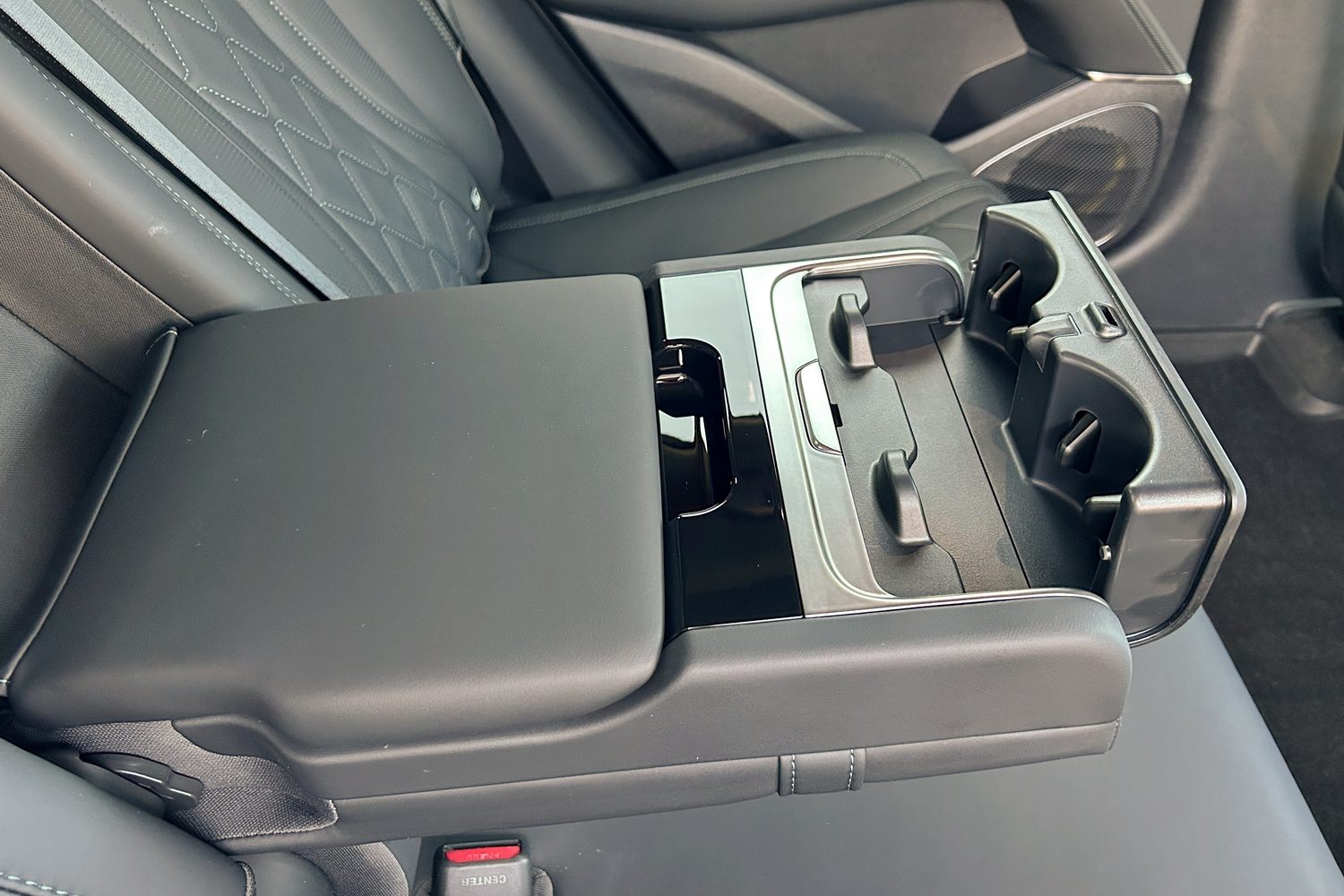
There are rear air vents, but no separate rear air conditioning controls. The seatback pockets are split-level, which is handy if you need to store larger items like a tablet, and smaller things like earbuds or a phone, while there's a flip-down armrest in the centre rear seat, with cupholders hidden under a flip-up cover, plus a shallow, lidded storage space.

The only downside is that the centre rear seat is too narrow for comfort, and anyone sitting there is going to be firmly poked in the back by the folded-away armrest.
Fitting child seats to the BYD Sealion 7
BYD fits three ISOFIX and i-Size anchor points to the Sealion 7 - two in the back seat and one in the front passenger seat. The rear doors open reasonably wide, and the rear legroom that's great for tall passengers is also great for child seats, as it's hard to think of one that would be too bulky to fit.

The flat floor in the back also helps with manoeuvring both the seats and their occupants into place, although that centre rear seat is going to be too narrow for all but the tiniest of booster cushions if you need to try and squeeze three pre-teens into the back.
Impressively, the Sealion 7 scored a huge 93-per-cent safety rating from Euro NCAP for its child occupant protection, actually better than the 87 per cent it scored for adult occupants.
Boot space in the BYD Sealion 7
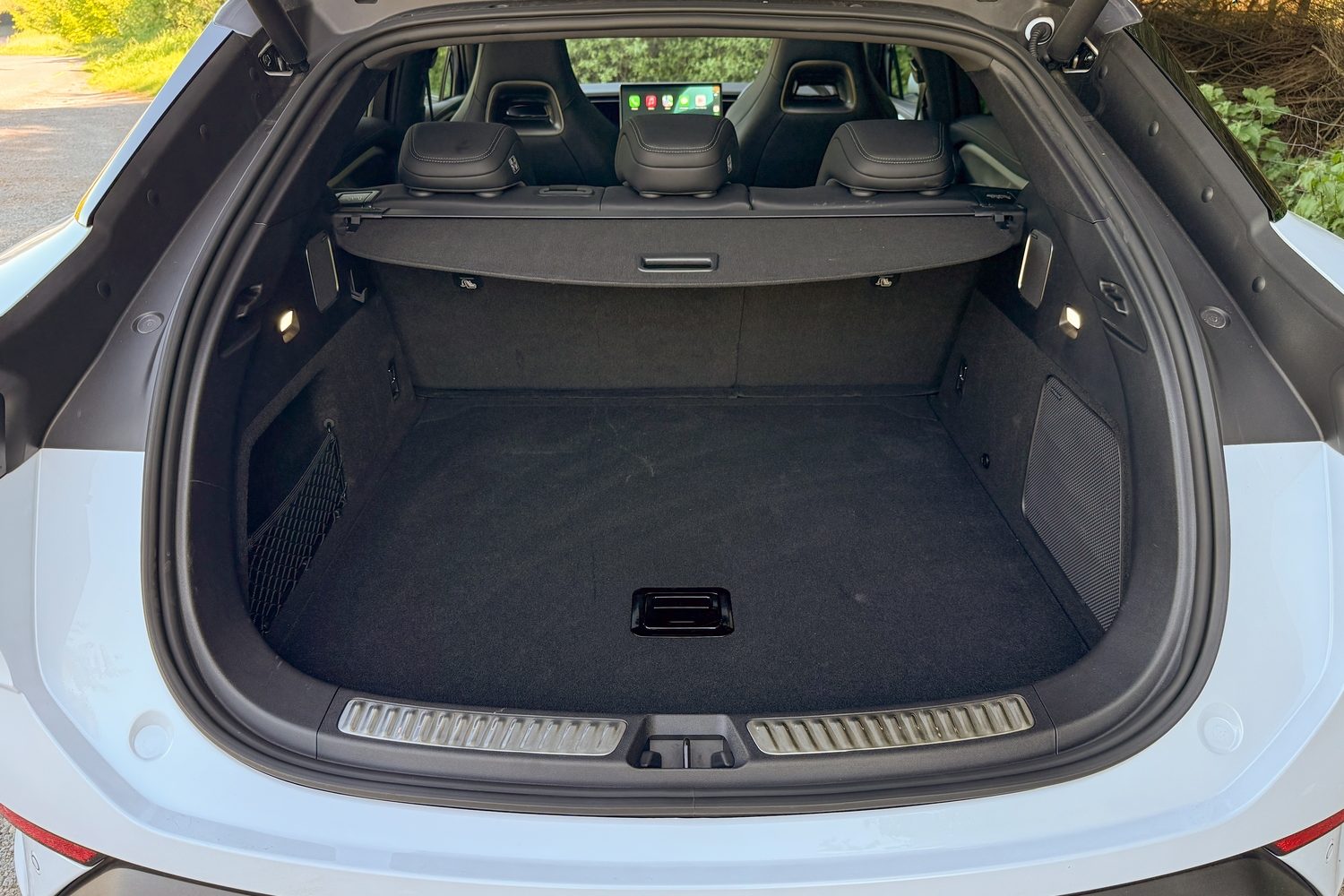
The Sealion 7's boot is neither large nor small - at 520 litres it has more space than, say, a Kia EV6, but considerably less than a Peugeot E-3008.

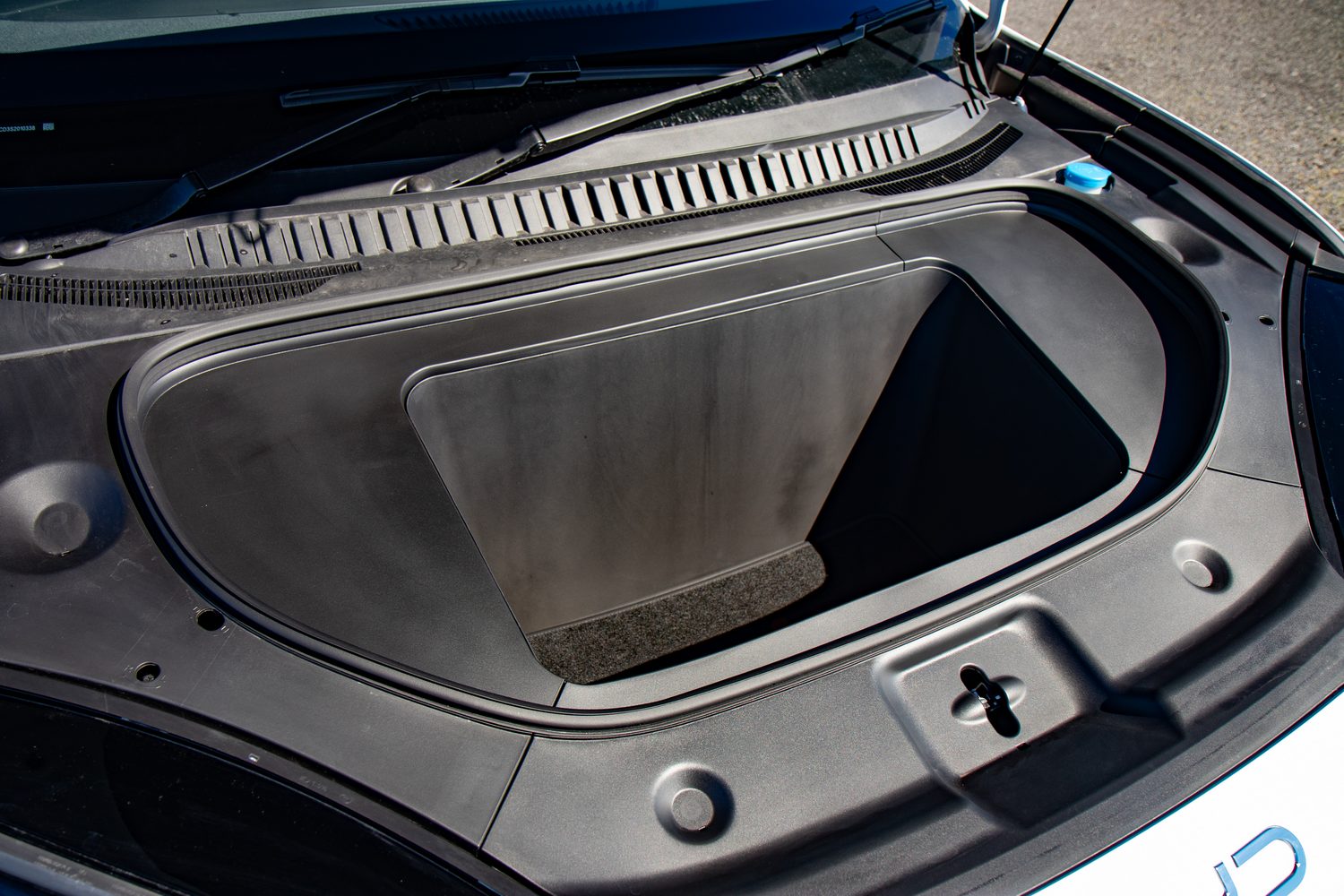
Much of that capacity is given over to underfloor storage, which is handy for charging cables, but arguably they're better off being kept in the 58-litre 'frunk' in the nose. With the adjustable boot floor in place, there's little-to-no loading lip, and the boot opens nice and wide for loading bulkier items.
The boot lid is electrically powered as standard, with a kick-to-open sensor under the rear bumper (although this is as haphazard as it is in pretty much any car we've tried).

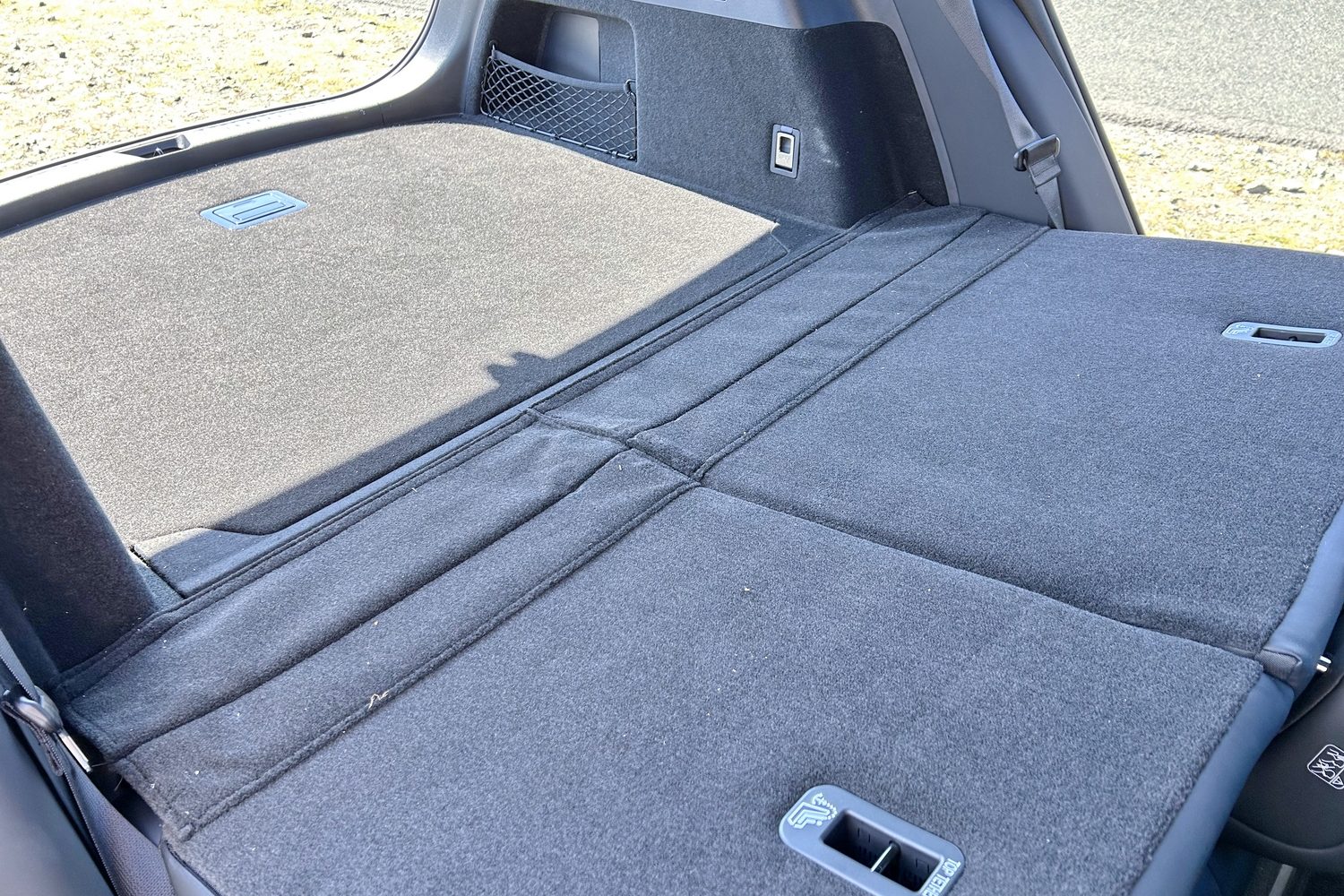
Fold down the back seats - and they split 60:40 and fold almost entirely flat - and you have 1,789 litres of space, which is good but just remember that sloping rear glass means that you won't be able to fit in anything too bulky.
Equally, there's nowhere to store the retracting luggage cover under the floor, which is annoying, but at least you do get two netted storage spaces, one at each side of the boot. There's no spare wheel, just the usual tyre repair kit.
Towing with the BYD Sealion 7
The Sealion 7 doesn't have a specific 'trailer assist' electronic system, but the adaptive cruise control is supposed to be 'trailer aware' and the standard-fit 360-degree parking camera system and sensors make it easier to back up when hitching up. Towing weights are 750kg unbraked, and 1,600kg braked, and that's for all models.
Safety in the BYD Sealion 7
The Sealion 7 received a five-star rating from Euro NCAP when it was tested in 2025, including an 87-per-cent score for adult occupant protection, 93 per cent for child protection, 76 per cent for vulnerable road user protection and 79 per cent for its ADAS setup.
That's all impressive, and the Sealion 7 does come with a comprehensive list of safety kit, from adaptive cruise control to front and rear cross traffic alert, door opening warning, intelligent high-beam lights and more.

However, as is so often the case, the warning bongs for speed limits (often inaccurate) and driver attention (even if you just glance out of the side window) are so irritating that you'll just end up switching them off, while the lane-centring steering system is so aggressive that it can be alarming, and will also be turned off by many. You can see the full Euro NCAP report here.
Performance of the 2025 BYD Sealion 7
- Rear-drive and four-wheel-drive versions
- 530hp models sprint to 100km/h in 4.5 seconds
- No model is slow

BYD offers the Sealion 7 in two versions, starting with a rear-wheel-drive layout in the Sealion 7 Comfort. This car's single electric motor produces up to 312hp and 380Nm of torque.
The Design and Excellence versions which both share the same twin-motor, four-wheel-drive setup, producing up to 530hp and 690Nm.
Those four-wheel-drive versions are staggeringly fast, able to hit 100km/h from rest in just 4.5 seconds. It's not so long ago when that would have been savage supercar territory, but now such sprint times seem almost commonplace in regular electric family cars such as this.
Performance is truly explosive, although it doesn't seem to make much of a difference if you select Sport mode or not, and we know from testing the Seal saloon on track that such acceleration can be repeated again and again before the battery and motors cry for a rest.
This kind of acceleration isn't really necessary or even desirable for many, certainly not if you're carrying passengers, and so the standard Sealion 7 is probably the better one to go for, as although you lose a bit of range, the overall performance of the car is still very good (0-100km/h in 6.7 seconds is still rapid) and feels better suited to the Sealion 7's role in life. That is of course if you can do without the added traction of all-wheel drive.
Driving the BYD Sealion 7 Excellence - Neil Briscoe
As with many electric cars, the Sealion 7 is impressive the first time you mash the accelerator pedal to the carpet; and then the novelty quickly fades. After which you'll be stuck with the fact that the car's handling, steering and brakes simply aren't up to coping with that kind of brute force. Much better to switch to Eco mode and sit back and relax.
Then the light steering becomes much more in tune with the car's general demeanour. On twisty roads, if you're trying to press on a bit, the steering's over-light weighting and slightly too-fast gearing becomes a liability. Essentially, in Excellence form, with all that power, the Sealion 7 is a performance car in search of a chassis.

Slow down and the Sealion 7 becomes quite a pleasant thing. It's very refined, and cruises in an unruffled fashion aside from too much tyre noise. At least until the suspension gets caught out by a sudden bump or pothole, at which point it becomes really quite a bit ruffled - the ride comfort is definitely too much on the firm side of things, especially around town. The brakes are good though and have a well-judged crossover between physical and regenerative braking, even if the pedal feel could be a bit better.
Range, battery, charging and running costs of the 2025 BYD Sealion 7
- Up to 230kW DC charging
- Longest official range is 502km
- Bigger battery brings only marginal gains

The BYD Sealion 7 comes with a choice of two battery packs, with the largest-capacity and fastest DC charging speed reserved for the Excellence model. Although, as we shall see, the range on offer doesn't differ wildly between the basic and the top-spec Sealions - there's only 20km in it, in fact.
Battery options and official range
BYD is justifiably proud of the fact that, unlike most electric car brands, it makes its own batteries, and even fully integrates that 'Blade' battery design into the chassis of the car for extra strength and crash protection.
The lithium-iron phosphate (LFP) chemistry of that battery is also notably rugged and theoretically copes better in the long term with repeated rapid charging. It's also more resistant to any thermal runaway if damaged.
The Sealion 7 comes with a choice of battery packs, both using the same LFP chemistry. For the basic Comfort model, there's an 82.5kWh (net) battery, giving an official range of 482km. The Design model retains that battery pack, but with its extra motor and more power, it has less range - 456km on the WLTP cycle. The Excellence gets the bigger 91.3kWh battery, for a range of 502km.
Real-world range and efficiency of the BYD Sealion 7 Excellence
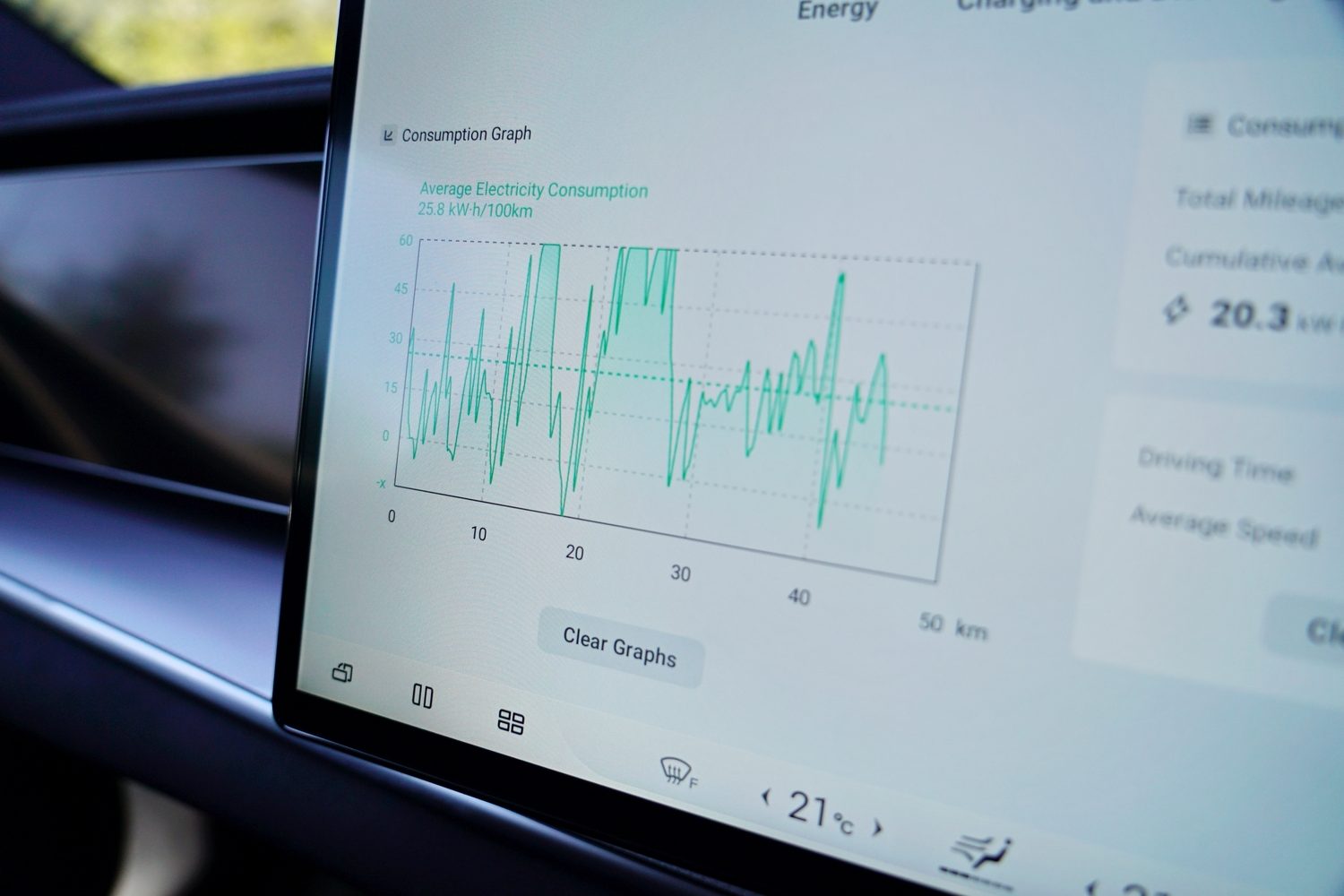
On our test we averaged around 23kWh per 100km in terms of energy consumption, and that limits the total available real-world range to around 400km, depending on your driving style. That's OK, but hardly ground-breaking, although the charging performance we observed, using both IONITY and ESB DC rapid chargers, was good.
Charging up the BYD Sealion 7
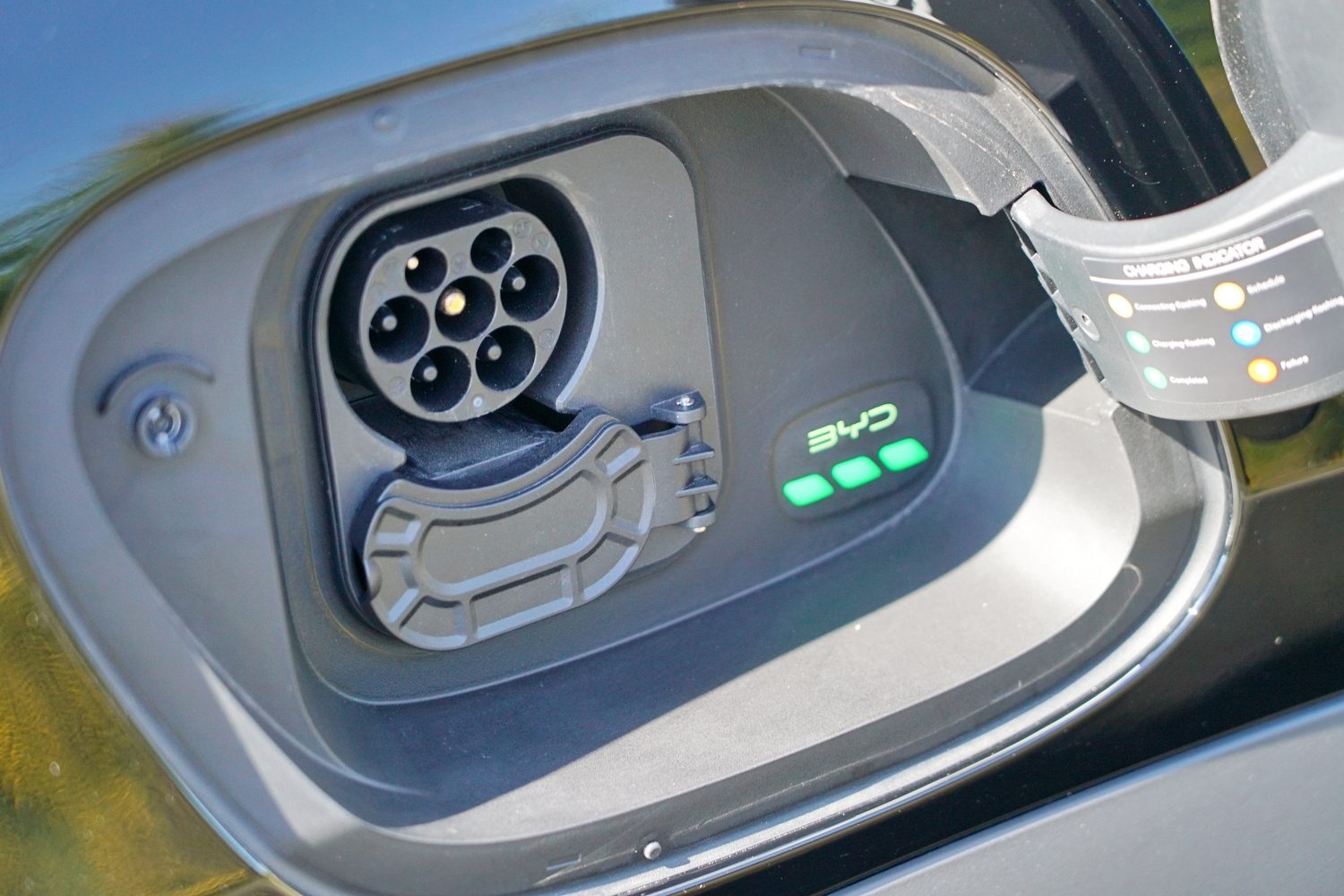
The Excellence model gets the highest charging power - 230kW on DC chargers, compared to 150KW for the Design and Comfort versions. This means a 24-minute 10-80 per cent charging time, compared to 32 minutes for the other models.

All three will charge at up to 11kW on three-phase AC chargers, although at 7.4kW on a home charger, the Excellence will take the guts of 15 hours to fully charge from flat.
All models get vehicle to load (V2L) so you can use them as big, mobile power banks for other electric devices.
Servicing the BYD Sealion 7
BYD's servicing schedule for the Sealion 7 is once every 12 months, or at 20,000km intervals, whichever is soonest.
BYD Sealion 7 warranty
BYD's standard warranty is impressive, as it runs for six years, although it is limited to 150,000km. However, there are other levels of cover tucked within that.
There's an eight-year warranty for the battery pack, covering it for defects, or if its storage capacity drops below 70 per cent of its original level in that time.
But whereas most car makers only offer 160,000km of battery cover within those eight years, BYD is a little more confident and so offers 200,000km. There's also a 12-year anti-corrosion warranty, with no mileage limit, and an eight-year, 150,000km warranty for the electric motors.
Irish pricing & rivals to the 2025 BYD Sealion 7
- Comfort model priced below €50,000
- Lots of standard equipment
- Plenty of talented competition

BYD Sealion 7 prices start from €49,125 for the Comfort version, which has only a single motor and the smallest battery, but it's well-equipped, with synthetic leather, the big screen and a panoramic glass roof.
The Design version gets the same battery, but the more powerful four-wheel-drive setup, and costs €54,435, and the Excellence clocks in at €56,490.
That makes the Sealion 7 competitively priced, but not notably affordable, unless you're grading on a performance-per-Euro basis.
The Skoda Enyaq Coupe has a similar starting price, although that's for less power and a slightly shorter range if you're going for the basic €48,170 model.
Actually, a much better rival from the Volkswagen Group would be the sleek-looking Cupra Tavascan, which in basic form offers 286hp and 568km range for €45,365.
In terms of Chinese rivals, the Xpeng G6 Long Range costs €49,440, is very well equipped and has a 570km range. Meanwhile, there's the ever-present Tesla Model Y, which can't match the Sealion 7 in quality terms, but the rear-drive long-range version, with 622km of range, is €49,990.
Another good option is the Renault Scenic, which offers a 610km range in the Esprit Alpine version for €49,895.
Verdict - should you buy the 2025 BYD Sealion 7?
Broadly speaking, the Sealion 7 is an impressive electric SUV. While none of the range nor the pricing nor the dynamic performance are in any way outstanding, the Sealion 7 does combine good looks with high tech, high performance and impressive quality. It's a solid all-rounder.
FAQs about the 2025 BYD Sealion 7
Does the BYD Sealion 7 have a 'frunk'?
Yes, the BYD Sealion 7 has a 58-litre 'frunk' in the nose.
Is the BYD Sealion 7 all-wheel drive?
Yes, as long as you go for either the Design or the Excellence models, both of which share the same two-motor. four-wheel-drive setup.
Are BYDs reliable?
It's a bit hard to tell yet, as the brand is still pretty new in the Irish market, but its models seem to be performing well so far in reliability terms, and the warranty is impressive. We'll keep an eye on it.
Does the BYD Sealion 7 qualify for the SEAI grant?
Yes, the Sealion 7 qualifies for the SEAI grant of €3,500 across the entire range.
Has the BYD Sealion 7 been assessed for safety?
Yes, and it scored a full five-star rating from Euro NCAP. You can find out more here.
Want to know more about the 2025 BYD Sealion 7?
If there's anything about the new BYD Sealion 7 we've not covered, or you'd like help in choosing between it and other cars, you can avail of our expert advice service via the Ask Us Anything page.