Introduction to the 2026 BYD Dolphin G DM-i
The Dolphin G DM-i supermini is designed to compete in the compact hatchback segment populated by the combustion-engined and hybrid-powered likes of the Renault Clio, SEAT Ibiza, Mazda2 and more.
But why is it not fully electric? Well, BYD already has the Dolphin Surf city car and bigger Dolphin five-door for those who need pure EVs - but what the Chinese company has identified is that there's a plug-in-hybrid-shaped gap in the market; so that's what the Dolphin G is designed to fill.

Pros & cons of the 2026 BYD Dolphin G DM-i
Pros:
• Only PHEV in this class
• Long electric range
• Big boot
Cons:
• Unresolved ride
• Unrefined engine
• Some budget plastics inside
Exterior & design of the 2026 BYD Dolphin G DM-i
• Smooth and modern appearance
• Relatively long wheelbase
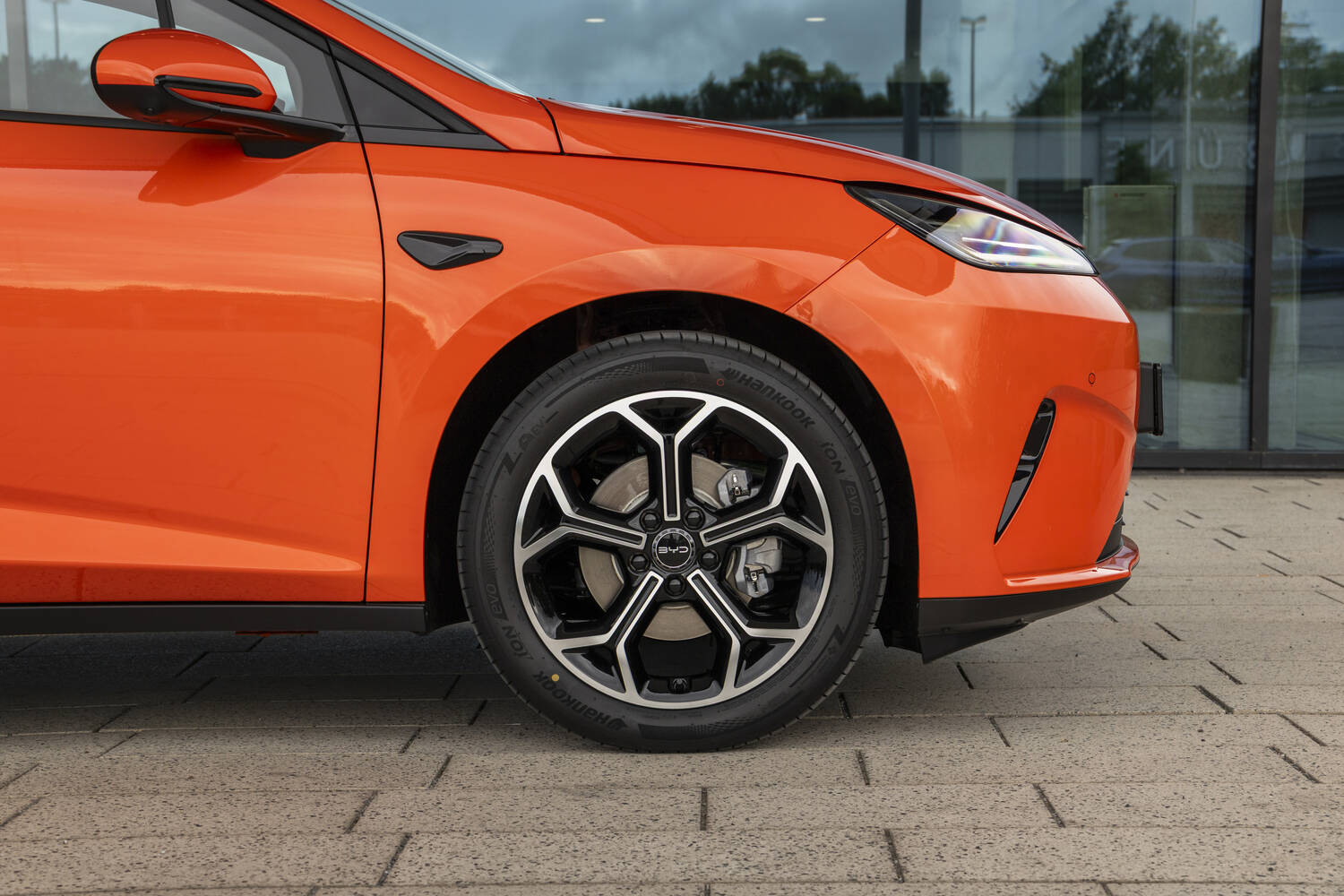
• 16- and 18-inch wheel options

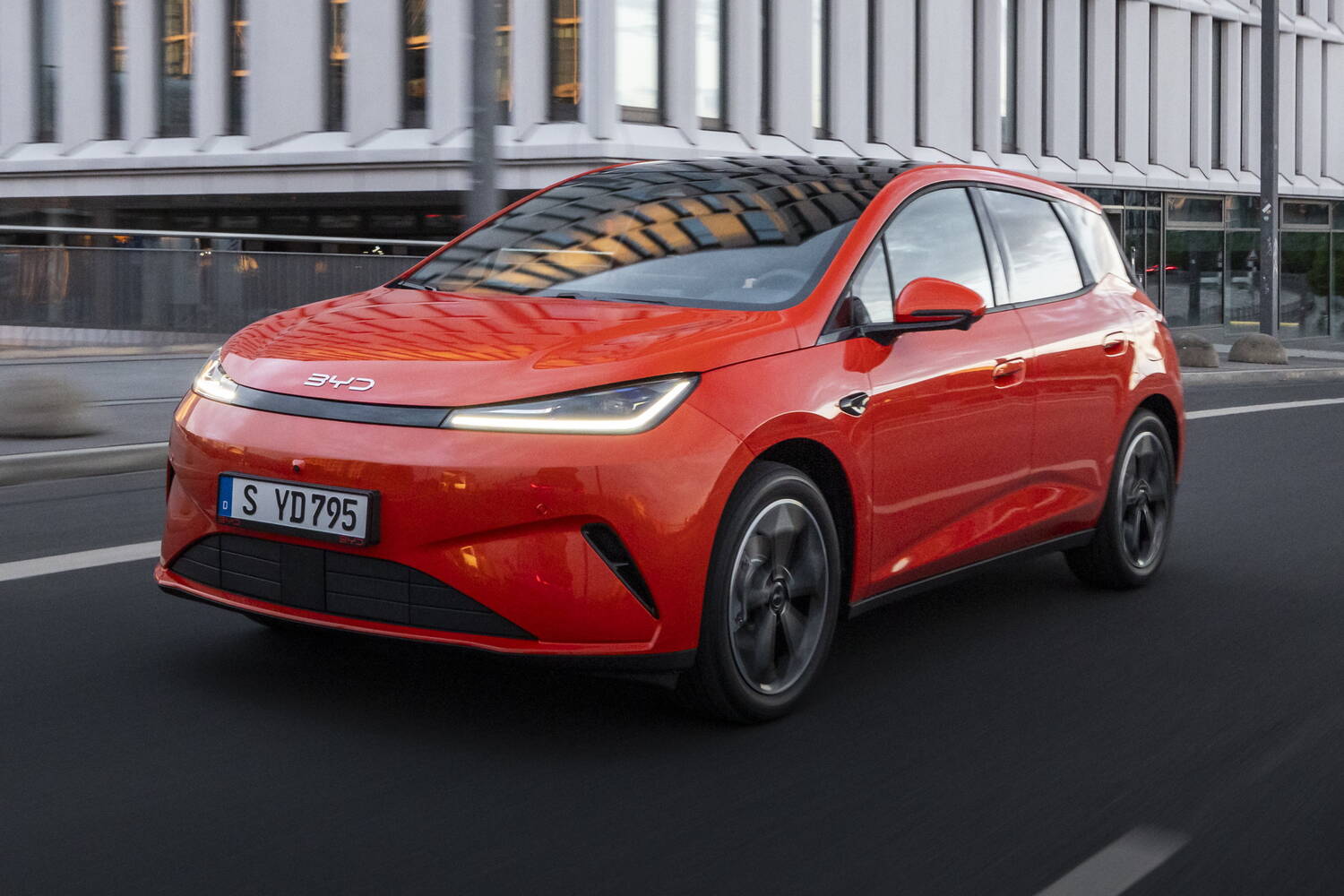
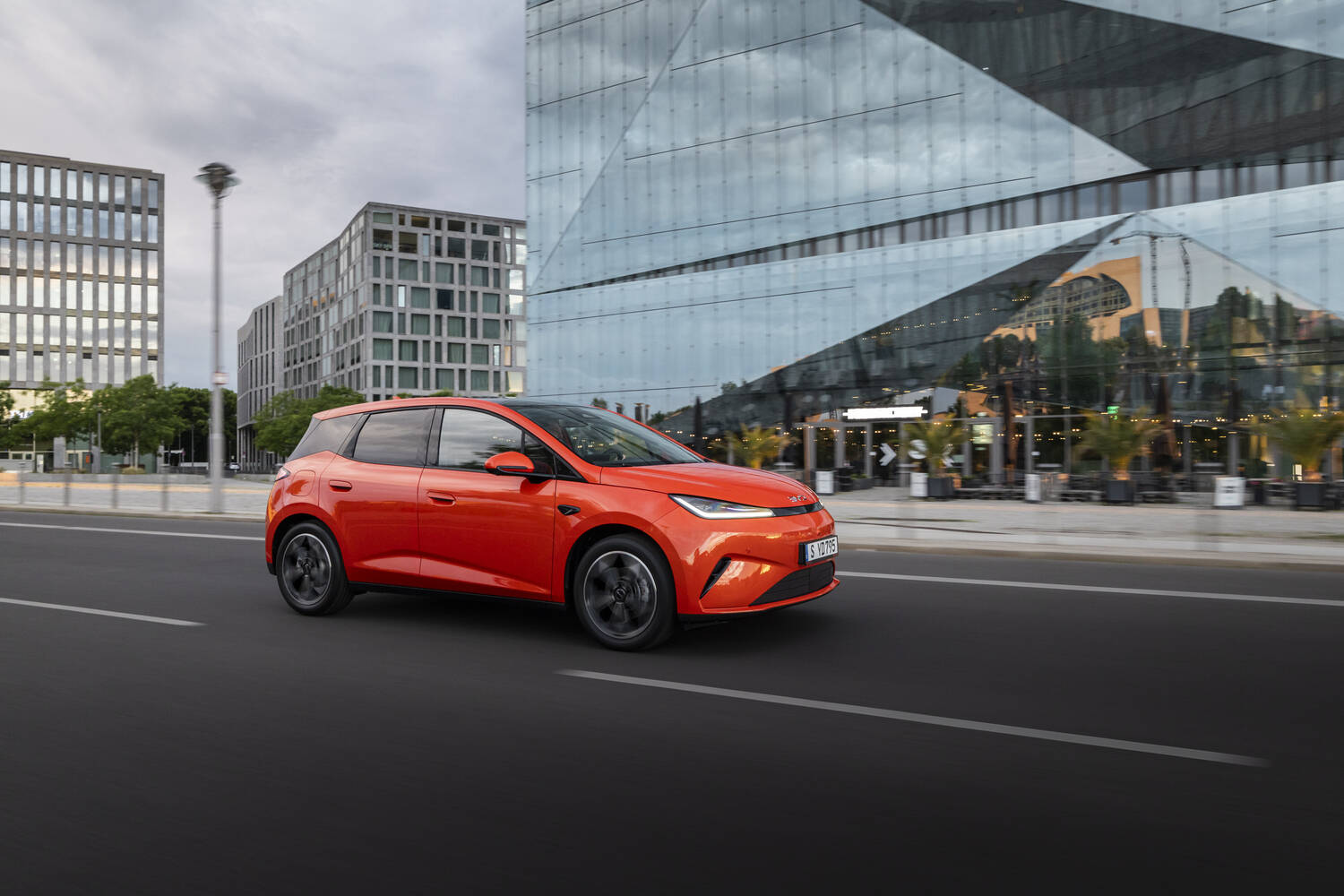
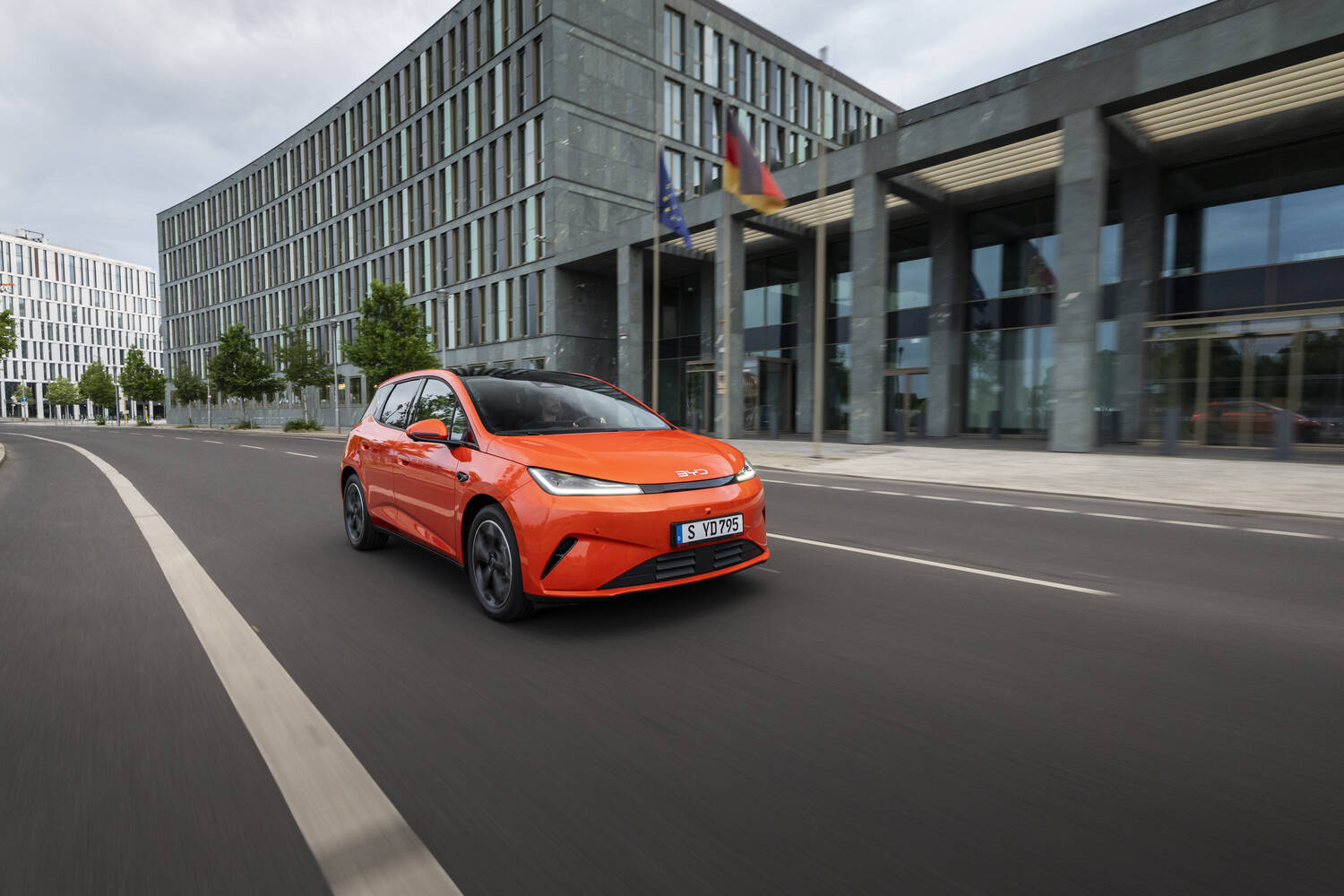
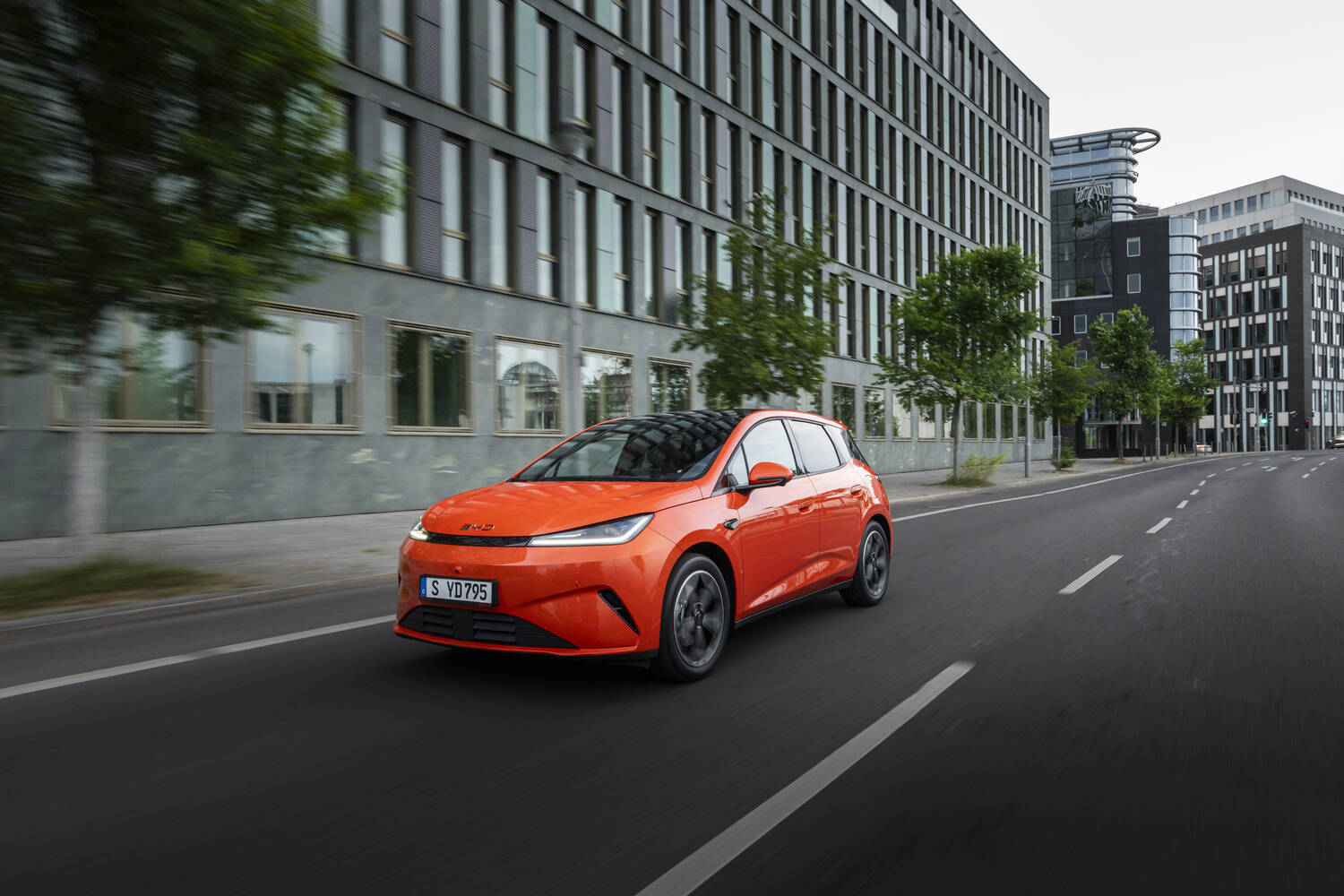
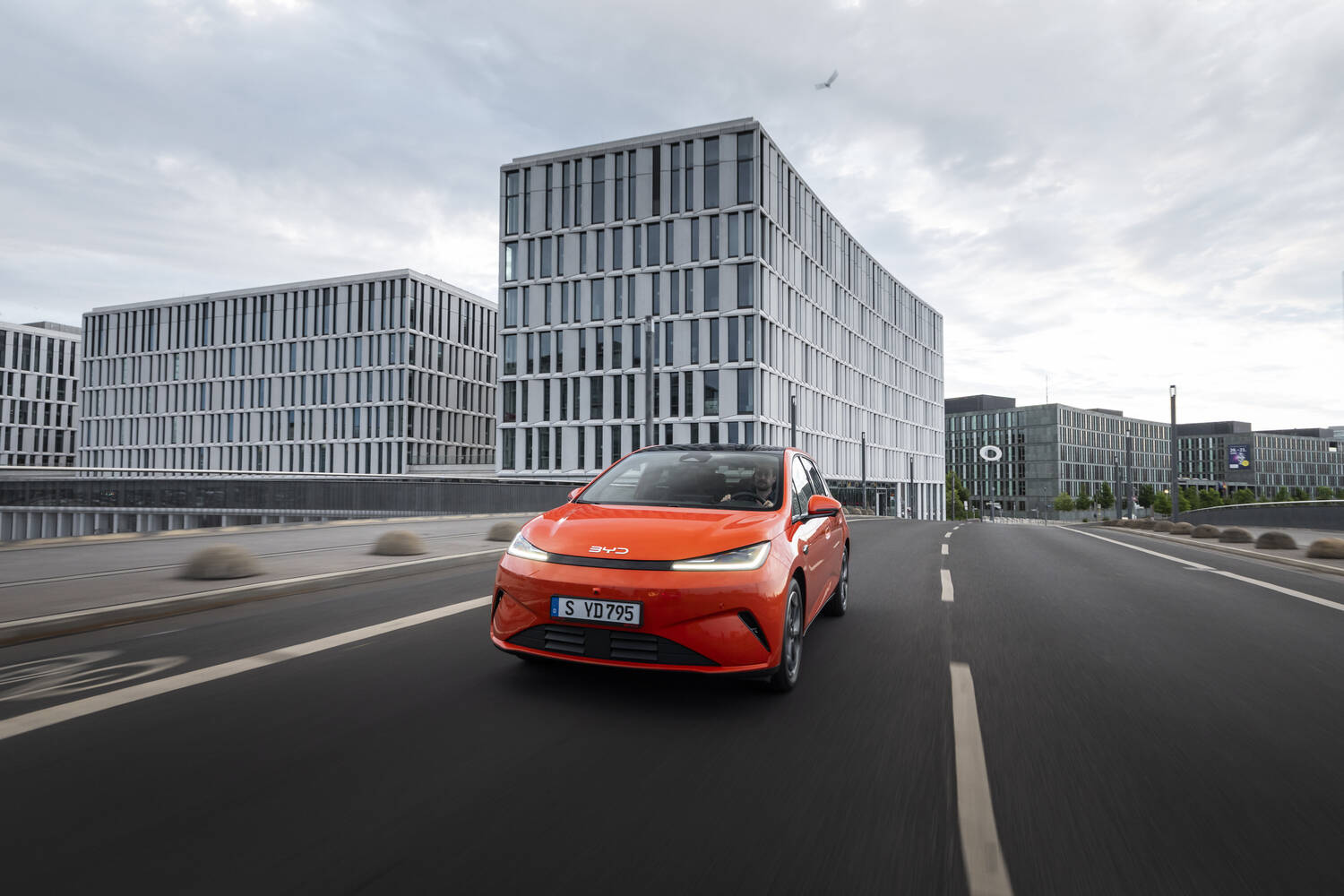
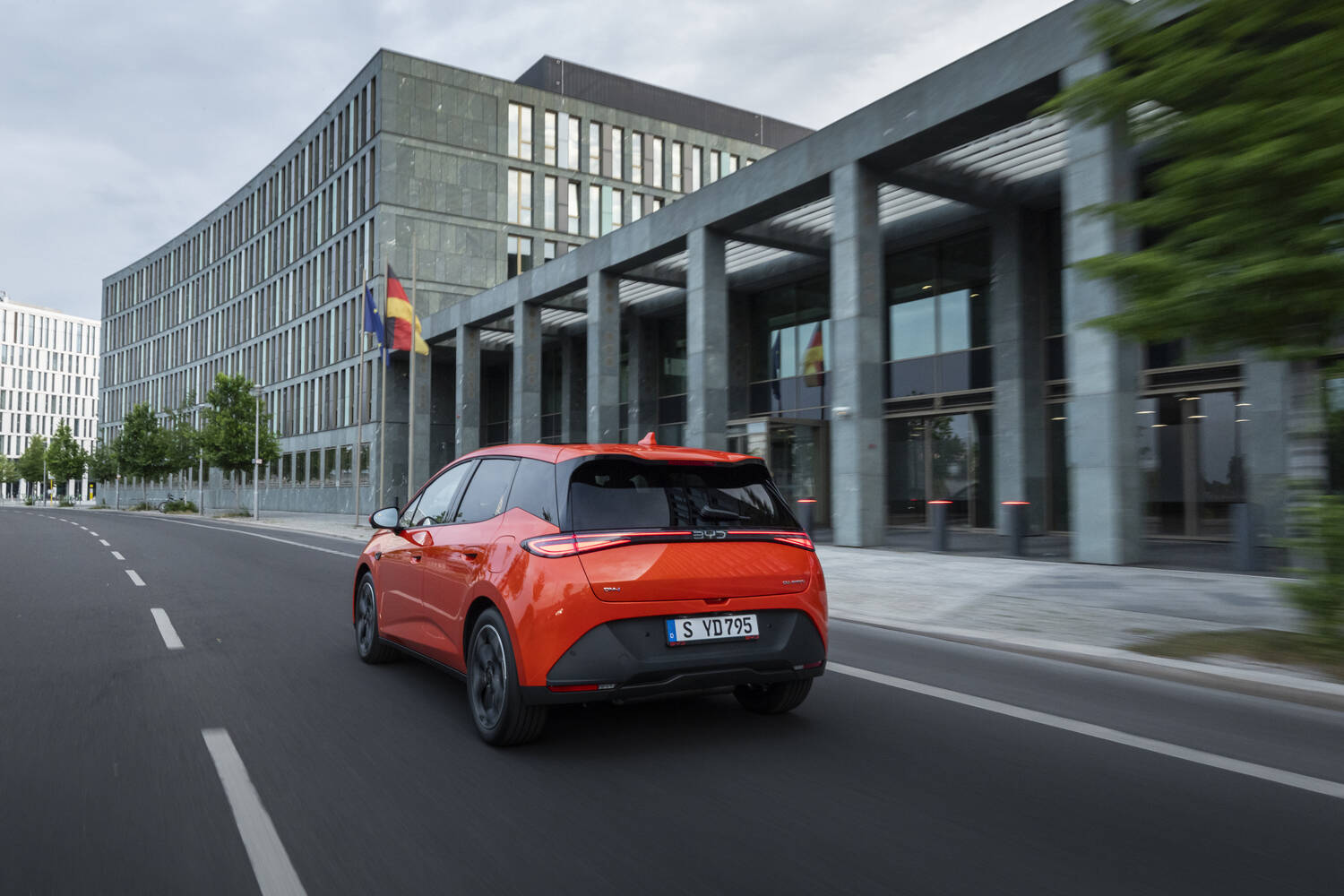
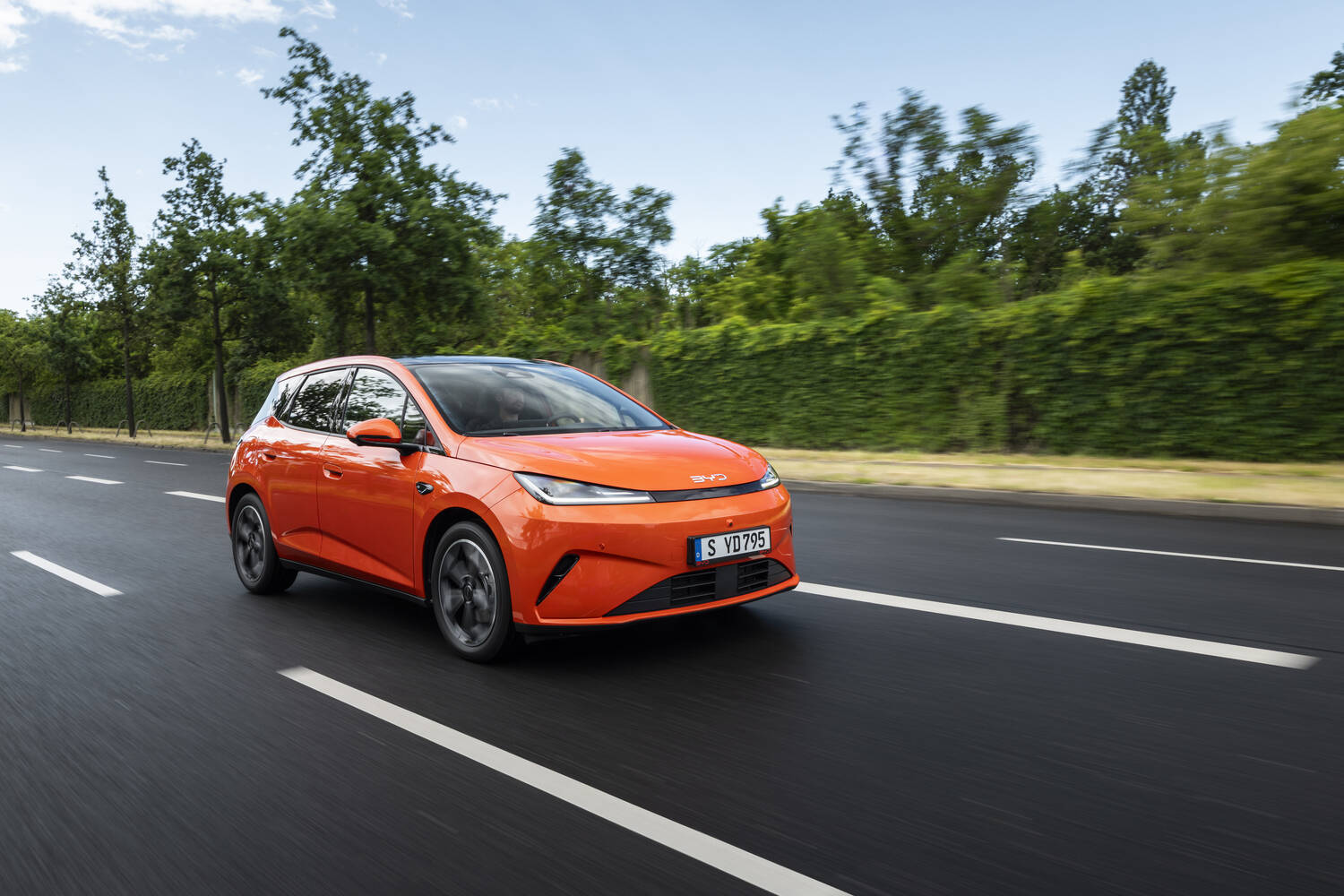
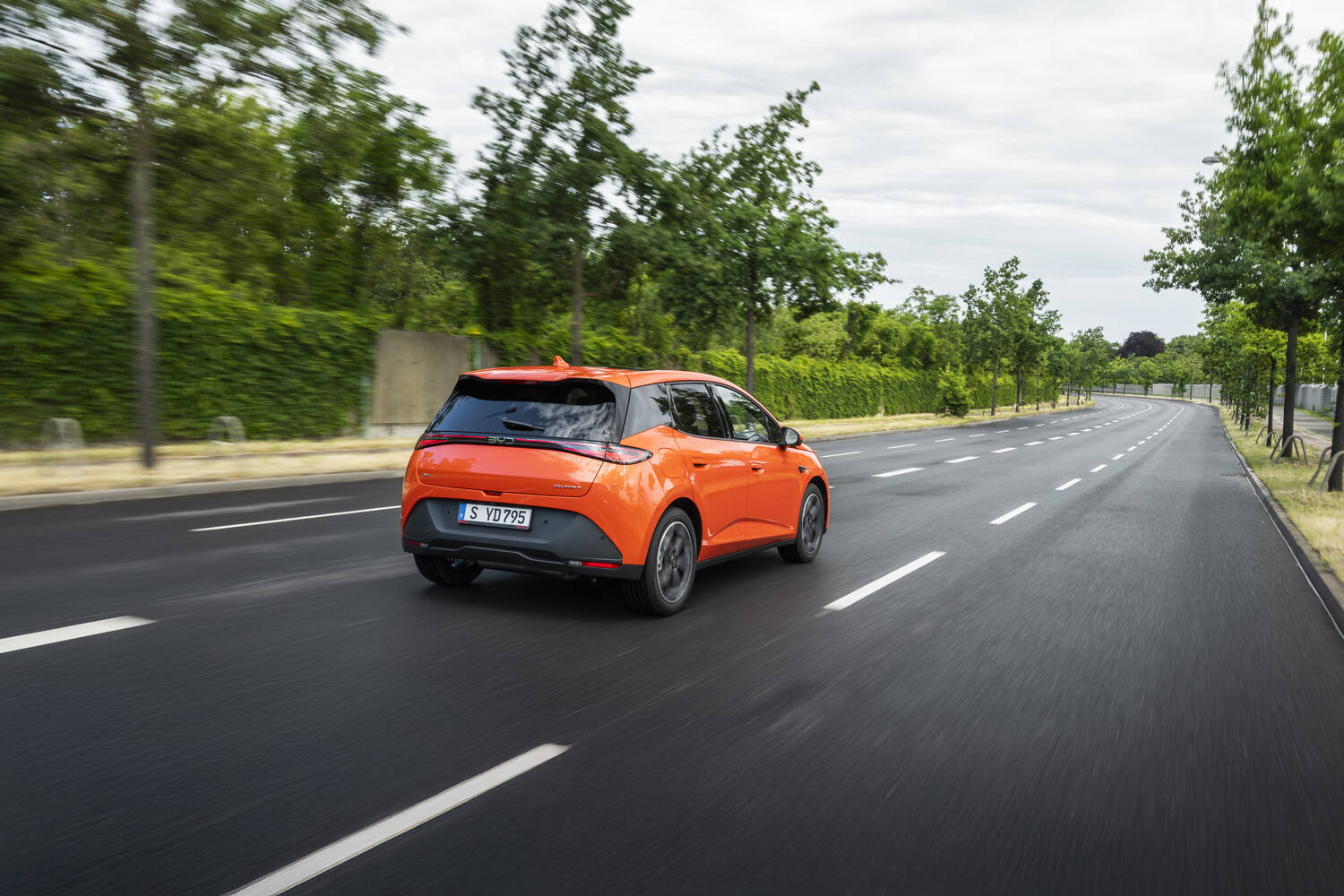
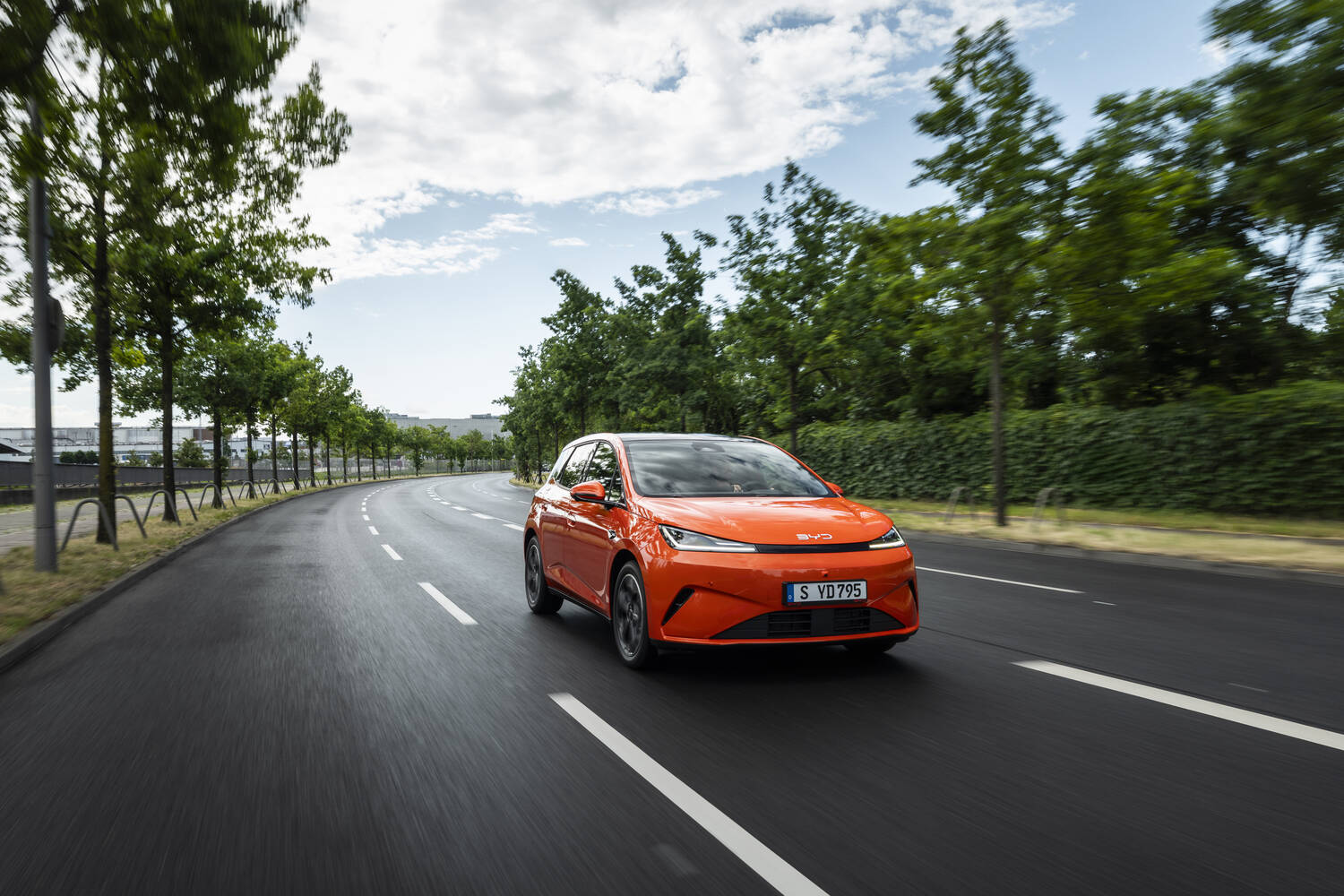
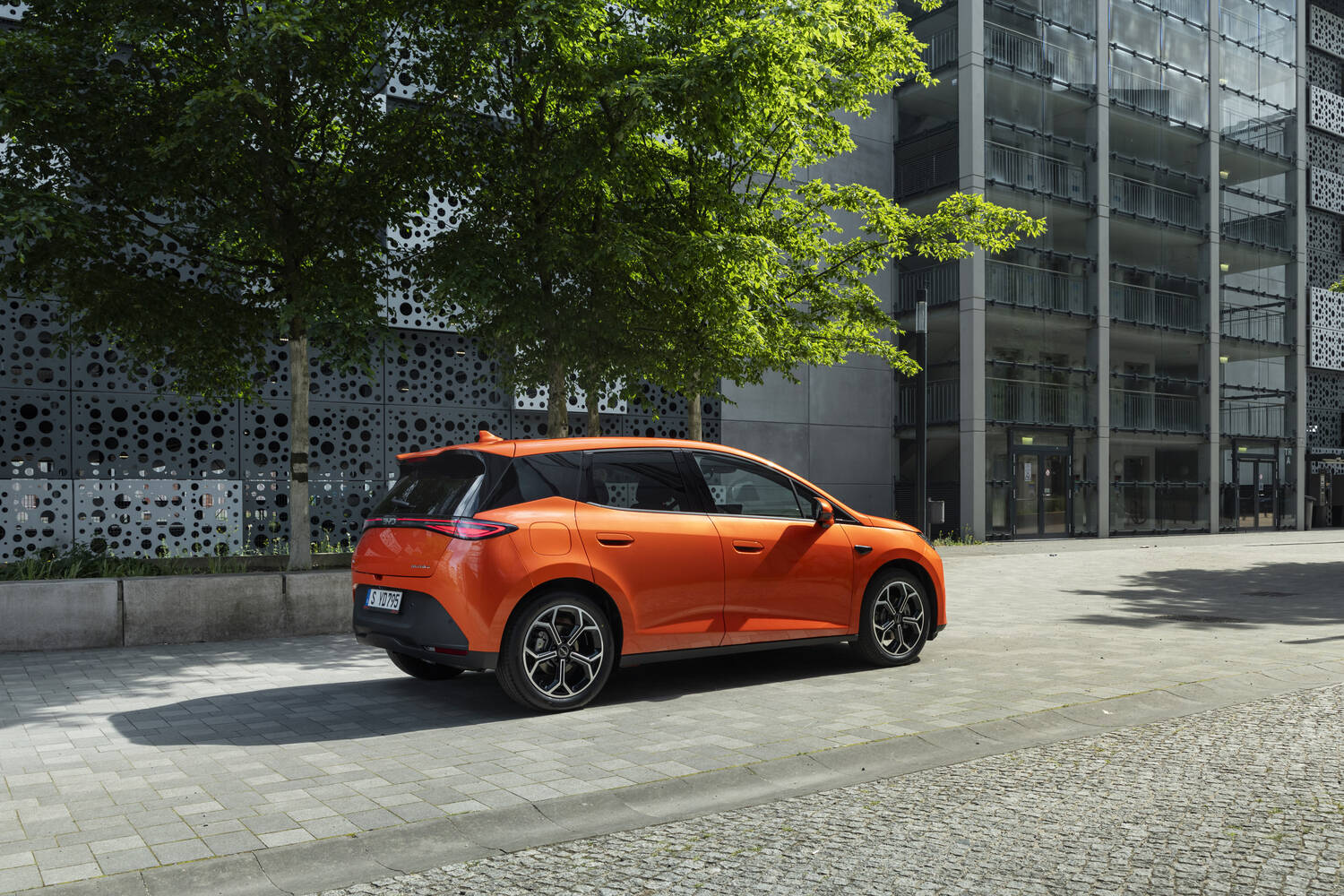
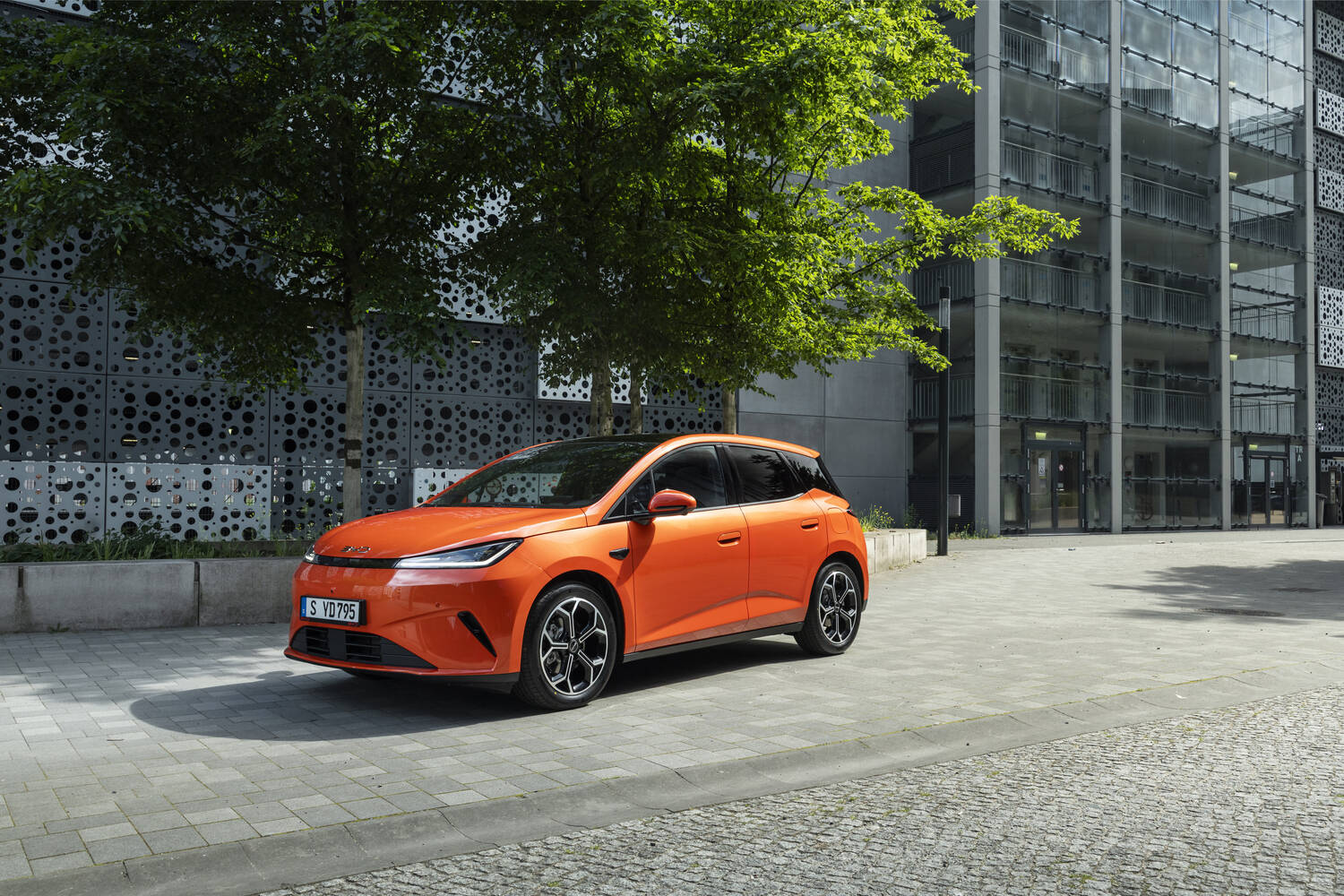
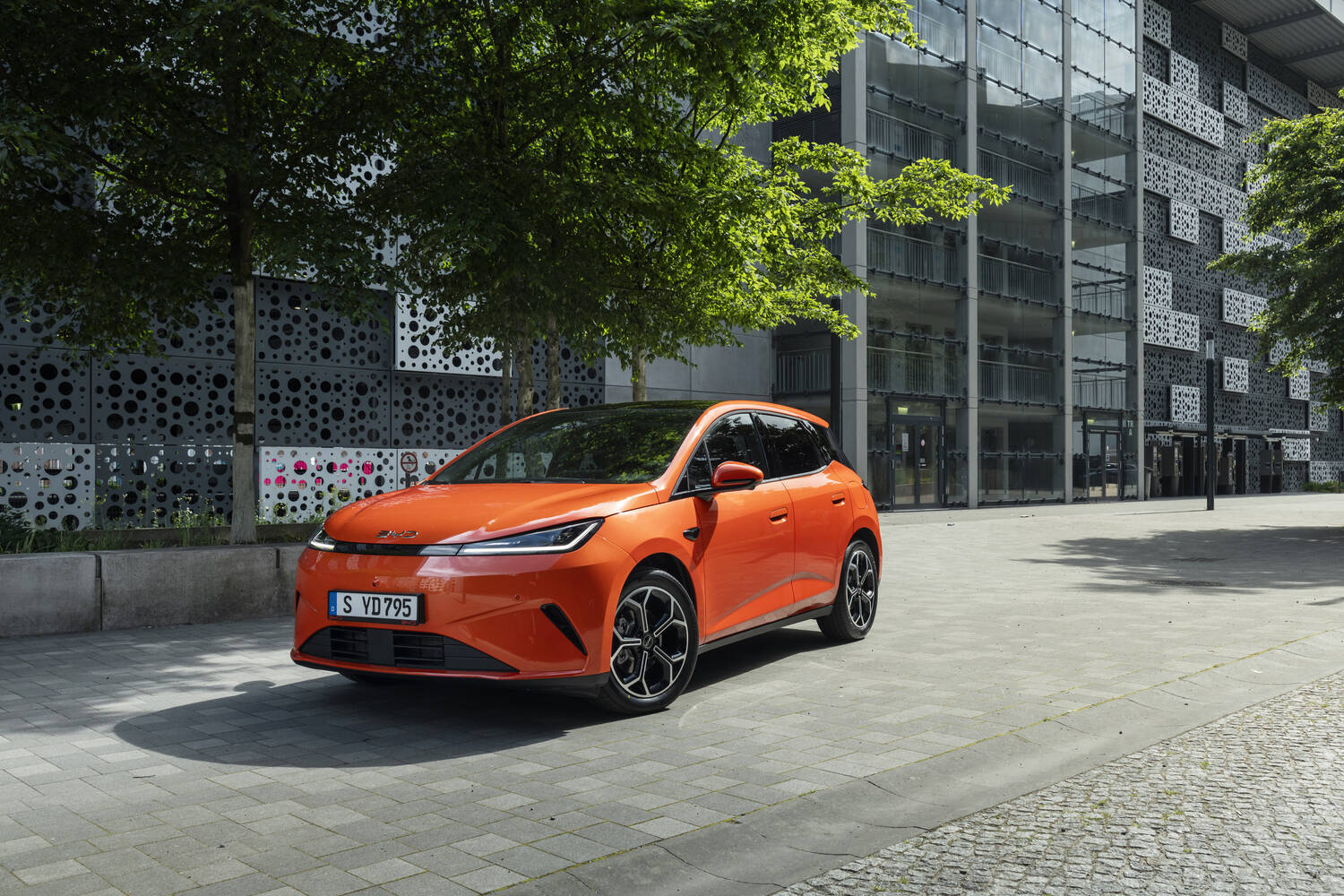
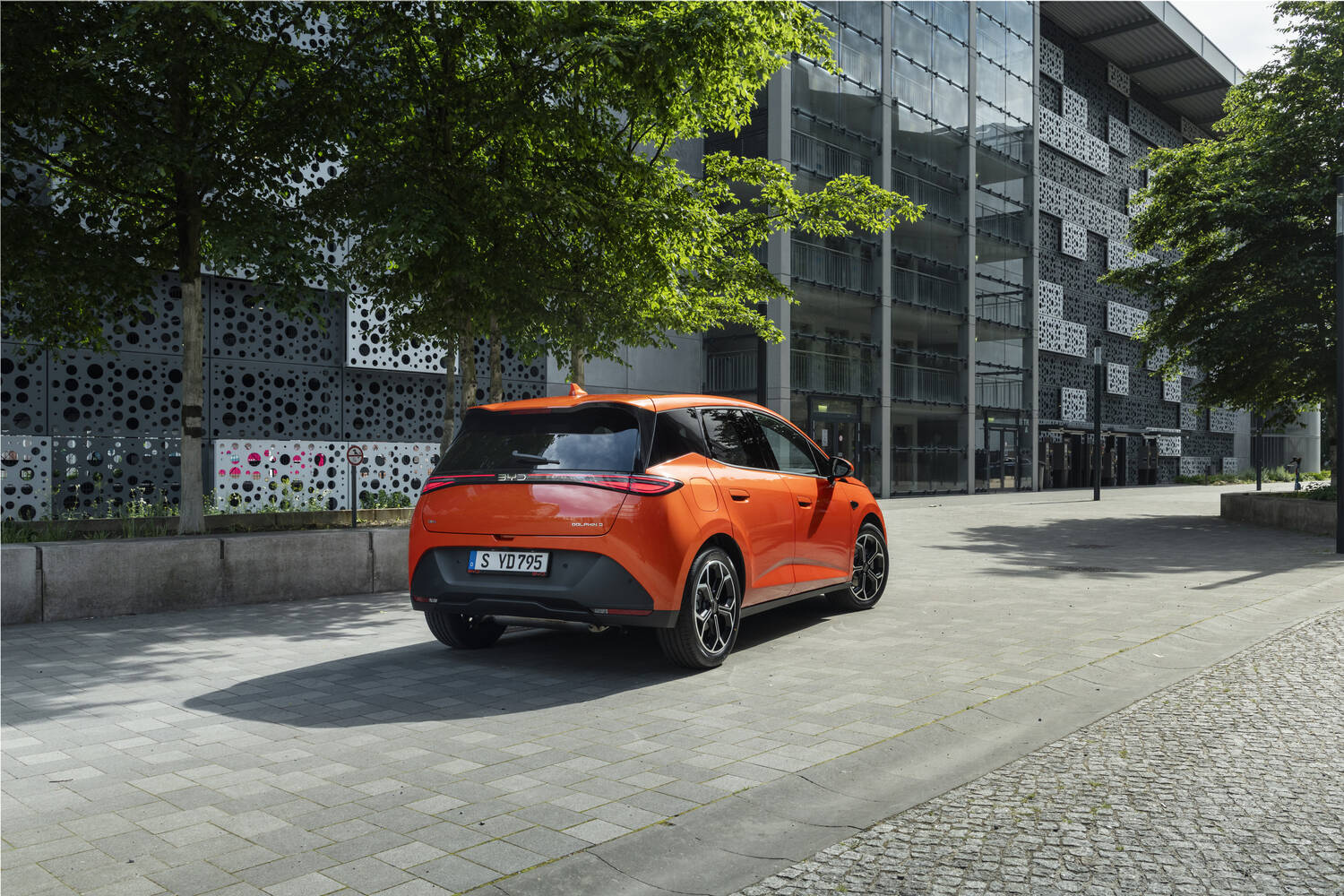
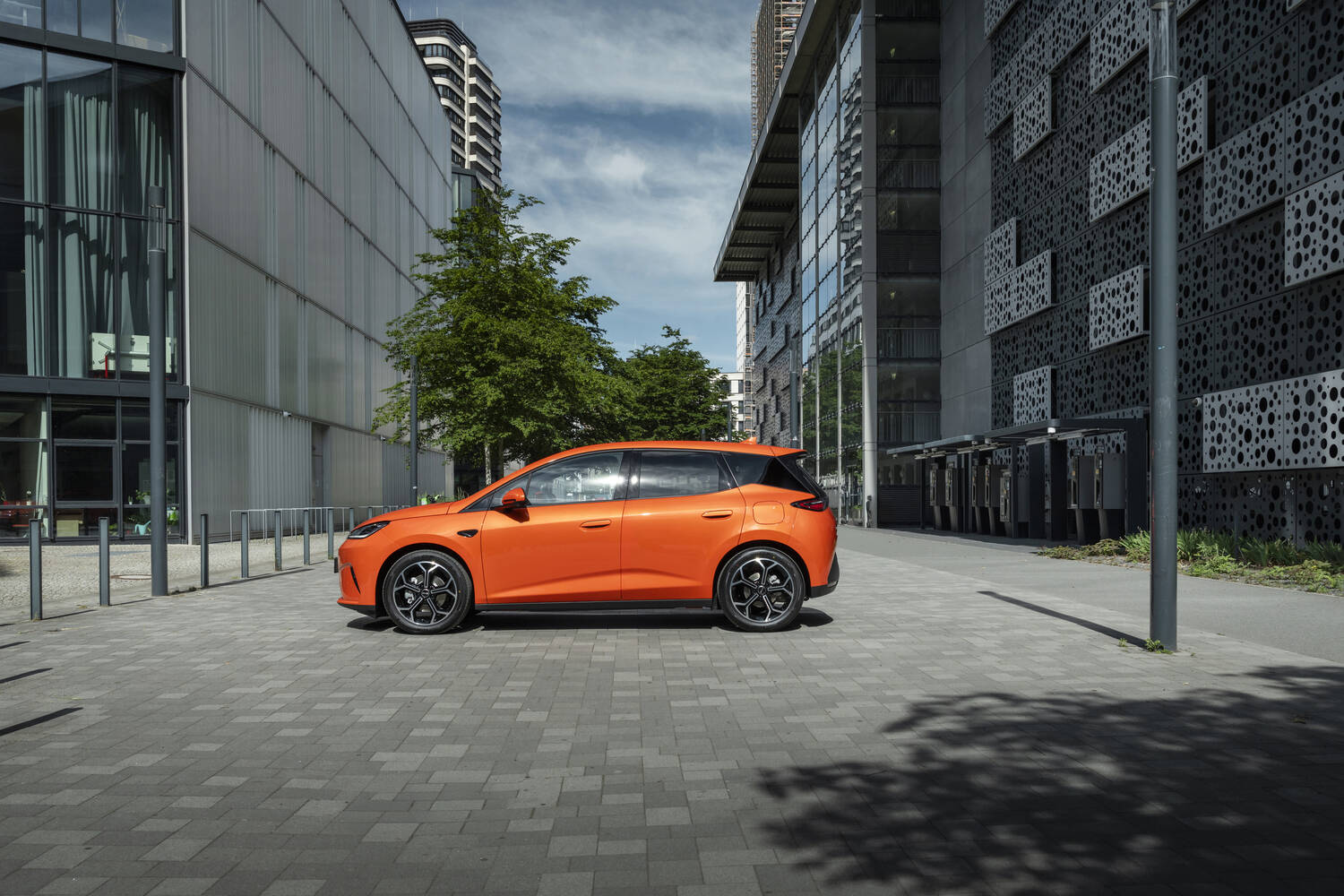
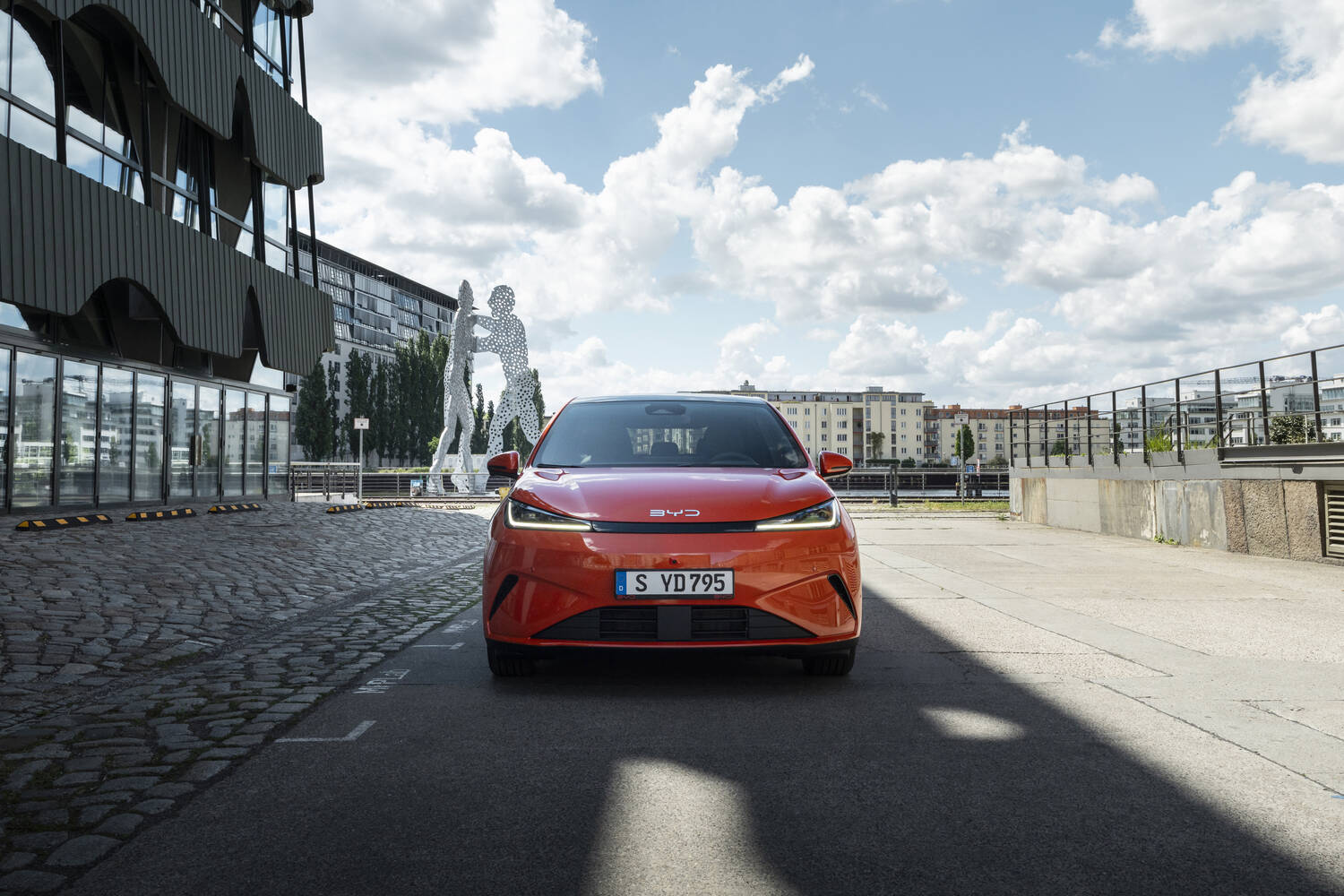
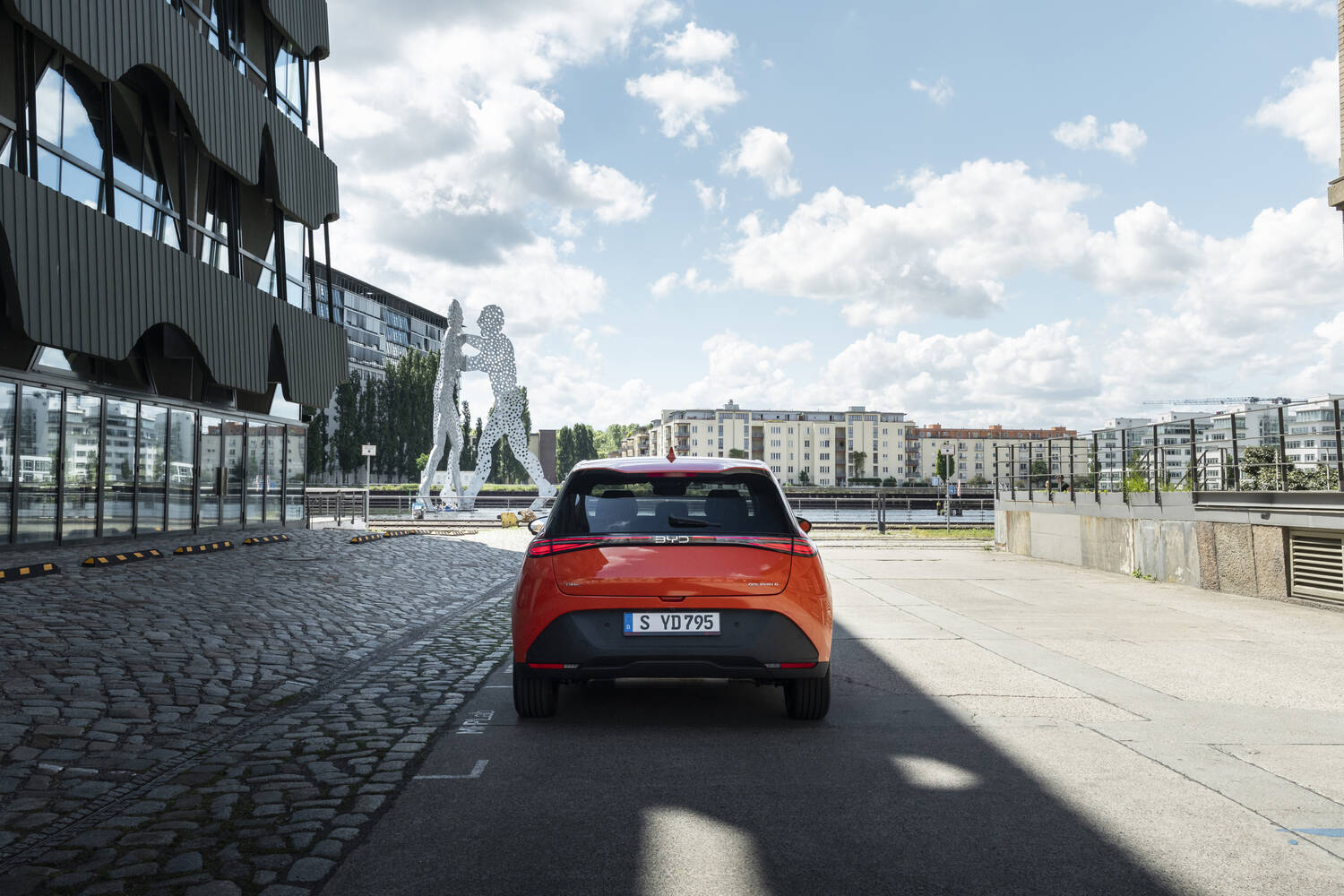
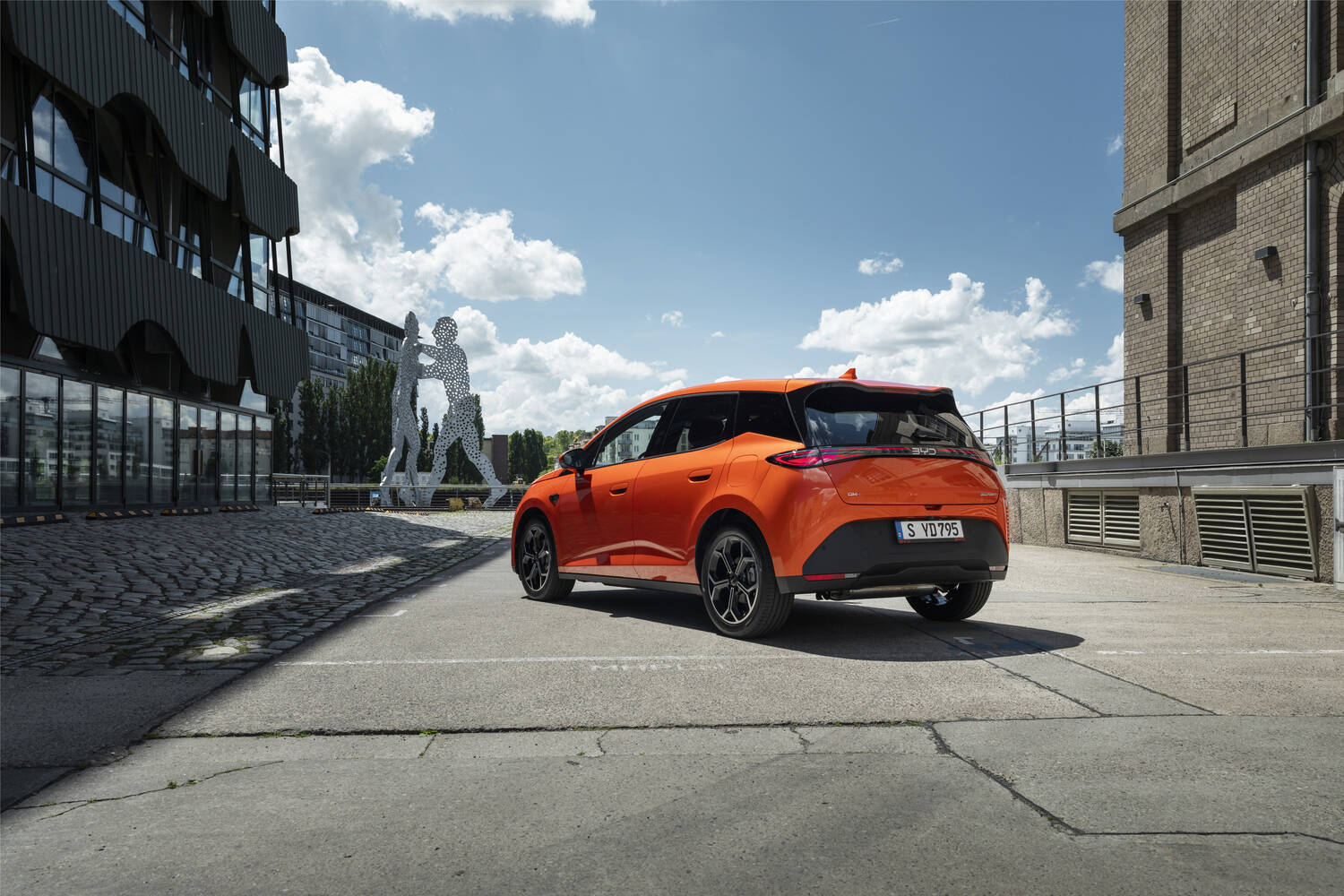
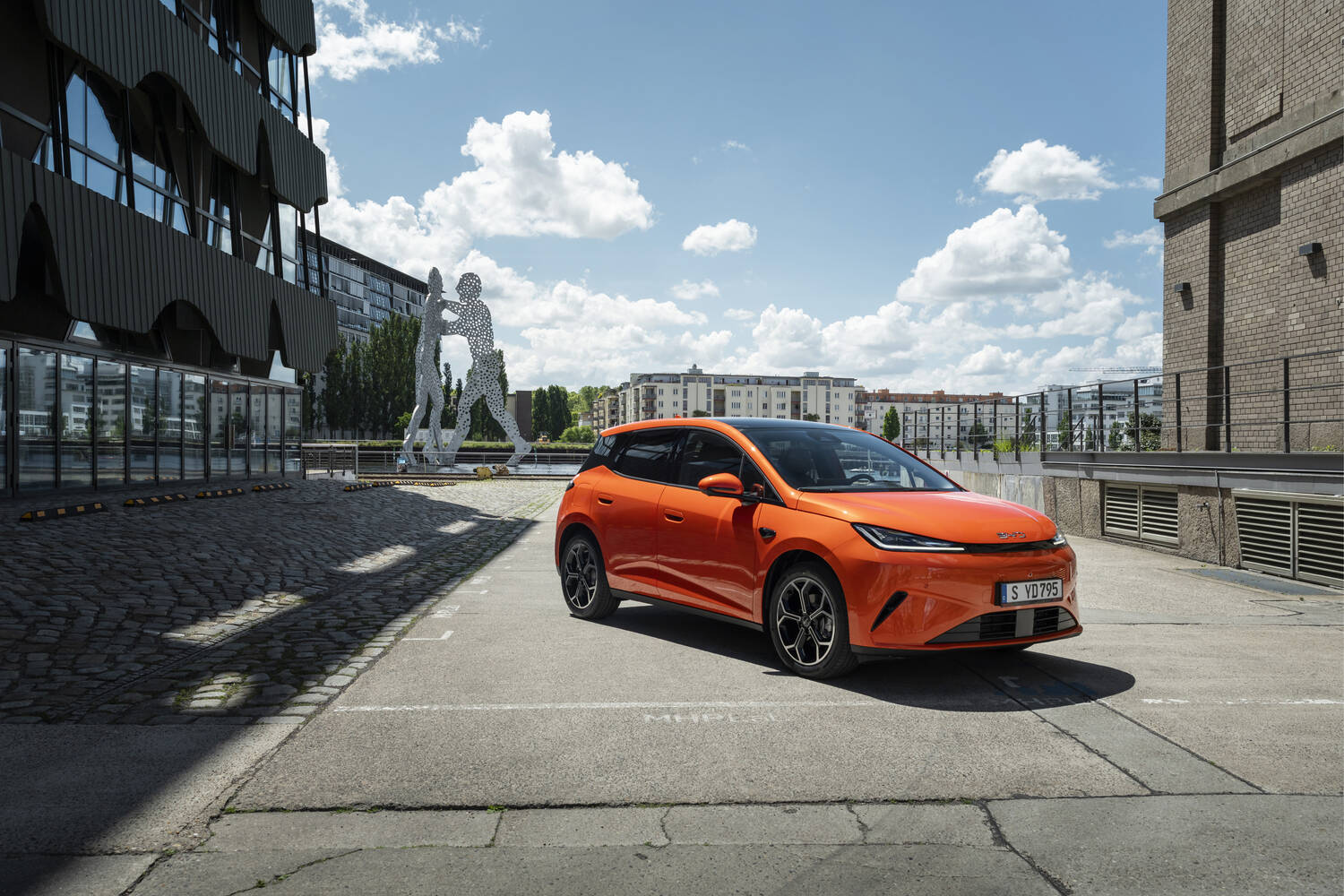
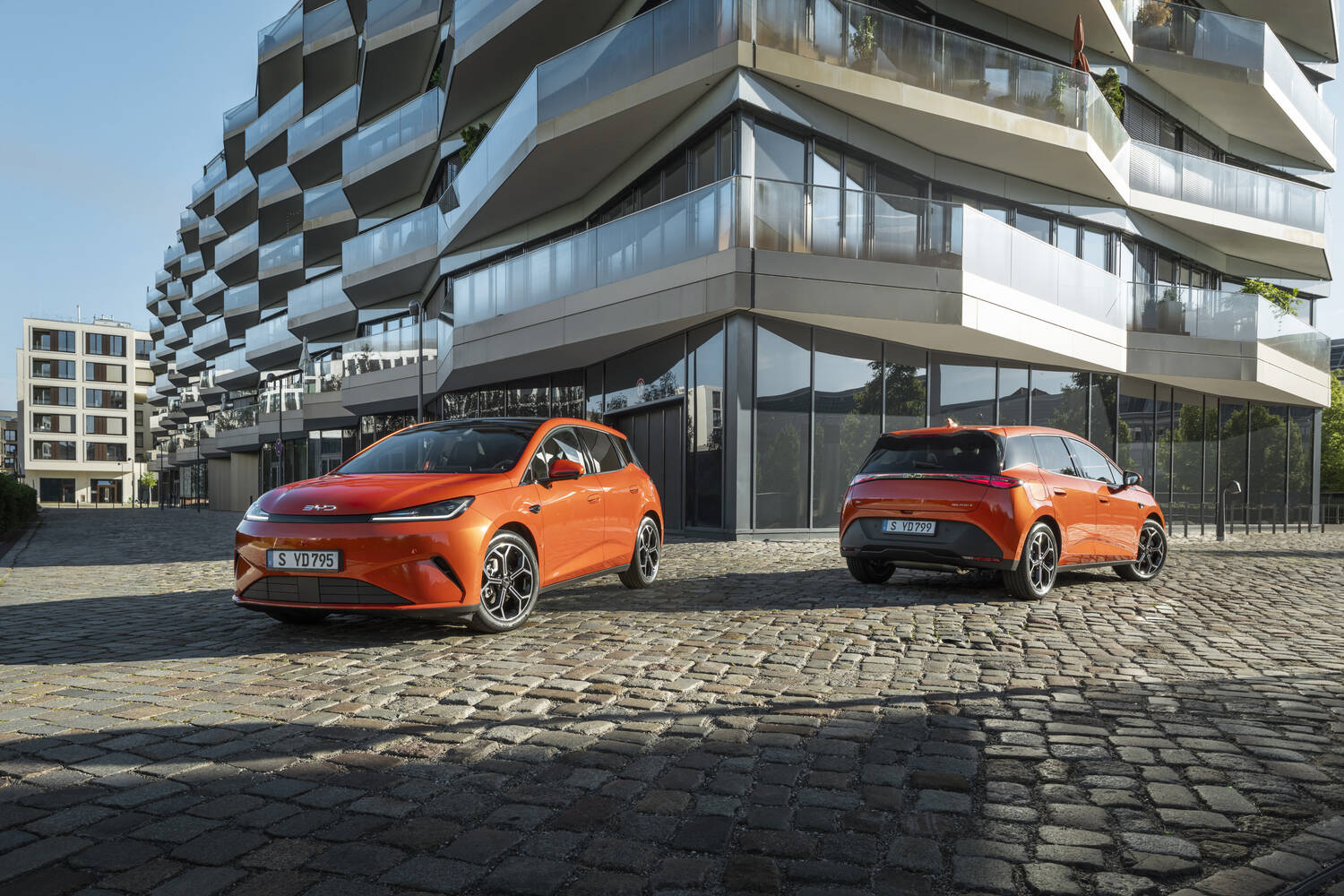
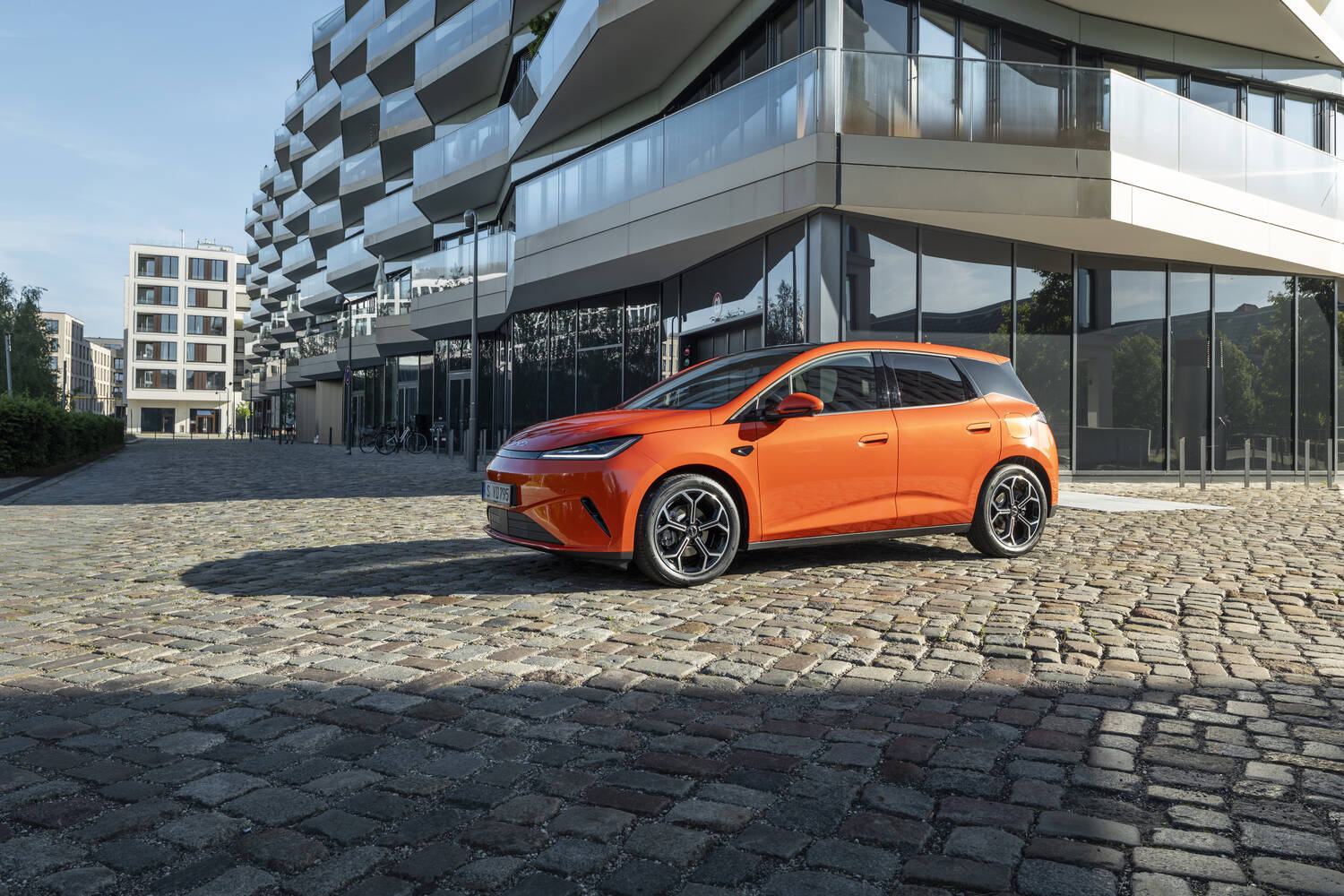
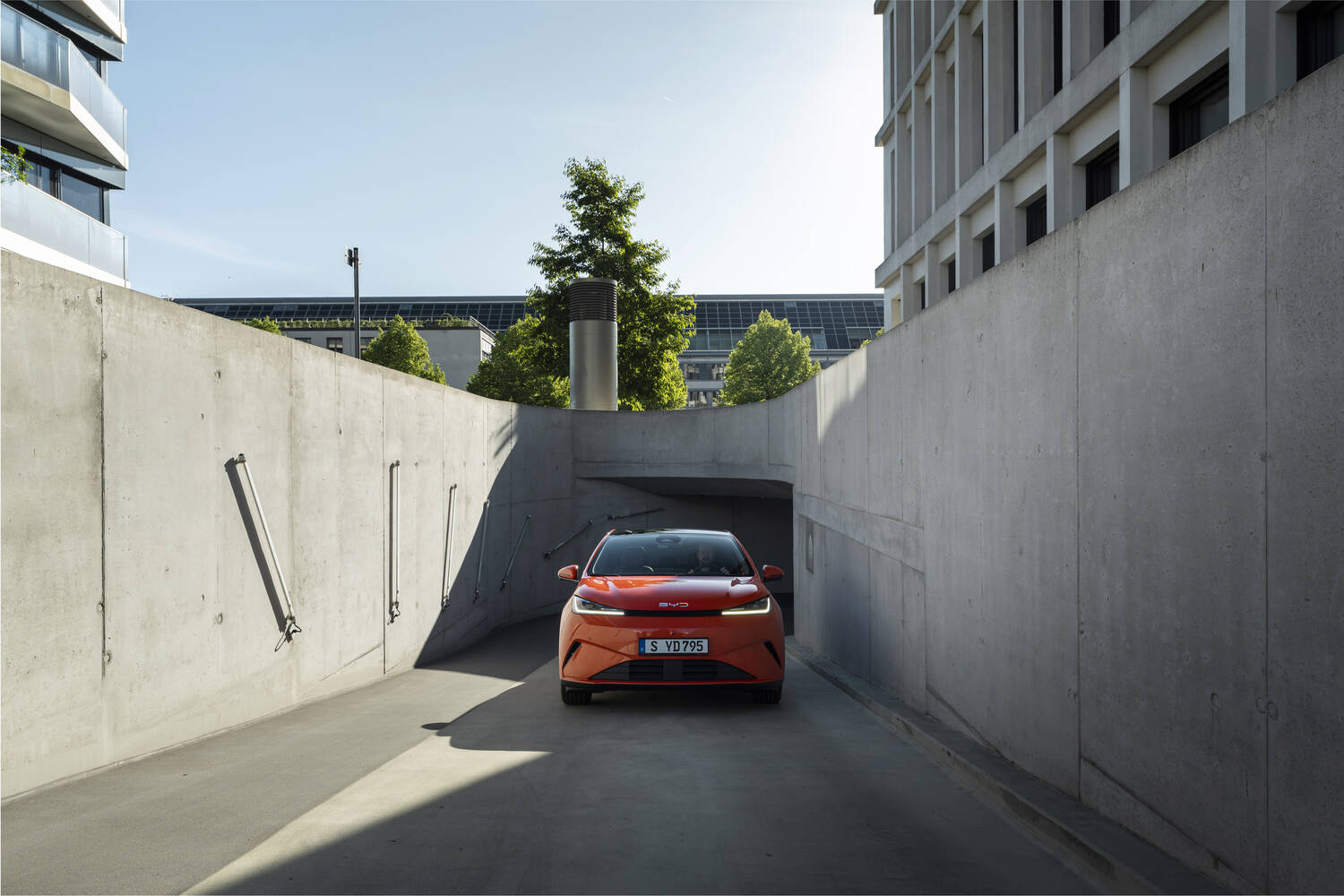
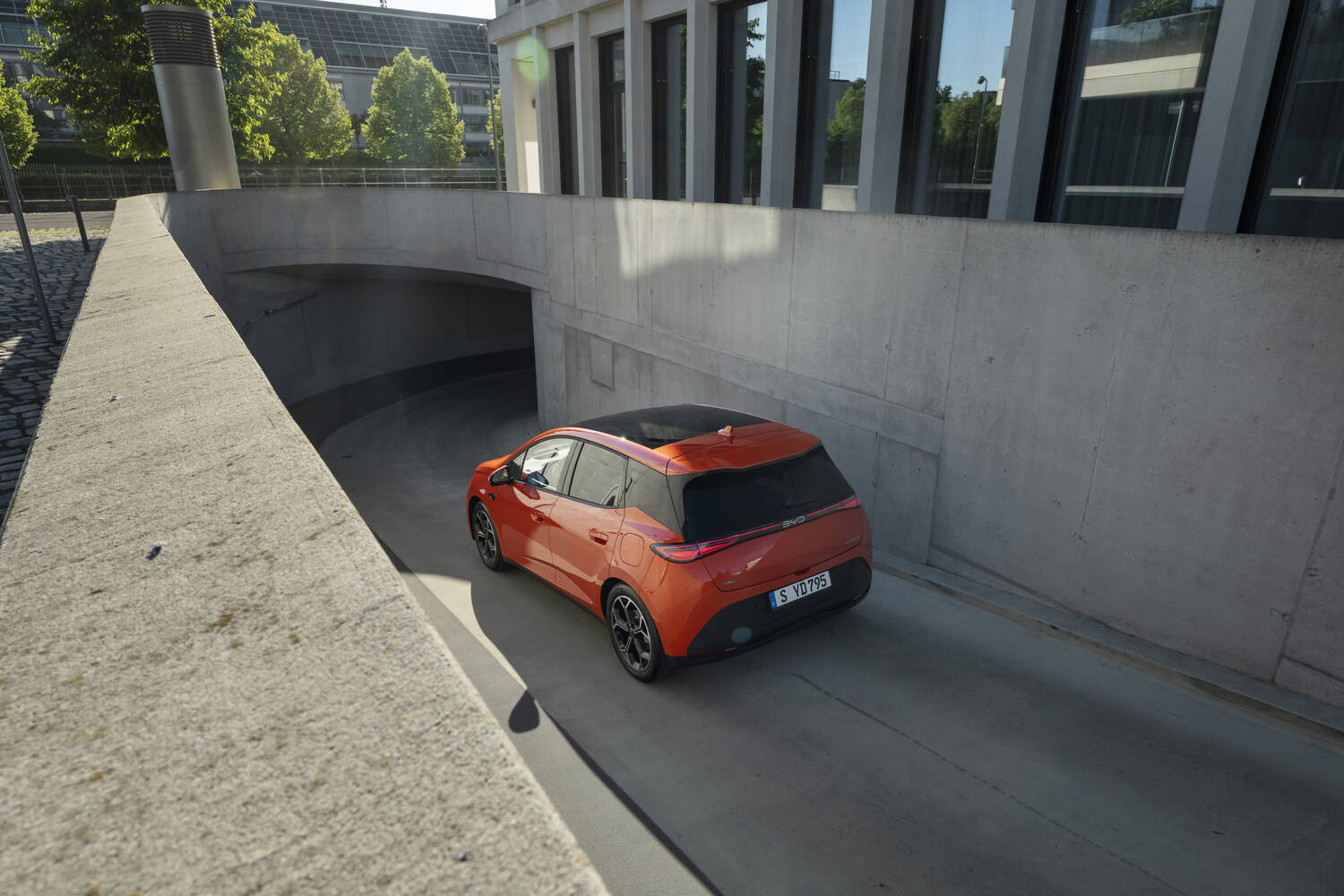
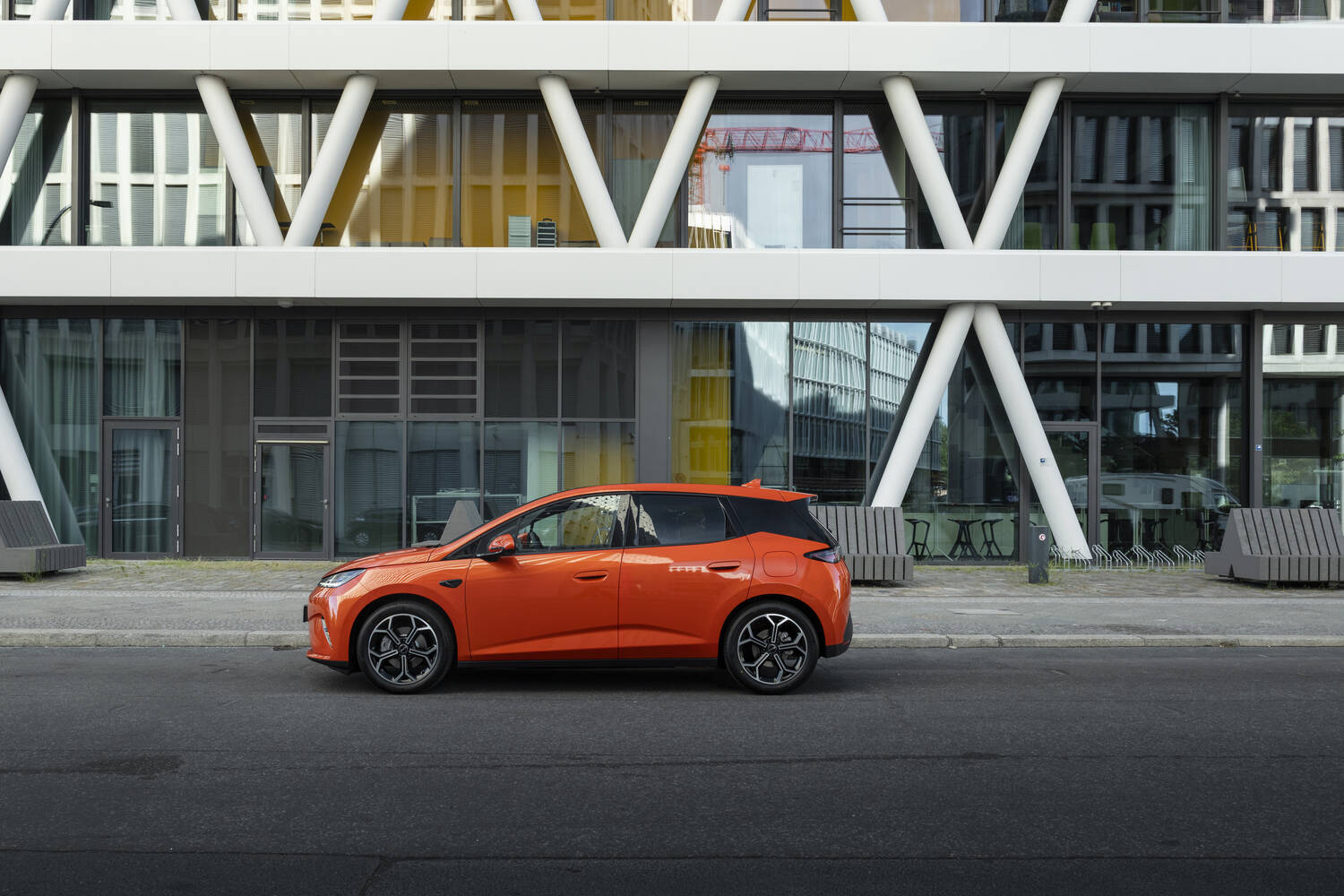
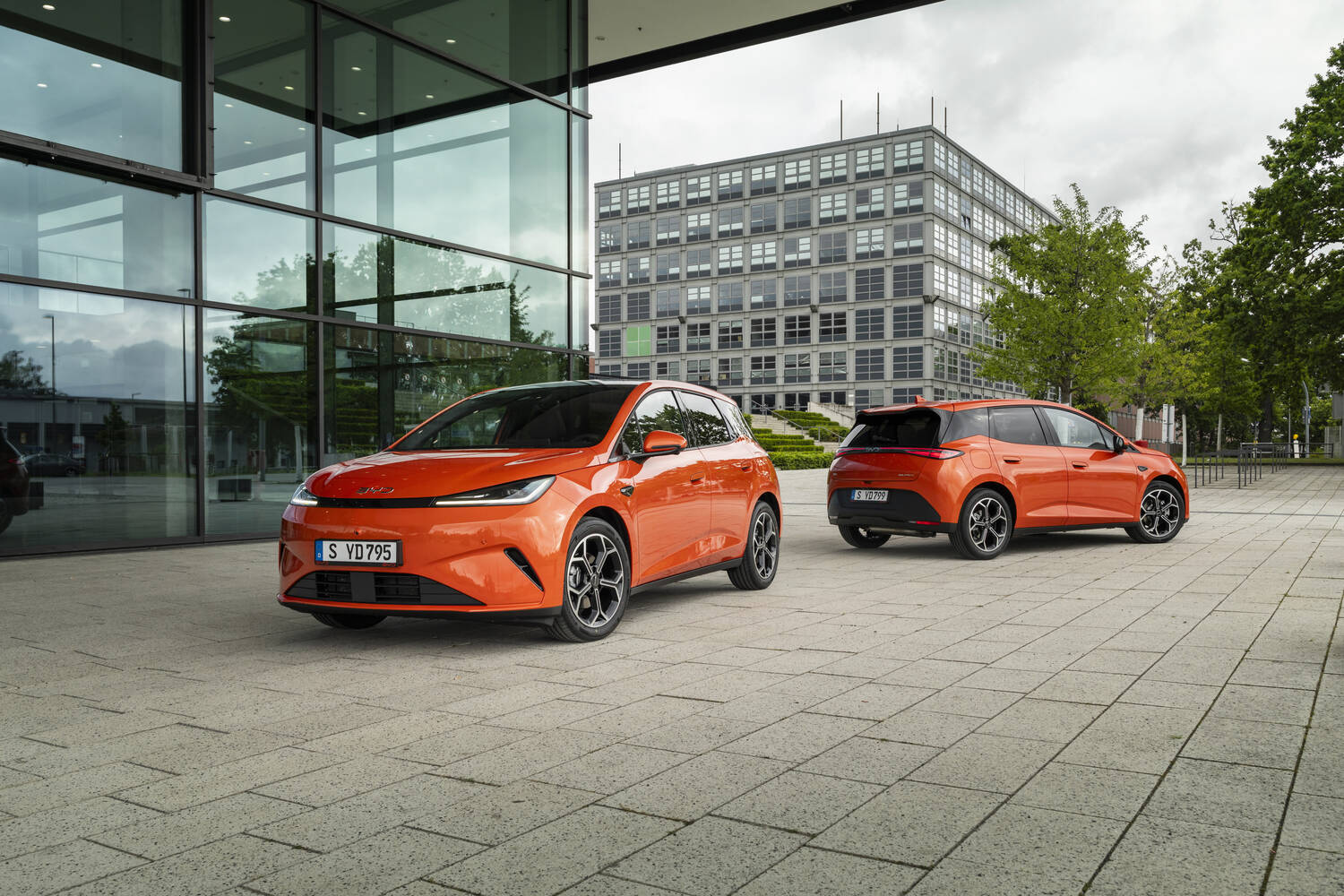
Without being massively striking or an example of fabulous car design, the BYD Dolphin G DM-i is nevertheless perfectly acceptable from a visual perspective.
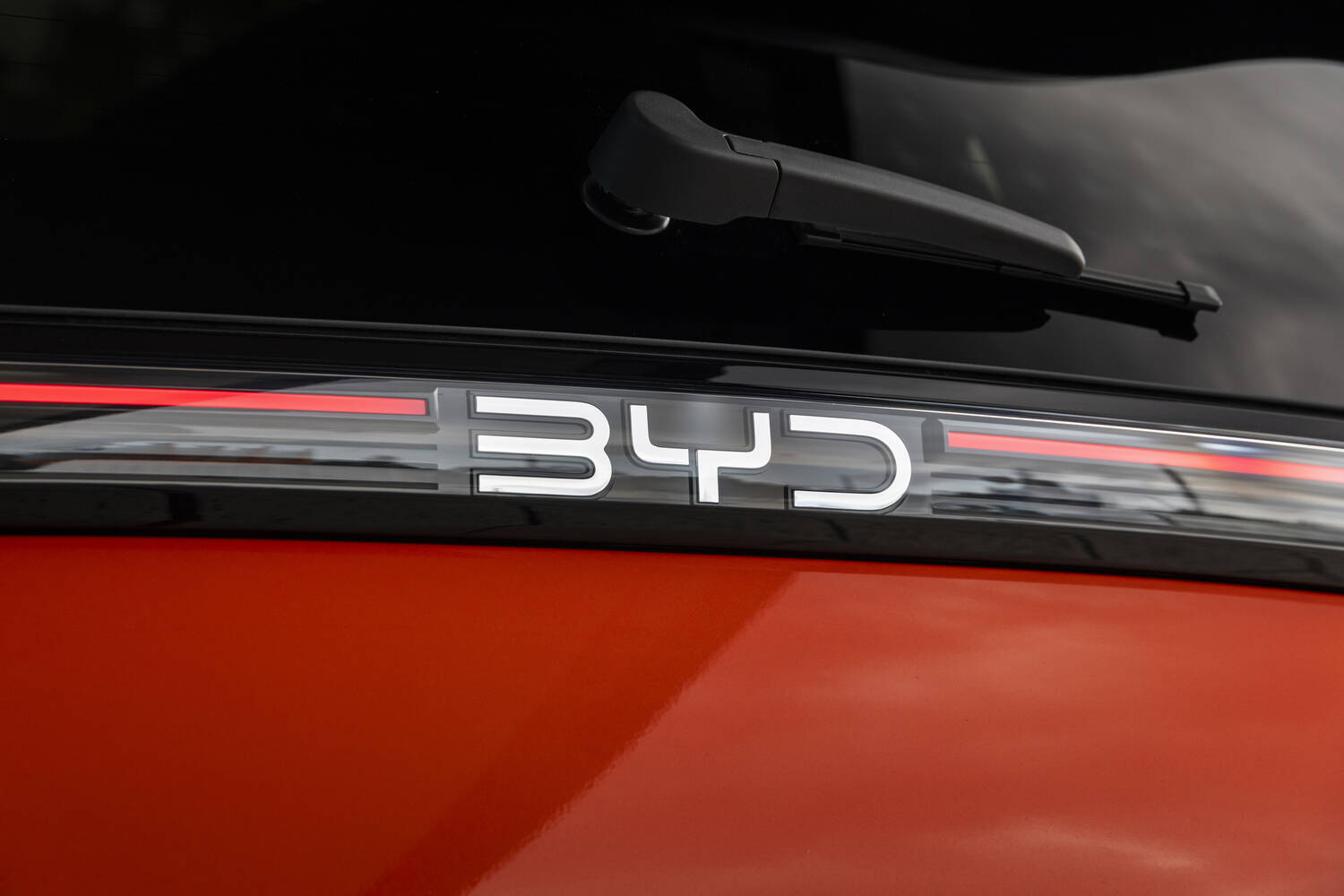
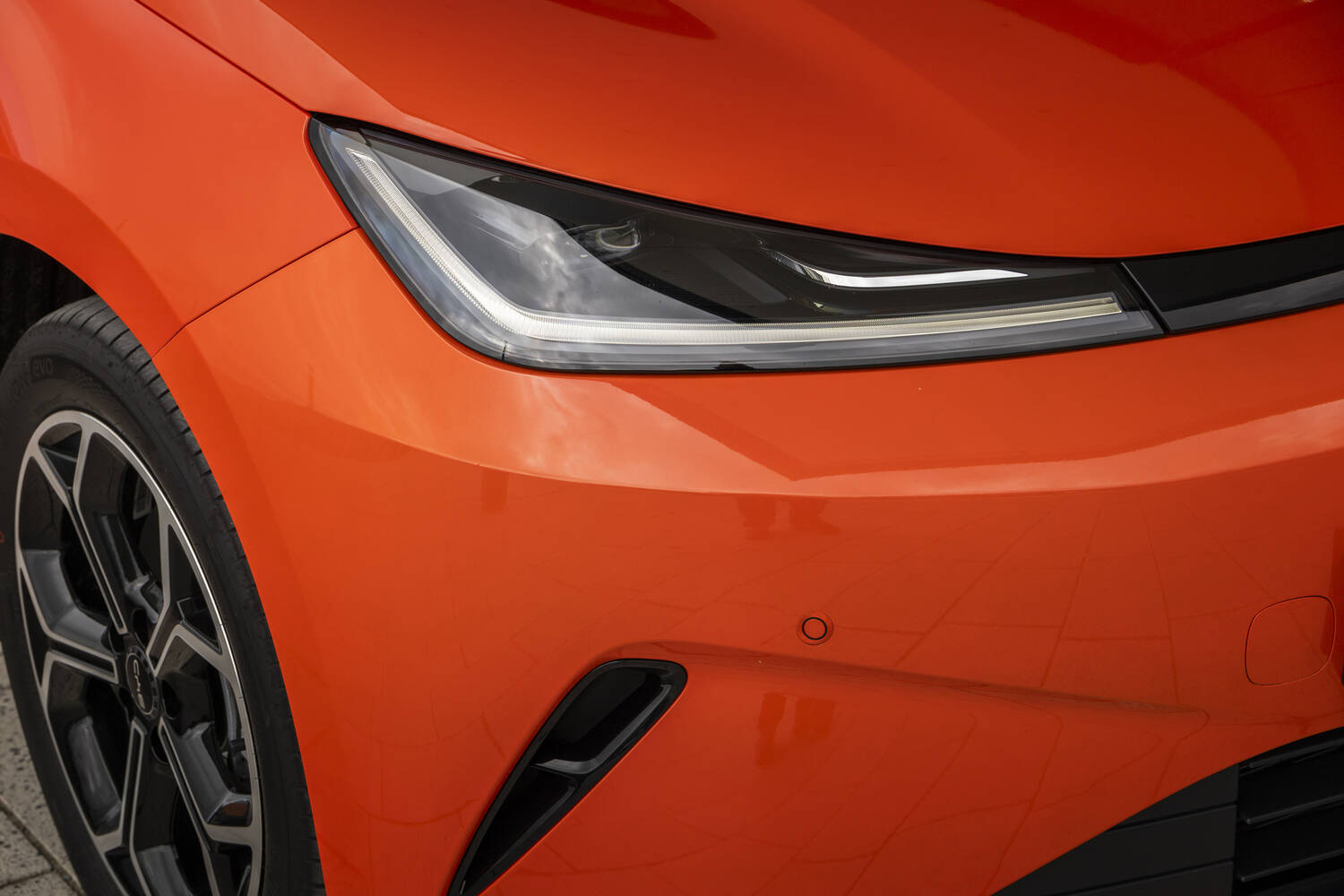
Its smooth design ties it in with the other 'Ocean' cars in BYD's portfolio and there's a pleasing scowl to the front-end looks of the G, while its deep flanks, near-1.6-metre height and more than 2.6-metre-long wheelbase all ensure it comes across as one of the larger cars in this segment.
If we said it was a rival to a Volkswagen Golf rather than a Volkswagen Polo on a pure physicality basis, we'd guess you wouldn't be surprised with that.

If Irish specifications follow other markets, then there will be four trim grades for the BYD Dolphin G. The lower two are equipped with 16-inch wheels, while the upper two are instead rolling on 18s. In the case of the Sport flagship, these will be black in finish.
Dimensions of the 2026 BYD Dolphin G DM-i
Length: 4,160mm
Width: 1,825mm (excluding mirrors)
Height: 1,575mm
Wheelbase: 2,610mm
Paint colours for the 2026 BYD Dolphin G DM-i

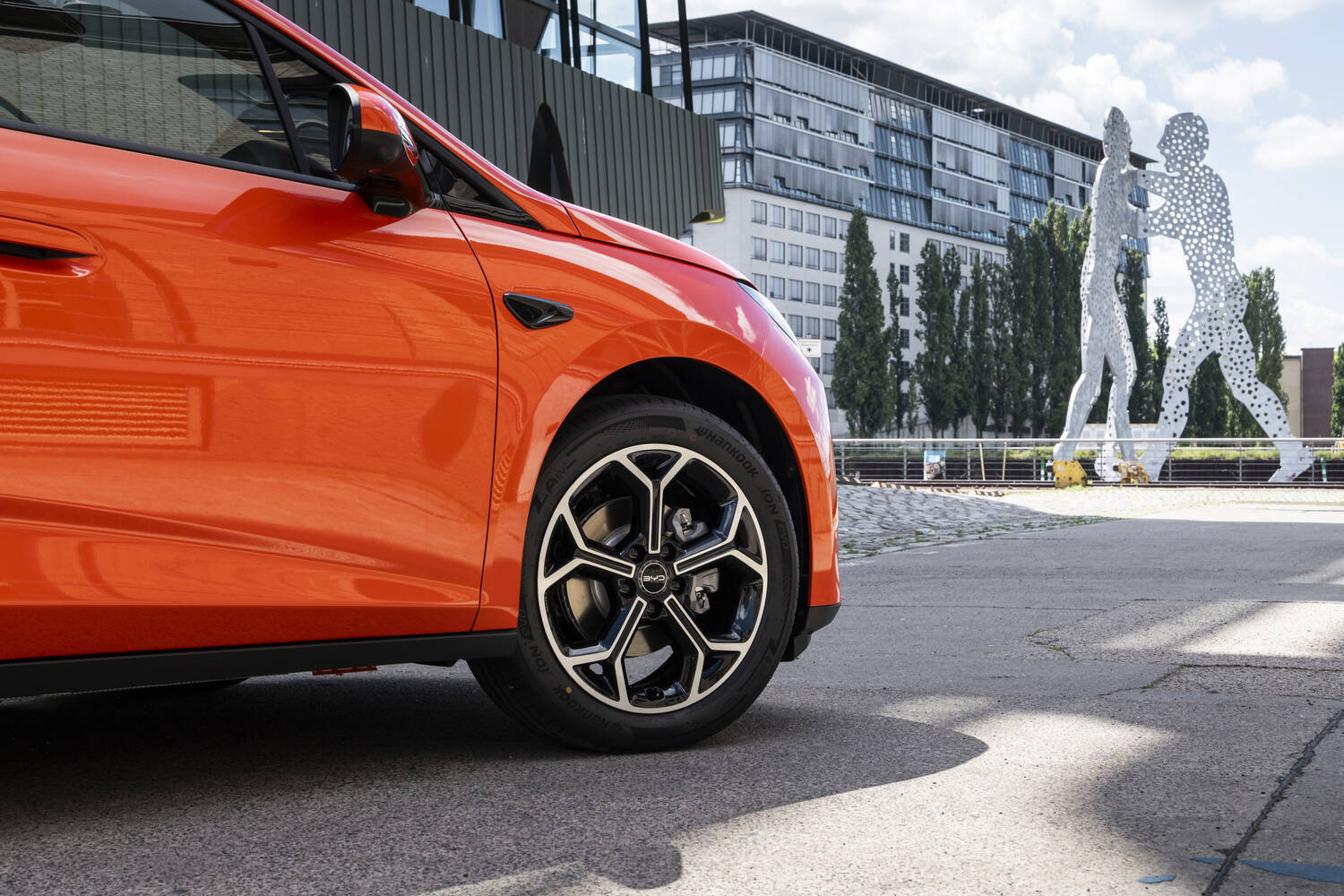
The standard colour for the BYD Dolphin G DM-i is the eye-catching Orange Sunset you can see in the images, which is a really nice touch from the manufacturer and at odds with most Chinese cars, that normally tend to be offered in muted, monochromatic paints.
In fairness, four of the other five colours after Orange Sunset available on the BYD are all precisely that: choose from Skiing White, Oxford White, Time Grey or Obsidian Black.
But there is another smart finish to go for, which is Ocean Blue. However, while all six colours are offered on the first three specification levels of the Dolphin G, the Sport is only sold in either the orange or the blue.
Interior, practicality, tech & comfort of the 2026 BYD Dolphin G DM-i
• Plenty of technology
• Large boot is a bonus
• Rear space not as generous

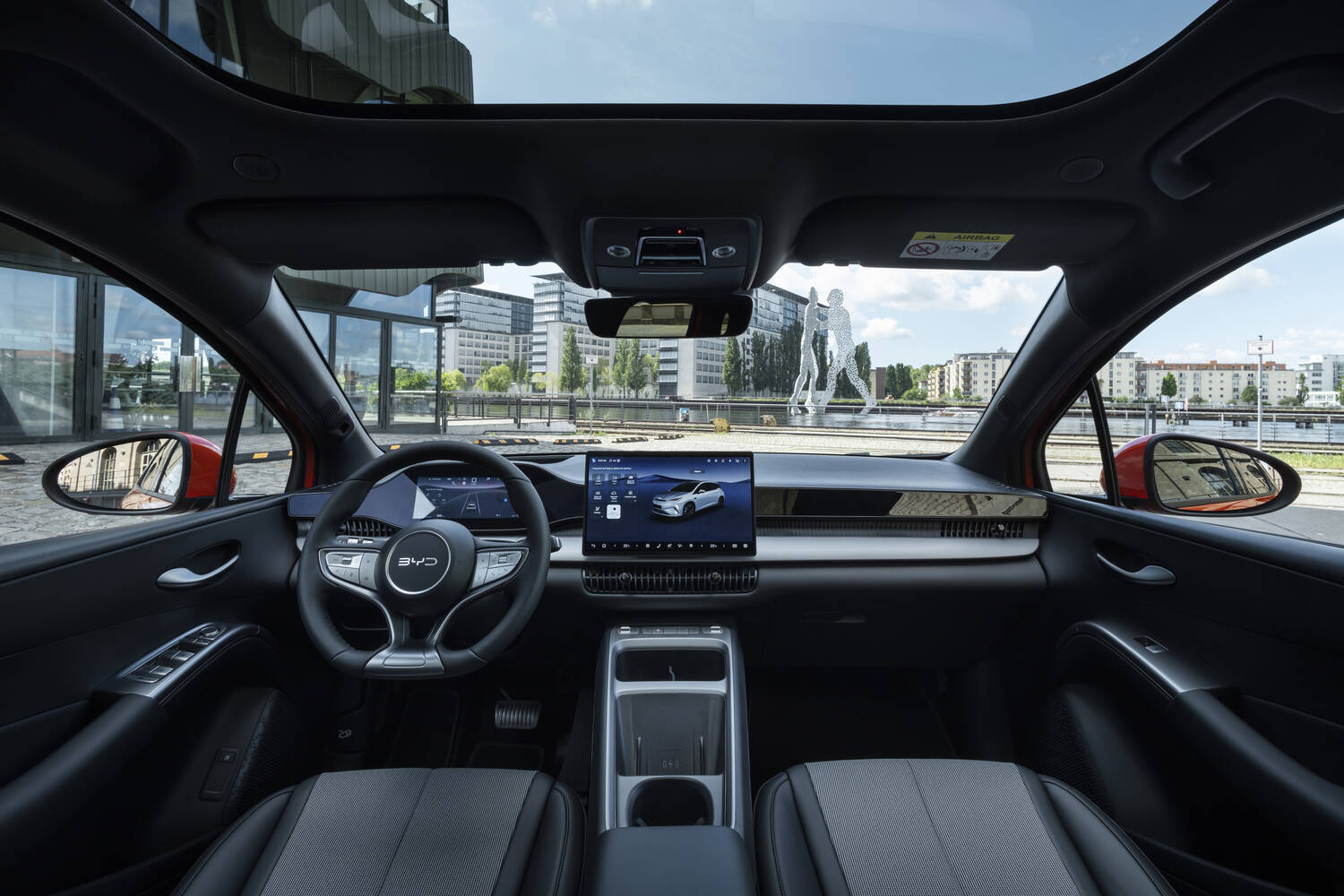
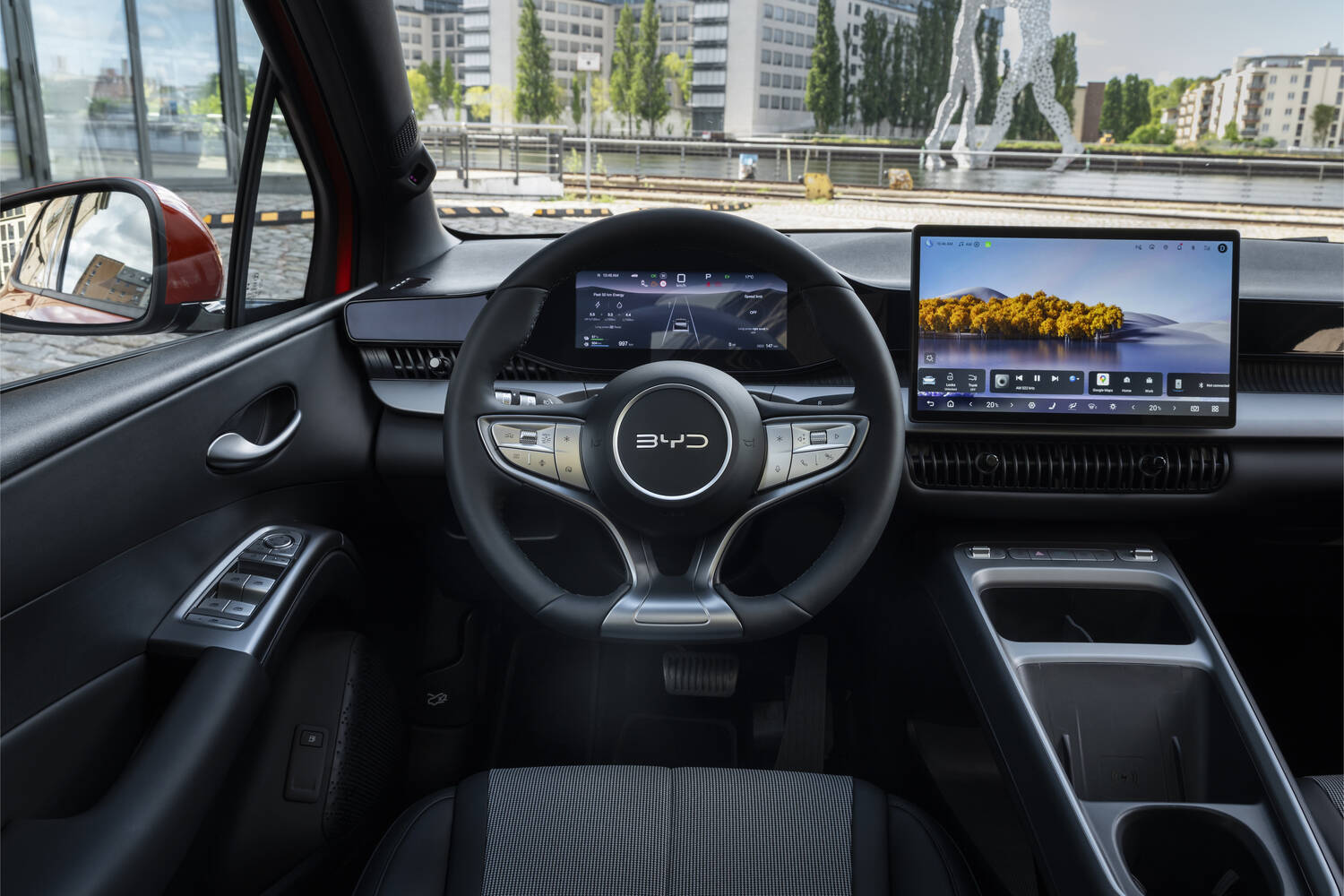
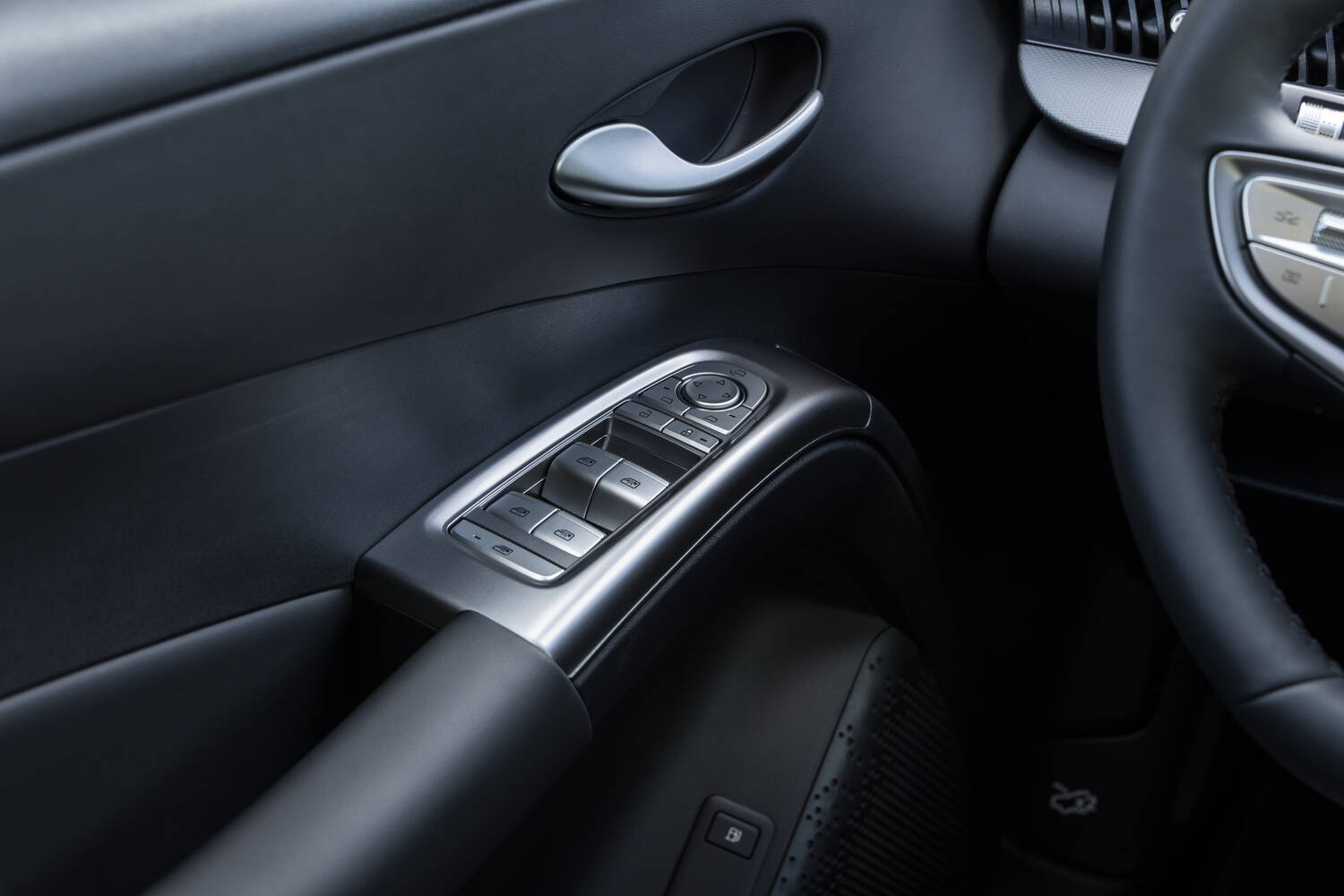
Accepting that the BYD Dolphin G DM-i operates in the affordable sector of the marketplace, we understand the interior is not going to be chock-full of the most premium materials - but even so, the plastic used for the upper surface under the windscreen and the tops of the door cards is particularly scratchy and cheap in look and feel.
We're also to be convinced by the aesthetic longevity of the dash-wide strip of glossy black trim which forms the surround of the driver's cluster.
Otherwise, tech dominates and there are few physical buttons in the interior of the BYD Dolphin G, and while space is generally decent, we were expecting the rear of the passenger compartment to be a little roomier than it turns out to be - especially considering the longish wheelbase on the car.
Getting comfortable in the driver's seat

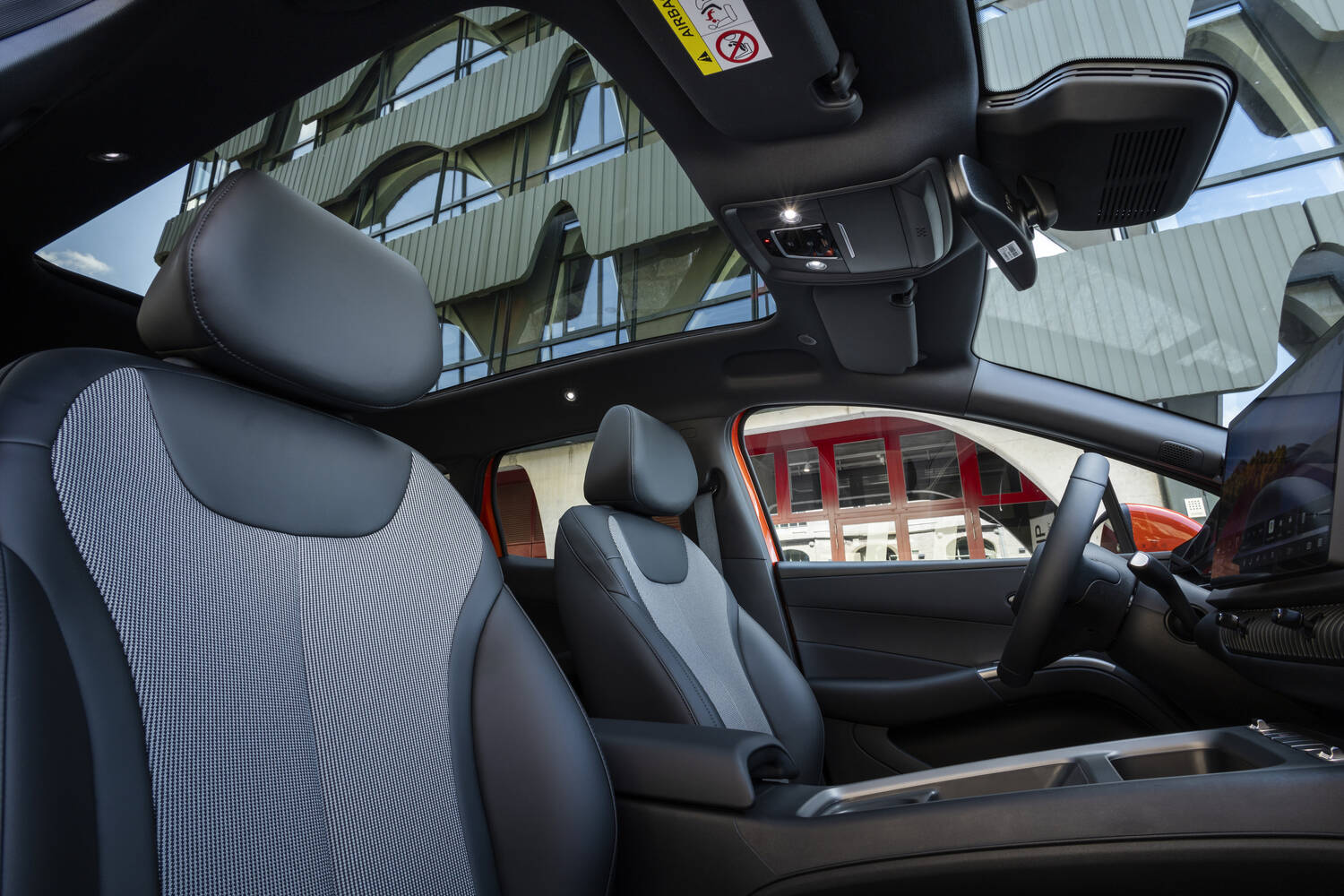
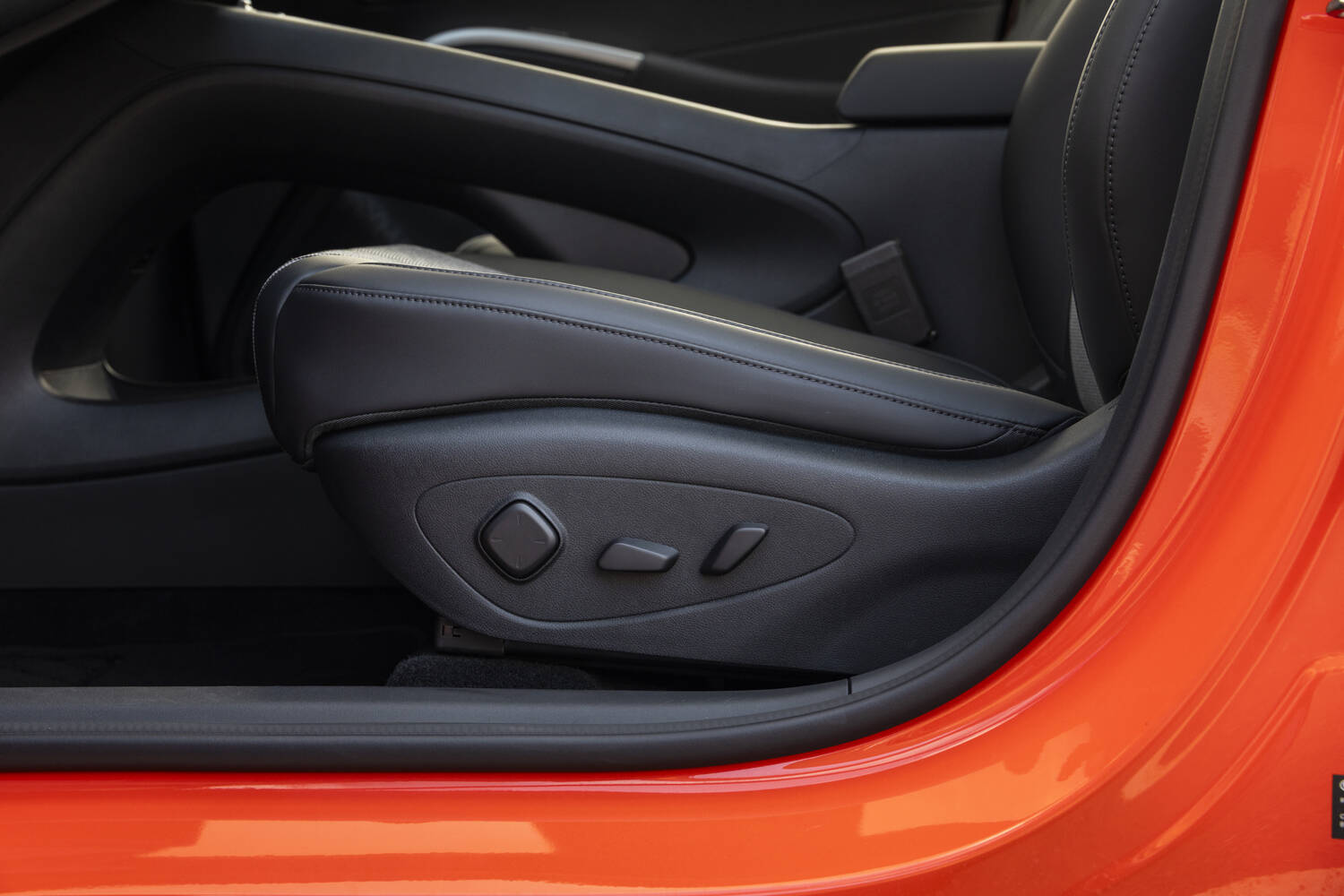
You need to get near the top of the BYD Dolphin G DM-i's range to enjoy a six-way electrically adjustable driver's seat with four-way lumbar support on top, but ultimately the driving position is fairly good in the PHEV.
You do end up sitting a bit high in the body, due to the battery pack under the floor, but with a reach-and-rake-adjustable steering column and excellent all-round visibility, the Dolphin G should be easy enough to drive for people of a broad spread of physiques.
Infotainment and technology

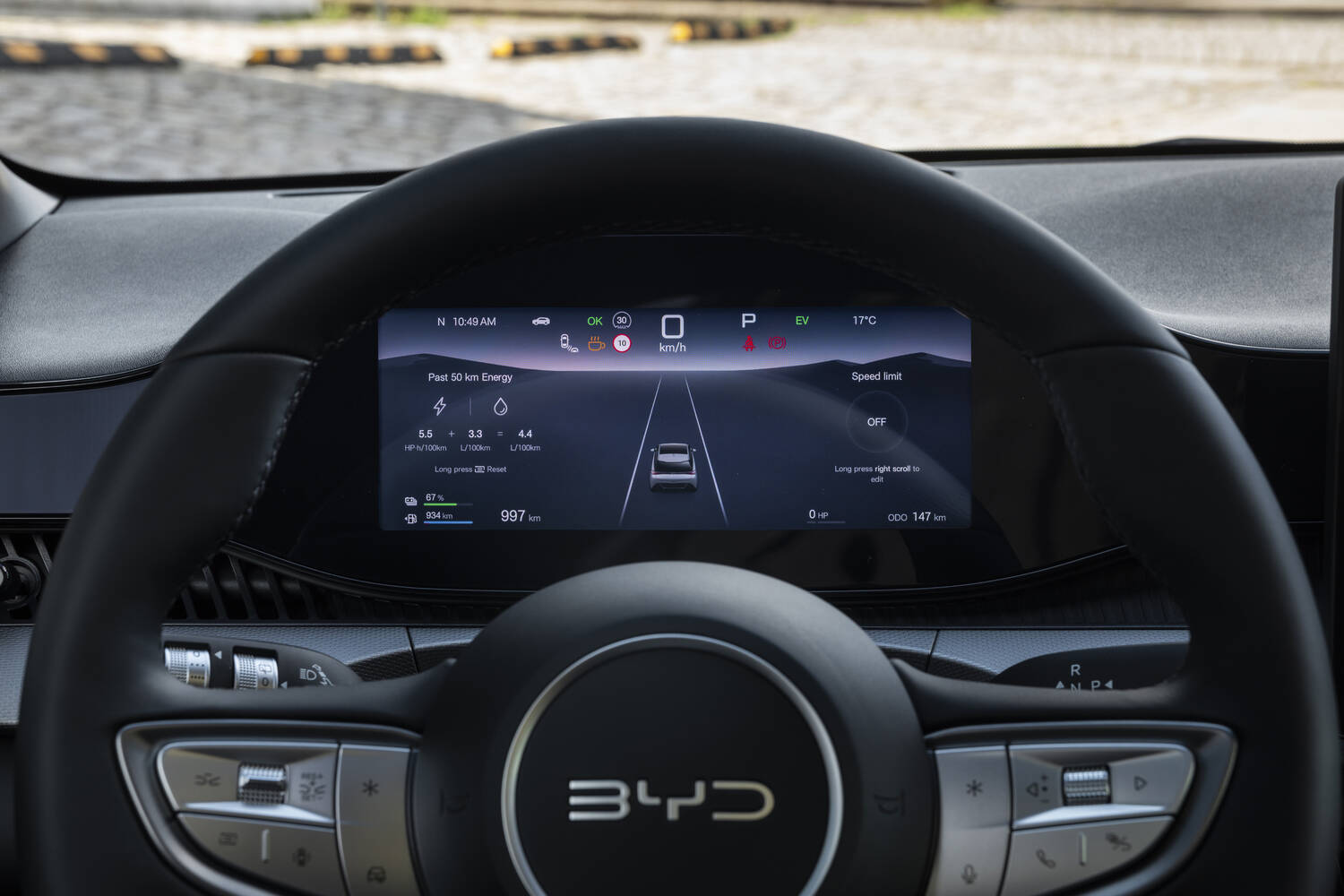
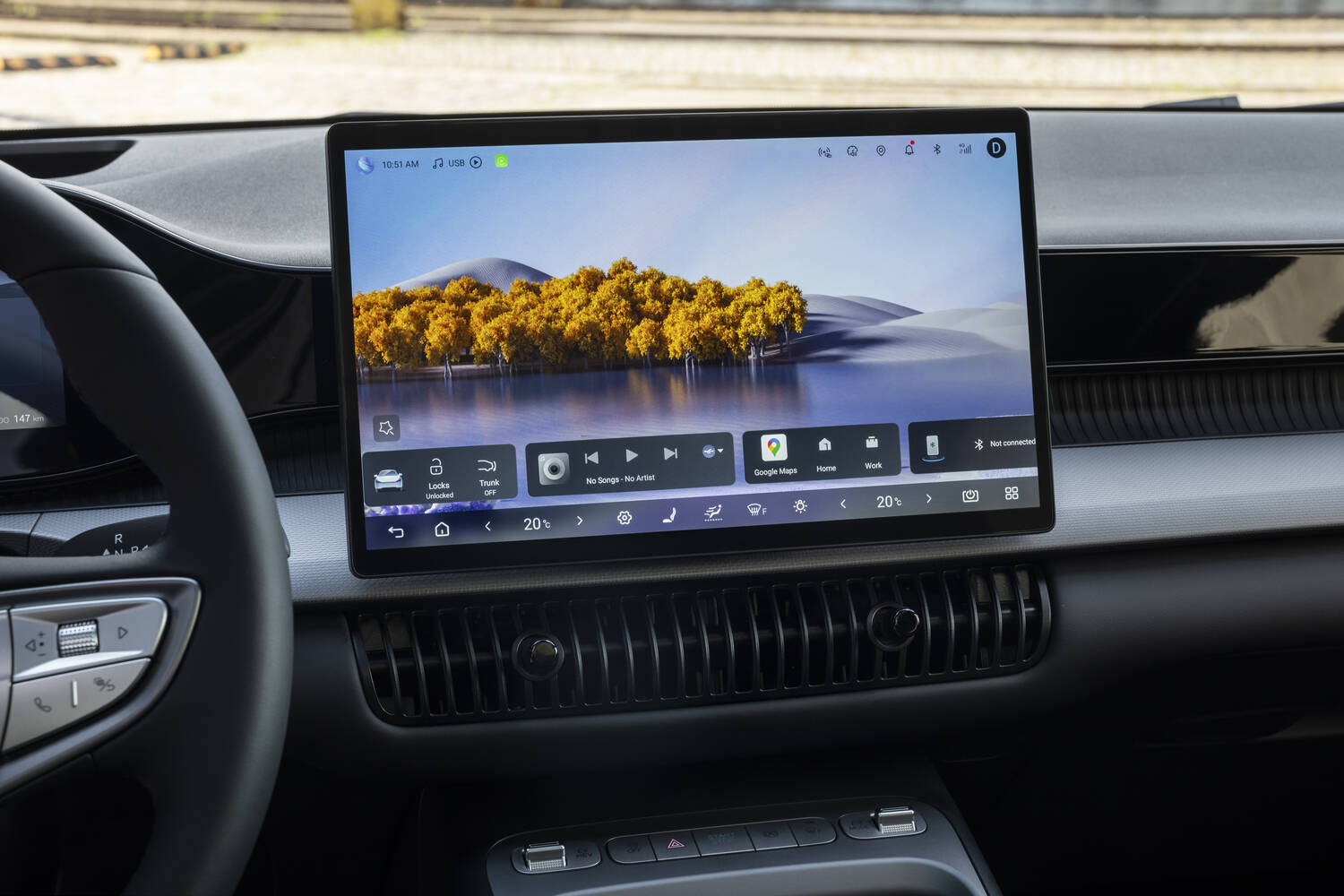
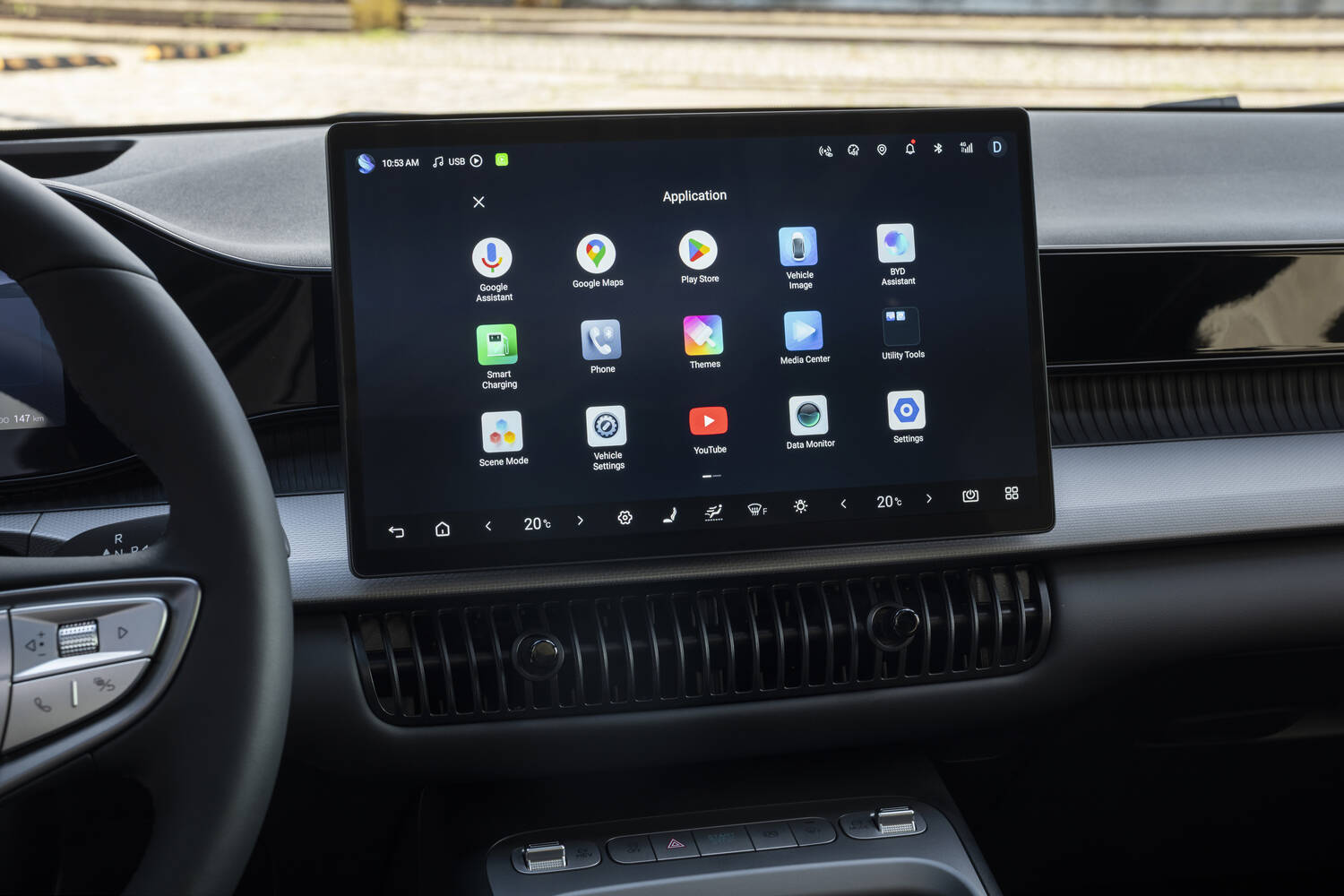
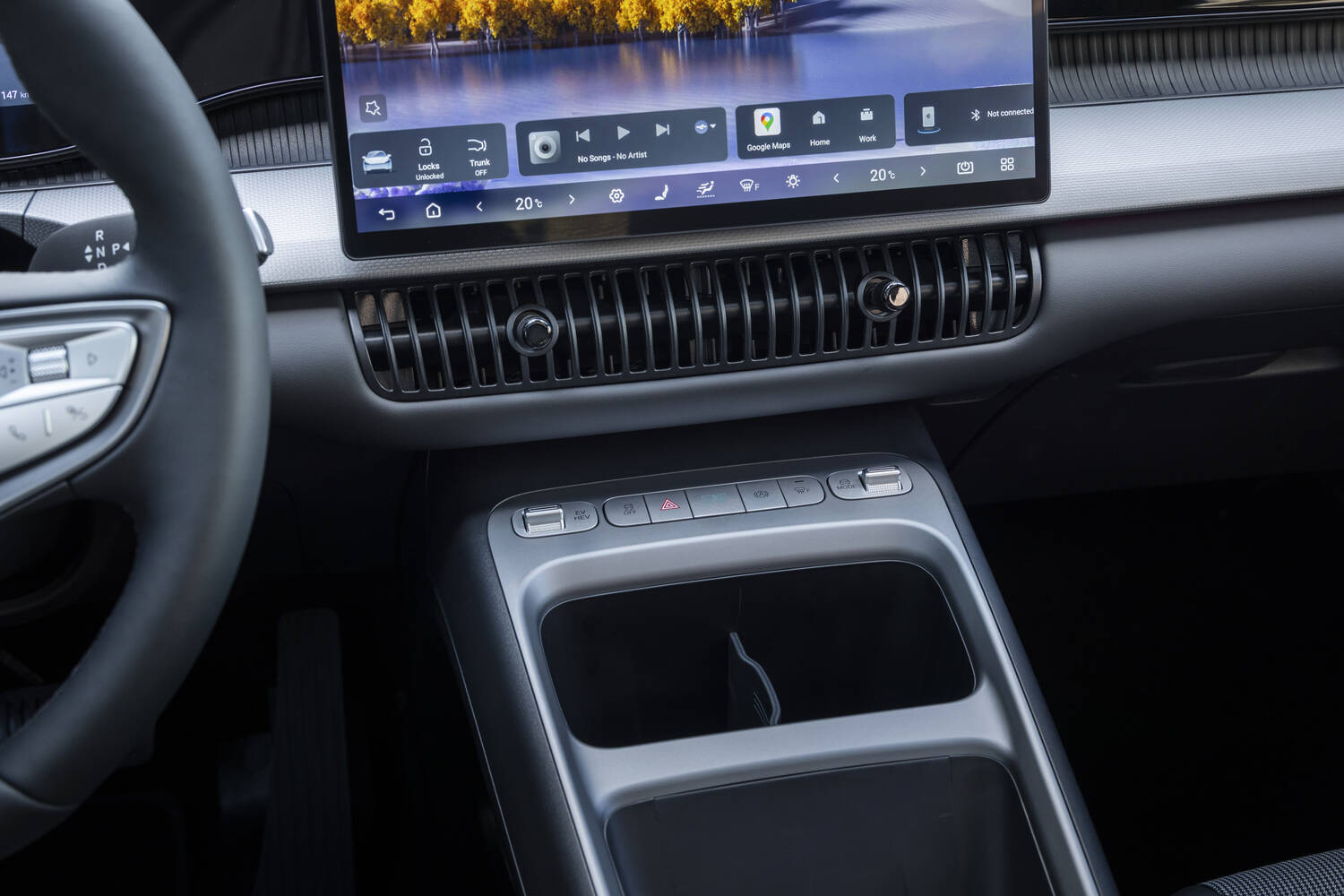
All models of the BYD Dolphin G DM-i get at least an 8.8-inch TFT driver's instrument cluster and a 10.1-inch central touchscreen, complete with 'Hi, BYD' voice control, both Apple CarPlay and Android Auto connectivity and a four-speaker sound system. There's also a Digital Key feature and onboard 4G connectivity across the line-up.
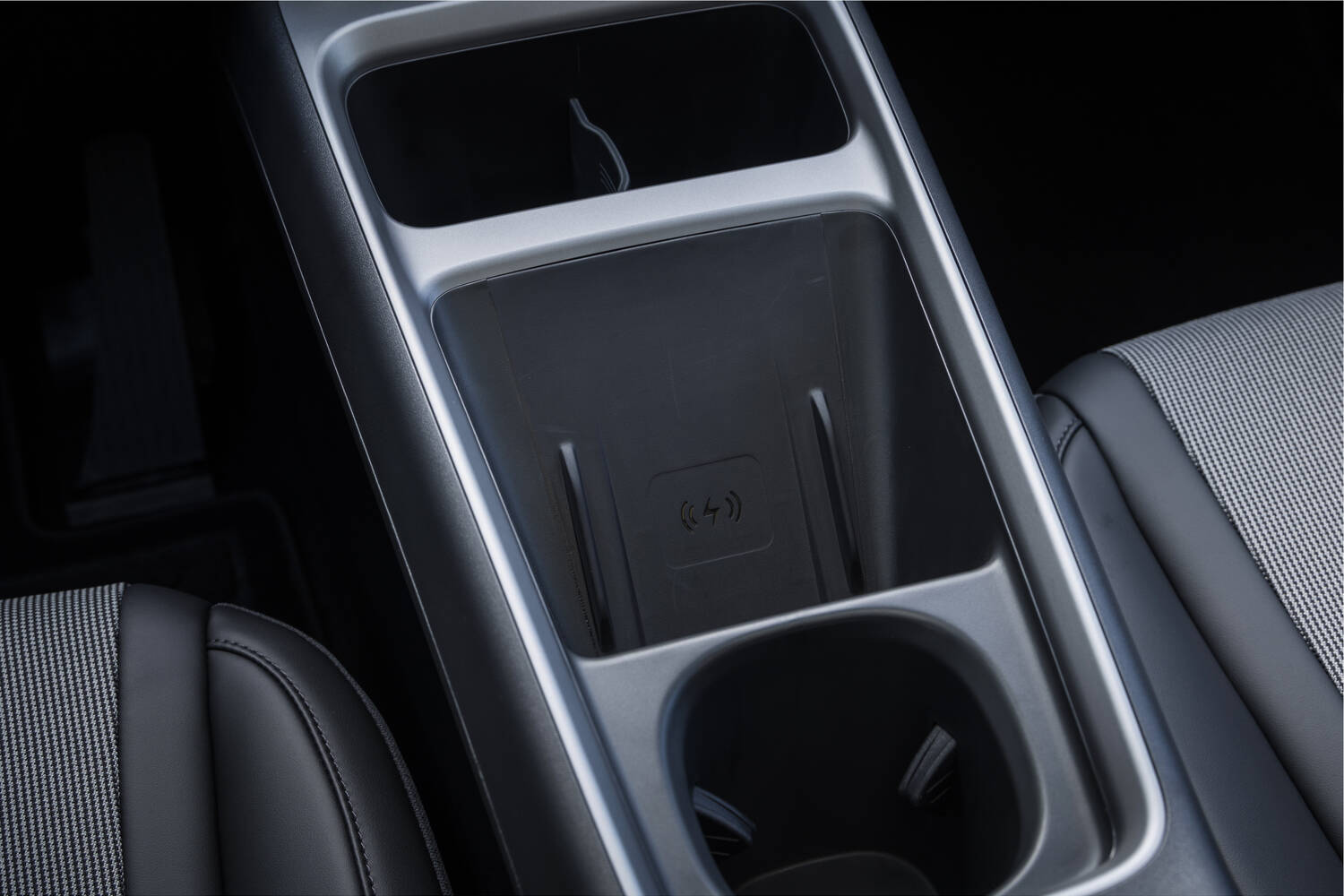
However, the larger 12.8-inch infotainment panel, an eight-speaker stereo and the 15-watt wireless smartphone charging pad all come into play one step up from base. You must go even higher from there if you want the Google Built-In software and a driver's head-up display.

When fully equipped, there's no denying that the Dolphin G feels high-tech and generously specified when compared to other superminis, but there's an over-reliance on the central touchscreen for the main operations and a dearth of buttons elsewhere in the cabin.
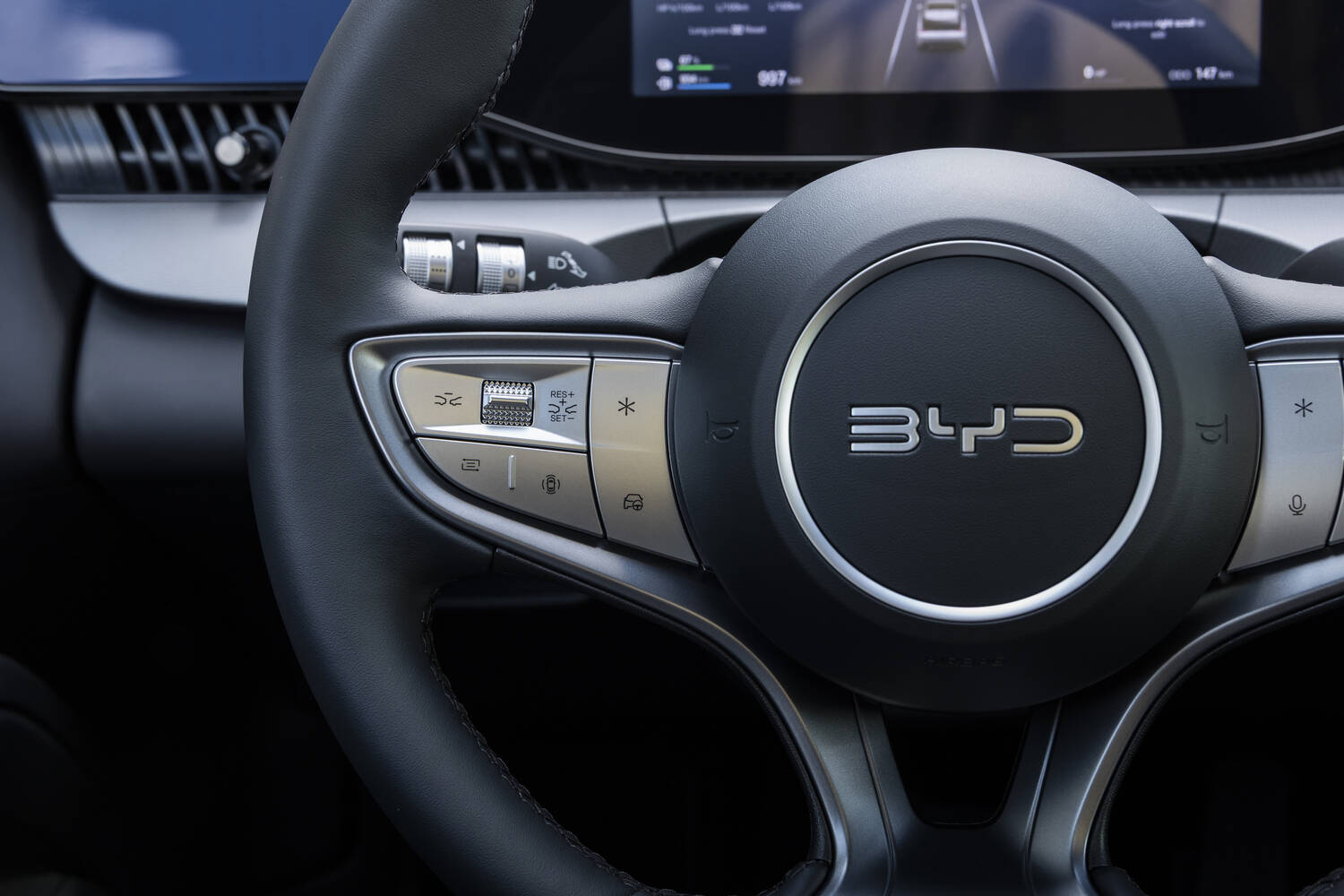
Also, some of the menus in the main display can be a little confusingly arranged, plus the instrument cluster is needlessly congested and dominated by a 'road and traffic outside' graphics in the Scenario setting.
You can at least get rid of that by switching the screen to Simple using the steering-wheel controls, but that just replaces the visual graphic with a huge speedo instead. Some of the ancillary data remains too small as a result.
Practicality around the cabin

Up front in the BYD Dolphin G DM-i are handy door pockets with a sculpted section for drinks bottles plus a large central cubby underneath the lidded armrest and a fair-sized glovebox - it's not massive, but it's fine.
There are three cupholders, two with a middle separator in front of the angled wireless smartphone charging slot on the tunnel, and then another solitary, larger item to the rear of that.
There's a pop-out holder for sunglasses up on the front headlining and an under-dash storage zone down below with a large rubberised base, two USB-C ports, an SD-card slot and a 12-volt socket too, but accessing this while sitting in the front seats is not the easiest operation in the world.
Rear-seat passenger space

BYD has made a big deal about that 2,610mm wheelbase (the space between the car's axles), something which can usually boost passenger room in the rear. And we also fully accept that there are few superminis available elsewhere which would allow six-plus-footers to truly lounge around in the second row without a care in the world.
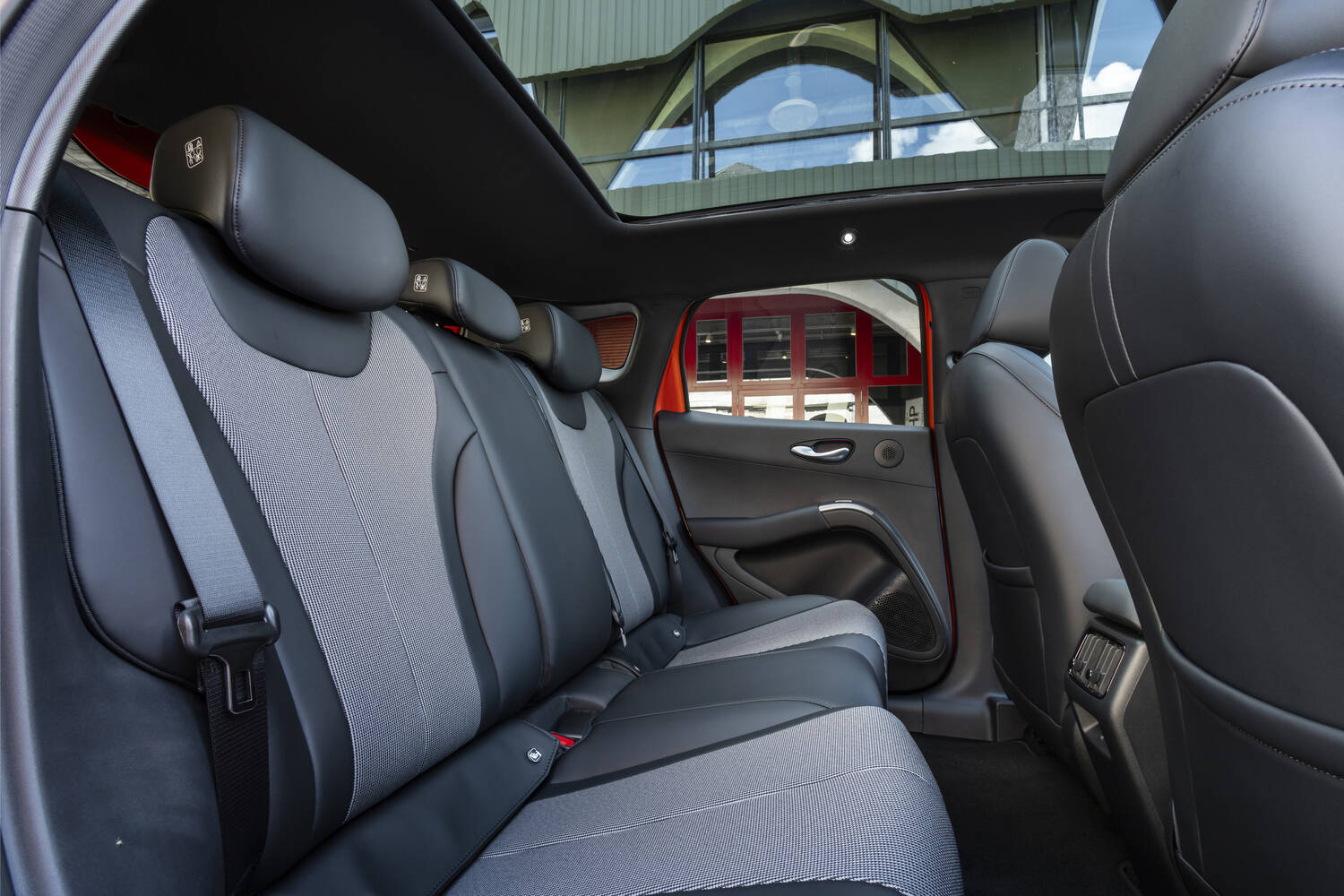
But we sat in the rear of the BYD and felt the legroom was only middling, while headroom for taller people was impacted by the panoramic roof on our higher-spec car.
Sure, for smaller-than-average adults and children, the latter group who will be sitting here more often than anyone else, space in the back of the Dolphin G is going to be perfectly acceptable - but game-changingly roomy in the rear, this car is not.
We suspect this is, once again (and like the lofty driving position), to do with packaging the battery under the floor and the height of the rear bench's squab. Put it this way: both the Skoda Fabia and the MG4 Urban EV are much better in this regard than the BYD.
In terms of appointments, the door pockets in the back are smaller than they are in the front, but they shaped to accommodate drinks bottles. There is no central armrest, though, so no cupholders are available to back-seat occupants, but the floor is completely flat for the full width of the Dolphin G's second row.
There are two air vents, two USB-C sockets and two moulded coat hooks available to those sitting in the rear of the car as well. Elasticated map pockets on the backs of the front seats complete the practicality touches in this area of the BYD.
Fitting child seats to the BYD Dolphin G DM-i
There are only two ISOFIX positions in the Dolphin G, which are located on the outer two chairs of the back bench - there's nothing on the front passenger seat. Nevertheless, the rear doors open nice and wide, and while we might lament the legroom for taller people, we are confident that there's more than enough space for parents to easily load in even the bulkiest of child seats.
Boot space in the BYD Dolphin G DM-i

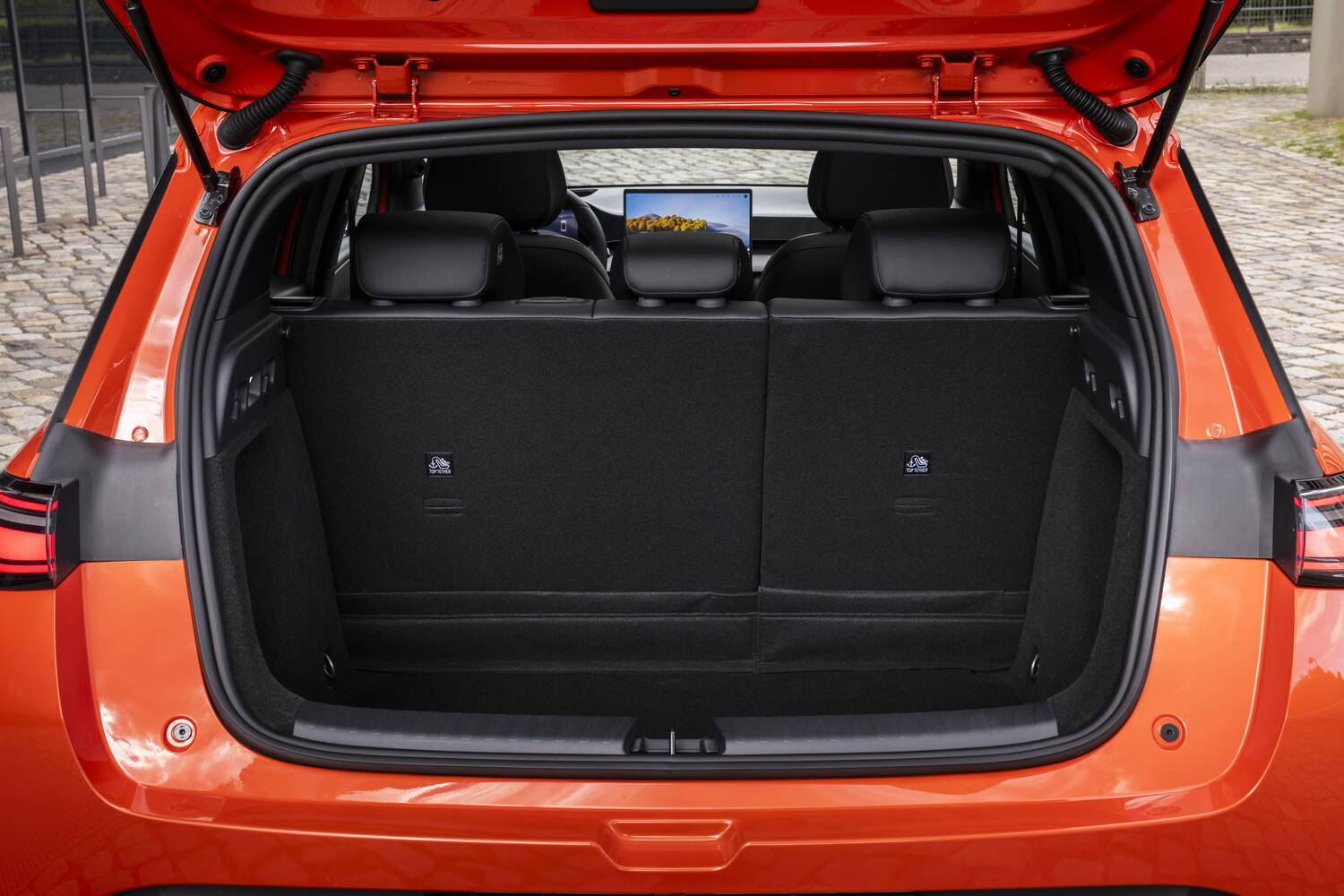
This is a strong point of the BYD Dolphin G DM-i, as it has a 425-litre boot with all five seats in use. That's one of the largest cargo bays in this class and indeed is a volume that can compete with some of the cars in the sector above.
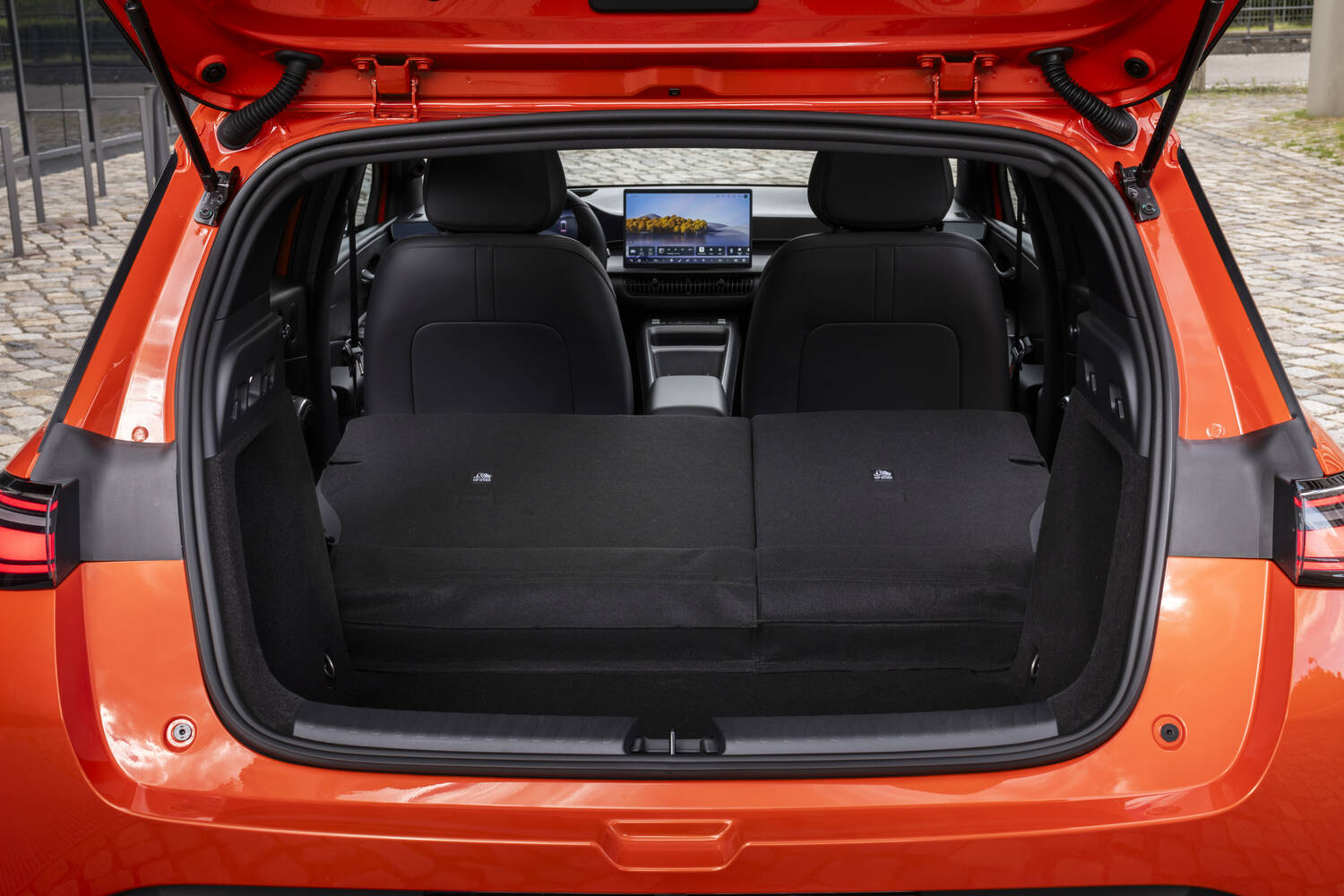
Fold down the 60:40-split rear seatbacks and up to 1,225 litres are liberated, so this is a roomier supermini in this regard than most.
There are a few features to help out in the boot area of the Dolphin G, including four lashing eyes, a quartet of moulded hooks that can carry 3kg of clobber each and a tidy underfloor stowage zone for the charging cable.
But the boot floor doesn't have any facility for height adjustment, so what you see is what you get - and there's a pronounced step down from the lip of the open tailgate to the boot floor.

Safety in the BYD Dolphin G DM-i
The BYD Dolphin G DM-i hasn't been tested by Euro NCAP, but it comes with a wealth of advanced safety assistance systems (ADAS) fitted right across the board, while every other BYD which has been put through its paces by Euro NCAP since 2022 has picked up the full five-star rating and impressive sub-discipline scores as well.
Performance of the 2026 BYD Dolphin G DM-i
• Uses version '5.0' of DM-i tech
• Combined max power of 212hp
• Unsettled low-speed ride

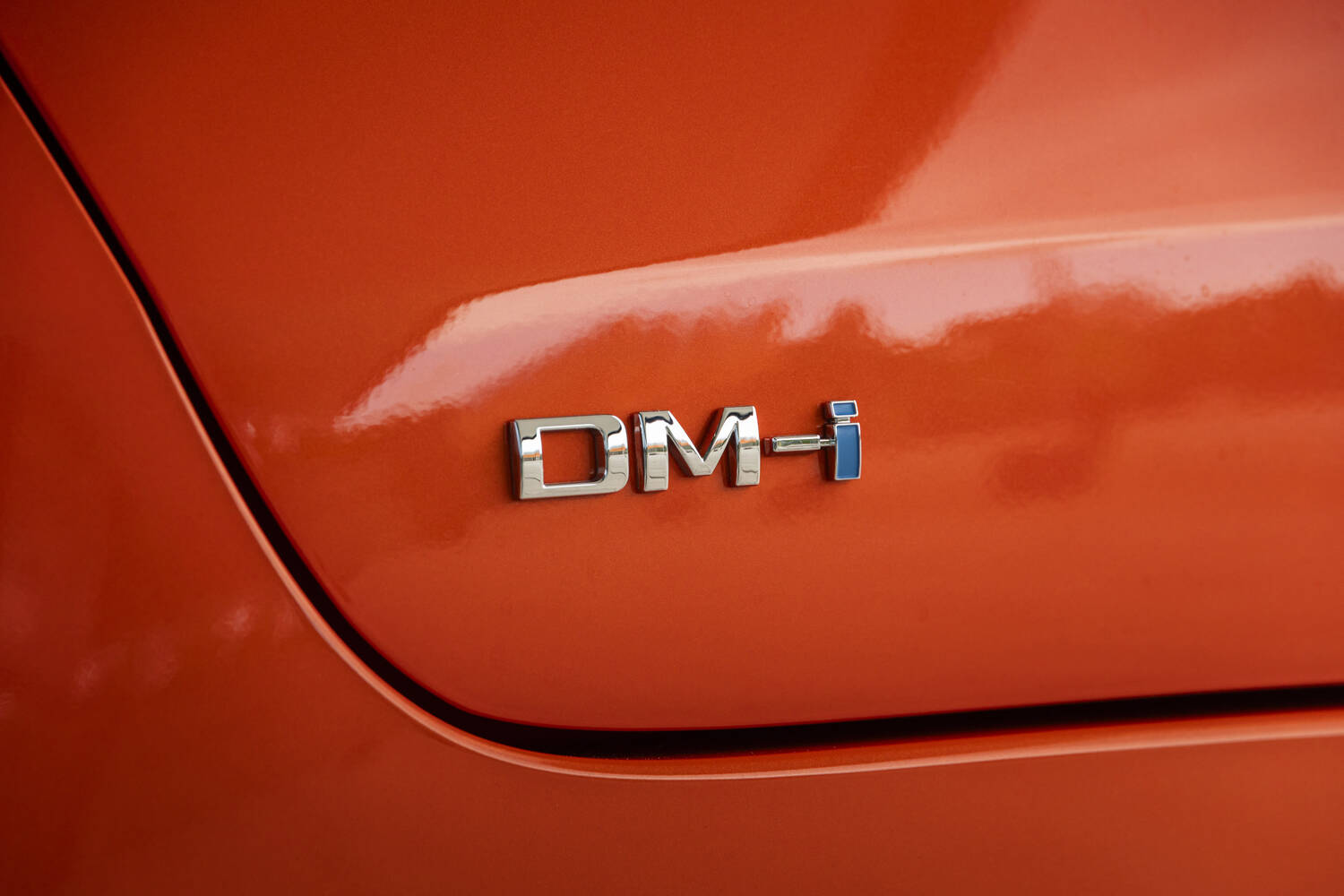
With the all-electric Dolphin Surf and Dolphin already in place, the BYD Dolphin G is offered with just one powertrain - that of a PHEV, hence the 'DM-i' part of its name (it stands for 'dual mode, intelligent').
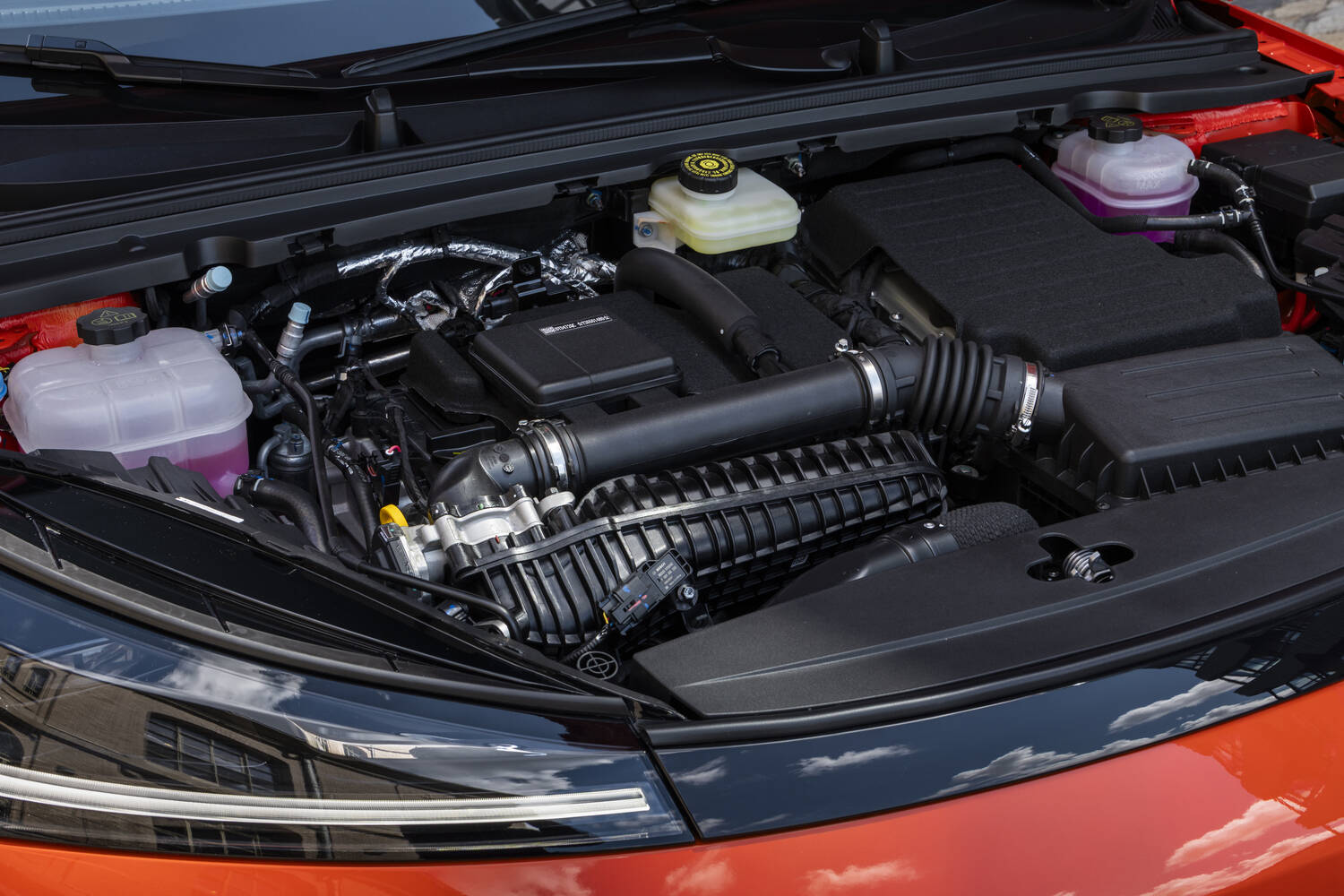
This is said to be version 5.0 of BYD's DM-i tech, but it's a familiar set-up from products that have gone before. Here, a 1.5-litre, 95hp/120Nm four-cylinder petrol engine primarily serves as a generator or range extender for the battery pack powering the 163hp/210Nm electric motor on the front axle. Only rarely - during moments of high load - does the petrol engine ever directly drive the Dolphin G's front wheels.
The peak system outputs of the Dolphin G DM-i depend on the trim. If you select the Active car, then the power maxes at 176hp with 210Nm to back it up. All the other three grades of the BYD, however, use a larger battery pack and so have their peak power increased to 212hp; maximum torque remains unchanged.
Regardless, due to a 115kg weight difference in favour of the Active, all Dolphin G models run 0-100km/h in 8.3 seconds. They are also all front-wheel drive and have an electronic continuously variable transmission (e-CVT).
Driving the BYD Dolphin G DM-i Comfort on Germany's roads
Words by Matt Robinson on 12 June 2026

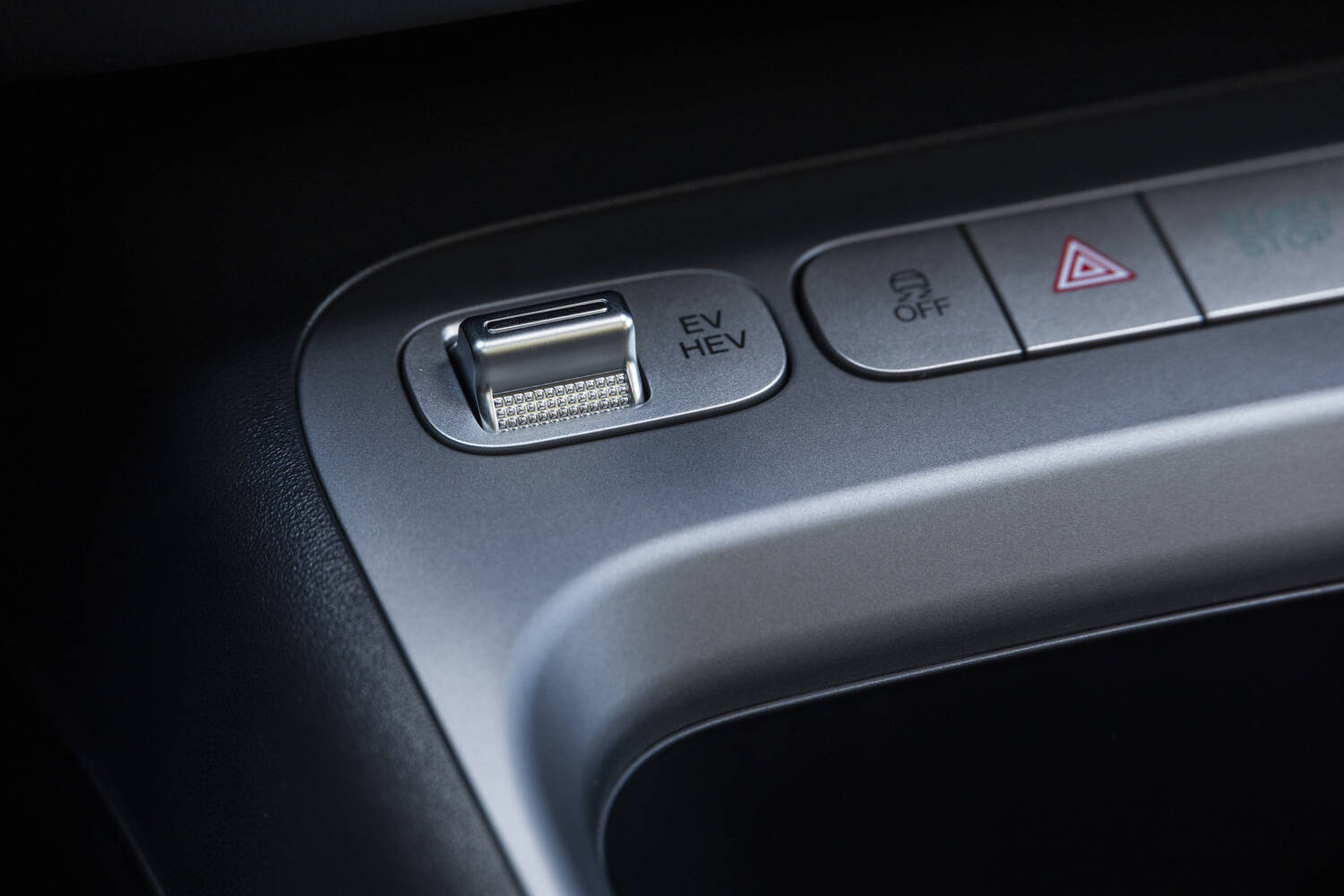
Keep it just within itself, and the BYD Dolphin G DM-i will prove to be an amenable-enough companion. It always attempts to prioritise electric running, providing an EV-like 'engine off' experience that's at odds with most PHEVs, but there is a little 'EV/HEV' switch down on the tunnel if you want to coerce it to use the petrol engine more often than not.
On the move, most of the BYD's controls are positive, including the steering. It's a little bit sticky off dead-centre, it has a weirdly over-zealous self-centring feel to it and there's not an awful lot of meaningful feedback to enjoy, but it's accurate, reasonably well-weighted and consistent, so controlling the car in tight city streets is no problem. Good turning circle, too.
What lets the Dolphin G down a little for regular day-to-day drivers is the uncomfortable low-speed ride. Cobbled and heavily potholed sections of the road in and around Berlin soon showed up our Comfort-spec car on 18-inch wheels to be remarkably loud in the wake of large hits to its suspension, so the brittle ride comfort in urban areas is going to be a challenge for those of a more sensitive constitution.

The BYD's comfort and refinement levels improve as speeds build, so that the Dolphin G is at its happiest and most relaxing when it's rolling along a motorway at 100km/h-plus on good tarmac.
Things start to come undone, though, if you're in any way heavy-handed with the BYD. Its handling is forgettable, although we will at least commend an impressively lean-resistant level of body control, but we could do with more bite and less dead travel at the top of the brake pedal.
Worse yet is the noise of the engine, and the glacial responses to big throttle inputs. If you're travelling at around 60-80km/h and you put your foot flat down, it can take up to five seconds of waiting before the petrol engine finally revs right out to its max and you have full drivetrain power. That's slovenly in the extreme.
Furthermore, the 1.5 sounds coarse at higher revs, so it's not a pleasant experience when the full 'hit' of the hybrid running gear eventually arrives.

This wouldn't be so bad if the Dolphin G wasn't comparatively torque-light. The only system output quoted for the car is the 210Nm of the electric motor, which is a good 90Nm down on applications of this PHEV powertrain in other BYDs.
And despite all versions of the company's supermini weighing less than 1.6 tonnes, this paucity of flexibility makes the car feel gutless - even when you do summon up full power from time to time.
So, with its lifeless steering, its needlessly busy low-speed and primary ride comfort, its noisy and unrefined powertrain, and the so-so brakes, the Dolphin G DM-i is a long way from being a satisfying car to drive.

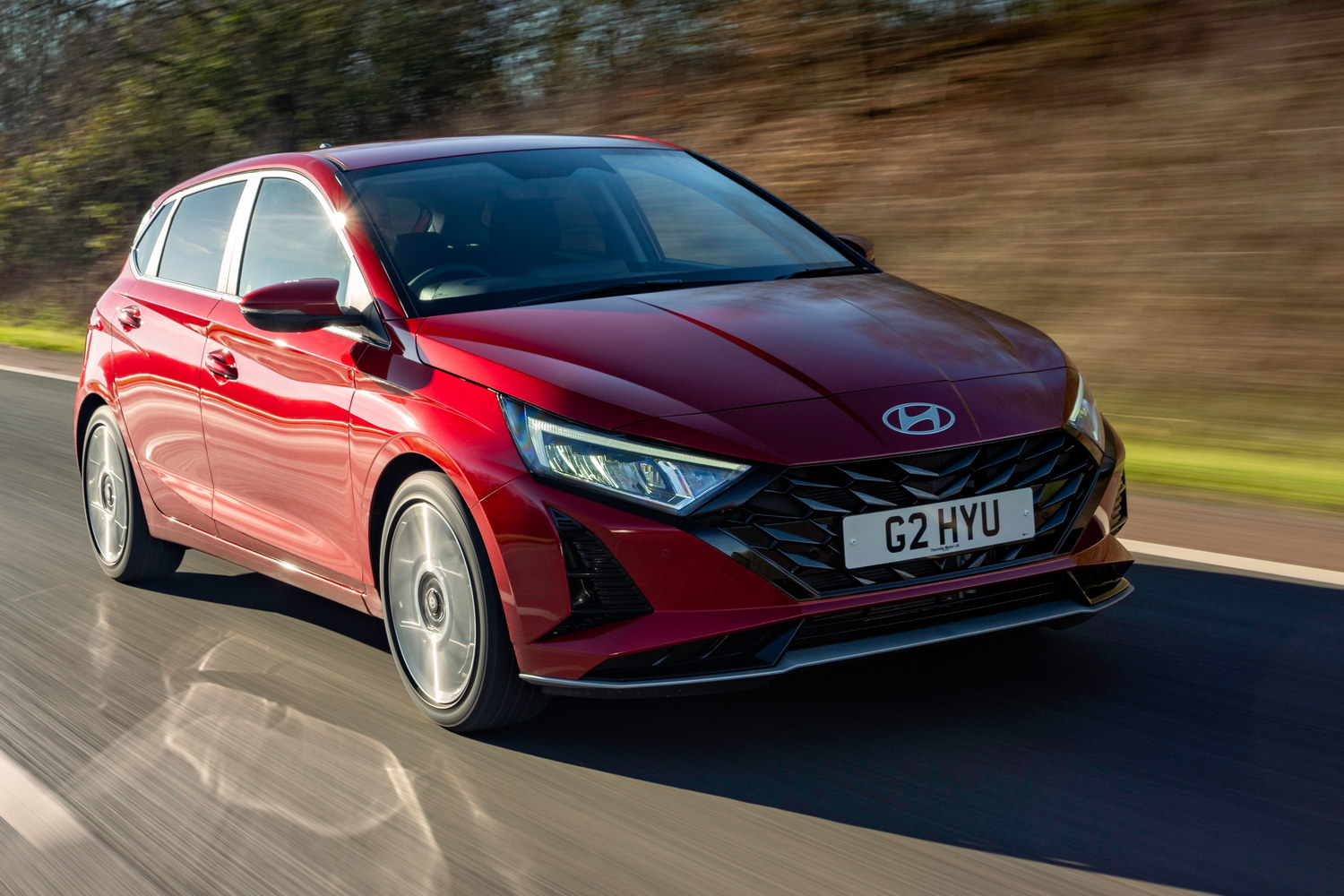
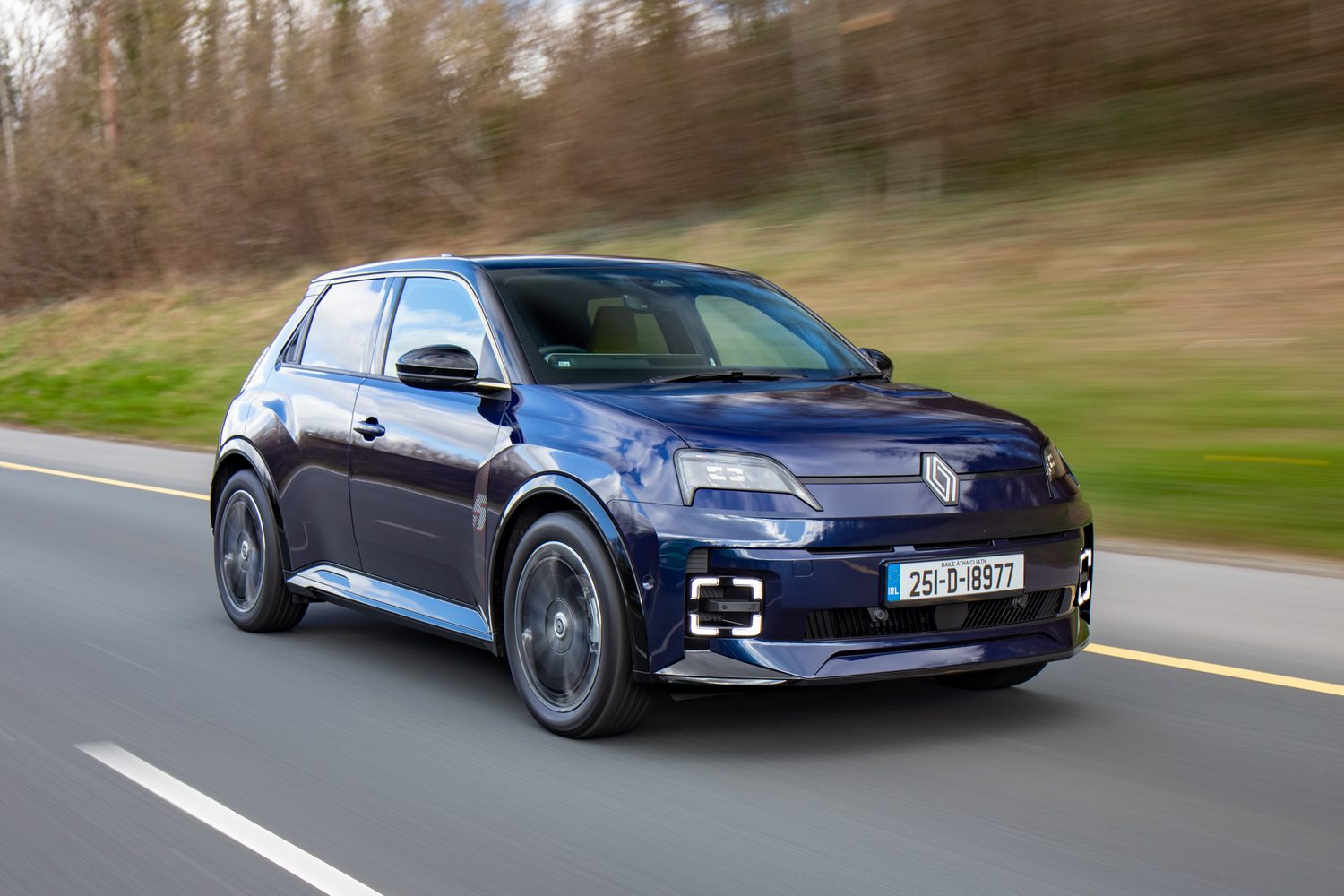
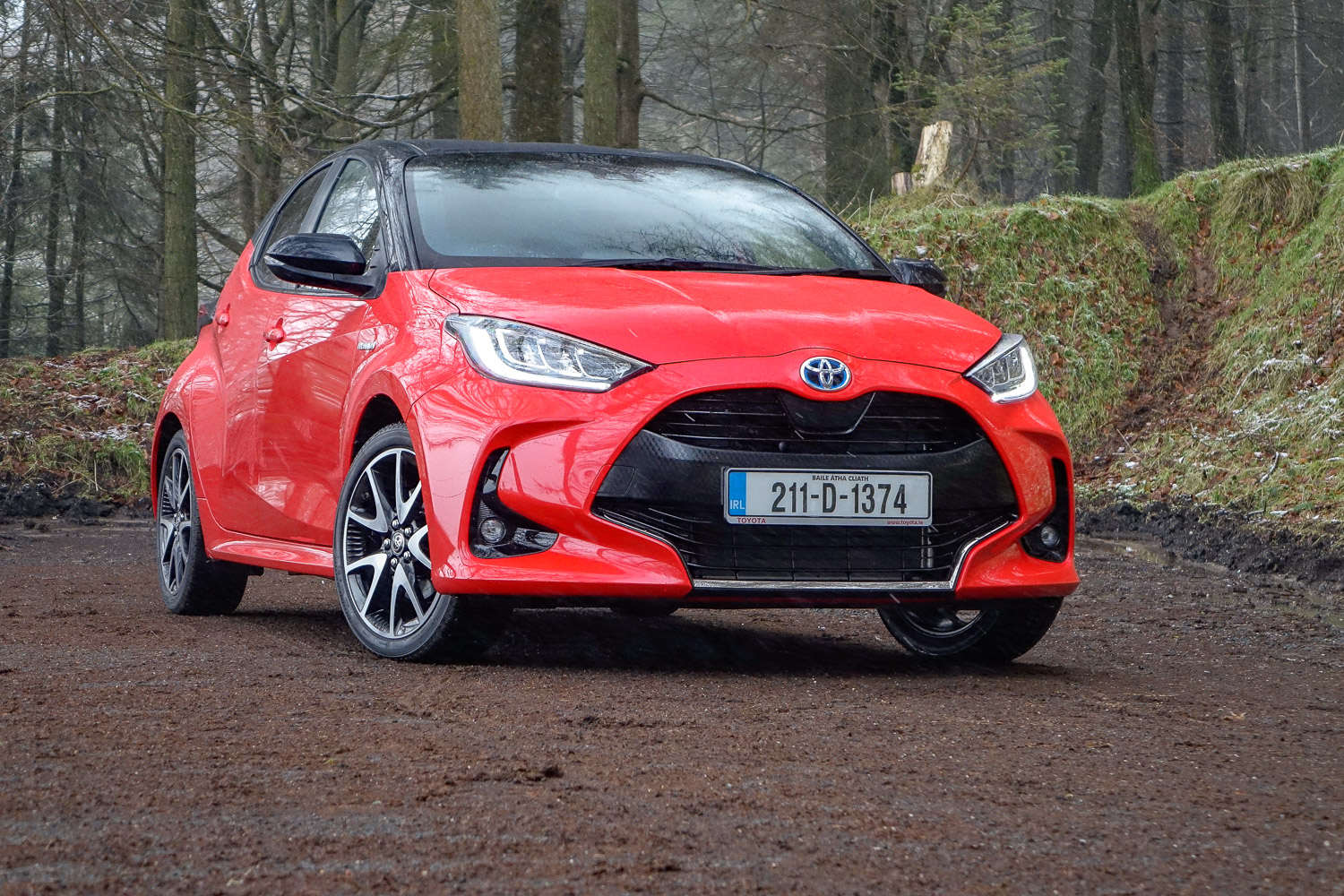
Something like a SEAT Ibiza, Hyundai i20, Renault 5 E-Tech, Cupra Raval or Toyota Yaris is far more appealing in this regard.
Yet if all you ever do is potter gently to the shops and back, the BYD has just enough about it to fit into your life in a seamless fashion, gritty ride quality aside.
Range, battery, charging and running costs of the 2026 BYD Dolphin G DM-i
• Two battery options
• Up to 105km of electric range
• More than 1,000km combined

The main USP of the BYD Dolphin G DM-i is that it's a PHEV. There are plenty of all-electric cars in this sector, as well as efficient petrol rivals and even a healthy array of hybrid alternatives, but none of them have the versatility of being a plug-in hybrid like this.
Battery options and official range
All versions of the BYD Dolphin G DM-i use the company's 'Blade' battery packs, which are of a lithium-iron-phosphate (LFP) chemistry.
The difference is that the Active model is equipped with a smaller - 7.42kWh - item, offering up an all-electric range of just 40km. However, with a 42-litre fuel tank onboard and a lighter kerb weight, the Dolphin G DM-i Active can go up to 1,020km at a time on its petrol-electric resources, according to BYD.
Most customers will probably go for one of the Boost, Comfort or Sport models, as all of them use a larger 18.3kWh battery. This significantly enhances the EV capabilities of the BYD to up to 105km, although the overall drivetrain range is not much greater than that of the Active at 1,040km.
Real-world range and efficiency of the BYD Dolphin G DM-i

We drove the BYD Dolphin G DM-i in Comfort specification with the larger battery, on urban roads at the edge of Berlin, then onto some German Autobahn (although all covered by a 120km/h limit, rather than being derestricted) and finally onto free-flowing country roads and semi-urban routes. With warmish conditions of around 17 degrees C, the climate control was running the entire time.
There was a mix of speeds involved, including plenty of braking to recuperate battery charge. Saying that, BYD, as a company, does not believe in offering strong-enough regenerative braking for what is known as one-pedal driving, but it does still engineer in energy harvesting,

Starting with a full tank of fuel and almost 70 per cent charge in the 18.3kWh battery pack, and leaving the car to sort itself out in HEV mode, after 50km of driving we were getting an indicated 5.7 litres/100km out of the BYD from what was a fairly sensible driving style.
That's OK, of course, but it's not easily outstripping what the non-plug-in hybrids in this class would have managed in the same circumstances. So, you'd have to ensure the car was in EV mode and running primarily on its electric motor to get anything better from this hatch - and the weighted combined WLTP figure of 1.4 litres/100km looks optimistic in the extreme. Hence why BYD quotes a much more realistic 4.5 litres/100km for the Comfort model.
Charging up the BYD Dolphin G DM-i
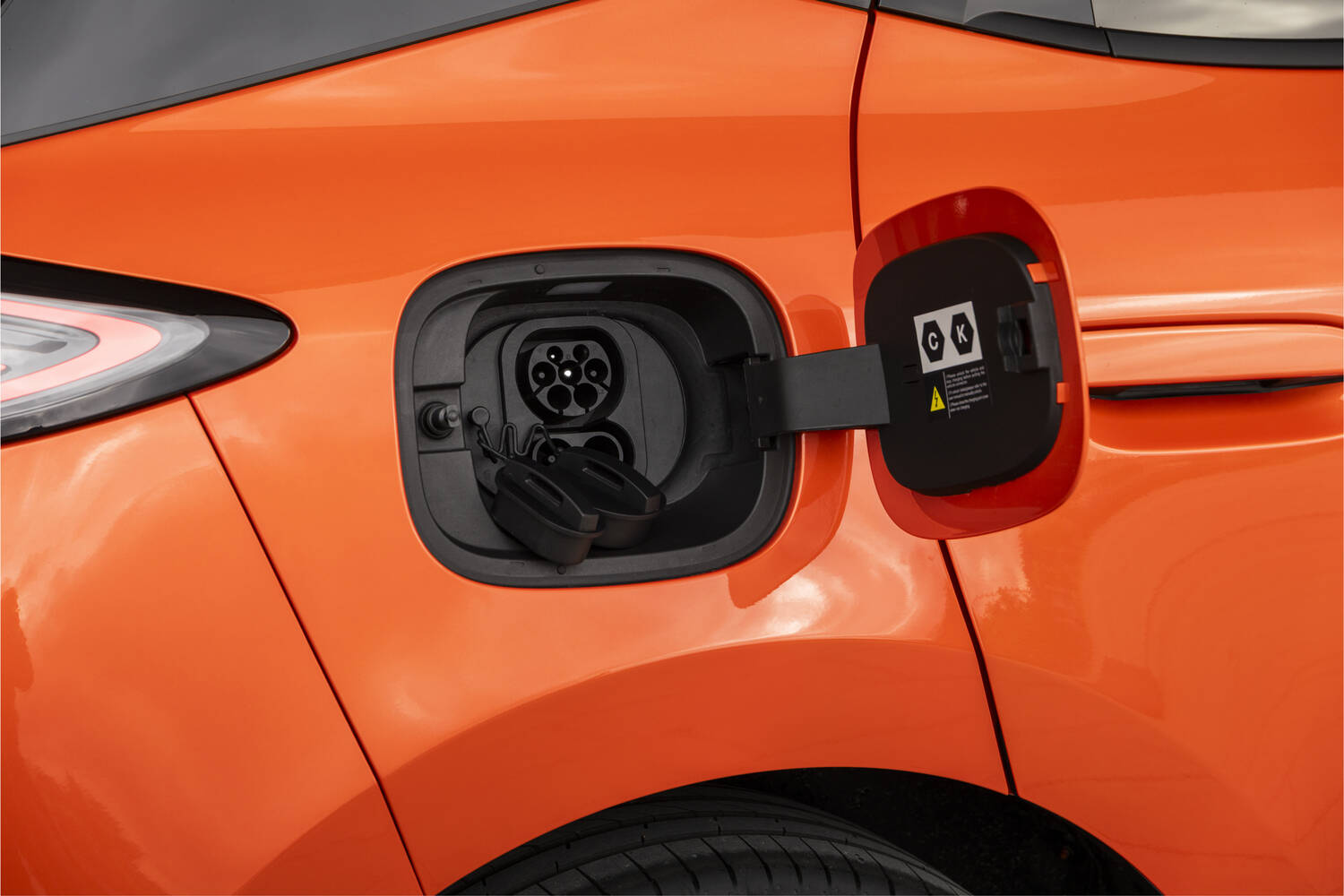
Good news here, as the Dolphin G is a BYD DM-i which can charge on a DC connection. Not for the Active model, though, which is restricted to 3.3kW on AC outlets. On such a connection, a 15-100 per cent top-up would require 2 hours 48 minutes.
The 18.3kWh cars, however, have can charge at up to 6.6kW on an AC wallbox. This keeps the 15-100 per cent replenishment time almost exactly the same as the Active (it's 2 hours 54 minutes) despite having a battery more than twice as big
More pertinently, these models can charge on DC outlets at up to 39kW. That sort of connection would permit a 10-80 per cent charge in just 26 minutes, which is a boon for those going on longer-distance journeys who can stop en route for a 30-minute charging session, to keep the Dolphin G DM-i at its most efficient for the remainder of the trip.
Servicing the BYD Dolphin G DM-i
The BYD Dolphin G DM-i will have the same annual, 7,500km maintenance interval as the firm's other cars - albeit with an initial check-up required just six months and 3,500km after purchase.
BYD Dolphin G DM-i warranty

BYD in Ireland provides a six-year, 150,000km warranty on all its vehicles sold new, as well as eight years' worth of guarantee on the electric motor and control unit. The Blade battery is covered for the same, extended period, but has a higher distance cap on it of 250,000km.
Irish pricing & rivals to the 2026 BYD Dolphin G DM-i
• Should be cheap
• Four trims, lots of kit
• Plenty of rivals, but not PHEV

We don't have Irish pricing for the BYD Dolphin G DM-i at the time of writing, but as soon as we do, we'll update this review.
We anticipate that the G will be available in four specifications: Active, Boost, Comfort and Sport. Just remember your 'ABCs' for that hierarchy. Active has the smaller battery, slower AC charging rate and less power than the other models, but it still comes with 16-inch alloys, adaptive cruise control and plenty of other tech as standard.
Boost should bolster the equipment with synthetic leather upholstery, a larger 12.8-inch touchscreen for the infotainment, wireless smartphone charging and a heated steering wheel and front seats too, among more. And of course it's the cheapest model available with the 18.3kWh battery and DC-charging capability.
Comfort loads in some desirable luxuries like 18-inch alloys, a head-up display, Google Built-In, an electrically adjustable driver's seat, a panoramic sunroof, a 360-degree camera and even a vehicle-to-load (V2L) feature, so that you can use the car like a giant power bank and plug electrical items into it.

Finally, Sport really only adds styling gewgaws, like a fake-suede interior, dark-coloured wheels and the option to have two-tone cabin finishes - either black and orange with the Orange Sunset exterior paint, or black and blue with the (yep, you guessed it) Ocean Blue bodywork.
There are still some good petrol-powered alternatives to the Dolphin G, such as the Peugeot 208, the SEAT Ibiza and the Skoda Fabia. There are talented EV offerings elsewhere too, not least the E-208 of the Peugeot family, but also the Cupra Raval and the superb Renault 5 E-Tech.
But what none of the above have is a PHEV option, which is where the BYD differentiates itself in this market section and carves out a niche all its own.

Verdict - should you buy the 2026 BYD Dolphin G DM-i?
While we have observed a few flaws about the BYD Dolphin G DM-I - including a harsh 1.5-litre engine, an uninteresting driving experience, less passenger room in the back than we were expecting and both uninspiring brakes and a slow-to-respond powertrain - the only major kinematic fault with the car is its busy low-speed ride and inability to deal gracefully with large bumps in the road.
Because, driven how most people use compact runarounds, the Dolphin G is otherwise totally inoffensive. It'll get you from A-to-B in a fuss-free, undemanding fashion, and it can also go from point A to point B in one hit, even if they're far apart, thanks to its unique PHEV set-up in this class.
It's that specific part of its nature, plus the bounteous standard equipment at a competitive price, which will make the Dolphin G a tempting proposition to bargain-savvy buyers in this sector of the market.
FAQs about the 2026 BYD Dolphin G DM-i
Is the BYD Dolphin G DM-i all-wheel drive?
No, all models send power to the front wheels only via an e-CVT automatic arrangement.
Can I charge the BYD Dolphin G DM-i up at public DC units?
Yes, if you specify one of the cars with the 18.3kWh battery pack - and you'll get a 39kW peak rate of replenishment. Otherwise, the base-grade Active is limited to 3.3kW on an AC connection.
Is the BYD Dolphin G DM-i just a BYD Dolphin with an engine?
No, it's a completely different vehicle, but it is in the same 'Ocean' range of products as the zero-emission Dolphin (without a G), so it uses a similar nameplate.
Want to know more about the 2026 BYD Dolphin G DM-i?
If there's anything about the BYD Dolphin G DM-i we've not covered, or you'd like help in choosing between it and other cars, you can avail of our expert advice service via the Ask Us Anything page.