

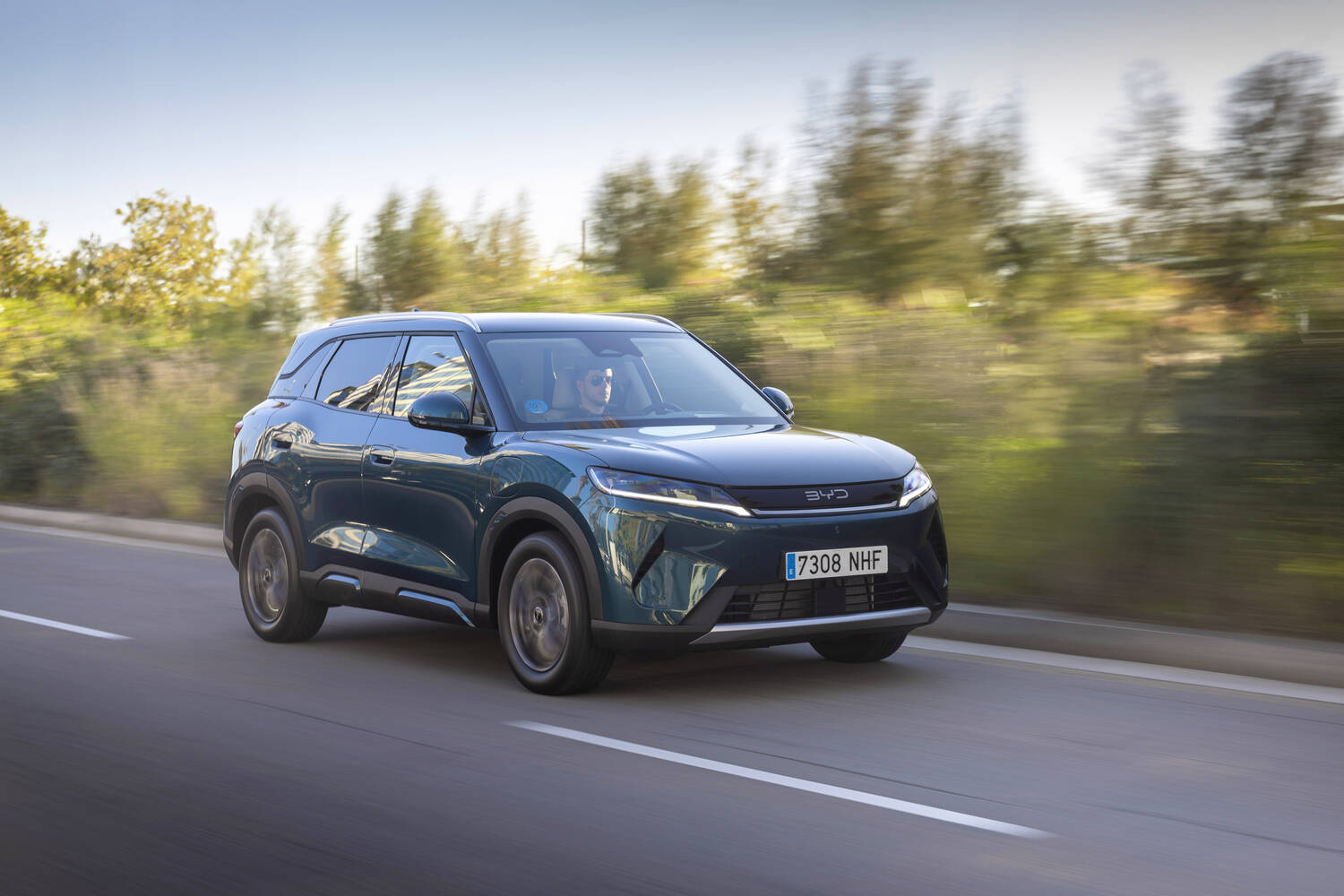
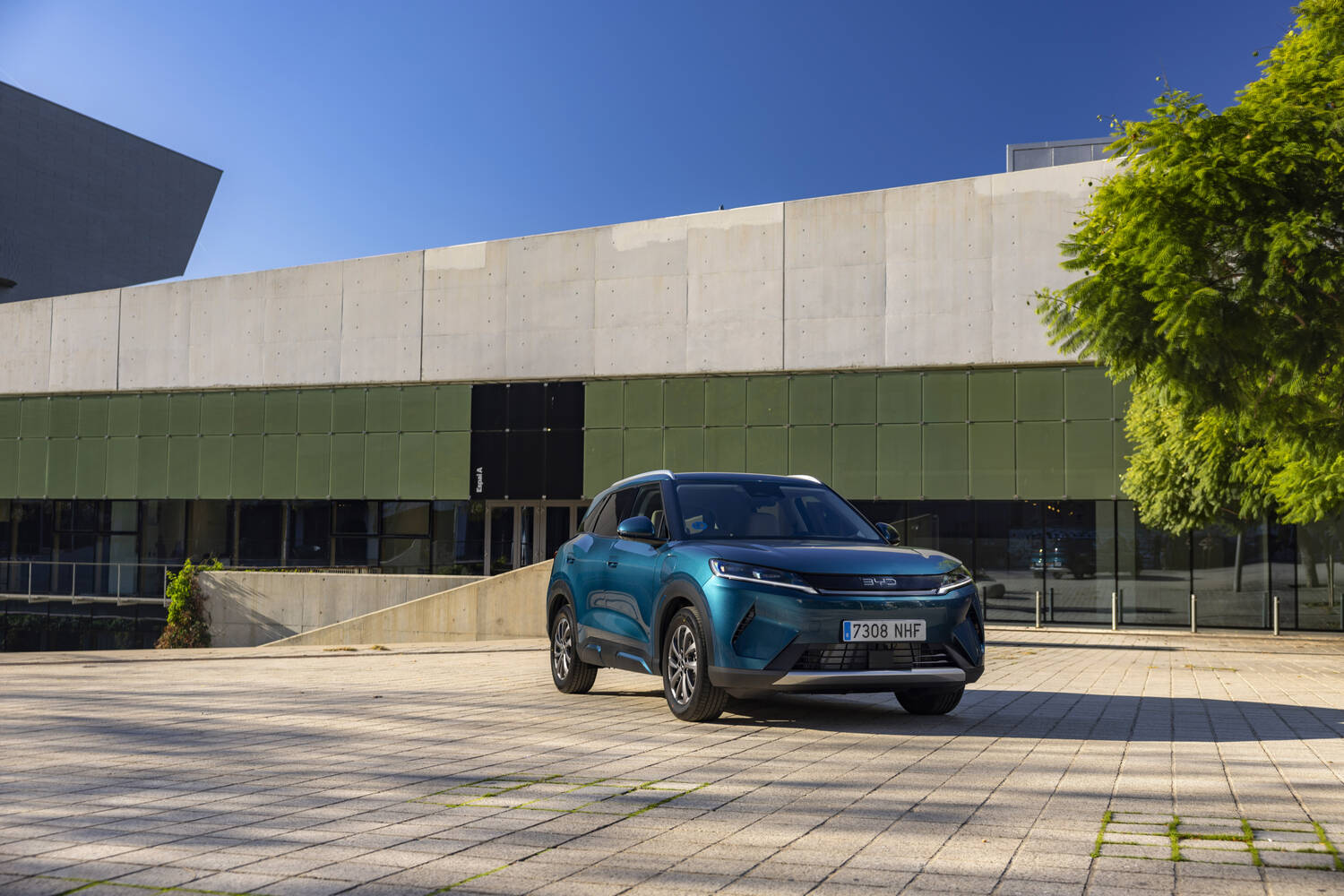
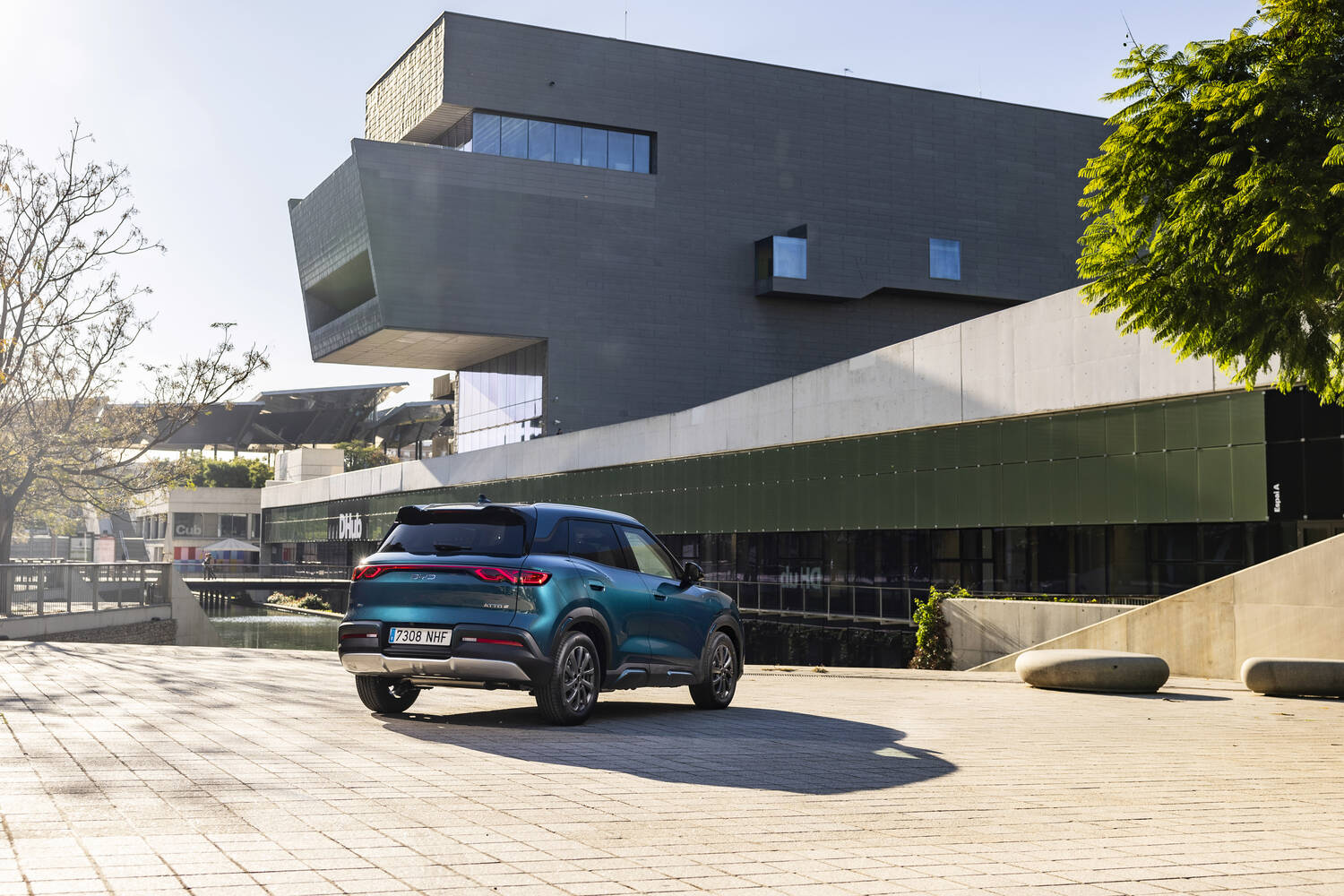
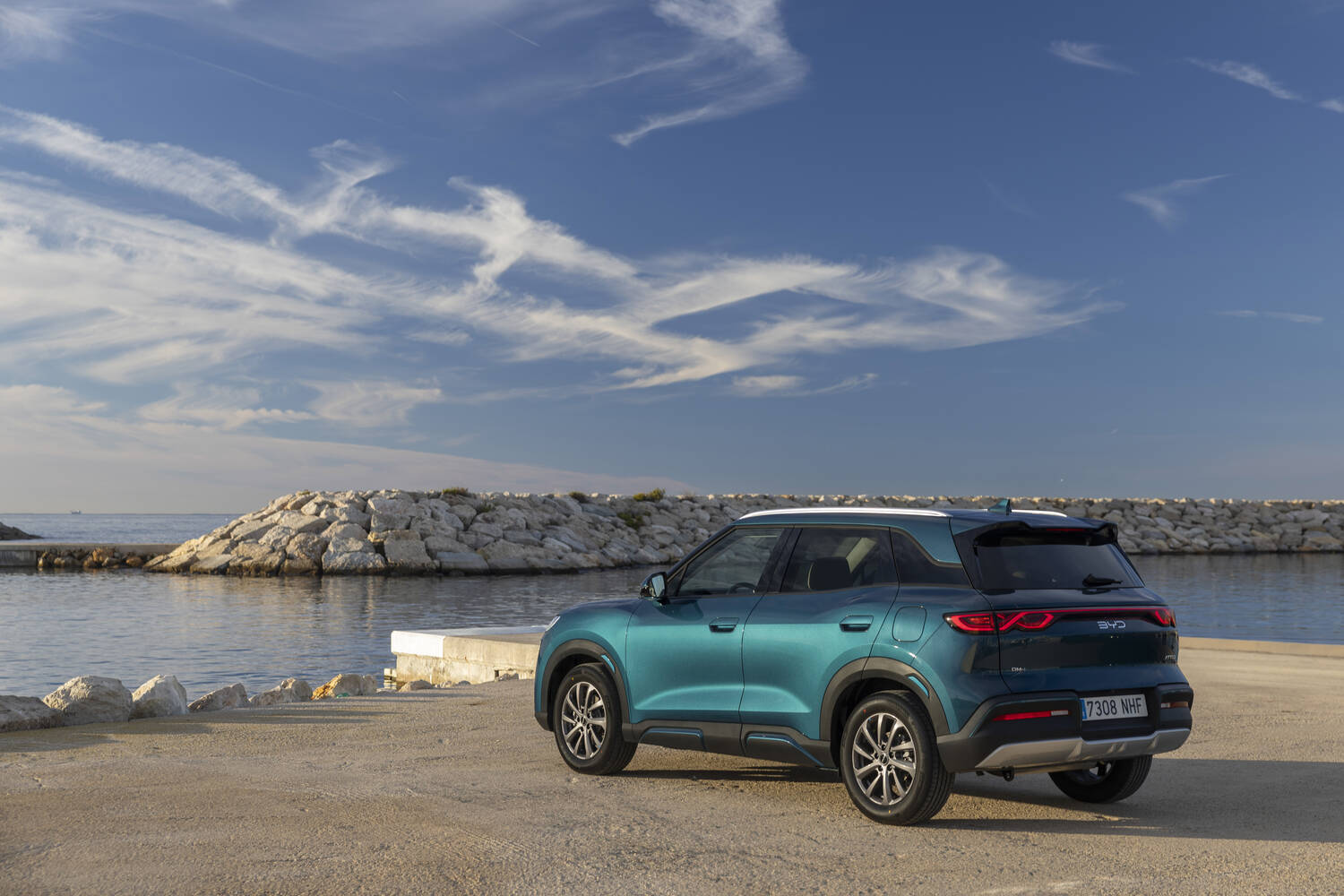
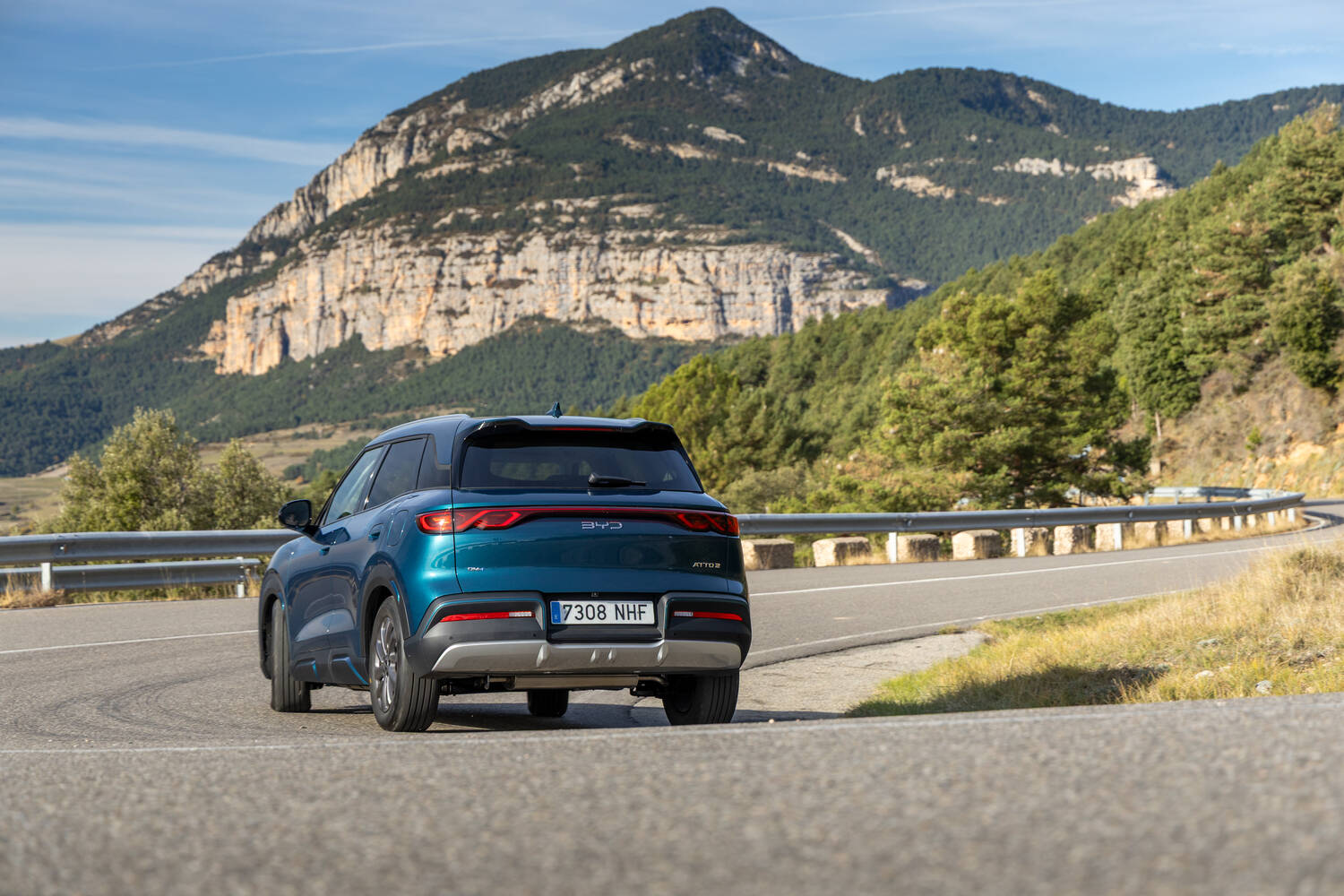
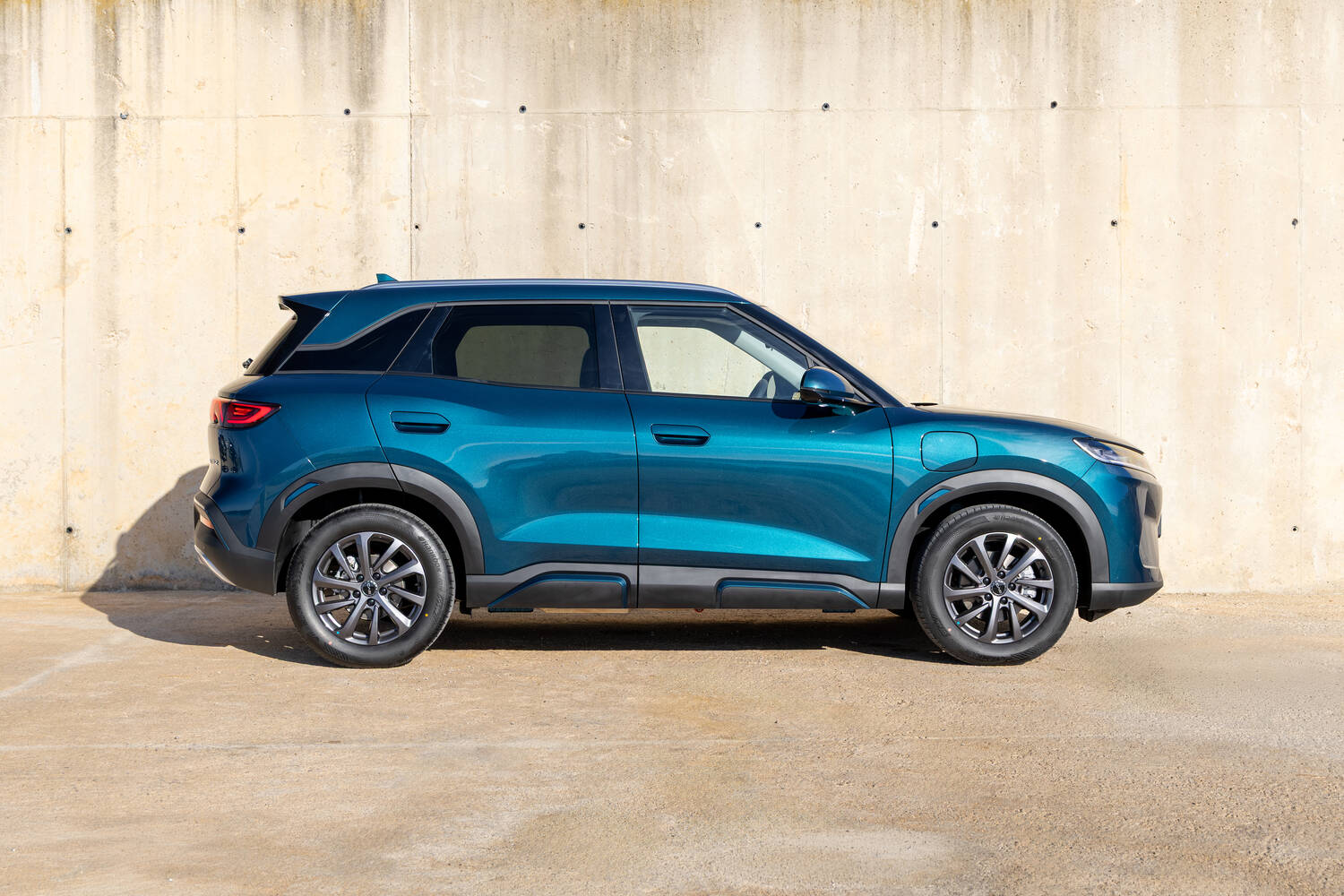
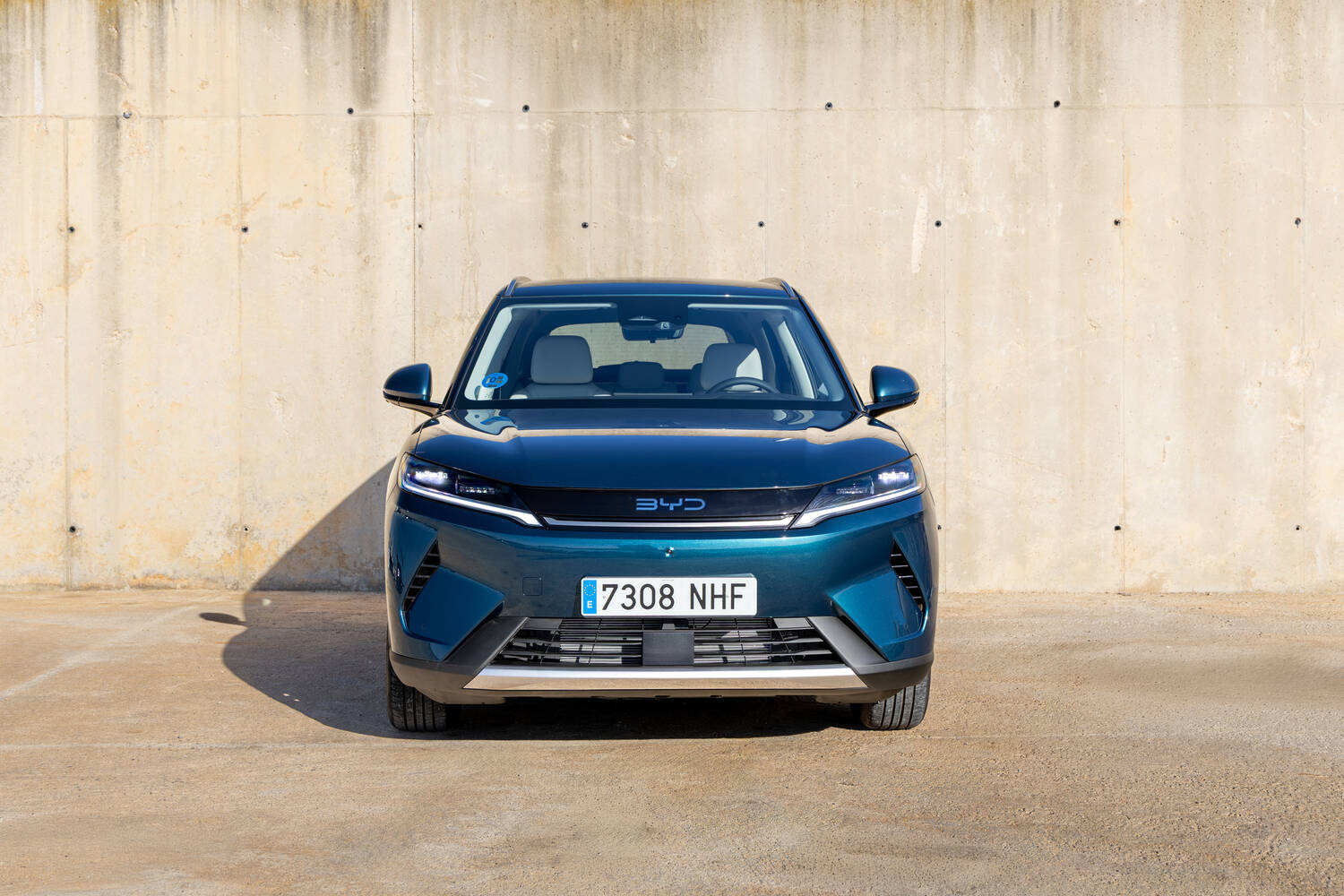
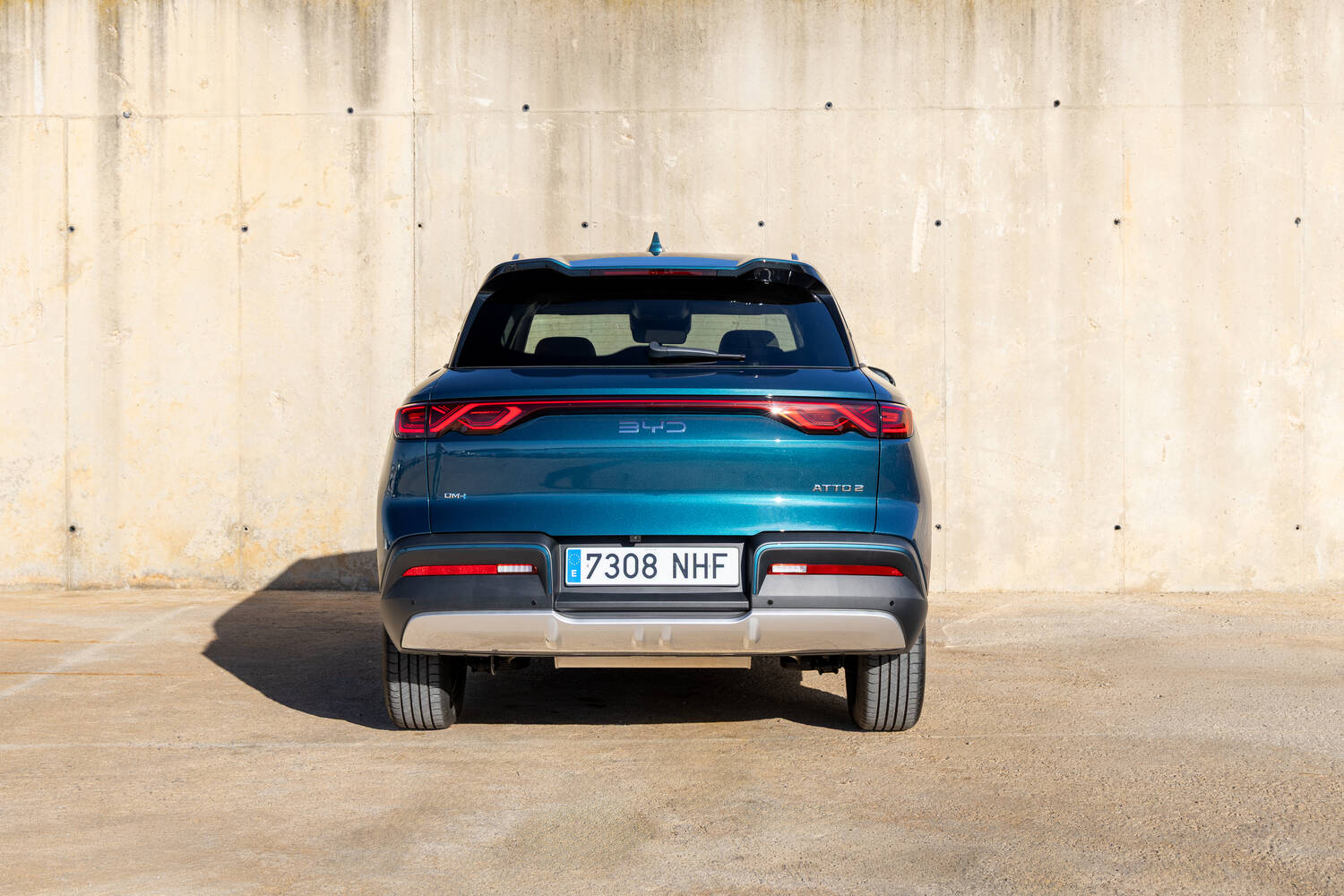

Exterior & design of the 2026 BYD Atto 2 DM-i
- Safe styling but obviously a BYD
- Clear SUV design influences
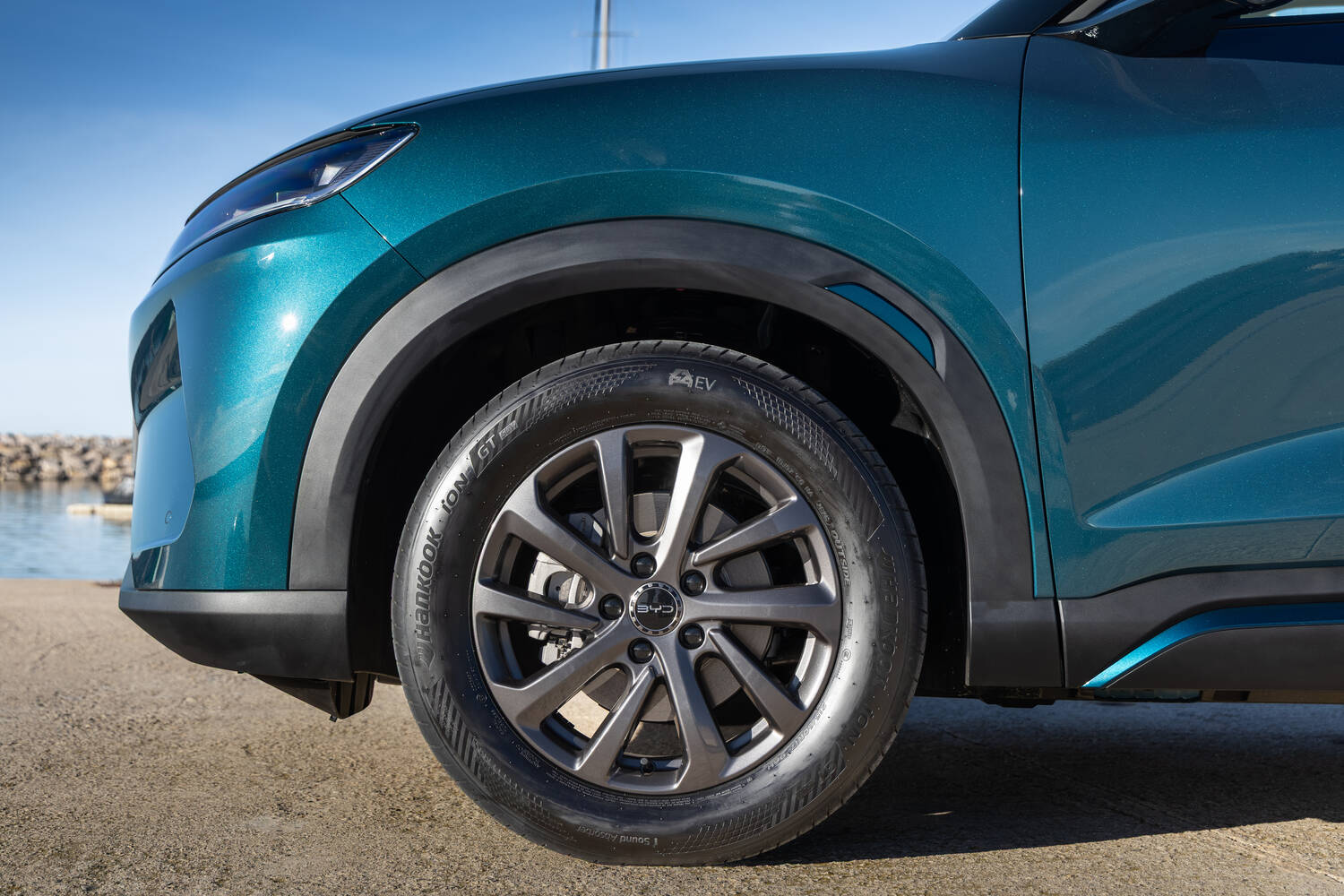
- 16- and 17-inch alloy wheels on offer

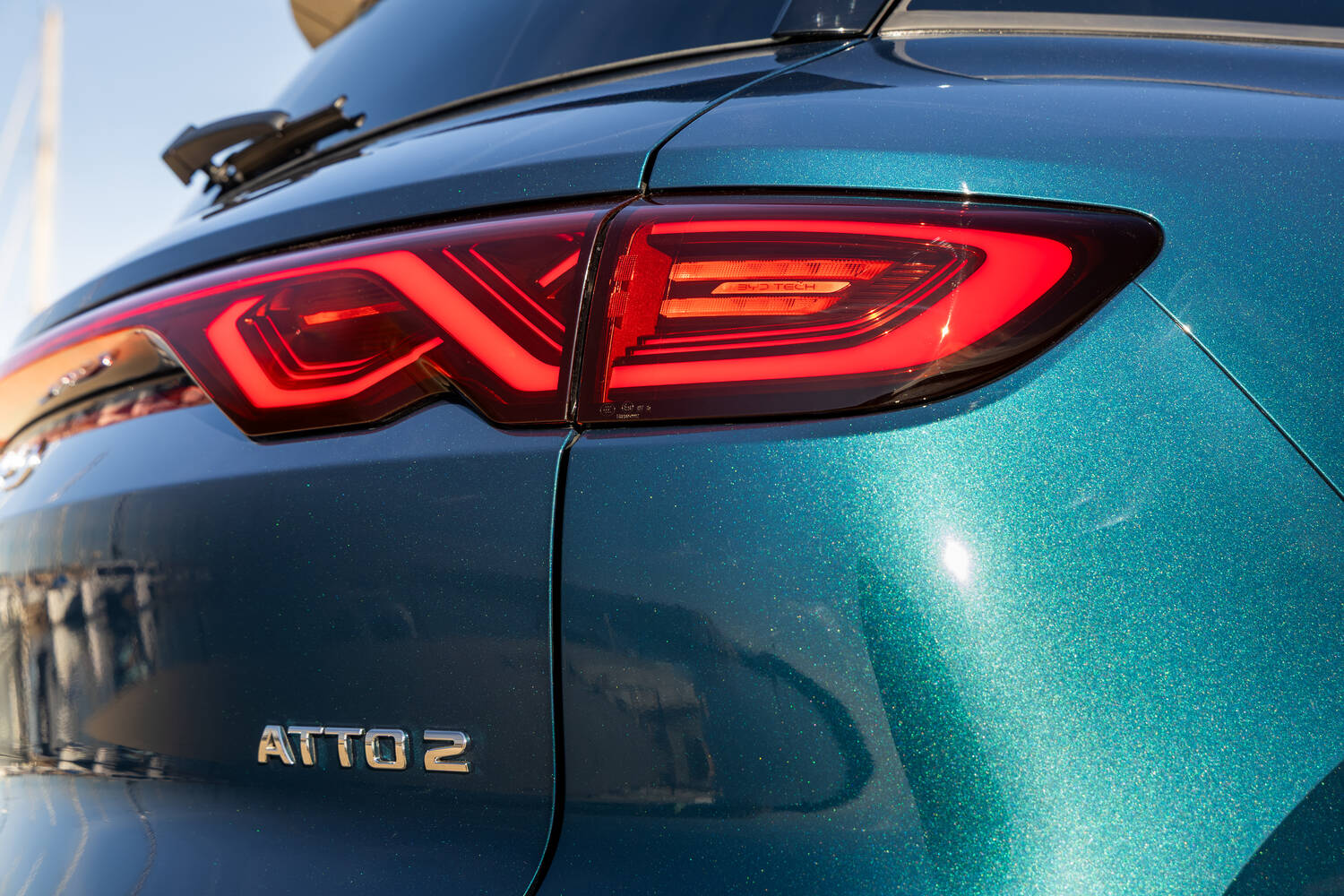
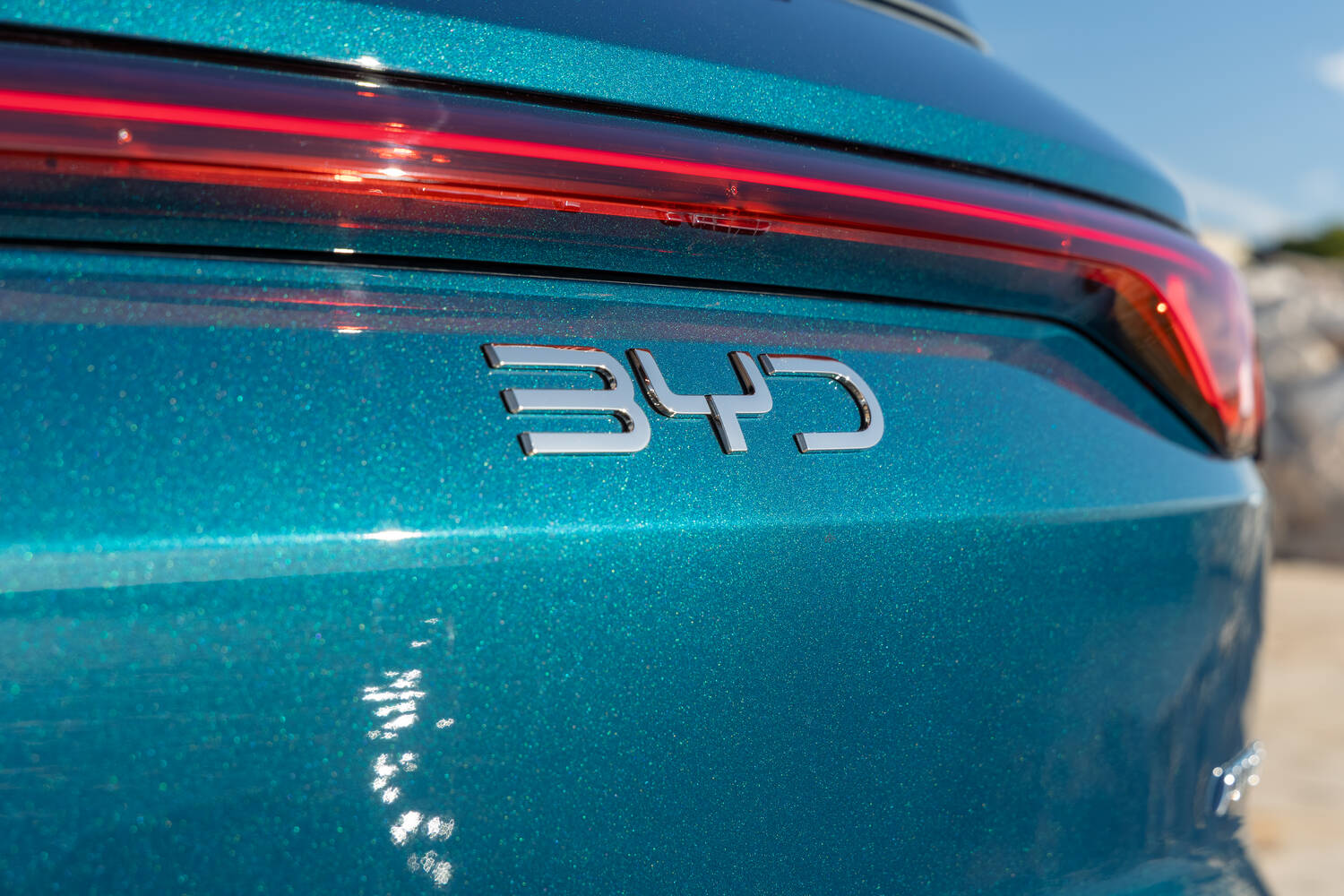
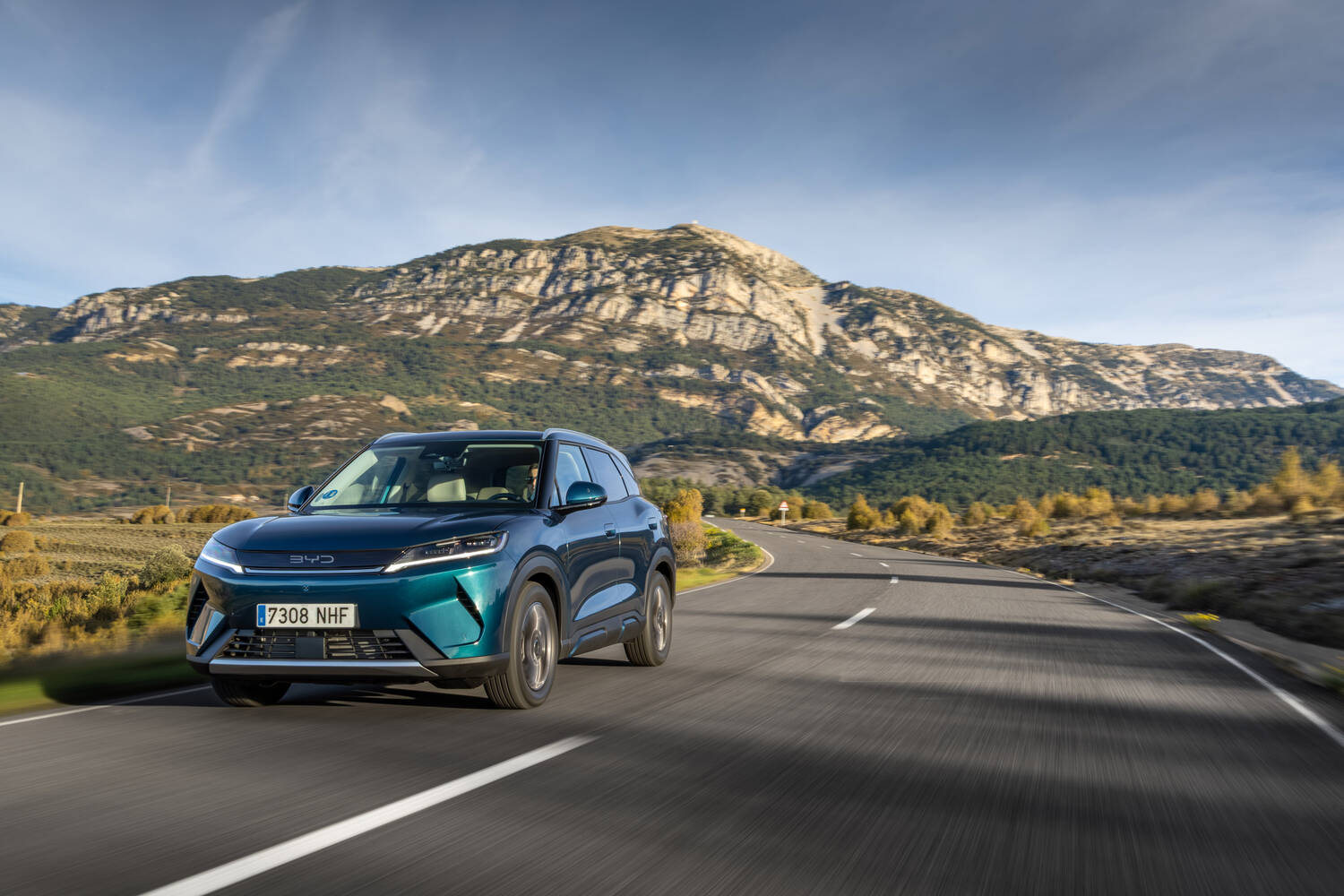
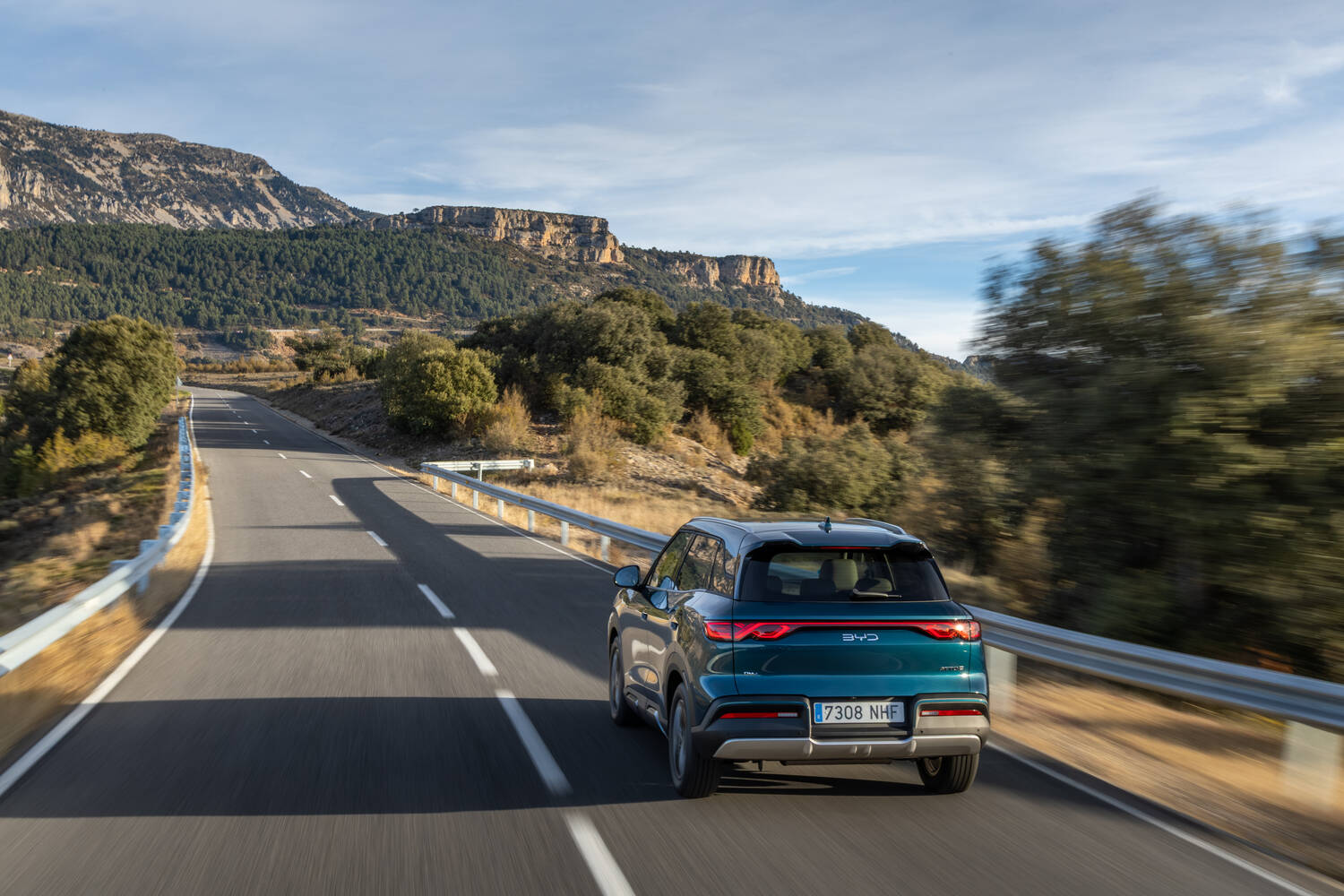
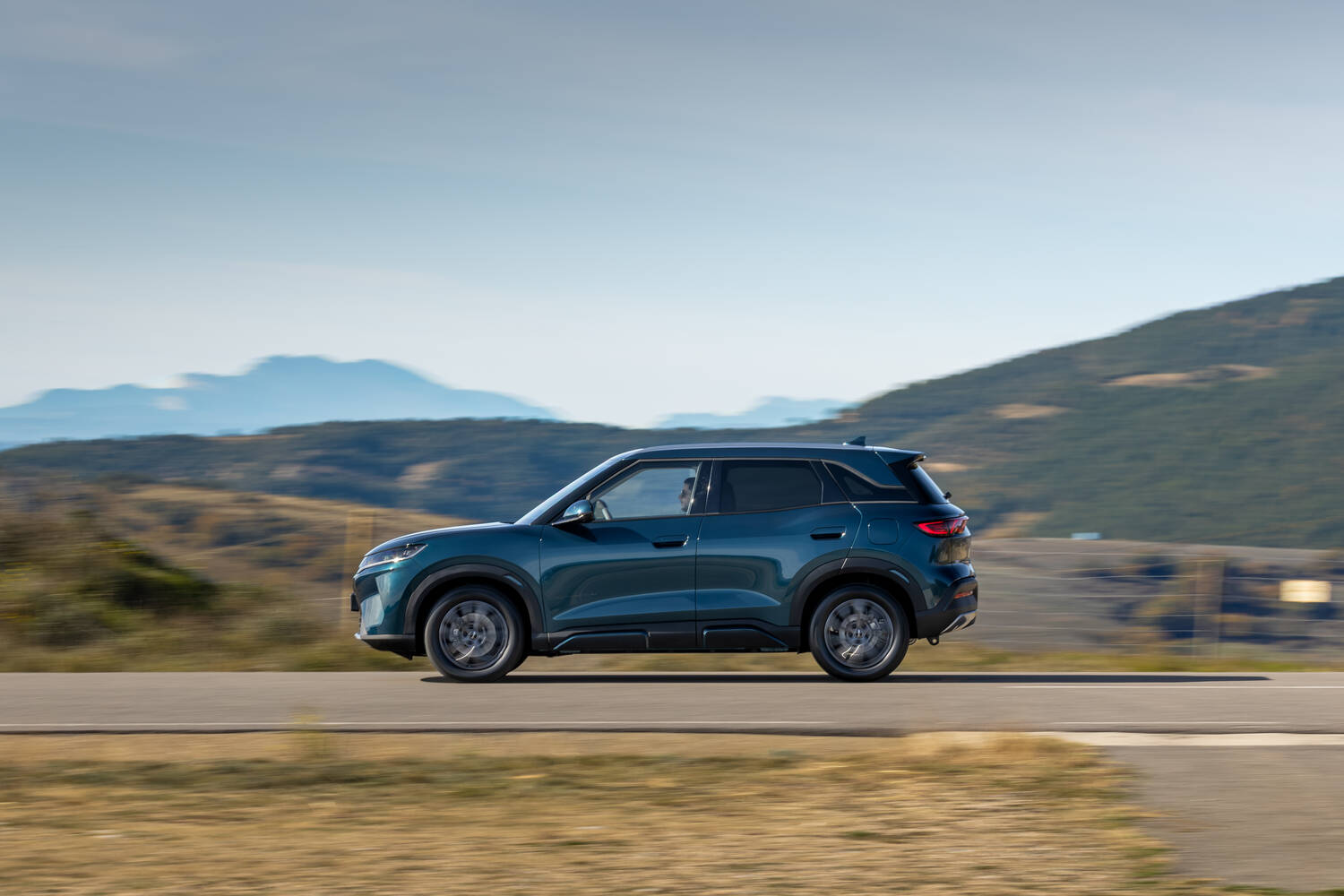
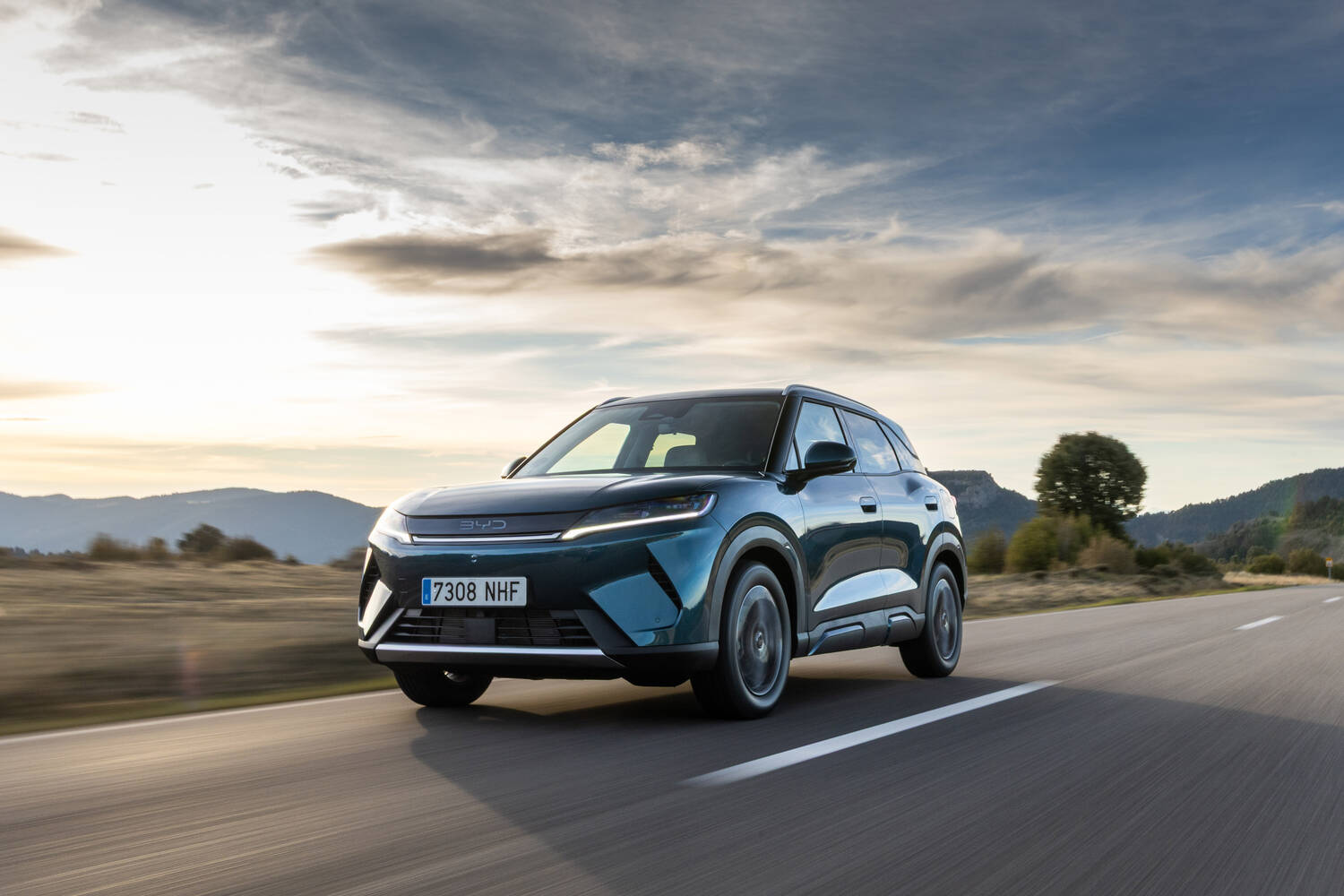
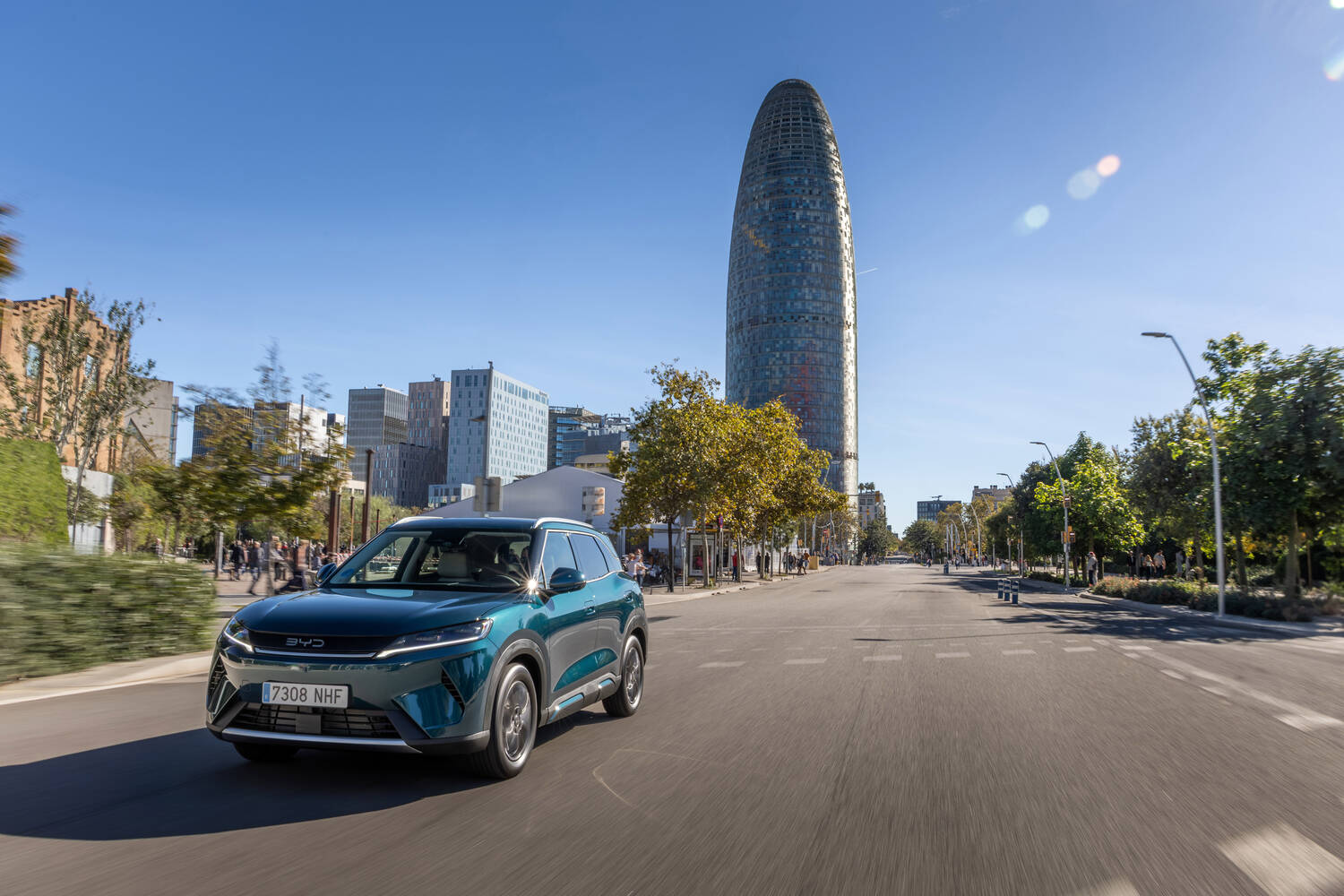
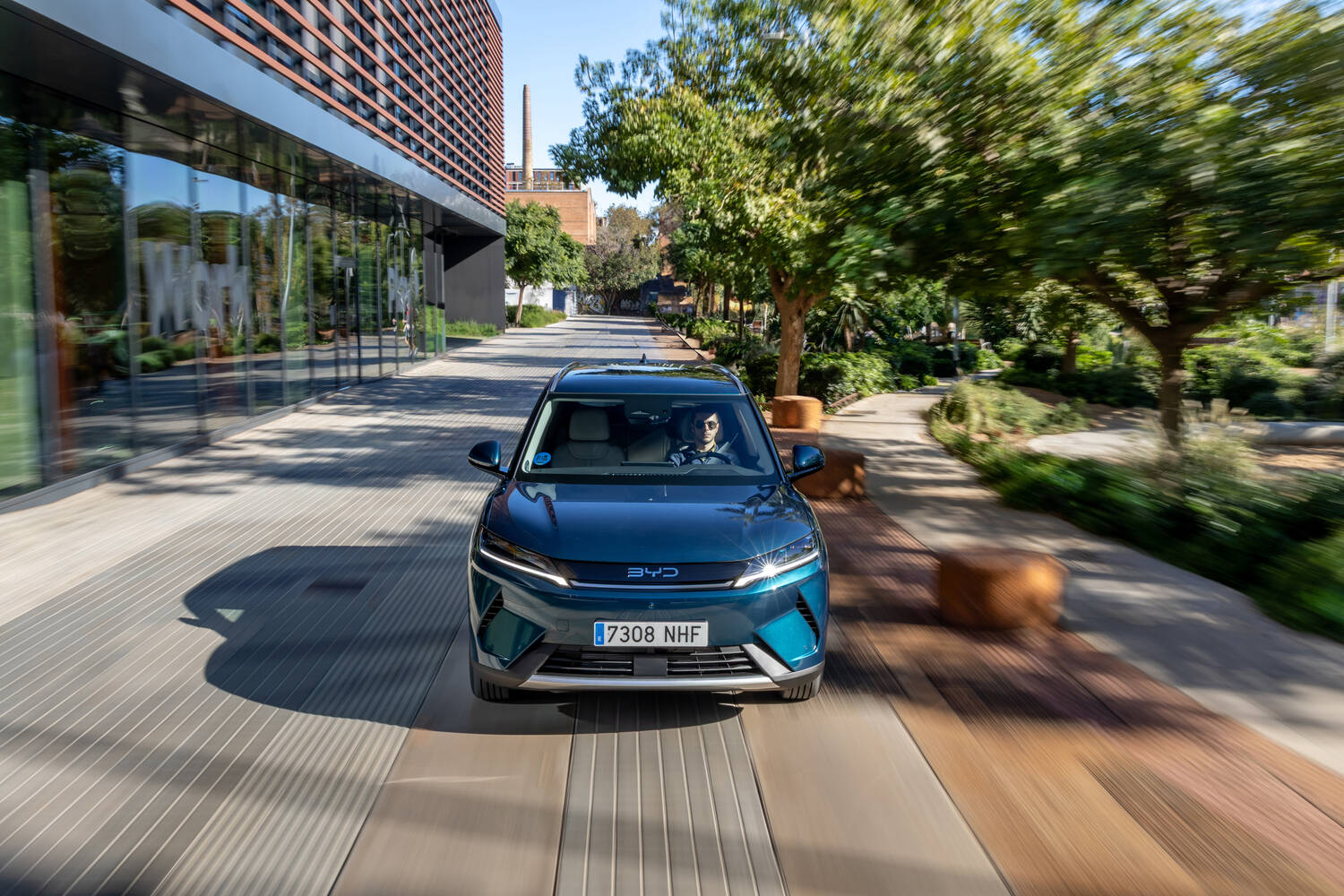
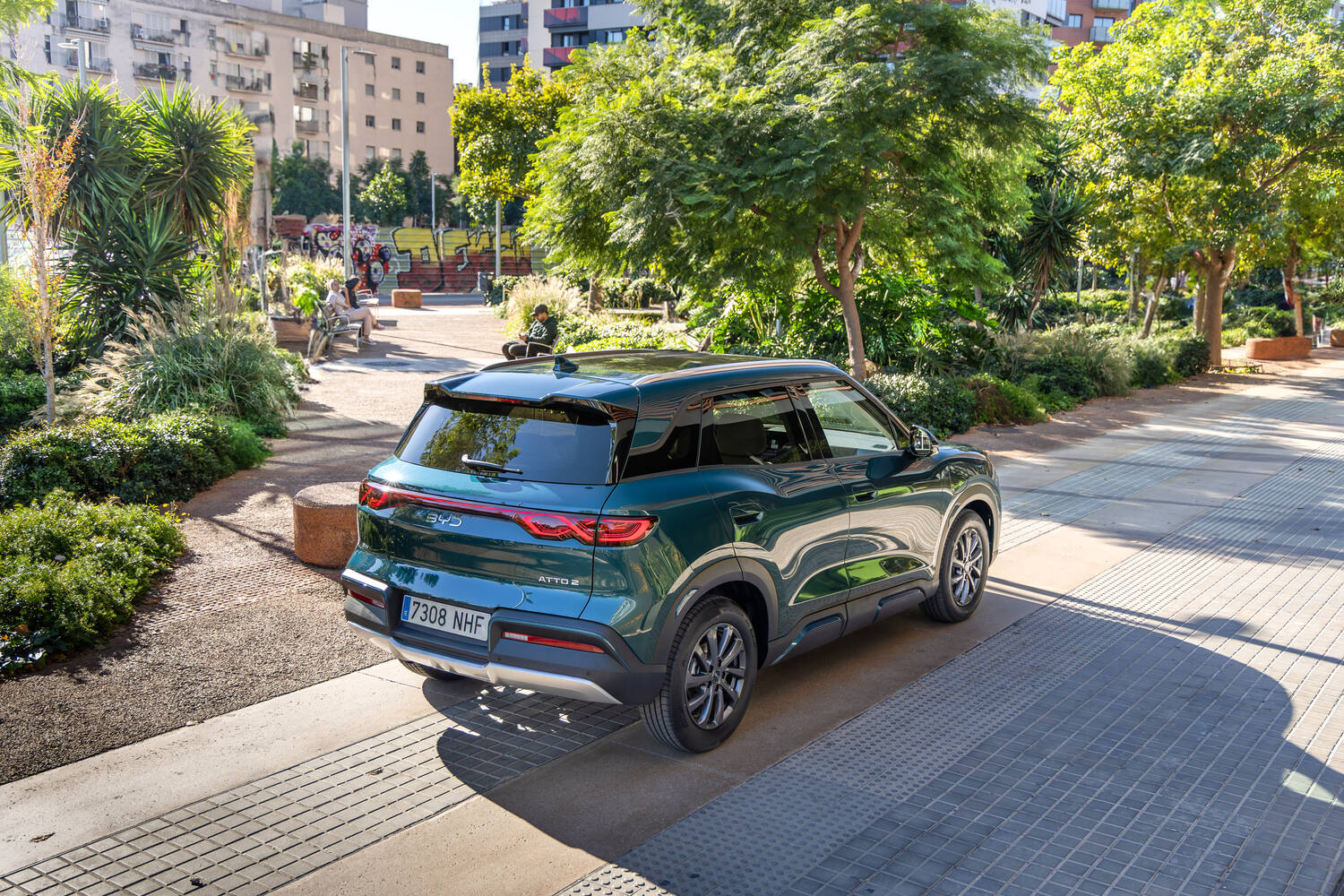
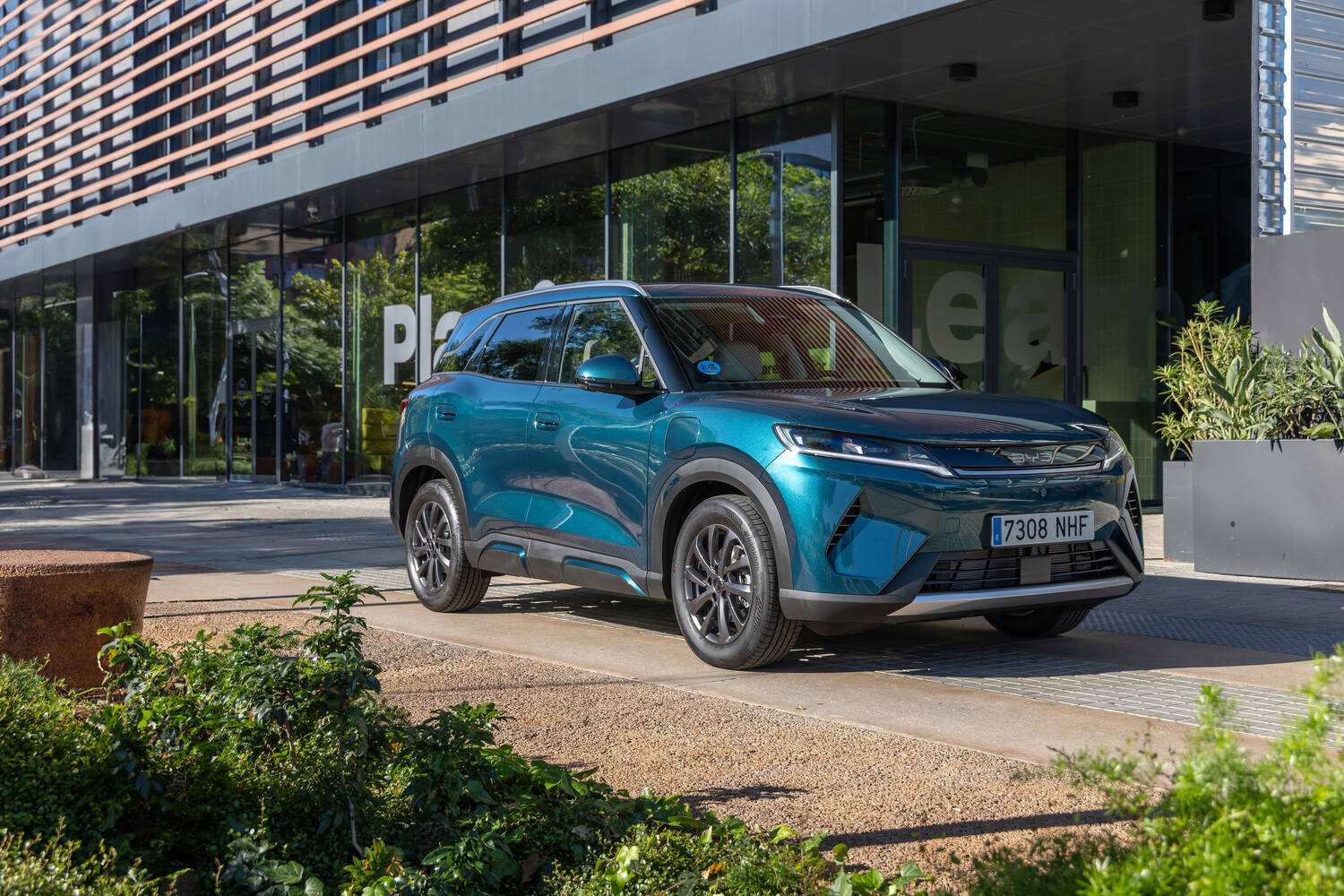
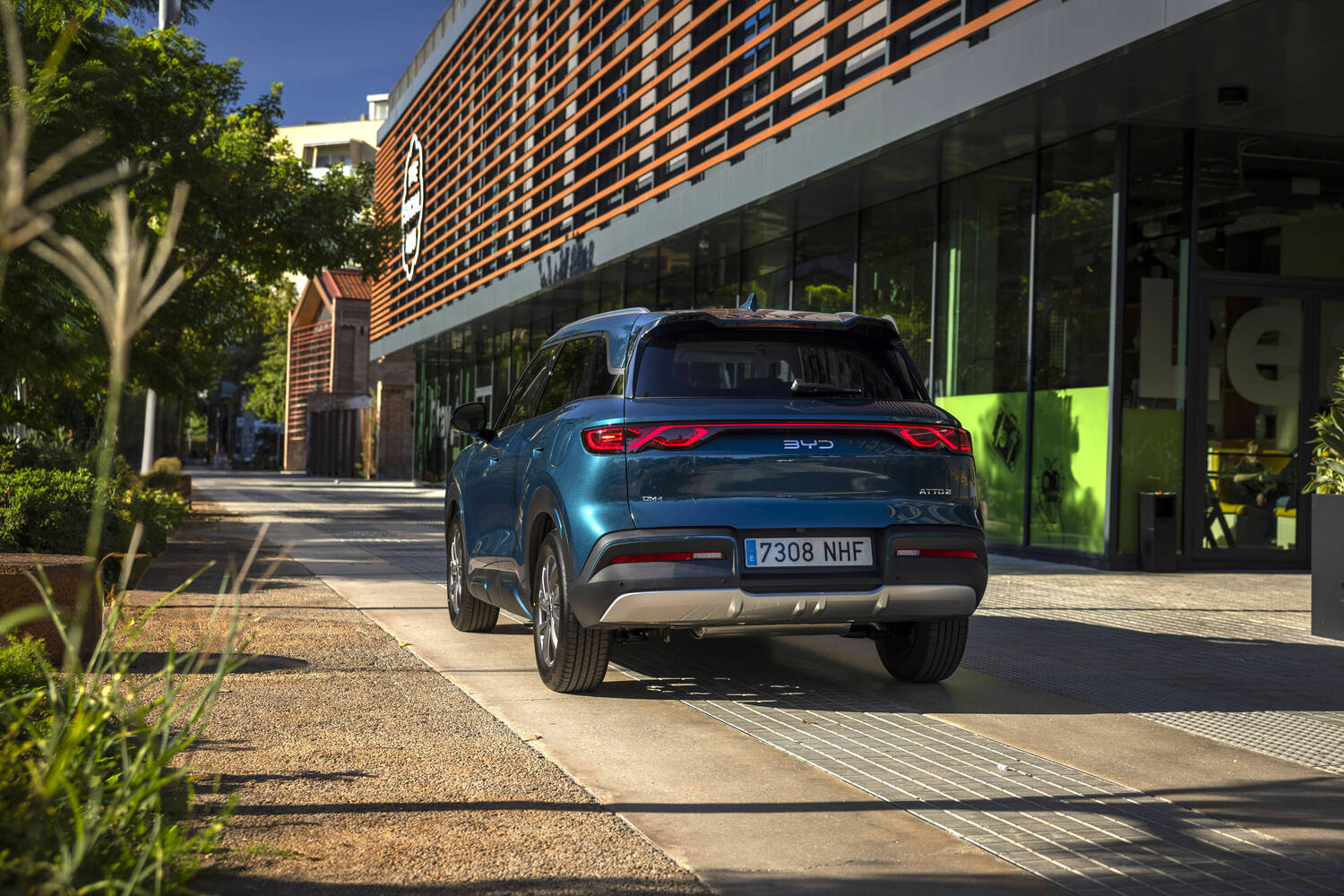
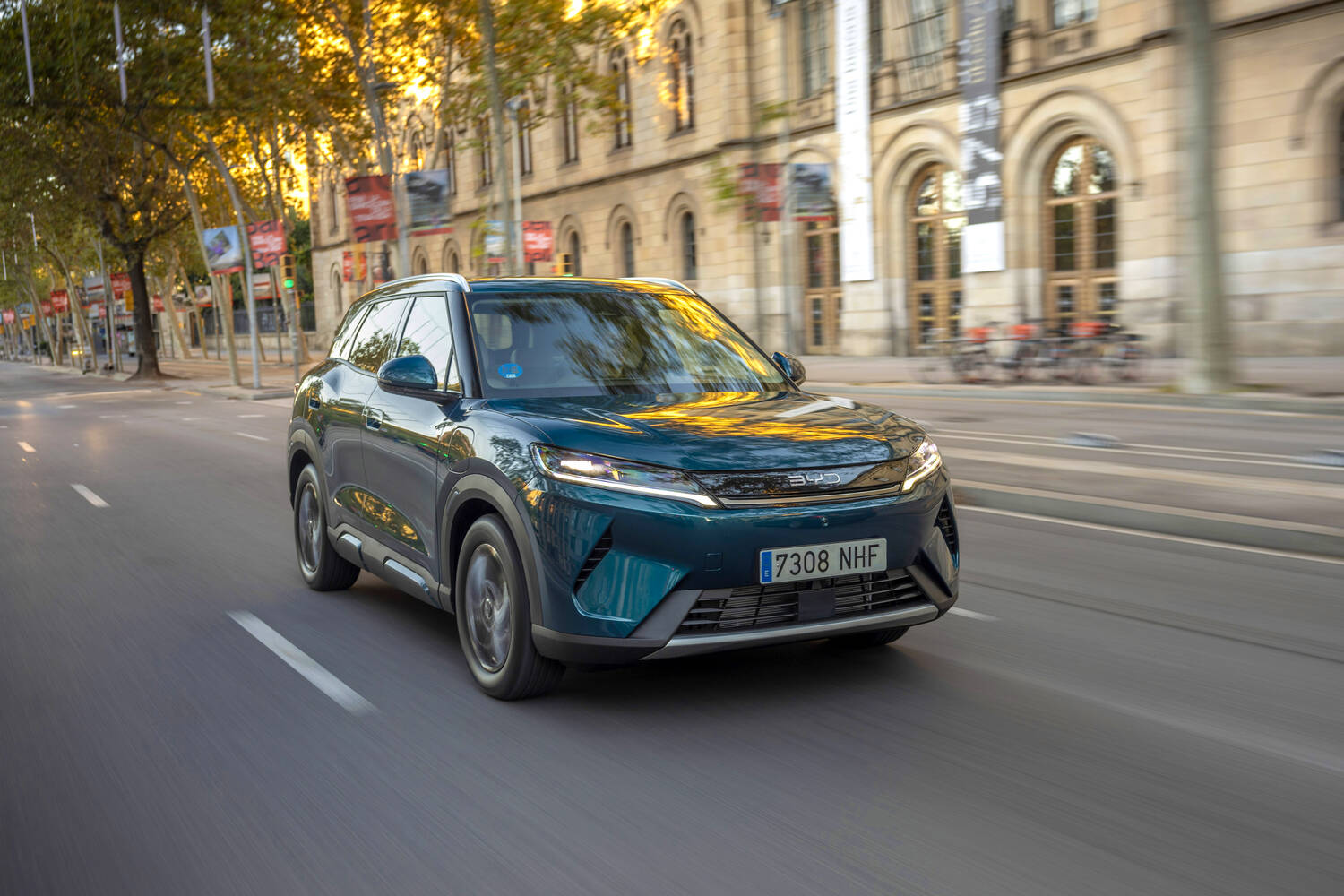
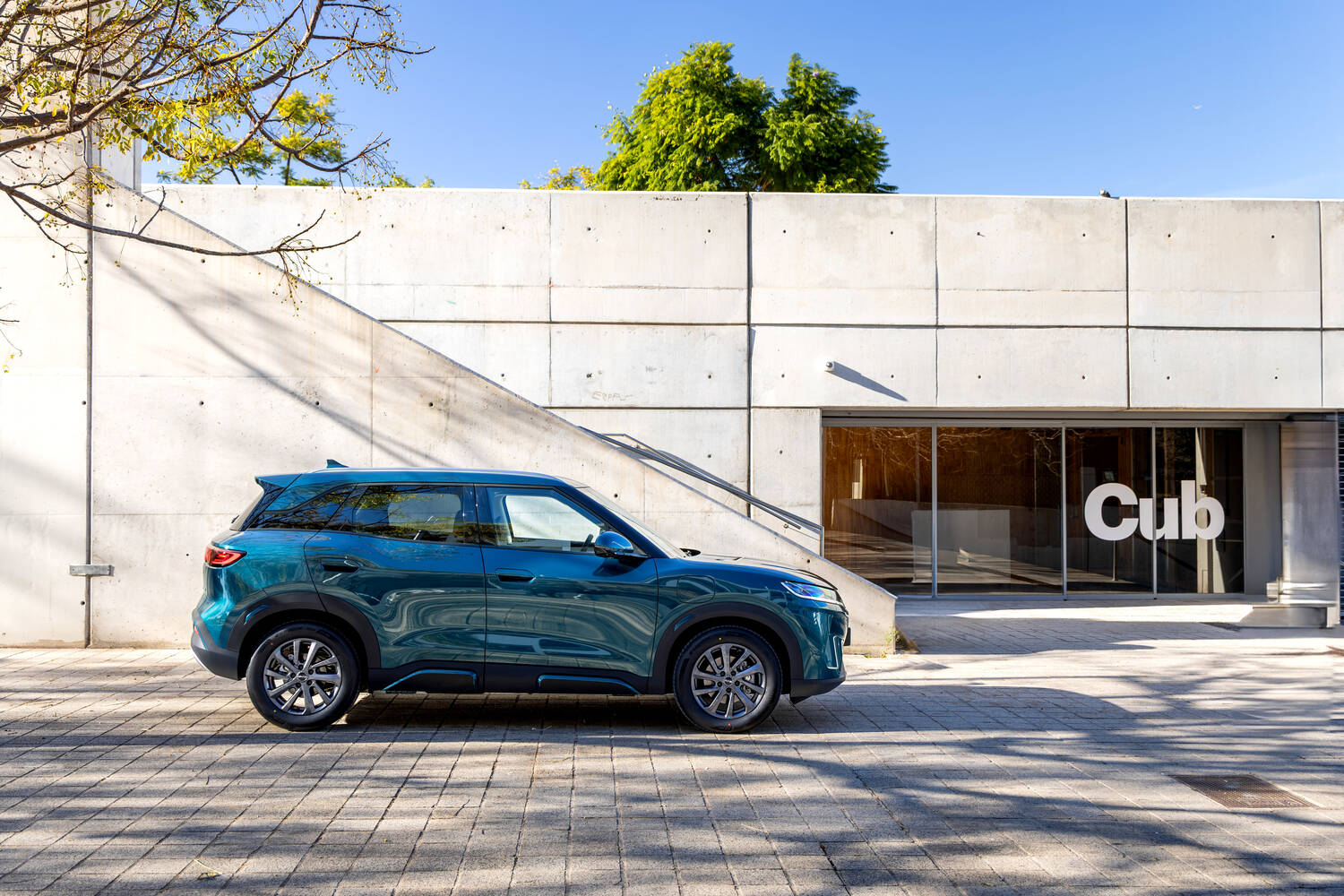
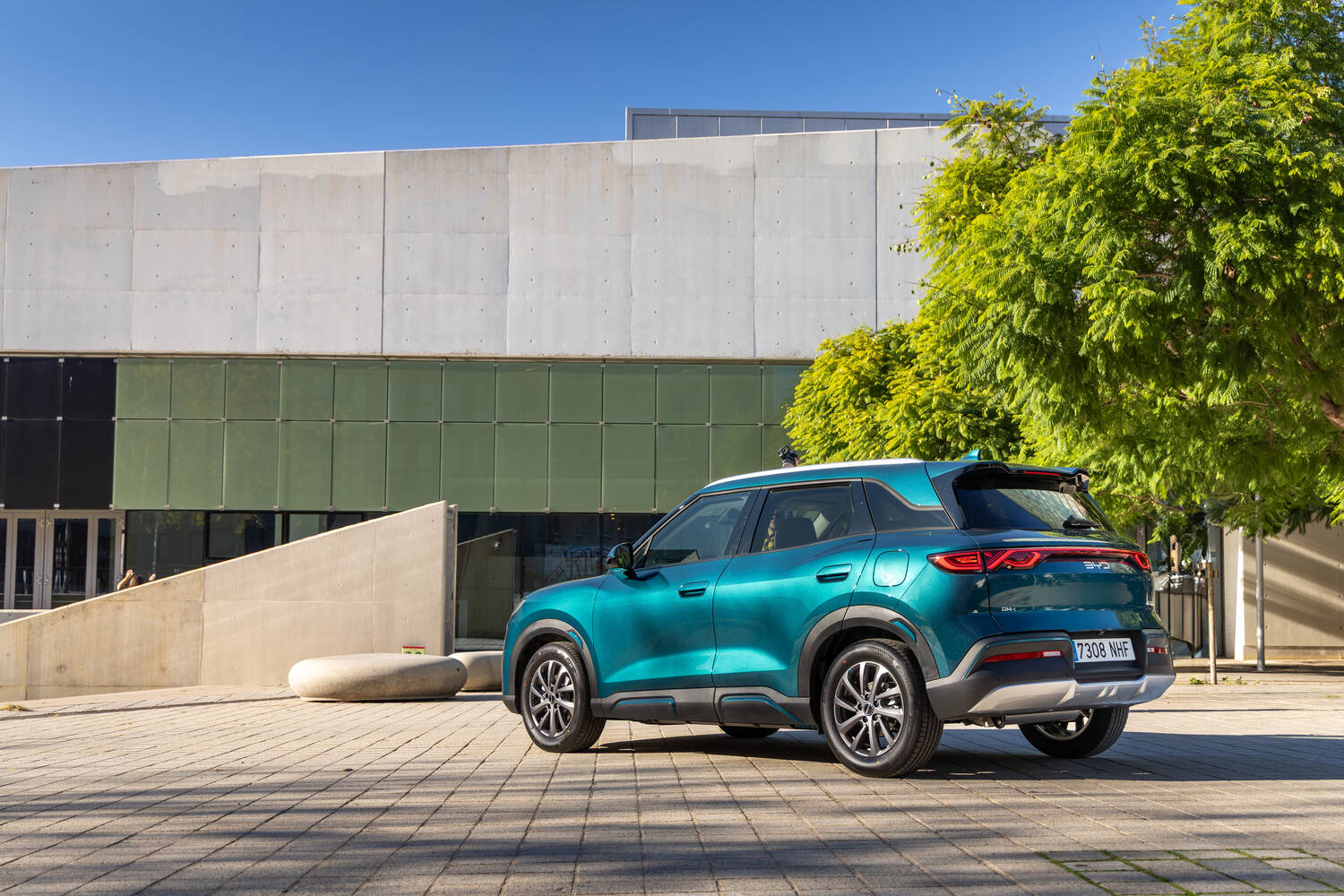
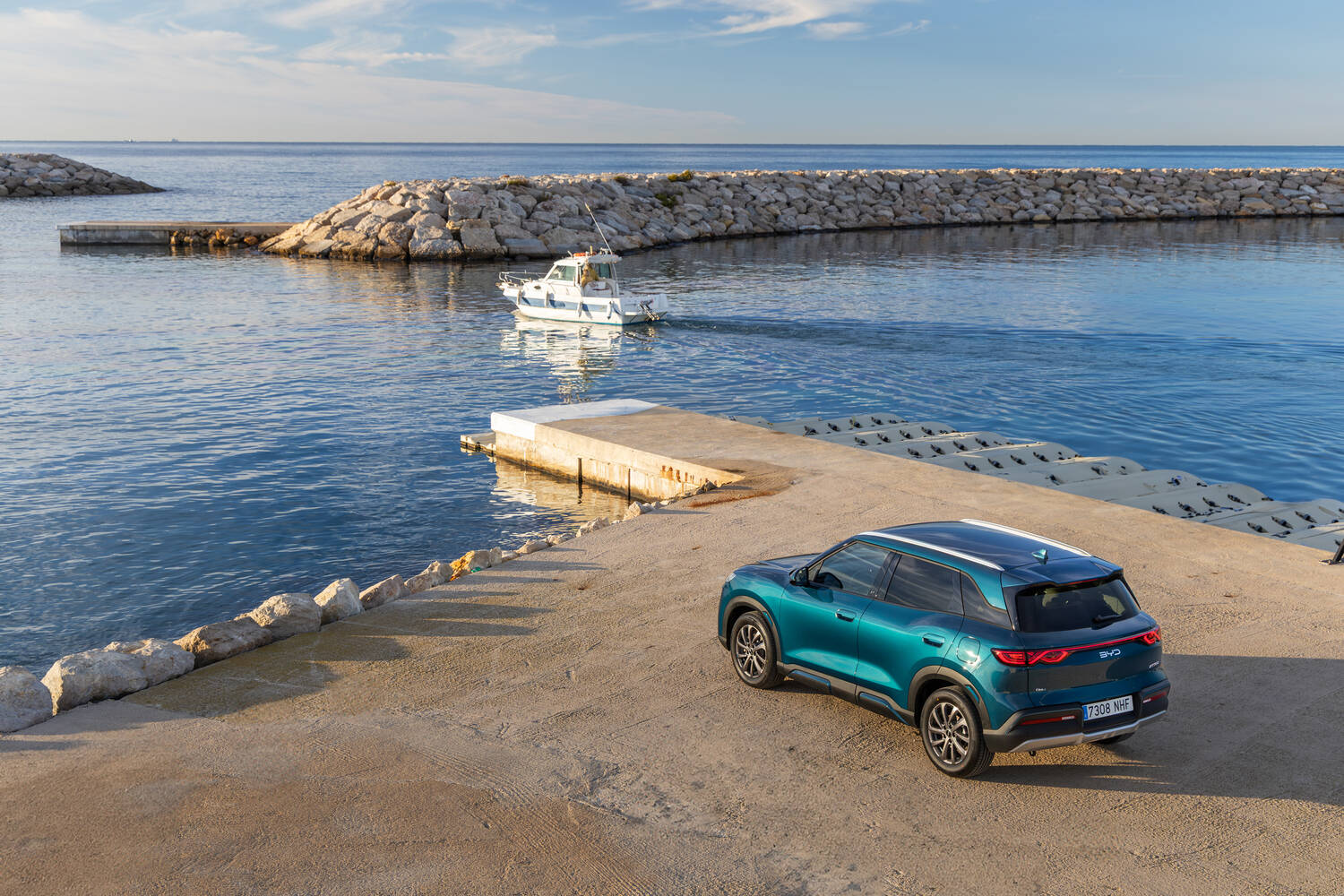
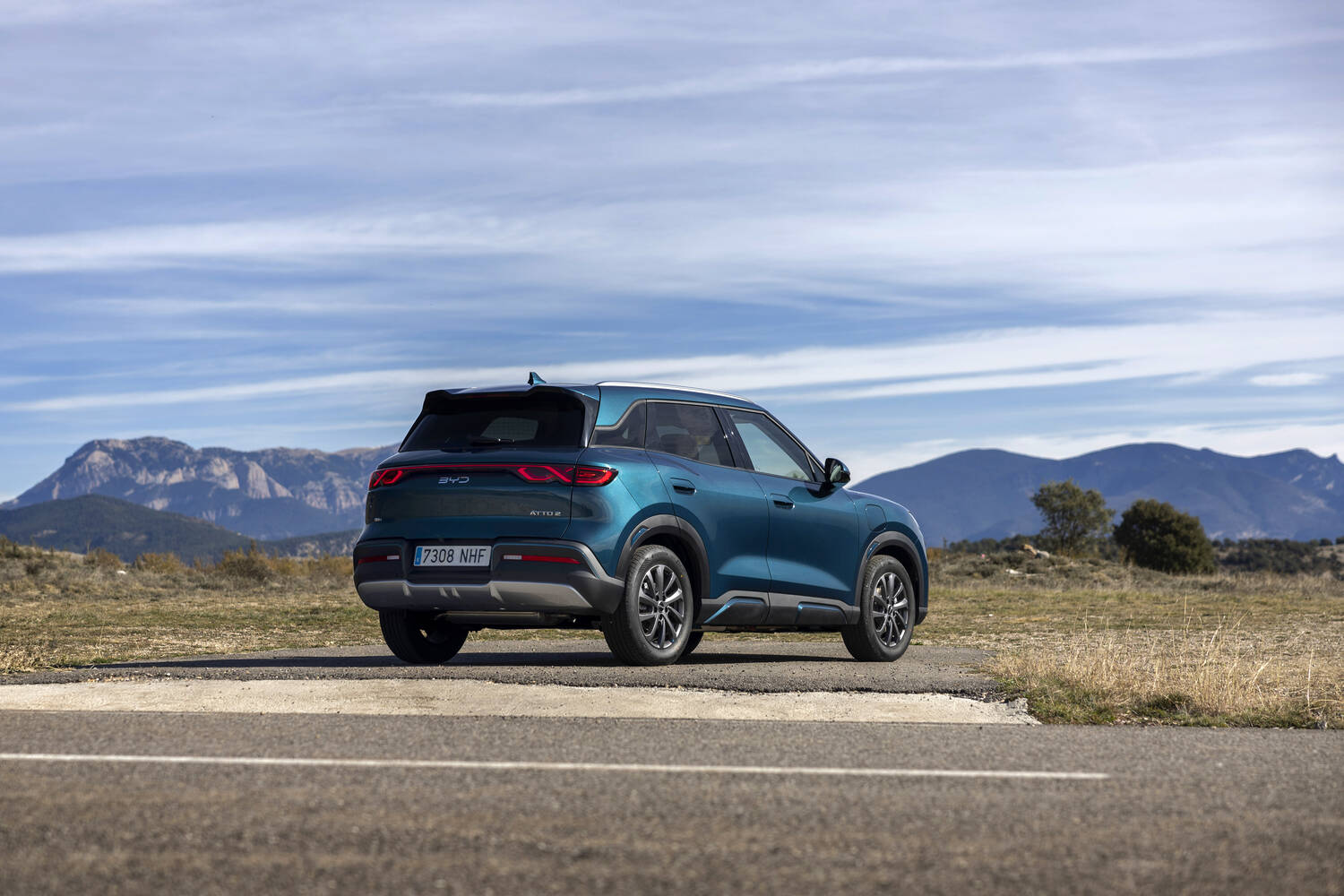
There's a strong corporate identity to the Atto 2, by which we mean it is clearly a BYD product, although we'd still stop short of saying it's a particularly distinctive bit of design.
It has a tall roof with aluminium roof rails in its higher specification, plus chamfered side sills, skid-plate-like details in both bumpers and what appear to be full-width light strips fore and aft (although, in the nose, it's actually a silver strip of trim which connects the headlamps).

Dimensions of the 2026 BYD Atto 2 DM-i
- Length:
- 4,330mm
- Width:
- 1,830mm (excluding mirrors)
- Height:
- 1,675mm
- Wheelbase:
- 2,620mm
Paint colours for the 2026 BYD Atto 2 DM-i

There are but four hues offered for the BYD Atto 2. These are Midnight Blue, Time Grey, Skiing White and Obsidian Black, and of these we believe it will be the blue, which is the standard, no-cost colour, while the others will command a small upgrade fee.
Interior, practicality, tech & comfort of the 2026 BYD Atto 2 DM-i
- Usual screen-focused interface
- Decent build quality and materials
- Reasonably spacious and practical

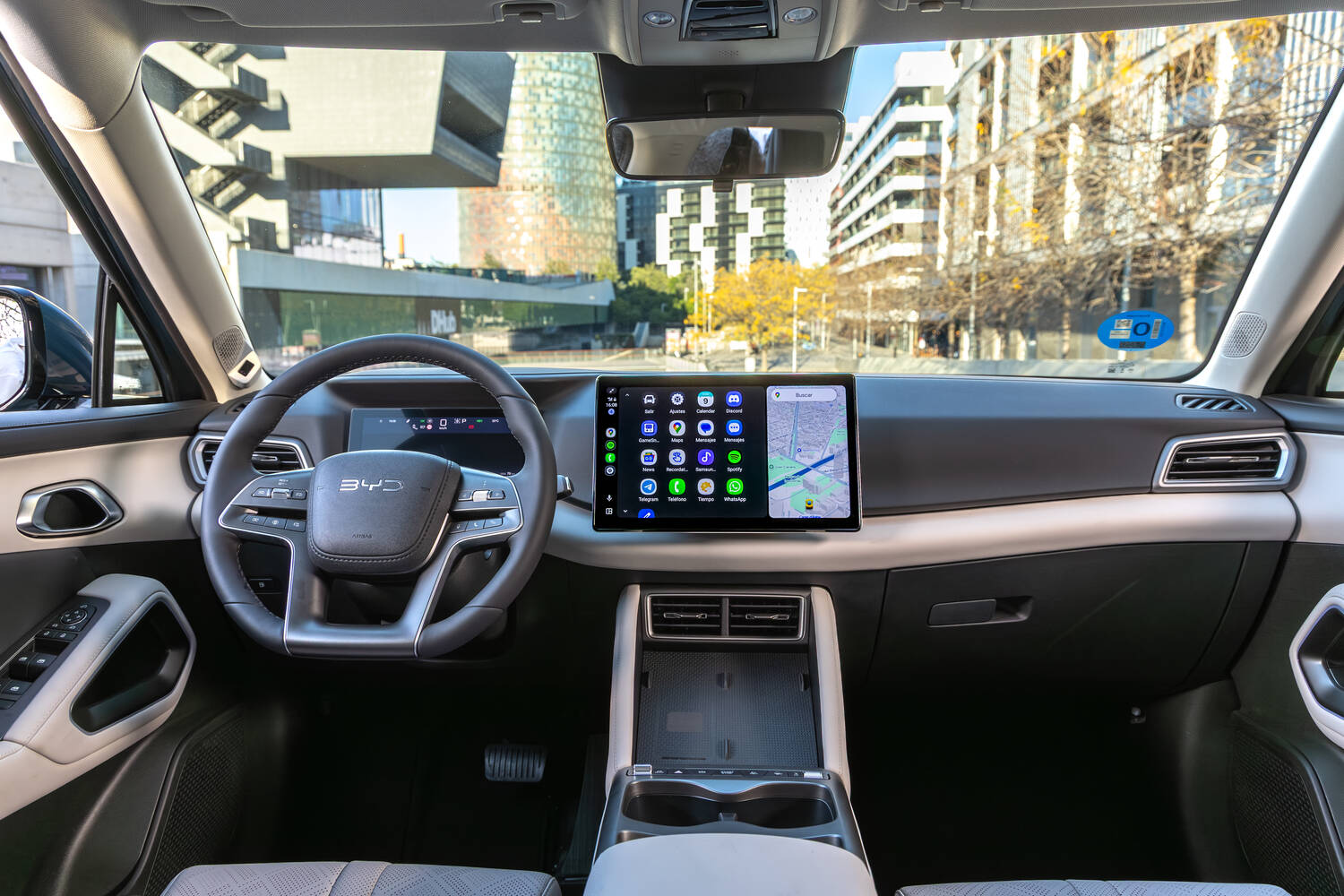
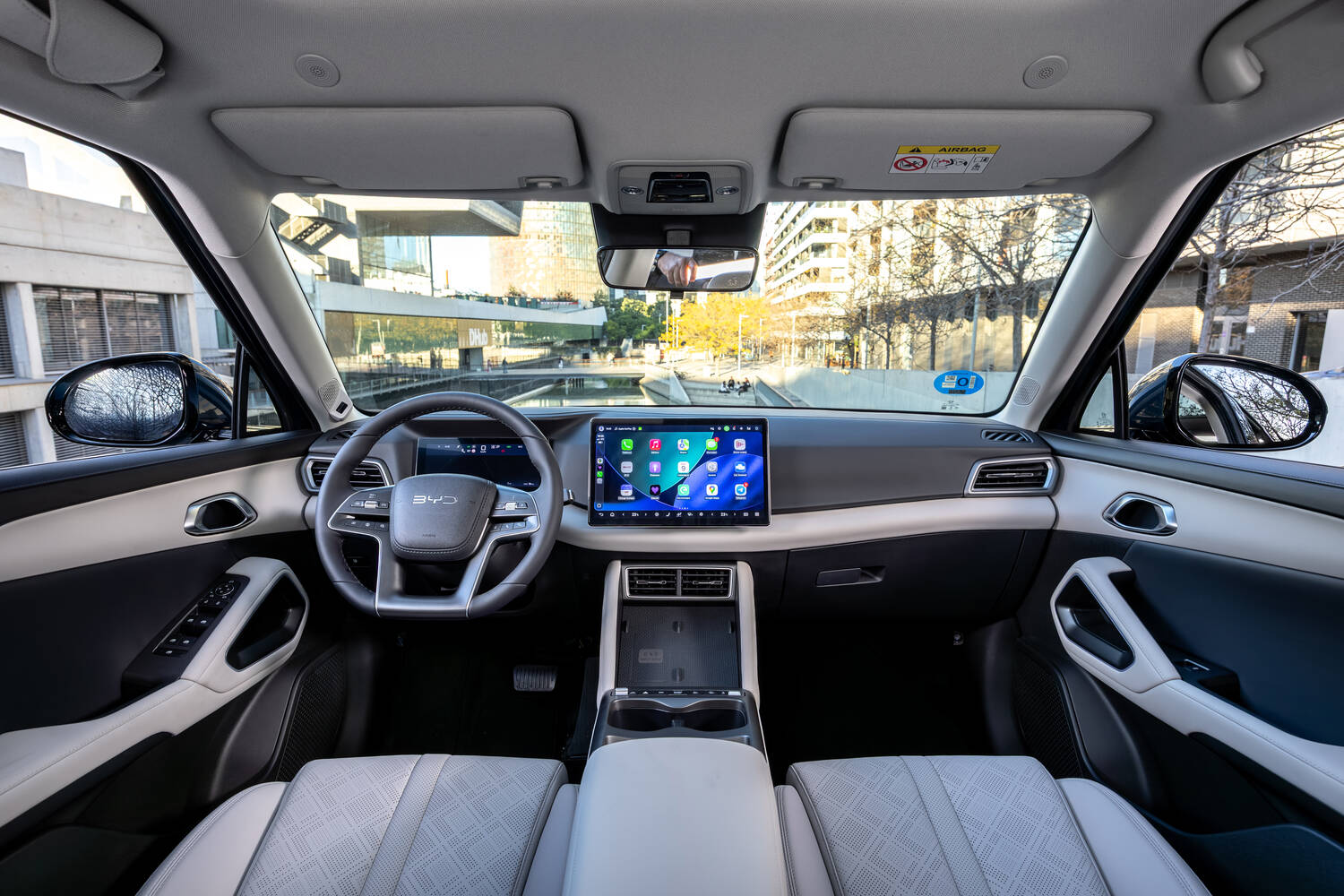
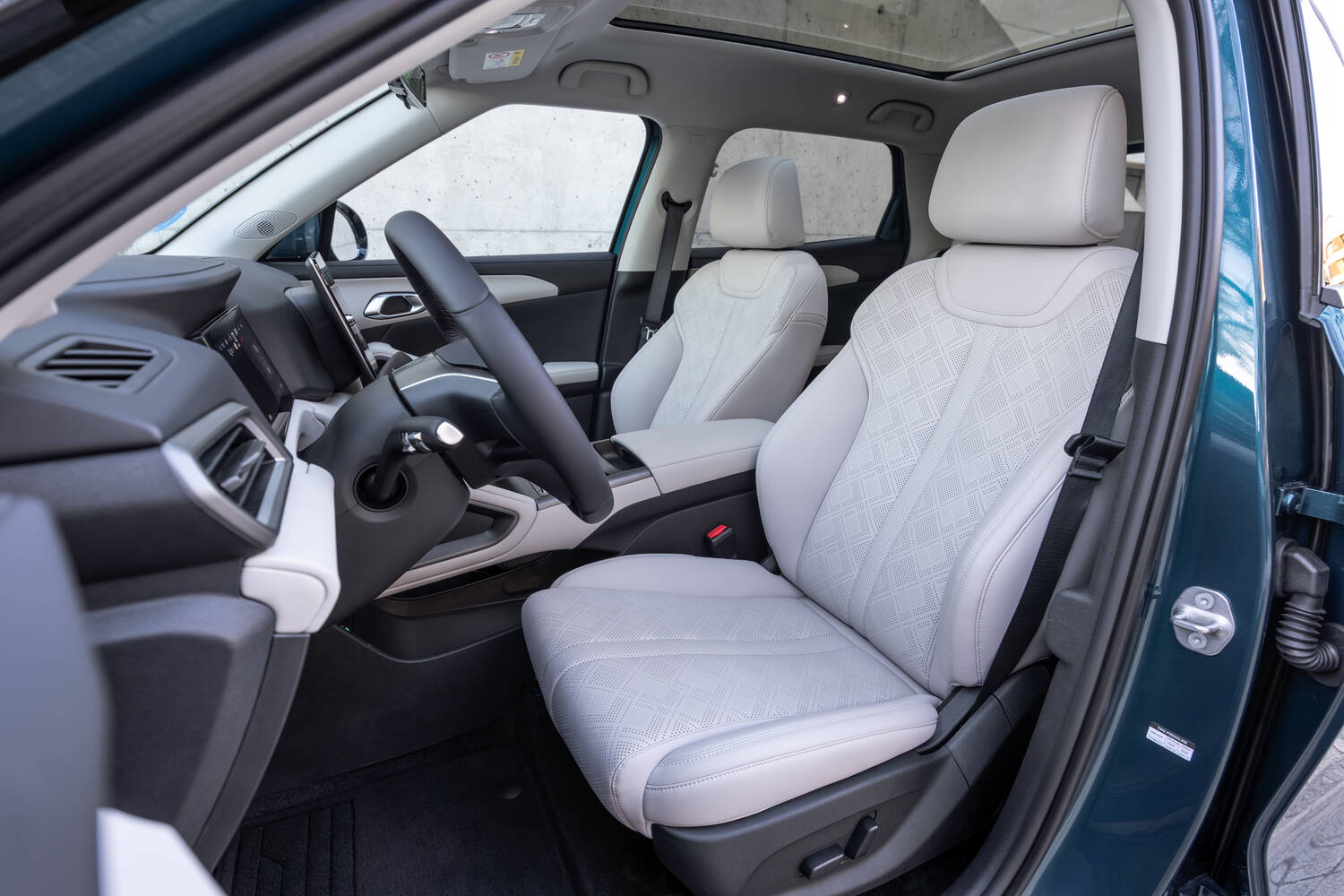
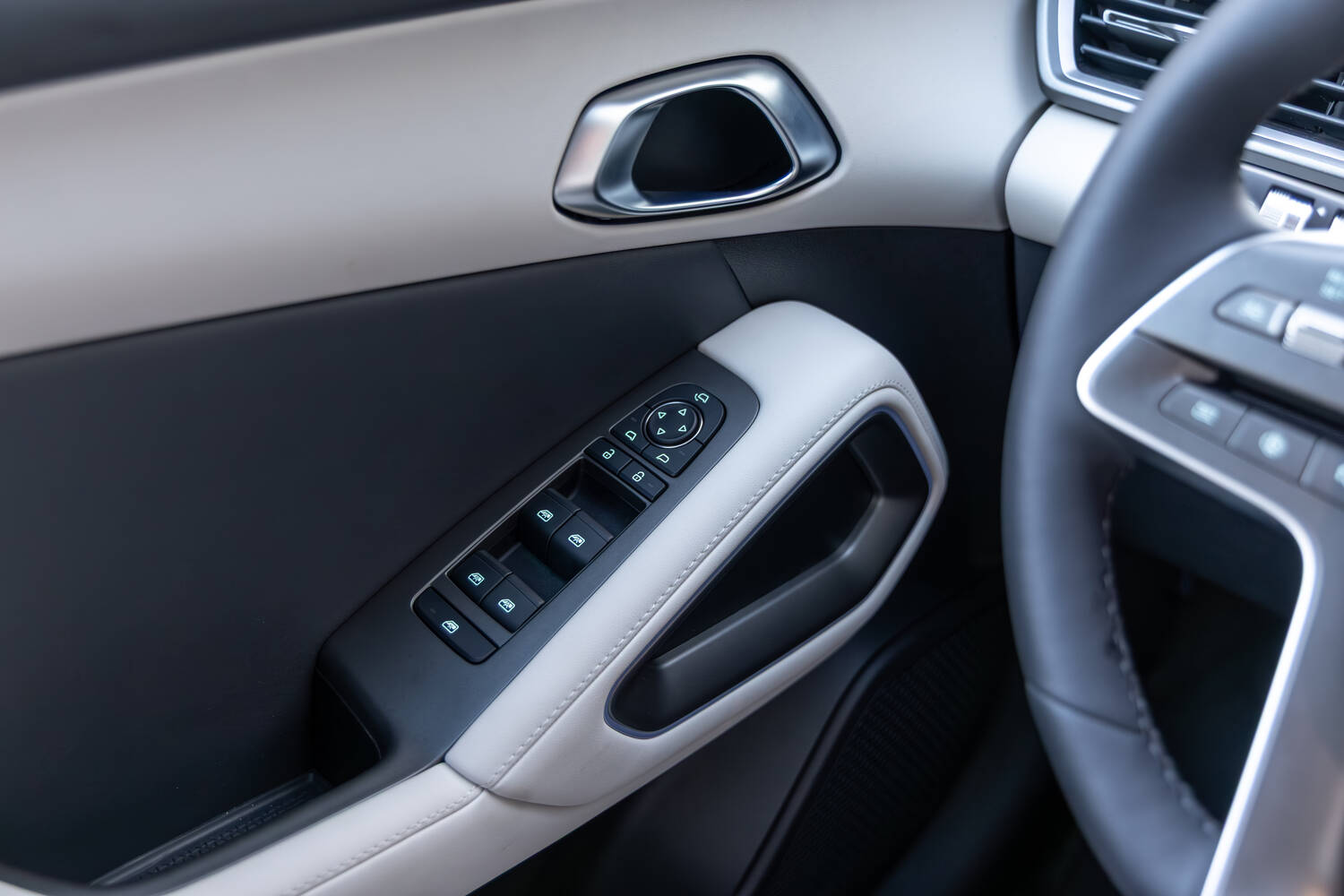
The BYD Atto 2 is pretty prosaic in the cabin, although it does feel suitably well-built and keeps the ropier plastics contained within harder-to-reach places - save for one of the flimsiest interior mirrors we think we've ever encountered.
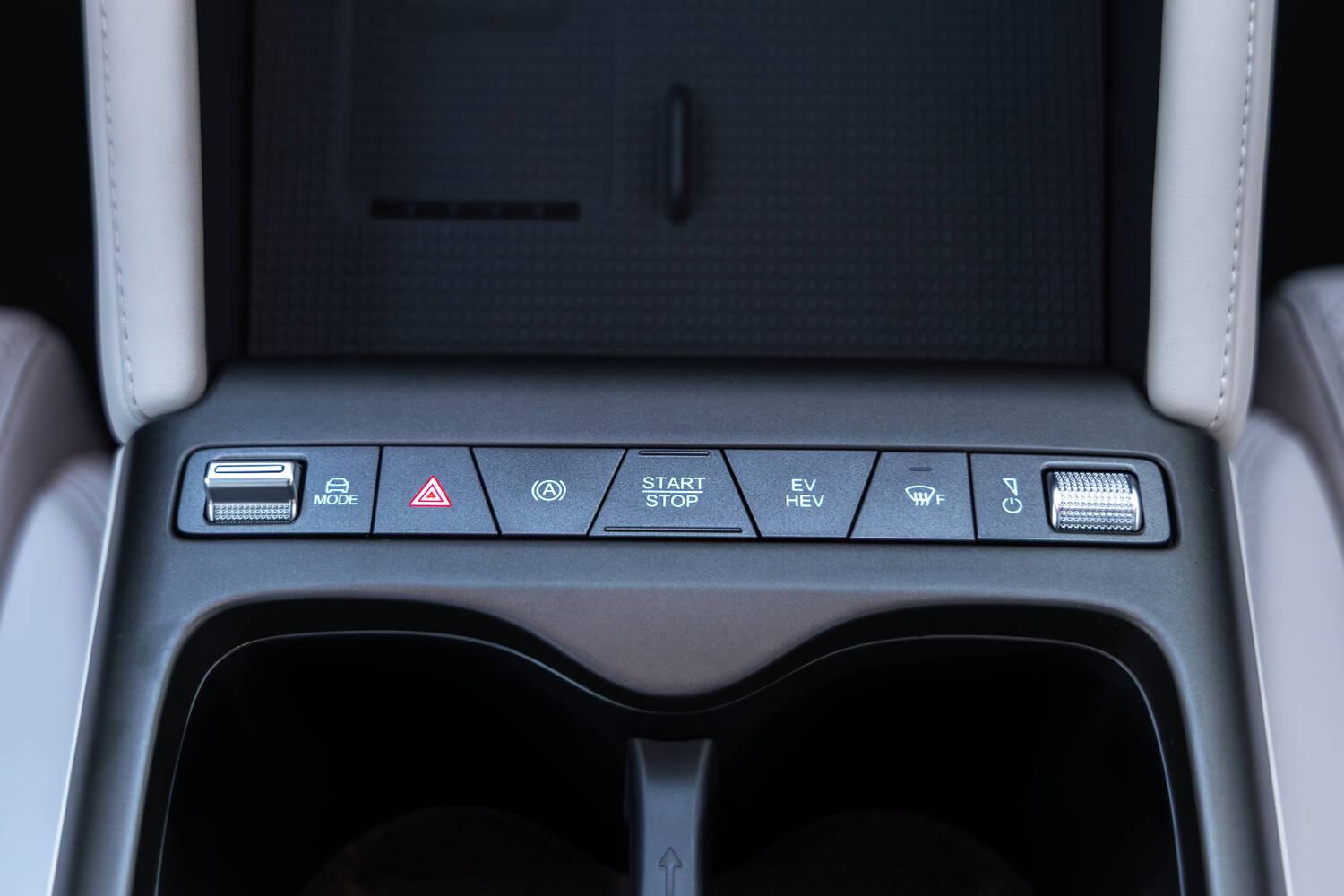
But those who don't like tech-heavy interfaces, look away now: the Atto 2's interior is light on physical buttons and centres much of its operations on the central touchscreen.

Getting comfortable in the driver's seat
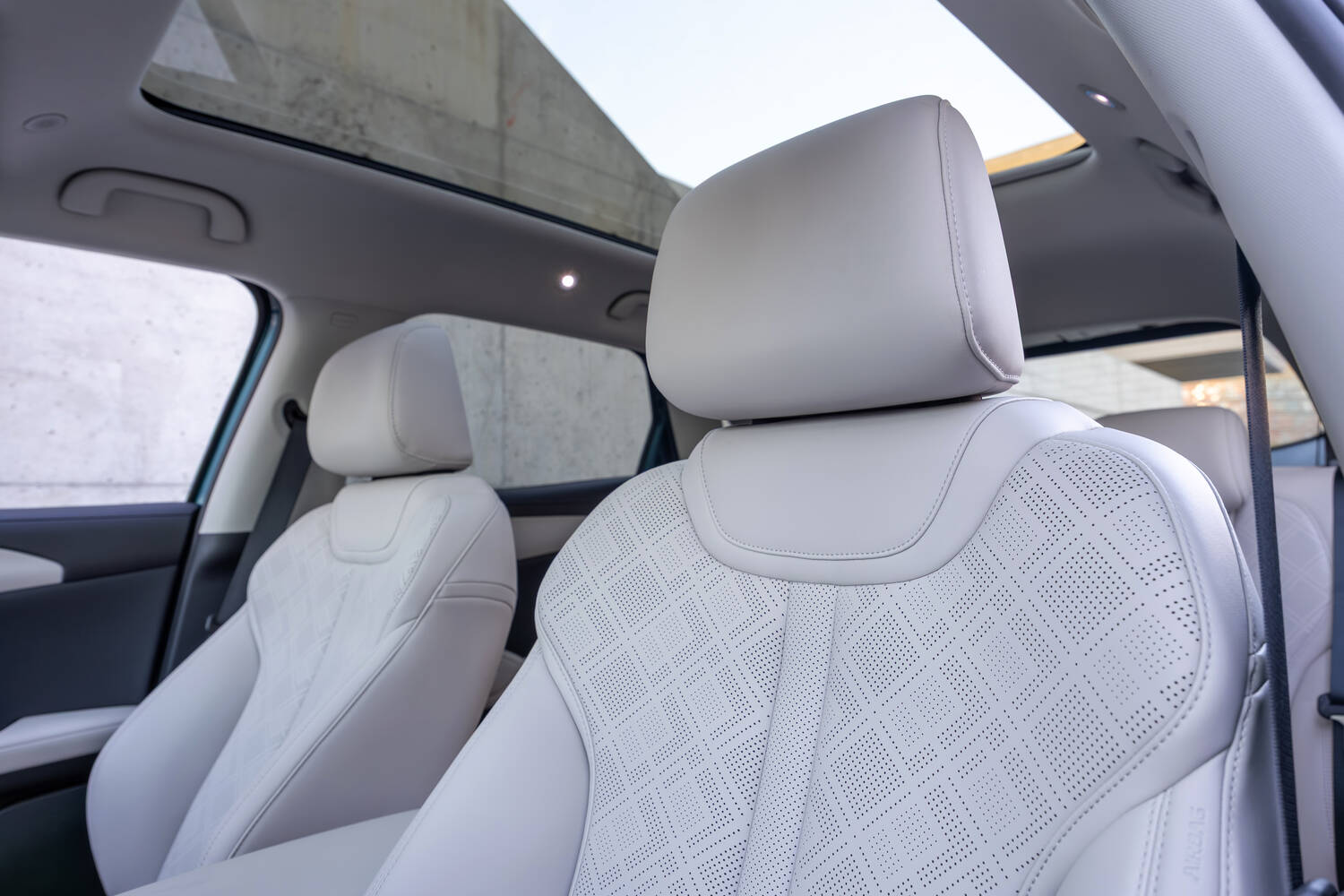
The driver's seat is six-way adjustable in all models of the BYD Atto 2 DM-i, but in the grander version it becomes electrically powered, which makes fine-tuning the driving position that little bit easier.

With a reach-and-rake steering column too, there's a good range of adjustability to the main chair in the crossover.
Infotainment and technology
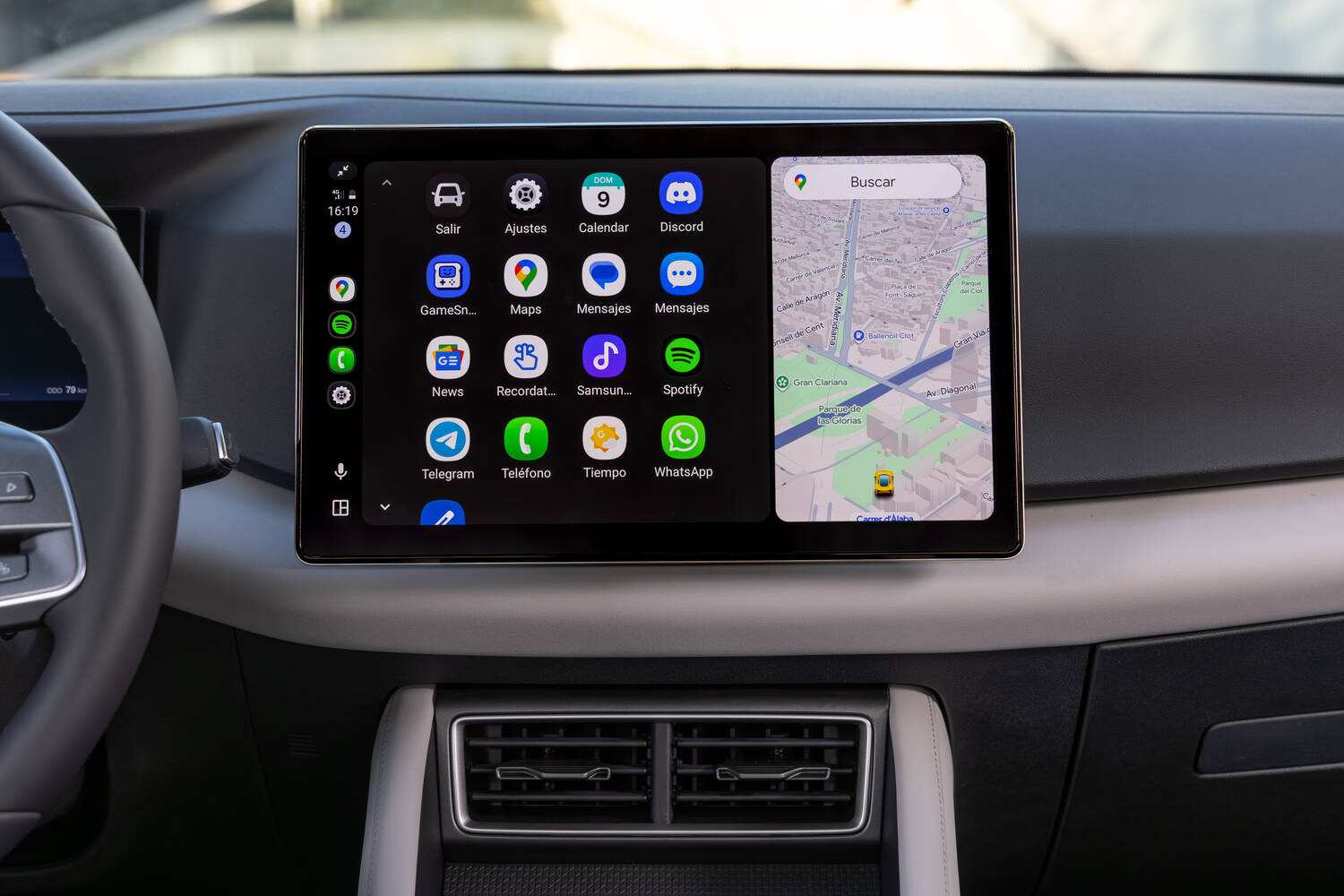
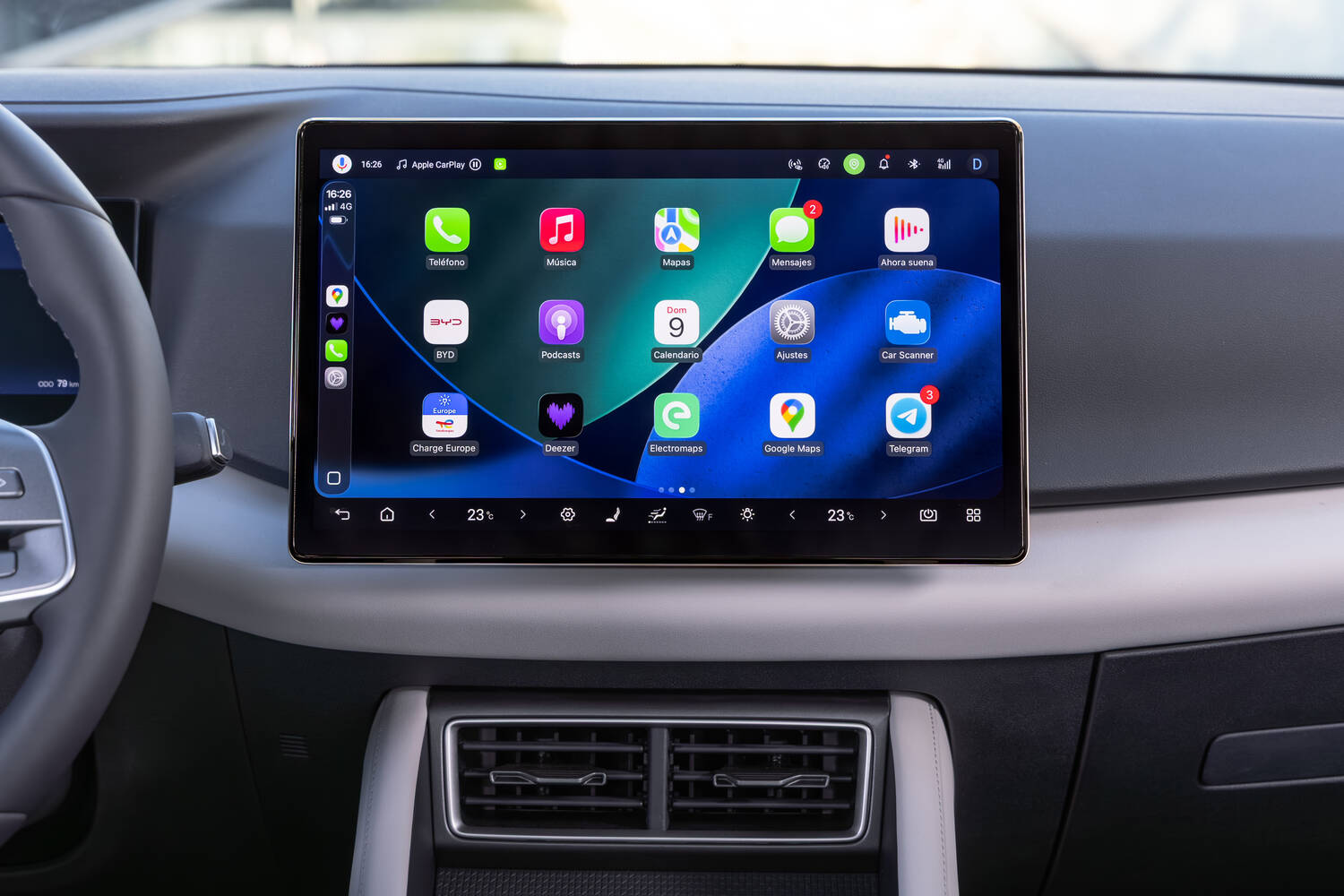
All models of the BYD Atto 2 DM-i should come with an 8.8-inch digital instrument cluster and a 12.8-inch central infotainment display, the latter featuring Google Built-In technology, as well as the expected Apple CarPlay and Android Auto connectivity.

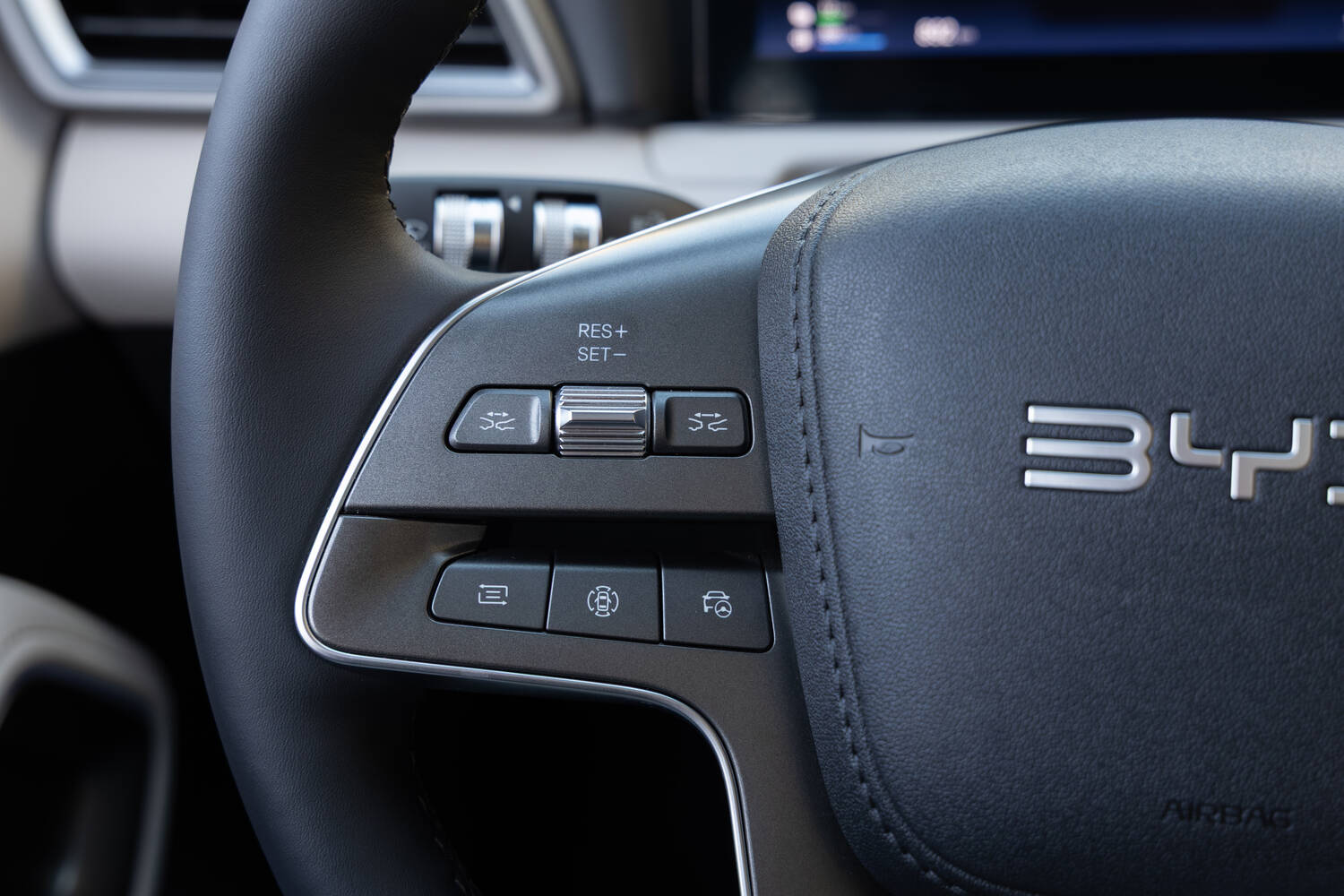
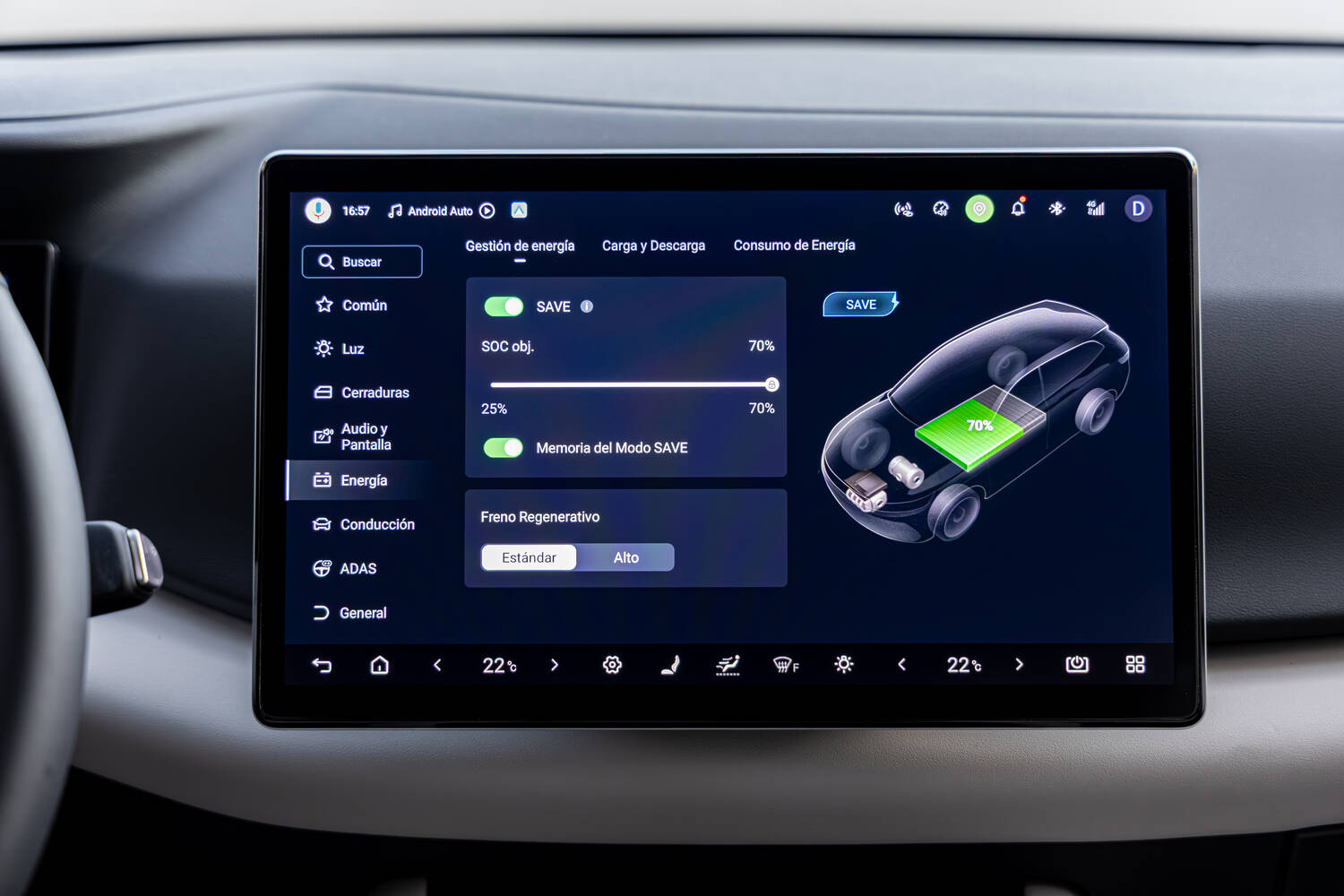
All very nice. But way too much is run through the central screen, including in-car climate controls, and the way some of the menus are ordered is bizarre - not all the advanced driver assistance systems (ADAS) overrides are in the same place, for instance, and it'll take you an eternity to work out how to change the indicator noise. This is vital, because if the car is in the weird 'sing-song' setting we first sampled, it will drive you to absolute distraction every time you approach a junction or roundabout.
You'll want to switch some of the ADAS off in this mini-SUV, too, as it's incessantly intrusive and irritating in action, while there's a bafflingly congested instrument cluster in front of the driver.

BYD wants to cram so many icons into this letterbox-like panel that the fonts become minuscule, while there's a graphic which takes up most of the space on this screen to show useless animations of both road and foot traffic outside the car.
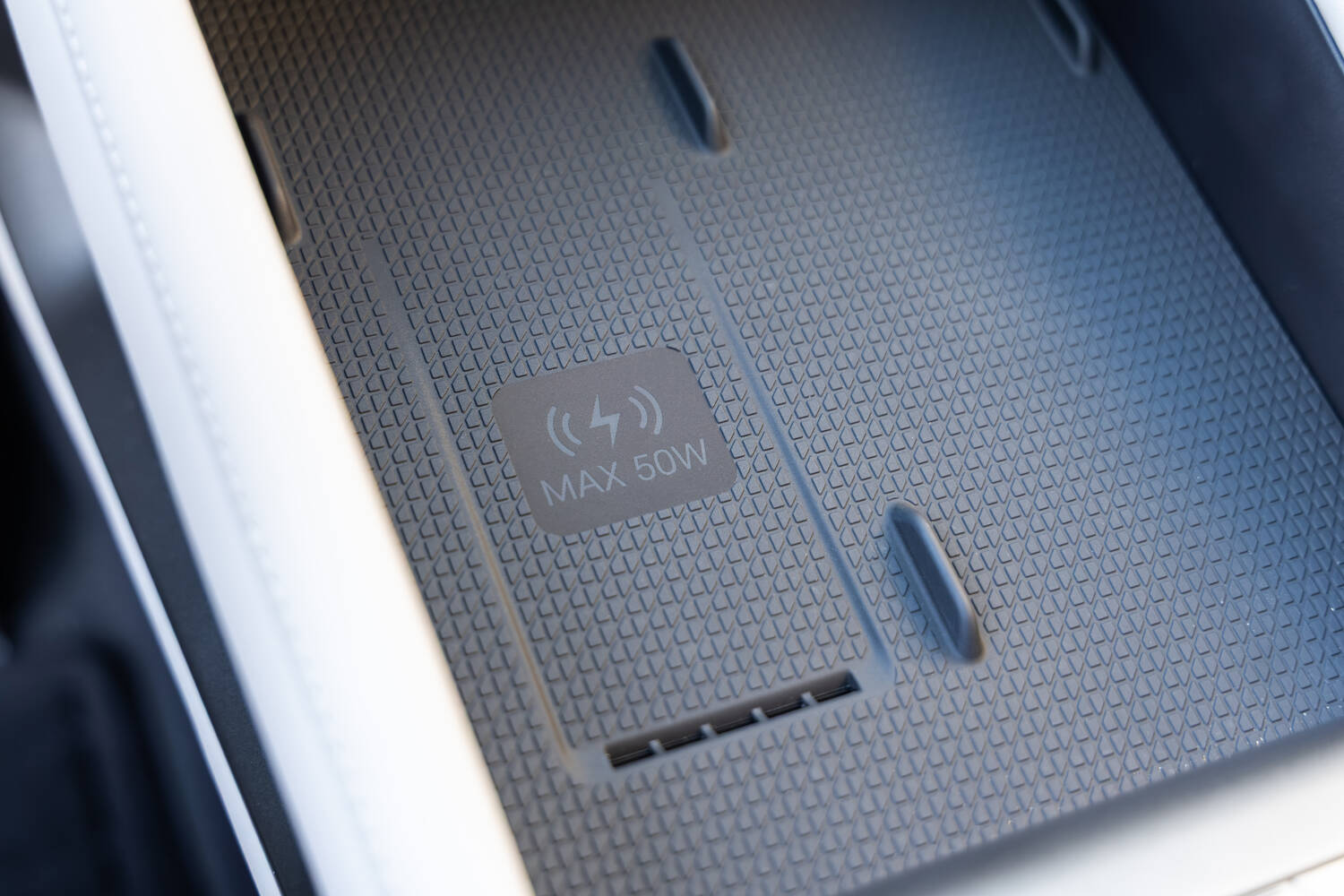
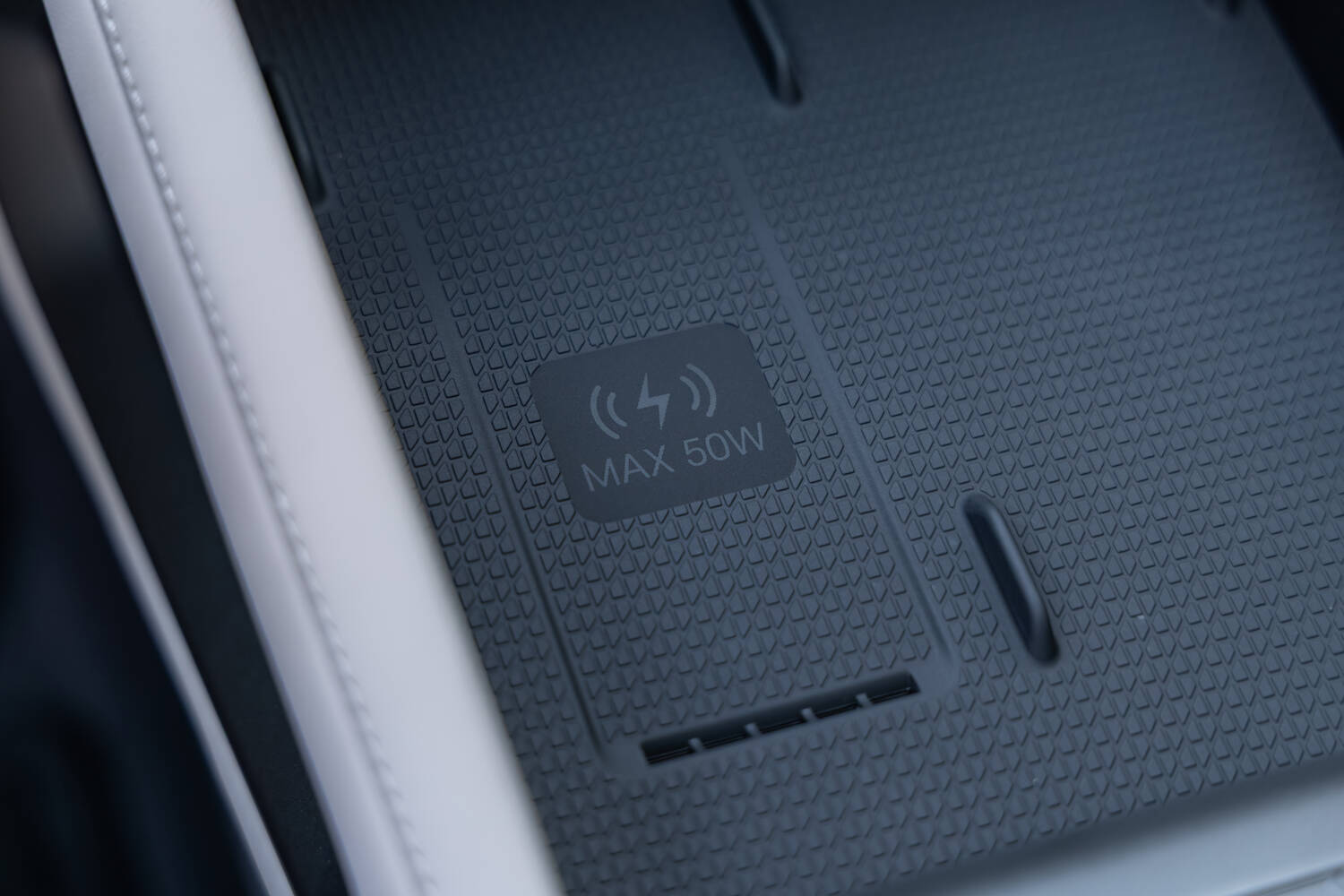
Other tech for the higher-spec Boost car includes heated front seats and steering wheel, a panoramic sunroof with a powered shade, a six-speaker sound system and a 50-watt wireless smartphone charging pad up on the central console area.

Practicality around the cabin
Up front, the door bins in the BYD Atto 2 DM-i are nice and big, and they are shaped such as they can accommodate a large drinks bottle. The glovebox is present and correct, and a fair size, while two cupholders sit just aft of the twin-pad storage area for smartphones (the left-hand one of which is the charging plate if you're in the Boost car). Further, there is also a large square cubby beneath the lidded armrest behind the cupholders.

Under the dash is a storage area incorporating two USB-C sockets, a 12-volt port and even a slot for an SD card but accessing this zone while sitting in the front seats is not the easiest operation in the world.
Rear-seat passenger space
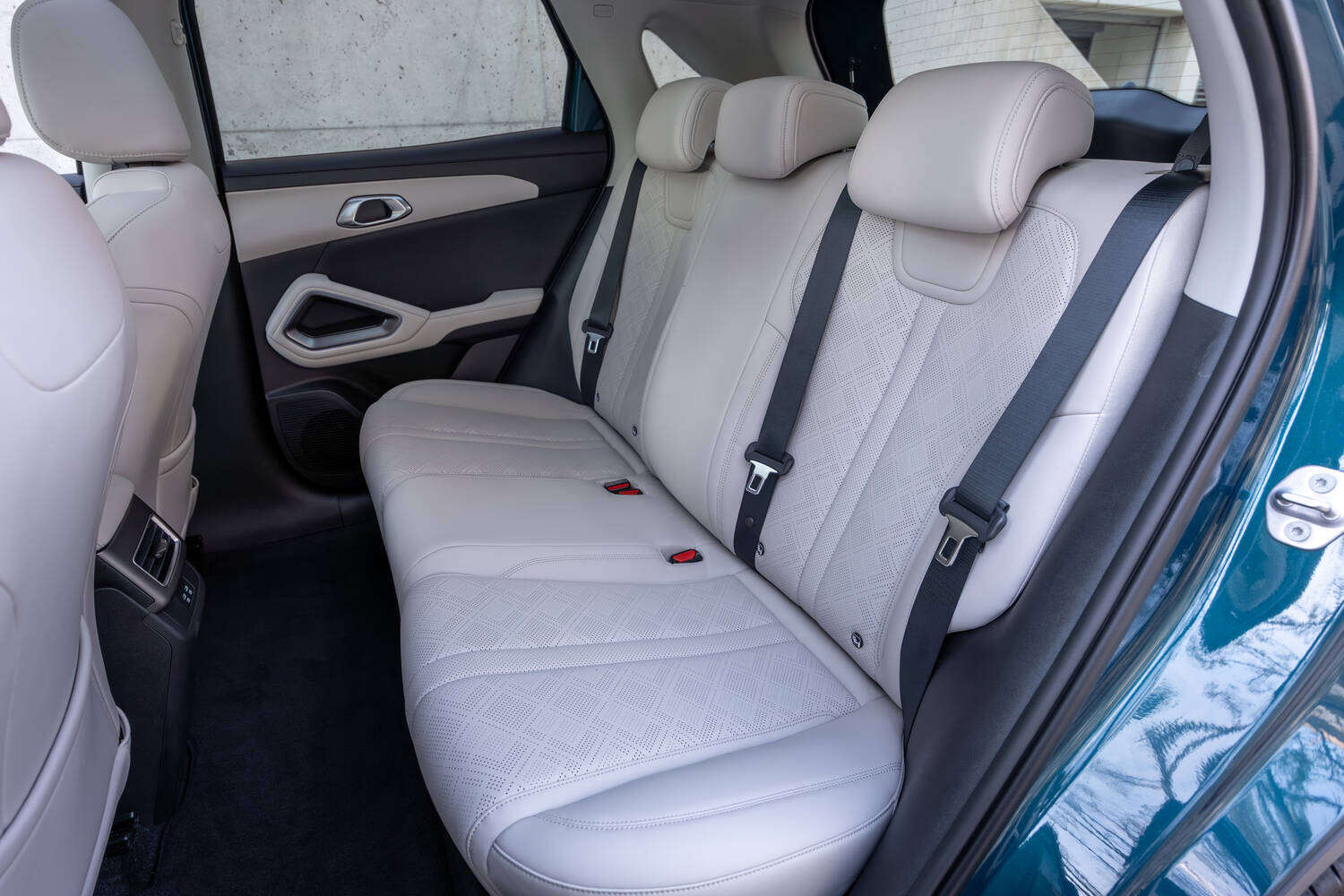
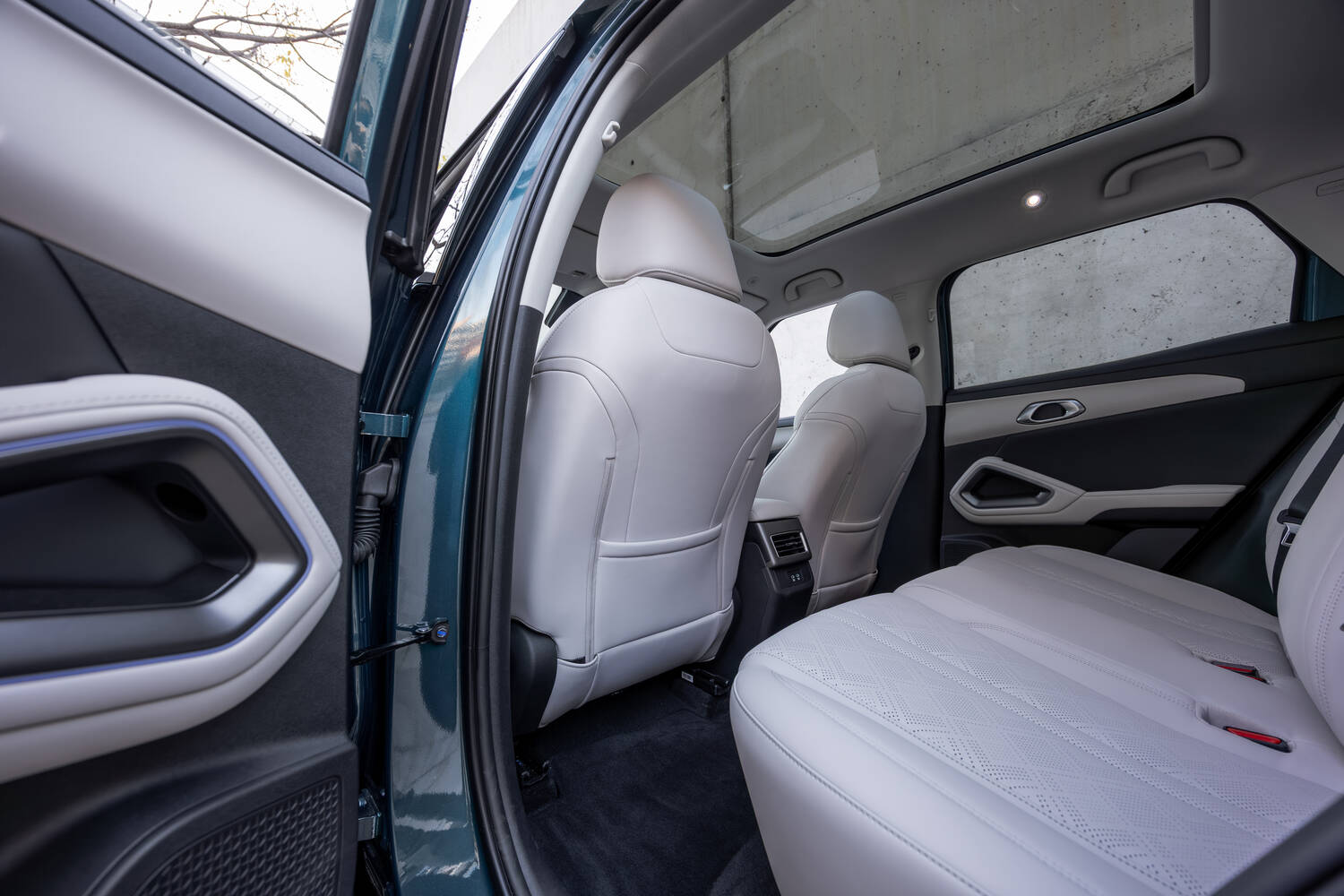
With a 2.6-metre-plus wheelbase and the tall roof, space in the second row of the BYD Atto 2 DM-i is quite generous for this class of vehicle.

Lankier people might find it a little cramped and the relative narrowness of the body means sitting three passengers across the bench appears to be an ambitious idea, unless they're all children, but for most folks the amount of legroom and headroom on offer is ample enough. There's also a completely flat floor all throughout the footwell.
In terms of other provisions for people sitting in the rear of the BYD, it's not too bad. The door pockets are smaller in the back than they are in the front, although they can still take bottles, yet there's no fold-down central armrest at all, so no cupholders in the back.

Two USB-C ports and a single air vent can be found on the trailing edge of the centre console which leads into this area of the passenger compartment from the front, while there are elasticated map pockets on the rear of the front seats as well.
Fitting child seats to the BYD Atto 2 DM-i
This is a strong point of the BYD Atto 2 DM-i, as there are three ISOFIX positions in the crossover, all complete with top tethers - find them on the front passenger seat and the outer two pews of the back bench.
The doors in all locations open wide enough but obviously this is not the largest SUV-like machine in the world, so those with the biggest and bulkiest of child seats might want to test out whether they fit in the Atto 2 before buying.
Boot space in the BYD Atto 2 DM-i
Capacity-wise, the Atto 2 DM-i's boot is competitive, accommodating 425 litres with all seats in use and 1,335 litres with the 60:40 split-folding rear seats dropped down.
What we would say is that the cargo bay is not massively versatile. There's not much to speak of in the boot, save for an adjustable-height floor (but in either setting, there's no place to store the bags with the charging cables, apart from in the main storage area), some lashing eyes and a couple of lights.
Safety in the BYD Atto 2 DM-i
The BYD Atto 2 DM-i has not been subjected to Euro NCAP's rigorous safety-testing procedures. But there are plenty of ADAS functions on the car as standard, while every other model of BYD that has been assessed since 2022 has picked up the full five-star rating.
Performance of the 2026 BYD Atto 2 DM-i
- Two power outputs depending on trim
- Forgettable driving experience
- Needlessly busy low-speed ride

Both variants of the BYD Atto 2 DM-i use a 1.5-litre four-cylinder petrol engine selected for its thermal efficiency. On its own, this unit delivers 97hp and 122Nm, but aside from heavy-load situations - high-speed cruising or asking for full acceleration on the throttle - the combustion engine's main function is as an electricity generator or range extender, in effect; it only rarely directly drives the wheels.
Assisting the petrol engine are two specifications of electric motor. The first, in the base-spec Active, is a 121kW item, while the Boost gets a more potent 145kW motor. Either one delivers a peak torque figure of 300Nm.

The peak system outputs for the two Atto 2 models, then, are 165hp in the Active and 212hp for the Boost. And despite the latter weighing 110kg more, thanks to its bigger battery, it's quicker to 100km/h from rest - the Boost manages the sprint in 7.5 seconds, while the Active requires a more leisurely 9.1 seconds to perform the same task.
Driving the BYD Atto 2 DM-i Boost on the UK's roads
Words by Matt Robinson on 8 June 2026
The BYD Atto 2 DM-i delivers a largely forgettable driving experience that would be mainly inoffensive, were it not for a few things that annoy.

Nonetheless, the fact the BYD is about the only PHEV in its sector might mitigate its underwhelming driving experience for some folks. And, provided you keep it well within itself, the Atto 2 DM-i is fine.
It's quiet with its engine switched off, and not too rowdy when it fires up (as long as you're not asking for much of the powertrain), while the weighting of the major controls like the steering and brakes is acceptable. For just getting from point A to point B in a safe, predictable fashion, this is ok.

But it's not remarkable at all, principally because its ride quality is just way busier and more unsettled than it has any need to be. There is no pretence of sportiness here and the wheel sizes are only 16 or 17 inches in diameter, depending on spec, the latter clothed in plump 60-profile tyres.
So quite why the Atto 2 DM-i amplifies only moderate lumps and bumps in the tarmac into such loud, discomfiting bangs in the cabin at anything below 80km/h is quite beyond us.

It's a softly sprung and damped car but can often feel like something running on heavy 19-inch wheels wrapped in slender high-performance tyres. It's just too unsettled and ill-resolved when driven sedately, and primarily in town - which is surely one area where the BYD ought to excel, as it's a PHEV and owners are therefore likely to be sticking to urban areas and short-range electric power.
Dial up a bit more speed and the Atto 2's composure improves, but its rolling refinement does not - there's a little more tyre chatter and wind ruffling than is strictly necessary. And if you do wake the engine and make it rev right out to assist with propulsion, then it's a raucous and gruff unit to have to listen to.

It's also incredibly slow to respond to sizeable throttle inputs. Slap down the right-hand pedal and it can take entire seconds before the drivetrain has finally hooked up both of its disparate parts and is giving you full acceleration.
Put it another way: that 7.5-second 0-100km/h time? It looks optimistic. As there's a (totally needless) timer function in the dashboard on this car, we did actually time the Atto 2 as running it in 8.3 seconds. This feels a slow car, and this is the 212hp model; we can only imagine what the 165hp Active would be like.
As to handling, there's nothing much to report. The steering has decent weighting but no meaningful feel, the brakes are adequate but occasionally too grabby and the body control is probably the BYD's strongest kinematic suit, yet it's by no means exceptional for this class.
Range, battery, charging and running costs of the 2026 BYD Atto 2 DM-i
- Two battery sizes
- Plenty of total range
- No DC charging and slow AC rates

You get different battery sizes and varying charging speeds with the BYD Atto 2 DM-i, depending on whether you go for the Active or the Boost. But don't expect fast-charging capabilities, although do reckon on something approaching 1,000km of combined petrol-electric range from the flagship model.
Battery options and official range
Both variants of the BYD Atto 2 DM-i use the Chinese firm's 'Blade' battery packs, which are of the lithium-iron-phosphate (LFP) chemistry.
For the Active, it gets a small 7.8kWh item (of usable capacity) that bestows just 39km of all-electric range on the Atto 2, or 50km if you can keep to city speeds while you're using the battery alone. BYD claims this car can go up to 930km on its combined resources.
The Boost seems like the much more sensible bet. Its battery is more than twice the capacity of the one in the Active, standing at 18kWh of usable capacity, and that improves the electric range to 89km and the combined fuel-and-battery distance of the car to a neat 1,000km.
Real-world range and efficiency of the BYD Atto 2 DM-i

Apparently, the Active will use 1.4 litres/100km while the Boost is listed as 0.6 litres/100km. Both are nonsensical and unlikely to be achieved by anyone using either car, even in the way the manufacturer intended.
Perhaps more relevantly, BYD states a 'depleted battery' consumption of 5.1 litres/100km for the Boost and, going by our test of the car, this seems much more realistic. We achieved an indicated 5.5 litres/100km from the Atto 2 on a 70km run across a variety of roads and at a range of speeds, in 17 degrees C ambient temps and with the climate control running.
Charging up the BYD Atto 2 DM-i
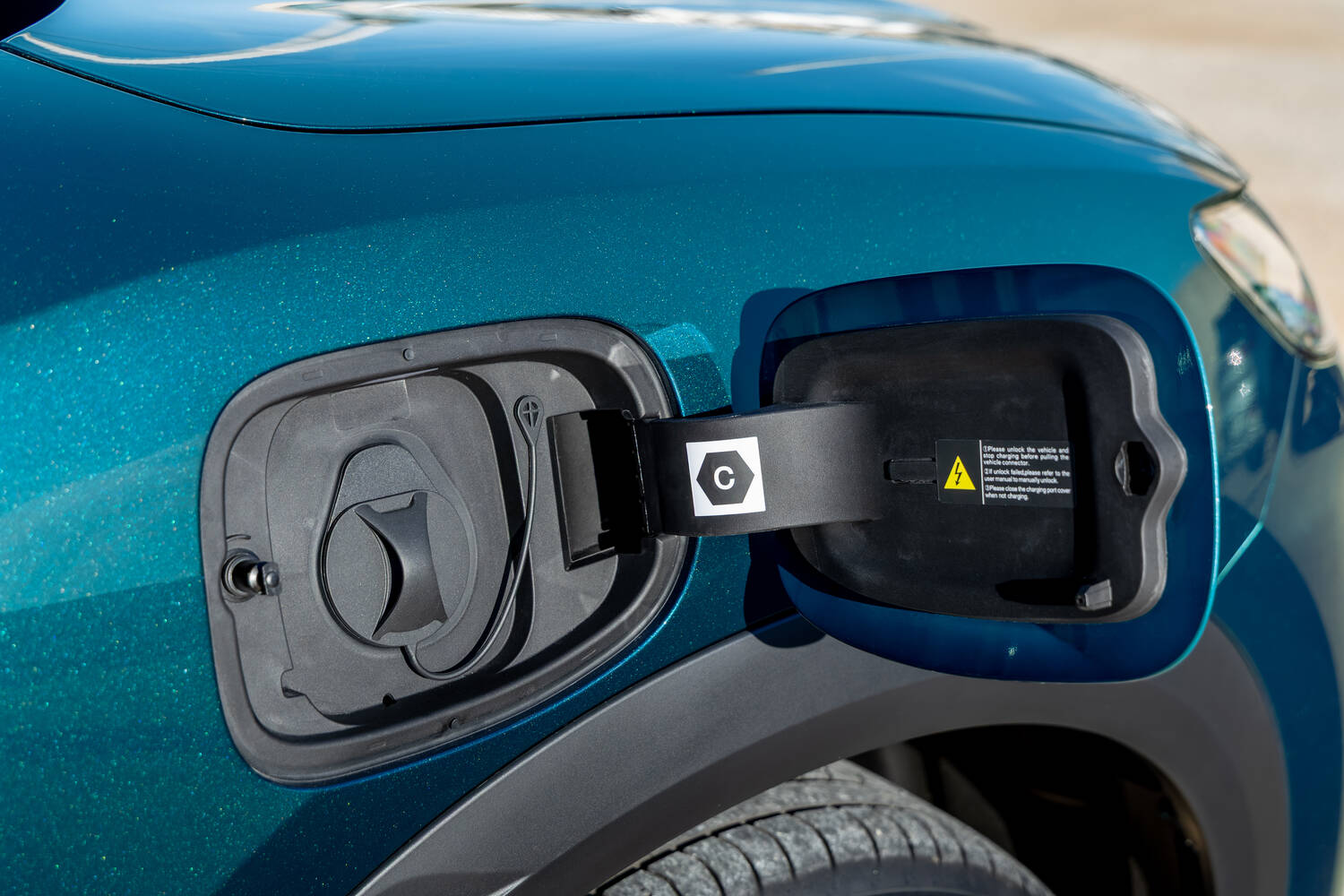
Versions of BYD's DM-i PHEVs elsewhere in its portfolio can avail of DC charging, but not the Atto 2. The Active peaks at a measly 3.3kW on AC, while the boost doubles that to 6.6kW.
As a result, and thanks to the smaller battery capacity, a 15-100 per cent top-up of the Active's battery will require 2 hours 42 minutes, while the larger power bank on the Boost increases that to three hours flat.
Servicing the BYD Atto 2 DM-i
Other BYD DM-i models have a 12-month, 7,500km maintenance pattern, following on from an initial check-up at a dealer after just six months and 3,500km. The Atto 2 PHEV should fall under the same routine.
BYD Atto 2 DM-i warranty

All new BYDs have a standard six-year, 150,000km vehicle warranty, with eight years of cover on the electric motor and its control unit (limited by the same distance cap).
The Blade battery, meanwhile, is covered for the same amount of time as the electric motor, but the distance limit of cover increases to a considerable 250,000km.
Irish pricing & rivals to the 2026 BYD Atto 2 DM-i
- Should be cheap - maybe circa-€30k?
- Lots of equipment for the cash
- Plenty of competition, but no PHEV alternatives

We haven't got Irish prices at the time of writing, but with the larger BYD Sealion 5 DM-i already on sale in Ireland and kicking off at €36,990 for a Comfort model, we'd expect the Atto 2 to significantly undercut that - hopefully, costing something around €30,000 as an Active and maybe not much more than that for the more-desirable Boost.
There are loads of B-segment crossovers available out there to face up to the Atto 2 DM-i, and they come with a lot of varied propulsion forms as well - from purely petrol to fully electric alternatives. But we can't think of any direct competitors that offer plug-in-hybrid running in this size and class of vehicle, which does at least give the DM-i a key USP.

Verdict - should you buy the 2026 BYD Atto 2 DM-i?
What you're signing up for here is a lot of tech, a lot of standard equipment and a lot of car, for not a lot of money. While the Atto 2 DM-i isn't anything special on the road, it is ok to look at, it has a comparatively roomy and well put-together cabin, its boot is a good size and it shouldn't cost the Earth to buy and run - plus it's the only PHEV in its class right now.
FAQs about the 2026 BYD Atto 2 DM-i
Is the BYD Atto 2 DM-i offered with all-wheel drive?
No, all versions of the PHEV variant of the BYD Atto 2 crossover send power exclusively to the front wheels.
Is BYD Atto 2 DM-i quick for 0-100km/h?
On paper and as a Boost model, it is, with a 7.5-second acceleration time. However, in reality, it never feels as lively as that, thanks to the lethargic way its drivetrain responds to sizeable throttle inputs.
How far can the BYD Atto 2 DM-i go on electric power?
As an Active, it has an all-electric range of 39km and a figure of 930km for a full tank of fuel and a fully charged battery. The Boost, with its bigger battery pack, improves both sets of data to 89km and 1,000km, respectively.
What does the 'DM-i' mean in the badge of the BYD Atto 2 DM-i?

It stands for 'dual mode, intelligent', and it simply signifies the BYD you are looking at is a plug-in hybrid. Interestingly, this company lays claim to building the first-ever mass-produced PHEV in automotive history, assembling its F3DM car back in 2008.
Is there a fully electric version of the BYD Atto 2?
There is, and Neil has already driven it - you can read his review right here. However, strangely enough, BYD Ireland has decided not to bring the electric model to our shores, so your only choice is one of the two DM-i versions we've outlined here.
Want to know more about the 2026 BYD Atto 2 DM-i?
If there's anything about the BYD Atto 2 DM-i we've not covered, or you'd like help in choosing between it and other cars, you can avail of our expert advice service via the Ask Us Anything page.