

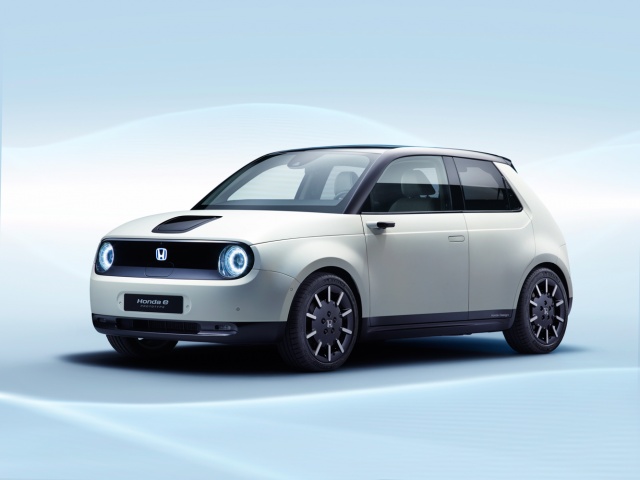
The styling sticks very closely, thankfully, to that of the original concept, with that retro-esque front end with its twin round headlights, and the big black panel for the charging port prominent on the nose.
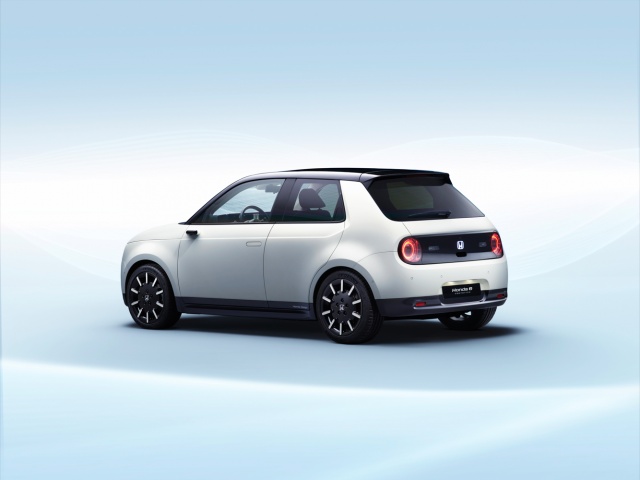
The biggest difference, stylistically, between this E Prototype and the original concept, is that the concept's twin rear-hinged doors have gone. They have been replaced by a more conventional front-hinged four-door layout, but the rear door handles have been carefully hidden in the c-pillar, so as to preserve the much-admired styling of the concept.
Helping keep the styling as clear, both visually and aerodynamically as possible, are door-mounted rear-facing cameras (which Honda says are unique to the small car segment) and flush-fitting door handles that pop out when needed.
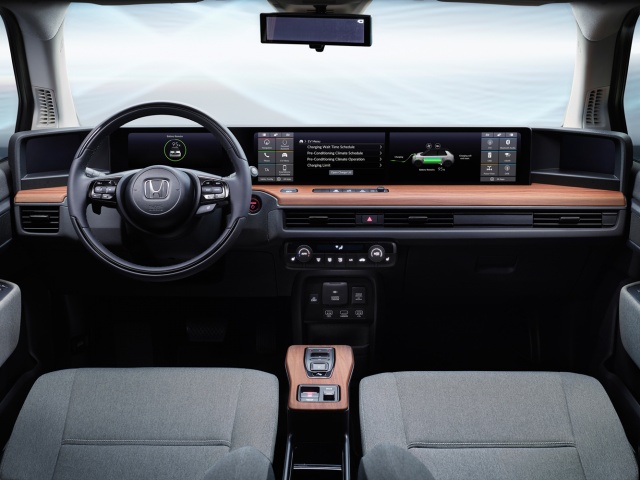
Underneath, Honda has developed an entirely new electric car platform, which has a very long wheelbase by the standards of the compact hatch class, and which promises some seriously impressive cabin space. The interior gets a huge, almost full-width, digital infotainment screen and instrument panel, and the operating system looks to be a lot more up to date than Honda's current, rather disappointing, touchscreen setup from the Civic and CR-V.
The floor is completely flat, and Honda says that it has used sofa-like seating and materials to create a "comfortable lounge-like feel."
On the performance front, Honda says that the finished production model will have a one-charge range of more than 200km (that seems a little disappointing considering Peugeot's new e-208 claims better than 300km), and that thanks to being rear-wheel drive (the single electric motor is mounted at the back) it is "focused on delivering a fun and emotive experience."
If there is anything about this story we have not covered, you can avail of our expert advice service via the Ask Us Anything page.