


Over 55s were also the most likely to doubt the safety benefits of driverless cars, but the irony is that it's people of this age and older that are most likely to benefit from the progress in autonomous motoring technology. Bosch UK president Steffen Hoffman stated: ''By the time baby boomers reach their 70s and 80s, we expect the driverless car to be quite common on UK roads, allowing this generation to stay mobile safely well into their old age. This allows them to keep their independence for longer. Therefore, it is important that they are aware of the technology at this early stage, so that they can take advantage of it when they need to."
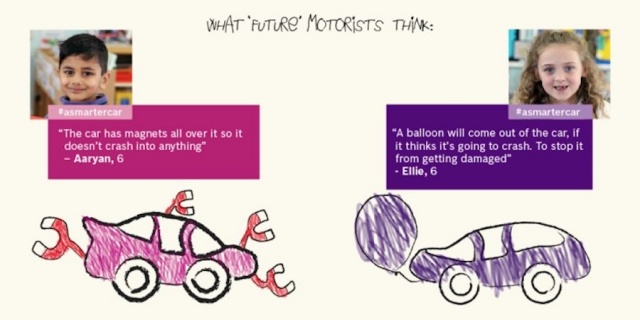
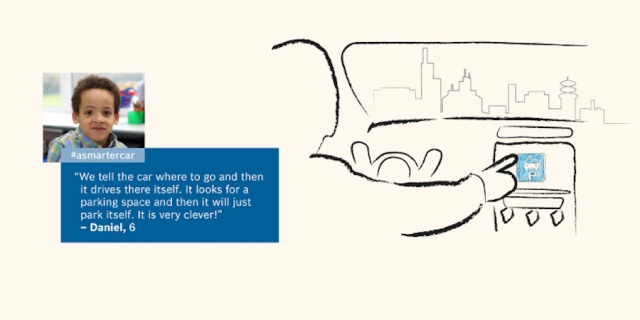
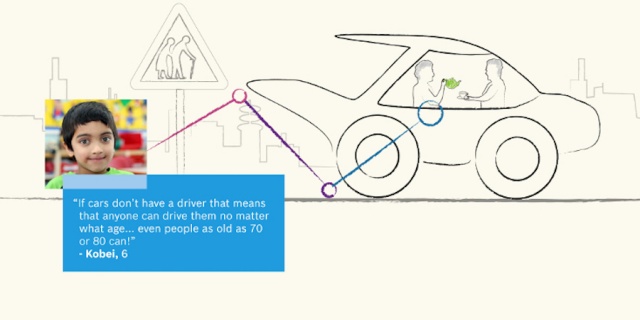
Over 55s are strongly in favour of currently available aids such as active cruise control, self-parking and accident avoidance systems, and many want to see these on their own vehicles within the next decade. The motorists of the future have a slightly more proactive view on things, and a group of six year olds that Bosch questioned came up with responses like: "If cars don't have a driver that means anyone can drive them, no matter what age. That means that even people as old as 70 or 80 can drive them!", and "We tell the car where to go and then it copies a map where to go and then it drives there itself!"
It's clear that the industry needs to investigate the current methods of sharing information on its new technologies with the general public, especially in terms of explaining the elements that could affect future customers young and old. The advantages of driverless car technology are clear to see, but it will be vital to get full public support and understanding on board for it to truly succeed.
If there is anything about this story we have not covered, you can avail of our expert advice service via the Ask Us Anything page.