
Is this a Golf R, but taller?
Yes, mostly. Think of the T-Roc R as being like a Golf R, but wearing runners with really thick, springy soles so that it’s a little taller.
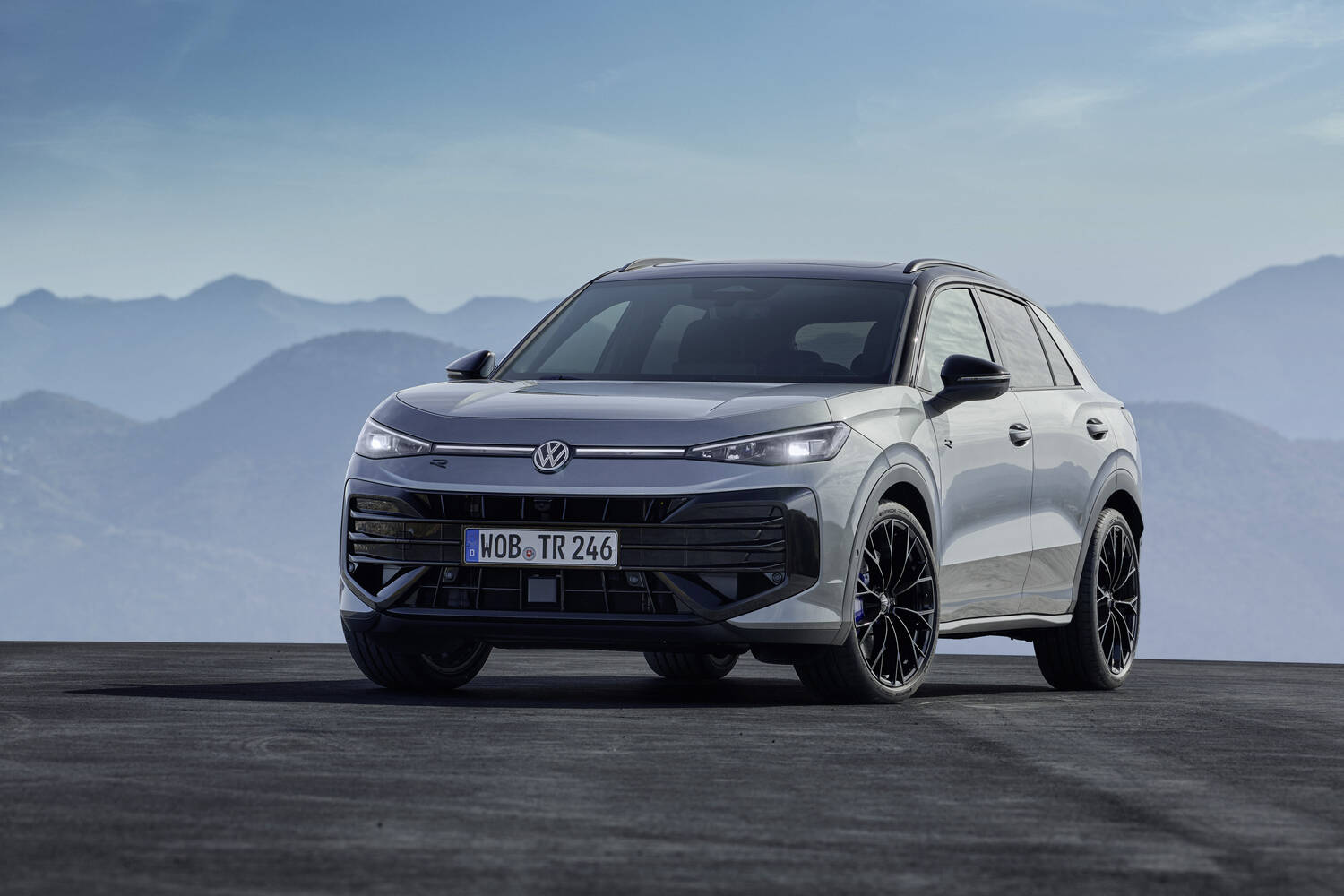
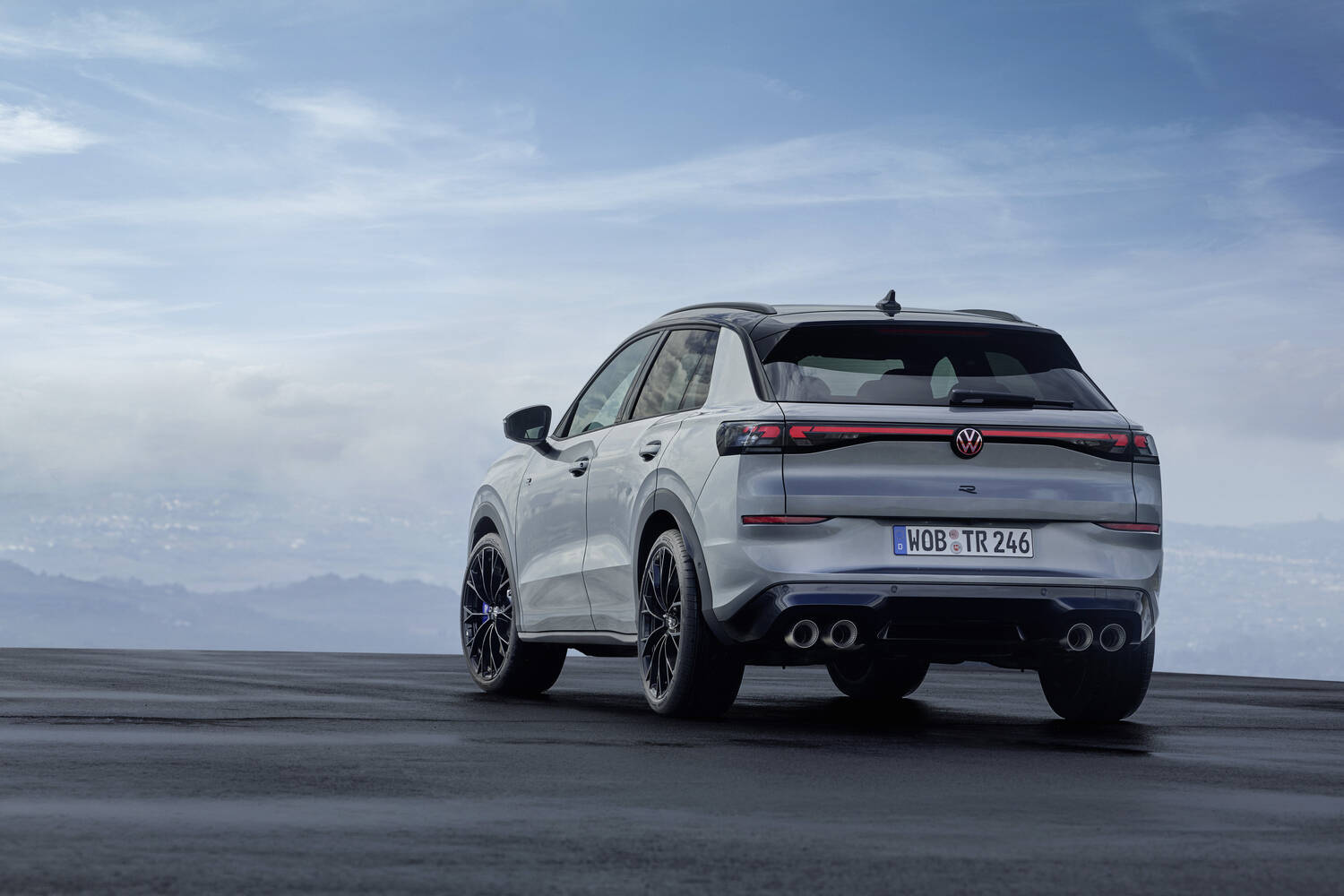
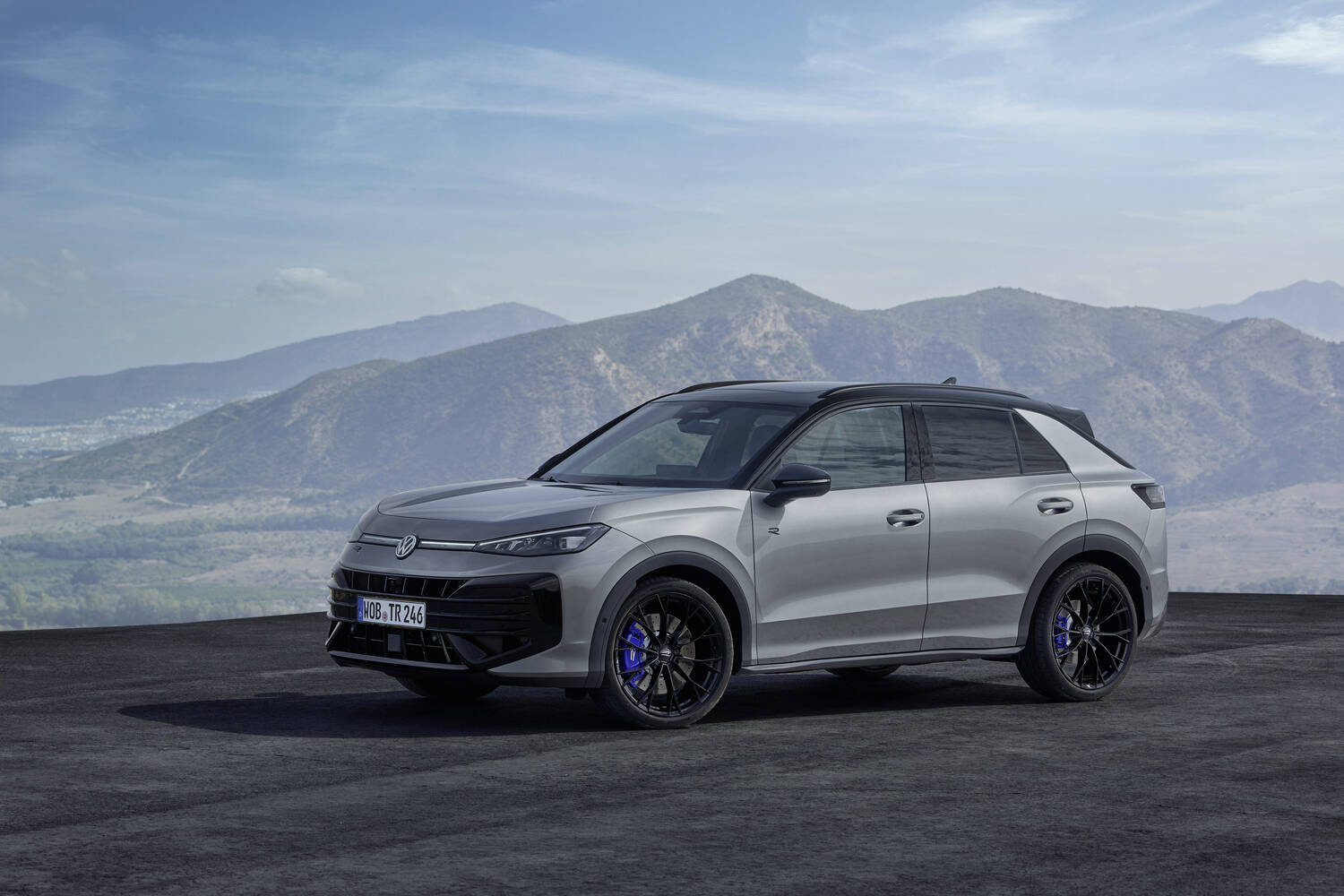
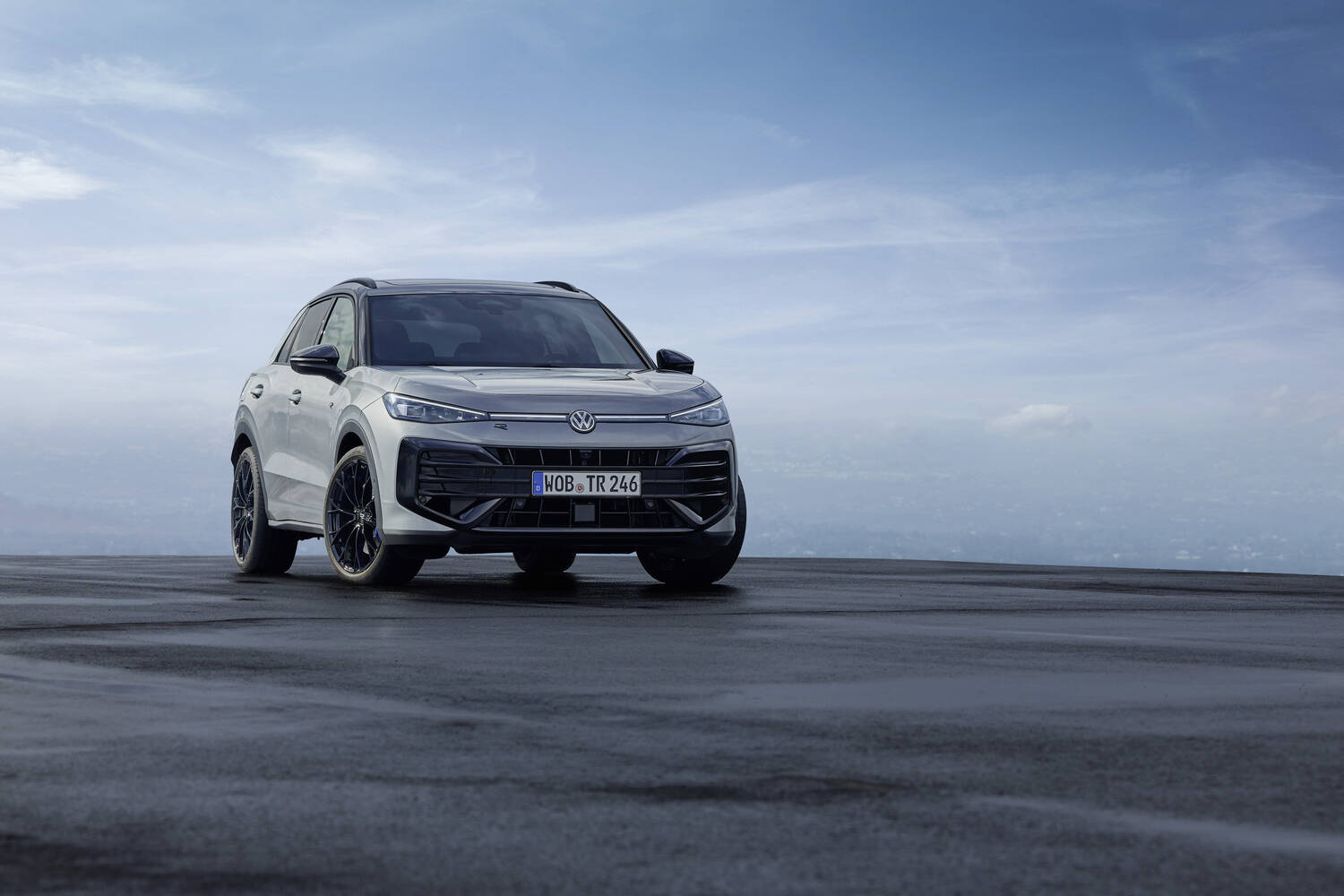
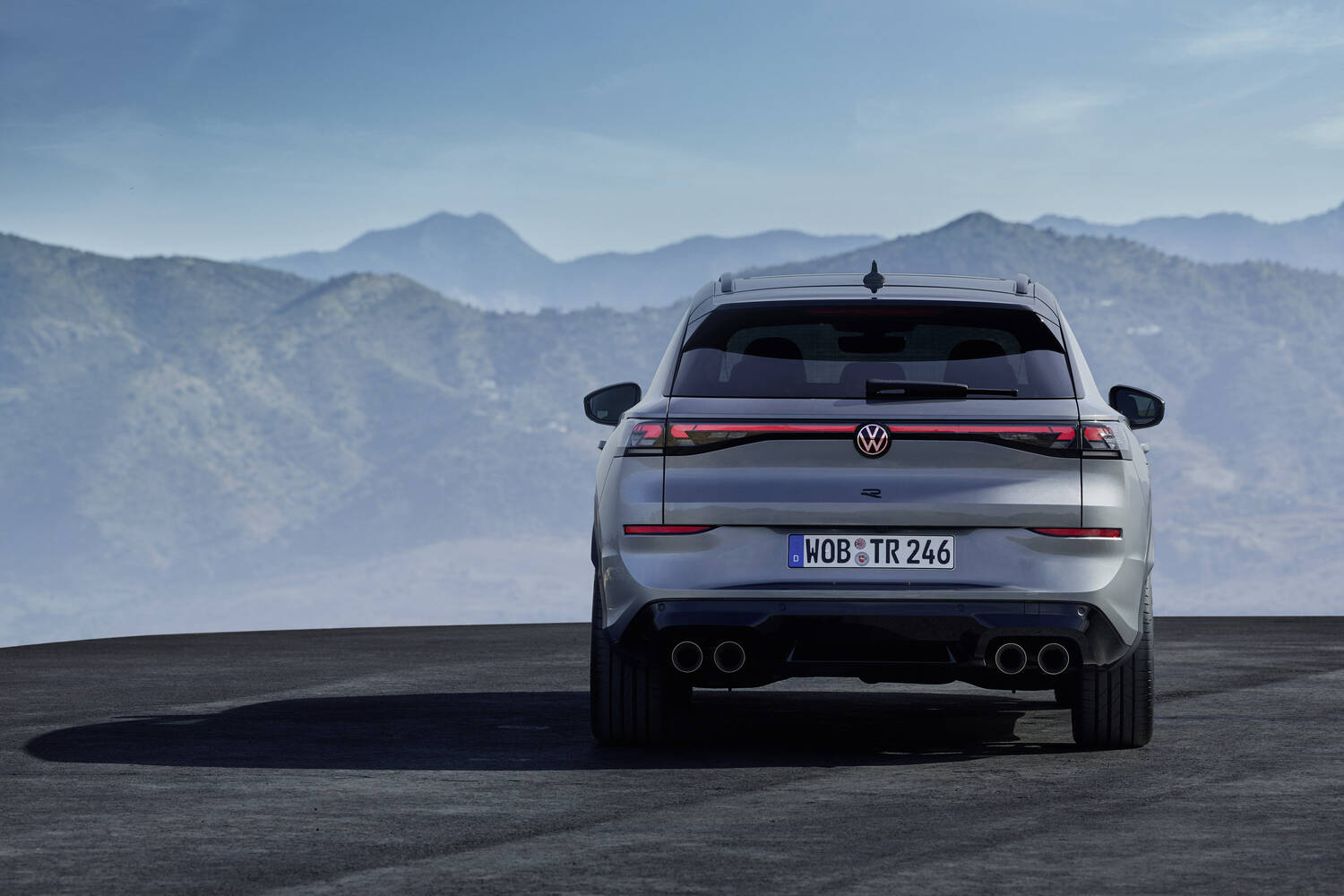
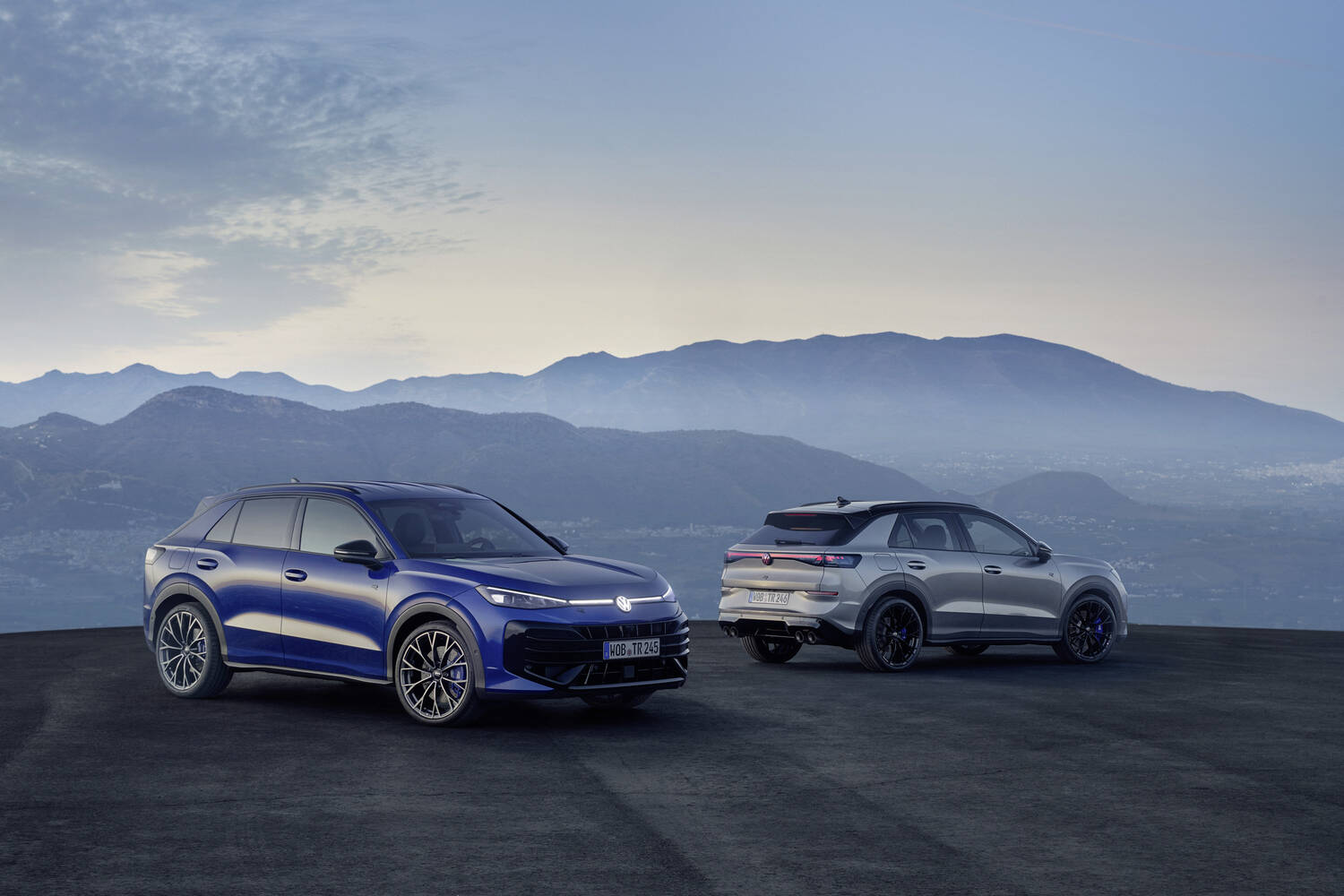
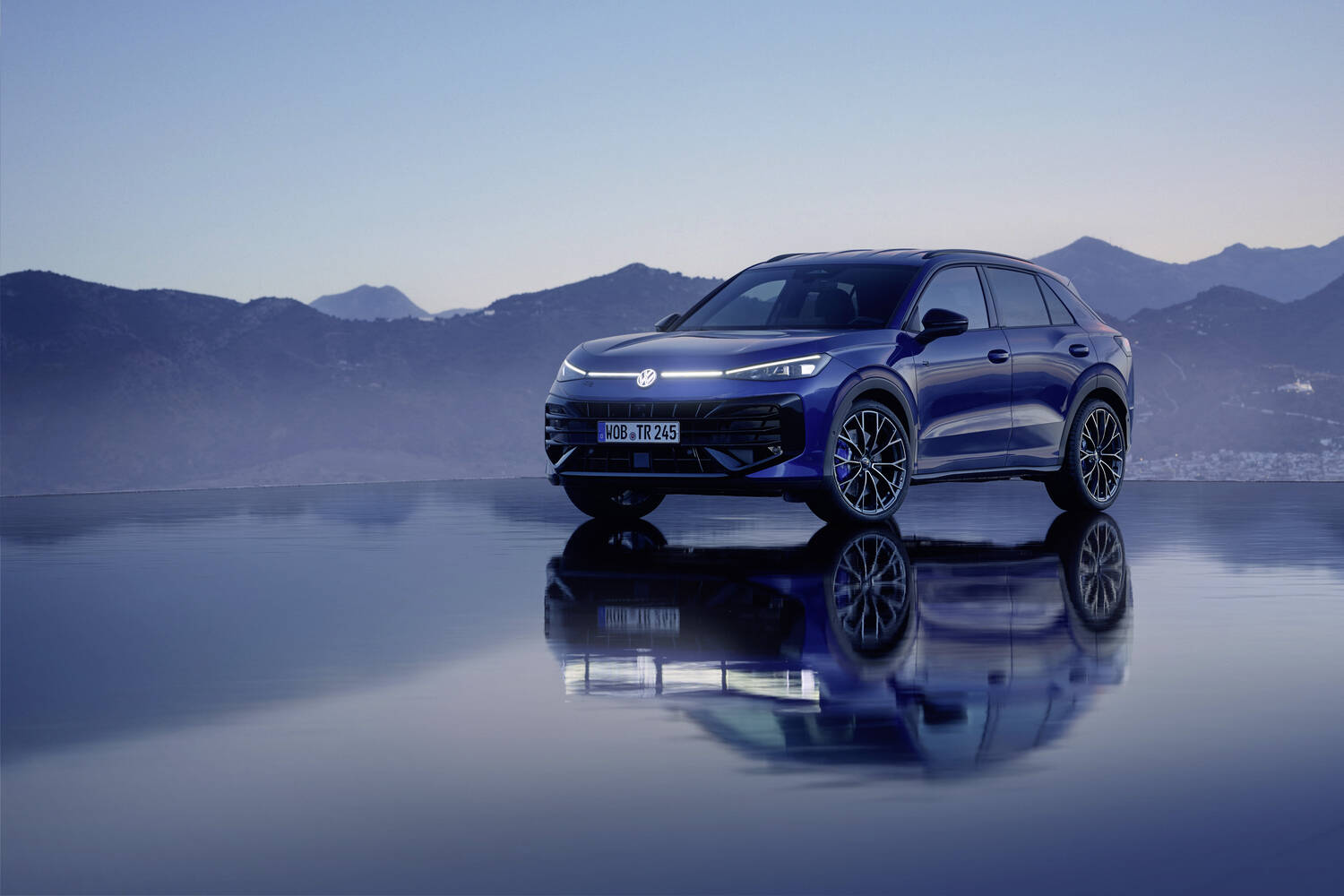
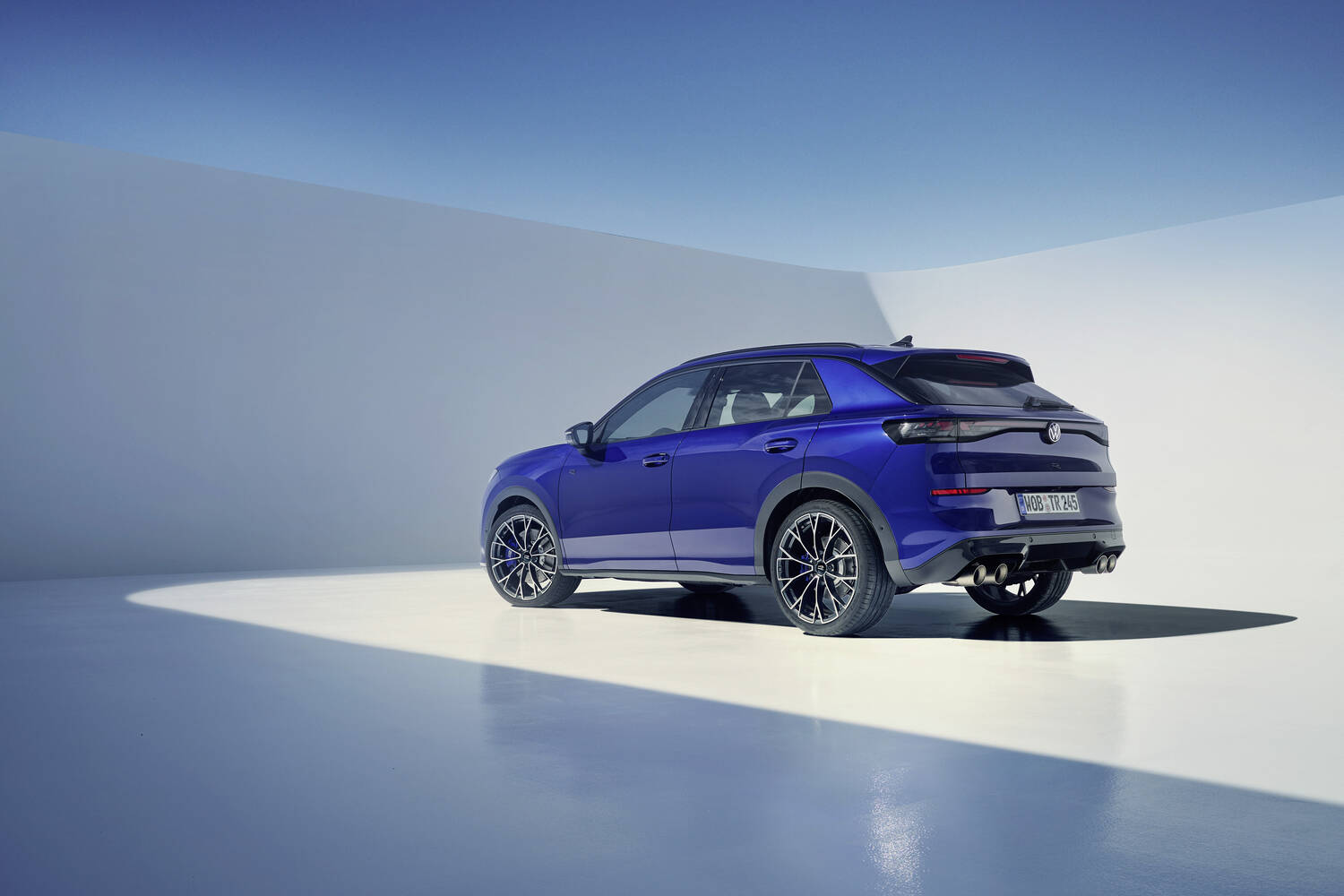
It is, as we mentioned, a successor to the original T-Roc R, but as with all-things second generation T-Roc, it looks a bit lower, wider and sleeker than the old one.
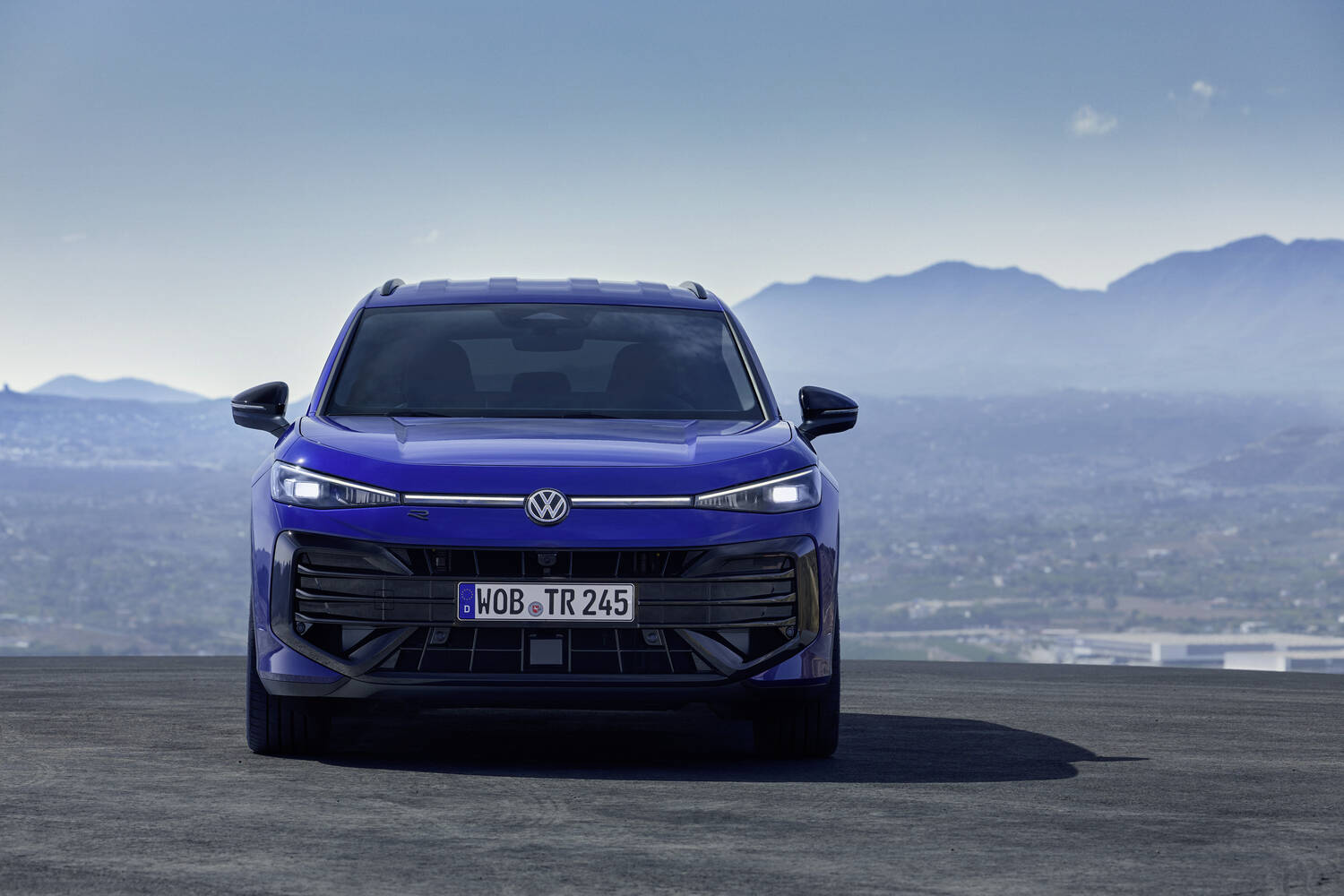
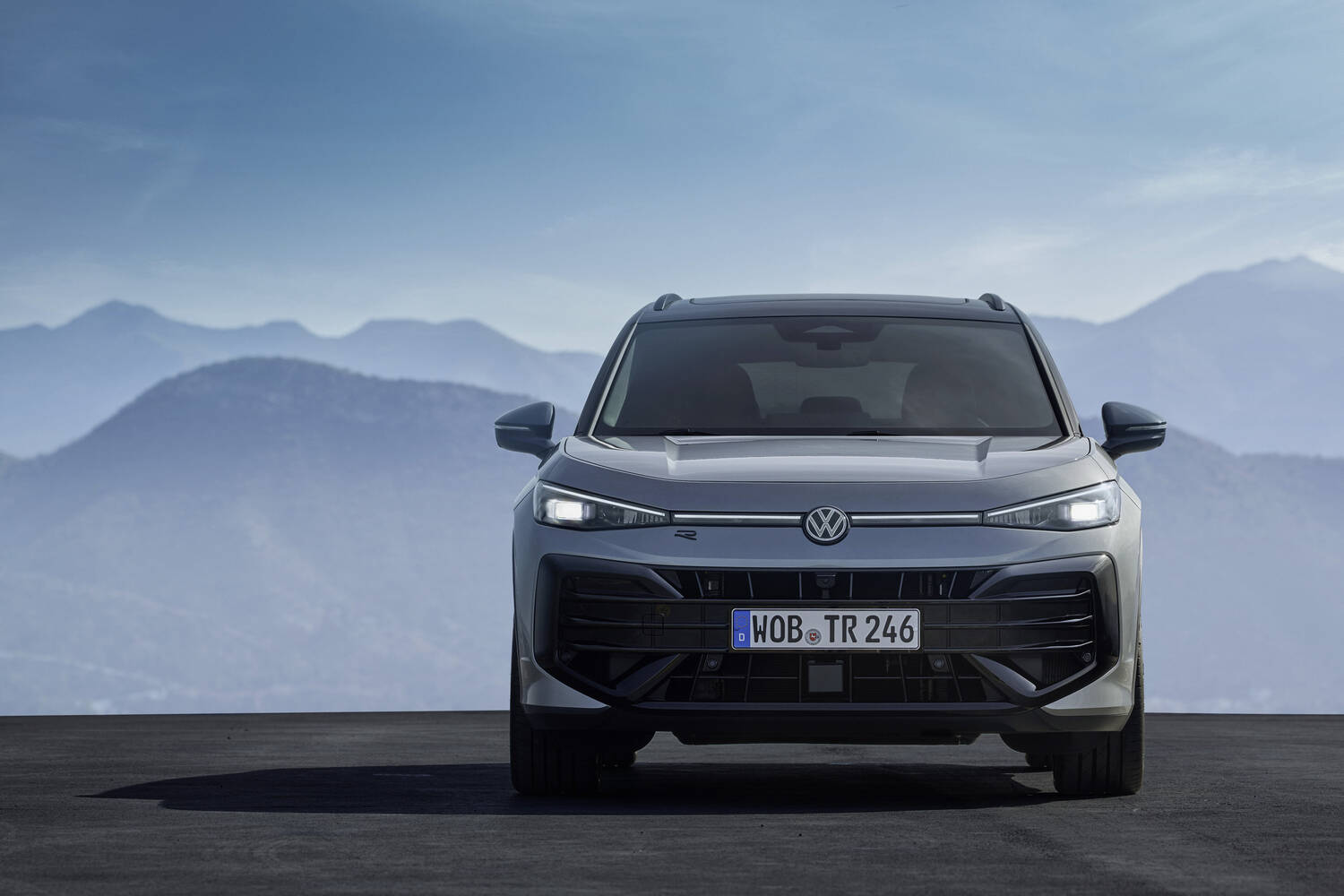
It does look quite mean…
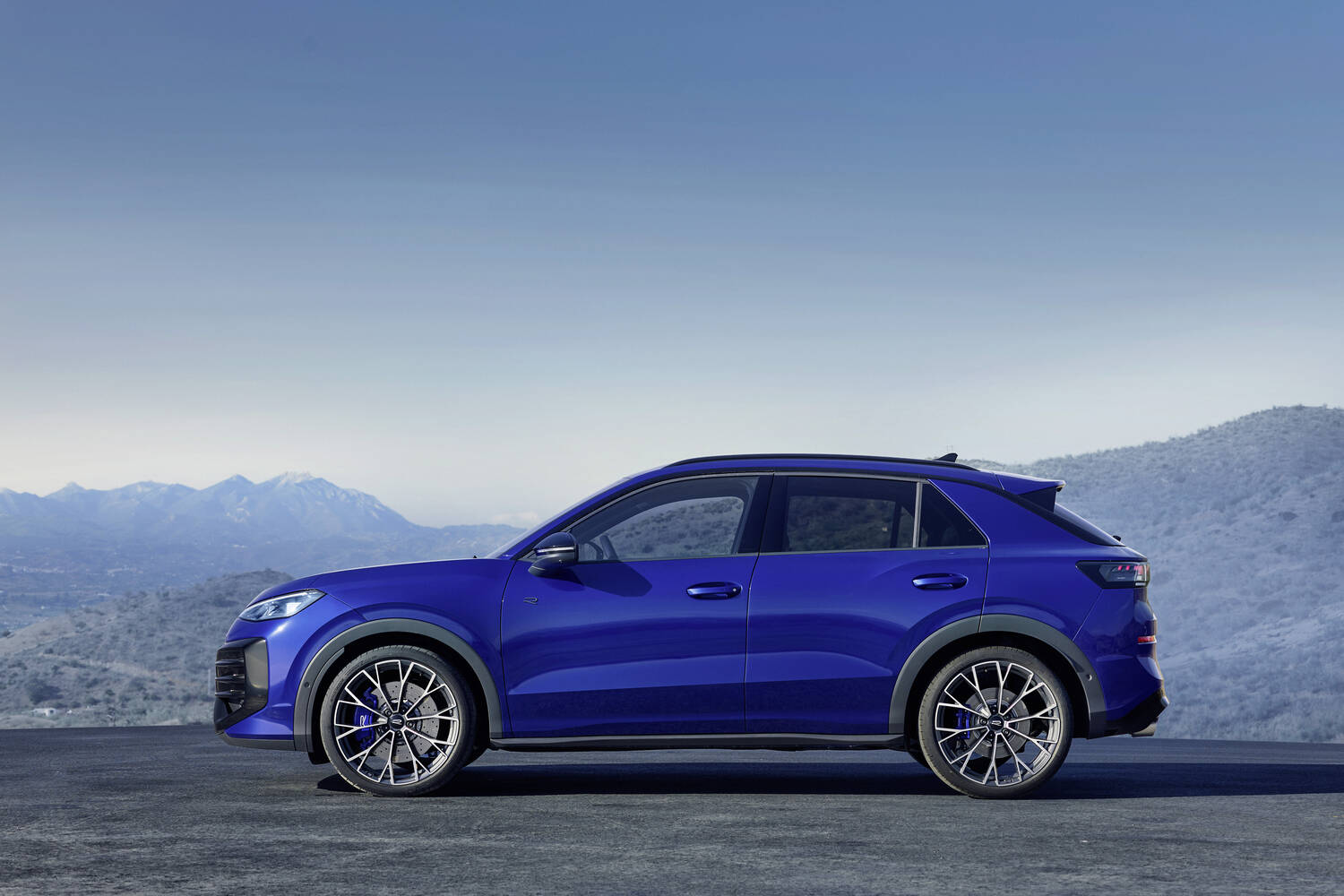
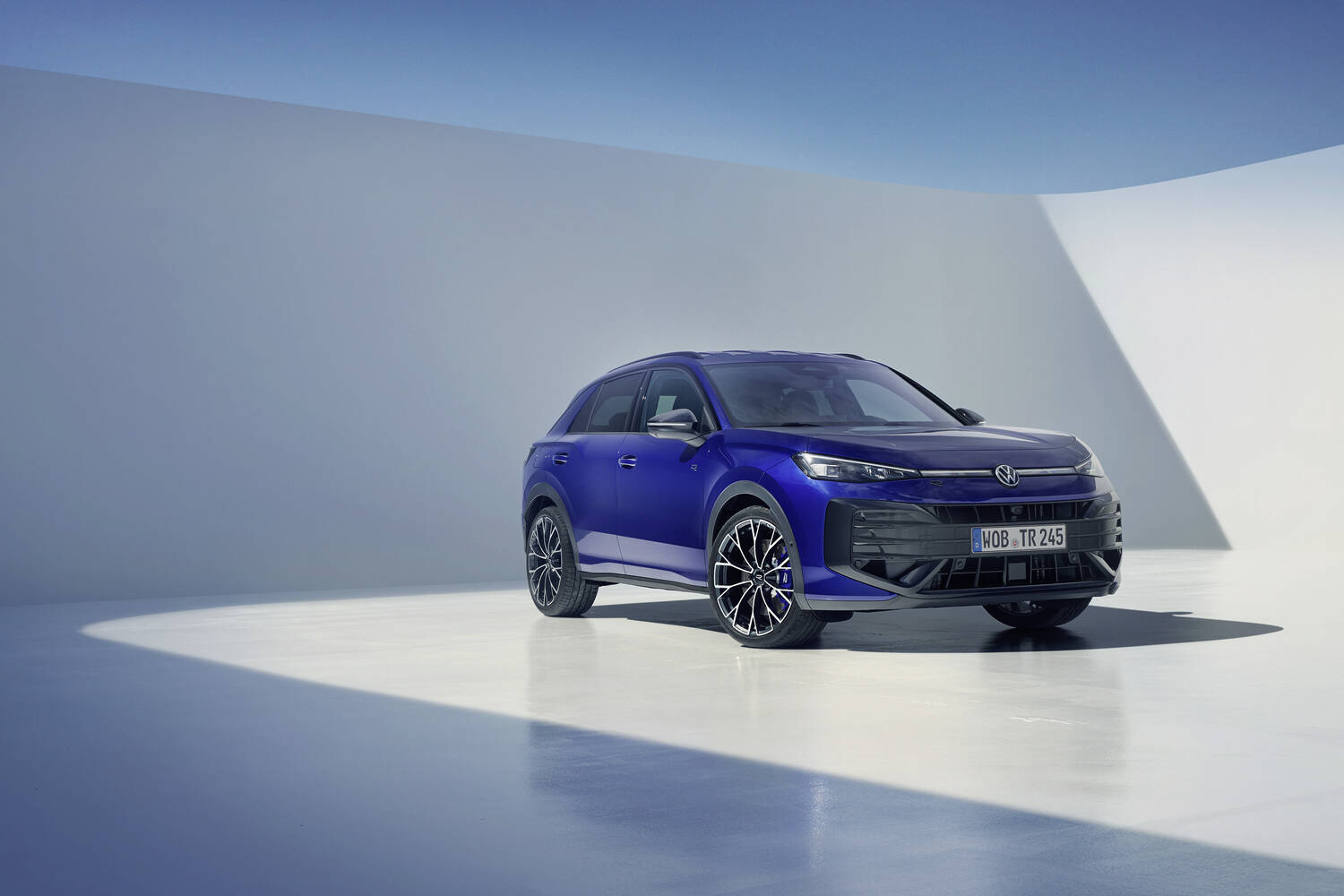
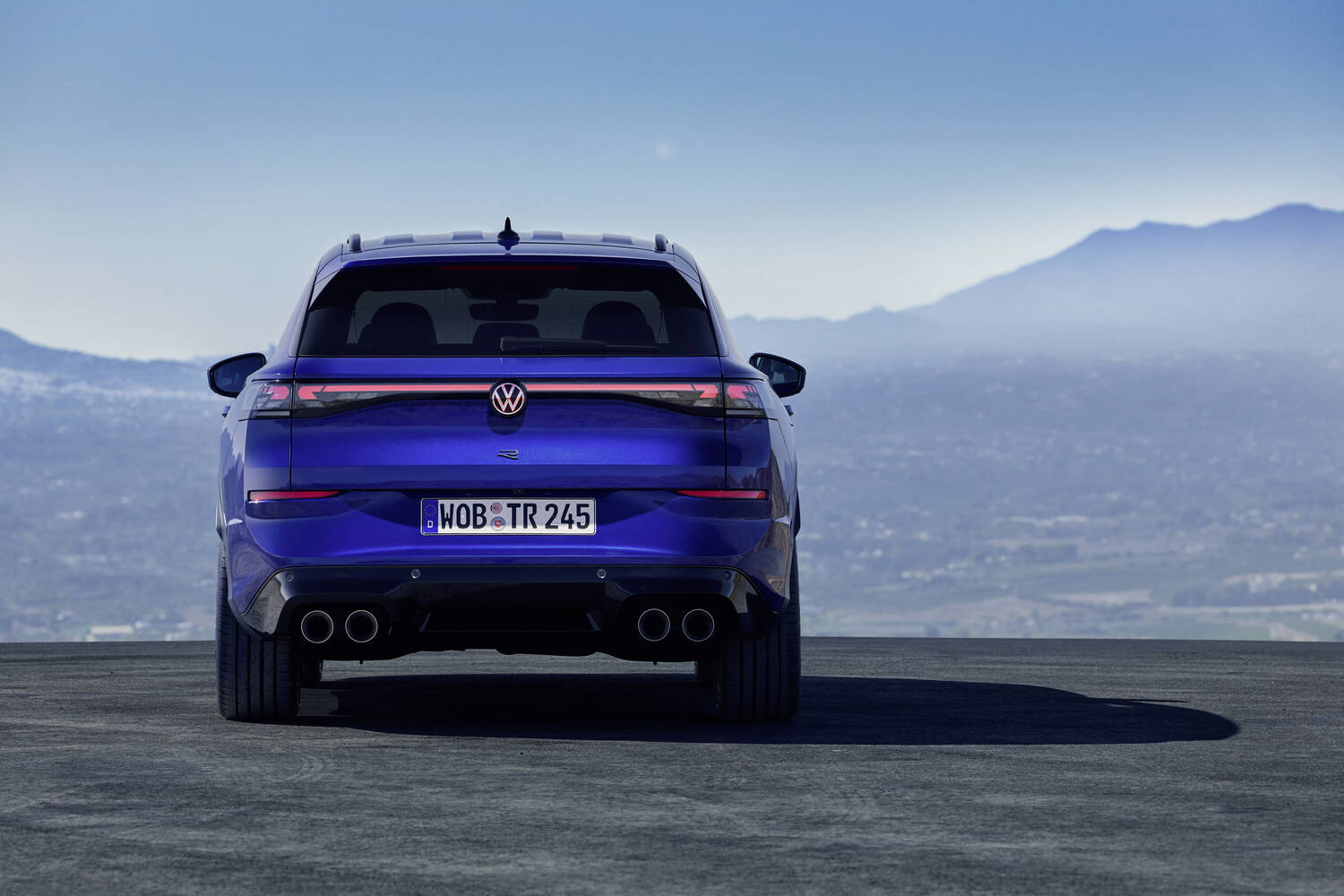
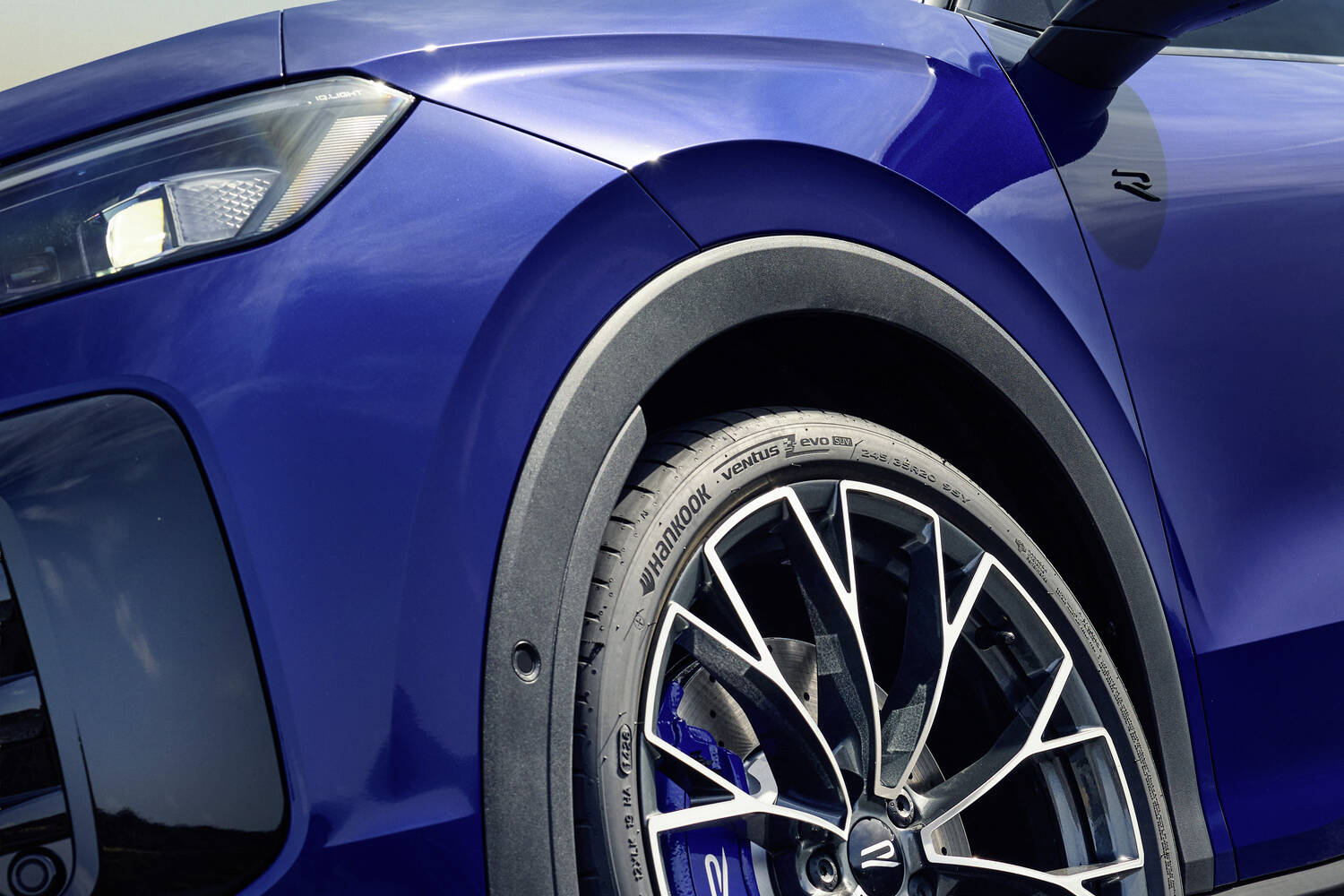
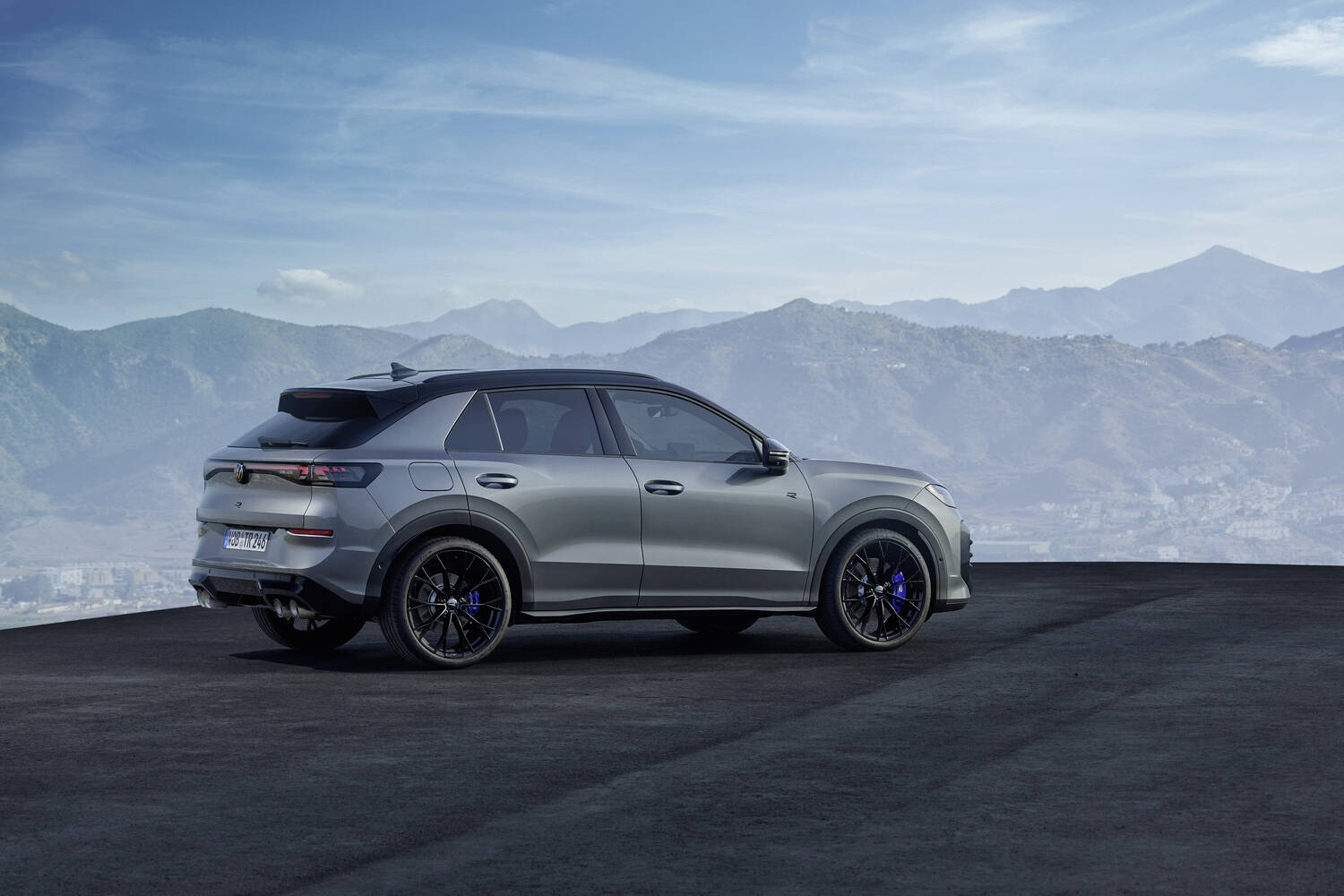
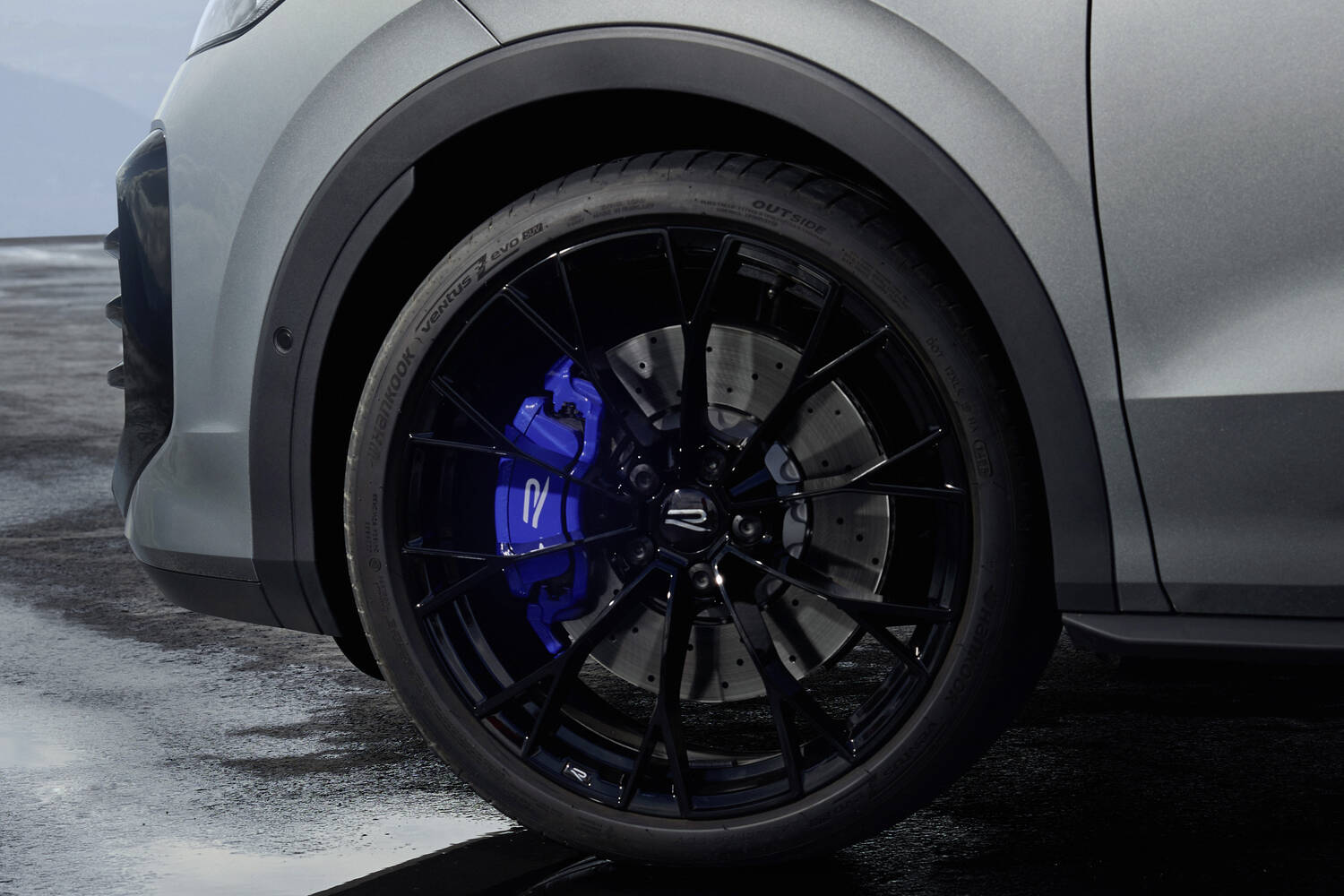
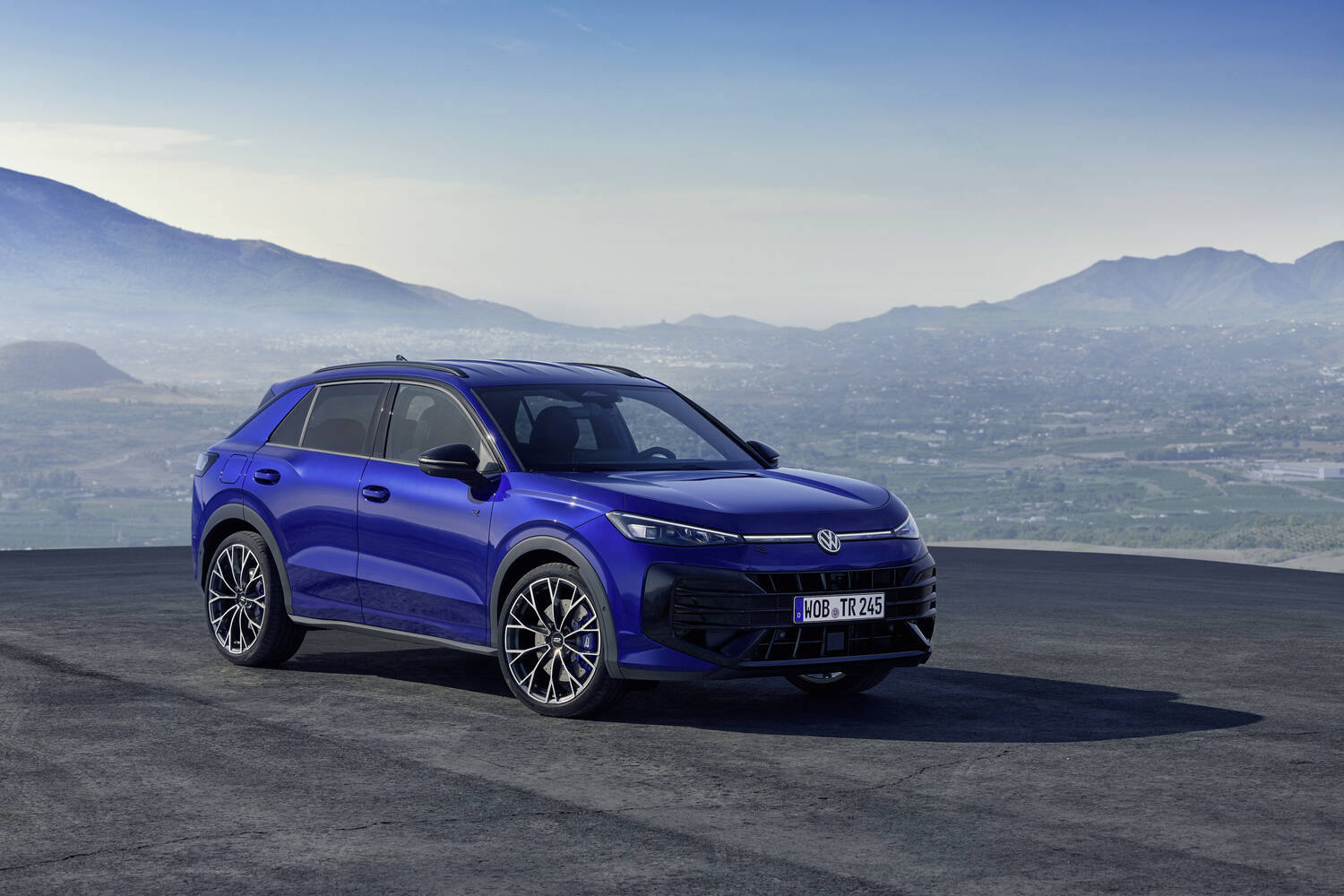
Indeed. As with all VW R models, it’s muscular, but subtle. The classic R-spec ‘Lapiz Blue’ paint is present and correct (for a fee of course), and you’ll find blue on the brake calipers too, nestling behind 19-inch ‘Zandvoort’ alloy wheels.
There’s also a 20-inch rim option, named ‘Warmenau’ after the town, just outside Wolfsburg, where Volkswagen’s R department is based.
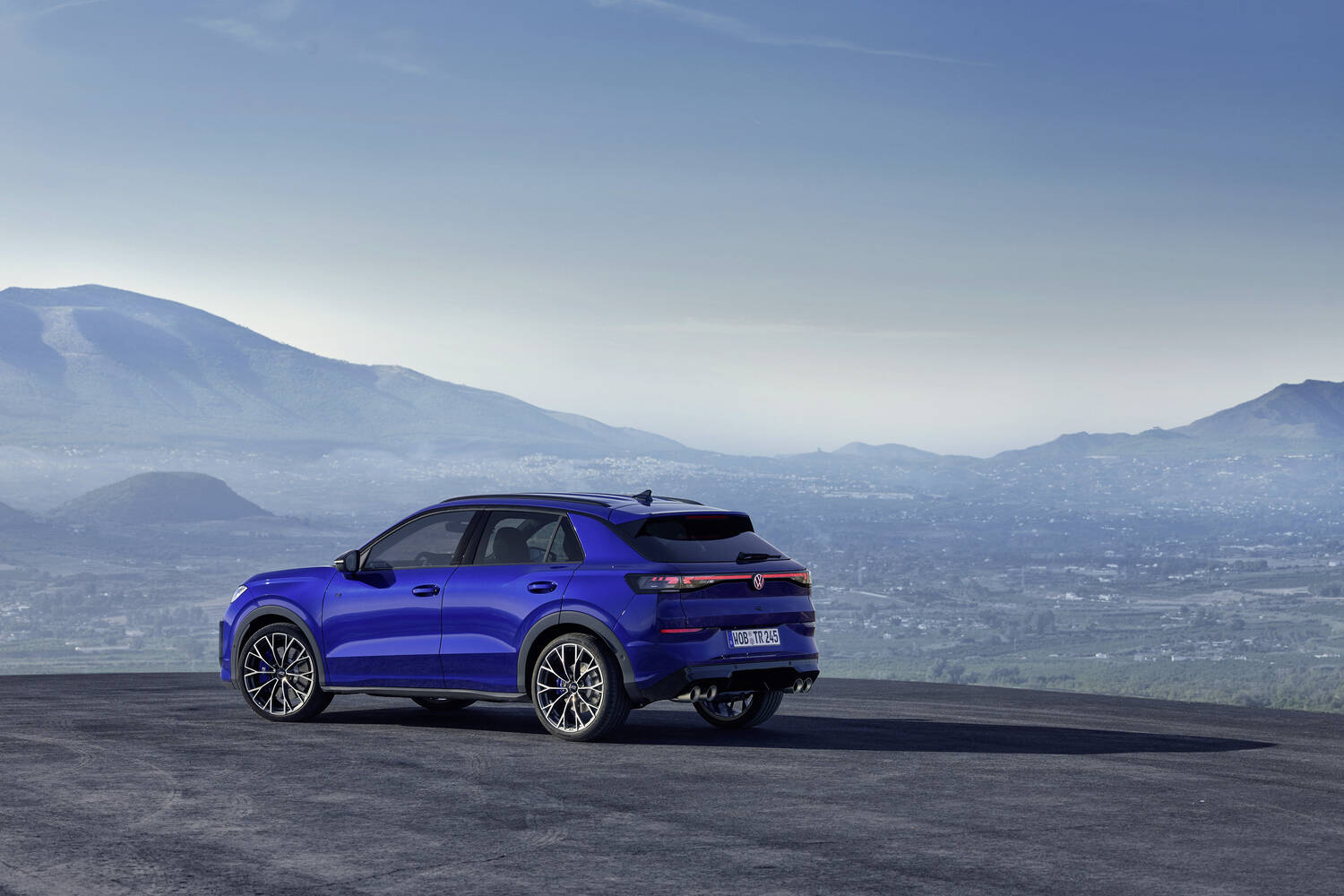
And the exhaust pipes. So many!
Yup, as with the Golf R, there’s a mean-looking quartet of exhaust pipes poking out from the chunky rear bumper.
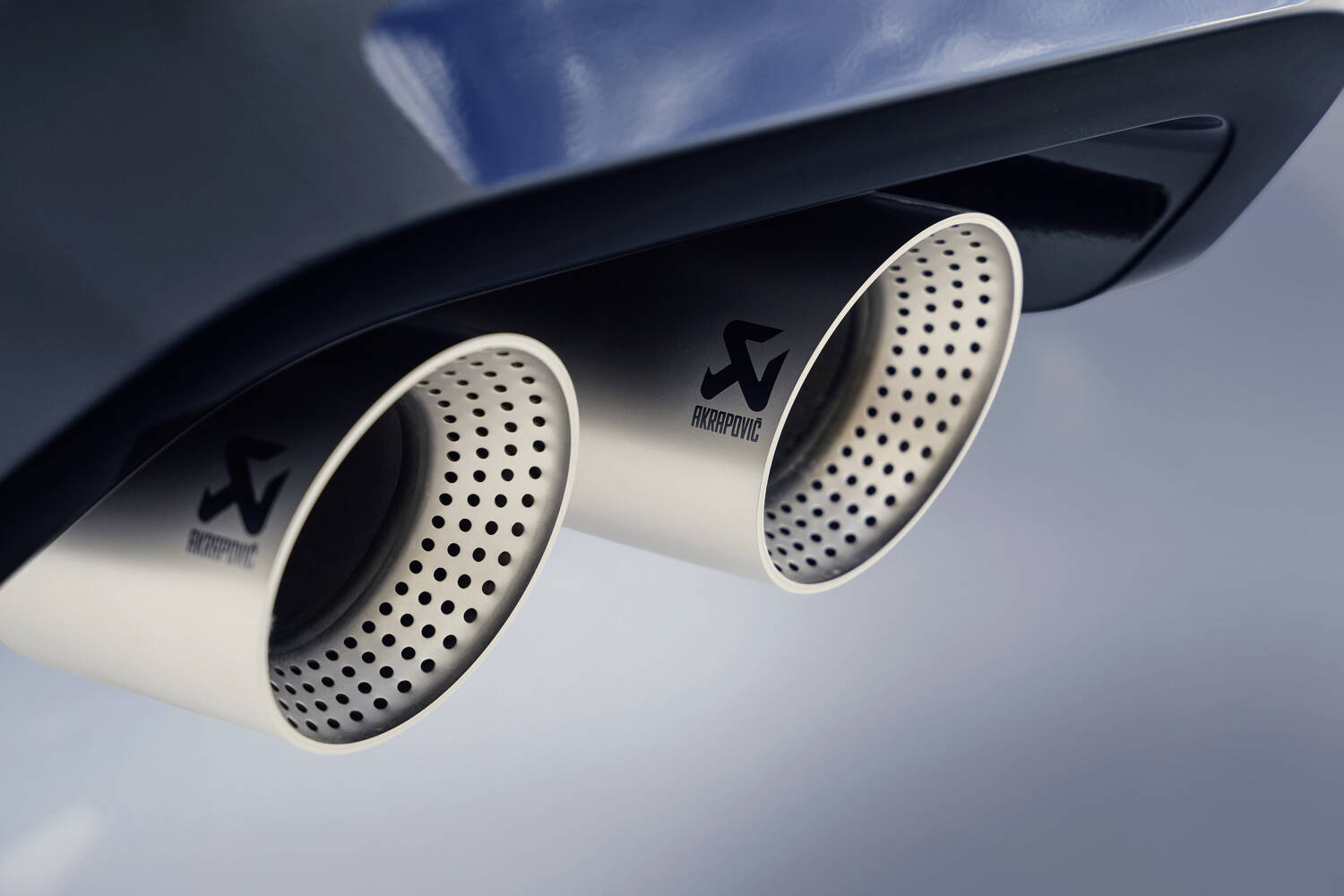
Optionally, those will be the tips of a titanium exhaust system, supplied by Akrapovič. Along with the expected chunky R-spec body kit, there’s also the option of a contrast black roof, darkened light lenses and you don’t have to have Lapiz Blue — Pure White, Wolf Grey metallic and Grenadilla Black metallic are also available.
Tell us about the engine
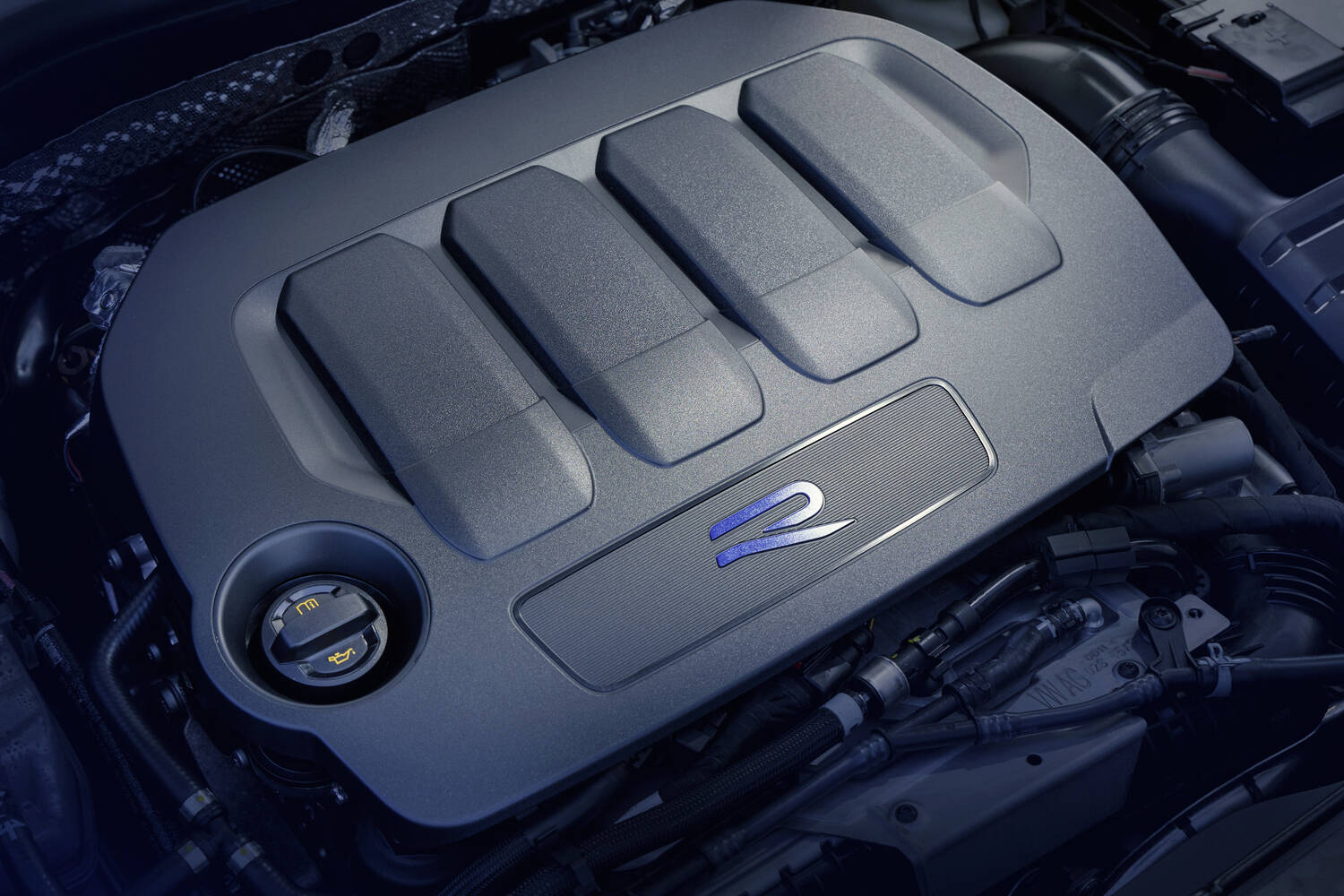
The power output may seem familiar — 333hp is a number well known to Volkswagen R (and Cupra) enthusiasts — but the way this engine develops its grunt is different, thanks to the addition of a 48-volt mild-hybrid system.
Designed so that the EA888 engine meets the tough Euro7 emission requirements, this 2.0 turbo gets a clever compound turbo setup, with an electrically-driven supercharger working in tandem with the more traditional exhaust-driven unit. That should put paid to turbo lag…
What else is going on in the engine bay?
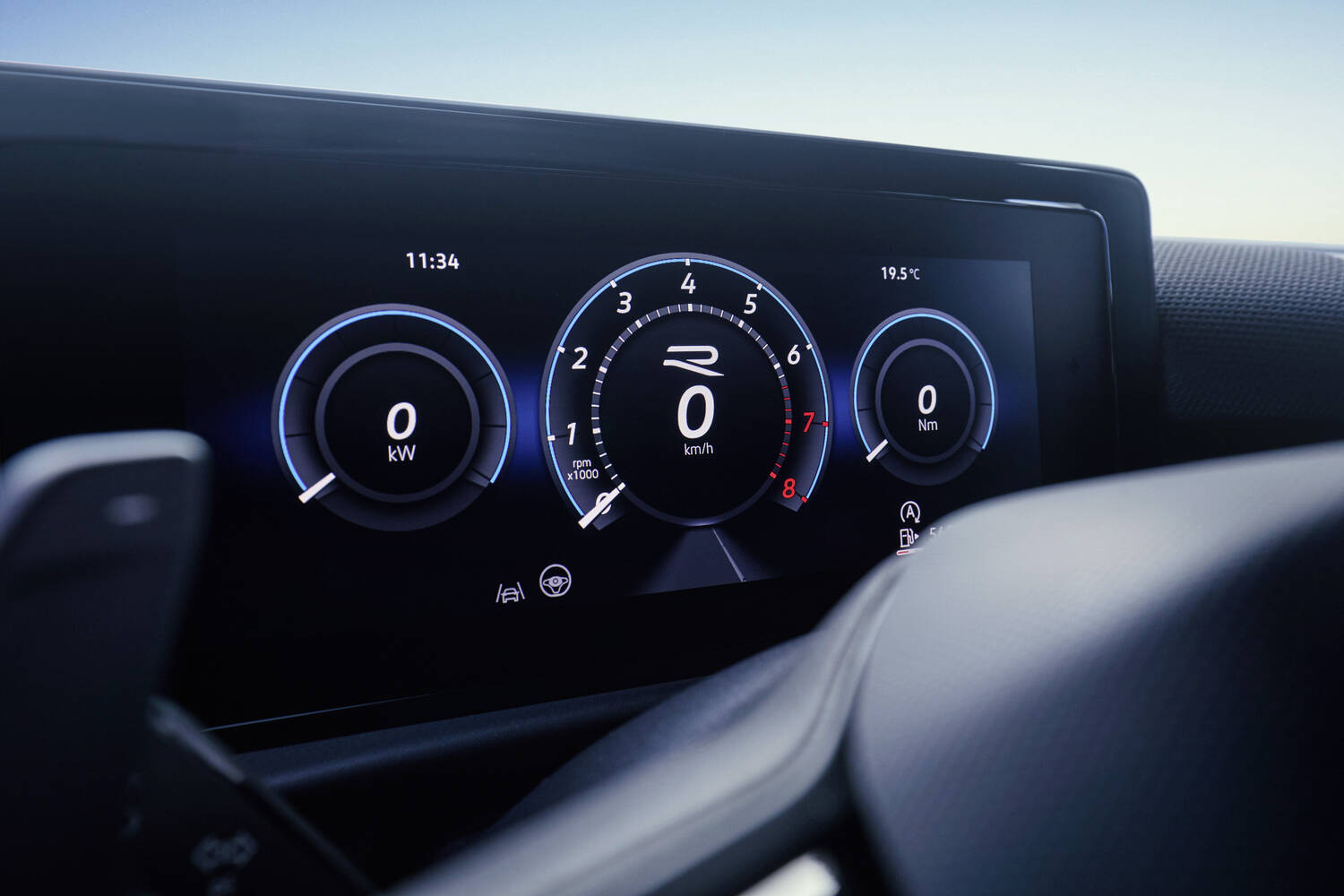
Along with the 333hp power output, the T-Roc R’s engine develops up to 420Nm of torque, and that’s available from as low as 1,900rpm. See what we mean about no lag?
There’s a silly little bit of street theatre to go with the clever engine tech too — if the driver presses the engine-start button without brake operation for at least 1.5 seconds and then starts the engine by pressing the brake pedal, the starting speed is briefly increased to 3,000rpm. A deep acoustic "rumble" from the exhaust system accompanies this little bit of daftness.
Aside from such silliness, there’s serious tech under the bonnet. A variable geometry turbo, for a start. A high-pressure (500-bar) fuel injection system and even the ability to run on the fuel-saving Miller Cycle when needed.
Does it have four-wheel drive?
Naturally. There’s a seven-speed DSG dual-clutch gearbox sending power to a 4Motion four-wheel-drive system, which portions its power out front to rear using a multi-plate clutch.
There’s also torque-vectoring between the rear wheels, with a ‘selective torque splitter’ able to divert up to 100 per cent of the power that’s being sent rearwards to one wheel, when needed.
The idea is that this system can help the T-Roc R eliminate understeer and even tighten a cornering line.
Volkswagen says that the system also adapts for what’s called µ-split performance — which is when the left and right rear wheels are on surfaces with totally different grip levels.
How fast is the new T-Roc R?
The 0-100km/h sprint is over and done with in 5.0 seconds, and the top speed is limited to 250km/h, in the classic fast German car tradition.
What about the suspension?
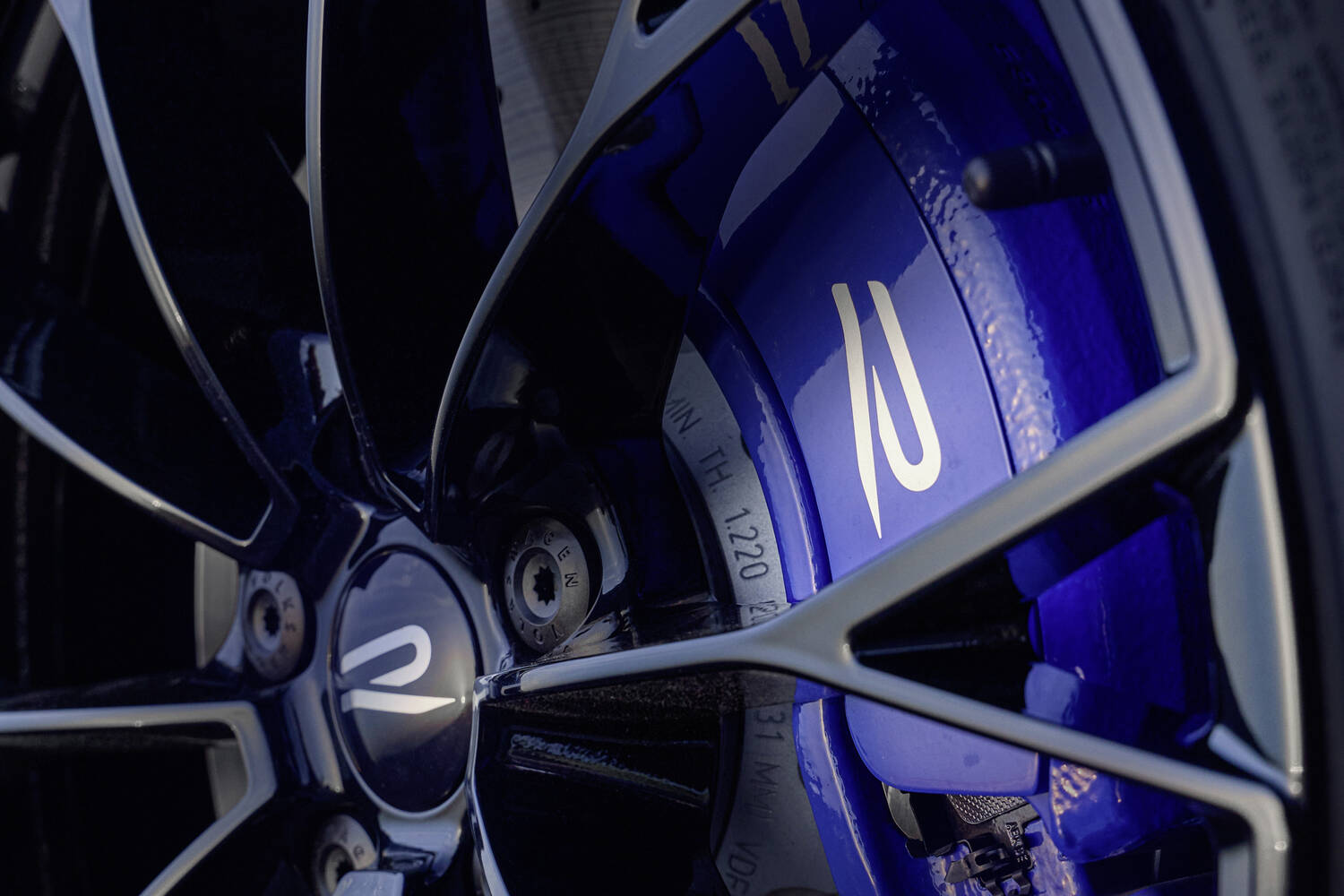
There’s DCC adaptive damping for the MacPherson front axle and the multi-link rear axle, as you’d expect. ‘Progressive Steering’ is standard, which means a variable-ratio rack, as are massive 457mm brake discs.
The suspension, compared to the standard T-Roc, has been thoroughly changed with new front swivel bearings, shorter auxiliary springs, stiffer mounts, stiffer springs all round, a stiffened rear anti-roll bar, stiffer damper mounts and specific software for the steering, DCC dampers and the vehicle dynamics manager.
Are there switchable driving modes?
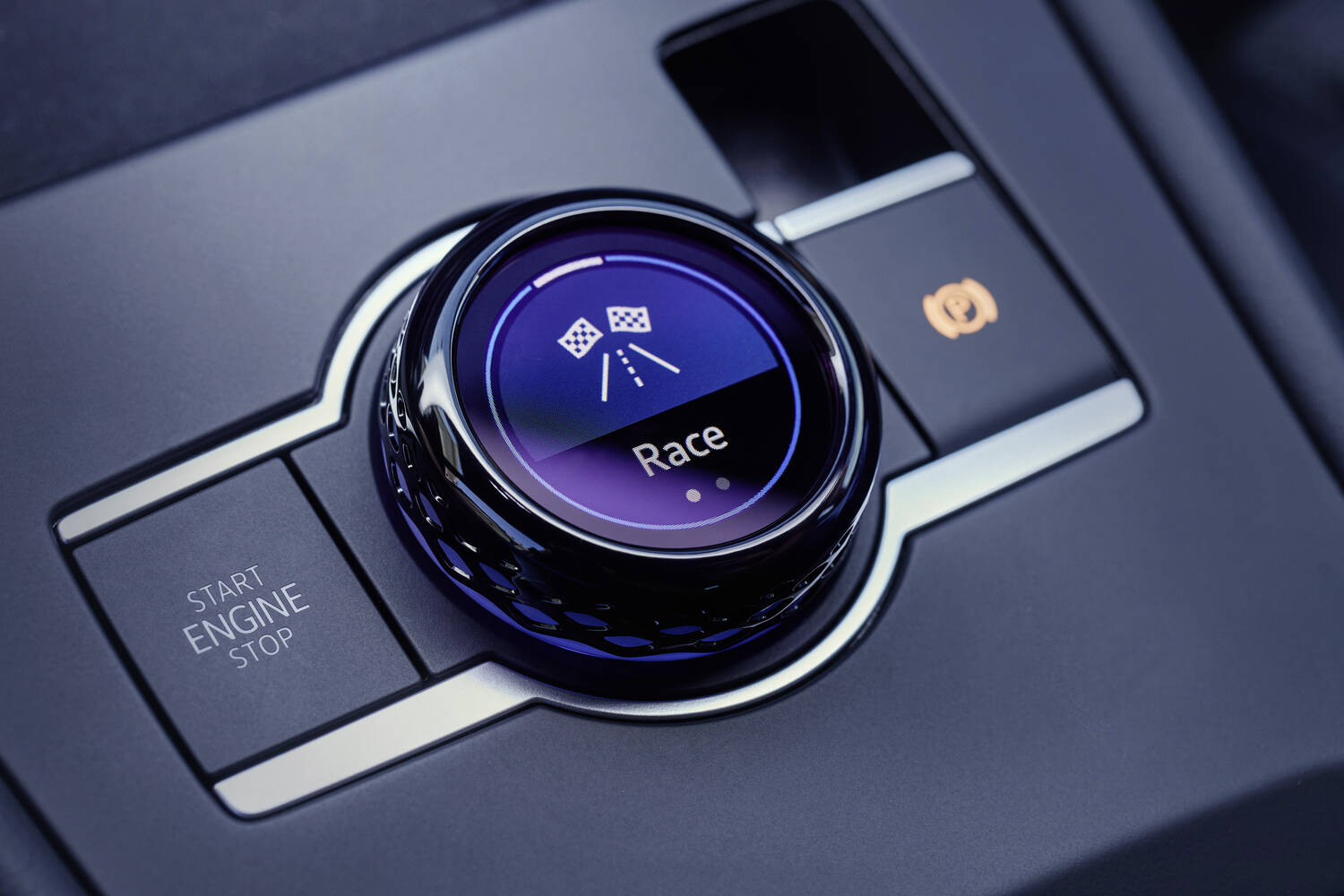
There are. The T-Roc R gets what Volkswagen calls a “7+2” setup, which includes Eco, Comfort, Sport, Snow, Offroad, Race and Individual, as well as Special and Drift.
Most of those are probably pretty obvious except for Special. This one has been developed on, where else, the Nürburgring, and it actually uses softer damper settings than Sport or Race, so as to cope with the ‘Ring’s famously bumpy, off-camber tarmac.
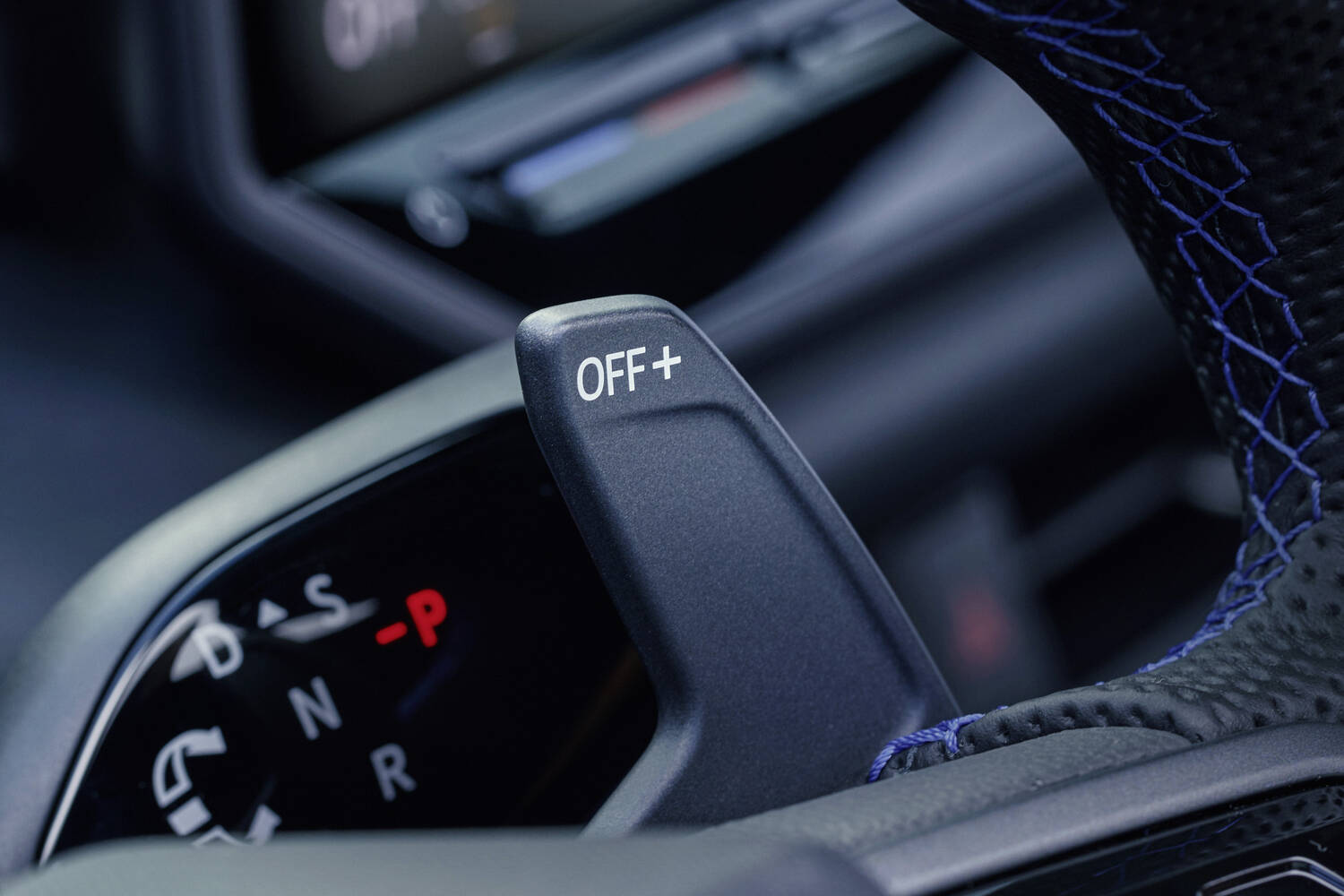
Sounds ideal for Irish conditions, eh? The stability control system can be manually disabled if you like (probably not a great plan…) while in Special mode the paddle shifters become entirely manual — there’s no automated up-change, so the driver is in total control.
What about the interior?
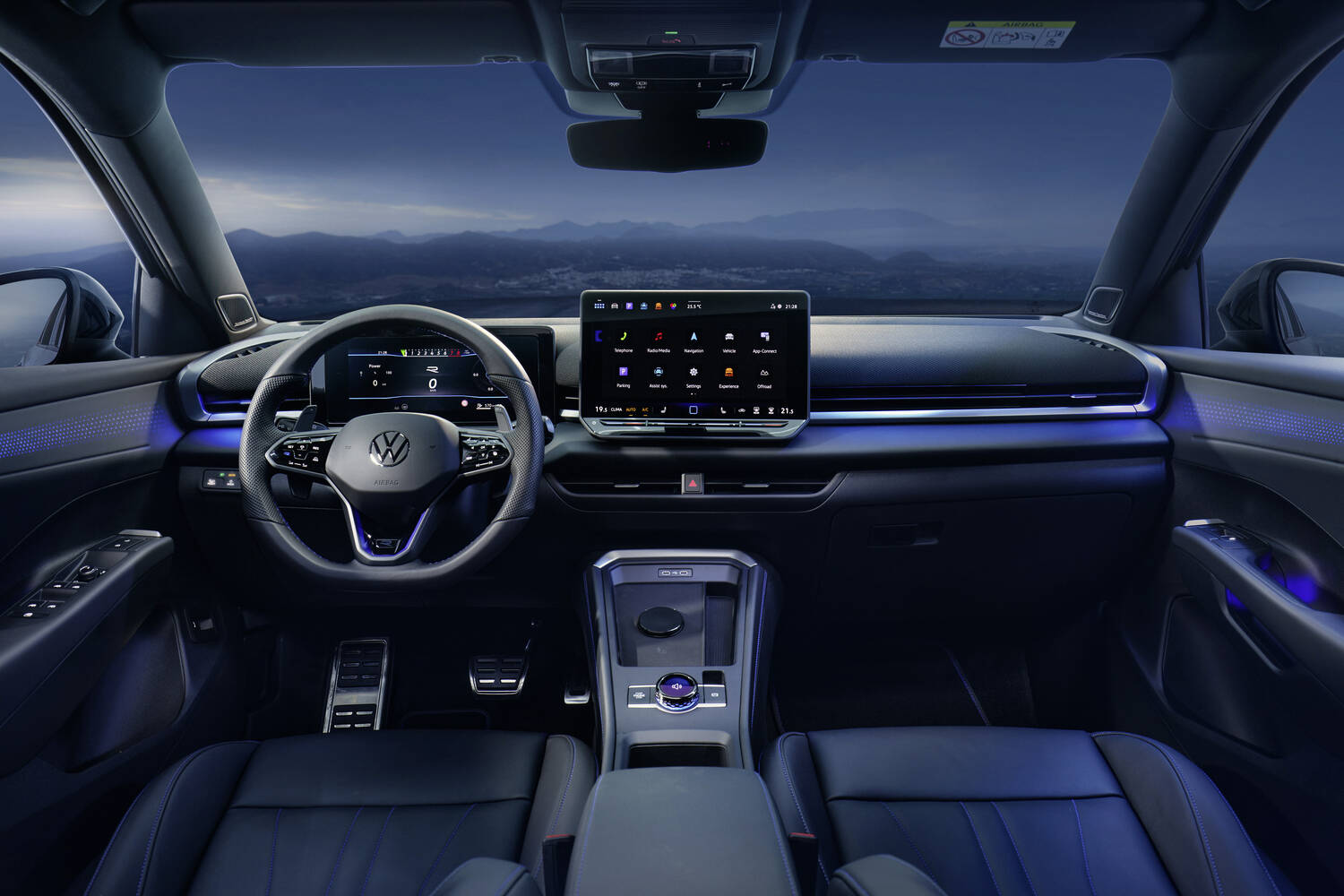
You’ll find lots of R-specific items inside, including a special steering wheel, which can be had with either a leather rim or even velour in place of the standard synthetic suede.
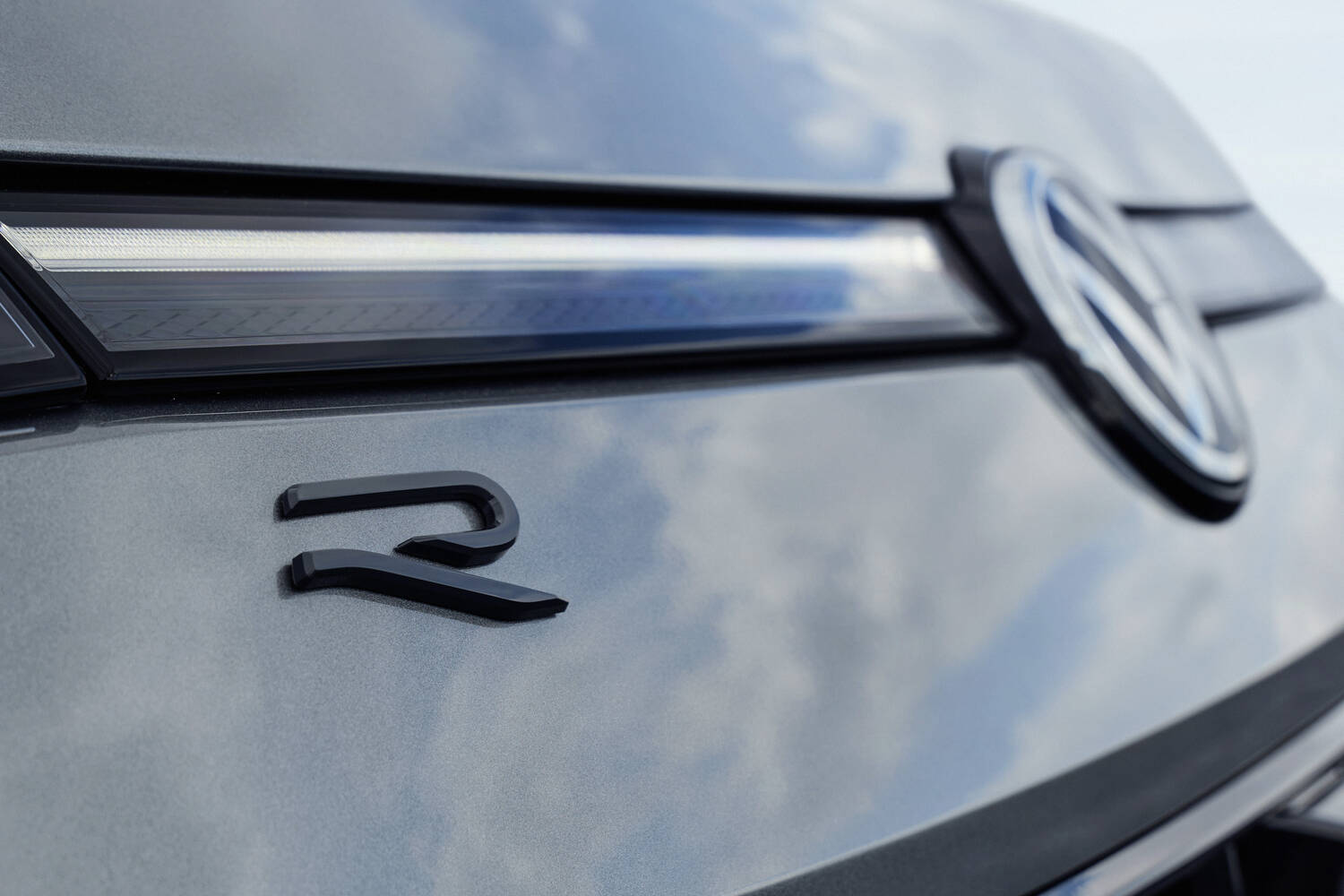
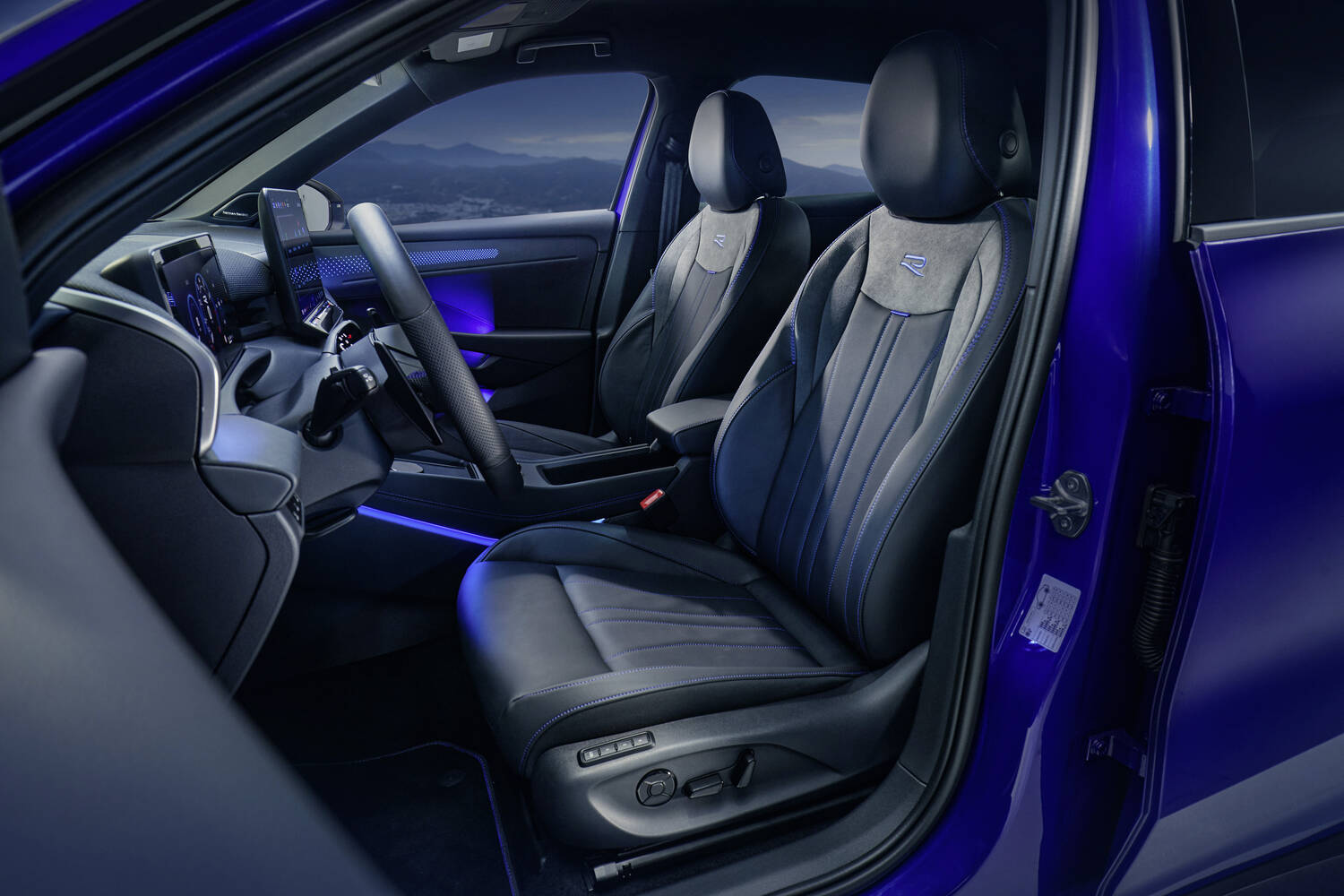
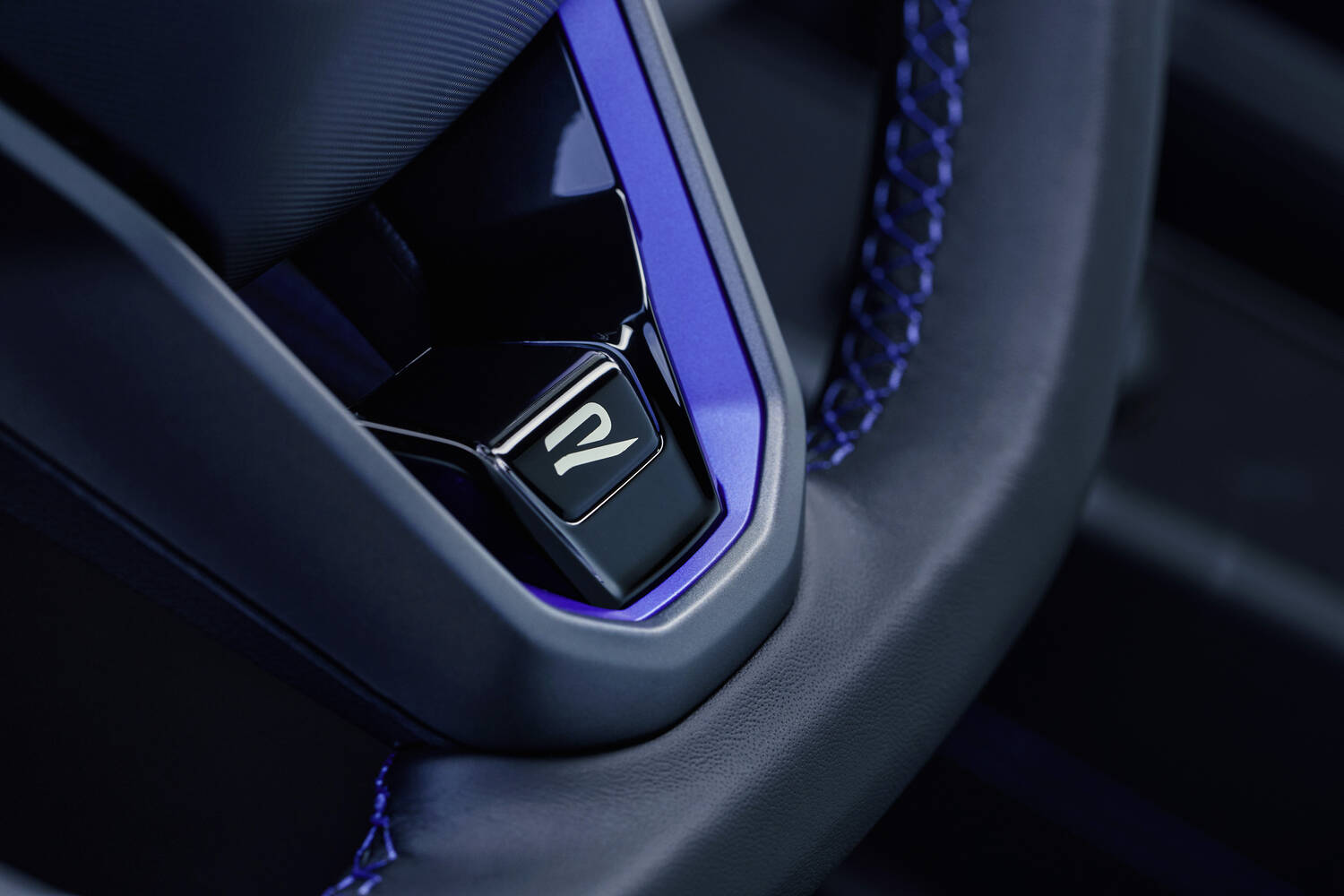
There’s a dedicated R button for activating the driving modes, specific R-branded graphics for the digital instruments and of course bucket seats with the R logo.
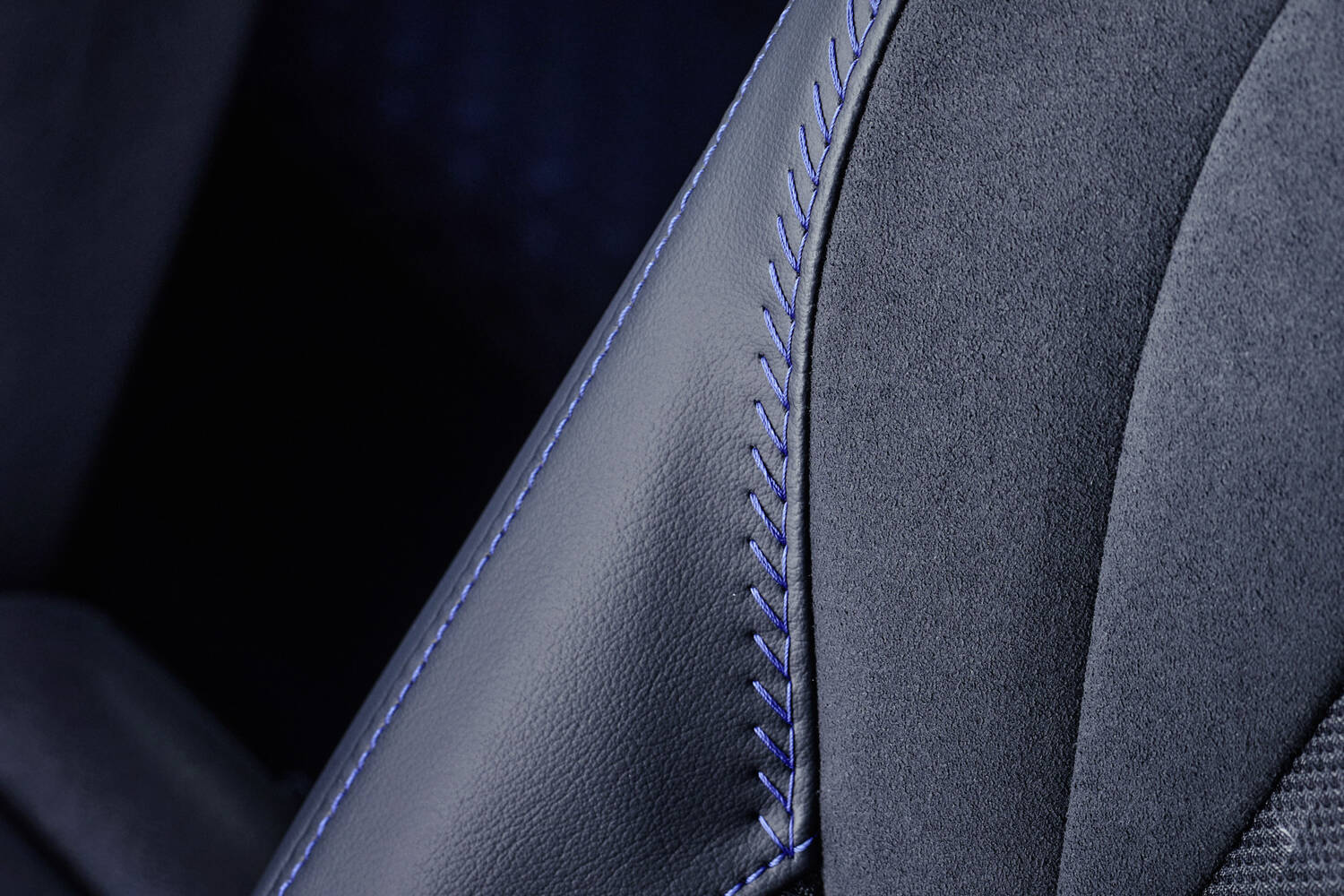
Those come as standard with ‘ArtVelours’ upholstery, but you can optionally have part-leather trim if you want.
On the central touchscreen, you can call up displays that show a GPS lap timer and acceleration time, along with turbo pressure, gearbox temperature, torque, power, a G-meter and the torque distribution of the all-wheel drive.
We don’t yet have Irish pricing for the T-Roc R, but it should hit the market in mid-2027.
If there is anything about this story we have not covered, you can avail of our expert advice service via the Ask Us Anything page.