
Why is Polestar showing us a car it’s not going to make?
For a start, never say never. Polestar’s chief design officer Philipp Römers did say to us that: “it’s a car I’d love to drive” so there’s clearly some potential for a future Polestar model along these lines, but for the moment it’s much more important that it previews two critical new models for the company’s future.
Which models are these?
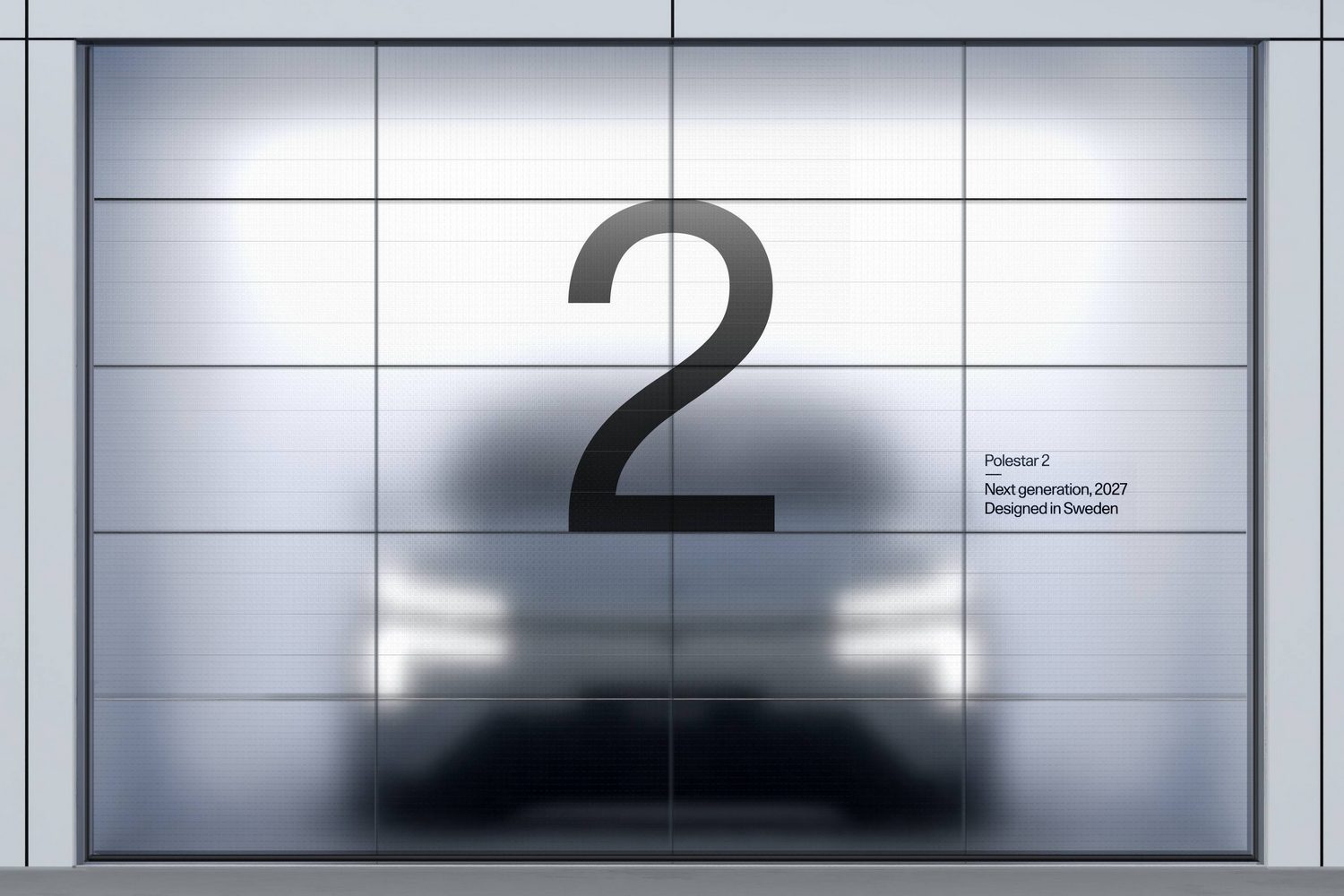
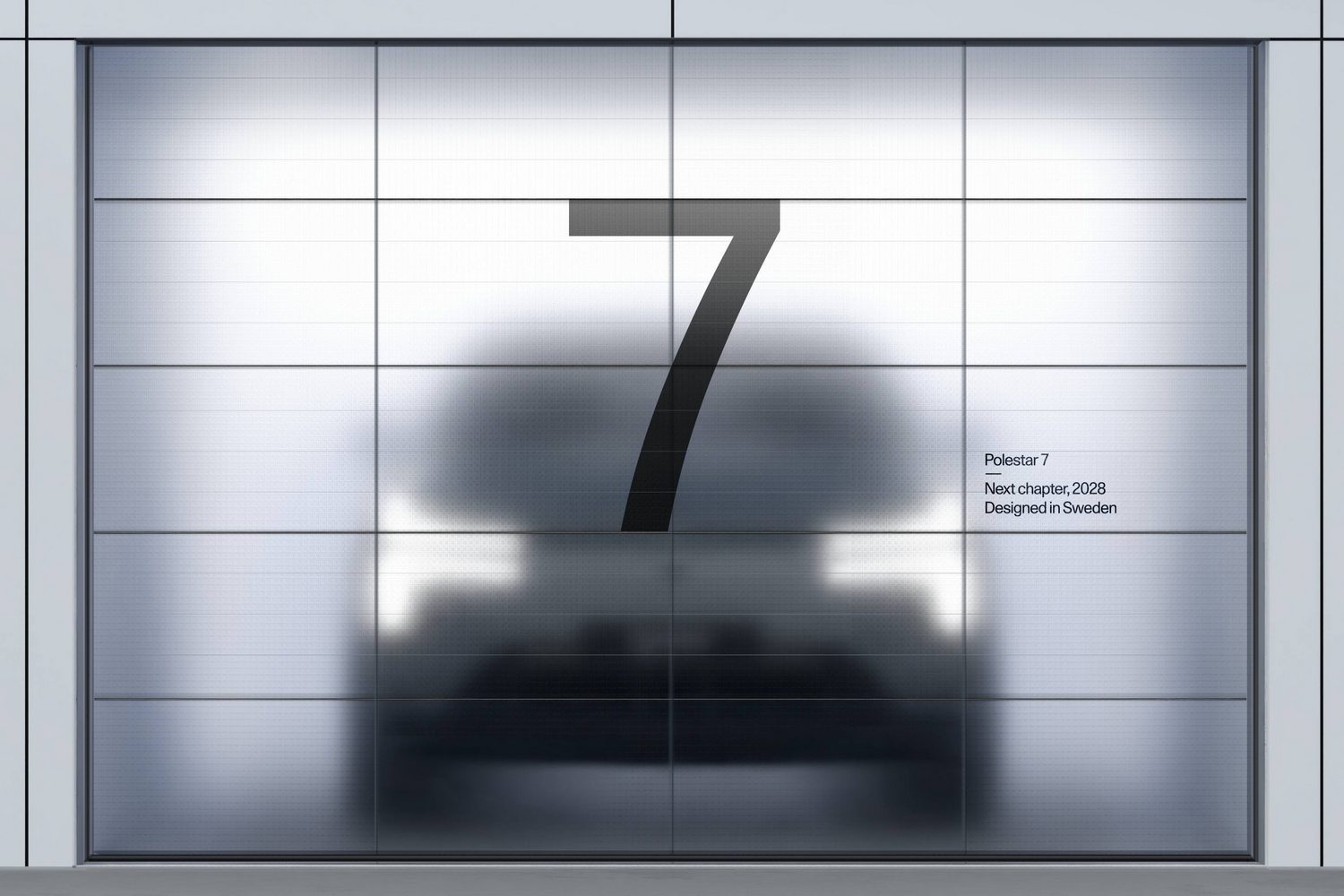
Specifically, they’re the Polestar 2 — a saloon replacement for the current Polestar 2 — and the Polestar 7 — a new C-segment SUV which will sit in the lineup below the newly-launched Polestar 4 SUV and take on the likes of the BMW iX1 and iX2, plus the Mercedes GLA and GLB.
Why are these new models so crucial for Polestar?
As Römers puts it, it’s time for Polestar to start expanding beyond its current model lineup. “We have to make the company profitable, and some of the cars we make now are niche models, so it’s important that we appeal to many more customers.”
Which bits of the Formula 2030 are which?
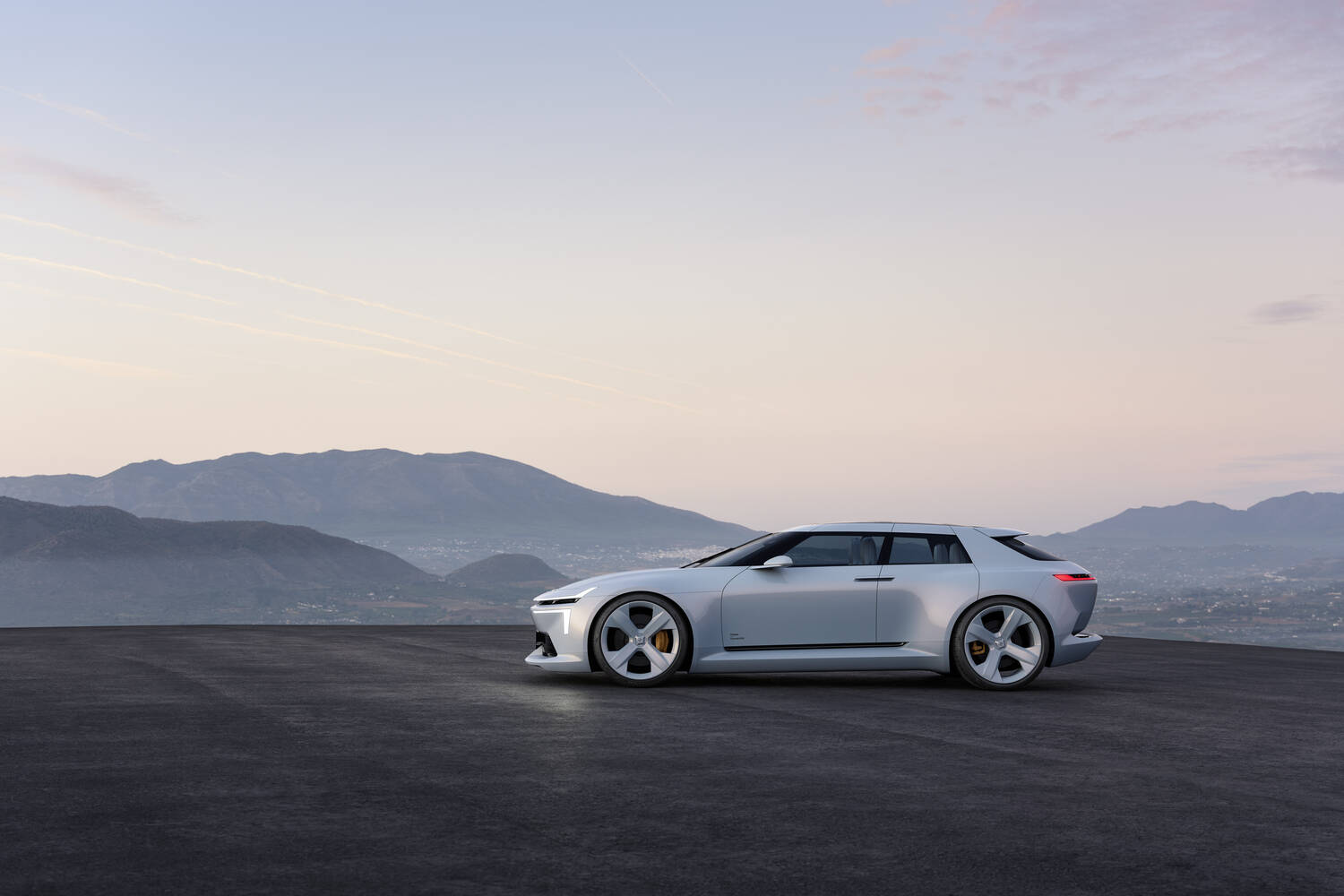
It is a touch reductive to say that the Formula 2030 is the new Polestar 2 at the front, and the new Polestar 7 at the rear, but that is kind of the way it works.
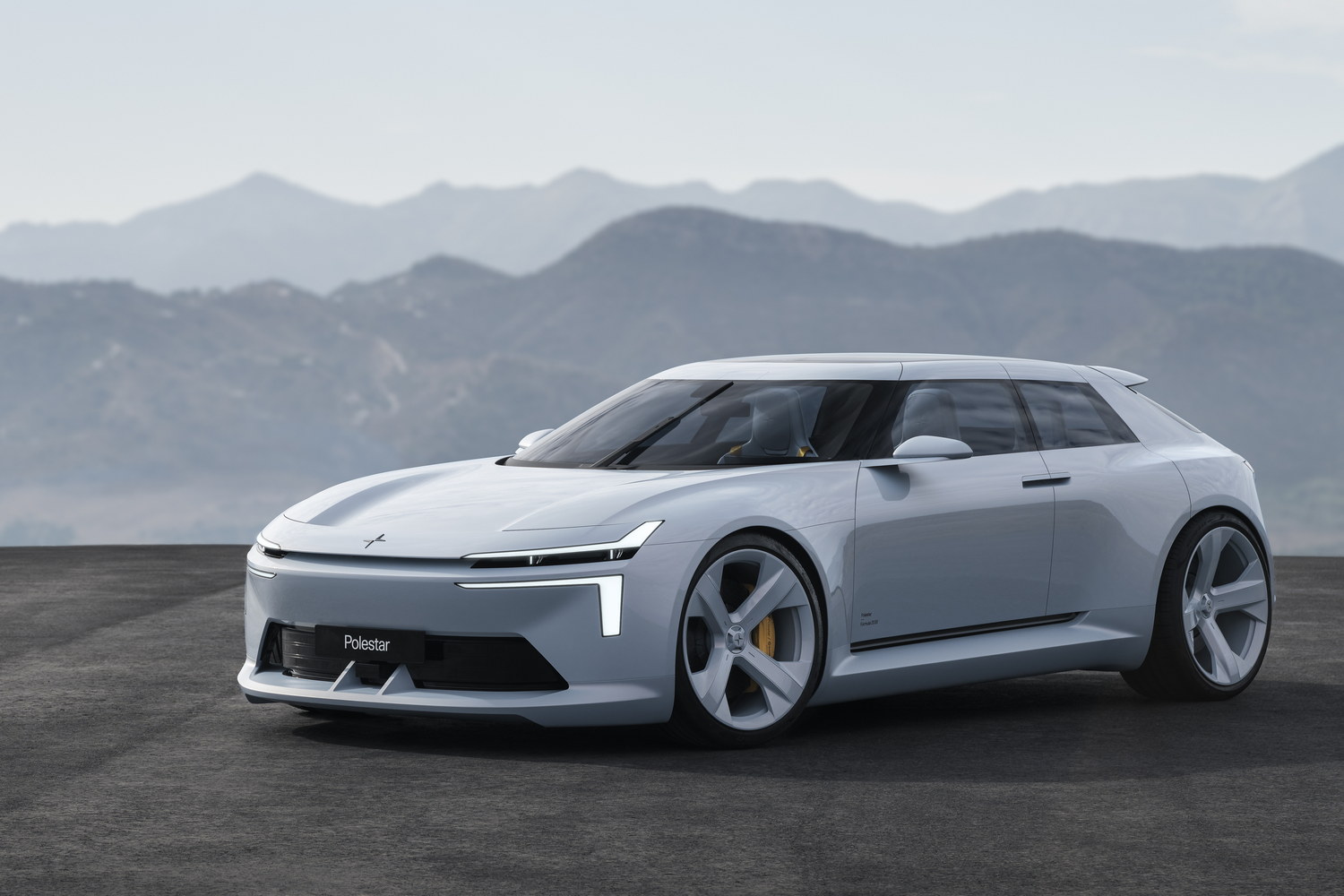
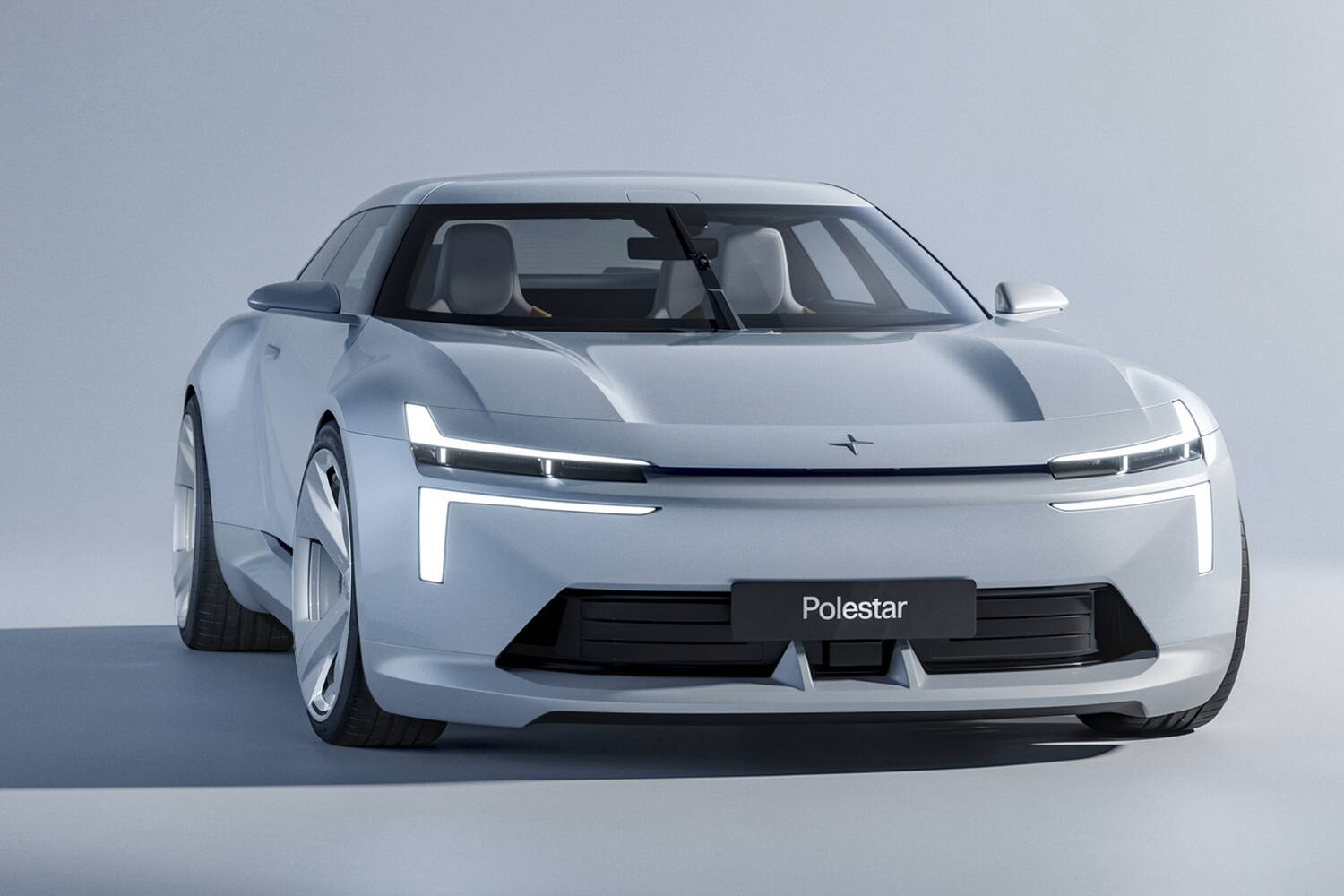
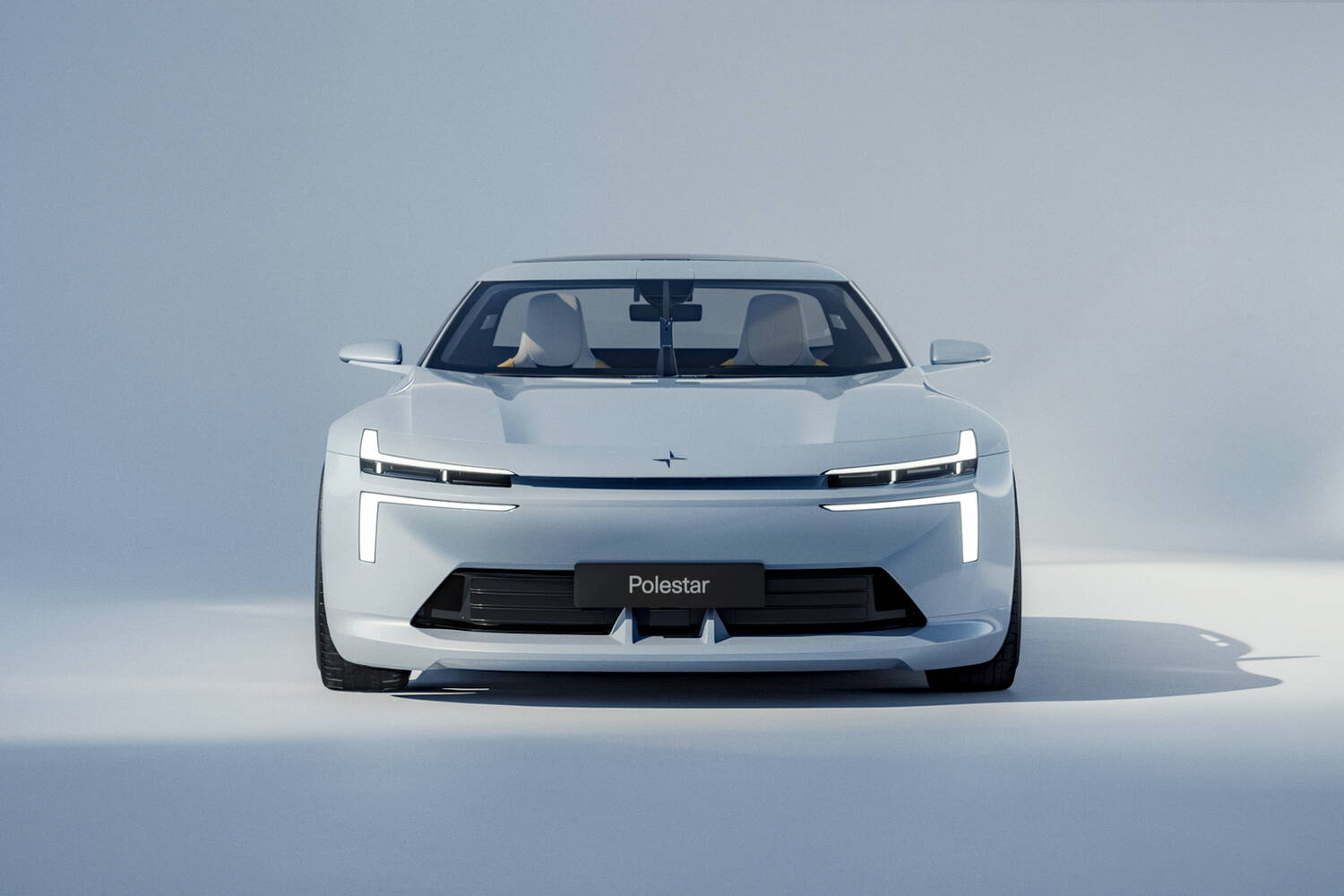
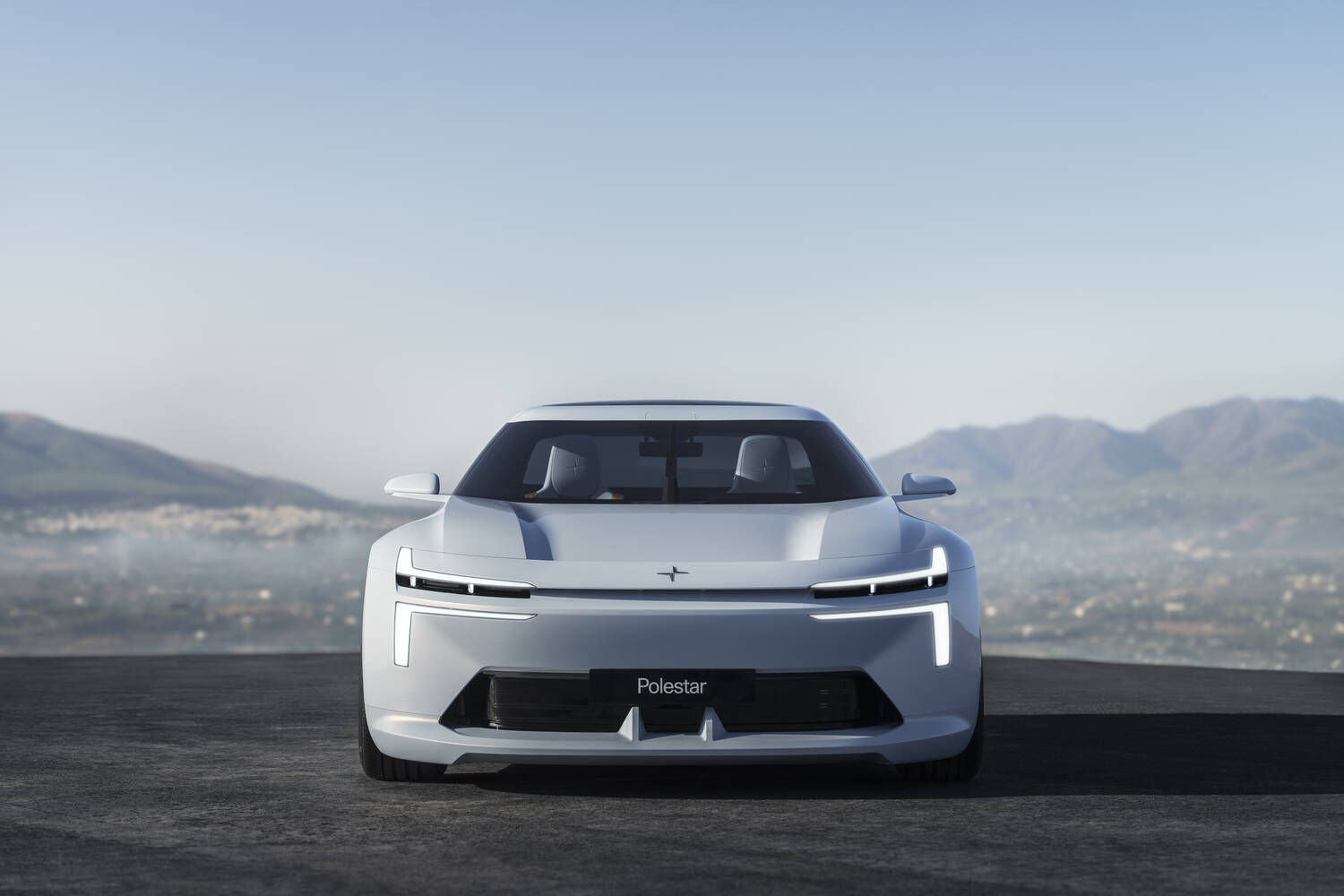
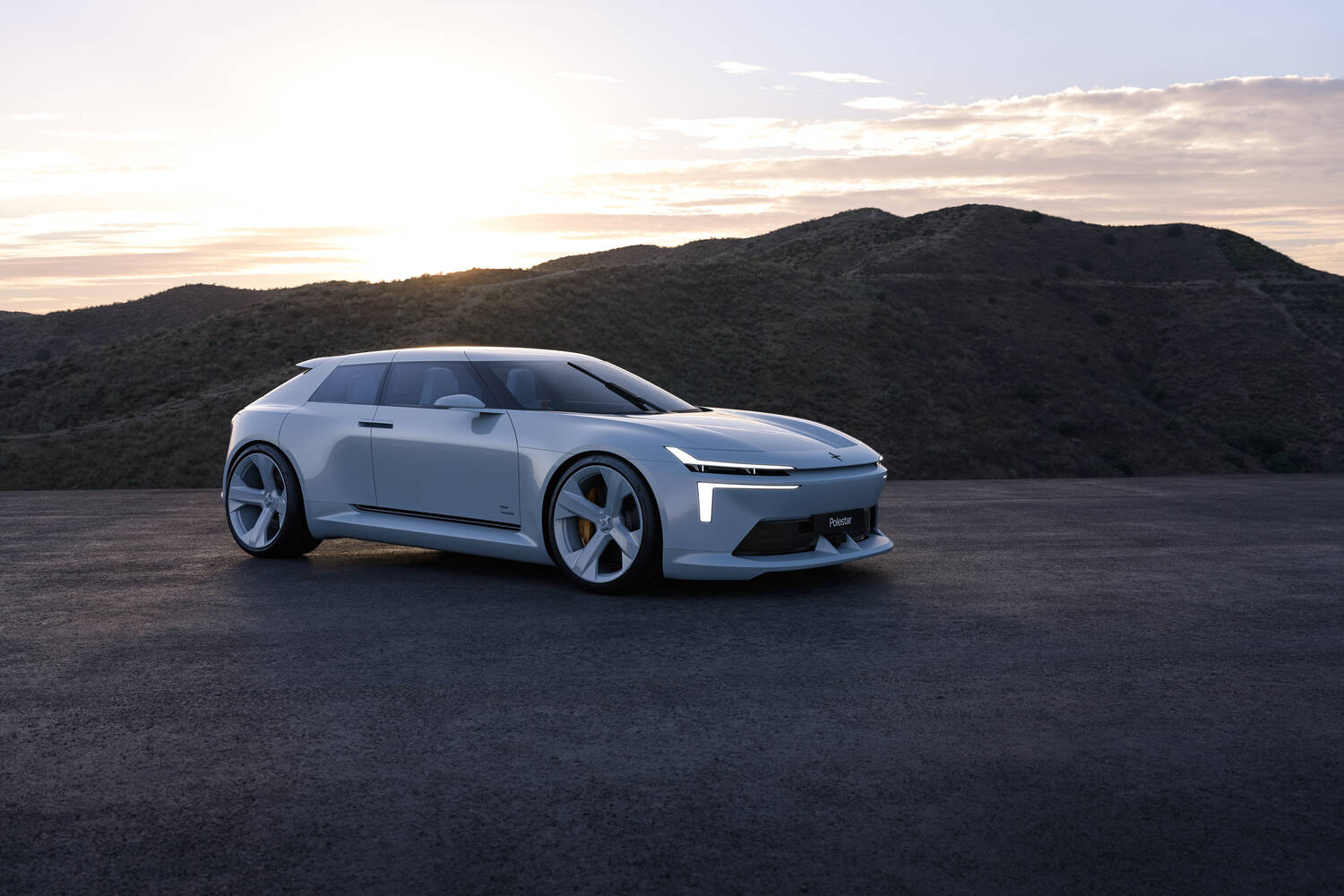
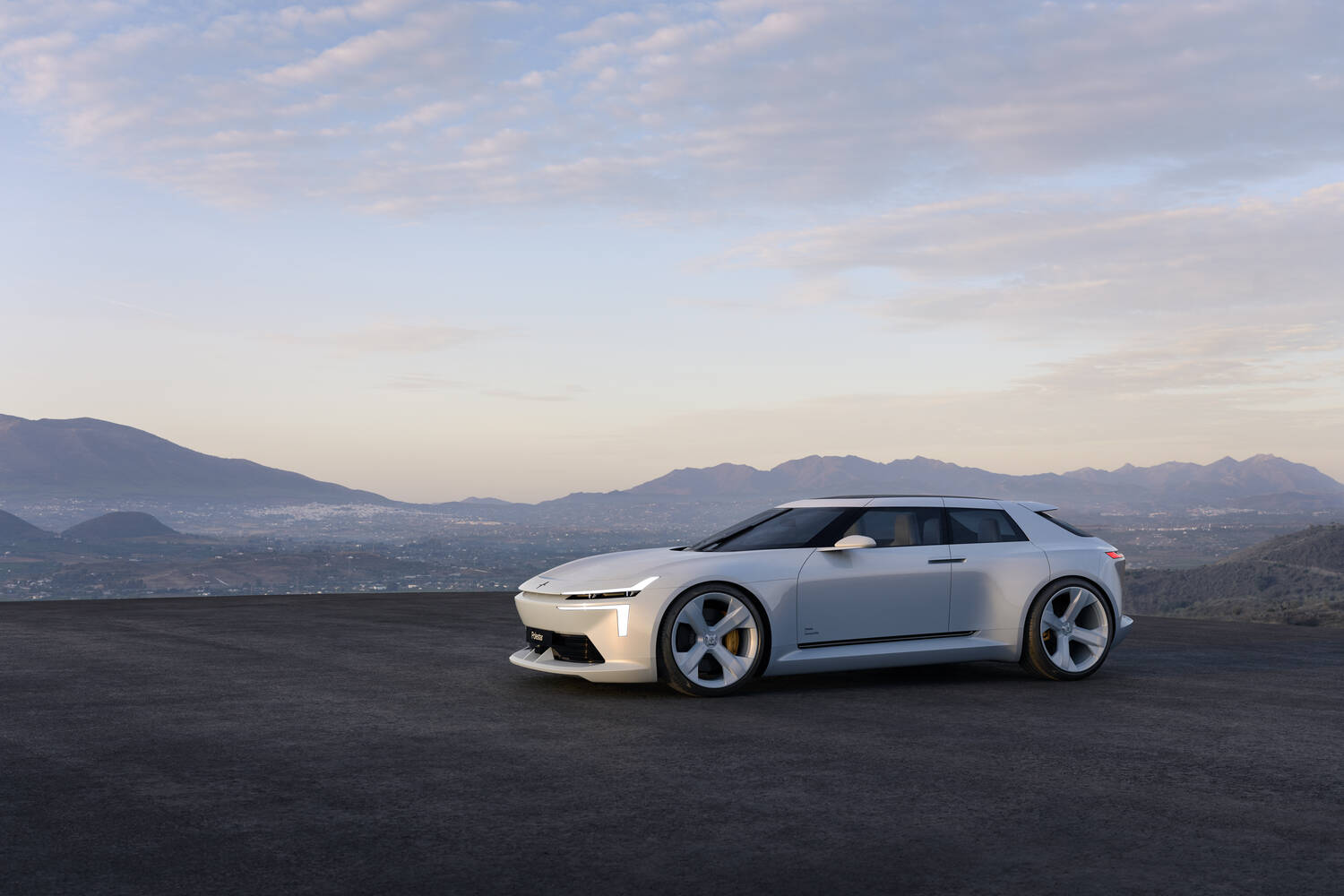
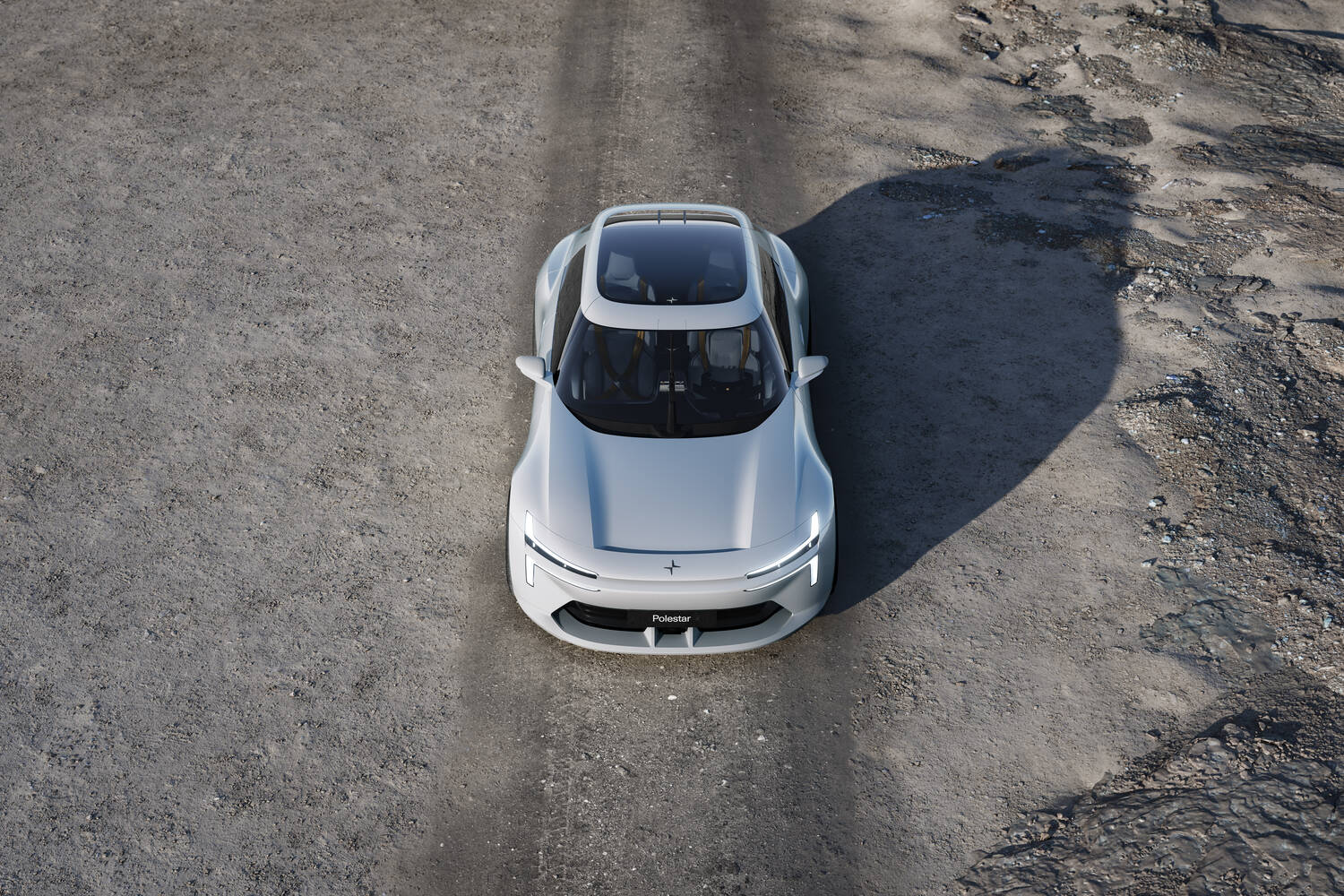
At the front, you’ll see that while some of the details are familiar — such as the split-blade headlights — the overall treatment is new.
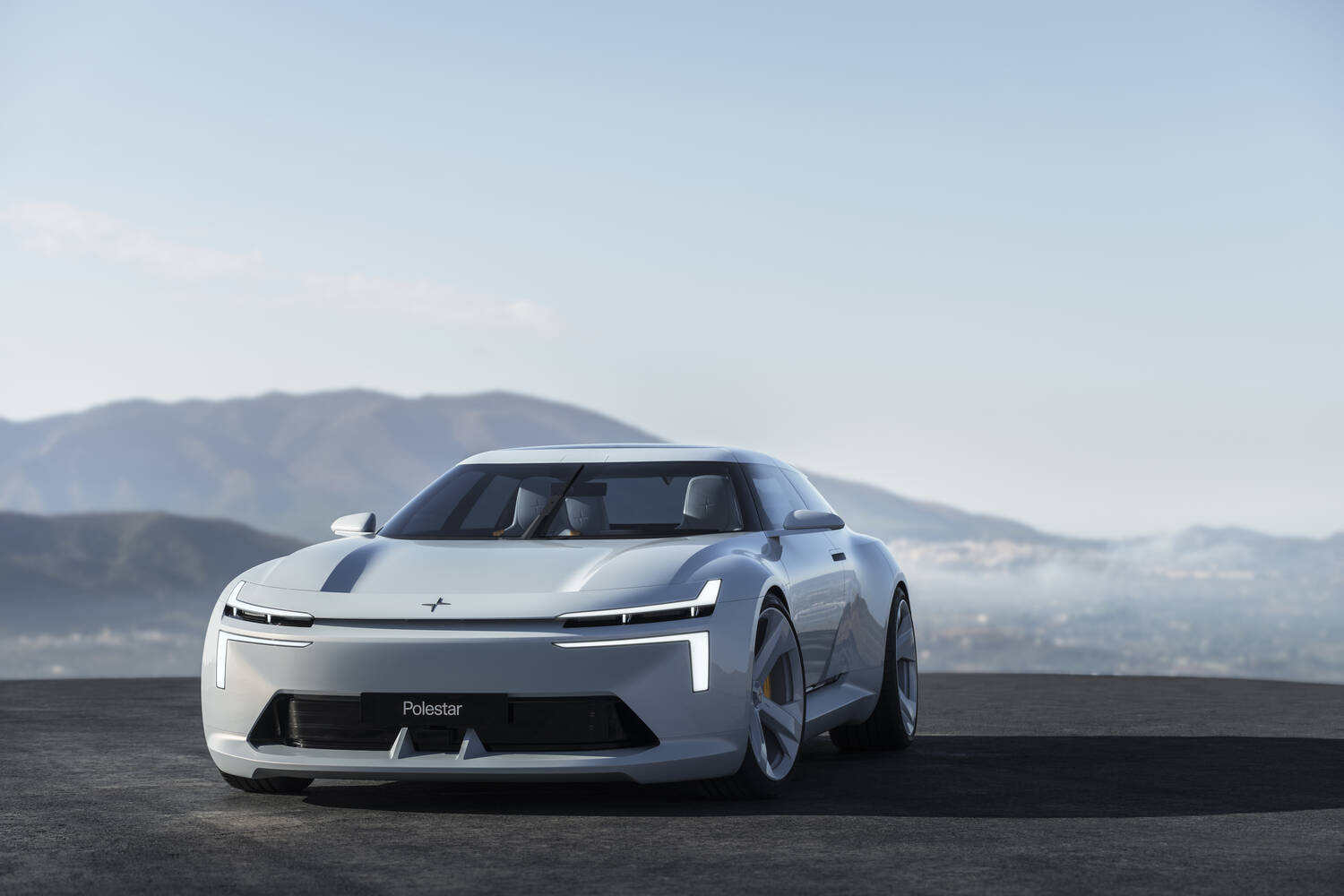
Römers said that he couldn’t make a radical change in overall styling for a brand that is still building its image, but there is a sense of a more muscular, more defined look at the front of the Formula 2030.
There’s also the return of the cool front wing from the Polestar 3, which sits above the leading edge of the bonnet, but which for the first time is combined with split-blade lights.
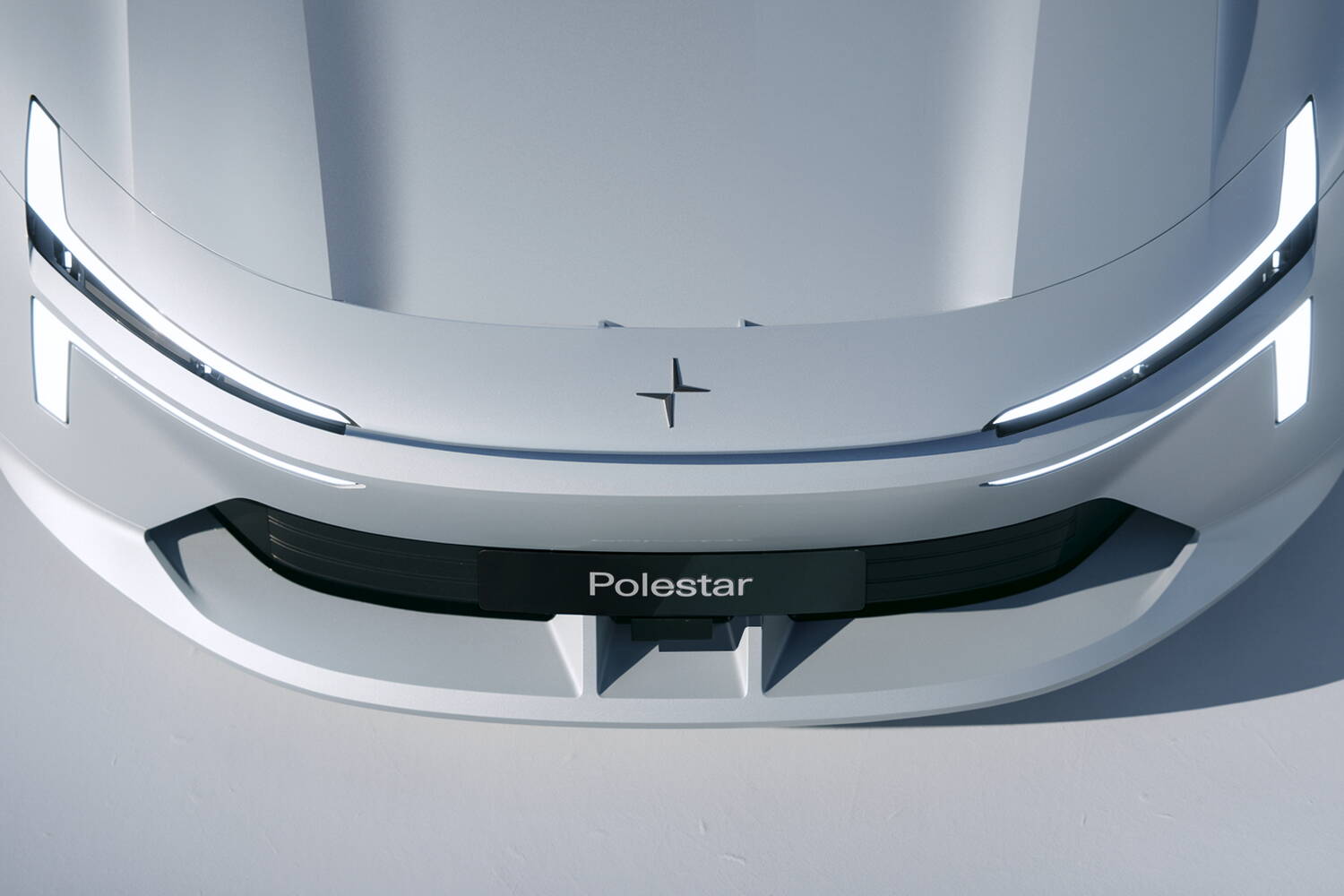
So, is this what the new Polestar 2 will look like?
Römers refused to be drawn on precisely how close the styling is to that of the new Polestar 2, but he did admit that this concept was created after the styling of the new 2 had been locked down, so it should be pretty close.
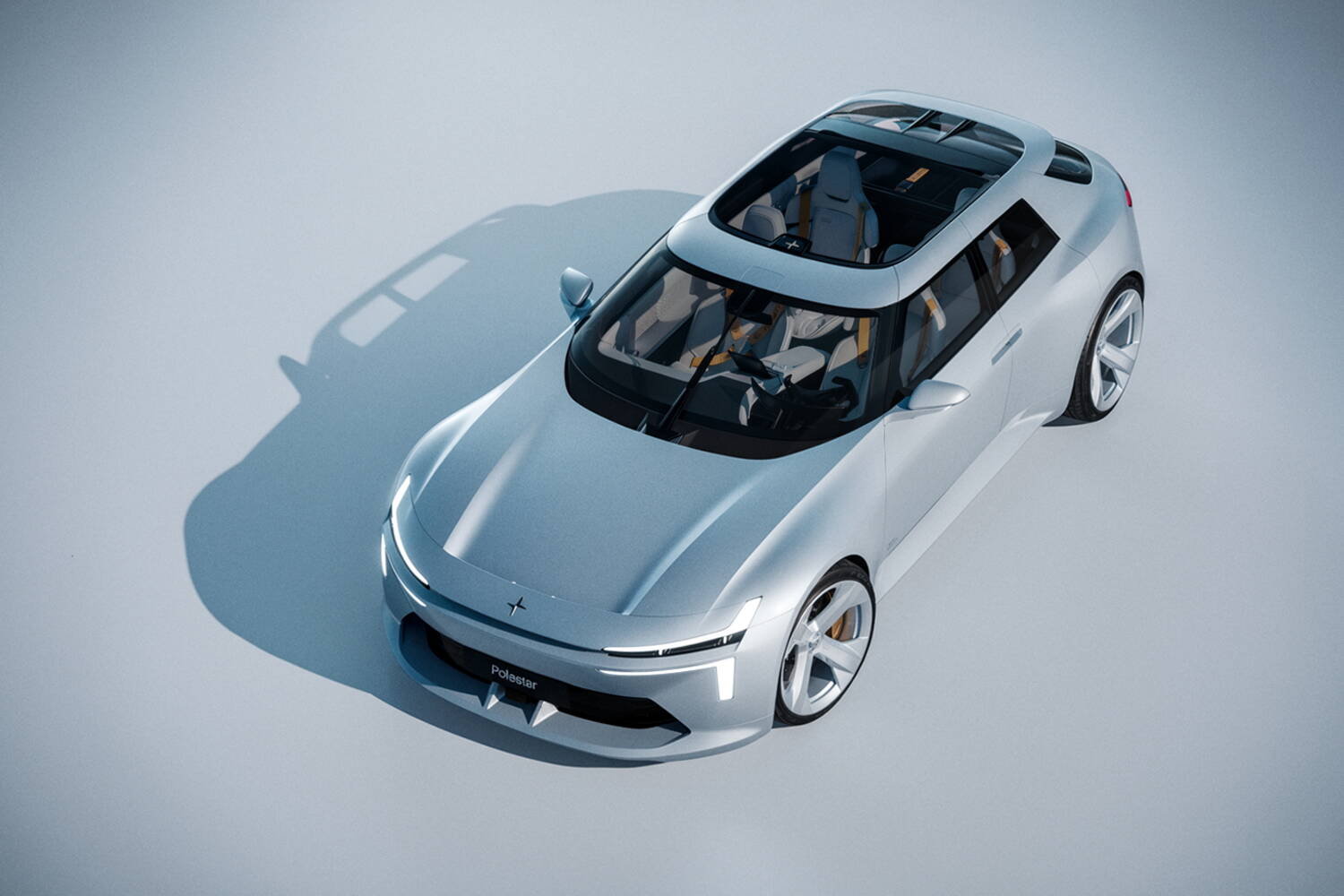
If so, it means that the new Polestar 2 will be much more distinctively sporty looking than the current model and will form a final break with the influence of Volvo styling on Polestar products. This is very much a brand striking out on its own.
What about the rest of the Formula 2030?
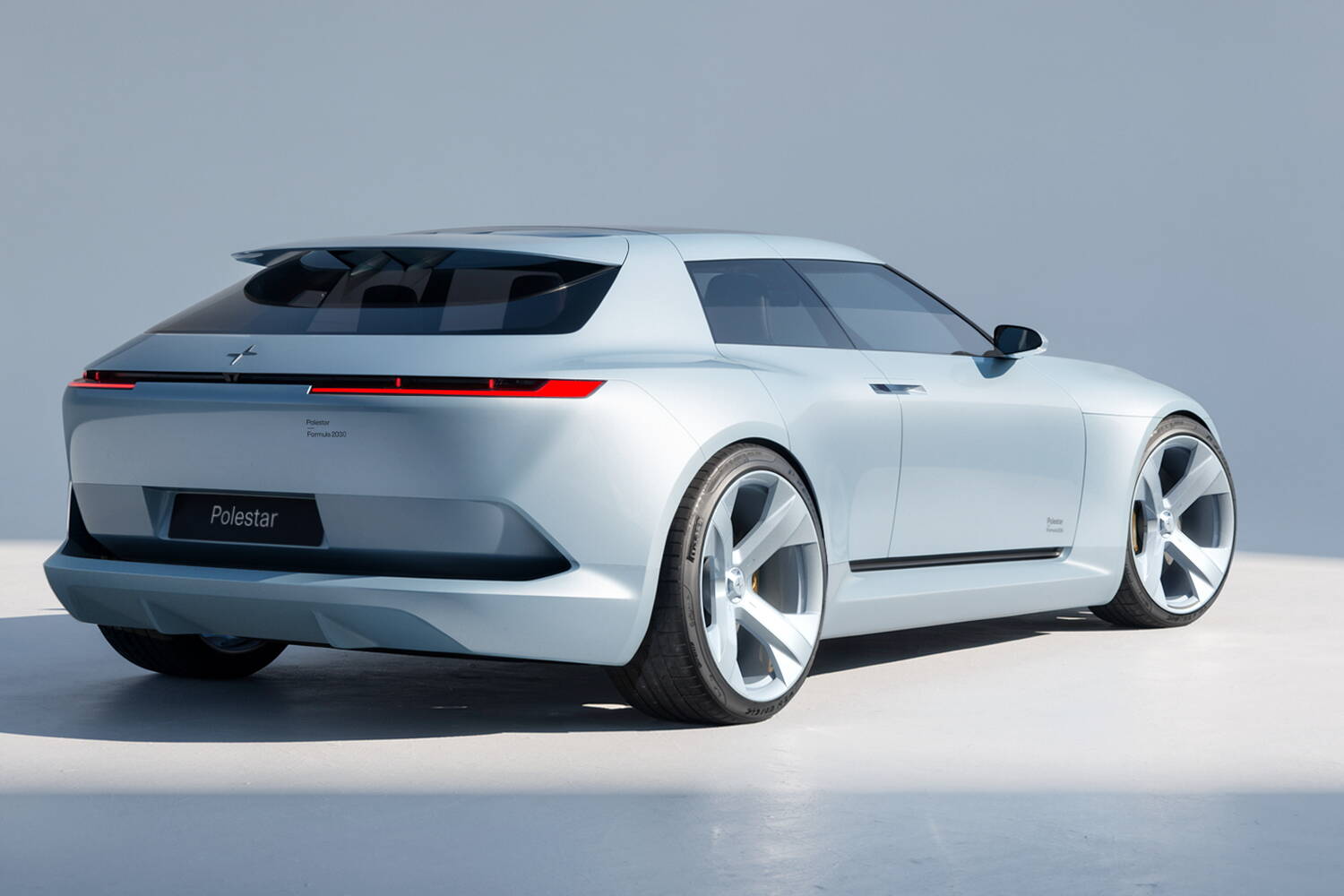
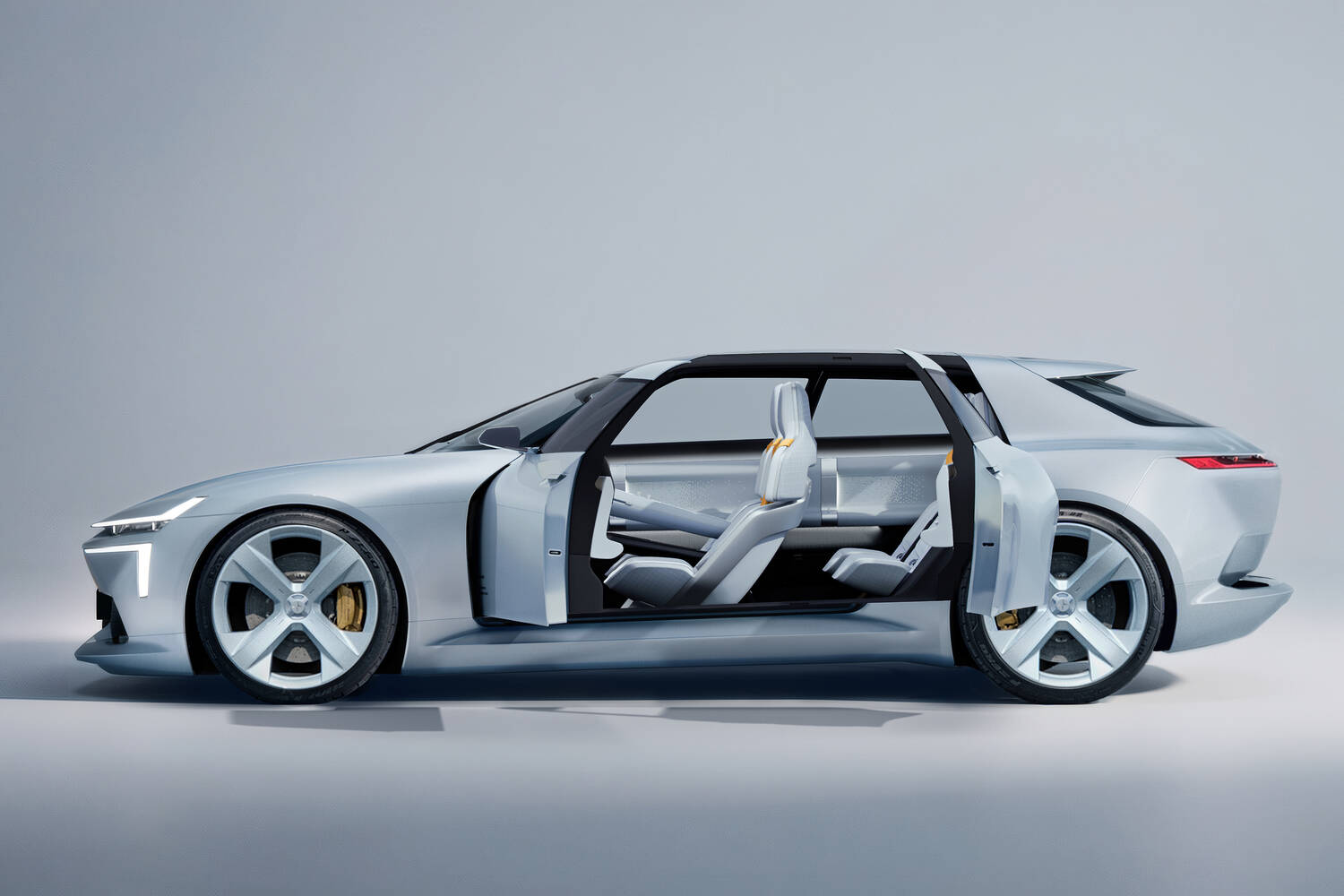
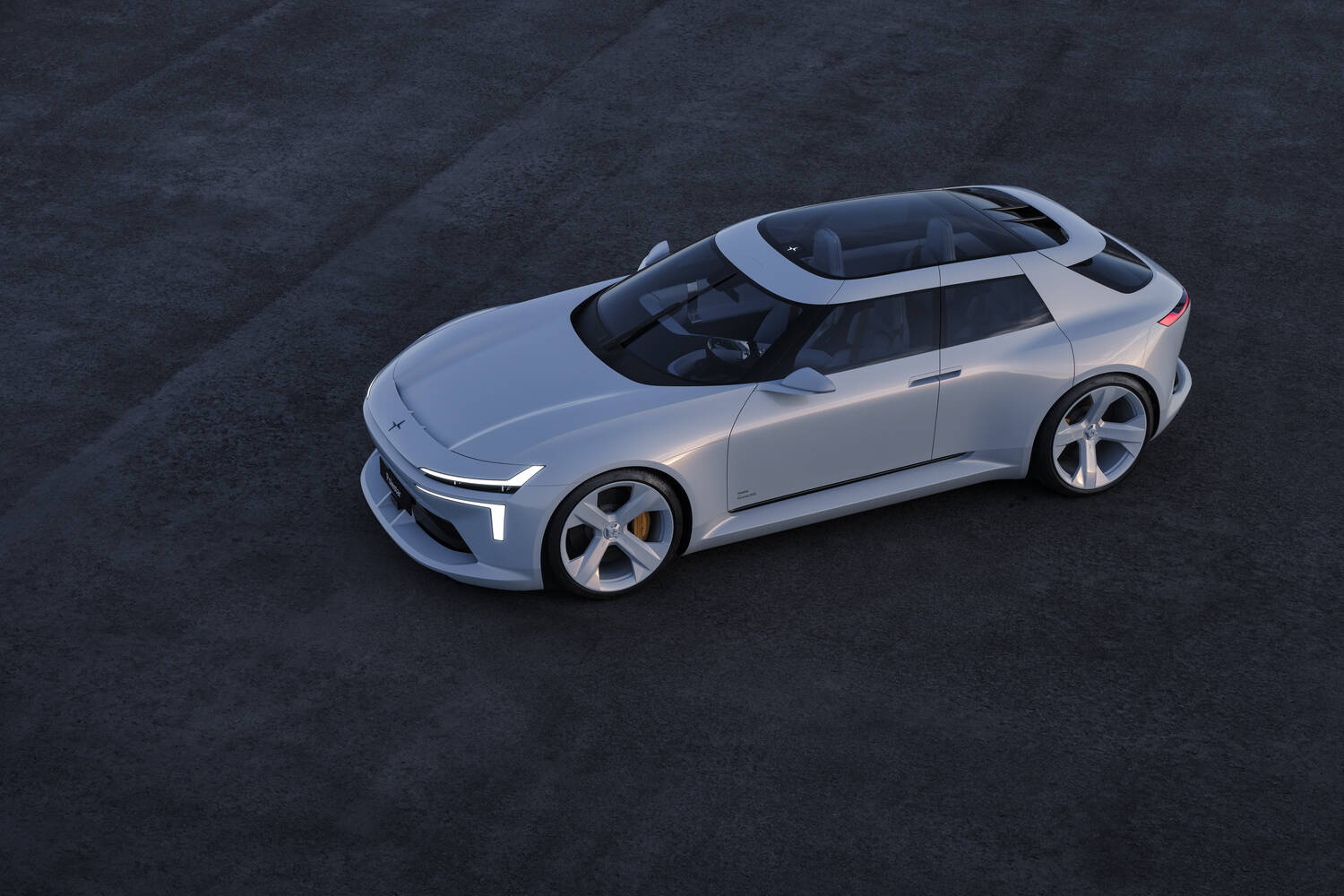
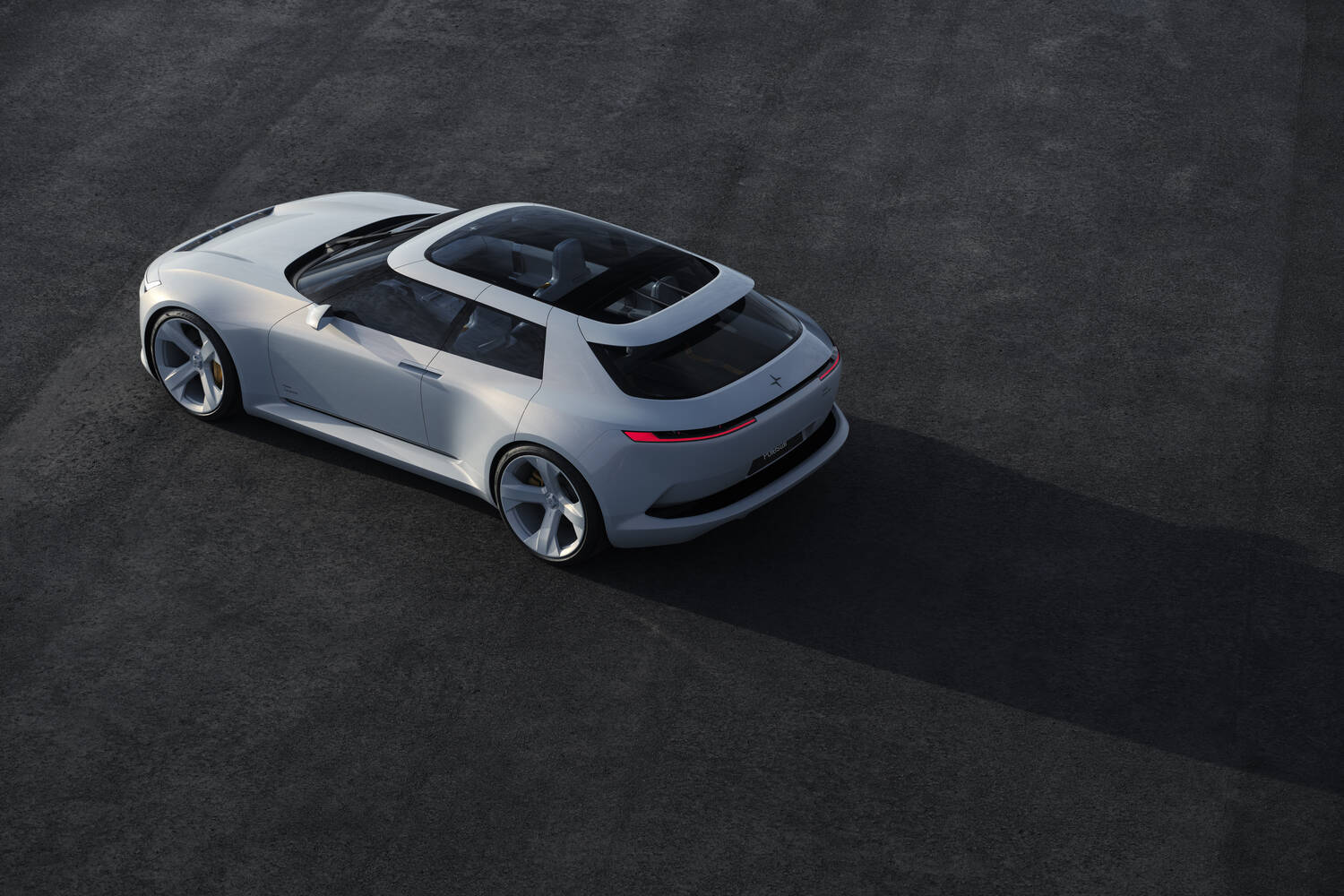
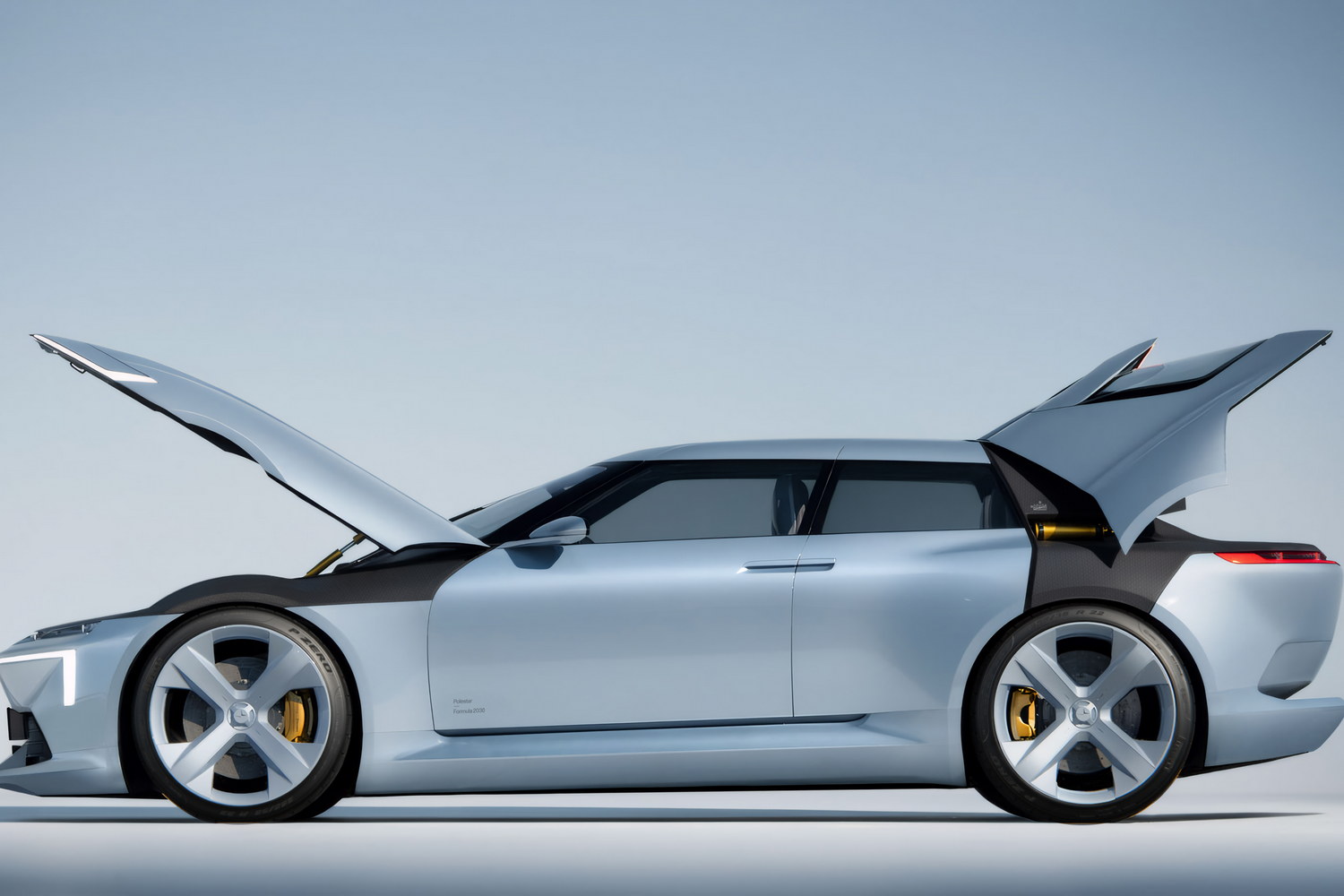
The low-slung Formula 2030 has a massive ‘Coke bottle’ shape in the mid-section, with hugely extended wheelarches that stretch out over big four-spoke alloy wheels.
The spokes of the wheels are left deliberately open so that you can better see the gold-painted Brembo brakes behind, but in production form they would most likely be filled in slightly with more aero-friendly elements.
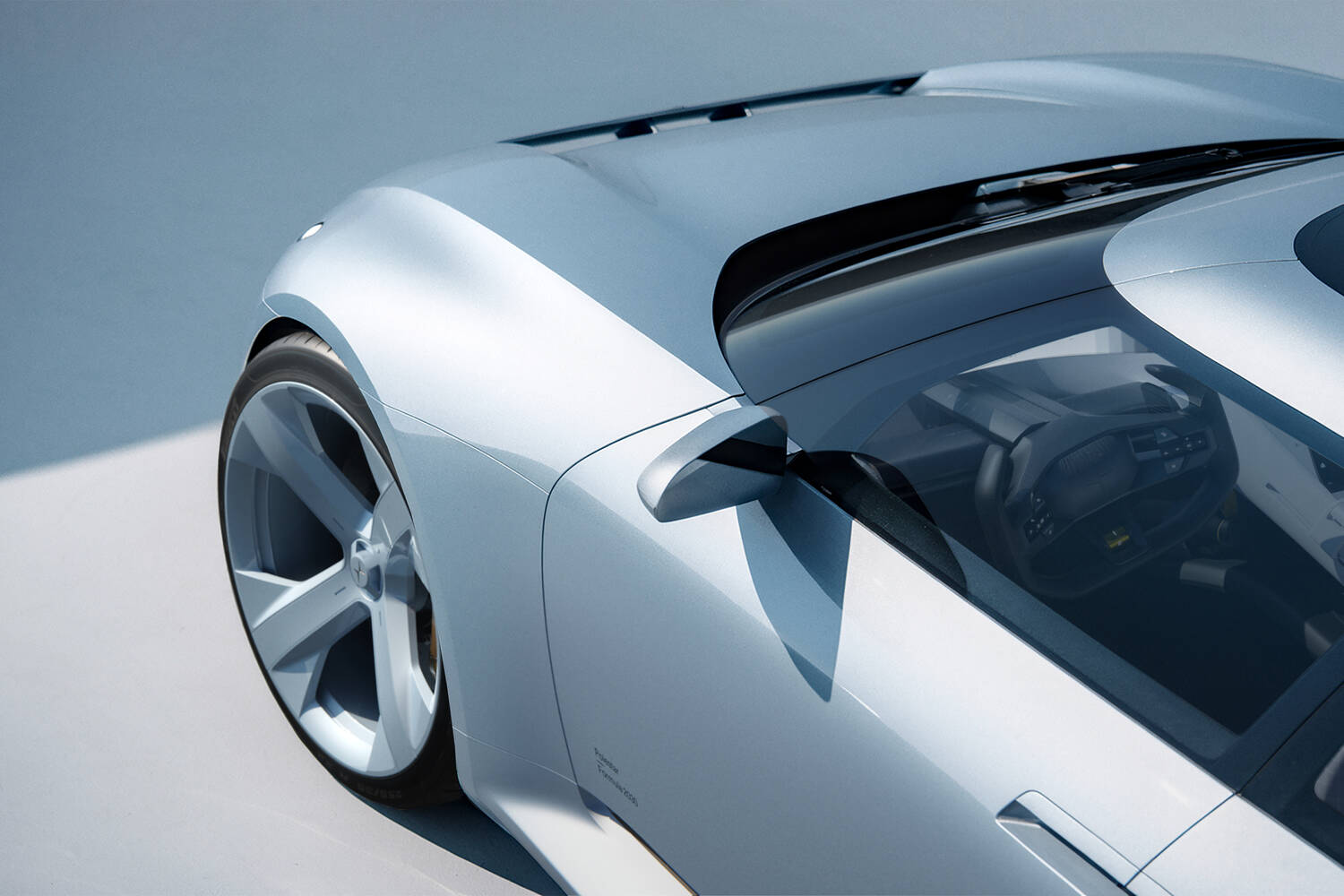
The detailing on the side is very clean, with hardly any visual clutter (one of the car’s designers, Arvid Esser, told Complete Car that he wanted the car’s bodywork to feel good under your hands when you’re washing it), but the panels have been subtly shaped to give a continuous shoulder line that runs between the two wheelarches and which picks up the very slim door mirror on the way.
The wraparound nature of the windscreen and side glass, with that distinctive way the roof is cantilevered out over the glass, as if it’s suspended from the rear pillar, has undertones of the classic Lancia Stratos rally car to our eyes.
And the back of the concept?
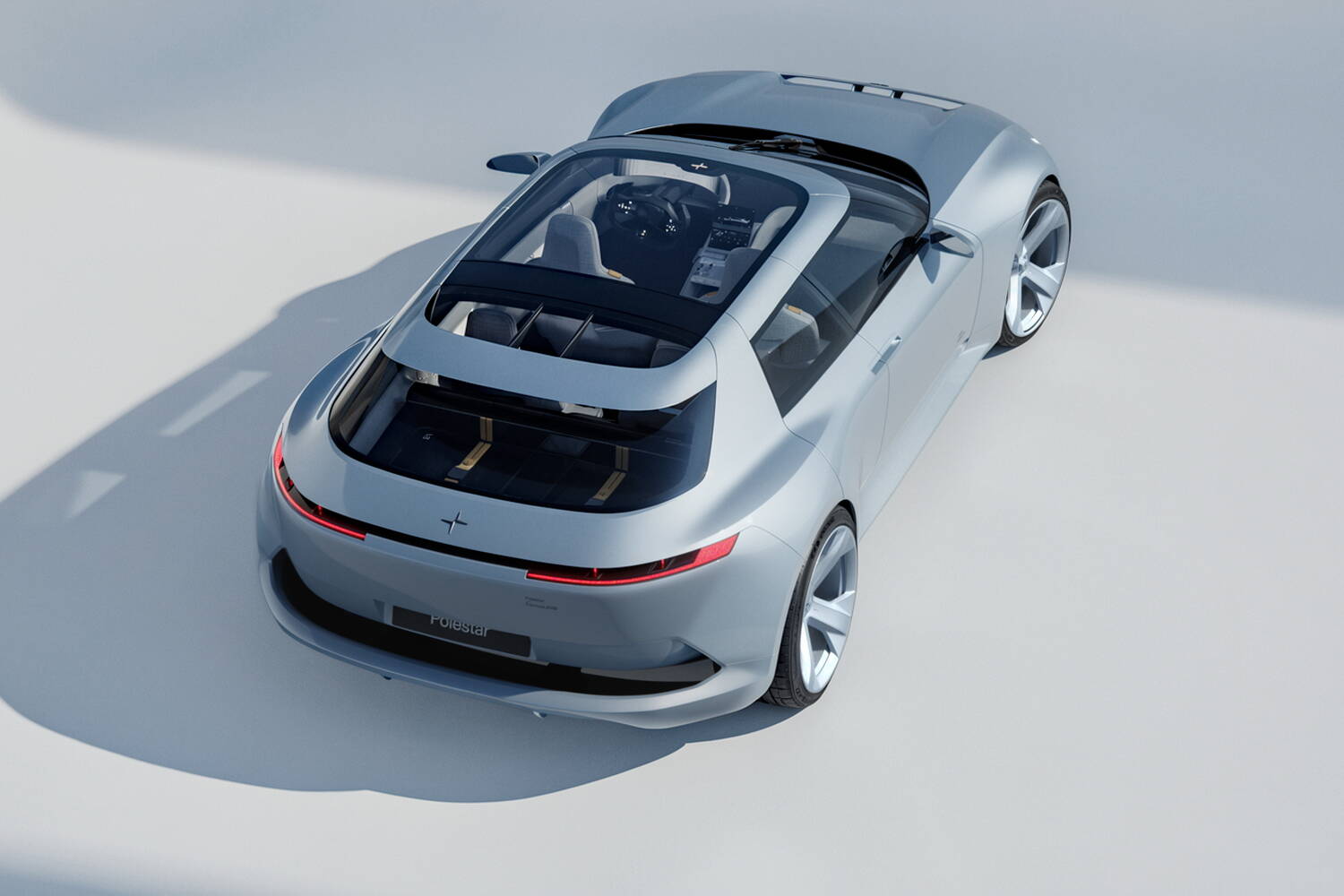
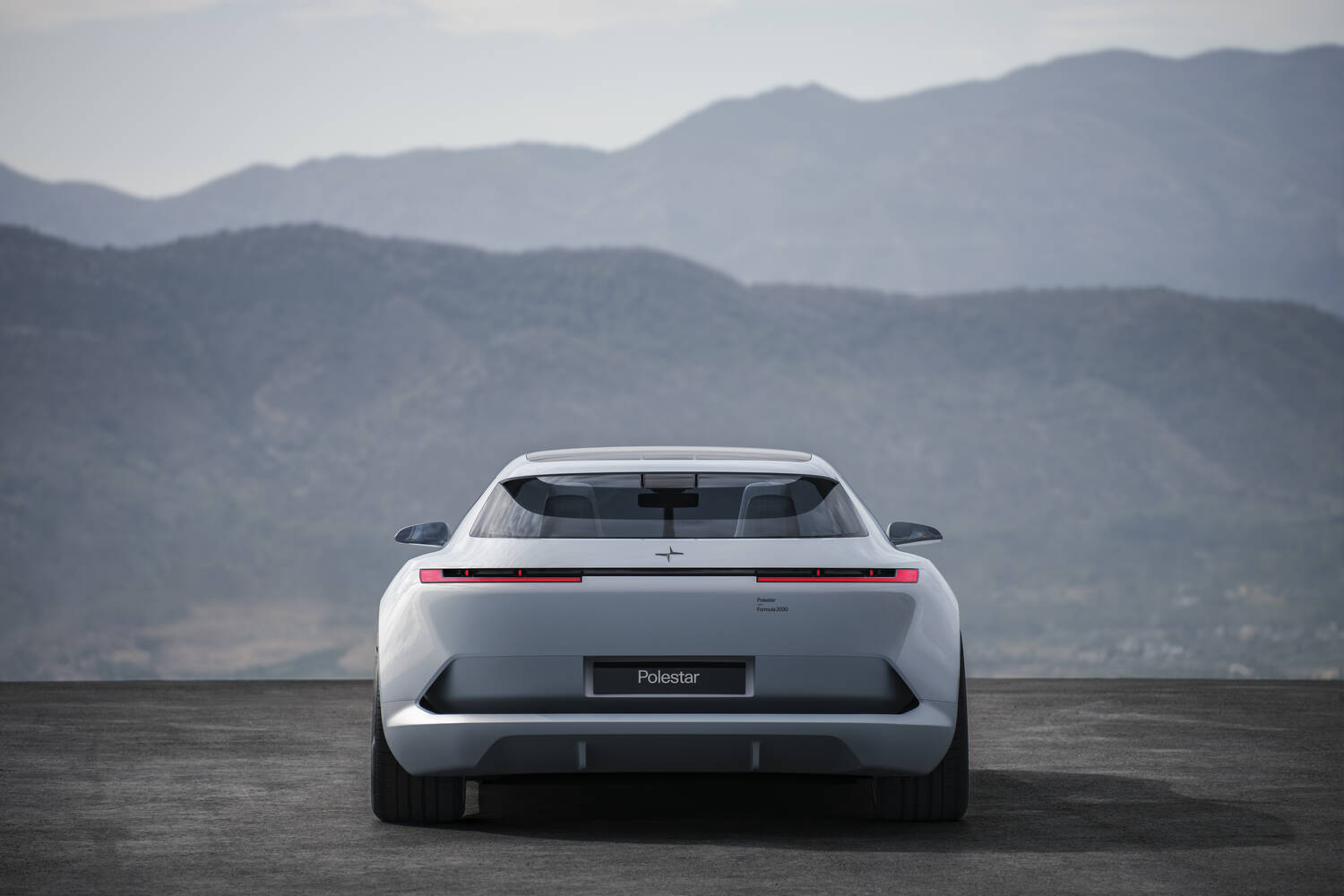
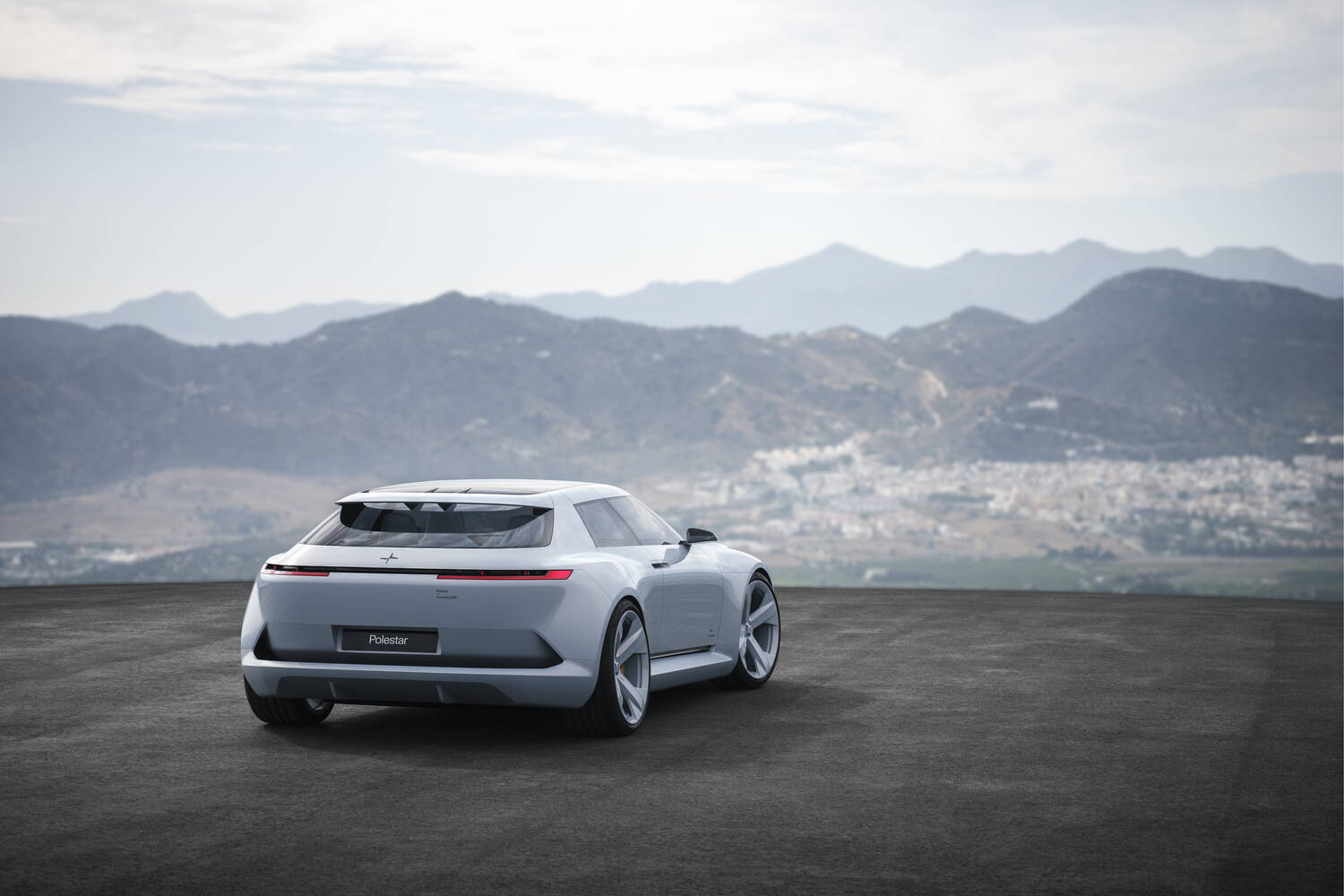
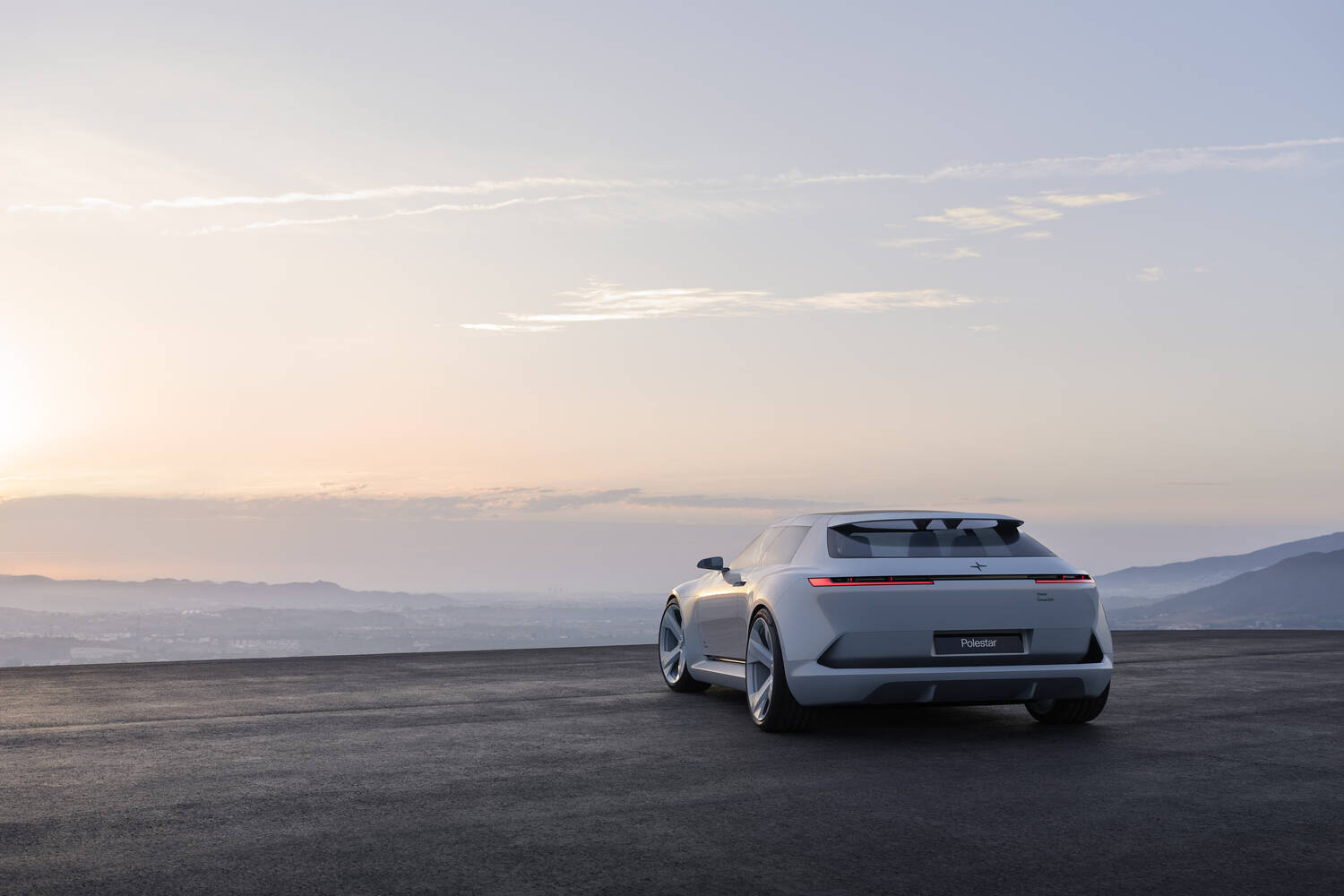
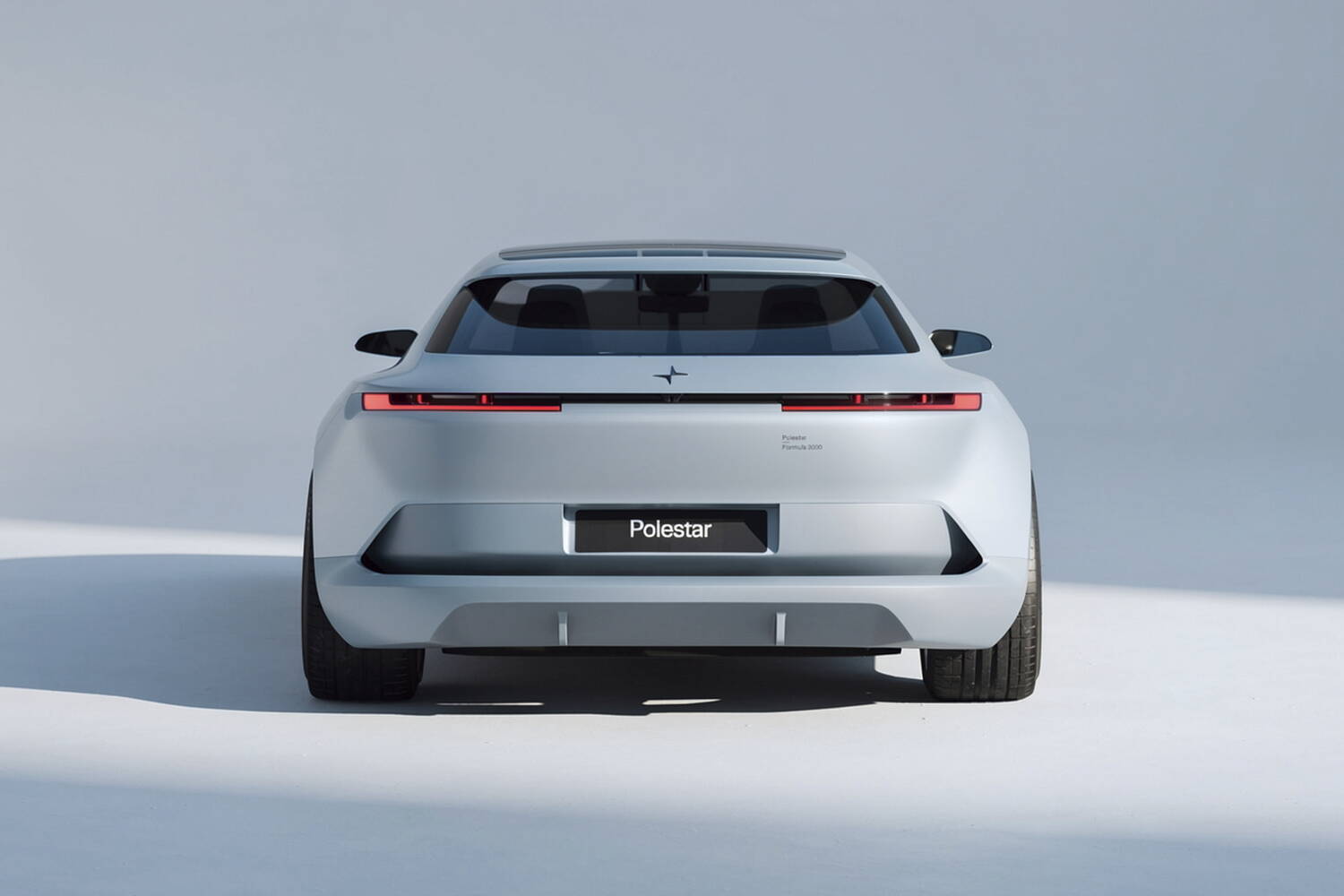
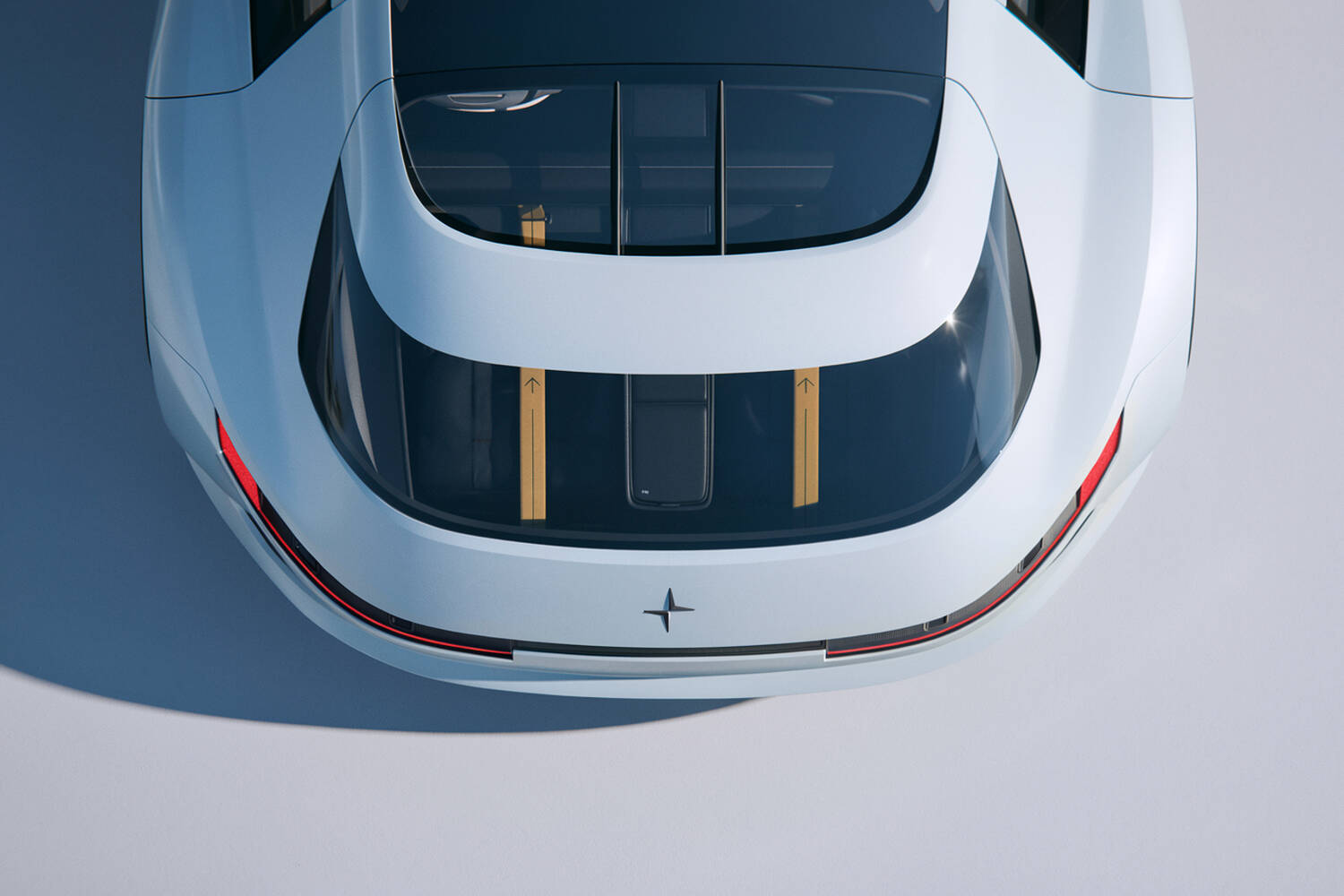
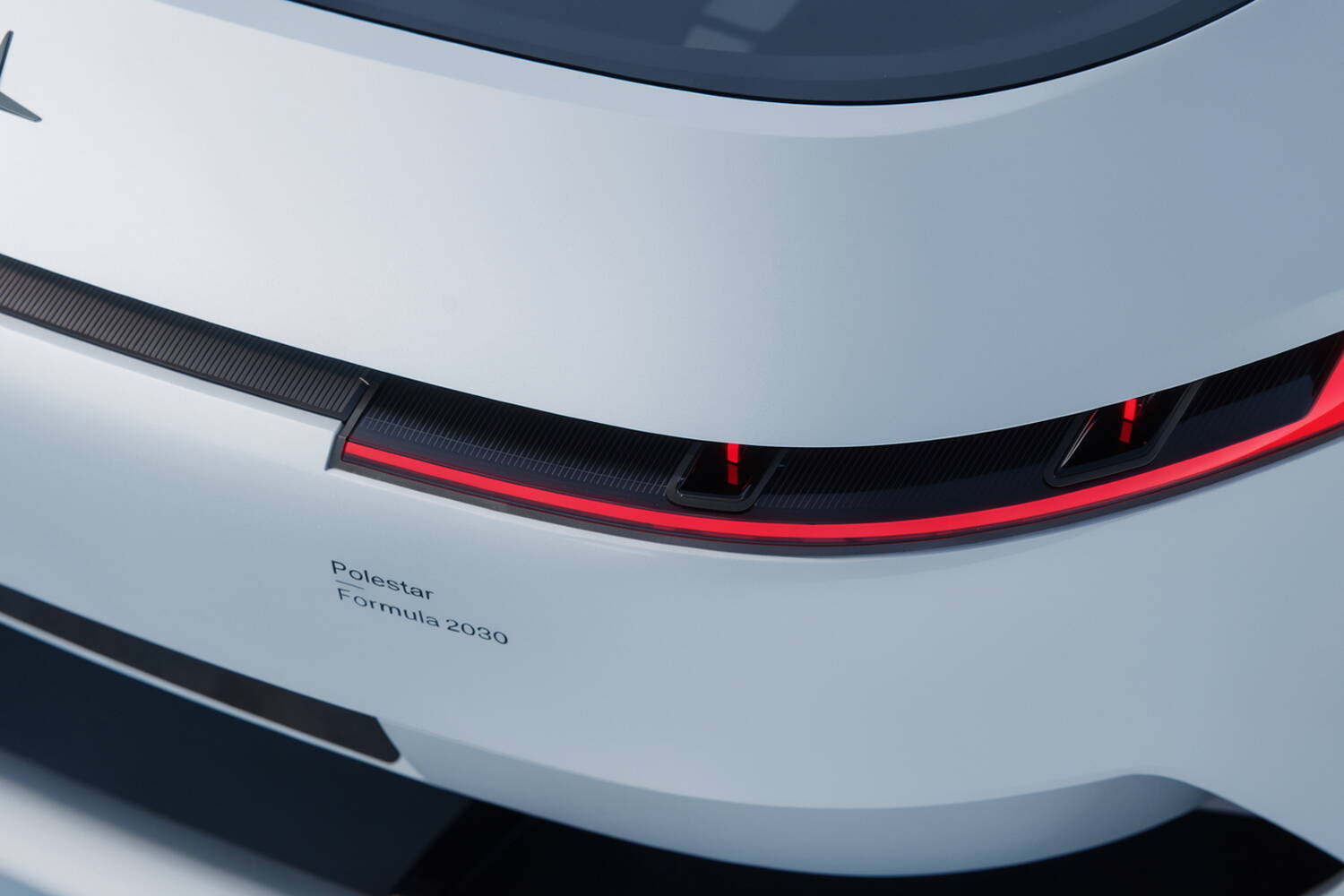
While the rear of the Formula 2030 is quite low slung, the shapes and style give us a very good idea of how the Polestar 7 will look.
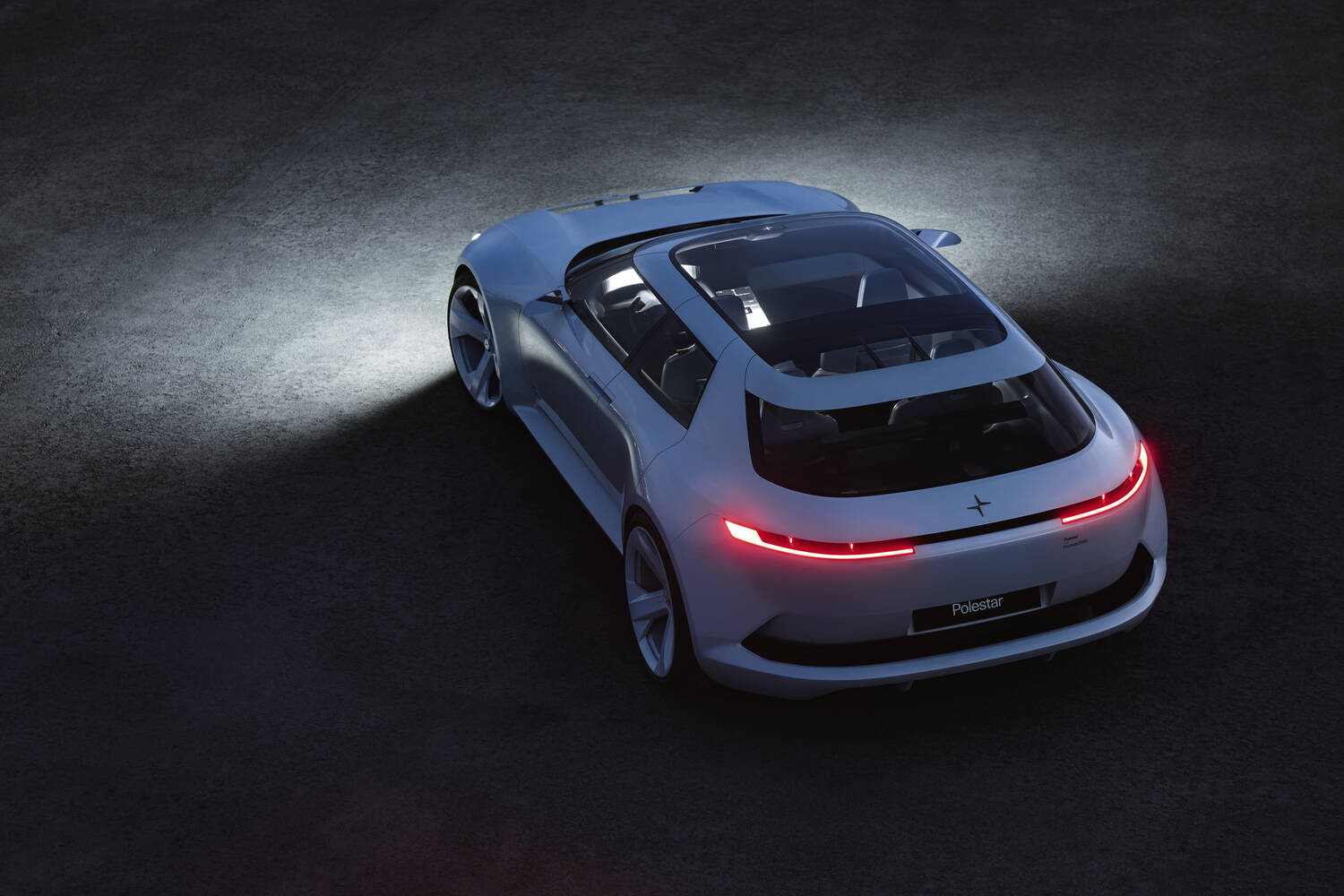
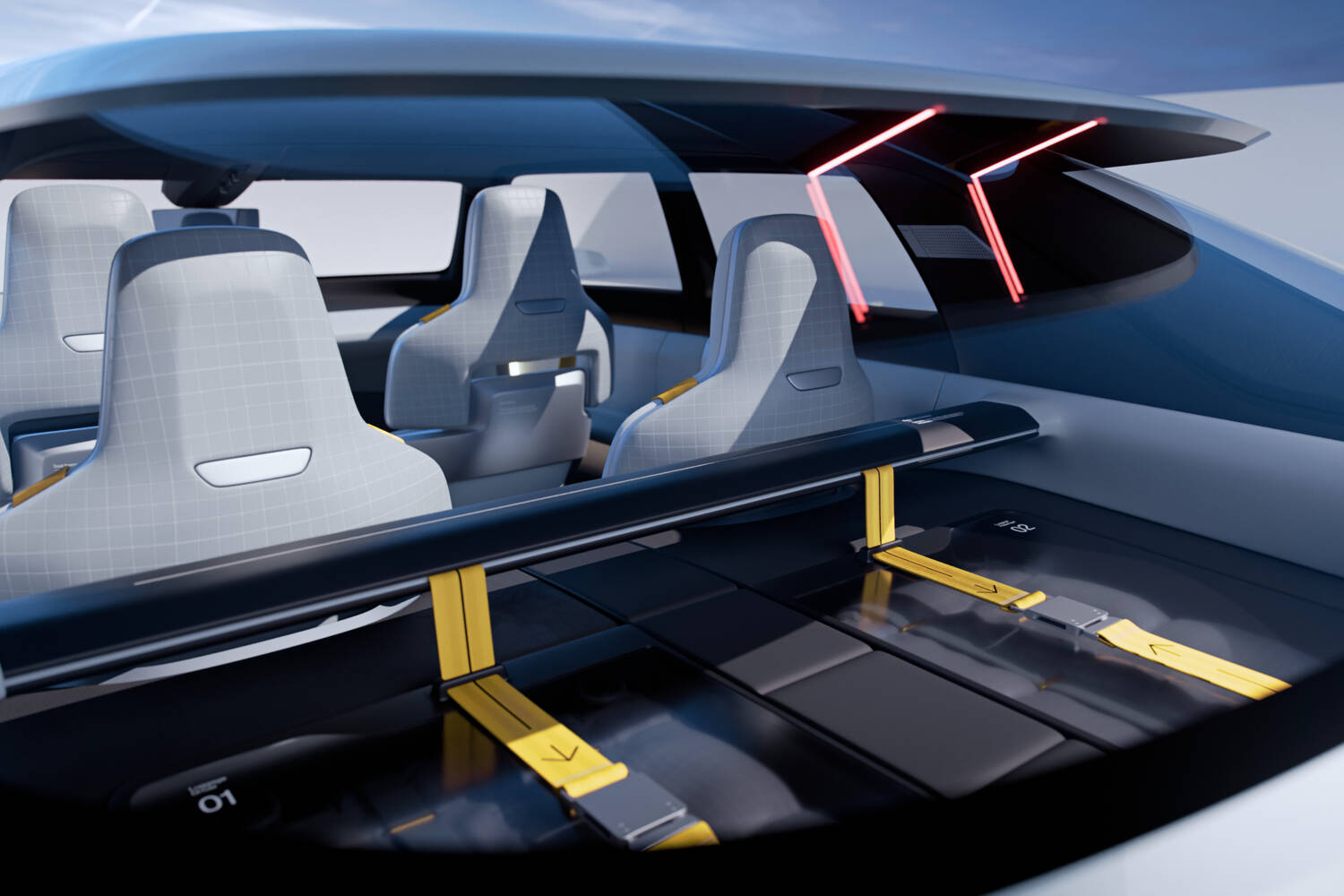
There is a preview of the new brake light shape, for example, which does away with a continuous brake light bar across the rear of the car, and which instead divides the brake lights up into very slim ‘single blade’ shapes, which mirror the ‘split blade’ headlights.
Between is a recessed panel which features some of the rear-facing sensors and the release catch for the boot.
Speaking of which, what about the interior?
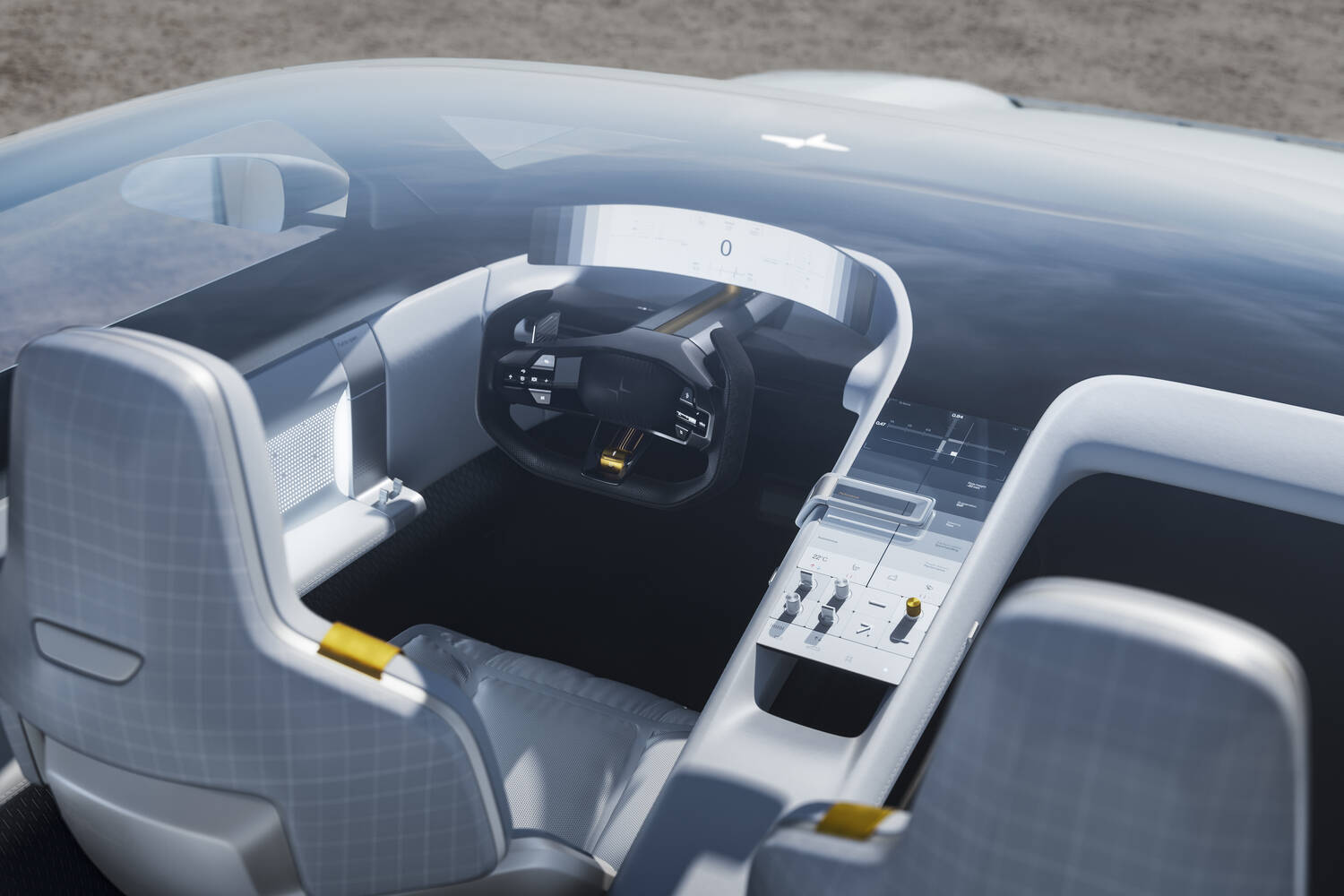
If you thought the outside of the Formula 2030 was cool, wait until you clock what’s happening on the inside.
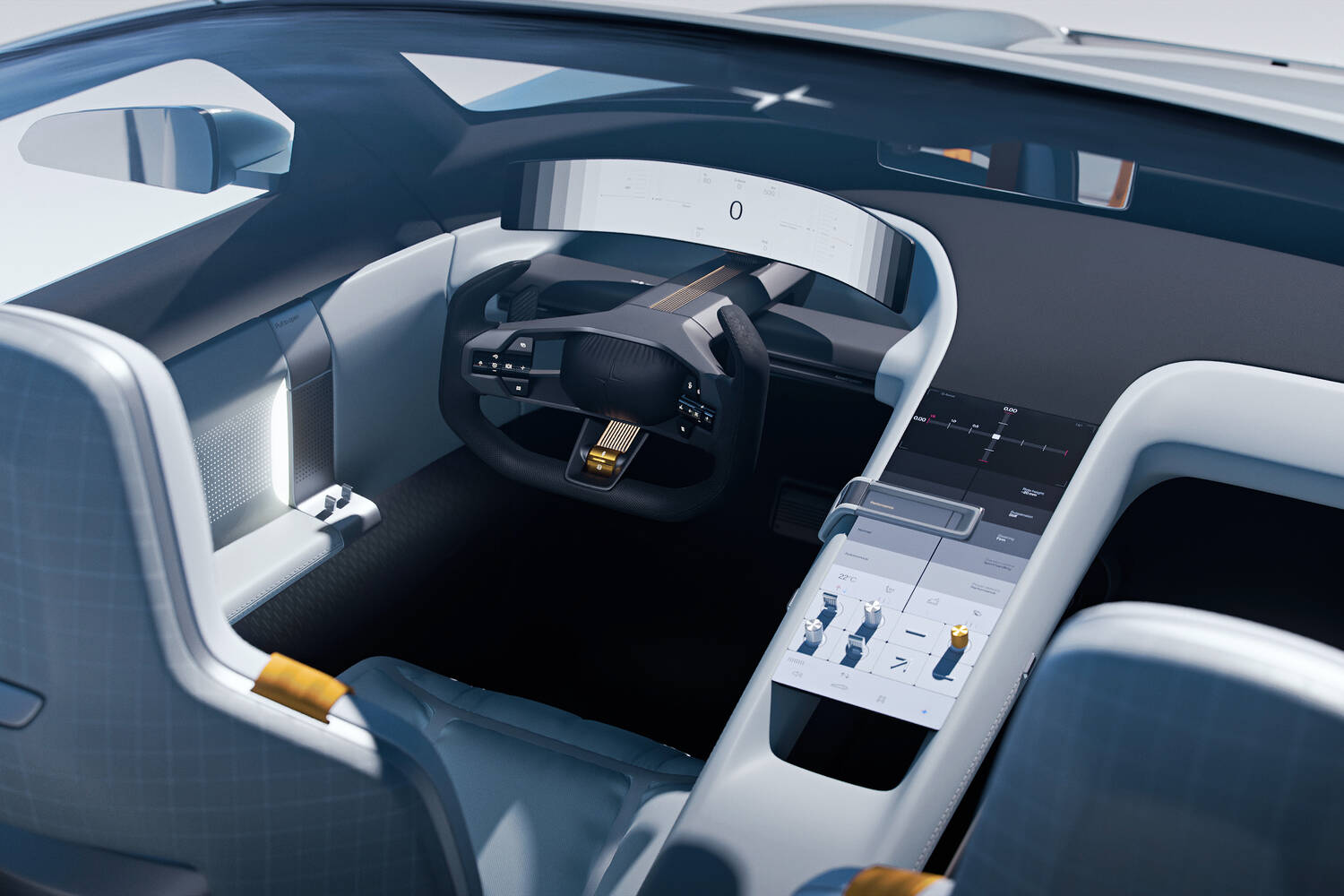
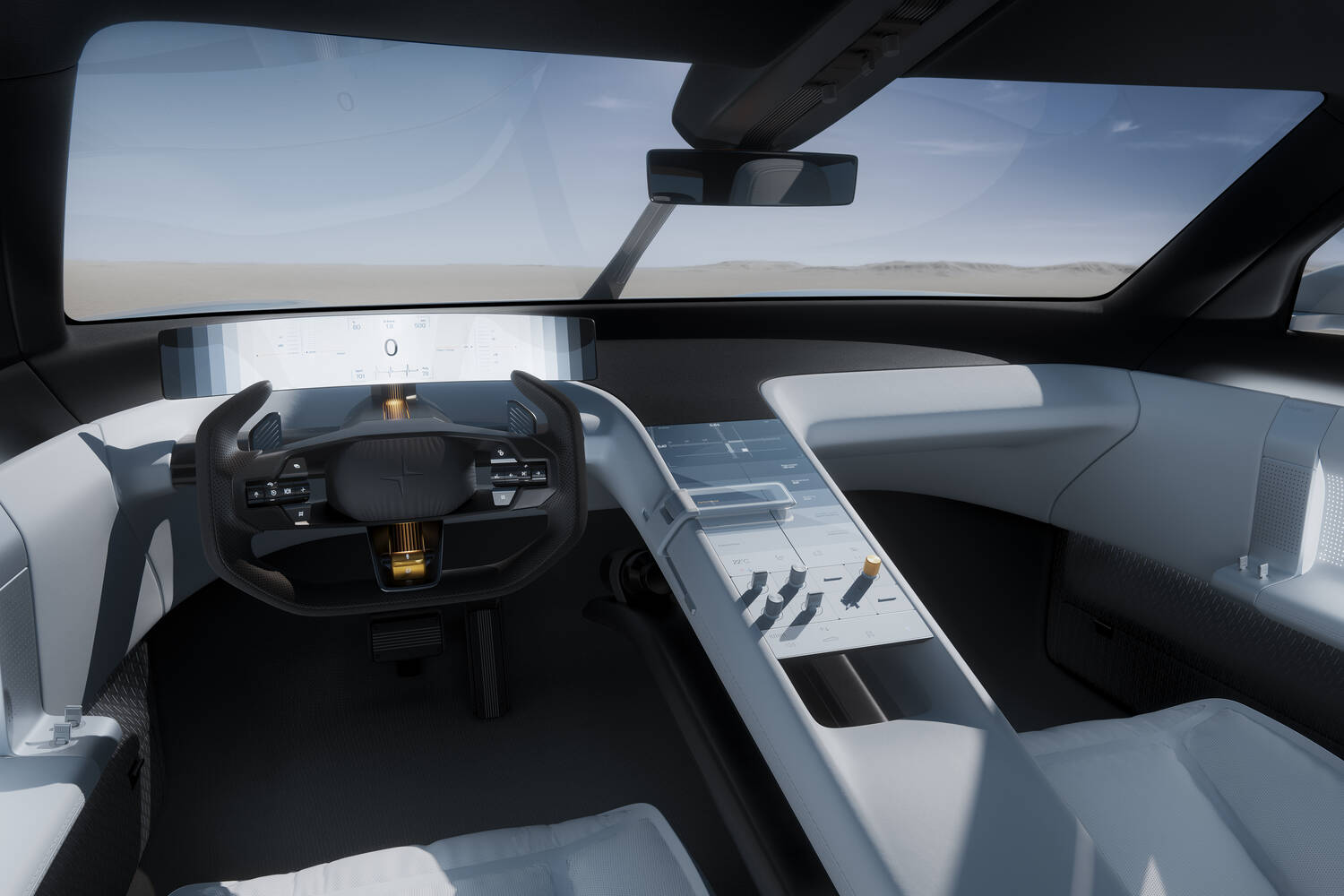
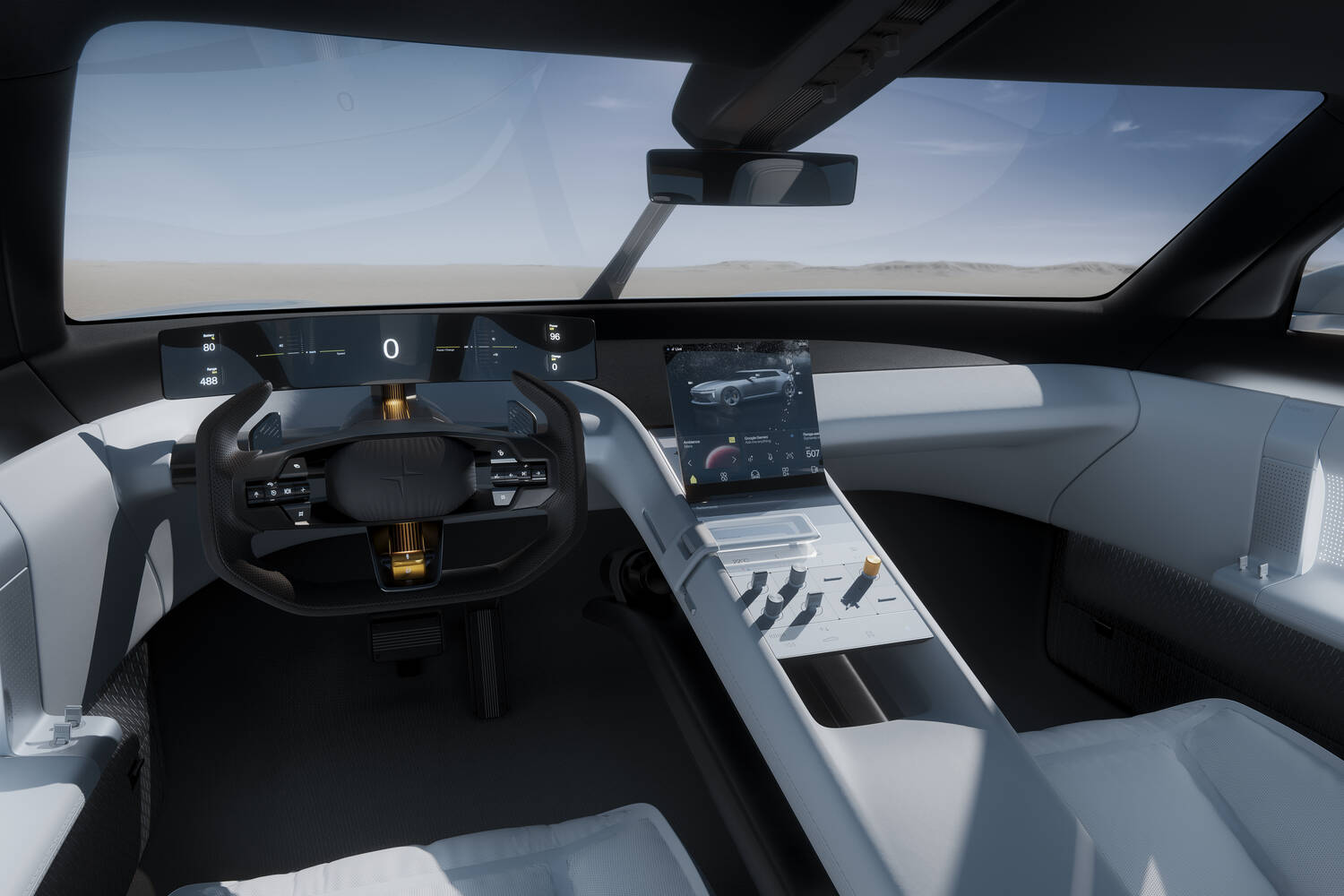
Polestar is making a move — and a welcome one at that — away from the all-digital interiors of the current lineup towards something that mixes digital and physical controls.
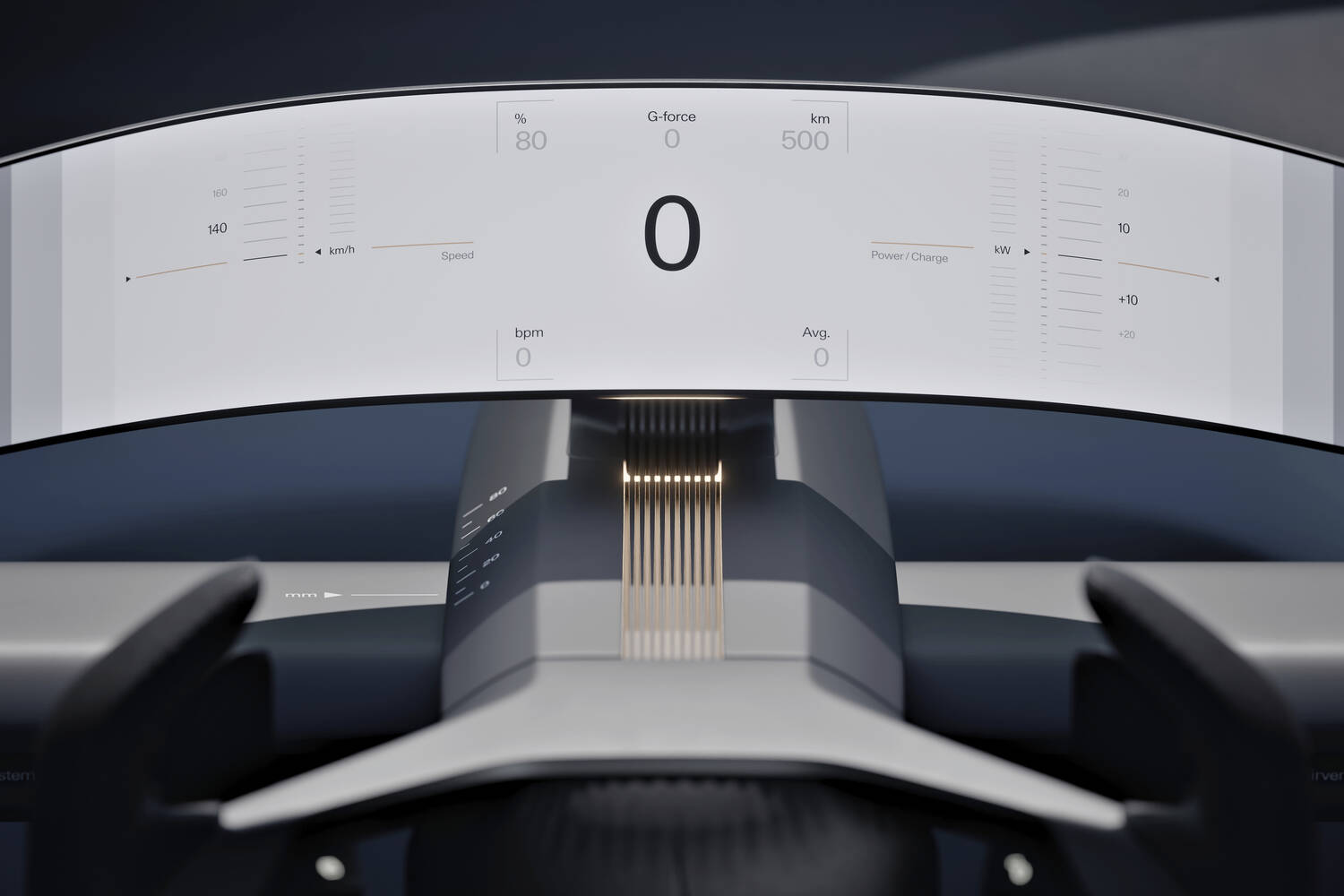
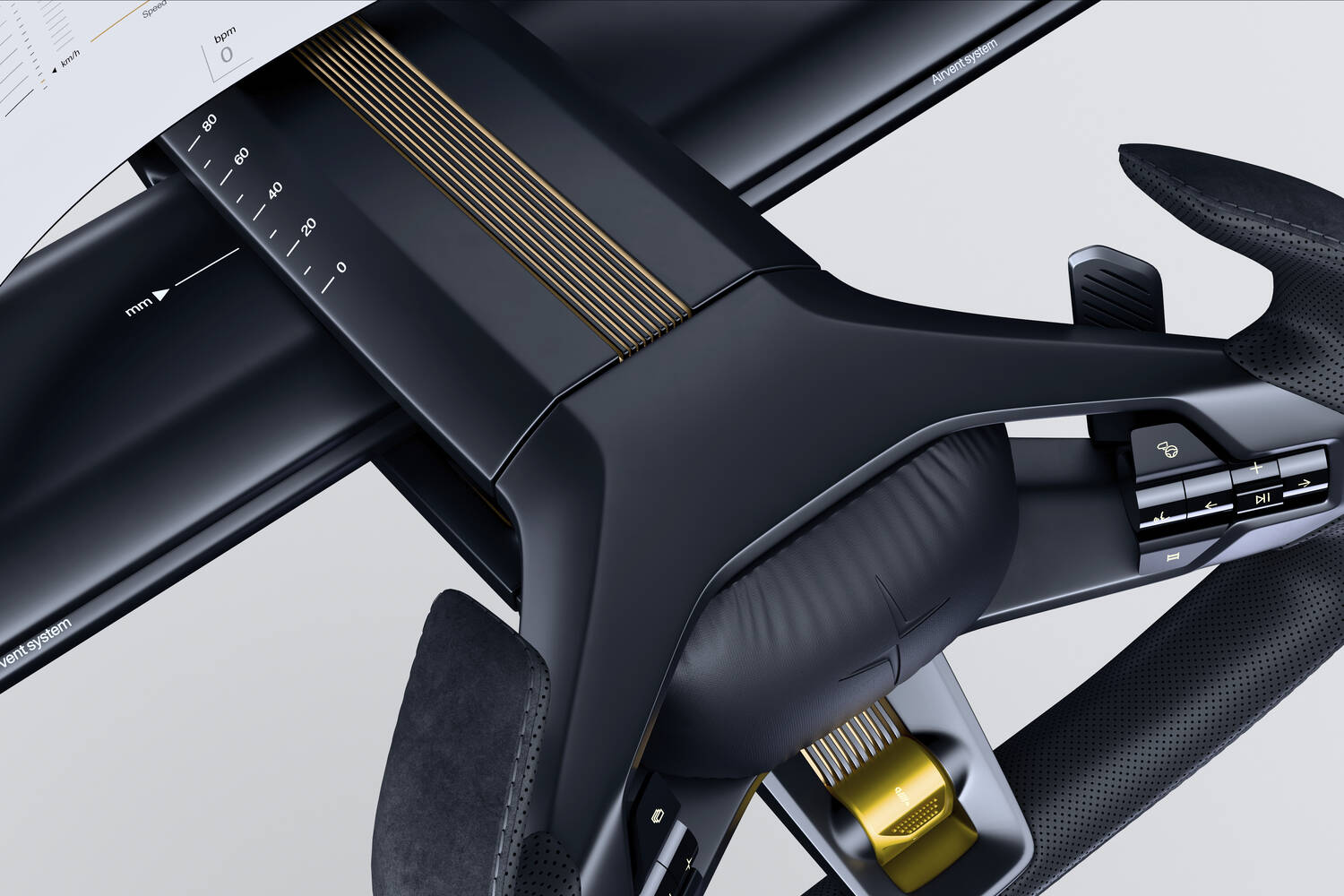
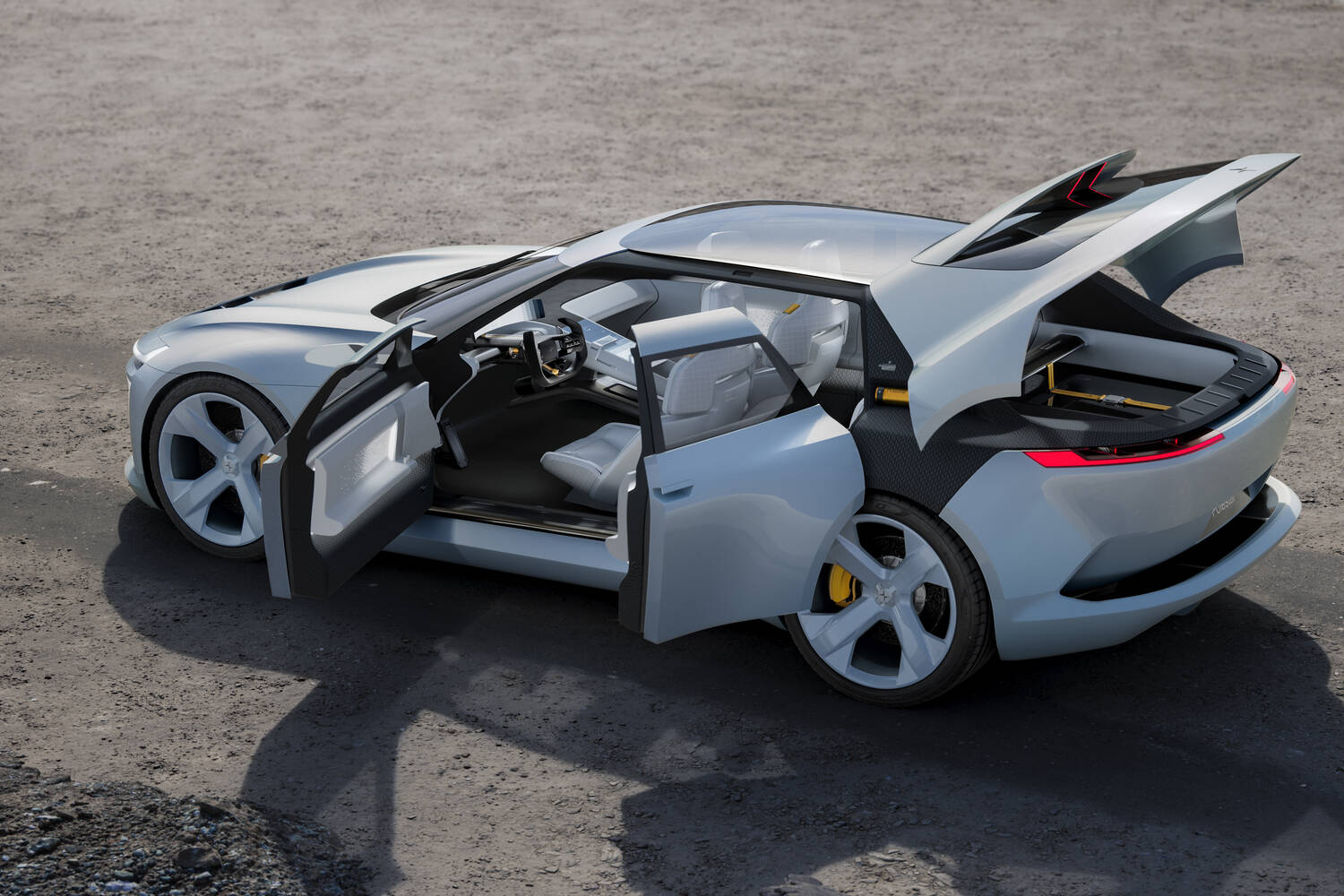
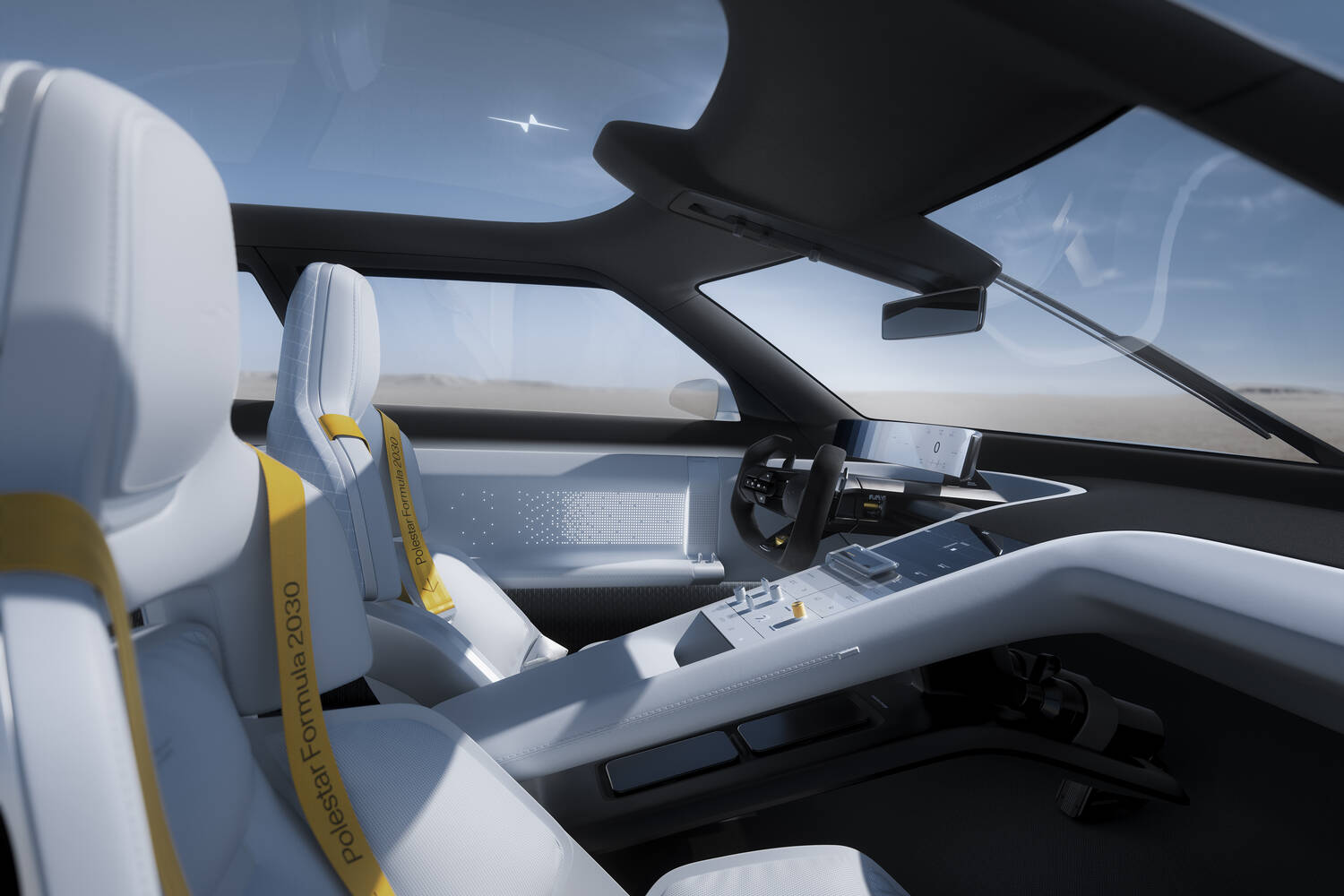
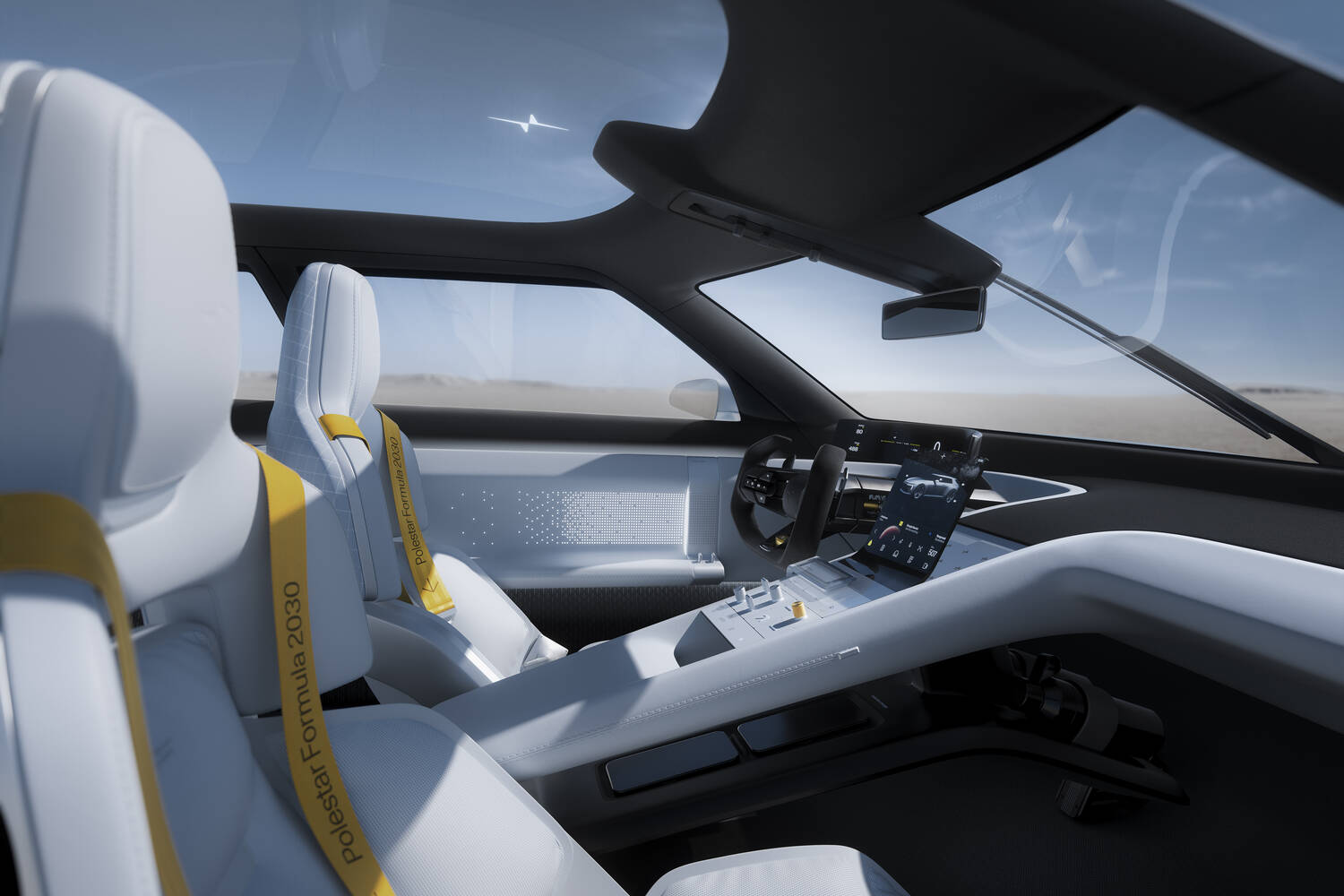
As well as that, the interior is now focused much more on the driver, in an almost cockpit-like layout with a high centre console which frames a large, high-set, wraparound instrument panel with a ‘yoke’-style cut-down steering wheel which is designed for the dual demands of steer-by-wire and autonomous driving.
Hang on, are those real buttons?
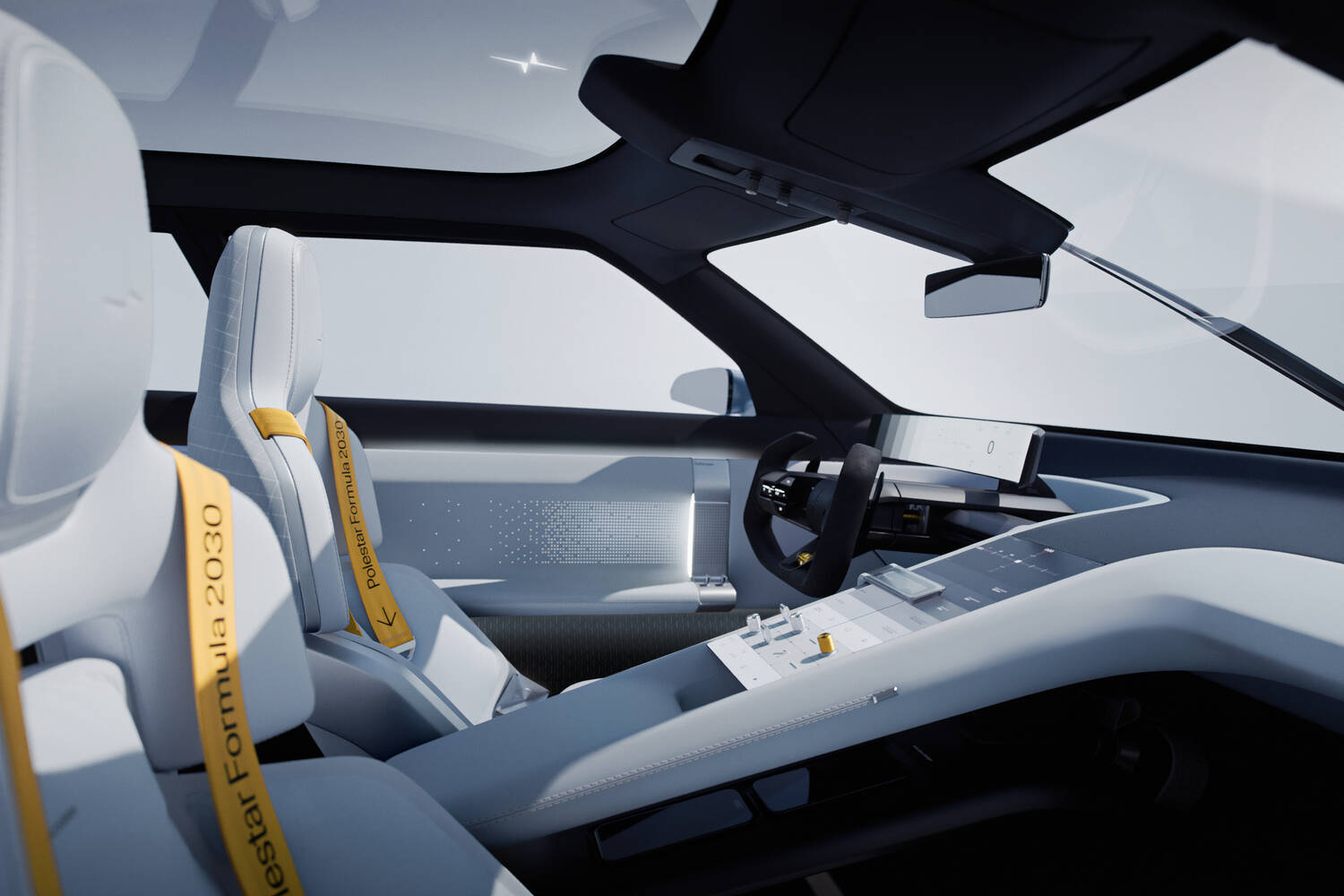
They are, and there’s more to this than you can initially see. This is what Polestar calls its ‘Mechatronic’ layout, and we’ll see the beginnings of the production reality of this in the new Polestar 2.
There’s a mixture of rotary controls and pushbuttons, as well as a large sliding control that changes the driving mode. As you change those modes, the main touchscreen — much smaller than in any current Polestar — either stands up from the centre console or lays back for less distraction, such as when you pick the ‘Performance’ driving setting.
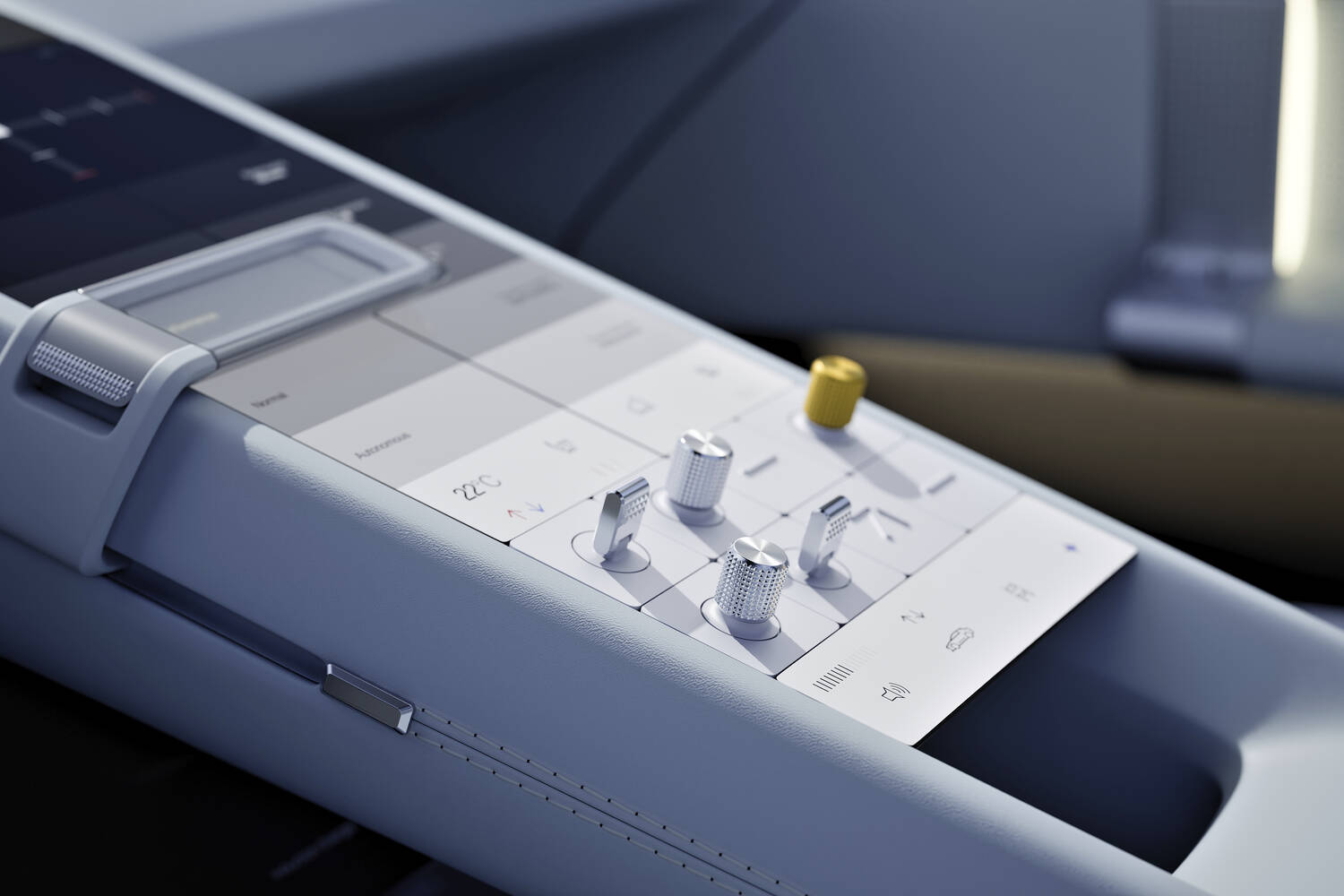
Of course there’s still digital functionality, and options to create on-screen shortcuts, but you can also, using the touchscreen, change the functions controlled by those physical buttons, as well as even popping them off the dash and moving them around like Lego bricks.
Römers reckons even this little flight of fancy isn’t out of the question for future production.
What about the rest of the cabin?
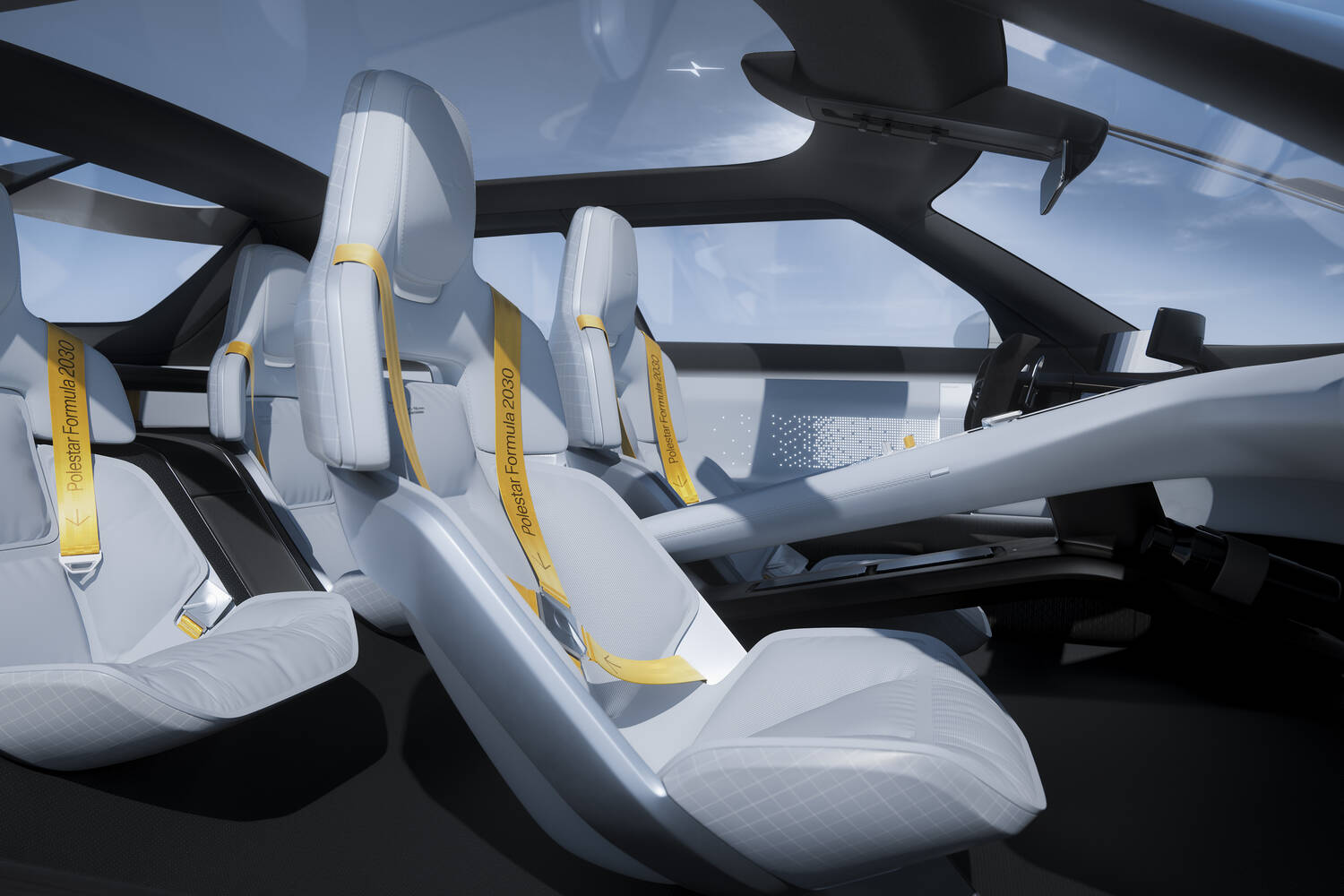
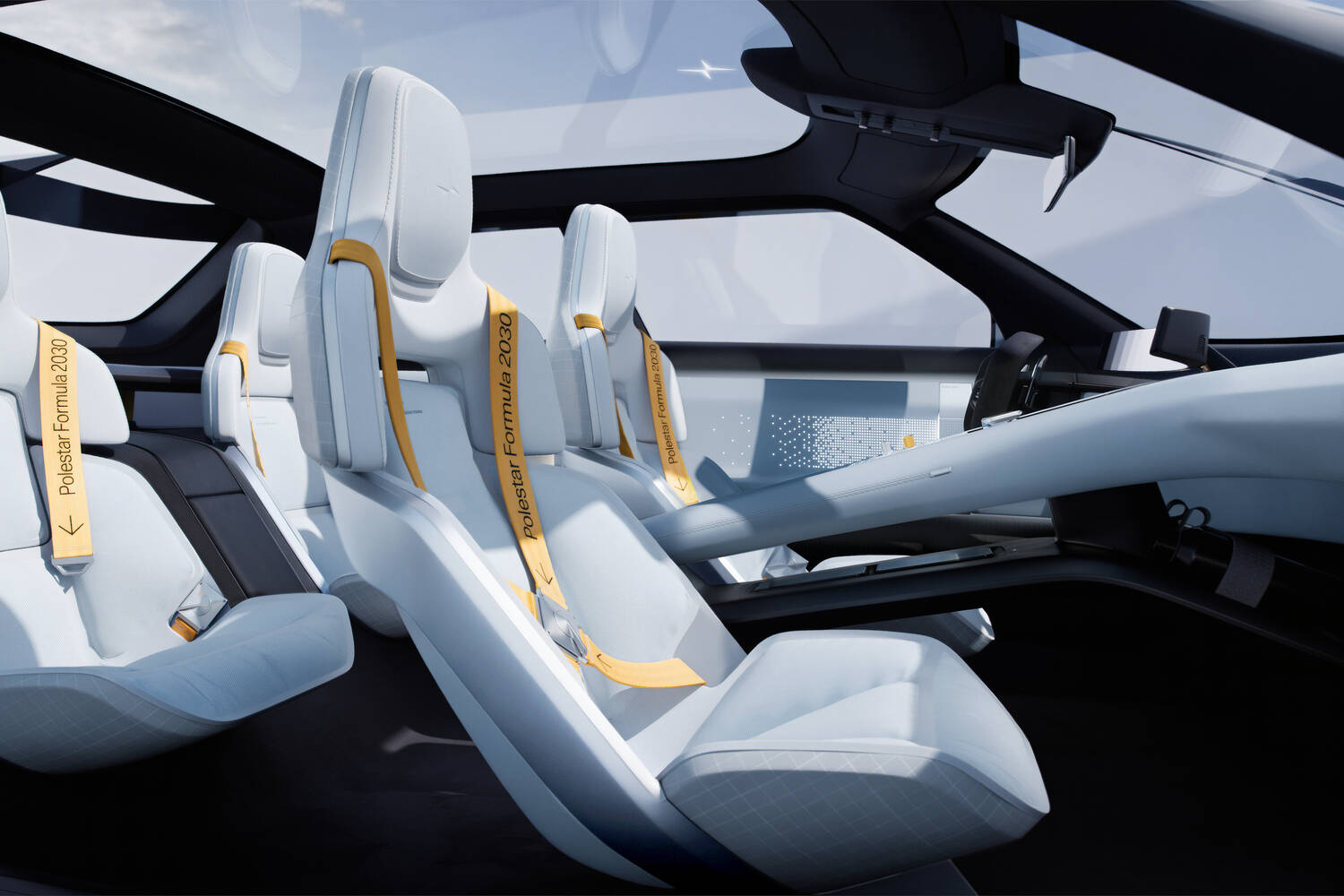
Polestar is moving away, subtly, from its black, white and gold cabin colour schemes to something that includes a few other shades, including pale blues and lilacs.
In this instance they pick up the dramatic ‘Nitrogen’ paint on the outside, which moves from white, to silver, to icy blue as you move around the car.
There’s an emphasis on architecture (the structure of the car that would normally be hidden behind the dashboard is left partially exposed) and on sustainability.
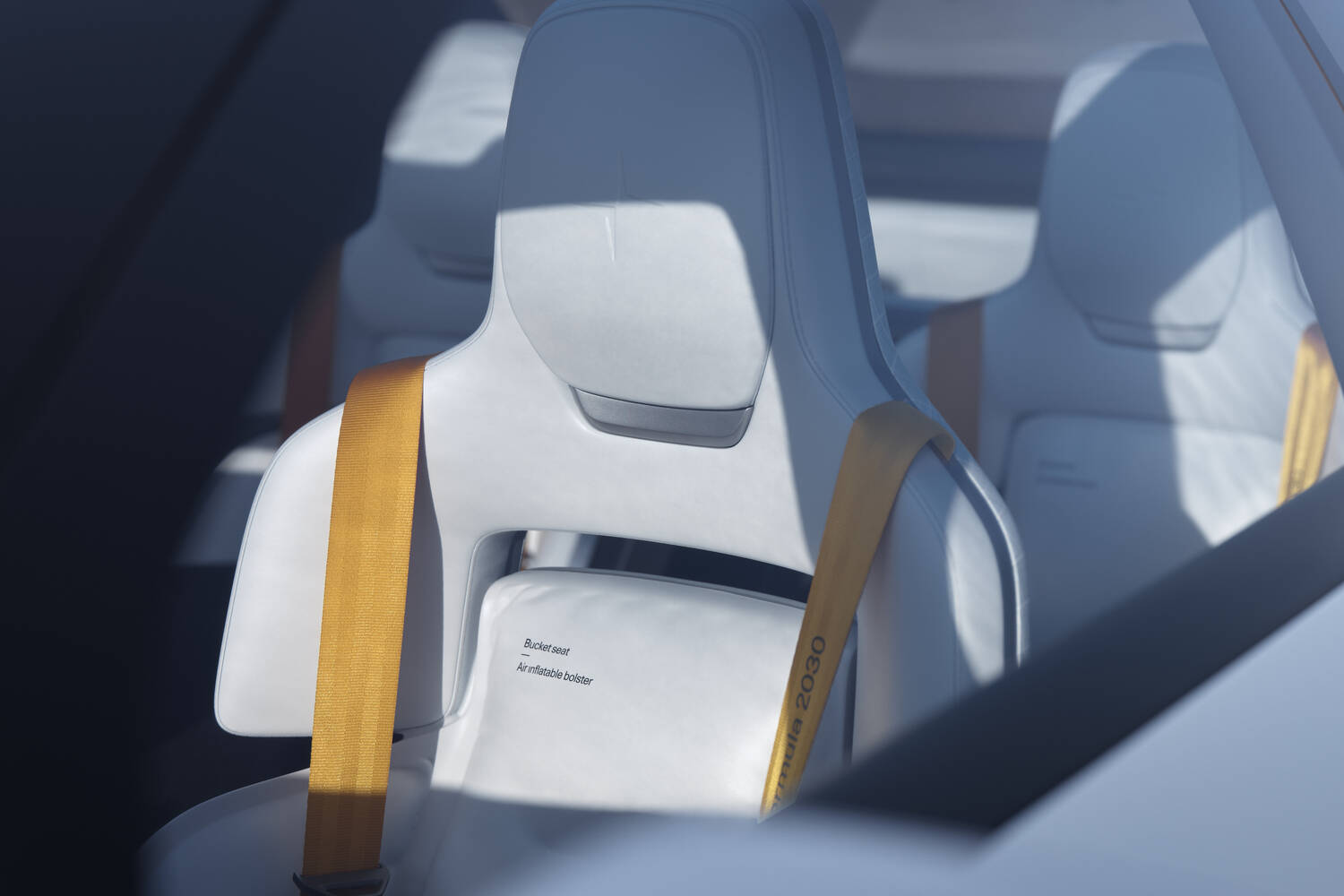
For instance, the hard-shell seatbacks are made from ‘B-Comp’, a Swiss-made composite material which instead of using carbon fibres for strength uses instead flax fibres from European-grown plants. It’s just as strong as carbon, but much more eco-friendly.
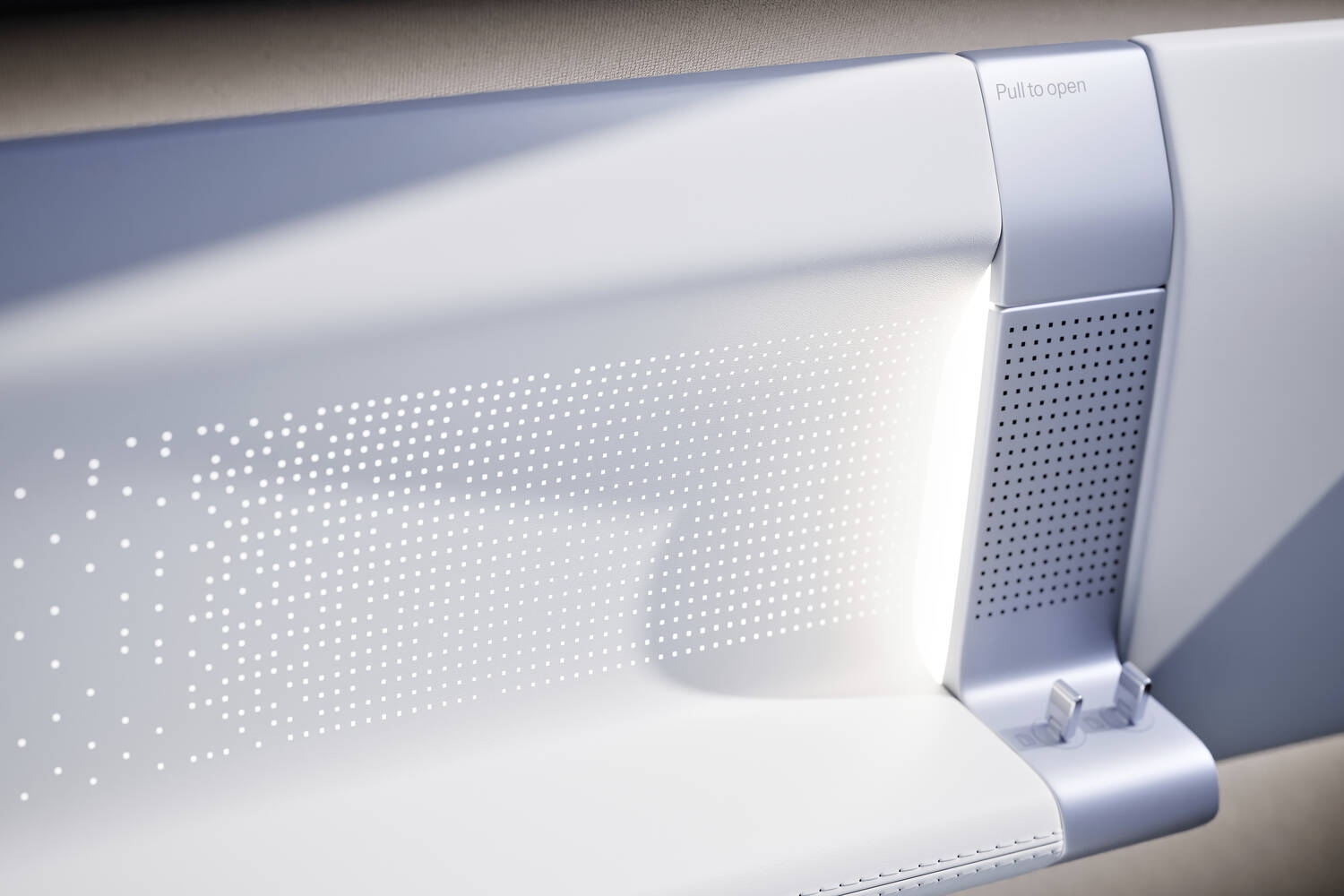
There are other environmentally aware touches, such as the fact that the multi-layer door linings are all made from the same basic material, so that it’s easier to recycle at end-of-life.
For all that, Römers says that he wants to make cars that are sustainable in design as well as engineering; so that the look won’t age and the car will be kept in service for as long as possible.
What other clever touches are there?
Taking inspiration from Polestar’s beginnings as a racing team, there are some neat motorsport Easter eggs in and on the Formula 2030.
For starters, there’s a central, upright windscreen wiper, just like those used as Le Mans and in the World Endurance Championship.
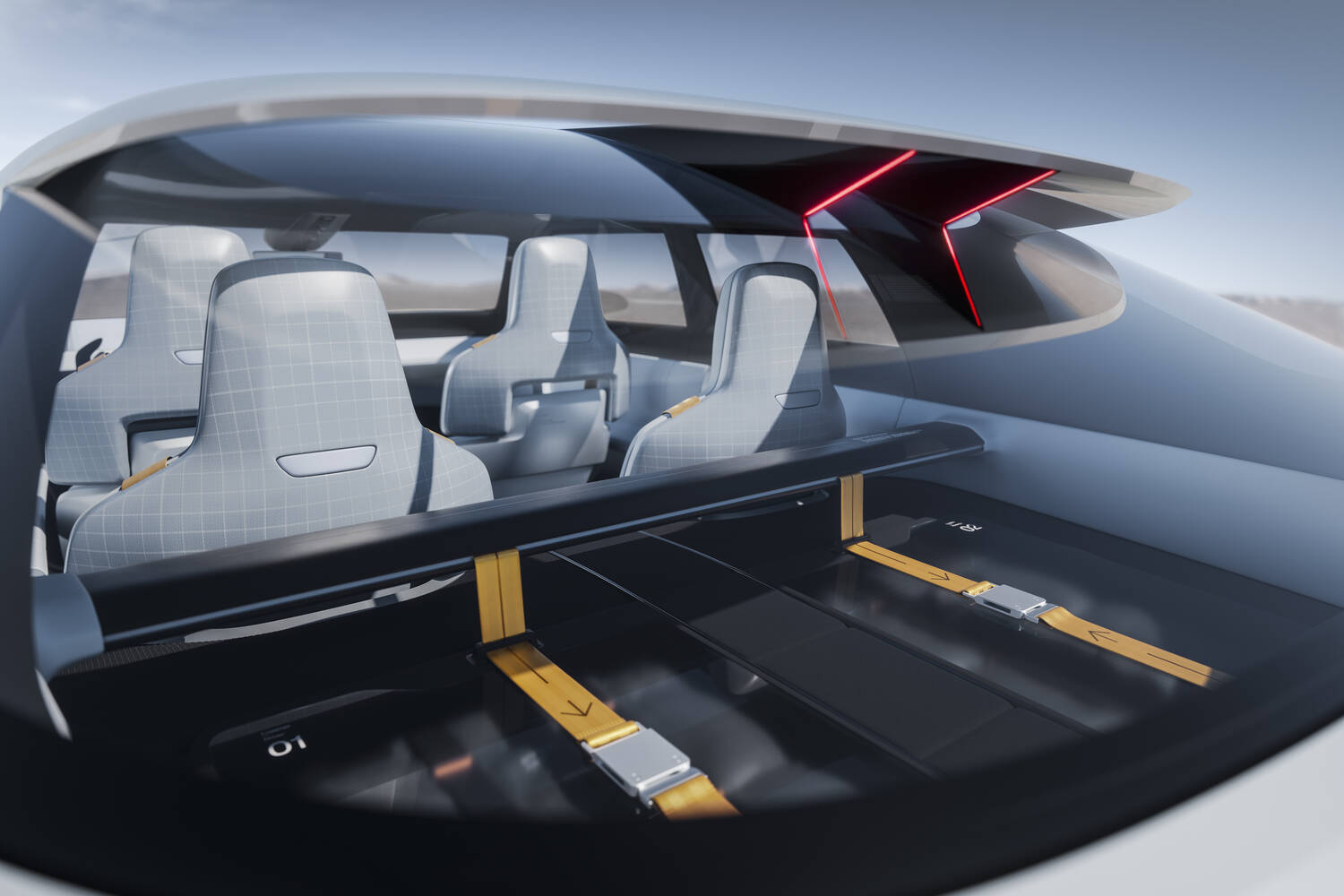
The boot gets fabric straps, in the classic Swedish Gold colour, that can be used to strap down your luggage for ‘spirited driving.’
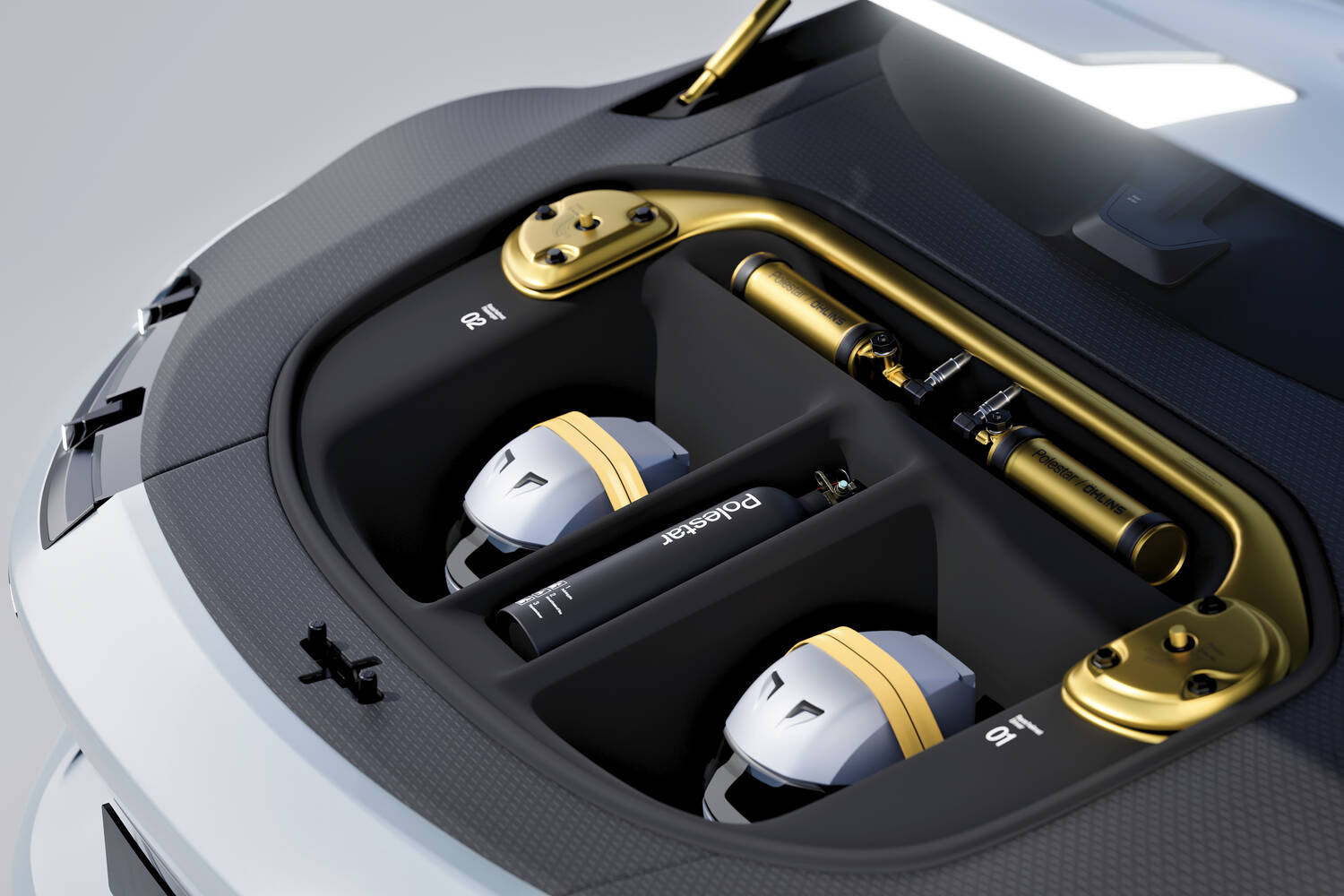
On that subject, the frunk in the nose has been designed specifically to hold two crash helmets, while the trick Öhlins suspension dampers have been moved to inboard locations — mounted horizontally behind the frunk in the front, and high-up in the rear pillar at the rear — so as to free up space.
The doors are front and rear hinged, to allow unfettered access to the cabin, but the way the bonnet and boot open is reminiscent of the ‘clamshell’ bodywork of racing cars, which has to move as far out of the way as possible so that mechanics can get in to tweak and fix stuff during a pit stop.
Inside, the colour of the B-Comp shells is inspired by the colour of blooming flax plant flowers.
So, when will we see all this on the road?
Not all the Formula 2030’s ideas will arrive at once, but we will start to see its influence on the future of Polestar starting next year with the new Polestar 2 and then again in 2028 with the new Polestar 7.

Video player loading.
Video unavailable. Watch on YouTube
If there is anything about this story we have not covered, you can avail of our expert advice service via the Ask Us Anything page.