
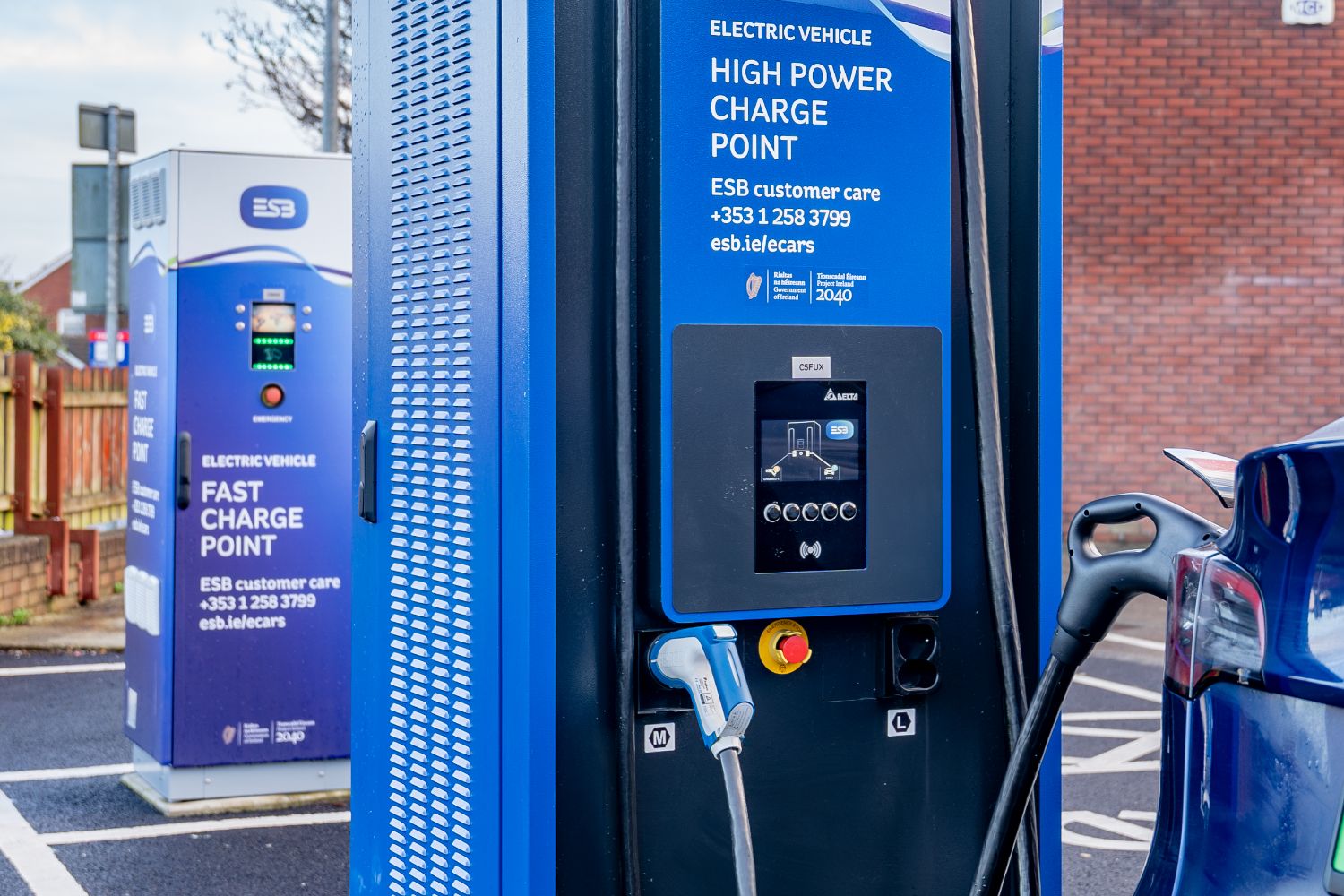
What did ESB charging cost before?
Earlier this year, the ESB jacked up its prices to 60c per kWh for its low-power chargers (those with up to 49kWh charging power, which are effectively the slow kerbside charging units. These actually only have as much as 22kW charging power, on an AC system) if you’re using pay-as-you-go. For anything with more power than that, from older, quite slow, 50kW DC units all the way up to the most powerful 350kW chargers, the price was 72c per kWh.
How much does ESB charging cost now?
From now, the slower kerbside chargers will cost you 70c per kWh, while the faster stuff will cost as much as 83c per kWh. Yes, even the older, almost-useless-now 50kW chargers. And that’s assuming you’re using the ESB app on your phone. If you’re just tapping a debit or credit card, then those prices are even higher: 72c per kWh, or 85c per kWh.
How can I pay less for ESB charging?
Yes, you can sign up for an ESB subscription, which previously cost €4.79 per month, and which got you a discount on the pay-as-you-go charging rates. Now, the subscription is split in two. The €4.79 monthly fee remains in place, and is rebranded as Charge Life, which gives you a discount on charging, bringing the cost down to 65c per kWh for the slower chargers, and 78c per kWh for the faster stuff.
What is the cheapest ESB charging plan?
Yes, but only if you’re willing to pay more up front. There’s a new Charge Smart subscription level, which costs €6.99 per month, and which brings the charging prices down to as low as 52c per kWh (if you’re charging between 9pm and 7am) or 65c per kWh (between 7am and 9pm) for slower chargers, and 66kWh for the faster chargers, again only between 9pm and 7am. You’ll still pay the 78c per kWh rate between 7am and 9pm, which rather reduces the usefulness of those rates, except to a specific few drivers. Overstay fees remain in place, which are 50c per minute after 45 minutes on a fast charger, and after ten hours on a slow charger.
Is an electric car still cheaper to run than petrol or diesel?
The price hikes were pretty inevitable, given the pressures on electricity prices brought about by Trump’s colossally stupid war on Iran, but they will be a kick in the teeth for those who bought an electric car assuming that it would be significantly cheaper to run than a diesel or petrol car. That remains true if you’re doing most, or almost all, of your charging on the cheapest possible domestic rates at home, but if you’re reliant on public charging, these latest price hikes make running an electric car almost as expensive per kilometre as pumping in diesel or petrol.
If there is anything about this story we have not covered, you can avail of our expert advice service via the Ask Us Anything page.