

What’s going to be new about this next-gen Toyota hybrid?
Quite a lot. Toyota’s current hybrid line-up consists of 1.8-, 2.0- and 2.5-litre four-cylinder naturally aspirated petrol engines backed up by a compact electric motor and a small-to-medium-sized battery (the size depends on whether it’s a plug-in hybrid or not). This new hybrid will have a capacity of 1.5 litres and will keep its four-cylinder layout, but will be built in both naturally aspirated and turbocharged forms. It’s designed to replace both the current 1.5-litre, three-cylinder hybrid engine used in the Yaris and Yaris Cross, and the 1.8-litre hybrid used by the Corolla, Corolla Cross and C-HR.
What else is changing?
Whereas the current petrol engines were designed as engines first, and then had their hybrid modules added on top, the new hybrids have been designed as a complete unit — engine, battery, motor and other components — all at the same time. As well as all that, the engine will be designed to run on ‘renewable and carbon-neutral fuels’. The electric motors, power control units and the all-important inverter will all be smaller and more compact, and the petrol-fired part of the hybrid system will be designed to have much less internal friction. Toyota reckons that all of this will lead to a 15 per cent improvement in fuel economy.
What would that kind of improvement mean to customers?
In real-world conditions, CompleteCar has found that the 1.8-litre hybrid engine in the current Corolla is easily capable of returning average fuel economy of 5.0 litres/100km. A 15 per cent improvement on that would save 0.75 litres/100km, meaning real-world consumption of around 4.25 litres/100km, which is 66mpg if you’re reading this in black and white. Not bad.
What about Toyota’s all-electric plans?
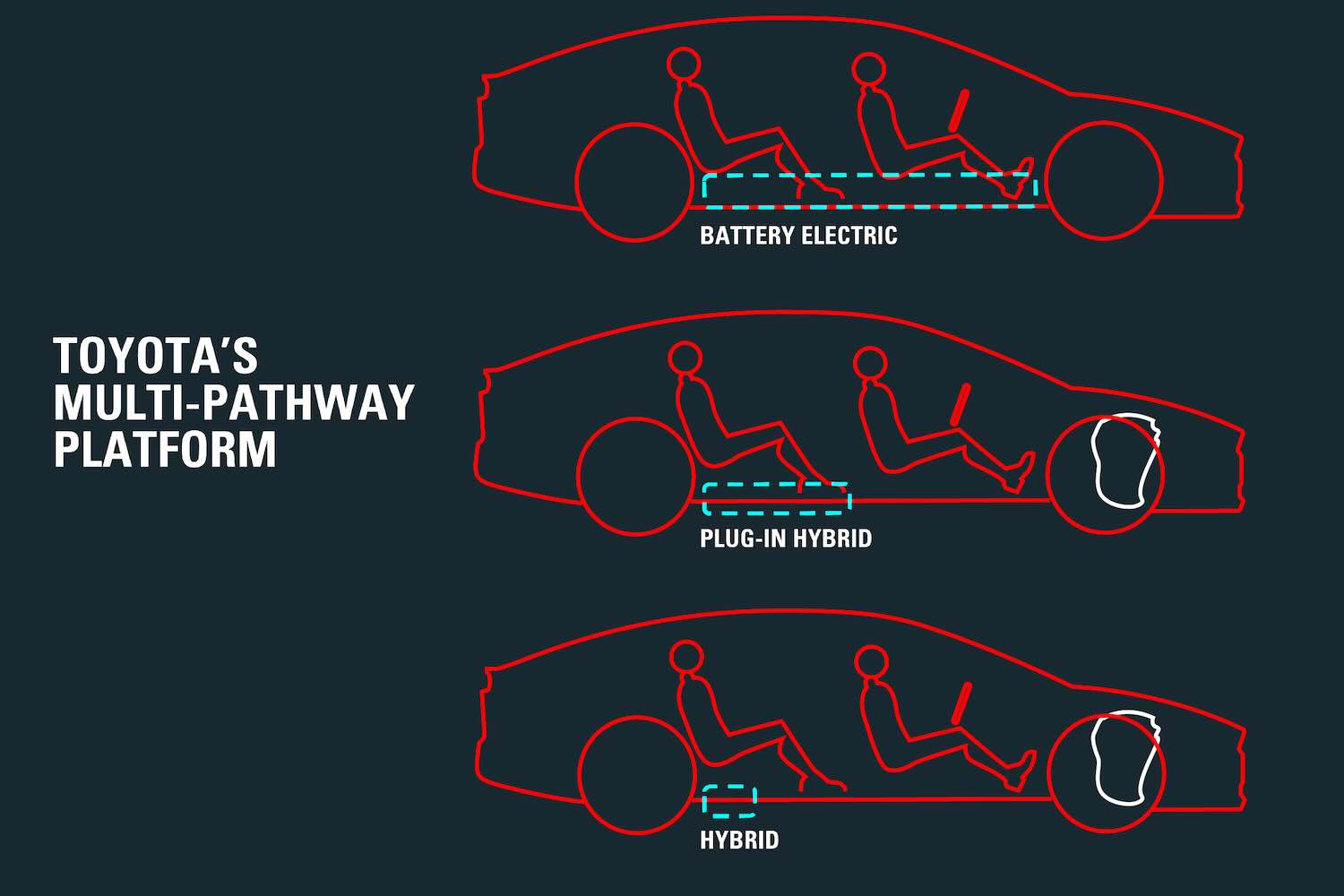
Interestingly, this new hybrid engine could fit into that strategy, too. There’s a growing global demand for ‘EREVs’, or cars that are electric most of the time — and which may have electric-only ranges of up to 400km or thereabouts — but which still have a compact, efficient petrol engine on board to act as a generator for very long journeys, especially in countries (or counties, for that matter) where the charging network is still sparse. As Toyota puts it: “Energy circumstances differ by region and country, as do customer needs and preferences. Toyota’s multi-pathway approach is designed to respond to this by offering a range of electrified powertrains and adjusting the mix to market demand. The next-generation hybrid system is designed to support this flexibility in vehicle development and in manufacturing.”
Will the new hybrid bring any other benefits?
Yes, actually. It’s a more compact engine, so Toyota’s designers and engineers will be able to lower the bonnet lines of the cars that use this new 1.5-litre hybrid, making for sharper styling and improvements in pedestrian crash protection. It’s not just the engine, either — this new hybrid family will also lead to a new set of vehicle architectures, and Toyota says that its next-generation “battery-electric, plug-in hybrid and hybrid vehicles will share a common architecture. This means Toyota can spread development and production investment across higher combined volumes.”
While this is part of Toyota’s long-held ‘multi-pathway’ approach to new vehicles (meaning that it will make the most efficient versions it can of combustion, hybrid, plug-in hybrid and fully electric vehicles, depending on what the market demands), this new hybrid technology will also be shared with other companies, as Toyota has said it “plans to increase external sales of its new engine and hybrid technologies in the coming years.”
If there is anything about this story we have not covered, you can avail of our expert advice service via the Ask Us Anything page.