

What is DockChain?
Remember when we used to link lots of extension cords together to get more plugs in a room? It’s a bit like that, but much safer and cleverer. DockChain is a solution to the need for DC fast charging in car parks, but without the need for multiple fast-charging points. The idea is that DockChain works like a ‘daisy-chain’ of DC connectors, sending power down the line to each connected car in sequence, rather than trying to charge them all at once.
Why is that good?
It’s a more affordable way of installing lots of DC fast chargers in one location, and it’s ideal for the likes of shopping centres and company car parks where cars can be left connected long enough to receive their top-ups. It’s also potentially a more reliable way of delivering DC charging to lots of cars, rather than having them queue up and individually connect and disconnect. That constant connect-disconnect routine can leave chargers vulnerable to problems and reliability issues.
What happens next?
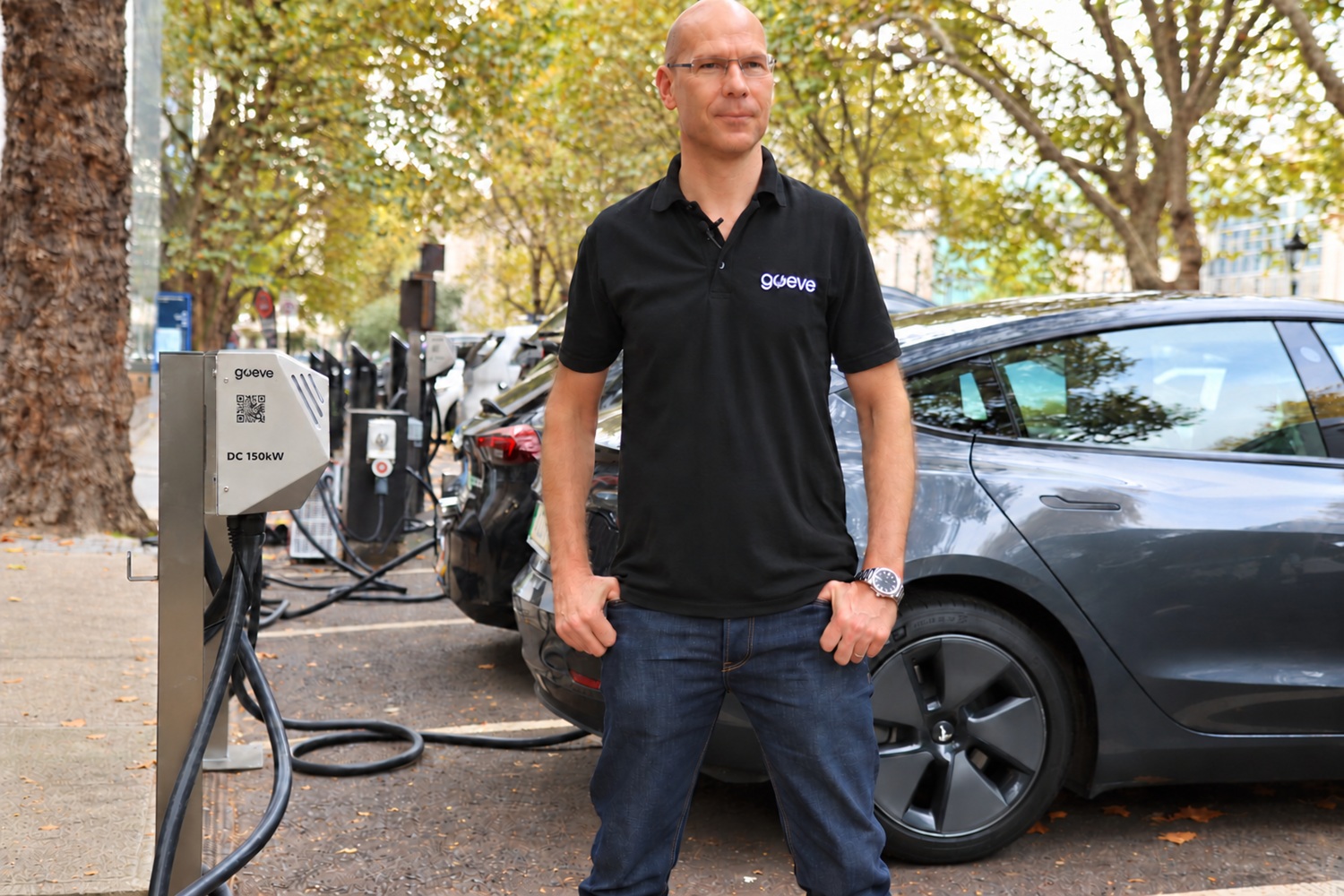
GoEve will invest the money in research and development to bring DockChain to market. As fuel prices reach record highs and electric vehicle use across UK commercial fleets is projected to reach 30–50 per cent by 2030, fleet managers are reappraising the economics of electrification. “The ability to make better use of existing chargers, parking bays and available grid capacity will be increasingly important in managing this transition,” said John Goodbody, co-founder and Marketing Director, Go Eve.
“We’ve already shown that fleets can serve more bays without multiplying the number of fast chargers, that’s where the immediate cost and rollout benefit comes from DockChain. Working with fleets has also taught us that vehicles don’t always behave exactly as expected at the charging connector. Some EVs need another attempt to start; others can be reluctant to restart charging after power flow is paused for grid, or priority reasons. This project tackles those practical issues so we can make DockChain more reliable and more flexible.”
What kind of flexibility?
That flexibility also includes vehicle-to-grid technology, so that, in theory, excess power stored in vehicle batteries could be sold back to the grid at peak times, potentially opening up an extra stream of revenue for companies with large electric car fleets. The plan is to have a production-ready version of DockChain ready to go by next year.
If there is anything about this story we have not covered, you can avail of our expert advice service via the Ask Us Anything page.