

The new identity brings the Bayon into line with the company’s ‘Art of Steel’ design language that has already been seen on the Hyundai Ioniq 3, the facelifted Ioniq 6 and with the new-generation Tucson.
It certainly looks the part
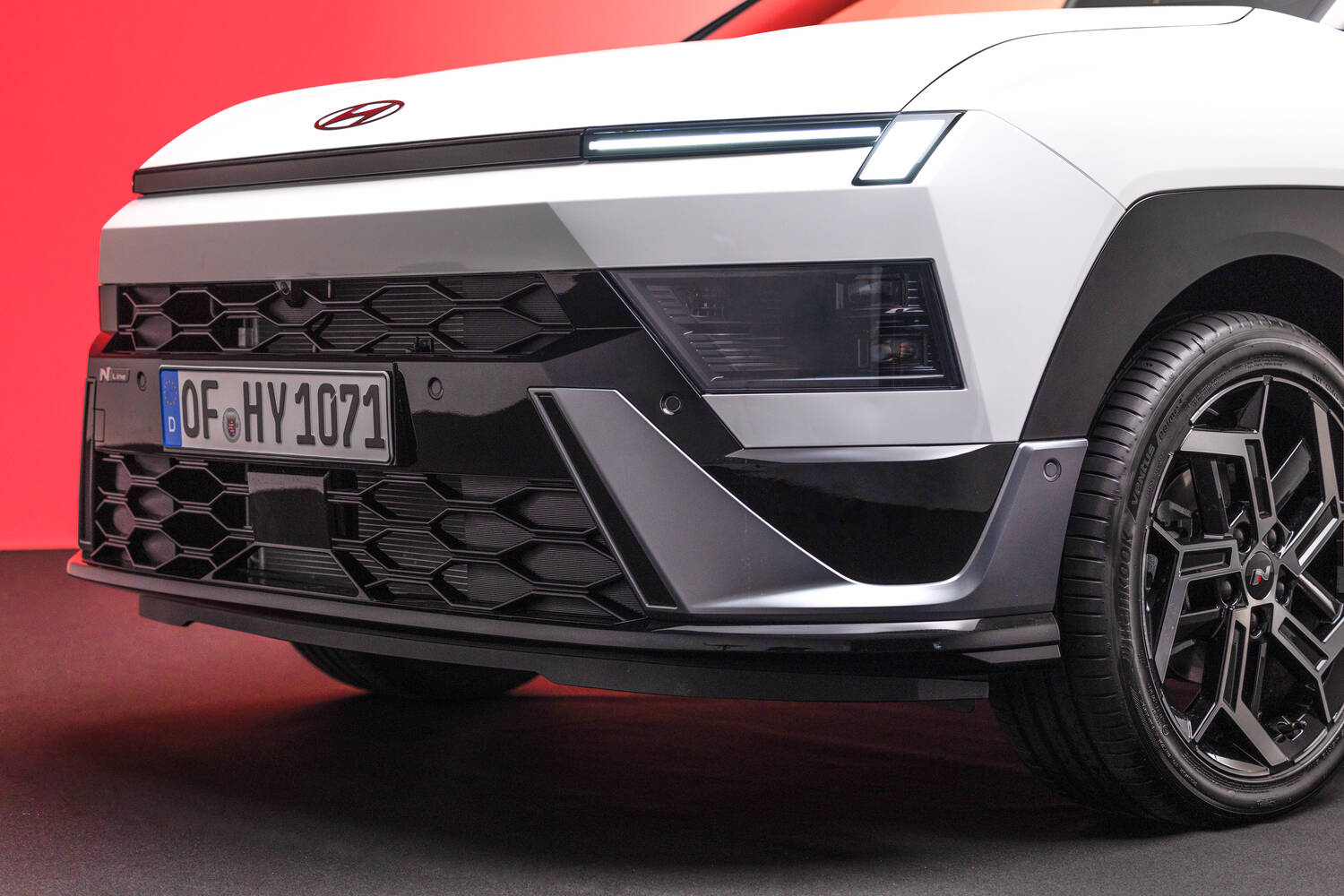
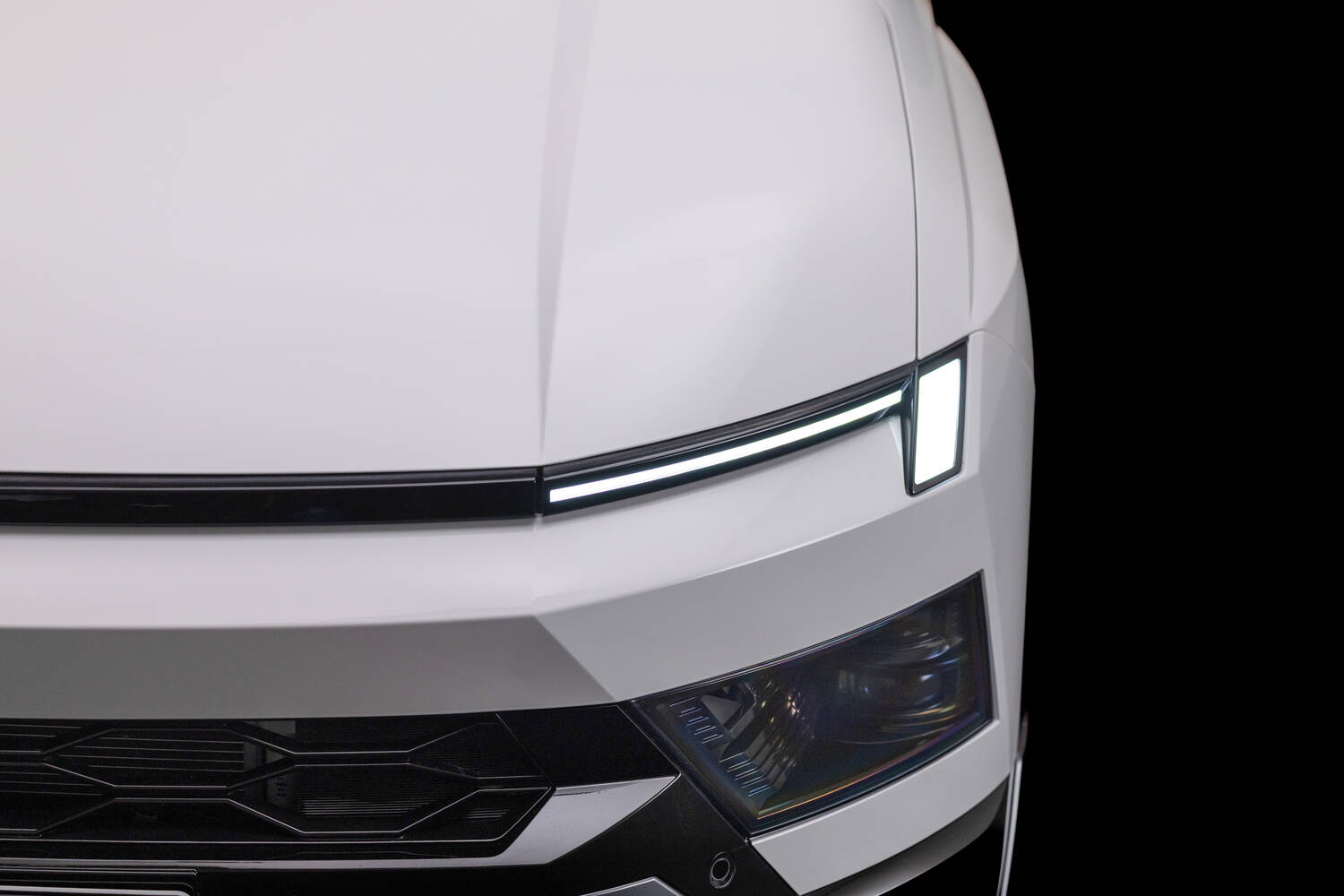
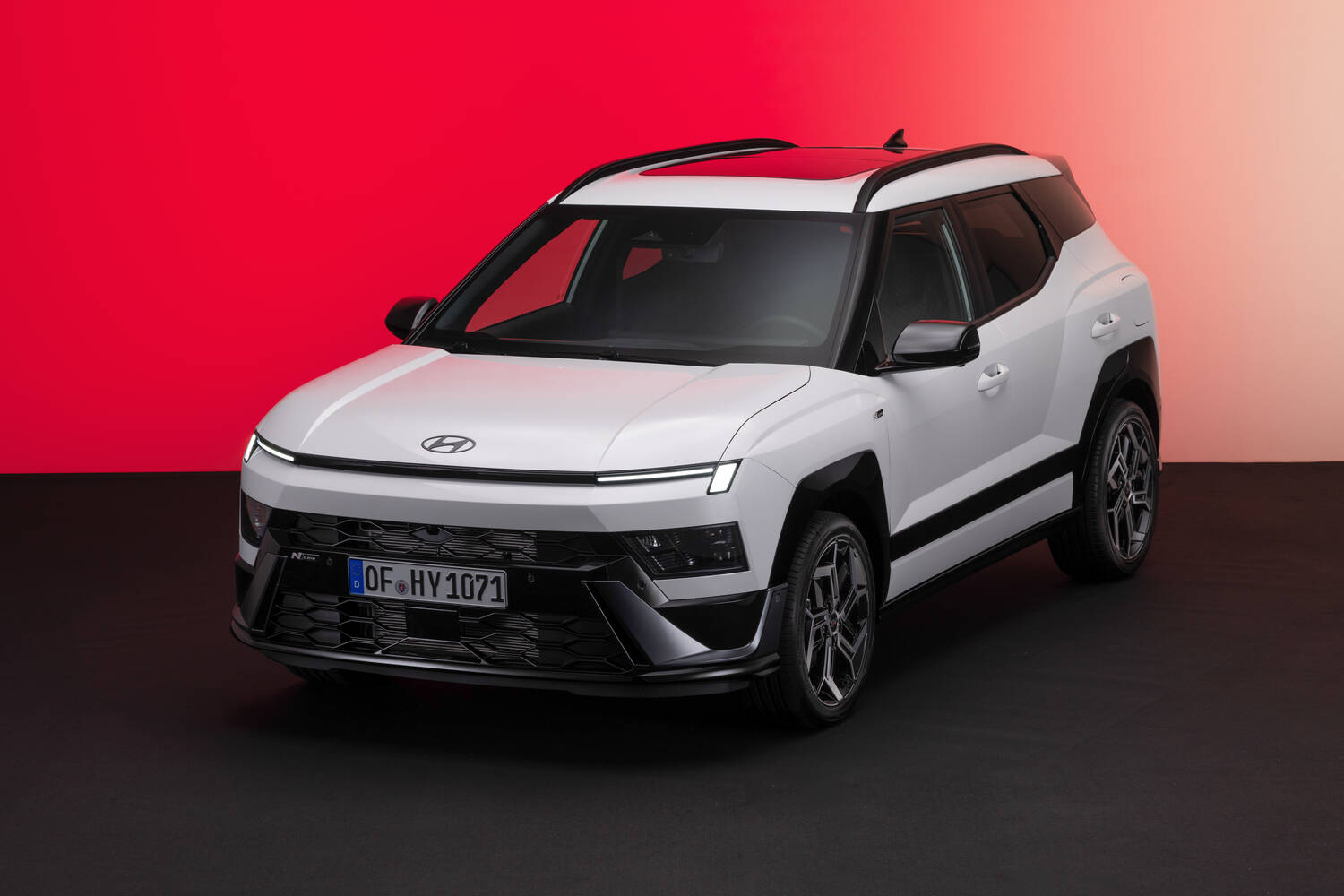
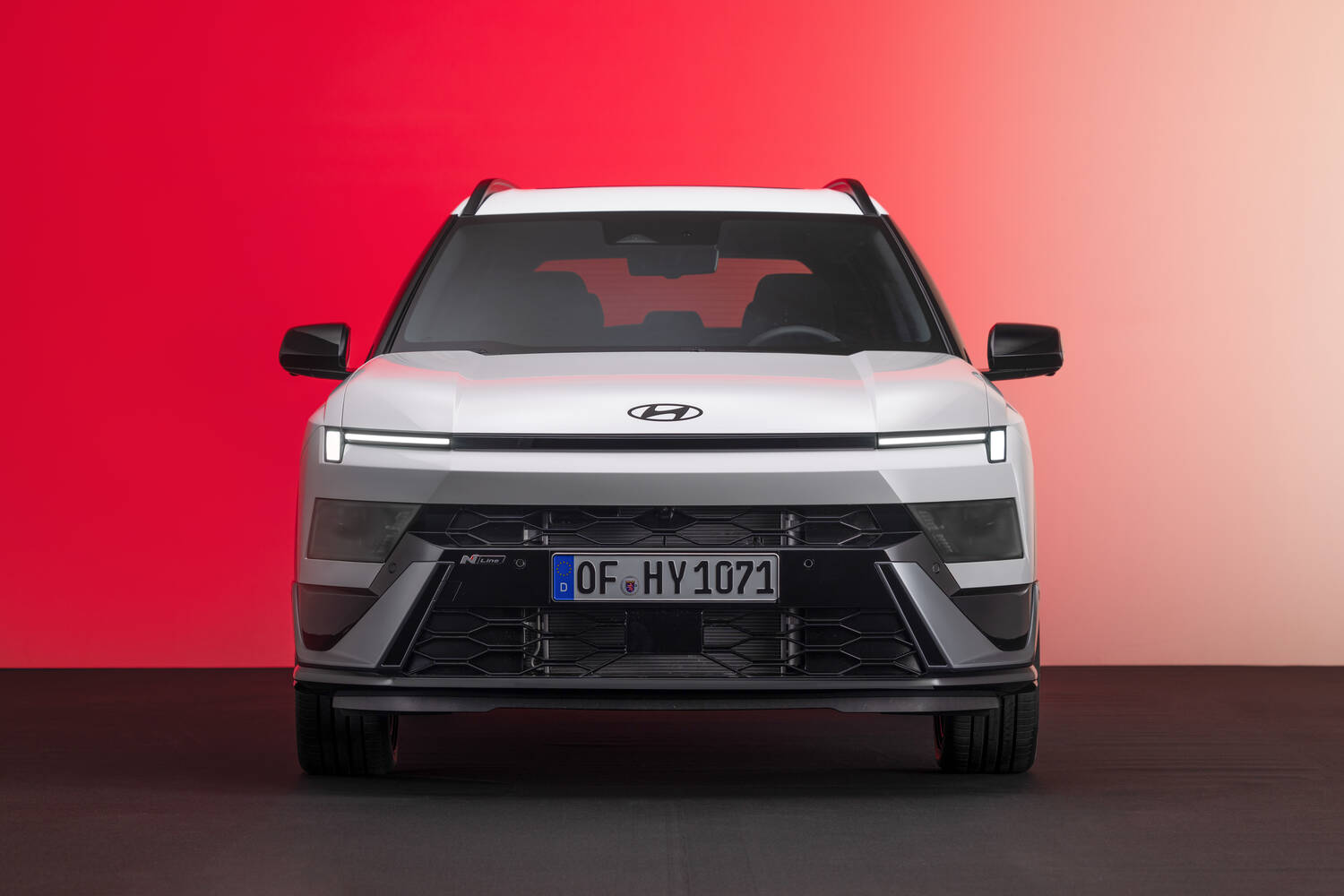
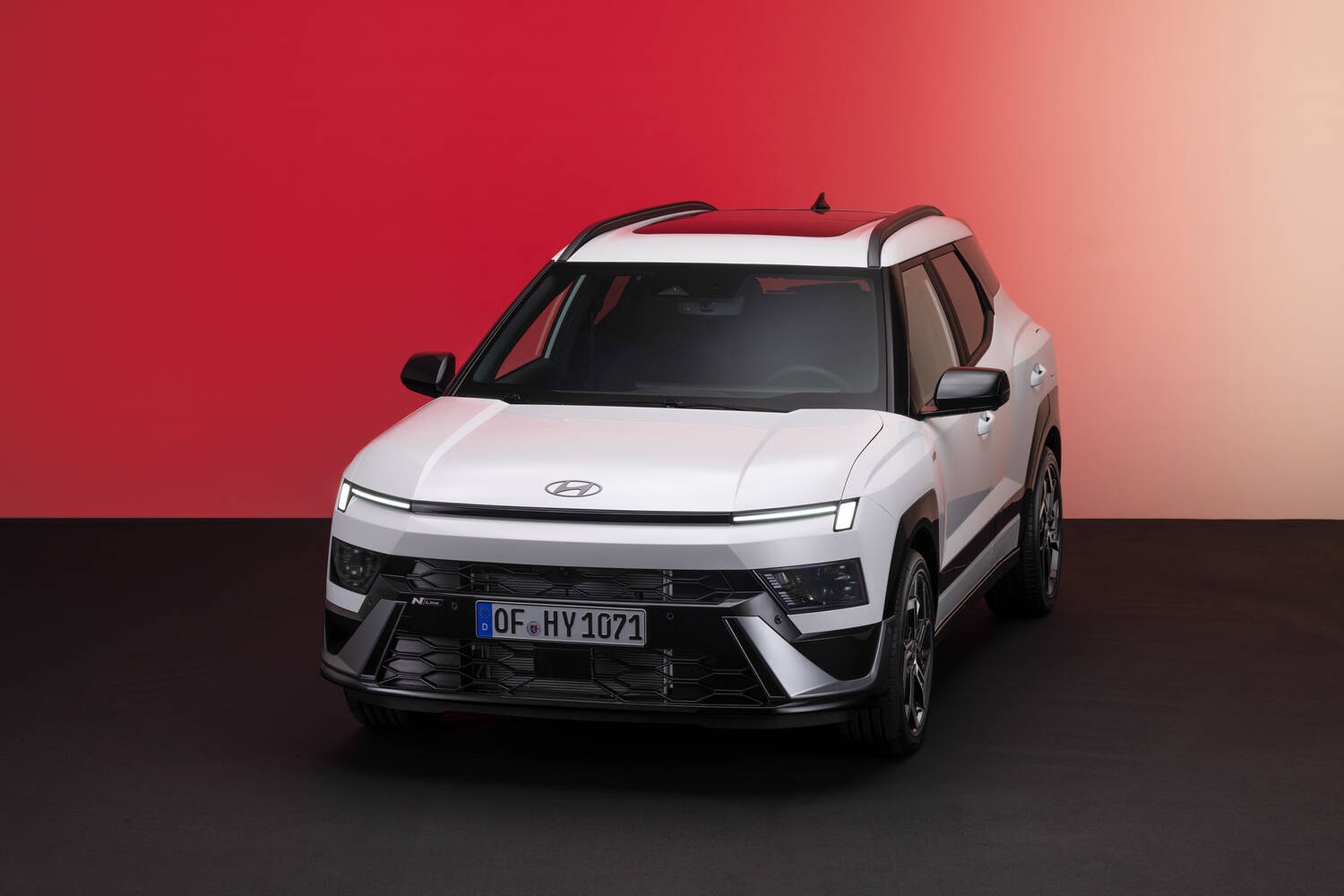
Seen here in the sporty looking N Line specification, the Bayon’s front is easily recognised by a thin horizontal LED lighting signature that ends with a vertical bar on each side.
Its main headlight units are located lower down, and there’s a large open mesh intake in the lower section of the bumper framed by wing-like elements.
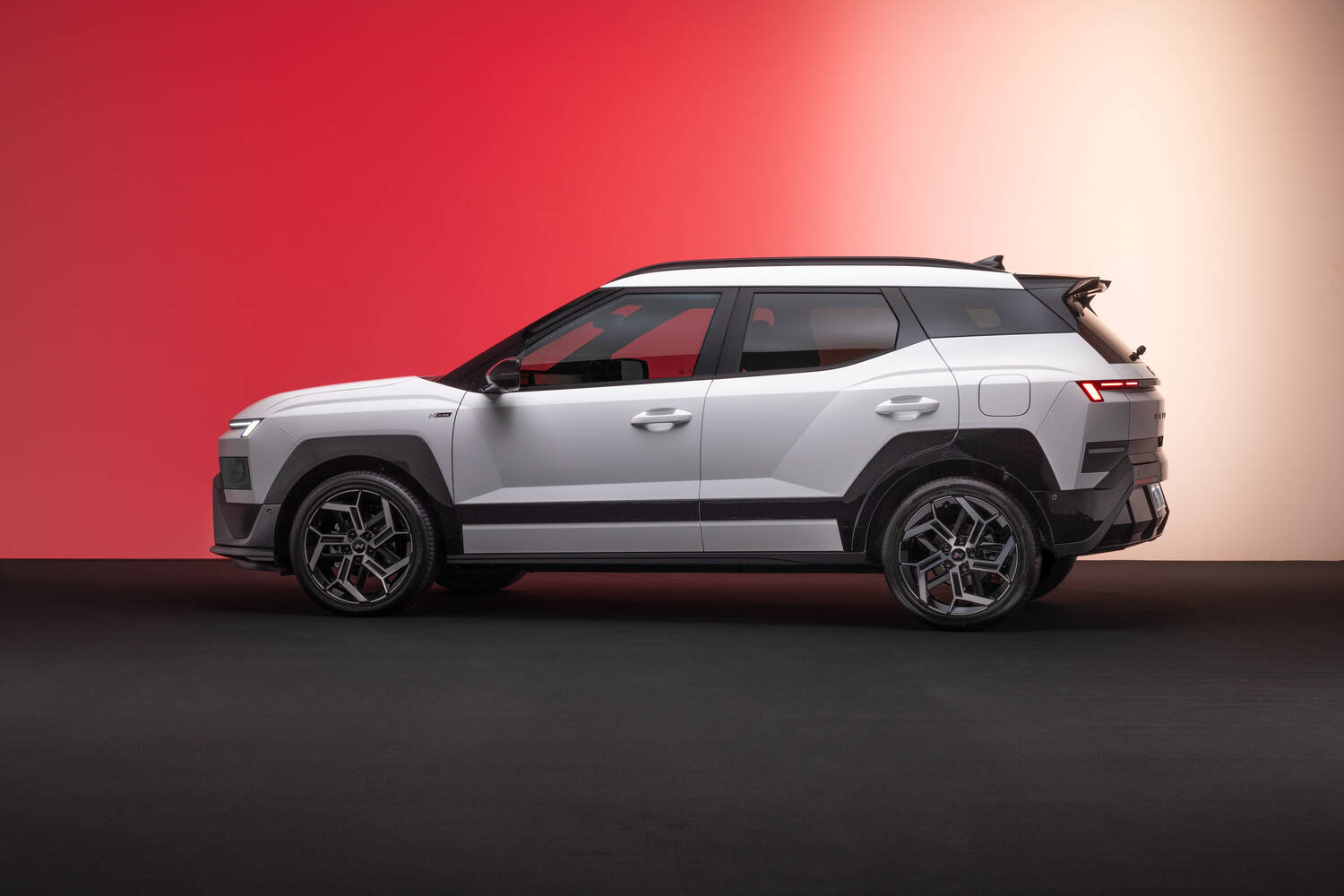
The front wings and wheelarches create a more planted and robust stance than the previous Bayon was blessed with and feature a gloss-black finish.
Wheel sizes are either 16 inches or 17 inches in diameter for most of the range, while the N Line models get bespoke 18-inch alloys.
Black inserts run through the lower sections of the doors connecting the wheel arches, and there’s noticeably angular surfacing down the sides, too.
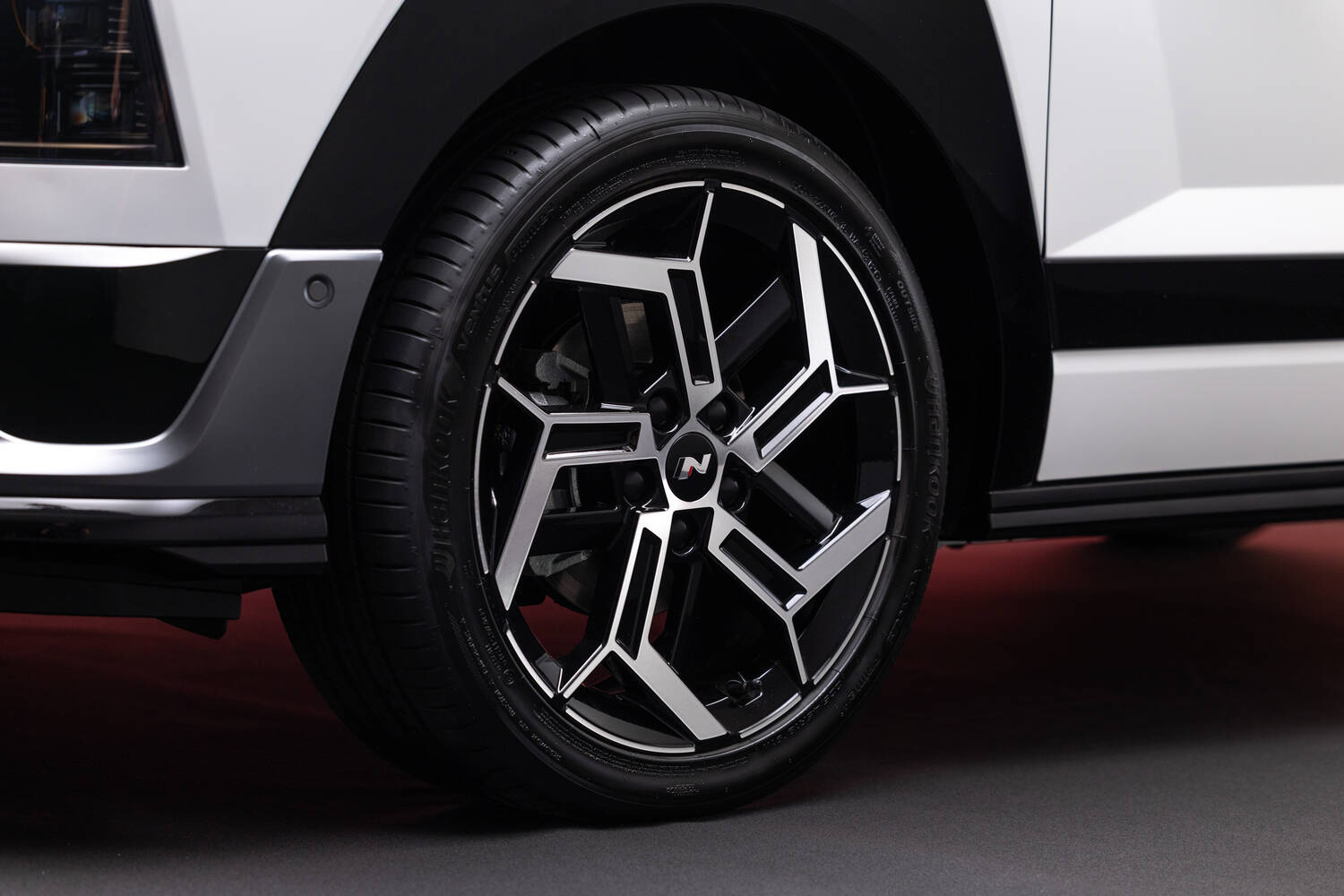
Suspension changes increase the Bayon’s height by 65 millimetres over the previous model, and with the N Line’s larger 18-inch wheels, that increases to 70 millimetres.
Pull-type door handles along with gloss-black A-pillars and roof rails round out the look, and we’re glad to see Hyundai has left the B-pillars in a harder-wearing black plastic rather than use a glossy surface that can easily scratch.
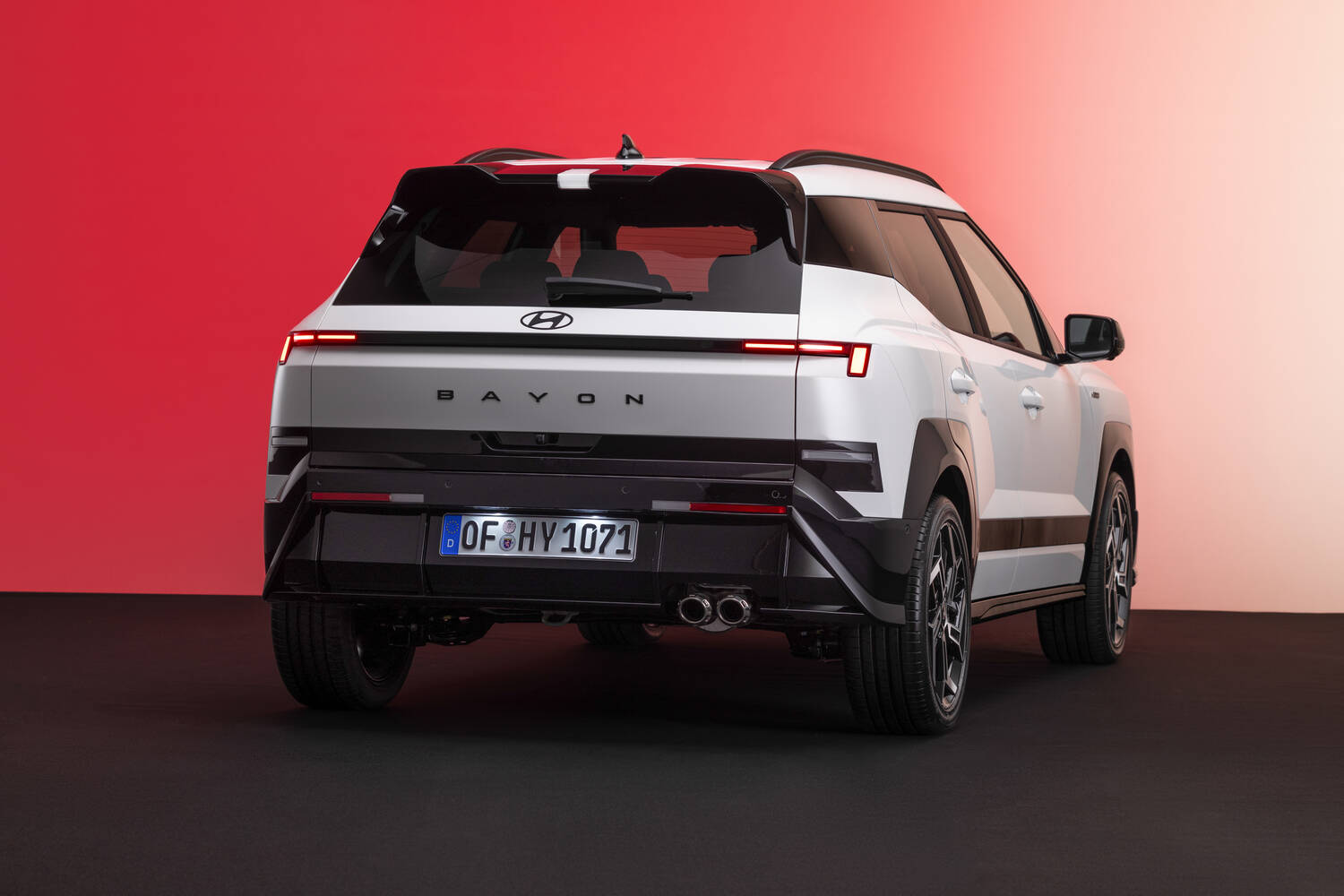
The thick C-pillar features a window on each side, but the privacy glass gives it the appearance of a black panel from some angles.
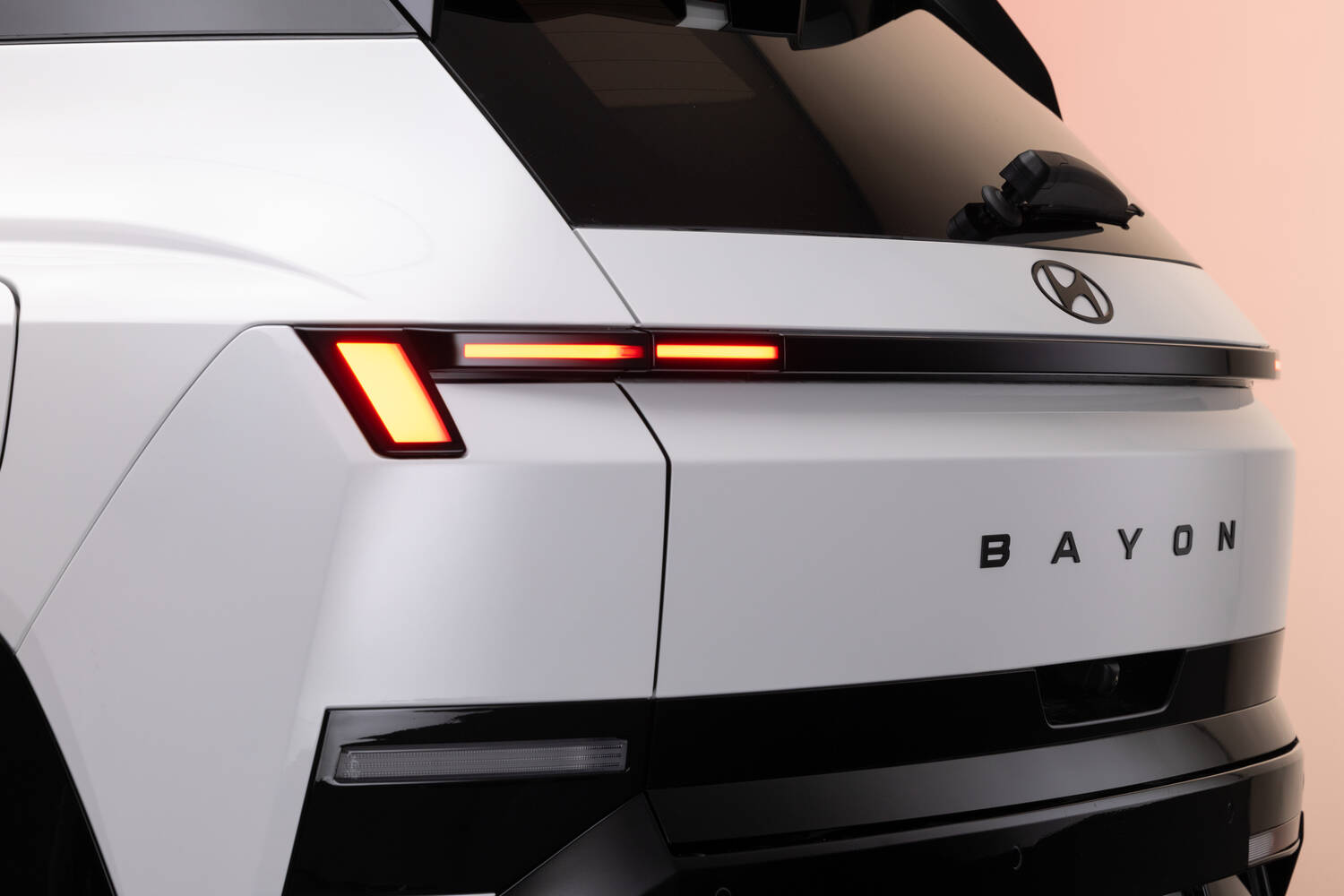
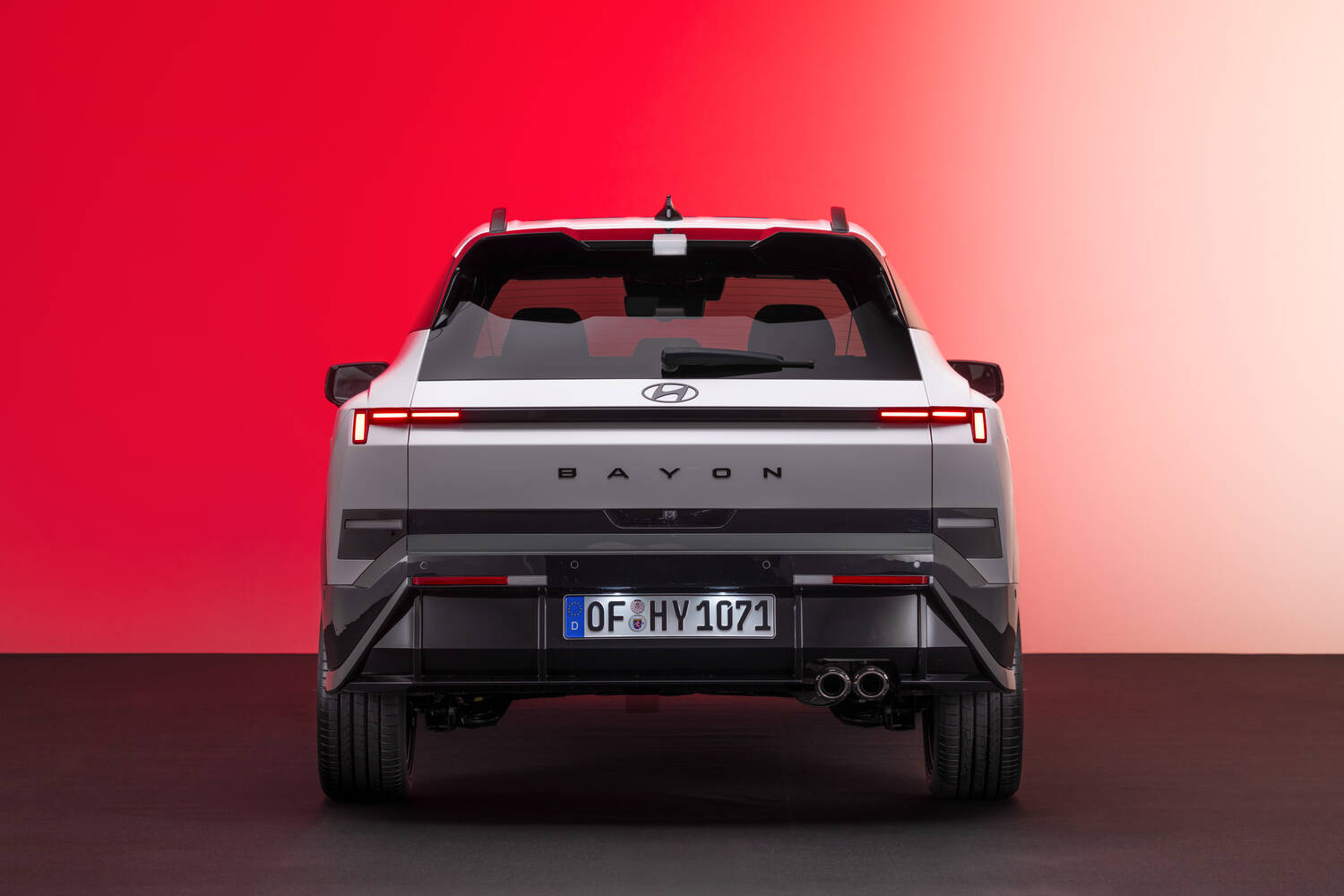
The style of the front lights is repeated at the rear, and these are joined by a black bar, below which is the Bayon wordmark.
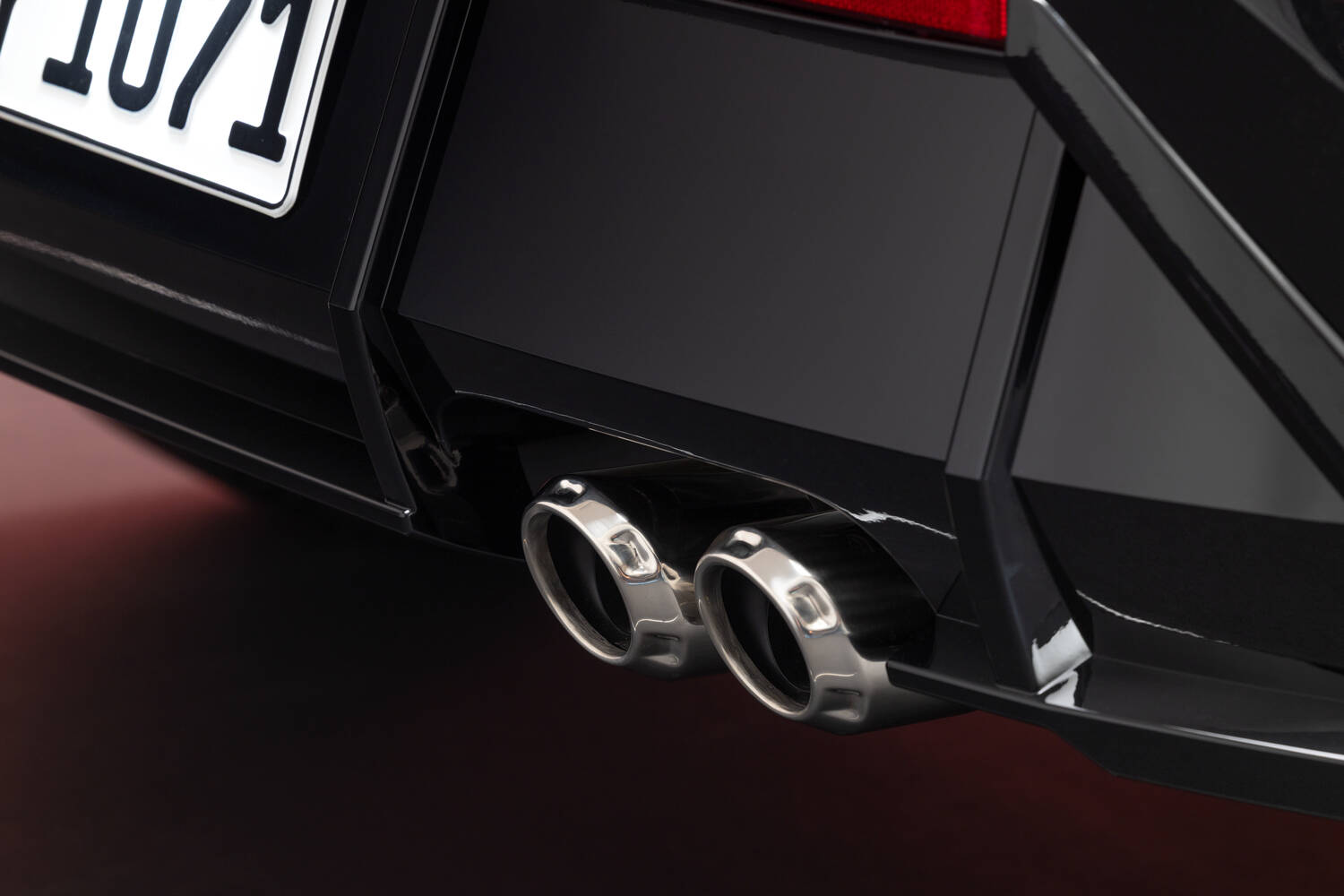
The rear bumper on the N Line gets more of the gloss-black treatment, and the presence of twin exhaust tips adds to its sporty look.
The exterior dimensions of the new Hyundai Bayon are:
Length: 4,245mm
Width: 1,810mm
Height: 1,565mm (petrol model), 1,555mm (hybrid model)
Wheelbase: 2,600mm
What’s it like inside the Hyundai Bayon?
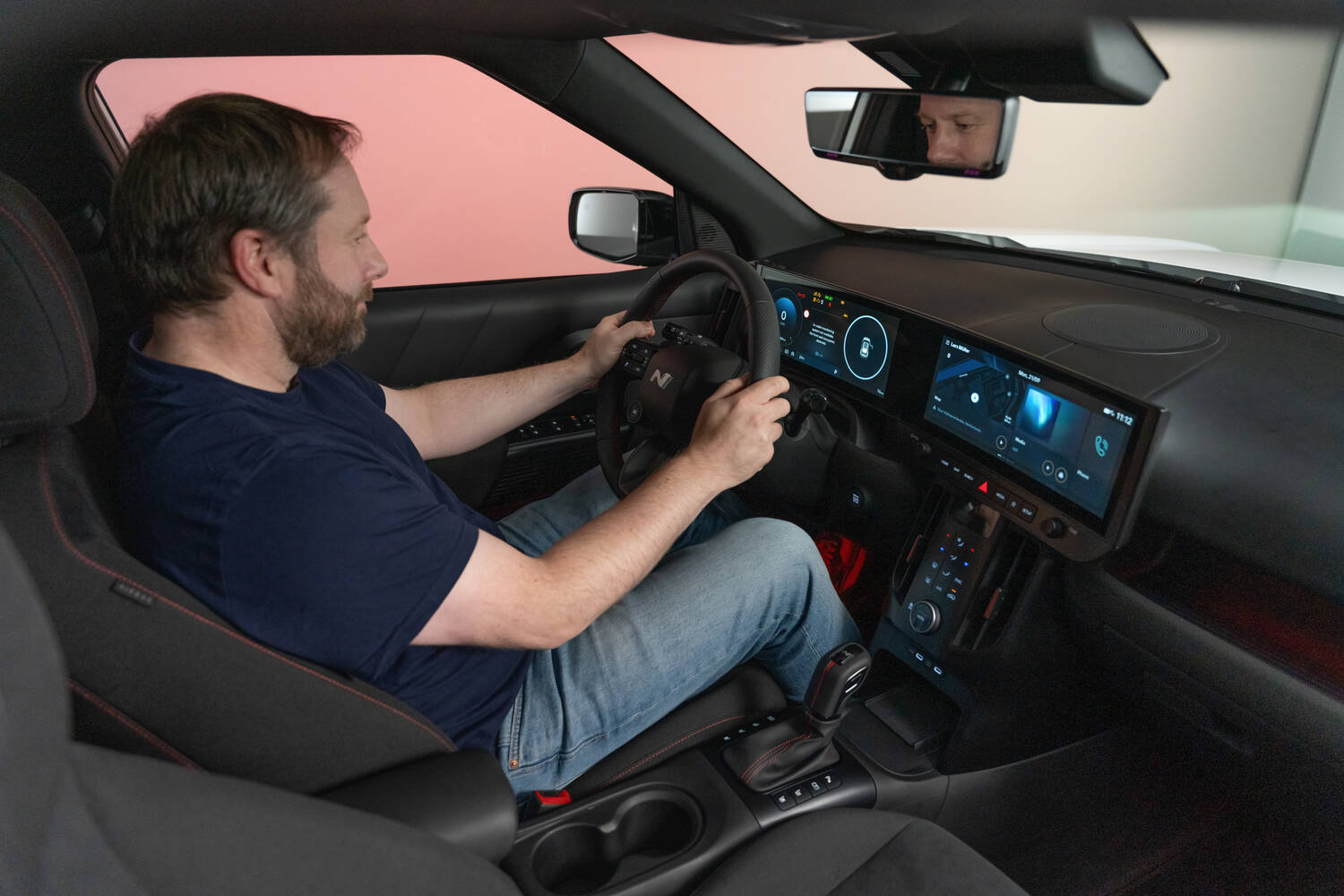
The interior features a huge step forward in terms of design and a noticeable uptick in material quality too.
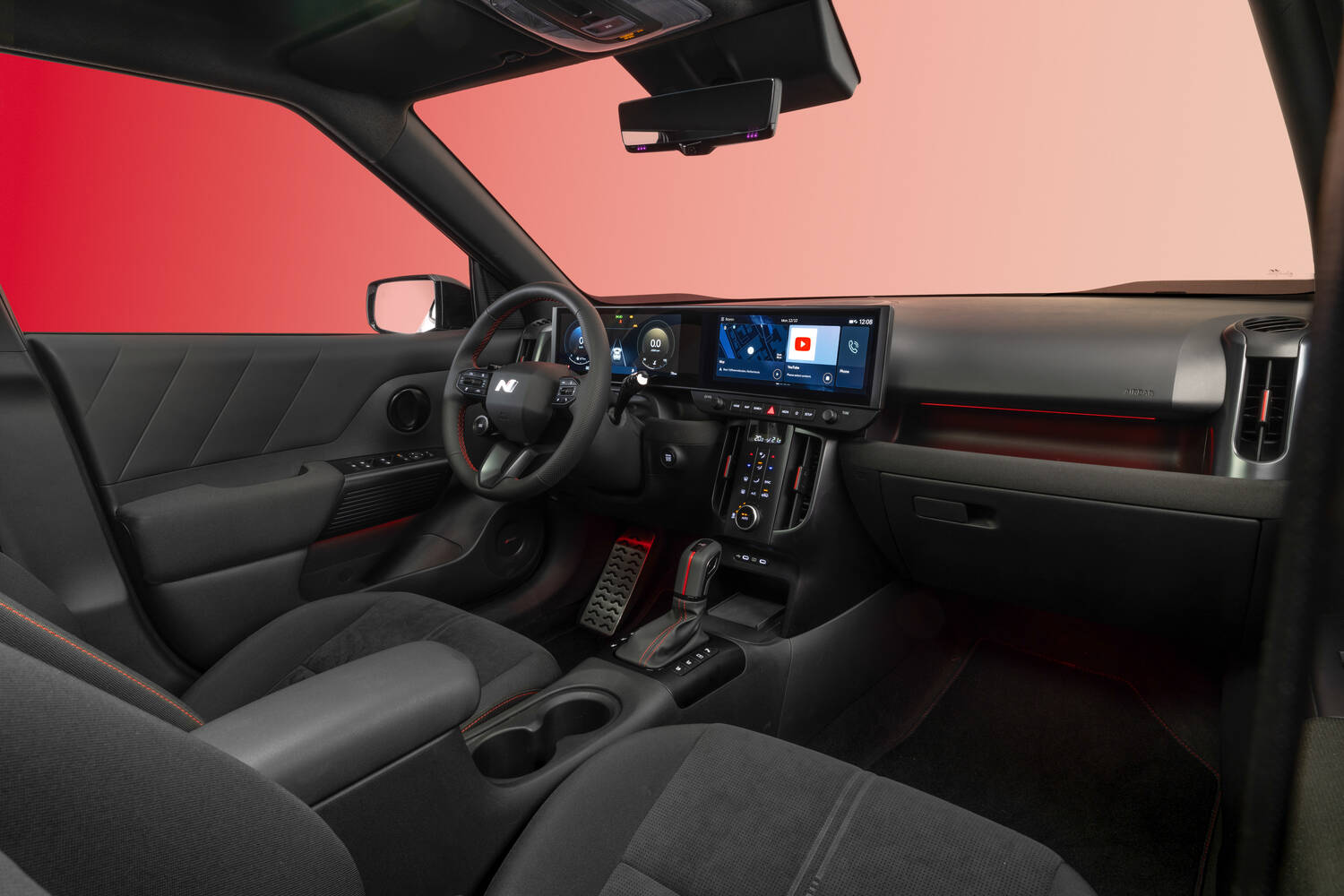
Among the highlights is the dual 12.3-inch curved display that features a digital instrument panel and matching touchscreen. The connected infotainment system includes smartphone mirroring for Android and Apple devices. Physical shortcut buttons below improve functionality.
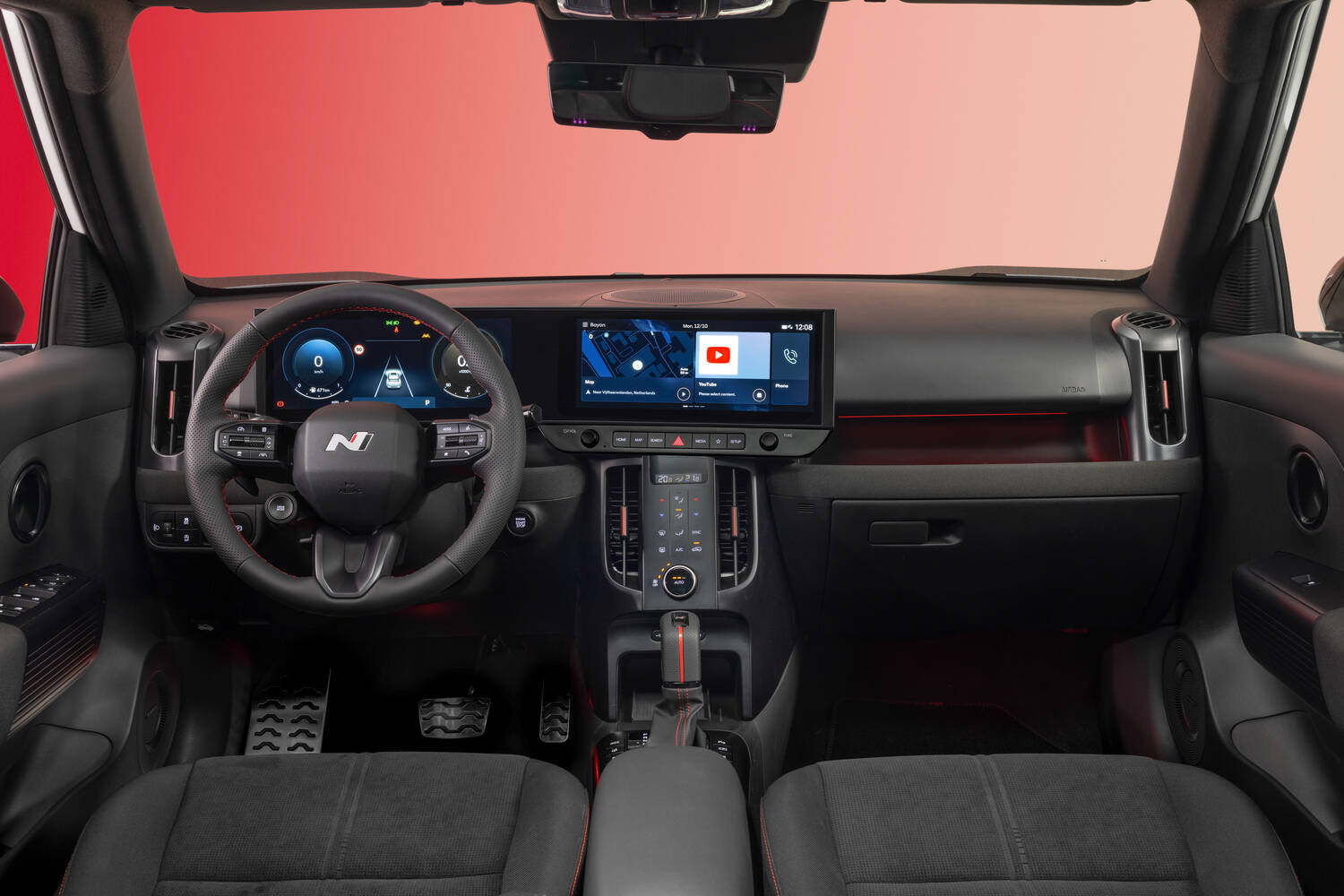
The climate controls are done through a haptic touch panel nestled between the central air vents. Other details of the centre console include the provision of a wireless charging pad and USB-C charge ports.
On either side of the shifter are buttons for the heated seats, parking sensors and parking camera.
Other details in the N Line model include metal pedals and a specific three-spoke steering wheel that includes a circular drive mode selector as a satellite button.
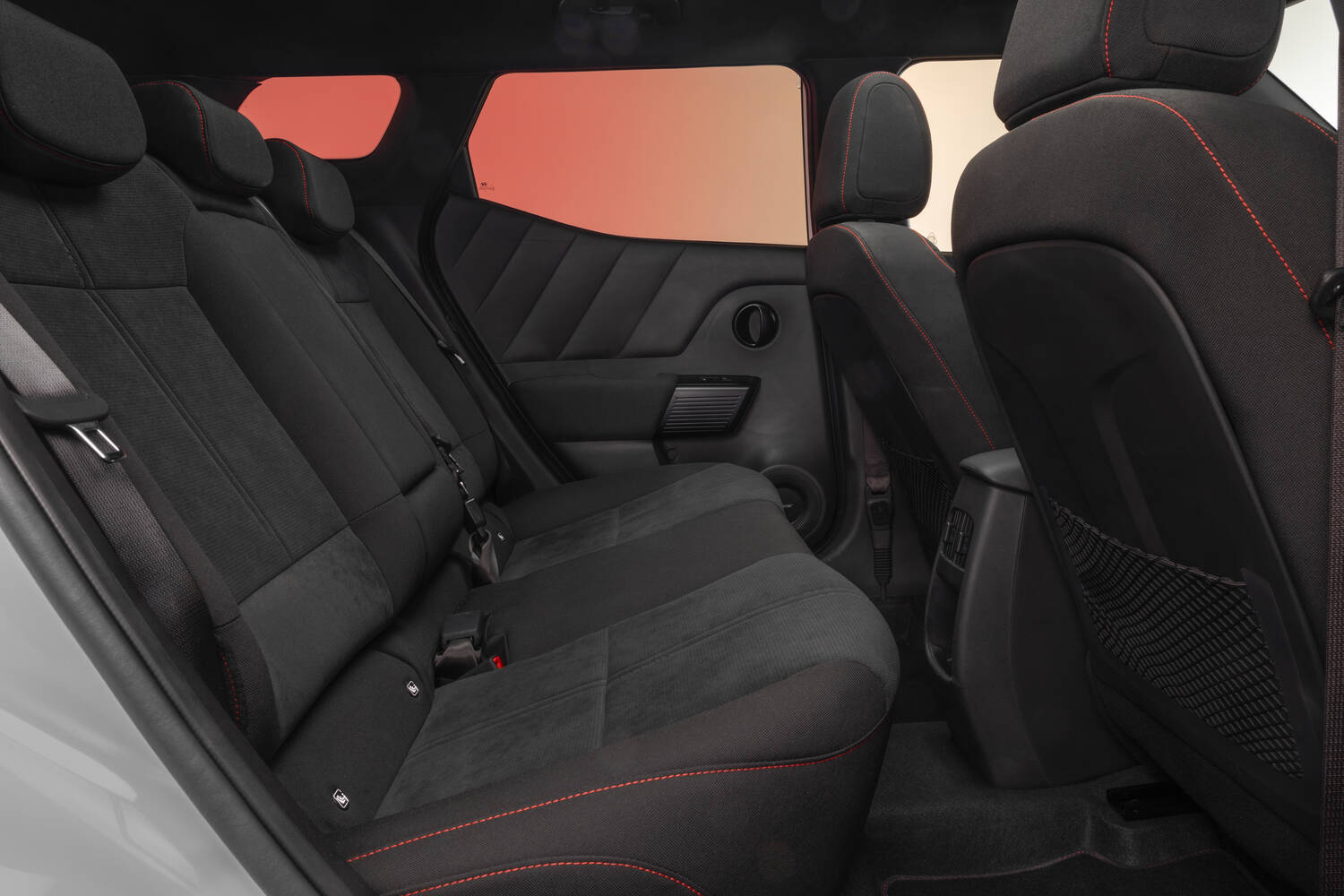
Ambient lighting adds a three-dimensional aspect to the dashboard fascia and can be changed to individual preferences. The front seats are upholstered in a mixture of cloth and suede with contrasting red stitching.
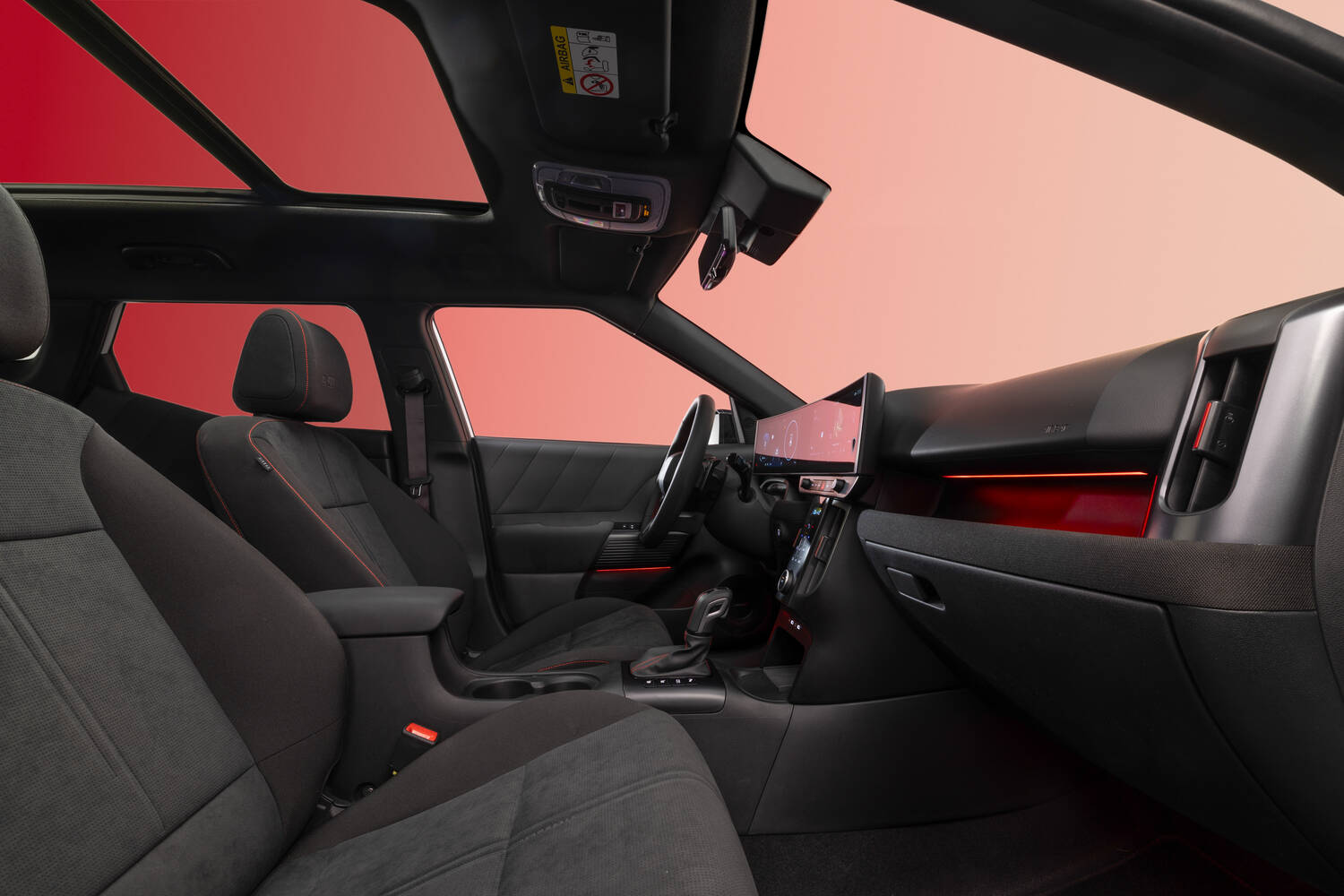
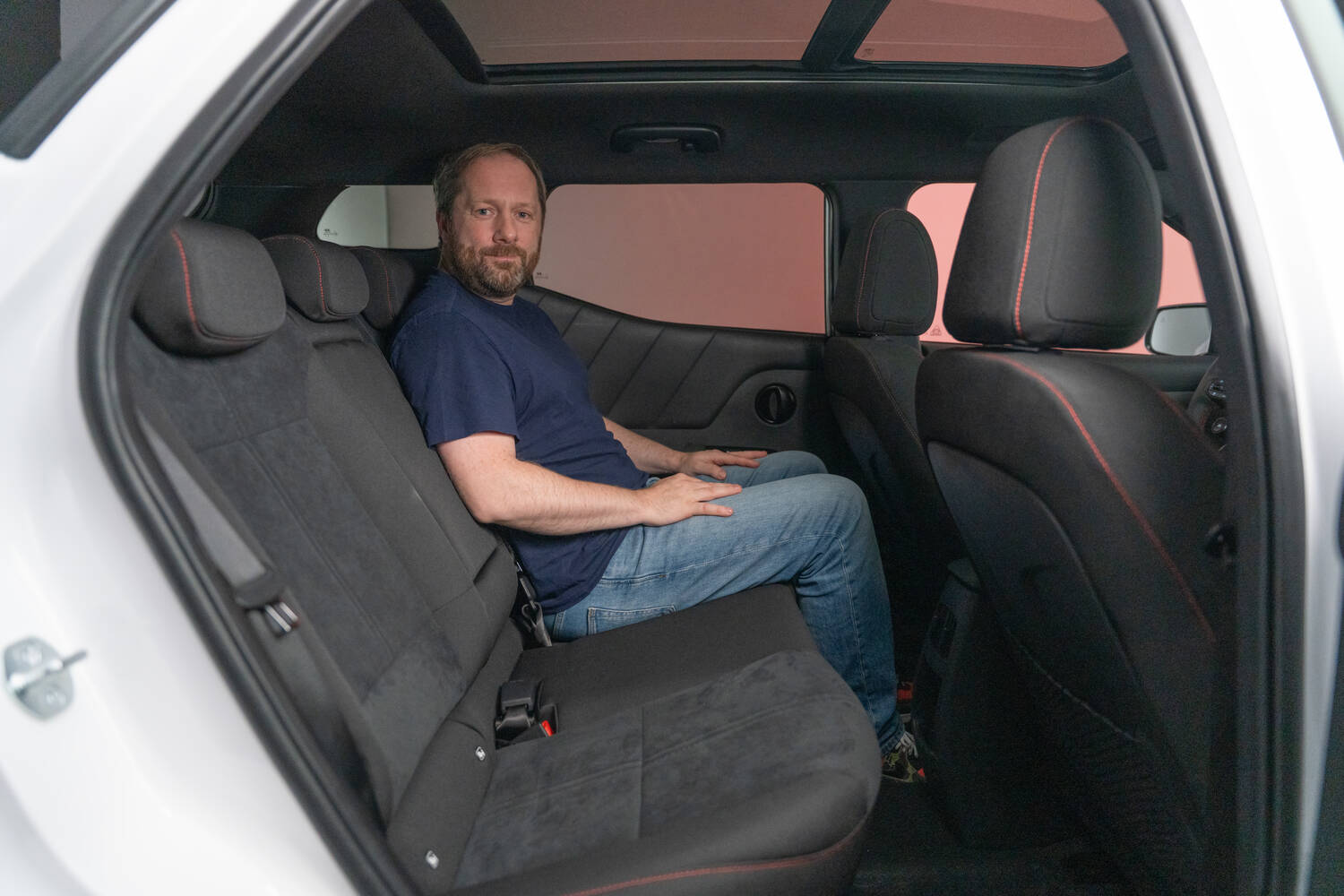
There is now more room for passengers in the rear of the Bayon with more legroom and reclining seatbacks, while a centre armrest contains two cupholders.
Higher grade versions also offer heated outer seats in the rear and rear air vents. An optional panoramic sunroof adds to the sense of space.
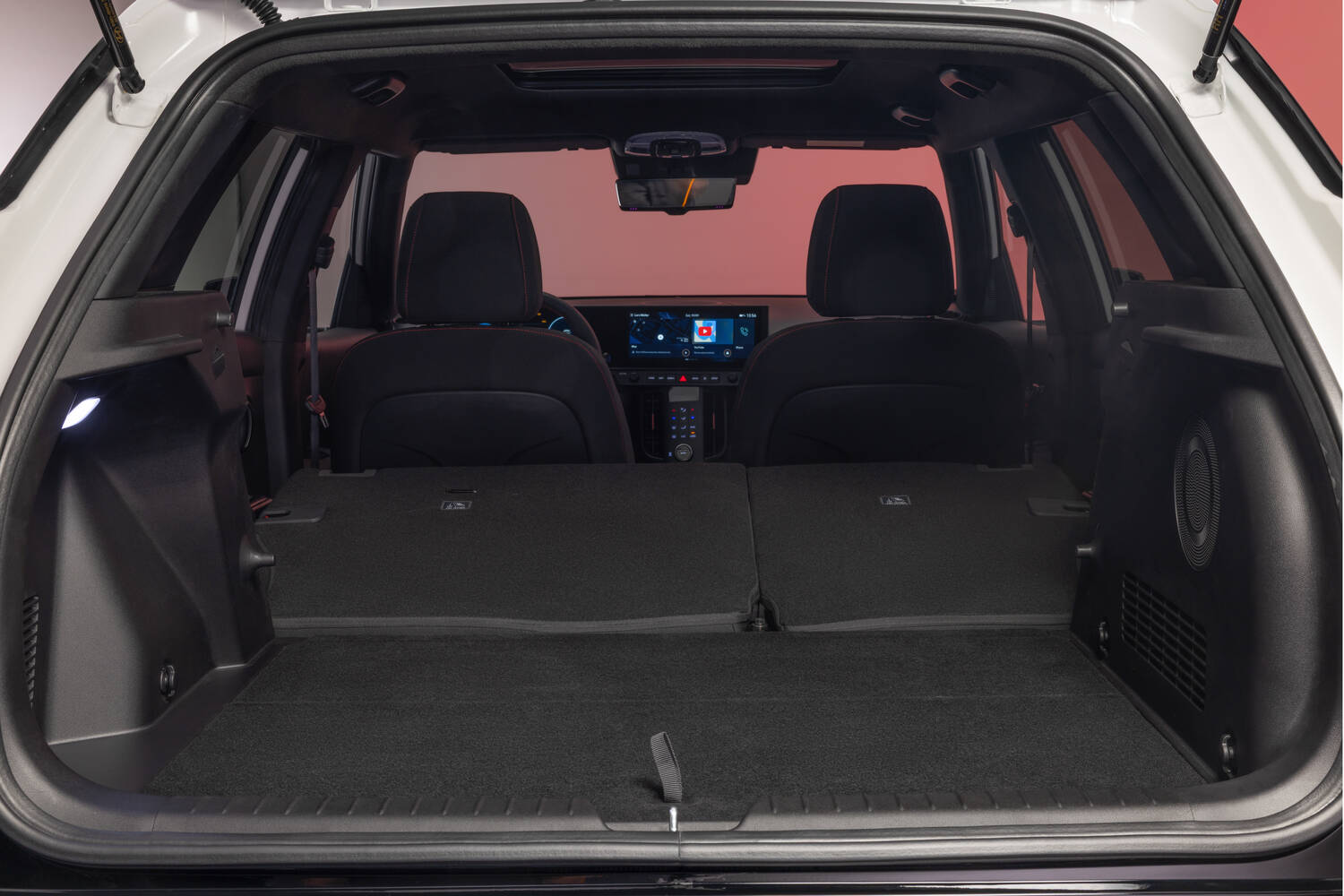
There are 440 litres of boot space available in the petrol versions of the Bayon, which includes some underfloor storage.
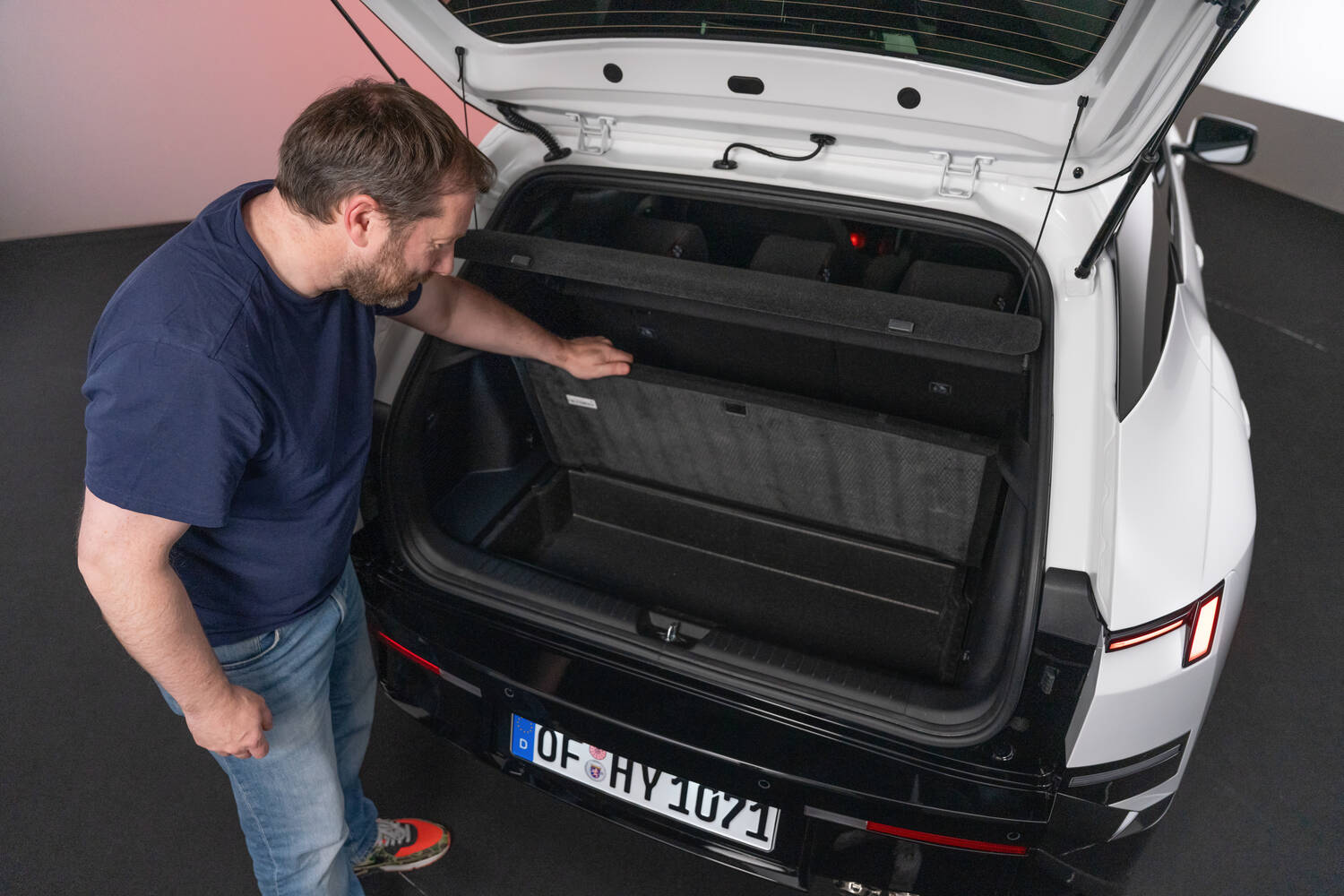
Folding the rear seats down can boost the Bayon’s total cargo capacity to 1,257 litres. Boot volume in the hybrid is slightly smaller due to the traction battery packaged underneath, at 397 litres and up to 1,214 litres with the rear seats folded.
The full list of exterior paint choices for the new Hyundai Bayon is: Atlas White Solid, Abyss Black Pearl, Lumen Gray Pearl, Aurora Gray Pearl, Vibrant Blue Pearl, Vibrant Blue Matte, Ice Blue Pearl, Ice Blue Matte, Fierce Red Solid and Fierce Red Matte.
Ecotronic Gray Pearl and Ethereal Mint Green Pearl are planned to join the range from May 2027, though we don’t yet know if those all will be available on the Irish market.
What engines are available in the Hyundai Bayon?
There will be a choice of petrol or hybrid engines for the new Hyundai Bayon. The range kicks off with a 90hp 1.0-litre T-GDI turbocharged three-cylinder petrol engine that can be paired with either a six-speed manual or seven-speed dual-clutch automatic transmission. That engine also comes in a more powerful 115hp guise.
A single hybrid powertrain is also available using a 1.6-litre four-cylinder petrol engine and producing a total output of 138hp. It’s paired with a six-speed dual-clutch automatic gearbox.
This version will allow the driver to alter the level of energy recuperation via paddle shifters on the steering wheel, while the adaptive setting for the regenerative braking system adjusts the recuperation according to driving conditions.
Can the Hyundai Bayon tow?
Yes, though it’s not capable of towing a huge amount. Both the 90hp 1.0 T-GDI and the 1.6-litre hybrid can tow 910kg. The more powerful 115hp 1.0 T-GDI can tow up to 1,110kg.
The Hyundai Bayon is expected to go on sale in time for the 271-registration period, and Irish pricing will be announced in the near future.
If there is anything about this story we have not covered, you can avail of our expert advice service via the Ask Us Anything page.