
What record did Volkswagen Mission Efficiency set?
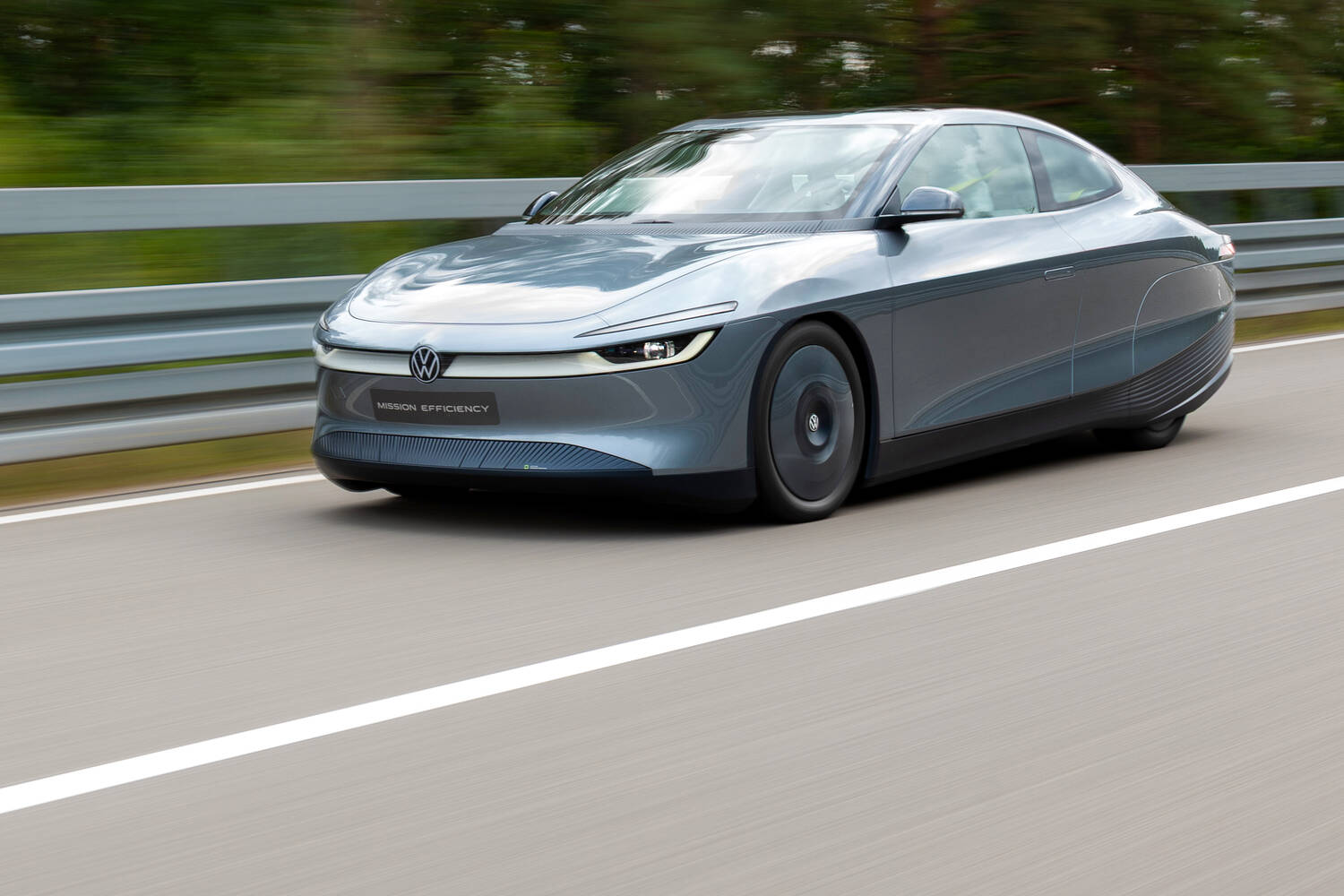
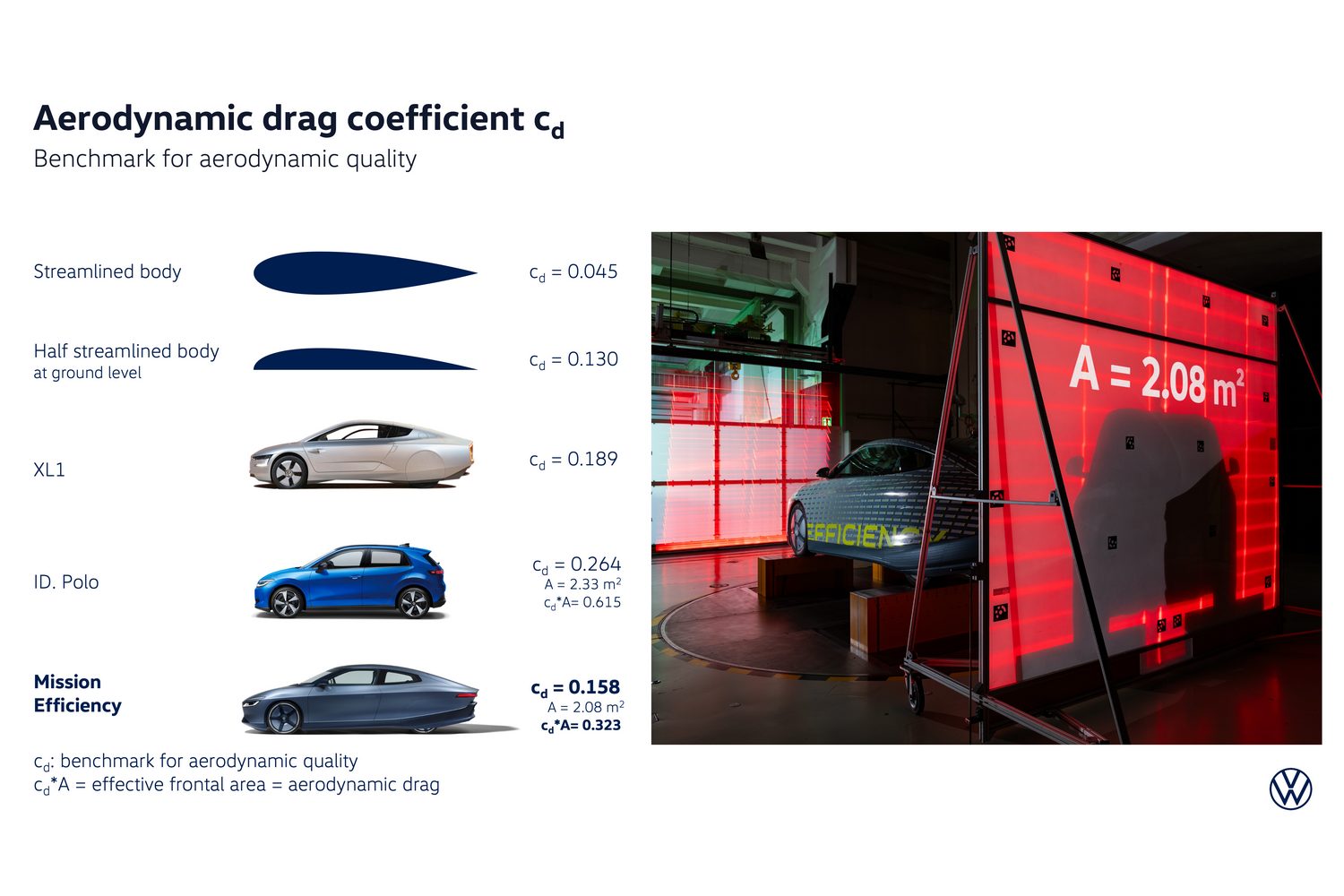
It actually has already set three world records, firstly as the most aerodynamic car approved for road use. That’s thanks to a drag co-efficient value (the unit of measurement to see how freely something moves through the air) of 0.158. For reference, the Volkswagen ID. Polo has a value of 0.264.
The Volkswagen Mission Efficiency also claimed a record for the lowest energy consumption during an ‘ideal trip’, meaning one where the speed remains constant (in this case it was 68km/h), there are no uphill gradients and auxiliary energy consumers such as air conditioning are turned off. In doing so, the car consumed just 6.48kWh/100km.
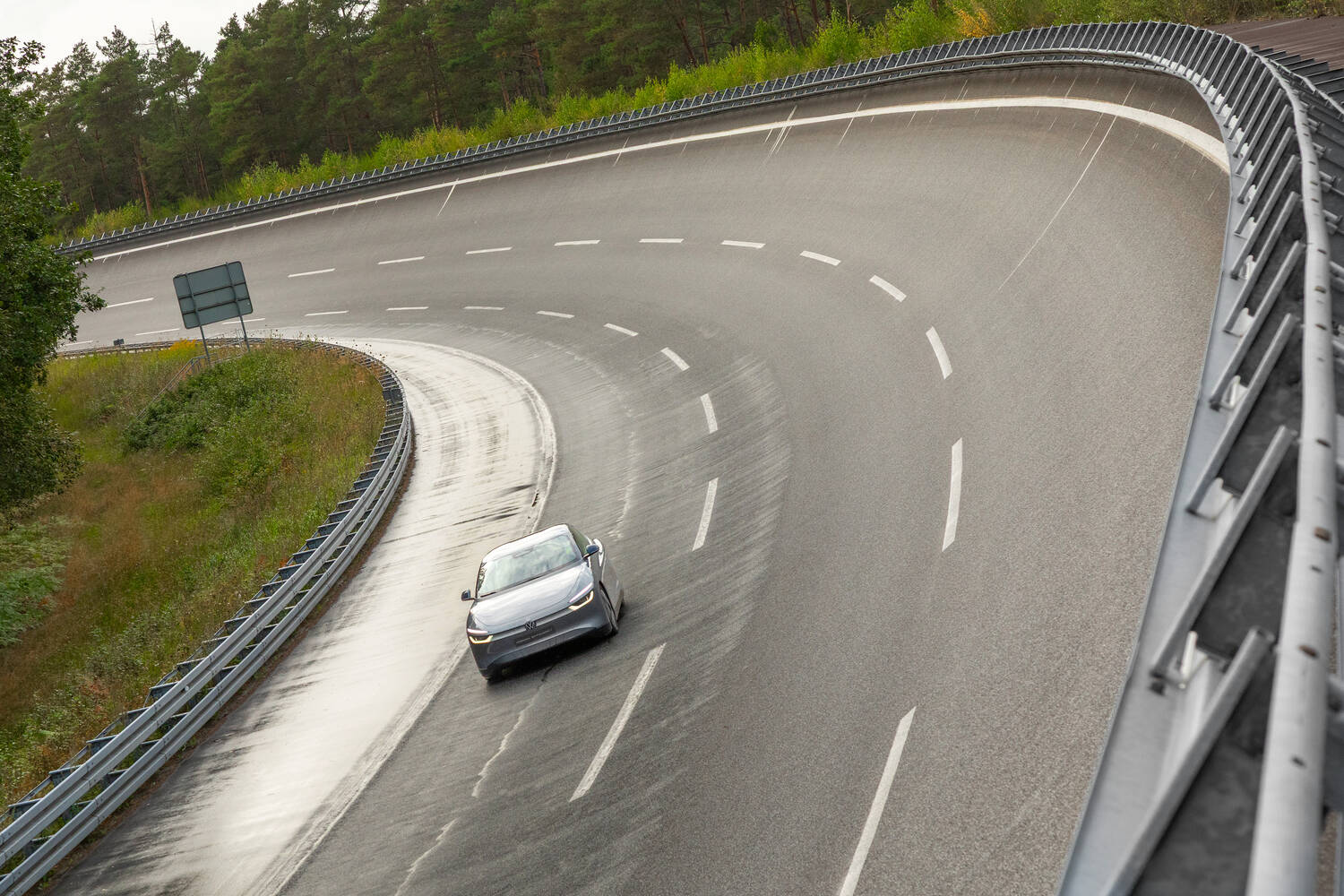
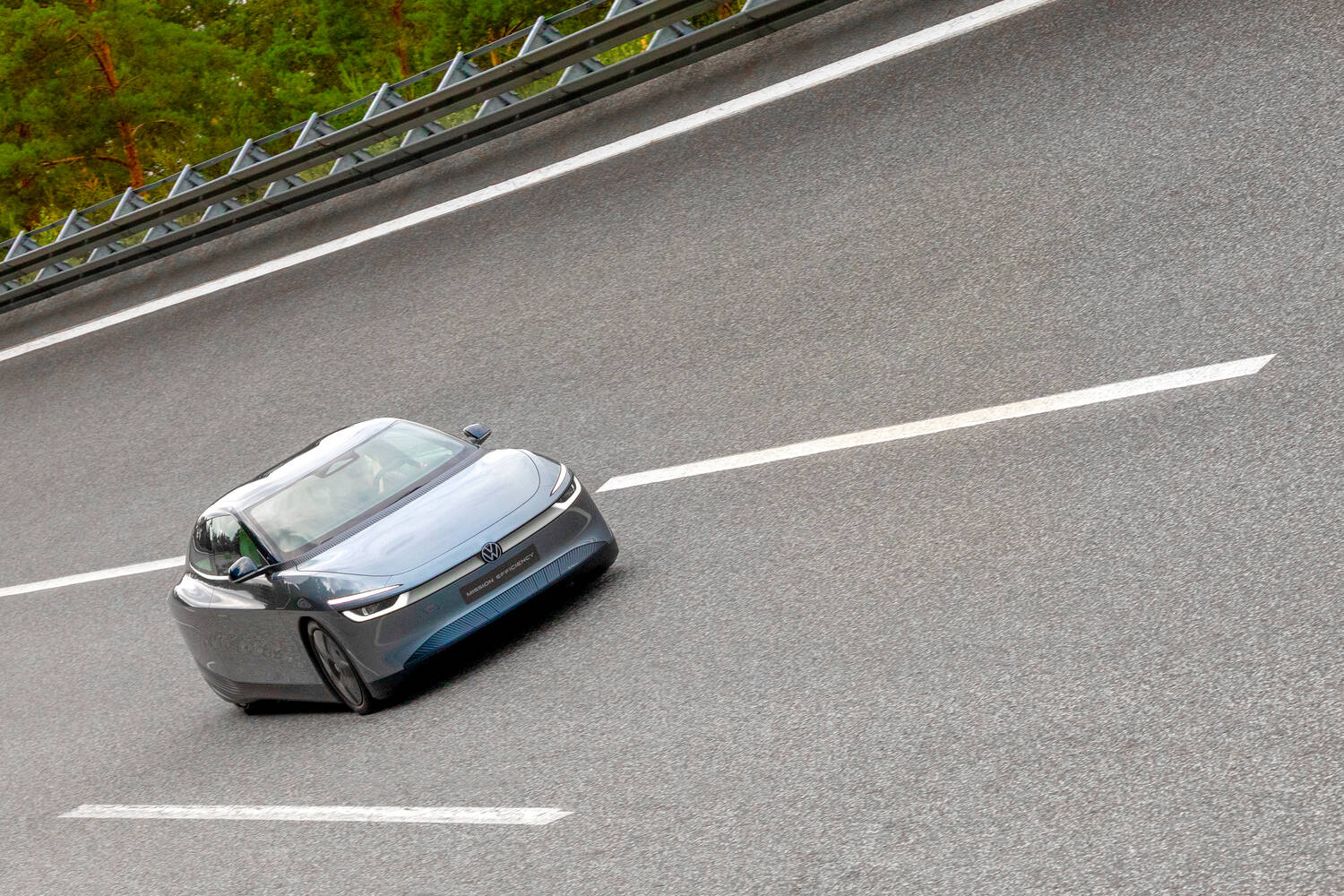
Its third record is every bit as impressive as the others: it’s the most economical near-production electric car yet. It achieved this during an officially documented drive on public roads.
Departing from Volkswagen’s Research and Development Centre in Wolfsburg, it went via Poznań in Poland and through Olmütz in the Czech Republic before arriving in Vienna, Austria.
During this trip, the Mission Efficiency consumed 7.51kWh/100km including charging losses. Without charging losses, the figure was 6.89kWh/100km. The average speed was 67.72km/h while the top speed recorded was 138km/h. Only one charging stop was needed during the trip, and it reached Vienna with 164 kilometres of range remaining.
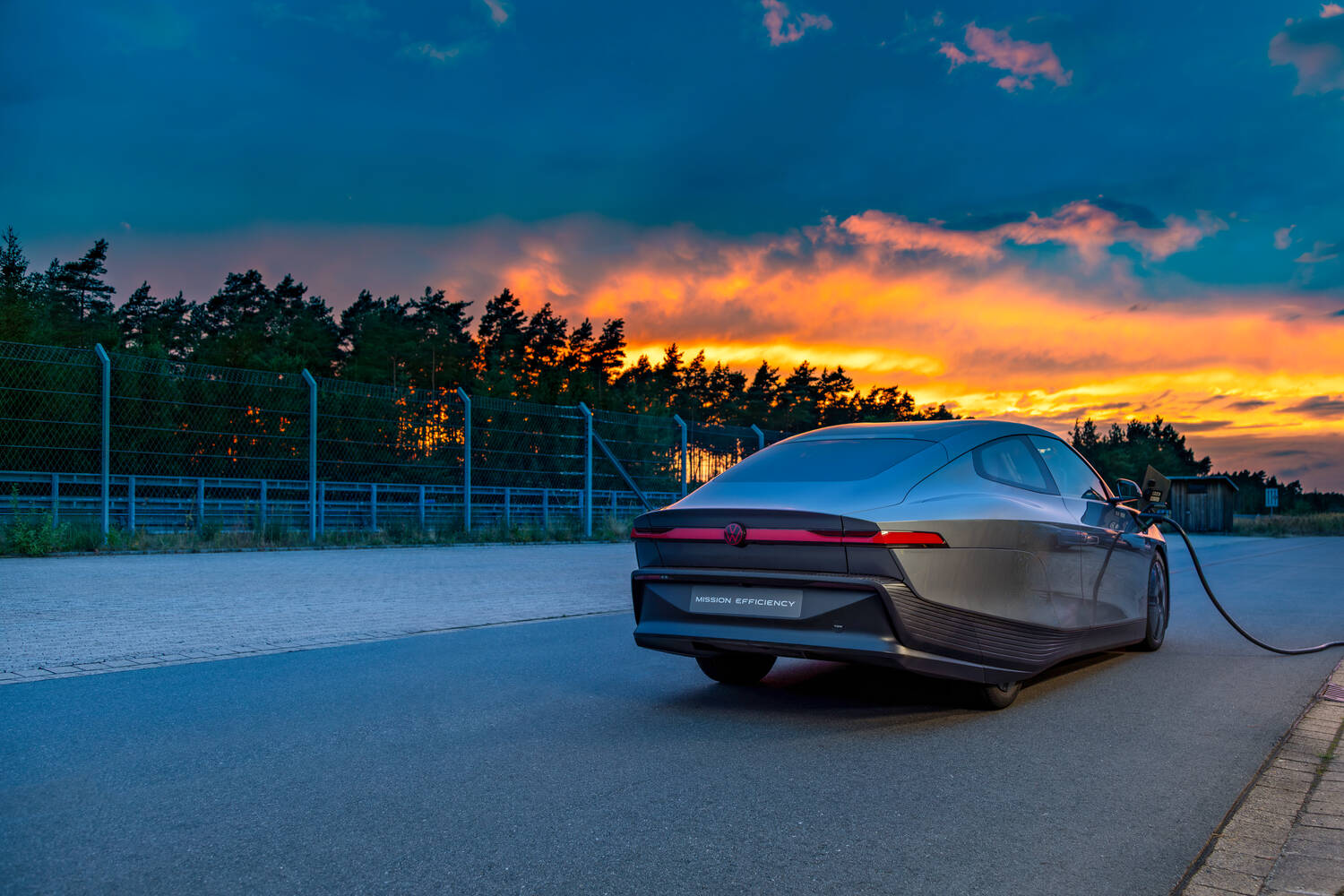
Why does the Mission Efficiency look so unconventional?
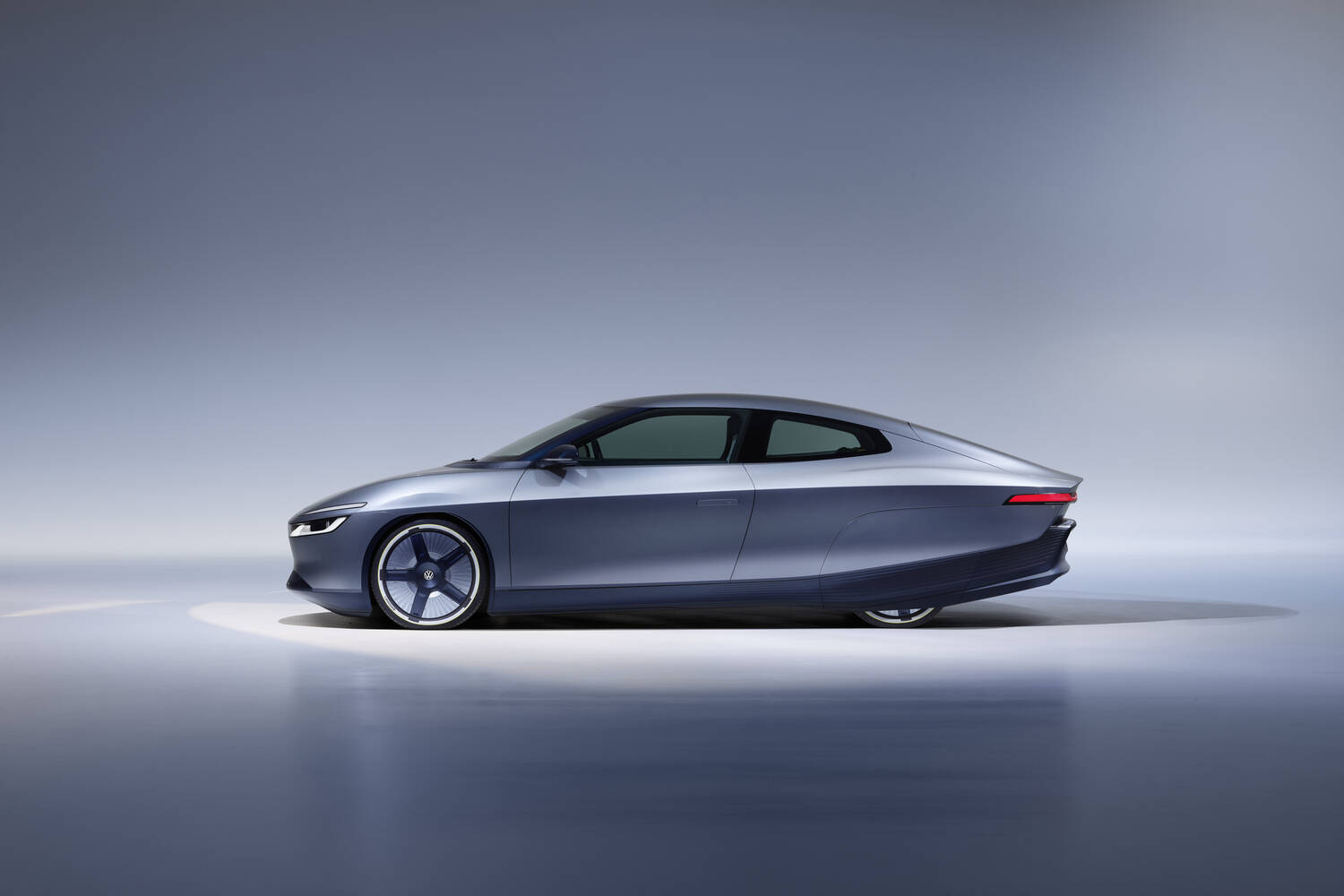
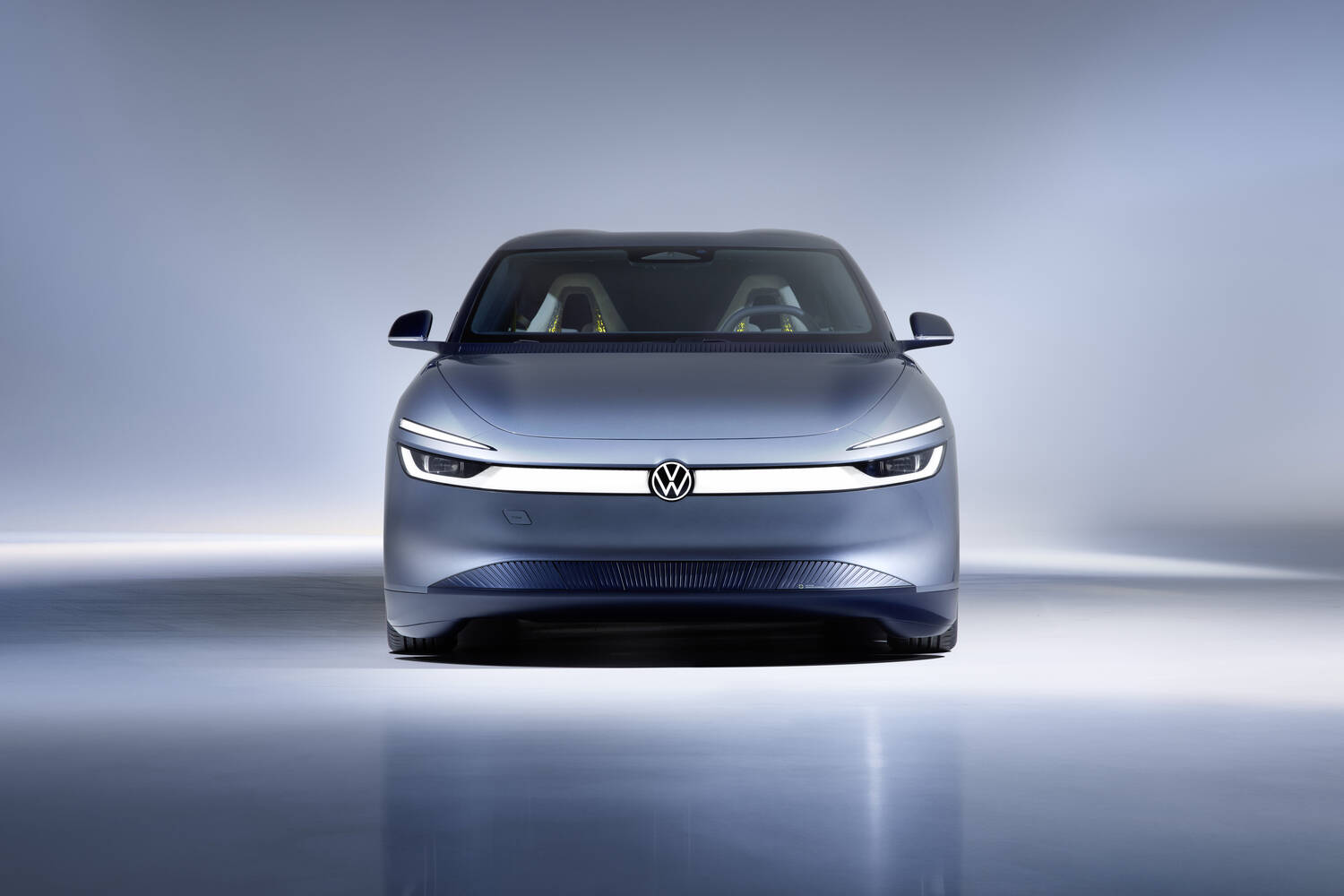
Every aspect of the Mission Efficiency’s exterior is about aerodynamics and the reduction of drag. Volkswagen’s designers did exercise some influence over the styling, in particular around the front where the car uses the same LED headlights as the ID. Polo.
These are joined through a light bar that spans the front below the bonnet’s leading edge and features an illuminated VW logo.
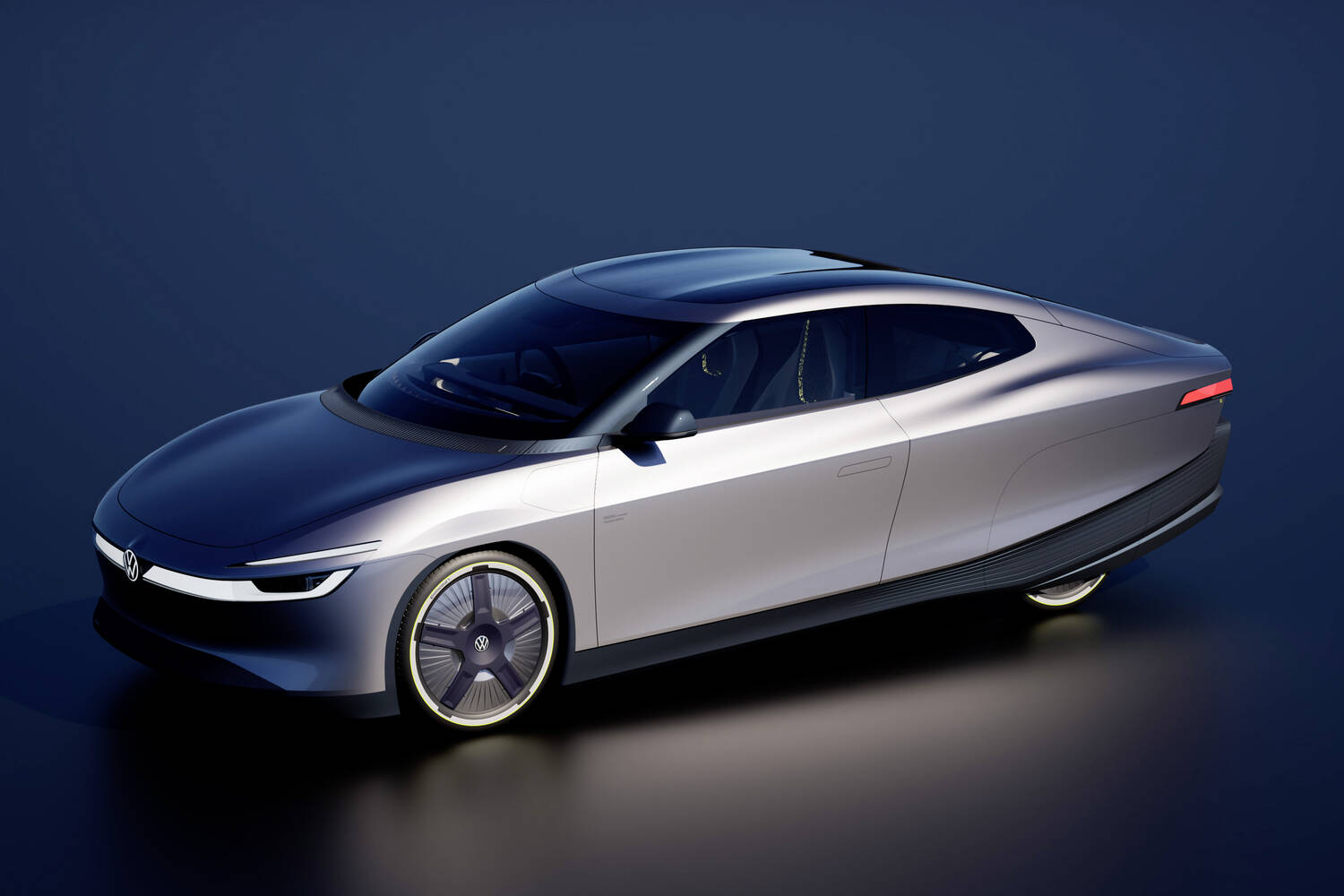
Topping the headlights is a thin sliver of light as part of the daytime running light signature that gives the appearance of coming through the bodywork. That is finished in Aero Silver Grey and features aerodynamic add-on parts in Stardust Blue.
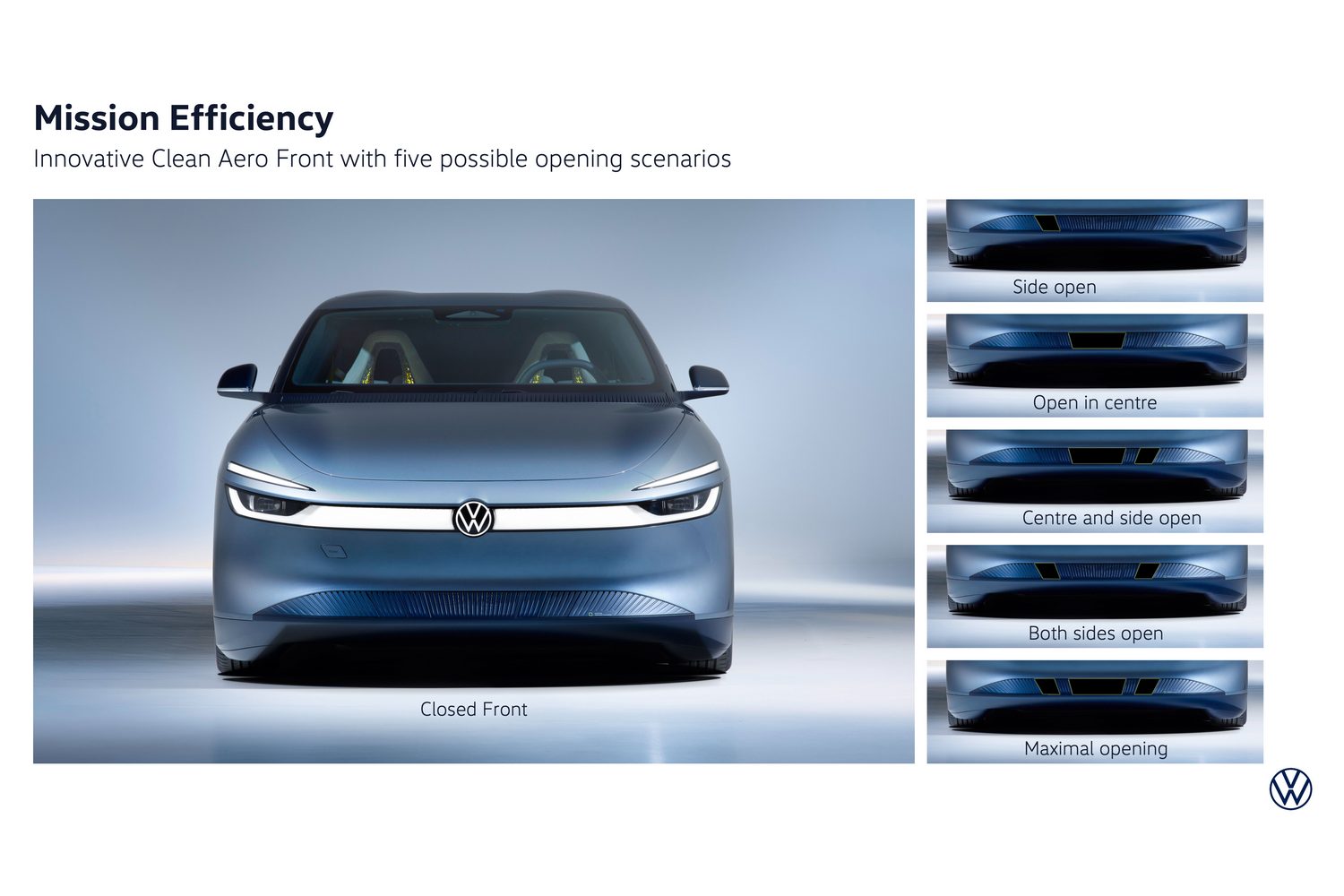
The chin spoiler includes active air vents that open in five different configurations depending on the vehicle’s cooling requirements.
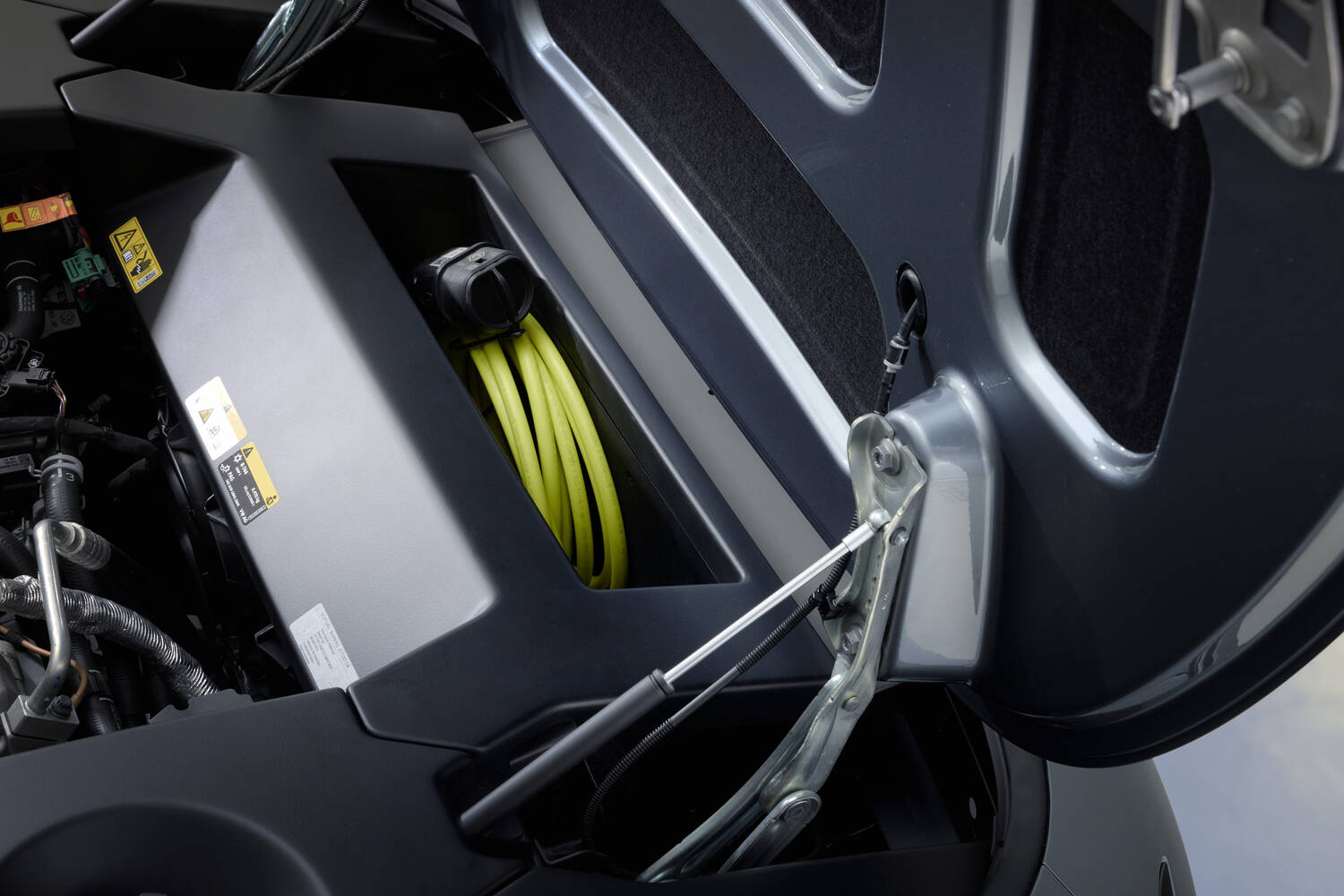
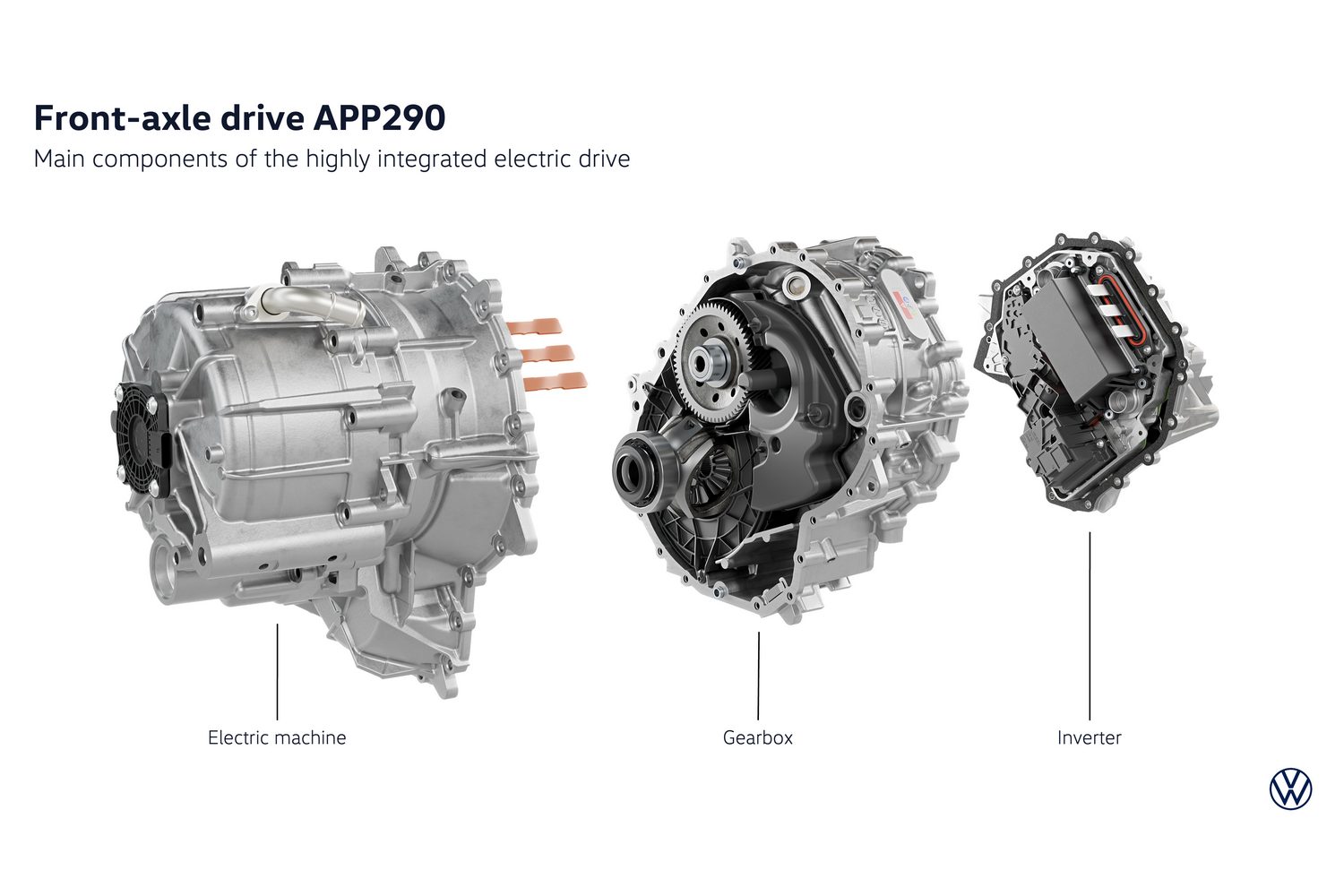
Unlike most production Volkswagens, the bonnet hinges forwards to reveal a sparse engine bay with access to the same ‘APP290’ electric motor that is used by the ID. Polo.
Designed to be as slippery through the air as possible
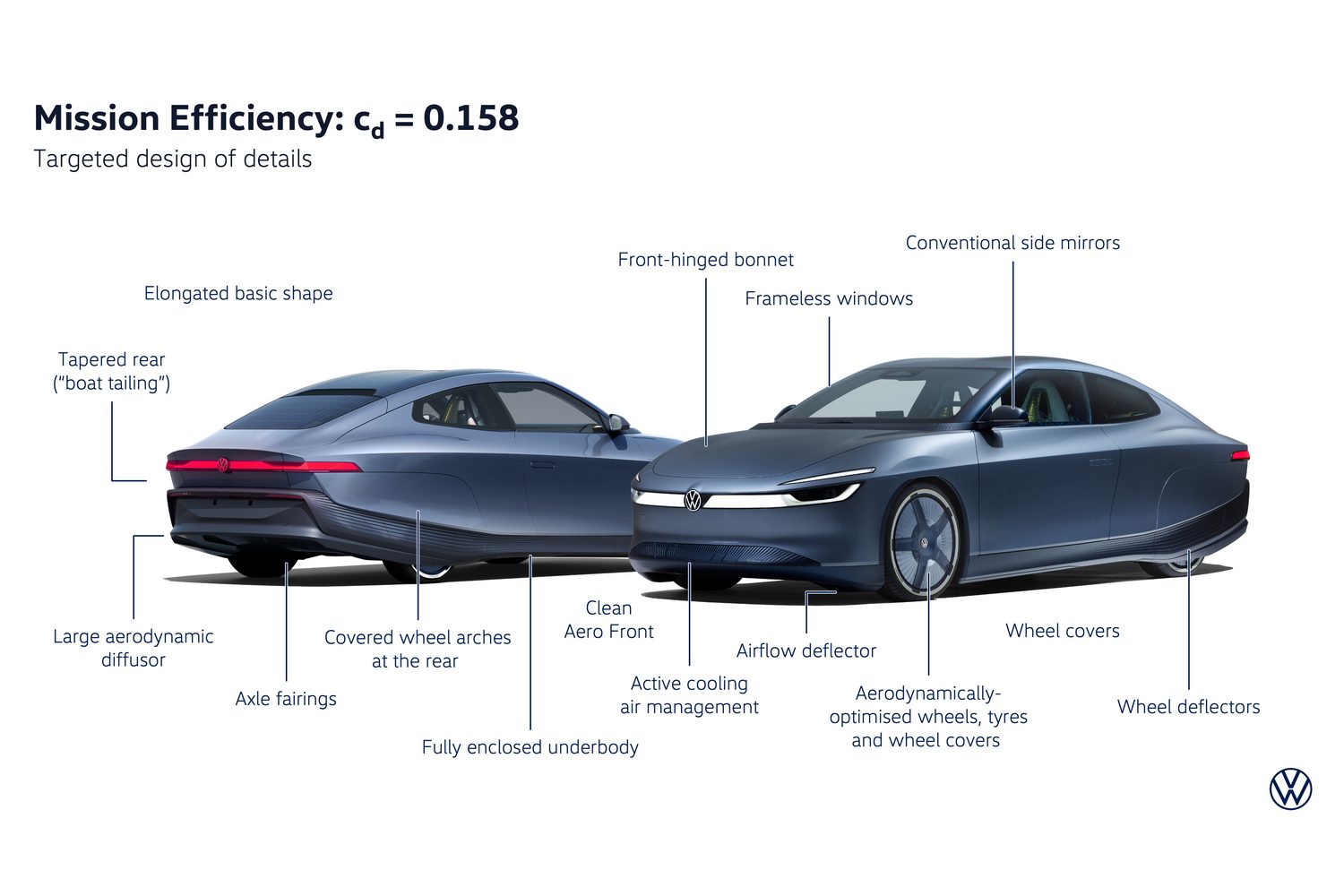
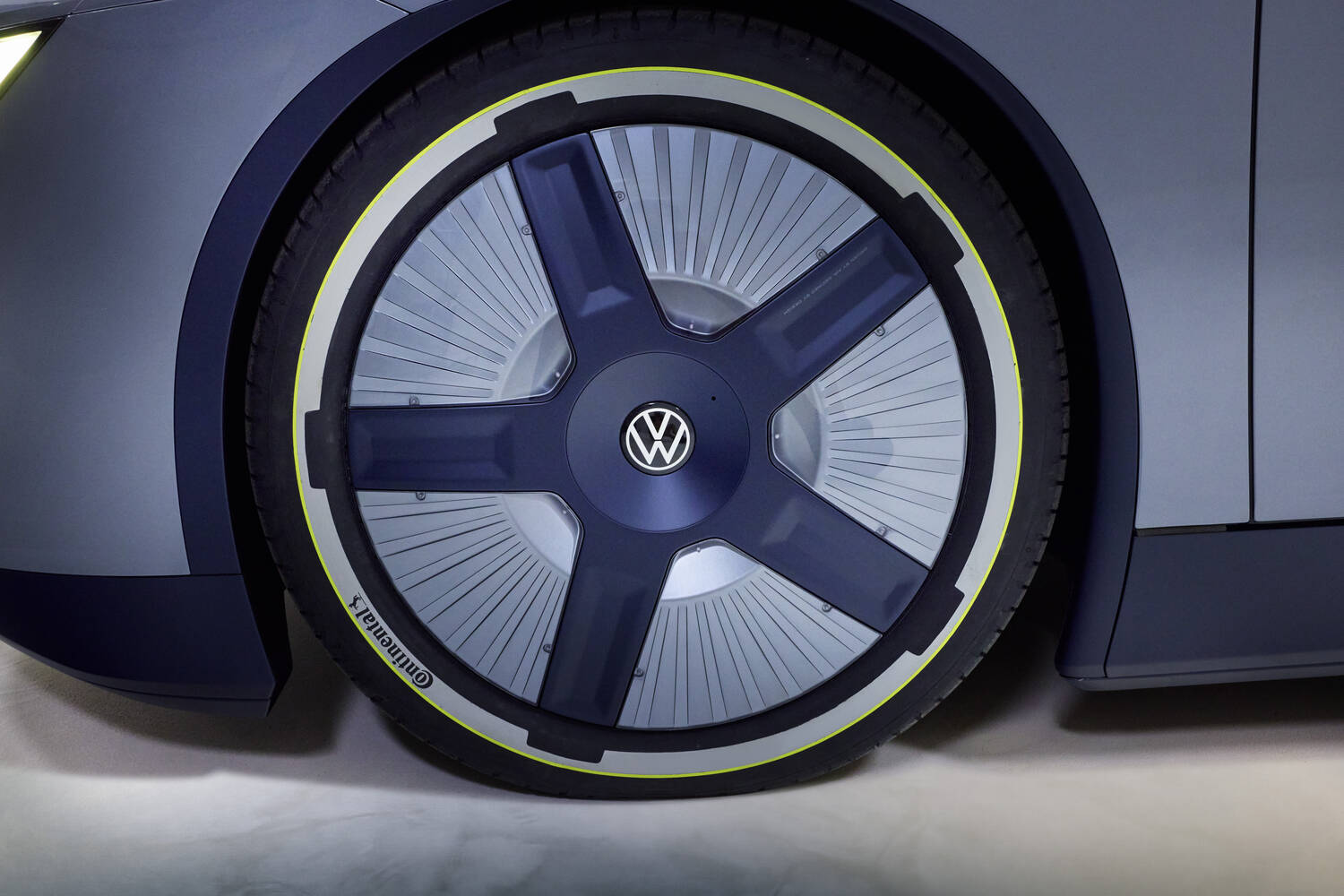
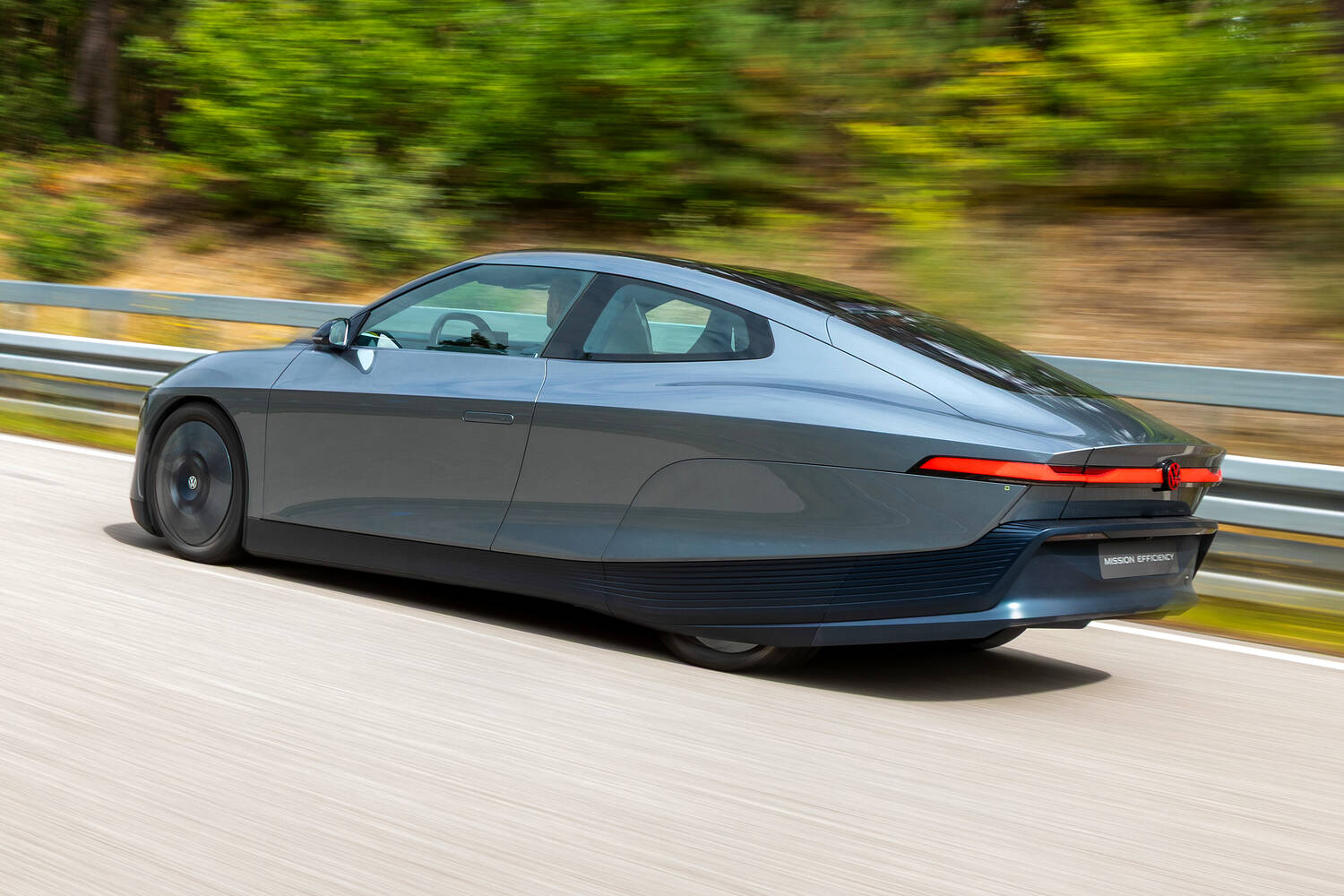
The side view is the most dramatic and most clearly shows how airflow has shaped the car’s look. The 18-inch wheels have a five-spoke appearance when stationary but incorporate covers in between the spokes to prevent drag.
Meanwhile, the wheelarches have been kept intentionally small to leave little-to-no room for air turbulence. A charge port is found on the front right wing, a location chosen for convenience and to reduce the amount of internal cabling needed - to save weight.
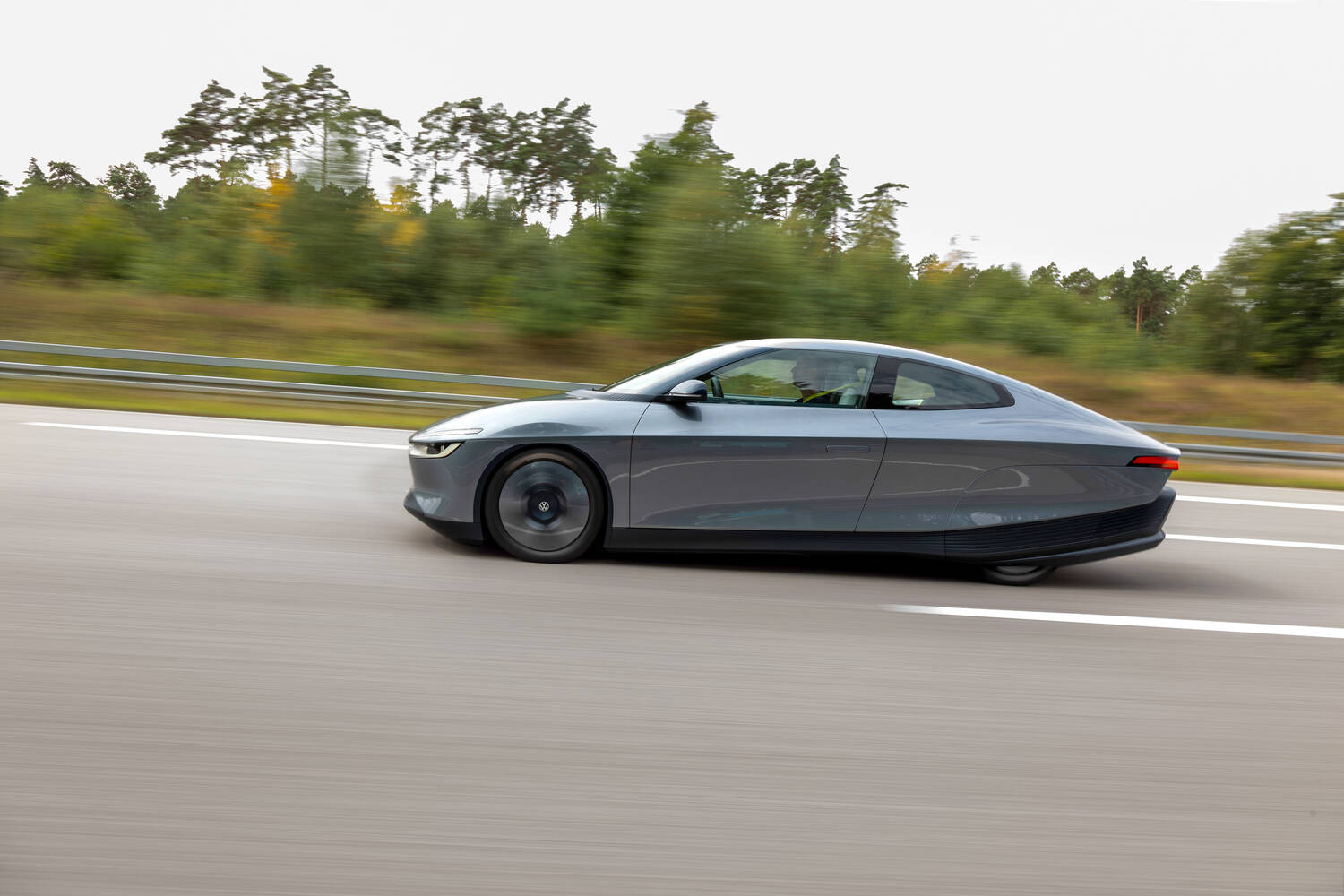
The door handles sit flush with the bodywork when locked, but unlike some other low-drag EVs, this Volkswagen sticks with conventional door mirrors. The team behind it explained that smaller camera-style mirrors were considered, but the additional energy consumption for such a setup didn’t justify their use as they give only a limited aerodynamic advantage.
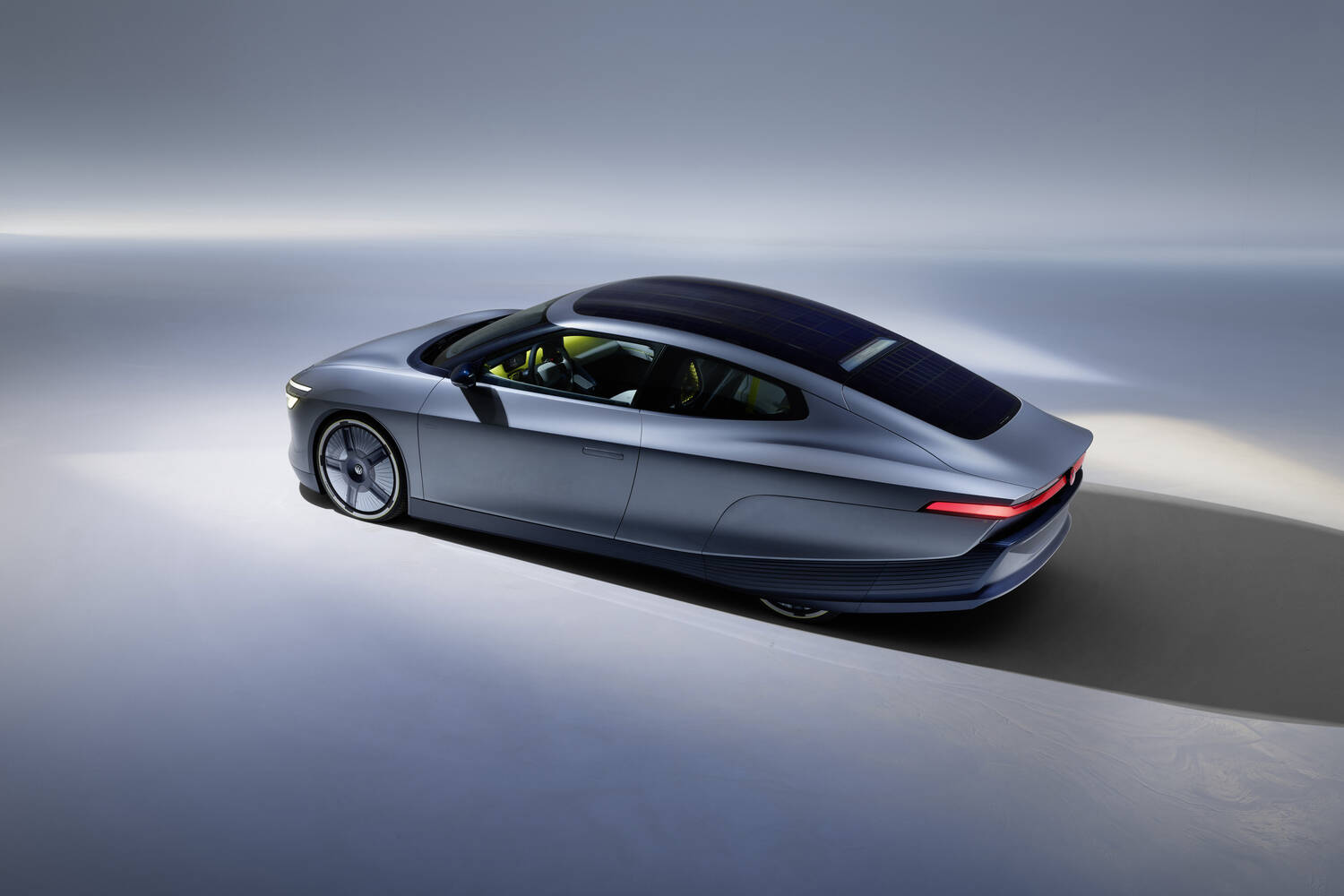
Helping to keep the onboard systems powered without taking away from the high-voltage battery is a photovoltaic panel integrated into the roof and boot lid’s glass. This 370W system is said to be capable of extending the car’s driving range by up to 30 kilometres per day in optimal conditions.
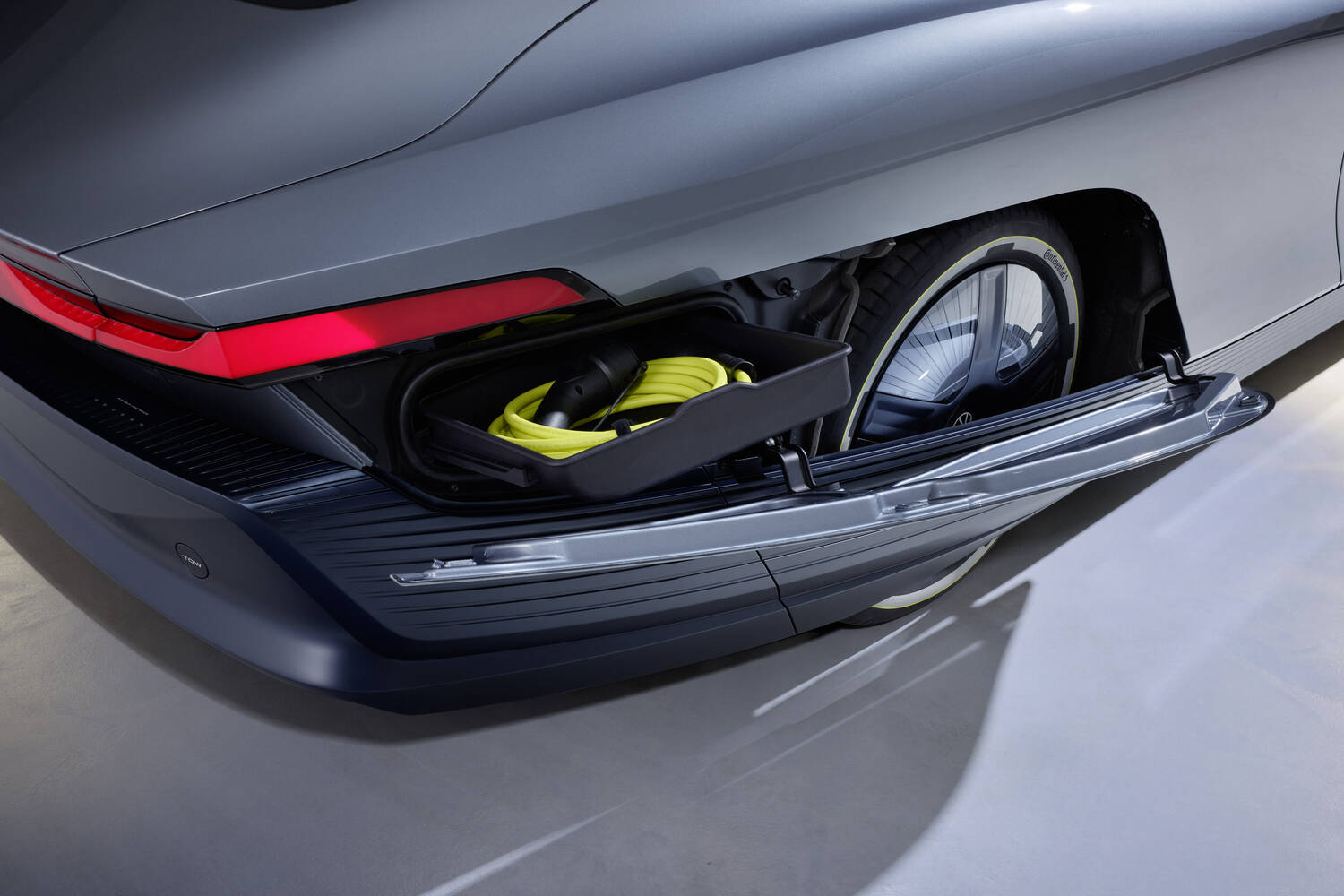
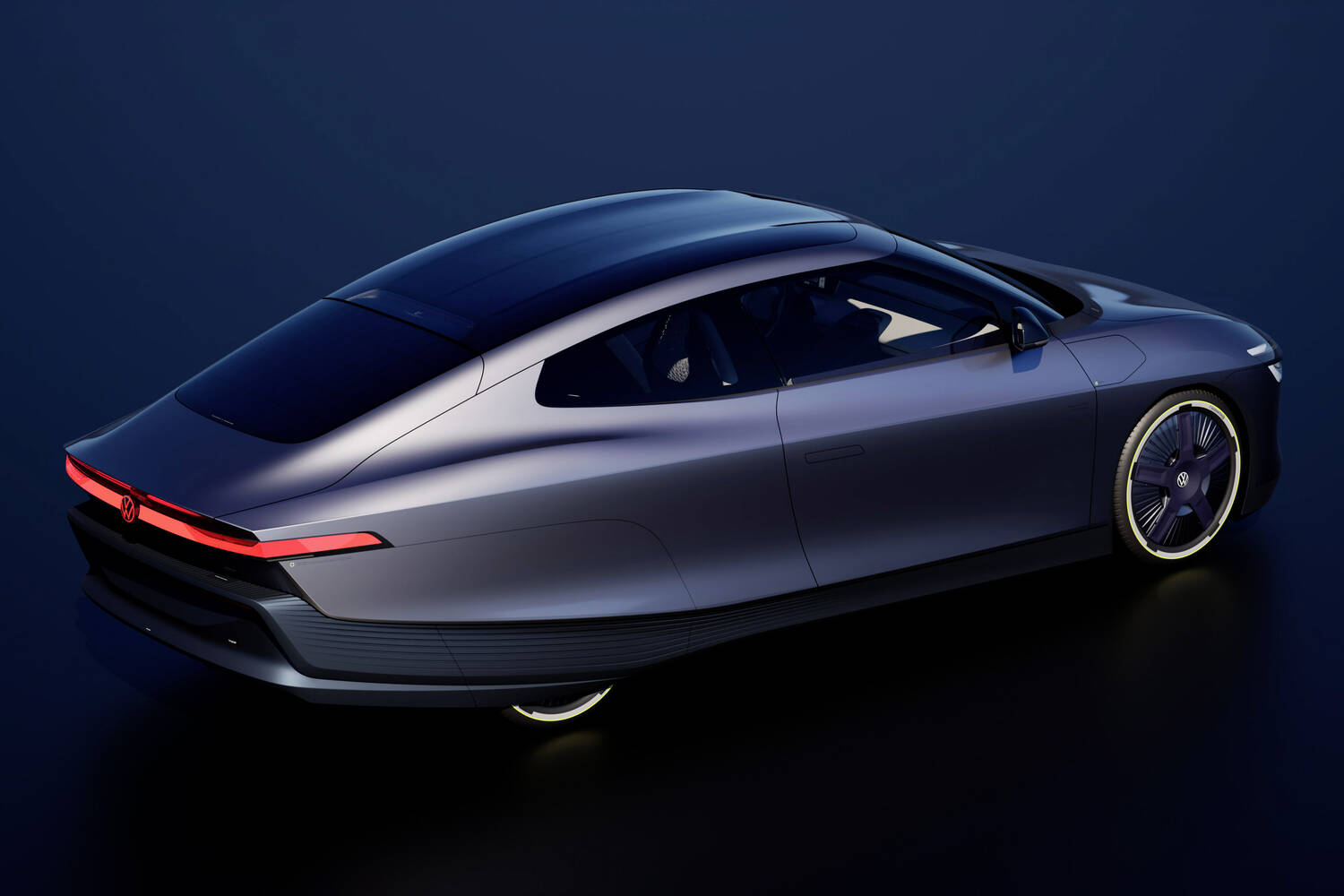
Distinctive rear wheel covers play a crucial role in helping the car glide through the air, but they’re not as impractical as you might think. Both side covers hinge open from the bottom to provide access to the wheel and also to more storage.
On the right side of the car, a tray holding the car’s Type 2 charging cable slides out. There’s also a tyre repair kit and, should the wheel need to be removed, the covers can be taken off relatively simply.
Viewing the car from above is where you most clearly see its teardrop-shape. This approach of making the rear narrower than the front isn’t common in production, but it’s not a new idea; the original Honda Insight — the world’s first series-production hybrid — employed such a design as did Volkswagen’s own XL1.
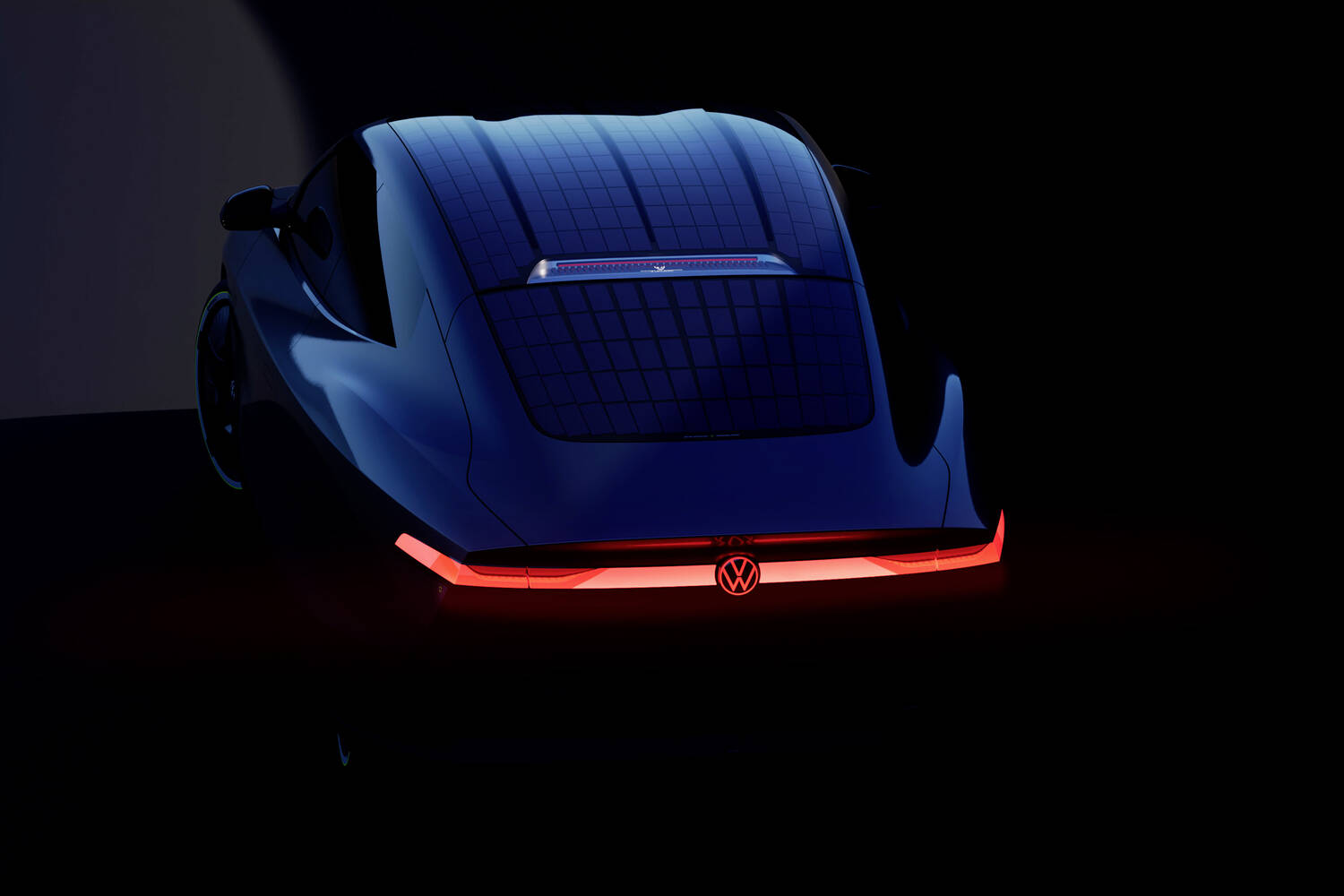
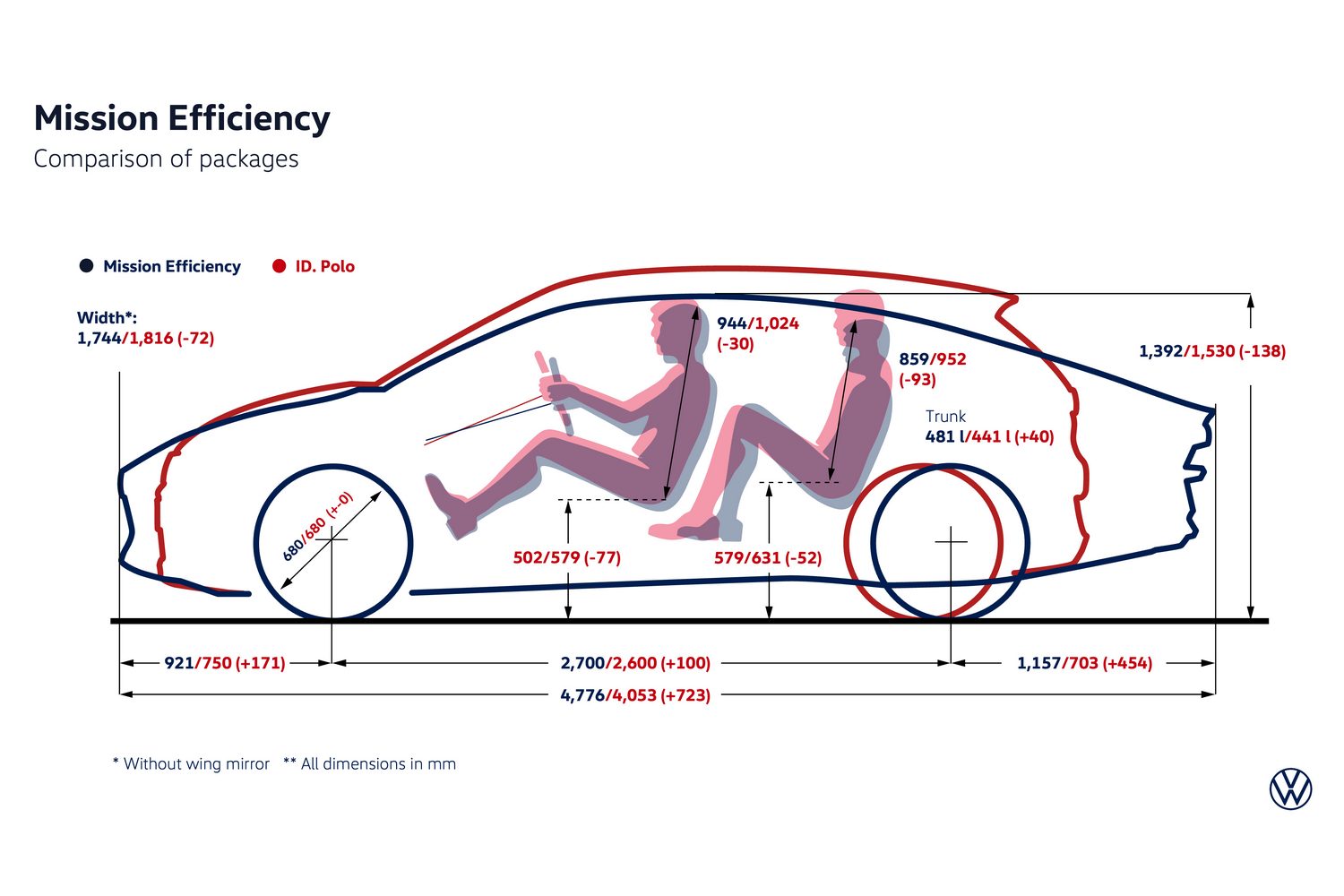
In the Mission Efficiency, the rear axle is 170mm narrower than that of the ID. Polo.
What size is the Volkswagen Mission Efficiency?
The Mission Efficiency is longer than the Volkswagen Tiguan, but it is also lower than any vehicle in the German marque’s range. The exterior dimensions are:
Length: 4,775mm
Width: 1,744mm (without mirrors)
Height: 1,392mm
Wheelbase: 2,700mm
What’s it like inside the Mission Efficiency?
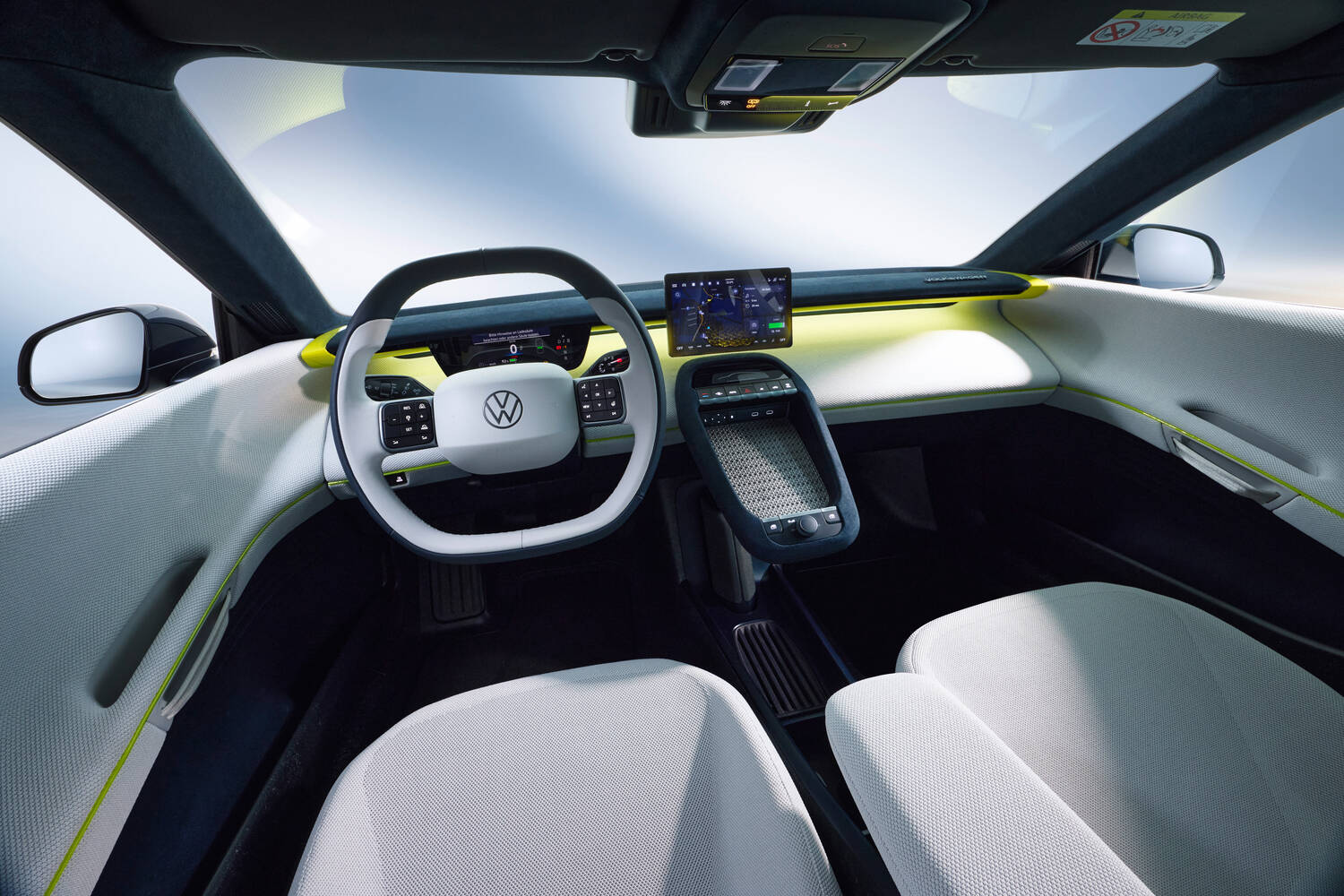
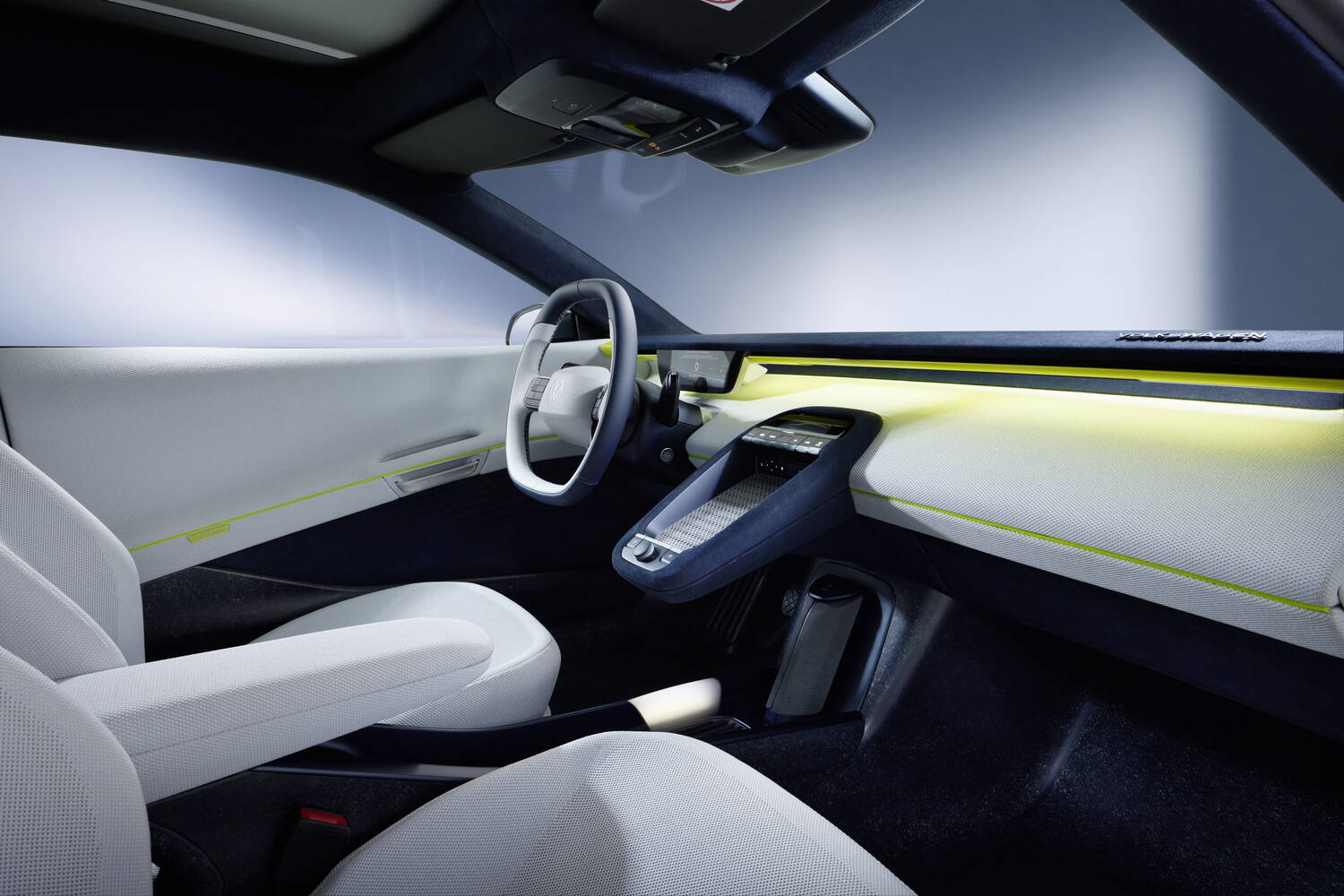
The Volkswagen’s long doors open to reveal a cabin unlike anything in the rest of the company’s current models, but it does use the same two-spoke steering wheel as the ID. Polo.
There’s a digital instrument panel alongside a vertical touchscreen infotainment system, while a bespoke set of buttons below this controls the cabin temperature and other functions, and the drive selector is a column-mounted arrangement similar to the ID. Polo’s.
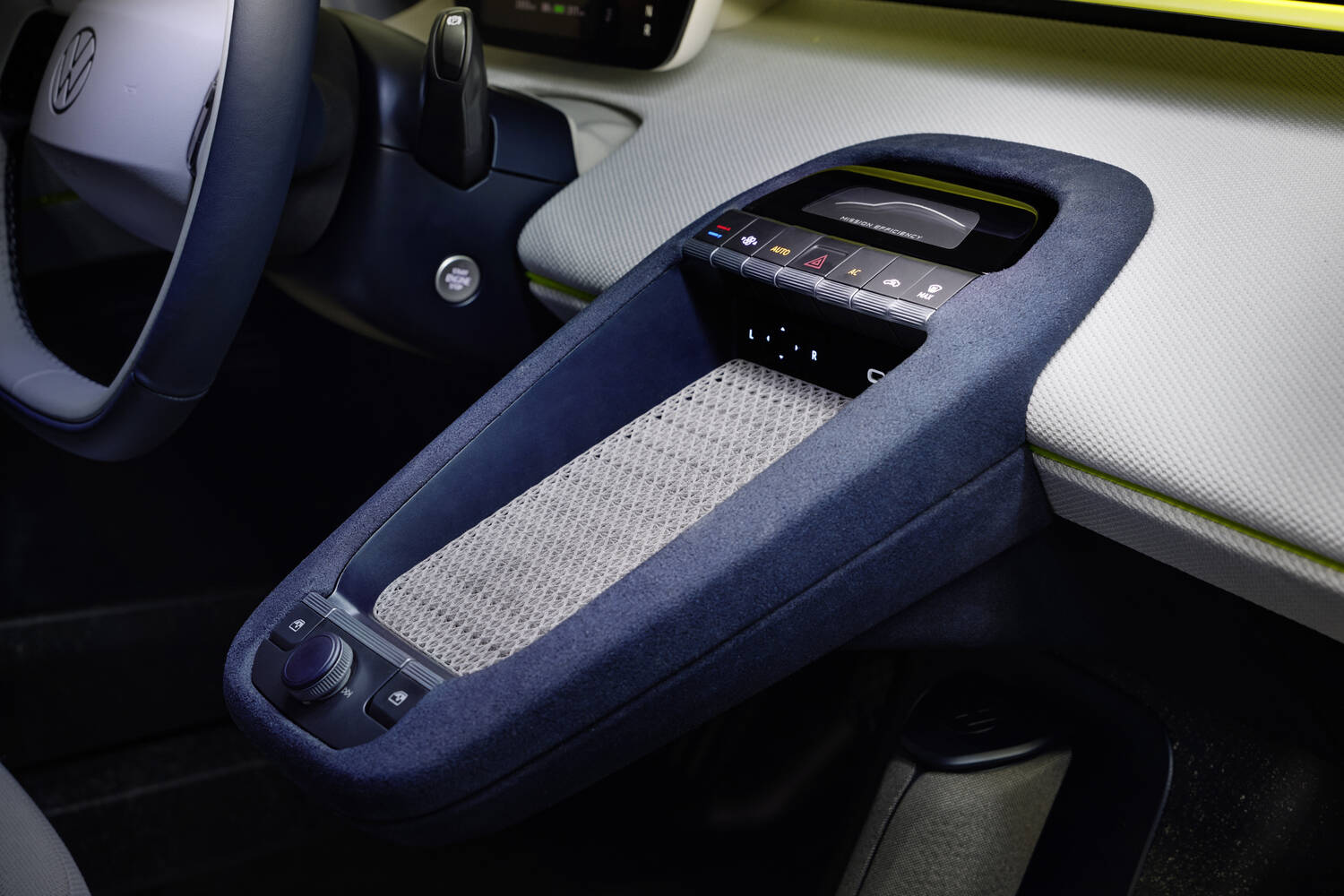
To reduce weight, the car relies on a portable Bluetooth speaker and a cradle for a smartphone, letting that act as the entertainment provider.
All the doors have been ‘de-energised’ to save more weight, too; there are no electric windows, speaker systems or any ambient lighting.
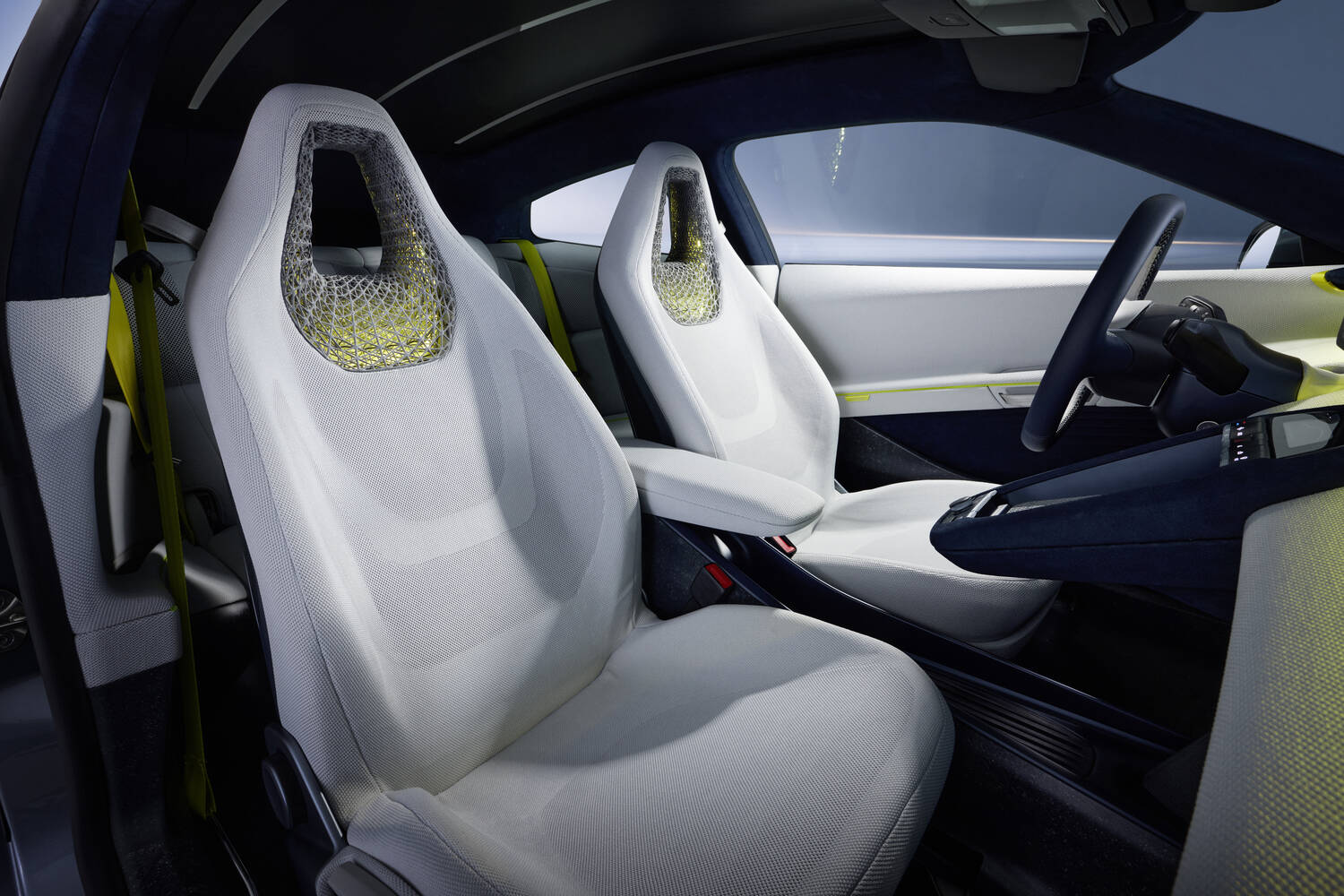
Its slim sports seats are made from a sustainable material and feature a highly distinctive head restraint that appears hollow at the centre and is surrounded by a mesh-like pattern that is 3D-printed in-house at Volkswagen.
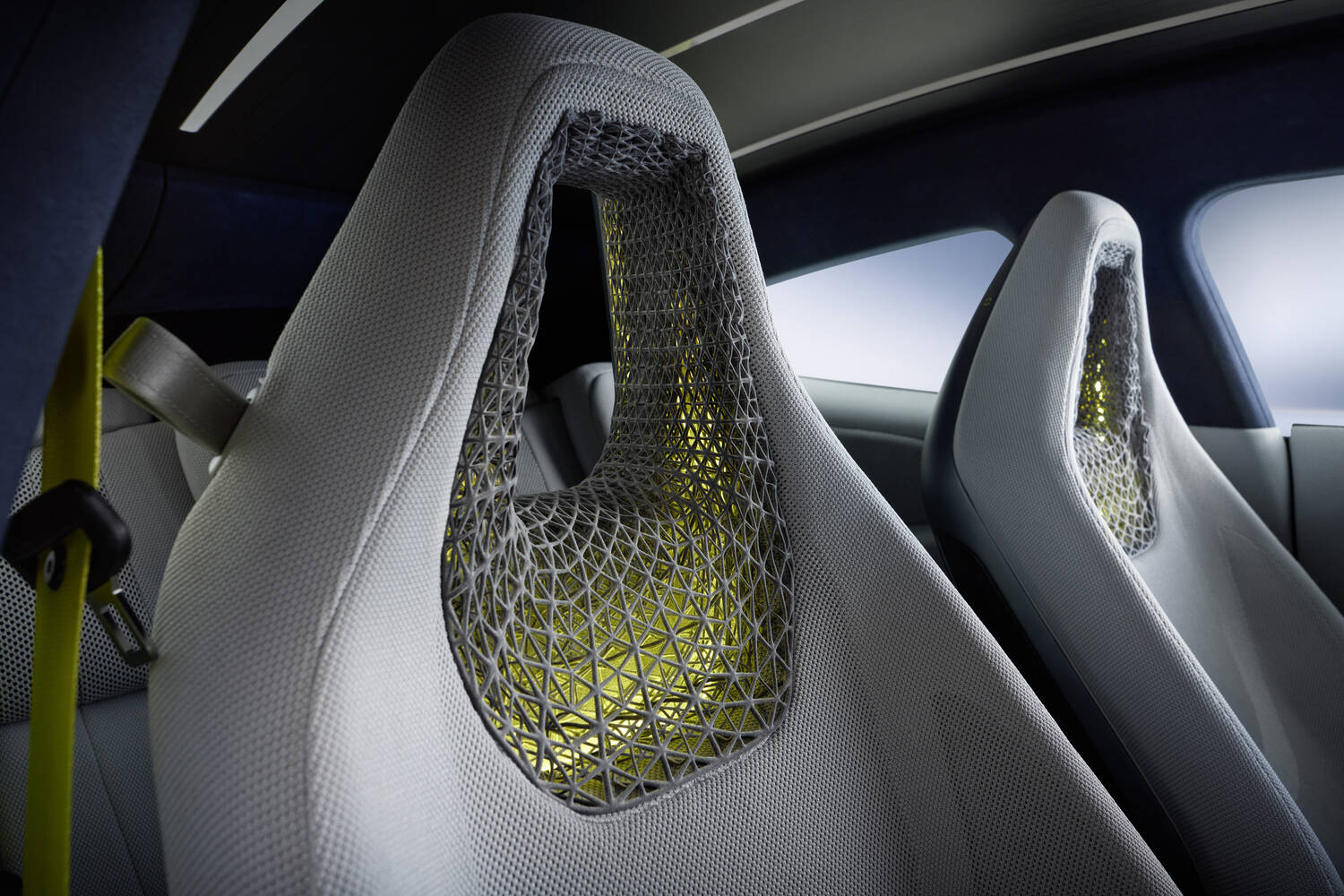
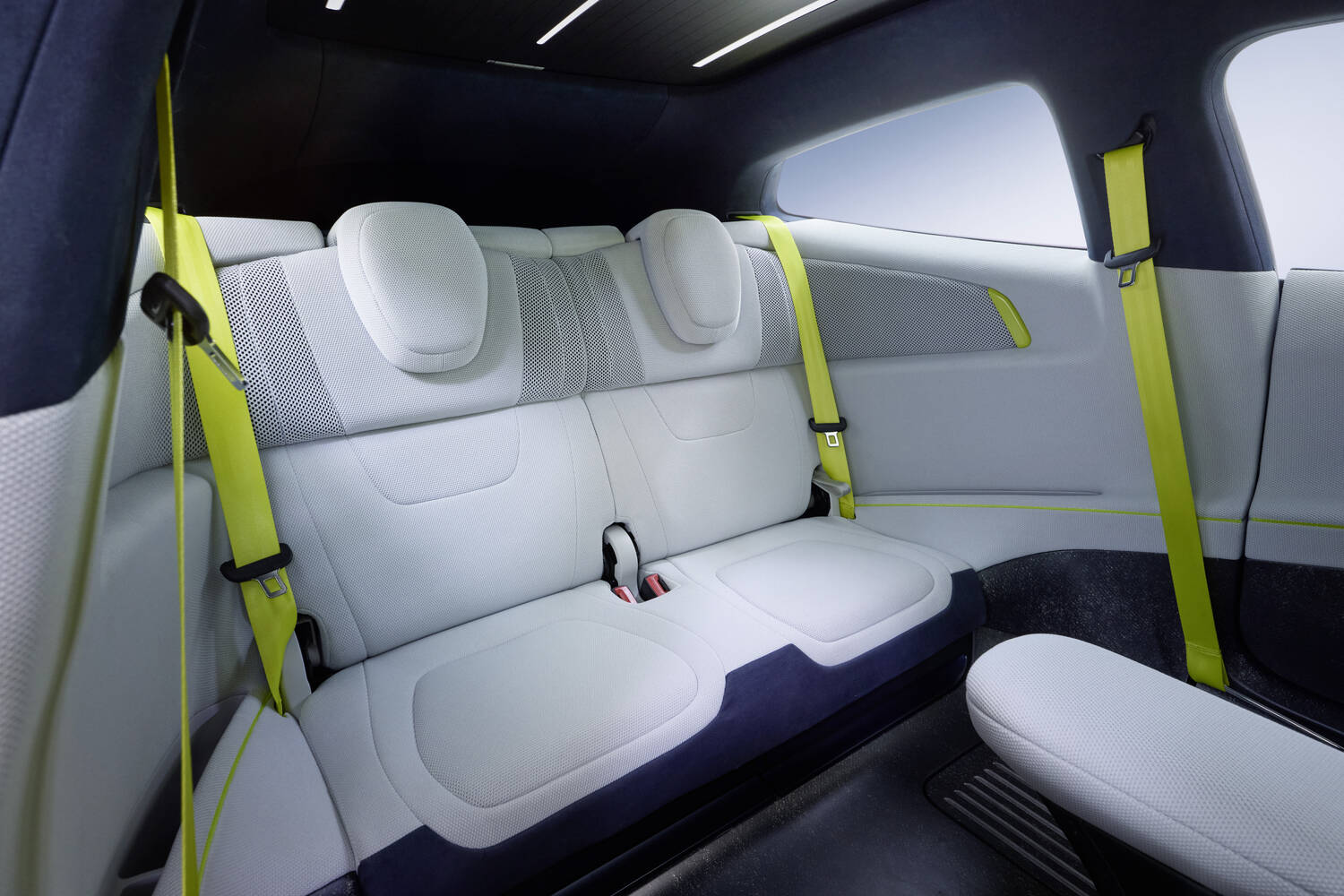
Contrasting yellow seat belts add some colour to the cabin. Conventional carpet is done away with in favour of a composite material with non-slip rubber studs integrated into it instead of traditional floor mats.
So what’s powering Volkswagen’s Mission Efficiency?
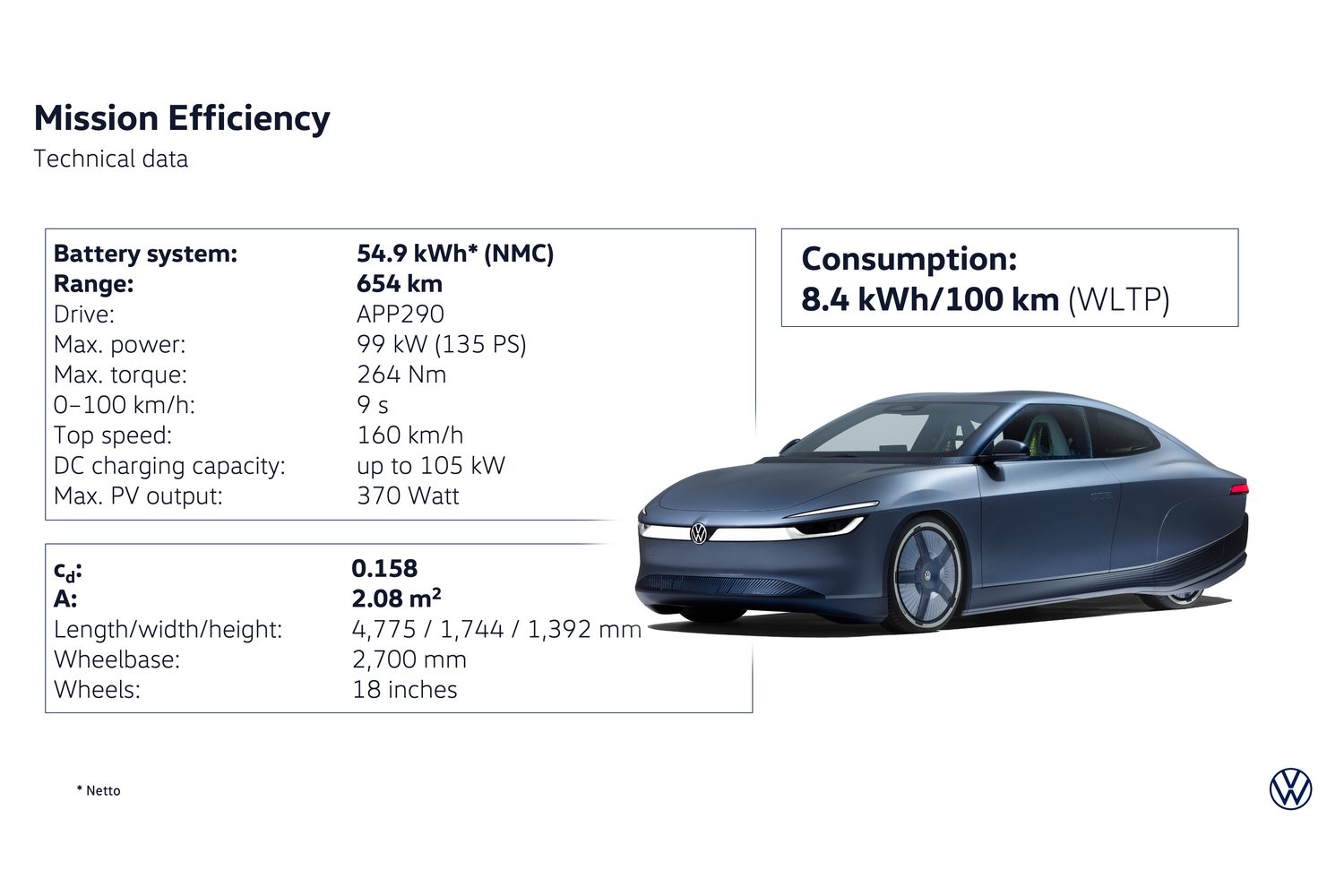
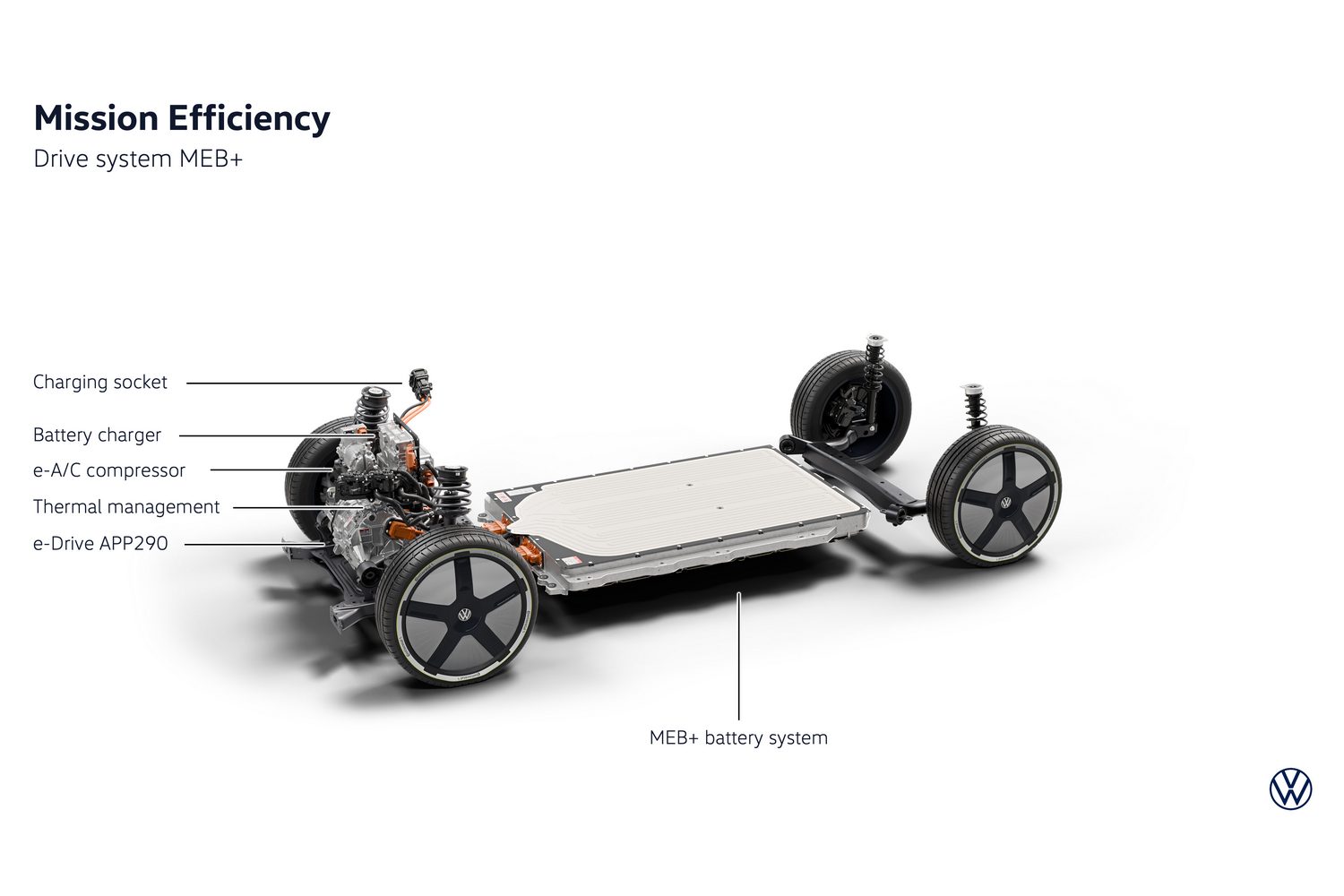
The entire powertrain of the Mission Efficiency comes from the Volkswagen ID. Polo. At the core is a nickel-manganese-cobalt (NMC) battery pack with an energy content of 54.9kWh. It is physically the same as the 52kWh production car version, but software adaptation increases the usable energy amount by setting aside the need for durability and longevity.
On the WLTP cycle, the range is 654 kilometres, and the car has 11 kW AC charging - or can fast charge on a DC connection at up to 105kW. Its combined consumption on the WLTP cycle is 8.4kWh/100km.
The electric motor driving the front wheels produces up to 135hp and 264Nm of torque.
The front axle uses the same hydraulic brake disc setup as the ID. Polo, but the rear uses a new electromechanical brake design, reducing frictional losses to almost zero according to Volkswagen, helping to boost the range.
It also helps reduce weight by removing the need for hydraulic lines and brake fluid and creates more internal space. On the move, braking force can be distributed variably to the wheels to enhance energy recuperation and stability when cornering and makes braking both more comfortable and more powerful.
How practical is the Mission Efficiency?
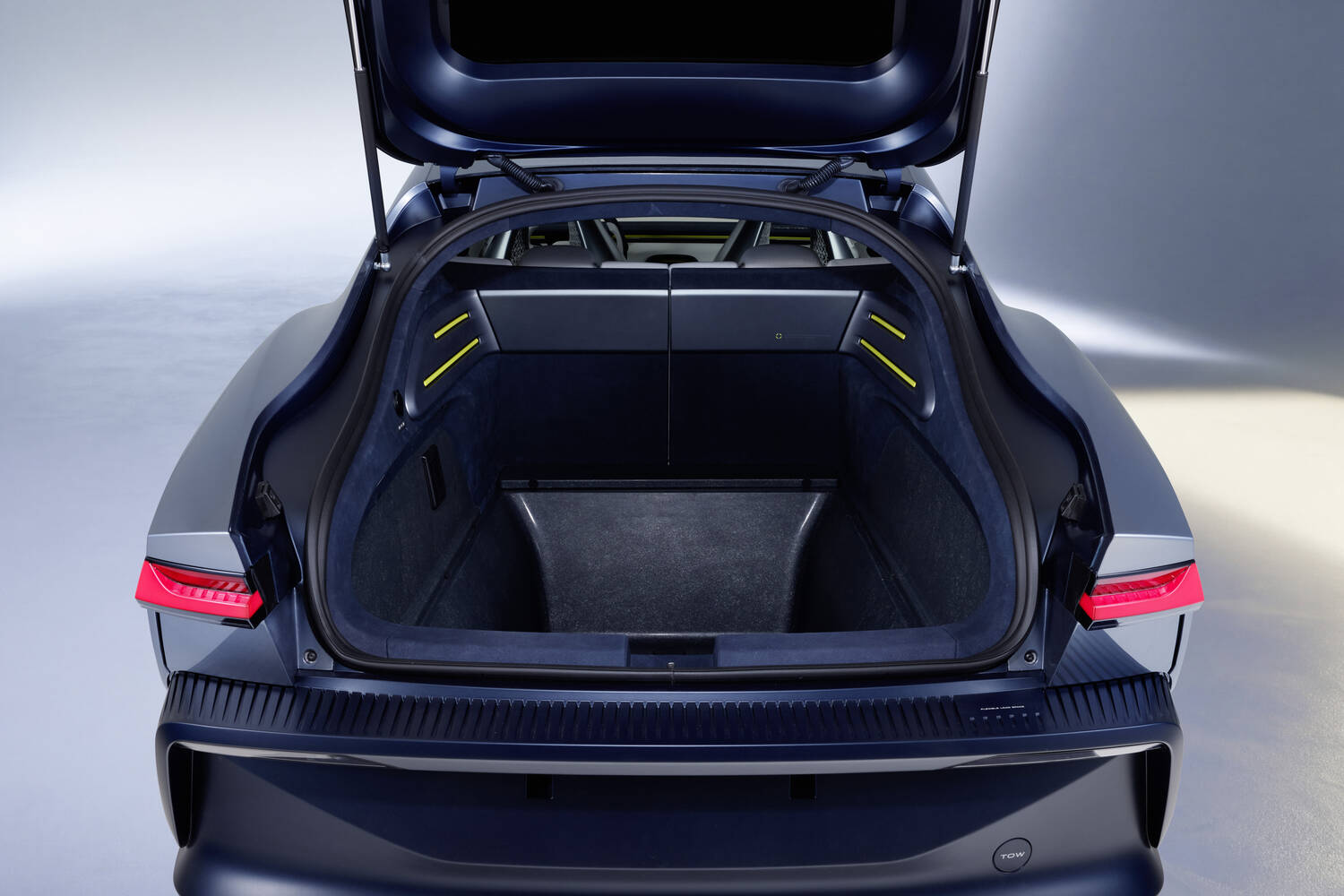
Although it is a four-seater and has a narrow rear end, the Mission Efficiency still manages to provide 481 litres of boot space, including a deep underfloor storage bin.
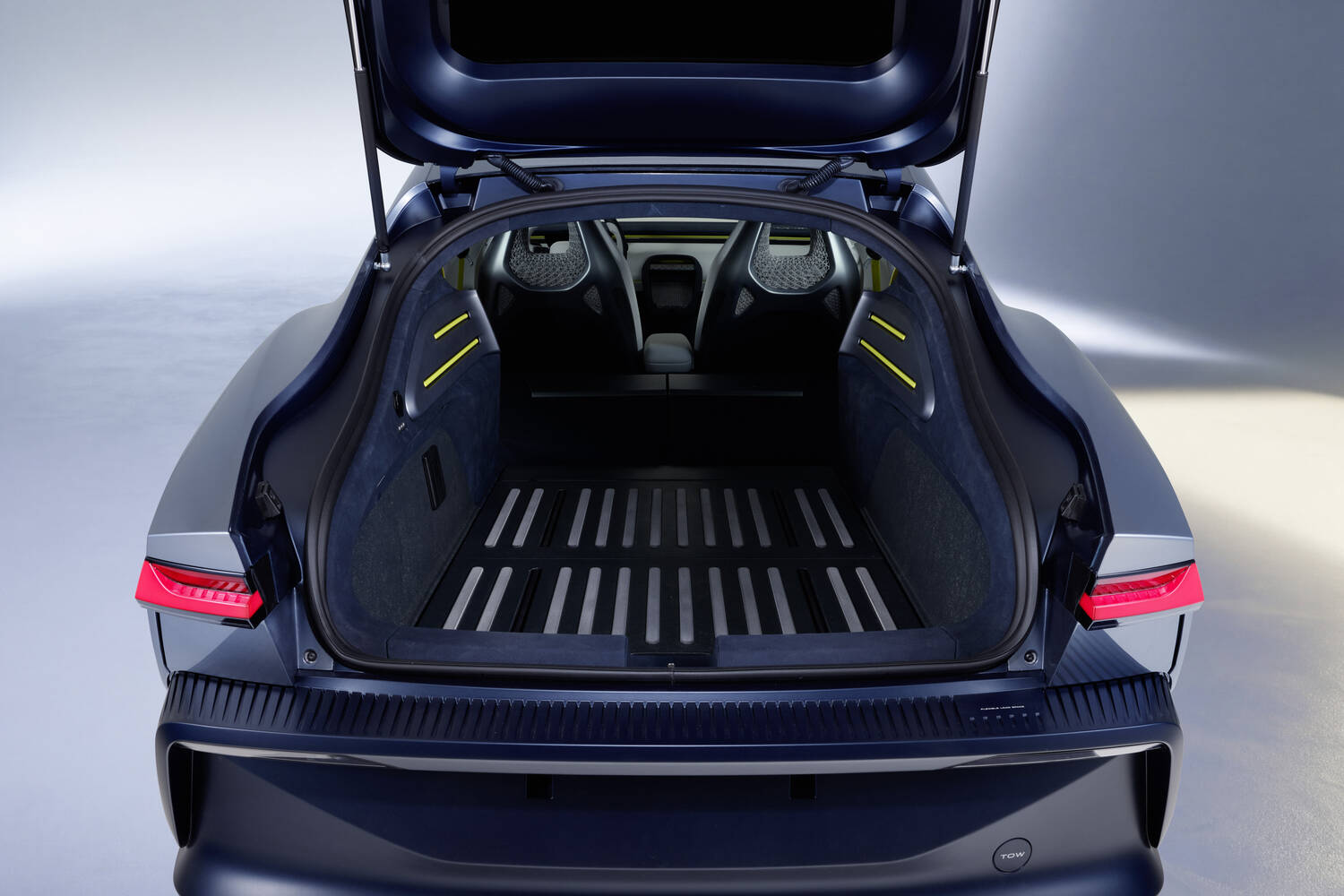
When the rear seats are folded, the total load length is 1.8 metres. Two four-litre stowage boxes have been integrated under the rear seat bench, and the storage areas in the rear wheelarches total 16 litres each.
Will I be able to buy one?
For now, there are no plans to put the Mission Efficiency into production, even in limited numbers. It’s true that Volkswagen had done something similar with the XL1, but with the company currently in the midst of a massive financial restructuring, including the sale of factories and significant job cuts across the group, such a project would be unlikely to get a green light.
Video player loading.
Video unavailable. Watch on YouTube
If there is anything about this story we have not covered, you can avail of our expert advice service via the Ask Us Anything page.