

Castrol, as in the ‘liquid engineering' people?
The same. Through its ‘Castrol Edge' lubricants brand, Castrol has been working on research that looks to define exactly what it is that makes us enjoy ‘the thrill of driving.' We're not just talking simple things such as ‘I like the way the car looks' kind of thing. No, Castrol has been digging into our very brains, looking for: "The complex array of neurophysiological factors that may influence the sense of thrill that drivers experience when behind the wheel, the relative importance of speed, and the ‘sweet spot' where the individual is in a ‘flow' state and driving thrill is at its peak.”
This is starting to sound a bit Dr Frasier Crane…
Well, we're listening… According to Castrol, participants in the study wore brain, eye, heart and skin monitoring equipment during five different tests where they drove or were driven, all carried out at a dedicated track facility in the UK. The capture and analysis of large volumes of neurophysiological data was handled by Brainbox, a UK-based neuroscience company that provides advanced brain research technology, training, and scientific support for organisations conducting research and clinical trials.
And the results were?
Castrol's work suggests one key thing: what creates a driving thrill is full immersion in the process. In other words, you're unlikely to be thrilled by a drive along a quiet motorway, but you are more likely to be pepped up by a drive along a tight and twisty road because you have to concentrate more and be more of a part of the process.
Is it that simple?
No, it's not simple at all, as it turns out. That immersion relies on the convergence of three other factors, which Castrol defines as visceral (an intense state of mental and physical stimulation), intellectual (how engaged the mind is on the given task) and emotional (identifying the balance of excitement versus fear).
It all works in a delicate balance, and as Castrol points out: "If any of these three factors go beyond a level that feels manageable for the individual driver - and this can differ substantially from one individual to the next - they can become overwhelmed by the different external stimuli and the experience tips from thrill into a state of fear. From a neurophysiological perspective, the key stress indicators such as heart rate and eye movement shift into a less consistent, less managed pattern.”
So how do we stop fun turning into fear?
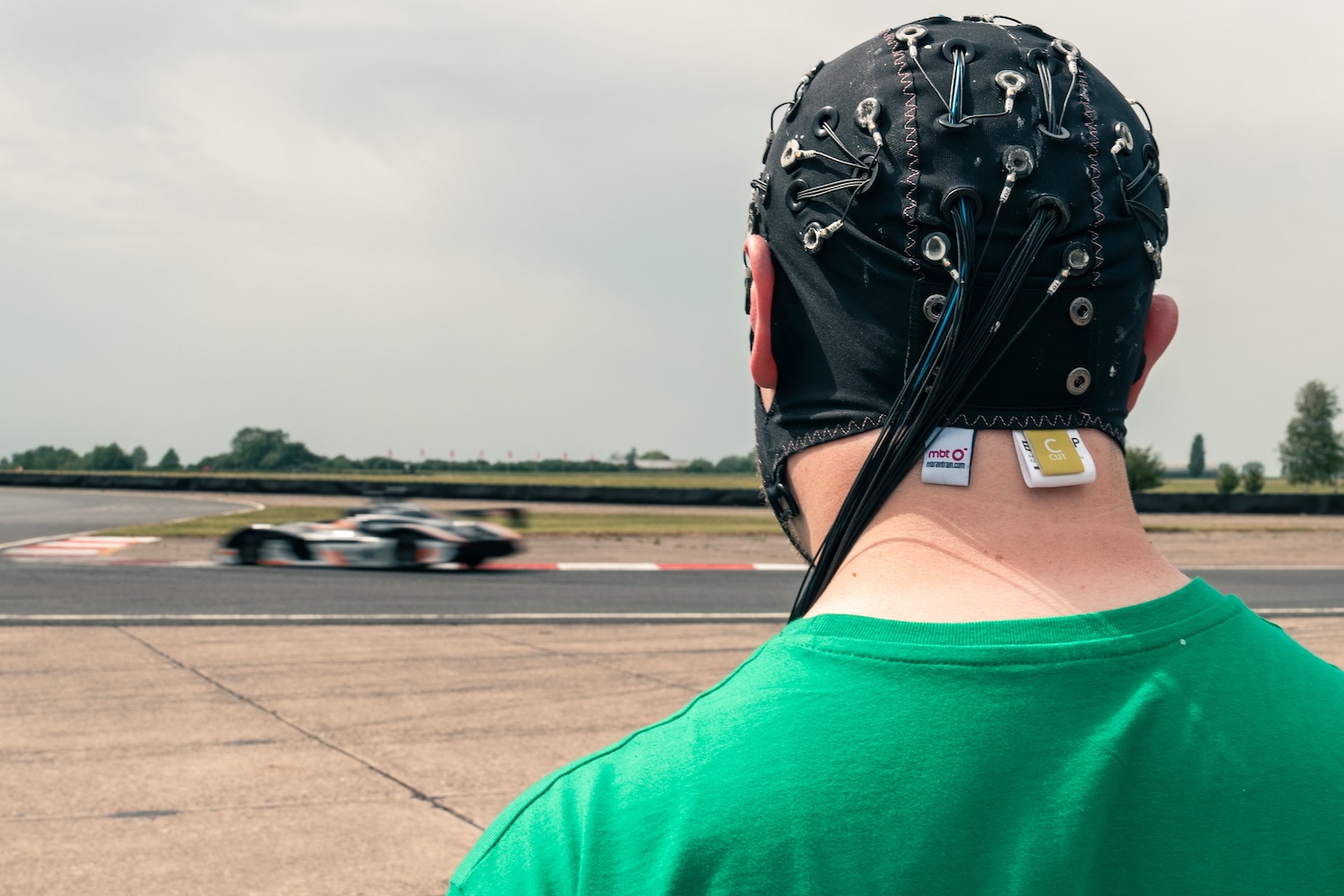
It's all about control. Castrol's research points to a sense of controlled immersion being essential for creating the thrill of driving: "Notably, while speed is one of multiple contributory factors that heighten the sense of thrill, it is certainly not a primary determinant. Indeed, the thrill criteria were met consistently for the test subjects during the study's karting session on a tight and technical circuit where outright speeds were modest, but where the essential visceral, intellectual and emotional thresholds for driving thrill were all met.”
Significantly, Castrol's research was of course undertaken on testing tracks, rather than the public road, and it could be that the thrill of the ‘flow state' is easier to achieve when the driver is both more focused on the task and also not worrying about legal and safety implications quite so much.
"No single measurement defines thrill, rather it is where they are heightened and converge: the individual is experiencing a state of elevated neurophysiological arousal, they perceive that they are fully in control of the vehicle, and they are immersed in the experience both cognitively and emotionally,” comments Dan Phillips, Co-founder and Director at Brainbox Ltd. "Thrill isn't about speed, it's about focus. The data shows real thrill as the moment a driver locks in completely, and it can be seen across the brain, heart and eyes.”
Why is a lubricants company undertaking such presumably expensive research?
Vincent Panel, Head of Product and Communications for Europe at Castrol, explains: "We're passionate about motorsport and driving, and we commissioned this study to develop unique insights into what the driver feels when behind the wheel: the thrill, the control, the connection. Crucially, we identified that you don't need a supercar to experience driving thrill; you can experience almost the same sense of immersive control without high speeds, from a visit to a local karting track or a drive along one of your favourite roads. This study examines how that sense of thrill can be found in every driver.”
What does CompleteCar think?
It's really interesting to dig around under the bonnet of our driving brains, and Castrol's research may yet turn out to be more significant than merely publicising a lubricants brand. If the ‘thrill of driving' can truly be quantified, then it may find its way into the software and hardware of the cars we drive in the future. In the meantime, though, we reckon it's a simple enough recipe - a quiet road and the keys to a Mazda MX-5 or Alpine A110 are a good start, but the thrill of driving can be found in any car, on any road, at any speed if you're sufficiently keen and involved in the process.
If there is anything about this story we have not covered, you can avail of our expert advice service via the Ask Us Anything page.