

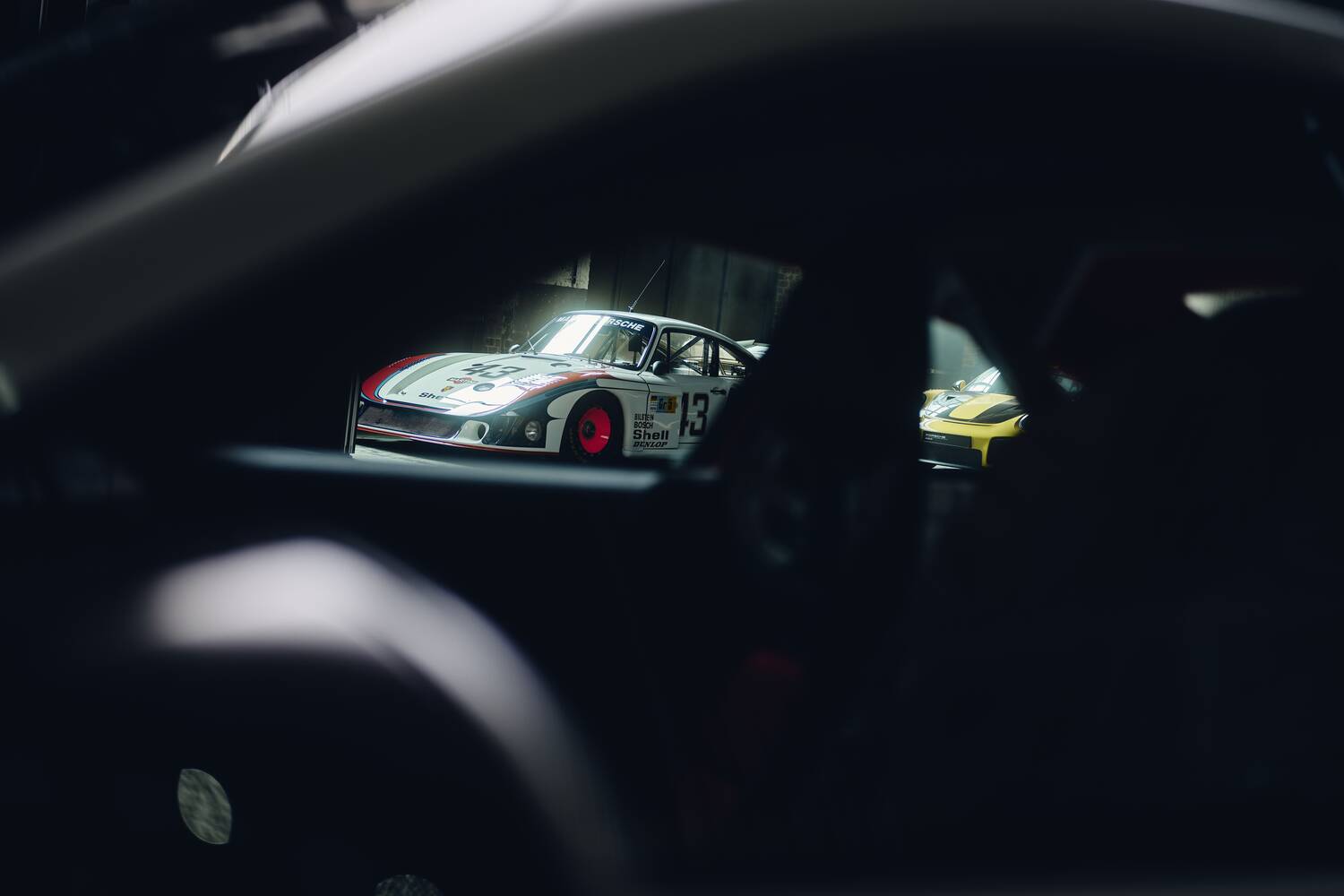
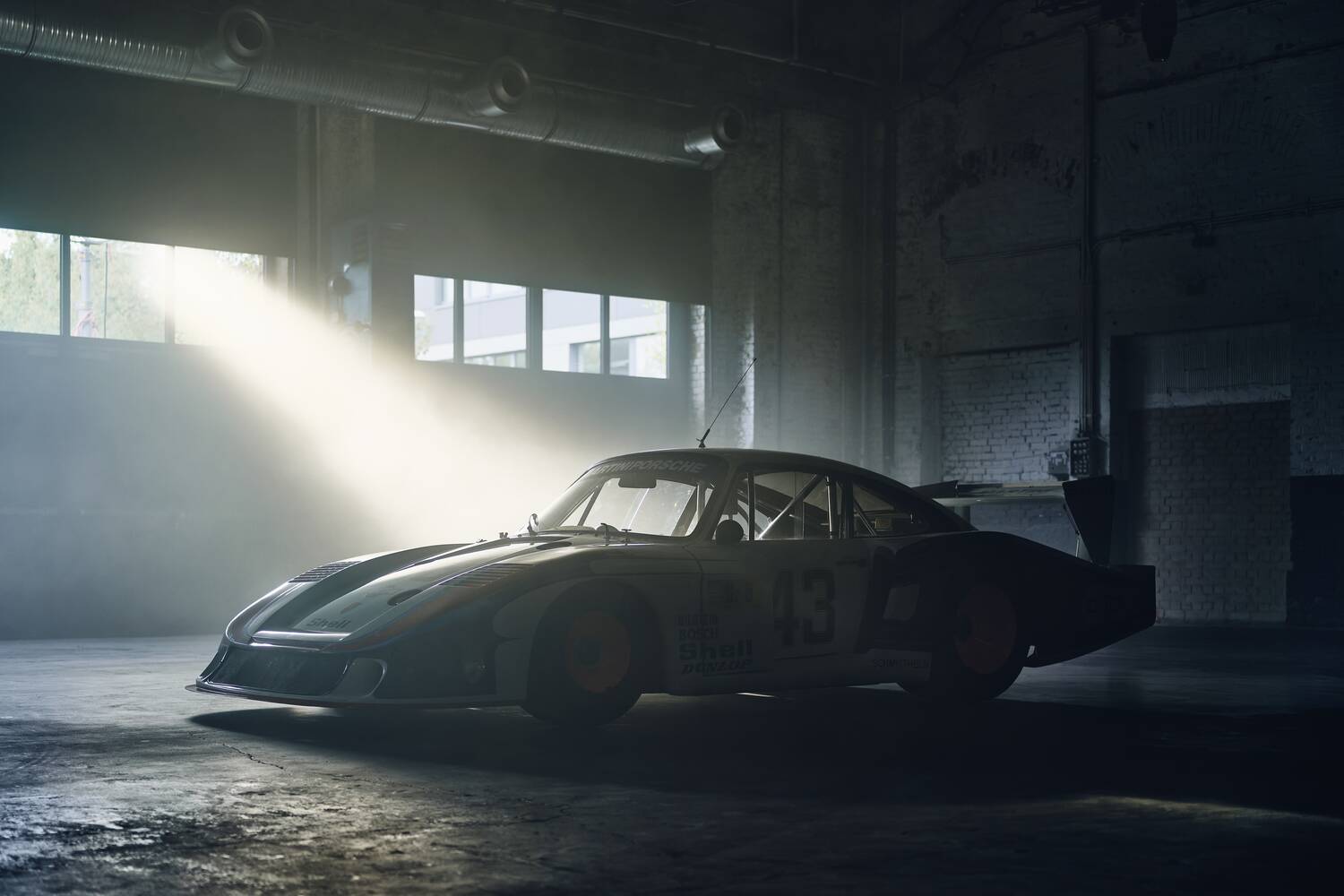
It was fast enough to win at the Le Mans 24 hours, and one of them came within an ace of taking the legendary actor and racer Paul Newman to an outright win.
Thanks for the history lesson. Where is this going?
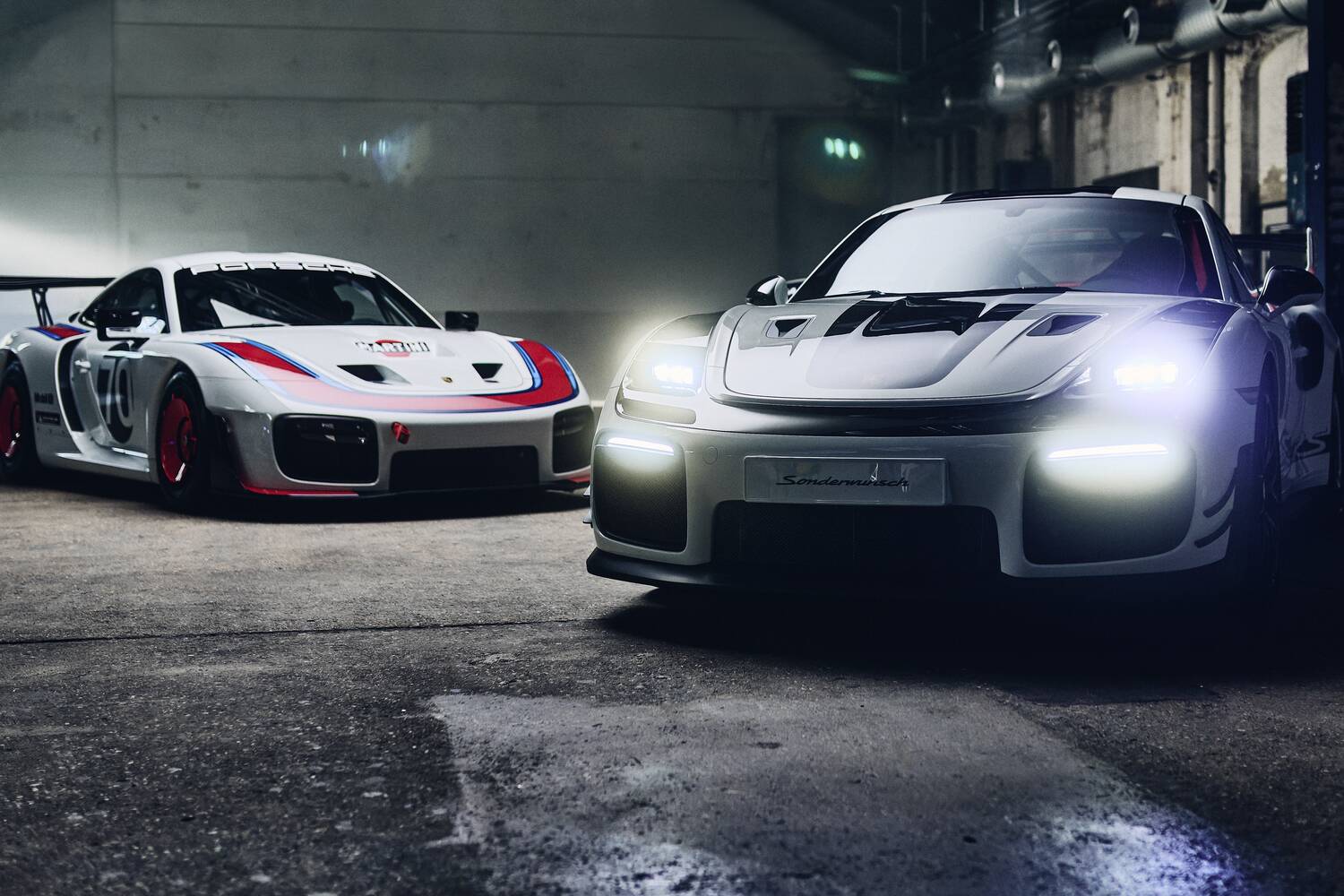
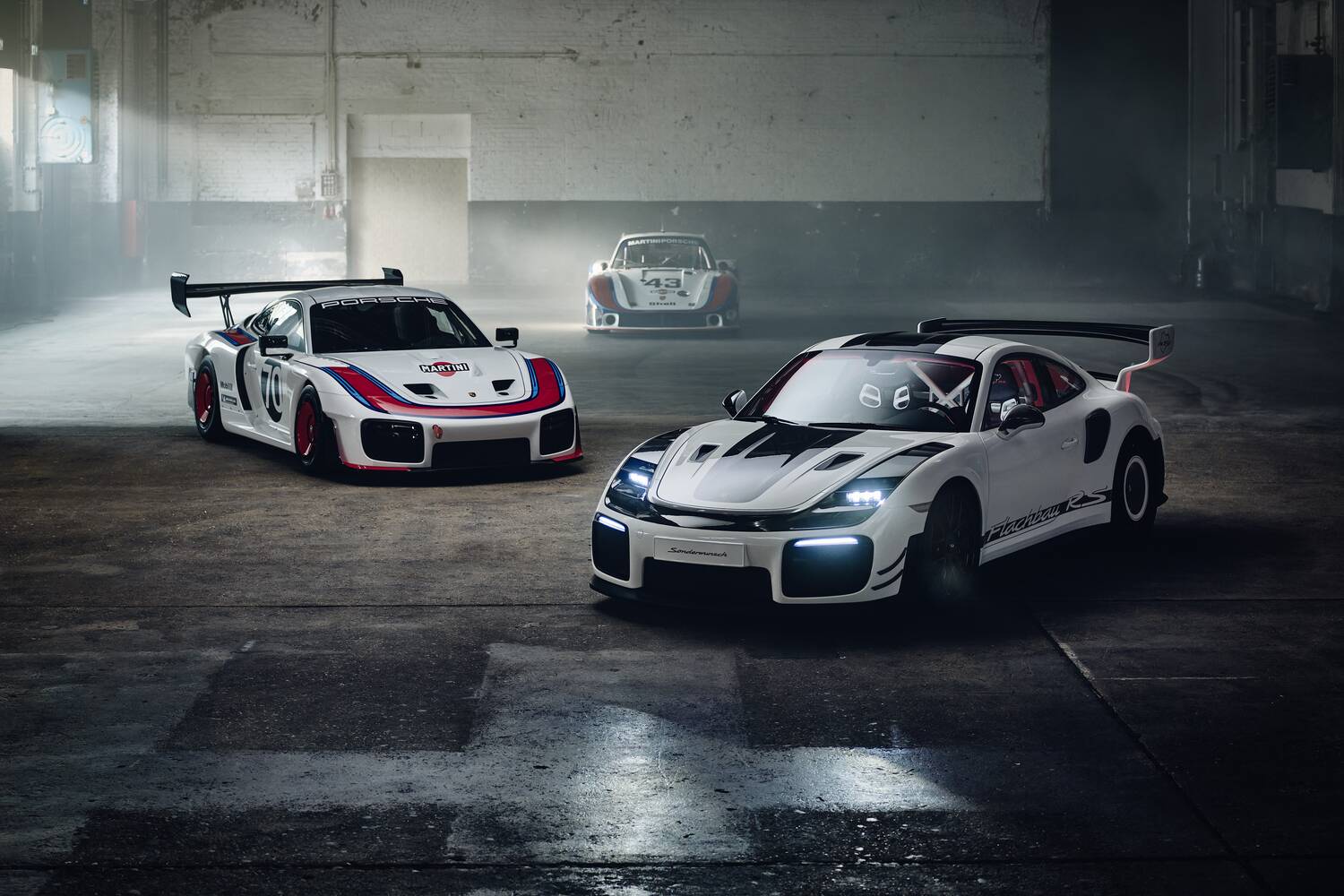
Hush, there’s more. Forty years after the original 935/78, Porsche created a limited edition of modern reinterpretations, based on the then-current 911 GT2 RS.
With its chunky, slanting nose, long rear body, massive wing and Martini stripes, the ‘new’ 935 wasn’t road legal, but collectors snapped them up anyway.
Again, we appreciate the history, but...
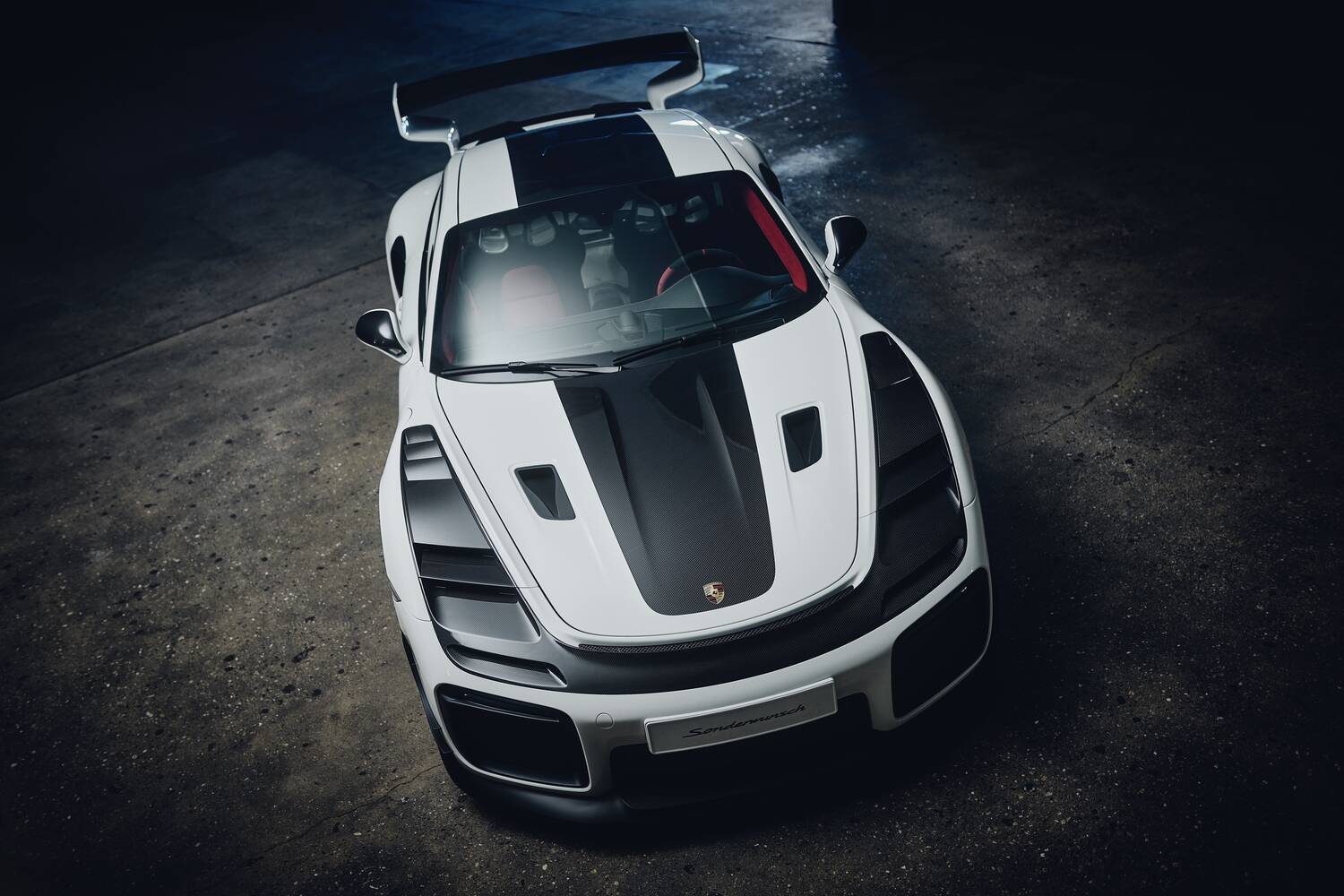
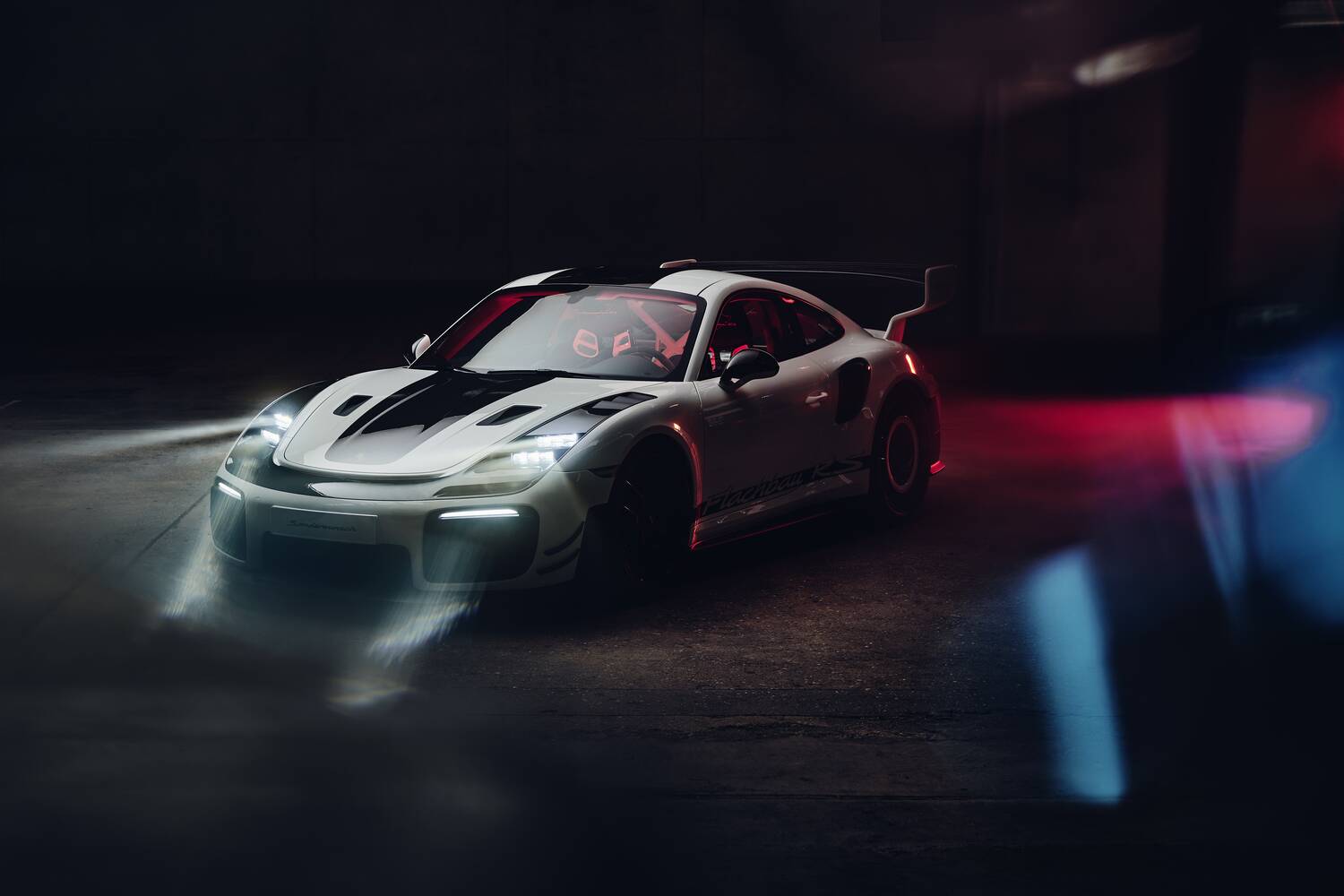
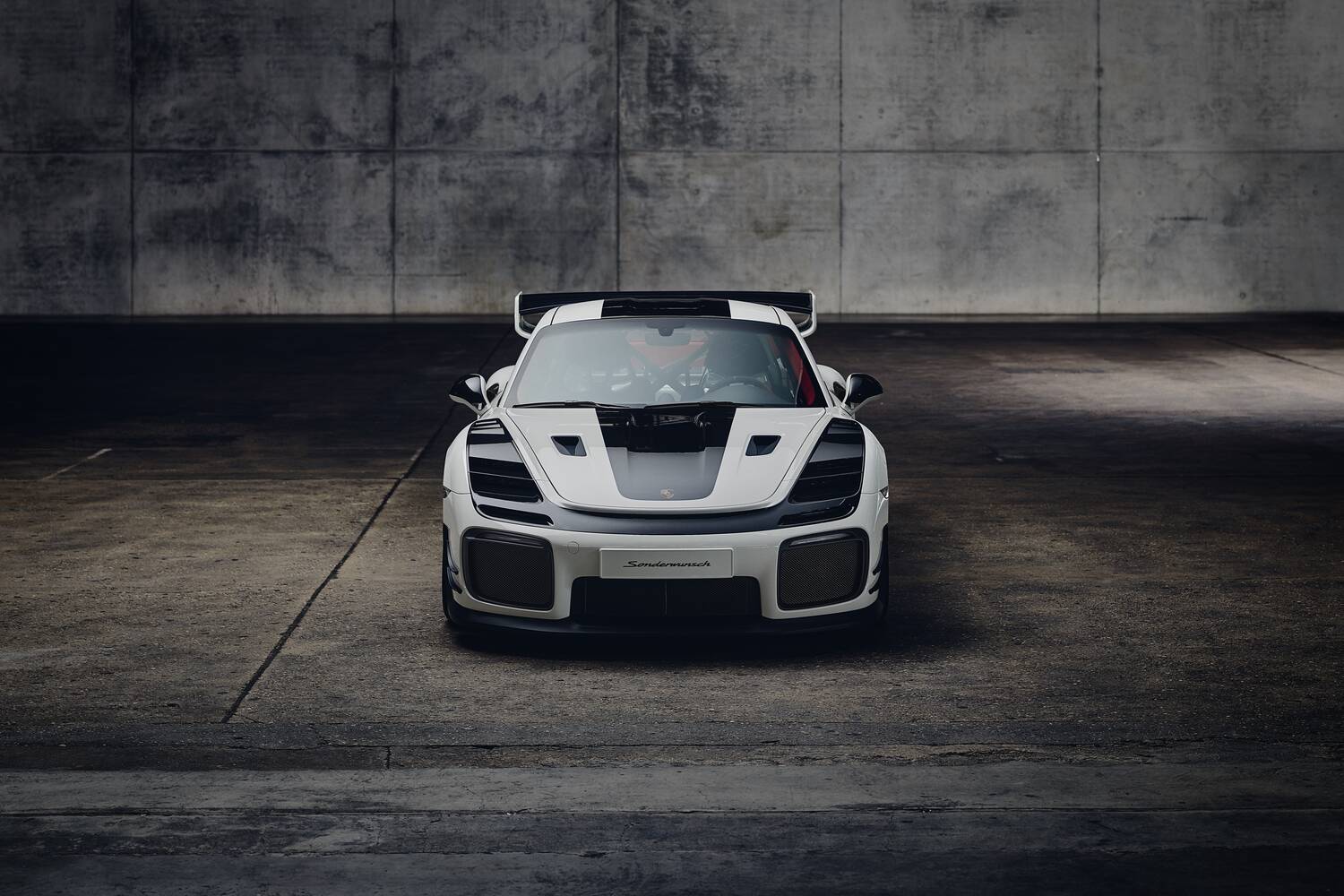
We’re getting there. Now, Porsche is at it again. The sports car maker’s ‘Sonderwunsch’ division (which translates literally as ‘Special Requests’ and which is Porsche’s in-house bespoke and one-off car department) is working with Manthey, the semi-works Porsche racing team, to create another interpretation of the 935 look. Only this time, it’s road-legal.
You had our curiosity; now you have our attention
Quite. This latest 935 interpretation is, once again, based on a pre-2020 911 GT2 RS, but this one is described by Porsche as being “like new.”
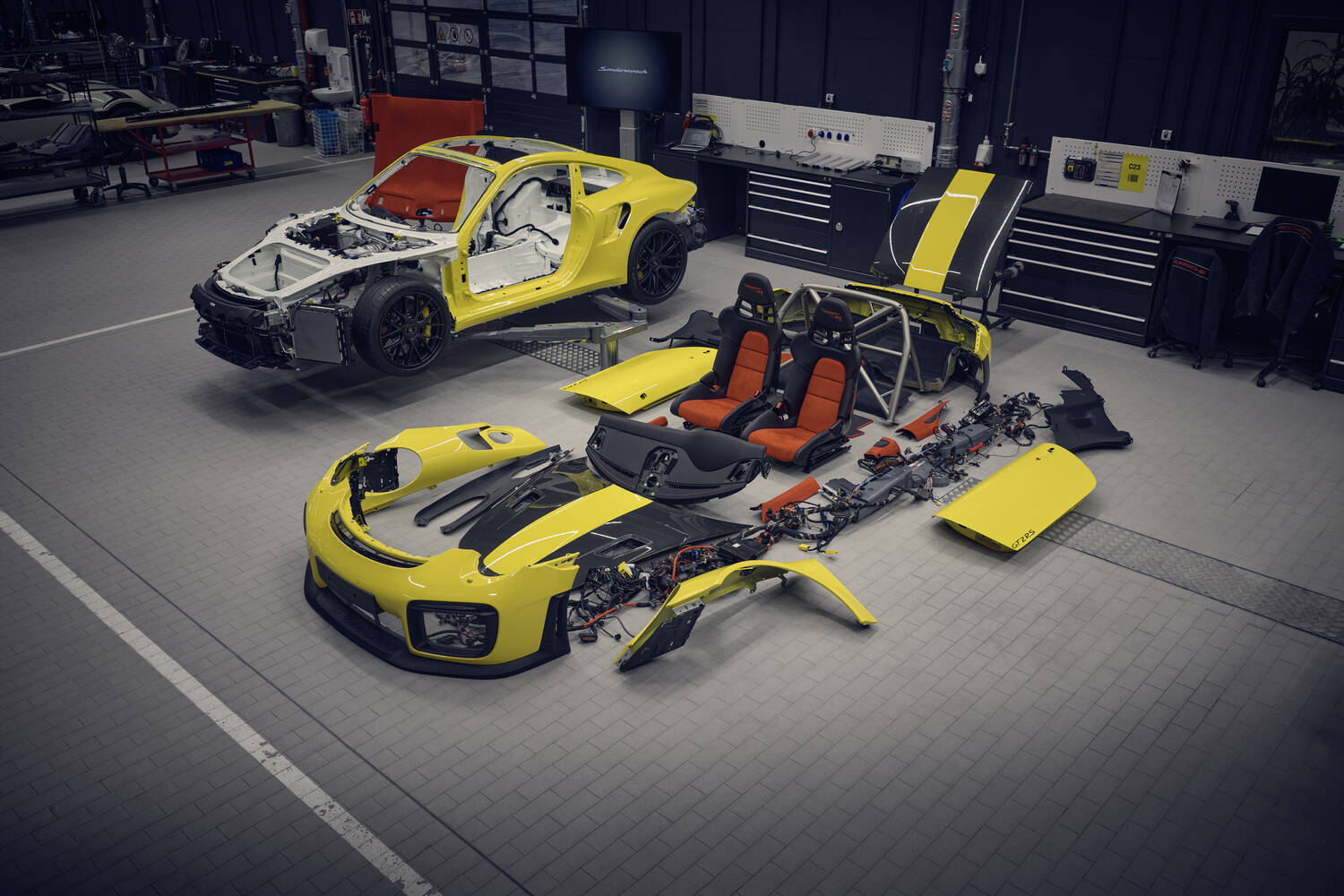
The car belongs to “a Porsche enthusiast” (you don’t say...) who decided that he wanted to take the Slantnose (or Flachbau in the original German) look out on the street.
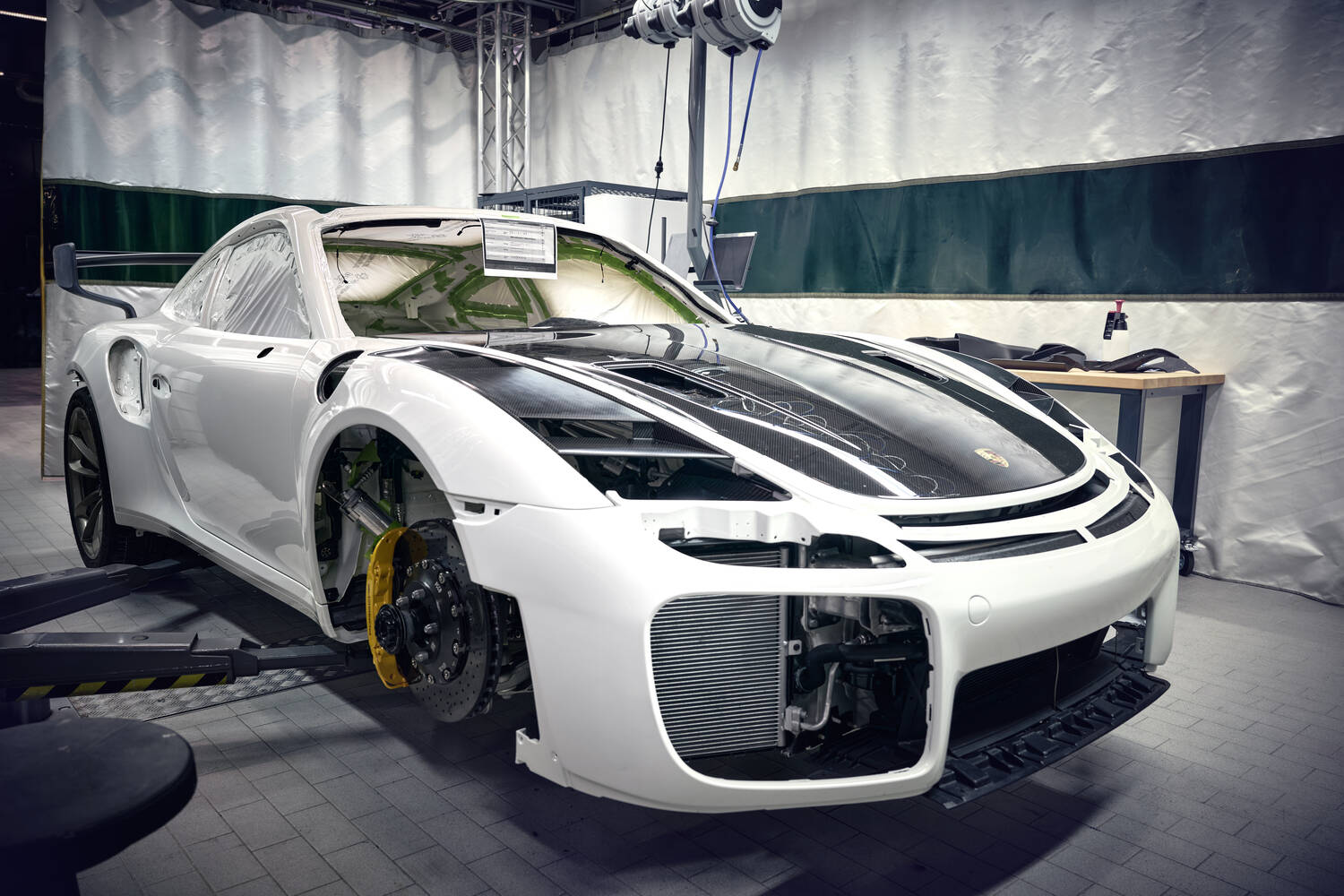
Porsche Sonderwunsch and Manthey were happy to oblige and so began a three-year process to take his GT2 RS and turn it into a modern-day, road-going Moby Dick.
Three years? What did they do?
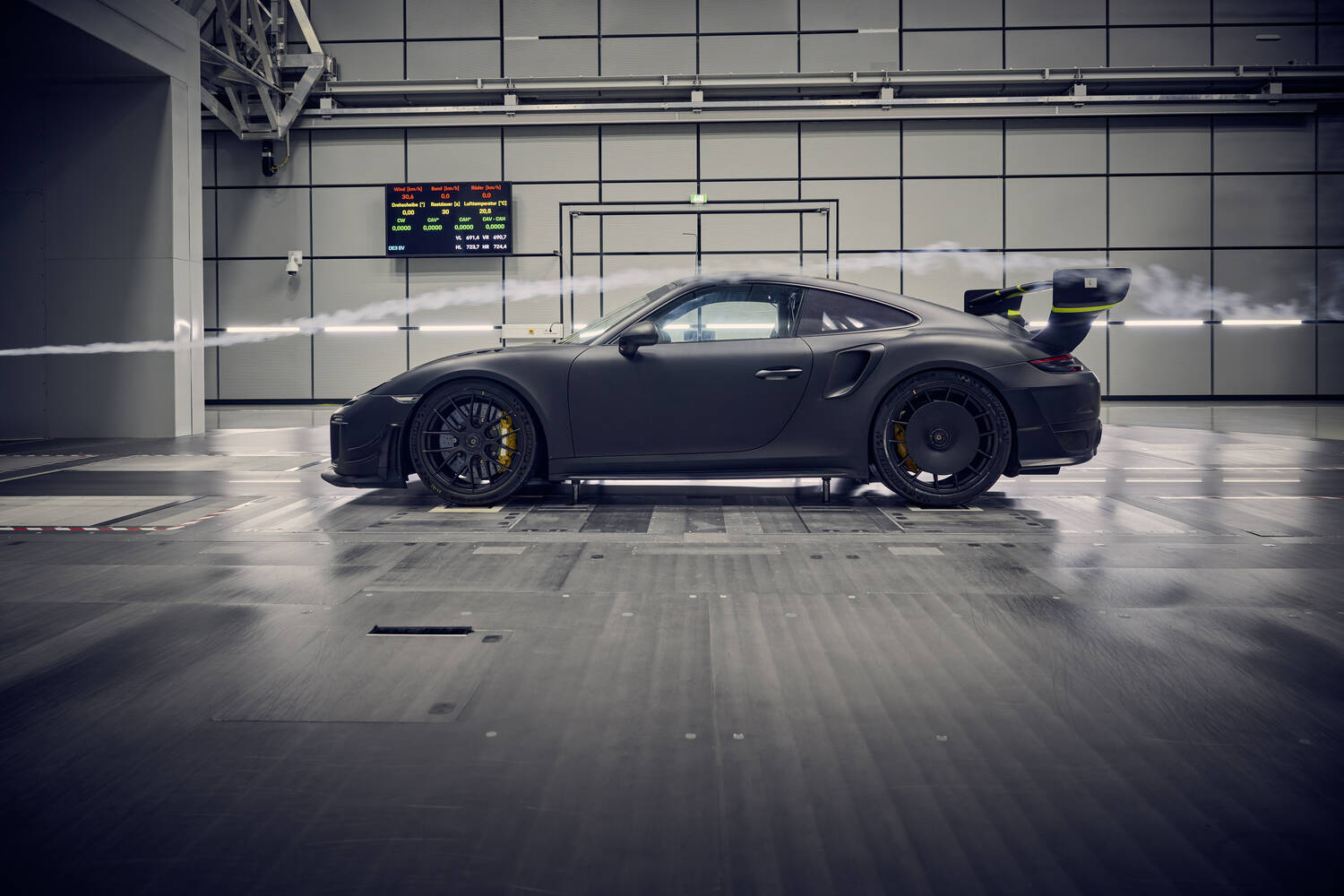
Lots, as it turns out.
Back in the 1980s, Porsche offered a factory converted 911 Turbo road car with a Flachbau nose - you’ll have seen them on Athena posters back in the day - but only 848 of those were made (the cars, not the posters). To create a new version, Porsche and Manthey had to start almost from scratch.
“Converting the car to a Slantnose model proved to be very challenging, even though we left the drivetrain unchanged, in agreement with the customer,” said Alexander Fabig, Vice President Product Offering & Individualisation at Porsche. “Our aim was to reinterpret the iconic look of the 935 without compromising on safety, technology or road legality. Thanks to thorough lightweight measures, this one-off car now weighs 31.6kg less than before. That may sound unspectacular at first, but the 911 GT2 RS with Weissach Package is a sports model that is already uncompromisingly optimised in terms of weight reduction.”
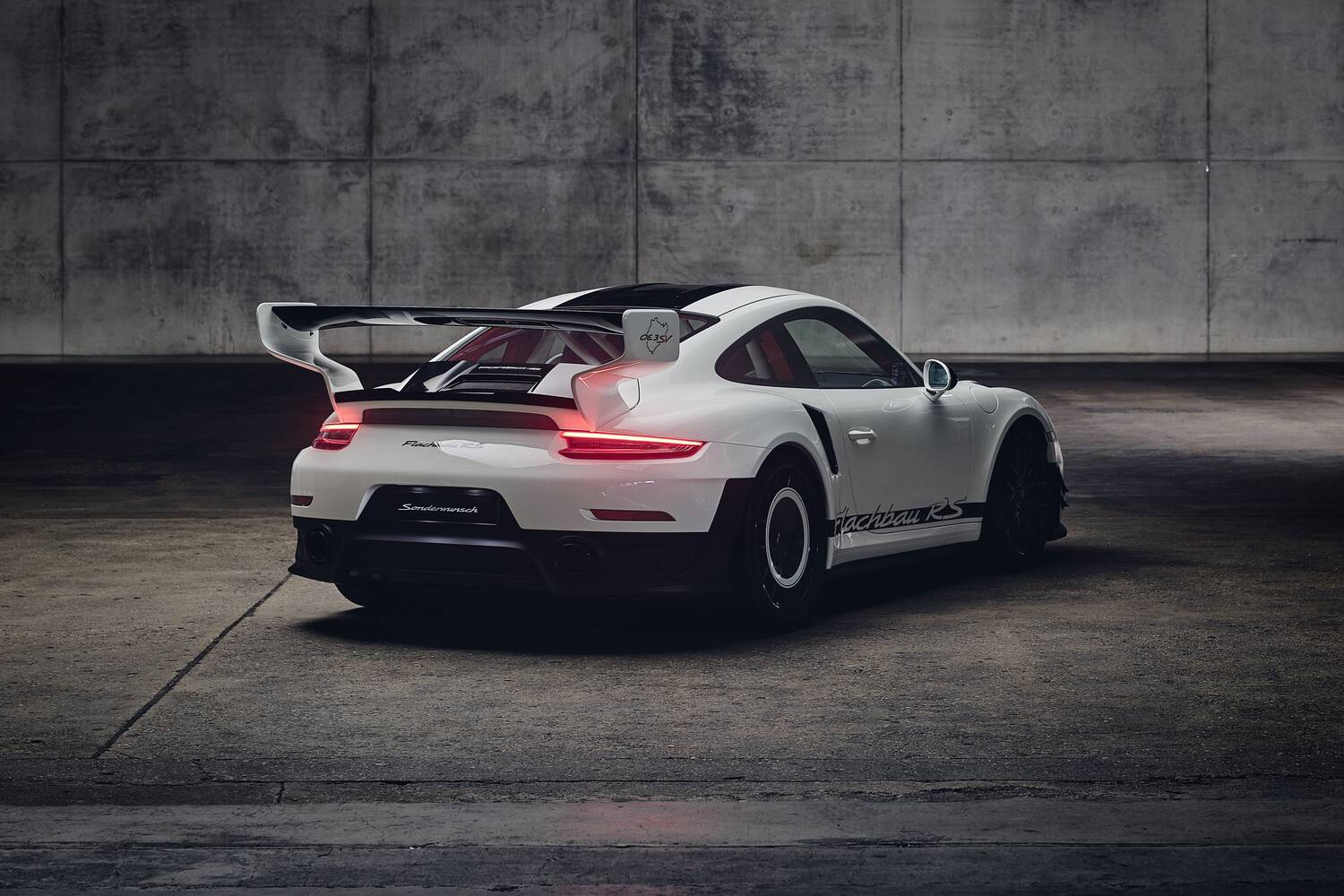
It looks a bit different to the 2018 car...
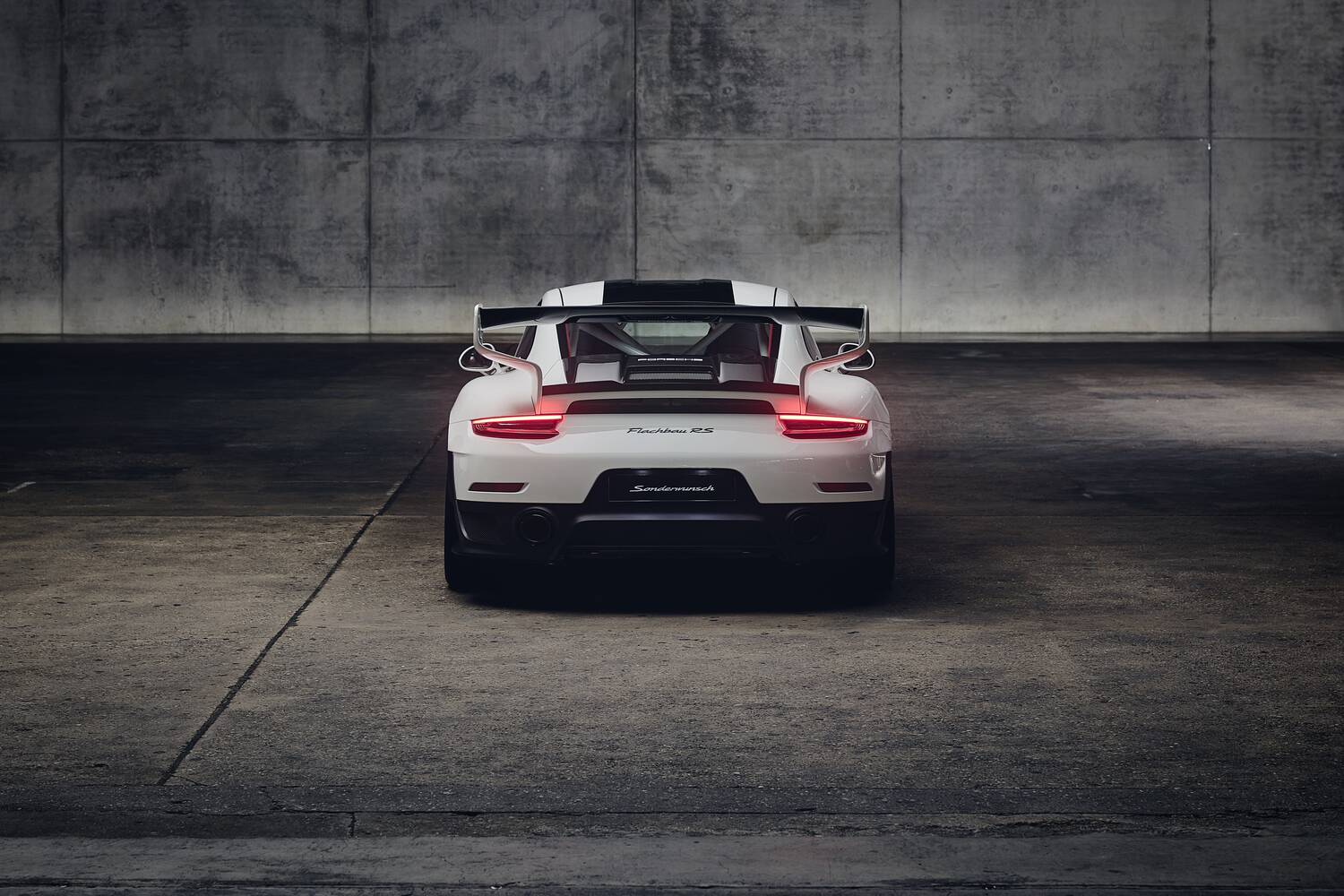
Yes, that’s because of the legal requirements. So although this new Flachbau has a massive rear wing, it looks a bit more 911 road standard because it has to be to meet the legislation.
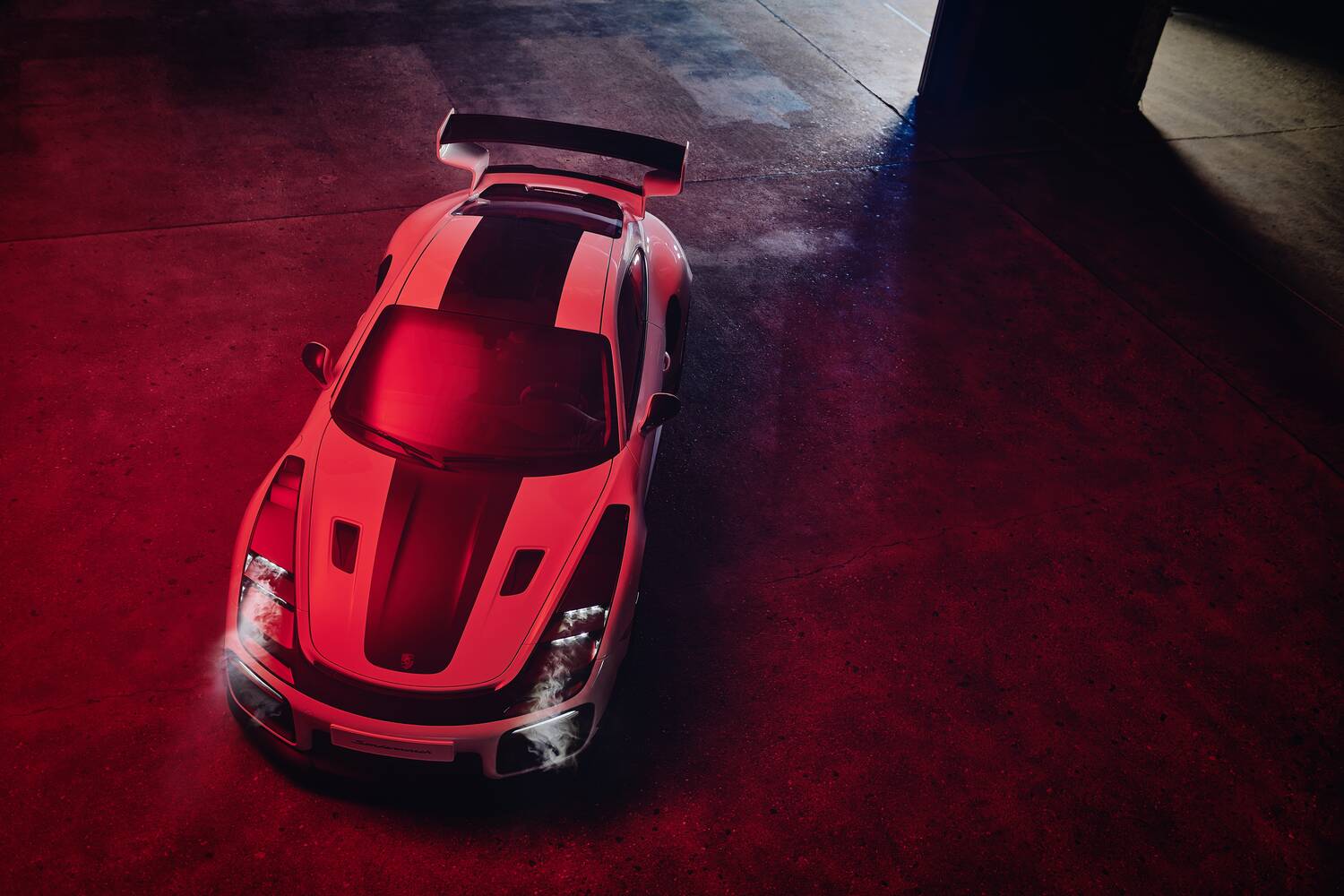
At the front, it really is different though, and designer Grant Larson - who has since retired from Porsche, but who also worked on the 2018 recreations - found that the road-legal solution to creating the blunt Slantnose look was to use tiered LED headlights, what with pop-ups now being sadly no longer legal.
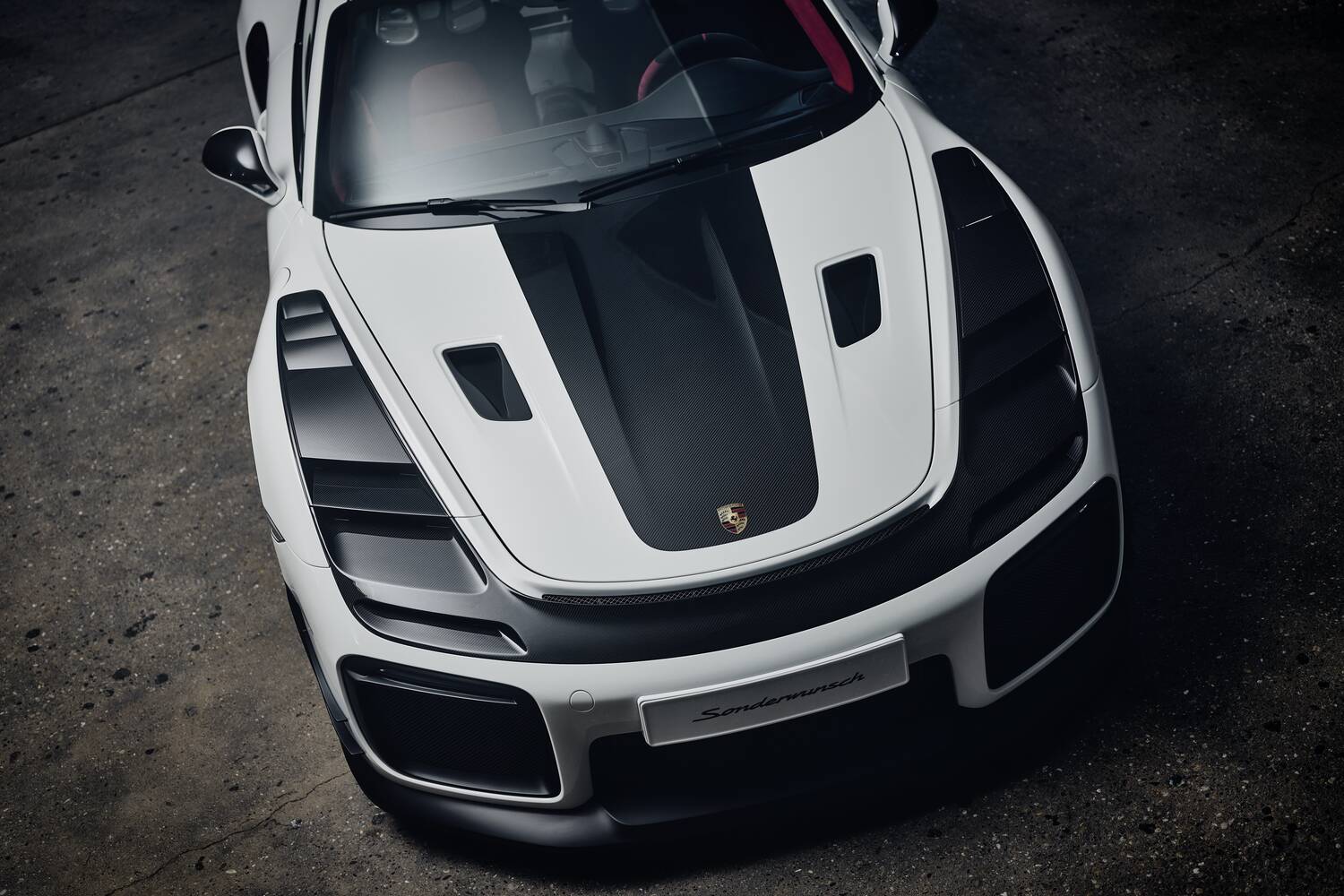
“The new Flachbau RS is a modern, fitting reinterpretation of the iconic 935 Moby Dick design,” said Larson. “In addition to the flatter front wings, a key feature is the staggered headlight arrangement with very narrow LED units.”
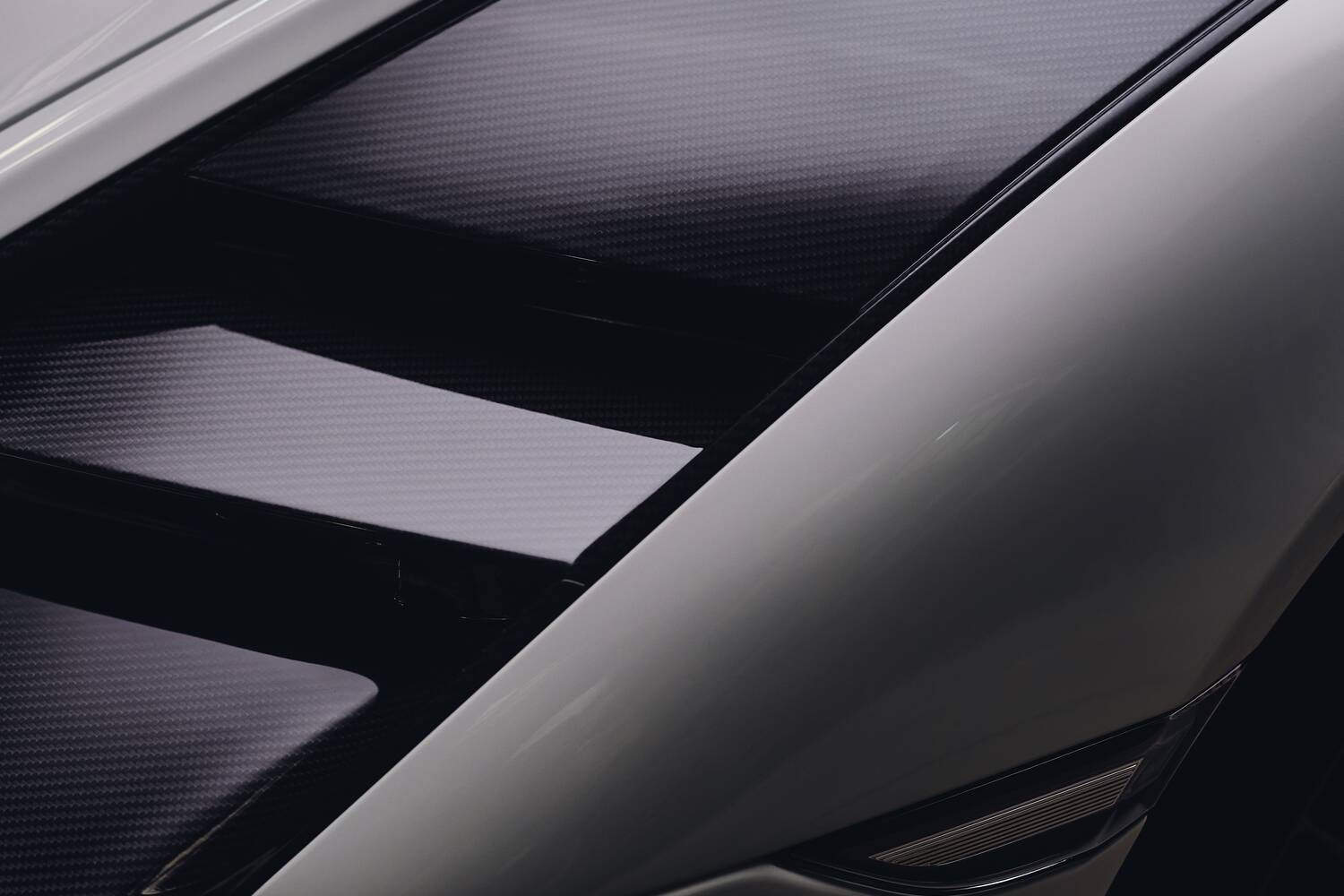
Those flat front wings are much lower-set than a traditional 911 wing shape, and get the iconic slatted air exits to prevent high pressure air building up inside the wheelarches.
Because of the new shape, the fuel filler and tank had to be modified, while Manthey supplied its aero know-how in the form of small black winglets which help to keep the nose on the ground at high speed.
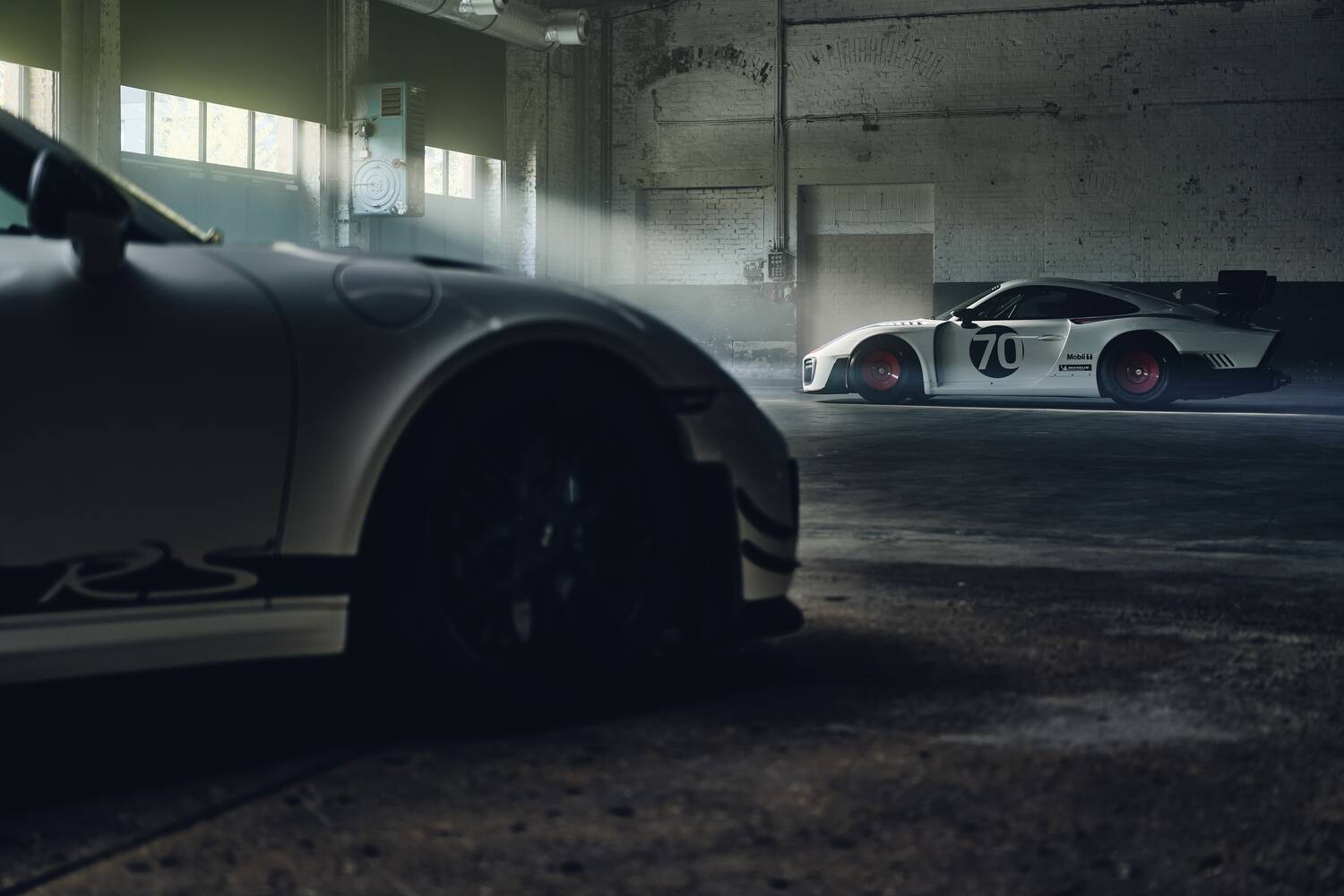
There are three layers of LED lights in the nose, for high-beam, low beam and daytime running lights arranged in tiers above one another, and they’re as shallow as 2-4 centimetres tall.
What’s the colour scheme about?
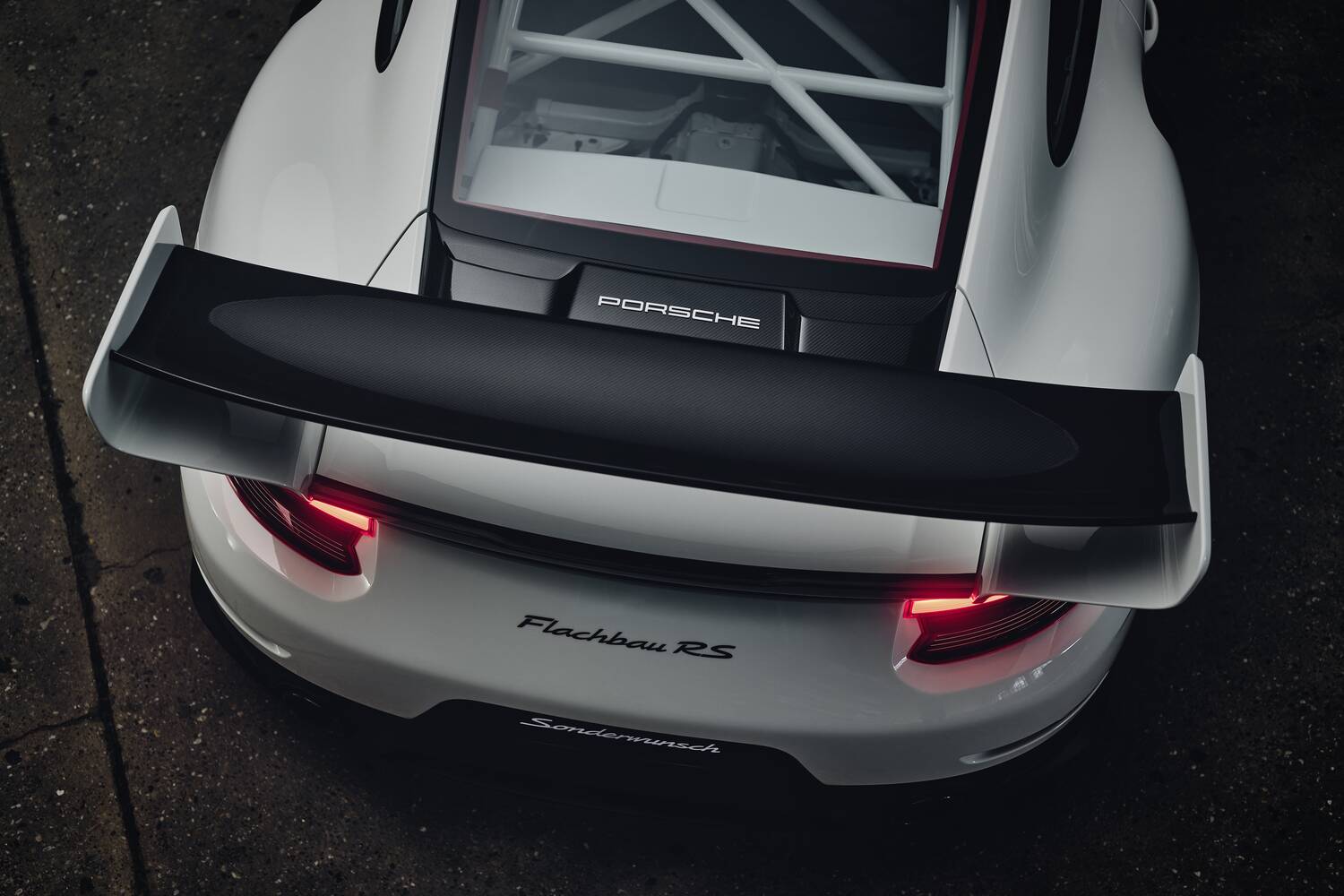
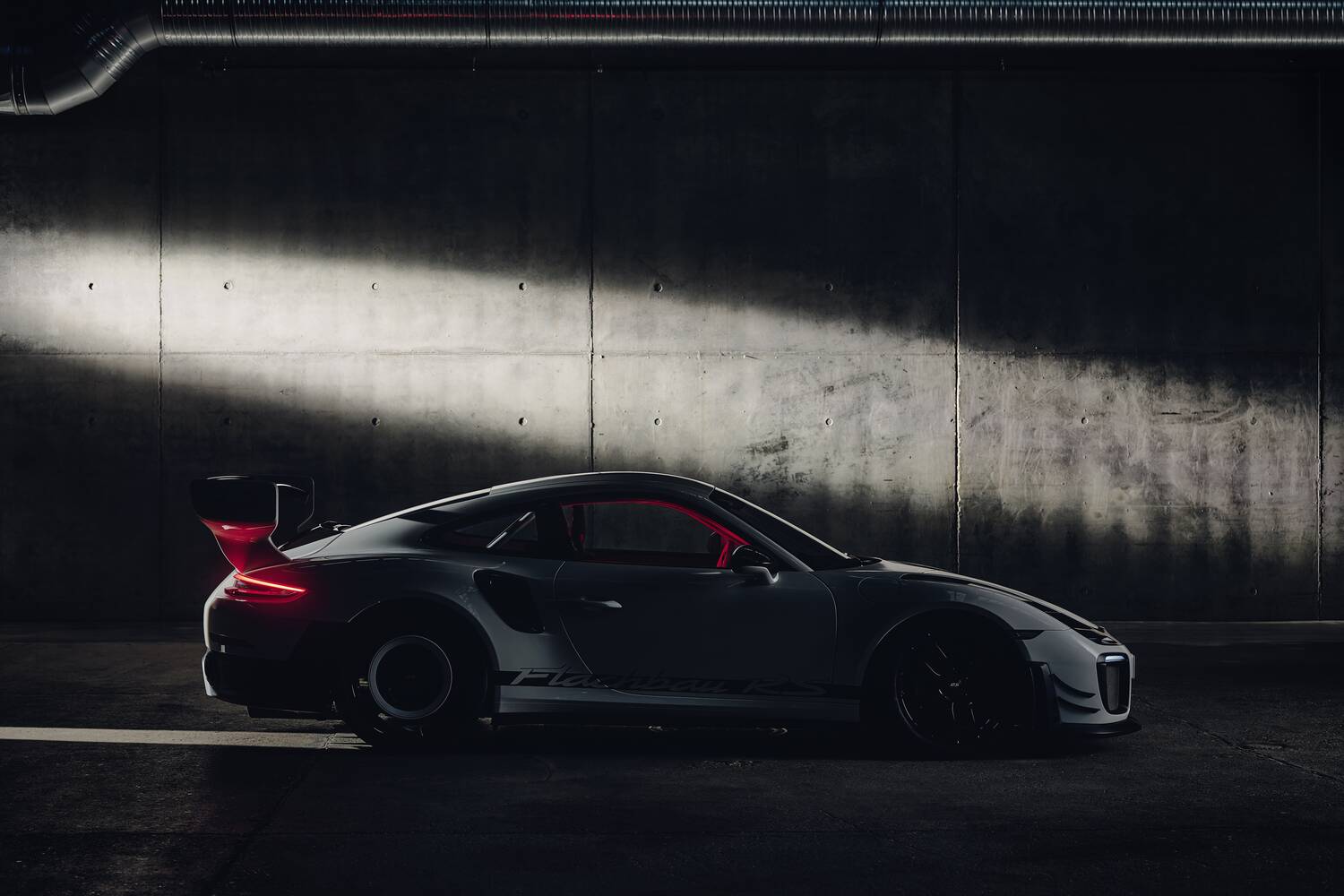
The dark grey U-shaped decals on the Grand Prix White (a classic Porsche paint colour) bodywork are actually a monochromatic tribute to the bright red and blue Martini livery of both the 1978 and 2018 935s.
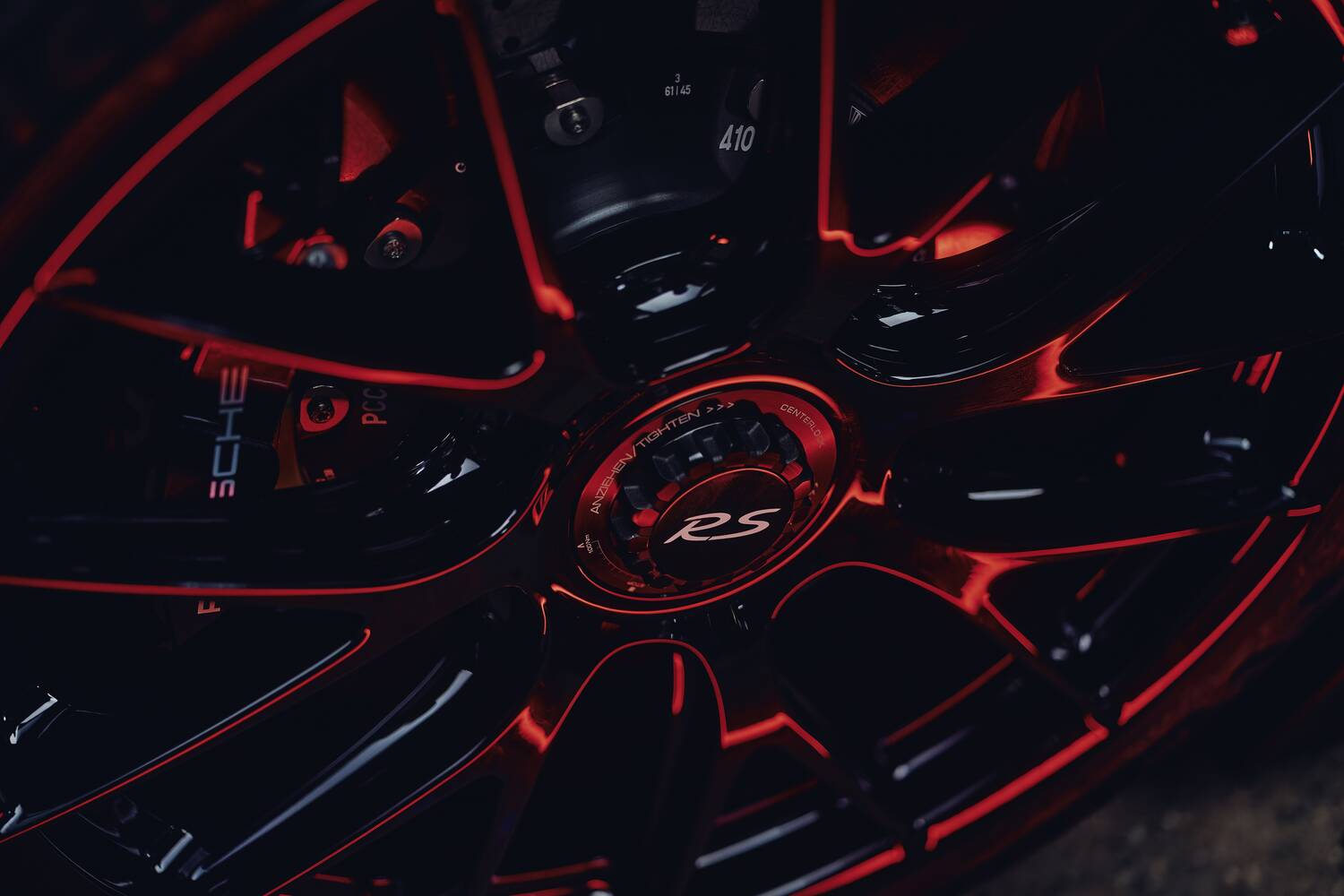
The roof stripes aren’t stripes at all, but unpainted carbon fibre, surrounded by panels of Grand Prix White paint which also appears on the disc-covered rear wheels, which are again a tribute to the Le Mans cars of the 1970s.
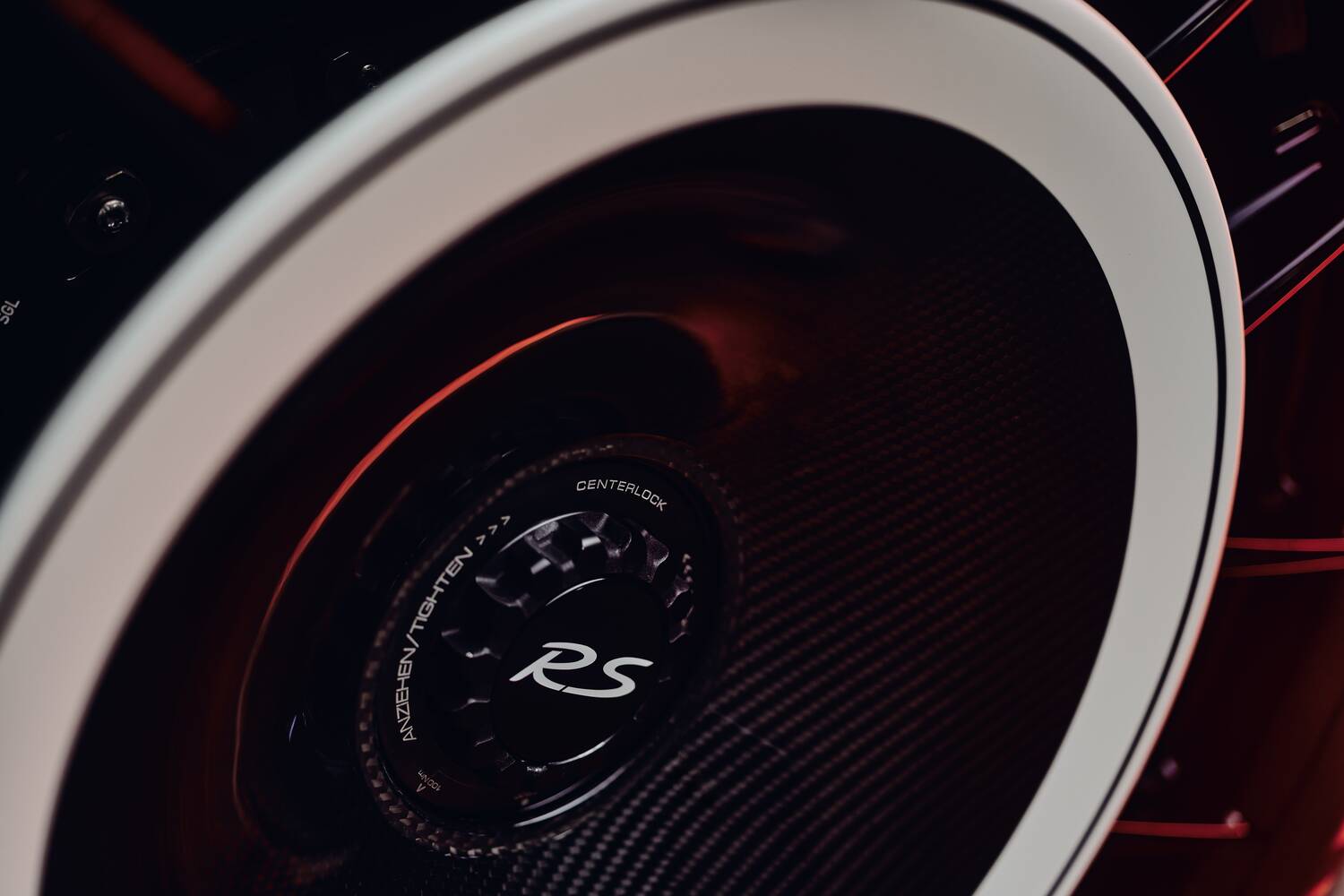
There’s a lot of complicated aero going on by the looks of it
There sure is, as Porsche and Manthey haven’t skimped on the wind tunnel time with this car. There’s a Manthey-supplied front splitter and rear diffuser, and those wheel disc covers don’t just look awesome, they actually reduce drag.
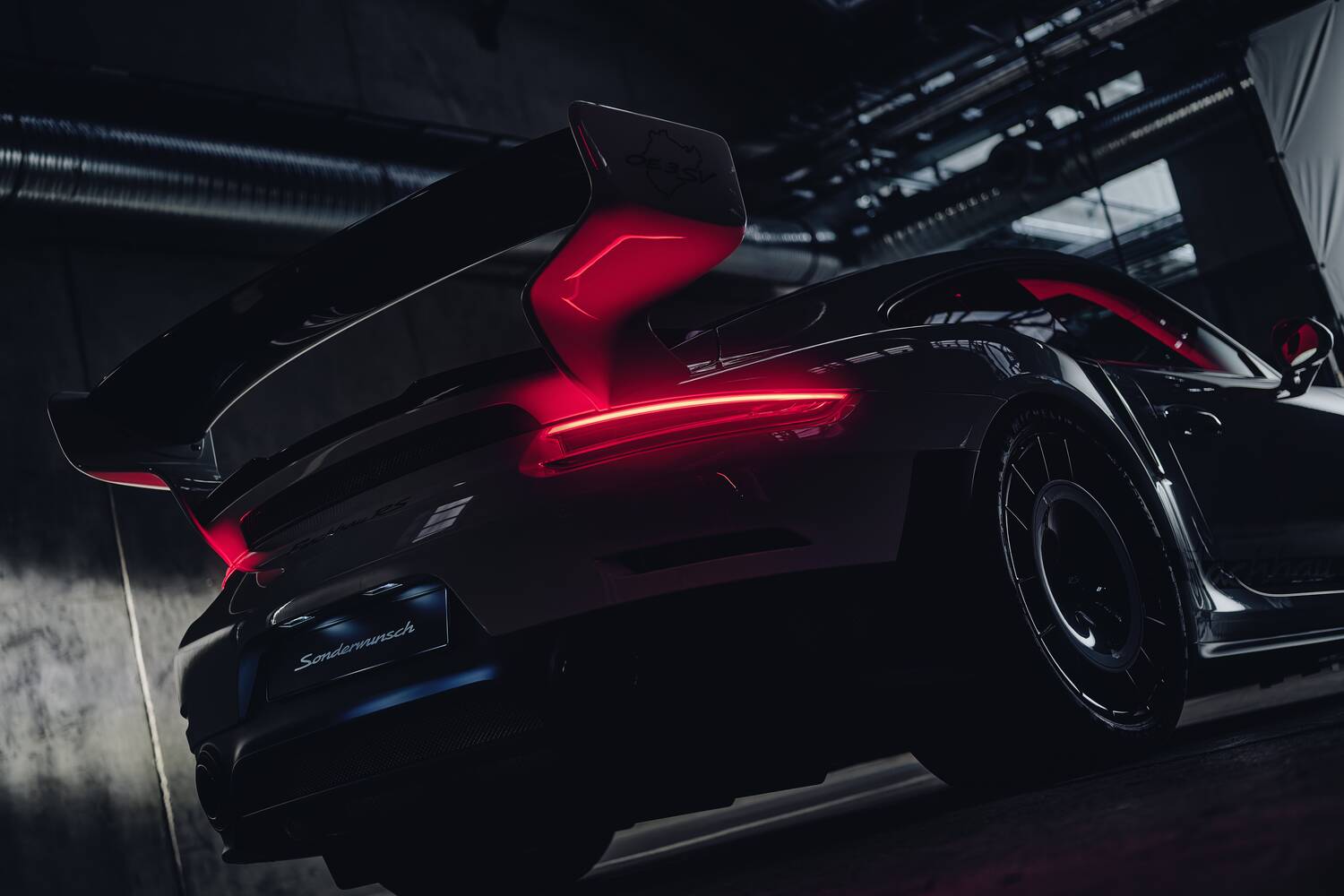
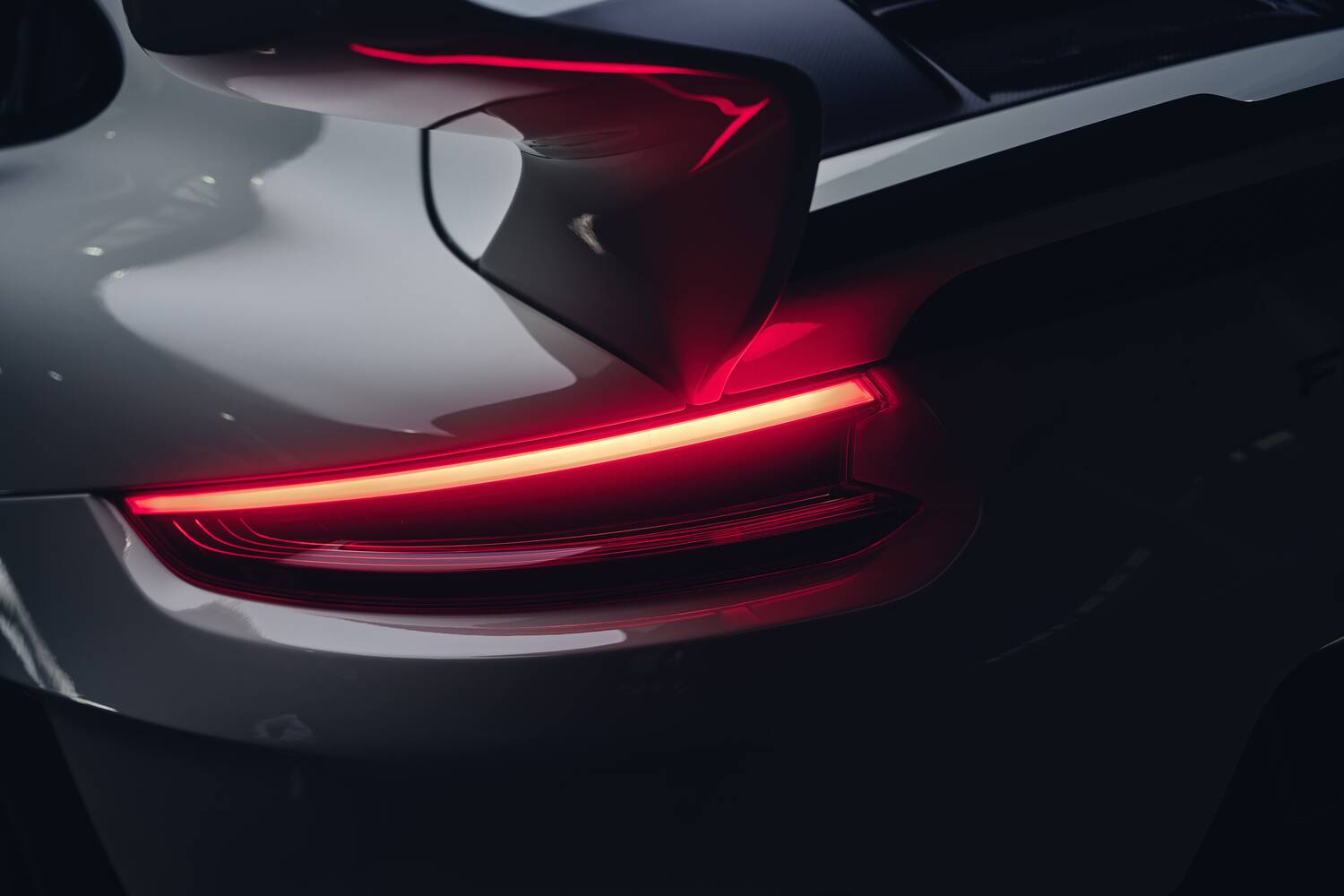
The rear wing, which gets modern S-shaped mountings, is fully adjustable between low and high downforce settings, and at its top speed of 340km/h this Flachbau produces a hefty 554kg of downforce.
What about the interior?
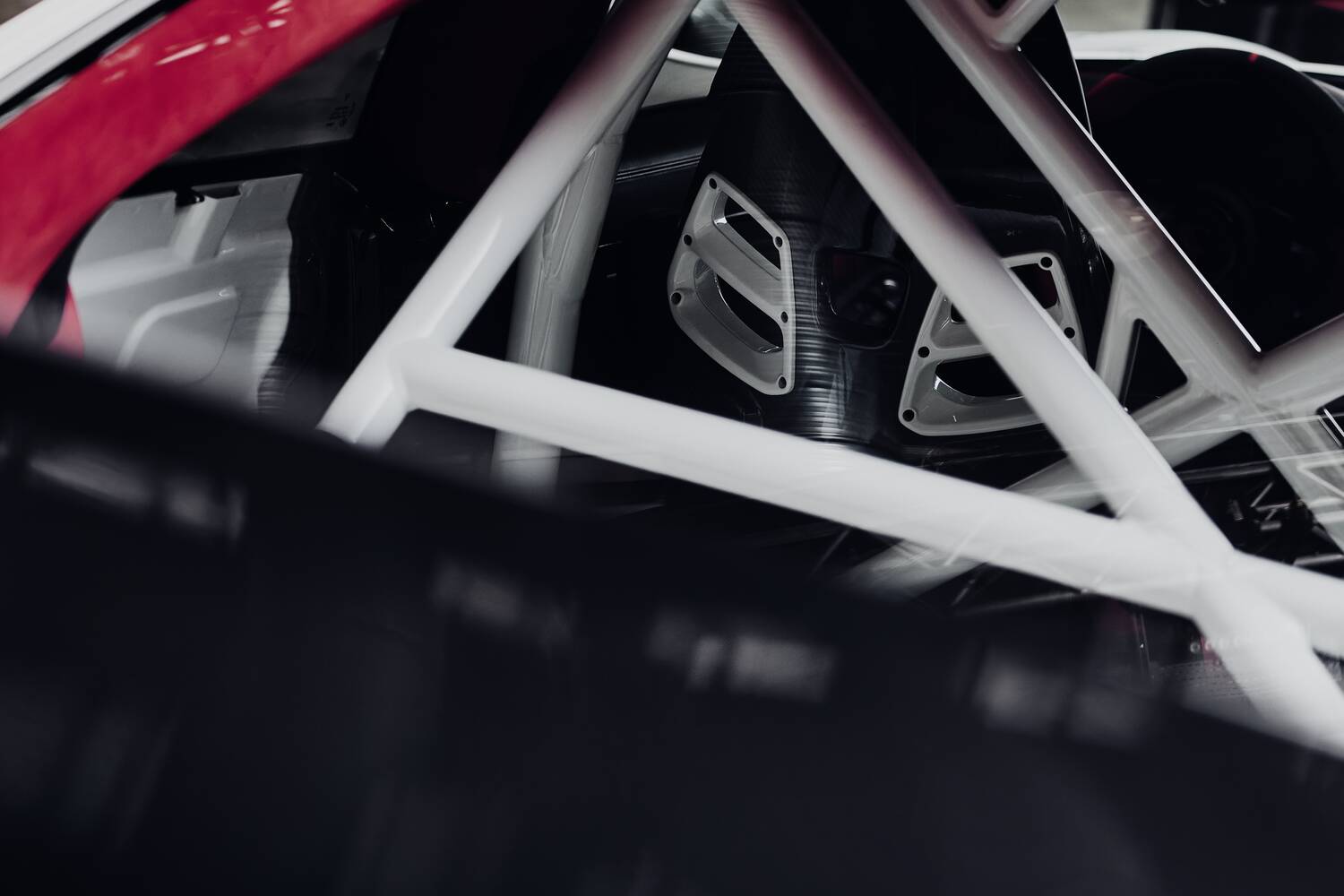
The red, black and exposed carbon look of the donor 911 GT2 RS has been retained, but the rear of the car has been given a stripped-back, race car finish.
The PCM (Porsche Communications Management - or touchscreen to you and me) has been ripped out and replaced with a leather-lined storage area, the stereo speakers are gone and much of the sound-deadening has been taken out.
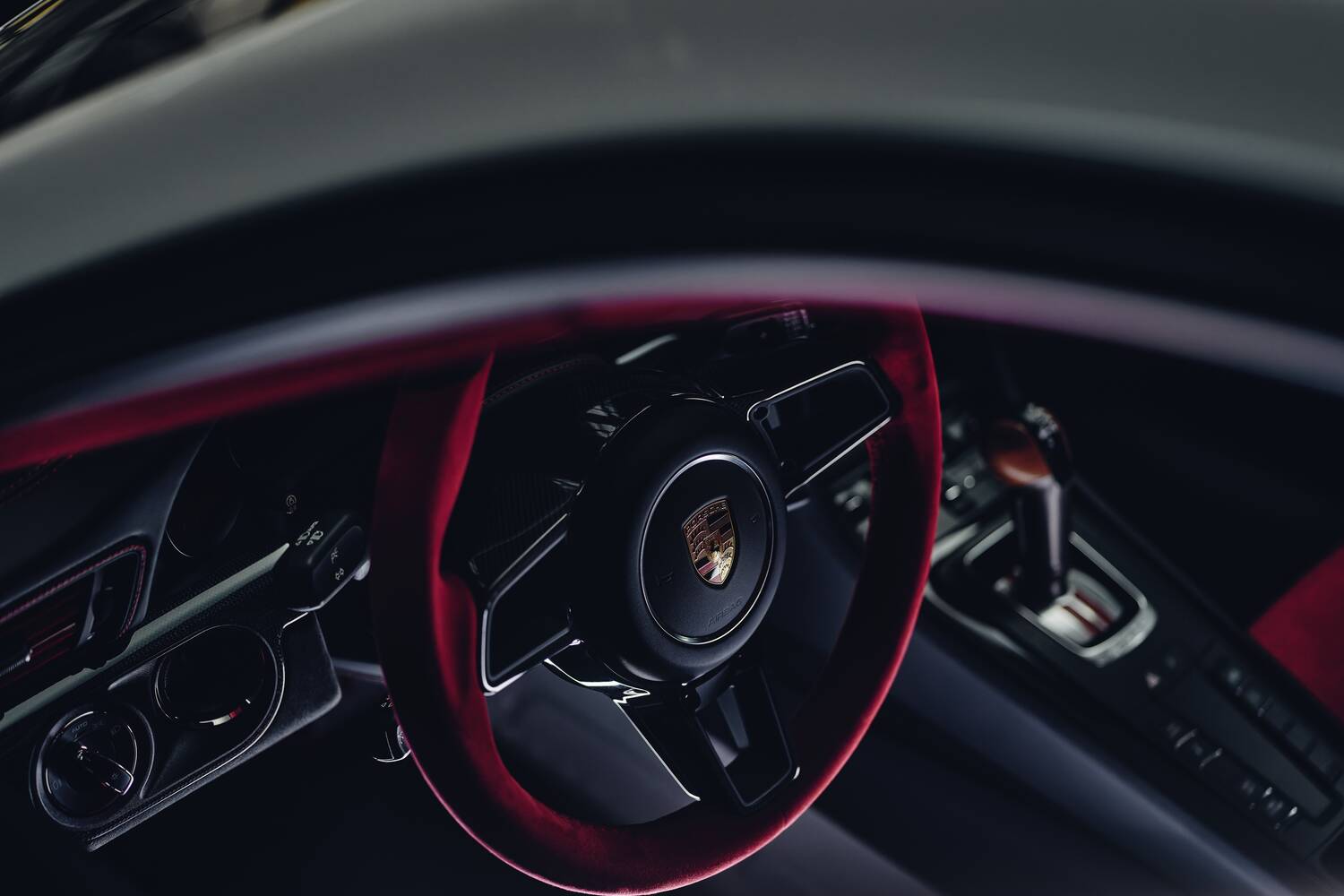
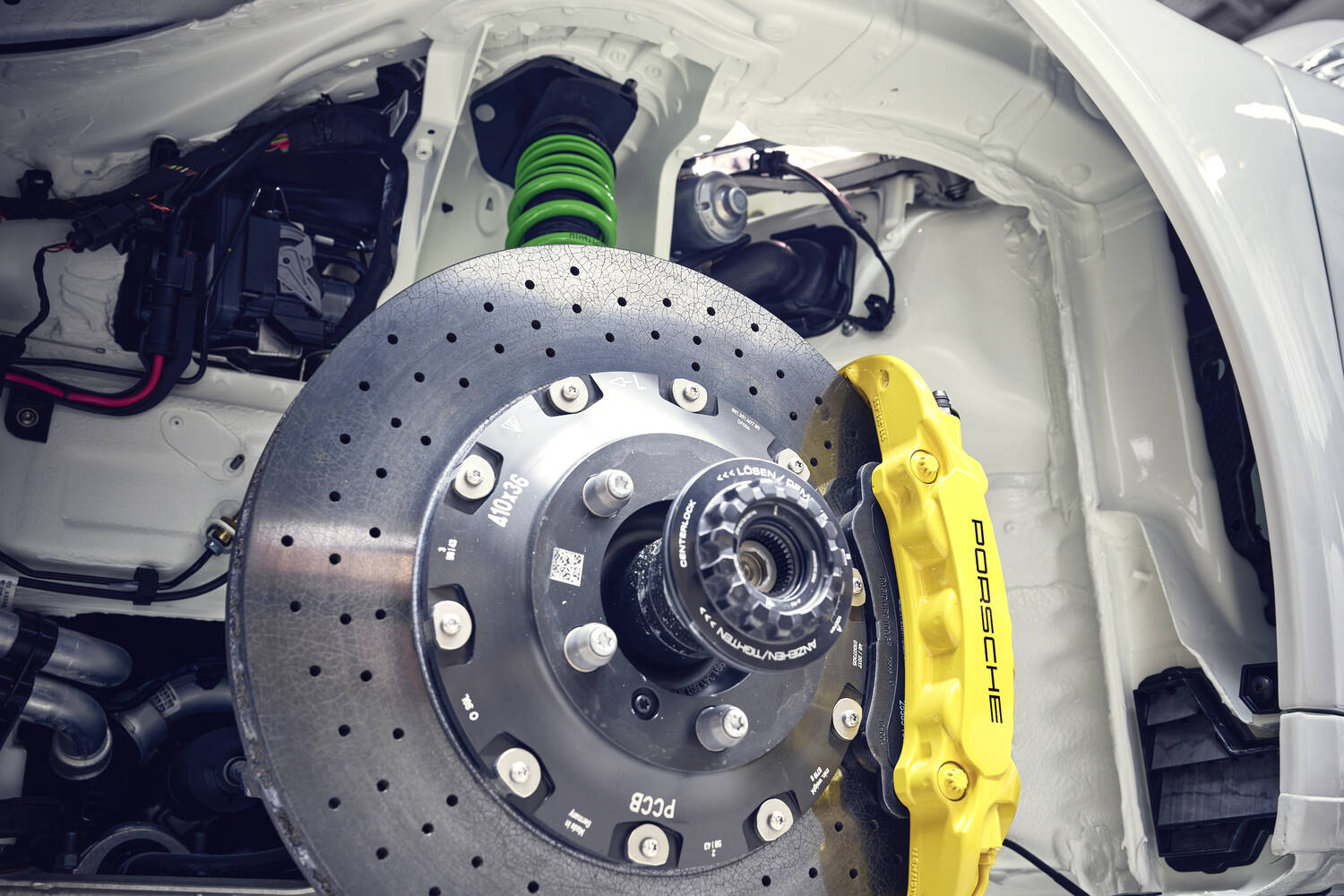
The interior also gets lots of exposed body-coloured metal, again for that race-car aesthetic, and even the revised wiring harness has been left exposed in the search of greater weight savings, even individual wires, which are now not needed, have been removed.
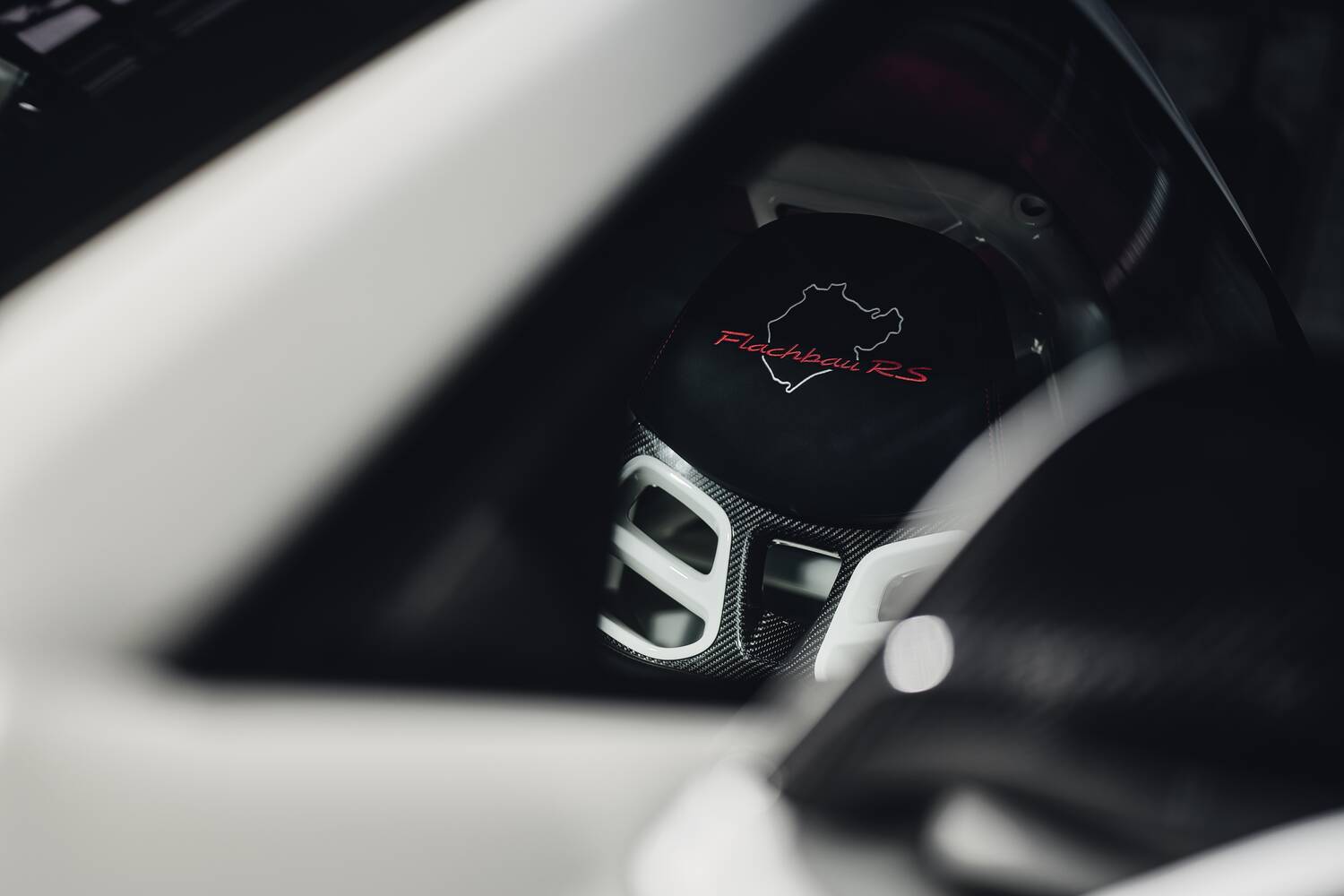
There is, of course, a hefty roll cage fitted where the back seats used to be. The bucket seats get ‘Flachbau RS’ stitching, along with an outline of the Nürburgring racetrack.
On the passenger side, the dashboard is adorned with a gold-coloured badge with ‘Sonderwunsch’ lettering and the inscription ‘Factory One-Off 2026 Flachbau RS’ engraved on a plate. Nice.
Even the mounts for the warning triangle and towing eye have gone, so these are now fitted into a neat presentation box.
How does the Flachbau drive?
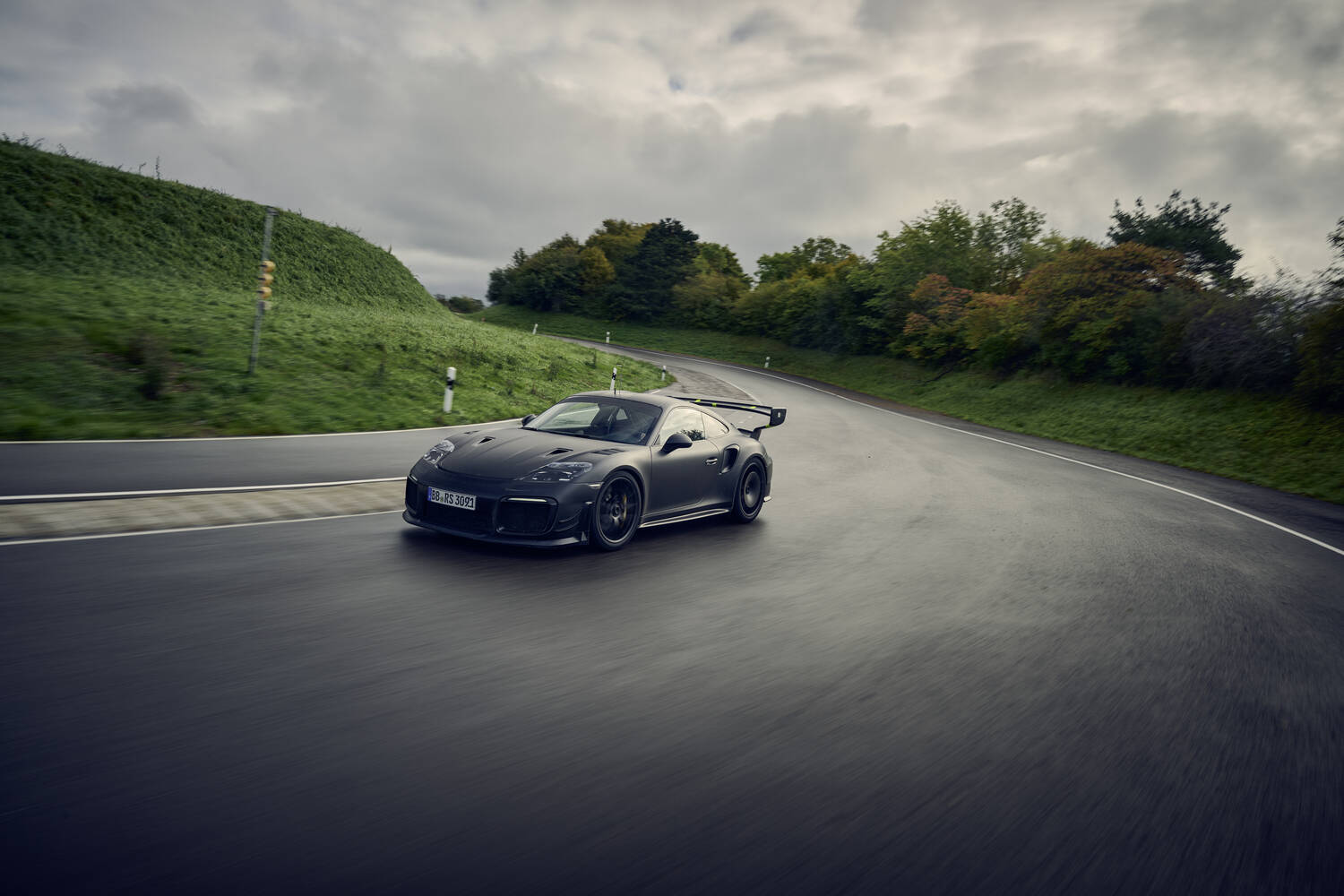
We’re going to guess that ‘Rather well’ covers it, as this isn’t just a body kit; Porsche brought the Flachbau RS testing at both its own Weissach test track, and on the Nürburgring.
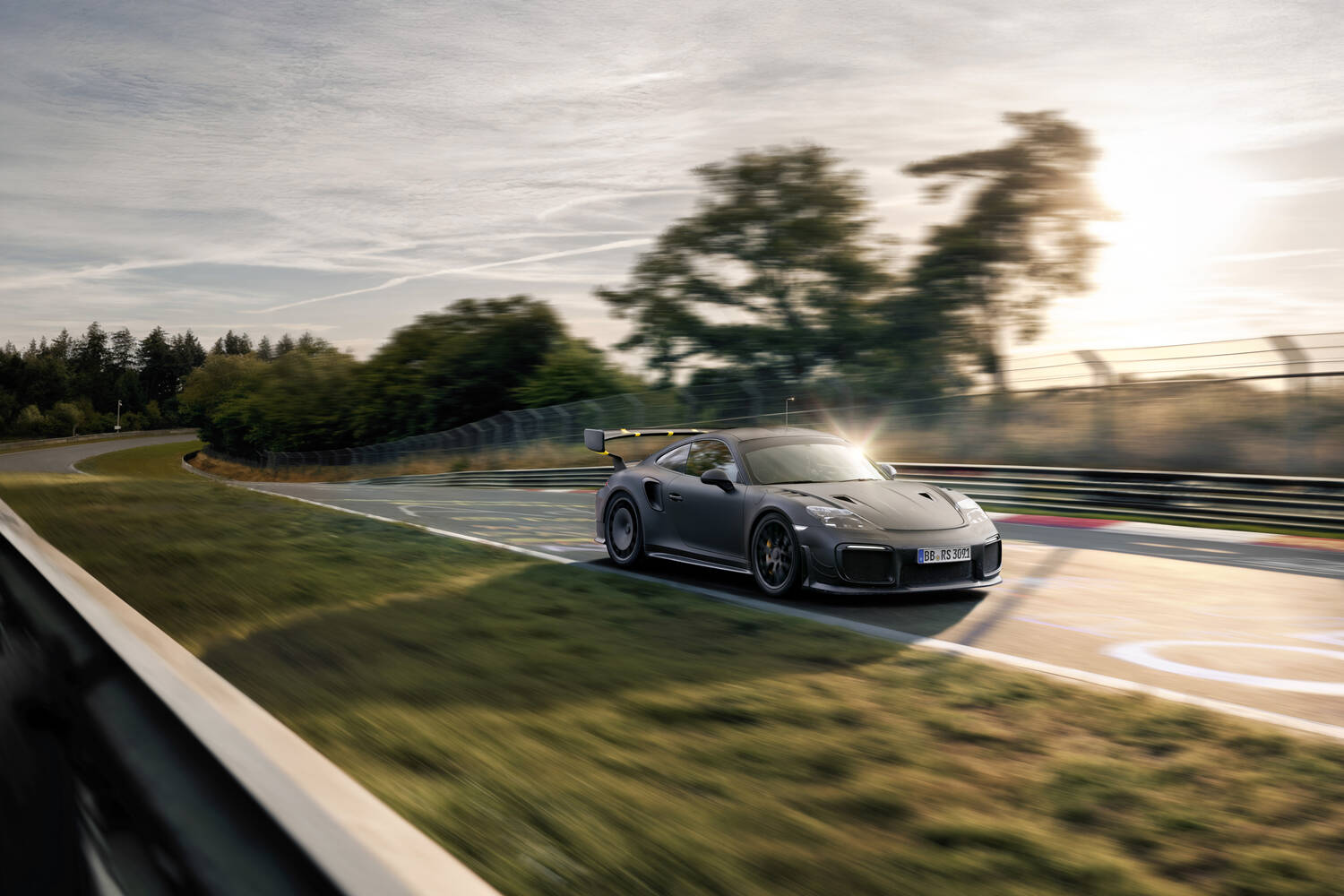
That’s in addition to digital crash testing and structural analysis so that the Slantnose lives up to Porsche’s high-quality reputation. The rear wing was tested on computer simulations but also put through a real-life test involving being subjected to extreme vibrations on a ‘hydropulse’ test rig, similar to the vibrations encountered - albeit to a lesser extent - during road use.
In addition, its static load-bearing capacity was tested using sandbags. Porsche even went to the effort of building three test mules so that it could go properly testing on the track.
Test drives at the Mendig airfield, 50 laps on the Nürburgring and endurance tests at the Weissach site combined to simulate a load on the rear wing equivalent to about 150,000 kilometres of customer use.
Will Porsche make more of these now?
That remains to be seen, and it probably depends on the customer who owns the car, and whether they’re happy for Porsche to make more.
However, the ‘Flachbau’ and ‘Flachbau RS’ names have been registered with the European Patent Office so there may be some plans for more. Watch this space. And start saving up now.
What’s CompleteCar’s take on this?
Want one. No notes.
If there is anything about this story we have not covered, you can avail of our expert advice service via the Ask Us Anything page.