

Hang on, what do you mean ‘another' record…
Well, we've been here before. Way back in 2006, JCB broke the Land Speed Record for diesel-powered vehicles with its Dieselmax record car. That record was set at more than 560km/h, with the legendary Andy Green behind the wheel.
That name rings a bell…
It should. Green, a former RAF Wing Commander, has held the outright Land Speed Record since 1997, when he took the famous Thrust SSC car, powered by two Rolls-Royce jet engines, to a record speed of 1,227.985km/h, breaking the sound barrier in the process.
While it seems unlikely that Green's outright record will ever be broken now, there are other categories in which records can be set. JCB did just that, with Green doing the driving, in 2006 with its Dieselmax record car, which used two highly tuned JCB digger engines, propelling it across the famous salt flats at Bonneville in Utah to a speed of more than 560km/h.
So instead of diesel, the car is using hydrogen?
Yup. JCB reckons that hydrogen power is the best way to create zero-emissions diggers and heavy equipment. Apparently most construction firms bring their own tanks of diesel to big sites anyway, so bringing a tank of hydrogen isn't that much harder, infrastructure allowing. The company is now developing a new lineup of hydrogen-fuelled vehicles, in which the hydrogen is injected into four-cylinder combustion engines, just like diesel would be.
So what's the Hydromax?
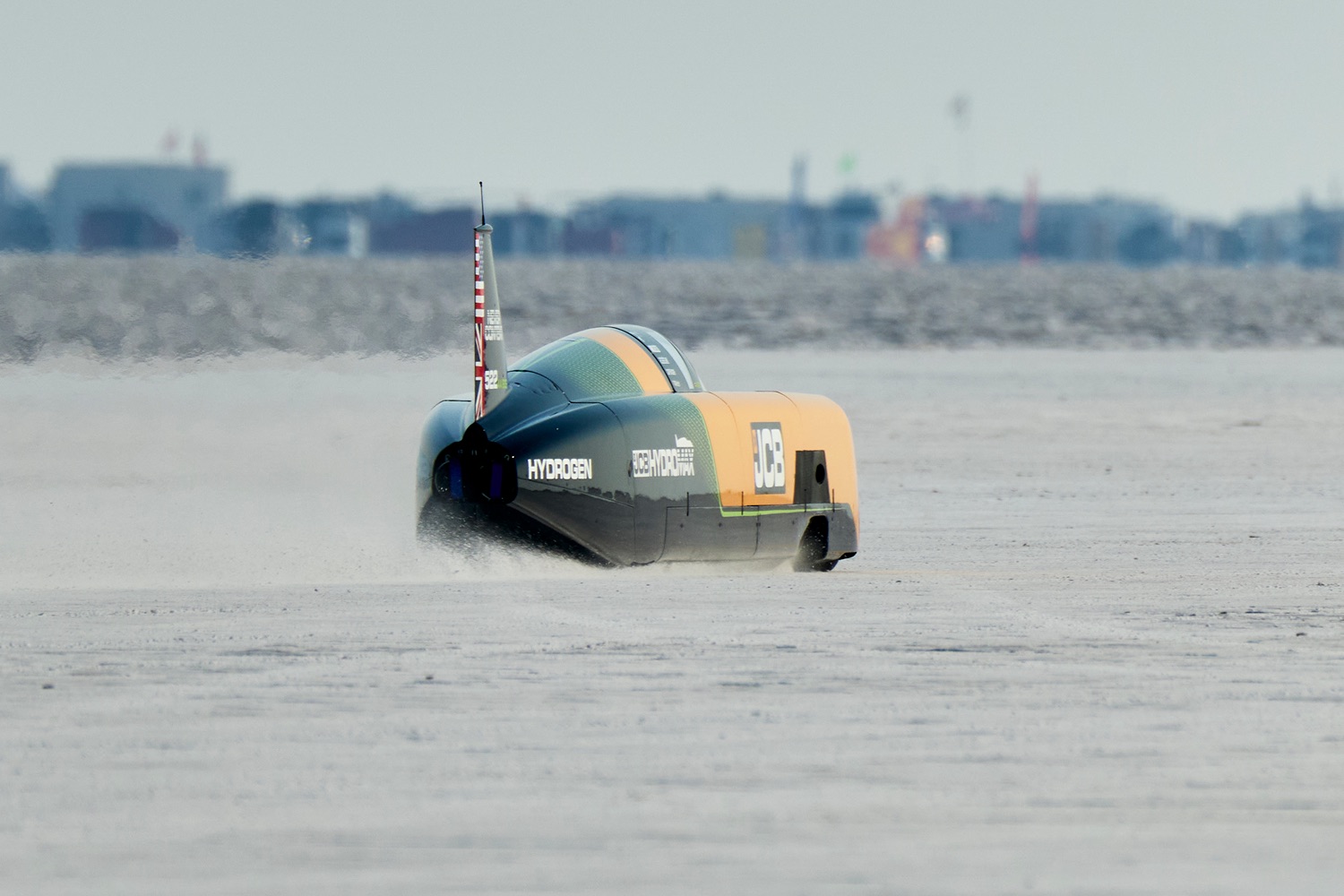
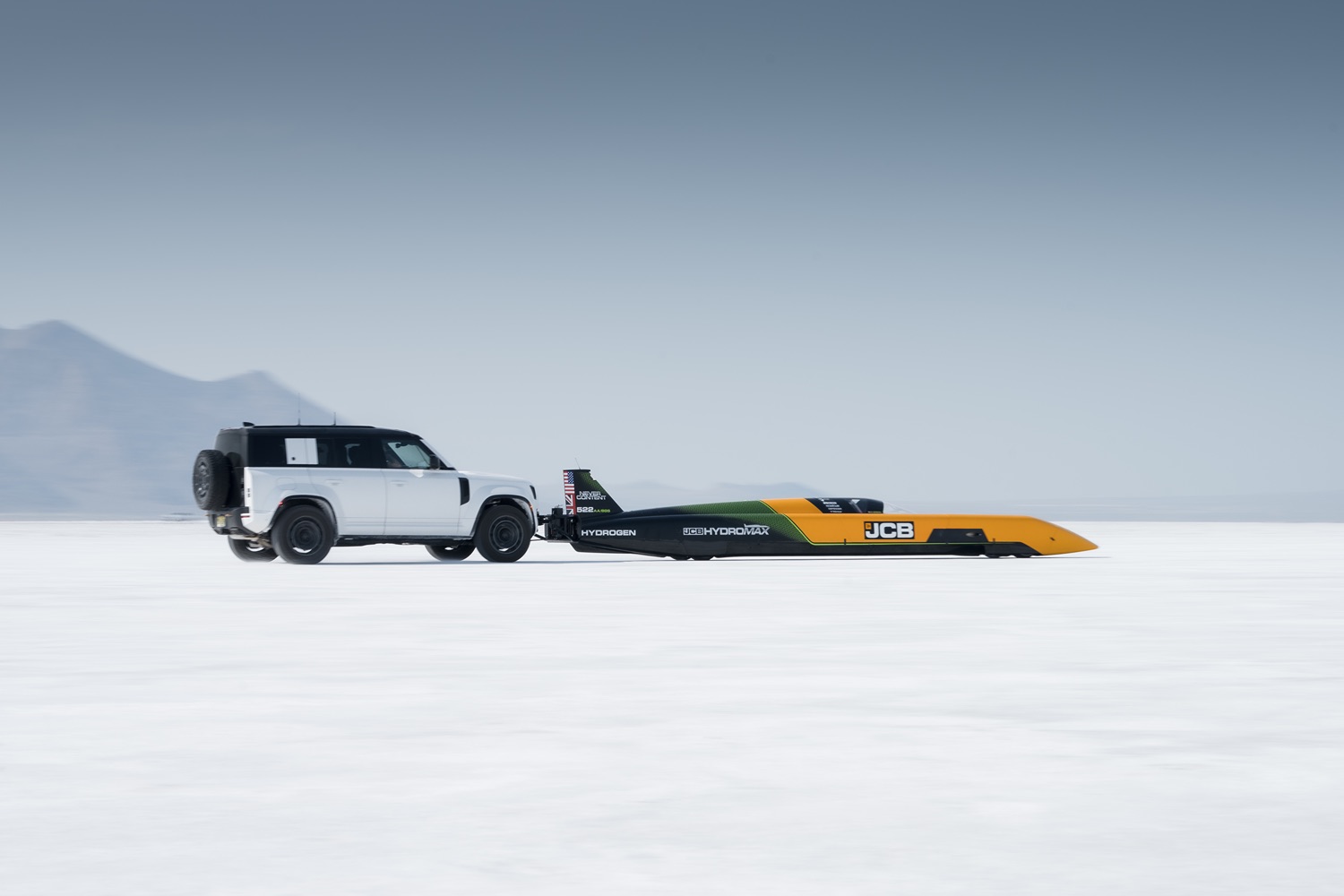
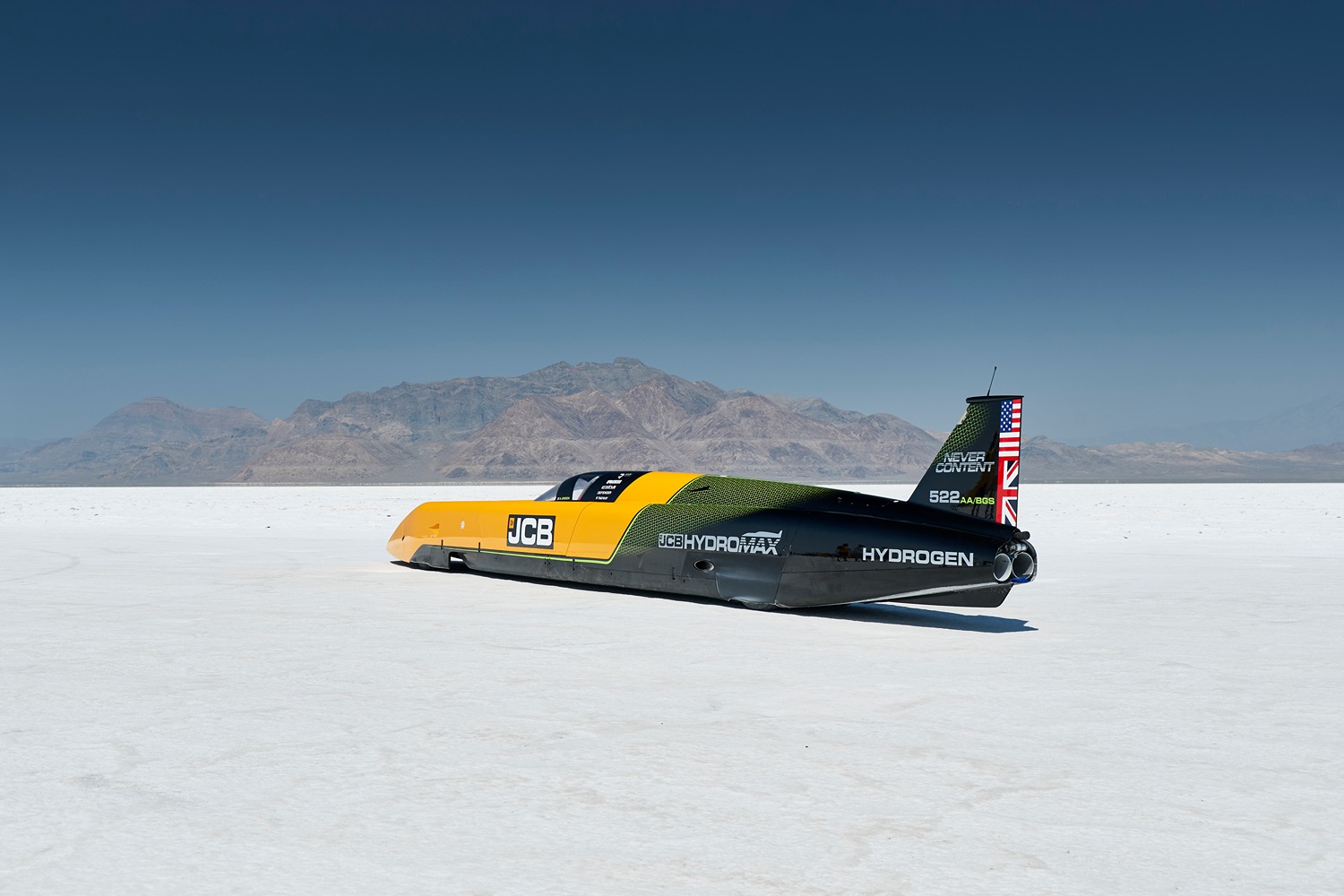
The Hydromax is ten metres long, and barely the width of your shoulders wide - a classic, low-slung, pencil-thin Land Speed Record car. It's powered by JCB's new hydrogen engine, a 4.8-litre four-cylinder powerplant, which, while closely related to that used by the company's diggers, has, of course, been modified.
While items such as the block and crankshaft are carried over, the Hydromax engine got new heads with camshafts instead of the standard pushrods, and direct injection for its hydrogen fuel. The rev limit was almost doubled to 4,000rpm, and instead of the standard 74hp, this record-breaking engine produces 800hp.
That doesn't sound like all that much for a Land Speed Record
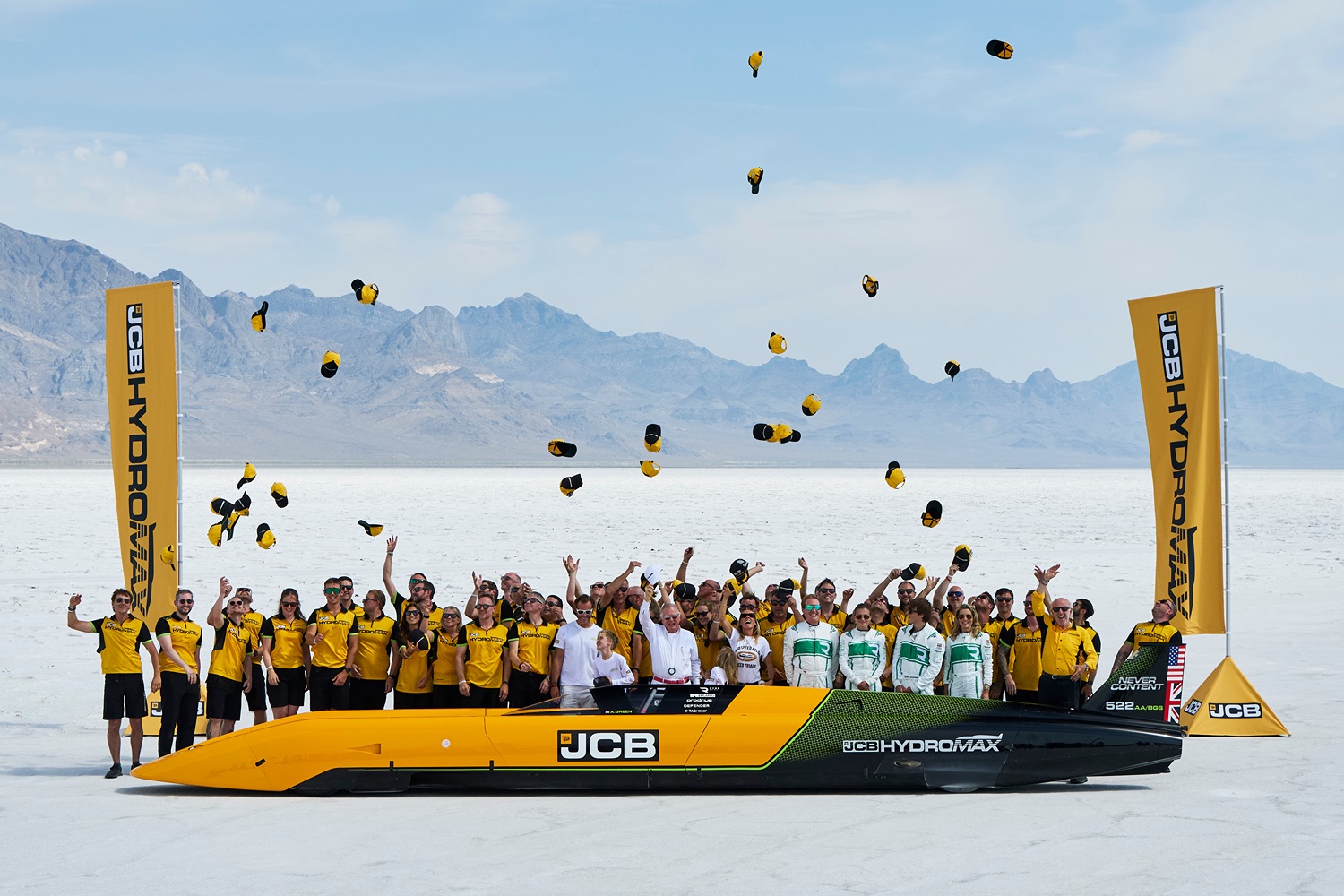
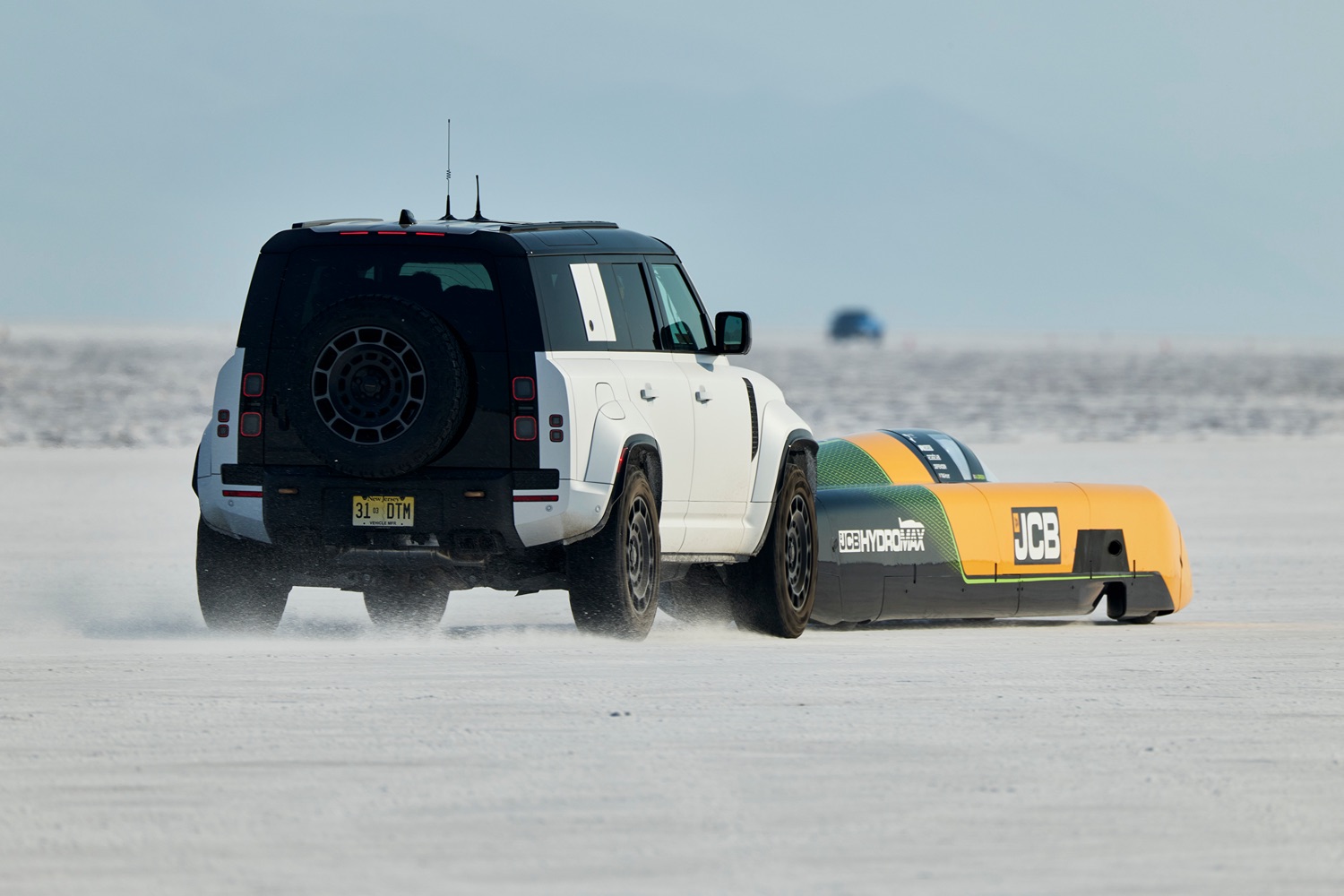
You're right, which is why the JCB Hydromax gets two engines coupled together and cooled with ice baths, so the car doesn't need a heavy liquid-cooling radiator. This is such a specialised vehicle that, below 100km/h, it doesn't really run very well, so it needs a hefty shove from a 615hp Land Rover Defender Octa to get going.
How fast did it go?
The Land Speed Record is a very carefully measured thing, overseen by specialists from the Fédération Internationale de l'Automobile (FIA), the same people who make the rules for Formula One, rallying, endurance racing, etc. The run has to be made through a measured mile or kilometre, and you have to make a second, return run within a given time limit, in the opposite direction, so as to allow for any possible wind assistance.
With all those rules in place, and streaking across the white salt with Green behind the wheel, Hydromax set a new hydrogen-fuelled Land Speed Record of 655.843km/h. The previous record, set by a BMW prototype, was just 299km/h.
Andy Green said: "Bonneville is the spiritual home of the world land speed record, and JCB Hydromax has just written itself into that history. The car was terrific - stable, strong and fast. Setting a world land speed record with hydrogen power, twenty years after Dieselmax, is a huge privilege. This record is a huge achievement by a world class team and superb technology.”
JCB Engineering Director Ryan Ballard, who is leading the project, said: "This record belongs to the engineering team which took a hydrogen digger engine and made it the fastest of its kind on earth. This has been an amazing challenge from the outset of the it being set in February last year. We came here fully prepared, and the car delivered.”
If there is anything about this story we have not covered, you can avail of our expert advice service via the Ask Us Anything page.