

Looks good – anything of particular note to point out about the exterior?
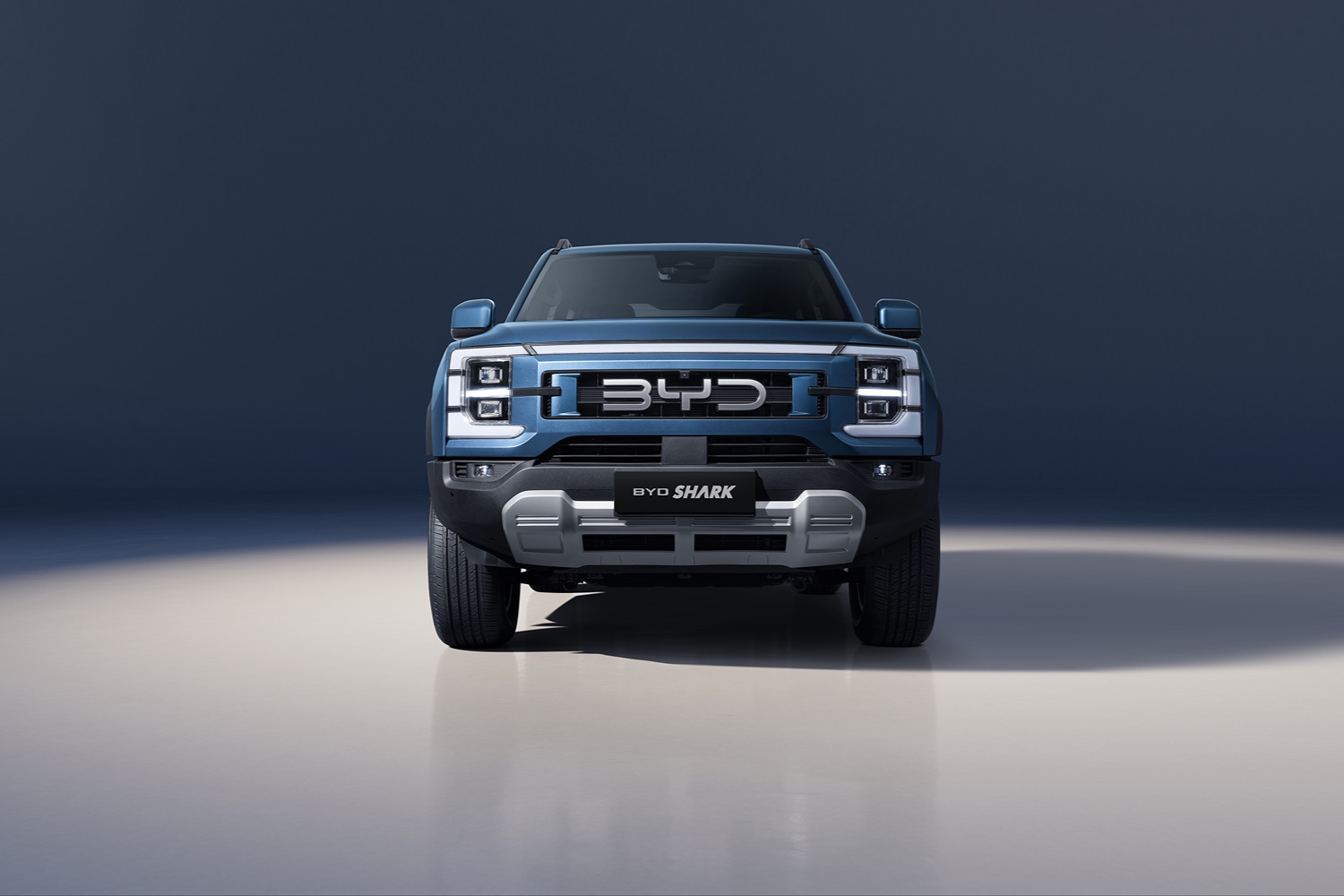
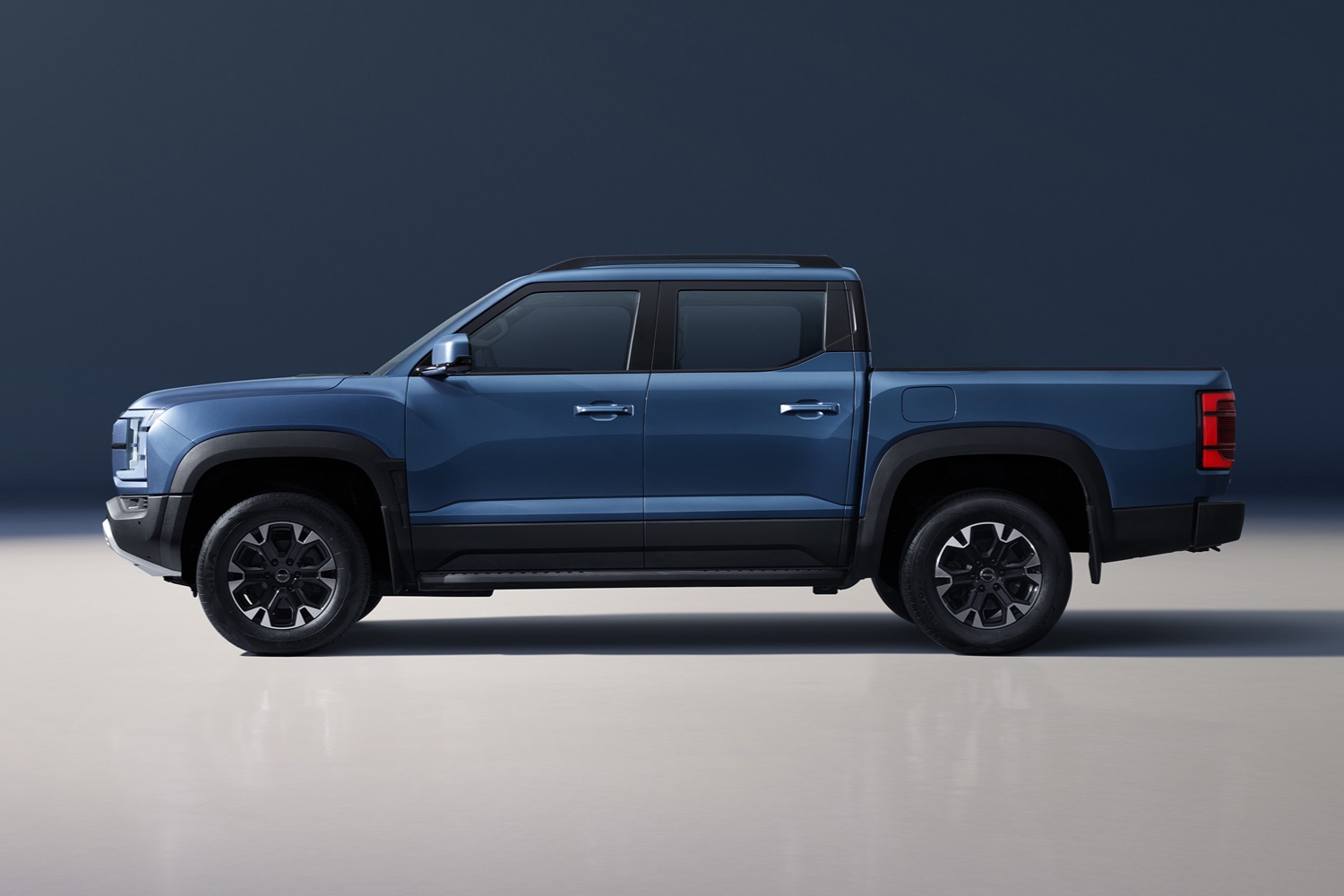
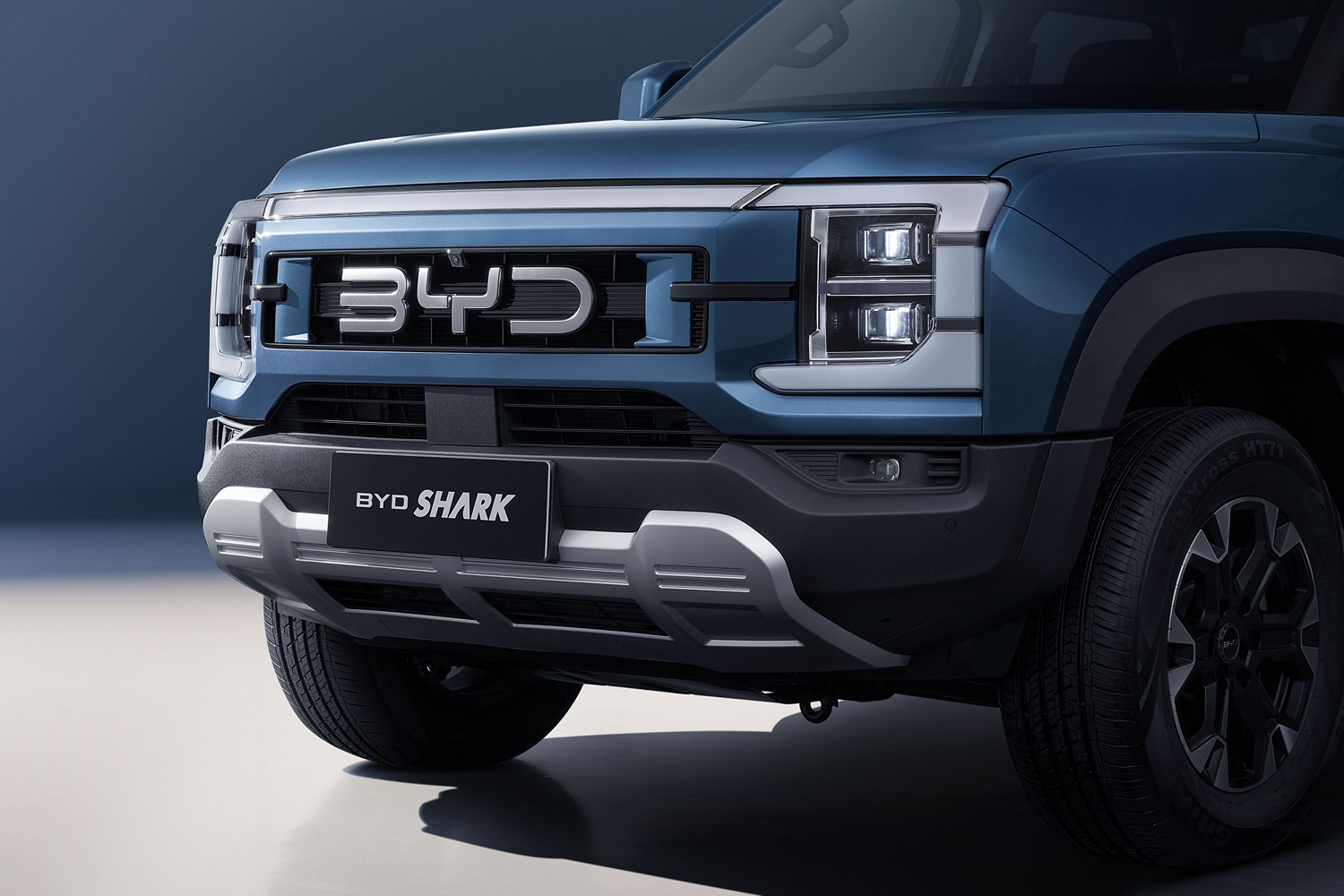
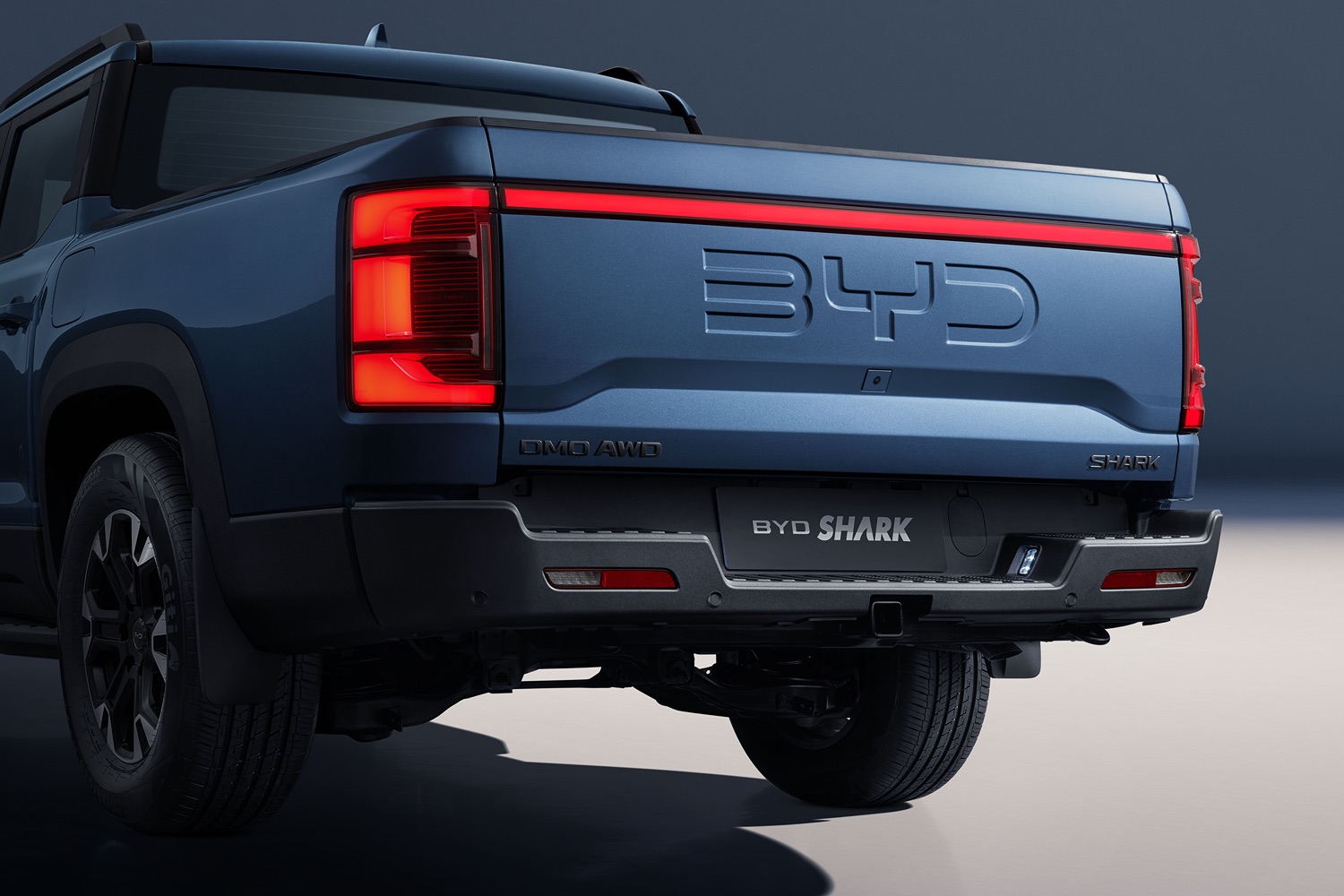
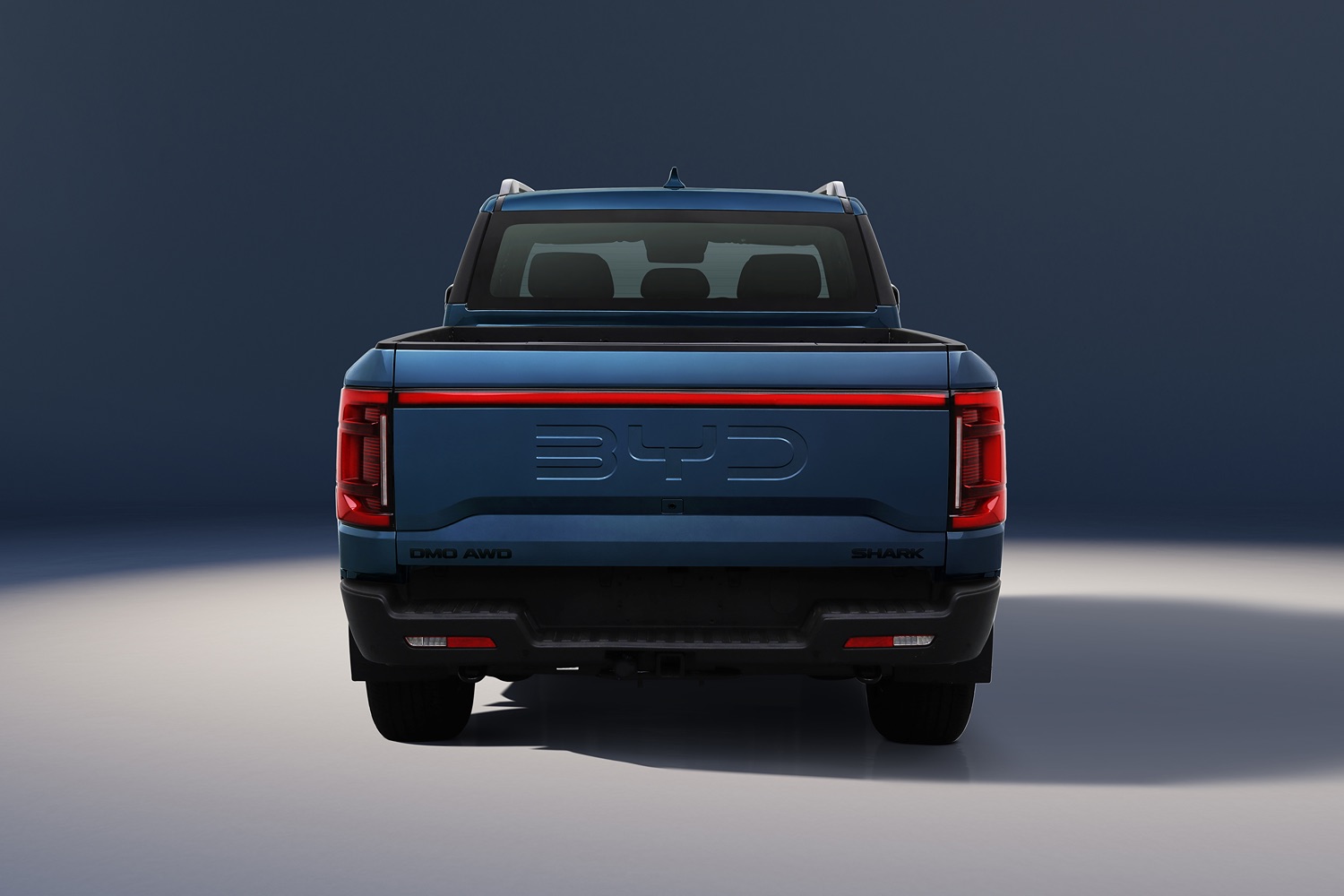
Well, aside from the strident light signatures fore and aft, and what the company says is the 'largest BYD logo on any passenger vehicle' for the tailgate, the Shark is a big old thing – even by the standards of double-cab pick-ups. Most rivals are around the 5.2-5.3-metre mark for length, but the BYD is something of a giant at 5,457mm from tip to tail; a great white, you might say. Fully 3,260mm of that length is between the axles, while the approach and departure angles are stated to be 31 and 19.3 degrees, respectively. Finally, the Shark sits on 18-inch alloys wrapped in chunky tyres.
Click here to read our BYD reviews.
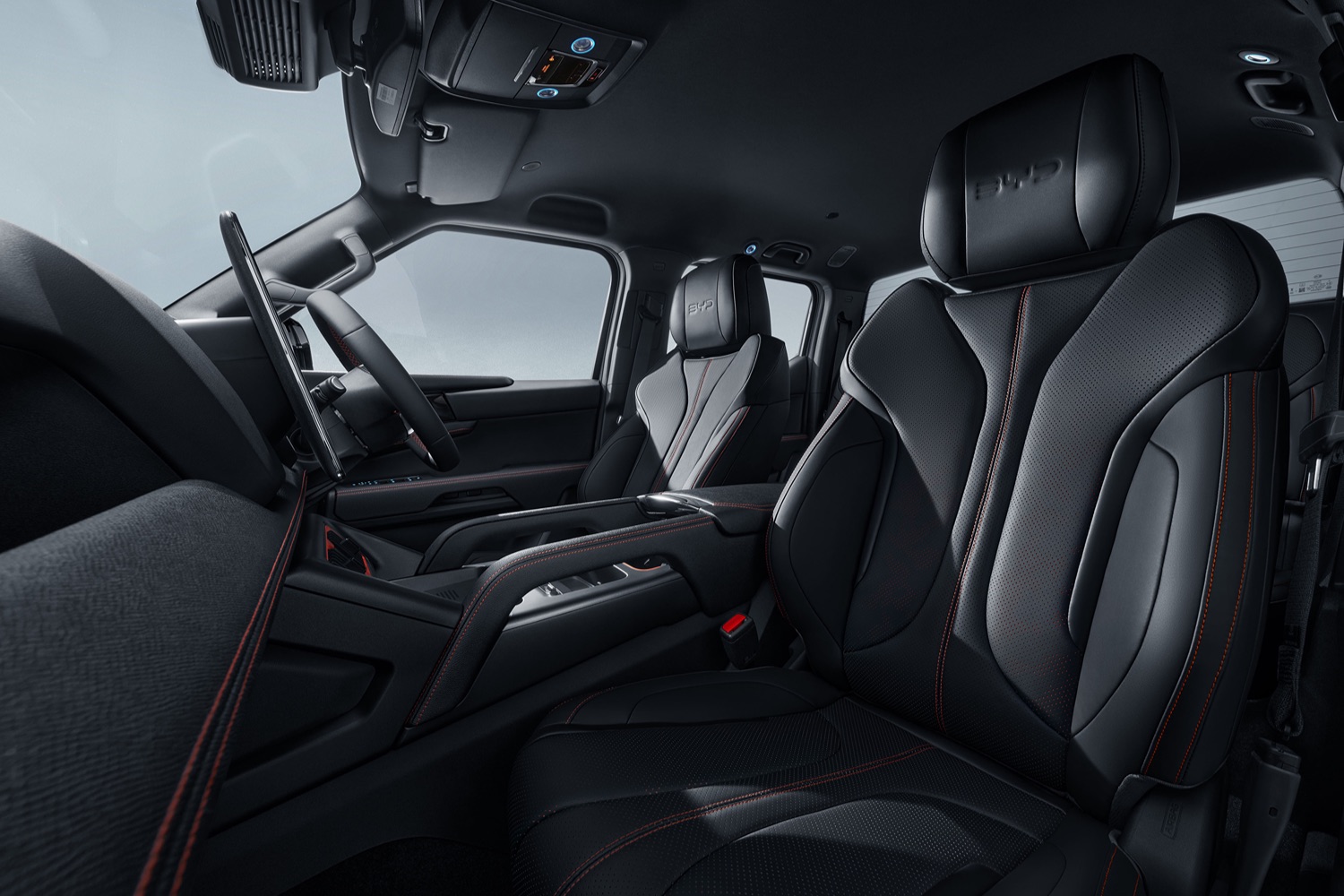
What's the cabin of the BYD Shark like?
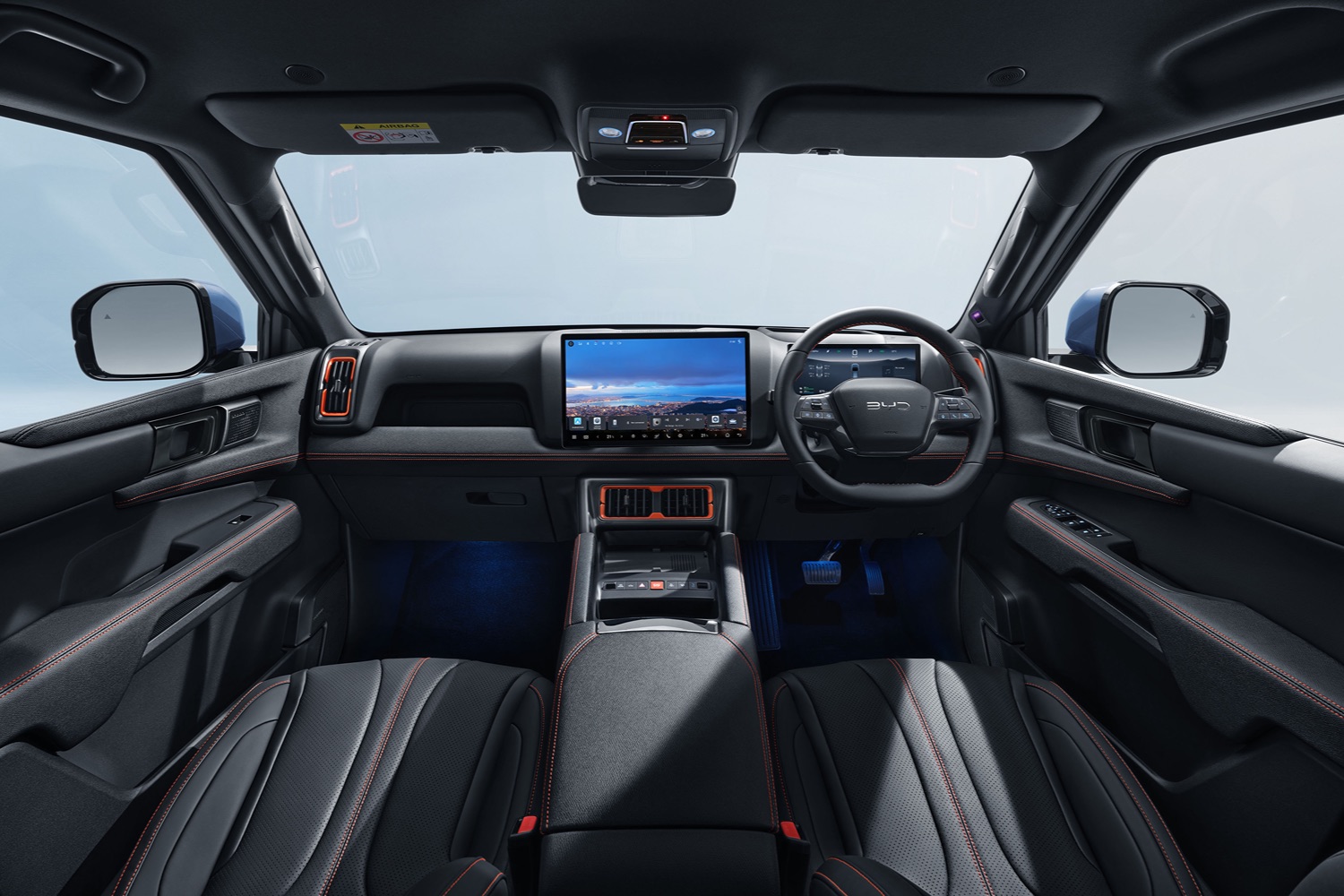
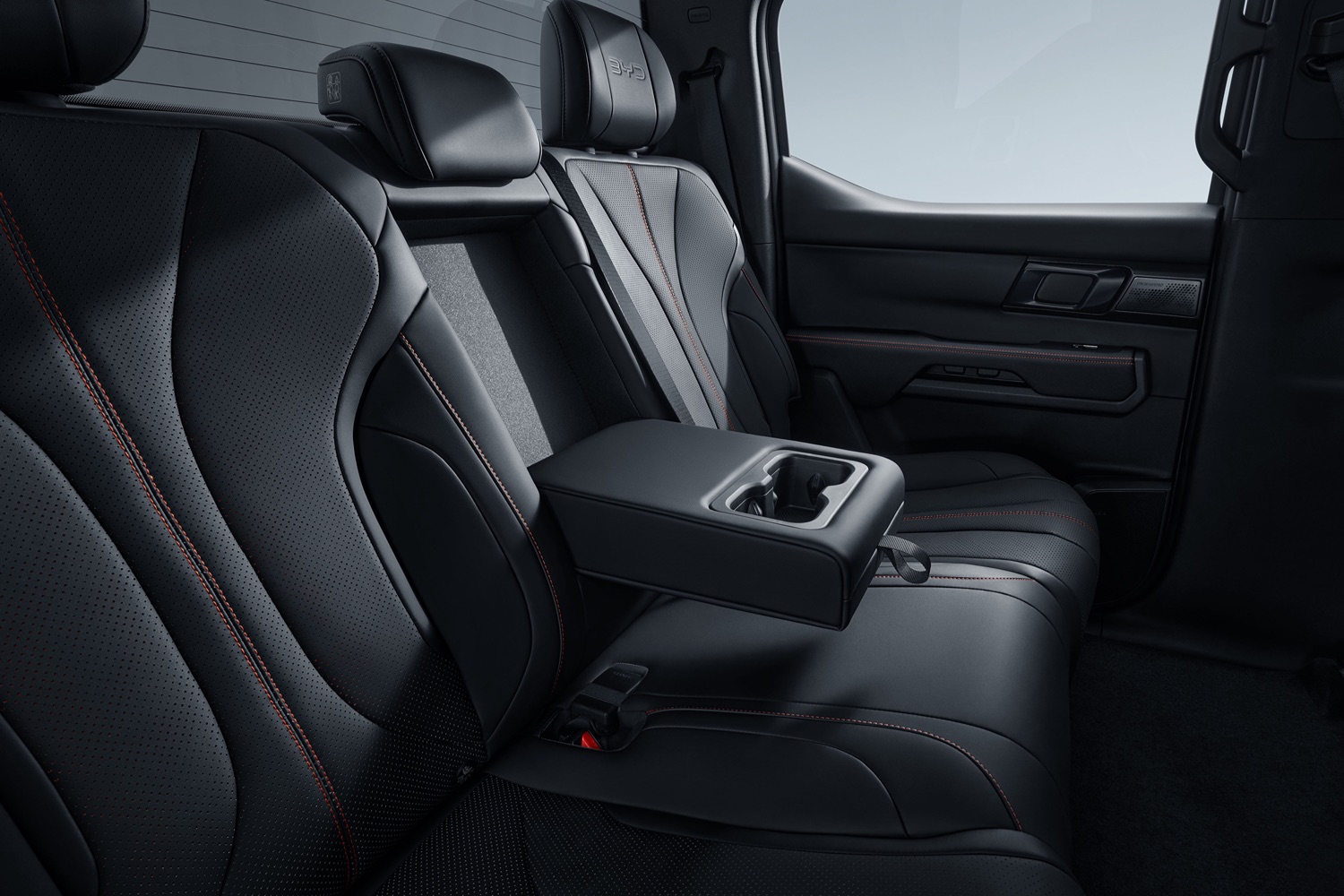
There are two grab handles forming the frame of the transmission tunnel, while the BYD Shark's dashboard features two screens – the infotainment one, measuring 15.6 inches across the diagonal, is said by the manufacturer to be the biggest of its kind in the class – which makes it a little different to the pick-up truck norms. The instrument cluster associated to the main screen is a 10.25-inch item, by the way. BYD is proudly proclaiming that what switchgear there is in the Shark is oversized, so that hands in gloves can operate their features easily, but once again – as with so many Chinese products – the climate controls are on the infotainment display. Better news in the back, though, as the firm is saying there's 900mm of legroom in the back of the Shark, while the backrests of the seats are set at 27 degrees, giving them a more car-like level of recline. The footwell is also completely flat in the rear of the truck, so sitting three across the second-row bench (and five people in the cabin in total) looks like it should be feasible.
OK, what's the powertrain set-up here?
BYD has eschewed the usual diesel propulsion in favour of its Super Hybrid DMO PHEV running gear. DMO, incidentally, simply means 'dual mode off-road', rather than the 'dual mode, intelligent' that the DM-i cars wear, but the principle is the same. The Shark has two electric motors, one of 231hp/310Nm outputs at the front and the other, at the rear, chipping in with another 204hp/340Nm of its own. Assisting these is a longitudinally mounted, 150hp/240Nm 1.5-litre turbocharged four-cylinder petrol engine, working in the main as a generator for the 32.2kWh Blade battery pack in the Shark's powertrain. All told, BYD says the Shark has enough bite to do 0-100km/h in 5.7 seconds, thanks to combined peaks of 436hp and 650Nm, and it can also go up to 90km on its electric reserves alone. So not only is the Shark much quicker than diesel pick-ups, it's also theoretically much more efficient: the official fuel economy figure is 3.5 litres/100km (80.7mpg), although we'd draw your attention to the 9.6 litres/100km (29.4mpg) figure of the depleted battery as a more realistic barometer of its parsimony. A combined range, from fuel and electric, of 675km is quoted by BYD.
Can you give me a few more stats on the BYD Shark, please?
No problem. That power pack takes a little more than three hours to fully replenish from 15 per cent state-of-charge when hooked up to an 11kW three-phase AC charger, but it'll be more like four or five hours at a typical 7.4kW AC wallbox. However, BYD builds in DC charging for this DMO PHEV, so the BYD Shark can go from 30 to 80 per cent battery charge in just 21 minutes if needs be. The capacities of the truck aren't quite as high as some diesels, though. BYD states a peak towing rating of 2,500kg, rather than the maximum 3,500kg, and this can't classify as a one-tonne pick-up as it can't carry 1,000kg in its 1,200-litre loadbed – instead, the max payload is 790kg.
What about equipment?
The Shark should be generously stocked with fish… sorry, we mean, equipment, such as vegan-leather upholstery, heated and ventilated front seats, a 12-speaker Dynaudio sound system, the 10.25- and 15.6-inch screens in the cabin, wireless Apple CarPlay and Android Auto, a 50-watt wireless smartphone-charging pad, front and rear parking sensors with a 360-degree camera system, and keyless entry and go, among more. It also comes with two vehicle-to-load (V2L) sockets that can output 6.6kW, turning the BYD Shark into a massive mobile power bank into which you can plug external electrical devices. And the safety kit is comprehensive too, including adaptive cruise control, front and rear cross-traffic alert and brake, forward and rear collision warning, lane departure assistant with emergency lane keeping assist, blind spot detection, and hill hold control.
Anything to add from the execs?
Stella Li, executive vice president of BYD, said: “We're thrilled to bring Super Hybrid to the pick-up segment with the Shark. This type of vehicle really benefits from our DMO Super Hybrid technology, offering pure-electric capability, the most power in the class, excellent off-road capability, outstanding efficiency and long-distance flexibility. “And our innovative approach to technology delivers standout features, including V2L that can really help at work and play. The market for plug-in hybrid pick-ups is expanding rapidly, and we're confident that the Shark will be really appreciated by customers across Europe who want this type of vehicle but aren't willing to compromise on efficiency or comfort.”
And is the BYD Shark coming to Ireland?
Ah. At this moment, we don't know. We think it is, but a BYD spokesperson for the country said that while the vehicle is earmarked for a launch in the UK before the year is out, that's because they're not part of the EU. The spokesperson went on to say that the Shark should appear here in 2027, but not as a 271-plate model – so probably at least 12-18 months from now, then.
If there is anything about this story we have not covered, you can avail of our expert advice service via the Ask Us Anything page.