

How does this carbon capture thing work?
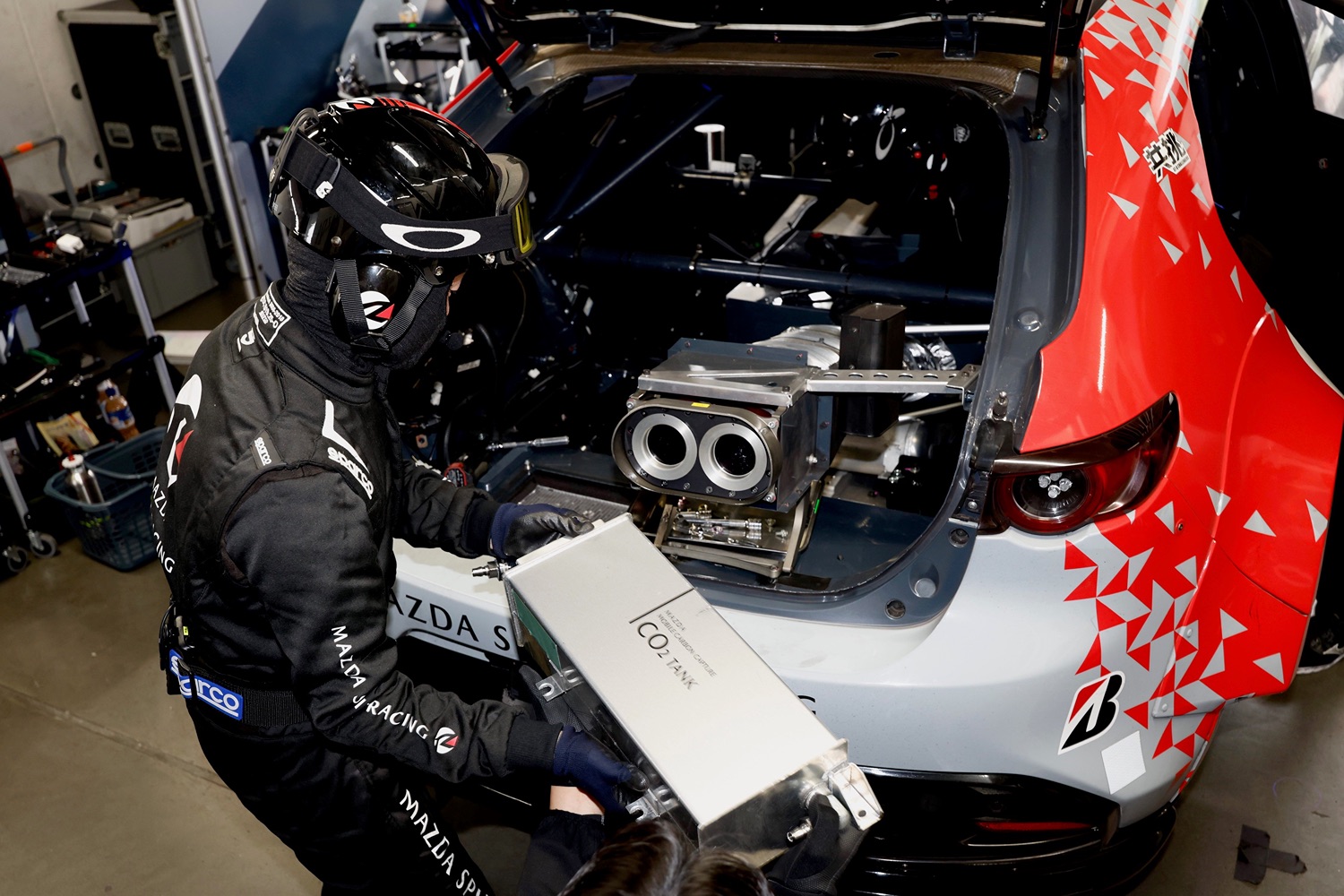
Basically, there's a tank fitted to the exhaust system, filled with a mineral called zeolite that absorbs carbon dioxide. This captured CO2 is then compressed and stored in a pressurised tank. Because this Mazda 3 is running on a biofuel-based HVO fuel, it's a seriously clean racing car.
What happens with the CO2 once it's collected?
Well, over the course of this 24-hour race, Mazda collected 804 grams of CO2. That doesn't sound like much, but the last time they tried it, they collected just 84 grams, so that's a tenfold increase. In fact, at one point, the experimental system began collecting more CO2 than planned, so there's clearly room for even more improvement.
The brilliant thing is that Mazda isn't just collecting the CO2 and then releasing it (what would be the point?). Instead, the idea is that CO2 can be used as a feedstock, further down the line, for algae-like plants, which can produce a fresh round of HVO.
When can I have this in my Mazda 3?
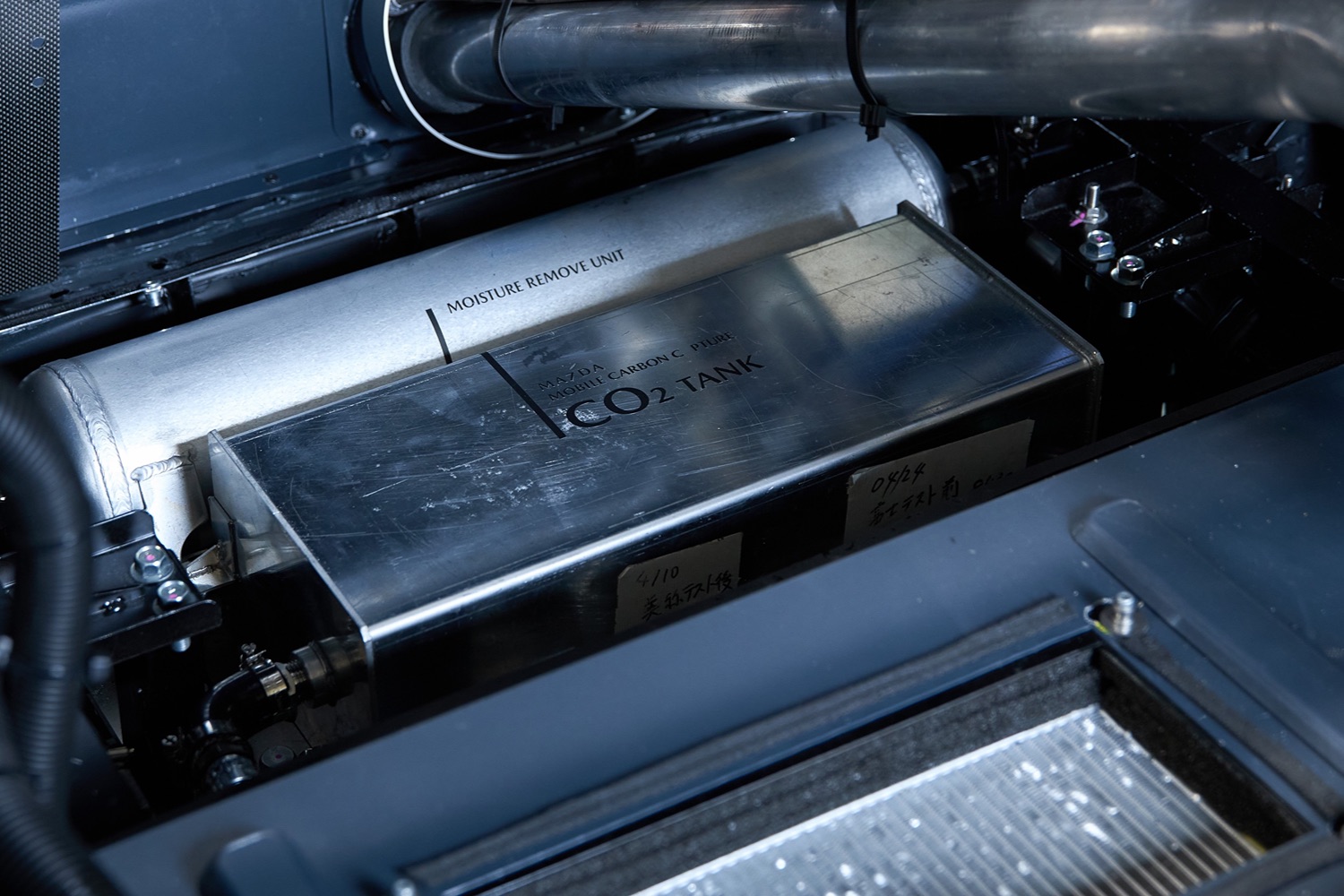
Em, not yet. This stuff is still at the very early prototype stage, but if it can stand up to the rigour of a 24-hour race (racing improves the breed and all that), then that must be a good sign. In a statement, the team working on the carbon capture system said: "Building on these results, Mazda is entering a new phase of development focused on further testing and refining the system in racing cars, which operate under higher loads and more demanding conditions. Specifically, Mazda aims to further evaluate the potential for reducing net CO2 emissions in its racing car at Round Seven of the Super Taikyu Series, scheduled for November this year.”
Click here to read our Mazda test drive reviews.
If there is anything about this story we have not covered, you can avail of our expert advice service via the Ask Us Anything page.