

Just how big is the Hyundai Ioniq 3?
Dimensionally, it sits somewhere between the Hyundais i20 and i30, with an overall length of 4,155mm in standard format and a relatively long wheelbase of 2,680mm. In fact, that puts it close to the Hyundai Kona as well, though it's much lower than the SUV at just 1,505mm.
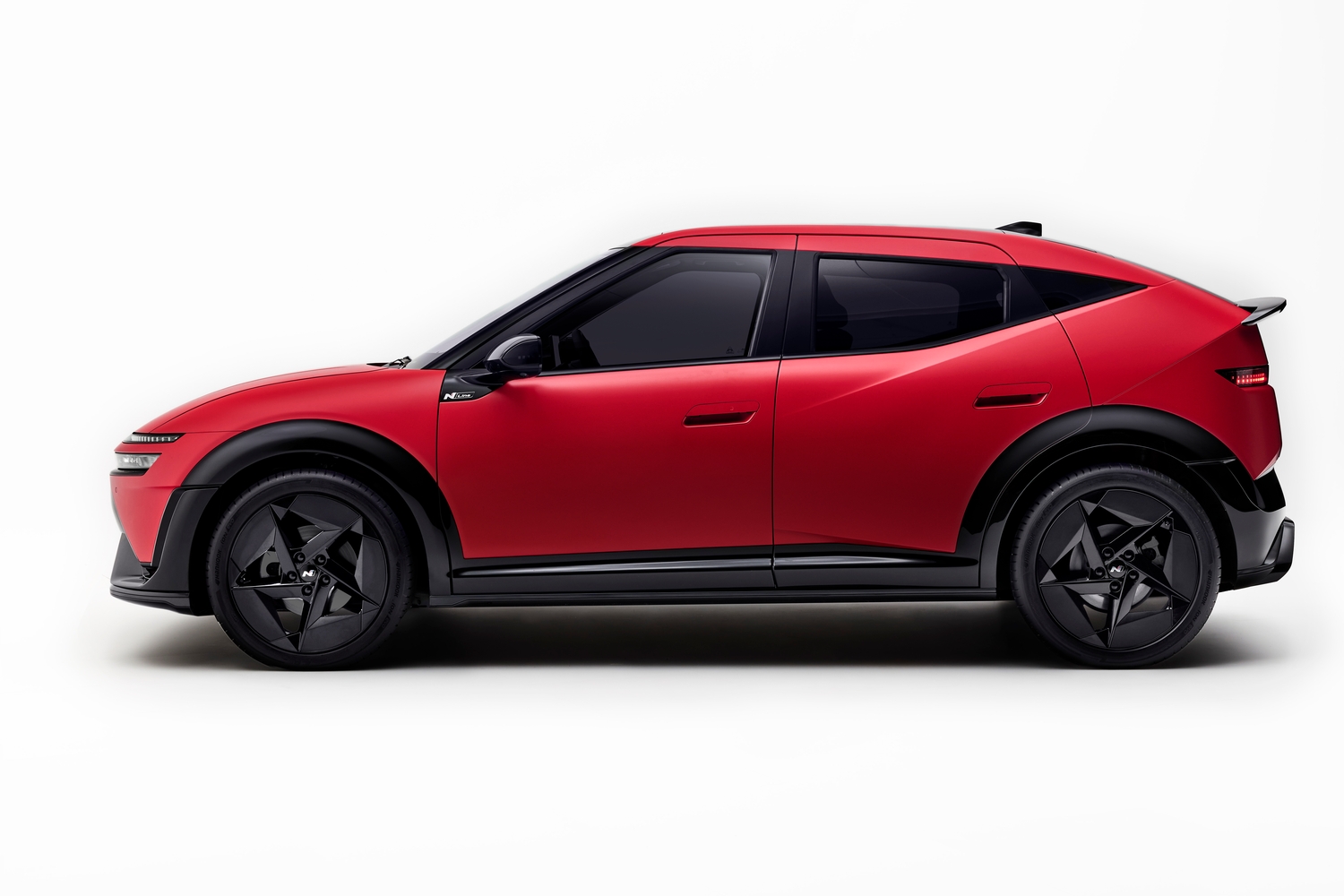
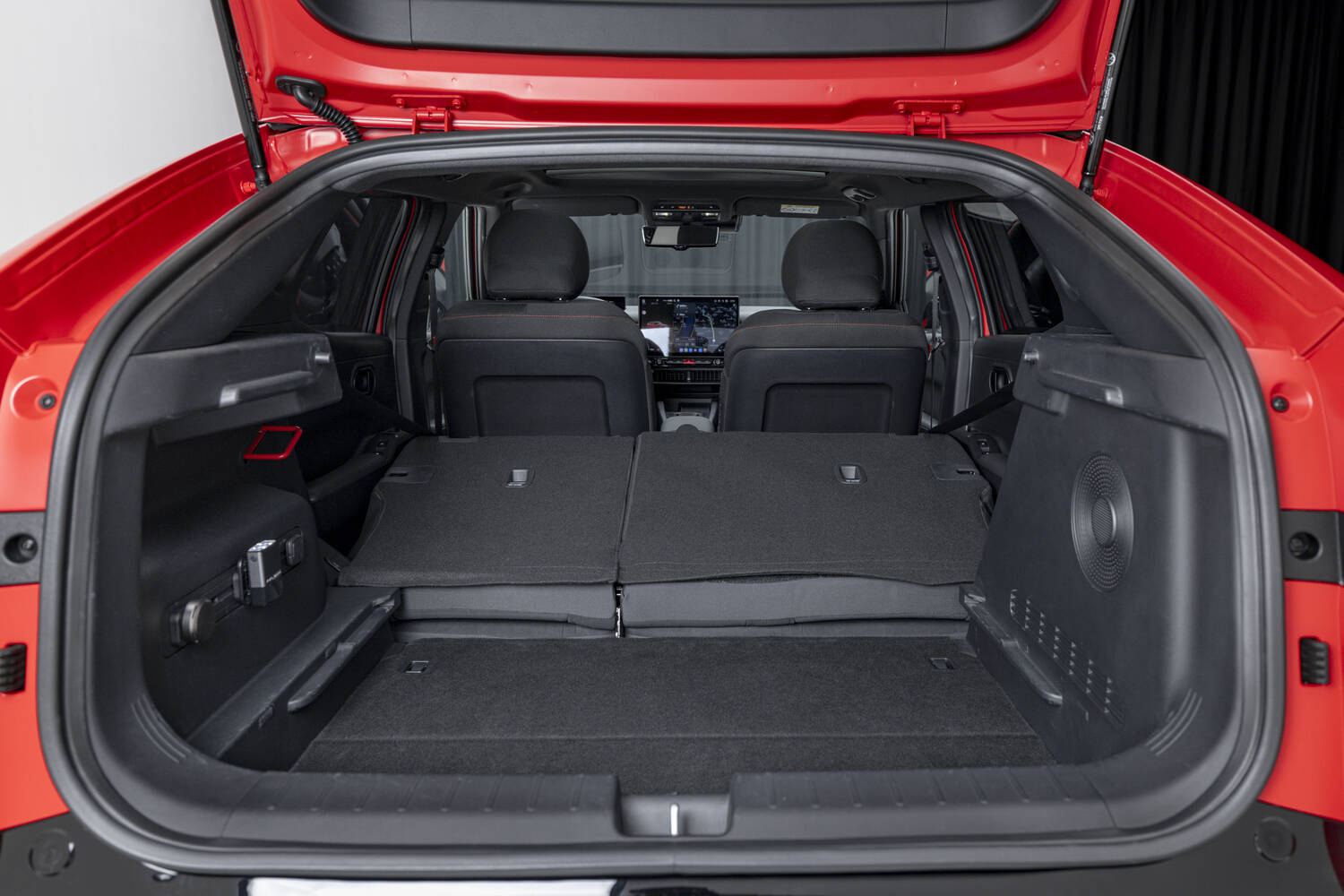
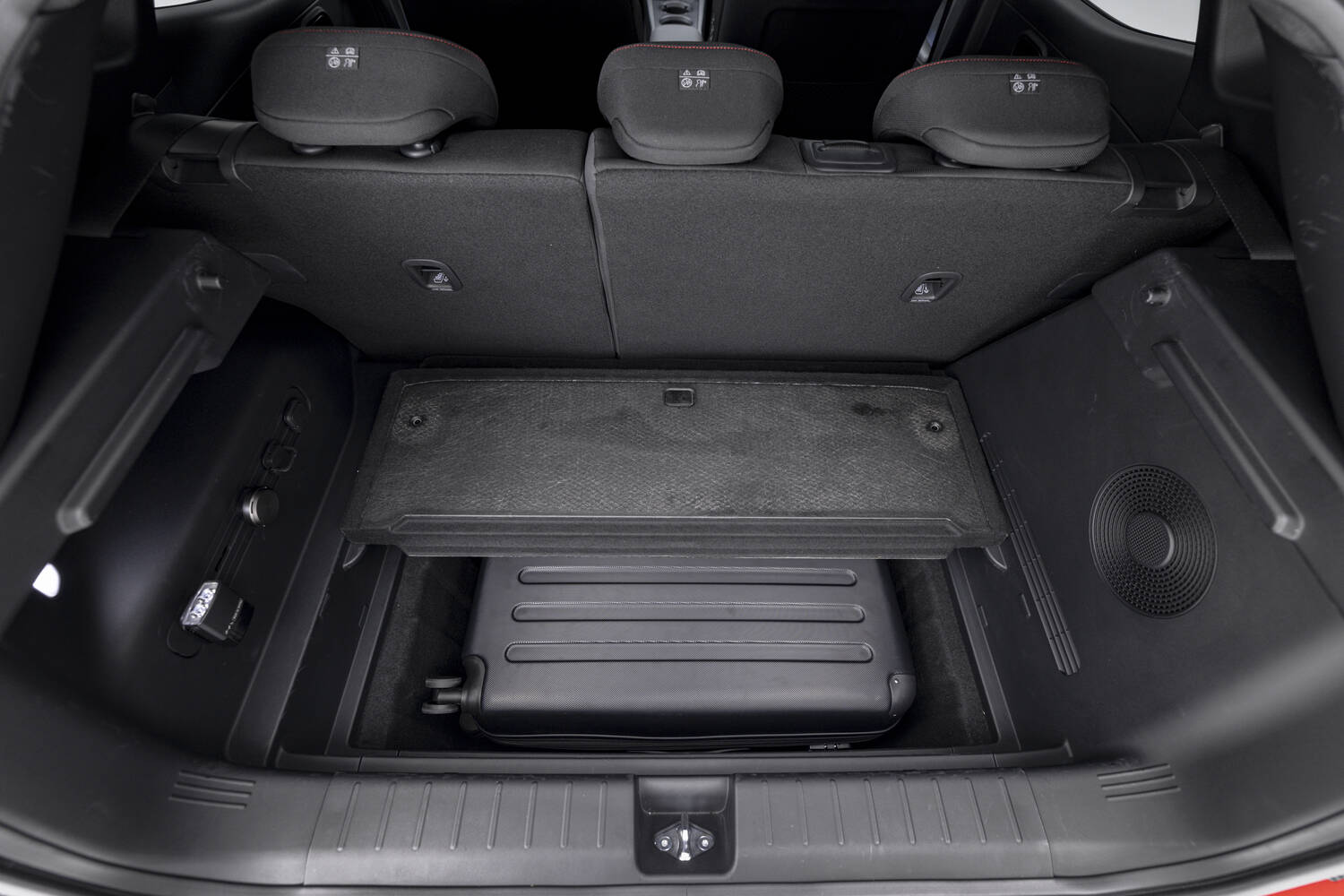
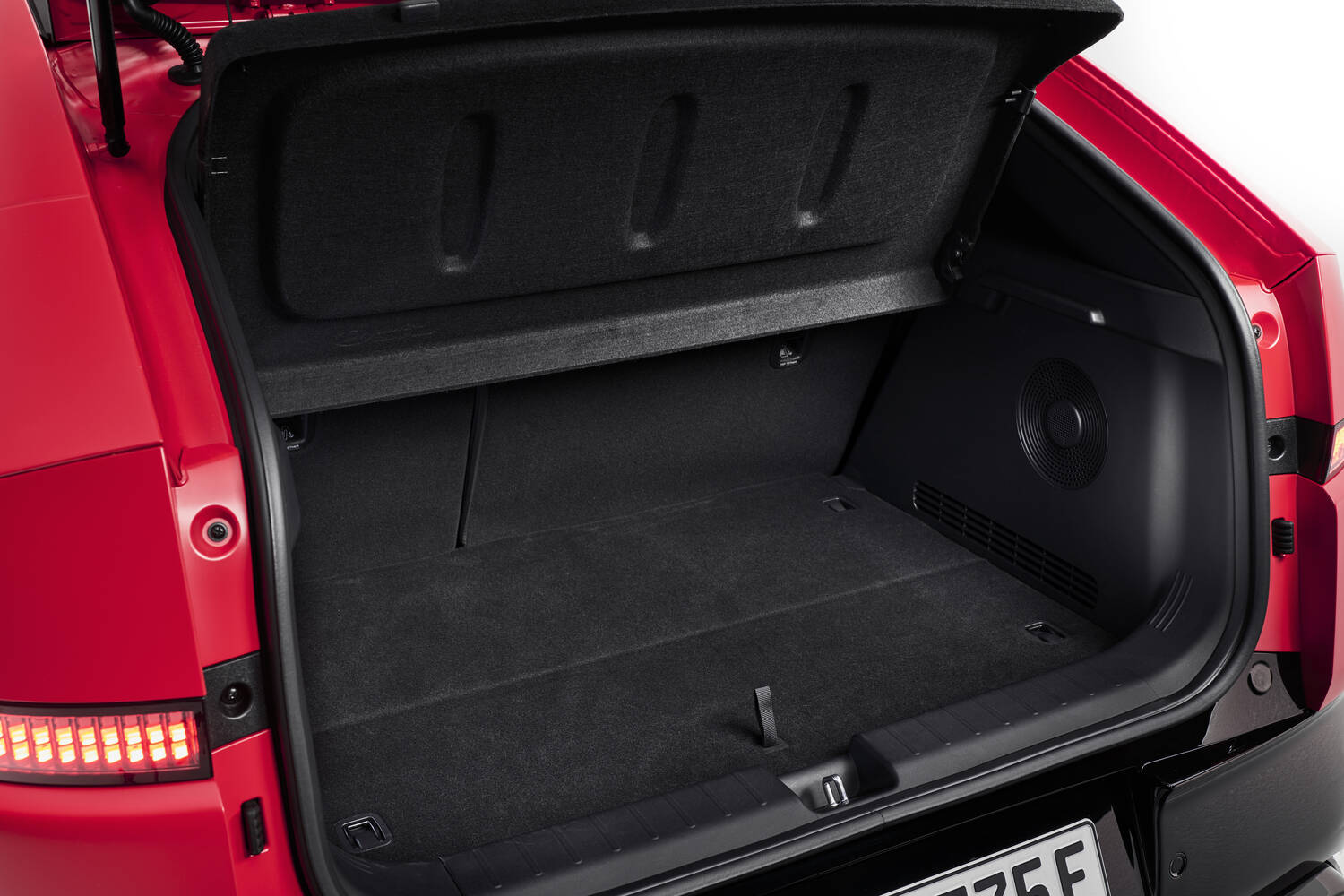
Remarkably, the Hyundai Ioniq 3 can accommodate almost as much luggage in its boot as the Kona, with a capacity of 441 litres (the VW ID.3 for example, only holds 385 litres and is 4,264mm long and has a 2,770mm wheelbase).
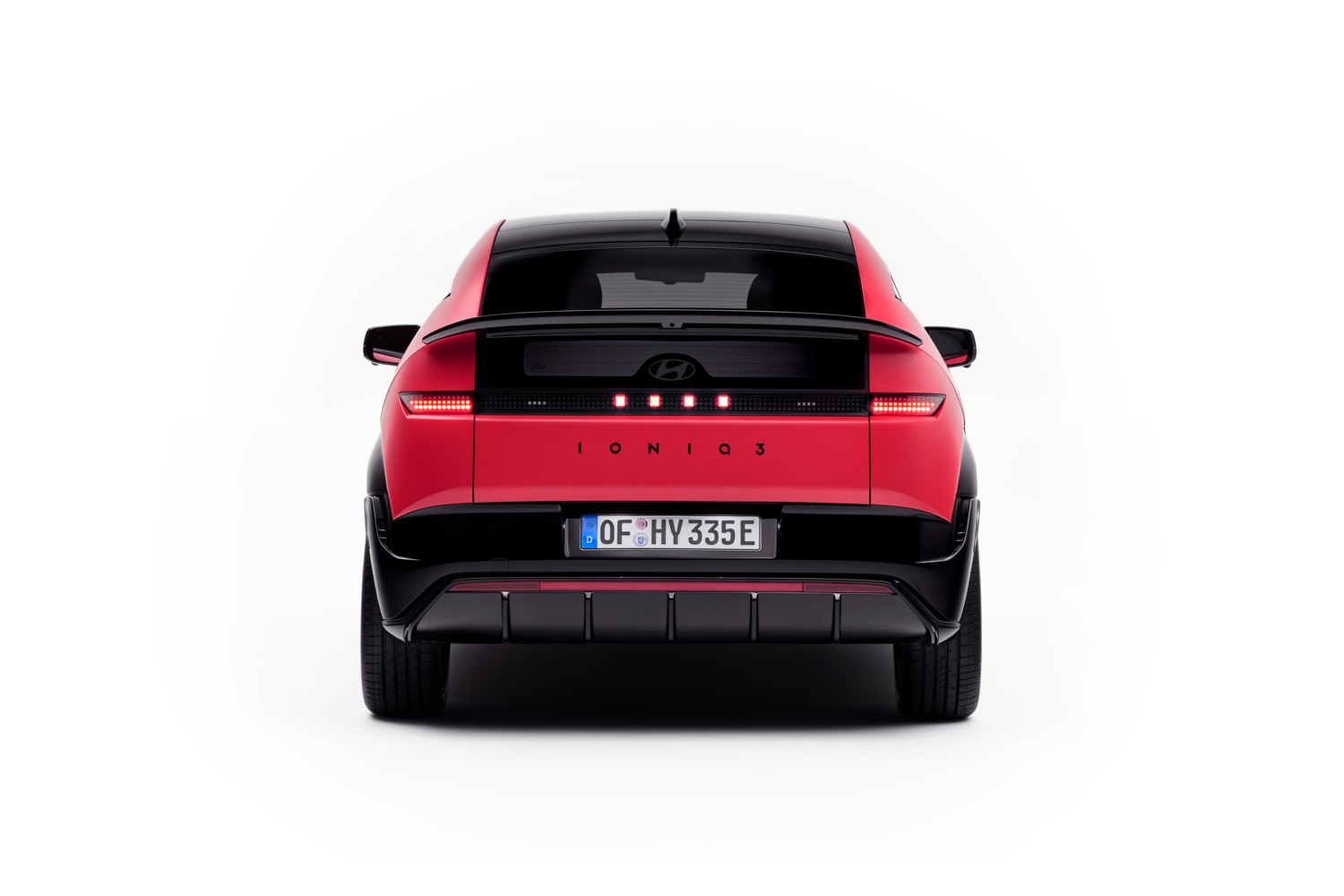
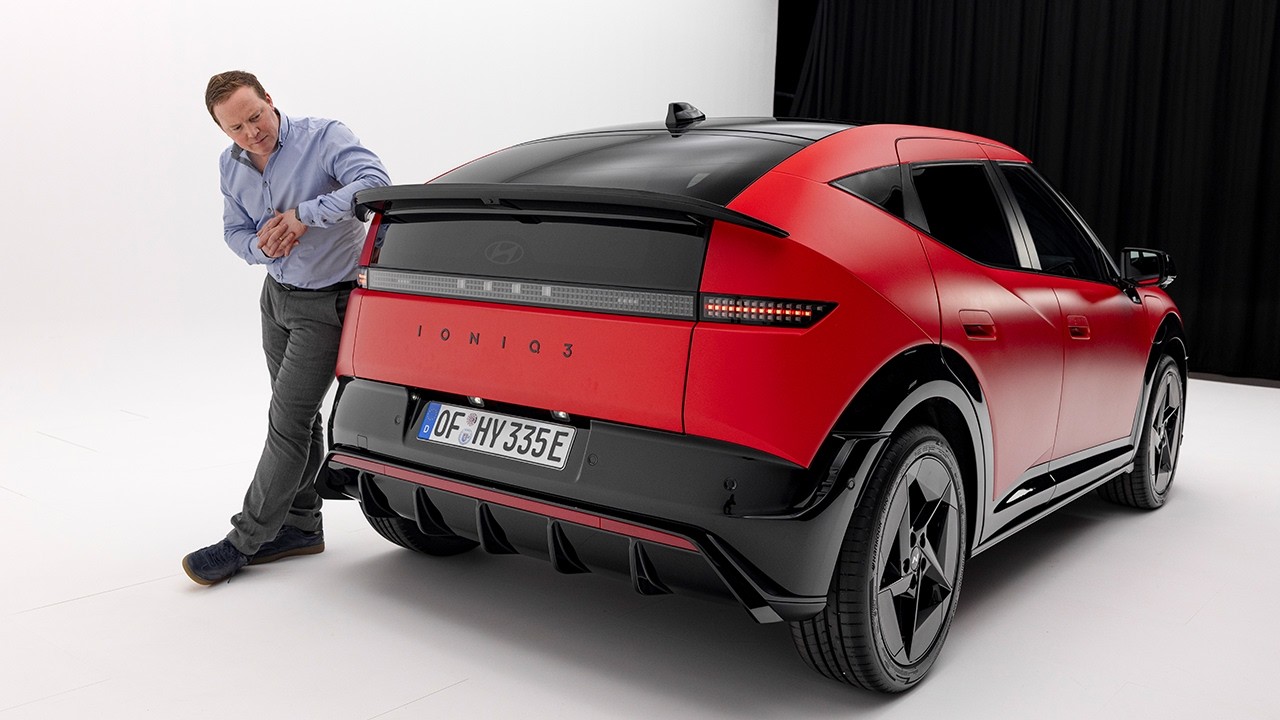
Open the pert rear hatch of the Ioniq 3 (we can't be the only one to be reminded of the old Alfasud, can we?) and you'll wonder if the quoted boot volume is a typo... until you fold up the boot floor and spot the cavernous space underneath. Hyundai calls this the 'Megabox' and it alone swallows 119 litres - or quite a large suitcase as you can see in our video of the car.
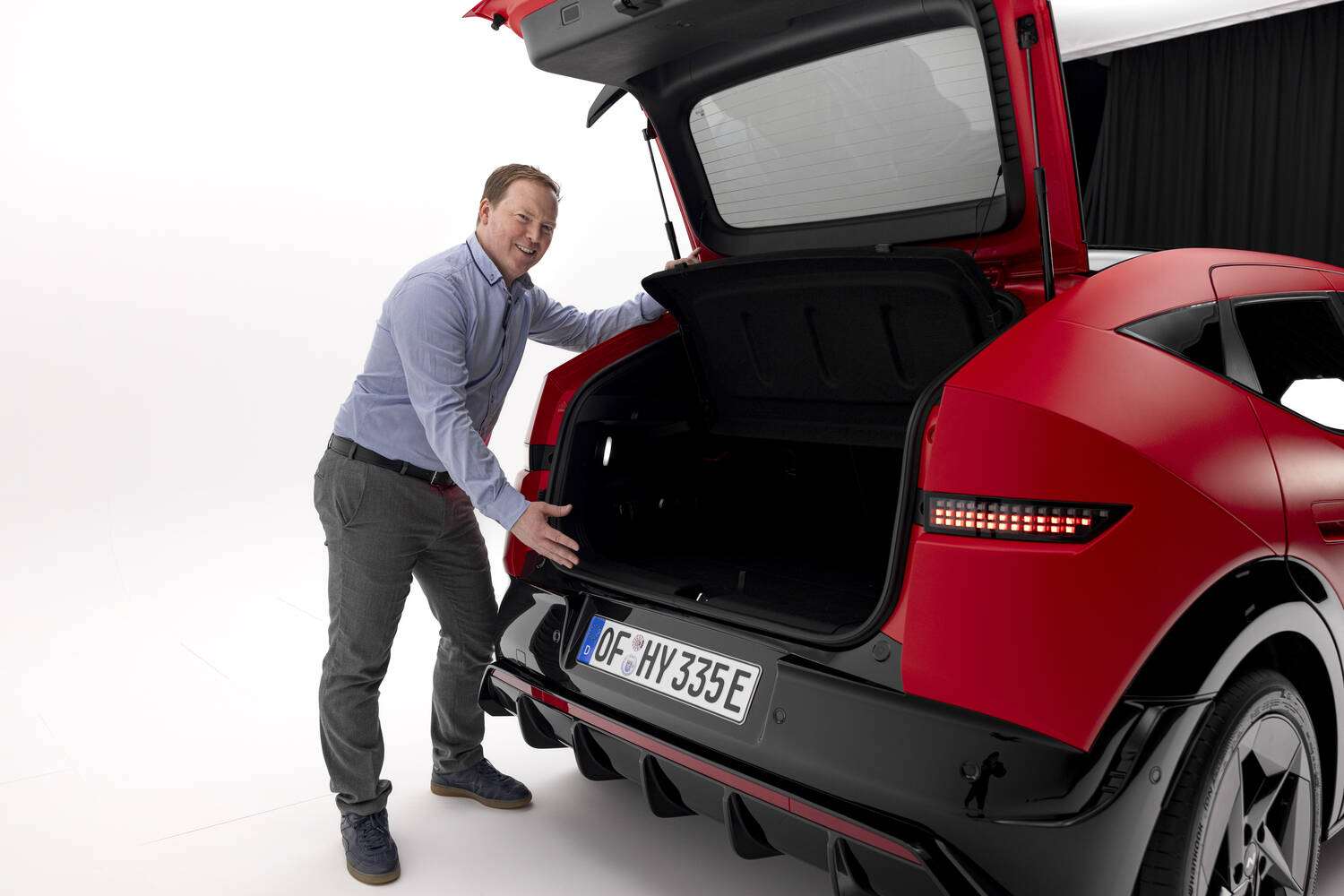
The boot floor can be set at two different levels and has rails on its sides to allow the attachment of various aftermarket accessories.
A Hyundai that looks like an Alfa?!
Well, all we're saying is that the upright rear and distinctive tailgate design are reminiscent of the Italian hatch... and the designer responsible for it drives a gorgeous classic Alfa himself.
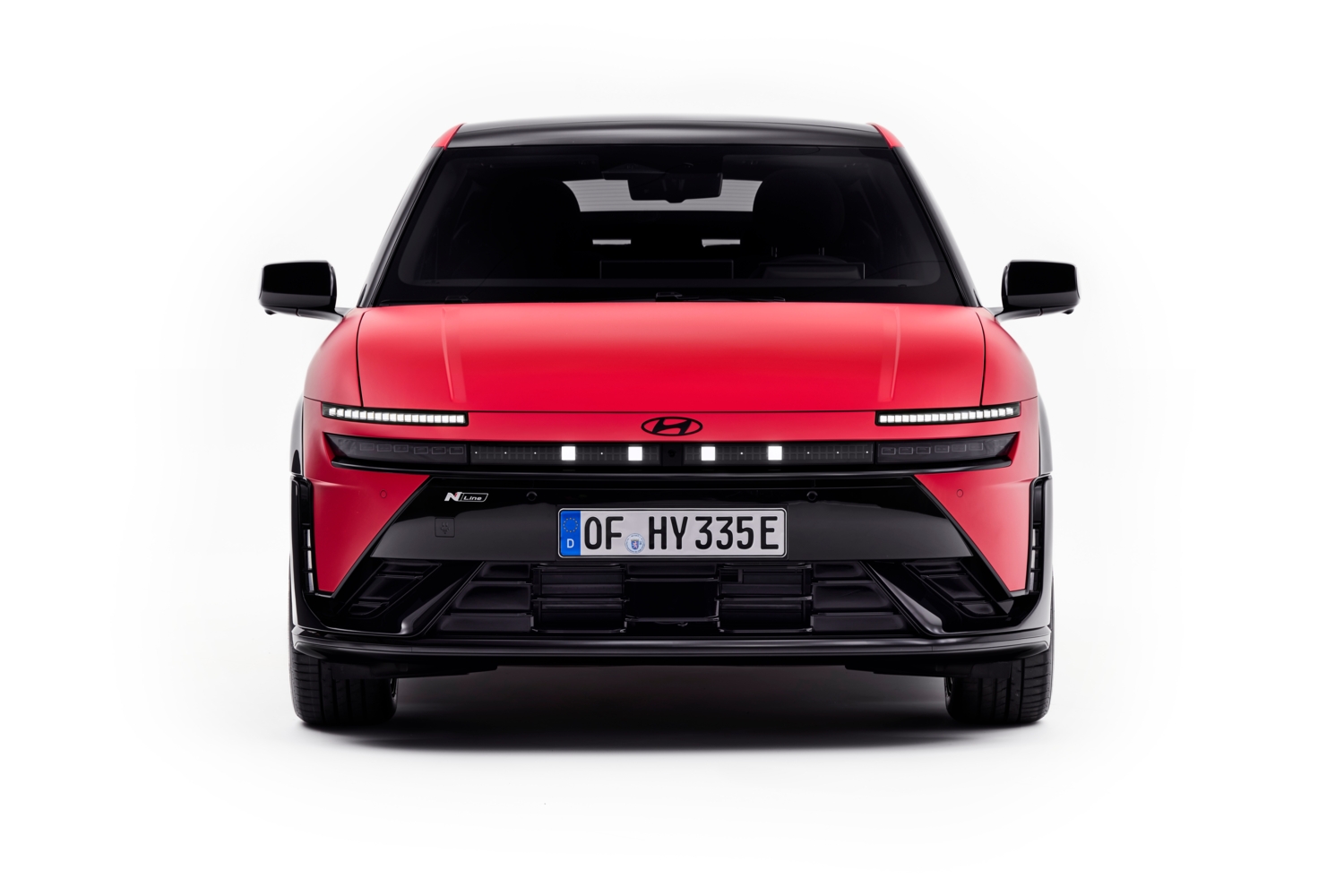
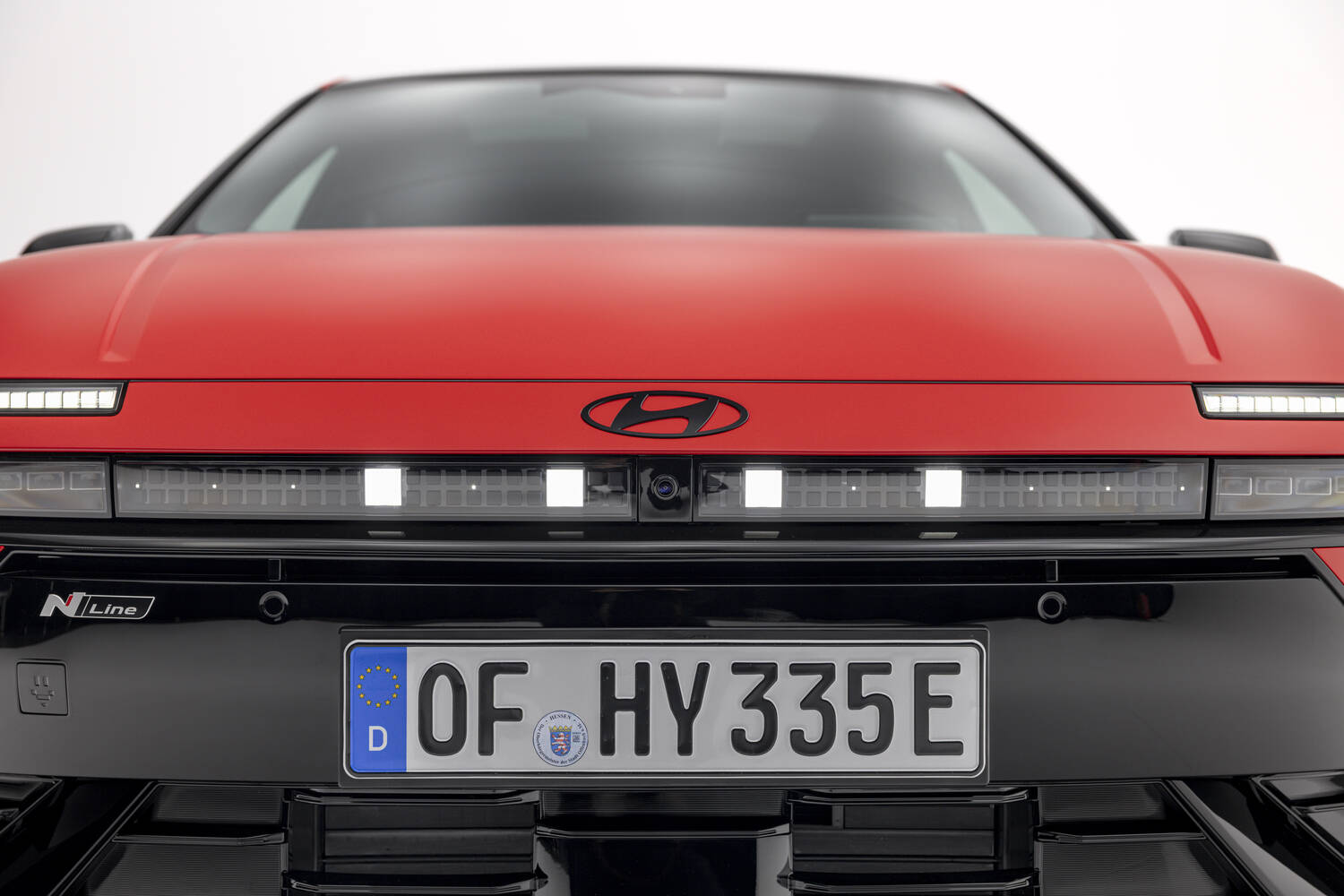
But you'd never call the Ioniq 3 retro. Up front, there's a low, smooth nose with slender, pixelated daytime running lights. A regular Hyundai emblem sits in the middle of the bonnet, while underneath is a line of four large, pixelated LED squares, representing the four dots of Morse code that represent "H”. The same detail is found on the door mirrors and at the back of the car.
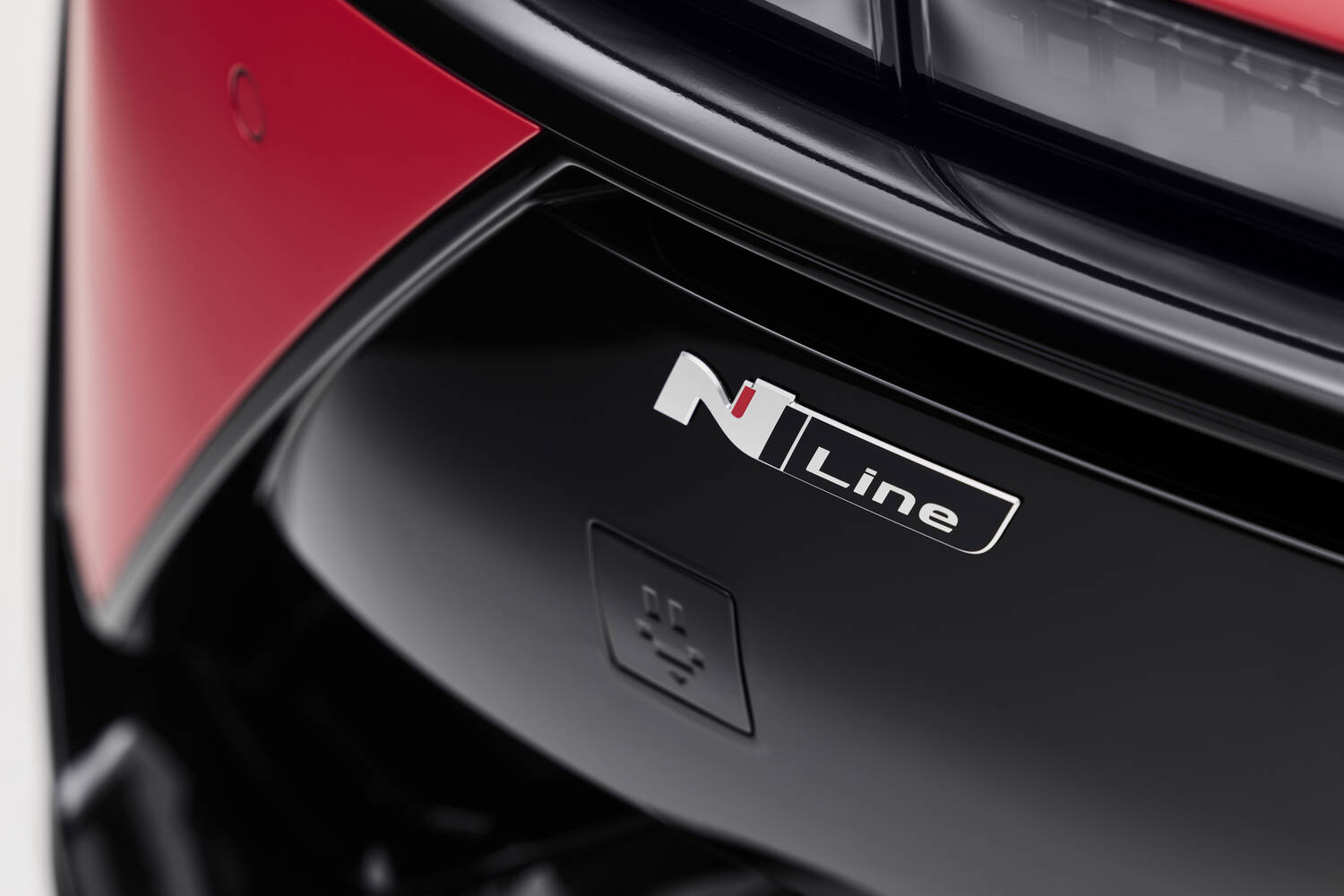
On the N Line variant of the Ioniq 3 pictured, the nose also features a black 'mask', gloss-black wheelarches and side sills, a notably pronounced aerodynamic diffuser at the back and a large boot spoiler splitting the glass into two. All this is toned down for the other versions of the Ioniq 3, though all feature a rear spoiler of some sort.
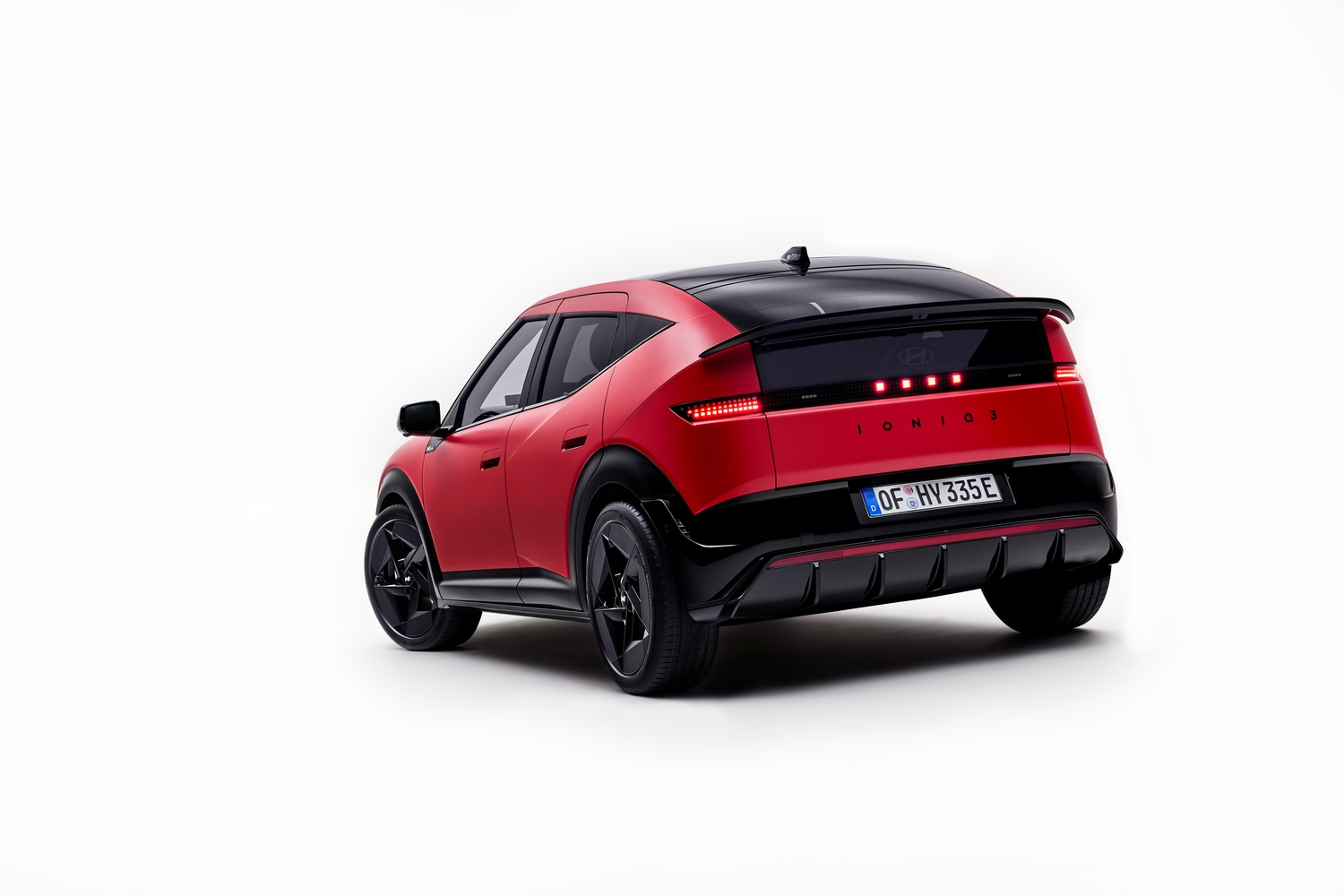
This, plus the characteristic slope of the back, the daring treatment of the roof, window line and rear haunches were all previewed by the cool Concept Three show car, and it's great that Hyundai managed to bring them to the showroom model. It really is a striking-looking car.
What's the cabin of the Ioniq 3 like?
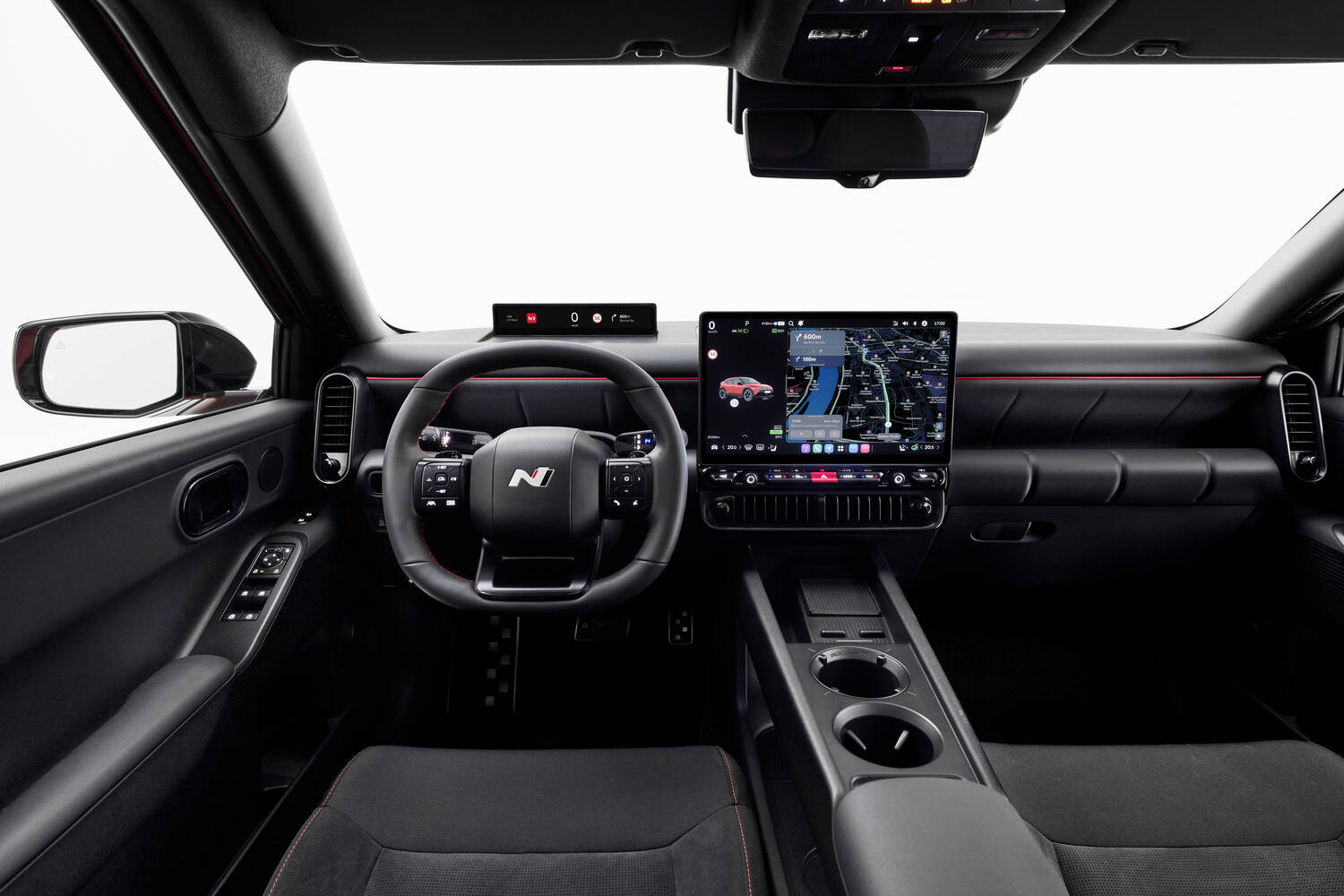
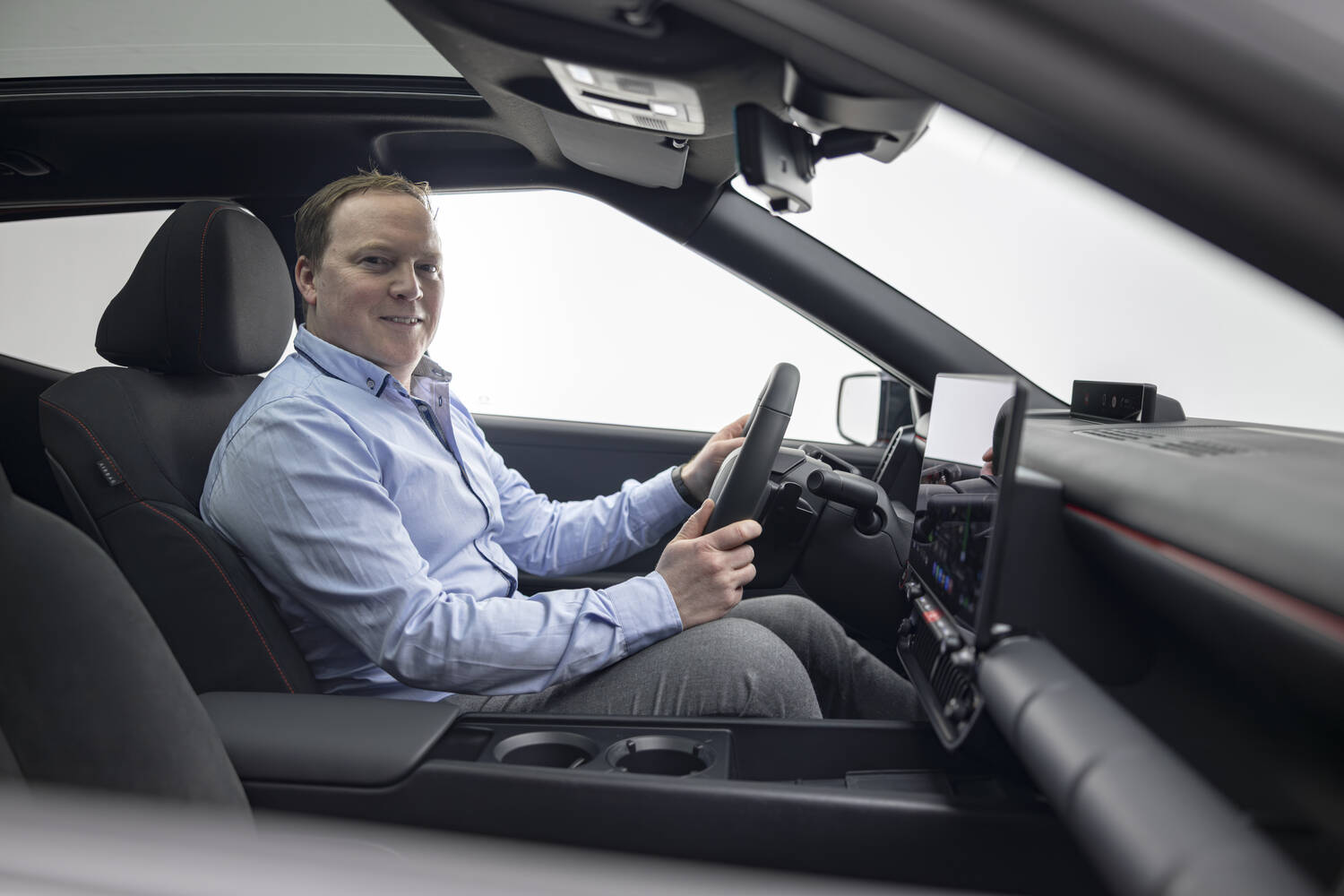
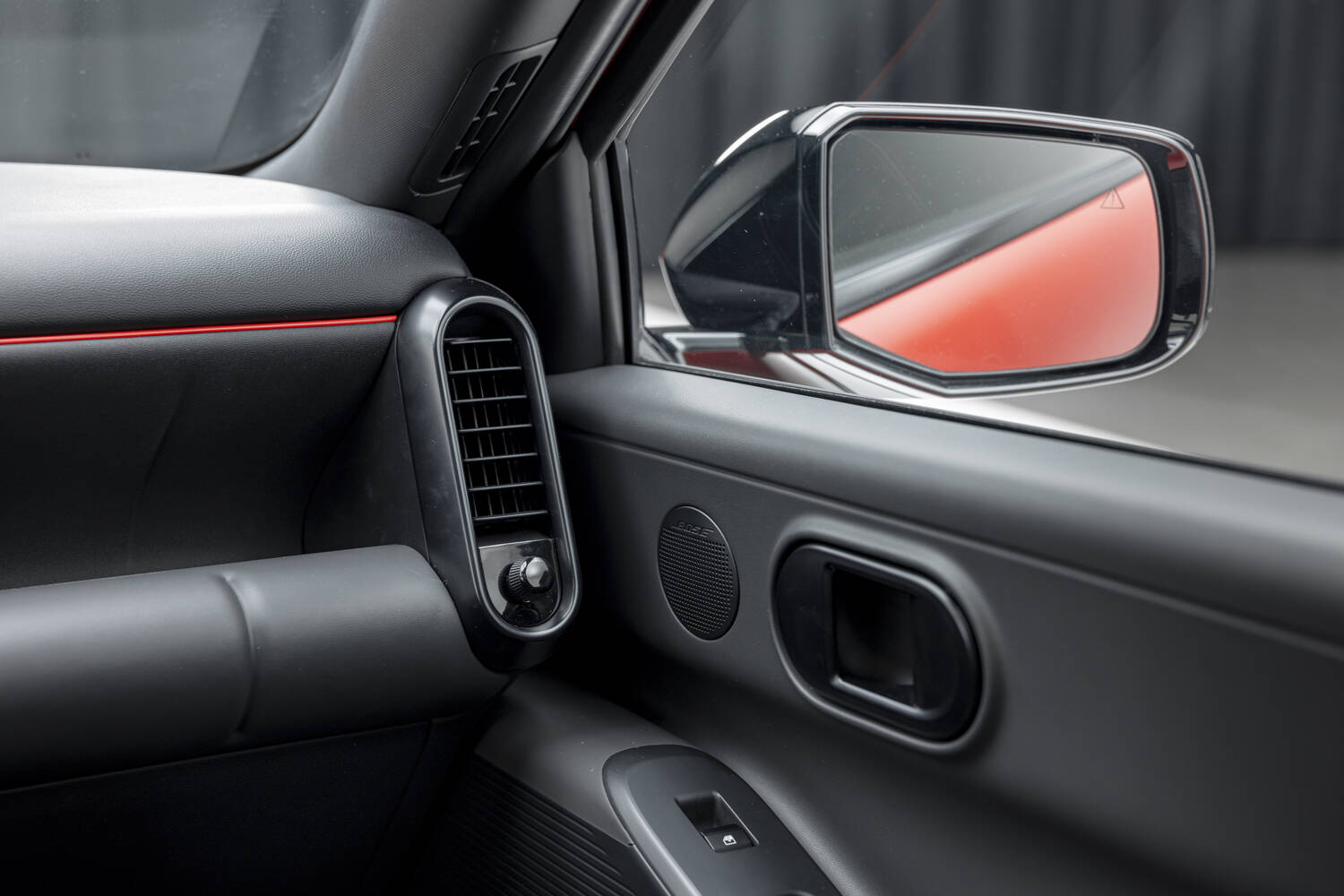
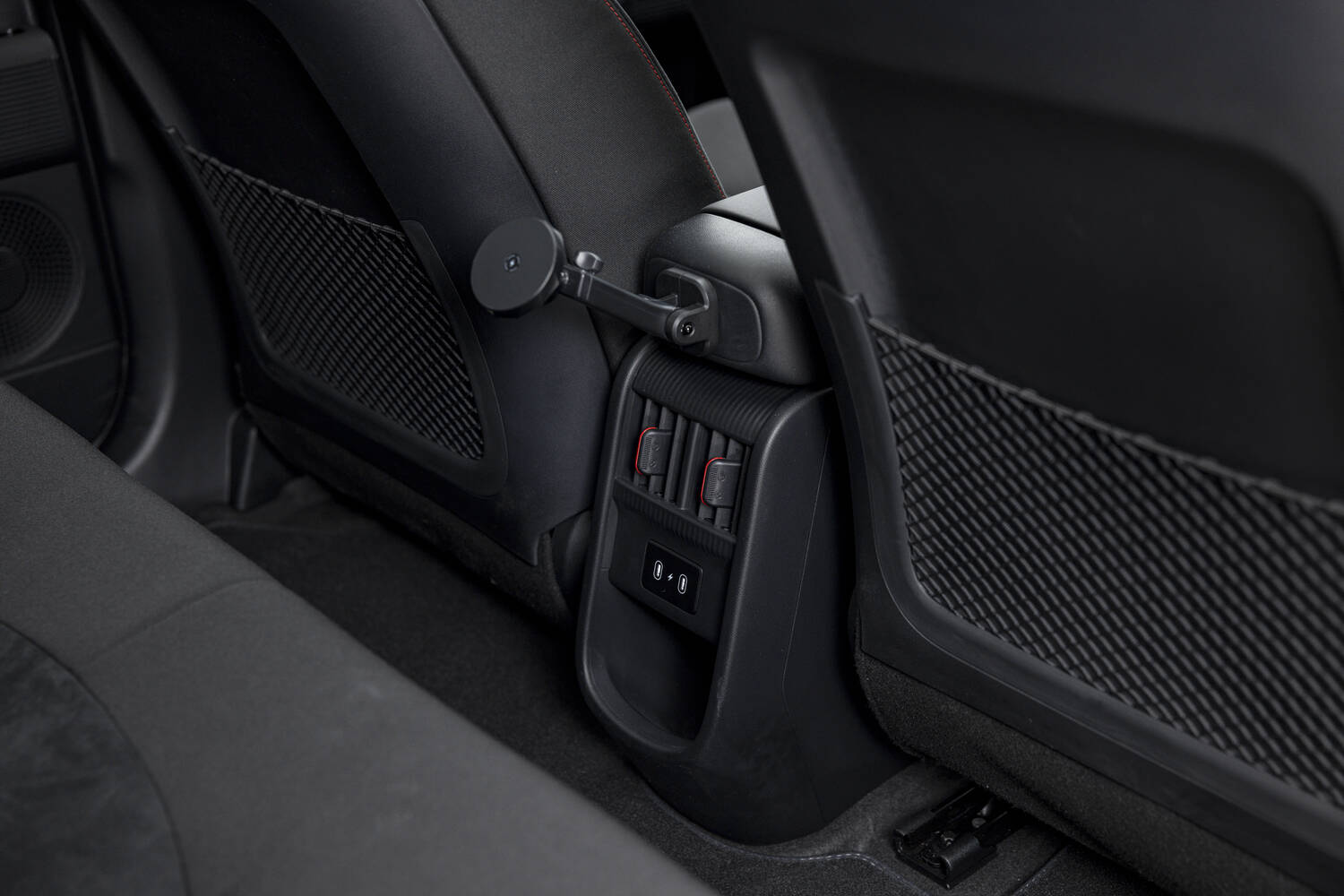
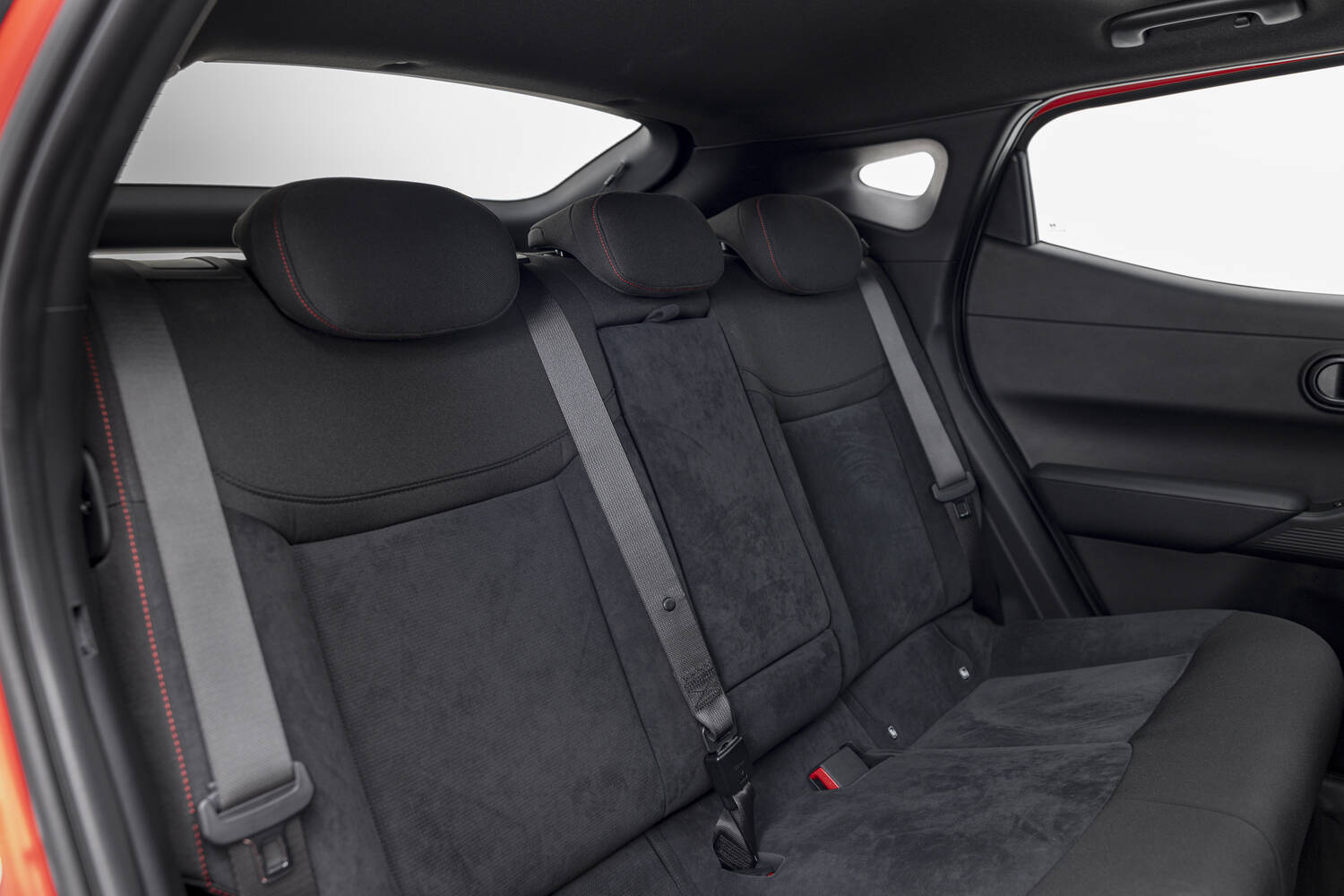
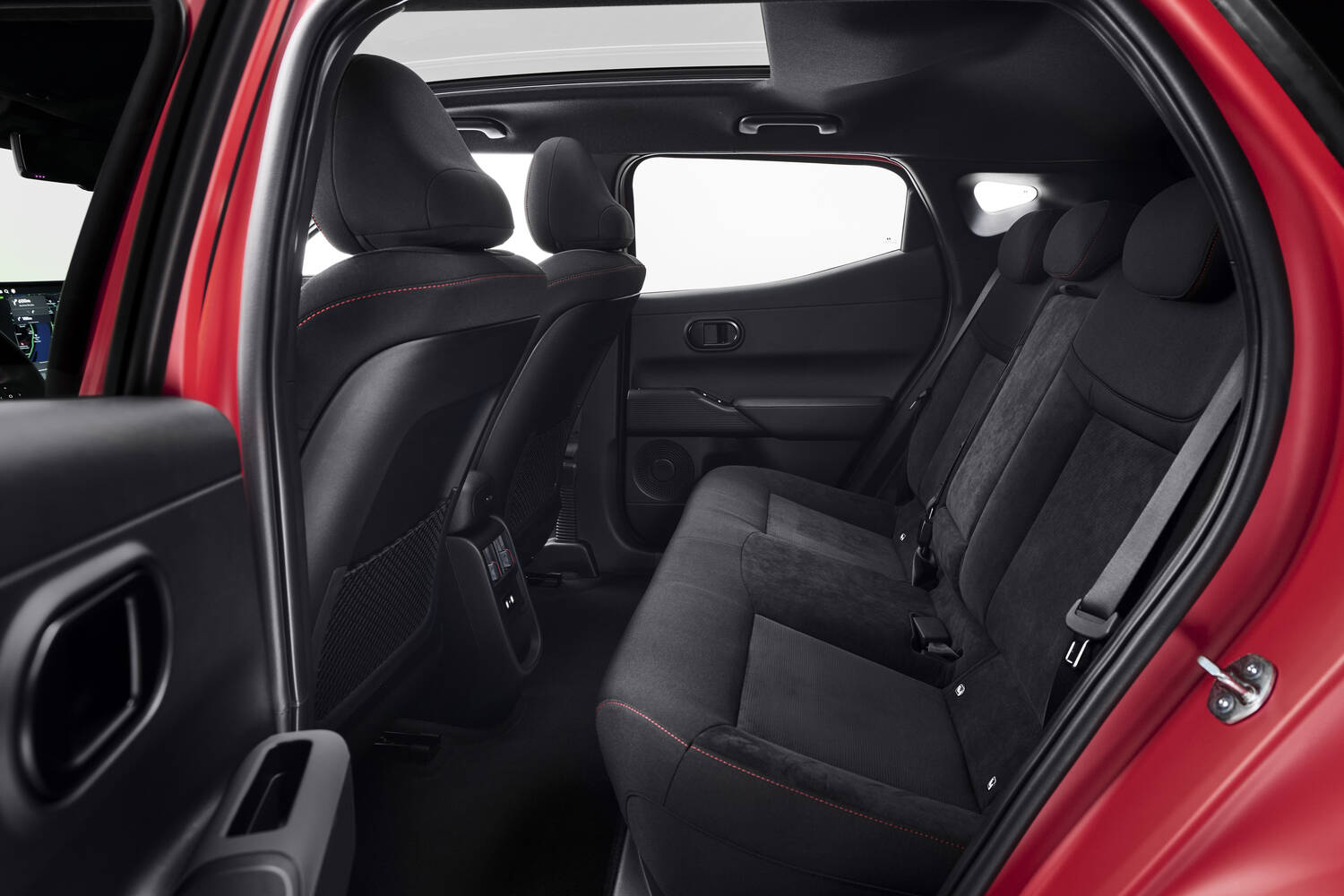
Impressively spacious, in short. The rear doors open wide and there's loads of space for adults in the outer two seats, even when the optional panoramic sunroof (and its space-sapping blind) is fitted. The floor is flat all the way across in the back and there are even air vents and the option of heated seats. Legroom is generous given the overall size of the Ioniq 3.
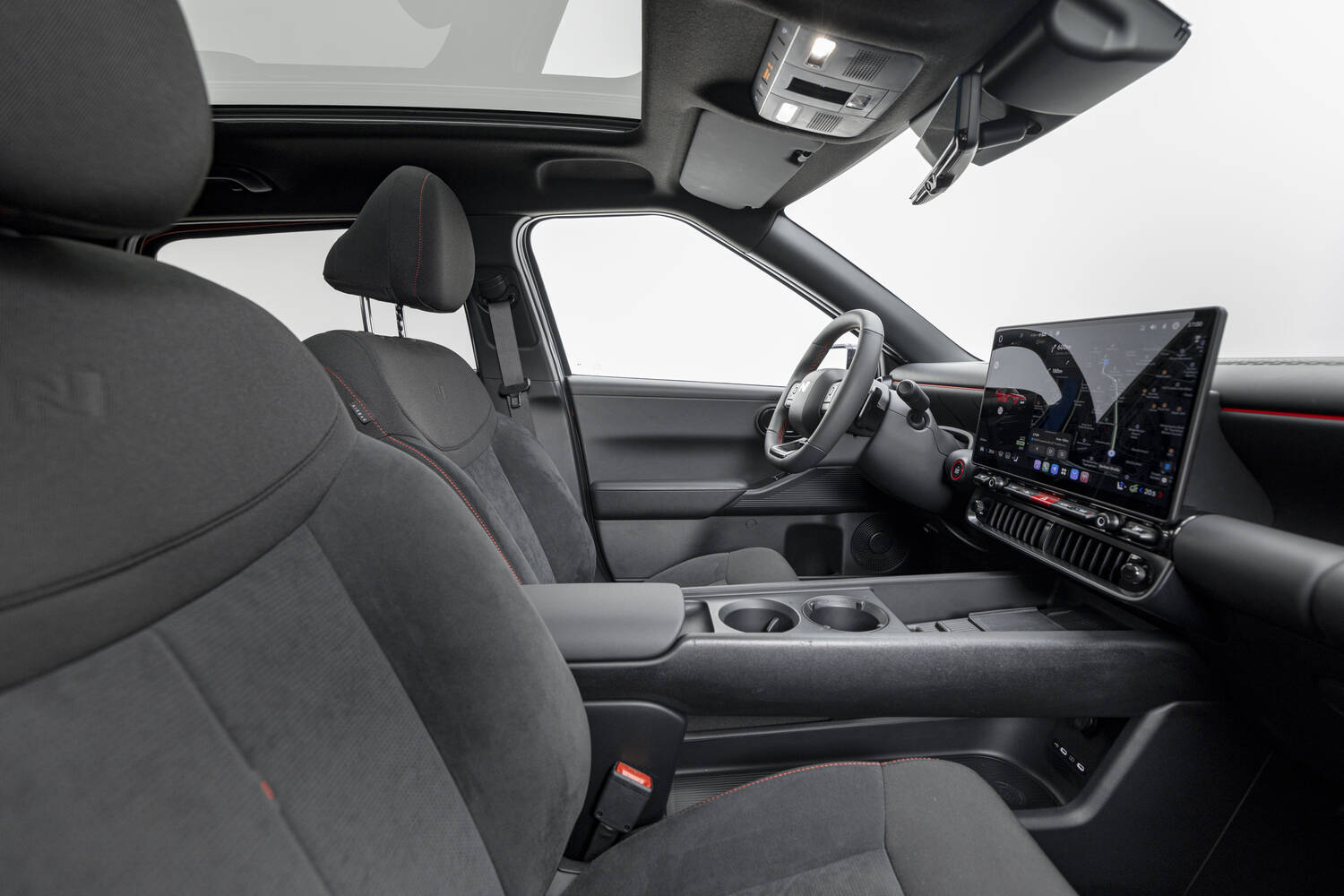
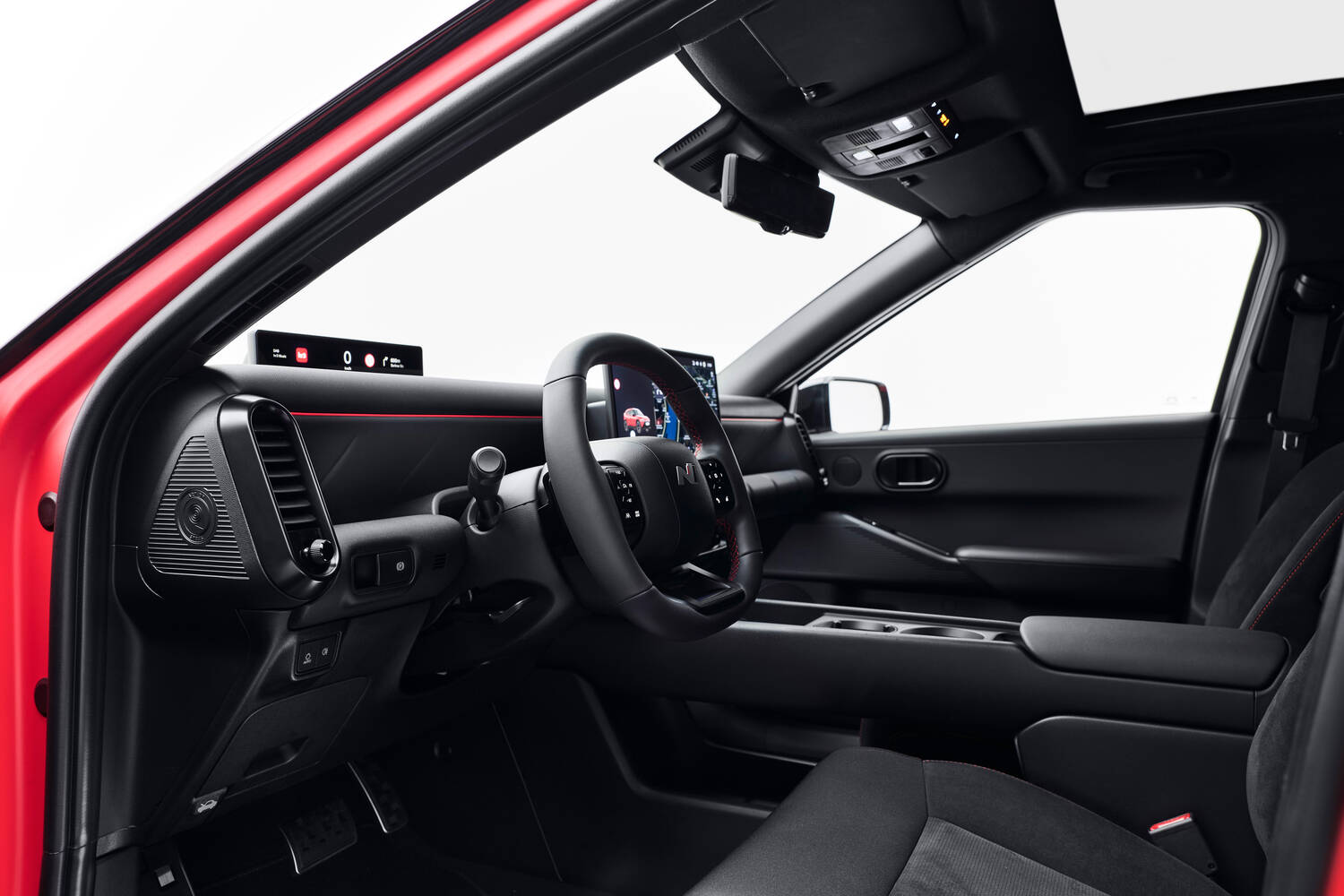
But obviously, the front seats will be of more interest to the buyer, and while Hyundai mentions taking inspiration from Italian furniture of the 1970s, the cabin looks far more modern than that, certainly in the black, grey and red colour scheme of the N Line variant. There will be two other (lighter) colour palettes offered.
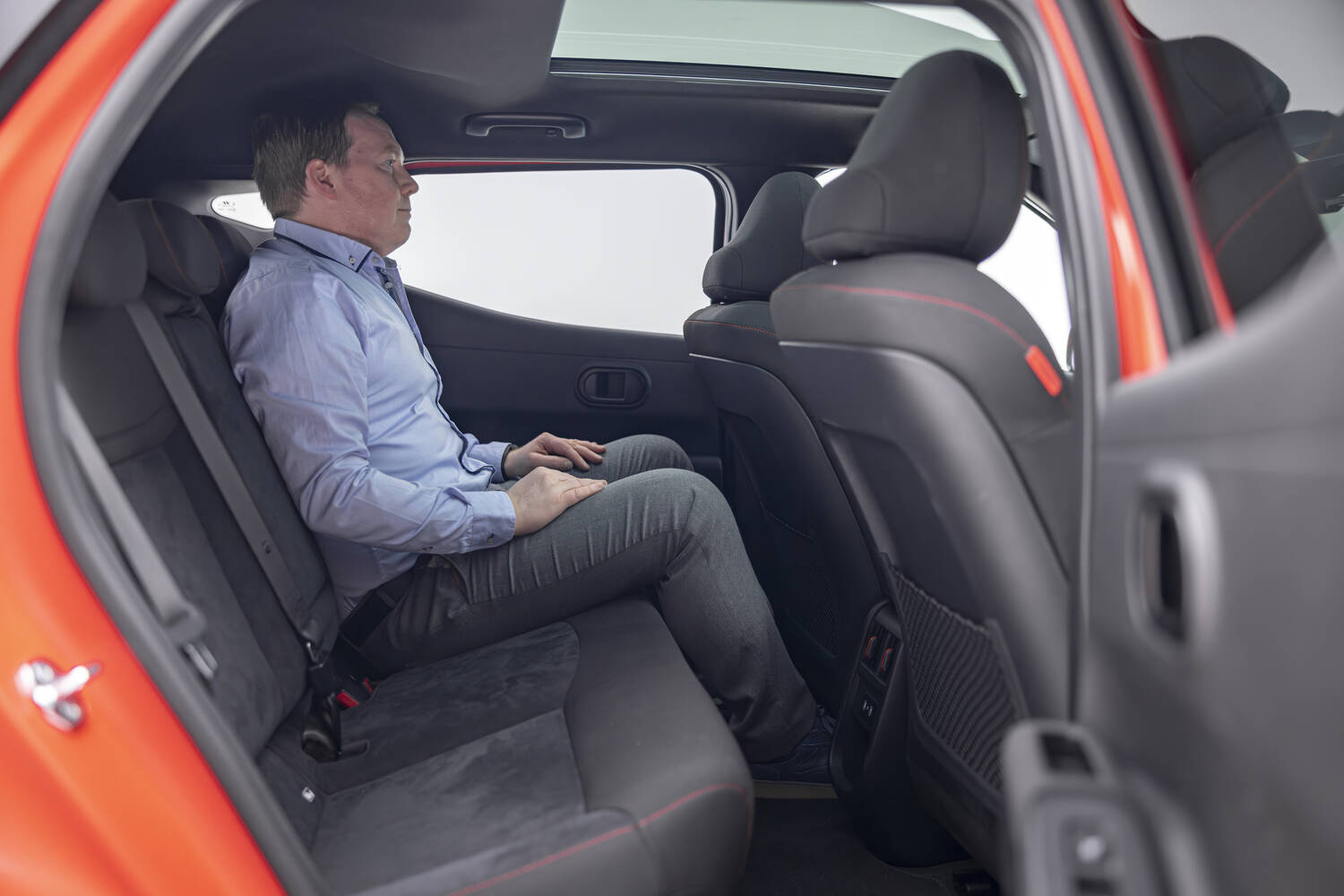
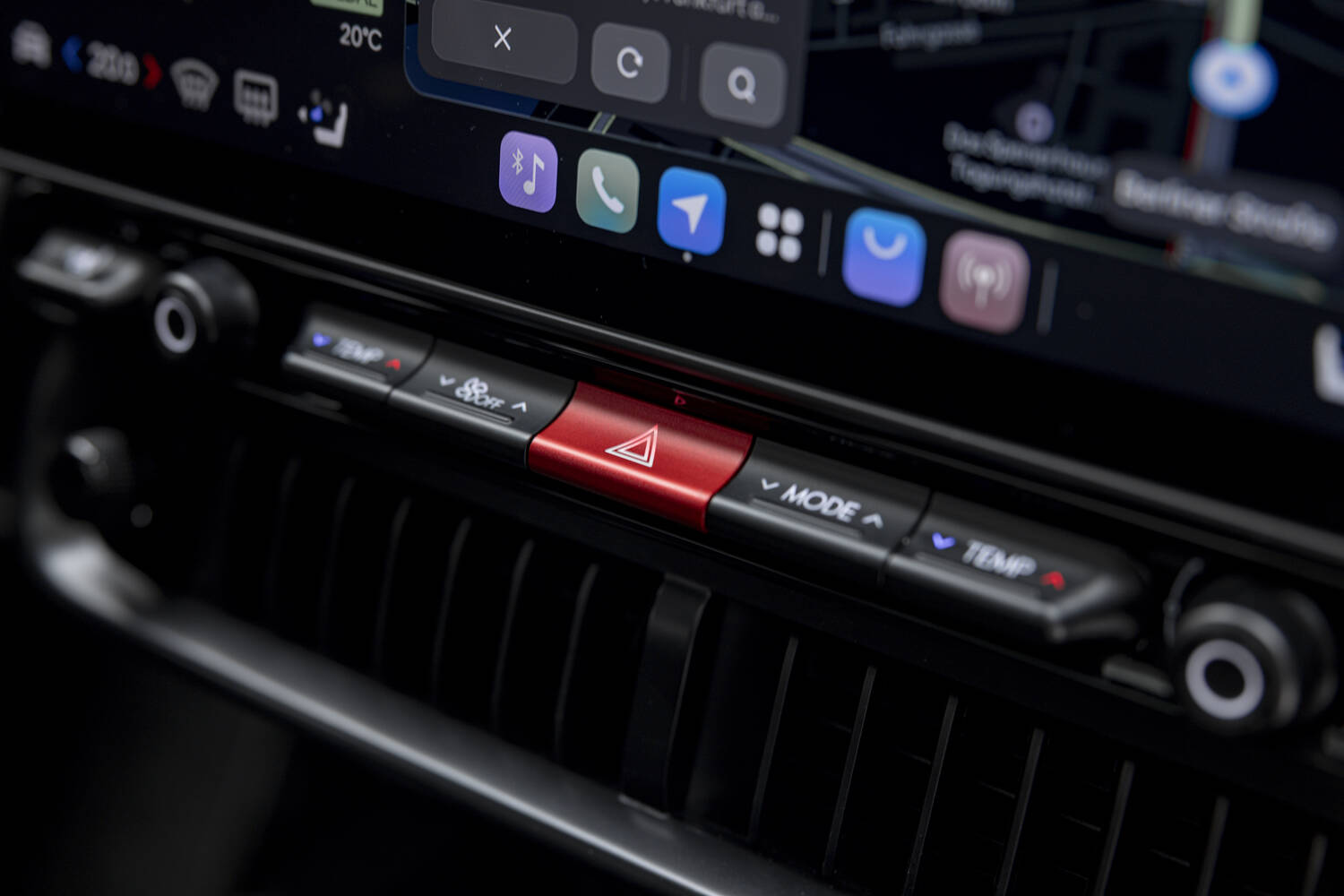
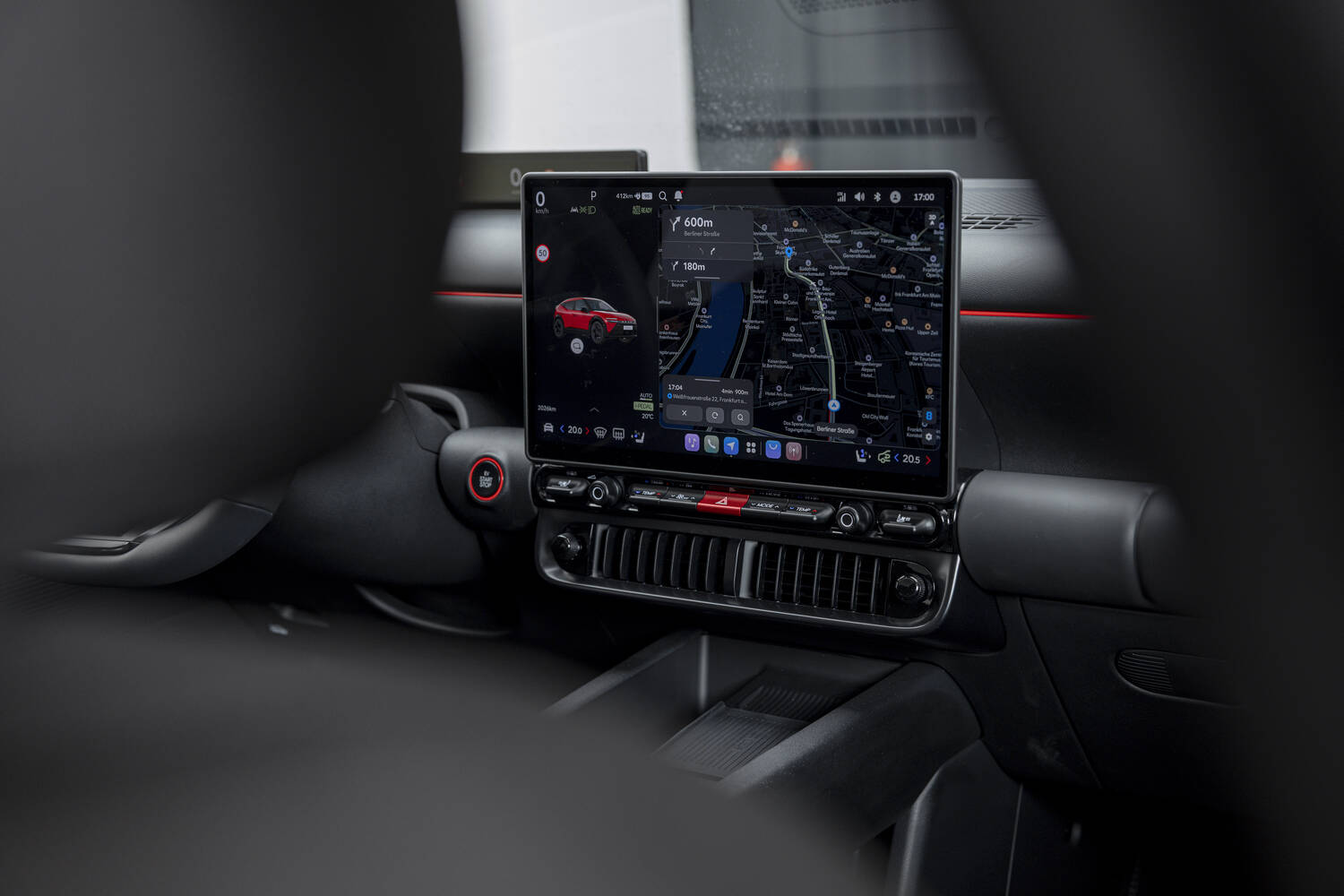
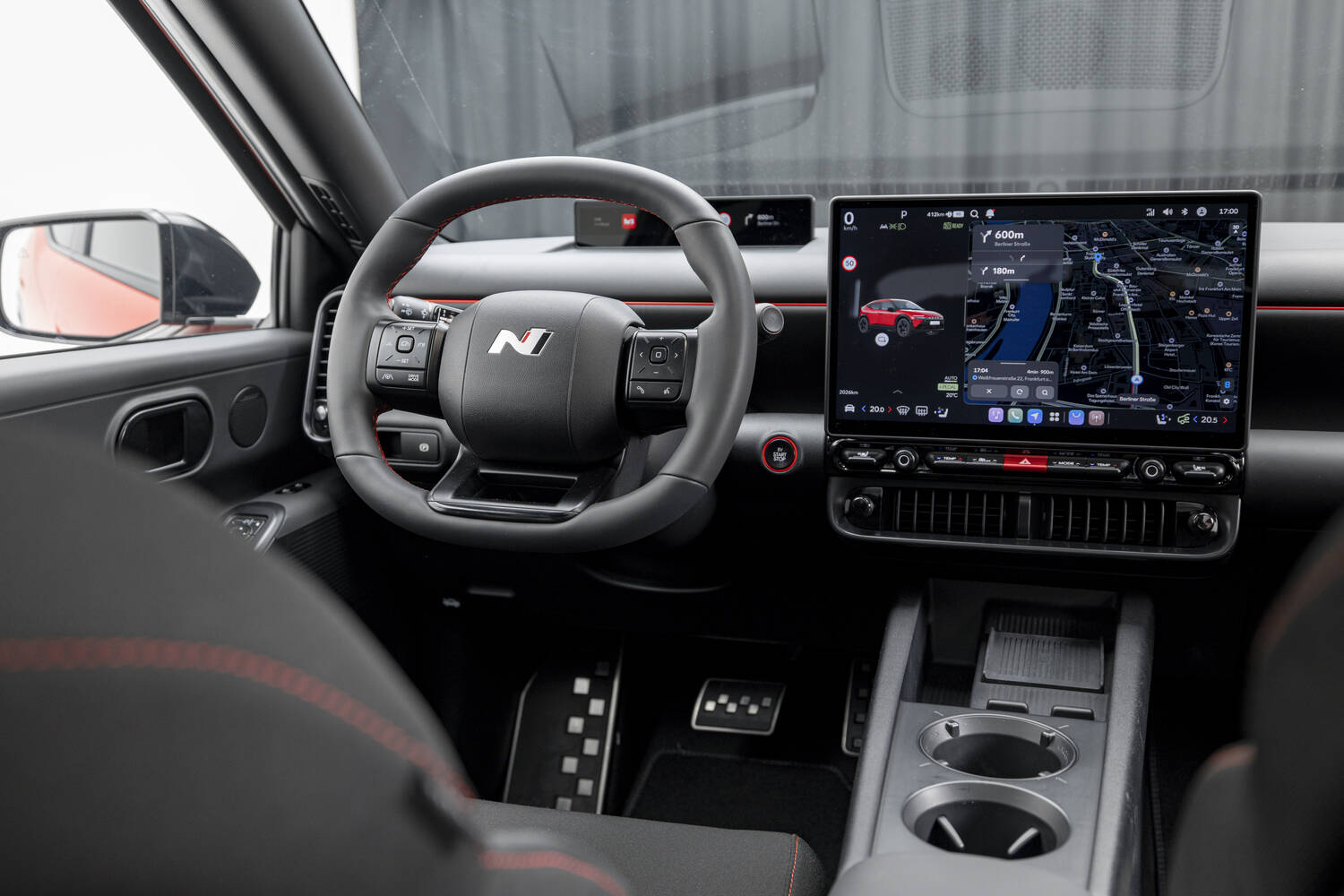
All versions come with the new Pleos infotainment system, based on an Android Automotive platform. The standard touchscreen measures 12.9 inches across the diagonal, and it can be upgraded to a 14.6-inch item, complemented by a sliver of a screen with the driving information on it ahead of the steering wheel.
We're very glad to see a bank of physical switches underneath the touchscreen to allow for quick, safe adjustment of things such as the fan speed and temperature.
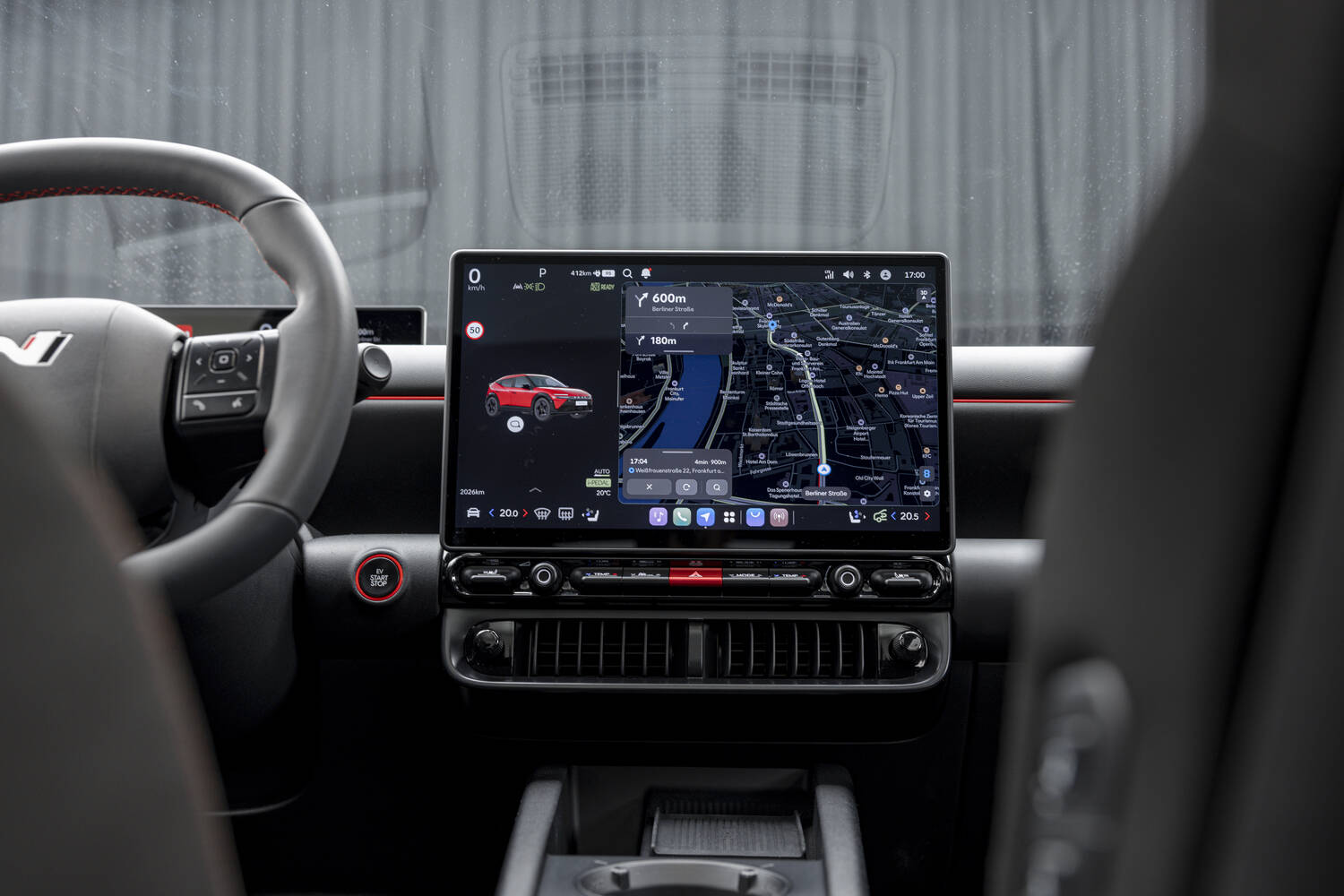
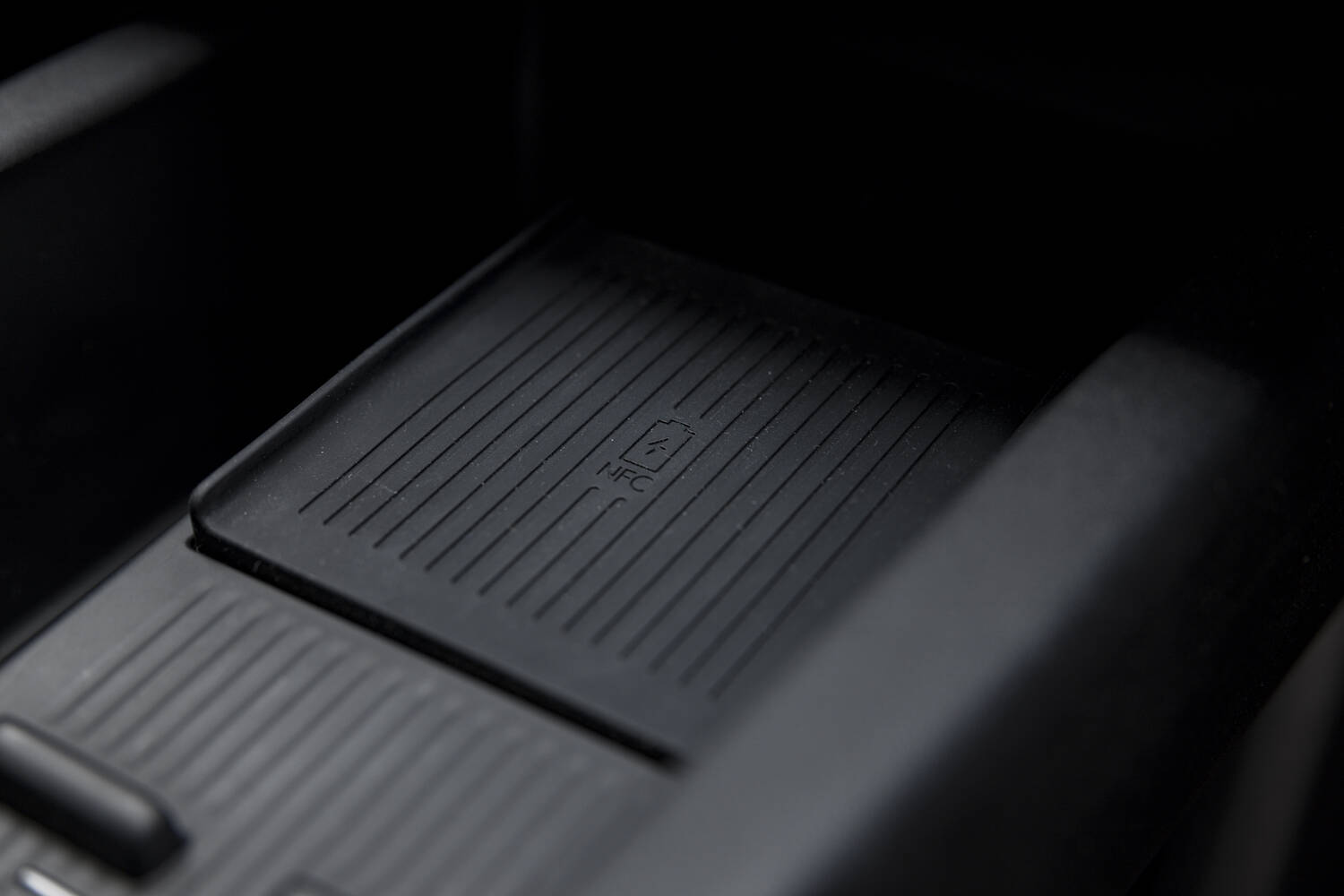
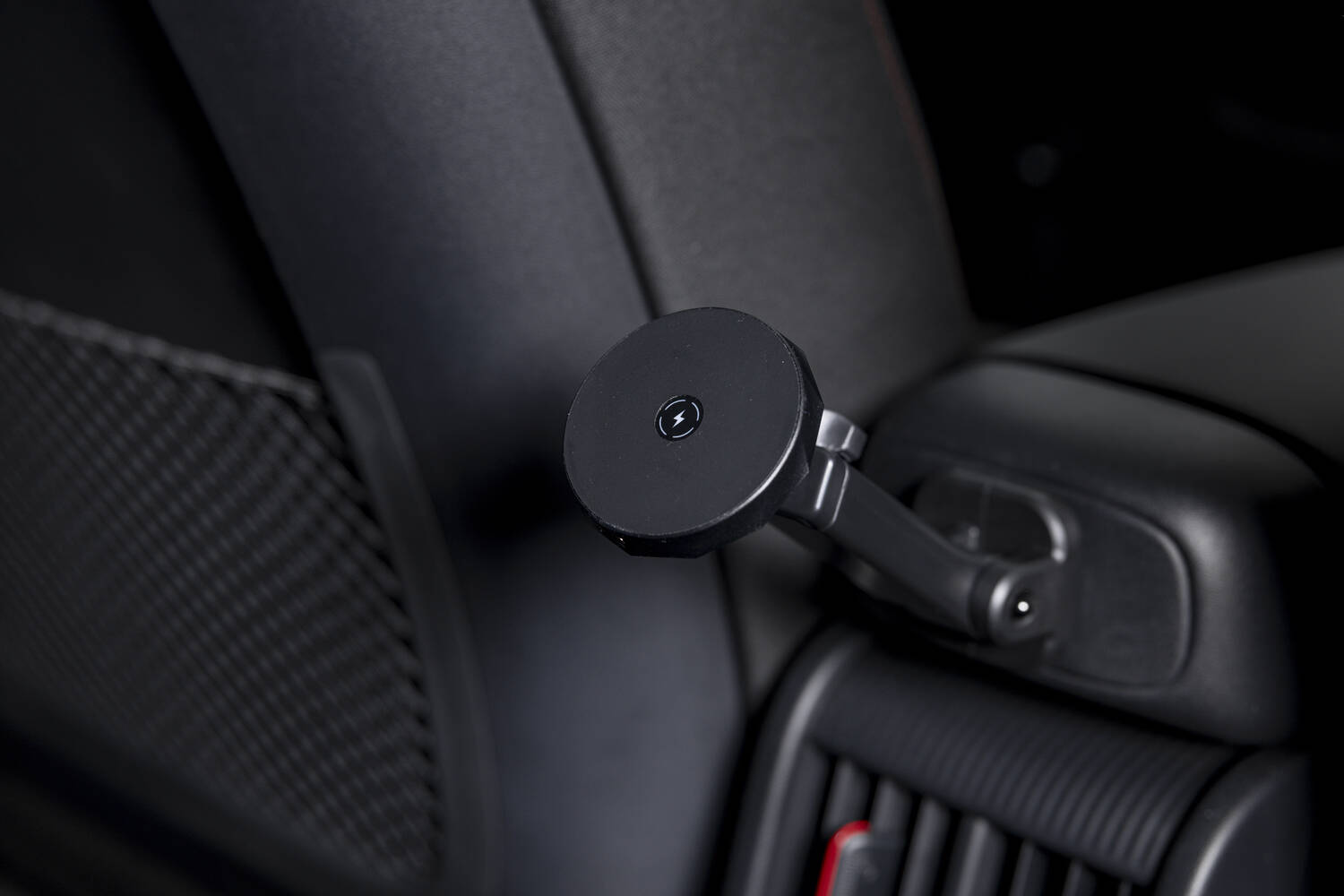
Owners will take a while to find all the little 'Easter eggs' in the Ioniq 3's design, but they'll sooner appreciate the clever practicality touches around the cabin. The tall centre console, for example, has two storage levels, variable cupholders and loads of areas in which a smartphone could be stashed or charged. It appears really well thought out.
Despite the Ioniq 3's position in the Hyundai lineup, it will be available with other big-car features such as the firm's 'Relaxation Seats' that can recline at the touch of a button for a more relaxed position, designed for use when charging up the car at a public charger.
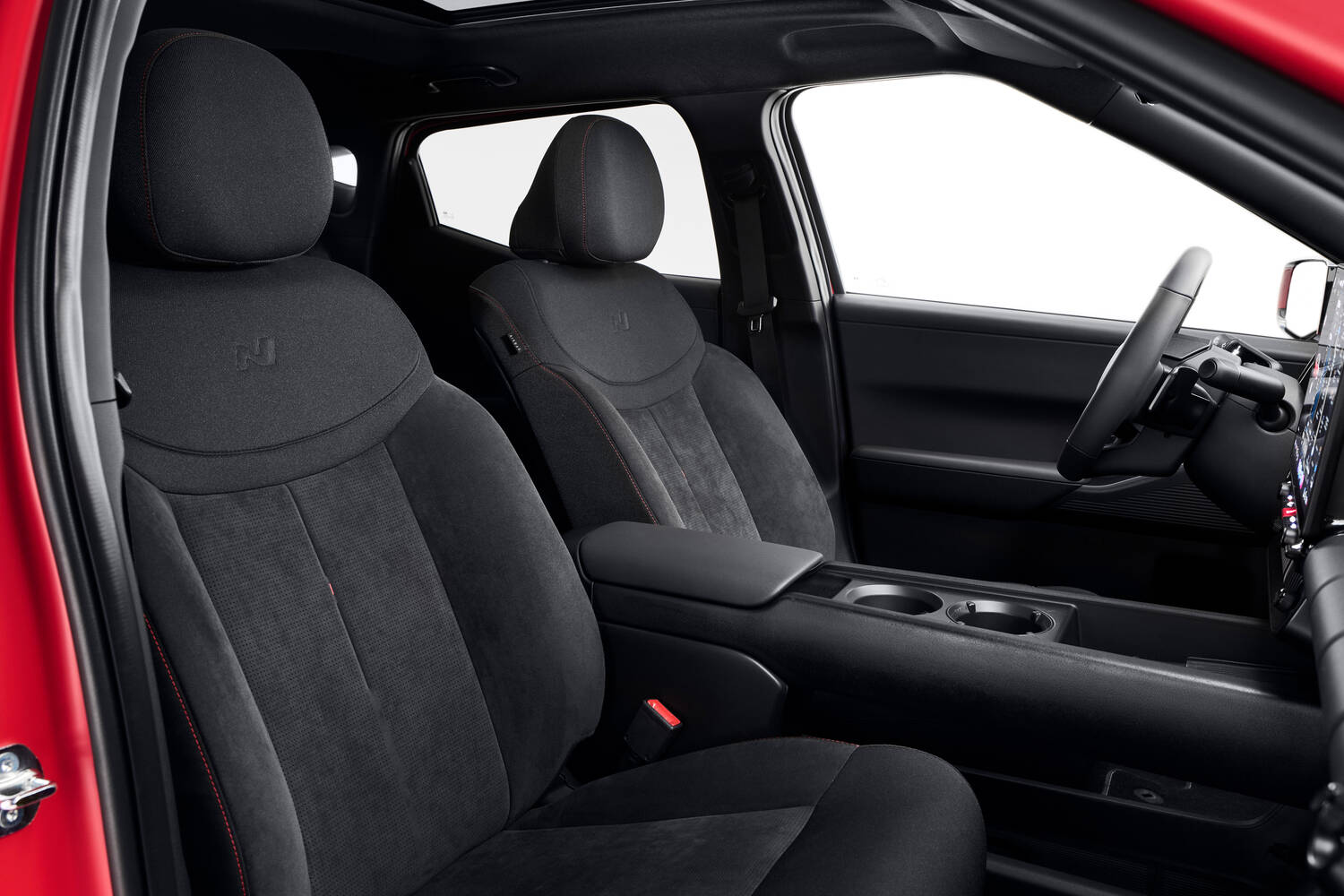
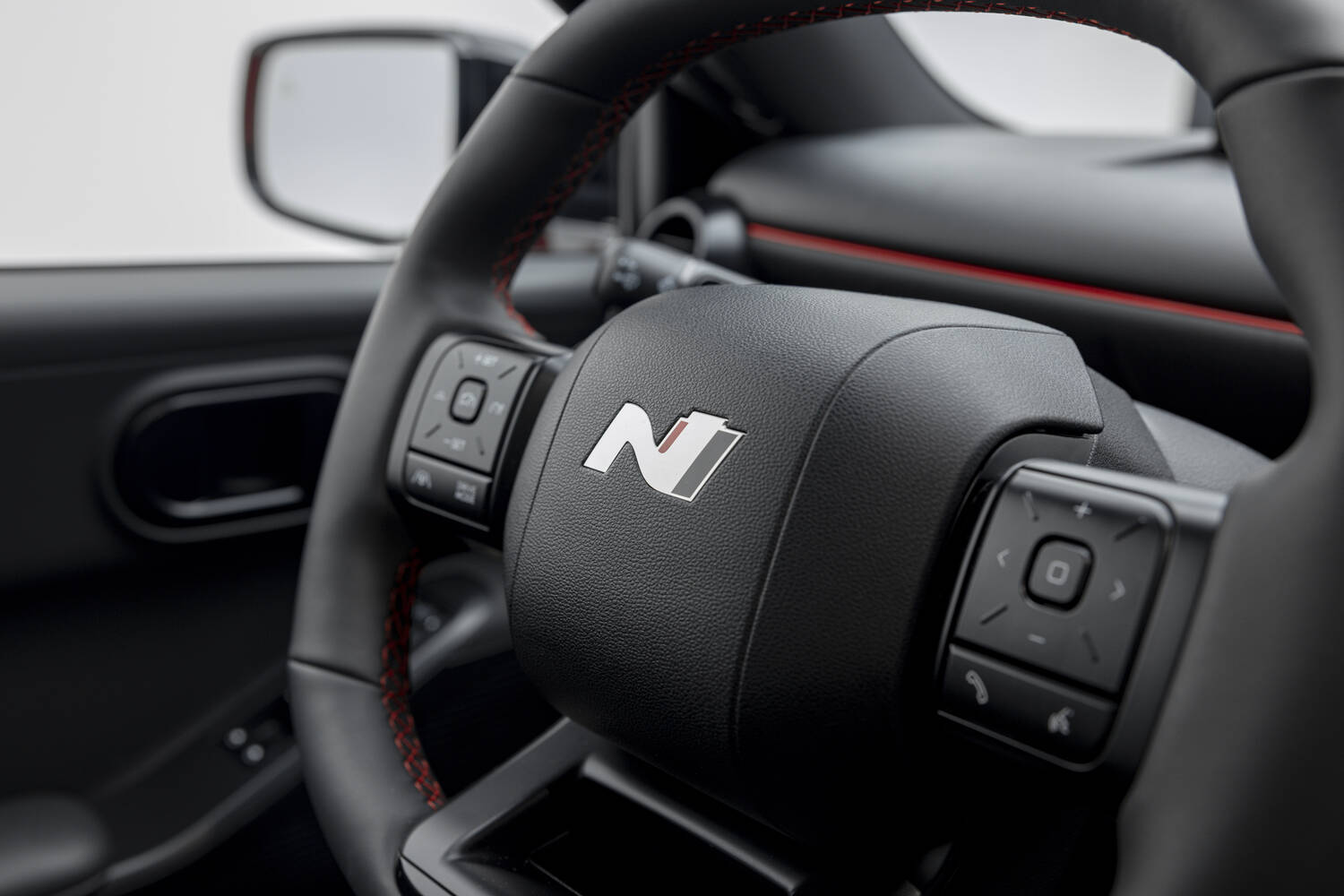
A squashed-circle steering wheel is fitted, but it's good to hold and it features simple physical buttons on each spoke. There are also paddles behind to allow the driver to alter the level of brake-energy regeneration.
Now would be a good time to tell us the Ioniq 3's range on a charge...
Though we don't yet know what Irish buyers will be offered, there are two battery packs available for the Ioniq 3. The standard-range item has a 42.2kWh capacity and a WLTP range target of over 335 kilometres. Hyundai calls the 61kWh alternative the long-range option and it's targeting a range of over 490km.
In terms of charging, under optimum conditions, both batteries can in theory be charged 10-80 per cent on a DC fast charger in half an hour. They can make use of 11kW three-phase AC chargers too, while a 22kW upgrade is available for the long-range battery. All cars feature 'V2X' tech - i.e. 'vehicle-to-everything', meaning it can be used as a mobile power pack.
Doesn't all that make for a heavy small car?
Hyundai has done a great job to keep the Ioniq 3's weight down, as it's quoted as 1,550-1,580kg, which is quite trim for an EV that can go nearly 500km between charges.
That should pay dividends in terms of efficiency, performance and driving dynamics, and it has allowed Hyundai to fit relatively modest electric motors - either 135hp or 147hp, both producing up to 250Nm of torque.
The Ioniq 3 is front-wheel drive and Hyundai quotes 0-100km/h times of either 9.0 seconds for the standard-range car or 9.6 seconds for the heavier long-range variant.
All that's left to tell us is the Irish price of the Hyundai Ioniq 3...
That'll have to wait for another day as Hyundai Ireland has yet to make an announcement. However, the Inster costs from €19,595 and the Kona Electric is priced from €32,345, so the Ioniq 3 could conceivably split the difference. It seems to be a lot of car for that price point.
Video player loading.
Video unavailable. Watch on YouTube
If there is anything about this story we have not covered, you can avail of our expert advice service via the Ask Us Anything page.