


Oh, is it not being replaced?
No. EU7 emissions regs will make the current iteration of the engine, a turbocharged 2.5-litre unit with 400hp and 500Nm on tap, unviable from a financial perspective; getting it 'clean' enough to satisfy EU7 would cost too much, or the five-pot would lose too much of its character and power, and thus become meaningless in an era dominated by efficient turbocharged four-cylinder engines and hybrids.
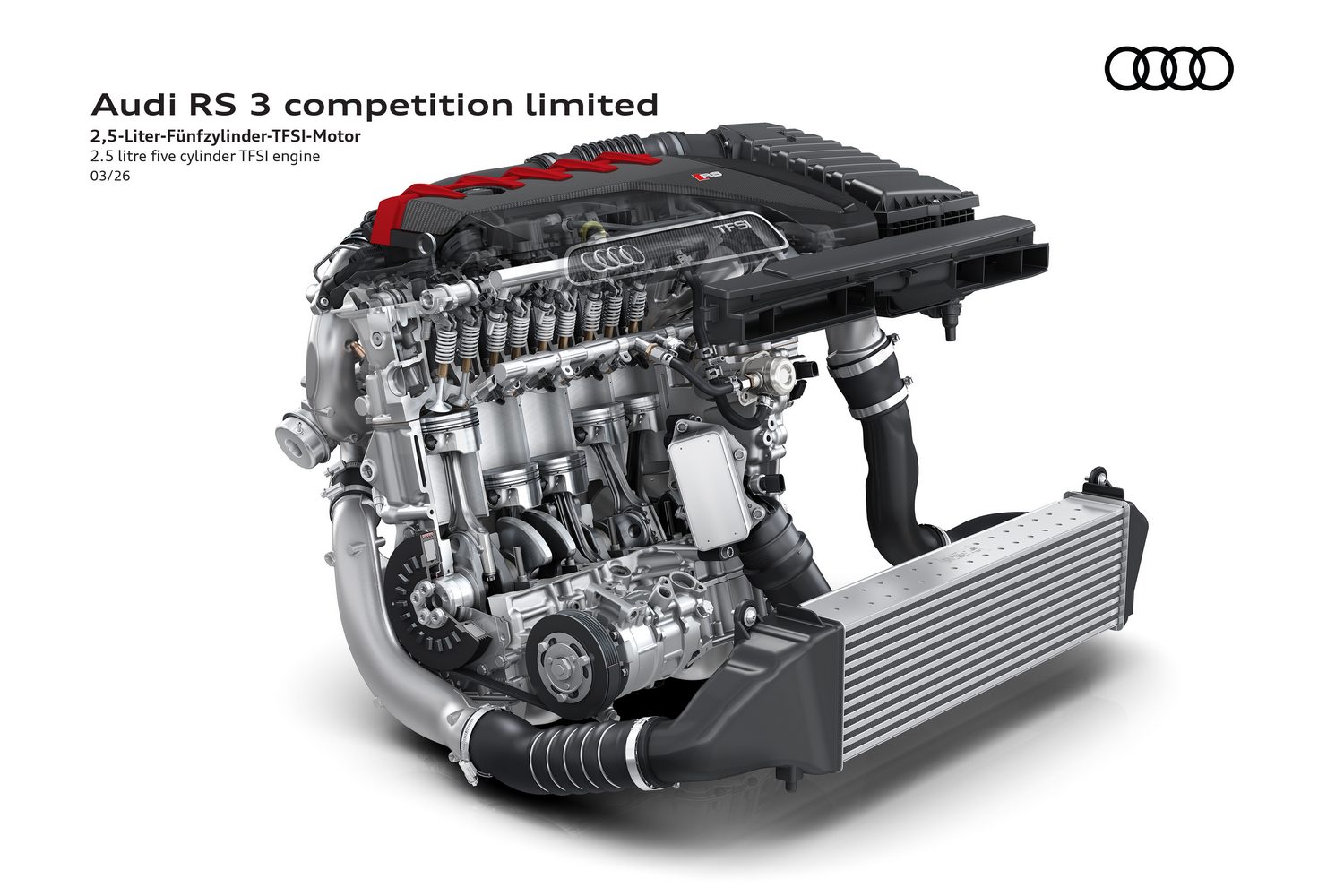
So, having become synonymous with Audi since its introduction in 1976 - and with it now being farmed out to other in-group vehicles, such as the Cupra Formentor VZ5 (and maybe a Mk8.5 Volkswagen Golf for a final-blast R model if the rumours are to be believed) - the five-cylinder engine will be no more from the middle of 2027.
Has it got more power in the RS 3 Competition Limited?
No, it hasn't. But this is not a bad thing. The warbling RS 3 engine has more than enough grunt for its size, as it will run 0-100km/h in just 3.8 seconds. This Competition Limited does get a 290km/h top speed, though, which was previously only an option. And yes, we know that's all but irrelevant.
So what makes this RS 3 Competition Limited so special?
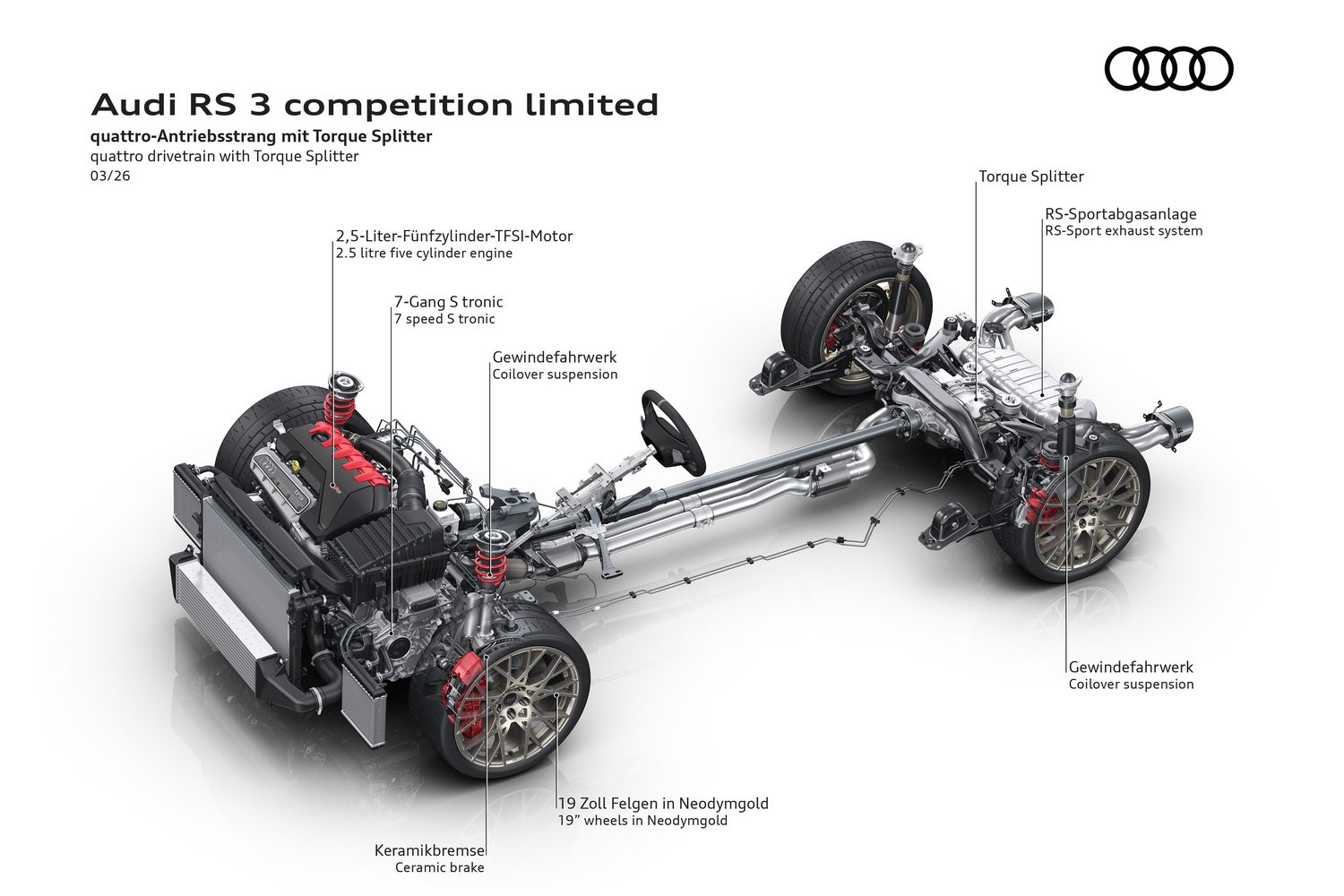
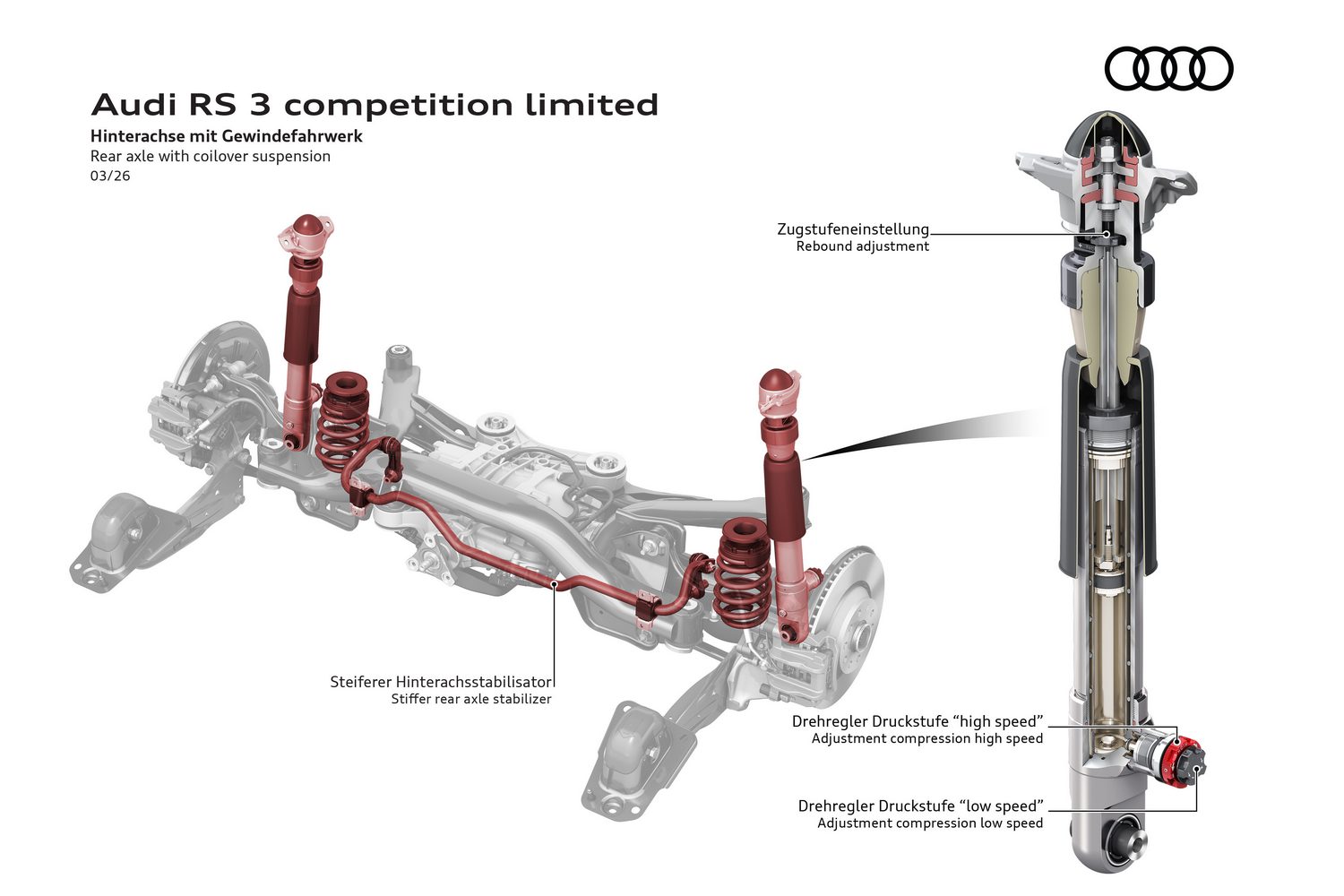
It has 'coilover' suspension, something you can't fit to any other RS 3. Audi has done this before with its runout RS models, to highly impressive effect - both the old RS 4 Avant, in its end-of-the-line Competition spec, and the astonishing RS 6 GT Avant limited edition both had this upgrade fitted, and in both instances what were already good cars in the first place turned into absolute dynamic belters as a result of the suspension swap.
On the RS 3 Competition Limited, the suspension is composed of twin-tube dampers all round, constructed of stainless steel at the front and aluminium at the rear. The front shocks have external reservoirs, while the rear items have larger-diameter tubes and thicker piston rods as well, along with an uprated, stiffer anti-roll bar.
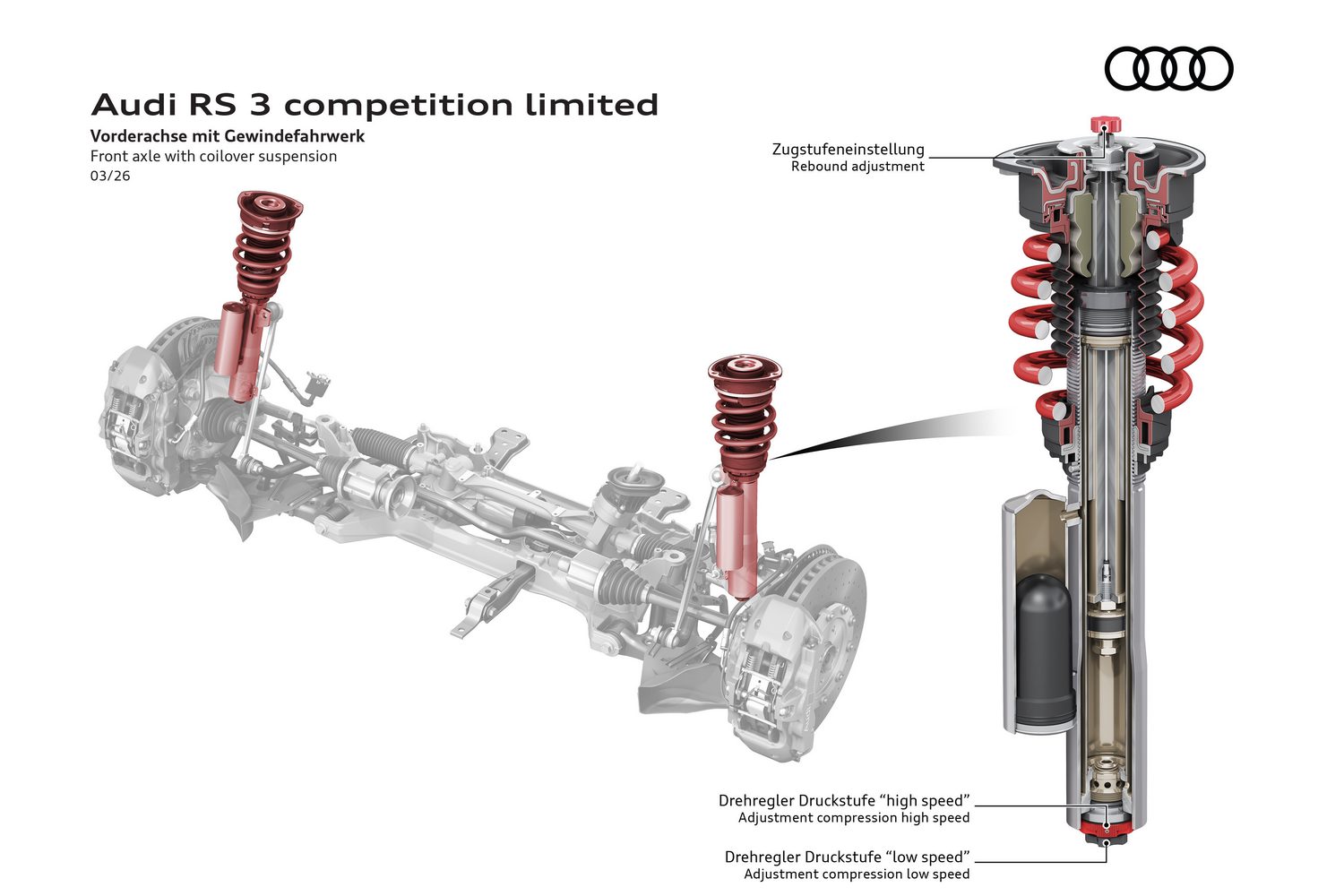
Audi Sport has included three modes of adjustment for this coilover set-up, too, with 12 settings for low-speed compression, 15 settings of high-speed compression and 16 settings of rebound.
Admittedly, all these parameters have to be physically adjusted on the suspension towers themselves - rather than being controlled by a button in the cabin of the car - but the company will sell the RS 3 with the relevant toolkit plus full instructions on how to do this, while it also states that the only thing an owner needs to do to access all the adjustment dials is raise the car on a ramp; there's no need to remove any other bits of the bodywork or even the wheels.
That's unless you want to raise or lower the ride height of the Competition Limited. The special model can be dropped 10mm closer to the deck than any other RS 3.
What else is going on with the chassis and underpinnings?
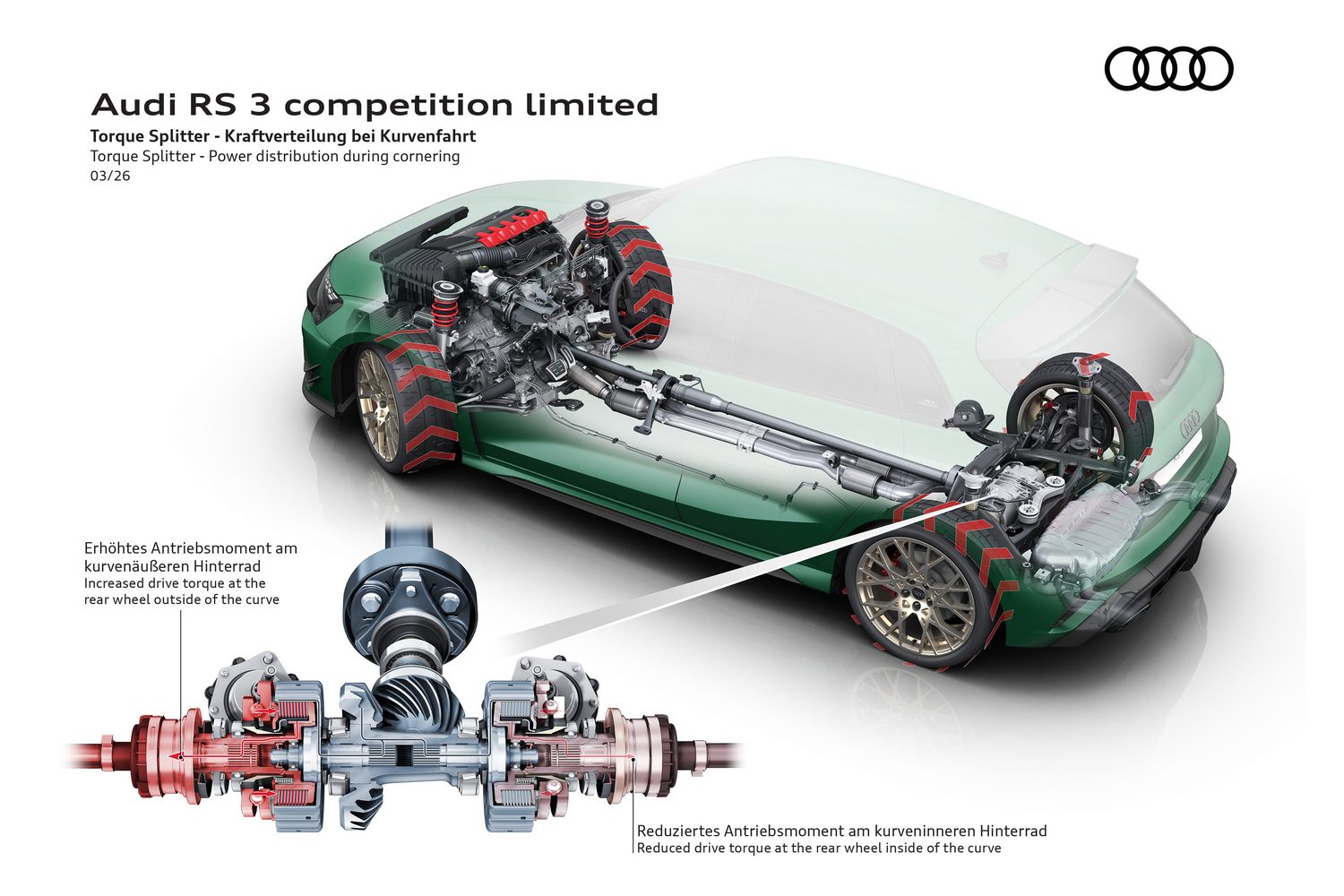
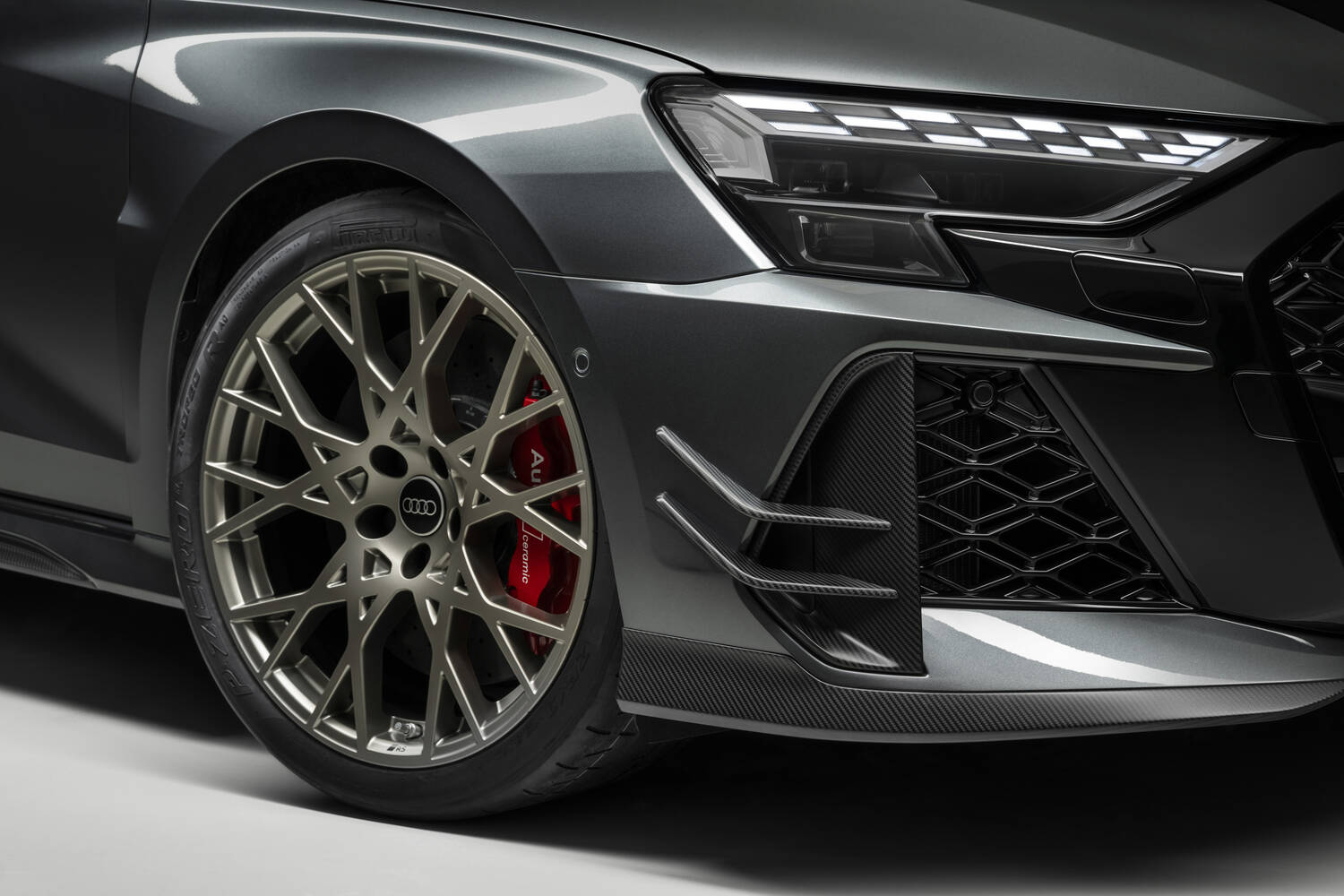
Well, like any other current-gen RS 3, the Competition Limited has the torque-splitting rear differential to give it lively handling, and of course quattro all-wheel drive too, while it comes with carbon-ceramic brakes (which are a cost-option on other RS 3s) as standard.

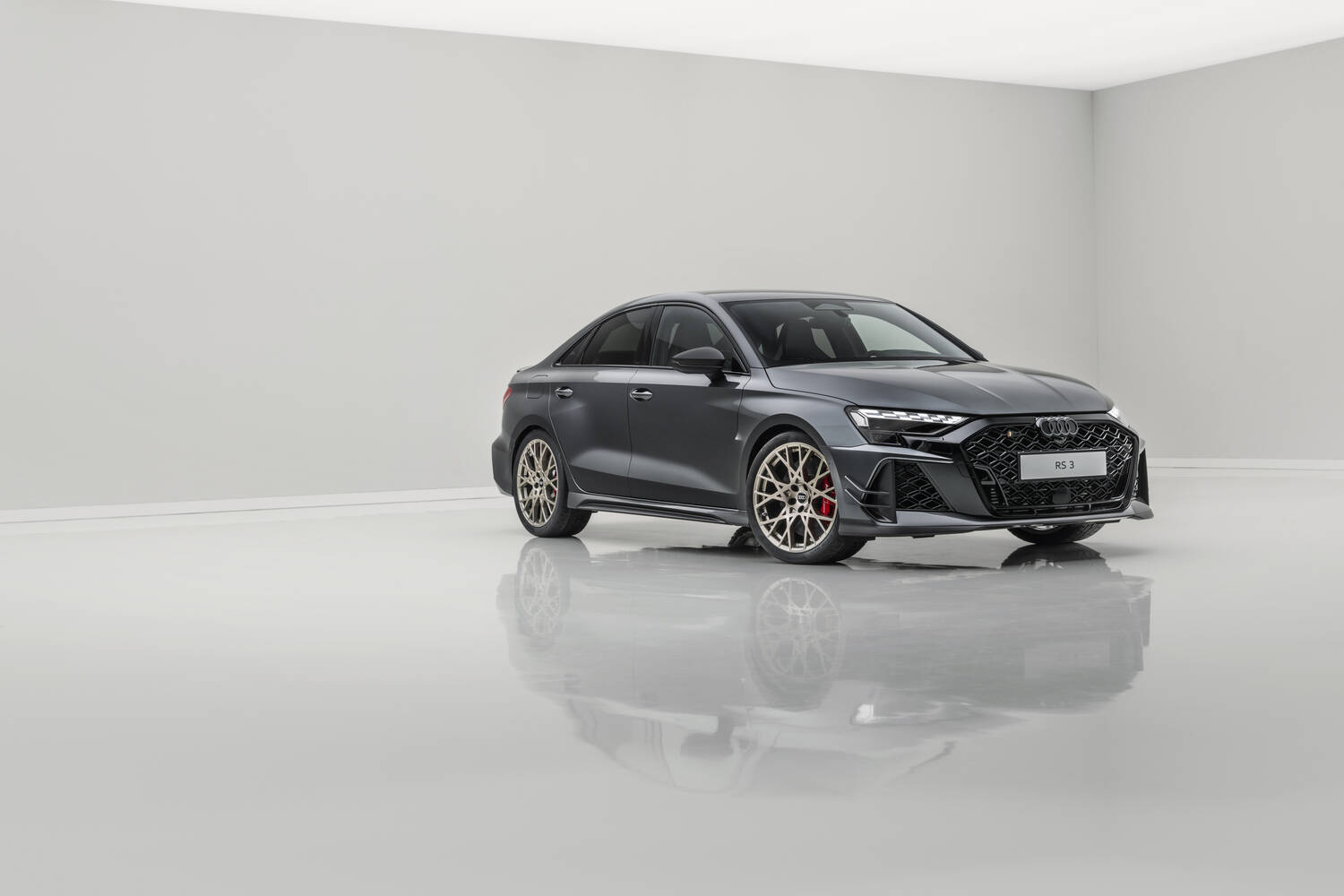
These switch out the front steel discs for the carbon items, and then Audi adds red callipers all round for good measure.
Perhaps the best news is that the 19-inch wheels on the RS 3 Competition Limited can optionally be clad in semi-slick Pirelli P Zero Trofeo R tyres, although regular P Zero rubber is standard.
This RS 3 looks different on the outside, right?
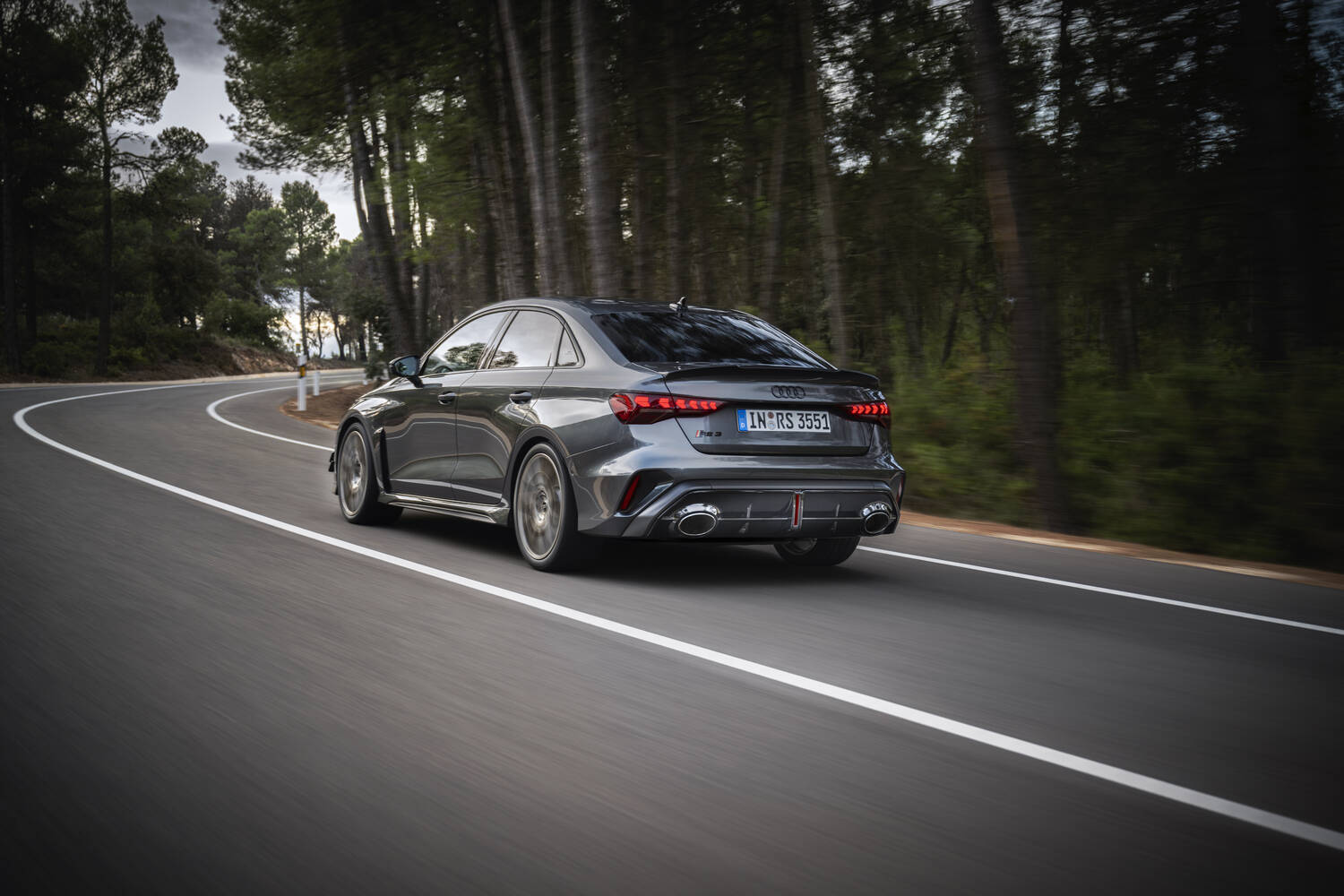
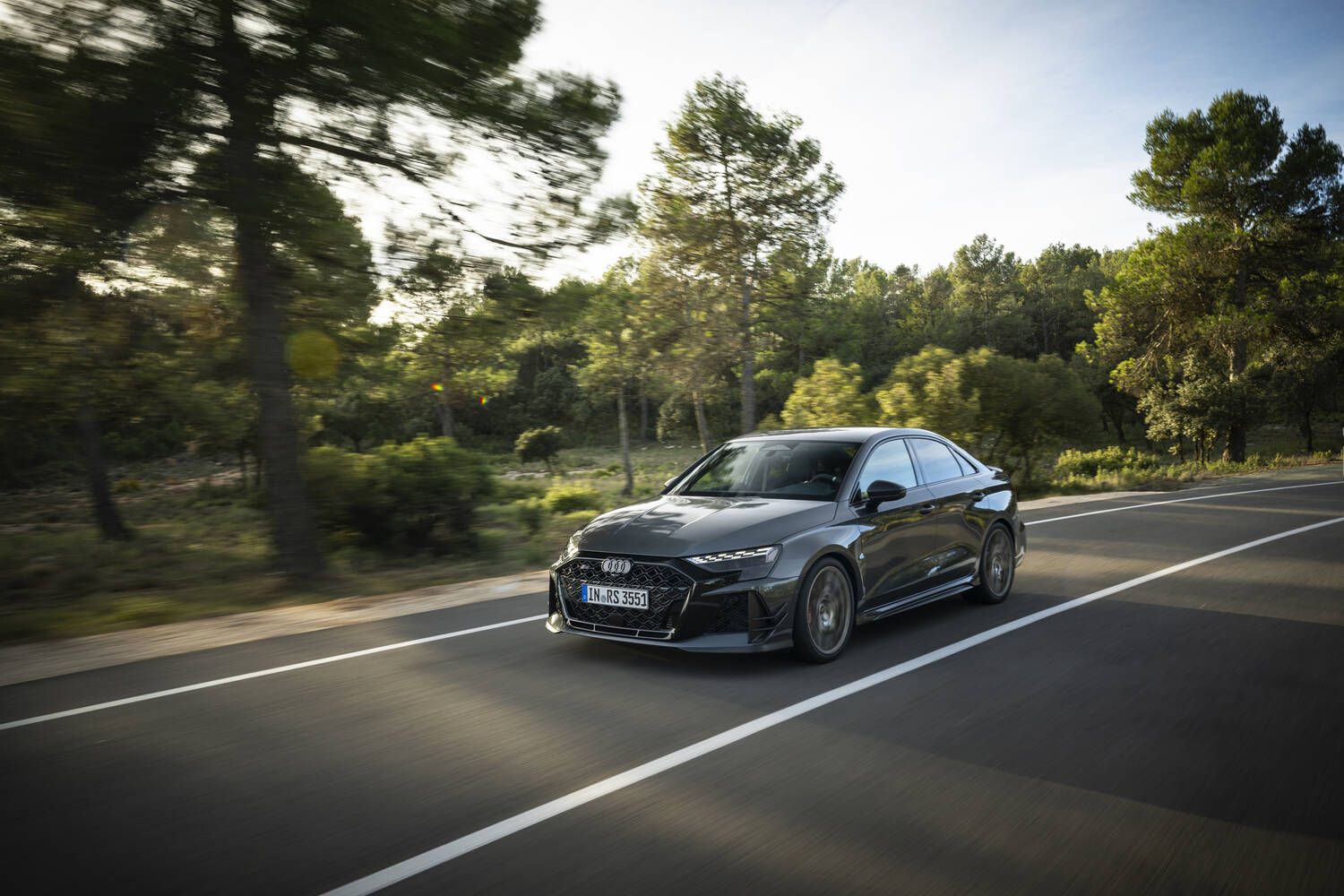
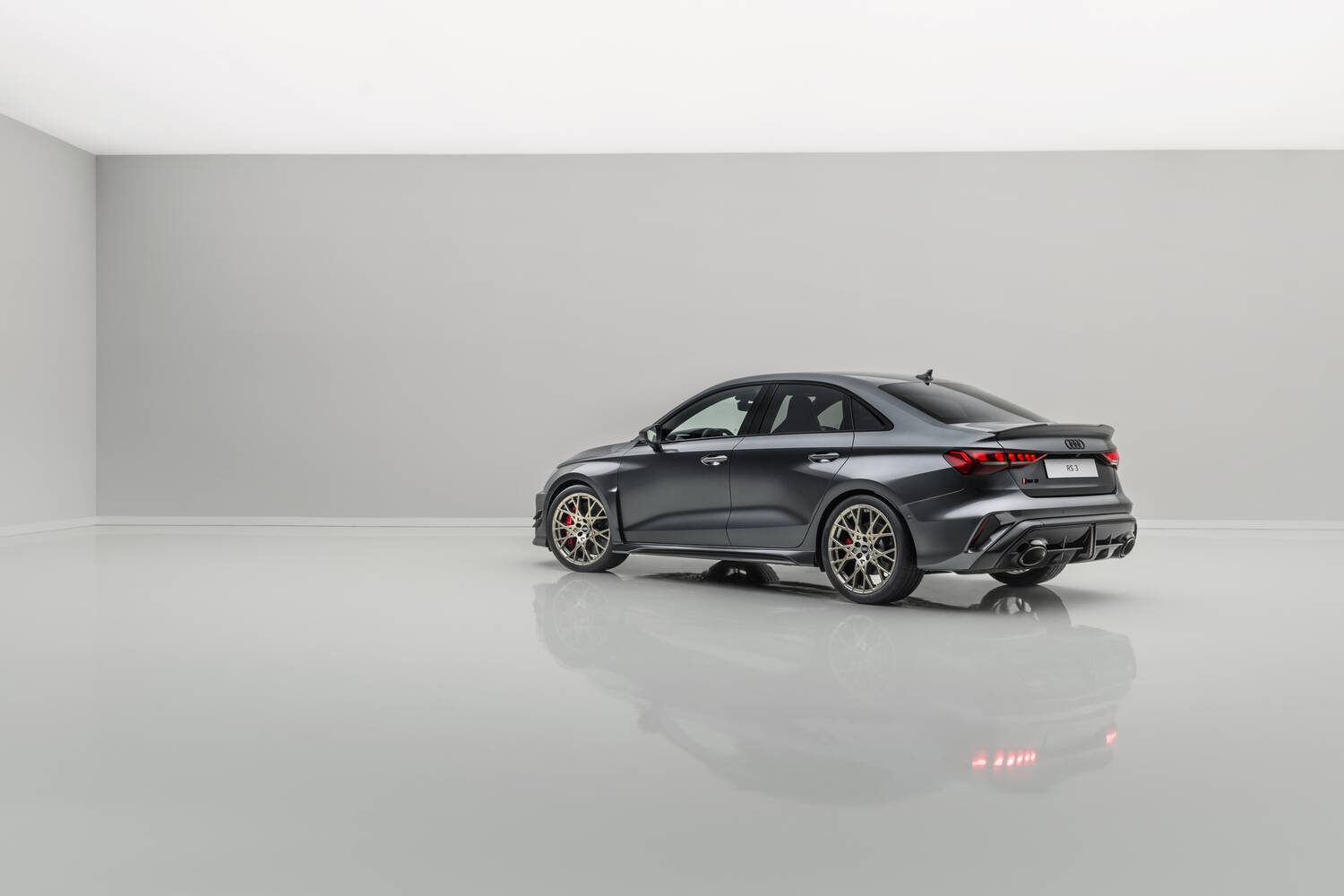
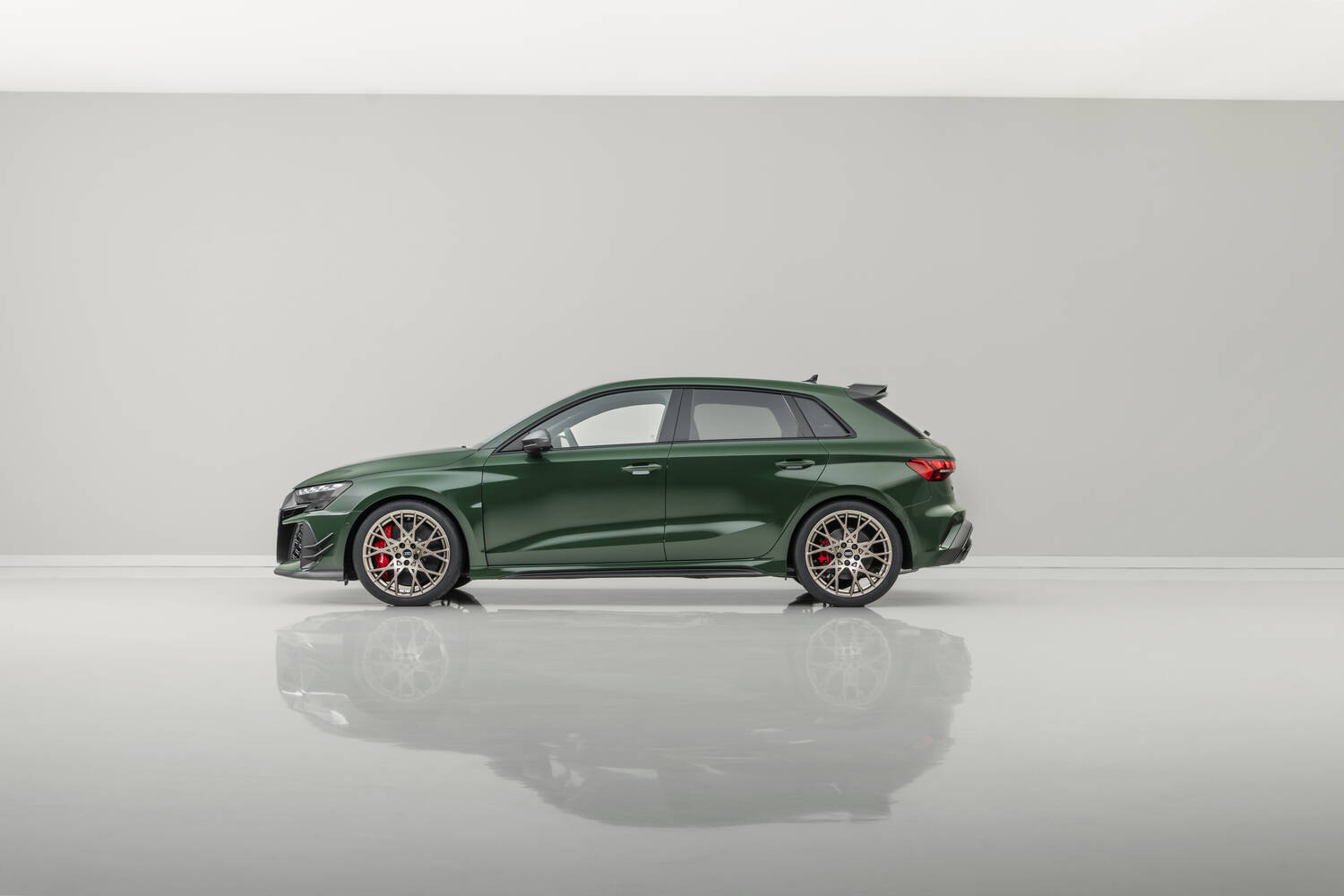
It does indeed, because the coilover suspension isn't the only thing unique to the Competition Limited. There's much matte-effect carbon fibre on the outside of this RS 3, for items such as the side skirts, door-mirror caps and the insert above the rear diffuser.
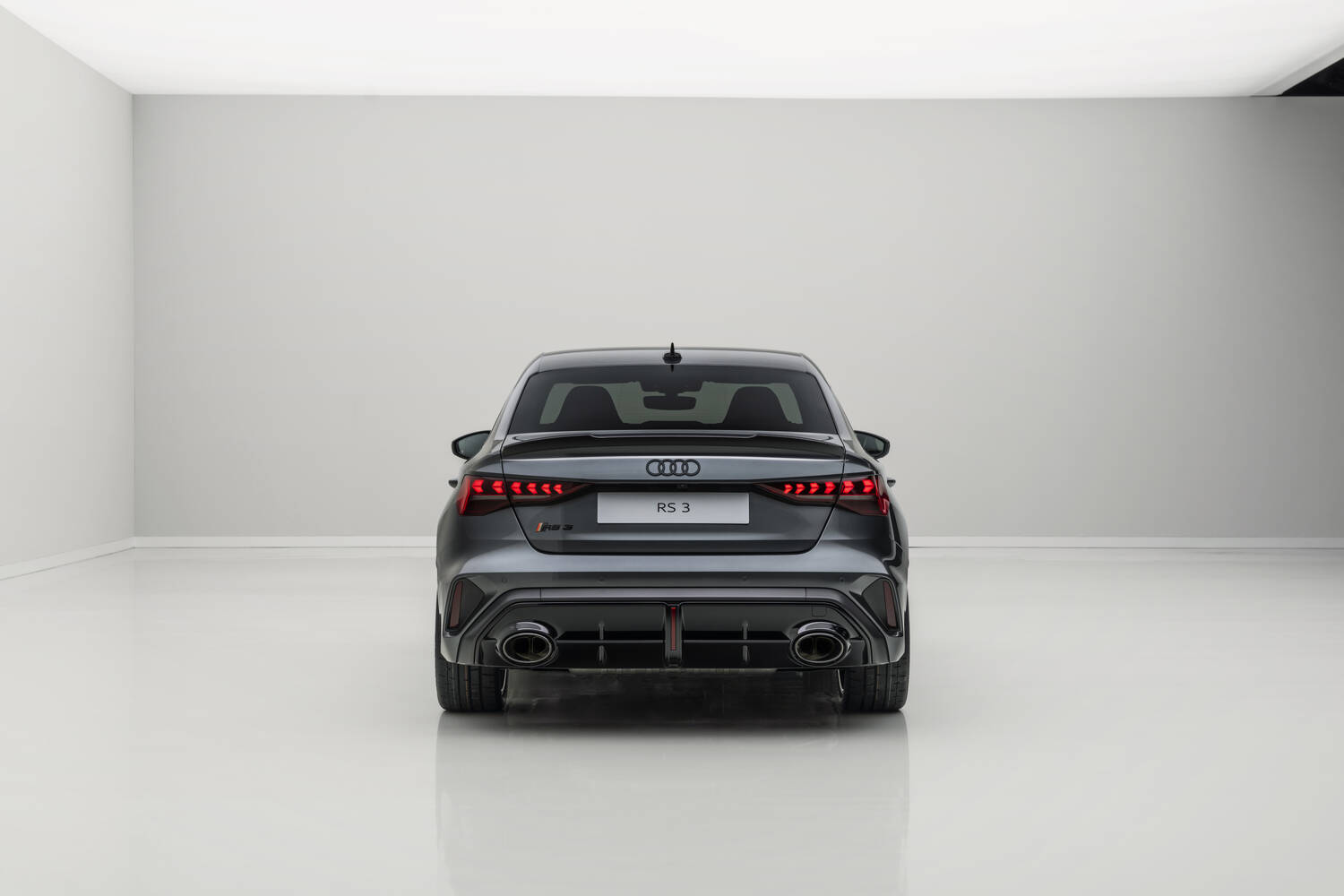
The same material is also used for several features that are unique to the Competition, which are the big roof spoiler, a front splitter which is, well, split in the middle, and aero-improving 'canards' on the outer edges of the bumper at the nose.
It even has lights which mimic the firing order of the five-cylinder engine that it both employs and seeks to celebrate. When locking or unlocking the RS 3 Competition Limited, the DRLs at the front do a little animation in a 1-2-4-5-3 formation, which is the progress of the cylinders combusting fuel in the 2.5. Geeky, but also quite cool and subtle.
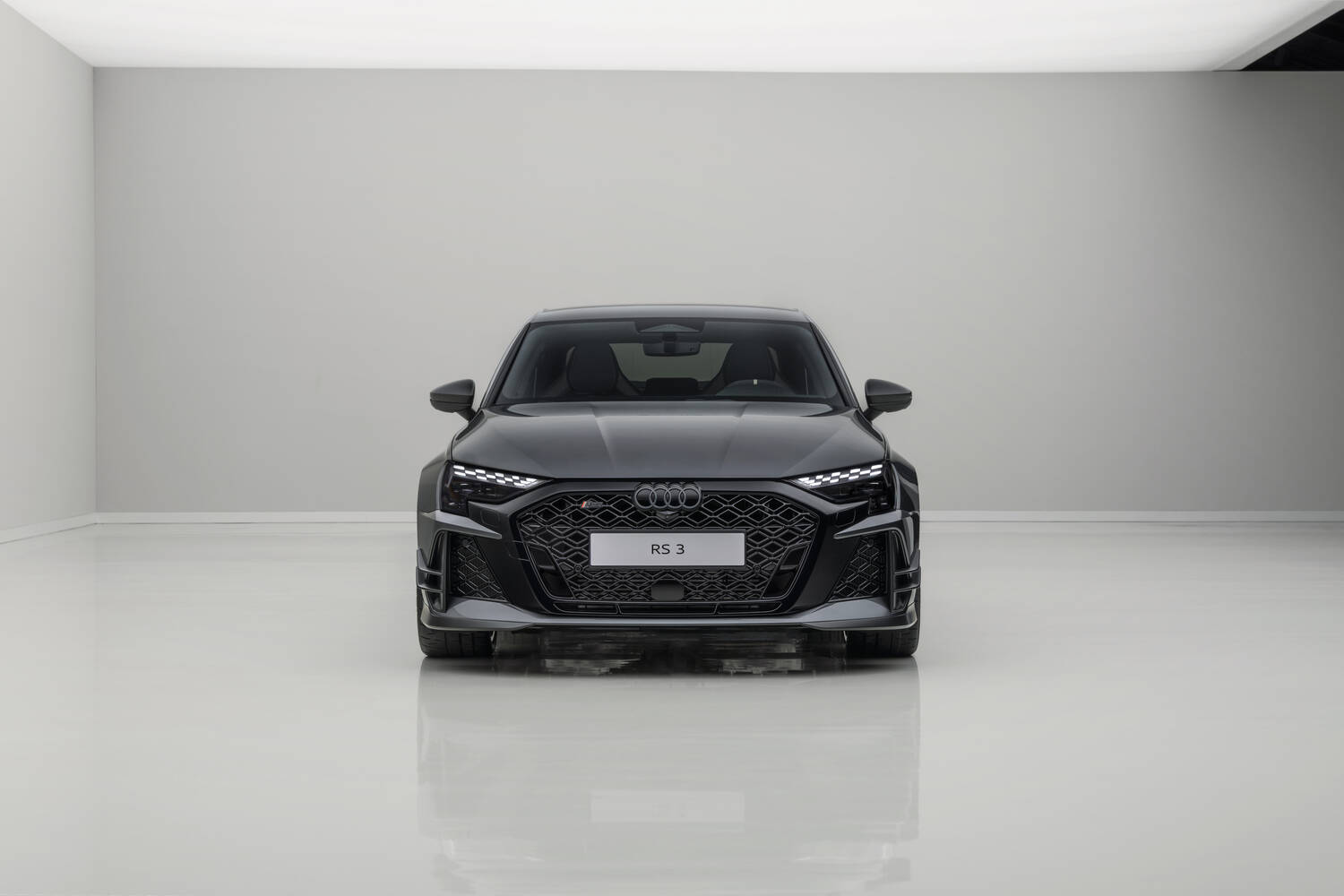
And very quick in action: we had a sneak preview of the car in a studio, and we had to watch the lightshow flow through a few times to get the pattern.
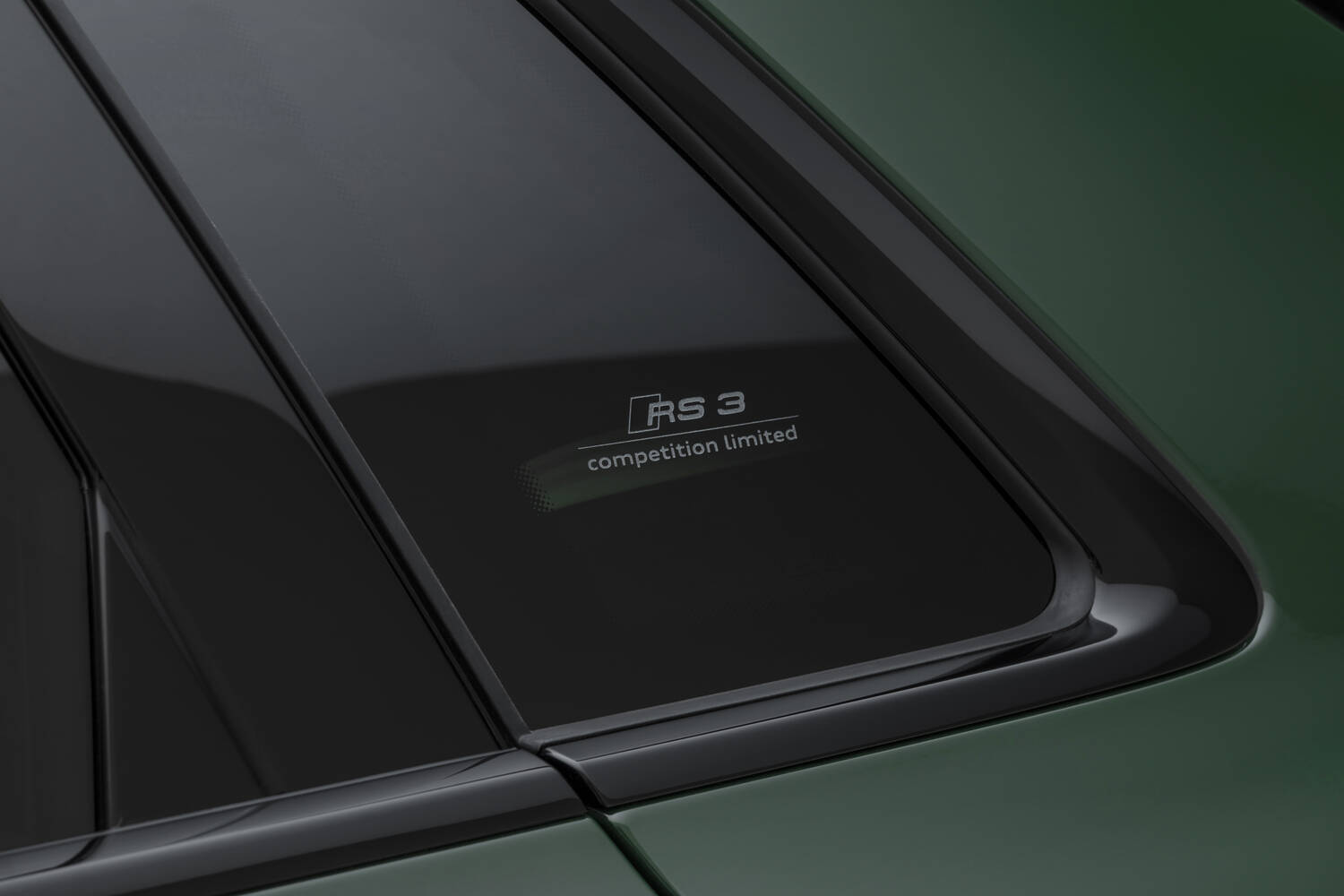
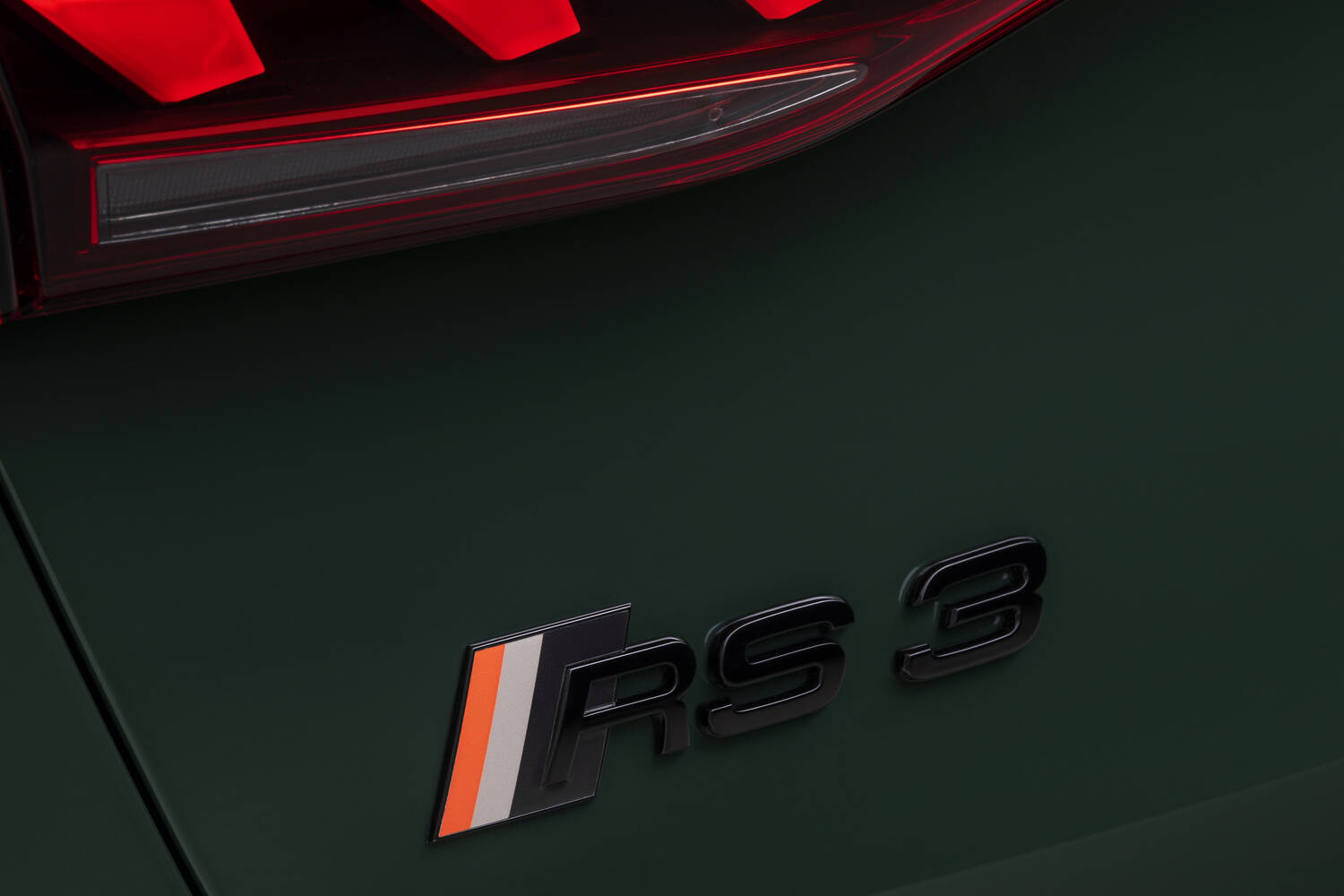
The biggest difference for the 19-inch wheels is that they're rendered in Neodymium Gold. Aside from that, there are RS Heritage 'RS 3' logos on the front and rear (the lettering is black, with a red, white and black stripe motif alongside) of the car, plus a very discreet legend in the quarterlight glass of the rear doors which reads 'RS 3 Competition Limited'.
And finally, colours. Although both Daytona Grey metallic and Glacier White matte are options for the Competition, these are available on other RS 3s.
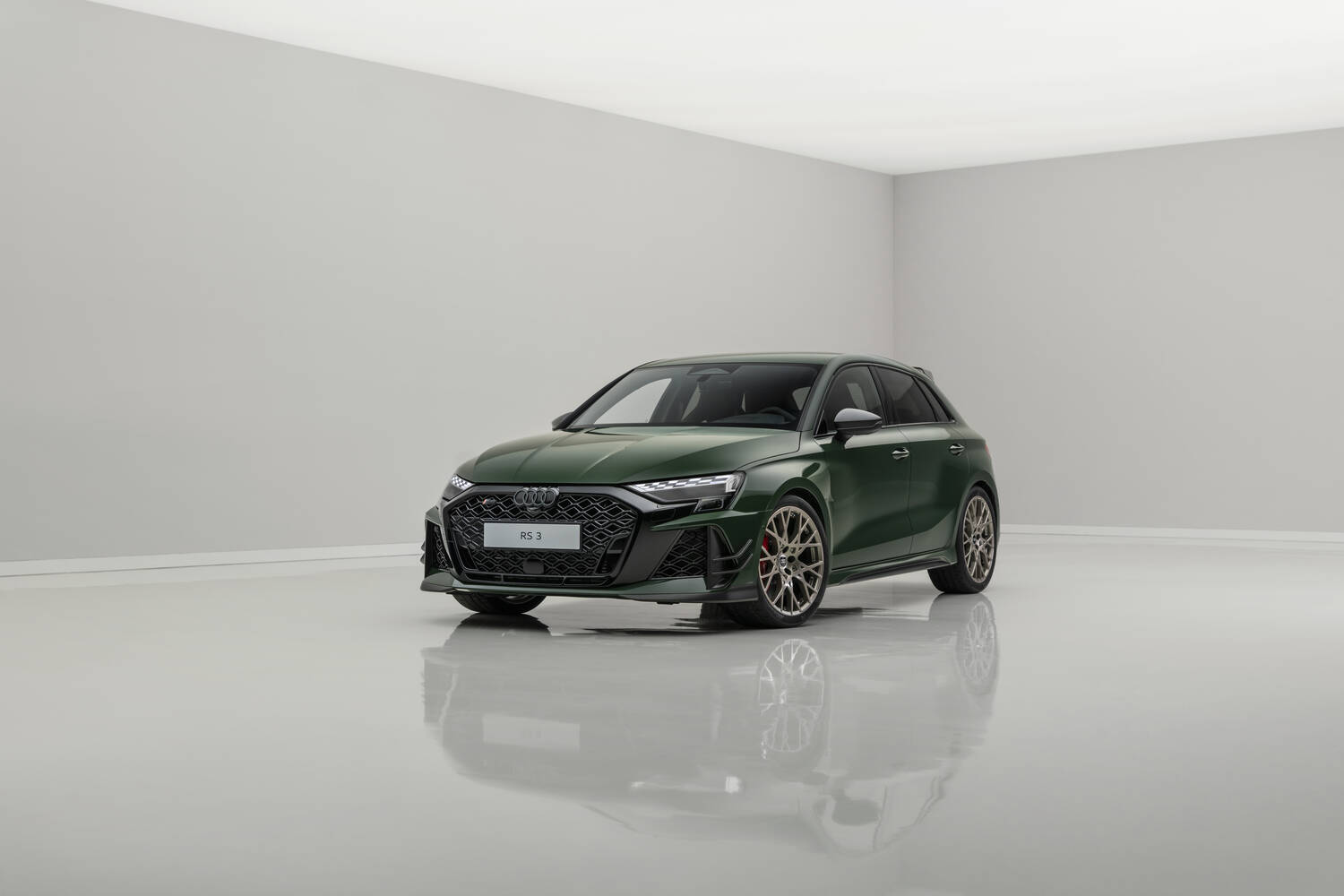
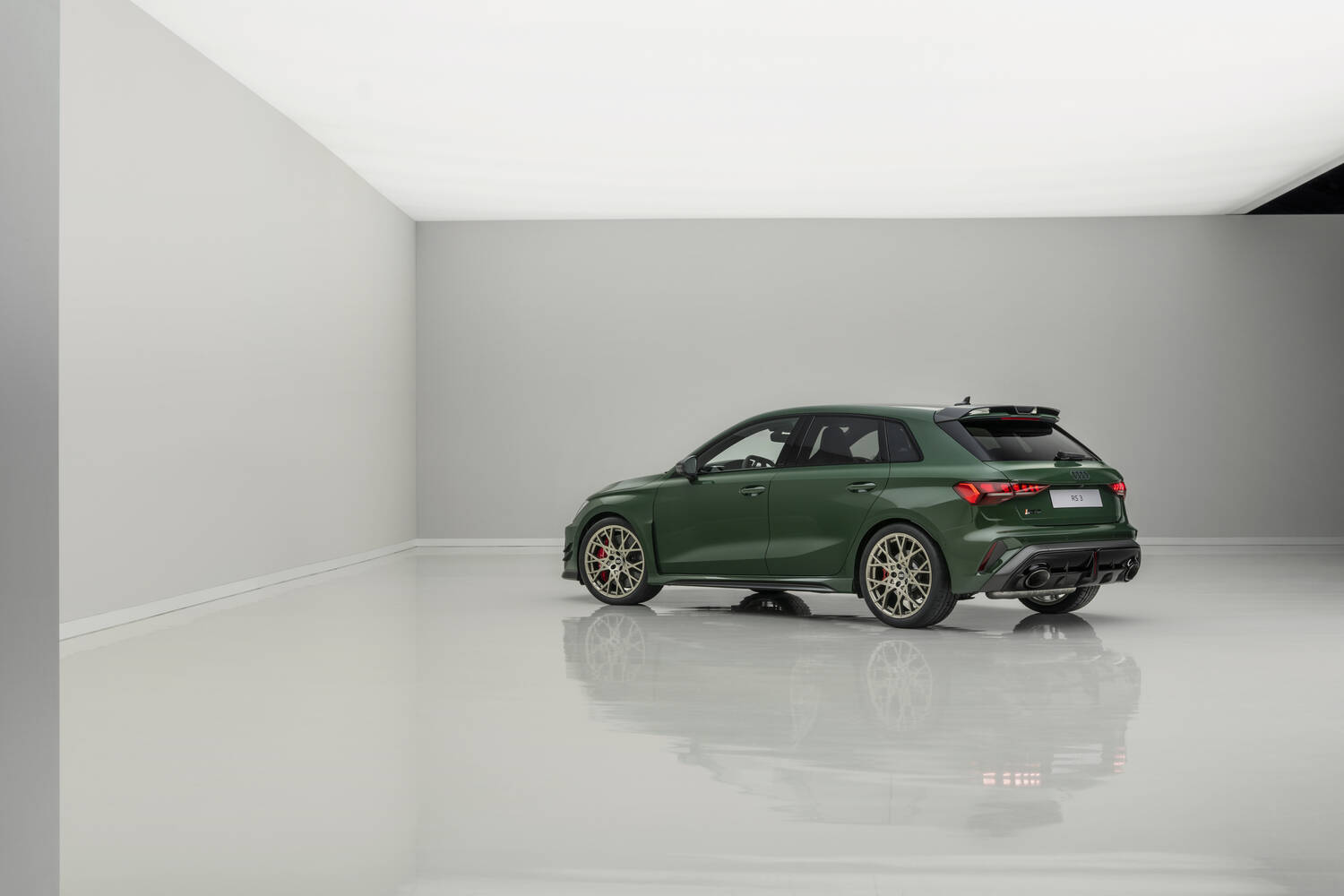
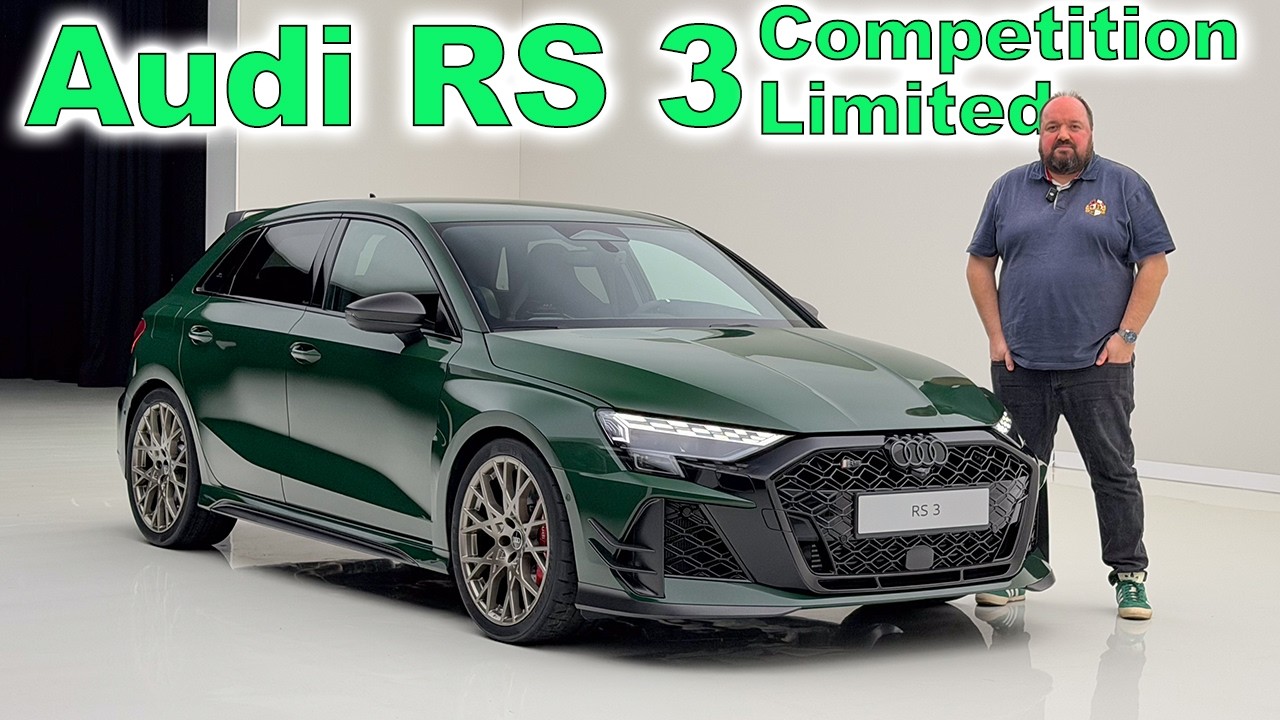
However, the final choice of just three paints provided is Malachite Green and that is exclusive to this special edition. It's a shade last seen on Audi's legendary Sport Quattro short-wheelbase road car of the 1980s, so there's a nod to the company's five-cylinder past right there.
I take it the main upholstery colour is gold, too?
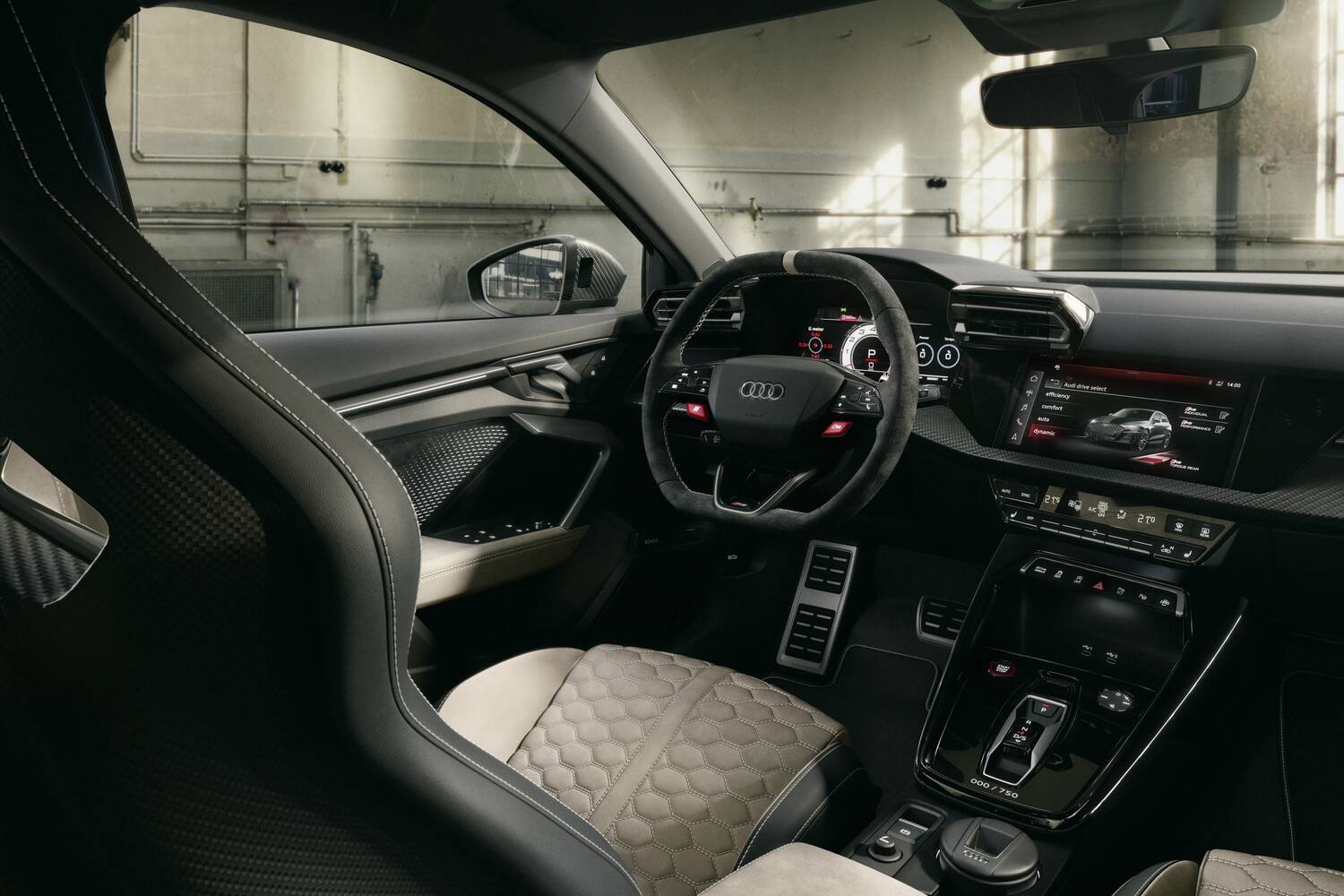
Yes, it is, with the central seat fabric and parts of the door cards rendered in the hue. Complementing this is Ginger White, which is used for the contrast stitching, the seatbelts and some of the 'RS 3 Competition Limited' logos you can see dotted about the place.
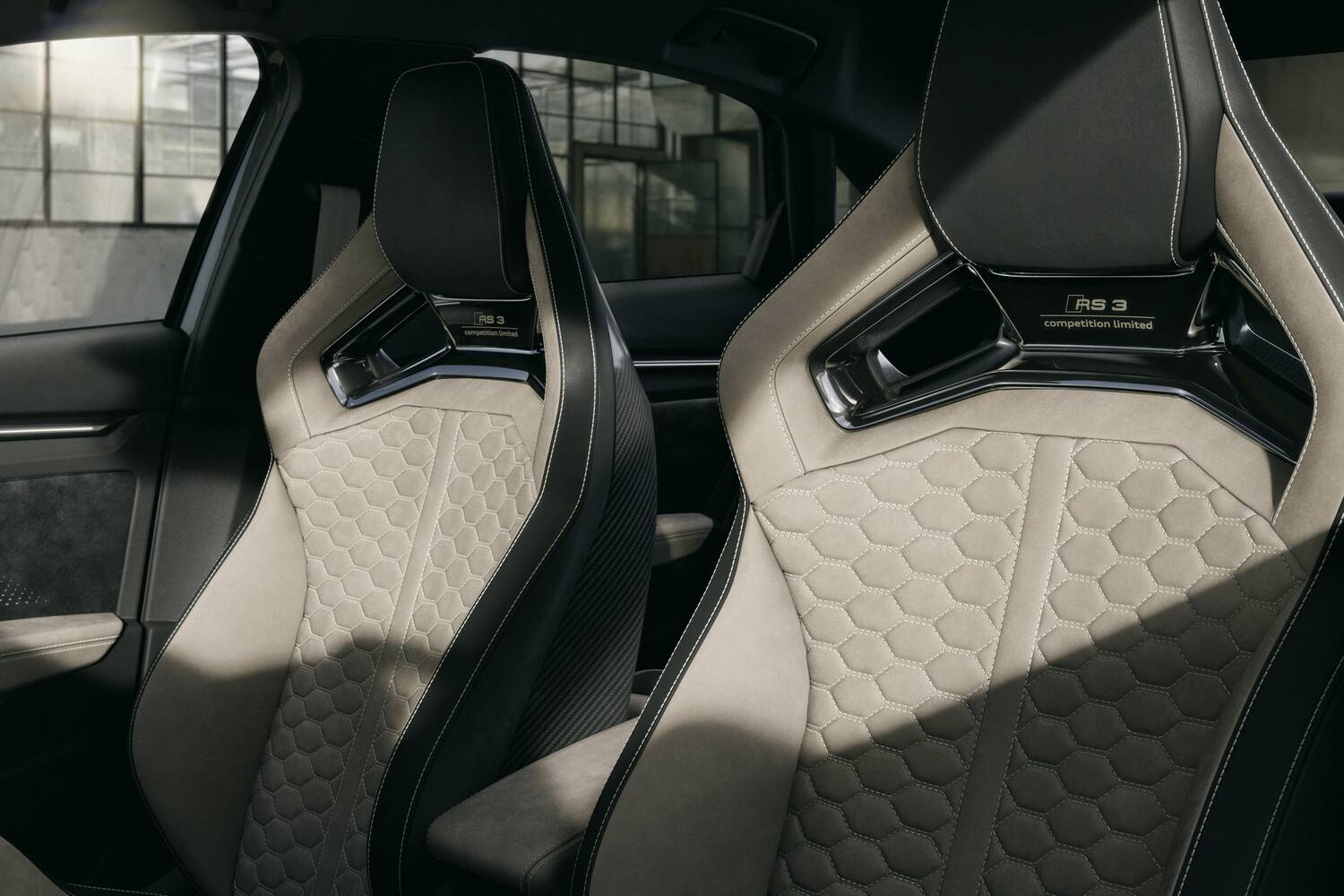
Undoubtedly the highlight of the car's cabin are the carbon-backed RS Sports bucket seats up front, which are both exquisite to look at and to sit in.
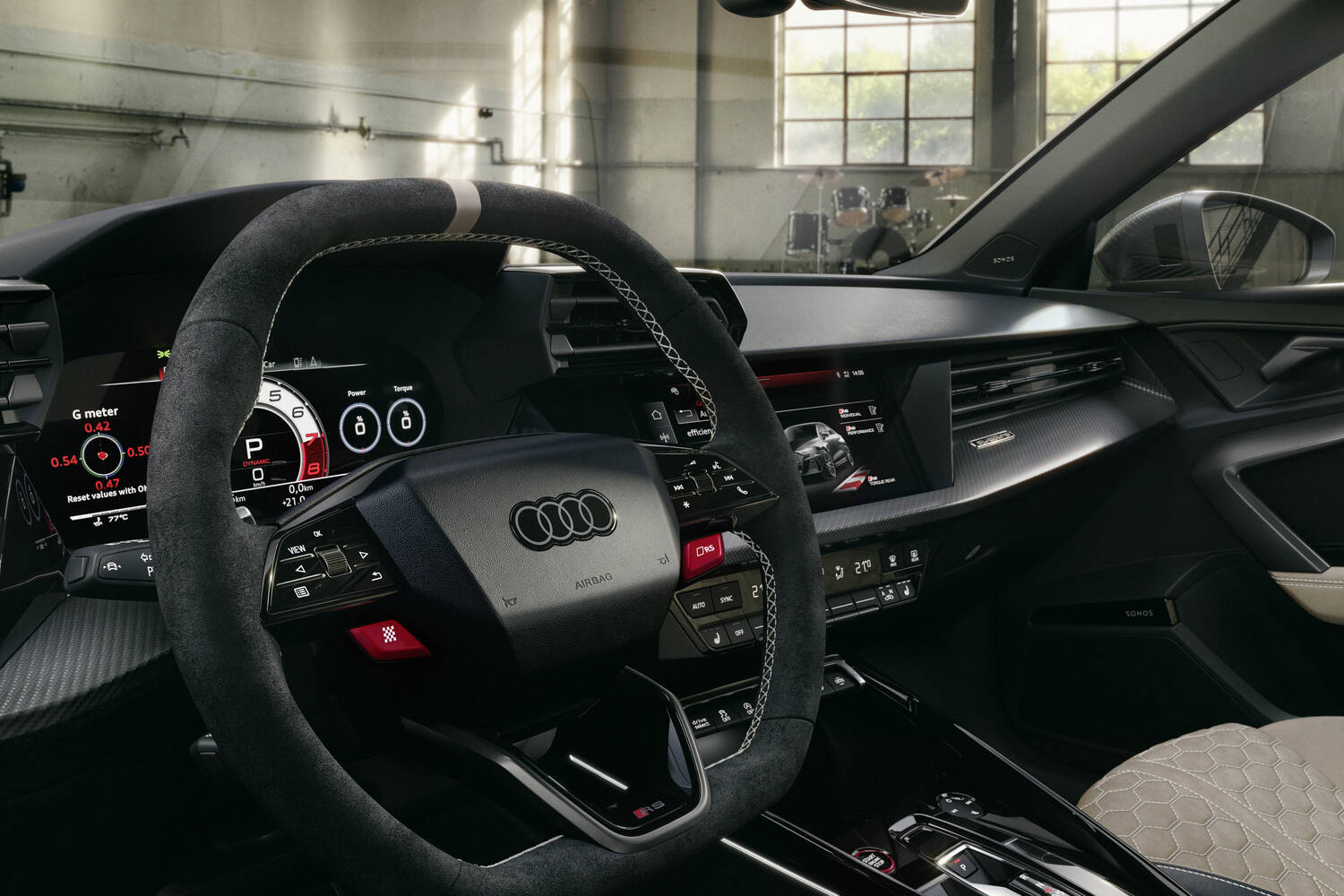
Meanwhile, the digital Virtual Cockpit cluster of the Competition Limited is another of Audi's Easter eggs for car fans - the dials' background is white, which is a direct homage to the 1994 Audi RS 2 Avant, which had the same thing (albeit analogue). And yes, in case you didn't know, the RS 2 was powered by a five-cylinder turbo engine.
Any other details on the car you want to share?
Only relating to the sports exhaust fitted to the Audi RS 3 Competition Limited. Again, this is an option on other RS 3s, so it's not bespoke to the run-out edition, but what you can't see is that Audi Sport has cut away some of the sound-deadening in the firewall of the Competition.
So, while the car is no louder from the outside and hence doesn't fall foul of European laws which restrict noise pollution, on the inside the occupants of the Audi get a clearer earful of that glorious five-cylinder howling than in any other RS 3. Clever stuff.
Is there a limited number of the RS 3 Competition Limited?
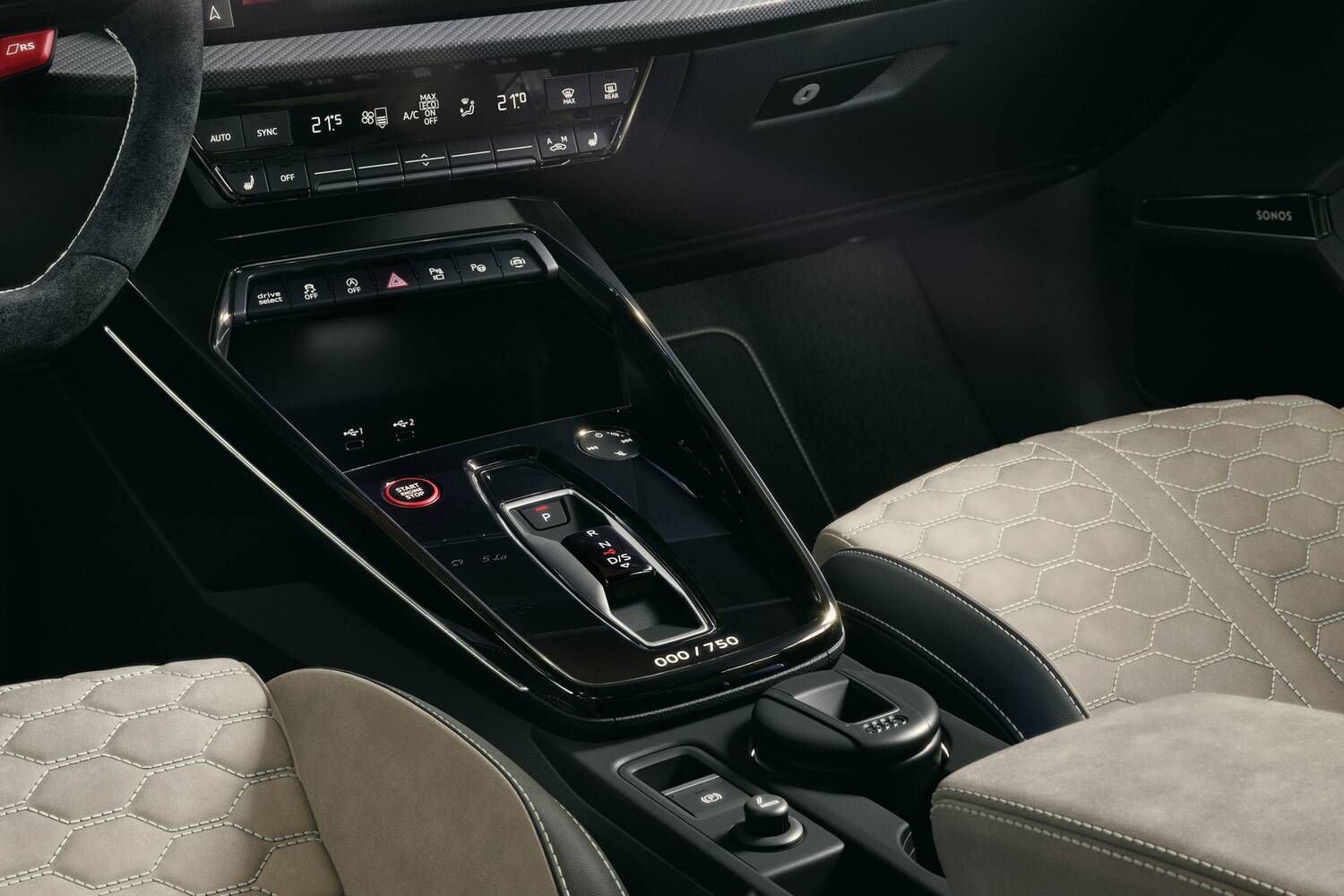
There will be just 750 cars in this specification built for all worldwide markets, so yes - it's a highly limited edition.
And given it celebrates the legacy of the iconic five-cylinder engine, you can imagine it should become a collector's piece in the years to come.
To further remind owners what they've bought, as if the Neodymium Gold and Ginger White interior ambience with the carbon bucket seats isn't enough, then a graphic down on the Audi's transmission tunnel shows which number car in the sequence they're sitting in. The cars we saw both had '000/750' stamped here, though, as they were pre-production prototypes.
Is the Competition Limited just sold as a Sportback?
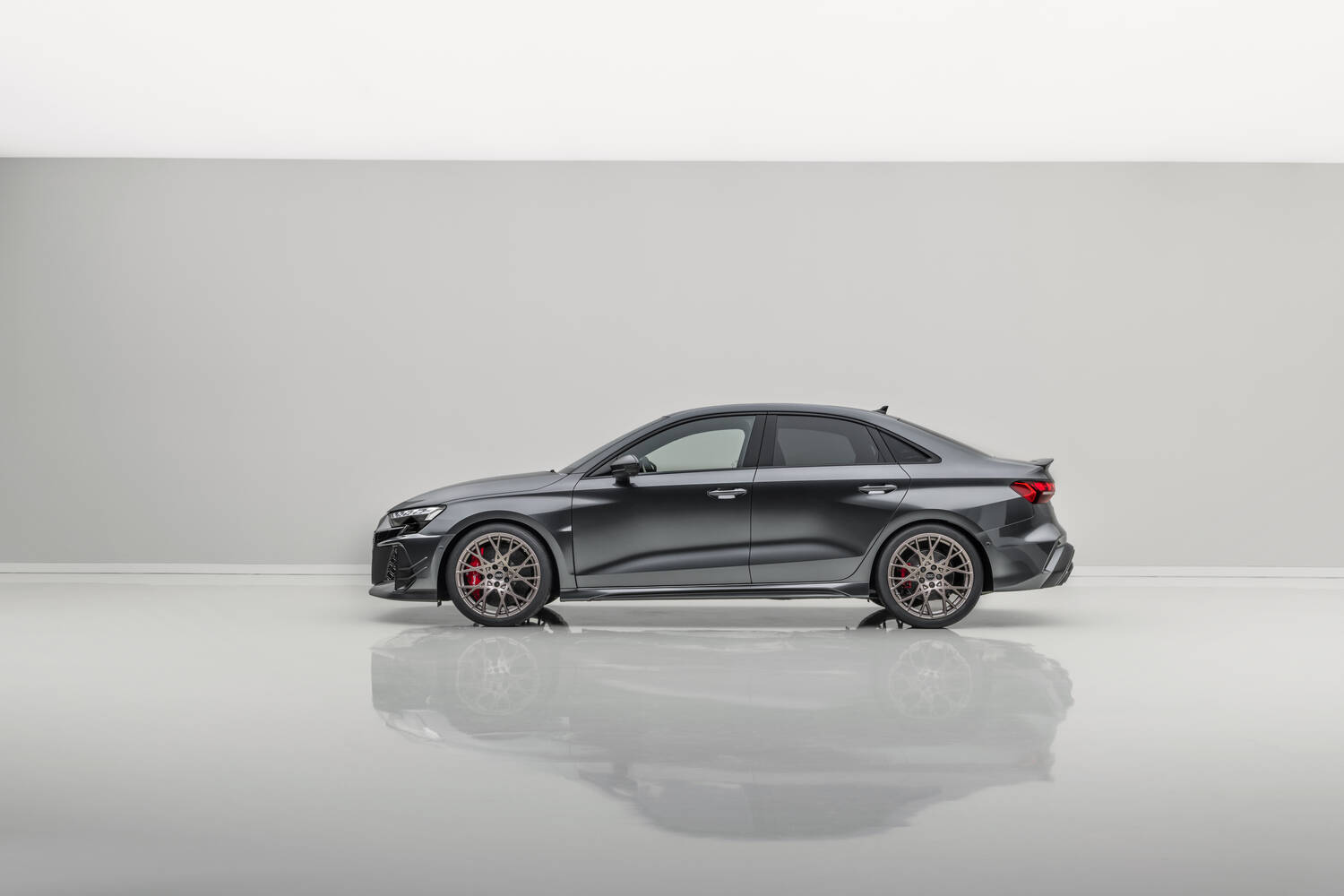
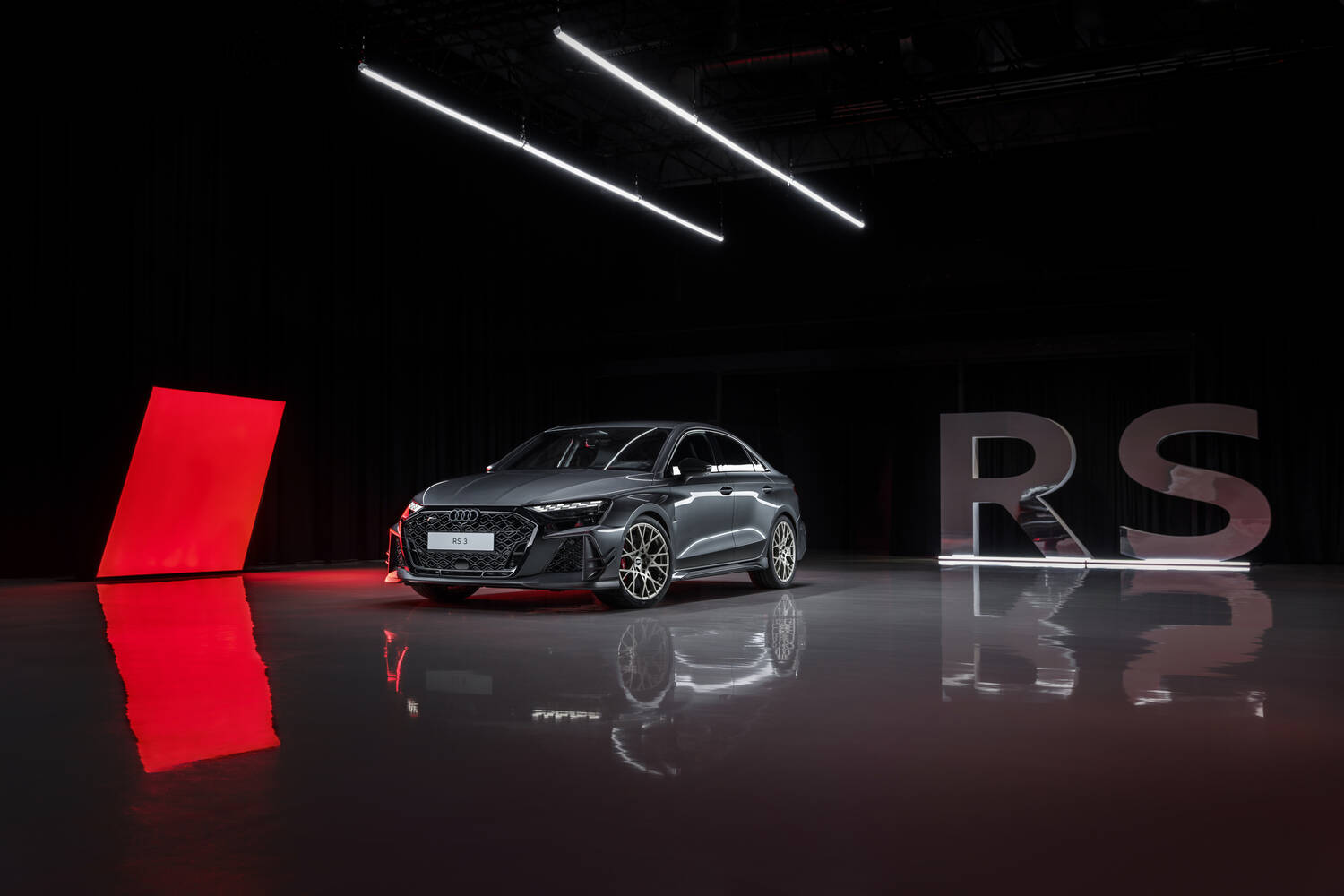
No, the Audi RS 3 Competition Limited will be sold as both the five-door hatch and the four-door Saloon, with the split of body styles heavily weighted to the former - 585 Competitions will be Sportbacks, with the other 165 Saloons.
Will we be getting any in Ireland?
Unwelcome news here, we're afraid - we asked Audi's German representatives if we'd be getting any of the allocation and the answer, sadly, was no.
Of the 750 being built in total, 139 of them will be for right-hand-drive territories. After its homeland, the biggest market for the RS 3 Competition Limited will be Japan (100 units), while Australia (18) is getting a decent chunk of them.
New Zealand is also in line for ten of these cars, but if you don't fancy importing from one of these three places on the far side of the planet, then of course the UK is getting a few. Just 11 RS 3 Competition Limited cars will be heading there, all Sportbacks and all in Malachite Green.

So trying to get hold of one of those will probably be a well-heeled Irish buyer's best option, although good luck with that.
As to price, in Germany the Competition Limited is about 10 per cent more than a fully loaded-up RS 3, which reflects its fancy suspension and its restricted nature. And given even a base-spec RS 3 currently costs almost €99,000 here, then this valedictory model of the Audi hot hatch would therefore be well into six figures if you wanted one.
But such is the price of exclusivity... and the end of a long, illustrious, five-cylinder legacy.
I bet you can tell us a little more about that history...
Although other manufacturers had, previous to Audi, either toyed with the idea of an inline-five engine, or even made them in diesel format (Lancia produced some trucks for military usage from 1938-1950 which used a straight-five, while Mercedes won the passenger-car 'race' to install the piston configuration with 1974's 300D), it was the Ingolstadt outfit which was the first to bring a petrol five-cylinder to the mass market - and it has since become synonymous with the maker as a result, despite Volvo (and, by extension, Ford), GM and Fiat dabbling with the set-up in the interim.
That first Audi petrol unit was debuted in the second-generation 100 5E revealed to the world in 1976 - so the 2026 RS 3 Competition Limited effectively marks 50 years of service for the old-timer, although customer examples of the pioneering car in question didn't commence until early 1977.
It originally had a swept capacity of 2,144cc and delivered 136hp, and made do without any form of forced induction.
Audi's own diesel take, a 69hp 2.0-litre unit, arrived in 1978, but by 1979 the German firm had bolted a turbo to the petrol five-pot for the 170hp flagship 200 5T.
However, arguably the most famous application of the Audi five-cylinder arrived in 1980, in the form of the Quattro.
Through various iterations, both on-road and in competition, this engine powered all varieties of the boxy legend.
It was originally a 10-valve unit with 200hp, although later four-valve tech in the Quattro 20v turbo saw the output increase to 220hp.
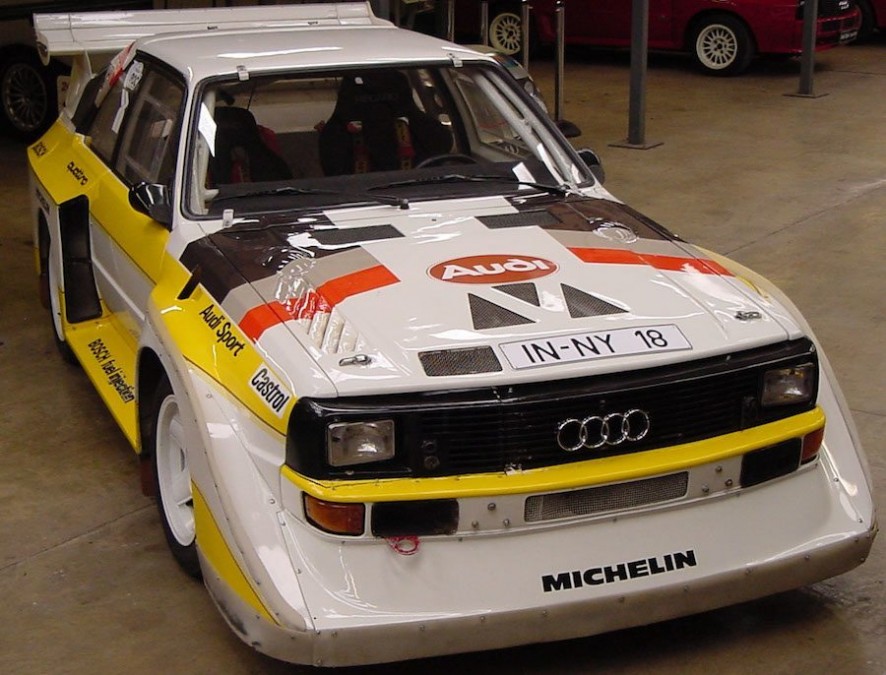
At its peak for road-going machines to this point, the Audi five-cylinder delivered a huge 306hp for the short-wheelbase Sport Quattro of 1983, which was - at the time - the most-powerful car ever offered by a German company for use on the road.
The Sport Quattro was the civilian version of some of Audi's monster 1980s rally competitors, like the 450hp Group B iteration - or even the demented 600hp spin-off which, in the hands of Walter Röhrl, won the 1987 Pikes Peak Hillclimb in the form of the Sport Quattro S1 (E2).
It also found its way, in 1989, into the blocky silhouette of the IMSA 90 GTO touring car (the visual inspiration for the C8 RS6 GT Avant, incidentally), where it made a scarcely believable 720hp, still from just beyond two litres of displacement.
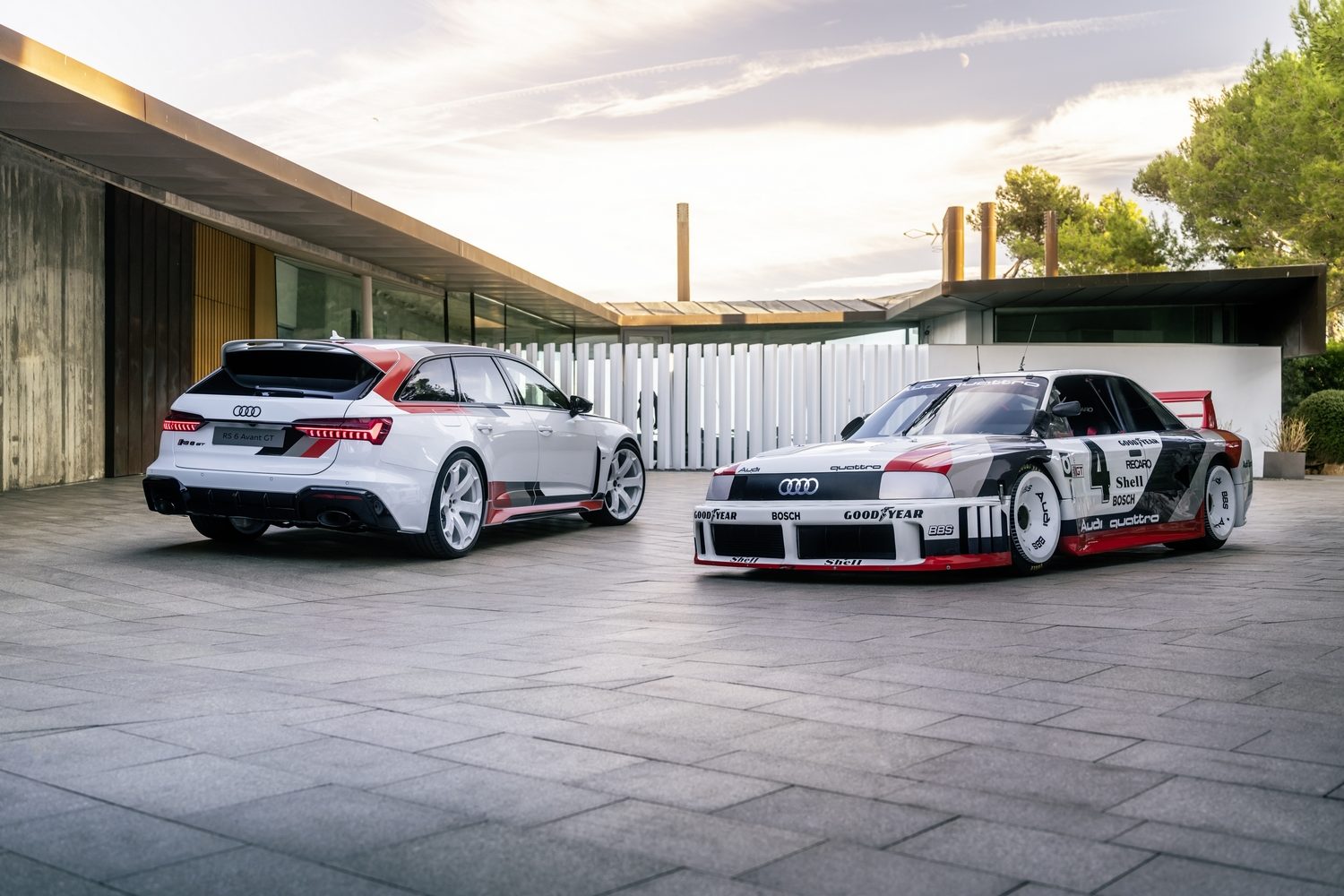
In 1994, the Audi Avant RS2 arrived, which was the first RS interpretation of the signature five-cylinder. With 315hp from 2.2 litres, it was a belting car, but at this point Audi was more interested in V6s for the A4 line, so after one final flourish in the S6, the five-cylinder was ostensibly phased out by 1997.
However, it wasn't quite dead yet. After a brief hiatus, in 2009 the five-cylinder made a triumphant return in the TT RS, where it was specified in 2.5-litre turbocharged format and could deliver 340hp.
From there, it has been installed in further generations of the TT RS, as well as the RSQ3 SUV and, of course, all three versions of the RS 3 that we've seen to date.
By 2016, it was already making its peak 400hp in the previous-gen model, but it didn't achieve the full 500Nm of torque until the current version of the RS 3 appeared in 2021.
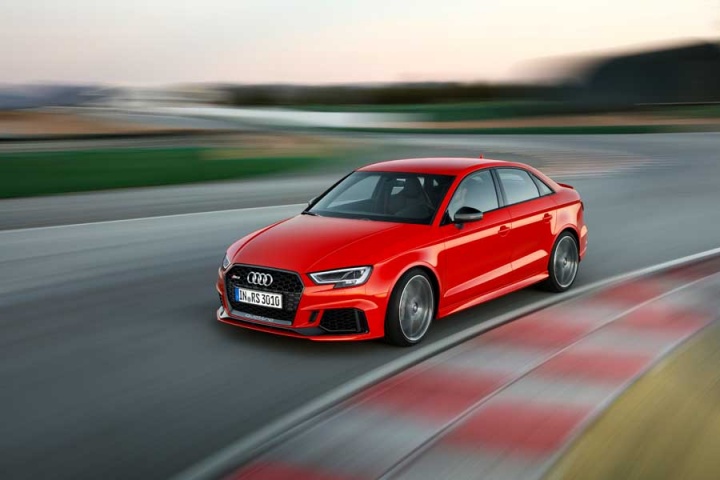
And so, in 2027 - 50 years after customers first took delivery of their shiny 100 5E saloons back in the late seventies - the five-cylinder engine's long association with Audi will finally come to a complete conclusion, as emissions regs kill off the 2.5 unit for good.
Video player loading.
Video unavailable. Watch on YouTube
If there is anything about this story we have not covered, you can avail of our expert advice service via the Ask Us Anything page.