

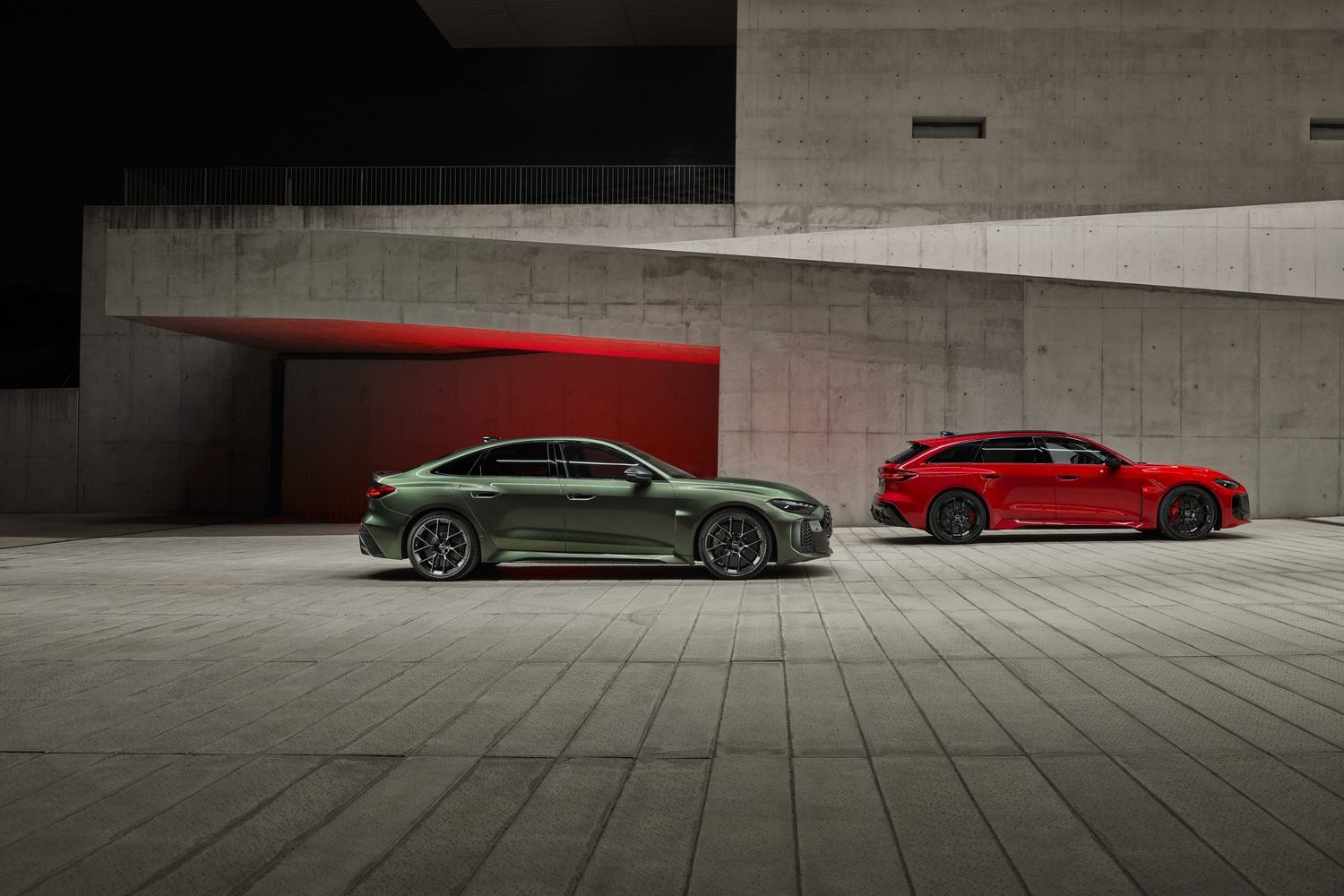
Audi has revealed its latest vehicle in the long line of cars running from the RS 2 through four different versions of the RS 4 and it's called the RS 5. We've been over to Germany for a sneak preview of this exciting new car from Ingolstadt.
What are the main headlines for the RS 5?
Well, first of all, it's a plug-in hybrid (PHEV) with more power than the outgoing Audi RS 6. Secondly, it's the first time since the second-generation RS 4 (from 2006-2009) Audi will sell you such a car in any other body style besides the Avant estate. And third, it debuts a new type of torque-vectoring technology on its rear differential, which the carmaker claims is pioneering.
OK, lots to take in. Can we start with the hybrid bit?
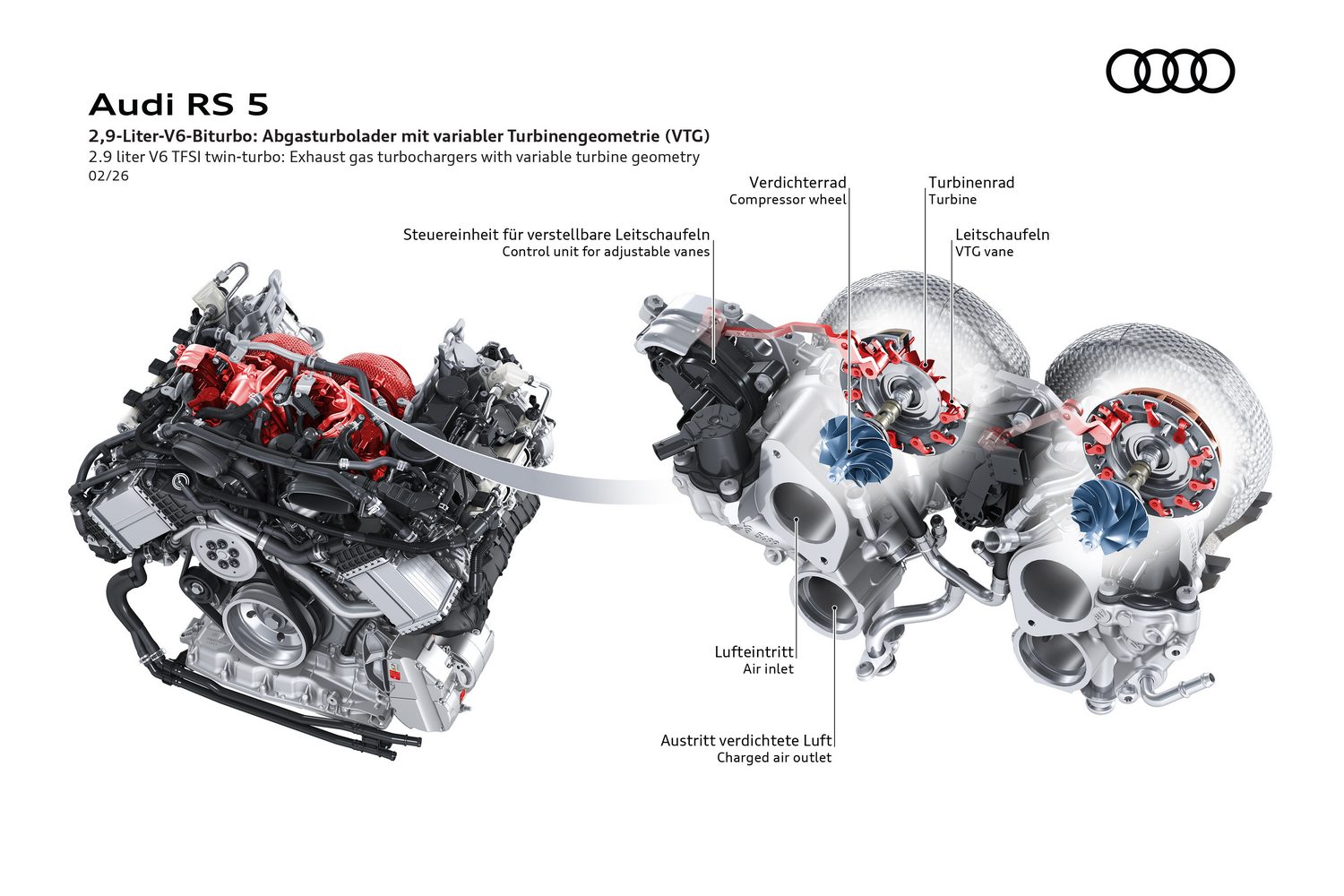
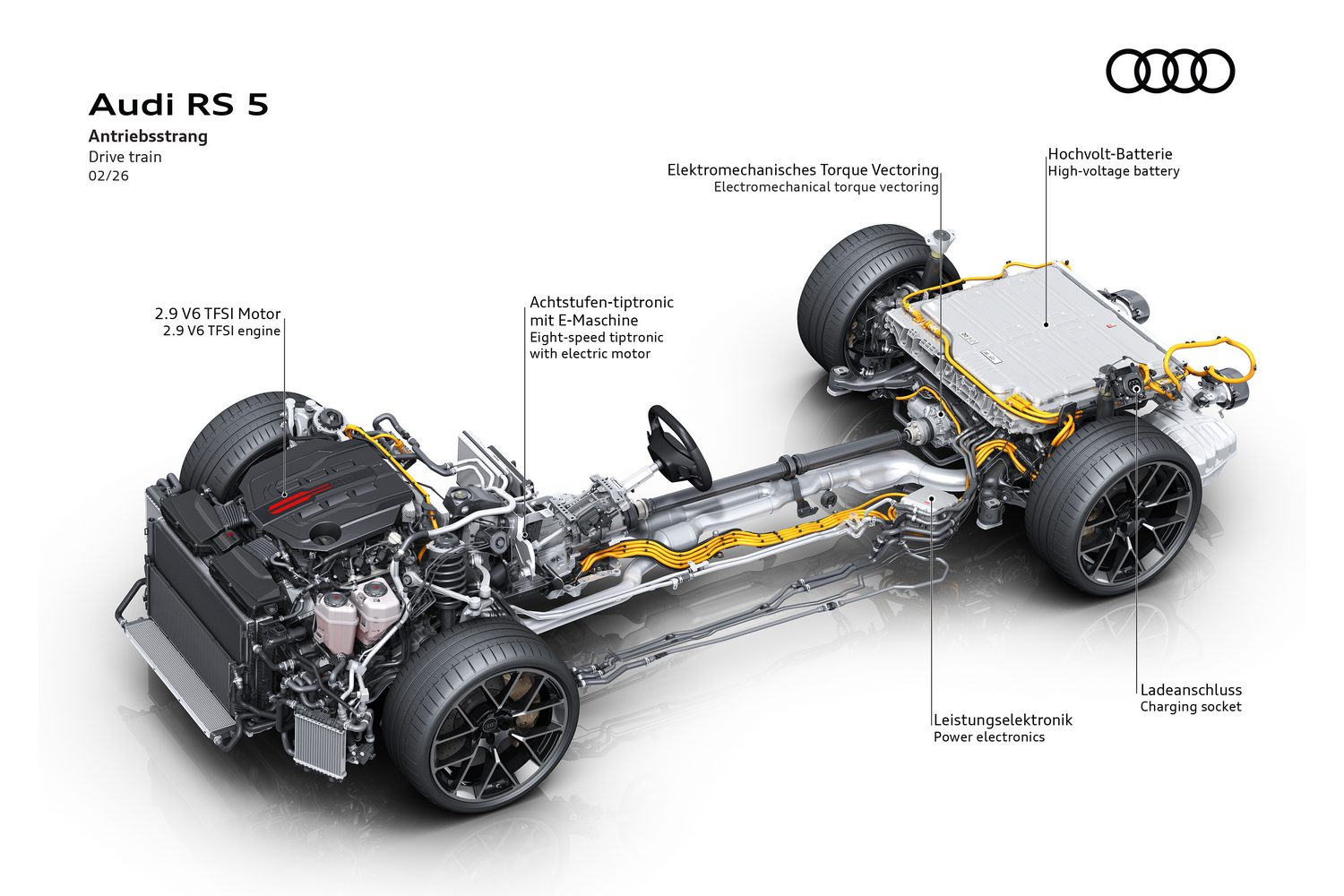
Audi has retained the twin-turbocharged 2.9-litre V6 petrol engine - which saw service in the old 'B9' RS 4 Avant - and treated it to a complete overhaul. Power is up to 510hp from this engine alone (there was a super-rare, run-out version of the RS 4 with 470hp), although torque remains unchanged at 600Nm.
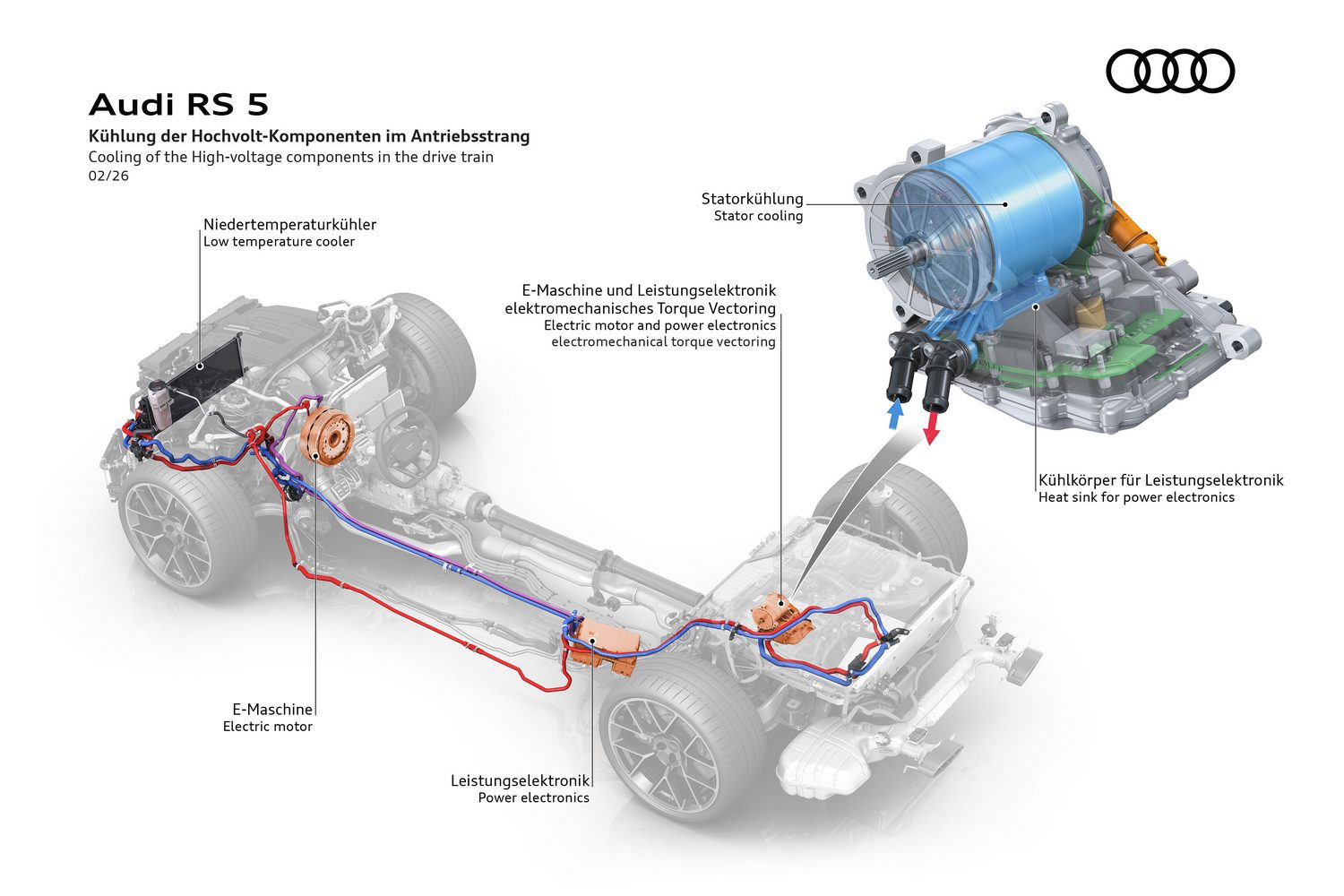
Assisting the V6 is a 130kW/460Nm electric motor, supplemented by a 22kWh (that's the usable energy capacity) lithium-ion battery pack.
Driving all four wheels through Audi's proprietary quattro system and an eight-speed Tiptronic torque-converter auto, the German firm pegs the peak powertrain outputs of the new RS 5 at mighty ceilings of 639hp and 825Nm.
All of this allows the RS 5 to hurtle from 0-100km/h in just 3.6 seconds, while it will go on to a top speed of 285km/h.
But there's a wonder of what might have been had Audi sold the car with just a 510hp twin-turbo V6, or even one with some milder hybrid assistance than this - because the RS 5 is a heavy thing as a result of its PHEV tech.
As a Saloon, it weighs in at 2,355kg and the Avant is even portlier again, at a whopping 2,370kg. For reference, the old RS 4 Avant was about 1.8 tonnes, while the current S5 Avant (the next model down the performance tree) is just a shade beyond 2,000kg.
Is the Saloon the other body style you alluded to earlier?
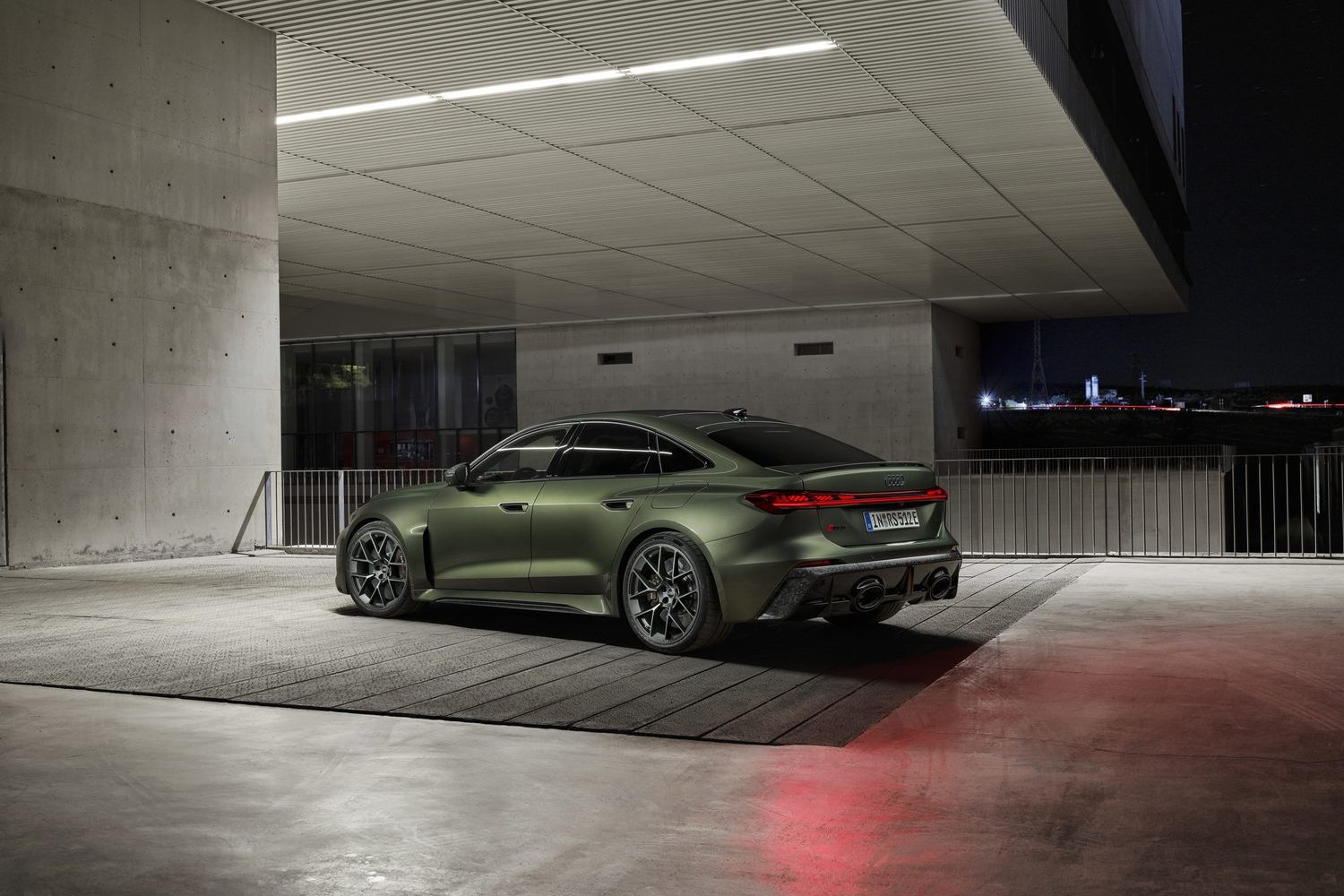
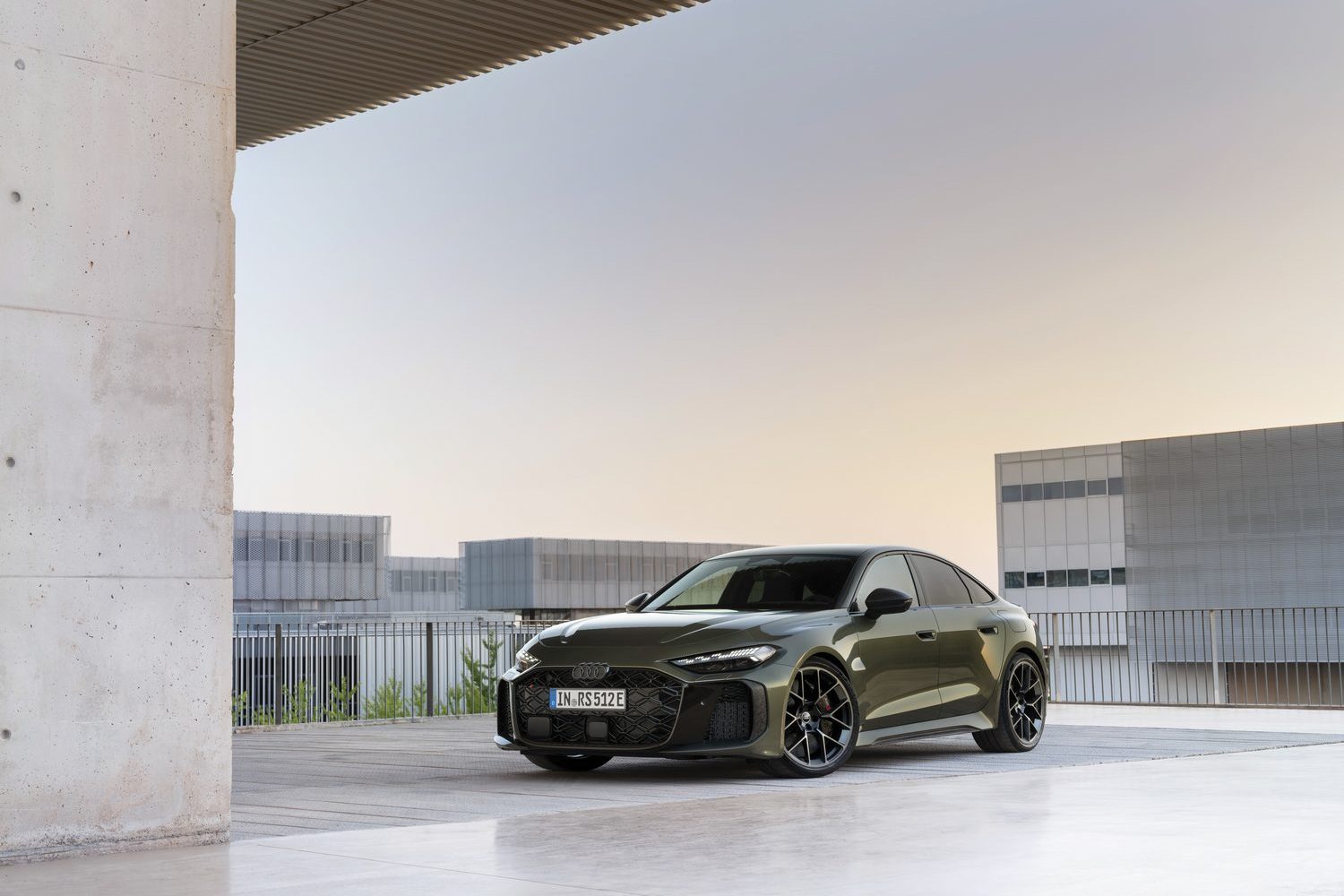
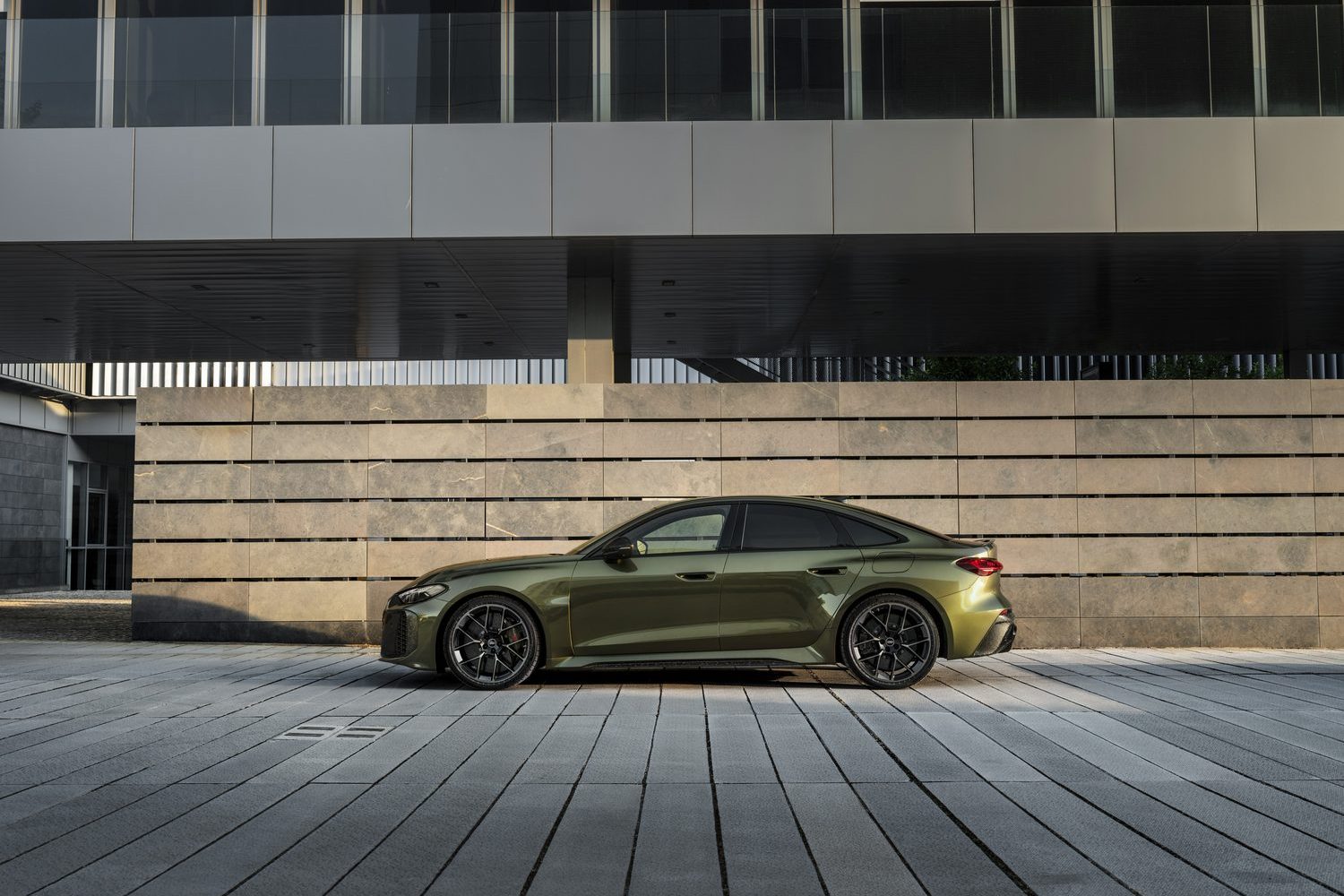
It is indeed. Technically, it's a five-door fastback, because the tailgate on it hinges up at the roof, but Audi Ireland is marketing this fresh body shape as a 'Saloon' so we'll stick with it.
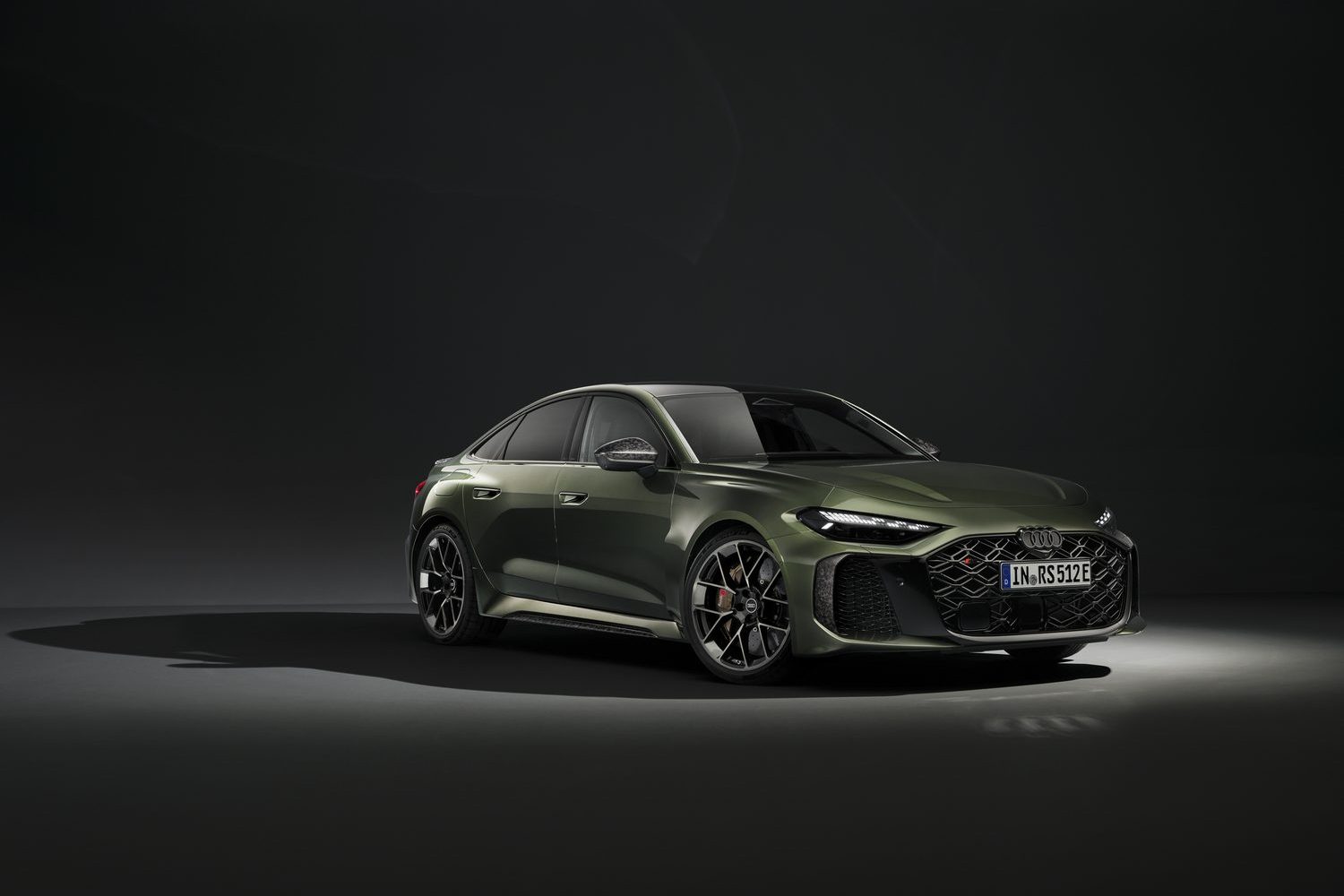
Anyway, it's nice to see some choice besides the Avant, because four out of the five ancestors in the RS 5's lineage were estate-only, although there are a few minor compromises with the Saloon.
Such as?
We got to sit in the back of the two variants of the Audi RS 5 in the studio and the Saloon has markedly less headroom than the Avant.
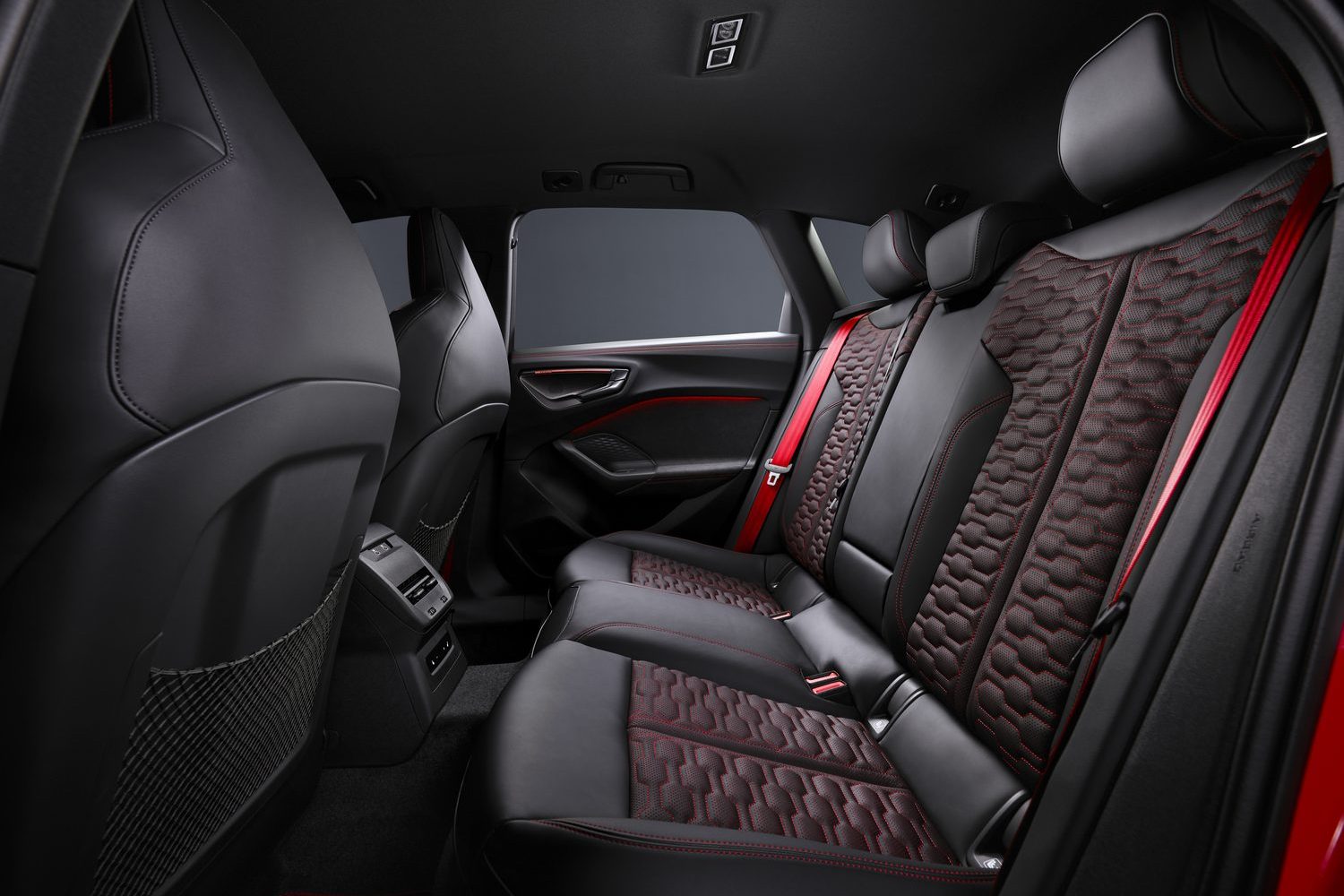
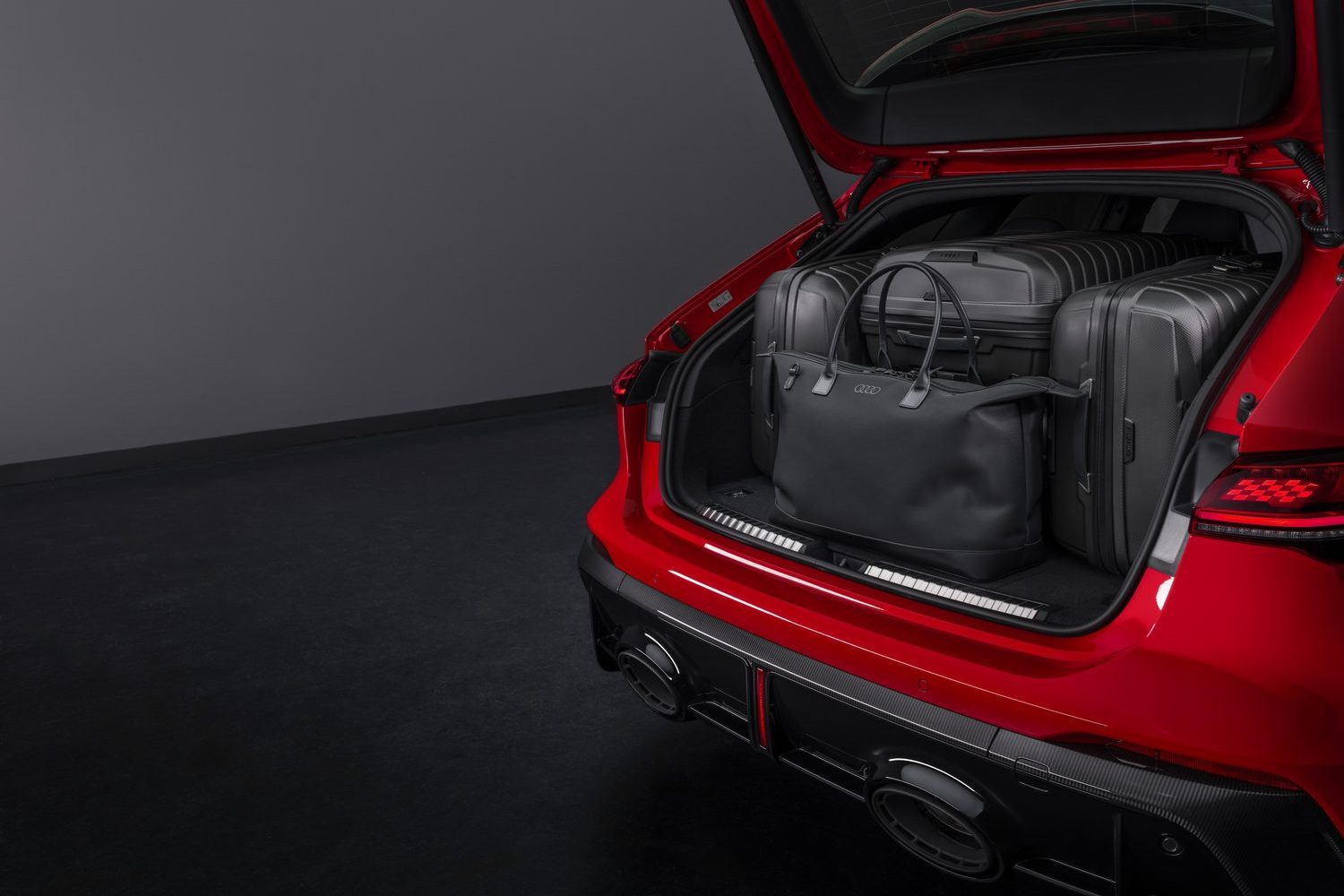
It also has a smaller boot, but on this score it's probably not good news for either car. Due to the positioning of the huge battery under the cargo bay's floor area, even the Avant is no massive load-lugger - it holds 361 litres with all seats in use, and 1,302 litres with the second row folded down. The Saloon denudes those numbers further, to 331 and 1,170 litres, respectively.
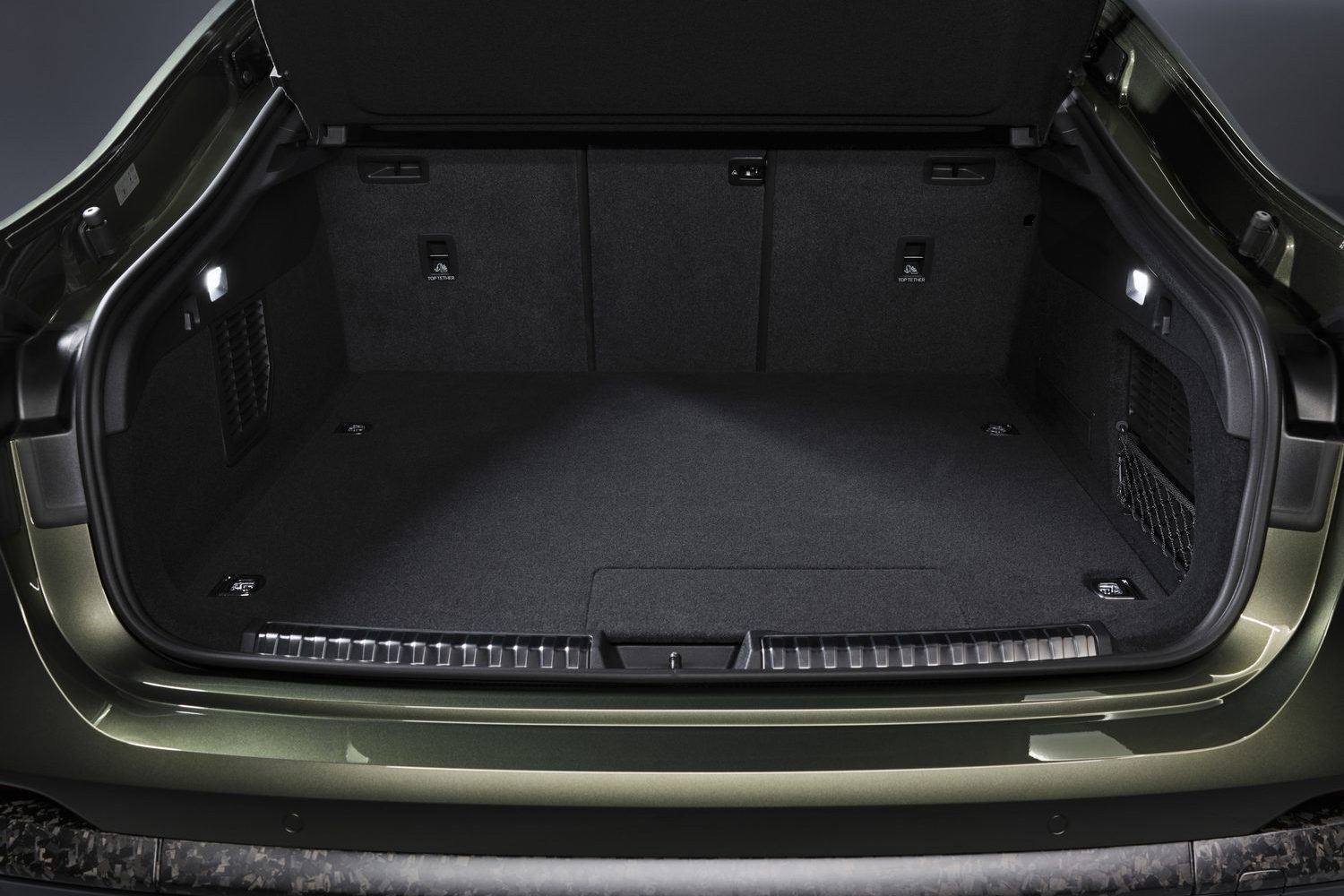
It looks good, though - as does the Avant.
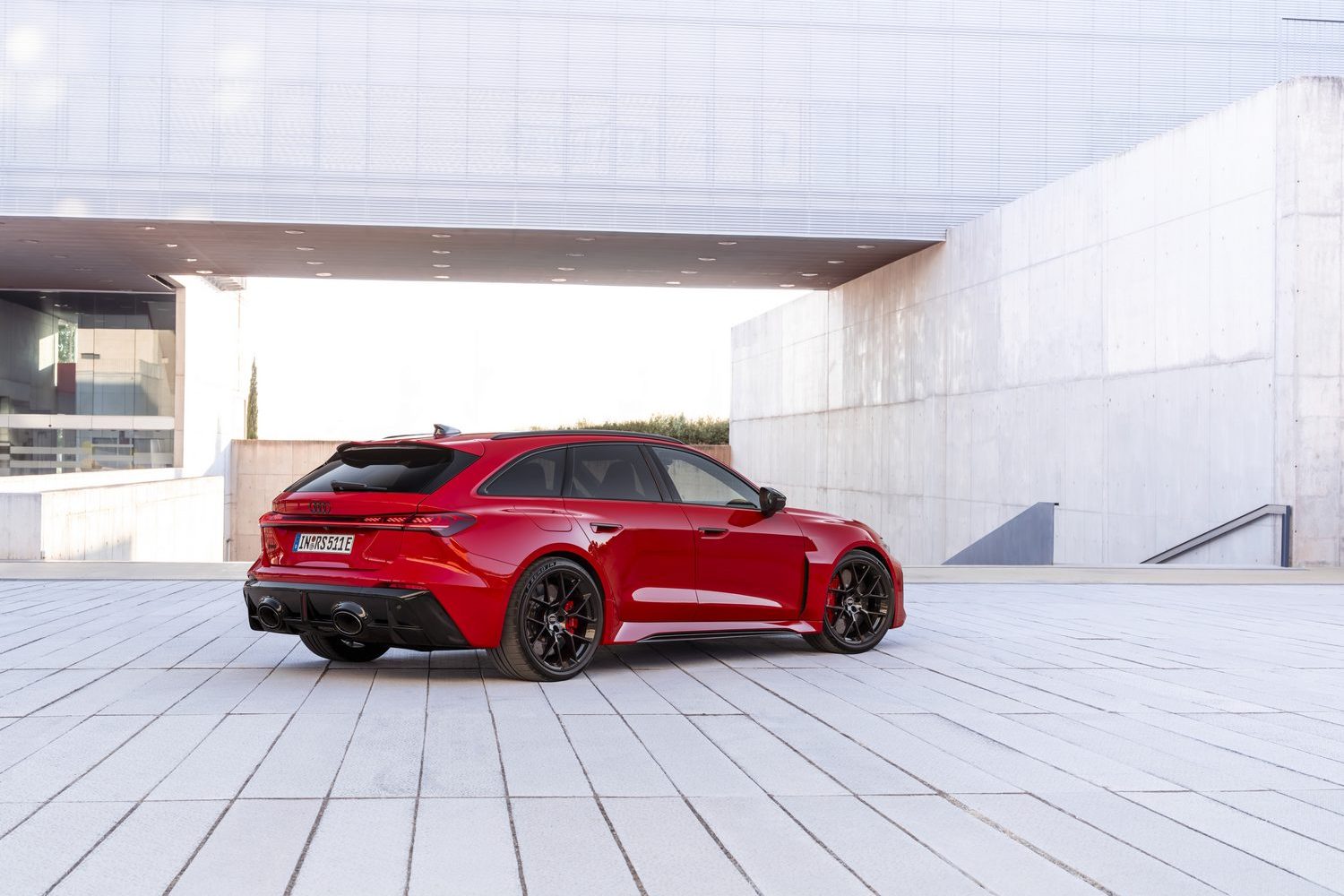
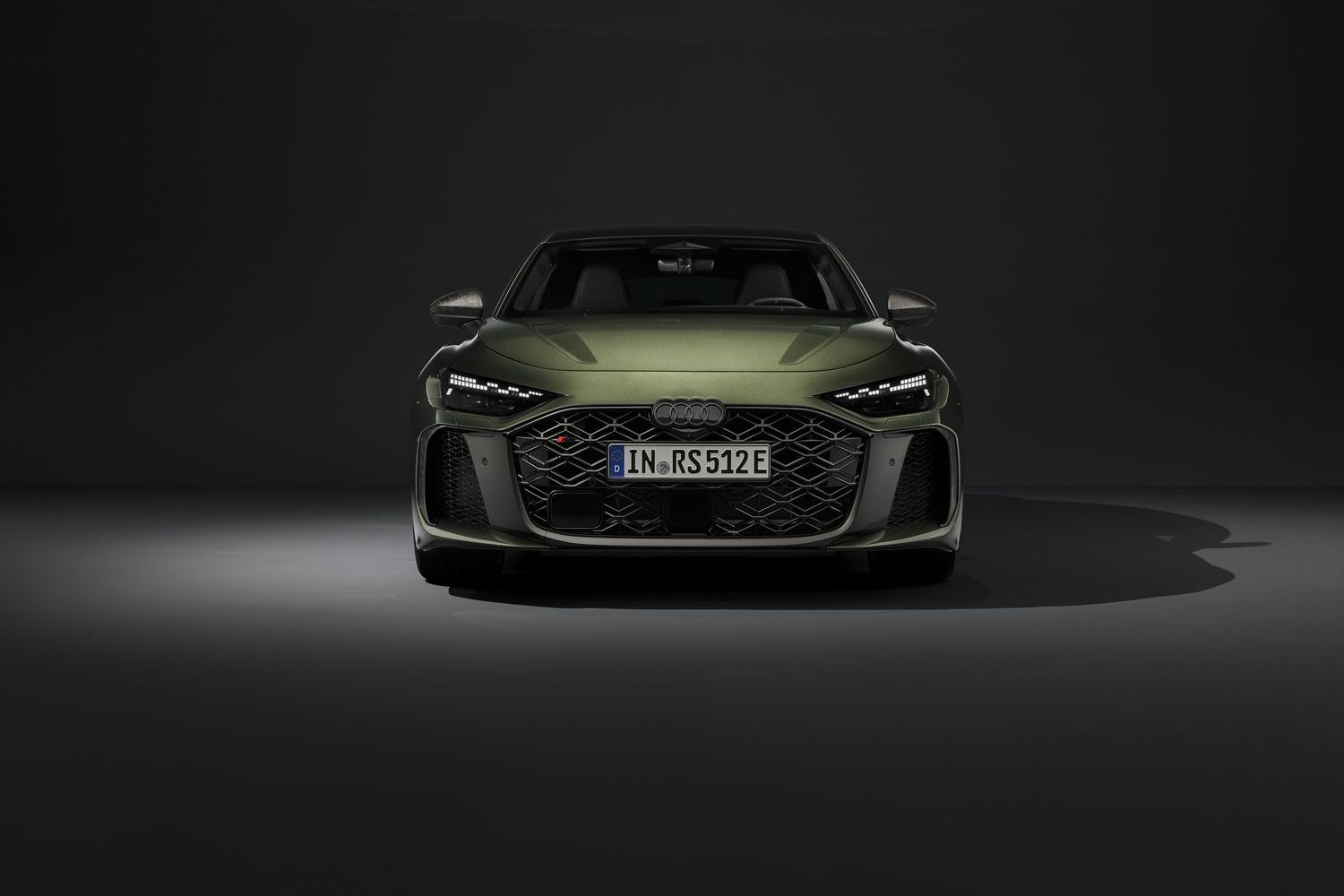
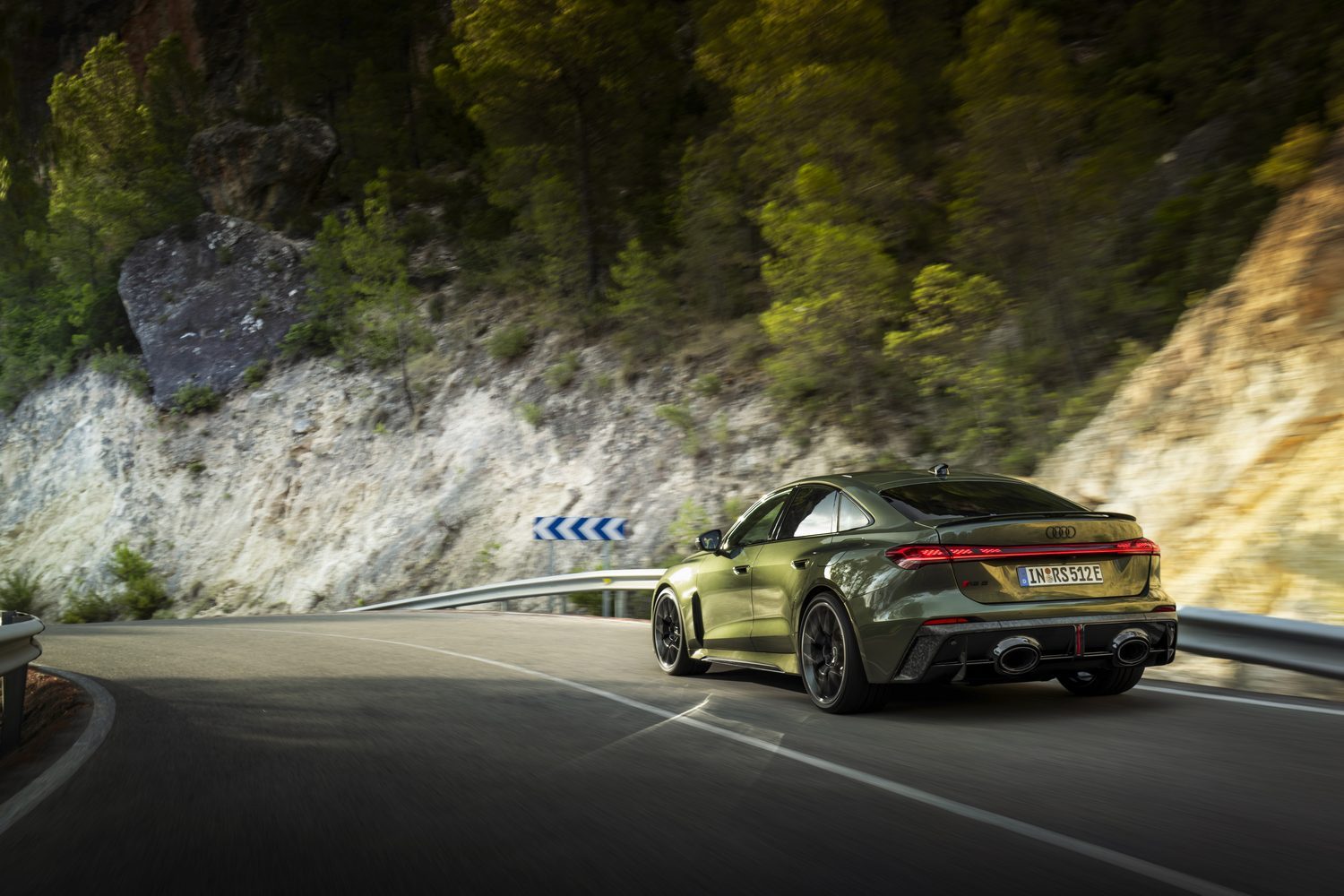
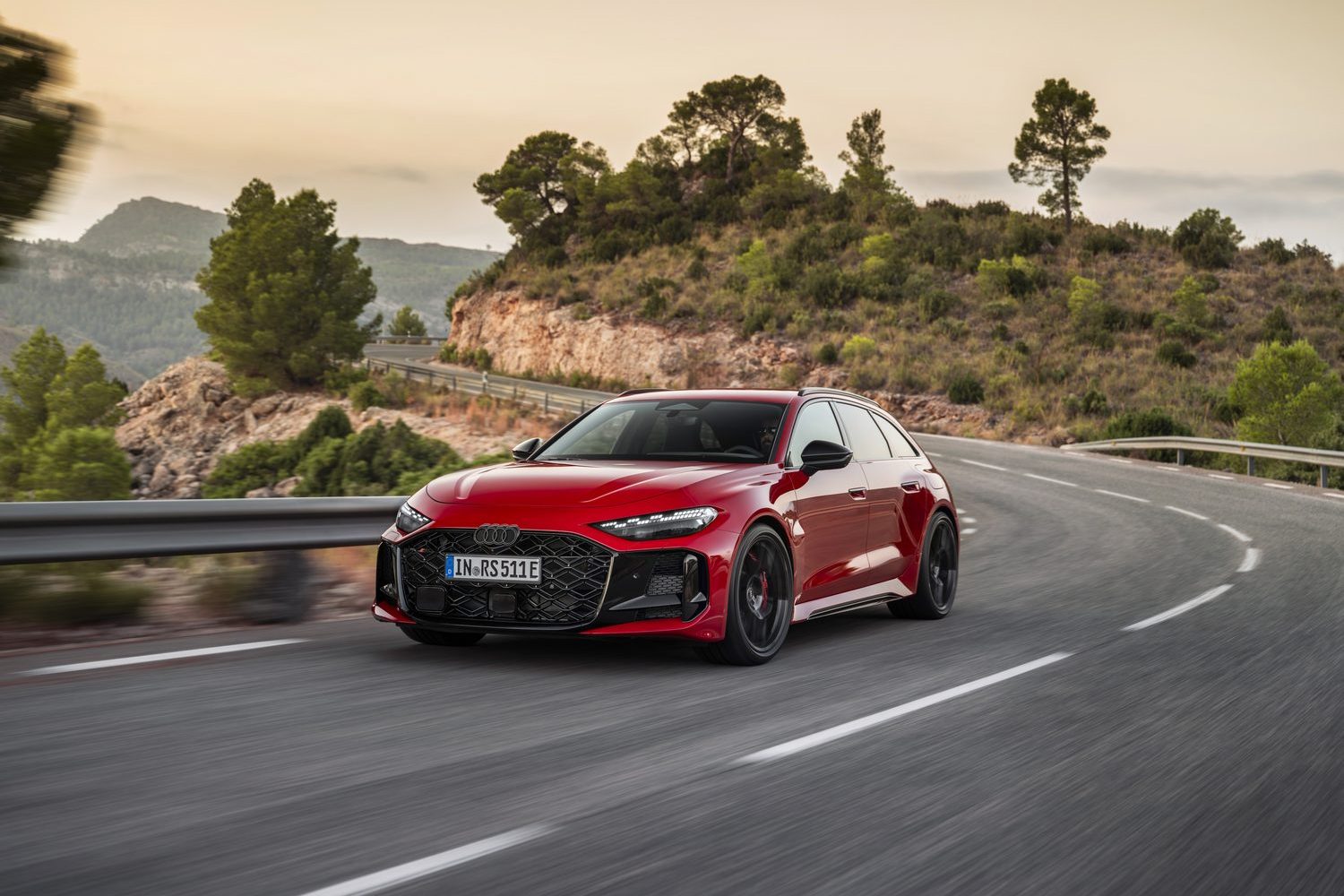
The RS 5, in either format, only shares four body panels with the related Audi A5: these are the roof, the front doors and then the tailgate or boot lid. Everything else on it is bespoke, with the 45mm-wider blistered arches and tracks on the car making the RS 5 fully 90mm wider than its base material; it's even 77mm broader than the preceding Audi RS 4, so the stance is full of aggression.
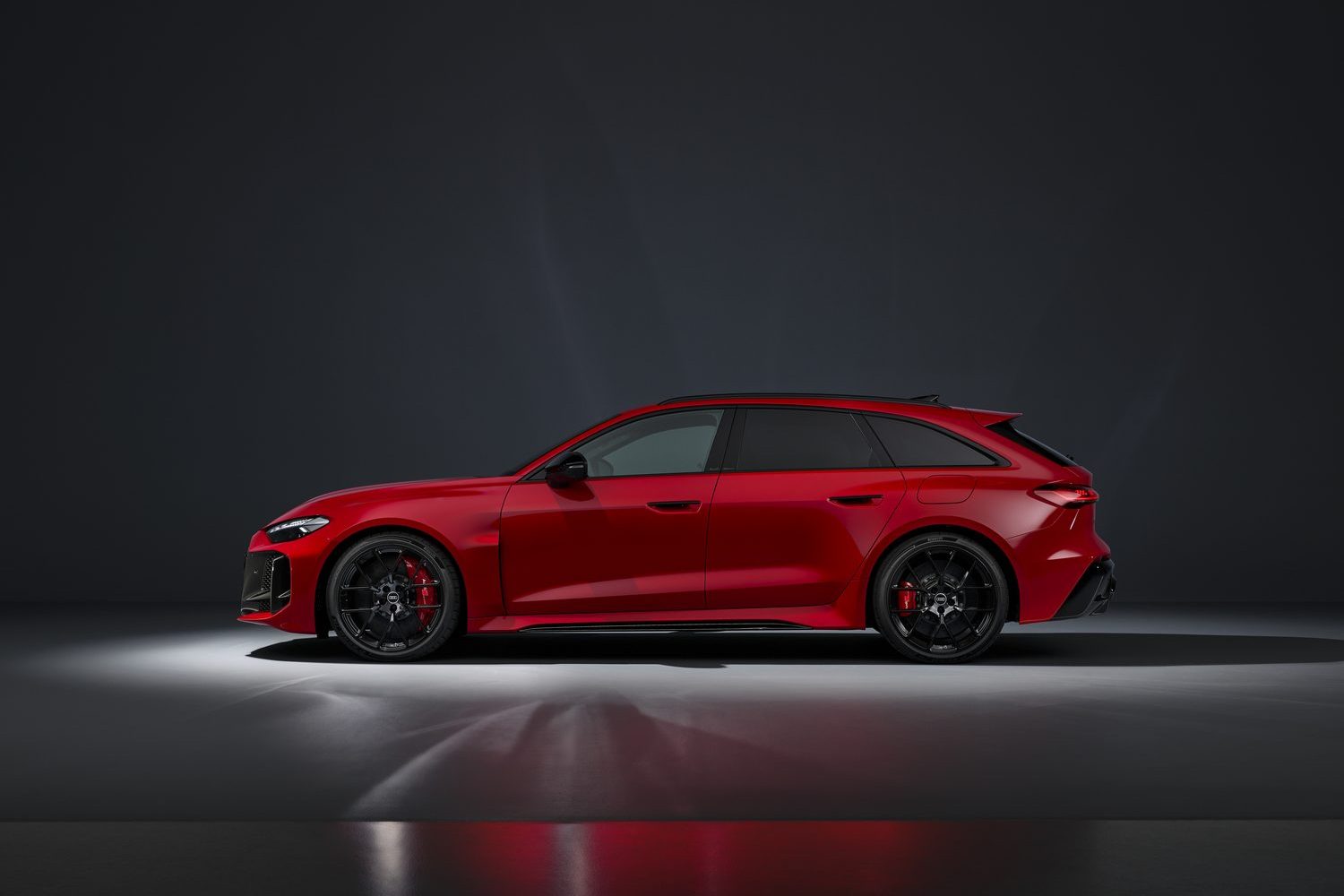
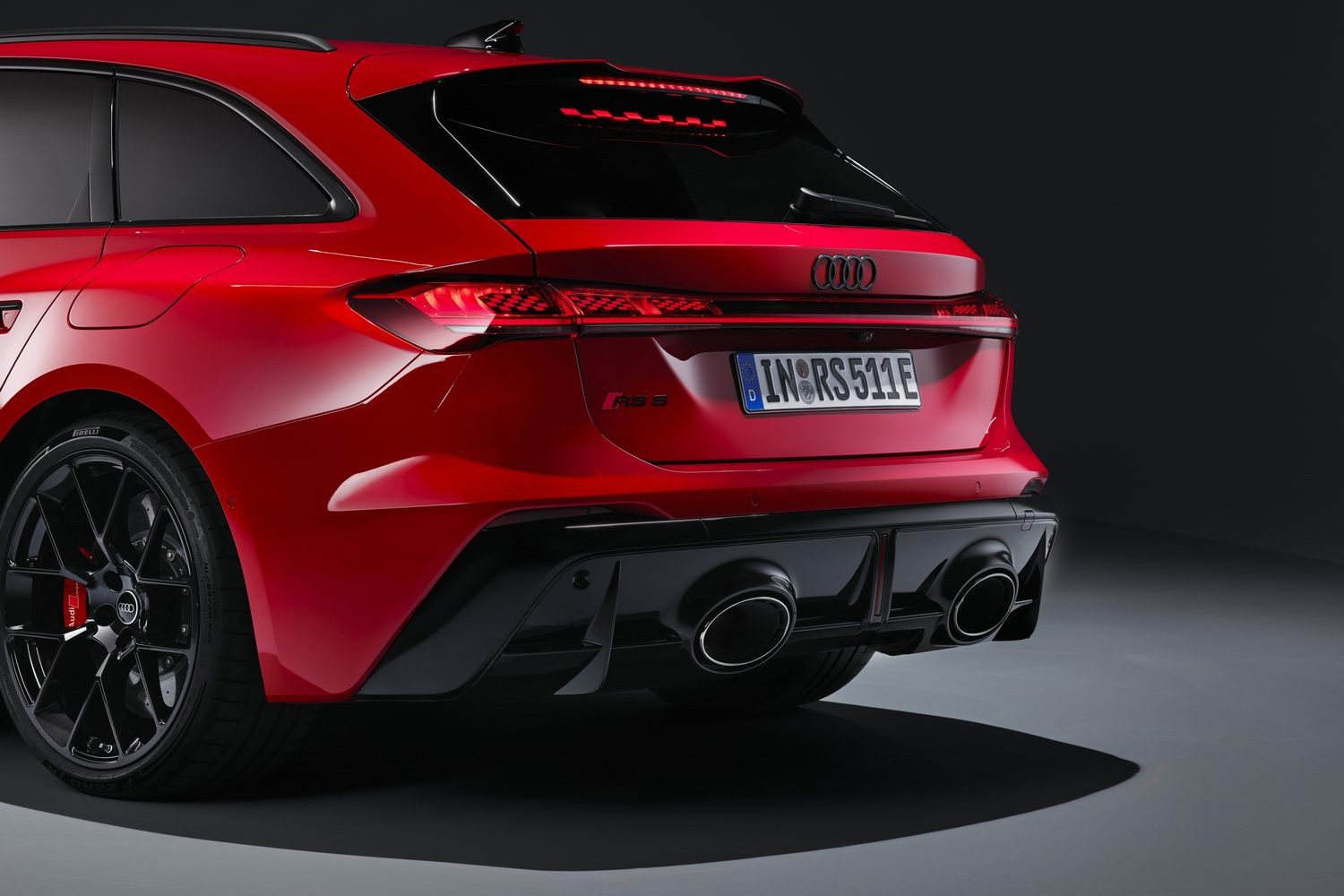
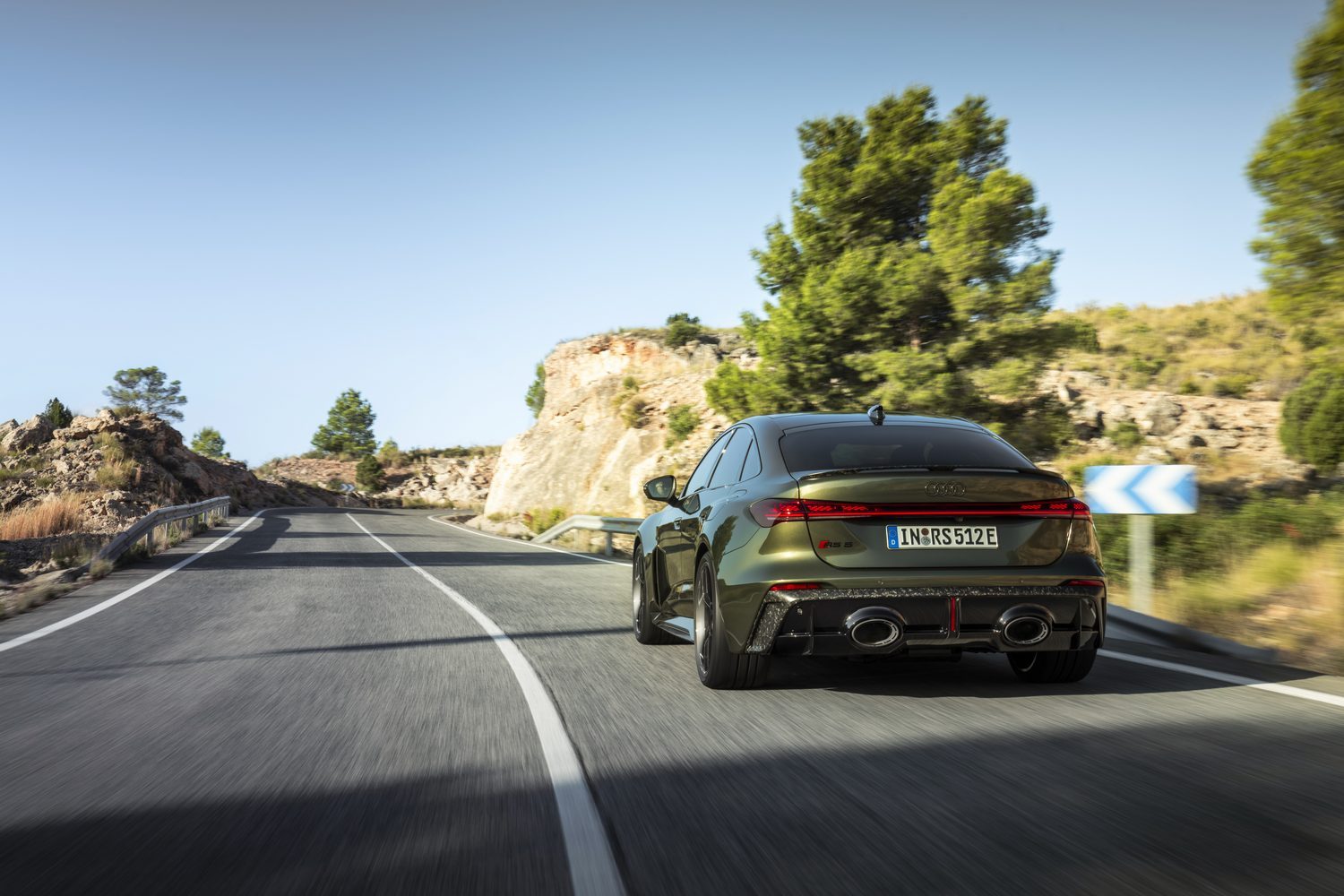
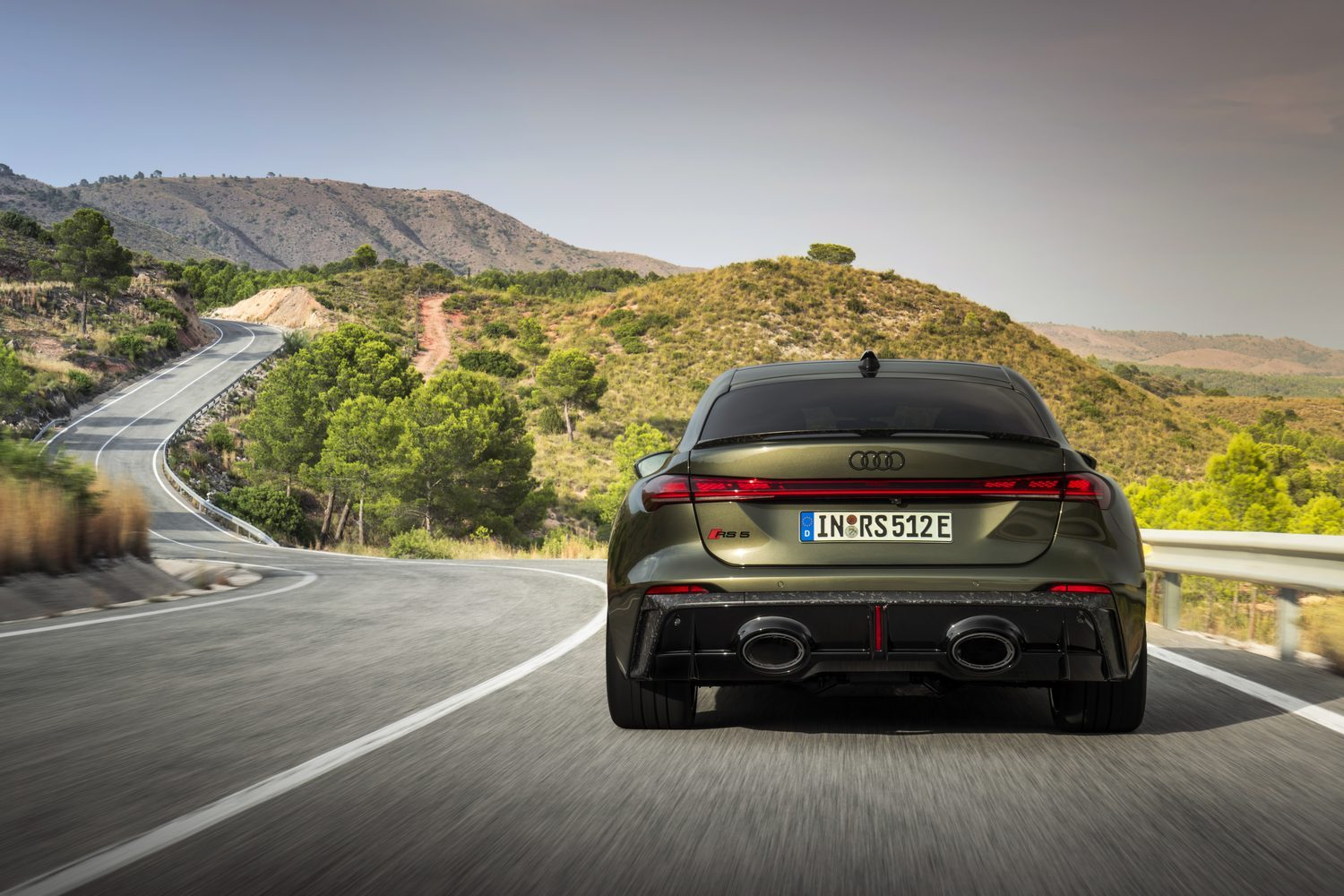
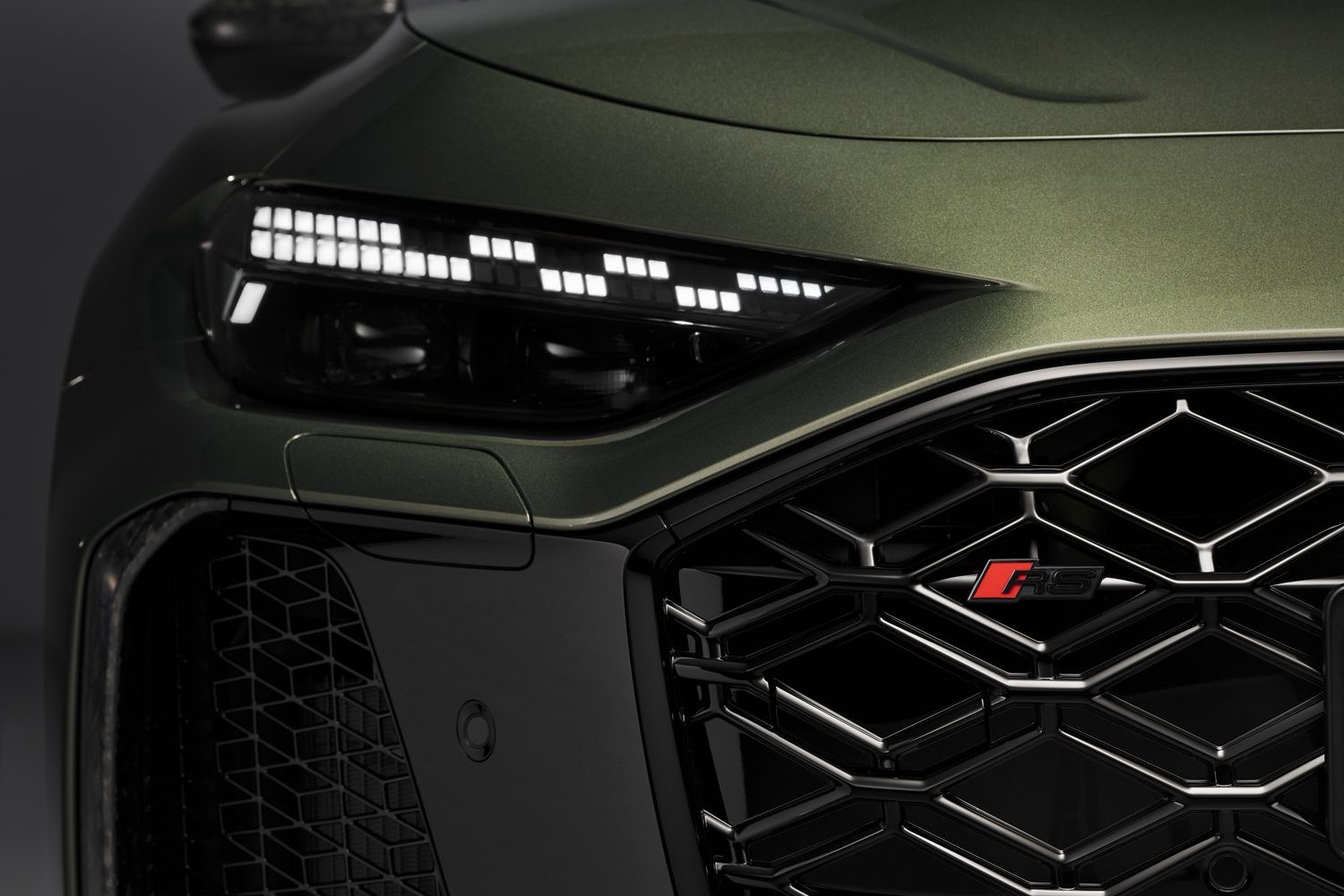
Black detailing fore and aft, for the air intakes in the nose and the diffuser at the rear, only further accentuates the muscular look of the RS 5, while all of its light signatures have a chequered-flag motif, including the high-level brake lamp.
The dark features are a direct learning from the Audi RS 6 GT, as are vents behind the front wheel arches, while wheel sizes are either 20-inch items as standard, or optional 21s.
How about the cabin?
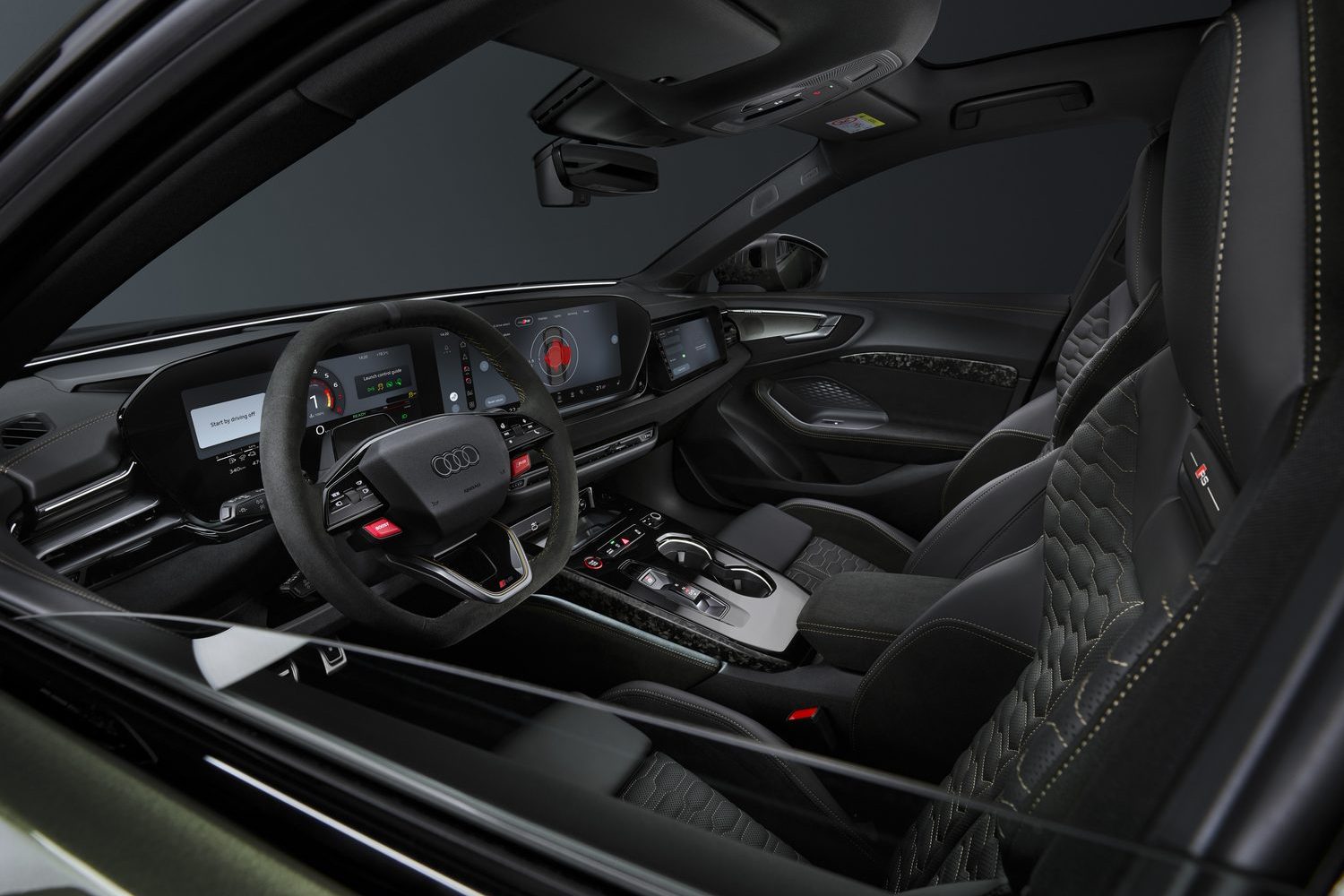
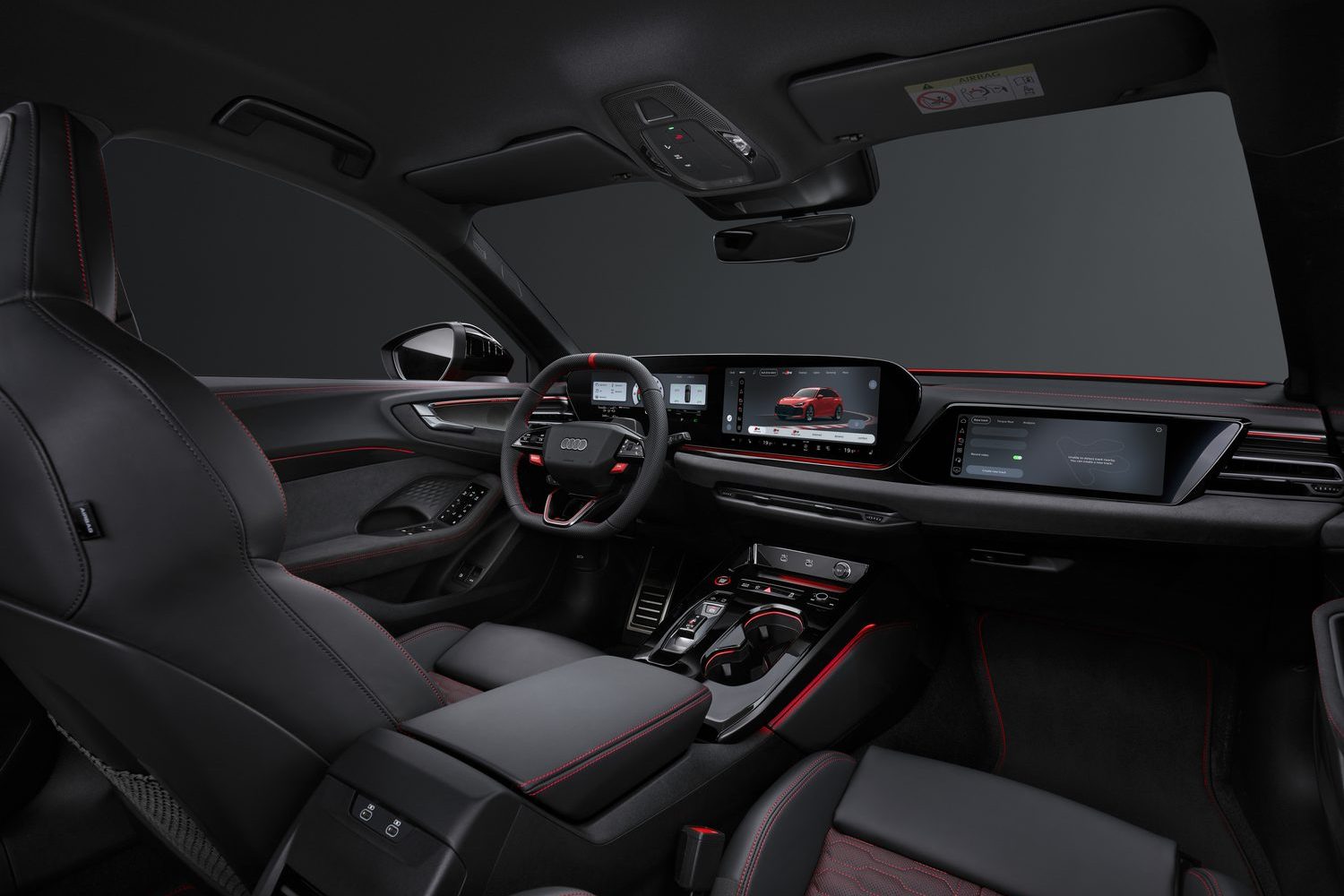
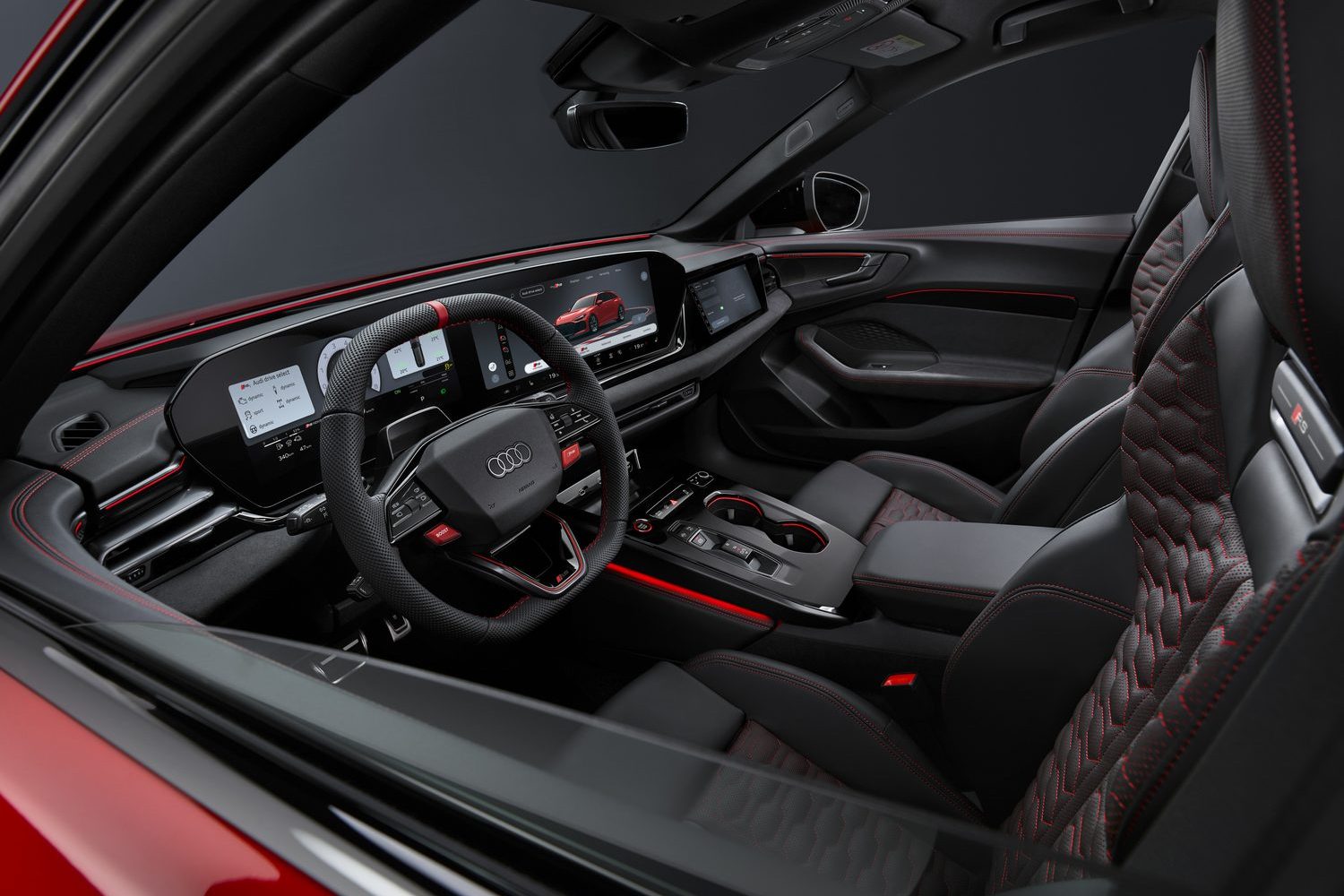
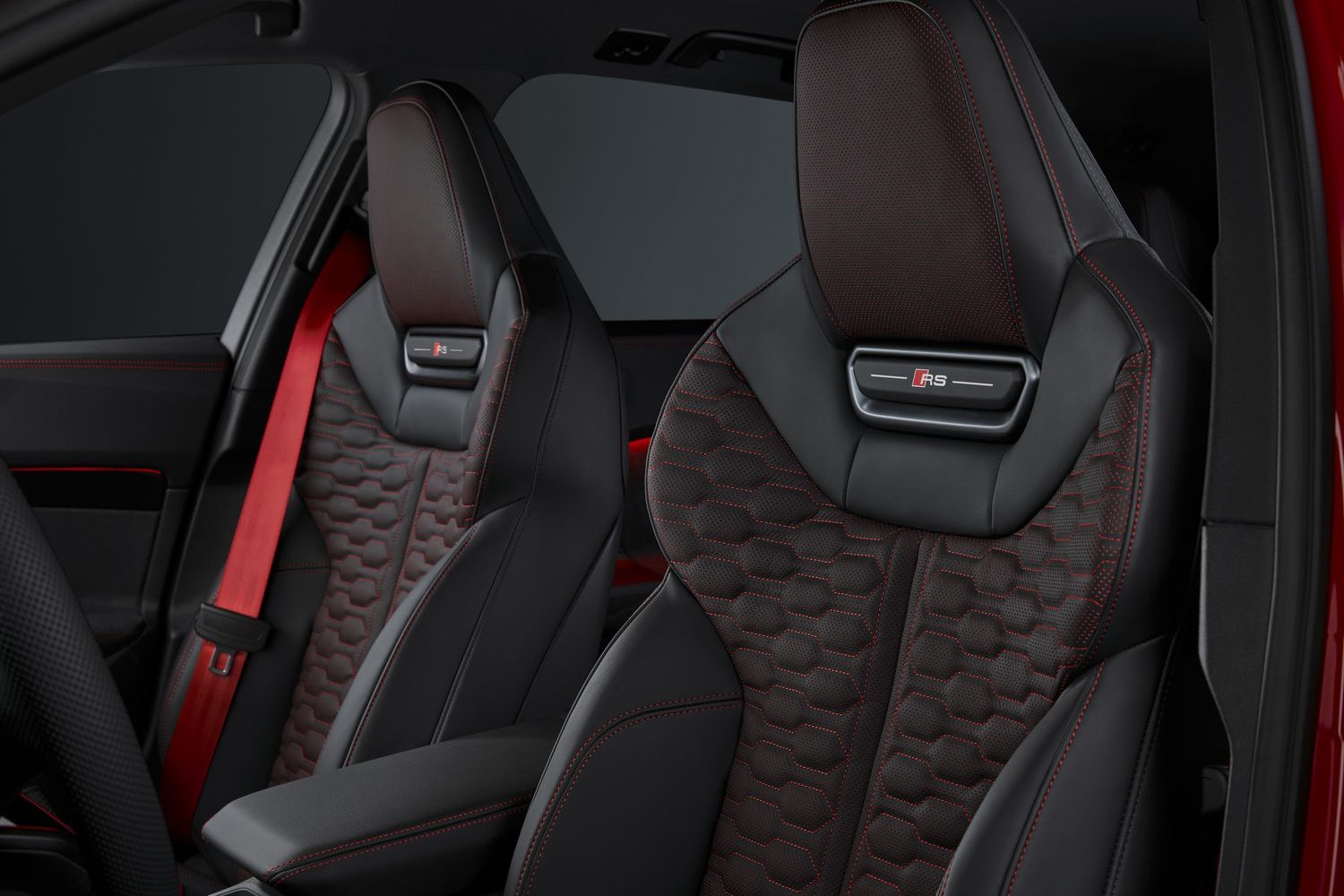
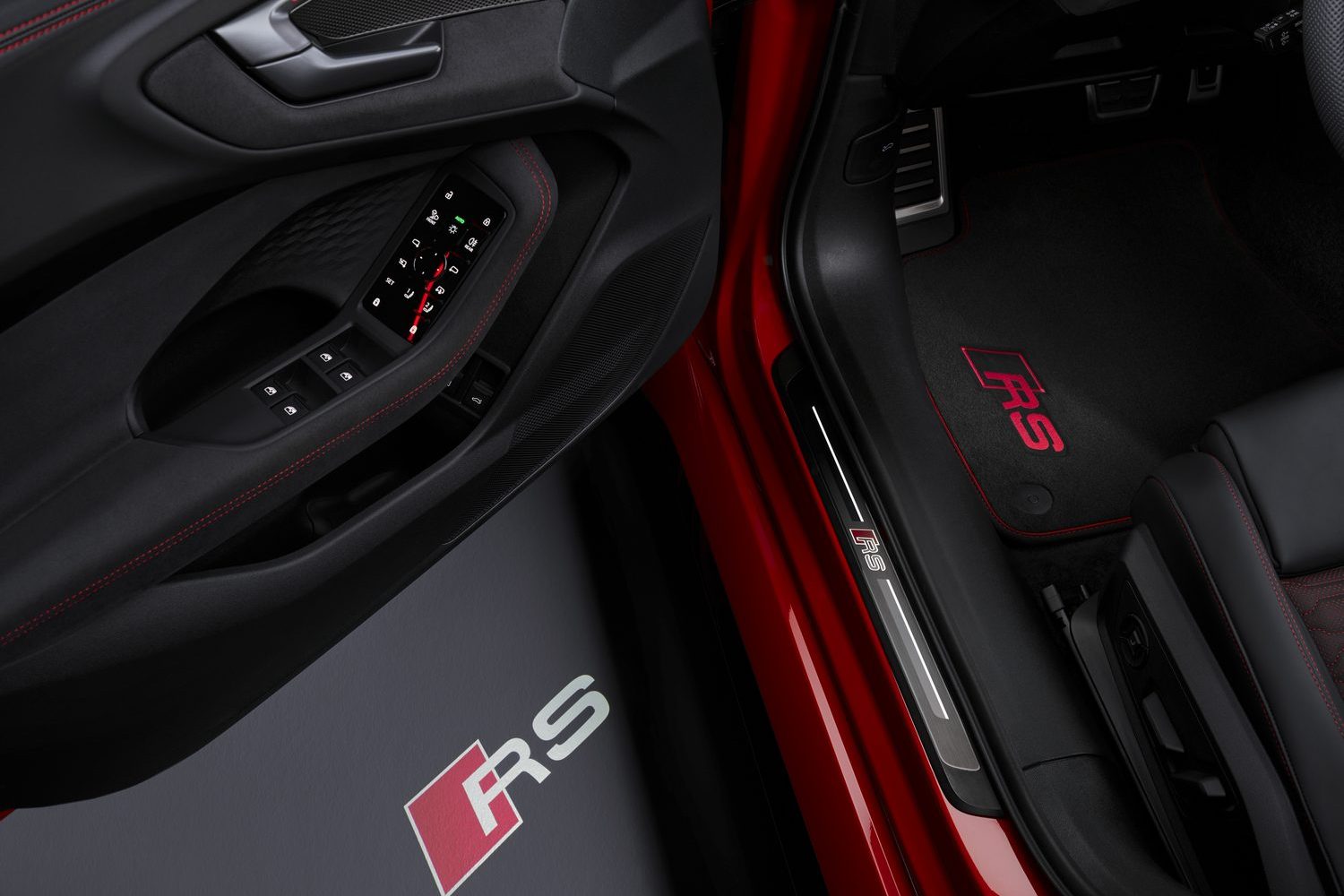
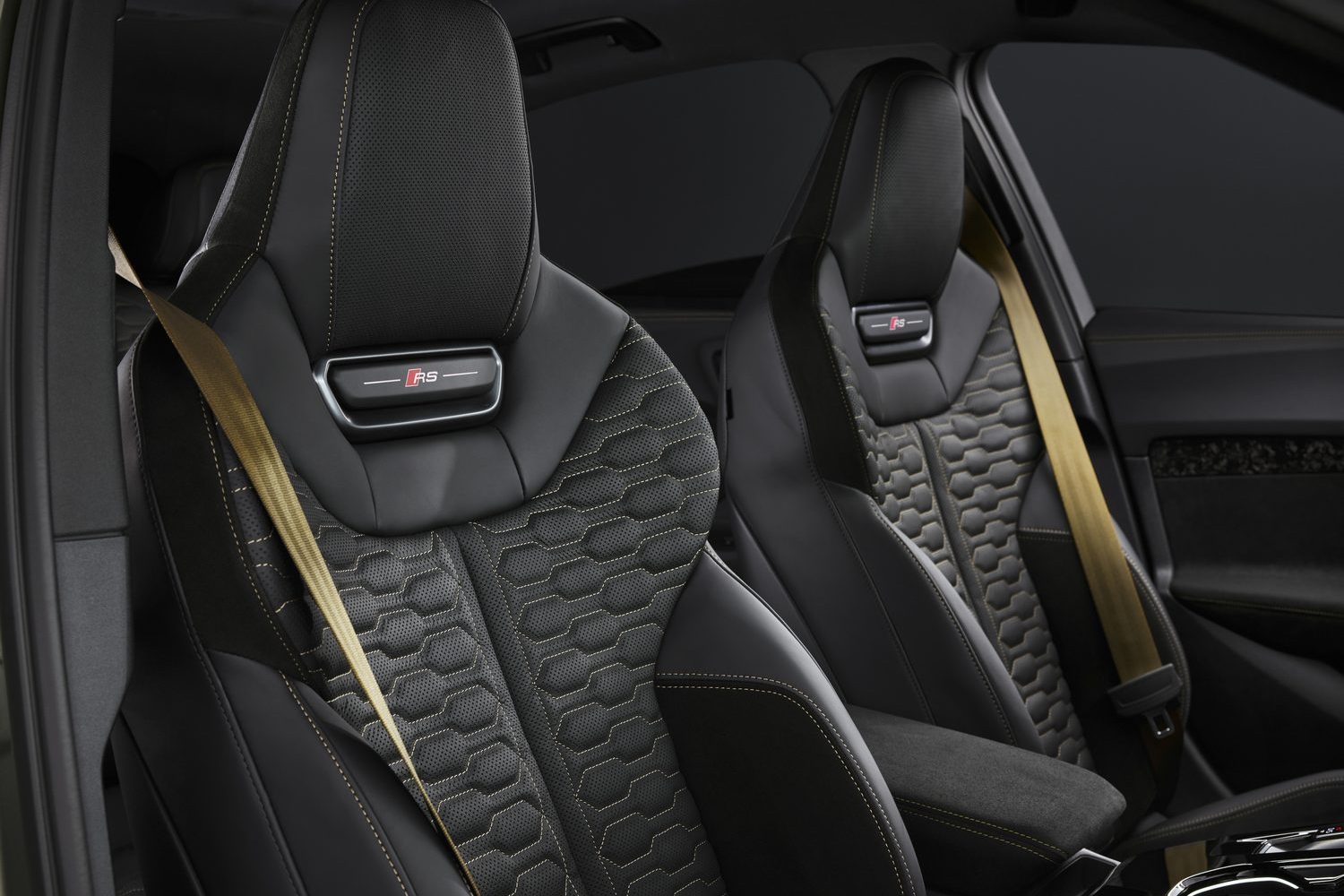
It's very nicely appointed and enlivened by some RS 5-specific details, such as a Dinamica-clad wheel with a 12 o'clock marker, lots of carbon-fibre trim, red stitching and various bespoke graphics and emblems.
That said, it's still heavily predicated on the Audi 'Digital Stage' interior that is the basis of the A5 family, which some will love for its tech-savvy nature, while others will possibly lament the lack of certain key physical switchgear - such as for the climate control, which is now all on the central touchscreen.
What about the chassis settings in the RS 5 Saloon and Avant?
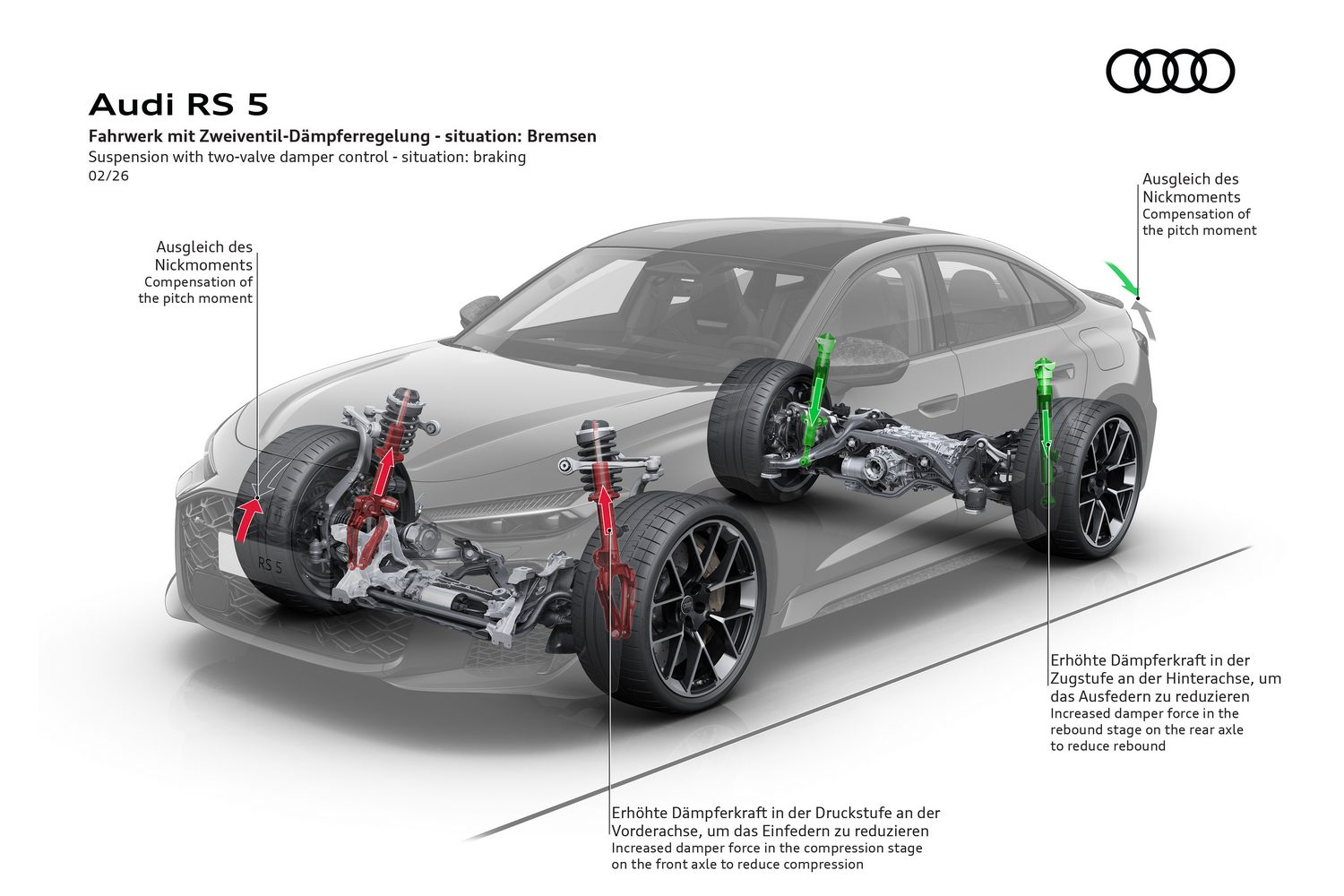
The star attraction here, in Audi's view, is the electro-mechanical 'Dynamic Torque Control' (DTC) rear differential. For torque-vectoring previously, you could either choose to have it electronically controlled or mechanically, but the RS 5 deploys a hybridised system with a small electric motor running the show.
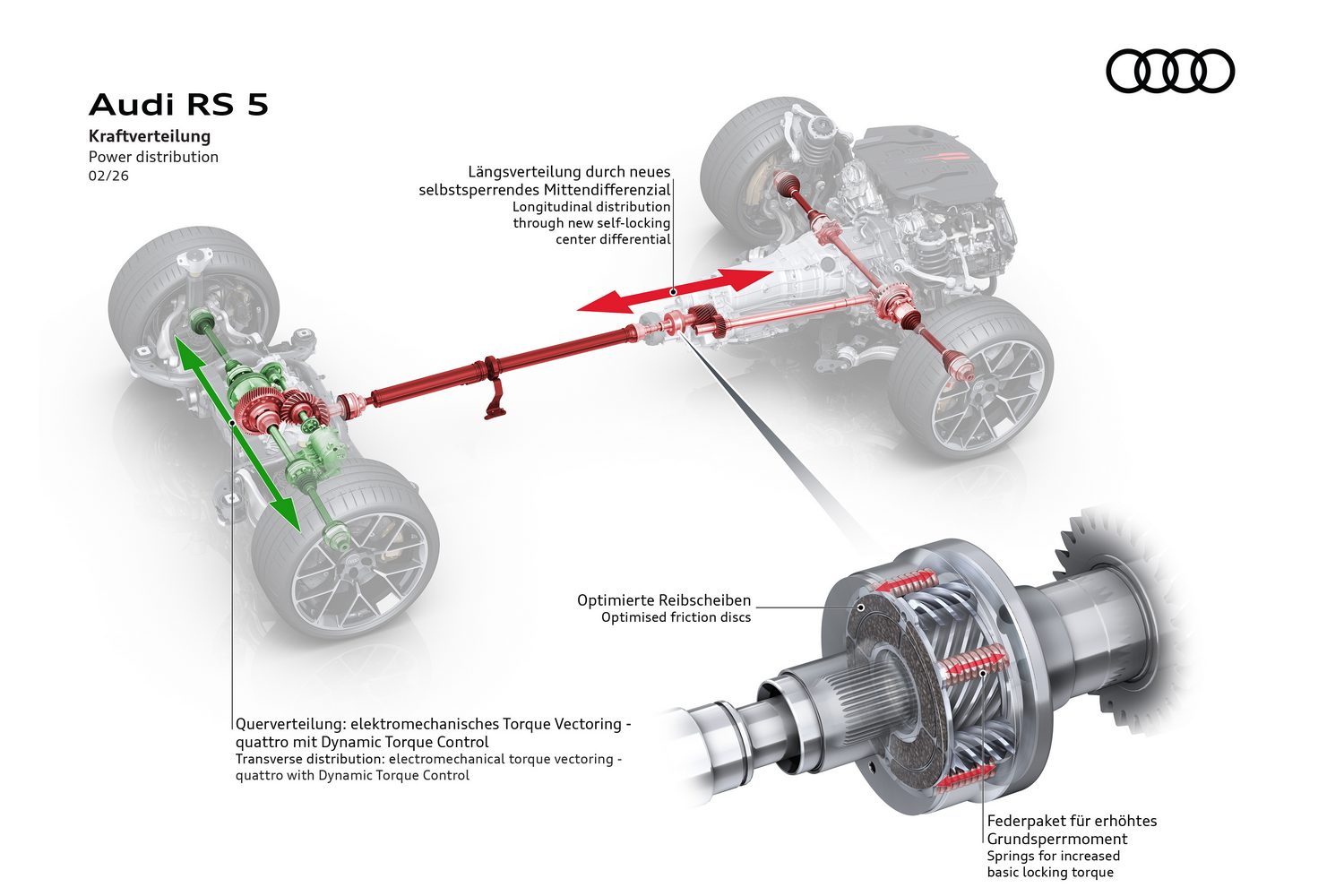
This allows for the super-fast and ultra-precise vectoring of torque in less than the blink of an eye - the DTC set-up can shunt torque to whichever wheel needs it in just 15 milliseconds, channelling up to 2,000Nm at a time according to Audi.
Suspension is handled by a five-link arrangement front and rear, complemented by twin-valve dampers and all tuned to RS specifications.
The steering is much quicker and more direct than that of the regular A5, while the brakes are huge in any spec. As standard, they're 420mm front/400mm rear steel items, but a carbon upgrade sees the rotors enlarged to 440mm/410mm accordingly.
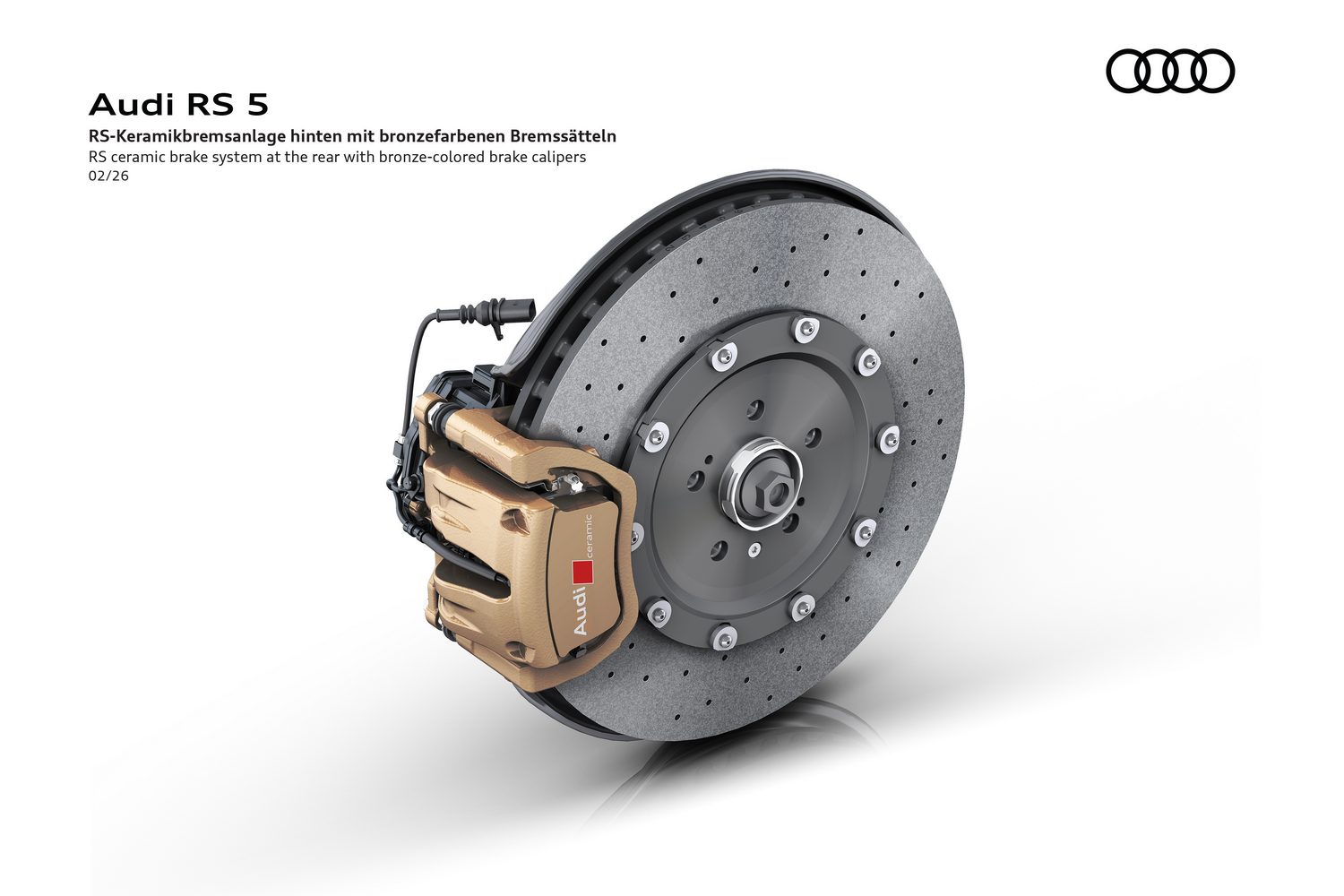
And, due to the sheer mass of the RS 5, choose this option and all four discs are made of carbon - on other Audis with a carbon-brakes option (like the RS 3 Sportback), they're light enough that only the front discs are usually swapped out for carbon items. Choosing these does trim 30kg from the kerb weight of the RS 5, though.
I know this isn't why you buy an RS 5, but what's the electric range?
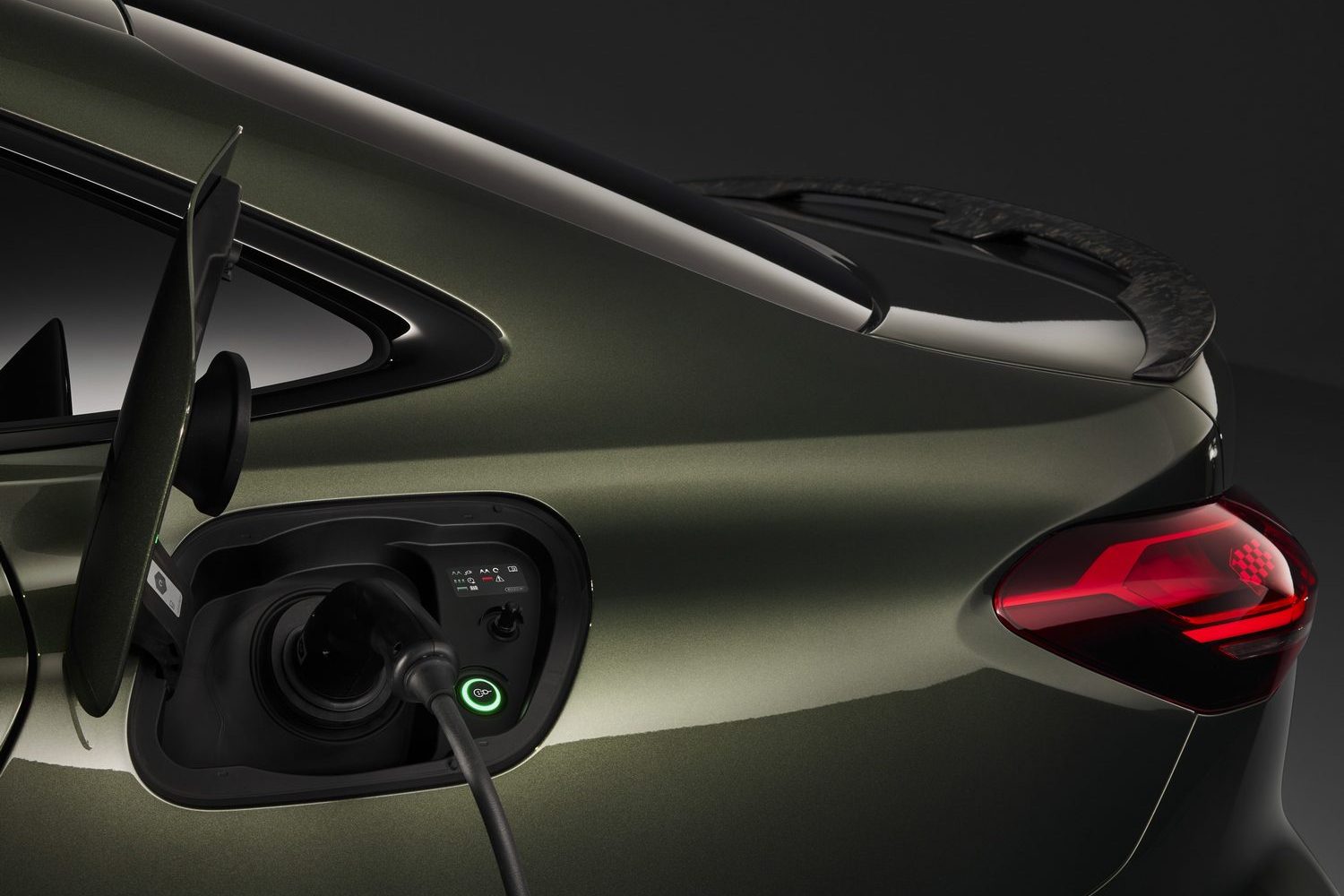
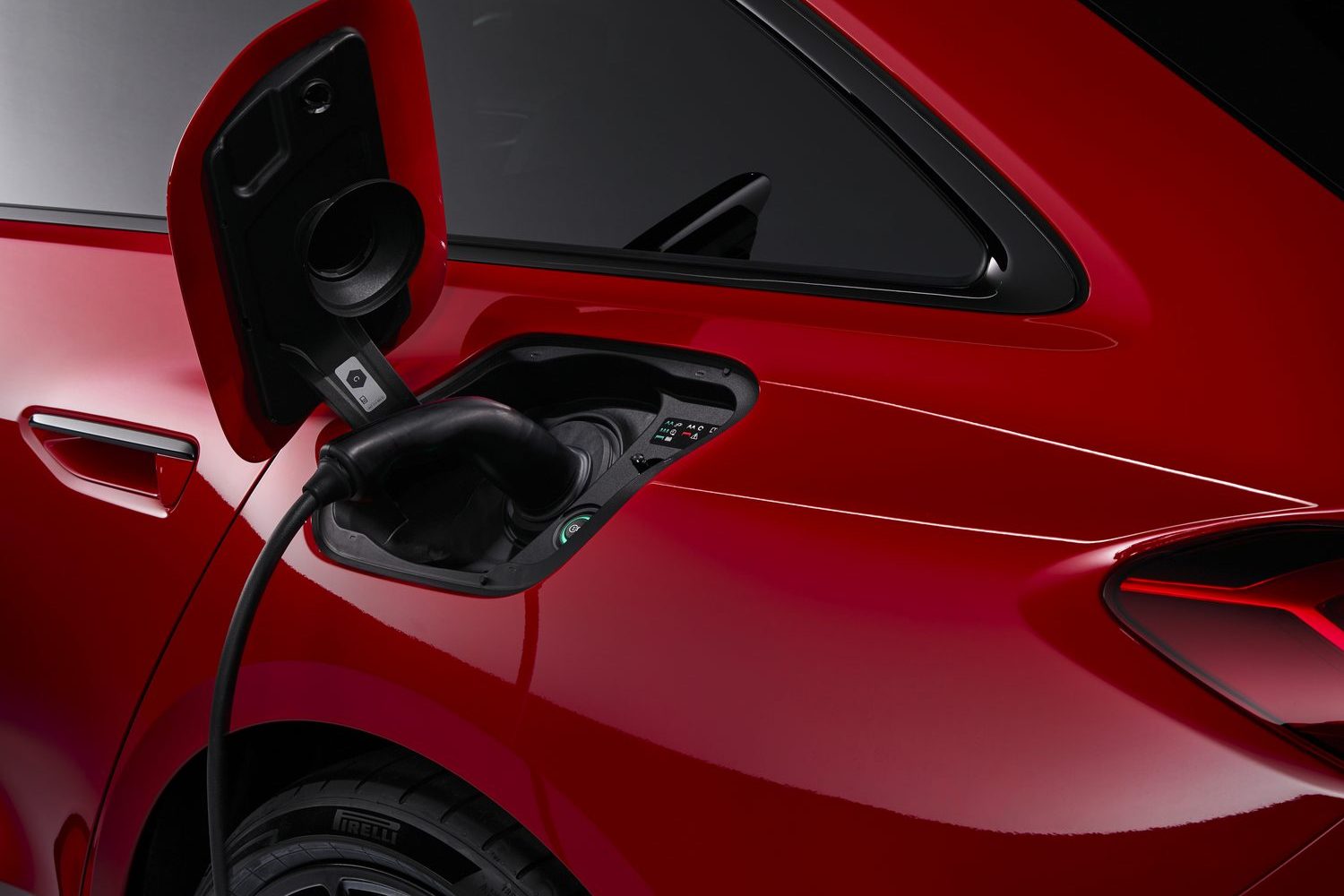
A benefit of the large battery pack, by PHEV standards, is that no matter how you specify the car, you'll get more than 80km of zero-emissions driving from it - officially, it's 81-86km. There's no DC-charging capability, though, the RS 5 charging at 11kW on three-phase AC outlets at a maximum, which'll mean that it'll take 2.5 hours for a full charge of the battery pack at the very least.
Anything else to add on the car's tech?
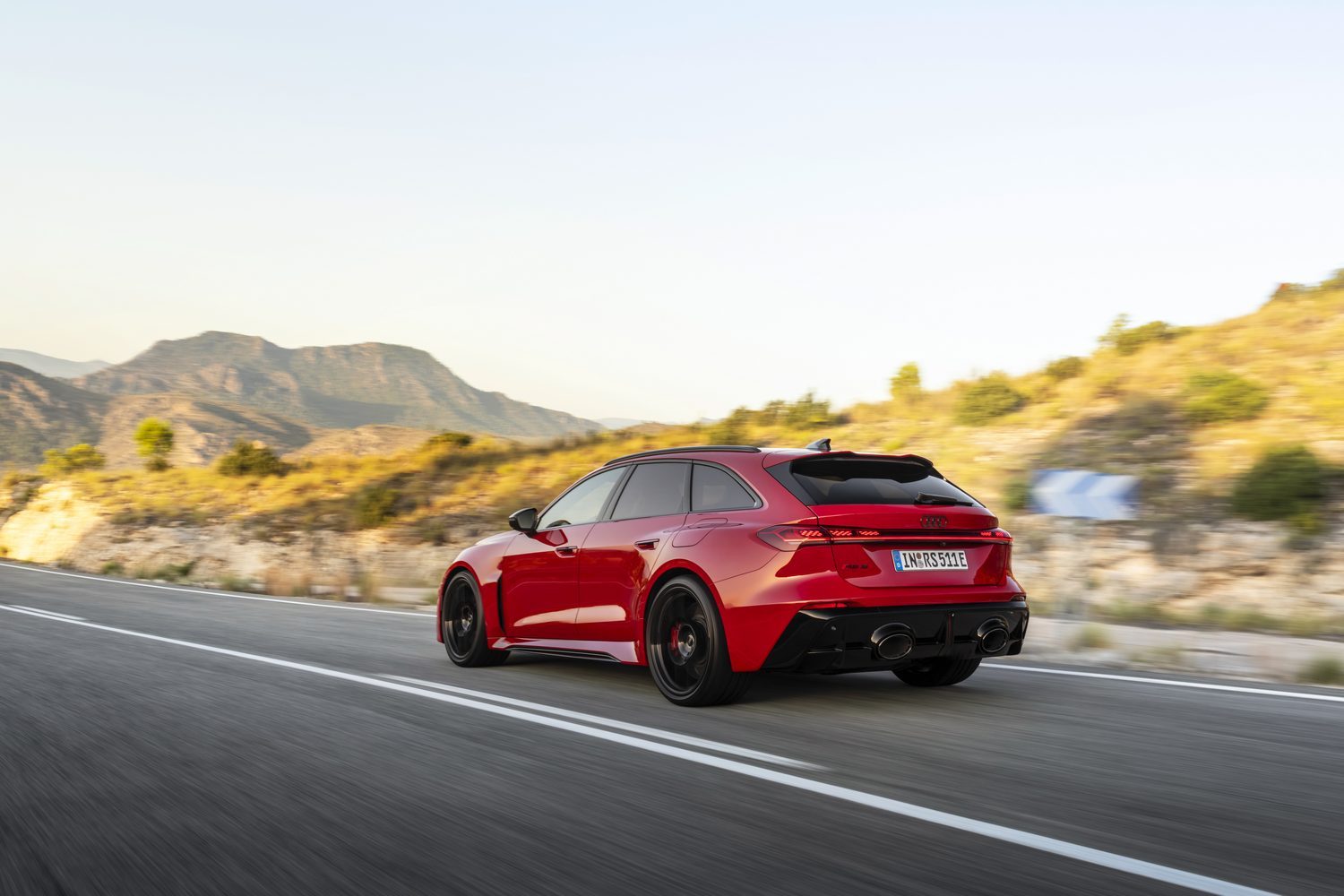
Only that it is fitted with a sports exhaust system as standard, denoted by gigantic oval exit pipes at the back. This promises to make the most of the V6's appealing voice and placate the enthusiasts who might be a bit worried about the RS 5 becoming a 2.4-tonne PHEV...
Have we got word on pricing in Ireland as yet for the Audi RS 5?
Yes, it has been confirmed that the Audi RS 5 will start at €115,000 in Ireland, presumably for the 'Saloon'. That makes it only about €13,000 more than the - far less powerful - Audi RS 3 Saloon... First deliveries to Irish buyers are in July 2026.

Video player loading.
Video unavailable. Watch on YouTube
If there is anything about this story we have not covered, you can avail of our expert advice service via the Ask Us Anything page.