


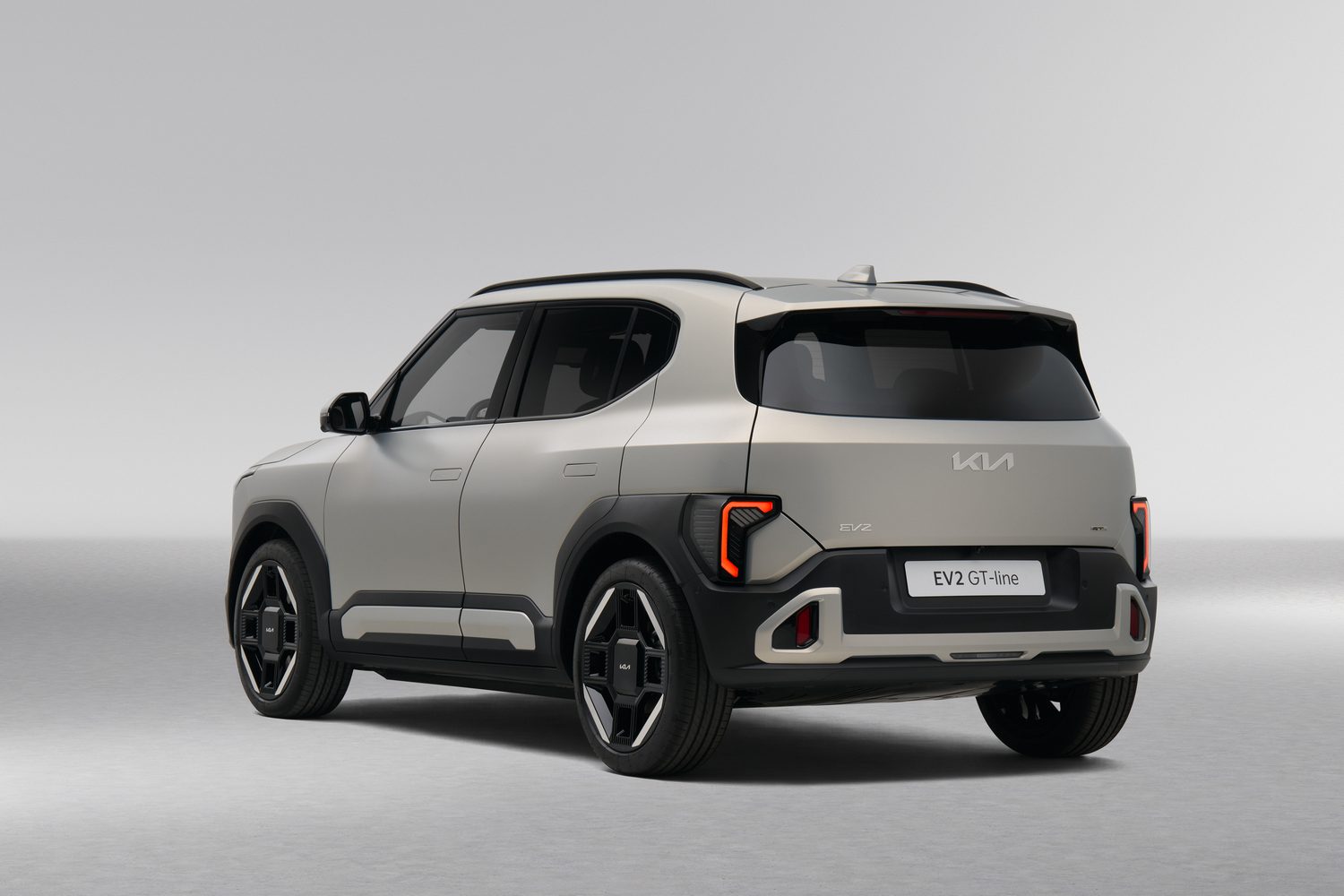
Kia has designed the EV2 specifically for the European market, and it will be built in Žilina, Slovakia, alongside the Kia EV4.
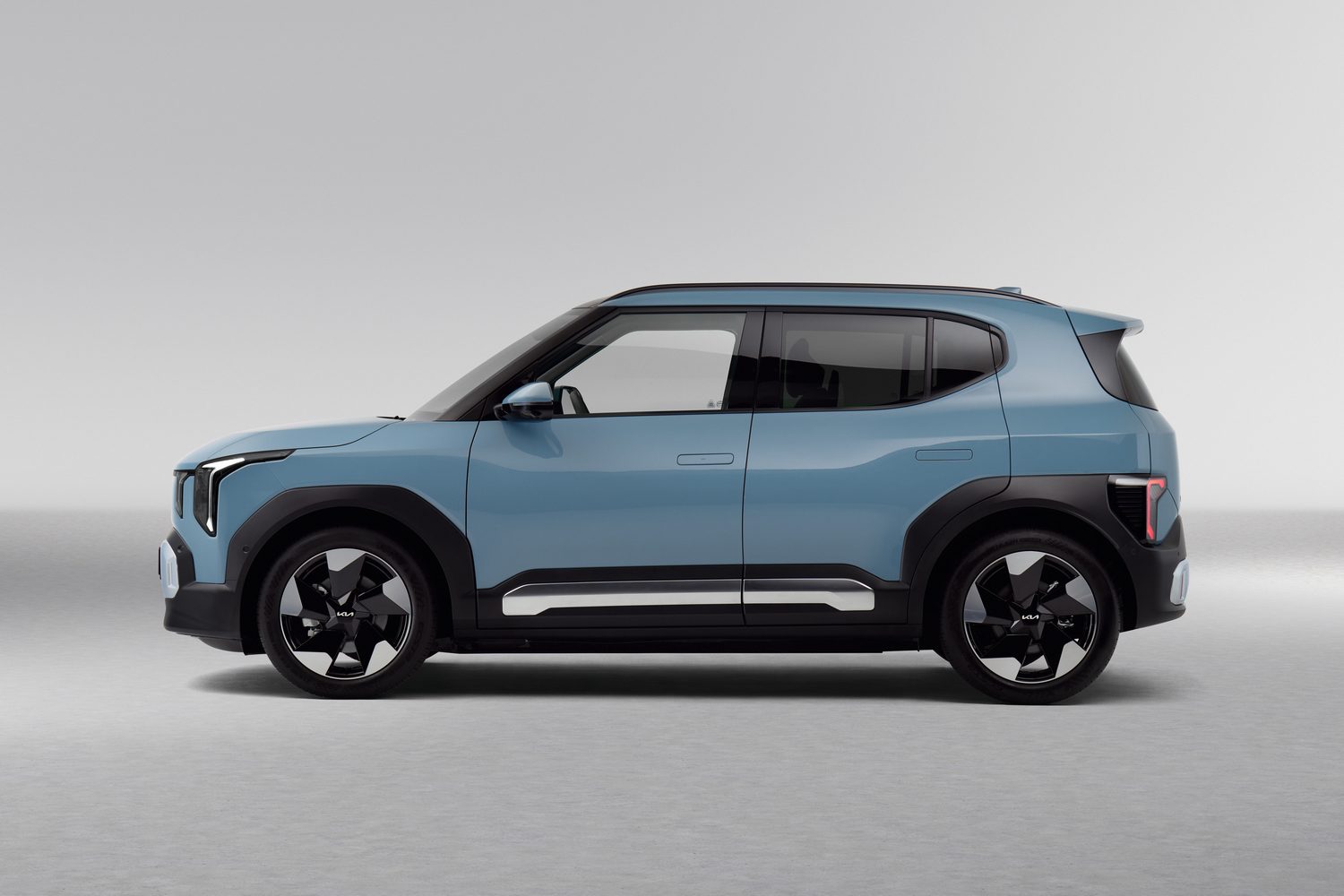
Talk us through the Kia EV2's design
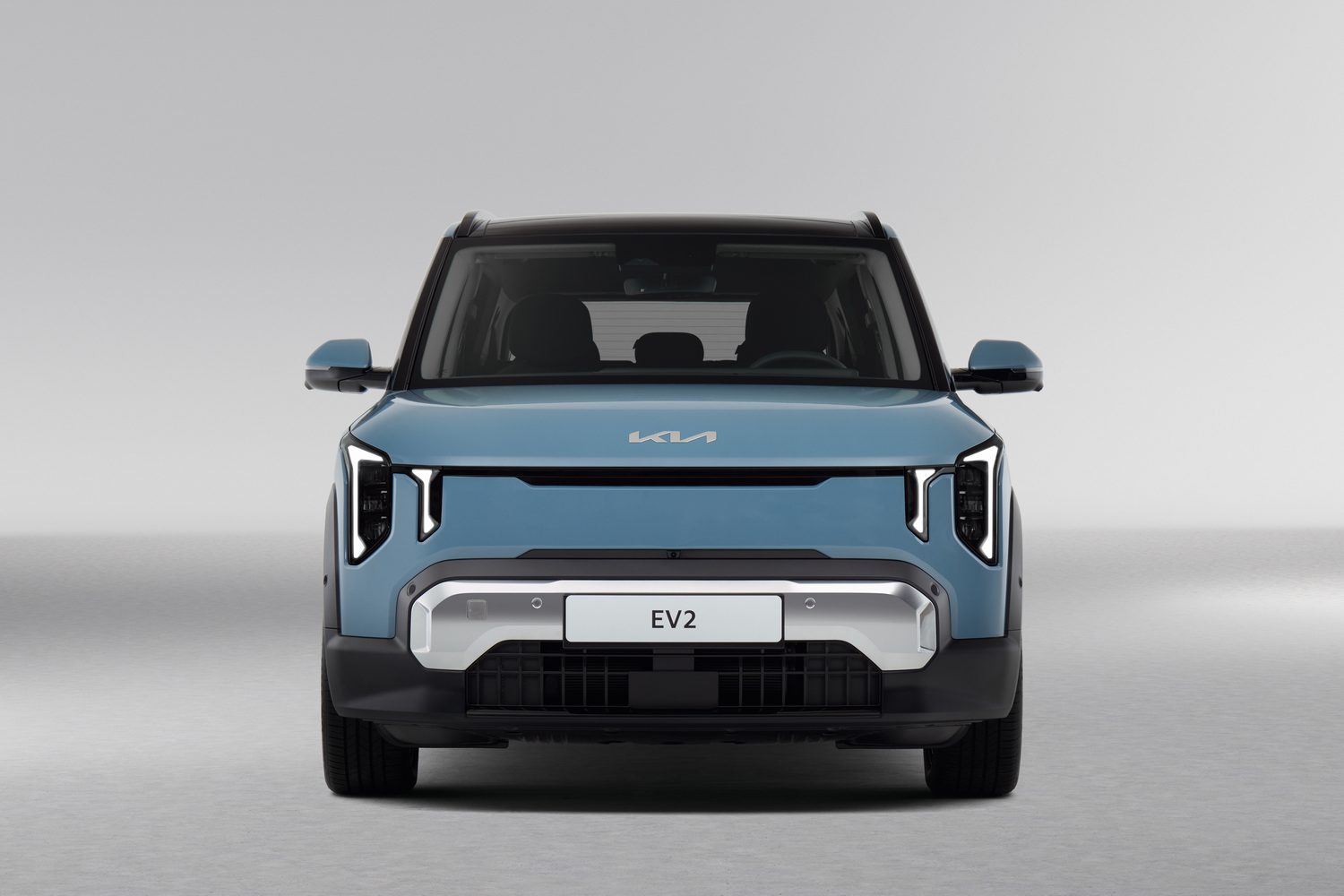
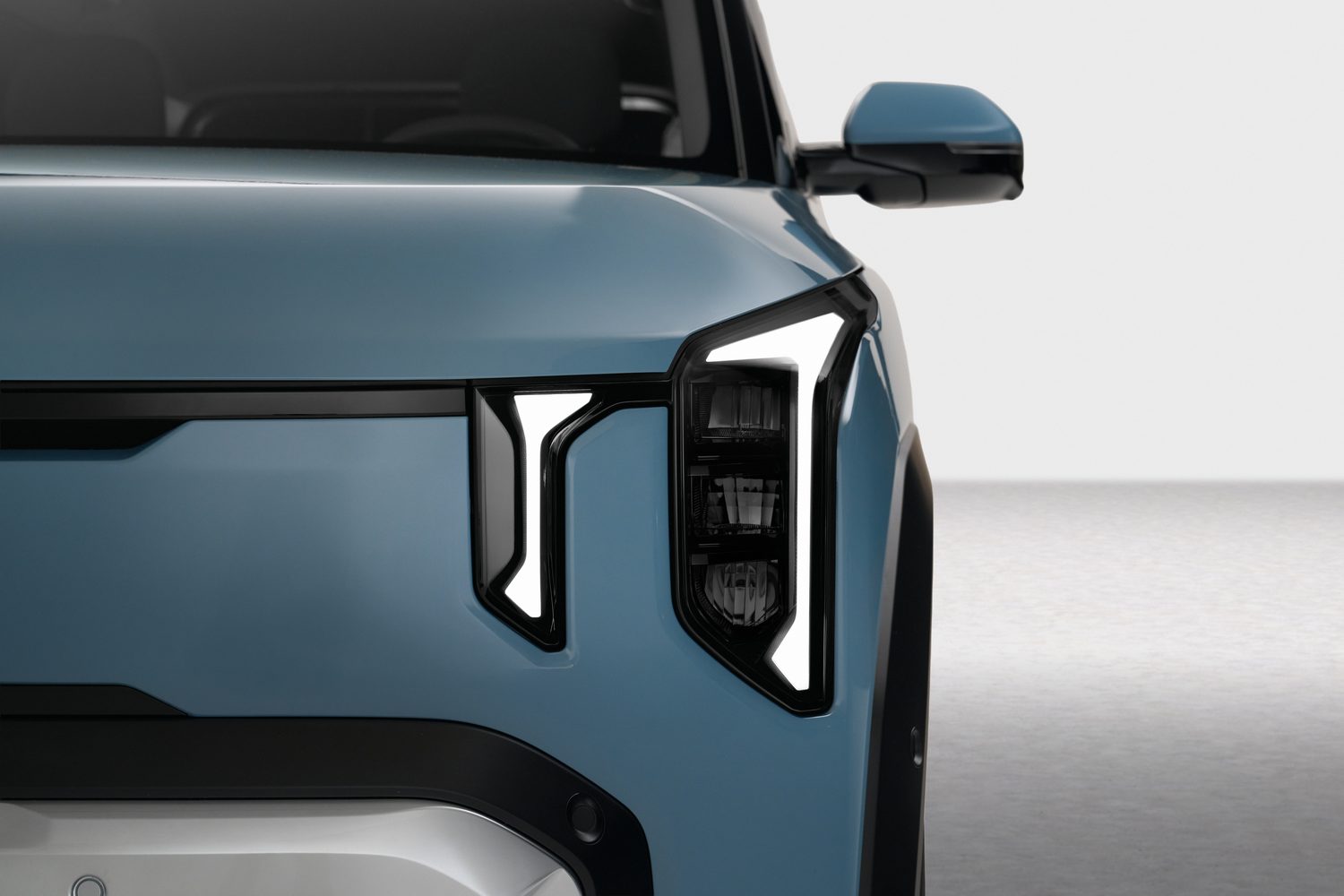
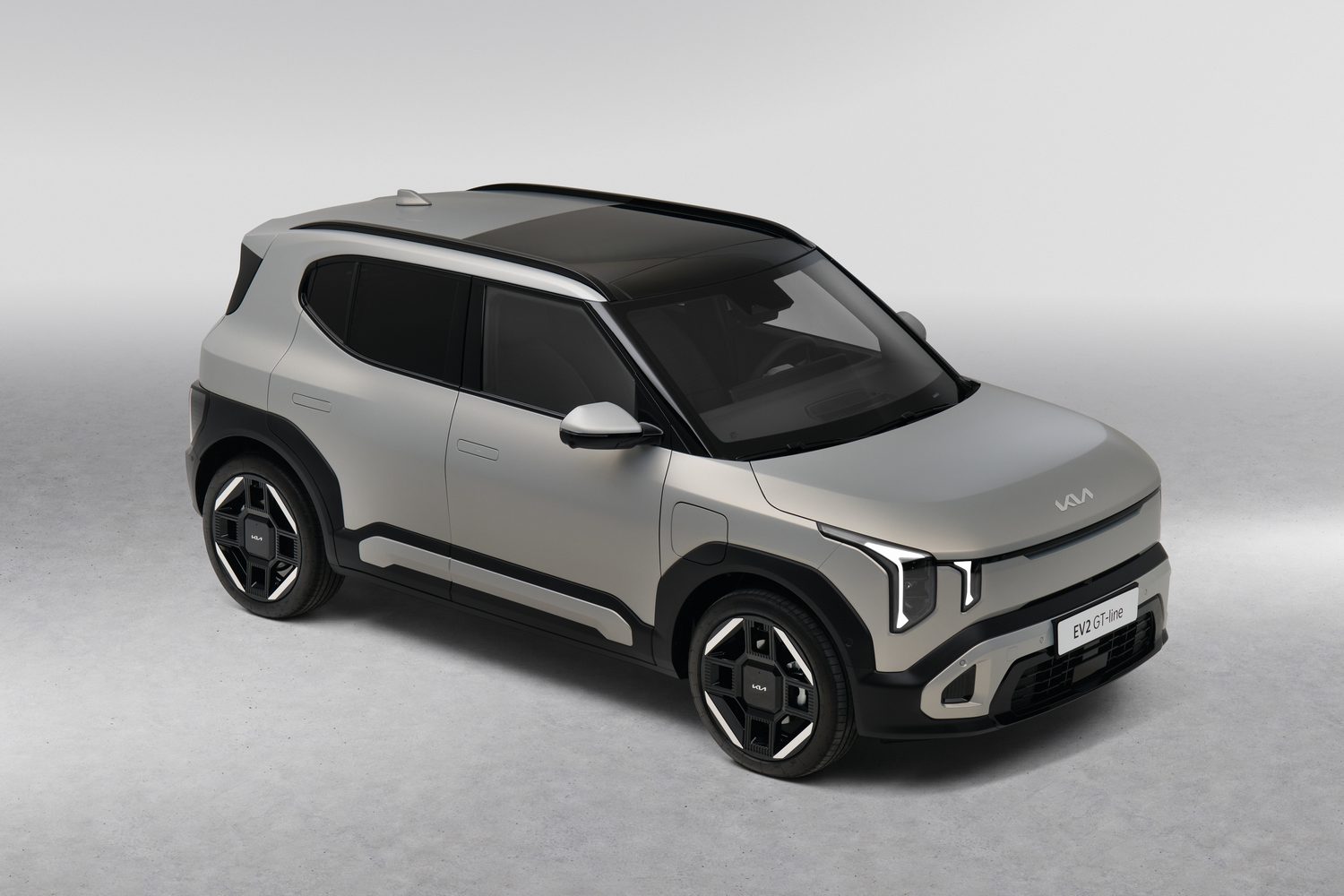
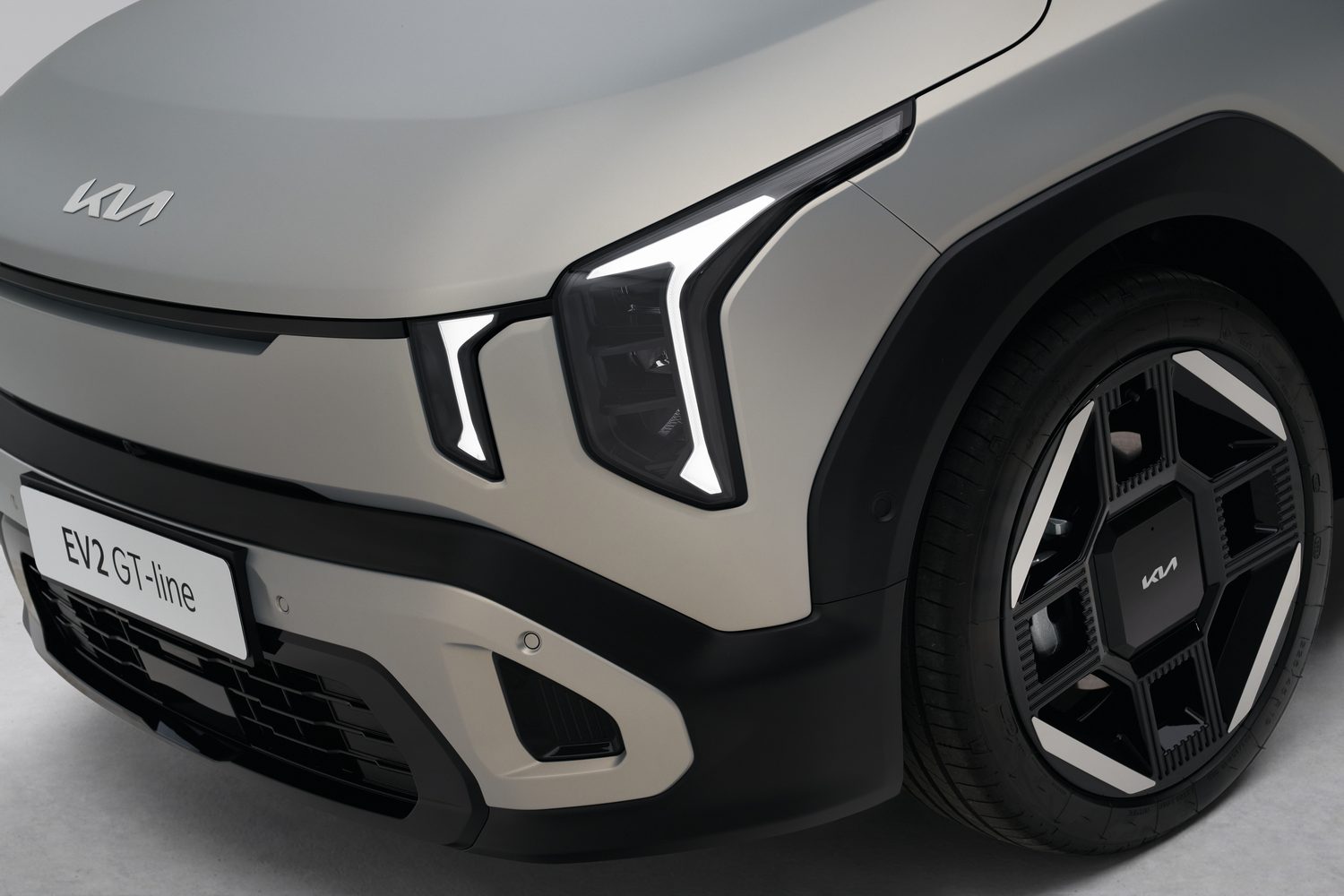
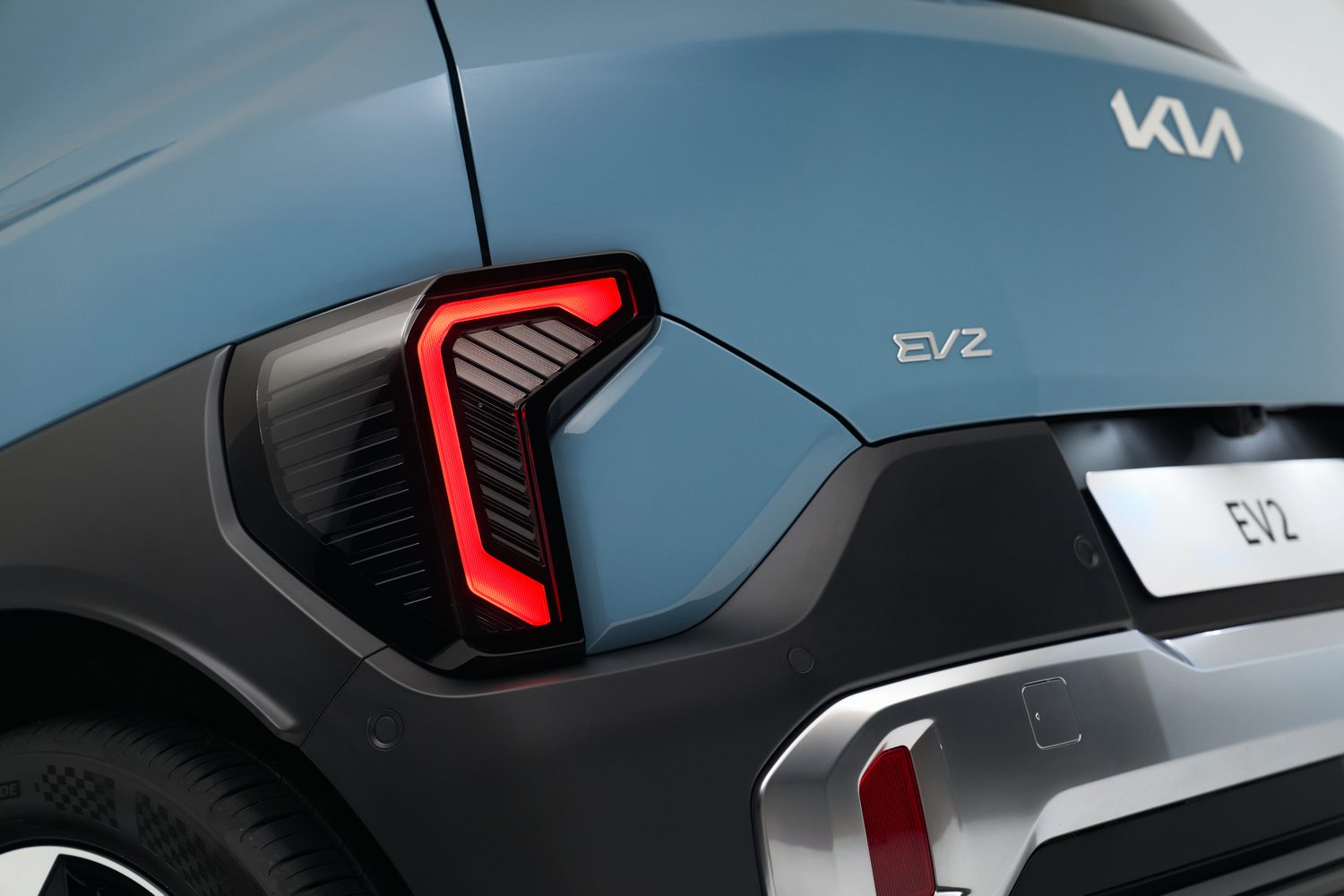
In shaping the Kia EV2, its designers have strayed true to the original design study showcased at the 2025 EV Day event. The company's 'Opposites United' design language continues through to this model, with a boxy silhouette that leans into the chunky SUV image. Vertical daytime running lights fit in with the larger Kia models', and all versions of the EV2 get LED lighting front and rear.
There are subtle exterior differences between the Baseline model (likely to be called Earth in Ireland) and the GT-line specifications. These focus on different shapes of the aluminium-like inserts on the front and rear bumpers.
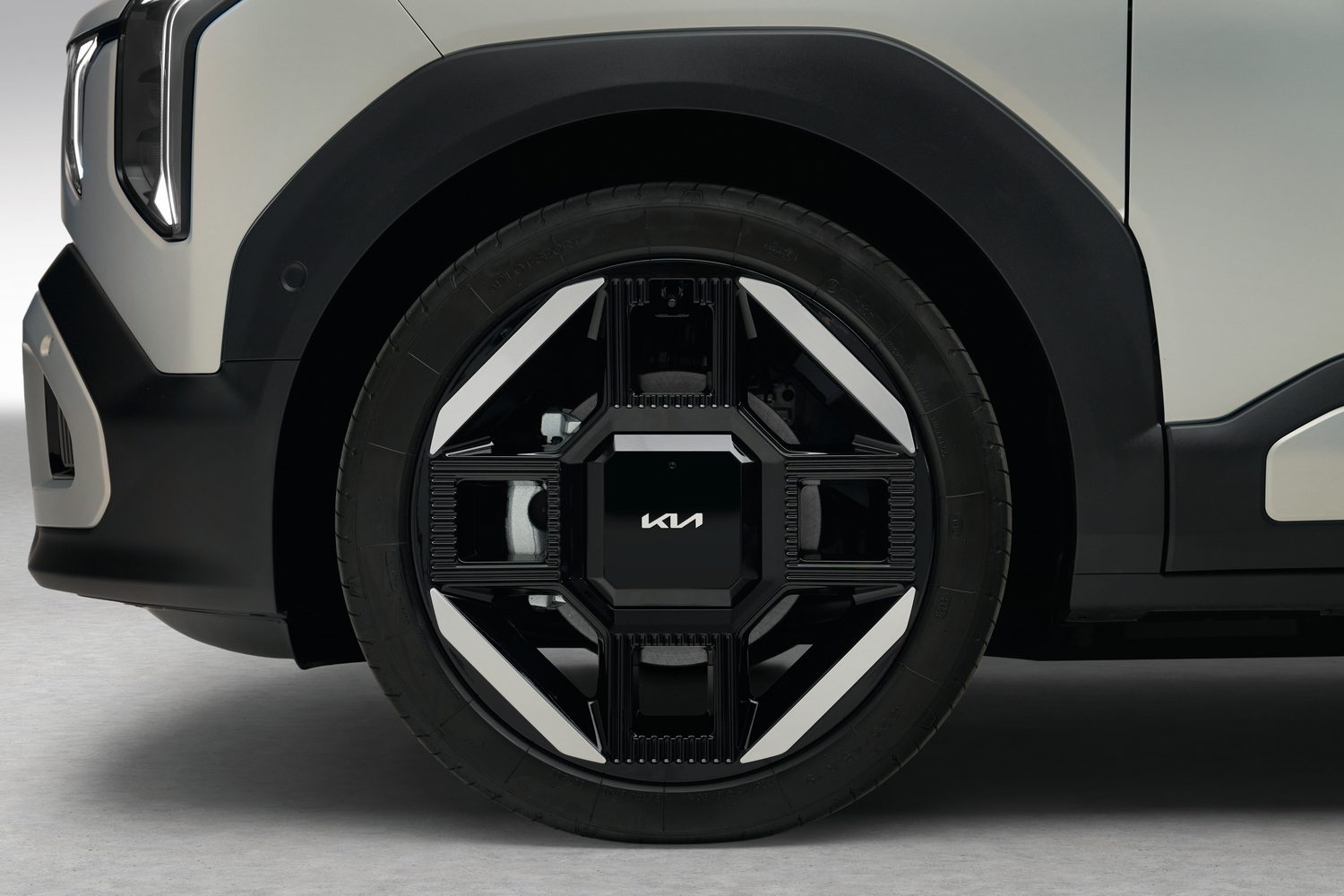
Wheel sizes range from 16 to 18 inches on the standard car, with 19-inch options on GT-line versions. A variety of colours are available, including some with pearl and matte finishes.
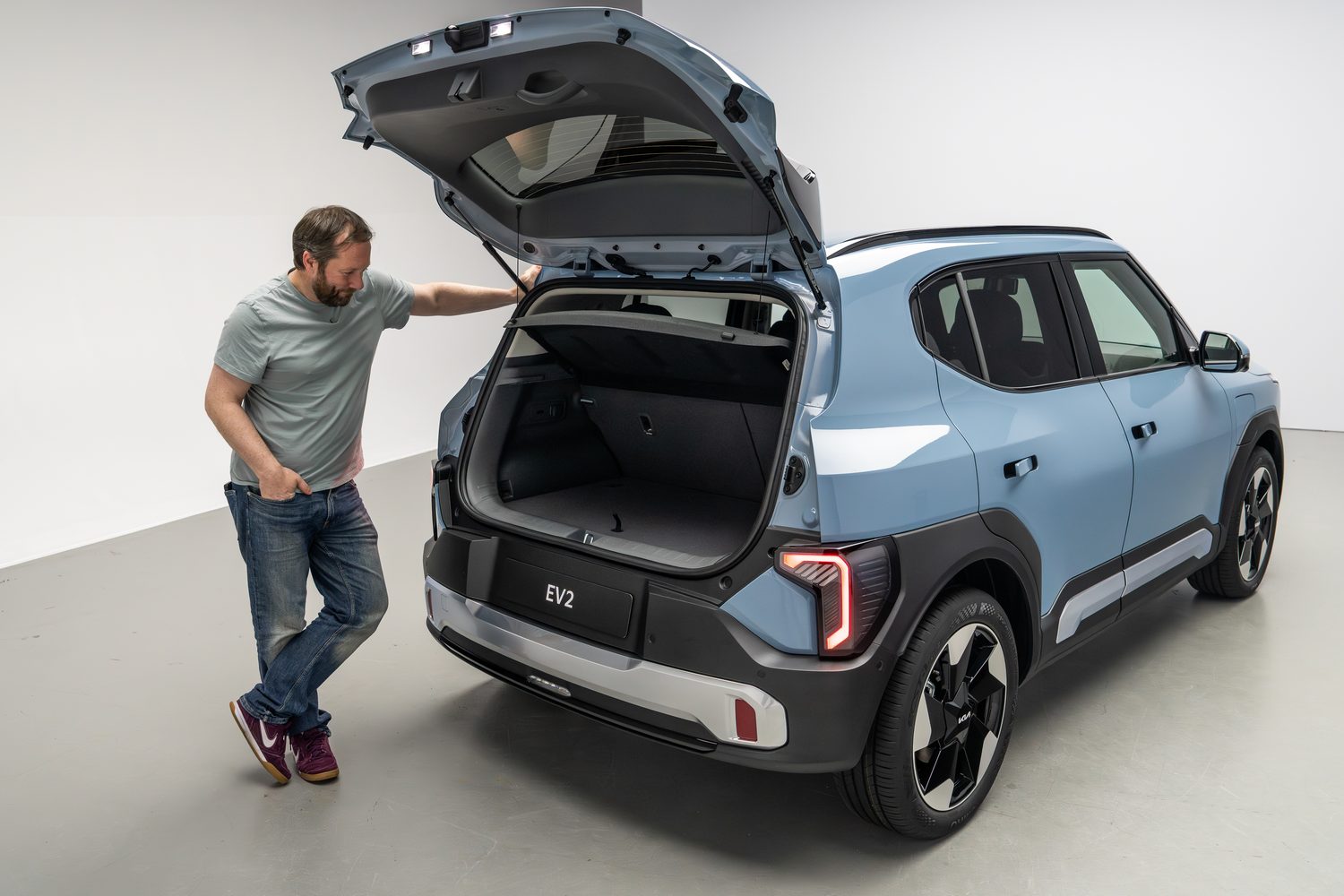
As with Kia's other models, the EV2's door handles sit flush against the bodywork when the car is locked. A vertical rear end rounds out the clean design, with a wiper tucked underneath the roof spoiler.
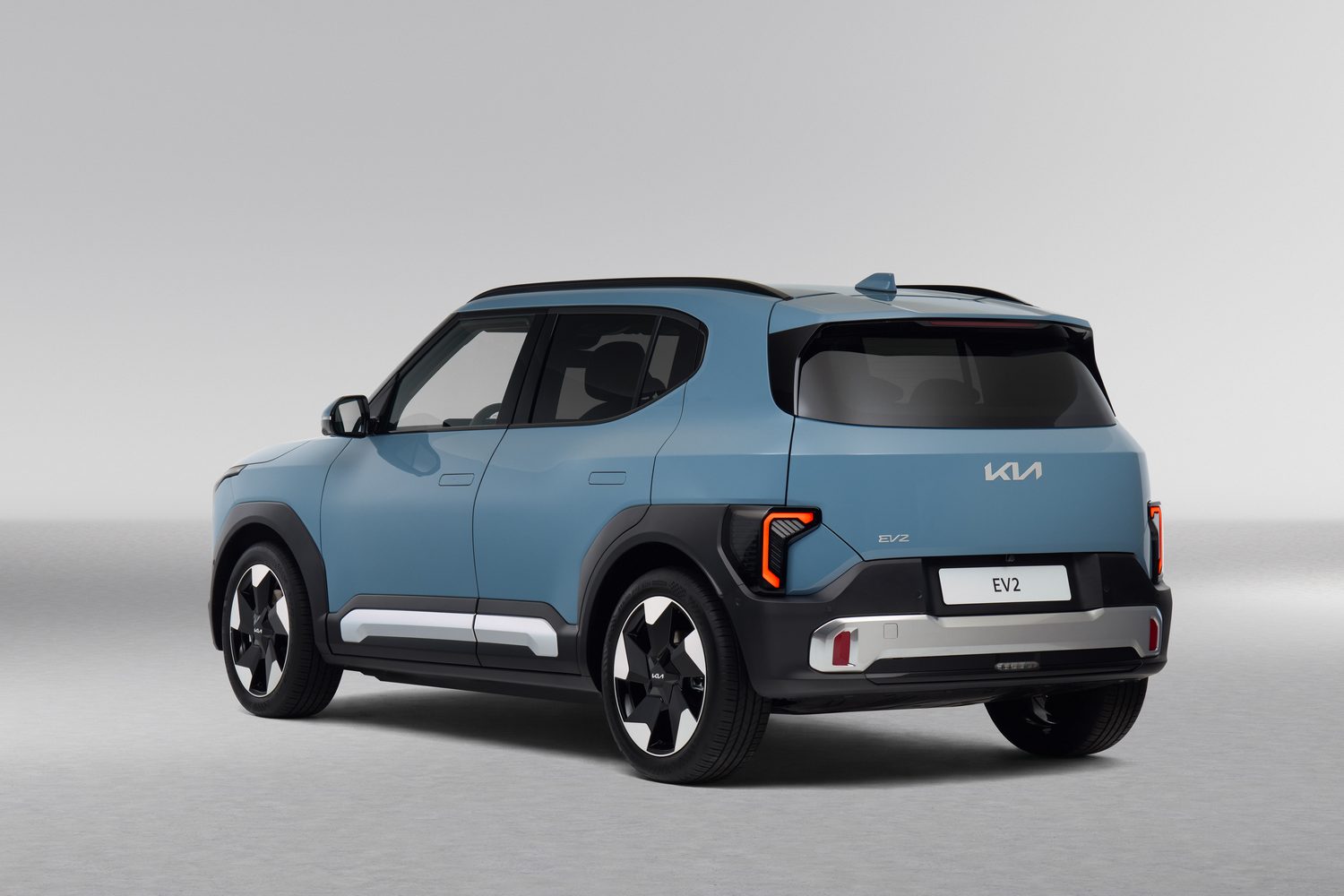
The exterior dimensions of the Kia EV2 are:
Length: 4,060mm
Width: 1,800mm
Height: 1,575mm
Wheelbase: 2,565mm
What it's like inside the Kia EV2?
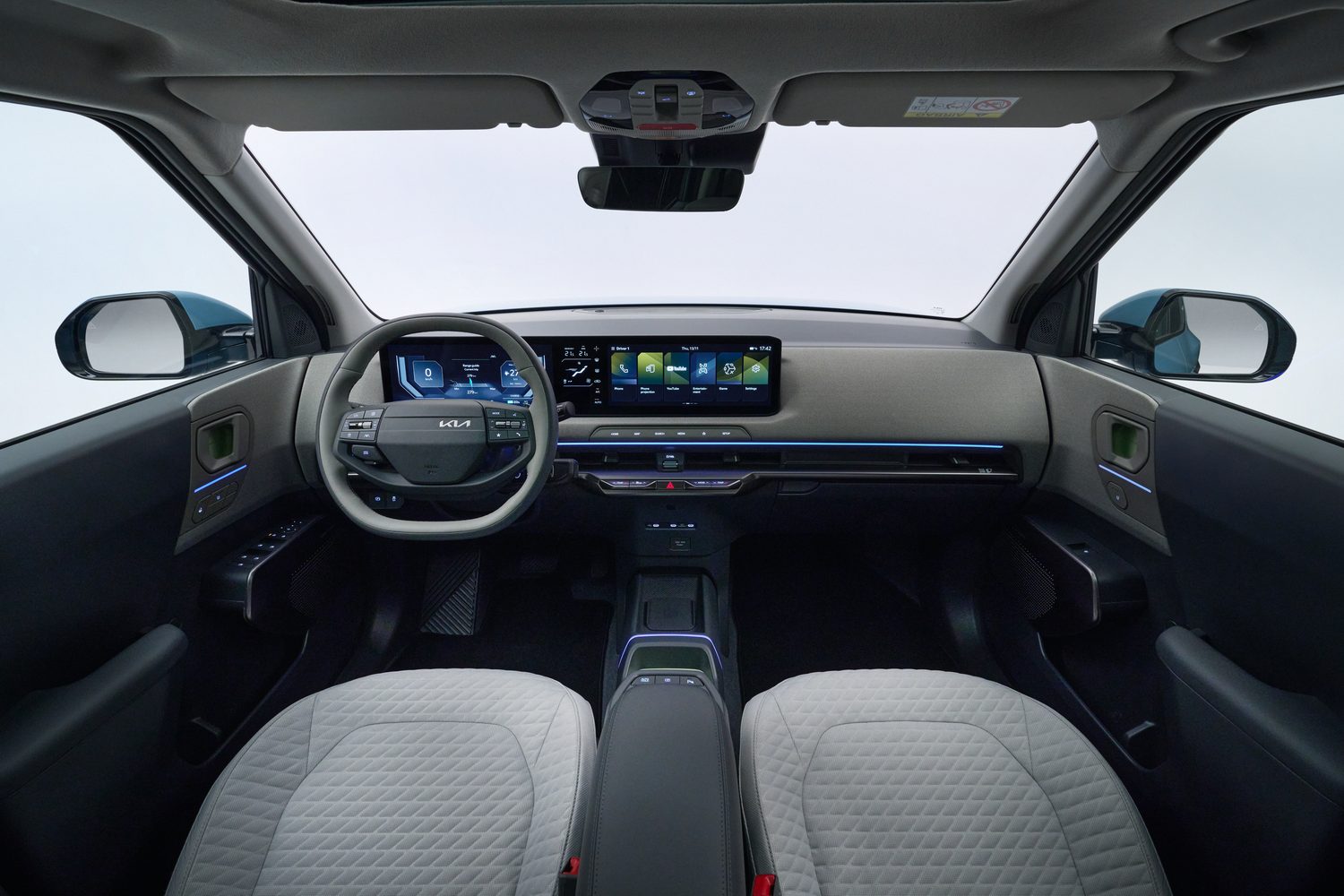
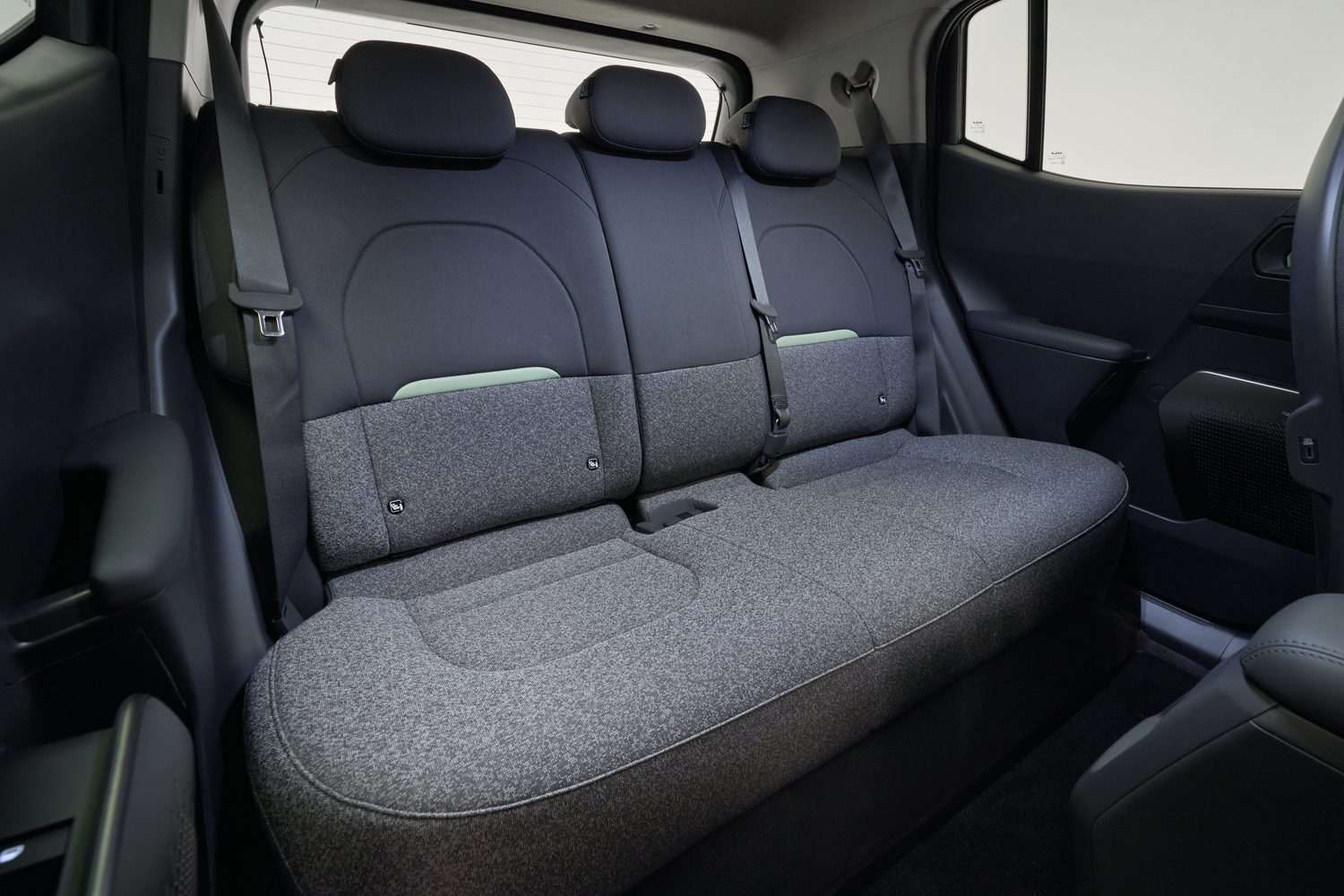
As soon as you sit into the EV2, you get a sense of both roominess and technology. The car's relatively long wheelbase helps to boost interior space, and there's plenty of adjustment of the seat and wheel for drivers to get comfortable.
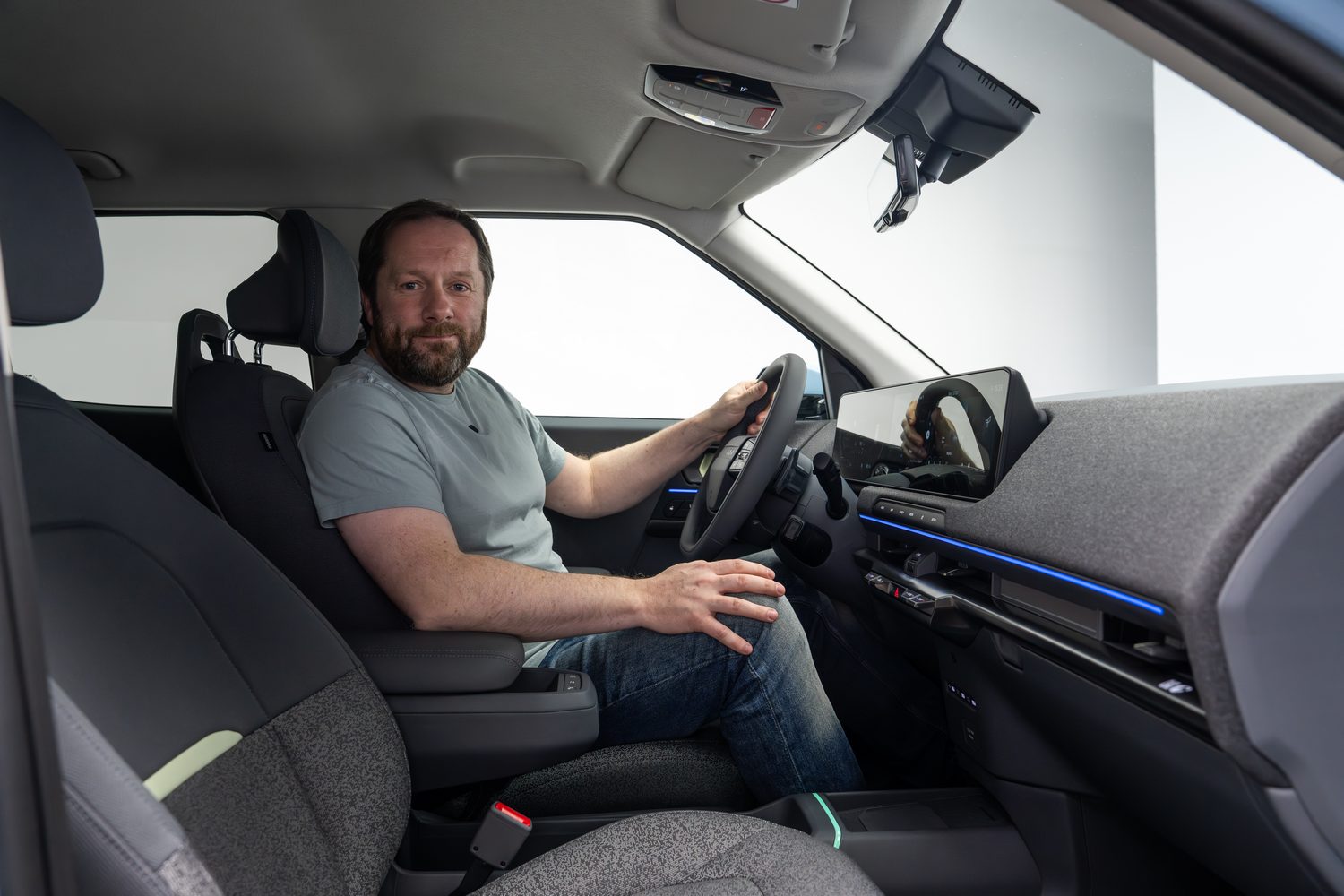
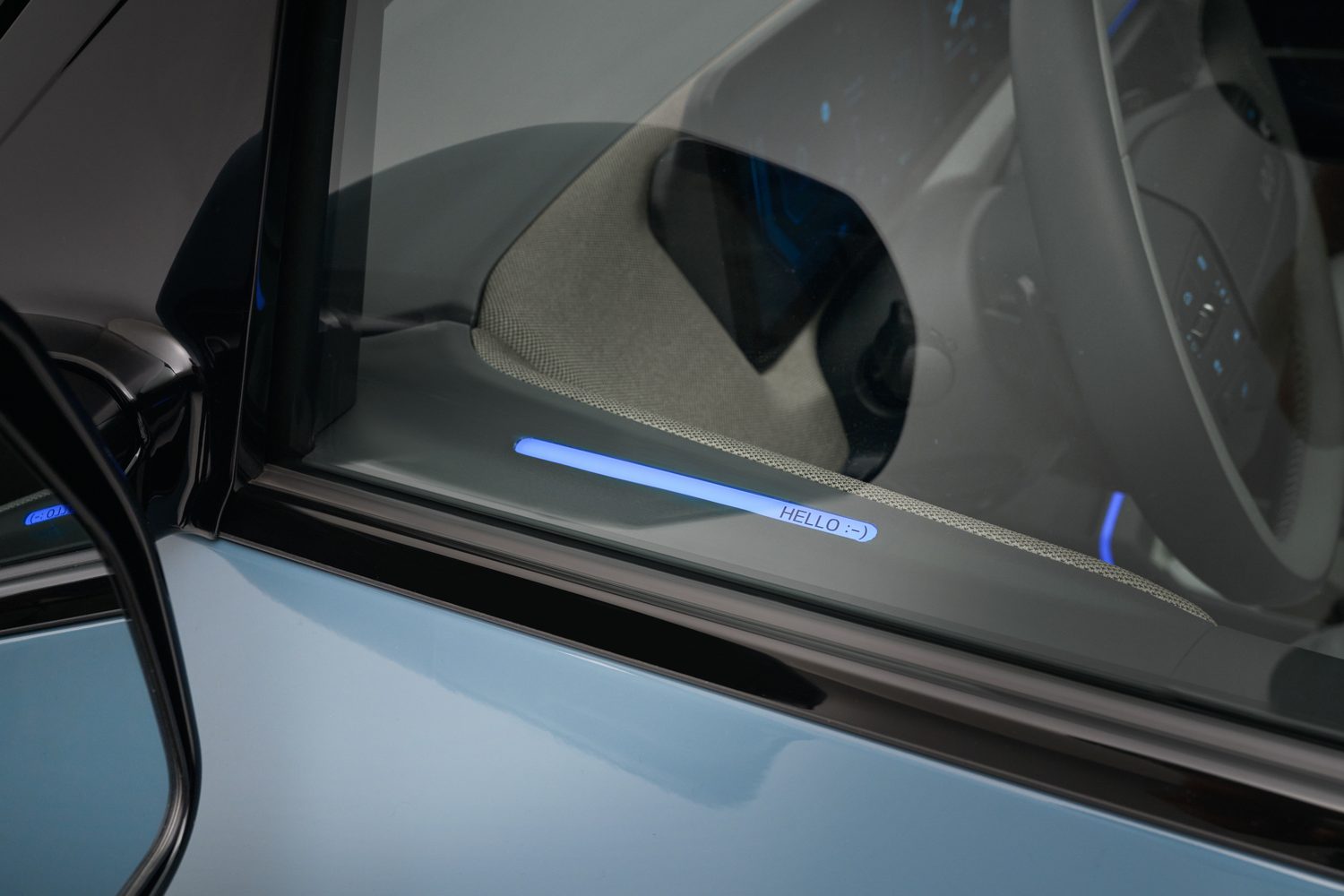
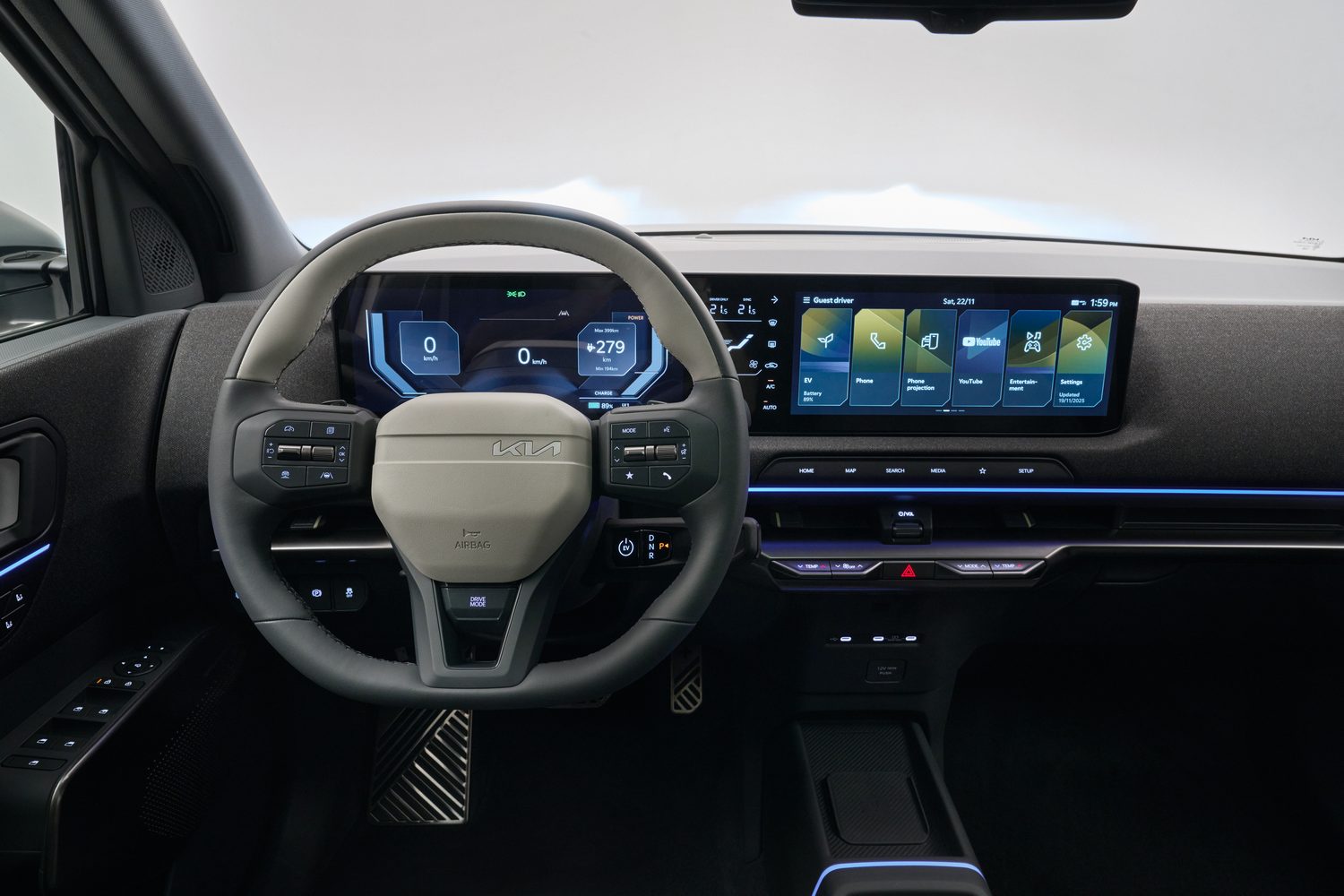
Baseline models get a two-spoke multifunction steering wheel while the EV2 GT-line gets a different three-spoke design. The dashboard features a fabric fascia that extends into the front doors, while ambient lighting offers a variety of colour options.
All versions utilise Kia's digital dashboard. This single-piece panel houses two 12.3-inch displays sandwiching a 5.3-inch touch panel for the climate control. Wireless smartphone mirroring is available with Android Auto and Apple CarPlay.
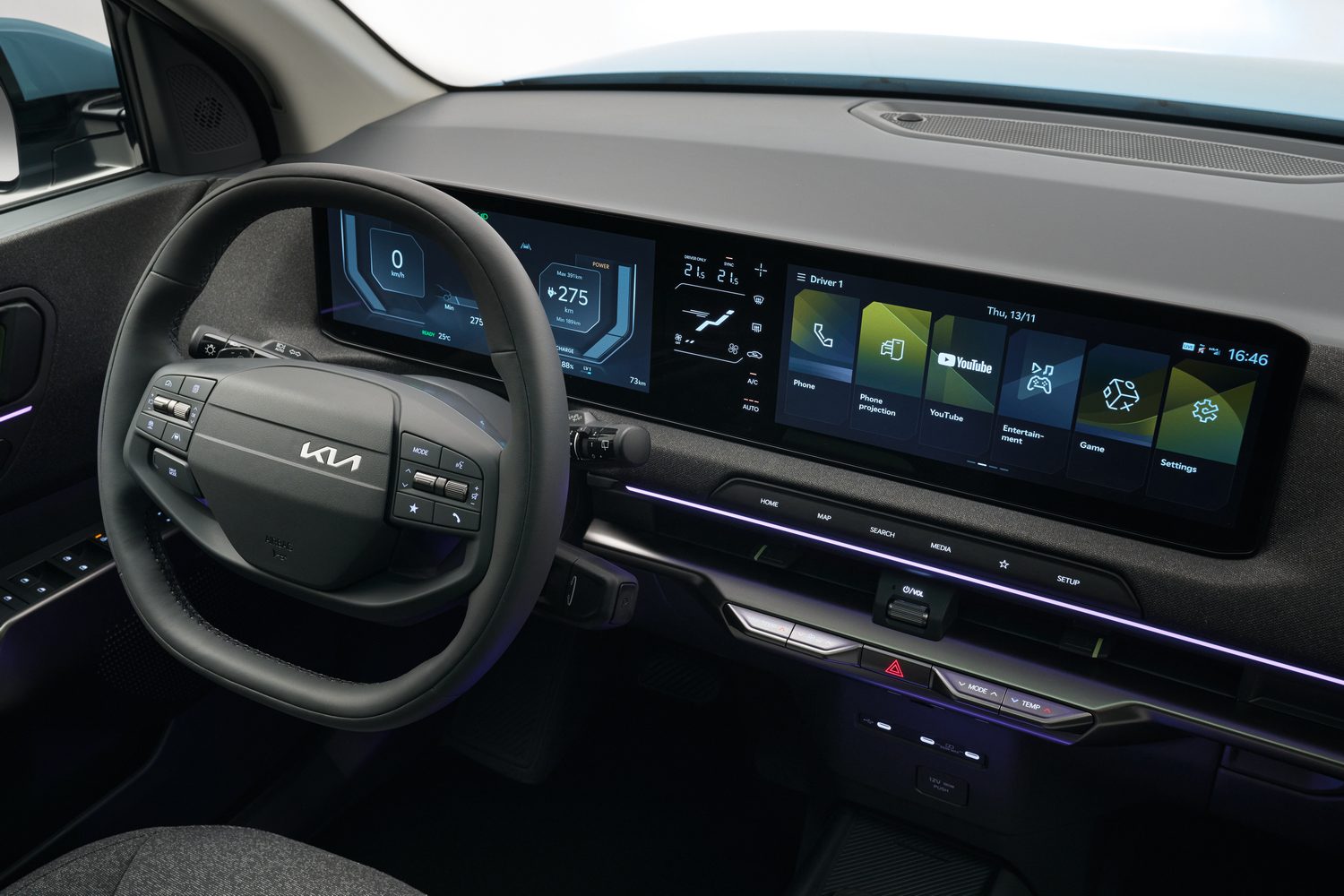
Kia's native infotainment system is full of features and includes an EV route planner that enables battery preconditioning to optimise fast charging during longer journeys.
In an effort to make the EV2 more affordable, Kia also plans to offer an entry-level infotainment system. This version retains the same look and layout but forgoes the built-in GPS technology. That means it doesn't get the route planner, but drivers can still manually activate the battery preconditioning. Both versions of the infotainment system can receive OTA (Over-The-Air) updates.
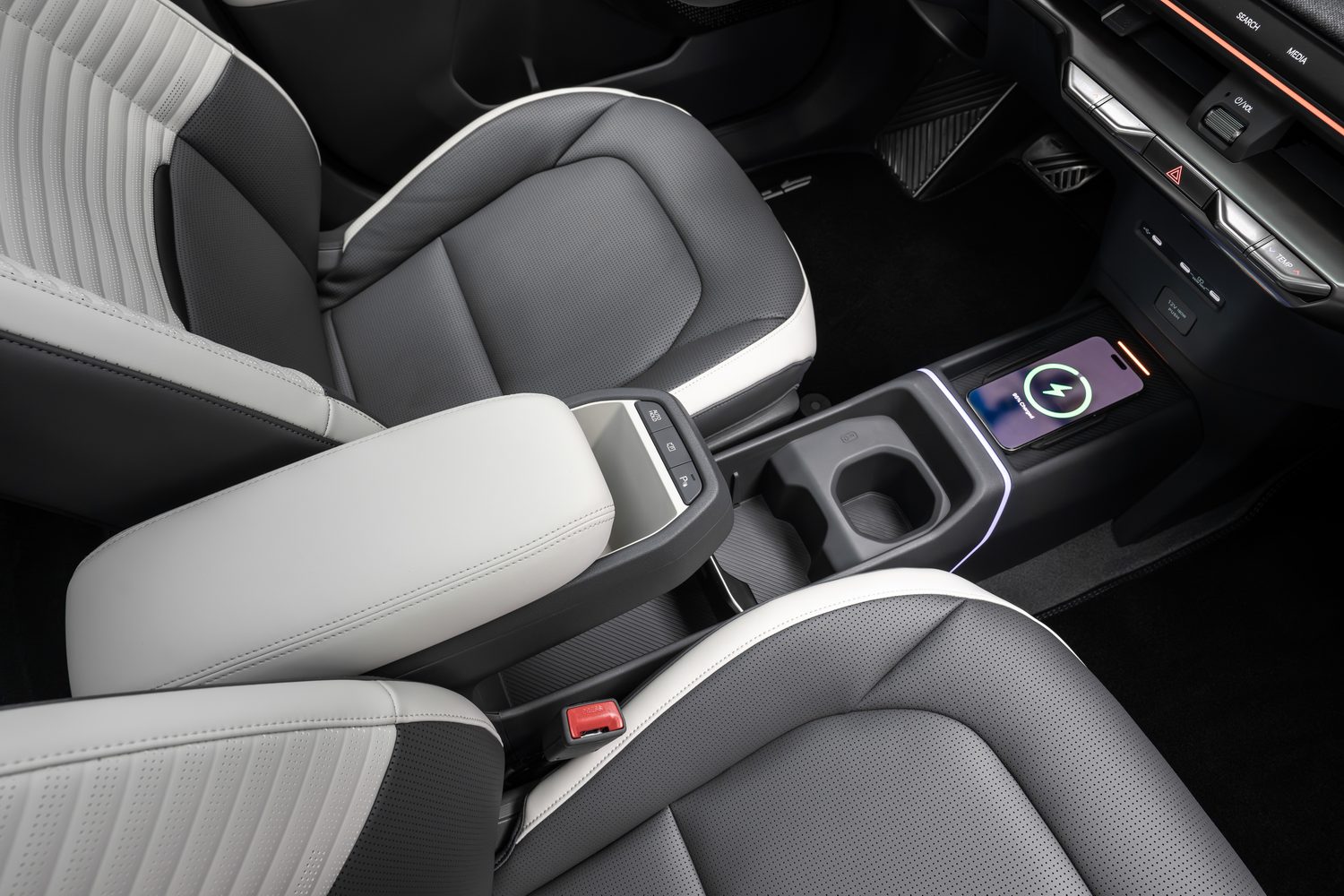
The front of the cabin features three USB-C charging ports, a 12-volt power outlet and a wireless charging pad on the base of the centre console. Two USB-C ports are available for rear passengers, located on the inner sides of the front seats.
Rear passengers also get air vents, while a 230-volt power outlet can be fitted, too.
What are the key Kia EV2 tech specs?
The Kia EV2 comes with two battery options: a standard-range 42.2kWh LFP battery and a long-range 61kWh NMC battery. Buyers can expect a driving range of up to 317 kilometres from the standard-range battery, and up to 448 kilometres from the long-range unit.
A 146hp electric motor drives the front wheels through a single-speed automatic transmission. The standard-range EV2 accelerates from 0-100km/h in 8.7 seconds, with the long-range EV2 taking slightly longer at 9.5 seconds due to the increased battery weight.
Both versions of the EV2 are equipped with 11kW AC charging as standard, but for the first time, Kia will offer a 22kW AC option.
Kia says that with the 22kW AC option, charging the standard-range battery takes about two hours. With public charging rates for AC typically five cents per kWh lower, owners of the long-range version could save about €3 per charge by using AC rather than the higher-power DC units. However, Kia Ireland has not yet confirmed the cost of the upgraded AC capability.
As with other electric Kia models, the EV2 can be fitted with bi-directional charging with V2L (vehicle-to-load) and V2G (vehicle-to-grid) capabilities.
How spacious is the Kia EV2 inside?
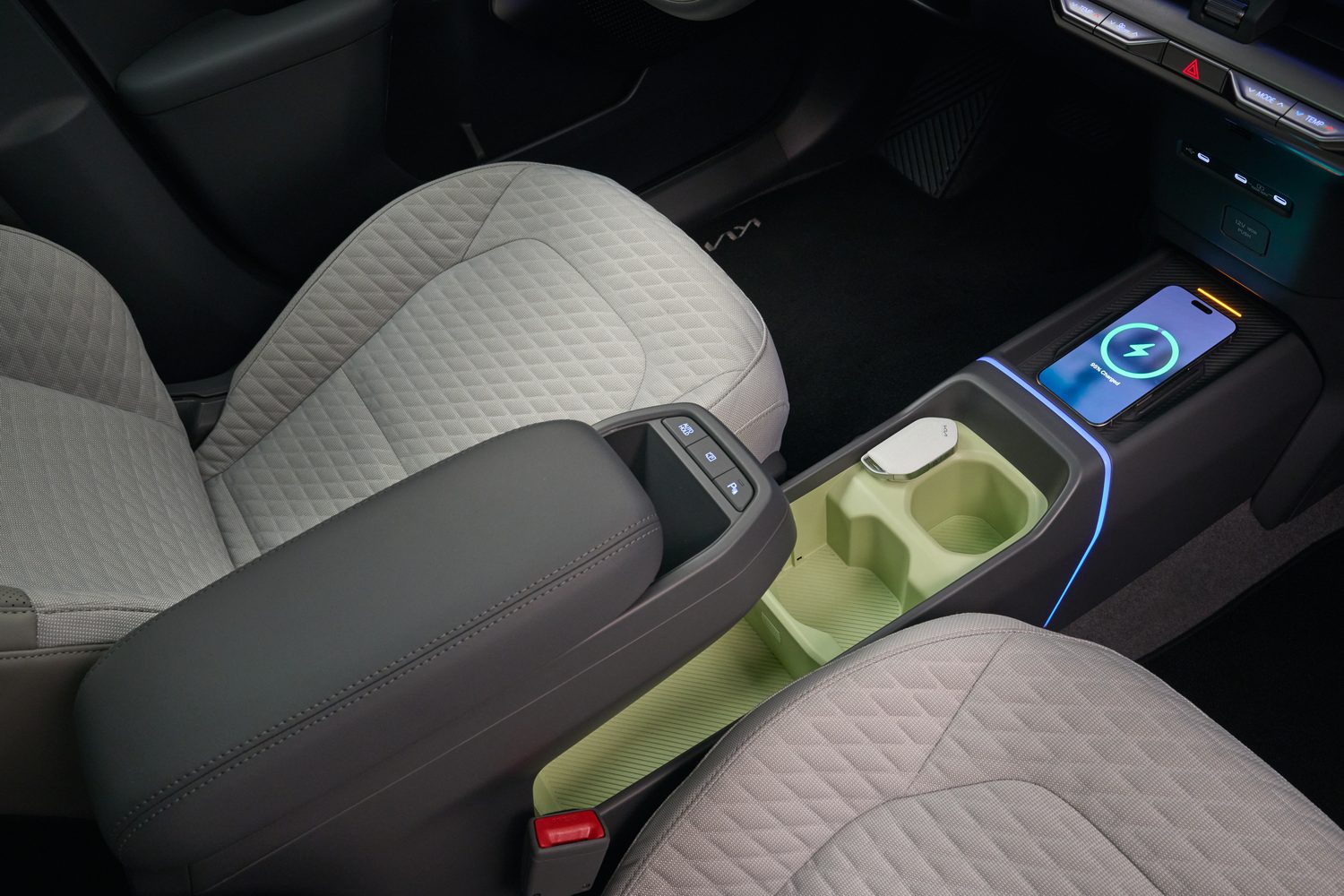
In the cabin's front, there are large and easily accessible door bins that can hold bigger drinks bottles. The centre console contains cupholders and further stowage in addition to the compartment underneath the centre armrest.
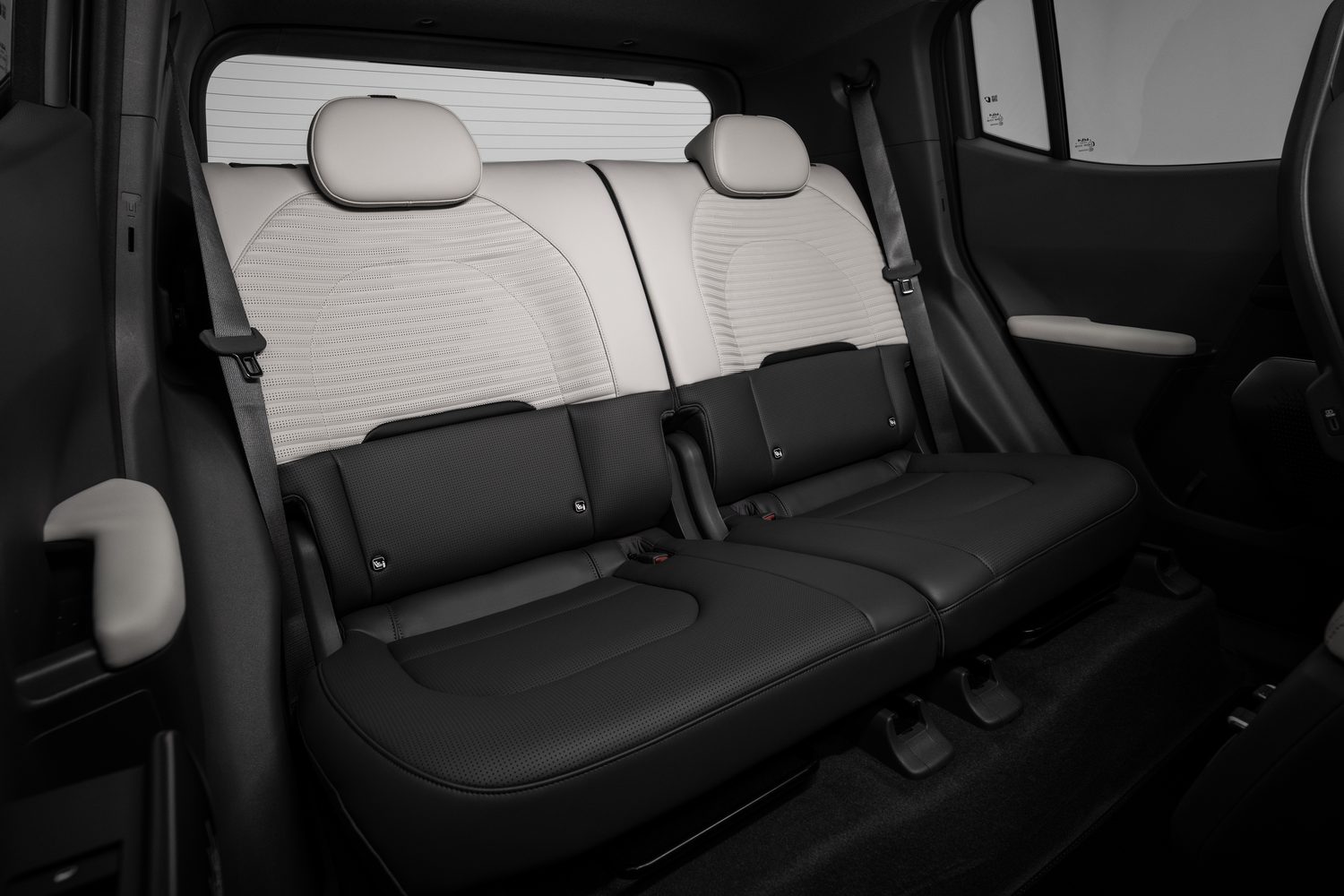
There will be the choice of either a four- or five-seat setup in the EV2. The four-seat version provides broader, more comfortable seat bases for those in the rear, and the two rear seats slide forward and back independently, increasing legroom from 885mm to 958mm - more than in a Kia Ceed, for reference.
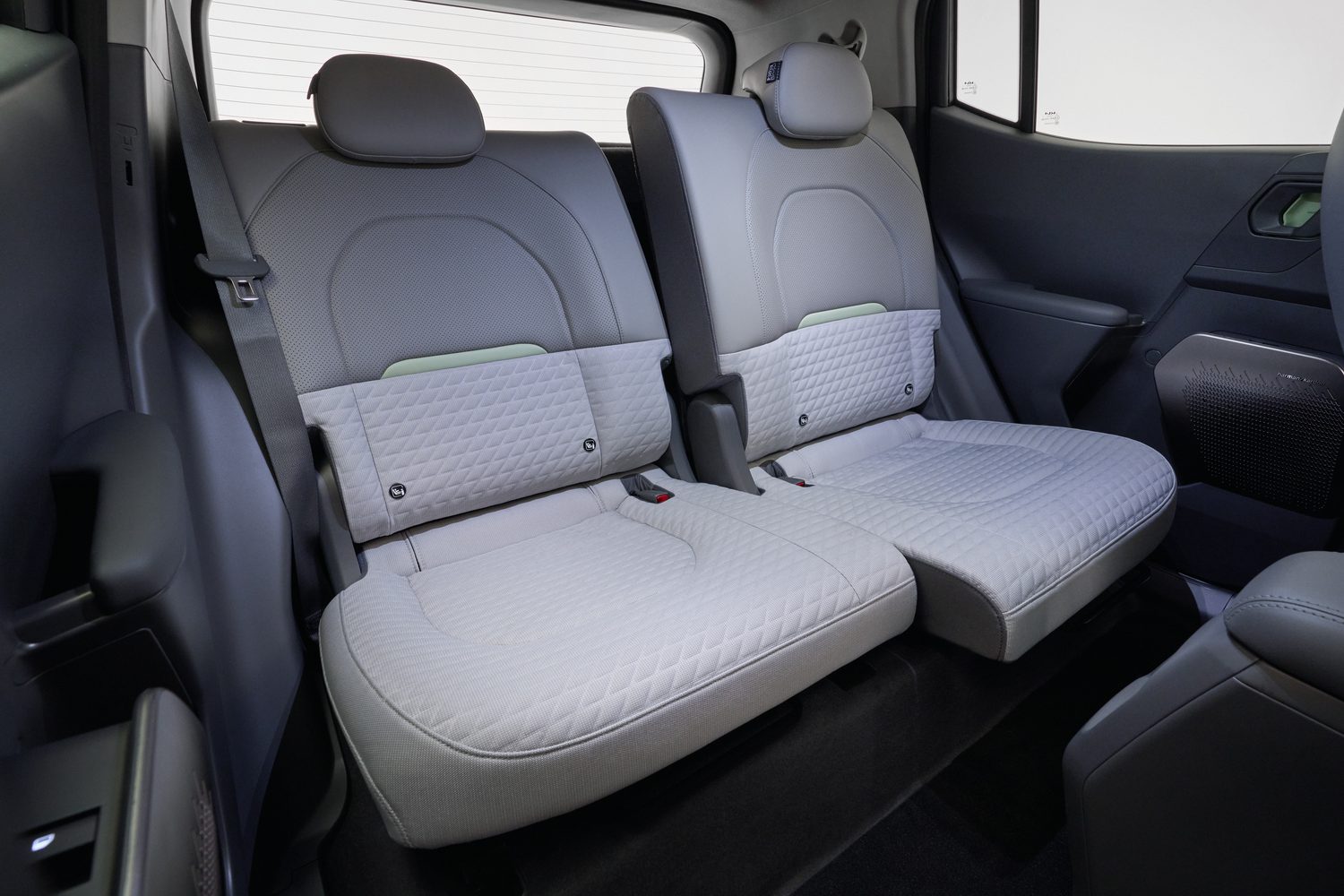
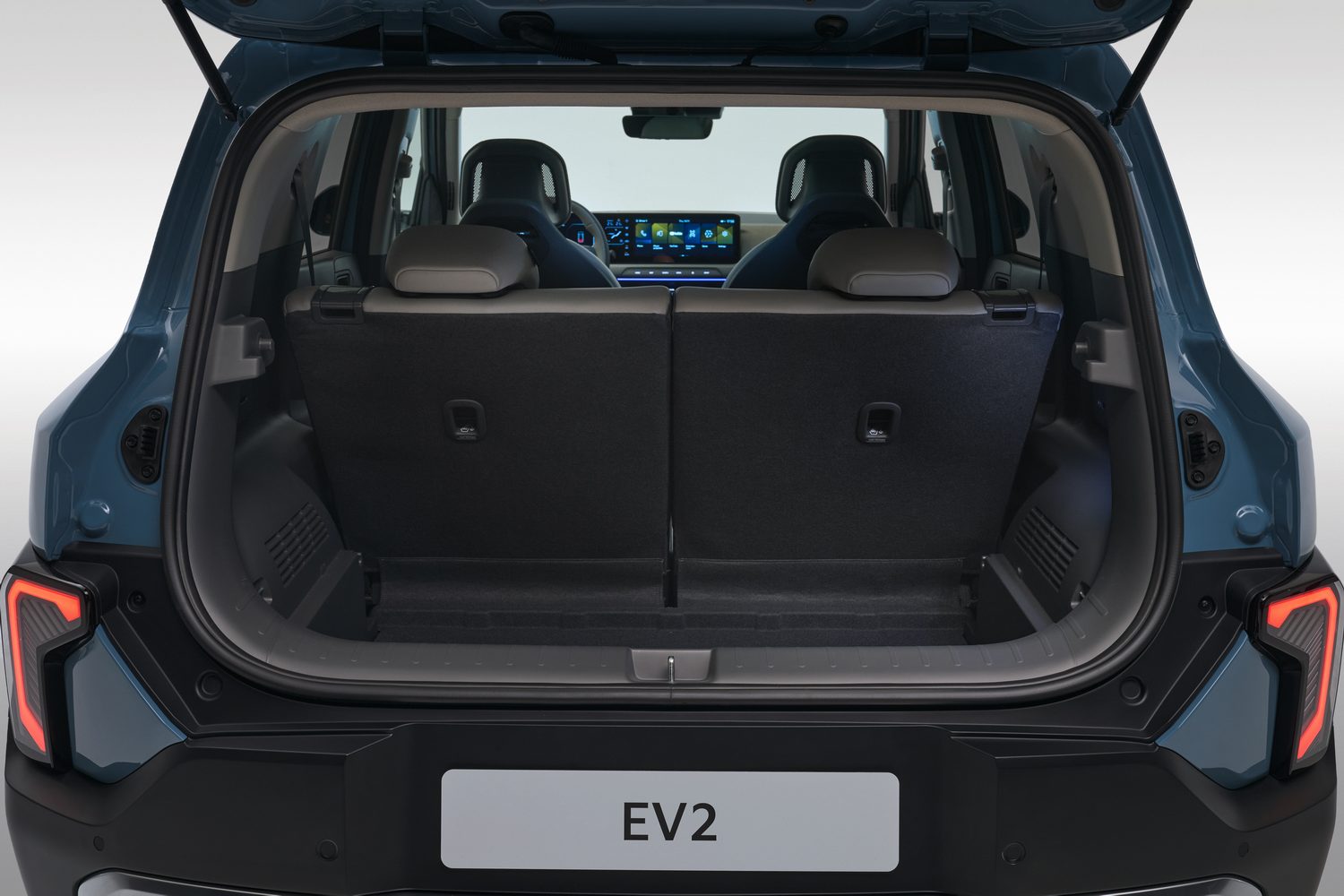
The seatbacks can also be reclined to improve rear passenger comfort. This function also affects the boot capacity, which can range from 321 litres when the rear seats are fully slid back, to 403 litres when boot space is prioritised.
In the five-seat version, the rear seat bench is fixed in place, though it features a 60:40 split. Due to its set position, the boot space is quoted at 362 litres - including an underfloor compartment.
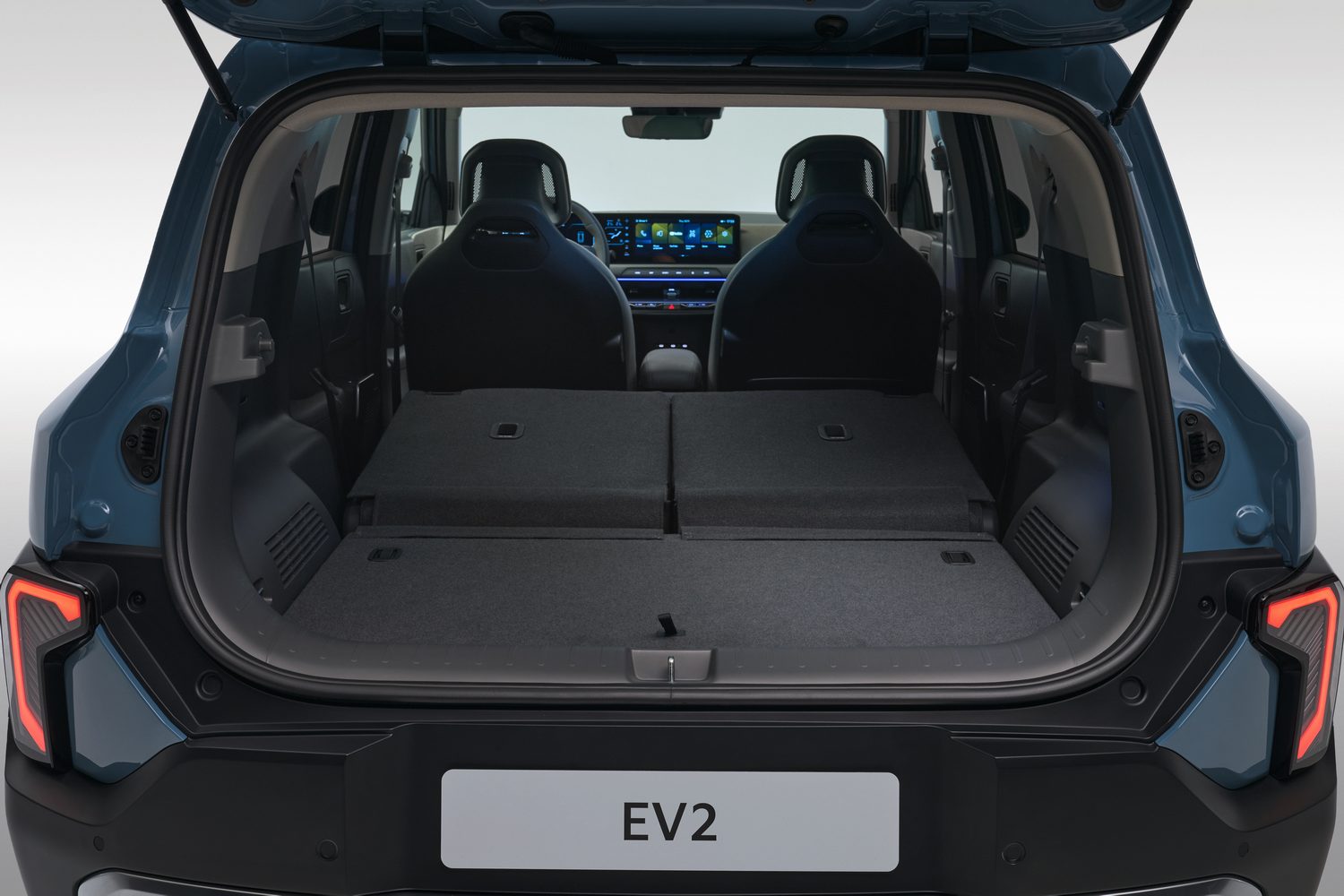
Both four- and five-seat versions of the EV2 are equipped with two ISOFIX mounting points for child seats. The rear door apertures are quite large for the class, too, making ingress quite straightforward.
There is also a small 15-litre 'frunk' under the bonnet, suited to carrying the car's charging cable. Furthermore, the EV2 is rated to tow up to 750kg, and can hold a hitch-mounted bike carrier.
Kia EV2 Irish pricing and availability
Pricing for the Kia EV2 in Ireland is still being confirmed, but it is expected to start at around €30,000. The first cars are due to arrive in Ireland this spring, starting with the standard-range battery models. Production of long-range EV2s will begin in the third quarter of 2026 for all markets.

Video player loading.
Video unavailable. Watch on YouTube
If there is anything about this story we have not covered, you can avail of our expert advice service via the Ask Us Anything page.