

How does this all work?
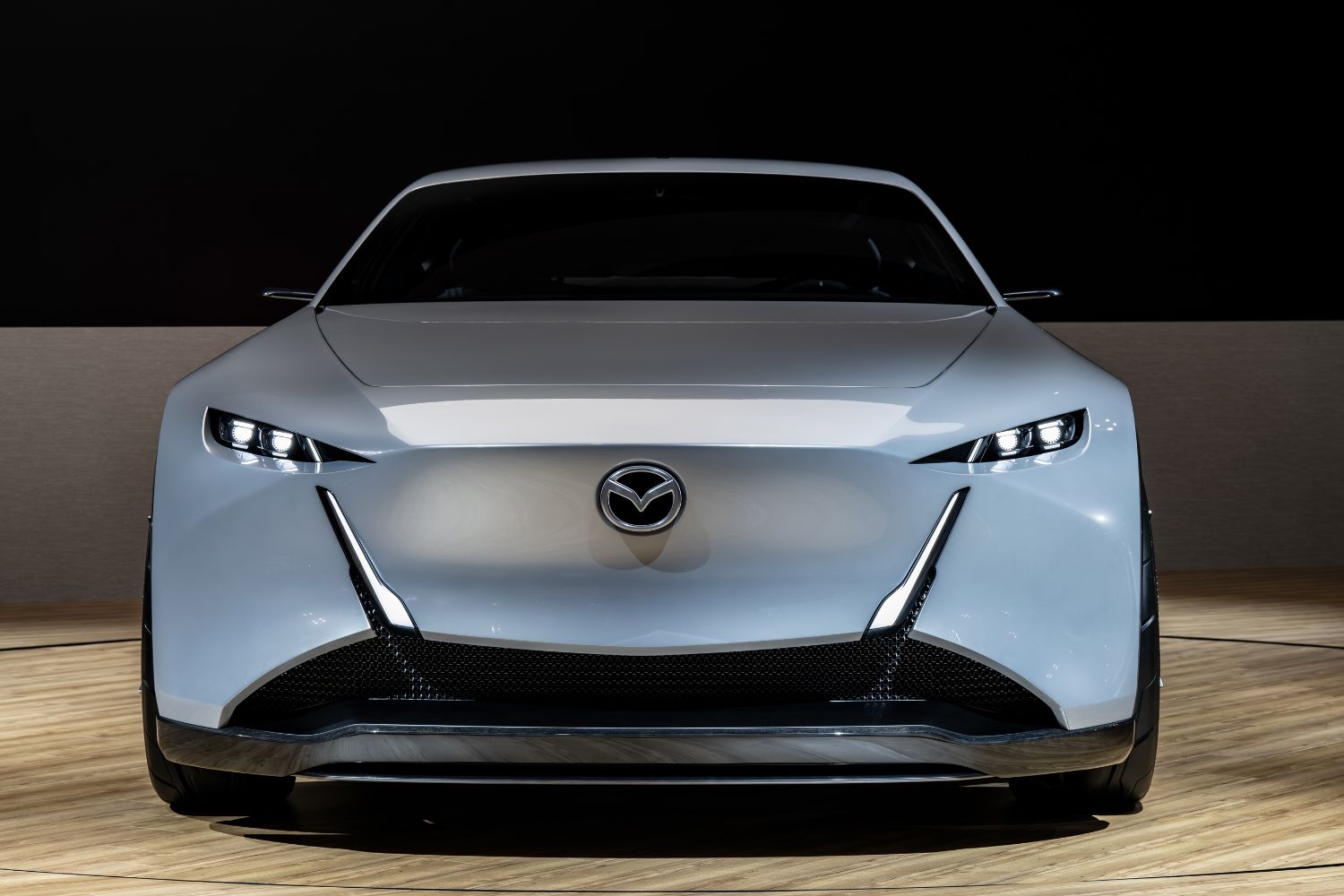
Mazda has shown off its carbon capture ideas at the recent Tokyo motor show (OK; the Japanese Mobility Show…) in the rather gorgeous Vision X-Coupe. This large, sleek, four-door coupe (think of it as a Mazda answer to the Mercedes CLS of old) has been designed around a two-rotor rotary turbo engine with an electric motor and battery. It has an output of 510hp and offers a driving range of 160km in electric-only mode, and up to 800km between both petrol and electric systems.
Sounds like a conventional range-extender EV there…
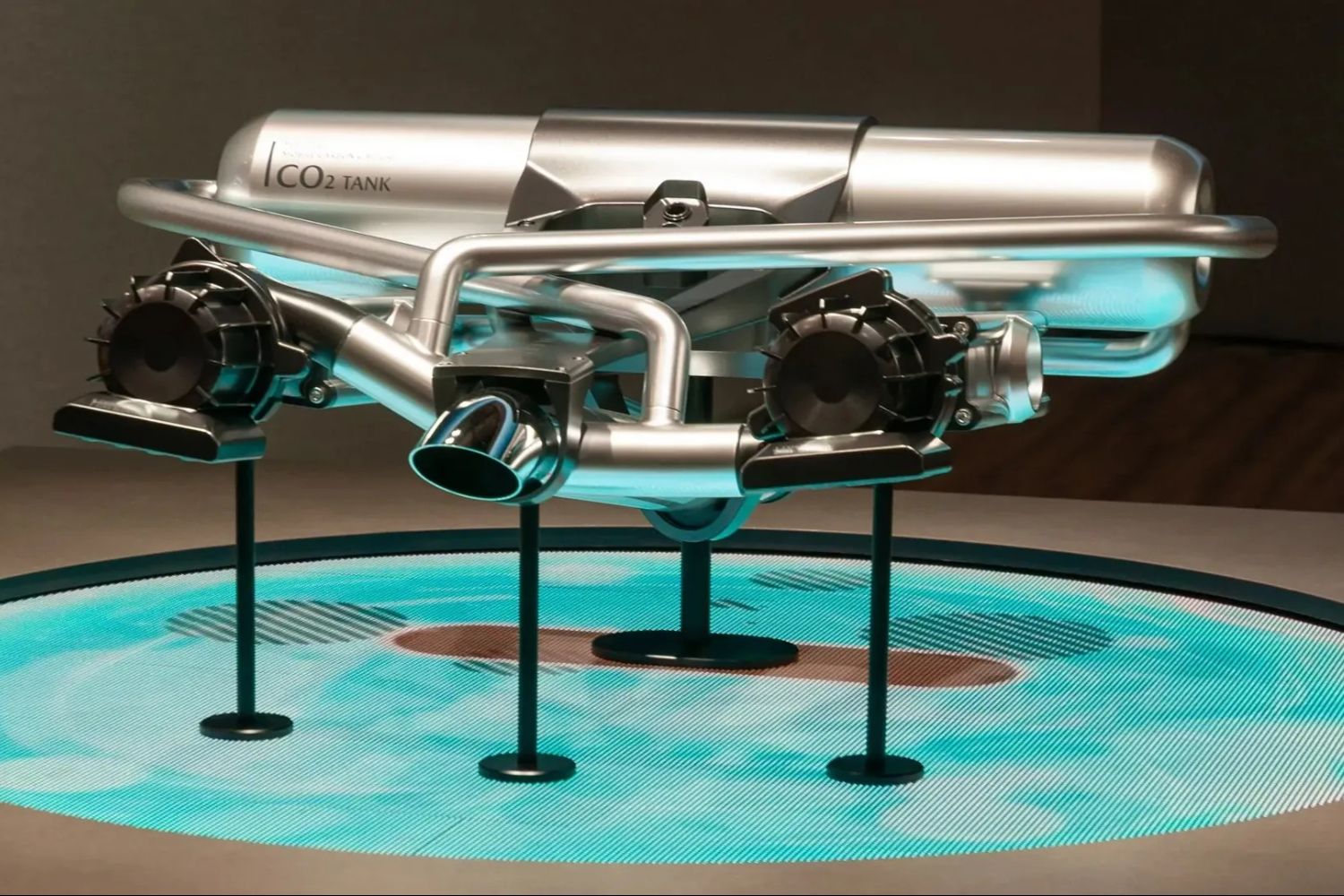
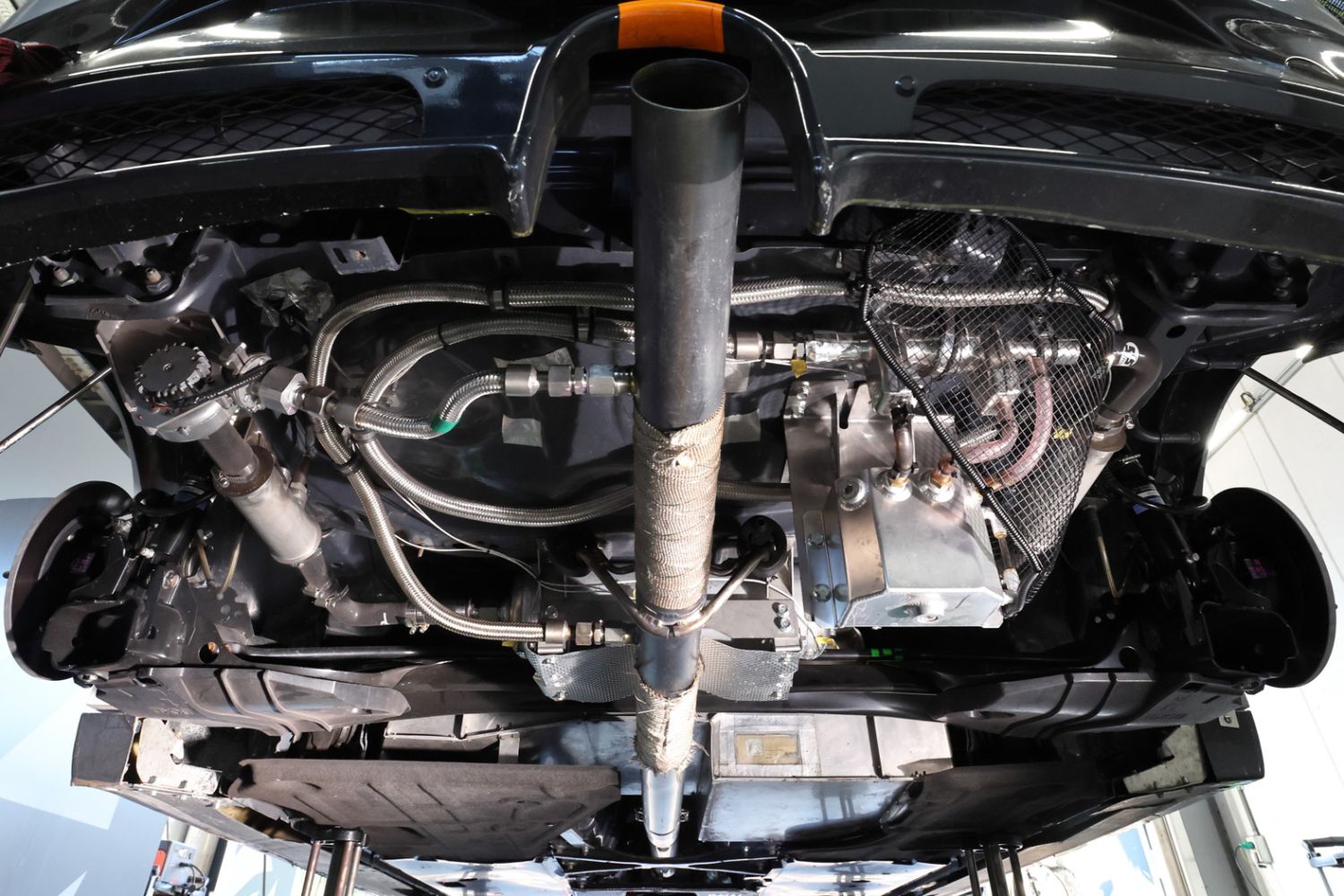
Yes, it does, but here's where it gets clever. Mazda has long been keen on the promise of bio-fuels and e-fuels, and the Vision X-Coupe is designed to run on a carbon-neutral fuel derived from microalgae. That in itself would be environmentally helpful, but the Vision X-Coupe has another trick up its sleeve, or more accurately, in its exhaust. It's using a Zeolite-based carbon-capturing system.
Hang on, what's Zeolite?
Technically, it's a rock; a crystalline aluminosilicate mineral that's largely made up of silicon, aluminium, and oxygen, and which has quite an open, porous structure. Zeolites are naturally occurring, although they can also be created in the lab for industrial purposes, and they're particularly brilliant at filtering carbon dioxide (CO2) from the air. As it happens, you can find plenty of Zeolite in your house - its most common uses include detergents and cat litter.
Mazda is using cat litter?
No, it's not. But it is using a zeolite-based exhaust system to actually filter CO2 from the air passing through the car's engine, and storing it. This stored CO2 is actually crucial, as it can be used either in the chemical process to create more e-fuels, or it can be used to help make more fertiliser, which can be used to grow plants that can then be turned into bio-fuels.
And the racing car?
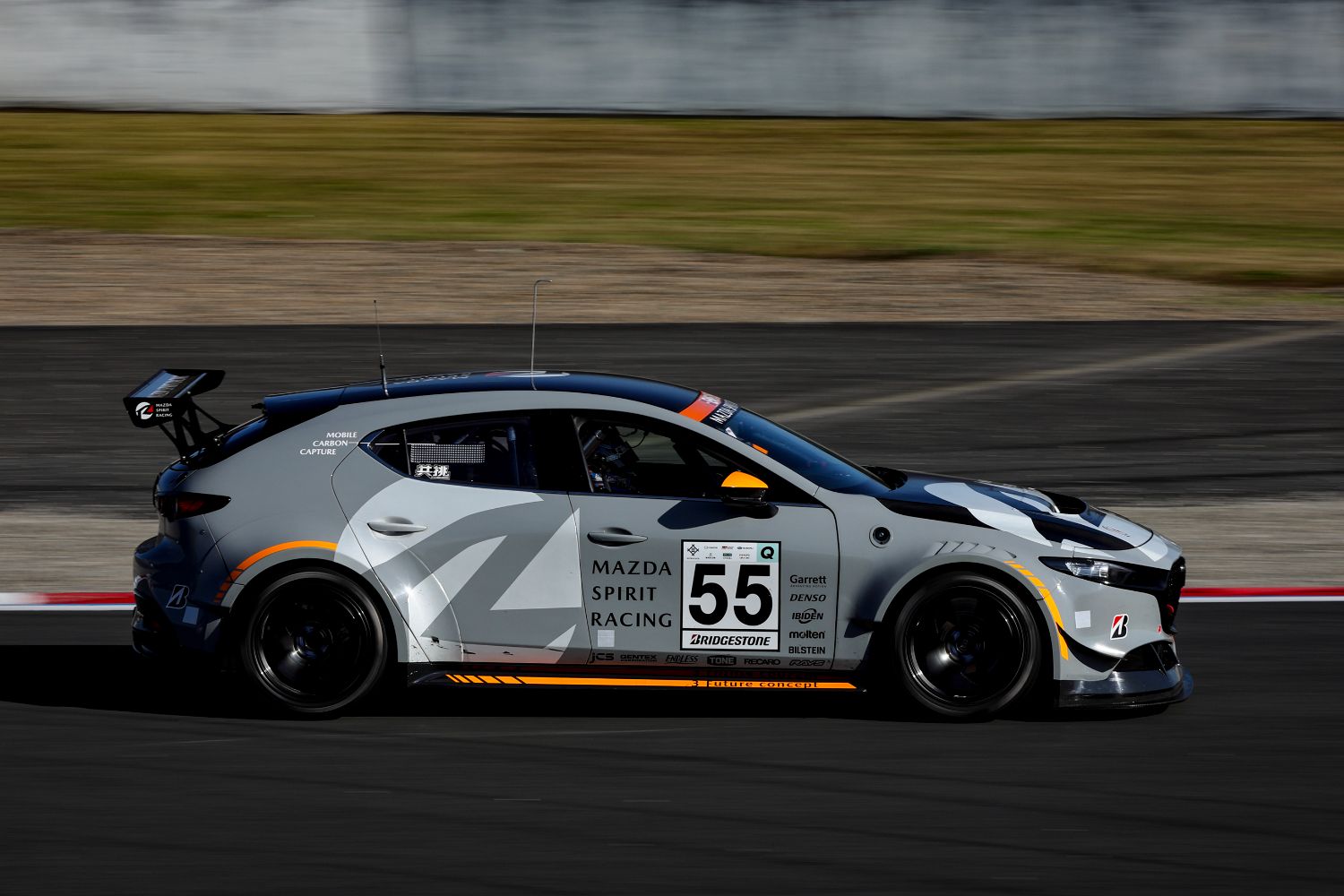
The Mazda3 racer equipped with the carbon capture system is already racking up racing laps, and according to Mazda, "In its first race last month, the testing successfully demonstrated real-life functionality during the 7th round of the 2025 series at Fuji International Speedway. During the four-hour race, Mazda's new carbon capture device demonstrated it could adsorb CO2 in exhaust gas under challenging motorsports conditions for the first time. Mazda will continue to test the technology on the Super Taikyu Series next year, aiming to further enhance the CO2 recovery rate.”
So when can I buy a carbon-filtering, algae-fuelled Mazda?
Not just yet, but possible eventually. Mazda says that it's still aiming "to steadily advance technical verification, confirm business viability and work with partners to bring this vision to reality.”
Masahiro Moro, president and CEO of Mazda, said: "The phrase, 'The joy of driving fuels a sustainable tomorrow,' expresses not only Mazda's fundamental spirit, but also the core of its future challenges.”
If there is anything about this story we have not covered, you can avail of our expert advice service via the Ask Us Anything page.